a Sign


Boards of Directors
Retailers May Have Opportunity to Recover Tariff Costs
William J. Hallan
MRA President and CEO
The United States tariff landscape is currently in flux following a major court decision that invalidated a significant portion of tariffs imposed by the Trump administration. In February 2026, the U.S. Supreme Court ruled in Learning Resources, Inc. v. Trump that tariffs imposed under the International Emergency Economic Powers Act (IEEPA) were unlawful because the statute does not grant the president authority to impose tariffs; that power rests with Congress. President Trump promptly issued new tariffs under other legal provisions (but that’s the subject of another article).
Because the court invalidated the legal basis for the IEEPA tariffs, the natural next question is: what happens to all the money that was collected?
Estimates suggest the total amount could exceed $100 billion. For retailers who paid those tariffs as the importer of record, there may be an opportunity to recover at least some of those funds.
However, the process will not be automatic. The U.S. Court of International Trade and U.S. Customs and Border Protection (CBP) are now working through the logistics of how refunds might be handled. With hundreds of thousands of importers and millions of import transactions potentially affected, the administrative challenge is significant.
Retailers should be aware that the situation remains fluid. On March 12, the CBP provided a short report on how the refund process will occur. Notably, it is developing an automated process that includes four components: (1) a claims portal, (2) mass processing, (3) review and liquidation, and (4) refund.

For now, the key takeaway is this: retailers who paid tariffs over the past several years may have a meaningful opportunity to recover some of those costs—but patience and careful attention to the evolving rules will be essential.
As always, Michigan Retailers Association will continue monitoring developments and will keep our members informed as the situation unfolds.
William J. Hallan
MRA President and Chief Executive Officer
Michigan Retailers Association
Bryan Neiman Chair
Neiman’s Family Market, St. Clair
William J. Hallan
President & CEO
Michigan Retailers Association
Dan Marshall Vice Chair
Marshall Music Company, Lansing
Peter R. Sobelton
Treasurer
Mondial Properties, Birmingham
Bill Golden Past Chair Golden Shoes, Traverse City
Bo Brines Little Forks Outfitters, Midland
Kim Edsenga Meijer, Inc., Grand Rapids
Antoinette Kramar Orin Jewelers, Northville
Joseph McCurry Credit Card Group
Thomas Ungrodt TDU Consulting, LLC, Ann Arbor
John Leppink
Leppink’s Food Centers, Belding
Larry Meyer Board Member Emeritus
D. Larry Sherman Board Member Emeritus
Michigan Retailers Services, Inc.
William J. Hallan President & CEO
Thomas P. Clement Chief Operating Officer and General Counsel
Orin Mazzoni, Jr. O & T Investments LLC
Kendra Patterson Michigan Barn Wood & Salvage, Mason
Joe Swanson Target, Retired
Michigan Retailer Magazine
William J. Hallan Publisher
Victoria Veda Editor
Rachel Schrauben Copy Editor and Content Director
Josh Delany Design/Layout Manager, Photographer
Shandra Martinez Contributor
With every issue, we reach retail owners, managers, and executives who make spending decisions for 15,000 stores and websites across the state.
To request a media kit, email Rachel Schrauben at rschrauben@retailers.com
2025 Legislators of the Year 2026 Friends of Retail list coming soon
Anatomy of a Ruling: Breaking Down Learning Resources, Inc. v. Trump
More on the Supreme Court ruling, MI perspective, and next steps
The Power of a Sign Leave shoppers with a strong first impression


Why Every Business Needs a Return-to-Work Policy
RTW programs are invaluable to workers’ comp. management
Teysen’s Gifts Celebrates 100 Years The iconic Mackinaw City location has been welcoming tourists for a century
Reasonable Accommodations in a Retail Setting
Create an inclusive retail environment
2026 Holiday Outlook

Departments
From the CEO
Retailers May Have Opportunity to Recover Tariff Costs
Legally Speaking Understanding Signage Requirements 16 15 18 19
Numerator released their annual survey on holiday spending and insights
Under the Dome The Analog Advantage
Creative Counsel
Sidewalk Sales Strategies for Success
Regulatory Rundown
Milestone Members
New Members
On the Cover
MRA headquarters in Lansing displays new exterior signage provided by Michigan Imagery during the 2025 rebrand.

Understanding Signage Requirements
Tom Clement MRA Chief Operating Officer and General Counsel
Retail signage is a key tool for communicating with customers, but also subject to several legal requirements. Retailers must ensure their signs comply with state laws, local ordinances, and consumer protection rules. Understanding these regulations helps businesses avoid significant sanctions.
One of the most important laws affecting retail signage in Michigan is the Michigan Consumer Protection Act. MCL 445.903 prohibits businesses from using unfair, unconscionable, or deceptive methods in the conduct of trade or commerce and defines such practices in great detail. Put succinctly, any signage that promotes prices, discounts, or product claims must accurately reflect what is being sold. Misleading signage can expose retailers to expensive and time consuming enforcement actions.
Another statute to be mindful of is the Shopping Reform and Modernization Act, MCL 445.311, which MRA lobbied for successfully back in 2011. This law served a huge benefit to retailers by eliminating item pricing. However, the pricing displayed still needs to be accurate and properly applied at checkout.
Retailers must also follow accessibility requirements under the Americans with Disabilities Act of 1990 (ADA). The ADA requires certain, and very specific, types of signage. Retail stores must ensure that these specific requirements are met and are easily identifiable. Failure to comply can result in hefty judgments including attorney’s fees awards.
To a certain extent, local governments in Michigan may also impose additional rules through zoning and sign ordinances. These ordinances often require permits for large storefront and other signs. Retailers should check with their local municipality before installing new signage.
Signage in Michigan retail stores must be truthful, accurate, accessible, and compliant with local regulations. By reviewing state consumer protection laws, maintaining accurate pricing signs, meeting ADA accessibility standards, and checking local sign ordinances, retailers can create effective signage while remaining fully compliant with Michigan law.
The Analog Advantage
Drew Beardslee MRA VP, Government Affairs
Is 2026 the Year of Analog? In a society dominated by screens, a recent trend suggests that there’s still a market for old-school, analog products and experiences like vinyl records, film cameras, and handwritten journals. Even the iPod, a staple of my millennial youth, is staging a comeback amongst consumers who want to listen to music without constant interruptions from social media, texts, and email.
To be sure, there are definite benefits to being a plugged-in consumer or retailer, and e-commerce isn’t going anywhere. (In 2024, nearly 20% of Michigan’s retail sales were online.) But there’s still a real advantage to leaning into physical experiences that invite customers to slow down, browse, and interact with products in a real-world setting. A well-curated store or a personable employee can build relationships and loyalty just as much as an algorithm.
The principle applies beyond the store, too—especially when it comes to advocacy. In an era where formulaic emails, online petitions, and social media campaigns are easy to send and easy to ignore, there’s still no substitute for showing up in person. When retailers take the time to meet face-to-face with policymakers, share their experiences, and explain how the issues discussed in Lansing affect their livelihoods, the conversation becomes real in a way that a digital message rarely does. That’s what makes our annual Capitol Day such a powerful event.
It’s not an easy thing for a committed retailer to take a day away from the store to advocate in Lansing, but the time is well spent. Consider the story of Kendra Patterson, an MRA board member and frequent Capitol Day participant who has spoken about the value of showing up, not just for herself, but for the more than 100 smaller entrepreneurs who sell their products in her store. Or a multi-state retailer like Kroger, an MRA member that appreciates the opportunity to connect legislators with the good that’s being done and the jobs being created in their districts. There’s real value in sitting across a table from a legislator and sharing a personal story.

The analog trend reminds us that while digital tools are powerful, they’re not everything. Sometimes the most effective way to be heard— with customers or legislators—is still to simply show up, shake hands, and have the conversation in person.
Sidewalk Sales Strategies for Success
Vic Veda MRA VP, Communications
Spring is here, and with the season comes sidewalk sales. Maximize the impact of your sidewalk sale this season with strategic focus on a few areas:
High-visibility signage and coordinated displays
Get creative with the space you have available. Use eye-catching sandwich boards, flags, window decals or signs, and digital signage to attract shoppers. Your signage should be clearly visible and engaging. Try something you haven’t done before to draw new shoppers’ attention. Feature popular inventory in window displays to draw shoppers into the store.
Lean into loyalty programs
Bring existing customers back to shop the sidewalk sale by offering extra incentives to loyalty program members. Bonus rewards or additional discounts can encourage shoppers to make a special trip and take advantage of the sale.
Clearly mark discounted inventory to move more items
Don’t lose customers to confusion or surprises; mark your discounts clearly. Both sale signage and item price tags should help customers know what to expect at checkout and encourage the sale.
Coordinate with local events/neighbors
Check with your local chamber, DDA, and other business groups for their event schedules to see when your area might have an influx of foot traffic (and shoppers). Work with neighboring businesses to coordinate sale dates. Refer shoppers to other local stores with different inventory to build community relationships.

Have a sidewalk sale success story?
Share it in our Facebook group, “Michigan Retailers Strategizing Together.”
Leppinks Named One of Top Grocers in Nation
Leppinks Food Centers has been recognized as one of the nation’s top independent grocers, earning a spot on the 2026 Outstanding Independents list from Progressive Grocer.
According to Progressive Grocer, the Leppinks stands out for their deep connection to the communities they serve—an advantage that helps independent grocers compete with large supermarket chains and national mass merchants.
Leppinks Food Centers has locations in Belding, Dorr, Ferrysburg, Howard City, Lakeview, Newaygo, and Stanton. Leppinks has been an MRA member since 2018.
Polly’s Country Markets Opens Blissfield Location
Polly’s Country Market has opened its newest location, bringing fresh groceries and hometown favorites to the Blissfield community.
The new store offers fresh produce, quality meats, bakery items, and a full selection of everyday essentials—all under one roof. The team says they’re excited to welcome shoppers, introduce the Country Market experience to Blissfield, and continue the tradition of serving local families with friendly service and quality products.
The National Cherry Festival Celebrates 100 Years
Traverse City’s National Cherry Festival marks its 100th anniversary this July 4–11, 2026. The week-long celebration features parades, fireworks, live music, races, and family activities, honoring a century of Michigan’s cherry-growing heritage, community spirit, and local pride while drawing visitors to Northern Michigan from across the state and beyond.
Have news? Tell us at communications@retailers.com
Friends of Retail List Coming Soon!
This year is a significant election year for Michigan.
The entire State House and Senate are up for election, as are all United States House members. On top of that, Michigan will also have statewide elections for governor, United States Senate, attorney general, secretary of state, and supreme court.
Big changes could be in store for 2027, but there are great opportunities for retailers throughout the political process.
Each election cycle, MRA evaluates candidates for state legislative office, surveying them on issues that matter the most to retail and scoring current officeholders based on their votes on key retail issues.
Look for our 2026 Friends of Retail list this fall, and help elevate candidates who are looking out for the good of retail.
Vote with your retailer cap on!
2025 LEGISLATORS of the Year
Congratulations to Representatives Mike Harris and Samantha Steckloff, our 2025 Legislators of the Year.

Representatives Harris and Steckloff sponsored House Bills 4598 and 4599, respectively, and together secured 52 bipartisan co-sponsors. The bills, which would include gift card fraud in Michigan’s Organized Retail Crime Act, advanced nearly unanimously through the House in September and are now poised for action in the Senate.
MRA looks forward to continued collaboration with both Representatives in 2026.


Representative Mike Harris (R-Clarkston)
Representative Samantha Steckloff (D-Farmington Hills)

Merchant Processing
with Michigan Retailers Association
Accept payments wherever you do business: in-store, online, onlocation, and over the phone. With a catalog of customized solutions to fit your business model, and options to integrate with your current systems, MRA’s merchant processing experts will help you find savings worth switching for.


Anatomy of a Ruling: Breaking Down Learning Resources, Inc. v. Trump
The Supreme Court ruling, the Michigan perspective, and possible next steps
On Feb. 20, 2026, the United States Supreme Court struck down the President’s authority to levy taxes under an emergency powers law, upending ten months of a chaotic tax environment. The decision is welcome, correctly recognizing the Founders’ intent to vest Congress—and Congress alone—with the power of taxation, but the fight for consistency in American trade policy isn’t over yet. Below, MRA unpacks how we got here, and what could come next for Michigan’s retail community.
In April 2025, President Trump announced a suite of “Liberation Day” tariffs aimed at lessening American reliance on foreign markets. To do so, he pointed to authority given to him by various laws, but based most of the tariff impositions on powers found in the International Emergency Economic Powers Act (IEEPA). Over the next ten months, the Administration argued it could use IEEPA to impose tariffs on imports “from any country, of any product, at any rate, for any amount of time” as long as the President declared a national security emergency to justify the move. The definition of “national security emergency” was subsequently stretched so that it included everything from the existence of a trade deficit between America and another country (a common and natural economic occurrence) to perceived personal insults from representatives of foreign countries. These were not arguments attributed to the Administration by partisan critics—these were the arguments made by Administration officials themselves. To be sure, not every threatened tariff saw the same level of follow-through. The Administration wisely backed off on tariffs on commonly-imported goods that have little domestic production, such as coffee and bananas. But the volatile nature of the tariffs created massive uncertainty in the economy, with businesses scrambling to keep up with a tax regime that could change by the day and announced over social media.
MRA sent a snapshot survey to our membership in May 2025, measuring the immediate impacts to retailers. At the time 69% of respondents reported that the tariffs (and the threat of new tariffs) would negatively impact their business in the next 6-12 months. We repeatedly heard from members that the tariffs were a burden, but that the worst impact came from the uncertainty; with retailers trying to plan for the year ahead, it was quickly becoming difficult to guess what the potential costs would be two weeks out, never mind two quarters.
Because larger businesses generally had more flexible resources to navigate the uncertainty, it was smaller businesses who felt the pinch the hardest. Learning Resources, an educational toy business in Illinois, faced a tariff bill of $14 million in 2025, prompting them to sue the federal government over its use of IEEPA.
The Supreme Court ruled 6-3 in favor of Learning Resources, finding that “IEEPA does not authorize the President to impose tariffs” and that “the Framers gave ‘Congress alone’ the power to impose tariffs during peacetime.” As noted in Bill’s column on page 2, the Court did not directly address the possibility of refunds to retailers and other businesses who paid tens of millions in import duties under IEEPA. The legal process is often long and frustrating, and the Court recognized that some would be disappointed in the decision.
In his concurrence, Justice Gorsuch wrote:
“All I can offer them is that most major decisions affecting the rights and responsibilities of the American people (including the duty to pay taxes and tariffs) are funneled through the legislative process for a reason. Yes, legislating can be hard and take time. And, yes, it can be tempting to bypass Congress when some pressing problem arises. But the deliberative nature of the legislative process was the whole point of its design. Through that process, the Nation can tap the combined wisdom of the people’s elected representatives, not just that of one faction or individual. There, deliberation tempers impulse, and compromise hammers disagreements into workable solutions.”
In other words, if you want clarity in U.S. trade policy—a preference MRA members of all sizes have expressed—you won’t find it in the current and future skirmishes between the executive and judicial branches; you’ll have to look to Congress. The Supreme Court plugged one leak in the separation of powers, but another has sprung up in its place. The uncertainty will continue until Congress reclaims its proper role, and not before.
March 2026 Tariff Impact Member Survey
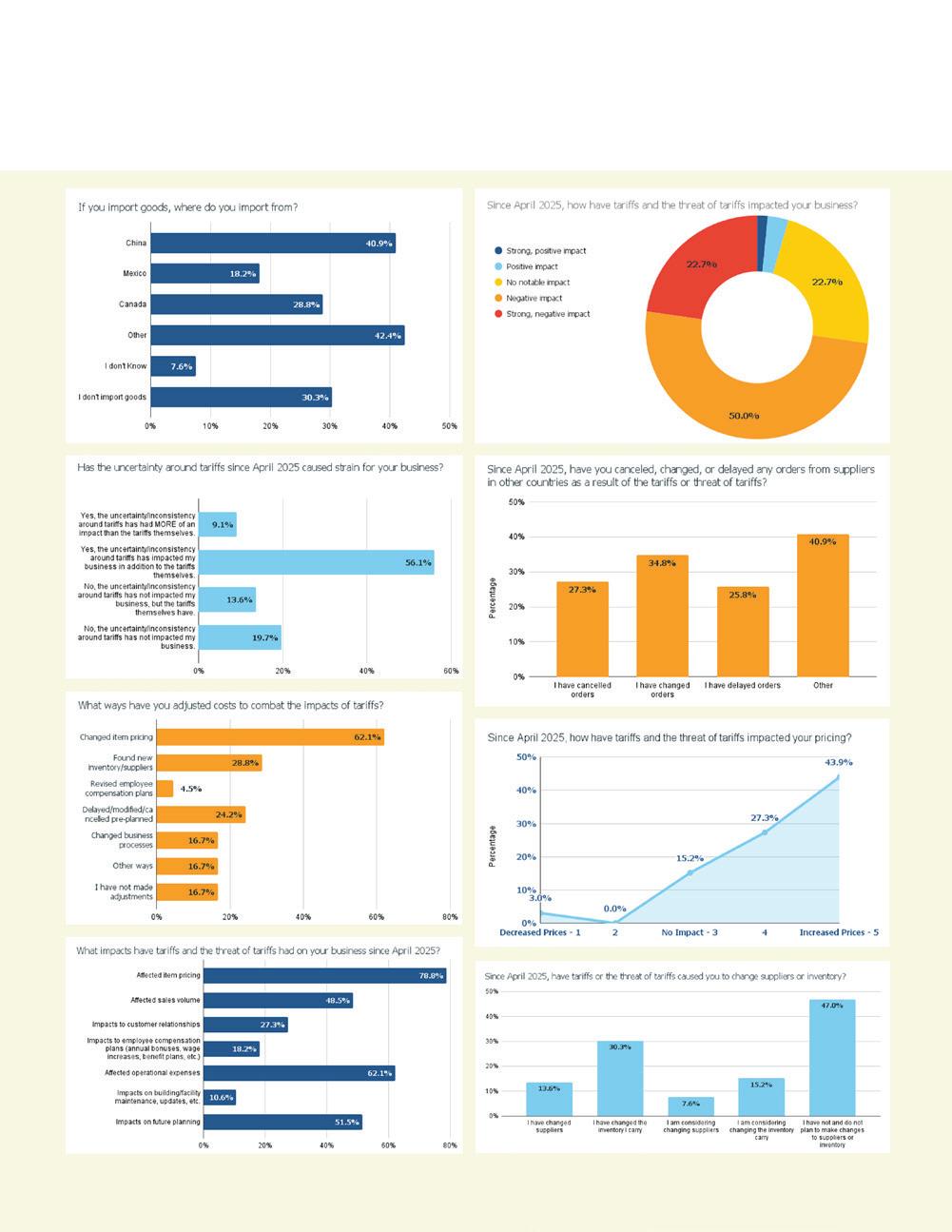
Following the United States Supreme Court ruling, MRA conducted another poll to measure the impact tariffs had on retailers since April 2025. Nearly 75% of respondents reported a negative or strongly negative impact, and more than half (56.1%) said uncertainty surrounding tariffs had affected their business.
Increases in inventory prices top the list of tariff impacts for retailers. One member business surveyed shared, “Tariffs have raised my cost of goods by $50,000 this year.” But impacts to pricing aren’t the only direct impact of tariffs, as retailers have had to make adjustments in other areas of their businesses as well.
When asked about the direct impact of tariffs and the threat of tariffs on their business, 62% of retailers surveyed shared impacts on operational expenses, 51.5% have experienced impacts on future planning, and 48.5% have seen changes to sales volumes.
term due to excessive tariff cost increases. Customers are wondering why pricing is changing regularly and why certain


The survey response demographic represents primarily small businesses, with more than 80% of retailers who responded to the survey being single-location retail businesses, and 85% of respondents employing fewer than 25 people.
View the survey online:

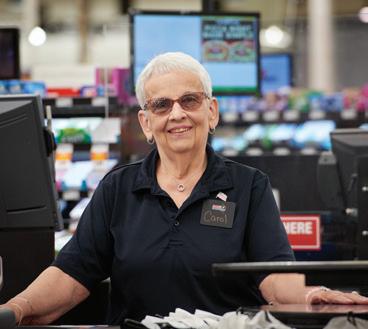


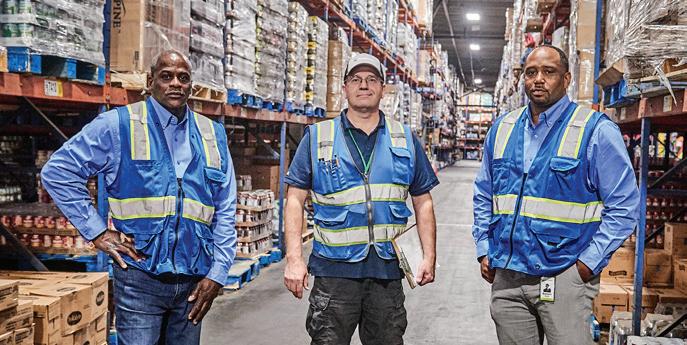






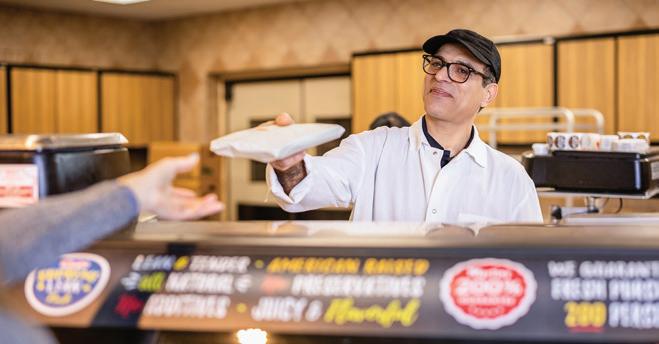


WE DELIVER FOR INDEPENDENT GROCERS.

SpartanNash is a food solutions company that combines decades of retail experience with a global supply chain network. And now, as part of the C&S Wholesale Grocers family of companies, we serve even more communities, delivering end-to-end grocery solutions to independent retail customers across the U.S.
We’re experts in wholesale distribution, offering affordable, turnkey solutions, marketleading products and best-in-class support services — all provided by team members committed to keeping you informed, efficient and profitable.
Regulatory Rundown
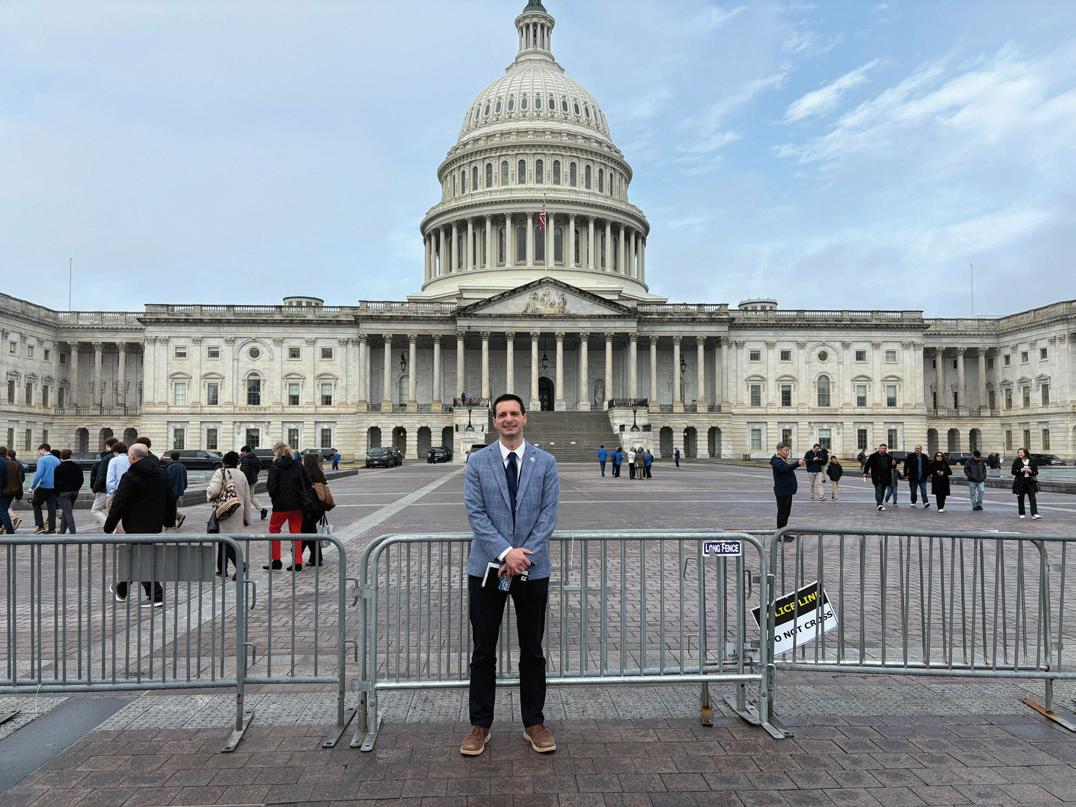
MRA in Washington, D.C.
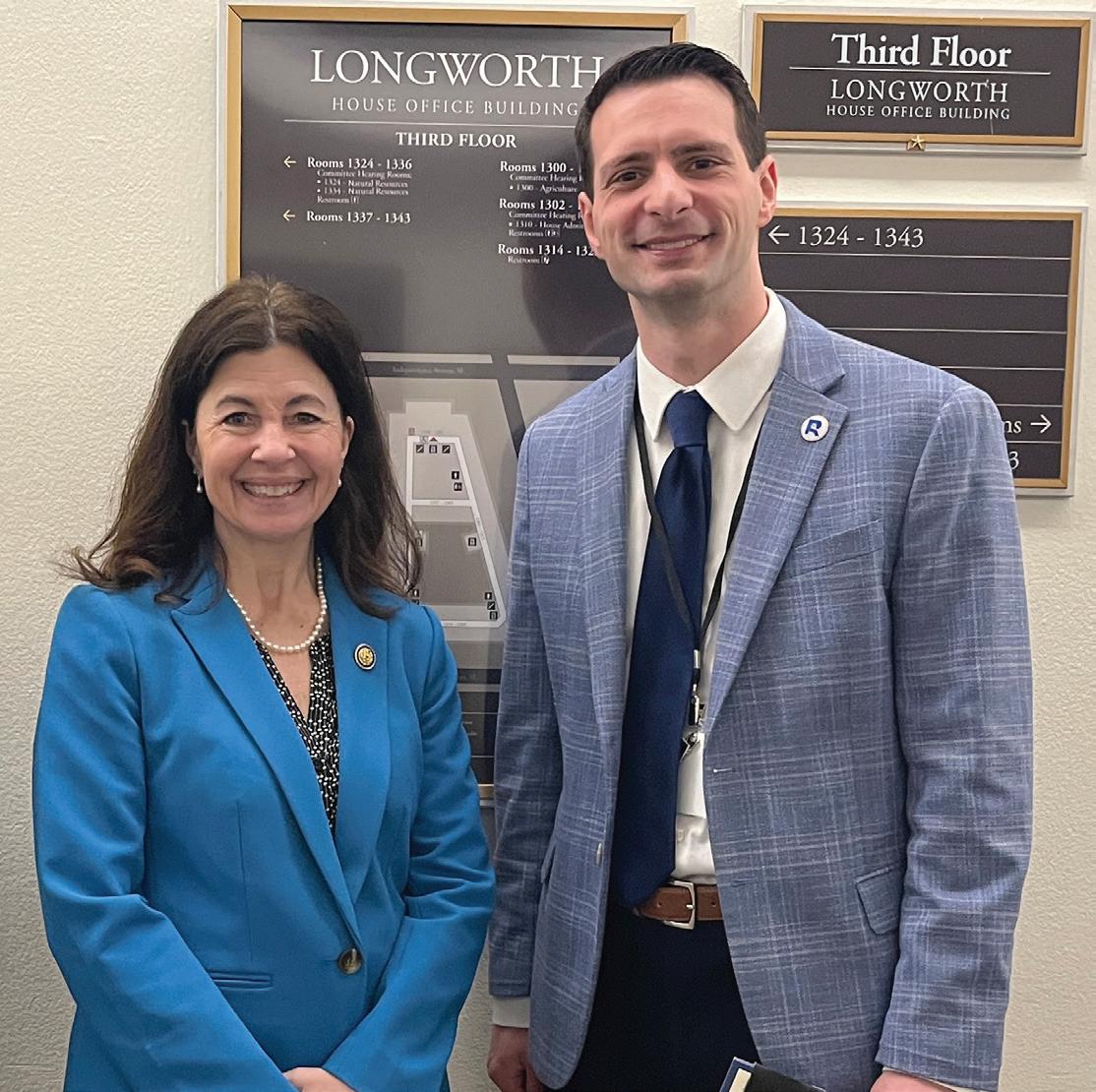
MRA’s Vice President of Government Affairs Drew Beardslee was in Washington, D.C. this spring to advocate for several of the Association’s federal priorities. While in town, Drew thanked Congresswoman Lisa McClain’s (R-Bruce Twp.) office for her sponsorship of H.R. 3074, the Common Cents Act, which would allow retailers to round cash transactions to the nearest nickel in the wake of the recent phaseout of the penny. He also talked tariffs and organized retail crime with Congresswoman Kristen McDonald-Rivet (D-Bay City), who is a co-sponsor of H.R. 2853, the Combating Organized Retail Crime Act (CORCA), which would enhance coordination between state and federal law enforcement in investigations of large-scale retail fraud.
Additionally, Drew partnered with GoRail, an advocacy organization of the nation’s freight rail systems, to advocate for sound investment in infrastructure, as retailers depend on the predictable, uninterrupted movement of goods.
Dates & Deadlines
May – June
May 15 – Michigan Annual Report Due – Profit and Professional Service Corporations.
June 1 (on or before) – Bottle Deposit Fund Reimbursement Due – Form 2196.
Michigan.gov/taxes/business-taxes/misc/ bottle-deposit
Mid-June – lottery licenses mailed
Monthly:
Sales & Use Tax – Monthly & EFT – On or before the 20th day of the following month.
Withholding Tax – Monthly & EFT – On or before the 20th day of the following month.
Retailer’s Prepaid Wireless 911 Surcharge – Within 30 days of the close of each month. Receipt of a complete Form 5012 is required regardless of payment method.
Quarterly:
Corporate Income Tax (CIT) Estimated Returns and Payments (Jan. 15, April 15, July 15, Oct. 15)
Sales & Use Tax – Quarterly & EFT – On or before the 20th day of the month following the quarter (Jan. 20, April 20, July 20, Oct. 20)
Withholding Tax – Quarterly – On or before the 20th day of the month following the quarter (Jan. 20, April 20, July 20, Oct. 20)
Unemployment Employer’s Quarterly Wage/Tax Reports (Jan. 25, April 25, July 25, Oct. 25)

Signage can be one of the most cost-effective marketing investments for retailers, with on-premise signage often providing the best cost per impression compared to print, digital advertising, radio, television, or billboards. But so often, signage gets overlooked or deprioritized when it should arguably be at the top of your list. The power of a sign should not be underestimated. We sat down with Dane Vermeulen of Michigan Imagery in Lansing to learn the dos and don’ts of signage, and to hear more about why signage matters.
“Step one, don’t be lazy on your branding,” Vermeulen shared. “Sometimes it’s the most consequential thing you can do—you need a strong logo and brand so you can have a strong sign.”
Before you invest in signage, it’s worthwhile to make sure your branding is up-to-date and strong enough to last the life of your sign. Businesses should consider refreshing their brand and communications in minor ways every 3-5 years, and in more significant ways every 7-10 years to stay current and attract new customers. Prioritizing a strong logo and brand before signage production makes your signage more effective and your investment more impactful.
Budgeting for Signage
Just as you would budget for a new website, updated shelving or racks, a comprehensive POS system, building maintenance, or other larger operational expenses, it’s important to allocate budget to signage—no matter what stage your business is in. Budget for signage should be set aside at the start of any build-out or renovation project and
should be considered a core factor in any brand update projects.
“Signage is an investment people know they have to make, but for some reason, they’re most willing to sacrifice budget on that because it feels less urgent than other things like chairs or racks,” shared Vermeulen. “But it’s a disservice to the brand in the long run to cheap out on the thing people see first.”
Digital “Electronic Message Center” (EMC) signs may come with a higher price tag up front but offer great ROI over time, compared to ongoing billboard and advertising expenses. When you own the sign and can update the messaging as you please, you can save big bucks on advertising over time.
Signage costs vary widely based on type, complexity, and vendor, so it’s a good idea to do some research on the type of sign you need and what costs look like in your area. Prioritizing your project early and providing adequate notice to your selected vendor can help you save money, too.
Tip: Explore a mix of local “mom-and-pop” sign companies alongside larger franchise operations to compare pricing, recommendations, and customer service. Select a vendor that aligns with your project’s needs and business goals.
Facade improvement grants are a great way to find funding for new signage and exterior improvements. Look for opportunities with local economic development centers, DDAs, city government, and other local business support organizations.
Types of Signage to Consider
The type of signs that suit your business best is determined by a number of factors. From building location and design to neighboring signage, zoning ordinances, traffic flow, and more, the right signage investment for your business should be determined with due diligence. Consider some of the following options:
Exterior Signage Ideas
On-building signage
• Monument signs
Roadfront signage
• Parking lot signage
Entrance and exit signs
• Seasonal/special signage
Outdoor wayfinding signage*
*Wayfinding signage is often critically underutilized by small businesses, but significantly improves customer experience and reduces staff burdens.
This list provides inspiration, but a local professional can tell you which types of signage make the most sense for your business. When it comes to finding the right signage vendor, the best thing you can do is be an informed shopper. Come prepared with basic research and terminology to be taken seriously as a customer. Have an idea of what you’re hoping to accomplish and the budget you have available.
Be open to professional recommendations, even if they differ from your initial ideas. A good signage professional will provide insight into local codes, optimal positioning, and material selection based on extensive experience.
Quality Matters
Your sign is often the first impression a potential customer

has of your business. What kind of impression do you want to leave?
Temporary signage means temporary business—or that’s what your customers might think. Investing in a quality sign sends a message to your community that your business is here to stay. Permanent-looking signage creates the perception of business stability and longevity, and can help build customer trust and loyalty.
There are great cost-effective alternatives that are more professional and durable than banners and temporary signage. Advances in technology have created costeffective solutions for even the most cost-conscious businesses.
At the end of the day, your sign is a highly valuable business asset. It speaks for your business when you can’t. When the doors are closed, the lights are off, and your daily-closeout check list is complete, your sign will remain. What do you want it to say?
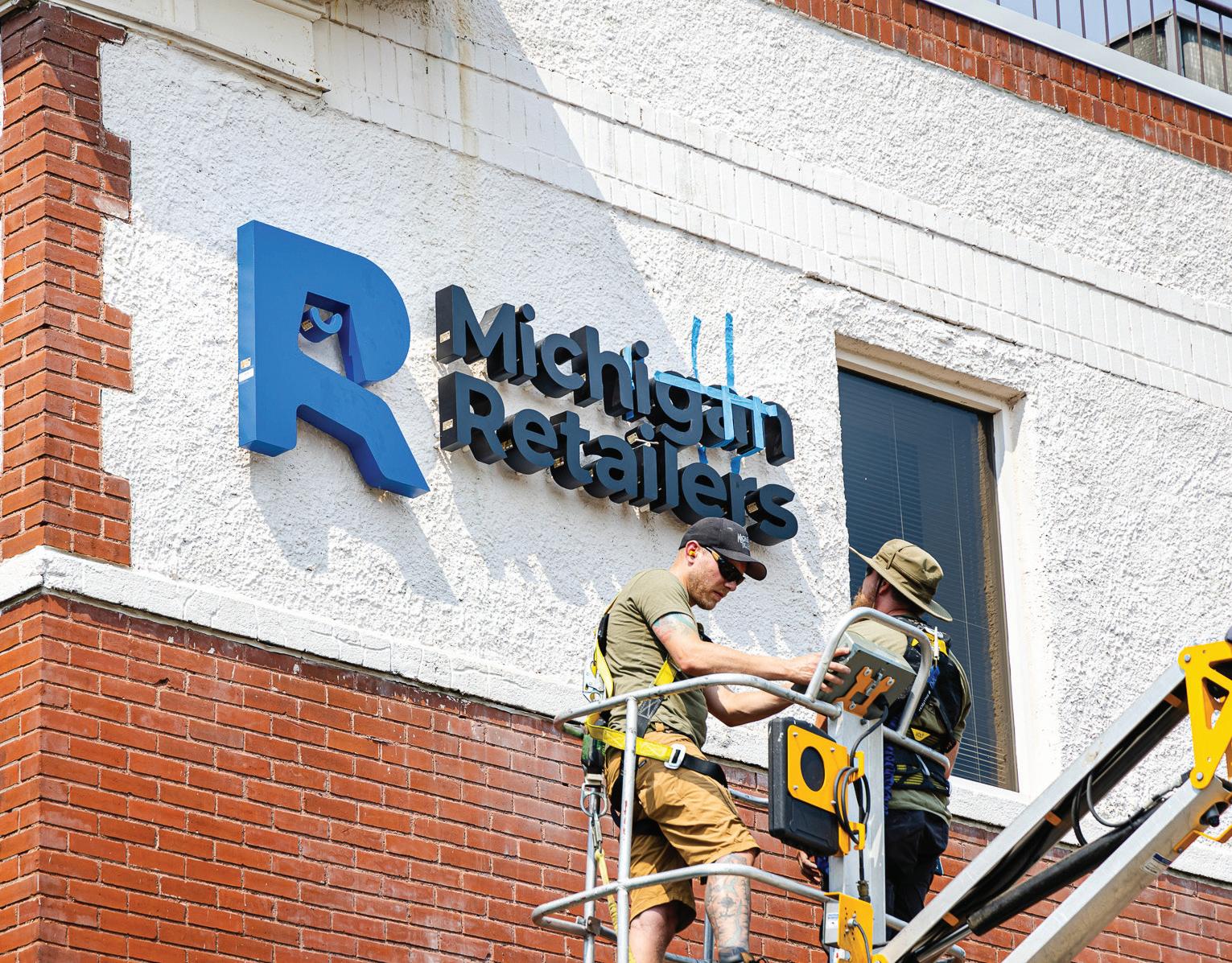
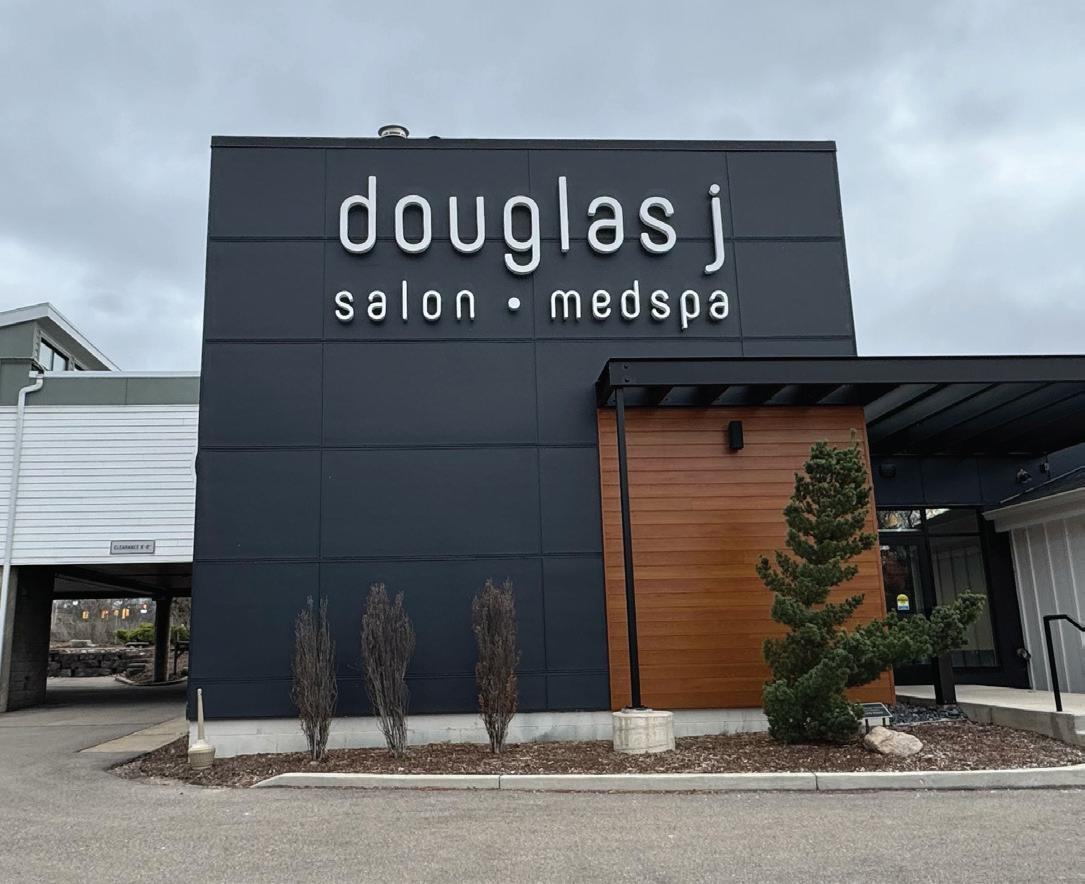
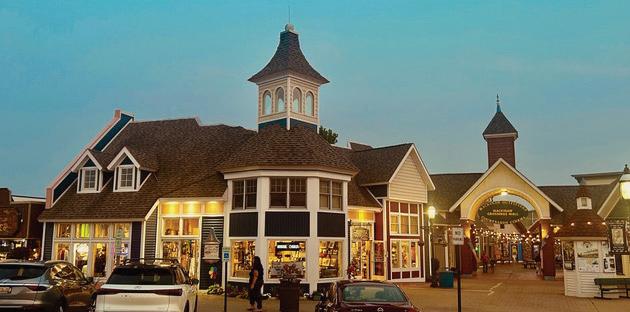
Pictured: MRA member businesses’ signage produced by Michigan Imagery.
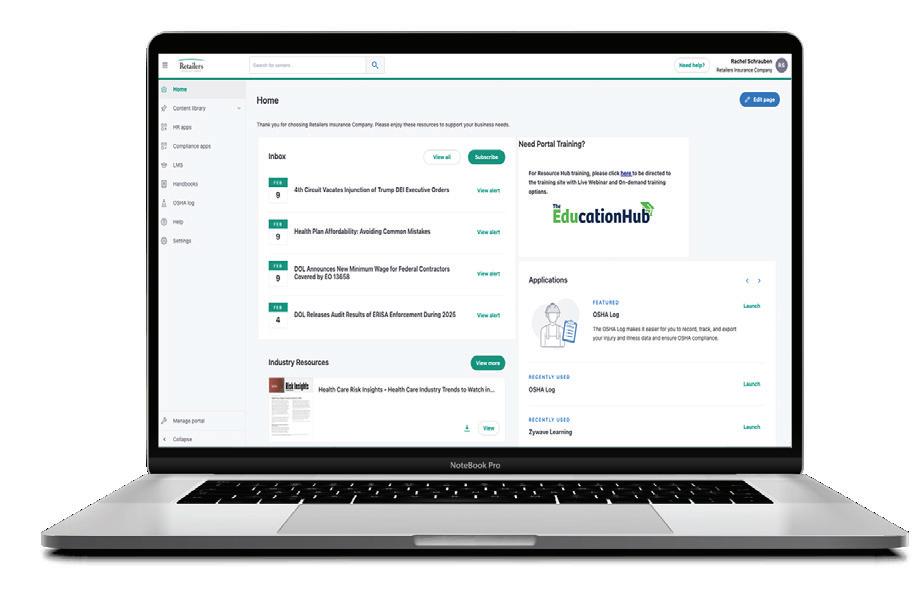
Introducing Retailers Resource HUB
Your FREE Member Resource for HR, Compliance, and Workforce Support

Training & Learning Management Systems
The Retailers ResourceHUB also includes access to a Learning Management System (LMS) with a broad catalog of professional training courses covering:
HR and workplace compliance
Safety and risk management
Employee benefits fundamentals
Cybersecurity awareness
And more!

Compliance Support to Help Reduce Risk
Staying compliant doesn’t have to be complicated. The ResourceHUB centralizes compliance tools and guidance related to key federal and state regulations, including:
• ACA, FMLA, COBRA resources Compliance notice and poster builders
• Multi-state law comparison tools
• OSHA log documentation tools
• Incident tracking and reporting support
• Calendars and reminders for important compliance deadlines
HR Support & Workforce Tools
The ResourceHUB includes a comprehensive suite of HRfocused tools to support hiring, performance management, retention, compensation planning, and employee communication, including:
Job description and interview question builders
Performance review tools with customizable action plans
Salary benchmarking and total compensation statements
HR self-assessments to identify strengths and improvement areas
Why Every Business Needs a Return-to-Work Program
By Kurt Dettmer, Senior Vice President, Insurance Sales and Business Development
A Return-to-Work (RTW) Program is one of the most powerful cost-control and employee-retention tools available in workers’ compensation management.
According to national data referenced in the Return-toWork Program Guide :
When an employee is off work for six months, only 50% return to the workforce.
When an employee is off work for a year, only 5% return to the workforce.
When an employee is off work for two years, they virtually never return to the workforce.
The longer an employee remains off work, the higher the claim cost, the greater the lost productivity, and the lower the likelihood of return.
Business Benefits of a Return-to-Work Program
• Reduces claim costs
• Reduces lost productivity
• Improves employee morale
• Demonstrates leadership commitment
• Protects skilled workforce
• Controls insurance premiums
• Reduces fraud exposure
• Improves safety culture
Additionally, workers’ compensation premiums are directly influenced by experience modification (MOD) ratings. A structured RTW program reduces lost-time claims, which:
• Lowers indemnity payments
Reduces claim reserves
Improves MOD factors
Protects long-term premium stability
Preserves workforce continuity
Employee Benefits of a Return-to-Work Program
• Maintains income stability
• Maintains work routine
• Speeds recovery
• Reduces emotional and financial stress
• Preserves job security
Teysen’s Gifts Celebrates 100 Years Welcoming Travelers To Mackinaw City
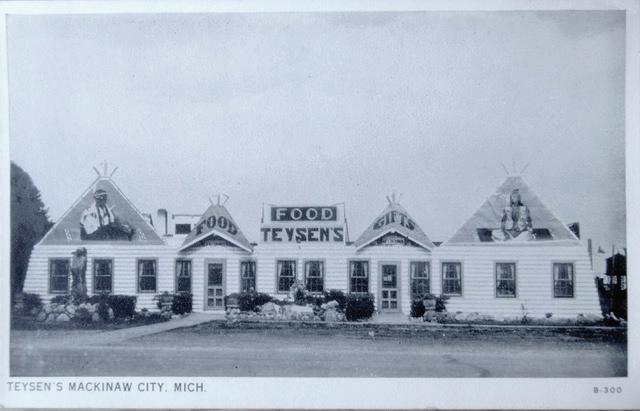
Travelers visiting northern Michigan have been coming through the doors of Teysen’s Gifts Inc. for almost 100 years. The familyowned store is known for welcoming people and building strong friendships with customers and workers.
In 2026, the Mackinaw City shop will mark its 100th anniversary. It’s a milestone owner Greg Teysen still finds remarkable.
“I haven’t been there the whole hundred years,” Teysen said with a laugh. “But some seasons feel like it.”
Teysen’s Gifts is located at 300 E. Central Ave. in Mackinaw City and welcomes visitors traveling through the Straits of Mackinac. Like many nearby shops, the store is open during the busy tourist season and closes in the winter when fewer people visit. It opens each spring again when travelers return.
The business has followed Michigan’s travel seasons since it first opened.
The company began in 1926 when Teysen’s grandparents moved to the Straits area after recognizing its importance as a travel hub.
“The Straits of Mackinac has historically been a meeting place,” Teysen said. “Anyone traveling north, south, east, or west passed through here.”
His grandfather, Harry, once worked as a manager at the Saginaw Club, a private club in that city, and used his experience to open a restaurant and gift shop. After serving in the Army Air Corps in World War II, Teysen’s father, Ken, attended Michigan State University to study hotel and restaurant management and came home to help grow the store’s retail business.
Making their mark
In the mid-1990s, Greg and his wife, Vicki, took over the family business. They made two defining changes.
“We were raising two young boys, and the food business takes a
By Shandra Martinez
lot of time,” Teysen said. “We decided to get out of food service and focus strictly on retail.”
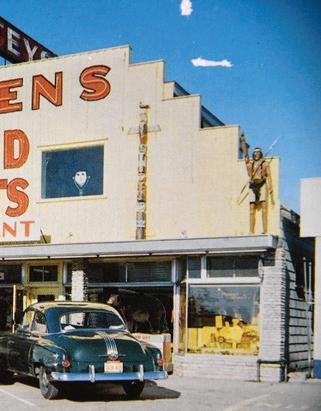
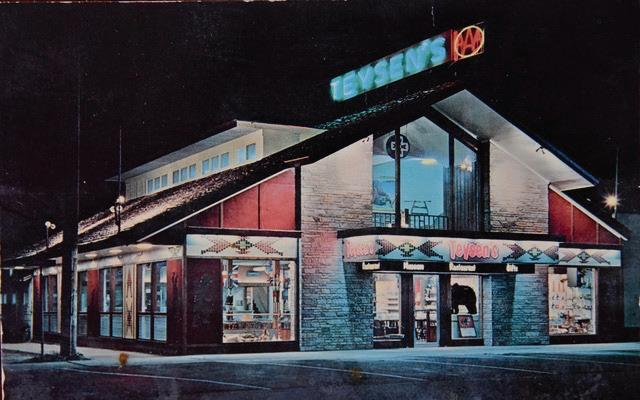
Also, the family relocated the business about a half-mile north to its current site, positioning the store along one of Mackinaw City’s busiest commercial corridors.
Visibility plays a major role in attracting visitors passing through town. Teysen credits both location and presentation with helping draw customers inside.
“Location, location, location,” he said. “We’re right on the main drag and at the entrance to a major shopping area.”
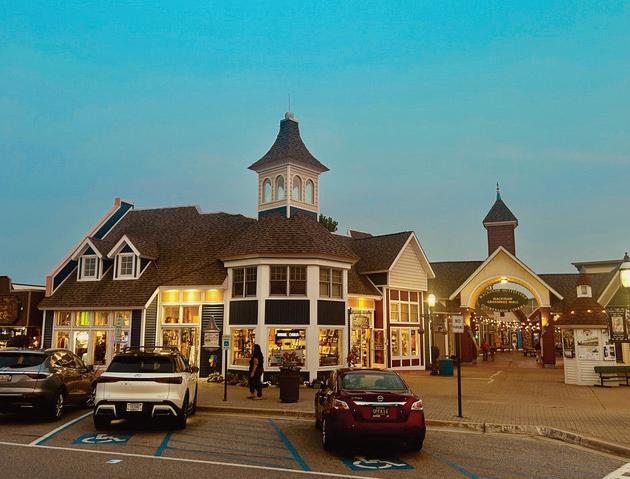
Local zoning ordinances limit the size and placement of signage, making storefront appearance especially important.
Teysen follows a simple rule: how a store looks on the outside matters before customers even walk in. An open door, a clean building, and clear signs help people feel welcome when they visit for the first time.
“It’s important to keep things clean, vibrant, and inviting,” Teysen said. “We like having our doors open whenever possible. It’s almost an invisible welcome telling people, ‘Come on in.’”
Three pillars of success
Teysen says the business has lasted so long because of the strong relationships built with customers and workers over many years.
“Our success really stands on three pillars,” he said. “Returning customers, a great staff, and strong


relationships with our sales reps.”
Loyal workers have helped the business succeed. Many employees have worked there for years, and summer workers often come back later to visit while on vacation.
“One of the best parts is when former staff alumni come back and share their positive employment stories and what they got out of working for us, beyond just receiving a paycheck”, Teysen said. “That’s a real blessing.”
Customers have also turned visits into family traditions.
“We hear stories all the time, someone’s grandparents came here in the 1930s, and now the grandkids are visiting,” Teysen said. Those personal connections helped carry the business through changing retail trends and economic challenges.
“Without loyal customers, dedicated staff, and understanding reps, we’d be dead in the water,” he added.
MRA keeps business up to date
Teysen’s Gifts has been a member of the Michigan Retailers Association since 1995. The business participates in MRA’s workers’ compensation services and relies on the organization’s industry resources and publications.
“My dad’s philosophy was keeping your mental radar on,” Teysen said. “You stay competitive by knowing what’s happening in your industry.”
Stores are always changing because shoppers want new things and retailers face new challenges. Learning from industry news helps small business owners stay updated on prices, products, and how they run their stores, especially in this high-tech world.
“Customers walk in asking, ‘What’s new?’” he said. “You don’t want to rely on what worked 10 years ago.”
Teysen said one big benefit of being part of the Association is seeing how other businesses handle problems.
“You learn from what other businesses do well—and sometimes from their mistakes, too,” he said.
Pondering the future
Over many years, Teysen’s Gifts faced hard times, changes in travel, and the COVID-19 pandemic. This made Teysen think about how earlier family members kept the business going during
difficult times.
“I gained a whole new appreciation for how my grandparents made it through the 1930s and ’40s,” Teysen said. “I don’t know how tourist businesses survived the Depression, but it takes ingenuity.”
When COVID-era travel rules were lifted, many visitors came back to northern Michigan.
“It felt like people had been stuck inside,” he said. “When travel opened back up, everyone wanted to get out again.”
Celebrating Their Milestone
As Teysen’s Gifts approaches its 100th anniversary in 2026, Greg and Vicki Teysen are reflecting on decades spent welcoming travelers to northern Michigan.
“My wife has never really had a summer off,” said Teysen, 72. “We’ve always been here taking care of customers. It’s been a wonderful life, but we’re also looking forward to experiencing some of the places we’ve heard visitors talk about all these years.”
Even as they think about retirement, the couple is excited to celebrate this special year with the workers and customers who helped the business reach 100 years. Once again, the Teysens will soon open their doors to travelers searching for souvenirs, conversation, and a warm welcome, much like visitors have done since 1926.
“Ninety-eight percent of the people who walk through our doors are happy to be here,” Teysen said. “If we can add a little joy to someone’s vacation, then we’ve done what we set out to do.”
The Teysens’ philosophy is summed up in their mission statement that is framed and displayed for all to see.
“To glorify God by being a faithful steward of all that is entrusted to us, and to have a positive influence on those who we come in contact with.”
ADA Reasonable Accommodations in a Retail Setting
By Justin Skibin, MA, CBSP, GCDF, CMCS, CCSP, ADAC Michigan Department of Labor and Economic Opportunity
For retailers, one of the most important components of ADA compliance is providing reasonable accommodations that allow qualified individuals with disabilities to perform their jobs effectively.
Under the Americans with Disabilities Act, an individual with a disability is someone with a physical or mental impairment that significantly limits one or more major life activities. This definition also includes individuals who have a record or history of such an impairment, even if they do not currently have a disability, and individuals who may be regarded or perceived as having a disability.
What is a reasonable accommodation?
A “reasonable accommodation” is any adjustment to the work environment or the way tasks are normally performed that enables an individual with a disability to enjoy equal employment opportunities. These accommodations are intended to help employees perform the essential functions of their roles while reducing employment-related barriers.
The Accommodation Process
The accommodation process generally begins with the interactive process, a collaborative conversation between the employee and employer to determine what accommodation may be effective. The process often includes:
Initiating the accommodation request
• Obtaining documentation or diagnostics if necessary
• Assessing accommodation options through communication and collaboration
• Selecting and implementing the accommodation
• Measuring effectiveness and following up over time
Retailers should note that accommodations must not cause “undue hardship.” This means an accommodation may not be required if it would be too costly, technically infeasible, or would fundamentally alter the nature of the business. Each request must be evaluated on a case-bycase basis, and employers should consider alternative solutions when appropriate.
Note: Confidentiality is also critical. Any medical information related to an accommodation should be shared only on a need-to-know basis and kept separate from personnel records.
Reasonable Accommodation Examples
Many accommodations are simple to implement. Research shows that over half of workplace accommodations cost nothing, and the average cost is relatively low—around $500. Some examples of reasonable accommodations in retail include:
Improving facility accessibility for employees with mobility challenges
Flexible scheduling or modified break times to accommodate medical needs
• Job restructuring to allow employees to focus on essential duties
• Acquiring equipment or assistive technology to support job performance
• Providing qualified interpreters or readers
• Modifying training materials, application processes, or testing procedures
Assistive technology may also be helpful. Examples include hearing aids, speech-recognition software, captioning tools, or time-management software that supports employees in performing their roles effectively.
Some of the most frequently requested accommodations include flexible start times due to medication schedules, modified break schedules, additional time for medical appointments, or specialized communication equipment.
However, certain actions are not considered reasonable accommodations, such as eliminating essential job functions, lowering productivity standards applied to all employees, providing personal-use items, changing an employee’s supervisor, or excusing violations of workplace conduct rules.
Reasonable accommodations are an important part of creating inclusive workplaces in retail. They help employees with disabilities perform their essential duties while supporting business productivity and compliance with the ADA.
Numerator: 2026
Annual Consumer Holiday Preview
Numerator’s annual holiday shopping survey asked over 5,300 consumers to share their celebration, shopping, and spending plans for popular holidays this year. The survey found that most holiday plans are finalized in the two weeks before, food and alcohol are must-haves, and most shoppers will spend over $50 on their celebrations.
Percent of Consumers Celebrating
Enthusiasm Varies By Holiday
If consumers ranked the effort put into their holiday celebrations 1-5 (low key - all out), Christmas (24% reported 5s) and Halloween (18% reported 5s) hold the highest enthusiasm.
Labor Day (26% reported 1s), St. Patrick’s Day (25% reported 1s) New Year’s Eve (24% reported 1s), and Memorial Day (23% reported 1s) rank among the most casual holidays with the lowest effort to celebrate.
Planning Happens Two Weeks Out
Most holidays are planned 1-2 weeks in advance (almost half of consumers prefer this planning period)
Halloween, Hanukkah, and Christmas take longer, 1-2 months to plan
Cinco de Mayo is the most spontaneous holiday celebration, with 35% making plans 1-2 days in advance
Tip: Plan ahead to hit these sweet spots. Host shorter, more robust promotions closer to the desired holiday to move holiday-themed goods.
Food and Beverages Reign Supreme
The only holidays throughout the year in which food is not the #1 purchased item to celebrate are Valentine’s Day and Halloween, because candy (their #1 item purchased) falls under its own category. Alcohol is noted as the secondhighest must-have item for half of the year’s holidays.
Tip: Consider using holiday-inspired food and beverage displays throughout your store.
Holiday-Related Travel
While most holidays are celebrated at home, there is an uptick in driving travel surrounding summer holidays and an increase in flight travel around the winter holidays.
• 26% expect to drive for Memorial Day
• 25% expect to drive for Labor Day
• 9% expect to fly for Hanukkah
8% expect to fly for Christmas
Holiday Spending
Thanksgiving, Hanukkah, and Christmas will see the highest anticipated spending, with 84% of shoppers expecting to spend more than $100 on Christmas in 2026. Lower-budget holidays included Valentine’s Day, St. Patrick’s Day, and Cinco de Mayo, when consumers plan to spend less than $50 to celebrate.
Tip: Ramp up your inventory of grab-and-go items or hot dish offerings around holidays. Traveling consumers will appreciate the convenience and ability to get back on the road quickly.
Source: Numerator 2026 Holiday Preview 1/23/2026 (n=5,339)
Welcome
New Members
WIT Management LLC, Adrian
Bud’s Garage & Auto Mortuary, Algonac
John Darr Mechanical Inc., Ann Arbor
UTEC, Ann Arbor
JSY Elder Care LLC, Battle Creek
Aurora Analytical Labs LLC, Bay City
El Anar Investments LLC, Breckenridge
DoorDash, California
PC Accounting & Tax Service Inc., Carleton
Caro Lions Club Inc., Caro
Larsen Graphics, Caro
LC Services of Michigan LLC, Clinton Twp.
Cook’s Performance Diesel, Clio
Renee Moreau, Clio
Claus Enterprises LLC, Corunna
KL Coney Island LLC, Dearborn Heights
Centerline Industrial Recycling LLC, Detroit
SM Liquors LLC, Detroit
Colombos Coney Island Inc., Detroit
Precision Care LLC, East China
Fenton Memorials & Vaults Inc., Fenton
KS Liquor LLC, Flint
Grasel Graphics Inc., Frankenmuth
Gillette Kennels Inc., Galesburg
Sparkplug IP LLC, Grand Rapids
Snap Ventures LLC, Grand Rapids
A Preet LLC, Hart
Fat Boys Pizza Inc., Holt
Statewide Sportsdome Resort Inc., Houghton Lake
Gattsbys, Howell
Chapel in the Pines Family Campground, Hudsonville
Royal Liquor 2 LLC, Jackson
STONICA Granite Countertops LLC, Kalamazoo
Kaleva Cuts, Kaleva
Terwilliger Funeral Home, Kaleva
C2 Machining LLC, Kentwood
Enterprise Labor Services Inc., Lansing
Knights of Columbus San Juan Diego Council, Lansing
Spread Goodness Day, Marquette
T & D Concrete Construction LLC, Mason
Playful Scholars LLC, Midland
Samaritan’s Way Recovery Comm Org., Muskegon
Pa Prop Opco LLC, New Buffalo
Music First, New York
Postma Monument Inc., Newaygo
LFB Inc., Prudenville
Village Hardware & Auto Supply, Ravenna
Jen & Friends Hair Salon, Saginaw
Fred Wydra & Joey Whitteberry, Saginaw
Joseph Tagliavia & Associates, St. Clair Shores
David Rice Auto Sales LLC, Schoolcraft
MCC Educational Foundation, Scottville
JGM Property Group Inc., Shelby Twp.
Yono Investments Management LLC, Shelby Twp.
Linked LLC, Sterling Heights
Priority Constructors Inc., Sterling Heights
Me Hungry Enterprises LLC, Tawas City
Crystal Mountain, Thompsonville
Northern Michigan Diesel Service Inc., Traverse City
Covell-Traverse City Chapel, Traverse City
Zenyo LLC, Traverse City
Unriehl Performance LLC, Washington Twp.
Patel Liquor Inc., Westland

Milestone Members
Thank you for your continued loyalty to Michigan Retailers Association!
If you’ve been a member for five days or five decades, our commitment remains the same: supporting your success.
Ironwood Golf Course Inc., Byron Center
Jacobsen’s Flowers Inc., Waterford
Richardson Business Mach, Grand Rapids
St. Michael Parish, Grand Ledge
West Michigan Surgical Specialists, Wyoming
Wuskowhan Player’s Club, West Olive
Arvron Inc., Grand Rapids
Blackrocks Brewery LLC, Marquette
Component Engineering, Wyoming
Cubby LLC, Traverse City
East Congregational Church, East Grand Rapids
Gregory’s, Lansing
Kiddies’ Klubhouse LLC, Reed City
Leading Edge Tax Service Inc., Lincoln Park
Marmo Meccanica Parts & Services Inc., Pontiac
Michigan Statewide Independent Living Corporation, East Lansing
Miles of Golf, Ypsilanti
Swartz Creek Area Senior Citizens, Swartz Creek
Veterans of Foreign Wars of the USA, Lansing


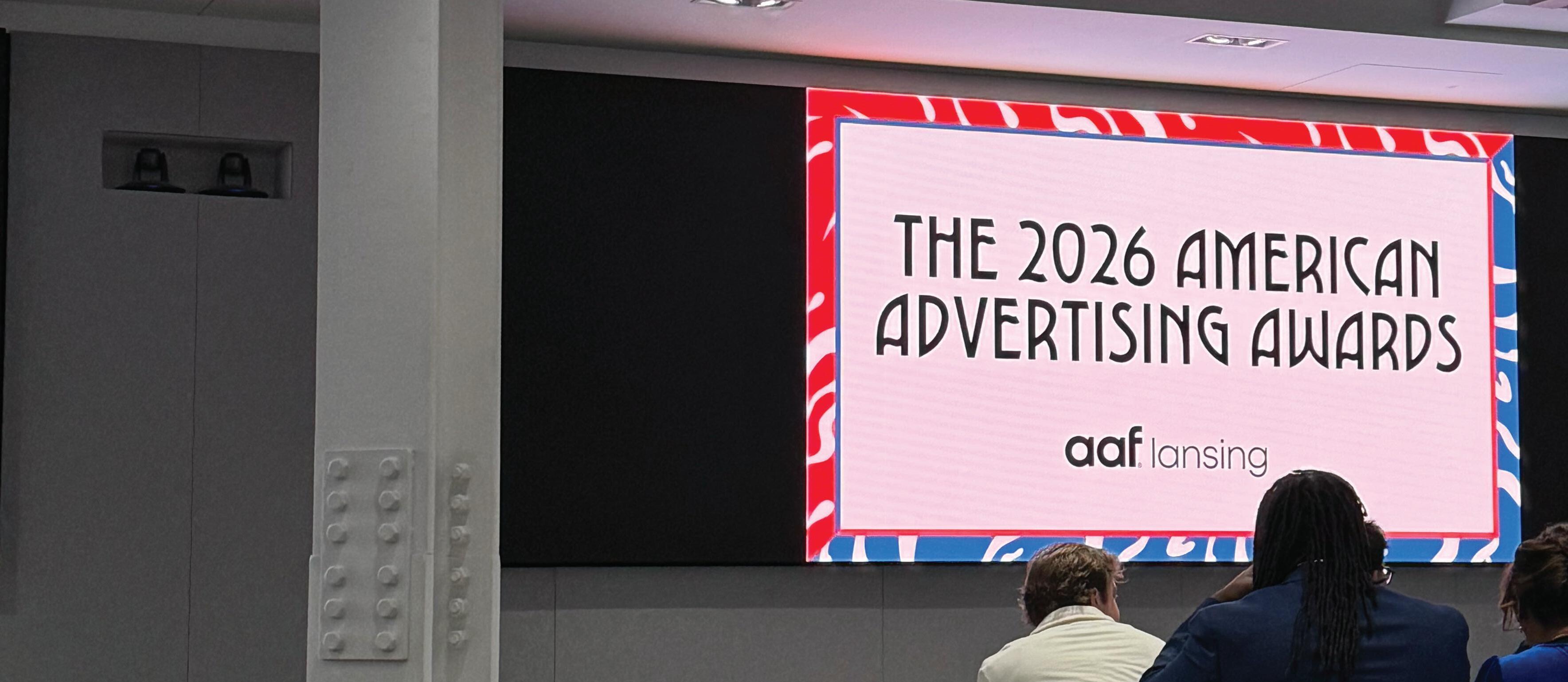
Michigan Retailers Association Marketing Team Wins Gold Addy from AAF Lansing

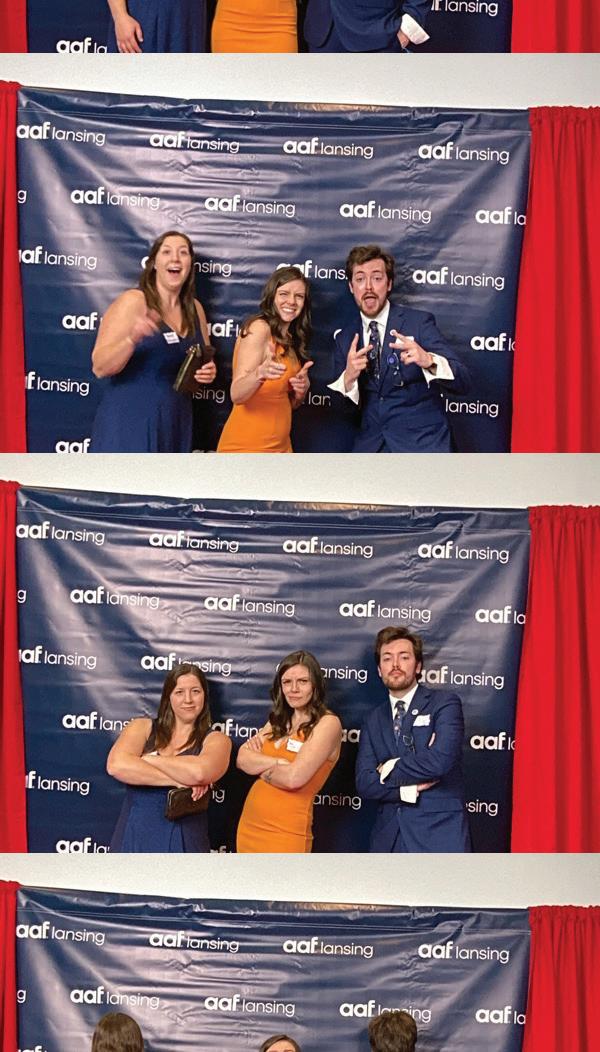
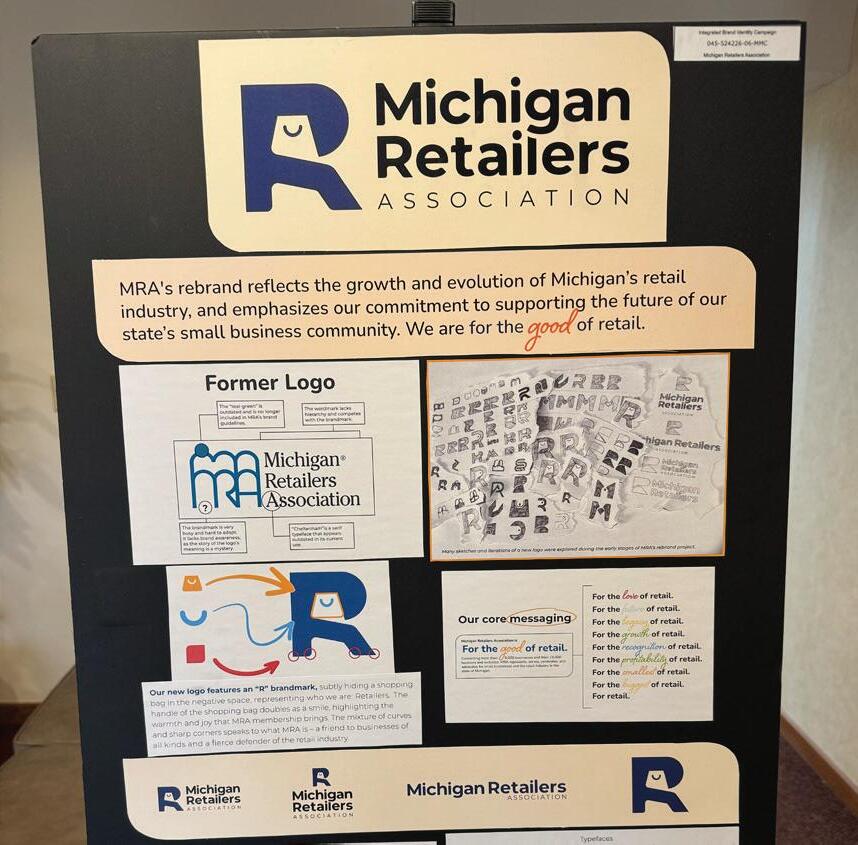
Michigan Retailers Association received recognition from the American Advertising Federation, Lansing Chapter, for the rebrand project completed in 2025, accepting a “Gold Addy” award at the Fire and Ice Awards Gala in East LansingIn February
“I want to share a note of special recognition to our marketing team – VP, Communications, Vic Veda, Marketing Director, Rachel Schrauben, and Creative Manager, Josh Delany, for their work to bring this concept to life. For the good of retail!”
- William J. Hallan, President & CEO