UMich finalizes purchase of Textile Road parcel for planned Ypsilanti data center
“The site selection process remains active, with no established timeline for a site selection decision.”
and its potential impact on the electrical grid and environment.
The University of Michigan finalized the purchase of 124 acres of land by Textile Road in Ypsilanti Township Wednesday afternoon. Combined with an adjacent 20 acre parcel already owned by the University for a total of 144 acres, the land is one of two potential sites for the data center it intends to construct in collaboration with Los Alamos National Laboratory.
The data center has met opposition from township residents and members of the University community due to concerns over its planned use in the development of nuclear weapons
ANN ARBOR
Local officials say the University has not properly communicated with the township throughout the site selection process.
The Textile Road site — which is adjacent to the Huron River, a public park and an affordable housing development — has drawn particularly strong opposition from township officials, who would prefer to see the data center built on an industrial site owned by the American Center for Mobility in Willow Run.
Local officials allege that the University’s negotiations with ACM are being conducted in bad faith and they are not seriously considering the Willow Run site.
In an email to The Michigan Daily, Paul Corliss, assistant vice president for public affairs and internal communications, wrote that the University has not yet selected a site for the data center.
“Securing the Textile Road parcel ensures the university maintains access to this viable option as due diligence continues,” Corliss wrote. “The site selection process remains active, with no established timeline for a site selection decision, and includes rigorous evaluation of both the Textile Road site and property at the Willow Run complex in Ypsilanti Township.”
In an email posted to the Ypsilanti Township’s website, township attorney Douglas
‘This vote is the turning point’: City Council unanimously adopts Comprehensive Land Use Plan 2050
Passed unanimously, the plan aims to combat Ann Arbor’s housing shortage through mixed-use, high density development
NIKO WILSON Daily Staff Reporter
The Ann Arbor City Council met Monday evening at Larcom City Hall to hold a public hearing and vote on the city’s Comprehensive Land Use Plan, which outlines significant zoning reform to guide the city’s development through 2050. The plan was unanimously approved and aims to broadly expand Ann Arbor’s housing supply by systemically eliminating exclusively single-family zones to allow the construction of duplexes and triplexes.
The City Planning Commission began developing the plan in 2023. It will replace five active planning documents: the Natural Features Master Plan, Land Use Element, Downtown Plan, Sustainability Framework and South State Street Corridor Plan. The Comprehensive Plan is not legally binding, instead providing recommendations for future zoning ordinances through 2050.
During the three-hour public hearing, 27 residents advocated for the plan and 27 residents argued against it. Speakers were associated with a variety of resident groups including Neighbors for More Neighbors Ann Arbor and A2 Pause the Plan, which have mobilized public support and opposition, respectively, to the plan since its introduction. Ann Arbor resident Adam McCue spoke in favor of the plan, which he believes will improve both housing supply and affordability.
“Data strongly suggests that housing costs are directly correlated with homelessness,” McCue said. “The richest people in an area get first pick. Middleincome people get second pick.
Anything left over is left to the poorest among us, and the poorest of them usually fall off the ladder. At this point, it should be pretty obvious that the solution to this is to build more housing and provide more supply.”
Ann Arbor resident Claire Tobin said the plan doesn’t place enough emphasis on affordable housing, and raised concerns about neighborhood gentrification.
“Without strong antidisplacement policies, rental protections and real affordability commitments, increased density will intensify the pressures that are already pushing longtime residents out,” Tobin said. “The housing we are actually seeing built today is overwhelmingly luxury development that many of the people who live and work here cannot realistically afford.”
The Comprehensive Plan outlines three primary land use categories for the city. The residential category allows singlefamily homes, duplexes and triplexes; transition areas permit moderate-density housing, offices and commercial uses along transit routes and hub areas allow the highest density developments and mixed-use zoning in the city’s primary commercial districts. With this system, Ann Arbor joins a growing list of cities that have ended or restricted exclusively single-family zones.
Ann Arbor resident Peter Houck said the city is moving in a more inclusive direction by allowing for more varied housing.
“I’m hoping to live in Ann Arbor for the next 40 years, and I’m hoping to do it surrounded by aging parents and young adult children and their families,” Houck said. “They will need viable housing options here in the city, or else they
will be forced to go somewhere else. Single-family homes are likely not what they will need or be able to afford.”
Ann Arbor resident Tricia Hackney raised concerns the plan will prioritize luxury developments over housing for lower- and middle-income residents. Hackney said the plan will harm senior citizens, accusing the council of bias toward studentoriented development.
“As a 40-year citizen of Ann Arbor, I think it’s important to have people on council who represent the public — unfortunately, city council members represent companies, not residents,” Hackney said. “Seniors got the vibe a long time ago, courtesy of the CLUP, that they are not valued because of their age. … Councilmembers need to represent all constituents, not just the top 20% and the young.”
Single-family zoning originated in 1916 in Berkeley, Calif., and has been widely adopted in Ann Arbor neighborhoods since the city began zoning in 1923. LSA junior Aaron Puno urged the council to adopt the plan, arguing past zoning policy forced a large portion of Ann Arbor’s workers to commute from outside the city.
“The intransigence of the past must not be allowed to poison the future of so many thousands of Ann Arbor people desperate to call this great city home,” Puno said. “We must build more homes. We must pass this plan tonight, in this very moment.” Throughout the last few months, the City Planning Commission held a public hearing, surveyed more than 3,100 residents and met with numerous neighborhood associations. CONTINUED AT MICHIGANDAILY.COM
NEWS BRIEFS
Lucas Mattson’s autopsy report determines official cause of death as hypothermia
Mattson’s manner of death was determined to be an accident, with alcohol intoxication as a contributing factor
Winters wrote that Chris Kolb, the University’s vice president for government relations, notified the township over text after the deal had already closed.
“Kolb notified Township Supervisor Brenda L. Stumbo via text that U of M had completed their purchase of the 124 acre parcel located on Textile Road which now brings the total acreage owned by U of M on Textile to 144 acres,” Winters wrote. “This failure to communicate with the Township continues to demonstrate the arrogance of the University.”
Corliss also wrote the University “remains in communication” with the township about its data center plans.
An autopsy conducted by Michigan Medicine Jan. 26 revealed the cause of death for 19-year-old student Lucas Mattson to be hypothermia. Mattson was found dead around noon Jan. 24 after attending a Delta Chi fraternity party the night of Jan. 22. Mattson’s manner of death was determined to be an accident.
An autopsy report obtained by The Michigan Daily stated the outside temperature was about 15 degrees Fahrenheit when Mattson was last seen leaving the fraternity party at 1 a.m. Jan. 23, before dropping to below zero early the following morning. He was wearing a T-shirt and jeans. While hypothermia was the cause of death, acute ethanol intoxication was determined to be a contributing factor. Mattson’s blood alcohol concentration measured 0.156%, nearly twice the 0.08% legal driving limit for adults in
Michigan. A sample of vitreous fluid from the eye, considered more resistant to postmortem changes, indicated a blood alcohol concentration of 0.199%.
According to The University of Toledo, individuals with a 0.2% BAC level are prone to blacking out and may require help standing up. In the report, Dr. Randy Tashjian, the pathologist who conducted the autopsy, wrote Mattson was found lying face down at a residence near the house party he attended.
“(Mattson was) discovered in a prone position adjacent to a residence by a homeowner the following day,” Tashjian wrote. The report found no signs of foul play. While Mattson was found with minor blunt force injuries, the autopsy rules out physical trauma and underlying conditions as possible contributing factors.
“There is no evidence of significant acute or recent physical trauma,” Tashjian wrote. “No features of significant natural disease are identified.”
Prof. Rogério Pinto opens art installation “ICEBREAKER” to memorialize those killed by ICE
The
art installation features the names of 52 people who have died from interactions with ICE since January 2025
MYA WEISS Daily Staff Reporter
Rogério Pinto, social work professor and multidisciplinary artist, held a private opening reception at his Ann Arbor home Wednesday evening to unveil his art installation “ICEBREAKER,” created to memorialize those killed by, or died in the custody of, U.S. Immigration and Customs Enforcement. Pinto, who teaches Social Work 864: Global ArtCentered Social Justice Practice and Self-Healing, invited 17 students from his class to attend the opening reception, along with other students, faculty and community members.
The art installation will be on display at the corner of Harbrooke Avenue and Arbana Drive until April 19. The display features a white picket fence — symbolic of the idealized American dream — which features 52 names of people who have died from interactions with ICE since January 2025. Community members are encouraged to add flowers, letters and other commemorative items to the fence throughout the next month.
In an interview with The Michigan Daily, Pinto said the ICE encounters in quiet Minneapolis neighborhoods made him think of his own community in Ann Arbor, inspiring him to install the piece in his own front yard, questioning what Ann Arbor would be like under similar conditions.
“What would happen if people began to descend upon this neighborhood pursuing people without any cause, knocking on doors without a warrant, going around wearing masks without any identification?” Pinto said.
“What does it mean to us to be under this kind of attack?”
During the opening reception, Pinto told the crowd he was inspired by a Black Lives Matter traveling memorial following the death of George Floyd, which began in a man’s front yard in Detroit.
Pinto said he wants the project to honor the dozens of people who have been killed by ICE but did not receive the same national media coverage as Renee Good or Alex Pretti.
“Renee Good was not the first to die under very horrible circumstances,” Pinto said. “It made me angry and it made me feel like I needed to do something about it. At the very least, I needed to memorialize those who had died. And this is what this exhibit is about — it is not a demonstration; it is not a protest; it is a somber event.”
Ann Arbor Mayor Christopher Taylor, who attended the event, told the audience the city has recently passed a resolution expanding its policy of noncooperation with ICE.
“We, back in 2017, passed a resolution which stated that we will never cooperate with ICE or civil
immigration enforcement,” Taylor said. “We will never cooperate and honor detainer requests. We will not sign 287(g) agreements. And, we’ve gone further with this most recent resolution: They cannot use our non-public city land; they cannot use our parking lots for staging. We will never share your immigration information should we ever learn it.” Taylor said the city is working to create extra protections for residents.
“We’re now on the cusp of putting together an ordinance which will require that the masks be taken away for law enforcement officers in the city — with appropriate safety limitations of course — and to require that law enforcement agents identify themselves, because that’s the least that we can do,” Taylor said. Pinto then memorialized the lives lost from ICE activity by asking the audience to line up in front of each name written on the fence. He passed a microphone down the line so that each member could read out one of the
GLENN HEDIN Daily News Editor
Photo courtesy of Elena Nicholson.
Ford Lake Dam, located on the Huron River, connects North and South Hydro Parks and is adjacent to the Textile Road site.
THE MICHIGAN DAILY NEWS STAFF
Grace Lahti/DAILY
Ann Arbor residents visit Professor Rogerio Pinto’s new art exhibit “ICEBREAKER”, memorializing the lives lost to ICE and detention centers Wednesday evening.
CAMPUS LIFE
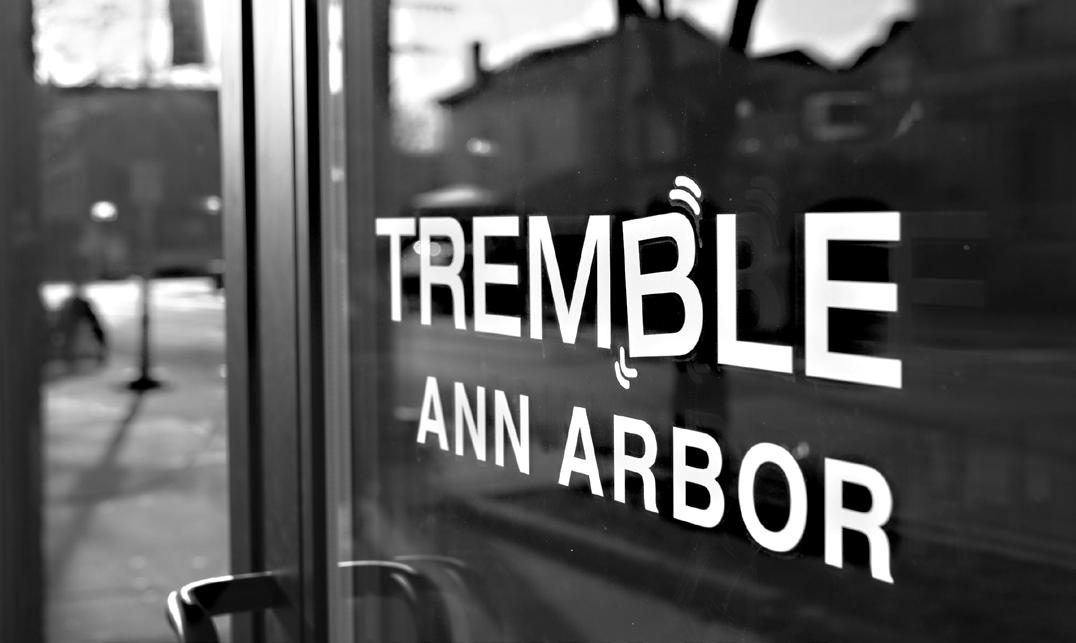
UMich alum brings national fitness franchise TREMBLE
to Ann Arbor
“I hope that people feel like they can come here, they can get a challenging, fun and effective workout.”
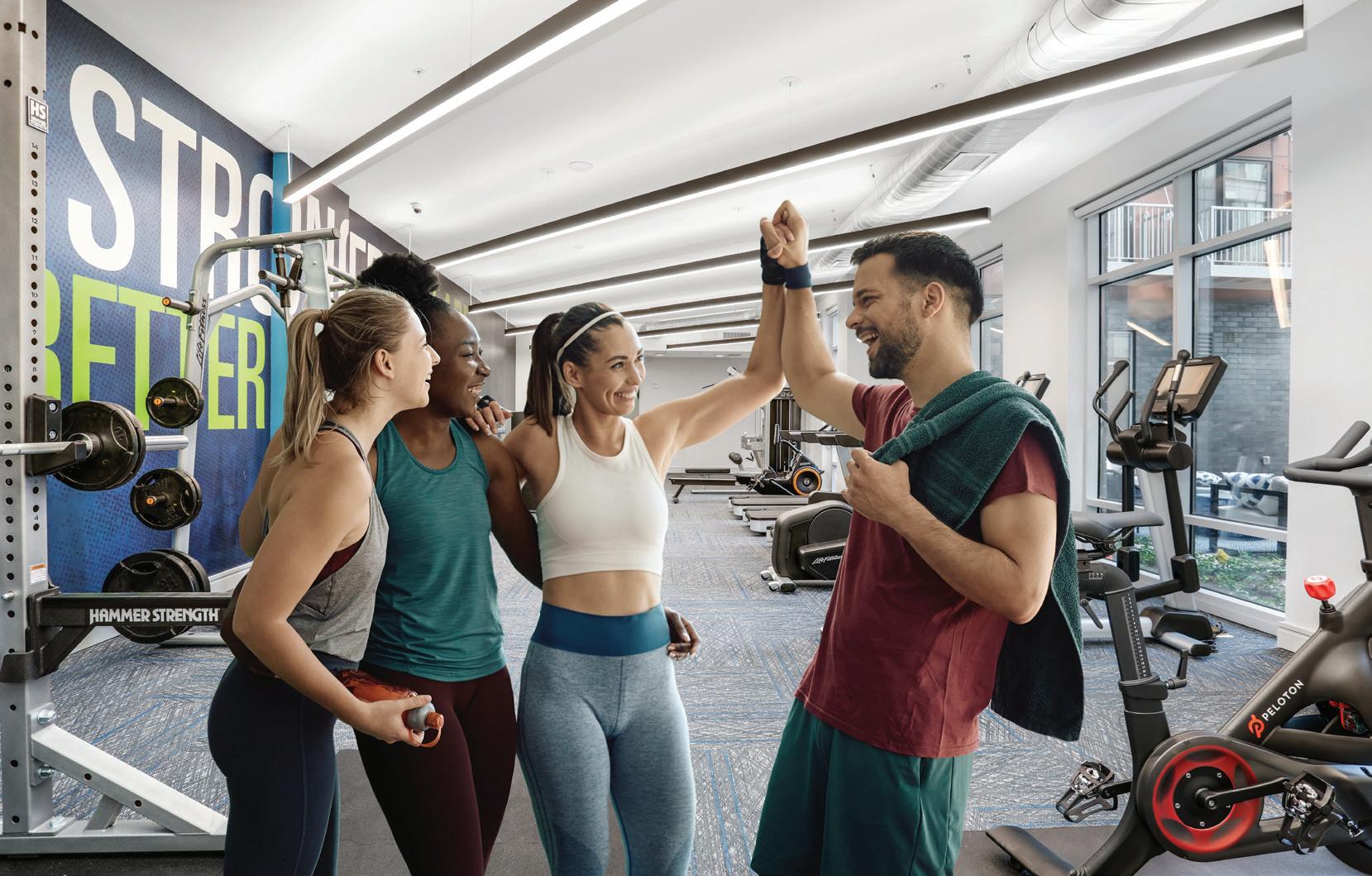
Alum Olivia Quinn graduated from the University of Michigan Ross School of Business in 2014 before working in management consulting for 10 years. After realizing that wasn’t her passion, she has returned to Ann Arbor to open TREMBLE, a franchise of the national boutique fitness studio based in Miami.
In an interview with The Michigan Daily, Quinn said she hoped to use her business background from the University to bring TREMBLE to her former college town.
“I had always loved movement,” Quinn said. “I was a dancer growing up through high school; I didn’t dance in college. So I decided to combine these two things: my business experience with what I love actually spending my free time doing.”
After taking her first TREMBLE class in Dallas during a bachelorette trip, Quinn said she fell in love with the Pilatesbased workout class’ fusion of
cardio and strength training. Quinn emphasized that her own experience as a student in Ann Arbor played a major role when deciding the studio’s location.
“I really wanted to be on campus, because Ann Arbor was an amazing experience for me as a student,” Quinn said. “I wanted to really be in the heart of things and part of the Ann Arbor community.”
Located on 417 E. Liberty St., the studio was designed by University alum and architect Sydney Filippis, Quinn’s former sorority sister from Delta Delta Delta. Quinn said her own experiences during her undergraduate education informed her understanding of what students would want in a fitness class.
“I do think convenience for people is a huge thing,” Quinn said. “I hope that people feel like they can come here, they can get a challenging, fun and effective workout, they can fit it into their day and they can better meet their goals.”
One of the studio’s notable features is a neon sign which reads, “Those who stay will be
champions,” a quote from former Bo Schembechler, head Michigan football coach from 1969 to 1989.
Quinn said she hopes to support and work together with other Ann Arbor businesses. Her studio’s launch party on March 21 will include collaborations with local companies including Hazel Coffee, a coffee shop that opened in November 2025 on Packard Street.
“That’s important to me, to collaborate with the University and with other Ann Arbor-area organizations at large,” Quinn said. “I know Hunã is a new cocktail
bar that just opened underneath Echelon. So we’re planning to do a Tiki and TREMBLE event this summer. I just really want to get to know different business owners and the staff of all the businesses in the community.”
TREMBLE classes include strength training, cardio and Pilates inspired movements, all performed on a reformer — a frame designed to provide adjustable resistance for training and flexibility.
CONTINUED AT MICHIGANDAILY.COM
UMich in preliminary discussions to purchase Concordia University’s Ann Arbor campus
The Christian college shut down most of its in-person programs in Ann Arbor in 2025
SAMANTHA SCHAEFER
The University of Michigan entered preliminary discussions to purchase 187-acres of property owned by Concordia University, a private Wisconsin-based Christian college with campuses in several states. Concordia has experienced growing financial pains for the past two years, removing athletic programs and transitioning to remote learning, ultimately resulting in the Ann Arbor campus shutting down most on-campus academic programs after the 2024-25 school year.
In an email to The Michigan Daily, Paul Corliss, U-M assistant vice president for public affairs and internal communications, wrote that the University is still exploring Concordia as a potential acquisition.
“The University of Michigan is in preliminary discussions to explore the possibility of acquiring property currently owned by Concordia University,” Corliss wrote. “Significant due diligence is required before any decisions are made about the property or its potential use.”
Susan Suleski, Concordia spokesperson, similarly declined to share specific details about the business transaction with The Daily, writing that the university “will share additional information as updates become available.”
According to reporting by MLive, many associated with the University felt that Erik Ankerberg, president of Concordia’s Wisconsin board, was a major factor behind the shutdown of the Ann Arbor campus. Ankerberg was brought in to help with the financial struggles, but staff members
have complained about limited communication and an alleged lack of consideration for students and disregard of the campus as a whole.
The possibility of the University acquiring more land in Ann Arbor has sparked discussion, as it already owns about nine percent of the city.
In an email to The Daily, Taubman graduate student Jade Prange, a member of the Oglala Sioux tribe, wrote she believes that if the University decides to expand their campus on land traditionally belonging to Indigenous tribes —
which includes all of Ann Arbor — it should use the land to benefit Indigenous people.
“I believe that the University of Michigan has both a legal obligation and a serious responsibility to the Anshinaabeg,” Prange wrote. “If UofM leadership finds that the Concordia campus is a good investment, then we should urge them to set aside some, or all, of that land for the purpose of supporting the Anishinaabeg.”
In contrast, other students believe the expansion of the University’s campus will bring significant benefits, especially considering the University’s growing student population.
In an interview with The Daily, LSA senior Alan Vellenga, LSA Student Government vice president, said upgrading campus infrastructure and acquiring new property to improve the academic experience should be a priority for the University.
“We need to have facilities able to keep up with that influx of people, more classroom spaces overall, lab spaces and hire more professors,” Vellenga said.
CONTINUED AT MICHIGANDAILY.COM
Ann Arbor Public Schools receives grant to continue transition to electric buses
The $5.03 million grant from the Michigan Department of Education will fund the purchase of 10 EV buses ANN ARBOR
received $5.03 million from the Michigan Department of Education to help replace 10 buses in its fleet of 131 with electric vehicles.
In February, MDE awarded a total of $44 million to 27 Michigan school districts to replace diesel school buses with electric ones — the final round of the $125 million Clean Bus Energy Grant.
AAPS, which received the most of any school district, has a goal of transitioning all of its buses to electric vehicles by 2035.
In an email to The Michigan Daily, Liz Margolis, AAPS executive director of school safety and district operations, wrote that, while electric buses carry a higher upfront cost — about $469,000 compared to $168,000 for diesel buses — the state’s grant has allowed the district to work toward their long-term sustainability goal of zero direct carbon emissions by 2035.
“AAPS is currently in the process of exchanging the diesel buses for electric school buses to meet the goal of ending direct emissions by 2035,” Margolis wrote. “AAPS has 8 EV buses currently in service.
We have another 6 on the way, and we will be asking for the Board of Education to approve another 10 to be purchased tonight at the Board of Education meeting.”
Margolis wrote AAPS has already built electric bus charging infrastructure and completed necessary training for drivers and mechanics.
“We have built the charging structure to support the EV buses,” Margolis wrote. “We have been running EV buses for a few years now and so we are past the “learning” stage for our drivers and mechanics.”
Geoffrey Henderson, assistant professor of environmental policy and planning, told The Daily AAPS’ transition reflects a larger shift in climate policy at both the state and local levels.
“I think Ann Arbor is a national leader,” Henderson said. “But also, the state of Michigan is clearly sort
of thinking of this as a state-level policy. I think it was noteworthy that the Department of Education at the state level is making these grants and a whole bunch of different communities across the state.”
Henderson said the government should integrate climate and environmental policy with education policy.
“It is also an education issue,” Henderson said. “Kids should be breathing clean air, and schools and the transportation system that supports them should be part of the solution.”
Research from the University of Michigan found that school districts with upgraded electric school buses were associated with improved student attendance. Prolonged exposure to diesel exhaust fumes can worsen respiratory illnesses and other health conditions, causing preventable school absences.
Henderson said the grant plays a key role in broader climate strategies, particularly as Ann Arbor aims to reach carbon neutrality by 2030.
“You can’t just focus on electricity,” Henderson said. “You
Stanford Lipsey Student Publications Building 420 Maynard St. Ann Arbor, MI 48109-1327 734-418-4115 www.michigandaily.com
EDITH PENDELL and ZACHARY AJLUNI Co-Editors in Chief eic@michigandaily.com
CICI COPENHAVER Business Manager business@michigandaily.com
NEWS TIPS tipline@michigandaily.com
LETTERS TO THE EDITOR tothedaily@michigandaily.com
EDITORIAL PAGE opinion@michigandaily.com
have to really look across all of the different sectors of your economy. In the U.S., transportation is the leading source of greenhouse gas emissions. … The next really big wedge to tackle in addressing climate change is that transportation piece of electrifying cars, trucks, buses and so forth.”
LSA sophomore Elaina Furton, an Erb Institute undergraduate fellow, said in an interview with The Daily she would be in favor of funds from the Clean Bus Energy Grant benefiting urban communities such as Detroit, where transportation emissions have affected air quality.
“I definitely think it should be expanded to communities like Detroit, especially Southwest Detroit, because there are so many transportation emissions,” Furton said. “Since automobile pollution is the leading cause of pollution, especially in states like Michigan, it’s more than a surface-level solution. I feel like it could have real impacts in these communities, especially with attendance rates and how children are impacted by asthma and other respiratory issues.”
KATE PARAMBO Creative Director MORGAN ORTH Strategy Manager
OLIVIA AVERSANO Daily Staff Reporter
Zayd Ahmad/DAILY
The TREMBLE Ann Arbor studio, set to open March 21.
Grace Lahti/DAILY
Part of the Ann Arbor Concordia University’s Ann Arbor campus, which could be aquired by the University of Michigan.
CSG
hosts ‘Meet
the
Candidates’ event for upcoming winter 2026 elections
Students spoke to candidates about their platforms in preparation for the March 25 and 26 elections
ZAHRA
KAGAL Daily Staff Reporter
The University of Michigan Central Student Government hosted a “Meet the Candidates” event in the Wolverine Room of the Michigan Union Tuesday evening. The event, held in preparation for the upcoming March 25 and 26 CSG elections, allowed candidates to share their platforms and speak with students ahead of the election.
LSA sophomore Summit Louth, a CSG representative, is running for president under the Human Rights Party. Louth said his campaign hopes to both expand existing CSG programs and address gaps in affordability and student support.
UMich transfer student launches ‘swipe-right’ mentorship app
Louth cited student safety as a key point of his platform, highlighting concerns over U.S. Immigration and Customs Enforcement presence on and near campus.
“The Central Student Government and the University has made very few attempts to make students feel safe from ICE,” Louth said. “ICE has been a very menacing presence around Michigan. … One of the biggest things that I want to do is to create a hotline — which I’ve already been working on — for students being detained by ICE, to call the University, get connected to legal support immediately, so that if they are detained, you know they’re not detained for long.”
LSA junior Hayley Bedell, CSG chief of staff, is running for president under the incumbent party, EMPOWER. Bedell said her campaign is focused on enhancing student experiences through three main pillars:
“One of my biggest concerns is student organization funding,” Louth said. “We’ve seen some pretty significant cuts to student organization funding over the past year. The biggest goal of my organization — of my campaign — is to make sure that at least 65% of our budget goes towards the orgs.”
student organizations, advocacy and basic needs.
“CSG is a 501(c)(3) nonprofit, so we can’t necessarily lobby for or against any big bills, laws, legislation, etc.,” Bedell said, “But it’s still really important to us that we use student voices as a conduit, or CSG as a conduit for student voices, in policymaking on campus. Decisions that impact student life should not be made without student voices.”
LSA sophomore Tyler Hart, CSG vice speaker, is also running under EMPOWER for CSG representative. Hart said his focus is on advancing sustainability initiatives, addressing everyday student needs and representing students of Color.
“We need to bring more diversity to the table and really bring students of Colors’ issues to administrators,” Hart said. “This is a space that is, and historically has been, predominantly white, and it is time to bring diverse voices
to the table. And I know that I have not only the experience, but the qualifications and the determination and the desire to reach out to students to achieve that goal.”
Social Work student CJ Bayley is running as an independent. Bayley, who is a social worker, said their campaign is informed by personal experiences with campus systems and focuses on oversight and accountability for the University of Michigan Police Department.
“My platform is essentially looking at how UMPD has been involved with the Office of Student Conflict Resolution, and how that’s kind of changed in the last several years,” Baykey said. “How they’ve been kind of weaponized against students — especially in regards to labor organizing — a lot of the stuff around the protests that have been happening the last couple years.”
CSG elections will be held March 25 and 26. Students can vote for candidates online at vote.umich.edu.
Nurses’ union protests ‘unsafe’ proposed higher patient-to-nurse ratios at regents meeting
“We need better staffing, not more ways for administration to cut corners.”
BRADY MIDDLEBROOK Daily Staff Reporter
The University of Michigan Professional Nurse Council protested in favor of the union’s contract demands outside the Alexander G. Ruthven Building during a University Board of Regents meeting Thursday afternoon.
About 50 members of UMPNC gathered ahead of the meeting to protest the University’s Jan. 9 proposal to increase patientto-nurse ratios in Michigan Medicine’s intensive care units and emergency departments, which the union has called “outrageous.” The union’s contract with the University will expire at the end of the month if an agreement is not reached.
The current contract between UMPNC and the University sets ICU patient-to-nurse ratios at 1:1 and emergency department waiting room ratios at 10:1. The University’s proposal would increase the ICU patient-tonurse ratio to 2:1 and remove any mandated ER waiting room ratio.
About 25 UMPNC members were allowed to attend the meeting, while other members remained outside. Picketers held signs that read, “We
Support U of M Nurses.”
Other protesters held a banner denouncing U.S. Immigration and Customs Enforcement presence in Washtenaw County that read, “March Madness is for brackets not broken families / DE-ICE THESE FLIGHTS!”
In an interview with The Michigan Daily, UMPNC President Kara Ayotte, registered nurse and the lead negotiator for UMPNC contract bargaining, said the union is protesting against increasing patient-to-nurse ratios because of potential safety risks and impacts to patient care.
“We’ve come to other regents meetings with other issues like workplace violence, health and safety, things like that,” Ayotte said. “Our focus today is around our staffing ratios and our staffing proposals. … Right now we have ratios in our contract. (The University) has proposed that we weaken those ratios, and so we could take more patients as nurses, which we know is unsafe.” Research from the National Institute of Nursing Research has shown that increasing the patient-to-nurse ratio in hospitals is linked to increases in the length of hospital stays, likelihood of patient deaths and return hospital visits within 30 days. The same research
showed increases in nursing staff can reduce per-patient costs for hospitals by reducing return visits and length of hospital stays.
In an interview with The Daily, UMPNC Vice President Aaron McCormick, a registered nurse, said these changes could negatively impact patient care and make it more difficult for nurses to effectively treat complex cases.
“(The proposal) would lead to a decreased level of focus on the patient,” McCormick said. “We have to monitor those IV values; we have to monitor their labs; we have to make sure that we’re totally abreast of the situation so we know everything going on, so we can make sure we’re not doing anything that could be detrimental to the patient. Our nurses deserve to focus, and our patients deserve to be focused on.”
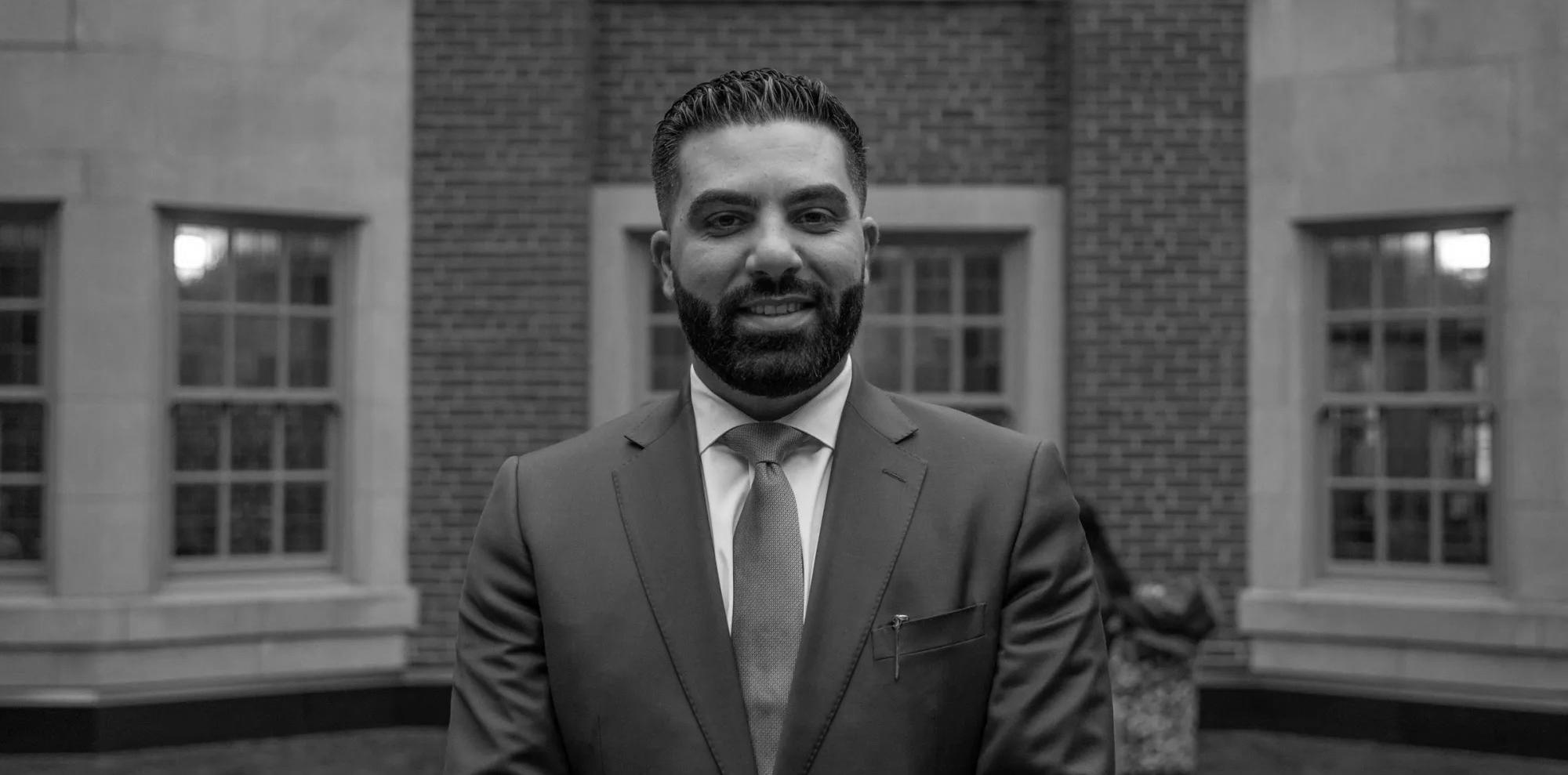
Amir Makled, a civil rights lawyer running for the Board of Regents as a Democrat, also attended the picket. In an interview with The Daily, Makled said he supports the union and pledged to listen to the concerns of Michigan Medicine nurses if elected.
“I stand with the Michigan Nurses Association and the U-M Professional Nurse Council because nurses are on the front
line of patient care every single day,” Makled said. “They know what safe staffing, dignity on the job and quality care really require. As regent, I will stand with nurses, listen to nurses and fight for the University of Michigan that respects the expertise, protects patients and treats health care workers like the backbone they are.”
During the public comment section of the meeting, UMPNC member Lilah Singer argued against the University’s proposal and advocated for greater protections against workplace violence. Singer said she now suffers from posttraumatic stress disorder after being physically assaulted by a patient in January. She believes she would not have survived the attack if the hospital had been inadequately staffed.
“If we didn’t have safe staffing that day, I would not be alive today, and neither would my patient,” Singer said. “Can you imagine what happens on shifts that are not adequately staffed, which happens all the time? U-M nurses need to be heard when we bring up concerns. … We need better staffing, not more ways for administration to cut corners.
Don’t let Michigan Medicine become another hospital that our community fears to live in.”
“It’s very hard to break into a path without connections — connections are the most important thing.”
professionals and high-level students.
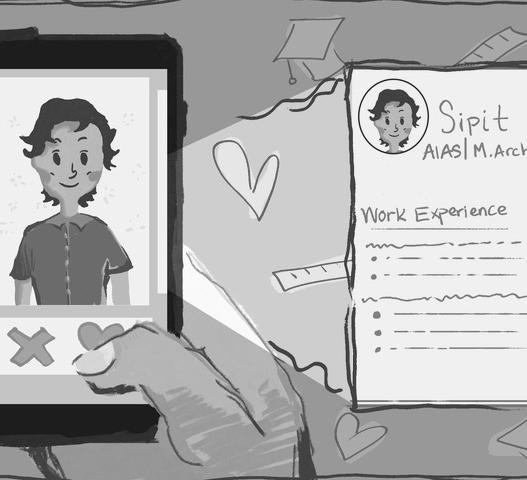
Swipe right for your match, swipe left to pass — this familiar dating app mechanic is expanding to a mentorship platform. Estad is a tool for university students that simplifies and expands access to professional connections. Ali Asfar, Estad’s founder, is currently a sophomore at Schoolcraft College and will be transferring to the University of Michigan for the fall 2026 semester.
In an interview with The Michigan Daily, Asfar said Estad is a cross between Tinder and LinkedIn, serving as a swipe-based mentorship app connecting college students with industry professionals. Asfar said he wants to give students struggling to break into professional fields an easier way to find guidance and advice during their time on campus.
“Myself and my co-founders, we were blessed with amazing mentorship, and we realized that most people don’t have access to the mentorship that we do,” Asfar said. “I had a conversation with somebody and realized how necessary mentorship is for growth, and that gave me the idea; we realized that most students are just one good mentor away from just a completely different career trajectory.”
Once the user signs in to the app, they will be queued into a waitlist. Users attending Estad’s partnering universities will input a partner program code connecting them to the waitlist for their specific school. The University’s partner code is UMICH-E26.
Once 50 mentors and 30 mentees are available, users will gain access to the app, where mentees and mentors can swipe right to connect.
Asfar said, once a match is made, the app asks mentees why they are interested in connecting and what they would like to gain from a conversation with their mentor.
“Most people don’t know what they want to do until they’re already doing something else — this is something that we see, generally speaking,” Asfar said. “It’s very hard to break into a path without connections — connections are the most important thing. And how do you really make sure that you’re able to get to where you want to get? In the simplest way possible, it is by having somebody who’s already been there before.”
In just two months, Estad has gone live in the app store and established pilot groups active across 13 universities, including Wayne State University, Michigan State University and Northwestern University.
Across each campus, the Estad team appoints students as campus operators to curate a test group of mentors and mentees and onboard industry
In an interview with The Daily, LSA freshman Gutu Kedir, a U-M campus operator, said his main purpose is to reach out to classmates and expand Estad’s network after using the platform himself as a mentee.
“I was introduced to it very early on in its development,” Kedir said. “I was able to see it grow, and now I have even been able to get involved with a cybersecurity network through Estad. I was able to find multiple mentors and mostly be picky about it.” Kedir said his conversations with mentors revolved around resume building, success tips and interviews, all aiding in his search for summer internships.
“The most helpful thing I’ve gained through Estad is definitely interview prep,” Kedir said. “I feel like I struggled a lot with that and speaking with confidence. I did a lot of mock interviews with these mentors from Estad, and they would really challenge me on the spot. Now I feel like when I do have these interviews, I will feel prepared for anything they could throw at me.”
Estad adviser Jalal Moughania, an attorney and law professor at Wayne State, told The Daily Estad’s partnership with the Mainstay Foundation, a global faith-based organization providing education and development resources for underserved communities, drew Moughania to the project. He said throughout his career, he has been involved with mentorship in a number of ways and supports the Estad team by providing feedback on their ideas.
“I think one of the biggest things that mentors look for in mentees is an eagerness to learn, a willingness to be mentored and be taught and an appreciation for the time in the relationship,” Moughania said. “You’d be surprised how generous people are in wanting to help others. I see value in giving back, in investing in other people.”
Moughania emphasized the importance of having the right connections and advice in achieving true success, drawing from his own educational experience completing both his undergraduate and alaw school educations by the age of 22. Moughania said mentorship may have helped him avoid mistakes early in his career.
“Seek mentorship with the intention that you will be helping, serving, mentoring others in the future, and that may be sooner than you think,” Moughania said “Today, I still seek mentorship, and I don’t get mentored by people that aren’t themselves getting mentored, because mentorship is about learning. It’s about growing, it’s about sharing. So when you’re seeking mentorship, realize that a platform like this has the ability to keep that giving going.”
ALIANA RITTER Daily Staff Reporter
PHOTO OF THE WEEK
Vivian Tai/DAILY
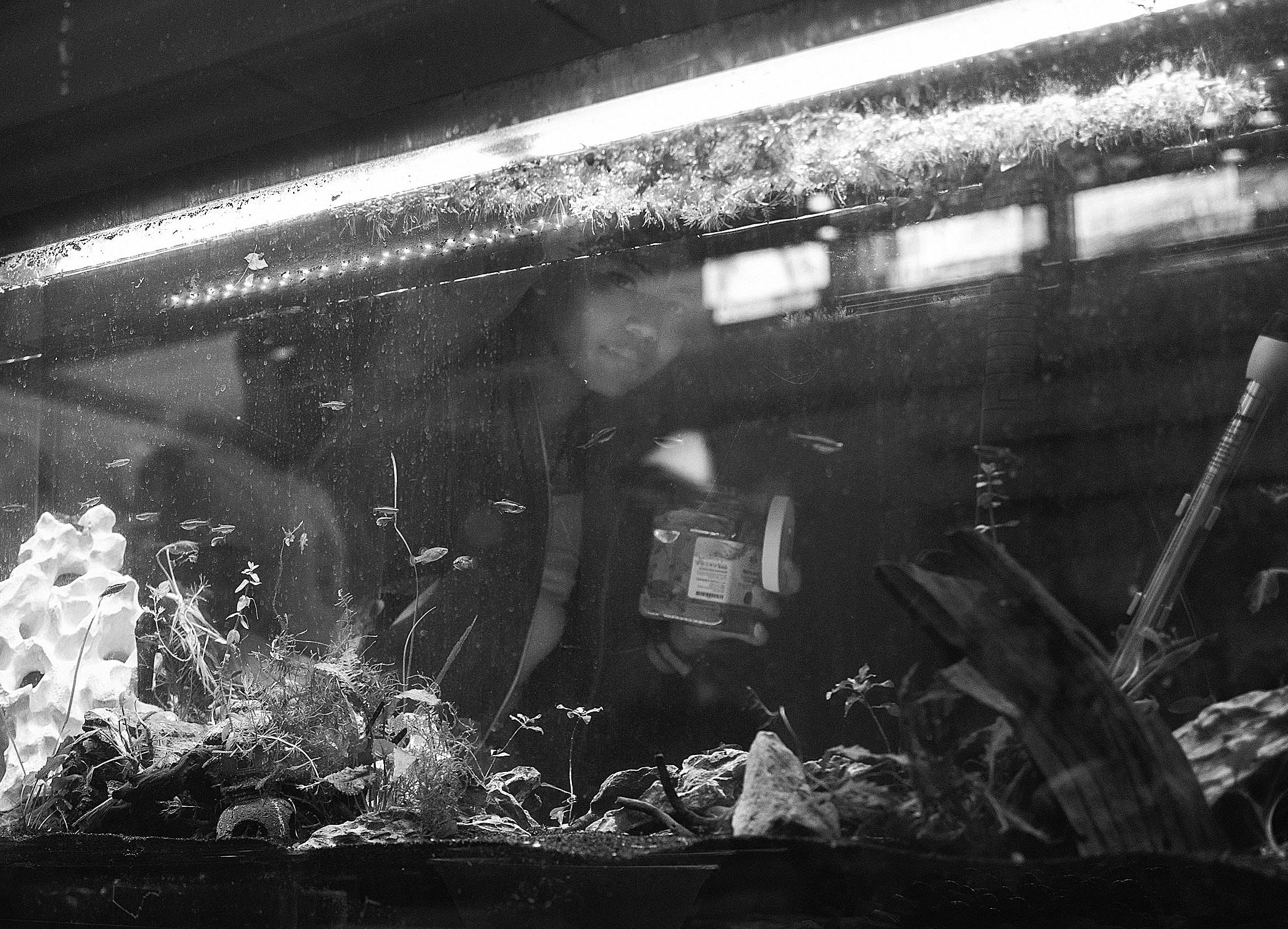
LSA senior Dominique Diokno feeds fish in the East Quad Residence Hall aquarium Friday afternoon.
Selena Zou/DAILY
The Epstein elite controlled children’s fashion. How can we process the grooming of a generation?
ISABELLA CASAGRANDA
Daily Arts Writer
Content warning: This article contains mentions of sexual assault and rape.
Abercrombie & Fitch. Bath & Body Works. Justice. PINK.
All of these brands should be familiar to those who grew up in the 2000s and early 2010s. These were the pillars of every hometown mall, the mecca for any young girl who wanted to stay on top of fashion and ease her way into looking like the woman she sought to become.
Even in her younger years, when it felt like her parents controlled everything, she could visit these stores and experience her first taste of independence.
Unfortunately, this was all a facade.
It’s no secret that Leslie Wexner, co-founder of Bath & Body Works and owner of Victoria’s Secret, Justice and Abercrombie & Fitch, was a client of Jeffrey Epstein. Wexner gave Epstein power of
attorney over his companies and eventually stepped down from Victoria’s Secret in 2021 over backlash against their very public friendship. It’s also not a secret that Jean-Luc Brunel, a modeling scout for Nordstrom, Macy’s and JCPenney who died in prison before trial on charges of rape, allowed Epstein to be the co-runner of his agency, MC2 Model Management. This partnership provided Epstein a front-row seat to the selection process for models who would serve as the faces of prominent storefronts.
But these connections were not known to the public as they walked through the mall 20 years ago. Back then, brands weren’t seen as corporate entities; they were seen as marks of identity, a means of appearing tapped into pop culture. This was especially evident in the logomania trend of the 2000s, where logos were seen as the pinnacle of cool (Juicy Couture jeans, anyone?).
In the words of a retrospective blog post by American clothing
company IF … THEN WELL: “You didn’t just wear a logo. You lived it.”
This philosophy is troubling in hindsight — now we know how “you lived it” was determined by old male billionaires implicated in some of the worst sex crimes in modern memory. But there were warning signs, especially in the environment these three men fostered in their companies.
In 1992, Wexner hired Mike Jeffries to be the CEO of Abercrombie. During his time as CEO, Jeffries sexualized and exploited young male models in ad campaigns and sold thongs with suggestive phrases like “wink wink” to elementary schoolaged girls. He refused to make clothes for plus-size customers, sold racially insensitive T-shirts and maintained discriminatory hiring policies against people of Color at Abercrombie stores. As a result of mounting backlash, Jeffries resigned in 2014.
In 2024, he was arrested on allegations of sex trafficking of minors. Given that Jeffries held so much corporate power for
‘A Knight of the Seven Kingdoms’ offers a dream of spring
ROSENSTOCK
In recent years, the Game of Thrones franchise has been on shaky ground. Between an increasingly bleak wait for “The Winds of Winter,” a disappointing final season of “Game of Thrones,” a slew of canceled spinoffs and a short season of “House of the Dragon,” there hasn’t been much to cheer for.
It’s no wonder that HBO has gone back to the basics with “A Knight of the Seven Kingdoms,” providing stability with a tried-and-true story. Where Game of Thrones was said to deconstruct the fantasy genre, “Seven Kingdoms” reconstructs it; multilateral war and Machiavellian schemes are traded for a plain knight’s tale. Set about 90 years before the Game of Thrones timeline, the series follows the early exploits of renowned knight Ser Duncan “Dunk” the Tall (Peter Claffey), previously described only in vague nods to his legendary status. After the loss of his master, Ser Arlan of Pennytree (Danny Webb), Dunk attempts to establish himself as a knight, protecting the town of Ashford from the arrogant nobles who threaten its peace.
At first glance, this is an uncommonly stripped-back installment in the Game of Thrones franchise: There’s no confusion over characters with too-similar names, and the action is mostly confined to Ashford instead of continuing the continent-hopping scope of its predecessors. The greenery of Belfast serves as a simple but gorgeous backdrop for the show’s proceedings, well-suited to intimate tented banquets and muddy brawls in equal measure.
The simplicity of these details belie the emotional depth at the heart of the story, however; in an era of peace for the Seven Kingdoms, the choices of Dunk and his new squire, Egg (Dexter Sol Ansell), are what propel the
series into motion. In a poignant articulation of the series’s optimism, Egg points out the rare luck they share at the sight of a shooting star. The shooting star goes on to serve as an apt motif throughout the season. As Dunk and Egg’s distrust of nobility means avoiding the political machinations that often prove lethal in this world, they are afforded more freedom of choice than most in this world can attain. Despite opting for more familiar genre trappings, this new series manages to feel fresh in its contrast with the otherwise notoriously grim world of Westeros. This point is hammered home from the outset, with the main theme from “Game of Thrones” interpolated in the opening sequence, only to be juxtaposed with a shot of Dunk violently defecating. The series is filled with such unconventional creativity: Comedically-timed cutaways frequently fill in narrative blanks with necessary backstory, and the limits of nondiegetic music are tested in the finale with multiple jazz needle drops. Scenes flow with a playful volatility, which, remarkably, provides ample laughter without undermining the dramatic tension.
The light-hearted tone of the series also comes across in its performances. Claffey switches between shrinking timidity and steadfast chivalry with ease, while Ansell injects childlike curiosity and sass into the drama. Daniel Ings is a scene stealer as Ser Lyonel Baratheon, with charisma and raw physicality aplenty, while Bertie Carvel embodies a quiet strength as Baelor “Breakspear” Targaryen. Ings is especially notable for how his mannerisms echo those of their future kin in “Game of Thrones”: his japing evokes Mark Addy’s brilliant performance as King Robert Baratheon, and his dialogue encourages such comparisons with an antiTargaryen slant. CONTINUED AT
roughly 22 years, he was likely protected by both his own wealth and figures such as Wexner and Epstein.
In a similar vein, PINK’s controversial 2013 “Bright Young Things” marketing campaign featured lingerie with bedazzled phrases like “Feeling Lucky” and “Call Me,” sparking outrage among parents who felt that its childish design made the line more enticing to middle schoolers than the college audience it claimed to be for. PINK doubled down.
“Despite rumors, we have no plans to introduce a collection for younger women,” the company wrote. “‘Bright Young Things’ was a slogan used in conjunction with the college spring break tradition.”
For the record, I don’t believe PINK’s corporate statement for a second. When I was in middle school, I fully thought these clothes were intended for me. So did my family and friends.
In middle school, the mall was the only place where I could go to hang out with my friends since we were too young to drive. We’d be dropped off by one of our moms in a minivan, and upon entering the tacky glass palace, our afternoon would begin somewhere between the 1980s tiling and the broken radio attempting to play a Katy Perry song.
Conveniently close to the entrance, on a corner between a jewelry store and an Auntie Anne’s, was PINK. PINK is a subsidiary of Victoria’s Secret that, despite claiming to be a store for college students, very clearly makes clothes that cater toward preteen and teen girls. Think lots of glitter, warm fairy lights and pink-and-white polka dots — much like a little girl’s bedroom. If you were just window shopping, it seemed innocuous enough. Athletic jackets and gray sweatpants made it appear like just another
store where you could buy practical clothes with a feminine edge. They even had a big plushy dog that was admittedly very adorable and made the store seem inviting to middle school girls like me.
But once you entered the store, the atmosphere changed.
Suddenly, we were surrounded by booty shorts with the word “PINK” written across the butt and lacy thongs marketed for “the perfect date.” They didn’t call underwear “underwear”; they became “panties” labeled from “cheeky” to “cheekiest.” They weren’t separated by age range either, making it difficult for us to figure out which items were for tweens or grown women.
We truly assumed PINK was a kid’s store, especially since it was physically connected to the adult Victoria’s Secret store, creating the illusion of separation. One wrong turn into a side hallway and you’d suddenly be in a dimly-lit room filled with actual adult lingerie and sexual paraphernalia. Once you realized where you were, you’d turn back to the part of the store that felt intended for you, the “kids’ section” of the complex.
Of course, this isn’t a shock design-wise. Victoria’s Secret owns PINK, so on paper, it makes sense that the stores would be in the same area of the mall. But in retrospect, it was pretty concerning that an 11-year-old could enter an adult environment so easily, both in and out of the supposed safe space that PINK promised to provide.
This experience isn’t just something from my memory, either. Take a look at this 2013 catalog featuring very younglooking models wearing tank tops with the sides removed and pulling down the very sweatpants they’re modeling. Or this Reddit slideshow of memorable PINK attire,
featuring neon underwear that reads “I WANT CANDY,” a teen model suggestively showcasing a yoga bralette on a bed rather than on a mat and, of course, the “cheeky” campaign slogan I mentioned earlier. While the clothing types and phrases are geared toward a mature audience, the aesthetic choices certainly are not. The bright colors, reliance on shimmery patterns and excessively cutesy fonts align with what preteen girls would choose to wear, not the mature color palettes typical of young adult women. This odd dissonance created an environment that was sweet on the surface but truly sick once you thought about it for long enough. The intention of PINK being a “college brand” no longer matters — the babyish designs made us all think otherwise. Suddenly, the parental concern I remember all of us shrugging off when we were younger doesn’t seem so out of place. At the time, it felt like our parents were overreacting to our journey toward independence; they were getting in the way of us finding our own original styles and, by proxy, our inner selves. But as I reexamine these spaces with the knowledge that they were crafted by Epstein, Wexner and Brunel, marketed toward the target demographic for their sex crimes, I realize that the sinister undertones were never just imagined by helicopter moms. They were real. And they played a major role in establishing our ideas of what beauty looked like: To be beautiful was to be razorthin, white, hyperfeminine and smoothly half-naked. Millennials in particular have taken to the internet to share and connect with others over their collective shock at the dark realities of the brands that used to define them. CONTINUED AT MICHIGANDAILY.COM
‘Tell Me Lies’ Season 3 leaves fans divided — and I’m caught in the middle
DANIELA CASTELLO VALE Daily Arts Contributor
Few finales have fractured a fandom quite like Season 3 of “Tell Me Lies.” Premiering in 2022, the TV series follows Lucy Albright (Grace Van Patten) as she navigates college, forms close friendships and is terrorized by her boyfriend, Stephen DeMarco (Jackson White), whose influence slowly fractures their entire friend group. Their dynamic quickly becomes the epitome of a toxic relationship, making even the viewer question their sanity. Through lies, heartbreak and broken relationships, the friend group repeatedly makes selfdestructive choices.
While the first two seasons focused on the initial intensity of Lucy and Stephen’s relationship and the extremes they went to protect each other, Season 3 shifts toward the consequences of their actions, forcing the characters to confront the longterm damage of their choices. The tension that once felt chaotic now feels calculated, as past secrets resurface and unresolved conflicts
finally demand closure. This final season leaves viewers stunned as long-simmering tensions erupt and lingering threads are fully resolved.
In Season 3, we find Lucy reaching an all-time low, exhibiting subtle signs of dissociation that highlight the psychological toll of her relationship. The show refuses to romanticize their connection; instead exposing how addictive manipulation and emotional control can feel when disguised as love. Around her, the friend group grapples with their own forms of fallout. Bree (Catherine Missal) proves that growth is not linear.
Pippa (Sonia Mena) discovers her sexuality as she falls for Diana (Alicia Crowder), Stephen’s ex. Wrigley’s (Spencer House) quiet maturity contrasts sharply with Stephen’s emotional immaturity. Evan’s (Branden Cook) insecurities lead him to make questionable decisions.
The direction Season 3 takes is not abrupt; it feels like a logical progression of Lucy and Stephen’s unraveling relationship. Van Patten leans into Lucy’s quiet disorientation with restraint, making her
dissociation feel unsettling rather than melodramatic. Particularly, Lucy’s growing secrecy and paranoia reveal how Stephen’s control operates through shame, as her controversial choices become something she cannot openly defend to her friends. At times, the pacing lingers almost uncomfortably, as if the audience is intruding. While some arcs — especially Stephen’s — may feel insufficient in their consequences, this season ultimately feels like a natural destination for a series that has prioritized raw, emotional honesty.
The series consistently splits its timeline between Lucy’s college years and the 2015 wedding of Bree and Evan. This structural split forces the audience to confront consequences in real time: The choices made in youth echo long after college ends. By placing moments of betrayal alongside a future celebration, the episode underscores how unresolved damage quietly lingers beneath even the most polished milestones.
Some viewers call it the perfect ending, while others were left wanting more clarity on moments that remained deliberately
ambiguous. While some characters were finally free from Stephen’s manipulative influence, Lucy remained entangled in it until the very end. The finale does not deliver true justice or explicit consequences for Stephen’s actions. He does not face legal repercussions or public disgrace, remaining socially intact and maintaining his image of the “good guy.” Perhaps, this lack of dramatic punishment may be precisely the point. Not all villains face public ruin; sometimes the only real consequence is losing control over the people they once manipulated. Lucy’s realization about Stephen’s behavioral patterns in the final scene is deliberately unsettling and unsatisfying. There is no public reckoning, no explosive confrontation and no dramatic justice. Instead, the show leaves viewers with something quieter and more unsettling: awareness without resolution. By denying a clean resolution, the series stays true to its emotional realism. Love it or question it, the finale makes one thing clear: “Tell Me Lies” was never meant to comfort its audience, only to leave an impression.
Aylin Garcia-Solis/DAILY
SABRINA
Daily Arts Contributor
Writing (almost) ruined reading for me
The best part about reading is getting so caught up in a book, you almost forget you’re reading. Every reader longs to lose themselves within the pages of a novel, to immerse themselves fully within their imagination of what’s being described, so that the words become mere inputs for the movie within the mind. It’s only upon putting down the book, realizing that hours have passed by, that you finally return to reality. Unfortunately, I have slowly but surely lost the ability to really get lost in a book. It’s almost embarrassing for me to admit. My friends and family know me as a bookworm; it’s an innate, concrete part of my identity. I have always loved to read and will always love to read, but it’s just not the same for me today as it used to be. Yes, my attention span has gotten worse, and amid my hours of required class readings, I hardly have time to read for fun anymore. However, it is my love for writing that has fundamentally changed the way I read forever.
Don’t get me wrong — I am a firm believer that in order to write, you must be reading. A lot. It’s the equivalent of shadowing a doctor in the medical field. You must consume a million examples of what it is you’re hoping to emulate, if only to attempt it once. Like a critic in a gallery, the more I take my writing seriously, the more the lens with which I read shifts from explorer to student. Even if a book is good, I don’t enjoy it like I used to. I read with scrutiny, asking myself how and why it made me feel the way it did. Every heartfelt line stings with self-imposed criticism — I wish I wrote that.
Worse, I catch myself reading like an editor. I rearrange sentences in my mind to the way I’d prefer them, mentally adding a comma here or a different dialogue tag there. I have accidentally caught several typos in already published books, and though there is some sense of triumph in finding what a team of editors missed, it’s unnerving too. I don’t want to read so closely I notice if the wrong “their” is used. The more mental edits I make, the clearer it becomes that writing has altered my reading.
I don’t know if it’s possible to revert to my original mode of
reading. I used to read with an insatiable hunger for stories, a desire to enter worlds and explore characters and to be so fully engrossed within fiction that I never had to leave. I distinctly remember days where I would return home from the library with a stack of books in my arms — fantasy and mystery and everything in between. Rather than wait before I finished one to start the next, I would sit on my bed with the pile beside me and switch out books chapter by chapter, or whenever one plot started to bore me. Now, reading tends to feel more like a chore. Physically, my eyes are strained from hours of squinting at my screen to read hundreds of pages of assigned readings. Every day, I Ctrl + Plus my way closer to a trip to the eye doctor. Mentally, the last thing I have energy for at the end of classes, homework and club meetings is picking up a book. This, coupled with the knowledge that reading isn’t the magical experience for me that it once was, has led me to read less and less over the past couple of years.
CONTINUED AT MICHIGANDAILY.COM
Jonathan Gleason on medicine, narrative and ‘Field Guide to Falling Ill’
AVA EMERY Daily Arts Contributor
On the evening of Thursday, Jan. 29, in the crowded space of Literati Bookstore, author Jonathan Gleason read from his debut essay collection “Field Guide to Falling Ill” before sitting down in conversation with Phil Christman, University of Michigan English lecturer. The book, released Jan. 27 and winner of the inaugural Yale Nonfiction Book Prize, blends memoir, history and medical reporting to examine how illness is shaped by power, politics and narrative.
The day before his Literati event, I spoke with Gleason about his path from pre-med student to essayist, what literature can do that public health cannot and how a decade of writing shaped his book.
This interview has been edited and condensed for clarity.
The Michigan Daily: You originally trained in medicine before becoming a writer. How did stepping away from that path reshape how you think about knowledge and authority?
Jonathan Gleason: I didn’t fully understand it at the moment, but when I stepped away from becoming a doctor, I started to, ironically, see medicine differently. Physicians became these central nodes of cultural authority in the 20th century. They’re these interpreters between individuals and the specialized and very abstract world of science. When you’re inside that system, working toward becoming a doctor, it can be hard to step back and see how much of that authority is dependent on this long history and this simple transformation that happened 100 years ago. As an essayist, I get to do this.
move people from point A to point B. From illness to health and from misunderstanding to prevention. Creative writing doesn’t have that same structure. It can linger in the subjective experience. It can re-enliven historical figures who’ve been flattened or reduced. Writing, as a craft and an art, is still one of the best ways to transmit someone’s consciousness and their lived experience to others.
TMD: Your book title suggests guidance, but the book resists clear answers. If this isn’t a guide toward medical certainty, what kind of guide do you hope it is?
JG: I hope readers walk away understanding that nearly any illness or medical industry comes with a historical development and is equally influenced by culture and politics. When you walk into a doctor’s office, it can feel like this isolating experience that just arrived out of the ether. But that’s not true. We created these systems. They come from somewhere. Understanding that can be empowering. And I also hope readers feel less alone — that if they’ve felt anxious or misunderstood in medical settings, those experiences are shared.
TMD: This book took more than 10 years to write. Looking back, does it feel like a decade of illness or a decade of becoming a writer?
JG: Probably both. I can see the contour of my own development in this book. I can see a younger version of myself in certain paragraphs and ideas I was excited
about but didn’t yet have the depth, knowledge or craft to fully carry out. Over those 10 years, illnesses themselves changed, too: how we treat HIV/AIDS, for example, how we understand it culturally. So it documents development on multiple levels.
TMD: You recently earned your Master of Fine Arts and now teach creative writing at The University of Chicago. What does writing allow you to do that medicine could not?
JG: They tell you when you get your MFA that you’re training to do one thing, which is teaching at a university level. It takes a long time to become a doctor and it takes a long time to become a writer. I went abroad and started teaching English right out of undergrad. With writing as a profession, you choose where you’re going to spend your time developing, and that allows me to pay attention to the auxiliary elements of medicine in a way that I might not have if I’d pursued clinical practice. Teaching and writing go hand in hand for me. They’re both about asking questions and helping others articulate what matters.
At Literati the following evening, many of these themes resurfaced in conversation with Christman. Gleason opened with a reading from “Inheritance,” the first chapter of his book, then discussed the ethics of writing about medicine and the balance between lyricism, public discourse and research.
CONTINUED AT MICHIGANDAILY.COM
TMD: Several essays explore how illness — particularly HIV/ AIDS — becomes entangled with shame. What do you think literature can do that public health narratives often cannot?
JG: Public health is incredibly important, but it has a clear teleological goal: It’s trying to
Being a 365 cool girl is getting exhausting
to them. Though popularity tends to give something the benefit of being well-liked, it ultimately ruins anything once considered “cool.”
Charli xcx is having a major moment right now. Although her mockumentary titled “The Moment,” Poppi Super Bowl commercial and new soundtrack album for Wuthering Heights have just gone public, my preferred Charli content comes from her Substack. In her most recent post, she digs into “The Death of Cool” and dissects the idea that commercialism is destructive to the artistic world. In a way, this is very true. Spaces that have previously encouraged outof-the-box concepts and fresh perspectives have been run down by waves of advertisements and careless misinformation. Society is simultaneously more toxic and sensitive than ever before. It has become a requirement of sorts for industries and creators to cater their content and art to everyone which, as Charli xcx argues, is a terribly unrealistic and artistically fatal expectation.
Coolness comes and goes. At one point in time, it was cool as hell to wear a (now ridiculous) side part. Both Charli and her career in the music industry have fluctuated in the last 10 years; she is well-seasoned in fame and has experienced many different eras of “cool.” I have a very stark memory of attending Taylor Swift’s Reputation tour in 2018 and watching Charli perform staple childhood songs that are very different from the type of music she produces now. Her discography and online persona have warped with time to fit whichever community she aspires to build. She defines safety as boring. To play by the rules that limit creativity is to prohibit oneself from experimenting and growing. “Coolness” is a ruse created by those with fame and power to get people to pay attention
In all honesty (and to my roommate’s disappointment), I am not a devoted Charli xcx fan. That being said, I can appreciate her persona. She is “cool” by unpopular definition: She experiments with her interests and steps into musical and stylistic genres that are not as favored in mainstream popular culture, like house music and edgy fashion. Getting a glimpse of Charli’s internal monologue via her Substack humanized her for me. Yes, she is pop star royalty, but she also has conflicting thoughts about her fame. Our current definition of “cool” is twisted; the “cool” part should come from enjoying something deeply enough to bring out a display of genuine passion, not from the buzz on TikTok. In her essay, Charli writes that both a digital world and a real one “feels random and nondescript” in the absence of these differing, niche interests. Our recent cultural homogeneity and loss of the ancient texts on how to think independently is a result of this reflexive reliance on our feeds for guidance on how to live our life. We are currently in the trenches of a wannabe-influencer crisis, and I hate to break it to you, but just because both you and Charli xcx like to party and have a (questionable) crush on The 1975’s George Daniel doesn’t exactly equal BFF status. Parasociality is making everyone’s heads too big and — I’ll admit it! — I include myself! The cultural norms of modern expression — such as having to give credit to strangers for content inspiration and basing your self-worth on a number of likes — are ridiculously unserious. If you aren’t posting, you are boring. If you are posting too much, you are desperate. If you aren’t linking where your left pinky ring is from, you’re gatekeeping.
The death of cool is rooted in losing sight of the line between how you define yourself and the envy you feel for those online. Are you buying that pair of shoes because you genuinely like them, or because the girl on TikTok recommended them? I, at least, often feel a deep struggle to determine whether interests have stemmed from personal experiences or witnessing someone else experience them. Social media has created the narrative that everything is for everyone, which I hate. Content is being produced for the intention to gain attention as opposed to being created with genuine passion and interest. You can’t force art. If each person found identical connections to the same pieces of media, there would be zero room left for growth of personal opinions or integration of personal anecdotes. People are becoming far too agreeable at the fear of being canceled or “falling off,” but aligning with the publicly recognized “cool” crowd should, in return, make you cool, right? Wrong. Groups that find your interest in underground topics … interesting … are able to delve into conversation with genuine enthusiasm and intrigue. Subgroups with passionate niches are important — dare I say crucial — to truly appreciating authentic art and developing an understanding of self, if that is even possible anymore. In a time overflowing with opportunity and possibility, I feel we can do better. Better to step out, better to speak for ourselves and better to create authentically. Embrace what others may shun. If hyperfixation on fashion microtrends and widespread opinion on social media continues for much longer — I think I’m gonna die in this house.
Gabby Spagnuolo/DAILY
AMANY SAYED Daily Arts Contributor
Isabel Pohrt/DAILY
TESS TILLMAN Daily Arts Contributor
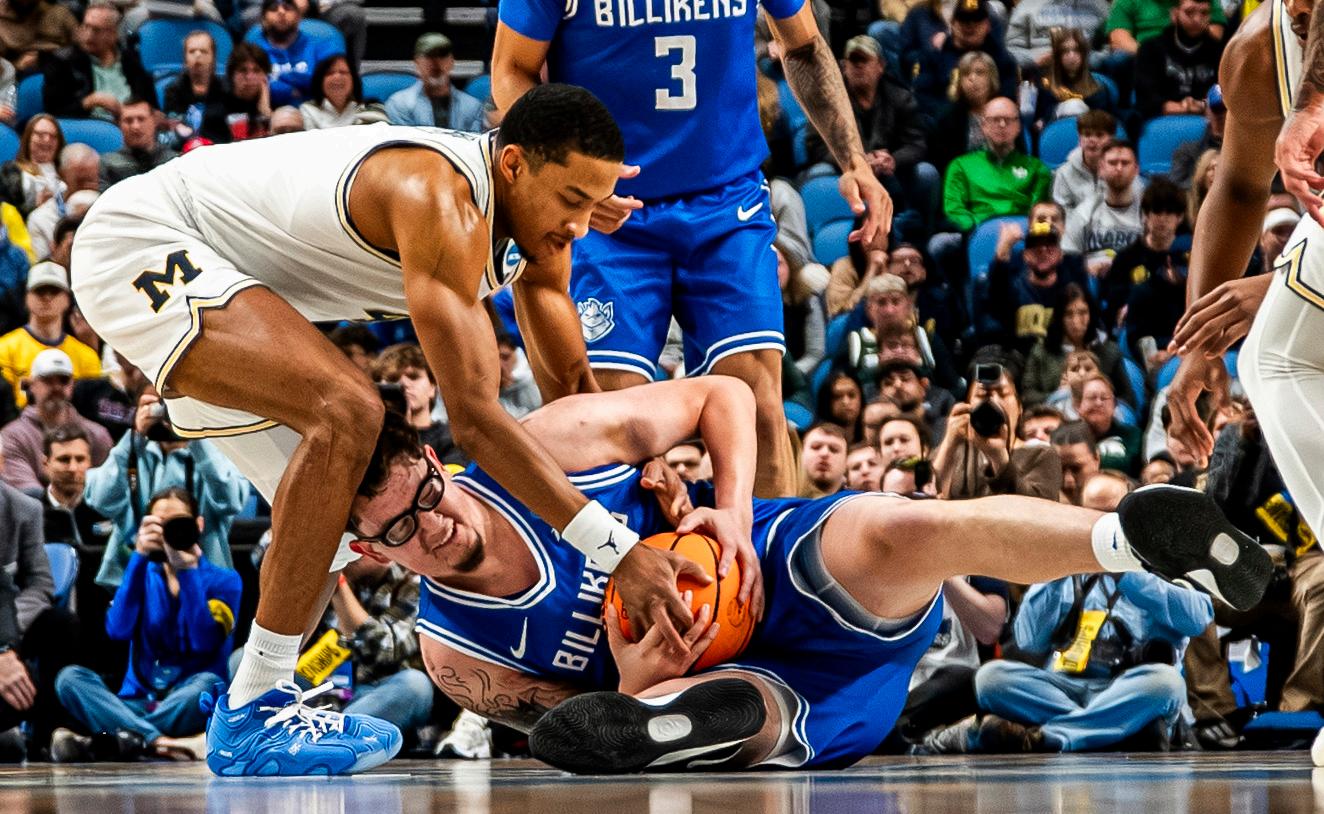
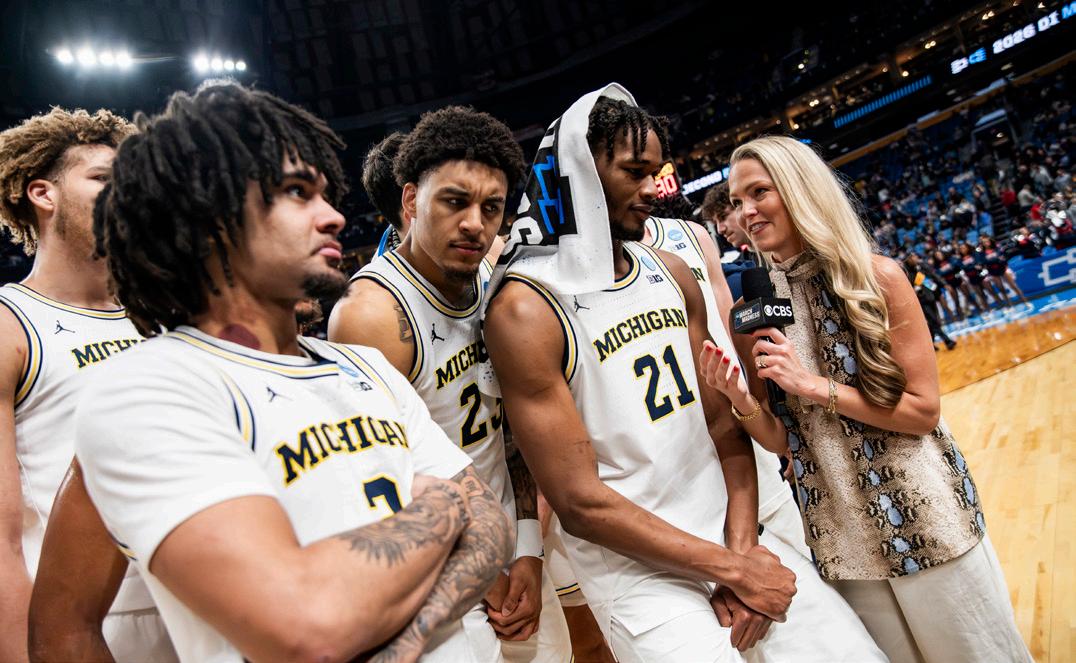
No. 1 seed Michigan wins early game of runs, coasts past No. 9 seed Saint Louis, 95-72, en route to Sweet 16
DREW LENARD Deputy Sports Editor
BUFFALO, N.Y.
— There’s not much stylistically that separates the No. 1 seed Michigan men’s basketball team and No. 9 seed Saint Louis. In fact, it’s just a couple of inches.
Both squads consist of likeminded coaches, fast-paced schemes and adept passing. The only glaring difference: size. The Wolverines’ dominant frontcourt towers over the tallest players on the Billikens roster, making the biggest contrast between the two squads the way in which they prefer to score on offense.
And Saturday, in a contest predicted to be fast long before tipoff, it was Michigan (33-3) who got the jump in a game of runs
over Saint Louis (29-6), winning 95-72. Behind 56 points from their oversized frontcourt trio, the Wolverines got to their game more consistently and more often than the Billikens to advance to the Sweet Sixteen.
“We have very, very, very similar offensive styles, which is conceptual basketball, lots of cutting, read and react, so in a sense it felt like we were guarding ourselves,” graduate forward Will Tschetter said. “We had the blueprint for what to do.”
The tallest member of that frontcourt trio, junior center Aday Mara, was unsurprisingly the catalyst through which Michigan’s offense and defense ran in the first half.
Capitalizing on entry passes to the block while giving up zero ground in the paint on the
opposite end, Mara provided the Wolverines with an advantage whenever he was near the ball. He walked into the recess with 10 points, four blocks, four rebounds and three assists, much of which came while matched up with Billikens star center Robbie Avila.
“We felt like (Mara) had a huge mismatch,” junior guard Elliot Cadeau said. “We wanted to give him the ball for sure.”
Still, Saint Louis found a way to remain in the contest early on. A 15-3 run halfway through the first half, including a few trademark threes and two consecutive and-1 finishes, brought the score to 27-23 in the Billikens’ favor.
It was an uptick in production, especially from downtown, that Saint Louis was not able to sustain. The Billikens got the looks they wanted from three, but
ended the half just 5-for-17 from their typical territory, a number far too low to pace a Michigan team on the verge of taking off.
As such, the Wolverines answered Saint Louis’ gamechanging surge with a 9-2 run of their own, kicked off by a driving layup from Cadeau. Cadeau’s game was quite complementary to Mara’s in the half, providing consistency from the perimeter whenever Michigan’s bigs couldn’t find offense down low.
Cadeau penciled in 12 first-half points, shooting 3-for-4 from the perimeter as the Wolverines carried a nine-point lead into halftime.
“I thought we did a really good job early on, (Billikens forward Brady Dunlap) got hot but then we locked back in,” Tschetter said. “I feel like all our threes were
generated off drive and kicks, one more super unselfish pass that gave us wide open looks.”
The second half continued many trends seen in the first.
The Billikens were able to find increased luck from downtown early, but Michigan hit its perimeter looks when it needed to as well. With 10 minutes to play in the contest, the Wolverines had made as many triples as the Billikens on seven fewer attempts.
The 3-point shot wasn’t the driving force of their offense, and yet they were still utilizing it better.
As a result, Saint Louis started to look rattled. The Billikens’ 3-point shot went back to mediocre as, on the other end, a healthy spread of highlightreel dunks and feeds to the rim ballooned the Michigan lead above 20 points,
with all five Wolverines starters in double digits.
The game’s pace didn’t necessarily slow down as it drew to a close, but the sheer difference in score made the final minutes seem sluggish. Throughout the final minutes, Michigan got to its spots often enough that whatever Saint Louis did on offense no longer mattered, and that 20-plus point lead was never relinquished. The game did eventually slow down with just under a minute to play, as a stoppage allowed the Wolverines bench to get some minutes in March. For the first time all night, Michigan relinquished its height advantage, an advantage that had done more than enough to secure a trip to the NCAA Tournament’s second weekend.
Alyssa Mulligan/DAILY
TO TANGO
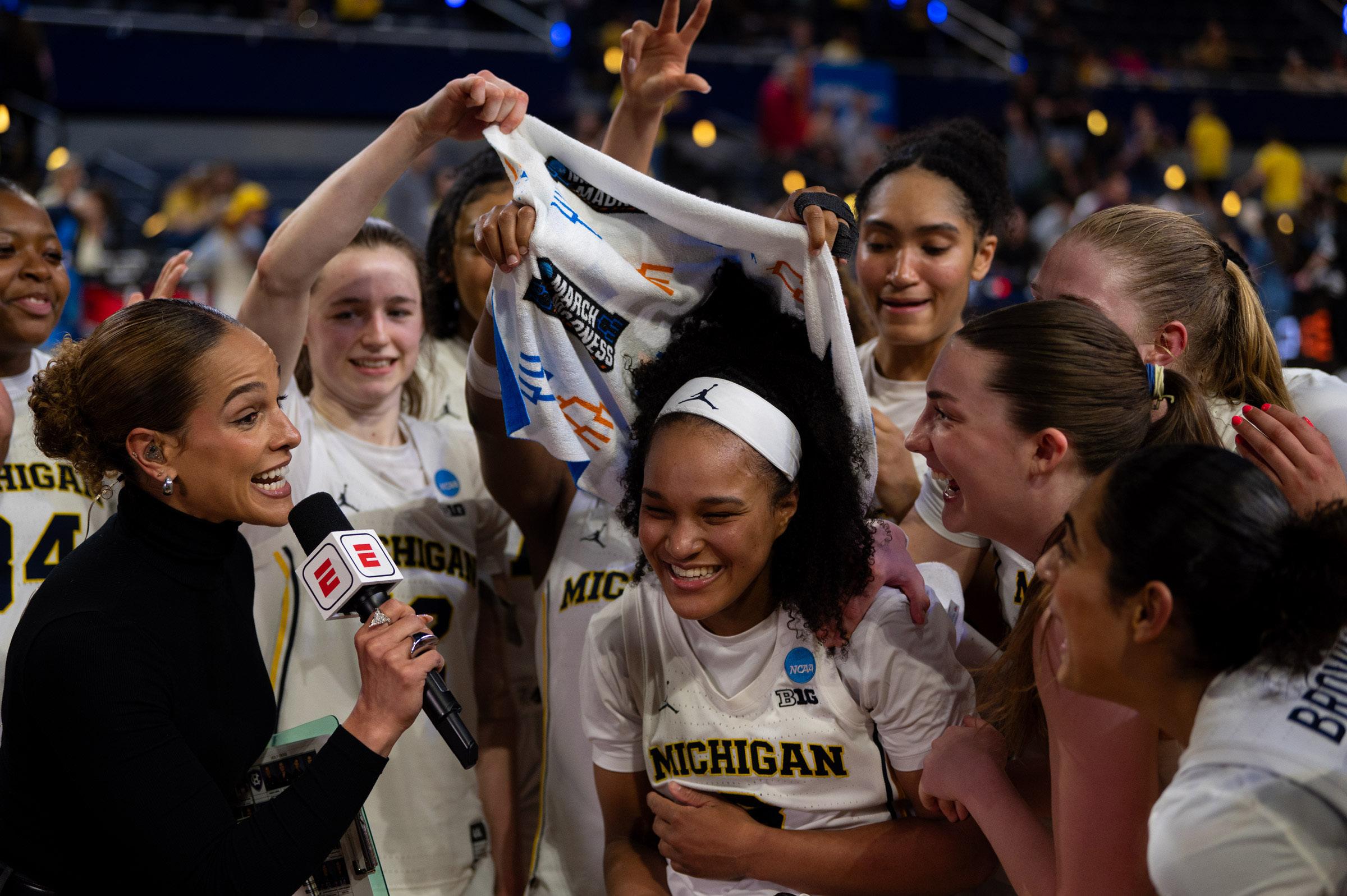
Pushing the pace, No. 2 seed Michigan punches ticket to Sweet 16 with 93-62 win over No. 7 seed NC State
LYRA SHARMA Managing Sports
Editor
The No. 2 seed Michigan women’s basketball team’s second-round contest with No. 7 seed North Carolina State was almost a blur. The haziness was not a result of a lack of memorable moments — in fact, it was the opposite.
With an early shootout, a turnover frenzy and big buckets, it seemed like every few seconds held another game-defining moment.
In a fast-paced matchup with clips worthy of a lengthy highlight reel, the Wolverines (27-6) found a footing in the madness and pulled away in the second half for a 92-63 victory over the Wolfpack (21-11). With the win, Michigan clinched its third Sweet 16 berth in program history.
The action started fast as both teams traded bucket after bucket, and neither team could establish an early lead.
The efforts of sophomore guard Olivia Olson and junior forward Ashley Sofilkanich in the post neutralized NC State’s typically potent forwards near the rim, but the Wolfpack were
able to connect from further away.
With both teams getting sped up, a litany of mistakes ensued and each ended the quarter with four turnovers apiece. The Wolverines bested NC State in most other metrics, but with a paltry 33% field goal percentage they couldn’t produce the points necessary to grasp the lead, ending the first quarter down 13-12.
“I thought we played our butts off on the defensive end and established ourselves from a defensive perspective really early,” Michigan coach Kim Barnes Arico said. “We missed some shots early that we typically make, but it could have been the game, the atmosphere. I just think we needed to settle.”
But the chaos turned in the Wolverines’ favor in the second quarter. Sophomore guard Syla Swords kicked off the quarter with an underhanded layup, giving Michigan a lead it wouldn’t relinquish all night.
The layup spurred a 14-0 run for the Wolverines in the first five minutes, as they drew from ample opportunities off the Wolfpack’s 10 turnovers. Michigan found comfort in the brisk pace, taking a 13-point lead, and NC State couldn’t catch up with 5 minutes to go in the half.
The security didn’t last long as the Wolfpack snatched back the momentum. The Wolverines tapered down their press that had caused NC State so many issues, and Michigan’s shooting again started to degrade. The Wolfpack spent the rest of the quarter back in control thanks to a 12-2 run that pulled the score to 28-25 heading into the locker room.
But coming out of halftime, NC State’s momentum wilted. The Wolverines saw a flash of the Wolfpack at their tail and asserted that the third quarter was the time to leave NC State firmly in the dust. 10 more turnovers off seven steals, a barrage of drives into the paint and a scoring roar from Olson allowed Michigan to stampede through the third quarter for 32 points to the Wolfpack’s 19. The Wolverines were on a war path and couldn’t be stopped as the third poetically ended with an emphatic buzzer-beater jumper by Olson.
“We got beat, all the hustle plays,” Wolfpack coach Wes Moore said. “Points off turnovers, I already mentioned, points in the paint, second chance points, fast break points, you name it. Like I said, we got handed it to us today.”
Up 60-44, the Michigan machine was in full force
heading into the fourth quarter, maintaining its punishing pace.
The Wolverines didn’t need to score seven 3-pointers to win, but they did. Olson didn’t need to bring her second half point total up to 27, but she did. And Michigan’s bench didn’t need to come in and send a few final punches to push the final score to 92, but of course, they did. With a few extra flourishes to end their evening, the Wolverines tied their relentlessness to their identity rather than simply a desire to win.
“I think it really set in when we got subbed in at the end,” sophomore guard Syla Swords.
“We got to sit and watch how loud the crowd were, how excited our teammates were, and just soak all in, what we’ve built but also what Coach Arico has been building throughout the years.”
The Wolverines’ 64-point second half was not what was necessary to punch a ticket to the Sweet 16, but it was a fun final act in Crisler Center all the same. Michigan was unforgiving to NC State, running rampant for the win and adding a few exclamation points to its groundbreaking season.
Bridgette Bol/DAILY Design by Kathryn Palsrok
Beatle Sutcliffe airport
Swab, as a deck
Sucker armed, three-hearted creature campaign
In this space, we invite our contributors to be vulnerable and authentic about our experiences and the important issues in our world today.
Our work represents our identities in a way that is both unapologetic and creative. We are a community that reclaims our stories on our own terms.
Cannonball location
The blinds of my childhood bedroom are aglow and I can’t sleep. I have a hair appointment in the morning and a familiar sense of dread festers in my stomach. I’m bracing to spend the entire day in a salon chair, where my scalp will be tightly parted into rows upon rows of box braids.
Maybe this all sounds melodramatic, but my hair can take the life out of me sometimes.
ALLANA SMITH MiC Assistant Editor
Secondary loan signer
Warning: Sensitive Content
Costa ___ up Kindle purchase without a view of the three bears
Ripe for the picking, “Southern trees bear strange fruit.”
My father’s grandfather was a train conductor in Toledo, Ohio.
Samuel David Hocker died in 1946 at the age of 63. Cause of death: blunt force trauma. In a freak accident, he had crashed his train. Yet years later, a white man — a jealous man — would reveal on his death bed that he’d tampered with the tracks. As if it would absolve him of his sin. As if he did not owe my family a life.
Autobahn autos
Samuel David Hocker was killed in the middle of bum fuck nowhere. The darker the berry the sweeter the juice.
***
Every major academic vacation starts the same way for me: a three-day movie marathon during which I loosen my braids, trim my ends and carefully tease out extensions from my real hair in a process that leaves my hands (and my tailbone) sore. I become momentarily unrecognizable in my stale pajamas as I transition from who I was last term to who I’ll be in the next term. These days are quite sedentary, and though I enjoy catching up on new films, I can’t help but feel trapped indoors until my hair is done.
violence against criminals, felons, men, women, children (gun, toy, skittles, it is all the same to them).
Scottish resort town known its whisky
Passed down, as folk mus.
Target breaker?
Theater chain
// In the past, or perhaps this present, a white America would look upon our bodies stiff and dead before the bloat set in. After the exhilaration of the hunt — the beat of feet in the brush, the heavy breath of a victim — they’d rejoice in the face of their hanging trophy, then feast. Commemorate the moment upon a gingham blanket, save the image for later upon a postcard and take hair, skin and bone as booty to pass to their children and grandchildren; tokens of the great day, spoils of war. The mob would call it justice served.
Strange fruit on the apple tree, they have no tears for us.
What defines political violence to a white America? The sting of a fist, a bullet to the throat. White man down. White man down.
Pure American violence, it is defined by fear, white fear. Fear of the other, and perhaps a newer, deeper, more selfish fear in seeing the force of the state asserted against the lily white body.
reports). It is March 17, 2026 and 11 more have died in custody (dragged, snatched, shot). Do you know their names? Have you heard of Keith Porter Jr., who was executed outside his home?
Have you heard of Luis Gustavo Núñez Cáceres, or Geraldo Lunas Campos, who died in ICE custody of an alleged suicide?
Of Víctor Manuel Díaz or Parady La? Of Luis Beltrán Yáñez–Cruz or Heber Sánchez Domínguez? Think of the names that you — that we — do know, think of the reasons why.
Taking my hair down is in equal parts freeing and exhausting. My scalp can breathe, my head is noticeably lighter and my hair is a bit longer, but my wrists develop tendonitis, my tailbone grows numb and my fingers ache dully from long rounds of vigorous brushing. I should take this moment to point out, dear reader, that I have a LOT of hair. (Whatever you conceptualize as a lot, comfortably go ahead and double it.) I have the thickest hair that many friends, family and hairdressers have ever seen. It stands on end, protruding several inches in every direction in its shrunken state.
the help of relaxers and extensions to ensure it fit the Western mold of beauty and professionalism. My hair was never just my hair: It was a statement I was expected to make about my respectability wherever I showed up. When I viewed my hair as something that needed constant control to gain acceptance, I learned to monitor myself constantly. Over time, that self-surveillance hardened into hair anxiety.
45. Atlantic or Pacific
The sensationalized slaughter of a people goes a little like this: Snatched, dragged, shot. (black) men, (black) women, (black) children in the streets. Necessary violence against the offensive body, the black body.
You are snatched, you are dragged, you are shot. You, not us. Now, it can happen to anyone. Now it can happen to you.
Rider's handful must be kidding me," in textspeak
Dampens
"Based on my knowledge"
Morita
so shall ... "
In 2025, at least 32 people died in U.S. Immigration and Customs Enforcement custody (dubbed alien death in detainee death
The terms criminal or felon or terrorist, remain synonymous with our collective black — black man walking, brown man walking. Store, home, inner-city, suburb: snatched, dragged, shot. Who are you afraid of, who do you fear for?
White America — Save your tears. We know that you do not cry for us.
1. New England catch 2. Score 100% on 3. Winged reptile commonly mistaken for a dinosaur 4. Bits of dust 5. Deep-sea catch 6. American currency
Multivolume ref. that traces development of the
language More pressing matters ... or a to the shaded words
Gibbon or gorilla
Irritate
used to capture the shaded words?
Growing up, my natural hair was something bound in secrecy. I would jump from one style to the next in an effort to keep my hair — as my mom put it — manageable. Manageable. That word. “We just want your hair to be manageable.” It was as if my natural hair was some sort of impossibility without
*** By some happy accident, I shattered this fantasy of neatness and manageability when, at age 13, I arbitrarily decided to cut off the better part of my hair. This decision was made much to my mother’s dismay, but I look back on this choice fondly. It was perhaps the first time in my life that I had fully taken the reins of my hair care. And with that freedom, I no longer wanted my hair to have so much power over me. I wanted to be able to run and sweat and swim without thinking twice, and so I wore my hair out in a short, thick
afro that often caused me to be mistaken for an adolescent boy throughout high school. In hindsight, I would do it all over again. I found ways to feel beautiful that weren’t grounded in my hair. With that weight off my shoulders, I was free to be more outwardly curious than inwardly anxious. I became less preoccupied with constantly being legible to others during such a vital time in my life. So when I returned to my braids and extensions for college, it was a decision made out of the desire to experiment rather than the necessity to conform. *** My relationship to my hair, like any other living relationship, remains unfinished. It continues to ask things of me: my time, my money and my effort. My underlying worry may not have disappeared entirely, but it has evolved into something more settled. It has become the novelty and uncertainty with which I embrace every new hairstyle and in turn, every older iteration of me.
Necessary
Sabrina Yu/MiC
Alisha Razi/MiC
ZACHARY AJLUNI & EDITH PENDELL
Co-Editors in Chief
Zachary Ajluni
Mateo Alvarez
Angelina Akouri
Nina Attisha
Jack Brady
Hayden Buckfire
Stanford Lipsey Student Publications Building 420 Maynard St. Ann Arbor, MI 48109 tothedaily@michigandaily.com
GABE EFROS & ELENA NICHOLSON Editorial Page Editors
GEORGIA MCKAY & ANNABELLE YE Managing Editors
EDITORIAL BOARD MEMBERS
Willem DeGood
Gabe Efros Lucas Feller Seth Gabrielson
Jovanna Gallegos
Gunnar Hartman Elena Nicholson
Sophia Perrault Hunter Ryerson Audra Woehle Jack Verrill Zhane Yamin
Amir Makled wants to be a regent you can grab coffee with. He just needs you in Detroit on April 19.
Emily Alberts/DAILY
In the late 2000s, University of Michigan-Dearborn students were fed up with campus dining. Many of their options were owned by the mega corporation Aramark, which students said tasted like cardboard and cost a fortune. The administration wasn’t interested in giving out any other options. So, U-M Dearborn student government representatives got creative. One of those representatives was Amir Makled, who told me about the whole ordeal.
“We contacted the SMART bus, which was running a bus operation in the city of Dearborn, and we got them to pick up a route from campus to West Dearborn, where all the good restaurants were,” Makled said. “And then they (the University) came to us and said, ‘Oh, okay, now we wanna make a deal.’ Why? Because students have an option now? We forced their hand.”
Almost two decades later, the lesson from those years stuck: If the institution won’t listen, you find another way. For Makled, running to be on the University’s Board of Regents is now that other way. The regents, in no uncertain terms, decide what kind of experience people have at the University. They hire the president, oversee financial investments and serve as the highest-ranking decision-making body on all three campuses. For many, campus feels increasingly unaffordable, fractured and censored; something has got to change. I mean, freshmen sleeping in residence hall lounges isn’t an ideal situation.
I sat down with Makled in the Michigan Union atrium to see whether he could be that change. In our conversation, I found a leader who listens. His policies — taking no corporate money, protecting gender-affirming care, standing up to bullies in the federal administration and meeting regularly with constituents — meet campus where it is. All we need to do, right now, is fill out a form by March 20.
Two things struck me about Makled right away. The first was his incredibly crisp fade. I thought about asking him for his barber, but figured that would be an odd way to start off. The second was that this was the first time I’d seen any regent, candidate or not, out in the open like this. No ivory tower, no closed doors. Some regents say they value being accessible to students, but this was the first time I’ve seen a candidate actually be accessible.
Makled has been a lot of things throughout his life: high school linebacker, student government representative, diligent civil rights attorney and, most recently, candidate for regent. But sitting across from him, what came through the most was only one thing: someone who fights for the underdog.
Makled was born in Detroit to Lebanese immigrant parents.
After immigrating, his father worked at the Ford River Rouge complex in Dearborn and was a member of the UAW Local 600. Makled described his upbringing to me as part of a typical workingclass, Arab-American family.
“We’d go to the mosque during Ramadan and we’d go to Camp Dearborn to hang out in the summertime,” Makled recalled.
“You know, we had one family vacation per year, probably to Florida, and we would drive to Florida in a big Astro van.”
Later on, his dad would open up a collision shop on Wayne State University’s campus, where Makled began working when he was 15 and where he would continue to work well into his college years.
Makled described his time at the University as “one of the most influential periods of his life.”
As an undergraduate finance major, he wasn’t so different from the students he’s now trying to lead. He joined several campus organizations, including Students in Free Enterprise and the Arab Student Union.
But it was student government where Makled found his footing as an undergrad. He told me about the policies they pursued and how they constantly had to work around an administration that wouldn’t budge. One of these policies had to do with the University bookstore, one of the only places you could buy course textbooks during the internet’s infancy.
“The book would be 100 bucks. (The University) would buy it back for 20 bucks, they’d sell it back to you, used, for 80 bucks. So, we created a student book swap, which was online,” Makled said. “And then they came to us again, and they said ‘Hey, we want to talk to you guys.’ So sometimes you have to create the change you’re looking for.”
While Makled was a representative, the U-M Dearborn student government became one of the first student governments to pass a Boycott, Divestment and Sanctions resolution in the United States. When they went to a regents meeting in Dearborn to present the resolution to the administration, they were kicked out.
CONTINUED AT MICHIGANDAILY.COM
True March Madness
ERIN COLEMAN Opinion Cartoonist
Michigan shouldn’t fear high-speed rail
MADELEINE BURKE Opinion Columnist
Throughout her Democratic campaign in the Michigan gubernatorial election, current Secretary of State Jocelyn Benson has resurfaced the topic of a high-speed rail network in Michigan. Benson claims that an intercity high-speed rail plan would create new business partnerships while increasing sustainability efforts by reducing reliance on gas-powered vehicles.
Instead of shying away from this innovation, Michigan should prioritize a high-speed rail line connecting the east and west coast of the state to support cleaner transportation and grow the economy. By prioritizing this advancement, Michigan could have the opportunity to build a positive legacy as a leader in the transportation sector.
High-speed trains are not average trains. The fastest highspeed rail trains can get up to 220 mph with dedicated high-speed lines. By connecting Holland, Grand Rapids, Lansing, Ann Arbor and Detroit, this initiative will provide workers with access to new jobs and students with new educational opportunities.
East Lansing and Ann Arbor, home to Michigan State University and the University of Michigan, are the two most important educational hubs in the state. A high-speed rail line between these cities would open opportunities for students to easily access these universities. Connecting them would also allow for students to easily commute between campuses, allowing for exchange of ideas and resources.
Known as the birthplace of automobile manufacturing and a major city for business in Michigan, Detroit is an extremely important city that
Michiganders should be able to easily access, as it holds more than 290,000 advanced manufacturing jobs and 8,000 businesses. With more talent accessible, Detroit businesses will be able to expand with a new workforce and grow the state economy. These benefits aren’t limited to Detroit, though, and would extend to cities across Michigan.
The benefits of coast-tocoast rail lines are not limited to education and the economy; it also proposes environmental benefits for Michigan. By prompting users to transition from gas-powered cars, Michigan could see a meaningful reduction in air pollution carbon emissions. High-speed rail trains uniquely emit less greenhouse gases and require less gas per person by reducing friction with the rail. These trains also have a lifespan that’s three times longer than the average car, allowing them to be a more sustainable and durable alternative.
Unfortunately, plans for high-speed rail projects have historically fallen through. There have been plans for high-speed rail development in California for 15 years, but lawmakers have continued to push back completion dates due to high costs and complications in funding. These
complications often come from political opposition. Republican lawmakers have traditionally questioned the profitability due to Amtrak’s lack of revenue and have voted against funding grants in favor of high-speed rail. In response to questions on how to fund these projects, Benson claims public-private partnerships could be critical in covering the costs. This plan would use federal grants, lowcost borrowing and investment of private capital. Benson has cited that using private capital will give Michigan a unique edge in getting the funding they need without being forced to compete with other parts of the state budget, such as schools or health care.
Plans for high-speed rail continue to develop in states such as Nevada, Texas, Georgia, North Carolina, Oregon and Washington. Eventually, these states will be able to enjoy the economic connectivity and lower emission transportation that high-speed rail offers, pushing them ahead of the rest of the country. Michigan is falling behind these states; by acting now, the Wolverine state could have the unique opportunity to lead the Midwest in this development.
CONTINUED AT MICHIGANDAILY.COM
UMich should scale back AI investments
STEPHANIE BOUSEHAL Opinion Columnist
In September 2025, NVIDIA — a major artificial intelligence chip producer — announced it would be investing up to $100 billion in OpenAI to help deploy the new generation of AI models in data centers.
However, the original deal has since fallen through, and NVIDIA has announced a significantly scaled-back agreement of roughly $30 billion for equity rather than chip purchases. Combined with reports that OpenAI is“burning cash” while experimenting with advertisement as a revenue source, its $730 billion projected valuation appears extremely inflated. The revised deal is not just a setback for one company — it indicates a broader trend in the AI industry where extreme valuations are being driven by investor expectations rather than proven revenue models.
Many leading AI firms are spending billions on computing infrastructure while still searching for sustainable profits. The AI boom may be fueled more by speculation rather than sustainable profits, and this raises several concerns for the University of Michigan as it grows its presence as an AI financial player.
The University’s 2025 Endowment Investment Report of 2025 shows major increases
in venture capital and private equity holdings, totaling approximately $9.6 billion.
Compared to the 2024 EIR report, the University is shifting a larger share of this endowment toward illiquid investments.
Illiquid assets, like venture capital and private equity, are difficult to sell quickly if the market contracts. Universities are often exposed to budding tech sectors like AI by investing in venture capital funds, which finance early-stage startups in the field. These investments can remain locked for years, leaving the University vulnerable if the valuations collapse.
For a university endowment that is designed to support scholarships and campus operations, tying billions of dollars to volatile venture capital funds introduces risks that could have consequences to these priorities. These risks have become progressively more pronounced when those funds concentrate heavily in a single emerging sector like AI.
In the last few years, many alternative investments seem to be composed largely of the AI sector. In 2023, the University committed $75 million to the AI-focused venture capital fund
Hydrazine Capital led by Sam Altman, the CEO of OpenAI, and in 2024, it increased this investment to $180 million.
New enterprise investment is already a risky strategy, but considering the current AI climate of hype cycles and
inflation, the future state of the U-M endowment is even more worrying.
NVIDIA and OpenAI are engaging in circular investments in their deals, in which NVIDIA pays OpenAI to buy their chips. This inflates the perceived value without real economic growth that can match it, making it extremely susceptible to crashing. If the University doesn’t slow its AI investment flow, an AI crash would result in damaging losses on their endowment returns. The University shouldn’t act like a venture capital fund following hype cycles; endowment stability should be the University’s priority, instead of taking risks with portions of the endowment in pursuit of unguaranteed growth. But U-M financial investments are only half of the problem. AI research has spread across campus at unprecedented levels. Various projects to support this research have emerged, like the seed funding awarded to U-M Engineering faculty teams studying AI in manufacturing and the $25 million gift to the Department of Computational Medicine and Bioinformatics. Allocation of funding to research is less risky than venture capital investment because it is authentic development with a low likelihood of circular investments destabilizing it. But it has its own limitations. Even if this AI research is successful, projected resource and policy constraints could slow the field immensely.
AI requires enormous rates of electricity consumption to function. To help meet this demand, the University is planning a more than $1.2 billion advanced computing and AI research data center in Ypsilanti. Alongside community wellbeing concerns, there is reason to believe that data centers will be forced to cut down operations in the
ZHANE YAMIN Opinion Columnist
Ella Flores Brosnan/DAILY
I’m not a poet, I’m just a woman
ANGELINA AKOURI Opinion Columnist
The other night, I was at a bar with some friends when a guy came up to me and started flirting. The banter was light at first: Where are you from? What are you studying? It was the kind of effortless exchange that makes you forget you’re talking to a stranger — and at some point, he seemed to forget as well.
Sometime between drinks and introductions, the tone took a shift. The conversation moved from easy small talk to something heavier. He told me how hard it is for him to trust people, especially the women in his life. He shared how he was broken and needed someone to piece him back together. From the looks of it, woe was him. Against my better judgment, I stayed planted in my spot during his confessional, searching for the right words to fix the seemingly broken man in front of me. For a few minutes, I tried to think of something that would alter the course of his life. I contemplated telling him that time heals all wounds or good things happen when you least expect them. I silently beat myself up for it, embarrassed that the only things coming to mind were cliches. And then I thought to myself, do men just want a woman who will fix them? The answer, at that moment, was yes. But that’s not my job. I’m not a poet; I’m just a woman.
The truth is simple: Stop treating women like an emotional repair shop.
Admittedly, finding the perfect line to fix the broken man was my default reaction. Maybe I can blame all the romcoms I’ve binged that sell the idea that the right girl plus the right words equals a changed man. Or maybe it was the fact that his favorite movie was “10 Things I Hate About You” and so is mine. I started to confuse our shared interests with a
deeper connection. Either way, I felt conditioned to help in such a profound way that he would forever be indebted to that girl he met at that little bar in Ann Arbor.
This feeling, though, was not an isolated incident. Nor was it my fault. Social norms condition women to see being chosen as a moral achievement. That is, when a man opens up, it’s somehow our responsibility to listen, soothe and make things better. Empathy, then, turns into expectation. Yet again, our so-called natural ability to nurture is wasted on someone who has no intention of sticking around when the morning comes.
We’ve seen this story play out time and time again in books and movies. A broken man finds the perfect woman to change him and it’s disguised as a romance. In real life, the problem with this scene is that it rarely feels like emotional labor in the moment — it feels like chemistry. The vulnerability a person shares at the meet-cute feels intimate and special.
Somewhere along the way, though, the conversation stops feeling like movie love and reveals itself for what it truly is: a transfer of weight. The emotional baggage he wants off his shoulders suddenly makes its way onto yours. Yet again, women are forced into the role of emotional caretaker.
The irony is that this moment of one-sided vulnerability is too often mistaken for depth. While emotional openness does often
Natasha Eliya/DAILY
lead to deeper connections, a shared bond needs reciprocity to thrive. Without it, vulnerability becomes obligation: one person speaks while the other, usually the woman, must absorb, quietly carrying new responsibilities they never agreed to hold.
There’s another layer that often goes unnoticed as well, and it may be the reason this pattern keeps repeating: The myth of the healing woman allows men to believe that personal growth can come from romance alone.
While it’s easier to believe that the right woman can fix a person instead of seeing healing as an individual responsibility, the result is not connection or growth — it’s dependency. That dependency, in this case, damages both parties involved.
The idea of a healing woman might be attractive, but in reality, it can turn women into emotional shortcuts and men into passive participants in their own recovery.
However, the problem is not male vulnerability. This is not a call for men to bottle up their emotions. In fact, I encourage openness, especially when entering into new relationships. The issue is the immediacy of using a trauma dump like it’s a pickup line. Moving quickly from small talk to emotional confessions forces women to assume the role of healer before even establishing a connection. CONTINUED AT MICHIGANDAILY.COM
EMMA MARGARON Opinion Columnist
Ipersonally have experienced, seen and learned about instances of gender-based prejudice, and it’s fueled my passion for gender equality. Another passion of mine, which I typically write about, is the environment and climate change, and the movements and policies that follow them. Globally, these two issues frequently intersect, as women and girls face disproportionate effects due to climate change.
Current climate policy isn’t working to successfully combat these effects — it’s insufficient in genderspecific awareness because it is historically governed by wealthy, white males. Worldwide, men also dominate positions of political power over women. For meaningful climate policy change to
occur, women deserve greater representation in decisionmaking surrounding climate change.
Women’s vulnerability to climate change stems from traditional gender roles, socioeconomic positions and overall systemic inequalities.
Statistically, after natural disasters or extreme climate events, women and girls are 14 times more likely to die, and make up about 80% of all those displaced. In the wake of these events, gender-based violence also increases, as there are higher rates of sexual assault and violence during times of crisis. Additionally, they experience heightened challenges in access to reproductive and sexual health care during disasters, often leading to greater health risks.
These threats are also elevated for women of Color, those who live in poverty or those residing in rural areas.
Historically, these impacts have inspired women and
girls to speak up, and they often stand at the forefront of advocacy in the environmental and climate movements. Even as they face challenges gaining recognition due to gender stereotypes diminishing their authority, key moments like Rachel Carson’s Silent Spring or Greta Thunberg’s climate strike are examples of times when female climate activism gained global attention. Even with ample advocacy, women are underrepresented in executive government positions, local governments and national parliaments that deal with climate policy. Therefore, despite this strong advocacy, they are less involved in the high-level decision-making regarding the environment and climate change in comparison to men. But when male government leaders hold the reins in climate policy, it lacks a gender-based lens that can fix inequalities.
CONTINUED AT MICHIGANDAILY.COM
Cecilia Ledezma/DAILY
THE MICHIGAN DAILY EDITORIAL BOARD
combat the University’s continued crackdown on student rights, organization funding complications and CSG
President Eric Veal Jr.’s decision to veto the Divest for Humanity Act. University students will take to the polls on March 25 and 26 to vote in the 2026 CSG elections. In order to inform an endorsement, this Editorial Board interviewed LSA sophomores Summit
Louth and Naimah Perez of the Human Rights Party and LSA junior Hayley Bedell and Public Policy junior Luca Giobbio of EMPOWER MICHIGAN to learn about their policy goals and platform points. We asked questions about each party’s governing experience, stance on cooperation with University administrators and how they plan to improve student life around campus.
Candidates Tony Liu and Isabel Kiiskila, running as independents, refused our request for an interview.
This Editorial Board believes CSG should be governed differently than this past year, and Louth and Perez of the HRP can do just that. Louth has served as a CSG LSA representative and Perez currently serves as an LSA Student Government representative. They may have less executive experience than their opponents, but they are prepared to advocate for all students and lead with accountability.
the issue of affordability, which has consistently proven to be the most prevalent issue facing college students.
Housing costs are becoming an increasingly salient issue on campus. In response, HRP plans to establish a position within the CSG executive branch that serves the sole purpose of drafting policy related to housing affordability. Their platform also supports making Dining Dollars more financially accessible by ensuring that they will not become void at the end of each academic year. They also plan to strengthen the Michigan Dining perks by meeting with local businesses and University administrators to broker a deal that would accept Dining Dollars at more locations around the Ann Arbor area, giving students more affordable dining options.
Louth and Perez are pushing to bolster funding for student organizations, seeking to reallocate funds from the CSG executive office to boost funding for the Student Organization Funding Committee. Louth criticized the EMPOWER party for having $23,000 left in Executive Discretionary Funding at the end of the year. His plan for student organization funding is simple. Louth vows that he will use the money allocated to the EDF for student organizations, not executive events.
“I think the most tangible thing that we can do for students is to let their student orgs host
Fee to allow CSG to better fund student organizations and programs.
Student advocacy is another crucial part of HRP’s platform. Several of their campaign objectives are activism-oriented, addressing various issues including U.S. Immigration and Customs Enforcement, LGBTQ+ protections and University divestment from Israel.
“So our biggest points of advocacy, like I said, are probably advocating for the University to divest its endowment from investments in the government of Israel in light that they’re committing genocide,” Louth said. “Another big point of advocacy is getting the University to denounce the presence of ICE on universityowned grounds without a judicial warrant.”
Following the increased ICE presence on campus, many students have urged the University to take action, but they have failed to meet such demands adequately. The HRP platform acknowledges the lack of effective protections currently in place and proposes several concrete measures to better support vulnerable students, including establishing a hotline for reporting ICE presence, providing legal support for detained students and defending students’ right to protest.
When asked about the Divest for Humanity Act, Louth affirmed his support for it. The
to apply consistent pressure on the University through resolutions, supporting peaceful protests and communicating with administrators.
Like the SHUT IT DOWN party, HRP has emphasized proPalestine activism as a central part of their platform. But Louth and Perez made one thing clear in their interview: They are not SHUT IT DOWN. Their plan to rework CSG budgets will provide as much money as possible for student organizations. We believe these functions will remain and improve alongside their call for social justice.
Louth openly acknowledged that this may anger some higherranking University officials, including members of the Board of Regents. However, he touts his strong professional connections with many other administrators.
Louth is looking to maintain and grow his network by engaging in productive dialogue, where he will prioritize student concerns, respect and open-mindedness.
One concern is that Louth and Perez’s platform is long. It has 21 separate sections, many of which are focused solely on advocacy.
Despite HRP’s impressive emphasis on social justice, it is important to ensure that improving the day-to-day lives of students — making laundry free, making sure students with disabilities can get to class when campus is under construction and making basic necessities more affordable — will be their first priority.
administration — unlike the current EMPOWER administration that Bedell and Giobbio plan on emulating.
When asked about consistent claims that EMPOWER is the “establishment party” on the U-M campus, Bedell made her stance clear.
“I mean, we are the establishment party,” she said.
“We’ve been in CSG, as we’ve said, since we were freshmen.”
Bedell and Giobbio had well prepared answers to our questions and they are experienced in the executive branch, but they aren’t willing to deviate from the previous CSG administration. When asked if they would support divestment efforts, Bedell avoided the question.
“We support students, we support the ever-changing climate, or campus climate. We understand that what’s best for this campus on one day is maybe not what’s best for the campus tomorrow, or the day after, or a year from now,” Bedell said.
“… I respect President Veal’s decision-making on his veto.
If I were in his position, I feel as though my process for decision-making would have looked differently. However, period, end of story, we support students.”
The Divest for Humanity Act wasn’t the deciding factor for this Editorial Board’s endorsement — Bedell’s inability to speak about what she believes was. Despite her own
Veal Jr. administration, she was unable to separate herself from her party. If she couldn’t do so in an interview, we cannot expect her to do so while she governs. We recognize that HRP is a more recently established party on campus, and their ticket may be less polished than their opponents; But this is their strength. Their personability and outsider viewpoint is refreshing in comparison to the status quo the current EMPOWER administration has set. CSG has unparalleled access to the University administration, as no other student organization has consistent, private opportunities to express concerns to highlevel administrators. As a result, the executive must be able to balance the responsibility of advocating for students while also pushing back on the administration whenever necessary. This Editorial Board believes Louth and Perez can, and will, be able to achieve that equilibrium.
The HRP candidates are ready to lead. That leadership extends beyond budgets and amicable relationships with the University’s Board of Regents. It comes down to who can best represent campus concerns in meetings where no other students are present. For these reasons, this Editorial Board believes Summit Louth and Naimah Perez have earned your vote.
Maisie Derlega/DAILY
YOST NO PLACE LIKE
When the No. 2 seed Michigan hockey team discovered that Saturday’s opponent would be No. 5 seed Ohio State, shock ran through everyone’s minds. No one had anticipated another matchup between the Wolverines and Buckeyes.
Regardless, Michigan’s gameplan didn’t get derailed. Having many successful experiences against Ohio State, its vision of lifting a trophy stayed in full focus.
MICHIGAN 7 OHIO STATE 3
SPORTSWEDNESDAY
Unbroken by No. 5 Ohio State, No. 2 Michigan wins Big Ten Tournament championship
forward Kienan Draper said Tuesday. “We were just happy to be in the finals and have a chance to play for a trophy.”
Despite being the pair’s fifth meeting this season, the Wolverines (29-7-1 overall, 17-6-1 Big Ten) remain unbroken by the Buckeyes (14-21-2, 8-15-1), sticking to the script to seize a 7-3 victory for the Big Ten Tournament championship.
Over the course of the regular season, Michigan remained untouchable for the Buckeyes, winning all four matchups between the pair. So, the Wolverines merely needed to mirror its previous performances against Ohio State.
unbelievable team. Ohio State’s a great squad. They played unbelievable tonight. They had a great run. It was unbelievable to see them work like that. But we’re moving right now and I’m so happy for our group.”
For Michigan, the game’s first period triggered waves of deja vu.
Down a man on the penalty kill, it found itself unable to fend off Ohio State, conceding a goal just five seconds before returning to even strength. Four months ago — to the day — the Buckeyes opened the scoring at Yost the same way, capitalizing on the power play to take a lead over the Wolverines.
However, that didn’t deter
minutes in the first, the Buckeyes made a failed attempt to enter Michigan’s’ zone. Junior forward Garrett Schifsky’s defensive effort earned him sole possession of the puck before making his way up center ice. Seeing an opening, Schifsky ripped one top corner, making it impossible for Ohio State’s goaltender to make the stop, leveling the score at 1-1.
While the second period garnered much more action with each team notching two goals, the score still ended leveled, 3-3. Neither group was able to edge out the other, setting the stage for someone to save the day. And no one wanted that opportunity more than senior
simple touch was all he needed to elevate the Wolverines above Ohio State and get momentum in their favor. Now leading, 4-3, with just 10 minutes to play and a trophy in sight, the Wolverines simply needed to follow script and defend their net.
But Michigan wanted more.
It was clear that while Ohio State was a competitive opponent, the Wolverines wouldn’t relinquish their early precedent set at Yost this season: beating the Buckeyes at home. And following Hughes’ leading goal, Michigan extended its lead further due to goals by Perron, senior defenseman Luca Fantilli and junior forward Nick Moldenhauer. And once the last second ran of maize clustered together in celebration. The past or future held no importance in the moment of joy for Michigan as it relished in its first championship this season. “That’s a good feeling, and then you just got to keep staying hungry,” Wolverines coach Brandon Naurato said. “We’re obviously gonna enjoy this and the opportunity to raise a banner and win a championship ring and all these memories that they’ve created. But we’ve got to get back to work on Monday.” Michigan still writing its story. With another tournament ahead and a plethora of talented opponents, plenty is to be expected. But concluding their story with
SOPHIE MATTHEWS Daily Sports Writer
Caleb Rosenblum/DAILY Design by Annabelle Ye
Illustrated by Caroline Xi
Designed by Graceann Eskin
How I surf a soulless internet
ALEXANDRA COULOURIS Statement Correspondent
“WIN 20160523 16 31 52 Pro.”
“Focus on the positive!” It’s written in bold, capital letters with a red marker on white printer paper, held up to the camera. After a moment, the older woman holding it takes the paper away and reveals a smug smile. In the few seconds before the video ends, I take in the metal rack of mugs, stack of plates, white paper wreath and an old-school scale adorning the shelves behind her. In the lens of the woman’s tortoiseshell glasses, I can see the green glow of the reflection on her screen.
The video cuts to a man in his bedroom, reacting to the woman. He bursts into laughter, surprised by the sudden reveal. The woman’s video was recorded on May 23, 2016, as written in the code of the title, 20160523.
In his series exploring “YouTube’s recycle bin,” user KVN AUST has curated a list of codes that various cameras will automatically assign to untitled videos and searches them with randomly generated dates to find niche, low-view YouTube videos outside of the algorithm. He randomizes a bingo card with categories like “channel has over 5,000 uploads” and “potential cult leader” to see which random content fits in each.
“WIN 20160523 11 43 22 Pro.”
We find a man smoking a cigarette on his porch, singing a song about people being kind to one another.
“MAH00149.”
Another man shouts out combat choreography for four adults with plastic lightsabers.
“PICT3038.”
Two students in blazers and sneakers are presenting on something called “Half Bath.”
For me, this is wildly entertaining. The short videos satisfy a similar itch within me for the constant amusement of new shortform content on TikTok and Instagram, while feeling much less sanitized — they free me from a constant, exhausting guessing game.
Real or Artificial Intelligence?
***
For the past few years on social media, I’ve heard whispers of a “Dead Internet Theory” as an explanation for the modern internet’s seeming lack of creativity and personality. The theory claims that AI bots or corporate advertising are a significant portion, if not the majority, of interactions or profiles created on the internet.
It’s become hard to ignore this idea, especially when I open Elon Musk’s renovation of X. In the replies of a popular tweet, one has to scroll through a slew of meaninglessly verified bots, usually advertising cryptocurrency or porn, to find authentic, human replies. When I find a post, I habitually scroll past the first 10 replies, letting
the blue checks blend together before I find the opinions of real people. Like immediately tapping through ads on Instagram stories or deleting promotional emails before I even open them, I’ve become somewhat resigned to this part of filtering through the internet.
On these sites, verified users pay for subscriptions on the platform in order to earn revenue from each interaction, so linking a verified account to a chatbot can passively make a profit for a user. Each verification indicates that somebody is profiting from the cluttering of the platform.
In January 2024, ChatGPT refined their trademarking content policy, and X accounts and Amazon listings alike were flooded with variations of the statement, “I’m sorry, but I cannot analyze or generate new product titles as it goes against OpenAI use policy, which includes avoiding any trademarked brand names.” While it’s not exactly surprising to me that AI is being used to automate the online marketplace, it’s a stark reminder that a simple listing like “Green outdoor lawn chair” might not be typed by a human anymore.
Users of these bots and human content creators can often share a goal: making money and monetizing their use of the social media platform. ***
A few weeks ago, I saw a TikTok skit captioned, “POV your friend is raising their boyfriend,” and laughed aloud at the creator coaxing her boyfriend into applying sunscreen by letting him shake the bottle. When I looked at the caption, she had tagged a skincare account and used #AD.
I felt somewhat slighted and disappointed by this. Of course, this video is a one-sided experience, and this creator, with more than a million followers, has no idea who I am. Yet, the video is one of many that aims for relatability, and it is also one I want to experience as a peer: someone who feels “in” on the joke and whatever trait or situation is being satirized.
The captions and taglines of skits like these “Point of Views” literally invite the audience to picture themselves in these scenarios, and perhaps subconsciously draw parallels to their own lives. The comments are full of people talking about their own boyfriends or tagging their friends to suggest it applies to someone they know.
Even when I can trust that content on social media is being made by humans, the motivation of profit takes away some of the sincerity. I want rising music artists, for example, to make as many videos as they need to promote their songs. But every time I see an artist promoting a “dance challenge” with their new single, I can’t help but roll my eyes and think about how their manager probably told them to make it. However, avoiding advertisements on social media is not something that I can be particularly picky about: Advertising spending on content creators nearly doubled from $13.9
policy that requires paid content to be explicitly disclosed. Creators have to mark their videos as branded content, as indicated by a small banner on the viewer’s screen. Now that ads are common in content created by “regular” individuals posting to be casual and relatable, it’s hard to take any videos at face value. Still, it seems that undisclosed advertisements are lurking everywhere.
Pinned to the top of the TikTok account @ myangryprofessor is a video with more than 12 million views. A young teaching assistant yells at a classroom of college students for not reading her email before taking their exam, where an AI website is projected on the chalkboard. The onscreen caption reads, “Our TA purposefully emailed us all the exam answers and none of us opened the email before we took it,” with four crying emojis. While the video, recorded and captioned on Snapchat, seems like a regular post, the profile reveals something different.
Another video, with the same TA yelling at her class about the same website on the same profile, has more than 15 million views. She chastises their ChatGPT answers for always being wrong and mentions that this AI tutor gives actually “insightful” results. Most of the comments don’t pay attention to the link to mindgrasp.ai in the caption. Most probably didn’t open the profile to see a trove of videos with similar plots: A student records a professor or TA yelling at their students, and somewhere in the video, the AI website is shown and praised.
These videos purposely search for a viral moment, filmed from the perspective of a student, and, while not explicitly stated as advertisements, a product is flaunted and linked in the caption. An unassuming viewer can take these types of videos at face value, scoff at the ridicule of the situation or send it to their friend, easily unaware. Even if users don’t realize what the product is, their interaction with the video through views, likes and shares still brings in revenue for the account owner. As creators find new ways to exploit the algorithm, finding sincerity on the internet becomes even more of a challenge.
IMG 5409
As I copy and paste a camera code into the YouTube search bar, I wonder what the motivations of these accounts are for posting their videos. I find a recording from a plane window, of the sunlight sprawling through the layers of clouds, seemingly about to set. Why post this? Has the user been looking back on the videos they’ve posted as memories?
IMG 7860
I find a girl in a Washington State University sweater instructing her audience through a voiceover on how to make a “Dirty Soda” drink in a souvenir cup. Her face is cut off, and the video fades into clips of the Coke and the shot of creamer being added. Is she planning to share the recipe with a friend, or the whole platform?
IMG 2341
I find two girls with lanyards around their necks on a sprawling convention floor, watching a man hold up a plastic case with a graded card inside as he proclaims it’s worth $10,000: “I’m one of the top Pokémon collectors in the world,” he boasts, next to his partner in their matching yellow hoodies.
As I’ve started to explore the internet for these kinds of videos, I find that some types are more common: snippets of school projects, concerts, sermons and so, so many clips of high school sports games. A lot of these are pretty boring and definitely not as exciting as anything I would see on ESPN.
Part of their charm, though, is their quality and production value. Webcam videos are often grainy, audio can be crackly and the content is often unexplained. They were not made to sell something, or mimic a Snapchat video, or be as constantly entertaining as a carefully spliced TikTok video. The purpose of posting them isn’t immediately clear to me, which makes them all the more endearing. My time or attention isn’t demanded so someone else can make money. I can find them because they lack a title and are seemingly posted for the memory of the user, not to be pushed onto the feed of a stranger.
CONTINUED AT
Did my absence make your heart grow fonder?
over a decade to go back. For the first time in February, in an escape from everyday college life, I did.
***
I’ve always had a dream that one day, sometime far in the future, I would retire. I’ve always been rather high-strung and neurotic, so dreaming of an escape makes sense. One day, I would have no responsibilities except to wake up, take care of myself and go to sleep.
Even though this sounds fantastical enough, there is more to that dream. I’ve always wanted to retire in Charlevoix, a quaint city in Northern Michigan. I would retire in a wooden cabin. Not too big, but big enough to house a family, with an inviting living room and, most importantly, a large rain shower to use after a long day at the beach or skiing on a mountain. It would be right next to a stone house, right on the shores of Lake Michigan. It wouldn’t just be me, either. All three of my older siblings and I would live next to each other. After growing up intertwined and then spending our entire working lives separate, we all wouldn’t go a day without seeing each other, or Lake Michigan. That’s all I wanted: to retire, surrounded by my idea of peace. Looking back, I had basically lived out this fantasy at one point in my life. I had “lived” in that cabin in Northern Michigan during breaks in the school year and over the summer to escape everyday life in suburban Detroit. My parents and siblings all ate, slept and existed under one roof. I had what I wanted. Eventually, of course, things change. When I was about 8, my family sold that cabin and the stone house next to it. I have longed for
It took a lot to get there, though not physically. The drive up to Northern Michigan from Ann Arbor is relatively unassuming. It looked similar to my drive through the rest of the Midwest. When you’ve had just enough cornfields and depressing, hollowed-out Rust Belt towns, you arrive in an idyllic coastal beach city.
When I was 8, I didn’t realize that the cabin would no longer be mine. And when it was no longer mine, I wasn’t old enough to know what that meant. I soon got older and had more to worry about. Changing relationship dynamics with my friends during middle school, grades in high school and eventually college admissions all made me, as my mother says, into a ball of anxiety.
Yet, slowly, throughout these years, my fondness for Charlevoix grew, both out of envy for friends who had somewhere to go up north and of an admittedly idealized version of what was once mine. A four-hour car ride isn’t that long, but it’s long when you no longer have a destination. That distance — literal, temporal and emotional — took a lot. But it was that distance and time and feeling that made my heart dream for my cabin, aching exponentially more each year.
I’m not sure why I chose to go to Charlevoix then, when I finally had time to spend a weekend away from my perpetual busyness in Ann Arbor, but I do know why it took so long. I was scared that the cabin wouldn’t be
like I remembered it, and my dream would be ruined. I had built up so much love for it, and I didn’t want to risk losing it. Regardless, my compulsion to travel back to my cabin was too strong. Of course, I didn’t just drive to my cabin in Charlevoix and back — I drove all around. Charlevoix was so, so much different from how I remember it. It was so much smaller, with fewer people than I recalled.
The downtown I remembered wasn’t a journey away, just a three-minute car ride. There was only one strip of shops, too. The beach that I had spent many days at when I was a kid wasn’t endlessly expansive like I had imagined as a young child, but rather quite contained. For all I know, I could have been driving through any small town on Lake Michigan’s shore.
But the town wasn’t actually any different. That much was obvious. I knew so because the entire city felt like it was literally frozen in time. Everything still felt familiar. Even Lake Michigan was entirely frozen for as far as I could see, reflecting this sentiment to me. And overlooking the lake, I saw something that was familiar: a lighthouse that remained in my memories, staring back at me just like I remembered. So much was different, yet I suddenly felt so much smaller and younger.
Reliving Charlevoix made it clear that I was the one who was different. Of course, time changes everyone, but I don’t dream of just retirement anymore — I view life with much more nuance now. As I experienced more of life, I realized that life offered more than just retirement. There is so much beauty and struggle that I have yet to experience.
Furthermore, it is that struggle that makes escape so satisfying. Without that struggle, my eventual escape would be worth nothing. Because of this, I was apprehensive as I approached my cabin. I thought that because I have grown from the kid I was 12 years ago, I might be underwhelmed or disappointed with how the cabin actually existed, and not as I dreamt of it. Through all my years of growing on my own and feeling fear over how that growth might change my view of my cabin, the process of actually getting myself to the cabin felt like a long hike. When I finally reached my old cabin — the cabin that was no longer mine anymore — it was everything I had hoped it would be. Except for the color. For some reason, the new owners painted the once entirely brown cabin blue. I didn’t think it looked very good when compared to the place that resides in my memories, but I digress. I was still able to look in the backyard and see shadows of myself swinging on a hammock and running down a hill right into Lake Michigan’s shoreline. I saw me and my siblings sitting on the large deck, eating dinner in front of a starry night sky. I saw us crowded in the living room, exhausted from skiing all day. I saw all of it. And I was overcome with emotion. I am not ashamed to admit that I teared up while standing in front of my cabin. It was like no time had passed, and I was still able to see my past, which was once a preview of my future dreams.
CONTINUED AT MICHIGANDAILY.COM
GABE EFROS Statement Columnist
Photo Courtesy of Gabe Efros.
OUMMU KABBA Statement Correspondent
The Ann Arbor PTO Thrift Shop was all astir with shoppers on the hunt when I visited a few Sundays ago. Customers unflinchingly whipped through the store, navigating full carts through the thin aisles. I, on the other hand, had a more lackadaisical approach — simply wanting to explore the building as a first-time customer.
Even though I wasn’t shopping with any urgency or intentionality, it was nice to be in that environment. Sans the overconsumption, resellers, capitalism and gentrification, there is something almost spiritual about going to a thrift store. Its items are steeped with history, proudly bearing the wear and tear of their former lives like battle scars. A thrift store defies constructs of time: old and new items existing on the same rack, sold for the same price. Items’ value and purpose remain unchanging, resolute regardless of age — an entirely inhuman concept. But the most mystic thing about thrift stores is moments when, rather than trying to find the right items, the right items find you.
But you see, strange items kept finding me that Sunday. Normal enough to be inconspicuous but weirdly personal
Child’s Play
enough to make me start scanning for the hidden camera crew. After enough of these “random” finds, I was sure the staff of Ann Arbor PTO Thrift Shop was trying to tell me something. Or that maybe there was some message from the universe I had been ignoring, and now it had to resort to delivering the memo through secondhand knick-knacks. I’m not above that fantastical line of thinking. I’m the kind of person who answers the door when destiny comes a-knocking — even if I pretend not to hear it the first few times.
***
The first knock (ignore it, it’s those goddamn door-to-door salesmen again).
While strolling through the jewelry section, I happened upon bins of colorful silicone wristbands, the kinds that every elementary and middle school carried in bulk. Picking through the bins was a jarring sensory experience. The texture was exactly as I remember from childhood: shiny on the back, vaguely furry on the front with random trademarks debossed in big white letters. Memories of simple times bubbled up. Times when wristbands were traded like currency around playgrounds, sticking to our sweaty kid-skin. Times when wristbands in violently clashing colors were donned on our forearms like a deformed sleeve — à la Camilla Cream
from “A Bad Case of Stripes.” Times when students bought school-branded wristbands with school-branded money earned from good behavior. But those times are gone. And that joy now occupies small silicone holes my hands can no longer fit. I put the bins back.
The second knock (do I know this guy from somewhere? sneak a quick peek out the window).
I tried to head to the book section, but due to the laissez-faire partitioning of several shopping carts, I was temporarily exiled to the kids’ book section, which I pretended to be engrossed in as I bided my time.
But my interest turned sincere as I discovered two installments from Barbara Park’s iconic “Junie B. Jones” book series, Raina Telgemeier’s graphic novels, “Ripley’s Believe It Or Not! 2016” and a “Who Was?” book honoring author Jeff Kinney of “Diary of a Wimpy Kid.”
All of these books and authors fundamentally shaped my childhood. They were the books I read when I woke up, while in class and under the covers with dim flashlights. But flipping through these books as an adult felt bittersweet, like seeing an old friend who was now just another stranger, that love just another memory.
Still, it is not particularly remarkable that I found beloved kids’ books in the
kids’ book section. However, things took an odd twist when I started finding books I own.
Hidden deep inside the shelf, I found an exact replica of the 2009 “Little Women (Junior Classics for Young Readers)” — a book that has been part of my home library for as long as I can remember. Weird. Still, I wearily continued looking through the shelves until I stopped dead in my tracks at the sight of that dog.
Have you ever heard of author Gordon Korman’s “SWINDLE” book series?
No, (I can answer that question right now) you haven’t. It is a book series about a vigilante Doberman named Luthor and his team of kid heisters.
The book series debuted in 2008. My brother debuted in 2008. But he just turned 18 last month — the same age as the “SWINDLE” book in our house and the one that defiantly stared me down in the middle of the thrift store. Where’d all that time go?
The third knock (hurry up and open the door before he breaks it in).
The outer corners of some pointed message had begun to make themselves clear to me. But I was adamant about not listening. I was done taking trips down memory lane, a much longer road than I previously recalled. I found myself in the
gift section flipping through birthday cards, envelopes and other items I didn’t know you could donate when I found a gift book, the perfect thing to pick me up: “Now You’re 40 (Fun Facts for Your Generation)” — an age that hadn’t even entered my realm of imagination yet.
I flipped through the book, landing on a list of celebrities who were also 40 years old, where I saw Tina Fey. I know it’s bad practice to question a woman’s age, but I knew she had to be at least a few years older than 40, and I began to question how old this book was. So, I quickly Googled Fey to check.
Fey is 55 years old. The book was published 15 years ago. When I was about 4. And now I’m on the cusp of 20. The front door is wide open (don’t shoot the messenger).
The staff of Ann Arbor PTO Thrift Shop, or the universe or destiny finally delivered their message, loud and clear. The writing was on the walls. It was fate, a preordained discovery I was wholly unprepared for on a random Sunday afternoon. A message I had been trying to ignore for months, maybe even years: “You’re getting old.”
When did this happen? I used to be young. But I just spent spring break signing off on my IRS Form 1040. What? I shouldn’t even know that numbers go up that high. I should still be getting candy for counting to 100.
This year, I’m turning 20. Two. Zero. God, is it just me, or is it hot in here? Hot flashes already? Are the walls closing in,
or just my lungs? Has that ceiling always been so low? Are the lights flickering, or is that my youth flashing before my eyes? Be still, my beating heart. But not too still — who knows if we’ll be able to restart it.
I’m being dramatic, I know. 20 years old is not old. I know. But it only just hit me that there is no more “being a kid” after this birthday. And yet, I think I lost that part of me years ago, letting myself get bogged down with school and work, rushing myself into responsibility, because what else?
But I don’t want to turn 40 and realize I haven’t experienced pure joy for joy’s sake since my childhood. Yet, when coming face to face with relics of my past — books and wristbands and easy, simple times — the memories were already all I had left of it. My access to the satisfaction from simple joys was already lost.
But could it be found again?
***
With the front door thrown open (and the screen door kicked in), a wooden doll came skipping up the steps.
She had curly red hair. A flowerpatterned milkmaid dress and a straw basket of flowers to match. A huge red tartan bow. Oxidized, yellow angel wings with white lace trim. Big blue shoes and hot-glued red leg warmers. An old woman face with a Pippi Longstocking body.
An entirely strange-looking doll. I found her hiding among the school
supplies, as if waiting for some teacher to take pity and adopt her as the class pet.
I used to be such a doll kid. I watched endless Barbie and Bratz movies and created soap opera-level dramas for my own dolls to star in. I cherished my dolls, but when looking back, I can’t even recall what I loved about them.
Maybe Miss Longstocking would help me remember? Maybe she had been trying to find me to reintroduce life’s simple joy, life’s easy simplicities. And my door was already open, so why not invite her in?
I plucked her off the shelf and proceeded to check out, ready to find all she had to show me.
Miss Longstocking overstayed her welcome quite quickly.
I tried, I really did, to interact with the doll as I remembered: messing with her hair and playing pretend. But Miss Longstocking’s hair was matted, and trying to hold up both ends of an imaginary scenario, rather than bringing me joy, just made me question my life’s choices.
My attempt at recreating this play was missing the most essential element, one I wouldn’t be able to find again: naivete.
As a kid, the allure of a doll world was not knowing what the future actually looked like and getting to create it yourself. But at 19, I know too much about reality to find that same appeal.
A similar disconnect was felt with the kids’ books and wristbands: I know that life doesn’t operate by an author’s fictional world-building or schoolyard trading rules.
I’m too old to experience that joy. I stared down Miss Longstocking, kicking myself for not slamming the door shut when I had the chance, and wondered how old she is. From her clothes, I’d guess 6? But from her face — that droopy, mischievous grin — I’d say 60? She’s just another old woman still pretending to be a kid, too.
Though, Miss Longstocking didn’t seem to be pretending. Don’t get me wrong, she is definitely older than her outfit lets on. But, if anything, she really embodied the playfulness of her clothes and accessories — like she felt no need to leave her childlikeness behind in her youth.
Maybe Miss Longstocking wasn’t trying to teach me how to reconnect with my childhood joy, but rather, that my joys can evolve with me.
Her knowing eyes seemed to twinkle then, as if she was saying, “Whoever decided that joy was singular? Or that youthfulness was a time in your life rather than a way of living? We all get older. We can’t shut our eyes to that truth. But instead of mourning over past joys we’ve outgrown, we can find new ways to fit joy through the door.”
And that was when we really started to have fun.
Photos courtesy of Oummu Kabba.
Education, relearned
it’s hard to categorize private or public as better or worse.
I’ve attended all types of schools — 10 different ones throughout the course of my life, each due to moving around throughout my childhood. I’ve been a student in both private and public education in a mix of different towns. Each private school I attended was religion-based, and each public school I went to cared about its students in far different amounts. When I was in kindergarten at public school, I got punched in the face. When I was in fourth grade at public school, I won the spelling bee, got specialized education and met exchange students from Japan. When I was in private school, whether in second, fifth or sixth grade, the educational focus was primarily on religion. I never understood my constant switching between public and private, and I always assumed private schools had better education, as I didn’t see any other reason for my attendance. However, I didn’t understand how a private, religious education could ever beat out a standardized public one, especially when some of the public schools I went to provided me with incredibly personalized academic plans depending on what I had learned from the previous schools I attended. I always preferred this type of education; it’s easy to feel important and cared about when your education plan is all about you. But still, the private school education was technically of better quality, as private school students are known to score higher than public school students in various subjects, regardless of any religious emphasis. Schools in the United States are each so different, so
Education had always felt like something I had moved through. Looking back, I wouldn’t call my education the best — it was inconsistent, often shaped by circumstance — but I never had anything to compare it to. I didn’t question it because I didn’t know I was supposed to. In the U.S., the purpose of education often seems tied to achievement through measurable outcomes, so I accepted those metrics as the goal of learning. What I didn’t realize was how much this system hides its own flaws by masking inequality behind the idea that access alone equals opportunity. Our education system is built to act as a commodity, where the value of education is measured by the wealth it can eventually generate. If I was succeeding within it, I assumed it was working. Still, it wasn’t until I left that system entirely that I realized we had lost the meaning of education, prioritizing wealth over learning.
Over this past spring break, I had the opportunity to travel with the School of Education to Quito and Otavalo, Ecuador, to become acquainted with the country’s educational system and learn what education outside the U.S. looks like. Ecuador is a Latin American country, bordered by Colombia, Peru and the Pacific Ocean. The country offers breathtaking landscapes, harboring a large range of altitudes between the Amazon rainforest, the Galapagos Islands and the Andes mountain range. As a whole, Ecuador deals with high rates of poverty and a major increase in organized crime, putting citizens, especially those living on the coast, at higher risk. That risk even
penetrates the education system, where schools in gang-controlled areas become recruitment grounds. Like the U.S., there are both public and private schools, but there are differences in accessibility and in the belief of education’s purpose itself.
When I started observing schools in Ecuador, my perspective was flipped on its head. We started out touring two private schools, each of which was Montessorilike in nature. They were in Quito, Ecuador’s largest city, and surrounded by tall fences and gates, separating them completely from the outside world. The elementary rooms were set up in tents, and high school classes were in large, bubblelike domes made of windows. Overall, students had more freedom, whether that meant where they wanted to study or how they spent their free time, or sometimes, what they wanted to learn, like how to play chess or the chemistry behind baking cookies. This provides an individualized schooling experience with an obvious prioritization of creative, hands-on projects like community gardens and culture-based crafts. Teachers also tended to focus on uplifting their students’ interests rather than instructing them on specific topics. Students still learned topics like world history and politics to prepare them for global conversations and higher education, so it seemed to me that they had the perfect mix. It made me realize how little choice I had ever been given in what or how I learned. I have to admit, I was a bit jealous of this structure at first glance. It felt like something I had missed out on through all the schools I attended. I would have loved to attend a school that encouraged me to appreciate the culture around me
and the challenges that people face, which doesn’t seem to be highlighted in the U.S. I didn’t understand how a country that had been described to me as “developing” could produce my dream school. It was a hasty generalization to assume that these schools might all be “developing,” too, coming straight from my misunderstanding of how Ecuador’s education system worked. The mission statements of each of these schools were some version of this school is for everyone, and I ended up wishing that everyone included me.
But I wasn’t necessarily alone in my longing for individualized schooling: The majority of Ecuador is left out of such education. In 2024, about 25% of Ecuador’s enrolled population resided in private schools. One of the two private schools I visited presented financial information, explaining that their monthly cost per student was $480, and although they were conceptualizing offering financial aid in the future, there was no type of aid available currently. It may seem like a low price to pay, but with an average Ecuadorian family’s income being about $892 per month, this $480 can immediately be rendered inaccessible to families by a large margin. I don’t understand how a school can state that it’s for everyone when the people they accept are exclusively above the average family in terms of income and opportunity. It reminded me of how often “access” is promised without ever being fully delivered. It seemed like private education in Ecuador wasn’t just better; it was a different world entirely.
LOLA POST Statement Deputy Editor
Finding emotion in this nonchalant world
JAMES CALLAGHAN
Statement Contributor
The dark and dingy bar in New York City held tangled clusters of people, including a small group of University of Michigan Wolverines. The group consisted of Grover, an alum; Jike and Bessie, two juniors; and me, a freshman. We were a mixed group brought together over Winter Break by our Northeast homes and love for the New York Jets, or, for Bessie and Grover, their love for the New England Patriots. What brought us even closer together, however, was rugby — the sport where I met each of them.
That night at the bar, we laughed and listened to one another’s stories, especially Grover’s tales of being in the “real world” — something that we all feared. Nonetheless, at that moment, we were just a bunch of college kids in New York. We were loud and boisterous, relishing in each other’s presence. We often noted new groups of people walking into the bar, each more quiet and reserved than the last, and, unlike us, trying with all their might not to look too excited or laugh too loud or smile too wide. They walked with a certain manufactured swagger, donning relaxed shoulders and a laid-back attitude. Maybe they didn’t want to draw attention to themselves, or maybe they were trying to look cool in front of the girls surrounding them. Whatever the case, it seemed to us that they were intentionally trying to appear unconcerned with the world around them.
We talked for hours that night, and much of that conversation revolved around the idea of nonchalance. By definition, the state of being nonchalant means appearing coolly unconcerned, indifferent or casually calm, often showing little emotion or excitement. In the context of our generation, nonchalance has been taking over. From my perspective, this is especially true in the world of young men. The nonchalance I am speaking about is not that of naturally quiet people, but that of people who use it as a mask for emotion and personality.
Ever since I was little, I have been a loudmouth. In elementary school, I was never asked to speak up; if anything, I was asked to quiet down. But I can understand the appeal of being nonchalant.
I went to an all-boys high school about 20 minutes away from my hometown. There, I felt it was much easier to make friends by staying low-key — not to go unheard, but to avoid making a fool of myself. In my own mind, there was a stigma that people who are loud with their emotions are immature
or even embarrassing. This idea was a shadow that followed me around in high school. The last thing I wanted to do at a new school was annoy anyone, so instead of finding people who enjoyed my company, I shut down. I stopped talking, joking around and expressing my opinions as much. It got to the point where I would have lunch on my own.
I was surrounded by people who were so unlike myself. A lot of them were older than me, from different towns and different backgrounds. I remember sitting down at full lunch tables with kids I played sports with and feeling like an outcast. I lived a fairly different life from them.
Back home, my friends and I never felt like we had to act cool or older: It was a thought that never really crossed my mind. But at my new school, I got the sense that many of the guys around me were putting on a show. Everything felt like a race to the finish line: girls, sports and popularity. These same guys acted nonchalantly, so I forced reservation on myself. It was a strange time in my life, and I remember my mom wondering why I was spending so much time alone, why I seemed so much quieter. When I reflect on that time, seem unrecognizable. I was lost to this pandemic of nonchalance. I felt like to find new friends, talk to girls or get invited to places, I
couldn’t be myself. Being nonchalant wasn’t fun; it was restricting. I wasn’t allowing myself to have the fun I once had — whether it was a school dance where I decided it wasn’t cool to dance or a pep rally where I decided not to cheer, I was changing for the worse. I thought I would find what I was missing, but all I found was more isolation.
Nonchalance made interpersonal relationships much harder. I became extremely socially awkward, and I vividly remember feeling nervous meeting new people and finding myself at a loss for words, when in the past that was never a problem. By being nonchalant, I stripped myself of emotional connection. Relationships are built on moments of shared emotion, whether that be belly laughing at a joke or crying at a movie. That is where I found true connection, and I was shutting myself off from that.
I think that part of this new wave of being nonchalant is about certain masculine tensions. Men in general are culturally expected to repress their emotions and to be a beacon of stability for the people around them. I do agree with the idea of being a strong man, both physically and in spirit, but I am against the idea that this means you cannot be emotional. I do not believe that anyone should have a “woe-is-me” attitude all the time, but when I speak of emotion, I am speaking about letting what you feel come to the surface: laughing in times of
joy, screaming in times of celebration and being sad in times of mourning or struggle. However, this seems to have become uncool in the wider minds of the world, especially in the minds of men. But showing one’s true self has never been about being a crybaby; it has always been about living life fully, with a complete spectrum of emotions and experiences.
In my sophomore year of high school, I found rugby. I had played baseball for 12 years of my life, but I was ready to move on, and a couple of my good friends suggested I join the school rugby team. Rugby as a sport is as far away from nonchalant as you can get. It is full of energy and emotion. It is 30 men on a field screaming at the top of their lungs, making big hits, throwing each other in the air and celebrating every score like they won an Olympic medal — even in high school. The sport is pure adrenaline; it is pure energy. I think, subconsciously, rugby changed my attitude. I didn’t feel like repressing myself was helpful anymore; it was counterproductive. This is where I found myself, a place where I was encouraged to let my emotions come to the surface. I found my closest friends and most important mentors because they understood who I truly was. CONTINUED AT MICHIGANDAILY.COM
ISABELLE DENG Statement Columnist
One of the first things that my mom had told me after I’d finalized where I’d be going to college was, “I’ll pack chicken soup for you to bring to school.” The University of Michigan’s proximity to the place I call home, only an hour-long drive away, afforded me the chance to bring a taste of home to college, an opportunity coveted among students who live far from their families.
Honestly, I didn’t really care for this. I’ve always been fiercely independent, a product of being both an introvert and the eldest child. I was content on my own, and while I cared about my family, I had little desire to spend the rest of my life answering to their every whim. I was glad to leave home for college. I was grateful for the labor my mom put into making the chicken soup for me, but I wouldn’t have been heartbroken if I’d gone to school without it.
However, as I stared down into the freshly microwaved single-serve container of Chinese herbal chicken soup my mom had, as promised, packed for me, I started tearing up. In Chinese cuisine, soup is not an occasional comfort food (as in many cultures), but a staple of every complete meal. Intended to help one digest their food and strengthen overall health, these soups are usually simple broths made from meat bones and vegetables. In particular, Chinese people drink chicken soup to prevent colds, reduce inflammation and strengthen immunity. It ties back to Traditional Chinese medicine’s emphasis that for one to be well, one’s life force must be in balance. Chinese chicken soup achieved exactly that.
Chicken soup for the soul
I showed the slightest sign of complaint, my parents parroted back its many health benefits — the soup could help me overcome sickness and restore my body’s inner balance after I’d had too much junk food.
I chose to microwave one of the six soup containers my mom had left me that day because I’d been at school for about a week. It felt like an appropriate time to restore my immune system to its normal standard of functioning after consuming the dining hall’s meals for the week, which were neither entirely processed nor exceptionally healthy. I’d heated it in the small Target microwave I’d bought with her a week before moving in. Taking the single-serving container of soup out of the microwave,
stereotypes, this is pretty much the only one that negatively impacts me. My parents spoke to me in English growing up. As first-time parents, they were open to any advice, so when my grandma told them that they shouldn’t speak to me in Chinese or otherwise I’d go to school and not be able to communicate with my classmates in English, they followed suit, a little bit out of obligatory submission to an elder, but also because they shared my grandma’s fear. One of the most common things relatives and family friends say is that I’m someone who “understands but can’t speak,” a usually playful Chinese phrase that only makes me feel ashamed. It’s why I do nothing but nod in conversations with my grandma, embarrassed by my
of my acne, as my mom and grandma often like to say.
All along, I’d been measuring the potency of my Chinese identity according to whether I checked the boxes of being a stereotypical Chinese. I’d never considered that the connection I found in the soup was proof enough that I was Chinese. This culture is embedded in my childhood. Fundamentally, no one can take that away from me, no matter whether I fit the stereotype of being Chinese or not.
Reminders of childhood can cause us to have very visceral reactions, especially when in unfamiliar places, even if that unfamiliarity isn’t necessarily scary or for the worse. I was on YouTube Shorts recently (not my finest moment), and came across a Short with the text, “No, I don’t want a croissant,” edited on top of a video of an old, Lebanese man preparing a traditional Lebanese breakfast. I’m not Lebanese, but I understood: The emotional ties that we have to our cultural dishes, particularly ones that we grew up eating, are unlike those we have to any other foods.
My parents are first-generation Chinese immigrants, so while they are not as rigid in their parenting as other Chinese parents who were never exposed to Western parenting styles, the food that my family eats is indisputably Chinese. I’ve always had a strong Chinese identity in that regard. Growing up, my grandma made chicken soup nearly every week for us. After she moved out, my mom started making it instead. It takes hours to prepare, though most of that time is spent waiting. A combination of chicken, astragalus roots, codonopsis roots, longans, jujubes and goji berries, the soup must simmer for five to six hours to allow the nutrients from the ingredients to seep into the broth fully. However, the soup’s status was similar to that of a vegetable to me: something that one only begrudgingly ate upon a parent’s request. Whenever
Soul” a few years ago. The book, I learned, consisted of a collection of short stories meant to uplift people, with the title riffing on the supposed healing qualities of chicken soup. It stuck with me because the awe with which my mom spoke about the power of these stories made it clear that chicken soup nourishes the soul. I’d grown up eating chicken soup for its physical benefits, but that day, I became aware of its emotional ones. Specifically, it made me realize something about my Chinese identity.
To backtrack, I’ve never felt like I had a robust Chinese identity. Through interactions with other Chinese American kids, I’d convinced myself that a robust Chinese identity is made up of everything I lack — small things like being a 4.0 student and knowing how to play an instrument, and big things like knowing how to speak the language.
The latter is the foremost quality that has kept me from feeling like I’m Chinese. While I fail to live up to other Chinese
become fluent in Chinese, realistically — I search for my Chinese identity in other ways. Recently, I’ve been thinking that my perception of drinking my mother’s soup as a normal, mundane part of everyday life indicates the strength of my Chinese identity. It’s been a slow realization. There was no catalyst, except for time. While others may see this chicken soup as a symbol of my culture, I view it as a fact of existence. I crave it when I’m sick, and I feel unhealthy when I’ve gone without drinking it for too long. I don’t blink twice at tearing silkie chicken, another common ingredient in Chinese chicken soup, off the bone, or hesitate pouring myself a bowl at the sight of a steaming vat of freshly-boiled chicken soup. I’m not actively telling myself that this soup is “a celebration of my culture.” If I draw back from this moment to view it from a third-party perspective, I’d see it as one, but at this moment, I’m only aware that this soup will restore my immune system to its equilibrium. Maybe it’ll even get rid of some
Chinese herbal chicken soup, while being a very culturally distinct dish, isn’t the only one of its kind. There are hundreds of variations of chicken soup from around the world. I didn’t know any off the top of my head, frankly — my food palate is limited — but I knew this to be true, nevertheless. A quick Google search yielded ample results: tom kha gai from Thailand, a coconut-infused chicken soup; canja de galinha from Brazil, a hearty chicken-and-rice soup; ye ocholoni ina doro shorba from Ethiopia, a rich peanut broth with Berbere spice; and Campbell’s quintessentially American Chicken Noodle Soup. I think anyone who grew up eating any of these could have the same kind of reaction when they eat it for the first time in an unfamiliar place.
When I had the chicken soup for the first time in my dorm, I wasn’t reminded of memories of eating the soup when I was younger. Instead, I had the vague feeling that I was home. I was reminded that it was an emotion, not a memory, that was enough to show that I’m Chinese. I was reminded of my mother’s love, persistent and unfailing, that had gone into making this soup. I was reminded that I could go to this soup when I felt sick. I was reminded that I was the only person in the way of convincing myself that I’m Chinese. Sometimes, we forget these things, and that’s okay. In those cases, our identity resurfaces when we return to things that defined our childhoods — things like the chicken soup we grew up eating.