michigandaily.com
Engineering Dean resigns, takes job at Penn State University
Karen Thole, the first female dean of the College of Engineering, was appointed in May 2024
GLENN HEDIN Daily News Editor
Engineering Dean Karen Thole announced Friday she will resign from her position at the University of Michigan to become the inaugural director of The Pennsylvania State University’s new National Security Institute. Her last day at the University will be May 14.
Thole previously served as the head of Penn State’s department of mechanical engineering from 2006 to 2021, founding the Steady Thermal Aero Research Turbine Lab during her tenure. Her new work will focus on growing the National Security Institute by fostering collaboration with Penn State’s existing applied research programs and coordinating with national security research interests in the public and private sectors. Thole was appointed as the first female dean of the College of
Engineering in May 2024. She was recently elected into the National Academy of Engineering, a nonprofit organization established to promote the engineering profession and advise the federal government.
In an email to The Michigan Daily, Paul Corlis, assistant vice president for public affairs and internal communications, wrote the University is thankful for Thole’s work in Ann Arbor.
“We are grateful for Dean Thole’s service to the College of Engineering,” Corliss wrote.
“We wish her well as she returns to Penn State and support her decision to return to her research endeavors in this critical role.
The move puts her close to the Steady Thermal Aero Research Turbine (START) Lab she spent two decades building at Penn State. This work is important to her, and recently earned her membership in the National Academy of Engineering.”
ADMINISTRATION
UMich
FELDMAN
Gov. Gretchen Whitmer delivered her eighth and final State of the State address from the Michigan State Capitol’s House Chamber Wednesday evening. In her address, Whitmer highlighted her accomplishments during her past two terms as governor and goals for her final year in office.
During her opening remarks, Whitmer said she is proud of the state’s recent progress.
“Over the last seven years, we’ve delivered on the kitchen table issues,” Whitmer said. “Wages and GDP are up, crime and overdose deaths are down. Pre-K, school meals and community colleges are all free. Taxes on retirement, tips, overtime and Social Security gone. We fixed more roads, built more homes and replaced more lead pipes than ever, and more people moved into Michigan from other states and out for the first time since the early ’90s.”
Despite these accomplishments, Whitmer outlined three areas for improvement: increasing literacy rates, creating more affordable housing and forgoing medical debt. She said bipartisan collaboration is the most effective way to address these issues in a time of increasing political polarization.
“We’re all exhausted by the endless division,” Whitmer said. “Too many people are quick to judge and eager to spin everything
Postdoctoral Researchers’
Organization officially recognized as union
“We all deeply love what we study, and we just want to be fairly compensated for it so that we can focus on our work.”
ADRIANNE TOTU-FRANK Daily Staff Reporter
The University of Michigan Postdoctoral Researchers’ Organization became a legally recognized union Feb. 25 by completing a successful card check, with two-thirds of more than 1,500 postdoc employees signing union authorization cards.
Recent threats to postdoctoral research funding and resources by President Donald Trump’s administration prompted postdoctoral workers of all U-M disciplines to begin the process of forming a union to protect workers’ rights on campus in late 2024. In an interview with The Michigan Daily, Rackham doctoral student Nick Geiser, a UM-PRO postdoctoral organizer, said many postdoctoral researchers are looking for more job security amid these threats.
“With the loss of grant funding, many postdocs have already been laid off,” Geiser said. “For those of us who have more secure jobs, they’re far less secure now than they would have been, say, two years ago. … Now, more than ever, it’s important that postdocs join together to try to protect our jobs in the midst of these attacks on federal research funding.”
Geiser said when the union begins their first contract negotiations, it will prioritize international researchers’ rights, family care benefits and raising wages to or above the National Institutes of Health minimum rates.
“Postdocs are circulating a bargaining survey to assess democratically what our priorities are,” Geiser said. “Right now,
there’s no standard pay for postdocs, so it’s very important that as a postdoc union, we’re able to negotiate a fair base wage for all postdocs. ”
In an email to The Daily, Rackham postdoctoral researcher Maria Martinez Navarrete, an international scholar and postdoctoral researcher, wrote that she believes unionizing is an opportunity to protect international workers’ jobs.
“(International postdoctoral researchers) e are often among the groups most affected by layoffs and funding cuts, and for international postdocs, losing funding can also mean losing the right to stay in the country,” Martinez Navarette wrote “Unionizing means postdocs can work together and take collective action to defend our jobs and our research.”
Unlike other U-M employees, postdoctoral researchers do not receive retirement benefits — another issue Geiser said the union would also like to address in their first contract.
“Postdocs are some of the only workers at the University that don’t receive retirement benefits,” Geiser said. “Postdocs are exempt from this benefit currently, and I think a pretty fair place that we would like to land is to try to get the same retirement benefits that other University staff and faculty get.”
In an email to The Daily, Paul Corliss, assistant vice president of public affairs and internal communications, wrote the University aims to facilitate a productive contract negotiation process with UM-PRO when they begin bargaining March 25.
“The University of Michigan values its relationship with our postdoctoral research fellows,”

they read, watch or hear. … But despite these national challenges, Michiganders can show the way forward. We can show the rest of the country how we work together to get things done.”
Whitmer first addressed the issue of literacy. Currently, fourth graders in Michigan rank 44th in the country for reading scores, with boys falling behind girls in every age group. Whitmer said she is hoping to combat this issue during her final year in office.
“Literacy is a national challenge,” Whitmer said. “No matter who becomes governor after me, they’ll have to continue this work, because,
ANN ARBOR
City
Corliss wrote. “We worked well with the University of Michigan Postdoctoral Researchers’ Organization (UM-PRO) throughout the recognition process. The university looks forward to engaging in good-faith negotiations to achieve an inaugural collective bargaining agreement that is fair and sustainable for postdoctoral research fellows and the university.”
In an interview with The Daily, Rackham doctoral student Joseph Mirabelli, a UM-PRO postdoctoral organizer, said the time it takes to form a union posed a challenge because workers want the sought protections considering the national job security threats.
“It has been very time consuming to get recognized as a union,” Mirabelli said. “A lot of postdocs find that frustrating because we would like the protections against these cuts that are going on in the Trump administration and to get the wages and benefits that we think are appropriate for a worldclass research university as soon as possible.”
Geiser said becoming part of a union will allow postdoctoral scholars to give more attention to their research since the union will protect their jobs.
“There are so many postdocs who want to make the University as beneficial and fair and supportive a place as possible to work at so that we can do the best research that we could possibly do,” Geiser said. “We love our research and we want to make the world a better place through the various types of research we do — be it engineering, medicine or mathematics. We all deeply love what we study, and we just want to be fairly compensated for it so that we can focus on our work.”
simultaneously, our economy demands every child possess stronger reading, writing and critical thinking skills than ever before, and yet, we’re not keeping up with top states — but we can. We can close the gender gap and raise the bar for all kids.”
Whitmer’s 2027 fiscal year budget recommendation proposes $625 million for literacy support — the largest targeted literacy investment in Michigan’s history.
She said her Every Child Reads plan consists of teaching reading early, using proven teaching methods and emphasizing extra help.
“First, we start teaching reading earlier. Those early
Council
years are crucial, it’s when young brains are best able to absorb new information for babies and toddlers,” Whitmer said. “Second, let’s get proven literacy teaching practices into all Michigan classrooms. … Finally, extra help. Now, potential is universal, but opportunity is not.” Whitmer then addressed Michigan’s housing affordability. The first-time home buyer median age has increased to an all-time high of 40 years old since 1990; Whitmer said she understands Michiganders’ frustrations, referencing her own experience as a homeowner.
CONTINUED AT MICHIGANDAILY.COM
rezones corner of 5th Avenue and Madison Street for 14-story high-rise
“Just as all of us are fortunate to live in this community, there are many others who are coming and really need places to
NIKO WILSON Daily Staff Reporter
The Ann Arbor City Council met Monday evening at Larcom City Hall to approve the rezoning of 558 S. Fifth Ave., clearing the way for a 14-story high-rise apartment complex that drew both sharp neighborhood opposition and strong support from housing advocates.
The 0.85-acre parcel, located in the northwest corner of the intersection with East Madison Street, currently contains multiple two-story houses. However, Ordinance B-1 changed the land’s designated use from multiplefamily dwelling and limited industrial to downtown core, allowing house demolition and the development of a new 14-story apartment complex, The Dean.
To begin the meeting, the council unanimously passed the consent agenda, containing 27 resolutions including infrastructure contracts for street repaving, park maintenance and water main replacements.
The council then held a public hearing for the rezoning ordinance, during which residents of the Germantown neighborhood voiced a variety of concerns about The Dean. At 159 feet and 14 stories, The Dean would be one of Ann Arbor’s tallest buildings. Beverly Strassmann, president of the Germantown Neighborhood Association, said The Dean would cause excessive traffic congestion in a similar fashion to other recent high-rise projects, like The Yard.
“One hundred eighty-two student apartments and 84 vehicle spaces create a level of density that this area cannot absorb,”
Strassmann said. “South Fifth and South Fourth avenues will be clogged by delivery trucks — they’ll be parked in the bike lanes. This is true already for The Yard and many other structures, however The Yard is only six stories, it’s two blocks away. Everything else in the neighborhood is about three stories. You have to go very far to even find something that’s seven stories.”
The Dean would stand directly across the street from Elbel Field and near the upcoming 2,300-bed Wolverine Village. The University of Michigan has proposed other developments in the area, including a transit center. Ann Arbor resident Adam Jaskiewicz said the University’s expansion makes the site a prime location for new housing units.
“The fact is that downtown has spread to surround this location,” Jaskiewicz said. “It’s an entirely appropriate location for dense, student-oriented housing. This is a great location for a project like this. Please do not deny much needed housing while we are in the midst of a housing supply crisis.”
The Dean is being developed by Pennsylvania-based GMH Communities, which operates large residential properties in 16 states, mostly in college towns.
Opposition to high-rise proposals on this site is not new; in 2010, the council rejected the Moravian, a proposed five-story apartment complex, following significant neighborhood pushback. Fifth Avenue property owner Richard Jacobson said The Dean raises similar concerns about nearby property values and the neighborhood’s character.
“It will overshadow the surrounding 19th-century homes,
live.”
making rental units in those homes — including mine — less attractive to potential renters due to highly increased noise, traffic and shade,” Jacobson said. “The ghastly project is nothing more than a repeat of the Moravian.” When addressing the council, Ann Arbor resident Anne Eisen also criticized the project’s design and said recent developments, such as The Standard, lacked green space and pedestrianfocused planning.
“We need pedestrian-friendly designs with retail at the street level, spaces for trees and benches along the sidewalks, because no one enjoys walking alongside a big, solid wall,” Eisen said. “I’m skeptical of what you all and the developers say, so I’m looking at what gets done and I’m thinking of The Standard. … I think it is the ugliest building on Main Street.” Councilmember Erica Briggs, D-Ward 5, acknowledged residents’ concerns but emphasized the need for highdensity projects like The Dean to meet the city’s increasing housing demand.
“This is a big shift for the area and I understand your concerns around this,” Briggs said. “Our job at the table is to try to balance a variety of different issues — those being the neighborhoodbased concerns, as well as the larger issues that we’re facing as a community and the need to provide the type of housing to support the needs of our community today. Just as all of us are fortunate to live in this community, there are many others who are coming and really need places to live here.”
Ann Arbor, Michigan
Jonah Feldman/DAILY
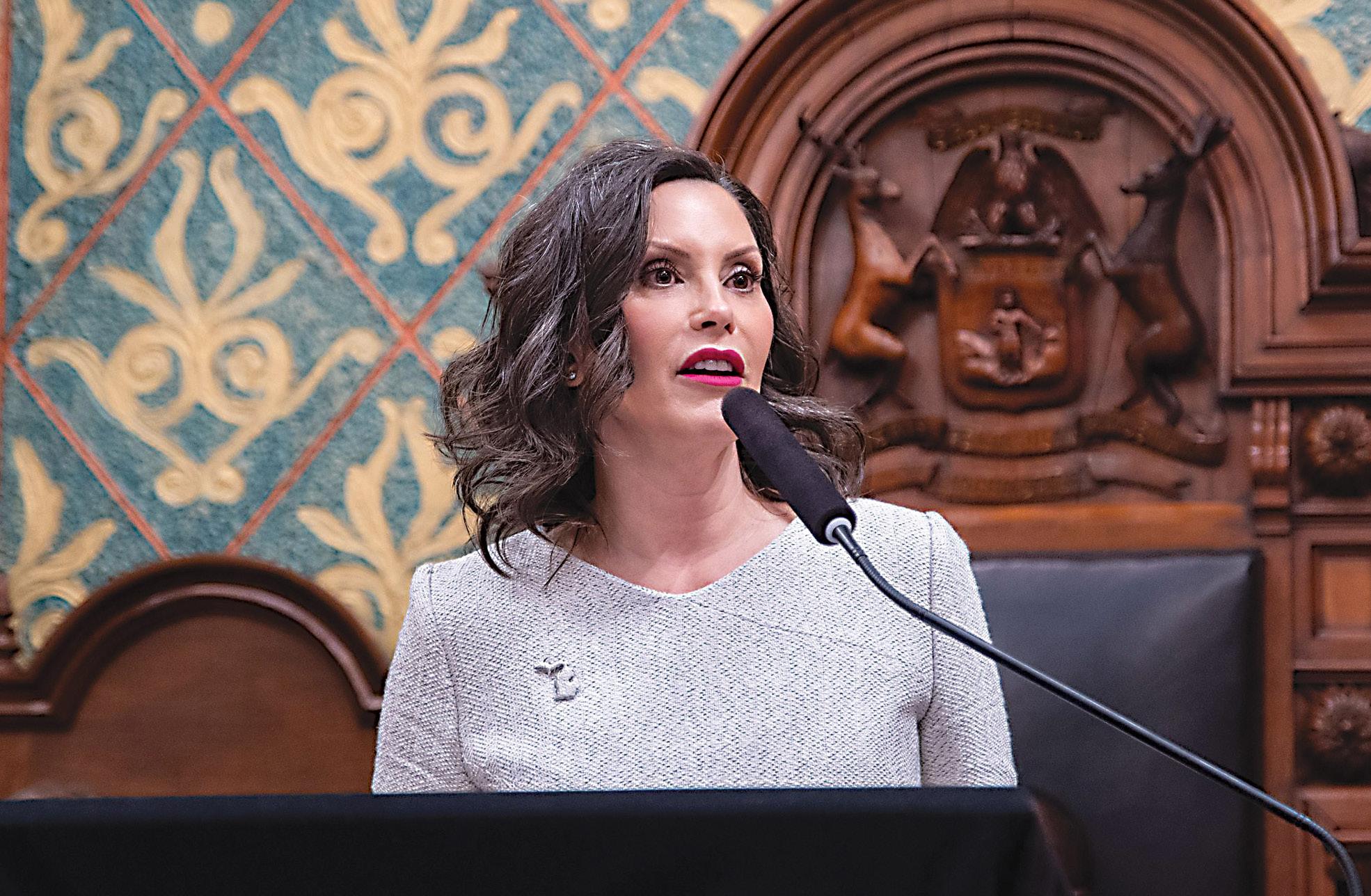
Governor Gretchen Whitmer delivers her last State of the State address from the Michigan House Chamber Feb. 25.
Holly Burkhart/DAILY
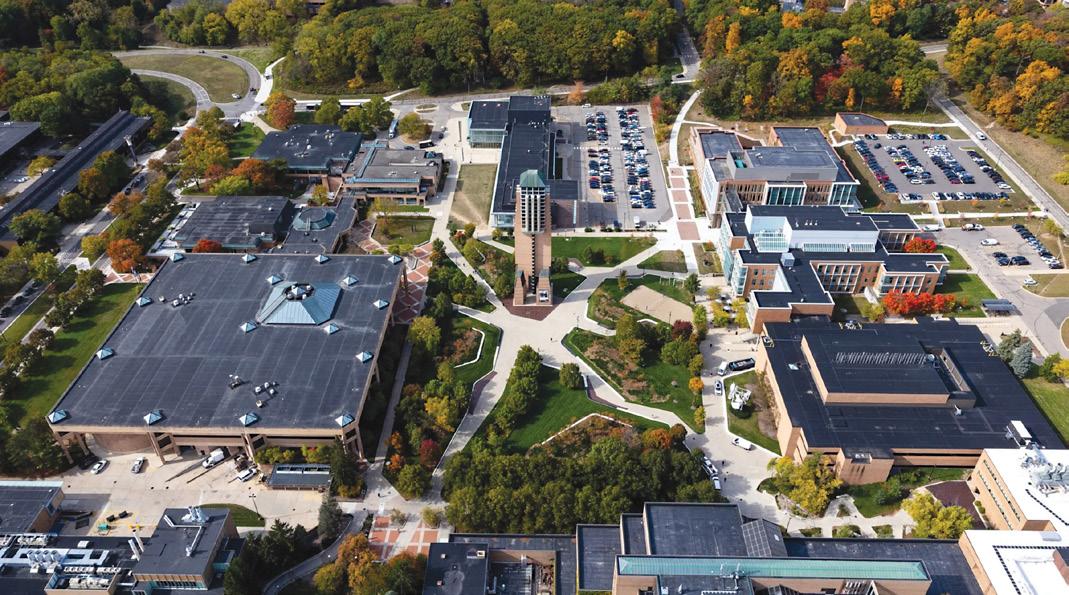
An aerial view of the University of Michigan North Campus.


Ann Arbor Community Policing Academy attempts to address systemic issues
The AAPD hosts up to 20 members from the community in evening sessions from February to April
The Ann Arbor Community Policing Academy recently began its second year of programming following a decade-long hiatus.
The program, hosted by the Ann Arbor Police Department, aims to repair trust between community members and law enforcement through educational experiences on the training, protocol and equipment utilized by Ann Arbor law enforcement.
The academy accepts up to 20 members from the local community to attend eight evening sessions by various AAPD experts between February and April. This year, the program concludes on April 2. The department intends to continue the Community Policing Academy but has not yet released information or registration for 2027.
In an interview with The Michigan Daily, AAPD Sergeant Mark Pulford said he believes this form of outreach by local law enforcement grows transparency and community understanding of policing.
“It’s a good opportunity for the public to be able to see the inside of the police station,” Pulford said. “Not only as the tour, but what we do on a daily basis. We have a lot of different sections where
ARBOR
(participants) get an inside look at what the officers do.”
This year’s academy includes lessons on topics like criminal investigation procedures for detectives, de-escalation methods and conversations about fair policing.
The Feb. 26 session of the academy included a presentation of water rescue procedure and equipment. Participants learned how officers who are on the Underwater Search & Recovery Team use technology to create maps for recovery and rescue operations. The event also discussed how police academies train new officers to perform Standardized Field Sobriety Testing and officer’s jurisdiction restrictions when performing these tests.
In an interview with The Daily, Sheena Long, a participant, said she was motivated to register for the event by her experience working in health care and planning Interprofessional Education Collaborative events.
“The biggest thing is just making those connections, having relationships and understanding what goes into the day-to-day of law enforcement, and how we as citizens can be of help to them,” Long said.
Washtenaw County has its own version of the program, accepting 50 community members each year.
Despite its selective participation — which AAPD intends to maintain to optimize hands-on experiences — Pulford said it is important for the program to include a diverse representation of the community.
“The more people that know about it, the more people who can attend and ensure that we’re getting a diverse group of the population to come in,” Pulford said. “Whether it’s students in college to people who are retired and want to see what’s going on in their community and take a more active role.”
Community policing initiatives are not a new practice in law enforcement. Formally beginning in 1994 with the Violent Crime Control & Law Enforcement Act, various programs nationwide have attempted to advance trust and transparency between residents and law enforcement.
The Policing and Social Justice HistoryLab, sponsored through the Carceral State Project at the University, studies community policing practices. In an interview with The Daily, Rackham student Lloyd Simpson, a researcher at the lab, said his research into policing and law enforcement has strengthened his belief that different methods, such as community policing, should be used to address inequitable policing.
“Community policing emerged from the aftermath of the postwar
as a response to people rising up against racist police violence,” Simpson said. “Particularly, racist police violence that was targeted towards a particular sector of the Black working class, young Black men and unemployed Black youth. So, community policing was a way to engage the community in being more cooperative with law enforcement.”
Simpson also said he was not convinced community policing could address broader concerns of racism and police brutality in the country.
“I don’t see any community involvement with policing as beneficial to reducing the violence of policing,” Simpson said. “Policing is not an institution of public safety; it’s an institution of public order, an order predicated on racial inequality and economic inequality.”
Long said this program is effective in bridging the gap between the community and law enforcement and hopes similar programs expand across the country.
“I wish this happened as much as possible in every county,” Long said. “This opportunity and program, especially in neighborhoods or counties where there seems to be a disconnect between the two — this would help bring that together.”
Things to do around Ann Arbor in March
This month, festivals, charity events, St. Patrick’s Day festivities and more are open to the Ann Arbor community
As the Ann Arbor community prepares for spring and St. Patrick’s Day festivities, local organizations and businesses are hosting a variety of events throughout the month of March. From film festivals to charity runs, here are nine things happening in Ann Arbor this month.
March 11: “2026 Academy Awards Preview” The Ann Arbor District Library will host an Academy Awards preview in anticipation of the 2026 Academy Awards taking place on March 15. Attendees will join local cinema directors and staff to discuss Oscar nominations and likely winners. When: 6:00 p.m. to 7:30 p.m. Where: AADL Downtown: Lower Level Program Room, 343 S. 5th
Natasha Eliya/DAILY
16, 7 a.m. on March 17
a 1,707-time winning former U-M head softball coach. Tickets can be purchased on the TEDxUofM website.
When: 3:00 p.m. to 6:00 p.m.
Where: Power Center for the Performing Arts, 121 Fletcher St.
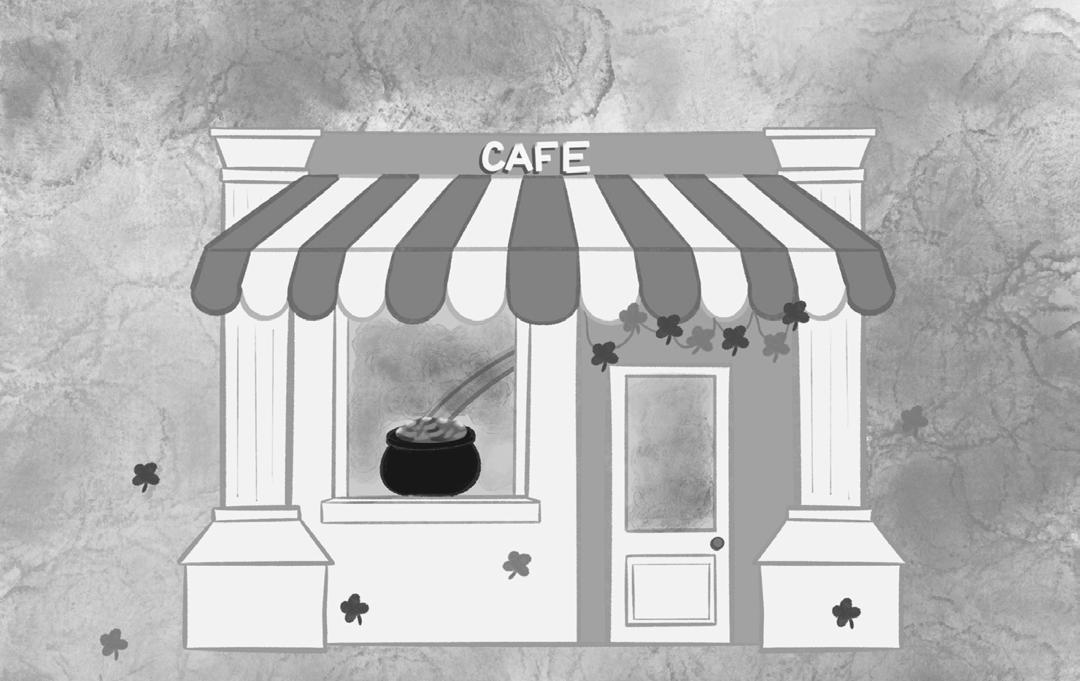
Price: $20 (general admission), $12 (University students, faculty or staff, students under 18, veterans) March 13-17: St. Patrick’s Day Festival Conor O’ Neill’s Irish pub will celebrate St. Patrick’s Day with a five-day festival featuring a variety of activities, including live Irish music, Irish dancers, bag pipers and Irish food and drink.
When: 9:00 p.m. on March 13, 2:00 p.m on March 14, 12:00 p.m. on March 15, 5:30 p.m. on March
Where: Conor O’ Neill’s Irish Pub, 318 S. Main St.
Price: Prices vary March 21-22: Builders and Remodelers Association of Greater Ann Arbor Home Show
The Builders and Remodelers Association of Greater Ann Arbor’s Home Show will feature a display of builders, suppliers, designers and resources to help attendees improve their home. The show will offer opportunities to connect with local professionals and view live presentations on home, garden and lifestyle building.
When: March 21 from 9 a.m. to 6 p.m., March 22 from 10 a.m. to 5 p.m.
Where: Washtenaw Farm
Stanford Lipsey Student Publications Building 420 Maynard St. Ann Arbor, MI 48109-1327 734-418-4115 www.michigandaily.com
EDITH PENDELL and ZACHARY AJLUNI Co-Editors in Chief eic@michigandaily.com
CICI COPENHAVER Business Manager business@michigandaily.com
NEWS TIPS tipline@michigandaily.com
LETTERS TO THE EDITOR tothedaily@michigandaily.com
EDITORIAL PAGE opinion@michigandaily.com
Council Grounds, 5055 Ann Arbor Saline Rd.
Price: $5 (general admission), Free (children under 12) March 28: Spring Bluebird Festival
The Michigan Bluebird Society is hosting a festival celebrating eastern bluebirds and other birds that nest in exposed cavities. The event will include an expert panel and educational presentations on how to use nest boxes, feeders and land management to encourage nesting birds and native songbirds.
When: 9:00 a.m. to 4:45 p.m.
Where: Morris Lawrence Building, 4800 E Huron River Dr
Price: Free, $22 for lunch March 24-29: Ann Arbor Film Festival
The Ann Arbor Film Festival — considered the oldest “experimental and avant-garde” film festival in the world — is set to return for its 64th year. The sixday festival features 40 programs of more than 180 films from over 20 countries ranging in genre and length. Tickets are available for purchase on the Ann Arbor Film Festival website.
When: Times vary
Where: Michigan Theater, 603 E. Liberty St.
Price: $155 for In-Person Festival Pass, $175 for Combo Festival Pass
PHOTOGRAPHY SECTION photo@michigandaily.com NEWSROOM news@michigandaily.com CORRECTIONS corrections@michigandaily.com ADVERTISING wmg-contact@umich.edu
ARTS SECTION arts@michigandaily.com SPORTS SECTION sports@michigandaily.com
Editorial Staff
ANNABELLE YE Joshua Mitnick ’92, ’95 Managing Editor bellaye@umich.edu
GEORGIA MCKAY Digital Managing Editor
gmckay@umich.edu
AANYA PANYADAHUNDI and CHRISTINA ZHANG Managing News Editors news@michigandaily.com
Senior News Editors: Dominic Apap, Gia Verma, Glenn Hedin, Quinn Mittlestat, Sarah Palushi, Sarah Spencer
ELENA NICHOLSON and GABE EFROS Editorial
Deputy Editorial Page Editor: Maggie Berling
Senior Opinion Editors: Avery Allen, Hayden Buckfire, Isabel Seniawski, Mateo Alvarez, Sarah Zhang
LYRA SHARMA and GRAHAM BARKER Managing Sports Editors sports@michigandaily.com
Deputy Sports Editor: Drew Lenard
Senior Sports Editors: Alina Levine, Ellie Richard, Kenzie Mielke, Nate Schreck, Sam Gibson, Zach Goldstein
CAMPBELL JOHNS and CORA ROLFES Managing Arts Editors arts@michigandaily.com
Senior Arts Editors: Hudsen Mazurek, Ian Gallmore, Isabelle Perraut, Meagan Ismail, Michelle Wu, Siena Beres
MAISIE DERLEGA and SELENA ZOU
Managing Design Editors design@michigandaily.com
Senior Layout Editors: Junho Lee, Frances Leibovich, Graceann Eskin, Kathryn Palsrok
Senior Illustrators: Gabriella Spagnuolo, Caroline Xi, Matthew Prock
BRIDGETTE BOL and HOLLY BURKHART Managing Photo Editors photo@michigandaily.com
Senior Photo Editors: Alyssa Mulligan, Ananya Kedia, Arushi Sanghi, Isai Hernandez-Flores, Meleck Eldahshoury
AYA FAYAD Managing Statement Editor statement@michigandaily.com
Deputy Editors: Liska Torok, Lola Post, Riya Kommineni
ALINA MURATA and JOSUE MATA
Managing Copy Editors copydesk@michigandaily.com
Senior Copy Editors: Alena Miklosovic, Cristina Frangulian, Elizabeth Harrington, Ellie Crespo, Jane Kim Lily Cutler, Tim Kulawiak, Zoey Ueland
EMMA PENG and JULIA MEI Managing Online Editors webteam@michigandaily.com
Data Editors: Darby Jones, Zora Tucker
Engineering Manager: Alyssa Locke Product Managers: Annice Chang, Sanvika Inturi
AHTZIRI PASILLAS-RIQUELME and EVAN KRUMMEL Managing Video Editors video@michigandaily.com
Special Projects Coordinator: Shubhankar Dhulia Senior Video Editors: Cameron Detulleo, Gretel Foglesong, Savannah Otten
AMARA M. SMALL and IHAA MOHAN Michigan in Color Managing Editors michiganincolor@michigandaily.com
Senior MiC Editors: Ahmed Elkhatib, Arya Kamat, Muntaha Rahman
AVA CHATLOSH and MEGAN GYDESEN Managing Podcast Editors podeditors@michigandaily.com
Senior Podcast Editors: Abby Willcox, Olivia Dickerson, Rogen McLean, Vily Souris
DA YOUNG KIM and UWAEISH AHMAD Managing Audience Engagement Editors socialmedia@michigandaily.com
Senior Audience Engagement Editors: Caleb Starr, Heewon Moon, Holly Dennis, Isabella Burke, Michelle Fang, Sophia Barczak, Sophia Liao, Samantha Weiner
SAYSHA MAHADEVAN and PUJITA RUPANI Culture, Training, and Inclusion Co-Chairs accessandinclusion@michigandaily.com
Senior CTI Editor: Mahee Kavdia
ANNA MCLEAN and DANIEL JOHNSON Managing Focal Point Editors lehrbaum@umich.edu, reval@umich.edu
Senior Focal Point Editors: Lucy Langerveld, Sasha Kalvert
JAMES KNAKE and MILAN THURMAN
Managing Games Editors crosswords@umich.edu
Senior Games Editors: Eleanor Sullivan, Kiran Parekh, Sam Martin, Tobin Saxton
Business Staff
CAROLINE ZOLTAK Marketing Manager GABRIELLE GONDOLY Sales Manager
KATE PARAMBO Creative Director MORGAN ORTH Strategy Manager
Emily Alberts/DAILY
Elliot Cadeau shoots the basketball.
CARTER CARINO Daily Staff Reporter
KYLIE HARMALA Daily Staff Reporter
Emily Alberts/DAILY
Trey McKenney shoots the basketball.

Michigan in Color is The Michigan Daily’s section by and for People of Color.
In this space, we invite our contributors to be vulnerable and authentic about our experiences and the important issues in our world today.
Our work represents our identities in a way that is both unapologetic and creative. We are a community that reclaims our stories on our own terms.
Time Moves in Rounds
Daily Crossword
by Eleanor Sullivan

The Michigan Daily Crossword
Amma carried herself heavy after Ammama died, her body collapsing against the stove. Death left her with scorched palms that smelled of burnt cardamom, veins drawn down her neck and an excuse to scream. Now she prays with her hands lowered, her knees to the ground and her head resting with the sky. When God is away, she calls it begging. She begs for her thoughts to erode against grain, painful and salted. She begs to never meet her mother in the next life,
for her mother to never suffer again. I used to be jealous of Amma and how much she could grieve. I wanted to reminisce like her, like I longed for a space to be filled. Like I was loved enough to long for something in the first place. It’s hard for me to look back on my life without wishing I had more to lose. More from my youth that has become soft laughter from tongues forgotten, from teeth lost. The youth that became that padded grief I once hoped for, that I couldn’t name until now. I long for what could have been and watch Amma’s hands mend. I wonder if time heals, or if her pain is still under layers
of skin. Maybe moving on is a myth, maybe we all just forget. Like how Amma has forgotten which way her mother parted her hair. I ask her if she thinks death was forgiving. If Ammama was allowed to just clean herself up and forget. To forget her regrets, forget if the texture of her daughter’s hands changed.
I wish to die but Amma says time moves in rounds. That even if I try to forget, I will be stuck forgetting in every lifetime. So instead I sit next to her with my hands to the ground and pray to end the cycle that draws itself in circles. We beg to stop moving in rounds.
Citizenship not included
KARAH POST MiC Columnist
Watching the recent events unfold in Minneapolis has been devastating to say the very least.
Since before President Donald Trump was inaugurated, threats of his mass deportations and extreme immigration policies left many Americans fearful of what would happen once he was elected. Now, American citizens have turned to protesting the violent acts of the U.S. Immigration and Customs Enforcement, but ICE’s actions have caused irreparable fatalities. The killings of Alex Pretti and Renee Good sparked national outrage. But in response, the White House chose to vilify the victims — one who was an ICU nurse for veterans and one who was an award-winning poet and mother of three.
For months now, we have seen families ripped apart and acts of murder in our streets at the hands of ICE agents. But behind the events that receive national news coverage are just as many underreported incidents of deaths of detained people who were picked up by ICE. Yet, the agents seem to face no consequences, nor are they held accountable for their crimes. And as their power surges, so do feelings of uncertainty for many who might lack citizenship.
As an international adoptee brought to America from China by American citizens when I was 17 months old, my presence in America was entirely fortuitous. With Trump’s focus on deporting immigrants, many intercountry adoptees feel increasingly vulnerable. Tens of thousands of intercountry adoptees in America are not citizens despite being adopted by American citizens. Many were brought to America as children and grew up with the same rights as Americans.
adoptees were not automatically guaranteed citizenship. This citizenship act, which would go on to take effect in 2001, granted automatic citizenship to adoptees from a foreign country who were younger than 18. However, the law only covered future adoptions or those born after Feb. 27, 1983. Those born prior to that date, or those who were on tourist or medical visas, were left without legal status when those visas expired.
Many adoptees might be unaware of their citizenship status until they try to apply for a new Social Security card, passport or financial aid. It isn’t until they are denied that they learn that they are not citizens due to bureaucratic semantics, even though they have spent their whole life believing themselves to be. Many intercountry adoptees were merely babies when they were brought to America. To learn about their status as adults by accident is often an incredibly jarring, unfair experience.
The obstacles that stand in the way to legally becoming a naturalized citizen are now copious and dangerous, especially when harsh consequences exist if standards aren’t met or if there is mishandling of proper immigration documents. All can be devastatingly costly.
what is going on when these acts are happening in our very streets, backyards and cities. Some might think that these deportations only affect immigrants or “illegal aliens,” or that they themselves personally don’t have anything to do with what is going on. But everyone has a part to play. Silence is selective and it only allows for the fueling of the very systems that fund and support these atrocious acts committed against our fellow Americans. The U.S. Department of Homeland Security would like to spread misinformation about how they are arresting the “worst of the worst” criminals, and that immigrants are more likely to commit crimes. But this is not the case. In actuality, tens of thousands of people who have been detained by ICE have no criminal record or pending criminal charges.
According to USA Today correspondent Terry Collins, research actually suggests that immigrants commit fewer crimes than people born in America. Even if the former was true, it does not justify the unlawful detainments and deportations of Americans. Refugees and immigrants are guaranteed rights under the constitution. The right to live peacefully and the right to be in America are neglected when immigrants are terrorized without due process.
37.
Focal
Slightly
Mutt "Does
Third
"Pick
Word
Guided
Celestial
They're
Mathematical
System
Mexican
Lecture
Without
Easily
Supervise Of
Nemesis
48.
50.
52.
53.
54.
55.
57.
58.
59.
62.
Parents could have adoption paperwork signed and stamped by the judges and governments that granted them the privileges of becoming children of American families. But for decades, “adoption … did not automatically guarantee (U.S.) citizenship.” It is estimated that between 18,000 to 75,000 adoptees lack citizenship. Parents were supposed to secure their adopted children’s legal status or naturalized citizenship, but some never finished the process.
One adoptee interviewed by The Associated Press learned that she was not a citizen and shared her feelings of identity disjuncture.
“Adoption tells you: You’re an American, this is your home,” she said. “But the United States doesn’t see me as an American.”
She goes on to mention that her father died thinking he did his part in ensuring her legal status. But what she was left with instead were feelings of instability and fear, not knowing what living illegally in America could mean for her.
Before the Child Citizenship Act of 2000, intercountry

And regardless of if they have the appropriate paperwork, immigrants do not feel safe in Trump’s America. I was born in Jiangjin city outside of Chongqing, China. And for the first year and a half of my life, nannies cared for me in an understaffed orphanage. When I was adopted, I moved to Southern California and have been raised in this country my whole life. I grew up believing that I am American, even though others viewed me as a product of my homeland. Living in America is all I’ve ever known. I never questioned my citizenship status, nor have I ever thought about what paperwork I did or did not have, until now.
Some adoptees don’t label themselves as immigrants as they didn’t come to America with a “second language, a different culture, family members, (or) ties to a country (they were born in).” But the threat of violence against people of Color in America is very real. The thought of any immigrant being forced to return to their “native countries” without having ever lived there, or the thought of being deported to a foreign country when America is home seems arbitrarily gratuitous.
Each day, we hear news stories about more cases of unconscionable detainments of Americans. But, we also see how neighbors in our own communities are subjugated to these very acts. As Trump sends more ICE agents to major cities in America, I hear from friends about their concerns for their families or for their own safety. No longer can someone claim not to know
When the purging of immigrants, whether they are American citizens or not, is seen as revelry, we are reminded of America’s established behavior of devaluing and erasing immigrants’ value. Some will say America is a melting pot: a conglomeration of different ethnicities and backgrounds. But to say this without acknowledging the deliberately varnished (but wholly unconcealable) history that America was built on the backs of immigrants and African Americans is an incredible miseducation and lie. Even worse, this erasure took place at the hands of governmentendorsed racism, segregation and maltreatment.
By accepting our government’s actions as admissible, we begin to excuse their crimes against the American people. But neutrality and complacency is not innate: they are taught and chosen. John Tunheim, U.S. District Judge of Minnesota, recently ordered the release of refugees detained in Minnesota and also granted a temporary pause on detentions.
“At its best, America serves as a haven of individual liberties in a world too often full of tyranny and cruelty … ” he wrote in his order. “We abandon that ideal when we subject our neighbors to fear and chaos.”
In times of profound uncertainty and despair, it’s our very own selves who protect each other in our communities. The prospect of freedom is one that many of us take for granted, but it is not a guarantee: It is a protection so many have fought for and will continue to fight for.

Emily Dobao/MiC
MEENAL KOGULAN MiC Columnist
Meenal Kogulan/MiC
Opinion
Detroit’s charter school experiment failed its students
BANSI PANDE Opinion Columnist
EDITORIAL BOARD MEMBERS
Zachary Ajluni
Editors
Few forces shape a person’s future more directly than their education. It follows that discussions over how that education is structured and funded have become increasingly popular among policymakers, educators and families navigating an expanding system of school choice. For centuries, families have seen private and public schools as the primary options for education; however, only within the last few decades have charter schools emerged as a viable alternative.
Rediscovering the value of mistakes
SOPHIA FRANCO Opinion Columnist
By 20, we’re supposed to have a passion; by 25, a career; and by 30, a family. In doing this, we’re somehow expected to skip the years when we’re completely directionless and confused. Growing up used to be something that happened gradually and felt light years away. Right now, it feels more like a race. As confusion becomes unacceptable and doubt intolerable, Generation Z is trapped underneath the fear of falling behind and the pressure to appear put-together. Gen Z has been taught to rush into adulthood at the expense of their childhood. Social media pushes Gen Z to equate growing up fast with success, leaving little room for the confusing, awkward in-between moments that teach us vital life lessons.

16% of schools reported a C+ rating or higher.
These persistently low numbers coincide with a system that is becoming increasingly defined by competition.
This urgency to have it all “figured out” hasn’t developed out of nowhere; instead, it’s been meticulously manufactured post by post, platform by platform, on social media. Young social media influencers are obsessed with boasting about milestones and extreme self-improvement. For example, 21-year-old TikTok influencer Katylee Bailey built her entire platform around being a homeowner without a mortgage at the age of 21. Others shame their peers for partying and casual dating, which were previously normalized aspects of one’s 20s.
status. The pressure to have it all together by your 20s makes confusion in your young adult years feel regressive, when in reality, it’s vital.
As a result, Gen Z feels like they have to choose between success and the common youth experience that is often associated with failing and making mistakes. Carefree, “living in the moment,” behavior is reframed as more immature than normal, making the trial and error in an individual’s youth feel disgraceful. The experimentation that was once essential to young adulthood is rejected, as the emphasis shifts to achievement and high
Inevitably, social media exposes us to individuals our same age living an exemplary life of extreme wealth, success and achievement. This makes us compare milestones instead of honoring our own personal growth. Seeing others boast about their access to unrealistic lifestyles brings about feelings of guilt; guilt for wanting moments of fun and irresponsibility, guilt for not having numerous long-term goals and a concrete identity figured out early on. Making mistakes while facing a variety of challenges in your youth is crucial for growth. Without experiencing setbacks and slip-ups in your late teens and 20s, the inevitable challenges you face later in life will feel far more overwhelming and damaging once they finally arrive. CONTINUED AT MICHIGANDAILY.COM




Charter schools operate in a gray area between public and private institutions, receiving public tax dollars, but facing fewer regulations and transparency requirements than their public school counterparts. This model is often referred to as “school choice,” where families can select a different type of publicly funded school.
Operating in this structural limbo has blurred lines of accountability, creating a system that perpetuates inequality and weakens democratic oversight. This issue is especially visible in Detroit, where charter schools educate more than half of all K-12 students. Detroit should abandon its dependence on charter schools and shift toward more transparent and publicly accountable institutions.
Detroit has suffered from an education crisis since the 1950s when segregation, declining tax revenue and white flight combined to create consistently underperforming classrooms. In 1994, charter schools were introduced as a solution to underperforming schools, offering families greater educational opportunities. Policymakers promoted school choice as Detroit’s solution, but in reality, it has done little to improve education for the vast majority of students. On the most recent National Assessment of Educational Progress exam, only 4% to 6% of Detroit eighth graders were proficient or above in reading and math. And among all Detroit public high schools — both charter and public — only
The expansion of charter schools creates a fragmented environment where dozens of schools scramble to attract enrollment, market themselves and justify their existence. As charters attempt to differentiate themselves, families are left to sort through various school information, applications, deadlines and transportation logistics for dozens of schools.
However, not all households are positioned to navigate that system. Picking the right school demands time and effort, which can be a luxury for families already struggling to make ends meet. For example, a household where a single parent is working two jobs might not have the time or access to research schools, attend open houses and manage a difficult application process. While charter schools might be beneficial for families with the means, they don’t really tackle the underlying issues that affect access to education in the first place. In Detroit, a city already defined by stark racial and economic inequalities, treating education like a market will perpetuate existing issues. Students from more privileged backgrounds will continue to thrive while those from disadvantaged backgrounds will fall further behind, widening the gap between different racial and economic groups.
Many liken charter schools to highly selective public schools or similar alternatives. In theory, this comparison seems
reasonable. Both involve barriers to entry and both require families to navigate complex admissions processes, but the difference lies in the structure and scale of the schools. Selective public schools operate as a very small part of a larger system that ensures every student gets a seat within the same education structure. However, in Detroit, charter schools educate more than half the student body. Charters don’t supplement the education system — they control it. When funding is tied to enrollment numbers, existing public schools lose resources which harms the quality of education. Not only that, but charter schools attract the higher performing students, leaving public schools to suffer. These so-called “backup schools” are not neutral safety nets, but significantly weakened institutions that then provide poor education.
Moving beyond issues of inequality, Detroit charter schools raise significant concerns about democratic accountability given the city’s unique political history. For most of the last two decades, the Detroit Public Schools Community District operated under state control, meaning key decisions were made by appointed “emergency managers” rather than elected local officials. More recently, the city has returned to a system of elected school board officials, meaning voters now elect representatives who oversee Detroit’s school policy. This seems ideal because it puts the power back into the hands of the city’s parents who can vote on the direction of their children’s education.
CONTINUED AT MICHIGANDAILY.COM
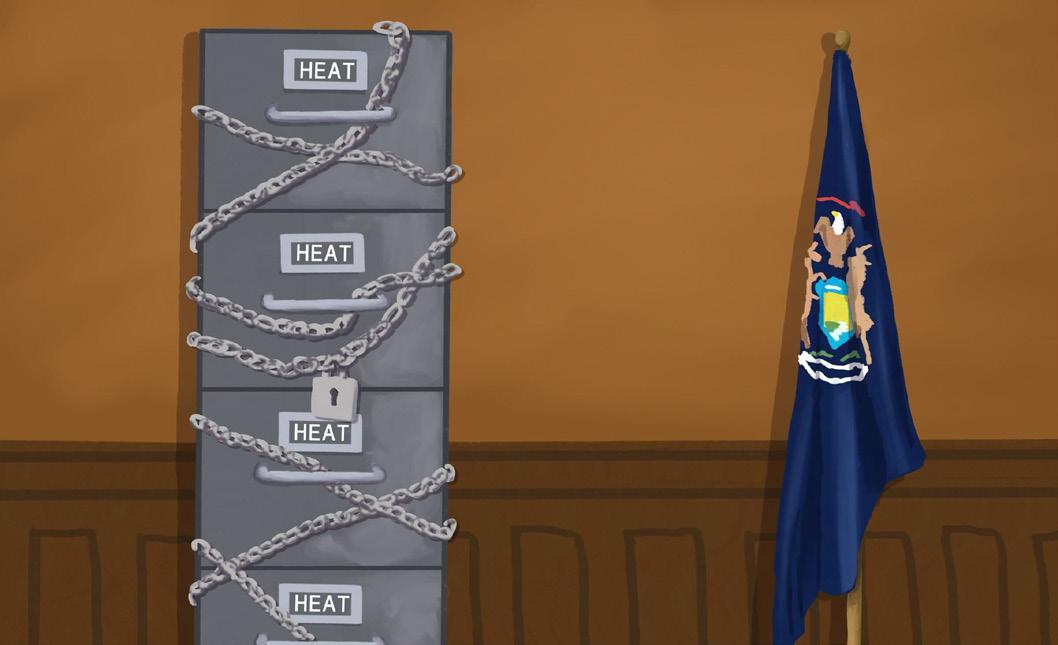
Hall’s HEAT prevents FOIA reform in Michigan
MADELEINE BURKE Opinion Columnist
The Freedom of Information Act gives the public the unique right to request records from their elected representatives and government agencies. While this statute exists to increase transparency between people and their government, Michigan is one of only two states in which the legislative and executive branches are exempt from FOIA requests.
This lack of transparency is not due to a lack of effort; Michigan state Sen. Jeremy Moss, D-Southfield, and state Sen. Edward McBroom, R–Waucedah, sponsored Senate Bills 1 and 2 to address this exemption. With their reform, the public body would be redefined to include the state House, state Senate and the governor’s office in FOIA requests. While these bills passed quickly in the Senate, House Speaker Matt Hall, R-Richland, publicly stated that the bills will not reach the House floor; rather, they will prioritize the alternative legislation known as Hall Ethics, Accountability, and Transparency plan which focuses on holding politicians accountable for their use of dark money to increase spending transparency.
Hall’s prioritization of HEAT over FOIA reform in Michigan will not increase transparency in local government; instead, it’s a dangerously calculated attempt to avoid accountability for the state legislature and the governor’s office.
Lack of FOIA oversight has allowed corruption to uniquely persist in the Michigan legislature and the governor’s office. There have been several scandals in the last 15 years, most notably the Flint water crisis,
in which the city recklessly switched its water supply from the Detroit Water and Sewage Department to the Flint River, leading to toxic lead poisoning of residents’ drinking water.
In response to this scandal, public record requests were made to former Gov. Rick Snyder, but this request was denied due to the governor’s exemption from FOIA laws. A group of journalists used their limited FOIA rights to access emails from the Department of Environment, Great Lakes, and Energy, and revealed that state officials were aware of leadrelated diseases months before Snyder publicly responded to them, implying that the governor’s office was attempting to cover up this scandal before finally addressing it.
Two years after the crisis, Snyder voluntarily released emails between himself and his executive staff throughout the scandal. However, these emails were clearly handpicked to avoid incrimination, with some pages being completely blacked out and none coming from 2013, the time when the decision to switch Flint’s water supply was made.
If the FOIA laws had more power, these emails could have provided the public with crucial information surrounding the
source of the disease outbreak and forced public officials to take direct action. Even further, stronger FOIA laws could have discouraged Snyder’s stateappointed emergency managers from making the ill-advised decision to switch Flint’s water source in the first place, knowing documents relating to the actions could potentially be released to the public.
FOIA doesn’t only have the power to hold governors accountable; it has historically held state legislatures accountable as well. In 2020, Commonwealth Edison Company and Illinois state Rep. Michael Madigan, D-Chicago, former Speaker of the Illinois House, was exposed for a multi-year corruption scheme in which ComEd paid associates of Madigan in return for votes for favorable legislation. ComEd made $1.3 million worth of indirect payments to Madigan’s associates. Thanks to FOIA laws and federal investigations, this scandal was revealed to the public. Adopting the legislation proposed by Moss and McBroom is essential to ensure that if a scandal like this were to happen in Michigan, the people have the power to bring it to light.
CONTINUED AT MICHIGANDAILY.COM
Gabby Spagnuolo/DAILY
During the interim between high school and my first class at the University of Michigan, my mother told me to enroll in EARTH 240: Primitive Navigation and Wayfinding in the Natural World. The now-defunct course taught students about historical navigation techniques, including the sundial and magnetic compass, as well as the natural phenomena those techniques rely upon. It seemed to be a great choice for students planning on getting lost at sea or stranded in the forest. My mom’s Facebook group for U-M parents was awash in easy natural science courses that humanities and social science majors could use to boost their GPA while fulfilling LSA’s seven-credit natural science requirement.
Primitive Navigation allowed 83% of students to earn an A-range grade, with 61% receiving either an A or A+.
Her thought process was the same that many of my peers and I came to adopt: If I’m required to take at least seven credits in the natural sciences, I might as well fulfill them as easily as possible. I didn’t end up enrolling in Primitive Navigation, but I have taken a few courses just like it.
The University is home to a host of easy natural science courses for students majoring in the humanities and social sciences. To meet LSA’s natural science requirement, most students select two of these courses and exert the minimum effort needed to acquire an A — which could be a problem because most feel they’re learning next to nothing. LSA’s natural science course requirement forces students to take classes they lack interest in and fails to achieve any meaningful
development of natural science skills or knowledge. It should be scrapped. Without being compelled to take easy natural science courses against their will, students could acquire those credits in the subjects they actually care about. History majors could study a new period they haven’t yet engaged with. English majors could study a new literary style. It’s easy to dismiss seven credits as nothing in the span of a college education, but in those hours lie the ability to become reasonably welleducated in two interesting subjects. That’s certainly better than skating through two earth science courses devoid of meaningful learning.
The University justifies its mandatory engagement with the natural sciences by claiming it is part of the “broad intellectual experience” that forms a critical part of a liberal arts education. It’s fine if students select, attend and engage in easy courses, because doing
so still exposes them to forms of reasoning and problem solving that they wouldn’t encounter in the social sciences or humanities. But the ease of getting an A in most of these natural science courses renders this argument moot. If students don’t have to attend class in-person or study the material outside of lecture to perform well, they are certainly not engaging with the natural sciences in a way that reaps any intellectual benefit.
It would be ideal if the University had a way to make social science and humanities majors interested enough in the natural sciences to avoid selecting easy courses, but this task is impossible. Students enter the University with different interest profiles, and those that define political science and history majors are fundamentally different from those of chemistry and physics students. To pretend otherwise — as the natural science requirement
does — is to force students to become something they are not.
The individuality of each student is what distinguishes the natural science requirement from its quantitative reasoning counterpart. While the natural science requirement compels students to go outside their discipline, there are a few classes within the social sciences that qualify as quantitative reasoning courses. Many social science majors likely fulfill the requirement by taking ECON 101 and 102. Requiring students to enroll in one or two quantitative reasoning courses also hasn’t given rise to a legion of easy classes that allow students to effectively circumvent the requirement.
There also isn’t any apparent way to reform the natural science department to make the sevencredit requirement worthwhile. Cracking down on easy courses would brutalize social science and
humanities students by making them absorb challenging material in subjects they don’t care about — an outcome that would be worse than the status quo. Everyone can agree that it would be cruel to force a history major to take Organic Chemistry simply to expose them to natural science methods.
LSA imposes several restrictions on student course selection in an effort to expose students to valuable information and methods they otherwise would have never encountered. It requires students to achieve fourth-term proficiency in a foreign language, study quantitative methods and emphasize writing skills in their first-year and upperlevel coursework. In order for such a requirement to be justified, it must achieve increased student learning that would not have occurred without the requirement. LSA’s natural science requirement does not meet that burden.






LUCAS FELLER Opinion Columnist

Soupmaking
Step One
The best soup I ever had was simple. That whole chicken: heart, neck, lungs, feet. A layer of orange subcutaneous fat. The oviduct. Unlaid eggs. Four slices of ginger. Water and salt.
I’ll save you the shock of revelation, the request for “the killing of the chicken to happen off the page.” This was, in hindsight, necessary, given I did not have the acumen of a farmboy to be able to inflict those messy chops at the neck. So it was never written. I have the introduction to that piece from some years ago, which began:
“Orange daylilies. This is what I remember most about that drive: rows of orange daylilies in bloom, nestled in trees, wild grass, winding roads. I looked at the chicken sitting on the passenger side, burrowed in the bed of towels I’d made. It looked at me. It looked out of my window. It shit on my seat.”
This was back when the image of orange daylilies, the summer afternoon, could see itself exist in such an article. It’s a shame what time does to such details, to flowers in bloom.
Step Two
Most soup tends to be quite bad. When I moved to the United States as a child, I moved into a floodplain. In my first real summer here, I was welcomed with a flood of catastrophic proportions; the whole neighborhood evacuated and prayed the levee would hold. It was good for me, because all of my new friends moved into the apartment complex we started in.
The record high snowfall in the Rocky Mountains combined with the year’s worth of rainfall in late May of that month meant that

the Army Corps of Engineers was forced to let 150,000 cubic feet of water per second flow through the Garrison Dam in North Dakota; an unprecedented amount, torrential, the only sound existing being violent, rushing water. A freak of nature.
Claude Levi-Strauss, in “The Raw and the Cooked,” looked at boiling, and soup-making, as the critical location where nature transforms into civilization. The long, slow simmer, mediated by a closed vessel.
One year, when I came back home from college, I drove by the houses on the road by my high school to see they had fallen into the lake and sank below the surface in another catastrophic flooding event.
“We’re having a bad flood every four or five years,” Jason Westcott, Union County emergency management director, said in an article. “Our rivers are changing and us humans are doing something to them.”
If soup, sustenance, has mediated the transformation from nature to civilization, then it would make sense for it to also mediate the opposite transformation: all of
those houses falling into the water — into that lake where a tire swing was tied to an overhanging bit of an oak tree that the kids would boat to — back into nature.
Step Three
I’d picked up a dog kennel from someone on Facebook Marketplace, and when the man asked me what dog it was for, I’d panicked and said, “Actually, a cat, just a cat that wants more space,” because I didn’t want to explain the chicken. None of this ended up mattering because the chicken was perfectly fine, hanging around a bush in my backyard, pecking at insects and bowls of white rice and corn. It was raining one morning when I woke up. I ran out back. It wasn’t there. I’d grabbed a raincoat and was prepared to explain to some of my neighbors why there was a chicken running around, but thankfully found her on my porch. She looked at me. I sat down on an old futon outside and let her onto my lap like a cat. We watched the rain dissipate that morning, her undulating heartbeat, the fog making the future wash out.
CONTINUED AT MICHIGANDAILY.COM

blue and thus the catchy name was born.
“The time came to build a permanence, for which was sought an architect, who formed all forms first in the mind. But which? To understand each form, another was needed: the lines of a blueprint.” — Walter Ancarrow The name “blueprint” comes from the process of cyanotyping — a cheap, easy way to replicate drawings on a large scale. The chemicals used in cyanotyping (ammonium iron citrate and potassium ferrocyanide, if you were curious) turned the paper
Nowadays, most technical drawings printed by construction companies are no longer blue. The copy paper is white, yet we still call them “blueprints,” because origins tend to stick around even when we outgrow them. For the Blueprint B-Side, I asked writers to think about origins and the creative process. All art comes from somewhere, and I want to know where that is and why it matters. Foundations are fascinating, so I come to you with a pressing question: What’s your blueprint?

Getting over my fear of journaling
EMILY KIM Daily Arts Writer
I was an avid journaler in middle school. My journal had a light-blue silicon cover with a yellow ribbon bookmark embedded in the spine, and it was the most beautiful thing I had ever owned. I wrote about anything, from the to-do lists that occupied my sixth-grade mind to daydreams of what I wanted my future to look like as a journalist, artist or author. My every thought, idea and desire was kept between the silicon covers of that little blue book.
During my freshman year of high school, I downloaded Substack, eager to see what the new platform entailed. I came across a post of a girl sharing detailed journal prompts for those who craved any inspiration. As I scrolled further to where she posted pictures of her own writing, my heart dropped.
Her journal was perfect. Perfect in a way I didn’t know existed until that day. The journal’s
deep chocolate brown cover was intricately decorated, peppered with stickers each matching the warm vibe she gave off in her profile picture. Her handwriting was so neat and consistent, one would think it was a font. Scariest of all, her writing was unlike anything I had ever considered writing in my journal. The pages were filled with deep, profound ideas I struggled to grapple with as a freshman. I looked at my desk — my blue, now stained grey from pencil marks, silicon journal with a blue-and-orange mechanical pencil perched on top stared back at me. After that, my interest in journal writing fell exponentially. I didn’t consistently journal for years — pennning a few entries every few months when I would finish a book and think, “Maybe I can try writing like that.” It always failed. No matter how hard I tried, I could never recreate the perfect swirls of cursive or articulation of thoughts the girl’s Substack post had. My blue silicon journal remained in the same corner in my drawer, withering

Caroline Xi/DAILY
away with my to-do lists and fantastical princess stories all gathering dust.
During my second year at the University of Michigan, I enrolled in English 290, a course centered around contemporary apocalyptic literature. It was a course that seemed intriguing enough to give me a break from all my other classes and hopefully give me a push back toward my lost love for reading. The first day of class rolled around and the professor introduced our main method of logging writing exercises and reflections: a journal.
I hadn’t owned a fresh journal since my blue silicon one. Once I was handed a new one, I admired the pages — the cover a rusty light brown, rough to the touch but thin enough to where I could easily grasp the entire journal between two fingers. Although the journal was mainly for reflections on the texts we read and discussed throughout the semester, the act of keeping track of my thoughts and insights during discussions slowly made me remember my sixth-grade self’s enthusiasm for writing on a blank page every day. I began to miss her. This semester, I’m taking English 328, a course revolving around winter writing and the environment. Our professor had one request: keep a consistent journal throughout the semester. It served as a tool for in-class writing and homework, but he emphasized it should also serve as a space for us. A space for us to write our thoughts, ideas, analyses and anything else we could muster up.
CONTINUED AT MICHIGANDAILY.COM
The ‘Influence’ argument in music: Does it really matter?
NATHANIEL EVANS Daily Arts Writer
If you’ve ever gotten into a lengthy debate about some of the greatest albums of all time, chances are someone has said something along the lines of, “You may not like it, but you can’t deny its influence.” It’s an effective talking point in the realm of music discussion. Some albums are so well respected and beloved that their sounds, ideas and themes stretch far into the future. This, to many people, is clearly indicative of some intrinsic level of quality, personal biases aside. That idea is certainly worth considering, but is it as bulletproof as people make it out to be? Influence is just one small metric among what makes an album what it is, and there are a lot of questions to consider when giving credit to the people and artists that manage to create a paradigm shift. Chief among them, does an
influence on future generations make it better?
Logically,

Emmeline Meldrum/DAILY
was hearing a redefined genre that they likely did not hear anywhere else.
But does that necessarily make those works better than those that came after? Does that influence mean that later generations of artists who attempt to improve upon their predecessor’s craft are fighting for an eternal second place? That hardly seems fair.
To use a relatively recent example, Illmatic by Nas is one of the most foundational works in hiphop history. The gritty production placed you on the streets of New York City, the complex rhyme schemes were light-years ahead of Nas’ contemporaries, and the detailed storytelling in each verse set an entirely new standard for the genre. To this day, Illmatic is regarded as the greatest hip-hop album of all time by many critics, and its place in the history of music is undeniable.
for
that
and
Furthermore, the amount of artists that were able to distribute their art to a national audience was extremely limited. It’s only natural, then, that any artist popular enough to become that successful was
hugely influential. Artists like The Beatles, Nina Simone, Chuck Berry and James Brown were tapping into musical ideas that did not yet have a global audience. Anyone that had a chance to listen to them
But if we’re being real, are there zero albums that take the fundamentals of Illmatic further?
Aren’t there any newer records with more intricate storytelling, more technical rapping, more compelling songwriting and
more ambitious beat making? Yes. Those albums rest on Illmatic ’s shoulders, and that often means that they stand taller. Still, Illmatic was critically acclaimed at the time of release. It didn’t need years of future projects proving its longevity. By contrast, some albums don’t become great until their influence is clearly defined. 808s & Heartbreak by Kanye West was met skeptically by a decent portion of hip-hop publications and devoted fans, but give it 10 years, and the cold, desolate vintagepop soundscape of 808s became commonplace in pop, hip-hop and R&B. It’s pretty incredible for an album so divisive to keep finding its way into every crevasse of modern music. Still, does that mean that the album’s harsher critics were wrong? Does it make the problems people had with the record in 2008 any less valid? Given his albums prior, it’s clear that West didn’t need to dip his toe into experimental art-pop in order to make great songs.
SIENA BERES Senior Arts Editor
DARRIN ZHOU Daily Arts Writer
Selena Zou/DAILY
Cornelia Ovren/DAILY
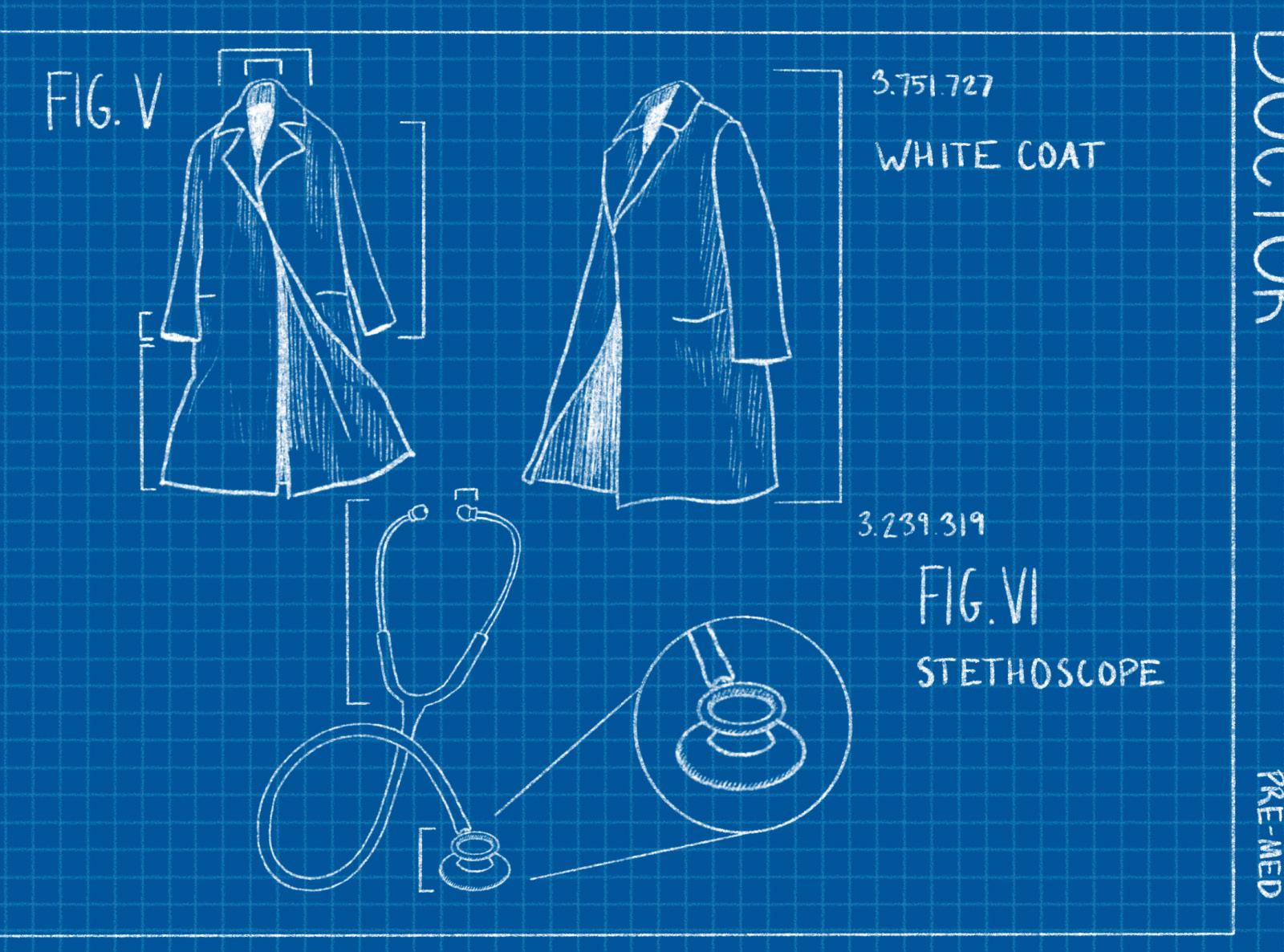
Rejecting a white-coated blueprint of ‘stability’
MICHELLE WU Senior Arts Editor
Like most immigrant families, my parents laid out a blueprint for my life: my extracurriculars, my hobbies, what school I would go to, what I would major in and, most importantly, what my future career would be. To them, this careful stenciling and steady puppeteering would promise me a stability absent from their own lives growing up in rural China before coming to the United States. After all, I had better educational and financial resources than they did, and I would pay back their noble sacrifice by being the first in my direct family to hold a medical degree — or so they thought.
It’s often said that immigrant children are destined to one of three fates for upward mobility: health care, engineering or business administration. I was never known for having a smart mouth fit for negotiating or deft hands skilled at building, so at the ripe age of 12, my parents — more so my mom — deemed my disposition only appropriate for medicine. Striving for academic perfection like the eldest daughter I was, my strengths were my work ethic, discipline and being great at rote memorization. I remember so clearly a sixth-grade parentteacher conference during which my mom proudly declared I would be a future pharmacist, and I left blushing at the embarrassment of living up to an aspiration that wasn’t even mine. When it came time for me to leave for college, my mom drilled into me the concept of “qiantu,” which directly translates to “money way” in Chinese and
is typically associated with discussions about lucrative prospects. These conversations were driven by both the American Dream and the equalizing power of the education system, but also the uncertainty of my home life. At the time, my dad was recovering from a car accident that required him to get surgery to remove a blood clot from his brain. Our family was unsure if he would be able to return to his demanding job once healed. As a safeguard, my mom began searching for a career for me that had high demand, pay and prestige. After extensive research and speaking (or gossiping) with other parents, my mom decided I would study to be a physician’s assistant. It was less schooling and “stress” than studying to be a doctor, my mom reasoned, but it still offered her the honor of telling other parents she raised a daughter who could don a white coat. And as an extra bonus, apparently, it was easier to get married in that profession too! At least, according to social media.
Much to my disappointment, my first two years in college did not play out how I thought they would. Yes, I pursued a science degree and took the biology, chemistry and psychology prerequisites for the list of graduate schools I meticulously compiled even before starting my first semester. I volunteered in critical care settings. I shadowed physician’s assistants who served underserved patients. I got certified to dispense medications in a pharmacy. These were the checklist items I had waxed about in my college application and scholarship essays; they should have solidified my dedication to
the field of medicine and clinical care. Instead, these experiences led to a disillusionment that maybe science and health care weren’t for me. After every organic chemistry exam, I would walk out swimming in self-hatred. I always found myself counting down the hours, whether I was at work, volunteering or shadowing. I started to wonder existentially if this was really the life I wanted for the next 40 years. Following my mother’s glorious plan was no longer aspirational — it was trapping me.
There was one question nobody in my family dared to ask: What would happen if and when I changed my mind? All of our family friends stuck to their major area of study. To give up my regimented program would be a sign of weakness; it would say that I was a quitter. As it turns out, protecting me from unemployment and indecision about my future was not the same thing as setting up a safety net. In reality, the premature determination that I could only be a health care provider created a major disruption in my self-identity — can I be good at anything else, or am I stuck because I trained my whole life for one thing? I never learned to code, I knew nothing about business and, worst of all, I didn’t even know what I liked. I just knew that wearing hospital scrubs and standing all day was not a sacrifice I was willing to make.
In my period of confusion and crisis, I discovered Linda Sun, a YouTuber who I can only describe as the greatest comforting force on this planet. CONTINUED AT MICHIGANDAILY.COM
It’s all just Neil Young

Recently I’ve seen an account on Instagram posting jokes about how all modern alt-country, a subgenre of country music that sounds like a grungier americana and includes artists like MJ Lenderman, Wilco, Jason Molina and Drive-ByTruckers, are just Neil Young. As a Neil Young and alt-country fan I found these jokes to be funny, but something troubled me a bit. Is it actually all Neil Young? Is he truly the base of all alt-country? Should he be lauded as not just a musical genius but also a musical god who laid the blueprint that all these artists now follow?
To sort out these thoughts that troubled me, I ran through a thought experiment that I will now subject you to, dear reader. There is only one universal truth. It’s all Neil Young. Yes, everything. The air you breathe, the water you drink, the food you eat and the sun above. It is just Neil Percival Young, the musician from the 1970s who played in bands like Buffalo Springfield, Crazy Horse and of course, Crosby, Stills, Nash, and Young.
Ok, saying Neil Young is everything may be a step too far. I suppose I should focus on what exactly Young makes up the entirety of. How about music? Everything in music is Neil Young. Well no, that is not quite right either. There are vast swaths of musical genres and musicians who have next to no connection or inspiration related to him. Young’s discography could be roughly classified as folk, country or rock so maybe those genres. But he’s not all of those genres either; rock has some really heavy stuff, Young sounds nothing like the Nashville musicians that make up a large
part of popular country music and folk music is too hard to pin down so it would be journalistic malpractice to say Young makes up the entirety of it. So Young is all certain parts of rock, country and folk. That still doesn’t feel quite right. He certainly had a lot of influence on American folk music post 1970, grunge, alt-country and country rock, but to say he is all of any of those is a stretch. Is anything all Neil Young? I mean he is and his music is. Well except for his time in various bands, that was Neil Young plus some others. Even his solo music was not entirely his, he was inspired by artists like Jimmy Reed, Johnny Cash and Ian & Sylvia. Maybe Neil Young was the friends we made along the way.
Musical influence is a deeply complex and difficult process to articulate. It cannot be boiled down to just one artist. There is no musician who stands alone.
No artist carries the burden of being the sole inspiration for entire genres. There are certainly universally influential figures like Little Richard for Rock n’ Roll, Hank Williams and the Carter Family for country and Bad Brains for Hardcore Punk. These pioneers of their respective genres pushed forward the development of music, but it was never just them.
These musicians came out of local scenes and developed their skills through practicing with others and learning from what they heard around them. This osmosis-like inspiration is part of what makes their music so interesting and influential. It is not just that they are an amalgamation of all the music they experienced before in their lives, it is that they can use all of it to create something new and interesting.
Everything in music has shades of something else, and to trace
the inspiration back to the root would eventually lead back to the origin of humanity when we first began to make rhythms and specialized sounds for rituals and entertainment.
Nowadays, with streaming services offering access to nearly all recorded music ever made, musicians can take inspiration from anything from Croatian House Music to Malaysian Death Metal. This uniquely expansive access to music allows for more experimentation and ideas to come to fruition.
Music is a strange art form. Sounds layer on one another and mix to create something pleasant (or at least interesting) to the human ear. And the people who create and play music are just as strange, they take emotions, memories and more and create a sonic representation of them through instruments or their voices. They also take the music they’ve heard before and use that as a blueprint to create more.
Neil Young is a blueprint. He incorporated a country sound along with rock and folk. He used heavy distortion and a sludge-like sound on his album Rust Never Sleeps that led to him being called the Godfather of Grunge. Young certainly influenced generations of musicians through the sounds he created and emotions he expressed in his music. Young’s influence is nearly inescapable in any form of modern rock or alt-country. In his discography he balanced the delicate sound of an acoustic guitar with the drowning noise of distortion. No one will be Neil Young again, but that doesn’t mean that modern musicians can’t take inspiration from one of the greatest artists of the 20th century.
I wanted to become Jane Birkin — and failed
The first time I cut my bangs, I thought I was curating a personality. Instead, I was inheriting one. Since discovering Jane Birkin on some random Pinterest board in middle school, my identity has quietly orbited around this self-described “shy English girl.” One of the most iconic names to emerge from the 1960s French film scene, Birkin’s simple yet elevated style defined an era and remains something that many — including myself — long to emulate. Before I knew her music or her films, I knew the bag. Notably, Birkin is the inspiration behind a bag that costs more than most people’s rent — the Birkin by Hermès. The famous story goes like this: Birkin, known for carrying around wicker baskets to hold her belongings, spilled the contents on a flight. Unknowingly, she complained about the impracticality of handbags to the then-Hermès CEO. Immediately, he offered to design a bag that would suit her needs as long as the company could put her name on it. Birkin accepted. As I secretly contemplated purchasing a dupe to carry around, I soon came to realize that I didn’t actually want the bag. I wanted to be the woman it was named after.
The challenge then became emulating 1960s France in 21st-century suburban New Jersey.
I tried copying Birkin to a tee. Before you ask, yes, I did carry a basket around. Yes, I did get stared at. Yes, my parents did tell me I looked stupid. But I rationalized this inauthenticity by telling myself these people just couldn’t understand that I was going to become the next “Jane Birkin.” Despite not being French, Birkin is now considered a pioneer of the cliché “messy French girl” aesthetic alongside names like Brigette Bardot and Anna Karina. This felt important to me — she was an outsider who somehow became the definition of an insider aesthetic. An English girl who became the face of Parisian nonchalance. I think that’s what hooked me. Birkin made a more naive version of myself believe that, if I dressed like her, cut my hair just right and carried myself a certain way, I could recreate her momentum within my small hometown.
The more I tried to emulate her, the more aware I became of the gap between us. Her effortlessness was lived in. Mine was rehearsed. As I scoured countless thrift stores, malls and websites in search of the article of clothing that would initiate my metamorphosis into Birkin, I felt certain that one final detail would close the distance between us. My inability to achieve her aesthetic ate away at me. Whenever I finally did manage to identically recreate an outfit of Birkin’s, there was still always something off. I just couldn’t quite put

Maheen Rashid/DAILY
MILES ANDERSON Daily Arts Writer
CAROLINE NOWIK Daily Arts Writer
Maheen Rashid/DAILY
Cornelia Ovren/DAILY






Six meets in, the No. 5 Michigan men’s gymnastics team has found a home in comfortable leads. Saturday was no different. And even with uncharacteristic stumbles, the Wolverines furnished their season with a team high score — all according to plan.
Michigan (9-1 overall, 2-0 Big Ten) led No. 6 Penn State (9-31, 1-2) on all six apparatuses to win 326.250-311.550. The Wolverines returned from a three-week break to their high-power routines — in some cases, executing better than ever to compensate for uncharacteristic errors.
“Our goal this year was to, in the beginning of the season, push as much difficulty as we can, regardless of how it looks or scores,” junior Charlie Larson said. “… We’re starting to see it finally pay off.”
The plan began on the floor, where Michigan swept, 55.70053.200, and Larson’s routine paid off in the biggest way possible. With a 5.5 difficulty value — the highest of Larson’s season — each of his tumbling passes hit the mark with powerful landings for a 14.45 overall and the event title.
And there was another gymnast performing at that caliber in Larson’s events — one who hadn’t seen either apparatus to that degree for a while.
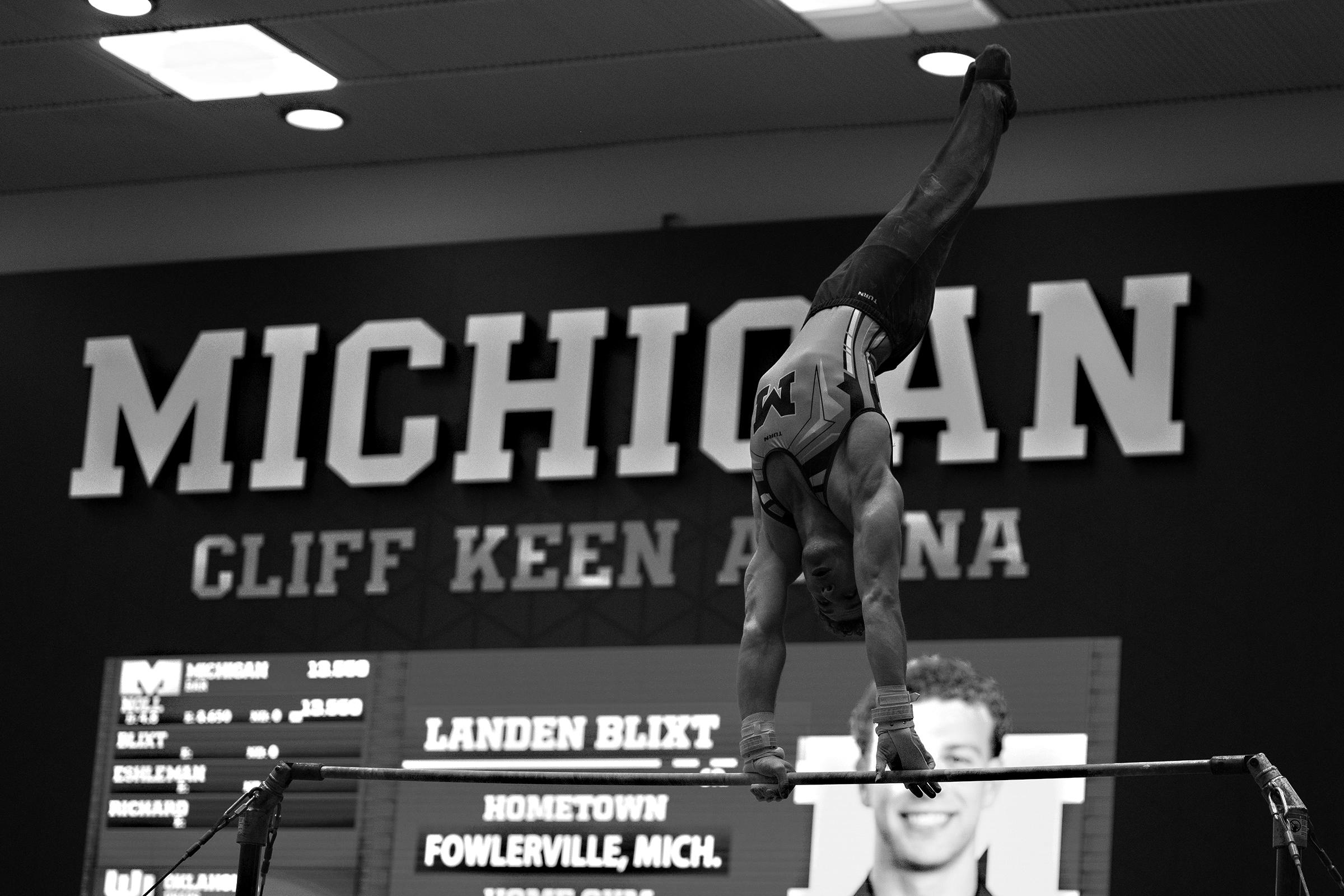
“(Senior) Landen Blixt, this was his first time competing floor and vault at the level that he was from pre-injury,” Larson said. “Him being in the vault lineup was a really big deal.” Blixt eased back into lineups this season following an ACL tear that sidelined him during his junior year. In his second showings on the floor and vault this year, he placed second in each, tying with freshman Adam Lakomy for the floor podium. Their score of 13.8 Saturday didn’t quite match the 14-plus point totals Blixt consistently put up towards the end of the 2024 season, but it’s an improvement from his 13.05 three weeks ago. It’s also a season-high for Lakomy.
On the vault, however, Blixt was the only gymnast to approach Larson’s score. Both debuted a Yurchenko 2.5, adding an extra halftwist to their previous vaults, but still managed to earn nearly full execution scores.
Larson received a 9.8 and Blixt added 9.6 points to his total. For the Wolverines’ lofty
postseason expectations, those performances are a welcome development.
Injuries and returns like Blixt’s weren’t part of the plan. Neither were the several falls that plagued Michigan and the Nittany Lions alike on the floor and pommel horse Saturday. But the Wolverines’ game plan built room for those blips.
“By the end of the season, I think that the hit percentage will be stronger and everything will be better,” Michigan coach Yuan Xiao said. “… Right now, we are doing the things that we’re doing for our plan.” Between the typical highdifficulty routines and stellar executions from the Wolverines’ specialists, Michigan found a way to elevate itself as a team despite isolated mistakes. Senior Fred Richard, a dependable, upper-echelon all-arounder, moved back into the Wolverines’ lineups after detours for the Winter Cup and the Winter Olympics, but struggled to find a rhythm on any apparatus against Penn State.
That didn’t matter, in the end. His teammates’ seasonhigh scores and triumphant returns covered for the star’s off-day. Michigan still landed 5.6 points above their previous high score of the season.
“It just gives us a lot of hope, because there’s so many things that we could’ve done better,” Larson said. “That was kind of just our average, and we scored higher than what we’ve had so far.”
Individually and collectively, the Wolverines intended to see their plans through Saturday — and that meant pushing their limits and doing it well against the Nittany Lions. Michigan shattered its previous score ceiling by a confident margin without all of its gymnasts being on their best game. That’s not what the plan was, but it’s what the plan became.
The No. 3 Michigan men’s basketball team already had its fate set.
The Wolverines had clinched a share of the Big Ten regular season title three games prior, later claiming the championship outright with a decisive win over then-No. 10 Illinois the following game. The season’s second rendition of the in-state rivalry against No. 8 Michigan State loomed, but not as large.
Sunday’s game was of little importance to the rest of the season. Michigan already locked up a championship, win or loss against the Spartans. Despite the tensions of the rivalry and history between the programs — namely exhibited through Sunday’s four technical fouls and abrasive
chants all night long from Michigan fans — the Wolverines’ pursuit for championships wouldn’t be hindered by the outcome of Sunday’s game.
But all season long, Michigan has stuck by the same motto — play the best basketball possible, game by game and possession by possession. The Wolverines’ win over the Spartans proved that Michigan, despite the cliché, is truly bought into that motto. It’s the reason why the Wolverines won a Big Ten regular season championship, and why they aren’t done yet.
“We’re obsessed with playing great basketball, possession by possession,” Michigan coach Dusty May said postgame. “Other than the time and score, we encourage our guys, ‘Let’s separate from the scoreboard. Let’s play good ball, get lost in the fight and see where we are.’ ”
Albeit, having a one-game mentality and playing great basketball “possession by possession” is generic and overused coachspeak. Sunday’s game, though, proved Michigan isn’t just another program arbitrarily subscribing to that phrase.
Beating Michigan State, implications of the rivalry aside, wasn’t necessary. Yet the Wolverines persisted through foul trouble and multiple technical fouls to grind out a physical win.
“If they’re 18th (in the Big Ten) and we’re 17th, I think the game means something,” May said. “We’re gonna compete like it means a little bit more, because of the energy that goes with this game.”
Michigan didn’t make Sunday’s game any bigger or smaller than it needed to be. The
game could’ve been treated with significant weight due to the rivalry and added tensions this season. The game also could’ve been treated like it was nothing, given a Big Ten championship celebration awaited after the game’s conclusion regardless.
The Wolverines decided to treat it like any other game, yet another opportunity to play their best basketball and win a game. This season’s team, due to their roster complexion giving them unique depth and enabling everyone on the roster to buy into that mentality, proved that generic phrase can actually work.
Before sophomore guard
L.J. Cason went down with a season-ending injury, Michigan employed a nine-man rotation.
Many of the Wolverines’ rotational players likely play fewer minutes than they would
at another school given their skillset and ceiling.
Taking down the Spartans required using that depth when junior center Aday Mara and sophomore forward Morez Johnson Jr. got in foul trouble.
All season long, May has talked about the sacrifices different players have to make. And the commitment to utilizing their depth and playing selflessly has all been to the benefit of the pursuit of winning every contest, game by game and possession by possession.
In an effectively meaningless game, Michigan stayed the course against one of the top teams in the country and came out on top, proving exactly why the Wolverines are standing where they are. With everyone bought into the same mindset, Michigan stood as confetti fell, celebrating a Big Ten regular
season championship after Sunday’s game, still hungry for two more trophies.
“We’re just excited to be playing,” May said. “We’re gonna have to play three really good basketball teams if we win the Big Ten Tournament. And then if we achieve our goals, we’re gonna have to beat six excellent basketball teams on the way to a national title. So as far as the hunter or being hunted, it’s the same for us.”
The Wolverines’ motto is generic, corny even. But they have stuck by their motto all season long because their depth and selflessness afford them the ability to do so. Michigan took down Michigan State using that same motto, and Sunday’s win proved exactly why it won a Big Ten regular season championship and is capable — and the favorite — of much more.
INDIANAPOLIS — Three weeks ago, Michigan suffered its lowest-scoring regularseason performance in over a decade. The Wolverines couldn’t find the bottom of the cup as the Hawkeyes dominated the paint in an ugly contest. It was the kind of game where you burn the tapes on the bus ride home.
In the Big Ten Tournament semifinal matchup against No. 2 seed Iowa on Saturday, No. 3 seed Michigan again had to play from behind. And again, the Hawkeyes’ composed play — especially in the post — proved to be the difference as the Wolverines fell, 59-42.
“Iowa just got the better of us today,” Barnes Arico said.
Just like the matchup in Iowa City, the first quarter was an ugly one for both teams. Pick whichever cliche you want to describe Michigan’s early performance: it was sped up, it couldn’t get out of their own way or it started flat — all of them were true. It literally could not hit a layup in the first quarter, never mind the additional missed field goals and miscommunication in drop coverage.
But deja vu worked both ways and the Wolverines’ one saving grace — just like in the
last matchup — was that the Hawkeyes also took time to settle into the opening period. By the end of the first quarter, Iowa led 13-4.
“They’re very active defensively,” sophomore guard Syla Swords said. “Their guards are really good at staying in tight whether it’s coming off screens or handoffs. We had to work to get the ball on every possession.”
The second quarter started better for Michigan, though. Swords drilled two 3-pointers, and the Wolverines’ defense forced some turnovers. Michigan’s shooting percentages also progressed back to the mean. Still, preventable mistakes like moving screens, travels and errant passes marred the otherwise productive quarter.
In every loss this season, Michigan has admitted that it’s gotten “sped up”. Whether Saturday’s speed up is the fault of a mostly sophomoreled squad or a predictable outcome of chaos-ridden March basketball is irrelevant — the result was a six-point halftime deficit that could’ve been closed if the Wolverines played mistake-free basketball.
“I think sometimes we want to feel as if we’ve arrived,” Wolverines coach Kim Barnes Arico said. “And then we look on the court and there’s five
sophomores out there, so we’re still a work in progress.”
But to open the second half, senior guard Brooke Quarles Daniels hit a layup through contact, and junior forward Ashley Sofilkanich shimmied in the post for a bucket. A threesecond violation and a turnover for Iowa forced it to call an early timeout as Michigan winnowed the lead to just two. In contrast to the previous two quarters of play, the Wolverines were speeding the Hawkeyes up. Quarles Daniels skied through the air for offensive rebounds, Iowa turned the ball over at a oneper-minute clip and Michigan grabbed the momentum — it was the kind of basketball the Wolverines have prided themselves on all year.
The third quarter wasn’t necessarily absent of mistakes for Michigan, but it looked resilient in the face of adversity, not frustrated. A 14-7 advantage in the third quarter gave the Wolverines a 36-35 lead heading into a decisive fourth quarter.
With the game up for grabs, it was Iowa who seized it. It wasn’t perfect, but the Hawkeyes were composed. A few Iowa threes extended its lead, but the engine of the fourth-quarter offense was the dependable touches down low. The Wolverines, again, looked out of sorts as they

picked up superfluous fouls and couldn’t score.
“(The Hawkeyes) got going in the paint a little bit,” assistant coach Justine Raterman said.
“I think we got a little bit tight and tried to rush some things and we needed to take a breath and settle down.”
The whistle tightened up late in the quarter as each team began to rack up fouls. But as
urgency heightened down the stretch, Michigan still couldn’t convert. The Wolverines grinded to a screeching halt as one of the Big Ten’s best offenses was held to just six points in the game’s final quarter. The dismal fourth quarter, while uncharacteristic in the context of the season, was a fitting end to a night in which Michigan shot 27% from

Y X
CELLENCE




Before the game even started, the No. 3 Michigan men’s basketball team had already earned its first regular season Big Ten title since 2021, its best regular season record ever and likely its fourth all-time No. 1 seed in the NCAA Tournament.
Sunday, it added another accolade to its already historic season: sweeping rival No. 8 Michigan State for the first time since 2018.
In a predictably physical game, graduate forward Yaxel Lendeborg led the Wolverines (29-2 overall, 19-1 Big Ten) through the chaos with 27 points on 8-for-12 shooting, defeating the Spartans (25-6, 15-5), 90-80.
“Just extremely proud of our guys,” Michigan coach Dusty
May said. “Once again, the game didn’t go like we hoped … but we found enough in the tank and we found some different ways to create enough offense and defense to get out of here against an extremely talented Michigan State group.”
Nothing says physical intensity quite like three technical fouls issued in the game’s first 10 minutes. After several contentious plays in the last matchup, the referees made a point of keeping any and all extracurricular activity in check from the jump.
Those early technical fouls and subsequent reviews didn’t help smooth the pace of a game that was already choppy, with fouls down low and missed shots by both teams. The Wolverines started 1-for-8 from the field, and both teams combined for just seven made field goals
in the first eight and a half minutes. Meanwhile, Michigan sophomore forward Morez Johnson Jr. and junior center Aday Mara each picked up two personal fouls in the first half.
“We’ve been working on different zones and different defenses and other contingencies in case (foul trouble) happened, but we felt like tonight if we can just make sure the game is manageable then we could get to the second half with Aday,” May said. “… If we’re going vertical on a shot and they feel like he came down to block it, we can live with those. We just can’t live with the mental error fouls, and it’s gonna be even more important moving forward.”
Amid a muddy start all around, though, Lendeborg was pristine. He drew fouls and made his free throws. He navigated ball screens and stepped into 3-pointers with
confidence. He sent a defender to the floor with a pump fake into a dribble drive. And when the Wolverines were out of options on offense, he bailed his team out with two isolation scores late in the shot clock. Michigan led 42-41 at the break, and Lendeborg had 19 points playing all but 12 seconds.
Early in the second half, Lendeborg picked up where he left off. He hit his fourth 3-pointer early on, and shortly after turned a baseline spin and drive into an emphatic one-handed slam. But his production dipped as the second half progressed, and Michigan State quickly made a push.
Spartans star guard Jeremy Fears Jr. has a knack for drawing fouls, and he used the game’s physicality to his advantage by getting to the line seven times in the second half. Along with some
help from forward Jaxon Kohler, Fears led Michigan State to a modest four-point lead with 12 minutes to go.
But even with Lendeborg fading into the background, the Wolverines soon responded with an 11-0 run of their own.
Freshman guard Trey McKenney scored 10 points in a five-minute span to lead the charge alongside Johnson.
With three and a half minutes to go and Michigan up 73-70, the ball found its way back to Lendeborg. Scoreless for over 10 minutes by that point, the Wolverines’ talisman drilled a corner 3-pointer as if he had been in rhythm the whole time. The three doubled Michigan’s lead late and tied Lendeborg’s career high as his fifth triple of the game. A minute later, Lendeborg drew enough attention off a baseline inbound to find Johnson
for an alley-oop dunk, again putting the Wolverines up by six. The Spartans slowed down on offense, and Michigan’s lead was safe.
“My shots were falling, everything else was moving pretty sluggish at some point so it was just, it’s my time to be aggressive,” Lendeborg said. “We all had our games, today was my game that continued to prove that, and I did the best I could with the opportunities that I had.” This season, Lendeborg is new to the Wolverines, new to the Michigan State rivalry and new to the Big Ten. But even amid a tumultuous, physical game on Sunday, Lendeborg looked more than comfortable tying a bow around Michigan’s historic season.

GRAHAM BARKER
Emily Alberts/DAILY Design by Maisie Derlega