
ANN ARBOR
‘Rotten To The Core’: Construction workers protest Core Spaces
Yousef Rabhi and Michigan Regional Council of Carpenters raise concerns about working conditions following October site visit
KARINE TAN Daily Staff Reporter
In December 2023, the Ann Arbor City Planning Commission permitted Core Spaces to begin developing Hub William, a 16-story high-rise apartment building at 333 E. William St. between South Fifth Avenue and South Division Street. Since construction began in January 2024, the Michigan Regional Council of Carpenters has accused Core of exploiting construction workers and failing to provide a safe environment.
Washtenaw County Commissioner Yousef Rabhi, D-District 8, visited the site Oct. 13, 2025 after MRCC raised concerns about an unsafe job site and labor practices. In an interview with The Michigan Daily, Rabhi said he immediately noticed a lack of security upon entering the site.
“Most union job sites would have a lot of restrictions in terms of who could access it, but it was pretty much free flow who could go in and out,” Rabhi said. “The safety signs were hidden at the front gate. The door was just wide open. There wasn’t even fencing on the back side of that site.”

In an interview with The Daily, MRCC Communications Director Steve Purchase said cash pay and 1099 misclassifications can also act as a loophole allowing employers to deny employees minimum wage, overtime pay, workers’ compensation and unemployment insurance.
protesting outside the site with the catchphrase “Rotten To The Core” and asking community members to contact Core using its whistleblower policy.
the time. I tell them half of the speech, and they’re like, ‘Give me the pen.’ They’re ready to sign because they know what’s right and wrong.”
ADMINISTRATION
UMich Regents discuss gender-affirming care, ICE presence and new health care pavillion
“What is
child
that they no longer have access to the care that saved their
MARISSA CORSI Daily News Contributor
The University of Michigan’s Board of Regents met in the Alexander G. Ruthven Building Thursday afternoon to discuss the ongoing evaluations of potential sites for the data center proposed in partnership with Los Alamos National Laboratory, U.S. Immigration and Customs Enforcement’s presence in Southfield and the newly constructed D. Dan and Betty Kahn Health Care Pavilion.
After speaking with workers on-site, the MRCC and Rabhi said they noticed labor brokers were paying many workers with under-the-table cash. They interviewed a floor layer from Michigan who, despite operating under the direction of his employer, was paid as an independent contractor on Form 1099, a tax return usually used for freelance work.
“We’ve seen workers on sites where labor brokers will string workers along,” Purchase said. “They’ll give them a little bit of cash, they’ll work them for weeks and then they’ll just stop paying them.”
Carpentry apprentice Troy Ellsworth, a MRCC member, petitions for signatures against Core outside the Ann Arbor District Library’s downtown branch, on the same block as the new development. In an interview with The Daily, Ellsworth said the community has supported the petition for CORE to reconsider their treatment of workers.
Core did not respond to The Daily’s request for comment. Since their initial visit in October, Core has not welcomed MRCC back inside the site. However, MRCC has noticed new external site safety with increased barriers, fencing and cones.
Julie Ishak, Michigan Medicine chief nurse and operations executive, presented the regents with information on the pavilion, which opened Nov. 23 of last year. Ishak said the safe transfer of 186 patients into the pavilion on the first day was the result of Michigan Medicine’s committed and caring health care professionals.
“It is truly hard to capture into words the energy and excitement that was in the air that day, not only for our teams, but for our patients and their families,” Ishak said.
Following an initial visit, MRCC began raising awareness about the site’s conditions and encouraged community members to get involved. Efforts included
“You wouldn’t believe the enthusiasm some of these people have for what we’re standing for,” Ellsworth said. “I really don’t even have to get into it half
Construction is set to wrap up by fall 2026, but Core will still manage the construction of multiple Ann Arbor high-rises including Hub Packard and Hub on Campus Church.
ANN ARBOR
the best way to explain to your
life?”
transition for our patients and their loved ones.”
From its opening in November 2025 to Jan. 31 of this year, the pavilion has taken care of an average of 194 patients per day, performed 1,250 surgeries and addressed 164 interventional radiology cases. Following the presentation and committee updates, Regent Jordan Acker (D) addressed ICE’s decision to lease office space at Oakland Towne Square, a private commercial property located near the Southfield branch of Acker’s law firm. Acker discussed the antiICE public demonstration he attended alongside Rep. Rashida Tlaib, D-Detroit, and state Sen. Jeremy Moss, D-Southfield, and said unmarked officers sparked fear amongst the University’s immigrant students, faculty, staff and patients.
“Teamwork and caring are two of our core values at Michigan Medicine, and I’m telling you, they were on full display that day with hundreds of team members who volunteered to work and to come in to ensure a smooth
“When masked officers operate without visible identification, when enforcement occurs in private space without clarity and when body cameras are absent, trust erodes and fear fills the gap,” Acker said. “This is not who we are at the University of Michigan. … No one on this campus should have to ask the question, ‘Who are these people? Do they have authority? Am I safe?’” CONTINUED AT MICHIGANDAILY.COM
CONTINUED AT MICHIGANDAILY.COM michigandaily.com Ann Arbor, Michigan
Washtenaw County Jail resumes in-person visits after more than a decade
“When you prioritize family bonds, you create a calmer and more hopeful environment for everyone involved.”
KAYLA LUGO Daily Staff Reporter
The Washtenaw County Jail began allowing in-person visitation after more than a decade, replacing a digital-only system.
In an email to The Michigan Daily, Washtenaw County Sheriff Alyshia Dyer said officials realized the importance of human connections through in-person visit trial studies, making the decision to move away from a screen-based model to one recognizing the importance of in-person interaction.
“The process began with a dedicated team that looked at how to bring people back together safely, starting with small pilot groups in specific housing areas,” Dyer wrote. “This careful rollout allowed the community to see that when you prioritize family bonds, you create a calmer and more hopeful environment for everyone involved.”
Dyer explained how the jail ensures fairness and accessibility for families through a structured scheduling system. She wrote that inmates in good standing with the facility can submit a list of up to five people they would like to see in person, and they can meet in 30-minute blocks.
“Video visits allow for up to three guests per session, while our thirty-minute in-person visits are reserved for smaller groups, either two adults or one adult and a child,” Dyer wrote. “While there are some common-sense boundaries —
such as ensuring visitors aren’t currently on parole or subject to court orders — the goal is to make the path to connection as clear and supportive as possible for every family.”
In an interview with The Daily, Washtenaw County Prosecutor Eli Savit said maintaining strong family and community ties supports rehabilitation and enhances public safety.
“When you are incarcerated, you are frequently isolated from your support network, from your family, from your friends and those are the very people that you ultimately are going to need to lean on in order to get back on track,” Savit said. “Strong support systems are the biggest predictor of whether somebody who was previously accused or convicted of a crime is going to reoffend, so allowing those connections to remain strong is really important for public safety.”
In addition to improving public safety, the decision could improve the overall safety of incarcerated people. In an email to The Daily, LSA junior Chelsea Coon, who has written on prison conditions, wrote that in-person visitations can promote accountability for humane jail conditions and protect incarcerated people from misconduct by officers.
“Family members and friends with a vested interest in the wellbeing of their incarcerated loved one are likely to strictly judge the quality of a facility and want to ensure it is held to the standard it is supposed to be,” Coon wrote.

“Those on the governmental payroll looking to inspect and/or upkeep the facilities do not always share these motivations and are willing to let issues slide that ultimately violate human rights.”
In an interview with The Daily, sociology lecturer Rebecca Christensen, director of Project Community, emphasized the financial burden of virtual communication for families and the inmates. She said in 2022 it costed $3.15 to make a 15-minute phone call from Washtenaw County Jail.
“Families can end up in debt trying to keep in touch — whether it’s children trying to keep in touch with their parents or brother, sister, son, daughter,” Christensen said. “I think it’s a big issue when we’re using technology instead of direct contact.”
In an interview with The Daily, Marsha Chamberlin, president of Staying in Closer Touch — a nonprofit organization dedicated to linking incarcerated parents with their children through reading books — said in-person visits will be popular because most inmates are from the local community.
“I think most of the people in the county jail are probably relatively local,” Chamberlin said. “If they’re not within the county, they’re fairly close by, so they could get here by car, or have someone drive over, take a bus. So then the primary barrier might be just the availability of transportation, or the hours that are available to get together.”
CONTINUED AT MICHIGANDAILY.COM
Treeline trail inches closer to construction following decades of planning
The proposed three-mile urban trail is gaining political and financial support

The Treeline, a proposed three-mile urban trail, has seen significant progress after the Ann Arbor City Council reaffirmed support and authorized new engineering work for it last fall. The trail would tentatively follow the historic Allen Creek beginning at the Border to Border (B2B) trail and Broadway Park West, trace through downtown Ann Arbor along the Watco train tracks and conclude at the new Wolverine Village housing development constructed by the University of Michigan.
Mentioned in city documents going back to 1981, the Treeline was first proposed to City Council as the Allen Creek Gateway in 2005. However, it was quickly
rejected, leading to the creation of the Allen Creek Greenway Task Force, which incorporated the trail into its 2009 Downtown Plan. In 2017, the city adopted a Treeline master plan, looking into potential routes and formally outlining the project’s goals, which City Council and the Treeline Conservancy have worked toward implementing following a 2019 agreement.
In an interview with The Michigan Daily, Cynthia VanRenterghem, Treeline Conservancy executive director for development, said the trail could become an essential part of the city’s identity.
“We always say you can’t imagine Ann Arbor without the Arboretum, or Gallup Park — those really important parts of the character of Ann Arbor — and we feel like the Treeline can be the same,” VanRenterghem said.
“All of those efforts took a lot of investment and some community leaders to really have that vision, when maybe others can’t always see it immediately.”
Norman Herbert, Treeline Conservancy director and co-chair, told The Daily the project has gained broader political support in recent years.
“We’ve had conversations with all our City Council representatives, with our state representatives and at the federal level as well, and all are supportive of this project,” Herbert said. “Depending upon which of the federal officials we’re talking about, it’s either a grant that would be provided to the city, or it’s a grant that could be provided directly to the Treeline. In either case, we’ve got everybody’s support.” CONTINUED AT MICHIGANDAILY.COM
Harper King/DAILY
Construction of Hub William apartments underway at 333 East William St. Wednesday evening.
NIKO WILSON & NATHAN ZHANG Daily Staff Reporters
Lune Mathis/DAILY
The construction site for the new Treeline trail.
PUBLIC SAFETY

The Ark hosts 39th annual Storytelling Festival
“This is the closest to being in the Muppet Show, where I’m the only sane Muppet trying to wrangle some sanity into the show.”
sane Muppet trying to wrangle some sanity into the show. And I wouldn’t miss it for the world because this is a whole different world from what I’m used to.”
Booth, Jennifer Munro, Barbara Schutzgruber and Steve Daut, many of whom told tales taken from their own lives, centered around human connection infused with moral lessons.
“‘We can do that over and over again — you’ll never get out.”
He then told the audience his wife left him while he was in jail, taking their daughter with her.
Stanford Lipsey Student Publications Building 420 Maynard St. Ann Arbor, MI 48109-1327 734-418-4115 www.michigandaily.com
EDITH PENDELL and ZACHARY AJLUNI Co-Editors in Chief eic@michigandaily.com
CICI COPENHAVER Business Manager business@michigandaily.com
NEWS TIPS tipline@michigandaily.com
LETTERS TO THE EDITOR tothedaily@michigandaily.com
EDITORIAL PAGE opinion@michigandaily.com
Editorial Staff
Over the weekend, The Ark hosted three events as part of its annual Storytelling Festival: a Liars Contest on Friday, the main storytelling festival Saturday night and a family show Sunday afternoon.
The fourth annual Liars Contest, emceed by Ann Arborbased comedian and director Amir Baghdadchi, featured six storytellers. Each had 10 minutes to spin an outrageous tale — from a whiskey-drinking cat named Red to a dream of a fried chicken empire. At the end of the night, three judges evaluated the performances based on originality, technique and impact.
The winner received a golden trophy and $100.
In his opening remarks, Baghdadchi said of all the events he hosts, this contest is the most lighthearted because of its absurd nature.
“This is by far the silliest thing I’m a part of,” Baghdadchi said.
“This is the closest to being in the Muppet Show, where I’m the only
CAMPUS LIFE
Mike Cox, president of Ann Arbor Storytellers’ Guild and one of the performers, told an elaborate lie of his run-in with jackalopes, a mythical creature from North American folklore.
“Coming from the right are these absolutely huge rabbits, but they are like no rabbits I have ever seen,” Cox said. “They have antlers. My mouth is open, I could have caught flies in it. I stalled the pickup truck and then I hear bang! bang! bang! and ‘Cox, quit gathering moss, haven’t you ever seen a damn jackalope before?’”
In an interview with The Michigan Daily, Cox said he has a lot of fun participating in liars contests, like this one.
“It’s a lot of fun to tell an absolutely outrageous lie and try to sell it,” Cox said. “I have done other liars contests before, and usually the only requirement is we don’t have any politicians — they have a leg up.”
The Storytelling Festival’s main event featured four nationally renowned storytellers: Adam
In an interview with The Daily, Daut, festival director and performer, said he attended the festival for the first time 15 years ago, which inspired him to get involved in storytelling.
“I saw the storytelling festival here at The Ark, and people said, ‘Aw you could do that! You’re always telling stories!’” Daut said. ”So I joined the Ann Arbor Storyteller’s Guild, and that’s how I got started.”
During the storytelling festival on Saturday, Daut told the audience about his experiences hitchhiking across the country. He said he was once arrested by two police officers who took him to a rundown building and showed him how little control he really had.
“At one point, one of them looked at me and said, ‘You know, boy, we can hold you for 72 hours, and when you get out, soon as you leave, we’ll turn around, figure out something else to charge you with and throw you back in,’” Daut said.
“My wife married a cop, and he told lies about the things that I had done, and they took my daughter — our daughter — the most beautiful little girl, and they said I can’t see her anymore because of what the cop said,” Daut said. “He lied. And I’m not proud of a lot of things I’ve done in my life, but that girl, she was my heart — she was the best thing I had ever done.”
In an interview with The Daily, Schutzgruber, a freelance storyteller, said storytelling transcends culture and people because everyone can relate to it in some way.
“I studied comparative folklore, where you find the same story in all sorts of different cultures, and it’s just dressed different for each place,” Schutzgruber said. “But there’s so much at the core that is, people are the same, and I love the beauty of how different it looks on the outside, but the hearts of it are all things that everybody relates to.”
CONTINUED AT MICHIGANDAILY.COM
Ross School of Business and College of Engineering collaborate for first-ever AI Hackathon Students gathered in Leinweber Computer Science and Information building for the 24-hour competition
SAMANTHA SCHAEFER Daily News Contributor
More than 250 students gathered for the first-ever 24-hour AI Hackathon from 5 p.m. Thursday to 4 p.m. Friday. The event was a partnership with the technology company Oracle, alongside the University of Michigan Ross School of Business and the College of Engineering.
The event began with opening remarks and the unveiling of the year’s problem statement, which asked how artificial intelligence can be used to “improve the college experience” and wellbeing in education. Participants were tasked with creating a presentation that included a working demo of the AI agent, as well as marketing and budgeting for the model.
Competing students were assigned to teams of three or four, consisting of both Business and Engineering students. The competition began in the Leinweber Computer Science and Information building, and ended on Friday in the Tauber Colloquium, where the winners of the Hackathon were announced.
In an interview with The Michigan Daily, Holly Taylor, Michigan Engineering Connect director of community engagement, said the Hackathon began after meeting Phil Brabbs, managing director and adjunct lecturer at the Business School, and deciding to combine their backgrounds.
“The vision behind all of this was from me meeting Phil at a private function where we were just talking about what we did, him being from Ross and me being from engineering,” Taylor said. “So we started just talking about what it was that we could do as a collaboration together to try and get, you know, these students to collaborate.”
In an interview with The Daily, Brabbs said that the Hackathon helped connect students from different academic backgrounds.
“I could be wrong, but I think this is the first time really that engineering and Ross have partnered this closely on a joint program at this magnitude,”
Brabbs said. “Next year, we’re hoping to expand even more and actually open up to all of campus.”
The event concluded Friday, where the top five finalists had seven minutes to present their projects to the other teams, audience members and a panel of judges.
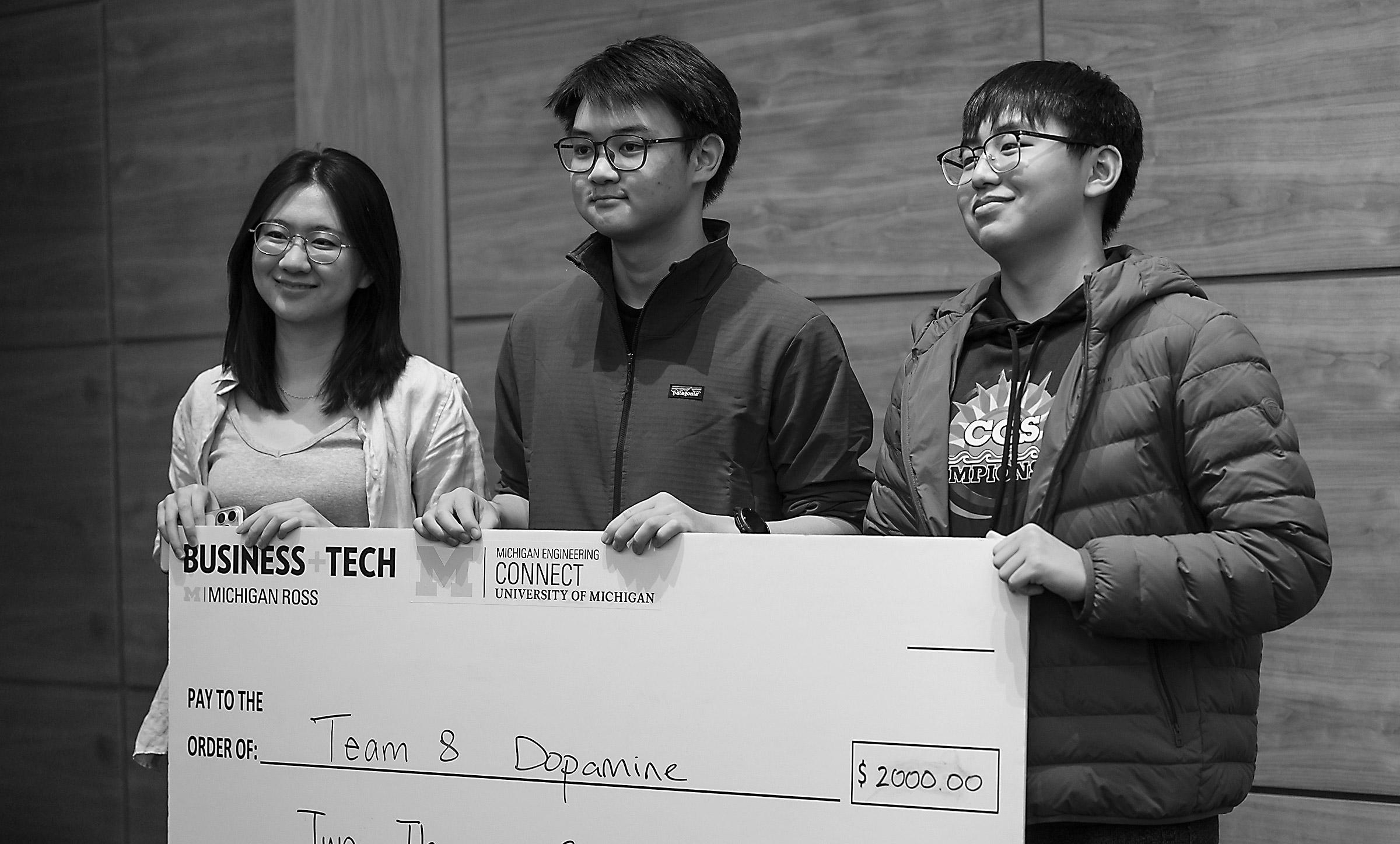
The judges then announced the top two winners: Team 8, who was awarded the first-place prize of $3,000, and Team 44, who was awarded the secondplace prize of $1,000. Team 8 created DopaMine: AI that helps students stay on top of their to-do lists. By accessing a student’s Google Calendar, Screen Time and
Canvas, it aims to detect the start of doomscrolling. The AI agent then sends notifications via iMessage to inform the user of the assignments due or blocks the distracting app until the assignment is completed.
In an interview with The Daily, Engineering and Business freshman Tony Yao, an event participant, said he and his team members had never participated in a Hackathon before and valued the experience.
“We’ve never been to a Hackathon before,” Yao said. “I barely got any sleep last night. But yeah, it all paid out today. So very, very grateful for this opportunity — definitely very fun.”
AANYA PANYADAHUNDI and CHRISTINA ZHANG Managing
and GABE EFROS
Editors: Avery Allen, Hayden Buckfire, Isabel Seniawski, Mateo Alvarez, Sarah Zhang
LYRA SHARMA and GRAHAM BARKER Managing Sports Editors sports@michigandaily.com
Deputy Sports Editor: Drew Lenard
Senior Sports Editors: Alina Levine, Ellie Richard, Kenzie Mielke, Nate Schreck, Sam Gibson, Zach Goldstein
and CORA ROLFES Managing Arts Editors arts@michigandaily.com
Senior Arts Editors: Hudsen Mazurek, Ian Gallmore, Isabelle Perraut, Meagan Ismail, Michelle Wu, Siena Beres
MAISIE DERLEGA and SELENA ZOU
Managing Design Editors design@michigandaily.com
Senior Layout Editors: Junho Lee, Frances Leibovich, Graceann Eskin, Kathryn Palsrok Senior Illustrators: Gabriella Spagnuolo, Caroline Xi, Matthew Prock
BRIDGETTE BOL and HOLLY BURKHART
Photo Editors photo@michigandaily.com Senior Photo Editors: Alyssa Mulligan, Ananya Kedia, Arushi Sanghi, Isai Hernandez-Flores, Meleck Eldahshoury ARTS SECTION
AYA FAYAD Managing Statement Editor statement@michigandaily.com
Deputy Editors: Liska Torok, Lola Post, Riya Kommineni
ALINA MURATA and JOSUE MATA
Managing Copy Editors copydesk@michigandaily.com
Senior Copy Editors: Alena Miklosovic, Cristina Frangulian, Elizabeth Harrington, Ellie Crespo, Jane Kim Lily Cutler, Tim Kulawiak, Zoey Ueland
EMMA PENG and JULIA MEI Managing Online Editors webteam@michigandaily.com
Data Editors: Darby Jones, Zora Tucker Engineering Manager: Alyssa Locke
Product Managers: Annice Chang, Sanvika Inturi
AHTZIRI PASILLAS-RIQUELME and EVAN KRUMMEL
Managing Video Editors video@michigandaily.com
Special Projects Coordinator: Shubhankar Dhulia Senior Video Editors: Cameron Detulleo, Gretel Foglesong, Savannah Otten
AMARA M. SMALL and IHAA MOHAN
Michigan in Color Managing Editors michiganincolor@michigandaily.com
Senior MiC Editors: Ahmed Elkhatib, Arya Kamat, Mandy Chu, Muntaha Rahman
AVA CHATLOSH and MEGAN GYDESEN Managing Podcast Editors podeditors@michigandaily.com
Senior Podcast Editors: Abby Willcox, Olivia Dickerson, Rogen McLean, Vily Souris
DA YOUNG KIM and UWAEISH AHMAD Managing Audience Engagement Editors socialmedia@michigandaily.com
Senior Audience Engagement Editors: Caleb Starr, Heewon Moon, Holly Dennis, Isabella Burke, Michelle Fang, Sophia Barczak, Sophia Liao, Samantha Weiner
ANNA MCLEAN and DANIEL JOHNSON Managing Focal Point Editors lehrbaum@umich.edu, reval@umich.edu
Senior Focal Point Editors: Lucy Langerveld, Sasha Kalvert
JAMES KNAKE and MILAN THURMAN
Managing Games Editors crosswords@umich.edu
Senior Games Editors: Eleanor Sullivan, Kiran Parekh, Sam Martin, Tobin Saxton
Business Staff
CAROLINE ZOLTAK
Akul Gunukula/DAILY
LSA junior Ladina Schaller performs in “GREEN HOUSE,” an environmental dance event in the Matthaei Botanical Gardens Conservatory Thursday night.
ANN ARBOR
MYA WEISS & ZOOEY RAUX Daily Staff Reporters
Maahi Patel/DAILY
LSA freshmen Ziren Jin and Anji Feng and Business freshman Tony Yao are awarded first place at the 24-hour AI Hackathon in Tauber Colloquium Friday afternoon.
The song before a song
ESHA NAIR Daily Arts Writer
There’s a reluctant gap between the perfect and the imperfect. The filtered and the unadulterated. The final and the draft. The released cut and the demo.
When an artist releases shrouded versions of music we already love, we’re let into a room that wasn’t meant to be seen. I’ve identified characteristics within some of my favorite tracks — voice notes, scrapped lyrics, altered instruments, added interludes — that illuminate why I and many fans welcome the rawness of the demo.
“While My Guitar Gently Weeps (Third Version — Take 27)” by The Beatles
In November 2025, the Beatles estate released Anthology 4, archiving songs by the most influential pop-rock band of all time.
This album includes a remastered cut of one of the 44 takes of “While My Guitar Gently Weeps.” Take 27 stands out. Unlike the polished final track, this version has moments of misstep and improvisation. Before the song begins, George Harrison casually calls out his lunch order as another Beatle mindlessly hums: “I’ll just have a cheese and lettuce and marmite sandwich and coffee — OK, one, two, three, four.” At the end, someone shouts, “Hold it, Harry!” and Harrison mutters, half apologetic, half amused, “It’s okay, I sang — uh, tried to do a Smokey and I just aren’t Smokey.”
Eric Clapton plays the wrong chord, Paul McCartney’s bass is missing, Harrison toys with emulating Smokey Robinson’s voice and misses — yet it doesn’t feel broken. There’s a sense of trial and error, a faint corroding of perfection that is stripped and honest. We are seated behind the glass of the control room as they work, laugh, fail and try again — a panoramic view of creation itself, complete with waggish humor and tentative candor. Maybe I am feeling a whole lot of meaning about a whole lot of nothing, but
eavesdropping through Take 27, I reach Beatlemania.
“Brother” by Mac DeMarco Mac DeMarco is no stranger to the demo track. Since 2013, most of his major releases have arrived with accompanying demo albums. He’s one of my greats. His music pulls me under a warm 2019 sun, when my Vans are checkered and I post chalk drawings on VSCO.
“Brother,” from the Salad Days Demos, is my choice conduit there.
Recorded to cassette, like most of DeMarco’s productions, the track carries its medium with it. Tape scratches from the Fostex A8, a tape recorder, linger in the mix. Where the Salad Days version smooths this away, the demo keeps the grain exposed, like film left uncorrected.
This song features a quintessential affordance of demo tracks: the lyric change. “Brother” is DeMarco’s sermon to take it slow. “You’re no better off / living your life / than dreaming at night.”
At the end of each verse, he tells the listener, “Take my advice.”
However, in the demo, he swaps his apprise for an observation: “Wandering brain / gets scared of the plane / halfway through the flight.” Later: “Wandering brain / best in the rain / feeling alive.”
The demo looks inward, and I prefer it. It doesn’t instruct but builds a reflective analogy about fear, motion and presence. Overall, the message is simple: Life is fleeting, but that shouldn’t scare you. Embrace mundanity, relax, “go home.” Listening to the demo brings out a sappy yet hitting question that’s absent from the final: What should we cherish in this life if not time?
“The Moon” by The Microphones Originally released on The Glow Pt. 2, “The Moon” is a poem in song’s clothing. On the demo from the Glow pt. 2 (Other Songs and Destroyed Versions), however, that disguise slips. Produced by Phil Elverum using thrifted cassette decks and 16-track analog tape, the recording is tactile, grainy and intimate. The original song opens with dissonant, buzzing guitar strings. Sudden shoegaze drums and whispering vocals disrupt the calm. Cymbals crash over his voice, and a saxophone slides through, echoing and answering his lines. It rushes through your veins, a pang in your side, like running full-tilt after memories you can’t quite catch. If Elverum’s first release of “The Moon” is a pursuit to reminisce on, the demo is a defiant sit-in. As noted on Bandcamp, these tracks “weren’t meant to be released,” but appeared in K Records’ expanded 2007 reissue. Organs cement the track; the keystone drums are noticeably absent. Overall, there’s a prominent, droning silence, one that pushes the minor chords deep into you. The lyrics and musician are kept the same, yet the changed instrumentation casts deeper regret. Lines that once felt like motion — “I went back to feel alone there / I went back to wipe it clean” — now feel numbing; once-present action evokes repentance. They land heavier without the propulsion of cursory guitar and drums. This is what I find fascinating about the demo: Meaning has the opportunity to shapeshift.
CONTINUED AT MICHIGANDAILY.COM
Jo March’s perfectly happy ending

ISMAIL Senior Arts Editor
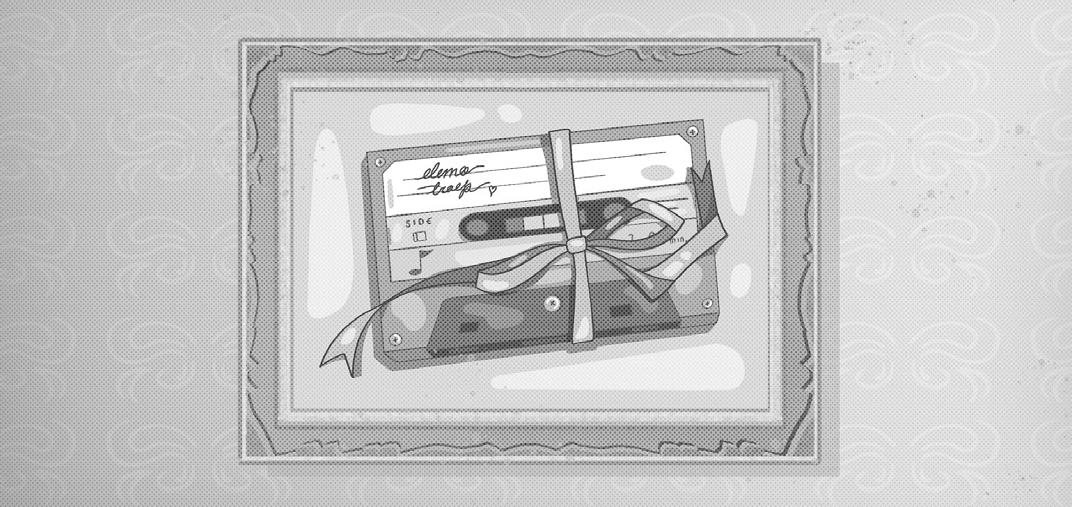
My favorite types of stories were always the ones with a neatly wrapped-up resolution — open ends tied up with a perfectly knotted ribbon. I appreciated the stories in which the protagonist chooses the picture-perfect love interest, both living happily ever after. I eventually discovered, though, that real stories rarely play out like this.
I watched Greta Gerwig’s (“Barbie”) “Little Women” free from any expectations or opinions. I hadn’t seen any previous adaptations of it, nor had I read the classic novel by Louisa May Alcott. I left the theater as you would expect a 14-year-old girl to: forever changed and holding some questionable opinions. I was devastated by the tragedy that I considered Jo March’s (Saoirse Ronan, “Lady Bird”) rejection of Laurie (Timothée Chalamet, “Call Me By Your Name”) to be, and I was completely bewildered by her decision to marry Friedrich Bhaer (Louis Garrel, “The Dreamers”). This love between Jo and Bhaer, a humble and older man with little money, was neither passionate nor
chaotic. Instead, it was simple and grounded. I immediately ran to Alcott’s novel for answers, hoping for some semblance of satisfaction in its resolution.
The novel, which I had expected the movie to be directly adapted from, did not provide me with this closure. It instead opened my eyes to a completely new view of the story. I was struck by the most obvious difference in the book compared to Gerwig’s adaptation: Jo’s storyline as a writer. While the film depicts Jo’s journey of publishing her novel “Little Women,” the novel does not explicitly do so. Gerwig creates an alternative, ambiguous ending for Jo by including scenes between Jo and her publisher, like his insistence that she marry off her story’s heroine. These scenes imply that Jo did not marry, instead focusing on her career aspirations of becoming a writer.
These additions to the plot of the novel depict “Little Women” in a new light, honoring Alcott’s authorship and her original plans for Jo. Alcott wished for Jo to remain unmarried, to live as a literary spinster just as she, but pressures from her publisher resulted in a married Jo. Alcott’s readers demanded a satisfying resolution to their beloved story, but their
conventional definition of satisfying was completely different from hers.
Uncovering this striking similarity between Jo and Alcott made me ashamed to realize I had unintentionally done exactly what the original fans of “Little Women” had. While I was content with the publication and success of Jo’s novel, “Little Women,” I could not understand why she couldn’t have romantic love as well. But Jo’s story and “happy ending” have nothing to do with which man she chooses to marry — it was more about her passion for writing and journey as an author, reflecting Alcott’s own life and values. This is not to say that success and companionship are mutually exclusive. Bhaer is an intellectual equal for Jo: He challenges her ideas and takes her work seriously. He would be a fulfilling match for Jo — if she were to have one at all. Still, it is Jo’s inherent connection to Alcott that makes it crucial for her true story to be told, the one that does not involve Bhaer. Jo’s story is not only representative of Alcott’s, but also of the countless other women who are valued solely for their ability to love.
CONTINUED AT MICHIGANDAILY.COM
An ex-ballerina’s thoughts on ‘balletcore’
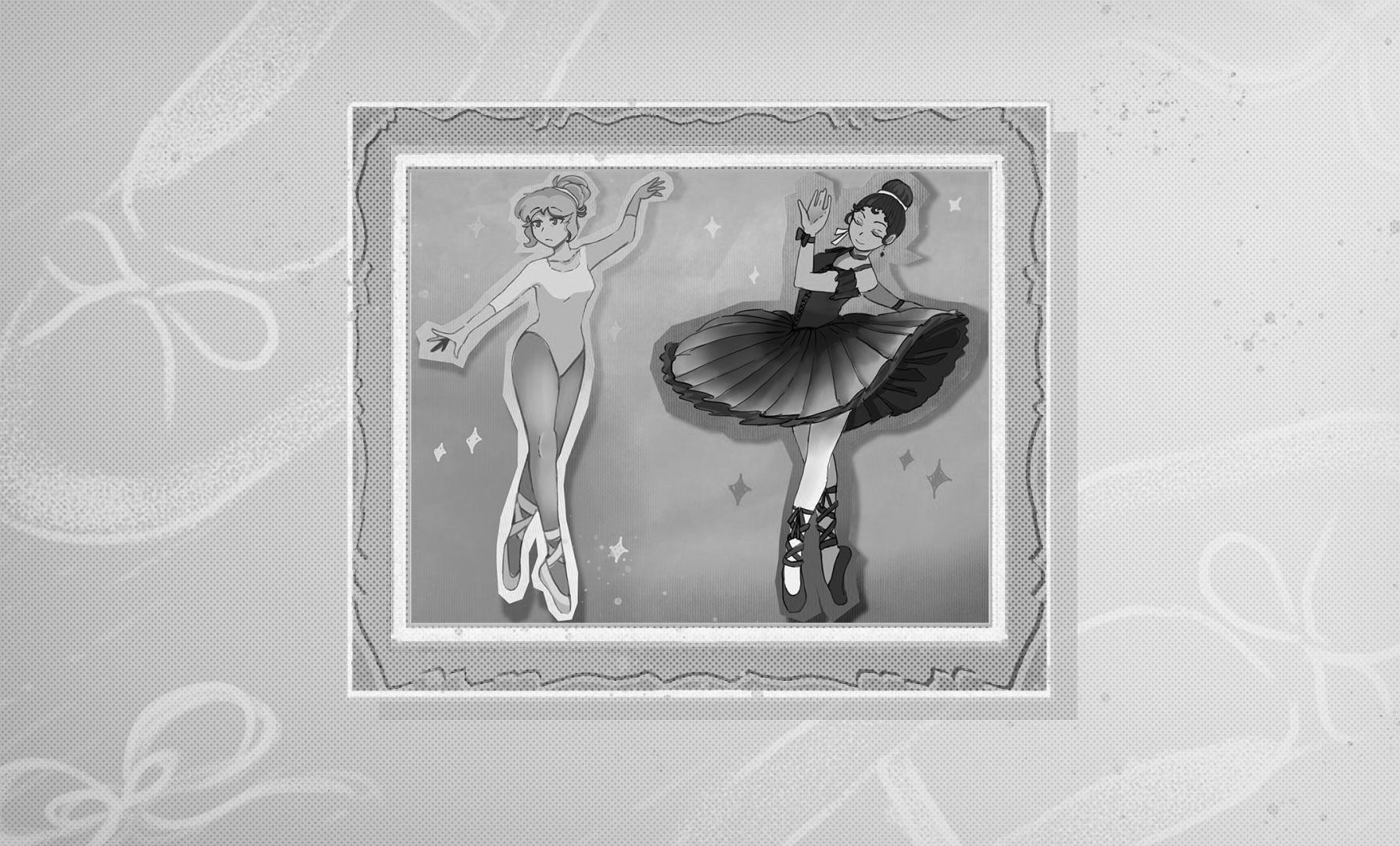
A quick search of “balletcore” on Pinterest will lead you to satin ribbons, shiny pointe shoes, leg warmers, leotards, tulle and baby pink everything. Adjacent to the “pilates princess” and “clean girl” aesthetics, balletcore is characterized by slicked-back hair, simple makeup and dainty girls wearing wrap cardigans. The aesthetic has remained popular via TikTok trends, themed clothing brand collections and high fashion. Yet, balletcore grossly romanticizes the realities of actual ballet dancers. They’re severely underpaid, often forced to retire young, and most certainly aren’t dressed head to toe in baby pink. The industry faces high rates of injury, rampant eating disorder culture, systemic abuse and racism. Balletcore is more reflective of what 5-yearolds wear in “Mommy and Me” classes than that of professional ballet dancers. Their feet are bloodied and covered in calluses (maybe missing a toenail or two), and they’re likely wearing tights outside their leotards with a messy combination of warm-up layers. This is not to invalidate the dancers who do enjoy the aesthetic of balletcore — Luna Montana is
one of my favorite ballet content creators. She encompasses balletcore, curating outfits of chiffon and pastel shades. But, Montana also posts vlogs on YouTube, providing insightful and frank commentary on her relationship with ballet. I also love Madeline Woo, a principal dancer with San Francisco Ballet, who defies balletcore expectations: she sports tattoos along her arms, applies dark makeup and dons black, often ripped outfits. Ballerinas all have different style preferences, but balletcore is not indicative of many company dancers. Professional dancers often choose functional items that aren’t excessively cute, like “trashbag” pants and warmup booties, which are both designed to retain heat and keep muscles warm.
Non-dancewear brands have continued to profit from the success of the balletcore trend, but this often doesn’t benefit professional ballerinas. The Instagram account “Models Doing Ballet” highlights these absurd brand attempts to market their products, scarcely hiring real dancers to model. The new NikeSKIMS collection is comical — inspired by the “modern ballerina” but lacking a crucial component in its campaign: an actual dancer. Women who have no obvious ballet training lace up stiff
pointe shoes and half-heartedly hold their legs up. This isn’t a dig at the models; it’s on companies to pay dancers who could more effectively market their products and benefit from extra cash. When balletcore was initially popularized in 2022, I was irritated. I felt oddly protective of ballet and the false representation balletcore offered. The influencers dolled up in lace and tulle weren’t reduced to tears by their ballet teacher like I was. They didn’t analyze their bodies in huge mirrors for hours every day. They didn’t dedicate years of their lives to the sport just to quit. In my eyes, they were naive and unworthy of the baby pink. This sounds ridiculous now, because I haven’t been a dancer for a very long time and balletcore is just a trend which will eventually be replaced with another. I started ballet at 3 years old and danced until high school, and I didn’t have time for much else. I couldn’t play other sports (per the contract that pre-professional dancers signed at my studio) or participate in many extracurricular activities. Rehearsals after school were late and long. In the summer, we danced eight hours a day. I made great friendships, but the studio wasn’t necessarily a healthy environment.
CONTINUED AT MICHIGANDAILY.COM

MEAGAN
CARLY
Cecilia Ledezma/DAILY Maheen
MICHELLE WU Senior Arts Editor
I have always found something so satisfying about a happily-ever-after, no-questions-asked, fullcircle ending. These sorts of triumphant and optimistic conclusions made a younger me excited to overcome the odds. Whether it was a rags-to-riches arc, an underdog hero defeating an all-powerful villain or a story where the awkward new girl gets to dance with the popular boy at school, I welcomed all sorts of shiningly clear happy endings.
The Laced-Up B-Side
However, as I’ve gotten older, I’ve realized life doesn’t always give you the closure you expect. Movies and TV shows often leave you wondering about their open endings. People who enter your life make exits that leave you with more questions than you have answers to. Even the visual of a neatly tied bow has various interpretations now. Needless to say, arts — and society as a whole — have a lot more loose and messy endings than I initially thought. For the Laced-Up B-side, five of our Daily Arts writers were tasked with exploring various resolutions in art, from neatly wrapped up endings to sloppy knots.

Cecilia Ledezma/DAILY
The story of ‘Madoka Magica’ can’t be easily laced up anymore
“Puella Magi Madoka Magica” is considered one of the most influential animes of the 2010s; it was a major success that spawned a franchise, inspired imitators and left an impression on TV, both in Japan and beyond. The series was animated by Studio Shaft, known for their distinct and striking style of animation, composed by Yuki Kajiura (“Demon Slayer”) and written by Gen Urobuchi (“Psycho-Pass”).
The style of “Madoka Magica” is unmatched. It’s a tightly calibrated and paced show, with no episode, scene or moment feeling out of place or unnecessary. In only 12 episodes, “Madoka Magica” is able to fully realize the ideas and themes that it sets out to explore. Its more intense themes include exploring the exploitative systems that lead people, like the main characters, to “sell their souls,” emphasizing how personal relationships can give us purpose in the process. It strikes a perfect balance between being grim and horrifying, hopeful and
beautiful. Out of all the “Madoka Magica” related works — manga adaptations, films, spin-off shows, phone games and two sequels — the original show remains the best. In 2013, “Puella Magi Madoka Magica the Movie Part III: Rebellion” was released as the conclusion of a Madoka Magica film trilogy. The first two movies, “Beginnings” and “Eternal,” are straightforward retellings of the TV anime, with some minor visual changes and a new score. But “Rebellion” is an original story and a continuation of the original series. “Rebellion” is a strong sequel; the animation remains superb, the music is incredible and the writing is just as strong, all capturing the bleak and despairing tone that made the original show so gut-wrenching. But among fans, “Rebellion” is primarily remembered for its twist ending that altered the course of the series. The messiness of “Rebellion” made the film polarizing for a very long time. It’s almost a counterresolution, undoing the neat ending of “Madoka Magica.” The original series didn’t need a sequel; it had
the potential for one, but the plot had been effectively concluded. Rather, “Rebellion” actively invites a sequel through its ending, leaving so many unanswered questions and potential developments that it’s hard to call the series “completed.” From 2013, it was evident that a follow-up was inevitable to continue the series and resolve the dangling plot threads that “Rebellion” untied.
As of February 2026, “Madoka Magica” has yet to end. The newest film installment is upcoming, but what has transpired surrounding its release in the 13 years since “Rebellion” has been, for the most part, a total confusion. In 2015, a “concept film” was debuted as a proof of concept, declaring to the world that the new project was in the works, but it would be six years until any more information would be released. In 2021, on the 10th anniversary of the series, the movie was once again teased, and the project’s name was revealed: “Puella Magi Madoka Magica the Movie Walpurgisnacht: Rising.”
The film has since been pushed back, with a near-final release date of February 2026. But as fate would
have it, on Jan. 23, 2026, the release of the film was postponed once again to an unspecified date. It would be an understatement to say “Walpurgisnacht: Rising” has been in development hell. What happened between 2015 and now has remained a complete mystery. The script has been completed since approximately 2015; Gen Urobuchi, the writer, confirmed as much in response to the official announcement in 2021. Studio Shaft’s development process has remained opaque; there is no concrete reason for why such a delay has occurred, or explanation for the subsequent delays. Naturally, there are a lot of hurdles that “Walpurgisnacht: Rising” needs to overcome in order to succeed as a sequel. Most importantly, it needs to be a good film, and a conclusive one at that. After all, who is willing to wait another 13 years for a sequel to the sequel? But the most difficult challenge that “Walpurgisnacht: Rising” faces is its need to justify its own existence; why is a sequel to “Madoka Magica” necessary? CONTINUED AT MICHIGANDAILY.COM

Finding happiness in the endings of Dredge
EILENE KOO Daily Arts Writer
Note: Spoiler warnings for Dredge. There is no objectively “happy ending” in the video game Dredge.
Dredge, the 2023 debut of New Zealand-based indie game studio Black Salt Games, is an almost peaceful fishing game by day. But during the night? Beware your sanity as you catch grotesquely aberrant fish while running away from Lovecraftian monsters (that sometimes appear during the day, too).
The player takes the role of an unnamed fisherman who shipwrecks near the town of Greater Marrow, where he finds a job as their local angler. Early in the game, the fisherman meets the Collector, a mysterious man who tasks the player with finding relics, thus setting the main storyline in motion.
The quest-based gameplay guides the fisherman through five main areas — The Marrows (Greater and Little), Gale Cliffs, Stellar Basin, Twisted Strand and Devil’s Spine — each of which have their own treasures and monsters lurking in the deep. It is a visually gorgeous game to play as you discover new biomes, characters and some magical (and cursed, depending on how you see it) upgrades to
your vessel thanks to the Collector and his crimson book. But don’t be fooled by the game’s visuals. Toward the end, the player will hit a point of no return as the fisherman is about to give the final relic to the Collector. Dredge will tell you that you can no longer save your file from this point onward, thus marking your way to the final stages of the game. It is at this point that the game reveals its two endings: “Throw me back.” This is the bad ending because it spells the apocalypse. If you decide to continue onward after giving the Collector the last relic, he will mark a spot for you to travel to and act as a companion. There, the Collector reveals these relics were collected to resurrect J.J. — the author of various messages found in bottles in the ocean — who is actually the fisherman’s wife. He throws the relics into the water. In a horrifyingly beautiful scene, the fisherman watches as his wife’s body rises from the ocean, only to be followed by a large head with tentacles for a mouth. This is Cthulhu, the hallmark Lovecraftian beast, who brings about the end of the world. The game then cuts straight to credits rolling against a backdrop of Greater Marrow burning.
CONTINUED AT MICHIGANDAILY.COM


NICOLAS EISENBERG Daily Arts Writer
Caroline Xi/DAILY
ZACHARY AJLUNI &
Zachary
Jack Brady
Hayden Buckfire
Opinion
Michigan’s incoming phone ban law must be strictly enforced
MEREDITH KNIGHT Opinion Analyst
TGEORGIA
EDITORIAL BOARD MEMBERS
Willem DeGood
Gabe Efros
Lucas Feller
Seth Gabrielson
Jovanna Gallegos
Gunnar Hartman
Elena Nicholson
Lower the drinking age
JACK BRADY Opinion Columnist
If given the choice between living in the U.S. or Canada, I’d choose the U.S. every single time. I love this country — the people, the culture, the system of government. But our northern neighbor does have one key advantage. I’m talking, of course, about the drinking age. (If your mind jumped to health care, this column isn’t for you). Before turning 21, my friends and I spent our fair share of birthdays crossing the border and enjoying a legal beer in various Canadian bars. Yes, American patriots like us had to leave the Land of the Free behind to seek alcoholic refuge in the Great White North. If this sounds like an intolerable state of affairs, that’s because it is. But it doesn’t have to be this way. The standardized American drinking age is a surprisingly recent development. For much of
the country’s history, states could decide the number for themselves, leading to a wide range of approaches across the country. The system lasted until 1984, when, at the behest of the non-profit Mothers Against Drunk Driving, former President Ronald Reagan stepped in. Citing an intolerable number of alcohol-related car accidents, especially among young people, he made the distribution of federal highway funding contingent upon states raising their drinking age to 21. They all obliged. It’s not the 1980s anymore. America is living in the hangover of a different era. It’s time to sober up and lower the drinking age to 19, the same as most Canadian provinces. Reagan and MADD had good reason to be concerned about drunk driving, but times have changed. Between 1982 and 2023, the annual number of drunk driving fatalities in the U.S. among people under the age of 21 has declined by 73%. Some of this trend can be explained by the fact that
alcohol is less accessible for this cohort today than it once was, but a big part of the drop is the development of new technologies.
Young people now have access to Uber, Lyft and other rideshare apps. They also have smartphones, allowing them to call their parents or a friend in the event of an emergency. Put simply, young people have alternatives to drunk driving that just didn’t exist before. While the problem hasn’t been eradicated in its entirety, it’s no longer big enough to justify a drinking age of 21. The question then becomes: What should the new drinking age be?
Perhaps the most common answer is 18, the legal age of adulthood in the U.S. That’s when young Americans earn the right to vote and when men register for then selective service. If you can decide who should control the nuclear codes or be drafted to fight in a war, the argument goes, you should be able to buy a beer. CONTINUED AT MICHIGANDAILY.COM


he more time I spend in my student teaching program, the more I find myself shaking a cane at teenyboppers and their damn phones. Watching firsthand as teenagers in the K-12 school system who are flunking classes go unpunished for their in-class technology abuse frustrates me more than anything.
In college lectures, I’m no better than a high school student, occasionally drowning out lectures in order to conquer the latest Michigan Daily crossword. Yet, when academically struggling teenagers spend their class time playing Brawl Stars instead of completing their coursework, I become concerned.
The blame for technology abuse in schools does not fall solely on the students. Screens are designed to be addictive, as many members of Generation Z can attest — just check your screen time. Yet, schools are failing to respond fast enough to the way that technology is tightening its grip on students and their education. Thankfully, similar to nearly three dozen other states, Michigan Gov. Gretchen Whitmer signed a law banning cell phones on Feb. 10 for the 2026-2027 school year. While good in theory, the phone ban law may be more performative than practical.
In order to effectively combat phone addictions, our schools must implement stricter, more locally guided technology policies to support student wellbeing and productivity.
Technology must be implemented intentionally in schools with strict guidelines about personal device usage due to its addictive nature.
Research shows proof of screenbased addiction in teens, often connecting excessive screen

addiction to adverse mental health trends. Even when students are not actively using phones or screens, the visible presence of devices can distract students from engaging in complex tasks. In the past, K-12 schools have enforced clear standards for student conduct, particularly regarding personal property and behaviors that disrupt learning or harm individuals. Local districts are capable of parsing out legal language for student conduct, so administrators shouldn’t hesitate to flesh out official guidelines against disruptive phone usage.
The addictive and distracting qualities of phones extend beyond teens’ academic success.
Even a decade ago, sociologists found that attachments to smartphones hindered users’ development of their social skills.
While I’ve seen strict teacherspecific phone bans while student teaching, students will still reach for their phones after class like it’s their oxygen mask.
For students to practice natural social interactions without their crutch of technology would require school-wide policies banning smartphones.
Stricter policies can create an environment that would encourage students to cope with boredom and practice informal social skills. Since research proves the detrimental effects
of improper technology use on student learning and health, stricter phone bans should be a no-brainer.
Troves of teachers back up concerns found through clinical research from their own experiences with teenagers’ technology usage. 72% of high school teacher respondents in a Pew Research study cite cell phone distraction as a major problem in education. Alarming research about teenage phone addiction, paired with grave concerns from the direct experiences of educators, justifies a much stronger reconsideration of how technology is moderated in schools. Empathetic teachers are masterful at redirecting emotion-based or physical student behavior, but phone addiction and caveats of personal property make battles on technology exhausting. Many students need to remove distractions to succeed, but teachers can only pick fights about phones so many times before they start sacrificing the content of lessons. Michigan’s new phone ban law takes a step in the right direction, but it’s too much bark and not enough bite. The law merely sets a general ban in place, leaving penalties and stricter policies up to individual districts. CONTINUED AT MICHIGANDAILY.COM
Bad Bunny’s halftime show is not your political victory
MATEO ALVAREZ Senior Opinion Editor
On Feb. 8, 125 million Americans gathered around their TV screens to engage in one of the country’s most anticipated and universal festivities: the Super Bowl.
The second Sunday in February is usually a day marking the end of six arduous months of the regular football season — and a grinding playoff. All these games culminate in the National Football League’s crowning achievement: the Lombardi Trophy.
This time around, however, the winner wasn’t one of the NFL’s 32 franchises, and the Most Valuable Player wasn’t some stocky running back or shifty receiver. This Super Bowl Sunday, the country won, and Benito Antonio Martínez Ocasio — widely known as Bad Bunny — was our MVP.
In a game driven by defensive performances and dominated by ads about artificial intelligence, weight-loss drugs and sports betting, Bad Bunny took center stage and did the impossible. By emphasizing love, compassion
and rhythm, he managed to supersede division, delivering a truly universal celebration of America. From start to finish, Bad Bunny staged a political performance, not a partisan one. Efforts from beyond the gridiron to turn his show into another case of “red versus blue” only diminish what ended up being a brief moment of unity in a fragmented world.
This is not to say the halftime show was entirely apolitical.
Throughout the show, Bad Bunny flew “la bandera azulclarito,” a symbol of Puerto Rican resistance that switches out the current flag’s navy blue hue for a lighter, pre-1898 shade. For years, the flag was banned by Puerto Rico’s colonial government for its separatist connotations.
At one point, Puerto Rican pop star Enrique “Ricky” Martín Morales sang “Lo que le pasó a Hawaii,” (What happened to Hawaii) — a cautionary tale of U.S. colonialism dressed in a solemn yet powerful ballad.
Since before the game, this year’s Super Bowl was clad in political subtext. The mere announcement of Bad Bunny’s involvement led to a deluge of criticism aimed squarely at the
NFL and its chosen performer. At the time, his selection felt like a political flashpoint — a litmus test where the country could gauge the limits to the “vibe shift” that followed President Donald Trump’s victory in 2024. For that reason, the matter was hotly contested as both sides of the political divide wrestled over who traditions, like the halftime show, really belonged to. At this year’s Grammy’s, it felt like the answer was clear: Bad Bunny dedicated his Album of the Year speech to the millions of illegal immigrants residing in America. To many, his statements were setting the stage for a gritty and overtly political show, following in the footsteps of last year’s halftime headliner to deliver an aggressive, diss-laced critique of the current administration. But even in a show peppered with sublime critiques of American imperialism, Bad Bunny avoided confrontation and chose to speak past our differences, turning to a message of love and regional unity — something any goodfaithed viewer can get behind.
CONTINUED AT MICHIGANDAILY.COM

Maisie Derlega/DAILY
Instead of trying to relabel the data center,
UMich should lay off the AI cheerleading
IZHANE YAMIN Opinion Columnist
f you haven’t heard already, the University of Michigan is attempting to build a computing facility in partnership with Los Alamos National Lab. Needless to say, it’s having a tough time doing so.
Of the many sticking points between community members and the U-M administration, the most interesting to me has been the unlikely semantic debate that’s arisen about what to call the building. The University insists, time and time again, we call it a “high-performance computational facility.” Many people, on the other hand, find it more fitting to label it a “data center.” To the administration, “data center” is one of the worst pejoratives you could call any innocent, budding research complex still in its infancy. After all, hundreds of billions of dollars in data center investments have been disrupted as a result of local backlash since 2023.
By attempting to relabel the data center, the administration is seemingly operating under the assumption that people oppose data centers because of the name. That would be wrong.
Data center opposition is motivated and inflamed by existential fears surrounding artificial intelligence — specifically the belief that technological progress matters more than human well-being. When OpenAI, Meta or SolidGoldMagikarp come to town, people don’t care about what they’re doing technologically; they care about how those companies will impact them. The U-M facility (which in many ways is just a snack-sized data center) is intrinsically tied to the same idea. It doesn’t help that the University called it an “AI research complex” in a 2025 press release. The
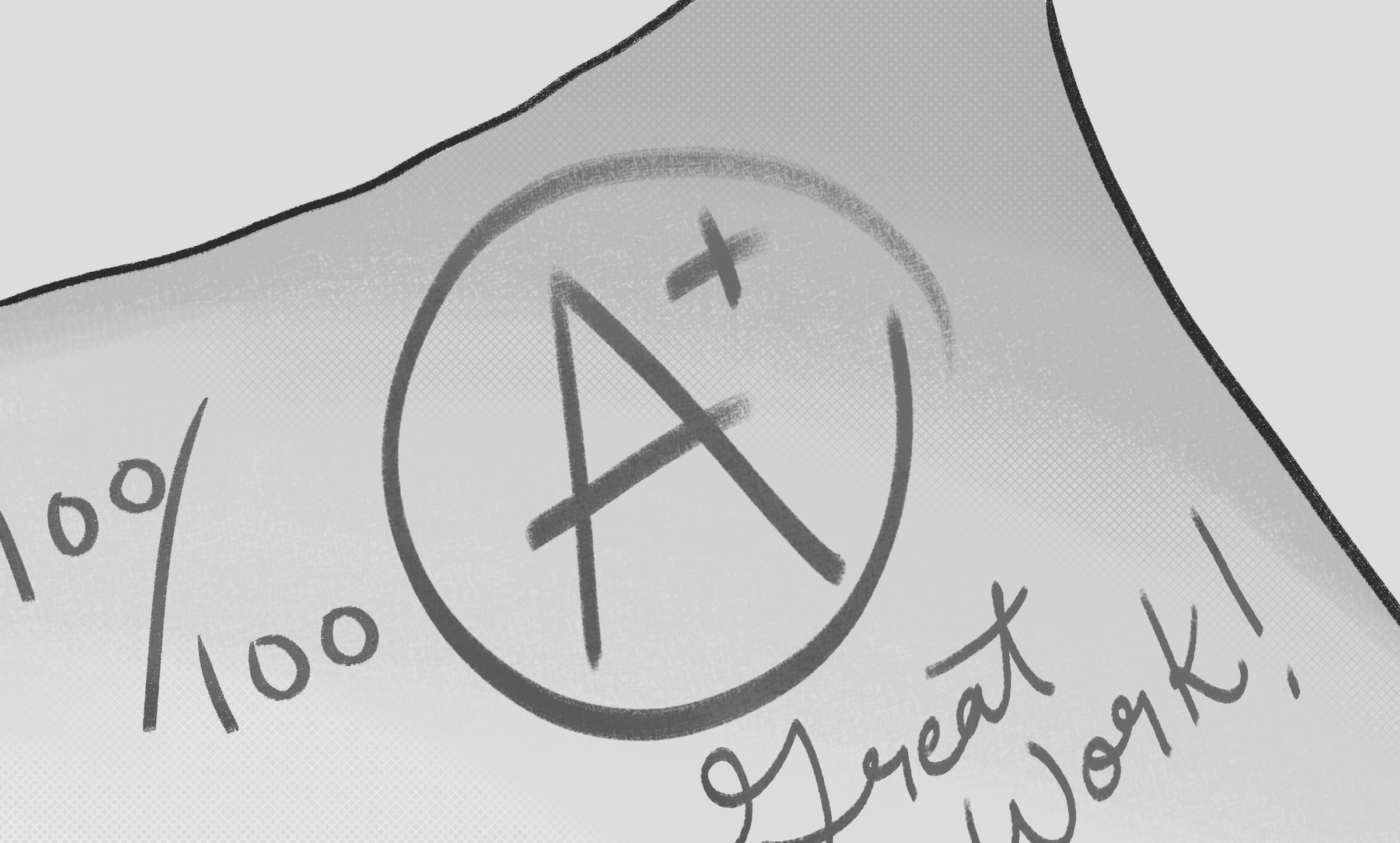
The grading system at the University of Michigan doesn’t make much sense. On the scale listed on the LSA website, each letter grade increase is worth a point on the grade point average scale; going from a flat C to a B increases one’s points from 2.0 to 3.0. This rule applies until you get to the A-range, where going from a B+ to an A+ only increases the GPA by 0.7 points. This is because achieving an A+ doesn’t add any value to one’s GPA, which caps out at the 4.0 earned by a flat A. The A+ is nothing more than a gold star telling students they did a great job. But the A+ deserves better, and so do students. Grading outcomes across classes are currently disparate — with some courses offering the A+ and others refraining — and are much in need of standardization. Students seeking to attend graduate school (a process that often involves GPA recalculation) are missing out when a deserved A+ fails to appear on the transcript.
After 2025 became 2026 and I had watched the ball drop in Times Square, I saw a short clip of the projections on the Washington Monument celebrating the beginning of America’s 250th anniversary. Semiquincentennial festivities will surely be at their height this summer, but this is nevertheless intended to be a yearlong celebration — and yet, we’re lacking in both the planning and the enthusiasm.
I can’t help but contrast our current moment with the Bicentennial in 1976. Federal planning began a decade prior, and by the time the festivities came around, it became a major cultural moment. Brands even

administration, therefore, should try its best to not reinforce these existential fears.
Unfortunately, it has done a poor job at that so far. When the University tries to allay the fear of AI-related encroachment by writing about how its construction would actually improve human outcomes, it stands in stark contrast to their insistence on integrating AI into every facet of U-M infrastructure. At its core, U-M AI messaging seems more like corporate hype to increase shareholder value, rather than an academically-minded push to utilize technology for the public good. The solution to improving public support for U-M AI-related research initiatives isn’t splitting hairs about what constitutes a “data center.” It’s to lay off the AI cheerleading.
First, a quick recap of AI at the University. Since 2023, the institution has released a suite of generative AI tools designed to enrich campus life. First, there was U-M GPT, the U-M equivalent of ChatGPT, designed to offer generative answers to any of your questions (but definitely not your homework). Then, there was U-M Maizey, which can help create AI chatbots tailored to specific use cases. And most recently, Information and Technology Services launched Go Blue AI,
Furthermore, students and employers need an indicator of excellent performance distinct from the flat A. The University can solve each of these problems by adopting a uniform grading scale out of 4.3 that requires professors to offer the A+. Cornell University uses a similar system, giving the University precedent upon which to base its decision. Standardizing grade offerings across courses will prevent any harmful selection effects, and students and employers alike will benefit from a genuine marker for excellent performance. When a certain grade offers no value beyond gratification, students have little incentive to strive to achieve that grade. You’ll likely never see a U-M student refuse to attend a football game or spend time with friends out of a desire to improve from 96% to 97% in a given course — the leap needed to move from an A to an A+. As far as students are concerned, the A+ is like finding spare change on the sidewalk. Nice to have, but not something anyone will exert real effort to obtain.
Without any real bearing on a student’s GPA, professors
Matthew Prock/DAILY
their personalized AI campus assistant app.
Of course, no one could forget about the incessant emails from Ravi Pendse, vice president of information technology, about Canvas courses to teach you about AI prompting or how to “Unlock your Campus Experience with Michigan’s AI Tools.” Or, about the AI-generated images on screen at Michigan Stadium. And perhaps the most sacrilegious example of pro-AI messaging on campus: Interim University President Domenico Grasso welcoming new students to campus by saying he keeps AI “near and dear to his heart” and partially revealing his U-M “HAIL” shirt to show “AI.” Are you kidding me? That’s cornier than Santa Ono’s AI-generated Instagram profile picture. Combine this with the sheer volume of AI-related workshops, advertising and events, and you get a campus where you can’t go to a lecture, check your email, turn a corner or attend convocation without seeing some sort of AI-related messaging from the University. Even for pro-AI community members, which I would consider myself as, that can get suffocating. It also sends a pretty clear message: AI and the University are inseparable.
CONTINUED AT MICHIGANDAILY.COM
LSA requirements shouldn’t be GPA insurance
KYLE ASPILLERA Opinion Analyst
Picture this: It’s the day before your class registration date for the winter semester and you’re scrambling to find a class that fulfills the Race and Ethnicity requirement for your LSA degree. You see a course on Atlas that genuinely interests you, but upon checking the reported median grade, you conclude that it poses too much of a risk to your grade point average. Instead, you take your friends’ recommendations, along with the suggestions of anonymous users on Reddit, select a class you feel largely indifferent toward and delay fulfilling the requirement, simply because it seems like a guaranteed A. LSA requirements are intended to provide students with a rich and diverse intellectual experience during their time at the University of Michigan. In principle they replicate the liberal arts model offered at many colleges across the United States: expanding
students’ minds and worldviews in addition to preparing them for whatever opportunities they pursue after graduation.
However, at the University, many students pick courses based on the probability of attaining a high grade rather than choosing classes that provide opportunities for intellectual risk or genuine exploration. The problem does not lie in students who gravitate toward high median-grade courses, nor in platforms, like Atlas, that provide transparency. Rather, it lies in the broader preprofessional pressure to thrive academically and become the strongest possible applicant for medical school, law school, graduate school and other postgraduate pathways, often at the cost of intellectual vitality.
To understand why this pressure feels so acute, consider the broader academic context. Grade inflation, defined as the assignment of higher grades without proportional increases in mastery, is a widespread phenomenon in higher education in the U.S. and has made A grades increasingly common in recent
decades. Average GPAs rose more than 16% at universities between 1990 to 2020, rendering high marks routine rather than exceptional. When top grades become nearly ubiquitous, grades lose meaning as signals of achievement and intensify anxiety about maintaining them. From a psychological standpoint, this pattern is not surprising. In environments where future pathways feel increasingly scarce and competitive, students become highly sensitive to academic risk. Prospect theory suggests that people tend to weigh potential losses more heavily than equivalent gains, a bias known as loss aversion. In educational contexts, this means students prioritize avoiding a lower grade over choosing intellectual growth that a challenging course could provide. Research on loss aversion in achievement contexts indicates that college students are more sensitive to the threat of academic decline than to potential gains in learning or understanding.
CONTINUED AT MICHIGANDAILY.COM

Make the A+ great again
have little incentive to offer the A+ beyond mere tradition. This can be problematic for students applying to a kind of graduate school that recalculates GPAs to include the A+ — a noted practice of the Law School Admissions Council. Say a pre-law student receives a 99% in a course. If the professor doesn’t offer an A+, that student will suffer from a lower LSAC GPA than they would have earned otherwise, effectively reducing their chances in the admissions process.
This also harms the University, an institution with an incentive to see its students go on to attend the best graduate schools possible. The imbalance in grading across courses can also motivate the savvy pre-professional students to only select courses that offer the A+, resigning interesting topics to the wayside of the road not taken.
While the admissions committees and recruitment coordinators that pass judgment on students can make more informed decisions with a better grading regime, it is for the students themselves that the University should make this change. Our pre-professional peers shouldn’t have to worry
about being set back in their application process simply because a professor doesn’t offer the full array of grades. And with grade inflation so pervasive, students need a grade that can indicate real achievement rather than alignment with the status quo. The A+ can be that North Star.
Getting an A+ at the University is still an order of
magnitude harder than getting a flat A. In most courses that offer the full array of grades, earning an A+ indicates high-quality work, while grade inflation has rendered the A an indicator of standard-to-good performance.
Yet, under the current grading system, the excellent and the decent hold the same value when calculating a student’s GPA. By rewarding an A+ with a 4.3 rather than the 4.0 earned by an A, the University can indicate which students performed better under the same coursework. Anyone can admit that a 99% is a very different grade than a 93%, but only a new grading regime can fully incorporate that difference into the metrics that matter. CONTINUED AT MICHIGANDAILY.COM
For America250, celebrate Michigan too
commercialized on red, white and blue versions of their regular products, and, with the recent end of the Vietnam War, Americans saw the year as a time to ponder the upheaval of recent and the subsequent direction of the nation. In 2026, the energy surrounding another national birthday is more lukewarm. Over the past few years, the bipartisan America250 Commission — tasked by Congress to “engage every American” with this year’s celebration — has had to contend with the apathy from the public, legal action, false starts and, now, President Donald Trump’s own Task Force 250, an executively organized unit putting together an “extraordinary celebration” of the nation’s 250th.
America250’s summer plans include recording oral histories, burying time capsules and organizing field trips. Task Force
250, on the other hand, plans for a UFC fight on the White House lawn, a national prayer event and, most notably, a competition for high school students eerily similar to “The Hunger Games.” With all this in mind, it sounds like the semiquincentennial is bound to be a mess. And considering our current political moment — dominated by largescale detentions and deportations —, celebrating America’s birthday can seem to feel more like a nationalist display. Both disillusionment and a floundering of plans make it clear that America250 struggles not only with organizing itself, but also with trying to engage all citizens. That doesn’t mean, though, that we have to completely disregard any sort of activity that centers on America’s history and present. Instead of taking part
in nationwide celebrations, we can instead take the initiative to engage with the history directly surrounding us in our states and local communities by planning our own celebrations. This year is supposed to be a celebration of the country’s proclaimed independence dating back to 1776, but 33 states and territories were not yet part of the nation. Alaska was still a Russian territory, Texas a Spanish territory. Michigan was 61 years away from gaining statehood.
If we’re to celebrate the 250th anniversary of American independence, then we also ought to celebrate the unique histories of these states, too. Focusing on place-specific events and communities that shaped history before and after unification provides a more ample opportunity to consider how the
smaller components of a nation shaped the greater America into what it is today. This focus on local history, in turn, prompts us to consider our own role within our communities, states and nation. Opting out of something like Task Force 250’s national prayer event should not equate to disregarding any sort of engagement with our nation’s past or present. If we see this summer only as a celebration of the nation or the planned events as the only way we can celebrate, then we also ignore the function of creating meaningful celebrations of local and state histories.
Taking initiative to engage in such celebrations means recognizing that history is more than just a top-down or nation-to-state process. It means recognizing your own ability to partake in commemorative
history rather than allowing the president to solely shape a national anniversary. And if you happen to be someone who, in spite of the messy plans and the current state of the nation, is nevertheless looking forward to the broader America250 celebration, you can certainly find ways of marrying the two. National history is local history and vice versa, and these formal, organized events can be paired with the museum visits or tours you plan on your own. Grand Rapids, for example, will offer tours in its museums in addition to a concert series. These locally-organized events — paired with the book clubs or parties we organize ourselves — serve as a bridge between us and a national celebration. CONTINUED AT MICHIGANDAILY.COM
LUCAS FELLER Opinion Columnist
Caroline Xi/DAILY
AUDRA WOEHLE Opinion Columnist
Caroline Xi/DAILY

Michigan in Color is The Michigan Daily’s section by and for People of Color.
In this space, we invite our contributors to be vulnerable and authentic about our experiences and the important issues in our world today.
Our work represents our identities in a way that is both unapologetic and creative. We are a community that reclaims our stories on our own terms.
Gradients Cabaret coming to SMTD February 26
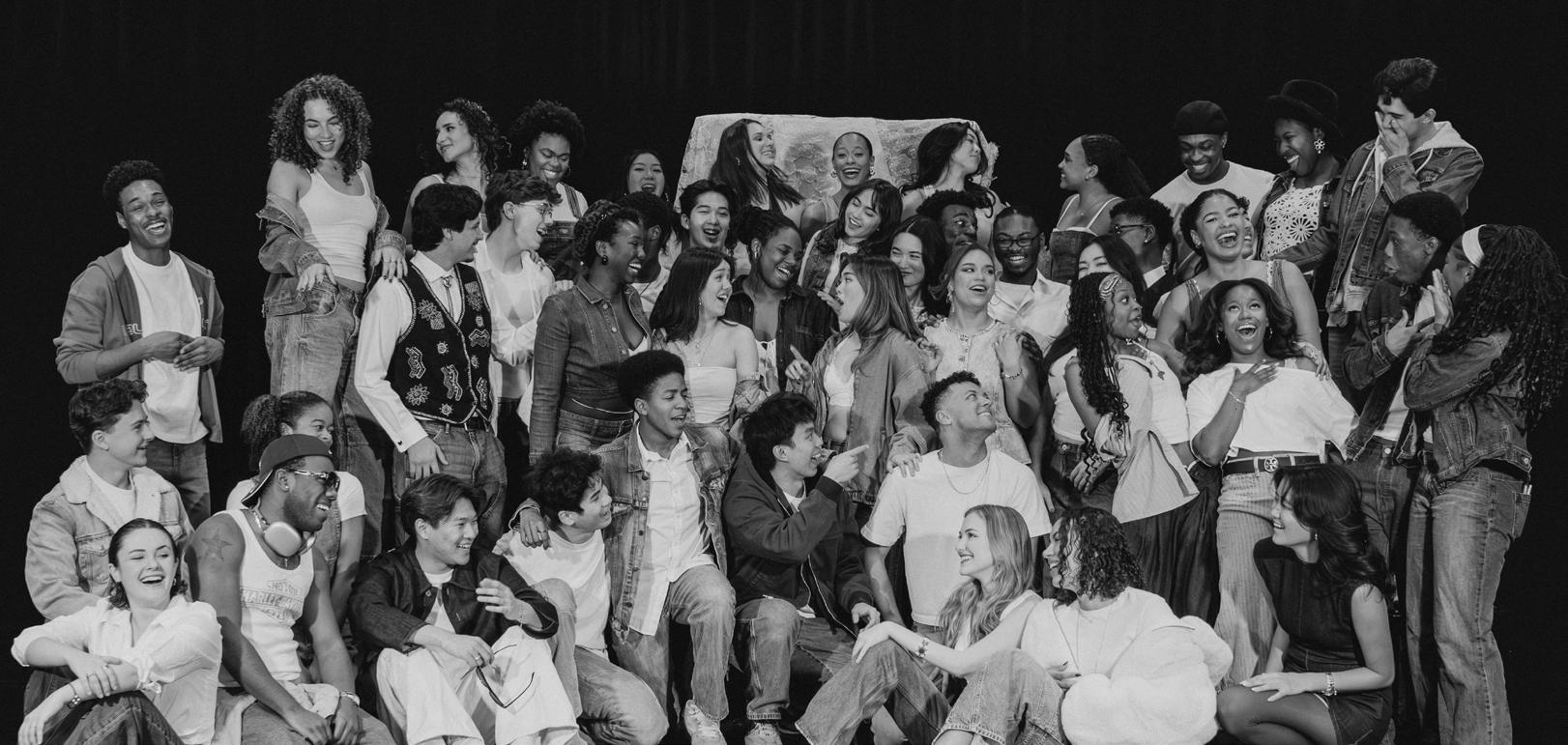
Music, Theatre & Dance sophomore
but the purpose of this showcase remains the same: uplifting and creating spaces to educate on different forms of exposure.
In rehearsal rooms at the Walgreen Drama Center, School of Music, Theatre & Dance students prepare for the semiannual student-led production of ‘Gradients,’ a showcase continuing a 20-year-long tradition of creating space for artists of Color in musical theater. The production will take place on Feb. 26, showcasing art that is often overlooked in traditional theater spaces.
Originally known as the ‘Color Cabaret’ by Music, Theatre & Dance alum Robert Hartwell, the showcase was created to give Black students the opportunity to perform work that was not typically taught in classrooms, reflecting their histories in spaces where they had been historically underrepresented. Over time, the showcase expanded to include other students of Color within the theatre department with the goals of introducing new perspectives, new diverse narratives and cultural histories.
This year, the production underwent a name change due to DEI-related budgeting cuts,
SREEDHAR MiC Columnist
I grew up in the safe and stable lands of suburbia, specifically in the city of Sterling Heights. Those from Sterling Heights know how diverse the community is, especially compared to other towns in the metro Detroit area.
I can still picture the dining room of the bustling Middle Eastern restaurant my mother and I would go to whenever I had a day off from school and the warm paczki served at our favorite local Polish/Italian bakery every Fat Tuesday. I believe living in such a culturally rich place as an Indian American was truly beneficial for my childhood, as I was comfortable and eager to learn about different cultures from a young age. However, just because I had an open mind at a young age doesn’t mean those around me had one as well. This was particularly apparent during my elementary school morning attendance. There were a variety of names the teachers would say every morning during attendance: Polish names, Albanian names, Chaldean names and, of course, Indian names, which were almost never pronounced properly.
My name is “Annika Chandra” (pronounced “ah-KNEE-kah CHUN-thra”). Whenever a teacher in elementary school would call my name during attendance, there was always a 50-50 chance as to whether it would be pronounced correctly. Having a first name that’s relatively “easier” to say definitely came with its advantages, because I rarely had to correct people or come up with a Westernized pronunciation for people at school to easily say. My last name, however, is where things got difficult.
“Sreedhar” (pronounced “suhREE-thur”) always seemed to stump those around me. They just
Music, Theatre & Dance senior Nova Brown, co-dramaturge for ‘Color Cabaret,’ said the name change reflects the harsh realities of the shifting perspective of diversity across campus.
“We had to change it this year to ‘Gradients’ because of DEI cuts,” Brown said. “In the face of everything going on, this is about using art to educate, elevate and move forward.”
For many performers, the production is deeply personal. After watching and being in ‘Gradients,’ they noticed that this showcase creates the representation they had been searching for. Music, Theatre & Dance junior Zee Hampton, who was involved in the show, said representation was something that she saw was lacking.
“I never really had those representations of people who look like me on the stage,” Zee said.
“To be able to create that space for another little Black girl out there who wants to do musical theater — that matters.”
Others see this showcase as a space for joy rather than struggle.
Chase Ra’Mel Phillips said that ‘Gradients’ is also about reclaiming triumph in an industry that often highlights adversities.
“Joy and celebration are so important to be seen on stage, especially on bodies that are often pigeonholed into performing hurt or pain,” Phillips said.
Co-director Ty Lam hopes the audience walk away feeling invited into the space rather than distanced from it.
“I want this show to feel like an invitation to join us,” Lam said.
Even with this name change, ‘Gradients’ still serves its purpose. It’s not just about performance; it’s about resistance and visibility.
Spaces like these open doors for collaborative storytelling.
‘Gradients’ is about expanding and allowing music to bring communities together, reshaping who and what is allowed in theater spaces.
‘Gradients’ will open at 7pm and 11pm on Feb. 26 at the Walgreen Drama Center and continues a legacy of student-led performances that centers artists of Color while highlighting the realities of present moments.
couldn’t seem to grasp the concept of the letters “S” and “R” coming together to make a “suh-ree” sound, or the letters “D” and “H” coming together to make a “the” sound. Most Indian languages pronounce these letters differently, either curling their tongue to the back of their mouths or touching their teeth, known as retroflex or dental sounds. The English language tends to lack this, so it takes practice for native English speakers to move their mouths in a way to pronounce such words.
People would mispronounce my last name all the time, and no matter how hard I tried to correct them, they would never remember. Despite their apologies after I corrected them, they never tried to get my name right the next time. I could count on one hand the number of times a student or teacher accurately pronounced my last name. I was called “Annika Sweetheart” one year, but I think that had more to do with the fact they couldn’t say my name right, rather than me being a very sweet child. As an elementary schooler, I understood that my name may be difficult for others to say, but I would often think, “I live in America too, and I can say these words! Why can’t they?” This was one of the first times I understood my dedication to appreciating and learning about other cultures was not shared by others.
I believed this was just an unfortunate consequence of having a more “ethnic” sounding name, and that all kids with these kinds of names could relate to this. However, when I attended my older brother’s middle school honors award ceremony, I was hit with a shocking surprise. There was a white guidance counselor who was responsible for saying each student’s name as they walked across the stage and received their award. I remember her pronouncing every “Johnson”
A self-told history
of the Muslim Student Association at UMich
ALLANA SMITH MiC Assistant Editor
On Thursday, Feb. 12, students, alumni and family gathered at Hatcher Graduate Library to join the Michigan Muslim Student Association at the “Building Community and Change: A History of the Muslim Students’ Association at U-M” lecture. Here, MSA shared documentation of its 74 year legacy through a historical research project titled: “The History of the Muslim Student Association and its Contributions to the University of Michigan.”
Sponsored by the Bentley Historical Library, Muslim Coalition, Arab and Muslim American Studies Program and Islamophobia Working Group, the “Building Community and Change” lecture has been two years in the making.
University alum Reem Killawi, the event organizer, said in an interview with The Michigan Daily that the Inclusive History Project assisted the MSA in documenting their history.
“We received grant funding from the Inclusive History Project to look at and document the history of the Muslim Student Association in May of 2024,” Killawi said.
Along with the Inclusive History Project and current MSA members, Killawi aided in work across all three University campuses to investigate different histories of the MSA past and present.
“I remember hearing that we have been here. We have a beautiful history. How come we can’t find it?” Killawi said.
Killawi was joined by American culture professor Nancy Khalil; MSA alum Dr. Muzammil Ahmed, two-time University alum and chief of medical staff at Cornwall Health Wayne Hospital; local psychiatrist Dr. Sarah Jukaku; and attorney Riyah Basha, a two-time University alum.
“Alumni are indebted to student life and they must think of what they leave behind,” Ahmed said.
Killawi was an MSA member all four years of college. At the
time of her graduation, she was outreach Chair.
“When I was a freshman, I was looking for community … the first place I looked was MSA because I knew I would be in a place with people who had similar values that I did,” Killawi said.
Per The Michigan Daily Digital Archives, the U-M Muslim Student Association was founded in 1952. According to Killawi, it remains the oldest Muslim Student Associations in the country. In the past, the MSA was largely funded by the international community. Killawi shared findings that Saud, the king of Saudi Arabia, donated a Persian rug to the MSA in the ’60s. Today, the MSA currently relies on University funding and alumni donations.
“We’re really hoping that this project is a means for empowerment for the community. That when they have that inevitable feeling of ‘I don’t belong here,’ they can come back to this research and this project and feel empowered by this history,” Killawi said.
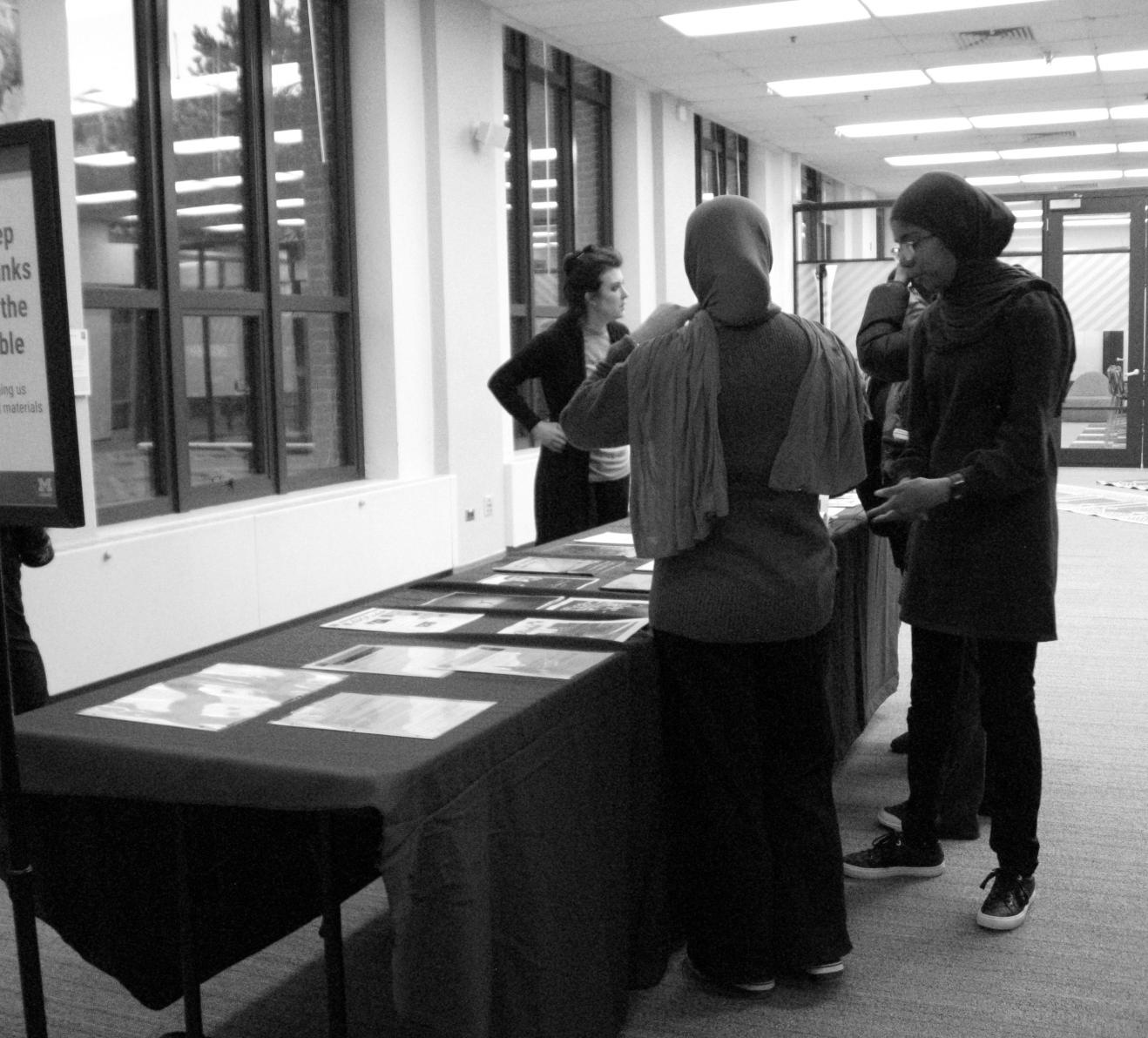
What’s in a name?
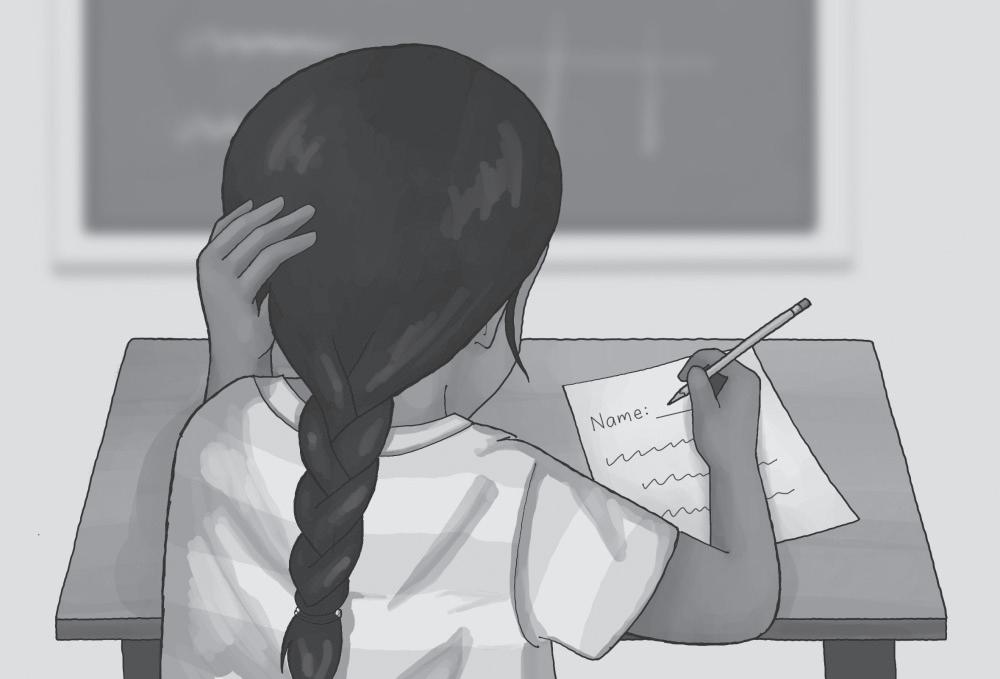
and “Miller” with ease, as well as perfectly enunciating each syllable in “Dedvukaj,” the last name of my brother’s Albanian friend. Yet when it came down to pronouncing my brother’s and all of the other Indian kids’ “long last names,” the guidance counselor just couldn’t do it. She paused, awkwardly laughed and proceeded to quickly call the Indian kids by their first names, skipping over their last names entirely. The first time she did this, I heard a few chuckles in the audience. By the time she got to my brother’s name, the crowd erupted into laughter and I even remember her having a small smile on her face. If you were in the audience, you would’ve thought you were at a comedy show, not an honors award ceremony for ninth graders. I was so confused, wondering why our last name wasn’t honored in the ceremony and what was so funny about its omission. Not everyone was laughing, however. I looked to my right and saw that my mother was seething with anger. What angered her most was that after my brother’s name was called, the guidance counselor proceeded to correctly say “Wójcik” and every other Polish last name in the class. Although I was just 7 years old, it clicked for me that the
counselor didn’t pronounce my brother’s last name because it was hard to pronounce. It was because he had a brown last name. It deeply disgusted my family and me that the guidance counselor would humiliate and embarrass the kids just to get some chuckles in the audience. It wasn’t like this was the first time she saw their names either. She was their counselor for all three years of junior high, establishing a friendly relationship with all of her students. My mother was outraged, especially because she chose to go by her middle name when she moved to this country as it was “easier to pronounce.” She gave my brother and me names she thought were easier to say so we could tie our own identities to this country through our first name without having to create any sort of nickname to get by. She wanted people to see us for who we are and our own personalities, not just our intricate names. Despite all she had done to try and make our lives easier, it simply wasn’t enough to escape the racism that us Indian Americans face, whether that be in school or in our day-to-day lives. It’s unfortunate to see it happen in a school setting too, where kids should feel accepted, not ridiculed, especially by their teachers. My mother was even criticized by
others in the Indian community who were upset with her for not giving her children more “ethnic” sounding names. She simply could not win.
There is a common stereotype within American media that every brown person has a long, difficultto-pronounce name that’s not worth attempting. However, South Asia is an enormous region with people of many different customs, skin tones and, of course, names. In Kerala, the state of India where my family is from, Christianity arrived centuries before it became widespread in Europe. Many Indian people have names derived from biblical characters, written with either the Westernized or distinct Aramaic spelling. These last names, such as “Joseph” or “Varughese,” tended to leave nonIndians confused, because they contradicted the belief they had in their minds of Indian names being “too long.” Oftentimes in school, I found that it was these kids who were teased relentlessly for being “whitewashed” because of their names, failing to understand that those names came long before Europe ever adopted them!
It seems that no matter what we do, Indian names are criticized. You can try to make your name easier to pronounce, embrace it or try to educate others on the diversity of your culture that results in you having a “different” name, but, unfortunately, in this country, you won’t be heard unless someone’s willing to put in the effort. I find that saddening, especially because I was taught in school that America is supposed to be a melting pot of different cultures.
I find it ironic that we are taught to celebrate our differences, yet all I see in recent media is people desperately trying to divide. It’s normalized for people to make jokes about marginalized communities, especially Indians. Whenever I scroll on TikTok I cannot go five
scrolls without seeing someone make fun of the Indian accent, the comments on the video full of hateful phrases like “delete India” or “land of people who never shower.” I find it insulting how normalized it is to comment such hateful rhetoric anonymously behind a screen. It’s a slap in the face to the millions of Indians who work hard to be in this country, those who sacrifice so much just to live a comfortable life in suburbia. I think of my mom, who sacrificed her first name when she started telling people to call her by her easier-topronounce middle name. I think of my brother’s guidance counselor, who never had to sacrifice her name and subconsciously brace herself whenever people got her name wrong, because the probability of that happening was practically zero.
But I also think of my high school speech and debate coach. He was responsible for saying the names of all the students who walked across the stage at my graduation and he made a point of going to each student in my class and learning how to pronounce their name correctly, writing the syllabic pronunciation down on a notecard. It made me ecstatic to see there are people who put in the time and effort to make every kid feel seen, no matter how big or small the action is. It gives me faith in this country that there are still people who want to celebrate our differences.
It is imperative now that we take the time to learn how to accurately pronounce people’s names. In an age of conservatism where we are constantly trying to tear each other down, doing something so simple as saying someone’s name correctly shows them that you care about them, you see them and that they matter.
So the next time I hear my name called out during attendance, I’ll have it pronounced correctly.
ANNIKA
Hilary Adjei/MiC
HILARY ADJEI MiC Assistant Editor
Allana Smith/MiC
Alisha Razi/MiC
AMY XIU MiC Columnist
If you’ve been online at all in the past couple of months, you’ve probably seen videos of people claiming to be at a “very Chinese time” in their life. I, for one, have been inundated with hundreds of videos on my For You Page of people drinking hot water, practicing tai chi and engaging with other practices associated with Chinese culture. I don’t need to scroll far to find Douyin makeup trends or even a gay man teaching increasingly specific vulgar Chinese slang. One thing has become clear: Chinese culture is undoubtedly entering our cultural zeitgeist.
Being a Chinese American from the Midwest, I have a lot of weird emotions about this. When I was younger, I never had much of a lunchbox moment or a time I was made to feel ashamed of my identity. Instead, it was a different kind of exclusion: one where my culture, and largely Asian culture as a whole, was simply irrelevant. Growing up, there was only one small boba shop in my city (Bubble Island you will be missed) and I was obsessed with this super underground boy band called BTS. There was no one except my other Chinese peers who could relate to the classic Chinese songs my parents listened to or the vegetables my parents cooked that had no English translation. I was lucky enough to live in a fairly diverse area, but the separation between my Chinese and American sides was very distinct.
As I grew older, the gap between Asian and American culture started to narrow. K-pop started to become more mainstream and it suddenly became cool to watch anime.
West, an underlying current of sinophobia remained.
Whether due to the misattribution of Chinese trends or condemnation of Chinese products and policies (often rooted in fear of a rising global super power that is both non-Western and communistpresenting), China remained unable to gain the praise and recognition its neighbors shared.
It’s safe to say, seeing people “turn Chinese” was a trend I never could have predicted.
Some of my emotions toward this trend have to do with a possessiveness toward my culture (the urge to gatekeep is quite strong). It’s always a shock seeing non-Chinese people at Chinese restaurants ordering dishes that aren’t sesame chicken and broccoli beef — who taught them what braised pork belly was? It feels a bit like a secret getting leaked as people are starting to reap the benefits of things I have always known and enjoyed.
However, more than that, I can’t help but feel some sort of deep-seated resentment. Asian racism has a long-standing history in this country and still remains today, whether through a gap in leadership roles or a lack of visibility (or when visible, tokenization) in media. Just less than six years ago, Chinese people saw a significant spike in racial hate crimes, and the president fearmongered about Chinese trade and “the Chinese virus.” The same influencers who stayed silent during the Stop AAPI Hate movement are now sipping hot water and proudly showing off their Labubus. Additionally, Chinese culture has existed for thousands of years and has always been around to be appreciated. Only noticing it when it’s a trend feels far from authentic.
To be fair, these feelings are not
as belief in our own government’s superiority dimmed. Economic security, supporting a family and other aspects of the so-called “American Dream” are becoming increasingly unattainable for the majority of the population. All the while, we watch as the people in power constantly deflect attention and accountability while the official White House social media account posts uses artificial intelligence to post videos depicting President Trump dumping poop on protestors.
A lot of the Chinese appreciation we’ve been seeing actually just functions as a foil to all the ways we believe that America has failed us.
Videos of average Chinese people living comfortable lives go viral when the majority of Americans are living paycheck to paycheck. There seems to be a general feeling of shock that China has universal health care and paid maternity leave — concepts that seem to only be attributed to a specific group of European countries and Canada — when Americans are not guaranteed access to either.
Chinese infrastructure like highspeed rail and renewable energy initiatives seem like a dream when the United States spends nearly a trillion dollars on national defense every year (more than the next nine countries combined) despite crumbling public transport and power grid infrastructure. It all leaves Americans asking, “Is China really as bad as we’ve been told?”
The beginnings of this were seen earlier in 2025, with the short-lived TikTok ban in the U.S. This led to a mass migration of American users to RedNote, a Chinese social media app, essentially a middle finger to the U.S. government — if the government is so scared of “Chinese spies,” why not just leak our data to them directly?
Many Chinese users were quick to welcome them, as #tiktokrefugee became the No. 1 trending topic.

experiences. Instead of finding miserable, overworked people who were completely alien to them like they’d grown up being told, Americans found young adults who liked the same trends, had brain rot humor and thirsted over celebrities in the same way.
This was also the year popular streamer IShowSpeed began his tour of China. In two weeks and approximately 48 hours of footage, Speed showed an unscripted side of China to millions of viewers around the world. Through enthusiastically learning Kung Fu, being fascinated by famous landmarks and joining aunties dancing in the park, Speed continued to further demystify Chinese people to Americans and push back on misconceptions previously had about life in China.
All this to say, interest in China
Americans in a way we haven’t seen before. We’re no longer a mysterious other, but people worth engaging and exchanging with.
I can’t help but feel a bit delighted — this type of visibility is something I would’ve never dreamed of as a kid and I think it’s extremely validating to see it happen. I’m not the only one feeling this way: Plenty of Chinese TikTok users are responding by excitedly sharing skin care hacks and their favorite recipes online.
Most importantly, after being excluded for most of American history, Asian Americans are finally entering the conversation. For decades we have been known as the perpetual foreigner, not ever being seen as fully American. Claire Jean Kim’s theory on racial triangulation
been rooted in clinging on to our proximity to whiteness and getting rewarded for political silence. This may be the first time Chinese Americans have been given such a large platform, getting millions of views and Americans deferring to them for advice. Of course, there are still glaring issues. Romanticizing China, or any large global entity for that matter, has its own problems. China is not without its own major shortcomings (heavy surveillance culture and censorship to name some), and pretending like these issues don’t exist removes accountability from those in power and ignores the lived experiences of Chinese people. There are plenty of real Chinese people who are not living glamorous or even




Vivien Wang/MiC
Related Digital’s Commitment to Michigan
When a company builds at scale in a community, residents deserve clear answers about what it means for their jobs, local resources, and daily lives. We take that responsibility seriously.
You’ve likely heard a lot about data centers in Michigan. But much of the conversation does not accurately reflect how projects like ours in Saline Township are designed and built. We want to be clear about our commitments to Michigan.
Our Saline Data Center Project: Built the Michigan Way Michigan was built by people who worked hard, paid their share, and planned for the next generation. Our Saline project reflects those same values: creating good-paying local jobs, paying our own way, protecting Michigan’s natural resources, and delivering local benefits
Creating Jobs and Long-Term Economic Investment
Our Saline project is the largest economic investment in Michigan’s history. It will create more than 2,500 union construction jobs for skilled tradespeople, 450 permanent jobs on-site, and 1,500 additional jobs county-wide
Paying Our Own Way—Not Passing Costs On Michigan law ensures that large data centers cannot shift energy or infrastructure costs onto other customers. This project will fully fund the electric service and infrastructure it uses and provide $300 million in annual savings to DTE customers
Protecting Michigan’s Water, Land, and Resources
Our project uses a closed loop, air-cooling system, not waterintensive evaporative cooling. And we are preserving 75% of the land as open space, farmland, and wetlands
Shaped by Community Feedback, Delivering Local Benefits
In addition to the millions in new tax revenues the project will generate annually for Michigan schools, roads, and services, we are committing $8 million for local fire and emergency services, $4 million to a Farmland Preservation Trust, and $2 million to a Community Investment Fund
These commitments were shaped by extensive local input, including more than a dozen public meetings and outreach to over 1,600 households.
Trust isn’t built overnight, but we hope to earn yours by building responsibly, delivering on these commitments, and maintaining communication with the community. That’s our commitment to you.
SportsMonday: Michigan saw what could hold it back from a national championship
JONATHAN WUCHTER Daily Sports Writer
It’s undeniable that if the soon-to-be-former No. 1 Michigan men’s basketball team made a couple more shots, especially threes, against Duke, the Wolverines would have walked away winners and remained the top team in the country.
But the result doesn’t change what the Blue Devils revealed about Michigan: The Wolverines’ frontcourt is matchable, even beatable at the top level. Their backcourt is also inconsistent and, at its worst, unable to carry the load.
It’s far too reactionary for this to deject Michigan, which is still on a clear path to at least share the Big Ten crown and earn a No. 1 seed in the NCAA Tournament. Showing the Wolverines where they need to improve might even be an
WOMEN’S BASKETBALL
overwhelming positive if they can shift into a higher gear in March as a result. Because, right now, there’s inconsistencies that could hold Michigan back from a national championship.
“We know more about our team now,” Wolverines coach Dusty May said Saturday. “We will be better because of this game.”
It all starts in the frontcourt. Michigan couldn’t just use its size and length to overwhelm Duke, which the Wolverines do in most of their games. They also couldn’t just rely on their innate talent to will out a win either, which is how they’ve won most of the rest of their games.
The double-digit blowouts that have come from those games have made Michigan an analytic darling, occasionally compared to all-time great teams. The brakes should be pumped on that — a team constructed to beat down on the masses and crank out a
chart-topping KenPom rating is different from one that can run the table on the other best teams in the country. The Blue Devils outrebounded the Wolverines, shot slightly better from 2-point range and put junior center Aday Mara into early foul trouble. That’s not reproducible by most other teams, but Michigan will likely run into at least an opponent or two capable of doing so — possibly even Duke again — if the Wolverines are to make a deep postseason run.
Starting out with issues on the glass. May has stressed over the past two months that he believed Michigan can be an “elite” offensive rebounding team and has shown progress in making the jump from a “good” team in that category.
But the Blue Devils outdid the Wolverines on the offensive glass, 13-to-8, 39.4%-to-22.2%.
Michigan still isn’t as good as it can be. And now it’s clear the
Wolverines aren’t as good on the glass as they need to be to beat other top teams.
Saturday also marks the second straight game in which Mara was in foul trouble. Much of what the Wolverines do well, especially defensively, relies on him to be on the court. Mara was on the bench for about half of both games. Purdue forward Trey Kaufman-Renn put up 27 points and Duke forward Cameron Boozer dropped 18 and had four offensive boards, too.
For the few teams capable of doing so, step one of beating Michigan appears to be putting pressure on Mara and in turn matching or beating the Wolverines on the glass and at the rim on both ends of the court. This week proved that in that scenario, Michigan’s X-factor becomes its backcourt — junior guard Elliot Cadeau most of all.
“We’re not going to result,” May said. “I mean, I thought
(Cadeau) generated some really good looks. The ball didn’t drop. They were at his spots. Fortyplus (percent) on the season. I’m riding with Elliot.”
Cadeau put up 17 points with three 3-pointers against the Boilermakers. He didn’t hit a shot against the Blue Devils until the final four minutes, going 1-for-8 overall. With six assists Saturday and only one turnover, he was still the same player in most regards, but the lack of scoring was felt. Those inconsistencies from game to game aren’t new for Cadeau, but this was the first time he’s had a down game in combination with the opponent matching up size-and-talent-wise with the Wolverines’ frontcourt. Add in poor performances from the other guards and the loss comes more into focus.
Sophomore guard L.J. Cason has made steady improvements across two seasons and has appeared to be peaking as of late.
But Saturday, Cason contributed
just seven points and turned it over twice, he played less minutes than he has in any of the past five games — showing he might not be ready for a big role in this big of game. Then it comes back to the 3-point shooting or, more accurately, shooters. Graduate Nimari Burnett and freshman Trey McKenney both went 0-for-3 against Duke. May talked previously about how their minutes could fluctuate as the Wolverines ride the hot hand. Saturday, May had to endure the case where everyone was cold. Not many teams will be able to match up with Michigan’s frontcourt for that to be an issue. But some top teams have the size and talent in the frontcourt for the Wolverines’ backcourt to be the deciding factor. Weaknesses is too strong a word for a 25-2 team, but these vulnerabilities may prevent the Wolverines from winning the national championship.
No. 6 Michigan buried by No. 13 Iowa, 62-44, in poor shooting performance
NATE SCHRECK Daily Sports Editor
IOWA CITY — The parquet floor of Carver-Hawkeye Arena had a dizzying effect on the No. 6 Michigan women’s basketball team — or at least, it sure looked like it during Sunday’s game. The Wolverines (22-5 overall, 13-3 Big Ten) were bogged down into a turnover-filled slugfest with No. 13 Iowa (22-5, 13-3). As turnovers and missed shots compounded, the Hawkeyes’ early lead proved too difficult for Michigan to surmount as it fell, 62-44. The first quarter started about as badly as it could’ve for the Wolverines. Sophomore guard Mila Holloway threw two passes into the seats during Michigan’s first two possessions, setting the scene for an ugly first quarter. Two dozen turnovers mired the Wolverines’ performance all afternoon as they provided Iowa with 21 points off turnovers.
The second quarter wasn’t much better. Going 4-for-17 from the field, the shots just weren’t falling. Only three Wolverines scored in the entire quarter, and an eight-point performance in the period left them down 27-20 at halftime.
“It was just a hard environment to play in,” sophomore guard Olivia Olson said. “We just put ourselves in a hole coming into it. We missed shots that we normally make.” Michigan has been dragged into these situations before, though. Going down big to No. 1

Connecticut had a road-game feel to it, and the Wolverines still drew that game to within three. It also suffered stagnant production early on against No. 5 Vanderbilt. But in both of these games, timely threes allowed it to claw back — shooting 31% from three on Sunday wasn’t going to cut it.
Michigan drew some calls
early in the third quarter, but it wasn’t bolstered by the characteristic scoring tears that have consistently helped it get back into games. The Wolverines’ most consistent sparkplugs, sophomore guard Syla Swords and Olson, couldn’t find their usual dominance. The absence of their production left Michigan
with more turnovers than made field goals through the first 25 minutes.
Even when Swords hit a three at the end of the third quarter, cutting the deficit to just four, the very next play, Hawkeyes guard Kylie Feuerbach banked a buzzerbeater of her own to negate Swords’ contribution.
“They were just relentless,” Wolverines coach Kim Barnes Arico said. “We couldn’t get some shots to fall … and we just couldn’t get over the hump.”
Michigan has the best scoring offense in the Big Ten, but it had no answers Sunday. 24 turnovers never help to win a basketball game, but beyond that,
the Wolverines couldn’t buy a timely bucket. There weren’t really any scoring runs, and Michigan struggled to get to the free throw line. 24 turnovers, 30% from the field and just three free throw attempts added up to the Wolverines’ lowest score in a game since 2023. “Olson goes to the free throw line a ton, and we go as a team a ton,” Barnes Arico said. “When we only get there three times, that’s very unusual for us as a team. I thought we were being aggressive and getting to those balls, but sometimes that happens.”
As a frenzied crowd crescendoed louder late in the fourth quarter, Iowa dominated the paint and iced the game with a 14-2 run. With the Hawkeyes leaning on Michigan inside all game, the Wolverines finally broke. There was no better symbol for Sunday’s beatdown than Iowa grinding out its final possessions in the paint and delivering the dagger, one post move at a time. Michigan’s struggles were uncharacteristic but not unprecedented. While it took down then-No. 13 Michigan State on the road, it also couldn’t hit a shot in a loss to Washington in January. The Wolverines’ shooting struggles, while out of the ordinary, inhibited them from picking up another conference win on Sunday. For a game they’d like to forget, a meager 44-point showing will serve as a reminder of the usually potent Michigan offense’s flaws.
SOPHIE MATTHEWS Daily Sports Writer
MADISON — The No. 2 Michigan hockey team was outshot 35-25 against No. 13 Wisconsin. However, this stat was rendered irrelevant to the Wolverines’ offense, who simply made the moments count each time they touched the puck. And it served Michigan well in its final regular season meeting with the Badgers. The Wolverines (25-6-1 overall, 16-5-1 Big Ten) amassed a much-needed win against Wisconsin (19-11-2, 12-10) in a gritty battle throughout every aspect of the game, earning a 3-1 victory.
“That’s big boy playoff hockey,” senior defenseman Luca Fantilli said. “You got to know how to play in those games and find a way to win those games.”
The first period began exactly opposite of how Michigan wanted. A kneeing penalty in the 16th minute quickly put the Wolverines a man down against an already forceful Wisconsin. And they suffered the consequences almost immediately. Badgers forward Christian Fitzgerald extended his goal tally after catching a rebounded shot to put Wisconsin up, 1-0. Michigan put itself in a tough
situation from the get-go, and much energy was needed to rally against a team that’s cracked the Wolverines’ code twice before.
If Michigan wanted to remain in the game, a goal needed to be scored quickly. And it wasn’t long before the Kohl Center went silent.
A trademark play built from the back created the foundation for an offensive berth for the Wolverines. A rush into the attacking third sent a swarm of pressure Wisconsin’s way.
Hanging around the boards, junior defenseman Ben Robertson picked up the puck at the blue line before sending a shot on net.
In the midst of chaos, freshman forward Kason Muscutt got a stick on the puck, tipping it past the Badgers goaltender and tying the game, 1-1.
“Unbelievable,” Muscutt said regarding his first goal wearing a Michigan uniform. “That was definitely one of the best in my life, for sure. No doubt.”
The Wolverines are well aware of the Badgers and the threat they are. Losing 4-1 Friday night, plus a 6-1 loss prior to that made Wisconsin Michigan’s greatest offensive threat it’s faced all season. So much so that the Wolverines experienced the rare occasion the shot-scales tipped out of their favor. The Badgers sent
pucks flying toward freshman goaltender Jack Ivankovic, making Michigan’s job much more difficult than it’s used to.
“Last night was the first Friday that we’ve lost,” Wolverines coach Brandon Naurato said. “So, to go through this where you’re challenged to be better than the night before and then to deliver, I think it’s huge.”
So even with the score sitting at one apiece, the game rested heavily in Wisconsin’s favor.
And for 27 minutes, spanning across the first and second period, the game remained level. At least until junior forward Nick Moldenhauer netted the difference maker with just over five minutes left in the second to put the Wolverines up, 2-1. And for the first time in the game, Michigan owned the lead.
The Wolverines remained well aware of their status in the game. With the aggressive play the Badgers demonstrated, the game could easily fall out of their hands. The third period would conclude favorable to whoever wanted the win more — from scoring big goals to winning small scrums on the boards, it all weighed heavily on the game’s outcome.
“(Wisconsin is) a great team and hard to play against,”

said. “They work
it more.” Michigan’s third
wasn’t going
WASHINGTON — 20 points against No. 11 Gonzaga. 29 against Maryland. 26 against No. 15 Michigan State. Graduate forward Yaxel Lendeborg has burnt his brightest this season when playing away from home. The midseason contest versus No. 3 Duke would be no expectation to the rule.
And while Lendeborg couldn’t single handley will the No. 1 Michigan men’s basketball team to a win, he fought valiantly. Waging war against the Blue Devils, Lendeborg carried the Wolverines for the entirety of the first half before finally succumbing in the second.
After allowing his frontcourt peers to each get a bucket on the board to start the game, Lendeborg began his run of terror. Scoring 10 points in just two minutes, Lendeborg utilized Michigan’s transition-friendly offense to its full extent. Specifically through drives downhill, Lendeborg took advantage of the unset defense en route to finishes at the rim alongside a pair of and-1s.
“This game especially, I tried to set the tone early and I just try to push my will on them and make it a lot easier on the other guys,” Lendeborg said. Even though he was primarily hunting shots in the interior,

Lendeborg still served as a point of attack from three. Not forcing any shots he didn’t need to, Lendborg gave his teammates easy outs from beyond the arc. The first came easy, assisted by junior guard Elliot Cadeau off an inbound while the second came in transition where Lendeborg
served as an outlet on the wing.
While he took on a lot of offensive burden early in the first half, Lendeborg was forced to bear even more defensive weight after junior center Aday Mara got into foul trouble. Though he excels while guarding the one through five, this loss of Mara
presented a greater need for Lendeborg to clean up on the glass. Not quite floundering, Lendeborg was still fighting against a supersized Duke lineup. Ultimately, the Blue Devils took advantage, outrebounding and outscoring the Wolverines in the paint.
“There were times when we’re talking to each other like we cannot allow more twos,” Lendeborg said. “And that’s the first time I’ve ever heard anybody in our circle say that. So it was kind of frustrating because we thought we were playing pretty good defense, they were just making tough plays and tough shots.”
The second half spelled a slightly different story for Lendeborg offensively, though. After notching 16 points in the first half, he put up just five in the final 20 minutes. Still shooting high-percentage shots, Lendeborg’s early stats simply regressed closer back to the mean.
Michigan’s offense looked increasingly one-dimensional as the first half wore on. No longer driving towards the basket, Lendeborg tried to cut the Wolverines’ deficit with a barrage of threes. Out of the five he attempted, only one added points onto the board. Other players tried their hand to close the narrow gap that the Blue Devils created. Mara didn’t have enough minutes, sophomore forward Morez Johnson Jr. and Cadeau
Three weeks into the season, the Michigan softball team is continuing to find its rhythm. And at the Sun Devil Classic, the Wolverines showed that every inning is crucial in defining their identity. Michigan (12-3) went 4-1 over the weekend, displaying strong offensive firepower coupled with a poised pitching staff. In this series, the Wolverines leaned heavily on late-inning production, coming from behind and scoring crucial runs when it mattered most. Michigan didn’t need to rely on late-inning hits in their tournament opener against New Mexico State, though. The Wolverines jumped out to a 5-0 lead through just three innings, with redshirt junior Lilly Vallimont doing damage in multiple ways — scoring twice and driving in two more. New Mexico State spoiled a shutout bid with a three-run fourth, but Michigan didn’t flinch. Sophomore righthander Kat Meyers was steady in the circle, striking out five and limiting the damage to hold off New Mexico State for a 5-3 win.
The Wolverines faced a much tougher opponent in Game 2. No. 22 Arizona State — riding a ninegame win streak and powered by the elite right-hander Kenzie Brown — presented Michigan one of its biggest challenges of its young season. The Wolverines started hot, building a 6-3 lead through four innings, before Arizona State erupted for five runs in the fifth to take an 8-6 advantage. Rather than fold, Michigan answered in crunch time. With the bases loaded, Vallimont drove a pitch up the middle, plating senior outfielder Indiana Langford and senior second baseman Janelle Ilacqua to tie the game. Then in the seventh, senior outfielder Madi Ramey delivered the knockout blow: a game-winning RBI that sent the Wolverines to a 9-8 upset victory.
“It wasn’t a matter of were we or weren’t we going to execute,” Michigan coach Bonnie Tholl said. “We knew we were going to execute.”
That momentum carried the Wolverines into day two. Despite being deadlocked scoreless with Southern Utah through four innings, Michigan once again showed their ability to come
through late. Langford, entering as a pinch runner in the fifth inning, came around to score on a wild pitch. Then in the sixth, Putz put the game away with a two-run shot deep to left field, securing a 3-1 win for the Wolverines.
Michigan’s second game of day two was a rematch against Arizona State. This time, the Sun Devils made sure there would be no late-inning heroics. Arizona State built a commanding lead early, scoring four runs in the first four innings before exploding for four in the sixth to end the game early. Brown completely nullified the Wolverines’ offense, striking out nine while allowing just two runs.
“We were focused on the present moment,” Tholl said.
“I think we lost a bit of that (Saturday) where we got behind in the game against Arizona State and just didn’t mount a comeback.”
In Michigan’s last game at the tournament, the Wolverines rematched Southern Utah in a game that was again decided in the later innings.
CONTINUED AT MICHIGANDAILY.COM
It was just a text. But Kelly Ivankovic still printed it out, framed it and hung it on her son Jack’s wall.
The message was from former Michigan goaltender and NHL All-Star Marty Turco, a longtime friend of freshman goaltender Jack Ivankovic’s father, Frank. When Jack was around 13 or 14, Frank reached out to Turco for advice. His son was already a young goaltender, and Frank figured that one of the most decorated goaltenders in the history of the Wolverines could help Jack out on his own journey. So Turco sent Jack a long text message about goaltending; a gesture that meant the world, given Turco’s glittering trophy cabinet and friendship with the family.
About four years later, Turco and Jack finally met in person for the first time. By then, Jack was no longer just a hopeful but one of hockey’s most exciting prospects. In fact, the two met because Jack was at the Dallas Stars’ facilities, where Turco
worked, for the International Ice Hockey Federation’s U18 World Championship, minding the net for Team Canada.
Seven months later, in October 2025, Jack stepped into Turco’s old skates, taking the ice as the starting goaltender for the now-No. 2 Michigan hockey team for the first time. He did it while sporting asymmetrical maize and blue pads, adorned with Turco’s signature.
It was the same design that Turco had worn during his senior season back in 1997-98 — Jack’s fond tribute to his friend in high places.
***
Turco’s friendship with Frank goes back years, dating back to a work trip. The pair bonded over the fact that they were both former goaltenders and that Frank had a young son who also played in between the sticks.
“Obviously being two goalies, you get lots to talk about, and he has a son that’s a goalie,” Turco told The Michigan Daily.
“He thought his son needed help…I enjoy just talking to the kids. I’m not coaching them or anything, but I’ve been down
that path before, so I think I got some insight.”
It’s safe to say that Turco knows a thing or two about playing in goal. In his four years with the Wolverines between 1994 and 1998, he racked up a laundry list of accolades, including two national championships, a 1995 Rookie of the Year Award and a 1998 NCAA Tournament Most Valuable Player nod. He bolstered that resume with a very successful 11 seasons in the NHL, setting numerous records for the Stars and earning a pair of All-Star selections. In 2003, he finished second in voting for the Vezina Trophy, awarded annually to the best goaltender in the NHL. He was more than happy to share what a lifetime spent at the highest echelons of hockey had taught him with his friend’s son. After Frank initially reached out, Turco and Jack stayed loosely in touch over the next few years via phone calls and text. But they still hadn’t met in person. So when Turco finally saw a chance to reconnect with his old friend and meet his son at the U18 Championships last April, he was delighted. CONTINUED AT MICHIGANDAILY.COM
With 3.8 seconds left in double overtime, the ball found senior attacker Ceci Stein’s stick — and with it, the No. 12 Michigan women’s lacrosse team’s season changed.
Stein reversed her defender, planted hard and ripped a shot into the top-right corner of the cage to give the Wolverines (3-1) a 10-9 double-overtime win over No. 6 Boston College (0-3) on Saturday at the Atlanta Lacrosse Invitational. The game marked Michigan’s first victory over the Eagles in program history.
“I guess I just loved their mindset,” Wolverines coach Hannah Nielsen said. “They were never looking frantic. We talked about hitting singles and waiting for the home run. And in overtime, it was all them.” The thriller featured three ties, three

period. The first overtime period mirrored the tension of regulation — chances on both ends, but no finish. Johnson made another critical stop, and Michigan nearly won the game on a free-position opportunity that drifted wide.
“We had called in a play on the previous possession, and I thought it stiffened them up,” Nielsen said. “So we got the ball back and said, ‘Go do your thing.’ ” With seven seconds remaining, senior midfielder Peyton Shreves found Stein on the left side. A few passes earlier in the possession had been disjointed, but Stein made something out of nothing. She dodged once, then twice, using her quick first step before firing the decisive shot.
forcing overtime. However, the match couldn’t be settled in only one overtime
“She called her own number,” Nielsen said. “Right place, right time. She deserves that moment.” When Stein’s shot hit the net, the Wolverines erupted — a statement victory sealed at the literal last second. Michigan didn’t just survive a top-10 test. It waited, stayed composed, and Stein struck when the moment demanded it, making program history.
Alum Tess Crowley/DAILY
Holly Burkhart/DAILY
SPEAK OF THE

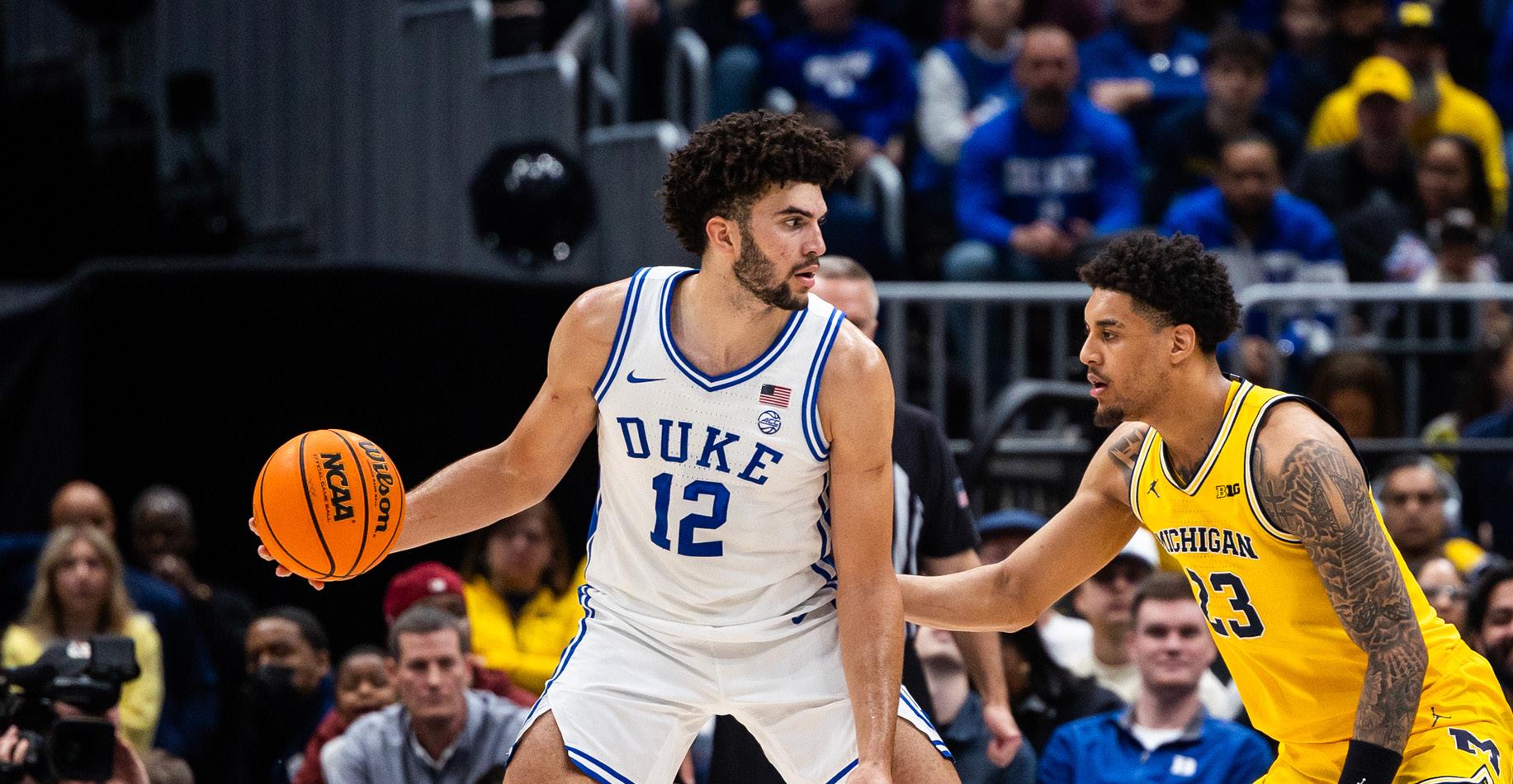
No. 3 Duke overcomes No. 1 Michigan in defensive showdown
ASHINGTON —
WHeralded for a stalwart defense that keeps the paint clear, the No. 1 Michigan men’s basketball team typically runs away with games by drowning out opponents’ shots. Though the Wolverines largely did so Saturday, they faced an opponent with a comparably elite defense in No. 3 Duke, a squad more than capable of doing the same.
In a recipe made for a gritty, defensive game, Michigan (25-2) and Blue Devils (25-2) both showed what’s made them feared foes thus far. But by doing just enough to overcome the constant blocks, steals and tough contests, Duke hung on down to the wire, 68-63, to come away with a landmark victory that’s bound to put it at the apex of college basketball.
“I would say this (Blue Devils) team is a lot better than anybody else in the Big Ten so far
in my opinion,” graduate forward Yaxel Lendeborg said. “They have a lot of athletes, a lot of really really good defenders and they know how to be in the gaps and play off of each other which is really tough to beat especially when shots aren’t falling.
Though shots eventually stopped falling, it was the Lendeborg show from the jump. In just over five minutes, he had already scored 12 points on a perfect 5-for-5 shooting streak from the field. He also found open teammates, spreading the floor as he drove and kicked to find quality looks. Lendeborg accentuated this hot start by dropping in a contested layup between three defenders to take a five-point lead — tied for
Michigan’s largest of the night — at 19-14.
By contrast, Duke’s offense flowed as numerous sources found success to counter Lendeborg’s early success. Running their sets through star forward Cameron Boozer, they coaxed attention toward the ball, opening up looks for others. Meanwhile, the Wolverines’ bigs found themselves in early foul trouble, letting Boozer find mismatches against smaller defenders.
Though both teams started out hot, the game came to a grinding halt as shots stopped falling. Outside of Lendeborg — who did continue to find success — Michigan went ice cold. The Blue Devils couldn’t muster much on the other end of the floor either.
“Sometimes when you’re in these slugfests, you’re out of your offensive rhythm,” May said. “And so you don’t have the fresh legs and things like that.”
The game continued to be a
defensive slugfest early in the second as the two powerhouses combined for an 8-for-26 start from the field. Back in the game after early fouls, junior center Aday Mara kept the paint clear for the Wolverines. But Michigan couldn’t make its shots either, as Duke made strong rotations and kept close to the ball.
As the Blue Devils led 53-46, the Wolverines got the break they needed as Boozer picked up his fourth foul with just under nine minutes remaining. Forcing turnover after turnover as Duke struggled without the National Player of the Year frontrunner on the floor, Michigan kept it close as the game came down to the final minutes. But soon after Boozer checked back in, Lendeborg nailed a wide open triple to cut the Blue Devils’ lead to just one at 57-56. While the Wolverines kept Duke on its heels going into the waning minutes, Boozer provided what the Blue Devils needed: a big shot.

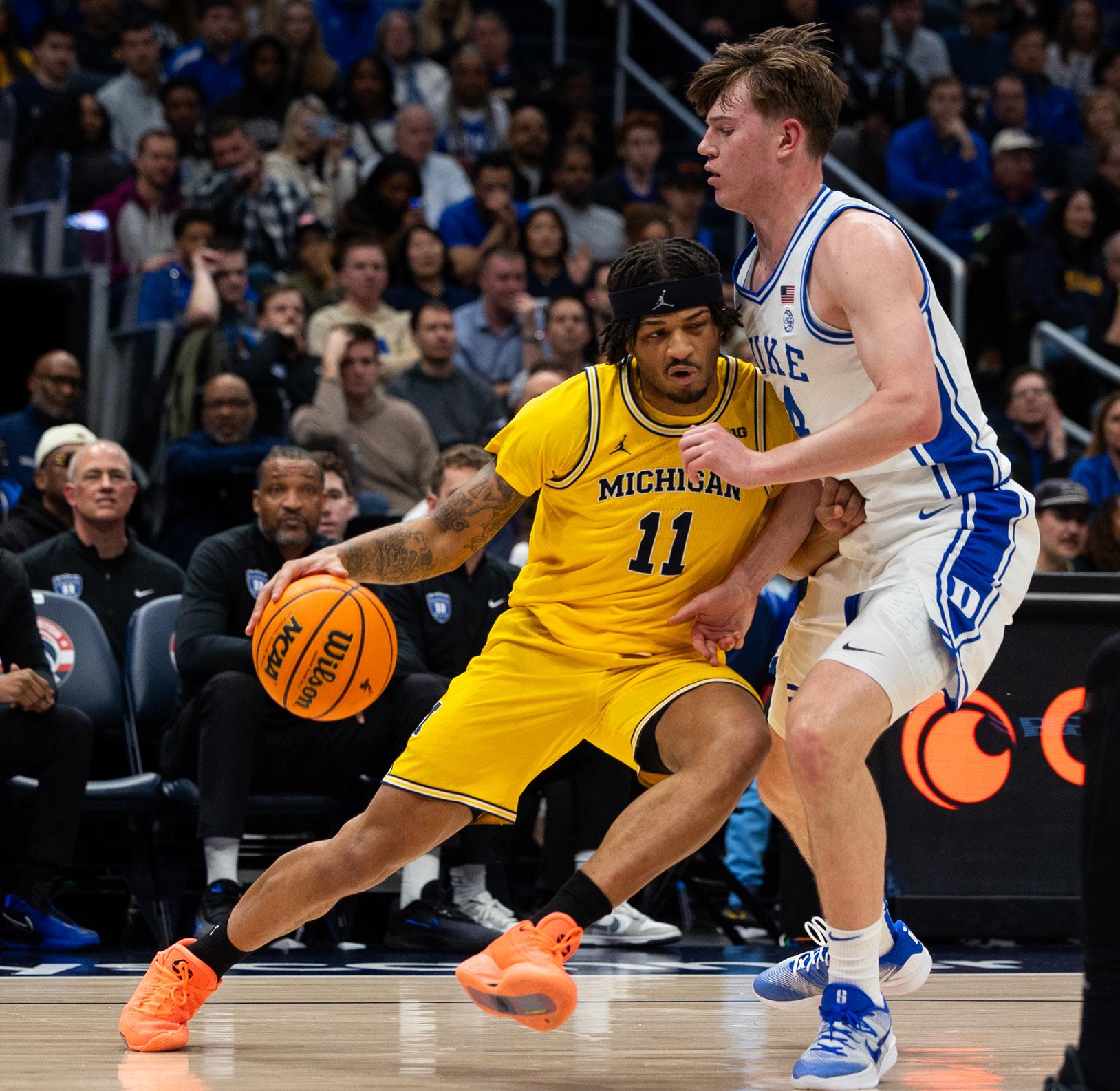
“We knew when we got in the paint the paint would collapse,” Foster said. “When I caught the ball (the paint) collapsed and just pivot and kick out. I trust my boy Cam to hit the shot.”
With just under 30 seconds to go and again up three, Blue Devils center Patrick Ngongba missed a layup, but secured his own board in a flash, kicking the ball out to his teammates who let the clock wind. Forced to foul, the Wolverines sent Duke guard Isaiah Evans to the line, making both to put the game on skates. The Blue Devils held on, punctuating a landmark defensive stand as the final buzzer sounded. Both Michigan and Duke’s defenses showed out in a defensive clinic. But in the end, only one team could come out on top — the Blue Devils.
Leading by three, Duke guard Caleb Foster corralled an offensive board and kicked it out to Boozer who drilled a 3-pointer.
DEVIL


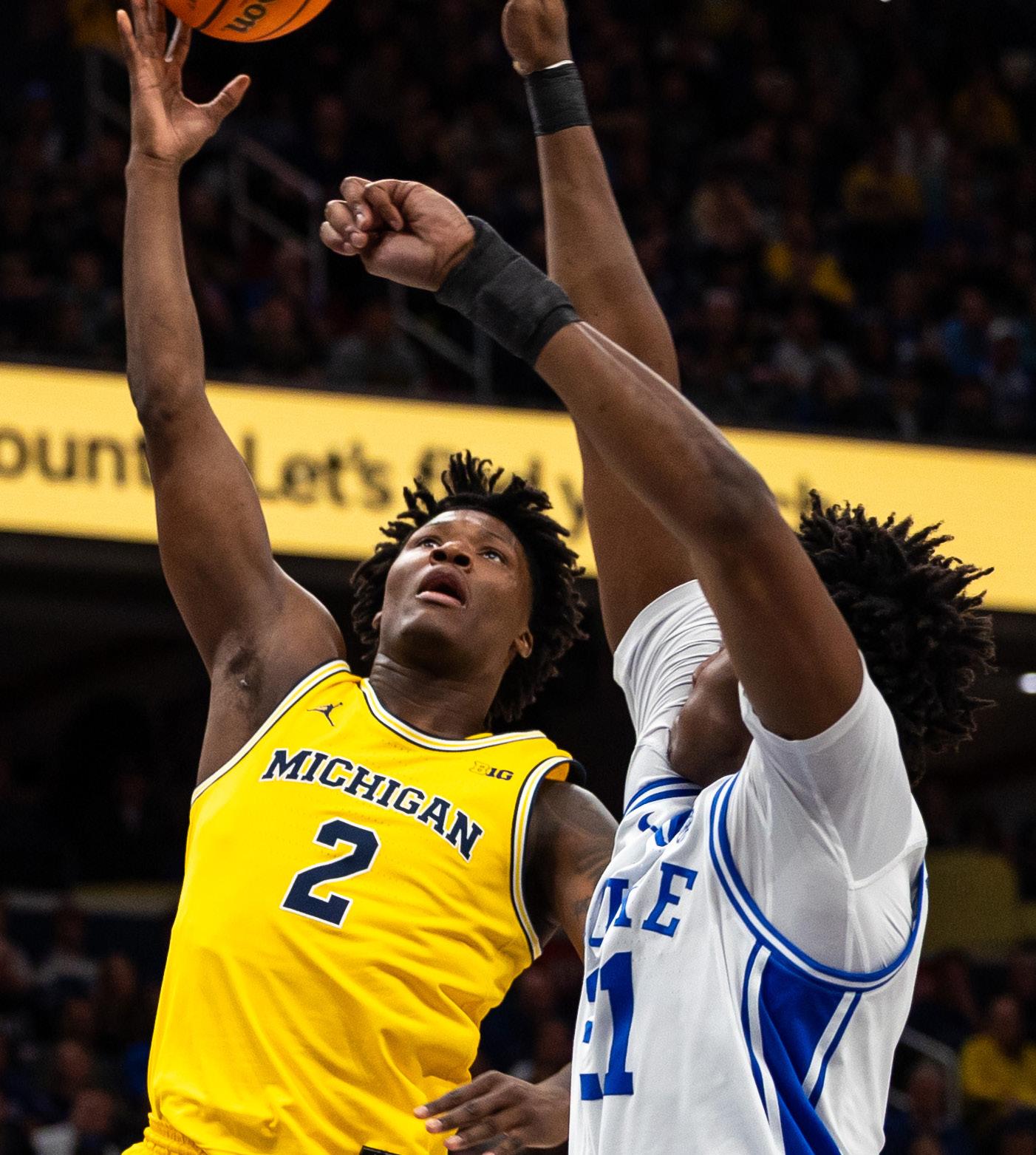
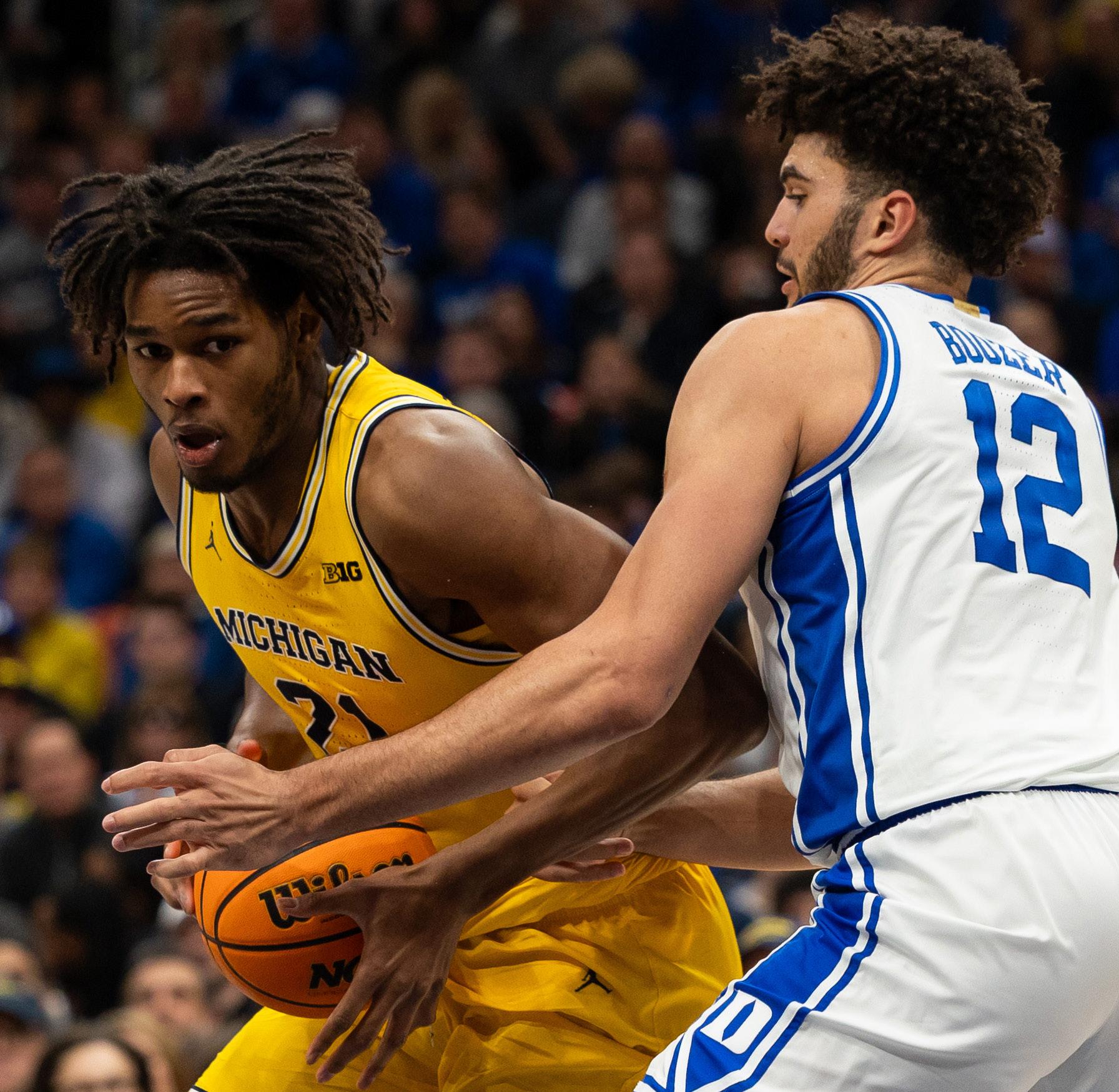
ZACH GOLDSTEIN Daily Sports Editor
Holly Burkhart/DAILY Design by Annabelle Ye & Kathryn Palsrok
Graceann


immersion
Design by
Eskin Arushi Sanghi/DAILY
Content warning: This article contains mentions of suicide.
I knew there was video footage in which a U.S. Immigration and Customs Enforcement officer kills Renee Good, but I tried so hard not to watch it. I kept having discussions with people in which they described it, in which they quoted it and told me the story in horrifying detail. I just didn’t know if I could handle it.
I know so many people who are from Minneapolis. I went to summer camp in Minnesota with kids from Minneapolis. My sister goes to college in Minnesota; her neighbors are from the Twin Cities. My current adviser previously lived only 1.5 miles from the place where Renee Good was murdered.
When Alex Pretti was murdered, though, I wasn’t as careful. I don’t know why; maybe it was just so much more publicized, or maybe I felt like I was ready. Maybe I subconsciously felt it was important to viscerally understand the brutality, to make myself a witness to what was happening in our country. I saw one of the videos and quickly proceeded to watch videos from every possible angle. Every time, the events made my stomach drop. I felt confused; how does this happen? I knew ICE had been abusing its power and killing civilians, but was I really watching video evidence? Was it even possible for there to be some context in which the killing made sense? But I also felt despair. The killing seemed so careless, and that only made it all
Stuck to your guns?
the more cruel. I instinctively pored over every detail, as if it would help make the situation make more sense. But it never made more sense. The phone in Pretti’s hands, the people stumbling across the sidewalk, the care he shows for other protesters — the multiple rounds fired into his body without concern. I learned this style of shooting is called “mag dumping.” I still can’t stand to watch any of the videos with sound.
Immediately, the federal government claimed that Pretti had a gun on his person, and that was not only the cause but (allegedly) complete justification for his murder. I doubted this (hadn’t I just seen the videos where Pretti held a phone in his hand?), but I also questioned the internal logic. Pretti was a legal gun owner with a valid permit to carry a concealed weapon. Those who defend ICE typically also defend Second Amendment rights — certainly the Republicans on my hometown Facebook feed who are now defending ICE have always defended the Second Amendment. Ironically, many people whom I’ve never heard support the Second Amendment have also been defending it a lot recently. Perhaps not coincidentally, ICE officers were previously issued the same gun that Department of Homeland Security records suggest was on Pretti’s person at the time of his death.
But the political discussion isn’t really what struck me most about the deaths of Renee Good and Alex Pretti. What struck me is that I was infinitely more likely to be in their shoes — a regular civilian, a protester and a U.S. citizen — than in ICE’s shoes. I’ve never taken a job in law enforcement, and I don’t plan to do so. I firmly believe in open borders and due
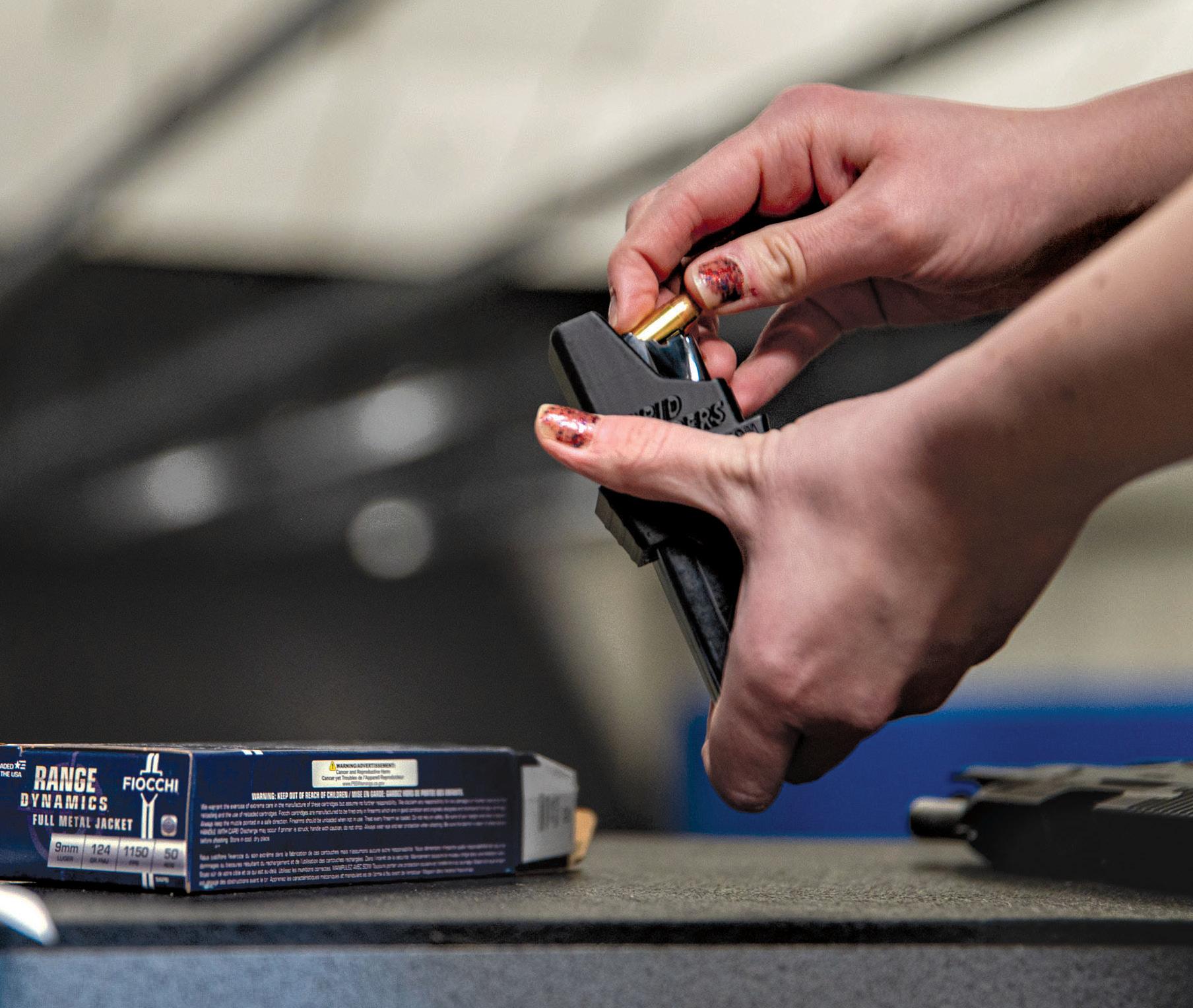
process. I find ICE’s brutality to be repugnant. How could I ever stand outside churches, or maternity hospital wards, or courtrooms, waiting to steal someone away from their life? That is not me. But I have protested. I have probably inconvenienced a law enforcement officer. And I’ve held a gun.
To be clear, before this week, I had never fired a pistol or, God forbid, a rifle. For the sake of immersion, I was willing to try out firing a handgun. It was a kind of experiment to see how it differed from my past experience, to see if it could help me make sense of the trigger-happy ICE agents or the demonization of Alex Pretti. Previously, I had used a shotgun for hunting and hunting-related target practice. It was comfortable because it was something I did with my family, and it was always in a safe and controlled environment. I had shot at clay pigeons. I had tried to shoot a few ducks. I had shot at least one duck-shaped decoy. The experience never felt core to my identity, but it did always factor into my discussions of the Second Amendment. There were times when it felt hypocritical to completely disavow guns — after all, hadn’t I shot at ducks and felt completely safe? But there were other times where I felt it gave me some authority. After all, I wasn’t just parroting statistics or following the lead of politicians. I was tepid about guns, but I wasn’t giving up a right without trying my hand at exercising it. If other people had never been around guns, I would have the relevant experience to offer some wisdom. I had been around guns. Did I think they served a purpose? Sure. Did I think they were great for self-defense? Well … I couldn’t even shoot a duck.
I always knew, though, that shotguns were very different from pistols and rifles. Generally, I think the latter two are more central to debates about gun control and more central to gun culture. For those who are unacquainted, shotguns are not handguns — you cannot conceal them easily, you need to really use some shoulder muscle to fire them safely, and many take large shells to fire pellets rather than bullets. Pistols are handguns, usually easy to conceal and possible to fire with a single hand, often with a magazine or a cartridge that holds multiple bullets. You typically do not use a pistol for hunting; they are most common in sport, self-defense or military and police applications. Rifles are large like shotguns and similarly difficult to conceal, but they tend to have greater accuracy over large distances. Because they use bullets and may have automatic reloading, some rifles allow for multiple rounds to be fired in a matter of seconds. Rifles can be used for hunting large animals (like deer or wild hogs), but they are also infamous for their use in mass shootings.
There is some gun culture among shotgun owners. I remember once going to the local Izaak Walton League to practice shooting clay pigeons with my parents. I was young —
probably 15 — but an older man came up to me and offered to show me a gun. He led me (with my parents, thankfully) out to the back of his truck, revealing a beautiful antique gun inlaid with what looked like mother-of-pearl. He wanted me to shoot it. I politely refused. It wasn’t even about the act of shooting a gun, though. It just felt intimate. It felt inappropriate. I had the gut instinct that this man’s gun symbolized something, and if I shot it, I would become part of some greater narrative in his mind. I didn’t want to find out the rest of that story.
Compared to that, though, the culture among handgun and rifle owners is even stronger. Unlike the shotgun’s narrative of romantic self-sufficiency and hunting, handguns and rifles position themselves between life and death. The narrative is about defending oneself, usually from malicious people. This seems to make these guns more central to individuals’ identities. If you’re looking for a shirt with a gun on it, it’s probably going to be a handgun or a rifle. Because of these differences, I knew my experience firing a shotgun did not match the experiences of most gun owners or gun rights activists. To really know what it was like, I needed to try a different kind of firearm. Even if it scared me, I needed to go to the gun range. When I went into the gun range for the first time, I was greeted by some elements of gun culture that were familiar to me. The front section of the range, mostly a store and showroom, looks relatively similar to the gun counter at a Cabela’s. I had been to Cabela’s. I could handle the gun range.
I was surprised, maybe relieved, to see a station labeled “Background Checks.” My surprise was perhaps premature, though, because I was not subjected to a background check. Everyone took me at my word, possibly because I arrived with a member, i.e., my partner. (Side note: Seeing the care and education with which my partner visits the range has massively set me at ease about his time there. I’m also not sure I could have gone with anyone else, except maybe family, and felt so comfortable.) As it turns out, you only need a background check to purchase a gun, not to shoot one. That’s still better than most states, where most gun purchases do not require a background check. That fact didn’t entirely set me at ease, though.
In accordance with Occupational Safety and Health Administration regulations, everyone who exits the showroom for the shooting range must have their “eyes and ears” — protective wear for their hearing and glasses to keep their eyes safe from wayward shells. I purchased a noise-canceling ear covering on site, but they allowed me to wear my regular eyeglasses for eye protection. Although we showed up early, right as the place was opening Sunday morning, there were other people waiting at the front entrance with us. One family was particularly interesting to me. The father
ANNA WHITNEY Statement Correspondent

wore a sweatshirt promising that he “stands for the flag and kneels for the cross.” His wife and young son were with him. Another patron asked, perhaps jokingly, but certainly euphemistically, if the son was going to be handling the “bang-bangs” today. The father answered proudly that the kid loved “everything to do with bang-bangs,” but the range wouldn’t allow him to fire until he was 10. He was 8 years old. “A year and a half left!” they wallowed, sincerely.
Later, I watched as the flag-stander and cross-kneeler took aim at a target. He had chosen the “self-defense” target, which features a man with a completely neutral expression, underneath which his vital organs are outlined. This guy was not planning to shoot someone in the shoulder, even though he had the aim to do so. He aimed straight for the heart with every shot. I wondered what he was training for, because it was clear he trained to kill. Perhaps he thought of family in those moments, wishing to protect them from some imagined figure — a home invader who also has a gun, maybe? I almost hoped that was the case, if only to justify the unforgiving repeated blasts. Twenty shots, straight to the heart. Even in self-defense, you should never need that kind of severity. Just beyond the double doors to the range, sitting at a countertop where you can watch everyone shoot, his 8-year-old son was on an iPad. I heard him mumble something about snipers, so I stealthily peeked at his screen. He was playing Roblox. He was indeed a sniper. He was shooting people with a digital rifle. He complained to his mom about the screen on the iPad.
To actually shoot, you need to first put on your eyes and your ears. Thoroughly muffled from the outside world, you go through a door to a little mudroom. You take off your coat. There are signs advertising gun repair services. There are two doors from that point. One leads to the pistol range, which anyone can watch. The other leads to the rifle range, which I don’t know anything about.
I walked through the door to the pistol range, and I was immediately hit by a rolling wind of hot air. I was already anxious, but the heat made me nauseous. At the moment, I wondered if the heat was coming off the barrels of the guns; you could literally see the flames as each one fired. Later, I found out that, in fact, most gun ranges advertise great air circulation. Without air circulation, you would be breathing in the lead-tinged fumes from the guns. The circulation at this particular range just happened to be hot.
I wasn’t prepared for the physicality of the blasts. Even when I wasn’t the one holding the gun, I could feel the firing of the other pistols. It was uncanny to feel the vibrations in my chest without hearing them in my ears. Maybe it’s silly, but I wondered if that was how it felt to get shot. I stood at the back of the room while my partner filled the first mag and fired a round. I could not shake the feeling that at any point, someone in another lane could turn around and kill me.
Then it was my turn to fire the gun. I had, of course, watched the safety video included with my liability waiver, so I knew the basics of how to handle the gun. There are four cardinal rules, if you care to learn them: 1. Always keep a firearm pointed in a safe
direction. 2. Treat all guns as though they are loaded. 3. Keep your finger off the trigger until you are ready to shoot. 4. Always be sure of your target and what’s beyond it.
I kept the gun pointed down the lane the whole time. My hands were a little weak and sweaty, but I managed to load one bullet into the magazine. I kept repressing the sensation that one could blow up at any time. That’s not really possible — it takes so much pressure for the gun to propel the bullet forward, and I barely had enough pressure to push the bullet into its little holder. I used the meat of my palm to force the magazine upward, into the body of the gun. I clumsily got my hands into position; there are grooves intended for your right pointer finger, your thumbs and the curve of your open hand, but I felt my hands were slightly too small to hit every divot perfectly. I aimed cautiously. I moved my index finger into the nook of the trigger. I fired. At first, I fired just one bullet from an otherwise empty magazine. Then I moved up to five. Then 10. The full magazine holds 12.
My partner explained that most righthanded people tend to have a deviation in their aim that veers to the left and down; your stronger right hand anticipates the kick-back and inadvertently steers you off course. His shots had that pattern, but mine did not. I don’t think it’s because I have a great aim. Every time I pulled the trigger, I was surprised at the force and the literal fire I saw at the barrel. The first couple of times I shot, I actually realized I was closing my eyes. That is not good practice. But I certainly did not have the skills to anticipate the kickback.
For this reason, I shot with pretty impressive first-time accuracy. The paper target was only perhaps twice as wide as my shoulders, and I never missed it. In fact, my partner and I tried to stay in separate halves of the paper, and I don’t think I ever veered from my half. I say this not because I am proud, but because it further proved to me that anyone could shoot another person and catch them square in the chest.
We were there for about an hour, long enough to fire 100 bullets between the two of us. It got a little easier as the rounds went by, but it was still a relief to walk out of the lane and back into the real world. A weight was literally lifted off my head as I removed my heavy-duty ear protection. I could hear the world again. I could no longer feel the soundless blasts of the guns.
On the way out, I noticed a sign advertising future classes. There is a ladies’ night every month, including one on Feb. 13 that was already sold out by the time I checked on Feb. 8. Guns are much more likely to be used against women, often with fatal results. By the same logic, though, women could so easily be persuaded by the undercurrent of self-defense in gun culture. Upon reflection, I realized that there was a shocking gender balance in the pistol shooting range. There were other women who had arrived with a man, presumably their boyfriends or husbands, in tow. There was also one woman who had arrived alone and tried at least four different handguns, presumably to purchase one.
CONTINUED AT MICHIGANDAILY.COM
Isai Hernandez-Flores/DAILY
In 40 gallons of oil and Jell-O, I found what it
means to be human
“For business or for home?”
I glanced at the 20 pounds of gelatin mix and 175 pounds of canola oil in my cart. “Home,” I said.
In life, there are many more questions than answers: Who am I? What am I doing here? Why did I put 175 pounds of oil in a shopping cart? Throughout our lives, we build our answers to these questions based on our lived experiences. Triumph, disaster, romance, heartbreak, pain and pleasure — all of these contribute to our understanding of our reality.
Over the past few weeks, I’ve been asked many questions, the most popular being, “Why would you immerse yourself in canola oil and Jell-O?”
There have been some other popular ones. How are you going to do this? Is this safe? What liquids are you going to use? My personal favorite goes to the nice old lady at Lowe’s while I was attempting to fit myself in several different-sized storage boxes: “Are you all right, young man?” To these questions, I always had a reply (“Yes, I’m just trying to see whether I can fit in these or not”), but nothing that really constituted an answer.
Immersion is an experiment taken to its limit. It is the total transformation of your surroundings into something uncomfortable and foreign. It is pushing the boundaries of what you know. In that discomfort, we find ourselves with new experiences, new perspectives that serve as building blocks of our understanding of ourselves. If our environments define our experiences, then they define us. If they change, we are changed.
On Feb. 16, 2026, I physically immersed myself in three liquids: canola oil, Jell-O and water. In doing so, I found what it means to be human.
Canola oil
Yellow. Close to water, but not quite. Slippery. Touching and feeling are different. A thin film around my existence that reminds me that it’s not what I know. I wiggle my fingers. Heavy. Oil droplets in my lungs. I can breathe, but it’s not the same breath. It’s heavier. Heavy.
If you asked the typical college student to describe their life, they’d list the same familiar things: class, work and club meeting. We move through these environments without thinking, the same way no one thinks about breathing air. I wanted to know: If we spend our entire lives in air, where it’s comfortable, what happens to us when
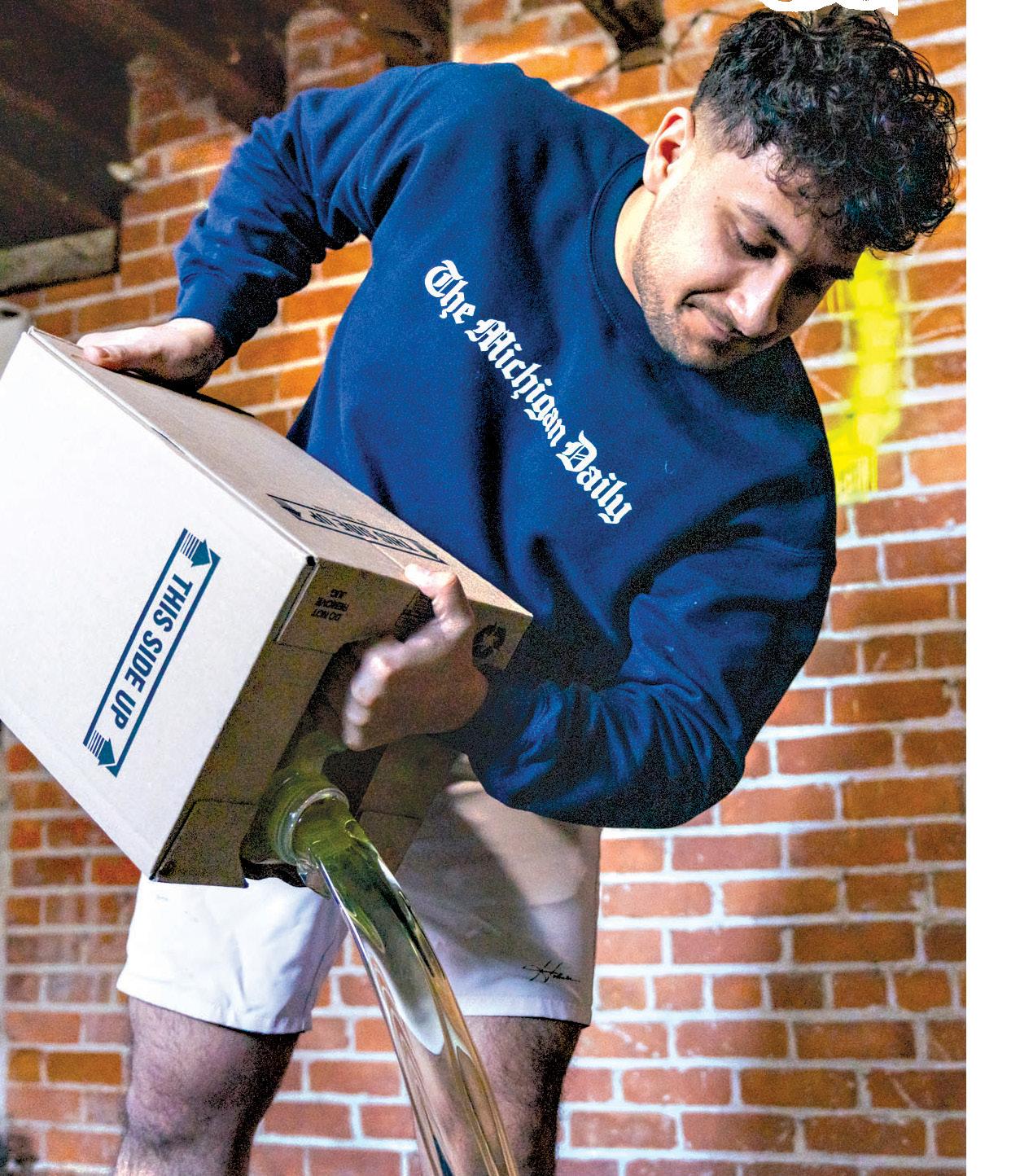
Logistically, fully immersing yourself in liquid is no easy task. My unfinished basement would contain any spillage, but I still needed a container large enough to fit me and the liquid while minimizing cost. I calculated that I’d need at least a 36-gallon container, assuming my average density is close to water. The first attempt was to be a human CapriSun by standing in a taut plastic bag. It failed miserably (the water was too heavy for the bag to stay taut), and it also broke my shower. The second was a 50-gallon bin from Lowe’s. It was uncomfortable and required me to go into a fetal position, but it was functional. I also decided I would let my immersion time be a spur-of-the-moment decision (meaning, if anything went wrong, I would get out) and that, while submerged, I’d try to focus on how each liquid felt. As for which liquids: discomfort was the point, so I wanted liquids as foreign to air as possible. The cheapest options with the most distinctive feels were canola oil and Jell-O.
Denis Villeneuve’s adaptation of Frank Herbert’s “Dune” explores a similar kind of discomfort, just not with canola oil and Jell-O. In “Dune,” Herbert explores how environments impact human culture. The barren desert of the planet Arrakis makes the Fremen, its native people, resilient. The Fremen don’t cry because water is scarce on Arrakis, and the harsh environment creates an absolute comfort
with death. In “Dune,” discomfort teaches strength of the body and mind.
While I was submerged in oil, all I could think about was that aspect of “Dune.” It felt different to touch things, like I was using my hands for the first time, so I became acutely aware of all that I touched. It was incredibly easy to slip around, so I became fixated on remaining still.
Though I had a scuba mask on to breathe while submerged, the air was almost burning with droplets of oil. All I could see was a yellow bog in front of me. Slowly, bits of oil began to leak into my scuba mask. My breaths became shorter and more hurried when, eventually, I was gurgling oil and had to get out. Five minutes — not as long as I had hoped to be in there, but enough time for me to get a good understanding of the medium I was in. I thought it would be best to keep that time the same for the other liquids, so I would be able to more accurately compare them.
I knew that actually immersing myself in liquids would be uncomfortable, but what surprised me was the number of other things that were uncomfortable: the logistical challenges, trying to fit myself in large bins in public and almost being suffocated by oil. But that discomfort was not just essential; it defined the experience.

ZHANE YAMIN Statement Contributor
Mi nueva experiencia: An immersion in foreign language
It’s a rainy February day. I open the door to the hair salon, clutching a purple umbrella in my right hand. My hair falls past my shoulders, and I’m in desperate need of a haircut to feel like myself again. When I enter, the woman asks me if I have an appointment. Nodding, I take a seat in one of the chairs. As she takes me to one of the seats, she asks me where I’m from. I feel like a kid playing dress up in my black trench coat, desperately trying to appear more than an American tourist. Pulling up the pictures I’d saved from my Pinterest, I explain my desired style. I gesture to el mentón, my chin, where I want the hair to fall, and attempt to explain that I liked my flequillos, or curtain bangs. As the appointment progresses, I relax. The stylist lathers peppermint shampoo in my hair, and I tell her about the people I’ve met in my program. The water is hot on my scalp, and for a moment, I nearly forget I’m in a foreign country.
I’m currently studying abroad in Granada, a vibrant city in the Andalucían region of Spain situated between the Sierra Nevada mountains and the coast. Famous for being the last stronghold of Muslim rule in Spain, it’s a paradise for those who love history. I’m in full immersion, taking courses taught in Spanish that range in content from politics to cinema. Practicing my Spanish is unavoidable, which was exactly my intention when I chose this program last year. I wanted to avoid moving to a larger and more tourist-centered city like Barcelona, where swarms of American study abroad students congregate every spring, often without attempting to speak the language. In mid-January, I bid farewell to my college house in Ann Arbor and hopped on a plane with a fully stuffed Osprey backpack and an oversized suitcase, relocating to my new, colorful apartment on Calle de las Flores with a host mom named Fanny, who loves to sing.
Though I’ve been learning Spanish since my freshman year of high school, I didn’t grow up speaking any other language besides English. While several friends of mine played translator for their parents from a young age, I developed my personal and intellectual identity entirely in English until my late teens. In high school, I took four years of Spanish and then enrolled in the University of Michigan’s Residential College because of its dedication to small, personal classes. While in the RC, I took an eightcredit intensive language course. In these courses, students typically have
lecture and discussion four days a week, plus a requirement to participate in co-curricular activities in the target language, which take the form of lunches, afternoon tea or conversation circles with professors and other students. I found myself dreaming in Spanish, especially around exam week, when I was spending hours studying.
Yet even a rigorous academic immersion pales in comparison to living in a country where that language is the default. Each morning, when I open my door, I hear Fanny’s voice — ¿Has dormido bien? Did you sleep well? The first words out of my mouth are in Spanish, and it continues through our breakfast conversation.
Arriving at the Madrid airport, I communicated my way through a conversation about my cold symptoms, trying to get NyQuil. I was congested, my head was pounding and after a long and exhausting travel day, I needed sleep.
¿Tarjeta o efectivo? Cash or card? the pharmacist asked.
This is it, I thought to myself. My language is truly getting put to the test. English cannot be my crutch. ***
About a week into my semester, I was in a taxi going home from the airport after picking up my missing suitcase. With slightly more confidence than when I first arrived, I chatted amicably with the driver.
¿Hablas español? Do you speak Spanish? he asked with polite curiosity.
Sí, I began. By this point, I had already learned the importance of not undervaluing the dedication and years of hard work I’ve put into learning this language. I am not just another American tourist with a Duolingo streak. So I don’t say un poquito, a little bit. Instead, I emphasize the process. I was amazed by how smoothly the interaction went once I opened myself to trying. As I looked out the window at the dark sky and mountains, I listened to his recommendations for some restaurants popular with locals. I got out of the taxi and walked into my apartment with a smile on my face.
When I’m speaking Spanish, I choose simpler, less nuanced verbs than I would in English. The adjectives I use are straightforward, often describing things as bueno, muy bueno, precioso and linda: good, very good, beautiful and lovely. I conjugate quickly in my head, occasionally making mistakes. In English, we can say: I study, you study, he studies, we study. In Spanish, each subject has a different form: estudio, estudias, estudia, estudiamos. This makes a typical conversation with multiple subjects much more difficult. Mostly, the culture has an impact on
the language. During orientation, our professors told us that interrupting each other is more normalized in Spanish culture. I’m more likely to do that in English, but not in Spanish, where I fear missing key details if I interrupt a friend. When I got my haircut, I nodded along as the stylist made comments and asked about specific tweaks to the cut. As it turned out, I agreed to get my hair blown out and paid extra for it!
Here in Granada, the people I’ve met tend to have a genuine appreciation for students trying to learn their language and customs. I get a smile, questions about where I’m from and occasionally surprise when they learn I’m a foreigner. My effort shows that I care, that I want to be able to communicate with them — on their terms as opposed to mine. I want to be able to tell my host stories from my life before Spain. Fanny doesn’t understand English, so Spanish is all I have.
One evening, I stood in front of the sink in the blue-tiled bathroom, brushing my teeth. It was late, just past 11 p.m., but Fanny was still awake, happily chatting about crazy ocean adventures.
Spitting out my toothpaste, I poked my head out into the hallway.
¡Cuando era joven, había algo similar que pasó! When I was young, something similar happened to me! As I explained the sand beneath my feet and the pain I felt as the jellyfish stung my leg, pointing to my leg and moving my hands into the shape of a jellyfish, I suddenly realized I didn’t know how to say jellyfish in Spanish. I tried to explain it as “a sea animal with tentacles,” and realized I had never had to use the word tentacles in a conversation before.
At first, Fanny thought I was talking about an octopus. Even though jellyfish is a compound word, I can’t use the word for “jelly” followed by “fish.” It wouldn’t make sense! Luckily, Spanish Dictionary came to my rescue, and I hurriedly typed “jellyfish” into the search bar. La medusa, I exclaimed when the result came up. Suddenly, Fanny understood my story. Her face lit up with a smile, and she explained that jellyfish are more common when the ocean waters get warmer. I had succeeded in getting my point across! ***
This attitude toward learning the language of the land contrasts sharply with widespread American sentiment toward languages other than English, specifically Spanish. Spanish is a language brought by colonizers, but due to its association with immigrants, it is viewed negatively in the United States. From my living room over a breakfast of tostada

con aceite, I watch the Spanish news channel where headlines about the U.S. Immigration and Customs Enforcement brutality in Minnesota are breaking news stories, despite them happening across the Atlantic Ocean. ICE has been targeting the Hispanic community and anyone who looks like they might speak Spanish. As of 2022, more than one in 10 people in the U.S. speak a language other than English. Yet, the English language is still seen as the default. While previously, this linguistic dominance manifested in implicit ways, recent hostile political rhetoric has made the push for a homogenous culture increasingly more explicit. President Donald Trump’s 2025 executive order that made English America’s “official language” revokes progress toward more bilingual support, citing the desire for a “cohesive society.” Though I believe this executive order is problematic for a plethora of reasons, it ignores the critical fact that English is not the first language of the American continents, as many indigenous languages were wiped out as a result of European colonization.
My awareness of my privilege increases each day — I have chosen to learn this language, the language of so many immigrants in our country, while many Hispanic families learn English as a survival mechanism. And still, it’s not enough. While I can’t say exactly how this competency will play out in my future career, I’m certain of the fact that speaking a second language allows me to connect with more people. Speaking Spanish has given me more trust in myself, an opportunity to make more friends and confidence to go to new places.
CONTINUED AT MICHIGANDAILY.COM
MEGAN AHRENS Statement Contributor
Courtesy of Megan Ahrnes
How to eat off $38.43 for a week
RIYA KOMMINENI Statement Deputy Editor
It’s expensive to be alive.
There’s no denying this; I deliberated for several days on how to start this piece, but I think this is the most succinct way of saying it.
It’s expensive to be alive, and it’s especially expensive to be a college student in Ann Arbor, beyond just our exorbitant tuition.
Articles about the rising costs of college and essential services like rent, groceries and health care are published every day in The Michigan Daily and other news outlets. We read these articles, shake our heads and cite them in a dinner conversation with our best friend’s parents at Mani when they complain about the cost of toothpaste to seem like an aware, well-read young person.
We hope that inflation will slow down, but even if it does, we have to spend money. You might take a pessimistic view of the current economic situation of our country, but ultimately, you still have to eat.
My parents cover most of my expenses here at the University of Michigan: my out-of-state tuition, rent, clothes, health care and groceries. I have a part-time job to cover my other expenses: eating out, entertainment, Lyfts (thank you to the Central Student Government for getting these subsidized) and an $80 swan Jellycat I bought at Rock Paper Scissors that I
harbor no regrets about purchasing. I also try to invest half of the money I earned in a portfolio my parents set up for me.
While I’m privileged and fortunate enough to have this safety net provided through my parents, I know this is not an option for many students at the University and around the country. I really only have to worry about my frivolous expenses, but many of our peers are reliant on grants, scholarships and money they’ve earned through working to cover their expenses. At a school like the University, where so many students come from an affluent background, I recognize that it can be uncomfortable to openly discuss the economic difficulties one might face.
So, for one week, I attempted to live on a small budget. I wanted to see how truly difficult it can be to live in Ann Arbor as a college student, at least in terms of food expenditure.
I would like to preface by saying that the goal of this piece is not to make me more aware of how unaffordable it is to be a functioning member of society, nor is it to teach me a lesson. I believe it would make me seem out of touch to simulate the life of a less-advantaged individual than myself, talk about how challenging it was and then go back to shopping at Whole Foods, spending $25 on Irish sea moss gel. It’s clear that there are people who face financial hardship everywhere, and while they may be less comfortable with sharing this experience, I hope this piece will
raise awareness among the broader University community.
***
I decided that my budget for the week would be $38.43, based on the sum of my tip check from the previous week. My goal was to make this check last from Tuesday night, when I pitched this story, until the following Tuesday morning, when my article was due — a little under a week. This money was supposed to cover my groceries and eating-out fees, which I felt was reasonable considering that, excluding alcohol, a Michigan college student spends an average of $224 on groceries monthly.
According to this data, my $38.43 is much less than the $56 per week average. But, as someone who has been very busy being a student lately, I just haven’t had much time to make money, so I had to make do with this amount.
$38.43
Immediately after The Statement’s Tuesday night story meeting, I went to the newsroom to edit stories and work on homework. I had forgotten my Hydroflask at my apartment and was getting a little dehydrated in the dry heat. I hate buying plastic water bottles because I find them to be anti-environmental, but I was tempted to purchase one from the vending machine. Yet, I resisted the urge because I knew it would be a significant dent to my budget — essentially, my concern for affordability outweighed my

environmental ethos. There is so much privilege in having options, in attempting to be more socially conscious. While this is an effort we should ideally consider, oftentimes, it is not the most practical.
The next morning, I went for a run toward Burns Park, slipping several times on ice. One time was so spectacularly awful that I landed on my back, causing some delivery truck drivers dropping off crates of flavored Svedka to stare at me. This fall demotivated me enough that I began walking back to my apartment to look at what groceries I had.
I didn’t have much: some fruit, some cheese slices, a few turkey slices, pasta, peanut butter, fig spread, a few eggs, tofu, granola, Greek yogurt, frozen chicken tenders, That’s It bars (which I typically only eat out of desperation), lentils (I have never opened the bag) and my raspberry spirulina sea moss gel I use in smoothies.
For my first meal, I ate a fried egg with a slice of Gouda on my last slice of sourdough bread. I also had half a box of blueberries; I normally eat these in one sitting, but I had

store on campus. There are a few grocery stores in Kerrytown, as well as the Farmers Market on Saturdays, but those are usually more expensive, and while I live near them, it just wasn’t practical for me to even consider these as options.
I was out of bread and bananas, so I figured Target would at least have that until I figured out how to get to the Aldi a few miles away. Normally, I have my friend Max drive me to Whole Foods and Trader Joe’s every couple of weeks, but he recently rearended someone’s car, so his vehicle has been out of commission and I’ve been getting my groceries delivered.
I grabbed my bunch of unripe bananas and browsed the aisles, noting that there was very little healthy food available, with little fresh food and mostly highly processed goods. Produce seems to be a prized commodity, with much of the quantity being depleted, even if it was inorganic and unripe. There were several rows of candy, chips, beer, sugary drinks and frozen processed foods, but no fresh or particularly healthy food.
I was struck by the inaccessibility of healthy groceries on campus. Most of us don’t have the time, or even the vehicle capability, to travel further away for affordable, healthy groceries. The CVS, Walgreens and 7-Eleven close by the State Street Target have even fewer healthy options, so it wasn’t like I
granola. I was still pretty hungry after that, but I didn’t have many options. I had only eaten two meals that day, a phenomenon that would occur every day over the course of the week. I didn’t have much time to return to my apartment for a midday meal, and I obviously couldn’t eat out every day, so I just had to make do.
The next day I had the same breakfast.
In the evening, my friend Rebecca asked me to go to TeaHaus, where we occasionally like to spend a weekday night reading and complaining about our lives. She likes to try different teas, so she was excited to order some chai blend, but when I looked at the prices, I knew I couldn’t reasonably afford anything.
I went up with her to the register, and the cashier waited a beat to see if I would get anything. I didn’t.
“Are you not getting anything?” Rebecca asked. I stumbled over my words and said I wasn’t, giving some excuse and telling her about my experiment for this week. She replied, “Now I feel awkward because I got something and you didn’t.”
Because I was trying to save money, I felt awkward for not buying anything.
I know that I wasn’t being judged by Rebecca or any of the people in the shop, but I felt out of place sitting emptyhanded at a table for almost two hours. She also seemed to feel bad because she had something and I did not, so I appeared to be excluded. This demonstrates a difficult social dynamic in opting out of participating in an establishment, whether for financial reasons or something else; the defector feels guilty for not supporting the business, and their companion feels guilty for indulging in a purchase.
freezer and quickly swallowed it down with vodka sauce, mildly disappointed in the over-processed puree. Normally, I might have just gotten Chipotle, but I had to opt to cook, so despite my exhaustion, I half-heartedly put together this meal.
The next day, my friend Justin asked me to lunch. It’s our tradition on Fridays to go to a sit-down restaurant, but I knew that would be too expensive and that I’d have to awkwardly sit there while he enjoyed his meal, swatting away the server asking if I’m sure there’s nothing they can get me.
But after telling Justin about my budget, we went to No Thai because it’s a counter place and relies on self-service. Because I hadn’t eaten all day, the gluttonous air thickened with egg and fried chicken compelled me to order Thai fried rice with an add-on of tofu for $1 extra, totaling $13.78.
I justified the purchase by saying I would split it into two meals, but I was ravenous and ate most of it at the greasy table.
$18.32
would not be enough. Luckily, someone behind the counter whispered to me that he would give me an extra slice for free, unprompted.
A blessing in disguise, I told them, “You’re a doll, thank you. This means so much.” Satisfied, I recovered in bed for several hours before waking up to eat yet another fried egg sandwich for protein before going out for the night. On Sunday, I didn’t spend any money, but got a smoothie at Bearclaw because a girl on the art team for a film I’m working on paid for me. Because I didn’t know her very well, I didn’t want to go through explaining that I was doing this budget for the week, but she kindly paid for my drink anyway. Then I ate another fried egg sandwich. And chicken tenders. I was sick of it.
By this point, I was out of groceries and had no produce or protein left.
I decided to go to the grocery store on Monday in between classes, when I’m typically doing school work or completing tasks for my internship.

I went home and found some frozen butternut squash ravioli in the back of my

The next day was Winterfest, an annual charity hockey tournament at the University, which meant I would be out of commission for most of the day and didn’t have to worry too much about eating. I spent most of the day watching broomball and flitting around to different parties under white-tented pavilions, surrounded by girls in embroidered sweat suits and boys in hockey jerseys.
Then, come late afternoon, I was famished. Justin and I were walking back home when we decided that we should have Joe’s Pizza because I was too exhausted to cook and my groceries had dwindled. Justin offered to pay, which I was grateful for, but I was really hungry and knew that one slice
According to a Reddit thread, one of the cheapest grocery stores in Ann Arbor is Aldi, which is a couple of miles away from campus, so I had to take TheRide to get there. Even though I didn’t have class until three, I was concerned that even if I left at 12, I might not make it back in time, because what if I missed a bus? Or what if it got delayed? Throughout my week, I didn’t only have to think about the prices of my groceries, but also other considerations such as travel time and moving around my other commitments just to try and eat a healthy meal.
But there were no delays, and I made it to Aldi and back in 45 minutes.
CONTINUED AT MICHIGANDAILY.COM
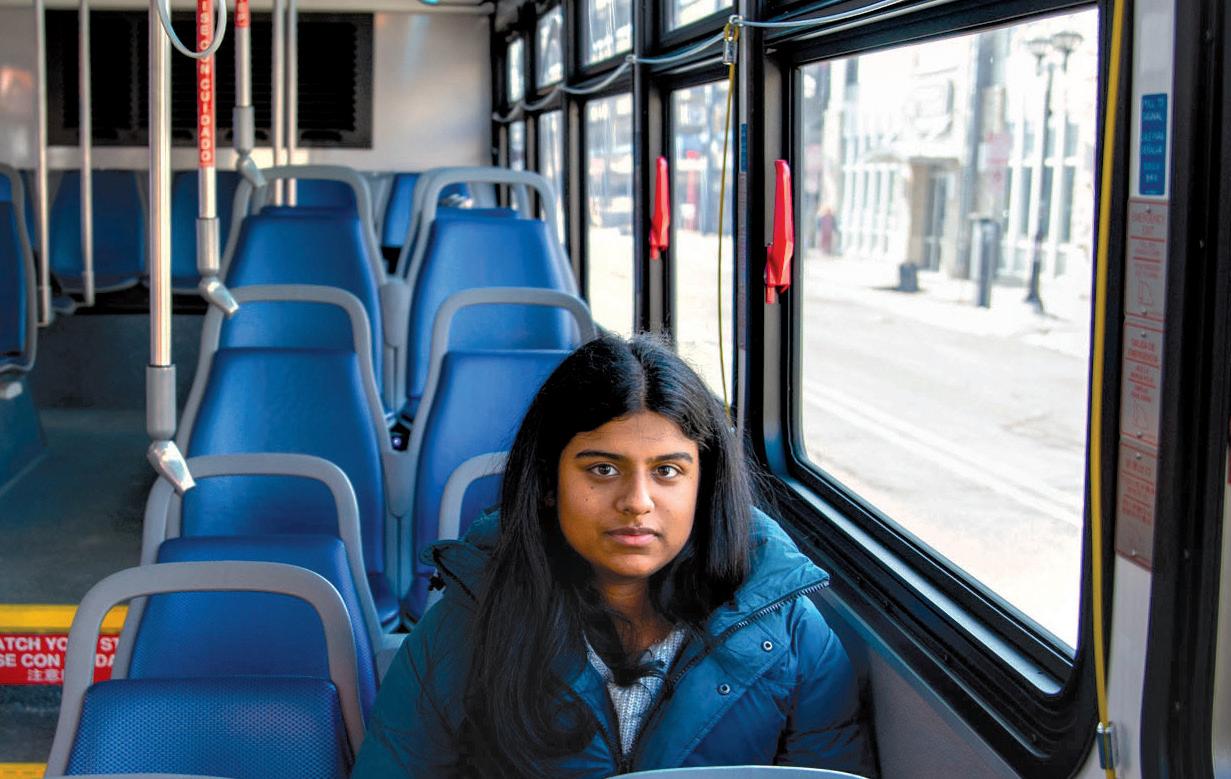
Bridgette
Knot The Leader nor The Best
I used to have hobbies. I am not sure if I still do anymore. My acoustic guitar sits in the corner of my compressed dorm room and skeins of yarn stay tangled up in a series of free tote bags I got from Festifall. I harbor my old pastimes as they collect dust, in case I pick them up again. Although they’re dormant, they are still an important part of my identity.
There is a parable in the Bible about a man who was condemned, called “a wicked and lazy servant” for not being fruitful with his talents. Every Thursday night, I habitually clean my dorm room, and two weeks ago, while I dusted the graveyard of my old talents, I pondered if I, too, was being “unfruitful” with mine. I had given up on most of them in my attempt to be a “model” university student, one who receives near-perfect grades and participates in impressive extracurriculars. From my point of view, it was not so much that I became lazy or unfruitful, but rather, I put my energy toward school, a social life and also some unhealthy doomscrolling. In other words, I had let go of my talents to have enough time to succeed on paper. Yet, I wanted to prevent my old talents from being lost forever. My Catholic guilt demanded it.
I do want to make clear that I still practice some of my past hobbies, but really only in instances when I am required to do so. For example, I continue to play the saxophone in the Basketball Band here at the University of Michigan. For some reason, I require a schedule and pre-made commitment to continue to do what I used to do for fun. I don’t want to have formal commitments out of necessity when I used to practice them
out of enjoyment. A couple of weeks ago, because of this realization, I looked around my bedroom on a Friday morning, excited for the upcoming weekend to see what I could do for no reason.
The tangled-up yarn caught my eye.
I thought that it would be an amazing idea to crochet an enormous, yet probably feasible, project: a blanket. In the crochet world, blanket projects are famous for being a daunting task. I felt a pressure to go big or to go home before starting. Crocheting a blanket can take up to several months; I planned to do it in one weekend. I returned to my room after my morning class, and that chilly Friday morning marked the beginning of my crochet marathon. By the end, I hoped to have accomplished a complete blanket in addition to having reclaimed my lost skill.
I sat down and kicked my feet impatiently, excited for what I was about to create.
I didn’t have much else to do that Friday afternoon. February has primarily been full of desolate skies and eerie slush mixtures on the sidewalks. I had also caught up on my schoolwork, and for once, I had free time. Since I wanted new, clean yarn for my future blanket, I had to buy materials from Michaels. It’s too far from me to walk, so I faced my fears as someone who typically never uses the bus and took a pilgrimage.
Once I reached the fluorescent-lit aisles of the store, I gravitated toward a cozy, cyan-blue yarn. The color reminded me of the blanket that my grandmother gave my parents as a gift. It now rests in the shadows of my childhood TV room inside a larger wicker basket. The nostalgic color reinforced my somewhat shaky idea of a “crochet marathon.” Even though I had crocheted in the past, it had been a few years, and I was worried if my fingers
could still perform the skill. At the same time, it gave me a sense of familial pride for deciding to make a blanket. It has also made me realize that I hadn’t been excited to do a hobby in a while. Although I generally do enjoy playing in the Basketball Band, I do not necessarily love going to Tuesday night games when I have to cram for an exam the next day. Those nights hurt my schoolwork and resume-compatible clubs — activities that I have prioritized.
While waiting in the checkout line, another customer asked me if the yarn in my hands was on sale. I answered with a simple “no.” Four bundles of yarn plus an ergonomic hook cost me all of my earnings from working a short shift at work. The financial guilt ran through my mind since I am supposed to be saving money right now, but I knew that I could not keep thinking about my old hobbies as a waste of time and money. Growing up in an environment where everything feels like it needs an external outcome has made me realize that this notion was the whole reason for doing this project. This mental snag in my marathon only held up as much importance as I gave it. So what if this purchase was a waste of money? It was going toward my enjoyment. It was not going to become another commodified aspect of my life, such as my schoolwork or clubs.
After returning to my dorm at dusk that Friday, I began to crochet immediately. I Googled “fun and easy crochet stitches for blankets” and clicked the first link.
The pattern I followed was a shell stitch, for any crochet nerds that may be reading this. As the name implies, the pattern mirrors an image of a beach of overlapping seashells. At first, I was not entirely sure if I was doing it correctly. The shame of making an imperfect project was one of the reasons I stopped crocheting in the past, even though I was
primarily the only one who ever saw my work. However, after making a few rows of stitches, I entered a flow state. My hands followed the pattern without any interruptions or self-conscious doubleguessing from my brain.
The nice thing about crocheting is that it is very possible to multitask while doing it. So when my parents FaceTimed me mid-stitch, I was able to accommodate both at the same time. When my mother saw my hands busy at work with the yarn and hook, she asked me, “Who are you crocheting that for?” The question was based on genuine curiosity, but it had me wondering why there is just an assumption that we have to do things for someone, for a greater purpose, rather than just for the sheer enjoyment of it. I had to explain that there was no purpose, and after a minute of further explanation, she understood.
It is so rare for a university student to do something like that — for no purpose.
There is an extrinsic and intrinsic pressure to do everything for a reason, whether that be for the resume or a potential internship. I only felt like I was not “wasting” my time because, even in my attempt to do something “for no reason,” the commitment to write this article on my crochet marathon served as a justification to do so. I accidentally turned my hobby into another assignment with a deadline. Ironically and unexpectedly, this marked what I thought of as another failure in this project.
As time passed, the blanket grew longer, eventually hitting the floor. I entered an almost zen mindset as the rows multiplied. My mind would go blank, yet it would be full of replaying memories, inquisitive questions and even wonders about what I was going to eat later that night.
Meleck Eldahshoury/DAILY
EUGENIO CAMINO-CANTU Statement Columnist