On April 6, 2021, a Michigan Dining retail manager was working at the Blue Market and Café inside of MosherJordan Residence Hall when they allegedly felt an assistant manager reach into their hair — something they saw as a clear example of a racial microaggression.
The employee requested anonymity, citing fears of professional retaliation for sharing their story with The Michigan Daily. In this article, they will be referred to as Blake. As a Black, nonbinary employee, Blake told The Daily they felt violated by the interaction. They decided not to file a formal complaint, but expressed disappointment that leadership never reached out to check on them despite allegedly being aware of the situation. Later, their white supervisor responded to a routine work email from Blake, questioning why they had added a TEDx video titled “No. You Cannot Touch My Hair!” to their email signature. In response, Blake explained the alleged incident and its racial undertones.
“I’m sure by now you’ve heard about (the assistant manager) touching my hair last Tuesday, but I also had to explain to another manager recently WHY Black people get upset when someone reaches out to touch our hair like we’re exotic animals to be petted without consent,” Blake’s reply read. “It SHOCKED me that I even had to have that conversation, as I thought it was common knowledge.”
That was the end of any correspondence about the incident. Blake said that because no one from leadership reached out to them following the incident, they felt their concerns about a workplace culture that facilitates racial microaggressions would continue to be ignored. Without the support of their management team, Blake was left to process the alleged incident alone.
“When that type of rhetoric was supported by leadership, and nothing was done, it became really, really uncomfortable,” Blake said.
Blake’s experience is not isolated. They allege that it reflects broader systemic failures within
MDining, where grievances from employees often go unresolved. A Daily investigation consisting of interviews with three former MDining employees revealed a workplace culture that they allege perpetuates harassment, discrimination and burnout, leaving employees feeling unsupported and forcing them to leave the department.
Even though all three of these employees initiated a complaint process to address the alleged misconduct they faced, they told The Daily they felt the resolutions offered by the University of Michigan’s Human Resources department were inadequate in addressing their concerns.
“As part of a group of people who are being harmed, I shouldn’t have to be the one to try to stop the harm from happening,” Blake said. “I definitely used to cry in my car before going into work because I was like, ‘I do not want to be here’.”
In an email to The Daily, University spokesperson Kay Jarvis said the University strives to uphold workplace standards that protect employees from the type of discriminatory behavior allegedly faced by employees such as Blake.
“The University of Michigan is committed to ensuring a safe, inclusive workplace where every individual can express themself free from discrimination and harassment,” Jarvis said. “Discriminatory behaviors that erode an individual’s sense of safety and well-being have no place on our campus and are in direct opposition to our core values.”
“It’s not just one person.
It’s kind of a system that perpetuates acceptance of bad behavior.”
Blake began working for MDining in 2014 as an undergraduate student. They worked in various departments and locations before settling into their role as a retail store manager in 2021. In 2024, 10 years after they started working for MDining, Blake quit.
“I think about the joy I got, from being around the students to having a sense of community with the managers when I see them during meetings,” Blake said.
“But internally, all of the pieces together, working in MDining, I was miserable … being shifted around, feeling not listened to, getting coached for things that your supervisors are doing: they broke me down.”
Non-union employees must submit their grievances to the University’s HR department when seeking resolution for workplace incidents. As a first step of the grievance process, employees are to work with a supervisor and HR to resolve the issue verbally and informally before it escalates to submitting an official grievance. The University’s Standard Practice Guide states that employees facing
identity-based discrimination can report grievances through various other channels, including the Equality, Civil Rights, and Title IX Office; the Title IX Coordinator; mandated reporters or online — anonymously or otherwise.
But Blake says that the avenues for reporting misconduct in the workplace are insufficient. Employees often have to advocate for themselves to supervisors who are those perpetuating the alleged mistreatment. Blake decided not to file an official grievance because they felt it would ultimately be a waste of time, opting instead to talk to supervisors directly.
Although Blake did not request any formal action, they voiced their concerns directly to management.
Leadership allegedly acknowledged these concerns but took no steps to improve or address the workplace culture.
“When instances of marginalization bias, unfair treatment, when these things happen, it just kind of gets swept under the rug,” Blake said. “It’s not just one person. It’s kind of a system that perpetuates acceptance of bad behavior.”
“I didn’t really have anywhere to go”
Another former MDining employee alleges similar experiences of a hostile environment within the workplace. They requested anonymity, citing fears of professional retaliation. In this article, they will be referred to as Avery.
In June 2022, Avery joined the MDining systems support team, a small group that manages the software.
As a nonbinary person, Avery alleges they were continuously misgendered by their supervisor while working in their position.
“My direct supervisor probably correctly gendered me, or used my pronouns correctly, 10% of the time in the year and a half that I was there,” Avery said. “I didn’t really have anywhere to go, because my supervisor’s supervisor is the director of all MDining. I never got face time with them.”
Unlike American Federation of State, County and Municipal Employees, who are represented by union stewards throughout their grievance process, Avery had no such support. Within MDining, certain positions such as a food service worker and kitchen cleaner fall under this union, while other roles such as Avery’s position in Dining Services Administration do not. As a result, Avery had no choice but to file a complaint through the Equity,
Civil Rights and Title IX Office — the University’s office for handling gender and sex-based discrimination and harassment complaints — and allegedly faced additional barriers while dealing with their complaint.
ECRT is an administrative office, not an internal judicial or legal body. It is tasked with providing resources and ensuring that University policies regarding discrimination and harassment are followed, however the office’s investigation process often takes time and lacks the direct advocacy of the union grievance process.
According to Sociology lecturer Ian Robinson, employees represented by a union also have the option to pursue grievances that violate the union contract, like discrimination, outside of ECRT through the union grievance process.
“For union members, you would probably use the grievance process rather than that University process that’s there as a kind of fallback for people who don’t have a union,” Robinson said in an interview with The Daily. “Every union member, if they’re being brought before HR on some disciplinary matter, has a right to be accompanied by a representative of the Union.”
On July 23, 2023, Avery reached out to ECRT, hoping there would be accountability for their manager’s alleged misgendering. Following Avery’s initial meeting with ECRT on Aug. 23, email correspondence obtained by The Daily shows that ECRT discussed Avery’s options for next steps, which included an “educational conversation” between ECRT and Avery’s supervisor.
But the slow and bureaucratic process of making an official complaint left them in limbo for two months, even after discussing the complaint with ECRT. Avery was informed Sept. 7
that ECRT had decided to move forward with the educational conversation, which occurred Oct. 25. During this waiting period, Avery says the alleged misgendering continued, despite adhering to University procedures by filing a complaint. They told The Daily they left the department in November because another opportunity presented itself.
“It really contributed to having a depressive flare up,” Avery said. “It created a lot of anxiety, and it was a really difficult time overall.”
In an email to The Daily, Jarvis said the University both encourages employee reporting and supplies training programs for employees to create a safe work environment.
“We encourage any employee who believes they have experienced or witnessed harassment or discrimination based on their status in a protected class (examples include but are not limited to race, gender, age, disability, or sexual orientation) to file a report with the Equity, Civil Rights & Title IX (ECRT) Office,” Jarvis said. “The university continuously evaluates its required and recommended training programs that educate employees on their rights and responsibilities in maintaining a respectful, collegial workplace.”
Additional anxieties regarding the grievance process plagued the months that Avery waited for a resolution from ECRT. Despite requesting anonymity, ECRT informed Avery this might not be possible; due to the small size of their team, Avery was the only gender-nonconforming employee.
“It should be noted that we are not able to keep you anonymous in this conversation, as the concerns are quite specific, but it will be noted that this is being initiated by ECRT, and was not requested by you,” the email reads, sent on Sept. 7. in person with their supervisor, Avery was hesitant and ultimately decided against this
because of concerns that the supervisor would retaliate. ECRT proceeded with the conversation with the supervisor, without Avery present.
“I had seen the way that the retaliation works, and I did not trust that supervisor to have my best interest at heart,” Avery said. “It definitely had an impact on our working relationship. It was a lot less friendly.”
The educational conversation was the only resolution option offered to Avery, and it took three months to occur.
“It was really demoralizing,” Avery said. “I felt like I went to the one place that I knew I could go to, and while I understood they weren’t dragging their feet, it didn’t feel any better. The result was relatively the same (as doing nothing), and it was very anticlimactic.”
Unlike non-union employees like Avery who are left to navigate a cumbersome and ineffective grievance process alone, unionized employees have the support of union stewards throughout their complaint procedures, ensuring that their grievances are taken seriously and escalated appropriately.
In an interview with The Daily, Robinson said the union grievance process includes several stages of escalation, starting with informal meetings with supervisors and ending with binding arbitration — an option that ensures both sides are incentivized to compromise. This stands in contrast to the University’s HR process for non-union workers, where the administration has the final say without the same external checks and balances.
“(The University is) incentivized to compromise in a way that they wouldn’t be if there wasn’t this binding arbitration stage at the end that’s out of their control,” Robinson said. “If it’s not a union grievance process, in the end, HR and University administration always has the final word. They have a lot less incentive to compromise or take the challenge seriously.” The University declined to comment on allegations that non-union employees face additional barriers compared to unionized employees in reporting grievances.
“I was the whistleblower that nobody really wanted to have around”
A third former employee filed a grievance with the University alleging wrongful termination and racial discrimination, but received little resolution. She requested anonymity, citing fears of professional retaliation. In this article, she will be referred to as Mia.
Evelyn Mousigan/DAILY
MADISON HAMMOND Focal Point Investigative Reporter
UMich fires DEI official over alleged antisemitic comments
Rachel Dawson, former executive director of the Office of Academic Multicultural Initiatives, was fired Dec. 10
Rachel Dawson, former executive director of the Office of Academic Multicultural Initiatives, was fired by the University Dec. 10 after being accused of making antisemitic comments at a diversity conference in March. In a complaint filed by the AntiDefamation League of Michigan that was obtained by The New York Times, Dawson allegedly said Jewish students were “wealthy and privileged” and did not need diversity services like the ones provided by her office. The complaint also accused Dawson of saying Jewish people have “no genetic DNA that would connect them to the land of Israel” and that the University was “controlled by wealthy Jews.” Dawson’s lawyer, Amanda Ghannam, said she felt Dawson’s First Amendment rights had been violated and that her client planned to take legal action against the University.
The incident occurred at the American Association of Colleges and Universities’ Conference on Diversity, Equity and Student Success from March 21 to 23 of this year. Naomi Yavneh Klos, a professor at Loyola University New Orleans, and another Jewish professor from an undisclosed university had a conversation with Dawson on
ADMINISTRATION
the subject of antisemitism at the University. Klos told The New York Times she had heard about the negative experience of a Jewish student at the University, and intended to ask about the Office of Diversity, Equity and Inclusion’s involvement with Jewish students. Following her conversation with Dawson, Klos said she filed a report with the Anti-Defamation League. Upon being sent a letter by the Anti-Defamation League in August, the University hired an external law firm, Covington and Burling LLP, to look into the incident. In a Sept. 25 firm
memorandum, the firm said Dawson denied these comments and instead offered her own recollection of the conversation.
Ghannam claimed that Dawson never said Jews lacked a genetic connection to Israel and instead said many groups of people have ties to the region.
In emails obtained by The New York Times, Jon Kinsey, Vice President and Secretary of the University, informed the Board of Regents in October that Dawson received a warning and would undergo training on antisemitism.
Ghannam said her client was informed that the case was being
revised Oct. 28. In an email to The Michigan Daily, University spokesperson Kay Jarvis confirmed Dawson’s termination and said her actions went against the mission of OAMI and the University.
“Ms. Dawson was fired by the Provost because her behavior as a university representative at a conference and during an on-campus protest was inconsistent with her job responsibilities, including leading a multicultural office charged with supporting all students, and represented extremely poor judgement,” Jarvis wrote.
SAFE organizes solidarity sit-in for pro-Palestine activist’s pretrial
Activists gathered at 15th Judicial District Court to sit in on the final pretrial of Ian Beck
and an end to the university’s complicity in the ongoing genocide,” the post wrote.
About 30 pro-Palestine activists gathered Thursday morning at the 15th Judicial District Court to sit in on the final pretrial of Ian Beck, University of Michigan alum. Beck, is being charged with attempted ethnic intimidation and obstructing the peace during the removal of the Gaza solidarity encampment on the Diag last May. This was the last of four pretrials for Beck, with his sentencing scheduled on Feb. 6.
Students Allied for Freedom and Equality organized the sitin. In a Jan. 8 Instagram post, the organization called for its members to come together to show support for Beck, who is being charged by Michigan Attorney General Dana Nessel (D).
“Pack the court this Thursday in solidarity with one of the encampment activists facing charges from State AG Dana Nessel for demanding divestment
During the pretrial, the prosecutors dropped the ethnic intimidation charges. Beck pleaded no contest to disturbing the peace — a misdemeanor that involves threatening public safety or interfering with the enactment of the law. The misdemeanor faces a maximum punishment of 90 days in jail or a $500 fine, which will be determined at Beck’s sentencing hearing. In an interview with The Michigan Daily, Beck’s lawyer, Ali Hammoud, said Beck’s no contest plea is a way for him to avoid admitting guilt, while still agreeing to accept the punishment if he is found guilty.
“Ian does not admit that he did anything wrong,” Hammoud said. “He doesn’t have to say that he did anything wrong. The plea is basically a draw between the prosecution and the defense, not admitting that there’s anything that Mr. Beck did that day that was incorrect.”
Kathleen Brown, a proPalestine activist and Ann Arbor community member, told The Daily she felt the charges against the protesters lack merit in part due to the University’s Board of Regents allegedly recruiting Nessel, in hopes of a harsher sentencing.
“I think these are politically motivated charges,” Brown said.
“The (board) went shopping for a prosecutor that would give them the charges that they wanted.
Traditionally, this should be the local prosecutor, Eli Savit, of Washtenaw. … It’s clear that they’re trying to get the outcome that they want.”
University spokesperson Colleen Mastony wrote in an email to The Daily that the University did not have the ability to bypass local prosecutors.
“The attorney general represents the people of Michigan and decides which cases to bring,” Mastony wrote. “She cannot be hired or recruited by individuals or institutions. Likewise, the
university does not have the power to bypass local prosecutors.
The AG reached out to the university in May and offered to investigate and prosecute cases, based on her multijurisdictional authority and expertise in First Amendment principles and law. Her office issued a press release on September 12 which included reference to this outreach.
Significantly, that press release also notes that she had consulted with the Washtenaw County Prosecutor, Eli Savit, who was supportive of her decision.”
Mastony also reiterated the University’s support for free speech and peaceful and lawful protest.
“Protests are welcome at the University of Michigan, so long as those protests do not infringe on the rights of others, endanger our community, violate the law or disrupt university operations,” Mastony wrote. “The university has been clear that we will enforce our policies and that we will hold individuals accountable for their actions in order to ensure a safe and inclusive environment for all.”
Rackham student Ira Anwar, who attended the sit-in in support of Beck, told The Daily in an interview that she saw the charge of disturbing the peace as a way to maintain an unjust status quo.
“If ‘the peace’ means maintaining complicity in war crimes, in aggression … as well as the genocide that’s happening in Gaza — if ‘the peace’ means maintaining the status quo of the Regents having all the power and unilaterally deciding what should be done at every single level in the University, with no democratic engagement from students, faculty, staff, the community in Ann Arbor — then yeah, I guess you can say that the peace is being disturbed,” Anwar said.
Stanford Lipsey Student Publications Building 420 Maynard St. Ann Arbor, MI 48109-1327 734-418-4115 www.michigandaily.com
ZHANE YAMIN and MARY COREY Co-Editors in Chief eic@michigandaily.com
ELLA THOMPSON Business Manager business@michigandaily.com
NEWS TIPS tipline@michigandaily.com
LETTERS TO THE EDITOR tothedaily@michigandaily.com
ANANYA GERA Managing Statement Editor statement@michigandaily.com
Deputy Editors: Graciela Batlle Cestero, Irena Tutunari, Paige Wilson
ALENA MIKLOSOVIC and BRENDAN DOWNEY Managing Copy Editors copydesk@michigandaily.com
Senior Copy Editors: Josue Mata, Tomilade Akinyelu, Tim Kulawiak, Jane Kim, Ellie Crespo, Lily Cutler, Cristina Frangulian, Elizabeth Harrington, Nimai Talur
TIANYU “DARRIN” ZHOU and EMILY CHEN Managing Online Editors webteam@michigandaily.com
Data Editors: Daniel Johnson, Priya Shah Engineering Manager: Tianxin “Jessica” Li, Julia Mei
Product Managers: Sanvika Inturi, Ruhee Jain Senior Software Engineer: Kristen Su
JOVANNA GALLEGOS and MAXIMILIAN THOMPSON Managing Video Editors video@michigandaily.com
Senior Video Editors: Kimberly Dennis, Batuhan Sahin, Michael Park
Senior MiC Editors: Isabelle Fernandes, Noah Mohamed,
AVA CHATLOSH and MEGAN GYDESEN Managing Podcast Editors podeditors@michigandaily.com
Senior Podcast Editor: Isabel Dubov
MILES ANDERSON and DANIEL BERNSTEIN Managing Audience Engagement Editors socialmedia@michigandaily.com
Senior Arts Editors: Amaya Choudhury, Lola D’onofrio, Cecilia Dore, Holly Tschirhart, Cora Rolfes and Mina Tobya Senior Audience Engagement Editors: Emma LeFevre, Lauren Kupelian, Daniel Lee, Dayoung Kim, Emma Lapp AYA SHARABI and SARA WONG Michigan in Color Managing Editors michiganincolor@michigandaily.com
MELIA PAN Culture, Training, and Inclusion Chair accessandinclusion@michigandaily.com
SOPHIA LEHRBAUM and REVA LALWANI Managing Focal Point Editors lehrbaum@umich.edu, reval@umich.edu
Focal Point Editor: Madi Hammond
and
Business Staff
OLIVIA VALERY Marketing Manager
DRU HANEY Sales Manager
LYRA WILDER Daily Staff Reporter
MARISSA CORSI Daily News Editor
Josh Sinha/DAILY
Ellie Vice/DAILY
Michigan Institute for Progressive Policy hosts Michigan Against Solitary Confinement Summit
Attorneys, local activist groups and formerly incarcerated individuals share experiences and perspectives
About 150 University of Michigan students, faculty and community members gathered at the Michigan League Saturday afternoon to share personal experiences and perspectives about solitary confinement within the United States prison system. The statewide summit was organized by the Michigan Institute for Progressive Policy in partnership with the Open MI Door campaign to raise public awareness about the impacts of solitary confinement.
Madeleine Wren, MIPP co-president and Public Policy junior, told The Michigan Daily in an interview that the organization was inspired to host the event because of the previous issues they have run into throughout their advocacy on the topic. For example, Wren said MIPP experienced difficulty when trying to contact legislators about their one-pager modeled after the Humane Alternatives to LongTerm Solitary Confinement Act in New York.
“We thought that we needed to find another avenue of advocacy to show lawmakers that we care about solitary confinement, we care about the people that have endured this torture, we care about the people that are currently enduring it and we want to see change,” Wren said. “We decided that doing a summit like this, where everyone — people who have
experienced solitary confinement, academics, organizers, lawyers — can come together and share their perspectives would really help advance that mission and make a difference.”
The event began with a panel discussion including advocacy organizations such as Open MI Door, Michigan Advocates to End Seclusion and Restraint, Disability Rights Michigan and attorneys with experience in representing incarcerated people. The panelists spoke on their perspectives on solitary confinement and opinions on criminal justice reform.
Jessica Zimbelman, a managing attorney with the Michigan State Appellate Defender Office, said she believed solitary confinement is not necessary for the safety of others in a prison setting.
“Solitary confinement has commonly been used as an administrative remedy to safeguard prisoners and corrections officers and maintain the safety of a prison system,” Zimbelman said. “The whole opinion is that this is just an administrative remedy to keep the prison safe, and research shows that that’s not actually happening.”
Zimbelman also said young people and students are specially positioned to make a difference in criminal justice reform, encouraging students to get involved in advocacy efforts.
“One thing for the students: Write to your legislators,” Zimbelman said. “Get involved. If you want to see policy change, make it happen.
We know that young people have voices. You have a lot of energy, put it to use and write to your legislators. They can make change.”
Jennifer Baker, member of Disability Rights Michigan, spoke about how she began advocating against solitary confinement. As a former correctional officer, she said her breakthrough moment was witnessing first-hand the conditions incarcerated people lived in.
“I worked in the segregation unit at G. Robert Cotton Correctional Facility in Jackson,” Baker said. “I worked third shift, and sitting all night in complete silence with the lights down was difficult as an officer not even living in those cells.”
Margo Schlanger, keynote speaker and Law School professor, spoke about the history of solitary confinement and imprisonment in the United States in an academic context. Schlanger said that, despite solitary confinement legislative reforms and a trend of progress over the years, more work still needs to be done.
“The path to that is a combination of legislative reform and culture change, and you can all participate in both,” Schlanger said. “You can urge the legislators to reform, you can be a part of the culture change. …The most important thing to remember is that every one of the (incarcerated) people is as important as me, as important as you, as important as our governor, as important as all of us.”
Friends of Restorative Justice,
Pro-Palestine activists file lawsuit against UMich over free speech
“This lawsuit is a message to universities across the nation that they cannot shut down pro-Palestine protest and expect no repercussions.”
and repress speech in support of Palestinian causes on campus.”
reversed this decision on Oct. 21, 2024 in response to an appeal by the University.
a local organization promoting a reparative approach to crime in Washtenaw County, led a workshop after Schlanger’s keynote address where attendees worked through small group simulations and discussed restorative justice as an alternative to punitive measures like solitary confinement.
A panel of formerly incarcerated people then shared their personal experiences about the long-term effects of solitary confinement and how they have transformed their experiences into advocacy.
The summit concluded with an exhibit of artwork created by formerly incarcerated artists, where attendees were free to explore and network with the various organizations involved in the summit.
Public Health junior Carolina Lopez said in an interview with
The Daily that although she initially attended the event in support of one of her friends who organized the event, it turned into a great opportunity to educate herself.
“I really don’t know much about the topic but I think a good way to get involved is to start coming to events like this to learn more about it,” Lopez said. “You can network with people, you can sign up to work with these organizations that are speaking, so I feel like that’s a really good way to start.”
Lopez also said she appreciated the ability to listen to formerly incarcerated people about their experiences with solitary
confinement and its impacts on them.
“It’s really hard to gauge peoples’ experiences unless they’re being told through stories,” Lopez said. “I feel like it was incredibly impactful.”
Wren said she hopes the summit will inspire people to dive deeper into advocacy and take action.
“Question everything and treat people as people,” Wren said. “If you see something that is wrong, do something, and that can be in any area. If you see something that feels wrong to you, listen to the people who are being affected by it and if you’re one of those people, that’s great as well. Build community and try to make a difference in that (community).”
A group of pro-Palestine students, alumni and members of Students Allied for Freedom and Equality at the University of Michigan filed a lawsuit Friday against the University, accusing leadership of violating their free speech, due process and equal protection rights. The lawsuit names the University’s Board of Regents, University President Santa Ono and Martino Harmon, the University’s vice president for student life, in addition to two outside consultants hired by the University, for violating the group’s constitutional and civil rights.
In a press release from the Sugar Law Center for Economic & Social Justice, John Philo, Executive and Legal Director of the Sugar Law Center for Economic and Social Justice, argued that the University has deviated from its longstanding practice of supporting student protests by selectively punishing SAFE, a chapter of Students for Justice in Palestine, and other pro-Palestine advocates.
“For the past year the University of Michigan has overreached to specifically target students who advocate for divestment and the human rights of Palestinian people,” Philo wrote. “The University is breaking from its own longstanding traditions of honoring student protest and is violating the United States Constitution by weaponizing student and student organization disciplinary processes to punish pro-Palestine protesters into silence and to chill,
In the release, Social Work student Nora Hilgart-Griff said the University has continued to target pro-Palestine student activists due to their continued calls for the University to divest their endowment from companies that profit from Israel’s military campaign in Gaza.
“The egregious Constitutional violations outlined in this suit are merely a fraction of the repression the University of Michigan has subjected student activists like us to because of our assertion that the University should not financially invest in, and materially benefit from, the genocide of the Palestinian people,” Hilgart-Griff wrote.
The legal action comes at a time of escalating tensions between pro-Palestinian activists and University administration. On Dec. 5, the University’s Central Student Judiciary held a hearing regarding a complaint filed against SAFE by the University. The University claims SAFE violated U-M Standards of Conduct and has threatened the organization with a two to four-year suspension. The lawsuit described this hearing as a method of targeting proPalestinian student activists.
The suit also cites the University’s handling of an Aug. 30, 2024 hearing through the Office of Student Conflict Resolution that accused protestors of violating the Statement of Student Rights and Responsibilities during a sit-in at the Alexander G. Ruthven Building Nov. 17, 2023. While a student panel found the protestors not guilty, Harmon
In their lawsuit, the plaintiffs criticize the Regents’ changes to the SSRR in July, the hiring of an external consultant from Grand River Solutions to file a complaint against protestors.
In an email to The Michigan Daily, LSA senior Tarana Sharma, SAFE’s media co-director, explained that the lawsuit could have significant implications for how universities across the country handle politically motivated student activism, particularly related to Israel’s ongoing military campaign in Gaza.
“This lawsuit is a message to universities across the nation that they cannot shut down proPalestine protest and expect no repercussions,” Sharma wrote.
“Our expectation is to use this case to block the blatant targeted repression of pro-Palestine activism and continue building pressure towards our central goal, divestment. Our movement has only grown stronger and louder throughout the university’s retaliatory attacks, and as we fight to protect our Constitutional and civil rights with this lawsuit, we reaffirm that our commitment to the struggle for Palestinian liberation is unwavering.”
Hilgart-Griff shared a joint statement from the plaintiffs in an email to The Daily. The plaintiffs claimed their lawsuit did not include every instance of repression against their movement, but wrote that the legal action would protect future protesters rights.
PATRICIA LEONCIO Daily Staff Reporter
MARISSA CORSI & EMMA SPRING Daily News Editors
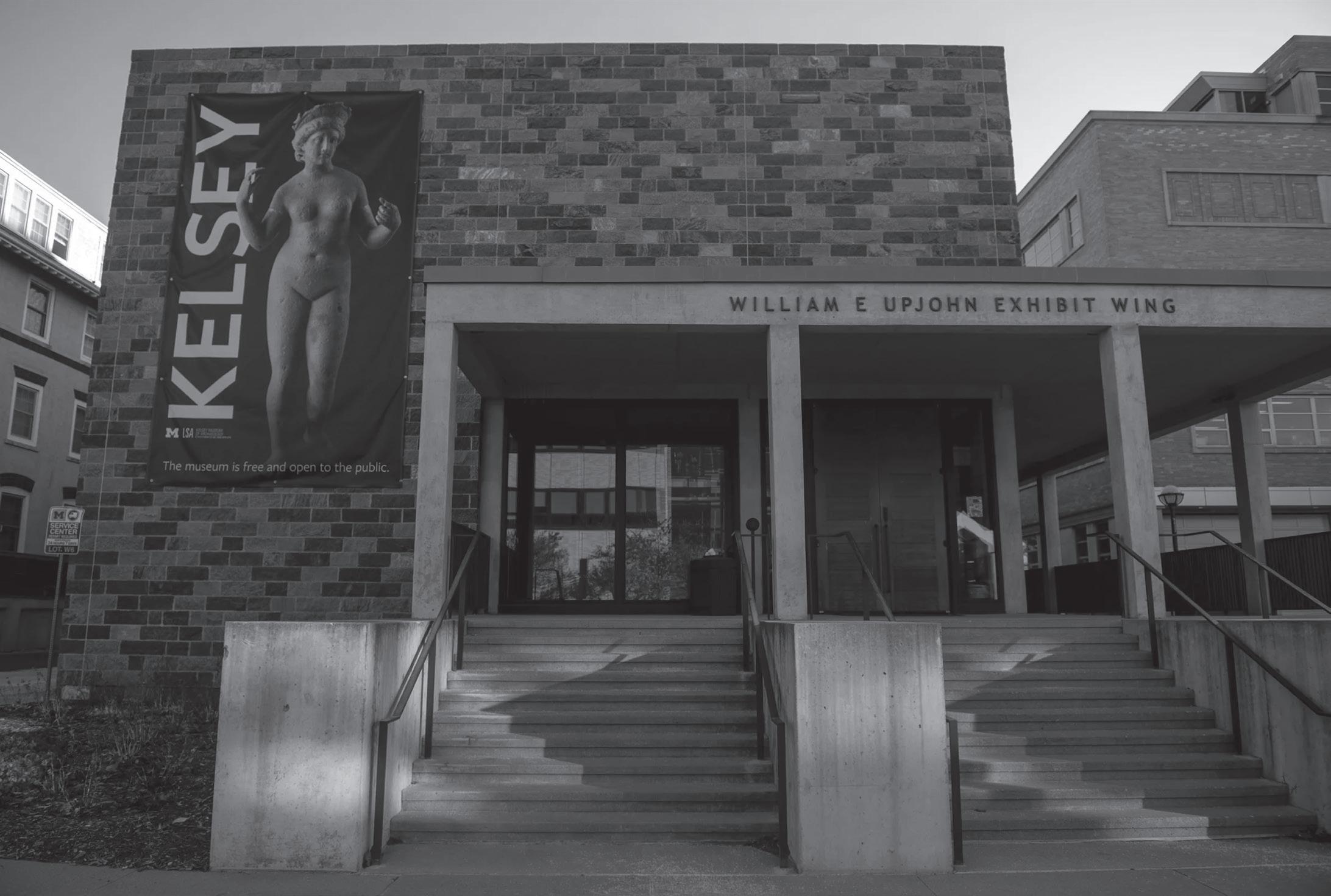
UMich alum donates $1.15 million to Kelsey Museum
The donation will support faculty-led expeditions and educational outreach
EMMA SPRING Daily News Editor
A $1.15 million gift to the Kelsey Museum of Archaeology at the University of Michigan will fund five new archaeological expeditions and enhance the museum’s educational programming for K-12 students across Michigan.
The donation, given by U-M alum Steve Klinsky, will support faculty-led expeditions from the Kelsey Museum and the University of Michigan Museum of Anthropological Archaeology, providing collaborative opportunities for both U-M students and local archaeologists.
The five projects funded by the donation include the search for ancient battlefields from the Punic Wars in North Africa, an investigation into the ancient city of Napata in Sudan and an excavation of burial sites of nomadic Eurasian elites in Kazakhstan to understand their role in the Silk Road. Additionally, researchers plan to extract DNA from artifacts at archaeological sites throughout Africa to study human origins and uncover submerged hunting structures beneath Lake Huron, which date back more than 11,000 years.
research projects at (the University) involve undergraduate and graduate students,” Galaty wrote. “Interested undergraduate students can contact graduate students and faculty, directly, to see about participation. UMMAA also sponsors an annual field school (trip), for credit. This coming summer it is in Kazakhstan.”
Terrenato explained that because the University does not have a formal archaeology department, collaboration across various academic units is crucial for the success of archaeology-related projects.
“There is no archaeology museum at Michigan,” Terrenato said. “They really do not have a place to sort of come together and work as a unit. The closest approximation is sort of the Kelsey Museum and the Anthropological Archaeology Museum, but they’re not the same entity and in recent years we’ve tried to create as many bridges as possible.”
Stineman echoed this sentiment, underscoring how teamwork enhances the field’s potential.
These projects will span several years, with each launching during optimal field seasons as determined by the archeologists. In addition to fieldwork, the gift will also support educational programming on expedition findings across Michigan.
ANN ARBOR
The Kelsey Museum aims to provide K-12 students with a chance to learn about ancient civilizations and archaeological methods.
In an interview with The Michigan Daily, Nicola Terrenato, director of the Kelsey Museum, highlighted Klinsky’s enthusiasm for expanding access to archaeological education.
“The donor himself is very keen on this,” Terrenato said. “He says that as a kid, he loved to hear about archaeology and would have loved to know more about archaeology. Maybe if somebody had been there to explain how to become an archaeologist, he might have become an archaeologist.”
City council passes ordinance banning pre-tenancy fees
“Tenants spoke for themselves and we have the power to provide a solution to a real and costly problem”
The Ann Arbor City Council met at Larcom City Hall Monday evening to discuss an ordinance that would prohibit pre-tenancy fees. Unanimously approved, the ordinance will amend the housing code to remove pre-tenancy fees, cap application fees at $50 and require that they must be refunded within 60 days if no lease is offered.
Landlords often charge prospective tenants pretenancy fees to secure housing before signing a lease.
During Monday’s meeting, many community members argued that these payments disproportionately affect lowincome renters and create barriers to housing access. The newly passed ordinance prohibits landlords from charging pre-tenancy fees — limiting upfront costs to security deposits and lowering application fees.
During public comment, Jordan Else, manager at Wessinger properties, said the ordinance is a crucial step towards more affordable housing in Ann Arbor. Else detailed the impact of nonrefundable fees, emphasizing that property owners can run a successful business without charging these fees.
“Last year, I worked with a group of renters who lost $14,000 in a non-refundable fee … I’ve heard from dozens of renters and parents with similar stories,” Else said.
“They provide little security to renters while putting the bulk of power on the side of property managers. These fees further increase the difficulty in renting for those with criminal histories, past evictions and marginalized identities, making it harder for folks to find and secure housing of their choice.”
Several community members echoed these concerns, sharing personal stories of how pre-tenancy fees have impacted their ability to secure housing in the
city. Nathan Kim, an organizer with the Ann Arbor Tenants Union, highlighted the need for broader protections for renters beyond the prohibition of pre-tenancy fees.
“Ultimately, stronger action is needed to close all the loopholes that landlords might take,” Kim said. “We need legislation cracking down on fees assessed during tenancy and support from council for other forms of action, like tenant unions to negotiate fair rents, no fees and dignified living.”
In a press release from the Ann Arbor Tenants Union following the ban, AATU underscored their previous efforts to support this ordinance. Specifically, AATU created the “Trash the Junk Fees” petition to garner support from the City Council and Michigan State Legislature. In the press release, Kim said he hopes the ordinance will lead to more tenant protections in Ann Arbor.
“This marks a huge step forward for tenants who simply cannot afford these outrageously expensive junk fees,” Kim wrote. “We don’t believe a tenant should have to pay anything before moving in. However, capping refundable application fees at $50 per unit is a reasonable path forward. The AATU is happy to see this ordinance pass, and we hope to see it followed by more robust tenant protections in Ann Arbor.” Though the ordinance
Ananya Kedia/DAILY
passed unanimously, James Nichols, Executive Director for the Washtenaw Area Apartment Association spoke in opposition to the ordinance.
Nichols said there are many benefits for renters with pretenancy fees.
“The Washtenaw Area Apartment Association believes that this ordinance reflects a misunderstanding of the rental market and the benefits of early housing options provided to students,” Nichols said. “The removal of these options will only increase the stress and panic among renters while simultaneously worsening the supply and demand imbalance that drives up housing costs.”
Council members emphasized the importance of protecting renters in a city where housing affordability is a growing concern.
Councilmember Travis Radina, D-Ward 3, noted the blatant differences in the remarks of the Washtenaw Area Apartment Association and the majority of those who spoke in favor of the ordinance.
“We heard tonight from the Washtenaw Area Apartment Association, speaking at length, interestingly, about their concern for tenants,” Radina said. “Tonight, I will note, tenants spoke for themselves, and we have the power to provide a solution to a real and costly problem impacting them and so many other residents in our community.”
The donation will also provide undergraduate students with hands-on learning experiences. In an email to The Daily, LSA junior Calvin Stineman, president of the Archaeology Club, emphasized the value of handson archaeological education.
“Archaeology is, of course, a heavily hands-on discipline,” Stineman wrote. “By opening
CAMPUS LIFE
these opportunities, students will be able to develop a deeper understanding of what they study and how it fits into regional and global contexts.”
In an email to The Daily, Michael Galaty, director of UMMAA, wrote that he hopes the gift will provide students with more opportunities to get involved.
“Most archaeological
“What truly defines archaeology is collaboration — working with each other across disciplines and across department programs ensures we bring together all types of perspectives,” Stineman wrote. “This also allows us to develop better questions, better answers, and helps shape the ways we can interpret and share these discoveries.”
UMich students celebrate graduation at Winter Commencement
“Wherever you go, you will have a home here, and above all, wherever you go, Go Blue!”
AUDREY SHABELSKI Daily News Editor
About a thousand of University of Michigan graduates and community members gathered in the Crisler Center Sunday afternoon for the annual Winter Commencement.
Students entered the stadium as the U-M Men’s Glee Club and Women’s Glee Club performed the national anthem.
University Provost Laurie McCauley opened the ceremony by encouraging students to be present in the moment and recognize all they have had to overcome to make it to this day.
“Distinguished faculty, proud parents, honored guests and most importantly, our graduating class, look around you,” McCauley said. “Take in this moment. Each of you sitting here today represents a triumph of persistence over doubt, a determination over adversity.”
Engineering senior Julia Stowe spoke next about her experience as a Campus Day tour guide. Stowe said she often enjoyed sharing stories about the University community on her tours.
“What I carried with me and spoke about throughout my tours were the stories of the people of the University,” Stow said. “Whether it was the students who filled the EECS 280 lecture hall or the people I used to ride the bus with every morning to class, the vibrancy of campus and what made it special were the people who made it feel like home.”
Rebekah Modrak, chair of the Senate Advisory Committee on University Affairs, told the crowd she felt the goal of the University’s faculty is to teach students how to challenge their own ways of thinking.
“Our job as faculty has been to help challenge you to
challenge your own thinking, so that you develop a sense of curiosity, that you create boundless questions inside your head,” Modrak said.
“We faculty have hopefully been pushing you in this way. Therefore, on this day when the University presents you with these degrees of ‘thinkology,’ it may seem contradictory that the advice I’m about to share is to give yourself a bit of a break in the year ahead.”
Modrak shared her story of working as a sales clerk at an art supplies store and as a cocktail waitress before deciding to return to school in pursuit of a master’s degree. She encouraged graduating students not to fear the following year because it is only one part of a much longer journey.
“Life is not a GPS, even if your path so far has been a straight one,” Modrak said.
“You won’t always type in your destination and follow a direct navigation route. This next year may seem to be the pivotal decider of your life, but it is one step in a long path ahead.”
University President Santa Ono then took a moment to confer the recipients of honorary degrees. These recipients were Rebecca Blumenstein, the current president of editorial at NBC News, C-SPAN co-founder John D. Evans, computer scientist Margaret H. Hamilton and Henry Louis Gates Jr., historian and host of “Finding Your Roots.” Blumenstein, a U-M alum and former editor in chief of The Michigan Daily, was also the keynote speaker for the ceremony.
Blumenstein told graduates that, although journalism and news coverage are important, it is equally important for the public to engage with the press so they can stay informed.
Blumenstein then recounted a moment in her career where she took advantage of an unexpected opportunity that taught her to be more adaptable to change.
“I knew I loved journalism, but my career took many twists and turns along the way,” Blumenstein said. “I never could have predicted that an opportunity to become the Wall Street Journal’s China bureau chief in Beijing would come up and that the paper would decide to send me, with three young kids and my husband, when we didn’t speak a word of Mandarin between us. But they couldn’t find someone else to go and my fresh eyes ended up being a real asset. The broader lesson is to try to view change, no matter how unsettling, as an opportunity.” In his speech, Ono encouraged graduates to maintain their intellectual curiosity beyond the University’s campus.
“As you go forward, take pride in your heritage, whatever it might be, your identity,” Ono said. “Look at the success of others, keep learning, keep growing, keep pushing boundaries and above all hold true to what you believe in.”
McCauley closed the ceremony with words of encouragement and a promise that the graduates would always have a home at the University.
“Wolverines, it’s time to head out into the world,” McCauley said. “Wherever you go, we will be cheering you on. Wherever you go, you will have a home here, and above all, wherever you go, Go Blue!”
“There’s a reason the First Amendment came first,” Blumenstein said. “It wasn’t just about protecting the free and independent press. It’s also about a free and independent population engaging with that information. Resist the urge to tune out. Feel empowered to engage with stories about your community, your governments and even people half a world away.”
Jenna Hickey/DAILY
BARRETT DOLATA Daily News Editor
Edited and managed by students at the University of Michigan since 1890.
Stanford Lipsey Student Publications Building
420 Maynard St. Ann Arbor, MI 48109 tothedaily@michigandaily.com
ZHANE YAMIN AND MARY COREY
Co-Editors in Chief
Zach Ajluni
Jack Brady
Gabe Efros
Lucas Feller
Liv Frey
Seth Gabrielson
JACK BRADY AND SOPHIA PERRAULT Editorial Page Editors
FIONA LACROIX AND CECILIA LEDEZMA
Managing Editors
EDITORIAL BOARD MEMBERS
Jovanna Gallegos
Hunter Ryerson Maximilian
Unsigned editorials reflect the of f icial position of The Daily’s Editorial Board. All other signed articles and illustrations represent solely the views of their authors.
Misrepresented and misused: How The New York Times’ attack on DEI
Iam disgusted by how The New York Times misused my words in a recent article to perpetuate a harmful narrative against diversity, equity and inclusion. What was meant to be a conversation about the importance of safe spaces for marginalized students at the University of Michigan was twisted into a weapon used to attack DEI initiatives. The article ignored the broader context of why these spaces matter and misrepresented my stance. I refuse to let my name be used to weaken the crucial work of DEI.
When Bill Vourvoulias contacted me for The New York Times, he framed our conversation as a fact-checking exercise. He asked me simple questions to confirm my name, whether I was a graduate student in 2022 and if I identified as Black. The main inquiry, however, focused on whether I believed Charles Hilu’s apology — after he attacked my name and the work I was doing — was sincere. I clearly stated that I did not believe his regret was genuine. I never expected my responses to be manipulated into a distorted narrative. I never anticipated that my words would be twisted and weaponized in such a harmful way as a means to try and dismantle DEI at my beloved alma mater.
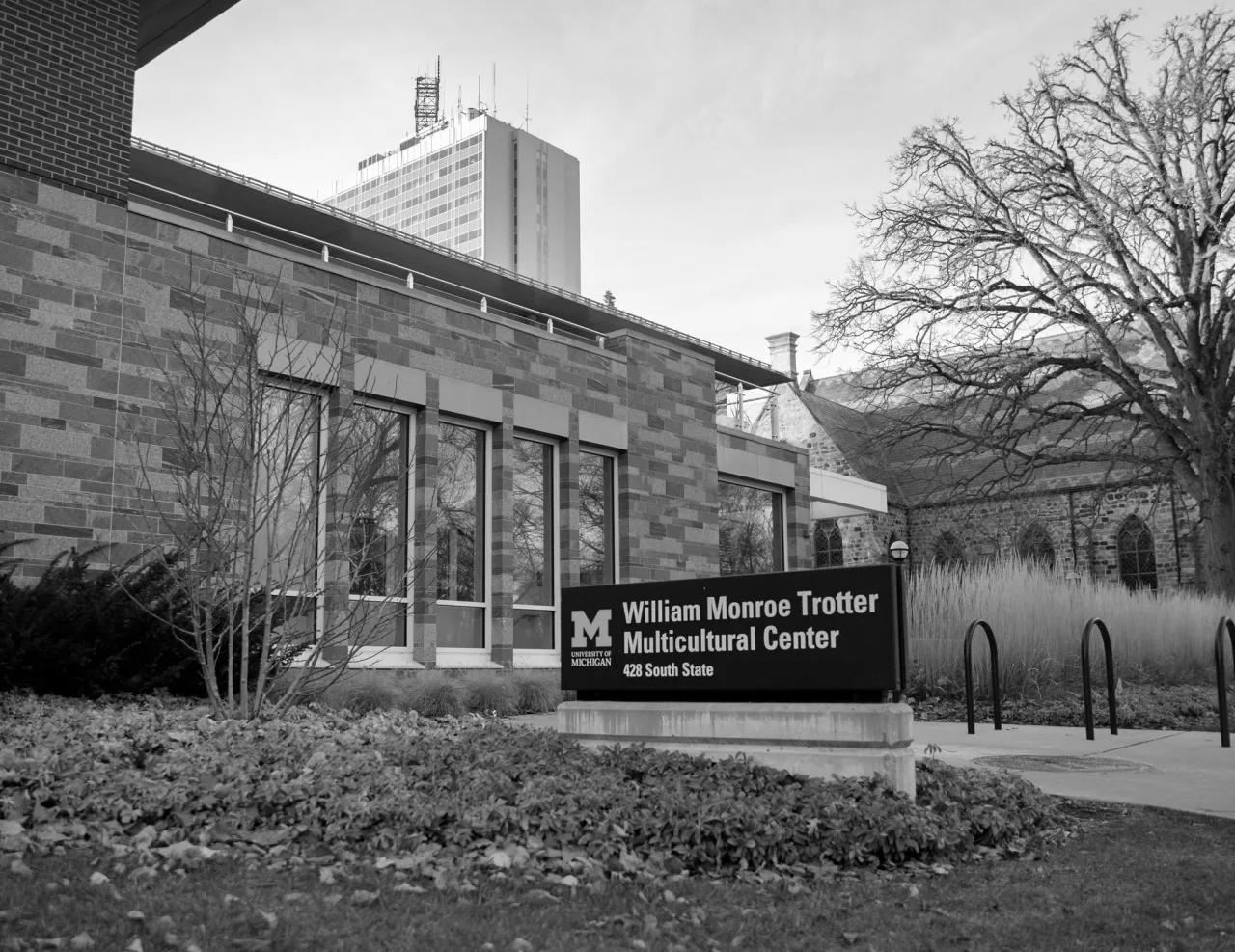
The NYT article selectively quoted a letter I wrote to the University’s Board of Regents in which I highlighted the deeply troubling actions of white student organizations at Trotter Multicultural Center. These organizations had repeatedly displaced Black and brown students from spaces identified as safe spaces on campus. My intent in writing that letter was to advocate for the preservation of safe spaces for marginalized communities, not to be used as a pawn in an ideological battle against DEI. In retrospect, I deeply regret even engaging with the NYT.
The questions I was asked, seemingly innocent, were framed in a way that ignored the broader context of the issues at hand. I was not asked about the implications of systemic racism or how these incidents at Trotter Center reflect larger trends across higher education; instead, the reporter focused on trivial details, like whether I identified as Black or if I thought the Michigan Review was a conservative outlet. These questions were not about understanding or supporting marginalized communities — they were designed to manufacture controversy, misrepresent my position and further an agenda to tear down DEI.
is dangerous
What has been most frustrating is the complete disregard for the nuances of the issues I raised. The NYT article fails to acknowledge that the fight for safe spaces at the University is rooted in the very real need for Black and brown students to have a place where they can truly feel seen, heard and supported. The attacks on DEI are part of a larger, dangerous trend of minimizing or denying the importance of creating environments where all students, particularly those from marginalized groups, can thrive.
I am not a pawn in this ideological battle. I will not sit silently while my words are distorted and misused to push an agenda that seeks to undermine the work of countless individuals dedicated to fostering inclusivity, justice and equity. It is time for us to push back against the mainstream media’s attempts to demonize DEI, distort the truth and erase the voices of those who have been historically marginalized.
The evolution of the Diversity, Equity and Inclusion plan at the University, from DEI 1.0 to DEI 2.0, has been a strategic and essential journey toward creating more inclusive environments. DEI 1.0 focused on diversity and representation, while DEI 2.0 has expanded to address systemic inequities and foster deeper cultural competence across all levels. These initiatives are integral to the progress we’ve made, and the NYT’s recent article fails to accurately represent the role DEI plays.
The NYT article’s portrayal of DEI at the University is a distortion of the facts, and I am deeply disappointed by the way it twisted my words. The reality is that DEI efforts, particularly the evolution from DEI 1.0 to DEI 2.0, are not only about representation but are integral to addressing systemic inequities and creating inclusive environments where marginalized students can succeed. These strategic plans have been crucial in fostering a campus that is not just diverse in numbers but also in thought and opportunity. The DEI
SLeave no one behind: America needs Medicare for All
foot the bill for constantly rising health care costs.
expenses that mar private health care.
programs in place have allowed countless students, including myself, to navigate and thrive in spaces that were historically exclusionary. NYT has failed to acknowledge the progress and importance of these initiatives, opting instead for a narrative that undermines them.
It’s disheartening that a respected institution like the New York Times would engage in a form of reporting that not only misrepresents the facts but seeks to discredit the work that has been done to create safer, more inclusive campuses. The questions posed to me by the reporter suggested a genuine attempt to fact-check the record, yet the final product strayed far from the truth. More accurate and thoughtful reporting has come from the very student journalists on campus who have witnessed the change and understand the importance of these initiatives firsthand. It’s ironic that those closest to the issue, in The Michigan Daily and other local student publications, have provided a more balanced and well-informed perspective than a nationally acclaimed newspaper.
This situation underscores the need for a broader commitment to protecting DEI efforts — not just at the University, but across the country. Institutions must not bow to pressure from those who wish to dismantle these programs, which are foundational to the progress of marginalized communities. It is essential that we stand firm in our belief that education should be an equalizing force, one that dismantles barriers rather than erects them.
I refuse to let my words be twisted for a larger agenda, and I urge all institutions to recognize the importance of DEI as an essential tool for justice and equality. As James Baldwin so powerfully stated, “I am not your Negro.” I will not be used to undermine the very efforts that are crucial to creating a more equitable society. The fight for justice, inclusion and equality continues, and it is one we must all embrace with unwavering commitment.
GABE EFROS Opinion Analyst
eventy-eight countries have universal healthcare. These nations prioritize all-encompassing health service, from medical to dental, from rehabilitative to palliative care. Crucially, this type of system ensures that costs for such services don’t cause a financial burden. In 2023, the United States’ health care system left 8% of Americans uninsured; in the same year, medical expenses put over seven million people in poverty.
Americans deserve better: They deserve universal health care. The U.S. must move toward a Medicare for All system that not only reduces costs for the average person, but also leaves no one without coverage.
Under a Medicare for All framework, the federal government would run the national health care system and cover every Americans’ health insurance. The government would expand the current Medicare and Medicaid programs to cover more wellness services, and then extend such services to every American.
While 8% seems like a small percentage, it amounts to about 27 million people without access to medical care. These people are susceptible to random health issues, but, more importantly, they lack preventative care. They are forced to either pay out of pocket, suffer from preventable ailments or even wait until it is too late to fix their health problems. Since health care costs rose 4.1% in 2022, the situation has become even more dire. It is now more expensive than ever to get adequate health care. Nearly 30 million people are uninsured, and they have to
These costs affect those who have insurance, too. With exorbitant co-pays and deductibles, our private healthcare system keeps people poor and perpetuates inequality. The more that insured people pay for medical care, the more their premiums rise, leading to them paying more to keep their insurance.
In total, Medical expenditures halved the median income for the poorest 10% of people in the U.S. Those same types of costs — medical expenditures — lowered the median income of the 50th percentile by 10%. However, medical costs decreased the median income of the 1st percentile by only 1%.
Essentially, even though a rich person and a poor person might be paying the same dollar amount for medical costs, those expenses will take up a much larger percentage of income for a poor person than a rich person. As a result, inequality rises.
Rich people are largely unaffected because their medical expenses are a fraction of their budget, while working class and poor people must forgo financial stability for their physical health. Then, with an inability to save money due to the cost of healthcare, the cycle of poverty continues, or in more severe cases, puts people into poverty. This should not be the way that anyone lives their lives.
Additionally, Medicare for All would benefit America by reducing administrative costs of the largely private healthcare system. With Medicare for All, the government is the main provider. Since there is less need to spend money on administrative or marketing costs, a switch to Medicare for All cuts the unnecessary
The Michigan Daily Crossword
ACROSS
1. Slightly
5. Letter-shaped train track bar 10. One who crosses the picket line
14. Dog's delicacy
15. Genre of the Bee Gees 16. Musical finale 17. Thing on an agenda
18. It may impact taste buds or tear ducts
19. Samberg or Warhol
20. Lookalikes
23. Praise
24. Turf
25. Audible dance
28. Long, involved tale 32. Gujarati dance commonly performed at festivals
Winter follower: Abbr. 37. Centers of activity for carriers, or a hint to 20-, 44-, and 59-Across
40. Obey
42. Winnie the Pooh
Unfortunately, these costcutting endeavors would also cut the associated administrative or marketing jobs. In turn, this could lead to as many as 1.8 million layoffs in the healthcare industry.
Cost is another concern. In fact, in 2019, RAND Corporation, a policy think tank, confirmed that Medicare for All would require more government spending than our current system. However, this does not tell the full story — overall, a switch to Medicare for All, when factoring in the out-of-pocket expenses that Medicare for All would abolish, along with private insurance, the total costs of the two systems are much more comparable.
Medicare for All helps the labor market as well. With a new system, there would be a new set of administrative jobs to replace those lost. Additionally, employers would pay workers higher wages because they would not be responsible for their employees health insurance. And everyone’s quality of life would surely increase without having to worry about how much they will pay for an unplanned trip to their doctor’s.
The current U.S. healthcare system leaves millions of Americans uninsured and financially burdened, perpetuating inequality and poverty. A Medicare for All system offers a path to universal coverage, ensuring that no one is left behind. Medicare for All would reduce administrative waste, alleviate financial burdens on families and improve access to essential services for all Americans. It’s time to embrace a system that truly works for everyone.
BYRON D. BROOKS Opinion Contributor
Ava Farah/DAILY
THE YEAR
With every click of a shutter button, our staffers have provided a lens into Michigan’s campus, the greater Ann Arbor community and beyond. From deafeningly high-decibel sports to the quiet moments on campus, the Michigan Daily Photostaff was there for it all. As we prepare to
JANUARY
MAY
FEBRUARY
JUNE
Junior quarterback J.J. McCarthy holds the College Football Playoff National Championship Trophy.
Alum Anna Fuder/DAILY
Actor Miles Teller visits Ann Arbor bars to promote the canned cocktail line, The Finnish Long Drink, Feb. 6.
Emily Alberts/DAILY February brought Valentine’s
and excitement to Ann Arbor despite the winter chill still in the air.
Actor Miles Teller began his month in Ann Arbor, visiting bars The Brown Jug and The Blue Leprechaun on Feb. 6. Teller signed shirts, threw merch to the crowd of students sheltered from the cold in the bars and promoted the canned
University of Michigan Campus Farm truck at Harvest Fest Sept. 15. Holly Burkhart/DAILY
The Campus Farm and Matthaei Botanical Gardens hosted Harvest Fest Sept. 15, celebrating the efforts of students and local organizations passionate about sustainable food practices.
Hickey/DAILY
IN PHOTOS
step into the new year, it’s important to reflect upon the moments of the past to determine how we navigate
It’s been a long year, so take a moment to celebrate 2024’s moments of triumph and recognize the times of grief as we break down the year 2024 in photos.
MARCH
NOVEMBER
APRIL
AUGUST
DECEMBER
It’s
Between a 24-hour news cycle and an ever-present social media landscape, our incessant consumption of information makes it necessary for us to stop and reflect. Art is a natural place for this meditation, as art itself is
a reflection of our society. Living in a society can mean different things to different people. To some, it means having a community to rely on; to others, it implies exclusion, isolation and strife. To us, these two
definitions work in tandem. Art and politics, too, are inherently connected. When viewing them together, we can learn more about the world around us and, almost more importantly, ourselves. Society
exists at the nexus between art and politics in their many forms. Now more than ever, we have to find what exactly the relationship between them is. In exploring this relationship, seven Arts writers and six
Filming in public: PledgeTok and the bystander effect
himself (and me, by association).
On Sept. 25, Tara and I were walking together from Mason Hall when two guys approached us from behind and yanked our water bottles from the side of our backpacks. The men proceeded to unscrew the bottle caps, yell “I’m so thirsty!” and pour the contents of our water bottles on themselves. Before they thrust our empty bottles into our frozen
hands, one of them exclaimed: “I’m a cum-drizzling f*****!”
They signaled to the woman recording them and ran away.
We stood in shock. The world stopped for a moment — not one of the many Diag bystanders came up to us and asked if we were OK. After contemplating our next steps, we decided to approach them and ask them to delete the video. At first, the men denied it was them who stole our bottles, despite their shirts being clearly wet. They were laughing and kept making eye
contact with each other, clearly making us out to be a joke. After we inquired a little more, they took a picture of us on Snapchat instead of apologizing for the harassment and crawled back to whatever cave they came from.
We didn’t know for sure, but we had a good guess as to who those guys were: fraternity pledges being hazed. As cliché as it sounds, you never think it will happen to you until it does. Watching TikToks of strangers getting harassed for views in pledge videos, I
never thought that I would find myself being the star. I started blaming myself. I had been debating whether to fill up my water bottle before class, and if I hadn’t, I wouldn’t have needed to explain to a DPSS officer what the f-slur was.
Fraternities are breeding grounds for harassment. In 2008, 73% of Greek-life members experienced some type of hazing, the most common being drinking, singing or chanting in public at an unrelated event. While hazing can bring pledge classes closer together, it’s also associated with instability, loss of control, decline in grades, PTSD and even hospitalization. And yet, despite all the negative side effects, hazing persists because of the “herd mentality”: If you don’t participate in it, you are seen as an “outsider” of the organization.
The primary issue with PledgeTok is that it introduces potential brothers to “lowlevel hazing,” or hazing that is less severe. By capitalizing on this, fraternities normalize this behavior and make it acceptable. The hazing featured in TikToks is goofy, but by filming these videos, pledges are familiarized with the embarrassment that comes with hazing and therefore prepares them for the “real
deal.”
Of course, our critique on PledgeTok and hazing is not our perception of Greek life as a whole; but, hazing is a practice that we can’t condone. PledgeTok has become the bridge to desensitizing pledges and also desensitizing the general public. While the dances are fun to watch, we inadvertently support hazing when we engage with them. When pledging begins again in the winter, keep in mind that social media cannot paint the whole picture. The men on your screens deserve better than organizations that force pledges to steal strangers’ water bottles. Since they bellowed out an offensive slur while recording us, I know that crap isn’t on social media. Liv and I most likely ended up being just another video doled out in some random fraternity group chat which, after two months, is probably old news. However, what truly struck me was that no one around us cared. The surrounding students stared at us and walked by. The student recording us on their pink iPhone (which is now engraved in my memory) stared and scampered back with her cadets, all while a backward-cap-wearing guy who was aggressively shorter than me publicly embarrassed
The plight of the female journalist
At some point in many women’s lives, journalism has been part of the dream “it girl” lifestyle and a coveted career choice. No, I’m not talking about the kind where you wear trench coats and sunglasses for a topsecret investigation or uncover the dark political corruptions of society. The journalism I’m talking about is the one romanticised specifically for young women by the films and TV shows of the early 2000s, a critical genre for imbuing ideas into the impressionable young girls who grew up during this era. In “The Devil Wears Prada,” Andy Sachs (Anne Hathaway, “The Idea of You”) works for the prestigious magazine Runway in New York City under Miranda Priestly (Meryl Streep, “Mamma Mia!”). Through her job, she gains access to earlyrelease designer bags and scarves, a trip to Paris Fashion Week and, best of all, social capital. In “13 Going on 30,” Jenna Rink (Jennifer Garner, “Elektra”) is transported to the
future, where she’s working her dream job as an editor for her favorite fashion magazine, Poise, with her supposed best friend Lucy Wyman (Judy Greer, “Archer”). Her life is dominated by scrapbooking the next creative layout idea, planning fun photoshoots while playing dress-up and attending entertaining launch parties. The most famous example of a glamorized female journalist, though, is Carrie Bradshaw (Sarah Jessica Parker, “And Just Like That…”) from “Sex and the City,” a columnist for The New York Star and freelancer for Vogue. Carrie embodied many little girls’ dreams: stylish, smart and pretty, with a popular and well-read column along with colorful, girlish outfits that still inspire Pinterest boards to this day.
Yet, many times, when women try to venture out of the domestic sphere of soft news and into hard news territory like politics and economics, their status as a journalist suddenly isn’t as respected.
Unlike Carrie Bradshaw whose celebrity status comes from writing about relationships and dating in New York, Andy Sachs’s articles about more serious topics don’t get her anywhere near the level of
fame and glamor that Carrie’s writing takes her. Andy’s dream job in “The Devil Wears Prada” was to be a journalist who primarily focused on social justice problems and campus activism; in college, she wrote an awardwinning piece on janitors unionizing. She is hired at the end of the film by The New York Mirror, where the editors, despite being impressed by her writing skills, still bring up Andy’s experience as an assistant for Miranda Priestly during the interview. More important, however, is the contrast between the once lavish lifestyle that her previous job afforded her to the now austere appearance she must hold to be taken seriously. It’s as if women have to choose between maintaining their femininity or adopting a demeanor of plainness just to do work that was and continues to be male-dominated.
In other media, women with higher aspirations within journalism are either forced back into their relegated domain of knowledge or ridiculed for venturing out of it. Andie Anderson (Kate Hudson, “Almost Famous”) from “How to Lose a Guy in 10 Days” is an advice columnist
Solidarity is hard to expect in most situations, and adding the word after a group of people can culminate in an endless list of terms. But I cannot help but think, where is the female solidarity? How could another girl publicly film me getting harassed by a man? Changing societal norms of what is considered to be private versus public are partially to blame, as well as the general history and context of hazing.
I’ll be real. PledgeTok can continue for all I care; a lot of it appears to be in good fun. At our very own university, #309girl went viral. With #pledgetok literally in the caption, two pledges knocked on dorm doors, waited for students to open them and coordinated catching a football at the very last second. 309 Girl was the last girl in this video, and viewers shipped the ball catcher and the girl due to their seemingly infectious chemistry. Many sequels came out in which this particular group attempted to capitalize on the fame, but the kicker came when everyone found out she just doesn’t swing that way. I enjoyed this bit. It was charming, harmless and had
with aspirations of pushing the boundaries of the topics she covers, but she has to write an article about relationships that entangles her in an unexpected romance, despite starting the film ambitiously careerdriven. On the other hand, the mysterious Lady Whistledown (Julie Andrews, “The Sound of Music”) from “Bridgerton” never backs down from writing about the critiques and scandals of high British society, resulting in her hiding her identity in the shadows due to fear of disapproval, or even
worse — exile. Although it has been more than 20 years since many of these films were produced and we live in a society very different to that of “Bridgerton,” the double standard of women writers still remains. Women are ridiculed for writing about stereotypically “feminine” pursuits, yet they are also unable to break into certain stereotypically “masculine” fields. Less commonly seen are women covering issues surrounding international affairs or other time-sensitive
events that have consequential impacts on people. More often than not, women are kept out of politics and news and instead are writing in personally created blogs or advice columns. Gendered journalism is still alive and well, both within media portrayals and in newsrooms around the world. Women are seen as fun and silly writers while men are the venerable muckrakers who uncover the topics that “truly matter.”
writers collaborate to create a special crossover B-Side composed of calls to action, political insights and personal reflections on societal status. We present to you, the Arts x Opinion Society B-Side.
Haylee Bohm/DAILY
Evelyn Mousigian/DAILY Read more at MichiganDaily.com
LIV FREY & TARA WASIK
Haylee Bohm/DAILY
Growing up in transition: From PRI to MAGA
The Partido Revolucionario Institucional, or Institutional Revolutionary Party, ruled for nearly 71 years, holding a dictatorial regime over Mexico that was riddled with corruption, wealth inequality, a culture of machismo and political repression. By 1999, the party had lost significant influence and support from the public after the 1994 peso crisis, when its pattern of economic instability surrounding elections became unbearably clear. The clock was running out, the PRI was losing its grip on Mexico and the people were ready for change. No change is without hardship. The transition from party dictatorship to democracy is difficult and slow-going — the way any systemic maturation is. Cracks in the glass intensify to break it all apart, but the structure comes back together, reconditioned, even if it stains human hands with blood. It becomes a mosaic — a reclamation of something once broken. No mosaic of bloody, painful experiences depicts this transitional state as accurately as the 2001 cult classic film “Y tu mamá también.” It follows two 17-year-old best friends, Tenoch (Diego Luna, “Andor”) and Julio (Gael García Bernal, “Amores Perros”), on their road trip with the much older Luisa (Maribel Verdú, “Blancanieves”) whom the two teens share an attraction to. On their journey, the trio encounters spirited communities throughout rural Mexico and reveal secrets to one another that complicate their relationship to the point of total breakdown in a strong parallel to the fall of the PRI. As Mexico comes of age so do Julio and Tenoch. The film explores themes of machismo, socioeconomic inequality, political turmoil and the internal repression of Queer desire that follows the characters through it all. Despite their closeness, Julio and Tenoch live in different
worlds. Tenoch, the son of a wealthy PRI elite, doesn’t need to worry about poverty. He’s free to live his life like it’s a party, one he’s inviting Julio to but never letting him forget his role as a plus one. Julio comes from a poor, working-class family and is the son of a single mother. Each boy tries to assert his dominance over the other in order to flip the power imbalance intrinsic to their lots in life through machista displays. They use women to sublimate the Queer desire they have for one another, which they can never allow themselves to act on because of their internalized homophobia. They challenge each other by trying to prove their sexual prowess, treating their girlfriends as disposable and Luisa as a prize to be won by the better player. It’s a manifestation of the animosity stemming from their class struggle — a struggle that follows them as it permeates Mexico.
They are on opposite sides of a major political shift, but remain close because of their longstanding love for one another. Neither can be entirely truthful, and neither can relinquish the other. Tenoch never reveals that he uses his feet to lift the toilet seat at Julio’s cramped and crowded apartment because he’s too disgusted to use his hands. Julio never tells Tenoch that he’s appalled by his friend having an indigenous name as a way for his non-indigenous PRI politician parents to appeal to the common Mexican citizen. They dance around these truths to maintain the fragile bridge between their classes and ideological upbringings.
Despite their attempts to leave this conflict unspoken, their moments of strife glaringly bring their socioeconomic divide to the forefront. Tenoch calls Julio a “hick” many times in arguments and appears disgusted with Julio’s home life, believing it to be inferior. Tenoch walks around like he owns every room he enters, and Julio is never allowed to forget his role as an accessory — a lucky plus-one. Throughout their journey, Julio stands up for himself and Tenoch begins to
see his own hubris. They grow to accept themselves and one another, but their differences are irreconcilable. In their final scene, the two discuss their plans for the future: Tenoch will go on to a life of luxury and high salaries while Julio will be forced to work for a low wage, and they will never see each other again. Even with all of their development, they are unable to break free from their predetermined destinies.
Many stylistic plot metaphors speak to the filmmakers’ perspective on the political issues of the time. There’s a scene at the beach where the main characters return to their camp on the beach to find a herd of wild pigs leaving droppings all over their belongings. The narration states that the wild pigs will soon go to slaughter, making them a dramatized allegory for the PRI and its members. It plainly shows the oppressors in power to be animals making a mess, but as Tenoch and Julio make plans to clean after they’ve gotten rid of the pigs, it also asserts that the people on the ground in Mexico will be the ones to work to clean it up. Tenoch and Julio, as the youth of Mexico, are a symbol of bipartisan cooperation for resistance.
Political unrest is the protagonist’s realities as they weave through crowds of protestors calling for political change, angry and unrestful. Tenoch and Julio are also shown at a formal event with members of the PRI at every corner, showcasing a stark juxtaposition between ideological conduct. The party may continue in their luxurious exploitation, but the people will not let them have it quietly. In this way, the film captures the zeitgeist of the party’s hegemony and pushback against it from the public by integrating it into the characters’ lives to contextualize their actions.
In the final five minutes, Tenoch and Julio are shown after their journey through Mexico.
The US military’s youth recruitment tactics: Video games want YOU
If you were a lower-to-middleclass teenager in the 2000s and 2010s, chances are you’ve endured several recruitment attempts by the U.S. Army. Whether at county fairs, trips to the mall or even during your school hours, it seems like there was no other job more endorsed than enlistment.
The gamers among us may also remember the first-person shooter series America’s Army, known for its well-developed mechanics, interesting storylines — and for being bankrolled by the United States military. Released in 2002, the first installment in the series quickly gained acclaim and awards from sources like IGN and GameSpot, and America’s Army: Proving Grounds currently has a 78% approval rating on Steam.
The argument that the series is a military recruitment tool is not as much of an opinion as objective fact: The archived FAQ of the game straight-up has a tab on how to contact an Army recruiter. In 2008, the Army also partnered with Project Lead the Way, an exploratory STEM education program in many K-12 schools, using the FPS game. Middle schoolers in
Ohio were taught through modules that included doing calculations to launch a ballistic weapon. Once again, the recruitment aspects of the game were shamelessly and openly touted to teens, as U.S. Army Colonel Casey Wardynski emphasized in a discussion with Corey Mead, an English professor at The City University of New York.
“You can’t wait until they’re 17 because by then they will have decided that they’re going to college, or to a trade school, or they’ll already have a job that they’re planning to stay in,” Wardynski said. “You have to get to them before they’ve made those decisions.”
However, when asked about the problematic nature of the game as a youth recruitment tool, Wardynski responded that he didn’t see America’s Army as recruitment, but as education.
Around the same time, the ACLU published a report arguing that the U.S. military was in violation of the Optional Protocol on the Involvement of Children in Armed Conflict treaty adopted by the United Nations to protect child soldiers. Article 3 stipulates that recruitment into State Party national armed forces must be genuinely voluntary and consensual, and that those recruited must be fully-informed of the role and are able to provide
reliable proof of age before serving.
Presumably, the ACLU bases its arguments on points one and three, as the military’s aggressive recruitment techniques toe the line of “genuinely voluntary.” Additionally, due to the game’s “Teen” rating, it was required to limit the amount of gore and violence it could show. Therefore, it’s also in violation of not fully informing their audience.
In an interview with The New York Times, Chris Chambers, former deputy director of the game’s development, admitted to dulling the aspect of violence in the game to reach a wider audience.
“We can’t reach (young people) if we are over the top with violence and other aspects of war that might not be appropriate,” Chambers said.
“It’s a choice we made to be able to reach the audience we want.”
America’s Army has also faced backlash from veterans for the gamification of U.S. Army deployment. Particularly, the game received backlash for emotionally distancing itself from the horrific experiences of being in an active war zone through gameplay mechanics and incentives, while also claiming to accurately simulate what life in the army is like.
Country music splits hippies from rednecks, Willie Nelson unites them
a ballad of desperate alcoholism. Smiling faces illuminated Nelson, entranced by lyrical portraits of winding rivers and murky taverns as the sky faded to black.
Under the burning hot sun of California’s Central Valley, thousands clustered into the concrete bowl of the Toyota Amphitheatre, apprehensively waiting for Willie Nelson to take the stage. As the stagehands filtered in and out, the sun began to set while a cool breeze blew through. The audience waited in silence, exploding into exuberant cheers as Nelson finally took the stage, his worn acoustic guitar Trigger held in his wrinkled hand. With a sweep of the pick, he launched into “Whiskey River,”
That night, the amphitheater collected an eclectic crowd of people. Hells Angels members smoked jays next to computer programmers. Men in tight Levi’s and tighter button-downs waited in merch lines alongside women with tie dye flowing from their heads to their feet. Porta-potties buffered with middle-aged winos and over-hydrated old folk, all laughing and joking, all here for the legend Willie Nelson and his music.
Nelson’s music embraces the loneliest aspects of our lives. His
outlaws are tortured figures; on “Mammas Don’t Let Your Babies Grow up to Be Cowboys,” he croons the plight of the cowboy whose stubborn self-reliance forces everyone else out of his life. Yet the cowboy who would “rather give you a song / than diamonds or gold” is beautiful in his individuality. Tasteful hints of Trigger and harmonies with Waylon Jennings highlight their inner strength. Loneliness doesn’t last forever; sometimes there’s a reprieve. Friends like drummer Paul English, whom “Me and Paul” commemorates, make the “rough and rocky traveling” and unfair treatment liveable. Joy seems to be at the tip of Willie’s tongue. As the drums, piano and guitar build
up, Willie seems to find a certainty that sadness won’t overwhelm him today.
Outlaw characters aren’t a box Willie traps his melancholy in. “On the Road Again” promises adventure and new sights. Yet this rhythm is driven by the discontent of life at home. His methodical picking of Trigger on “Stardust” paints a constellation of notes over a backdrop of whispered instruments, contrasting the beauty of love lost to the sadness of it. With a tortured vocal performance, “Blue Eyes Crying in the Rain” deals with losing a loved one. There is hope in the idea that “some day when we meet yonder / we’ll stroll, hand in hand again.” And yet, it’s a far-off goal that can’t be realized today. In the present, all that’s left are tears.
People listen to Willie Nelson to dream of happiness: to be the cool, confident cowboy content with their loneliness; to drive toward the horizon, worries fading into laughter and exhaust smoke; for the ring of guitars to envelop the sounds of their sobbing. These desires connect kids on their father’s farm to middle-aged suburbanites trapped in green lawns; old folks in retirement homes weighing love lost to 20-year-olds discovering what love is. Dealing with loneliness and heartbreak is universal, and, as a result, so is Willie Nelson’s fan base.
As a cultural force, Willie Nelson’s persona goes beyond entertainment. It functions as a
bridge that connects individuals from all walks of life — even those who might otherwise have never found common ground. The beauty in his appeal lies not just in his music’s content, but in its ability to gather people from diverse social, political and cultural backgrounds under the same roof. Throughout time, society has appeared divided by unshakable ideologies, but Nelson’s music highlights a rare intersection where these boundaries dissolve. Whether it’s in his public life or through his songs, Nelson represents how music can express universal experiences and challenge the idea of homogenous audiences or monolithic worldviews.
Country music, particularly in recent decades, has been embraced by conservative ideologists and movements, often serving as a cultural symbol of values that emphasize Christianity, patriotism and a traditional lifestyle. This alignment celebrates rural and small-town ideals and traditional gender roles, showcasing a lack of inclusivity and often marginalizing or overlooking the experiences of diverse communities. It has frequently been politicized, with certain artists using their platforms to applaud the aforementioned ideologies. Nelson’s progressive values in his language and persona reflect his personal beliefs, breaking away from the stereotypical conservative points of view that are often associated with country music; however, he doesn’t necessarily push specific
political agendas within it. Nelson’s views often run contrary to the mainstream consumer’s view on country music. An outspoken advocate for LGBTQ+ rights, marijuana legalization and environmental issues, his personal beliefs contradict the conventional images of a conservative cowboy. While many see political polarities, Nelson’s inclusive messaging and openness to progressive causes have broadened the genre’s appeal, attracting listeners from a variety of backgrounds who may not feel represented in the majority of country music. Rather than creating division and introducing different ideals, Nelson balances his progressive beliefs with the timeless storytelling of country music. Consider the variety of people who come together at his concerts, from cowboys to hippies; his music creates a space where differences in gender, race, age and morals become secondary. Music itself, and by extension, artists like Willie Nelson, act as a social adhesive, reminding us of our shared humanity. Music is a universal expression that goes beyond who or what we are and allows us to express how we feel. Nelson takes those feelings and opens doors to a more inclusive environment at his concerts. His music captures collective struggles, deep grief or uncontainable joy; these emotions don’t belong to one group, they’re felt by everyone.
Evelyn Mousigian/DAILY
Haylee Bohm/DAILY
‘Eat the Ones You Love’ is a brilliant, biting success
CAMILLE NAGY Managing Arts Editor
The Woodbine Crown Mall is closing.
At least, that’s the rumor that accompanies Shell, a downon-her-luck 30-something, into her new job as a florist’s assistant inside its crumbling walls. Drawn in by the flowers at the door and kept close by the promise of getting to know the mysterious and beautiful florist she finds inside, Shell is in over her head before she even realizes a trap has been laid. For at the very center of the mall, hidden in an oftpassed-over greenhouse, is another plant. A special plant. A plant, Shell soon learns, who wants more than just her company.
Written by author, poet and zine-maker Sarah Maria Griffin and told in seductive, biting prose, “Eat the Ones You Love” follows two women falling in love inside a building that’s quickly coming down around them, all told from the perspective of the cannibalistic plant at its heart: Baby.
It’s a terrifying story, chock-full of all the blood and suspense one expects from a literary thriller — and yet there are few words I can think of to describe its pages save “beautiful.” There’s more to that assessment than masterfully rendered imagery or brilliantly constructed characters, though those things are certainly present. Every sentence feels built as if it might be the only sentence, the only paragraph, the only chapter. Flipping to any page, I can find handfuls upon handfuls of delightful words and gorgeous images: moments that make me stop and think, “Yes, this is it.”
Whether “it” is something I want to stop and fawn over or something that makes me want to check under my bed for monsters is another question entirely. Yet it’s undeniable that this book feels like every moment was crafted with intention — something that unfortunately can’t be said for all stories. It asks, with razorsharp precision, what it means to be part of an ecosystem and what happens when that ecosystem starts going bad.
The community surrounding the Crown — a suburb just outside Dublin — is as old and stale as the mall itself. It’s when trying to escape the feeling of being stuck there that Shell first finds refuge in the building, only to learn with the discovery of Baby that the place is just as sick as the world she tried to leave behind. In trying to find something to fill her life with, all she uncovers is rot.
And still, through it all, Shell finds herself just as hungry for something more in her life as the killer plant is for the taste of human flesh. Interested in questions surrounding the passage of time and the things that endure, of love and obsession and the line between the two, “Eat the Ones You Love” never lets the story stray too far from its own obsessive inner narration: What does it mean to eat? What does it mean to be fed? What, when everything else falls away, sustains us?
The answer, Griffin posits, is love. Funny answer for what’s meant to be a scary book, maybe. But there it is all the same, dangling right in front of us like a vine from an exposed beam. Even while weaving a story of horror and decay, Griffin makes sure to seed in
moments of tenderness, leaving the reader with an oddly comforting feeling for a book that is otherwise so bleak.
Love, she reminds us, isn’t perfect; we hurt each other, we lose each other, we scare each other and we make ourselves wonder if we can ever love again, if we ever should have loved in the first place. But, she pushes back, there is also the gentle press of a mother’s affection; the growing heat of a blooming crush; the everpresent comfort of a best friend’s devotion. In other words, the love we keep returning to. When there’s
nothing else left for us, we will always have these things — the good and the bad, the real thing and the memory of it. We eat the love we receive; we feed the ones we love; and together, they sustain us all.
For those interested in found families with a dysfunctional, man-eating plant hiding just around the corner, “Eat the Ones You Love” is a must-read. Both literary and accessible, dark and darkly humorous, Griffin has struck gold here. I plan to keep up with her as her body of work continues to grow, and I hope you, reader, will do the same.
Metaphor: ReFantazio is medieval Persona — for good and for ill
ARIEL LITWAK Daily Arts Writer
Atlus’ newest game, Metaphor: ReFantazio, has been received with widespread critical acclaim, amassing a 94 on Metacritic and receiving three Game of the Year awards, Best RPG, Best Art Direction and Best Narrative. This isn’t particularly surprising, seeing as the game is a spiritual successor of sorts to the similarly beloved Persona 5, sharing key developers and taking many mechanics from the modern Persona games. It is, in many ways, the platonic ideal of an Atlus game, boasting top-notch gameplay, visuals and characters. It also gracefully combines aspects of mainline Shin Megami Tensei with spinoff series like Persona and Digital Devil Saga while still bringing some unique ideas to the table. Still, it’s a game I’d struggle to wholeheartedly recommend — even after a month and a half and more than 70 hours of playtime, my feelings on Metaphor: ReFantazio are complicated. Most importantly, I still haven’t figured out whether it’s a Shin Megami Tensei game or not. Or what the Metaphor in its title is supposed to be. Or what Re and Fantazio are, for that matter.
Eschewing the standard Shin Megami Tensei setting of pre- or post-apocalyptic Tokyo, Metaphor: ReFantazio drops you into the medieval kingdom of Euchronia, a place full of magical wonder, cars with human legs and rampant inequality and oppression. You play as an eldan youth — a member of the most boring of the game’s nine fantasy races —
in a quest to cure his childhood friend (who just so happens to be the prince of this kingdom) of a mysterious curse. Along the way, you get embroiled in a race for the suddenly vacant throne, vying for power and popularity with a multitude of factions, all culminating in a coronation decided by popular vote. In line with its traditional fantasy setting and premise, Metaphor: ReFantazio replaces Shin Megami Tensei’s iconic demon recruitment and fusion systems with more standard RPG classes — here named Archetypes — while still maintaining most of what makes Shin Megami Tensei distinct from, say, Final Fantasy or Dragon Quest. These classes are highly malleable, allowing for more complex strategy as the game progresses. They are accompanied by an admittedly pretty simplistic row system and synthesis skills, special moves unlocked through character archetype combinations in battle, to create a highly enjoyable turn-based combat system. The difficulty curve is smooth, requiring very little grinding and never feeling too punishing — up until the final boss ruins any semblance of proper progression, that is.
Gameplay outside of combat is where the modern Persona influence is the most apparent. Metaphor: ReFantazio has a calendar system, social stats and social links, and as such the game’s flow from combat to time management to story is quite similar to the Persona series. Its visuals are also reminiscent of Persona 5, including anime, 3D and visual novel-style cutscenes.
TMD Book Review’s tips for getting and staying into reading
THE MICHIGAN DAILY BOOK REVIEW
Reading is a chore. Typically, it reminds us of long nights spent speed-reading some boring research article for a random lecture, or takes us back to high school English classes ridden with mind-numbing books we were obligated to finish if we wanted to secure a passing grade. Rarely is reading associated with pleasure and fun… unless you write for The Michigan Daily Book Review! As book reviewers, we are determined to reframe the common (and rather negative) narrative that plagues the underappreciated art of reading. In the spirit of that mission, here are our tips and tricks for getting — and staying — into reading.
— Senior Arts Editor Graciela Batlle Cestero and Books Beat Editor Camille Nagy
Read as a study break! My proposal: Start reading as a study break. Reading is one of the best ways to relax, take your mind off your assignments and reset before starting your next task. Moreover, most novels are broken into digestible chapters, making it easier to limit yourself instead of accidentally scrolling away an hour of your day (don’t worry, we’ve all been there). If this sounds intimidating, find a book you know will be easy and fun to read. There’s nothing wrong with reading a fun celebrity memoir like Britney Spears’ “The Woman in Me” (loved it) or even a comedy like “Margo’s Got Money Troubles” (actually laughed out loud). Reading in between assignments also allows you to take baby steps, breaking books up into chapters or even pages. I started reading as a study break this year to try and squeeze some reading into my day, and I
just love it. Not only do I read more, I’m also more productive and take shorter breaks overall. Sometimes, if I find a book I like enough, I actually finish my assignments faster because I can’t wait to read more!
Think of reading as replacing a bad habit! If you’re anything like me, putting time and energy into focusing on a book can be really taxing. Spending your free time on apps like TikTok is really tempting, but it also might be ruining your attention span for everything else — including reading. In an age of almost constant digital media, it’s hard to step away from our dependency on our phones, but if you want to get into reading, you’re going to have to put your phone down. Finding a way to prioritize reading will look different from person to person.
For me, it means deleting social media altogether to shift my focus to less overstimulating forms of
entertainment. It could even be as simple as replacing your screen time at the end of the night with a book before bed. Getting your attention span back won’t come after one day of reading, so making reading a habit will help you build back that muscle. Carving out even 10 minutes a day for you and a book can help you get this attention span back one step at a time, ensuring that, eventually, you will jump to read your book instead of going on your phone.
Or … make reading your only option for joy!
Hear me out — if you feel like your attention span is going downhill and your to-be-read list is spinning out of control, it might be time for more drastic measures. At the beginning of the year, I ran an experiment in which I deleted everything off my phone except for an e-reader, meaning every form of stimulation I had during that time was book-related. It wasn’t an easy transition, but after a few days I felt
that my dopamine-hungry brain had calmed enough to stop craving the endless social media scroll. It’s also a great trick to fit reading into a busy schedule; you might not have time to sit down for an uninterrupted hour of reading, but you might be able to find an hour of time waiting at the bus stop, in line, in the car, or procrastinating other essential tasks. When reading is your only distraction, you’ll begin craving books in the same way you crave social media, which is a pretty magical thing. Even if you can’t stick with it entirely, wasting time reading is always better than wasting time on Instagram.
Make an event out of reading!
I’ve found that scheduling time for just reading doesn’t really work for me. It often starts to feel like homework or a chore. What does work for me, however, is finding a fun way to get started on a new book. Whether that means enjoying my first seasonal cup of hot cocoa or trying something I’ve always
seen in shows and movies but never dared to believe was possible (such as reading in the bathtub), I try to make reading exciting. Finding a cozy place to do these things, especially somewhere where there’s not much else to do but read, always helps me jumpstart the habit again. So try finding a place in the Arb to sit down with a book before the weather starts to turn. Try out a new coffee shop or hunt down a study spot you’ve been meaning to camp out. And DON’T BRING YOUR LAPTOP. When I find myself trapped in a cycle where I am physically unable to pick up a book, tricking myself into biting the bullet with a new outing or fun accompanying beverage is one of my better tactics.
Interchange fiction and nonfiction books!
After a long semester of barely being able to finish a single book, I promised myself that I would capitalize on the free time that comes with summer to get back
on track with my yearly reading goal. This summer, I decided that I wanted to really dive deep into my seemingly endless to-be-read list while also reading as much as humanly possible. As a result, I decided to begin interweaving books of different genres — specifically, fiction and nonfiction books. I sat down in front of the overflowing bookshelf in my childhood bedroom and selected all the books I wanted to read. I then organized them in a way that would have me read a nonfiction book before allowing me to “reward” myself with fiction. This tactic proved to be extremely fruitful, leading me to read a whopping 18 books over the summer. Take my word for it, interchanging the genres you read will not only help you cultivate a consistent reading habit, but will also help you become extremely well-read.
Listen to audiobooks! Without audiobooks, I’m not sure I would have survived this semester, let alone read a single book for fun. My best — and possibly only — tip for someone looking to get into reading this year, who maybe doesn’t have the time to sit down and carve out dedicated time to do so, is to try reading by listening. While there have been debates in the past over whether listening to audiobooks counts as “real” reading, I’m here to tell you that it unequivocally does. And not just that — it’s also one of the best ways to squeeze reading into moments you normally wouldn’t be able to. Walking to class? Folding your laundry? Getting a quick late-night workout in? The answer is right there: Pop on some headphones, and you’re ready to read.
Cover art for “Eat the Ones You Love” owned by Tor Books.
Emily Schwartz/DAILY
‘It wasn’t for nothing’: From gymnastics to the cheer squad, Ty Jordan keeps smiling
MADISON AUCHINCLOSS Daily Sports Writer
The first thing anyone notices about Ty Jordan is his smile.
Even in an interview beginning with a slight mishap, the smile never left the sophomore’s face.
Locked out of the practice facility where the interview was meant to occur, Jordan happily chatted en route to the athletes’ academic building. His smile never left during the interview either.
The second thing to notice about Jordan is his energy. Enthusiastic in everything he does, Jordan’s attitude matches that of the Michigan cheer team.
“(Jordan’s) a great teammate,” Michigan coach Pam St. John told The Michigan Daily. “He’s a lot of fun, he’s fun to coach. He’s got a good sense of humor. You’ve probably picked that up if you talk to him.”
Put those traits together, and an ideal cheerleader emerges. But Jordan didn’t start as a cheerleader. His story begins on the mats of a gym in Southern California. ***
Like many gymnasts, abundant energy is how Jordan got started in gymnastics. As a hyperactive child with two working parents,
ICE HOCKEY
Jordan was sent to a summer camp that featured various sports, but gymnastics stood out. A coach noticed his aptitude for the sport and asked his mom, Meredith, if Ty would like to join his gym. Ty immediately said yes.
Thus began a career in gymnastics that started when he was six years old. It traveled with him from California to Colorado — where his family moved when he was 10 — and then even further to Michigan for college.
Ty Jordan with San Diego Poway Gymnastics medals.
Courtesy of Meredith Jordan
Ty’s journey to Michigan wasn’t straightforward, though. A rings specialist who often competed in the all-around, he went on recruiting trips to a few colleges, including Penn State and Oklahoma, but received no offers.
When he figured his gymnastics career was over, his mom encouraged him to email other schools and see what they thought.
“I bite my tongue every time because she was so right,” Ty cheekily told The Daily, grinning.
“And I hate when she’s right.”
Ty emailed Michigan, and Wolverines’ assistant coach Jared Gaarenstroom — who handles much of the recruiting — replied quickly, eager to sign the talented gymnast. Within the week, Ty
had an offer. He signed with the Wolverines and then toured the campus, falling in love with the school. And that is where the story ends, with Ty Jordan as a gymnast at the University of Michigan.
Except not quite.
Much like the interview, Ty’s story took an unexpected turn. Ty didn’t compete during his freshman year aside from the Maize and Blue intrasquad meet. Instead, he was injured repeatedly during summer training and could only manage watered-down rings routines as he
recovered. The constant demands of men’s gymnastics had begun to take a serious toll on his body.
Ty Jordan competes in the Junior Olympic Nationals in 2017.
But more than that, his heart simply wasn’t in the sport anymore. It was a feeling that he’d had for a few years, but now, it was becoming too much. Though Ty loved his teammates, that wasn’t enough either. He could feel himself losing his smile.
“Starting my junior year of high school, I started feeling like I
didn’t really love it as much as (it was) something I was good at,” Ty said.
Ty isn’t a quitter, though, so he continued through with his recruiting. But when his hair began to fall out from stress while training last summer, he knew it was time to make a change.
He’d never lived without sports. Gymnastics had been an integral part of his life for more than twelve years. It dictated his schedule; it landed him a spot with the Wolverines. Who would he be without that structure?
“I want to be done, but I don’t want to do nothing,” Ty said. “I’ve never done nothing, and no hate on people that don’t do sports like that, but for me, it just seems weird. I can’t comprehend just doing school.”
While considering his options, Ty met now-senior cheerleader Nicholas Merritt at a potluck. Merritt immediately saw Ty’s strength and simply followed what Ty referred to as “the male cheerleader code.” Merritt asked him if he’d ever thought about becoming a cheerleader. Ty explained that he was a gymnast, but the two hit it off and talked for most of the dinner with Ty fascinated by Merritt’s stories of cheerleading.
Then, a lightbulb went off. And
Ty could feel that smile creeping back onto his face.
“I was like, I could do cheer,” Ty said. “I could retire from gymnastics, and do cheer.”
It was a huge decision for Ty to leave the only sport he’d ever known, and he wanted to make sure it was the right one. He spoke with one of his housemates — Josh, a retired gymnast himself — because Josh understood what it was like to leave the sport. They talked for nearly two hours on their porch, and Josh gave him pretty simple advice: make a pros and cons list.
“I did all my pros,” Ty said. “I go to my cons, and … I don’t see a single con.”
What ultimately sealed it for him was attending an open gym session for cheerleading with Merritt. He loved what he saw and found that he excelled at the basics of cheerleading. Ty’s mind was made up: he was going to be a cheerleader. He hadn’t told his parents yet, though. In fact, he hadn’t told his parents anything about the whole experience: the stress, the desire to quit — none of it. He decided to call Meredith first, who was very supportive of her son’s decision. In fact, she only had one fear when Ty called.
Read more at MichiganDaily.com
Notre Dame outduels Michigan in offensive affair, 7-4
GRAHAM BARKER
Daily Sports Writer
SOUTH BEND — Early on in Saturday’s game, goals were hard to come by. But once the No. 9 Michigan hockey team buried the game’s first goal 12 minutes in, the floodgates opened.
In a 20-minute period stretching from that first goal to the middle of the second period, the Wolverines (13-8-1 overall, 7-5-0 Big Ten) combined for eight goals with Notre Dame (7-14-1, 2-11-1), who ultimately outdid Michigan, 7-4. After sophomore forward Evan
WOMEN’S BASKETBALL
Werner potted the first goal, it didn’t take long for the Fighting Irish to respond. Soon after, a power play turnover by the Wolverines led to a short-handed Notre Dame goal. Michigan’s turnover issues didn’t end there, though, and the Irish capitalized on an odd-man rush just minutes later to gain a 2-1 lead.
“It’s individual guys making bad decisions,” Wolverines coach Brandon Naurato said. “The game is really simple: get pucks behind them, get on the forecheck, you have o-zone time. … And we just never got into that because of the turnovers.”
Five minutes into the second period, the already fast scoring
pace accelerated to frantic. First, Notre Dame scored its third off a deflection, and then added its fourth 15 seconds later. Michigan swapped goalies in an attempt to stop the bleeding, but the Irish paid no mind.
A crafty backhand pass by Notre Dame forward Justin Janicke led to yet another open look and goal for the Irish — their third in just 32 seconds of play. Before the Wolverines could blink, a one-goal deficit had ballooned to four. Notre Dame didn’t make any drastic changes, Michigan was just repeatedly sloppy in its positioning, allowing high-danger chance
after high-danger chance. And the Irish took full advantage, seizing complete control of the game.
“It just happens fast,” junior forward T.J. Hughes said. “It just shows when teams are doing well, they keep pounding on you. Just gotta find a way to get it behind them and start forechecking them and try to limit those opportunities.”
Michigan didn’t go down easily.
Three minutes after the Irish ambush, sophomore forward William Whitelaw ripped a slapshot into the back of the net for a powerplay goal. Just over 30 seconds after that, graduate forward Philippe Lapointe got his nose into a scrum
With a smothering defense, Michigan rolls past Purdue, 87-60
SAM GIBSON Daily Sports Writer
WEST LAFAYETTE — With less than a minute left in the first half, Michigan junior guard Brooke Quarles Daniels saw an opportunity.
Sticking like glue to her matchup, Purdue guard Destini Lombard, Quarles Daniels traced the ball and was a step ahead when Lombard ran to the top of the key to receive a pass. Lombard knew she’d been beat — it was too late. Before it arrived, Quarles Daniels had already intercepted the pass, taken it down the court and scored, extending the Wolverines’ lead to over 20 points after just 20 minutes.
“(Assistant coach Natalie Achonwa), her scout was just phenomenal,” Quarles Daniels said. “She kept telling us to shoot the gap, and I kind of knew she was gonna pass for the ball, especially the way she was telegraphing. I just know it’s coming.”
Sequences such as those were commonplace Saturday afternoon during the No. 25 Michigan women’s basketball team’s (11-5 overall, 2-3 Big Ten) 87-60 rout of the Boilermakers (7-9, 0-5). Behind an oppressive defense and offense that never needed to be spectacular, the Wolverines chugged along against one of the Big Ten’s bottom-dwellers.
After winning the opening
tip, senior guard Greta Kampschroeder nailed a three from the left wing. Purdue, down 3-0 after the first five seconds, didn’t lead for the entire game. Michigan didn’t figure out its defense immediately, however.
The Wolverines had five fouls in the first quarter, some coming in the final seconds of the shot clock after they successfully constrained the Boilermakers for the previous 20. And though her team had accrued an early ninepoint lead, Michigan coach Kim Barnes Arico called a timeout, not yet fully satisfied with the defense. One minute later, she called another one.
“We spent the last couple days
trying to work on our defense,” Barnes Arico said. “There were a couple of mistakes that we did during (the first quarter) that I thought it was important to emphasize and talk about. … We want to really get better at things, and we want to really emphasize them in the moment. So I took those two timeouts early to really talk about those things.”
While the Wolverines’ firstquarter defense warranted two early timeouts, their offense certainly didn’t.
Kampschroeder made another 3-pointer, senior guard Jordan Hobbs sliced to the basket and drew contact several times and freshman guard Mila Holloway
had eight points in the game’s opening quarter. It seemingly didn’t matter who had the ball in their hands — the result would be a bucket.
Despite already being up by 10 points on Purdue heading into the second quarter, Michigan’s defense was still ramping up.
The Wolverines were physical and aggressive, diving for loose balls and overpowering the Boilermakers on the ball. The increased intensity worked: Purdue went 4-for-14 from the field in the second quarter, scored just 11 points and committed seven turnovers.
at the Notre Dame net and muscled the puck in for another goal.
Much like the first 10 minutes of the game, the last 10 of the second period were quiet and goalless. The third period started slowly, too, but soon the Irish picked things up. With just over 12 minutes left to play, Notre Dame forward Hunter Strand came streaking across the right faceoff circle, flipped the puck to his backhand side and shot it through the legs of a Wolverines defenseman for his second goal of the game.
Michigan added a fourth of its own four minutes after, but Janicke put the exclamation point on the
Irish’s win with an empty-netter for a hat trick. The Wolverines’ four goals and 41 shots on goal — their second-most in a game this season — were just not enough. “There were individual plays that were made, but I didn’t like our team offense,” Naurato said. Up a goal and on the power play midway through the first period, it looked like Saturday might end up much like Friday for the Wolverines: a slow start followed by an offensive surge. But instead, the momentum shifted the way of Notre Dame, who used its short-handed score to kick off a five-goal run it never looked back from.
WOMEN’S GYMNASTICS
No. 13 Michigan
builds confidence with win
at Sprouts Farmers Market Collegiate Quad
MIRIELLE WONG Daily Sports Writer
As freshman Jahzara Ranger stepped up to begin her floor exercise for the No. 13 Michigan women’s gymnastics team, the tension in Oklahoma City’s Paycom Center was palpable.
The Wolverines had led all meet, but Arizona had just edged them out with a score of 49.225 on the balance beam in its final rotation. As the anchor in Michigan’s rotation, Ranger needed to score a 9.825 or higher to take back the lead.
But the pressure was no problem for Ranger. She sailed through her routine, capping it off with a smooth round off handspring double tuck. Her score of 9.9 was more than enough to seal the victory.
“I wanted to end the meet with a bang so I could celebrate at the end; so my team could celebrate at the end,” Ranger said with a smile in her voice.
And celebrate they did. After Ranger’s high-pressure heroics, Michigan (3-1) won the Friday session of the Sprouts Farmers Market Collegiate Quad with a team score of 195.925, edging out No. 14 Arizona (5-1), Clemson (2-1) and North Carolina State (1-3) by a margin of 0.1.
“We’re a very young team,” Michigan coach Bev Plocki said. “We’re finding our footing and trying to get some confidence in what we’re doing. (The win) was a good sign that we improved a great deal from last week to this week.”
That confidence began on vault, where the Wolverines started out strong with a score of 48.950. Freshman Sophia Diaz performed a Yurchenko 1.5 for a team-high score of 9.85, and graduate Jenna Mulligan added a 9.825. After one rotation, Michigan led by a margin of 0.100.
The most memorable part of the Wolverines’ rotation on uneven bars came on a score that wasn’t counted. Ranger turned in an impressive feat of strength when she nearly fell off the bars on a release move but managed a midair, one-armed save. Ranger was still marked down for the near-fall and scored just a 9.2, but her ability to stay on the bars and finish her routine showed a strong presence from the youngster.
“I have no idea how she was able to do that and stay on the bar,” Plocki said. “That was pretty amazing.”
Keith Melong/DAILY
Vlad Goldin helps Michigan overcome sluggish start, improve to 5-0 in Big Ten play
With just under nine minutes remaining in the first half, the No. 24 Michigan men’s basketball team found itself in a hole. Not trailing in the score column or carrying a high number of turnovers, the Wolverines were plagued by foul trouble. Up by just four points, junior forward Danny Wolf picked up his second foul, making him the third Michigan big with two fouls and sending him to the bench.
Thus reentered graduate center Vlad Goldin, who had been sitting for about five minutes with his own foul trouble, looking to steady the ship down low.
As Goldin entered, the Wolverines (13-3 overall, 5-0 Big Ten) flipped into a zone defense, allowing him to avoid targeted drives and let Michigan build its first comfortable lead on the Huskies (10-7, 1-5). From there the Wolverines awoke from their early grogginess and put Washington away 91-75.
With Goldin anchoring the zone for a stretch Michigan turned its meager four-point lead into a more
consistent eight to nine point lead, playing with more comfortability and less fear of picking up another foul. The Huskies came out of the gate aggressive and were successful in racking up those fouls on the Wolverines, but as a result picked up their own trouble with two of their bigs also reaching two fouls in the first half.
Starting the second half with a modest 10-point lead, Michigan was positioned to keep building. The foul trouble became less problematic as more time ticked off the clock and the Wolverines adjusted to Washington’s aggression, so they looked to get back to their brand of basketball. That adjustment came at last near the 10-minute mark in the second half. After going back-and-forth, hanging around a 10-point lead for a majority of the half, Michigan found its stroke from deep and started to pile up a lead.
Sophomore forward Sam Walters made two deep shots of his own and was fouled on a third, accumulating eight points in just two minutes.
Behind Walters’ contributions the Wolverines got up by 14, and then Wolf buried his first three of the game as well, creating Michigan’s biggest lead at the time at 17 and forcing a
Huskies timeout. broke out, that was all they needed. In a game of slow back-and-forth play, the moment they settled into a comfortable lead there was little fear of a Washington comeback.
away on offense for the final eight minutes, never leading by less than 13 points for the remainder of the game. In a slow, foul-ridden game, the Wolverines again found a path to success in the end.
dominate the interior taken away for a period of time early, they were tasked with adjusting to the Huskies’ physical approach throughout the first half. Michigan ultimately took control of this playstyle and made it their own, bringing the physicality back at Washington and remaining undefeated in conference play.