More than 100 University of Michigan students and community members gathered on the Diag
Wednesday afternoon for a rally marking six months since Hamas’ Oct. 7 attack on Israel. Student representatives from Wolverine for Israel, Michigan Hillel, Chabad House and the Jewish Resource Center spoke at the event, and Rabbi Alter Goldstein recited Psalm 122, a prayer for peace.
On Oct. 7, Hamas launched a surprise attack on Israel, which Israeli officials said resulted in about 1,200 casualties and 240 hostages being captured by Hamas. LSA junior Evan Cohen, president of Wolverine for Israel, said in his speech that the purpose of the rally was to commemorate the lives lost in the attack and call for the safe return of the hostages. “We’re here today to remember the atrocities of six months ago and to rally to bring our hostages home,” Cohen said. “As Jews, we always manage to find the light. We know the morally right from wrong and we stand proud with our Jewish values. Continue to take care of one another. Continue to donate to humanitarian efforts in Israel.”
In an interview with The Michigan Daily, LSA junior Ryan Silberfein, chair of the governing board at Michigan Hillel, said she believes the rally provided a space for pro-Israel community members to come together on campus.
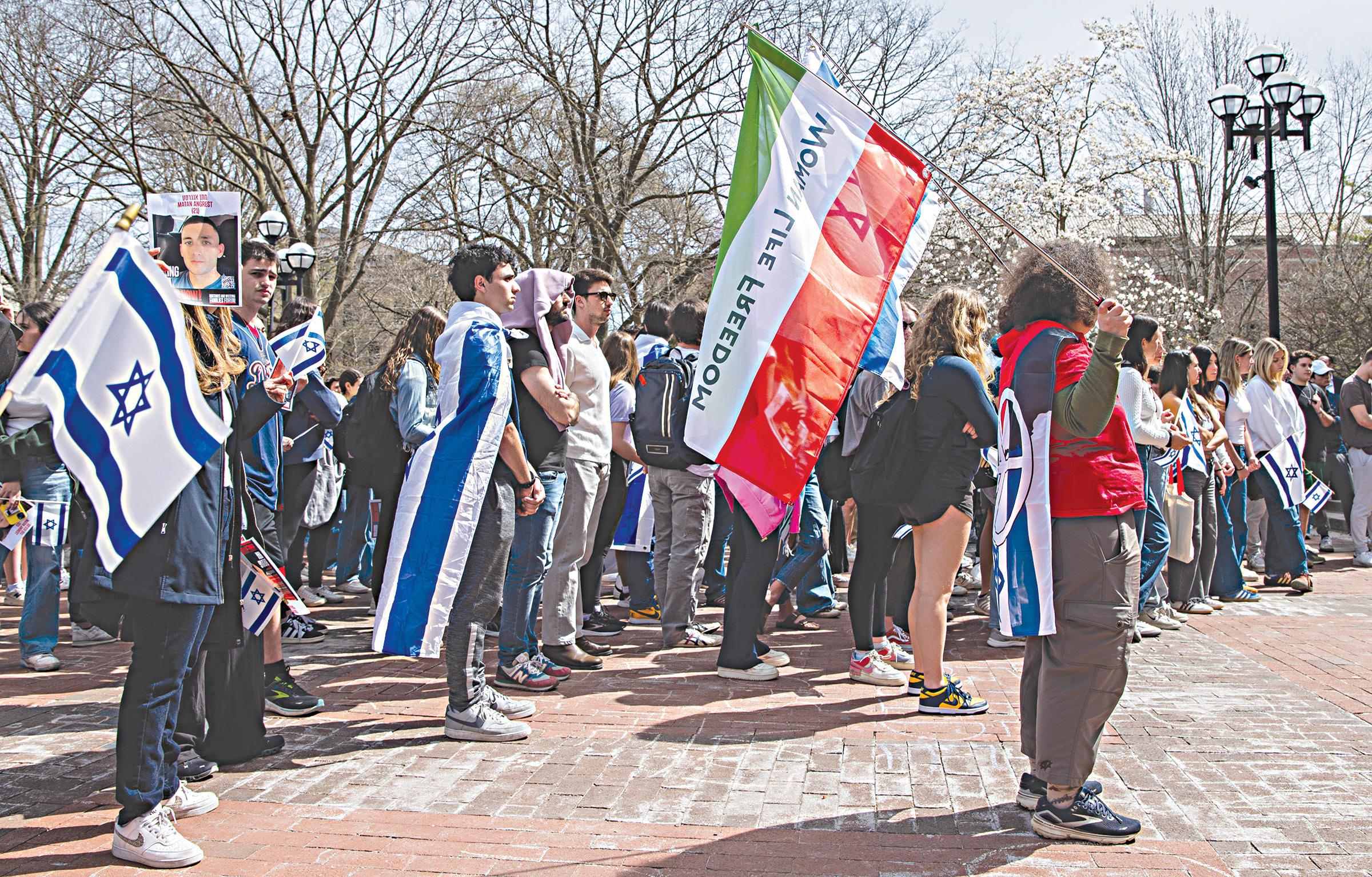
“We have to walk through protests almost every week on this campus that are very upsetting to a lot of us,” Silberfein said. “Another aspect of (the rally) was being able to show people that we are still here on campus, whether or not we are disrupting classes, we are still here, and while other people get to protest too, we want to show that we can do a peaceful rally as well.” The rally was met with some resistance, as a group of about 15 pro-Palestine students stood on benches and held up signs
Inaugural Ford Dean’s Symposium hosts Cecilia Muñoz,
Alondra Nelson Muñoz spoke on U.S. social policy while Nelson discussed artificial intelligence at the intersection of policy and civil rights
tool. It’s not the only tool, but it is a major tool for which we can collectively address the problems, and we have big problems,” Muñoz said. “My daughters are 28 and 31, and they worry that we lack the capacity to solve our problems together, and I don’t believe that we do. I think there are things to be considered and alarmed about, but we have that capacity, and our biggest enemy, honestly, is cynicism.”
When Watkins-Hayes asked about her thoughts on the government service workforce, Muñoz said she believes government employees are necessary for a working democracy.
including messages such as, “AntiZionism ≠ Anti-Semitism” and “Jewish Students Say: Down With Imperialism.”
In an email to The Daily, Social Work student Cora Galpern, outreach chair for the U-M chapter of Jewish Voice for Peace, said the phrases on the signs were meant to highlight how the Jewish and Palestinian struggles are connected.
“Our signs emphasized the
intersection between Jewish safety and Palestinian liberation, drew attention to the thousands of Palestinians being held hostage in Israeli prisons and highlighted the distinction between antisemitism and anti-Zionism,” Galpern wrote.
“We chose this messaging because it was consistent with the values that Judaism has instilled in us — that every life is sacred, that we must welcome the stranger, and that Tikkun Olam (repair the
world) is an obligatory and ongoing practice.”
In an interview with The Daily, Engineering junior Jonathan Bandel, president of Chabad at Michigan, said the organizations behind the rally saw it as a way to publicly reaffirm their support for Israel.
“We’re also just trying to show that nobody will intimidate us and that there’s always going to be two sides of every story,” Bandel said.
“We’re going to stand firm with our stuff, and we’re always going to do what we think and what we believe in.”
Attendees at the rally held up Israeli flags and posters with the faces of hostages on them. Engineering freshman Ella Mendelson told The Daily she attended the rally to stand against rising antisemitism.. “I wanted to show support for my people, and I am fortunate enough to be able to be on this campus and be able to come out and attend one of these rallies,” Mendelson said. “I wanted to be here to show the side that doesn’t get talked a lot about, which is that we are just truly a peaceful people, peacefully protesting against antisemitism.”
In a later interview, Cohen said the rapidly evolving nature of the Israel-Hamas war requires a strong focus on student support and an emphasis on inclusion.
“This conflict is continually evolving, and our campus also continually evolves,” Cohen said. “Our biggest focus is to support our students — support them, help them, make them feel like they have a place on campus and ensure that they don’t feel intimidated and feel safe.”
LSA sophomore Dani Portnoy, Jewish Resource Center president, said the three organizations at the rally — Hillel, Chabad and the JRC — are available to provide support to Jewish students.
“We’re strong — we’re not going anywhere,” Portnoy said. “Hillel, Chabad and the JRC are here for Jewish students to support them in any way they need during this time.”
Inclusive History Project examines UMich history of discrimination and activism
The project retells U-M history to help inform future U-M decision making
The University of Michigan Inclusive History Project works to expand and support research that examines the University’s history through the lens of diversity, equity and inclusion. The IHP aims to construct a comprehensive retelling of U-M history from all three campuses to help inform future decision making for the University.
Housed in the National Center for Institutional Diversity, the project is led by co-chairs Elizabeth Cole, and Earl Lewis.
name off of the ice arena, and the concern is that that would be done as a one-off and not in full context, so President Schlissel at the time reached out to see whether we could do a more comprehensive review of the University’s history of inclusion and exclusion.”
Lewis said the IHP emphasizes reparative action as an outcome of examining history. This tenet serves as the common thread among the IHP’s diverse topics of research.
“What we wanted to do as part of the IHP is not only to reexamine histories, but also to ask, ‘Are there things that need to be fixed or repaired?’” Lewis said.
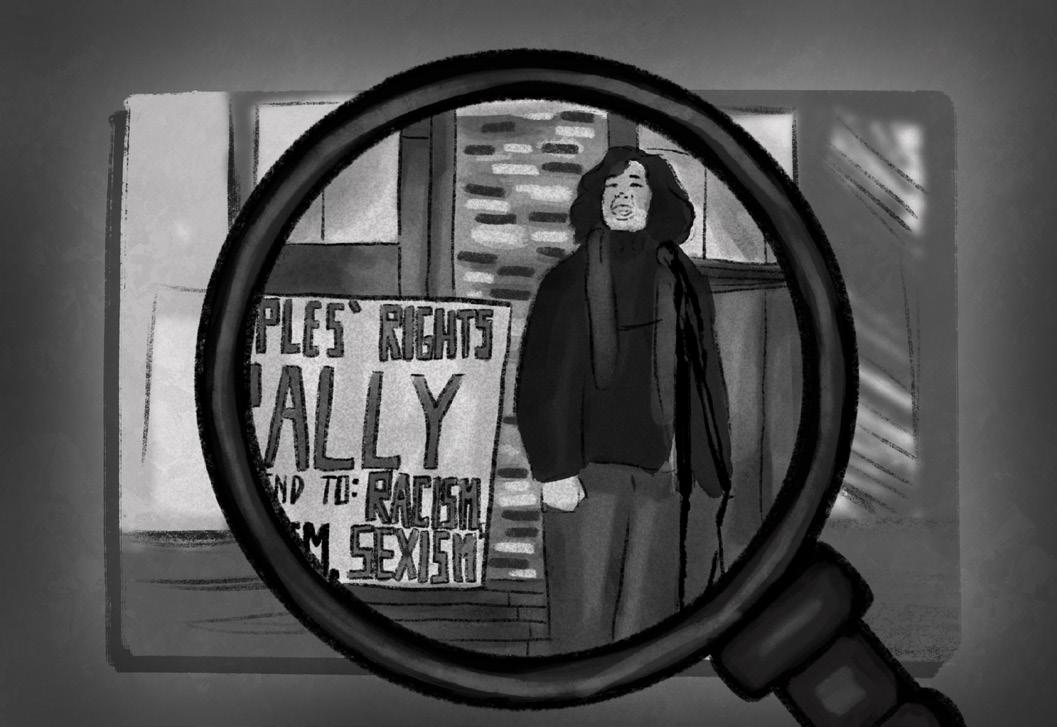
advocacy organization. She is the first Hispanic person to serve as Domestic Policy Council director. Muñoz opened the discussion by emphasizing the importance of public policy when addressing current political issues. “Public policy is a major
“The job is to be there no matter what and to implement the law no matter what,” Muñoz said. “Their job changes if you change the law. Their job doesn’t change if you change the president and that is essential in a democracy.” Muñoz said that with the 2024 general elections approaching, it is necessary to educate people on social policy because it influences Americans’ everyday lives. “We have fallen into this notion that hardcore economic issues come first and maybe we can get to social policy,” Muñoz said. “That’s the kind of order that shows up in Washington. We are seeing movements begin to assert a different philosophy around social policy, which is, ‘We can’t function unless we take care of this.’ ”

Commissioned by former University President Mary Sue Coleman in 2022, the IHP formed a framing and design committee to develop a five-year plan that defines their research priorities, nominates new topics of research and articulates the values of the project. Since the release of their first report in July 2023, the IHP has built upon that base by launching new research endeavors and extending support to external projects.
In an interview with The Michigan Daily, Lewis explained that the concept of IHP has been years in the making. While officially announced under Coleman’s leadership, the creation of the IHP was a recommendation by former University President Mark Schlissel prompted by the controversy over the name of Yost Ice Arena.
“The IHP was created almost two years ago as an idea coming out of the actions of a previous entity called the President’s Advisory Committee on University History,” Lewis said. “There had been a recommendation to take Yost’s
According to IHP managing director Jenni Brady, given that the University is a decentralized community, it was important for the IHP to expand its capacity and build a team that would represent all three campuses. The committee appointed three directors of research for each campus: Camron Amin for U-M Dearborn, Lisa M. Lapeyrouse for U-M Flint and Jay Cook for the Ann Arbor campus.
“We know that we have a big expansive scope, but we don’t have to do everything at once,” Brady said. “And so the more people who come in, the more outreach and involvement and engagement we can do.”
Cook led the 1817 Project, one of several new research projects that have begun under the IHP. The 1817 Project: Land, Culture, Memory, and Repair digs into the University’s historical relationship with Indigenous people through archival examinations of federal land grants and other sources of funding.
In an interview with The Daily, Rackham student Richard
Bachmann said he became a research associate with the 1817 Project after reaching out to Cook in search of research opportunities that intend to interact with a broader community beyond academia. “I like the fact that I’m not just writing this for 10 people at a conference, but potentially also for a larger audience,” Bachmann said. “Not every historian can pull something off like the 1619 Project that has this immediate, huge impact, so I thought I liked that collaborative aspect of the research.” Bachmann said the research sheds light on the responsibility the University holds in the eradication and repression of Indigenous communities.
“You can make the argument that the University has, first of all, profited immensely from Indigenous land dispossession,” Bachmann said. “But it also, as an institution, plays an important role in what we call, often abstractly, this project of settler colonialism because it is a player in the land — the flipping of lands and the transformation of land into financial assets.”
According to Lewis, the IHP also recognizes that research of
this kind has been happening, even prior to its formation, so in conjunction with their objective to initiate research is the intention to support existing projects.
“We realized that there was a lot of activity already on campus,” Lewis said. “There were faculty who had already been engaged in the examination of the University’s past. They were working on public history projects, working on books, working on student land projects on the Ann Arbor campus, on the Flint and Dearborn campuses, and so we realized that we were building on the work that had already been started.”
With the hope of supporting projects that operate outside of the IHP, two grants were introduced to the campus community: the IHP Research and Engagement Fund, which offers funding to faculty to pursue research and creative endeavors that dig into the University’s history, and the IHP Teaching Fund, which enables faculty to design new courses or implement IHP-related elements into existing courses.
GOT A NEWS TIP? E-mail news@michigandaily.com and let us know. INDEX Vol. CXXXIV No. 23 ©2024 The Michigan Daily NEWS ............................1 ARTS.............................4 MIC..............................6 OPINION..................8 SPORTS......................10 STATEMENT.......TABLOID michigandaily.com For more stories and coverage, visit Follow The Daily on Instagram, @michigandaily michigandaily.com Ann Arbor, Michigan Wednesday, April 17, 2024 ONE HUNDRED AND THIRTY THREE YEARS OF EDITORIAL FREEDOM UMich students gather for pro-Israel rally The rally marks six months since Hamas’ Oct. 7 attack on Israel CAMPUS LIFE TESS CROWLEY/Daily Design by Natasha Eliya Wolverines for Israel hosts a rally commemorating six months after Oct. 7 to show support for Israel and demand the hostages are brought home on the Diag Wednesday afternoon. The Ford School of Public Policy hosted the first day of the inaugural Dean’s Symposium Thursday. The symposium, entitled “Policy Innovation for Our Times,” will include keynote speakers, panels and discussions regarding issues like child care, climate change, racial justice policy and artificial intelligence and technology. During the morning portion of the event, 30 U-M community members gathered in Annenberg Auditorium to listen to a discussion on U.S. social policy between Public Policy Dean Celeste Watkins-Hayes and Cecilia Muñoz. Muñoz, a U-M alum, served as director of the Domestic Policy Council from 2012 to 2017 and director of the Office of Intergovernmental Affairs from 2009 to 2012 under former President Barack Obama. Before her appointment to the Obama administration, Muñoz was a senior vice president for the National Council of La Raza, now UnidosUS, the nation’s largest Latinx
GOVERNMENT
BAUM & ANDREW
JAVIER Daily Staff Reporter
SHANE
BAUM Daily Staff Reporters ANNA
ADMINISTRATION Read more at MichiganDaily.com ARNAV GUPTA Daily Staff Reporter Read more at MichiganDaily.com
SEAS hosts workshop on turning climate anxiety into climate action
Speakers discussed emotional responses to challenges like climate change

approach to climate action, instead of one based only on data.
The University of Michigan School for Environment and Sustainability hosted its “Leadership for Turning Climate Anxiety into Action” workshop
Wednesday evening. About 75 U-M students and community members gathered in the Rogel Ballroom in the Michigan Union, which was set up with small tables for collaborative discussions.
The event began with networking and icebreaker activities before the keynote speech from climate activist Sarah Jaquette Ray, author of “A Field Guide to Climate Anxiety: How to Keep Your Cool on a Warming Planet,” and chair and professor of the environmental studies department at California State Polytechnic University, Humboldt. In her speech, Ray called for a more emotional
“Emotions dictate decision making, the retention of knowledge, our capacity to build community, our ability to come up with the most responsible actions … and the ability to engage in meaningful work despite setbacks,” Ray said. Ray touched on what she has learned about emotional responses to crises like climate change and said people can be strategic with their emotional intelligence.
“The science of this stuff tells us a different case of emotions can shape climate action in really different ways,” Ray said. “Certain types of emotions activate more wise decision making, the ability to stay involved when things get really hard, even just the retention of knowledge is actually an emotional thing.”
Toward the end of her speech, Ray said she has seen her students
struggle with pseudoinefficacy, the idea that people are less likely to attempt to solve a problem if they think it is too large to fix.
“When the climate crisis is portrayed as so big, and we are portrayed individually as so small and so powerless, that creates a sense of pseudoinefficacy,” Ray said. “So (if) we live in a society of doom and gloom, we’re going to create the results of doom and gloom.”
In an interview with The Michigan Daily, event attendee Martha Laramore-Josey, a student at Barnard College, said her main takeaway from the presentation was how Ray handled the complexity of climate change.
“I feel like a lot of times, climate conditions are kind of big,” Laramore-Josey said.
“I liked when she actually put it into actionable items, to break it down that way.”
LSA senior Chloe Jeanmonod attended Wednesday’s event and
participated in the student panel on climate anxiety Thursday morning. In an interview with The Daily, Jeanmonod said her experience as a biopsychology, cognition and neuroscience major has led her to explore the idea of climate anxiety.
“I think a lot about the psychology and mental feelings that come with that type of pressure and tension and nervousness when it comes to what’s happening with climate change,” Jeanmonod said.
Jeanmonod also said that one of her biggest takeaways from the speech was Ray’s point about the importance of community.
“I really liked that she highlighted the sense of community that you need when tackling climate change and anxiety,” Jeanmonod said.
“She mentioned … that it wasn’t the Industrial Revolution that caused climate change, but the breaking (of) community and relationships that started those
Matt Gutman talks mental health and leadership at Ross
The chief national correspondent for ABC News visited as part of the Sanger Leadership Center’s Leadership Dialogues speaker series CAMPUS LIFE
Matt Gutman, chief national correspondent for ABC News, visited Ann Arbor Monday evening to speak on his experiences with mental health and promote his second book, “No Time to Panic: How I Curbed My Anxiety and Conquered a Lifetime of Panic Attacks” as a part of the Sanger Leadership Center’s Leadership Dialogues speaker series, a series of events that invites various leaders to the Ross School of Business to advise and impart lessons learned to students. The event was moderated by Ethan Kross, University of Michigan professor of psychology and management. Gutman spent years researching anxiety and panic attacks for his most recent book. He said he was inspired to write the book and attend speaker events such as the Leadership Dialogues speaker series because he wanted to share how his panic attacks challenged his work as a reporter despite outwardly appearing brave.
“I was so ashamed and embarrassed of having panic attacks,” Gutman said. “There was this sense of reputation that had flourished for my delivery on air. It’s like I’m geared to do this kind of work, and I have this acute sense of fear.”
As a seasoned journalist, Gutman said it was difficult to acknowledge how much his anxiety was affecting him, emphasizing the reaction he received when sharing his experiences.
“Admitting this to my colleagues almost universally was met with a shrug,” Gutman said. “I would tell them … ‘No no, you don’t understand, I get panic attacks all the time’ and I would get an ‘Oh, sorry.’ I was afraid to go on television and do my job, afraid of being scrutinized by my peers.” Michelle Austin, assistant director of programs and partnerships for Sanger Leadership Center, said she was glad to have Gutman as a part of the series. “We want to teach students
about the importance of mental health and the importance of taking care of other people no matter what industry they pursue so they can go on to do really great things,” Austin said. “We serve all students and encourage students from different areas of studies and backgrounds — there are some incredible opportunities through Sanger.”
LSA senior Stewart Sharpe, who attended the event, said he appreciated Gutman’s willingness to be honest about his experiences struggling with mental health.
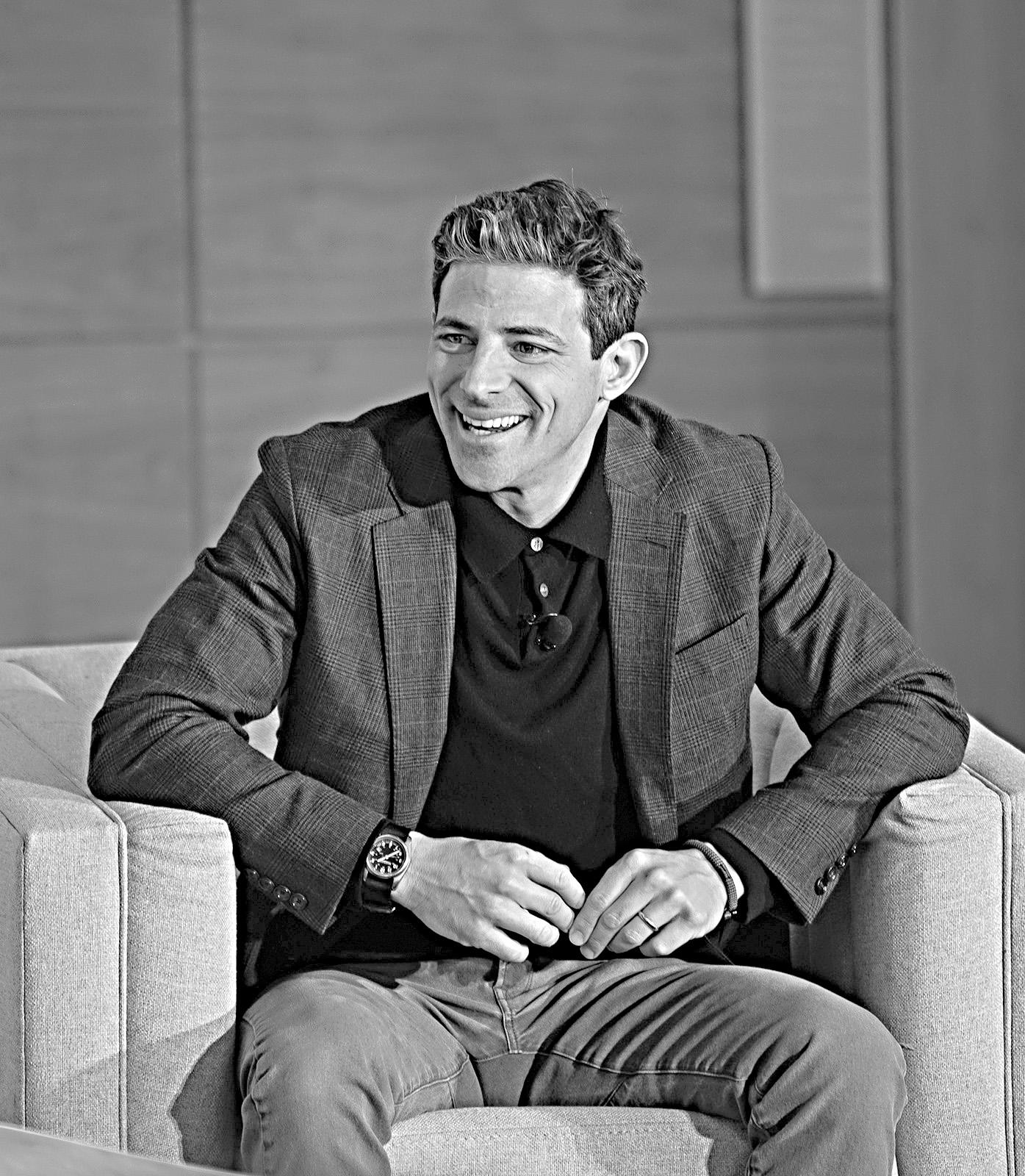
“I was hoping to connect with a candid speaker who has experiences and relatable journeys,” Sharpe said. “What I got was someone who was willing to be upfront and honest — especially to share intimate stories about times that they have struggled. I mean, it’s not easy to do that and it has only increased my respect for him.” Gutman opened up about some of the coping mechanisms that he initially used to deal with his anxiety and how he navigated through finding what works best for him. Gutman said the pressure of his job made it difficult to find healthy ways to cope with his anxiety.
“I did pushups before air because you get a rush, then it helps,” Gutman said. “I didn’t want any of the producers or anybody I worked with to know that I was taking Xanax because God forbid, any of us would have vulnerabilities, right? We have to be ‘perfect.’” Business sophomore Elizabeth Webb attended the event and said she appreciated Gutman’s vulnerability. Webb also said she thinks events such as this one are important to increase conversation on the topic of mental health around campus and in professional spaces.
The Michigan Daily — michigandaily.com News Wednesday, April 17, 2024 — 3
CAMPUS LIFE
Courtesy of Dave Brenner
field isn’t well covered,”
said. “I myself have struggled a lot with anxiety so being able to hear from people and their honest experiences is relieving. Vulnerability has allowed him to succeed in his career path and I think that really tells us a lot about his character.” DAN KIM/Daily Matt Gutman, chief national correspondent of ABC News, gives a speech at Leadership Dialogue Speaker Series in Ross Tauber Colloquium, Monday afternoon. PAIGE STALLMAN Daily News Contributor SHREYA SRIVATHSAN Daily News Contributor The Michigan Daily (ISSN 0745-967) is publishing weekly on Wednesdays for the Winter 2024 semester by students at the University of Michigan. One copy is available free of charge to all readers. Additional copies may be picked up at the Daily’s office for $2. If you would like a current copy of the paper mailed to you, please visit store.pub.umich.edu/michigan-daily-buy-this-edition to place your order. RACHEL MINTZ and RILEY HODDER Managing News Editors news@michigandaily.com Senior News Editors: Abigail VanderMolen, Astrid Code, Ji Hoon Choi, Mary Corey, Nadia Taeckens, Rebecca Lewis, Sneha Dhandapani LINDSEY SPENCER and ZHANE YAMIN Editorial Page Editors tothedaily@michigandaily.com Deputy Editorial Page Editor: Jack Brady Senior Opinion Editors: Audra Woehle, Jack Kapcar, Lila Dominus, Sophia Perrault REESE MARTIN Managing Statement Editor statement@michigandaily.com Deputy Editors: Darrin Zhou, Irena Tutunari, Liam Rappleye JACKSON KOBYLARCZ and PARINA PATEL Managing Copy Editors copydesk@michigandaily.com Senior Copy Editors: Cyrus Soonavala, Ingrid Hofmann, Lily Cutler, Liz Guenther, Logan Brown, Natalie Wise, Sage Marmet, Sarah Cortez-De La Cruz, Sofi Mincy, Tess Beiter, Tim Kulawiak ANUSHKA RAHEJA and JACOB KIM Managing Online Editors webteam@michigandaily.com ANDREW HERMAN and JOVANNA GALLEGOS Managing Video Editors video@michigandaily.com Stanford Lipsey Student Publications Building 420 Maynard St. Ann Arbor, MI 48109-1327 734-418-4115 www.michigandaily.com ARTS SECTION arts@michigandaily.com SPORTS SECTION sports@michigandaily.com NEWS TIPS tipline@michigandaily.com LETTERS TO THE EDITOR tothedaily@michigandaily.com EDITORIAL PAGE opinion@michigandaily.com ELLA THOMPSON Business Manager business@michigandaily.com DANA ELOBAID and SAMANTHA RICH Co-Editors in Chief eic@michigandaily.com PHOTOGRAPHY SECTION photo@michigandaily.com NEWSROOM news@michigandaily.com CORRECTIONS corrections@michigandaily.com Senior Sports Editors: John Tondora, Lindsay Budin, Liza Cushnir, Lys Goldman, Remi Williamson, Zach Edwards NOAH KINGSLEY and REKHA LEONARD Managing Sports Editors sports@michigandaily.com COLE MARTIN and TINA YU Managing Audience Engagement Editors socialmedia@michigandaily.com Editorial Staff Business Staff GRACE LAHTI and LILA TURNER Managing Photo Editors photo@michigandaily.com Senior Photo Editors: Emily Alberts, Jenna Hickey, Lucas Chen, Riley Nieboer, Sarah Boeke SRISHTI BAGALKOTI Creative Director RILEY STIPE and SNEHA DHANDAPANI Managing Podcast Editors podeditors@michigandaily.com ANNIKA CHINNAIYAN Sales Manager ADVERTISING wmg-contact@umich.edu ABBY SCHRECK Digital Managing Editor schreck@umich.edu MEREDITH KNIGHT and NAZIM ALI Culture, Training, and Inclusion Chairs accessandinclusion@michigandaily.com EVELYN MOUSIGIAN and FIONA LACROIX Managing Design Editors design@michigandaily.com Senior Layout Editors: Lys Goldman, Leyla Dumke SHANIA BAWEJA Managing Editor shaniab@umich.edu JACK MOESER and ZACH LOVEALL Managing Arts Editors arts@michigandaily.com Senior Arts Editors: Erin Evans, Graciela Batlle Cestero, Mina Tobya, Rami Mahdi, Rebecca Smith, Thejas Varma Senior Audience Engagement Editors: Daniel Bernstein, Devon Silver, Emma LeFevre, Ingrid Halverson, Joanna Chait, Jonah Traub, Miles Anderson, Quinn Murphy, Sydney Lesnick AYA SHARABI and JOSEPH FISHER Michigan in Color Managing Editors michiganincolor@michigandaily.com Senior Podcast Editors: Addiena Nicolaou, Clare Jones, Quinn Murphy Senior Video Editors: Darrin Zhou, Nick Lyskawa PAVAN KANNAN Managing Games Editor pavkan@umich.edu Senior Games Editor: Victor Schmitt SOPHIA LEHRBAUM Managing Focal Point Editor lehrbaum@umich.edu Senior Focal Point Editor: Irena Li Data Editors: Hasika Sridhar, Maya Mikelson Engineering Manager: Shin Lee Product Leads: Anca Fu, Jenny Do Senior Software Engineer: Marie Yu Senior MiC Editors: Maryam Shafie, Umaiyal Kogulan Senior Illustrators: Sara Fang, Avery Nelson
“Mental health in this
Webb
Haters can be bad.
Haters can be sad.
Haters can be funny.
Haters can be glad.
Everyone at the Arts desk hated this poem. But that’s part of the fun, isn’t it? Hating inspires many emotions — rage, disgust, glee. It can cathartically release our bottled-up feelings, inspire personal growth or bring people together. Think about a time when you hate-watched a movie with your friends (cough cough, “This Is Me… Now”), when your friend showed you the latest Arctic Monkeys song to laugh at it or, hell, the poem I just wrote! My friends and I
had a good laugh over it. Hating is fun!
But there’s also the flipside: to hate for hate’s sake, to punch down and destroy works of art with callous disregard. Hating can act as a simple vessel of our mean-spirited repugnance, and where’s the fun in that? Art is to be critically engaged with, not thrown away like a crumpled piece of paper. What does it mean to hate?
Our wonderful Arts writers have taken it upon themselves to answer this question; they hate, they love and they hate again, producing a collection of diverse and contradictory attitudes toward hating. There may not be a unified answer but, again, where’s the fun in that? So break down those emotional walls and prepare for the onslaught of wild, crazy or thoughtful takes you’re about to experience.
Arts
The Hater B-Side

We love to hate and, even more so, we hate to love. Caring about things is cringe. Being excited about things is cringe. Being cynical is cool, unless you do it with too much self-awareness, in which case it is, again, cringe. Cringe isn’t even a verb anymore; it is an adjective that describes the most online emotion of all: secondhand embarrassment. And what exactly do we find embarrassing? Earnestness. In the internet of porn bots, influencers, advertisers and other creatures that approach but never reach humanity, the most abominable, rebellious act possible is the expression of genuine, honest joy. It is much easier, and much more cathartic, to hate. To love a piece of art on the internet means to write an essay about its every flaw, take every criticism thrown
aspect of it, is that the hater must not actually know anything about the work that they are criticizing — knowledge creates nuance (“I thought x was mediocre, but did y well…”), and nuance is the enemy. So, the most expert haters among us, those blessed with dexterous fingers that they use almost exclusively to release pure venom into the internet are, in fact, those who do not read, play or watch anything at all. It’s a waste of time, after all, because any enjoyment that could be drawn from such endeavors is — say it with me — cringe. Let’s be honest for a second, though — as far as actually reading, playing or watching things is concerned, most of us aren’t much better. The internet makes it easier than ever to listen to a friend of a friend of a friend’s “hot take” about some lauded work of art or other, or to watch a three-hour video essay about a game that you never intend to play. I would wager that most of us have experi-
my body in the way most befitting of this B-Side; by telling you some of my opinions (or “hot takes,” if you will) about pieces of art that I haven’t actually watched, read, played or listened to. “Neon Genesis Evangelion” I don’t have anything against “Neon Genesis Evangelion.” As a writer myself, I love to coopt vaguely Christian imagery, and the characters of this world seem wonderfully complex, at least if other people’s opinions about them are anything to go by. I love Evangelion so much that I own a pair of shorts emblazoned with a portrait of Mari (Maaya Sakamoto, “Bakemonogatari”), whoever that is. These were a gift from my father, who I assume bought them for me because Mari looked vaguely anime-ish. My problem with “Neon Genesis Evangelion” lies squarely in the fact that “Gurren Lagann” is the greatest thing ever invented, and that any time spent watching or thinking about NGE is time that the collective of
the mech fights aren’t cool, like in “Gurren Lagann,” and the character designs aren’t nearly as cool, either. There’s also a girl who really likes Thursdays, a penguin and Nagito Komaeda (Megumi Ogata, “Jujutsu Kaisen 0”). “Gurren Lagann” was made by (almost) the same people that made “Evangelion,” only a few years later but rejects its apparent nihilism with maybe the most “indomitable human spirit” philosophy ever put to film. Some of the coolest people in my life have tattoos inspired by “Gurren Lagann,” and many also own necklaces based on the show (someone I know even received one as a wedding gift). Now, is anybody getting tattoos or necklaces of that Shinji kid? He doesn’t even have cool glasses. How am I supposed to sympathize with him?
If I wanted to experience teenage angst and daddy issues, I would look in a mirror. At least “Gurren Lagann” (figuratively)
punches the self-loathing-me figure back into shape and tells it to “grit those teeth,” and frankly, that’s a message that more people need to hear.
“Dune”
I’m just tired of hearing about “Dune”. I was planning to read the original series at some point, but now it’s popular, so where’s the fun in liking it? You’re only supposed to enjoy obscure, niche, underappreciated things. A friend told me that she prefers the David Lynch adaptation of “Dune” to the new duology, and maybe I’ll start saying that I do, too. Or that I prefer the original books (more accurately, the Alt Shift X video about them), or the one where God Emperor Paul says that Hitler wasn’t evil enough or whatever. I mean, come on, the movies didn’t even have the balls to say “jihad.” If you’re going to appropriate Middle Eastern culture and iconography,



4 — Wednesday, April 17, 2024 The Michigan Daily — michigandaily.com
THEJAS VARMA Senior Arts Editor
at least go all the way. Sonic the Hedgehog (series) It has often been said that Sonic had a rough transition to 3D. I empathize: I’m in the midst of a rough transition to womanhood. Nonetheless, I cannot help but envy that blue bastard who has maintained a most loyal fan base through decades of stumbles. And for what? Recycling Green Hill Zone? Having the most infamous game of this century? In my lifetime, Sonic has gone through, like, five reboots. That’s five too many — at that point, just end the series and start a new one, Sega. You have a perfectly usable mascot in the Football Manager guy. From the outside, though, it all feels very artificial. The Sonic series was originally conceived as a way to out-cool Mario (as if such a thing is difficult). But Mario has already been out-cooled, so Sonic has just been stuck in an endlessly torturous cycle of samsara. ‘Neon Genesis Evangelion’ and the art of blindly hating media ARIEL LATWIK Daily Arts Writer Design by Evelyn Mousigan SPEC I A L E VENT $150 OFF WHEN YOU ORDER IN PERSON JEWELRY UP TO UNIVERSITY OF MICHIGAN OFFICIAL RINGS OFFICIAL RINGS Order your class ring with a Jostens rep on Thursday & Friday, April 11th-12th Thursday & Friday, April 18th-19th Monday & Tuesday, April 22nd-23rd 10am-6pm, 420 Maynard St ORDER NOW AT JOSTENS.COM Read more at MichiganDaily.com Read more at MichiganDaily.com
Going from niche, secondparty Sony developers to a top seller of 2022 with Elden Ring, FromSoftware has grown as an unrivaled cultural force over the past 15 years. Along the way, they’ve maintained a certain allure: Their games have no microtransactions, ship fully featured and not half-finished and get one or two high-quality, gamescale updates per game. All that is great! I do not hate FromSoftware — they are my favorite AAA game developer by a mile. Instead, I want to talk about a different point — many people’s favorite FromSoft game, Dark Souls 3. I hate Dark Souls 3.
Before I start trash-talking it, Dark Souls 3 is exceptionally fun, precisely because of its finely tuned difficulty, variety of gameplay approaches and the way it centers learning and honing at the core of its design. Each boss is challenging, almost frustrating, and relies on awareness, memory, reflex and execution to beat. It comes together to build real satisfaction in victory, something
that even great games often struggle with. So, how could someone hate this?
Well, it isn’t perfect. If it was a Furi-style boss rush game, I might feel differently, but this is the third Dark Souls game. These games have made a name for themselves as coherent, atmospheric 3D spaces just as much as they are tough fights. In DS3, the bosses reach higher highs than ever before, but there’s still so much missing. The game taught me to ignore the connective sections between bosses. It lacks a centralized way to draw players off the main road. The bosses are fun, but they’re so fun they make everything else feel like a bit of a waste of time. That’s not really it, though. The core of this series is reliant on telling a story with the gameplay. It uses exploration, combat and the dark fantasy setting to build a game that isn’t just fun but imparts a coherent philosophical idea on the nature of struggle. If that sounds like a lot to live up to, it is. For all the “prepare to die, most difficult game ever” labeling the original Dark Souls game gets, the most profound thing about it is how quiet it is. It’s a peaceful game that does very little to draw you in. Instead, the difficulty becomes
something the player goes and seeks out. You have no time crunch. You have no one telling you where to go or why. This quiet is then contrasted against the frustration of navigation. Dark Souls 1 is slow, clunky, slightly awkward and often stacked out of your favor. You can push through it, building a sort of philosophical masochism, a drive to find a harder challenge to best. It becomes more bearable with cooperation, though none of your allies survive until the end of your quest; they briefly light the way, making the game easier and the pain more bearable. What makes Dark Souls so special among games is that philosophical element. To put it simply, it’s a game with ideas — ideas that feel much larger than just what is fun and exciting, which is exceptionally rare in AAA spaces. It casts that aside in favor of being a complete and beautiful piece of art despite its rough edges. We have a lot of fun boss fight games, but we only have one Dark Souls. Of course, that’s the thing about it. This could be a story of capitalism dashing the art against the rocks, but Dark Souls 2 had other plans. How do you maintain

the sense of intrigue of exploring a new world in a sequel? Do you reveal parts of the world to be more complicated than they appeared? Do you set it in the adjacent country? No! Complete curveball! Dark Souls 2 takes place in a world so much further in the future than Dark Souls 1 that there are no obvious commonalities between the games. Aesthetic? Completely different. Characters? Completely different. The metaphysical reality of the world? Decaying beyond recognition. As a sequel, Dark Souls 2 calls on the philosophical endpoint of the first game — a cold nihilism broken by brief jolly cooperation — and applies it to the fabric of its world. Physically, it makes no sense, as the literal relationship between locations can’t be sustained, the world drawing to a confusing end. This

I love TV more than anything. I love movies, too, but there’s something about a serialized medium that just hits the sweet spot to feed my insatiable appetite for a good story. TV sitcoms and teen dramas get to be funny in ways that comedy movies never dare to venture toward; their commitment to fun is just as important as their commitment to being our most important cultural forum. My commitment to TV makes it especially painful to hear people dismiss it as “the stupid version of movies,” almost as painful as hearing film bros go on about “prestige television” as an exception to the rest of the art form’s alleged vapidity.
TV has always been a culturally devalued art form. This, in part, is a sentiment carried over from the inception of TV. When it was a newborn getting its first glimpse of the world, TV remained in the home where women had control over what was being watched. TV was for women and film was for men — the misogynistic undertones were blatant. It needed to be fun for the whole family, an activity to gather all the neighbors for a night of bonding and spew as many ads as possible to keep it going between episodes. Old sitcoms like “Leave it to Beaver” and “The Honeymooners” played into this static approach to storytelling with formulaic plot lines and cookie-cutter representations of nuclear families. Refusing to take risks on more compellingly relatable plot lines for anyone outside the conventional family unit, TV gained the reputation of being homebound, consumerist, brain-rotting garbage.
But, even among these flat storylines and decidedly flatter techniques, there was (and still is) great value to shows made during this prehistoric era of television. It’s worth looking back on to analyze the ideology of the time; what does the housewife character in every ’50s sitcom tell us about women’s roles at the time? How do their portrayals of the family unit compare with
the reality of families watching at home? Why the hell did people think this was funny back then? These are all questions that we can and should ask about the old brain-rotting garbage on the “idiot box,” which honestly isn’t even that fun to watch.
But TV is so fucking fun to watch now. Thank God for the TV revolution, right?
Like I said, I love movies, and I’m grateful for the impact they’ve had on television. It was only through the incorporation of cinematic techniques that television was able to become more sophisticated in its approach to storytelling. TV became more individualized with cable channels aimed at different audiences rather than a holistic family-audience model. By the ’90s, we had MTV for the angsty teens, Nickelodeon for the bratty kids and, of course, the megastar that is HBO, for the refined, older audiences. TV ceased to only mirror one small part of the world and began to narrowcast with more style, more drama, more emotion and more nuance through the rise of “quality TV.”
Here’s where we get the good stuff, where we get the pretentious film bro goldmine of “The Sopranos.” I like “The Sopranos.” It brought mob stories from exclusively film to television, followed interesting, morally gray leads and challenged its audience to interpret its very carefully laid out themes. In the words of my Film, Television, and Media professor Daniel Herbert, there is pre-Sopranos TV and there is post-Sopranos TV, and I am so grateful to live in a post-Sopranos world. I appreciate the impact the show has had in shaping this art form that I love so much. But I’m not going to sit and listen to some patronizing, sexist speech from film bros about how it’s the be-all and end-all of television as if that’s the only gold nugget among the chump-change that is TV.
My problem with that idea is that it holds “The Sopranos” and its “prestige TV” siblings (i.e. “Breaking Bad,” “Mad Men,” “Succession”) as the brilliant exception to television’s inherent inferiority in comparison to Film (capital F).

the gameplay too:
confused, crazed, dying and blind. It makes the moments of clarity and recognition of the world of Dark Souls 1 through the fog hit so much harder. The discovery of an old set of armor from Dark Souls 1 feels that much more exceptional in the face of all this chaos. This is not for everyone. The Michigan Daily — michigandaily.com Arts I hate Dark Souls 3 Wednesday, April 17, 2024 — 5 HOLLY TSCH Daily Arts Writer I hate pretentious film bros and ‘prestige TV’ MINA TOBYA Senior Arts Editor Design by Hailey Kim Design by Evelyn Mousigian The Michigan Daily Crossword Sunday, April 14, 2024 — Puzzle by Marissa Corsi 1 2 3 4 5 6 7 8 9 10 11 12 13 14 15 16 17 18 19 20 21 22 23 24 25 26 27 28 29 30 31 32 33 34 35 36 37 38 39 40 41 42 43 44 45 46 47 48 49 50 51 52 53 54 55 56 57 58 59 60 61 62 63 64 65 66 67 68 ACROSS 1. Bro's sib 4. Driving hazard 7. ___ Field (Green Bay Packers' stadium) 14. Mauna ___, the largest active volcano on Earth 15. Year in Madrid 16. Fast-drying artist's medium 17. Leatherworker's hole-puncher 18. Pet doctor 19. Fencing thrust 20. Thin, liquid-activated artist's medium 23. Hamilton's bill 24. Coffee shop or hotel amenity 25. World's largest particle physics lab based in Switzerland 26. Sub station? 28. "Platoon" setting, colloquially 29. YouTube Premium perk 31. Apple on a desk? 32. Three in Florence 33. Make a mistake 34. Bold 36. With 25-Down, the undefeated NCAA Women's D1 Basketball Tournament champions and home to Coach Dawn Staley 40. Cul-de-_____ 42. Used to be 45. Women drivers' org. 46. Broke the silence 48. "From ____ Z" 49. Pupil's place 50. Ignore 51. Carrot nutrient 54. Mo. of the NCAA D1 Basketball Tournament 55. Basketball center's locale ... or a visual hint to 2-, 13-, 25-, and 47-Down 58. Laundry leftover with a lost companion 61. Computer programmer Lovelace 62. Plant seeds 63. Thick artist's medium 64. Young chap 65. QB Manning 66. Feel the heat 67. Burrell and Dolla Sign, et al 68. An unfashionable nerd, to Aussies DOWN 1. BBQ side dish 2. Women's March Madness runner-up and home to Caitlyn Clark 3. Mineral-covered expanses 4. Franchise QB Brett who played at 7-Across for sixteen seasons 5. The smallest change? 6. Start fighting 7. In the _____ luxury (indulgent lifestyle) 8. Order of beetles 9. Married woman's title 10. Drive-_____ (hit-and-run incidents) 11. Thrilled 12. Helpers 13. Repeat NCAA Men's D1 Basketball Tournament champions, slangily 21. Swedish Bluetooth inventor 22. Lemon's partner 25. See 36-Across 26. Excavate 27. Big bird 30. Scrub sites 35. Tibetan beast of burden 37. Elevated 38. _____ Fridays (restaurant chain) 39. Owns 41. Fishy Peruvian meal 42. Power unit 43. Stalled 44. Eventually 46. What the moon may cast on the Earth during an eclipse 47. Men's March Madness runner-up with an impressive hype train 50. Urban pollution problems 52. Tattoo artist, essentially 53. Some tablets 56. Mardi Gras city, colloquially 57. Nest part 59. Vulcano of "Impractical Jokers" 60. Spookiest mo. Read more at MichiganDaily.com Read more at MichiganDaily.com
splinters into
Bosses are
我像妈妈一样爱 (I Love Like Mother)
I do not want to write about cut fruit.
But it would be a lie to deny that one of the first ways I learned about love was through a plate of sliced apples. I can’t help but frown at the tired cliche of the “Asian love languages,” but I know they’re true. Grades.
Food. Service. A mother who only knows how to love like it is work, to put others before herself, to act in their best interest even if they do not want that. I read once the Mandarin word for love, 爱, is almost exclusively reserved for romantic love — that the phrase 我爱你 (I love you) is rarely said between family. Later, I asked my mother how she would say she loved me in Chinese, and she laughed and said she only says that in English. “In Chinese, we just do it,” she told me.
When it came time for me to love in my own intimate relationships, I emulated her love. I was dutiful. Listened to the things my partner liked and disliked. Always excelled at gift giving. Paid for Ubers if it was too late to walk home. Cooked dinner my partner would like even if I didn’t. I wrote a good portion of my first boyfriend’s college essays for him and tutored him for the SAT (he got a perfect 1600). I cleaned rooms and did dishes. Built flat-packed furniture. In my first semester of college, I skipped so much class to be able to FaceTime my long-distance boyfriend every day — I failed a class I was already taking passfail.
I let the familiar love swallow me whole because it was the only way I knew how to love. A selfsacrificing love, one that hurts. I put what I thought was my most loving self forward, loved the only way I knew how and grew frustrated when the familiar love could not be returned to me. Anything else felt invalid — never mind the fact I was too young, that at 17, 18, 19, love should not come before everything else, should not be a wound. Never mind my memories of growing up feeling suffocated by that love, being the only child of two immigrants, loved so hard I yearned to breathe air instead of love. I ached because it seemed I would never receive this love, and my devotion

to it plunged me endlessly into patterns of codependency and unhealthy attachment. Now I am looking at that familiar love from the outside for the first time in my life. I’ll spare you the details of how I got here.
In October, I met a person who, after much heartache, opened my eyes to the idea that there was such a thing as love that did not hurt. It took a lot of love that did hurt, with them and people before them, to see this. I spent so long feeling deprived of love because I lacked the familiar, painful love I wanted. When this person posed the question of why I thought love needed to hurt, I had nothing to say. Things didn’t work out. But at the end of things, though I was left with a leaden heart, I was even more so left with forgiveness and love. They had given me a love that felt as pure as my mother’s, yet not so burdensome. I still drew on this love for strength, enduring past the lifespan of our relationship, pure as ever. It did not feel tainted. And in moments of clarity, outside of the hurt of what I had lost, I wondered if perhaps they were right that love
does not have to hurt. I have since been trying to reconcile this new kind of love with the familiar love I craved. I started by attempting to understand this new love better. Raised in a culture that does not spotlight emotion or the unpacking of trauma, I have long been opposed to self-help books. I think they are corny. I rejected the idea that someone else might understand my feelings better than me. But then I realized I didn’t even understand my feelings myself, and I decided to let go of my pride. I started with All About Love: New Visions by bell hooks, a book I’d seen all over the internet. hooks’ position as an academic theorist made it feel like an easier choice to start with — the book’s analytical nature comforted me like I was reading for class, not trying to piece myself together in the wake of emotional wreckage.
hooks starts All About Love by defining love, using M. Scott Peck’s definition: “The will to extend one’s self for the purpose of nurturing one’s own or another’s spiritual growth. … We do not have to love. We choose to love.”
It seemed to suit my definition of love, one marked by affection and unending care. But I kept reading, learning how hooks describes affection and care as being just components of love. The new sort of love made more sense. It was more complete, more balanced. And soon enough, the lack I had felt so acutely made sense too. I was used to a love in which care swallowed everything else. I had always thought that that was a near-perfect love, tarnished only by a lack of affection and emotional openness, and so if I could emulate it but add those missing components, my work in love was done. I knew how to love. My ignorance and the unwarranted confidence it gave me led me to love in a way where affection and care swallowed everything else. Simultaneously, I resented my partners’ inability to reciprocate that familiar love, even though giving it wounded me. As relationships came and went, I grew convinced no one could love as wholly as I did, and I would simply have to accept love that did not live up to my expectations.
But even when I did receive the familiar love I still felt unfulfilled. I know now this is because of the needs that this kind of love neglects. I did not understand what those needs were, and I blamed my lack of fulfillment on the absence of the constant, “perfect” love I wanted. The feeling of lack was not a lack of love, but the ache of longneglected pillars of love I had never received. As I work on this new understanding of love, there is one thing that I still did not feel completely settled in. It felt wrong to deride the great love I had been given. hooks describes a childhood environment where vital components of love are lacking as dysfunctional, even loveless. How could I say that about my mother’s love, when still, even despite what it lacks, it is still the love I have felt the strongest, most unconditionally?
To declare that dysfunctional or loveless would be to disparage not just the way she loves but the way of an entire culture – a heritage of love. My mother loved the only way she knew how, she broke generational cycles of
Seeking heaven without wings
Exaltation rests in the recesses of a mother’s love. On the mantle in my dream house, there is no other idol but a framed portrait of my mother. I bend and break my resolve, effortful contortions that leave me with invisible bruises. All so I can earn a ticket to heaven’s gate, for no one but my mother holds the key. In the beginning, there was no me. She lived and breathed to bring about my existence. Within her heart was the barely audible beat of mine, and she saw my soul long before it was allowed to unfold its shaky legs like a sweet fawn does, the prospect of the whole wide world as big as the patch of grass and the mother deer. For some time, she was the omnipotent creator of my world. My limbs, my heart, my eyes, the safe haven of our single bedroom — my living was her jurisdiction and the world I was given was created by her careful hands. To me, this was not a stretch from receiving handpicked stars from every inch of the sky. It follows that my fall from her good graces simply shatters each bone in my body and drains the oxygen from my lungs for I am not a fallen angel; I am merely my mother’s daughter.
i. godless
My mother and I pray to different gods. She is a selfproclaimed Catholic who attends mass and leaves halfway through. She remains silent during psalms and prayers, deeming her lack of fluency in English an embarrassment that is unfit for her god. Day after day she assumes a role, and time after
time her mother finds her piety equivalent to child’s play. Why are your daughters so removed from the church? Look at everyone else. Why have you allowed them to be godless? She can consume her fill of communion crackers and wine, but her consumption does not transfer to her misguided children. Devotion is the only answer. Pray when you feel lost, pray when you need help, just pray. Prayer should be your first instinct when you face one of God’s trials and there will be many, but you must not dare lose your conviction. Who am I if not a child, a fresh start, the perfect blueprint. There is only one righteous path, and she is doing me a favor by rooting my feet at precisely the right spot before I have the chance to dream of leading myself astray. I do not know how to tell her that she sees the utility in my existence for the rectification of having lost her mother’s love. This family heirloom is one I would rather not possess. I bury it underneath fresh soil, but I am still not free. I follow in my mother’s footsteps, adding another entry to the ledger of women who have clipped their own wings for a chance at proving themself worthy of heaven. In my dreams, I stitch together the plethora of feathers I plucked out one by one. They welcome me home by taking back their usual place rooted at my vertebrae, and once we are whole again, I soar.
ii. eternal debt
My god has no name nor image because only in moments of deplorable weakness do I allow myself to succumb to prayer. Each word I dare to think feels
racks up another reason for forgiveness, a debt I know I could never pay off, even after death. I alone must sojourn life without the best-laid plans picked and plotted for me. I heave the shovel upon my own frail shoulder and blaze trails that go in circles, searing the same blades of grass until they are charred black and lifeless. Maybe my mother held onto this shovel before me, or maybe she continues to hold onto her own. Simply by rooting my feet into my own patch of grass, I have sinned. I take my daily dose of guilt before I head out the door in my usual state of disorientation. My mother is all I have ever known, and yet she has never known me. Her love is fleeting, its elusiveness depleting. I have trouble separating whether I derive life from her pride or if I can only start to live if I set that pride aside. I can no longer romanticize the tumult of anticipatory grief and must convey how diminishing it feels to seek heaven without wings.
iii. the adult
My child self clings to my shirt sleeve and never wants to let go. She feels lost and a little loveless. She is luminescent with hope, brimming with the purity of a child’s trust. I feel like an amalgamation of every age I have ever been and beckon for their ghosts to hold my hand. I think I have a good head on my shoulders, and I want to prove myself to them, to reassure them that all is indeed not lost and that life does not end once childhood does, it actually begins. Con gái của m ; “My daughter, mine,” my mom used to soothe me. The words were inlaid with
violence, she put in the work to love hard. It is the love I will most admire for the rest of my life. Her actions seem aligned with hooks’ definition of love as a willingness to extend one’s self to nurture another’s spiritual growth; but yet the language it manifested in — food, grades, academic enrichment, extracurriculars I didn’t care for — fell short in so many ways. How could I cope with the imperfection of the love I have felt the most?
I did not know the answer to these questions, but I knew who might. I called my mom to tell her what had happened and, more importantly, ask her about love. I cried to her and asked her how giving such intense love had not torn her apart like it was tearing me apart. Her answer to me was, “I think you need to take a break.” I told her I knew that, and it wasn’t an answer to my question. She told me I was still young and stupid. I had never gone without that love and did not know how to appreciate it. “There’s not enough of you to give someone that kind of love yet.”
I still do not know what kind of love is right for me, or would be right for me right now. I have yet to arrive at a conclusion that feels like it reconciles the love I’ve known with the love I am capable of. Instead, I am taking my mom’s words to heart and spending time without the constant presence of the familiar love. The familiar love had come to make up so much of my identity that I lacked a strong sense of self outside of it, and I was forfeiting opportunities to come into myself because I feared the loneliness that comes with letting go. And now, as I bear that love’s absence, I find myself growing to fit the space it once took up.
Love is what sustains us. I would not be who I am if not for that familiar love, and I fear a life without its full force. But as hooks writes, “Learning to face our fears is one way we embrace love.” Past that fear lies another love, more whole than the familiar love but as pure and as powerful. Though I have tasted it, I am not ready for it yet. Still, though, there is so much love in me, so much love I can still give, and that will guide me through the fear that lies between me and that perfect love. Someday I’ll love how I’ve always wanted, and it will not swallow me whole.

6 — Wednesday, April 17, 2024 MiC The Michigan Daily — michigandaily.com NOAH MOHAMED MiC Columnist
Mohamed/MiC
Noah
fraudulent. I do not believe enough. I do not deserve divine intervention. Each prayer I make
honeyed affection and adoration and I allowed myself to soak in that warmth that touched every inch of my skin. The words themselves were dealt out few and far between their angry counterparts, hurled with malice and an unsavory, unforgiving air that always managed to nestle deep into the corners of myself that I could not reach, like a simultaneous thorn that would not budge and a leech that would unceasingly drain me. My child self cries rivulets of tears and I understand her. My sole objective was to know my mother and hold her hand. Take pieces of me for safekeeping, but do not render me empty. What a silly request, the words unheeded entirely. I continue to do the work of mending what I have lost. Emptiness is not my destiny. My mother does not have to be my exaltation. To love and lose and still be kind, to walk the earth feeling real after regurgitating what has poisoned me from the inside out— I pat myself on the back and continue my search for reasons to welcome another sunset. NGHI NGUYEN MiC Columnist Lauren Hahn/MiC
Stomachache

I wake up in a cold sweat, my stomach spasming in pain. It must’ve been something I ate last night. I glance around as I adjust to my surroundings, reminding myself that I am safe lying in my actual bed, the one in my real home. Surely, if I wait a few minutes the pain will subside; I can handle a simple stomach ache as I have countless times in the past. A couple sips of water will help, I reach for the cup praying for a taste of relief — it doesn’t come. Fingers press into my stomach and I’m forced to toss my legs over the side of the bed, torso folding toward the ground. Before the tears welling in my eyes can fall, I stand and stumble down the hallway, glasses left somewhere in the mess of my drawers. The world is a strange blur of shapes, but not the ones I am now accustomed to. Now, I search for streetlights on late
nights, silhouettes of laughing friends surrounding me, puddles of spilled drinks, feet jumping to fast music. In this hallway, my hands reach out and find only the stable wooden railing of the staircase. I use it to navigate silently towards the door that my 7-year-old self knows will creak if I push too hard. I feel like her, eyes shockingly wide despite the post-midnight hours, hands sweating, voice hoarse as I walk up to the left side of the large bed and whisper softly, “Mamma.”
I shake her gently, already feeling terrible for disrupting the little rest she allows herself, half my mind telling me to crawl back to my room. I should know how to handle this, how to handle things, on my own by now, Shouldn’t I?
A turning in my stomach makes me hesitantly shake her again and this time, she startles awake. She stands quickly and instructs me to sit where she slept peacefully moments ago, setting up pillows for my
comfort. She moves with ease, her hands remembering how she cared for her jaan when I ran to her late at night, when the noise coming from the bathroom sounded like a ghost and the light under the door were watchful yellow eyes. She rushes downstairs, returning with a bottle of mehti and a cup of water. I sit up straight to swallow the dry, crushed seeds, washing it down fast and standing to return to my room where I would wait until the herbs worked their magic. She sits me back down when I immediately grimace from another cramp, settling in next to me.
With her arm around my back, I let my head fall where her heart is. Somehow I still fit in that crook the same way I did 10 years ago, her measured breaths under my ear more effective in calming my pain than any pill. My dad rests undisturbed on my other side while my mom transfers her vitality to me through whispered duas and circles massaged on my back.
The pain begins to subside, but still won’t let me rest. I am left with the dangerous combination of silence, darkness, and thoughts; thoughts that move faster than light, I’m leaving tomorrow again and somehow, it fills me with more apprehension each time. The first night there is always a losing competition against the unbridled joy of home. Mamma’s breaths grow slower as she falls into shallow sleep but I feel the urge to grab her by the shoulders and wake her, hear her voice as if I will never hear it again. I want to rewind to a time when her presence was constant, the mundane arguments of dishes and laundry and respect are a worthwhile trade-off to never have to ask myself again, Isn’t 18 supposed to mark the transition to adult?
It seems wrong that I still call Mamma every day. It must be nice to redefine home wherever you go because it’s built by the walls you’re surrounded by and not the love of your childhood. I wish I had the strength to
separate past and present but the girl in the mirror at home has full cheeks and a full belly. Her naive mouth opens wide with laughter that steals all the air from her lungs and I don’t want to lose her. She only makes mistakes that are easily forgivable; she doesn’t worry about the conditionality of her parent’s love. I miss the ease of her thoughts.
I clench tighter to the bed sheet under my sweating hands and nestle my face into my mother’s neck.
I’m scared to rely on her too much because my uncle is in the hospital and every day there is one more person to pray for and every day she seems incrementally more exhausted.
I know it’s selfish that I’m worried about myself but How can I not be?
As I try to match our heartbeats, the tears that well in my eyes are not from the pain in my stomach but the fear in my heart. Friends have told me that it is difficult to know me entirely, that I have a lot of walls up and it’s something I’ve worked on for a long time, becoming more knowledgable. It seems more clear now, in the clarity of silence, why that has never worked. Putting a shield up against the world is safe when the people on your side are everything you need. People who know you’re sad from the slight crease between your eyebrows and heal you before you can name the illness. What from afar may appear as a cage to me is a cradle, my self-imposed prison is plentiful as long as warmth burns brightly inside. The arms of love embracing me tightly while fingers tuck loose curls behind my ears. I withdraw to the safety within this circle of life because I fear that nothing else will feel as safe, that one day I won’t fit comfortably under her arm and sometime soon, sometime in the next few minutes I’ll have to stand, throw off the blanket and quietly walk back to my own room.
•
•
•
•
MiC The Michigan Daily — michigandaily.com Wednesday, April 17, 2024 — 7
more: vision2034.umich.edu
AMATULLAH HAKIM MiC Columnist
Wherever we go, progress follows. Learn
Over the next 10 years, U-M will focus our excellence and resources to advance: Our vision is to be the defining public university of our time, boldly exemplified by our innovation and service to the common good.
Life-Changing
Education
Human
&
Health
Well-Being
Democracy,
& Global Engagement
Civic
Environmental Justice
Climate Action, Sustainability &
Wherever we go, progress follows.
Sara Wong/MiC
My interest in politics and activism has always been a central part of my identity. Whether or not I should be vocal about current issues around the world has never been a question for me. But as I grew older, I realized this sentiment was far less common than I’d thought; I would regularly talk about issues I was immersed in with people in my life, only to find out it was the first they were hearing of it. With growing division in the political sphere, the stark difference between the politically outspoken and politically apathetic also continues to grow.
The politically apathetic and the politically outspoken often split into distinct social circles, whether it be in organizations or friend groups. Growing division is also visible at higher education institutions and within student social circles. Those who maintain apolitical personalities constantly state how they don’t know enough about a situation to speak on it — chances are you’ve come across someone who claimed this themselves. While there is no way for everyone to be completely educated on every political issue happening today, there is a difference between not wanting to speak on an issue to avoid misspeaking and simply choosing not to educate oneself. There’s a common thread among those who get to opt out
of these conversations. Many of the people who lean on crutches of “not knowing” have socioeconomic, racial or gender privilege. It is not that privileged people simply choose not to engage in politics, rather that being able to choose whether you engage is a privilege in and of itself. People whose finances, health, safety and general well-being are intertwined with current political issues don’t have the ability to not care. Activism becomes a personal fight. Minority groups are almost always forced to defend themselves against laws that discriminate against them. Those who are the most politically outspoken are those who are directly impacted by marginalizing policies. It is a luxury to not have to be outspoken because your identity is not at risk.
As University of Michigan students, we are privileged to be receiving an elite higher education. College students are, in general, entering the workforce and ascending toward positions of power. There are certainly dangers when the most influential people in systems are removed from politics, as they are the ones making the most influential decisions. Unless students and others within our generation begin to become informed on how to be better citizens than previous generations, we will continue to not only repeat history but prevent society from evolving socially. Discriminatory bills that target minority groups like the LGBTQ+ community, antiabortion laws or people of Color, are gaining increasing traction
in governing bodies across the country. As more bills are passed with the intent to discriminate, this is not the time for Gen Z to be apathetic.
We must understand the importance and value of political awareness and engagement so that our generation does not become even more apolitical. As Gen Z continues into adulthood — with many of us being able to vote in this upcoming election — there is no reason for people our age to remain politically uneducated. Privileged groups cannot get tired and lose the desire to become educated. There are numerous resources, especially for college students, to become educated on world affairs and keep up to date, such as our libraries, professors, student political organizations and other students. It is no longer just about being educated; we need to come together to bring civic change and engagement wherever and whenever possible.
We hold power in numbers, so we need group efforts to make real change. Students in particular need to take advantage of the resources in front of them. Research websites, university libraries, professors and other passionate students are all within reach. Millions do not have access to the information that students have through universities. Students should take advantage of all available chances to influence the world around them. Education is not a choice, but a privilege; therefore, students should acknowledge their responsibility to educate themselves.


On March 24, I sat in Hill Auditorium attending the University of Michigan Honors Convocation, an annual event dedicated to acknowledging the hard-won academic achievements of U-M students. The event recognized James B. Angell Scholars, William J. Branstrom Prize winners and University Honors recipients. The audience was filled with proud families, many coming from out of town to celebrate the accomplishments of their students.
The ceremony was progressing smoothly until, during the procession of Angell Scholars across the stage, protesters interrupted the ceremony and raised signs calling for the University’s divestment from companies profiting off of Israel’s military campaign in Gaza. Later in the event, as University President Santa Ono attempted to deliver a speech commending student accomplishments, a group of roughly 100 students shouted him down while accusing the University of supporting genocide. The event was shut down after Ono was unable to complete his speech and the hundreds of protestors left the auditorium. The protest continued outside of the ceremony, a plan organized by the 80-organization strong TAHRIR Coalition. Protest is a valuable vehicle for bringing significant issues to the forefront of campus discourse, but it loses merit when it becomes dedicated to interrupting socially valuable events. When civic demonstration occurs in a public space, observers can simply ignore the protesters and go about their day — something everyone has the unequivocal right to do. People who sympathize with the demonstration can even join in. Although the purpose underlying many demonstrations is to make observers think about the relevant issue, no one can be compelled to engage with a protest when they have no desire to do so. The audience at the Honors Convocation was seeking to commemorate the achievement of students, not engage in a protest over the University’s investments in companies that support Israel. When the demonstration ended the event early, it was largely students and parents who suffered. The students whom the University sought to celebrate did not deserve to have their achievement profaned in the name of anyone’s chosen political cause. I, alongside most of the students in attendance, was looking forward to receiving the University’s recognition.
The student honorees also have no impact on the allocation of the University’s endowment, meaning that the majority of the ceremony’s attendees had no direct relation to the substance of the protest. We were simply collateral damage.
In an interview with The Michigan Daily, LSA sophomore Alexander Kaminski said the protest interrupted a time when he and other students had family members from out of town in attendance.
“I very much support people sticking up for their opinion,” Kaminski said. “I just think the manner in which this was done was disruptive of people’s achievements and taking away from something that people deserved.”
Kaminski’s point perfectly captures the adverse impact of disruptive protest on the campus community. Every student at the University has a nearly absolute right to freely express their opinions, but students also should be able to celebrate their accomplishments without risk of being the unwilling audience of a political message. These concepts are not mutually exclusive. Ann Arbor has countless public areas where people can express their dissatisfaction, many of which pro-divestment groups have already used. The preservation of free speech is vital to any university campus, but such freedom cannot rightfully extend to the disruption of University events. You have a right to speak your mind, but you shouldn’t be able to infringe upon the experiences of others.
Supporters of the demonstration argue that there had to be a disturbance in order to convince the University that divestment is necessary, or that a socially valuable cause should take precedence over respecting events and their audiences.
In an interview with The Daily, SAFE board member Zainab Hakim referred to the convocation as “one of those things that symbolizes, ‘Oh, we’re such an excellent university,’ like Leaders and the Best. … You can’t call yourself the best if you’re funding genocide, if you’ve repeatedly refused to divest from Israel.”
Regardless of whether such a statement is accurate, it certainly doesn’t justify robbing students of their potentially sole opportunity to be commended for their efforts.
A public protest would have reached an audience of comparable size without depriving families and students of anything. Such a protest would not create a comparable uproar, as was certainly intended by the Honors Convocation demonstrators, but the need to create a disturbance cannot
reasonably outweigh the ability of students to engage in socially beneficial activity. Any potential expressive value created by disrupting an event is eroded by the harm caused to participants.
Further, audiences and administrators do not look fondly upon protesters who interrupt their events. Observe the environmental protests that have become more common around the world. When climate demonstrators threw soup on Van Gogh’s “Sunflowers,” or when fossil fuel opponents delayed the U.S. Open by gluing their feet to the court, they have only fostered animosity within the audience they sought to convince. Such environmental protests cannot be separated from the demonstration at the Honors Convocation. Although the Honors Convocation protesters spoke directly to Ono while the climate protests were intended for a broader audience, both sets of demonstrations interrupted a socially beneficial event in order to make a political statement.
Research from the University of Pennsylvania indicates that the American public disapproves of nonviolent disruptive protest. Forty-six percent of respondents express that these tactics decrease their support for efforts to address climate change, with only 13% reporting increased support. According to YouGov polling, 78% of Britons say disruptive protesting hinders rather than helps a cause. Not only does disruptive protest fail to garner for significant causes, it can even reduce approval. The University’s response to the Honors Convocation has already shown this antipathy to disruptive protest. Ono issued a statement supporting the rights of protesters to speak their minds but asserted that such rights cannot contravene the ability of students and families to engage in a joyous event. As Ono said, all U-M students deserve to participate in the University’s traditions, whether that participation takes the form of protest or commemoration.
The University has also requested feedback on a proposed Disruptive Activity Policy intended to curtail disruptive protest. If taken into effect, the policy would prevent anyone from impeding the “free flow of persons” or the operation of official U-M activities, including speakers and classes. Although the University could have worded the provision regarding the free flow of individuals more specifically, the draft policy clearly articulates the twin rights of students to engage in protest and other expressive activities.
Iwrote my sample column for The Michigan Daily Opinion section the night before the application was due. This wasn’t for a lack of trying to write it the entire week before. In reality, I was having a hard time because I thought that every word I wrote had to be ground-breaking information no one had ever heard before. After hours of writing, rewriting and convincing myself I was, for a lack of better words, opinionless, I officially gave up. I rewarded my failure with an episode of “Sex and the City.” Halfway through, I realized I
was talking to the TV, giving my opinions based on what I had learned during my first year of college. I grabbed my computer and started writing the most taboo, controversial things I have ever written. By the time I was done cutting out all unnecessary examples and descriptors, it wasn’t half bad. In lowering the risk of needing to curate an original thought, I reaped higher rewards than ever before: writing as an Opinion columnist. That is, the low-risk, high-reward mentality allows for a more stable approach to personal and academic success.
“High-risk, high-reward” is a term generally used in the realm of business, referring to investments that have the potential to receive a higher return rate if you
put your money at a higher risk. But when we look beyond the scope of the office, we can see how this mindset influences our generation’s everyday habits.
The all-or-nothing approach is often romanticized in a more glamorous way than it deserves, not taking into account the realistic implications and possible downsides. When we hear people say, “go big or go home,” we normalize the idea that in order to achieve great success, we must first embrace a significant risk. This logic can be damaging, as it overlooks the value of examining thoughtful approaches and potential outcomes.
A common feeling among students, especially when it comes to extracurriculars and social lives,
is the overwhelming urge to think we are not doing enough, even if we are doing everything at once. It is crucial to remember that when we join clubs or attend events, not every interaction, personal or professional, has to be viewed as a networking opportunity. This is not to say that casual social interactions shouldn’t allow for opportunities for professional growth; rather, it is important to recognize the benefits of taking pressure off-campus engagement. Putting yourself out there in any social context without the stress of building lifelong relationships or professional contacts will ultimately allow for a higher reward. As a result, you have the chance to meet a diverse group of people, form unexpected bonds and open
doors for future opportunities, big and small, that you would’ve otherwise missed out on.
From an academic standpoint, it is important for students to understand that not all things have to call for such high stakes. At any stage of their academic career, students place extreme pressures on themselves to submit revolutionary work and interact in the classroom in a way that impresses others, so much so that it hinders the creative process. By embracing the low-risk, high-reward mentality, students are able to better engage in discussions, even without fully developed ideas, allowing for growth rather than a setback. This might mean valuing the process of learning over the outcome, and moving beyond
the tangible success of receiving a good grade.
This perspective also reaches beyond academia and allows for small, everyday changes to make significant differences in our lives. “Low-risk,” in this case, means making incremental changes when completing certain day-to-day tasks, something that has been proven to yield substantial changes over time. Gradually compiling habits and investing in yourself at close to no cost reinforces motivation and allows you to reap the higher reward of a healthier lifestyle.
Although it may be easy to confuse “low-risk” with laziness, that is not the point.
8— Wednesday, April 17, 2024 Opinion The Michigan Daily — michigandaily.com
GOLUBOVIC Opinion Columnist
BRINA
AKOURI Opinion Columnist
ANGELINA
LUCAS FELLER Opinion Columnist The right way to protest JEREMY WEINE/Daily Students and Ann Arbor community members protest the University’s investment in Israel outside Hill Auditorium after the Honors Convocation, Sunday afternoon March 24. Zach Ajluni Julian Barnard Jack Brady Hayden Buckfire Seth Gabrielson Jack Kapcar Siddharth Parmar Tate Moyer Tom Muha Nick Rubeck Moses Nelapudi Maximilian Schenke Rushabh Shah Nikhil Sharma Lindsey Spencer Anna Trupiano Audra Woehle Zhane Yamin Alex Yee Sarah Zhang Stanford Lipsey Student Publications Building 420 Maynard St. Ann Arbor, MI 48109 tothedaily@michigandaily.com Edited and managed by students at the University of Michigan since 1890. Unsigned editorials reflect the of f icial position of The Daily’s Editorial Board. All other signed articles and illustrations represent solely the views of their authors. EDITORIAL BOARD MEMBERS SAMANTHA RICH AND DANA ELOBAID Co-Editors in Chief ZHANE YAMIN AND LINDSEY SPENCER Editorial Page Editors SHANIA BAWEJA AND ABBY SCHRECK Managing Editors Design by Natasha Eliya Trying the low-risk, high-reward mentality Read more at MichiganDaily.com Stop saying you’re uneducated about politics Read more at MichiganDaily.com

examples of receiving a gift but not being able to truly enjoy it because of the expectation to pay the gift giver back in the future.
Capitalism is more than just an economic and political system. It impacts the fabric of American society in numerous ways, creating a social reliance on transactional relationships, in particular. We have intertwined capitalism and intimacy, expecting to get something out of the connections we have. The reason this form of relationship is so common is because it is exhausting as an individual to give everything for nothing in return.
A transactional relationship is an exchange of favors that ensures no one gives without receiving something in return. Each individual is willing to assist the other — as long as their efforts are matched.
Rather than considering an act of kindness a favor, recipients often think of these actions as a form of debt. The capitalist system produces this effect. Some refer to modern capitalism as “debtism,” because, among other things, the current measurement of debt in the U.S. GDP is actually 400%. Here, the economy and personal relationships have much in common. Failing to compensate a friend for their acts of kindness equates to racking up debts. It is a consistent cycle in which acts by friends need to be “repaid.”
Growing up, my own family members cautioned me numerous times that “everything is a debt at the end of the day.” They cited
Imagine your friend gives you an expensive item for a special occasion, and instead of feeling nothing but appreciation, you wonder how you will pay them back. This thought process contributes to viewing gifts as debts and favors as IOUs.
Transactional relationships are common at the University of Michigan, where many student organizations emphasize the importance of networking. Instead of getting involved in clubs and fraternities to make friends, students are pushed to join organizations to meet people that can benefit them in the future. Although socializing to make friends and networking appear similar on the surface, individuals network to better themselves professionally. Thus, students get to know each other to ensure they will be in good standing in the future — a transactional process in nature.
Seeking network connections rather than genuine friendships is another byproduct of capitalist culture. Capitalism promotes the most efficient allocation of resources. Interest factors drive the market, which, in turn, influences production and the buying and selling of goods. Personal relationships reflect this trait: People seek relationships that will benefit them, whether they lean toward individuals with similar interests or higher social standing. It is tricky to determine whether transactional
relationships are justifiable. When they begin, they serve a good purpose — ensuring that both individuals in a friendship benefit from their relationship. This stems from the way capitalism influences desire. Functions of the market bleed into social organizations, which sways the wants and needs of the population. Heavily relying on transactional relationships, however, can easily force us into an inescapable, toxic cycle. Once we experience a relationship based on equal give and take, we begin to quantify other relationships as well.
Social psychologists argue that many people enjoy giving to others without the guarantee of receiving anything in return. This is an optimistic view. While it is true that there are individuals who are genuinely pure-hearted and expect nothing for their kindness, the transaction is still there. A good feeling rewards people for their seemingly selfless contributions. Even when someone does something nice without the expectation of being materially repaid, they gain what psychologists call a “helper’s high.” When people engage in a nice act for someone else, they experience a rush of oxytocin and dopamine. Although a chemical reaction is not a material item, it is an emotional form of payment that makes the giver feel better about themselves for being kind to another person. The transaction is not monetary, and it does not have to be.
Dating apps are the means by which 20% to 40% of people meet their partner, and they have produced countless happy relationships. But there’s a lot of information that you can’t get from a dating app. How much should you trust this person? What are they like in a social setting? How will they respond to rejection if things go south after a couple of dates? What are the values they live their life by?
People have been asking these questions long before dating apps existed. The answers came from firsthand experience with potential partners as well as information from extended social networks, including shared friends. Unfortunately, we are members of one of the loneliest generations so far. Members of Gen Z have fewer friends than previous generations and are considerably less likely to have had sex or have been in a relationship than Millennials were at the same age. This is part and parcel of the loneliness epidemic, the decreasing socialization among young people and the decline of third places — places outside of work or the home where people can socialize. Considering that lack of shared trust is a common reason that couples part ways, it makes sense that some research shows that people who meet offline enjoy happier relationships. Friendship allows trust to grow before romantic feelings. Fifty-six percent of young
women who use dating apps have received an unwanted, sexually explicit message, precisely because there are few consequences to this behavior. Even off the apps, the third places where Gen Z can meet potential romantic partners are arguably inferior to the spaces offered to previous generations.
People often meet sexual partners at bars, aided by alcohol and loud music, but that same loud music drowns out conversation, which degrades the quality of discussion two mutually interested people could have. But if bars are places where people mainly meet sexual partners, or at least if bars are notorious for this sort of thing, they create an environment that is hostile to other forms of socialization. As a result, people have to be more judicious with who they talk to at bars for fear of an unwanted sexual undertone, which further sabotages these settings as third places. The idea that you shouldn’t date your friends is backed by many examples of friendships ruined by unrequited love and its unintended consequences. You’ve likely heard of or been witness to the fallout of intragroup affections. The friendships that are most susceptible to this sort of damage are the ones with the least trust. This includes the trust that an affectionate friend will hear the “no” and be able to continue on, and trust that the friendship is strong enough to survive a breakup. The fallout of intragroup relationships or affections is a downstream result of how we stigmatize these behaviors, and also because of how we view friendship in this generation.
With fewer close friends, the potential loss seems all the more cataclysmic. Are you willing to risk burning your entire social network for the chance of a fulfilling romantic relationship?
Likewise, if this behavior is stigmatized, it raises the stakes of failure. Any expression of romantic fondness is then a violation of shared norms, and if norms are violated, a friendship is all the more likely to combust when the element of romance is thrown in.
Violations of those perceived norms can, of course, be dealt with effectively. With more benefits for all involved parties, friends are better able to trust each other. You should probably only express interest in the close friend you’ve been flirting with on nights out if you trust them enough to let you down easy, or you trust yourself enough to be let down easy.
The potential risk of a foiled friendship can be mediated by tapping into your entire social

circle, not just your immediate friends. If you’re pining for your lab partner who you’re friendly with but will have to work with every day for the rest of the semester, it makes sense that you’d keep those feelings under wraps. Likewise, if someone is central to your social life on campus and you’re feeling a tinge of feelings for them, you might want to chew on that a bit more. But if you have good chemistry and banter with a friend of a friend, a set up could be more than beneficial, and the shared consequences could be quite minimal if that chemistry fizzles out after a couple of dates. Opinion The Michigan Daily — michigandaily.com Wednesday, April 17, 2024 — 9 GISELLE SESI Opinion Columnist Buy my friendship Design by Natasha Eliya Insured by NCUA *Rates are based on creditworthiness. Special rates valid for one year from date of graduation from an accredited university. Subject to credit approval. Additional limitations, terms, and conditions apply and are subject to change without notice. To celebrate your achievements, UMCU has two special offers for graduating students. 8.00% APR* Personal “My Choice” Loan Special 0.50% OFF YOUR AUTO RATE on Auto Loans New to UMCU* YOUR FINANCIAL PARTNER before and after graduation Wherever life takes you, will be there. JULIAN BARNARD Opinion Columnist Date your friends, and set them up too Read more at MichiganDaily.com Read more at MichiganDaily.com
Michigan’s late offense outduels Iowa, 6-5, to complete series sweep
For a while, it seemed like the Michigan softball team’s series finale against Iowa would be different than the first two games.
After two high-scoring shootouts in Saturday’s double–header, Sunday’s game saw each team score only one run through the first five innings.
But in the sixth and seventh innings, both offenses came alive.
With a walk-off single by freshman designated player Ava Costales ultimately sealing the game, the Wolverines (29-14 overall, 9-3
The game’s quiet start came thanks to lights-out pitching on both sides. The Wolverines’ ace, junior right-hander Lauren Derkowski, got off to a hot start, allowing no hits through the first three innings. She kept Iowa’s small-ball offense contained in the infield, forcing six ground-
Big Ten) toppled the Hawkeyes (16-18, 4-8) to complete the series sweep. Michigan’s late offensive push and Costales’ walk-off are just the latest example of the Wolverines making a difference in their biggest moments. “I’m thrilled that we have elevated our competitiveness,” Michigan coach Bonnie Tholl said. “… They are not afraid of the moment. And we have to keep building that in them, but they’ve proven that they’re embracing the difficult, embracing the moment.”
outs in those first three frames. On the other side, Michigan took a 1-0 lead quickly, capitalizing on two of its first three batters reaching base. That initial success, though, quickly faded away. Iowa right-hander Devyn Greer may have needed a few batters to get in rhythm, but once she did, the Wolverines had trouble matching her.
Michigan not only went scoreless through the next four innings, it didn’t even record a single hit.
“(Greer) was spinning the ball off the plate against our righties, and we were just not getting ourselves on time,” Tholl said.
“When the pitcher has the ability to nip the edge of the plate, the pitch doesn’t look enticing to hit-
ters, and so we take a lot of pitches and they get called strikes.”
While the Wolverines struggled to find their rhythm, Iowa’s offense woke up, taking a 3-1 lead in the top of the sixth. The Hawkeyes still weren’t driving the ball very far, but they were finding just enough room in the infield to make things happen. Facing a late-game deficit just like it did in both games on Saturday, Michigan rallied back right on cue with a four-run frame of its own. A leadoff home run from senior first baseman Keke Tholl kicked things off before Costales gave the Wolverines the lead with a three-run shot to left field, following two singles that put runners on base. The back and forth battle con-
tinued as the game progressed. Down 4-3, Iowa fought back, taking the lead with two more runs on a two-run homer by second baseman Jena Young — just the Hawkeyes’ fifth long ball of the season. The top of the seventh inning kept Iowa’s hopes of avoiding the series sweep momentarily alive. Heading into the bottom of the seventh all tied up, Michigan was forced to respond once again.
And the Wolverines did.
After two infield hits and a walk loaded the bases with one out, Costales blooped a ball into left-center between the infield and outfield. It was just deep enough to drop for a seriessweeping hit, and Michigan’s second walk-off in as many games.
On Sunday, with their backs against the wall for the third straight game, it seemed like the Wolverines’ luck may have ran out. Playing from behind so often seemed unsustainable, and after all, Michigan’s offense has shown inconsistent streaks this season.
But somehow, someway, in the last two innings, the Wolverines found one more way to come out on top for a third straight comeback win.
“When I went up there, (Iowa) took time, talked for a little bit, but I was vibing to the music, I was just trying to stay chill,” Costales said. “I went up there, I hit that ball and it certainly was not what I did in my previous at-bat but I was like, ‘It’s gonna drop,’ and when I saw it, I was like, ‘I did my job.’ ”
‘Please God, just let me hit this ball hard’: Madi Ramey’s walk-off homer caps Michigan’s comeback
Madi Ramey has five plate appearances on the year.
Two strikeouts. One groundout. One walk. The sophomore utility player doesn’t play a role suited for hits or heroics. In fact, Ramey is so rarely called to the plate that when she was, the batting stats flashed zeroes on the scoreboard looming over the leftfield wall.
But she’s also one of the fastest on the team, so Michigan coach Bonnie Tholl almost exclusively uses her to pinch run — she’s scored seven runs doing so. And on Saturday against Iowa, with the Wolverines knotted at 8-8 in extra innings with two outs and the bases empty, Tholl needed some speed.
“The inning before she had to take Ava (Costales) out and was like, ‘You’re right here, you’re gonna hit,’ ” Ramey said. “And I was like, ‘Oh man, I’m hitting third, I better get ready.’ And so when (junior right-hander Lauren Derkowski) was pitching I was like, ‘Alright, please God, just let me hit this ball hard.’ ”
For a half-inning Ramey sat in the dugout, watching Michigan’s ace Derkowski and the Wolverines’ defense try to stymie what had been a potent Hawkeye offense thus far. For those seven minutes and forty-one seconds that probably felt like an instant, Ramey waited, knowing that her at-bat could determine the game.
Derkowski and co. found three outs, but Ramey’s wait didn’t end there. She watched as freshman center fielder Jenissa Conway worked a full count then blooped a ball straight to second base. She watched as a foul ball sailed off of freshman right-fielder Ella Stephenson’s bat and into an Iowa glove inches from the Hawkeyes’ dugout. She watched as those two hitters — with far more at-bats, higher batting averages and 52 combined hits — couldn’t walk it off, let alone reach base.
The pressure was entirely on Ramey — but she was ready. “I was excited,” Ramey said. “Me and Chiddy talk all the time, we’ve been working for this. Just being able to get in the game meant a lot to me.”
Junior shortstop Ella McVey and junior left-fielder Ellie
Sieler were on the deck and in the hole, respectively, so Michigan didn’t need a miracle from Ramey. Managing a single or even a double would’ve been satisfactory.
But Ramey stepped up to the plate for her fifth plate appearance, and defied expectations with one crack of the bat.
As her first hit all year — her first home run in college — soared over the center-field wall and she strutted home to seal an improbable comeback win for Michigan, Wolverines swarmed out of the dugout to surround home plate in euphoria. Tholl’s hands quickly went from her head in disbelief to high-fiving her assistant coaches and players, because for Tholl, this wasn’t a total surprise.
“She’s been swinging a really nice bat in practice,” Tholl said. “This is someone who comes to practice every day to get better. She doesn’t complain. She’s one of the best teammates on this team. And she does things for Michigan to win. She doesn’t always have the most glorious role, but it’s incredibly important to us.”
Despite rarely slotting into
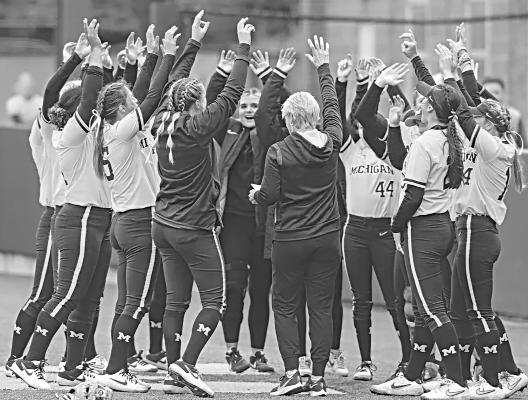
the batting order, Ramey is always there for Michigan — whether it’s on the opposing end of every player’s special handshake during opening lineups or
Second-inning struggles cause insurmountable hole as Michigan falls to Minnesota, 8-3
By the time freshman righthander Dylan Vigue had recorded five outs, he had thrown over 50 pitches. But perhaps more disheartening for the Michigan baseball team were the six runs that Minnesota had already accumulated.
In the back-half of a double header, the Wolverines (16-20 overall, 7-4 Big Ten) couldn’t overcome their early-inning woes and dropped game two against the Golden Gophers (14-15, 3-5, 8-3), 8-3.
Control issues have plagued Vigue all year, but his overwhelming potential and flashes of domination have kept him as a hope-inducing mainstay in Michigan’s weekend rotation. Once more, however, Vigue’s vice subtly overpowered any promise he showed.
“He’s young, he’s talented, and the good part for him is he’s battle tested at this point,” Wolverines coach Tracy Smith said. “But at some point, it’s gotta click.”
In his two innings of work, Vigue gave up three free bases — two walks and a hit batter. But the free passes weren’t where he got hurt. Instead, Vigue consistently got behind in at-bats, giving hitters favorable counts. In these types of situations, the pitcher is forced to throw pitches over the heart of the plate in an attempt to regain control of the battle. And the Gophers took advantage of Vigue’s mistakes.
Vigue’s control issues showed early, starting off the second inning with a walk and a hit batter. With two runners on base and only one out, he was throwing in a high-stress scenario. And it was a situation he didn’t navigate out of, as three straight singles put Minnesota up 3-0.
But the devastating blow came only one batter later as Gophers third baseman Jake Perry launched a homerun over the center field wall, pushing the score to 6-0. Vigue walked another batter before recording the final two outs of the inning, yet the damage was done and Michigan had dug itself a hole. Guised behind an offensive outburst from Minnesota, Vigue’s struggles to stay ahead in counts hurt his outing. One of the singles and the homerun came with the count at 2-1, while another single came with the count at 2-2. It’s subtle, but two-ball counts are stressful for pitchers, and hitters know that. So, the hitters knew they could pounce.
“You want to throw ahead in the count, because (if you don’t) you make yourself uber predictable,” Smith said. “And that’s the next step for Dylan, it’s learning to command.”

Vigue took the field to start the third inning, but on the first pitch he threw, Gophers right fielder Kris Hokenson punched the ball over the wall in left, ending Vigue’s day. Freshman right-hander Sachem Ramos came on in relief, allowing one more run before the innings’ conclusion, raising the score to 8-0. The Wolverines formulated a response in the bottom half of the third, albeit much more docile than their Minnesota counterparts. After a single and a walk, sophomore right fielder Mitch Voit singled to left, plating two. Both offenses went dormant after the third, but the remnants of the scoring outburst remained. Minnesota was playing to protect its lead, and Michigan was desperately trying to claw its way back into the ballgame.
Michigan broke the games’ scoring drought in the bottom of the seventh inning, but the score remained 8-3 in favor of Minnesota, and one run was a mere drop in the bucket for any potential comeback. Although Michigan’s pitching staff shut out the Gophers after the big third inning, an eight run deficit is far too deep of a hole to expect to climb out of. The second inning, with the big “6” underneath it on the scoreboard, was both the outlier and the determining factor in the game. And even within that inning, the Wolverines had their chances that they simply didn’t seize.
“The next step for (Vigue) is getting ahead in counts and pitching ahead and being able to execute put-away pitches,” Smith said. “Because even when he gets to twostrike counts, we’re not putting people away, too.”
So, as Michigan looked up at the scoreboard in the second inning, the possibility of a double-header sweep began to slip through its fingers. And when the Wolverines glanced again in the middle of the third inning and found themselves down eight, their opportunity was all but gone.
if the Wolverines need a reliable, speedy runner on base. And on Saturday, Michigan needed her at the plate when its back was against the wall.
It didn’t matter that it was her fifth plate appearance this season. All that mattered was what she did with it.
Michigan’s diligent hitting propelled by Minnesota’s shaky pitching
Cole Caruso had only one home run on the season. It’s been over a month since the junior first baseman knocked a ball over the outfield wall. But with the bases loaded and two outs for the Michigan baseball team on Sunday, all pressure laid on Caruso as he walked up to the plate. To be the batter with the bases loaded might be a blessing or curse. But Caruso delivered a blessing in the form of a grand slam, driving in the first four of the 10 total runs that Minnesota’s pitching let up.
While Caruso’s swing finished the job, the lineup in front of him set him up for success. Against wild Minnesota pitching, Michigan’s deliberate and concise hitting set Caruso up for his moment.
“If they want to walk us, by all means, they can do it,” Caruso said. “It gets us base runners. We capitalize pretty well with guys on base as of recently in the Big Ten.” The Wolverines took those walks and ran with them.
Caruso’s headlining hit was made possible by the meticulous plate appearances before him. With a runner on second base and back-to-back outs, the odds for Michigan to capitalize on the scoring opportunity looked slim.
The Wolverines remained patient in the box and drew two walks to make the inning dangerous. And with his first home run since March 6, Caruso took care of the rest.
After setting the precedent early on, the second inning went similarly. Taking advantage of Minnesota’s shaky pitching, Michigan’s watchful eye in the box set it up for success.
The inning started with junior catcher Will Rogers and graduate shortstop Kyle Dernedde getting
hit by pitches, putting two batters on the bases. The Wolverines then transitioned to small ball to bring Rogers and Dernedde home. While Michigan is known for hitting long shots, the single and sacrifice fly added to its lead.
“The swing discipline stuff that we’ve worked on all week is controlling the zone,” Wolverines coach Tracy Smith said. Loading the bases became a common occurrence throughout the rest of the game. Drawing walks combined with hitting consistent singles gave the lineup continuous chances for another big swing. However, the rest of Michigan’s batters failed to make the same hard contact that Caruso did early on.
Missing the chances for big hits stunted the Wolverines’ offense that flourished early. But in the game’s final innings, Michigan honed its eyes once more to get back around the bases.
Once again, the Wolverines added to the scoreboard in the seventh inning in another combination of a walk and sacrifice fly. Michigan knew it didn’t need another massive hit with the Gophers’ lack of control on its side. With consistent runners on base from the Wolverines’ diligent hitting, a single would do enough damage.
“It doesn’t really matter who’s pitching or what they’re throwing, just sticking to your approach for whatever it is you’re looking for,” Rogers said.
With walks aiding Michigan, the runs were there for the taking.
While the Wolverines benefited from Caruso’s shining moment, it came down to the attentive approach and breaking down Minnesota’s pitching.
That approach that set up Caruso’s grand slam, and that approach set up Michigan’s win.
The Michigan Daily — michigandaily.com 10 — Wednesday, April 17, 2024 ELI TRESE Daily Sports Writer
BASEBALL
Sports
GRAHAM BARKER Daily Sports
MARIA DECKMANN/Daily
Writer
MACKENZIE MIELKE Daily Sports Writer BASEBALL SOFTBALL SAM GIBSON Daily Sports Writer SOFTBALL
SYDNEY HASTINGS-WILKINS/Daily
Michigan’s late offense outduels Iowa, 6-5, to complete series sweep
For a while, it seemed like the Michigan softball team’s series finale against Iowa would be different than the first two games.
After two high-scoring shootouts in Saturday’s double–header, Sunday’s game saw each team score only one run through the first five innings.
But in the sixth and seventh innings, both offenses came alive.
With a walk-off single by freshman designated player Ava Costales ultimately sealing the game, the Wolverines (29-14 overall, 9-3
The game’s quiet start came thanks to lights-out pitching on both sides. The Wolverines’ ace, junior right-hander Lauren Derkowski, got off to a hot start, allowing no hits through the first three innings. She kept Iowa’s small-ball offense contained in the infield, forcing six ground-
Big Ten) toppled the Hawkeyes (16-18, 4-8) to complete the series sweep. Michigan’s late offensive push and Costales’ walk-off are just the latest example of the Wolverines making a difference in their biggest moments. “I’m thrilled that we have elevated our competitiveness,” Michigan coach Bonnie Tholl said. “… They are not afraid of the moment. And we have to keep building that in them, but they’ve proven that they’re embracing the difficult, embracing the moment.”
outs in those first three frames. On the other side, Michigan took a 1-0 lead quickly, capitalizing on two of its first three batters reaching base. That initial success, though, quickly faded away. Iowa right-hander Devyn Greer may have needed a few batters to get in rhythm, but once she did, the Wolverines had trouble matching her.
Michigan not only went scoreless through the next four innings, it didn’t even record a single hit.
“(Greer) was spinning the ball off the plate against our righties, and we were just not getting ourselves on time,” Tholl said.
“When the pitcher has the ability to nip the edge of the plate, the pitch doesn’t look enticing to hit-
ters, and so we take a lot of pitches and they get called strikes.”
While the Wolverines struggled to find their rhythm, Iowa’s offense woke up, taking a 3-1 lead in the top of the sixth. The Hawkeyes still weren’t driving the ball very far, but they were finding just enough room in the infield to make things happen. Facing a late-game deficit just like it did in both games on Saturday, Michigan rallied back right on cue with a four-run frame of its own. A leadoff home run from senior first baseman Keke Tholl kicked things off before Costales gave the Wolverines the lead with a three-run shot to left field, following two singles that put runners on base. The back and forth battle con-
tinued as the game progressed. Down 4-3, Iowa fought back, taking the lead with two more runs on a two-run homer by second baseman Jena Young — just the Hawkeyes’ fifth long ball of the season. The top of the seventh inning kept Iowa’s hopes of avoiding the series sweep momentarily alive. Heading into the bottom of the seventh all tied up, Michigan was forced to respond once again.
And the Wolverines did.
After two infield hits and a walk loaded the bases with one out, Costales blooped a ball into left-center between the infield and outfield. It was just deep enough to drop for a seriessweeping hit, and Michigan’s second walk-off in as many games.
On Sunday, with their backs against the wall for the third straight game, it seemed like the Wolverines’ luck may have ran out. Playing from behind so often seemed unsustainable, and after all, Michigan’s offense has shown inconsistent streaks this season.
But somehow, someway, in the last two innings, the Wolverines found one more way to come out on top for a third straight comeback win.
“When I went up there, (Iowa) took time, talked for a little bit, but I was vibing to the music, I was just trying to stay chill,” Costales said. “I went up there, I hit that ball and it certainly was not what I did in my previous at-bat but I was like, ‘It’s gonna drop,’ and when I saw it, I was like, ‘I did my job.’ ”
‘Please God, just let me hit this ball hard’: Madi Ramey’s walk-off homer caps Michigan’s comeback
Madi Ramey has five plate appearances on the year.
Two strikeouts. One groundout. One walk. The sophomore utility player doesn’t play a role suited for hits or heroics. In fact, Ramey is so rarely called to the plate that when she was, the batting stats flashed zeroes on the scoreboard looming over the leftfield wall.
But she’s also one of the fastest on the team, so Michigan coach Bonnie Tholl almost exclusively uses her to pinch run — she’s scored seven runs doing so. And on Saturday against Iowa, with the Wolverines knotted at 8-8 in extra innings with two outs and the bases empty, Tholl needed some speed.
“The inning before she had to take Ava (Costales) out and was like, ‘You’re right here, you’re gonna hit,’ ” Ramey said. “And I was like, ‘Oh man, I’m hitting third, I better get ready.’ And so when (junior right-hander Lauren Derkowski) was pitching I was like, ‘Alright, please God, just let me hit this ball hard.’ ”
For a half-inning Ramey sat in the dugout, watching Michigan’s ace Derkowski and the Wolverines’ defense try to stymie what had been a potent Hawkeye offense thus far. For those seven minutes and forty-one seconds that probably felt like an instant, Ramey waited, knowing that her at-bat could determine the game.
Derkowski and co. found three outs, but Ramey’s wait didn’t end there. She watched as freshman center fielder Jenissa Conway worked a full count then blooped a ball straight to second base. She watched as a foul ball sailed off of freshman right-fielder Ella Stephenson’s bat and into an Iowa glove inches from the Hawkeyes’ dugout. She watched as those two hitters — with far more at-bats, higher batting averages and 52 combined hits — couldn’t walk it off, let alone reach base.
The pressure was entirely on Ramey — but she was ready. “I was excited,” Ramey said. “Me and Chiddy talk all the time, we’ve been working for this. Just being able to get in the game meant a lot to me.”
Junior shortstop Ella McVey and junior left-fielder Ellie
Sieler were on the deck and in the hole, respectively, so Michigan didn’t need a miracle from Ramey. Managing a single or even a double would’ve been satisfactory.
But Ramey stepped up to the plate for her fifth plate appearance, and defied expectations with one crack of the bat.
As her first hit all year — her first home run in college — soared over the center-field wall and she strutted home to seal an improbable comeback win for Michigan, Wolverines swarmed out of the dugout to surround home plate in euphoria. Tholl’s hands quickly went from her head in disbelief to high-fiving her assistant coaches and players, because for Tholl, this wasn’t a total surprise.
“She’s been swinging a really nice bat in practice,” Tholl said. “This is someone who comes to practice every day to get better. She doesn’t complain. She’s one of the best teammates on this team. And she does things for Michigan to win. She doesn’t always have the most glorious role, but it’s incredibly important to us.”
Despite rarely slotting into
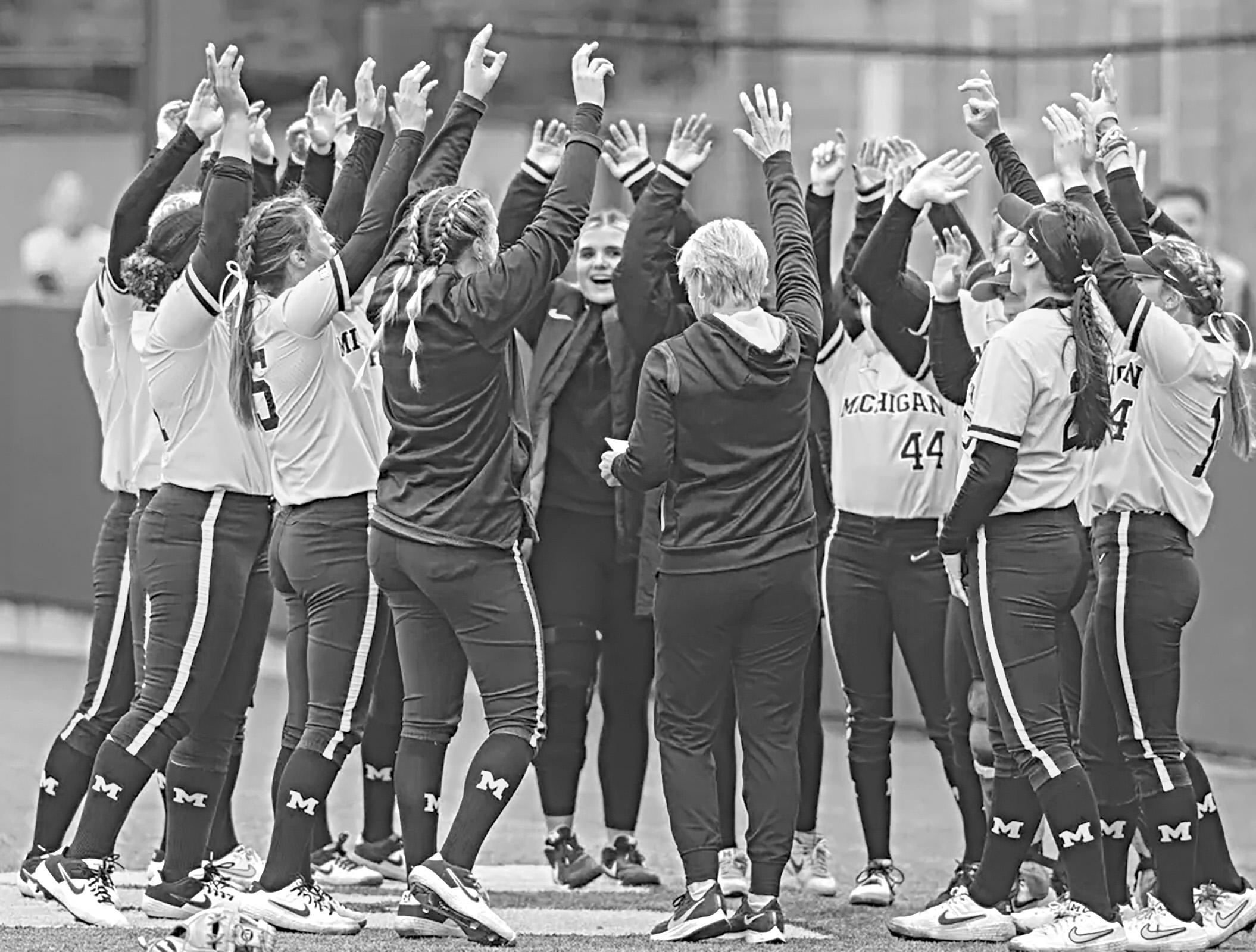
the batting order, Ramey is always there for Michigan — whether it’s on the opposing end of every player’s special handshake during opening lineups or
Second-inning struggles cause insurmountable hole as Michigan falls to Minnesota, 8-3
By the time freshman righthander Dylan Vigue had recorded five outs, he had thrown over 50 pitches. But perhaps more disheartening for the Michigan baseball team were the six runs that Minnesota had already accumulated.
In the back-half of a double header, the Wolverines (16-20 overall, 7-4 Big Ten) couldn’t overcome their early-inning woes and dropped game two against the Golden Gophers (14-15, 3-5, 8-3), 8-3.
Control issues have plagued Vigue all year, but his overwhelming potential and flashes of domination have kept him as a hope-inducing mainstay in Michigan’s weekend rotation. Once more, however, Vigue’s vice subtly overpowered any promise he showed.
“He’s young, he’s talented, and the good part for him is he’s battle tested at this point,” Wolverines coach Tracy Smith said. “But at some point, it’s gotta click.”
In his two innings of work, Vigue gave up three free bases — two walks and a hit batter. But the free passes weren’t where he got hurt. Instead, Vigue consistently got behind in at-bats, giving hitters favorable counts. In these types of situations, the pitcher is forced to throw pitches over the heart of the plate in an attempt to regain control of the battle. And the Gophers took advantage of Vigue’s mistakes.
Vigue’s control issues showed early, starting off the second inning with a walk and a hit batter. With two runners on base and only one out, he was throwing in a high-stress scenario. And it was a situation he didn’t navigate out of, as three straight singles put Minnesota up 3-0.
But the devastating blow came only one batter later as Gophers third baseman Jake Perry launched a homerun over the center field wall, pushing the score to 6-0. Vigue walked another batter before recording the final two outs of the inning, yet the damage was done and Michigan had dug itself a hole. Guised behind an offensive outburst from Minnesota, Vigue’s struggles to stay ahead in counts hurt his outing. One of the singles and the homerun came with the count at 2-1, while another single came with the count at 2-2. It’s subtle, but two-ball counts are stressful for pitchers, and hitters know that. So, the hitters knew they could pounce.
“You want to throw ahead in the count, because (if you don’t) you make yourself uber predictable,” Smith said. “And that’s the next step for Dylan, it’s learning to command.”

Vigue took the field to start the third inning, but on the first pitch he threw, Gophers right fielder Kris Hokenson punched the ball over the wall in left, ending Vigue’s day. Freshman right-hander Sachem Ramos came on in relief, allowing one more run before the innings’ conclusion, raising the score to 8-0. The Wolverines formulated a response in the bottom half of the third, albeit much more docile than their Minnesota counterparts. After a single and a walk, sophomore right fielder Mitch Voit singled to left, plating two. Both offenses went dormant after the third, but the remnants of the scoring outburst remained. Minnesota was playing to protect its lead, and Michigan was desperately trying to claw its way back into the ballgame.
Michigan broke the games’ scoring drought in the bottom of the seventh inning, but the score remained 8-3 in favor of Minnesota, and one run was a mere drop in the bucket for any potential comeback. Although Michigan’s pitching staff shut out the Gophers after the big third inning, an eight run deficit is far too deep of a hole to expect to climb out of. The second inning, with the big “6” underneath it on the scoreboard, was both the outlier and the determining factor in the game. And even within that inning, the Wolverines had their chances that they simply didn’t seize.
“The next step for (Vigue) is getting ahead in counts and pitching ahead and being able to execute put-away pitches,” Smith said. “Because even when he gets to twostrike counts, we’re not putting people away, too.”
So, as Michigan looked up at the scoreboard in the second inning, the possibility of a double-header sweep began to slip through its fingers. And when the Wolverines glanced again in the middle of the third inning and found themselves down eight, their opportunity was all but gone.
if the Wolverines need a reliable, speedy runner on base. And on Saturday, Michigan needed her at the plate when its back was against the wall.
It didn’t matter that it was her fifth plate appearance this season. All that mattered was what she did with it.
Michigan’s diligent hitting propelled by Minnesota’s shaky pitching
Cole Caruso had only one home run on the season. It’s been over a month since the junior first baseman knocked a ball over the outfield wall. But with the bases loaded and two outs for the Michigan baseball team on Sunday, all pressure laid on Caruso as he walked up to the plate. To be the batter with the bases loaded might be a blessing or curse. But Caruso delivered a blessing in the form of a grand slam, driving in the first four of the 10 total runs that Minnesota’s pitching let up.
While Caruso’s swing finished the job, the lineup in front of him set him up for success. Against wild Minnesota pitching, Michigan’s deliberate and concise hitting set Caruso up for his moment.
“If they want to walk us, by all means, they can do it,” Caruso said. “It gets us base runners. We capitalize pretty well with guys on base as of recently in the Big Ten.” The Wolverines took those walks and ran with them.
Caruso’s headlining hit was made possible by the meticulous plate appearances before him. With a runner on second base and back-to-back outs, the odds for Michigan to capitalize on the scoring opportunity looked slim.
The Wolverines remained patient in the box and drew two walks to make the inning dangerous. And with his first home run since March 6, Caruso took care of the rest.
After setting the precedent early on, the second inning went similarly. Taking advantage of Minnesota’s shaky pitching, Michigan’s watchful eye in the box set it up for success.
The inning started with junior catcher Will Rogers and graduate shortstop Kyle Dernedde getting
hit by pitches, putting two batters on the bases. The Wolverines then transitioned to small ball to bring Rogers and Dernedde home. While Michigan is known for hitting long shots, the single and sacrifice fly added to its lead.
“The swing discipline stuff that we’ve worked on all week is controlling the zone,” Wolverines coach Tracy Smith said. Loading the bases became a common occurrence throughout the rest of the game. Drawing walks combined with hitting consistent singles gave the lineup continuous chances for another big swing. However, the rest of Michigan’s batters failed to make the same hard contact that Caruso did early on.
Missing the chances for big hits stunted the Wolverines’ offense that flourished early. But in the game’s final innings, Michigan honed its eyes once more to get back around the bases.
Once again, the Wolverines added to the scoreboard in the seventh inning in another combination of a walk and sacrifice fly. Michigan knew it didn’t need another massive hit with the Gophers’ lack of control on its side. With consistent runners on base from the Wolverines’ diligent hitting, a single would do enough damage.
“It doesn’t really matter who’s pitching or what they’re throwing, just sticking to your approach for whatever it is you’re looking for,” Rogers said.
With walks aiding Michigan, the runs were there for the taking.
While the Wolverines benefited from Caruso’s shining moment, it came down to the attentive approach and breaking down Minnesota’s pitching.
That approach that set up Caruso’s grand slam, and that approach set up Michigan’s win.
The Michigan Daily — michigandaily.com 10 — Wednesday, April 17, 2024 ELI TRESE Daily Sports Writer
BASEBALL
Sports
GRAHAM BARKER Daily Sports
DECKMANN/Daily
Writer MARIA
MIELKE Daily Sports Writer BASEBALL SOFTBALL SAM GIBSON Daily Sports Writer SOFTBALL
MACKENZIE
SYDNEY HASTINGS-WILKINS/Daily
6 months for $0. Streaming, savings, and free delivery. New members only. Terms apply.
12 — Wednesday, April 17, 2024 The Michigan Daily — michigandaily.com
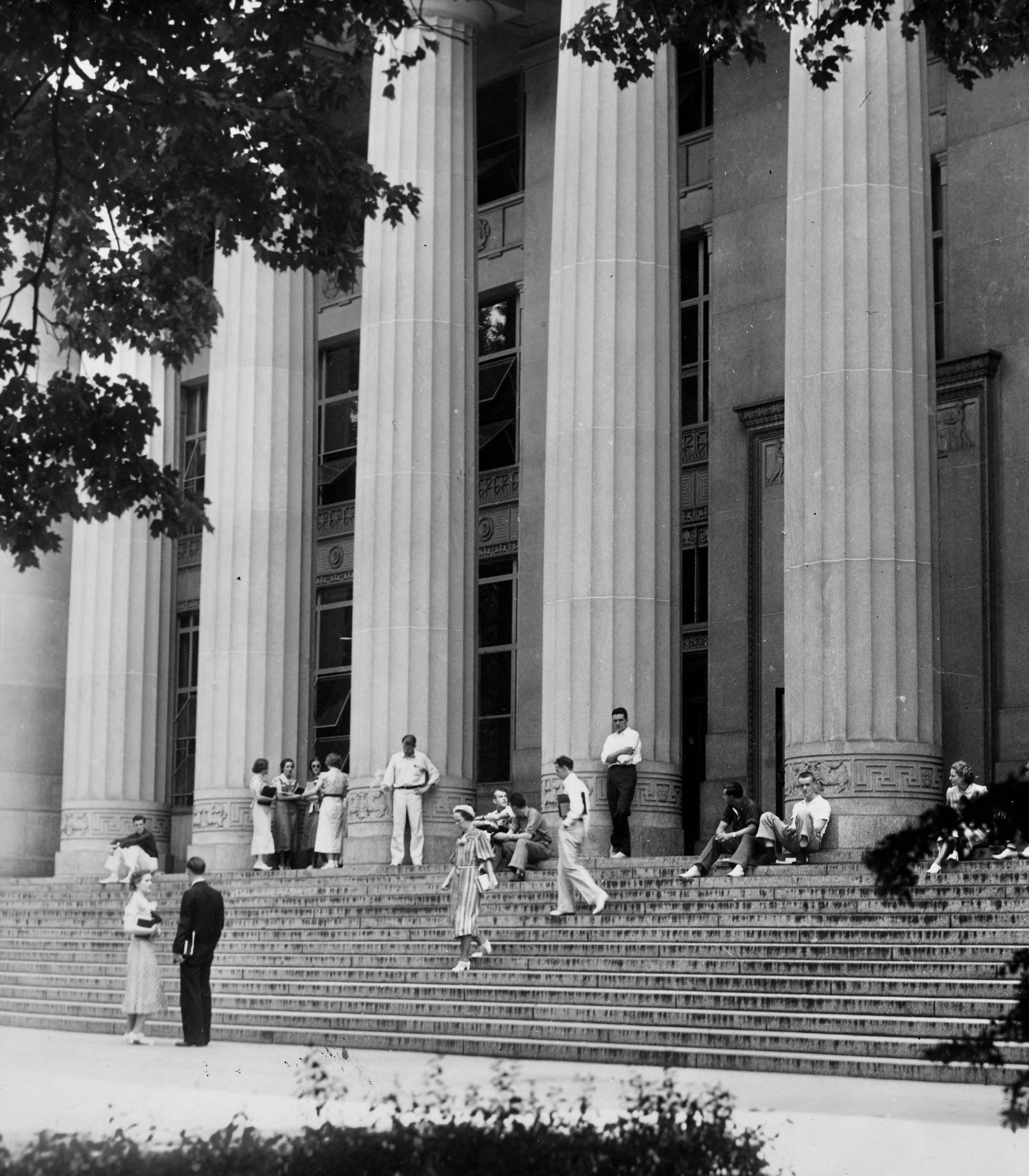

GRADUATION EDITION
Courtesy of The Bentley Historical Library Design by Leyla Dumke
LILLY DICKMAN Statement Contributor & former Statement Managing Editor
When I lost my first tooth, I sobbed. Not because I was scared of the Tooth Fairy’s imminent arrival or of the blood leaking from my gum, but because, as I told my parents, I wasn’t ready to grow up. If only my 7-year-old self knew she had some real time on her hands; I wish I could tell her not to sound the alarms quite yet. But that’s not who she was — someone able to remain calm at the signals of change. And that’s still not who I am, now, with a full set of adult teeth and only one month left of college.
I am, and evidently always have been, an anticipator. I’m consistently expecting, preparing for what’s to come. The next two weeks are always mapped out in my assignment notebook; the full semester reliably mapped out in my mind.
At the end of every summer, the oldest girls at my overnight camp would give closing speeches. “I can’t believe I’m standing up here,” they’d say through tears. “I have no idea where the time went.” Years later, I gave my own speech, just as sad but not nearly as confused as those who’d come before me; I’d been bracing
I’ll do it my way
myself for the end of my camper era since I was 9 and first heard the warnings of blindsiding passage of time.
I began preparing for my grandfather’s death about 15 years before it occurred, giving him a hug and searing a possibly last image of his smiling face into my memory every time I left his house, just in case something bad happened in the interim. He passed away just last year. About that same time, I lost my childhood dog, Pickles. I’d started hugging him tighter and videoing him extensively, in case he got put down, about four years before he actually left us as well.
My way of thinking sounds morbid as it emerges on the page, but I believe my subconscious has kind intentions; I can’t be as hurt by something I’m prepared for than by something I don’t see coming. While the bigger losses, endings and changes in my life have been heartbreaking, my forward-thinking nature has certainly eliminated some of the shock value. For better or for worse, by the time events occur in real time, I’ve already processed them most of the way.
This is why graduation presents a problem, a real caveat to my process-before-experiencing operating style: How can I anticipate and prepare for something when I have no idea what’s coming?
The packing up of my senioryear room, the dwindling days spent laughing on our porch in the Ann Arbor spring sun, that one day in the Big House with too many parents and reservations and hellish traffic and heightened emotions — I’ve got that chunk under control. Processing underway, if not nearly finished. But it’s the part that follows, the blurry details of my life outside of Ann Arbor, dangling around the horizon and missing their cue to emerge clearer, that I am unable to prepare for.
I’ve been trying for a while. In my sophomore-year screenwriting class, I elected to write about a soul-searching postgrad who meets a fortune teller able to see a vision illuminating exactly where the main character is supposed to end up in life. At the time, I regarded this story as nothing more than a fun rom-com concept for my assignment. I titled it “Crystal Clear” and wrote “My Way” by Frank Sinatra into the script. It’s one of my favorite songs, as it reminds me of my grandfather. (Frank is his favorite; the two beings are essentially synonymous in my mind.) Plus, the song’s theme was supposed to mirror my main character’s big lesson: If you stay true to yourself, you’ll live a life without regret.
“Yes, there were times, I’m sure you knew
When I bit off more than I could chew
But through it all, when there was doubt
I ate it up and spit it out
I faced it all, and I stood tall
And did it my way
Regrets, I’ve had a few
But then again, too few to mention
I did what I had to do
And saw it through without exemption
I planned each charted course
Each careful step along the byway
And more, much more than this
I did it my way”
Frank Sinatra, “My Way”
Four semesters later, after working through the same script for various rewrite classes, I realize that my sophomore self, in her sorority-house-living, date-party-going “golden age” of her college experience, had been anticipating, preprocessing the phase of life that’s since closed in from the horizon. Now, as I finalize my script, about to graduate, I wish I was my main character. I wish I could digest her learning lesson. Even more, I wish I had a fortune teller to illuminate the future and tell me where to go from here.
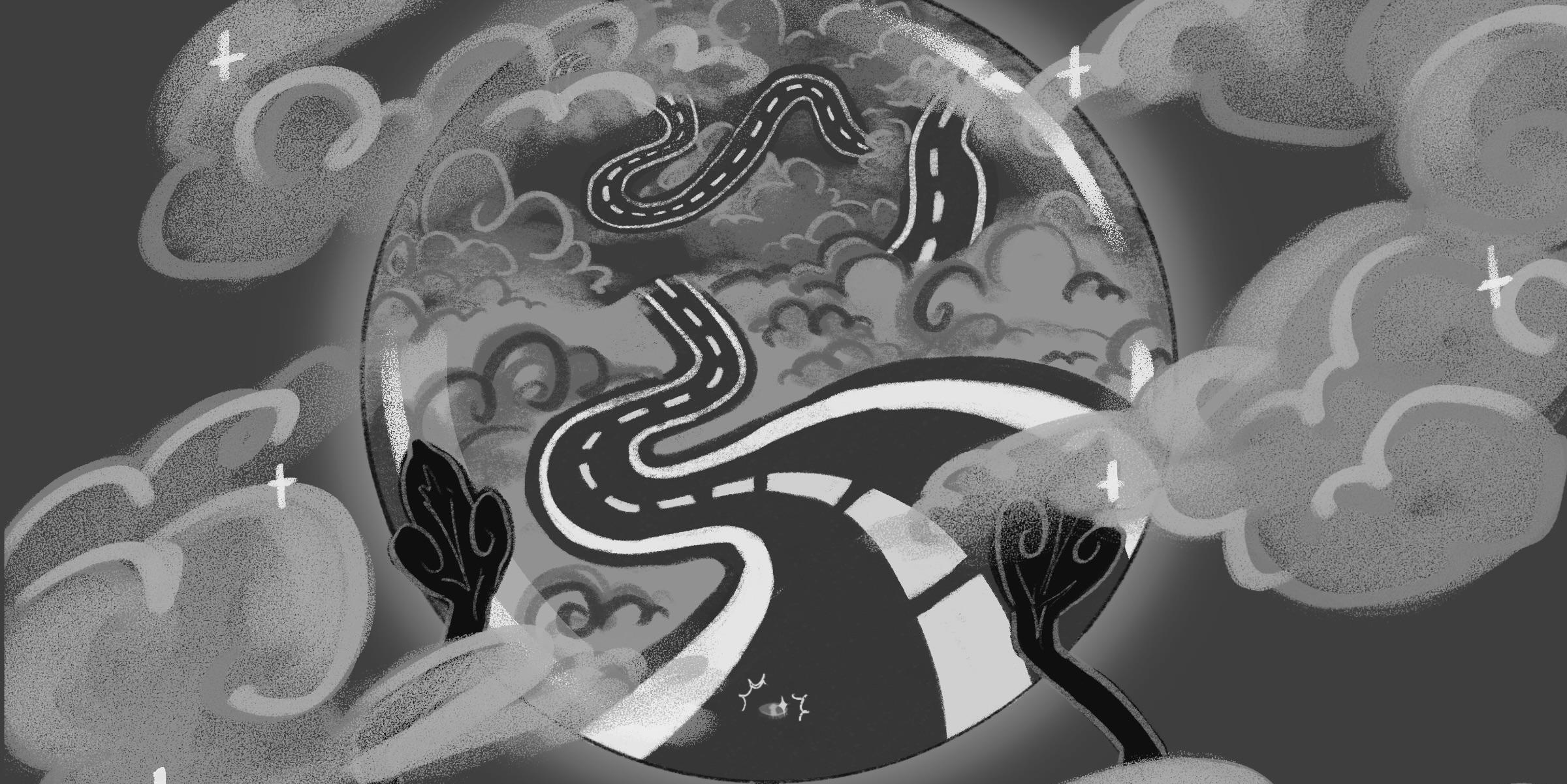
2 — The Statement // Wednesday, April 17, 2024
Design by Evelyn Mousigian Read more at michigandaily.com
The beauty of impermanence
KATE WEILAND Statement Contributor & former Co-Editor in Chief
Fifteen years ago, I was sitting in my childhood bedroom, inconsolable. Every night, for my whole life, I had been going on evening walks with my parents, and every time we went on one of our walks, we would look up at the moon together. But on this night, the clouds had veiled its glow in a shroud of mist. I had lost the moon.
Nature reminds us that the things that make us happiest are oftentimes fleeting. Seasons come and go, birds migrate and flowers bloom — each a milestone of change and a testament to the endlessly evolving beauty of the world around us.
We understand our own lives in milestones, too — taking our driver’s test, graduating from college, getting married. But, in reality, it’s the time in between those milestones that makes life worth living. Our existence is an amalgamation of moments that come and go in an instant.
It’s sitting in the Michigan The-
ater and hearing the old couple behind you laughing.
It’s the light pouring out of your living room window, washing the night with honey as you walk up the steps of your porch.
It’s finding underlined bits and exclamation points in the margins of a book you checked out of the library.
It’s the stars splattered across the night sky in the parking lot behind your house.
It’s smelling the fall air and hearing the crunch of the leaves under your shoes as you walk around Wiard’s.
It’s randomly running into your best friend on Packard Street.
It’s the freshly printed stack of papers on the newsstand every Wednesday morning in Angell Hall.
It’s making waffles on your porch at 7 a.m. on game day.
It’s the wave, the smile or the nod you give to the random stranger you see on your run by Argo.
It’s the “How are you doing today?” from the Argus barista.
It’s playing Euchre in the Law Quad on the first sunny day of the year.
The more things you notice, the more things you’ll love, and the happier you’ll be. For many people, spending time focusing on the little things is difficult, because life is difficult. Why should we concern ourselves with the smell of the asphalt after a storm when we have climate change, global pandemics and threats to human rights to monopolize our thoughts and energy?
Beyond the chaos of our existence, some people are just lucky to be naturally more grateful than others. A study published in the journal Social Cognitive and Affective Neuroscience found a variation in a gene, labeled CD38, that is associated with gratitude. According to the article, some people have a heightened genetic tendency to experience “global relationship satisfaction, perceived partner responsiveness and positive emotions (particularly love).” That is, all of those “glass half full” people you know may simply have a genetic mutation.
For the rest of us, being grateful is an intentional choice. I certainly don’t think I am predisposed to
being particularly grateful. Noticing and appreciating the tiny miracles around me is a learned skill — it’s something I actively practice and something I am better because of.
In all my time spent reflecting on the impending milestone of graduation, I’ve learned that too much joy is lost in our desperation to hold on. Loss is inevitable. But it’s our awareness of this inevitability that makes these joyful moments so beautiful, and serves as a poignant reminder of the profound significance that each moment carries.
By the time I step across the stage in the Big House, I will have spent 126,230,400 seconds here. Hundreds of millions of memories, 98.7% of which have already come and gone by the time this article is published. I know now that it’s time to let this place and the innumerable quiet joys it has given me go. And this is one of the hardest goodbyes I have had to learn to say. But even though there are moments I cannot hold onto, the memories I’ve experienced, just like the moon, will always be there, lingering behind the clouds.

Wednesday, April 17, 2024 // The Statement — 3
Design by Abby Schreck
SHANNON STOCKING Statement Contributor & former Co-Editor in Chief
The conflictions of my Midwestern departure
after I was born, we moved to the northeast part of town, and my family of four has called our place off Plymouth Road home for nearly 20 years.
The first time I met New York, she dazzled me with her towering skyline, endless bustle and contagious energy. She welcomed me with open arms as I stumbled awkwardly into the tourist hub of Central Park and graciously accepted my naive infatuation with Times Square. It was love at first sight, childish at first, but 11 years later, it’s a love fueled by the creativity, people and ambition of the city.
And, just like most kinds of love, as it matures, it becomes more complex. It requires compromise, critique, understanding and respect. But as my decade-long dream inches closer and closer to reality, I find a new, unexpected emotion emerging: guilt.
I was born in St. Joseph’s Hospital, a mere 15 minutes from downtown Ann Arbor and 10 minutes from the first house I lived in on Page Street in southeast Ann Arbor. Following my brother’s birth, two years
My first semester at the University of Michigan was defined by a near constant back and forth of the question: Was Michigan the right choice for me? But four years later, endlessly grateful for my time in Ann Arbor, I am certain it was. Over the past four years, I have been surrounded by family, friends and Midwestern charm as I navigated the growing pains of college, job searches, a breakup, finals seasons and a particularly tumultuous time as co-editor in chief of The Michigan Daily.
Beyond the proximity to my family, I found comfort in the familiarity of Michigan. In the hardest times, I was grateful to fall back into the arms of a place so known to me. Despite my own love for my state, I became determined to prove Michigan’s brilliance and beauty to my friends, in an attempt to justify that my decision to stay close to home was not out of a fear to leave, but instead out of love.
I watched as friend after friend
fell for the city and state I had lived in my whole life. I led Fall Break and weekend trips to the western and northern parts of Michigan and encouraged everyone I met to visit Detroit at least once, not wanting to leave a single part of the state’s beauty undiscovered. From our travels, I watched with pride as my friends became enamored with the slow-paced, mild-mannered and kind nature of Ann Arbor, finally feeling like my decision to stay was understood.
One day, after a particularly restful and scenic trip up north, heading south on I-75, one of my best friends commented, “I think I could see myself living in Michigan long term.” But instead of feeling pride at her statement, my heart sank. I laughed at first, unsure if she was serious. After spending four years trying to convince myself and my friends that Michigan was the best state, I never thought their love for the state would go beyond the prescribed four years at the University.
My mind flipped through a series of judgmental and horrified questions, ignoring the generations of Michigan residents my family

came from. How could anyone want to spend the rest of their life in this state? Did they not feel suffocated by the slow pace and mild-mannered Michigan nature? Could this state really fulfill and sustain someone for a lifetime?
After spending the past four years determined to justify my decision to stay here, why was I so desperate to leave?
After my junior year, I spent three months living and working in New York. I lived on the Upper West Side and worked in the Financial District and became certain that this is where I wanted to spend the rest of my life. I memorized the subway lines, and my initially awkward navigation transformed into an instinctual understanding of how the city worked. It carried me through even the busiest parts of midtown, a sign that maybe the city I had dreamt of for so long was also accepting me.
As the summer went on, I began to identify and frequent favorite restaurants and corners of the city. Gastropubs, tucked-away spots in Central Park and favorite streets stood out as quiet seclusions from the bustle of New York and evoked an unexpected nostalgia for my home state. My favorite corner in Central Park shared the same makeup of bird calls and squirrel chatter as the one outside my childhood bedroom window. On my favorite street, two Shinola bikes glistening in green and orange, leaned up against a row of townhouses. My favorite bar welcomed me as a new Mets fan, and always seemed to have one TV turned into the Detroit Tigers games, where I knew my dad was watching 620 miles away.
As these patterns and similarities grew, so did my certainty that New York was the city for me. Yet, as I skimmed through the catalog of my favorite places, I wondered if what I liked most about these restaurants, bars and streets was that they reminded me of home. And how was it that home was the same place I was so desperate to leave?
4 — The Statement // Wednesday, April 17, 2024
Read more at michigandaily.com
Design by Abby Schreck
Do seniors dream of graduating sheep?
VALERIJA MALASHEVICH Statement Contributor & former Statement Deputy Editor
I used to love taking photos. I still do — but it’s different now. Take more photos, those judicious selfhelp writers on the internet would say. It helps with the grief, I’d add.
When you look back on the past through a film spool, everything can start to seem quite warped. Quite wicked. What was once blurs, and the skeleton left behind, can be a mess to reckon with. It is not the person you used to know.
I always liked taking photos. In particular, I’ve quite often become mired by the presence of a photographer’s lens — I pause and prim and pose as if on autopilot. I am nothing if not objectified; I love to shine. I bask in being the object of someone’s vision — their muse, if you’ll grant me that.
This started young. My father, among other fantastical hobbies, took up photography nearly 20 years ago, when the world — my world — was still tinted orange. It was warm, soft and nascent, colored by the aura of Las Vegas in the late 2000s, a mirage I can still almost taste on the tip of my tongue. A past just beyond my touch. A symphony never quite savored. A happy ending never read.
I was, in fact, a daddy’s girl. I loved the attention afforded to me by my own father through that crystal lens. I learned quickly and I learned easily how to become the subject of someone else’s worldview. It’s not that I was complacent, but I became tailored: sewn to fit, always just your size.
For much of my life, I wanted so badly to have other people love me (and, perhaps more importantly, to have them like me). I rarely succeeded. Sad truth: You can’t love people into loving you back. I’m still not quite over it, but almost.
Regardless, about one year ago, I woke up like any other morning and realized that I was no longer fit to be tailor made. I got dressed,
made cereal or some other typical breakfast food (Lord knows I can barely remember now) and was granted an epiphany: “I had become my “own voyeur”.”
What had really happened prior to this insight was that the environment of my life had started to shift massively. It became damn near unrecognizable at the turn of my sophomore year in college. I studied abroad in countries I never would have fathomed visiting, I met people that moved only their mouths but spoke directly to my soul and I pushed myself into situations that were once completely antithetical to my character. I had finally encroached upon an unavoidable reckoning that, for most of my life, I had been going through life in search of a pleasure completely external to me — that I was living as others saw fit.
Only once I had started living for myself, after an onslaught of opportunities and voyages and mysteries had dragged me into the brightest corners of the world and burgeoned my worldview, causing me to go to bed every night with mild paranoia and a slightly deepening psychosis, wondering who I was and where I was going; only after I felt comfortable with positing the phrase “I don’t know” as an answer to every important question in my life; only once I stopped asking myself those fruitless and faithless questions, did the concern of whether I was doing it “right” fade from my mind entirely.
Doing it all, and thinking I have failed.
I often have to remind myself of all the lives that I have lived. In a story meeting for this exact edition, I sat with my most beloved editors — those watchful, creative folks that preside over my artistic facilitation and lead me toward the harkening light — on that tattered couch in the back of the The Michigan Daily’s newsroom and caught up on life. As we discussed some of my most recent developments, I was reminded now, perhaps for the very first time by others, of just how grand of a life
I have lived. As my managing editor
Reese put it, I “really have done it all.” I have lived all of the lives and spoke all the proverbial hymns and muttered all the right “I love you’s.” Where do I go with that?
Recall from earlier — if you can, if you were really listening — that photos help with the grief. I survive, now, to a great extent, off photos. I suppose I require a daily digestion of some frozen remnant of time to prevent a silencing at my core, to prevent my life — my very living history — from falling into deafness and fading into the ever encroaching amnesia.
This became an almost nightly routine. I would pore over remembrances of my previous lives through a digital screen, as if trying to memorialize the things that didn’t even feel real at the time. My camera roll became my epitaph. I was, and am, a walking, living dream — I fear that most of my present selves do not lay and live by my side. Frequently, I am elsewhere. Often, I am attempting to reckon with the passing of the others. And, if you’ve never done it before, grieving yourself can be quite fucking hard.
I guess I just want to know if it’s reciprocal. I want to know if it’s normal to look at photos and not recognize yourself. In other words, and what I think I’m trying to say is, there exists an overlap between the conclusion of my self-voyeurism and the discovery of how much love there is to be found in the appreciation of other things. Some would go so far as to say they’re intertwined, correlated. I, however, a lady of anthropology, know far better than to eschew presumptions into causation. Trust me, it says “Bachelor of Science” on my degree — or at least it will, soon.
As I spun through folders and photo albums, I observed a shift. Patterns began to emerge. Turns out, I hit a turning point, a halfway mark where photos of me slowly transformed into photos of things I loved.
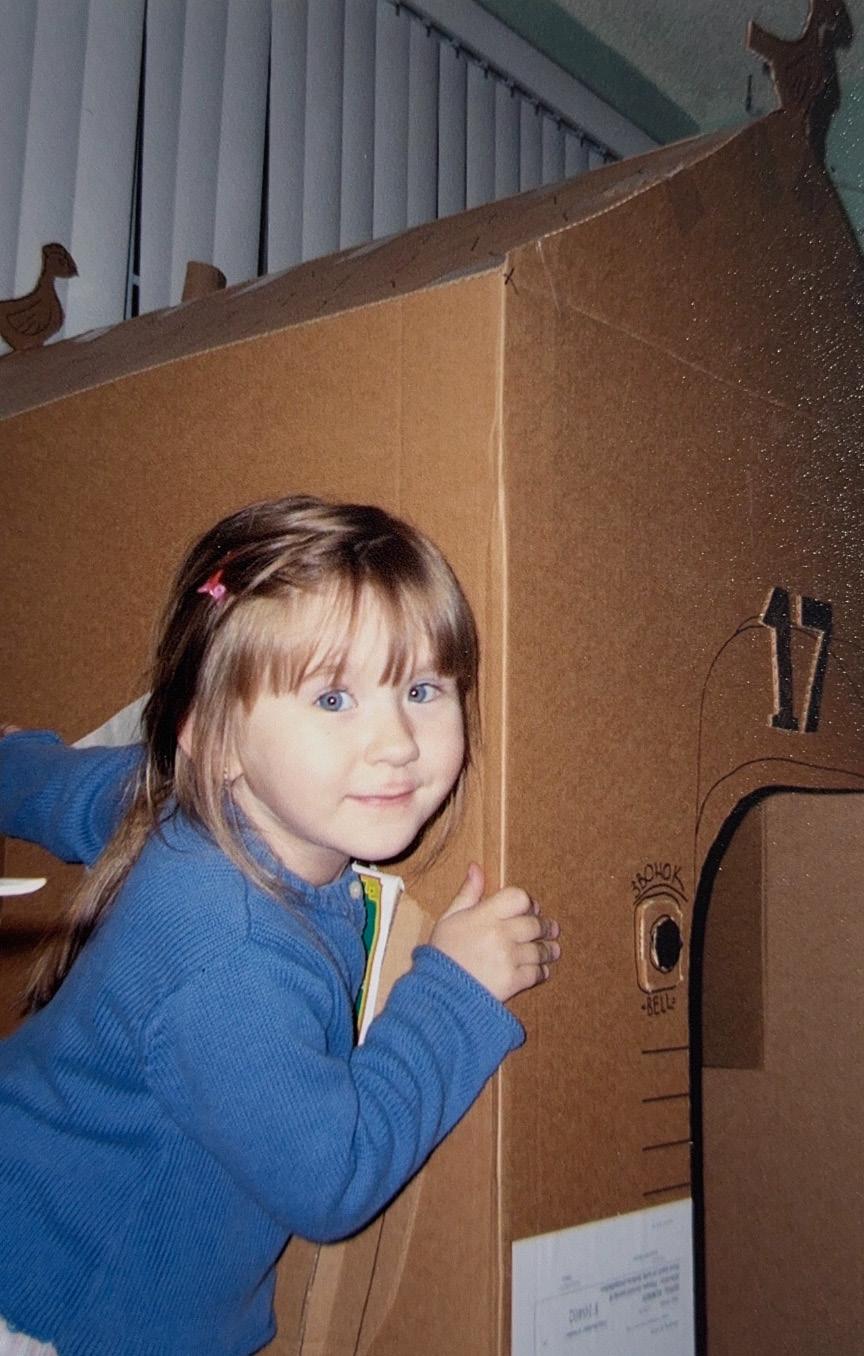



 Images courtesy of Valerija Malashevich
Wednesday, April 17, 2024 // The Statement — 5 Read more at michigandaily.com
JULIA VERKLAN Statement Contributor & former Managing Editor
Somewhere, up in space, floats a small time capsule. In it are more than 1,000 interviews etched on silicon wafers and encoded DNA experiments collected by a group of University of Michigan students and faculty. The group, named the Michigan Bicentennial Archive, launched the capsule into orbit
1924
The then-largest class in history shuffled into Ferry Field, filling every seat as they awaited to receive their diplomas and hear the commencement address following the morning rain. The ’20s were certainly “roaring” and were perhaps the best time to be an undergraduate. Throughout their time on campus, some students exchanged poetry with Robert Frost, others strolled among the first peonies to be planted in Nichols Arboretum and those with a radio listened in to the Paris Olympic games as classmate William DeHart Hubbard became the first Black athlete to win an individual Olympic gold medal.
U-M administration planned for a boom in Ann Arbor to mirror that of the broader bustling landscape of the United States. The construction of Angell Hall was complete, fronted by a row of bold stone columns and sloping steps, providing the perfect place to study, sunbathe, smoke and roller skate. Nearby was the newly finished Lawyers Club, William Clements Library, Yost Field House and numerous housing solutions for the growing student body no longer burdened by war.
Read this article in 2124
in 2017 in hope of its eventual return to earth a century later. Said return would inform the next generation of U-M students of its internal contents, largely discussing hope for the University’s future and testifying to its commitment toward continued technological achievement. It wasn’t sent without a touch of ego, though; the group is proud that their capsule does not lay dormant like those buried in the dirt or under the Pumas outside of the
U-M Museum of Natural History. Further, it is up to the class of 2117 to design the mission to retrieve it, because to MBARC, they would “rather send our successors on a glorious chase, and they must emerge triumphant to hear our voices.”
So, in an abundance of caution — assuming there isn’t a successor up to the task of using a laser to find the satellite’s built-in reflectors or if the contents cannot survive radiation — I would like to assemble
my own small, terrestrial time capsule that is slightly less susceptible to other-worldly complications.
To do this, I took to the Bentley Historical Library, a compact brick building that sits quietly on North Campus as it shelves the history of our campus within thousands of donated student scrapbooks, files and ephemera. But instead of simply including a few images or recounting what happened in Ann Arbor this year (you can
get that from reading The Michigan Daily, of course), this very “unscientific” attempt seeks to explore what can change in a century while also recognizing what remains constant. These words, stories and people are very much alive and far from being dormant or distant.
And you, the reader in the class of 2124, will have the opportunity and privilege to not only be a part of it, but learn from it. I know this because right now, I am you.
For this — though there were no (legal) toasts of champagne — there was much to celebrate.
Among the 1,800 graduates of the class of ’24 sat Ruth Harvey, a native Michigander and resident of the Adelia Cheever house. Upon parsing through Harvey’s personal scrapbook, it was clear she was a frequenter of the many themed costume parties, dances, operas and games hosted on campus. But perhaps most important to Harvey was her status as a “Cheever gal,” selected to live in the all-female boarding house based on her demonstrated “high character, fine personality and scholarship.” According to records, Harvey had to pay $172 per semester to reside in the dormitory on East Madison Street and abide by the Cheever handbook, which contained a collection of chants and rules including stipulations, like a strict nightly curfew, sign-out process, barring of male guests and a ban on wearing blue jeans (to name a few). Also within the handbook was the “gals” commitment to expanding leadership opportunities, community engagement and broadened global perspectives.
Harvey’s photograph collection and saved notes did not
indicate whether she broke the “no necking or petting” rule or took unsupervised dips in the Huron River (history will never know), but it did reveal that the connections she made lasted decades after graduation, despite obstacles like the quickly impending stock market crash, World War II and the demolition of the Cheever House to make way for South Quad Residence Hall. Harvey would go on to travel with and document her fellow “Cheever gals” everywhere from local Michigan beach towns to London for their annual reunions and policy conversations — removing their mortarboards to reveal strands of gray and white hair.
Harvey’s time at the University (filed into three leatherbound scrapbooks) reveals the possibility of finding lifelong community in the people you meet all while never aging out of your purpose.
While it is unknown if their paths crossed, class of ’24 graduate Alena Grace Edmonds also received her diploma on the rainy day in June 1924. Edmonds’ time at the University was well documented in her U-M “Memory Book,” logging the names, birthdays and important notes


6 — The Statement // Wednesday, April 17, 2024
Courtesy of The Bentley Historical Library and the Ruth Harvey Miller Scrapbook Courtesy of The Bentley Historical Library
Courtesy of the Clark Library
Courtesy of The Bentley Historical Library and a Grace Edmonds Scrapbook
of each of her friends as well as the dates, occasions and purpose of the social events she attended. When not studying, Edmonds frequented teas, lunches and dances with her Martha Cook Building roommate Beatrice (who she endearingly nicknamed “beets” and “cheesebox”).
A member of the Women’s League, Edmonds periodically donated $10 to support the artistic, athletic and building initiatives for female students who had yet to obtain a gathering space bigger than an office in the Barbour Gymnasium. Donations like hers helped contribute to raising $1 million to build the Michigan League, making Edmonds a small piece of a larger push to create the space for female scholars and athletes of today to learn, create, compete and thrive.
2024
I am unable to connect with 1924 graduates like Harvey and Edmonds beyond reading their entries and letters and looking at their photographs and preserved ephemera. But if I could, in some extraterrestrial way, there is so much more that I wish I could learn and say.
First, I would tell them that the University no longer sells scrapbooks of brittle, black carbon paper, and instead students capture photos in full color to then share digitally. Women sport jeans and other types of pants as they sit in class, returning home to no curfew or sign-in sheet. Female athletes have achieved incredible victories, yet still have so much more to win. Triumphantly, I write this sentence seated in the foyer of the finished Michigan League — surrounded by students of all backgrounds, majors and passions who are likely unaware of its rich history. Oh, how I wish you, Ruth and Alena, had the chance to study, gather and perform here, too.
Not all has changed, though. Students still give each other funny nicknames and dress in homemade costumes for absurdly themed parties. Living communities and other campus organizations very much exist and are the heartbeat of cam-
pus, constantly pushing for change in our world. Many soon-to-be graduates have planned reunion trips, exchanged addresses and phone numbers to stay in touch as we go on to fill other corners of the earth.
Before leaving, many will take their last glances of the ratty sneakers on power lines, hammocks roped around trees, red Solo cups on sticky tables, smatterings of construction sites, a lack of empty chairs and outlets, kayaks floating down the Huron River, releases of exhaust from a Blue Bus, echoes from the Diag and first dates in the UMMA to breakups in local parking lots.
The reality is, we won’t be able to return to this view, this version of campus in 100 years. In a cynical sense, we will be dead. But also, it will have changed.
Because the expanding digital age will hopefully allow for greater preservation of all that the class of 2024 has achieved and lived through (at least better than that of paper or space matter), I trust that future generations will be eager in digging through the webpages of The Michigan Daily and photographs of today to compare the events and culture of the time. But what will not be preserved, or
effectively communicated more likely, is the feelings of what it means to be a graduate in 2024. So to avoid being lost among the stars, let us tell you about how we feel and what we hope your view looks like in 2124.
To me, being a graduate in the class of 2024 is a feeling that makes my hands subtly sweat on my laptop, wakes me up minutes before my alarm, triggers flashbacks at each recognized corner or crack in the pavement. It can be both bitter or sweet, welcomed or feared, and is ultimately shaped by our unique passions, organizational involvements and purpose.
Public Policy senior Rose Reilly, president of Turn Up Turnout, feels gratitude for all that has happened during her time on campus as a student and a leader. A core memory for Reilly includes waking up at 6 a.m. to talk to voters, harbor their excitement, help them register and pass out cups of coffee during the 2022 midterm elections. The result was record voter turnout among young voters and the cementation of the legal and cultural role that the state of Michigan has in championing voter accessibility — a democratic feat that she hopes students beyond just those in Ann Arbor continue.
Organizations like Turn Up Turnout have expanded tabling efforts and completed groundwork to personalize and strengthen the student culture and confidence surrounding voting — efforts that Reilly considers to be rare on many college campuses.
“We’re at a really instrumental time in determining the future of our democracy,” Reilly said. “It’s my sincere hope, and it’s what I hope to commit my career to, that we preserve democracy by making voting accessible and easy for every American.”
A century ago, female graduates like Harvey and Edmonds would be eligible to vote in their first election.
Projecting into the future, Reilly said, “It’s my hope that in 2124, students remain at the center of voter accessibility, because if they do not, this work will not be done to the level of success that it is when students are key drivers in promoting voting and in shaping the way that democracy is exercised on our campus.”
Engineering senior Megan Mathews feels both excitement and relief for graduating, given the class of 2024’s ability to overcome barriers like navigating the COVID-19 pandemic and gaining
equal representation as a female club hockey player.
Mathews’ teammate and fellow Engineering senior Katie Christiansen shares similar sentiment as she describes graduating and concluding her time on the team as being unbelievable.
“When we joined sophomore year, not a lot of people knew about our team, and we were just getting hand-me-down jerseys and old equipment,” Christiansen said.
Thanks to record-breaking wins, an empowered coaching staff and extensive media coverage, Christiansen and Mathews have watched the program nearly quadruple in size, attracting strong talent who chose to balance playing club hockey with their studies, despite it having the pace and demands of a varsity sport. Such apparent growth has initiated talks with U-M administration toward achieving varsity and NCAA status, a first for the state of Michigan and a major feat for underrepresented club sports on campus. The next barrier to overcome — despite more than a century of activism and fund collections from graduates like Edmonds — is where the team will be housed.
Read more at michigandaily.com
Wednesday, April 17, 2024 // The Statement — 7
Courtesy of The Bentley Historical Library

8 — The Statement // Wednesday, April 17, 2024 Anna Fuder/DAILY
