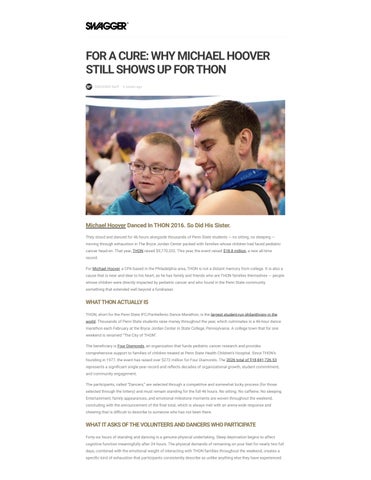

FORACURE:WHYMICHAELHOOVER STILLSHOWSUPFORTHON

SWAGGERStaff 4weeksago
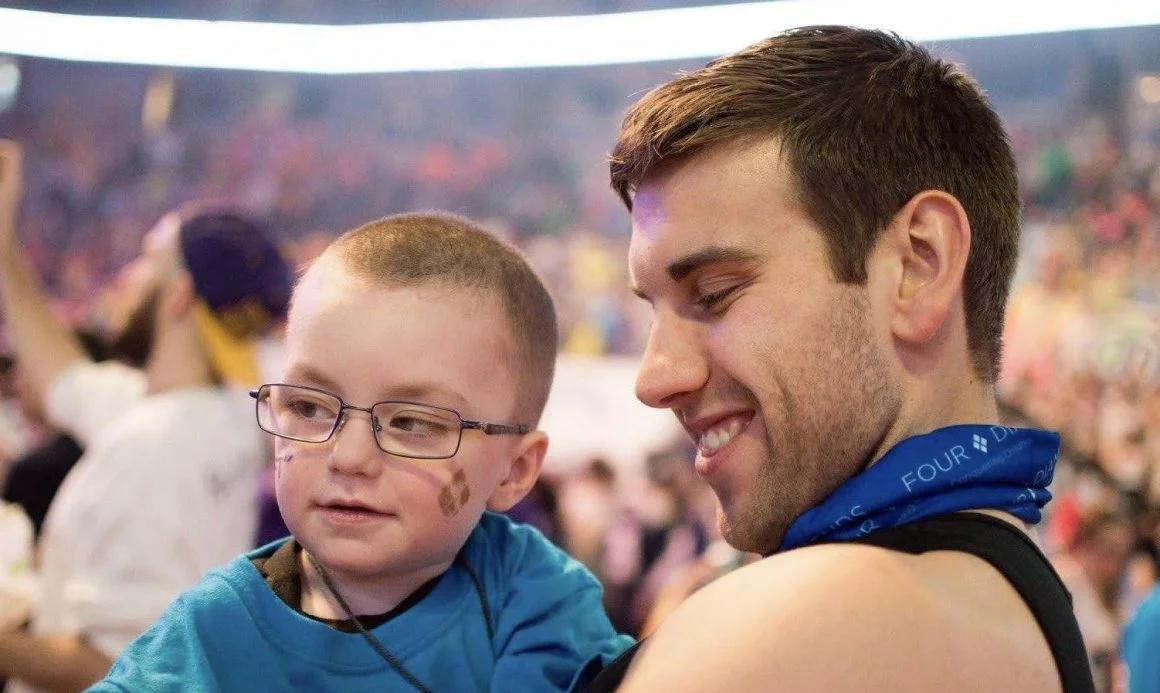
MichaelHooverDancedInTHON2016.SoDidHisSister.
Theystoodanddancedfor46hoursalongsidethousandsofPennStatestudents—nositting,nosleeping— movingthroughexhaustioninTheBryceJordanCenterpackedwithfamilieswhosechildrenhadfacedpediatric cancerhead-on.Thatyear,THONraised$9,770,332.Thisyear,theeventraised$18.8million,anewall-time record.
ForMichaelHoover,aCPAbasedinthePhiladelphiaarea,THONisnotadistantmemoryfromcollege.Itisalsoa causethatisnearanddeartohisheart,ashehasfamilyandfriendswhoareTHONfamiliesthemselves—people whosechildrenweredirectlyimpactedbypediatriccancerandwhofoundinthePennStatecommunity somethingthatextendedwellbeyondafundraiser
WHATTHONACTUALLYIS
THON,shortforthePennStateIFC/PanhellenicDanceMarathon,isthelargeststudent-runphilanthropyinthe worldThousandsofPennStatestudentsraisemoneythroughouttheyear,whichculminatesina46-hourdance marathoneachFebruaryattheBryceJordanCenterinStateCollege,Pennsylvania.Acollegetownthatforone weekendisrenamed“TheCityofTHON”.
ThebeneficiaryisFourDiamonds,anorganizationthatfundspediatriccancerresearchandprovides comprehensivesupporttofamiliesofchildrentreatedatPennStateHealthChildren’sHospital.SinceTHON’s foundingin1977,theeventhasraisedover$272millionforFourDiamonds.The2026totalof$18,841,726.53 representsasignificantsingle-yearrecordandreflectsdecadesoforganizationalgrowth,studentcommitment, andcommunityengagement.
Theparticipants,called“Dancers,”areselectedthroughacompetitiveandsomewhatluckyprocess(forthose selectedthroughthelottery)andmustremainstandingforthefull46hours.Nositting.Nocaffeine.Nosleeping. Entertainment,familyappearances,andemotionalmilestonemomentsarewoventhroughouttheweekend, concludingwiththeannouncementofthefinaltotal,whichisalwaysmetwithanarena-wideresponseand cheeringthatisdifficulttodescribetosomeonewhohasnotbeenthere.
WHATITASKSOFTHEVOLUNTEERSANDDANCERSWHOPARTICIPATE
Forty-sixhoursofstandinganddancingisagenuinephysicalundertaking.Sleepdeprivationbeginstoaffect cognitivefunctionmeaningfullyafter24hours.Thephysicaldemandsofremainingonyourfeetfornearlytwofull days,combinedwiththeemotionalweightofinteractingwithTHONfamiliesthroughouttheweekend,createsa specifickindofexhaustionthatparticipantsconsistentlydescribeasunlikeanythingelsetheyhaveexperienced.
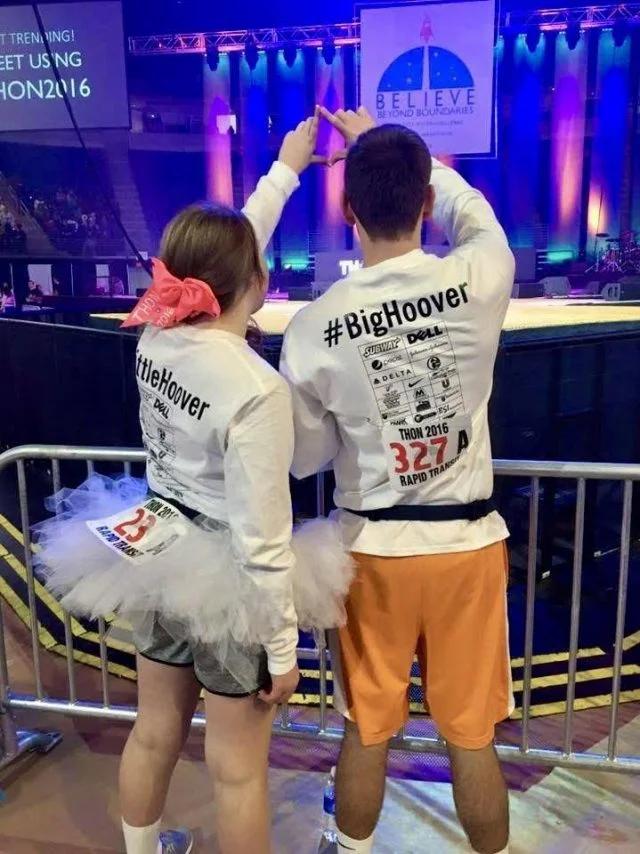
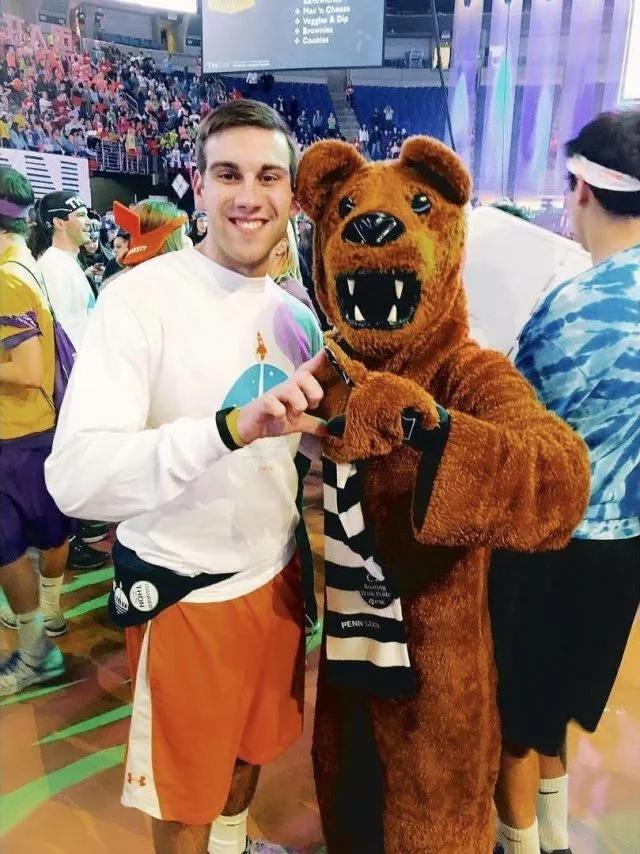
Hooverdancedthroughthisin2016alongsidehissisterTheyarejusttwoofamultitudeofPennStatealumnifor whomTHONwasnotsimplyaschooltraditionbutadefiningexperience—oneorganizedaroundacausethatfelt genuinelyurgentbecause,formanyofthem,itwaspersonal.Hoover’sfamilyfriendshadbeenTHONfamilies. Thechildreninthosefamilieswererealpeopleheknew,notabstractionsinafundraisingpitch.
ThatproximitytothecauseiswhatdistinguishesTHONparticipantswhocarryitforwardfromthosewhofileit awayasacollegememory.Whenthecauseisconnectedtopeopleyouknow,themotivationtostayengaged doesnotexpirewhenyoucrossthegraduationstage.
THENEWRECORDANDWHATITREFLECTS
The2026figureof$18.8milliondidnothappenbyaccident.THON’sfundraisinggrowthoverthedecadesreflects aconsistentorganizationalinfrastructure,adeepalumnibasethatcontinuestogiveaftergraduation,andacause —pediatriccancerresearchandfamilysupport—thatdoesnotloseitsurgencyovertime.
Forcontext,whenHooverdancedin2016,thetotalwas$9.77million.Inadecade,theeventhasnearlydoubled itssingle-yearfundraising.Additionally,the2026totalraisedreflectsa$1.1millionyear-over-yearincrease comparedtothe$17.7milliontotalin2025.Thatgrowthisnotsimplyaproductofinflation.Itreflectsexpanded fundraisingchannels,strongeralumniengagement,andgrowingnationalawarenessofwhattheeventrepresents.
FourDiamondscovers100%ofmedicalexpensesrelatedtocancercarenotcoveredbyinsuranceforeligible childrentreatedatPennStateHealthChildren’sHospital.Thatcommitmentisthedownstreamresultofthe researchfundingTHONhasmadepossibleovernearlyfivedecades.Itisthenumberthattendstostoppeople whentheyhearit.
WHYALUMNICOMEBACKTOIT
THONhasanunusualqualityamonglargefundraisingeventsinthatitsalumnibasetendstoremainemotionally connectedtoitlongaftertheyleaveschool.Partofthisisstructural.FourDiamondsfamiliesoftenstayinvolved withTHONforyears,sometimesdecades,aftertheirchild’streatmentconcludes.Alumniwhodancedalongside thosefamiliescarrythatrelationshipforward.
Partofitisalsothenatureoftheeventitself.The46-hourformatisdesignedtobetransformativeinawaythata 5Koragalafundraiserisnot.YoudonotsimplyattendTHON.Youendureit,alongsideotherpeople,inserviceof somethinglargerthantheinconvenienceofstanding.Thatsharedendurancecreatesadurablebond,bothtothe causeandtotheotherpeoplewhodiditwithyou.
ForHoover,returningtoTHONasanalumnisupporterislessadecisionhehastomakeeveryyearandmorea continuationofsomethingthatstartedwhenhewasastudent.Thecausedidnotchange.Thefamilieswhoneed theresearchfundingdidnotgoaway.Whatchangedishiscapacity,asaworkingprofessional,tosupportitin differentwaysthanhecouldasacollegestudent.
TheBroaderPicture
Pediatriccancerremainsoneoftheleadingcausesofdisease-relateddeathinchildrenintheUnitedStates. AccordingtoFourDiamonds,only4%offederalcancerresearchfundinggoestowardpediatriccancer Philanthropicinvestment,includingthrougheventslikeTHON,fillsarealgapintheresearchpipeline. WhenTHONraised$18.8millionin2026,thatmoneywentdirectlytoFourDiamonds,whichallocatesfundsto researchatPennStateHealthChildren’sHospitalandtocomprehensivefamilysupportservicesthatcover expensesinsurancedoesnot.Forfamiliesnavigatingachild’scancerdiagnosis,thosesupportservicescanbe thedifferencebetweenfinancialstabilityandfinancialruinduringanalreadydevastatingperiod.
MichaelHooverunderstandsthisinawaythatgoesbeyondthestatistics.HehasseenwhataTHONfamilygoes through.Hedancedfor46hoursinagyminStateCollegebecausehebelieveditmattered.Adecadelater,the beliefisthesame.Therecordtotalsuggestsalotofotherpeoplefeelthesameway
Categories:Features,Health
