
Nonprofits Advocating for Mental Health: Champions of Change
By Michael Capiraso
The Rising Need for Mental Health Advocacy
Mental health issues affect millions worldwide, with conditions such as depression, anxiety, and bipolar disorder becoming increasingly prevalent. According to the World Health Organization (WHO), approximately 1 in 8 people globally live with a mental disorder. Despite this, many individuals do not seek help due to stigma, lack of awareness, or insufficient access to resources. This gap highlights the crucial role nonprofits play in bridging these divides

2
Mental Health America (MHA)
Founded in 1909, MHA is dedicated to addressing the needs of those living with mental illness and promoting the overall mental health of all Americans MHA's work is guided by its Before Stage 4 (B4Stage4) philosophy – that mental health conditions should be treated long before they reach the most critical points in the disease process Their screening tools, which are free and confidential, have been a gamechanger, allowing early intervention for those in need
3. The Trevor Project Focusing on LGBTQ+ youth, The Trevor Project provides crisis intervention and suicide prevention services. Given the disproportionately high rates of mental health issues and suicide among LGBTQ+ youth, The Trevor Project’s work is life-saving. Their 24/7 phone, text, and chat services, combined with innovative research and educational efforts, ensure that vulnerable young people receive the support they need.
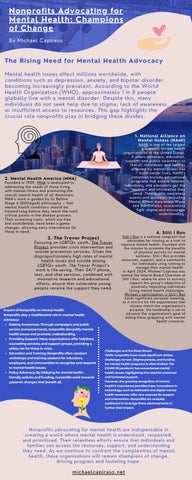
1. National Alliance on Mental Illness (NAMI) NAMI is one of the largest grassroots mental health organizations in the United States It offers advocacy, education, support, and public awareness so that all individuals and families affected by mental illness can build better lives NAMI’s initiatives include educational programs that ensure families, individuals, and educators get the support and information they need Their public awareness events and activities, including Mental Illness Awareness Week and NAMIWalks, successfully fight stigma and encourage understanding
4. Still I Run Still I Run is a national nonprofit that advocates for running as a tool to improve mental health Founded with the mission to promote the benefits of physical activity for mental wellness, Still I Run provides resources, support, and a community for individuals using running to manage their mental health In April 2024, Michael Capiraso was named the Interim Board Chairman at Still I Run, where he aims to actively support the group ’ s objective of positively impacting individuals facing mental health challenges Michael's participation in Still I Run holds significant personal meaning, as it mirrors his life experiences that closely match the organization’s purpose His leadership is set to advance the organization's goal of aiding those grappling with mental health concerns
ChallengesandtheRoadAhead
Whilenonprofitshavemadesignificantstrides, challengesremain Stigmapersists,andfunding formentalhealthprogramsisoftenlimited The COVID-19pandemichasexacerbatedmental healthissues,highlightingtheneedforsustained andincreasedsupport However,thegrowingrecognitionofmental health’simportanceprovideshope Innovationsin technology,suchastelehealthanddigitalmental healthresources,offernewavenuesforsupport andintervention Nonprofitsareuniquely positionedtoleveragetheseadvancementsto furthertheirimpact
Nonprofits advocating for mental health are indispensable in
that individuals and
understanding
confront the complexities of mental
will remain champions of change,