
Faculty and students react to Ohio Senate Bill 83


MEREDITH PERKINS COLUMNIST
Growing up in a conservative Jewish household, first-year games and simulation major Caleb Krainman has always kept kosher as part of his religious expression and identity. While personal practices vary, the “gold standard” of keeping kosher incorporates detailed dietary and food preparation guidelines, including consuming and preparing meat and dairy separately, only consuming meat from kosher animals slaughtered according to shechita guidelines and avoiding shellfish.
Students, faculty and staff at Miami University have mixed feelings as Ohio’s Senate Bill 83 sits in the Senate Committee, looking for support to be released. If it passes, the bill will affect a number of Ohio universities that receive state funding and may lead to numerous changes in higher education throughout the state.
Line 229 of the bill states that universities can’t “… endorse, oppose, comment, or take action, as
an institution, on the public policy controversies of the day, or any other ideology, principle, concept, or formulation that requires commitment to any controversial belief or policy, specified concept, or specified ideology …”

Jerry Cirino (R-Kirtland), the sponsor of the bill, has worked on education bills in the past, including a large oversight bill in the Department of Education, and serves as the chair of the Workforce and Higher Education Committee.
In the bill, Cirino defines controversial beliefs or policies as, “any belief or policy that is the subject of po-

litical controversy, including issues such as climate change, electoral politics, foreign policy, diversity, equity, and inclusion programs, immigration policy, marriage, or abortion.”
One of the bill’s main goals is to set limits on diversity, equity and inclusion (DEI) relating to faculty, staff and students to promote individual intellectual diversity.
The legislation would also regulate lecture content for faculty and eliminate certain classes and programs altogether. However, Anne Whitesell, an assistant professor of political science at Miami, fears the
passing of this bill could mean more than the removal of courses.
“[The bill] would take away a lot of the independence and autonomy that universities have,” Whitesell said. “Some of these provisions would require extra staffing or extra resources, and as far as I've seen in the bill, there are no provisions to provide extra funding, making this a sort of unfunded mandate.”
The bill would restrict the discussion of widely-debated issues within classes and could prohibit lecturers from taking a political stance.
CONTINUED ON PAGE 2
“In my house, we’d always have kosher meat. If we were out of the house, we’d keep vegetarian if there wasn’t a place with kosher meat,” Krainman said. When it was time for Krainman to choose a college, coming to Miami University was a no-brainer.
“When I was looking for a university, I was always looking for if they had a Chabad on campus or if they had a Jewish community,” Krainman said. “At Miami, I loved the campus. I loved the people.”
However, transitioning from his predominantly Jewish neighborhood in Los Angeles to the predominantly Protestant community of Oxford posed a unique set of dietary challenges for Krainman.
There are no kosher delis or kosher restaurants in Oxford. While there are some certified kosher snacks in the marketplaces, there are no certified kosher dining stations. Although York Street offers kosher and halal menus for purchase online, it appears none of the York Street to-go meals available at Miami have the Orthodox Union kosher certification.
JACK SCHMELZINGER SPORTS EDITOREven before he was diagnosed with autism at 3 years old, Ryland Zaborowski always had a baseball bat in his hands.
Today, he’s one of Miami University baseball’s best players. A 6-foot6, 235-pound, baseball punishing machine, who’s hitting .299 with 11 home runs in 97 at bats this season.
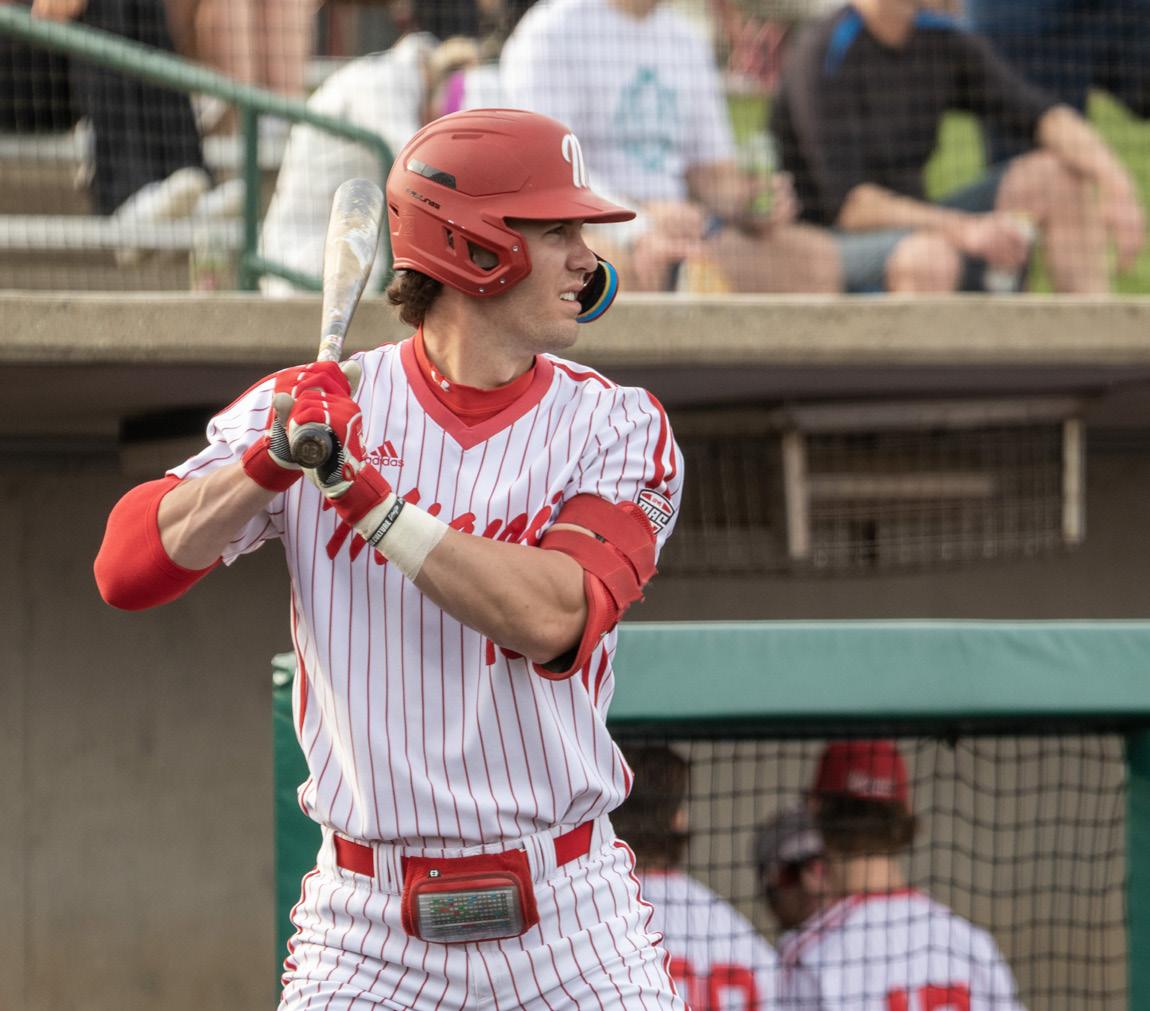
Zaborowski’s dad and his friends are die-hard Los Angeles Angels fans. His parents had season tickets when he was a kid, so since he can remember, he’s been at the ballpark.
“At a very young age, my dad just handed me a bat and put me in an Angels jersey, and going through the days, I just wouldn’t take it off,” Zaborowski said. “I learned how to hit a ball off the tee, and that’s kind of just where it all started.”
He hasn’t stopped loving the game yet.
“Once I learned how to hit when someone was throwing to me, that’s when I kind of realized, ‘Dang. I’m somewhat good at this,” Zaborowski said. “Around the age of 7 or 8 is the earliest I can remember that I just fell in love with the game. You couldn’t take me away from it.”
During his first year in high school, as a 14 year-old, Zaborowski had to get Tommy John Surgery.
It’s a procedure common among baseball players who tear their Ulnar Collateral Ligament (UCL), the main ligament that connects the humerus, the upper arm bone, and the ulna, the forearm bone. The surgeon takes a ligament from elsewhere in your body, usually the hamstring or forearm, and replaces the UCL with it. Recovery takes about a year. It’s common among baseball players, but not so much among 14-year-old baseball players. It was tough on Zaborowski, especially right after the surgery. Baseball had always been his life, but suddenly he couldn’t play.
“It really hit me that I needed to learn how to become mentally strong and deal with failure,” Zaborowski said. “I had to figure out how to come back stronger. I feel like that’s the best thing that’s ever happened to me. I rebuilt my body and my
strength, and it really helped me mentally. I know I’ll be failing a lot more in the future, a lot of stuff is out of my control.”
At a young age, Zaborowski was always in different classes than the “normal” kids at school. He finally moved from California to Arizona when he was a sophomore in high school. When he started school in Arizona, he got put in class with everyone else. He says that if it wasn’t for that, he wouldn’t be playing Division I baseball right now.
Zaborowski remembers one friend he made in class who was also diagnosed with autism.

“I was really good friends with this one kid,” Zaborowski said. “And he didn’t function as well as me, but he was addicted to cars. I would point out a car part to him, like ‘Hey what’s this?’ He would name it on the spot.”
It’s a point of passion for Zaborowski. He believes everyone should be given a chance to succeed. He believes that everyone has the chance to succeed.
“If your kid’s diagnosed, you can’t just go straight to the negative,” Zaborowski said. “I mean yeah, it might be bad news that they’re on the spectrum when you find out, but if you see something they’re good at, let them pursue that. Maybe they’re
great at a sport, or maybe they’re in love with cars. It could be anything. They don’t know where that will take them. It can be their escape from reality.”
Cam LaLiberte, a catcher at the University of Arizona who played baseball with Zaborowski in high school and bonded with him over a love of baseball and Marvel movies, says Zaborowski is as impressive on the field as he is off it.
“He’s a very kind-hearted, determined person,” LaLiberte said. “I don’t think he’d swat a fly. Just the nicest guy. He’s also just so motivated, both in the weight room and on the field. Whatever he sets his mind to, he sees it through.”
Despite his kind attitude, Zaborowski’s autism can cause him issues. He started his college career at Grand Canyon University, and it wasn’t always easy interacting with teammates.

“At Grand Canyon, I wasn’t that open about it at first, so guys didn’t really know how to interact with me,” Zaborowski said. “For example I don’t always catch on with sarcasm that well.”
At Miami, it’s been different.
“I can really only get pizza and salad. I’ve basically been vegetarian. I only get kosher food when I can go to Hillel or Chabad, and it’s been hard on me physically,” Krainman said.

For junior psychology major Maya Nathan, a Jewish student from the Greater Chicago area, keeping kosher at Miami her first year was similarly difficult.
“I grew up in a conservative household and a Kosher household. I wanted to keep kosher in college,” Nathan said.
Like many kosher students, Nathan opted to a vegetarian diet to try to keep kosher: a difficult diet to maintain for someone who had never been full-time vegetarian before.
“I struggled a lot freshman year with my weight, being low energy… I ended up eating vegetarian and it took my body a while to adjust,” Nathan said.
At a university where nearly 6% of students are Jewish, the only places students can get fresh-made, certified kosher food are Hillel or Chabad, Jewish outreach programs. Rabbi Yossi Greenberg, the leader of Miami’s Chabad chapter, hosts weekly shabbat dinners for dozens of Jewish students and, during holidays, hosts holiday dinners for hundreds of Jewish students.
“Immediately when I came into Chabad, there was such a huge connection: we were all Jewish, we had common interests — let’s be friends. It made me feel close with the Jewish community on campus,” Krainman said. “Both Hillel and Chabad have wonderful people, and if it wasn’t for them, I feel like I wouldn’t have felt like my Jewish identity was intact.”
As early as 1976, The Miami Student has reported on the lack of food options available for Jewish students. In the 1970s, Jewish students were allowed to opt out of board fees due to the school’s lack of kosher options.
In 1989, formalized efforts were put in place to supply kosher food options on campus during Passover, a season where many Jews — regardless of how kosher they keep typically — adhere to strict kosher guidelines in addition to special Passover guidelines.

Students advocate to expand kosher options on campusOLIVIA PATEL RILEY CRABTREE STAFF WRITERS
Volume 151 No. 13 ESTABLISHED 1826 OLDEST COLLEGE NEWSPAPER WEST OF THE ALLEGHENIES Miami university — Oxford, Ohio FRIDAY, APRIL 7, 2023
CONTINUED ON PAGE 8 CONTINUED ON PAGE 7 In this issue HUMOR April Fool's Day Coverage - page 12 OPINION From the Editor's Desk: Here's to listening - page 10 PHOTO Spring sprang - page 14 SPORTS Miami softball is a well-oiled machine in Kirin Kumar’s third season - page 8 ENTERTAINMENT ‘I’m no Thumbtack Mechanic’: Student band is rocking Oxford - page 6 CAMPUS & COMMUNITY From Richard Hall to the federal courts: Two Miami alumnae share their stories - page 4 GRAPHIC
JEWISH STUDENTS AT MIAMI HAVE LIMITED OPTIONS FOR KOSHER FOOD. PHOTO BY JAKE RUFFER
BY MACEY CHAMBERLIN
‘It’s
RYLAND ZABOROWSKI IS HITTING .299 WITH 11 HOME RUNS IN 97 AT BATS IN 2023. PHOTO BY JAKE RUFFER
Ryland Zaborowski doesn’t let autism stop him from crushing baseballs
“In a gender studies class, gender politics and race are both often-talked-about topics, which both [would be] considered a no-go by this new bill,” Whitesell said.
Beyond the scope of politics and staff, the bill’s consideration of “controversial topics” could also limit student studies at Miami. Junior biology, neuroscience and premedical studies major August Ogunnowo worries about the effect this bill will have on their educational opportunities.
“This bill restricts education, in my opinion, because you’re stopping people from talking about these controversial topics,” Ogunnowo said. “You say you want students to have intellectual diversity, but then you recommend American studies and remove the ability to talk about other issues. That’s not intellectual diversity.”

Ogunnowo expressed further concern about the limitations it creates on students’ speech and believes it creates a destruction of diverse ideals, despite the premise of the bill.
“No one is forcing students and people to believe what they want to believe,” Ogunnowo said. “There’s no punishment for free speech currently. We can no longer advocate for these issues because they feel it’s controversial.”
Another stipulation in the bill requires students seeking a bachelor’s or associate’s degree to take three credit hours in an American government and history course. Students will then be required to read the U.S. Constitution,


the Declaration of Independence, five of the Federalist Papers (determined by department chairs), the Emancipation Proclamation, the Gettysburg Address and the Letter from Birmingham Jail by Martin Luther King Jr.
Additionally, the bill lists who can and cannot go on strike, including faculty at institutions like Miami.

In an email to The Miami Student, Alecia Lipton, director of media and communications, wrote the university is preparing to accommodate accordingly with the outcomes of the proposed bill.
“Miami University is reviewing the legislation and will work with the legislature and the Inter-University Council (IUC) of Ohio, an association that includes Ohio’s 14 public universities, to determine how Senate Bill 83 would affect the University and those that we serve,” Lipton wrote. “The university is currently conducting accreditation and fiscal analyses of the proposed bill that will be sent to the Ohio Legislative Service Commission.”
As discussions around the bill continue, Ogunnowo questions what value a liberal education will hold with these limits. She believes this bill brings far more harm to discussion and a free environment.
“It’s not actually for the benefit of students,” Ogunnowo said. “It’s just another way to micromanage our topics.”
crabtrr@miamioh.edu
patelou@miamioh.edu
SAVE MONEY. GRADUATE FASTER. Take summer classes at Columbus State. cscc.edu/summerguest Most awarded college newspaper in Ohio at the 2020 Regional Mark of Excellence Awards by the Society of Professional Journalists. SEAN SCOTT EDITOR-IN-CHIEF Advertising information: ankenedw@miamioh.edu Send us a letter? eic.miamistudent@gmail.com The Miami Student is published biweekly during the school year by the students of Miami University in Oxford, Ohio. The content of The Miami Student is the sole responsibility of The Miami Student staff. Opinions expressed in The Miami Student are not necessarily those of Miami University, its students or staff. CORRECTIONS POLICY The Miami Student is committed to providing the Miami University community with the most accurate information possible. Corrections may be submitted up to seven calendar days after publication. Luke Macy Managing Editor Alice Momany Senior Campus & Community Editor Reagan Rude Campus & Community Editor Jack Schmelzinger Sports Editor Devin Ankeney Opinion Editor Reece Hollowell Entertainment Editor Kaitlin McDowell Food Editor Evan Stefanik Style Editor Teddy Johnson Patrick Sullivan Humor Editors Macey Chamberlin Design Editor Jake Ruffer Photo Editor Reece Hollowell Audio Editor Ryann Beaschler Video Editor Claudia Erne Social Media Editor Megan McConnell Chloe McKinney Asst. Campus & Community Editors Erin McGovern Hannah Potts Asst. Design Editors Jessica Monahan Asst. Photo Editor
Things to do DIY De-stress 1 p.m.3 p.m. Miller Center for Student Disability Services Students can de-stress by creating stress balls, friendship bracelets and bookmarks. 4/10 Mon We Can End Gun Violence 12 p.m.1 p.m. Sorority Quad Join Students Demand Action to protest gun violence. 4/12 Wed SpringFest 11 a.m.3 p.m. Academic Quad Students can enjoy games, rides and crafts with MAP. 4/15 Sat Reading of the Names 12 p.m.1 p.m. Academic Quad Join Hillel as they read the names of those who have died in the holocaust. 4/16 Sun Student Mental Health Panel 4 p.m.5 p.m. Armstrong Student Center Join the OIDI for a student panel discussion about mental health struggles and concerns. 4/18 Tue SAAM: SIV Forum 7 p.m.8:30 p.m. Armstrong Student Center The forum will discuss combating sexual assualt on campus and honor survivors. 4/19 Wed FRIDAY, APRIL 7, 2023 Coming Up... 2 CONTINUED FROM FRONT Are you a: • writer • photographer • designer • or illustrator? Visit miamistudent.net to Join the TMS Team! ‘It’s just another way to micromanage our topics’: Faculty and students react to Ohio Senate Bill 83 Skyler Perry Magazine Editor Devin Ankeney Business Manager Adam Smith Asst. Business Manager Fred Reeder Jr. Faculty Adviser Sacha Bellman Business Adviser Aim Media Midwest Printer
Events to honor sexual assault awareness month
TAYLOR STUMBAUGH STAFF WRITER
In honor of sexual assault awareness month (SAAM), Miami University is holding several events across campus to bring attention to sexual violence, how to prevent it and how to support those who are affected by it.
The Miami Student has compiled a list of events for students to attend throughout the month.
April 16
Self-Defense Training — Rec Center Basketball Court C, 10 a.m.-2 p.m.
The Red Dragon Taekwondo club in conjunction with ASG is hosting the event to help develop community and confidence and create an open space to talk about safety on campus. The hosts recommend you bring a friend to practice with.
You can sign up here:
EMILY SIDERITS THE MIAMI STUDENT
As students are meeting with advisors and looking at classes for the upcoming fall 2023 semester, The Miami Student has compiled a list of some of the most unique classes being offered.
If you find yourself with a break in your schedule, adding one of these courses can help push you out of your comfort zone or to learn something new. And the best part is, none of these courses require prerequisites.
1. FST 362 - Mafia and Cinema
With the wide array of mafia films, it can be hard to depict which movies are historically accurate. This lecture-style course studies the depiction of mafia in cinema, where mafia misconceptions in film came from and how these movies became popular.
2. ART 140 - Beginning Glass
This course will teach you everything you need to know about making glass, from kilnforming to casting. You will also get hands-on opportunities to apply these techniques to your own creations.
3. ATH 145 - Lost Cities/ Ancient Civilizations
This course provides an in-depth look at prehistoric peoples and their civilizations. ATH 145 is an interesting way to get your social science credit while learning about the past economies, religions and engineering of prehistoric cities.
4. SLM 195 - Stress
Management
Are you considering taking an elective that won’t pile unnecessary assignments onto your already busy schedule? Every college student could benefit from this class, which applies skills from sports psychology to teach students coping skills to manage stress in their everyday lives.
5. SLM 378 - Sports, Power, and Inequality
Have you ever wondered how
April 18 Coffee and Conversations | Reconnecting with Intimacy and Pleasure — McGuffey Hall mindfulness room 128, 6-8 p.m.
Licensed counselor Carly Deremo will talk to students about how people’s views on intimacy and sex can change following sexual assault. This event is being hosted by The Office of Student Wellness. It is part of the survivor support series for survivors of sexual violence and other forms of interpersonal violence.
*This event is open to all survivors of assault, regardless of gender or sexual identity.
April 19
SAAM: SIV Forum — Armstrong Student Center, Pavilion A/B, 7-8:30 p.m.
To learn how Miami has been combating sexual assault on campus and to hear about the plans for continuing this work, join the Sexual and Interpersonal Violence Council on April 19. This event will also honor survivors’ stories and allow them to be heard. During the forum, there will be time to share digital art and music with the audience. This event is hosted by the
Office of Student Wellness. You can submit artwork or music via this link:
April 26
SAAM: Denim Day — Armstrong Student Center, Pavilion A/B, 6-8 p.m.
Make sure to wear jeans April 26 to show support and educate yourself and others about sexual assault. During this event, students can decorate denim fanny packs to show their support for survivors. Denim Day is hosted by the Panhellenic Association and the Office of Student Wellness.
April 25
SAAM: Self-Defense for Survivors and Allies — Rec Center, Basketball Court 4, 7-8 p.m. Join Kentucky non-profit THRIVE Empowerment for Self-Defense for Survivors and Allies for a self-defense class geared toward survivors of sexual and interpersonal violence. The Miami University Police Department is co-hosting this event with the Office of Student Wellness. The sign-up for the event can be accessed here:
To learn more about Denim Day visit the organization’s website.
Do you have an event not listed here? Let us know! Email eic.miamistudent@gmail.com to have it included on this list.
Miami’s sexual assault resource guide can be accessed online here:
someone you know is sexually assaulted.
Sexual assault survivors who wish to report an incident can contact campus security enforcement, including the Miami University Police Department at 513-519-2222, the Oxford Police Department at 513-523-4321, the Coordinator of Sexual Assault Prevention and Response Program at 513-529-1870 and any athletic coaches, academic or student organization advisor.
If students wish to speak to a non-mandatory reporter for confidential support, they can call or text Miami’s campus-based support specialists from WomenHelpingWomen at 513-431-1111.
stumbata@miamioh.edu
Miami University extends its testoptional policy through 2026
social justice issues are reflected in sports? This course analyzes how modern day social structures including race and gender play into sports. Students in this class will learn how sports and society coincide with each other.
6. WGS 313 - Marriage Across Cultures
Looking for a course to spice up conversations at the family dinner table? Marriage across cultures explores the differences between Western marriages and non-Western marriages, as well as different types of relationships like polygamous and monogamous marriages.
7. ENG 262Children’s Literature
You won’t look at “Goodnight Moon” and “The Very Hungry Caterpillar” the same way after taking this class. Children’s Literature teaches students what makes a good kid’s book and how to judge their quality.
8. IES 231 - Italian Food Cultures in Context
Hopefully this course takes place after lunch, because just looking at the name makes us hungry. This course studies the cultural, social and environmental impact of food movements and reinforces the lectures with service projects and community engagement.
9. APC 201 - Intro to Health Communication
Want to learn how to speak like a doctor? APC 201 has you covered! This class analyzes communication of various health instances such as health communication campaigns, communication between doctors and patients and more.
10. CLS 121 - Classical Mythology
For those who didn’t go through a Greek mythology phase in middle school, or those who want to relive their Percy Jackson days, this is the perfect class for you. This class gives an overview of Greek mythology, which is an interesting topic to study for any major.
siderie@miamioh.edu
Miami University will remain test optional through the spring 2026 semester, meaning admission applicants are not required to submit ACT or SAT scores during that time.
Since the COVID-19 pandemic, more and more universities have elected to do the same. Some universities, like Columbia University, have permanently gone test optional.
Miami first introduced this policy for the fall 2021 admission applicants and has continued it every year since. Those accepted students are now in their second year at the university. Brent Shock, vice president of Student Enrollment Management and Success at Miami, said the university wanted to see how those students did before fully committing.
“We want the first class that we admitted under the test-optional policy to have the opportunity to graduate,” Shock said. “That’s really what it boils down to is we’re using this time to gather that data to make sure we know … how students are performing under a test-optional policy.”
Gwendolyn Rhorer is a first-year individualized studies major with a focus on sex education and women and gender studies. Rhorer said if Miami didn’t have a test-optional policy she wouldn’t have applied.
Rhorer graduated salutatorian, making her the second highest in academic achievement for her class. Despite this, Rhorer got a 14 on the ACT, a score that would automatically disqualify her from admittance at some schools.
“Coming from a lower income school where there wasn’t a lot of ACT prep, we got kind of blindsided,” Rhorer said. “None of us knew anything on it.”
Shock said the university started looking into going test optional before the pandemic in 2018. He said Miami recognized some applicants
may not have the same resources as others and that could affect ACT or SAT scores, and there are better options when determining enrollment eligibility.
“There’s a large amount of evidence out there that would suggest a test score does not really speak to a student’s true ability to be successful in college,” Shock said. “And in fact, the best predictor of college success is the student’s high school GPA.”
Rhorer said she thinks no university should require students to submit ACT or SAT scores.
“I don’t think that they should at all,” Rhorer said. “Because there’s not a reason to. You can’t test someone’s abilities through one test.”
Unlike Rhorer, Isa Abrinica, a sophomore emerging technology and business and design major, said the test-optional policy didn’t affect her decision to apply to Miami.
Abrinica opted to submit her ACT score. She said in her case, the ACT represented her capabilities well.

However, she questioned whether others could say the same.
“I’m a good test taker,” Abrinica said. “[The ACT] might do well to reflect my academic ability but at the same time, the way that people learn, and how they learn, it’s not the same for everyone.” Abrinica said she couldn’t think of a reason why the university shouldn’t continue being test-optional past 2026.
According to a press release from Miami in March, about 50% of applicants ask the university to use their test scores in the decision-making process. However, Shock said that even if test scores are submitted for use, they are not weighted more than any other factor.
“In reality, the test score was always one small part of the criteria that we use to admit students,” Shock said. “And that has continued to stay the approach that we’re taking.” mckinn15@miamioh.edu
OLIVIA PATEL STAFF WRITER
At Oxford City Council’s April 4 meeting, councilors focused on sustainability and housing. Council also introduced an ordinance expanding the range for towing services that can respond to Oxford police calls and passed two ordinances advancing the project for Butler County Regional Transit Authority’s multi-modal facility. Citizens of Oxford prepare to celebrate Earth Day this weekend
During their biweekly meeting, multiple issues were addressed to the council; the most predominant, however, were issues relating to Oxford’s carbon footprint in addition to the city’s goal to counter climate change. The meeting opened with a proc-
lamation from Mayor William Snave-
ly declaring April 22 as Environmental Awareness Day, otherwise known as Earth Day. This day will include festivities such as a pancake breakfast at Talawanda High School and a Fresh Air Fair Uptown, as well as the regularly scheduled weekly farmer’s market.
“Individuals and institutions have a mutual responsibility to seek ecological, economical and ethical solutions that enable the world, as well as our individual communities, to establish and maintain sustainable societies,” Snavely said as he delivered the proclamation.
Snavely said Earth Day was started on April 22, 1970, to raise awareness of the environmental issues that are relevant in the world today. Earth Day is celebrated by about 180 countries and remains a staple aspect of
how humans celebrate and respect “this global home.” Earth day means more than just celebrating Oxford citizens and representatives are looking to take an initiative in combating climate change within the city. One citizen during public participation asked the council to consider offering incentives for rooftop solar panels used for energy.
“We need to find an active way to encourage people,” the citizen said. Rooftop solar panels are just one way Oxford citizens are looking to find clean and renewable energy sources.
Assistant City Manager Jessica Greene went on to address a resolution authorizing the city manager to allow Oxford to join Power a Clean Future Ohio in supporting several initiatives, such as reducing carbon
emissions and supporting renewable energy.
“Power a Clean Future Ohio is an expansive, diverse coalition engaging with cities and local governments across the state of Ohio to build a clean future for our communities and empowers local leaders with tools and resources to create carbon reduction plans and implement them in ways that are achievable, measurable, equitable, and economical,” Greene said.
Council looks to offer more housing options in Oxford
One important ordinance involves turning a small garage into an accessory dwelling unit (ADU). Zachary Moore, city planner, looks to convert a small garage into an accessible housing unit on 200 E Collins St. The home that currently occupies this property is typically rented for student housing. If passed, the house
would share its property with a possible ADU in the space where a current garage stands.
This ADU will function much like other student housing in Oxford, just on a smaller scale. The push for more ADUs in Oxford comes from high housing demand, as well as the increased population living in Oxford.
“Mr. [Scott] Webb has submitted a site plan depicting existing property conditions which are proposed to remain largely the same, sparing the refurbishment of the existing garage to include additional living space comprising two bedrooms, a full bathroom and a combined living/kitchen area,” Moore said.
Council will meet again on Tuesday, April 18, at 7:30 p.m. in the Oxford Courthouse.
patelou@miamioh.edu
CHLOE MCKINNEY ASSISTANT CAMPUS & COMMUNITY EDITORAlong with information on the reporting process, the site offers advice on what to do if you or
FRIDAY, APRIL 7, 2023 3
City Council works to combat climate change and a growing population in Oxford
Spruce up your schedule next semester with these 10 classesGRAPHIC BY HANNAH POTTS
Campus and Community
From Richard Hall to the federal courts: Two Miami alumnae share their stories
ness degrees.
SEAN SCOTT
EDITOR-IN-CHIEF
Since taking office in 2021, U.S. President Joe Biden has nominated more than 150 people to serve as federal judges. These nominees come from a wide range of backgrounds, by far the most diverse picks from any president in terms of race, gender and sexuality. The appointees have received their educations across the country at Yale, American University, UCLA, Northwestern and more.
For two of Biden’s picks, their college journeys started at Miami University.
Meeting at an unlikely place
Lindsay Jenkins was born and raised in Cleveland. When it came time to pick a college in 1995, Miami was a natural fit. She planned to go into business, and the school’s rep
utation regularly attracted students from across the state pursuing busi
Within her first year, she found her passion for law.
“The law came much more naturally to me,” Jenkins said. “It felt very comfortable.”
In 1997, Jenkins joined Delta Sigma Theta, a Black sorority on campus. Dana Douglas, then a senior, was a member of the Alpha Kappa Alpha Black sorority. Both sororities had suites in Richard Hall, putting the future judges down the hall from one another, though neither sorority had a live-in requirement.
Douglas, originally from New Orleans, started at Miami in 1993 after a persistent high school counselor repeatedly suggested it.
“I knew I didn’t want to stay in the city for college,” Douglas said. “When you’re born in [New Orleans], you usually stay.”
At the time, Douglas already knew she wanted to go to law school after graduating. She said the skills she learned from Miami and former professor Augustus Jones were essential in teaching her how to be successful in law, particularly in switching her writing style from English papers to law school exams.

“I attribute a lot of the success that I had in law school to a thematic sequence I had at Miami … which was focused in law,” Douglas said.
Lifelong relationships
According to the Office of Institutional Research and Effectiveness, more than 90% of Miami
students were white in 1998, the earliest data set available on the website.
Douglas said the small minority community was very close-knit at the time. The National Pan-Hellenic Council also helped to strengthen the ties between different minority sororities and fraternities, and Douglas said she’s still friends with most of the members of her sorority to this day.
“It certainly provided a very strong network of sisters for me,” Douglas said.
Though Jenkins was in a different sorority, she had a similar experience.
“I crossed into my sorority with 10 other women,” Jenkins said. “There were 11 of us, and we’re actually still tremendously close to this day.”
Though Douglas and Jenkins were in different years and sororities, their paths crossed at Miami.
“Relationship-building is important; that’s another thing you can take advantage of while in college,” Douglas said. “That might not always be on people’s radar as you’re actually going through college.” Careers
While both Jenkins and Douglas started their journeys in college, their paths diverged from there. Both returned to their hometowns to pursue law degrees — Jenkins at Cleveland State University and Douglas at Loyola University New Orleans.
After graduating from law school, Douglas served as a member of the New Orleans Civil Service Commission from 2004 to 2013 and a partner with Liskow & Lewis, a law firm that specializes in the energy and oil
industries. In 2010, she served as counsel for BP after the Deepwater Horizon oil spill to assist with economic loss claims and identify valuations for damages.
In each case before her, Douglas said she tries to take in both sides from a neutral position regardless of the scope.
“We just take each case as it comes in and start off the process the same,” Douglas said. Jenkins’ career after graduating from law school in 2002 has focused primarily on criminal law. She worked in the U.S. Attorney’s Office for the Northern District of Illinois in various positions from 2006 until 2021, including as chief of general crimes from 2016 until 2018, chief of violent crimes in 2018 and 2019 and chief of the entire criminal division until 2021.
During her time in the U.S. Attorney’s Office, Jenkins had direct supervision of numerous high-profile cases including R. Kelly’s child pornography charges.
After that, she returned to private practice briefly with Cooley LLP. The shift gave her a transition period to move away from her time as a criminal prosecutor before her nomination.

“I knew that I wanted to get into that neutral arbiter role many, many years ago,” Jenkins said, “and so it was nice to be able to have a little bit of a balance to have not so much criminal focus but actually some civil focus as well.”
This is an abridged version of the story. To read the full version, visit www.miamistudent. net.
scottsr2@miamioh.edu
Students
Lab
When most people think of undergraduate research, the first thing that comes to mind is probably not research that will influence foreign policy in the U.S.
But, the Diplomacy Lab does just that.
John Forren is the chair of the department of justice and community studies as well as the executive director of the Menard Family Cen-
ter for Democracy, which houses the Diplomacy Lab. This semester, he is leading a team of students as they research the International Criminal Court.
“This is exactly the kind of thing that the center is here to do: go out in the world and, in this case, do research on civic issues,” Forren said.
“This is research that is not hypothetical. It’s research that will produce results that will be used by the State Department.”
The process is relatively simple: the U.S. State Department sends out potential projects to its partner institutions, and the director of the lab at each university forwards applicable projects to various departments.
From there, faculty members create a pitch for the project and send it back to the State Department, where it is ap-
proved or denied. Faculty members then select a group of students to participate in the research, and the project commences at the start of the following academic semester.
Students meet with the State Department at least twice a semester, once at the beginning and then to present their findings at the end.
The program has been at Miami since 2014, but over the last couple of years, it had fallen dormant.
When Phillip Arcenaux started at Miami University three years ago, he had no clue what the lab was. Nor did he have any idea that Miami was part of the program. After doing some digging, Arcenaux, now the director of Miami’s Diplomacy Lab, found that the program had been involved at the university for a while.
“This has existed since 2014 … and the program kind of died out,” Arcenaux said. “I randomly discovered it and saw that Miami was on the list of partner institutions. I reached out to a bunch of different people and no one knew what it was.”
The lab, which was relaunched during the 2021-22 spring semester, has since taken on four different projects. Fourteen people collaborated to create the first project.

“They worked with the U.S. embassy in Riyadh … to explore youth entrepreneurship in Saudi Arabia,”
Arcenaux said.
Forren also noted that while the Menard Family Center’s primary role is to be the Diplomacy Lab’s administrative home, faculty who are interested in the projects can also join.
“We provide funding, limited funding, but funding for faculty who are interested in pursuing these projects … to give faculty a little bit of incentive to put these proposals together,” Forren said.
Matthew Bryan, a senior history major, is using the lab for his capstone project. He said it has been beneficial because he is able to further his own research.
“I had an internship last summer that worked with studying the ICC [International Criminal Court] and international organizations, mainly in Latin America,” Bryan said. “This has been really helpful in that I want to further my own research … It’s been a lot of independent research that has been very helpful.”
Michaela Anders, also a senior history major, said the Diplomacy Lab has been helpful in getting ready for law school.
“It’s really nice [going into law school] to get the historical side of international law and the international criminal court,” Anders said.
Anders said that with all of the intricacies within international politics
and law, the lab has given her incredibly valuable insight.
“I’ve taken international law classes before … but it’s been interesting to see the diplomatic side of all of these things,” Anders said.
Arceneaux said one of the biggest challenges facing the Diplomacy Lab is a lack of awareness and knowledge surrounding the program and its mission. While there are some linkages to the university’s department of political science, the project goes beyond that.
“So far we’ve tapped comparative religion, entrepreneurship, history, criminal justice and German,” Arcenaux said. “But we want business. We want computer science and engineering. We want applied health.”
As they look toward the future, they want to inform more people about the existence of the lab.
“We have this cool thing called the Diplomacy Lab, and the State Department wants to work with you,” Forren said.
For more information and to learn how to get involved, reach out to Phillip Arceneaux at parceneaux@ miamioh.edu. reieram@miamioh.edu
Hazing reports remain constant one year after Miami University implements educational training

ALICE MOMANY
SENIOR CAMPUS & COMMUNITY EDITOR
One year ago, Miami University started to phase in educational training for new students on hazing prevention. This year was the first Greek Life recruitment experience with the implemented training. Despite its purpose, it had little effect on the number of investigations into hazing claims.
Kim Vance, director of the Center for Student Engagement, Activities, and Leadership, said three fraternities were summarily suspended for allegations of hazing this semester, but being summarily suspended does not mean they are guilty of hazing.
According to the Code of Student Conduct, the Dean of Students will issue a summary suspension to any student organization when there is a reasonable cause that the organization’s activity “poses an immediate or significant risk of substantial harm to the safety or security of themselves, others, or to property.” Although a summary suspension can look different depending on the Dean’s discretion, organizations are usually suspended from University-related activities or registered student organization activities.
Maria Vitullo, director of the Office of Community Standards (OCS), said the spring semester is the busiest time of the year for hazing reports due to Greek Life recruitment, but this year is not different from previous years.
“I think what we’re seeing this year is pretty consistent with what
we have seen last year,” Vitullo said.
“There does not seem to be a huge increase in reports or investigations this year.”
Vitullo said there were 17 incident reports of hazing this year. Eight of those 17 reports have yielded formal investigations.
“Seventeen sounds like a big number, but it’s important to understand that now people are educated about hazing and about Collin’s Law,” Vitullo said.
Signed into law in July 2021, Collin’s Law is Ohio’s Anti-Hazing Act that requires a statewide curriculum on hazing for college students and creates harsher punishments for hazing. Miami began training transfer students on the law last spring and incorporated it into the orientation modules this year for first-year students.
“As of this spring, we have a lot of humans, students included, that have received very detailed information on the requirements of the law, what Miami’s hazing prevention policy is, how to report and be in compliance with the law,” Vance said.
But despite an increase in education and awareness, OCS has not seen a decrease in hazing reports. Vance thinks the stagnant number of investigations is related to educational awareness.
“People now know about the law and where they should report things and why they should report things,” Vance said.
Vance said more people are reporting situations they think could be related to hazing but are later found invalid.
hazing this year, nine were not investigated.
“The reason why only half of them have resulted in true investigations is because many times when we look into them, we determine that it doesn’t have anything to do with hazing,” Vitullo said.
Vitullo said the OCS investigators determine if a scenario is hazing through proof such as documents, reports, video evidence, witness interviews and witness statements. Scenarios also have to align with the university’s definition of hazing, found in the Code of Student Conduct.
Although hazing can happen in any organization, Vitullo said the majority of reports this year were related to Greek Life. Pi Kappa Alpha and Alpha Sigma Phi were two of the fraternities summarily suspended for allegations of hazing.
OCS received anonymous reports regarding hazing within the fraternities. Because the alleged situation posed a threat to student safety and well-being, the Office of the Dean of Students placed the chapters on summary suspension.
Patrick Hang, the vice president of conduct for the Interfraternity Council, confirmed that both fraternities were not found guilty of the allegations.
“Both PIKE and Alpha Sig are out of OCS now … nothing came up in their investigation,” Hang said. “They were cleared of everything that they were accused of.”
Vance said all Greek Life reports of hazing this year were submitted anonymously. Even though the reports are anonymous, OCS still con
ducts a thorough investigation.
“We start by contacting the organization’s leadership and asking them about their new member process and getting a list of their new members who may have been impacted by these allegations,” Vitullo said.
Vance said more fraternities are placed on summary suspensions than sororities due to allegations of hazing, but Hang said it is important to remember that hazing isn’t exclusive to one organization.
“I think that there’s a history maybe that exists with fraternities on campus, but I wouldn’t say that it’s necessarily a fraternity-exclusive situation,” Hang said.
Even though the numbers of haz-
ing allegations have remained comparable to previous years, Hang said one of the benefits of Collin’s Law is being more comfortable with talking about the uncomfortable.
“[Hazing] is a widely talked about subject, and I feel like we’ve made some good progress in that,” Hang said. “I feel a lot better about it this year than I did last year, which may be a result of Collin’s Law. People are starting to gain an appreciation for what [Collin’s Law] means.”
To report a possible hazing incident, visit the Office of Community Standards to complete the submission form.
momanyaj@miamioh.edu
-
-
FRIDAY, APRIL 7, 2023
4
DANA DOUGLAS STARTED AT MIAMI UNIVERSITY IN 1993 BEFORE PURSUING LAW AT LOYOLA UNIVERSITY NEW ORLEANS. PHOTO PROVIDED BY DANA DOUGLAS
ANNA REIER STAFF WRITER
‘This is what Miami is supposed to be doing’:
do real-world research through Diplomacy
Of the
reports
17
regarding
-
LINDSAY JENKINS PURSUED A LAW DEGREE AT CLEVELAND STATE UNIVERSITY. PHOTO PROVIDED BY LINDSAY JENKINS
PI KAPPA ALPHA AND ALPHA SIGMA PHI WERE TWO OF THE FRATERNITIES SUMMARILY SUSPENDED FOR ALLEGATIONS OF HAZING. PHOTO BY JAKE RUFFER
STUDENTS IN THE DIPLOMACY LAB PARTICIPATE IN RESEARCH FOR A VARIETY OF REASONS. PHOTO BY ANNA REIER
Textbooks are expensive, but art students have a different problem
REAGAN RUDE
CAMPUS & COMMUNITY EDITOR
Kayla Lynskey, a senior studio art major at Miami University, appreciates her roommates, who bring in her Amazon packages that arrive almost daily with art supplies needed for her classes.
What she isn’t thankful for, however, is the blow that all the materials take to her bank account.
“I have a job here, so that helps me at least bring some more money in while I’m spending on materials,” Lynskey said. “I also have some money that’s saved away for expenses for my projects and for school in general. But it still kind of makes me be like, ‘Oh my gosh, I’m gonna freak out that I’m spending this much money on stuff.’”
Lynskey, like all other art majors, is handed a supply list for each of her studio classes at the beginning of the semester, almost all of which are to be paid for out of their own pockets on top of various studio fees.
“For me personally, I’m able to get some help from my parents for materials, which I’m really thankful for,” Lynskey said. “But I also know some other students who aren’t able to do that. And they’re constantly trying to put the money together for the materials.”
Lacey Clark, a junior art education major, said she had to buy materials for many of her foundation courses, as well as each of the six studio art classes she is required to take. For the studio courses, she spends anywhere from $100 to $300 per class.
“It’s kind of outrageous,” Clark said. “I’d probably say you could easily spend $500 in a semester. And that’s just the base — you have to spend more if you screw up or ruin anything.”
Most studio art classes also include studio fees, which cover equipment that can be shared by all students, like rollers for printmaking
OLIVIA
Many students on campus end a long day of classes by enjoying a meal with friends at one of Miami University’s dining halls. Others hope to stop in to grab a bite to eat in between classes during the day.
However, with the recent change in dining hall hours, this quick meal seems to no longer be a viable option for students.
Starting at the beginning of Miami’s spring semester, all dining halls changed their hours, limiting
and tools for jewelry making. Clark said paying for all her supplies in addition to the fees has been a financial burden.
“I’m a commuter. I have my bills at home,” Clark said. “Last semester I opened up a credit card in order to offset my materials because I didn’t have the money at the time.”
However, Clark said most of her professors are understanding of the pressure these costs can put on students. One of her professors, whom she buys supplies directly from, allows her to wait to repay her until she has adequate funds.
“It’s kind of touching,” Clark said. “It depends on who the professor is, but they’re all aware that it is an issue and some are better with giving more heads up so you’re able to save up and get it at a place that’s easier. Some will kind of be like, ‘Oh, you need all of this for this project. You have two weeks to get it,’ and it’s kind of overwhelming at times.”
Tracy Featherstone, professor of art and printmaking, tries to keep the costs for her printmaking course as low as possible. A $30 lab fee goes toward shared supplies like ink, and students are asked to bring in the remaining materials.
“Most of the stuff [students] have to buy are things like paper and tape and other kinds of personal supplies that are expendable,” Featherstone said. “We can’t all share paper because they’re gonna be printing their stuff on it. And I ask them to bring a box of general supplies like pencils and erasers and things like that.”
Featherstone said she’s aware of the burden these costs put on some students.
“The printmaking paper is usually about $5 a sheet and you might be able to get four prints out of it, but they’re making hundreds of prints a semester,” Featherstone said. “I know it’s hard. I can see the students, a lot of times they’ll make really small prints because they can get more out of the sheet of paper they’re using.”
For students who are struggling
with paying for the supplies, Featherstone said she can recommend them for a scholarship within the art department to cover some of these costs.
“[Students have] come up to me right after I gave the supply list, and they’re like, ‘I really wanted to be in this class but I don’t think I can afford the supplies,’” Featherstone said. “So if something like that happens, I can refer them to the chair and write a little letter of recommendation.”
Amanda Alexander, art department chair, said the money comes from the Tara Savage Fund, which provides up to $250 to students for their materials. Students are nominated by a faculty member before submitting a piece of writing demonstrating their need. Then, their application is sent to Alexander to be approved or disapproved.
Although Alexander only started her position in July, she said she received around five nominations last semester, and one or two this semester.
“Those that have needed it so far, I have approved it, but it’s a certain amount of funding and once it’s gone, it’s gone,” Alexander said. “So we have to be careful with making sure it’s being used justifiably for somebody who’s in need.”
While paying for supplies may be difficult for students, acquiring the materials is an additional challenge for those who don’t have a car in Oxford. While smaller supplies can be delivered, larger ones can be harder to obtain.
Rod Northcutt, professor of sculpture, said he offers to pick up supplies like large pieces of wood for his students at stores like ACE hardware.
“If you don’t want to be that student that’s got the six-foot longboard with a story on the bus, you can just go there, buy it, say ‘Rod’s gonna pick it up’ and just email or text me,” Northcutt said. “And then I stop by ACE in the morning and take it up in the truck and bring it in. No problem.”
Northcutt’s Sculpture 1 class includes a $100 studio fee. Although students may choose to go out and buy supplies for their projects, he tries to offer enough in-studio materials for everyone.
“I get some students that are really close to the vest with their finances, and some are parents, some are putting themselves through school. They might be regional students that are coming and taking sculpture here,” Northcutt said. “So I try to make sure I don’t have a prohibitive price tag on anything.”
Although Northcutt encourages students to repurpose anything they can find — old TVs, half-used supplies handed down from former students, discarded furniture — sometimes he has to provide the materials himself.
“It’s inevitable,” Northcutt said. “A lot of times we can’t afford to get a particular tool for the studio, but I happen to have one so I bring it in. We just can’t afford every professional electronics tool, every wielding or blacksmithing tool. So I do bring in my own stuff. It gets damaged sometimes, that’s just part of [the process]. And I do end up spending some of my own money on the courses as well.”

Lynskey said she knows it’s unrealistic to think the department could pay for all of every student’s supplies, but a material exchange could be beneficial. For some classes, like Painting 1 (with a supply cost nearing $300), many students have supplies left over that they may not use if they don’t continue to Painting 2.
Lynskey also acknowledged that having to pay for her supplies now is preparing her for how it will be in the real world.
“It’s kind of eye-opening because once we get out of here and graduate, then we’re going to have to pay for our own supplies,” Lyns-
Miami University’s dining hall hours have changed, and students are not happy
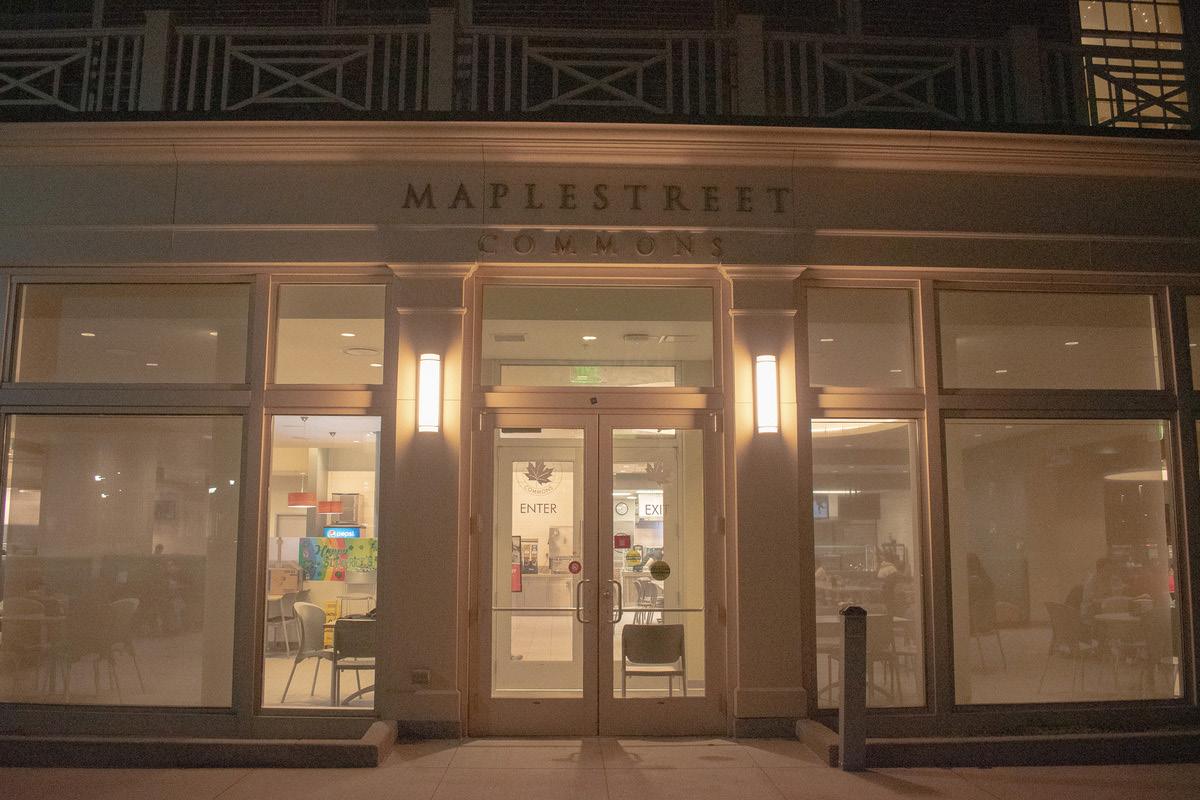
the time for students to eat. Instead of being open from 7:30 a.m. to 2:30 p.m. during the week, dining halls now close at 2 p.m. and do not reopen until 5 p.m. Additionally, the dining halls now have more limited hours during the dinner hour, with each dining hall opening from 5 to 8 p.m. instead of the previous 4:30 to 8:30 p.m.
In an email to The Miami Student, Robin Jackson, director of operations at Miami, attributes these newly set hours to the number of students visiting the dining halls and understaffing.
“Our changes were based on the number of transactions during those times and staffing restraints,” Jackson wrote. Because these times were the least busy last semester, they are now when the dining halls close to give their staff time to clean and prepare for the next meal.
While this may give the staff more time to clean the dining halls, some students now lack the opportunity to eat between classes. Zack Brandner, a first-year marketing and entrepreneurship co-major, said the new change in hours has limited the times he is able to go to the dining hall.
Prior to the change, students like Brandner used to go to the dining hall twice a day, once in the morning and once in between classes. Now, eating at the dining hall no longer fits into his schedule well.
“It’s hard to eat during the day now because it closes when I usually would have time to go … which is after class,” Brandner said.
Roman Smith, a first-year marketing and entrepreneurship co-major, agrees that the closing of the dining halls during weekdays is inconvenient to students operating on a busy schedule.
“I just feel like the dining halls should be working around our schedule as full-time students, not the other way around,” Smith said.
Dining hall workers like Tina, who preferred to be identified by first name only, however, are thankful for the time she and her staff get during the day, as it allows them to clean up in the dining hall in preparation for
the next meal time.
“I prefer the dining halls closing for a couple of hours during the day, but that’s just because it is easier for us to clean and refill while we are not being bombarded with students,” Tina said, “but I can see how that might not be so great for students.”
Other students like Abbie Harris, a first-year kinesiology and psychology co-major, are less affected by the dining halls closing during the day and more affected by the fact that all dining halls close at 8 p.m. every night instead of the previous 8:30 p.m.
“I find it frustrating when I am studying late. I can’t go grab food from the dining hall because it closes at 8 [p.m.], so I end up just eating in my room,” Harris said.
Students also noted frustration in places that take declining dollars, such as Pulley’s Diner located in Armstrong, being open much later than the dining halls and having less appealing options.
“Pully’s isn’t the healthiest option always, unlike the dining hall which usually has some good options,” Harris said. However, many students like Harris and Smith are unsure of how to voice their opinion. Neither stu-
key said. “So it kind of helps put into perspective how much we have to pay and save.”
Alexander added that, although the situation isn’t ideal for students or faculty, there doesn’t seem to be any alternative model.
“Across the country, if you were to survey similar art departments at universities, you’re going to find a very similar model as ours,” Alexander said. “That’s just the way it’s always been. I don’t know if that’s a very good justification for why we do it now, but our budgets are so that we can’t afford to buy all the supplies for all the students anyway.”
Alexander said the department tries to make the most of the funds allocated to it by the university.
“[Our budgets are] not large, I can say that. It’s enough to get us by, enough to be able to do what we need to do,” Alexander said. “We try to do our best in terms of supporting students and we want students to succeed. But we also only have so much to give. So it’s kind of a balance.”
rudere@miamioh.edu
dent has considered speaking to an Associated Student Government representative or someone who would be able to enact change on campus.
“It is what it is,” Harris said. “We can’t change it, so we just go find something else to eat on campus.”
Jackson says there has been a minimal amount of complaints made pertaining to the change in dining hall hours. Feedback plays heavily into the setting of the dining halls’ hours.
“We will continue to monitor the situation and make adjustments if necessary to ensure that our dining hall hours accommodate the needs of our students,” Jackson wrote.
The recent change in dining hall hours is due to Aramark controlling the food and beverage services on Miami’s campus. Miami’s dining hall hours can be found on the Campus Services page of Miami’s website under the title “Hours.” For more information on the current dining hall hours, visit this website.
patelou@miamioh.edu
Preparing for the next chapter: Balancing coursework with standardized test prep

MEGAN MCCONNELL ASSISTANT CAMPUS & COMMUNITY EDITOR
Even as a second-year student, Catelyn Collins already spends 10 to 15 hours a week preparing for life after undergrad. Collins is one of several Miami University students planning on taking the Law School Admission Test (LSAT) in early June.
For students with goals of attending graduate or professional school, like Collins, it can be difficult to balance coursework with test preparation, as free time is consumed by studying for standardized tests, such as the LSAT, Medical College Admission Test (MCAT) and Graduate Record Examinations (GRE).
Preparation for these tests typically begins months before they’re taken, and students are often encouraged to designate anywhere from 10 to 20 hours a week studying the material.
“It’s been difficult just because my classes have been super intense recently,” Collins said. “I haven’t really been doing too great of a job. Right now, grades are more important to me.”
Tailyn Walborn, pre-health professions advisor and director of the Mallory-Wilson Center for Healthcare Education, wrote in an email to The Miami Student that it is recom-
mended students study for a minimum of three to four months before taking the MCAT. Most students take the test in January of their third year of undergraduate education.
This means studying typically begins in the fall semester and extends into winter break. Although some class material may overlap with subjects covered in the MCAT, heavy course loads can make it difficult for students to find time to study.
“I’ve had students postpone their test because they weren’t able to study the way they thought they would because of their classes,” Walborn wrote. “I typically recommend viewing studying for the MCAT as a three-credit course, so a lot of students will only take 12 credits during the semester they’re studying.”
Elizabeth Zimmerman, director of the Sue J. Henry Center for Pre-Law Education, said pre-law students face a similar challenge when preparing to take the LSAT.
“Junior year is a hard year,” Zimmerman said. “Our advice, typically, is if there’s any way that you can make that spring semester easier for yourself, you need to do it for exactly this reason. It’s important to have a little extra space so you can study for the LSAT.” Zimmerman said most students spend about 20 hours a week study-
ing for the LSAT and typically begin studying at least six months before the standardized test.
Although it can be difficult to balance, Miami University offers several resources to students planning on taking these standardized tests.
For those preparing for the MCAT, Walborn wrote Miami has various partnerships with test prep companies that offer discounts to students, host workshops and provide practice tests. Additionally, pre-health professions advisors, like Walborn, are available to help students develop a plan and build a strong application.
Similar resources are also available for pre-law students, such as an LSAT prep class every spring, one-on-one advising appointments and scholarship opportunities. The Henry Center also hosts small seminars and events throughout the year, such as Law Day Fair, which allows students to meet law school representatives from around the country.
Zimmerman said there is a noticeable difference in law school acceptance rates among students who take advantage of these resources offered by Miami and the pre-law center. According to the Henry Cen-
ter’s website, 94% of senior Miami applicants that graduated in 2020-21 were accepted into law school, but those who engaged with the center saw even higher admittance rates.
Students who took PLW 401, a course designated to work on law school applications, had a 100% acceptance rate, and 97% of Miami seniors who participated in advising through the pre-law center were admitted into law school.
Despite having some difficulty balancing her coursework with her LSAT studying schedule, Collins is looking forward to finding her future school.
“Coming in from COVID [in] high school, you didn’t really have anywhere you could go tour,” Collins said. “I feel like now I’ll finally go and get that … I can go look at the college and see what’s going on there. So, I’ve been looking for a year now at all the different schools that I think I want to go to.”
LSAT exams begin in mid-April and are offered periodically through November of this year. The MCAT is also offered several times a year, spanning from January through September.
mcconnmn@miamioh.edu
FRIDAY, APRIL 7, 2023 5
PATEL STAFF WRITER
ART DEPARTMENT’S CLOSET CONTAINS A
AMOUNT OF MATERIALS THAT STUDENTS MAY BORROW.
THE
LIMITED
PHOTO BY SARAH FROSCH
A HANDFUL OF STUDENTS FINISH UP THEIR MEALS INSIDE A CLOSED MAPLE STREET DINING HALL. PHOTO BY JESSICA MONAHAN GRAPHIC
BY ERIN MCGOVERN
‘I’m no Thumbtack Mechanic’:
Student band is rocking Oxford
LILY WAHL STAFF WRITER“You regret me, and I’ll regret you,” Daisy Jones and Billy Dunne sing on a stage in front of tens of thousands of people. There’s a glare in Jones’s eye that suggests some truth to the deep-cutting lyrics she screams into the microphone. That glare is directed at Dunne.
Millions of readers — myself included — could only imagine the anger in Jones’s voice since the publication of Taylor Jenkins Reid’s novel “Daisy Jones & the Six” in 2019.
Now, Daisy Jones and the Six are taking the world by storm in a ten-episode miniseries on Amazon Prime Video, executive produced by Reese Witherspoon.
CHLOE SOUTHARD STAFF WRITER
Thumbtack Mechanics began with a flyer.
In the spring of 2022, Miles Lynn wanted to improve his guitar skills by playing with other musicians. Like other artists before him, he made and hung flyers to seek out potential band members using an eye-catching red font.
Once people began responding, Lynn started holding interviews.
“[I] was just trying to get to know them; see if I meshed with them,” Lynn said.
One by one, the group began to grow, and it’s now comprised of seven Miami students: Lynn on rhythm guitar, Zach Hillman on bass, John Cronin on lead guitar, Sara Noall on keys, Brock Shults on drums and Jane Feck and Ethan Kraus as lead female and male vocals, respectively.
The group tested names such as Easy Squeeze and Miles and the Kilometers. But the right name came to them while Lynn and Cronin were hanging flyers.
“[Miles] was like, ‘How many thumbtacks should I put on each flyer?’” Cronin said. “And I was like, ‘That’s a dumb question’ … so I go, ‘I don’t know, I’m no thumbtack mechanic.’ I thought it was a stupid joke, but Miles liked it. He was like, ‘That could be our band name!’”
Thumbtack Mechanics cites bands such as The Strokes and The Beatles as musical inspirations, but that wasn’t originally the plan.
“[We] encompass everything,” Lynn said. “When we started, I had a vision in mind for the music that I wanted to play. Throughout adding people, it kind of changed because we are so diverse, and that makes
such a versatile setlist.”
Thumbtack Mechanic’s setlist is indeed versatile; with music from Taylor Swift to Paramore to Amy Winehouse and Train, there’s something for everyone.
The band played what they described as their first real show during Oktoberfest last year, with an estimated 300 to 400 people in the audience.
Before then, they were playing at parties and in backyards. Unlike other bands, Thumbtack Mechanics isn’t picky about where they play or what equipment they use. Shults said he’s had dirt on his drums on more than one occasion.
As a collective, the band lists their favorite performance as Brick Street Bar. Brick is a staple of Oxford, and the group felt elated to play there.
“I’m sure we’d all say one of our favorite performances was Brick,” Shults said. “I walked in [and saw] all of these pictures hanging of all these people that’ve played at Brick. Sure, we’re a student band, but when I was looking out in the crowd, I didn’t see one empty spot in that bar.”
Lynn agreed with Shults.
“When I started, [Brick] was the goal I wanted us to achieve,” Lynn said. “Not only to have gotten there, but to have packed the place — that was a great feeling.”
Thumbtack Mechanics is a close-knit group. They enjoy jeering among themselves and playing jokes on each other. As Schults put it, “We like to banter.”
For example, the band commented on the musical influences of lead singers Feck and Kraus, who were absent from the interview. They said Feck’s favorite song to perform was “Tongue Tied” by Grouplove, and joked that Kraus’s biggest influence
was the band fun.
Despite all of the fun being in a band entails, it can be stressful to balance with school. The band practices once a week for two to three hours, then designates time to practice on their own as well. On top of that, the group plays one to two shows a weekend.
“It is a job,” Noall said. “Moving equipment is something you don’t think about when you join a band, but we spend a good amount of time lugging equipment from here to the studio to somewhere else … it’s super rewarding, though.”
As for the band’s future, the end of the semester will be bittersweet. Lynn, Cronin and Kraus will be graduating, which leaves Hillman, Noall, Shults and Feck, who is an Oxford native. Fortunately, Thumbtack Mechanics will continue to play.
“I’m passing [the band] off to the first person that joined the group, [which] is Zach,” Lynn said. “I’m handing off the keys to the kingdom.”
Still, as Hillman said, “It’s just not gonna be the same.”
Long term plans are still being discussed among the group, but the seniors expressed it’ll be tough to walk away. Noall stated that the band has been working on original songs and has talked about recording music.
Shults left with some encouraging words to other musicians.
“I would encourage any group of people out there that want to go out and show what they’ve got, to go out and play; coordinate something and do it,” Shults said.“We got very lucky … it is so fun to get on the stage and play for people.”
@_chloebowie_ southacr@miamioh.eduWith a star-studded cast including Sam Claflin, Riley Keogh and Suki Waterhouse, the fictional 1970s rock group whose history mirrors that of Fleetwood Mac has the charisma it needs to find its place at the top of both current headlines and music charts. Their album “Aurora” became the first album by a fictional band to hit #1 on the iTunes charts.
The band’s music helps breathe life into their on-screen adaptation, guided by musical consultants like Phoebe Bridgers. Their on-stage performances might lack dialogue, but they allow viewers to go from fans of “Daisy Jones & the Six” as a book to fans of the band.

Keogh, who played Jones, might have had a genetic leg up (her grandfather was Elvis Presley), but she and Claflin had never played musical instruments before the show began. In order to pull off the musical aspect of the story, the cast had to go through an 18-month “band camp.”
The commitment to music pays off. “Aurora” covers a lot of ground emotionally and sonically, and it’s hard to believe that Keogh and Claflin had never sung before when the blend of their powerful voices sounds that good.
While the other members of the band might not be credited for playing their instruments in the studio version, all of the performances in the show were completely live and recorded on set.
The show takes a “mockumentary” approach that lets a viewer truly feel the complexity of the events that unfold. Watching made me feel as though I was a fly on the wall during recording sessions that were going to make history, as well as the tumultuous fights, where each member tells a different story to the camera.
Between Daisy and Billy’s disastrous, adulterous relationship and struggles with addiction, Karen and Graham’s inability to communicate the intensity of their feelings, Eddie’s desire to overtake Billy as the “star” of the group, and an Irish prince, the
show has its hands full. It covers a lot of ground, bouncing around between different interviews and often leaving story threads off until the next episode, where they’re weaved into a larger picture.
It’s easy to get lost in the chaos of “Daisy Jones” if you aren’t familiar with the novel, but for fans of the original, the television series keeps the intense pace of the source material.
With all of that being said, there are some continuity problems between the show and the book. This is a given with adaptations, but some of the changes seemed senseless.
For one, an entire character, Pete, was removed from the band for seemingly no reason. This wouldn’t be much of a problem in other stories, because sometimes material needs to be cut down to fit a television format, but here it leaves a band called The Six with five members.
Camilla, Billy’s wife, has a change of last name from Martinez to Alvarez for the show. Also, an early member of The Six leaves the band to become a dentist — depoliticizing the source material, where he is drafted into and dies in the Vietnam War.
The nature of Billy and Daisy’s relationship feels considerably different too. In the text, the core of their relationship is simply the way that they write music together. While they bicker, argue and fall further into addiction, just like in the show, Jenkins Reid implies that their relationship is never physical in the novel.
While changing the number of members in the band and the last name of a character might not drastically alter the overall themes of the work, these criticisms build toward a larger alteration — “Daisy Jones & the Six” as a piece of literature utilizes solely unreliable narrators, aided by a twist at the end about who they’re speaking to, and never truly shows you what happens.
It’s up to you as a reader to decide who you believe or don’t believe. That room for interpretation is what makes the novel truly special, and just isn’t something that the medium of television can achieve the same way, though “Daisy Jones” certainly tries.
There’s a lot to love about “Daisy Jones and the Six.” The music is amazing, the cast is wonderful, the clothes are gorgeous, and you can really feel transported back in time by all of the care that went into creating the show (if you don’t pay too much attention to what year some of the cars are from, unlike my dad).
To (quite literally) make a long story short, I’ll feed into the age-old cliché: the book was better.
Rating: 8/10 wahllm@miamioh.edu @lilymariereads
Three years of ‘Animal Crossing: New Horizons’
ABBEY ELIZONDO
SENIOR STAFF WRITER CHLOE SOUTHARD STAFF WRITER
It’s 2020, and the entire world is on lockdown. You feel as if you’re losing your mind from being cooped up indoors during what seems like the end of the world.
Enter “Animal Crossing: New Horizons.”
Countless people retreated to a virtual island, where they were surrounded by cute animals and a world of creativity — an escape from the mess that was reality.
Nintendo first confirmed a new Animal Crossing game for the Switch in 2018. Initially, the game was planned to release in 2019. After a delay to avoid putting employees under intensive work, the game came out on March 20, 2020.
Unbeknownst to Nintendo, this delay would only enhance the success of “New Horizons.”
The game immediately became a hit, drawing new and old players alike. In fact, Switch sales spiked so high that many retailers sold out of the popular console. The release of a special, “New Horizons” edition of the Switch only raised demands. As of Sept. 30, 2022, the game had sold 40.17 million copies.
The popularity of the game attracted several celebrities such as T-Pain, Chrissy Teigen and Guy Fieri, as well as brands like Gucci. Activist groups such as PETA also took to “New Horizons” to spread their message.
Even political figures created their own islands. Who could forget the infamous Joe Biden Island?
But, three years later, the game’s player base has decreased significantly. We’re no longer in quarantine, and many people have since abandoned their islands for the real world.
However, Kate Reed, a junior strategic communications and English literature double major at Miami, has remained dedicated to the game since its release.
“How dedicated the community is is what’s holding it together,” Reed said.
Since 2020, Reed has racked up about 585 hours on “New Horizons.” She says the game kept her busy and sane during lockdown; the good memories she made on the game are the reasons why she keeps returning to play.
“I have a lot of good memories,” Reed said. “In the morning, I’d finish all of my work around 10, and then I’d spend the rest of the day playing. Afterwards, I just kind of kept coming back to it.”
Jocelyn Taylor, a first-year art education and art therapy double major, also experienced this unique era of gaming. She purchased the game when it first released in 2020, using it as a way to connect with friends virtually.
Taylor has always been a fan of Animal Crossing. She first started playing “Animal Crossing: New Leaf” on the 3DS, then moved to “New Horizons” when the pandemic started.
“We had nowhere else to go, so why not play Animal Crossing?” Taylor said.
Taylor mentioned that her younger cousin just bought the game, so it may be time to remake her island. But she encountered a problem when she realized the many updates that have happened since the original release.
“I loved all the updates they added,” Taylor said. “But once they started charging for it, that’s when I fell out of playing.”
Reed, on the other hand, purchased the “Happy Home Paradise” DLC for $30 and enjoyed it. She con-
sidered it one of the better updates to come from “New Horizons.”
“It gave you so many different furniture items,” Reed said. “I liked that they added the new characters in with Amiibo cards.”
Amiibos come in the form of cards or figurines; when tapped onto a Nintendo Switch, they activate a character in your game.
Some of Taylor’s favorite features of the game centered around the personalization of her island. The decorations, placement of houses and buildings, terraforming and planting trees and flowers were a few of the many elements that made Animal Crossing feel special, she said. “New Horizons” came to life for

Taylor over winter break when she visited an aquarium with her boyfriend and saw a whale shark for the first time. She said the whole time they were making jokes about how they had become their Animal Crossing characters in real life
Even with her love for the game, Taylor’s gameplay has fallen since 2020.
“It ends eventually; it’s not like a co-op game where you can play it again and again,” Taylor said. “There was a point when I was trying to get all frog residents, but that would take so long. I don’t have the patience for that.”
Most college students only have an hour or two in the day to devote
to their hobbies. Animal Crossing demands too much time from casual players and rewards devoted players that have 200+ hours in the game.
Animal Crossing will live on for future generations of players, but people who played “New Horizons” in 2020 will always remember the collective experience of being connected through a virtual island paradise.
@_chloebowie_ southacr@miamioh.edu
@earlgreyincense elizonar@miamioh.edu
‘Daisy Jones and the Six’: a fictional band with a very real fanbase
entertainment
LOCAL OXFORD BAND THUMBTACK MECHANICS POSE IN FRONT OF BRICK STREET BAR ON THE NIGHT OF A PERFORMANCE.
PHOTO PROVIDED BY THUMBTACK MECHANICS
FRIDAY, APRIL 7, 2023 6
GRAPHIC BY REECE HOLLOWELL
Students advocate to expand kosher options on campus
“I keep it strict, so I don’t eat wheat, legumes, rice, corn or quinoa, which includes corn by-products,” Nathan said.
While Passover meals have been supplied annually, some Jewish students say the lack of options and lack of freshness make the supplied options difficult to eat for eight days straight.

“They come in almost like TV meal frozen packets, but some of the options are just inedible at some points. You just end up eating snacks for eight days,” Nathan said.
Last Passover, sophomore Eli Levsky struggled to find meal options.
“During Passover, I don’t visit the dining halls at all. Cross-contamination is inevitable. Last year, I depended on the synagogue outside of Hamilton, which kept me going,” Levsky said.
While Jewish students at Miami have been facing these difficulties for decades, limited wide-scale action has been taken to better accommodate the dietary needs of these students. Greenberg said the lack of kosher foods has impacted admissions decisions for prospective students.
“Parents call me before they want to send their kids to Miami and I have to tell them the truth. This happened last week,” Greenberg said. “There are potential students that aren’t showing up.”
In a 2014 report by The Student spotlighting Halal and Kosher students, Miami’s dining services explained how issues with accommodating dietary restrictions were being handled on an individual basis. Hillel’s executive director at the time said the issue could be addressed more directly if Jewish students continued to
request Kosher food. And so they did.
Krainman shared with Greenberg his struggles with finding Kosher options on campus, and Greenberg encouraged him to talk with other Jewish students about it.
“For years, people had said there wasn’t enough interest in Kosher,” Greenberg said. Creating a space for kosher food on campus is important for Krainman because he wants to help Jewish students find a greater sense of belonging.
“Especially if there’s any Orthodox Jews, [a kosher station] would be very welcoming to them … to feel they have a place here no matter what,” Krainman said. “It would be very good in bringing Jews together and creating a sense of community and belonging.”
As a member of AEPi, a Jewish fraternity on campus, Krainman reached out to his Jewish fraternity brothers about their interest in expanding kosher options on campus.
“The biggest obstacle was that a lot of Jewish students weren’t really talking about it. We all wanted it, but it wasn’t a large thing,” Krainman said.
Krainman gathered a list of 30-40 people interested in having more kosher dining options and presented his findings to Aramark.
On March 8, a cohort of Jewish students, along with Greenberg, were invited to meet with the Student Dining Hall Advisory Council and Pulkit Vigg, vice president of Aramark collegiate hospitality, to discuss their experiences and accommodation needs.
“Aramark is not here to change the culture of Miami, we’re here to become the culture of Miami. I would like to know what the need is,” Vigg said to begin the meeting.
The three biggest topics students focused on were the possibility of a kosher dining station, expanding marketplace offerings and planning ahead for Passover.
“I would love for people to be able to eat at the dining halls with their friends,” Nathan said. “An easy solution we thought of was that the vegan/vegetarian options are already Kosher because they don’t contain meat. To make them fully Kosher, we would need separate pots and pans [for the station].” A kosher station would also accommodate Muslim students, as all kosher food is halal. For Greenberg, a place for students of all religions to
eat together would help Miami students forge intercultural connections and create unity.
Many colleges and universities have already implemented a vegetarian kosher dining station to help accommodate their Jewish students.
Vigg himself helped oversee the addition of a vegan/vegetarian Kosher section at Elon University in Elon, North Carolina.
There are many logistical obstacles to implementing a kosher dining station.
Senior Executive Chef Jonathan Hunt, who is at the forefront of the effort to expand kosher options on campus, said certified kosher kitchens require isolating food products and assigning full-time employees to the location, a process that would require redesigning a kitchen.
However, the option isn’t off the table.
“To execute something like this is going to require quite a bit of planning and support from all angles of campus leadership,” Hunt wrote in an email to The Student. “I have asked Rabbi Yossi to have any students who are interested in such an option to email their desire. This way we can gauge the interest.”
Another way to make dining halls more accessible for kosher and halal students, according to Levsky, would be to write ingredients on the glass above the buffet stations so students can know which foods contain pork or shellfish.
“Last year, there were days I went to the dining hall and every option was pork or seafood. One thing I really appreciated last year was that the food item was written on the glass,” Levsky said.
Additionally, as a busy student who enjoys using the marketplaces
on campus, Levsky hopes to see more kosher to-go meals to help accommodate his schedule.
To help make Passover meals more accessible, students shared food and location recommendations with the committee. Recommendations included supplying options in Emporium, expanding the variety of meals offered and supplying certain kosher staples: matzah, cold cuts, gluten-free macarons, sausage, cream cheese and cottage cheese.
“Right now, my goal is to have products available in the select markets for Passover. These would be shelf-stable, refrigerated, and frozen products,” Hunt wrote. “For the fall of 2023, we would like to see kosher products in all markets.”
As students and campus leaders continue to negotiate paths for expanding kosher options, Aramark stressed its commitment to helping students struggling with meeting their dietary needs to reach out to one of Miami’s dietitians. Hunt recommended that students with specific dietary restrictions reach out to the university’s registered dietitians at diningdietitian@miamioh.edu.

perkin16@miamioh.edu
Marcus Samuelsson bridges the gap between food and culture

REECE HOLLOWELL ENTERTAINMENT EDITOR
“I might be the only Swede-iopian that you’ve met.”
This opening sentence of chef, author and Food Network personality Marcus Samuelsson’s keynote speech “A Night with Marcus Samuelsson: A Career of Chasing Flavors” succinctly summed up the following hour. Samuelsson took the stage at Miami University’s Harry T. Wilks Theater in Armstrong Student Center on Wednesday, March 29.
Samuelsson, who has been a mainstay on Food Network shows like “Chopped” and “Iron Chef,” framed his talk around the intersection between food and culture. He went through his own life and career, highlighting the challenges he overcame to reach his current successes.
Born in Ethiopia, Samuelsson lost his mother to illness when he was around 2 years old. He and his sister, age 5 at the time, were almost orphaned, but the two were rescued by a nurse at the hospital.
“The nurse that took care of us, she broke the law in order to save us,” Samuelsson said. “She took us in. I’m not suggesting they should break the law, but there’s actually two times in my journey where someone broke the law for the better.”
The two were adopted three months later and moved to Sweden, where they joined a culturally diverse family that included people from all walks of life. There, Samuelsson was exposed to different foods and styles of cooking.
Samuelsson used the example of Swedish meatballs to illustrate this
point.
“I know Swedish meatballs from three different places,” Samuelsson said. “School lunches — tastes like a furniture store. My mom, who did the fast Swedish meatballs … or my grandmother’s, that were actually rolled, they were in different shapes, but they were delicious.”
For the remainder of his speech, Samuelsson described his journey as a chef across several different countries, from Japan to Switzerland to France and eventually to New York City, where he currently resides. Throughout, he peppered in pieces of advice and wisdom he picked up on his travels.
One such observation came when he was discussing collaboration.
“I always get confused when people say, ‘I’m self taught, I did this on my own,’” Samuelsson said. “What? Who did anything on their own? Very few people. And also, that doesn’t sound like fun.”
Samuelsson also highlighted how his time in New York, specifically Harlem, has impacted the way he perceives and enjoys food.
“If I wanted the best cornbread, it was at an after-church program and had nothing to do with a restaurant,” Samuelsson said. “If I wanted to find the best jerk chicken, I’d go to certain parks post-basketball game, and that’s where they were blasting Jamaican music … and that’s where they serve the best jerk chicken.”
Samuelsson ended his prepared remarks with a story about his experience of simultaneously competing on the competition show “Top Chef” while also creating the menu for former President Barack Obama’s first
White House State Dinner. He left the audience with an encouraging sentiment.
“I think all of you guys will have your own moments,” Samuelsson said. “It might not involve a president, or it might. But it’s gonna be your moment.”
The lecture portion of the evening closed with an audience Q&A. Samuelsson answered questions about the
late Anthony Bourdain, advice for living in New York and what sets him apart from other chefs.
Following the talk, a reception was held in the Armstrong atrium where Samuelsson signed copies of and took pictures with his newest book “The Rise: Black Cooks and the Soul of American Food.” Samuelsson’s was the final lecture of the academic year for Miami
University’s Presidential and Career Leadership Series. Sponsored by the Center for Career Exploration and Success, the guest lectures are intended to offer students exposure to a variety of different
and experiences. @HollowCentral hollowrr@miamioh.edu FRIDAY, APRIL 7, 2023 7
careers
FOOD FOOD NETWORK CHEF MARCUS SAMUELSSON PREPARES ONE OF HIS GOURMET MEALS. PHOTO BY MARCUS SAMUELSSON MIAMI STUDENTS BROWSE FOOD OPTIONS AT MAPLE DINING
SENIOR EXECUTIVE CHEF JONATHAN HUNT WROTE THAT HE WANTS KOSHER PRODUCTS IN EVERY MARKET ON CAMPUS NEXT FALL. PHOTO BY JAKE RUFFER
COMMONS. PHOTO BY JESSICA MONAHAN
CONTINUED FROM FRONT
Ryland Zaborowski doesn’t let autism stop him from crushing baseballs
“Coming to Miami, the first day I was here I was like, ‘Hey guys, my name is Ryland and just to let you know this is the issue I have. So if there’s something I don’t understand or process, this is why,’” Zaborowski said. “As a team, there were no negative reactions … a lot of guys took it to heart, and they’re like ‘OK, you know, if this guy has a rough day, I’m going to be there for him because I actually care.’”
Bailey Montgomery, Miami’s hitting coach, says that there’s a culture of inclusivity on the Miami baseball team. Even when they were recruiting Zaborowski, they were thinking about how the other players would treat him. They knew they had a good group of guys.
“To us, he’s Ryland the teammate,” Montgomery said. “Someone who loves baseball, who’s trying to help us win.”
Earlier this year, Miami’s athletic department held an inclusiveness meeting at Millett Hall. At the end was an open mic for athletes to come down and tell their stories.
“I was just like, ‘Dang, what if I do it,’” Zaborowski said. “And my anxi-
ety was rushing, and my stress was just through the roof, but I went up there and I grabbed the mic.”
Zaborowski doesn’t remember a lot of the home runs he hits. His first collegiate home run, the first thing he remembers from his perspective is rounding second base.
At the mic, he hit a home run.
“And I blacked out,” Zaborowski said. “I don’t remember a thing that I said. I just remember handing the mic back.”
The response has stuck with him.
“All the athletes got up, people were dapping me up, giving me hugs, just saying, ‘Thank you for telling us that. Now I understand,’” Zaborowski said. “… a lot of athletes who have never met me have come up to me saying, ‘Hey, I respect you for doing this.’ … Just having those people who care about me and appreciate that I went up and shared my story just makes a huge difference. I mean, it gives me confidence as a person, as an athlete, as a baseball player, to continue pursuing playing baseball even more.”
Today, the game is more than just a hobby or even a passion for Ryland.
“Right now I call it an escape from reality type of thing. Throughout the
Miami softball is a well-oiled machine in Kirin Kumar’s third season
years, if I had a rough day at school or just a rough day outside of baseball, coming in and hitting in the cages or getting some type of lift in, anything baseball-wise just takes my mind off those hard times that have been going on. It seems like my bad day ends when I start playing baseball.”
So far this season at Miami, Zaborowski has been one of the team’s best players. The big 6-foot-6, 235 pound third baseman is hitting .299 and sporting a huge OPS of 1.131 this season. He leads the RedHawks in home runs with 11 and RBI with 24. In more than 20% of his at bats this season, he’s recorded an extra base hit.
“All that hard work is paying off,” LaLiberte said.
Zaborowski’s dedication to his craft is at least partly a product of how hard he is on himself.
“I’m a huge perfectionist. It’s hard to be a perfectionist in baseball, when you’re failing seven out of 10 times,” Zaborowski said. “In practice growing up, I wanted everything to be perfect. I wanted every swing with the wiffle bat to be a home run. It’s still a little bit like that nowadays.”
Miami’s hitting coach Bailey Montgomery says that it’s great to
see Zaborowski having success because he’s so passionate and he puts so much work in. Zaborowski spends almost all of his free time at the baseball facility, immersing himself in the sport.
“He’s a baseball rat,” Montgomery said. “He’s here early in the morning watching video, hitting extra, constantly doing everything and anything to maximize himself … and as soon as he gets home it’s MLB.tv, and he’ll be texting me like ‘did you just see that big Trout swing?’ and stuff like that.”
Montgomery has helped Zaborowski adjust to Miami, serving as a sounding board for all things baseball and otherwise.
“He’s like an uncle to me,” Zaborowski said. “ … I can go to him about anything hitting, anything school wise, anything just in general, outside of school or baseball, and he’s there to help me. Having someone in my corner who knows that I can be successful is huge.”
Some would call Zaborowski’s story inspiring. And he certainly does hope that he can be a role model for other people with autism, especially those who might think they’re incapable of certain things.
“I play with that on my chest. Any-
one can do what I’m doing right now on the field. I mean that,” Zaborowski said. “There’s a lot of stuff that I struggle with; there’s a lot of stuff that other kids on the autism spectrum struggle with, but still they have great potential, just like people who aren’t on the spectrum. I really try to voice that loudly.”
Inspiring, or just Ryland being Ryland, Zaborowski’s story is pretty cool.
“I just hope that people don’t look at me differently, in a negative way,” Zaborowski said. “In the past, people have been like, ‘Oh, he’s on the autism spectrum.’ Like, ‘I’m not gonna be friends with him,’ or, ‘I’m not gonna talk to him.’ They assume too much right away … I feel like if you give me a chance to tell my story, who I am, what I have, what condition I have, and the way I work, if you just give me those couple of minutes to explain everything, those people should be able to understand where I’m coming from, what I’ve been through, and that I’m not the person that they think I am.”
schmelj2@miamioh.edu
@jackschmelznger
Where are they now?
Checking in on former RedHawks in pro baseball
JACK SCHMELZINGER SPORTS EDITOROpening Day, one of the most beautiful days, is finally upon us. That means a few things. First, and most importantly, America’s national pastime is finally back. Also, spring is coming and eventually summer. And finally, it’s time to check on the former RedHawks trying to make their names in pro baseball. Here they are, sorted by how recently they donned the red and white:
Jonathan Brand, right-handed pitcher, Boston Red Sox system
He spent the spring at the Angels’ big league camp, and threw four scoreless innings, striking out seven (an extremely promising sign). In his final appearance of the spring, Bachman’s fastball sat at 95-97 miles per hour and touched 99. He still hasn’t been added to the Angels’ 40-man roster, which means a call up to the majors probably isn’t quite imminent for Bachman yet.
Jacob Webb, right-handed pitcher, Boston Red Sox system
ed about Hartwig’s ascension. Landon Stephens, outfielder, Atlanta Braves system
Stephens, who was signed as a UDFA by Atlanta in 2020, earned an invite to the Braves’ big league camp this spring, where he walked three times and didn’t record a hit in seven plate appearances across five games.
NISSO SACHA THE MIAMI STUDENT
This March, softball coach Kirin Kumar earned her 100th career win at Miami in a game against Ohio University after just three seasons with the team. Since taking the helm in 2021, Kumar has led the team in back-to-back MAC championships and NCAA tournament appearances.
Kumar began her playing career at the age of 10, going on to play collegiately at Georgia Tech for four years as a true utility player who saw time in the outfield and both corner infield positions. She began her professional career as an assistant coach for the Tulsa University softball program. Since then, she’s coached at Western Kentucky University, Virginia Tech and North Carolina State University.
In 2020, Miami hired Kumar for her first head coaching position, an opportunity she said scared her at first. She was hired after a series of Zoom interviews and accepted the job without having set foot in Oxford.

During her time at Miami, Kumar has implemented many different initiatives that have led to the success of the program.
“She really has turned this program around,” Adriana Barlow, a fifth-year senior infielder, said. “She came in and instilled a lot of belief in us. She gives us the confidence to step into the box and say, ‘Let’s have a day.’”
During the winter term, Kumar has her players read a book focused on leadership and their mental game. This season, the team read “It Takes What it Takes” by Trevor Moawad. The book focuses on neutral thinking and what it takes to be great. Kumar believes these traits carry over to her players’ lives beyond softball. She’s focused on developing her players to set them up for success after college.
“We’ve had one [player] that wanted to be a sportscaster, and she’s on a news team in South Carolina,” Kumar said. “One is the youngest non-military employee in the Pentagon; one is in grad school who wants to own her own hospital. To see them play softball at a high level and then graduate and do things at a high level, there’s also a goal to see that happen.”
Additionally, Kumar has creat
ed a leadership committee within her team, consisting of four players elected by the team. The leadership committee passes information between the team and the coaches and handles minor infractions within the team, such as showing up late to practice.
“We try to grow them as people,” Kumar said. “We do a lot of things to help them with leadership on and off the field.”
Another initiative Kumar has implemented, to focus on mental health, is the team meeting with sports psychologist Jim Slager every month. Players meet as a group without coaches to talk through any issues the team may be having.
“2K [that’s Kumar’s nickname among the team] really does believe in the mental health side of the game, which is nice having that support from her,” Barlow said. “She understands us, she knows even if it’s not about softball, it will translate to the field.”
During games, Kumar lets her players make the decisions, occasionally stepping in to provide guidance. At a game against Toledo last week, outfielder Shelby Kunkel was struck in the ankle by a pitch. Kumar stepped in, ensuring Kunkel took her time before coming back up to bat.
“During the game, she gives us little pointers and she’s more of a quiet leader,” Barlow said. “She’s taught us so well during practice that we know what we’re doing on our own.”
From reading books to observing practices in other sports, Kumar is constantly working to improve herself. She utilizes the resources around her, talking and ideating with the coaches around her who have built successful programs.
“Our goal is to take a MAC team to the World Series,” Kumar said. “We’ve made winning the conference a standard, we’ve made going to regionals standard. We want to get to the next level, Super Regionals and the World Series. We have the personnel to do it.”
sachanz@miamioh.edu
@NissoSacha
Jonathan Brand, the most recent Miami University RedHawk to be drafted into professional baseball, is set to start his first full season in the minors. In 2022, after an incredible senior season that saw Brand strike out 86 batters and finish with a 1.40 earned run average (ERA) in 77.1 innings, the Red Sox selected Brand in the eighth round of the MLB June Amateur Draft.
Brand pitched two innings for the Red Sox rookie-ball affiliate, the Florida Complex League (FCL) Red Sox . He had three strikeouts and zero walks in those two scoreless frames. It hasn’t been announced where Brand will start the 2023 season, but it’s likely that he will make his way to at least single-A ball this season, since he’s a 23-year-old with four seasons of college baseball experience. Sam Bachman, right-handed pitcher, Los Angeles Angels system
Sam Bachman, the only Miami RedHawk ever to be drafted in the first round of the June Amateur Draft, had a bit of a disappointing season in 2022.
Bachman started just 12 games at Double-A, and averaged less than three innings per start. He struck out less than one batter per inning (6.18 K/9), which is surprising for a player with such electric stuff. He still battled some control issues, walking 25 batters in 43.1 innings. He also fought back injuries for most of his first season in pro ball, but he’s still the number six prospect in the Angels organization, according to MLB.com.
Jacob Webb had a great 2021 season for Miami, finishing with a 2.08 ERA and 59 strikeouts in 39 innings. That impressive performance and the 6-foot-5, 250-pound right hander’s heavy powerful stuff, led the Boston Red Sox to select him in the 14th round of the 2021 draft.
After giving up just one run in 12 in his pro debut at the rookie and Single-A levels in 2021, Webb Started the 2022 season at Single-A. He moved up to High-A after striking out 39 batters in 24.2 innings at Single-A, and saw more success just two steps from the big leagues, striking out 45 in 29.0 innings and recording a 3.72 ERA. He threw three innings at Double-A at the end of the season. He threw one game at big league spring training this year and gave up four earned runs in a third of an inning. It’s likely he’ll start 2023 at Single-A or Double-A.
Grant Hartwig, right handedpitcher, New York Mets system
Hartwig, another big right handed pitcher, had a good enough 2021 at Miami to earn a contract from the New York Mets as an undrafted free agent (UDFA).
Hartwig had a good pro debut, then erupted last season, recording a 1.75 ERA and 83 strikeouts in 56.2 innings across four levels of the minor leagues. He reached Triple-A in 2022, which is incredibly impressive for a player who wasn’t even drafted in 2021.
He threw four scoreless innings and struck out four in four appearances at the Mets’ big league camp this spring, and he started out the season with Syracuse, the Mets’ Triple-A affiliate. He already appeared in a game, Syracuse’s second game of the season, and registered a win in a scoreless 1.2 innings.
Mets fans are starting to get excit-
Stephens saw some success in 2022, finishing with a .812 on-base plus slugging (OPS) across 321 at bats at High-A. He struggled mightily after a late call up to Double-A, where he hit just .114 in 79 at bats. It’s likely that he’ll start the season at either High-A or Double-A in 2022. Stevens, who is currently listed as a first baseman, will have an uphill battle toward a big league chance in a loaded Braves organization.
Hayden Senger, catcher, New York Mets system
The Mets drafted Senger in the 24th round of the 2018 draft after he batted .344 on the way to a FirstTeam All-Mid-American Conference honor.
He hasn’t seen much success in his professional career since, recording a .712 OPS in 919 at bats across all levels of the minors in four seasons. But still, he earned his third straight invite to big league camp with the Mets this spring. He had one hit in six at bats.
Senger is more known for his defense behind the plate than his bat. He’s a decent receiver with a quick release that allows him to throw out a lot of runners despite lacking an incredible arm. If he can continue to hone his skills behind the plate and hit a little bit better, there could be a spot on a big league team for Senger at some point as a back up.
***
After Adam Eaton retired after the 2021 season, Miami hasn’t had an alumnus in the big leagues. With former first rounder Sam Bachman’s impressive spring, and a few other former RedHawks turning some heads around pro ball, it seems likely that that won’t last the entire 2023 season.
schmelj2@miamioh.edu @jackschmelznger

FRIDAY, APRIL 7, 2023 sports 8
SINCE ADAM EATON RETIRED IN 2022, MIAMI HASN’T HAD AN ALUM IN MAJOR LEAGUE BASEBALL. GRAPHIC BY LUKE MACY KIRIN KUMAR RECORDED HER 100TH CAREER WIN IN JUST HER THIRD SEASON AT MIAMI EARLIER THIS YEAR. PHOTO BY JAKE RUFFER
-
CONTINUED FROM FRONT
Looking ahead after another disappointing season for Miami hockey
and Detroit Red Wings draft pick Red Savage. Persson is heading to the University of North Dakota. Although his stats for the season — a 3.67 goals against average and a .891 save percentage — don’t jump off the page, the junior goaltender kept the RedHawks in many games throughout the year.
Logan Neaton, a fifth-round draft pick of the Winnipeg Jets in 2019, currently slots in as Miami’s starting goalie for next season. Neaton had five starts and appeared in nine total games across the 2022-2023 season, posting a 3.60 goals against average and a .900 save percentage. Neaton will be entering his third season with the RedHawks after starting his college career at UMass-Lowell; however, the goaltender has only played in 22 games across his college career.
WILL KEHRES
THE MIAMI STUDENT
The Miami University RedHawks concluded another disappointing season with a pair of losses to the University of Denver in the first round of the National Collegiate Hockey Conference (NCHC) playoffs by a combined margin of 13-4.

The results were indicative of those throughout much of the season, with the team posting an 8-24-4 overall record and going a meager 3-18-3 in conference play.
Miami got off to a hot start in non-conference play, posting a 4-1-1 record through the first three weeks of the season. The stretch included an impressive win against a top-20 team in UMass Lowell and a sweep against Canisius, who would go on to win the Atlantic Hockey Association and compete in the NCAA tournament.
The ’Hawks posted a few more notable results throughout the year, including a dominant 5-0 win against NCHC opponent and then No. 5 St.
Cloud State, another NCAA tournament team. Other wins on the season came against Ferris State, North Dakota, Niagara and Minnesota Duluth.
However, the majority of the season was a much different story. The RedHawks gave up almost twice as many goals per game as they scored across the entire season. They also faced multiple lengthy stretches without a win, including a 12-game stretch from Dec. 31 until Feb. 24.
Miami particularly struggled on special teams. The team only converted on 16.1% of their power play opportunities, ranking 46th out of 60 Division I programs, and the results weren’t any better on the penalty kill. The RedHawks collected the sixthmost penalty minutes on the year and only posted a 76.3% success rate on the penalty kill, ranking 55th in the nation.
A total of eight players from this year’s roster have chosen to enter the portal. Three players have already announced commitments, including starting goaltender Ludvig Persson
Red Savage is joining the Michigan State Spartans after two seasons at Miami. Savage was a fourth-round draft pick of the Detroit Red Wings in 2021, and he collected 30 points in 67 games with the RedHawks. A product of the U.S. National Development Program, Savage has also represented Team USA across several international competitions, most notably as a member of the United States’ World Juniors team in both 2022 and 2023. Despite these significant departures, Miami will hope to retool with its incoming recruiting class and with newcomers via the transfer portal. Miami RedHawks 2023-2024 recruiting class includes:
• Forward Tanyon Bajzer, Odessa Jackalopes (NAHL)
• Forward Micah Berger, Wenatchee Wild (BCHL)
• Defenseman Brasen Boser, Fargo Force (USHL) Goalie Bruno Bruveris, Cedar Rapids RoughRiders (USHL)
Forward John Emmons, Minot Minotauros (NAHL)
Forward Braedon Ford, Des Moines Buccaneers (USHL)
Defenseman Declan Ride, Wentworth Gryphins (ACH)
Forward Dominick Rivelli, Langley Rivermen (BCHL)
Forward Raimonds Vitolins, Green Bay Gamblers (USHL) Vitolins and Bruveris are two of the most notable additions. The pair each have years of experience representing Latvia in international competition, and each were members of Latvia’s U-20 World Junior team in 2021-2022.
Bruveris, a goaltender, only posted an .891 save percentage across 38 games with Cedar Rapids last season. However, he gathered an impressive record of 20-12-3. Vitolins has an in-
teresting background, having played 2 seasons with the University of Vermont before returning to the USHL for a year. He collected 40 points (18 goals and 22 assists) across 47 games with Green Bay in 2022-2023.
According to The Rink Live, two players have announced their decision to join the RedHawks via the transfer portal as well, Spencer Cox and Ryan Sullivan. Cox, a sophomore defenseman, collected a goal and 12 assists in 34 games last season with Long Island University, while Sullivan gathered two goals and an assist as a junior forward with UMass.
After seven consecutive seasons with a losing record, the RedHawks will be looking to take some steps forward with a revamped squad in the 2023-2024 season.
kehreswe@miamioh.edu
Miami men’s basketball: season in review
CAMERON JOHNSON THE MIAMI STUDENT
After a 14-18 regular season in 2021-2022, the expectations were low for the Miami University RedHawks for the 2022-2023 season. Projected to finish second to last in the conference by the Mid-American Conference (MAC) coaches poll, the RedHawks lost nine players last off-season and hired a new head coach.
It was bound to be a season of
ups and plenty of downs. Starting the year, Miami had just hired its brand-new Head Coach Travis Steele, who was fresh off a four-year stint at Xavier University, compiling a 7050 record there. The team also had five new first-years (forward Mitchell Rylee, guard Billy Smith, forward Ryan Mabrey, forward Jaquel Morris and guard Eli Yofan) and three incoming transfers (forward Anderson Mirambeaux from Cleveland State, guard Morgan Safford from Wofford and wing player Julian Lewis from
William & Mary).
The Redhawks’ only returning starter from last season was Mekhi Lairy, a crafty scoring guard from Evansville, Indiana. He and junior forward Kamari Williams were the only two returning players to average double digit minutes last year.
Miami opened the season dropping four of its first five games, including a 30 point loss to No. 12 Indiana. However, after the team’s initial struggles, Miami was able to go 6-5 over its next 11 games, including a
road win over Bellarmine and home wins against Arkansas-Little Rock and Jackson State.
Unfortunately, the struggles would reemerge. Miami went 1-2 in its first three conference games. After a home win over Buffalo on Jan. 10, the team reeled off seven straight losses, including a loss at home to one of the worst teams in the MAC, the 8-23 Eastern Michigan Eagles, who were led by phenom Emoni Bates.
After starting 1-9 in MAC play, the RedHawks started to find their stride. They beat Western Michigan at home on Feb. 11, then lost two in a row, before going on a season-saving four game win streak. Miami won at Northern Illinois in overtime to start the streak, then beat Bowling Green and Ohio at home before sealing the streak with a win on the road at Western Michigan. Miami went into the final game of the season controlling its destiny; a win over Buffalo in that last game would have automatically punched their ticket to the MAC championship.
But Miami lost that game, 63-68 at home. The RedHawks led at halftime, but couldn’t pull the game out. Thankfully for them, the rest of the MAC scoreboard cooperated, and the RedHawks finished the regular season with the final seed in the MAC tournament.
The RedHawks would end the season with a disappointing 12-19 record overall.They were 6-12 in conference play, good for eighth place in the MAC. They finished their season with a first round exit in the MAC
tournament, losing to number one seeded Toledo at Rocket Mortgage Field House in Cleveland, Ohio. Toledo, which came into the game having won 15 straight contests, beat Miami 75-91.
While the season had its downs, there were also some positives.
Fifth-year guard Mekhi Lairy made the all-conference third team for the MAC, finishing the season averaging 17.3 points per game, including a 34 point effort in a November game against Georgia. Meanwhile, first-year Ryan Mabrey made the all-MAC first-year team, averaging 8.4 points per game, including a career-high 16 points against Eastern Michigan in January.
This coming offseason will see the RedHawks losing four seniors in forward Javin Etzler, guard Mekhi Lairy, forward Jackson Kenyon and guard Wil Stevens, and with redshirt sophomore guard Bryson Tatum and junior forward Kamari Williams announcing their intentions to transfer from the school, there will inevitably be more changes. However, Miami has plenty of promise.


With guard Ryan Mabrey bound to continue improving year by year, and a 2023 recruiting class including guards Mekhi Cooper and Evan Ipsaro, forwards Jackson Kotecki and Eian Elmer, and center Reece Potter, the RedHawks still have hope for next year.
john1610@miamioh.edu
@c__j30
We’re getting pretty good odds for another epidemic of addiction
MICHAEL VESTEY SENIOR STAFF WRITER
I’ve become a sports betting guy.
For years, the industry has piqued my interest. I’ve enjoyed watching the NFL or college football games while taking an occasional peek at the spread to see how good the bookies’ line was. Since it became legal, I’ve downloaded the apps and tried them out and had my fair share of fun (and even made a bit of money, too). I’ve even found enjoyment in college basketball and hockey – two sports I didn’t grow up with and was never interested in watching before – after seeing the odds online and placing the occasional bet.
And I immediately see the pathway to gambling addiction that these apps create.
It’s so easy to play. Depositing money takes two clicks; placing a bet takes three. There’s flashy offers and the promise of a big win for someone careless enough (or “risk-tolerant”, to be polite) to put their hard-earned dollars on something incredibly unlikely. We’ve seen this story before.
Like so many of my fellow Miamians, I went to middle and high school
in Ohio during the height of the opioid crisis. In my sophomore year of high school, Dayton, Ohio – which I lived barely 15 minutes away from –was named the “overdose capital of the United States.”
Every year, sometimes twice a year, us students had to troop into the auditorium to hear from guest speakers about the dangers of drug use. These lectures focused on how easily us young people living in the deindustrialized cities of the Rust Belt could fall into a cycle that led to words like “heroin” and “fentanyl.” That didn’t happen on its own.
In 2006, Americans were dispensed more than 215 million prescriptions for opioid medications. In each year from 2010 to 2012, that number was more than 250 million. The National Institute of Drug Abuse reports that 80% of heroin users first used prescription opioids.
Men, especially those under the age of 45, are the most likely to be fatally affected by opioid abuse — the exact demographic most likely to fall into gambling addiction and especially sports betting.
In a Feb. 15 meeting, PENN Entertainment, the owners of Barstool Sportsbook, accepted a $250,000 fine for promoting the sportsbook’s app to
college students at an event near the University of Toledo in November of last year. At the same meeting, DraftKings accepted a fine of $350,000 for allegedly mailing ads to people under the age of 21.
It’s pretty clear why these demographics are the target of specific advertising.
According to Yale Medicine’s research on gambling disorder, between two and seven percent of youths develop a gambling disorder, compared to around one percent of adults. College students are more likely to gamble than the general population, with research from the National Council on Problem Gambling noting that almost one in five gamble on a weekly basis.
We can see a possible future for ourselves in what’s happened in a similar country – Australia.
Gambling is ubiquitous in Australia. “Pokies”, or electronic slot machines, can be found in hotels, pubs, social clubs and restaurants in cities and towns across the country. The country legalized gambling in the 1950s, and today there are an estimated 200,000 pokies around the country – one for every 128 people. In some areas, especially those that are predominantly lower-income or
ethnic minority, that rate can reach as high as one in 50. Australians lose an average of $1,000 per adult per year — the highest rate in the world — and people 18-34 were found in a 2020 study to be the most likely to be at risk of gambling-related harm, especially from the growth of online betting during the COVID-19 pandemic.
We aren’t there yet. Online gambling is still in its infancy if not entirely illegal in most states, and physical machines are still generally restricted in where they can be placed. But the power of lobbying on the actions of federal and state governments is more well-documented than ever, and as betting companies make ever-greater profits from the introduction of sports betting, more and more pressure will be put on our legislators to further deregulate the industry.
We’re never going to get rid of sports betting. As detailed by The Miami Student in February, minors have been gambling for years, and that won’t stop anytime soon. But we can at least try to make social change. In a study commissioned by the British charity GambleAware, YouGov found that nearly half of all gambling addicts weren’t receiving treatment. Many gamblers in the study noted their difficulty with over-
coming the level of stigma attached with being open about their addiction. Gambling addiction is individualized, and therefore stigmatized, while we have in many ways overcome stigmas toward those with alcohol or drug addictions.
In a region ravaged by addiction, coming out of a pandemic that has put ever greater stress on everyone in this country, now, more than ever, we have a duty to look out for each other.
There’s always a better future on the horizon. And I’d bet that we can get to it.
Problem gambling is a serious health issue, and can have real negative effects on your personal, social and professional life. If you are concerned about your gambling habits and wish to seek help, call the National Council on Problem Gambling’s helpline at 1-800-5224700, or the Ohio Problem Gambling Helpline at 1-800-589-9966. Other resources are available through the Problem Gambling Network of Ohio. vesteymj@miamioh.edu
@VesteyTMS
FRIDAY, APRIL 7, 2023 9
THERE WERE A FEW BRIGHT SPOTS FOR MIAMI HOCKEY IN 2022-2023, BUT IT WAS ANOTHER LARGELY DISAPPOINTING SEASON FOR THE REDHAWKS. PHOTO BY JAKE RUFFER
MIAMI
BASKETBALL WON FOUR STRAIGHT GAMES DOWN THE STRETCH TO MAKE
AN
UNLIKELY MAC TOURNAMENT APPERANCE. PHOTO BY JESSICA MONAHAN
GRAPHIC BY MACEY CHAMBERLIN
Protecting our gu–I mean, our children
vate Christian school, The Covenant School, in Nashville experienced a mass shooting resulting in the deaths of three children and seven total casualties.
Students Demand Action member Venus Harvey saw the Nashville shooting as a tragedy.
“Children shouldn’t be terrified to go to school,” Harvey said. “It’s ridiculous that this is our reality. It’s unbelievable.”
Like Harvey, residents of Nashville are outraged and heartbroken, offering prayers and support to mourning families while looking woefully upon the state government and upon their federal representatives.
daughter experiencing gun violence, his apathy toward children in traditional schooling is shocking nonetheless.
“For a lot of people to just not care, and to be like, ‘That’s just the way it is,’ or ‘We’re not going to do anything about it.’ It’s ridiculous,” Harvey said. “We can do stuff about it, and I think it’s important for the people that think, ‘Something should be done,’ to join. It’s one of the biggest challenges we’re facing … people just not listening and not caring.”
law regulating assault weapons.
While Tennessee legislation is caught up in protecting children from the “evils” of drag shows and the transgender identity, children are suffering due to lack of gun regulations. Tennessee laws and policies regarding the ownership and use of guns in the state are barren. For instance, neither a background check nor permit is required to purchase a gun in Tennessee.
ELIANA RILEY THE MIAMI STUDENT
As a native Nashvillian, watching Tennessee’s recent legislation from the vast corn and soy fields of Ohio has been shocking to say the least.
After coming to Miami University, I was surprised by the overwhelming attitude of acceptance and the push for inclusivity. Miami’s commitment to diversity, equity and inclusion inside and outside the four walls of the classroom was something I had never experienced before.
However, anti-DEI legislation in the state of Tennessee has reminded me that the inclusion and acceptance present at Miami stops at the Mason-Dixon line.
An anti-drag bill has been passed in my home state that prohibits “adult cabaret performances” on “public property” or where the performance “could be viewed by a person who is not an adult.”
But how did this bill even begin?
In the past few years, a segment at Putnam County Library named Drag Queen Story Hour allowed drag queens to come read to children in an effort to “promote anti-bullying.”
When I’ve discussed the reasoning behind the anti-drag bill with friends and family, they almost always cite Drag Queen Story Hour as the impetus for the bill. Both legislators and some citizens believe that introducing children to drag culture corrupts their innocence and leads them away from the traditional Christian values that permeate the South.
What’s interesting about Drag Queen Story Hour is that it first garnered media attention in 2019. So why are we hearing about it now? Why is it being cited four years later as the catalyst for Tennessee’s anti-drag bill?
Representatives are claiming to “protect” the children of Tennessee through anti-drag legislation, but it seems that protecting the children only goes so far.
On March 27, 2023, a small pri-
Miami, under 18
Congressman Andy Ogles, who represents the district that is home to The Covenant School, released a statement describing his “heartbroken” attitude toward the “senseless act of violence” that took place at the school. This is the same representative that chose to feature firearms on his family’s Christmas card in 2021.
Senator Marsha Blackburn also released a bold statement on Twitter, which called for prayer for Covenant families and thankfulness toward first responders. Blackburn has benefitted from $1.3 million in National Rifle Association spending, and some Tennesseans were repulsed by her statement. Responses to the statement accuse Blackburn of having “blood on [her] hands” because she voted against a gun control bill in 2022.
The attitude of not caring is common among Tennessee state representatives.
Republican Tennessee congressman Tim Burchett claimed that gun violence is a problem that “we’re not gonna fix” and that any action would “mess things up.”
While Burchett might never have to worry about his homeschooled
However, another complexity entered the scene when media outlets reported the Nashville shooter, Audrey Hale, to be transgender. Suddenly, politicians and citizens alike were pointing fingers at transgender people. Political podcaster Benny Johnson released a tweet describing the various shootings committed by people identifying as transgender.
The correlation between transgender identity and gun violence is non-existent. The vast majority of mass shooters since 2009 have identified as cisgender.
If legislators genuinely cared about protecting their children from gun violence, they wouldn’t be focusing on the gender identities of mass shooters. Criminalizing certain gender identities does nothing to keep children safe.
Harvey noted how this gender debate distracts from the core issue.
“It’s not that cisgender people are more likely to commit shootings,” Harvey said. “It’s about the ease and accessibility of acquiring firearms.”
I have to agree with Harvey on this point.
Nashville police reported that Hale acquired the guns used to carry out the mass shooting legally. In Tennessee it’s not difficult to purchase nor carry a gun, and the state has no
In Ohio, gun laws don’t stray far from those of Tennessee. Firearms do not require a permit to purchase, registration or licensure of owners.
Now that adult cabaret performances are prohibited from taking place in a public area, guns have more rights in public than drag queens do.
Clearly, Tennessee’s priorities in the protection of children are misaligned. The new bill passed by the Tennessee legislature is not meant to protect children. If Tennessee cared about its youth, creating stricter gun legislation would be the state’s first priority.
The simple fact is that firearms can kill children and the act of dressing up in drag cannot.
The fight in Tennessee over protecting children has never been about protecting children. It is about distracting citizens from real problems at hand and continuing the narrative of hypocrisy that plagues state politics.
Protecting our children can only be achieved through policy based in reality, policy that acknowledges the problems with gun regulation and policy that is not subject to fear.
Until then, Tennesseans will have to mourn the loss of their children at the expense of ensuring easy access to guns.
rileyej4@miamioh.edu
Diverse cultures call for diverse media
sue — a lack of empathy in moments that don’t necessarily feel emotionally charged, but still can be.
RILEY CRABTREE STAFF WRITER

These identities exist in real life, so why don’t we portray this more in media?
Every time someone finds out that I am not yet a legal adult, the conversation goes the exact same way.
The first stage is denial; “Really?” they ask, as if I would decide to fabricate such a pointless lie.
That is almost always followed up with one of two statements — either that I am “such a baby” or that I’m “mature for my age” — both of which are detrimental in their own ways.
Then, once it has set in that I am not lying to them and they have made a blanket judgment about my social integration, they start to wonder why I’m in college at 17.
They ask if I skipped a grade and which grade I skipped, even though we both know it makes absolutely no difference to them whether I skipped second or third grade (it was third, technically).
Sometimes, they follow that up with an intrusive question about whether I got bullied in school for it. I generally shrug, resisting the urge to ask if they got bullied in school for asking so many intrusive questions, which I regret when they then keep asking questions.
“You must be, like, smart smart then.” I hear some variation of this every time, with varying levels of awkwardness.
What does someone who asks me this want me to say in response? It feels like the scene in “Mean Girls” when Regina George asks Cady Heron if she thinks she’s pretty.
Finally, they assert that I’m not missing that much and that Brick Street isn’t that cool.
I’ve been having this conversation for almost my entire life. It’s completely fair that people are curious about what skipping a grade means for me.
And yes, it sucks sometimes to see Snapchat videos of my friends out at the bars where I can’t even get into the under-21 line. It’s uncomfortable to tell people that I didn’t vote in the last election because I legally couldn’t.
There just has to be a way to have these conversations without making me feel like a radioactive alien being interrogated by the FBI.
I know that I have the privilege of having gone to a school where this was even an option, and there are much bigger issues than my not being able to go to Brick. However, the way that we handle conversations about unfamiliar lived experiences is indicative of a broader is-
I know that this empathy can exist — it isn’t a far-fetched dream but, rather, a memory I cherish.
When I was in second grade, halfway through the year I was introduced to a third grade class with which I spent half of every day for the rest of that year. If everything worked out and I acclimated both academically and socially, I would move up to fourth grade the next year.
I will always remember the feelings of anxiety that bubbled up in my stomach as I stood outside the classroom door with the school guidance counselor, waiting to meet my new classmates.
What if they hated me? What if they thought I didn’t belong with them?
I was met with wide smiles, hugs and a care package with candy and hot chocolate. One boy made the Vulcan salute and kindly informed me that the class came in peace. They were the aliens, in that moment, and I was the human swept up into their spaceship.
At the end of the year, I was listed in the yearbook twice: once with my second grade class and again with my third grade class.
There was so much care that went into making me feel welcome, but I was always afraid it wouldn’t last. I thought they’d be ready to bump me back down a grade once I’d overstayed my welcome at the end of the year.
That fear didn’t magically disappear when I moved up to fourth grade the next year, later on when I got to middle school or even when I graduated high school.
I wouldn’t expect someone who hasn’t experienced what I have, in this aspect of my life or in any other, to know exactly how to respond when I share a little bit of my story. At the same time, we as a community cannot expect to build a culture around acceptance and inclusion without taking a moment to think before we speak, as elementary as it sounds.
Even though elementary school might feel long gone, we just might be able to learn a thing or two about kindness and inclusion from taking a look back at our days of construction paper crafts and carpet square naps.
wahllm@miamioh.edu
@wahllily
Riley is a journalism student from Appalachia and is a member of Model United Nations.


With the release of the new “The Little Mermaid” trailer, there’s a lot of talk surrounding Disney’s casting choice. Critics, Disney lovers and movie-goers alike are debating whether Disney needed to cast a Black woman as Ariel.
While both sides make intriguing arguments, all that’s left is to decide whether the benefits or losses hold a more significant impact in advancing diversity within media.
Halle Bailey was announced to star as the new live-action Ariel in July 2019. The internet recently saw a rise in online discussion with the release of a new trailer for the movie. Most people debated a single question: Is this really necessary?
There have always been debates over casting choices involving minority or underrepresented groups. There’s been criticism over whether the story remains true to itself with a new cast and questions about whether the director or producer is simply catering to a “woke” audience and changing society or if they actually think the choice is practical and beneficial.
Whether or not the director or writer intends for their choices to cater to large diverse crowds, it’s impossible to overlook the fact that when minority groups and cultures are represented in media, it can improve the outlook on diversity throughout society.
First, I want to explain why representation matters to the groups being represented.
It’s a fact that the world is more diverse than what has traditionally been portrayed in American media. Statista studies over the past decade show a gradual increase in minority representation in film.
Identities are an important part of everyone’s personal experiences, and they form how people see their own lives.
There are struggles and triumphs that can rely entirely on someone’s background. It’s a sad fact of life. Whether a person is born to a certain ethnic group, identifies as a member of the LGBTQ+ community or even comes from a lower socioeconomic class can create varying experiences in life, school and their career.
Shows like the reboot of “One Day at a Time,” “On My Block” and “Never Have I Ever” display some of these perspectives to a large audience. By simply turning on Netflix, viewers worldwide have the chance to see Cuban and Indian-American culture, life in multi-cultural communities and more.
Finally, a time is emerging where these groups, who have hardly seen people like them in media, are finding themselves with relatable characters, storylines and problems.
In a larger context, media representation benefits not only young adults, but also children and other groups.
Before the release of “Black Panther” in 2018, Hollywood had never produced a Black lead superhero film. “The Princess and the Frog” in 2009 was the first animated movie to introduce a Black Disney princess.
While it may not seem significant, young children finally had the chance to see characters like them. They could dress as a princess or superhero that looked like them. They finally had the chance to imagine themselves on the screen. That’s enough reason to see that this representation provides real value.
Beyond what it means to the represented groups themselves, diverse media offers benefits to anyone that gets the opportunity to experience it.
While someone may not be a part of a certain group or identify a certain way, seeing these groups on screen can change us in an impactful way.
When we see a culture or group represented that we’re unfamiliar with in movies like “Coco” or “Love, Simon”, we have the chance to see their perspective and take a step into their shoes. People are able to experience and better understand these groups, allowing for greater empathy.
We are given a chance in media to experience a larger culture than what we may see in our own lives. Media with diverse representation allows stories to be told in a meaningful way that creates a platform for those who have often found it hard to be heard. It highlights the fact that these groups exist and they deserve to be shown on the screen, in literature and in other media outlets.
FRIDAY, APRIL 7, 2023 Opinion 10
LILY WAHL STAFF WRITER
crabtrr@miamioh.edu
GRAPHIC BY HANNAH POTTS
GRAPHIC BY HANNAH POTTS
GRAPHIC BY HANNAH POTTS
From the Editor’s Desk: Here’s to listening
elite, please let me know.)
Neither of those perspectives has proven to be the case since I’ve joined The Student. Gossips and hacks are talkers. At The Student, our staff is made up of listeners. As the only print newspaper left in Oxford and one of very few outlets producing original stories for the area, we have to constantly keep our ears to the ground.
The only way to provide our communities with the hard-hitting news it deserves is by actively engaging with and hearing those communities, whether it be Oxford, the Talawanda School District or Miami University itself.
SEAN SCOTT EDITOR-IN-CHIEFHey folks, I’m not good at hellos.

Until I get to know someone, I’m not likely to be much of a talker. That process can take weeks or even months for me. I’m often uncomfortable taking up any amount of physical or auditory space, and to this day I’m perpetually embarrassed at the thought that I can sit here and type words and have oth-
er people read them.
Some people, including former members of the staff at The Miami Student (if you’re reading this: hi, Madeline Phaby), make the mistake of thinking that I’m boring or don’t have much to say. Most people, if they stick around long enough, come to regret that mistake once they realize that I’m actually not a big fan of shutting up.
So why, you may ask, did I choose to run for Editor-In-Chief of this publication if I’m not prone
to talking and I hate the thought of people reading anything I write?
The answer is simple and cliche; I’m a listener.
Journalists sometimes get a bad rap for being professional gossips. Some nefarious cynics may view them as hacks with hidden — or not-so-hidden — agendas and members of the political elite. (Side-note: I don’t know if any of you have seen journalists’ salaries recently, but if you can figure out how to become a member of this
YOUR WHY THIS IS

Our role is not to be the loudest voice in any conversation. Our role is to amplify the voices around us to tell others’ stories and share their triumphs and losses. When the institutions that operate around us fail our communities, our duty at The Student is to investigate those failures and bring them to light so that those institutions can grow and learn.
Just as we aim to hold the institutions around us accountable, The Student is at the mercy of our community to hold us accountable, too. Throughout the next year, my inbox will always be open to questions and criticism and I will never shy away from those conversations.
I’ve devoted countless hours
and late nights to this paper. I’ve cried for it, I’ve had the most tense interactions of my college career here and I’ve made the toughest decisions of my life in the newsroom.
Maybe it’s the journalist in me, but at every step of the way I’ve asked myself why.
Why have I devoted countless hours and late nights to a student organization? Why have I skipped classes to edit stories and hold interviews? Why didn’t I even attempt to join a second organization and broaden my social horizons at least a bit?
The answer is simple; It’s worth it.
Students, faculty and staff at Miami deserve access to high-quality journalism that both unites the community and helps it progress into the future. Oxford residents deserve to have a team of writers constantly checking in on the local government and school board and highlighting local people of interest. Our staff at The Student deserves an environment that gives them the experiences they’ll need in their lives past college, regardless of whether or not they choose to go into journalism.
So to Miami: Hello.
Whatever I can do to bring this community the coverage it deserves, I’m here to listen.
scottsr2@miamioh.edu
Making it through the hell of it
GRAPHIC BY HANNAH POTTS DEVIN ANKENEY OPINION EDITOR
My first year at Miami University sucked. It was terrible. I lived by myself in a dorm room even though I didn’t want to, down the hall from people who shouted nasty things at me and my few friends more times than I could count.
My second year at Miami looked like it would be better. I had friends with whom I’d be living. I had hobbies. I had the chance to work at The Miami Student more often.
But, my apartment turned into a mess with one of my roommates becoming my partner for almost the whole year. Let’s just say you should trust people when they say not to live with a partner too soon.
But now, in my third year at Miami, I finally figured it out; I made it through the hell of figuring out who I am and finally have the chance to kick back and enjoy the stressful college life I’m living.
Today, for the first time in more than two years of working at The Student, my title is Opinion Editor. I write for and run a section of the newspaper. I write for the magazine. I have great friends with whom I took an incredible road trip this past spring break. I’m in a healthier relationship than I’ve ever been in before.
What did it take to make it here? To finally be able to say, unequivocally, that I’m happy?

Time.
American college is the great transition that many of us enjoy. Like middle school, it’s a transition period between two major, longterm events.
Also like middle school, it can be a major mess.
Doubled with being a “COVID kid,” I came into my first year unsure of what it was I wanted to major in. Unsure of what it was I wanted to do after college. Unsure of who I wanted my friends to be.
But time changed that.
The great transition of college has finally pushed away the dark difficulties of being an adult for the first time and allowed me to learn from my mistakes, my failures and my choices to see who I am as a person.
I’m tremendously grateful to have hated a lot of my time I spent here at Miami over my
previous two years.
I read a lot and learned a lot. I saw a lot and met many incredible new people.
I’m a better person today than I was in August of 2020.
Even when I doubted whether I would want to continue writing for The Student, whether I wanted to major in journalism or media and communication, I eventually realized what I loved.
Two years ago I would take too many classes because it would fill up my day instead of dealing with anything else. Today, I take too many classes, I work two jobs at The Student, I write for the magazine and I bother my professors constantly because I can’t get enough of what I have realized I love.
The Student has become the place where I feel most at home. We do good work, and when we don’t, we try our damndest to fix it.
I’ve been given an incredible opportunity from my former editor Ames Radwan to run the Opinion section and I couldn’t be more grateful. Because of this opportunity, I’ve found a home at Miami.
All it took was time.
I’d love to share some cliché like “time heals all wounds” because it’s true, even though it’s far too corny for my taste. But truly, time healed the wounds of growing pains: the ones you get when you’re thrown into adulthood in the middle of a pandemic with no friends and a completely wrong sense of your own interests.
I know thousands of first and second-year students at Miami have absolutely no idea what I’m rambling about.
So, what’s my point?
But seriously, for those of you who do understand what I’m talking about: stick it out. You’ll figure it out.

You’ll make it through it, and you’ll be damn glad you did.
ankenedw@miamioh.edu
I’m home from my four-year school and want to get ahead with summer classes. With a wide range of courses, both in-person and online, Lakeland Community College offers three convenient summer sessions allowing you to catch up or get ahead. We’ll help you design a summer schedule that aligns with your needs and keeps you on track to realizing your goals. LEARN MORE AT LAKELANDCC.EDU/YOURHOW
FRIDAY, APRIL 7, 2023 11
you a:
writer
photographer
designer • or illustrator? Visit miamistudent.net
Are
•
•
•
to Join the TMS Team!
EDITOR-IN-CHIEF SEAN SCOTT DOESN’T LIKE SAYING HELLO. PHOTO BY JAKE RUFFER
Headline Dump
TEDDY JOHNSON HUMOR CO-EDITOR JACK SCHMELZINGER SPORTS EDITOROPINION: No one cares about the cooler you painted for frat formal
FACT: No one cares about the cooler you painted for your frat formal
New Super Mario movie sparks rise in men who want to grow mustaches
New golf tournament called “The Beginners” introduced for new golfers who dream of competing in “The Masters”
Queen Elizabeth rises from the dead, got bored being unalive
Youth “Hunger Games” fan club goes to far, hosts Hunger Games Jr. resulting in 11 deaths before being discovered by authorities
Miami baseball “too good” for the MAC, will play rest of season in MLB
President Crawford shuts down Armstrong barber shop, calls it “The worst haircut I’ve never had”
Caitlin Clark and John Cena go head to head to see who owns the rights to say “You can’t see me”
OPINION-Why are gingers always angry?
TRAVEL-Where to go on your next acid trip?
Spring break Oklahoma Drills we NEED to see
CONNOR OVIATT THE MIAMI STUDENT
The Oklahoma Drill — America’s last true test of grit and strength. Allow me to explain for those of you who aren’t as athletically inclined as I am (I had a full ride to play quarterback here. Of course that was before the injury). The Oklahoma Drill pits one offensive player against one defensive player.
The idea of the drill revolves around hitting your opponent as hard as you possibly can in an attempt to either score or prevent a touchdown. Or more importantly, diminish your opponent’s self-worth.
These drills are also incredibly popular on spring break trips, as people seem to get smarter and tougher
while drunk. Unfortunately, today’s football players are incredibly soft and no longer want to collide head-on with another mammoth-sized man while running at high speeds.
But, that hasn’t stopped me from dreaming up some dream Oklahoma Drill matchups. While this isn’t an exhaustive list, here are some matchups I would like to see.
Swoop the RedHawk vs. Rufus the Bobcat Ever watch one of those videos of mascots steamrolling peewee football teams? Well, if you’re a fan of these videos (as I am), then this matchup would be a treat. We all know mascots can easily stiff-arm little Timmy into the dirt, but how would they fare against each other? While I find watching these mas-
cots disgracing the families of small children to be hilarious, they need some fair competition. This would also be a great opportunity for Miami University to continue its domination over Ohio University. Not only are we the better party school, but we have the most-dominant mascot in the nation. Bowser vs. Shrek I’ve wanted to see this matchup since my childhood. Some may argue that we have already seen this matchup because WWE exists. I still think we should give some respect to the big guys in the trenches. These two characters represent pure power and strength. They truly embody the spirit of the Oklahoma Drill. I hope to see this matchup in person so I can experience the earthquake that occurs when
these two butt heads.
Can Shrek keep Bowser out of his swamp or will he bow before Bowser?
Two Black Friday Shoppers
Everyone knows that fighting over the right to buy a 75% off TV serves as the true starting point of the holidays. Black Friday is the greatest holiday in American history and brings out the best in people. We’ve all seen and thoroughly enjoyed the viral videos of shoppers fighting over a refrigerator or a children’s toy. If the right deal is at stake, we could get the most intense matchup on this list. Plus, we would get the added benefit of holiday spirit (December’s only eight months away, but who’s counting?).
Brick Bouncer vs. Any Drunk Frat Boy
This matchup earned a high amount of requests from fans and
would be some good ol’ fashioned family fun. While not necessarily an even matchup, it would still be wildly entertaining to watch.
The lines at Brick can be incredibly long and boring, so Brick can do us a favor and provide some free entertainment. There would be no shortage of contenders for the bouncer to take on. Plus, these events would be additional content that the university would be incredibly proud to see on social media. Who cares about “Makeout Monday” when you can watch Brad get creamed as Father Weisman watches on.
oviattcc@miamioh.edu,
Welcome to Miami’s April Fools’ prank army
MICHAEL PATTEE THE MIAMI STUDENTHello Soldier, Congratulations on being accepted into the Miami University’s Student April Fool’s Day Prank Army (MUSAFDPA). This year we’re looking for revenge on the Miami University Teacher’s Prank Militia (MUTPM) after suffering a crushing defeat.
Needless to say, we got schooled.
This past year, 30% of our forces were blown away by whoopie cushion flatulence, 40% screamed after having a “Crawford Crawdad” dropped on their arm and 15% didn’t realize the dining hall toilets were covered in Saran wrap.
We retaliated by breaking 17 projectors, stealing a classified amount of exit signs and hiding dozens of rotten eggs in the heating vents leading to the front of classrooms.
But the most embarrassing defeat was when the MUTPM emailed MUSAFDPA that classes were going to be held as normal. However, we knew that they knew that we knew about them knowing it was April Fools’ Day. This meant they would expect us not to believe them thinking that this would be a prank, so collectively we didn’t show up, only for class to be held as usual.

This next year we’re recruiting volunteers of all kinds: nerds, jocks, gym bros, sorority girls and basically
anyone who has the ability to think (for that reason, all communications majors are required to go through an interview process). We’re also in the process of trying to recruit John Mulaney in order to carry out Operation “What’s New Pussycat” (OWNP) and potentially Operation I Get Nervous on Airplanes (OIGNOA).
We’re also looking into planting a mole to learn what the MUTPM plans. If you know a recent graduate who supports the MUSAFDPA and could be a traveling professor, contact 513-MUS-AFDP (extension A). We must also be on the lookout for moles ourselves. We have reason to believe that a mole infiltrated my home due to a surprising number of waist level
holes.
For your first assignment, report to headquarters. You will be put through a series of tests to evaluate your battle readiness and then be assigned a squadron accordingly. You and your squadron may have to be trained in the basics such as “TP-ing” and the basics of Silly String Application.
However, if you test higher, you may start with “Advanced Air Horn Use.” You could even jump straight into Psychological Warfare Training. This covers exciting content like convincingly claiming to teachers, “You never sent that email!” and “That wasn’t on Canvas,” in addition to learning how to sleep through class
and still get an A. Regardless of where you start your training, you will be fully prepared for combat on April 1, 2024. This will be a year of victory for the MUSAFDPA where history will remember OWNP and OIGNOA. So, soldier, we will see you at headquarters on 4/20. Make sure to bring your Miami ID because we double ID like Brick Street. Get ready to learn how to school your professors.
Sincerely, Lieutenant Colonel Master Chief, MUSAFDPA Comical Pranks - Recruiting and Retention patteemj@miamioh.edu
Prank highlights from this past April Fools’ Day
HUMOR STAFF THE MIAMI STUDENT
12:01 a.m. – Miami University Marching Band kicks off the April Fools’ festivities by marching into King Library playing “Mo Bamba.”
1:12 a.m. – Flower Hall fire alarm was set off, and all building exit signs were reported missing.
2:17 a.m. – Havighurst fire alarm was set off.
4:00 a.m. – President Greg Crawford’s bike was stolen and replaced with a tricycle.
4:20 a.m. - Weed was planted in the gardens behind Farmer School of Business. It’s unclear at this time if this was for a prank or not.
5:27 a.m. – FWORD writes the F-word on buildings across campus to promote their organization
6:32 a.m. – Trail of pre-workout and protein powder leading to the Rec attracts rabid gym-rats, facility swarmed.
7:05 a.m. – Richard Hall sign torn down, replaced with crudely made sign that reads, “DICK HALL.”
10:49 a.m. – Pigs numbered 1, 2 and 4 were released in King Library,
sending librarians into panic.
11:42 a.m. – Greek Life students flooded into Armstrong Student Center after downing 327 Taco Bell party packs, effectively turning the building into a gas station.
12:00 p.m. – President Crawford was spotted pulling the fire alarm in Armstrong. No security footage was available to confirm first-hand witness reports.
1:16 p.m. – Art student placed banana in art museum, critics call it a masterpiece.
3:40 p.m. – Hell Is Real people showed up on campus and were immediately struck by lightning.
4:01 p.m. – Lululemon announced its intent to open store in Oxford, sending sorority quad into an absolute frenzy.
4:20 p.m. - Weed, again.
4:30 p.m. – Ahead of the dinner rush, all of the silverware was stolen from Maplestreet Dining Commons and replaced with Twizzlers.
5:01 p.m. – Peabody Hall fire alarm was set off. Students seen near fire alarm locations blamed the ghost of Helen Peabody.
5:30 p.m. – All of the red bricks
on High Street were replaced with yellow bricks. The soundtrack to “The Wizard of Oz” was audible Uptown for about an hour, though the source of the music was not discernable.
6:56 p.m. – Students prank athletic department by actually attending a sporting event.
7:02 p.m. – MacCracken Hall hotboxed by students, earning name “Crack House.”
8:00 p.m. – Entire hockey team declares intent to transfer, actually not a prank even though it’s April Fools’; too spooked by actually having fans in their stands.
9:25 p.m. – Dennison Hall fire alarm was set off.
10:07 p.m. – Oxford Police Department tried to prank students but just arrested them instead.
10:31 p.m. - Entire Oxford Fire Department staff quit, citing an absurd amount of fire alarm activity.
11:59 p.m. – Hepburn Hall Hepburns to the ground after a student sets popcorn on fire in the microwave. Oxford Fire Department was unable to control the fire due to a sudden lack of staff.
humor
FRIDAY, APRIL 7, 2023 12
GRAPHIC BY MACEY CHAMBERLIN
JULIA QUIGLEY THE MIAMI STUDENT
The season is officially upon us. In Oxford, spring means a lot of things – sunny days, pollen, ditching the winter jacket and then getting frustrated that you ditched your winter jacket because it’s cold again. The list could go on forever. For me, spring style varies from hoodies to skirts and dresses, with some of my favorite brands including Windsor, Akira and PacSun.
It can be difficult to transition out of my emo girl winter beat to pastels and colors, but like the season of spring, such change must be embraced. Here’s my guide to dressing for all of it.

Some Oxford spring days can be 60 degrees while others can be 30, so layers are essential. Whether it’s a sweater over a crop top, a jacket paired with a hoodie or spandex under sweats, layering helps to minimize the amount of discomfort in any weather scenario. The best part? You don’t have to
go out of your way and can layer with whatever items you already have in your closet. Below are a few layered fits I would wear on a normal spring day.
If you hit the bars, now’s a great time to find new going-out pieces. SHEIN crop tops and Fashion Nova dresses are cute and convenient, but if you’re looking for more ethical and sustainable online clothing retailers, Reformation and Wolf & Badger are solid options. If you’re into athletic wear, Girlfriend, Prana and Wolven are great.

When in doubt, thrifting is always a reliable way to find unique and affordable pieces such as jeans, vintage tees and jewelry. Valley Thrift Store, thredUP and Goodwill are some local options.
Whether you want to wear less or more fabric, it’s all about comfort. Find pieces you love that make you feel like you didn’t get out of bed and don’t make you sweat on the walk to class. Leggings, sleeveless crop tops, open flannels and Nike shorts are some of my go-to comfort items.
And if you want to go out of your
comfort zone, by all means, express yourself however that may be. Accessorize. Embrace color. Try new patterns. Whether you’re looking to reform your entire vibe or refine the one you’ve already established, you’ll find what works for you and what doesn’t. The most important part is to have fun with it. It’s your style, and style is never meant to be taken too seriously. Whip out your favorite pair of sunglasses and strut into the spring season.
quigleje@miamioh.edu
Miami students no longer prep for ‘preppiness’
visit, he brought his red polo from Banana Republic, khaki shorts from Tommy Hilfiger and a pair of his nicer closed-toe sandals. They all came from his historical wardrobe, collected from an era of his life he saved rather than trading it in for the modern standard. His reaction to the transformation on campus seems to model a sentiment some students keep a secret.
 GRAPHIC BY ERIN MCGOVERN
STYLE EDITOR
My dad scanned the crosswalk
Uptown. Catching the bustle of students in sweatpants and hoodies, he called for the old homogeneous style of his time at Miami University to return.
He graduated from here in 1993, before the university focused so much on branding itself as a public ivy and generating easy merchandise. In the culture of his day, Miami students wore everything “preppy” — parents
spent money for their kids to represent themselves well, without explicitly advertising their pick of school.
But as Miami’s population grew over the years, so many new and different ideas of fashion from the student body mixed up with the former, more unified one. As the experience of college changed so much during this period, students felt the need to dress to chill.
With the emergence of technology to make school more accessible even from home after the pandemic, students of all universities eventually
gravitated toward more comfortable, muted and formless fabrics.
And with the influx in enrollment efforts after restrictions were lifted, they could get their “lazy” clothes while also taking pride in belonging to a school. DuBois Book Store and Miami’s Shriver Center store stepped up their game for this to happen.
However, maybe Miami’s progress in status defeated its students’ original, classy aesthetic. My dad might think so, pulling at his out-ofplace shirt on the street.
For his
According to The Miami Student’s “Eye on Miami –Cathy Wagner,” the story’s professor overhears complaints in the classroom about everyone looking the same.
One student told Wagner that Miami apparel “is one of the only things that’s allowed,” yet my dad said the same when he used to design himself for preppiness in the past. So why did he re-embrace it in his middle age, and will we repeat this trend when we leave college?

He sees his style as a tradition. He misses the independence of students who strutted down Slant Walk without the redundant and obvious Miami name or logo on their chest.
Now, students come to class in whatever they woke up in and essentially lounge around while studying. Their mini Uggs slippers and Lululemon sweatpants serve as a reminder to balance their closet against the stress of higher academia.

Plus, when not cozied up and studying late in the library, students direct all of their attention to going out, and that attire requires a lot more attention than what they put on in the daytime.

The appeal of the bars means shorter material for everyone, like colorful or patterned athletic shorts for boys and skin-showing tops for girls. Overall, it signifies a long departure from Miami’s more conservative preppiness.
So while some students yearn for a more interesting style on campus by expressing themselves more wildly at night, they often also give in to Miami’s recent status quo of effortlessness. The bottom line becomes that fast fashion, wherever it lands, leads to less money spent by the student.
Students will always treat Uptown like their runway, even if they sacrifice the nostalgic preppiness of Miami for the school-sponsored pajamas craze. But they should also acknowledge the legacies of students like my dad who once believed in a visual character for the university, before that turned the public eye to Miami and the retail market flooded it.
To complete his preppy outfit next time he encounters Miami, my dad needs a watch – to track today’s style order and remember how it started. stefanec@miamioh.edu

style FRIDAY, APRIL 7, 2023 13 Are you a: • writer • photographer • designer • or illustrator? Visit miamistudent.net to Join the TMS Team! Florals? For spring? Groundbreaking. QUIGLEY IN A SHIRT FROM WILD BERRY, JOGGERS FROM HALARA AND A BEANIE FROM VANS. PHOTO BY JULIA QUIGLEY QUIGLEY IN A ZIP-UP FROM PACSUN, A DRESS FROM WINDSOR AND SHOES FROM PUMA. PHOTO BY JULIA QUIGLEY QUIGLEY IN A TOP AND SWEATER FROM WINDSOR, SWEATS FROM PACSUN AND A NECKLACE FROM FOREVER 21. PHOTO BY JULIA QUIGLEY Apply today! The alumni association is looking for awesome Miami students to work with us June 7-11 during Alumni Weekend. Thousands of alumni head back to Oxford for a weekend of Miami fun, but we can’t pull it off without YOU! Earn some extra summer cash, make connections with alumni of all ages AND drive a golf cart around campus all weekend. Apply by May 22. We can’t wait to hear from you! Learn more and apply at
EVAN STEFANIK
Spring sprang

JAKE RUFFER PHOTOGRAPHY EDITOR
Lightning flashed and flowers bloomed as Miamians donned shorts and umbrellas to sun and slosh their way through the first days of April. Spring semester brings warmth, rain, thoughts of graduation and different challenges for


Miami University’s Physical Facilities Department.
Senior grounds worker Kevin said their focus switches from snow and sidewalks to grass and flower beds.
“Everything is seasonal,” he said. “Everything changes.”
Strong winds have exacerbated their tasks,
spreading trash and debris around campus.

While Kevin blew grass clippings off walkways, students took their usual activities outside. Some studied and others hit Cook Field to play sports, all shaking off memories of winter’s chill.


rufferjm@miamioh.edu

FRIDAY, APRIL 7, 2023 photo story 14
KEVIN, A MEMBER OF MIAMI’S GROUNDS CREW, CLEARS SIDEWALKS OF GRASS CLIPPINGS AFTER A FRESH CUT JUST NORTH OF BENTON HALL. HE DOESN’T PREFER ONE SEASON OVER ANOTHER, BUT IS LOOKING FORWARD TO WARMER WEATHER. PHOTO BY JAKE RUFFER DAFFODILS BLOOM IN OXFORD MEMORIAL PARK UPTOWN. THEY’RE AMONG THE FIRST SPRING FLOWERS IN TOWN, PARTNERING WITH INTERMITTENT THUNDERSTORMS TO RING IN THE SEASON. PHOTO BY JAKE RUFFER A STUDENT CONTROLS A SOCCER BALL PASSED BY A FRIEND ON COOK FIELD. SOME OF THE WARMEST DAYS OF THE YEAR BROUGHT STUDENTS OUT TO SPORT AND RELAX WHEN THE SUN PEAKED OUT BETWEEN RAIN SHOWERS. PHOTO BY JAKE RUFFER SPRING BRINGS GRADUATION PHOTOGRAPHY, WHICH BRINGS CONFETTI SCATTERED AROUND THE SEAL. STRONG WINDS SPREAD IT EVEN FURTHER AROUND CAMPUS AND UPTOWN. PHOTO BY JAKE RUFFER A STUDENT TAKES ADVANTAGE OF THE SUN AND STUDIES OUTSIDE PEARSON HALL. PHOTO BY JAKE RUFFER HEAVY RAINS AND HIGH WINDS CUT THE 70-DEGREE DAYS AND SAW THUNDERSTORMS HURRYING STUDENTS TO CLASS BENEATH UMBRELLAS JUST HOURS AFTER SITTING OUTSIDE. PHOTO BY JAKE RUFFER