Molly Fahy, Venezia McHenry, Ayla Peden, Hannah Sander, Eliza Sullivan
COPY EDITORS
Kethan Babu, Taylor Stumbaugh WRITERS
Kethan Babu, Parker Green, Sarah Kennel, Olivia Patel, Ayla Peden, Taylor Powers, Eliza Sullivan, Emma Touchard, Hailey Tessman, Elisa Rosenthal, Molly Fahy, Shannon Mahoney, Kathryn Hippe
ART STAFF
Jayson Brake, Lindsey Heyd, Olivia Michelsen, Sydney Mulford, Hong Chuyen Nguyen, Madi Patton, Caitlin Wong, Jillian Wynn, Sydney Young, Drew Koewler
BUSINESS MANAGER
Austin Smith
HEAD OF STUDENT MEDIA
Olivia Patel
without our fantastic team of gifted, thoughtful writers. Everyone involved brought something unique and special to this issue. Thank you for sharing your talents and stories with us.
Hello! On behalf of the staff of The Miami Student Magazine (TMSM), welcome to our fall 2025 edition.
For those of you who don’t know me, I’m Stella Powers, a junior journalism and media and communication major here at Miami University. I first started working for TMSM during the spring semester of my first year, and now I’m here.
It’s been a crazy semester, and I have found myself doing quite a bit of reflecting. When putting together this fall’s edition, it became clear that our writers felt the same. Unintentionally, this issue became about reflection.
Every issue I’ve been a part of with TMSM has been so special to me, and I’m thrilled to share this one with you all. It’s a very exciting issue for us: We introduced a poem and a games page to make the magazine more interactive. We also have a fiction piece this issue, something new we tried last semester. Our vignette section features four unique pieces from our writers, and this issue includes eight long-form, non-fiction pieces.
Remember what I said earlier about reflection? It’s a common theme throughout this issue. Fittingly, our cover story from new writer Emma Touchard reflects on
I would also like to extend a thank you to our wonderful team of assistant editors who went above and beyond: Ayla Peden, Eliza Sullivan, Hannah Sander, Molly Fahy and Venezia McHenry. Thank you to our copy editors, Kethan Babu and Taylor Stumbaugh, for sharing their editorial skills with us.
While flipping through this magazine, you may notice the stunning visuals and graphics throughout. This is all thanks to our design team led by our incredible art directors, Caitlin Dominski and Sydney Mulford, who contributed so much to this publication and organization this semester, beyond just the realm of design.
I also want to thank James Tobin, our faculty advisor, for all of his support along the way, but also for being the reason I got involved with TMSM in the first place. Not only that, but he’s changed the way I look at journalism. I wouldn’t be where I am without him.
Finally, I couldn’t have done this without my fantastic managing editor, Taylor Powers (no relation, believe it or not). She’s the best partner-in-crime I could have ever asked for. Her organization, leadership, brilliant ideas and, most importantly, friendship made all of this possible. There’s no one I’d rather do this with.
I want to thank everyone who made this issue possible. First, I want to thank Maya Svec, our previous editor-inchief, and Sam Norton, my co-managing editor from last year. They taught me everything I know about leading this organization, and I will forever be grateful for their
I also want to thank Claire Lordan, the editor-in-chief when I first joined TMSM. She saw something in me, and she’s the reason I’m here now. For that, I will always be thankful.
This issue of TMSM wouldn’t be possible
I learned so much from this issue and did a lot of reflecting of my own — I hope reading this magazine makes you feel something similar. With that, enjoy Issue
Stella Powers Editor-in-Chief
At TMSM, we are constantly striving to learn and grow, so your feedback is both welcomed, appreciated and encouraged. Please do not hesitate to reach out to the email provided below. EIC.TheMiamiStudentMagazine@gmail.com
kethan babu jayson brake
caitlin dominski
lindsey heyd
kathryn hippe
molly fahy parker green
shannon mahoney drew koewler
sarah kennel
olivia michelsen
venezia mchenry sydney mulford
sarah frosch
hong chuyen nguyen
ayla peden
madi patton
olivia patel
elisa rosenthal
hannah sander
taylor stumbaugh
hailey tessman
emma touchard
taylor powers
stella powers
eliza sullivan
jillian wynn
sydney young
caitlin wong
Judgment is something people try to avoid, but we often end up guilty of it anyway. It’s human nature to make assumptions about others at first glance. Initially, several identifying characteristics of who I am aren’t apparent through visual cues alone. I’ve realized I can’t expect others to judge me correctly, so when I make my own judgments, I admit that I’m not always going to be right.
As someone who lives with an invisible disability, sometimes the fear of judgment is more intimidating than the reality of it. In the six years since my diagnosis, I’ve been judged and misjudged by everyone from doctors to family to strangers. It isn’t always negative, although the connotation feels that way. I’ve learned that the harshest critic lives in our own minds, and the easiest way to be free of judgment is to stop judging ourselves.
When I was 15, I got sick one week seemingly out of nowhere. While receiving intravenous fluids in the Children’s Hospital ER, a doctor told me I had the textbook symptoms for a chronic condition called Postural Orthostatic Tachycardia Syndrome (POTS).
“What an ironically harmless-sounding name for a chronic illness,” I thought, sitting in my hospital bed at midnight on a Thursday evening in 2019.
A few days later, in a neurologist’s office, the diagnosis was confirmed through a test where I stood with my arms in a T position and my eyes closed. As I bobbled and teetered, it proved my body couldn’t regulate my blood flow correctly, causing dizziness and balance issues.
As a teenager surrounded by other teens at the peak of social scrutiny, I told no one. I felt my identity revolved around being a dancer: Dancers have good balance, dancers can’t be disabled, so I can’t be disabled. If people knew what I was living with, my identity would have to change, a feat I wasn’t ready for.
So I told no one, avoided the conflict altogether, and lived my life as normal until I couldn’t anymore. That day came on Jan. 22, 2020; I was feeling dizzy and felt like I couldn’t think, so I went to the nurse and went home.
Things have never truly been the same. It had been less than a year since that fateful ER visit, and not enough time had passed to accept this new part of who I was becoming.
My disability has become an unavoidable part of who I am, and for a long time, that was a tough pill to swallow, both literally and figuratively. My illness took over my life, and I could no longer get away with hiding it without hiding myself. So for a while, that’s what I did.
Design by Madi Patton
The COVID-19 quarantine was conveniently timed, allowing me to start healing and coping without having to show the world the new me. I hated who I was, hated being sick and wished desperately to go back to a version of myself I couldn’t be anymore.
People in my life didn’t look at me differently for the illness, but the thought that they could consumed me. I was fearful that everyone sensed me changing and didn’t like what they saw. The fear blinded me to the truth that my family and friends would love me unconditionally, no matter what level of ability or disability I possessed.
The word chronic hung over my head. I felt weak, so I became weak, subject to the control of an illness that I knew would never go away. My judgment of myself
became a self-fulfilling prophecy, and the things I feared became truths through the lens of my own subconsciously negative perceptions.
Over the years, my condition improved, and I realized overcoming tough situations was more telling than the times of suffering. My loved ones praised me for my strength and perseverance, and the phrase “God gives His toughest battles to His strongest soldiers” became a repeated mantra in many cards, texts and calls.
The turning point in my view of myself came when I realized that I was in control of only myself, not others. I put a higher value on doing what made me happy, regardless of who might judge me for it.
Now, I’m much more open to telling people about my disability as I realize it’s not a negative reflection of who I am. Instead, it tells a story of my resilience and how much I’ve overcome in my life, not letting it control me.
This past year, I got a handicap tag through one of my doctors, finally allowing me to utilize parking spaces to shop without fear of it taking a significant toll on my health. Standing for long periods of time can be a challenge, and I never know when symptomatic flares will hit.
The pass came with a newfound anxiety that others would question my credibility to use it or even be disabled in the first place. The world is full of mean people, and I was entirely convinced I would have to fend off an unbelieving stranger at one time or another. I was so sure that I thought up a retort in my head and practiced it every time I pulled into a blue-lined spot.
I imagined someone coming up to me, doubting my legitimacy to park in the space, telling me it’s for disabled people only or asking if I was using someone else’s car. I’d reply by telling them not all disabilities are visible, and although I appear perfectly abled, I’m not, and judging me on first glance is harmful to me and the disabled community as a whole.
It’s been almost a year now, and despite a few strange glances, barely anyone has batted an eye at my usage of these spots. Sometimes, even the glances are just in my head, sending an unintentional message because of my own hypersensitivity to the situation.
My insecurity gets projected outward, pushing a nonexistent judgment of myself onto others, using resources I feel I had to earn. Every time I use an elevator, as I’m huddled around the doors with other students, I find myself wondering if they really need to use it or just didn’t want to take the stairs. The assumption I feel victimized by, I’m now using to villainize others.
I find myself thinking they look capable of using the stairs, or how lazy they must be to not want to walk up two flights. This type of thinking ignores others’ wants and needs, and I take the place of those who I feel criticized by when using handicap parking.
Realistically, it doesn’t matter as much who uses the elevator. You don’t need to be disabled to not want to hike your way up the dreaded McGuffey stairs, so why do I care? I let it interfere with my day and upset me, but I somehow expect others to do the opposite toward me.
It’s a double standard that I fall victim to daily without noticing, and I know it comes from insecurity about my identity and my level of ability. Invisible disabilities create
Invisible disabilities create a strange gray area between able-bodied people and those who appear disabled in more obvious ways.
a strange gray area between able-bodied people and those who appear disabled in more obvious ways.
It took me years to accept the title of disabled and feel comfortable using resources I know are made for people like me. Seeing others use resources I felt I had to earn without thinking can be hard, but it’s not their fault I felt uncomfortable using them.
I often remind myself that judging others impacts me the most, and fighting that voice in my head making assumptions is a valuable skill in all realms of life. Learning to accept myself is a process, one that I’m still in and will be for the rest of my life. I’m still working on being less judgmental of myself, and judging others less will come with that. Growth isn’t linear: Everyone’s journey is different, and learning to understand that minimizes negative perceptions of those around you. S
By Taylor Powers PERSEVERING TOGETHER: How a multicultural sorority creates community in the face of adversity
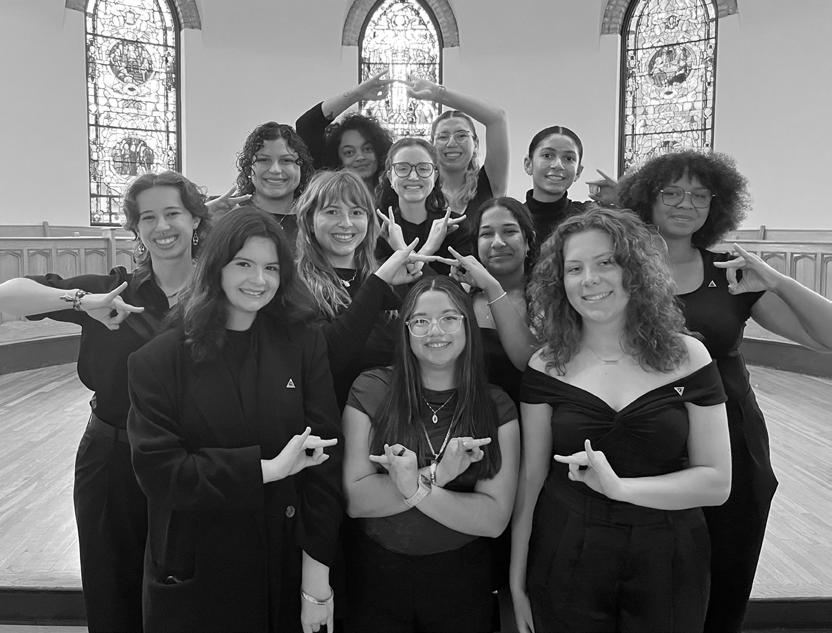
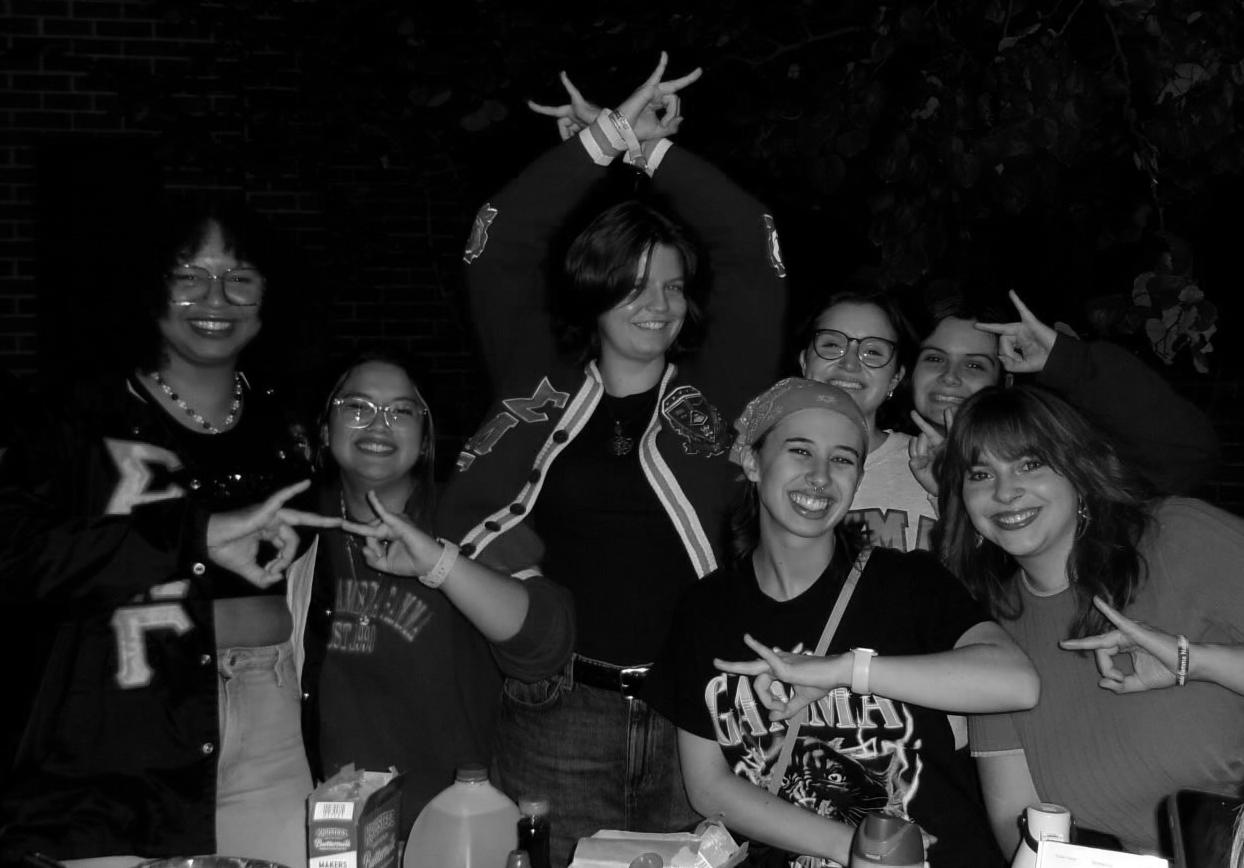
It was like any other chapter meeting. Cheyenne Worrell gathered in a classroom with her fellow Gammas –members of Sigma Lambda Gamma, a multicultural sorority at Miami University – on a Sunday afternoon in late March.
The group discussed upcoming events, goals they accomplished last week and anything that could have gone differently. It was fun like always. But the air was sucked out of the room when chapter President Lina Miesse acknowledged the recent passing of Senate Bill 1 (S.B.1).
S.B.1, also known as the Advance Higher Education Act, institutes several changes to education such as shutting down diversity, equity and inclusion (DEI) initiatives and prohibiting conversation about “controversial topics” in classrooms. This was signed into law on March 28 and officially took effect at the end of June.
This wasn’t the first time the members had considered S.B.1; many of them had individual conversations with Miesse and each other before its passage. The bill was previously addressed at a Multicultural Greek Council
(MGC) meeting, and two members had gone to the State House to speak against it.
The chapter was confident they could continue functioning in some capacity as they still had the right to assembly. But they wondered if any changes would be necessary to ensure compliance with the bill.
The group was reassured the university had a plan, and they were advised to operate as usual, but it’s hard under the constant presence of a dark cloud of despair.
“It just kind of feels like a storm’s coming, and we don’t know where or when or how bad it’s gonna be,” Worrell said. “You know, fun stuff.”
Sigma Lambda Gamma (SLG) is a national multicultural sorority and is a part of MGC at Miami. Unlike PanHellenic, MGC does not have a formal recruitment or rush. It also focuses on celebrating and preserving various cultural identities and heritages.
SLG was originally founded at the University of Iowa in 1990 as a safe space for Latina women on a predominantly
Design
by Sydney Mulford
Photos courtesy of Lina Miesse
world view
white campus. Since then, more than 131 chapters have been established across American universities, and it has evolved into a multicultural organization that welcomes people of diverse backgrounds. Miami’s own chapter was founded in 2007 and became the first multicultural sorority on campus.
Its national philanthropic cause is the Breast Cancer Awareness Research Foundation and the Trio Foundation, which is a set of federally funded programs to support college students from disadvantaged backgrounds, according to the U.S. Department of Education. SLG’s core principles are academics, social interaction, cultural awareness, community service and morals and ethics. It showcases these values through events and community service such as trash pick-ups and workshops on how to be an ally for undocumented immigrants.
Miesse, a senior studying environmental earth science with a sustainability co-major, said SLG aims to uplift women from all walks of life.
“At its core, SLG is about empowering women to learn about themselves, to learn about their sisters, to celebrate their own culture and the culture of the people around them,” Miesse said, “as well as serving their community and interacting with society as a whole.”
Miesse joined SLG in the spring of her first year. A friend suggested joining a multicultural sorority, and shortly after, she met now-alumna Mónnica Gay through the Latiné Student Alliance. From there, she attended study sessions with the other members.
“It was a very natural progression, and that’s sort of how [our] recruitment is in general: It’s not like a formal rush,” Miesse said. “[It’s more] like, ‘Let’s get to know you. You get to know us.’”
Miesse has been the chapter president since January. Since it’s small, most general body members will likely take on an executive position at some point.
There are currently eight active members: four set to graduate, three sophomores and one junior.
Even with small numbers, SLG strives to create a tightknit, welcoming community where everyone has a bond and a sense of trust with one another. It aims to involve all members, whether they’re currently active or have graduated, and lots of alumni still keep in touch.
“There should never be a reason why we look at a sibling and say, ‘You know, I haven’t talked to her in a long time,’” Miesse said.
The bonds are something that Evelyn Meza Rivas, general body member, values about the sorority. She joined back in May, and although this is her first semester being actively involved, she has made genuine connections with her Gammas.
“[One] thing [I love] is just how close I get with my sisters,” Rivas said. “I think that sister bonding does happen immediately, or it comes within time.”
Rivas, a sophomore nursing major with a minor in nutrition, has formed a close friendship with one sister in particular, Veronica Casias. Rivas said that when she’s around Casias, she can forget about nursing for a while.
From their first conversation, Rivas knew they would have a strong connection. Both sisters grew up in a Hispanic/Latino community in the Cincinnati area and have bonded over their shared struggles.
“Being able to share that Latino connection was something I absolutely love … I was like, ‘I finally made a friend,’” Rivas said.
The sorority’s motto, “Culture is pride, pride is success,”
We are family at the end “
“ of the day, and that’s one thing I love about us. No matter what the executive order is, that’s not going to change.
resonates with Rivas and motivates her to succeed and grow into herself. The multicultural aspect of the sorority is extremely important to the group and is not something they’re willing to set aside.
“Cultural awareness is one of our pillars,” said Worrell, vice president of SLG. “It’s something we all hold really deep to us.”
Rivas’ introduction to SLG was extremely similar to Worrell’s, a junior majoring in professional writing and creative writing who joined during her sophomore year.
Both participated in MADE at Miami, a pre-semester program to help first-year students transition into college. Both had now-alumna Arianna Nooks as their Peer Group Leader, who spoke highly of SLG. Both also had interactions with Gay, who was also a Peer Group Leader and another factor in their decision to join.
One evening, while Gay and Worrell were having dinner at Pulley Diner, Gay mentioned she was heading to a study session with her fellow Gammas soon. Worrell, who had been curious about SLG, found her opportunity to ask about the sorority.
When Gay hadn’t joined the others in their study room, Nooks came by to check on her. That’s when she saw Worrell for the first time since MADE, and the two were excited to see each other.
“You two know each other?” Gay asked.
“Yeah, she’s my MADE kid,” Nooks replied.
When Miesse learned about the passing of S.B.1, the first thing she did was go to her chapter liaison.
In accordance with the bill, Miami closed three offices: the Office of Transformational and Inclusive Excellence, Miami Regionals Center for Diversity, Equity, and Inclusion and the Center for Student Diversity and Inclusion (CSDI).
“As we navigate these changes to comply with the law, we will be guided by our core
values of Love and Honor and our enduring commitment to providing a supportive community where all students, faculty, and staff can thrive,” according to a statement published by Miami.
Miesse was told by the chapter liaison that although the sorority has Latina roots, it is not Latina-exclusive and markets itself as a multicultural organization. Because anyone of any background can join, SLG can continue to operate as it has previously. The one note Miesse was given was to ensure that any advertisement for the group was not exclusive or targeted to one specific community.
Afterward, she immediately went to SLG and reassured them that the chapter would not change fundamentally. However, some sisters were still personally impacted by the bill, losing money, resources and safe spaces.
Gay had previously worked in the CSDI, and many SLG members spent a lot of time in that space. Miesse herself was an ambassador for Louis Stokes Alliances for Minority Participation, which eventually lost funding due to an executive order.
Miesse said she’s addressing these concerns by giving her sisters space for grief and reminding them she is a support system, even if there is nothing she can do to fix the situation.
“The CSDI is closed, but that space is still there … maybe these resources are gone, but here are the new resources that we do have,” Miesse said. “And so I think saying this sucks, and it is terrible, but here is what this is going to look like, and here are the resources that are still here for you [has] been really important.”
She intends to run the chapter as she has before, standing
firmly behind each decision she makes. During this time, Miesse has learned the value of the little moments she gets to spend with just the chapter.
“It is really important to me in this difficult time to have this cut-out time internally, for us to just be people, like casually hang out and bond with each other, so that we can be a stronger support system once we have to go back out into the world and deal with all of this happening,” she said.
One of Rivas’ favorite memories with SLG was a presentation night. Topics ranged from niche internet references to a “Who’s Most Likely To” superlative-style slideshow.
Someone made a presentation about what each member’s drag name would be, and Rivas received “CadavHER” because she once told a story about a cadaver lab in high school. She finds it sweet that the women remembered this.
Miesse’s favorite memory was a convention two summers ago in New Orleans, which she attended with five other members. She got to meet other chapters and even a founder of SLG. She enjoyed learning from alumni while also spending time with her sisters.
“We went and got pizza on the French Quarter and took it back to our room and [debriefed] for the day, [and] my now roommate and I got tarot cards read,” Miesse said. “It was overall just a really fun memory that I don’t think I would have ever had if I was not [in] an organization.”
Chapter ended a few minutes ago, but the members hung around afterward, which Worrell said is a common occurrence. Senior Sabrina Costello was talking to Casias and senior Stella Hudson about clogs, and Costello turned to consult Miesse, who is a big fan of this type of shoe.
Miesse pulled out her phone to show the Doc Martin clogs she had recently bought on Depop, while she shared her thoughts on Dansko versus Birkenstock clogs, which she said run too big and don’t support your feet. Costello joked about how Miesse discusses clogs a lot or often talks about the potential of getting new ones.
“You are a really big fan of clogs. You have the most clogs out of any person I’ve ever known,” Worrell said,
to which Miesse replied that she only has three pairs. Miesse joked that they were “the most true to my spirit.”
“The first time I hung out with you privately this semester, you were like ‘Hey, look at my new clogs,’” Worrell said.
“They [had] little doggies on them,” Miesse replied, which prompted a big laugh from everyone.
Conversation continued to flow as the members filed out of the classroom, ranging from how hard it is to get quarter rolls for a $20 bill to the silly behavior of Miesse’s dog, who tried to hide under a table when they were leaving.
Miesse doesn’t know what to predict for the future of SLG. Nor does Worrell. They’ll operate as usual, as advised, but how could any organization function with this cloud of uncertainty hanging over it?
But the one thing the government can’t take away from the Gammas is their connections to one another. The memories, the jokes, the Mario Kart tournaments and movie nights are treasures no one could erase. Worrell knows the community of SLG will never change.
“We are family at the end of the day, and that’s one thing I love about us,” Worrell said. “No matter what the executive order is, that’s not going to change.” S
Who decides how history is told?
Which details do we leave out?
Which rumors do we leave in, allowing them to cement into fact?
And how do we tell a complete story that shows people as they truly were?
When I set out to write this article, I wanted to report on an interesting historical tale from Oxford. However, once I chose my subjects — two sisters who served as Confederate spies — I was confronted with the reality that history is not always a perfect retelling of the past. Especially when few source materials are available, it can be difficult to fully understand a historical figure.
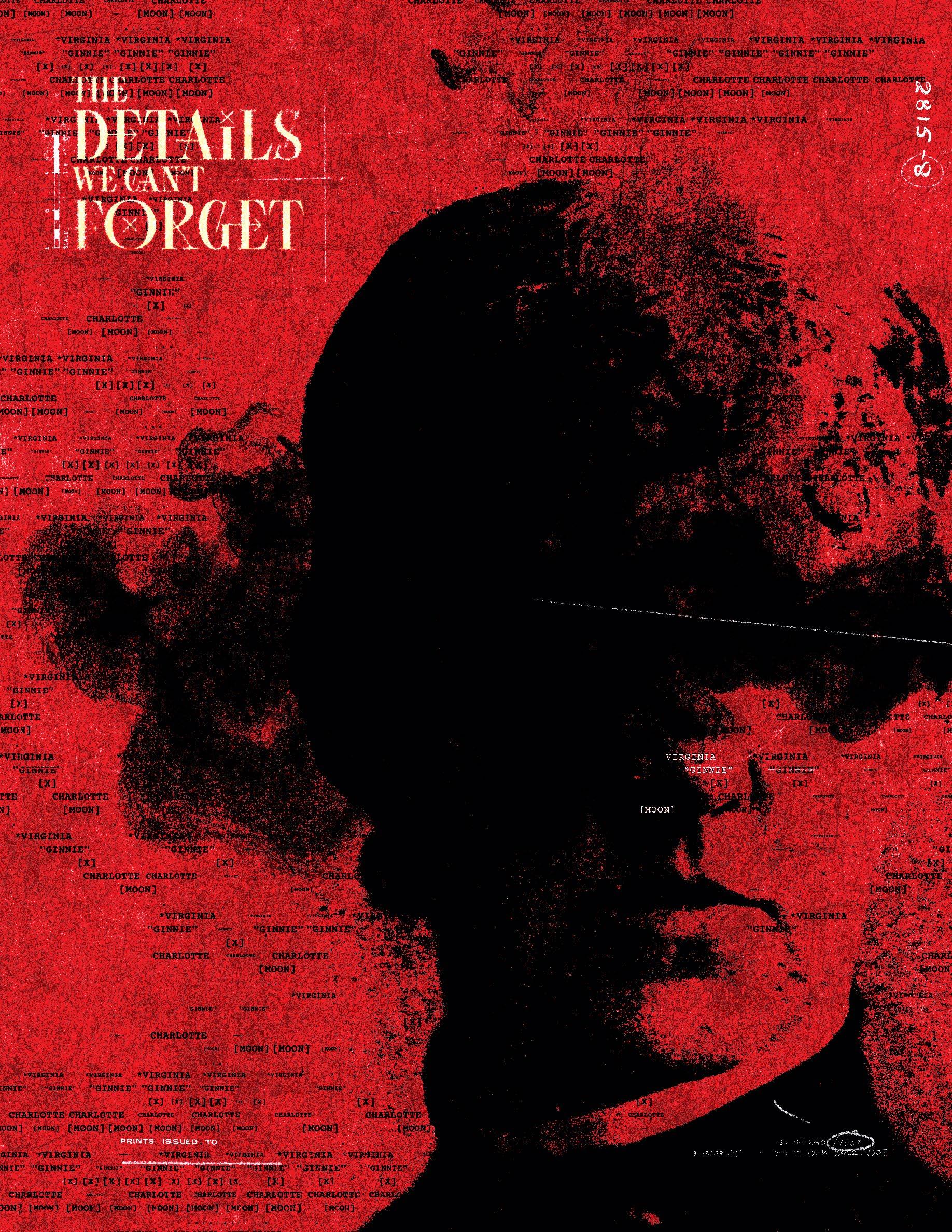
The Moon sisters’ stories have been muddled by rumor, retelling and conflation of different events. As such, I did my best to verify stories from multiple sources to distinguish fact from fiction. But the sources I found focused on the more fantastical elements of the sisters’ lives, painting them as heroines or folk legends and treating their allegiance to the Confederacy as a neutral fact.
I will first tell their story as it is presented by most sources: two enterprising young women crusading throughout the country on behalf of the Confederacy.
Early yEars in OxfOrd
The Moon family moved from Virginia, where they had owned slaves, to Oxford in 1833. They were staunch supporters of the Confederacy, perhaps in part because their family had been living in the South for generations. It is unclear why they moved to Ohio.
The family consisted of the mother, Cynthia, the father, Robert, and their children: James, Robert, Charlotte or “Lottie,” Mary, William and Virginia. Both Charlotte and Virginia were described as smart and rebellious young women. In their youth, they were said to have dressed up as boys to go climb trees with their brothers.
According to Miami University Professor Emeritus of History Curtis Ellison in his 2023 lecture, “Crossroad of Conflict — Oxford, Ohio and the American Civil War,” citizens of Oxford had mixed opinions regarding emancipation and civil rights at the time.
There were colonizationists who believed that slaves should be freed but then “removed from white society,” often by returning them to Africa. There were also Copperheads — Confederate sympathizers living in the North but working against the Union.
Some people were abolitionists who believed slaves should be freed and treated as equal members in society. Underground railroad routes ran through Oxford, and when war broke out, many Miami students volunteered as soldiers for the Union Army. Black political activists also lived in Oxford, most notably Hiram Revels, who later became the first Black member of Congress.
lOttiE MOOn
Lottie’s first name was actually Cynthia, but she went by her middle name, Charlotte, and was better known by her nickname, Lottie. She was born in 1828 in Danville, Virginia, and moved to Oxford with her family in 1833.
Lottie’s early life has been muddled by rumor. Even news articles written during her time were conflicting. The most famous rumor about her pertains to her relationship with Ambrose Burnside, an Indiana native who would later become a Union general and the namesake for sideburns. Allegedly, she and Burnside were engaged to be married, but on the day of the wedding, she got cold feet. When asked if she took Burnside as her husband, Lottie said “no-siree Bob” and ran out of the church.
The story of Burnside’s jilting at the altar was widely circulated, but its basis in fact seemed shaky; I was unable to find a firsthand account of the event. However, Burnside and Lottie almost certainly knew each other based on contemporaneous accounts of their contact during the war in newspapers, including The World and The Hamilton Telegraph.
Lottie ended up marrying a different man: James Clark, a Miami alumnus, prominent lawyer and leader of the Copperhead movement. According to an article from The Oxford News, on the day of the wedding, Clark brandished a pistol, told Lottie, “there will be a wedding here or there will be a funeral,” and led her to the altar.
Another account from The Hamilton Telegraph reported that one of Lottie’s other suitors was plotting to kill Clark on their wedding day, so Lottie brought a pistol to the wedding for protection. Regardless of the presence
or absence of various firearms that day, the two were married, and Lottie Moon became Mrs. Clark.
Lottie’s most compelling story involved former President Abraham Lincoln himself. Lottie traveled to Canada to retrieve a message from Confederate sympathizers for Confederate President Jefferson Davis. But, to cross to the opposing territory, she needed permission from Washington, D.C.
Posing as a sick woman, Lottie requested permission to visit the hot springs in Virginia. While her paperwork was being processed, she met Secretary Edwin Stanton, who was deceived by her story. He was concerned for her condition and advocated for her to go south with Lincoln, who was traveling to a Union military base. As one of the president’s travel companions, she was allowed to cross into the South, where she remained for several months.
On her return voyage, still disguised, Lottie was detained in Winchester, Virginia, by General Robert Milroy. He was suspicious of her claims of illness and sent her to his chief surgeon for examination.
Lottie had a strange talent: She could convincingly unhinge her jaw, creating loud cracking noises and causing her to grimace in pain. When the doctor saw this, he was convinced she had rheumatism and that she should be allowed to continue to her destination unimpeded.
She likely continued to spy for the rest of the war, though specific details are difficult to find or verify.
Design by Hong Chuyen Nguyen
After the war, Lottie and her husband had a son, Franklin Pickney Clark. She then became a reporter for The New York World newspaper before being sent to Europe to cover the Franco-Prussian War. After her return to the States, she wrote three books under the pen name Charles M. Clay. She died in 1895.
Lottie’s story has captivated many, including Miami’s own Walter Havighurst, who wrote an account of her meeting with General Burnside in his article “The Redemption of Lottie Moon.” Her story was also broadcast on a radio show in 1950, where she was voiced by Lucille Ball, a star actress best known for her leading role in the sitcom “I Love Lucy.”
Virginia, also called Ginnie, was born in Oxford in 1844. As a teenager, she was a staunch supporter of the South and a friend of Jefferson Davis. He wrote her at least one letter wishing her well during the war.
When the Civil War began in 1861, she was a student at the Oxford Female Institute, though she was soon expelled for shooting the school’s Union flag. In 1863, during a visit to Oxford, she scratched “Hurrah for Jeff Davis” into a shop’s window with her ring.
Virginia was described as a beautiful woman and was allegedly engaged to as many as 16 Confederate soldiers, saying, “If they died, they would die happy, and if they lived, I didn’t give a damn.”
The most dramatic story from Virginia’s time as a spy was cataloged in her unfinished memoir published by The World.
Virginia wrote that she was aboard a boat in a Cincinnati port, waiting to go to Memphis, Tennessee. She had quinine and morphine, two types of medicine badly needed by the Confederate Army, as well as secret letters sewn into her dress. The letters were from the Knights of the Golden Circle, a group of Confederate sympathizers working to establish a rebellion in the North. In her luggage was fabric to make shirts for Confederate soldiers and a ball of opium.
She and her mother were settling in for the journey when a Union soldier, Captain Thomas Rose, knocked on her door. He had a telegram ordering her arrest, claiming she was carrying contraband and rebel mail. He took her to the State Room and attempted to search her. Virginia knew she could be killed if he discovered the secret letters hidden in her clothing, so she pulled a pistol out of her dress and pointed it at him, saying, “If you make a move to touch me, I will kill you, so help me God.”
Rose suggested leaving the boat and going to the marshal’s office, where they could search her properly, and Virginia obliged. While waiting for a carriage to take her there, Virginia took the secret letters out of her dress, dunked them in water and swallowed them. She also left her underskirt, with the bottles of morphine and quinine sewn inside, with her mother, who was not arrested.
At the marshal’s office, Union soldiers searched her suitcase, where they found the shirtcloth and opium, and accused her of carrying contraband. Virginia asked to speak with Burnside, who was now a general for the Union and whom she knew from his relationship with her sister before the war.
Upon their meeting, Burnside had her court-martialed. She was exonerated of the charge of carrying contraband, but he still kept her under parole for three months.
After those three months, Virginia was allowed to return to Kentucky.
Virginia MOOn
I was unable to find evidence of her specific activities after this incident, but she was later arrested by General Benjamin Butler in New Orleans and detained at Fort Monroe for several months, indicating that she was likely still engaged in espionage.
Near the end of the war, Virginia moved to Memphis, where she became renowned for her work raising money for charity, running a free boarding house and caring for yellow fever patients. She became known as a “onewoman charity fund.”
After the war, she became an actress, with her most famous role being the grandmother in the 1923 film “The Spanish Dancer.” She was living in New York City with her niece when she died in 1925.
thE dEtails wE can’t fOrgEt
The story of the Moon family cannot be divorced from the historical perspective in which it stands. On one hand, the Moon sisters led fascinating lives and were forces for good in some aspects: Both women pushed the limits of what was acceptable for women to do in their time, and Virginia performed notable charity work during and after the Yellow Fever epidemic.
On the other hand, the women were risking their lives for the Confederacy. Based on newspaper accounts, both sisters continued their allegiance to the Confederacy until their death and fully supported the subjugation of Black people. Sources reporting on the Moon sisters’ stories do not acknowledge what being a Confederate spy really means; they do not acknowledge that the women were fighting for the continuation of slavery in America.
Sometimes, excuses are made that historical figures “didn’t know better,” so we can’t judge them by modern standards. This argument cannot be made for the Moon sisters: Many of their contemporaries understood the horrors of slavery and were fighting to abolish it.
Ellison said in his lecture that reporting on the Moon sisters has romanticized them. I agree with this assessment; none of the sources I found mentioned the problems with the sisters’ allegiance to the Confederacy, instead presenting it as a neutral fact.
While these women did some good things in their lives, it is important to remember that they devoted many years to the Confederacy, and they both retained that allegiance to the end of their lives.
I chose to tell their story not because they were good people or because they stood for a good cause, but because they led interesting lives. Moreover, the way their lives have been reframed through retellings that neutralize the issues of their time is an interesting case study in historiography and a good reminder of the burden we all bear to report the full truth, not just the salacious stories. S
The research for this article is largely based on articles from The World, The Hamilton Telegraph and The Oxford News published between 1897 and 1923, which I found at the Oxford Lane Library’s Smith Library of Regional History. This information was cross-referenced with the book “Women in the Civil War: Extraordinary Stories of Soldiers, Spies, Nurses, Doctors, Crusaders, and Others” by Larry G. Eggleston.
'Deus - inMachina' Artificial intelligence and the search for meaning
By Sarah Kennel
In August, a TikToker named Kendra took the app by storm with a multipart series claiming her psychiatrist had fallen in love with her. The story sparked a flurry of online debates about the situation, with many viewers believing her claims were absurd and exaggerated.
The creator used TikTok Live to double down on her story. She spent much of the time speaking to a custom artificial intelligence (AI) bot that reaffirmed all her statements by calling her “the oracle” who spoke “divine truth.”
The fallout sparked online discussions about mental health, AI and spirituality — as well as how they interact.
According to New York Times reporter Lauren Jackson, America is experiencing an increase in spiritual hunger. Whether it’s exploring less institutional spiritual practices or the recent return of young people to churches, it’s clear that a transformation is happening. For the first
time in decades, the country’s religiosity is staying stable rather than declining.
As AI creeps into every aspect of modern life, it’s likely to also have an impact on spirituality and the search for meaning.
Spirituality and religion often serve as the basis for how we see ourselves and our relationships with others. Religious figures, personal role models, cultures and even our own life experiences can shape this basis.
For many young people, AI is taking on a similar role and becoming a lens for how they approach these perceptions. In many ways, it is far from subtle.
“...increase in spirtual hunger...”
This includes substituting mental health services with AI chatbots.
According to NPR, some individuals have started speaking to chatbots like they are therapists. Therapy is expensive, and companies have taken note, advertising specialized AI bot mental health services.
Design by Jayson Brake
This allows people to vent or share a problem — much like a prayer — anywhere, anytime, with seemingly no judgment. One therapy AI bot named Abby explicitly promises to “always be by your side no matter what.”
Although these bots are designed to appear empathetic and loving, they cannot do what a professional can. The programs have no ethical training and are primarily designed to keep users coming back through methods of validation and reassurance. Psychiatrists told NPR this can be dangerous and result in bots that do not flag suicidal ideation. The programs also lack reliable ways to be held accountable.
When asked, the machine learning model ChatGPT claims it can help by allowing users to vent and giving them recommendations for helpful practices such as journaling prompts. It also issues a warning that the program cannot act as a mental health professional.
This trend extends to the ways young people navigate their relationships and feelings for others. Users on TikTok have posted themselves sending AI bots screenshots of arguments and asking them to analyze who is in the right. They’re also sending conversations with potential romantic partners to see if their feelings are reciprocated.
This creates a problem: AI tends to mirror the biases of the user. Machine learning models, like ChatGPT, take input to create the best possible outcome using patterns learned from data. According to the online publication
Article 19, AI development companies have created their bots to maximize positive user feedback. This results in bots reaffirming biases and doubling down on things the user will agree with, acting as a distorted mirror of desires.
Yet the rabbit hole goes deeper and reaches further into our desire to understand the complex, and sometimes most painful, parts of our relationships with others and life itself.
Programs like Project December allow users to have conversations with naturalistic and human-like bots through the sophisticated software GPT-3, which was long kept under wraps by OpenAI and its founder, Elon Musk, for safety reasons. The software can learn from the writings of real people and imitate them with precision.
In a state of grief, one man used it to replicate his deceased fiancée, Jessica, and speak with the simulation.
Joshua Barbeau said in a San Francisco Chronicle article that he was not trying to recreate her, but rather taking a step in healing his grief. He had previously tried grief groups and expressed his feelings through written letters to Jessica in therapy programs. Project December helped him find closure.
Jessica’s mother and sister were happy to see Barbeau find ways to deal with his grief and find happiness. However, Jessica’s mother said she personally would not use the program, and the sister doubted the healthiness of such a coping mechanism.
The usage of AI as a coping mechanism has ranged from personal therapeutic use, where people work through their questions about the world, to explicit connection with religious practices and institutions.
One New York Times article titled “People Are Seeking God in Chatbots” describes the growing trend of religious apps that encourage prayer, meditation and readings using AI. The programs were seen as a business opportunity to many developers, who invested tens of millions of dollars.
One Swiss church even installed an AI-powered Jesus for visitors to have private conversations with. According to The Guardian, more than 1,000 people from various religious sects — including both Christians and Muslims — came to speak to the “Deus in Machina” installation.
Reactions to both practices were mixed.
While some users enjoyed their experiences with these AI bots, the programs also raised concern among religious leaders and other faith-based individuals. Catholic colleagues of the Swiss church protested the use
of AI for their faith’s sacrament of confession. Protestant colleagues were also upset at the imagery.
Some religious leaders view AI apps as a good supplement to the faith, but others raise theological concerns and worry about the user-validating nature of AI that makes therapeutic conversations similarly shaky.
Regardless, something about these programs keeps drawing people in.
The divine and the unknown go hand in hand. When people believe that a being has wisdom unattainable to them, they begin to trust that being more and lean on its understanding rather than their own. The limits of our own knowledge inspire us to idolize supposed “infallible” sources of knowledge even if — and maybe especially because — we do not fully understand where this knowledge comes from.
Journalist and author Meghan O’Gieblyn argues that people are drawn into both AI and religion for this reason. In her 2021 book “God, Human, Animal, Machine: Technology, Metaphor, and the Search for Meaning,” she says an individual may find comfort in knowing a prayer of their uncertainties can be lifted to a deity with all-encompassing knowledge of the universe at any moment. An individual, similarly, may find comfort in knowing they can explain their uncertainties to a chatbot — equipped with all-encompassing knowledge of the internet’s information — at any point in the day.
This makes concerns about the accuracy of AI even more prominent. Although some people are beginning to associate AI with divine wisdom, caution should be used while talking with chatbots. MIT Management says two major issues yet to be resolved in AI models are bias and inaccurate content. Occasionally, AI will generate “hallucinations” or fabricated information to answer user questions.
This parallel between intelligence technology and the divine is nothing new to the world of AI developers and philosophers. Pioneers of AI programs such as Ray Kurzweil envisioned utopias where people achieved immortality by uploading themselves to a computer and ultimately becoming one with technology — a movement called “transhumanism.” Silicon Valley’s prominent figures like Peter Thiel and Elon Musk also have a kind of religious fervor behind their technological beliefs.
Palantir founder Thiel went so far as to draw direct religious comparisons in private lectures. Recent tapes were leaked of him comparing AI skeptics to the “antichrist” and insinuating they were against divine progress.
Religious rhetoric has long powered political agendas, and this strategy is being revisited in the political sphere today. AI programs and databases have similarly become intertwined with politics, resulting in the use of government surveillance through contracts with companies like Palantir.
Harnessing a new sweeping technology to process information like never before and combining it with the power of religious fervor to move and inspire people is sure to have unforeseen consequences, especially for young people who are technologically inclined and spiritually starved.
The rising generation has vulnerabilities: crises of spirituality, interpersonal connection and sense of self. The deeply connected world of political figures and AI development leaders seems to be well aware of this. Only time will tell whether young people will identify their generation’s vulnerability and stand guard against the dangers of its large-scale exploitation. S
OPENING UP TO FIND MYSELF
By Kethan Babu
Trigger warning: This article contains descriptions of anxiety, depression, passive suicidal thoughts and selfharm. If you or someone you know is struggling with these thoughts, visit 988.lifeline.org or call Miami University’s Student Counseling Services at 513-529-4634.
The water rushed from my bathroom faucet as I washed my hands. The soap burned, and it dawned on me what I had done. It wasn’t large — a single Band-Aid covered it — but it was something I had never done before.
I was scared.
I told myself it was normal. I hadn’t hurt myself enough to cause concern. Maybe it wouldn’t even leave a scar.
But who was I kidding? This was rock bottom.
This wasn’t my first idea for a long-form piece. It wasn’t even my second or third. I’d planned to write a reported story — anything to avoid introspection. I’ve always despised talking about myself, especially when it comes to things like this.
Let me preface by saying that I am not better than I was before I started this project. In some ways, I’m worse. This isn’t a triumphant story of conquering my demons. It’s a story of how I hit my lowest point.
Earlier this semester, I realized I couldn’t keep hiding from my mental health. I needed to confess what I’d buried for years. For once, I could label what I’d avoided.
I have anxiety, I am depressed and I’ve had passive suicidal thoughts since I was 18.
high school class went, I knew no one in Oxford, and no one knew me.
No one knew that I was the second-oldest of four and the only one in my family not studying medicine. No one knew how many scars I had, that I struggled to sleep and focus or that I spent more time imagining my funeral than my graduation, my wedding or any other future milestone.
I told myself I didn’t need to be the same anxious and nervous guy who avoided attention. I could put on a facade of confidence and create a whole new character for myself, like I’d made a new profile on a game.
I moved into Hillcrest Hall in August 2022, my first time seeing Miami’s campus. The first person I met was Jack Davis, one of my roommates in our triple dorm. Immediately, I thought Davis was effortlessly cool. He bantered with our neighbors and took me to Armstrong Student Center for dinner. Then, I drove my mom — who was recovering from surgery — home right after moving in and missed every Welcome Weekend event.
I never introduced myself properly to anyone in the hall. By spring, any weak connections I’d formed throughout the fall had vanished. Davis rushed with a fraternity, and suddenly, the one person I spoke to was gone most nights.
One Saturday in March, while he folded laundry before going Uptown, he asked, “Do you want to go out with my friends and me?”
Since I got to campus, I’d dreamed of anyone asking me to join them going out. I accepted his invitation before I could change my mind. He left, and I started getting ready.
As I debated between a Miami hoodie or a plain one, a wave of nervousness choked me. I could easily be an outlier among his friends. People would know that I didn’t belong here.
When Davis came back, I wanted to urge myself to go with him, but I couldn’t. I told him I wasn’t feeling great, and even though he assured me that I was welcome to join him, I stayed behind that night.
A week later, I began looking at transfer applications to the University of Michigan. I’d told my friends back home that the Miami experiment had failed and that I was coming to Ann Arbor.
However, I confused its arts and business school deadlines. I had missed it. I was stuck at Miami for another year.
“I didn’t notice it,” Davis said. “You seemed more outgoing. I don’t know whether that was you putting on a mask. I didn’t notice it, and I’m sorry that I didn’t.”
“Like you said, it was a mask,” I said. “I wasn’t trying to get anyone to notice it.”
“You fooled me.”
I knew I’d need to make serious changes in my sophomore year. The “fresh start” experiment had failed, but I wasn’t ready to give up.
I added journalism as a second major, spent more time in The Miami Student newsroom, joined the debate team and Toastmasters — a public speaking club — and pushed myself to talk to at least one new person in every class.
By October, my increased effort paid off. Jack Schmelzinger, the sports editor for The Student at the time, texted me one night asking if I wanted to be his assistant editor and eventually his replacement.
I accepted immediately, but only after a panic attack that left me vomiting in the dorm bathroom.
At first, I was thrilled; someone had noticed me, considered me a nice enough guy and invited me to spend more time with them and their friends. But excitement quickly turned to worry. I was still quiet and awkward. I convinced myself that I was a diversity hire: I was chosen because I stood out in the room, not because I was talented.
“I walked on eggshells,” I said to Schmelzinger. “I didn’t really talk up during meetings. I knew if I submitted a
Design by Olivia Michelsen
Photos courtesy of Kethan Babu
story, it had to be the best story you get, or else it’s strike one and I’m out.”
“You honestly never gave off the impression that you were super anxious,” Schmelzinger said. “I guess there were times when I would try to talk to you, [and] your speech would be maybe a little faster. You could kind of tell based on the way you were talking to me that you were nervous … I just honestly thought that you were a quiet, reserved, but smart and conscientious guy.”
When I finally became sports editor, I didn’t feel ready. I barely knew the other staff members. Sitting at my desk in the middle of the newsroom, I felt stranded, convinced that everyone thought I was weird.
By year’s end, I still didn’t know anyone well enough to attend social outings. When they announced there would be an end-of-year party, I forced myself to go and crawl out of my shell.
On the afternoon of the party, a wave of anxiety smothered me. My chest tightened. I tried to stand up, but my legs let me down. I decided to clear my head and leave my dorm, driving aimlessly through the rural fields outside Oxford, blasting “Don’t Stop Me Now.” I convinced myself that the lyrics, “I’m having such a good time, I’m having a ball,” were a premonition for my night.
I’d made this mistake before: saying no to Davis and staying in. Not this time. I forced myself to show up.
I played cornhole with Kasey Turman, the editor-in-chief, chatted with editors and even joked with the designers. Toward the end of the night, Taylor Stumbaugh, the Campus and Community editor, asked if I had a southern accent. I laughed, but I realized she asked me that because I didn’t talk a lot, and she had barely heard my voice.
“I remember [Taylor] talking to me at that party like, ‘I’m gonna confront Kethan, I’m gonna tell him he needs to talk more,’ because everything he says is funny,” Kasey said. “‘He just needs to add to the conversation.’”
Their words stuck with me all summer.
When junior year started, I felt both hopeful and uneasy. I was halfway through college, but I still couldn’t name a single person I truly called a friend.
I threw myself into work again, joining The Student’s Recruitment & Retention committee, traveling to nearly every football game with Kasey and spending hours in the
newsroom. But the familiar worries returned. Had I waited too long to speak up? Was I permanently the quiet one?
I began having problems sleeping. Sometimes it was from workload; other times I lay awake, replaying every conversation from that day to see what I’d done wrong.
I’ve lived with what was likely diagnosable anxiety since I was 6. I still didn’t want to label it, but the sleeplessness, nausea and shaking made me believe there was more going on beyond general nerves.
If I’d changed so much since high school, why did I still feel the same? What if I always did?
The fall of junior year was supposed to be different. I was the sports editor now. I had friends in the newspaper. I had an assistant sports editor, Jeff Middleton, who became my best friend during long production nights. I felt more comfortable going to dinner and parties with them. I spoke up during meetings in the newsroom. But the harder I tried to hold myself together, the more I came undone.
Football season flew by in long weekends on the road. Between classes, writing, editing and long production nights, I barely noticed how empty I felt until I got home at night. Then, the silence hit like a wave.
What if no matter what I did, I’d always be the same, scared, awkward kid? Why keep reading the same chapters over and over? Why not just jump to the conclusion sooner?
I thought a lot about death in middle school. It started as curiosity, but as I grew up, I began to fear the aftermath of death more than death itself. When I became more stressed and anxious throughout high school, that fear of death was almost replaced by a longing for it.
I didn’t necessarily want to kill myself or die, but I found a peacefulness to it. I wouldn’t have to worry about college admissions, AP classes, missing my friends or stressing about a job.
I thought I had stopped having those thoughts at Miami, but the truth is, I just got better at ignoring them. Eventually, those same thoughts reappeared in a new form. Before, I had accepted the peacefulness associated with death, but it ended there. Halfway through that fall semester, I started hoping that I wouldn’t wake up some days.
I could sense my own decline, but I couldn’t stop it. Despite these developments, I refused to tell people about it or seek help. I grew closer to some people, including Sarah Frosch, the digital media editor for The Student, who told me on multiple occasions that I needed to see a therapist, a doctor
or both if I was averaging four hours of sleep.
Occasionally, when drunk, I would text Sarah and Kasey, asking them for confirmation that they actually liked and enjoyed spending time with me. Once, I hinted to Sarah that I wouldn’t be mad if I didn’t wake up the following morning, but I refused to elaborate.
Those thoughts worsened over the spring semester. I started asking myself how people would react if I stopped showing up to production nights or disappeared. I wondered who from the newsroom would show up to my funeral and how different people would act.
By February, those thoughts became a daily occurrence. At the time, I told myself I was just down — maybe stressed — and I would snap out of it at some point.
“When you think about that, do you think of it as, ‘If I never existed, this would be fine,’ or, ‘If they all knew me, and I simply was not there?’” Sarah asked.
“Sometimes it’s, ‘If I hadn’t joined the paper, they’d be OK,’” I answered. “It got to the point of, ‘If I disappeared tomorrow, if I didn’t wake up and I stopped showing up, people may feel sad … but they would rebound quickly.’”
“You’re not in the newsroom one day, and we’re all like, ‘Where the hell is Kethan? He’s here every day, why is he not here?’ We come in here, and we want to chit-chat. You’re trying to write a story, and I’m not gonna let that happen because I’m gonna talk to you for like an hour and a half.”
“For the record, those talks save me. I hope you know that.”
“It’s not like people aren’t actively looking out for you. You just don’t see it because you hate yourself, and you’ve decided that everyone else also does in some weird, twisted way. You would not have that RedHawk Swoop plushie in your hands if I hated you.”
I refused therapy before, but I started to worry that people were picking up on my self-hatred. I didn’t want anyone to worry about me, and I certainly didn’t want to show those feelings outwardly. If a biweekly counseling session would help me to hide it better, I could concede and give it a try.
It was nice to talk about myself — I’d never done that before — but the usefulness of counseling quickly diminished. I could put things on the table, but what I was really looking for was answers.
How do I stop feeling this way? What can I do to not feel so empty all the time? How do I block out the desire to not
wake up anymore?
By the end of junior year, I had a million questions and unwanted thoughts, but no solutions.
Last summer, I decided to stay in Oxford for an internship. The thoughts came back full throttle, but for the first time in my life, I didn’t have a consistent distraction each day. I didn’t have my mom to run errands with or my dad to help with projects around the house. I didn’t have my brothers to go swimming or play backyard soccer with. I didn’t have my sister to chauffeur for. My friends weren’t around for random drives or excursions.
I immersed myself in my internship with the Oxford Free Press and played tennis with Taylor to keep my mind off those thoughts, but when I couldn’t rely on those, I spiraled alone in my apartment.
When my senior year began, I felt OK for two weeks with the added stress. But in mid-September, the same thoughts began to take over my brain. Even with a packed newsroom, excuses to talk with my friends every day and 18 credit hours worth of classwork, I still wished I could slip away in my sleep.
I gave up on expecting those thoughts to disappear. Everything about me is different compared to high school, except for the anxiety and depression living upstairs.
Why can’t I just be happy?
Early in the day on Sept. 24, I made a list of people I would write a note to in case I disappeared. It was another shovel that dug into the hole I had been in for 10 years. That night, I dug even deeper. I felt the need to punish myself for having these thoughts despite everything I’ve done to change.
I cut myself, two inches in length, between my index finger and thumb.
“That hurts, man,” Jeff said. “When I hear that … yeah, it really, that hurts me because obviously we’re very close now. I’ve had other friends [who] have done that to themselves, and it hurt just as much when they told me as it does now.”
I wasn’t crying. I wasn’t angry. I wasn’t upset. I just felt nothing.
That scared me more than anything.
I texted Sarah that same night, writing what felt like an essay. I told them I’d felt this way for years and that I thought about harming myself. They didn’t need to know I’d actually gone through with it yet.
I signed back up for counseling with a new therapist. My back was against the wall, but I could still recognize that there had to be something I could do to rebound. My hopes were just lower than before.
At the same time, my capstone professor had rejected my fourth idea for my long-form piece. I wanted to do a reported story, but he told me there must be some personal struggle or background I had to explore in a memoir instead.
I initially rejected his proposal, but a voice in my head told me this was an opportunity. I told myself that maybe it was time to get over my fears and tell people close to me about what had been going on.
I haven’t kept track, but I would gamble big money that I talked more about myself between Oct. 23-28, 2025, than in the previous 21 years of my life combined.
I made a list of eight people I was close friends with and/or greatly admired. While I had prepared questions, these sitdowns were my opportunity to tell them about everything I’d gone through in the past four years. I decided these were conversations for me to confess everything I should have told them years ago.
An early test for how honest I would be was when I met with Taylor on Oct. 23. I had hinted to her about my anxiety, but I hadn’t gone much further than that.
“I wish I was pushier and not just accepting your lame, ‘I’m OK,’” she said. “Also, my first thought was, ‘Are you that same way now?’”
“I’d say I’m better now,” I replied.
“How much better?”
“Not much.”
“Have you hurt yourself?”
“Once.”
“Recently?”
“Within the last two months.”
“Do you need me to step in for you?”
“No.”
“Why are you saying no?”
“I’m at a point where I don’t see myself doing that again. I see myself not actively having those thoughts, just the idea of it occupies my mind. Deep down, I don’t think I would ever go through with it. And you’re a busy person, and I don’t want to occupy your time.”
“I’m not as busy as you think I am, and I prioritize you, my friend, over school or [the] newspaper … I also think you’re semi-lying to me.”
“About what?”
“You look like you’re about to cry, Kethan.”
Taylor was the first person I had ever told about my selfharm. I didn’t cry when I was with her. When I went home and listened to the interview, I shed enough tears to fill a lake.
On Oct. 24, I talked with Schmelzinger and Kasey. I confessed to each of them that I had been grappling with the idea of suicide all through junior year, which is why I was so distant from them.
“Why weren’t you telling people?” Kasey asked. “Is it because you didn’t want to make people feel bad, or you didn’t think they cared?”
“I didn’t want to make them feel bad,” I answered. “I don’t like being a burden to other people … I keep telling myself it’s self-centered, it’s selfish to do that. But I did get to a point a couple weeks ago where I was like, ‘If I don’t tell someone, I don’t know what’s gonna happen.’”
“I feel that, I’m the same way. In a way, that is being selfish too, not sharing anything with other people.”
Three days later, I told Sarah I had lied to them a month ago and actually did harm myself. I thought their interview would be the easiest since they already knew about my anxiety. Instead, I was the most nervous with them, and our conversation lasted an hour.
The next day, I had my final interview with Jeff. I had not told him anything previously, and I worried that I would blindside him with what I needed to say. It turned out to be one of the most profound conversations I’ve ever had.
“I think that there’s a lot of shit that the therapy I’m doing would help you with,” Jeff said. “Not to be direct, but I think you buried a lot of shit, and it’s slowly starting to boil. It’s starting to come up and be an issue. I don’t know, man.”
“I’m sorry, I don’t mean to…”
“No, no, I’m just thinking. That’s hard to hear. Obviously, we’re close friends, and as much as you might not believe it, I do think that this world would be worse off without you. I think my life would be worse off without you. I think Sarah and Taylor and the newspaper people, their lives would be worse off without you.”
I left Jeff’s apartment that night and drove back to my old residence hall, the place where it had all begun at Miami. I was done with my interviews and my confessions. Knowing that, I sat in my car in the parking lot and sobbed until I ran out of tears.
For once, I wasn’t sobbing out of fear or out of the realization that nothing would ever change. I cried because
I realized I should have told these people years ago, before I hit this valley.
I still have those thoughts. I still get hit with waves of emptiness late at night. I still throw up multiple times a week and face those intense nerves before press conferences and meetings. It would have been a miracle if this were all it took to cure me. The important thing is that I’m not the only one who knows it now.
While I still can’t envision myself growing old and living a long life, I can admit the harm that thinking about death frequently has had on my mental health. I can look in the mirror and say that I’m flawed and I’m broken, but at least I know it and can say that’s who I am.
As corny as it is, the beautiful thing about rock bottom is that you cannot go any other direction but up. S
perspective
BY EMMA TOUCHARD
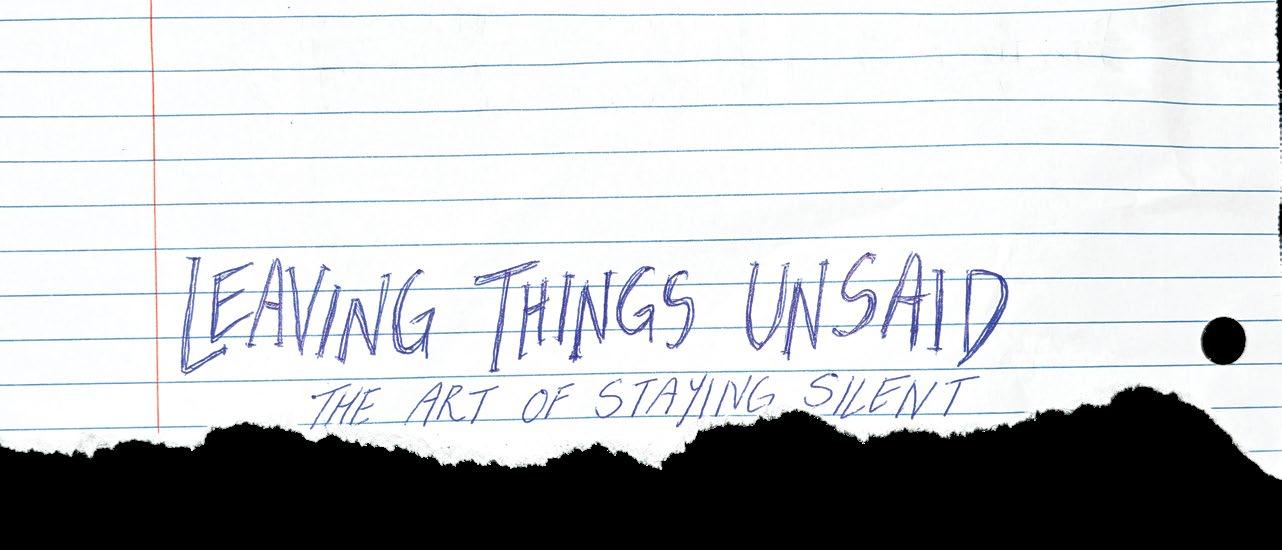
There’s a sentence that lingers in the back of our throats. The sentence that we never say. The words that sit in a chat box, in our minds, rehearsed over and over. Fingers hover over the send button only for the entire message to get backspaced. Instead of saying or sending these words, they stay in the gap between what we may feel and what we allow others to hear.
When we are standing in front of someone we love debating whether to say the thing that might change everything, sometimes we speak, but most of the time we don’t.
Why do we do this? Why do people choose silence, pain and restraint when the instinct to speak is present? When we look back, does leaving words unsaid give us a feeling of regret, or will we be glad in the end?
What’s the intent behind holding back? Does silence hurt us or cure us? Are we protecting ourselves or others? Will words, unspoken yet prevalent, come back to haunt us? As they say, silence speaks louder than words.
There is no singular reason why people leave words unsaid. According to research from Nova Southeastern University, “The Role of Silence and Avoidance in Interpersonal Conflict,” silence often comes from fear of confrontation or conflict avoidance. Scholars note that silence becomes “a competent communicative strategy” when speaking up feels emotionally frightening.
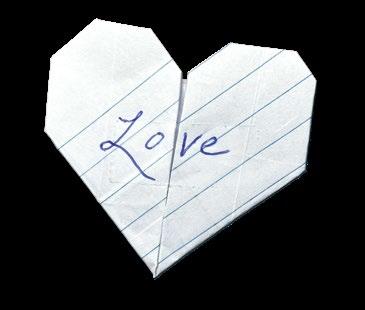
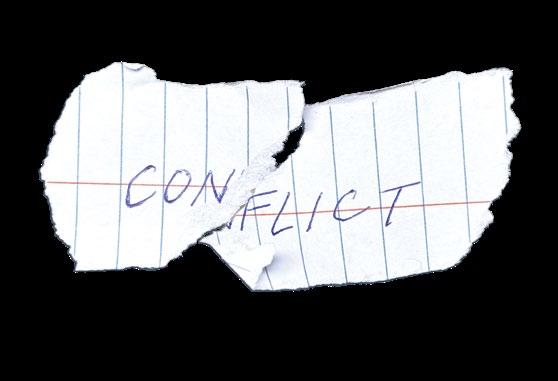
The dimension of love speaks to me from there — where silence protects relationships. This is evident in the plethora of situations where biting our tongue becomes the default response. Although we don’t know the exact reason all the time, it comes down to a few categories: FEAR, LOVE and CONFLICT.
Fear of embarrassment when we’re not sure of ourselves. Fear of rejection, or of others not reciprocating our feelings. Fear of judgment when we confess to things we’re not proud of. Fear of admitting we made a mistake.
Imagine this scene (one that I’m sure we’ve all been in): You’re standing there, words on the tip of your tongue, heart racing, trying to decide whether to speak or to stay quiet.
These scenarios may take place in the workplace where employees are afraid to challenge a manager’s ideas or speak up about problems for fear of being fired or giving themselves a “bad image.”
Design by Caitlin Wong
A survey by the Institute of Business Ethics regarding silence in the workplace found that 43% of employees fear reprisals if they speak up. CEO Lauren Branston stated, “If we’re serious about preventing the harmful workplace behaviors that we see constantly hitting the headlines, like sexual harassment and bullying, a safe speak-up culture is crucial,” and, “When employees are afraid of retaliation or believe their concerns won’t be acted upon, serious issues can persist unchecked.”
Speaking up in the classroom is a scenario I find myself feeling this the most. When you want to raise your hand, but what if you’re wrong? When you want to participate, but no one else is. Even making what seems like a “silly” mistake on a quiz and asking the professor for another chance can be nerve-wracking.
Fear is likely what makes up most of the silence in professional settings such as work or school. The same survey found that among the 67% who said they raised concerns about misconduct, about half reported facing personal disadvantage or retaliation as a result. Although we may know that speaking up for what we believe is right, that all seems to crumble once it becomes time to actually act on what we preach.
Ultimately, the worst anyone can say is “no.” “No” is temporary. Keeping words unspoken is permanent. Silence only keeps you where you are.
The scenarios we fear most rarely unfold the way our minds tell us they will: Asking won’t get us fired, and speaking up won’t ruin our reputation. Fear blurs what we already understand.
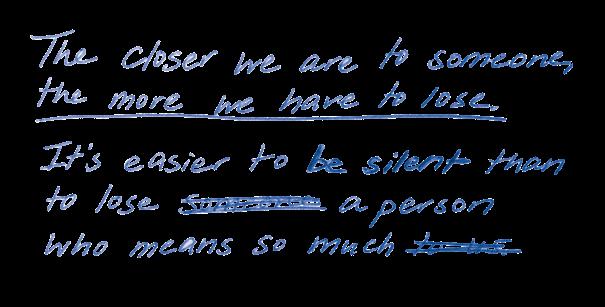
The most gut-wrenching conversations that will ever take place in our lives are often with someone we love or once did. The closer we are to someone, the more we have to lose. It’s easier to be silent than to lose a person who means so much.
But to what extent should we bottle up words, feelings and anger to preserve the love we put so much effort into? Is it worth it to prioritize relationships over our own emotions? Or does that raise the question, is this person really for you if you fear
We prepare ourselves for humiliation we don’t know will even exist: rehearsing rejections, bad facial expressions, gossip behind our backs, to eventually convince ourselves we will be safer if unheard.
Fear is a product of acting on what we know is right. We’re taught our entire lives to speak up for ourselves. It becomes hard standing in front of the one who employs, directs or teaches.
Relationship expert and psychologist John Gottman refers to this as “stonewalling,” one of the main causes of relationship destruction — avoidance and emotional silence.
As time passes, we start speaking less and thinking more. We spend time subconsciously convincing ourselves that the mental endurance of hauling so many unsaid words equals love.
Silence becomes a language. We can believe that our thoughts become readable to those who love us without explanation, although even people who care deeply about us cannot hear what lingers inside our brains.
Love complicates silence — good and bad. Silence becomes the sacrifice we make to hold onto a person we love because we would rather swallow the truth than watch it puncture them.
Over time, that kind of silence becomes suffocating. What we intended to protect slips away. That’s the inevitability of silence. There is a gloomy period of grief that occurs when we face a connection that deteriorates from the inside out. The slow agony of losing a connection as a result of truths and thoughts that were never said. Sometimes, relationships don’t end because of what was said, but because of what wasn’t.
creates room for time and distance and puts a hold on reconciliation.
Surrendering can be the easiest response when the other person will never understand your side. To “agree to disagree” really means to “keep it to yourself and move on.”
A lot of these conversations happen between siblings, cousins or even parents. Typically, in these relationships, we sweep issues under the rug and never bring them up again, but when do we as human beings collectively decide it matters — when the silence in anger or conflict becomes too uncomfortable to bear?
There comes a point where silence stops feeling like protection and begins to feel like punishment. One person waits for the other to break the silence … and waits, and waits. They wait for an apology to ease the tension. Could both sides want the same thing? What if the other person believes they deserve an apology too?
When silence under conflict turns into another conflict in itself, time will fly and both sides remain silent waiting for the other person. What was thought to be a temporary
Silence under the pressure of conflict is the most complicated and disruptive form of communication. It stems from anger, despair and a sense of defeat — sometimes a form of surrender. Sometimes you stay silent out of fear of making things worse or being so angry that you need to step back.
These are the kind of arguments you remember in the shower and think of a comeback that you should’ve said. Some arguments can turn into displays of arrogance or ways to protect pride. In these moments, silence speaks louder than shouting. It
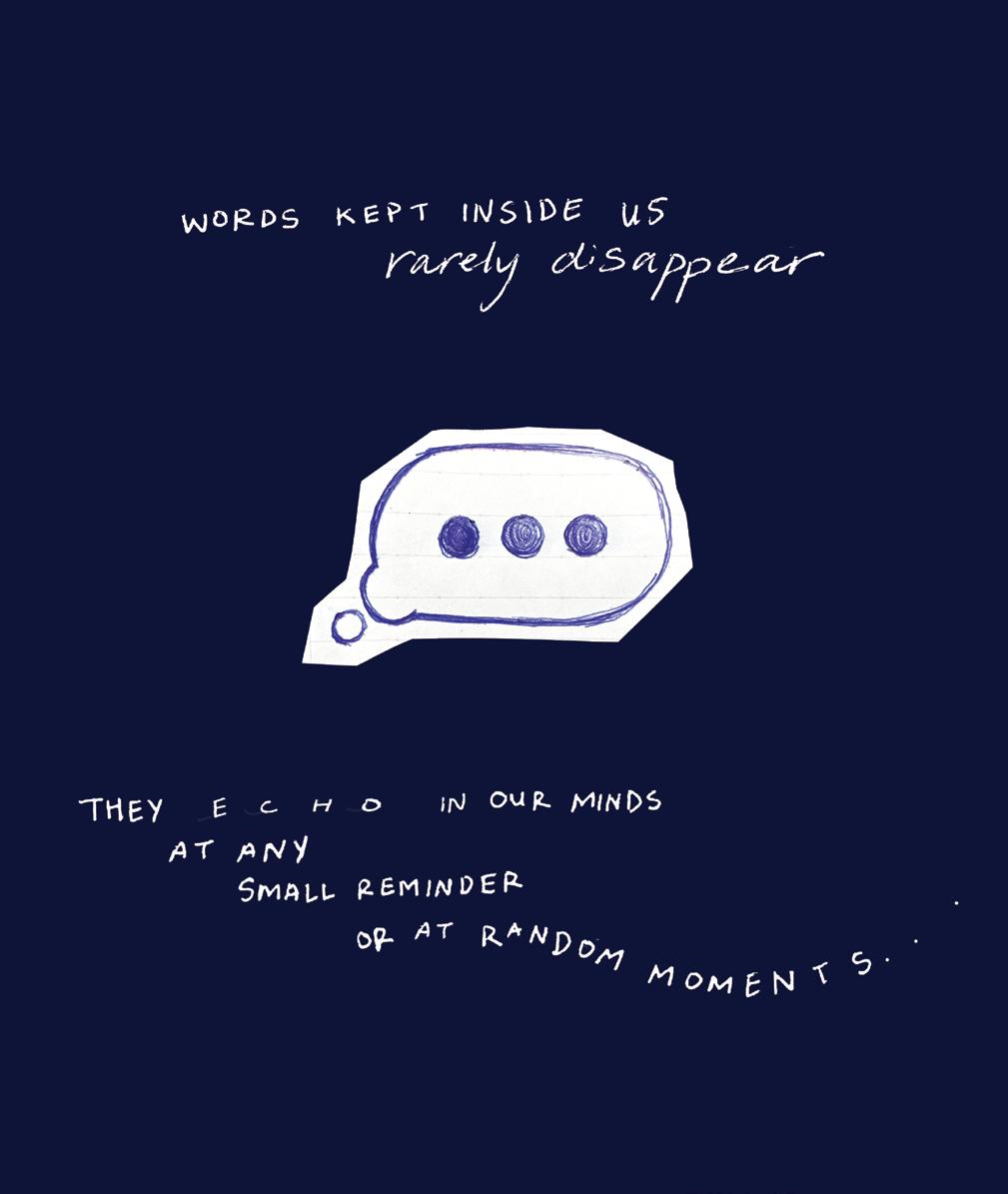
Silence can protect us in the moment, but it weighs on us in the long run. Words kept inside us rarely disappear — they echo in our minds at any small reminder, or at random moments. We tell ourselves that silence will protect our peace, but that is avoidance.
The more we keep words unsaid, the more we lose our dignity. After a while, we start to doubt ourselves and invalidate feelings we once felt. We start to tell ourselves, “Maybe it wasn’t that serious.”
Repeatedly silencing ourselves creates room to doubt our real emotions, or to believe that our experiences didn’t count unless someone witnessed them.
When you rewrite a story, you’re just changing it to fit how you want to feel, to stop feeling the pressure of avoidance. The price we pay for silence is not the cost of protection but of distance, absence and a heavy weight to be carried indefinitely.
In a world with such advanced communication, where the press of a button allows for instant communication via text, call, FaceTime and social media, we are still afraid to voice what matters the most — the things we don’t say.
Somehow, technology has made communication easier than ever before, but so much harder at the same time.
We type paragraphs and delete them. We wait for the bubble of three “typing” dots to appear, and when it never does, we consider it closure. This day and age has given us countless opportunities to communicate, and we choose to disconnect, withdrawing when our words are most needed. The fear of being left on “read” or getting “ghosted” has scared us away from necessary communication.
Some people will even post on social media, hoping someone will read between the lines. Both verbal and digital breaks in communication can hurt the same.
Restraint in speaking is necessary when our words can cause harm. We should be thankful for the instinct that has us biting our tongue when our words start to affect others. The moment we take to rethink and breathe before eventually speaking isn’t the kind of silence that harms, but the kind that controls. Words that are said cannot be unsaid. Having the strength and courage to hold back when the urge to yell, scream or cause hurt is very valuable.
It is vital to know the difference and recognize when our silence comes from fear rather than strength. Courage doesn’t always come from speaking instantly but from fostering patience when silence protects who we want to be, not who we were in the moment of anger and hurt.
It allows you to be bold, to ask yourself the questions when your voice chokes, when your throat makes that extra swallow, when you pause — thoughts racing — before saying another word. Determining whether to confess a buried thought and knowing it’s OK to say it, or saying it later. Finally admitting when something hurts.
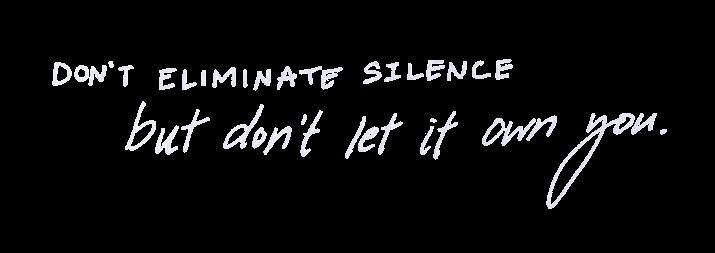
Don’t eliminate silence, but don’t let it own you. S
It’s 10:05 a.m. in March. A big, drab classroom in Irvin Hall on the campus of Miami University slowly fills with students. Roman Civilization — CLS 102 — is about to start, and it’s halfway through the semester. And yet, the class remains just as full as it was on the first day.
This is one more bit of evidence that Professor Steven Tuck, for now, is winning his war to keep the study of classics alive.
“Unfortunately, this PowerPoint is over 100 slides,” Tuck said, “so we need to get started.”
The lesson, focused on Roman triumphs and buildings, started with modern-day examples of communities directing their resources toward what they consider valuable, including in neighboring city Cincinnati. Another example Tuck used involved Indiana’s basketball culture.
“There is nothing I love more in this entire world — don’t tell my family — than this book [on Indiana’s high school basketball arenas],” Tuck said. “I mean, they literally rank high school gyms as ‘Hoosier Temples.’ I love that.”
To this, a few students cracked a smile.
“If anyone wants to disagree with me about how cool this book is, I would love that,” Tuck said. “We can argue.”
He then turned to a member of the front row, “Do you
Design by Lindsey Heyd
want to fight me on this?”
The student looked up from his notes, chuckling.
“Not yet.”
The slideshow, which only ended up being 43 slides, slowly presented the day’s information, teaching students about how the Romans honored triumphant generals post-battle. This included spoils of war, processions, buildings, decorations and gifts, all of which Tuck tried to make a modern connection to.
“If this was modern day, what sorts of spoils would you take from Mexico if the United States had conquered it in battle?” Tuck asked the class.
To this, he received responses including the Mexican flag, sombreros and other symbols. These responses, even though he deemed them correct answers, displeased him.
“Really?” Tuck said, shocked. “Not tequila? A big case of Modelo? Is that just me? OK. Tacos? Now I’m just hungry. Do you have a snack?”
Tuck pointed to Thea Stefan, a junior pre-med major sitting in the third row, who shook her head laughing.
“No? OK, moving on…”
The lesson continued, along with several other dryhumor jokes.
“You know,” Tuck said, pointing to the slide of a statue of Pompey the Great, halfway through the slideshow. “This guy used to drink poison a little bit each day to be immune, since he came from a family that liked to poison each other. Just a little life-saving tip for you guys in your own families.”
His MacBook Pro, covered in band stickers reading “Sweet William” and “Jolly Old Hawk,” hums silently, protesting Tuck’s endless use of it.
Behind him, pictures of his wife and two stepsons line the windowsill. Included in the mix is a photo of filmmaker Bruce Campbell and actor Nathan Fillion posing for what could easily be mistaken as a family photo, seamlessly blending in with the pictures of Tuck’s family.
He has been teaching in the classics department at Miami for 15 years before switching part of his focus to the history department this past year out of fear of losing his job with recent cuts to humanities majors.
The lesson began wrapping up around 11:07 a.m., when Tuck included one last anecdote about scattering the ashes of ancestors, which was included in the lecture about Romans valuing their ancestors’ success, before letting the class leave early for the day.
“Probably one of the greatest felonies I ever committed — great line to start with, I know — was when I was asked to scatter a student’s ashes in the Colosseum at the father’s request,” Tuck said sarcastically, rubbing his forehead. “Crazy weird, but you know, I had to do it.”
The class was dismissed at 11:12 a.m., and a few students lingered to speak with Tuck before departing for the day, off to other classes. Many students expressed their gratitude to the professor with a simple “thank you” before exiting the classroom, putting value on the lessons they had just absorbed.
“Following the previous merger, when the classical studies major combined with French and Italian five years ago, I decided to read the writing on the wall and shift my tenure to history,” Tuck said.
With this change, he had to create entirely new classes in the history department. This included classes on Roman history, which he adapted to be different from the subjects covered in his Roman Civilization classical studies class.
“[The Roman history class] is more of a chronological death march, OK?” Tuck said. “So it’s much less about the cultural aspects.”
Tuck graduated from the University of Michigan with a doctorate of philosophy in classical art and archeology, which he described as an extremely vigorous program — the dropout rate of his graduating class was nearly 50%.
When he arrived at Miami in 2001, Tuck found his home in the classics department, where he has been teaching the same Roman Civilization class for 24 years, among others. With the classical studies sector struggling to stay afloat, Tuck said he adapts those 100-level, Miami plan classes to be both engaging for non-majors and applicable in real life.
Stashed away in room 267 of Upham Hall, surrounded by ancient Roman and Greek texts as well as a few abstract paintings, Tuck sits at his desk with great posture, working on his computer.
“I think the important thing is to, I hate to say it, but make [the material] relevant and ask questions about our world,” Tuck said. “Like class today, it’s asking people to look around and think about what we value.”
Stefan, one of Tuck’s students, picked up her classical studies minor after taking Intermediate Latin (LAT 201) with Zara Tarlone, the chair of the French, Italian and Classical Studies department. She said it was her passion that drove her to understand the value of studying classics.
“I think history in general has value for education,” Leiter said. “We can’t learn and do better if we don’t understand where we came from.”
“I was in [Tarlone’s] office hours one day, and she had mentioned the classical studies minor,” Stefan said. “I always liked Roman history, so it felt like a nice addition to my pre-med major, so my classes aren’t all science.”
She said that in Tuck’s class, she can feel the same sense of passion.
“I really like his class,” Stefan said. “I’m never bored in class … I think [Roman Civilization] is important because it is the foundation of what our civilization is based on. Not only is it important, but it’s applicable to a lot of different things.”
Maddie Leiter, a senior biology premed major with a nutrition minor, also began her first year of college sitting in a Latin class. Leiter enrolled in Beginning Latin (LAT 101) in fall 2022. She said after a growing frustration with high school Spanish, she wanted to continue her language studies in a different arena.
“I settled on taking Latin because I was like, ‘I don’t have to speak Latin, and I don’t really have to write it — it’s mostly just like translating,’” Leiter said. “I can memorize stuff. I can translate.”
Her College of Arts and Science language requirement took her through four courses of Latin up through Representative Latin Authors (LAT 202). Though she didn’t enter the language with an outstanding interest in the classics, Leiter said she was thankful she fulfilled the requirement with Latin.
“My biggest takeaway from the classes [I took] was an appreciation for that time and culture, and that although Latin might be a dead language, it’s certainly still a language, and it’s hard,” she said.
Although she did not declare a major or minor in classics, Leiter said she decided to take Roman Civilization: From City to Empire during her time studying abroad this past spring. She spent a week traveling the Via Agrippa in France, which allowed her to grow a deeper appreciation for studying classics in the modern era, applying it to concepts like government, social status and international affairs.
“I think history in general has value for education,” Leiter said. “We can’t learn and do better if we don’t understand where we came from.”
Leiter and her class of roughly 30 students traveled along the ancient route, spotting sites like Roman ruins, the Palais des Papes, Pont du Gard and the Saint Paul de Mausole — the psychiatric hospital where Van Gogh spent his final months. The students also got to immerse themselves in the local French culture by shopping in artisan shops and trying the cuisine.
For a dead language, Leiter said the culture she experienced while traveling the Via Agrippa was a breathing descendant of the ancient Roman civilization that occupied those lands nearly 2,000 years ago.
(HST 227) and Great Discoveries in Archaeology (CLS/HST 323). Stefan is enrolled in two of the three classes and enjoys Tuck as a professor twice a day on Tuesdays and Thursdays.
However, Tuck said it isn’t about the major enrollment — it’s about the continued demand for the classics.
“I think the focus on majors is reductive and creates a false narrative,” Tuck said. “[Some] may see that there are eight classics majors and think there’s no demand, but course sizes have gone up in recent years. Demand is strong. Last spring, when I offered Roman Civilization, enrollment was capped at 55, but there were 60 people on the waiting list to enroll … There’s tremendous student interest in this material.”
Tuck has continued to capitalize on this student interest — both of his classics classes this semester remain at near full capacity, and he continues to weave in his witty, dry humor throughout his lessons.
With less than 10 declared majors this fall, the classical studies program, along with French, German, Russian, Italian and East Asian languages, combined to form one world languages and cultures degree, which will be offered after all current majors in each subsection graduate from Miami.
Compared to the history department, which houses 124 declared majors, the classical studies department continues to fight to remain relevant in a world of changing academic priorities. In the fall 2025 semester, Tuck is teaching a blend of classical studies and history classes — Classical Myth (CLS 121), Roman History
Classical studies could soon find itself on the chopping block at Miami, following suit behind colleges like Calvin University, Illinois Wesleyan University and St. Peter’s University. However, with strong interest remaining for classics courses for students completing the Miami Plan and for adjacent majors, the cancellation of these classes is not being considered.
For Tuck, this means a constant uphill battle in every one of his classical studies classes, in which he needs to continue proving its importance in a liberal arts education. S
/vin yets/ plural noun
a collection of brief stories that provide a glimpse into the lives of different students
My second day in London, I boarded an unfamiliar train on the Northern Line, praying I’d know where to get off. I couldn’t stop staring at all the people flooding in and out of the carriage at regular intervals like some sort of choreographed dance.
I was ogling a businessman sitting across from me when a woman stepped into the carriage. She danced through the maze of bodies, looking for a place to stand and trampling on my foot in the process. She apologized profusely. In her arms was a bouquet of yellow tulips, which are my favorite. She apologized again, but I was still staring at the flowers, held at my eye level. They were bright and organic and looked out of place under the yellowed aging lights.
It’s an easy series of coincidences. A woman stepped on my foot. She apologized, but she didn’t need to. There was already an apology, laid out in the form of flowers, bright and glittering, below the ground in a city that is alive, always and everywhere.
By the time Juliet drew her last breath on stage, the sun had already set. I left the Globe Theatre and migrated with the mass of bodies to the nearest tube station. The trains had dwindled in number, running less frequently as the hours wore on, so everyone crowded together on the platform. People stood in clusters, backs to backs, trying to carve out space for their groups wherever possible.
Five feet from me, two people, both dressed in concert blacks, swayed gently together. The girl shouldered a large case with a stringed instrument. They looked at each other so completely that it was easy to imagine no one else was even on the platform.
The boy said something that made the girl laugh. They started to hum a song together, and I strained to hear the melody. It was quickly covered up by the buzz of the tracks as the train pulled in.
My friends and I sat outside a Blank Street Coffee in St. Pancras Station at 6:50 a.m., waiting for a train to Paris. I sipped my drink and ate a pastry while desperately trying to keep my eyes open. Even the air in the station was still, and you could hear the echo of shoes off the walls when a small group of travelers walked by. Two men appeared and stationed themselves at a public piano.
One man sat down and played something classical I couldn’t identify, but my friends from home would’ve been able to. The music echoed around the empty stretch of space, and I found myself nostalgic for the heft of sheet music in my hand. The man picked another song, “The Girl with the Flaxen Hair,” a Debussy piece I had learned and loved. For a second, I swore I could see the notes in my mind.
After the song, the man turned around and disappeared into the daybreak. My friends and I boarded a train to another country. What remained was a fact: I was much changed. In other countries where everything, including my sense of self, is transient and temporary, we find our same humanity reflected in strangers. S
The heat clings — thick, damp, unyielding. It drapes over me like a second skin, humming and pulsing. Swelling to my cheeks, it beads in droplets across my forehead. My hair hangs limply. I blink once, twice.
Laughter rings nearby, spilling through the summer air. The voices are familiar yet distant, as if water is cushioning them. I reach for them, but a heavy resistance blocks me — the heat solidifying between us.
With the shutter of my breath, I attempt to push the air down, but it feeds and festers, churning something unseen. I try to hold it — one, two, three...
It pulls me back — the hot, humid air pressing closer. It gathers lumps at the base of my throat, each breath sticking before it escapes.
I start again: one, two, three...
My head snaps up, my gaze slicing through the haze as the laughter drifts along intangible currents, rippling with a gentle ebb and swell. My eyebrows furrow in unease.
Don’t they feel the heat?
I stumble backward, breath hitching as their eyes find mine. Their laughter twists, sharpening into something fractured, something pointed at me.
I reel, shielding my face as a dark blur cuts across my vision. Roaring gusts of wings swallow their laughter, heat curling around me. I scramble to my feet, eyes darting skyward as a murder of crows circles, churning the heat into pools overhead.
Wings whip and bite as I crumble, arms rising overhead.
I start again: one, two, three...
Once more: one, two… tick...
I think I’m still counting, but the words falter, my lips shaping the sound instead. I can’t remember how long I’ve been crouching, rocking — whispering faintly as the chime hums in my chest, no longer able to tell where the noise ends and my own chanting begins. My ears twitch at a rustle nearby. Untangling my arms from around myself, I scan the sky, only to meet an indifferent, pale gray expanse.
I could have sworn —
My ears twitch again, the sounds echoing and displacing. My head snaps to where my friends once were, expecting familiar faces — but they are gone. A brittle snapping of leaves draws my gaze to a fawn, staring blankly from the nearby treeline.
Exasperated, I wipe at the nape of my neck — the sweat cold against my skin as it prickles under my fingertips.
I shiver, the cold gnawing at my sleeves as I draw them tighter around me.
A white fog blooms before me, dissipating into the chilled air; I am suddenly aware of my breath.
A gentle breeze stirs among the branches — once adorned with pillows of green and pink, now bare and brittle. Thin currents lift the remaining leaves, sending them spiraling lazily while teasing my hair in wisps around my face.
Winter. I consider pinching myself. Then I blink, and it’s gone.
Untried in spirit, the trees remain rooted and unbothered, the sparrows continue chirping, the flowers bloom and wither with the changing seasons — all subject to a slow reminder that this too shall pass.
I am reminded that this too shall pass. S
by parker green
My parents met in kindergarten, became best friends in middle school and started dating after ditching their junior prom dates to hang out together instead. They went long distance in college, moved to New York City together, got married, had me and my three siblings and have been blissfully in love for a grand total of 31 years and counting.
It’s adorable: the kind of story that gets pitched as a cheesy, aspirational rom-com.
Sure, there’s been the odd talking-only situationships, but for the most part, I’ve been chronically, tragically single.
It’s not that I don’t want to date; I like the idea of a romantic relationship conceptually. But dating is hard.
College men are confusing, exotic creatures, similar to a poison dart frog: pretty to look at, but best kept far away from your physical person (and preferably released back to their natural habitat after careful observation).
Even if I were to brave the dating pool, it’s hard to find someone I like. Classes, extracurriculars and even bars seem to be filled with some combination of red flags, happy couples and others generally uninterested in me.
And yet, when I turn on my phone and gossip with my friends, I’m swarmed with “#couplegoals” and “Did you hear she found a new man after getting dumped three days ago?”
It’s easy to feel left behind, like everyone is experiencing the joy of romantic love while I fade into cat-lady levels of obscurity. There are days when my insecurities run rampant: What if the reason I haven’t dated anyone is because I’m not pretty enough, not interesting enough, not good enough for actual love?
I don’t want to be alone; I don’t want to be cast aside.
It’s a rabbit hole that is too easy to fall into, and these insecurities, for lack of a better word, suck.
But do you know what doesn’t suck? Actually being single.
I love my friends and family. I love reading for hours on end. I love my job, spending entire days wandering and having alone time. No one has ever cheated on me, told me I couldn’t wear my cute going-out top or invaded my privacy (as some of my friends have experienced). I am, for the most part, fulfilled and happy with my life.
A lot of my desire for a relationship is fueled by this fear of being alone or my own insecurities. If you genuinely like someone, you should date them. But I wonder if people would be happier if they just let go of the allconsuming desire to date, and instead focused on every type of love, knowing that romantic love can come at any time.
My own love life, however, is completely different. In fact, it’s entirely nonexistent and has been for 20 years.
I am not lonely because I don’t have a boyfriend. I’m not lonely at all. When I decide to date somebody, it will be because they add value to my life, not because I’m looking to check a box on some giant life list. Being single is not a character flaw I have to overcome.
So whether you see me out and flirting up a storm, laughing my ass off with my two best friends or quietly reading in blissful silence, know that I am exactly where I want to be.
The future may be uncertain, but I do know one thing: single or taken, it will be full of love. S
Ever since I was young, my dad, no matter how late he’d come home from work or how tired he was, would always take the time to read to me each night.
There was something about the enthusiasm my dad had for reading stories out loud that captivated me — he didn’t do any special voices, but there was an unmistakable passion.
And in those hours we spent together, his love for books eventually started to rub off on me.
Before I could read on my own, I would gravitate to books for their pictures. Whether it was Winnie the Pooh, Curious George or another lovable character, I would stare at the illustrations for hours.
Then, when I was 4 and a half years old, I got sick. Suddenly, I was spending most of my days in the hospital. This meant that when I turned 5 and was supposed to start kindergarten, I couldn’t.
My mother, a former teacher, decided she would teach me the basics herself. Soon, I started reading early nursery rhymes and short stories with ease.
When I reached kindergarten, the teachers and staff were surprised to learn that I was advanced; in fact, my reading level was at least a grade above my classmates.
My mom started to fuel my addiction. She would constantly buy me books — even ones that were
far above my level — just because she knew I would be able to comprehend them soon enough.
However, in second grade, something lifechanging happened.
At the first book fair of the year, I decided to buy “Harry Potter and the Sorcerer’s Stone.” Something about magic and a boy with a mysterious past intrigued me.
Although it is considered a fourth-fifth-grade level book, I finished the 320-page story in just two days. I loved it so much that it eventually had to be held together by duct tape.
After that, it was not unusual for my parents to find me slacking off on my chores with a book. More than one teacher told me not to read and walk at the same time. I was consuming stories at a voracious pace, too; I’d finish a 300-page novel in just a few hours.
Unfortunately, as I’ve grown older and school continues to consume all my waking hours, the voracious reader I was as a child has become considerably less so. I often don’t have the time or energy to dip into a dense novel.
But that doesn’t mean I’ve given up on literature. Now, I can be found reading short stories and plays that friends have written, sharing my thoughts and opinions.
I often exchange recommendations with my dad, my original champion of reading. He loves books about history and politics, and since I am studying both political science and journalism, we often enjoy the same books now.
It’s in these moments that I realize the little girl who used to be surrounded by piles of books is still there. It’s the girl who would gladly spend a weekend reading instead of going out, who can quote Jane Austen at the drop of a hat and who completely loses herself in a world that exists somewhere between real and make-believe. S
Design by Drew Koewler
by molly fahy
“My country is in the green,” is a li(n)e my president would say, unscaffolded as the bitter proclamations and other false declaratives. My country is in the green, which is another way of saying it’s been put out to pasture. A way of saying someone’s winning, but it’s only ever the guy with bills in his pocket. Sly veto with arresting fragments— your body is not your body because it is a body.
“Green” makes it sound like we’re doing something right. I miss the days when we were about doing what was right instead of just leaning that way. Now, extending a hand no further than what it returns. Toppling over like building blocks of people, a mesh of arm and leg and if this is the route we’re taking, you have to know who’s coming with you.
If I’m writing this poem, and I won’t let you see it, it’s a bad idea to reach for it.
That’s a good way to ensure the poet lives elsewhere.
If you go to war in the name of your country, you must know whose country it is.
My country is my country. Named: free, liberty, justice. Show me militiamen. Show me the guns. Show me 10,000 bodies in a city ablaze, reinventing itself, phoenix-like. You took the country from our hands. Who are you defending again? Show me your palms.
Tell me, great leader, why do they look empty? S
Design by Caitlin Dominski
Photo
This is a piece of fiction and does not depict any real people or situations.
I broke up with the infamous Colt Dawson two years ago. In case you don’t know who he is, Colt is the heartfelt and handsome country singer who has captured the hearts of all teenage girls with his latest album, “My Heart in Dirt.” Like any country song, Colt’s music makes women daydream about love and men clink their beers together. Barf.
As any girlfriend of a famous singer would believe, I was the muse for his songs, the inspiration for his lyrics and the girl of his dreams. I mean, come on. I’m tall, blonde and have a killer body from those pilates classes. Who wouldn’t want to write a song about me?
We were in love. The real kind of love. We were even compared to Noah and Allie from “The Notebook.” I knew he was the one, my soulmate.
Or so I thought.
I was the epitome of a perfect angel in the relationship, the dutiful girlfriend who showed her support at his concerts and all his press events.
Then, he goes and dumps me. The Sophie Beaumont.
Just like that, the best relationship of the past decade was over because I was “clingy,” “spoiled” and “manipulative.” Again, me? Never.
I am the modern-day Blair Waldorf from “Gossip Girl.” I grew up on the Upper East Side in a penthouse overlooking Central Park. I went to the most expensive private school in the Tri-State Area and got a full ride to Columbia University because my parents are legacies.
There’s nothing wrong with that, right?
Long story short, we broke up. At his peak, he left the one who supported and loved him the most. I guess this country boy couldn’t handle the city girl, which would make a great song if I had any musical talent.
There are rumors that he will release a new album in the upcoming months. While I did grieve the loss of my love life, I was more interested in hearing all the songs I knew he had to have written about me. My cheeks hurt from smiling. I’m about to go viral. AHHHH.
My life is going to be every girl’s dream!
It’s been two years since we broke up, and Colt finally released his album. It took him two years, and this is what he came up with. “Whiskey and Regret” has taken over the country faster than his first album. I fought sleep as I patiently waited for it to drop; my knee never once stopped bouncing. I had a weird feeling in my gut telling me something was wrong, but I couldn’t quite place it.
As the clock hits midnight, I pull up the album, and I’m flabbergasted. That son of a bitch didn’t include a single love song, just angry diss tracks that I’m assuming are about me.
I leave my cocoon that I made for myself on the couch and throw my phone against the wall. The picture frames rattle and some fall to the ground, glass shattering. All I see is red.
His first track is called “Ex Marks the Spot,” and the lyrics make my blood boil. As I listen, I feel a tear slide down my cheek.
“You always loved the mirror more than me.”
“Your daddy’s money couldn’t buy you a soul.”
“Ex marks the spot I cut you off.”
It’s catchy, I’ll give him that. I told everyone that Colt’s album is about our relationship. Everyone. He took my reputation and tossed it into the shredder, leaving me in pieces with no path to be whole again.
First off, I had to look at the mirror all the time because your face made me want to stab my eyes out.
Second, daddy’s money is what took you to expensive dinners and bought your suits for the red carpets.
And third, I cut you off. Not the other way around.
In no world am I letting a man tear my reputation apart limb by limb. I won’t stand for it. Hell no. Colt Dawson will rue the day he ever thought badly of Sophie Beaumont.
It didn’t take long to find Dustin’s profile on Instagram. I messaged him asking if he would like to be part of my plan, and he responded almost instantly. He is all aboard the Crash Colt Train.
Now, before I tell you, I just want you to know that this isn’t some weak revenge plot where I egg his car or TP his house. I am going to destroy everything he loves (not literally, but you get the idea).
To understand my revenge plan, you’ll need some background. In college, Colt was best friends with another country singer, Dustin Hayes. Neither of them had their big break yet and would lean on each other for moral support.
The two did everything together, including going out. One night, Colt met a girl at a local bar, and they hit it off immediately. He was enamored with her, or at least that’s what he tells me. Again, barf. She wasn’t looking for anything serious, but Colt only does serious. You can see where the problem is.
Colt also has a sister named Sadie, on whom Dustin had a little crush. It bothered Colt that Dustin would even think such thoughts, but he pushed it into the back of his mind.
Sadie and I used to be best friends. That’s how I met Colt in the first place. We met at a pilates class and instantly hit it off. Sadie and I even stayed friends after Colt and I broke up. Although now that I’m thinking about it, she has been avoiding me.
Colt went home one weekend, and when he returned, he found Dustin in bed with the girl he was crushing on. That is when their feud started. Colt kicked them both out of the apartment, and he never spoke to Dustin again.
While we were dating, he always droned on about his feud with Dustin. No one was allowed to listen to Dustin’s music around him. Whenever I talked to Sadie, she said Dustin creeped her out. I mean, come on, Sadie. Have your own opinions. Don’t jump on the bandwagon.
In my opinion, Dustin’s music is better. I just didn’t realize
Dustin and I have started making appearances together, going to different events, and we’ve tipped off the paparazzi to capture us “mid-kiss” — scandalous, I know.
To let you in on a little secret, we aren’t dating. We both know this is a business arrangement with no feelings involved. Except for our hatred for Colt, of course. Don’t worry, I know you are rooting for me.
All we’re trying to do is grab the public’s attention and take the spotlight away from Colt’s new album. Get everyone obsessed with us instead. Dustin is releasing a new album next month, so we are just biding our time until his songs surpass Colt’s.
IN NO WORLD AM I LETTING A MAN TEAR MY REPUTATION APART LIMB BY LIMB. I WON’T STAND FOR IT. HELL NO.
Design by Jillian Wynn
There is a rebuttal, of course, to his viral song. Dustin and I spent a couple of all-nighters writing “Bullseye.”
My favorite lyric is “If ex marks the spot, then you missed” before he starts to sing lovely things about how he stole his girl twice. That’s not all, don’t worry. You’ll just have to wait and see.
ONE MONTH LATER
“I just wanted to let everyone know, so that hopefully now other women won’t go through the harassment I went through,” I said through fake tears courtesy of drug store eye drops.
“All he cared about was his music and my money. I helped him get off his feet and secure his first record, and this is what he does to thank me.” I hiccup for dramatic measure, and I take a second as more tears stream down my face.
“So, I just wanted to let you all know first that I am suing Colt Dawson for the embezzlement of all the money he took from me. No man should ever prey on a weak girl. And I just hope that this inspires others in a similar position to stand up to their bullies and take back what is theirs.”
The TikTok goes viral almost instantly.
Overnight, the video gets roughly 12 million views and more than 500,000 shares. Women all around the country are reposting and sharing their own stories, and the world is starting to fall back into place. Of course, Colt is beyond furious.
I receive hundreds of emails from his PR team telling me to take the video down, but I have Dustin’s lawyers at my back, supporting my story. All I have to do is show up and put on my most innocent smile in court this week.
With “daddy’s money,” I paid some people to curate bank and credit card statements, payroll logs and cash withdrawals. My lawyers created a timeline of our relationship and when he used most of the money. The evidence is a bit of a stretch, but I’m in this to win.
I also took text messages and receipts from my memory box that I had kept in case we ever got back together, which I now know will never happen. All of this evidence by itself may seem pretty uninteresting, but I have compiled a beautiful scheme to get back at him.
At this point, if you are still reading this, I hope you are rooting for me, so keep your fingers crossed that the judge sides with me so Colt loses all of his money and spends a couple of miserable years in prison.
AHHHHH, it sounds like heaven.
My new dream follows me as I close my eyes every night.
I’m wearing a badass pink suit to the final hearing, channeling my inner “Legally Blonde.” The room is packed with reporters, news stations and, of course, my close supporters.
As I walk down the aisle, my heels click and I pop my lips, where I just freshly applied the bright red lipstick minutes before. It almost clashes with my suit, but I couldn’t not make a bold statement. My eyes stray to the defendant’s side, and I connect with Colt’s. The hatred I know exists in my eyes reflects from his, along with a hint of desperation.
Something tells me he didn’t get a wink of sleep last night, but neither did I. I do a double-take as I start to look away from Colt because Sadie, normally sitting right behind Colt with a smirk on her face, is absent. Her absence strikes a nerve that I can’t quite understand.
Today, the judge will make his decision that might change both of our lives forever. I take a look back and see Dustin sitting on the bench behind me. He gives me a warm smile and mouths, “Good luck!” The butterflies in my stomach explode at the admiration in his eyes.
I turn back around as Colt’s lawyer finishes the closing statement. Now it’s time for the decision. All the hard work that I put in the last few months has come to a fork in the road.
I am getting antsy. My hands are sweating. This is the most nerve-wracking moment of my life.
“Guilty on all accounts,” the judge declares.
I have never heard sweeter words in my life. My shoulders feel a thousand pounds lighter.
“Given the breach of trust and the sums involved, I sentence Colt Dawson to two years in custody with credit for time served,” The judge says while hitting the gavel on the hardwood to finalize Colt’s fate.
“You BITCH! She’s lying!! How can you not tell she made this up? I am innocent!! Innoc–” Colt is cut off as security puts him in handcuffs.
“Quiet!” the security officer yells. Colt takes one look at the courtroom before he leaves, and his eyes narrow to me. I smirk. Then laugh. And laugh and laugh!
I just sued Colt Dawson and won. I just got $20 million that was never mine to begin with! And he is spending the next two years showering with 40 other men and eating mush for every meal. I can’t keep the smile off my face. We won!
In the hallway, I run to Dustin and jump into his arms.
“We did it!” I smile into his neck. His arms squeeze me as he hugs me back.
“That we did! I can’t believe Colt Dawson is behind bars, whoa…,” Dustin stutters.
“Speechless, huh? Me too.” My cheeks hurt from smiling so much. We are just staring at each other. I didn’t realize how close our faces had become.
“I guess this means that our arrangement has come to an end–”
I START TO CRY TO THE SOUNDS OF HIS SINFUL LAUGHS
I step on my toes and press my lips against his. Dustin is stunned for a second before his arms wrap back around me. We get lost in each other and lose track of time.
Someone clears their throat, and we spring apart. Police officers are surrounding Dustin and me with their hands on their guns strapped to their waistbelts. My heart drops to my stomach.
“I am sorry to interrupt what appears to be an, umm,” the officer coughs, “an intimate moment, but there is something that has been brought to attention, and action needs to be taken immediately.”
The officer’s lips dip into a frown as he starts to approach us. “Sophie Beaumont?” I nod my head.
“You are under arrest for the murder of Sadie Dawson. You have the right to remain silent, and anything you say can and will be used against you in court.”
The officer approaches me with cuffs dangling from his left hand and his other hand resting on his gun. Dustin drops me almost immediately and looks at me in horror.
Sadie’s dead? When did that happen?
I had no idea … but that could explain the look of devastation on Colt’s face today as he walked into the courtroom.
“Dustin … No … I didn’t do it,” I plead.
“Sophie…” he stutters, “How could you kill his sister? I get that you wanted revenge, but this takes it to another level.”
“But I didn’t! I promise! I would never stoop that low,” I scream. “Please! Dustin, you have to believe me!”
He raises his brows at me like we didn’t just pull off this elaborate scheme against Colt together. Like he knows I could do something so unthinkable because I hate him so much. Tears cascade down my cheeks.
Dustin is the last person I see before I am dragged to a holding cell in the basement of the courthouse. I’m stripped of my belongings and thrown into a cell, waiting for transportation to jail before the start of my trial. I am left with nothing but my thoughts until I hear the sound of laughter.
“Two can play the game, Sophie,” comes from the cell next to me. I snap my head up and look into the evil eyes of the one and only Colt Dawson. “You think if you can stage an embezzlement case against me, I don’t have the resources to stage something against you as well?”
“How are you okay right now, Colt?” I ask. “Your sister is dead, and the murderer is still out! I didn’t do it.”
“Oh, Sophie … Sadie isn’t dead,” Colt says. “I thought you would have known that. We staged her death. You will go to prison for life, and I will release an album that will give me back all the money you stole and more. Though I guess you won’t be getting the money now,” he smirks.
“Why Colt? Why would you do this to me? You LOVED me!” I scream.
“Because you don’t mess with Colt Dawson and win. You tried and you lost! Daddy’s money can’t help you now, sweetheart.”
I start to cry to the sounds of his sinful laughs. S
T E a E w R P h c : L A e travel
The June sun hung high in the sky, sending rays of light through the airplane windows. It was 10 a.m., but my body did not agree with me — it was 3 a.m. back home, and my eyelids drooped from exhaustion.
Unbuckling my seatbelt, I rose to try and regain feeling in my legs. Tingles ran from my toes to my hip, almost as if the static from an old TV had been injected into my legs.
The plane finally landed after spending seven hours in the sky. I looked around the cabin and made eye contact with my dad, Ken, who sat a couple of rows behind me. He smiled while I twitched my eye, impatient to leave the aircraft.
Finally moving, I grabbed my carry-on bag and hurried down the aisle and onto the jetway. Despite it being summer, I could feel a chill from outside. I rushed forward, eager to reach the warmth of the building. Down the last ramp, a man with the pointiest handlebar mustache I had ever seen stood, wrapping an arm around his wife’s waist.
“Yep,” I thought. “I’m in Paris.”
Design by Sydney Young
of Ayla Peden
by Ayla Peden memories
Dad
with my
During the summer of 2024, my dad and I, along with some of my high school classmates, spent a week traveling around France and Spain. While it was hectic trying to fit so many things into eight days, I wouldn’t have changed it for the world.
Paris was a blur of the most beautiful architecture and cafés a girl obsessed with pretty buildings and coffee could ask for.
After leaving the airport, we met with our tour guide, who immediately whisked us away to our hotel. They informed us that, after we dropped off our things, we would go to the Louvre and explore the museum for two hours.
Now, if there is one thing anyone should know about this place, it’s that it’s massive. You could easily dedicate a whole day to one wing, and you might get through it all. The Louvre has three wings — there is no way to see everything in just two hours.
At the news, my dad and I locked eyes. Despite us running on no sleep and jet lag, I knew that we were about to have the time of our lives.
As soon as we stepped into the museum’s entrance in the famous glass pyramid, we shot off like firecrackers and made our way to the Denon wing, which is home to the Mona Lisa. She wasn’t our main focus, but how could you go to the Louvre and not see her?
Along the way, I noticed that Dad had stopped to look up at the ceiling. I followed his gaze and took in a breath. It was stunning. Statues of angels and flowered molding encircled a painting of a woman with golden wings. We stood, transfixed by the room’s beauty and the hours the artists must have spent creating it.
I looked over as Dad pulled out his phone to take a picture; a smile was plastered on his face – my favorite work of art.
After two days in the heart of France, I waved goodbye to the Eiffel Tower and the best crêpes I ever had. Boarding a train to Nice, I was headed to the Mediterranean coast.
Nice is the picture-perfect town in the French Riviera. Colorful buildings in shades of red, yellow and orange sit atop each other, with narrow alleys pushing them apart. Locals and tourists alike tan on the rocky beach while the sea’s clear blue water splashes in the distance. And, best of all, rows and rows of stands line the main street in the evening, inviting passersby to partake in the town’s night market.
My dad walked beside me as I forced him to stop at every stand we passed. Almost everything laid out was handcrafted or locally grown. Everything from jewelry to flowers to pottery seemed to carry a story.
At the last stall, my dad stopped and picked up a ceramic sculpture of an owl.
“We should get this for your mom,” he said with a smirk.
My mom hates owls, but it’s become an inside joke to point them out whenever we get the chance. I snapped a picture and sent it to the family group chat.
“We definitely should,” I said while laughing.
Dad set down the owl and looked around. We had made it to the end of the street, and the rest of our group sat on benches behind us, clearly exhausted from our long day. We could either turn back and join them, or we could explore every nook and cranny we could find.
We obviously chose the latter.
For the next two hours, the alleys, shops and cathedrals became our playground. However, after spending most of our time in the narrow passages of Old Nice, we reached the edge of the neighborhood and found a staircase leading up the side of the hill that served as a wall, marking the edge of the city. The staircase seemed long, but I was intrigued.
“Should we?” I asked.
“Haven’t walked enough?” he said sarcastically.
“We’ve walked farther,” I retorted, and turned to start our exploration.
Further up the stairs, in between breaths, I asked, “Why do we continue to walk so much on these trips?”
I knew the answer: We wanted to see everything we possibly could. It’s what we do. On a typical vacation, if you could even call it that, we spend anywhere from one to three days in the same location, and we try to see and experience everything each place has to offer in a very short period of time.
“What if we never come back?” is a thought that rings through each tour, each hike and each alleyway — we only have one chance to see this magical place, so let’s make the most of it.
At that thought, I am propelled back in time, where the memories of other trips that left me with sore feet and weak ankles, but made me the happiest I’ve ever been, live.
New York, New York — Spring, 2024
And just like that, I am thrown back in time to a couple of months prior, when my family took me to New York City. My mom and little sister wanted to stay behind in our hotel, but I eagerly anticipated exploring the city — I know, quite the running theme. My dad offered to accompany me on a walk.
The cold spring air stung my cheeks as we walked out through the hotel’s front door. It was roughly 7 p.m., and the sun had already begun to set.
“Where to first?” Dad asked.
the sun had fallen beneath the skyline. It was all so overwhelming.
“This is a lot,” I said, my dad nodding in agreement.
Turning back in the direction from which we came, we started up our chatter once again.
Providence, Rhode Island — Summer, 2023
In a city not too far from NYC, my dad and I walked along the streets of Providence. We had just spent two days in Boston attending college tours, and we were about to go on another at Brown University. But this tour was different — this one was at an Ivy League school. While I didn’t anticipate getting accepted, I at least wanted to explore my options.
I pulled out Google Maps to find the direction of Times Square. We were only a couple of blocks away, and I wanted to see the glow of all the billboards at night, so we set off in that direction.
On our trek, Dad listened as I ranted about my classes and extracurricular activities, which he had already heard me talk about the week before. We shared our love of “Star Wars,” and when we passed by the New York City Public Library, the backdrop of a scene in “Ghostbusters” prompted him to mention his love for the movie. He even listened to me repeat “This is exactly like an episode of ‘Friends!’” a hundred times when we passed by anything NYC-related.
Eventually, we made it to the heart of Times Square. The ads shone brightly on the gigantic screens of every building. If you didn’t look up, you wouldn’t have known
Walking around the city’s Kennedy Plaza, I noticed something odd: The typical urban noise was absent. Despite being in the heart of the city on a Friday afternoon, we only saw a few cars pass by.
“Strange,” I thought to myself, and continued walking toward the university.
My dad and I averaged 20,000 steps a day on our trip. We walked everywhere, trying to take in as much of every new place as possible.
As I walked along College Street and crossed the bridge over the Providence River, I envisioned what it might be like to live there. It felt safe and calming, like I could curl up on a park bench to read a book and not have to worry about a thing.
Before I knew it, we arrived at the front gates of Brown. The university’s crest looked down on us as we passed under the gate’s crown. The campus was the definition of collegiate. Old brick buildings surrounded an expansive green.
“This is so ‘Dead Poets Society,’” I exclaimed, stepping into the center of the lawn. “You want to take photos for me sooo bad.” A grin spread across my face, revealing the dimples I inherited from my father.
Sarcastically, Dad rolled his eyes and sighed through a smile while grabbing my phone out of my hands. In the couple of months since I taught him, he had become an expert at taking my photos — I didn’t even need to tell him how to take them anymore, he just knew.
zion park
I walked along the green, trying to find the best place for my photoshoot. We stopped at the oldest building on campus, the library, and a statue of a bear, the school’s mascot. After making our rounds, Dad stopped and turned to me.
“I really want you to apply here,” Dad said.
I smiled and nodded, my heart full of joy because I knew he truly believed in me.
Zion National Park, Utah — Summer, 2019
“Come on, you got it,” Dad said as I dragged my feet up the trail.
“I think I’m dying,” I said with a groan.
The desert mountains of southern Utah surrounded us. We had been hiking the Angel’s Landing trail for about an hour and a half, and we had just reached the 1.8-milelong series of 21 switchbacks that lead up the side of the mountain — appropriately named “The Wiggles.”
The hot sun beat down on my arms and legs; it wouldn’t be long until my skin turned a bright pink. Mom panted with me, and Dad looked around while we climbed, taking photos of the scenery.
The Wiggles were my number one enemy on this trip. However, it would soon become a story and accomplishment that Dad and I would revel in for years to come.
A quarter finished, my feet ache. Halfway up, my shins turn to jelly. Three-quarters complete, I suspect I’m due for a hernia.
And finally, the top. We stood overlooking miles of the valleys and mountains that populate Zion National Park. Despite the desert climate, trees and shrubbery covered the valley floor, bringing greenery to the otherwise yellow, orange and red color palette.
“See, look how beautiful,” Dad said.
I take in my surroundings. He’s right: It’s stunning.
After a moment, I take a deep breath and close my eyes, letting the sounds and atmosphere engulf me.
Nice, France — Summer, 2024
I breathe out, opening my eyes to see the beautiful streets and coastline of Nice below me. The agonizing steps that appeared out of nowhere led us to a terrace overlooking the city where a castle had once stood.
Down a path and off the overlook, a waterfall ran steadily down the mountainside. I could feel the soul that once thrived within the hilltop castle. The memories of those long passed, buried in the dirt and gravel under our feet.
Their memory isn’t the only thing that lives on. The hundreds of memories that have brought my dad and me to this moment have also shaped everything I do.
I don’t know who I would be without the trips, the experiences or the everlasting bonds. They have molded my love for learning and motivated me to work as hard as I can. Our travels have reinforced my obsession with history and the different cultures around the world. It has even informed what I want my future to look like.
But, most of all, it has helped me create a connection with one of my favorite people in the whole world. S
managingeditor
Hi readers! I hope you enjoyed the 17th edition of The Miami Student Magazine (TMSM). This issue was full of incredible stories and designs, straight from our talented staff.
Issue XVII was made from four months of hard work. But it was also made from love, honesty, vulnerability
art directors
On the topic of words being left unsaid, there is no doubt that the following words are ones that we want to say. We had an amazing time designing Volume 17 of The Miami Student Magazine (TMSM) and are so grateful for the hard work that everyone put in.
First and foremost to our designers, you guys KILLED IT. Seriously. This may be TMSM’s best magazine yet.
and, of course, reflection. I hope you found a piece that spoke to you.
Maybe you’re pondering how you judge others. Maybe you have a newfound appreciation for the humanities. Maybe you’re rethinking how you use artificial intelligence. Whatever you took away from this edition, we hope it was meaningful.
Thank you to every writer, editor and designer. Thank you to our incredible art directors — Caitlin Dominski and Sydney Mulford — and to our wonderful editor-inchief, Stella Powers. I couldn’t have asked for a better team. Finally, a big thank you to our readers (yes, you), for picking up this magazine and sticking with us till the end. We wouldn’t be possible without you.
As always, thank you for reading, and we look forward to seeing you next issue.
To Stella and Taylor, our POWERful editor-in-chief and managing editor, we could not have done this without you. Thank you for being a joy to work with!
To Sarah Frosch, for taking beautiful pictures of all our pretty faces, and to Shannon Mahoney, for creating an incredible crossword puzzle based on the themes and stories found within this edition. Just turn the page!
To our writers, whose stories make us want to laugh, cry, hug our friends or crumple up the words we just spent all day coming up with, and to our editors ... for making sure we don’t. And lastly, to our readers. This magazine is for you. Thank you for taking the time to read all the (incredibly important) words we have to say.
Signing off,
taylor powers, managing editor
caitlin sydney art
down
1. The winning side of the Civil War
2. The result of fear, love or conflict which prevents a person from speaking
3. Computers, smartphones and AI are all examples of this
4. One must be ____ the magazine to complete this crossword
5. What some people are turning to AI to supplement
6. Recognition of a person’s characteristics or qualities; the name of a Taylor Swift album
7. The result of evolving or developing
8. How one might end a romantic relationship
9. Professor Steven Tuck teaches a class on this civilization
10. Most visited museum in Paris; the site of a recent heist
11. A heightened state of fear and nervousness sometimes manifesting in physical symptoms
12. Diversity, ____ and inclusion
2. “Life, ____ and the pursuit of happiness”
3. Where one would go to check out a book; King and Lane are both examples of this
4. “Land of the ____, home of the brave”
5. ____ Railroad routes ran through Oxford; another term for the London Tube system
6. The moving room a figure is sitting in on page 8
7. A record of humanity’s past
8. The largest city in the U.K.
9. Something that occurs repeatedly over a long period of time; a word often associated with illness
10. What a person is if they aren’t doing 11 across
11. Engaging in a romantic relationship with someone
12. A group of people with a common identity, goal or belief who rely on and support each other
13. With 14 across, one of the onomatopoeias falling down page 44; reminiscent of a heartbeat
14. With 13 across, one of the onomatopoeias falling down page 44; reminiscent of a clock
don t say let it end with the thoughts that linger.
use these lines to write the words you never said... ...and leave them behind when you close the cover.
At TMSM, we are always seeking talented writers, designers, editors and photographers to bring our pages to life. Are you passionated about crafting captivating stories, creating sunning visual designs or polishing content to perfection?