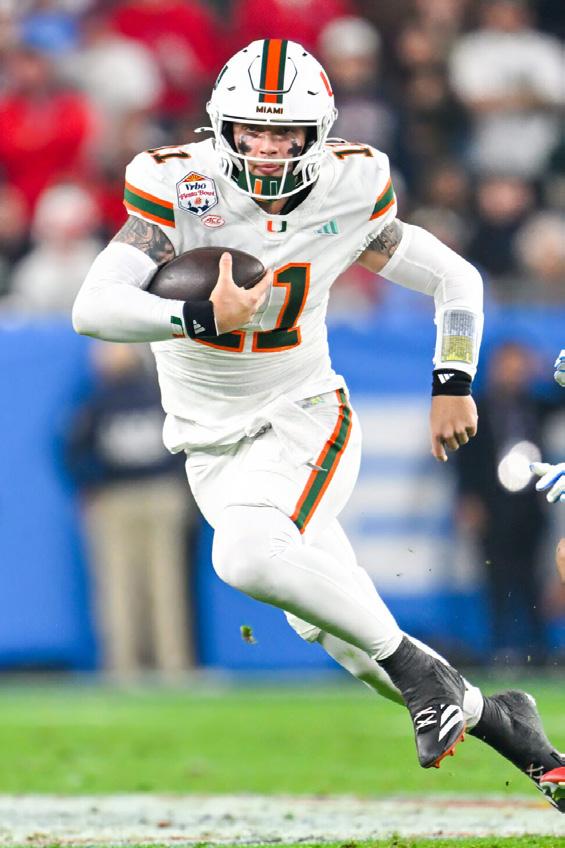
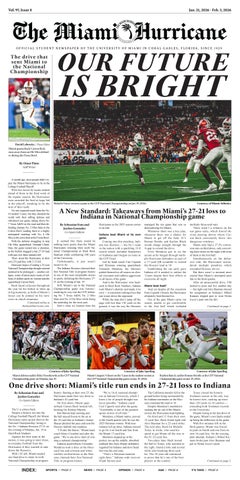
A month ago, most people didn’t expect the Miami Hurricanes to be in the College Football Playoff.
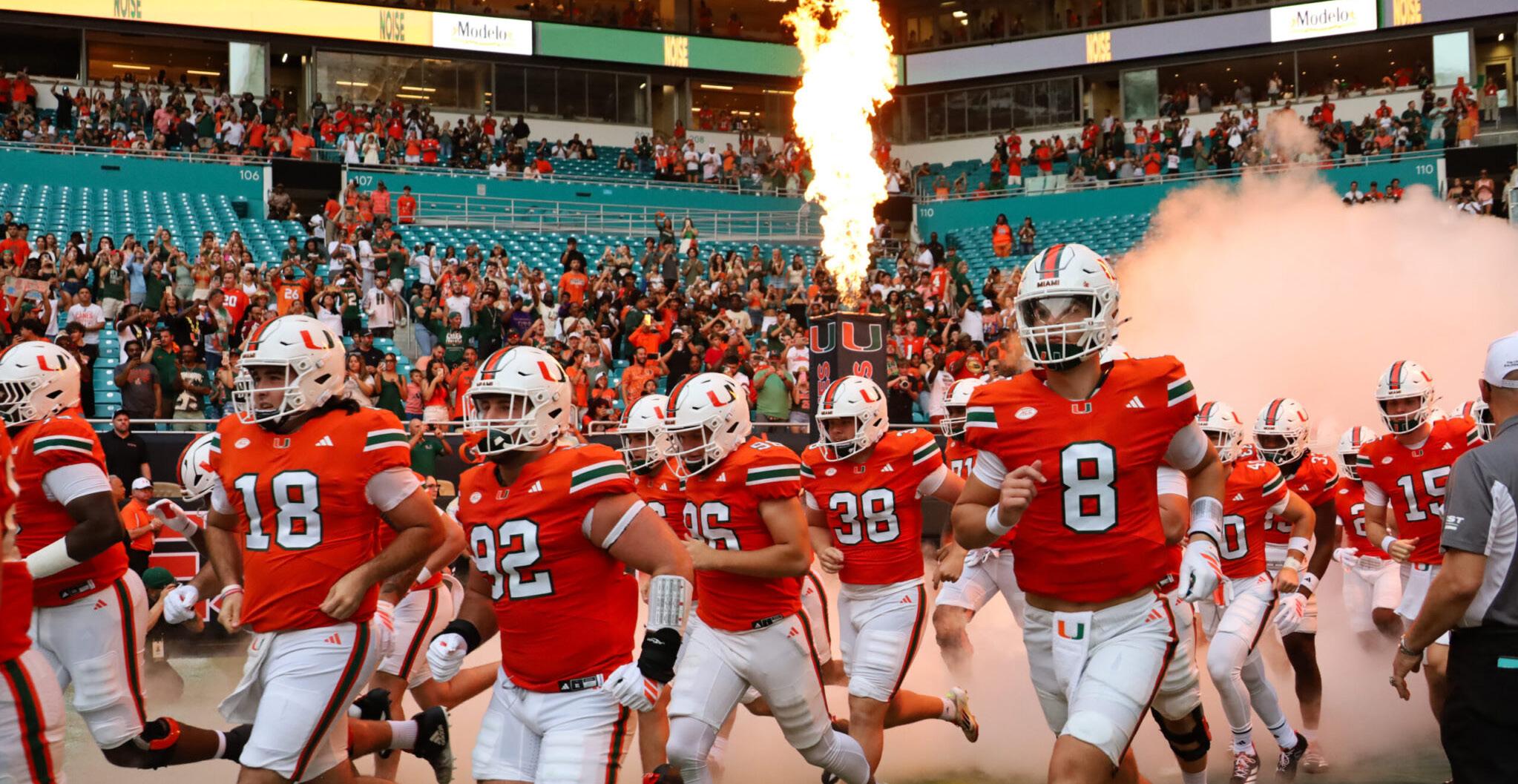
With two losses by teams ranked ahead of them in the final week of the regular season, the Hurricanes were awarded the final at-large bid in the playoff, sneaking in by the skin of their teeth.
No one expected much from the No. 10 seeded ’Canes, but they shocked the world with their stifling defense and old-school run game, taking down No. 7 Texas A&M on the road and then defending champs No. 2 Ohio State in the Cotton Bowl, leading them to a highly anticipated matchup with No. 6 Ole Miss in the semi-final at the Fiesta Bowl.
With the defense struggling to stop Ole Miss quarterback Trinidad Chambliss, the game turned into a shootout, as the Rebels snagged a late 27-24 lead with just over three minutes left.
There stood the Hurricanes, at their own 25-yard line, with 3:13 left. Hurricane hopes of ending a 25-year National Championship drought seemed destined to be prolonged — another collapse, waste of talent and a waste of millions of dollars spent on veteran transfer quarterback Carson Beck. Beck faced criticism throughout the year for his failure to show up in big moments, as both of Miami’s losses can be pinned on his turnovers in clutch situations. Continued online at themiamihurricane.com.
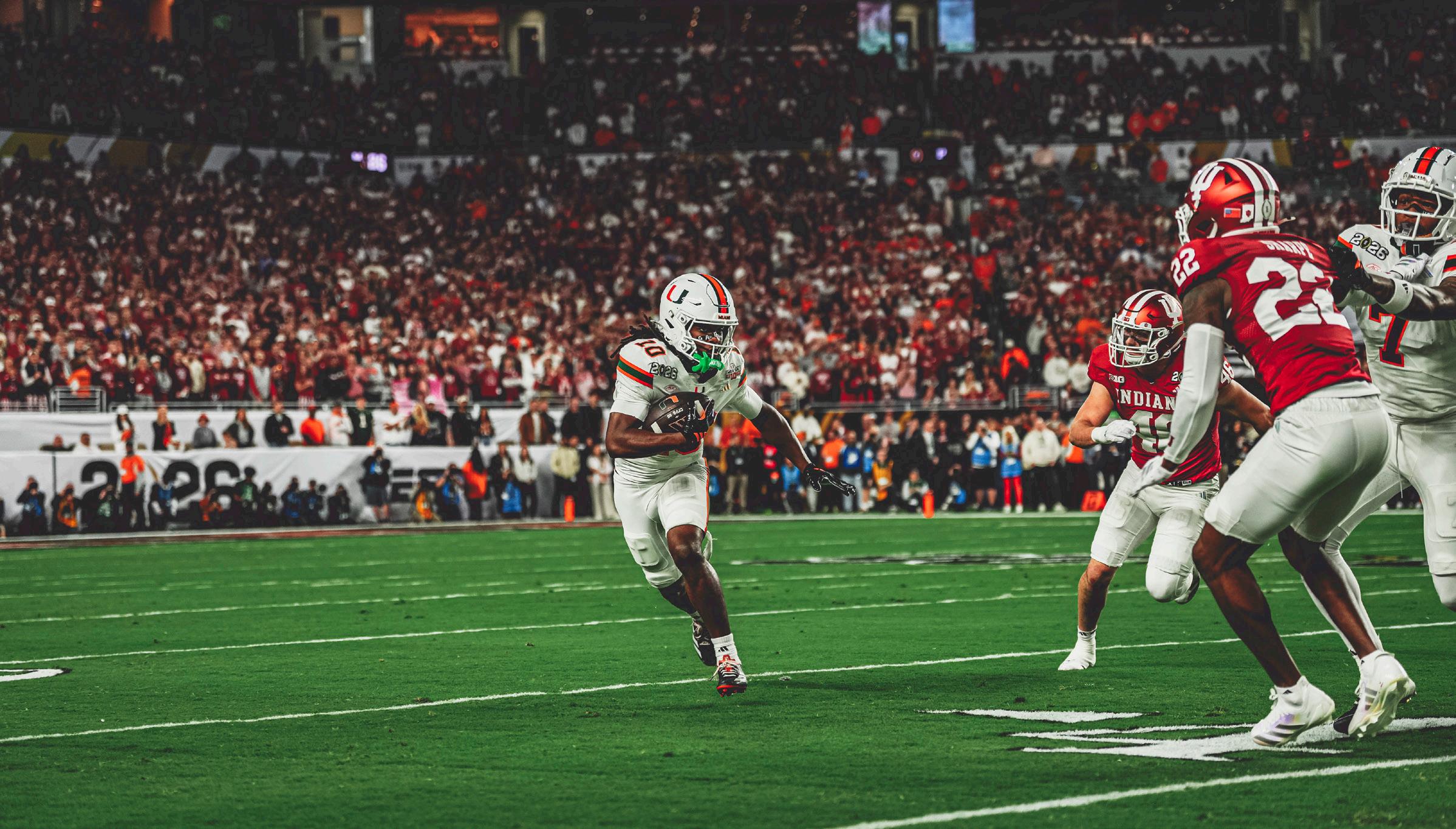
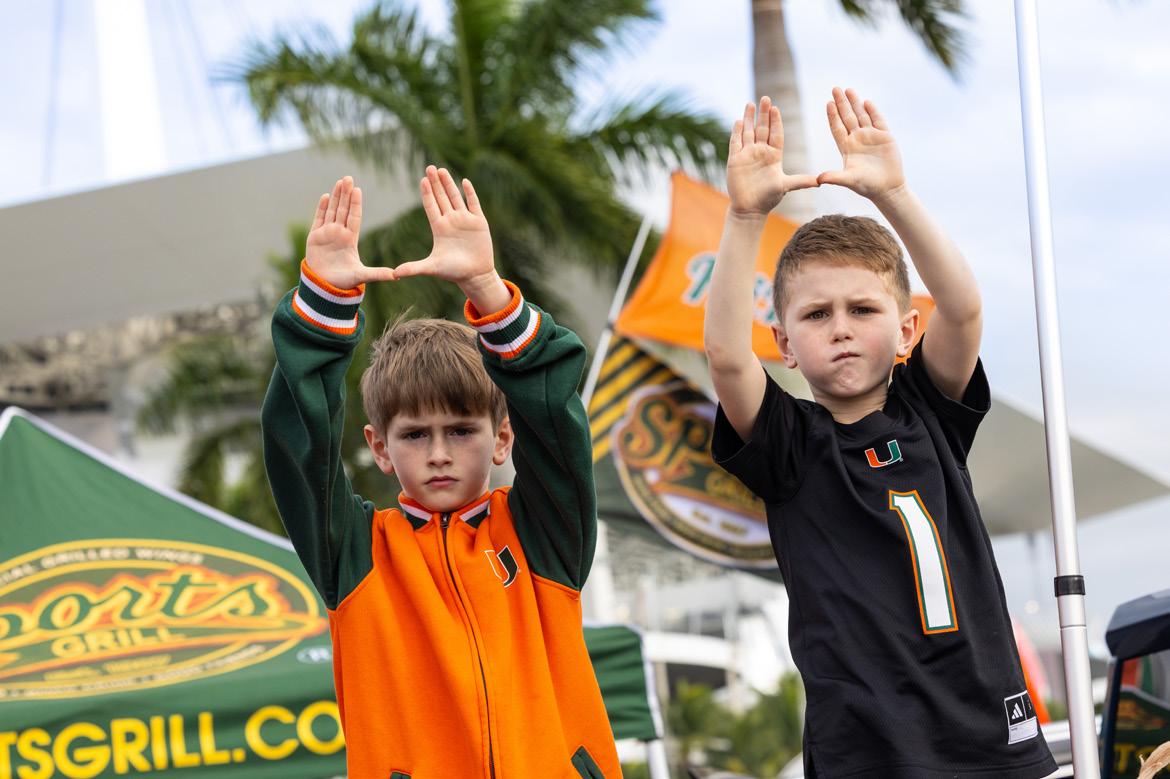
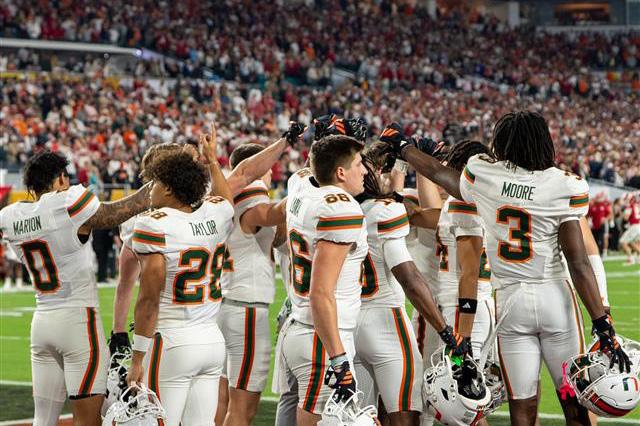
Hurricanes as the 2025 season comes to an end.
Indiana beat Miami at its own game
It seemed like there would be nothing more poetic than the Miami Hurricanes winning their sixth National Championship at Hard Rock Stadium while celebrating 100 years of the University. Unfortunately, it just wasn’t meant to be.
The Indiana Hoosiers claimed their first National Title in program history in one of the most remarkable stories in sports, defeating the Hurricanes 2721 on the evening of Jan. 19.
Still, Miami’s run to the National Championship game was historic–sneaking its way into the CFP, defeating No. 7 Texas A&M, No. 2 Ohio State and No. 6 Ole Miss while being the underdog for the most part. Here’s what we learned from the
Coming into this matchup, Indiana was flawless — the No.1 team in the nation with a sparkling 15-0 record which included beatdowns of Alabama and Oregon en route to the CFP Final.
Led by head coach Curt Cignetti and Heisman winning quarterback Fernando Mendoza, the Hoosiers prided themselves all season on clinical execution and ruthless aggression in all facets of the game.
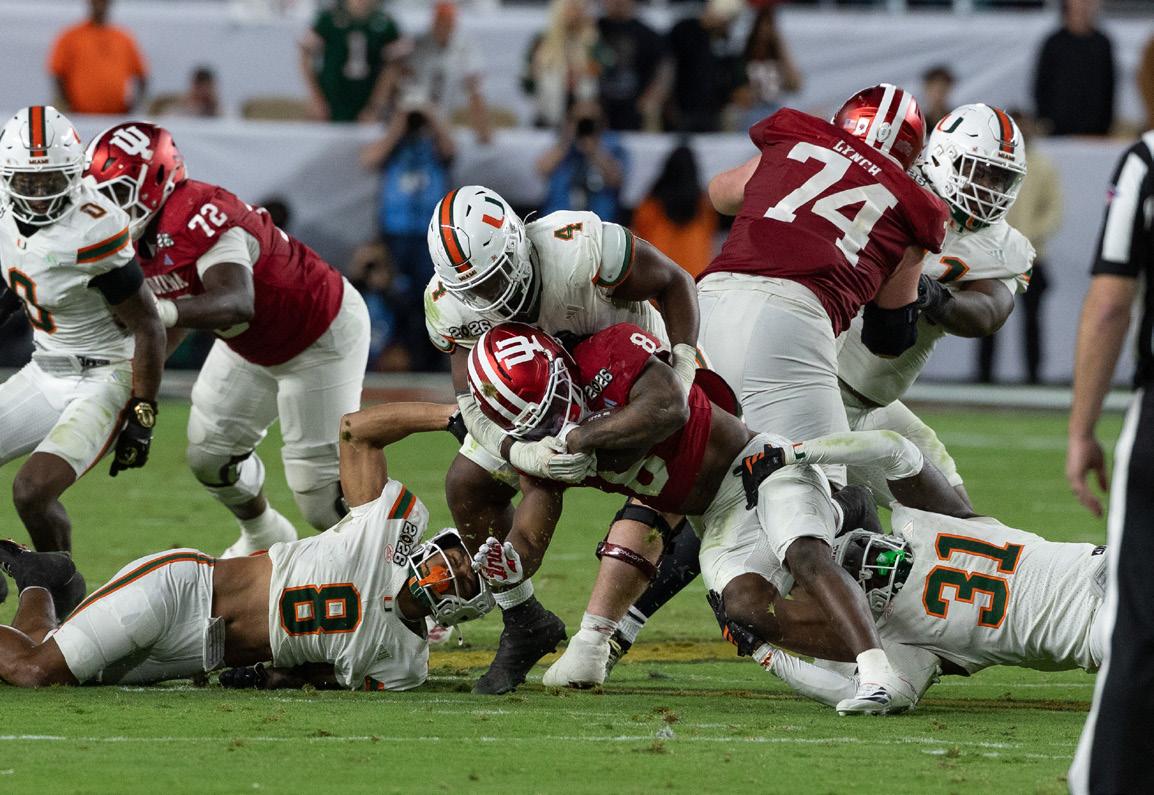
And in the Hurricanes’ own backyard at Hard Rock Stadium, Indiana took Miami’s identity and made it its own — a consistent rushing force that just wears down the opponent.
While the stats don’t jump off the page with less than 150 yards on the ground, it was the way the Hoosiers
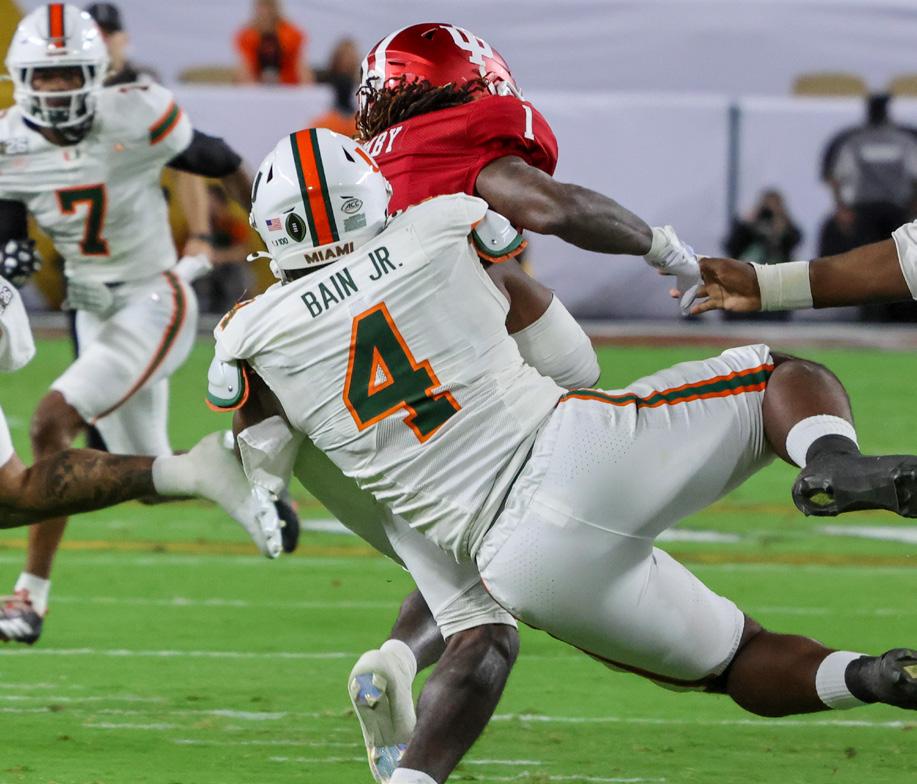
managed the run game that was so demoralizing for Miami. Whenever there was a key play, whenever there was a chance for Miami to get off the field, IU’s Roman Hemby and Kaelon Black would charge straight through the A-gap to extend the drive.
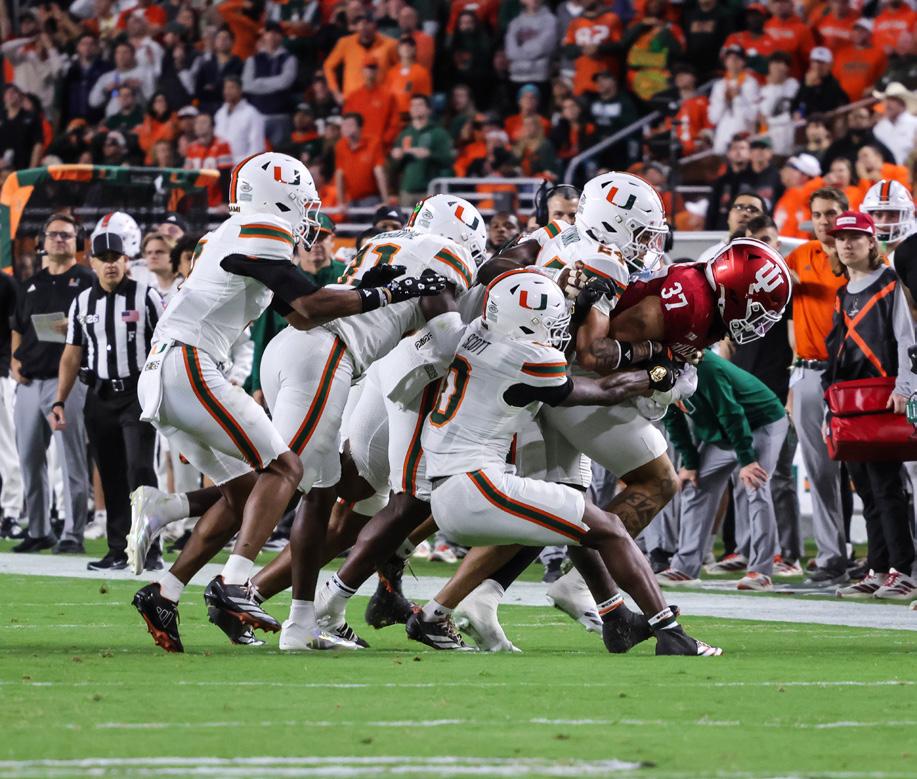
Even Mendoza got in on the action as he barged through multiple Hurricane defenders as part of a 17-yard QB scramble to extend the Hoosier lead to 10.
Establishing the run early gave Indiana all it needed to outlast the ’Canes despite their best efforts to overcome all night.
Miami beat itself
And yet despite all the execution from Cignetti’s bunch, the Hurricanes ultimately beat themselves.
Out of the gate Miami came out scared, unable to get comfortable in the first half which included
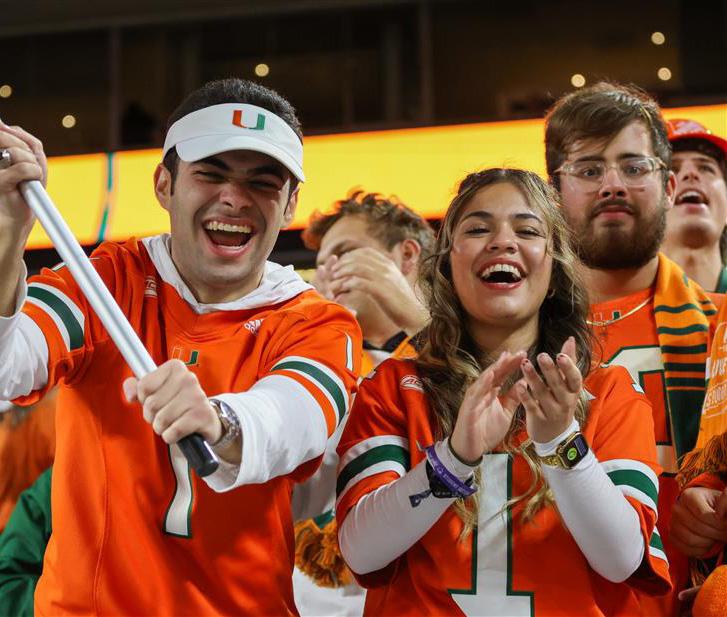
multiple three-and-outs.
There wasn’t a reliance on the run game early, which forced obvious passing downs where Carson Beck consistently threw into dangerous windows.
Miami only had a 27.3% conversion rate on third down, only converting three times on the night with none of them in the first half.
Simultaneously on the defensive side, the Hurricanes surrendered multiple penalties which extended Hoosier drives.
But there wasn’t a moment more crucial than Miami’s attempted punt late in the third quarter.
After an unsuccessful drive, UM looked to punt and live another day — but tight end Alex Bauman missed his assignment as Indiana’s Mikail Kamara slipped past to swat Dylan Joyce’s punt into the dirt.
Continued on page 2.
By Sebastian Font and Jayden Gonzalez Co-Sports Editors
The U is almost back. Despite a historic run into the College Football Playoff, the Miami Hurricanes came up just short in the National Championship, losing to the No. 1 Indiana Hoosiers 27-21 on the evening of Monday, Jan. 19 at Hard Rock Stadium. Against the best team in the nation, it was going to take clean, no-mistake football from the Hurricanes if they wanted to take down the Hoosiers.
With 1:42 left, Miami needed one final drive to claim its sixth National Championship in program
history. Starting at their own 25, the Hurricanes made their way down to Indiana’s 41-yard line. On first down, Miami quarterback Carson Beck looked left, looking for Keelan Marion.
But Marion kept running and the ball stayed frozen in the air at the 14-yard line as Indiana’s Jamari Sharpe plucked the pass and sent the Hoosier faithful into madness.
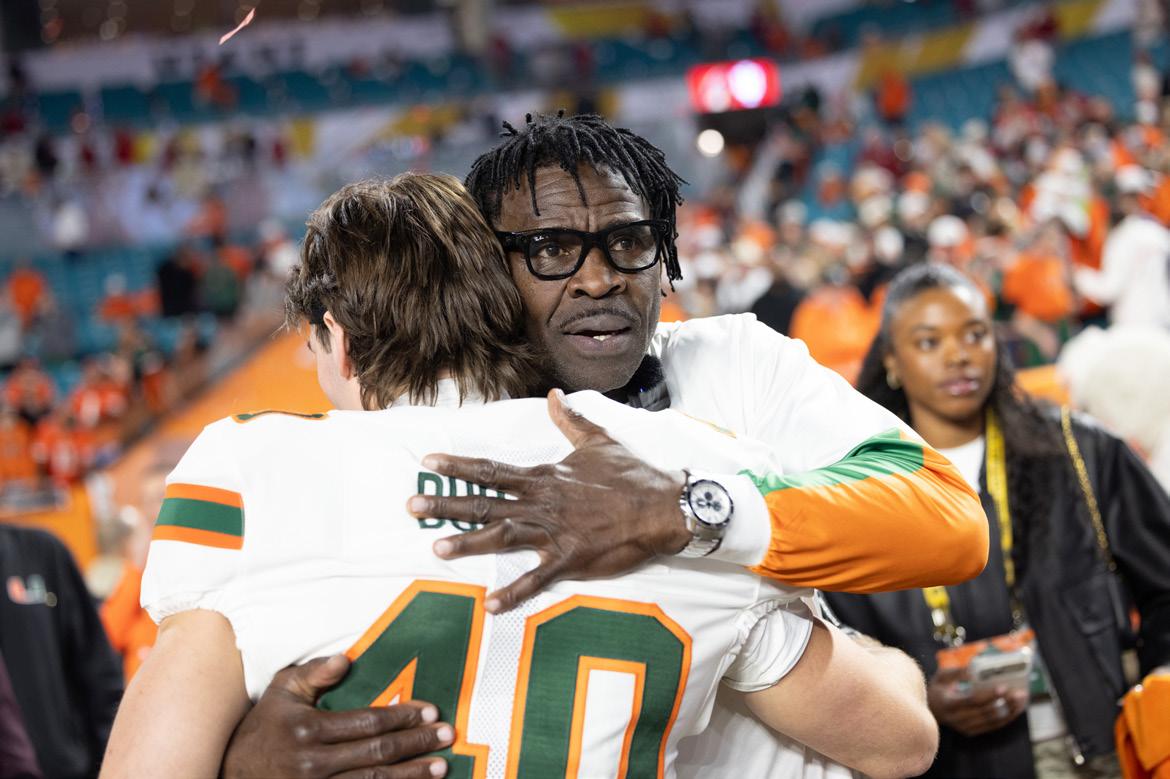
“I’ll take the blame,” Miami head coach Mario Cristobal said after the game. “We’re one drive short of winning a national championship.”
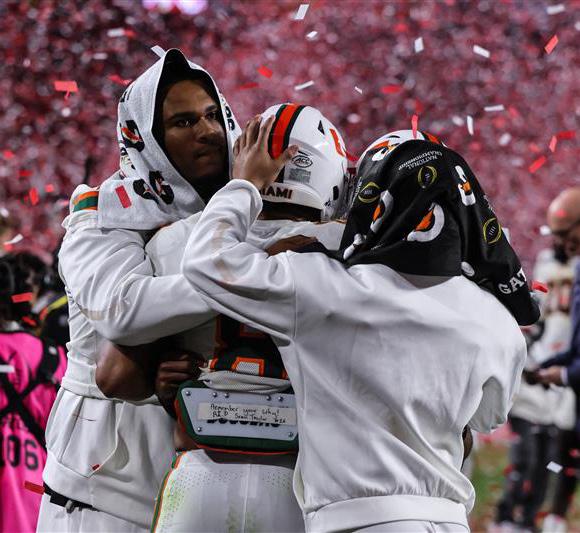
Indiana quarterback Fernando Mendoza took a knee at the threeyard line and crimson and white confetti swirled down as the Hoosiers claimed their first National Title in program history.
“We’re 16-0, national champions at Indiana University, which I know a lot of people thought was never possible,” Indiana coach Curt Cignetti said after the game. “It probably is one of the greatest sports stories of all time.”
Mendoza, a Miami native, proved in the fourth quarter why he was the 2025 Heisman winner. With nine minutes left up three, Indiana elected to go for it on fourth and four from the Miami 17-yard line.
Mendoza stepped up in the pocket, ran up the middle, absorbed multiple hits from Miami defenders, regained his balance and dove head first into the end zone.
“That’s a Heisman moment right there,” Indiana wide receiver Elijah Sarratt said.
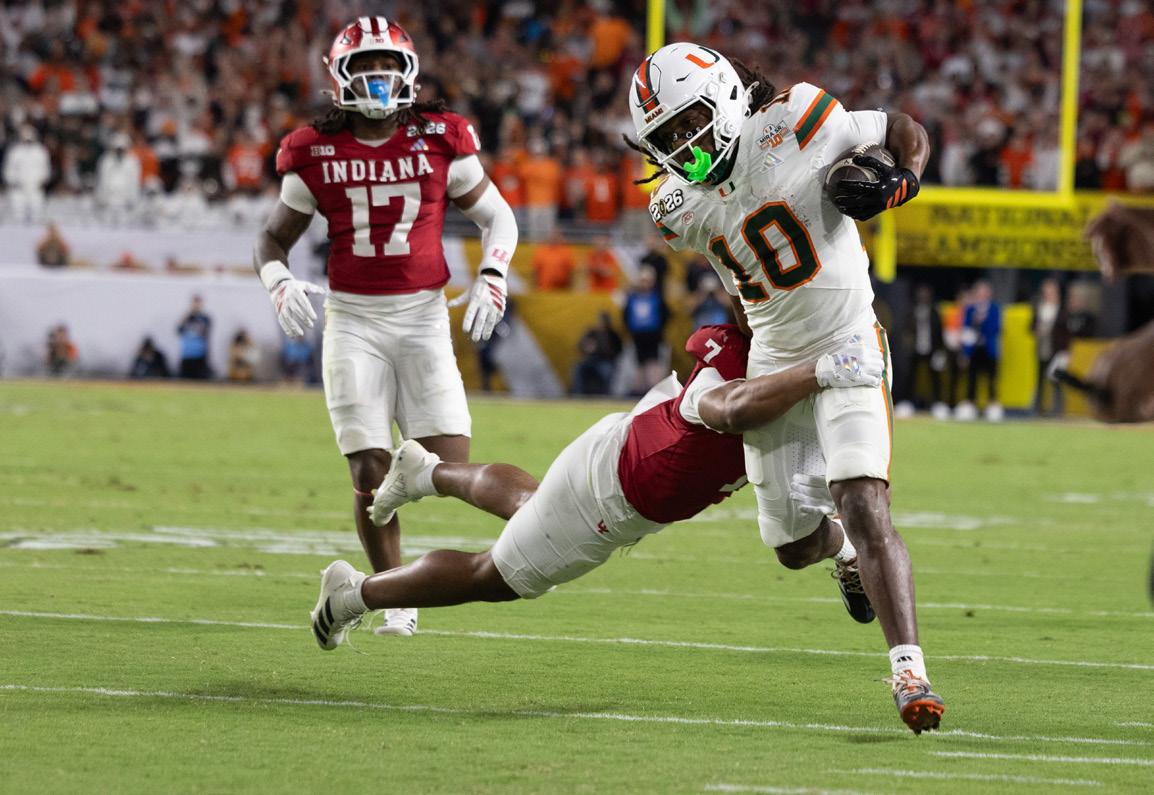
The California transfer fell to the ground before being surrounded by his Indiana teammates as the Hoosiers extended the lead to 10. Despite Mendoza’s touchdown sucking the air out of the Miami crowd, the Hurricanes kept fighting. On third and 15 from their own 15-yard line, Beck found tight end Alex Bauman for a 22-yard strike. The next play, Beck hit Malachi Toney in stride, who used his speed to get Miami all the way to the IU 22-yard line. Two plays later, Beck tossed the ball to Toney, who sprinted to the right, found a hole and scored while also breaking three tackles. The 18-year-old continued to prove that he’s one of the best players in the country.
Toney closed his historic freshman season in the only way he knows how, racking up more than 120 yards on 10 catches — extending both freshman records at the University.
Despite losing in the last drive of the game, Miami’s own faults ended up being the difference in the game. With five minutes left in the third quarter, Miami was forced to punt on fourth and one from its own 16-yard line. On the ensuing punt attempt, Indiana’s Mikail Kamara broke past Alex Bauman and got to Dylan Joyce’s punt.
Continued on page 2.
By Ali Campbell Contributing Writer
The Miami Hurricanes’ men’s basketball team (15-3) saw its 10game winning streak come to an end on Saturday afternoon, falling 59-69 to the No. 22 Clemson Tigers (16-3) at Littlejohn Coliseum.
Saturday marks Miami’s first loss since Thanksgiving and drops the team to 15-3 overall and 4-1 in the ACC rankings.
Clemson seized control early in the contest, opening the game on an 8-0 run before Miami had a chance to respond. However, the ’Canes were able to settle in and trim the deficit to 15-12 with about 12 minutes left in the first half. The Tigers fired back with a 9-2 run of their own to restore a double-digit cushion and led 35-26 going into the halftime break.
Midway through the second half was when the Hurricanes faced their toughest challenge.
The Tigers led by as much as 17 during this period, before the ’Canes pushed back with a 9-0 run over the next two minutes to trim it back down in their favor.
The run was ignited by a pair of Tre Donaldson layups and a three-pointer by Noam Dovrat. The points shaved the lead a bit, but Clemson was able to regain control and build a 14-point lead entering the final minutes.
Freshman Shelton Henderson led the ’Canes in scoring with 22 points, marking the third straight game where he scored at least 17 points. Malik Reneau added 11 points, and Dante Allen contributed 10 in the loss. Ernest Udeh Jr. anchored the interior — being dominant on the glass with 17 rebounds — finishing just one board short of his career high.
Miami returns home Tuesday to host Florida State at 7 p.m., and the game will air on ESPNU and locally on 560 AM WQAM.
By Sebastian Font and Jayden Gonzalez Co-Sports Editors
Continued from page 1.
Kamara blocked the punt and Isaiah Jones fell onto the ball in the end zone, sending the Hoosier crowd into a frenzy as Indiana took a 17-7 lead.
Inopportune penalties slowed down the Hurricanes all night as Miami racked up multiple drive-extending penalties on third down, which extended Hoosier drives at key points.
Earlier in the first half, the teams were locked in a defensive slugfest as Indiana led 3-0. Miami was in the midst of con-
“Don’t forget this feeling, use it as fuel.”
CJ Daniels Miami Hurricanes Wide Receiver
secutive three-and-outs on offense, but the defense continued to pump life as they battled against the Heisman winner in Mendoza.
And on third and six with 10 minutes remaining in the half, Miami felt the momentum swing to its side after OJ Frederique knocked down a pass intended for Sarratt.
But just as he looked to rile up the crowd, a penalty flag rested just on the sideline, extending a drive that ended in a touchdown run for Indiana to jump to a two possession lead at 10-0.
Despite attempting to claw back all game, the Hurricanes ultimately couldn’t overcome that gap.
Miami’s offense finally woke up at the beginning of the third quarter. On the second play of the drive, running back Mark Fletcher Jr. ran to the right and found a hole, breaking free for a 57-yard touchdown, revitalizing the UM crowd as the ’Canes cut the deficit to three.
Even with the aforementioned punt fiasco, the ’Canes continued to work, grinding out a five minute drive that once again culminated in a Fletcher touchdown.
Fletcher, a star for the Hurricanes all season, continued his postseason hot streak as he accompanied those two touchdowns with 122 yards on the ground — good for 6.6 yards a carry.
Although the ’Canes couldn’t overcome their self-made deficit, Miami fared much better than the other teams that faced Indiana throughout the postseason.
Indiana came into the matchup outscoring its CFP opponents 9425, but Miami stood strong and fought all night.
“They’re the best thing that’s happened to Miami and the University of Miami in over two decades,” Cristobal said.
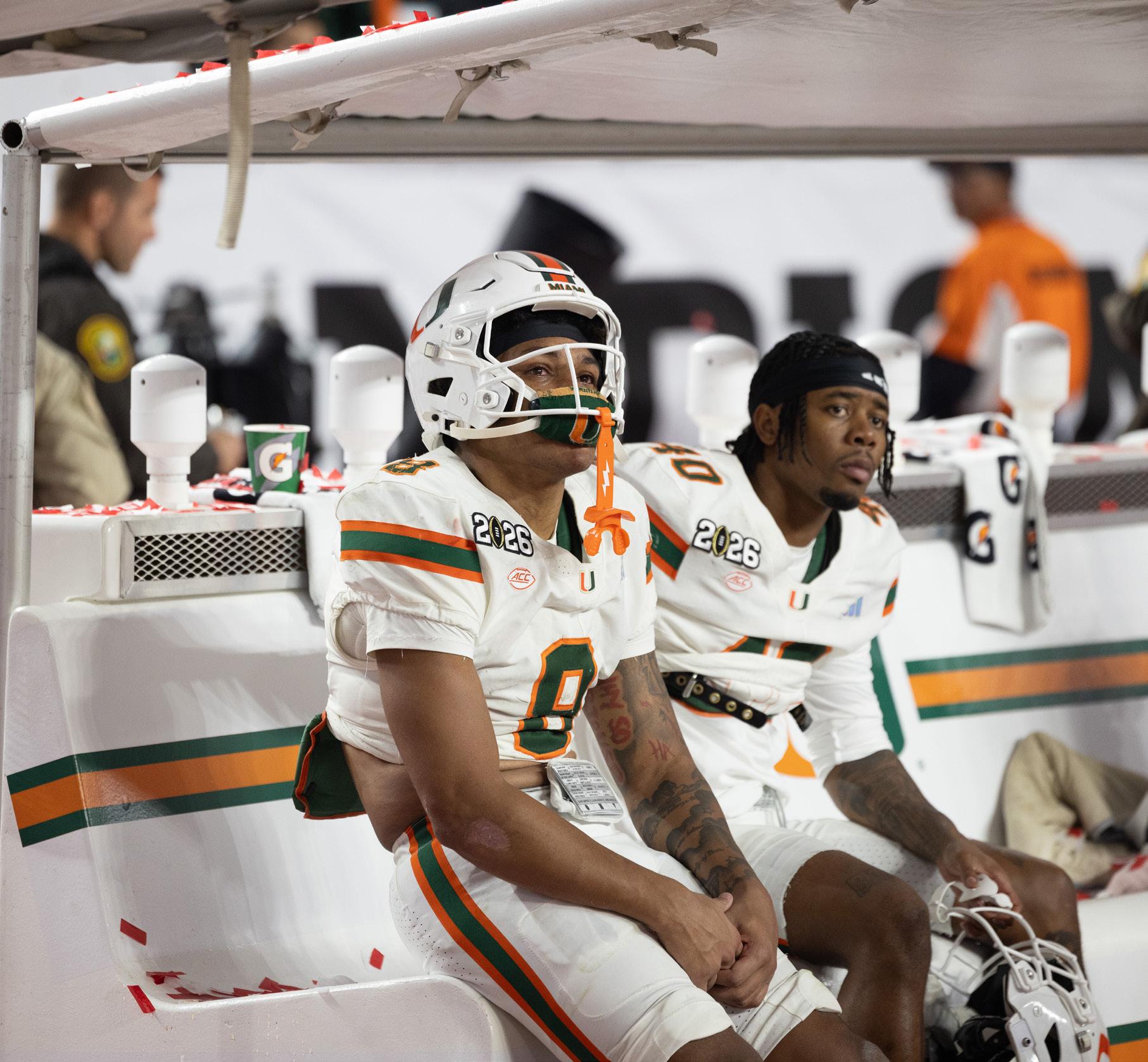
Despite the loss, the future is bright for the Hurricanes. Key contributors in Monday’s loss are expected to come back, looking to get over the final
of
Miami’s departing wide receiver CJ Daniels left a message for those returners postgame.
“Don’t forget this feeling, use it as fuel,” Daniels said.
If there is anything certain about this Hurricanes team that has been underdogs for the last six weeks, they will most certainly use it as fuel to put the U back on top.
By Sebastian Font and Jayden Gonzalez Co-Sports Editors
Continued from page 1.
IU’s Isaiah Jones fell onto the ball in the end zone, sending the Hoosier crowd into a frenzy as Indiana took a 17-7 lead. When one considers the ’Canes only lost by six points, the scoop-andscore looms ominously as the moment the National Title slipped away.
The Hurricanes will be back
Despite losing stud veterans like Beck, Rueben Bain, Francis Mauigoa, and Akheem Mesidor, Miami will be reloading with talent in 2026.
In 2026, the Hurricanes will have returns of Mark Fletcher Jr., Malachi Toney, a majority of the secondary room and will be adding a top-10 ranked recruiting class in 2026.
The culture is still there and it was built from the guys that have been around since Mario Cristobal took over the job in 2022 — a culture that continues to extend day-by-day.
Next season, the Hurricanes have all the reason in the world to get over the final hurdle. Still, Cristobal knows the journey won’t be easy.
“That’s the biggest misconception in sports — ‘well, they almost got there, they’ll be back next year.’ That’s a bunch of bull,” Cristobal said after the game. “You’ve got to improve from a roster standpoint, a regimen
standpoint, discipline, everything, and move forward.”
This mentality Cristobal leads with is exactly the reason Miami will be back. Too often over the past few decades, the Hurricanes would feel sorry for themselves after a loss and turn it into more losing. Now under Cristobal, whenever
“You’ve
.”
Mario Cristobal Miami Hurricanes’ Head Coach
the ’Canes get knocked down, they bounce right back up, brush themselves off and go to work.
That’s the new standard for Hurricane football, and it will have all the talent and motivation in the world to get the job done next year.
By Omar Pinto Staff Writer
By Sebastian Font Co-Sports Editor
Just a year ago, ’Canes fans eagerly awaited the Hurricanes to kick off their opening game against Florida, ready to see their new-look team shaped by the transfer portal take the field in a pivotal year for Head Coach Mario Cristobal.
By all accounts the offense was an absolute success (first in total yards and points per game), boasting a Heisman candidate in QB Cam Ward and veteran weapons across the board.
And yet with all this firepower, UM ended up with nothing to show for it.
Two losses late in the season ended the ’Canes playoff and ACC championship hopes, resulting in an appearance in the Pop-Tart Bowl which Miami still fell short in.
The 2024 Hurricanes unfortu
nately followed the same path as the 2017 Hurricanes who missed the CFP with two late ACC losses. The 2018 Hurricanes continued the downward spiral as they fell to a 7-6 record which marked the end of the Mark Richt era.
Miami cannot afford a repeat of the 17-18 cycle in 2025.
This season needs to break away from the trends, end the “Miami can’t win in November” narrative and continue the progress coach Cristobal has made every year.
And in year four of the Cristobal era, he’s brought together a squad that can do just that.
Old-school offense
Last year’s offense was generational, something that no team can repeat in back-to-back years, especially when a team loses nearly all of their skill positions to the NFL.
The staff understood the challenge they faced, and rather than try and replicate, they focused on elevating the floor of the team.
At the core, this is a run-first team with one of the greatest offensive line rooms in Hurricane history to protect electric running backs in Mark Fletcher Jr. and Jordan Lyle.
This team can run the ball at will, any time and any place — so the staff brought in veteran pieces to complement the run-game.
Georgia transfer QB Carson Beck fits the scheme perfectly, a quarterback who has all the talent in the world, but is willing to let the run game shine. He’s consistently shown his complementary nature to high powered run games at Georgia, and can replicate that at Miami.
He’s throwing to other veteran transfers with WR CJ Daniels and TE Alex Baumann, who both have demonstrated clear chemistry with
Beck throughout fall camp.
While this team has a high floor just off the veteran play, the ceiling is completely untapped with the rise of young talent.
Wideout Joshisa Trader has all the tools to take the next step during his sophomore year alongside fellow sophomore Elija Lofton who is truly a “swiss army knife” at the tight end position.
Add in the budding freshman wide receiver pair of Malachi Toney and Josh Moore, it becomes clear that Miami has true depth and talent across the board.
While it may not be as flashy as the Cam Ward led offense last year, this offensive roster can still find ways to dominate the opposition.
A revamped defense
Even before getting into the talent on the defensive side of the ball, it’s worth mentioning the coaching changes that have occurred.
Former Minnesota defensive coordinator Corey Hetherman was hired for the same role in Coral Gables and has had nothing but glowing praise from the players.
“Well, we’re communicating a lot better. I think guys are starting to build a lot more chemistry,” said sixth-year senior DE Akheem Mesidor. “I love this defense, it’s simple. I get to go inside and out, I’m so happy.”
“At some point, the Hurricanes need to get over the hump and prove that they’re back.”
Sebastian Font Co-Sports Editor
“Simple” is the word consistently used by players and staff when referring to Hetherman’s scheme.
Too often, we’d see miscommunication across the defensive levels last season under former DC Lance Guidry, which left players exposed and teams would capitalize at will.
Hetherman’s simplicity is exactly what the doctor ordered to fix the defense from last year. And when it comes to the players, the talent has gone through the roof.
Headlined by former Freshman All-Americans DE Rueben Bain and DB OJ Frederique, the Hurricanes have proven home grown talent at multiple levels.
Add in the defensive lineman in the form of Justin Scott and Akheem Mesiddor, Miami has a staunch front line that can create chaos in the backfield.
Even the linebacker room has improved, adding veteran Mohamed Toure to partner home-grown senior Wesley Bissainthe.
But the most improved area is undoubtedly the secondary.
Despite Frederique having a stellar season last year at corner, beyond him the room was thin and truly cost the team.
The staff completely flipped this room in the offseason via the transfer portal with a long list of additions: Xavier Lucas, Ethan O’Connor, Zechariah Poyser, Keionte Scott and Jakobe Thomas.
Each of these players were crucial starters for their respective programs last year and a clear upgrade over the players Miami had last year.
Lucas in particular could be one of the best corners in the ACC after an impressive year at Wisconsin, part of why Wisconsin has tried so hard to keep him and eventually sue Miami for landing him in the portal.
With an injection of talent and a player-friendly scheme, Miami has transformed its defensive room from one of the worst in the country to arguably one of the best — which could be the catalyst for a successful Hurricanes season.
But what does this all mean?
Like last year, Canes’ fans sit eager and ready to watch the ’Canes take on a rival for opening day. This time it’s Notre Dame, a proven top-ten force who finished runners-up last season to Ohio State.
While it may be daunting, from top to bottom this is the best roster Cristobal has brought together. Experienced veterans are scattered across the field alongside budding youngsters who both yearn to prove themselves on the biggest stage. The floor for the Miami Hurricanes has time and time again been raised under Cristobal with his talent acquisition.
At some point, the Hurricanes need to get over the hump and prove that they’re back, and a signature win at home would go a long way.
All stats and data via ESPN and The Miami Hurricanes unless otherwise noted.
By Bella Armstrong Staff Writer
The cheapest non-student affiliated seat to watch Miami play Indiana for the national title cost more than $3,000, proving that college football’s biggest night has officially outgrown the student budget. With tickets starting around $3,000 and climbing to just under $50,000, this Hurricanes–Hoosiers match up wasn’t just a sporting event — it was a luxury commodity, and
one of the most expensive collegiate football games in history.
Indiana, fresh off its Peach Bowl victory and an undefeated season, came to Hard Rock Stadium to face Miami at home in the Hurricanes’ first national championship appearance in 24 years.
The result is a matchup few saw coming between two programs that have rewritten the sport’s expectations.
And for fans that were hoping to witness it in person, the price of entry has never been higher.
As of Friday, Jan. 9, the cheapest ticket on StubHub was listed at
$3,082 in Section 313, Row 29. Ticketmaster followed closely behind at $3,177, while SeatGeek’s lowest seat was $3,195 — all for views from the upper corners of Hard Rock Stadium. And that’s before the listings abandon reality entirely.
Because second-row box seats were listed for as much as $49,884.
“On one hand, they can charge whatever they want because no one has to go to the game. But on the other hand, it feels a bit like a scam,” junior UM student Allie Senker said.
“[Students] are the closest people to the players themselves, and we already pay so much money to go to this school that I don’t see why we shouldn’t have priority for a game we’re playing in.”
A finite number of student tickets for Miami students were up for grabs and officially went on sale Jan. 12 at noon. Students awaited patiently, credit cards in hand, for a generational chance to watch the Hurricanes play for the national championship in person.
Waiting in an online queue to purchase tickets were freshmen students Lauren Hernandez and Joshua Fernandez.
“There’s definitely a cap on what we’re going to pay,” Hernandez said, the price for student tickets still unknown. “We’re students. We can’t pay thousands.”
“There’s definitely a cap on what we can pay,” Fernandez confirmed.
“$275 is our cap, but we think it’s going to be a lot more,” Hernandez continued.
When students were finally
prompted to purchase their tickets, they were faced with a $485 price tag. According to a UM parents-only Facebook group, Indiana students were allegedly provided with free tickets to the championship game, a stark contrast to Miami students who paid $485 for theirs. In spite of these high prices, tickets sold out quickly, with UM students citing it took anywhere from eight to 18 minutes to do so. For the majority of students who were unlucky in their endeavor to purchase student tickets, they are
now forced to step outside the safety net of chance and giveaways and are dropped straight into the resale economy — where, in this case, student budgets go to die. The resale market has transformed a college football game, traditionally the most democratic of America’s many sporting rituals, into a gated experience reserved for those who can treat four figures like pocket change. What was once
By Elena Fallow Co-News Editor
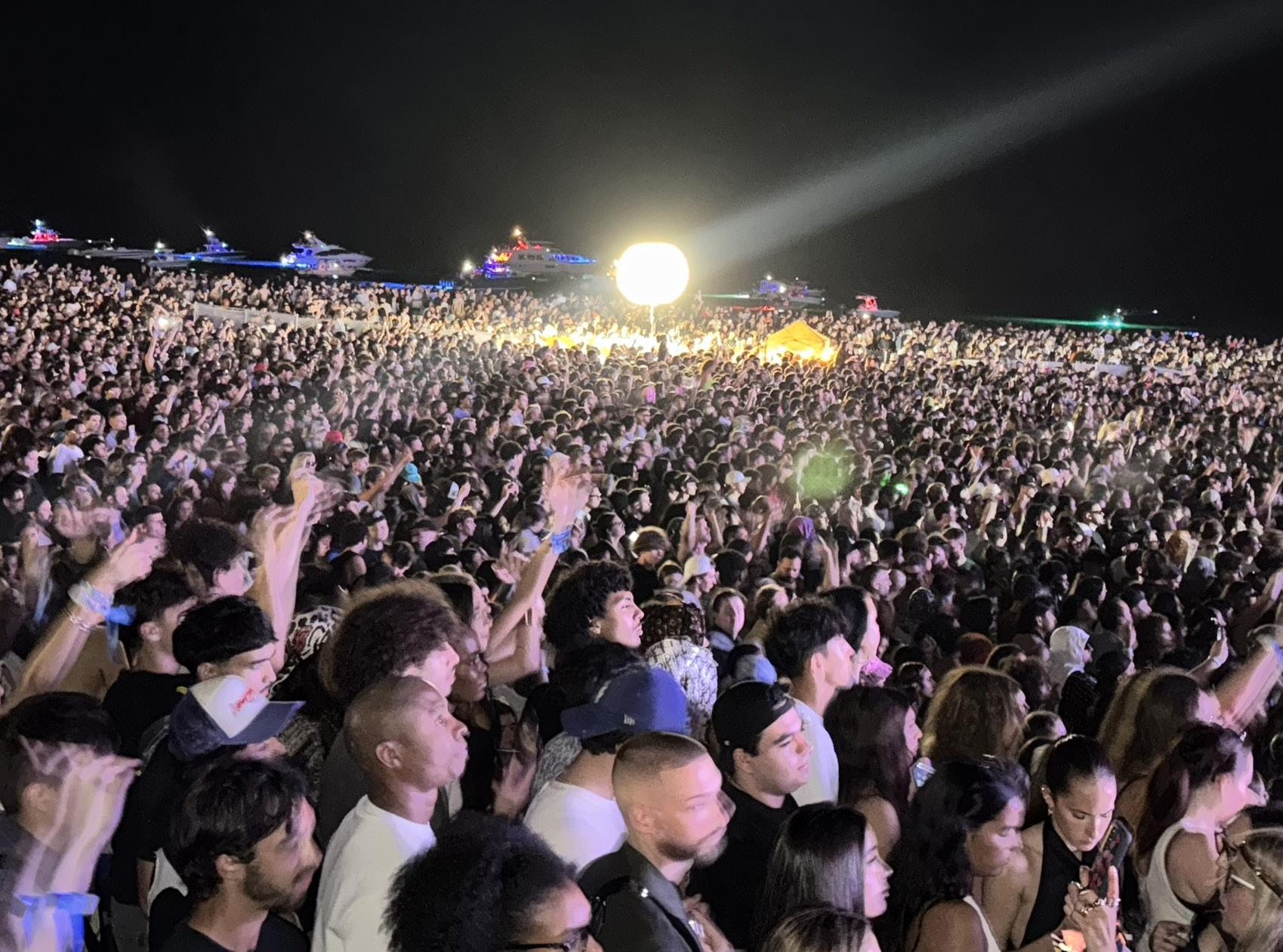
The weekend of Saturday, Jan. 17, Miami Beach hosted the annual AT&T Playoff Playlist Live!, a free, two-night music festival organized in anticipation of the College Football Playoff National Championship game.
This year the featured artists were UM alumna XANDRA, Calvin Harris and John Summit who performed on Saturday and Álvaro Díaz, Latin Mafia and Peso Pluma who performed on Sunday. The allotted area in Lummus park was created to accommodate around 20,000 guests. By the end of the night the crowd was estimated to be 30,000 people.
One University of Miami student who was in attendance Saturday night heard that the crowd had reached more than 200,000 people.
“The crowd was absolutely massive, and it was easy to get shoved over,” she said. “I heard that a lot of people fainted in the crowd and that several fights broke out.”
The student also noted a lack of security and event officials present at the event, and said that security check points were not effective.
“There was a security checkpoint, but it was small and everyone freely passed through,” she said. “It wasn’t functional when I was there at 7:30 pm, people just passed through.”
However, crowd related issues began long before the artists took the stage. One University of Miami junior arrived at the venue at 1 p.m. in anticipation of the large crowds. The peace of getting there early did not last long.
Despite Saturday night’s chaos, Sunday was a better experience for some. Sophomore Sebastian
Loubet attended Sunday’s Latin medley after having skipped out the night before out of concern for a lack of organization.
“I didn’t go [Saturday] night because it didn’t feel well organized, especially with the whole free ticket thing plus any age range,” he said. “I would have been more comfortable spending $100 or more on a ticket with the guarantee that it’s more organized.”
While Loubet stands by his decision of not going, he was pleasantly surprised with the event’s organization. He claimed that it was better than he had expected and that is why he decided to go on Sunday.
He shared that his experience was great and did not find the venue to be overly packed compared to Saturday.
“It wasn’t too crowded, even up front, and it didn’t get packed too early,” he said.
Loubet believes that it was more relaxed due to less of a demand from the crowd in addition to more explicit security parameters on social media.
In a collaborative instagram post between CFB playoff, 2026 Miami Host Committee, Miami Beach Police Department and City of Miami Beach, new safety and entry procedures were clearly outlined. Some of the additions to Sunday’s event were additional entry lanes, “no bag” express lanes, pre-screening for early birds and an increase in security presence.
Loubet was able to take advantage of the pre-screening security efforts where he was then given a free water voucher and access to the paid concessions while waiting for the main venue area to open.
By Rafaela Ochoa Contributing Writer
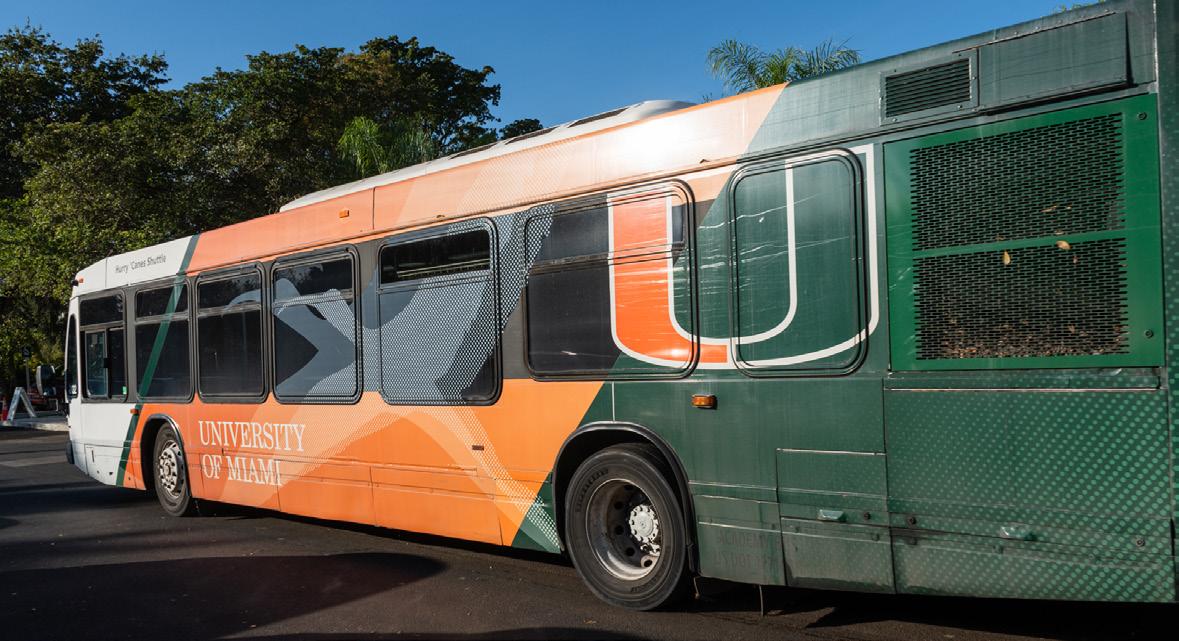
The Office of Parking and Transportation has announced a new shuttle route between Centennial Village and Ceserano Plaza, which is located in front of the Herbert Business School.
According to their website, the route is scheduled to run on weekdays from 8 a.m. to 7 p.m. and the wait times are between 18 and 20 minutes.
In addition to the implementation of a new shuttle route, the University of Miami has also changed the Miller Circle route. The original Miller Circle route had a stop at the Hecht Athletic Center which has since been removed.
According to an email sent by the Office of Parking and Transportation on Jan. 9, the Hecht Athletic Center stop was removed “to enhance rider safety and improve the overall shuttle experience.”
However, because of these changes students, especially University Village residents, are reporting longer wait times.
University Village resident Elle Mannion says that the changes to the shuttle routes makes her daily commute longer.
“I already have to wait for the one bus
By Keira Faddis Co-Opinion Editor
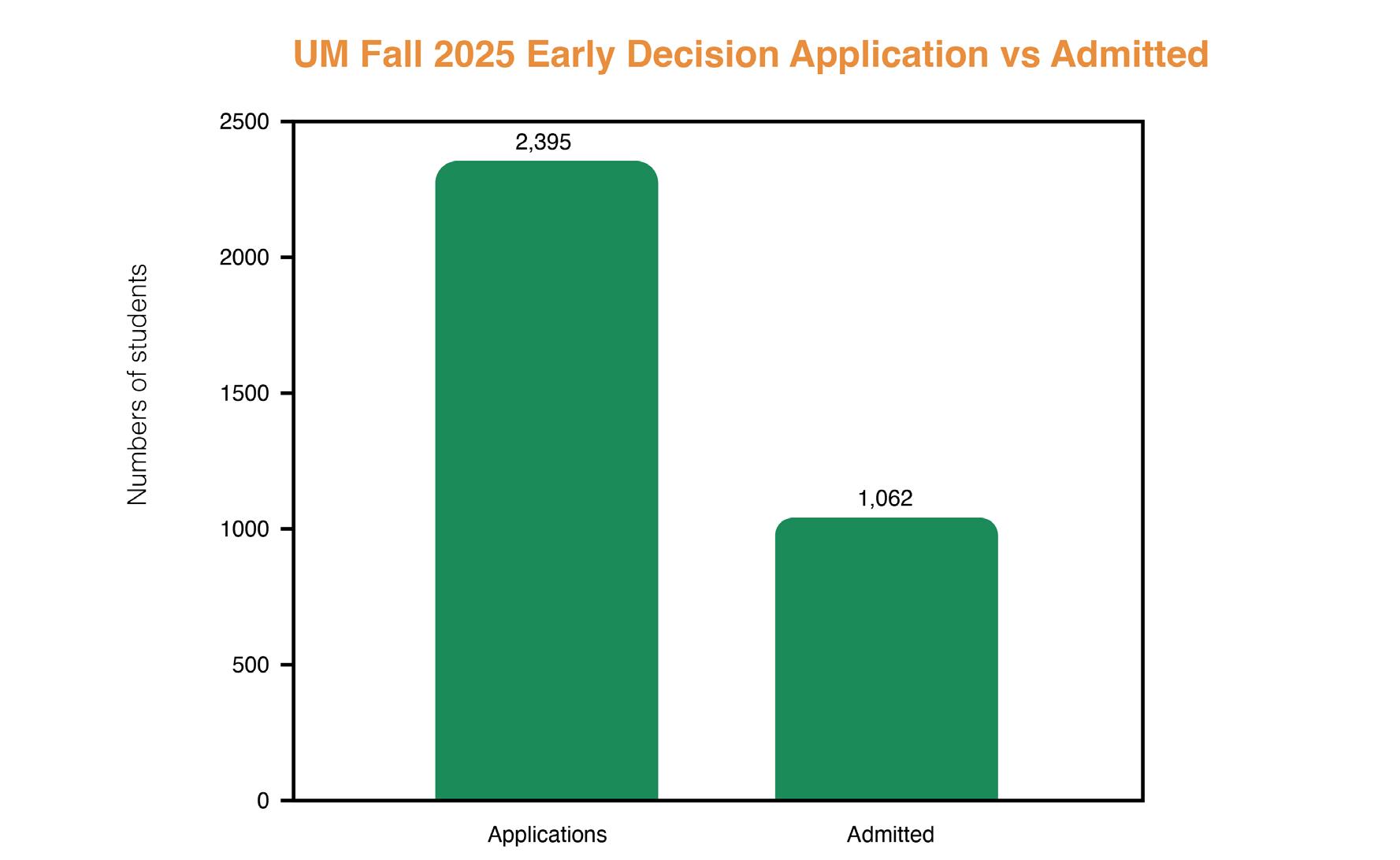
The University of Miami accepted 44% of Early Decision applicants for the fall 2025 admissions cycle. The 2025 ED acceptance rate decreased by four percentage points from the 2024 ED acceptance rate, which was 48%.
According to UM, “The University received 2,395 Early Decision applications; 1,062 applicants were admitted under Early Decision.”
During the 2024 cycle, the University received 2,260 ED applications, and
1,025 students were admitted.
While the Early Decision acceptance rate declined this year, it remains significantly higher than the University’s overall acceptance rate.
UM’s overall acceptance rate for the class of 2029 was 18%, meaning Early Decision applicants were admitted at more than twice the rate of applicants in the regular admissions pool.
“I applied ED because I knew UMiami had everything I was looking for: academics, sports and clubs, and good weather, location and campus,” said Miriam Tali, an ED admit from the class of 2030.
Applying through the binding Early Decision process gives applicants a higher chance of getting into a competitive university. This is because the applicant pool is much smaller and applicants must enroll if they are accepted. For example, Tulane University accepted 59.4% of ED applicants into the class of 2028, according to Ivycoach.com.
Foundations of UK political institutions, current policy dilemmas, global challenges and international safety and prosperity.
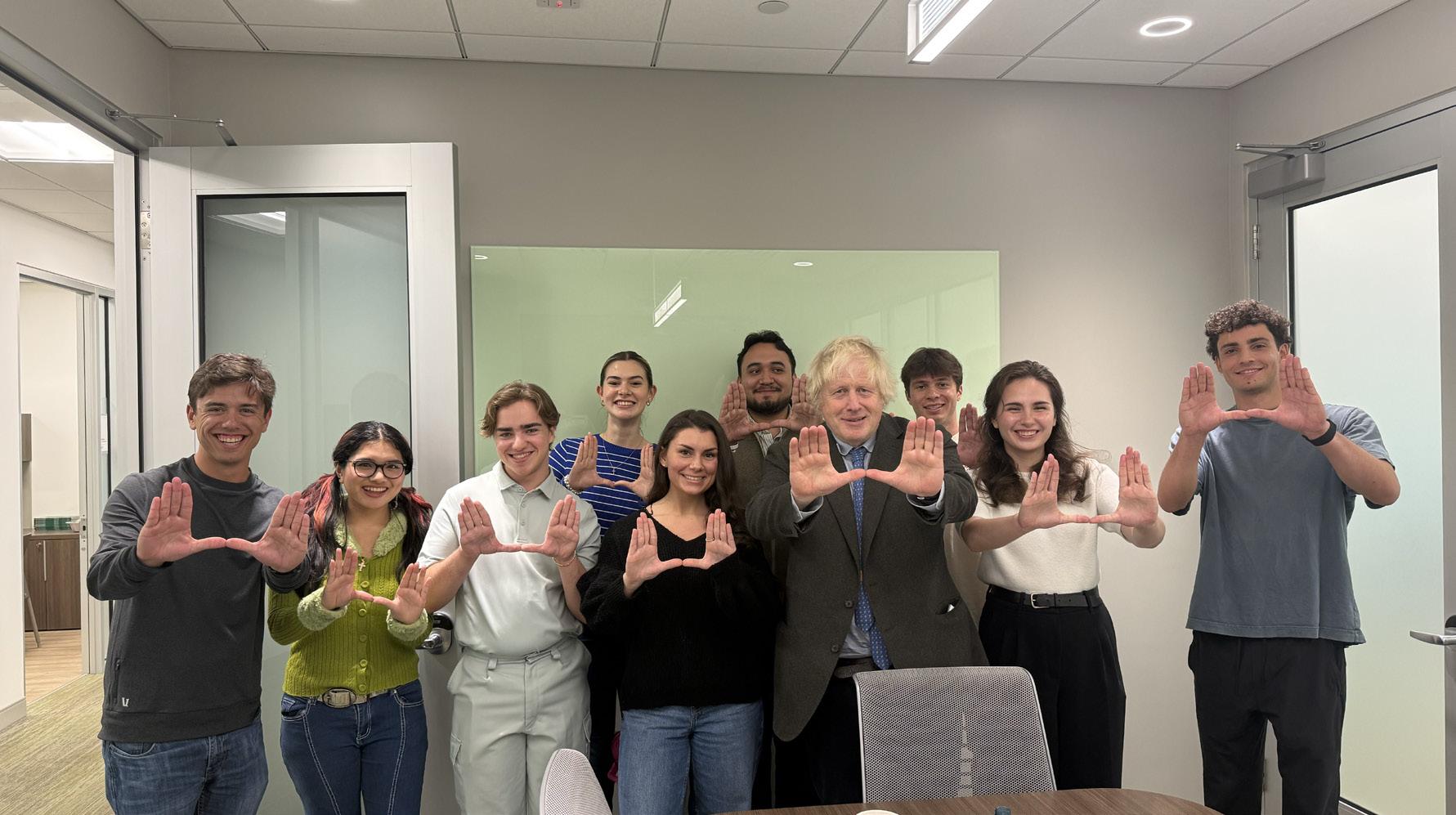
Former UK Prime Minister Boris Johnson visited UM on Wednesday, Jan. 14 and is scheduled to co-teach alongside professors Casey Klofstad and Joseph Uscinski this semester for POL 393, Special Topics in Public Administration, Policy and Law. The course will mainly focus on British politics, making specific use of Johnson’s experience in a variety of domains, including government and the media, according to professor Casey Klofstad.
Although Johnson will not be present for every class, he will teach several lectures during the semester. He will also hold office hours outside of class for students to learn about his political experiences. According to Klofstad, the course will be divided into four parts.
that runs in the morning to loop all the way around the route before getting back to UV,” she said.
Mannion said that before the new route was added, her commute was short and took her directly to where she needed to go.
Instead of taking the shuttle from the Hecht Athletic stop, which took Mannion directly to her destination, the removal of the stop means that she and other UV residents have to take the shuttle from the UV stop to Brescia Lot which is in the opposite direction of Miller Circle.
“The problem with Brescia is that it’s one block or less away from the UV stop. If you walk from the UV stop to the Brescia stop, it takes less time than riding the bus from the UV stop to the Brescia stop,” she said.
Despite the longer wait times for UV residents, other students are welcoming the change.
“I like it because it’s faster. I felt the sports center stop was pointless since it was so close to the UV one,” said UV resident Dis Sorentino.
The University of Miami did not respond to The Hurricane’s request for comment.
“Proffesor Uscinski and I proposed that we design the course in the same way as POL 401: The Election,” Klofstad said. “In both courses we (will) provide a mix of academic lectures and prominent outside speakers.”
The course is open to all UM undergraduate students with no prerequisites.
“The objective is to provide students with an informative and dynamic mix of academic and ‘real world’ perspectives on the topics covered in the course,” Klofstad said.
For students like Marizú Weller Rios, the experience is unbeatable.
Rios is a sophomore majoring in political science and public administration hoping to work in international relations and politics.
“I think this is truly a once in a lifetime opportunity students absolutely can’t miss. The fact that
our university has such a prominent individual as a professor is very admirable,” Rios said. “There is something to learn from Boris Johnson’s experiences for people of every major and interests.”
Even though Johnson will not be the primary professor of the course, Rios is excited to continue learning from him and his experience.
“His teaching style was incredibly engaging and his storytelling made everyone stay in tune with his lecture,” she said. “At the end of the class, the entire class had the opportunity to ask questions about his experiences and the content presented and when it was over.”
According to Rios, professors Klofstad and Uscinski have told students they cannot share in advance when Johnson will attend. As of now, Johnson is scheduled to visit four times throughout the semester.
By Maxine Zahler Contributing Writer
A record number of more than 750 spring admits arrived at the Coral Gables campus for the new semester, marking the largest spring admit class in the University’s history. These numbers reflect UM’s enrollment growth, alongside record-breaking sorority recruitment numbers and an 8% increase in freshman applications in 2025.
The spring start undergraduate students arrived as early as Jan. 5 for Cane Kickoff: Spring Orientation. They began classes with the rest of the university on Monday, Jan. 12.
Since housing for spring admits is “neither required nor guaranteed,” these students have the option to commute to campus from nearby housing, reside in overflow housing at Thesis Hotel or Lakeside Village or live in available spaces at the freshman dorm buildings.
Before arriving at the university, spring semester students had the
opportunity to start online or study abroad through UM’s Start Abroad program. The program offers semesters abroad in 13 countries like Paris, Barcelona and Rome.
Spring Starter Korey Cagnolatti participated in the URome program with approximately 150 other students. This not only allowed him to fulfill his arts and humanities cognates, but it eased his transition into college life in a major city.
“I come from the suburbs of Illinois. Going into Rome, an actual city, is a different shift, so it helped me adapt to Miami,” said Cagnolatti.
Other options for Spring Starters included earning credits at other universities to transfer over for their classes at UM or working during the fall.
As this spring semester begins, campus walkways and common areas have become noticeably more congested as students adjust to the attendance of hundreds of new peers. Additionally, a new social energy has been brought to campus as fall and spring admit students mingle during the first week of classes.
UM had been Spring Starter Kailani Cheng’s dream school since her sophomore year of high school. After an initial deferral during the admissions process, she got accepted as a Spring Starter the next round and found a home at the U.
“I expected it to be more like not knowing anyone, and everyone has their friend groups. But when I came here, everyone’s been really friendly. If you’re just willing to talk to new people, you will be fine,” said Cheng.
Although she did not anticipate the large number of fellow spring admits, Cheng says the university has provided enough resources to ensure a smooth transition.
“I definitely feel supported by the school, whether it’s from people I already met here or the faculty.
Spring Start orientation definitely helped a lot,” said Cheng.
The Office of Undergraduate Admission will continue to hold spring admit events during the semester to acquaint new students with academic programs and campus life.
By Hannah Valdivia Staff Writer
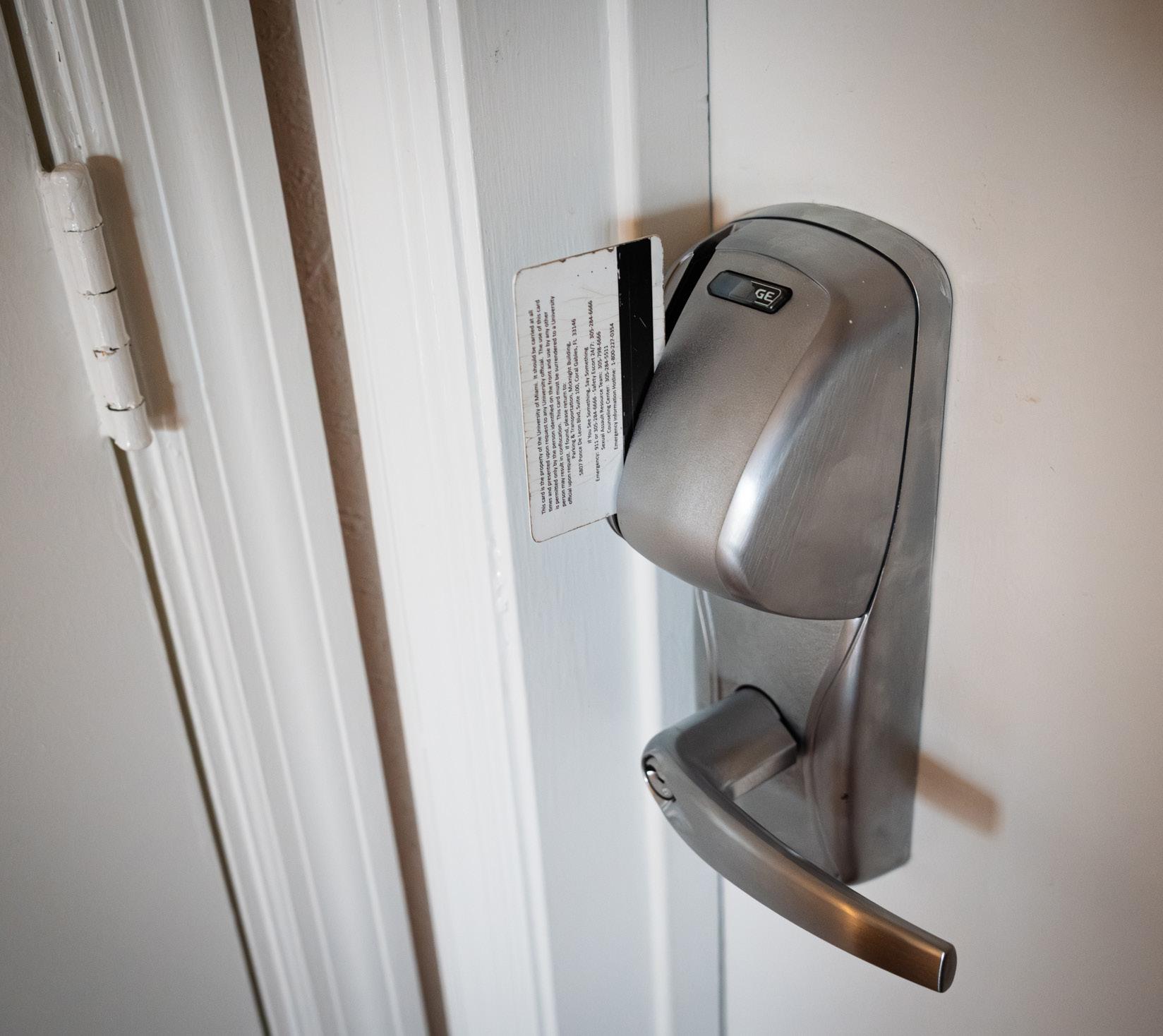
It’s 10 p.m. I just got back to my single in Ibis from my three hour class. I finally get to shower in our communal showers after an exhausting day of classes, until I realize that I left my Cane Card locked inside my room.
Now, not only do I have to go back downstairs in my towel and embarrassingly ask for a temp card, but I also have to pay for it.
Unfortunately, this has been a reality for me one too many times, and I hope I’m not the only one.
With on-campus housing ranging from $10,000 to $18,000, students should not be charged for the use of temp cards. The University should cut students some slack and not charge for every time they accidentally lock themselves out of their room.
Yes, it’s true that having some kind of fee or “punishment” for forgetting your card might prevent students from making the mistake as often, but the school doesn’t benefit from charging $25 every single time.
“The charge accounts for the administrative work that the process of managing the temporary card process requires,” the University of Miami said in a statement to The Hurricane.
This policy was just introduced last year, so why now start charging students? Was there no need to do so before? Looking up someone’s name and C number and handing them a temp card isn’t difficult, which leaves the reasoning behind charging students unclear.
“It happens to everybody, even I have locked myself out,” said Morgan Parodi, a Residential Assistant in Lakeside village. “The main
thing that residents complain about is ‘Why are we [getting charged]?
I literally know where my Cane Card is, it’s in my room.’”
Cane Cards are tedious to constantly carry around, so it’s easy to leave them behind if you’re exhausted, in a rush or just multitasking.
At Florida State University, University of Florida and several other colleges, students are able to have their IDs on their Apple Wallet. While a Cane Card is easily forgettable, almost every screen-addicted college student has their phone on them at all times.
Providing students with a digital ID would make it easier for students so they don’t get locked out or have to constantly pay fees for a simple mistake, and the desk assistants who are probably tired of their residents walking down to get a temp card — while still in their towels.
Especially for students who live in a single, it can happen twice as much since they don’t have a roommate who can come to their rescue or suitemates to let them in.
“It’s really unfair as a student who lives alone, especially coming back from a night out and realizing that my Cane Card was in my dorm the entire time,” a sophomore in Lakeside who wished not to be named said. “Because I have no roommates, I had to walk from Lobby C all the way to Lobby A for a temp card, just to walk all the way back after and be charged a fee.”
It’s time we’re forgiven for our mistakes instead of paying. It’s bad enough to make the walk of shame to the lobby, but to be charged an extra fee for an honest mistake is too much. I don’t want to have to watch the money from my savings account drain every time I see the door close with my Cane Card left on the desk.
By Alex Airapetov Staff Writer
College athletic conferences were once designed to bring schools together. They shared similar geographical areas, history and identity. Rivalries spanned decades of hatred between schools, and travel was manageable enough for student athletes to succeed on and off the field.
College sports felt personal, regional and meaningful.
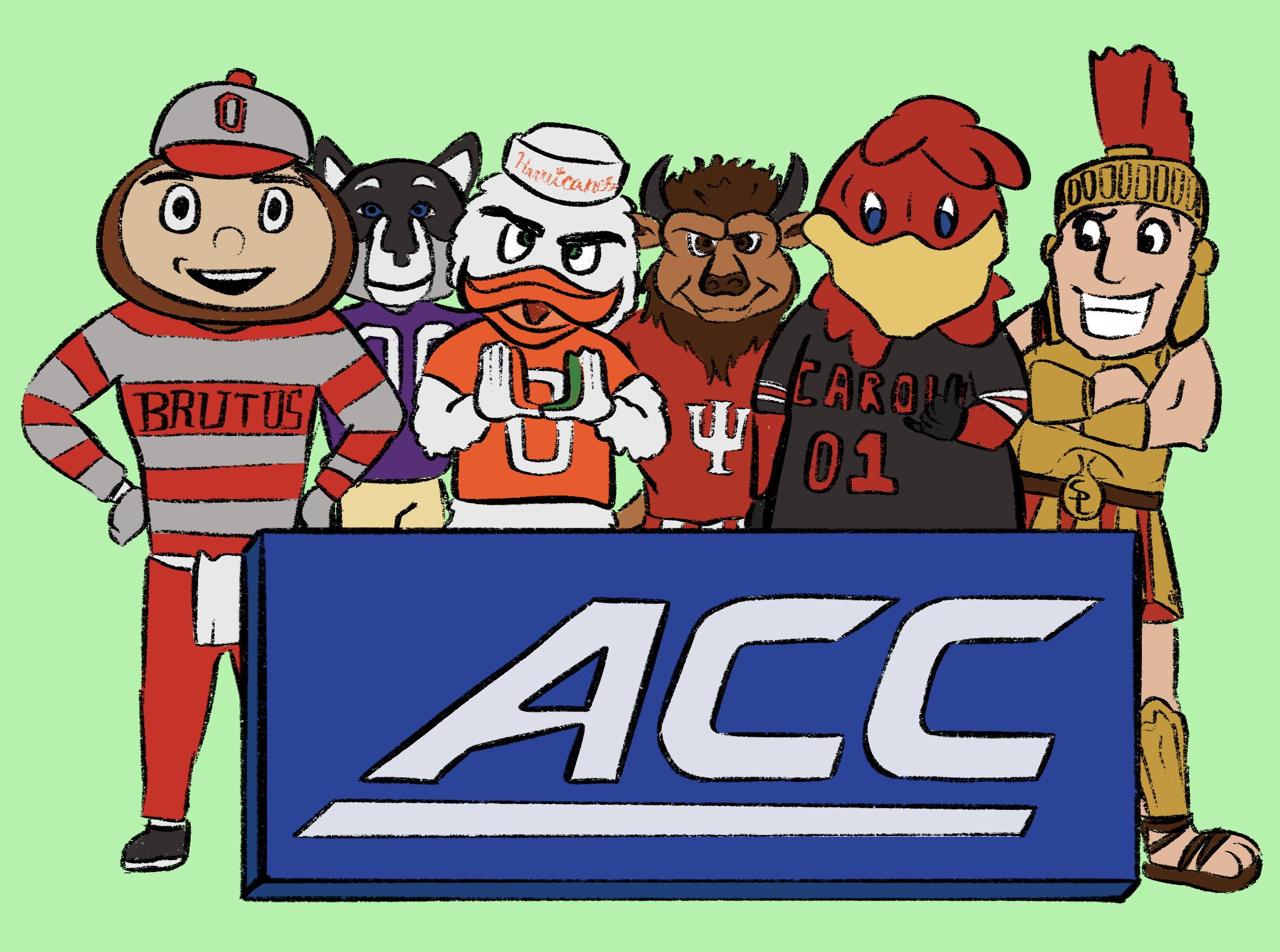
But today, the old conferences are being replaced by a system driven almost entirely by money and national prestige. As athletic conferences grow larger and more spread out, college athletics are losing their core identity.
One of the most damaging aspects of conference expansion is the increase in travel distance by athletic programs. College teams now fly thousands of miles across the country to face schools that most times have no cultural or historical ties to the institution that they are playing at.
These long trips are physically and mentally exhausting for the athletes that partake in them. These journeys often take place during scheduled class time, which make the athletes far more likely to fall behind on their coursework.
Over the course of an extensive season, missed lectures and exams add up which makes it increasingly
difficult for student athletes to succeed in the classroom.
Beyond academics, excessive travel takes a toll on athletes’ mental and physical well being. The sheer amount of long distance flights may contribute to an athlete’s disturbed sleep and limited recovery time, creating higher stress and fatigue.
These student athletes are expected to compete at their highest level while at the same time managing tasks that many non-student athletes will never have to do. This reality contradicts the vision that college athletics are meant to support personal growth and education.
Conference expansion has also ravaged college sports of their long standing rivalries, many of which have been sacrificed in pursuit of money. A notable example of this is the disappearance of the annual University of Miami and University of Florida game.
Many fans were heartbroken when these two schools stopped playing one another annually. But as a consequence of the SEC’s expansion, it was inevitable that both these programs would stop playing each other.
These rivalries are not just games, they are traditions that are passed down by generations of students and fans. Their loss weakens the connection between the school and its community.
With more expansion comes increased television revenue, potentially strengthening athletic departments and allowing schools to invest more in their
facilities, coaching and resources. While this may benefit powerhouse programs such as UM and Ohio State, the smaller schools get left behind.
When a larger school leaves a smaller school’s conference, the remaining schools in the conference lose shared revenue, media exposure and recruiting opportunities. For many of these smaller schools, budget cuts happen due to the financial constraints created by losing a source of funding for the schools programs. These budget cuts lead to many schools cutting programs that they deem unprofitable, which eventually leads to schools like St Francis College of Brooklyn and Sonoma State University closing down their athletic departments entirely.
The rapid growth of college athletic conferences reveals a growing disparity between the business of college sports and the values of higher education. While conference realignment does generate extra revenue and brand exposure — it does not account for the welfare of student athletes, the value of education or the intense rivalries created by schools.
If the goal of college athletics is to foster both academics and competition, then conferences must seriously consider whether profit driven expansion truly serves its athletes, schools and fans who give the game its meaning.







Why I’m ready to be known for more than a TikTok
By Sienna Long Contributing Writer
The internet has a way of deciding who you are before you ever get the chance to speak for yourself. One of the worst moments of your life becomes a headline, and suddenly, you’ve become a story so widespread that people around the world assume they know you because of one thing you said online.
I know this because of something that happened during my first semester at the University of Miami.
In the fall semester, The Miami Hurricane ran a print edition that featured freshman creators and influencers on campus. I was interviewed for an article of my own, but when I saw that I didn’t make the front cover, I took the situation to TikTok.
I was in tears and overwhelmed by how much I had invested in the “influencer dream” and how it was a wake up call that I needed to either focus more seriously on my social media or just do it for fun.
But that vulnerable and unfiltered video went viral. Not because of the lesson I thought I was sharing with my followers, but because of a
tone-deaf comment I made.
The real lesson I learned was that, clearly, I had some maturing to do — like many other college freshmen. What I intended to be an honest moment turned into widely circulated content, the reaction was brutal. The comments ranged from dismissal to death threats.
Mentally, I hit rock bottom, where I didn’t know if I would get through to the next day. Some people online didn’t see me as a human being struggling with self-worth, instead they saw an opportunity to critique, mock and reduce me to a punchline.
I don’t share this story to gain sympathy or relive the past. I share it because it taught me something invaluable about narratives, identity and the power of platforms like The Hurricane. It revealed how easily context disappears in the digital age, and how quickly a single viral moment can define us instead of our full story.
But here’s the thing: that moment was real. It was raw. And it mattered to me. Yet it was only one piece of who I am, not a complete picture of my thoughts, ambitions or capacity to contribute meaningfully to the University of Miami.
So, here I am joining The Miami Hurricane, precisely because I don’t
want to be known for that moment alone. I want to be known for the ideas I bring, the conversations I spark and the way I engage deeply with issues that matter to students, from digital identity and the effect being online has whether it’s about accountability or about growth. Writing for the opinion section of a newspaper makes room for honesty — even uncomfortable honesty — and invites readers into thoughtful conversations rather than quick judgment. It values context over going viral and insight over impression. That’s the space I want to inhabit as a writer.
So yes, I cried on social media. Yes, it was real. And yes, I regret it every day. But it’s not the sum of who I am. It’s a chapter. And I’m ready for the next one.
So it’s time for me to stop being known as the “microinfluencer girl.” Instead, it’s time for me to be known as an intelligent human being who has great ideas and conversations to bring to the table. So joining The Miami Hurricane isn’t about erasing the past. It’s about proving that I don’t have to be defined by it, especially when I have something meaningful to say. It’s about personal growth and learning how to share what I feel in a productive way.
BySierra McDonald Contributing Writer
For years students build their GPA, stack leadership roles, join extracurriculars and polish essays late at night only to learn that one Saturday morning test could now make or break their chances at attending UM. With the University of Miami reinstating SAT/ACT requirements for the class of 2026 and beyond, students are once again facing the pressure of high-stakes testing. Though the policy is framed as a step toward fairness, it’s just another barrier for qualified students.
Early Decision statistics show just how competitive admissions have become. For the fall 2025 cycle, the University of Miami accepted 44% of Early Decision applicants, admitting 1,062 students out of 2,395 applicants, according to the University.
While this rate is higher than regular decisions, it highlights the growing selectivity as the ED rate dropped by 4% since the previous year.
Standardized tests focus on narrowed skills like timed math equations or memorized vocabulary, predicting short term performance in an academic setting. These tests do not capture curiosity, creativity or collaboration, which are all qualities that drive students’ contributions to their college communities.
Junior marketing major Marina Boudreau explains her experience.
“Personally, I’ve never been the strongest test taker, so standardized testing has always felt daunting and almost impossible at times,” she said. “It’s unfortunate that so much of one’s collegiate future can hinge on a single exam, and I don’t think that’s entirely fair or an accurate reflection of one’s skills.”
In early 2025, UM announced that they would reinstate the standardized test requirements for applicants after several years of operating under a test-optional policy. The decision to go test-optional in fall of 2021 followed a nationwide wave from multiple institutions that began during the COVID-19 pandemic. Students were facing widespread test center closures, unequal access to testing opportunities and quarantine protocols.
While many schools have decided to keep their test-optional policies permanently, others like the University of South Florida, the University of Texas at Austin, the University of Pennsylvania and the University of Georgia have returned to requiring SAT or ACT scores. This national divide poses a deeper question of what standardized tests actually measure and what role they should play in defining college readiness.
“The University is reinstating the test score policy to provide an additional data point as part of its holistic review process, and it is important
to note that the University’s internal data analysis shows that standardized testing is a predictor of academic success,” The University said in a statement to The Hurricane.
One of the largest criticisms of standardized testing is its close connection to income. Wealthier students have access to test prep courses, private tutoring and the ability to retake exams multiple times. They are also more likely to secure extra-time accommodations through documented disabilities. For some, standardized testing has become yet another area where resources can tilt the playing field.
Lower income and first generation students frequently face barriers that make it difficult to perform at the same level as their higher income, continuing generation peers. As The 74 reports, standardized exams often “favor privilege over potential,” turning what should be a measure of academic readiness into a reflection of socioeconomic advantage. Even with test-optional policies, underlying disparities remain. Students with strong scores tend to submit them, while those without remain at a disadvantage.
Supporters of standardized testing argue that exams like the SAT and ACT restore fairness to the college admission process. Unlike essays or extracurriculars, often influenced by access to mentorship, editing or expensive experiences, test scores offer a consistent metric for evaluating students from different
schools and backgrounds. High school GPAs can vary widely depending on the specific schools inflation policies, course rigor and district standards, making it difficult for admissions officers to compare applicants fairly.
Additionally, research from the College Board and Opportunity Insights showed that test scores combined with GPA can be strong predictors of college performance and retention. Advocates also argue test-optional policies create hidden inequalities that skew the data. Students with high scores tend to submit them, while those with lower scores often choose not to. This distorts the reported average upward, creating a misleading impression of overall performance.
While these points raise valid concerns, they overlook how standardized testing itself reflects and reinforces structural inequities. Objective measures are only fair if everyone has equal opportunity to prepare for them, which is rarely the case when it comes to any college application requirement. All standardized testing, essays and even GPA can be influenced based on the economic diversity across applicants.
“University undergraduate admission counselors will continue to use a holistic process to review each applicant, carefully considering a student’s academic record, extracurricular activities, including community involvement and work, personal statement, and test scores,” the University said in a statement to The Hurricane.
Standardized tests only capture a tiny piece of an individual’s intelligence versus the whole student. The SAT and ACT emphasize speed, memorization and test-taking strategies, in contrast to the qualities many employers value, such as creativity, flexibility, collaboration and leadership. As the University of Chicago found, high school GPA actually outperforms standardized tests in predicting long-term success, since it reflects years of sustained effort and engagement.
Junior Psychology major Anika Pande agrees that test scores should not define a person’s academic potential.
“I believe GPA is a stronger indicator of academic ability than standardized tests,” she said. “Although I didn’t submit an SAT score, I’ve maintained a 3.8 GPA at UM, which demonstrates my ability to handle rigorous coursework.”
Though there will never be a truly equal way to determine college admissions, standardized testing is one of the more inequitable. By reinstating the testing requirement, the University of Miami risks discouraging capable, well-rounded students who might feel defined by a single number rather than their potential to thrive within a diverse academic community.
Read the full article online at themiamihurricane.com
By Bri Pearson Staff Writer
When Lucas Costello transferred to the University of Miami for his senior year, he expected baseball to be his endgame. He saw the move as a chance to finish his college and baseball career at home in Miami.
He never expected his time as a ’Cane would spark the idea for a company that would take off shortly after he graduated.
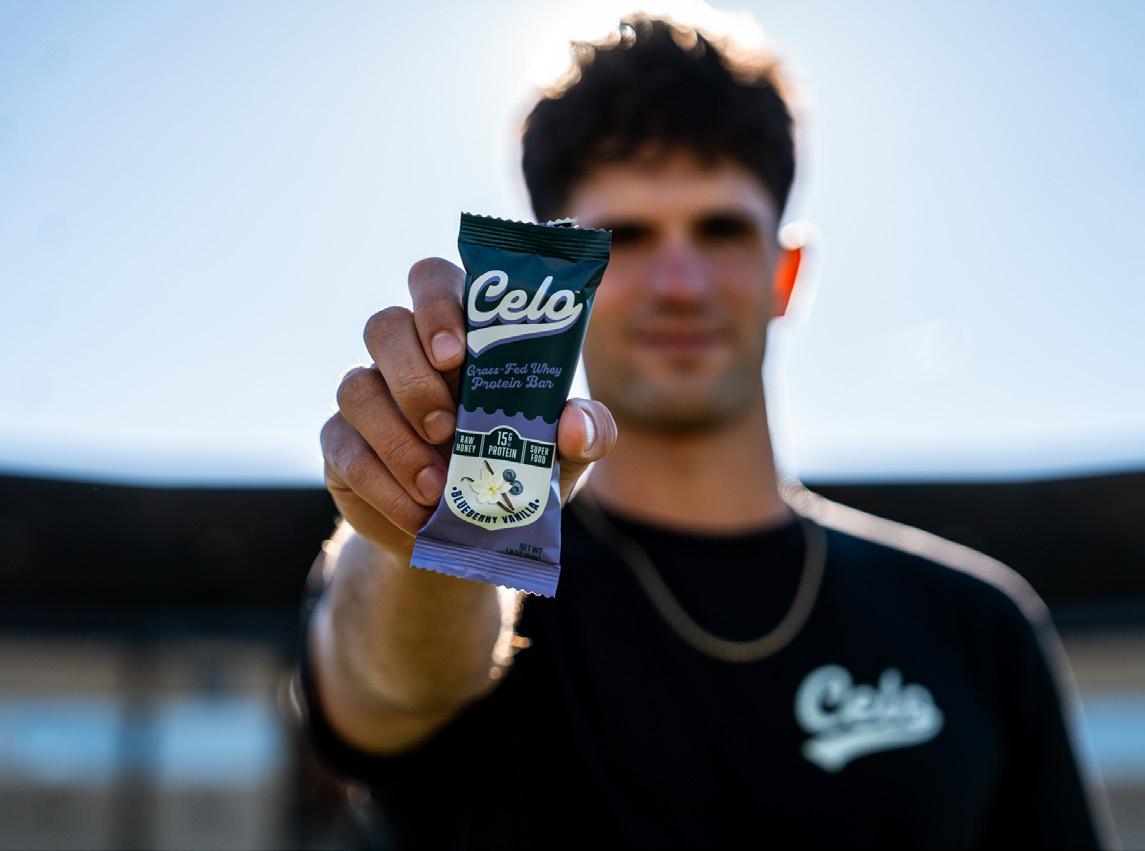
Costello is the co-founder of Celo, a nutrition company that makes bars using whole food ingredients and a commitment to better fuel. The company launched in November 2025 and its first run of bars sold out almost immediately.
Every sale is driven by the community, word of mouth and a belief that clean nutrition should be accessible and real.
Celo didn’t start in a boardroom, it started in dugouts, weight rooms and long days on the UM baseball field.
Before his final season as a ‘Cane, Costello had just come off the high of a College World Series run with Wake Forest. The shift from a winning streak to a year marked by injuries and tough losses hit hard. He learned to keep showing up and how to stay steady when momentum wasn’t on his side.
Those lessons became the foundation of how he leads today.
“We still had to show up. We still had to do everything we could,” he said. “ We still had to pull for each other. We still had to find the fun in it.”
Costello said head coach J.D. Arteaga was one of the most influential figures he worked with at UM and someone who shaped the way he now leads in business.
“J.D led that every single day,” he said. “That set the foundation for selling nutrition when things aren’t looking like they’re going your way.”
Costello arrived at UM after three strong seasons at Wake Forest, but his connection to Miami runs much deeper than a transfer portal decision. He had grown up close with Arteaga’s son, a
friendship that started in high school and kept him tied to the Arteaga family even while he wasn’t in Miami.
Arteaga had spent two decades as an associate coach and stepped into the head coach role in 2024.
When Arteaga took over the program, Costello saw the chance to come home and play for someone who had been part of his life long before college baseball.
The move felt like a full-circle moment and quickly became a crash course in leadership, resilience and discipline that would later shape his approach to entrepreneurship.
That season wasn’t easy. Injuries hit early and the roster lacked the depth Arteaga would build years later. But Costello remembers the tone the coaching staff set every day. There was no room for sulking, no surrender and no room for excuses.
“You still show up. You still find the positive. You still pull for each other,” Costello said. “That year taught me how to lead when things aren’t going your way.”
Those lessons became the backbone of Celo.
When he and his business partner, former Wake Forest teammate Adam Sisiri, decided on a whim to create a healthy bar during a phone call in October 2024, Costello approached the idea with the same mindset he learned at UM: show up every day,
build momentum and keep going.
“I couldn’t stop thinking about it,” Costello said. “I knew right away that was it. That was the moment.”
Costello and Sisiri had always shared an interest in health and nutrition. Both had lived the grind of Division 1 baseball, where days started before sunrise and didn’t end until long after practice.
They knew firsthand how much food choices affected performance, energy and recovery. They also knew how few convenient options existed for athletes who wanted real ingredients instead of artificial fillers.
The idea for Celo clicked instantly. Costello describes it as a moment he couldn’t shake.
From that day forward, he poured the same intensity he once reserved for baseball into building a company from scratch.
He called professors, entrepreneurs and anyone he knew who had ever started something of their own. He and Sisiri interviewed manufacturers across the country.
They worked through more than fifty iterations of their bar with food scientists, adjusting texture, crunch, sweetness and ingredient lists until it matched their vision.
They refused shortcuts. They refused artificial sweeteners. They refused anything that didn’t align with the values they had carried since
their playing days.
“Rome wasn’t built in a day, but it was built every day,” Costello said.
The way he builds Celo today is tied closely to what he learned during his time at UM. Costello credits UM with more than just athletic memories.
“I think UM has an aura to it,” Costello said. “When you’re there, you feel like you can do anything.”
Being surrounded by students who cared about health, wellness and personal growth helped him see the demand for a product like Celo long before he realized he would be the one to build it.
“I think UM has an aura to it. When you’re there, you feel like you can do anything.”
Lucas Costello Celo Co-Founder
Conversations with teammates, strength coaches and trainers at UM opened his eyes to the psychology of nutrition.
Some players cared deeply about what they put in their bodies. Others didn’t. That contrast taught him that a product had to be both healthy and genuinely enjoyable if it was going to make a difference.
“If you’re not fueling yourself right, you feel it,” Costello said. “Those days add up. You start to understand how
much nutrition matters.”
His strength coach at UM, H.R. Powell, played a quiet but meaningful role. Powell often pointed out the ingredients in team snacks and questioned why certain products were being used.
Those comments stuck with Costello. They became part of the foundation for Celo’s ingredient standards. Celo didn’t take off overnight. It grew the way Costello learned to grow as an athlete — one day at a time. Costello and Sisiri built their team the way they once built a lineup.
They look for what Costello calls “mental athletes,” people who learn fast, care deeply and show up every day ready to contribute. They’ve shaped a culture where attitude outranks experience and passion carries more weight than ego. They’ve grown slowly and intentionally. No paid ads. No shortcuts. No attempts to buy a community. Instead, they’ve built one from the inside out, relying on authenticity and the belief that a good product will speak for itself.
If Costello could go back to his senior year, he said he would network more. Shake more hands. Meet more people. Not because he regrets anything, but because he now understands how powerful the UM community can be.
He encourages current students to try things, even if they feel unprepared.
“Don’t be afraid to look stupid,” Costello said. “Everyone has ideas. Execution is what matters.”
His advice on nutrition is just as direct. Eat real food. Avoid the artificial stuff. Prepare ahead. Treat your body like it matters, because it does.
Celo may be a young company, but its foundation was built long before its first bar hit the market. It was built in the weight room at 6 a.m. and the dugout after tough losses.
It was built in conversations with coaches who taught him how to lead and teammates who taught him how to care. It was built at UM, where Costello learned that discipline, resilience and community are not just athletic values. They are entrepreneurial ones. And now, as Celo continues to grow, those lessons are baked into every bar.

By Bella Armstrong Staff Writer
When Sean Klitzner landed his first job in Los Angeles after graduating from the University of Miami, his new boss told him his alma mater is why he got the job.
“[The interviewer] told me ‘You went to the University of Miami. I understand the UM mindset,’” Klitzner said. “You can’t teach that.”
Upon graduating with a degree in film and video production, Klitzner took that expertise with him to California, the epicenter of the American entertainment industry.
And in entertainment, being a UM alum isn’t just a line on your resume — it’s the kind of currency that can open doors.
Klitzner has quietly built an eclectic résumé in the world of unscripted television and content creation in the two decades since leaving Coral Gables. Most recently, he landed as a producer and showrunner on “Beast Games,” a competition series that feels less like a game show and more like a cultural experiment.
Its debut season became one of the most-watched reality releases in

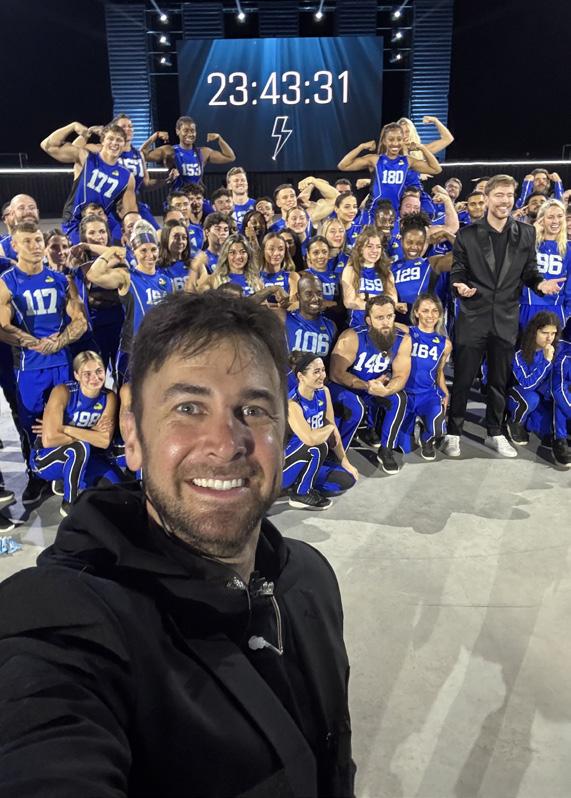
2024. When the show got renewed for season two, the pressure to prove it wasn’t a one-season phenomenon only intensified.
“The question we had was, how far would you go for what amount of money? And it evolved from there,” Klitzner said.
That philosophy didn’t stay abstract for long. They wanted shock and awe, and soon “Beast Games” became about records, sizing and spectacle.
“We broke 44 Guinness World Records,” Klitzner said. Of these broken records included the largest number of participants in a televised game show and the largest cash prize.
But for Klitzner and his team, it was missing something that would make the show truly unforgettable. That element was pressure.
“We were at the roulette table [in Las Vegas], and we wanted to recreate that emotional experience for audiences,” Klitzner said. “That’s where the coin toss came from.”
One of the most talked about moments of “Beast Games” season one was how the show ended with a coin toss. If the finalist won the toss, the prize money would double from $5 million to $10 million, but if they lost, they would walk away with nothing.
It was a finale that raised the bigger question of whether spectacle alone was enough to sustain a show like this.
So if season one was about grabbing attention, season two is about keeping it. It has the task of proving “Beast Games” isn’t just a viral trend destined to burn out, but a show capable of reshaping how entertainment is produced today.
The second season, which premiered on Jan. 7 on Amazon Prime Video, pits 100 of the strongest competitors against 100 of the smartest. It’s a carefully cast brain vs. brawn showdown with $5 million on the line.
These 200 competitors are taking part in the biggest, most jaw-dropping game show to date.
But behind the chaos, the spectacle and the record-breaking scale is a team built on effort and instinct rather than pedigree.
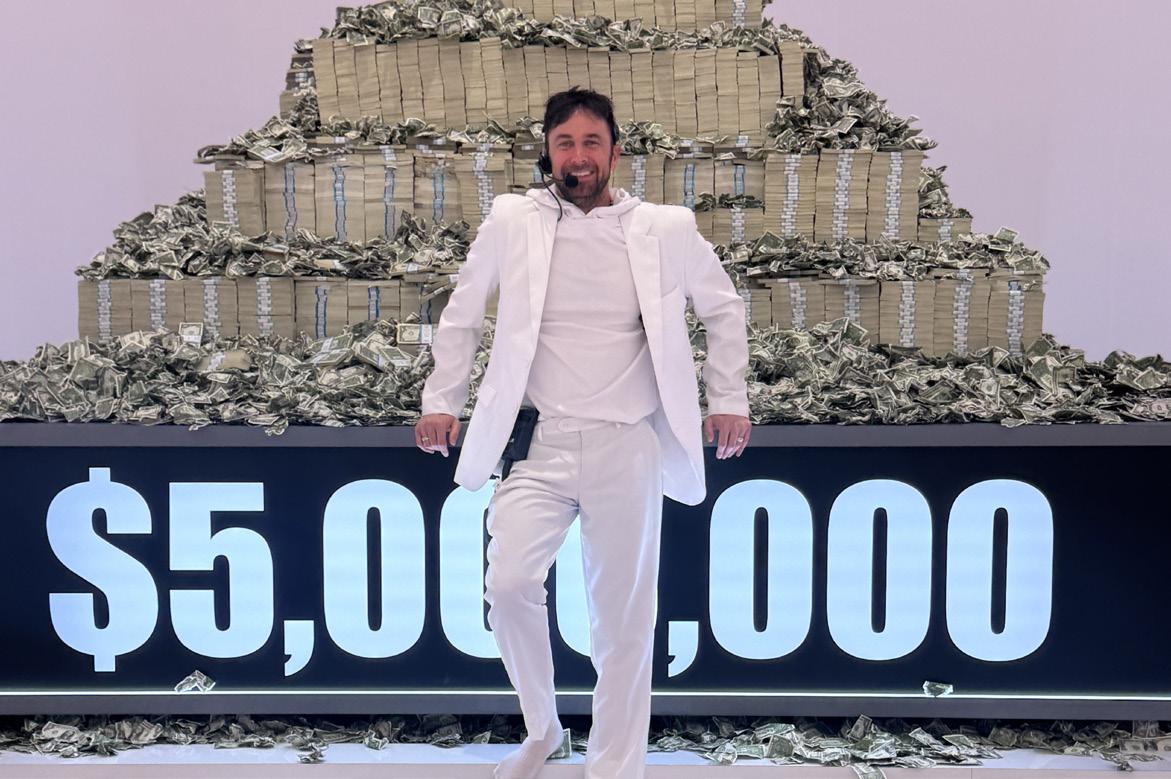
Klitzner describes his collaborators as how they think, how they respond when things fall apart and how serious they are about the responsibility of entertaining millions.
For him, the people around him are the backbone of the entire operation.
“I didn’t care about their resume. I cared about their mindset,” Klitzner said. “Find people that treat that north star the same way that you do.”
For Klitzner, those values are integral to the operation. On a set where chaos is part of the design, trust and clarity about their purpose is what holds the project together.
“You have to understand what the end goal really is,” Klitzner said. “You can’t teach care. Anyone who has care and integrity — that goes a long way.”
He cited the importance of working with one another to grow collectively. His brand is all about that growth, using losses as learning, as he puts it.
Klitzner believes that the growth achieved in your college years is pivotal to achieving your full potential in the creative space.
“Don’t sweat the small stuff,” he professed. “And almost everything you do in college is small stuff.”
That mindset, he insists, is momentum, and is exactly what today’s students should be chasing instead of perfection.
Even after two decades in the industry, Klitzner still speaks about Miami with a kind of reverence. For him, it’s not a stepping stone, but rather the foundation for his success.
Klitzner credits the U with teaching him how to take risks before he ever understood what they might cost. He carries that same belief into every project he touches.
And today, UM is where the next wave of creators is not-so-quietly shaped to him.
“Hit me up,” Klitzner said. “I’m always looking for UM students to work with.”
It isn’t nostalgia that pulls him back towards Coral Gables. It’s UM students. He sees the same restless ambition in current ’Canes that once sent him chasing a job across the country with no guarantees.
Because more than Miami being where he started, it’s where the next version of the industry is quietly incubating.
Season two of “Beast Games” promises to show just how far that mindset can take you. It demands your attention and dares you to keep it. And for Sean Klitzner, who is brimming with an infinite amount of ideas for how he can help evolve the competition space, doing the impossible is more than a hustle for him. It’s his trademark.
By Damian De la Guardia Dominguez Contributing Writer
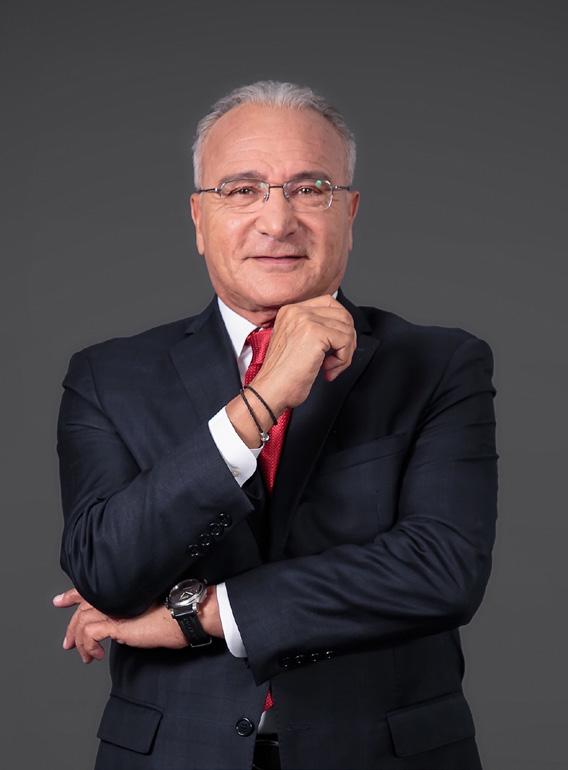
Dr. Shalom Saada Saar — an assistant professor at the University of Miami’s Miller School of Medicine
— got misdiagnosed as mentally disabled when he was young. He felt like he never belonged in any room he walked into, and the psychologists that followed him were a constant reminder of that.
“I was timid, I was shy. I wouldn’t respond to the questions,” Saar said.
“Because of their misdiagnosis, they said that this kid didn’t belong in normal school so they pulled me out and they put me in an institution.”
Saar graduated from Harvard two decades later. Last year, he published his memoir, “Out of The Cuckoo’s Nest” to show others how he pushed past the labels people put on him.
“Out of The Cuckoo’s Nest” talks about how his childhood was taken from him. It follows his battles against his insecurities and how he managed to overcome them.
Saar shares how he managed to prove to everyone and to himself that they were wrong about who he was.
“[The memoir] talks about how challenging life can be at times, how difficult it can be for us, and how to overpower obstacles through resilience and positive thinking,” Saar said.
Being misdiagnosed followed him for a lot of time in his life, yet it was a great motivator because he had something to prove. It took him a long time to finally feel secure in terms of who he was and helped make him a better teacher.
“The best gift you can give to people, to students, is the gift of time,” Saar said.
His memoir is not only a message
for people who want to overcome their labels, but also a message for professors and peers to accept students as they are.
Saar wants to tell students that it is okay to be scared and uncertain at this point in their life. Taking time to reflect and understand who you are brings the change you want to see in your life.
“Number one is not to panic … not to get scared, it’s normal. Take your time to reflect. Reflection creates awakening, awakening creates learning, and learning creates change,” he said.
Saar’s leadership experience in different companies and institutions like Harvard, MIT and Johnson & Johnson helped him understand that people need room to grow to become the best version of themselves.
“If I create a culture of fear, the students will be forced to learn be
By Gabriel Mena Staff Writer
South Florida has festival season year-round. For University of Miami students, that means world-class music events are either right in the city or just a short drive away.
From massive EDM spectacles to intimate waterfront sets, these festivals offer extraordinary experiences without the flights or road trips.
Here’s a curated guide to five of the best options for all music fans.
March 27 - 29
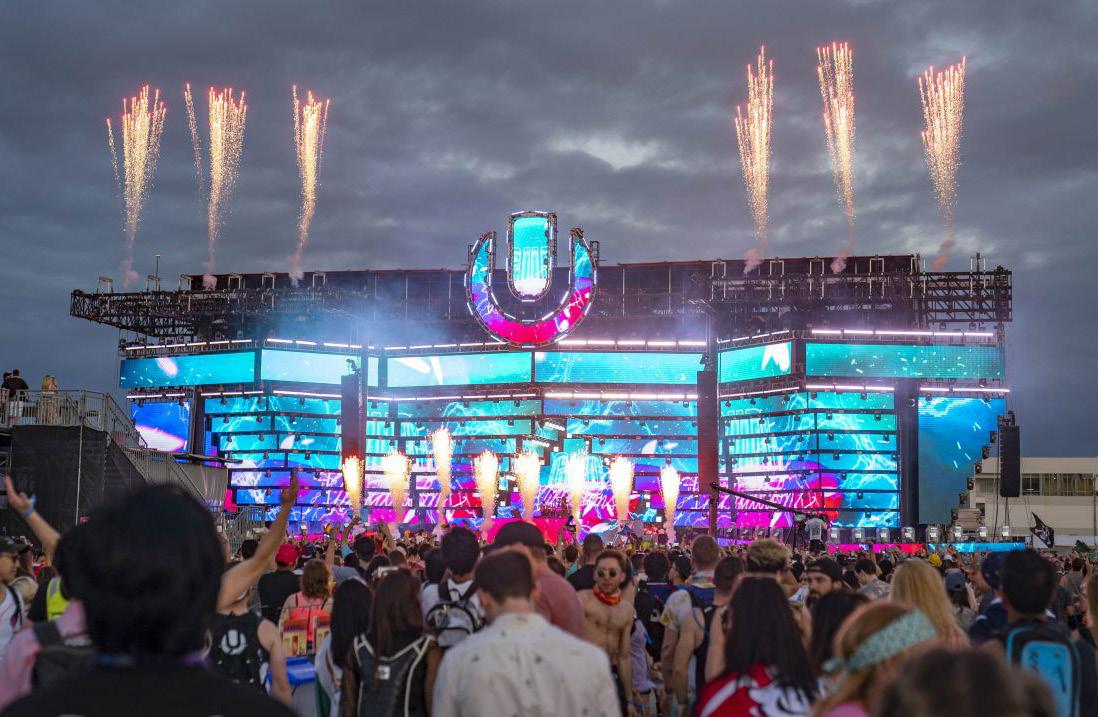
Location: Bayfront Park Ultra is the obvious starting point — and for good reason. Few festivals in the world carry its level of global recognition. Taking over Bayfront Park for a full weekend, Ultra turns downtown Miami into the center of the electronic dance music universe. The accessibility alone makes it unbeatable for UM students. Public transit, short rides and the energy of a city that already feels like a party. Ultra’s production is unmatched, with massive stages, cutting-edge visuals and lineups stacked with the biggest names in EDM like John Summit, Afrojack, Alesso and Martin Garrix. If you want a festival that feels like
a cultural event, not just a show, Ultra sets the bar very high.
We Belong Here
Dates: Feb. 27 - March 1
Location: Historic Virginia Key Beach Park
We Belong Here Miami offers a complete contrast to Ultra. Instead of chaos and scale, it leans into intimacy and atmosphere.
Known for sunset sets and scenic backdrops, the festival attracts people who care as much about the vibe as the music itself. Think golden-hour lighting, calm crowds and a more curated feel.
To celebrate its fifth anniversary, the Miami born festival is expanding to three days — as opposed to the normal two — for the first time ever.
With headliners Tiësto, Chris Lake, Lane 8 and more, this edition of the festival is looking to put on their biggest spectacle yet. It’s shaping up to be the kind of festival where people come to actually listen, hang out with friends and enjoy the setting. If you’re looking for something stylish but low-pressure, this one hits the sweet spot.
Palm Tree Music Festival
Date: Feb. 14
Location: West Palm Beach Palm Tree Music Festival feels more like a lifestyle event than a traditional festival, but its lineup rivals that of much larger productions.
Founded by Kygo, the festival will feature major names like Calvin Harris, Kygo himself, Sofi Tukker and BUNT., blending top-tier DJs with a polished, tropical aesthetic that fits Florida perfectly.
Despite the star power, the crowd will likely remain controlled. The set feels intentional, and the atmosphere is relaxed and social rather than overwhelming. Palm Tree stands out as a festival that delivers a massive lineup without massive chaos. It’s clean, brand-forward, and highly instagrammable, ideal for a one-day or short-format festival that still feels premium and memorable.
Okeechobee Music & Arts Festival
Dates: March 19 - 22
Location: Sunshine Grove, Okeechobee
Okeechobee is where South Florida festival culture meets full-on escape.
Located a few hours north of Miami, this camping festival feels like a portal into a different reality.
It’s less about one genre and more about variety. Electronic, hip-hop, indie and experimental sounds all share space across multiple stages.
The lineup includes heavy hitters like Knock2, Cage The Elephant, Fisher, T-Pain, Griz and The Lumineers but also niche artists like Alison Wonderland, Japanese Breakfast and Goth Babe. Beyond the lineup, Okeechobee is
known for its art installations and immersive environments. It’s a commitment, but it’s a weekend completely removed from campus life, it delivers a sense of community and freedom that city festivals can’t replicate.
GroundUP Music Festival
Dates: March 13 – 15
Location: Miami Beach Bandshell
GroundUP Music Festival returns to Miami Beach this spring for its tenth anniversary, bringing a genre-defying lineup to the oceanfront Miami Beach Bandshell.
Known for blending jazz, soul, funk, R&B, electronic and hip-hop influences, GroundUP offers a more intimate and curated alternative to larger festival experiences, drawing music fans from around the world.
What sets GroundUP apart is its emphasis on collaboration and musicianship, with performances designed to feel immersive rather than overwhelming.
For festival goers looking to step outside the typical festival circuit, this is an opportunity to discover worldclass artists in a setting that prioritizes creativity, connection and live sound over spectacle.
V’s Take is The Miami Hurricane’s most controversial and longest running column.
V’s Take is a satirical work published biweekly by students and for students using our generation’s “colorful” language. V addresses all things love, sex and gossip on campus. V is not for the politically correct or easily o ended.
I hope all of my readers, aka the best people on campus, had a fun and relaxing break. I personally could not wait to hop back on a flight to the best city on Earth.
Not only is my hometown extra uneventful, but running into old friends and old situationships at Christmas and NYE parties is not for the weak. In fact, I definitely could’ve gone without it.
I know some of you caved and decided to revisit your 6/10 (at best) ex.
That’s why I was more than excited to answer this prompt when I saw it come in. Let me remind you that getting revenge on your cheating ex is way better than getting with them over the holidays.
Thinking back on my own experience, I am thrilled to share my own revenge that took more than two years, but just know that’s not me anymore.
The old me would tell you to do what I did — which is avoid your ex for two years while you hop into a new relationship, randomly start talking to him one day at a party once that relationship ends, entertain him and tell him you want to date again and then get with someone else.
I honestly never planned on getting revenge this
way, but seeing him cry on my front porch about how he “really thought we could make things work but could never trust me again” was ironically hilarious.
The key is to never put too much effort into getting back at them. Expose them, get with their friend, or, even better, someone they don’t like, or do what I did. Whatever you want to call that.
But like I said, all that stuff was the old me.
The new, more mature me would tell you to go get that summer body now, use it as motivation to work hard and get your money up, go out and have fun with your friends that your toxic ex hated and stay away from the old places you are guaranteed to see them.
The best way to get revenge is to make them realise what they missed and make sure they never have a chance to get it back.
Whichever version of V you decide to be, I’m wishing you all the best.
CALLING ALL... writers. copy editors. podcasters. photographers. videographers. illustrators. layout designers. sales reps. social media experts. all positions paid. scan here to apply: COME