
Why Cream Chargers Are Popular in Cafés

Page 1


Why Cream Chargers Are Popular in Cafés

For café owners and managers, cream chargers are not novelty items. They are practical, revenuesupporting tools that improve efficiency, reduce labor costs, and enhance presentation standards. When paired with professional whipped cream chargers and dispenser systems, they become an essential part of daily operations. This article explains why cream chargers are so popular in U.S. cafés, focusing on operational benefits, safety, storage practices, and purchasing considerations for commercial buyers.

What Is a Cream Charger?

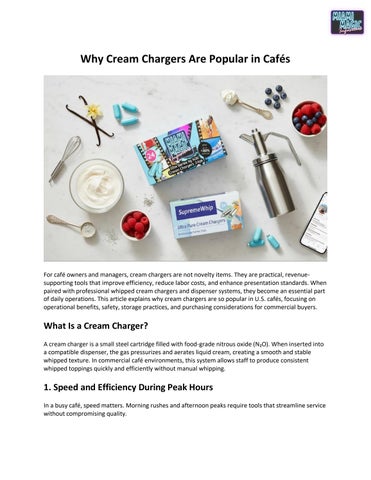
A cream charger is a small steel cartridge filled with food-grade nitrous oxide (N₂O). When inserted into a compatible dispenser, the gas pressurizes and aerates liquid cream, creating a smooth and stable whipped texture. In commercial café environments, this system allows staff to produce consistent whipped toppings quickly and efficiently without manual whipping.

1. Speed and Efficiency During Peak Hours

In a busy café, speed matters. Morning rushes and afternoon peaks require tools that streamline service without compromising quality.

Why Cream Chargers Improve Workflow

 Instant aeration within seconds

 Reduced preparation time

 Consistent output per serving

 Minimal manual labor

Instead of manually whipping cream multiple times per day, staff can prepare larger batches efficiently using whipped cream chargers and dispenser systems. For high-volume cafés, this efficiency directly impacts revenue by reducing wait times and improving customer satisfaction.

2. Consistency Across Every Serving

Brand reputation depends on consistency. Customers expect the same look and texture each time they visit.

Cream chargers provide:

 Uniform texture

 Stable structure

 Predictable output

 Portion control accuracy

Manual whipping can produce inconsistent results depending on staff technique and time constraints. Pressurized systems eliminate that variability. Cafés that prioritize brand standards often invest in the best whip cream chargers to maintain uniform results across all shifts.

3. Cost Control and Waste Reduction

Operational efficiency is not just about speed. it’s also about margins.

Cream Chargers Help Control Costs By:

 Reducing over-whipping waste

 Allowing precise portion control

 Minimizing spoilage

 Decreasing labor time

Because dispensers maintain cream under pressure, it often stays usable longer compared to open containers exposed to air repeatedly throughout the day. Over time, these small efficiencies contribute to meaningful cost savings.

4. Enhanced Presentation and Upselling Opportunities

Presentation drives perceived value.

A visually appealing beverage increases the likelihood of:

 Repeat visits

 Social media sharing

 Premium pricing acceptance

 Upselling add-ons

With whipped cream chargers and dispenser systems, cafés can consistently deliver professional-looking finishes. In competitive urban markets across the U.S. visual quality often differentiates one café from another.

5. Space-Saving Equipment

Compared to large commercial mixers or automated machines, a cream charger system is compact and easy to store.

Benefits for Small Café Layouts

 Minimal counter space required

 Easy refrigeration storage

 Portable between stations

 Simple cleaning process

6. Staff Training Is Straightforward

Cream charger systems are relatively easy to train staff on.

Basic training includes:

 Proper cartridge insertion

 Safe pressurization

 Correct dispensing angle

 Pressure release procedures

 Cleaning and sanitation steps

Because the process is standardized, new employees can quickly learn safe and efficient usage.

7. Scalability for Growing Businesses

As cafés expand to multiple locations, equipment standardization becomes critical.

Cream chargers support scalability by:

 Offering predictable usage metrics

 Allowing centralized bulk purchasing

 Simplifying training across locations

 Reducing equipment complexity

Multi-location operators often calculate monthly charger usage per store to forecast inventory needs accurately.

8. Safety and Compliance in the United States

Because cream chargers contain compressed gas, safe handling is essential.

Key Safety Guidelines

 Use only food-grade chargers

 Never puncture outside a dispenser

 Store away from heat sources

 Keep below 120°F

 Release pressure fully before opening the dispenser

 Replace worn gaskets immediately

Cafés should document internal procedures for handling pressurized systems to ensure compliance with OSHA and local health department standards.

9. Proper Storage Practices

Storage conditions affect both safety and product lifespan.

Recommended Storage Practices

 Keep chargers in original packaging

 Store in cool, dry areas

 Restrict access to authorized staff

 Avoid direct sunlight exposure

 Implement FIFO (First In, First Out) inventory rotation

10. Shelf Life and Inventory Planning

Cream chargers typically have a long shelf life when stored correctly.

Cafés should:

 Monitor monthly usage

 Maintain a 15–20% buffer during peak seasons

 Avoid excessive overstocking

 Conduct monthly inventory checks

Understanding usage trends prevents last-minute emergency orders that may increase costs.

11. Durability and Reliability Matter

Not all chargers perform equally. Low-quality products may:

 Leak gas

 Produce inconsistent texture

 Cause dispenser malfunction

 Increase replacement frequency

Professional cafés typically invest in the best whip cream chargers available to reduce operational disruptions.

Reliable supply chains are especially important during high-demand seasons such as holidays or summer promotions.

12. Multi-Application Versatility

While primarily associated with whipped toppings, cream charger systems can support a range of aerated preparations in professional environments. Without diving into specific recipes, it is important to note that versatility adds value.

Cafés benefit from equipment that can adapt to evolving menu trends without requiring major investment.

13. Financial Perspective: Cost per Serving

To understand profitability, consider this simplified example:

 200 chargers per month

 If each charger produces 15–20 servings

 Total monthly servings: 3,000–4,000

When divided by charger cost, the per-serving gas expense becomes minimal. often just a few cents.

This cost efficiency supports strong margins on premium beverages.

14. Reducing Equipment Downtime

Preventative maintenance ensures consistent performance.

Best Practices

 Replace O-rings regularly

 Inspect dispenser threads

 Clean nozzle tips after each shift

 Avoid cross-threading charger holders

 Train staff to report leaks immediately

Proactive maintenance protects both equipment and budget.

15. Choosing the Right Supplier

When sourcing cream chargers in the United States, commercial buyers should consider:

 Food-grade certification

 Packaging durability

 Bulk pricing options

 Shipping reliability

 Customer service support

 Reputation within the hospitality industry

Reliable suppliers like Miami Magic offer professional-grade products designed to meet the needs of busy café environments.

Turn static files into dynamic content formats.

Create a flipbook
Why Cream Chargers Are Popular in Cafés by Miami Magic US - Issuu