PECM - Issue 79 2026

Page 1


LABFACILITY - 54

Manufacturer of Temperature Sensors, Thermocouple Connectors, Temperature Instrumentation and stockists of Thermocouple Cables.

MANUFACTURING Engineering Process Control &

Sections

Editor’s Choice

Control & Automation

Electrical & Electronics

Facilities Management Gears, Drives & Motors

PP CONTROL & AUTOMATION

PP C&A signals £100m global expansion with new acquisition push

SCHNEIDER ELECTRIC

The role of software-defined power in building a resilient digital grid

CRESSALL

Protection technology ensures safe, reliable battery storage for renewables

SANDVIK COROMANT

Sandvik Coromant’s approach to workforce challenges

ABB

Enabling industrial innovation with continuity

AUTRIX

42 robots boost order volume and packing speed by 89% for leading tabletop games retailer

FANUC

Top 3 robotic trends for 2026

PEI GENESIS

How miniature connectors encourage eco-friendly electronics production

EXEL COMPOSITES

How composites are modernizing the electrical industry

ALDERCOTE

Designing safety and sustainability into vehicle-mounted access platforms

MACH 2026

A wide range of solutions, live and in action, making it the year to visit

CC-LINK

CC-Link IE TSN delivers precise, synchronised control for Hambi’s automated steel mesh handling system

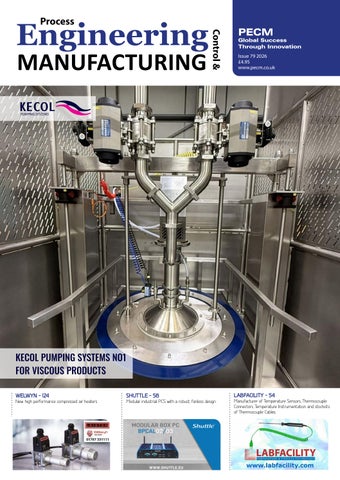
Cover photo: Kecol

Gain

Establish

Monitor energy consumption non-intrusively across processes and infrastructure, without interfering with fabrication or uptime.

Replace guesswork with reliable data that supports smarter operational decisions and longterm efficiency planning. Reduce waste without disrupting operations. Build a

The leading source for innovators in Technology, Manufacturing and Maintenance within the Engineering & Processing industry worldwide.

Published bimonthly, a subscription to PECM magazine is essential for Process Engineers, Chemical Engineers, Instrumentation Engineers, Mechanical Engineers, Plant Engineers, Precision Engineers, Environmental Engineers & General Engineers, Companies and Organizations in the Food, Dairy, Beverage, Brewing, Semiconductor, Pharmaceutical, Biotechnology, Chemical, Oil & Gas, as well as all UK's major manufacturing units.

Every issue of the magazine contains the latest news, in-depth features, together with product innovations and case studies showing how process engineers are implementing new technologies to reduce costs and impact on the environment.

With over 158,000 readers worldwide the publication is widely read, recognized, and well respected within the Process, Engineering & maintenance industries.

A subscription to PECM magazine is the industry's 'must have' publication.

Hardcopy Edition

SUBSCRIBE TO 6 BIMONTHLY ISSUES OF PECM FOR JUST £27

• The magazine gets delivered directly to your door once every issue is published

• The quality of the hard copy enhances the reading experience

To Subscribe please call 01304 806039

Digital Edition

SUBSCRIBE TO OUR DIGITAL EDITION COMPLETELY FREE OF CHARGE

Designed for the digital age, the magazine has been created for easy viewing on all electronic devices. All our issues stored in one place: get unlimited access to our previous and future issues.

To Subscribe please visit www.pecm.co.uk/subscribe

MANUFACTURING Engineering Process

The Team

EDITOR IN CHIEF

Antony Holter editor@mhmagazine.co.uk

BUSINESS MANAGER

Josh Holmes josh@mhmagazine.co.uk

SALES DIRECTOR

Jake Page jake@pecm.co.uk Tel: 01227 937174

SALES MANAGER

Martin Richardson martin@pecm.co.uk Tel: 01304 086039

DIGITAL MANAGER

Jamie Bullock jamie@mhmagazine.co.uk Tel: 01227 936971

Please

EDITOR

Elizabeth Hutton elizabeth@pecm.co.uk

STUDIO DESIGNER

Richard Bland richard@mhmagazine.co.uk

ACCOUNTS DEPT

Alison Holmes accounts@pecm.co.uk Tel: 01227 936976

PUBLISHING DIRECTOR

Martin Holmes martin@mhmagazine.co.uk Tel: 01304 806039

DIGITAL ASSISTANT

Stacey Goodwood Tel: 01227 936971

MH Media Global Ltd. 18/20 Newington Road, Ramsgate, Kent, CT12 6EE Tel 01304 806039 l Fax: 08721 152240 l www.pecm.co.uk

GLOBAL GROWTH DRIVE

PP C&A signals £100m global expansion with new acquisition push

Global expansion is on the agenda for one of the UK’s leading manufacturing outsourcing specialists after it announced a major acquisition drive.

PP Control & Automation, which works with over 20 of the world’s leading machinery builders, is heading towards a record £40m sales in 2026, with the longer-term aim of hitting £100m within four years.

This growth will be achieved both through organic opportunities in clean energy, defence and life sciences and the potential

purchasing of complementary manufacturing companies in Europe, the US and Asia.

The M&A activity will be led by new CEO Pinaki Banerjee, with discussions already taking place with targets in Italy, Eastern Europe, India, and the United States.

“2025 brought with it a lot of global economic challenges, yet we still managed to achieve strong performance across new sectors and put in place foundations to achieve over £40m sales over the next twelve months,” explained

Pinaki, who previously held global roles at Rubix, Hoffman Group and Pilkington.

“Our £40m target is based on high confidence in the sales pipeline and positive market signals in segments we’ve identified for growth in the UK. Our higher growth ambitions will come from international markets and customers looking for a trusted partner that offers world class performance and the ability to scale quickly/bring new technologies to market.”

He continued: “Acquisitions will form a big part of our approach.

PP CONTROL & AUTOMATION

Serving global clients will require a footprint on the ground in key territories and the best way to do this quickly is to absorb likeminded businesses - with shared values and strong manufacturing capabilities - into our group.

“Talks are progressing nicely with a joint venture in India and a possible target in Italy, whilst there are some interesting routes we can go down in Eastern Europe and via the recent appointment of M&A advisors in the US.”

PP Control & Automation, which employs over 200 people at its state-of-the-art facility in the West Midlands, helps build machines that robotically milk cows, provide everyday packaging solutions, protects phones from water damage and cut parts that are used in F1 cars and the world’s airlines.

This is a really exciting period as we attempt to move

to a truly global strategic manufacturing outsourcing specialist.

The company has introduced a fourpillar business strategy to support its expansion plans, starting with the M&A activity and expanding through to sales and marketing and operations.

Digital transformation is the final element and will include investment in introducing Artificial Intelligence further into the company and exploring how PP C&A

can support early-stage design with clients.

Pinaki continued: “This is a really exciting period as we attempt to move to a truly global strategic manufacturing outsourcing specialist.

“The UK will always be our HQ and the nerve centre of our operations, with investment already signed off to implement more automation and to offer significant CPD opportunities and new internal training programmes to our outstanding team.

“However, the time has come to create a network of manufacturing operations around the world, and the search is gathering pace for the right partners. If all goes well, we’d like to get at least three deals finalised by the end of the year.”

COLD PUMPING EXPERTS

Still no. 1 For viscous pumping solutions

With over 35 years experience in pumping viscous materials, Kecol is the number one choice of many of The World’s leading pharmaceutical, cosmetic and food manufacturers.

We Manufacture pneumatic, positive displacement piston pumps and priming devices in polished stainless steel, for transferring high viscosity nonflowable products from drums and containers as used in the cosmetic, food, pharmaceutical, chemical and general Industries.

Products in drums or similar sized vessels that normally need to be heated in order to reduce the viscosity - can be transferred cold. Products with a viscosity up to 10,000 Poise can be transferred (cold) using the Kecol Maxiprime system, which can also be used to transfer pastes and products that stick to the inside of an open top drum, wiping the inside of the drum or vessel, minimizing product waste.

Kecol drum pumps and transfer systems are suitable for all standard size closed top or open top drums and can be adapted to suit open top containers with an internal diameter up to 1200mm.

Non contact parts as well as contact parts are available in polished stainless steel, clamp construction for Hygienic applications. Typical applications in the food Industry include pumping: Tomato Puree, Concentrated Fruit Juice, Honey, Fruit Pastes, Biscuit Creams, Jams, Butter, Margarine, Sweet

Kecol drum pumps and transfer systems are suitable for all standard size closed top or open top drums and can be adapted to suit open top containers with an internal diameter up to 1200mm.

Mince Meat, Sausage Meat and Pie fillings. Pharmaceutical and Cosmetic Applications include pumping: Mascara, Petroleum

Jelly, Face Cream, Base creams, Magnesium Hydroxide, Aluminium Hydroxide, Toothpaste, LipGloss, Waxes and Suntan Lotions. Chemical & General Applications include pumping: Paints, Resins, Adhesives, Polymers, Latex, High Viscosity Grease, Mastic’s and Inks, all pumped cold without pre-heating the products. As manufacturers, Kecol Pumping Systems can offer solutions tailored to your particular product transfer requirements, by offering a bespoke system designed to meet your particular production requirements.

Kecol Pumping Systems Faraday Drive Bridgnorth Shropshire WV15 5BJ

NEXT-GEN PERFORATION

Investment in perforation technology provides new options

With a substantial investment, RMIG Solutions increases capacity and provides new options for customers who want to utilise the advantages of premium perforation.

For RMIG Solutions, based in Warrington, staying at the forefront of perforation technology is crucial. By providing uncompromising perforation quality and a wide range of choices in materials as well as processing methods, customers experience a partnership that adds value and achieves results.

As part of an ambitious investment programme, the UK facilities are being upgraded, including the

installation of a new All Across Press Line featuring a new de-coiler and pre-leveller. The considerable investment underscores the company’s commitment to enhancing the use of premium perforated solutions across various applications.

British companies now have access to the most modern technology on the market, combined with over a century of experience and a recognised tradition of innovation. This ensures expert advice and timely results delivered by a highly specialised, skilled workforce at Warrington, the RMIG Solutions hub for UK sales and operations.

The considerable investment underscores the company’s commitment to enhancing the use of premium perforated solutions across various applications.

For further information, please visit rmigsolutions.com

COMPACT CONVEYING SOLUTION

Conveying car parts efficiently in a robot cell

Find out here how the extensive mk conveyor range was used to provide a compact conveying solution for bulky car body parts through a robot cell.

Vehicle manufacturers fit side impact beams in the car body to ensure that drivers are protected as much as possible in the event of a lateral impact. To ensure that these elongated metal reinforcements cause as little vibration and noise as possible in everyday life, they are generally coated with a damping material. In many cases, this process is automated nowadays. In a robot cell, the side impact beams are transferred to a granulating machine and removed. A complex process, in which the precise interaction of numerous automation components is vital.

A crucial factor is, for example, the conveyor technology which supplies the side impact beams to the cell in a cycled manner and transports them away again after processing. However, finding a suitable supplier proved to be a challenge for the manufacturer of this robot cell. This is because the conveyors not only have to position the beams, which are up to 1,250 mm long, with repeat accuracy and precision so that the robot can pick them up. They are also intended to allow for a buffer of twelve components, so that employees have more time for other activities and the line can run autonomously for a period of time. Finally, the conveying path needs to be as compact as possible and at the same time adaptable so that at the end, a seamless transfer to a customer-side conveyor offset by 90° can be achieved.

Space-saving circulation system for seamless material flow

So how was the mk expertise used to create this solution? They implemented two individually configured conveyor systems. An SPU 2040 accumulating conveyor, a 5,500 mm long and 800 mm wide, two-track chain conveyor with aluminium pallets, transports the parts into the robot cell. The pallets of the left and right tracks are connected by a beam, forming a rigid and stable connection. In addition, the pallets are fitted with wear strips, positioning grooves and bushings as well as a drilling pattern for the customer’s workpiece holder. The corresponding sensor system allows the precise stopping, separating and positioning of the pallets at a cycle time of approximately 30 seconds. The workpieces are manually placed on the pallets of the SPU 2040 by a worker. After removal by the robot, the pallets then travel back to the starting position on the underside of the conveyor. This creates a space-saving recirculation system that allows up to twelve side impact beams to be buffered –eight products are outside the protected area and another four inside. Additional conveying levels or complex lifting and lowering mechanisms are not necessary.

After granulation, the robot places the side impact beams on another conveyor system from mk: a ZRF-P 2040 dual-lane timing belt conveyor, 5,600 mm long and 500 mm wide, with customer-supplied workpiece holders on the top side of the timing belt. The solution boasts one special feature – at the end of the conveying path, mk has fitted a compact GUF-P Mini belt conveyor between the two lines, 400 mm long and 200 mm wide. The cross conveyor lifts the side impact beams with a pneumatic lifting device and transfers them to a belt conveyor provided by the customer. This realises the 90° corner transfer.

Thus, a continuous and compact material flow solution has been developed that reliably buffers the side impact beams, delivers them to the robot in a cycled manner and discharges them safely after processing.

Benefits for the customer

• Flexible buffering: Accommodation of up to twelve components relieves the burden on employees and keeps production running smoothly.

• Precise robot supply: The SPU 2040 positions long components up to 1,250 mm in length in a precise and cycled manner.

• Space-saving feed: The recirculation system for pallets eliminates the need for additional conveying levels.

As the only UK and Ireland distributor of the mk conveyor range please get in touch to see how we can help you achieve your required solution.

Accumulating Pallet Recirculation Systems SPU 2040

Interlinking two processing stations

Process-safe feeding, buffering and separation

Compact design with automatic return of pallets

OFFSHORE PUMP UPGRADE

NORTH RIDGE PUMPS

Hot water circulation pumps for offshore economiser

We recently completed a project for a marine-sector client operating a floating offshore platform with a boiler system that includes an economiser served by two hotwater circulating pumps. These pumps were over 40 years old and nearing the end of their working life, so the client asked us to identify a modern replacement solution to improve reliability and performance.

What is an economiser and how does it improve boiler efficiency?

An economiser is a heat exchanger that recovers waste heat from flue or exhaust gases to preheat boiler feedwater or fresh air, improving system efficiency while reducing fuel use, costs, and emissions. Hot gases pass through a tube bank to transfer heat to incoming water, reusing energy that would otherwise be lost and enhancing overall thermal performance.

Because high-temperature boiler pumps are prone to mechanical seal failure, gland packing is commonly used; this consists of heat-resistant soft rings made from materials such as graphite, aramid, or PTFE, selected according to operating temperature, pressure, and chemical resistance.

Which pumps did we select?

We chose two hot water circulating economiser pumps from our XCP range. These are specially built for arduous duty in demanding industrial and marine environments.

In this design, the centrifugal process pump and motor have

deal of strain away from the motor during operation.

The long-coupled design prevents fluid ingress and allows easy pump-head access for maintenance.

separate shafts. This means that only the pump shaft needs replacing if it breaks. Other less robust pumps available only incorporate a motor shaft. So, if the shaft breaks, the whole motor needs to be switched. The longcoupled design prevents fluid ingress and allows easy pump-head access for maintenance.

Above all, this unit is purposely designed for continuous use and long operational life. That’s because it’s fitted with extra bearings in the pump head which take a great

We supplied each economiser feed water pump with a flushing connection to make sure that the packing stays cool even in high temperatures. To put this in perspective, many centrifugal pumps have elastomers which can fail at temperatures as low as 65°C and in this application the pump would see temperatures as high as 170°C.

The pumps operate as hot-water circulation units delivering approximately 200 L/min at 3 bar and handling water at up to 170 °C continuously. To achieve this, the motors were specially rewound for 460 V, 50 Hz operation, which is unusual as 460 V is typically used at 60 Hz.

The pumps were built with a ductile iron casing and a stainless steel 316 impeller, guaranteed to provide many years of uninterrupted service.

If you have a project where you are unsure of the solution, visit www.northridgepumps.com or call us on 01773 302 660

In fact, we have a whole range of non-clog metering pumps which will give you incredibly precise measurement of gaseous, viscous and shear-sensitive fluids without any loss of flow.

We’re North Ridge Pumps, the UK’s largest pump supplier with over 25 years’ experience. We’re expert at specifying exactly the right pump for every client – not just an off-the-shelf, one-size-fits-all solution.

That’s probably why we’ve completed over 2,000 successful projects for clients all around the world. You can read case studies at www.northridgepumps.com

Asset Integrity Leadership Certificate

To safeguard high-hazard operations, drive reliability and ensure long-term business sustainability, EEMUA’s Asset Integrity Leadership Certificate cour se provides new and established industry leaders with the strategic framework to foster a culture of safety and excellence – from front line to C-suite.

Flexible online modules: Engaging learning to fit around work schedules over four months – in-depth, part-time, blended learning.

Interactive case studies and scenarios: Applying learning directly to asset integrity leadership challenges.

Expert trainers: Learn from experienced industry professionals with years of practical integrity management experience in demanding, time-sensitive environments, across a wide range of industry sectors, geographies and cultures.

at: www.eemua.org

Fluid Carr ying Flexibility

FUTURE CHARGED Engineered GEMÜ solutions for the battery lifecycle.

Combining efficiency with responsibility, GEMÜ supports the evolving energy landscape with high-quality, safe, and durable valve solutions.

Explore our robust valve range:

Abrasion & corrosion-resistant valves for mineral separation and processing.

Minimal-deadleg designs for precise electrode slurry mixing.

High chemical resistance for refining and battery recycling processes.

Custom stainless steel & PTFE solutions for battery cell production.

gemu-group.com

Bingswood Trading Estate Whaley Bridge

CONTAINER EMPTYING PUMPS

CASTLE PUMPS LTD

Get the Flavour for Productivity!

A manufacturer of vape liquids and flavours contacted Castle Pumps looking to upscale their production. Part of this involved improving the efficiency of transferring the concentrated flavours from the IBCs where they are stored.

They were looking for a number of container emptying solutions for fitting onto the IBCs and dispensing the favours without manually handling the fluid that takes up more operator time, is less accurate and is more likely to result in waste and spills. They wanted to be able to remove these when not in use and store them away, and needed them to be food grade due to the final product being for human consumption.

Flux F430: A Solution That Fits

When it comes to container emptying, Castle Pumps’ first port of call is to consider a Flux barrel pump.

All Flux drum pumps benefit from being lightweight and easily fitted to a container and removed just as easily. With various immersion tube lengths available to suit the container size, a 1200mm downtube would be able to be selected for use on their IBCs.

The good news was that this customer already had Flux pumps on site for another process, which meant they were a natural option as they were already familiar with their maintenance and operation.

Given the low viscosity, clean nature of the product, Castle Pumps knew that the Flux F400 impeller style pumps were suitable as they can

When

it comes to container emptying, Castle Pumps’ first port of call is to consider

a Flux barrel pump.

handle up to 1200cP. The F430 model with mechanical seal was specified to protect the pump’s inner tube from the fluid and prevent cross contamination between flavours. The ensure that they last with the aggressive nature of the concentrated flavours, the seals were upgraded to FFKM to prevent them from being eaten away.

The Flux F430 selected was ATEX approved, fully food grade, constructed of stainless steel and supplied with tri-clamp fittings for a hygienic connection. We supplied a full solution for dispensing the

vape flavours from their IBCs including motor, pump with 1200mm immersion tube, screw cap, compression gland, earthing wire and clip, trigger nozzle, hose and swaged fittings.

The customer ordered three of these food grade pumps for use and one to hold on site as a spare to prevent any risk in production downtime when maintenance is required! These solutions have been in use for several months now and are successfully delivering the customer’s process.

Getting the wrong pump for your process can result in inconsistency in the finished product, crushed solids, clogging, excessive wear, loss of productivity, waste of costly product or at worst, contamination. Always trust technical experts to specify the right pump for your application.

Pumps To Drive Your Process Efficiency

Pump smarter, not harder. Use our 15 years’ experience to save excessive wear, process failures, product waste & operator time.

✓ Solid-laden, viscous fluids without clogging/wear

✓ Safe handling of chemicals, fuels & flammables

✓ Highly accurate dosing of chemicals & ingredients

✓ Difficult to pump or delicate, shear sensitive fluids

✓ 99.98% barrel emptying to prevent product waste

✓ FDA & 3A models for food and hygienic applications

Contact our technical sales engineers now!

EMPOWERING TRANSITION

The role of software-defined power in building a resilient digital grid

As Europe accelerates its transition toward a cleaner and more secure energy future, the continent’s power infrastructure faces unprecedented challenges. In 2025, wind and solar generated a record 30% of EU electricity, higher than fossil power for the first time on record. At the same time, electricity demand is rising, driven by the growth of data centers and electric mobility.

This growing complexity and shift towards decentralization is putting more pressure on an alreadystrained grid. With 40% of its grids over 40 years old, Europe’s energy infrstructure must evolve beyond their original design. Resilience, adaptability, and intelligence must become the bedrock of Europe’s energy systems if it wants to achieve climate leadership and industrial competitiveness. As the world embraces a digital-first approach, businesses now require real-time visibility, predictive maintenance, seamless automation, and embedded intelligence at every level of their operations. To meet these demands, electrical infrastructure must become smarter and more flexible. Copper alone cannot provide the agility the modern grid now requires.

With intelligence now being integrated into low-voltage devices such as smartphones and home appliances, a new digital layer is emerging, one that transforms electricity from a passive utility into an active, responsive system. This evolution forms the backbone of software-defined power, enabling Europe’s energy networks to become smarter, more adaptive, and better equipped to meet the continent’s sustainability goals.

Rethinking electrical infrastructure with softwaredefined power

Software-defined power reimagines electrical infrastructure as a living digital system. Intelligence functions as the brain, softwaredefined power serves as the nervous system, and power electronics acts as the muscles–enabling fast, precise decision-making across the networks.

At its core, software-defined power embeds intelligence to hardware, fully managed by software. Rather than embedding logic permanently

into physical components, intelligence is delivered through software that continuously learns, updates, and optimizes performance. The result is an electrical system that can sense conditions, adapt to change, and improve over time.

Much like cloud computing transformed IT, software-defined power brings cloud-scale analytics and control to the edge of the electrical network. Once-static assets become data-driven participants in a coordinated ecosystem, enabling electrical system operators to optimize energy use in real time, reduce waste, enhance safety, and improve uptime.

Think of it as a unified, softwaredriven layer that delivers cloudscale intelligence at the edge to optimize efficiency, resilience, and sustainability.

These capabilities translate into measurable impact across the full lifecycle of electrical infrastructure. Software-defined power can shorten ordering and

manufacturing lead times by up to 3x, while commissioning and on-site acceptance testing can be completed up to twice as fast, reducing time to value and deployment risk.

Once operational, continuous software updates and datadriven insights allow systems to optimize over time, steadily improving efficiency, reliability, and performance. At the same time, intelligence distributed across the network strengthens resilience, enabling faster response to disturbances and greater stability amid increasing grid volatility.

Real world impact across sectors

As software-defined power moves from concept to capability, its impact is already being felt across industries where reliability, efficiency, and adaptability are critical.

• Data Centers: With regulations like the EU Energy Efficiency Directive, and growing demand for sustainable data centers, operators face mounting pressure to optimize energy use and reduce carbon footprints. While realtime monitoring and predictive analytics exist today, the alerts and data they provide often aren’t actionable. Operators also have to navigate complex, human-intensive diagnostic processes to address

At its core, softwaredefined power embeds intelligence to hardware, fully managed by software.

issues, limiting efficiency and responsiveness.

Intelligent power systems change this by not only detecting potential failures but also providing actionable insights and automated responses, helping maximize uptime, improving energy efficiency, and scaling operations with far less complexity. This will also be crucial in helping Europe scale data center growth and achieve its goal of tripling data center capacity in five to seven years, under the AI Continent Action Plan.

• Homes: From rooftop solar to EVs and home energy storage, households are becoming micro energy hubs. At the end of 2024, there were an estimated 3.8 million Home Energy management Systems (HEMS) installed in European homes. And as technology becomes more affordable and accessible, this number is expected to reach 10.6 million at the end of 2029.

Software-defined power intelligently orchestrates these assets, balancing demand with local generation and grid conditions. The result is greater efficiency, lower energy costs, and reduced reliance on centralized utilities.

• Hospitals and Critical Facilities: Following large-scale outages in 2025 in countries like Spain and Portugal, Europe has a renewed focus on resilience. In environments where power reliability can be a matter of life and death, software-defined systems provide continuous, real-time management of backup power, medical devices, and critical loads, ensuring uninterrupted operations during outages or grid fluctuations.

Charting a path for europe’s energy future

Europe stands at the forefront of the global energy transition, and the adoption of softwaredefined power is central to this transformation. It marks a fundamental shift in how electrical infrastructure is designed and operated. Intelligence now comes from code, not copper. By embedding intelligence into every layer of the grid, Europe can create a more flexible, efficient, and resilient energy system, one that supports decarbonization, empowers consumers, and strengthens energy security.

POST-PROCESSING MADE EASY

Am solutions introduces the m4 basic, a cost-effective entry-level model post-processing system

AM Solutions – 3D post processing technology, a brand of the Rösler Group, has unveiled the M4 Basic, a new compact system that brings post-processing within reach of virtually any additive manufacturing user.

Designed as a cost-effective entrylevel solution, the M4 Basic targets companies that are ready to move away from manual grinding, and polishing, but don’t yet need a large, high-throughput cell.

Despite its small footprint, the M4 Basic is a fully fledged vibratory finishing system engineered specifically for 3D-printed metal and polymer parts produced by processes such as SLA, SLS, MJF and SLM. It handles workpieces up to 70 × 70 × 25 mm and offers a wide range of finishing options (from smoothing and grinding through to polishing and deburring) in a single, plug-and-play unit.

“At AM Solutions we see a clear shift: even smaller AM users are under pressure to deliver consistent, production-grade surfaces,” says Colin Spellacy, Head of UK Sales at AM Solutions. “With the M4 Basic we’re giving them a realistic, affordable way to replace improvised manual steps with a controlled, repeatable process. It’s a gateway into true industrial postprocessing.”

The system combines a 20-litre rotary vibrator with an integrated 25-litre process water tank, extending process-water life and

It packages our vibratory finishing know-how into a quiet, compact system that can sit next to the printer and deliver reliable, high-quality surfaces day after day.

reducing downtime. This closedloop approach, together with lower water and power consumption, keeps operating costs down while minimising environmental impact. Mounted on lockable transport rollers and requiring only a standard 230 V connection, the M4 Basic can be moved easily and dropped into existing production environments without installation work.

Spellacy believes the launch will resonate particularly with job shops, service bureaus and in-house AM teams looking to professionalise their finishing workflows. “Many companies have invested heavily in printers, but their parts still pass through buckets, sandpaper and hand tools. The M4 Basic changes that equation,” he explains. “It packages our vibratory finishing know-how into a quiet, compact system that can sit next to the printer and deliver reliable, highquality surfaces day after day.”

Positioned alongside the larger M4 system and the rest of AM Solutions’ automated portfolio, the M4 Basic rounds out a scalable offering that supports customers from first adoption through to fully industrialised AM production.

“Quality, repeatability and efficiency in post-processing are no longer optional,” Spellacy concludes. “With the M4 Basic, we’re making that standard accessible to everyone in the AM value chain.”

For further information, please visit www.solutions-for-am.com

HOW INDUSTRY MASTERS CHANGE

HANNOVER MESSE 2026

How companies can turn pressures into opportunities

Global competition, rising cost pressure, and the dynamics of artificial intelligence (AI) are presenting industry with its biggest transformation challenge yet. In this phase of change, companies in the manufacturing sector need a platform to showcase innovation, share knowledge, and highlight best practices. HANNOVER MESSE 2026 will take on precisely this role, demonstrating how automation, digitalization, energy systems, and research can work together to ensure competitiveness.

A new thematic area will focus on production technologies for the defense sector, with exhibitors showcasing specific solutions to help defense manufacturers scale up production in the shortest possible time without compromising on security.

“At HANNOVER MESSE, attendees from industry will learn how companies can succeed in this phase of rapid industrial transformation,” says Dr. Jochen Köckler, Chairman of the Managing Board of Deutsche Messe. “From mechanical engineering to the automotive and electrical industries, decision-makers will find solutions here that drive efficiency, sustainability, resilience, and competitiveness. In short: HANNOVER MESSE highlights the path to the automated, digital, and AI-driven factory.”

Around 4,000 companies from the general engineering, electrical, and digital industries, as well as the energy sector, are set to present solutions for the production and energy supply of today and tomorrow – with AI playing a key role.

“AI is the decisive technological lever of our time, and opens up new opportunities for industrial companies of all sizes,” says Köckler. “The show offers attendees hands-on AI applications and direct insights into how AI can boost productivity.”

AI is a common thread running through all exhibition areas, and plays a central role at virtually every stand. This offering is complemented by AI tours, masterclasses, forums, and networking events organized by HANNOVER MESSE.

The exhibiting companies include global tech giants such as AWS, Microsoft, SAP, Schneider Electric and Siemens, as well as technology leaders from the SME segment, for example Beckhoff, Festo, HARTING, ifm, LAPP, Phoenix Contact, Rittal, Schaeffler, and SEW. Prominent research institutes such as the Fraunhofer and KIT (Karlsruhe Institute of Technology) will outline the industrial solutions of tomorrow, while more than 300 startups from various technology fields will be showcasing innovations with disruptive potential.

New thematic structure and optimized visitor guidance

A key innovation is the realigned thematic structure, making for a new hall layout. For attendees, this means more direct orientation; for exhibitors, greater visibility in the relevant environment.

Automation and digitalization are being brought closer together, both spatially and in terms of content. In doing so, HANNOVER MESSE reflects a clear trend, namely the increasing convergence of software and hardware – from AI-controlled robots and data-driven manufacturing right

through to digitalized supply chains. The updated thematic structure is divided into three main exhibition areas: Automation & Digitalization, Energy & Industrial Infrastructure, and Research & Technology Transfer.

“The new layout gives visibility to what has long been reality in factories: processes and technologies are no longer separate, but interconnected,” explains Köckler.

New networking formats for more business contacts

Besides the new spatial layout, HANNOVER MESSE 2026 will offer fresh knowledge-sharing and

networking formats, delivering even greater depth of content. This allows experts and users to exchange ideas on specific challenges and their solutions in a hands-on way. From masterclasses and expert forums to matchmaking and the Center Stage, the new offerings cement the fair’s role as a central hub for business, innovation, and networking.

The Center Stage brings together leading minds from industry, politics, and science. Through keynotes and panel discussions, it will address the major questions of our time: How can we achieve the breakthrough to carbon-neutral production? What role does AI play in industrial value creation? And how can Europe and its partners secure their technological sovereignty?

On stage, companies from the automotive, food, furniture, and chemical industries, among others, will provide insights into their factories – demonstrating how they conceptualize and successfully implement automation,

AI is a common thread running through all exhibition areas, and plays a central role at virtually every stand.

digitalization, and energy efficiency in their production operations.

New thematic area: Defense Production Park

The new Defense Production Park will showcase how modern production technology meets the requirements of security-critical manufacturing while remaining highly scalable. Companies in the defense industry face challenges similar to other industrial sectors, but the new geopolitical era demands they rapidly scale up their capacities in the shortest of time. This new exhibition theme focuses on how companies can achieve this without

compromising their security and quality.

Köckler: “With the Defense Production Park, we are for the first time creating a dedicated platform to demonstrate how automation, digitalization, and scalability interact in this sensitive environment.”

Partner country Brazil: A strategically important growth partner

Brazil, Latin America’s largest economy, will take center stage at HANNOVER MESSE 2026. The country offers vast potential – from green energy and raw materials right through to a fast-growing industrial market. More than 1,500 German companies are already active there, accounting for around ten percent of Brazil’s industrial output.

“Working with Brazil goes beyond trade – it’s a strategic partnership,” says Köckler. In times of global tension, dependable partners are all the more essential. HANNOVER MESSE is the ideal platform to strengthen these ties.”

www.hannovermesse.de/en/

Industry-defined

Mechanical Integrity Training

Developed and verified ‘for industry, by industry’, EEMUA 231 Mechanical Integrity courses are for i n dustrial engineers at every career stage – with reality built - in to aid efficient hands-on work with primary containment and prevent loss of hazardous substances, including with pressure systems

• Satisfy industry requirements at each competency level – Awareness, Basic application, Practitioner, Leader.

• Covering: *Legislative environment *Industry good practice *WSE *Equipment design *Operational considerations *Audit *Asset condition *Test techniques *Inspection roles, process & reports *Postponement *Responses to findings *ALARP *Record keeping *Feedback *User responsibilities & competencies *Operating Limits *Decision Making

• Certificated up to 5 years – CPD-approved.

• Flexible delivery to suit Learners and companies – Blended, Live online, Classroom, E-learning, or In-house.

• Courses throughout each year available to all – free or discounted to EEMUA Members and Associates

Mechanical Integrity Practitioner Certificate (MIPC®) – part-time, blended, live online learning – on-site or on-call – 1:1s and Mentor Support –workbook builds from day-1 for immediate application on-site of EEMUA 177, 231 and 232 guidance, and the PSSR ACOP – certificated for 5 years via exam and portfolio assessment –in-depth learning for 27 weeks, flexible 4 hours per week – CPD of 110 hours The MIPC course adapts to the engineering needs of each Learner, company and site/s via a 2-hour induction (to fit work schedules ahead of the course) – learning on the next course starts 2 March 2026

EEMUA Hydrogen Damage Mechanisms Basics – blended, live online – for those with at least 1 year of experience – flexible learning 4 hours per week –CPD 21 hours – next course starts 20 April 2026

EEMUA 231 Mechanical Integrity Basics blended, online learning – at Basic application competency level – flexible 4 hours of learning per week for 3 weeks – 12 hours of CPD – certificated via exam – next course starts 28 September 2026

EEMUA 231 Mechanical Integrity e-learning –set at the Awareness level – with 1 hour of CPD –immediately available – on-demand

EEMUA Pressure Systems Seminar – Birmingham, UK – 23 April 2026

Science and Technology

Nuclear Science and Technology

MSc - 1 year full time

time part time Certificate for CPD

MSc - 1 year full time

MSc - 2 or 3 year part time

PG Diploma • PG Certificate

MSc - 2 or 3 year part time

Short Courses for CPD

PG

Designed

Short Courses for CPD

Designed

generation of nuclear engineers

POWER MEETS PRECISION

TOOLS

Seco® High Feed SP07 reduces inventories and maximizes productivity SECO

Capable of handling a wide mix of materials, Seco® High Feed SP07 excels in all machining strategies and allows you to push productivity levels, particularly on complex components.

A positive cutting rake angle ensures optimal chip formation, while the stable insert design and constant lead angle deliver predictable cutting behavior, paramount for unmanned production.

Reduce the need for skilled labor

The SP07 addresses common industry challenges: frequent tool changes, unpredictable results, and high costs due to rapid wear. In one reliable solution, it simplifies tool management and reduces the need for skilled labor. Digital traceability via Data Matrix codes further streamlines operations, making the SP07 ideal for high-volume and unmanned production.

High metal removal rates in shallow depths

of cut

Each insert features four cutting edges, maximizing usage and extending tool life. Even with shallow depths of cut (≤0.8 mm), the SP07 maintains high metal removal rates, ensuring manufacturers stay on track with productivity goals. The result is a significant reduction in cost per part and improved operational efficiency.

“Our customers need to boost productivity and cut costs. Seco® High Feed SP07 delivers reliable, flexible performance across materials», says Benoît Patriarca,

digital traceability simplify processes further, even when skilled labor is limited.”

Digital traceability via Data Matrix codes further streamlines operations, making the SP07 ideal for high-volume and unmanned production.

Product Manager Copy High Feed Milling. »The four cutting edges and For the latest innovations and cutting-edge products, visit www.secotools.com.

With its origins in Fagersta, Sweden and present in more than 75 countries, Seco is a leading global provider of metal cutting solutions for indexable milling, solid milling, turning, holemaking, threading and tooling systems. For nearly 100 years, Seco has driven excellence throughout the entire manufacturing journey, ensuring high-precision machining and high-quality output.

Lab furniture tailored to your needs

Introducing Teknomek’s new laboratory furniture that is built for science, backed by compliance.

Flexible

Adapt your laboratory as your needs grow with mobile, fixed and sliding cupboards. Ensuring maximum efficiency for changing work processes.

Compliant

With Trespa® TopLab Plus worktops and stainless steel options for specialist areas, our solutions are designed to meet relevant EN and GMP standards.

Unique to you

We will map out a customised design to suit your workflow that balances practicality with long-term flexibility.

Specialist T raining for the Storage T ank

L ive online , classroom , blended , e-learning or in-house

• Gain or renew your 5-year Certificates of Competence*

• Courses f for each career stage based on EEMUA 159 Edition 6

• English, Dutch, German and French language options

• Continuing Professional Development CPD / PDH

• Free or discounted for EEMUA Members and Associates

TankAssessor courses*

13-16 April 2026 – in English

– London, UK

27-30 April 2026 – in German

– Hannover, DE

18-21 May 2026 – in Dutch

– Rotterdam, NL

1-4 June 2026 – in French

– Paris, FR

TankBasics courses

9 March - 30 April 2026 – in English

–blended learning, live online

16 March - 15 May 2026 – in Dutch

–blended learning, live online

TankInspector courses*

16-18 March 2026 – in French

– live online

2-4 November 2026 – in English

– Manchester,UK

Tank Integrity Manager course

8-12 June 2026 – in English

–Antwerp, BE

Storage Tanks e-learning On-demand – in English or Dutch

Alarms Systems & Controls Seminar Manchester, UK – 26 March 2026

GAS PROCESS BURNERS

High efficiency

Customised design to suit each install

Proven in a wide range of applications

Choice of burner heat inputs up to 1150 kW

Choice of operating fuels

Ideal for variable plant conditions

Larger heat input available on request

FDGA

APL technology - modulating gas and air

Ideal for variable plant conditions

Heat input range up to 1,550 kW

Choice of operating fuels

APL technology -modulating gas and air

FDC

Heat input range up to 1,550 kW

Choice of operating fuels

Packaged burner design

Up to 40:1 turndown

Our gas burner systems offer users reliable, high efficiency, process heating solutions. From design, manufacturing and supply to installation, commissioning and ongoing support, we fulfill process liquid, oven and air heating needs for both new-build and conversion projects.

PROTECTING THE POWER SHIFT

CRESSALL

Protection technology ensures safe, reliable battery storage for renewables

In the UK, the share of electricity generation from renewable sources during the second quarter of 2025 reached a new record level of 54.5 per cent of all generation, according to the Department for Energy Security and Net Zero. But as we shift closer to a net-zero energy system, it becomes critical to have a robust storage solution to harness the energy we produce. Here, Mike Torbitt, managing director of resistor manufacturer Cressall, explores the technology behind battery energy storage systems (BESS).

The Government’s Clean Power 2030 Action Plan, introduced in December 2024, looks to ensure that clean sources produce “at least as much power as Great Britain consumes in total” and “at least 95 per cent of Great Britain’s generation”. Achieving this will rely on a blend of offshore wind and solar energy deployed at scale.

But this transformation hinges on flexibility. As wind and solar dominate, BESS is becoming the backbone of grid stability, absorbing excess renewable energy and releasing it during demand peaks. Lithium-ion technology leads the way here, comprising 95 per cent of UK BESS projects, thanks to its rapid response and scalability.

The BESS landscape

Higher renewable penetration has driven demand for energy storage. As of September 2025, RenewableUK reports 1,943 active battery storage projects in the UK, with 6.8 gigawatts (GW) of operational capacity — a 509 per cent increase since 2020.

Even larger projects are underway. Tillbridge Solar in Lincolnshire will deliver 1.5 GW of solar PV and three GWh of BESS, while Pembroke Battery in Wales will become the UK’s largest storage facility when construction begins in early 2026.

These assets will provide fast frequency response, peak shaving and renewable firming. Their success, however, depends on safe, reliable integration into mediumvoltage (MV) grids. Systems typically connect at 6–36 kV, where grid code compliance, fault studies and earthing design are critical. Without robust protection, the promise of storage could falter under grid physics.

MV challenges

MV grids are fault energy rich environments. In solidly earthed MV systems, a single line to ground fault can drive very high currents,

imposing severe thermal and mechanical stress on step up transformers, converter valves and switchgear.

For BESS, rapid dispatch and high-power flows amplify risks such as inrush currents, transient overvoltages and earth faults escalating in milliseconds, posing compliance and protection challenges under the GB Grid Code. Without controlled earthing, fault magnitudes can exceed clearing times and equipment limits, risking outages and costly repairs.

As grids add high voltage direct current (HVDC) links to ferry offshore wind and remote solar, and as BESS ties into converter stations or MV collectors, abnormal conditions like DC faults reflected into AC neutrals demand predictable neutral behaviour. Limiting ground fault current is

essential to maintain converter transformer integrity and prevent cascading trips.

Making BESS safe

This is where neutral earthing resistors (NERs) do the quiet, but crucial work. By inserting a defined resistance between the transformer neutral and earth, an NER limits earth fault current to a level that protection relays can detect and clear selectively, without tripping the entire plant.

NERs prevent transformer insulation damage, reduce arc flash hazards, minimise voltage stress on equipment, enable controlled fault detection and isolation and maintain system stability during fault conditions. Cressall supplies NERs tailored for MV and HV duty in renewables and storage, with engineering guidance that

The UK is reshaping its energy system, but success depends on more than megawatt-hours.

highlights how DC and AC NERs protect converter transformers and maintain system integrity during abnormal events — requirements that map directly to MV connected BESS.

Every Cressall NER is designed to IEC and IEEE standards, factory tested under fault current conditions and built with stainless steel elements for outdoor durability. They are rated for continuous operation in harsh environments, ensuring reliability in

demanding renewable installations.

In practice, this means fewer catastrophic stresses on transformer windings and converter components, better adherence to grid code protection settings and smoother interconnection approvals.

The UK is reshaping its energy system, but success depends on more than megawatt-hours. Behind every project is a layer of protection technology that keeps the grid stable. As the UK races toward Clean Power 2030, NERs are foundational, turning unpredictable faults into manageable events, making MVconnected BESS bankable and resilient.

To learn more about Cressall’s NERs for BESS applications, please visit the website.

A TRUSTED SOLUTION

STAR FASTENERS

The Most Asked Questions About Huck® Fasteners

Huck® fasteners have long been a trusted solution in industries requiring high-strength, vibrationresistant fastening. These fasteners play a crucial role in ensuring structural integrity and safety in a wide range of applications and industries. Given their significance, many engineers and professionals frequently turn to search engines with technical queries about Huck® fasteners. In this article, we address some of the most commonly asked questions about these specialised fasteners.

What are Huck® fasteners?

Huck® fasteners are advanced fastening solutions designed to provide secure, high-strength joints that resist vibration and loosening over time.

What are the different types of Huck® fasteners?

Huck® fasteners come in various types, each designed for specific applications.

HuckBolts®: also known as LockBolts® are a two-piece, highstrength fastening system consisting of a pin and a collar, designed for permanent, vibration-resistant joints. They are installed using a swaging process, which eliminates the need for re-tightening, making it ideal for structural, transportation, and heavy-duty applications requiring superior strength and longterm reliability.

Huck® Blind Fasteners: are highstrength, one-sided (blind-side) fastening solutions used when access to the blindside of a joint is restricted. They provide vibration resistance, high shear strength, and consistent clamping force, making them ideal for aerospace,

automotive, rail, and structural applications where reliability and quick installation are essential.

Which industries use Huck® fasteners?

Huck® fasteners are widely used across multiple industries, including:

Automotive & Heavy-Duty

Trucks: Common in truck chassis, suspensions, and trailers for secure, maintenance-free fastening. They can be used in anything, including defence vehicles and F1 racing cars!

Railroad & Transportation: Applied in railcar construction and track infrastructure to withstand constant vibrations.

Construction & Infrastructure: Utilised in bridges, portable buildings and large metal framed structures for strong, permanent joints.

Solar Energy: Huck® fasteners are used in solar panel mounting systems to secure structures against wind loads and environmental stress.

Wind Turbines: Huck® fasteners are used in tower assembly, nacelles, and rotor components for secure, vibration-resistant connections.

Shipbuilding & Marine: Resistant to corrosion and extreme conditions, making them ideal for naval and commercial ships.

Manufacturing & Industrial Equipment: Used in a multitude of production lines for durable and efficient fastening solutions.

Aerospace: Used in aircraft assembly for their lightweight strength and vibration resistance.

If there’s a fastening requirement, Huck® fasteners have a solution.

How do Huck® fasteners differ from traditional bolts?

Huck® fasteners differ from conventional bolts in several ways:

Vibration Resistance: Unlike bolts and nuts that can loosen over time due to vibrations, Huck® fasteners maintain their hold, making them ideal for high-vibration environments.

Installation Speed: Huck® fasteners are installed using hydraulic, pneumatic and battery tools, making the process faster and more efficient than tightening a bolt and nut.

Structural Integrity: The swaging process of Huck® fasteners creates a permanent joint, eliminating the need for re-torquing or maintenance.

What installation tools are required to install Huck® fasteners?

Installing Huck® fasteners requires specialised tools. These tools include:

Pneumatic: Powered by compressed air, these tools are commonly used in high-volume assembly lines.

Hydraulic: Used for heavy-duty applications, providing more force for larger fasteners.

Battery-Powered: Offering mobility and flexibility for production and field applications.

Are Huck® fasteners reusable?

No, Huck® fasteners are designed to be permanent. Once installed, they cannot be removed without damaging the fastener. If disassembly is required, the fastener must be mechanically removed and replaced.

Reusing nuts and bolts can also compromises structural integrity due to thread deformation, fatigue, and reduced clamping force.

Torque relaxation and material wear increase failure risks, especially in high-load or vibrationprone applications.

For safety and reliability, engineering best practices recommend new fasteners to maintain precise tension and prevent mechanical failure.

How do Huck® fasteners compare to welding?

Many industries choose Huck® fasteners over welding due to the following advantages:

Speed of Installation: Huck® fasteners can be installed in seconds, whereas welding is time-consuming.

Consistent Strength: Welds can be inconsistent due to material variations and operator skill, whereas Huck® fasteners provide uniform strength.

Safety: Welding requires specialised training and safety precautions, whereas Huck® fasteners can be installed quickly with minimal training and risk.

No Heat-Affected Zones: Welding can weaken surrounding materials, whereas Huck® fasteners maintain the integrity of the structure.

How do you select the right Huck® fastener for your application?

Choosing the right Huck® fastener depends on several factors:

Load Requirements: Determine the strength needed for the application.

Material Compatibility: Ensure the fastener material matches or is compatible with the materials being joined.

Environmental Conditions: Consider factors like corrosion resistance, temperature, and exposure to chemicals.

Accessibility: Choose between blind (one-piece) or LockBolts® (twopiece) fasteners based on assembly constraints.

What are the maintenance requirements for Huck® fasteners?

Since Huck® fasteners create a permanent joint, they require little to no maintenance. Unlike traditional fasteners, which need periodic re-tightening, Huck® fasteners maintain their strength and integrity throughout their service life. However, regular inspections of the structure in which they are used are still recommended to ensure overall safety.

Huck® fasteners have revolutionised fastening technology with their strength, durability, and vibrationresistant properties. As industries continue to seek reliable and maintenance-free fastening solutions, the demand for Huck® fasteners remains strong. Whether you’re an engineer, technician, or procurement specialist, understanding the fundamentals of Huck® fasteners can help you make informed decisions about their applications and benefits.

How can Star Fasteners help with Huck® fasteners?

Star Fasteners UK Ltd is a leading distributor and expert in Huck® fasteners, offering comprehensive support to help you make informed decisions about their applications, benefits, and installation. Here’s how we can assist:

Expert Technical Advice: Our team provides specialist guidance

on selecting the right Huck® fasteners based on load requirements, material compatibility, and environmental conditions.

Product Range & Availability: We offer a wide selection of Huck fasteners, including LockBolts®, blind fasteners, and installation tools, ensuring you get the right solution for your needs.

Installation Support:

We supply pneumatic, hydraulic, and batterypowered installation tools and can provide training on proper usage for efficient and secure fastening.

Cost & Performance Optimization:

We can help to identify costeffective fastening solutions while ensuring long-term reliability in high-vibration and structural applications.

After-Sales Service: We provide ongoing support, maintenance advice, and troubleshooting to ensure your fastening solutions perform optimally.

Do Star Fasteners offer a tool repair and hire service?

Tool Repair Service: We provide comprehensive maintenance and repair services for installation tools, ensuring your equipment remains in optimal condition.

Tool Hire Service: Star Fasteners offers short- and long-term tool hire options, ideal for busy periods or specific projects requiring specialised equipment. We also provide service hire tools while your equipment is under repair in our workshop.

By addressing these frequently asked questions, Star Fasteners hopes to provide valuable insights for those considering Huck® fasteners for their projects. Their superior performance and reliability make them a leading choice for industries where strength and durability are paramount.

DISPLAY INTEGRATION

The overlooked risk in precision instrumentation

In the world of industrial and laboratory instrumentation, precision is everything. Whether it’s textile testing, environmental monitoring, or automated measurement systems, engineers are judged not only by the accuracy of their core mechanisms, but by the confidence that operators and end users have in every data point displayed.

There was a time when TFT displays were a low-priority component in equipment design, selected late in the process and treated as a commodity. Today, they are one of the most consequential subsystems in an instrument. Not because they generate the data, but because they present it at the point of human interaction.

At FORTEC UK, working closely with engineering teams across markets, we’ve seen this shift firsthand. Displays are no longer trivial. They’re integral. And the way they’re integrated can make the difference between an instrument that performs reliably for a decade and one that requires costly intervention, redesign or support calls. As Mark Perry, Senior Sales Engineer often advises “As your display partner, the earlier we can get involved at the design stage the better, this allows us to understand more clearly your operating environment, reduce risk of design issues further down the line, improve reliability and extend product lifetime.”

Technical reliability research in industrial and lab environments consistently reveals an important insight:

Display failures are far more likely

bright laboratory lighting

• Touch inconsistency when users wear gloves

At FORTEC UK, we work as an extension of the engineering team from early concept through production and lifecycle support.

to stem from optical interfaces, bonding materials and mechanical integration than from the TFT panel itself.

In other words, the panel isn’t usually the weak link, the way it is integrated often is.

In instrumentation applications, this manifests in specific ways:

• Glare and contrast loss under

• Viewing angle dependency that alters perceived values

• Degradation and drift over long operational cycles

• Uncontrolled component changes during product life cycle

These issues rarely appear during initial validation yet emerge over long periods of use, precisely when a product’s reputation is on the line.

Most displays are specified based on resolution and brightness alone. But in instrumentation, those parameters are only the start. Engineers increasingly understand that a panel-only approach does not reflect real operating conditions, human interaction or lifecycle expectations.

Consider this:

Replacing a failed panel is not just a parts swap. It can trigger:

• Redesign of enclosures

• Re-validation of optical performance

• Re-work of mechanical tolerances

• Changes in operator workflow

These downstream effects turn a “simple display issue” into a project-level challenge.

This is why forward-thinking engineers are moving toward an assembly-level approach, where the display is engineered as a subsystem, not a standalone part.

An engineered TFT display assembly considers the unique demands of instrumentation, from optical performance to mechanical robustness.

Key elements of engineered assemblies include:

Optical bonding

• Eliminates internal reflections and air gaps

• Improves contrast and perceived sharpness under bright lab lighting

• Enhances mechanical stability and vibration resistance

In bright test environments or instrument enclosures, it significantly improves clarity and readability.

Application-tuned brightness and optics

• Brightness levels optimised for indoor laboratory and production settings

• Wide viewing angle technologies to minimise perceptual shifts

• Consistent readability across sizes (5”–15”)

Integrated PCAP touch technology

• Tuned for gloved operation

• Stable touch response through temperature and humidity changes

Displays sit at the intersection of optics, mechanics, electronics and user experience. Getting them right is not optional, it’s essential.

• Managed change notifications to mitigate obsolescence risk

How partnership changes outcomes Suppliers provide parts.

Technical partners provide outcomes.

At FORTEC UK, we work as an extension of the engineering team from early concept through production and lifecycle support. Our engineers collaborate on display specification, assembly optimisation, integration strategy, prototype validation and long-term availability planning.

This partnership approach delivers:

• Reduced risk early in design

• Fewer field support issues

• Accelerated validation cycles

• Longer, more predictable product life

The real return on engineering confidence

For instrumentation manufacturers, the value of an engineered display assembly shows up in the metrics that matter:

• Fewer product failures in the field

• Lower after-sales support costs

• Greater operator satisfaction

• Stronger product reputation

• Fewer lifecycle redesigns

Confidence in the display, in the data, in the instrument becomes a competitive advantage.

Looking forward

Mechanical and environmental robustness

• Assembly techniques designed for repetitive, daily use

• Resistance to dust ingress and handling wear

• Reliable performance across extended duty cycles

Controlled BOM and lifecycle management

• Stable components across production runs

• Form-fit-function continuity planning

• Mechanically aligned with the enclosure for consistent performance

As industrial systems become more sophisticated and lifecycles extend, the need for integrated solutions not just components will only grow. Displays sit at the intersection of optics, mechanics, electronics and user experience. Getting them right is not optional, it’s essential.

At FORTEC UK, our role is to help engineering teams make displays disappear as a problem, so they can focus on what matters: excellent instruments that deliver accurate, trusted data, today and for years to come.

BRIDGING THE SKILLS GAP

COROMANT

Sandvik Coromant’s approach to workforce challenges

A 2024 study by Deloitte and The Manufacturing Institute predicts that nearly two million manufacturing roles could go unfilled over the next decade if talent shortages are not addressed. While addressing this gap will take time, manufacturers must still presently meet the ever-growing demand for increasingly specialised and complex components. Here, Nicklas Bylund, Head of Engineering Projects at metal cutting solutions expert Sandvik Coromant, introduces Engineering Projects — a structured, component focused approach that helps manufacturers bridge the skills gap while maintaining performance.

Across aerospace, automotive and general engineering, applications are becoming increasingly specialised, placing greater demands on the machined components. From ever more difficult to machine heat resistant alloys in aircraft engines to automotive parts in both steels and aluminium, manufacturers are expected to achieve tighter tolerances, superior surface finishes and consistent quality under increased cost pressure. These demands place a higher pressure on tooling and machining strategies.

With expertise in short supply due to the persistent shortage of skilled machinists, programmers and engineers, many manufacturers have traditionally relied on trialand-error methods to refine production. However, as complexity grows, these approaches are proving increasingly inadequate, introducing inefficiencies, variability and risk, as well as consuming limited time and resources.

In the face of these industry-wide challenges, Deloitte in its 2025 Manufacturing Industry Outlook stated the need for “new approaches and tools that can be leveraged across the business to maximise efficiency and build resilience, and prepare for a potential new era of industry expansion.” To stay competitive, manufacturers do need approaches that are aligned with the demands of modern production.

In the context of components, this means solutions that align tooling choices, machining strategies and process data, creating a consistent foundation for repeatable, highquality results. This is where Sandvik Coromant’s Engineering Projects come into play.

Introducing Engineering Projects

Engineering Projects has been developed by Sandvik Coromant to help manufacturers strengthen the capability, stability and performance of their machining processes of critical components.

Designed in response to the growing complexity of components and the shortage of specialist expertise, Engineering Project engineers provide structured, end-to-end support that spans every stage of production. Through close collaboration with customer teams, engineers utilise their knowledge of tooling, machining and CAM programming and parts processing to deliver a complete, productionready tooling package.

SANDVIK

The lifecycle of a Project

Each Project begins with a detailed consultation, where Sandvik Coromant engineers work with customer teams to review component designs, material specifications, tolerances, machining requirements and production targets. In understanding these elements early, engineers can decipher whether it would be best to optimise existing equipment or create a tailored strategy, whilst also factoring in any challenges that they may face in the process.

Following this phase, tooling specialists design or select the optimal combination of standard and special cutting tools, adaptors and work-holding solutions, as well as CAM with tool path optimisation. For advanced applications — such as aerospace components made from difficult materials or automotive parts manufactured in large quantities — this process often results in tooling packages that blend standard solutions with specially designed components. Through Sandvik Coromant’s acquisitions, holding solutions can also be developed and delivered.

With tooling strategy determined, CAM programmers translate the strategy into production-ready programs. Using software such as Mastercam, Siemens NX and Vericut, toolpaths, feed rates and cutting sequences are virtually modelled. This digital verification helps to identify potential collisions, optimise cutting forces, predict cycle times as well as reducing waste from failed tooling trial-and-error stages. This benefits operators by allowing them to run complex processes reliably even without highly specialised in-house expertise.

Once finalised, the complete tooling packages can be delivered as precision-balanced, spindleready assemblies with full technical documentation. Engineering Projects employees together with local account managers and local specialists help oversee the initial setups and test cuts. This allows

Across aerospace, automotive and general engineering, applications are becoming increasingly specialised, placing greater demands on the machined components.

the team to apply their expertise in real-time confirming dimensional accuracy and surface integrity, making any necessary adjustments to fine-tune the process and ensure consistent output.

After validation, workflows can be implemented across global production sites. Supported by Sandvik Coromant’s coordinated approach to cross-border projects, this solution includes supply management, ensuring clear communication and consistent production standards across markets.

Creating lasting value

Through leveraging specialist expertise gained from extensive experience with similar components, digitally validated workflows and data-driven

insights, Engineering Projects deliver efficiency, consistency and productivity gains. Furthermore, with these processes in place, in-house teams and operators are freed from repetitive trial-anderror tasks, allowing them to focus on activities that support longterm organisational capability, such as knowledge management, cross-departmental projects and mentoring colleagues.

Over time, these operational and organisational benefits create lasting value. These Projects establish a foundation for continuous improvement and organisational strength. Stable, repeatable processes allow manufacturers to scale complex production while maintaining high standards and adapting to future challenges. Collectively, these improvements contribute to achieving Manufacturing Wellness, a state where production processes are resilient, thriving and positively impactful on both people and societies.

As manufacturing grows more complex and skilled talent remains scarce, success depends on approaches that deliver consistency and confidence direct to the shop floor. Engineering Projects provide the tooling, expertise and global reach to make that possible — overcoming skills gap complexities to deliver predictable, high-quality outcomes.

To learn more about Sandvik Coromant’s Engineering Projects and how they can support your production goals, visit the website.

Nicklas Bylund

AUTOMATION EXTENDED

Enabling industrial innovation with continuity

ABB has introduced its Automation Extended program, a strategic evolution of its distributed control systems (DCS), designed to help industries modernize without disruption. Building on ABB’s long-standing leadership with the world’s largest DCS installed base and vision in process automation, Automation Extended outlines how future automation capabilities can be introduced progressively –preserving system integrity while enabling the flexibility, scalability and efficiency needed for the next era of industrial operations.

Industrial operations today face volatile markets, cyber security challenges, regulatory pressures and a rapidly changing workforce. ABB’s Automation Extended addresses these realities by enabling innovation with agility and pace without disruption to production, supporting advanced analytics and IoT integration, and simplifying operations for diverse skill levels.

Operators can continue to rely on trusted ABB systems such as ABB Ability™ System 800xA®, ABB

Ability™ Symphony® Plus and ABB Freelance, while introducing new technologies progressively and without operational interruption. This approach provides a structured, low risk path to modernization, preserving continuity while enabling innovation.

“In industries we serve – many operating large and complex infrastructures that deliver essential resources – our customers rely on modernization without disruption,” said Peter Terwiesch,

President, ABB’s Automation business area. “Automation Extended delivers exactly that: bringing future-ready capabilities into the systems they know and trust, with security and interoperability at the core.”

The Automation Extended program is implemented through a modern, open and modular environment designed for interoperability, scalability and seamless integration across industrial domains. Based on separation of concerns principles, the automation ecosystem includes two distinct yet securely interconnected environments:

• The control environment, a software defined domain that ensures robust, reliable and deterministic control for critical processes.

• The digital environment, securely connected to the control layer, enabling advanced applications, edge intelligence and real time analytics. This space leverages artificial intelligence (AI) and machine learning for decision support without disturbing proven control structures.

A single, unified and comprehensive automation service approach for ecosystem lifecycle management and optimization is applied for the management and maintenance

of these diverse technological environments.

By integrating new technologies such as an Open Platform Communications Unified Architecture (OPC UA) backbone and a Cloud-Native Architecture for managing both environments – leveraging containerization, orchestration and modular services – the ecosystem enables a broad spectrum of enhancements. These range from proactively detecting and correcting process anomalies to optimizing maintenance

strategies through continuous condition monitoring of critical assets, and elevating engineering with efficient modular approaches ready for deployment across diverse hardware platforms. This architecture delivers scalability and agility while ensuring robust performance.

Access to Automation Extended will be enabled through the next releases of ABB Ability™ System 800xA®, ABB Ability™ Symphony® Plus and ABB Freelance process automation systems.

For further information, please visit www.abb.com

AUTOMATION BY THE HOUR

GUIDANCE AUTOMATION

Turning wasted minutes into productivity gains

How a simple shift in thinking is helping manufacturers overcome hidden inefficiencies without risky investments.

In a medical equipment factory, five welders were often drawn away from their stations for material handling. Analysis revealed just 10 minutes of every hour was spent on their craft. The rest? Walking to collect parts or deliver finished goods.

Then came a simple change: a single autonomous vehicle to handle material movements. Suddenly, welding time tripled to 30 minutes an hour. The result was a threefold increase in output, without hiring extra staff.

A similar issue was found in a cushion factory, where 50 machinists spent several minutes each hour walking materials across the floor. It seemed minor – until the figures were calculated. Those short trips added up to more than 30 lost hours every day, the equivalent of four additional employees. Automating transport didn’t remove jobs; it gave machinists their time back.

These inefficiencies hide in plain sight. For decades, manufacturers have accepted them as unavoidable. But as the UK pushes to reclaim its spot among the world’s top manufacturing nations, they’re costing billions in lost productivity.

So why isn’t automation everywhere? Three reasons: high upfront costs, fear of complexity and uncertainty over who to trust. Traditional automation often feels like a gamble –big capital outlay, uncertain ROI, and the risk of idle equipment.

That’s why a new approach is gaining traction: Automation by the Hour. The idea is simple: pay only for the hours a robot works. No huge upfront investment. No long-term commitment. And the risk? It’s shared. If a robot saves you six hours of labour, you only pay for three – the rest of the savings stay with you.

The technology is deployed at your site for six months and fine-tuned to

your workflow. If it’s not the right fit, you walk away – no strings and no commitment.

The goal isn’t to replace people; it’s to let them do what they do best –skilled work that adds value. Because when you stop paying people to walk and start letting them produce, those wasted minutes become your biggest opportunity.

Get in touch and discover how flexible automation can unlock productivity in your operation.

Call us on +44 116 243 6250 or email us at: enquiries@guidanceautomation.com

No CapEx or fees ROI within an hour

SMARTER DUST CONTROL

DONALDSON FILTRATION SOLUTIONS

Controlling dust in production

Effective dust control can support optimal working conditions, as well as compliance with dust emissions standards and regulations, and can help mitigate risks associated with combustible dust*.

Hooding can be an effective means of reducing exposure to dust, which should be designed effectively and properly located near the dust generation source. An audit can identify the facility’s dust sources to verify if ventilation hooding currently in use is appropriate. This is often when new dust generation points and the need to add controls, such as additional hood locations, are identified.

A dust collector should deliver consistent and predictable performance that effectively removes contaminants, while maintaining a consistent air volume at a predictable energy cost. When assessing the appropriate dust collector, is also important to carefully analyse the type of filter and its efficiency. Evaluating a dust collector in terms of what it achieves at its stable set point, and using exposure and emissions testing will give a better indication of the ventilation system’s performance.

Once ventilation needs and emissions limits are understood, a qualified industrial ventilation designer can design a dust collection system.

Outlet emissions are what ultimately passes through the dust collector. It is therefore important to know the quality of the filtered air being emitted back into the building or exhausting outside. This requires systematic testing to monitor air quality. For some facilities, industryrelevant regulations mandate continuous emissions monitoring. Other local and international standards may also apply, dictating the need for a variety of test methods to determine emissions or exposure limits.

Once ventilation needs and emissions limits are understood, a qualified

industrial ventilation designer can design a dust collection system. They will identify what the dust load demands may produce in terms of energy and cleaning consumption, and how to achieve emissions goals in both a cost and energy efficient way.

Effective dust management can help prevent airborne particle contamination during manufacturing, support product quality consistency, and reduce production interruptions from contamination problems. Dust filtration can also help protect equipment, as well as contribute towards prolonging machinery life and overall system performance. Additionally, extended filter longevity can minimise operational downtime, while reduced air consumption can support lower long-term operational and energy costs. Taking into consideration dust collection in terms of exposure, efficiency and emissions will support the optimisation of dust control performance throughout the production process.

*This information is provided for general guidance only and should not be considered legal, regulatory, or technical advice.

Nicolas Van der veken, Product Manager at Donaldson

POWERING NET ZERO

GEMININ DATA

LOGGERS

Turning policy ambition into practical control

Energy efficiency has moved from a long-term aspiration to an immediate operational priority for manufacturers. Rising energy prices, increasing regulatory pressure and the UK’s commitment to Net Zero are forcing organisations to reassess how energy is used, measured and controlled across production environments.

Recent government announcements signalling further funding and support for industrial energy efficiency underline the scale of the challenge. The intention is clear: to help UK manufacturers remain competitive while reducing carbon emissions and improving resilience. However, for many businesses, the gap between policy ambition and practical implementation remains significant.

The cost pressure facing UK manufacturing

Energy-intensive manufacturing sectors have been particularly exposed to volatility in energy markets. Electricity and gas costs now represent a substantial and unpredictable proportion of operating expenditure, with knockon impacts for margins, investment planning and long-term viability.

At the same time, Net Zero commitments are reshaping expectations around energy use. Manufacturers are being asked not only to reduce consumption, but to demonstrate measurable progress. Without a clear understanding of where, when and how energy is being consumed, this becomes a difficult task, and one that risks pushing energy-intensive processes offshore if costs cannot be controlled.

Used across manufacturing, process engineering and facilities management applications, Tinytag Energy Loggers enable organisations to collect accurate data without the complexity of permanent installations.

Why visibility matters

Many manufacturing sites rely on high-level meter data or utility bills to assess energy performance. While useful for tracking overall consumption, these sources rarely provide the granularity needed to identify inefficiencies within individual processes, machines or production lines.

Energy use in manufacturing is dynamic. Demand fluctuates during start-up and shutdown, varies

between shifts, and is influenced by maintenance schedules, equipment ageing and changes in throughput. Without time-based, process-level insight, inefficiencies can remain hidden and opportunities for optimisation missed.

This is where targeted energy monitoring plays a critical role. By measuring real energy consumption over time, manufacturers can begin to answer fundamental questions: which assets consume the most energy, how demand changes during production cycles, and where avoidable waste occurs.

Supporting smarter decisions with data

Energy loggers provide a practical way to capture this data without disrupting operations. Deployed temporarily or semi-permanently, they allow engineers and energy managers to monitor electrical consumption at machine, process or departmental level.

This information supports a wide range of use cases: validating the performance of new equipment,

comparing energy demand across production lines, identifying abnormal loads, or assessing the impact of operational changes. Crucially, it enables evidencebased decision-making — a requirement when justifying investment, applying for funding, or demonstrating progress towards Net Zero targets.

In the context of governmentbacked energy efficiency initiatives, reliable data becomes even more important. Funding mechanisms increasingly favour projects that can demonstrate clear baselines and measurable outcomes. Energy monitoring provides the foundation for this, reducing risk and increasing confidence that interventions will deliver tangible results.

From compliance to competitive advantage

For many manufacturers, the immediate driver for energy efficiency is cost control or regulatory compliance. However, those who take a more strategic approach are finding wider benefits. Improved visibility of energy use often highlights opportunities to improve process efficiency, reduce downtime and extend equipment life.

There is also a reputational dimension. Customers, investors and supply chain partners are paying closer attention to environmental performance. Being able to

demonstrate proactive energy management, supported by credible data, can strengthen competitive positioning in both domestic and global markets.

A proven approach to industrial energy monitoring

For decades, manufacturers have relied on independent monitoring to understand complex environments. Tinytag Energy Loggers are part of this tradition, offering robust, reliable measurement of energy consumption in demanding industrial settings.

Used across manufacturing, process engineering and facilities management applications, Tinytag Energy Loggers enable organisations to collect accurate data without the complexity of permanent

installations. Combined with Tinytag environmental monitoring data loggers, they provide a broader picture of how energy use interacts with process conditions and operational performance.

This approach aligns closely with the direction of travel for UK manufacturing. As energy costs rise and Net Zero expectations tighten, the ability to monitor, analyse and act on real-world data is no longer optional. It is a prerequisite for maintaining control, securing funding and sustaining competitiveness.

Turning pressure into progress

The challenges facing manufacturing are real, but so are the opportunities. Government support for energy efficiency signals a recognition of the sector’s importance, and a willingness to help it adapt. The manufacturers best placed to benefit will be those who start with measurement, build understanding, and use data to guide action.

In an increasingly complex energy landscape, informed decisions are the

WAREHOUSE REVOLUTION

42 robots boost order volume and packing speed by 89% for leading tabletop games retailer CONTROL & AUTOMATION

The fully automated 50,000 square foot warehouse takes Europe’s largest indie tabletop retailer, Wayland Games, to the next level with a dramatic improvement in order processing and distribution

Europe’s largest independent tabletop hobby retailer has radically levelled up its warehouse operations to meet growing demand across the UK and Europe, with the help of advanced robotics and cutting-edge

management technology.

Wayland Games has worked with warehouse automation and software specialist, Autrix to install its flagship Automation Control System (ACS) at the retailer’s 50,000 square foot facility in Essex, alongside 42 advanced Autonomous Mobile Robots (AMR) based goods-toperson solutions. Combined with expert warehouse management and the very latest technology,

the robots have streamlined the distribution and packaging process dramatically - improving packing speed by 89% and order processing time by 68%.

A leading stockist of games, including Warhammer 40,000, Lorcana, Dungeons & Dragons, Lego and Magic: The Gathering, Essex-based Wayland Games has transformed its operations so that orders can now move from

placement to dispatch in just 40 minutes - allowing the growing business to scale up its offering, creating new jobs and supplying more customers faster and with a higher level of service. Under Autrix’s comprehensive system, the same packaging team is now processing double the order volume, with pickup rates more than doubling since the framework went live.

The transformation allows the retailer to easily meet peak season pressures (such as those experienced around Christmas or new game releases) by addressing key pain points in the distribution process and allowing it to exceed previous order capacity constraints - meaning more customers receive more games more quickly.

Richard Lawford, MD & Founder of Wayland Games, said: “Phase 1 has delivered exactly the business impact we needed for our expansion. We’re processing significantly more orders with the same team size, and our customers are seeing faster dispatch times during peak periods.

“What sets Autrix apart is their genuine partnership approach. They didn’t just install equipment and leave; they’ve worked alongside us to optimise operations and ensure we’re getting maximum value from the investment. The success we’ve achieved gave us complete confidence to move forward with Phase 2 and continue building our automation capabilities together.”

The first phase of Autrix’s automation project addressed a real-world problem for specialist retailers, using the company’s AMR (autonomous mobile robotics) to bring products to special, ergonomically designed stations, rather than requiring staff to walk long distances across the factory line.

It is a process that not only increases efficiency and productivity, but also boosts accuracy in order processing and reduces the physical demands

Phase 1 has delivered exactly the business impact we needed for our expansion.

on warehouse staff members. Capable of moving up to 2 m/s with a 600kg payload, the fleet of autonomous robots can easily move between the warehouse’s 700 racks, 46,000 bins and 9 workstations to increase capacity at scale.

Phase 2 of the development built on this further, seeing Wayland Games’ order fulfilment process modernised by introducing fully automated packing technology to further support Wayland Games’ growth trajectory.

Joseph Daft, Director at Autrix, said: “Seeing the immediate impact of Phase 1 validates everything we believe about making intelligent automation accessible to growing businesses.

“Wayland Games represents the best of British speciality retail and they’re a real success story, having thrived as an independent retailer for 15 years. But companies like

this need to modernise if they’re to stay ahead and achieve further success. Wayland Games has built something remarkable in the tabletop gaming community - Our job is to ensure their operational capabilities can scale with their ambitions. The success of Phase 1 and now the recent completion of Phase 2 demonstrate how the right technology partnership can drive sustainable growth.”

The project saw the integration of energy-efficient lighting and solar panels, as well as utilising the ACS technology to reduce waste and improve resource utilisation, aligning with both companies’ strong commitments to sustainability.

Following the successful completion of the first phase at the new warehouse near Brentwood, Essex, Phase 2 of the project commenced in November 2025 and is now complete.

COLLABORATIVE ROBOTICS

Top 3 robotic trends for 2026

The industrial automation landscape is rapidly evolving. Across manufacturing, a growing number of sectors are investing in robotics to boost efficiency, ensure consistent product quality, address labour shortages and enhance health and safety. As robot manufacturers such as FANUC work to make automation accessible to businesses of all sizes – from small-scale food producers to tier-one automotive suppliers –advanced technologies like AI are playing an increasingly important role. Against this backdrop, we highlight three key robotic trends for 2026 that are set to take industrial automation to the next level…

1. AI-driven robotics

Artificial intelligence is making robots smarter, safer and faster to deploy. Through voice-controlled operation, adaptive motion control, safety-aware humanrobot collaboration, and virtual commissioning via digital twins, AI is transforming industrial automation.

One of the most significant benefits of AI is its ability to accelerate

deployment. By assisting with code generation, AI makes it easier and quicker for companies to implement robotic systems. Non-specialists can use natural language to programme robots to perform tasks, reducing the engineering burden on manufacturers and delivering a faster return on investment. AI-enabled robots will also allow existing production lines to be retrofitted without extensive modifications, further speeding up the rollout of automation.

AI also expands opportunities for collaborative applications. With AI-driven voice control, robots can interpret spoken instructions and autonomously generate the code needed to execute tasks. This will enable robots to work more flexibly alongside human operators, adapting in real time to changing requirements.

In addition, AI will enhance robot safety and enable closer humanrobot collaboration. For example, integrated vision systems allow

robots to detect obstacles in their environment. AI can then instantly recalculate motion paths in threedimensional space, ensuring safe and efficient operation around people and equipment.

2. Smart and scalable automation

Automation is becoming increasingly adaptable. Smart, scalable robotic solutions that can evolve alongside changing business needs are enabling manufacturers to de-risk automation investments without compromising on quality or reliability.

Smaller, more agile automated systems are also helping manufacturers address labour challenges, particularly for low-skill or repetitive tasks such as picking, placing and palletising. At the same time, suppliers are prioritising ease of deployment through simplified teaching methods, AI-enabled voice control and intelligent technologies such as vision and force sensing. As a result, the path to automation is now faster and more accessible than ever before.

FANUC
Across manufacturing, a growing number of sectors are investing in robotics to boost efficiency, ensure consistent product quality, address labour shortages and enhance health and safety.

Artificial intelligence is making robots smarter, safer and faster to deploy.

Alongside these technological advances, end-users’ attitudes towards return on investment are shifting. Rather than focusing solely on upfront purchase price, manufacturers are increasingly considering total cost of ownership (TCO), factoring in long-term considerations such as maintenance, downtime and energy consumption when making a purchasing decision.

As a result, automation solutions are becoming more flexible, affordable and user-friendly than ever. These smart and scalable systems are set to help more manufacturers overcome labour shortages, enhance product quality and consistency, and drive meaningful gains in productivity.

3. Open ecosystems and partnerships

The future of industrial automation is collaborative. Open platforms and partnerships between hardware and software providers are enabling more flexible, integrated solutions that accelerate innovation and adoption.

With

AI-driven voice control, robots can interpret spoken instructions and autonomously generate the code needed to execute tasks.

At FANUC, we are actively collaborating with leading technology partners bringing AI solutions to market, including NVIDIA, helping to unlock the potential of physical AI. A key step in this journey is our support for the open-source robotics platform ROS 2, which enables programming via Python. By lowering the barrier to entry, this allows developers, researchers and companies to build AI-driven robotics applications on FANUC’s proven industrial hardware.

One important benefit of this openness is a smoother transition from education into industry. ROS 2 and Python are widely taught in

colleges and universities, and making these tools available on industrial equipment will allow more young engineers to apply familiar skills directly in real-world manufacturing and automation environments.

More broadly, open platforms such as ROS 2 and Python will help to stimulate a new wave of innovation, enabling companies to build, customise and scale AI-augmented robotics solutions while leveraging their own software expertise on top of FANUC’s hardware and NVIDIA’s advanced simulation infrastructure.

Join FANUC for ‘The Future of Precision Engineering’ to discover the automation innovations set to shape UK manufacturing (27-29 January 2026, FANUC UK, Ansty Park, Coventry).

Register today at https://ukopenhouse.fanuc.eu/#whats-on

NEXT-GEN INTRALOGISTICS

IDS IMAGING DEVELOPMENT SYSTEMS

From 24 to 26 March, IDS Imaging Development Systems GmbH will be presenting innovations in image processing at LogiMAT 2026 in Stuttgart. Visitors to the European Machine Vision Association (EMVA) joint stand can expect to see a wide range of pioneering camera technologies for greater transparency, efficiency and process reliability in (intra) logistics.

LogiMAT is one of the leading platforms for innovations in material flow, automation and digital transformation. In this environment, the industrial camera specialist from Obersulm is presenting its machine vision solutions this year in Hall 2, Booth 2C14.

Image processing technologies are increasingly playing a key role in the automation of intralogistics. They are ideal for applications such as dynamic object detection, precise distance measurements and accurate level controls.

Industrial cameras from IDS are also used in bin picking, process monitoring and quality control, as well as in autonomous mobile robots (AMR). In this way, they make a significant contribution to increasing throughput, reducing process costs and avoiding bottlenecks.

The highlights of the IDS trade fair include:

Nion - IDS presents its first fully self-developed and costefficient 3D camera with robust

ToF technology. It delivers stable and detailed depth images even in strong daylight. This makes it suitable for reliable dynamic object detection, precise distance measurements and accurate volume determinations.

uEye Live camera series - These For

monitoring cameras are ideal for transparent and efficient control of logistics processes via live streaming. This makes them ideal for visual process control and plant monitoring.

Event-based and intelligent camera technologies - EVS cameras from IDS enable highly dynamic motion analysis with reduced data requirements. IDS cameras with AI technology allow operation even without deep expertise.

Further information on the joint EMVA trade fair appearance: https://www.emva.org/events/ other/logimat-26/

More applications for intralogistics and practical examples: https://en.ids-imaging.com/casestudies.html?label=281

IDS presents innovative image processing technology for intralogistics at LogiMAT. (© IDS Imaging Development Systems GmbH)
The Nion 3D ToF camera from IDS is ideal for volume measurements and depalletising tasks.

SMALLER, SMARTER, GREENER

PEI-GENESIS

How miniature connectors encourage eco-friendly electronics production

Veering away from dog breeds and shampoo, the miniature trend has entered the world of electrical components. Growing demands for lightweight miniature components across automotive, medical and consumer electronics have driven the trend across the industry, with businesses harnessing the opportunity to develop their component designs to improve performance and sustainability. Here, Mark Baptista, global strategic accounts sales engineer at electrical connector specialist PEI-Genesis, explores the increased demand for miniaturised lightweight electronic components and how they are reshaping designs.

There is no doubt that our electronic devices are getting smaller. Take our smart phones, once the size of a brick, they’re now compact pocket devices no bigger than 170mm. Components must now fit into minimised spaces while maintaining high performance, durability and reliability.

To reach a balance, manufactures must embrace advanced engineering, innovative materials and design techniques. They must also consider industry-specific requirements when it comes to miniaturisation, for example high-resistance polymers allow sterilisation resistance in medical applications. This is crucial as they must withstand repeated exposure to temperatures reaching 250°C and chemical cleaning processes.

In the automotive industry, the surge in vehicle electrification and autonomous driver systems call for more lightweight, high-power

connectors. Integrating multiple power sources into one connector allows for a high-current system which reduces weight without compromising high power, often supporting 1000 volts (V).

Materials matter

The innovation starts with the materials. In miniature connectors, configuration materials must meet specifications that focus on performance, weight, durability and reliability. Due to this, traditional materials used in connectors have been swapped or modified.

Composite materials and polymers have become a popular choice in connector housings and insulation. Composites for instance have the best properties of metals and polymers, being extremely lightweight and having high mechanical strength. They also improve the component’s resistance to electromagnetic interference (EMI), which results in consistent optimised performance.

Other innovations include nano-coatings. No thicker than 2 micrometres (µM), they add a microscopic protective layer to a miniature connector and enhance corrosion resistance, conductivity and mechanical durability. These qualities enable smaller, yet still efficient, connectors with longer lifespans, which consequently become more cost-effective solutions.

A key to sustainability

Trending miniature connectors have prompted a complete refurbishment in component design, and with this innovation comes opportunities to make the industry more sustainable. It is a shift

backed by stringent environmental regulations, corporate sustainability initiatives and consumer demand for greener electronics.

Manufacturers have been making moves towards Restriction of Hazardous Substances (RoHS) compliant materials, banning metals like lead (Pb), mercury (Hg)

and cadmium (Cd) in component production. These are being replaced with silver (Ag) or nickel (Ni) in plating or Tin-Silver-Copper (Sn-Ag-Cu) in soldering, reducing toxicity and making them safer to produce and more environmentally compatible.

Manufacturing techniques have also changed in the name of sustainability. Miniature connectors like require precision engineering, rather than traditional machining and moulding processes which can lead to excessive material waste. 3D printing and precision injection moulding methods used in miniature connector production reduce scrap metal and plastic waste and have been implemented across the industry to make production more sustainable.

Industry trends constantly open the space for innovation and miniature has not fallen short.

Connector manufacturers are seeking investment in renewable power including industry leader Amphenol. According to the company’s renewable 2024 Sustainability Report, it has already achieved a 34 per cent reduction in revenue-normalized Scope 1 and 2 (market-based) GHG emissions in 2024 compared to 2021. As major brands move closer towards energy

efficient productions, in demand connectors like Amphenol’s 2M Series Micro-Miniature supplied by PEI-Genesis aligns closer with the industry’s move toward sustainable connector solutions.

Industry trends constantly open the space for innovation and miniature has not fallen short. Micro connectors have a mighty impact on industry applications thanks to unique developments in connector design whilst simultaneously proposing a route towards more eco-friendly production practises. Moving forward, collaboration across engineering, materials science, and manufacturing will be essential to maintain progress and innovate the separate bodies of miniature and sustainability further.

THERMAL CONTROL TECH

LABFACILITY

Typical applications for a Thermistor Temperature Sensor

Thermistors find applications in various industries and scenarios where precise temperature measurement and control are essential.

Typical applications include:

• Temperature Sensing and Monitoring: Thermistors are commonly used in thermostats, HVAC systems, and temperature control circuits for monitoring and regulating temperatures in buildings, homes, and industrial environments.

• Medical Devices: Thermistors are used in medical devices for measuring body temperature, such as in ear thermometers, fever patches, and medical probes.

• Automotive: Thermistors are employed in automotive applications for monitoring engine temperature, cabin temperature, and regulating heating and cooling systems.

• Appliances: Thermistors are used in household appliances like refrigerators, freezers, ovens, and water heaters for temperature control and monitoring.

• Weather Stations: Thermistors are used in weather stations and meteorological equipment for measuring outdoor temperature, humidity, and environmental conditions.

• Food Industry: Thermistors play a role in food processing and storage, ensuring that temperatures stay within safe limits in refrigerators, cold storage units, and food transportation.

• HVAC Systems: Heating, ventilation, and air conditioning (HVAC) systems use thermistors for temperature sensing and control, ensuring comfort and energy efficiency in buildings.

• Energy Management: Thermistors are employed in energy management systems for monitoring and keeping energy consumption in heating and cooling systems, helping to reduce energy costs.

These are just ten examples of the diverse applications of thermistors in various industries and technologies where temperature measurement and control are vital.

Through our partnerships with Digikey and Farnell, you now have multiple convenient options to access our highquality temperature measurement products.

• Industrial Processes: Thermistors are used in industrial equipment and processes where precise temperature control is critical, such as in chemical reactors, plastic moulding, and semiconductor manufacturing.

• Consumer Electronics: Thermistors are integrated into consumer electronics like smartphones, laptops, and wearable devices for monitoring internal temperature and preventing overheating.

Quality and Service are key elements in the continued growth of Labfacility; technical support for both sensing and instrumentation is always freely available from our experienced technical sales teams.

We’re excited to make purchasing Labfacility temperature sensors even easier for you! Through our partnerships with Digikey and Farnell, you now have multiple convenient options to access our high-quality temperature measurement products. Both Digikey and Farnell stock an extensive selection of our products, including thermocouples, RTDs, and Connectors, ensuring you can quickly find the specific product you need for your application. With their reliable service and global distribution networks, you can trust that your order will arrive promptly and with the highest level of care.

PULS AT INTRALOGISTEX

PULS to showcase Decentralised Field Power supplies and Industrial Wireless Charging at IntraLogisteX 2026

PULS, an innovation leader in power supply technology, announces its participation at IntraLogisteX in Birmingham, where it will showcase its expanding range of decentralised field power supplies for intralogistics and material handling, and demonstrate its industrial wireless charging solutions for mobile robotics. The event provides machine builders, system integrators and industrial automation teams with the opportunity to explore practical approaches to scalable DC power distribution in demanding operational environments.

New field-level power supplies

PULS has significantly expanded its FIEPOS field power supply portfolio for decentralised industrial applications, offering a structured range from 94 W to 1400 W. The latest additions include new lowpower classes (100 W, 200 W) and a new high-power class (1400 W), complementing the established 360 W and 600 W variants. Together, the portfolio supports a wide range of industrial applications including intralogistics, factory automation, conveyor systems, material handling, storage technology and robotics.

Designed for decentralised electrical systems, the rugged, IP-rated FIEPOS field power supplies can be installed directly in the field without an additional enclosure. The units support local control with optional IO-Link communication, and are available with IP54, IP65 and IP67 protection for reliable operation and protection against ingress of dust and water.

call

Designed for decentralised electrical systems, the rugged, IP-rated FIEPOS field power supplies can be installed directly in the field without an additional enclosure.

“UK intralogistics operations increasingly require flexible, modular machine design and reliable 24 V and 48 V DC supply close to the load,” says Gary Doyle, Managing Director at PULS UK. “With the expanded FIEPOS portfolio, including new 100 W and 200 W field power supplies and our upcoming 1400 W option, machine builders and system integrators can implement decentralised power architectures that simplify installation, reduce cabinet demands

Industrial wireless charging solutions

In addition, PULS will be showcasing industrial wireless charging systems from its Wiferion business unit, supporting contactless energy transfer for mobile robotics. The team will be available to discuss application requirements and implementation concepts for AGVs/ AMRs and other mobile systems— helping reduce cabling constraints, simplify charging processes and maximise up-time.

PULS welcomes engineers and decision-makers to stand 707 to discuss implementation strategies, system sizing, and deployment considerations for robust power architectures and charging concepts in industrial environments.

841001, email sales@puls.co.uk or visit www.pulspower.com/uk/ and support scalable system design. We look forward to discussing decentralised power and our industrial wireless charging solutions with visitors at IntraLogisteX.”

BOX-PC BPCAL02/03

„ Fanless operation for silent and maintenance-free use

„ Intel Core i7, i5 or i3 processor

MODULAR INDUSTRIAL PCS WITH A ROBUST, FANLESS DESIGN

Shuttle is offering it's second gen of very robust industrial PCs with a compact design. The complete systems from the family of Box-PCs come packed in a multi-reinforced aluminium and steel chassis. Equipped with an Intel Core i7, i5 or i3 processor, they can handle any task. Their modular design means that the functional scope and ports can be customised individually to suit the customer's wishes.

Further information at: WWW.SHUTTLE.EU

TIP: Your box PC ‒ as unique as your project! Use our product configurator and tailor your barebone perfectly to your requirements. go.shuttle.eu/Ofu4B

„ Supports up to 64 GB DDR5 RAM

„ High-speed NVMe M.2 SSD

„ Expandable with up to 4× LAN, 4× COM, 20× USB, DVI, VGA, DP, HDMI, LTE, Wi-Fi, DIO and more

„ Industrial-grade aluminium chassis

„ Extended temperature support from ‒20°C to +60°C (optional)

„ Multiple mounting options including VESA, DIN rail and ear mounts FROM £436*

DCO Systems: Live performance data for steam systems

As energy saving targets and product quality requirements evolve, accurate realtime monitoring of plant and equipment becomes ever more important. But most steam trap users are still working with outof-date information collected “by hand” on long intervals. DCO Systems is working to modernise steam monitoring with costeffective monitors that eliminate work and deliver continuous real-time analysis.

Periodic inspection to real-time insights (“Time is money”)

Failing to resolve faults quickly has significant costs. Typical industry estimates are for a yearly failure rate of around 10% of traps. A UK site with 100 traps inspected annually could expect losses of nearly £16,000 from traps that fail in the year. This assumes medium size leaks, while large leaks (a “blowing trap”) are even more costly.

Working with surveys that are only undertaken periodically (often only on an annual basis) can mean that faults are not detected for many months.

Outdated fault knowledge prevents timely maintenance. A lack of timely maintenance raises the cost of steam and reduces product quality through the poor delivery of steam;

the risk of damage from water hammer also increases in the presence of failed cold traps.

Real-time knowledge of performance optimises the site maintenance routine and greatly reduces the duration of equipment fault conditions. Reducing fault time significantly reduces costs.

Better monitoring is possible

Technology advances have enabled new monitoring capabilities across all types of plant and production sites, and steam systems can very much benefit from those advances too. Better energy harvesting, as well as new sensor and communication technologies, deliver more capabilities and more functionality more easily.

The use of energy harvesting technology eliminates the restrictions of cabled and

Live monitoring for all steam systems

Promptly identify steam trap leaks and faults with real-time monitoring solutions. With fast deployment from a pilot through to a whole site installation, no invasive work (no shutdown requirement) and no integration with local networks or IT systems required.

battery powered devices. Monitors can now be on continuously, collecting more sensor data more often. This creates an unmatched depth and breadth of data on your steam systems.

Simplified deployment for quicker piloting and monitor scaling

Avoiding complicated, high-cost installations is critical to quickly deploy pilot and test projects and demonstrate the benefits of the latest monitoring technology.

Designed and manufactured in the UK, DCO Systems’ Easy Steam Trap Monitor delivers on this promise. Eliminating invasive installation work, operating independently of on-site IT infrastructure, the simplified deployment reduces time to go live and delivers benefits more quickly for a faster return on investment (ROI).

⦿ Simple - Quick install on any steam trap type

⦿ Cost effective - High return on investment through loss reduction

⦿ Zero maintenance - Energy harvesting eliminates battery changes

⦿ Live data - Real-time temperature, acoustic, vibration, etc.

⦿ Turn-key - End-to-end solution with

⦿ Wireless Technology - With support

Reliable Power Supplies

Work with Ideal Power from the start of your project to get the right PSU first time.

Our expert-led support, bespoke products, and flexible call-off service help you avoid delays, reduce risk, and stay in control. Visit our Website

REINVENTING THE POWER GRID

EXEL COMPOSITES

How composites are modernizing the electrical industry

The electrical industry is facing pressure, with aging infrastructure and growing electricity demand. At the same time, traditional materials such as wood, steel, and porcelain increasingly reveal limitations, pushing design engineers to search for replacement solutions. Composite materials are not only an alternative to convention, but an enabler of more resilient and efficient electrical systems. Here, Mika Kepponen, product manager at composite manufacturing specialist Exel Composites, explores the possibilities of composites within electrical applications.

Modern electrical infrastructure relies on materials capable of sustaining mechanical integrity and electrical properties over long service lives, even in harsh and highstress environments. Composite materials are transforming the electrical sector by integrating high mechanical performance and reliable electrical properties into one-high performance profile.

Composites in electrical distribution and transmission must meet strict mechanical strength, dielectric performance, weathering resistance, and safety standards such as IEC, IEEE, and ASTM requirements to ensure long-term reliability in high-voltage environments.

Utility

poles: a case study in infrastructure modernization

Several areas of composites production facilitate better personalization for utility infrastructure. Careful resin selection enhances insulation, while precise fiber placement increases profile strength, allowing components to be tailored to exact specifications.

stations, and retail cash registers. They also raise recovery costs related to mobilization, backup power provision, and temporary housing,” highlighting the economic impact of aging pole infrastructure.

Decay and aging are common, but wooden utility poles also suffer damage from weather events, particularly high-impact winds. In comparison, composite utility poles have higher environmental resistance. In utility pole production, filament winding techniques produce transverse fiber orientations, increasing poles’ rigidity and reducing wind deflection.

Whether electrical or transportation, the demands on decades-old infrastructure

continues to grow.

In the United States, for example, approximately 185 million utility poles carry electrical lines across urban and rural areas, yet around 2.5 million wooden poles must be replaced annually due to damage, rot, or aging.

As noted by Dan Coughlin, the vice president for the American Composites Manufacturers Association: “These outages immediately halt economic activity through the loss of mass transit, traffic lights, electronic tolling

Composite utility poles can last up to 80 years, around double the lifespan of wooden poles. Increased service life reduces the need for replacements or repairs, reducing maintenance costs. Additionally, composite poles are lightweight and easier to install, minimizing risks of accidents or injury to engineers.

Improving safety with composite insulators

Insulator rods are one of the most important and widely used products in electrical transmission and distribution. Forming a structural and insulating core, composite insulators support conductors and maintain electrical separation from towers, poles, and crossarms. Their lightweight advantage reduces load on supporting structures, enabling easier transportation and installation as well as increased design flexibility without compromising performance.

Among safety concerns for engineers, porcelain insulators can rupture or explode under

Mika Kepponen, product manager at Exel Composites

high stress. When porcelain fails, it can send sharp fragments into neighbouring components, increasing the risk of secondary damage. Composite insulators offer a safer and more reliable alternative for modern power grids as their strong mechanical structure will not rupture under extreme stress.

Conductor cores for resilient power grids

In the on-going energy modernization transition, polymeric matrix composites (PMC) cores offer higher strength-to-weight ratio than traditional steel cores used in aluminum conductor steel reinforced (ACSR) conductors. They also expand less when heated, increase transmission capacity and reduce energy losses, maximizing efficiency. Multi-wire PMC cores maintain structural integrity even when individual strands are damaged, ensuring safe and consistent performance in overheard lines.

Beyond the grid

While utility poles and insulators are often the most visible examples,

composite materials play an important role across a wide range of electrical applications where insulation and strength are key.

One long-established application is insulated rail joints, used to carry the electrical signals that indicate track position across railway lines. Glass fiber composite rail joints offer electrical insulation and resistance to environmental impacts like UV, heat, and moisture.

Used across Continuous Welded Rail (CWR) and jointed tracks, composite insulated rail joints are easy to install, needing no adhesives or welding. This differs

from their heavy steel counterparts, which require multiple complex installation steps. The high electrical insulation of the rail joints also ensures virtually failsafe performance, saving costly delays for railway operators and passengers.

Whether electrical or transportation, the demands on decades-old infrastructure continues to grow. The modernisation of electrical components will require expertise and education on advanced materials like composites to provide advantageous properties and longevity.

For further information, please visit www.exelcomposites.com/composites-for-electrical-distribution/

POWER QUALITY PAYS

Why understanding power quality is now critical

Industrial facilities are experiencing transformation. Electrification, automation and digitalisation are all reshaping production, with different sites now integrating more robotics, drives and intelligent equipment to stay competitive. While impressive, these technological advances can lead to growing power quality challenges that directly impact productivity and reliability, explains John Mitchell, global sales and marketing director at power quality specialist CP Automation.

In recent years, we’ve seen more facilities use non-linear loads such as variable speed drives (VSDs), robotics and switch-mode power supplies. While these technologies improve efficiency, they can distort electrical waveforms, causing harmonics and other disturbances.

Take VSDs, for example. They deliver strong motor control, but can introduce harmonics that overheat transformers, damage components and reduce equipment life unless properly managed.

As facilities introduce more robotics and automated lines, equipment sensitivity increases. Robots, PLCs and advanced control systems require stable power for reliable operation. Poor power quality can lead to nuisance tripping,

Unmanaged poor power quality will only hurt productivity and profits.

unexpected shutdowns and inconsistent machine performance. Over time, these issues can damage components and shorten equipment lifespan.

From power quality to profitability

It’s easy to underestimate the commercial consequences. Equipment designed to operate for decades can fail prematurely when subjected to persistent electrical stress. Production interruptions reduce Overall Equipment Effectiveness (OEE), increase maintenance demands and disrupt delivery schedules.

The impact is beyond operational. Reduced uptime, higher maintenance costs and energy inefficiencies all eat away at profit margins, ultimately affecting both profitability and stakeholder returns. As production becomes more automated, the cost of electrical disturbances will only rise alongside.

If there’s one takeaway, it’s this: Unmanaged poor power quality will only hurt productivity and profits.

Measurement as a competitive advantage

Despite these risks, many facilities lack visibility of what’s happening within their electrical networks. Basic voltage, frequency and current meters often track consumption only, offering minimal insight into issues such as voltage sags, transients or harmonic distortion that silently degrade equipment.

Modern power quality meters and analysers can capture a far wider range of parameters, enabling engineers to detect emerging issues before they cause downtime. Continuous monitoring can help operators pinpoint root causes, justify corrective action and protect critical assets.

By working with specialist partners, facilities can understand and correct power quality issues early. For example, CP Automation supplies a range of monitoring and mitigation technologies from partners including Powerside, Comsys and REVCON, which can help protect sensitive equipment from damaging transients and voltage disturbances.

Power quality problems don’t always announce themselves — but the damage they cause is very real.

Do any of these issues sound familiar?

• Unexplained equipment downtime

• Premature component failure and unexpected power events

• False zero crossings of the sine wave

• Communication errors and intermittent “ghost” faults

If so, you may be experiencing hidden power quality disturbances that are silently impacting your operation.

SINETAMER CAN HELP.

SineTamer is a proven Surge Protective Device (SPD) solution designed to protect critical assets such as:

Unlike conventional surge protection devices that react only to voltage spikes, SineTamer uses frequency-actuated attenuation. This advanced approach allows the device to actively track and follow the sine wave itself — protecting all 360 degrees of the waveform, not just peak voltage events.

TALK TO THE EXPERTS

CP Automation’s power quality team can help you assess your application, understand the root cause of your power issues, and determine whether SineTamer is the right solution for your facility.

30 YEARS OF INNOVATION

LASER SOS

Expanding global reach with tailored laser solutions for

diverse industries

Today, after successfully operating for over 30 years, Laser S.O.S. Group’s core business sectors are in the support of a comprehensive range of solid-state lasers and IPL platforms used in various industrial applications such as drilling, cutting, welding, marking, diamond cutting, the manufacture of jewellery, medical and beauty application. These days, lasers have become as common as drills and lathes and their application has grown exponentially.

LaserSOS has grown from an operation that supplies consumable items such as laser lamps, laser crystals, laser optics and mirrors, cooling systems and power supplies to an organisation that not only supplies but also produces and maintains complete laser delivery systems throughout the world. It continues to develop tailor made solutions for specialist application such as diamond cutting and marking.

LaserSOS is an independent operation that through its success in the international laser market has been able to develop close and effective working relationships with a broad range of providers of technologies, products and services used by laser systems. These close relationships and the volume of business the company can place has helped obtain better and quicker levels of service and support for its clients worldwide.

The breadth of stock held by the organisation is second to none and where competitors may

and sales of a broad range of components and services plus its own in-house facilities.

These days, lasers have become as common as drills

and lathes and their application has grown exponentially.

offer a client a single laser lamp, LaserSOS can provide several types with a variety of technical and commercial options. On frequent occasion, speed of delivery can be the paramount consideration and LaserSOS has developed a knowledge and experience of the necessary logistics to deliver an item anywhere across the globe.

LaserSOS provides its clients with extensive and in-depth technical understanding of key laser technologies, gained by the development of procurement

Frequently, a client will provide photos or samples of products it requires but will only have the laser system name and no part number. Finding solutions quickly can help facilitate business growth along with the maintenance of comprehensive stock levels.

Today, the business is not simply a merchanting operation. Over time, it has created and enhanced its inhouse assembly and test facilities. Its current facilities located several miles outside of Cambridge offers a one stop shop providing components and technical services direct to all laser end-users.

LaserSOS has active operations in the USA, Germany, Poland and India providing technical and commercial support across the globe.

HIGH-PERFORMANCE CTD

ELMERIDGE CABLES

Engineered flexibility for longer service life

Elmeridge Cables Limited have been supplying continuous lengths of a CTD (Conductivity, Temperature, and Depth) cables for the past decade in continuous lengths from 1000 metres up to and including 10,000 metres.

This range of cables are our equivalents to the Rochester range, also known as data logging cables or double-armoured coaxials.

Despite always remaining competitive, without compromising on quality or service, there has never been a better time to buy your CDT cables from Elmeridge. The high tariffs set out by US President Donald Trump means this is an ideal opportunity to buy your cables from Elmeridge at lower rates.

We have supplied our CDT cables to several major international companies, who all tell us they prefer the Elmeridge design of CTD cable. Many of these customers re-order, with complete satisfaction, time after time.

The cables can be supplied as per the original specifications, or with a thin coating of mineral oil on the outer armour layer, which helps to prevent corrosion. To prevent slippage on the winch, the oil can be omitted. Elmeridge use PP (Polypropylene) instead of HDPE (High Density Polyethylene), which guarantees

Despite always remaining competitive, without compromising on quality or service, there has never been a better time to buy your CDT cables from Elmeridge.

greater flexibility, longevity and eliminates hardening and cracking, so that the cable lasts longer in service, with no changes to the electrical characteristics.

To find out more about our custommade CTD cables, please call +44 (0)1273 391810 or send your enquiry to info@elmeridge.com.

Elmeridge have produced more than four thousand different types of bespoke cable across many sectors.

POWERING RENEWABLES

ELMERIDGE CABLES

Supplying to the main groups of energy since 1987

Since 1987 Elmeridge Cables Limited have been proudly involved with supplying cables to four out of the five main groups of energy, across many different industries, and were approached in 1994 to supply cables and equipment to the Southampton Geothermal energy project, which are still in use today.

Renewable Energy is energy derived from natural sources that are replenished at a higher rate than consumed. There are five main energy groups: Solar, Wind, Hydro, Geothermal, and Biofuels.

Solar is the most abundant of all the energy resources and can even be harnessed in cloudy weather. The rate at which solar energy is intercepted by the earth is about 10,000 times greater than the rate in which humankind consumes energy. Solar technologies can deliver heat, cooling, natural light, electricity, and fuels for a host of applications. Solar technologies convert sunlight into electrical energy.

Wind harnesses the kinetic energy of moving air by using large wind turbines located on land (onshore) or in the sea (offshore).

Onshore and offshore wind energy technologies have evolved over the last few years to maximise the production of electricity by using taller turbines and larger rotor blades.

Geothermal utilizes the accessible thermal energy from the Earth’s interior. Heat is extracted from geothermal reservoirs using wells or other means. Once at the surface,

dammed supply, while run-of-river hydropower plants harness energy from the available flow of water.

Solar is the most abundant of all the energy resources and can even be harnessed in cloudy weather.

fluids of various temperatures can be used to generate electricity. The technology for electricity generation from hydrothermal reservoirs is mature and reliable and has been in operation for more than 100 years.

Hydropower harnesses the energy of water moving from higher levels to lower levels. It can be generated from reservoirs and rivers. Reservoir hydropower plants rely on stored water in a reservoir, or a

Hydropower currently is the largest source of renewable energy in the electricity sector.

Bioenergy is produced from a variety of organic materials, called biomass, such as wood, charcoal, dung and other manures for heat and power production, and agricultural crops for liquid biofuels. Most biomass is used in rural areas for cooking, lighting, and space heating, generally by poorer populations in developing countries.

Most recently Elmeridge has been involved in the production and supply of power cables to a UK solar energy farm and have been involved in offshore and onshore wind farm projects, also supplying to hydropower sources within Europe.

THE SAFE ALTERNATIVE TO ROCK SALT

* pothole) (fewer salt rock than corrosive less 80%

* friendly Environmentally (all natural/contains no urea)

* needed product less so Concentrated

* (5kg) buckets ycarr to easy in Available with scoop or 1.2kg shakers

* bags tonne covered in available Also to store outside

* restrictions storage or handling No

Our product can be distributed using traditional gritting methods or can be mixed with water to create a safe sprayable de-icer.

Order directly online at www.ecogrit.co.uk

Email sales@ecogrit.co.uk or alternatively call 0800 193 6466

CLIMATE WIZARD CW80

Seeley International today announced the exhibition of a Climate Wizard CW80 unit at Mostra Convegno in Milan, an advanced indirect evaporative cooling system built around the company’s proprietary Multi Cycle Core. The CW80 achieves temperatures comparable to refrigerated systems while delivering up to 80% energy savings (using water as refrigerant), helping specifiers and building owners cut operating costs and carbon emissions without compromising comfort.

Unlike conventional air conditioning, the CW80 provides 100% fresh, filtered outside air, improving Indoor Air Quality (IAQ) and occupant wellbeing. The unit’s Energy Efficiency Ratio (EER) of up to 19 supports stringent decarbonization targets, while its ability to operate at static pressure up to 820 Pa, high airflow and filtration capability make it suitable for complex ducted installations and large industrial spaces.

For instance, this unit can deliver airflow rates as high as 30,600 m³/h at 270 Pa, consuming 14 kW of power and offering a cooling capacity of up to 234 kW. It achieves refrigeration-like supply temperatures using only water as the refrigerant.

The Climate Wizard CW80 will be presented for the first time in a European exhibition at Mostra Convegno Expocomfort (MCE) in Milan (24th to 27th March 2026). Visit Stand P12, Pavilion 9 for live demonstrations, technical briefings, and application guidance.

Unlike conventional air conditioning, the CW80 provides 100% fresh, filtered outside air, improving Indoor Air Quality (IAQ) and occupant wellbeing.

Technical Insight: Multi-Cycle Core Explained

The Multi-Cycle Core is the defining feature of Climate Wizard technology. It uses a series of heat exchange stages to indirectly evaporate water in a separate air stream, transferring cooling energy without adding moisture More

to the supply air. This process leverages counter-flow and crossflow channels to maximize thermal efficiency, achieving dew-point cooling performance that rivals mechanical refrigeration. By isolating the working air from the supply air and with a portion of the pre-cooled supply air returning in the working air to be cooled again, the system delivers temperatures never seen before with evaporative technology. The result is stable, low-temperature air delivery for industrial spaces with minimal energy input and zero reliance on synthetic refrigerants.

WHEN THINGS GET MESSY

AXAIR FANS

If Product failures are normal. Support failures shouldn’t be.

In our industry, product failures aren’t unusual. Fans are electromechanical devices, made up of components that operate under load, over time, and often in difficult environments. Bearings wear, electronics fail, quite simply, there are lots of elements that could cause issues. Anyone who works close to the product understands that this is simply part of reality.

What tends to cause the most frustration, in my experience, isn’t that something goes wrong. It’s what happens afterwards.

Support failure rarely announces itself. It doesn’t always arrive as a dramatic breakdown or a headline issue. It often appears quietly, especially when complacency has hit. Responses slow down, conversations become less certain, and the people who used to understand the application are suddenly harder to reach. Individually, these things don’t seem critical.

Over the years, I’ve found myself involved in situations where failure didn’t originate from us at all. A component has stopped working, pressure is building, and the original support route has gone quiet or gone back to the stalls of their big corporate process. At that point, the technical details matter, but so does something more basic, someone being willing to engage properly and take responsibility for helping resolve the problem.

Those situations are rarely tidy. Information is incomplete, time is

limited, and the product is already installed, so expectations are high. What’s needed in these situations isn’t perfection or finger-pointing, but presence. Someone who will pick up the phone, look at the problem honestly, and stay involved until it’s understood.

Anyone who knows me will know that I’m particular about my Land Rover in much the same way. It’s a complex mix of mechanical and electronic systems, and I don’t expect it to be faultless. Things wear, sensors fail, and occasionally, it needs attention sooner than planned. What matters to me is what happens next. If I walk into the garage and feel like the issue is being passed around, confidence drains quickly, and I lose trust that they can help me sufficiently. If someone engages properly and treats the problem as their responsibility to resolve, trust builds, even if the fix isn’t immediate.

Supplier relationships work in much the same way. Most established manufacturers produce reliable products most of the time. Failures happen, but they’re rarely the defining moment. What people remember is how accessible support is when pressure rises, how clearly issues are owned, and whether engagement feels genuine or defensive.

Support failure isn’t usually about technical capability. More often, it’s about distance. Engineers are no longer easy to reach, decisions sit further away from the application, and corporate processes begin to replace judgment. None of this is deliberate, and it’s often a by-

product of scale, but the effect on the customer is the same.

When timelines tighten or specifications change, those gaps become obvious. A failed component can be dealt with. A lack of clarity or ownership is much harder to work around.

The cost of this kind of support failure rarely shows up in board reports. It appears in internal firefighting and cautious decision-making. Over time, it leads to not a dramatic fallout, but a growing sense that the relationship no longer feels as robust.

Many businesses remain with their suppliers long after this erosion has begun. Familiarity carries weight, builds complacency, and change always feels risky, even when there may be a better fit elsewhere. I’ve spoken about the perceived hassle of supplier changing previously, but going back to my Land Rover, if I found a garage that had a genuine interest in Land Rovers and heritage, then that would make an impact. For buyers it’s often easier to tolerate slipping standards than to challenge them directly, particularly when the product itself continues to function.

From where I sit, strong supplier relationships aren’t defined by the absence of failure. They’re defined by what happens when things get messy. Support isn’t separate from the product experience. It’s the part that determines whether a supplier is simply present, or genuinely there when it matters.

Things will go wrong. That’s normal, but being willing to show up is what makes the difference.

www.axair-fans.co.uk

Last year, we revolted against the status quo in the industrial fan industry. This year, we show you the team rewriting it.These aren’t just names on email signatures, they’re the reason our service is as fast, technical, and downright fun as it is. Meet the people who make being ‘revolting’ a badge of honour, by actively breaking industry norms every day, and solving old problems with new energy. Exactly what customers deserve.

HIDDEN FACTORY LOSSES

UK LINKOLOGY

Manufacturing bottlenecks that cost British factories millions

British manufacturing facilities lose significant sums each year due to inefficient warehouse operations and production bottlenecks. From automotive plants to food processing sites, these operational constraints create delays, inventory mismatches, and missed delivery deadlines. The financial impact extends beyond immediate production losses, affecting customer relationships and longterm competitiveness as demand increases.

These challenges are especially acute in multi-channel operations, where traditional approaches struggle to maintain accuracy across complex fulfilment requirements. Without clear visibility into inventory movements and production workflows, manufacturers face compounding inefficiencies. Labour shortages have intensified this pressure, with many UK factories operating with reduced staffing while attempting to sustain pre-pandemic output levels.

Modern warehouse systems, supported by a robust WMS, provide manufacturers with the structure and visibility needed to reduce operational risk and regain control.

The Hidden Cost of Manufacturing Bottlenecks in British Factories

Manufacturing bottlenecks impose a measurable financial burden on British industry. Many manufacturers report repeated constraints that reduce throughput and erode profitability over time, driven by limited visibility and weak coordination across warehouse and production

operations. In these environments, a robust warehouse management system, such as Infios WMS from Balloon One, becomes essential for restoring control, improving coordination, and preventing bottlenecks before they disrupt production.

When production lines stop, costs accumulate quickly. Downtime often results in lost output, idle labour, wasted materials, and recovery expenses. These costs extend beyond the immediate disruption and affect planning reliability and customer commitments.

Bottlenecks also create cascading effects across warehouse systems. When one process slows, upstream activities reduce output while downstream operations experience shortages. Small delays can quickly develop into factory-wide disruptions that affect delivery schedules.

Material Flow Disruptions That Paralyse Production Lines

Material flow failures represent one of the most expensive bottlenecks in British manufacturing. When parts and raw materials do not reach production lines on time, operations stall. Poor inventory visibility remains a leading cause, limiting planners’ ability to respond quickly to shortages.

Post-Brexit conditions have intensified these pressures. Supply chain disruption, customs delays, and inadequate inventory control processes have increased exposure to material shortages across multiple sectors.

One British automotive parts manufacturer reported substantial

annual losses after inventory discrepancies undermined its justin-time model. Without accurate stock data, planners could not prevent repeated line stoppages. Infios WMS from Balloon One addresses this challenge by improving inventory accuracy and visibility across production and storage areas, allowing teams to intervene earlier.

There is a clear relationship between accurate stock records and production uptime. A modern warehouse management system such as Infios WMS enables cycle counting, barcode validation, and real-time updates, significantly reducing discrepancies between recorded and physical stock. Ongoing inventory accuracy challenges increase the risk of material-related shutdowns when recorded stock levels diverge from physical availability.

Equipment Utilisation Gaps and Maintenance Bottlenecks

Equipment utilisation presents another significant bottleneck in British manufacturing. Many UK factories operate below international benchmarks, resulting in lost capacity and reduced revenue.

Maintenance practices often contribute to this issue. Unplanned downtime costs continue to place significant pressure on British manufacturers, making reactive maintenance far more expensive than scheduled interventions.

Integrated warehouse systems support this shift by tracking spare parts alongside production inventory. A connected WMS ensures that critical maintenance

components are available when required, reducing delays caused by missing parts. When maintenance teams can confirm parts availability in advance through their warehouse management system, work scheduling becomes more reliable and disruptions decrease.

Predictive Maintenance Through Integrated Systems

Modern platforms increasingly connect warehouse and maintenance data to support predictive maintenance. By analysing usage patterns, integrated systems trigger replenishment before critical components run out.

Manufacturers adopting these approaches often report fewer emergency repairs and lower maintenance-related disruptions, as predictive maintenance manufacturing shifts maintenance activity from reactive fixes to planned intervention based on usage patterns. The use of Infios WMS from Balloon One within integrated environments supports this transition by ensuring spare parts availability aligns with maintenance planning.

Preventive maintenance strategies reduce cost per unit of output and stabilise production performance. Over time, this contributes to improved operational resilience during high-demand periods.

Labour Allocation Inefficiencies Across Factory Operations

Labour productivity remains a persistent challenge for British manufacturers, with UK labour productivity continuing to lag behind international competitors and contributing to inefficiencies in task allocation across factory operations.

Modern warehouse systems, supported by a robust WMS, provide manufacturers with the structure and visibility needed to reduce operational risk and regain control.

Cross-training improves flexibility during peak pressure. Factories with adaptable teams experience fewer labour-related delays, as resources can shift rapidly to constrained areas.

A well-configured warehouse management system supports this process by providing supervisors with live dashboards and workload visibility. By leveraging structured warehouse systems that prioritise tasks automatically, managers can reassign labour efficiently before delays escalate.

Digital Integration Solutions for Modern Manufacturing

Integrated operational platforms deliver measurable benefits across British manufacturing environments, as alignment with the broader UK industrial strategy continues to shape investment priorities and coordination between inventory, labour, and equipment.

Manufacturers that integrate production planning with advanced warehouse systems gain clearer oversight of materials, labour availability, and operational priorities. A scalable WMS plays a central role in this integration, connecting warehouse management system data with enterprise planning tools.

Infios WMS supports this digital transformation by providing structured inventory controls,

workflow automation, and detailed reporting. When deployed as part of an integrated warehouse management system framework, Infios WMS enables proactive decision-making and reduces the risk of line stoppages caused by unexpected shortages.

Implementation Considerations for British Manufacturers

System implementation for midsized UK manufacturers typically spans several months. This process includes configuration, data migration, system integration, and staff training. Phased approaches reduce operational risk while maintaining production continuity.

Change management remains critical. Successful projects prioritise early engagement and clear communication to support adoption, following a phased approach similar to an organisational transformation roadmap that balances system integration with operational continuity.

Modern warehouse systems offer standard integration options that reduce technical complexity for British manufacturers. Gradual rollout approaches allow teams to adapt processes over time, supporting operational continuity while improving accuracy and visibility across factory operations.

Manufacturers investing in a scalable WMS, particularly solutions such as Infios WMS, position themselves to address bottlenecks systematically rather than reactively.

Bottlenecks erode performance long before they appear on production reports. When materials, equipment, and labour fall out of sync, costs rise and reliability declines. Manufacturers that regain visibility and coordination across operations are better positioned to protect output, reduce disruption, and sustain performance as demand intensifies.

When staff are not deployed effectively, bottlenecks form quickly. Workers may spend excessive time searching for materials or waiting for instructions, reducing productive output. For further information, please visit www.uklinkology.co.uk

THE TURNKEY ADVANTAGE

Why everyone is turning to turnkey

Efficiency has always been a key word for CopriSystems in all warehouse construction projects. They design and build fabriccovered structures that can stand for as long as you need them to, can act as a loading bay for goods in and out one week and a storage facility for stockpiling the next. Their structures can be easily re-sized, relocated and repurposed.

Efficiency is even more of a buzz word today as they, along with the rest of the construction industry, look for ways in which they can save money, reduce waste and improve their carbon footprint.

For their clients, there is also an increasing demand for projects to be run more efficiently and it appears that more and more are seeking out a turnkey solution –one multifaceted construction company manages the project from start to finish, which means that communication is streamlined, quality is consistent, time is saved, the process is simplified and the economics are favourable.

Having just one consistent point of contact means you can avoid complications with constant changes to the operational management. No time is wasted trying to ensure that

to foresee potential risks or complications down the line that can be mitigated quickly.

Having just one consistent point of contact means you can avoid complications with constant changes to the operational management.

each contractor works compliantly and harmoniously. The turnkey solution also helps to create a more cohesive team, one that is involved from the start so knows the full history of the job, has had the opportunity to build a relationship with the client and is more likely

Having multiple contractors can also stifle efficiency by leaving very little room for innovation or added value. Bringing the whole supply chain on board to support the vision of a project’s principal contractor can be challenging. Innovation is embedded in CopriSystems’ culture and they work with people who share their values and high standards so that progress towards a more advanced solution and exceptional quality spread organically through to every aspect of a construction project.

Innovation is about making things simpler and they have recently launched a new strategy which puts the turnkey solution at the centre of their ambition to make each warehouse construction project simpler, smarter and ultimately more efficient.

It would seem that the days of complex hierarchies with different specialists jostling for position are numbered. The one-stop approach is the way forward!

Clean quicker Save time

Discover how Tork exelCLEAN® Cleaning Cloths can save your business time by cleaning 32% faster than rags.* And Tork Performance® Dispensers can be placed exactly where needed to decrease interruptions and reduce motion waste.

Better hygiene for better productivity

tork.co.uk or tork.ie

Tork, an Essity brand

*Panel test conducted by Swerea Research Institute (Sweden, 2014)

SMARTER INDUSTRIAL COOLING

CPA ENGINEERED SOLUTIONS

Is heat in your factory a cooling problem or an energy strategy problem?

Manufacturing environments generate heat as part of industrial production. The real question is not whether heat exists, but how efficiently it is being managed.

When temperatures rise, many facilities default to conventional air conditioning. Yet in large-volume industrial spaces, refrigerationbased systems can be expensive to install, costly to operate and energy intensive to maintain. For some sites, they simply aren’t practical.

So, the more important question becomes: Is there a lower-energy way to manage heat in large manufacturing environments?

Evaporative cooling offers a fundamentally different approach. Rather than relying on synthetic refrigerants and high electrical demand, it uses the natural process of water evaporation to reduce air temperature. The result can be up to 80% lower energy consumption compared to traditional air conditioning systems.

In addition to temperature reduction, evaporative cooling introduces 100% filtered outside air into the building. In environments where internal heat loads are created by machinery and processes, continuous air movement plays an important role in preventing heat build-up.

As energy costs continue to rise and sustainability targets move higher on the operational agenda, cooling strategy is increasingly becoming part of a broader efficiency discussion. Managing heat is no longer just about

Managing heat is no longer just about comfort, it’s about energy performance and long-term operational resilience.

comfort — it’s about operational resilience, energy performance and long-term cost control.

At MACH 2026, we will be discussing how Breezair Evaporative Cooling supports manufacturing facilities looking to reduce energy demand while improving working conditions in industrial environments.

If managing heat is part of your operational challenge, it may be worth asking:

• How much energy is your current cooling strategy consuming?

• Is your system designed for large industrial volumes?

• Could a lower-energy alternative deliver measurable savings?

Visit Hall 20, Stand 20-18 at MACH 2026 to continue the conversation.

Breezair by Seeley International is exclusively distributed in the UK by CPA Engineered Solutions Ltd, part of CPA Group.

SMART EMISSIONS TECH

Introducing CODEL’s game-changing triboelectric dust monitor range

In an era where environmental regulations are tightening and industrial efficiency is non-negotiable, CODEL has launched a trio of triboelectric dust monitors tailored to meet diverse compliance and operational needs with precision and reliability.

A range engineered for precision and performance

Available now, CODEL’s Triboelectric Dust Monitor Range comprises three model families:

• DCEM 6000

A premier, QAL1-certified analyser designed for continuous emissions monitoring. It meets the stringent EN 14181 and EN 15267-3 standards, delivering exceptional accuracy and sensitivity for processes where regulatory compliance is critical.

• EnergyTech 600 Series (including ET 600 and ET 610)

A versatile mid-range option certified to EN 15859, offering real-time particulate measurement for balanced compliance and operational insight. ET 600 excels as a dust monitor, while ET 610 is optimized for early-stage filter leak detection, ideal for process control across power generation, cement, chemical, and manufacturing sectors.

• EnergyTech 300 Series

A cost-effective solution built for burst bag detection in dust extraction

CODEL’s Triboelectric Dust

Monitor Range marks a significant leap forward in the field of emissions and filtration monitoring.

systems, offering fast, reliable alerts in applications such as woodworking, mineral processing, and bulk material handling.

The Advantage of Triboelectric Technology

What sets this range apart is the proven triboelectric sensing method, known for its robustness, minimal maintenance, and accurate, real-time readings. Unlike optical devices susceptible to alignment issues, humidity, or soot, triboelectric monitors deliver dependable performance even in harsh industrial environments.

Smart, connected monitoring with CODEL Cloud

Each monitor in the Triboelectric Range integrates seamlessly with CODEL Cloud, a centralized digital hub for real-time data, reporting, and analytics. This connectivity enables proactive maintenance, enhanced compliance tracking, and improved filtration efficiency, all accessible remotely and securely.

A launch met with excitement and momentum

CODEL officially unveiled the Triboelectric Range earlier this year and received an overwhelmingly positive response from both customers and distributors. Industry feedback praised the range’s versatility, accuracy, and costeffectiveness, especially in reducing operational downtime.

Why it matters to industry

• Compliance without Compromise: Whether the project demands high-level regulatory monitoring or practical filter control, there’s a model tailored to deliver precision under the relevant standards.

• Operational Efficiency:

Access to real-time data through CODEL Cloud, issues can be addressed before escalation, reducing maintenance costs and retaining uptime.

• Future-Proofing:

Built with scalability and adaptability in mind, the Triboelectric Range supports evolving environmental standards and industry expectations.

Final thoughts

CODEL’s Triboelectric Dust Monitor Range marks a significant leap forward in the field of emissions and filtration monitoring. By pairing high-performance triboelectric sensing with innovative cloud integration, CODEL offers industrial operators agile solutions that are both future-ready and firmly aligned with regulatory demands.

CODEL

Minimise Downtime, Maximise Profits, Stay Compliant

CODEL Triboelectric Dust Monitor Range

Your Partner in Dust Management

Accurate and Affordable Dust Monitoring Solutions

CODEL’s comprehensive range of dust monitors is designed to meet every level of industrial emissions monitoring. Whether you need simple, cost-effective burst bag detection or a high-precision has a solution tailored to your application.

DCEM 6000 - Certified to EN 14181 & EN 15267-3 (QAL1) 0-7.5mg

EnergyTech 600/610 - Certified to EN15859 with mg/m3 output available.

EnergyTech 300 - Affordable solution for burst bag detection

Triboelectric sensor technology, proven method for accurate dust detection.

Direct sensing method, actual particulate concentration.

Easy installation with minimal maintenance required.

Compatible with CODEL Cloud, online real time data platform.

Scan for more

Ideal for monitoring dust within…

Industrial Manufacturing, Power Plants, Cement Plants, Dust Collectors, Chemical Manufacturing, Mining Operations, Woodworking and Sawmills, Waste Management, Recycling Plants, Power Generation, Pharmaceutical, Construction Sites

For more information and full specification

1629

OPTIMISING PLANT EFFICIENCY

Manufacturers of Shaft Encoders, Speed Relays and Vibration Sensors

Founded in 1983, Rotech Systems has become a global leader in providing high-quality, reliable equipment for monitoring and measuring the speed, position, and direction of rotating shafts. Specializing in motion sensors and encoders, Rotech has built an unparalleled reputation for durability and performance, making it a trusted name in industries such as food processing, mining, steel, and power generation.

Heavy-duty construction for harsh environments

Rotech products are engineered to withstand even the harshest industrial conditions. Whether it’s a quarry, mine, or power plant, Rotech’s equipment is designed for longlasting, maintenance-free operation. Their products offer heavy-duty construction, ensuring reliability in environments prone to mechanical wear and tear. The sensors are quick and easy to install, making them a hassle-free solution for businesses looking to protect their machinery from potential damage.

Preventing

costly downtime and damage

In industries where material handling is crucial, such as bulk processing, even a small disruption can lead to significant costs. A minor slowdown or stoppage of equipment like conveyors, crushers, or mixers can result in product spillage, mechanical failure, and costly downtime. In some cases, these disruptions may also contaminate products, leading to production losses or quality issues. Rotech’s motion sensors help prevent these issues by providing early

Rotech products are engineered to withstand even the harshest industrial conditions.

detection of problems like conveyor belt slip or mechanical failures. By triggering visual or audible alarms and even shutting down machinery when necessary, Rotech ensures that operators can take swift action to avoid costly damage.

Wide range of applications

Rotech motion sensors are used across various industries, including food, textiles, glass, grain, power generation, and chemicals. In these settings, the equipment plays a vital role in protecting conveyors, elevators, screws, crushers, and mixers. The sensors continuously monitor the speed of the equipment, providing alerts when the speed drops by as little as 5%, a feature that can be adjusted between 5% and 90%. This level of sensitivity helps safeguard equipment and ensures smooth production operations.

Simple installation and reliable performance

Installation of Rotech systems is straightforward, requiring just a single hole to be drilled into the shaft or conveyor. This quick setup eliminates the need for complicated designs or adjustments, making it easy for businesses to standardize their equipment across various machines. With no target discs, sensor brackets, or guards to install, Rotech’s system simplifies the process and reduces maintenance time.

Rotech systems are also known for their accuracy, with pulse rates ranging from 1 pulse per revolution to 1000 pulses per revolution. The units are digital pulse generators, ensuring precise monitoring even at low speeds (as slow as 0.03 RPM).

A cost-effective solution

While Rotech sensors are built to last, their cost-effectiveness makes them an attractive option for businesses. With competitive pricing and a focus on long-term reliability, Rotech delivers a solution that minimizes maintenance costs while maximizing uptime and operational efficiency.

In conclusion, Rotech Systems offers reliable, durable, and cost-effective monitoring equipment that helps industries prevent downtime, reduce maintenance costs, and improve overall productivity. Their products ensure that critical machinery operates smoothly, even in the most challenging environments.

Rotech Systems has an excellent worldwide reputation when it comes to rotation monitoring. We have been in business for over 40 years, ser vicing many different industries from the food I ndustr y to the mining sec tor. Our produc ts are ex tremely robust. Guaranteeing the end user a trouble free solution, to all their monitoring applications.

THE ULTIMATE SAFETY SHOW

THE HEALTH & SAFETY EVENT

The Health & Safety Event to reunite 14,500+ health & safety professionals

The Health & Safety Event will return bigger and better than ever on 28-30 April 2026 at the NEC Birmingham. This large-scale event will reunite the entire health and safety sector, featuring a wide range of exhibitors, valuable networking opportunities, and CPD-accredited content.

The latest and innovative products and services across the industry will be showcased, with 400+ exhibitors providing visitors the chance to find out what’s new on the market and source new suppliers. Exhibitors will include Draeger, JSP, Mascot Workwear, Milwaukee, Portwest, RS, U-Power and many more.

Over the course of three days, attendees will have access to 60+ hours of free CPD-accredited content across multiple theatres, alongside live demonstrations, interactive workshops, and exclusive networking opportunities.

CPD accredited content

The Keynote Theatre (supported by IOSH) is the main stage at The Health & Safety Event will welcome key industry speakers who will be providing the latest news and updates as well as regulations, guidance, and training within the health and safety industry.

Visit the Practical Safety Theatre to hear from the experts on how to create a safe and compliant working environment. Gain the practical tools and knowledge to protect you and your employees from danger, whilst helping to look after the future of your business or organisation.

Our Knowledge Exchange Theatre will feature a series of sessions covering the challenges faced by health and safety professionals and practitioners. Hear from industry experts who are making a difference in the workplace and safety culture.

A popular theatre is The Driver Safety Theatre (in partnership with Driving for Better Business). Hear from leading experts share a series of presentations and panel discussions covering legislation updates, driver fatigue, distraction, staff culture, vehicle safety and much more.

Finally, our Lone Worker Safety Live will be bring bite-size interactive sessions, experts, and those with practical experience will share their knowledge to bring you best practice ways to manage the key issues of

wellbeing, safety, and security for lone and remote workers.

Industry partnerships

In partnership with British Safety Industry Federation and their Registered Safety Supplier Scheme, this dedicated trail will help visitors navigate around the show to meet BSIF members who have signed a binding contract to offer safety equipment and services that meets the appropriate standards, fully complies with the PPE regulations, and are appropriately marked.

The event is continually backed by the leading associations in the sector including the British Safety Industry Federation, NEBOSH and UK Asbestos Training Association and more.

Co-located events

The Health and Safety Event 2026 will be co-located with The Security Event, The Fire Safety Event, The Workplace Event, and the National Cyber Security Show. Access all shows with just one pass.

BUILT TO TEST LIMITS

Bespoke environmental test chambers & rooms, designed and built in Britain

James Technical Servies Ltd is an employee-owned, UK-based, designer and manufacturer of environmental test systems. Operating from it’s manufacturing facility in mid-Wales, serving industries where validation, reliability and compliance are critical. The company has built a reputation for delivering technically advanced and highly bespoke environmental test solutions, all designed and manufactured in Britain.

Each project begins with a detailed engineering consultation, where thermal performance, airflow characteristics, spatial constraints, test loads, and operational requirements are defined. Systems can be configured for precise temperature and humidity control, rapid ramp rates, uniform airflow distribution, and extended operating envelopes. Where required, JTS integrates additional test disciplines, including thermal shock, altitude simulation, and high-load cycling, within a single enclosure.

All chambers are designed, manufactured, and tested in-house, giving engineers full control over mechanical design, refrigeration architecture, insulation systems, and control platforms. Structural elements such as reinforced floors, bespoke access doors, internal frames, and product fixturing are engineered to suit the application, particularly for high-mass or safetycritical test items. For drive-in rooms, this includes load-bearing floors, vehicle access systems, gas

detection, emergency interlocks, and fail-safe shutdown strategies.

Energy efficiency and long-term reliability are addressed at the design stage. Refrigeration systems are selected and configured based on test duty cycles rather than theoretical extremes, reducing energy consumption and component wear. System layouts prioritise service access and maintainability, supporting lower lifetime operating costs and reduced downtime. Where appropriate, James Technical Services works with customers to incorporate heat recovery, staged cooling, and intelligent control strategies to support sustainability targets.

Designed and Built in Britain

Manufacturing takes place entirely in Wales, with design, fabrication, assembly, wiring, and factory acceptance testing carried out at the facility. This vertically integrated approach enables close collaboration between design engineers and manufacturing teams, reducing risk on complex builds and ensuring that bespoke requirements are delivered accurately.

UK-based manufacture also supports shorter development

For further information,

cycles and responsive project management, particularly for customers requiring phased deliveries, late-stage design changes, or future system expansion. All systems are fully tested prior to shipment, with commissioning and support provided by James Technical Services own engineering teams.

Supporting Evolving Test Requirements

As test requirements evolve — particularly in areas such as electrification, battery safety, and advanced electronics — James Technical Services continues to develop bespoke solutions that address new challenges. Largevolume chambers for battery modules, combined environmental and abuse testing, and systems designed for future expansion are increasingly common project requirements.

By combining specialist engineering capability, British manufacturing, and an employee-owned structure, James Technical Services delivers environmental testing systems that are tailored, technically robust, and built for long-term use in demanding industrial and laboratory environments.

JAMES TECHNICAL SERVICES

LIGHTER. SAFER. SMARTER.

ALDERCOTE

Designing safety and sustainability into vehicle-mounted access platforms

When access equipment is used at height, safety is ultimately determined by engineering choices made long before the platform reaches site. While safety is the priority, those choices also need

to take into account additional pressures, such as maximising reach reducing fuel consumption and minimising downtime.

That’s why engineers at Aldercote have rethought traditional designs from the ground up. The result is a new generation of lightweight, fuelefficient vehicle-mounted access solutions built around smarter materials, cleaner hydraulics, and, increasingly, electric-integrated power systems.

Aldercote is an established UK manufacturer specialising in innovative vehicle-mounted access platforms, which are widely used across utilities, infrastructure, telecoms and fleet operations.

One of the company’s clearest advances is the move toward lighter platforms that retain the strength and stability operators expect. By using high-tensile steels and optimised boom geometries, Aldercote trims mass without sacrificing structural integrity. This allows the platforms to reach further and higher, and each kilogram saved translates directly into reduced fuel use, helping fleets meet tightening emissions targets and extending the life of the vehicle. For operators working in utilities, telecoms or highways maintenance, where platforms are deployed dozens of times per shift, those fuel savings accumulate rapidly.

The system recharges on the move, meaning no downtime or plug-in charging between jobs.

Engineering decisions made at the design stage also have an outsized effect on lifetime operating cost. By opting for simplified hydraulic circuits, sealed-for-life components, and modular assemblies, Aldercote reduces potential failure points. This means service intervals are longer, maintenance is less intrusive, and routine upkeep is faster.

The real breakthrough is Aldercote’s self-charging electric system, E-Drive. By enabling platform operation with the engine off, it dramatically reduces fuel consumption, emissions, exposure to noxious fumes and noise. The system recharges on the move,

meaning no downtime or plug-in charging between jobs.

E-Drive is designed with the demands of modern fleet operations in mind: lower carbon footprint, lower fuel and maintenance costs, quieter and vibration-free operation, and more precise, accurate movements. Replacing a traditional diesel-powered access system with E-Drive, for example, can save about 600 litres of fuel per

platform per year. That translates to a reduction of approximately 1.5 metric tonnes of CO2 emissions.

Ultimately, smarter platform design – from lightweight structural engineering to hybrid electric power and lower-maintenance hydraulics – is helping fleets improve safety, sustainability and cost-effectiveness. For Aldercote, the shift is about building better machines with a focus on the future.

POWERING UK INDUSTRY

MACH 2026

A wide range of solutions, live and in action, making it the year to visit

MACH 2026, the UK’s national event for inspiring, innovating and connecting manufacturing, returns to the NEC Birmingham from 20-24 April 2026. As the UK’s longestrunning exhibition of its kind, MACH 2026 brings together over 500 leading exhibitors to showcase the broadest range of manufacturing technology solutions in the country. Its unique scale and scope make it an essential event for the sector, providing a platform for innovation, collaboration and industry insight. The five-day event provides attendees with a perfect opportunity to explore the latest cutting-edge products and services, which can improve the efficiency and sustainability of business operations.

The UK manufacturing industry plays a significant role in contributing to the success of the UK economy. There are over 325,000 small and medium-sized UK manufacturing and engineering enterprises, which are recognised as the backbone of the UK economy. This cross-industry event is specifically designed to address real manufacturing challenges, helping manufacturers navigate through issues such as rising operational costs, skills shortages, supply chain disruptions and geopolitical uncertainty. MACH 2026 offers plenty of opportunities to discover and explore solutions that will help manufacturers remain competitive in this challenging environment.

MACH 2026 brings together organisations from across the UK and beyond, attracting professionals from all areas of manufacturing, including design and engineering, production and operations, maintenance and

asset management, and supply chain management. This creates a valuable network of connections that operates in a wide range of rapidly evolving sectors, including aerospace, automotive, medical technology, chemicals, pharmaceuticals, food, agriculture, defence, rail and transport.

As the UK’s national showcase for the manufacturing community, MACH 2026 provides exciting developments for experienced machinery users to explore. At the same time, it provides those new to the industry with ample opportunities to learn, discover and engage with the innovative and thought-provoking world of manufacturing.

The exhibition offers live technology demonstrations, expert-led insights, and practical, sector-specific solutions. Attendees leave equipped with actionable knowledge and inspiration to enhance their businesses and drive innovation, helping them find solutions to their manufacturing challenges and prepare for the future.

MACH 2026 offers compelling reasons to attend this April. More than 500 exhibitors from across the manufacturing spectrum will showcase their latest innovations live and in action, from automation and robotics through to grinding, sheet metalworking and surface finishing. This will give attendees a first-hand experience of solutions that can enhance efficiency and performance within their businesses. The event also provides extensive networking opportunities, allowing attendees to connect directly with knowledgeable industry professionals.

In addition, MACH features an inspiring seminar programme led by leading industry experts, offering attendees the chance to gain insights, stay abreast of the latest industry developments, and benefit from a wealth of practical knowledge and expertise.

Building on this learning and insight, MACH 2026 will also feature the improved Knowledge Hubs, offering attendees practical guidance and expert advice on the latest manufacturing technologies. Strategically located across the show floor, the Knowledge Hubs will focus on key industry topics: automation and robotics, additive manufacturing and 3D printing, data and AI, and machining and tooling.

MACH is owned and organised by the Manufacturing Technologies Association (MTA), which also encompasses a cluster of organisations, including Engineering Supply Chain UK (ESCUK), Additive Manufacturing UK (AMUK) and MTA Training.

pack: https://www.machexhibition.com/

ANTI VIBRATION PRODUCTS

New stainless steel torque limiters for the food and process industry

The ECV and ECW stainless steel safety couplings from ENEMAC are designed for indirect drives such as chain and toothed belt systems. They provide reliable protection against mechanical overload and meet the highest requirements for hygiene and corrosion resistance. Thanks to their compact stainless steel construction without coatings, they are ideally suited for use in food processing, pharmaceutical and medical applications, cleanrooms, beverage filling, and the general process industry with intensive cleaning cycles.

New premises supports continued growth of control panel manufacture

Technical Data

• Torque range: 5–900 Nm

• Maximum speed: up to 4,000 rpm

• Lateral load capacity: up to 30,000 N

• Shaft connection: keyway (ECV) or clamping hub (ECW)

INDUS Engineering Services is proud to offer a wide range of custom control panels, automation systems and special purpose machinery. After working on major control and automation projects for several of the south’s leading brands, the company has recently acquired a new premises with the aim of increasing production capacity of bespoke and sub-contract, control panel manufacture. The new premises will also allow us to support the wider range of engineering

INDUS Engineering Services

Precision in every panel

Key Features

• Uncoated stainless steel disc spring – prevents particle generation and corrosion

• Compact, hygienic design for aggressive cleaning environments

• Maintenance-free and long service life

• High disengagement accuracy for reliable machine protection

activities carried out by the company, such as the design, manufacture, and testing of special purpose machinery. Also, to further our goals to reduce our carbon foot print we will be installing a high efficiency solar PV array in the coming months. For more information on the services that are available please do not hesitate to contact and we will be happy to discuss your project needs and requirements.

www.enemac.eu

www.indusengineering.co.uk

Unlock efficiency with custom control panels tailored to your needs

At INDUS Engineering Services, we specialize in creating bespoke control panels designed for reliability, performance, and ease of use. Whether you’re in manufacturing, automation, or any other industry, our expertly crafted panels are built to streamline operations and optimize performance.

Why Choose INDUS?

Tailored Solutions: Our control panels are designed and built to meet the specific needs of your business, ensuring seamless integration into your systems.

Industry Expertise: With over 10 years of experience, we understand the unique demands of industries such as manufacturing, automation & FMCG.

High-Quality Components: We only use the best materials and components to ensure long-lasting and efficient performance, helping you reduce downtime and maintenance costs.

Compliance & Safety: All our products are designed to meet the highest safety standards and comply with relevant industry regulations.

Rapid Turnaround & Support: From design to delivery, we ensure quick, reliable service and offer ongoing support to ensure your systems run smoothly.

Our Services Include:

• Custom Control Panel Design & Fabrication

• PLC & HMI Integration

• Automation & Process Control Solutions

• Panel Upgrades & Retrofits

• Electrical Engineering Consultations

• 24/7 Maintenance & Support Services

[ Designed for your profit ]

The new benchmark in universal turning

More performance. More precision. More future. All-purpose turning machine for precise and high-performance machining

With the new UNIVERSALTURN 50, EMCO sets the next milestone in complete machining of bars and chuck parts. Developed for maximum precision, dynamics and process reliability, the compact high-performance turning centre offers everything that modern manufacturing centres require: powerful drive systems, an integrated Y-axis for extended milling and flexible automation concepts. Whether complex turned and milled parts for mechanical engineering, the automotive industry, medical technology or defence – the UNIVERSALTURN 50 impresses with its outstanding rigidity, intuitive operation and scalable equipment.

SMALL FOOTPRINT EMCOTURN E25

CNC turning center for bar stock work up to Ø 25 mm (1”) and also chucking work. The EMCOTURN E25. Uncompromising quality right down to the last detail at a very reasonable price. With an extremely solid machine base, a thermo symmetric spindle headstock, high precision spindle bearings, preloaded roller guideways in all axes, a fast 12 stn tool turret and your choice of Sinumerik 828D or Fanuc 0i TD. Available with driven tools, C axis for main spindle, Manual tailstock with automatic quill.

HIGHLIGHTS

• High-precision turning centre for efficient complete machining of bars up to 51 mm bore

• Integrated Y-axis for extended milling and maximum machining versatility

• Highly dynamic drive systems for fast machining cycles and maximum accuracy

• Compact counter spindle for precise rear-side machining without additional re-clamping

• Powerful tool turret with up to 12 driven tool positions

• Scalable automation solutions – from integrated swivel loaders to gantry systems

• Stable cast machine bed for maximum rigidity, damping and process reliability

• Absolute measuring system for maximum repeat accuracy without reference point homing

• Intuitive operation with SINUMERIK ONE –optionally available with FANUC 0i plus control from 2026

• Perfectly coordinated machine concept for applications in mechanical engineering, automotive, medical technology, defence and more

• Made in Austria

UNIVERSALTURN 50 See the machines at MACH 2026 Hall 17 –Stand 130

SPECIALISTS IN TOOLS & GAUGES

WISEMAN THREADING TOOLS LTD Specialists in Tools & Gauges for Screw Threads

We have been supplying threading tools and gauges since 1987.

Together with supplying plain plug and ring gauges this is all that we do, we therefore consider ourselves to be specialists in this field.

We supply worldwide.

We hold extensive ready stocks that include all of the standard stuff that others offer, but also includes taps, dies, die nuts, die head chasers, thread rolls and gauging for threads not normally available 'off the shelf '.

Our real time stocks can be checked and purchased online at www. threadtools.com Just enter the thread details into the search box on the home page.

You will be directed to the item, if stocked, or to our specials, (custom manufacture), sales team. who will quote to supply at competitive rates, in good time.

As an account holder you can also order online from our listed in stock items, at your normal terms. We realise that you need the right item at the right price and quality, and in a reasonable time frame.

We are geared to provide that.

We can ship stocked items same day.

Our experienced sales staff can assist and advise you on any technical issues.

We welcome enquiries from resellers and can offer terms to suit.

11 Padgets Lane, South Moons Moat, Redditch B98 0RA UK +44(0)1527 520 580 sales@threadtools.com www.threadtools.com

WISEMAN THREADING TOOLS LTD

Threading Tool Specialists

Threading Tool Specialists

HSS DIES & DIE NUTS

Large

and many Special Threads. Check our stocks

Large shelf stocks for all Standard and many Special Threads. Check our stocks online. THREAD

THREAD GAUGES all types. Large stocks for standard and SPECIAL threads. Any non stocked can be quoted for custom manufacture.

CUSTOM

SMART MATERIAL FLOW

Ensuring optimal screw feeder performance with material testing

Getting your materials to flow smoothly isn’t luck, it’s science. At Trantec Solids Handling, they understand that all materials behave differently, and material testing forms the foundation of effective screw feeder selection, ensuring every setup is tailored to your material and application requirements. The result is consistent, efficient, and optimised handling that keeps your production running at its best.

Bulk materials vary widely in how they flow and respond to handling. Particle size, bulk density and moisture content directly influence feeder performance and dosing accuracy. Early testing enables Trantec to design systems matched to your application, ensuring smooth operation.

Key properties evaluated may include material density, cohesion, flowability, and abrasiveness. This information predicts material behaviour under operating conditions and supports adjustments to the feeder design and the control system accordingly.

Testing also highlights potential handling risks. Irregular particles may form bridges, variable-density materials can feed unevenly, and high-moisture or sticky products may cling to surfaces. For specialist or challenging materials, trials support the development of tailored solutions that deliver consistent, dependable performance.

Optimised Augers for Every Application

Built on the results of material testing, Trantec’s augers are engineered to deliver controlled, accurate feeding

All augers are designed to promote smooth flow, protect product integrity, and achieve accurate dosing.

for a wide range of materials, with multiple configurations available to meet specific throughput and product demands.

Auger designs may include single or twin-start flights, consistent or variable pitch, precision micro augers for low feed rates, and customised flight patterns, available in a variety of diameters and lengths. All augers are designed to promote smooth flow, protect product integrity, and achieve accurate dosing.

Agitators Designed for Consistent Feeding

To prevent bridging, rat-holing, and uneven discharge, Trantec offers

agitators matched to different material behaviours. Fragile powders are handled with gentle agitation to preserve product quality, while dense, cohesive, or sticky materials require more robust designs to maintain continuous movement. All agitators are developed through practical testing, ensuring reliable, long-term operation.

Hands-on Material Trials

Trantec’s advanced testing facility features a wide range of screw feeders, from high-capacity systems to microbatch feeders for precise, low-volume dosing. With a full selection of augers, agitators, and feeder components readily available, Trantec can rapidly configure equipment and test your material. This hands-on approach ensures that customers receive the most effective and reliable setup, maximising performance from day one.

POWDER DOSING MADE SIMPLE.

The NEW Trantec True-Flow Screw Feeder range offers simple, proven, and cost-effective solutions for accurate material handling. No unnecessary bells and whistles, just reliable, proven technology designed to deliver consistent performance you can trust.

Cost-Effective Solution

Value-engineered performance

Low Maintenance & Easy Operation

Fewer moving parts, easier to maintain

Versatile Material Handling

Handles powders, pellets, granules, & challenging

Materials, minimises blockages, bridging, and rat-holing

Accurate & Consistent Feeding

Precise material flow for uniform dosing

Durable & Robust

Stainless steel construction, built to last

Hygienic Versions

Tool-less dismantling, crevice-free, EC/ FDA Food compliant

HANDS-FREE MESH CUTTING

CC-Link IE TSN delivers precise, synchronised control for Hambi’s automated steel mesh handling system

Automation specialist Hambi Maschinenbau, part of Terhoeven GmbH & Co. KG, has developed a world-first system that automates the cutting, handling, and stacking of heavy reinforcing steel mesh – a task that previously required up to six human operators. By integrating Mitsubishi Electric’s drive and control technologies connected via CC-Link IE TSN, Hambi has achieved millimetrelevel precision and seamless synchronisation across motion, safety, and vision systems in a single, unified network.

Tackling a demanding manual process

In the production of reinforcing steel mesh, long lengths of wire are welded into large mats, which must then be cut to size and stacked for transport. This was a labour-intensive process involving multiple workers to lift, align, cut, and stack the heavy meshes. It was also considered a difficult task to automate, as weight and flexibility of the mats means that even small deviations in alignment can cause major issues.

However, Van Merksteijn International B.V., a leading steel processor, was determined to overcome these challenges. It reached out to Hambi to develop an automated solution that could detect and compensate for any alignment variations in real time.

The result was the ASA (Automatic Cutting System) – a six-metrehigh, 40-metre-long machine that automates every stage of the process, from lifting the top mat in a stack to cutting and turning sections for compact stacking.

Hambi has developed a world-first system that automates the cutting, handling, and stacking of heavy reinforcing steel mesh – a task that previously required up to six human operators.

Precision through synchronisation

The system uses six grippers, each capable of independent three-axis movement. As the mesh bends under its own weight during lifting, the grippers must dynamically adjust their positions to maintain even tension and prevent deformation.

In total, 18 servo drives coordinate this movement, with additional drives handling transportation, turning, and stacking. Synchronisation between these drives, as well as with the image processing system and safety controls, is critical to ensure stability and precision.

That’s why Hambi decided to link every part of the system – including servo drives, safety PLCs, frequency inverters, and controllers – via CC-Link IE TSN. The high-speed, deterministic communication provided by the open Ethernet standard allowed the team to achieve millimetre-level precision when gripping and positioning the steel mesh, even as it naturally bends and shifts during lifting.

The technology’s gigabit bandwidth also allows all system components to share a single unified network.

“Communication via CC-Link IE TSN is particularly important,” explains Marc Orgassa, Managing Director of Orgassa GmbH, Hambi’s long-term automation partner. “It allows us to ensure that the various system components and controllers are synchronised with the drives. This is an important prerequisite, as image processing naturally requires the exact position of the grippers.”

A world-first in mesh handling

Following two years of development, the ASA system was commissioned at Van Merksteijn’s site in spring 2024. The solution achieves the precision, reliability, and productivity needed for large-scale reinforcing steel production.

“It’s inspiring to see machine builders like Hambi using CC-Link IE TSN to solve such complex motion control challenges,” says John Browett, General Manager of the CC-Link Partner Association – Europe. “The ability to combine different tasks on the high-speed, open network demonstrates how this technology helps companies push automation performance further while keeping system design simple.”

If you’d like to learn more about the project, you can watch a full overview of Mitsubishi Electric’s work to deploy the world’s first fully automated line for reinforcing steel mesh by visiting https://www.youtube.com/ watch?v=dVD7UBLcVZU .

New premises supports continued growth of control panel manufacture

INDUS Engineering Services is proud to offer a wide range of custom control panels, automation systems and special purpose machinery. After working on major control and automation projects for several of the south’s leading brands, the company has recently acquired a new premises with the aim of increasing production capacity of bespoke and sub-contract, control panel manufacture. The new premises will also allow us to support the wider range of engineering

activities carried out by the company, such as the design, manufacture, and testing of special purpose machinery. Also, to further our goals to reduce our carbon foot print we will be installing a high efficiency solar PV array in the coming months. For more information on the services that are available please do not hesitate to contact and we will be happy to discuss your project needs and requirements.

www.indusengineering.co.uk

Dawn of a new era at Markyate Precision Machining

Markyate Precision Machining is entering a new era as Managing Director Dean Bygate leads the next stage of the company’s evolution. With long-term contracts secured across defence, energy and industrial markets, Dean is reshaping the business for the demands of modern UK manufacturing while staying true to its family-run foundations.

A key milestone this year was the acquisition of a dedicated new unit for assembly and packaging operations. This expansion not only strengthens the company’s commitment to contract manufacturing but also allows the main facility to be reorganised for improved flow, productivity and increased capacity.

To support this growth, Markyate has invested in advanced automation — including a new Matsuura H.Plus-405 multipallet machining centre. This high-utilisation platform increases spindle uptime, supports existing production requirements and opens valuable capacity for new opportunities.

People remain central to the company’s strategy. As Dean explains, “Our biggest investment isn’t machinery — it’s the

exciting young talent we’re bringing through the business. Their capability and ambition are what will drive Markyate forward over the next decade.” This focus is reinforced by structured development pathways and hands-on training across the shopfloor.

With expanded capability, a modernised layout and a new generation of leadership,

Markyate Precision Machining is positioning itself for the next decade of high-accuracy, high-reliability manufacturing in the UK.

FARADAY PREDICTIVE

Next Generation Whole Machine monitoring has arrived

Inpod is Faraday’s latest evolution in continuous condition monitoring – a compact, rugged, DIN-rail mounted device designed specifically for three-phase rotating machinery. Building on the trusted technology of the S200, Inpod delivers the same proven MBVI insights with enhanced durability, a smaller footprint, and a wider operating temperature range.

What does it do?

Inpod continuously measures the three-phase voltage and current drawn by your motor and uses this information to detect earlystage mechanical and electrical faults not only in the motor itself, but also across the driven asset, the transmission system, and the wider process. It also calculates the energy being wasted by each developing issue, helping you justify maintenance interventions with clear operational and cost-saving benefits.

Why choose Inpod?

• Non-invasive monitoring – because the unit is installed within the electrical switchgear, even hard-toaccess assets, such as submerged pumps or enclosed machinery, can be monitored without disruption

• Compact and robust for installation in tight or harsh electrical environments

• Supports Power over Ethernet (PoE) for simplified wiring and faster commissioning

• Designed for wide temperature extremes, making it suitable for challenging industrial sites

• Enhanced analytics platform at launch, with Inpod introducing an improved version of Faraday’s existing software – and further advances planned as part of our ongoing development roadmap.

• Continuous, automated condition

Accessible via your existing network on desktop, tablet, or mobile - Inpod delivers the clarity and confidence that maintenance and reliability teams need.

intelligence to reduce unplanned downtime and improve maintenance planning

Simple, flexible installation

Inpod clips directly onto DIN rail inside the motor starter cabinet, or in a nearby enclosure if space is limited. Current transformers fit easily around the motor feeds or connect to existing protection CT secondaries. Each unit performs its own local processing and communicates via Ethernet, making it scalable from a single motor to an entire plant.

Clear, actionable insights

All data flows into Faraday’s updated software platform, providing:

• Asset-wide condition dashboards

• Traffic light forecasting for present, 1 month, and 3 months

• Trend and waveform and frequency views

• Automated fault detection

Accessible via your existing network on desktop, tablet, or mobile - Inpod delivers the clarity and confidence that maintenance and reliability teams need.

Smarter decisions. Lower risk. Better energy performance

With Inpod, you gain 24/7 oversight of your critical rotating machinery – reducing unplanned downtime, avoiding unnecessary work, and revealing exactly where energy is being lost.

POWERING PRECISION ACROSS THE UK

RIX Tools UK (Sheffield) producers of highquality tools and equipment for the control panel and switchgear industries.

With manufacturing in Hockenheim Germany products include:

• Knockout punches & dies, round, squares, rectangular . With dedicated types for 6,10,16 & 24 Pole connectors.

• Available in both mild steel and stainless grades with capacity to produce up to 138mm square.

• Other RIX tools include , bench mounted DIN Rail cutting devices, wire duct cutting devices . hydraulic punch tools

• Both manual and cordless, even a motorised cabinet assembly table.

RIX Standard Punch & Die sets

Size range 12.7 mm Ø up to 116.0 mm Ø

*Maximum material thickness 3.0 mm sheet steel ( S235 ) *dependent on draw bolt used.

RIX Tristar+ Series

RIX Tristar+ hole puncher for punching round burr free holes in sheet steel ( S235 ) and stainless steel.

With 3 Fold Split

• With 4 cross-hair markings for simple central alignment

• Usable up to a material thickness of:

• 3.0 mm sheet steel when used with 3/4”(19.0 mm) screw or draw bolt.

• 2.0 mm sheet steel when used with 3/8”(11.1 mm) screw or draw bolt.

• 2.5 mm stainless steel when used with 3/4” (19.0 mm) screw or draw bolt

• 2.0 mm stainless steel when used with 7/16” (11.1 mm) screw or draw bolt.

Ideal for clean burr free cuts in control panels and similar.

Usable up to a material thickness of:

3.0 mm sheet steel when used with 3/4”( 19.0 mm ) screw or draw bolt.

2.0 mm sheet steel when used with 3/8”( 9.5 mm ) screw or draw bolt.

RIX Punch, for producing clean burr free holes in mild steel panels. Ideal for switchgear installation.

Compatible with most popular brands on the market. For use with hand lever hydraulic punch tools, also battery operated units, and even manual use ( hand spanner ) when fitted with the appropriate bearing assisted draw bolt. ( sold separate)

Power Puncher swivel 90°

For use in construction of switch gear and control cabinets. Suitable for all hole puncher types.

Swivel head version for access in difficult to reach areas.

• 90° Angle of head.

• Unique features include:

• Special aircraft grade aluminium puncher head.

• Comfortable soft feel lever grip.

• Easy maintenance and refilling of hydraulic oil.

• Super strong hydraulic sealings.

• Smooth hand hydraulic power assisted operation.

Supplied with high quality carry case and inlay, tension bolts three spacer rings and one pre-drill bit.

RIX POWER PUNCH ³

Rectangular hole punchers for producing clean burr free holes in sheet steel (S235) and stainless steel.

• Specially Sized for popular panel plugs hardened for stainless panel punching.

• Waste material is elected sideways.

• 4 Cross hair markings make for simple central alignment.

• Each puncher supplied as standard with:

• Punch & Die

• Tension Draw bolt

• Counter nut or bridge

• Cased

WDC-140 Cutting Device

RIX WDC140 Cable Tray Cutter (NEW FOR 2026)

Effortlessly cuts up to 125mm wide in seconds precisely without effort.

Precise scale and unique measuring stop indicator ensure accurate cuts.

With replaceable blade and blade guard.

RIX Dual profile Din Rail cutter

Simply bolt to a work station and you are ready to go.

Accurate scale length readings in both metric and inches with true cut ,no adjustment required for mouth recess.

Made in Germany using high quality materials throughout.

The DRC2 cuts the two most common Din Rail profiles TS 35/15 & 35/7.5 as per EN60715

Maximum Rail length 1M ( 40” )

&

100% YIELD WITH LFV

C&M PRECISION

Chip breaking software makes turning copper as easy as brass

A large proportion of work going through subcontractor C&M Precision’s Maldon factory involves machining copper bar fed into CNC mill-turn lathes. Five sliding-head models, and one Fixed Head out of the thirteen turning centres on the shop floor, all of which have been supplied by Citizen Machinery UK, have LFV (low frequency vibration) functionality in the operating system of their Mitsubishi controls. It results in much higher productivity and increased yield when converting malleable copper into high-end electronic components for OEMs in the medical, radar, satellite and broadcasting sectors.

Owner John Cable explained that for many of these jobs, a particular grade of copper known as OFHC (oxygen-free high conductivity) has to be used, which is more than 99 percent pure. One 60 mm long, tighttolerance component previously produced from 3 mm diameter bar on an early Citizen Cincom M16 slider without LFV had to be turned in one pass through the guide bush down to 1.20 - 1.22 mm diameter along half its length. The continuous string of copper swarf frequently damaged the component and often became lodged in the counter spindle, preventing synchronous transfer after part-off

We now have a single point of contact for applications, backup and service and the supplier is very capable and responsive to our needs

and causing the machine to alarm out. Productivity was severely impacted and up to 20 percent of parts had to be scrapped.

Mr Cable enthused, “Transferring the job to a Cincom L12-VIILFV we bought in 2019 was a real winner. With the LFV function turned on, the copper chips like brass. Yield is now 100 percent, throughput is high and we can even leave the machine to run unattended.”

2025 saw the arrival of another 32 mm sliding head. This being C&M Precision’s 2nd L32 type XII with LFV. The first L32 being so successful that they had to buy another. This machine also has a fully programmable B axis gaining more use of live tools in cross, inline and angled positions as well manufacturing components more

complete with minimal set up time. The L32’s have only a gang and back end working tool posts , so are faster when manufacturing less complicated parts.

C&M Precision’s latest Miyano acquisition are from Citizen’s Miyano range of fixed-head lathes. Installed in December 2024, the twin-turret ANX42SYY model with Y-axis capability on both turrets Allowing C&M to gain capacity between 38mm and 65mm diameter components whilst also having another machine with LFV technology.

Mr Cable continued, “It made sense to go the Miyano route in view of our good experience with the Cincom lathes. People say it is not good to have all your eggs in one basket, but in Citizen’s case it is. We now have a single point of contact for applications, backup and service and the supplier is very capable and responsive to our needs.”

As to the future, Mr Cable sees continued purchase of LFV lathes inevitable. While high pressure coolant systems break swarf adequately on his current larger lathes, as they mainly process free-cutting materials, LFV is a must when it come smaller diameter components on hard to chip materials.

CLEANING WITH PURPOSE

Clean aluminium sustainably and efficiently

Innovation combined with sustainability forms the foundation for long-term viability in the metalworking industry. A US plant belonging to a leading german automotive supplier, which manufactures high-quality transmissions for both e-mobility and combustion engines, is demonstrating this through the optimisation of its aqueous alkaline cleaning process.

The challenge was to consistently achieve the required cleanliness standards for the aluminium die-cast housing after ultrasonic immersion cleaning. In addition, the service life of the cleaning baths needed to be significantly extended, from one week to up to three weeks, while maintaining a constant throughput of parts. This was an ambitious objective that required a comprehensive analysis of the existing processes, including upstream machining operations.

The company identified the solution by switching to HAKUFLUID® 185, a mineral oil-free, water-soluble coolant and HAKUPUR 439-1, an efficient parts cleaner designed for sensitive aluminium alloys. Both products from Chemische Werke Kluthe promised reduced environmental impact without compromising performance.

Consistent achievement of cleanliness standards

Following successful trials conducted in collaboration with the chemical manufacturer’s applications engineering department, it became clear that the cleanliness requirements were consistently met thanks to the coordinated combination of oil-free coolant and a pH-neutral parts cleaner.

Taking a holistic view of the entire process chain was the key to success.

The reason was that the previously used oily coolant no longer floated on the surface of the cleaning bath and therefore no longer re-contaminated the gearbox housing when it was removed from the ultrasonic immersion bath.

On this basis, all seven cleaning systems were converted to the new neutral cleaner. The cleaning process consists of ultrasonic immersion cleaning combined with a spray process.

Extended service life through oilfree coolant

At the same time, the upstream machining operations were also converted to the oil-free coolant; Initially the aluminium production lines and, three months later, the steel lines as well. These adjustments resulted in a cleaning bath that remained foam-free and clear even after several weeks of use, a condition that had previously been impossible due to increasing levels of tramp oil from the coolant. Previously, this

had led to additional work, nonconforming parts and shorter bath service life.

Even after three weeks under full load, the workpieces continued to meet the requirements of the 100% cleanliness test.

Energy savings through lower cleaning temperatures

Another decisive step was reducing the bath temperature from 60°C to 40°C, contributing to considerable energy savings whilst maintaining high cleaning performance. The temperature was reduced gradually in steps of 5°C to ensure process reliability. The long-term biostability of the cleaner proved convincing. User acceptance was high, and the resulting energy savings represent a clear step towards cost reduction and resource conservation.

This practical example from the US manufacturer demonstrates how existing processes can be reevaluated and improved to reduce environmental impact while simultaneously minimising production costs.

Taking a holistic view of the entire process chain was the key to success. It shows that investing in sustainable technologies not only benefits the environment but also enhances efficiency and product quality.

KLUTHE

JETTING AHEAD AT MACH

TextureJet to demonstrate next-generation surface processing technology at MACH 2026

As manufacturers continue to push component complexity, material performance and quality requirements, traditional surface processing methods are increasingly being put under strain.

Deburring, cross-hole deburring, surface preparation and part marking all remain essential operations — but conventional approaches can introduce variability, tool wear, contamination, and unwanted stress on high-value parts.

At MACH 2026 (20–24 April, NEC Birmingham), TextureJet will be showcasing Electrochemical Jet Machining, a surface engineering technology designed to deliver high-precision, repeatable results without the drawbacks of traditional processes.

Visitors to Stand 20-588 will be able to see the system in action and learn its benefits for key applications including edge breaking, cross-hole deburring, surface preparation and part marking.

TextureJet’s process is engineered to provide controlled, consistent feature modification — helping manufacturers achieve improved edge shaping and surface quality, even on delicate components and advanced materials. By eliminating the need for traditional abrasives and reducing reliance on harsh chemicals, the technology offers a cleaner approach that supports both production consistency and sustainability goals.

Our technology is gamechanging when it comes to modifying component features and surfaces with precision and control.

A key highlight of the show will be the launch of a new partmarking system, alongside the latest evolution of TextureJet’s flagship technology: the nextgeneration STAT® machine. The updated STAT system delivers enhanced performance in a streamlined, compact design, giving manufacturers greater flexibility, usability and control.

“We’re proud to be showcasing our latest innovations at MACH this year. It’s a fantastic opportunity to connect with industry leaders and demonstrate how TextureJet is helping manufacturers push the boundaries of surface processing,” said Jonathon Mitchell-Smith, CEO and Founder, TextureJet. “Our technology is game-changing when it comes to modifying component features and surfaces with precision and control. By eliminating the need for traditional abrasives and chemicals, our solutions offer a cleaner, more consistent, and more sustainable approach to surface engineering.”

MACH attendees will be able to explore how the technology supports production challenges in sectors where surface integrity, accuracy and repeatability are critical — particularly for highvalue components and complex geometries.

To see the system live, visit TextureJet at Stand 20-588, or arrange a meeting in advance via: texturejet.com/contact/

For further information, please visit www.texturejet.com

CONTROLLED. PRECISE. SELECTIVE. REVOLUTIONISE YOUR SURFACE PROCESSING

Innovations in edge shaping , cross-hole deburring , surface preparation and part marking

For high precision component manufacture

Enhance quality, performance and yield of products

Reduce costs and environmental impact of operations

Selectively modify components with precision and control with cutting-edge, multi-axis electrochemical jet machining technology

EDGE SHAPING & DEBURRING

4 x More Precision

Minimal Affected Zone

Enhanced Repeatability

SURFACE PREPARATION

2 x More Consistent

No Masking Required

High Level Process Control

PART MARKING

Highly Flexible

High Level of Control

Improved Service Life

See our technology in action and find out how we can help improve your surface processing at MACH 2026Stand 20-588.

Or, contact us now using the QR code below to find out more.

DATA-DRIVEN UPTIME

Enhancing condition monitoring with machine learning

In today’s industrial facilities, condition monitoring plays a critical role in helping engineers and operators keep a constant eye on temperature, power consumption and equipment health. With UK and European manufacturers losing over £80 billion to downtime in 2025 alone, according to data from IDSINDATA, the need for early insights is clear. Furthermore, as machine learning (ML) technology evolves, condition monitoring capabilities will only increase, explains Mark Richards, UK sales manager for Beckhoff UK.

Condition monitoring delivers value by providing early, actionable insight into asset health. Having identified subtle changes in machine behaviour, maintenance teams can intervene before these develop into damaging failures. The benefits of early intervention include reduced downtime, minimal secondary damage and improved overall equipment efficiency. Condition monitoring also supports better operational decision-making by increasing transparency in how machines behave under different loads, speeds and production conditions.

However, there’s a caveat. As production systems become more complex and flexible, traditional rule-based monitoring approaches can struggle to keep pace. This is where machine learning is starting to reshape things. ML-based condition monitoring systems can learn what “normal” operation looks like directly from historical data. They can account for changing operating stats, process variability and multi-sensor interactions that are difficult to

Beckhoff’s approach brings measurement, analysis and control together within a unified platform.

model. The result is earlier and more reliable fault detection, fewer false alarms and systems that scale more effectively across machines and production lines.

Building a strong data foundation

When implementing machine learning within control monitoring systems, operators and engineers must have a strong data foundation. While ML algorithms are powerful, their effectiveness depends on the quality and relevance of the data they receive. Selecting appropriate sensors, positioning them accurately and ensuring strong sampling rates are essential first steps.

It is also important to factor in the operational context. Industrial machinery and equipment rarely operate in a single steady state – variations in speed, load, product type and duty cycle all influence asset behaviour. By capturing contextual information alongside condition data, ML models can learn how a machine behaves under different operating conditions. This enables systems to distinguish between regular process variation and early indicators of fault detection, helping reduce false alarms and improve confidence in the insights provided.

From analysis to action

Once data is available, the focus shifts to how insights are generated and used on the factory floor. In many cases, ML-based condition monitoring is most effective when deployed incrementally. Initial models can help provide advisory alerts, highlighting deviations from learned normal behaviour rather than triggering automated responses.

The deployment architecture is also important. Performing analysis close to the machine enables faster response times, while higher-level systems can aggregate information across multiple assets for long-term analysis. Integrated automation environments can support both approaches, meaning machine learning and condition monitoring functions can function simultaneously.

Beckhoff’s approach brings measurement, analysis and control together within a unified platform. EtherCAT measurement terminals capture a wide range of condition signals — from vibration and temperature to current and pressure — and transmit them synchronously to the controller via high-speed fieldbus technology. Within TwinCAT, these raw signals are processed alongside traditional control tasks, allowing engineers to apply analytics using builtin libraries or standard open interfaces.

There are several benefits of this system-integrated approach. Time-synchronised data capture improves analysis reliability across multiple channels. Combining condition data with other operational signals improves

overall fault detection accuracy, and as mentioned earlier, reduces false alarms. Furthermore, because signal acquisition and analytics are live within the same control framework, engineers can more easily correlate ML-derived insights with process context and decision logic.

As machine learning becomes more widespread in industrial settings, its role in condition monitoring will only increase along with its influence over maintenance strategies. By combining highquality data, operational context and incremental deployment, engineers can move beyond

reactive maintenance toward more predictive and resilient operations. When measurement, analytics and control are tightly integrated, condition monitoring becomes not just a diagnostic tool, but a practical decision-making asset.

For more information on how a system-integration approach to condition monitoring helped reduce maintenance costs and risk in a wind turbine project, visit the Beckhoff site and read this short case study:

https://www.beckhoff.com/engb/industries/wind-turbines/ measurement-technologyintegration/.

About Beckhoff

Beckhoff Automation implements open automation systems based on PC Control technology. The product range covers Industrial PCs, I/O and Fieldbus components, drive technology and automation software, and all products can be used as separate components or integrated into a complete and seamless control system are available for all industries. Its New Automation Technology philosophy represents universal and open control and automation solutions that are used worldwide in a wide variety of different applications, ranging from CNC-controlled machine tools to intelligent building automation.

For further information, please visit www.beckhoff.co.uk

High-precision data loggers for secure, accurate results

Today’s industry requires user-friendly measurement technology that promises ultimate data security. T&D Corporation, a global leader in data logging systems, offers precise and flexible solutions for secure network integration. The TR7A2 series supports WPA2-Enterprise protocols and 802.1X authentication for secure corporate network integration, while Bluetooth, USB and cloud storage provide full data control.

Models:

TR71A2: Monitors temperatures on two channels from -60°C to 155°C with flexible sensor options, compliant vaccination mode.

TR72A2: Measures 0-55°C and 1095% RH, ideal for air-conditioned rooms.

TR72A2-S: Handles -25°C to 70°C and 0-99% RH, suitable for labs and clean rooms.

TR75A2: With thermocouple sensors for two channels, measures from -199°C to 1760°C,

ideal for extreme industrial applications and vaccines.

All loggers feature max/min displays, alarms and cloud access or alternatively T&D Data Server Software. Data is analyzed with T&D Graph software.

TR71A2
TR72A2-S
TR72A2
TR75A2

Quality Control Technology are a one stop solution for all your business CMM requirements, we have the largest stock of New and Refurbished CMM’s in the UK, with over 30 years’ experience of CMM service, calibration and repair.

New CMMs

The ‘Quantum 4 CMM Range’ is built and designed at QCT’s UK works and is available in a variety of standard frame sizes, other sizes can be built on request. All CMM’s are supplied with our bespoke software and interfaces. The Quantum 4 offers outstanding build quality and cost to performance ratio.

New Ace Portable Inspection Arms

The ACE arm offers portable measuring capability for the largest of projects as well as the flexibility to take the measuring machine to the object. Like our Quantum range, the Ace measuring arm offers exceptional quality and is the perfect system for contact and noncontact 3D measurements with the addition of the laser scanning options.

Refurbished CMMs

At QCT we only select high quality used machines, completely strip and overhaul them. Each used machine is rigorously tested, with all pneumatic pipes replaced, air bearings removed, cleaned, serviced & refitted. Electronics are tested & unsupported items are replaced with new. The original interface and controller are replaced with QCT’s own along with a new computer and operating system. QCT refurbished machines are supplied as a full turnkey package, fully backed with a comprehensive warranty. Re-using the frame of a pre-used CMM means that fewer resources are required to produce them, reducing their carbon footprint.

Service and Calibration of all CMMs

QCT also offers an ongoing calibration and service contract package to ensure your CMM is operating at its optimum.

n Subcontract CMM Inspection n CMM Calibration to

n CMM Service & Repair n CMM Relocation

n CMM Retrofits

PRECISION IN DEPTH

VISION ENGINEERING

Why ProteQ VISO is transforming the Manufacturing Landscape

In the modern manufacturing environment, the margin for error is shrinking while the complexity of components is rapidly increasing. For the readers of PECM, navigating the transition to Industry 4.0 requires tools that not only provide superior technical data but also integrate seamlessly into digital, collaborative workflows. Vision Engineering’s latest innovation, ProteQ VISO, is designed to meet this challenge head-on, redefining the standard for high-magnification 3D inspection.

ProteQ VISO represents a significant leap forward in digital microscopy through its “autostereo” technology. Unlike traditional stereo microscopes that require restrictive eyepieces or digital systems that necessitate awkward 3D goggles, the ProteQ VISO delivers a glasses-free 3D experience. For process and manufacturing engineers, this means natural depth perception and spatial awareness are restored to the inspection process without the physical strain associated with conventional equipment.

A New Era of Collaborative Inspection

In a globalised supply chain, the ability to share critical quality data in real-time is a competitive necessity. ProteQ VISO is built for the connected factory, allowing users to stream live, high-definition 3D images and video across local and global networks. This capability enables remote teams, suppliers, and customers to collaborate on troubleshooting and quality signoff as if they were standing at the same workbench. This reduction in downtime and travel costs aligns

perfectly with currently prioritised ‘Smart Industry’ objectives.

Ergonomics Meets Productivity

Long shifts in quality control often lead to operator fatigue, eye strain, and musculoskeletal issues—factors that directly impact accuracy and throughput. ProteQ VISO’s ‘headsup’ design allows operators to maintain an upright, ergonomic posture. By improving operator comfort, companies can ensure higher levels of concentration and consistent inspection quality, directly benefiting the bottom line.

Accessibility and Precision

While high-end 3D visualisation was once the preserve of niche laboratories, ProteQ VISO brings this technology to the broader manufacturing floor. Its compact footprint and intuitive interface make it an ideal solution for everything from PCB assembly and medical device manufacturing to aerospace components.

Experience ProteQ VISO at MACH 2026

There is no substitute for seeing the depth and clarity of autostereo technology in person. Vision Engineering invites the PECM community to trial ProteQ VISO in action at the MACH tradeshow (20-24 April). Join our technical experts at Stand 19-630 for a live demonstration of how this technology can optimise your inspection processes and drive your manufacturing precision forward.

For a demonstration of ProteQ VISO sooner than MACH, contact Vision Engineering via the links below.

Experience True Digital 3D Microscopy

No Glasses Required

Meet the NEW ProteQ VISO from Vision Engineering - a revolutionary digital stereo microscope set to redefine precision workflows. Its groundbreaking ‘autostereo’ display delivers true 3D imaging on a flat screen - no eyepieces or glasses required - dramatically enhancing user perception while improving comfort and reducing fatigue.

Engineered for inspection, design and manufacturing, ProteQ VISO combines exceptional 3D imaging performance with powerful digital tools. Users can effortlessly capture and share 3D images, collaborate in real time, and integrate with networks.

Boost productivity and achieve unparalleled clarity for applications in electronics, medical device development, and more .

Experience the next generation of microscopy.

Take your first step into the digital 3D world by:

Contacting Vision Engineering as follows. Or scan the below QR code.

Tel: +44 (0) 1843 248300

Email: enquiries@visioneng.co.uk

Web: www.visioneng.com/proteqviso

Experience

ProteQ VISO’s unique combination of image quality and 3D image sharing capability at the

MACH show 20th - 24th April on stand 19-630

SMARTER RAINFALL DATA

GILL INSTRUMENTS

Gill Instruments launches new optical rain gauge to redefine precipitation measurement

Gill Instruments, award-winning designer and manufacturer of meteorological and environmental measurement instruments, today announced the launch of TruMet PW100, its new infrared optical rain gauge.

For decades, rainfall measurement has relied on mechanical tipping bucket gauges. While trusted, these systems are prone to clogging and mechanical drift (requiring frequent calibration for reliable data), leading to maintenance demands and data uncertainty when accuracy matters most.

Gill’s TruMet PW100 Optical Rain Gauge is meticulously engineered to overcome these long-standing challenges, ensuring true reliability and precision.

A new approach to rainfall measurement

The TruMet PW100 uses a solid-state optical measurement principle rather than mechanical collection. LEDs (light-emitting diodes) create a beam of light across a defined sensing area, and a receiver monitors interruptions in the beam caused by rainfall.

By analysing the size and velocity of droplets, the system accurately measures rainfall accumulation and filters out non-rain interference, such as insects or debris.

With no moving parts, collection funnel, or tipping mechanism, the infrared optical rain gauge delivers accuracy equal to that of traditional tipping buckets, but without the mechanical parts that can fail,

reducing maintenance and long-term costs.

Designed for modern monitoring challenges

The TruMet PW100 provides reliable rainfall measurement at a lower lifetime cost, with less complexity or servicing than traditional or specialist instruments.

Typical applications include:

• meteorological and hydrological networks

• flood forecasting and early-warning systems

• smart city and urban drainage monitoring

• transport, aviation and infrastructure operations

• renewable energy and environmental monitoring

By minimising routine maintenance, the TruMet PW100 Optical Rain Gauge lowers ownership costs and

improves data reliability for widely distributed networks.

Engineering confidence from Gill “Rainfall is changing, yet the industry relies on legacy mechanical technology,,” said Greg Koch, Product Manager at Gill. “We didn’t set out to reinvent rain measurement for novelty’s sake. We set out to remove the weakest link. This optical rain gauge delivers trusted accuracy without moving parts and minimal maintenance, which fundamentally changes how rain data can be collected at scale.”

Seamless integration with existing networks

At launch, TruMet PW100 Optical Rain Gauge outputs the standard pulse signal (an electronic output used by weather equipment) that tipping bucket rain gauges use, so it can be deployed as a direct replacement within existing monitoring networks without system changes or retraining.

Software and hardware updates will further expand the optical rain gauge’s capabilities and data options.

The TruMet PW100 Optical Rain Gauge will be available both as:

• a standalone rainfall sensor, and

• an integrated option within Gill’s MaxiMet product line, including the upcoming GMX603 (pictured), which incorporates the optical rainfall technology into a compact weather station (an instrument that measures multiple meteorological parameters) for best-in-class meteorological monitoring in a single instrument.

For further information, please visit www.gillinstruments.com

MaxiMet GMX603 featuring the integrated PW100 rain gauge

LOWER ENERGY BY DESIGN

Protective coating upgrade cuts energy costs and carbon emissions at public swimming facility

A public swimming facility in the North West of England has significantly reduced its energy consumption and carbon emissions after upgrading its circulation pumps using LOCTITE® PC 7255, a ceramic-filled epoxy protective coating developed to protect metal surfaces from corrosion, erosion and chemical attack in demanding operating environments.

The facility, operated by a local authority, relies on multiple high-capacity pumps to circulate chlorinated water across its swimming pools. These pumps operate continuously and are critical to maintaining water quality and hygiene standards. Over time, exposure to aggressive chemicals combined with sustained flow rates had led to internal surface

degradation within the pump casings. This wear increased internal turbulence, reduced hydraulic efficiency and placed additional strain on the equipment.

As a result, more energy was required to maintain the required flow rates, driving up operating costs and increasing the facility’s carbon footprint. The degradation also raised concerns around longterm reliability, with the risk of unplanned maintenance and downtime becoming increasingly difficult to manage. With budgets under pressure and sustainability targets becoming more stringent, the authority sought a solution that could restore pump performance without the cost and disruption associated with full equipment replacement.

Rather than replacing the pumps, the decision was taken to refurbish and protect the existing assets using LOCTITE® PC 7255. The ceramicfilled epoxy coating was applied to the internal metal surfaces of the pump casings during planned maintenance, allowing the work to be carried out with minimal disruption to pool operations. Once cured, the coating restored a smooth internal surface profile while providing long-term protection against further corrosion and chemical attack.

While this project focused on swimming pool circulation pumps, the same protective coating technology is widely used across industrial maintenance environments where efficiency losses are caused by surface wear.

Typical applications include pumps handling process water, wastewater or chemicals, pipework and valves exposed to erosion or corrosion, heat exchangers, tanks and chutes and other fluid-handling equipment where surface degradation can lead to increased energy consumption and premature failure. In these applications, restoring smooth internal surfaces helps reduce flow resistance, improve efficiency and extend asset life.

Following the application, the pumps at the swimming facility operated more efficiently, requiring less energy to circulate the same volume of water. Reduced surface roughness inside the pump casings helped lower flow resistance, improving hydraulic efficiency and reducing mechanical stress on critical components. Performance was monitored over a 12-month period to assess the impact of the upgrade.

For each 15 kW pump treated, the facility achieved energy savings of approximately £2,500 per year. In addition, each pump delivered a reduction of around four tonnes of CO2 emissions annually. The improved efficiency also contributed to reduced wear on internal components, lowering

Following the application, the pumps at the swimming facility operated more efficiently, requiring less energy to circulate the same volume of water.

ongoing maintenance requirements and supporting more stable longterm operation.

With three pumps upgraded at the site, the total annual energy saving reached £7,500, while carbon emissions were reduced by approximately 12 tonnes per year. The results delivered a clear return on investment

and demonstrated how targeted maintenance interventions can deliver meaningful operational and environmental benefits.

Daniel Aspey, Sales Engineer at LOCTITE said “Projects like this show how targeted maintenance can deliver real, measurable benefits. By restoring internal surfaces and improving hydraulic efficiency, protective coatings such as LOCTITE® PC 7255 help operators reduce energy consumption, extend equipment life and support longterm sustainability goals without the need for costly asset replacement.”

The project highlights how proactive maintenance strategies can play a key role in helping organisations manage ageing infrastructure more sustainably. By improving efficiency at source and protecting critical assets, operators across a wide range of industries can reduce operating costs, improve reliability and support environmental targets without major capital expenditure.

For organisations managing energyintensive processes, protective coatings such as LOCTITE® PC 7255 offer a practical and scalable approach to improving performance while reducing both costs and environmental impact.

For further information, please visit www.henkel.com

TOOLS, PLANT & EQUIPMENT

PRECISION IN PARTNERSHIP

BRUDERER UK

Brandauer and Bruderer UK mark 60 years of precision production with £700,000 investment

A precision relationship that has spanned more than 60 years is celebrating a new milestone after the latest turnkey project delivered major performance wins on a male grooming component supply contract.

Brandauer, one of the world’s leading metal stamping and tooling specialists, worked with Bruderer UK to specify and install a new BSTA510150B2 press and associated ancillary equipment, capable of producing millions of precision razor frames every week.

The £700,000 machine line delivers 51 tonnes of power at up to 1050

strokes per minute, with a unique 1500mm press bed facilitating the adoption of a four element fully modular progression tool that meets the demand for volume, accuracy and part-to-part reliability for its international client.

In addition, a BBV191 precision mechanical feed was specified to cater for high tensile stainless steel that is just 0.15mm thick.

“Our relationship with Bruderer goes way beyond that of a machine supplier; in essence the press specialist has become a critical partner in our pursuit of new automated process development

and ultra precision parts,” explained Rowan Crozier, CEO of Brandauer.

“The latest BSTA510-150B2 press is the perfect example of how the relationship works. We won and setup a new line to supply lead frames for subscription razor assemblies and, due to increasing volumes, recognised the need for additional capacity that could take us to the next level.”

He continued: “We sat down with Bruderer UK’s expert sales team, who are all former toolmakers, and came up with an option that gave us the power, the control, the speed and the accuracy our clients were craving.”

The Bruderer UK press features dynamic ram adjustment and guaranteed bottom dead centre position, ensuring process stability and part quality.

Ram guidance - exclusively at strip level - ensured the £250,000 progression tool is in safe hands and is kept perfectly square regardless of whatever off-centre loading is applied. This further bolsters the repeatable accuracy of the press and contributes to the longest possible tool life.

The Bruderer B2 Control delivers quicker tool changeovers by using stored data and process parameters of any given tool to automatically adjust the Bruderer press to match requirements.

Adrian Haller, Managing Director of Bruderer UK, picked up the story: “The latest project means we have now placed 38 different machines into Brandauer’s Birmingham factory since the early 1960s.

“We know each other inside out and this means we can work quickly to test-run tooling projects, seamlessly picking-up highly confidential contracts where precision is paramount.

The engineering professionalism of the Bruderer UK engineers really stands out.

“Through tooling concepts, press optimisation, protection systems and ancillary equipment, we are able to jointly deliver world-class automation solutions that go far beyond a simple machine sale.”

He went on to add: “The razor contract was secured against international competition and proves that UK manufacturing can be very

cost competitive.”

Bruderer UK opened its new competence centre in Telford in January 2025, and this state-of-theart facility is playing a key role in how the relationship develops.

The speed of securing spares and repairs has improved even further, whilst demonstration of machinery and ancillary equipment can be quickly arranged and completed, leading to the purchase of a Micro Servo Feeder and sensors for increased safety on the machines.

Engineers from both firms have also used collaborative knowledge to explore R&D projects, with the most notable being breakthrough work with Ford.

Rowan concluded: “The engineering professionalism of the Bruderer UK engineers really stands out and is something we’ve tapped into significantly over recent yearsthere’s a real appetite from them to make sure UK manufacturing thrives.

“A relationship of more than six decades proves the importance of collaboration and the longevity of its precision high-speed presses that are among the best in the world.”

Rowan Crozier (Brandauer) with Adrian Haller (Bruderer UK).

LOGISTICS INNOVATION

INTRALOGISTEX

2026

Engineering the future of intelligent intralogistics

More than 11,000 logistics, warehousing and supply chain professionals are expected to attend IntraLogisteX 2026 when it returns to the NEC Birmingham on 18-19 March 2026. Now in its 11th year, the event has firmly established itself as the UK’s flagship exhibition for intralogistics, warehouse systems engineering and end-to-end supply chain innovation.

Organised by Logistics Manager Magazine, IntraLogisteX has evolved beyond a traditional warehousing event. For industrial engineers, systems integrators, automation specialists and continuous improvement leaders, the 2026 edition will provide a comprehensive platform to evaluate the technologies, architectures and integration strategies shaping the next generation of intelligent facilities.

A Systems-Level View of Modern Logistics

Industrial engineering is increasingly defined by integration, linking robotics, controls, software, data analytics and material flow into cohesive, scalable environments.

IntraLogisteX 2026 will bring together more than 300 exhibiting brands demonstrating solutions across:

• Automated storage and retrieval systems (ASRS)

• Robotics and autonomous mobile robots (AMRs)

• Conveyor and sortation systems

• Motion control and drives

• Warehouse control systems (WCS) and warehouse execution systems (WES)

• Industrial IoT and connected operations

• Digital twin modelling and simulation

• AI-driven optimisation and predictive analytics

• Energy-efficient and sustainable infrastructure

For engineers responsible for facility design, throughput optimisation and capital project delivery, the event offers a rare opportunity to evaluate interoperable systems side by side.

Co-Located for Complete Supply Chain Insight

IntraLogisteX 2026 is co-located with the Robotics & Automation Exhibition, the Sustainable Supply Chain Exhibition and the newly launched Fulfilment & Last Mile Expo.

Together, the four events create a holistic ecosystem that mirrors real-world supply chain operations. Automation, sustainability, digital transformation and customer fulfilment strategies do not operate independently, and neither does

this event. For warehouse managers, supply chain directors, COOs and technology leaders, the combined format offers a 360-degree perspective on operational performance and long-term resilience.

See the Industry’s Most Advanced Solutions Live

The exhibition floor will feature live demonstrations of integrated automation systems operating in realistic intralogistics environments from robotic picking and palletising to high-speed sortation and intelligent fleet management. Visitors will be able to explore cutting-edge technologies from some of the most influential names in global automation and supply chain technology, including:

• Rockwell Automation – Connected operations, control systems and digital manufacturing integration

• Bosch Rexroth – Smart automation, motion control and factory integration

• Boston Dynamics – Mobile

robotics and advanced intelligent automation

• Körber Supply Chain – WMS, WCS and supply chain software integration

• Toyota Material Handling –Automated trucks, smart fleets and connected intralogistics

• Swisslog – Robotics, software and end-to-end warehouse automation solutions

For industrial engineers evaluating ROI, scalability and lifecycle performance, the ability to analyse mechanical systems, control logic and software integration in a live environment delivers practical insight beyond technical datasheets.

Conference Programme Focused on Real-World Implementation

Alongside the exhibition, IntraLogisteX 2026 will host a comprehensive conference programme featuring more than 60 sessions delivered by retailers, manufacturers, logistics operators and technology specialists.

Confirmed speakers include:

• Promise Akwaowo, Process Automation Analyst at Royal Mail

• Meritxell Corbeto Gonzales, RPA Project Manager at Bayer

• Michael Becher, Vice President Digitalisation & AI at Körber Supply Chain

• Agnes Wamagui, Knowledge Transfer Manager at Innovate UK

• Moe Sufian, Robotics and Automation Lead at Airbus

• Nina Gryf, Senior Policy Manager at Make UK

Sessions will address topics such as intelligent automation strategy, robotics adoption, funding pathways for innovation, digital transformation challenges, and the development of connected, collaborative supply chain networks.

The emphasis is on engineering reality and examining integration timelines, commissioning complexity, system interoperability and measurable operational performance.

By bringing mechanical, electrical, software and digital solutions together under one roof, IntraLogisteX 2026 enables cross-functional assessment and collaborative planning.

Built Around Today’s Operational Pressures

UK supply chains continue to face mounting pressure from e-commerce growth, labour shortages, rising energy costs, ESG expectations and ongoing global volatility. Against this backdrop, IntraLogisteX 2026 positions itself as a practical working forum rather than simply a showcase.

As John Thornton, Editor-in-Chief of Logistics Manager, notes in earlier announcements, the event is designed to help organisations “solve practical problems and shape the future of the industry”.

Whether the priority is increasing warehouse throughput, improving inventory accuracy, reducing operating costs, accelerating automation, or building a more sustainable supply chain model, IntraLogisteX provides direct access to the technology providers, implementation partners and peer insights needed to move forward with confidence.

Built Around Today’s Operational Pressures

Capital expenditure in automation and facility redesign demands rigorous evaluation. Industrial engineers require clarity on integration architecture, control strategy, data infrastructure and scalability before committing to implementation.

By bringing mechanical, electrical, software and digital solutions together under one roof, IntraLogisteX 2026 enables cross-functional assessment and collaborative planning.

Rather than presenting isolated technologies, the event showcases interoperable ecosystems which reflects the systems-engineering mindset that defines modern industrial operations.

IntraLogisteX 2026 takes place on 18-19 March 2026 at the NEC Birmingham. For exhibitor information and visitor registration, visit the official event website at www.intralogistex.co.uk

Innovative lean, manufacturing engineering and manufacturing solutions

Revicon Solutions Ltd, based in the East Midlands, is a specialist consultancy in Lean Manufacturing and Manufacturing Engineering. We work closely with organisations to tackle long-standing challenges and deliver practical, innovative solutions that drive measurable results. Our mission is to help businesses unlock their full potential through proven methodologies and tailored strategies aligned with their goals.

With over 27 years of experience in global manufacturing, we bring expertise across sectors including fabrication, machining, and assembly. This knowledge enables us to understand complex manufacturing environments and provide actionable insights. At Revicon Solutions, we leverage Lean behaviours, tools, and strategic deployment to streamline operations,

reduce waste, and boost efficiency. We have supported businesses of all sizes— from SMEs to multinationals—in achieving sustainable growth and operational excellence. Our experience includes designing and building new facilities, managing work transfers, establishing supply chains, and resolving critical supplier issues. We pride ourselves on delivering solutions that are both innovative and practical.

Whether your objectives involve reducing lead times, improving product quality,

empowering your workforce, or increasing value-added activities, Revicon Solutions is here to help. We work collaboratively with your teams to ensure improvements are implemented effectively and sustained over time.

Our passion for manufacturing excellence is matched by our commitment to customer satisfaction. If you’re ready to take your operations to the next level, visit Reviconsolutionsltd.com or call 07388 236940. We look forward to partnering with you to achieve your goals.

HMG Paints invests in long-term talent development

As National Apprenticeship Week marks its 19th year, HMG Paints is reaffirming its commitment to workforce development by showcasing the wide range of apprenticeship pathways available across the business.

Apprenticeships form a central part of HMG’s long-term development strategy, supporting the growth of technical expertise and industry knowledge through structured, on-the-job learning. Many senior leaders began their careers as apprentices, reflecting the company’s culture of progression from within. Around 40% of employees have undertaken external training during their time at HMG, highlighting its continued investment in people.

Participation in apprenticeship and T-Level programmes has grown significantly since 2023, spanning both technical and non-technical roles. Head of People and Culture Melissa Strowbridge completed a Degree Level Apprenticeship in Business Management, describing it as “an excellent launchpad” that laid the foundations for her career growth.

Product Manager Shannon Williams also progressed through a Degree Apprenticeship, gaining business and management expertise that supported her transition from Print Room Assistant into a leadership role.

Current apprentices are equally positive. Marketing Executive Apprentice Joshua Hibbert credits his programme with providing valuable hands-on experience across technical and creative marketing disciplines. Meanwhile, Lewis Whalen recently completed his CIMA Level 7 qualification, strengthening his accounting career.

HMG also supports T-Level pathways, with former Laboratory Technician Apprentice Luis Beaumont recently nominated for

Apprentice of the Year at the 2025 British Coating Federation Awards.

Through apprenticeships and structured training, HMG Paints continues to develop skilled professionals who drive the company’s long-term success.

CONTROL

PUSHING FLOW LIMITS

TITAN

ENTERPRISES

Titan Enterprises develops bespoke calibration rigs to pioneer ultrasonic ultra-low flow measurement

Titan Enterprises has released a technical paper detailing how the company overcame calibration constraints encountered during the development of ultrasonic flowmeters for ultra-low flow applications. With no commercially available systems suited to the demands of its latest R&D programmes, Titan engineered bespoke calibration rigs to support the design, verification, and optimisation of next-generation flow measurement devices.

Titan’s production calibration facilities currently incorporate three certified piston provers operating with distilled water from 2 ml/min to 200 l/min, delivering an uncertainty of ±0.05%. These rigs, however, are dedicated to production and could not accommodate the extended testing time, experimental conditions, and extreme flow sensitivities required for the company’s new research initiatives. An additional rig capable of reliably monitoring ultra-low flows was therefore essential.

The new calibration rig underpins two major advances in Titan’s ultrasonic technology:

1. an ultra-low flow ultrasonic meter with measurement capability down to 0.2 ml/min or below - extending performance beyond the current Atrato flowmeter;

2. a clamp-on ultrasonic flowmeter designed for disposable medical tubing. The clamp-on system targets small-batch monitoring of medicalgrade fluids used in applications

such as dialysis equipment and bolus drug delivery, where sterile, accurate, and cost-efficient measurement is required.

To meet these objectives, Titan developed a miniature piston prover driven by dual synchronised stepping motors with rotational encoders for precise positional control. The rig provides fully computer-controlled flow profiles, bolus simulation, and comprehensive data output. Its design addressed a range of mechanical and hydraulic challenges including system bleeding, valve timing, linear motion stability, drive stiffness, temperature effects, tubing compliance, calibration accuracy, and integrated safety features such as end-of-stroke detection.

“This custom-built rig represents a major step forward in Titan’s commitment to precision flow measurement and advancing our R&D capabilities,” says Neil Hannay, Titan’s Senior R&D Engineer. “By

developing our own calibration infrastructure, we’re unlocking new performance frontiers for both industrial and medical flow applications.”

The project highlights Titan’s ability to resolve practical R&D barriers through in-house engineering expertise. By controlling its calibration and test environment, the company can accelerate development cycles from concept to validated prototype. Proprietary software facilitates rapid scenario testing aligned with real-world customer conditions, ensuring optimised product performance.

The principles established in this calibration rig will guide future development of specialised tools and innovative fluid test units tailored to customer-specific requirements.

For the full technical paper, visit Titan’s website or contact sales@flowmeters.co.uk.

ROSS Pneumatrol enhances machinery safety through tailored fluid power solutions.

What We Do

With over 100 years of expertise in fluid power safety, ROSS Pneumatrol delivers trusted, innovative solutions that help industries worldwide meet evolving machinery safety standards and operational demands.

Our Services

Training on machinery safety including a TUV-Approved Certified Functional

Safety Expert Training

Machinery conformity and LOTO audits

Machinery Risk Assessments

Class-Leading Safety Valves

Installation Services

We Provide Best Services

ROSS Pneumatrol’s machinery safety services leverage global expertise, offering certified training, conformity audits, and tailored solutions that meet international standards. Our experts help clients achieve compliance and operational excellence across diverse industrial sectors

For More Information Visit Our Website

GEMÜ

TECHNOLOGY INNOVATION

GEMÜ D41 diaphragm valve with EasyLock

The valve manufacturer GEMÜ, the global market leader in the valves, measurement and control systems sector for sterile applications, has developed a new valve product as part of its new product generation. The GEMÜ D41 diaphragm valve features EasyLock technology. This enables maintenance in seconds, reduces complexity and makes handling diaphragm valves significantly easier. GEMÜ is thereby reshaping the future of valve designs

The pneumatically operated GEMÜ D41 diaphragm valve is designed for use in aseptic manufacturing sectors. The sealing concept of the valve is based on the newly developed GEMÜ diaphragm, which also hermetically separates the actuator from the working medium. GEMÜ D41 with EasyLock technology is installed entirely without loose components via a central gearbox.

The GEMÜ D41 diaphragm valve with EasyLock technology is easy to handle, safe to use and effective in its process. EasyLock technology offers not only more reliable installation, but also an even compression of the diaphragm. The actuator is fixed to the body via a bayonet fitting and then centrally tensioned via a gearbox entirely without any loose components using an outer hexagon. This makes actuator mounting and disassembly, commissioning and diaphragm replacement significantly simpler and quicker.

Furthermore, the diaphragm with bayonet pin facilitates diaphragm replacement, while

The GEMÜ D41 diaphragm valve with EasyLock technology is easy to handle, safe to use and effective in its process.

the new diaphragm technology offers greater safety and precision in plants. Due to the new seal system with fixed chambering, the natural setting behaviour of the diaphragm is controlled such that it is no longer necessary to retighten the diaphragm. The optimized rolling behaviour of the diaphragm provides better controllability and ensures low stress on the diaphragm, meaning that maintenance intervals can be optimized to specific applications. The new body design not only saves weight but also ensures a high flow and

homogeneous flow characteristics. This enables the GEMÜ D41, as well as the GEMÜ D40 diaphragm valve already announced, to achieve up to 100% higher Kv values. The pioneering products of the GEMÜ LEAP product generation not only include the GEMÜ D41, but also three further valves and two automation components:

GEMÜ D40 – the high-performance, pneumatic diaphragm valve

GEMÜ S40 – the pneumatic globe valve with angle seat and straight seat designs

GEMÜ P40 – the efficient tank bottom valve with PD technology

GEMÜ 12A0 – the intelligent electrical position indicator

GEMÜ 44A0 – the multi-functional combi switchbox

Throughout 2026, GEMÜ Great Britain are running a nationwide roadshow, giving customers the chance to explore the new innovations up close and discover how they can enhance applications. You can book a demo visit by emailing: customer.support@gemu.co.uk

For further information, please visit www.gemu-group.com

CONTROL

PUSHING FLOW LIMITS

TITAN

ENTERPRISES

Titan Enterprises develops bespoke calibration rigs to pioneer ultrasonic ultra-low flow measurement

Titan Enterprises has released a technical paper detailing how the company overcame calibration constraints encountered during the development of ultrasonic flowmeters for ultra-low flow applications. With no commercially available systems suited to the demands of its latest R&D programmes, Titan engineered bespoke calibration rigs to support the design, verification, and optimisation of next-generation flow measurement devices.

Titan’s production calibration facilities currently incorporate three certified piston provers operating with distilled water from 2 ml/min to 200 l/min, delivering an uncertainty of ±0.05%. These rigs, however, are dedicated to production and could not accommodate the extended testing time, experimental conditions, and extreme flow sensitivities required for the company’s new research initiatives. An additional rig capable of reliably monitoring ultra-low flows was therefore essential.

The new calibration rig underpins two major advances in Titan’s ultrasonic technology:

1. an ultra-low flow ultrasonic meter with measurement capability down to 0.2 ml/min or below - extending performance beyond the current Atrato flowmeter;

2. a clamp-on ultrasonic flowmeter designed for disposable medical tubing. The clamp-on system targets small-batch monitoring of medicalgrade fluids used in applications

such as dialysis equipment and bolus drug delivery, where sterile, accurate, and cost-efficient measurement is required.

To meet these objectives, Titan developed a miniature piston prover driven by dual synchronised stepping motors with rotational encoders for precise positional control. The rig provides fully computer-controlled flow profiles, bolus simulation, and comprehensive data output. Its design addressed a range of mechanical and hydraulic challenges including system bleeding, valve timing, linear motion stability, drive stiffness, temperature effects, tubing compliance, calibration accuracy, and integrated safety features such as end-of-stroke detection.

“This custom-built rig represents a major step forward in Titan’s commitment to precision flow measurement and advancing our R&D capabilities,” says Neil Hannay, Titan’s Senior R&D Engineer. “By

developing our own calibration infrastructure, we’re unlocking new performance frontiers for both industrial and medical flow applications.”

The project highlights Titan’s ability to resolve practical R&D barriers through in-house engineering expertise. By controlling its calibration and test environment, the company can accelerate development cycles from concept to validated prototype. Proprietary software facilitates rapid scenario testing aligned with real-world customer conditions, ensuring optimised product performance.

The principles established in this calibration rig will guide future development of specialised tools and innovative fluid test units tailored to customer-specific requirements.

For the full technical paper, visit Titan’s website or contact sales@flowmeters.co.uk.

Oval Gear Flowmeters

Instrumentation

Innovative Liquid Flow Measurement Solutions

Titan Enterprises is a leading design and manufacturer of innovative end user and OEM high-performance flowmeters and flow measurement instrumentation, used within a wide range of processes, environments and applications.

• Compact, robust, reliable

• Excellent accuracy and repeatability

• Measure low to high flow ranges

• High chemical resistance

• NSF-Approved mini turbine flowmeters

• ATEX-compliant and high pressure Oval Gear models

• OEM bespoke design capability Titan’s liquid flowmeters are designed and manufactured to ISO 9001 with traceable calibrations.

+44 (0)1935 812790 sales@flowmeters.co.uk www.flowmeters.co.uk

INTELLIGENT DISPLAYS FOR PRECISION INSTRUMENTS

Optimally engineered high-brightness TFT and touch solutions with advanced embedded software, designed to excel where precision, clarity, and dependability are crucial.

Why Choose Us?

Technology Specialists

Complex Customisation

Optical Enhanced Solutions

Latest Technology

Turn static files into dynamic content formats.

Create a flipbook