
Thrive Spring Edition 2026 V4E2

Page 1


Welcome to the spring edition! We hope everyone is enjoying the longer days and gradual thaw to reveal the beautiful flowers (and not just mud). This quarter, we feature the annual survivorship survey results from Cancer Nation, recap recent advocacy and awareness events, and highlight new cancer and exercise research.

If you haven’t already, please sign up here for future editions. If you would like to share your story, or have ideas for content, please feel free to reach out to amy.litterini@mainehealth.org.

Enjoy the warmth, everyone!

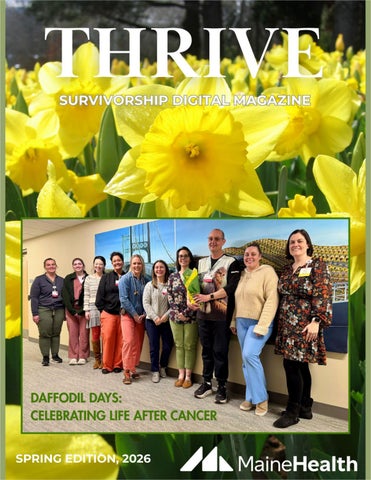
Cover: The MaineHealth Cancer Care team in Brunswick honors survivors on Daffodil Days

SURVIVORSHIP SURVEY

EXECUTIVE SUMMARY 2025

The 2025 Cancer Nation Survivorship Survey captures the voices and realities of over 2,000 cancer survivors across the United States. This year’s findings reveal erosion in trust and satisfaction in care, deepening financial and mental health burdens, and continued underuse of Survivorship Care Plans that could transform long-term outcomes.

At its core, this year’s data reminds us: cancer care is not just about survival, it’s about how we live with and beyond cancer.

Trust in Care vs. Satisfaction in Care

While most survivors continue to trust their doctors, that trust is diminishing, especially among younger and underserved patients. At the same time, satisfaction with care, while still high, has declined across nearly every stage of the cancer journey Greater financial strains and more patients struggling with mental health issues are the biggest drivers of the decrease in satisfaction. Majorities say their providers coordinate care well, yet nearly 6 in 10 patients report having to share medical information between providers themselves.

Mental Health & Loneliness

Emotional wellbeing remains a crisis point. One in three patients experiences depression or anxiety during treatment, and just a third of those feel adequately supported in managing mental health. Younger patients, patients of color, and those parenting children during treatment are more likely to feel isolated during treatment. While patients turn most often to family and friends for support, few report meaningful mental health help from their care teams. Half of those with pre-existing mental health conditions say cancer made it harder to manage them.

Cancer’s mental health toll remains invisible in too many care settings, leaving survivors anxious, isolated, and exhausted.

Survivorship Care Plans: The Confidence Gap

Despite years of advocacy, only one in three (36%) survivors reports receiving a survivorship care plan down from 43% last year. Yet the impact of these plans is undeniable. Most survivors do not feel prepared in most aspects of managing their care post-treatment, but those who have a plan are significantly more confident managing their health, side effects, and mental wellbeing after treatment. Nearly all who receive one find it helpful, and 85% of patients in treatment say they expect one when they finish treatment. Survivorship care planning remains one of the clearest, most actionable paths to improving post-treatment quality of life.

Research & Politics

Survivors overwhelmingly believe cancer research benefits them (9 in 10). At the same time, more than half also believe research is influenced by politics This skepticism underscores a growing crisis of trust not in science itself, but in the systems that fund and communicate it. While faith in innovation remains high, survivors’ faith in fairness is fading. This is an urgent call for transparency, accessibility, and survivor-centered research communication.

Financial Toxicity

Financial distress has reached alarming levels. Half of all survivors report at least one financial hardship tied to their diagnosis, a 12-point increase from 2024. Younger patients are hit hardest, draining savings, delaying purchases, and applying for government aid. The rising cost of health insurance is now the number-one financial concern.

For many, cancer care doesn’t just threaten health it threatens stability.

Treatment Side Effects

Over nine in ten patients experience side effects, yet few feel their care teams were very helpful in managing them, with the exception of nausea. Fatigue, fear of recurrence, and pain top the list. And these side effects don’t always end when treatment does; they shape survivors’ ability to work, parent, and live fully.

Whole person cancer care demands attention to the long shadow side effects cast.

Insurance & Prior Authorization

Insurance remains both a lifeline and a barrier. Those with private insurance are the most likely to report coverage challenges, while those with Medicare or Medicaid fare somewhat better. A quarter say insurance influenced their treatment choices while a third reported having at least one issue with their insurance during treatment. These findings lay bare the inequity in access to care for many patients. Prior authorization delays and denials leave patients anxious and vulnerable, often compounding both physical and emotional distress.

Cancer care must never depend on the fine print of an insurance policy.

The Takeaway

Across every theme trust, mental health, survivorship, finances, and side effects the message is clear: survivors are surviving, but too many are not thriving.

This year’s findings reaffirm why we exist:

We need a Cure for Care care that sees, treats, and covers the whole person, not just the cancer.

We are Cancer Nation. And we are here to be heard.

Cancer Nation is the voice of 18 million survivors demanding a Cure for Care that not only helps us survive, but thrive. We advocate for policies that guarantee whole-person cancer care, survivorship care plans, and financial protections. Together, we elevate survivors’ voices, activate our collective power, and push for a future where every one of us is seen, heard, and supported.

This survey was supported by Pfizer, Genmab. AstraZeneca, The Sheri and Les Biller Family Foundation, Bristol Myers Squibb, Eisai, and Kite – A Gilead Company.

National Cancer Survivors Recognition

The first National Cancer Survivors Day® was held in the US on June 5, 1988, marking the start of a dedicated way to recognize cancer survivorship and celebrate life after cancer. Since then, official Cancer Survivors Day celebrations are held in twenty countries worldwide as a call to action to raise awareness for survivorship issues, and advocate for more resources and research to improve quality of life. Although the month of June is celebrated, the first Sunday in June is recognized as the annual Cancer Survivors Day. This June 7th marks the 39th annual day of recognition and celebration.

From the entire cancer care team, on Cancer Survivors Day and every day, we recognize your courage and are inspired by your enduring strength and resilience. We are honored to be part of your team, and send you continued hope for the future!

Maine Cancer Action Day 2026

Augusta,ME Advocates from across the state joined forces on Maine Cancer Action Day on March 3rd. The American Cancer Society’s Cancer Action Network and advocate attendees connected with state law makers on several key legislative priorities impacting Mainers.

Above from L: Christine B. Foundation’s MattDexter, and MaineHealth’sJenna Albrecht, StephanieSharp,Emma VanHook, andMikala Bousquet

Atleft,from L:StephanieSharp, StateSenatorAnneCarney,and XX.AtR:Emma VanHook,Jenna Albrecht,Mikala Bousquetand Stephanie Sharp

Mary’s Walk

Saco, ME Members of the MaineHealth Oncology Team participated in Mary's Walk on March 29th. MaineHealth was honored to be a sponsor for the event where $211,000 was raised for the Maine Cancer Foundation to support cancer research, prevention, early detection and care.

Mary's Walk is a 2-mile walk in Saco that began in 1999 as a way to honor Mary Kerry Libby, a much-loved member of the Saco-Biddeford community who passed away from Burkitt's Lymphoma. The walk route from Thorton Academy includes a portion of what was

Mary’s daily walk. Since the first Mary’s Walk, the event has raised over $5 million for Maine Cancer Foundation.

AtLeft,from L,Jenna Albrecht,Gina Blaszykand AmberO’Learywithfamily members.

AtRight,from L:Gina Blaszyk,Amanda,Janetand Lisa Fierro, and Amber O’Leary

Above from L: Advocates Shawna AckleyandMaineHealth’sKaren Phelps,NP

ICYMI: In Case You Missed It…

Don’t miss brain tumor survivor Gary Woodland’s inspirational sharing of his struggle with PTSD and his emotional interview after winning the Texas Children’s Houston Open. At right, Gary Woodland in Peaple.com

The NFL Promotes Prostate Cancer Screening on the Big Stage

Did you catch it? For those who watched Super Bowl LX, it was hard to miss the group of famous NFL players, including retired New England Patriot Rob Gronkowski, and former Buccaneers head coach Bruce Arians, who teamed up for an ad with the goal of promoting prostate cancer screening awareness. Arians, a prostate cancer survivor himself, is featured discussing how his cancer was caught early due to screening. The chosen position of the featured players was very intentional, as the message recommended that people “relax their tight ends” since prostate cancer screening starts with a simple blood test. The other featured tight ends included George Kittle, Greg Olsen, Tony Gonzalez, Vernon Davis, Delanie Walker, and Colby Parkinson.

If you happened to miss it while snacking on your favorite gametime food, feel free to watch it for the first time, or again, here: Find a Prostate Cancer Screening | Relax it's a Blood Test. For more information on prostate cancer screening, the American Urological Association has more information here.

Brunswick Cancer Care

Welcomes Dr. Helen Yuan

Brunswick, ME

The MaineHealth Cancer Care team in Brunswick is thrilled to welcome Dr. Helen Yuan to their care team. Dr Yuan completed medical school at the University of Queensland Ochsner Clinical School in Brisbane, Australia, followed by her internal medicine residency as well as her hematology and oncology fellowship at the Ochsner Medical Center in New Orleans, LA.

As a Bates College undergraduate, Dr. Yuan is thrilled to be returning to Maine. When not caring for patients, she enjoys traveling, reading, and playing pickleball and tennis. In addition to English, she speaks basic Mandarin and basic French.

Natalie E Stec, MD

Helen Yuan, MD

Neuro-Oncology Team Welcomes

Dr. Natalie Stec

Scarborough, ME

The MaineHealth Cancer Care team in South Portland recently welcomed Dr. Natalie Stec to their neuro-oncology team. Dr Stec completed her medical training at the Medical University of Gdansk in Poland, her neurology residency at the Henry Ford Hospital in Detroit, MI, and her neuro-oncology fellowship at Mass General Hospital in Boston, MA. She's board certified in neurosurgical oncology.

Dr. Stec shared: “Brain tumors are life-changing for patients and their loved ones, and I consider it a true privilege to care for people facing these challenging diagnoses. I believe in a holistic approach to patient care, focusing not only on advanced treatment options but also quality of life and support for both patients and their families.”

Muscle Strength, Longevity, and Cancer Survivorship: Why Strength Matters for Women

ByJayHarness,MD,FACS A recent study published in JAMA Network Open provides compelling evidence that muscular strength plays a critical role in longevity among older women. The findings are especially important for women living with or recovering from cancer, as muscle strength is closely linked to resilience, functional independence, and longterm survivorship.

Study Overview: Researchers analyzed data from 5,472 women aged 63 to 99 years participating in the Women’s Health Initiative Objective Physical Activity and Cardiovascular Health (OPACH) study. Participants were followed for an average of 8.4 years, during which 1,964 deaths occurred. Two simple measures of muscular strength were evaluated: handgrip strength, measured with a dynamometer, and chair stand performance, which measures how quickly a person can rise from a chair five times without assistance. Both tests are widely used indicators of muscle function and can easily be performed in clinical settings. The researchers found a clear and consistent pattern: women with greater muscle strength had significantly lower risk of death from all causes. Women in the highest grip-strength group had about a 33% lower mortality risk compared with women in the lowest strength group. Importantly, this association remained strong even after adjusting for many factors that influence health and survival, including age, smoking status, blood pressure, body weight, comorbid illnesses, and overall physical function. The relationship also persisted after accounting for physical activity levels, sedentary behavior, walking speed, and systemic inflammation. These findings suggest that muscle strength itself is an independent marker of healthy aging and longevity.

Strength Matters Even Without High Levels of Aerobic Exercise

One of the most important findings from this study was that the survival benefit associated with greater muscle strength was present even in women who did not meet recommended aerobic exercise guidelines. This observation has major implications for cancer survivors.

Many cancer patients and survivors experience fatigue, reduced physical capacity, or treatment-related side effects that make sustained aerobic exercise difficult. However, this study suggests that maintaining muscular strength alone may still provide important health benefits. In other words, strength training remains valuable even when aerobic activity is limited.

Why Muscle Strength Matters for Cancer Survivors

Cancer treatments including chemotherapy, radiation therapy, hormonal therapy, and prolonged inactivity often lead to significant loss of muscle mass and strength. This condition, commonly known as sarcopenia, is associated with increased fatigue, reduced physical function, metabolic complications, and poorer clinical outcomes. Muscle strength, therefore, serves as an important indicator of physiological resilience.

Maintaining strong skeletal muscles can help cancer survivors:

• Maintain independence and mobility

• Reduce the risk of falls and hospitalization

• Improve metabolic health

• Enhance quality of life

• Support long-term survivorship

For many survivors, rebuilding strength after treatment is a key step toward restoring physical confidence and functional independence.

Muscle Strength vs. Muscle Mass

Another important insight from the study is that muscle strength may be more important than muscle mass alone. While body composition measurements often focus on muscle quantity, strength reflects muscle quality, neuromuscular function, and overall physical capability. Two individuals may have similar muscle mass but very different levels of functional strength. For this reason, interventions that improve muscle performance and strength such as resistance training may have the greatest impact on health outcomes. This study highlights an important message for women cancer survivors: muscle strength is a powerful predictor of longevity and health.

Strength training should be considered a core component of survivorship care, helping patients regain resilience, maintain independence, and support long-term well-being.

Simply put, stronger muscles support stronger survivorship.

Reference: Muscular Strength and Mortality in Women Aged 63 to 99 Years. Michael J. LaMonte, PhD; Eric T. Hyde, PhD; Steve Nguyen, PhD; Esmeralda Castro, PhD, et al.JAMA Network Open. 2026;9(2):e2559367. doi:10.1001/jamanetworkopen.2025.59367

Obesity, Cancer, and Why Movement Matters More Than Ever

ByJayHarness,MD,FACS A major new study published in JAMA delivers a sobering message but also an important opportunity for action. Researchers found that obesity among U.S. adults has more than doubled over the past 30 years and is projected to continue rising well into the future. For people living with cancer and for cancer survivors this trend matters deeply.

Why obesity matters in cancer care

Obesity is not just a number on a scale. It is closely linked to higher risks of developing several cancers, including breast, colorectal, endometrial, pancreatic, kidney, and liver cancers. For those already diagnosed with cancer, obesity is associated with:

• More treatment-related side effects

• Increased surgical and radiation complications

• Higher risk of cancer recurrence

• Reduced physical function and quality of life

• Greater risk of heart disease, diabetes, and other chronic illnesses

This new study estimates that over 42% of U.S. adults were living with obesity in 2022, and by 2035, nearly 1 in 2 adults may fall into this category if trends continue. These numbers help explain why cancer survivors increasingly face complex health challenges long after treatment ends.

Disparities that affect real people

The study also highlights important differences by age, sex, race, ethnicity, and geography. Obesity rates were highest among women especially Black and Hispanic women and were particularly concerning among younger adults. Earlier onset of obesity means the body is exposed longer to inflammation, hormonal changes, and metabolic stress, all of which can influence cancer risk and long-term survivorship.

For cancer survivors, this reinforces an essential truth: your health journey does not end when treatment ends. Survivorship is about restoring strength, function, confidence, and long-term well-being no matter your age or background. The good news: lifestyle change works

While these statistics may feel overwhelming, they also point toward solutions that are within reach. Decades of research show that regular physical activity and healthy lifestyle habits can:

• Improve treatment tolerance

• Reduce fatigue, anxiety, and depression

• Improve strength, balance, and daily function

• Help manage body weight and metabolic health

• Lower the risk of cancer recurrence and other chronic diseases

Exercise is not about perfection or extreme workouts. Even modest, consistent movement tailored to your abilities and treatment status can have powerful benefits.

Exercise is Medicine—for survivors

At CancerFitness.org, we believe exercise is a form of medicine for cancer survivors. Structured, safe physical activity programs often called Exercise Oncology are designed specifically for people before, during, and after cancer treatment. These programs focus on:

• Aerobic fitness (walking, cycling, swimming)

• Strength training to rebuild muscle

• Balance and flexibility to reduce fall risk

• Individualized progression based on energy, symptoms, and goals Importantly, exercise can be adapted for everybody, at every stage of cancer care. A call to action for survivors

This new obesity research is not meant to alarm it is meant to empower. If you are living with cancer or navigating survivorship, now is the time to take an active role in your long-term health:

• Talk with your oncology team about safe physical activity and Lifestyle Medicine

• Start small and build gradually

• Seek programs led by professionals trained in cancer exercise

• Focus on progress, not perfection

You are not alone on this journey. With the right guidance, movement can become a source of strength, control, and hope. Your body has already endured a great deal. Exercise is one way to help it heal, recover, and thrive. For practical guidance, survivor-friendly resources, and evidence-based programs, explore more at CancerFitness.org

You’ve been diagnosed with cancer.

NUTRITION

Support the immune system and decrease inflammation in the body.

1. Eat more antioxidant-rich foods. Examples: Carrots, sweet potatoes, spinach, tomatoes, grapefruit, blueberries, peanuts, sunflower seeds, mushrooms, cantaloupe, kiwi, mango, and almonds (most fruits, vegetables, nuts and seeds are antioxidant rich foods).

2. Eat fewer pro-inflammatory foods. Examples: Candy bars, cookies, chips, crackers, steaks, ground beef, sausages, salami, lunch meats, sugar-sweetened beverages (soda, Gatorade, juice etc.), and other highly processed foods.

3. Eat more foods prepared with moist cooking methods (boiled, steamed) and fewer foods prepared using dry heat cooking methods (grilled, fried).

Is there anything that YOU can do?

SLEEP

Recharge your batteries so you start the day at full power.

4. Increase fiber to 40-45 grams/day. To do so, eat mostly unprocessed, whole plant foods like these examples as a resource to gauge your fiber intake:

Breakfast: One serving of oatmeal (5 grams of fiber), topped with banana and raisins (3 grams of fiber) and almond milk.

Morning snack: One modest handful of almonds (4 grams of fiber) mixed with two chopped dates (2 grams of fiber)

Lunch: Hummus pesto pita sandwich with one pita (4 grams of fiber), ½ cup of hummus with pesto (2 grams of fiber), 8 cherry tomatoes (1 gram of fiber), 1 cup spinach (4 grams of fiber), 6 baby carrots (1 gram of fiber) and a dessert of two clementine oranges (3 grams of fiber).

Afternoon snack: Avocado on whole-grain toast with sriracha (5 grams of fiber).

Dinner: Veggie noodle soup with broccoli, onions, spinach, whole wheat noodles grams of fiber in one 2-cup serving) and one wheat dinner roll (2 grams of fiber).

dinner treat: 3 cups air-popped popcorn small amount of coconut oil and various on top (3 grams of fiber).

1. Ensure 7-9 hours per night, or longer as needed.

2. Use your bed for sleep and sex only.

3. Limit or avoid screen time 90 minutes prior to sleep.

4. Avoid drinking alcohol within 3 hours of sleep.

5. Increase daytime exposure to sunlight.

6. Keep a consistent sleep/ wake schedule.

ACTIVITY

You will see benefits with ANY amount of physical activity!

The more the better, but the goal is at least 150 minutes of moderate intensity activity per week.

1. Strength training (2x per week on non-consecutive days).

2. Work movement into your daily life: Use physical transportation (walk, bike, etc.) instead of driving.

If sitting for a while, take a standing break every hour, get up and go for a short walk. Take the stairs whenever possible.

AVOIDANCE OF RISKY SUBSTANCES

Maximize your body’s ability to recover. Use of substances such as tobacco or alcohol may interfere with the healing process.

1. For tobacco, seek information about smoking cessation support from your primary care provider.

Quitting smoking means breaking the cycle of addiction and essentially rewiring the brain to stop craving nicotine.

The benefits of quitting smoking begin in as little as 1 hour after the last cigarette

The sooner a smoker quits, the faster they will reduce their risk of cancer, heart and lung disease, and other conditions related to smoking.

2. For alcohol, seek information about alcohol use/abuse support from your primary care provider.

CONNECTEDNESS

species; we are together!

1. The single most important predictor of happiness and longevity is having strong and positive social connections.

2. Talk to your health care provider about local and online support groups or previous patients willing to connect (limit social media to meaningful connections).

3. Consider joining an exercise or other activity group.

4. Embrace your family and friends and allow them to support you.

5. Think outside yourself - see what you can do to help someone else today.

STRESS MANAGEMENT

A little stress in life is good, but if we experience a lot, especially over a long period of time, then we need healthy coping mechanisms.

1. Healthy activities that help reduce/ cope with stress:

Physical activity

Sleep

Exposure to natural light/time in nature

Mindfulness training

Breathing

2. When feeling stressed, stop, relax, observe, and respond.

3. Breathing in for 5 seconds and then out for 5 seconds can help you maintain composure in stressful moments.

4. Helpful apps are available (eg. Headspace, Calm, Tapping Solution, etc.)

Additional Resources: American Institute for Cancer Research. Infographics and Figures. https://www.aicr.org/resources/media-library/

DIP YOUR TOE IN

Dive into the "Dip" category, where small actions become mighty catalysts for change, taking mere moments in your day. Discover the power of tiny yet impactful steps that pave the way for a healthier you. Whether it's a mindful pause, a brief stretch, or a nutritious bite, these small actions collectively create a ripple effect of positive habits.

Nutrition

Add one serving size of plants into each day. This equates to a handful of fruits, vegetables or whole grains or one thumb sized portion of nuts or seeds.

Use unsweetened soy milk to make a fruit smoothie. Incude nut butter, spinach, or chia seeds to add more plants.

Include brown rice, quinoa, or sweet potatoes in your lunch or dinner. Cook large batches to use for several meals.

Instead of animal protein in the evening, go for beans or lentils. Look for convenient options like frozen pouches or dried varieties.

Choose crunchy carrot sticks or sweet pineapple chunks for a healthy snack option.

Social Connections

Start each day with one direct connection to an individual. Keep it as simple as wishing them a great day!

Commit to three affirmations to say in the mirror when you are getting ready for your day. Consider using “I am” language.

Each week, reach out to someone you haven’t spoken to in a while Send a thoughtful message or suggest meeting for coffee in person or online!

Sleep

Set consistent wake and sleep times during the week.

Create a 5-minute morning routine with water, light, and movement.

Limit caffeine intake after 2 pm.

Reserve your bedroom for sleeping.

Physical Activity

Aerobic:

Include 5-10 minutes of planned exercise each day either in one or multiple sessions.

Take a 2-minute walk during TV breaks. If you can't leave your seat, try chair marches to keep moving.

Use the stairs instead of the elevator whenever possible. Add an extra flight of stairs in the morning and evening at home.

Put on some music and dance for 5 minutes after dinner to get your heart pumping.

Strength:

Do 10 sit-to-stands from your bed or countertop push-ups before or after brushing your teeth.

Complete 20 calf raises while washing dishes or waiting for your microwave timer.

While sitting, squeeze your buttock muscles for 3 seconds, release, and repeat for 12 rounds. Feel those abdominal muscles kick in!

Flexibility:

Complete 10 big arm circles forward and then backward to loosen up your shoulders.

While sitting, place your right ankle on top of your opposite lower leg or knee to feel a stretch in your right hip. Hold for one minute if possible.

Place both arms on the top of your kitchen counter or back of a chair. Step back as you try to press your head through your arms for a good stretch.

Balance:

Stand on one foot for 30 seconds while working in the kitchen, brushing your teeth, or waiting in line with your shopping cart Use the counter or cart for support as needed Tighten your abs for added stability!

Stress

Identify one individual that causes you stress and commit to not letting them control how you feel.

Recognize one external stressor to act on. For example, if overwhelmed, prioritize and tackle three small tasks

Minimize distractions by using focus mode, turning off, or putting away your phone

Reduce Risky Behaviors

Exchange or reduce one unhealthy habit with an alternative or strategy for self-care.

Cut out sugary drinks like sodas, sweet teas, or coffee beverages; replace them with no sugar added sparkling water or flavored teas.

Set reminders or alarms for short "movement snacks" every hour you're awake.

Trim your weekly alcohol intake by one drink; substitute with a nonalcoholic option or flavored water.

WADE INTO THE SHALLOW END

Here we elevate daily habits into restorative routines lasting minutes to hours. These habits can set the foundation for sustainable ways to meet lifestyle medicine recommendations in each of the six pillars.

Nutrition

Incorporate 3-5 servings of whole plant foods for most days of the week.

Make every day as simple as 1, 2, 3 by adding 1 serving of plant-based foods at breakfast or for a snack, 2 at lunch and 3 at dinner.

Begin batch cooking. Prepare large quantities of cooked whole grains and beans as well as prepared vegetables and washed/ cut fruit. This will make it easy to throw combinations of foods together to quickly and easily assemble a meal.

Let someone else do the cooking! Look for plant-based options when you eat out at restaurants or pick up a prepared meal to try new ideas for tasty menu items.

Social Connections

Engage family and friends in meal preparation and aim for at least two weekly shared meals Be creative to meet online if you live alone

Explore local in-person groups aligned with your interests, whether it’s a book club, church, or support group. Seek out areas of interest or new learning opportunities.

Commit to making eye contact and smiling at everyone you connect with on one day each week. Keep your phone tucked away.

Reduce Risky Behaviors

Minimize risky behaviors daily by exchanging unhealthy for heathier ones.

Limit or replace sugar sweetened beverages with alternatives such as plain coffee, tea, or sparkling water

Explore resources such as quit lines, support groups, counseling, and medication for assistance with smoking, tobacco, or vaping.

Incorporate 5-10 minute activity breaks into your day; set a calendar reminder with an alarm for a prompt.

Reserve alcohol consumption for weekends only or better yet, not at all.

Physical Activity

Aerobic:

Engage in daily exercise of at least 10 minutes. Try different types, locations and intensities.

Swap TV for family yard games or engage in active video games after dinner.

Carve out 15 minutes for a refreshing walk during lunch or a break set a calendar reminder for consistency.

Elevate your seated meetings with a foot bike or under desk treadmill.

Strength:

Schedule three 10-minute bodyweight strength workouts each week, marking them on your calendar.

Participate in a strength class either in person or online 2x weekly.

Flexibility:

Start or end your day with yoga movements. Check out simple beginner flows on YouTube.

Balance:

Try a split stance or stationary lunge. Start by stepping one foot back keeping your stance hip width apart. Drop your back knee towards the floor. Pause and slowly return to the starting position. Repeat for 10 reps and switch sides.

Stress

Identify a single stress management strategy that you can do anytime, anywhere, such as breathing or mindfulness. Focus on using this anytime you feel stressed and set a reminder for a set practice time each day.

Establish a specific schedule for personal, family, and work activities.

Incorporate 5-10 minutes of mindfulness each day using apps, online content or simply sitting in nature.

Incorporate a 2-3 minute daily breathing practice into your routine. Whether during your morning coffee, shower, or entering your workspace, try techniques like diaphragmatic breathing, the 4-7-8 method, or square breathing

Sleep

Make a commitment to create the ideal sleep environment. Consider temperature, light, sound, comfort. Use things like a sound machine and sleep mask or essential oils.

Dedicate the 30 minutes before bedtime to relaxation through activities like reading, meditation, gratitude journaling, or enjoying a bath or shower.

Establish a daily morning routine that allows you to do one thing you need to, one thing that is on your task list, and one thing for enjoyment. Allow at least 5 minutes for each task. Rise earlier if necessary. Commit to this every day of the week.

DIVE ALL THE WAY IN

If you're prepared to make significant changes, dive into this category to guide you in turning healthy habits into a lasting lifestyle. Challenge yourself to establish and accomplish meaningful goals, converting habits into a dynamic force for positive change. This immersive approach serves as your key to sustained health improvements and reaching new milestones on your journey to wellbeing.

Nutrition

Eat a predominantly plant-based diet.

Conduct a thorough review of your pantry and freezer; eliminate highly processed foods. If you're hesitant to discard them, plan one weekly meal to use these items and commit to not replenishing them.

Develop a plant-based grocery list and compile 10 family-favorite recipes. Keep them prominently displayed on your fridge or counter for easy access.

Involve your family and friends to embrace a plant-based lifestyle. Pledge to contribute plant-based items to shared eating occasions, ensuring everyone can enjoy plant-based options during holidays and events.

Social Connections

Commit to volunteering for one year for an organization or cause that you are passionate about. Choose one area where you can make a regular contribution.

Dedicate time to one weekly social outing with family or friends; add it to your calendar for consistency and ask others to help plan ideas.

For 30 days, take a break from non-essential social media. Keep

Sleep

Make your bed a tech-free zone before sleep. Avoid electronics for 30-60 mins. Use dark mode with low brightness on Kindle/ iPad. Set sleep mode on your devices.

Limit evening eating by consuming your last meal earlier and limiting Limit evening water and food intake, making dinner your final nourishment.

Establish a sleep ritual for difficulty falling or staying asleep:

• Lengthen breaths (inhale for 1, 2, 3; exhale for 1, 2, 3, 4, 5, 6)

• Try Alphabet categorization (fruits, vegetables, empowering words)

• Engage in progressive relaxation from head to toe.

Physical Activity

Aerobic:

Strive to meet physical activity recommendations for all adults.

Integrate 30-minute daily walks into your routine, preferably outdoors.

Aim for 10,000 or more steps each day, utilizing a tracker for accuracy

Engage in 15-20 minutes of high-intensity interval training (HIIT) each week adjusting movements to your comfort level while exploring new motions.

Strength:

Dedicate 2-3 days per week to a 20-30 minute strength program, targeting major muscle groups. This can be done at home or in a gym.

Gradually increase repetitions or weight by 10% each month. Track progress in a notebook or online journal.

Integrate 1-2 new strength exercises into your routine monthly. If time is limited, replace a familiar exercise with a new one.

Flexibility:

Make a commitment to 5-minute stretches every morning and before bedtime for the next 30 days. Look for online ideas to follow along to!

Balance:

Join a weekly yoga, balance or t’ai chi class, either in person or online.

Stress

Each week, plan and complete a creative project like cooking, writing, crafting, reading, or playing music. Focus on only pleasurable activities versus tasks needing to be accomplished. Set a schedule to help you get consistent such as Sunday mornings.

Take 30 minutes each day to enjoy nature by sitting, walking, running, observing, or going to the park. Reduce technology use and use headphones to create a relaxing environment.

Find a physical activity that brings joy and helps you focus. Whether it’s a workout video or a class, stay present in the moment.

Start a daily gratitude practice by writing down or sharing three things you are grateful for each day to reinforce positive self-talk.

Reduce Risky Behaviors

Reduce or eliminate as many unhealthy habits as you can.

Track added sugars in your daily intake for one week with a nutrition app or pen and paper. Strive to consume less than 25-35 grams each day.

Add one new physical activity or project each week for at least one hour that is not exercise. This could be working in your yard, organizing a closet or trying a dance class.

Commit to a dry month if you have been consuming alcohol on a regular basis. If you are not a regular consumer, commit to at least six months or one year

Lifestyle Medicine Team Offers New Cookbook

Click the cover below to find nutritious AND delicious options to support goals for healthy eating!

Nutrition Education Services Center | Leukemia & Lymphoma Society

I saw my doctor today.

Did you ask your questions?

Yes! Thanks for helping me with the list.

Support from a Survivor

When facing breast cancer, connecting with someone who knows what you’re going through can be a crucial form of support. Some challenges can only be understood by someone who has been there. The American Cancer Society Reach To Recovery® program connects you with a trained volunteer who is a breast cancer survivor. Our volunteers provide one-on-one support to help you cope with treatment, side effects, and more. With a convenient mobile app and website, you can connect and chat wherever and whenever.

“Cancer is not just physical, it’s emotional and psychological. You have moments where you wonder if your feelings, thoughts or emotions are normal. Speaking to survivors validates these feelings.”

FIND A MATCH

SIGN UP

Create a profile on reach.cancer.org or our mobile app, ACS Reach.

MATCH

See volunteers who faced a similar diagnosis

CONNECT

Chat, call, or message for one-on-one support

To learn more, visit reach.cancer.org or search for ACS Reach To Recovery on Google Play or the App Store.

Volunteers do not provide medical advice. Reach To Recovery is a free program.

Our No-Cost Support Services

Learn more about all the services you can access as a cancer patient, survivor, care partner, family, or friend here at the Dempsey Center.

Counseling

Integrative Therapies

Movement and Fitness

Nutrition

Support Groups

Awareness & Events Calendar

April:

Esophageal Cancer Awareness Month

Head & Neck Cancer Awareness Month

National Minority Cancer Awareness Month

National Adolescent and Young Adult Cancer Awareness Week 4/6 to 4/10

May:

Skin Cancer Awareness Month

Brain Cancer Awareness Month

World No Tobacco Day 5/31

June:

Cancer Survivors Month

National Cancer Survivors Day 6/7

Cancer Survivors Dragon Boat Paddle, Norway 6/28

Survivorship Digital Magazine Archives

Turn static files into dynamic content formats.
Create a flipbook