HOLE NOTES
HOLE NOTES
The Official Publication of the MGCSA V. 61, #1 February 2026
PRESIDENTIAL PERSPECTIVE
JOHN CAMERON, CGCS
NIKK DICKERSON, CGCS 10
BECOMING CTEM
TANNER KNUDSEN, CTEM
TINA ROSENOW 18
MY LONG JOURNEY TO CGCS
GROWTH ISNT ALWAYS LINEAR
UMN:WEB BASED RESOURCES JON TRAPPE

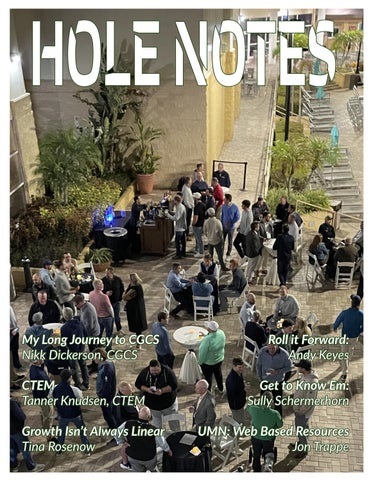
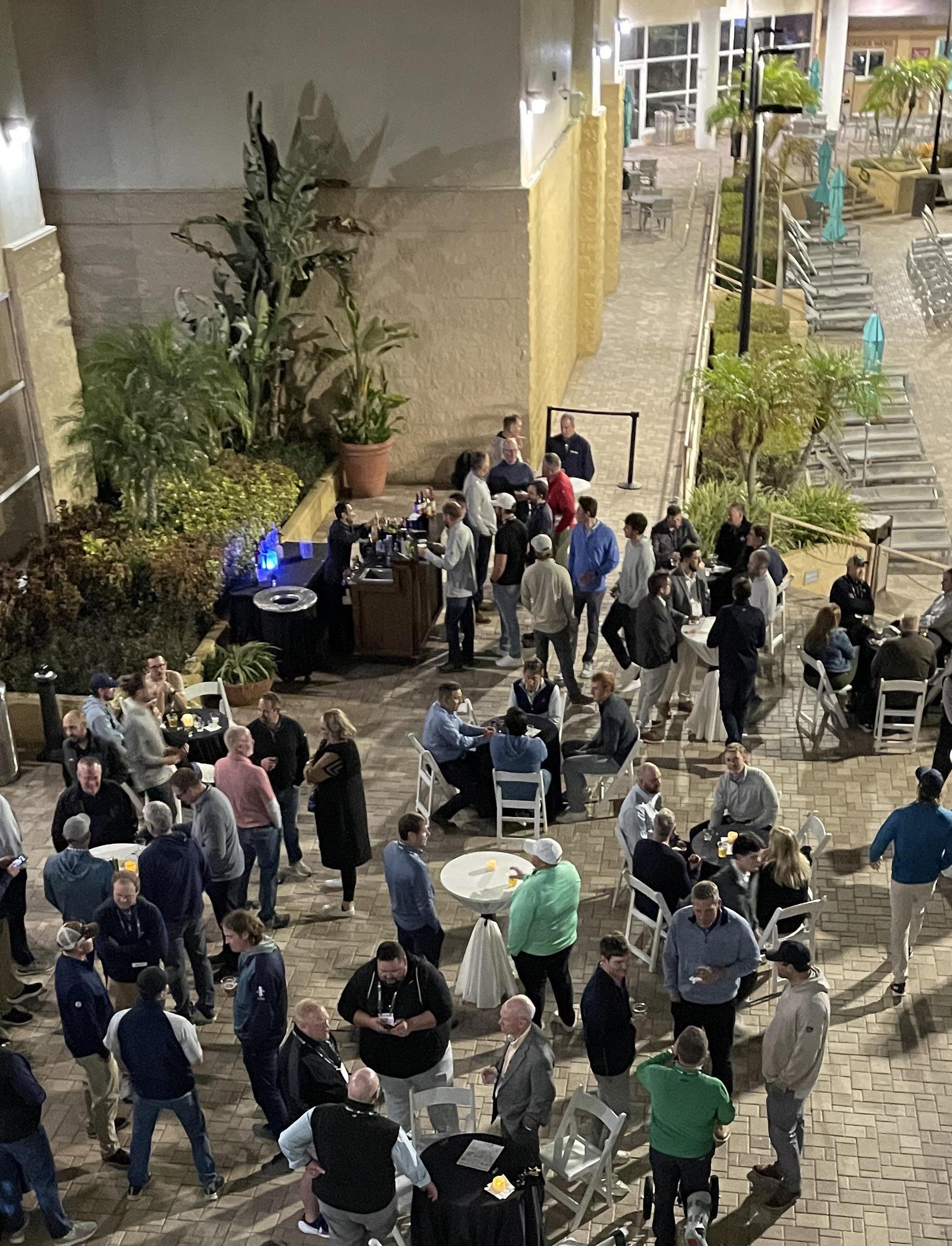
Cover: National Night Orlando
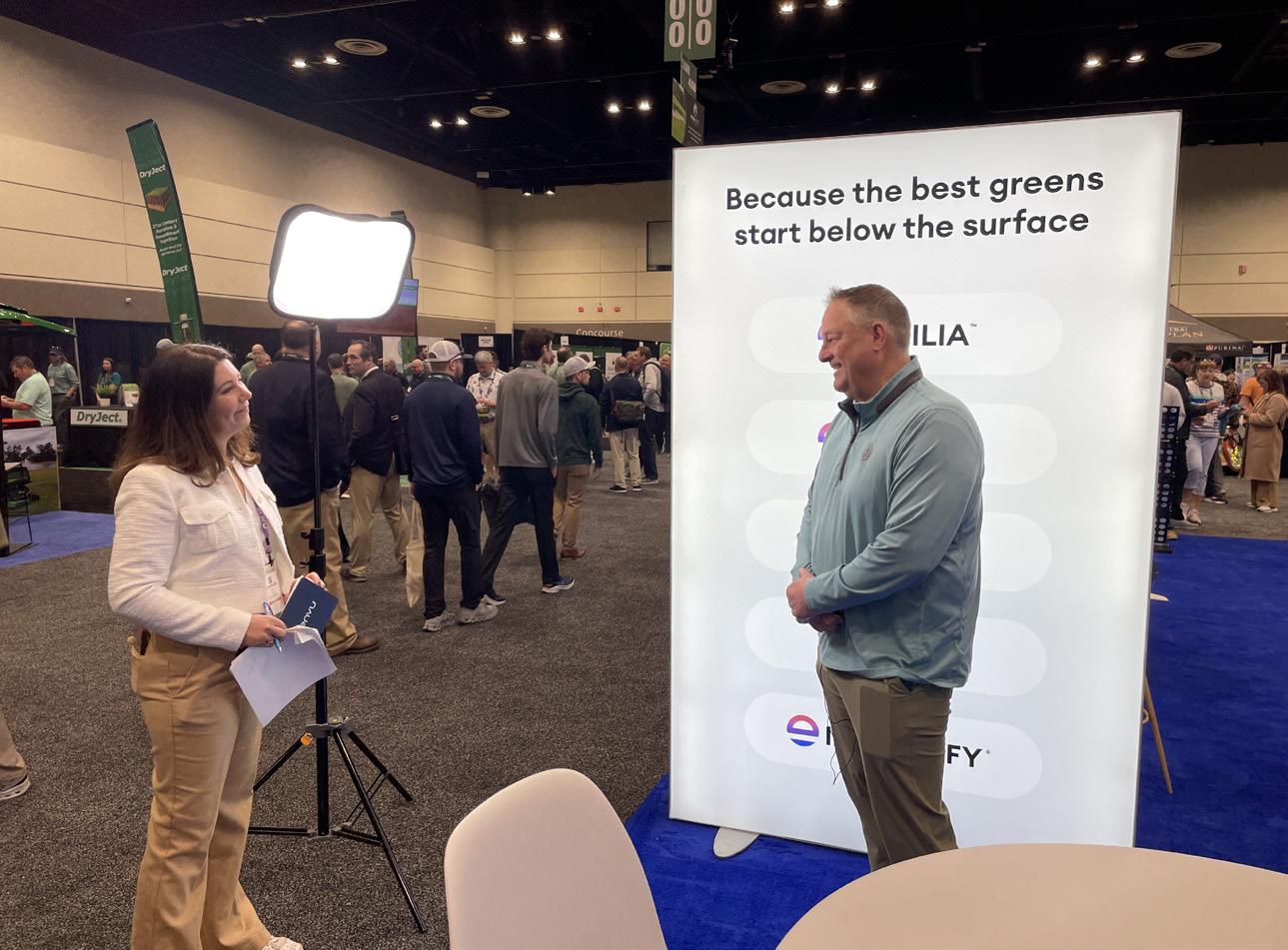
Above: First thing I saw on the trade floor, Tom Schmidt getting interviewed by Envu.
Board of Directors
President: John Cameron, CGCS
Vice President: Jason Scharfencamp
Sec/Treas: James Westendorf
Ex-Officio: Nikk Dickerson, CGCS
Director: Wade Huesman
Director: Reed Bohm
Director: Dan Ament
Affiliate Director: Brandon Young
Affiliate Director: Jay Yonak
Executive Director: Chris Aumock MGCSA
PO Box 2028
Maple Grove, MN 55311
Hole Notes (ISSN 108-27994) is digitally published bi-monthly, 6 issues per year, by the Minnesota Golf Course Superintendents’ Association, PO Box 2028, Maple Grove, MN 55311. Chris Aumock Publisher. Please send any address changes, articles for submission, advertising and concerns to chris@mgcsa.

I am writing this fresh after attending the GCSAA Conference and Trade Show in Orlando. I never thought I’d complain about being cold in Florida, but wow, those first few nights and mornings were chilly! This year, the GCSAA was celebrating its rich 100 year history. The centennial theme was evident at every seminar, event, and on the trade show floor. Seeing thousands of industry professionals gather to celebrate 100 years of the GCSAA made this quote from founding member Colonel John
Morley hit home, “No life is, or can be, selfexistent. We depend on each other.” This quote was repeated several times in the opening ceremony, displayed on banners, and printed on commemorative coins that were distributed to all the guests and attendants. I really enjoyed hearing from the “Big Three” of golf leadership—Jay Monahan (PGA TOUR Commissioner), Mike Whan (CEO of the USGA), and Rhett Evans (CEO of GCSAA) during the opening ceremony.
John Cameron, CGCS
North Oaks Golf Club
While their roles within the industry differ, their conclusion was unanimous. The Golf Course Superintendent is the essential heartbeat to the game of golf. But as Colonel Morley suggested, we aren’t built to do this alone. Our strength doesn’t come from our individual degrees, equipment, or facilities. It comes from our dependence on each other and uniting as an industry.
While being in Orlando was a highlight for many, the Board of Directors recognizes that the cost
of such events can be a barrier. If you are interested in attending these national gatherings or educational seminars but do not have an employer who supports such travel or education financially, the Board has created ways for you to apply for this support through the MGCSA. Between our Professional Development Program, Conference and Trade Show & Tournament Volunteer support, we want to ensure that every member has the opportunity to grow regardless of their facility’s budget. If you find yourself in this position, I encourage you to reach out to our Executive Director, Chris Aumock to see how the MGCSA can help you and your facility.
While there was plenty of great formal education in Orlando, my favorite part of the conference wasn’t found in a classroom. It
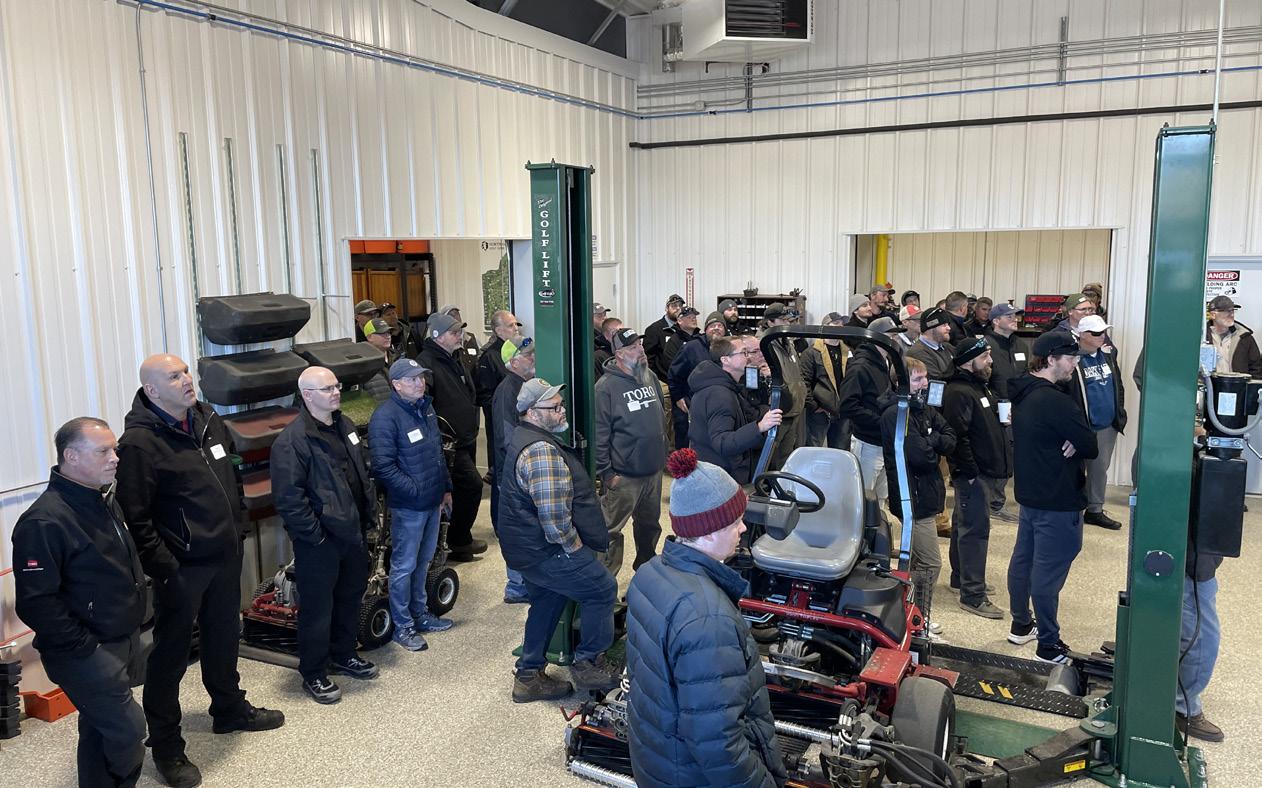
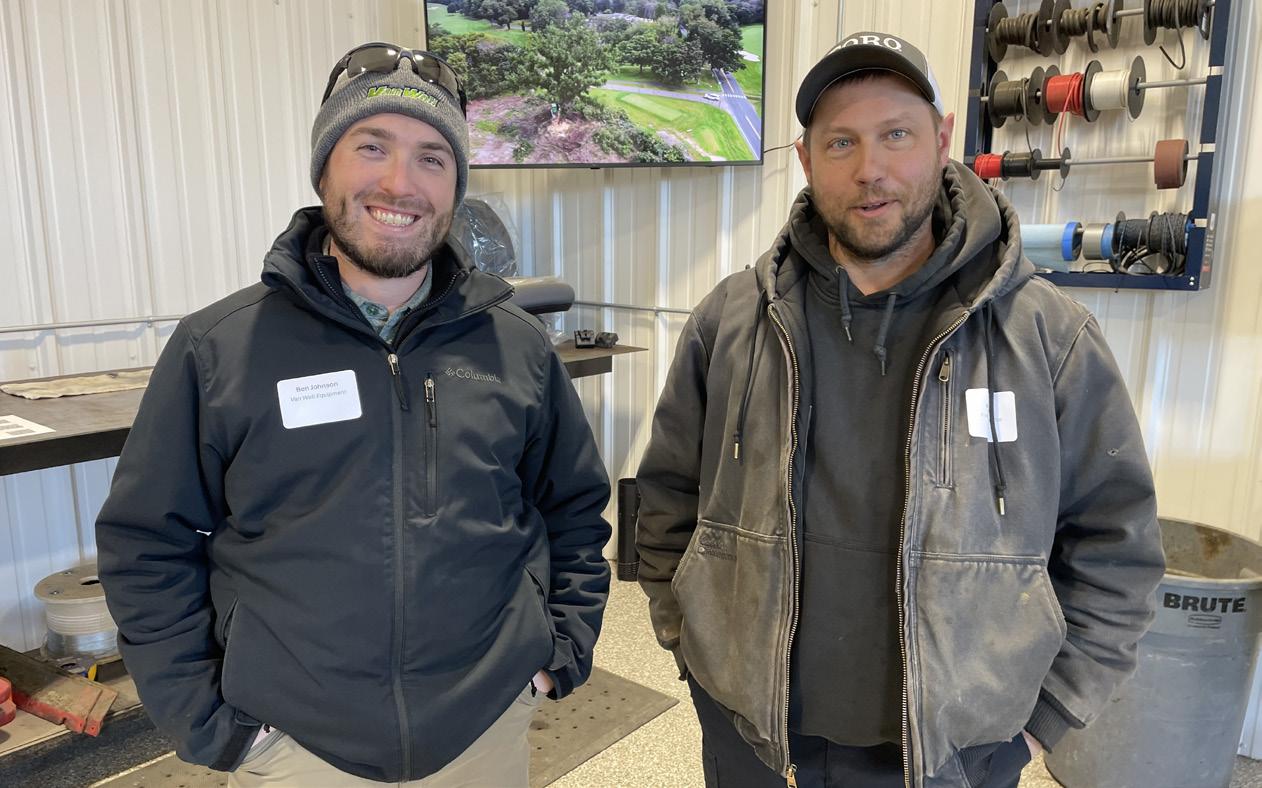
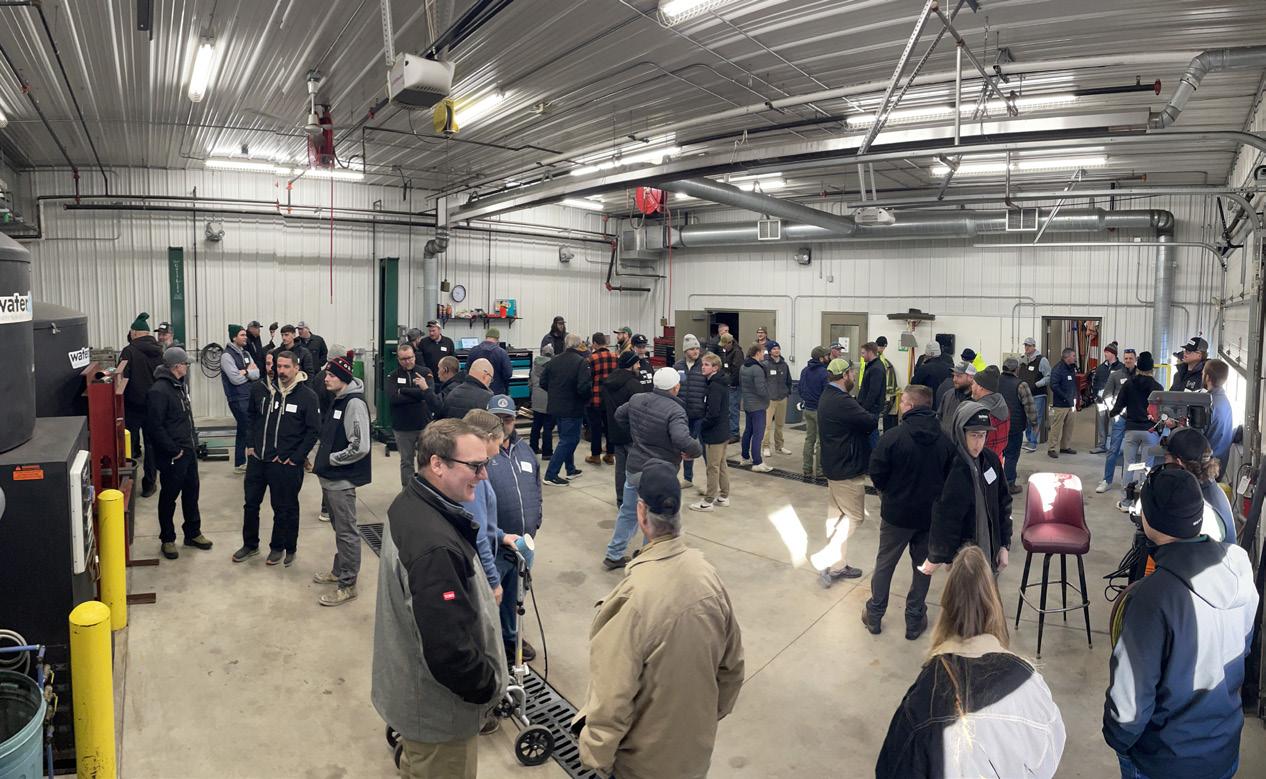
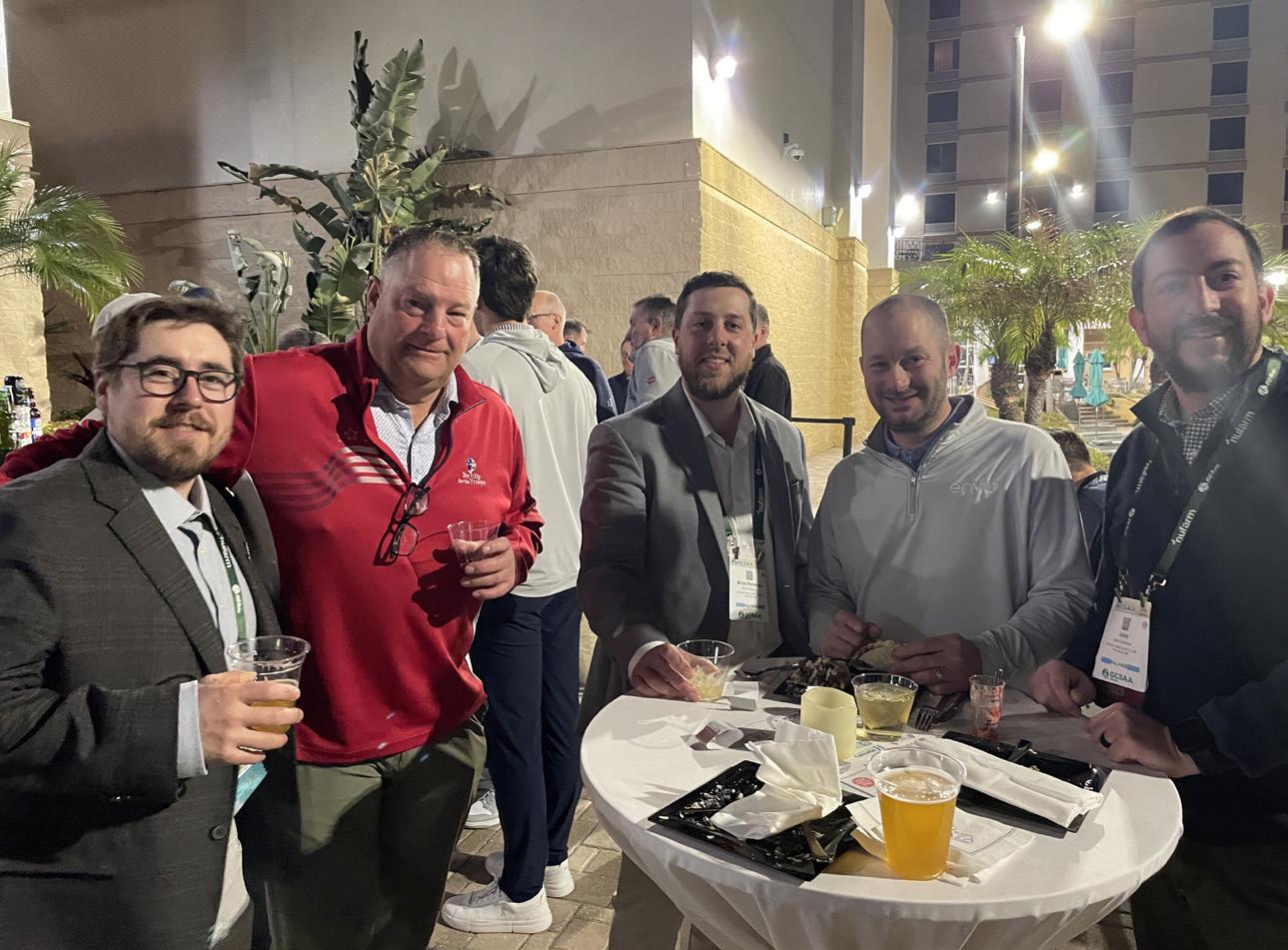
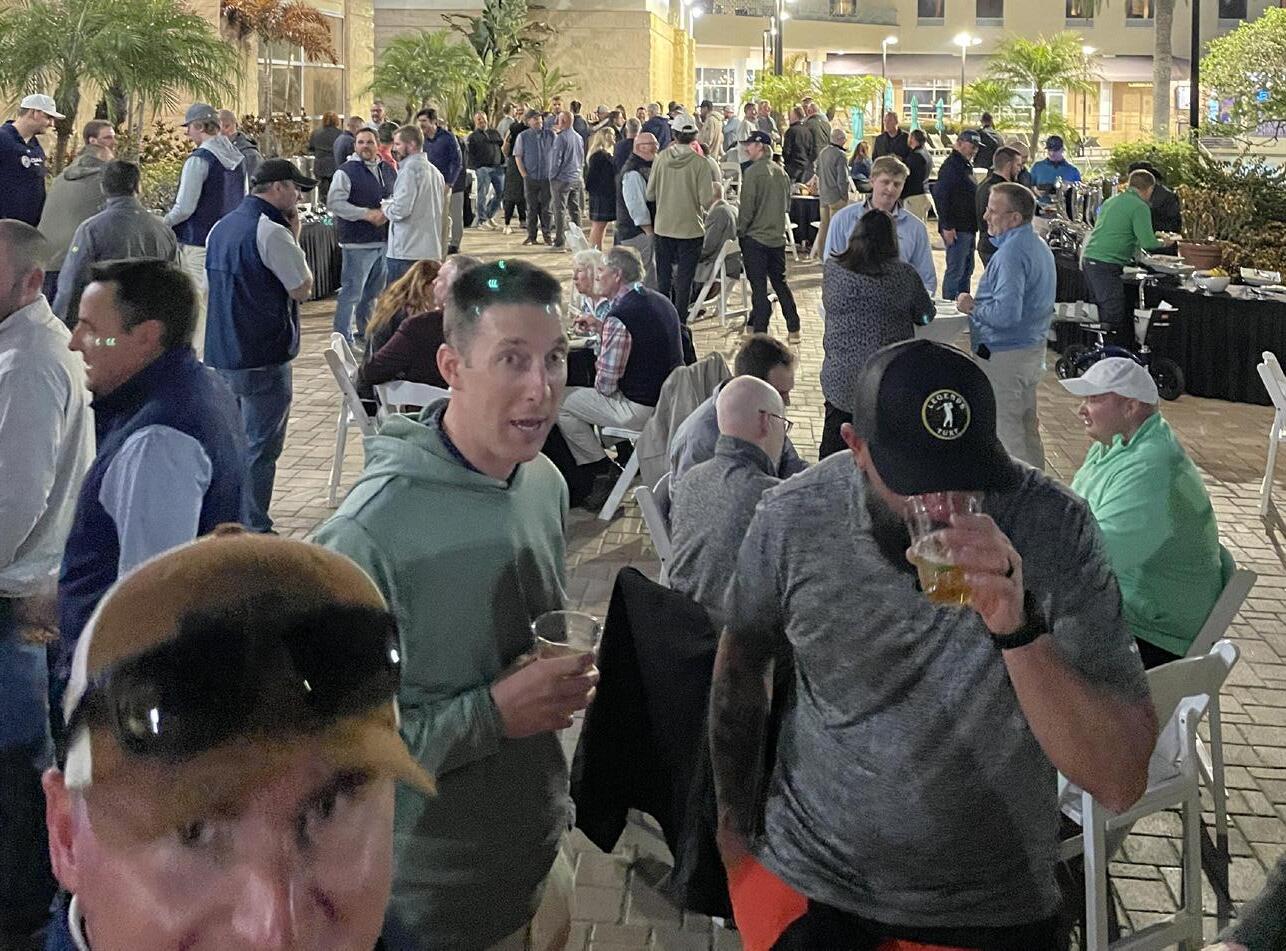
was the overall gathering, sharing of knowledge, and the chance to have conversations regarding similar efforts and struggles that truly further our industry. We saw this clearly during our ‘national night out’ at the Rosen Plaza with over 130 members of the MGCSA in attendance. That same energy was present back home in January during this year’s Shop Tours, where another 120+ members were present. There were no powerpoints, slides, lecturers at these gatherings, yet the wealth of knowledge being exchanged across those rooms was as valuable as any seminar that could be offered. This idea of gathering, sharing, and advancing the industry together is what makes the MGCSA special to me.
A prime example of the MGCSA’s collective strength is the Rounds
4 Research program. We are currently soliciting donations for the upcoming auction, and I want to highlight the incredible job this association has done in the past. Minnesota has recently ranked as the 5th largest generator in the nation. That is an incredible feat when you consider we are competing against states like Florida, California, and New York which have high concentrations of highend “sellable” rounds at big name clubs that are recognized on PGA tour calendars. The proceeds from these donated rounds go directly toward the University of Minnesota Turf Research efforts. This research can be beneficial toward not only the industry but for local course operations as well. To stay near the top of the national leaderboard and keep our research programs funded, we need
to remain constant in our efforts. If your club is able to donate a round, please consider doing so. It is one of the most direct ways you can help support the future of our industry.
As we transition back to Minnesota and look toward the Spring, I want to keep the momentum of “... depend on each other” moving. Our committees are currently gathering, and I want to invite you to help advance the profession together. If you’ve ever thought about being more involved, please know that it isn’t a large time commitment. Our committees are designed to be accessible. We are welcoming members who are willing to share an idea, provide a fresh perspective, or offer a bit of expertise. It’s as easy as a quick phone call or an email to any of the chairs listed below.
● Advocacy & Stewardship: John Cameron
● Education & Research: James Westendorf
● Membership: Jason Scharfencamp ● Equipment Manager & Assistant Superintendent: Wade Huseman
Our Advocacy Committee has recently met with the Minnesota Golf Association lobbyist, John Berns to begin preparing for Industry Day on the Hill which will be held on Thursday, March 12th. He reiterated the importance for the MGCSA to participate and to meet with the representatives directly. The representatives like meeting the experts from the field and oftentimes have admiration for our industry when we show up, engage, and share our positions and love for the industry. It’s important we build these relationships and continue to grow them so if a bill ever comes across their desk, they are thinking of us, our facility, and what we do for the
economy, environment, physical and mental health, etc. As former Executive Director Jack Mackenzie used to say, “if you aren’t at the table, you’re on the menu.” If you haven’t registered yet, please do so by February 26th. We need your expertise in the room to help tell our story, build on previous relationships, and create new ones with your legislatures.
Thanks for reading along and also for your participation and willingness to engage at recent events. I encourage everyone to think of John Morley and his founding of the GCSAA 100 years ago. What it meant to him and his group, and what it means to ours today. The similarities are identical and certainly help me appreciate the association to a higher degree. Best of luck to all of you this Spring season!
Sincerely, John Cameron

MGCSA NEW MEMBERS - Jan/Feb 2026
Jack Olson Eagle Valley Golf Course Student
Max Schmitt Tepetonka Club Class C
Chuck Rupprecht Oak Marsh Golf Course Class C
Ben Pausha Eau Claire Golf & Country Club Class C
Adam Bratvold Royal Golf Club Class D
Alex Knapp Austin Country Club Class C
Luke Jacobsen American Peat Technology Affiliate
Cohen Oltman Interlachen Country Club Class C
Alex Anfinson Minnewaska Golf Club Associate
Charlie Gutzman River Oaks Golf Course Student
Jack Roers Olympic Hills Golf Club Student
Dylan Schultz Two Rivers Lawn & Landscape Student
John Fox Stillwater Country Club Class C
Jordan Greenway MN Amigos Associate
Travis Tyson Wildflower Golf Course Class C
Luke Irwin Midland Hills Country Club Class C
Jackson Robbins Woodhill Country Club Class C
Nathan Ausk Oak Ridge Country Club Class C
Timothy Halvorson Atikwa Golf Club - Arrowhead Class A
Paul Weber Minikahda Club EM
Chelle Dewey Tipsinah Mounds Golf Course Class B
Geoff Niemi Victory Links Golf Course Class C
Steve Peterson Hoyt Lakes Golf Course Class B
Berna LaValle Olympic Hills Golf Club EM

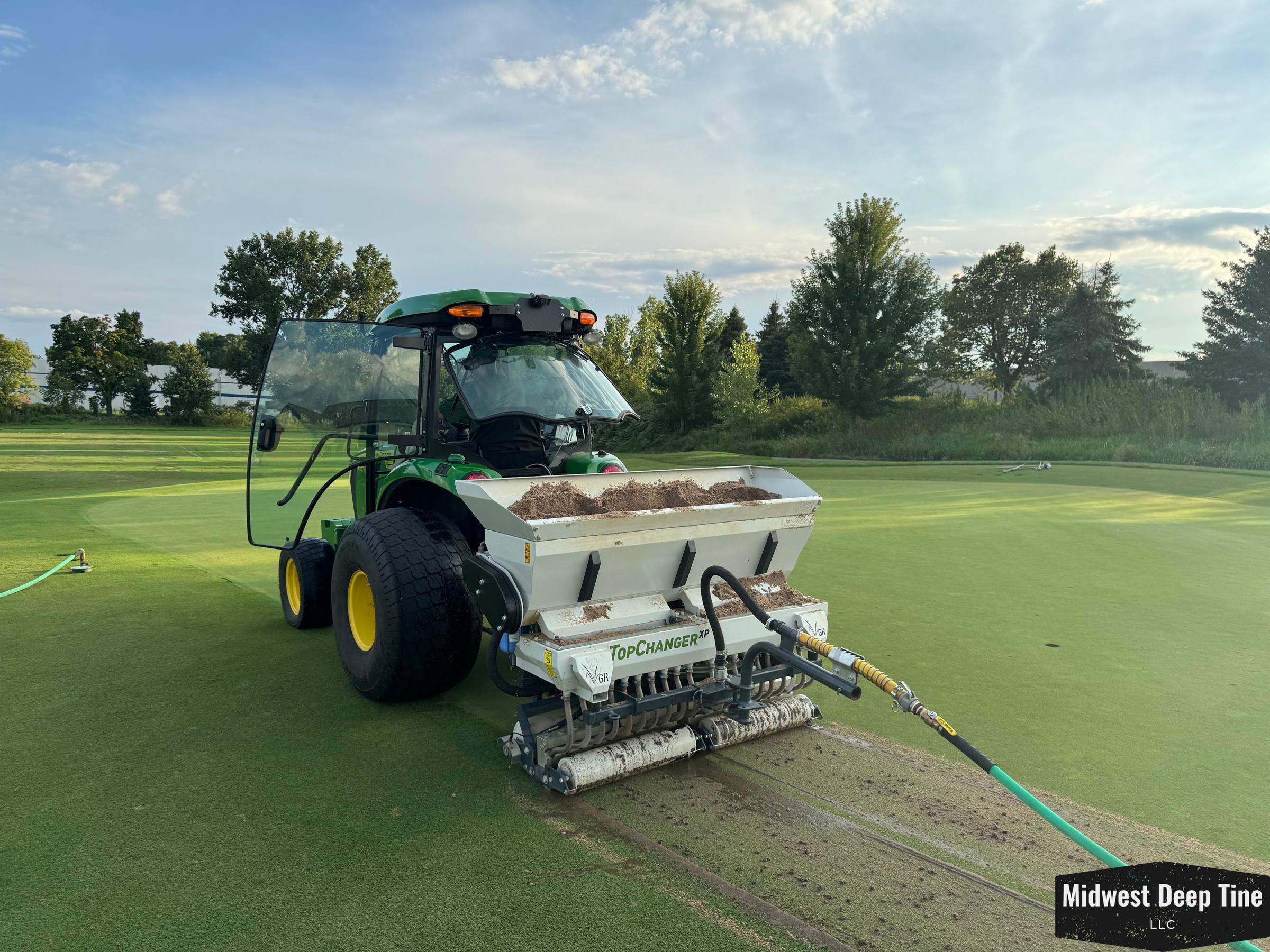
Topdressing
Grinding

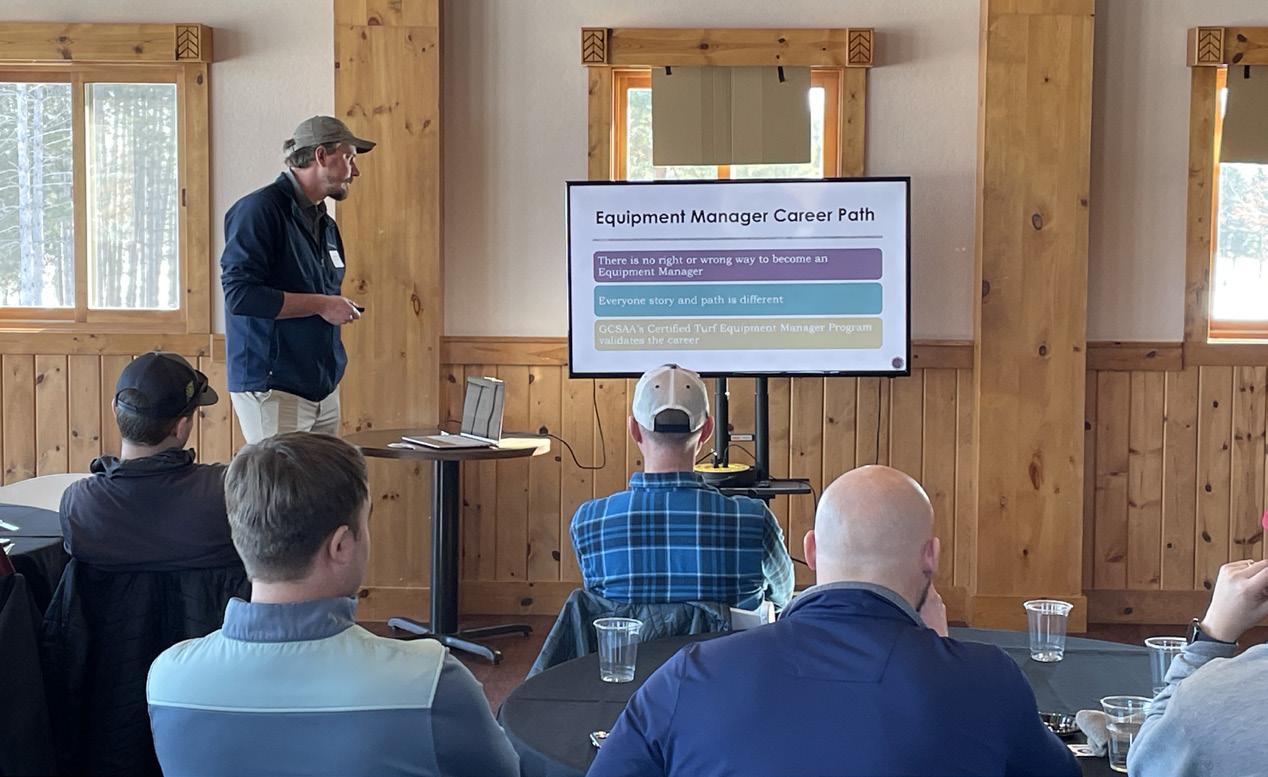
Becoming a Certified Turf Equipment Manager. What it has done for my facility and career
Tanner Knudsen, CTEM North Oaks Golf Club
In today’s turfgrass industry, expectations for efficiency, safety, and accountability continue to rise. As the demand for the best playing conditions and the technology in equipment becomes more advanced, the role of the turf equipment manager has evolved far beyond repairs. Earning my Certified Turf Equipment Manager
(CTEM) designation has been one of the most impactful decisions of my career, improving not only my professional growth but also the daily safety, efficiency, and reliability of our entire facility.
After taking the equipment manager position at North Oaks Golf Club, I
knew that I wanted to keep advancing in my career, but I wasn’t sure what the right avenue to do that was. I looked at enrolling in some online classes to further understand turfgrass maintenance; I also was looking at going to classes during the off-season through local distributors. After researching online and trying to find other types of turf equipment repair courses to learn more about golf course equipment, I found the Equipment Manager Certificate Program through the GCSAA. I was not very familiar with the GCSAA, and all they had to offer before joining after I was hired at NOGC. I only visited their website to either look at new available jobs or to use one of their calculators. Reading more about the Equipment Manager Certificate Program level 1 and 2, I set a goal to pass both and work towards becoming a Certified Turf Equipment Manager.
Starting with level 1 of the EMCPs, it takes you through eight categories of an equipment manager’s role. These exams cover a broad range of proficiencies and teach you the basics of what you will need to know to become a good technician at a golf course. Level 2 is a single, large exam that covers all eight topics and goes more in depth.
EMCP – Level 1
• Cutting Units
• Drivetrain Systems
• Electrical Systems
• Engine Technology
• Hydraulic Systems
• Metalworking and Fabrication
• Spray Systems
• Fundamentals of Turfgrass Operations
EMCP – Level 2 (also includes)
• Business Administration
• Best Management Practices
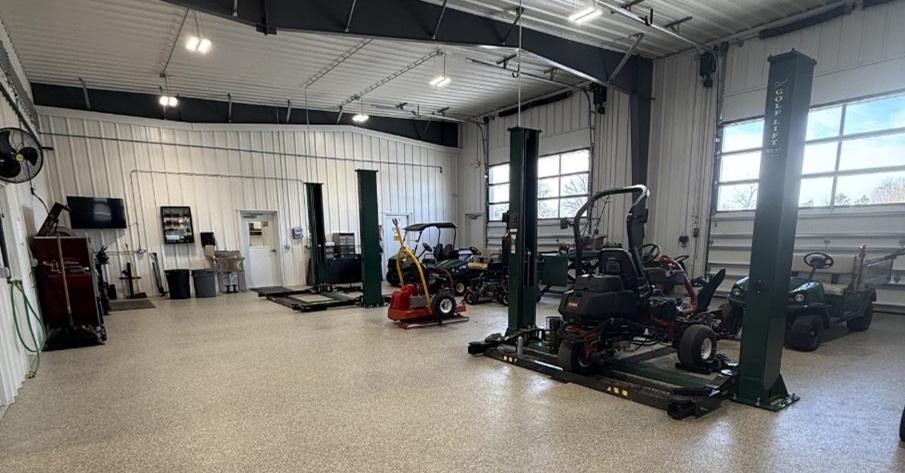
After I completed EMCP level 2, I received the “facility attesting rubric” for what you will be attested on, very similar to the CGCS program through the GCSAA. In the summer of 2024, the new maintenance facility at North Oaks was approved and plans were being made to start the building process. Knowing that I would be trying to go for the CTEM certification, it changed how I wanted to lay out certain items in the new shop and focused my attention on the safety / standards of our operation.
With the attesting for CTEM being primarily safety focused, the layout

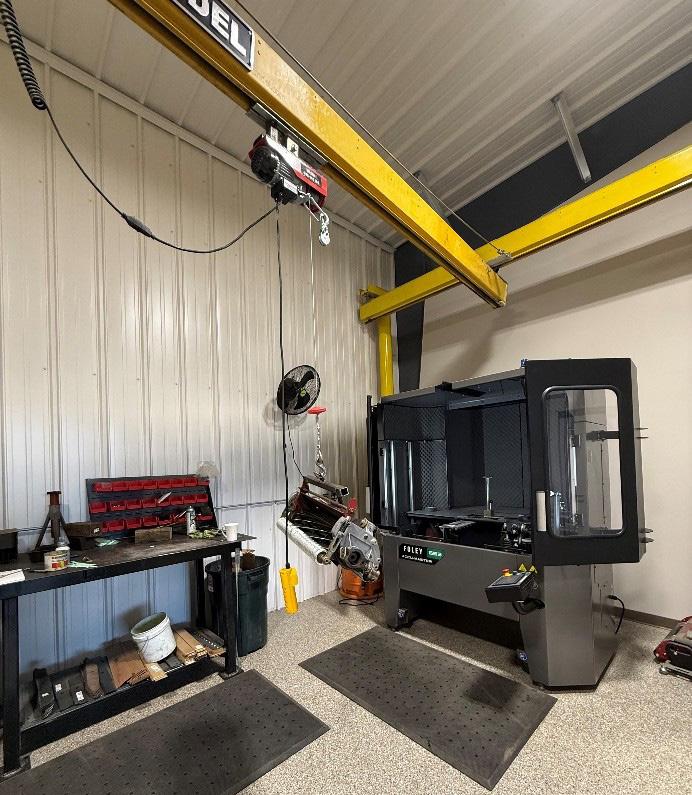
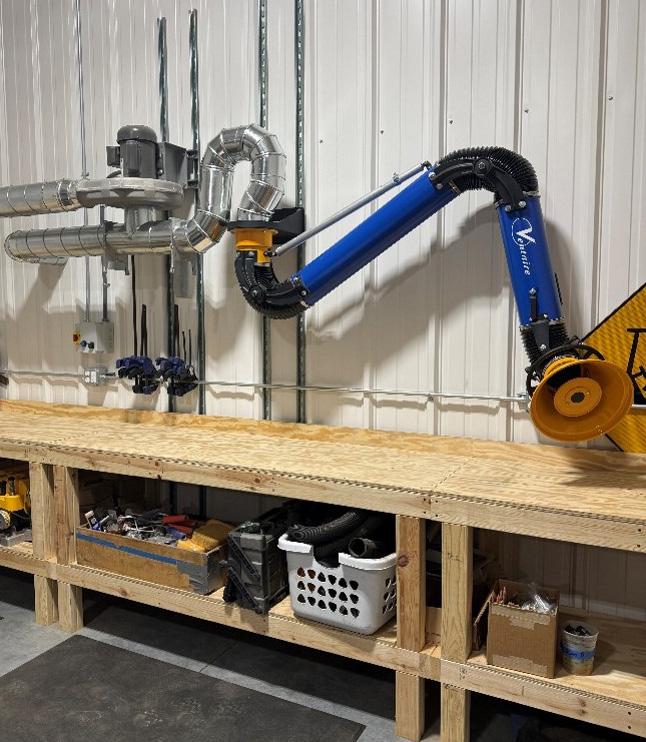
of the shop and how it flows was designed with safety as the top priority. Purchasing certain items to increase the efficiency and safety of our daily operation was the focus. For example, we researched many different air ventilation systems and ended up purchasing two to remove welding and painting fumes. We purchased an overhead bridge crane system to prevent lifting and moving heavy reels around our grinding room. Through the certification process, I gained a deeper understanding of OSHA compliance, shop safety standards, lockout/tagout procedures, and proper equipment operation. Learning about all these standards and regulations has made our facility operate more efficiently and
safer every day.
It has also affected how I am doing my daily tasks. Equipment is now inspected, set up, and maintained with safety as a primary focus. All safety switches and guards are routinely checked and documented with digital workorders. Operators are trained not only on how to use equipment, but also that proper set-up and maintenance matter for their personal safety. We reworked our previous equipment operation training program and have printed it into a booklet so everyone will receive the same training regardless of who is the one training them. Earning my CTEM has also really improved my career. Becoming
certified provides immediate professional recognition. The CTEM designation represents a certified level of knowledge, accountability, and commitment to industry standards and beyond. For my employer, it reinforced their confidence in my ability to manage our fleet of equipment, maintain a budget, and produce a safe environment. It validates that all my decisions in the shop and on the course are based on best practices, not guesswork.
Well-maintained equipment produces cleaner cuts, healthier turf, and more reliable daily operations. When machines operate safely and efficiently, the turf team can focus on
presentation and playability. Members may not see the shop, but they experience the benefits through course conditions, reduced downtime, and a professional operation they can trust. This recognition has also led to greater involvement in planning, purchasing decisions, and long-term facility
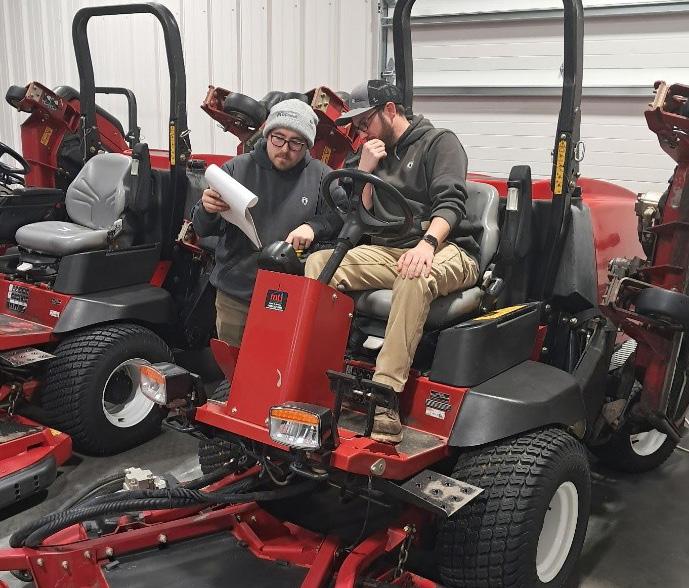
strategy. I am now viewed not just as a mechanic, but as a professional resource whose input directly contributes to operational success. This also leads to coworkers trusting the equipment that I am working on every day, knowing it has been properly maintained and safely prepared. This trust builds mutual respect. When operators feel supported and protected, morale improves and the entire team performs at a higher level.
I think that all Superintendents should be showing their mechanics the CTEM program or even looking into for yourself. Even if they / you are not interested in pursuing it all the way to CTEM status at least completing
EMCP program is so valuable and knowledgeable for anyone who is working on or around the equipment used in the turf industry. It really is for anyone wanting the next step in their professional development.
To anyone pursuing the Certified Turf Equipment Manager status let me tell you that is an investment and takes time, but it is worth every second. You will strengthen your technical knowledge, safety, leadership, and build confidence within your facility. It validates the critical role equipment managers play in daily operations and positions them as leaders who directly impact turf
quality, staff safety, and facility success. Superintendents also play a vital role in supporting their Equipment Manager. Encouraging CTEM status, providing time and resources for education, and recognizing the value of their Equipment Manager.
“Tanner’s pursuit and completion of the CTEM program has helped elevate our facility and operation to the next level. I have a great deal of confidence knowing that we are operation with industry best standards under his guidance. I even learned a few things along the way and feel like a more well rounded agronomist and facility manager due to the CTEM program.”
- John Cameron, CGCS. Director of Grounds at North Oaks Golf Club.
After going through the process of earning the CTEM designation, I want to encourage more Equipment Managers to pursue their certification through GCSAA. The more of us that are out there, the more it will elevate the entire profession. As equipment and turf conditions become more complex, we all must adapt to higher standards.
Taking the time and becoming CTEM validates the career path and proves that you are more than just the mechanic; it shows that you are pushing yourself to being the best you can in the turfgrass industry.
TAKE PART IN THE
GOLF INDUSTRY DAY ON THE HILL

Starts at 7:30 a.m. Thursday, March 12, 2026
Meet at: Christ on Capitol Hill Church 105 University Ave. W St. Paul, MN 55103
The golf industry in Minnesota has a track record to be proud of. Besides hosting numerous major golf championships including the PGA Championship, both Men’s and Women’s Opens, and the Ryder Cup, the business of golf annually generates over 3 billion dollars in revenue and employs 35,000 individuals in the state. Do you want to help ensure our industry remains strong and vital in the future? Attend the 2026 Golf Industry Day on the Hill!
Golf Industry Day on the Hill is your chance to tell your elected officials your story about the issues you face every day. Recently, the golf industry has been involved in conversations regarding minimal access to water, pesticide preemption, adaptive golf support, and limiting unfair taxation. We need YOU to be part of the conversation!
This day will focus on reintroducing our industry, telling the good environmental story of golf, and discussing timely and relevant issues affecting golf courses and golf course operations.
While on the Hill, the golf industry will also support our allied green industry’s initiatives as we have similar concerns and together our combined state economic impact doubles.
What key messages will we deliver to legislators?
• Economic Impact of Golf in Minnesota: The golf industry has a $3 billion annual economic impact to the state’s economy and sustains 35,000 jobs.
• Event Economic Impact: The Ryder Cup, the largest sporting event held in Minnesota, was watched by 500 million people worldwide and generated an economic impact of over $140 million dollars locally.
• Environmental Stewardship: Golf helps to create and steward 21,000 acres of pollinator habitat, wildlife corridors, native plant areas, natural water features and wetlands.
• Green Space: Green space on golf courses increases carbon sequestration, generates oxygen, provides sound abatement and solar/glare reflection as well as dust collection.
• Stormwater Management: Golf courses provide for communities’ largest rain gardens, pollution abatement, ground water recharge and erosion control.
• Community Value: Golf provides a safe space for group gatherings, especially important during the past few years. Golf courses are valued local meeting places for outstate communities.
To register, fill out page 2 of this form.
Please reserve your spot by February
26, 2026 for the March 12th event.
Questions about the topics?
Call Chris Aumock at 651-324-8873, or e-mail chris@mgcsa.org.
Questions about registration?
MNLA will be coordinating appointments. Call the office at 651-633-4987.

BENSON OUTREACH
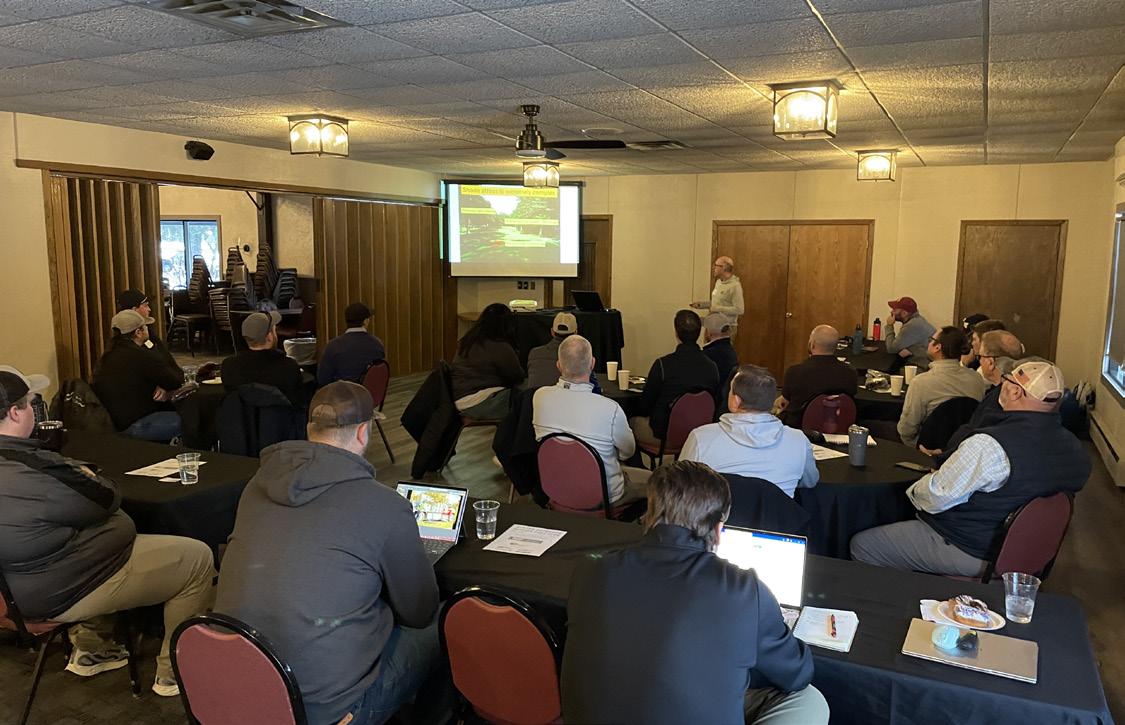
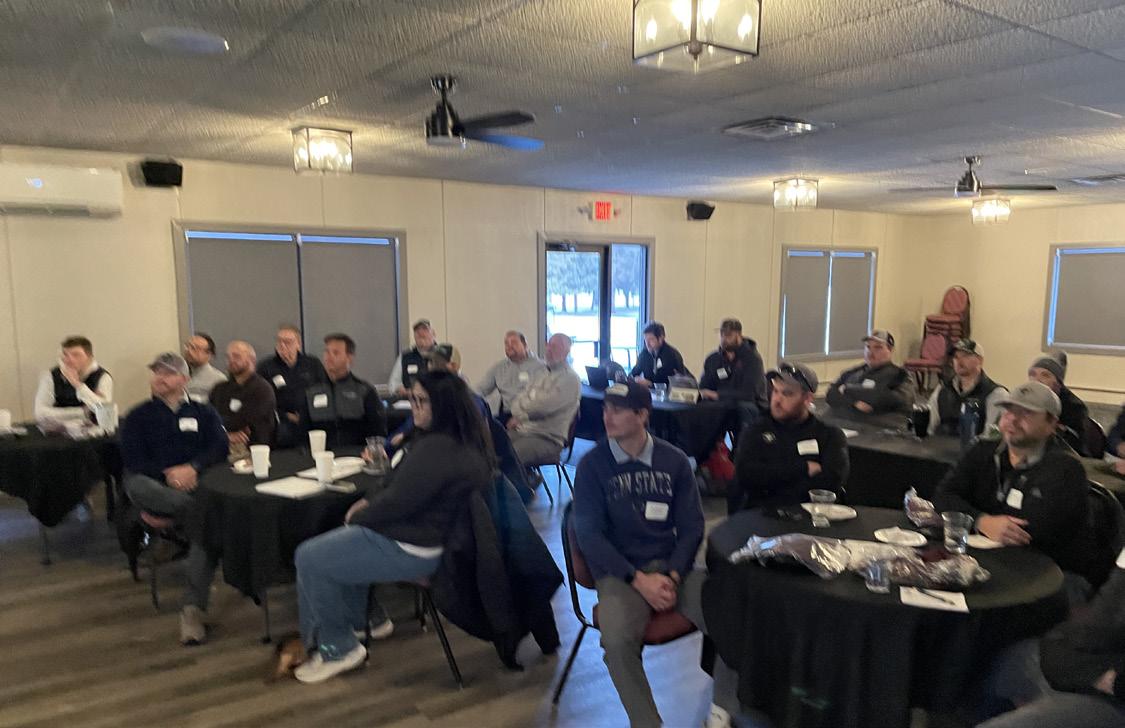
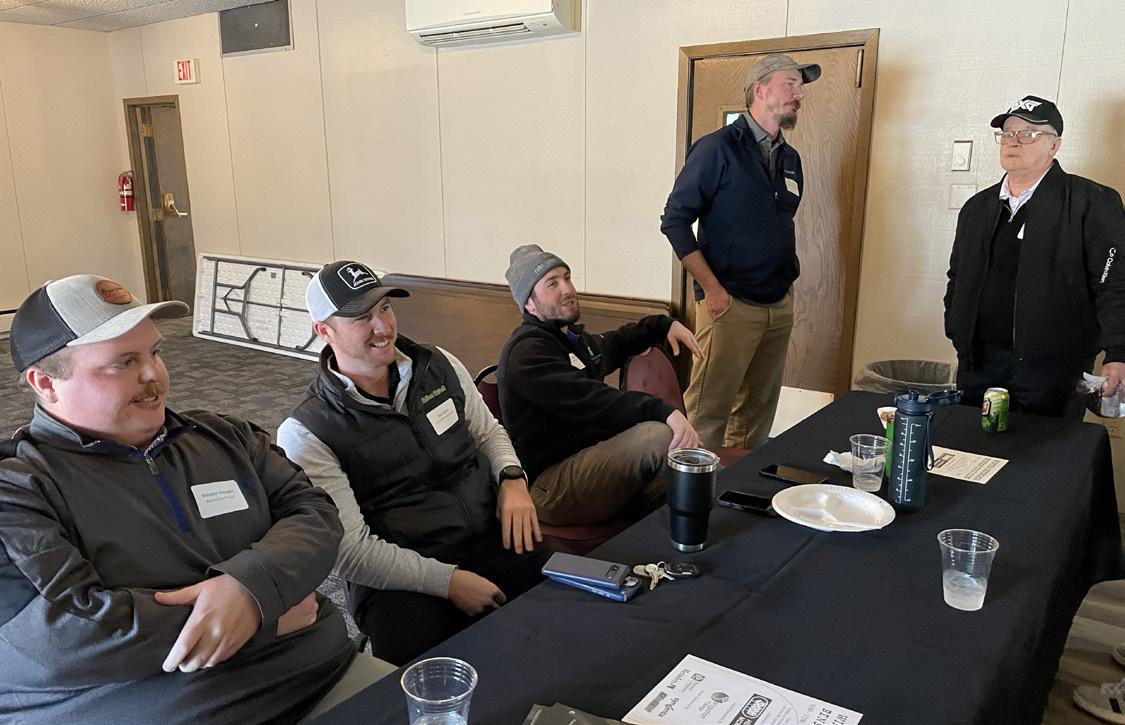
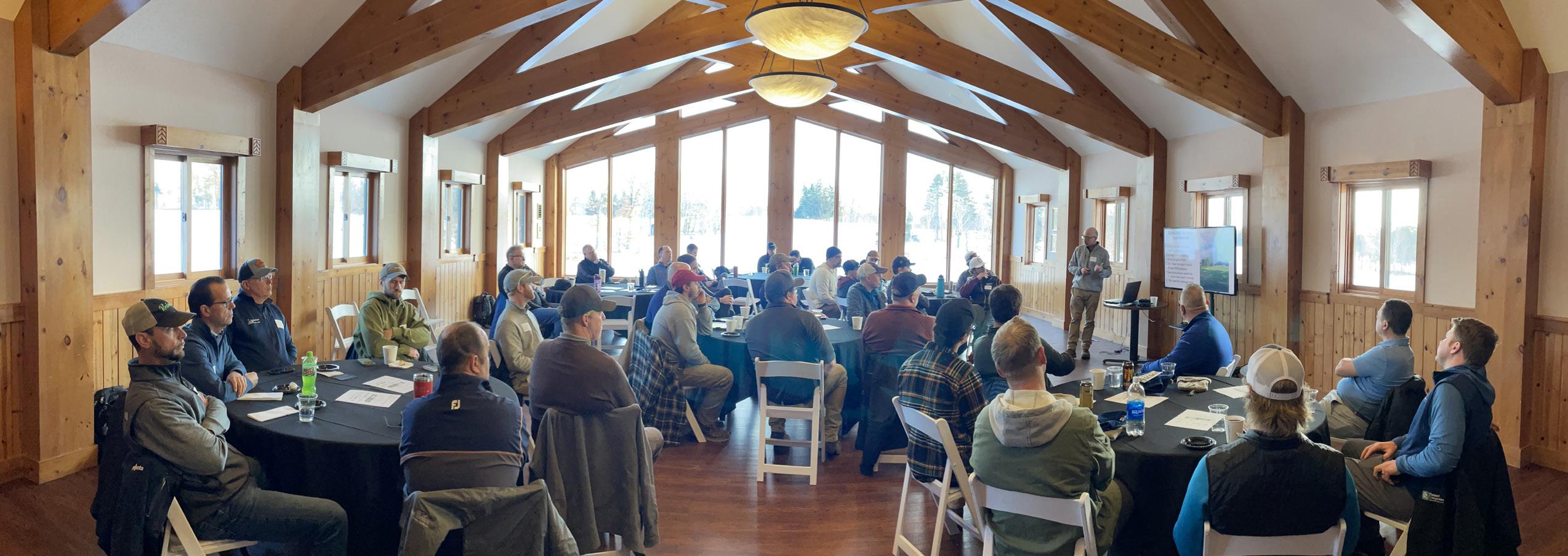
Thank you to our host Superintendent Brayden Haugen, Benson Golf Course, all of our partners and attendees for a first succesfful Witner Outreach event of 2026!



Nikk Dickerson, CGCS Superintendent
Faribault Golf Club

WHY THOSE FOUR LETTERS
For many golf course superintendents, earning the Certified Golf Course Superintendent (CGCS) designation through GCSAA has long been considered the pinnacle of professional achievement. It’s also one of the most demanding commitments our profession has to offer. Having recently completed the requirements for CGCS, I’ve had time to reflect on what CGCS truly represents - not just in theory, but in day-to-day practice, and why now is an especially important time for more professionals to commit to earning it.
What CGCS Is - and Isn’t and What Those Four Letters Say About You
Let’s be clear from the start: CGCS does not guarantee career success. It won’t prevent turf loss, eliminate tight budgets, or insulate anyone against the challenges we all face today in our industry. In that sense, it’s no different than a degree in turfgrass management. What both
do provide however, is opportunity. CGCS opens doors that might otherwise remain closed, it strengthens credibility when it matters most, and it should signal to owners, boards, golfers, and regulators that you are serious about your craft and your leadership.
Adding CGCS after your name sends a clear message. It says you are committed to lifelong learning. (Certified Superintendents must earn roughly three times the CEUs required for Class A renewal.) It says you remain curious and current, with the ever evolving science, technology, leadership practices, and environmental stewardship of our industry. Most importantly, it says you’re willing to hold yourself to higher standards; standards established and evaluated not by yourself, but by your peers. Perception matters and I know I pause every
time I see CGCS behind someone’s name. While not all employers fully understand what it represents, those four letters still carry weight within our profession, and they should!
A Legacy Worth Preserving in Minnesota
About twenty years ago shortly after I arrived in Minnesota myself there was a genuine “who’s who” list of certified superintendents in the state. Many of them longtenured, respected leaders at their clubs and within the MGCSA. Names like Keith Scott, Jim Nicol, Bill Larson, Norma O’Leary, Steve VanNatta, Paul Digeau, Rick Traver, Rick Frederickson, Fred Taylor, Bobby McKinney, James Gardner, Jerry Murphy, Doug Mahal, Mike Brual, Jason Spitzner, Scottie Hines, Jack MacKenzie, Paul Eckholm, Tom Fisher, Dale Caldwell, Kevin Clunis, Greg Hubbard, Scott Hoffman, James Johnson, Vincent Dodge,

Bill Whitworth and John Steiner come to mind and I’m sure there are others.
If you look back through MGCSA history, you’ll find that for nearly three decades many of these same individuals served as officers and even president of the association. During that span, only a handful of MGCSA leaders did not have CGCS behind their
name. That history says a lot about the reverence we once associated with the distinction.
Today, if you look up CGCS superintendents from Minnesota, the list is noticeably shorter. The first few are carryovers from that earlier era, having held the designation for twenty years or more. The current list includes
Norma O’Leary, Jason Spitzner, Mike Brual, James Johnson, Dave Kazmierczak, Aaron Johnson, Eric Ritter, John Cameron, and myself.
What stands out is this: only five individuals in the state have completed the CGCS requirements for the first time in the past 15–20 years. That number feels low. Has CGCS lost
Randy Robinson, GCSSA, was with Nikk when he got the call confirming his CGCS!
some of its luster? I’m not sure. But only you can decide whether you want to hold yourself to those loftier standards. Another person that chose to aim for those loftier standards is current President of MGCSA John Cameron, who completed all of his requirements in December of 2025. Making him the first person in Minnesota to complete the CGCS process under the new program. Congratulations, John!
To be candid, I don’t think all employers fully understand what CGCS represents today. You’ll see job postings list certification as “preferred,” then follow with requirements like “three to five years as an assistant superintendent.” That contradiction has always irked me, even before earning CGCS myself. Are you seeking an experienced, credentialed superintendent, or individuals who have yet to hold the position? While that disconnect
may be beyond our control, CGCS continues to matter to those who invest the time and effort to earn it. It immediately communicates competence, commitment, and credibility amongst your peers in the industry.
A few years ago the CGCS process was modernized for today’s industry. Some components were eliminated and others were added, but all this was done without lowering standards. The exam was scientifically reviewed and aligned with the realworld knowledge required of today’s superintendent.
One of the most meaningful additions is the Leadership & Communication requirement. This component acknowledges what many of us already know: technical skill alone is no longer sufficient to get the job done. Superintendents are leaders, educators, advocates, and communicators.
Candidates now demonstrate these skills through real professional engagement—writing articles, volunteering within the industry, presenting to peers, participating in First Green, or developing and implementing Best Management Practices at their facility. Notably, you can begin working on some of these elements while you’re an assistant, an option that wasn’t always available.
My Journey to CGCS: 26 Years in the Making
I knew I wanted to earn CGCS when I was still an intern back in 2005, it was the first time I worked under someone with those four letters after their name. Maybe it was the professionalism he carried, or maybe I thought it would help me make more money. Honestly, I don’t remember the exact reason. But I do know this: I had worked for two different superintendents before my internship,
one in high school and another in college. The superintendent I met during my internship was different. He managed a 54-hole facility with roughly 50 staff members, and he just had an air about him. Before my first week at my internship was over, I thought: “Man, I want that! I want to be that kind of superintendent.”
When I became a superintendent in 2011, I got to work right away. I mapped out the requirements, created spreadsheets for my portfolio, tracked education points, and told myself I’d submit the application the moment my three-year eligibility window opened. Then life happened; I moved to a new course, we had a second kid. The intricate dance of learning how to “adult” with a family while trying to grow in the profession pushed CGCS from a priority to some day.
stopped and started the process more times than I care to admit. Each year, I’d tell myself, “Next season, when things slow down.” But they never did. Another project. Another family milestone. The goal didn’t disappear, it just slowly moved further away. I even joined the pilot group for the new CGCS testing format in 2019, thinking that would be the fire I needed. I passed 2 of the 3 exams inching myself that much closer, but still didn’t finish. Why? Because work already consumed so much of my time, and I didn’t want it bleeding into family time.
CGCS. Saying it out loud, to someone other than myself, was the catalyst. It shifted CGCS from a vague aspiration to a clear, unfinished commitment I owed to myself.
For the next decade, I
Then came the turning point. During an MGCSA podcast, Matt Cavanaugh asked me, “Name one thing you’ve failed at in your career.” My stomach dropped. I’ve lost grass before, I’ve even made some boneheaded decisions. But the first thing that came to mind; the thing I had avoided naming, was
That year, 2023 was my first at yet another new facility, Faribault Golf Club. I even called GCSAA in my first couple weeks to see what was left for me to do. The new CGCS process allows you to record certain components before submitting your application and I had many of them done at this point, I had just never taken the time to record them, but I learned you have to be at a facility for a full season before your application can be processed. So, I waited again. Going into my second season, I barely thought about it, until fall hit and we were shortstaffed as most are in the fall. Overwhelmed with the thought, I put it off again.
Then came January 2025. At our winter board meeting for MGCSA, we started discussing ways to help others with continuing education and certification costs. That’s when it hit me: “You’re the president of the Superintendent’s Association. Get it done.” I pulled the trigger and submitted the application. What followed wasn’t glamorous. It was evenings combing through documentation after the kids were in bed, early mornings working on spreadsheets before the crew came in. It was carving out time I didn’t think I had, and protecting it like it was the busiest day of the year on the golf course, even feeling defeated at times as this was my third facility that I was working through the process at. And on January 14th which some of you know since it was during Shop Tours, with about 30 days to spare in the oneyear submission window, I heard from GCSAA that
my final component was approved. I had crossed the finish line.
It only took me 26 years in the industry and 16 years as a superintendent to get there. But I can say this without hesitation: the sense of accomplishment is worth every delay, every restart, and every ounce of effort. Not because CGCS solves problems, but because it represents a standard I chose to meet. It’s proof that persistence no matter how slow, still counts.
I FINALLY EARNED CGCS!
Where MGCSA Is Stepping Forward
The MGCSA is reinforcing this commitment through the launch and evolution of its Professional Development Program (PDP). While the framework has supported turf scholarships for several years, MGCSA recently adjusted the parameters so funds can
better meet members where they are. Whether they’re pursuing certification, career advancement, tuition assistance, or simply aiming to become a more effective professional.
The MGCSA PDP aligns naturally with the updated CGCS framework by emphasizing leadership development, continuing education, service to the profession, and engagement beyond the maintenance facility. It recognizes that professional growth doesn’t occur in isolation and that strong chapters play critical roles in preparing superintendents for certification and leadership. The MGCSA is trying to lower some of the hurdles without lowering expectations. And it’s not just superintendents who benefit: the initiative supports all membership classes; including Equipment Managers with Certified Turf Equipment Managers Certification
(CTEM) and Assistant Superintendents with the Assistant Superintendent Certificate Series (ASCS). We feel programs like the PDP only strengthen the association as a whole.
In closing, the decision to pursue CGCS, or any certification for that matter, requires time, effort, and intention.
But one thing remains true: certification may or may not accelerate your career immediately, but it never works to your detriment. CGCS remains the standard by which others are measured, and today it is more relevant, accessible, and aligned with real superintendent responsibilities than ever.
If you’ve considered certification but have hesitated, now may be the right time. With a re-vamped CGCS process and a renewed commitment to professional development through MGCSA, the path forward has never been clearer, for you, your facility, and the future of our profession.





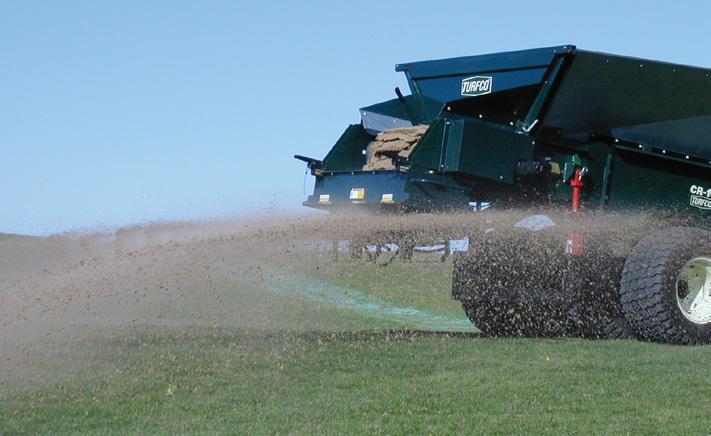
Topdressing Sands & Mixes

Our Sands meet USGA guidelines and are available with green pigment. Custom mixes can be blended for your individual needs using our 4-bin computerized Accublender.
Bunker Sands
Our bunker sands are always washed and screened. Choose from:
•Plaisted Bunker Sand Natural Tan
•Plaisted Pro Bunker Sand Blend Natural Tan
•700 Best Signature 100% Crushed Off White
•900 Best Signature 100% Crushed White
Golf Construction Sand Mixes
Our mixes all use USGA sand and a combination of fine grade peat and screened black dirt. Chose one of our popular mixes or we can custom blend one.
•USGA Coarse Gravel - A great bridging rock used as a drainage layer.
•Construction Sand & Peat Mixes - 50/50, 60/40, 70/30, 80/20, 85/15, 90/10
•Construction Sand & Black Dirt Mixes - 50/50, 70/30, 80/20
•Construction Sand/Peat/Black Dirt Mixes - 1-1-1, 60/20/20, 70/20/10, 80/10/10
Cart Path & Road Base
•3/8” with fines river rock
•Class II buff limestone or red rock
•Class II, III, IV crushed granite
•Class 5 gravel
•Recycled concrete, crushed asphalt, conbit


Bagged Products
•Dry topdressing sand
•Dry tournament topdressing sand
•Dry green topdressing sand
•Dry early-green black topdressing sand
•Dry 70/30 green divot mix
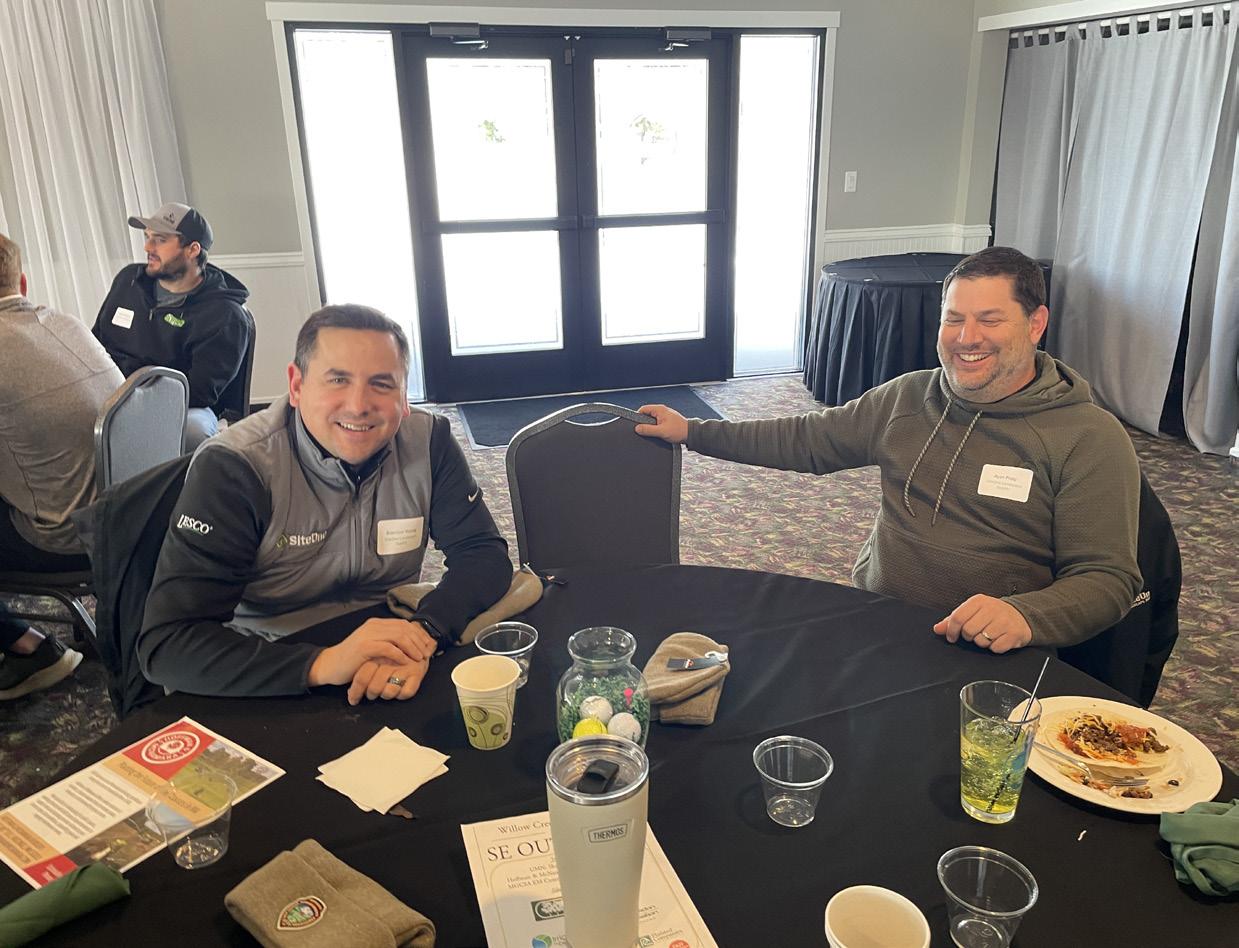
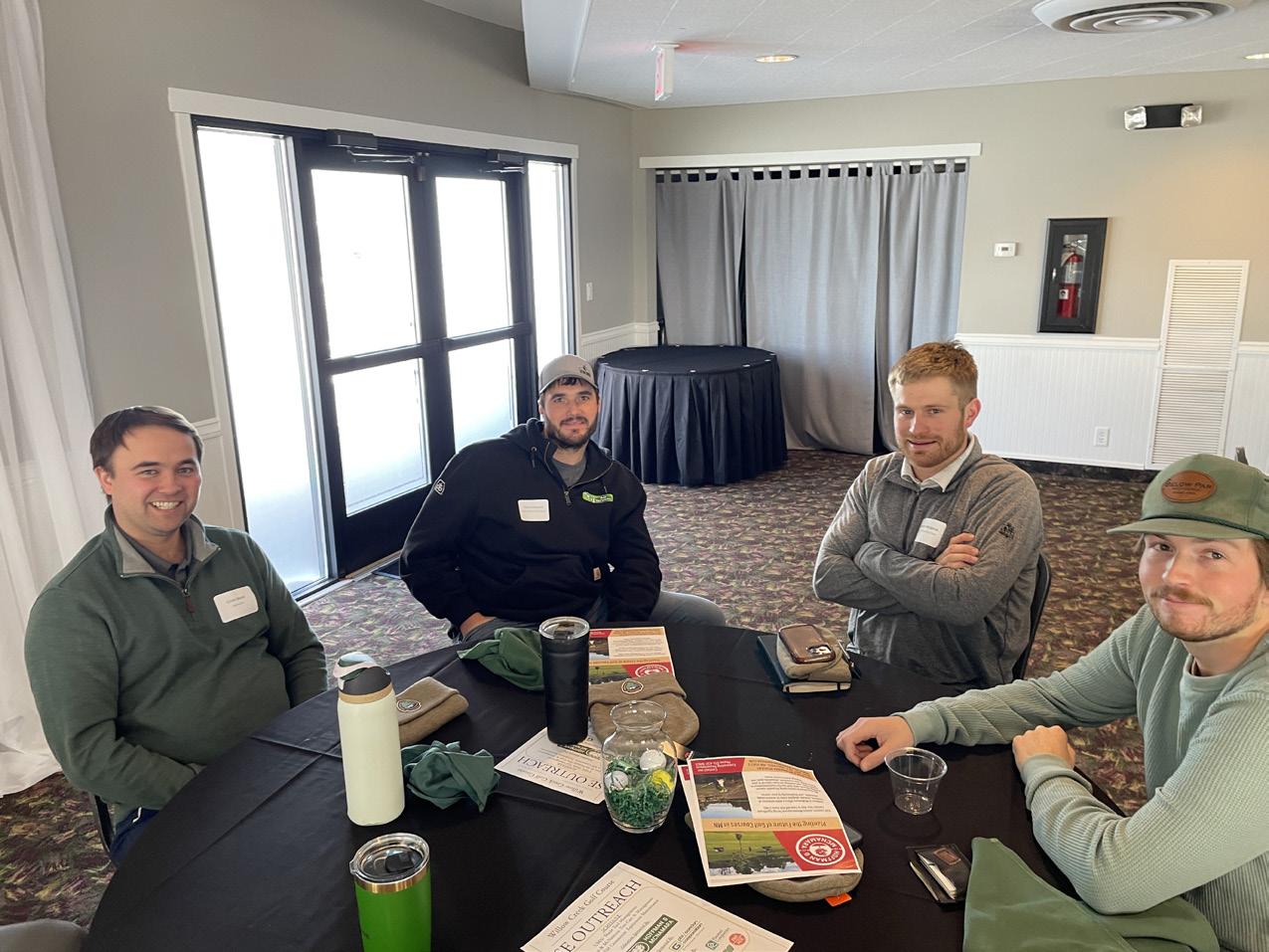
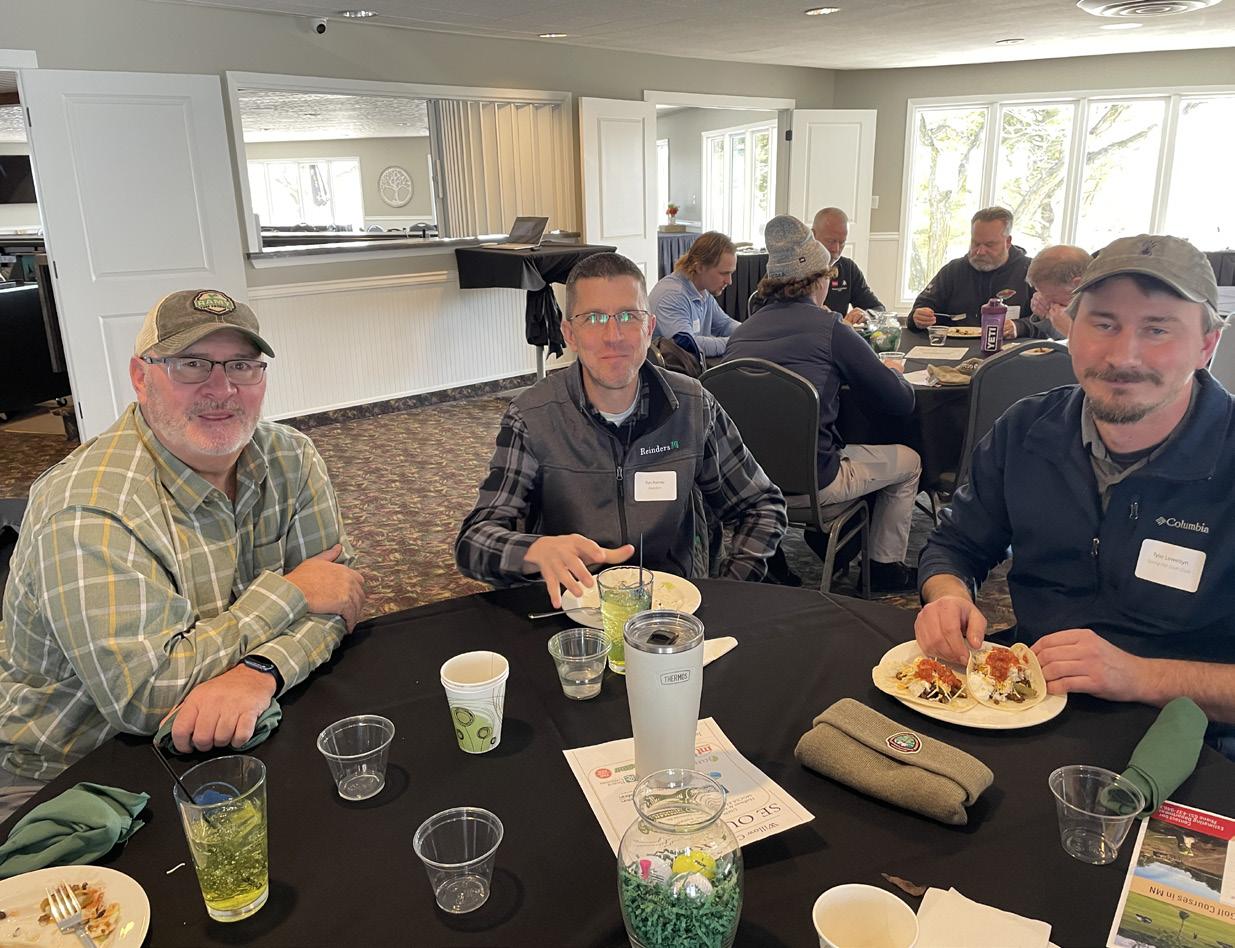
ROCHESTER OUTREACH
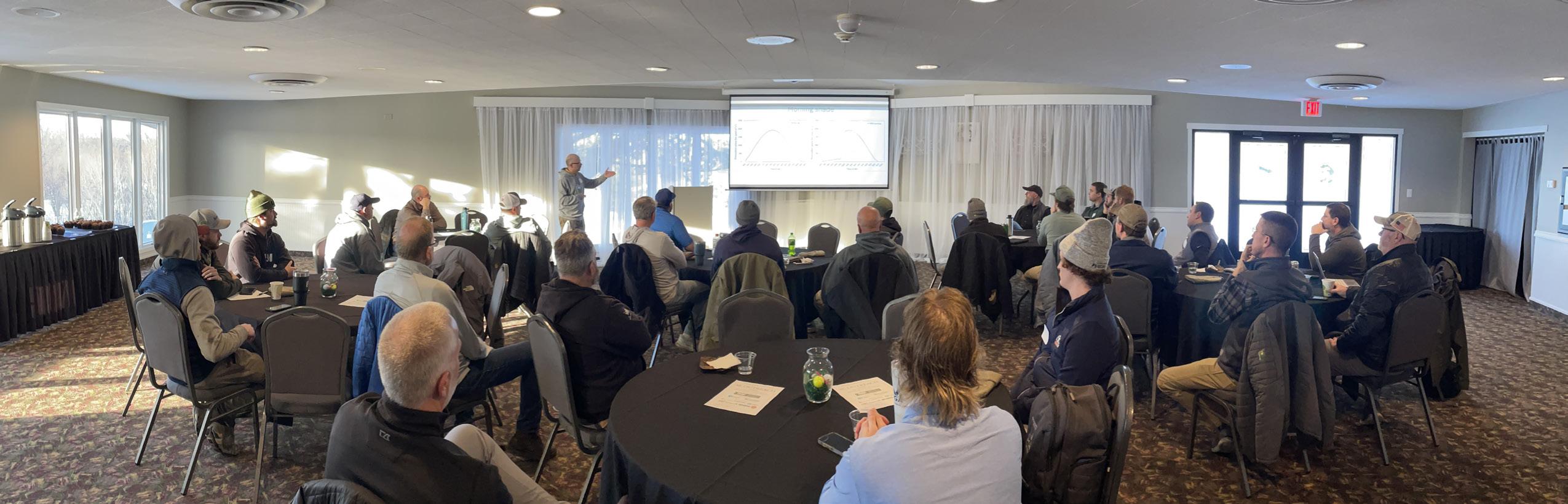
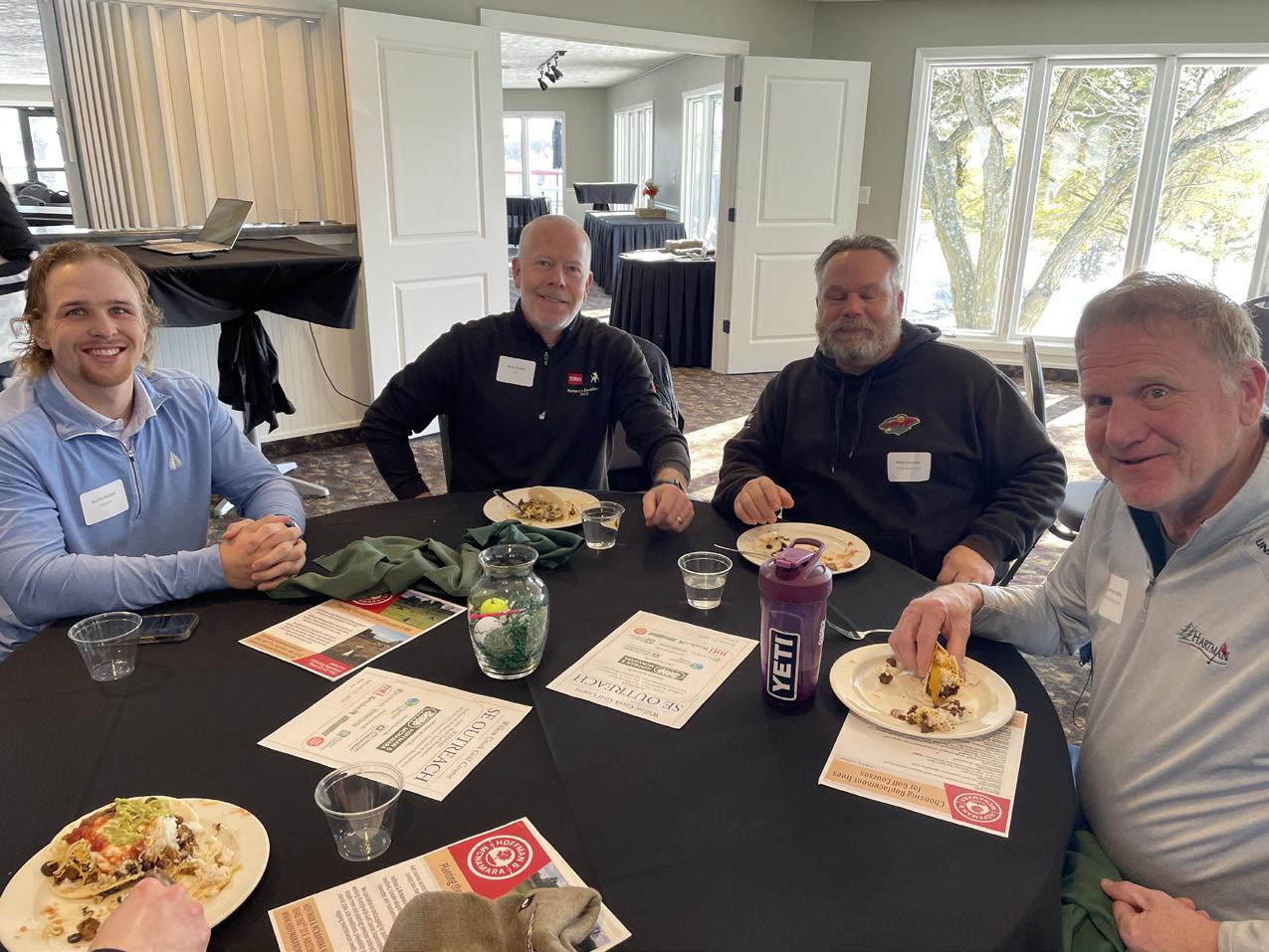
Thank you to our host Nick Daak, Willow Creek, and all of our Partners and Attendees!
YOUR HOME FOR ROBOTIC SOLUTIONS





Is your to-do list longer than the grass in the rough?
Robotic mowers can help you improve the quality and safety of your courses. They allow you to not be stuck to a mowing schedule and focus your time on one of your many other responsibilities.

• Save money on fuel and labor costs
• Save time, mow anytime!
• Maintain healthier grass
• Control mower from anywhere
• Environmentally friendly solution with zero emission
Financing & Service Packages available
Combine packages and receive 365/7 support through our Service Dept.
Contact one of these associates for more information:
Ryan Popp
RPopp2@siteone.com
612.384.9889
Brandon Young
BYoung@siteone.com
612.749.3172

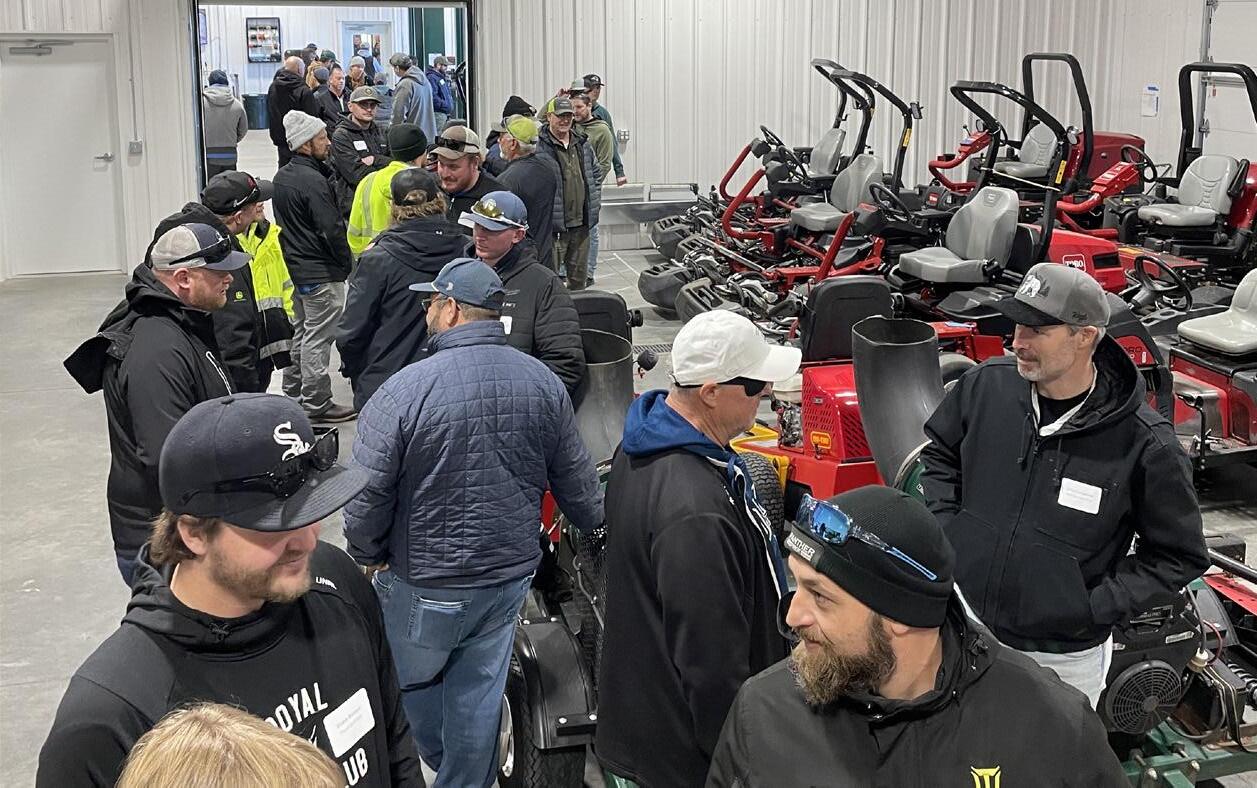
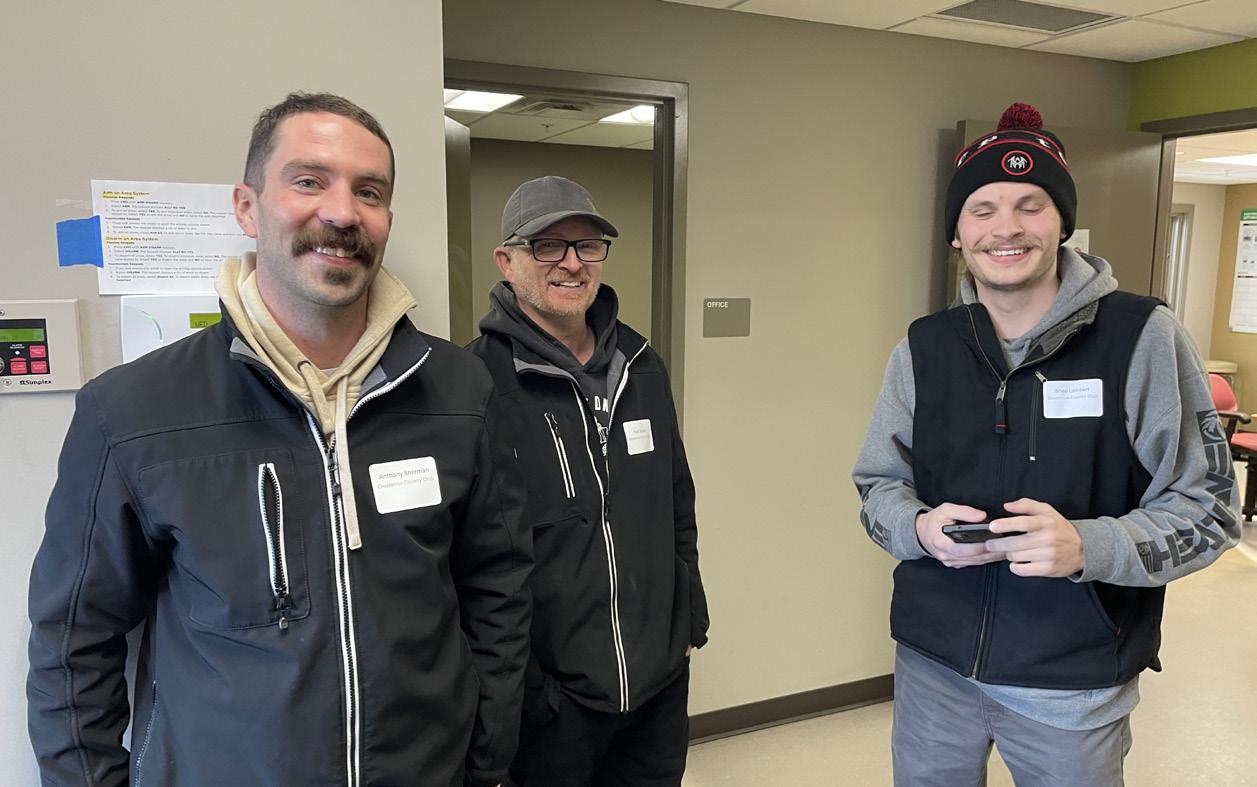
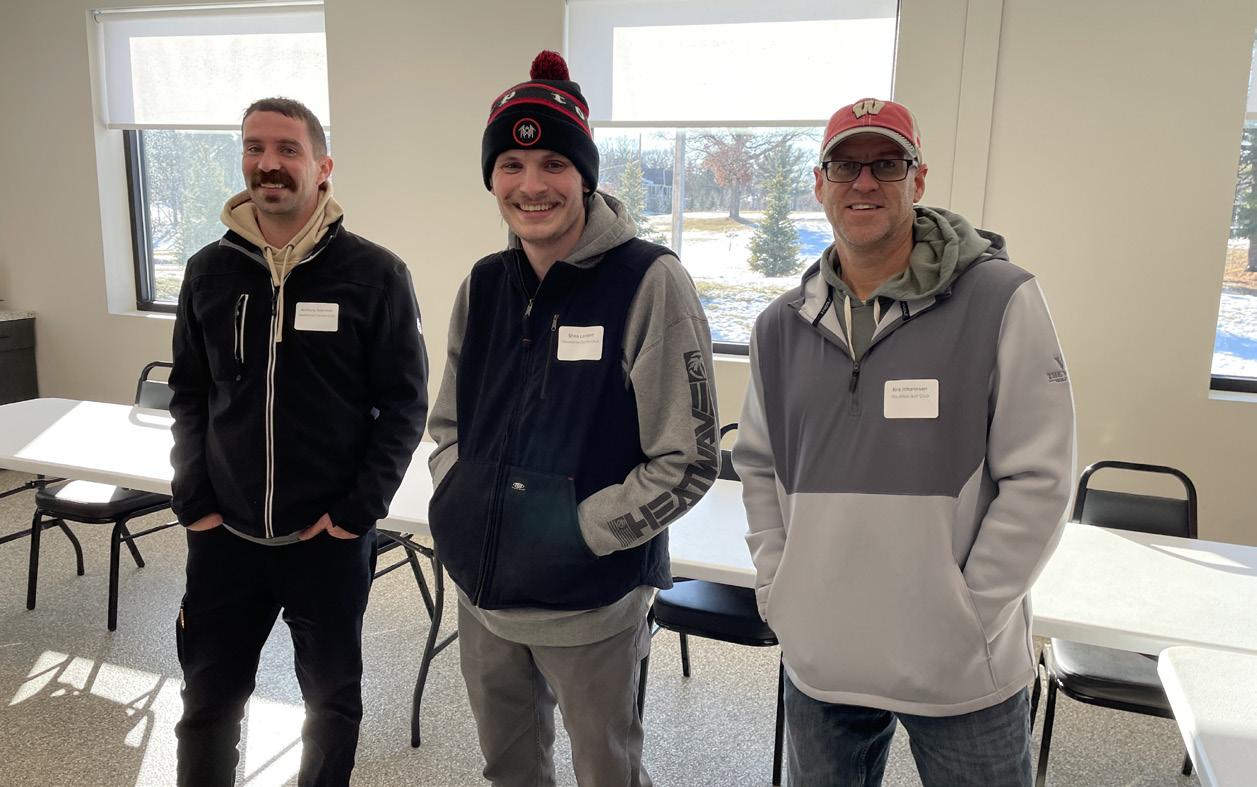
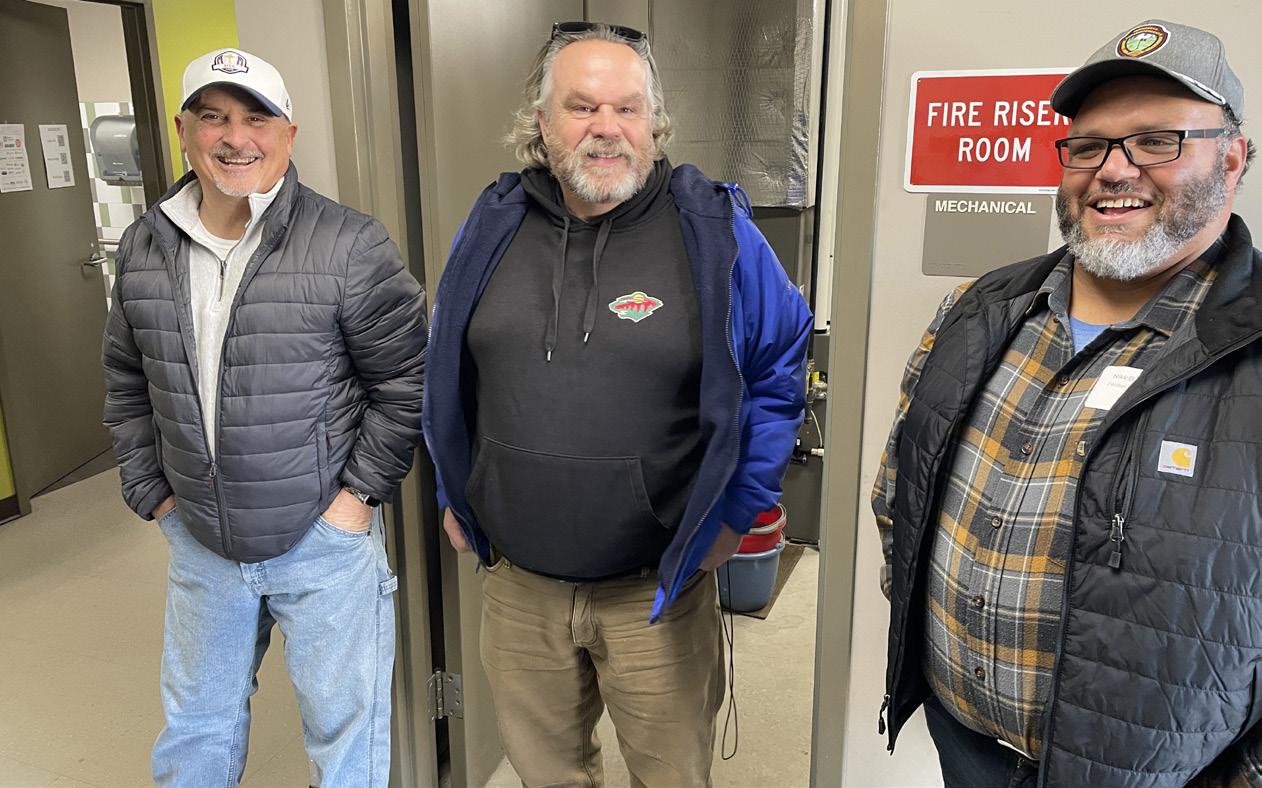
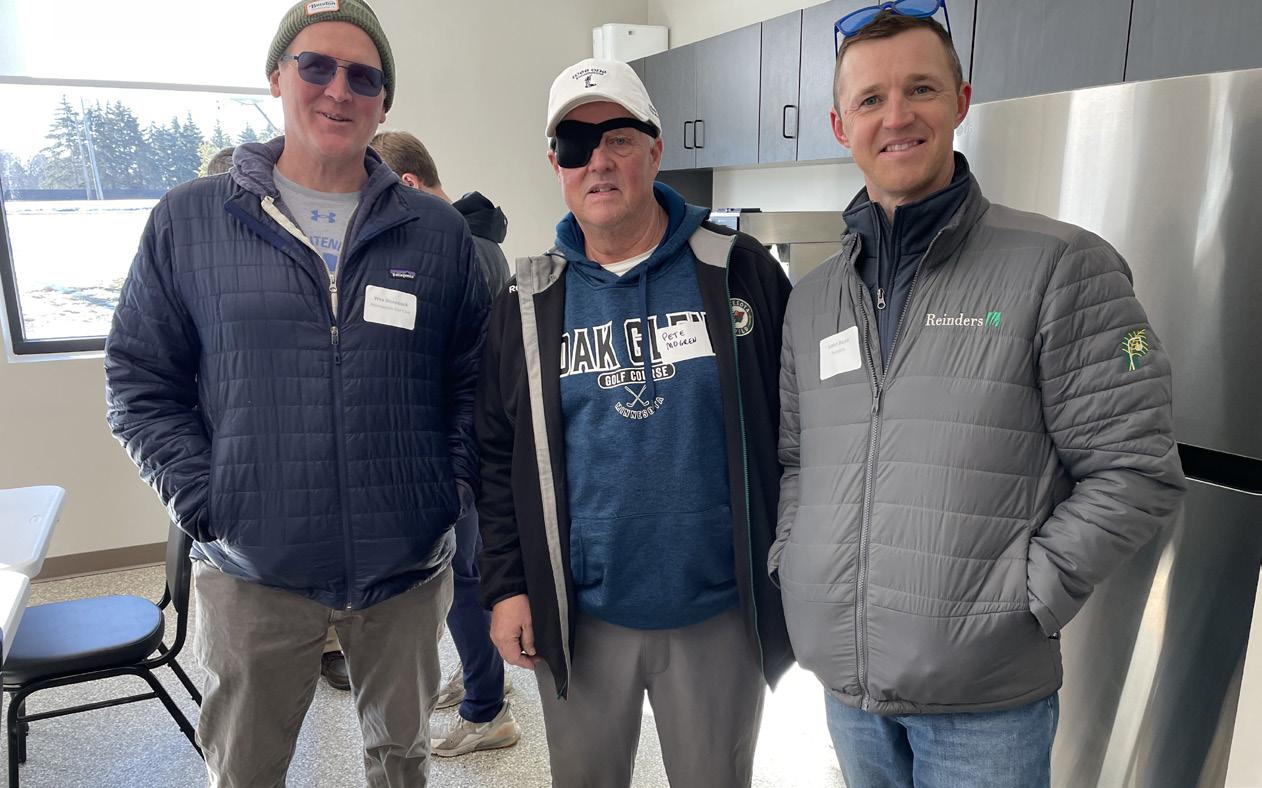
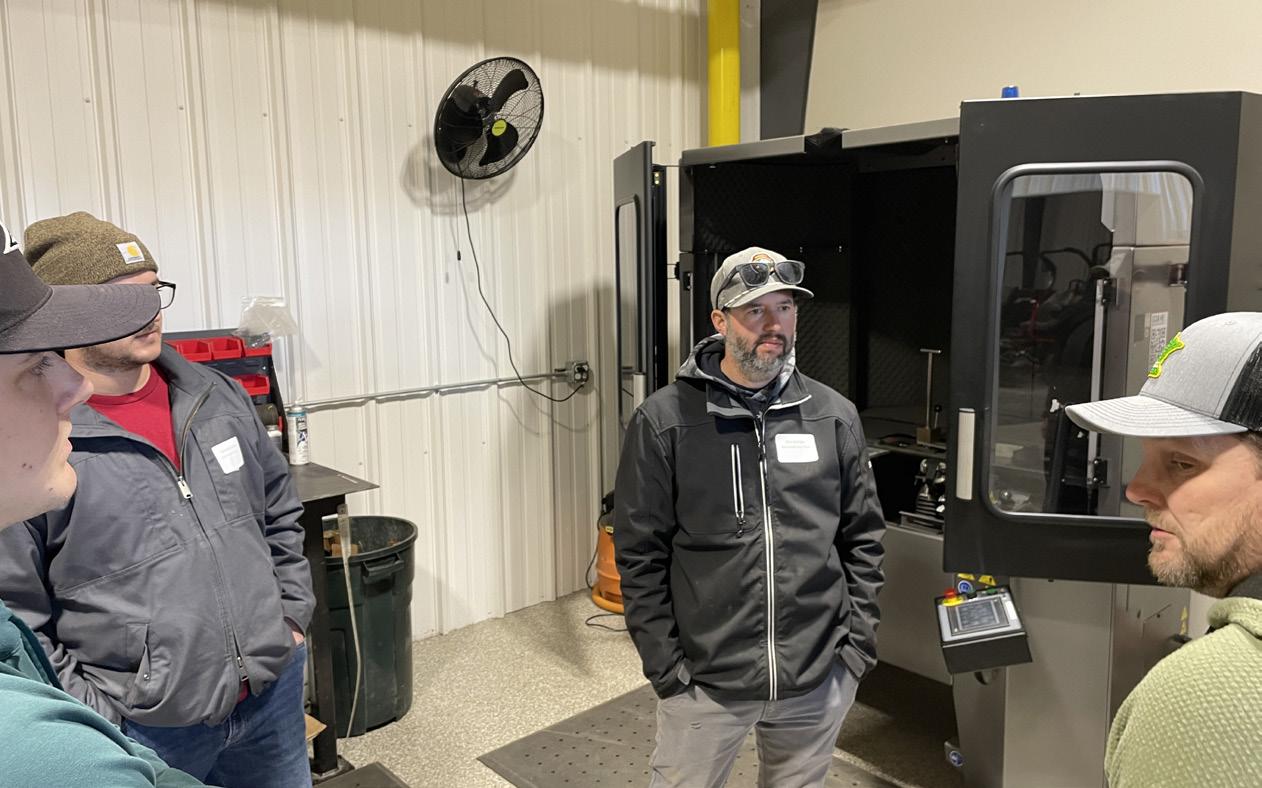
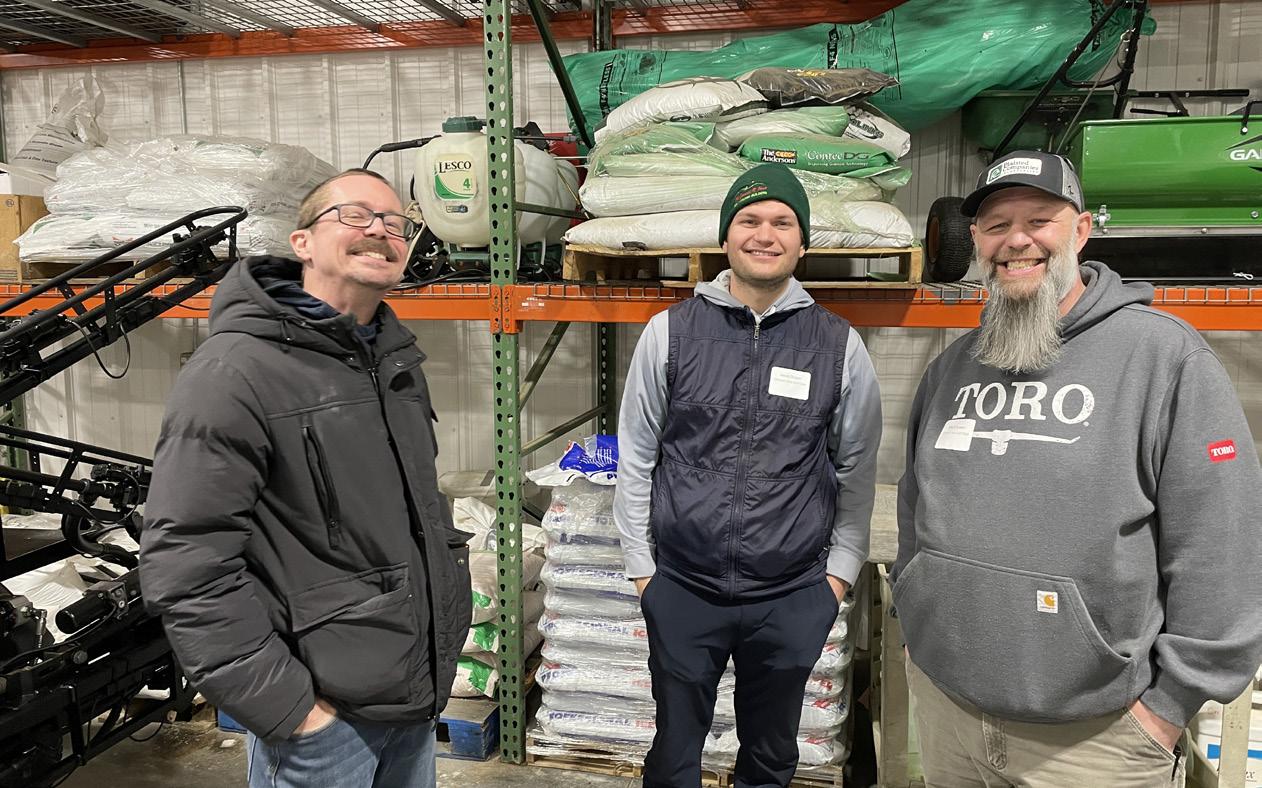
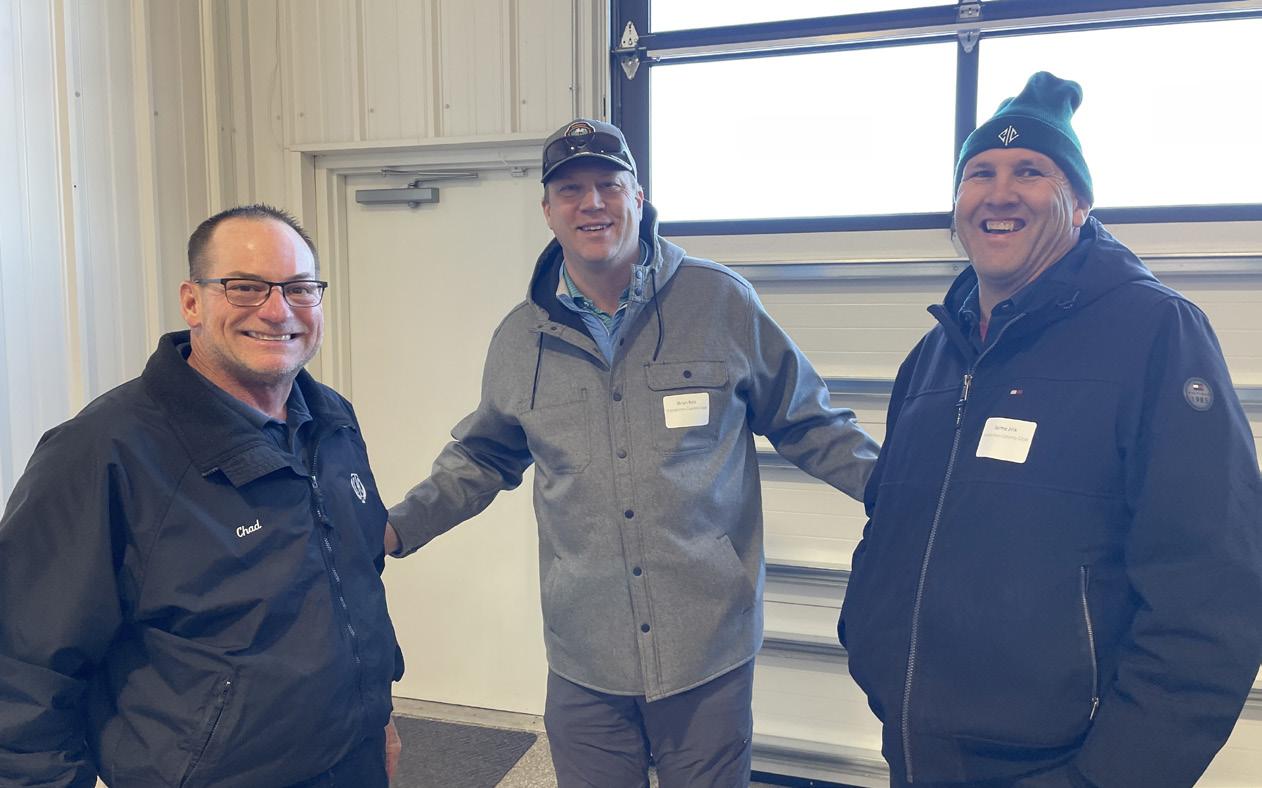
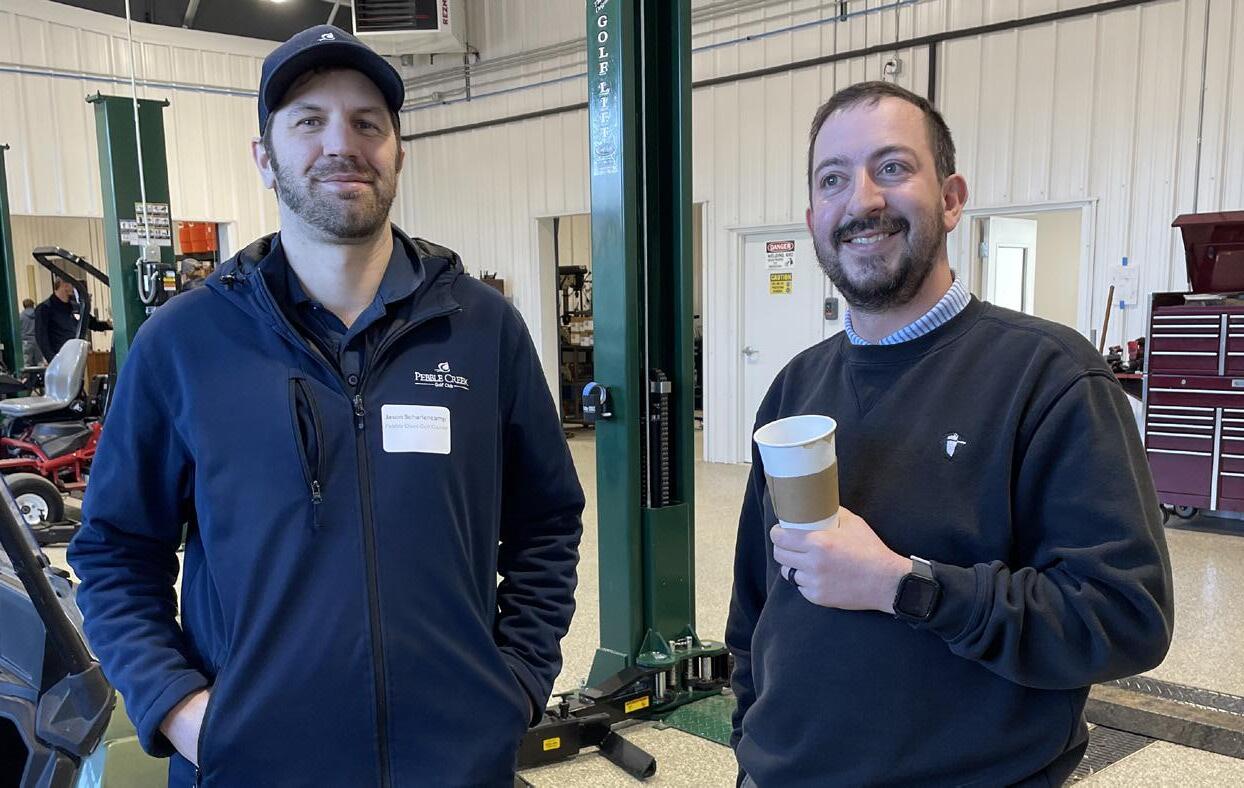
Shop Tours
Indian Hills Golf Club
Manitou Ridge Golf Course
North Oaks Golf CLub


GROWTH ISN’T ALWAYS THE NEXT STEP, SOMETIMES IT’S DIVING DEEPER.
Tina Rosenow Assistant Superintendent
Somerset Country Club
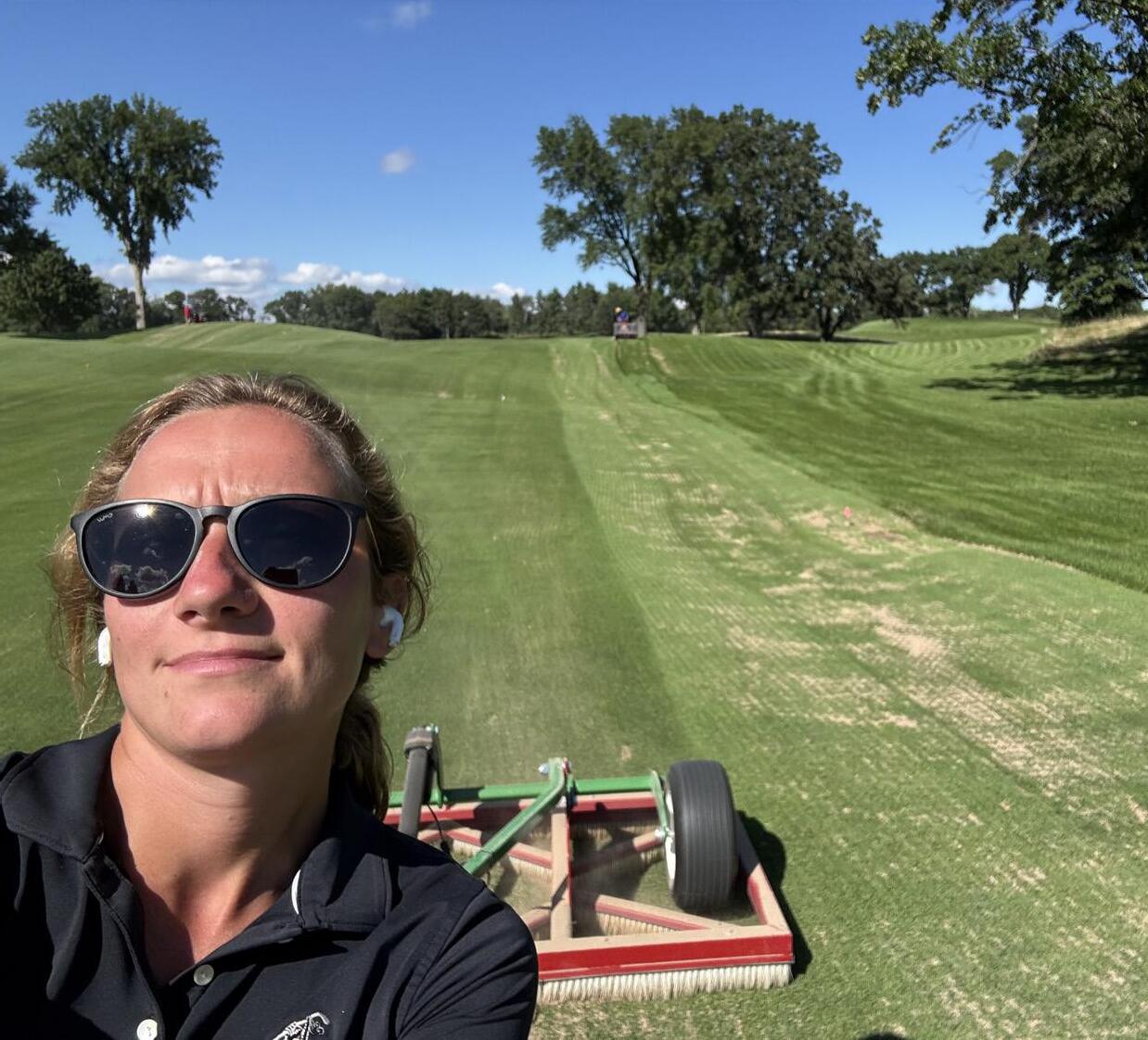
It feels as if we’ve reached the neverending point of winter in Minnesota. The cold temperatures lately may have us feeling stuck inside our shops trying to stay warm. I always find this part of the year difficult to get through, both physically and mentally. The days feel long, while the anticipation of the golf season lingers in the back of our minds. In the past few years, I’ve tried to
be productive with my wintertime in terms of my own personal and professional growth. Most of us in Minnesota know that winter means greater opportunities for professional growth, whether that be attending the local and/ or national educational shows, or applying for the next job.
Early on in my career when I was a student and progressing through my studies and
internships, I believed that professional progress meant taking the next step up. From an intern to a second assistant, to a lead assistant, and finally to a superintendent. Taking advice from mentors and fellow colleagues, I believed that reaching the next step consisted of hard work, gaining experience, and making connections with others. While those characteristics are certainly true,
professional growth isn’t always linear. Sometimes it’s taking a step back to reflect on what growth really looks like to yourself, not others.
I recently made a job change that looks like a lateral move for my professional development, but the move itself has been everything but that. It offered a new perspective for both my professional and personal development. My previous role provided valuable
experiences and challenged me in ways that helped shape who I am today. I learned more than just the technical skills of the industry. I learned responsibility, communication, and navigating expectations in a challenging environment. My position, like many others, required adaptability, patience, and a willingness to grow through both successes and challenges.
These experiences strengthened my skill set and provided me with a clearer understanding of what it’s like to become a leader in this industry. The recent change provided me with a new perspective, that progress isn’t always about moving “up”, but about realigning my beliefs on what it means to dive deeper into my own growth. Environment, mentorship, and opportunity all play an important role in

growth and sometimes a new setting can help bring those priorities into focus. This move was about diving deeper into challenges with a renewed sense of energy. One of the things I appreciate the most about this industry is that no two courses are the same. Every course has their own environment and set of challenges. A different environment allows for a new outlook and approach to the same job. Experiencing these differences has been a big reminder to how valuable that
can be. I am extremely excited about a fresh perspective, new challenges, and developing new relationships in this next chapter. I believe these experiences will strengthen who I am as a person in this industry as I navigate my professional path.
My biggest takeaway from this change is that growth doesn’t always look obvious. Sometimes it’s lateral, sometimes it’s taking a step back. Growth comes from recognizing that a fresh perspective and patience will help you move forward with greater confidence and clarity. Our industry thrives on passion, confidence, and adaptability. Alignment, learning, and a sense of purpose are extremely valuable tools to have in your pocket to truly dive deeper as an individual in this industry. This new opportunity has given me a fresh perspective of who I am as a person and what I need to be successful in my professional and personal development.

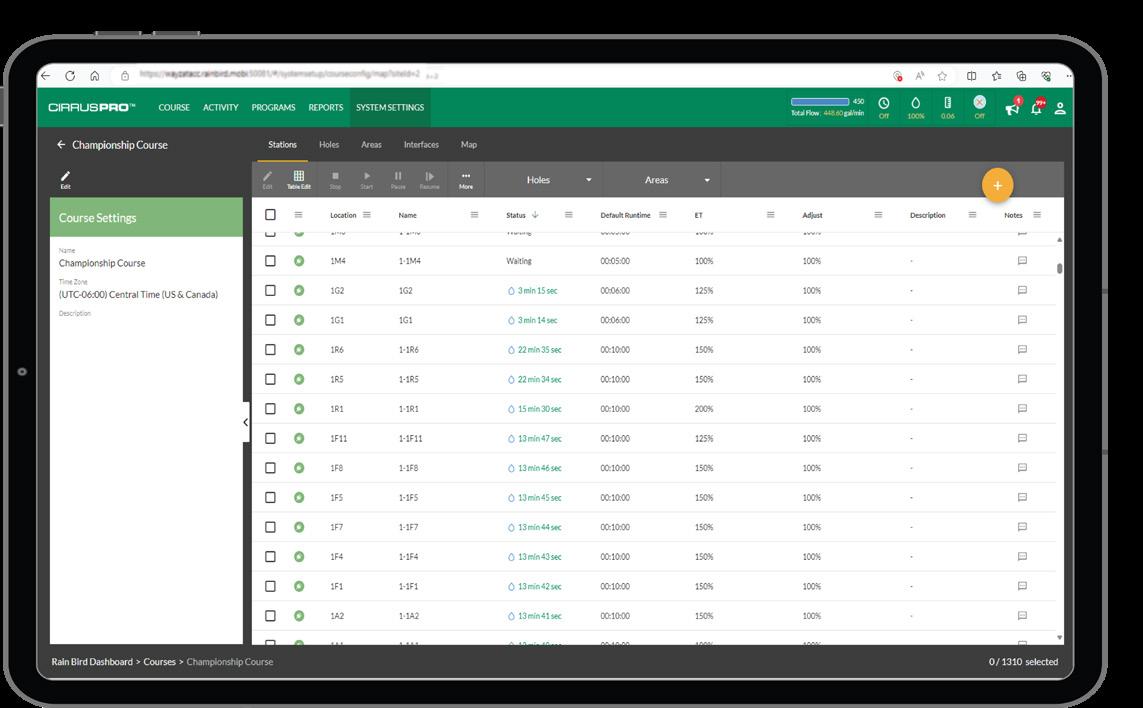
IRRIGATION HAS ALWAYS BEEN IN YOUR HANDS. NOW IT LITERALLY IS.




















DULUTH OUTREACH
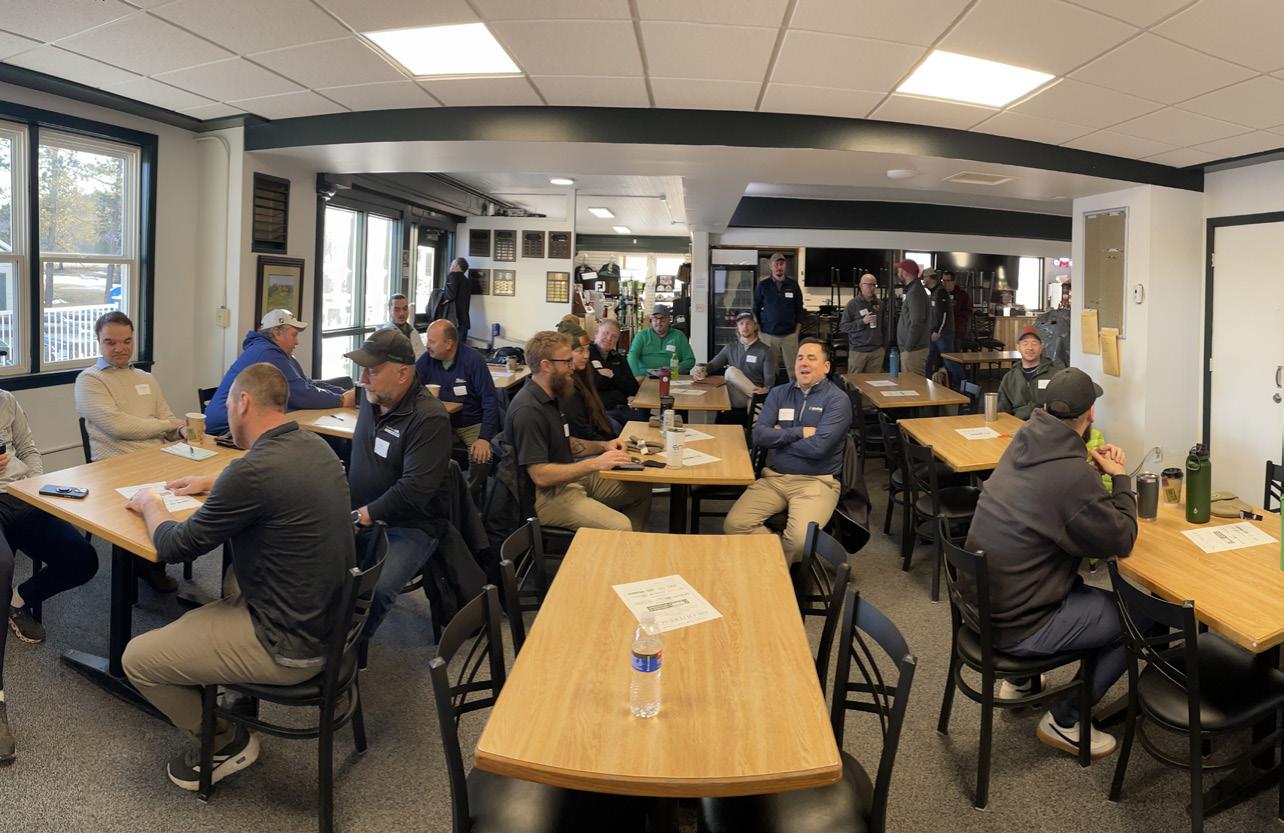
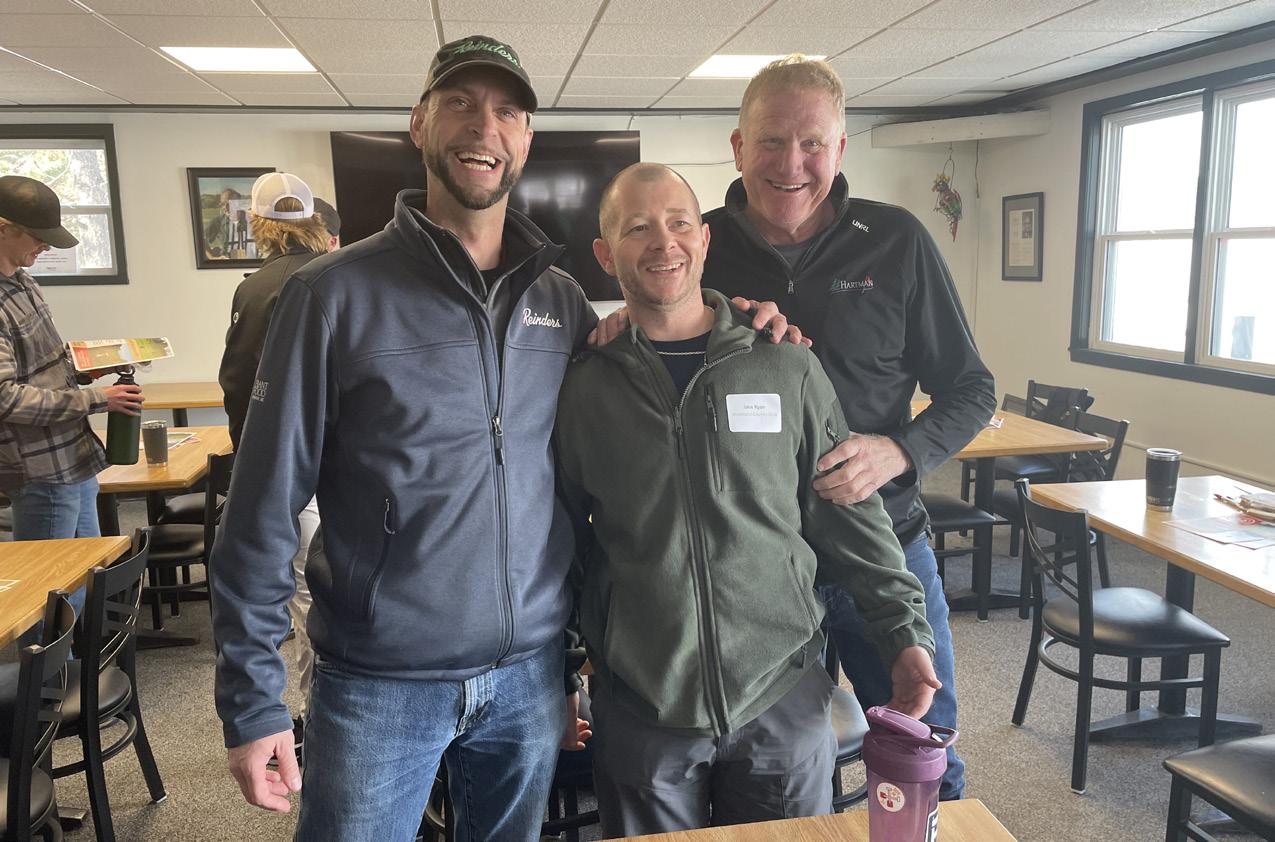
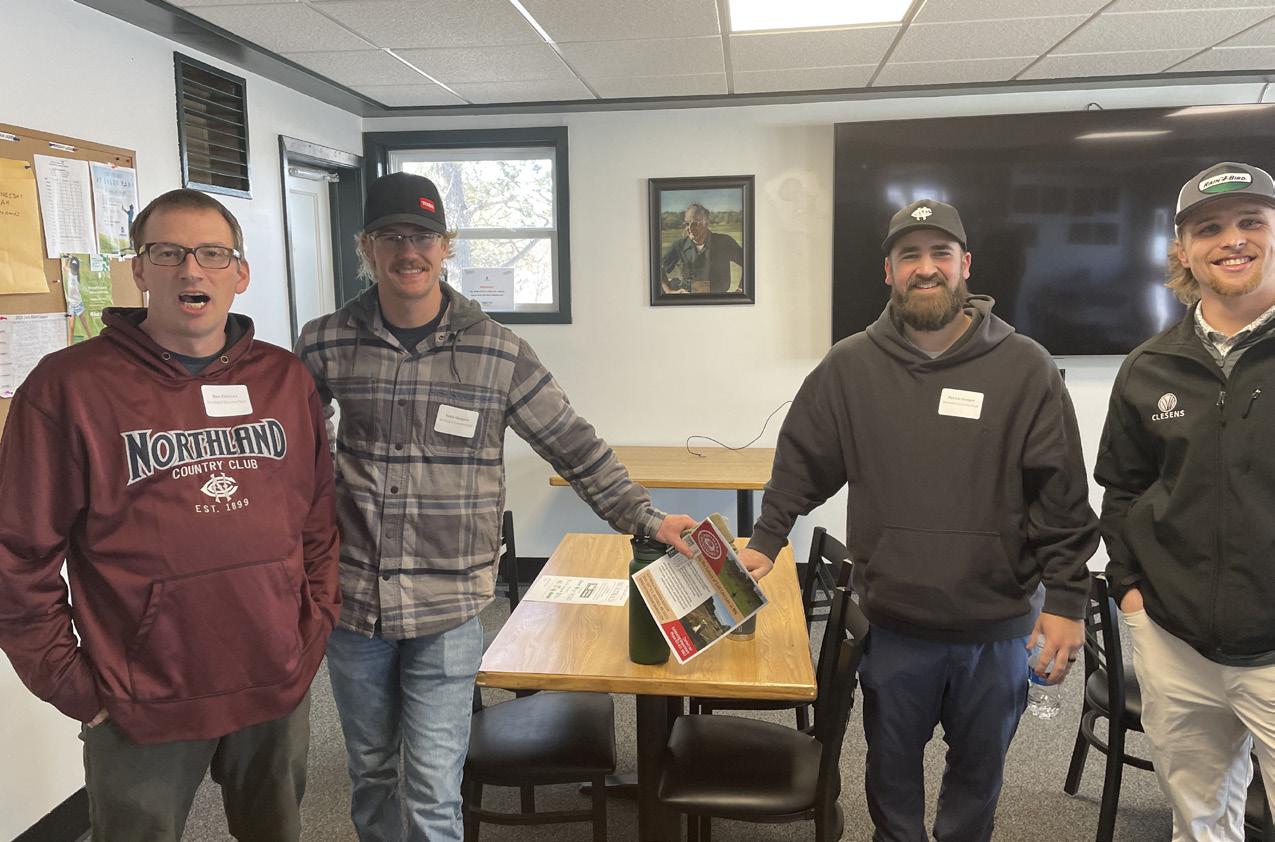
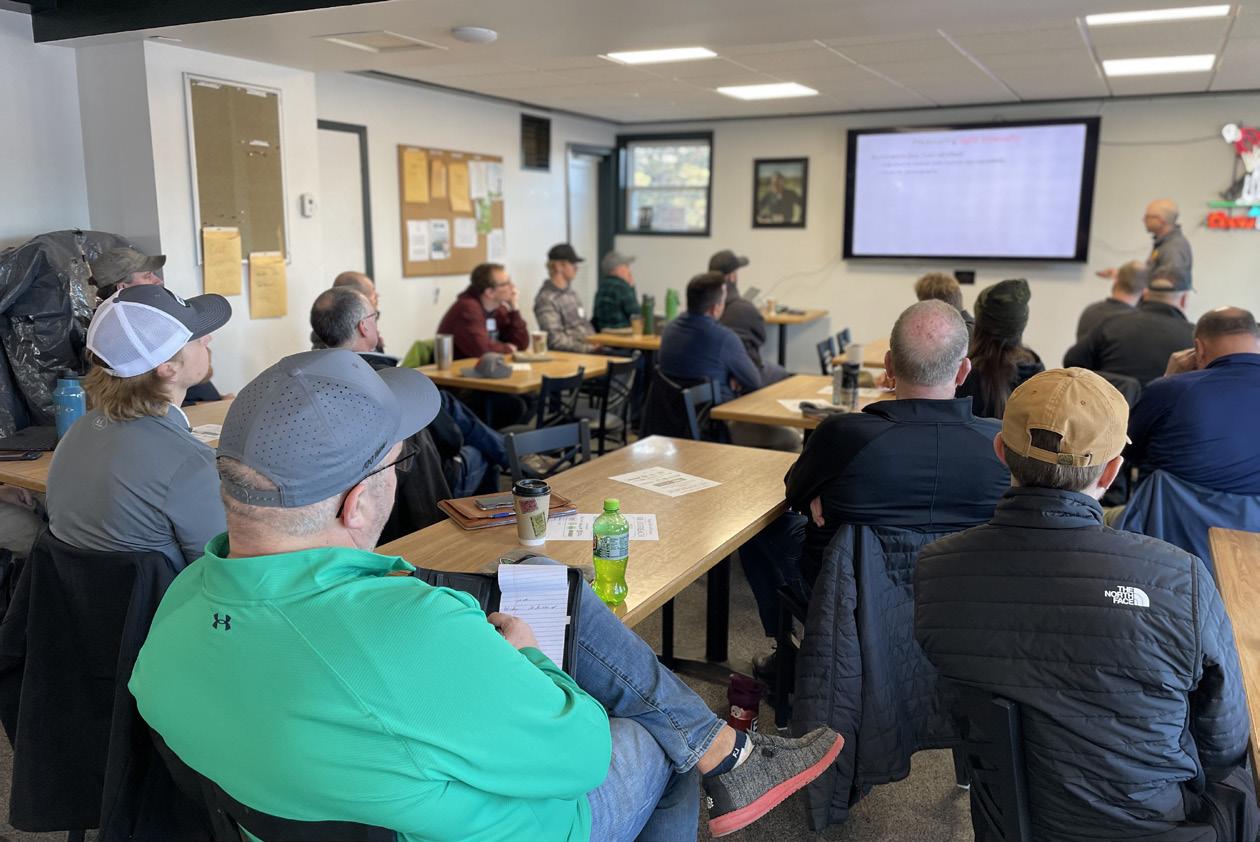
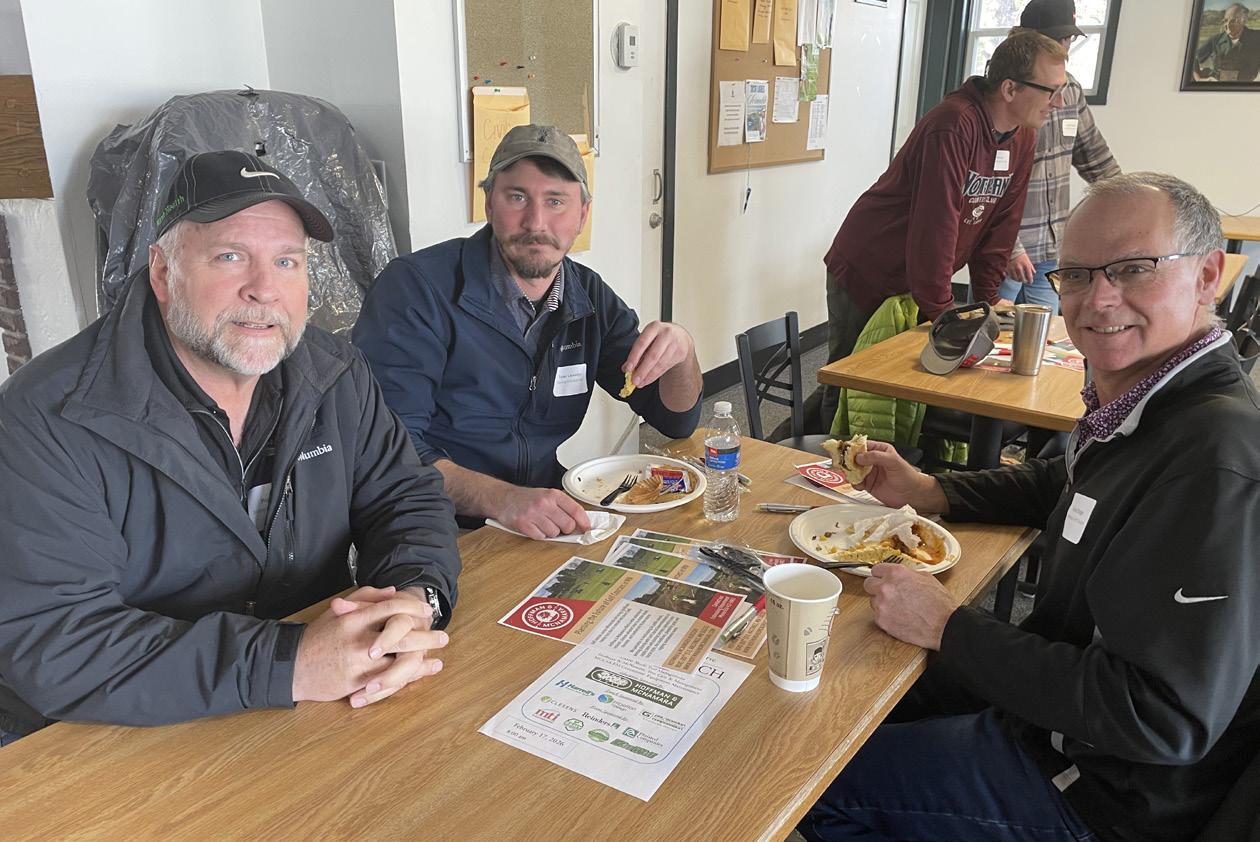
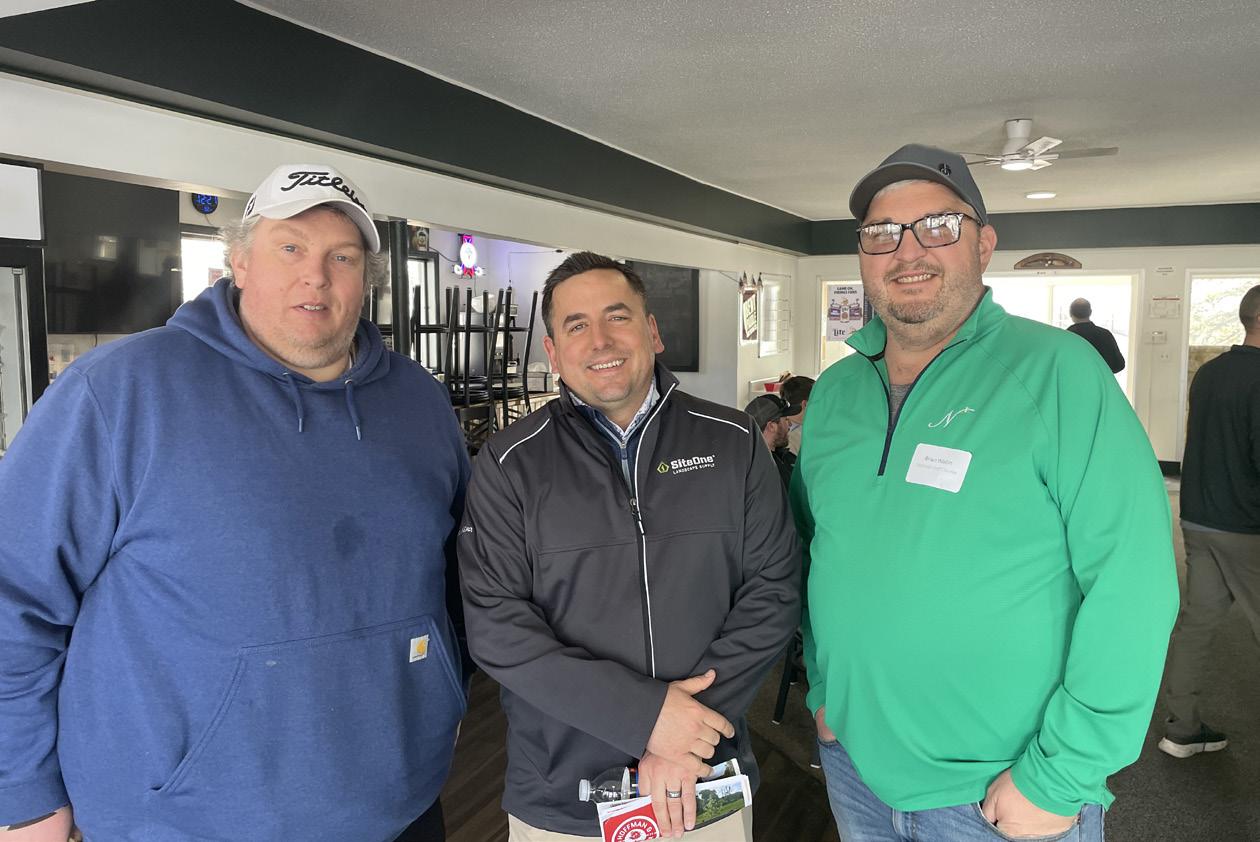
Our final Winter Outreach of 2026 was at Enger Park Golf Course. Thank you to our host Superintendent, Josh Krause, all of our partners and attendees for capping off the winter sessions with one last great event!

















ROLL IT FORWARD
Andy Keyes MTI
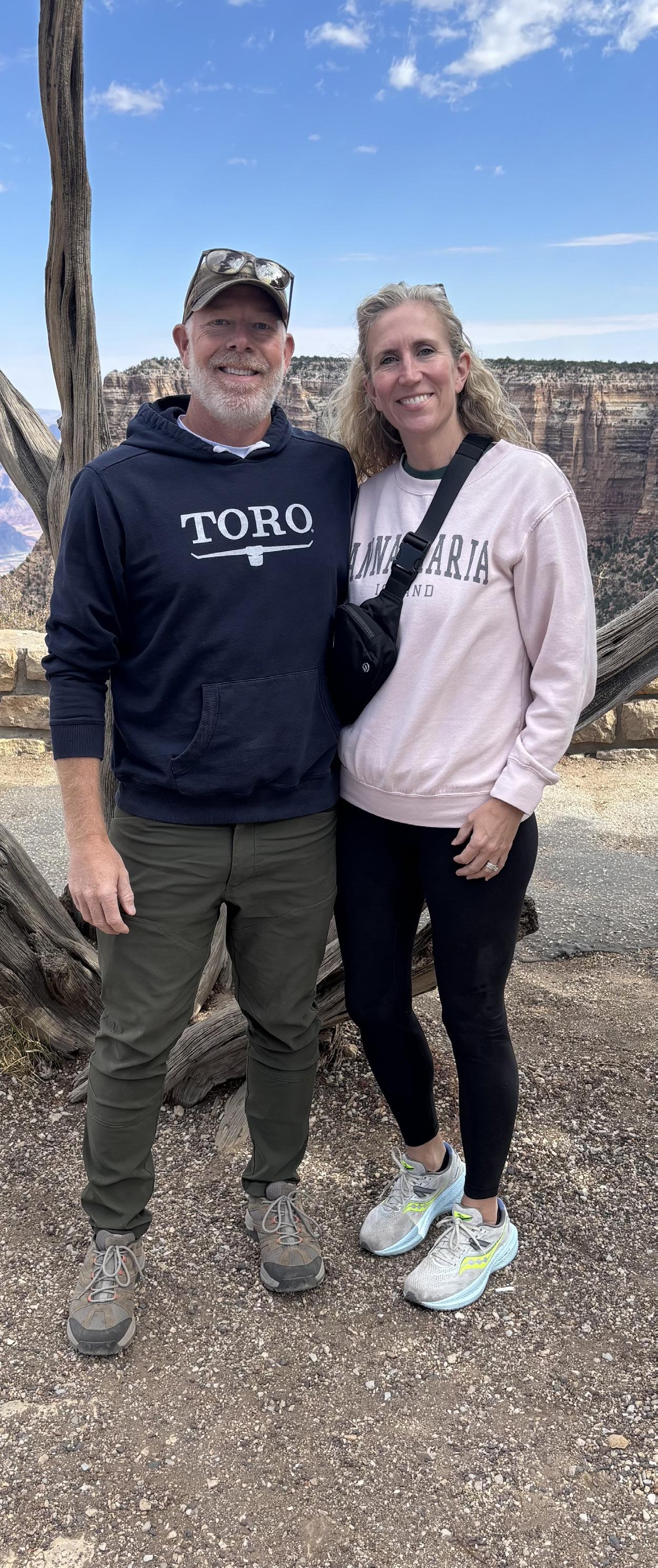

From Tee Banks to Territory Manager: A 30-Year
Journey in Turf, Leadership, and Finding Purpose
I would like to thank Chris and the MGCSA board of directors for doing a fantastic job managing the MGCSA. The MGCSA is a great supportive association that is always available to help you succeed.
Also, thank you Zach for nominating me to Roll it Forward. Zach and I worked side by side at The Meadows. It was great working with Zach and seeing his love for the Golf industry grow and doing whatever I could to help him move forward in the profession.
At twenty years old, I had no idea what I wanted to do with the rest of my working life. I started down the law-
enforcement path at Vermillion Community College in Ely, then transferred to RCTC in Rochester. It did not take long to realize that it was not the right fit. I stepped away and took a job at Hy-Vee in Rochester, eventually transferring to the new store opening in Mankato. After a
year, I knew I needed something different— something that felt like a direction, not just a job.
That “something different” turned out to be Prairie Ridge in Janesville. I will never forget my first day: push-mowing every tee bank on the course. A month later, the
course purchased the National—a major upgrade from a push mower, but anyone who’s run that machine knows you’d better understand every moving part before you fire it up. Toward the end of the season, the superintendent, Janelle Lord, moved on to a new role, and
I was asked to finish out the year. I leaned heavily on my vendors, especially Jerry Deziel, whose knowledge and willingness to help were invaluable to someone as new as I was.
When they asked me to return the next season, I hesitated. The course was only three years old,
still finding its identity, and I was not sure if I was ready—or if I was the right person for the job. But I said yes. I dove into research, attended winter events, and built relationships with vendors who were as much consultants as were sales reps. That first season leading the grounds team was
exciting, humbling, and eye-opening. I was hooked. I left for school before the season ended and Jim King stepped in a put the course to bed.
I enrolled at Western Iowa Tech in Sioux City to pursue turfgrass management. While in school, I worked in sales at Gateway
Computers, then joined Elmwood Golf Course in Sioux Falls as a second assistant.
Superintendent Matt Akers and assistant Dan Jurgens were instrumental in shaping my love for the profession. We were a tight crew— working together, learning together, and spending our free time together. After Dan left for a grow-in project in Norway, I stepped into the first assistant role. I later visited him during construction, and to this day, Kragero Golf is still one of the most beautiful properties I have ever seen.
After two years, I felt the pull back to Minnesota. In 2001, I was fortunate to land the superintendent position at Windom
Country Club. That is where I truly found my footing. At a small southwest Minnesota course with a staff of four seasonal employees and myself, you learn everything—agronomy, mechanics, irrigation, and equipment maintenance. You become a jack-of-alltrades because you must. Those years made me a better turf professional and introduced me to lifelong friends.
Windom is also where I met my wife, Traci. A mutual friend introduced us, and from the moment I met her, I knew she was the one. Twenty-one years later, we are still building a life together with our two daughters, Sierra, and Ashlin.
In 2004, Traci and I took a leap of faith. She was working at Toro in Windom, and I saw a posting for The Meadows at Mystic

Lake. We drove up for the interview and stayed at the hotel overlooking the property— construction just beginning that spring. It felt surreal. A growin, new construction, starting a family… it was a big step. But the interview went well, and within a week, I was offered the job. I started on July 13, 2004.
Grow-ins are a different world—dusty days, tight
deadlines, washouts, seeding, sodding, punch lists. But I would not trade that experience for anything. Pete Nolan, Geoff Jordan, and I worked tirelessly that summer, and I am incredibly proud of what we accomplished. Pete became a mentor in every sense of the word. His knowledge, patience, and leadership shaped me for the next 17 years we worked side by side. I owe him more
than I can express. I was able to meet so many great people in the industry while at The Meadows.
While at the Meadows, Tom Proshek reached out to see if I would be interested in joining the Minnesota Chapter of the Wee One foundation board. I accepted. The Wee One Foundation is one of the greatest foundations in our industry. I know
how much Wee One means to our industry and how it can help our peers through difficult times. If you have not attended one of the many neighboring State Golf outings please consider doing so.
In September 2021, I stepped into a new challenge as the territory manager for MTI, covering Southern Minnesota and Western Wisconsin. It was a
natural transition— still connected to the industry and the people who helped shape my career. I have met even more professionals in this role, and I genuinely enjoy staying connected with the peers who have been part of my journey.
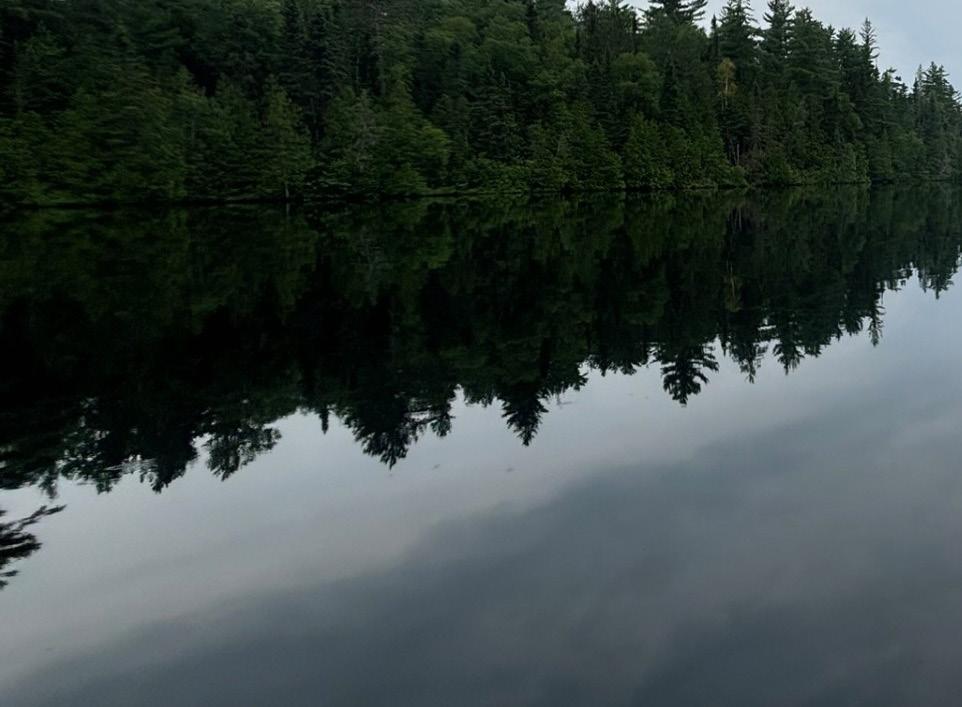
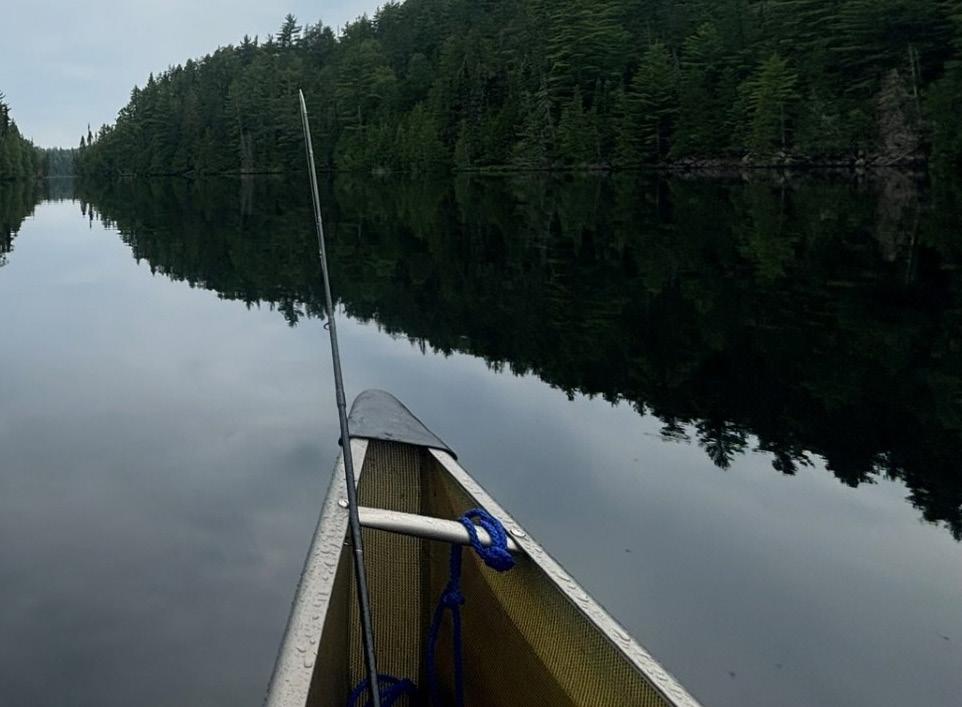
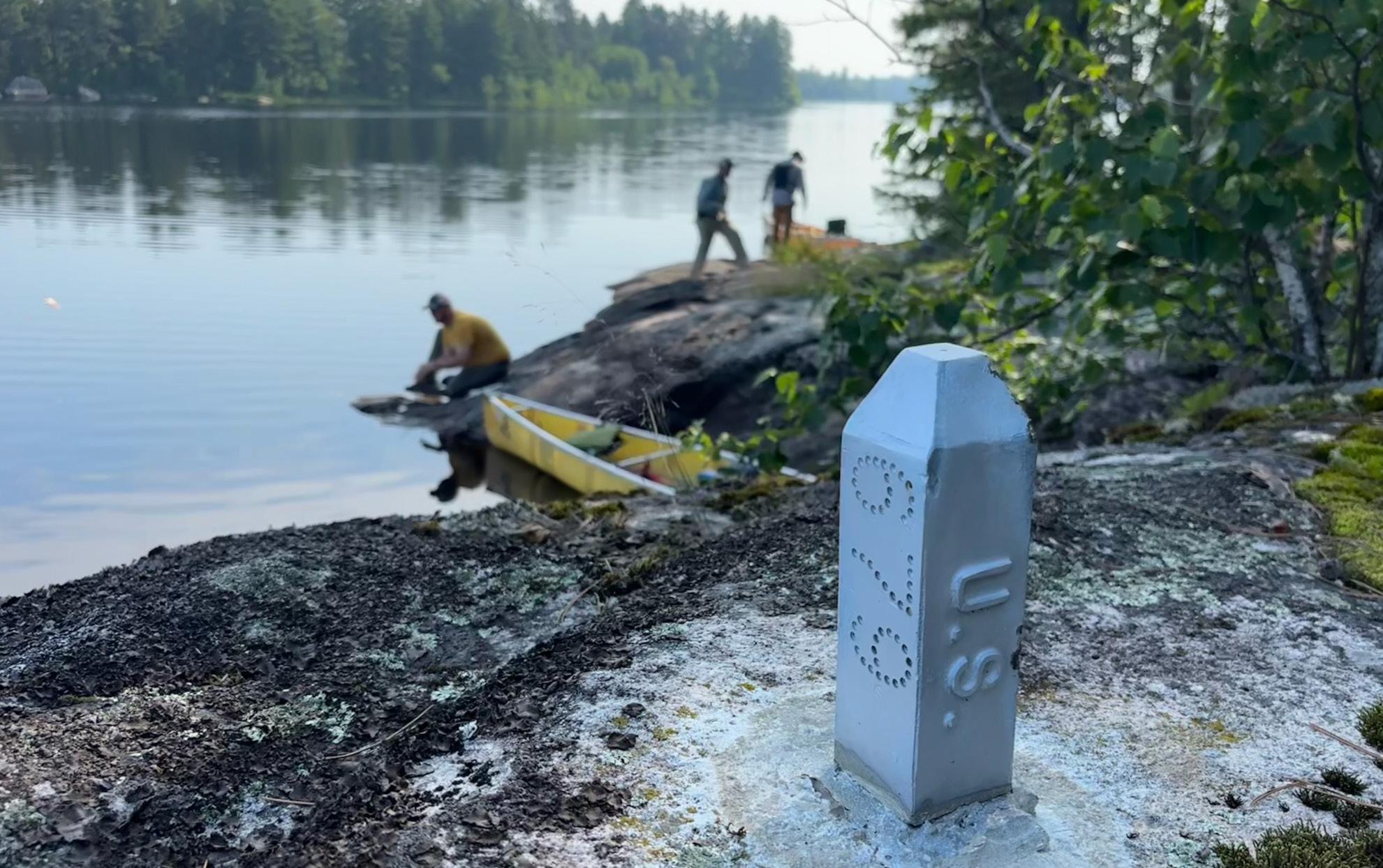
Somehow, through all of this, I have made time for my true passion: the water. I have paddled out West
and across Wisconsin, but my heart belongs to the Boundary Waters. I take at least one trip a year. Each one is different, but they all offer the same gifts— silence, wildlife, dark skies, cold lakes, and the kind of reset you cannot find anywhere else. If you have been there, you understand. If you have not, look me up. We will see if we can change that.
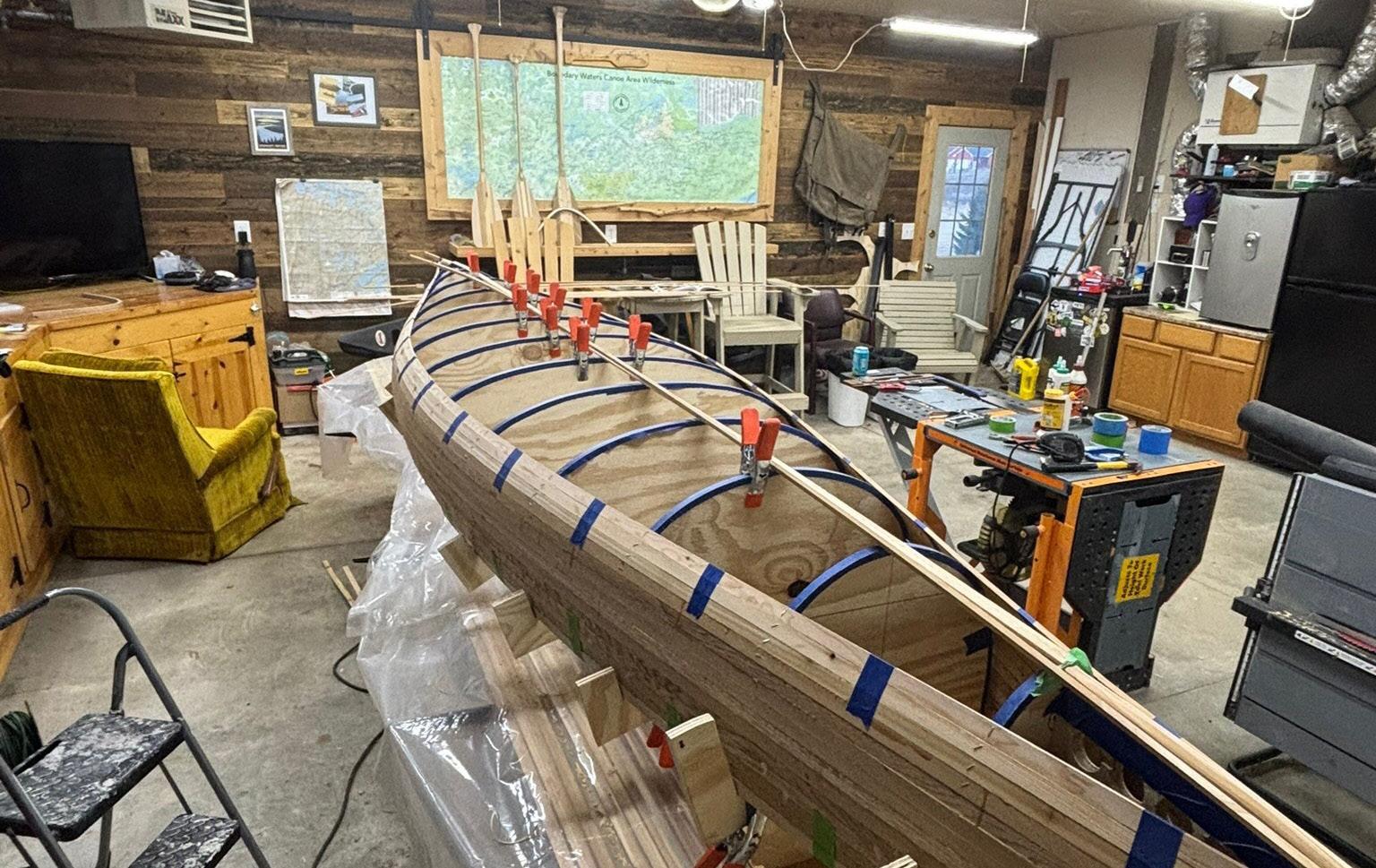
I also built my first cedar strip canoe. I was able to finish it on New Years Eve this year. Now for the long wait for open water to test it out. Figures crossed it floats! I cannot wait to have this thing in as many lakes as possible starting this spring. Traci and I love to be on the water and now we can be in the same boat since it was solo crafts before.
As part of the Roll it Forward series, I would like to nominate Dylan Klein. Dylan is in my previous position at The Meadows at Mystic Lake. Dylan came to The Meadows as a seasonal employee and found the love for the profession like many of us and has made this his career. It is great hearing stories of how others have found this profession so gratifying,
and I believe he will give inspiration to others that are just starting out. Thank you for taking the time to learn a little more about me. If I can leave you with one piece of advice, it is this: Find something you love. Find someone to share it with. Put it on the calendar and go. Life is busy, but you must make time for yourself.
CRAGUNS OUTREACH
Thank you to our host Superintendent, Matt McKinnon, Cragun’s GC, and all of our partners and attendees for a very successul Brainerd area outreach event!




What makes us the #1 brand according to the NGF? The 1550 delivers a more even, more consistent spread meaning fewer passes, less disruption and more time for the next job. So easy to use, it gives you the confidence to nail your application every time. It even tells you the exact rate. Ready to up your game and maximize productivity? Nothing tops the 1550 Topdresser.
WIDESPI N™ 1550
GET TO KNOW ‘EM
SULLIVAN SCHERMERHORN
Senior Assistant Superintendent Interlachen Country Club

PUBLIC/PRIVATE/#HOLES
FT EMPLOYEES:
SEASONALS:
YEARS IN THE POSITION:
YEARS IN TURF INDUSTRY:
CAREER/JOBS:
TURF SCHOOL:
Private/18 Holes
8 50 3
5
School Teacher, MPLS Schools
UMN Bachelor in Education, Great Lakes School, Ohio St. Certificate Program
TYPES OF GRASS:
007XL/Macdonald bent greens, tees, fairways, Fescue/Blue rough, Fescue bunkers
MASTER PLAN WANT:
EQUIPMENT WANT:
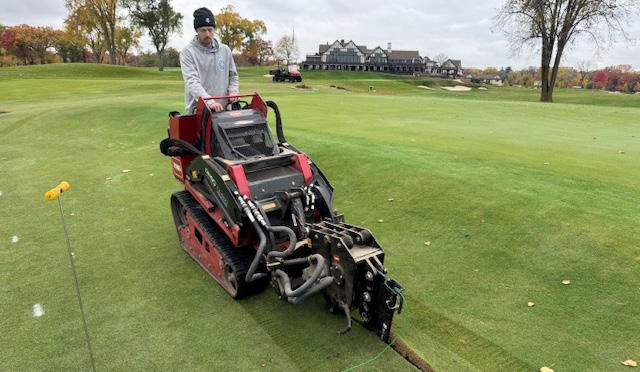
We have gotten some nice rainfalls since the reno, and its helped us identify areas for drainage improvements. With irrigation, we identified some spots that didn’t have the coverage we thought they would, so we added some block zones and heads, which will continue. Just keep refining. We did not touch the range or short game, so those are getting looked at for a face-lift.
This fall was our first go of really cutting down the fescue, we didn’t have a fescue cutting machine. We didn’t have a way to capture that material, so we needed something to help with collection. One or

two pieces that expedite the process will help reduce the labor costs that we put towards that.
ANYTHING DIFFERENT OR UNIQUE YOU DO THAT COULD BENEFIT OTHERS?
WHAT IS A CLASSIC MOVIE YOU RECOMMEND TO OTHERS?
I think what we do well is training our staff on multiple jobs or task. We are able to be highly fluid in times of crisis. That graduation of tasks, helps always as a full time team to be comfortable, knowing that everyones on the same page. We are able to be efficient and accomplish so much. We get new seasonals every year and to be able to have anyone train them the same way while trying to get stuff done in a more efficient way, a more environmentally friendly way.
Pulp Fiction, Tarantino movies.
FAVORITE VACATION SPOT?
Milwaukee, the home that my grandparents built and the lake that I grew up on. It’s been in our family for almost 100 years now. Spent a lot of time out there. Being at the lake is a good thing for me.
FAVORITE TASKS:
LEAST FAVORITE TASK:
I volunteer to rake bunkers. The final product of raking a bunker is up there with lines on greens. I like mowing fairways too. You can produce a beautiful product. I also like irrigation repairs, from taking sod off, to packing it back down and turning the head on. I like having to get so much right. There so much to making it look like nothing happened.
Campus check. I’m removed from the golf course, but making sure everything’s presentable campus; leaves, trash, etc.
HAVE YOU PLAYED ANY FAMOUS GOLF COURSES?
WHO IS IN YOUR FOURSOME?
I got to walk Cypress a few years ago, but I haven’t really played any. I am going to Bandon Dunes this May, which will be great.
My Grandpa, he introduced me to playing golf, Jerry Garcia would be fun to golf with, and my dad. Anytime we have golfed, its been a blast. Jerry will provide some good conversation.
WHAT IS FAVORITE MEMORY OR FUNNY STORY OF STARTING IN TURF:
I think the renovation really allowed me to grow as a individual, and really find some of my limits. That all happened in one season, not even a full year.
Kind of funny, when i was getting trained on walk mowing. This was the models with the lever to engage reels and I didn’t realize you could keep it engaged when turning.

It finally clicked that you just keep the lever down. Also, I didn’t know I needed to keep the nozzle on when disengaging the coupler, so I got that shot in the face, not the coupler though.
WHATS ONE PIECE OF ADVICE YOU’VE RECEIVED IN YOUR CAREER THAT STILL RESONATES WITH YOU?
It would be thats there’s never a stupid question to ask, or to just ask the why. Always be curious, ask the questions. Asking the question of the person giving me these expectations has been really valuable to me. You don’t always need to abide by them, but take them and apply them or not.
Listen to the full conversation with Sully on the HOLE NOTES PODCAST! Available on many of your favorite podcast sites!
THe national
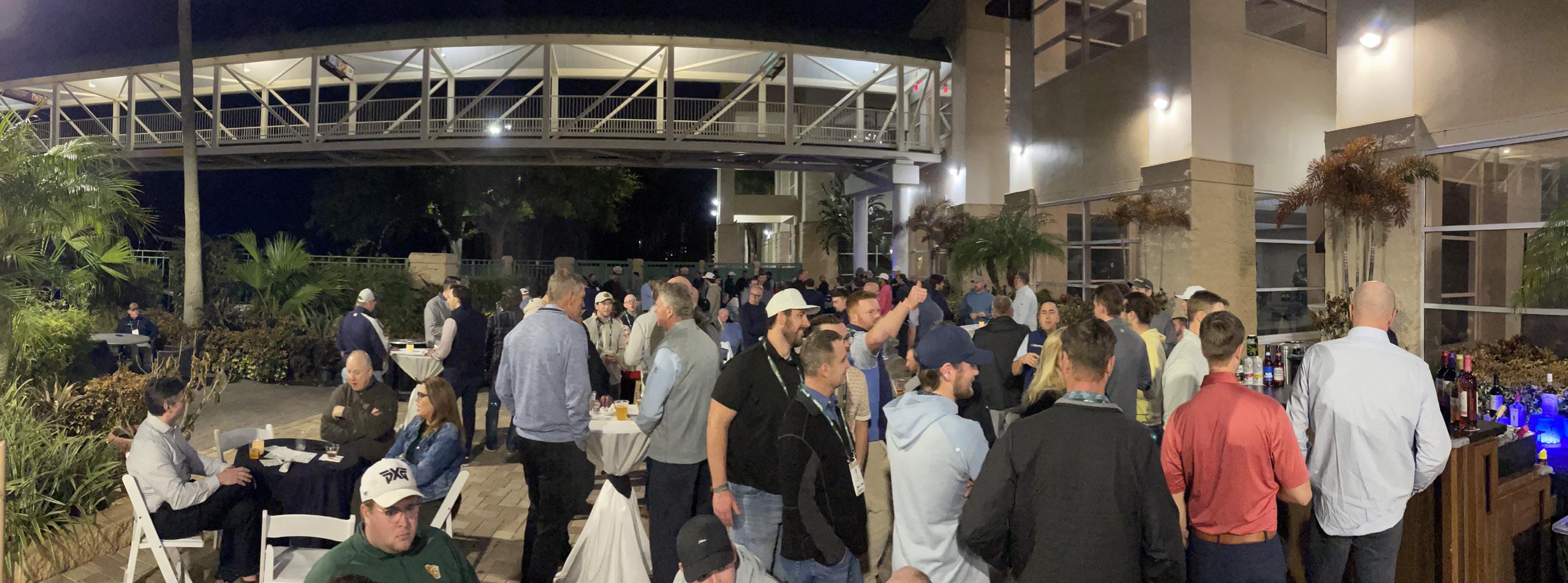
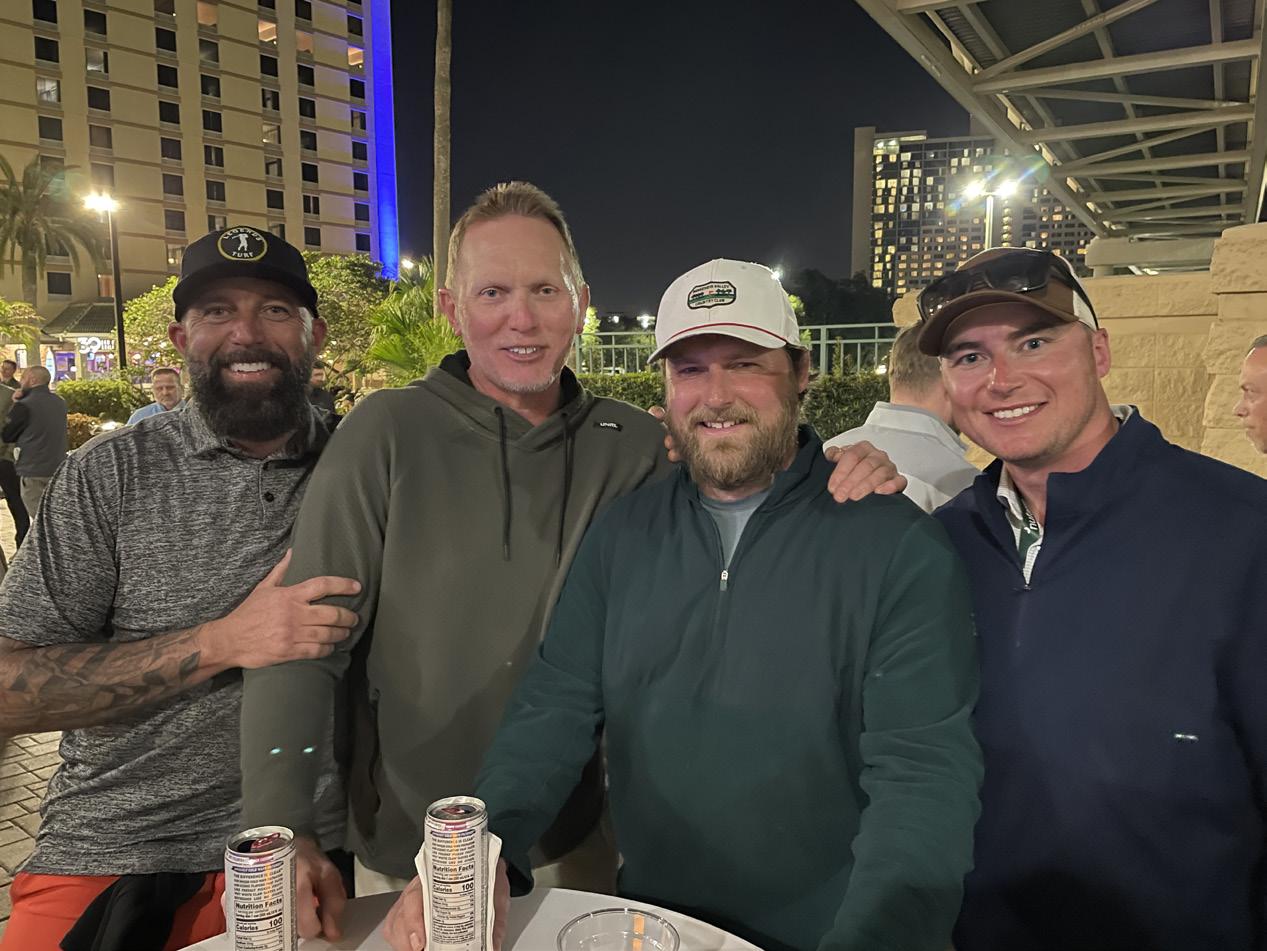
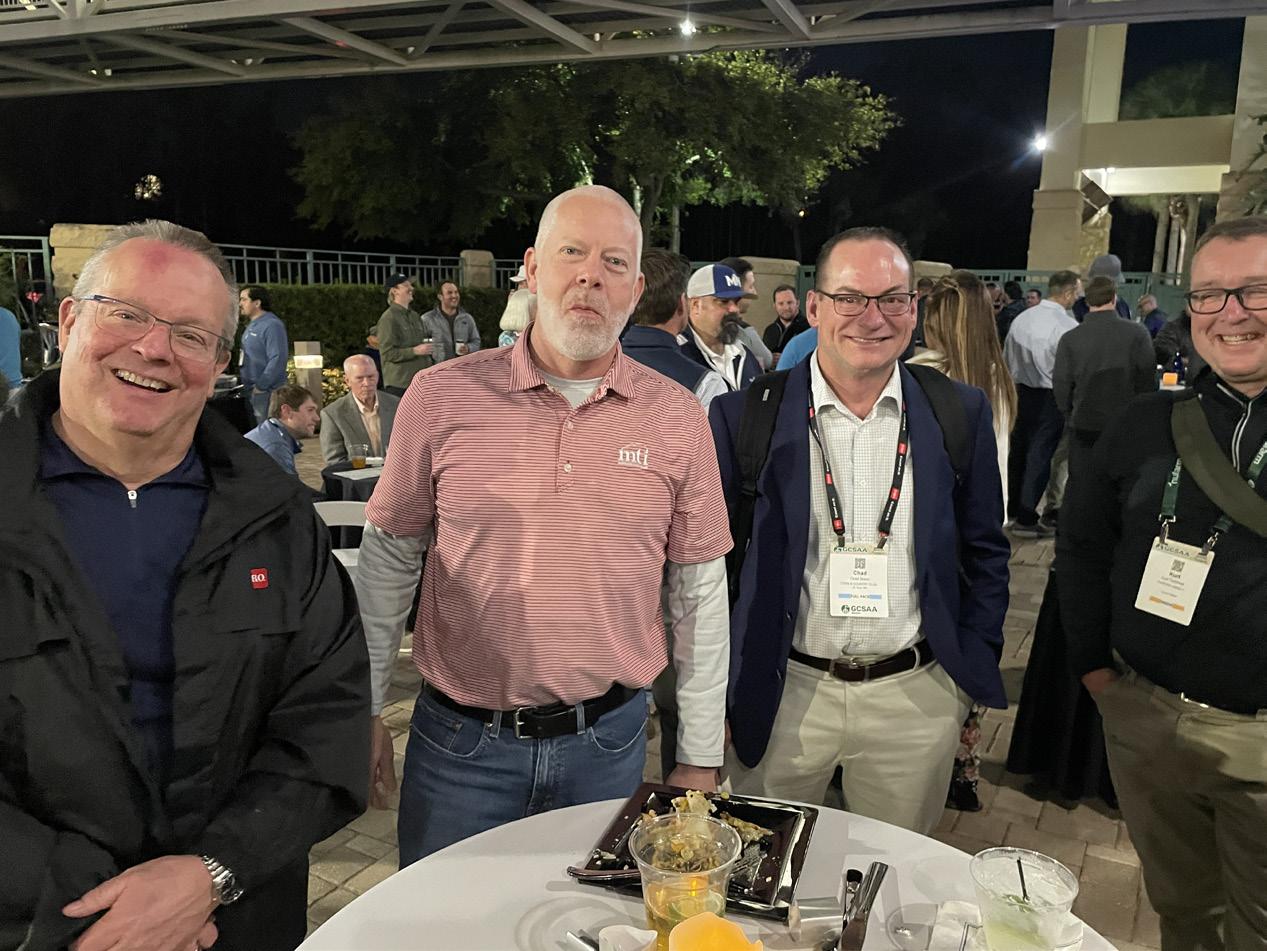
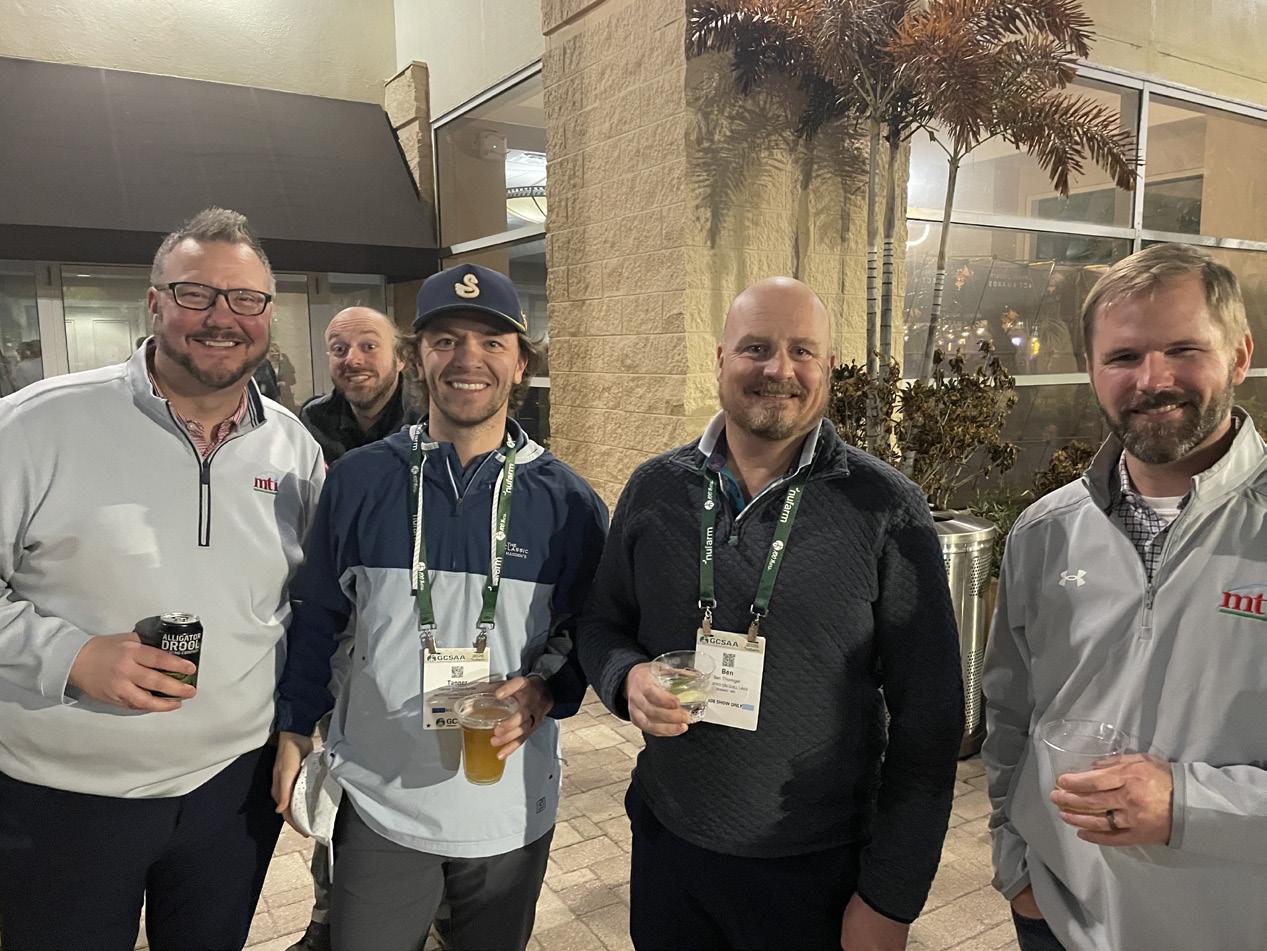
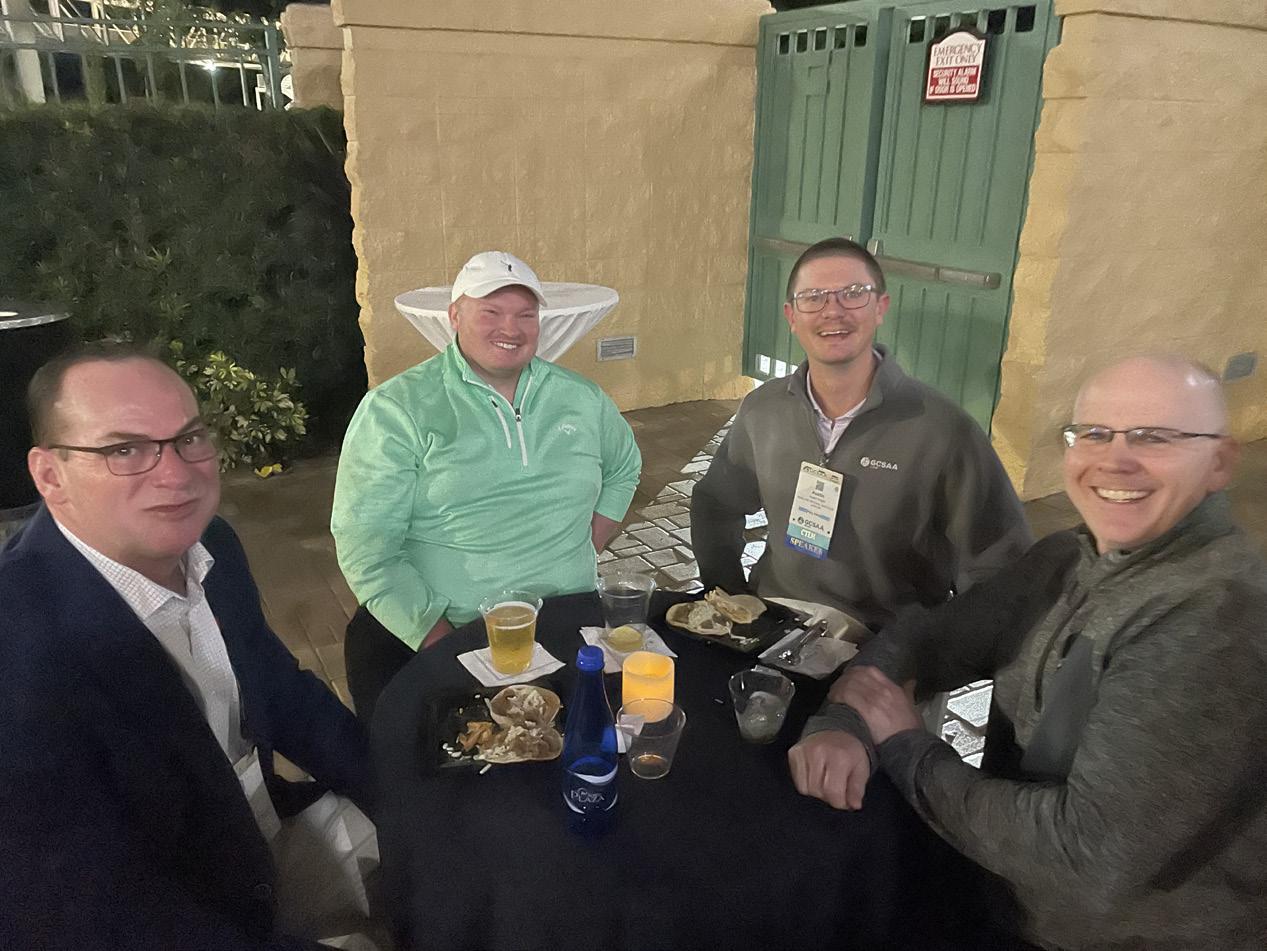
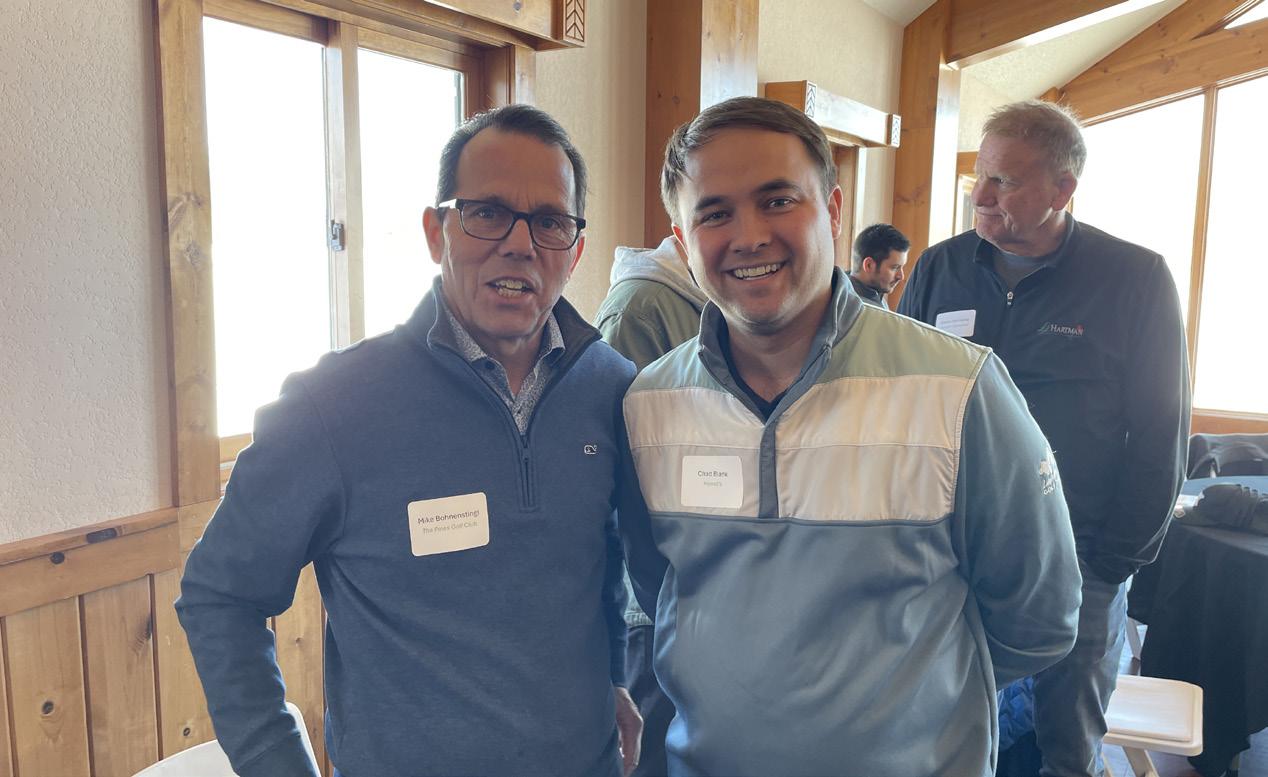
Thank you to all of our partners for supporting this years National Hospitality Night at the Rosen Plaza Hotel.


UMN RESEARCH
GETTING THE MOST OUT OF WEB-BASED TURF RESOURCES
Dr. Jon Trappe
University of Minnesota
I think most would say it has never been easier to find information on a given topic using your favorite search engine. The big question is, can you trust it? The hit or miss accuracy of A.I. generated answers or results have been discussed quite a bit, but it admittedly appears to be getting better. With that said, search engines will always think they know what you want to see and some even great sources can be buried or lost forever. The following are some helpful web-

based resources related to turf that I think you might find useful.
Turfgrass Information File (TGIF)
It cannot be overstated how valuable TGIF is to the turfgrass industry. Originally, this was an online library accessible only through a University library subscription, but is now nearly entirely free for the public to use. MGCSA members of course still
have complete access through the national GCSAA membership. If you want to access turfgrass research, trade publications like Golfdom, popular press articles, newsletters, and many other recent or historical writings about turf, TGIF is the very best place to search. In the process of writing this, I got lost a bit reading Hole Notes articles from the 1970’s - it is both humbling and encouraging how superintendents are facing many of the same issues
50 years later. In the June 1973 issue, there is a bold prediction about how in 50 years you would be oldfashioned to still be raking your sand traps.
If you’re looking to do a deeper dive on turfgrass research on TGIF, check out Crop, Forage, and Turf Management and HortTechnology. These are two applied research journals that are intended for the research to be read and used immediately by turf professionals. So the writing is more approachable, with results expressed in standard units, and discussion sections focusing on immediate benefits to turfgrass managers in the field.
University of Minnesota web resources
The University of Minnesota Turfgrass Science webpage houses many resources you might find useful. You
can check in to read turf news, learn about upcoming events like Field Days, read about current or previous research projects, or use the Turf Dashboard. If you’re not already familiar, the Turf Dashboard is a decision support tool that allows a user to drop a pin and use local weather station data to make decisions about things like dollar spot or pythium pressure, crabgrass preemergent timing, or other weather specific information. The University of Minnesota also has a Yard and Garden Extension webpage with information that is more tailored to lawn care, but would still be very applicable to veteran or newbie superintendents.
Pesticide use
There are two great resources for finding pesticide-related content. The National Pesticide Information Center
(NPIC) is a cooperative resource between Oregon State University and the US Environmental Protection Agency. It is a great starting point for learning more about all things related to pesticide use. Within NPIC, there are great databases that you can search for pesticide labels and safety data sheets. The NPIC has a Product Research Online portal that allows for searching for products by pests, the area to be treated, pesticide manufacturer, or active ingredient. Another database I regularly use for finding pesticide labels is Crop Data Management System or cdms.net. I have found that CDMS is a little quicker if you need to quickly pull up a pesticide label or a safety data sheet.
Cultivar
evaluation trials
If you are interested in looking up cultivar and some species performance data, there are a number of
great resources available. On the University of Minnesota Turfgrass Science webpage, we have all of our cultivar evaluation results broken down by year and then further by species and trial. This is information that is mostly from trials at the TROE Center in St. Paul and should be the most relevant in terms of location. If you would like to see how a cultivar compares to other testing locations outside of Minnesota, you can use the Turfgrass Trial Explorer, or check out the National Turfgrass
Evaluation Program website.
Getting the most out of your favorite search engine
Although I would still recommend checking out TGIF if you are looking for some specific answers when doing a deep dive on a given turf topic, I recognize that most are still going to try Google or other search engines first. One of the best ways of improving the quality of your search results is to learn a few search command prompts.
Double quotation marks around your search term (ex. “Seaweed extract”) ensures search results appear with that exact phrase in that order. Using a minus (-) sign can help exclude words, domains, brands, or time periods (ex. “Topdressing fairways -putting” if you only wanted to read articles about topdressing fairways). Finally, I prefer to add (-edu) to my search terms when I am looking to prioritize university webpages, which tend to have more research-based information.
UMN TURF BLOG






Maximize the beauty and playability of your course with MTI’s turf solutions.
Our comprehensive range of reliable equipment, backed by more than 70 years of industry expertise and support, helps you maintain pristine landscapes.
Offering the top brands in the industry, we provide the tools and support you need to create safe, inviting, and sustainable outdoor spaces.
Contact us today for an on-site product demonstration or to learn more.


FROM THE HIGH GRASS
For those of you in NE Minnesota, or those attached to Duluth sports, you may know or have heard that Dale “Hoagie” Haagenson passed away this week. Dale was a local legend amongst UMD Bulldog and Duluth sports fans, having served as a volunteer staff member since 1981. He was the energy, the soul, of many of these teams with his typically upbeat and constant positive attitude. After reading some of the stories and comments about Dale, it was even more surreal to see the impact he has had on so many people. He was a part of so many sports teams/ families, but for me, he actually was family.

making him my first cousin, once removed. I would get to see Dale a couple times a year usually, especially at our family golf tournament every Labor Day. When I was young, we would also go up and watch most Gopher/Bulldog hockey games. After the game, he would introduce us to the whole team in the locker room, then proceed to introduce us to the entire restaurant, at whichever restaurant we went to! He knew everybody, he was proud to be their friend, and he always made sure that each of us had a chance to be included.
think about the impacts people actually leave on your life and how we manage those relationships. Do we spend enough time learning from the relationships in our lives that will help us improve and grow, or are we showing the best attitude to accomplish our goals and objectives? I can now see so many unintended lessons and skills that I should have seen sooner.
Dale was my mom’s cousin,
This was not my intended article for this month, but after the news this week, my mind wandered elsewhere. It has made me
As an association, we offer various events to build your professional network. Most of the time, we see groups sitting with the people they came with. That is easy, and the most comfortable thing to do, but is it the best thing for you? You see these people every day, (hopefully
you’re still learning from them) but coming to our events, engaging with other activities, should be about meeting other people, learning from them, and taking their tips back to make your course or life better.
I could only envy Dale’s positivity, but it is something I try to bring to our events, to our membership. This ED role is made for an extrovert, something that I can now more closely identify with. However, that is still not who I am. I understand what the role entails, and being the greeter, emcee, whatever other role may be needed day-of, makes me step out of that comfort zone often. It’s the job, and I now look back on how Dale excelled in those situations, and what I can learn from him, and help improve my efforts in the future.
are made for networking, but networking doesn’t happen if you don’t have a willing or positive attitude. Don’t miss the chance to learn more about yourself, by stepping out of that comfort. Local associations are about building a community, a network for you to learn from, and that is how we can deliver the most value to you as an individual.
Little changes can go a long way and simply making that effort to introduce yourself to someone new at an event is valuable. Our events
We can learn so many lessons from unexpected people, maybe not in that moment, but perhaps when the time is just right. Make the effort to learn from those around you, talk with them, watch them act and communicate, observe your colleagues for tips and tricks. Be engaged, don’t just show up, participate, answer questions, have a role in whatever you are doing wherever you may be. Specifically, if MGCSA isn’t making an impact for you; first, let me know what we’re missing. Second, assess if you are not engaging in ways that would most benefit you.
Dale’s endless excitability and joy were traits I don’t typically share but I hope to grow stronger in those areas going forward. Now, our family golf tournament won’t quite be the same this year. We will miss Hoagie’s epic club throws, the occasional swear heard from a few holes over, the similar distant scream when a putt drops, or his personal thoughts on the beer selection at my wedding, but most of all we will miss the positive and enduring spirit he always displayed to everyone around him.
That positive energy is truly contagious; you want to be around those people that work to bring joy. Whether that’s personally or professionally, these people are out there, and it’s on you to meet them, talk to them, learn from them, and never be afraid to expand on who you are or could be. Life lessons can be found in so many expected, and especially unexpected places, and it’s on us to recognize those moments before they’re gone.