
HOLE NOTES
HOLE NOTES
The Official Publication of the MGCSA V. 61, #2 April 2026
PRESIDENTIAL PERSPECTIVE
JOHN CAMERON, CGCS
TOOLS OF THE TRADE
TYLER LEWELLYN
ROLL IT FORWARD
DYLAN KLEIN
GET TO KNOW ‘EM ROSS SHAFRATH
UMN:AURORA GREEN DOMINIC PETRELLA
FROM THE HIGH GRASS CHRIS AUMOCK
Board of Directors
President: John Cameron, CGCS
Vice President: Jason Scharfencamp
Sec/Treas: James Westendorf
Ex-Officio: Nikk Dickerson, CGCS
Director: Wade Huesman
Director: Reed Bohm
Director: Dan Ament
Affiliate Director: Brandon Young
Affiliate Director: Chad Blank
Executive Director: Chris Aumock
MGCSA
PO Box 2028
Maple Grove, MN 55311
40 30
48
52
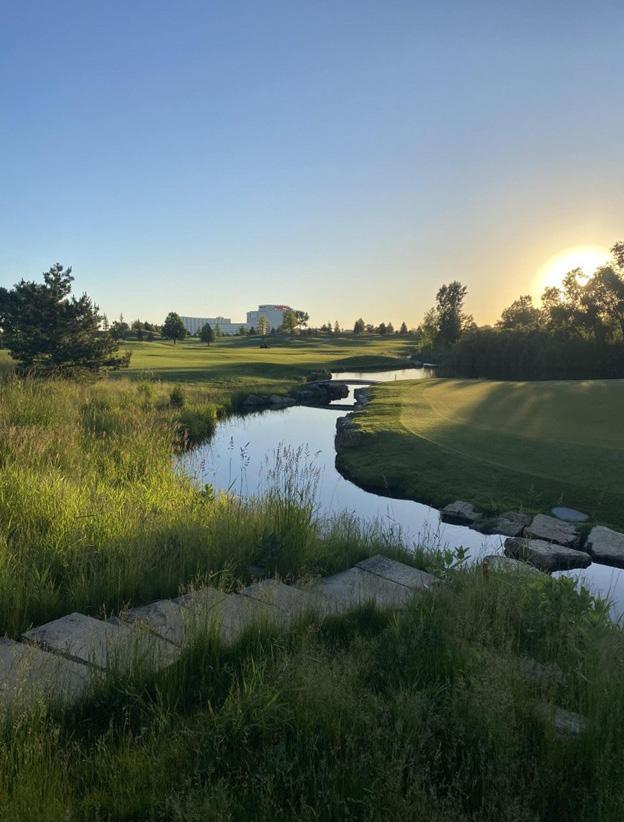
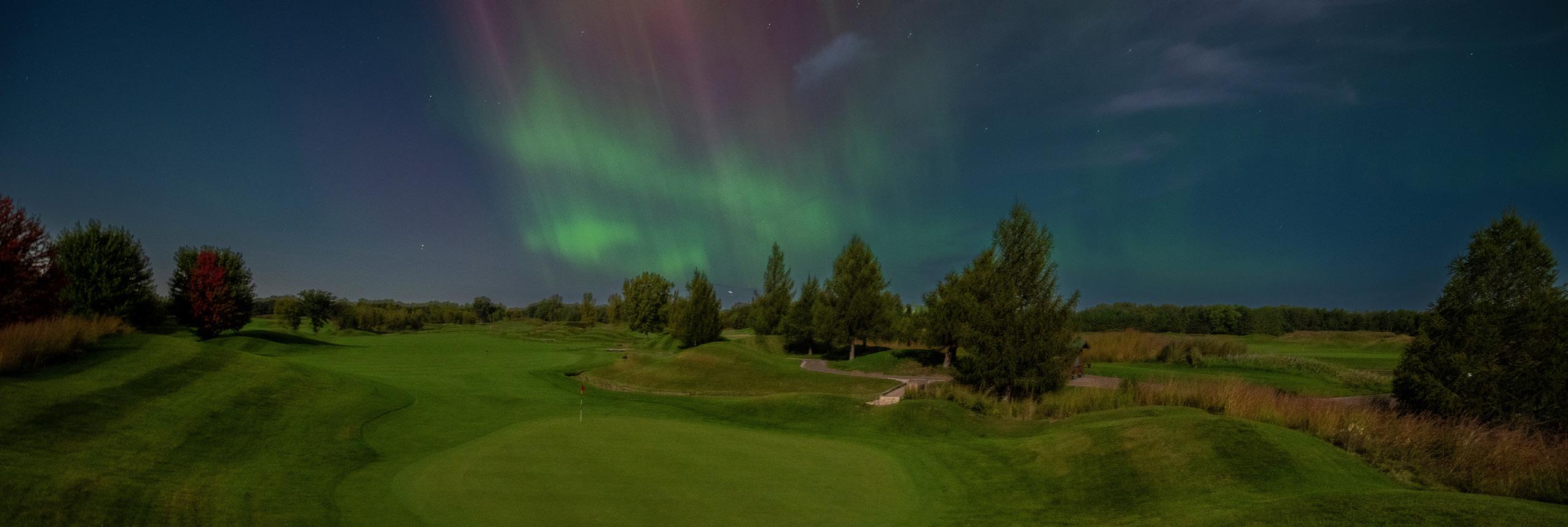
Cover: Meadows at Mystic Lake
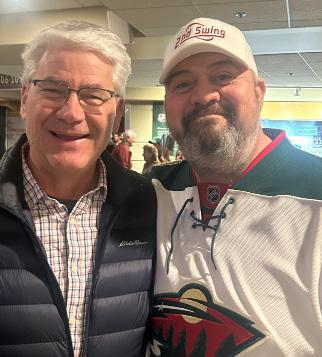
Above: MGCSA members Jeff Pint and Matt Rostal met up in the Wild (pun intended)!
Event Calendar:
Border Batlle - La Crosse CC 5/11
NW Exposure - Alexandria 6/15
SW Exposure - Mankato 6/25
NE Exposure - Silver Bay 7/20
SE Exposure - Lake CIty 7/29
Hole Notes (ISSN 108-27994) is digitally published bi-monthly, 6 issues per year, by the Minnesota Golf Course Superintendents’ Association, PO Box 2028, Maple Grove, MN 55311. Chris Aumock Publisher. Please send any address changes, articles for submission, advertising and concerns to chris@mgcsa.

In preparing for this article, I spent time reviewing April perspectives from former MGCSA Presidents from each decade over the last 50 years. It is a humbling reminder that while our equipment and chemistry have evolved, our core challenges remain remarkably consistent.
In 1976, Dean Sime wrote about the industry camaraderie that builds strength for the future. By 1986, Kerry Glader was navigating a shift in environmental policy and warned that our role as stewards was
John Cameron, CGCS
North Oaks Golf Club
becoming as vital as our role as agronomists. James Gardener’s 1996 address focused on professional growth and the necessity of work-life balance. In 2006, James Bade challenged us to move beyond reactive maintenance by implementing researchdriven Best Management Practices. Finally, in 2016, Dave Kazmierczak recounted a narrow escape from legislative amendments in St. Paul, which reminded us that collective vigilance is our most vital tool.
These glimpses to our past
reveal a clear theme that no Superintendent should be fighting battles on their own. Whether you manage a high-budget private club, a lean municipal operation, or a local daily fee course, we all speak the same language of soil temperatures and disease pressure. We all face the same sleepless nights during irrigation charge-up or midsummer heat spells. As we enter the 2026 season, I encourage you to reach out to a fellow superintendent. Our strength is not found in a directory. Instead, it is found in the phone call to a neighbor when things
aren’t going as planned. Do not keep your questions or your frustrations to yourself. Share a success story or a failure that taught you something new. The strength Dean Sime wrote about 50 years ago only exists if we continue to support one another. I wish you all a smooth opening and the very best of luck in 2026.
On behalf of the Board of Directors, we would like to extend a sincere thank you to our outgoing Affiliate Representative, Jay Yonak, for his years of service. We wish him
the best of luck as he returns to his old stomping grounds as he resumes the position of Golf Course Superintendent at The Links at Northfork.
We are also pleased to welcome Chad Blank of Harrell’s, as our incoming representative. Chad has been active in the industry through Nufarm’s Xcel Leadership Program, Golf Industry Day on the Hill, and the Assistant Superintendent’s Committee.
There are many upcoming MGCSA events to look forward to. The First
Green event at TPC Twin Cities will be a great opportunity to introduce our industry to local youth. The MGCSA Border Battle looks to continue its rivalry. I am also eager to travel to Washington D.C. for National Golf Day with our Executive Director Chris Aumock and fellow Board member Reed Bohm. Representing our association at the national level is a responsibility I am proud to take on during my term. In the meantime, I would like to wish each and everyone of you a smooth opening to the 2026 golf season!
MGCSA NEW MEMBERS - Mar/Apr 2026
Drew Schultz Southern Hills Golf Course
Cole Guetter Farmers Golf & Health Club Class B
Francis Adams Bracketts Crossing Country Club EM
Andrew Swanson Chisago Lakes Golf Course Class D
Geoffrey Baril The Wilderness at Fortune Bay Class C
Kade Walpole Northland Country Club Student
Todd Angelstad Emerald Greens Golf Course Class A
Kevin Cloud Lake Wissota Golf Course Class B

















Applications Due: 6/1/26
Selection of recipients is made by a select group of professionals through a blind review process. Applicants will be notified by the end of July whether they have been awarded or denied a scholarship.
Eligibility: Applicants for the MGCSA Garske/Legacy Scholarships must be: children/grandchildren of Class AA, A, B, C, D, EM, Associate or Affiliate members who have been members of the MGCSA at least five years; High school seniors or graduates who plan to enroll or students who are already enrolled in a full-time undergraduate course of study at an accredited two or four-year college, university or vocational/technical school, and under 23 years of age.
Awards: One award of $1,500 will be given to children and grandchildren of Class AA, A, B and C members, in the name of

Joseph S. Garske to the highest evaluated applicant. That award will be renewable for one-year contingent upon full-time enrollment and satisfactory academic performance. Two $1,000 awards will be available to children and grandchildren of Class AA, A, B, C, D, EM, Associate, and Affiliate members. These awards are not renewable. However, students may reapply to the program each year they meet eligibility requirements. Awards are for undergraduate study only.
Obligations: Recipients have no obligation to the MGCSA or its members. They are, however, required to supply the MGCSA with current transcripts and to notify the MGCSA of any changes of address, school enrollment or other relevant information. Except as described in this brochure, no obligation is assumed by the MGCSA.
FISH SH!T IS THE MOST ROBUST BIOLOGY AVAILABLE ON THE MARKET, WITH OVER 4,000 SPECIFIC AND DISTINCT SPECIES OF LIVING MICROBES AND BILLIONS OF MICROBES IN EVERY DOSE
The unique combination of microorganisms in FISH SH!T provides a range of benefits to grasses and soil. The microbes in FISH SH!T are designed to break down complex organic and synthetic matter and release essential nutrients into the soil. FISH SH!T is a potent bio stimulant that aids grass growth and development by increasing; root growth, root diameter, soil water holding capacity, microbial activity, and nutrient availability.

FISH SH!T USAGE ON GOLF COURSES HAS PROVEN TO:
Rescue distressed greens, tee boxes, and fairways
Increase drought tolerance
Remove seam lines due to sod installation
Improve germination rates
Enhance root zones
Boost nutrient availability
Enhance golf course appearance
Mitigate wear and tear on greens due to excessive play
Ensure compliance in areas where NPK usage is not allowed
Be safe near waterways and aquifers


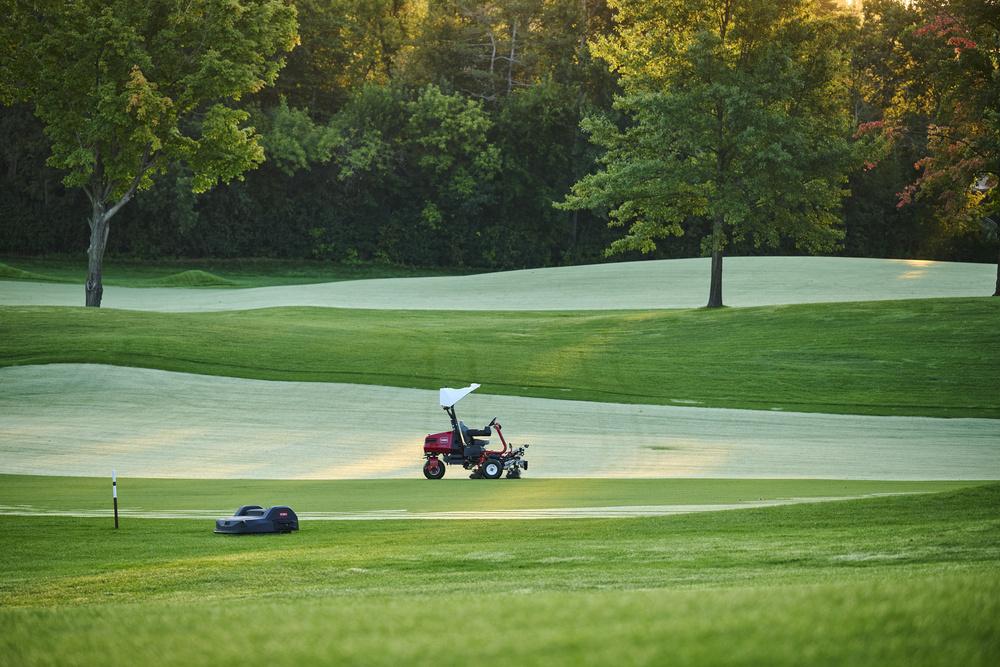
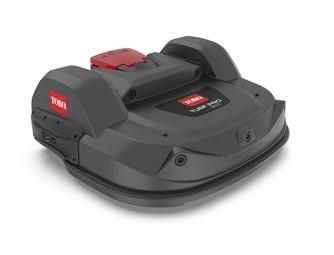
YOUR HOME FOR ROBOTIC SOLUTIONS

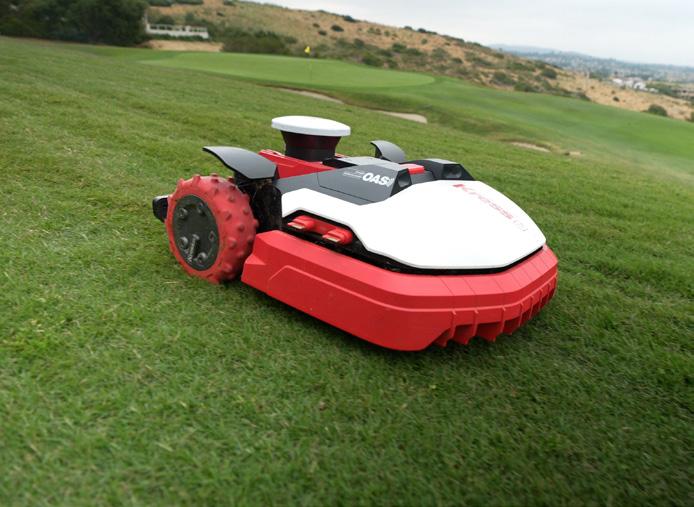



Is your to-do list longer than the grass in the rough?
Robotic mowers can help you improve the quality and safety of your courses. They allow you to not be stuck to a mowing schedule and focus your time on one of your many other responsibilities.

• Save money on fuel and labor costs
• Save time, mow anytime!
• Maintain healthier grass
• Control mower from anywhere
• Environmentally friendly solution with zero emission
Financing & Service Packages available
Combine packages and receive 365/7 support through our Service Dept.
Contact one of these associates for more information:
Ryan Popp
RPopp2@siteone.com
612.384.9889
Brandon Young
BYoung@siteone.com
612.749.3172

TECH TIP TOOLS OF THE TRADE
Tyler Lewellyn Spring Hill Golf Club
There are many tools that can make an Equipment Managers tasks quite enjoyable. The right tool for the job is one of the most important things to keep in mind when turning a wrench. I have compiled a short list of some tools that I have found useful and some that others have shared with me.
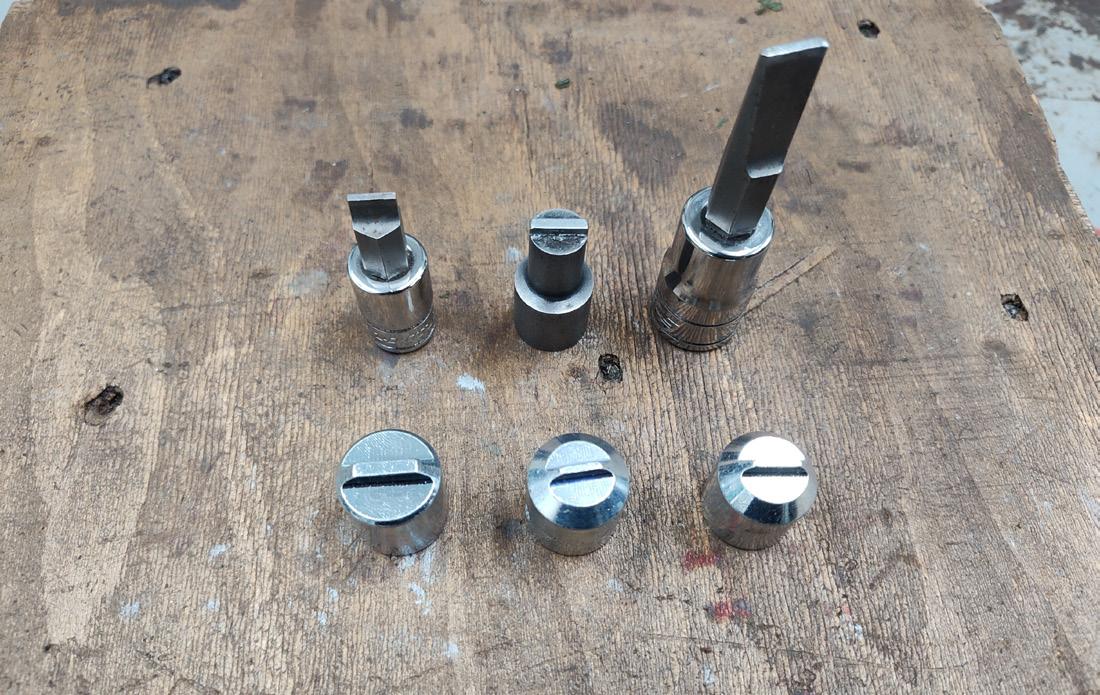
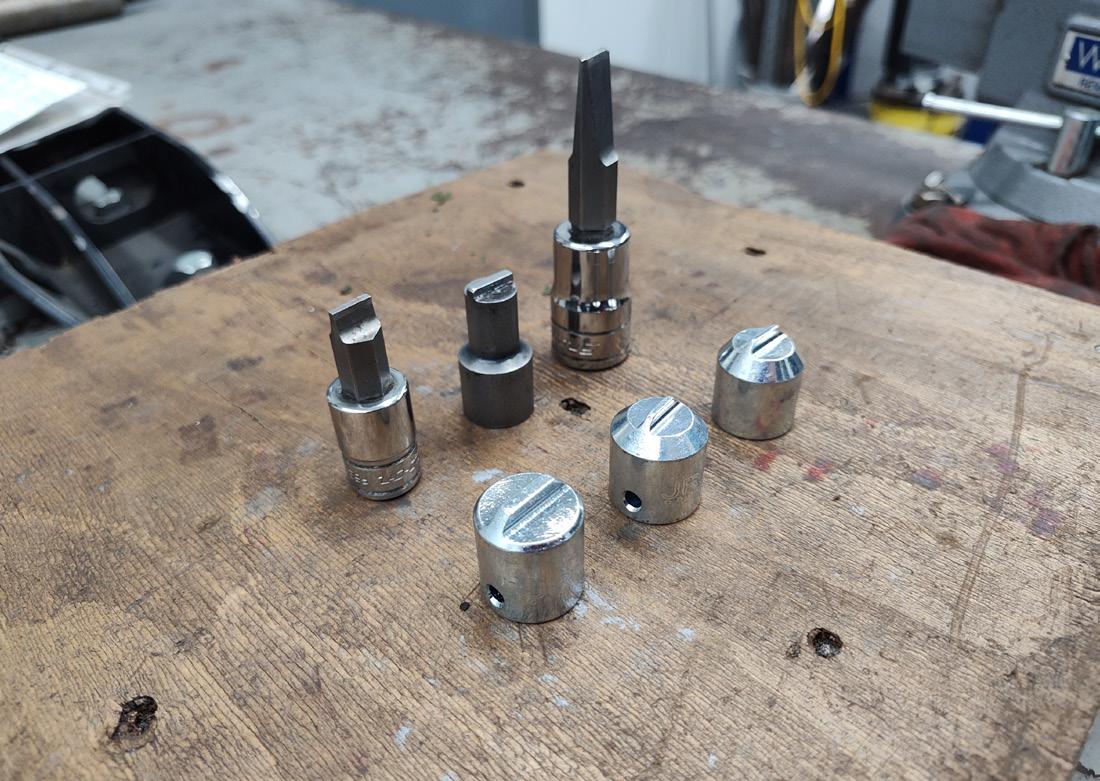
The first tool (below & right) is one I stumbled upon while going to college in the Marine, Motorsport and Outdoor Power Equipment Program. Drain plug screw drivers for lower units on boat
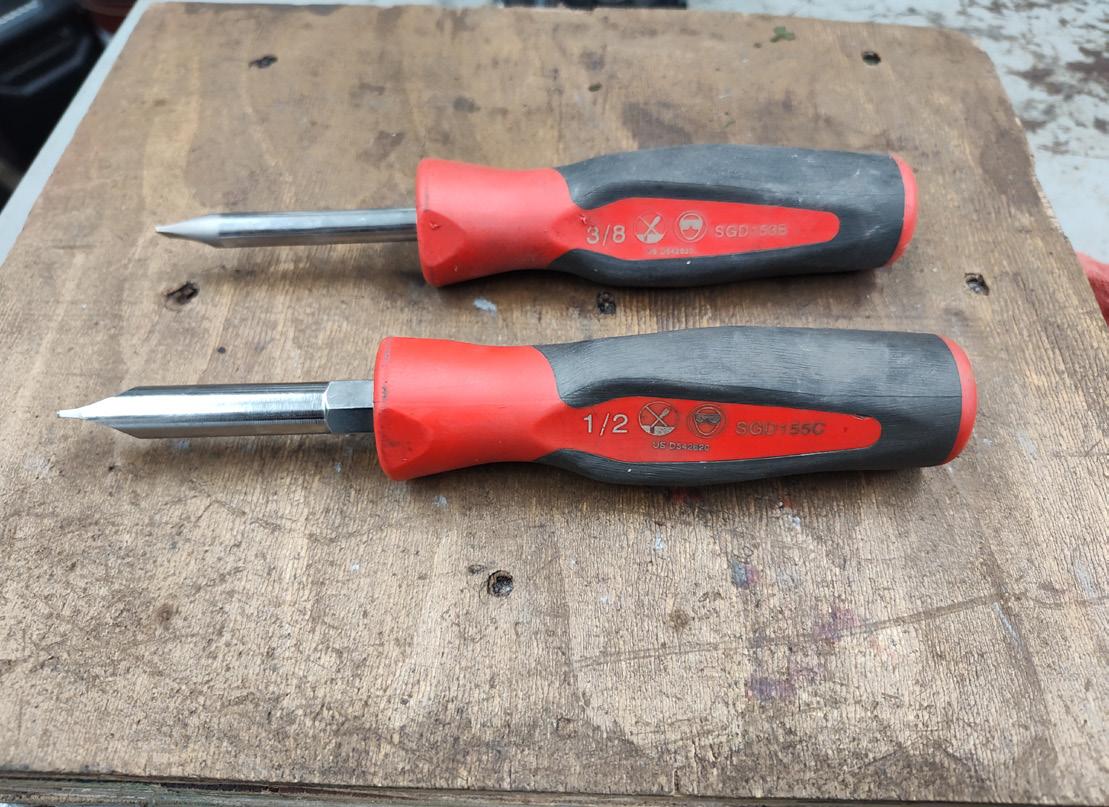
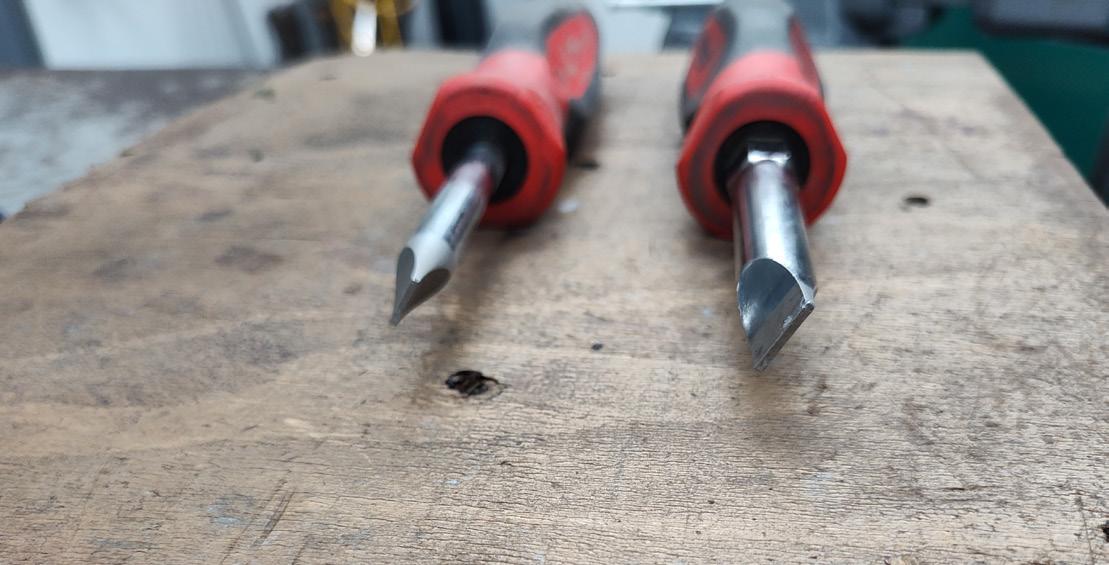
motors. Turns out, they work perfectly for installing bedknife screws because they have a nice wide and straight end to them. Whether it is Toro, Jacobsen, or John Deere, one of the two screwdrivers will fit the slot. I utilize the screw drivers to snug up the bedknife screws before the final torque. The Medium Plug Screwdriver that works great on Jacobsen and John Deere Screws has a part number of SGD153B. The Large Plug Screwdriver that works great on Toro bedknife screws has a part number of SGD155C.
Speaking of bedknife screws, there are also various installation tools available as
well. In the pictures (below) are some of my favorites. JRM has an excellent driver. I would not recommend impacting with them, but they work well for the final torque. For removing the screw with an impact, the Snap-On impact driver bits are preferred. They have a smaller one that is perfect for the Jacobsen and John Deere screws, the larger one isn’t as square on the end but works well for removal of Toro screws. Not to mention if they break, they carry a lifetime warranty. Just remove the bit from the holder and install a new one. The numbers for the JRM bits can be found in the JRM catalog. The Snap-On part number for the small one is F62E, the larger one is SW32E.
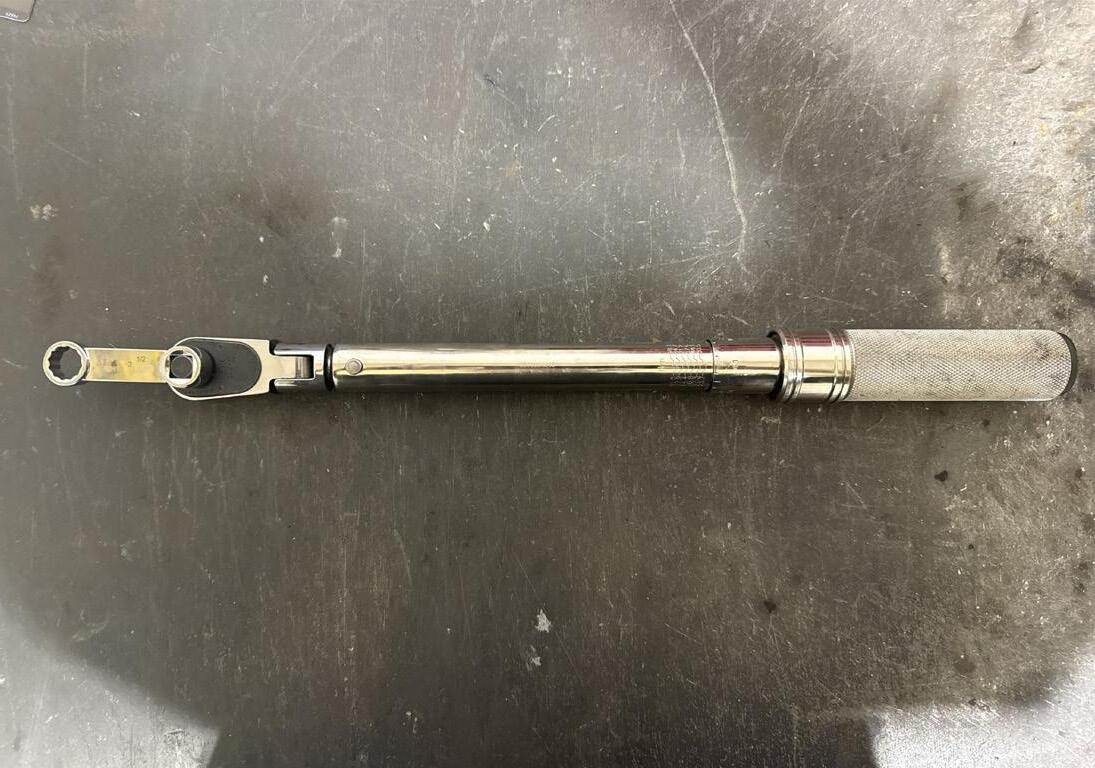
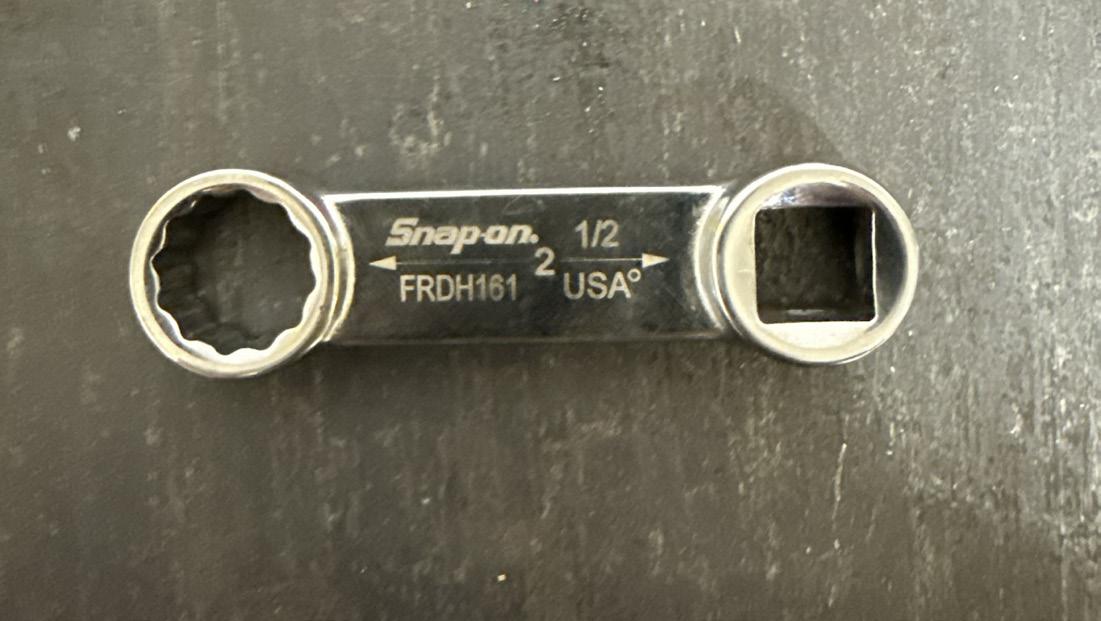
The next tool (above & below) also involves bedknives, but it’s all about the bed bar bolt. Getting that bolt properly torqued can save you a lot of time adjusting a knife that is smiling back at you. This tool was brought to my attention by Tanner Knudsen, CTEM at North Oaks Golf Club. It is a 3/8” drive torque adapter with a ½” 12-point box end. It is the best tool for getting the proper torque on those pesky fairway bed bar bolts on Toro units. Those that are not familiar with it, when you put a rear roller brush on the Toro fairway heads, the bed bar bolt can be tough to get the proper torque on it. With the torque adapter, you have the reach and stability you need for installation. The Snap-On part number for the torque adapter is FRDH161.
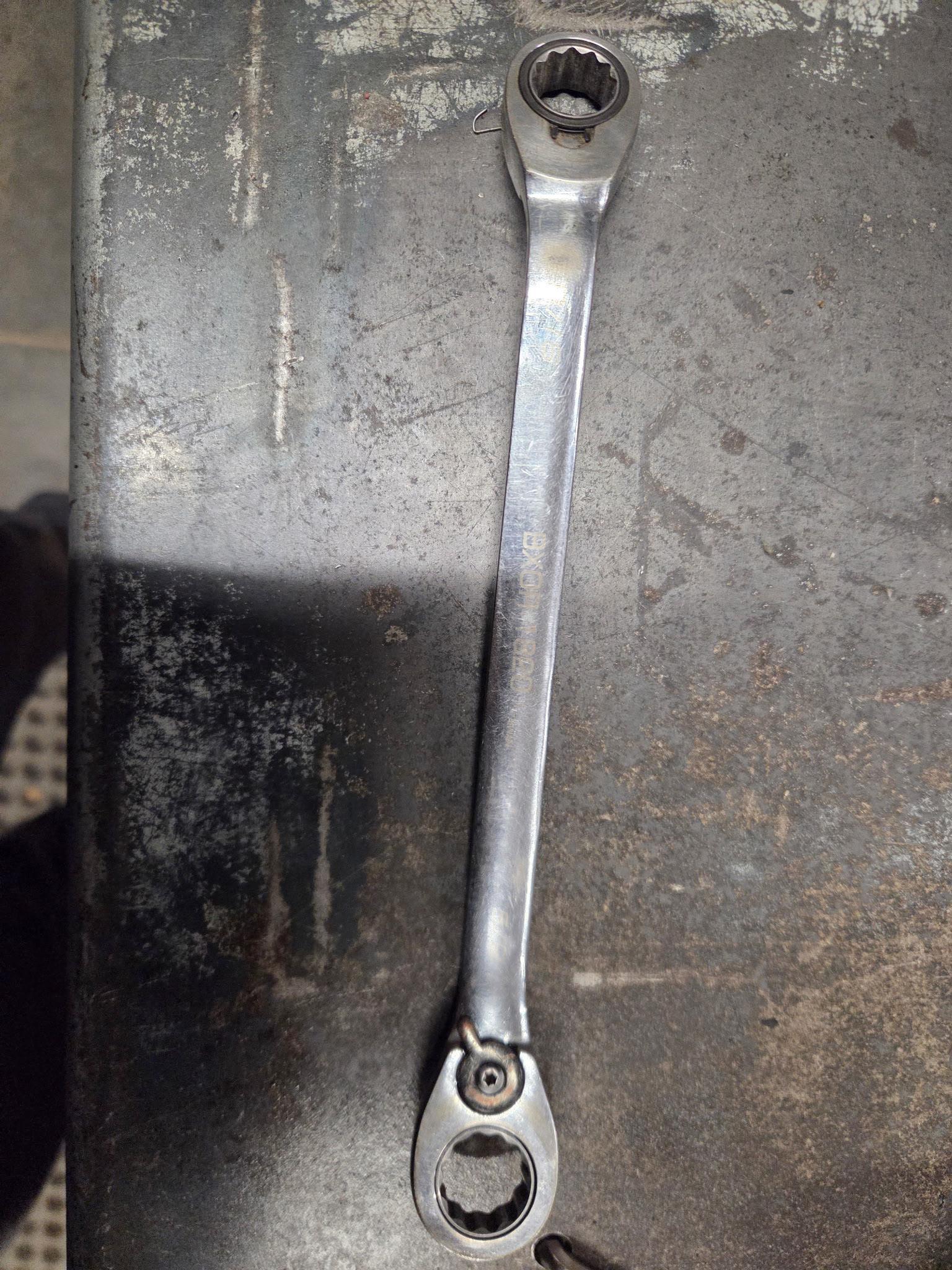
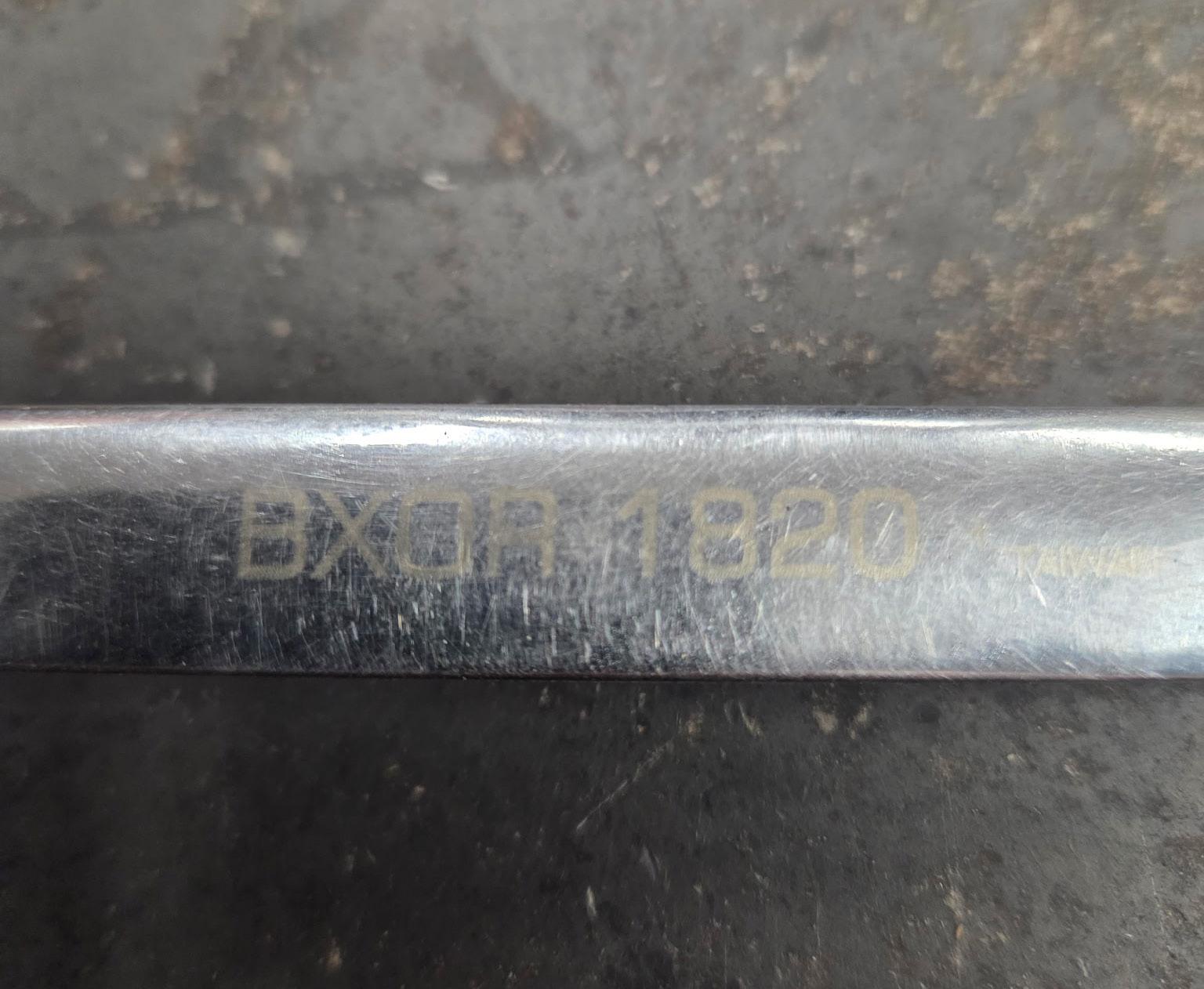
This tool (left) is quite unique and is definitely an all-in-one wrench for adjusting Toro reels. Weston Lehner, Owner of Midwest Deep Tine and Equipment Manager at Wayzata Country Club showed me this tool. In the pictures, you can see it is well used and is a go-to tool when adjusting reels. It has a 9/16” box on one end and a 5/8” on the other. Both ends are ratcheting and have a 25 degree offset. With the 9/16” end you can loosen the HOC nut on Toro fairway reels then adjust using the 5/8” end. When it comes to triplex units and walk mowers from Toro, the 5/8” end is invaluable for adjustments. This tool is from Blue-Point, part number is BXOR1820.
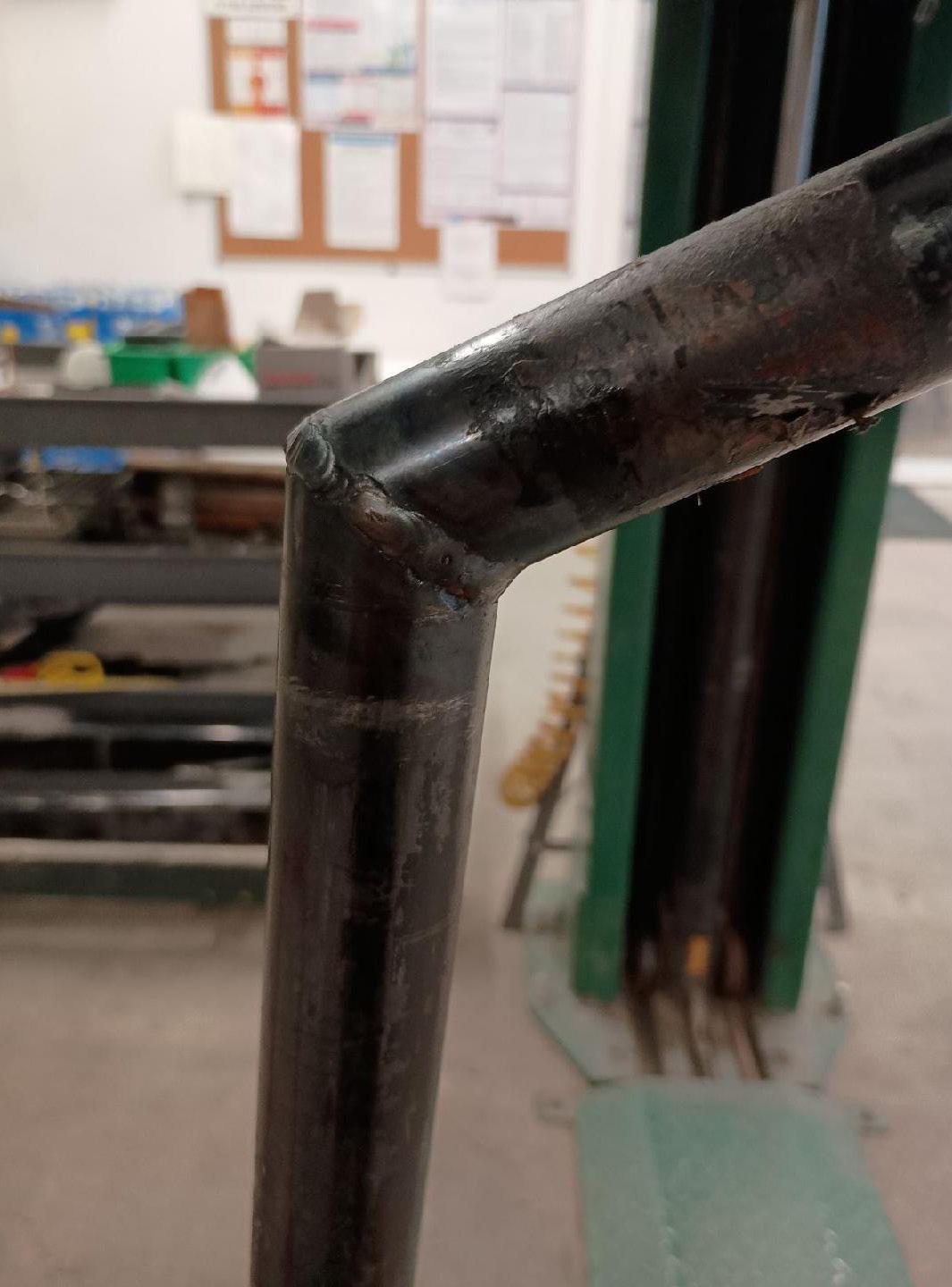
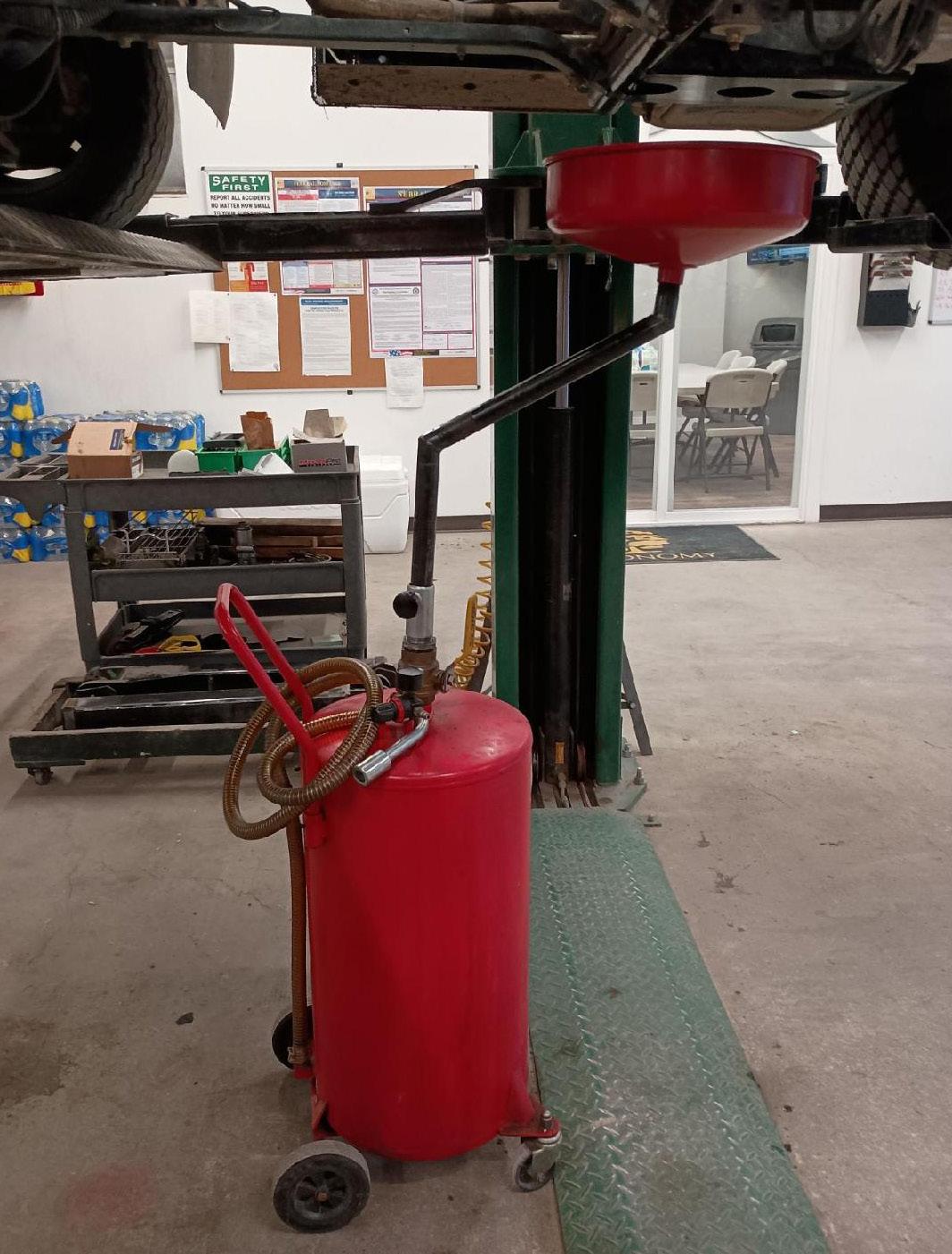
The last tool (next page) on my list to share is more of a modification than about the tool itself. This is a modification I learned about from Jordan Roth, CTEM at Champions Run in Omaha, NE. He had the issue of getting an oil drain between the tray on a Golf Lift and the drain plug on an oil pan. With this modification, he is able to lessen spillage and get that funnel where it needs to be. This is done to a Harbor Freight oil can and replaces the chrome pipe it comes with. Jordan was able to find black pipe that fit down the ball valve and attach to the funnel, although only one thread will grab. That is due to the parallel pipe thread that doesn’t align the best with standard pipe thread.
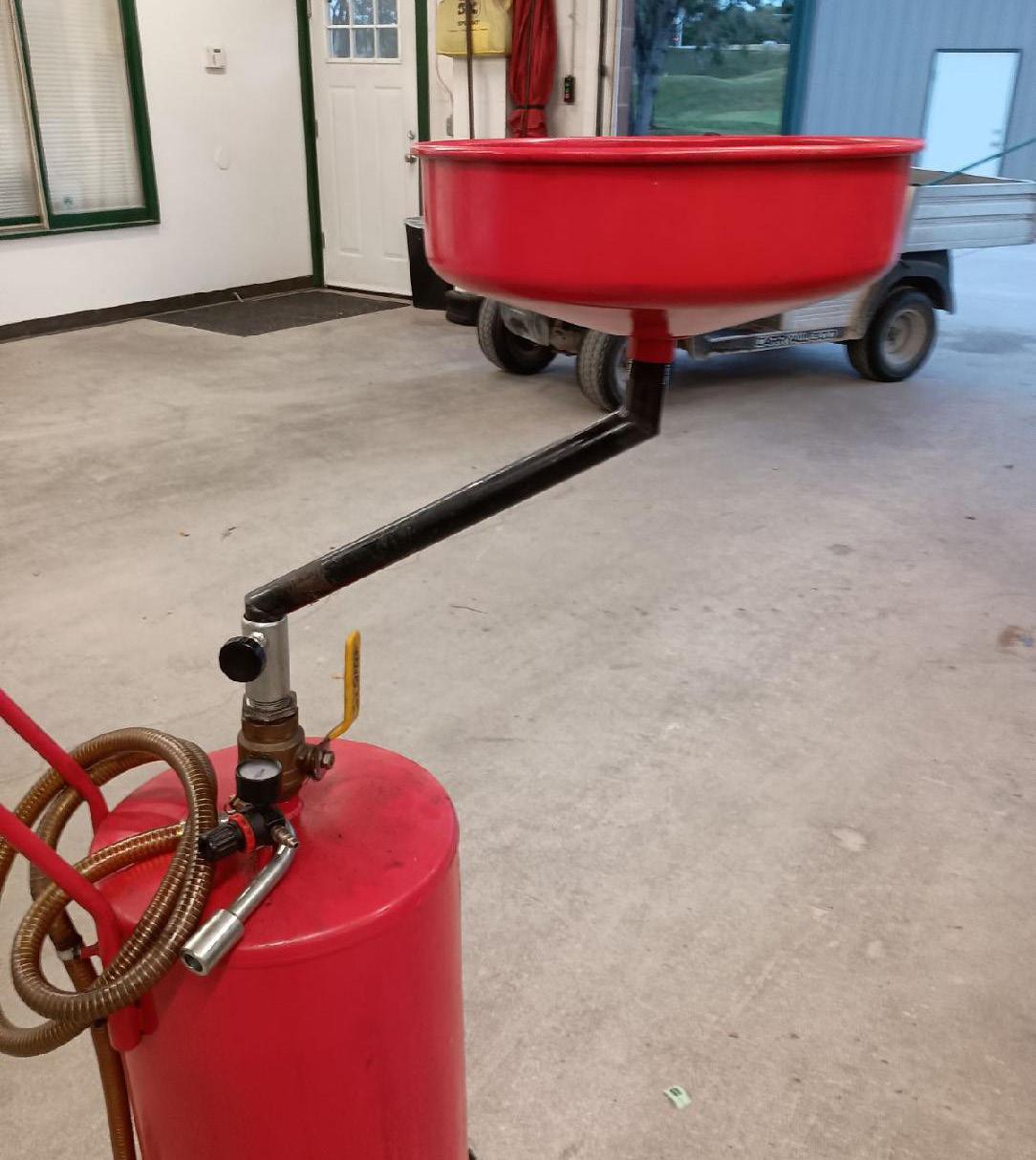
Nonetheless, it works great. He cut the pipe at 30-degree angles to mate up to each other and cut the middle connecting pipe to 15”. This is so the offset can reach over the tray but also under the equipment.
Hopefully everyone can see the pictures and understand what the tools are used for. It is hard to talk about tools without everyone being able to touch and hold them for themselves. If you have any questions or have any neat tools that make an Equipment Managers life easier, please share them with the EM Committee so we can continue to learn and broadcast Tech Tips for everyone to utilize. Also, do not hesitate to reach out if you would like to provide a Tech Tip yourself. We are always looking for contributors.














Seth Triplett
Golf Course Superintendent Meadowbrook Golf Course
I attended the 2026 GCSAA Conference & Trade Show in Orlando, a week that offered a concentrated blend of education, innovation, and professional connection. I am grateful to the MGCSA for providing financial assistance through the GCSAA CTS Support Program, which made this developmental opportunity possible. That investment directly strengthened my ability to bring new ideas, technologies, and operational improvements back to Minnesota golf.
The most striking theme on the trade show floor was the rapid rise of autonomous equipment. What once felt experimental is now entering everyday maintenance. Robotic mowers, autonomous bunker rakes, GPS guided sprayers, and fleet management platforms were not presented as future concepts—
they were presented as ready-to-deploy solutions. Conversations with manufacturers and superintendents already using these tools highlighted consistent gains in labor efficiency, fuel reduction, and surface consistency. For high round facilities like Meadowbrook, the potential impact is significant.
Education sessions reinforced in the same direction: smarter, more precise, more sustainable operations. Topics ranged from budgeting and capital planning to water management strategies and battery powered equipment. Across sessions, the message was consistent—datadriven decision-making is essential central to modern turf management.
A standout moment of the week was the GCSAA Centennial Celebration on Tuesday evening,
honoring 100 years of progress, professionalism, and community within our industry. The event brought together turf professionals from across the country and underscored the shared standards and collective history that continue to elevate our work. It added a meaningful sense of pride, connection and enjoyment to the technical learning that filled the rest of the conference.
Overall, the conference expanded my professional network, sharpened my technical knowledge, and delivered actionable ideas I can bring back to Minnesota. I want to again thank the MGCSA for supporting my attendance—your investment directly contributes to the continued improvement of our facilities, our profession, and our statewide community of superintendents.
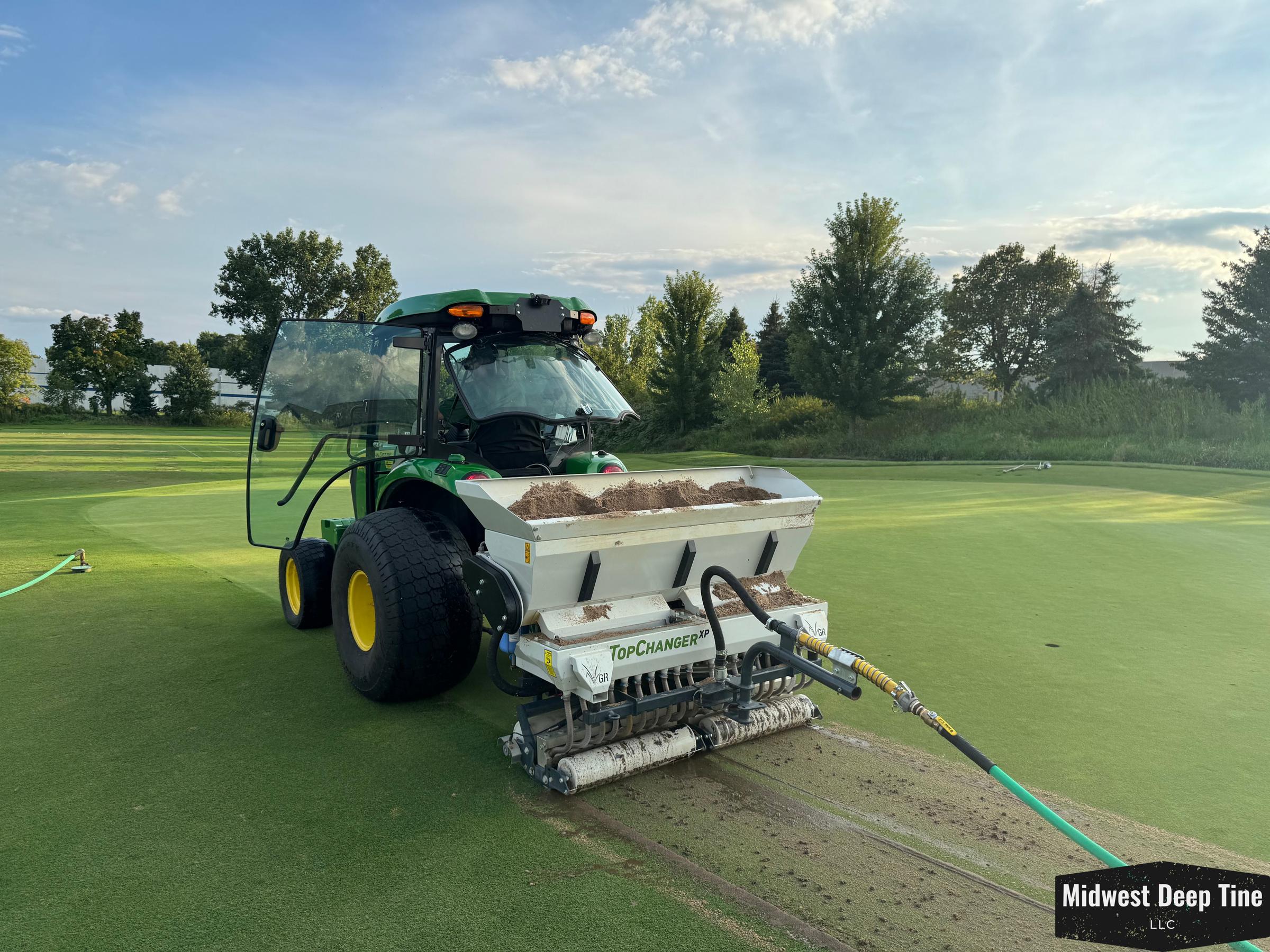
Topdressing
Grinding






Maximize the beauty and playability of your course with MTI’s turf solutions.
Our comprehensive range of reliable equipment, backed by more than 70 years of industry expertise and support, helps you maintain pristine landscapes.
Offering the top brands in the industry, we provide the tools and support you need to create safe, inviting, and sustainable outdoor spaces.
Contact us today for an on-site product demonstration or to learn more.


2025 MGCSA STEWARDSHIP GRANT PROGRAM
Loggers Trail
Golf Course
Ross Shafrath
Superintendent
Every spring you can count on the same old questions as a golf course superintendent. “When do you think you guys will open? How did the course come through winter?” And if you happen to be the Superintendent at Loggers Trail Golf Course…”When do
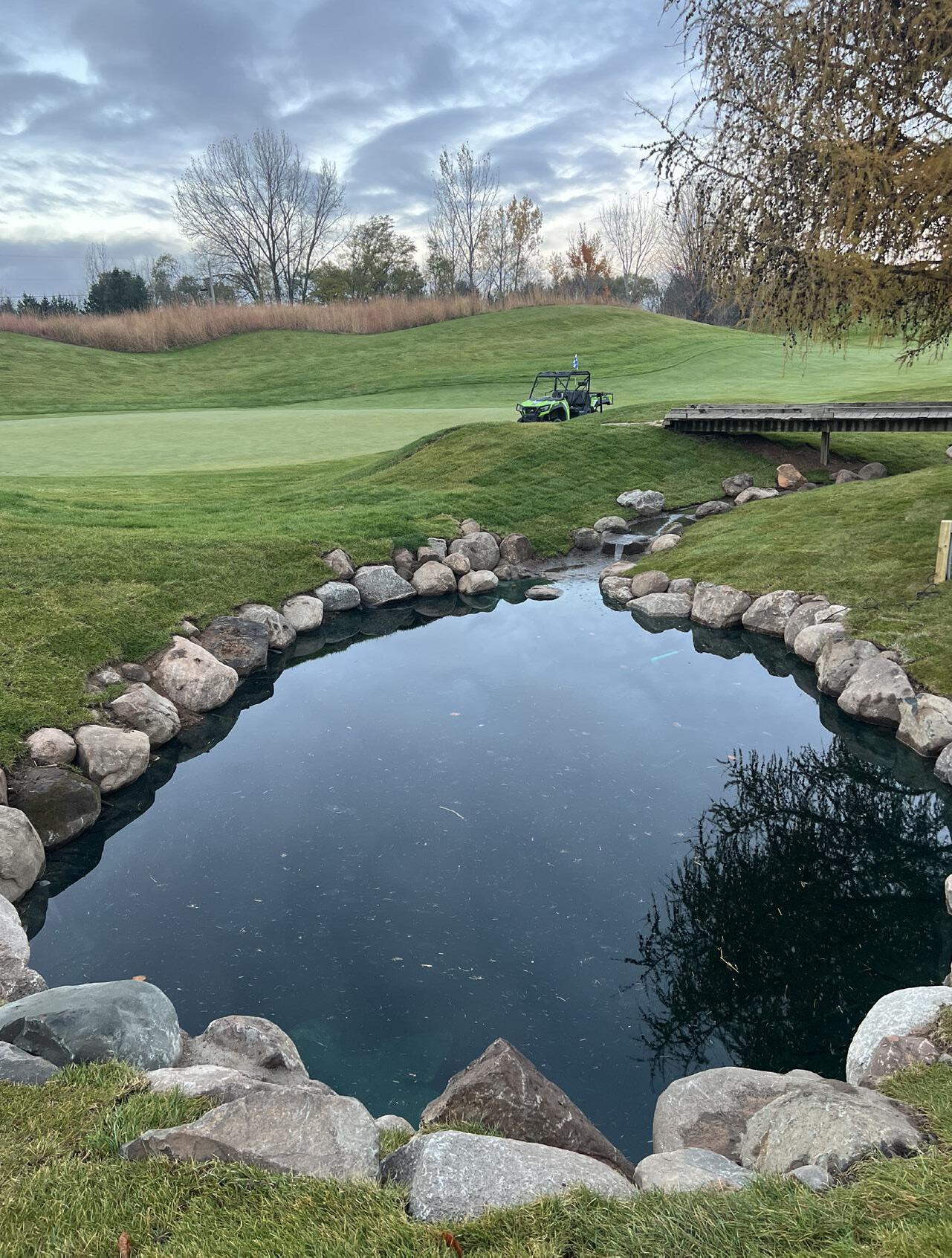
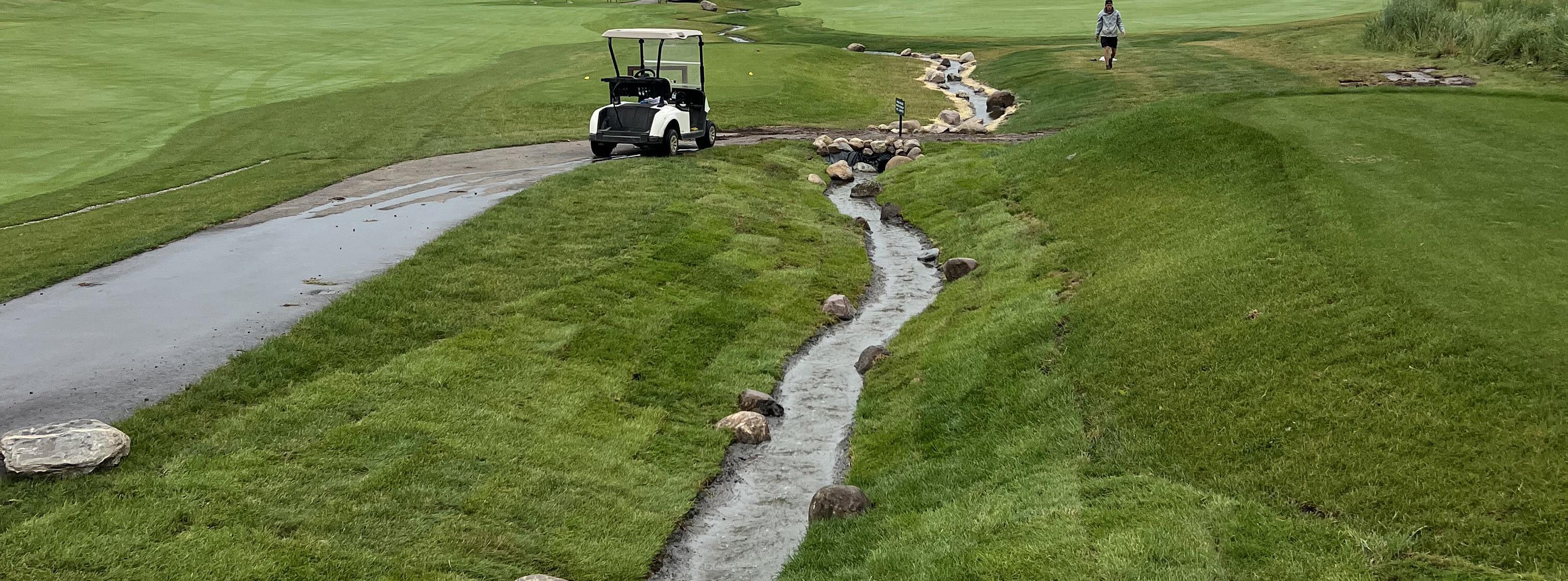
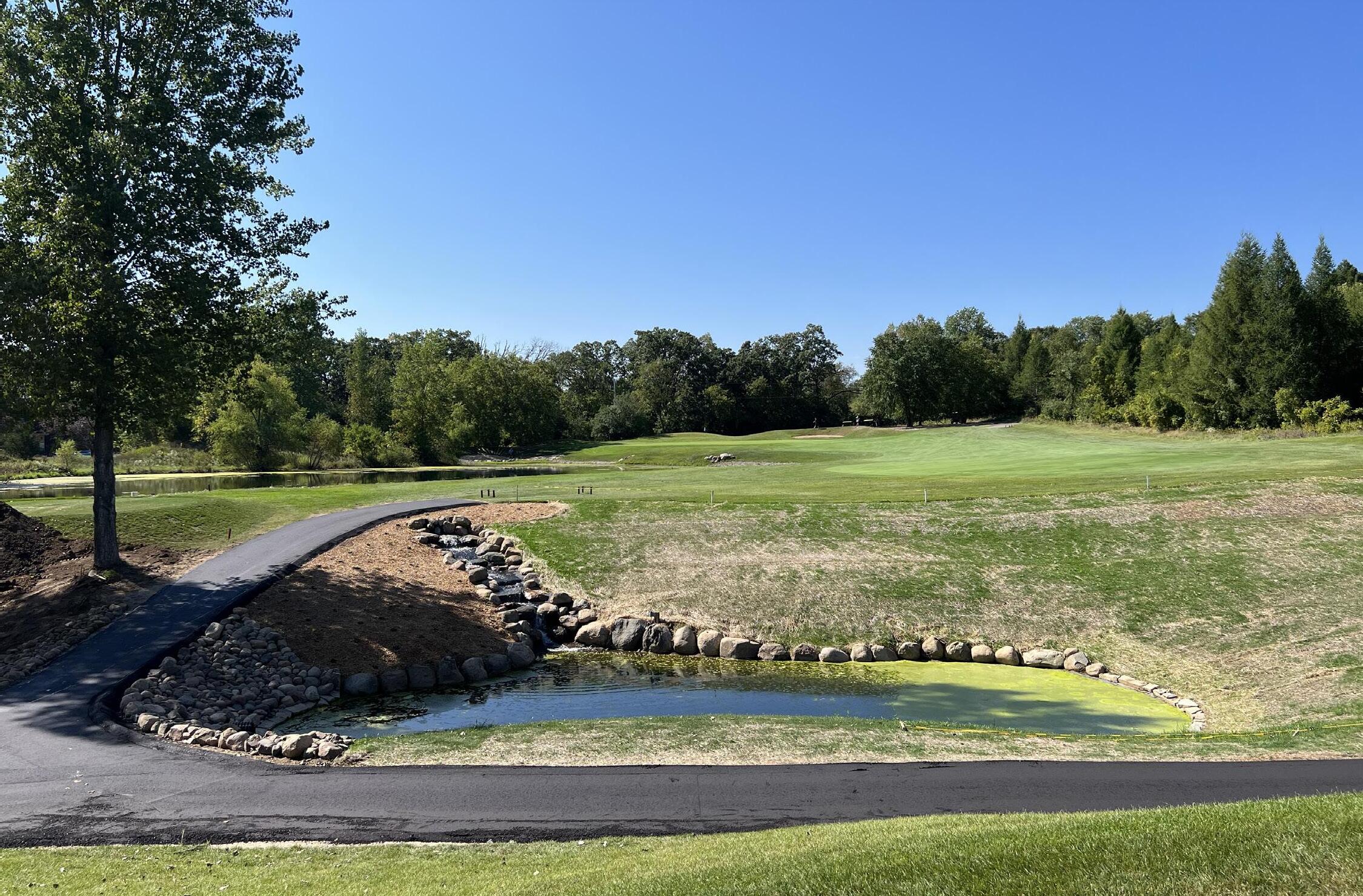
you think that creek will run water?” While I still don’t know exactly what day we will open, I do know that THIS YEAR the creek will finally have water.
The Creek was an idea conceived by Dan Pohl when the course was being built in the early
2000s. “Wouldn’t it be cool if water flowed from our irrigation pond on Hole 3, the highest point of the course, waterfalled in front of the tee box and followed the edge of Hole two fairway? Then cut across the Hole 8 and 17 tees and we had a split fairway
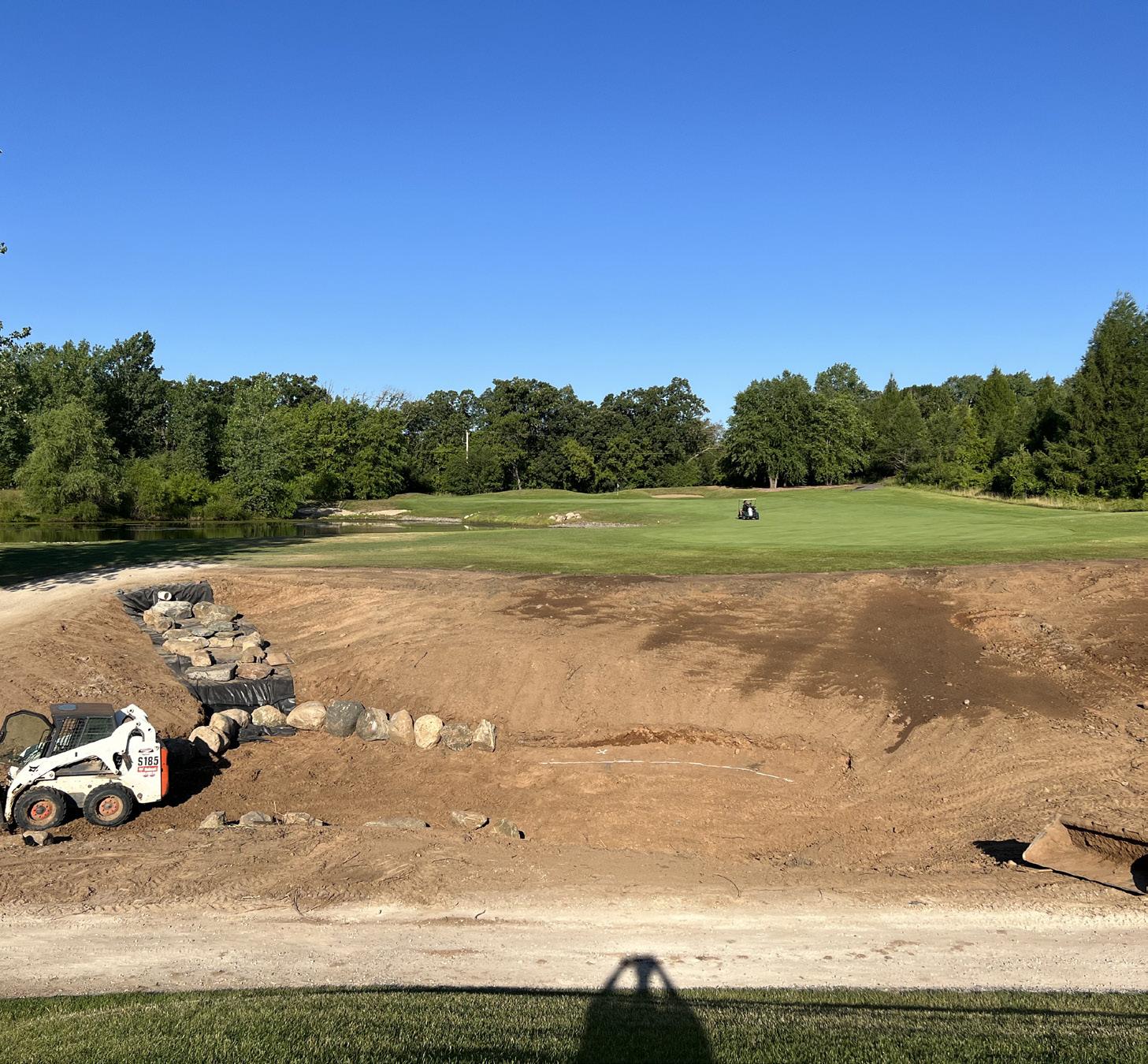
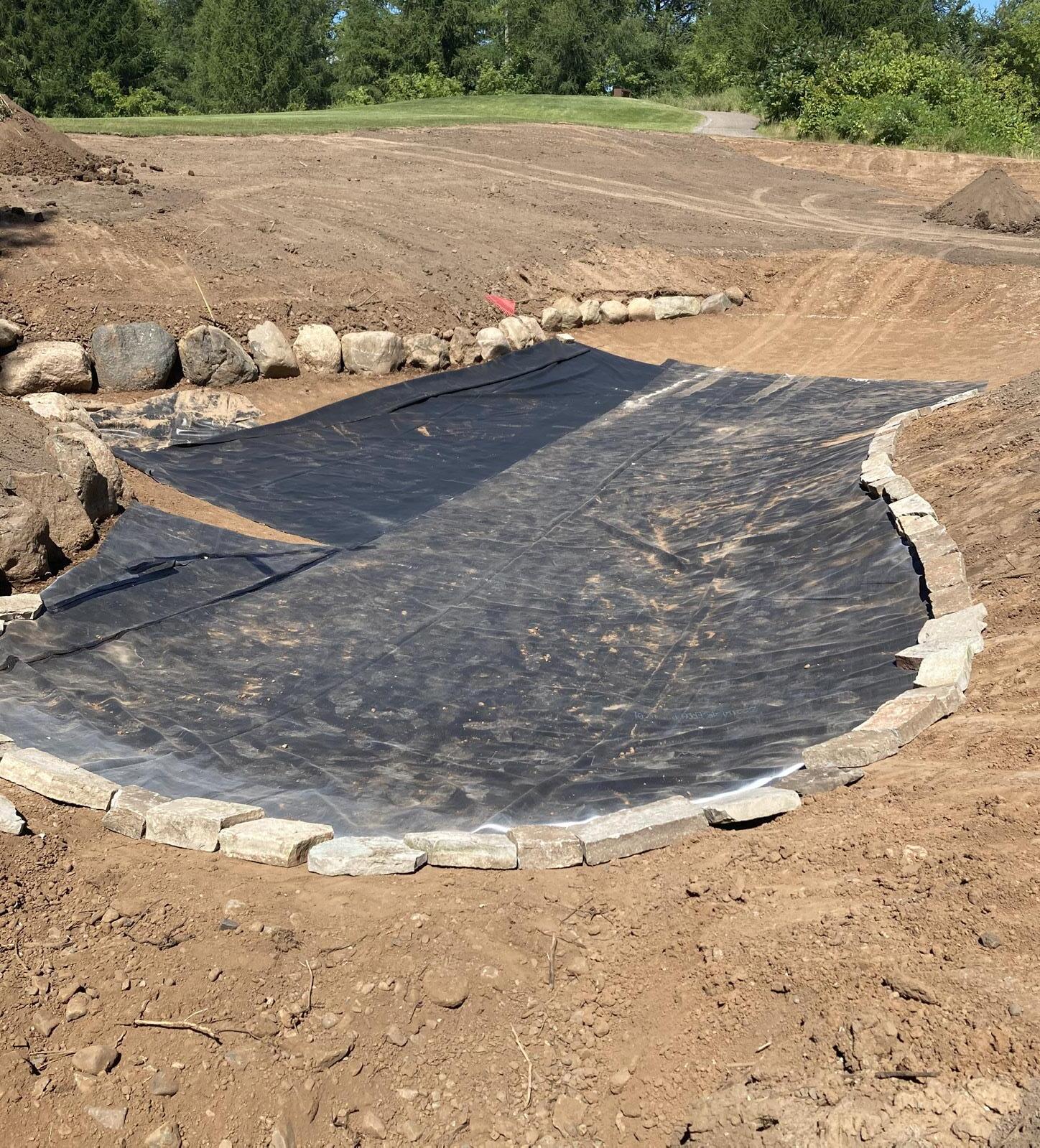
on Hole 17? Then it could follow the edge of 18 fairway and flow into our largest pond and lowest point on the course near Hole 9?”
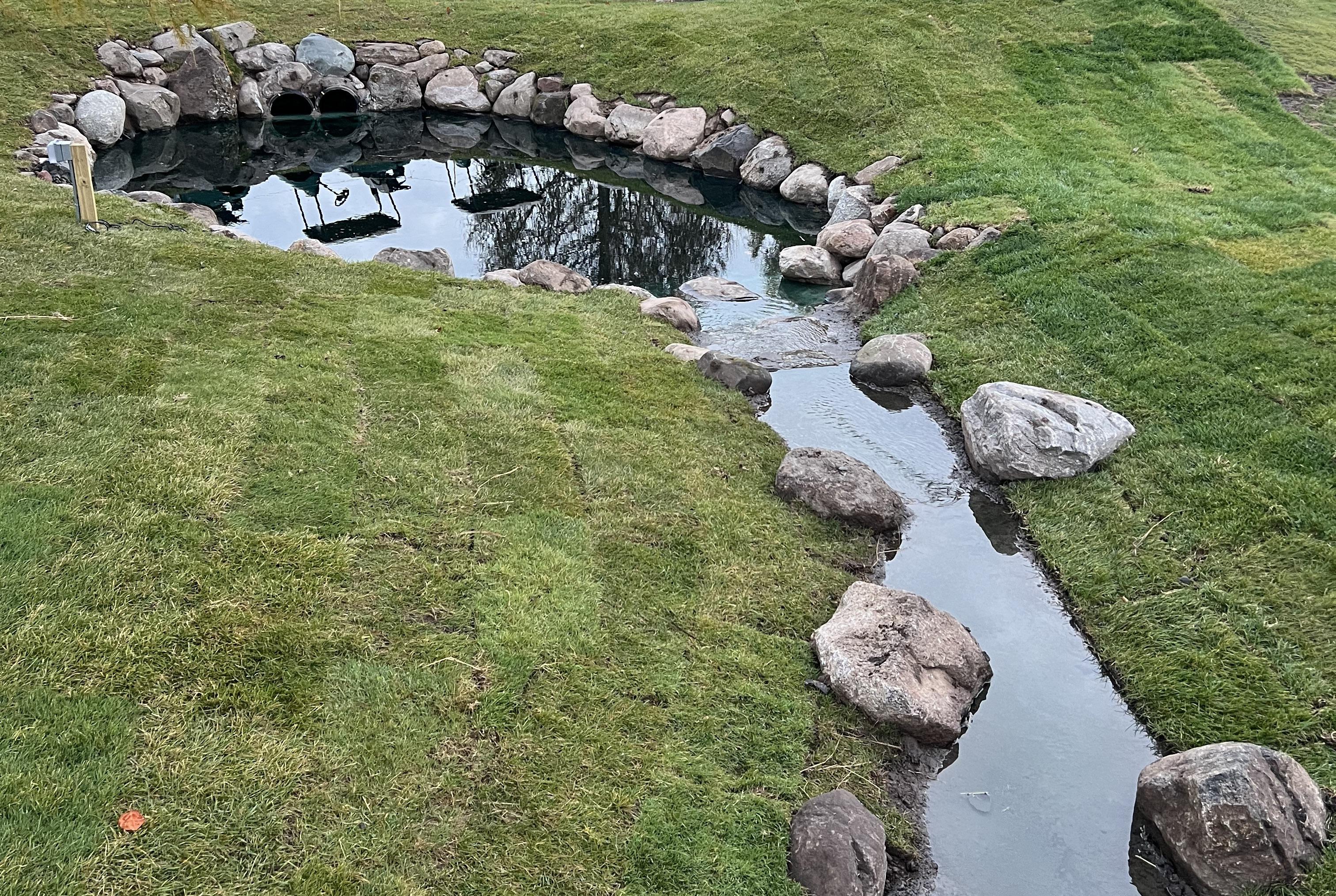
While I’m not sure if that was how it was drawn up exactly, that is now the path of our newly constructed creek which will be a feature at Loggers Trail for years to come. Not many courses would decide to take on this massive project in house but with our small crew of hardworking men we have slowly managed to pull off this massive undertaking.
The creek is lined with field boulders, most of which were gathered from the property, and bottomed with poured concrete hauled in one yard at a time. If I had to estimate, it took us around 30-35 total
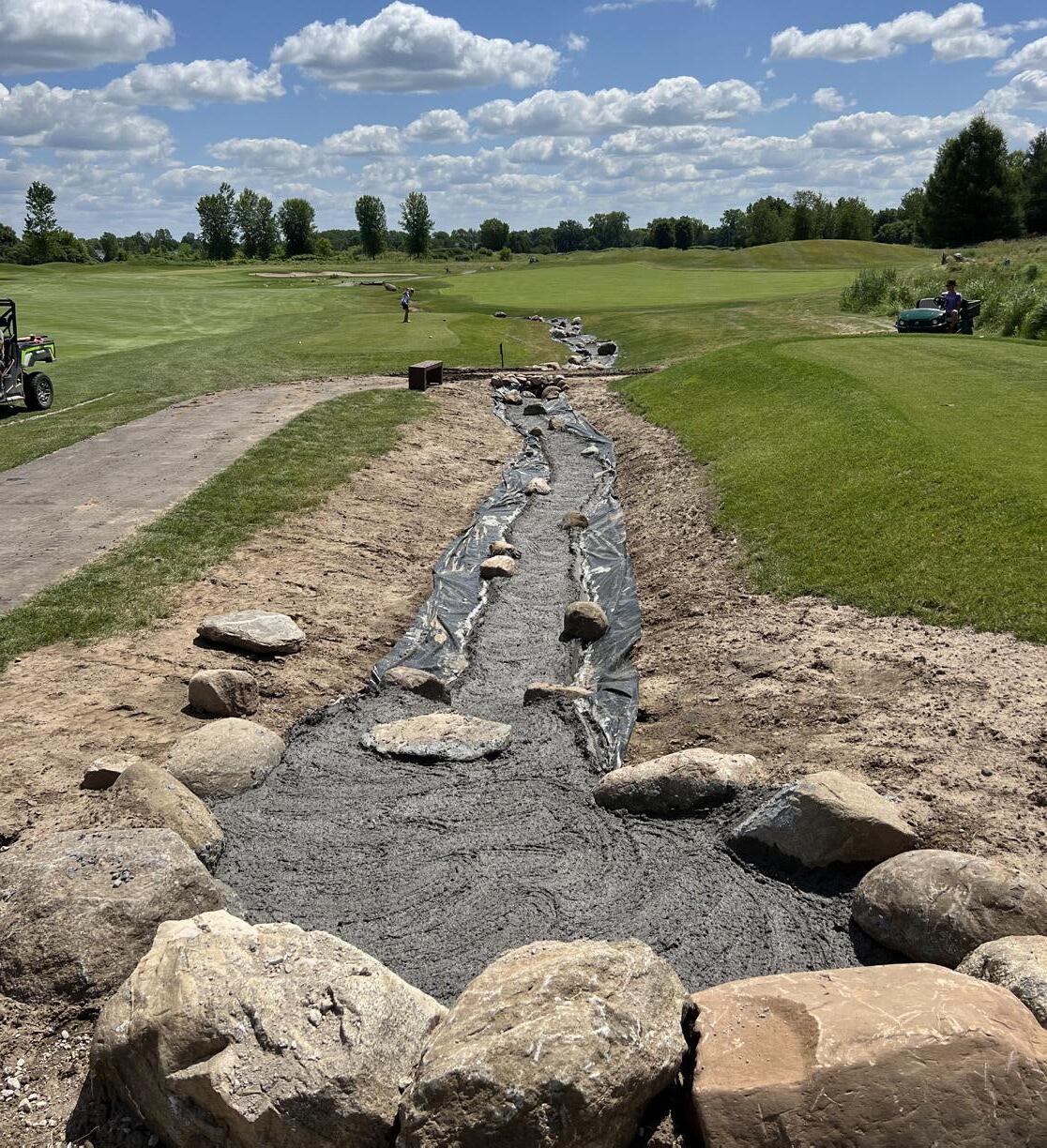
loads, 4 loads a day. Rome wasn’t built in a day, and neither was the Loggers Trail creek.
Shortly after the course opened we were hit with the September 11th terrorist attacks and
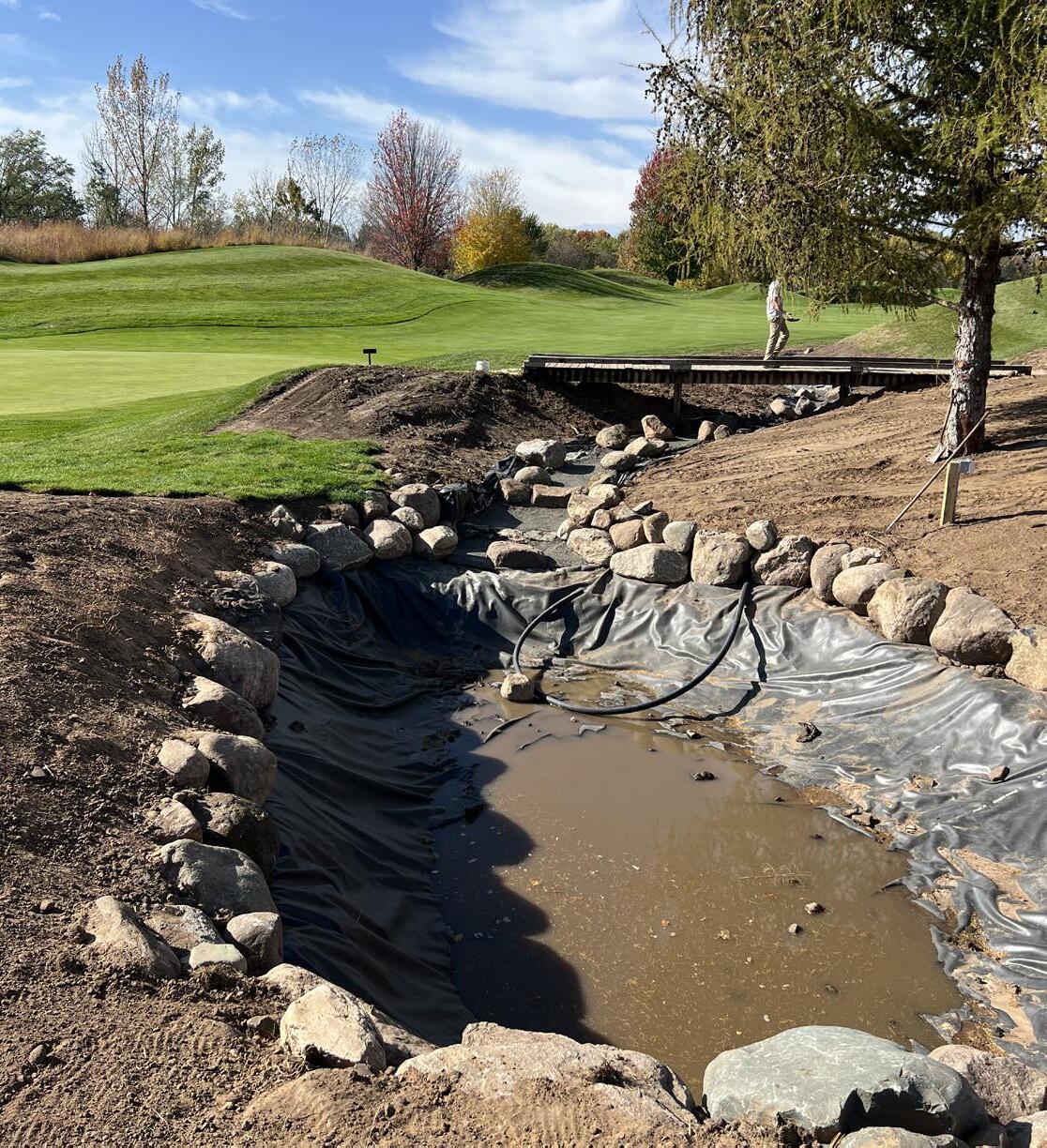
then the 2008 financial crash, golf was up and down and some projects got put on hold. Creek building resumed in 2020 when the COVID golf boom gave many smaller courses extra capital to renovate and upgrade where needed. It took another 6 seasons to finish off the creek project and on November 1st, 2025 we successfully ran water the entire way down.
We couldn’t have
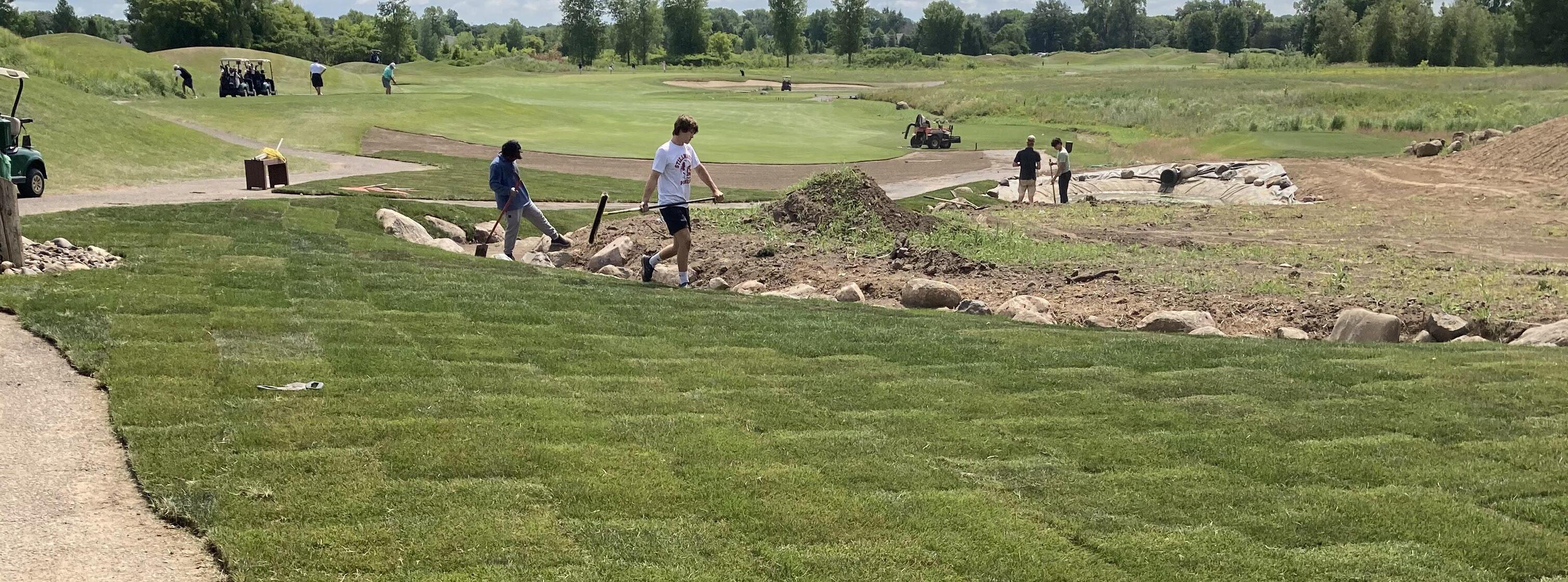
completed this project without the help of countless part time and seasonal staff. Some spent one season, some have been here every summer working on something that will hopefully last forever. We also couldn’t have done it without the support of the MNGSA Grant and the continued investment of our owner, Dan Pohl. Unfortunately Dan passed away over the winter in Palm Springs but I take pride in the fact that he was able to see the creek run water for the first
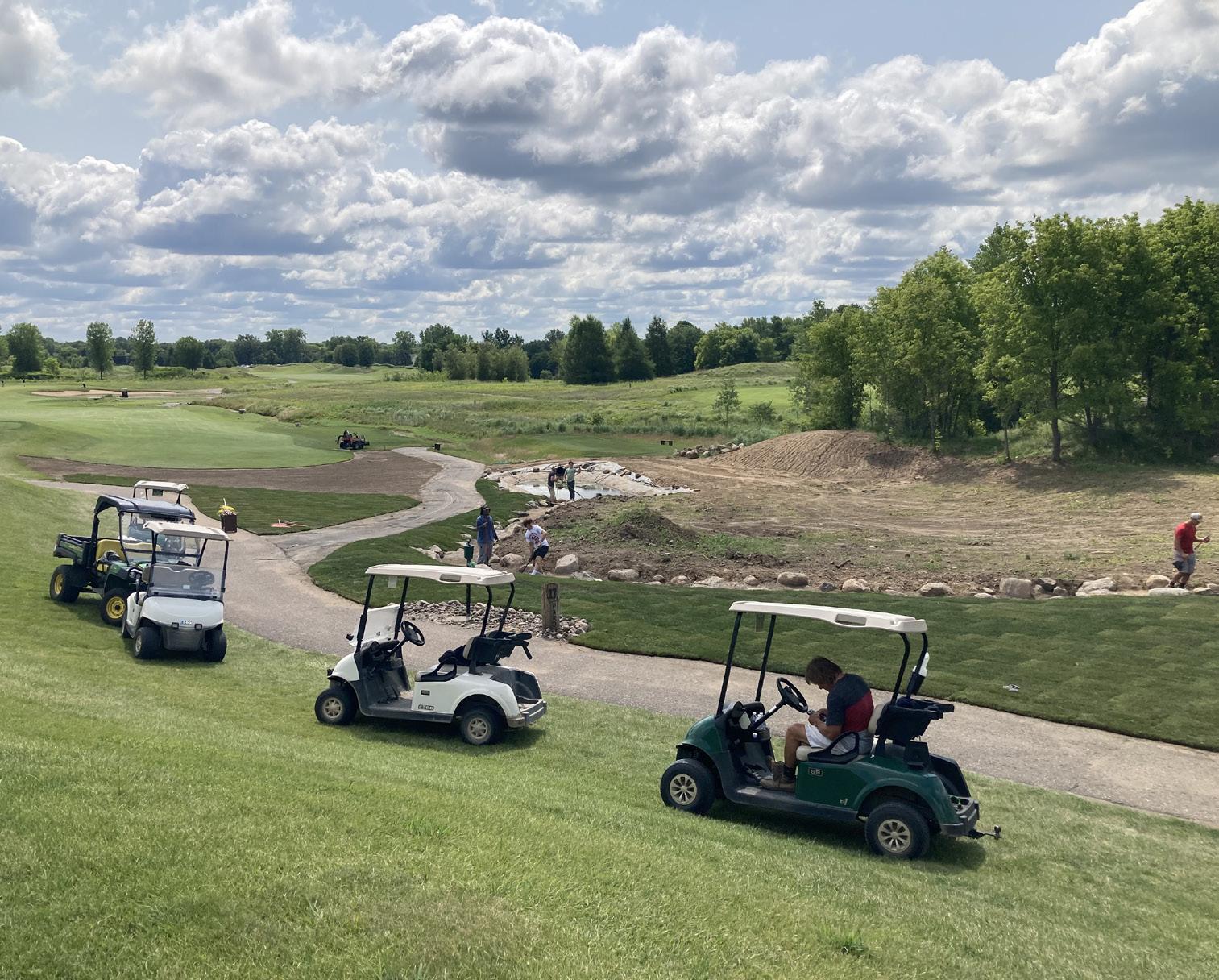
time before he left for the winter. It was Dan’s love of the game that helped Loggers Trail become a place where everyone who golfs can enjoy a round. We hope to see you all this upcoming season and
while we will be down one smiling face to greet you, we hope the course that Dan helped build will remind you what golf can provide, a place for camaraderie and friendship.
Assistant Pro Forum
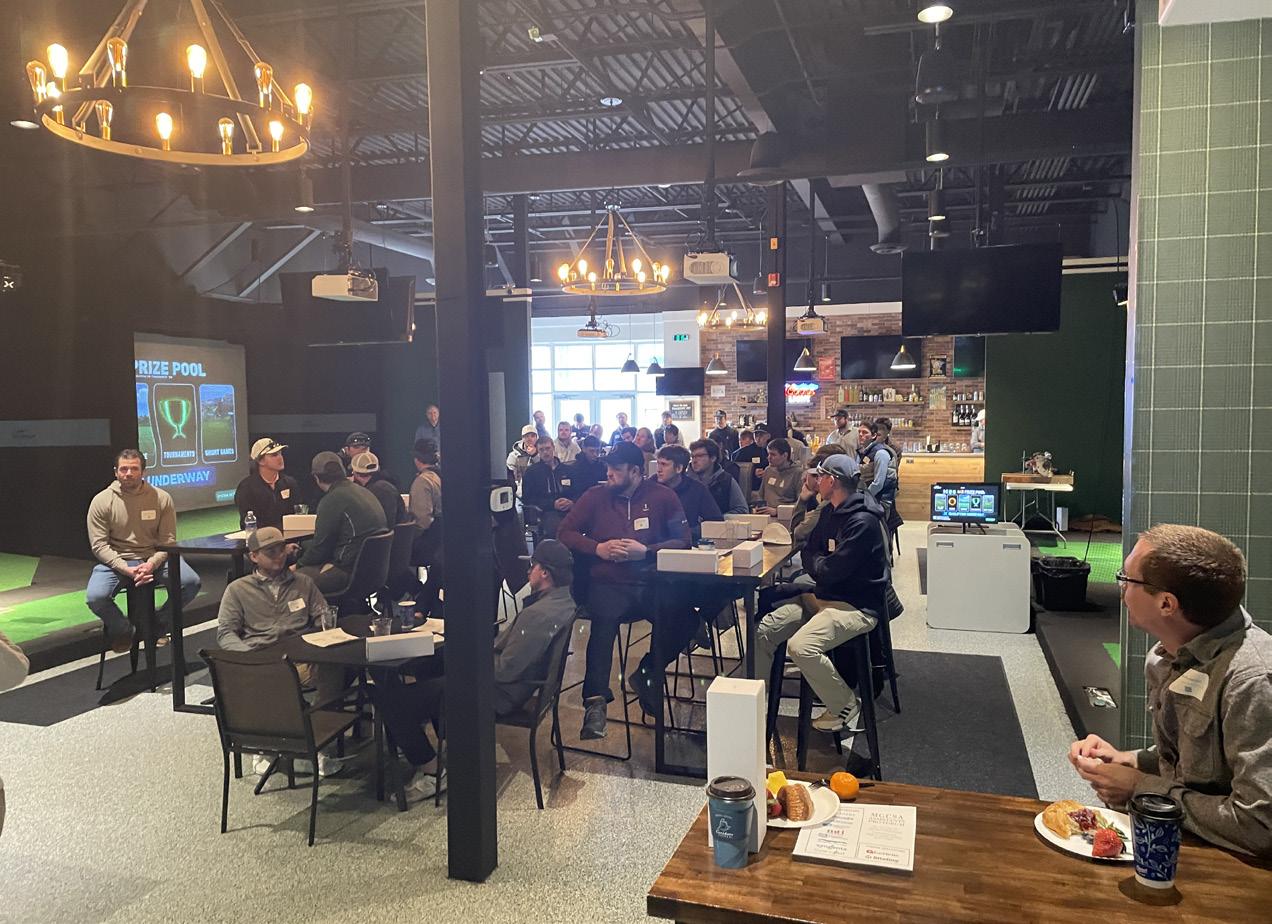
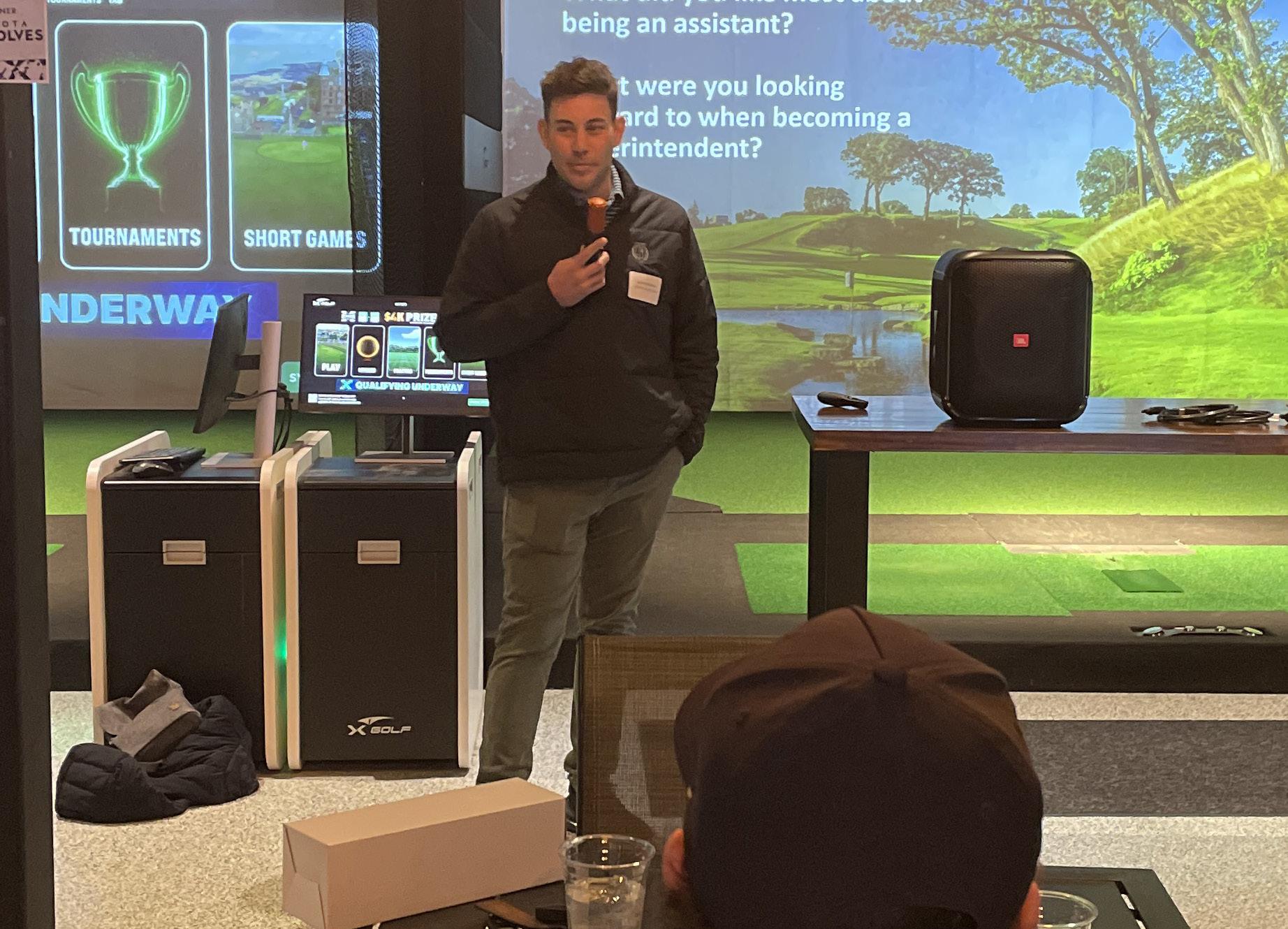
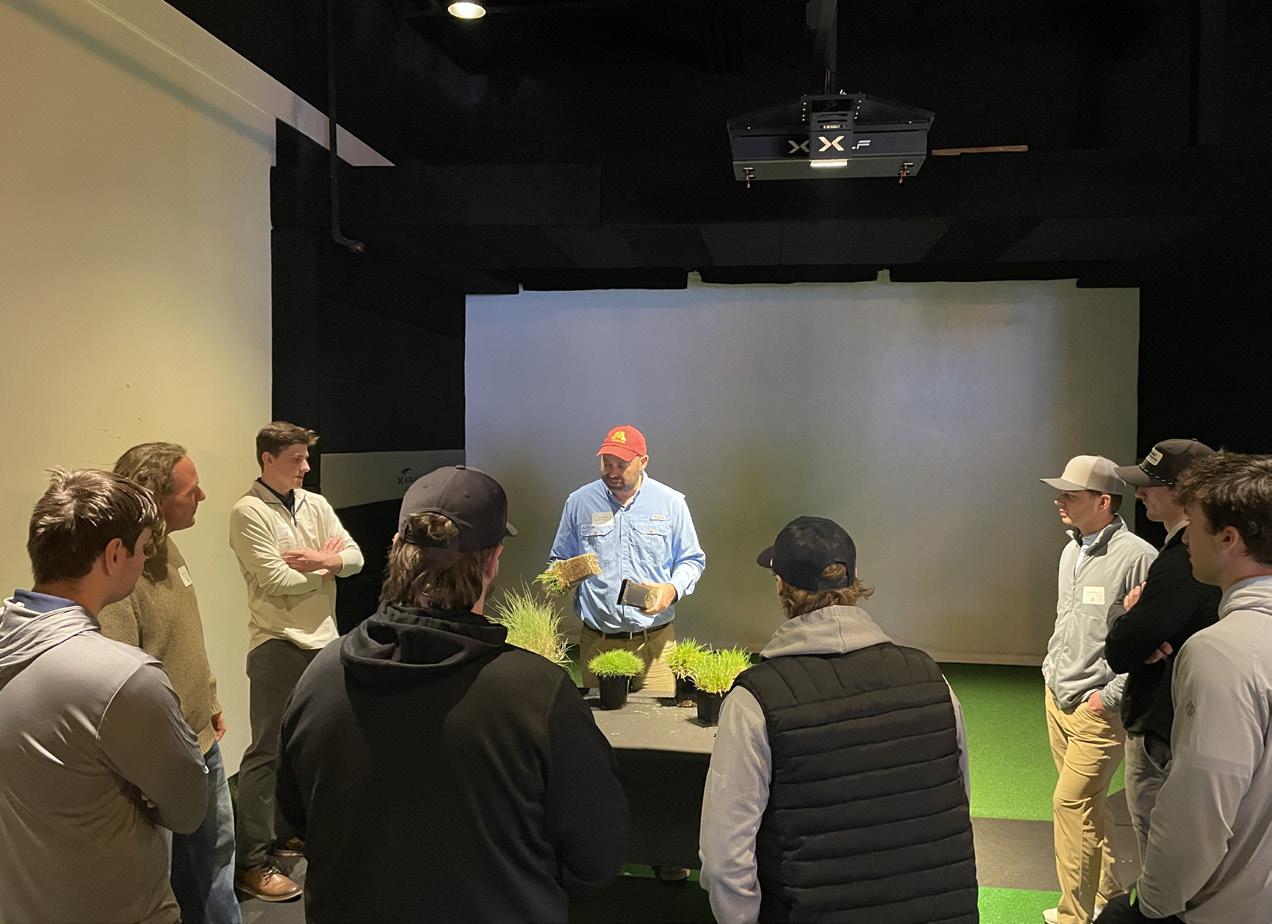
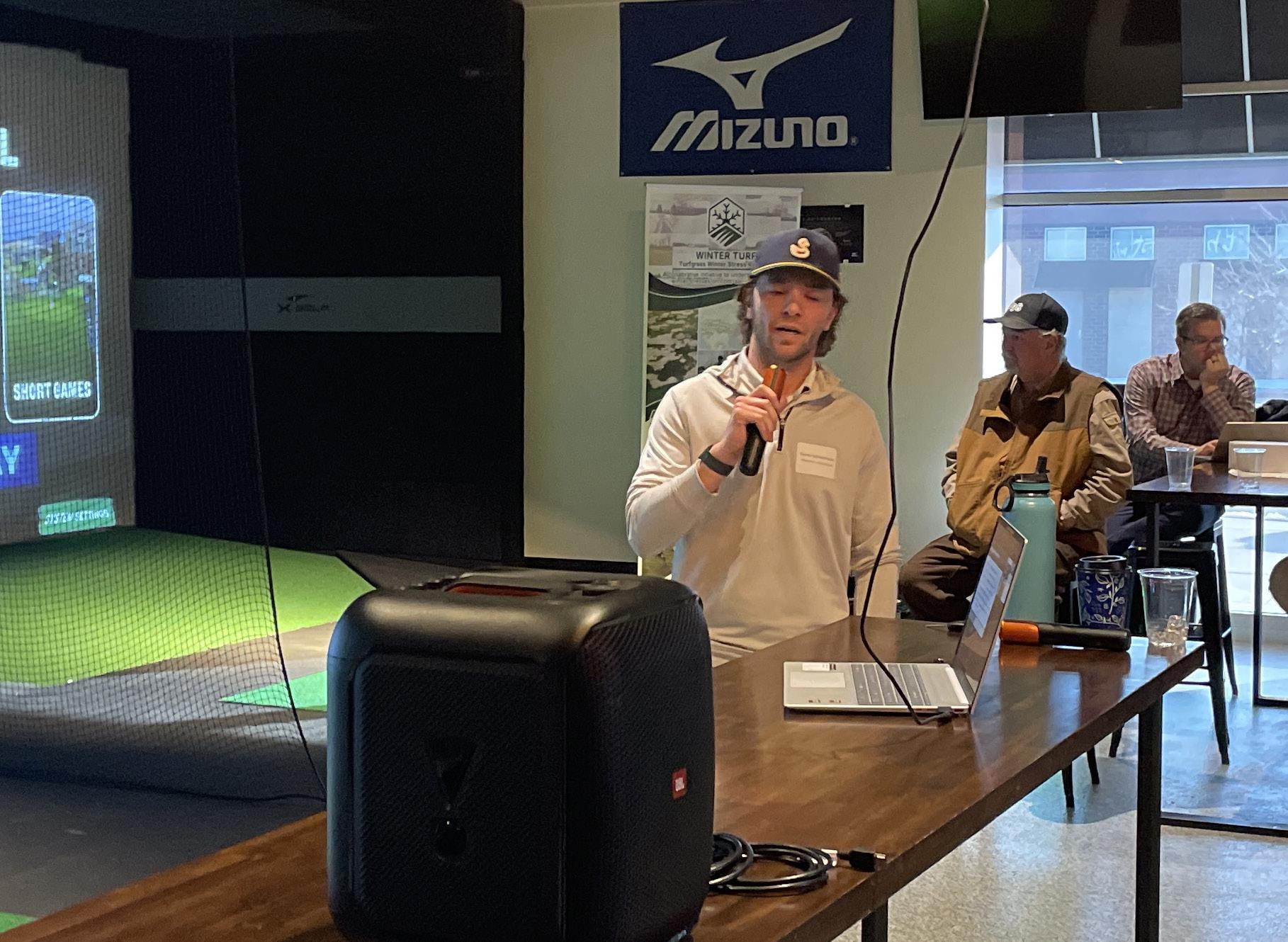
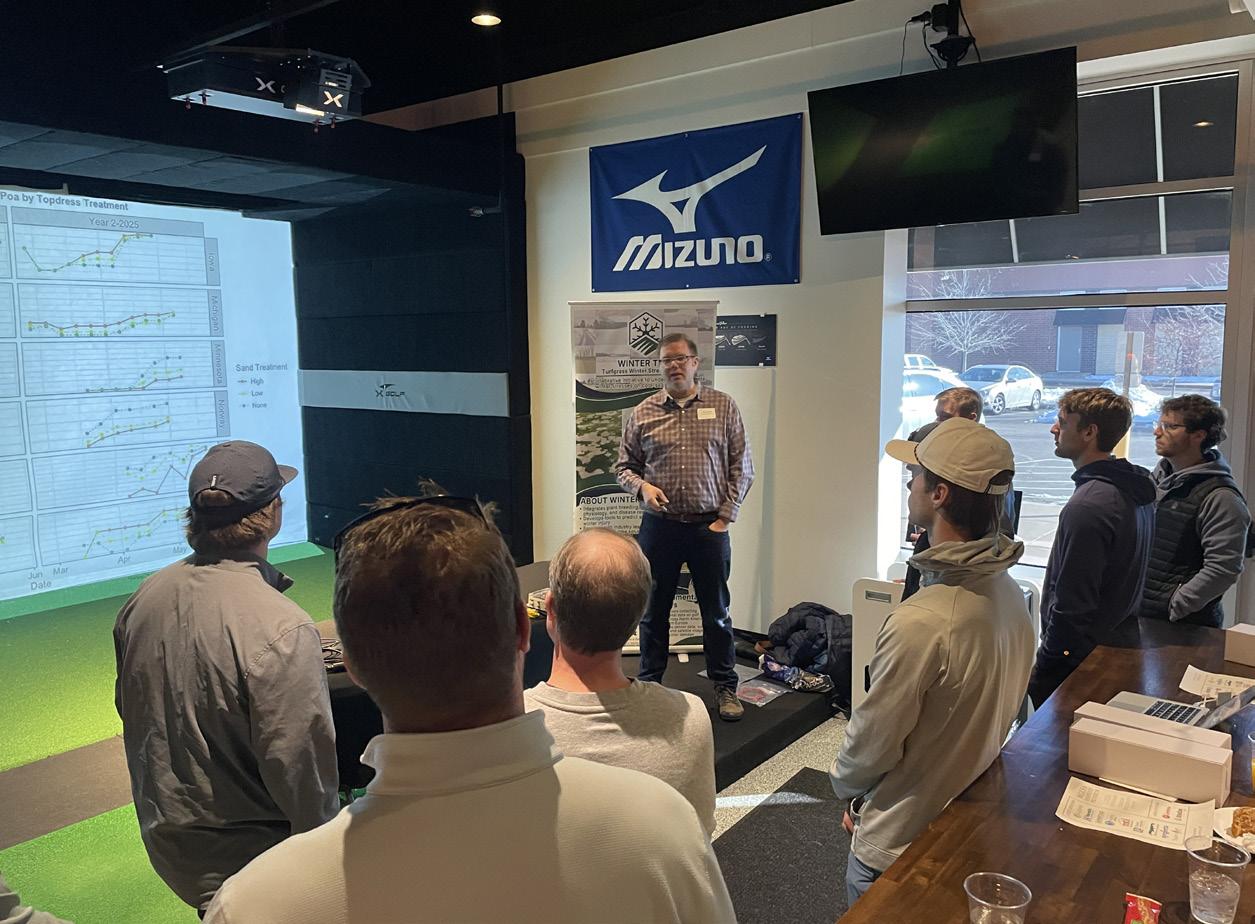
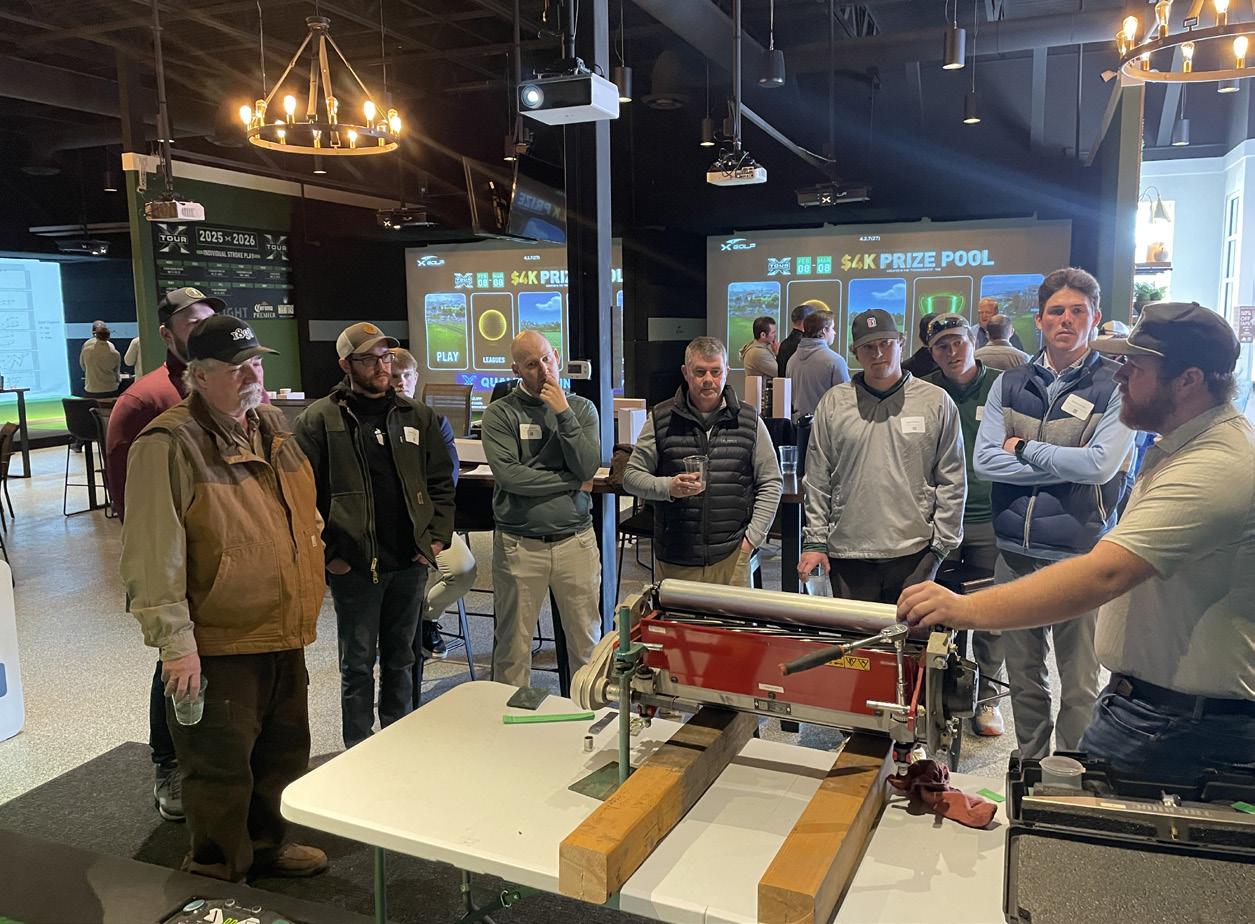
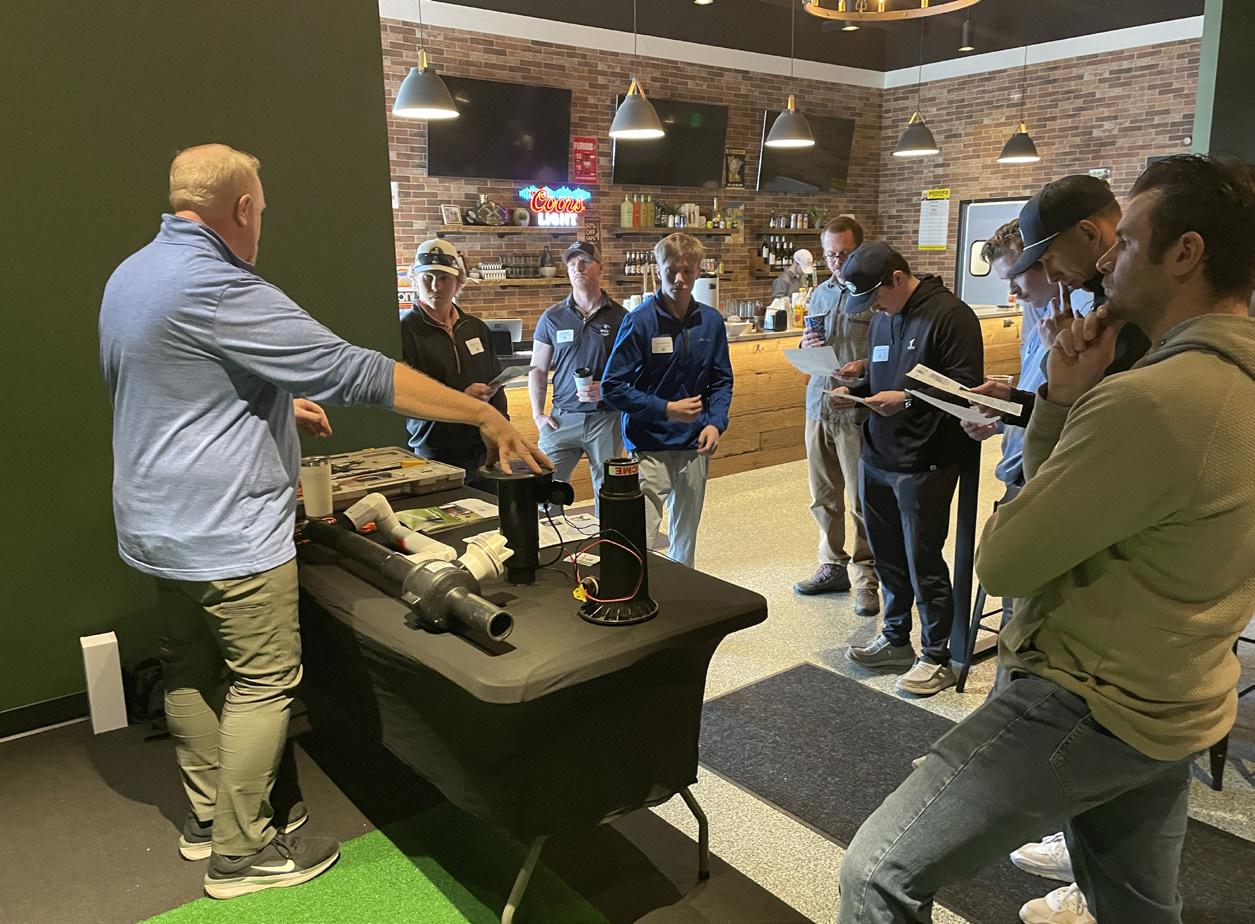
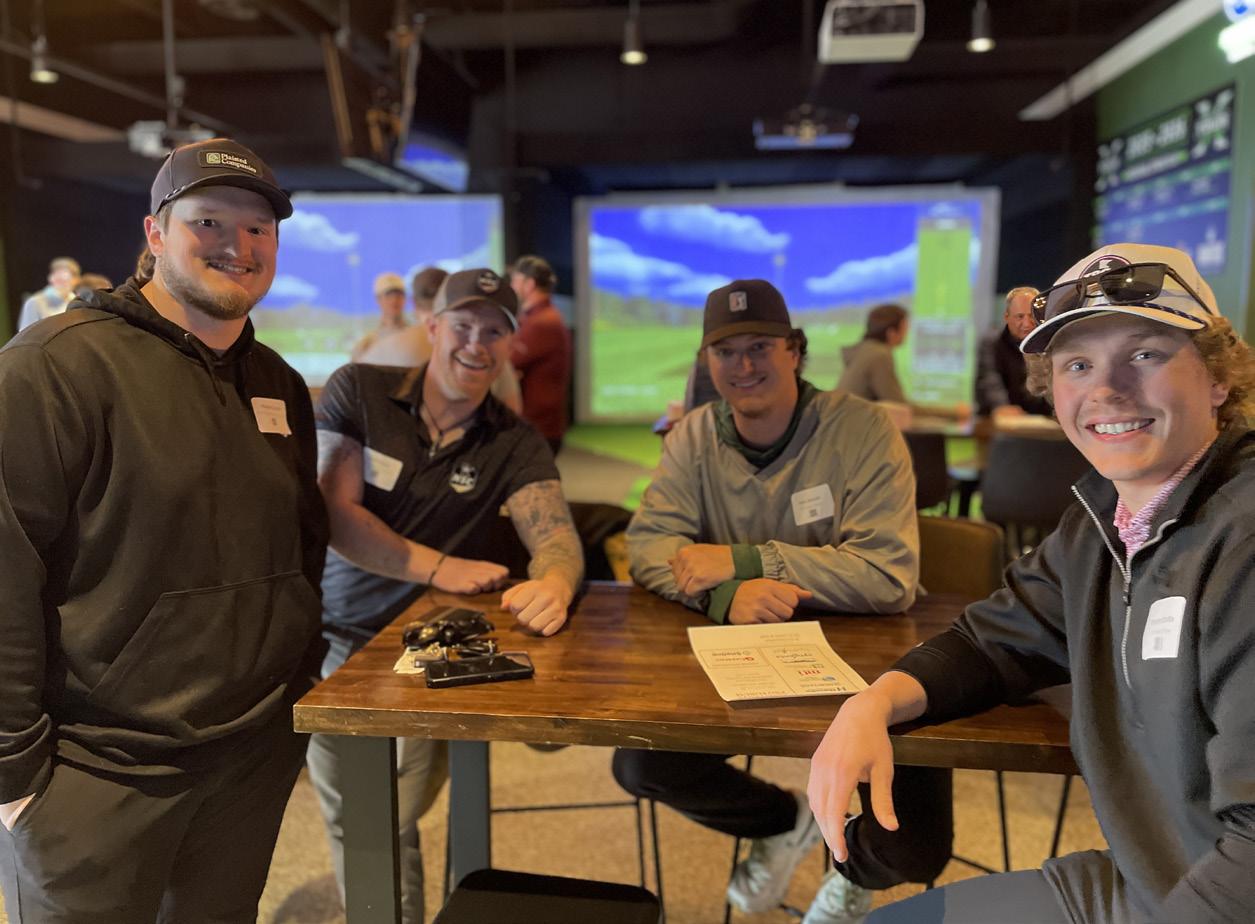
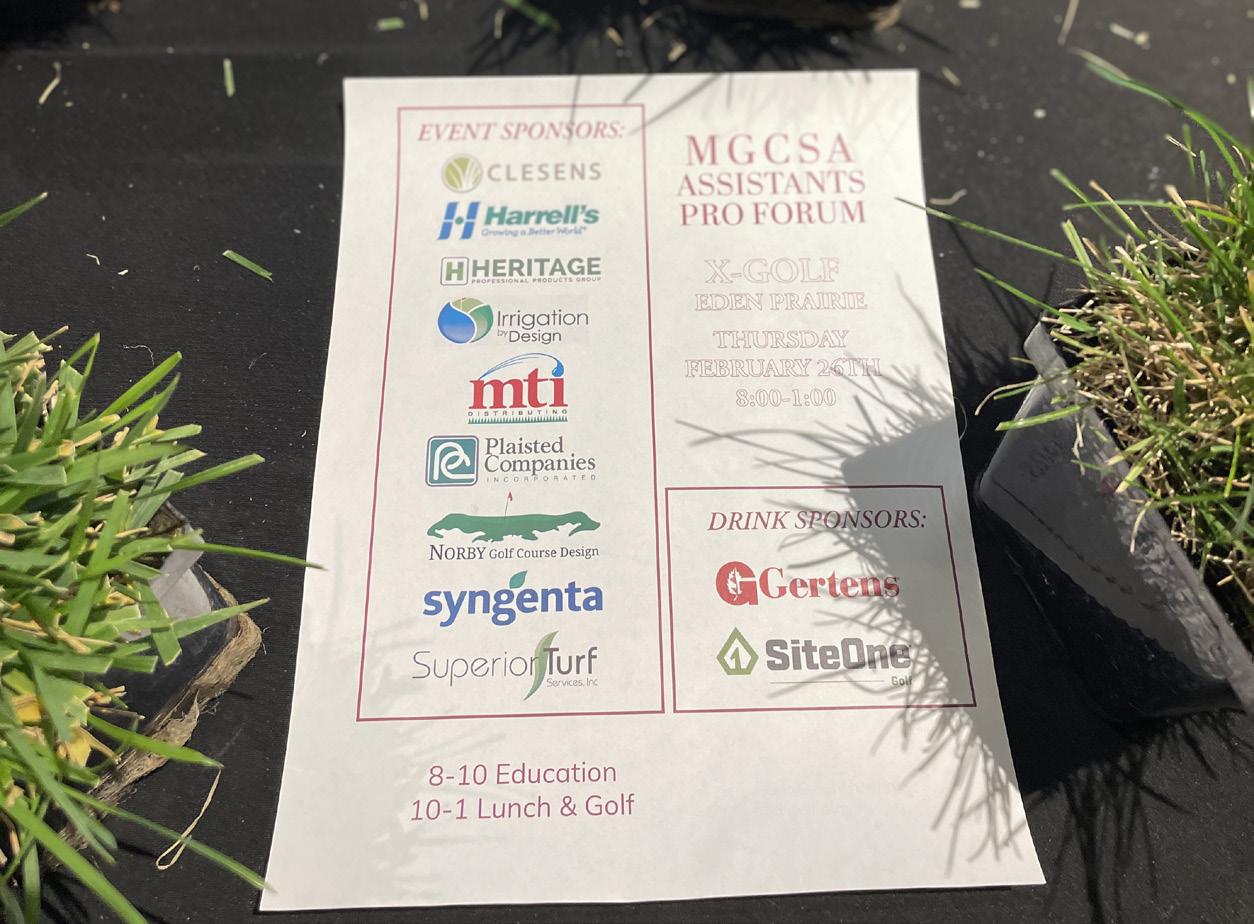
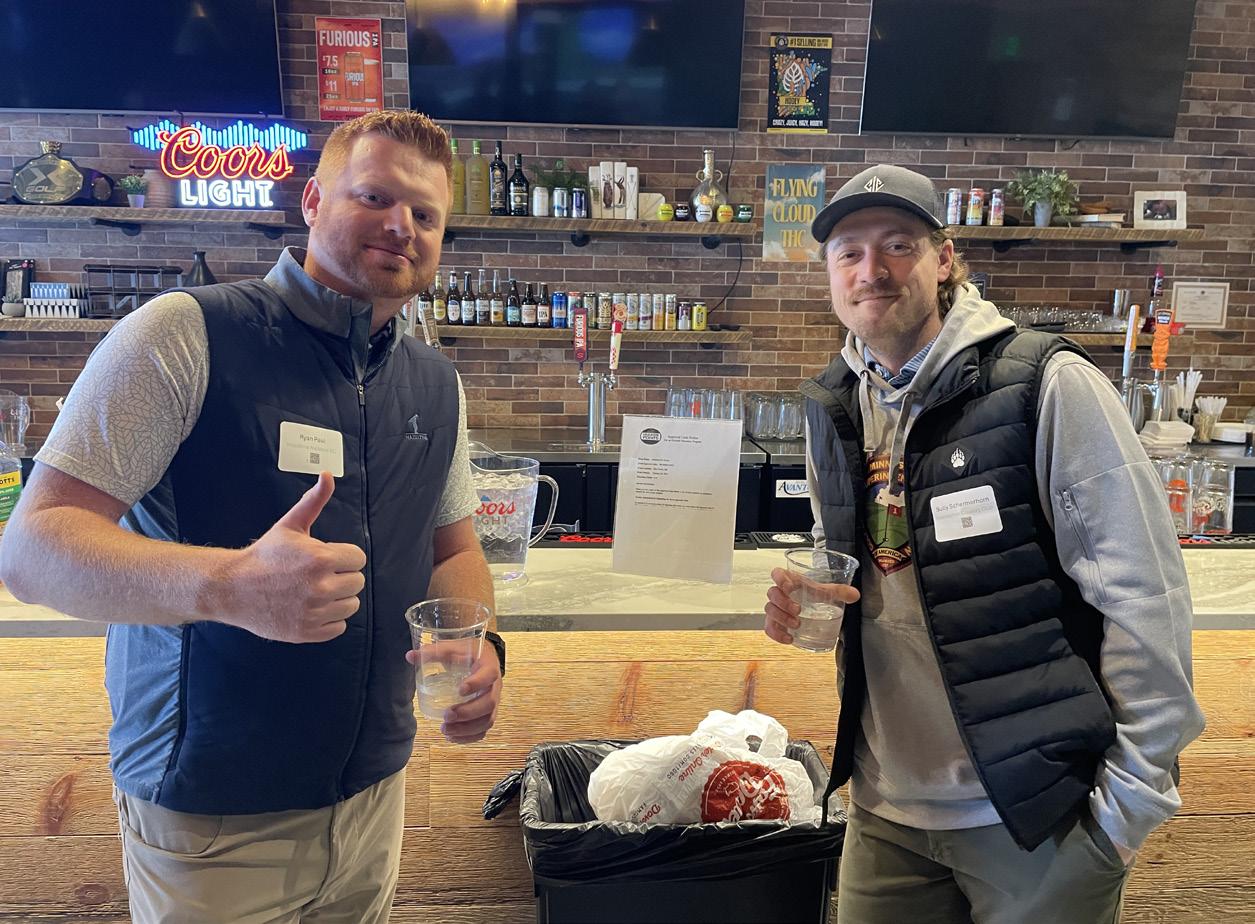
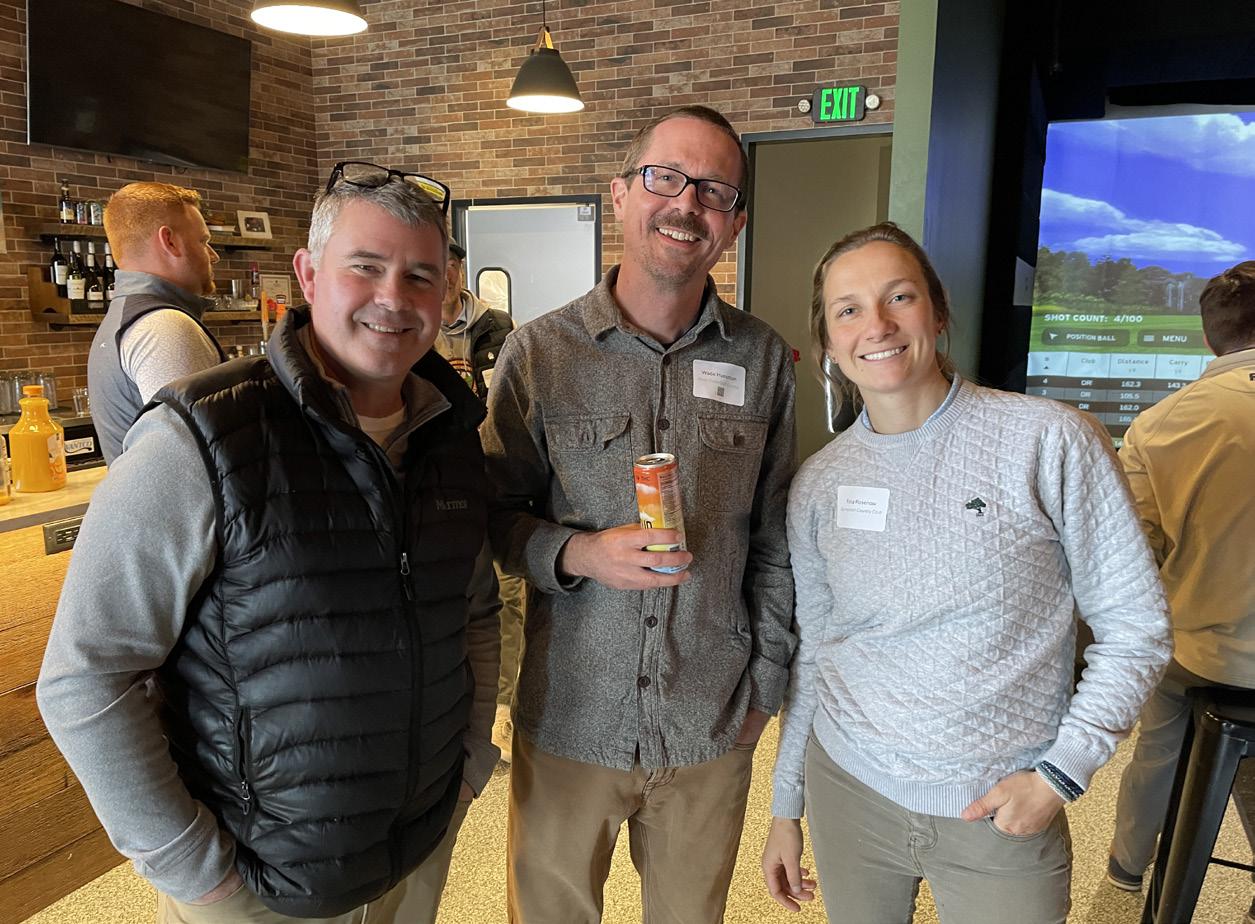
Over 50 members joined us for another successful Assistants Pro Forum at X-Golf.
Thank you to the Assistants Committee for planning the education, our speakers Jared Watters, Tanner Schoenfelder, Jon Trappe, Eric Watkins, Matt Kuha, and Ryan Fleisner for providing the content, and all of our partners for supporting this Assistants focused event!

Dylan Klein
ROLL IT FORWARD
The Meadows at Mystic Lake
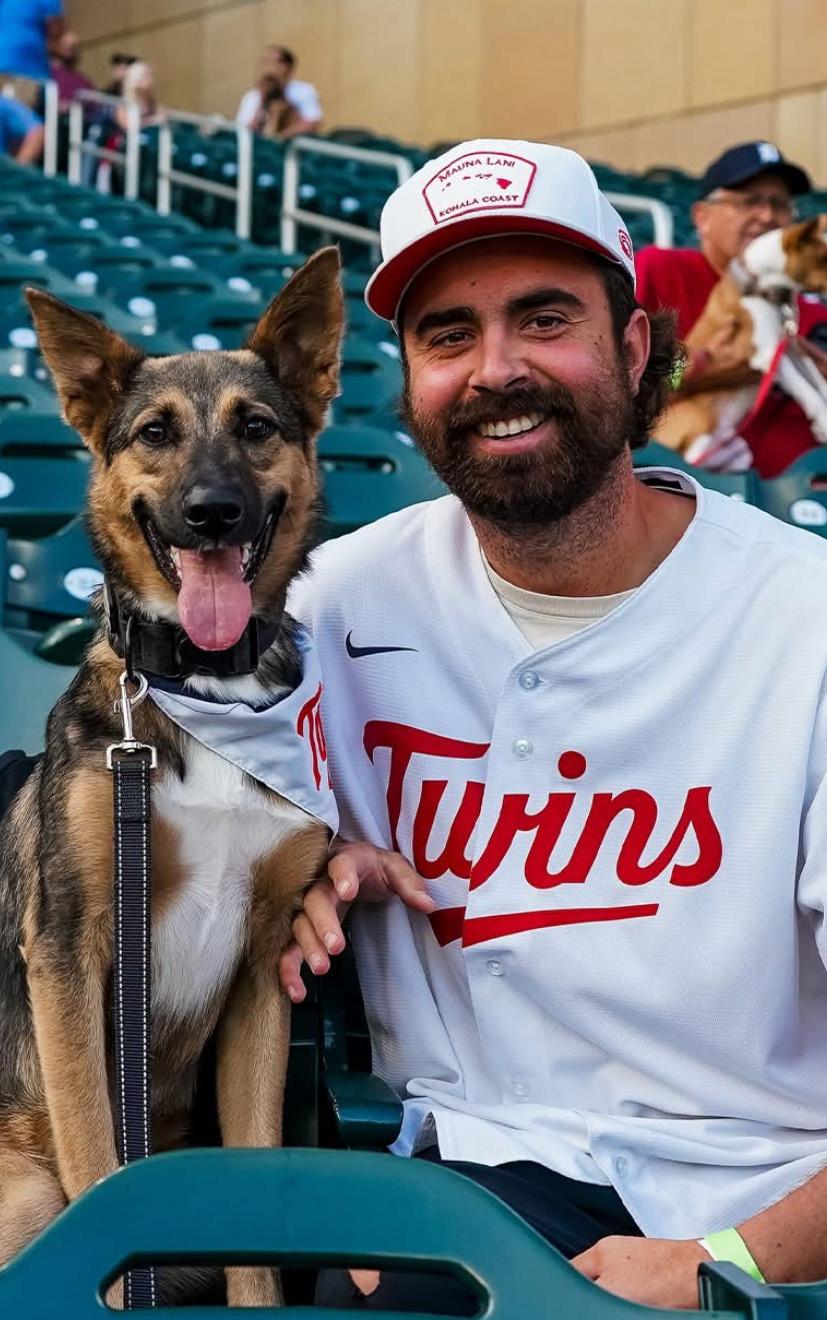
First off, I would like to thank Andy Keyes for nominating me for the Roll It Forward series, and to the MGCSA for giving us like-minded people the support needed for our profession as well as an amazing community. I had the opportunity to work under Andy for 3 years at the Meadows,
and it is something I will never take for granted! My love for the golf industry is almost all because of him, and one of the main reasons I’m in the position I am today.
I am currently the Asst. Superintendent at the Meadows at Mystic Lake in Prior Lake. I
didn’t have to go far to find this wonderful opportunity. I was raised in Savage, Minnesota and attended Prior Lake High School. I grew up in a family of four, with one older brother, and we were always doing something active/outside. We went on countless summer vacations to lakes and

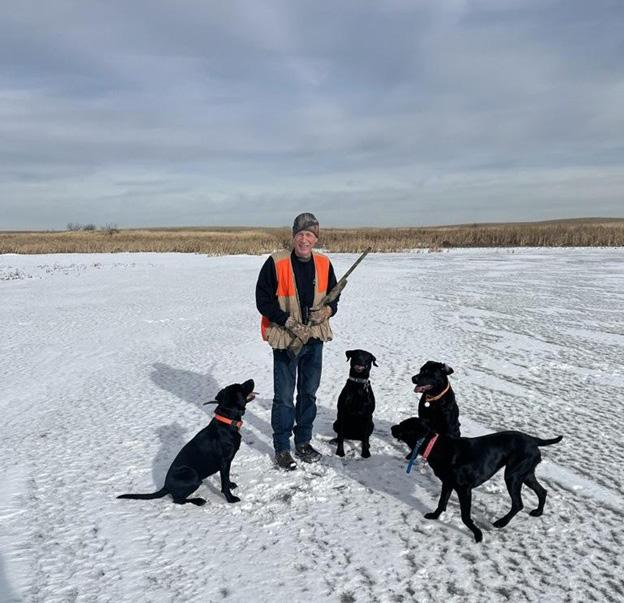
cabins. Often times this meant the trunk was full of golf clubs. My brother and I both grew up playing hockey, but our dad made sure there was a golf club in our hand at a young age. At the time I didn’t quite understand why he had a 7am tee time with my uncle every Sunday, and immediately following, would be glued to the TV to watch whatever tour event was on
that weekend. I now understand, golf is more than just a game for so many people, it’s a career path as well.
During my senior year of high school, I decided that I was going to go to college at the University of Minnesota State Mankato. I had absolutely no idea what path I wanted to take once I got there. All my friends were going to
college, and I figured I better do the same.
Sitting in a classroom was never my strong suit and I knew college was going to be much harder with all of the outside distractions. I went anyway and took all general courses for my first 2 years there. I would take all sorts of online career surveys and the results were always options that I

would never consider. It was the spring of 2019, my sophomore year was coming to an end, and it was time to start thinking about a summer job. The previous years I had been working for a local landscaping company, but I thought I’d see what was out there and I saw that the Meadows was hiring! I sent in my application, and not long after,
Andy was calling me to set up an interview. I made the drive one day from Mankato to Prior Lake and got offered a groundskeeper position. I didn’t know what was in store for me, but I later found that the golf course was my calling.
After one season at the Meadows, it was time to go back to Mankato. I had to declare a major, and my best idea was
the criminal justice program that they were offering. Once enrolled in the classes suited for the criminal justice program, I was more checked out from school than ever before. 4 hour long classes at 6pm weren’t cutting it for me, but I made it through the first semester, and then made it to spring break. My dad and I were headed to McCall, Idaho to go back
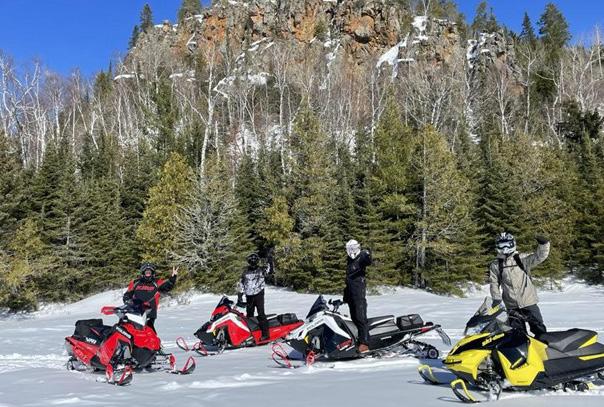
country snowmobiling for a week. I’ll never forget this trip for a few reasons. The snowmobiling was incredible, with unreal snow conditions. McCall is somewhere I hope to get back to; it was a treat to be out there with my Dad. After our first day, the Covid pandemic was all of a sudden breaking out. Spring break got extended another week and school was on pause, as was much of the country. We continued our trip as normal, riding sleds deep into the mountains. After a long day out, we were enjoying dinner and having a few beverages in town. I’ll never forget my dad asking me what my future plans were, and if I thought school was even the right path for me. It
certainly wasn’t, I told him I really enjoyed my summer at the golf course and have been waiting to get back! Ultimately I dropped out of school and waited for Andy to give me a call back to the course.
I worked the full season in 2020 because I wasn’t going back to school in the fall. It gave me the opportunity to work all the way up until the course closed, and late into the season around Thanksgiving before Andy and Pete had to cut me for the winter, as I was only a seasonal employee. The back half of that golf season is when I really gained appreciation for the golf business. I was learning new things every day, as the workforce depleted back to college, Andy started to trust me more and more, each day was
different and I loved it. I took the winter off and worked for my Dad to keep me busy. I took trips to visit my friends at their colleges, did a ton of ice fishing, and started to research schooling options for turf management. When the snow started melting I was itching to get back to the course. Andy was pushing for me to go to school and make this a career and I was completely on board. I got accepted into Rutgers Turf Management program and was set to start taking classes in the fall of 2021. Andy parted ways with the Meadows in the summer of 2021, and my path to an assistant superintendent couldn’t have been more clear. I can’t thank him enough for everything he taught me during our time working together.

To this day, I still reach out to him occasionally asking for his advice. Trent Bestge stepped into the first assistant role at the course, and he has been another major influence on my career development.
Due to Covid, my first year at Rutgers was entirely online. I’d spend my mornings at the course-usually cutting cups- and then head home and log in for my
classes. The following season, Pete promoted me to an AIT role at the course and I loved every minute of it. Working for Pete has always meant a lot to me, he keeps his standards high and expects a great product. Learning from him and trying to pick his brain each and every day has certainly been something I don’t take for granted. Pete and Trent slowly started to let me take
on more responsibility during this season, running the crew more often, especially on weekends, leading projects, and plenty of irrigation repairs. Little did I know, Trent would be leaving to pursue another career, and I was going to be thrown into the fire that summer- all while knowing I’d be heading to New Jersey in October to finish my schooling at Rutgers.
This was certainly unexpected but I wouldn’t have changed a thing.
That season, Pete really began to trust me. I was learning from him and taking all of the knowledge that Trent and Andy had given me my previous seasons working for them. They certainly set me up for this moment and I haven’t looked back since. I learned to stay calm when problems arise, to remember that the sun will still come up tomorrow, and to fully buy into the work we were doing on the course. Finishing school was all I had left to do.
That fall, I headed out to New Jersey and got a true east coast experience. I met some incredible people and will always cherish that time, especially
after spending so much time online and talking through zoom calls. I came back from school and Pete offered me the assistant position- an opportunity I’ve embraced ever since. Since then, I haven’t looked back. I’m committed to continuing my growth
as a turf manager in the industry in hopes of earning a superintendent position. Each season since I’ve started at the Meadows has been better than the last, learning and growing throughout the way.
During the limited time I spend away from the
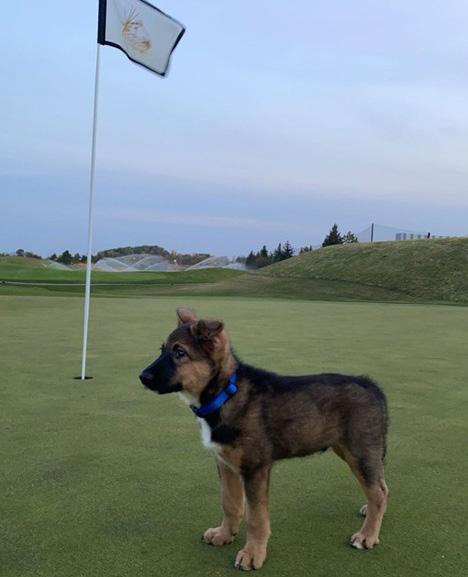
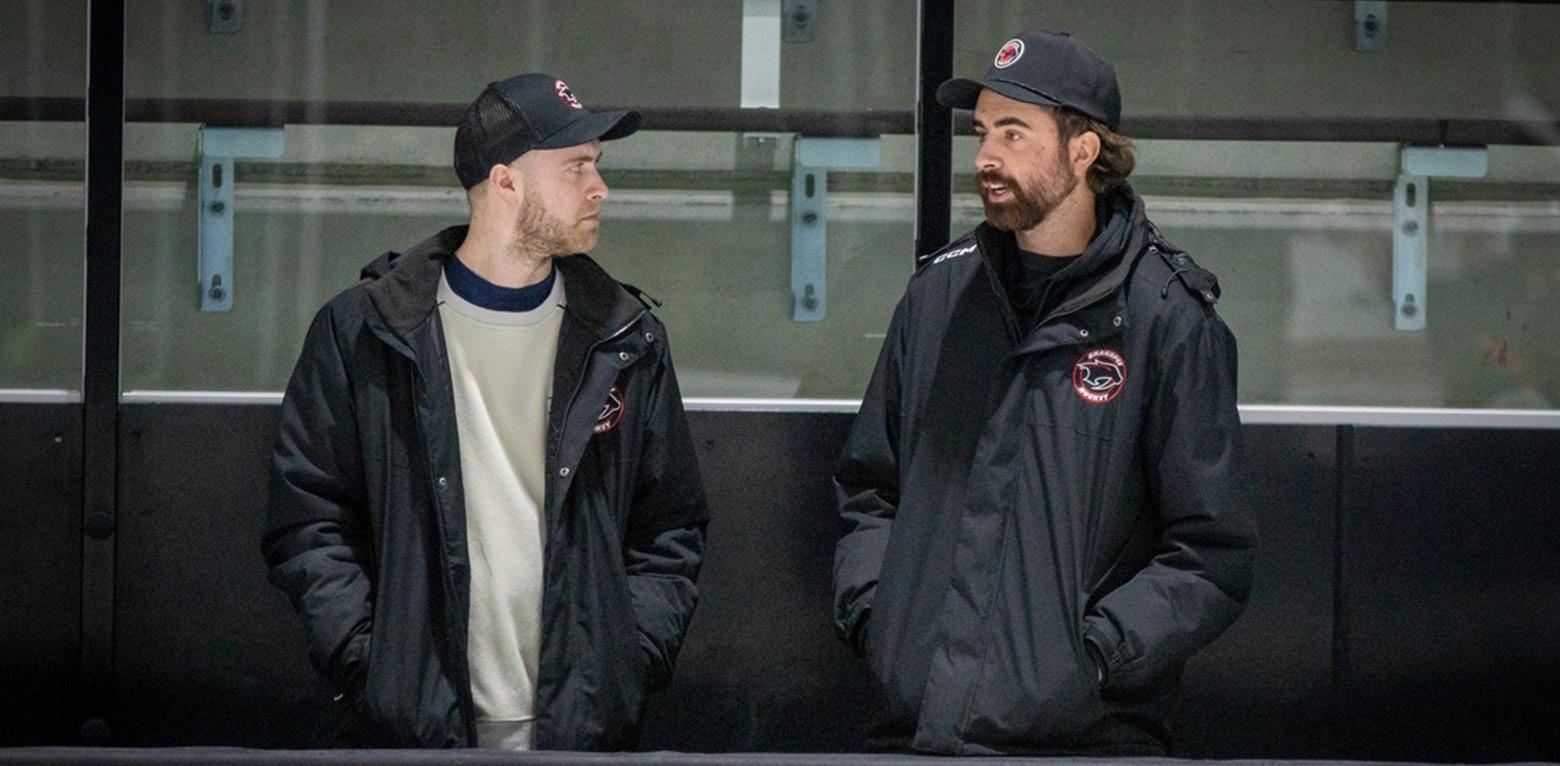
course, my summers are usually spent golfing, spending time on the lake, fishing, tending to my chickens, and hanging out with my dog, Bogey. To keep busy in the winter during the slow season, coaching hockey has become another passion of mine. I enjoy the opportunity to lead alongside a good friend from high school. I have been coaching for three years- two at Shakopee and one at Prior Lake at the Junior Gold level. I hope to
continue to coach for years to come. I also enjoy pheasant hunting and snowmobiling when Minnesota weather permits.
The moral of my story is that passions and dreams aren’t always discovered in the usual ways. Sometimes, you have to trust that following what excites you and listening to your heart will lead you to exactly where you’re meant to be, even if it means stepping off of the traditional path.
I would like to roll it forward to Jack Koenig, Assistant Superintendent at Minneapolis Golf Club. Jack is a longtime friend of mine as we both graduated from Prior Lake High School together. He’s worked all over the country and has gained extensive experience. I know he’ll do a great job sharing his knowledge and perspective that he has gained throughout his career in the industry.



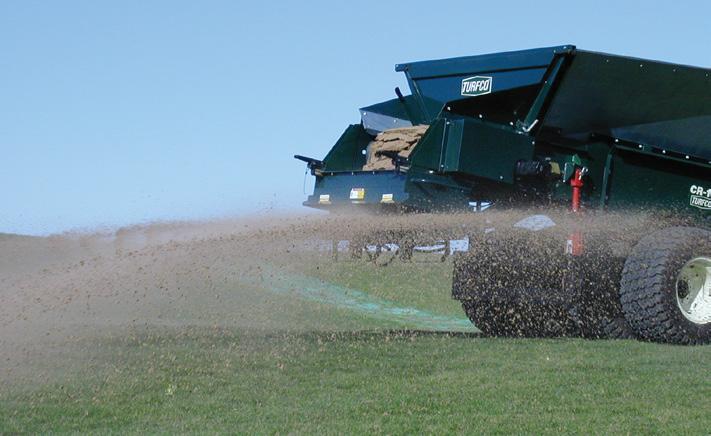
What makes us the #1 brand according to the NGF? The 1550 delivers a more even, more consistent spread meaning fewer passes, less disruption and more time for the next job. So easy to use, it gives you the confidence to nail your application every time. It even tells you the exact rate. Ready to up your game and maximize productivity? Nothing tops the 1550 Topdresser.
WIDESPI N™ 1550

GET TO KNOW ‘EM
ROSS SHAFRATH Golf Course Superintendent Loggers Trail Golf Course
PUBLIC/PRIVATE/#HOLES
FT EMPLOYEES: SEASONALS:
YEARS IN THE POSITION:
YEARS IN TURF INDUSTRY:
CAREER/JOBS:
Public 4 15
7 Years, 4 as super
8 in golf, a couple years in city fields
Mississippi National, City of Brookings sports fields
TURF SCHOOL:
ROUNDS PER YEAR:
TYPES OF GRASS:
South Dakota State, Park and Recreation Mgmt. Minor in Horticulture
40-45,000 since covid
Rough - Sheeps or chewings fescue. Tees- 3 way rye, some bluegrass
Fairways - Bent
Greens - Bent L93
ACREAGE:
Greens - 5 (sprayed)
Tees - 5
Fairways - 32
MASTER PLAN WANT:
The creek that we finished last season was one of those things. It is an aesthetic thing, but also has practical purpose. We can now capture rain water or runoff and deposit that

down on #9, our largest pond on course. There is pipe laid, so we just need to get some pumps and then we could recycle that water on 9. In this area, it could give us a chance to recycle the water and reuse it on property. We are looking into finishing that off.
EQUIPMENT WANT:
The equipment technology has improved so much, its hard not to want some of that newer stuff. We’ve been doing a good job in upgrading our equipment. A GPS sprayer would be nice. I get quite a bit of stuff off lease from the bigger courses.
Would love to have a fairway aerator, a big solid tine unit. We finally got a tractor thats big enough, so that would be great.

ANYTHING DIFFERENT OR UNIQUE YOU DO THAT COULD BENEFIT OTHERS:
WHAT IS A CLASSIC MOVIE YOU RECOMMEND TO OTHERS:
We did do something that we will not be doing any longer. We used to have 3 cups in each green. They had the plastic lid on the top. Then the weekend guy could mow the greens, rotate the cup, but now there is too much play. We would only change cups 3 times a week. We would just rotate front middle back.
No Country for Old Men
FAVORITE VACATION SPOT:
FAVORITE TASKS:
Eagle River for sure. I also really enjoy the black hills, living in SD for 5 years, it was a great hidden gem, not usually very busy and lots of scenic areas.
Mowing greens or cutting cups. Those jobs where you are the first one out on the

course. I used to love doing it on Saturdays, because no other employees were here, so I could just listen to music and be in peace.
LEAST FAVORITE TASK:
HAVE YOU PLAYED ANY FAMOUS GOLF COURSES: WHO IS IN YOUR FOURSOME:
Probably fixing an irrigation pipe that was not done correctly the first time. I don’t mind fixing an irrigation break, as long as it was done correctly.
The only one would be Pinehurst, #9 I think. I went a couple years ago and that was a fun trip.
My dad, he’s getting up there so now having kids it gives you perspective. My buddy Aaron whose been a friend since high school. Then another friend I haven’t seen in a while, a rotating 4th friend.

WHATS ONE PIECE OF ADVICE YOU’VE RECEIVED IN YOUR CAREER THAT STILL RESONATES WITH YOU: Someone once told me, an old coach I think. He said how you spend your days is how you spend your life. He meant move on from the play, don’t dwell on it. If you’re happy everyday, you’ll be happy in life. If you’re mad and maybe take that home to your family, youcan’t, you gotta just leave it at work. If you’re doing that 90% of the time, you’re having a pretty good life.
Listen




Topdressing Sands & Mixes

Our Sands meet USGA guidelines and are available with green pigment. Custom mixes can be blended for your individual needs using our 4-bin computerized Accublender.
Bunker Sands
Our bunker sands are always washed and screened. Choose from:
•Plaisted Bunker Sand Natural Tan
•Plaisted Pro Bunker Sand Blend Natural Tan
•700 Best Signature 100% Crushed Off White
•900 Best Signature 100% Crushed White
Golf Construction Sand Mixes
Our mixes all use USGA sand and a combination of fine grade peat and screened black dirt. Chose one of our popular mixes or we can custom blend one.
•USGA Coarse Gravel - A great bridging rock used as a drainage layer.
•Construction Sand & Peat Mixes - 50/50, 60/40, 70/30, 80/20, 85/15, 90/10
•Construction Sand & Black Dirt Mixes - 50/50, 70/30, 80/20
•Construction Sand/Peat/Black Dirt Mixes - 1-1-1, 60/20/20, 70/20/10, 80/10/10
Cart Path & Road Base
•3/8” with fines river rock
•Class II buff limestone or red rock
•Class II, III, IV crushed granite
•Class 5 gravel
•Recycled concrete, crushed asphalt, conbit


Bagged Products
•Dry topdressing sand
•Dry tournament topdressing sand
•Dry green topdressing sand
•Dry early-green black topdressing sand
•Dry 70/30 green divot mix
TPC FIRST GREEN
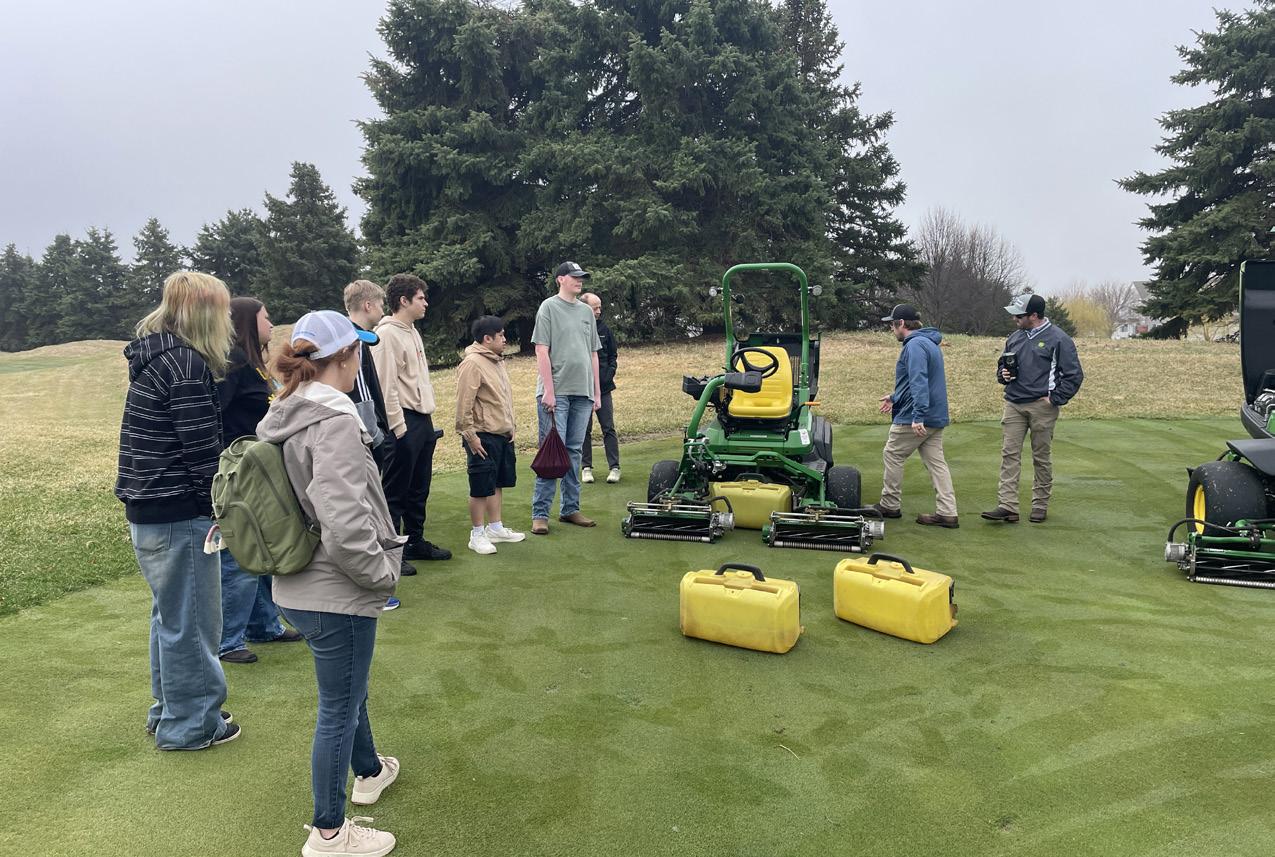
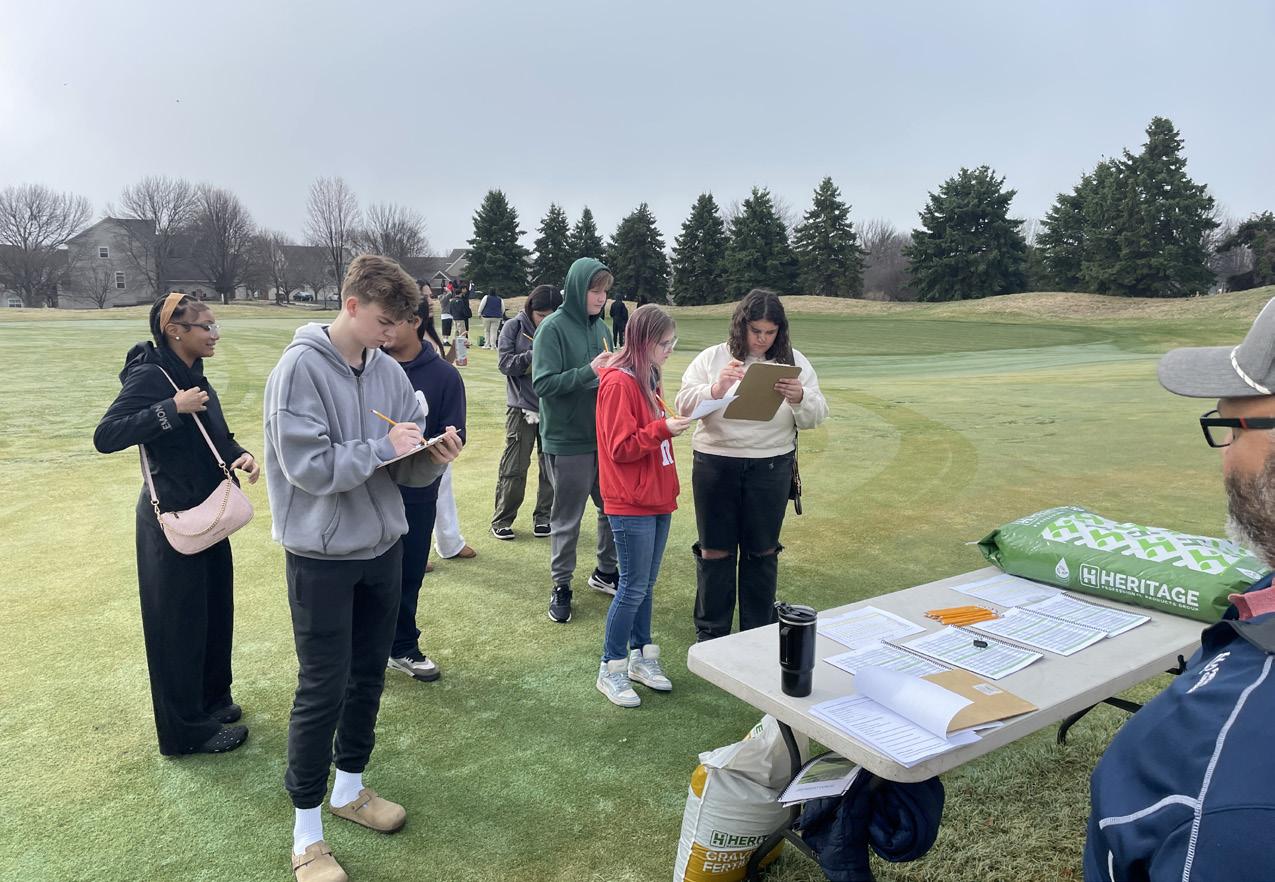
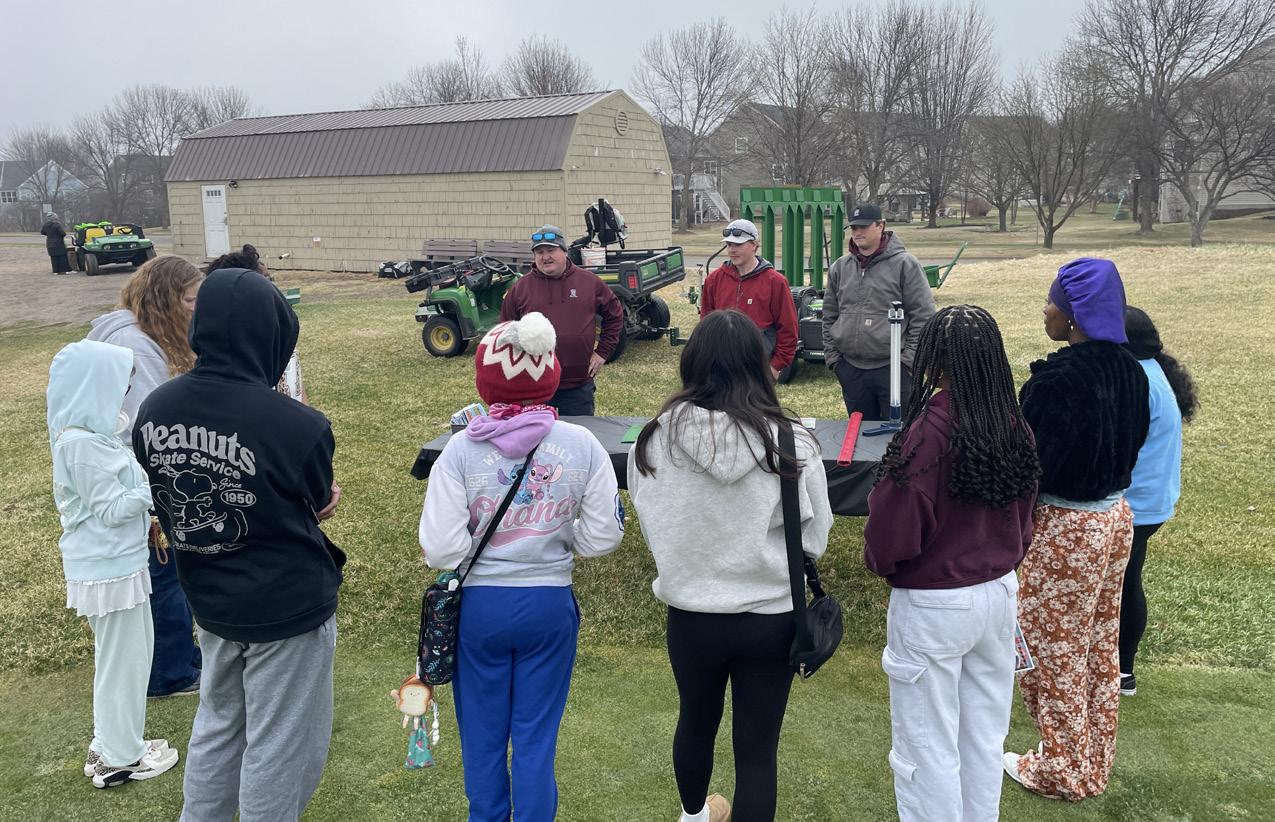
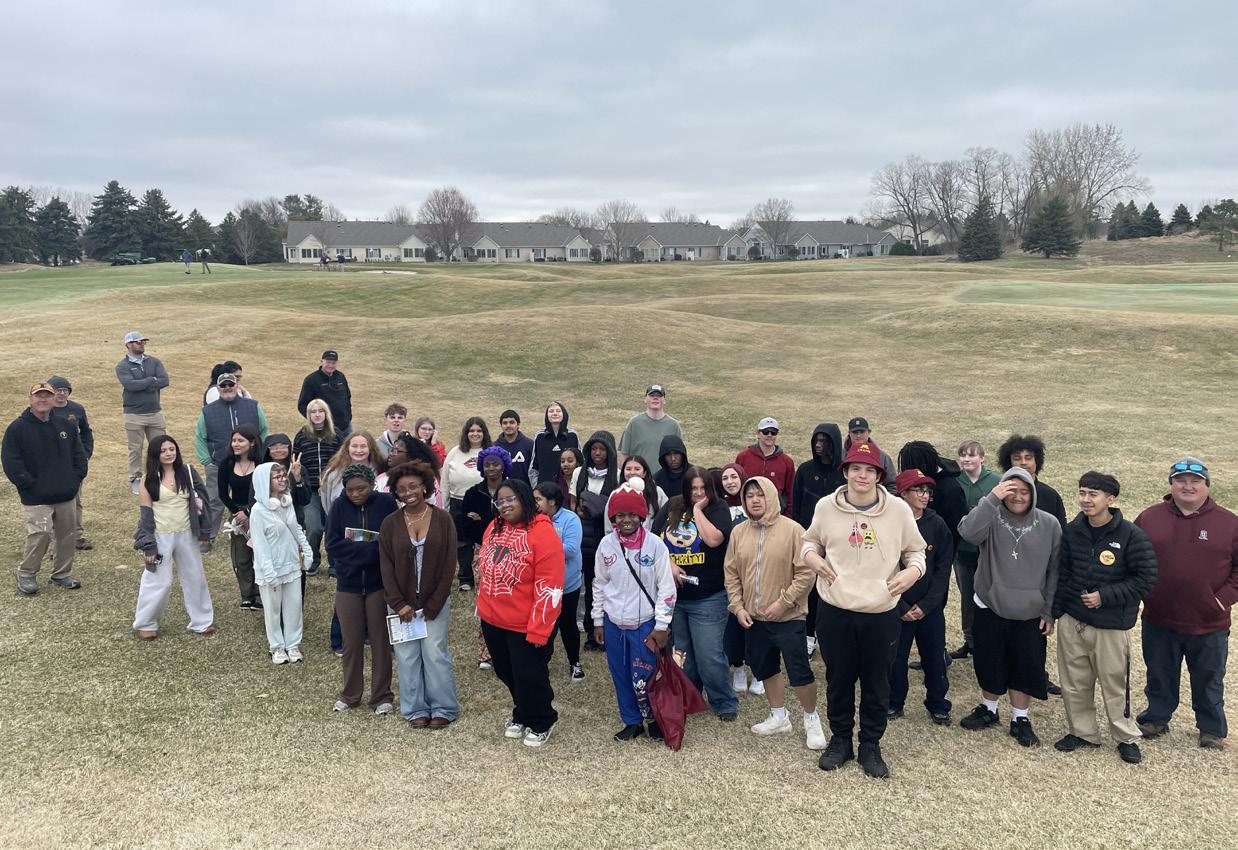
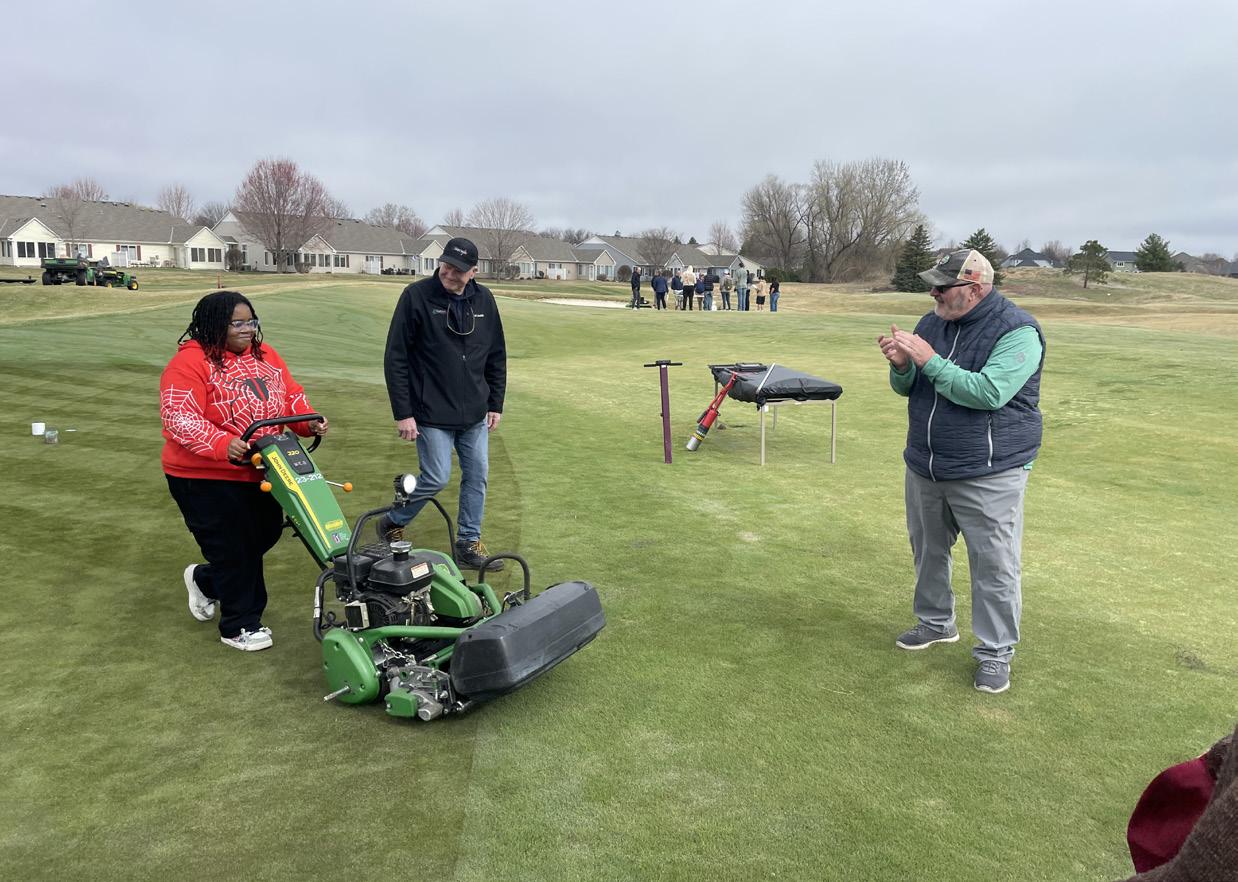
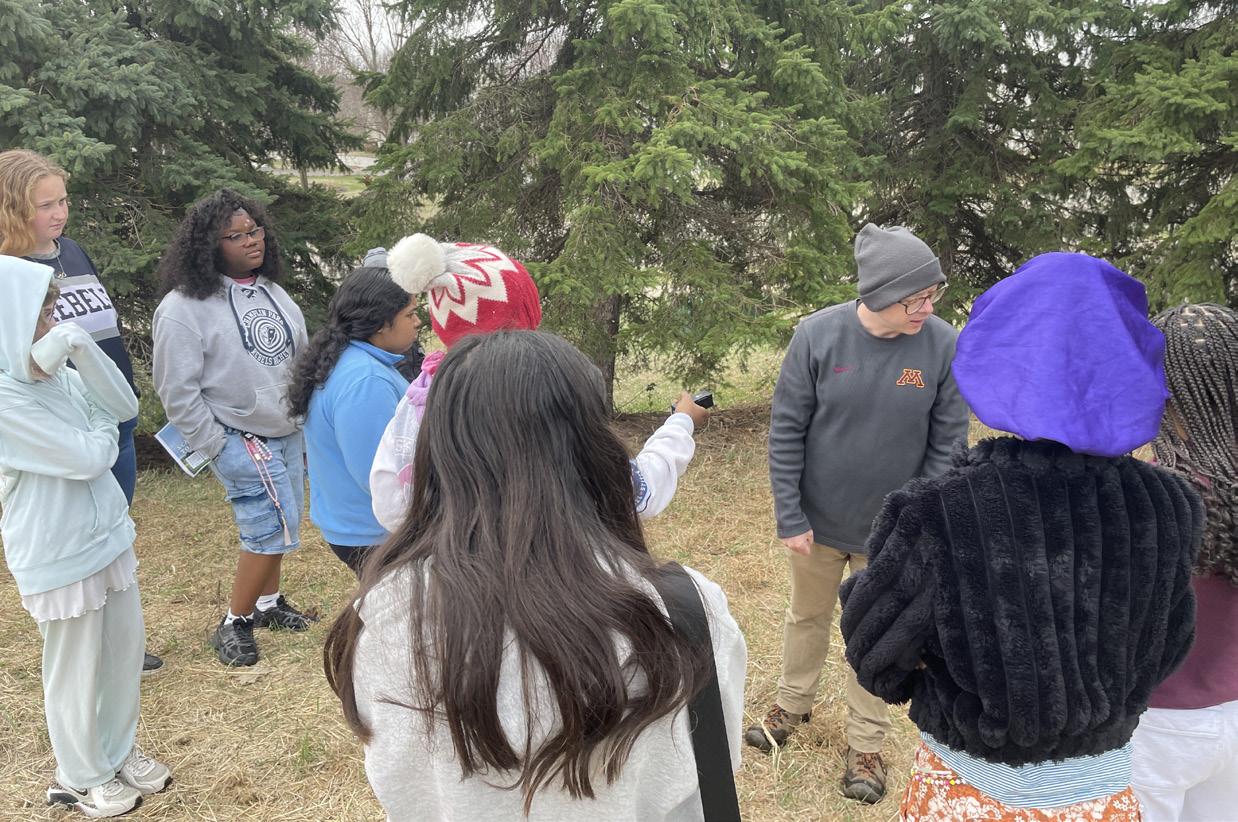
TPC recently hosted students from the Anoka-Hennepin High Schools for a day of learning about turf and golf course management! Thank you to our hosts; Joe Rolstad, Brandon Smith, Avery Brandt, and all of the TPC team, along with all of our volunteers for making this another successful First Green event!
UMN RESEARCH
AURORA GREEN:
MANAGING TURFGRASS
PHOTOINHIBITION IN THE NORTHERN LIGHT
Dr. Dominic Petrella
University of Minnesota

At high latitudes turfgrasses face stronger seasonal light changes than anywhere else in the world. Most turfgrass managers believe that growth in these regions is limited by low temperature in the spring, and by lack of light in autumn, but our past research has shown that this is oversimplified.
The focus of this project is to further show that during the shoulder seasons, high-light stress can be one of the most significant
stressors turfgrasses can face in northern latitudes. This project, AURORA GREEN, is funded through the Scandinavian Turfgrass and Environment Research Foundation (STERF) and is made up of an international team of scientists and agronomists from NIBIO in Norway, the Swedish Golf Federation, the University of Massachusetts, and the University of Minnesota. While the project has a global reach, the work we are doing at the University of Minnesota will develop
actionable tools to fight photoinhibition.
During the fall and spring shoulder seasons, the combination of highlight intensity and low temperatures can lead to a phenomenon called photoinhibition. This is essentially “sunburn” for plants, reducing growth, leading to production of purple anthocyanin pigments, and might be a missing piece of the puzzle for understanding winter survival (Photo 1). Photoinhibition may alter both winter acclimation
and spring green-up, both leading to a reduction in growth in the spring months and disrupting early season golf.
The Science of Photoinhibition
What actually is photoinhibition?
Photosynthesis is a chemical reaction, and like many biological reactions the process slows down when it gets cold. However, the physical
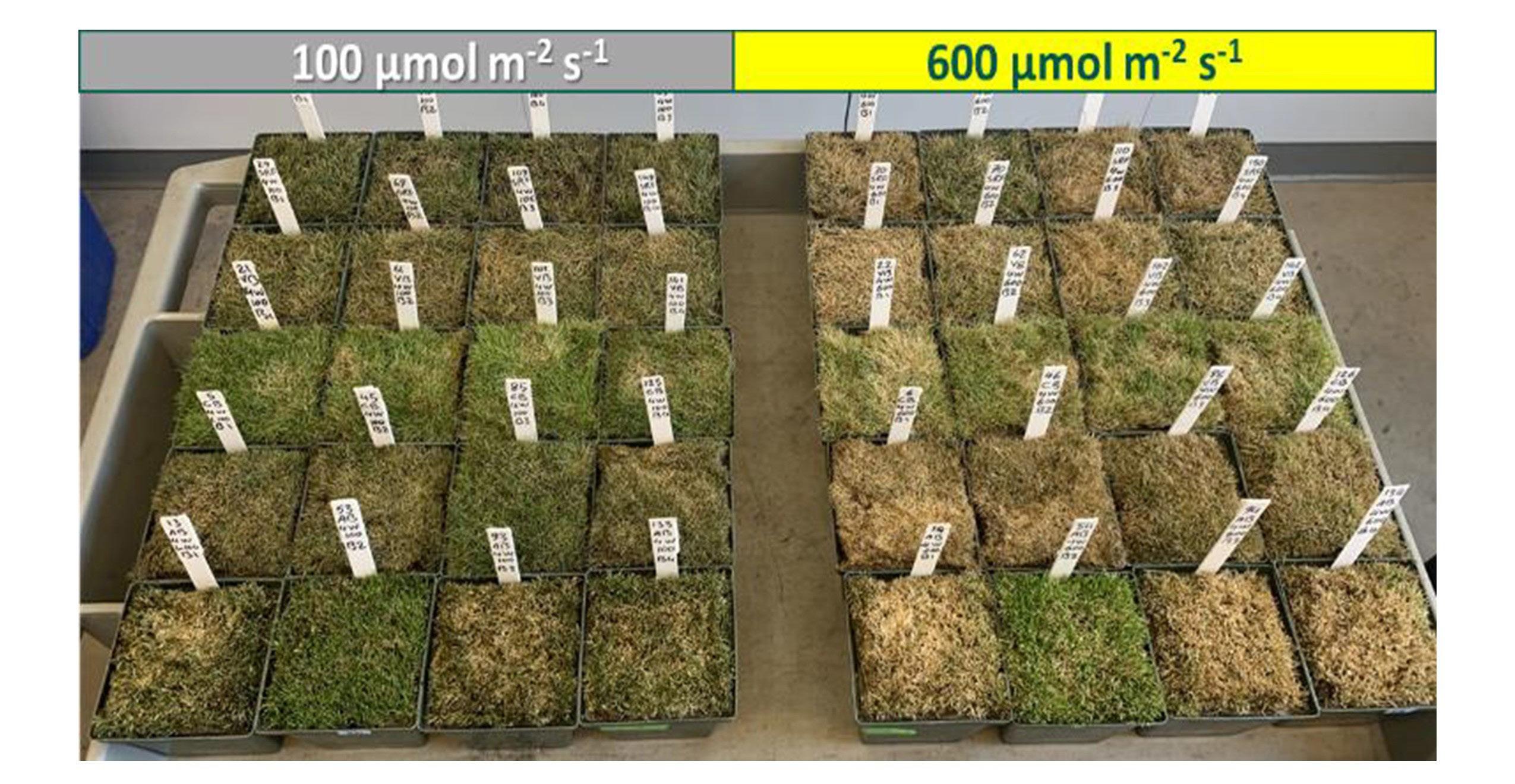
process of absorbing light does not slow down. In late fall or early spring, the sun can be incredibly bright even when air and soil temperatures are near freezing. When the plant absorbs more light energy than photosynthesis can process, that energy has nowhere to go, creating reactive oxygen species (free radicals) that damage the plant’s photosynthetic machinery, inhibiting photosynthesis or photo-inhibition. Photoinhibition and light stresses may also be a large component ice related winterkill. Based on preliminary experiments from the WinterTurf project, plants exposed to low light intensity following simulated ice encasement have better survival than those exposed to high intensity light (Photo 2). We think this is due to higher amounts of
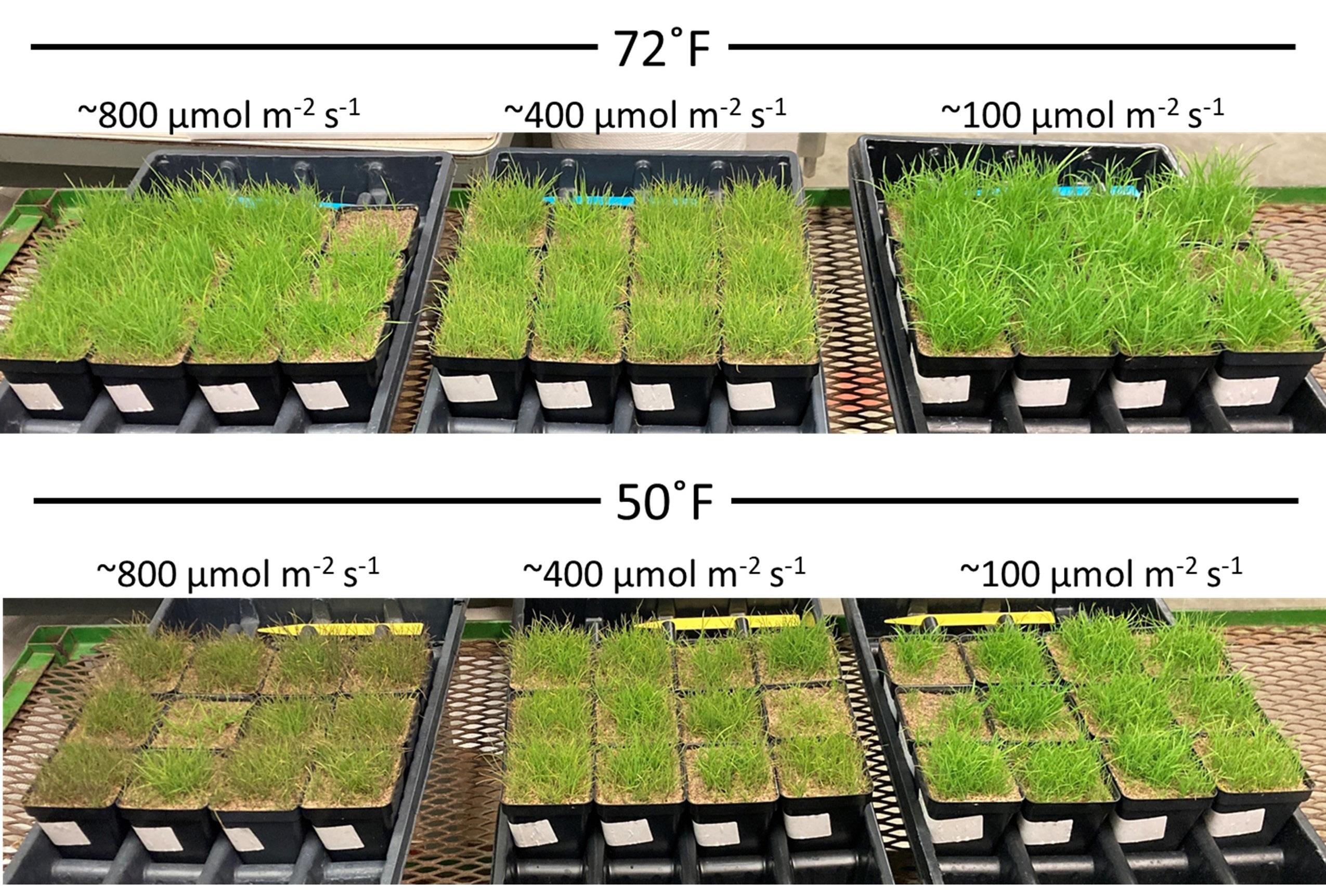
Photo 1: Creeping bentgrass exposed to low (100 µmol m-2 s-1), moderate (400 µmol m-2 s-1), or high intensity light (800 µmol m-2 s-1) while growing at optimal (72°C) or low air temperaure (50°F).
photoinhibition after periods of hypoxia or anoxia.
For AURORA GREEN
our research in Minnesota focuses on three key aspects:
1. The role of UV-light in winter photoinhibition
While we often talk about visible or PAR light (Photosynthetically Active Radiation), we rarely talk about the role of ultraviolet (UV) light in photoinhibition during winter acclimation. Starting this year (2026), we will be using specialized growth chambers at UMN to simulate a Minnesota autumn with and without UV light added. We will be subjecting creeping bentgrass, annual bluegrass, and slender creeping red fescue to varying levels of UV radiation during a winter acclimation period and seeing how this impacts freezing tolerance. In follow up experiments, we will treat plants with
synthetic plant pigments to examine to what extent the pigments reduce photoinhibition and potentially increase freezing tolerance.
2. Pigment Screening and Evaluation
We will be screenings different synthetic pigments that are available in both Europe and the U.S. This will include analyzing how much visible light and UV radiation they block at specific wavelengths. We will be also testing different application methods including testing different nozzle types, carrier volumes, and rates to see how much the application method changes turfgrass coverage and light reduction. This will include determining the percent coverage of pigment across leaves of putting green height turf.
3. Spring Recovery and Ice Encasement
Perhaps the most stressful time for turfgrasses and superintendents is when
ice (or snow) melts). This period of time is a transition from little light and oxygen to high-light and more normal amounts of oxygen. We will be conducting field trials at the TROE center where we artificially ice over putting green plots during the winter and examine spring-time interventions. Once the ice is gone, we will be testing the impact of permeable covers and synthetic pigments on turfgrass recovery. Our goal is to see if reductions in light stress with or without increasing soil temperature with covers improves recovery. Some plots will also be sprayed with pigment in the fall to examine how those treatments impact winter survival and to see how well pigment cover persists over winter.
Goals and Outcomes
We know that Minnesota winters aren’t getting any easier and this can be attributed to the shoulder seasons becoming increasingly unpredictable.
By understanding the physiology of light stress, we hope to provide tools to combat some of the unpredictableness. The goal is to provide golf course superintendents with more concrete tools to reduce winter damage and ensure more consistent, greener, and more playable surfaces early in the season. For golfers, this means better playing conditions, less
winter-related damage, and an earlier start to the season.
Project Details
• Project Period: March 1, 2026 – March 1, 2029
• Project Manager: Sigridur Dalmannsdottir (NIBIO)
• Project Team: Anne Borchert and Trygve S. Aamlid (NIBIO); Håkan Blusi (Swedish Golf
Federation); Michelle DaCosta (University of Massachusetts, USA); Dominic Petrella (University of Minnesota, USA).
• Funding: STERF (1.6 million SEK, ~$172,000 USD), Swedish Golf Federation, Minnesota and Massachusetts Golf Course Superintendents Association
UMN TURF BLOG
Photo 2. Pots with red fescues and bentgrasses after 4 wks of simulated ice encasement (anoxia) followed by one week’s exposure to light at 100 (low) or 600 (high) µmol m-2 s-1. Experiment in Massachusetts as part of ICE-BREAKER. Photo: Michelle DaCosta
FROM THE HIGH GRASS
Another season is underway for most of you. As the weather turns and you all get busier, it’s a great time for me to think longer term, and work on our larger goals and ideas. Most of you don’t have time for me, or need much from me during the season, but remember, I am always here if you do! Now is a good time just for a refresher on what’s going on, and to touch on some opportunities for you to consider.
One of the main things I will be working on is our upcoming Centennial year in 2027, as we are pursuing some new ideas to help us celebrate this significant milestone. We have been discussing these ideas within our Centennial

committee, and our excited to share more details later.
Over the next couple of months, you will see our regular slate of summer exposure golf events, with our first event coming up quickly with the Border Batlle on May 11th, at La Crosse Country Club. The other golf events this summer will take us to Alexandria, Mankato, Silver Bay, and Lake City. Hopefully we will see many of you there for some good golf and camaraderie.
As you saw earlier in this issue, the Par Aide Garske and MGCSA legacy Scholarship applications are now being accepted. Review this opportunity with your kids and grandchildren to give them
a chance at our annual scholarships.
As I write this, we are wrapping up our annual Rounds Fore Research effort. This year we have raised over $24,000 for the UMN turf program! Thank you to anyone who donated or promoted this year’s event!
Last month, your Secretary/Treasurer, James Westendorf, and I attended the Chapter Leaders Symposium at GCSAA headquarters in Lawrence Kansas. We spent two days learning from our colleagues around the country, along with hearing updates on GCSAA efforts and programming.
Some of the key issues
that we will continue to hear more about are BMPs and the ESA. GCSAA has been working hard at the national level getting golf BMPs included in pesticide use laws. These new laws and labels, related to the Endangered Species Act, will make an impact on all of you. You will need to understand the new rules and regulations for using certain products in certain areas and situations. This is something we will all need to understand further. MGCSA will do what we can to relay relevant information as needed.
A big part of this process will be mitigation efforts. There will be a point system, and certain BMP efforts will award those points. So now, the facility
BMP will be very useful as we move forward learning about PULA’s and utilizing Bulletins Live! more.
GCSAA just held its first webinar on the issue, as they finally have a good handle on the topic. If you didn’t join that webinar recently, look for it in the learning hub on GCSAA’s website.
The next rainy day may be a good time to review the GCSAA Facility BMP tool. They are working at a national level to get golf specific BMPs included in mitigation language, so we don’t have to rely on less relevant Ag requirements. Your efforts now in adopting a facility BMP manual will only strengthen our collective industry efforts.
Lastly, we are finalizing our dues renewals period for the year. We still have a number of individuals who have not renewed but this is typical every year. We will be finalizing that number soon, but we will likely finish this renewal period well over 600 members. That’s a number we have not reached before! Thank you to all our long-term members, our affiliate members, and all of our new members for your continued or initial support of the MGCSA!
We will work to strengthen all of those memberships and look forward to hearing from you all along the way.