IMPACT REPORT
Platinum Sponsor
Gold Sponsors
Silver Sponsors
The rise of AI, automation, and shifting labor policies are reshaping Mexico’s employment environment. As technological advances accelerate and workforce expectations evolve, organizations face increasing pressure to adapt.
Strategic collaboration between public and private sectors is essential to navigate this transformation effectively. Together, these two sectors must address the challenges and seize the opportunities emerging in the country’s talent landscape, ensuring that businesses remain competitive and inclusive in the face of change.
A recent report by Mercer highlights the urgency of this transition, as 96% of Mexican companies plan to redesign HR functions by 2025, with AI integration ranked as a top priority. Additionally, 54% of HR leaders have identified AI and automation as critical to future work redesigns. These figures reflect a broader shift toward data-driven, tech-enabled talent management strategies that prioritize efficiency, agility, and personalized employee experiences.
Simultaneously, modern workforce demands are forcing employers to redefine job functions to align with a tech-forward future, while embedding lifelong learning into the employee journey and reinforcing occupational health programs. Under these circumstances, platforms that foster the exchange of forward-looking insights and actionable strategies are becoming increasingly essential.
At Mexico Talent Forum 2025, industry leaders provided strategic guidance to help organizations future-proof their operations. The insights empower decision-makers to confidently drive workforce transformation, bridging innovation with human potential to build a more resilient and dynamic labor market in Mexico.
222 companies
286 conference participants
29 speakers
13th Edition
7 sponsors
6,115 visits to the conference website
Breakdown by job title Conference social media impact Pre-conference social media impact
25.95% CHRO/HR Director/CPO 23.53% Manager/ Executive/ Consultant 22.15% Director/ Partner
HR Manager/ Head of HR
CEO/DG/VP/ President
2,023 direct impressions during MTF 47,236 direct pre-conference LinkedIn impressions 13.4% click through rate during MTF
pre-conference click through rate
conference engagement rate
pre-conference engagement rate
Matchmaking
Mexico’s leading B2B conference organizer uses a customized app to deliver an unparalleled experience
The MBE App delivered AI-powered intent-based matchmaking to Mexico Talent Forum 2025 attendees
MBE App Impact
211 participants
566 matchmaking communications
170 1:1 meetings conducted


Matchmaking intentions
Total 1,931
548 Trading 1383 Networking


• 7-eleven
• 99 minutos
• ACADEMIA GLo BAL
• Adient México Automotriz
• Ai27
• Alianza Team
• Alpura
• AMECH
• American School Foundation of Monterrey, A.C.
• Aplazo
• Apli
• APRoCAL
• APS - G n P
• Aramark
• ArcelorMittal
• Area Industrial
• ATEnTo MÉXICo
• Auna
• Axalta
• BAISHEn G I nTER nATIonAL LIMITED, S. A. DE C.V.
• Banco Forjadores
• BAn KAYA
• Bayport México
• BBVA
• Becerril, Coca & Becerril
• BECK
• BIC BLUE IVY MEXICo A&M
• BIGo Live
• Blue Iv y Coaching
• Boletia
• Bratus
• Bts
• Buo
• CAnACI nTRA
• CanCham
• Capgemini
• CCE
• CDG Consultores
• CEMEnToS M oCTEZUMA
• Centro Médico ABC
• Chubb
• Clara
• Clip
• Cluster Espacial
• Co LECTIVo M o DA
• Collective Academy
• Co MCE nacional
• Computrabajo,occ, Pandapé
• Comunal Coworking
• Con CAnACo SERVYTUR
• Con CEnTRA BP o
• Conde n ast
• Content-oh!
• cotidiano
• Coursera
• Data Warden
• D HL express
• DISCoVERY PERSonn EL
• Drager
• Drai Telecom
• Dyson
• EBAC
• Edenred
• EGADE Bussiness School - Tecnologico de Monterrey
• El Agroanalista
• El Gran Bajío n etwork
• EL PUERTo DE LIVERP oo L
• Eme.pe
• Enos
• Entia de Mexico SA de CV
• ERIAC CAPITAL HUMAno
• Evolutive Agency
• Experis - ManpowerGroup
• flekk
• Flex- n -G ate México
• Flight Centre Travel Groupo
• Flix
• Fundación Código de Ayuda, I A P
• FxRubik
• Gate o ne
• GBCC
• Generation México
• Grg
• GRU P o AVAnTEX
• Grupo Axo
• Grupo Desarrollo Infraestructura
• Grupo Diagnóstico Aries (ProMedic)
• Grupo EDM
• Grupo Formula
• Grupo huntRED®
• GRUP o IPS
• GRUP o MRP
• G RUP o SACSA
• Grupo Salinas
• Grupo Traxión
• Grupo TRESS Internacional
• Grupo Vasconia SAB
• Happen Ventures
• Head
• HEB
• Heidrick & Struggles
• Hibrids
• H oo MAn
• HSBC
• IBM
• ICAMI
• ICAo
• IMCo
• IMMERSE
• IMSS
• in Best
• Indeed
• I n Fo BLoCK
• I nJC
• International S o S México Emergency Services S de RL de CV.
• Invest Hong Kong
• IPn
• IQ interactive quality
• Johnson & Johnson
• Join Ready
• KEn SA LoGISTICS MEXICo
• Kigo- Parkimovil
• KLEVER n ESS
• Knight Piésold Consulting
• K PMG México
• Krino
• Kushki
• La Frutología México
• Leonali
• Liverpool
• LLYC
• ManpowerGroup México
• Marsh
• MC Work
• McCann Health Sistemas Integrales
• Medical life
• MeetingDoctors
• Merck México
• Mica
• M onte Fenix
• Morton Subastas
• MTP Group
• Mudango
• MUFG BAn K MEXICo
• Museo Memoria y Tolerancia
• nativa
• n ewmark
• ngrenta
• nissin Foods de Mexico
• n uman Industrial H R Advisory
• n UTRIVE S.A DE C.V
• oCC
• o dilo
• oIM
• o pen English
• o racle
• o rganización Internacional para las Migraciones
• PAP SEGURoS
• Particular
• Perfetti Van Melle Mexico
• PET PERFo RMAn CE DE MEXICo
• Polymath360
• Cosmos México
• Quién es Quién
• Quimifen de México
• Rankmi
• Recrea E strategias
• RED ConTRAMAR
• RG talentmind
• Robert Walters
• Rosetta Stone
• Rotoplas
• Sabormex
• Samsung Electronics Mexico
• Santos & Becker
• SCAn GLo BAL LoGISTICS
• Scotiabank
• SDG
• SEED
• Seguros Argos
• SERVICI o S AGR o PECUARI o S DE LA C o STA S.A DE C.V
• Sherlock Comms
• Siemens
• Siemens Healthcare
• Silent4Business
• SLB
• Smile Pill
• SMPS
• Soluciones Integrales de n egocios
• Soriana
• SPIRA
• Spot2
• Surexs
• Swiss Business Hub
• T5DC
• Tala
• Talent Data Hub
• Talent Quest Capital
• Teamcore
• Tecnológico de Monterrey Mexico
• Teramind
• Texas European Chamber of Commerce
• TFT Talent
• The Beck Group
• The International Business Hub (IBH)
• Thermo Fisher Scientific
• Thomson Reuters Corp
• Tramontina
• Udemy
• Universidad Aeronáutica en Querétaro (U nAQ)
• Universidad Anáhuac
• VEo
• Viva Aerobus
• Vorwerk - Thermomix
• Voxy
• VTEX
• Walmart Mexico
• Weber Shandwick
• Welk Consulting Group
• WeWork
• Zebrands

WEDNES DAY, MAY 7
09:00 REDEFINING LABOR POLICY THROUGH DIALOGUE: THE ROLE OF BUSINESS
Speaker: Lorenzo Roel, CCE
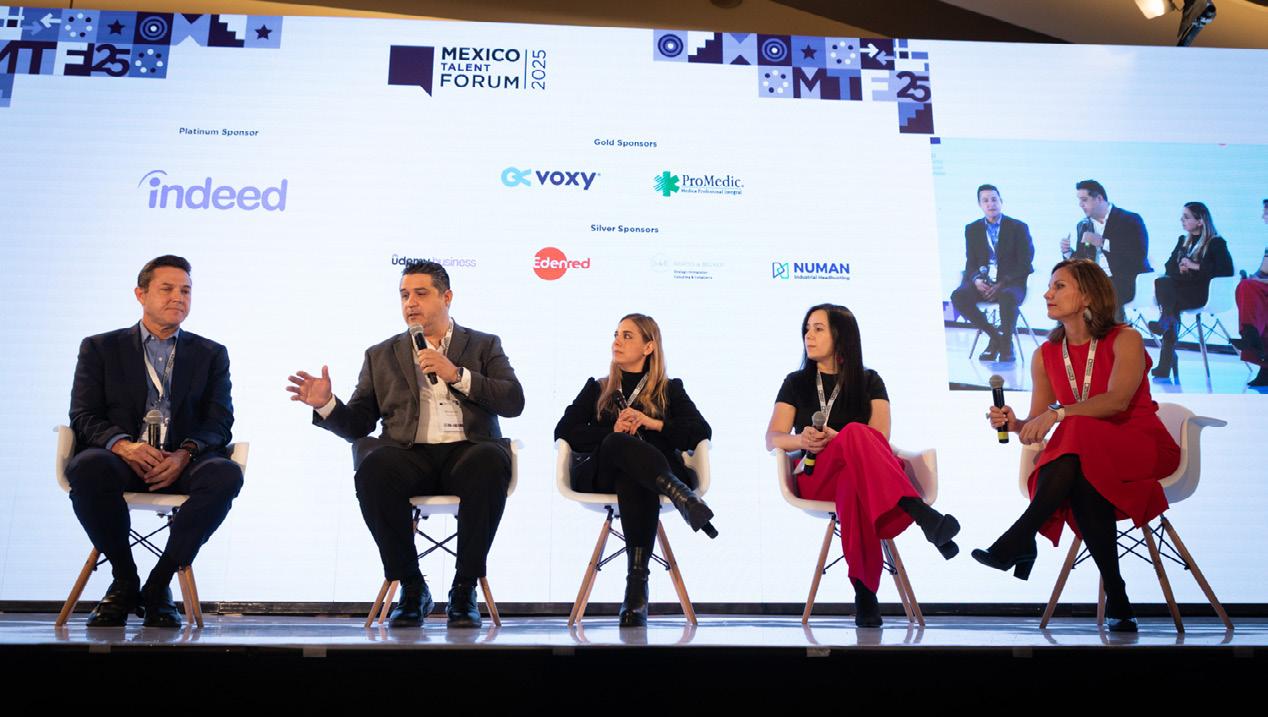
09:30 REDEFINING JOB FUNCTIONS FOR A TECH-FORWARD FUTURE
Moderator: Vera Makarov, Apli
Panelists: Eric Pascual, Viva Aerobus
Carlos Bueso, Experis - ManpowerGroup
Alejandra Castro, Kushki
Roxana Morales, Grupo Axo
10:15 FROM CONCEPT TO COMPETENCE: CO-CREATING EDUCATIONAL PROGRAMS
Moderator: Freya Enríquez, Collective Academy
Panelists: Eric Porras, EGADE Bussiness School - Tecnologico de Monterrey
Enrique Gerardo Sosa, UnAQ
Christian Hernández, Coursera
Juan Carlos Díaz, Siemens Mexico & Central America and Caribbean
Armando Oropeza, IPn
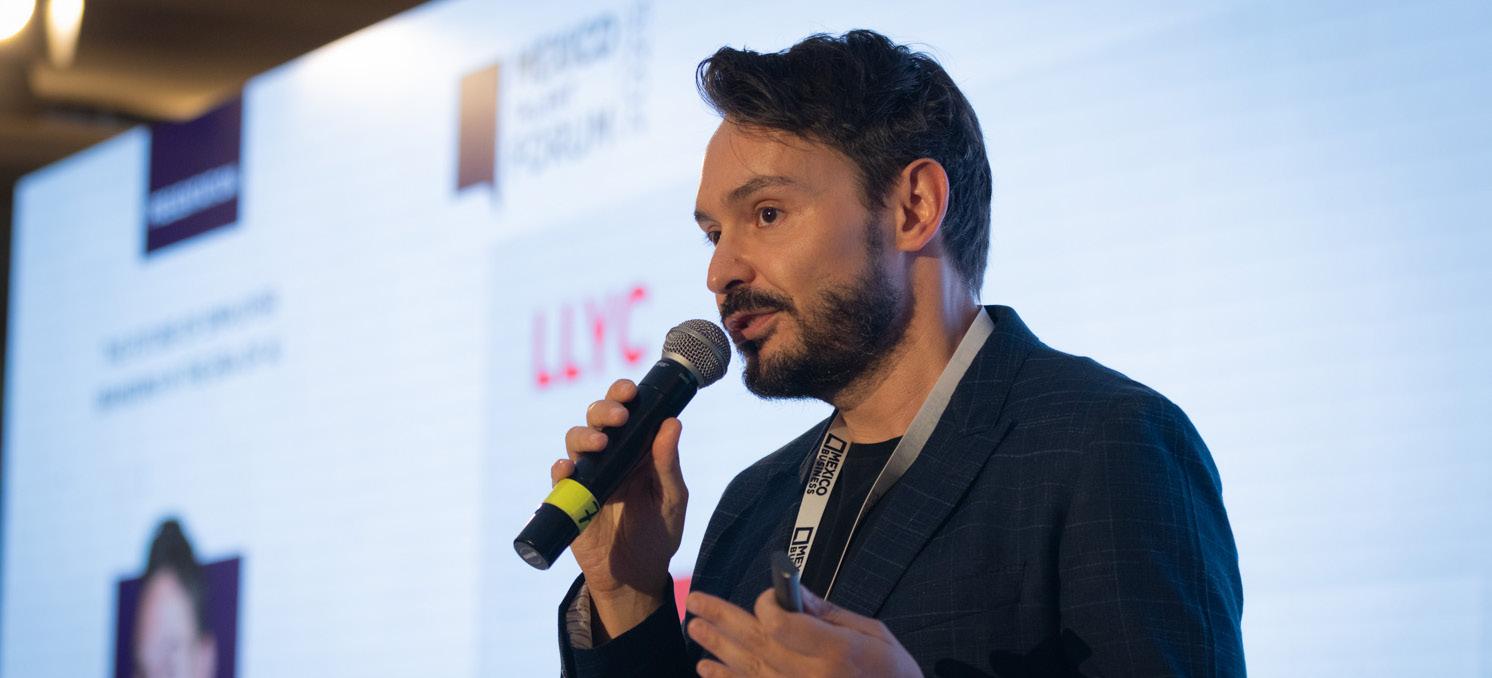
12:00 THE FUTURE OF EMPLOYER BRANDING IN THE ERA OF AI
Speaker: David González, LLYC
12:20 MEXICO’S LABOR MARKET DYNAMICS: EDUCATION, IMMIGRATION, AI
Moderator: Óscar Santos, Santos & Becker
Panelists: Mauricio Cortés, Voxy
Paola Lacorte, IBM
Mercedes de la Maza, Generation México
Dana Graber, IoM - Un Migration
13:20 ENSURING OCCUPATIONAL HEALTH REQUIRES COMPREHENSIVE SOLUTIONS
Speaker: Johnny Hernández, Grupo Diagnostico Aries
15:00 TRANSFORMING HR: LEVERAGING TECHNOLOGY TO DRIVE BUSINESS SUCCESS
Moderator: Nelson Gómez, Indeed
Panelists: Juan Carlos Alarcón, Walmart Mexico
Zahie Edid, Liverpool
Ana Ordoñez, Google
Diana Rodríguez, Merck Group
16:00 LIFELONG LEARNING: THE NEW CURRENCY IN CAREER DEVELOPMENT
Moderator: Michael Fung, Tecnológico de Monterrey Mexico
Panelists: Juan Domínguez, Alpura
Víctor Velázquez, Clip
Carla Soto, Boletia
Valentine de Roubaix, Udemy
16:45 THE FUTURE OF TALENT IS ALREADY HERE, AND IT IS CALLED AI
Speaker: Nelson Gómez, Indeed
REDEFINING LABOR POLICY THROUGH DIALOGUE: THE ROLE O F BUSINESS
Mexico’s labor landscape is undergoing a transformation driven by institutional reforms and strengthened dialogue between businesses, unions, and the government, explains Lorenzo Roel, President of the Labor Commission, Business Coordinating Council (CCE). While business leaders were initially concerned that reforms could jeopardize worker funds, consensus-building has shaped a collaborative reform process.
“The business sector was concerned that reforms to institutions would affect workers’ money, breaking schemes of the existing tripartite formula,” says Roel. However, the process has included organizations such as the Revolutionary Confederation of Workers and Farmers (CRoC), the Mexican Association of Insurance Institutions (AMIS), the n ational Association of Supermarkets and Department Stores (AnTAD), Fuerza y Luz, and the Employers’ Confederation of the Mexican Republic (CoPARMEX), among other representative actors of the labor ecosystem.
The main axes of the labor agenda for the 2025-2026 period include several proposed reforms to the Federal Labor Law (LFT). These include regulation of work on digital platforms, reduction of the working day, increase of Christmas bonus from 15 to 30 days, clear rules on the minimum wage and its relationship with other income, and modifications to access to seniority premium and severance payments.
The private sector is focusing on promoting reforms that adapt labor conditions without compromising the economic sustainability of companies, says Roel. one of the objectives is to reach the minimum required wage so families can cover their basic needs, as measured by the n ational Council for the Evaluation of Social Development Policy (Con EVAL). This indicator, initially set by CoPARMEX, has been taken up as a goal by President Claudia Sheinbaum.
The General Minimum Wage (SMG) stands at MX$8,480 (US$433) per month, which represents 90.59% of the minimum wage required so families can cover their basic needs, estimated to be MX$9,360 (US$478). In comparison, the minimum wage associated with the Federal Remuneration Law is MX$12,400 (US$634).
Another key point is the reform of the working day. This initiative contemplates progressively reducing the workweek to a total of 40 hours by January 2030. “We will gradually reduce the work week until we reach, no later than January 2030, a total of 40 hours per week. In this way, we will meet a historic demand of the Mexican people,” says Marath Bolaños, Minister of Labor and Social Welfare.
other reforms are expected to impact daily working conditions. Among them is the establishment that the minimum wage cannot be substituted by tips or voluntary bonuses. This bill, approved by the Chamber of Deputies, is being reviewed by Senate committees.
Another reform proposes the grant of five days of paid leave for bereavement in the event of the death of direct family members. This measure, already approved in commissions, is pending a vote in the full Senate. Also under discussion are provisions on transparency and gender salary equity, including protocols to eradicate salary gaps and the obligation for companies with over 100 workers to report remuneration criteria.
Another project under analysis is the reduction of the period of service required to access the seniority bonus, from 12 to seven years. This initiative, presented by Deputy Manuel Baldenebro, is pending in the Labor and Social Welfare Commission.
Finally, an increase in the severance payment for termination of labor relations has been proposed, from 20 to 90 days per year worked. The intention is to adapt the regulatory
framework to labor market conditions and to give proportional recognition to years of service.
The creation of a n ational Commission for Social Dialogue is being discussed, explains Roel. This will be a permanent body linking the business and labor sectors and will accompany the implementation and evaluation of these reforms.
The reconfiguration of the Mexican labor model poses implementation challenges
that require effective coordination between sectors. The establishment of consultation mechanisms, such as the Economic and Social Council, aims to institutionalize consensus as the guiding principle of structural reforms.
“This formula can serve us to carry out many adjustments that our ecosystem requires,” says Roel, highlighting the willingness of the private sector to actively participate in the transformation of the labor environment under a collaborative approach.
REDEFINING JOB FUNCTIONS FOR A TECH-FORWARD FUTURE
The rapid evolution of technology, particularly AI, is reshaping organizational job functions at an unprecedented pace. The true challenge, however, will lie in balancing tech adoption with humanfocused leadership, say experts.
“When we talk about the future of work, there is an uncomfortable truth: roles will change or disappear, not in 10 years, but in three. I see it daily. HR software is on the front lines: most activities will be performed by AI agents,” says Vera Makarov, Co-Founder and Co-CEo, Apli.

“AI is coming fast and furious. In one of our studies with 1,400 CIOs, 89% agreed that trends are going to change, and that AI is one of the Top 3 skills being sought”
Carlos Bueso Director Mexico, Central America, and the Caribbean | Experis ManpowerGroup
technologies are being implemented without proper transformation of work processes, underscoring the challenges in balancing technology adoption with the human element of organizational culture.
“The focus is not on the roles that disappear, but on how they evolve. In a technology company, the tools are already at hand, but we do not always know how to use them. It is not about eliminating roles; it is about evolving them,” says Alejandra Castro, Vice President of Human Resources, Kushki. “AI does not take your job; it takes it from someone who knows how to use it.”
A report by Mercer reveals that 96% of companies are planning some form of HR functional redesign in 2025, with employee experience remaining a top priority for HR leaders. In Mexico, 54% of survey participants identified the integration of AI and automation into work redesigns as a top priority, reflecting a broader industry-wide shift. Despite the optimism surrounding AI, 67% of HR leaders also fear that these
As the digital landscape evolves, companies must adapt quickly to stay competitive. While AI is seen as a tool to enhance productivity, issues related to workforce engagement and maintaining employee experience remain crucial for business performance. “As responsible leaders, we must maintain human focus. If we leverage trends without losing the soft skills, we can achieve something great,” says Roxana Morales, Talent Director, Grupo Axo.
Automation must be complemented by human experience, particularly in sectors such as retail and staffing, where customer interaction remains a key differentiator. “There are roles already being trained in AI. It is about understanding what exists, what value it has, and how to apply it in daily work,” says Morales.
According to Mercer, 28% of HR leaders express confidence in achieving effective human-machine collaboration, while companies experiencing rapid growth have already implemented skill-based talent models to address emerging challenges. “We implemented a committee for AI. At first, people were not afraid to use it, but they were afraid to admit they were using it. It was like a secret. Changing that mindset has been key,” says Castro.
Despite these proactive solutions, implementing such changes comes with its own set of challenges. A significant hurdle remains the resistance to change, particularly in sectors where employees fear that automation could replace their jobs. While automation presents efficiency benefits, ensuring employee buy-in is essential for successful implementation.
“When an employee feels replaced, engagement drops, performance drops, and that spreads fear,” says Eric Pascual, CHR o, VivaAerobus. He underscores the importance of tackling this issue head-on:
“We created an Innovation & AI office. We trained the team and introduced tools like Copilot. We want people to see how AI can help them be more agile.”
The shortage of specialized talent in key areas such as AI and automation also remains a pressing challenge. This gap forces companies to invest heavily in reskilling
their workforces, as well as partnering with educational institutions to develop future talent. “AI is coming fast and furious. In one of our studies with 1,400 CIos, 89% agreed that trends are going to change, and that AI is one of the Top 3 skills being sought,” says Carlos Bueso, Director Mexico, Central America, and the Caribbean, Experis ManpowerGroup.
Moreover, as AI and automation are integrated into operations, ensuring alignment between organizational culture and technological shifts is critical. This transformation must be strategically managed to foster collaboration between machines and employees, without neglecting the importance of employee engagement and culture.
Looking ahead, job functions will continue to be redefined as technology advances. By 2030, numerous jobs are expected to undergo transformation due to shifts in the labor market. AI is expected to accelerate this transformation, creating both new roles and the need for reskilling across the workforce. However, ongoing human oversight and adaptability will be necessary as organizations navigate this technological evolution, says Pascual.
Forward-thinking organizations are working to destigmatize AI adoption, encouraging employees to take pride in integrating it into their workflows. Internal initiatives, such as assigning AI-based tasks ahead of monthly meetings or including “AI-assisted” notations in presentations, are helping normalize its use.
Training is being approached with a dual emphasis: technical proficiency and soft skills. Employees are not only taught how to use tools and write effective prompts, but also how to validate AI-generated outputs and remain vigilant against common issues. “As responsible leaders, we must maintain human focus. If we leverage trends without losing the soft skills, we can achieve something great,” says Morales.
FROM CONCEPT TO COMPETENCE: COCREATING EDUCATIONA L PROGRAMS
As the digital economy continues to grow, it requires a workforce equipped with problemsolving capabilities, adaptability, and strong collaboration skills. For educational institutions, this landscape represents a call to action.
“The world is changing rapidly. In just a couple of years, half of the skills we know today will have evolved,” says Freya Enríquez, Enterprise Experience Manager, Collective Academy.
Across Mexico and Latin America, a persistent gap remains between academic instruction and labor market demands. Moreover, the latest o ECD PISA scores (2022) show a sharp decline in learning outcomes, with 66% of Mexican students underperforming in mathematics and over half lacking basic science and reading comprehension skills. This learning loss, combined with historical underinvestment in education and pandemicdriven inequality, is affecting the region’s competitiveness.

“Without ecosystems that offer real opportunities, skills training alone will not be enough”
Christian Hernández Enterprise LATAM Manager | Coursera
This alignment between academic and corporate needs is evident in the growing adoption of dual education models, originally developed in Germany. Siemens, for example, has embraced this model for over seven years. “The magic lies in handson experience,” says Juan Carlos Díaz, People and o rganization Head, Siemens Mexico, Central America, and the Caribbean. This model allows “participants to work side-by-side with top-level professionals and learn directly from cutting-edge technologies,” he adds.
More than 400 individuals have completed Siemens’ program, which underscores how internships and apprenticeships bridge theory and practice. This is particularly urgent, as ManpowerGroup reports that 70% of employers in Mexico struggle to fill job vacancies due to a lack of qualified talent.
This approach is particularly relevant in regions where some academic programs may lag behind industry demands. The Inter-American Development Bank (IDB) reports that Latin America and the Caribbean face significant challenges related to skills mismatch, in part due to limited adaptation to evolving labor market needs.
“Technology is advancing so fast that education systems risk becoming obsolete if they do not adapt to societal needs,” says Erik Porras, national MBA Director at EGADE Business School, Tecnológico de Monterrey. He adds that higher education institutions must compete not just with other universities, but with alternative learning providers and on-demand training platforms.
To meet this challenge, it is necessary to develop flexible curricula and real-world experiences. “We have worked closely with the private sector to understand what companies need and designed collaborative environments accordingly,” says Porras.
Universidad Aeronáutica en Querétaro (U n AQ), for example, was founded in response to industry demands. “We reverseengineered our programs by mapping corporate processes and building models to support [Bombardier],” says Enrique Sosa, Dean, UnAQ. “There are no one-size-fits-all solutions. Flexibility is essential.”
At the Instituto Politécnico nacional (IPn), the dual education model has evolved from a vocational tool into a strategy for higher education and postgraduate programs. “Mandatory internships are now a cornerstone of our strategy. They expose students to real-world challenges and help them build skills that improve employability, sometimes even leading to professional
degree completion or patent development,” says Armando o ropeza, Director Higher School of Electrical and Mechanical Engineering at Campus Ticoman, IPn
Incorporating project-based learning, internships, and industry-embedded coursework ensures that students develop not only technical knowledge but also workplace competencies like communication, adaptability, and accountability.
Christian Hernández, Enterprise Latin American Manager, Coursera, explains that AI is accelerating talent development. “We are
witnessing a shift. nine out of 10 learners on Coursera prefer AI-based tutoring to human instructors,” says Hernández.
Education is not a static phase of life but a continuous process. “We must transition to lifelong learning models,” says Sosa. “Upskilling will remain essential, and universities must stay close to industry to address evolving needs.”
However, talent development cannot occur in isolation. “Without ecosystems that offer real opportunities, skills training alone will not be enough,” says Hernández.
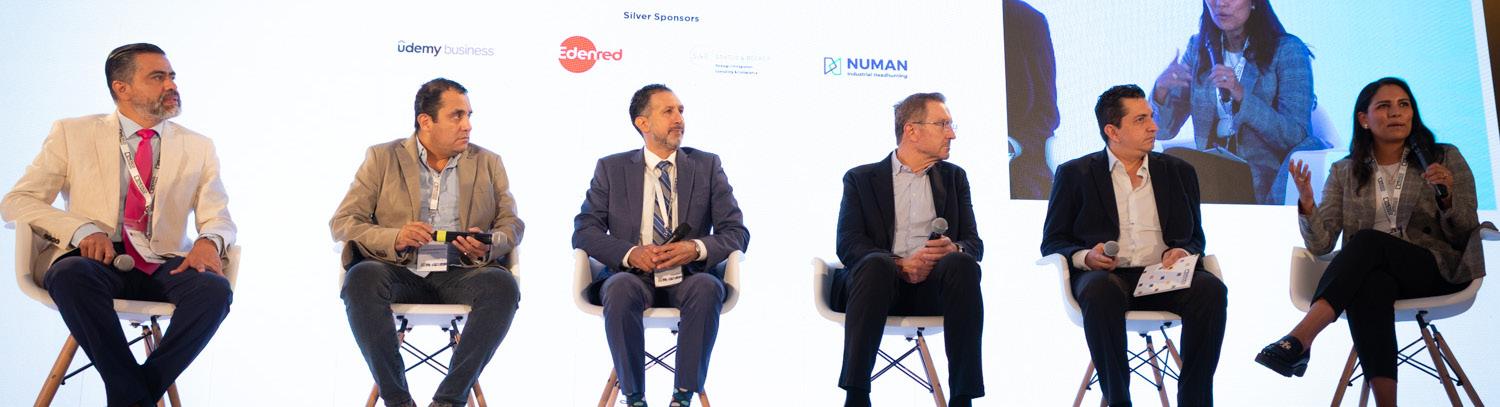
THE FUTURE OF EMPLOYER BRANDING IN THE OF AI
AI is transforming employer branding strategy and redefining the interaction between companies and talent, allowing organizations to develop more agile solutions and directly impacting the way a company’s value as an employer is communicated.

“Organizations that manage to integrate these tools in a structured manner will be able to improve their talent attraction, retention, and loyalty processes, especially in sectors where competition for specialized profiles is high”
David González Partner and Managing Director for North Latin America | LLYC
percent of workers already incorporate AI into their day-to-day functions, forcing organizations to rethink their talent attraction and retention strategies. This transformation is not limited to a technological shift, but involves a reconfiguration in the way brands communicate their values, purpose and value proposition to the labor market.”
“The rapid adoption of AI technologies in work environments has significantly altered the dynamics of employer brand communication and positioning,” says David González, Partner and Managing Director for n orth Latin America, LLYC. “Fifty-five
In this new environment, AI acts as a channel for interaction and, at the same time, as an agent for content production. Generative models, such as large language models (LLM’s), make it possible to automate some of the work related to external communication, including the generation of messages aligned with the brand tone. However, González warns that these models work under radical contextualization schemes, where the result depends largely on the information that the user has previously provided. This means that in order to obtain relevant responses, organizations must increasingly specify their requests and instructions, integrating variables
such as geographic location, demographic segments, and specific scenarios.
Proper prompt development, which consists of developing targeted and strategic requests to AIs, requires organizations to be clear about their positioning, organizational culture, and business objectives. once these elements are established, interactions can be designed that produce content consistent with the employer brand. “If we know who we are as a brand, we can give the right instructions to AI models to replicate that language accurately,” says González.
In addition to precision in instructions, it is also necessary to establish a conversational logic in the use of AI tools, says González. Since interaction with these models is text-based, building a fluid and consistent relationship over time becomes key. To do so, it is useful to define conversational patterns in terms of style, structure, and tone that serve as a basis for the responses generated to maintain consistency across all platforms, he adds.
Unlike systems with fixed programming, generative models learn from interactions and adapt their responses as they accumulate information. However, this learning is not emotional or intuitive: it requires clarity and consistency in instructions. Consequently, González urges companies to adopt a trialand-error approach. This approach, in addition to reflecting authenticity in communication,
allows the model to be nurtured with real and progressively optimized examples.
Additionally, he stressed the importance of fostering an attitude of active curiosity when interacting with AI. This willingness allows users to generate new combinations of information, delve deeper into recurring themes and expand the model’s capabilities based on specific needs. This approach is useful for both internal communication and employer branding initiatives aimed at the external market.
In terms of practical utility, González mentioned recent studies showing that generative models can identify more efficient options than the users themselves, provided they have been properly trained. This phenomenon, which he called “utility-based trust”, highlights the need to integrate these tools into strategic talent communication processes, both in the design of campaigns and in the segmentation of audiences and the development of personalized messages.
Based on these elements, employer branding in Mexico and Latin America is expected to become a hybrid process, where humanmachine collaboration allows for a more agile response to changes in the environment. “organizations that manage to integrate these tools in a structured manner will be able to improve their talent attraction, retention and loyalty processes, especially in sectors where competition for specialized profiles is high,” González concluded.
MEXICO’S LABOR MARKET DYNAMICS: EDUCATION, IMMIG RATION, AI

Mexico’s labor market is undergoing a period of rapid transformation, driven by shifts in education, immigration, nearshoring, and the integration of AI. These forces are converging to reshape the workforce, positioning the country as a critical player in the global economy.
“There are issues that are rarely addressed, such as migration and labor inclusion,” says Óscar Santos, Founding Partner, Santos & Becker. He highlights the need for inclusive
strategies that integrate migrants into Mexico’s workforce, providing them with opportunities for economic mobility.

“It is not about philanthropy, but about transforming recruitment processes. Decisions must permeate from the CEO down to the first-contact recruiter”
Mercedes de la Maza CEO | Generation México
In response to rising deportations from the United States, Mexico launched a repatriated worker program through the Business Coordinating Council (CCE). So far, 14,000 deported individuals, 11,379 of them Mexican, have been linked to over 45,000 vacancies in manufacturing, retail, and services.
Despite these advances, structural barriers remain, such as gaps in credential recognition, limited digital skills, and social reintegration challenges. “Companies must recognize the value of diversity and combat xenophobia. The recognition of foreign degrees is a barrier to labor integration. Labor migration should be seen as an opportunity for the country, not as a threat to local employment,” says Dana Graber, Mission Director, oIM - onU Migración. Migrant workers offer untapped potential that could be harnessed through stronger coordination between employers, government, and civil society, says Graber.
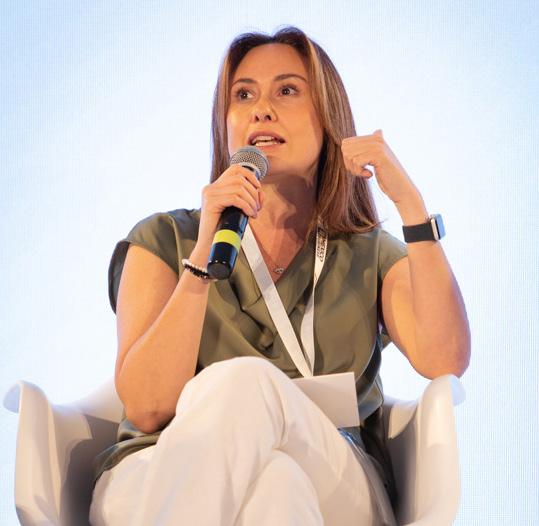
Furthermore, as companies expand operations, the demand for mid and highskill workers , particularly in engineering, automation, and logistics, outpaces supply. This issue reflects the ongoing difficulties organizations are encountering as they adapt to technological advances and the evolving demands of Industry 4.0. The pipeline of skilled workers is considered to be insufficient to meet the pace of industrial expansion.
Dual education models are helping, but only 16,000 students are enrolled in such programs out of over 5 million upper-secondary students. “It is not about philanthropy, but about transforming recruitment processes. Decisions must permeate from the CEo down to the first-contact recruiter,” says Mercedes de la Maza, Director General, Generation México.
AI is also reshaping business operations, impacting workforce planning, training, and job design. In manufacturing, automation is streamlining repetitive tasks; in services, AI is enhancing analytics and customer interactions. This shift is altering required skill sets, with technical roles now demanding proficiency in data analysis, machine learning, and AI implementation.
This shift towards AI is prompting companies to invest in upskilling programs to equip their workforce for the future of work. “At IBM, we are focused on ensuring that all employees have basic digital competencies. The company promotes flexibility and adaptability in a changing environment,” says Paola Lacorte, HR Director Mexico, IBM.
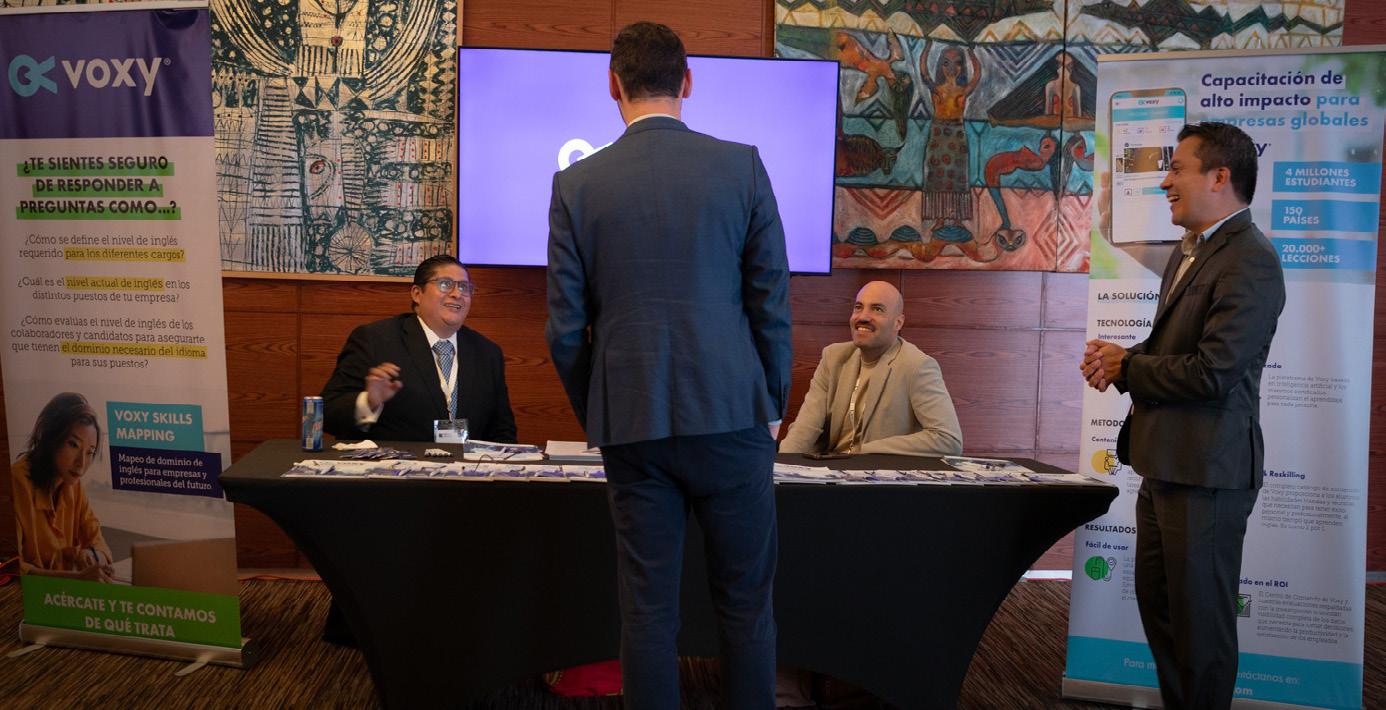
Companies are embedding AI training into internal learning programs, often in partnership with universities or tech academies. “Personalized learning platforms enable the detection of skill gaps, offering tailored learning paths according to the job profile. This expands the team’s capabilities and improves their competitiveness,” says Mauricio Cortés, Sales Director, Voxy. These efforts are essential for ensuring that Mexico’s workforce remains competitive in an increasingly digital world.
Moreover, Mexico’s education system is still misaligned with labor market demands. While the Dual Training Model (MMFD) is promising, coverage is limited. only a small fraction of students currently benefit from hands-on, workplace-integrated learning.
“Flexibility, skills, and inclusion are no longer nice-to-haves ; they are structural components of a sustainable labor market,” says Lacorte.
Private sector actors are investing in these programs, yet scaling remains slow. “Companies are closing the gap between their needs and what the market offers. It
is unrealistic to expect candidates with 50 requirements,” says Lacorte.
Closing the gap requires stronger publicprivate partnerships, modernized curricula, and flexible pathways into technical fields, as well as English proficiency. “English is key to employability and labor inclusion. The demand for English proficiency will continue to increase across sectors, ensuring that candidates can access broader global opportunities,” says Santos. This integration of education, upskilling, and language proficiency is crucial for Mexico to remain competitive in the evolving labor market.
ENSURING OCCUPATIONAL HEALTH REQUIRES COMPREHENSIVE SOLUTIONS
Ensuring the health and productivity of employees is becoming a strategic priority for companies of all sizes. While businesses differ in industry and structure, one constant remains: it is the employees who give life to an organization, explains Johnny Hernández, Commercial Director, Grupo Diagnóstico Aries (GDA).
“When you begin to prevent instead of correct, it is cheaper, more efficient, the process is faster, and the employee’s health condition improves,” says Hernández.
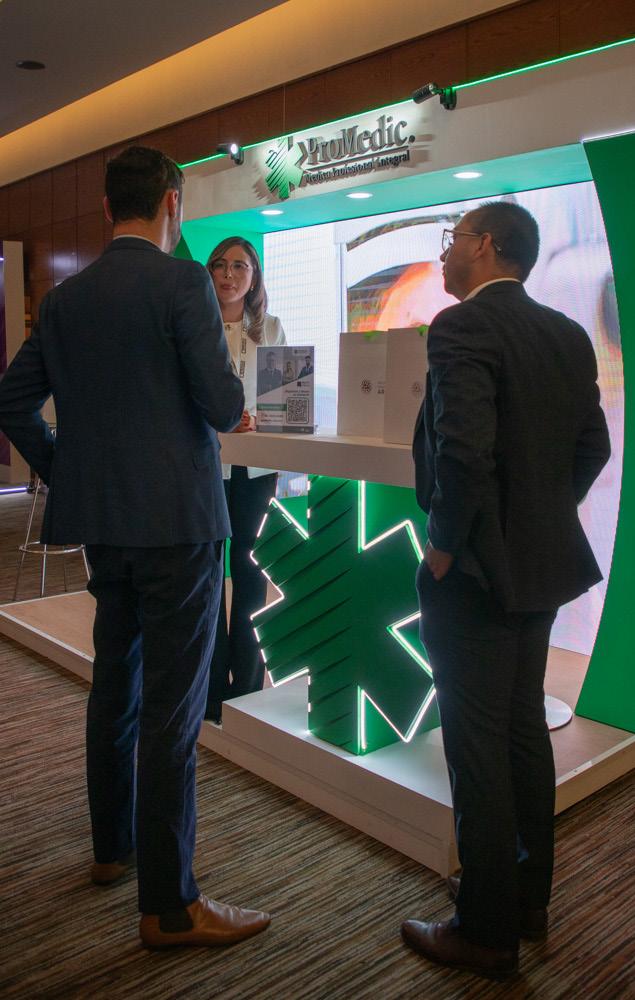
With 15 years of experience in Mexico, GDA began as a laboratory services company and has grown organically to encompass 14 brands and nearly 400 branches across the country. Its expansion has been shaped by the growing need for integrated health solutions. Under the umbrella of Pro Medic, a specialized unit that focuses on occupational health, GDA evolved from a traditional diagnostics provider to a strategic ally for companies seeking to improve employee wellbeing while fulfilling legal obligations.
GDA has positioned itself as a key partner in delivering comprehensive occupational health services that not only meet regulatory requirements, but also contribute to business performance, says Hernández. GDA’s occupational health strategy is based on the
premise that addressing health proactively is more efficient and cost-effective than correcting problems after they arise.
The company supports employers with admission and periodic medical exams, workplace evaluations, and specialized programs for the prevention and management of psychosocial risks, in accordance with labor standards such as noM-030, noM-035, and noM-037. These services are part of customized programs designed in collaboration with clients to ensure alignment with legal requirements and internal policies.

To broaden access and reduce operational disruptions, GDA deploys a fleet of mobile units capable of delivering occupational health services on-site, across all shifts. Results are compiled in a digital medical record system that complies with regulatory norms, providing companies with an efficient and centralized way to track health outcomes.
Complementing these offerings is GDA’s optical health service, a specialized vision care solution that follows international standards for workplace eye care. This service includes full visual exams, diagnostic reports, and the provision of high-quality prescription lenses. The model is structured so clients only pay for the cost of manufacturing the lenses, with the rest of the service provided as part of GDA’s comprehensive offering, says Hernández.
o ne of the most pressing concerns GDA addresses is the growing prevalence of chronic diseases such as diabetes and hypertension among workers, along with increasing reports of anxiety, depression, and substance abuse. These conditions often
manifest as presenteeism, where employees attend work but are not productive due to poor health, or absenteeism, where health issues prevent them from attending at all. GDA’s integrated services help organizations identify and manage these risks early, reducing long-term costs and improving employee quality of life.
GDA recently extended its operational reach through partnerships that enable laboratory study exchanges between Mexico and the United States. This development marks a new chapter in the company’s regional expansion and positions it as a reliable health partner for companies operating on both sides of the border, says Hernández.
The company explains that investing in occupational health is not only a matter of compliance but also a business decision that fosters productivity, retention, and longterm value. By combining clinical expertise, regulatory insight, and a service model designed for flexibility and scale, GDA offers a differentiated solution for the evolving needs of the workplace.
TRANSFORMING HR: LEVERAGING TECHNOLOGY TO DRIVE BUSINE SS SUCCESS
In response to shifting labor demands and evolving employee expectations, a growing number of companies are redesigning their HR functions to integrate AI, people analytics, and digital learning tools. o rganizations planning to revamp their HR functions are placing a strong emphasis on employee experience and skill development.

“Companies that align digital tools with inclusive learning strategies, transparent communication, and a flexible work design will be better positioned to attract and retain talent in an increasingly complex business environment”
Diana Rodríguez HR Director Mexico | Merck Group
“The future of HR is not just about technology adoption ; it is about rethinking how we
manage people in an interconnected, volatile world,” says nelson Gómez, Regional Director of Enterprise Sales Latin America, Indeed.
The transformation of HR functions in Mexico reflects broader global trends driven by digitization, automation, and changing workforce dynamics. As digital tools become increasingly available, HR leaders are seeking to balance operational efficiency with more human-centered work environments. However, challenges remain in aligning technology with cultural readiness, employee engagement, and long-term talent strategy.
According to Mercer Global Talent Trends 2024-2025, two-thirds of HR leaders are concerned that AI tools are being implemented without revisiting the foundational work processes they are meant to enhance. More than half of surveyed executives also cite low
employee adoption of new technologies as a major concern. In response, organizations in Mexico are beginning to emphasize the role of culture in digital transformation efforts.
Resistance to change continues to be a key cultural barrier. “The diversity of cultures introduces needs that were previously not even contemplated. This can create mistrust, particularly since many workers are still unfamiliar with the benefits of these technologies,” says Juan Carlos Alarcón, CP o, Walmart México. He adds that while technology can shift the operational context, “leadership is what drives meaningful change.”

To address skills gaps and drive engagement, companies such as Coppel are using interactive platforms like Kahoot! to upskill over 20,000 employees. Meanwhile, Google Cloud’s ongoing program to train 1 million people in cloud technologies illustrates a growing investment in workforce readiness across the country.
These efforts are also being supported through internal collaboration. “Analytics departments are relatively new, and the challenge is anticipating next steps. We are working across departments to build our data foundation. This is already generating operational and strategic benefits. Still, it is not feasible to do all of this in-house; external partnerships are essential,” says Zahie Edid, Director of Human Capital, Liverpool.
It is essential to understand the state of an organization’s existing technological ecosystem before deploying new tools, explains Diana Rodríguez, HR Country Head Mexico, Merck Group. “Technology gaps can create frustration among employees,” Rodríguez says. “We must know our workforce well to implement tools at the right time. Humanizing our data models has enabled us to identify and support workers who were previously overlooked.”
The shift in HR strategy is also being shaped by broader structural changes in work patterns. Emerging roles in data literacy, AI ethics, and talent analytics are becoming critical, even as automation is projected to displace up to 30% of existing jobs, according to PwC. However, only 16% of organizations feel adequately prepared for this transition.
“Guiding employees through change and addressing fears about new technologies is essential. The most successful organizations will be those that make employees feel like they are part of something larger,” says Ana o rdoñez, Head of HR for Hispanic America, Google. ordoñez also highlights the increasing value of lateral career moves and internal mobility. “We need to move beyond competing for the same positions and instead create pathways within organizations for talent to grow,” she adds.
The application of people analytics is becoming central to HR decision-making. o rganizations are using real-time data to monitor indicators such as engagement, learning agility, collaboration, and internal mobility. These metrics are being used not only to support talent decisions but to forecast future workforce needs and improve team performance.
“ o ur ability to manage, share, and utilize our data is what will allow us to adapt and grow. Leadership indicators are especially important because they reflect how we drive change, not just adapt to it,” says Alarcón.
Despite increased automation, humanmachine collaboration remains central. “AI alone is not the solution,” says Edid. HP’s 2024 Workplace Relationship Index explains that employees who work with AI tools report an 11% higher satisfaction rate, citing improved work-life balance and accelerated professional development.
Building trust in AI systems is essential. “Corporate messaging must be internalized, and employees must be treated with dignity and transparency. This is how we bring them
closer to the organization and make new opportunities visible,” says ordoñez.
The redesign of HR in Mexico is being shaped by a convergence of technological capability, organizational culture, and labor market dynamics. “Companies that align digital tools with inclusive learning strategies, transparent communication, and a flexible work design will be better positioned to attract and retain talent in an increasingly complex business environment,” says Rodríguez.
LIFELONG LEARNING: THE NEW CURRENCY IN CAREER D EVELOPMENT
The labor market is being reshaped by digital transformation, demographic shifts, and emerging skill gaps, forcing companies to move beyond reactive training models. Businesses are instead focusing on building continuous learning strategies that anticipate future needs, an approach that positions organizations to thrive in uncertainty and adapt swiftly to change.

“Lifelong learning should not be viewed as a oneway process. It is not only about employees acquiring knowledge; it is also about their ability to teach”
Juan Domínguez Chief People Officer | Alpura
“The problem is not time, it is priority. When companies say they have no time for learning, what they really mean is that they have not made it a priority,” says Valentine de Roubaix, Senior Customer Success Manager in Latin America, Udemy. De Rubaix underscores the need for organizations to prioritize learning within their broader strategy, setting the foundation for sustainable growth.
Leadership is foundational in embedding a culture of lifelong learning across the organization. Executives and managers must not only endorse continuous development, but model it. When leaders publicly engage in learning, through certifications, mentorship,
or participation in internal academies, they signal its strategic importance.
“When a leader comes back to work and says, ‘I just listened to a podcast,’ or ‘I took a course,’ or even ‘I enrolled in a Master’s program,’ that sends a powerful message,” says Víctor Velázquez, Chief People officer, Clip. Leadership’s active participation in learning initiatives directly demonstrates their commitment and fosters a learning environment within the organization.
This alignment directly influences employee engagement and retention. A 2023 study by LinkedIn reveals that 94% of employees would stay longer at a company that invests in their learning and development. “Fostering a learning mindset involves empowering employees to take ownership of their own learning journeys, beyond formal training programs,” says Velázquez.
Designing flexible, industry-specific learning pathways is crucial to meeting the varied demands of Mexico’s economic landscape.”When an individual has a genuine learning mindset, our job becomes significantly easier. They will seek out resources, engage with content, and pursue development on their own,” says Michael Fung, Executive Director of the Institute for the Future of Education, Tec de Monterrey. For example, in manufacturing and logistics, microlearning modules that focus on
technical certifications or safety compliance can yield immediate R o I. In contrast, the financial and tech sectors benefit from programs emphasizing digital fluency, data literacy, and soft skills like critical thinking and adaptability.
“We need to transition to a more agile structure, where learning is embedded within teams. Learning leads should be embedded in these teams, co-designing learning experiences,” says Juan Domínguez, Chief People officer, Alpura.
Localization also matters. Content must reflect local regulations, cultural nuances, and labor dynamics. Collaborating with universities, EdTech startups, and sector-specific training institutions enables organizations to codevelop relevant content and certification pathways tailored to industry challenges.
“Lifelong learning should not be viewed as a one-way process. It is not only about employees acquiring knowledge; it is also about their ability to teach,” says Domínguez.
Despite the evident value, many organizations face internal resistance when shifting to a learning-centric culture, especially those grounded in hierarchical structures or accustomed to rigid, one-time training events. Common barriers include budget constraints, lack of managerial support, misalignment between learning goals and business outcomes, and employee fatigue from low-impact, compliance-driven learning.
Leaders can address these problems by integrating learning into the flow of work, connecting it to clear performance outcomes, and using incentives to recognize learner progress. “If leaders do not feel the need to change, resistance is inevitable,” says Carla Soto, People and Culture Director, Boletia. “Resistance often stems from leadership’s reluctance to embrace change, making it essential to have leaders who model the shift toward continuous learning.”
As technology evolves, the relevance and applicability of learning content must be continuously reassessed. Microlearning, AIpowered learning management systems, and just-in-time training modules offer scalable solutions that keep pace with change.
“organizations need to understand the cost of not fostering a learning culture. When there is no focus on learning, organizations stagnate, and employees risk losing their jobs,” says Domínguez. The consequences of neglecting learning and development can be severe, leading to stagnation both for the organization and its employees.
To stay competitive, companies must institutionalize feedback loops that regularly update training materials based on new technologies and market trends. “There is no way to successfully implement any reskilling initiative if your leaders are not on board. Everything starts with leadership,” says De Roubaix.

THE FUTURE
OF TALENT IS ALREADY HERE, AND IT IS CALLED AI
As digital technologies reshape the workforce, AI is transforming how companies find, assess, and hire candidates. At Indeed, the commitment to innovation is central to this shift, with AI now embedded in virtually every stage of the hiring process. From automating routine tasks to generating datadriven insights, AI is a core driver of efficiency and evolution in recruitment.
“AI is revolutionizing hiring, bringing both opportunities and challenges,” says nelson Gómez, Regional Director Enterprise Sale Latin America, Indeed.
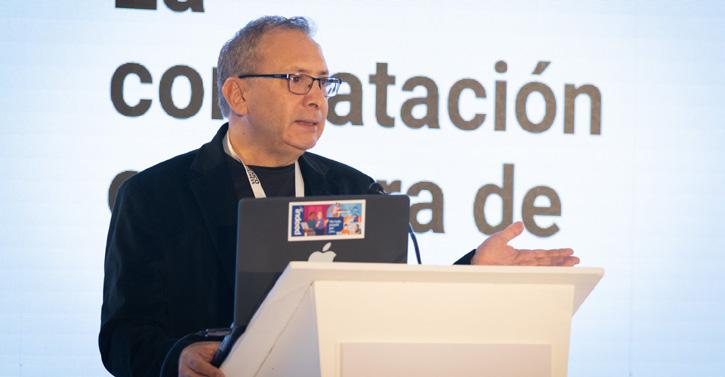
This transformation is redefining both the candidate experience and professional trajectories. AI technologies are not only capable of scanning and analyzing large volumes of data quickly, but also of identifying patterns that help employers make better-informed hiring decisions. The process is becoming more personalized, with AI enabling tailored interactions that enhance engagement and create more meaningful connections between companies and potential hires.
At the heart of this shift are systems that combine traditional automation with more sophisticated capabilities. While basic automation continues to handle repetitive tasks through rule-based programming, more advanced AI systems simulate human reasoning, learn from historical data, and even generate content, as seen with the rise of Generative AI tools like ChatGPT. These technologies support activities ranging from writing job descriptions and summarizing résumés to crafting candidate messages and evaluating digital footprints to infer personality traits.
Employers are increasingly using AI to streamline processes and reduce bias, aiming to treat all candidates with consistency and fairness. “AI can help ensure all candidates are treated equally,” says Gómez.
However, this vision comes with challenges. There are growing concerns about the lack of transparency behind algorithms and the risk of perpetuating existing inequalities, explains Gómez. Many job seekers worry about being filtered out by rigid systems or missing the human connection that traditionally accompanied job applications. These fears are not unfounded. The design and deployment of AI tools often lack clarity, leaving candidates uncertain about how decisions are made or whether they are being fairly assessed.
Despite its potential, AI should not be viewed as a substitute for human judgment. Rather, it must complement it. Data analysis and predictive modeling can guide decisions, but they cannot replace the contextual understanding and empathy that human recruiters bring to the table, explains Gómez. As AI tools continue to improve, a balanced approach where human oversight remains a key part of the process, will be essential to maintain trust and equity in hiring.
The widespread use of AI also demands a shift from job seekers. Many candidate profiles on recruitment platforms are not yet optimized for AI systems, making it harder for them to stand out. In this new landscape, digital fluency becomes critical. Candidates are expected to navigate virtual interviews, understand how AI tools interpret their résumés, and even use generative AI to refine their applications.
As more companies adopt AI in their hiring strategies, the recruitment process will continue to evolve, offering new efficiencies and insights while requiring constant vigilance to ensure fairness and transparency. “Both employers and candidates must be ready to adapt,” says Gómez.