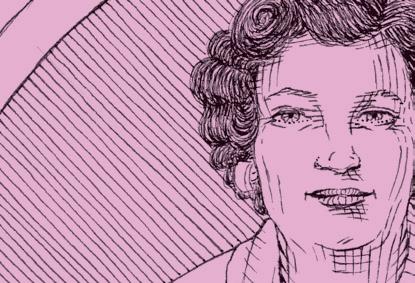
FINANCIAL ACTIVISTS Many of the women in Rae Alexandra’s ‘Unsung Heroines’ became adept at fundraising to fuel their causes— like the East Bay’s Esther Gulick, Kay Kerr and Sylvia McLaughlin, who helped protect the San Francisco Bay in the 1960s.
Money is emotional. It carries baggage—shaped by our earliest memories, our missteps and sometimes real trauma. Fear, guilt and shame often shape financial decisions. And financial strain, in turn, can surface as anxiety, stress, even anger.
“Playing with my money is like playing with my emotions,” says Big Worm in the 1995 film Friday—a line that lands because it’s true. When money feels precarious, emotions run high. Warren Bu ett puts it more plainly: “If you cannot control your emotions, you cannot control your money.”
Seen this way, wealth isn’t just about accumulation or restraint. It’s about
Roelle Balan is a local government reporter who regularly contributes to the Tri-City Voice, based in Fremont.
Je rey Edalatpour writes about arts, food and culture for SF Weekly, Metro Silicon Valley, East Bay Express and KQED Arts.
intention—using money as a tool, understanding its purpose beyond spending, and prioritizing freedom and experience over possessions. This issue explores what that can look like in practice.
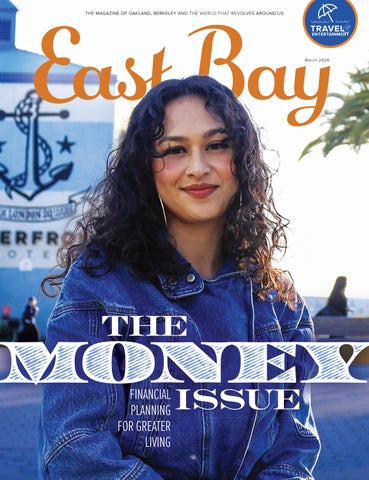
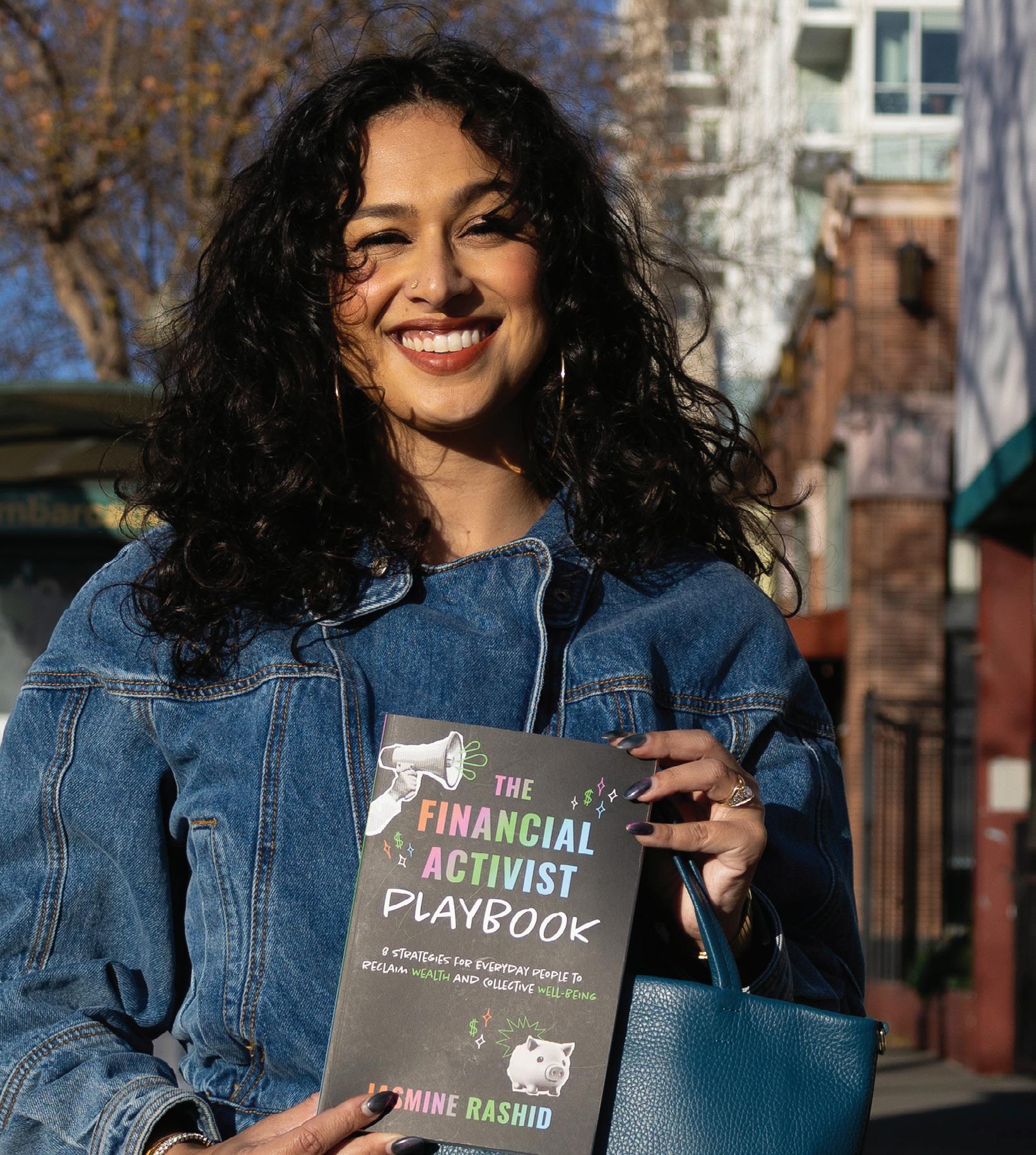
Our cover star, Jasmine Rashid, is an Oakland-based author and financial activist who empowers everyday people with insider knowledge on moving money toward a more equitable economy. Elsewhere, local experts share wealthprotective strategies for baby boomers, seniors and their heirs. We also examine community banks—relationship-driven institutions that reinvest local deposits into area businesses, strengthening the community they serve.
Lou Fancher has been published in Diablo Magazine, Oakland Tribune, InDance, San Francisco Classical Voice, SF Weekly, WIRED.com and elsewhere.
Janis Hashe regularly contributes to the East Bay Express and other Bay Area publications.
Beyond finance, this issue widens the lens. We introduce mobile veterinarians o ering compassionate end-of-life care for our furred companions. One new book maps great hikes across the Bay Area, while another spotlights 35 historical women who helped shape this region for the better. Our dining reviewer visits Bar Panisse, the newest lounge next door to Chez Panisse, and our film critic weighs in on which Oscar contenders are worth your time.
It turns out that time is the common element among these pages. Because how you spend your time determines what you become—and what you value enough to invest in.
—Samantha Campos, editor
Brooke Mohiuddin is a writer and photographer for portraits, events and concerts in the Bay Area. She is currently a high school senior.
Jared Rasic is a film critic whose reviews and columns appear in East Bay Express and other publications in the Bay Area and beyond.
Money Medicine
The value of redirecting wealth to better support our communities
BY Brooke Mohiuddin
Jasmine Rashid wants to empower us to redefine wealth as a holistic concept. The Oakland-based author’s resource, The Financial Activist Playbook: 8 Strategies for Everyday People to Reclaim Wealth & Collective Well-Being (2024), aims to “beautify the uncertainty,” welcome curiosity and demystify financial myths.
Rashid addresses how folks can harness the freedom we have in our financial decision-making to mobilize our values, uplift our communities and impact the greater good. Her playbook provides the strategies and encouragement to not only leverage finances for societal and environmental impact, but also to initiate these conversations in the first place.
way. Addressing financial activism’s role in overall activism, she realizes it’s often the missing piece.
“It’s like the elephant in the room for so many conversations about social change,” says Rashid. “How do we get the funds we need to fight against harm in our communities and build the necessary infrastructure to fix it?”
Financial Activism
Growing up in New York City with her stockbroker father on Wall Street, Rashid was intrigued early on by the financial inequalities she observed. Her curiosity and inspiration from seeing creative financial activists in the Bay Area has propelled her career. Rashid is now a nationally recognized speaker and media contributor whose work has been featured in Forbes, KQED, San Francisco Chronicle, Inc. and other national media outlets.
Rashid describes financial activism as a reclamation of the idea that financial systems should serve people, recognizing that they aren’t currently designed that
As an impact investing professional, she’s worked with several social justice-oriented organizations, such as Candide Group, to strategize
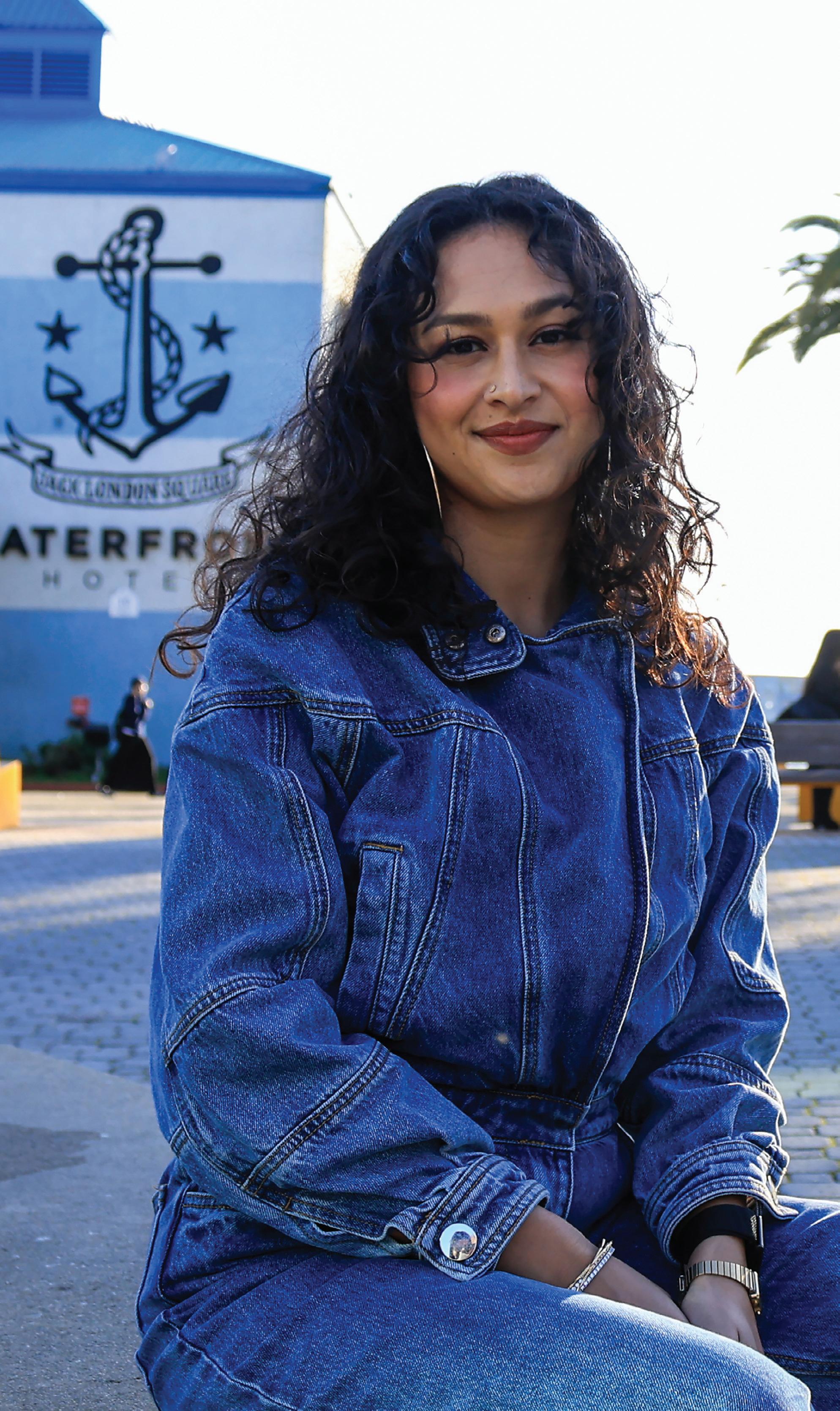
SOCIAL CHANGE Jasmine Rashid is an Oakland-based, New York-raised impact investing professional and author of ‘The Financial Activist Playbook.’ »
« partnerships between wealth holders and community members. She’s also supported significant protests for social justice and initiatives like Families Belong Together. That campaign ultimately shifted more than $2 billion from the private prison industry holding migrants in inhumane conditions.
“There aren’t going to be some generous billionaires who wake up one day and decide to fix wealth inequality,” says Rashid. “Financial activism is about putting power back into the hands of everyday people, taking control of not only our own money, but the money all around us. It’s about remembering that the future is in our hands.”
Reclaiming Wealth
Rashid explains that tracing the flow of money, and the profit motives of social and governmental initiatives, can point out tangible actions the general population can employ to reclaim their political voice and power.
“When we put our money into institutions,” she says, “it’s often not neutral.”
This notion became highly relevant to Rashid’s work redirecting funds away from migrant detention centers in 2018. Families Belong Together included about 250 grassroots organizations led by migrants who had experienced the horrors of mass incarceration, detention and family separation. The coalition realized 70% of those detention centers were being run by private, for-profit institutions funded by big banks.
“By peeling back the layers of what money is doing in the world, and how it has consequential e ects on our communities,” says Rashid, “the coalition really introduced me to the power of collective organizing and taking a stand to say, ‘We don’t want our money going towards these things.”
Talking About Money
Aside from her work with Families Belong Together, Rashid worked as an impact investor for seven years. Being immersed in the action, she recognized the position of privilege from which decisions were being made about capital flow for social
impact. She also noticed that working class folks were often not involved in the conversation. This planted the seed for the philosophy behind The Financial Activist
Describing the book as “a labor of love,” Rashid says the idea originated from a quarantine-era blog post in which she shared ways people could align capital with the movement for Black lives. As the post gained traction, readers were sharing their voices, asking questions and pointing out more opportunities to assess financial decision-making even in their own spaces, like local institutions, universities and places of worship.
“The book grew out of this online conversation,” says Rashid. “As I began having more in-person conversations with folks, exploring and teasing out this ecosystem of financial activism, which spans everything from decisions around thinking, spending, giving, mutual aid—all the way to investing, budgeting and some of the more complex kinds of systems.”
Admitting she’s not a financial expert, Rashid aims instead to be a friend accompanying readers on the learning journey—something she does masterfully through deep questions, skillful »
BY
LARA KAUR
PHOTO
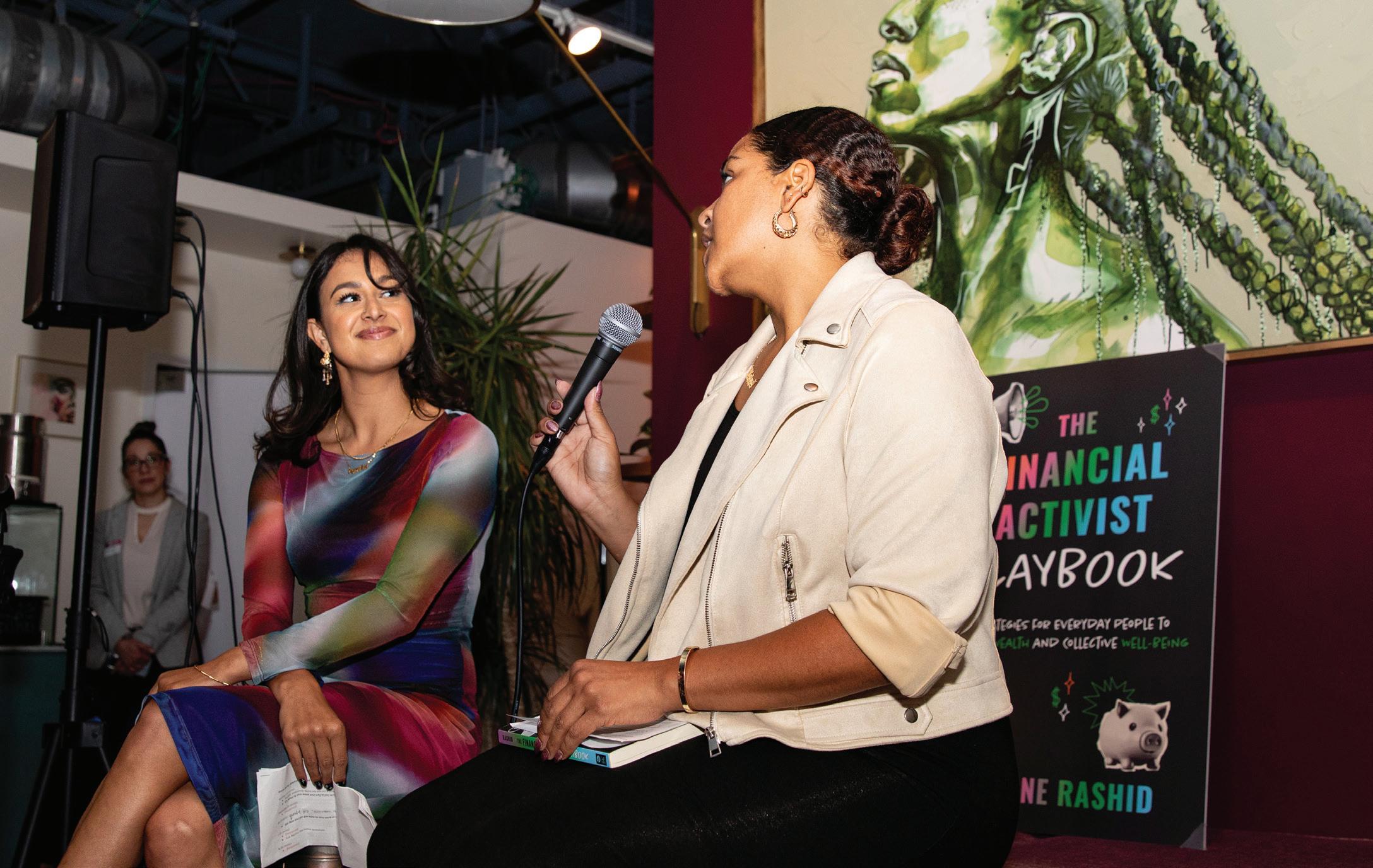
COMMUNITY TALKS Rashid launched her book in September of 2024 at Kinfolx in Oakland.
discussion and an inviting attitude.
“I’m not someone who has all the certificates or education in finance,” she says, “but I have the lived experience in being able to move through the world and see the ways in which our current realities of capitalism are not working for the everyday person.”
The first chapter of The Financial Activist Playbook is all about the act of talking about money itself as a form of reclaiming wealth.
“For the majority of us, the idea of even talking about money can give us butterflies in our stomach,” Rashid says. “Culturally, talking about money is still seen as taboo.”
Adding the idea that financial literacy is typically inherited from one’s family rather than learned in school, Rashid emphasizes the importance of assessing
our relationships to money. She suggests confronting the discomfort as a first step towards strong financial activism. Her book does just that through playful design and several workbook style exercises, equipping readers to direct successful movements, harness the power of their dollar, and most importantly, initiate impactful conversation through a lens of curiosity.
Local Action for Global Good
Though a New York native, Rashid does not hesitate to express her love for the Bay Area, calling it her true home. She acknowledges this region’s community of innovative activists and landscape of local businesses and organizations as a meaningful shaper of her work—especially in terms of the ways Bay Area residents
PEOPLE POWER Rashid asks, ‘How do we get the funds we need to fight against harm in our communities and build the necessary infrastructure to fix it?’
can come together at the local sphere for greater global impact.
“Often most successful social movements around history begin locally,” says Rashid. “Why? Because that’s where relationships happen. It’s where we think not just about transactions, but the deep texture of being human together.”
Mentioning the Black Panther Party and several other movements throughout the Bay Area’s history, Rashid highlights that poverty is produced by systems rather than individual failure. She notes that these collective movements demonstrate how communities can build parallel systems when larger institutions are failing them.
“I find there to be countless examples from history to draw inspiration from,” says Rashid, “of times people fought back and built systems that were more beautiful.”
Aside from supporting small businesses and organizations, Rashid shares East Bay resources for financial activism, including: The Real People’s Fund, a $10 million community-controlled, democratically governed loan fund that invests in people of color who have businesses designed to have social impact at their core; East Bay Permanent Real Estate Cooperative, which is a worker cooperative that organizes tenants and community groups to take land and housing off the speculative market for good; EB Prek; and BAY-Peace
‘The Financial Activist Playbook: 8 Strategies for Everyday People to Reclaim Wealth and Collective Well-Being’ (2024) by Jasmine Rashid, Berrett-Koehler Publishers, $26.95; jasminerashid.com.
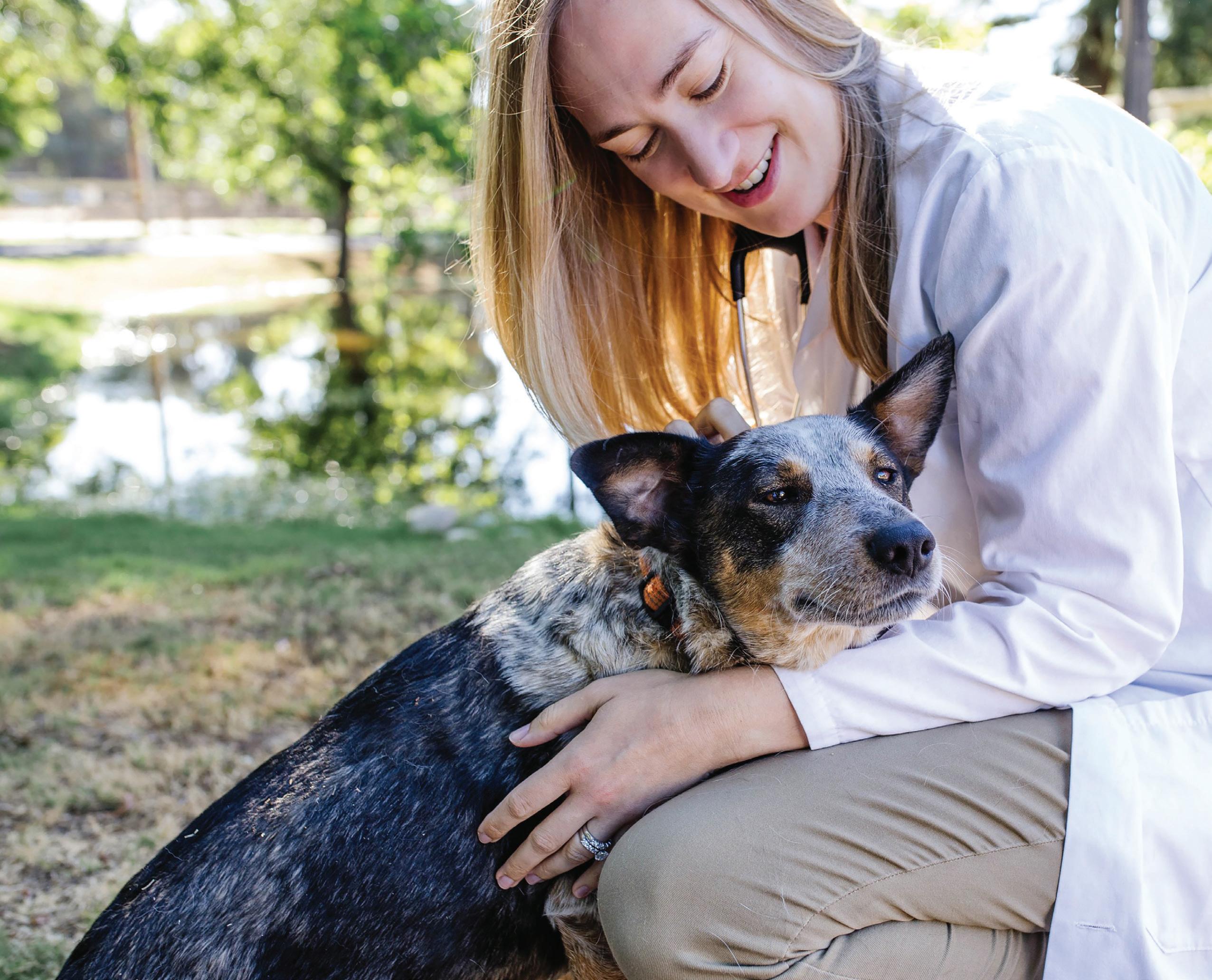
VETS Dr. Karen Whala, Dr. Gary Hsia and Dr. Bethany Hsia (pictured) co-founded CodaPet to provide inhome euthanasia and after-life care. CodaPet now has a network of 150 vets across the U.S.
Peaceful Passing
BY Janis Hashe
Pet parents know their beloved companions have shorter lifespans than they do. But it’s still heartbreaking when the time comes to say goodbye. In the East Bay, this is true for many people: The American Veterinary Medical Association data from 2018 reported that Alameda County had 370,000 dogs and 290,000 cats, and Contra Costa County showed 257,000 dogs and 180,000 cats.
Even if the pet has a compassionate, warm vet, seeing life end in a clinical facility is wrenching. Vets Dr. Karen Whala, Dr. Gary Hsia and Dr. Bethany Hsia recognize this and co-founded CodaPet, a national vet network that provides in-home euthanasia and after-life care, which has now launched in Oakland.
Dr. April Le Blanc, who acted as emergency vet for more than 30 years, will be serving the El Cerrito to Hayward area, along with Dr. Jill Thomason, who will serve Concord and surrounding areas.
“We chose the name ‘CodaPet’ because the musical term ‘coda’ means ‘the end of a piece of music,’” said Dr. Bethany Hsia. “It’s a moment to reflect on the beauty of the relationship.”
Hsia’s dog, Serengeti, was the inspiration for creating CodaPet. The first dog Hsia had as an adult, Serengeti was suffering from bone cancer. “My own dog changed how I view everything,” she said. Hsia and her husband, also a vet, decided to have an in-home euthanasia, which their two children could be present for. She realized there was a need for a linked network of experienced vets who could perform this service.
CodaPet now has a network of 150 vets across the U.S. “The technical side of euthanasia is not different,” said Hsia, “but providing support and care in-home is.”
“I saw one of [the CodaPet] brochures,” explained Oakland resident Le Blanc, “and I was ready to transition to a different part of veterinary medicine.” In her experience, some people are too upset to speak directly to her at first, preferring to leave voicemails, or texting. But she will eventually talk to them about their individual situation. Do they want their children present? “I try to thank them for what they are doing,” she said. To prioritize their loved pet, “They are
stepping outside their own pain.”
One of Le Blanc’s reviews says this: “Dr. Le Blanc was very kind and caring and immediately had a connection with our dog. She was responsive and communicated with us days ahead of our appointment. While in our home she thoroughly explained everything to us and answered all questions. Her love for animals and people is evident. Our dog was relaxed and passed peacefully. We were pleased she was there for us during a difficult time.”
Another review praises Thomason: “We are very fortunate to have found Dr. Jill to help our beloved cat Joan depart this earthly plane. Immediately after booking she reached out and offered to meet with us to talk through the decision, which we had been equivocating over for days. When it came time for the event itself, Dr. Jill was very organized and compassionate and enabled us to have a deeply meaningful experience during Joan’s passing. Looking back we can’t imagine having to do this in a vet’s office and are so grateful we could do it at home.”
CodaPet’s website explains the multiple services it offers, which include the initial consultation, preparation for the visit and procedure, in-home assessment of the pet and after-care options, including cremation and return of ashes. A new, eco-friendly option, “aquamation,” is
also available. The euthanasia procedure is explained, including drugs used, consisting of a sedative to relieve anxiety and any pain, followed by the euthanasia medication. Cost of basic service is $360. It isn’t necessary to consult the family vet, said Hsia. But if the pet has a history of anxiety or aggression, it may be necessary to adjust the medications used during the procedure.
The website also offers multiple short articles on how to decide when it’s time, dealing with grief and other subjects. “People appreciate being able to research this ahead of time,” said Hsia. “They are looking for reassurance and permission [to make the difficult decision].”
For example, the section on “Quality of Life” states: “A helpful way to assess your pet’s well-being is to track their good days versus bad days. If the number of bad days begins to outweigh the good, it may be time to consider euthanasia.” This section also explains the “Quality of Life Scale” used by vets to determine where a pet is in its journey.
In-home euthanasia, both vets emphasized, does not lessen the sense of loss and sadness pet parents experience. But it can lessen the trauma of that final trip to a clinical setting. “It’s a peaceful process,” said Le Blanc.
GRIEF SUPPORT Dr. Bethany Hsia says pet parents are ‘looking for reassurance and permission [to make the difficult decision].’
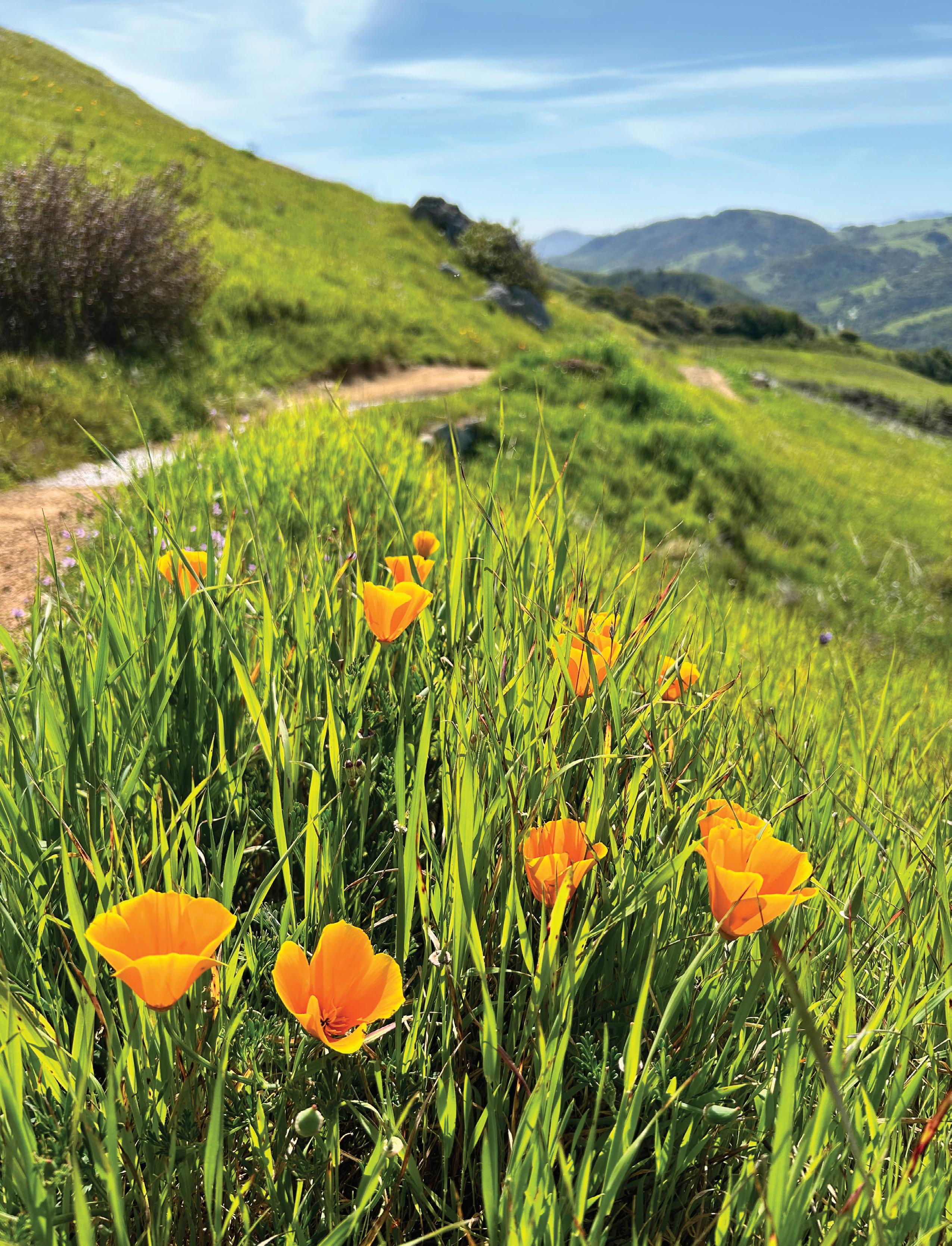
Ann Marie Brown’s favorite season for hiking in the East Bay is spring, especially March and April, because it’s prime wildflower season.
Natural
POPPY BLOOMS
Bliss
One of the best stressreducers? A few minutes—or hours—out in the natural world. Ann Marie Brown has been writing about hiking for years. And now, with the release of the seventh edition of her classic book, Brown gives both novice hikers and experienced trail hands multiple options for enjoying the Great Outdoors.
101 Great Hikes: San Francisco Bay Area, updated and released by trusted publisher Moon, covers the whole region, including Napa/Sonoma, Marin, the South Bay and Peninsula, and the East Bay. The East Bay section alone lists 21 great hikes, with distances, estimated durations and levels of di culty.
“My first hike [as a child] was 60-some years ago,” said Brown. “I moved to the Bay Area in 1985 to go to graduate school at Stanford, and I got hooked on all the nature… 70% of the nine counties is open land. I started sneaking in hikes whenever I could.”
Some of the East Bay hikes profiled in the book include the Franklin Ridge Loop (3.5 miles, 2-hour duration, easy), the San Pablo Ridge and Wildcat Creek Loop (7.2 miles, 3-hour duration, moderate) and the Mount Diablo Grand Loop (9.9 miles, 5-6 hour duration, strenuous).
Brown’s favorite season for hiking in the East Bay is spring, especially March and April, because it’s prime wildflower season. “This year is going to be spectacular,” she said. She suggested the Sunol Loop Tour (8.4 miles, 4-hour
duration, strenuous) and the Huckleberry, Skyline and Pinehurst Loop (2.2 miles, 1-hour duration, easy) as two of the best for wildflower viewing. Due to the heavy rains, it’s already an amazing year for viewing mushrooms and toadstools—but, she emphasizes, “Look; don’t touch.”
What if someone is eager to get out there but is a beginner hiker? Brown definitely advises sticking to the flatter, coastal terrain hikes listed in the book.
New book showcases hikes for every level
BY Janis Hashe
Other tips included hiking with someone more experienced and taking note of what gear they pack, bringing along a map or GPS system, and a lighting source, along with, of course, water.
Brown hikes solo up to 90% of the time, she said, but she is always prepared for contingencies, such as possibly having to spend a night outdoors. A wrap of some kind, some way to get a signal out if cell service isn’t available, and letting
EASY PEASY One East Bay hike Brown profiles in her book is the Franklin Ridge Loop, which is good for birding and clocks at 3.5 miles with a 2-hour duration.
someone know when and where she’s hiking are essential. Two other suggestions were leaving a note on the dashboard of the hiker’s car that would be noticed if they had not returned, and her favorite hiking accessory: hiking poles.
“Once you get used to using them, it’s like having two extra legs,” she said, noting they are especially helpful on rocky terrain.
101 Great Hikes has sections on “Best Dog-Friendly Hikes,” “Best Kid-Friendly Hikes,” “Best Summit Vistas” and “Best Waterfall Hikes.” The Briones Loop Tour is called out as an East Bay choice for dog owners, and Mission Peak for vistas.
Not forgetting bird-lovers, during the interview Brown suggested Coyote Hills for raptors and song birds. “Little kids are mesmerized,” she said. Franklin Ridge in Martinez was mentioned again, this time for birding. “The Carquinez Strait area
is wonderful for hawks and even golden eagles,” she said. Other likely sightings: osprey, California brown pelicans, and if lucky, California quail, among many other species.
History buffs will also find hikes to suit their passion. “Black Diamond Mines has fascinating history,” said Brown, including its old cemetery. “You can hike the rolling hills and see nobody all day,” she remarked. The book lists two Black Diamond Mines options, the Rose Hill Cemetery Loop (3.1 miles, 1.5-hour duration, easy), and the Stewartville and Ridge Trail Loop (6.7 miles, 3.5-hour duration, moderate).
Yet another user-friendly aspect of the book is the pull-out sections on “Best Nearby Bites and Brews.” For example, those choosing the San Pablo Ridge and Wildcat Creek Loop can’t go wrong, after working up a thirst and hunger, at
Richmond’s Armistice Brewing Company. They’re renowned for their irreverent attitude, unusual and tasty brews, and food trucks outside.
Perhaps the most important aspect of hiking, said Brown, is the mental health benefits it provides. “That time in nature when you turn off the phone, the healing that goes on in the mind,” she noted.
Asked for a special moment of this, she responded, “I’ve had thousands of them. It connects me with my sense of wonder, and sometimes something miraculous will happen—you come around the corner, and the waterfall is there. It takes your breath away.”
All of this, she emphasized, is vital to reminding people how important it is to take care of the land. “We need more awe,” she said.
‘101 Great Hikes: San Francisco Bay Area,’ Moon/Avalon Travel, 2026. $24.99.
POWER WALK Brown suggests the Sunol Loop Tour—8.4 miles, 4-hour duration, strenuous—as one of the best for wildflower viewing.
Cognitive decline can steal the past, but it doesn’t have to steal the future. Pioneered to curb the effects of cognitive decline, Circle of Friends® is a unique, evidence-based program for building brain fitness. It was developed by Belmont Village in collaboration with the nation’s top universities and healthcare institutions — and it works. Residents enjoy a rich, therapeutic program of physical and mental activities designed to maintain brain function and build self-esteem.
Chez
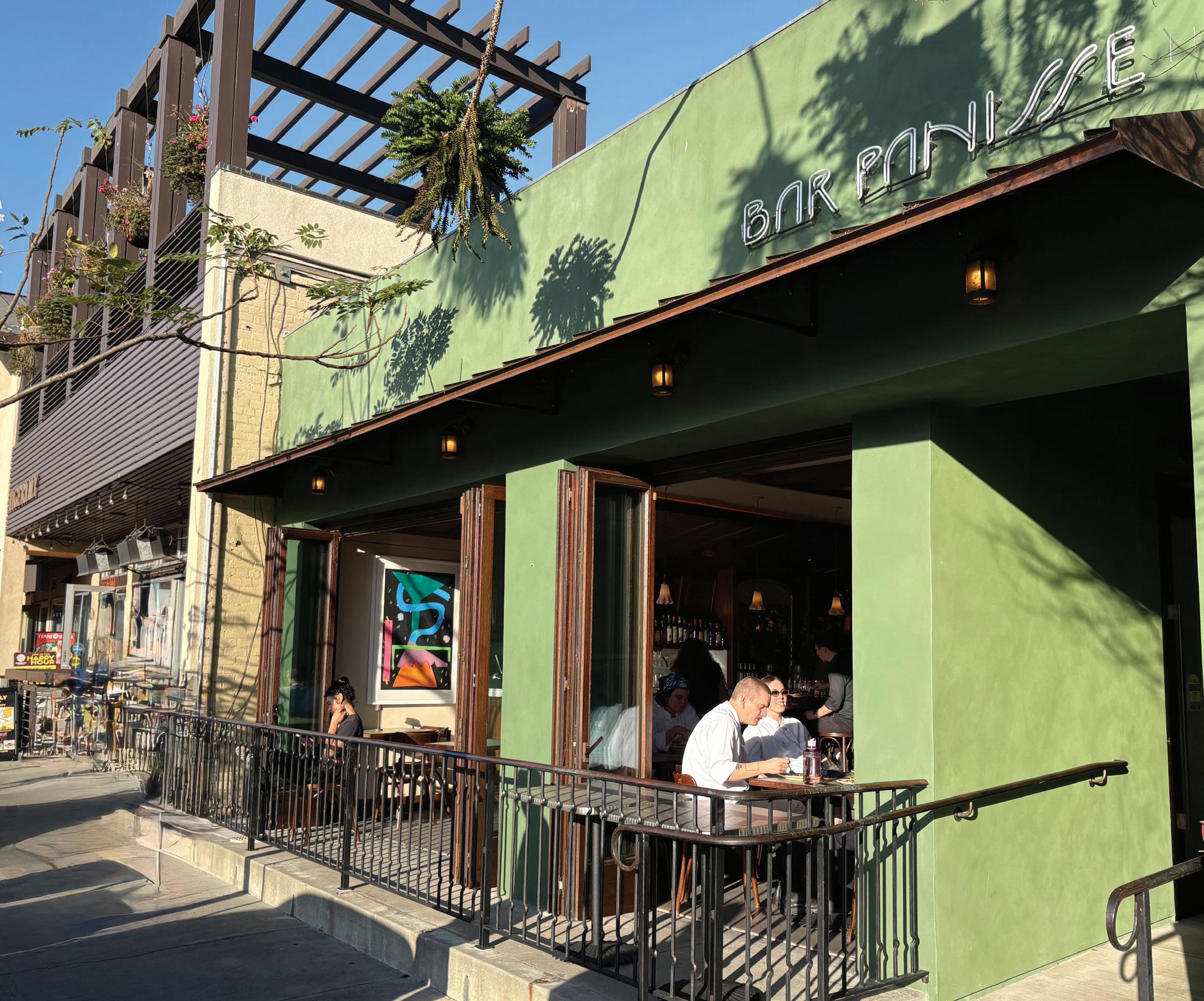
Bar Panisse is a companionable space for cozy date nights both platonic and romantic
BY Je rey Edalatpour
D’Amore
Despite the darkness and a cold January wind, a line formed out the door of Bar Panisse. Inside, every bar stool and table was occupied. The Save César Berkeley campaign collected more than 4,000 signatures to protest Bar Panisse from opening in Bar César’s place—to no avail. Those Bay Area residents who didn’t object to the closure are now arriving in their winter wardrobes to fill every seat. Perhaps some of Save César’s signatories have also stopped by but are disguised by
many layers of pu y clothing.
The décor mirrors Chez Panisse’s signature Arts and Crafts flourishes. To create the feeling of a warm, secluded enclosure, dark wood panels cover the walls behind the diners and the refurbished bar. The characters in Hamnet wouldn’t feel out of place ordering a hard apple cider or a pale ale there. Each glazed bathroom tile looks like it’s been made by someone’s hands and a hot fire. They’re the color of peaches and nectarines that have been baked into a galette. In a nod to its older sister next door, there’s a framed ninth
anniversary poster that, font-wise, evokes all the covers of Alice Waters’ cookbooks. Each section of the menu is intentionally spare. Conceptually, Bar Panisse isn’t daring or ambitious. It’s a companionable space for cozy date nights both platonic and romantic. Couples also sat with other pre- or post-prandial couples. No one gets the advantage of a reservation, but the bar seating fills up before the tables. Those customers get a close-up view of the bartender’s cocktail shakers while the sound of daiquiris getting iced echoes across the room.
PHOTOS BY KIM NIES
SWEET BITTERS
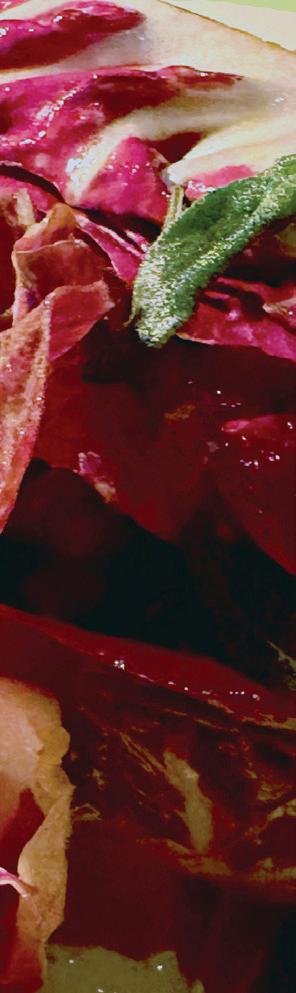
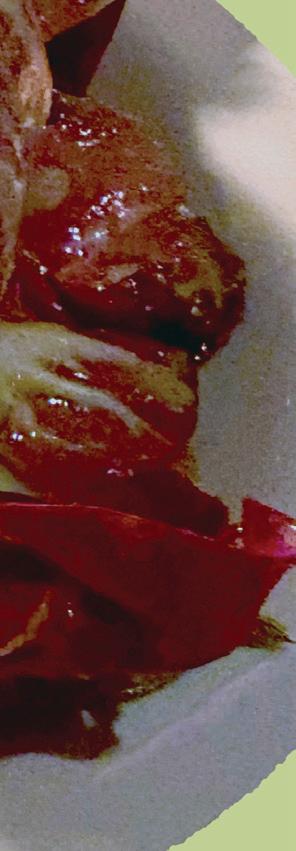
Bar Panisse serves a winter salad with chicories, pumpkin, dates and fried sage ($17).
At the bottom of the cocktail list, a note credits the gimlets, sazeracs and martinis to Prizefighter Bar’s Dylan O’Brien. They range in price from $12 to $14. Both of the non-alcoholic beverages we tried were mouth-puckeringly tart. A rightly named “bitter mule” ($14) forwarded the taste of ginger, assertively, against lime and tonic. It comes with a small yellow rectangle of ginger to nibble on.
Champagne vinegar and clove overwhelmed the taste of persimmon in a house-made shrub ($8), the trendiest mocktail out there. After a first sip, the
edges of my throat felt, not on fire exactly, but unpleasantly awakened. Our server kindly removed it from the bill. I thought better of following that up with a glass of ginger ale ($4).
Bar Panisse’s wine list doesn’t stray from California or the major European players, France and Italy. The most expensive bottle is a $76 sparkling chardonnay from Jura; the least expensive is a $56 pinot grigio from Alto Adige. Draft and canned beers are all from Northern California, except for a non-alcoholic one from Athletic Brewing in San Diego ($5–$8).
One hard cider from Oregon completes the list of beverages.
The most substantial dish on the food menu is a roast chicken with leeks, fava greens and chanterelles ($35). But Bar Panisse is a temporary stopping place, gathering attention because of its adjacency to a preeminent culinary destination. The couple in line before us sat at the bar, drank one drink, then left without lingering.
Table turnover is relatively fast. That’s why the line doesn’t appear to be particularly daunting. We showed up
COCKTAIL COLLAB Prizefighter Bar’s Dylan O’Brien is credited for the gimlets, sazeracs and martinis on Bar Panisse’s drink menu.
To soothe the guests right after they’ve been seated, someone immediately brings a small bowl of salt and vinegar chips to the table. Our server hastened to describe them as ‘complimentary.’ They’re a crisp delight and better than any storebought version with the same flavor profile. «
early, shortly after the 5 o’clock opening hour, and waited less than 15 minutes for a seat. The hosts, and everyone on staff, seemed unusually serene and coolly capable of dealing with a crowd of eager—and potentially impatient—patrons. I’d like to be a fly on the wall at their family meal before the doors open.
To soothe the guests right after they’ve been seated, someone immediately brings a small bowl of salt and vinegar chips to the table. Our server hastened to describe them as “complimentary.” They’re a crisp delight and better than any store-bought version with the same flavor profile. A plate of olives, one of the smallest “small bites,” is $7. Useful comparisons to keep in mind: Revival and Tallboy sell their olive plates for $9. Bellanico’s olive plate, marinated with herbs, garlic and citrus, comes in at $6.
Winter has dislodged summer to become my favorite season for ordering salad. Bar Panisse is serving one with chicories, pumpkin, dates and fried sage
($17). The bitter red leaves were all simply and evenly dressed. Nearly pulverized pieces of pumpkin complemented the chicories with their innate sweetness. They’d been baked or roasted down to a texture very near to a semi-purée. A novel combination that worked as a marriage of flavors and textures.
Fried sage is one of those ingredients that sounds like it’s bringing something extra to the plate but never really materializes on the palate. And, for the life of me, I can’t remember seeing or tasting a single date in the salad. But as long as bitter lettuces appear on menus—dated or dateless—I will continue to order them.
The must-have for the evening was something so simple it perfectly embodied the Chez Panisse ethos. Scallions, yogurt, honey and thyme ($14) is part of the “small fry” section of the menu, which also includes anchovy fritters ($14), potatoes ($13) or cauliflower ($14). I use scallions in the kitchen almost daily, but chopped up, sautéed or as a garnish.
Here they were honored as a vegetable with its own distinct identity. The fry was akin to a tempura batter, all golden, crispy and light. And the frayed edges of the stem that slipped out of the coating turned deliciously soft and chewy. Dipping them in a fresh cool dollop of yogurt enhanced the bite. I’d eat these over french fries any day of the week.
My enthusiasm for the food waned with the arrival of the butter beans ($14). Compared with Daytrip Counter’s creamy gigante beans served in a luscious broth, the Bar Panisse dish just didn’t make any sense. The beans themselves were undercooked, arriving at the table not even al dente. Served with sprouted broccoli and breadcrumbs, the entire plate was drowning in an abrasive chili oil. The ingredients also didn’t meld together. It’s the only dish on the menu I tried that either needs to be dropped or reconceived.
Bar Panisse, Thu to Mon 5–10pm, no reservations. 1515 Shattuck Ave., Berkeley. IG: @barpanisse_.
VISIT HAGGIN MUSEUM
&
Protecting
Legacy
How baby boomers can plan for tomorrow’s finances while living for today
BY Lou Fancher
SAVING TIME AND MONEY
Establishing a living trust is a crucial step in the process of protecting the assets baby boomers have worked for decades to create. Most trusts created before 2012 need to be redone.
Approximately 70 million baby boomers live in the United States.
Remarkably, that means people born between 1946 and 1964—currently 61 to 80 years old—compose close to 20% of the country’s total population. Most baby boomers are already retired or on the cusp of leaving the wage-earning workforce.
Although they might be lined up to receive income from pensions, personal investments, Social Security, 401(k)s and other sources, there are powerful forces that threaten their financial assets. Protecting themselves and their families from rising inflation, property taxes, healthcare costs, and avoiding the ravages probate court can have when they die are essential.
Among baby boomers especially, taking action early on when it comes to tax and estate planning can be one of their wisest choices, or most regrettable oversights. Tax advisors and estate planning lawyers encourage clients as young as age 35-40 to begin implementing mechanisms that protect and grow their assets.
Even so, a recent report in Money magazine says, “Baby boomers only had an average 401(k) balance of $249,300 in 2025, according to Fidelity. If you retired at 70 with $4.3 million saved, you may have a lot more financial flexibility in retirement than many of your peers.”
Since the One Big Beautiful Bill arrived under the Trump administration, new tax, inheritance and gift laws have shifted, California’s Proposition 19 has
added complexity for homeowners, and understanding the rules of eligible deductions and probate court may cause many baby boomers to feel overwhelmed.
This is why the top advice from experts is to consult two key professionals: estate lawyers and/or tax advisors who are well-versed in the best wealth-protective strategies for baby boomers, seniors and their heirs. Surprising for most people to discover is that estate planning is vital for everyone, not just the super rich.
Fortunately in the East Bay, there are professionals with proven track records, like Joel A. Harris, a state bar-certified specialist in estate planning, trust and probate law. With 36 years of experience assisting Bay Area families, Harris o ers flat-fee estate planning from his law o ces
in Antioch. Born in the Bay Area and living in Clayton, he holds a JD and MBA from Santa Clara University and a BA in English from the University of the Pacific.
This year, Harris says the new tax law most important to seniors is the $6,000 deduction on federal taxes for people ages 65 and above (phases out at certain income levels). A second change involves state and local taxes, bumping up qualified deduction limits from $10,000 to $40,000 per taxpayer. Harris and Gary Watts, a certified financial planner and owner/founder of Walnut Creekbased Watts Advisors Family O ce, have o ered online presentations together, underscoring experts’ advice to gather professional input from both tax and estate planning specialists.
For estate planning, Harris’ area of expertise, he highlights the estate tax exemption that was increased to $15 million per person and $30 million per couple. It’s been made permanent, instead of expiring as of January 2026. Harris cautions that for the surviving spouse to qualify, the necessary tax forms must be filed or extended by the nine-month deadline. Usually no taxes are due; the purpose of filing the return is to “port” the deceased spouse’s estate tax credit to the surviving spouse.
“If they miss that, they blow it,” says Harris. “The new bill helps on that and other inheritance taxes. But the one big takeaway is to contact your attorney or CPA right away after a death, or you might lose that credit.”
Harris emphasizes that long-term planning helps families avoid having their assets compromised or subject to probate. Notably, medical laws in California have shifted, with new income and asset levels making it harder to qualify. Nursing home liens also play a role, and unpaid fees collected posthumously can take up to 100% of an estate if a person’s assets have to go through probate. Essentially, probate is not only immensely time consuming and complicated; the taxes levied eat away at assets that might otherwise pass to a person’s spouse and other heirs.
Establishing a living trust is a crucial
Among baby boomers especially, taking action early on when it comes to tax and estate planning can be one of their wisest choices, or most regrettable oversights.
step in the process of protecting the assets baby boomers have worked for decades to create, according to Harris. Placing everything into a trust prevents probate court from roaring in to capture the flag. He mentions that at risk are not only investments, bank accounts, and a plethora of other assets in financial institutions and retirement accounts and adds that older homeowners downsizing and lacking the right property exemptions might find the sale of their family house subject to extreme tax rates.
“I’ve seen those taxes eat up 100% of an estate,” he says.
Most trusts created before 2012 need to be redone, says Harris. Estate taxes became portable in that year, negating the need for complicated AB trusts. “People who still have those older trusts have only the downside left: an irrevocable trust that can cause capital gains taxes. People need to review their documents regularly. Do you still know, like and trust the people you’re giving money to and putting in charge? Are they still alive?” he asks.
Harris says people should do a personal review every year and with an attorney every 5-10 years. “The first will reading I did for a family back in 1991, every person named was dead. They’d put it in a safety box and never looked at it again,” he
recalls. “The money went through probate and was subject to Intestate Succession, the California law that determines what happens when you die without a will or trust. It makes for messy administration.”
In addition to allowing planning documents to lapse, the biggest mistakes are made by people who do not put all of their assets into their trust. When Harris prepares a living will with clients, it acts as a safety net.
“With a living trust, the will says, ‘I leave everything I have to my trust,’” says Harris. “My role is helping clients to ‘prepare the house’ and use that process to make sure all of their assets are protected.”
Summing up the top message for baby boomers who care about their heirs and who’s in charge of their assets if they get sick or when they die, Harris says: “Be proactive, not reactive. Have life insurance, a will, a properly written living trust, and protect yourself and your family. Then, go have a wonderful life.”
How community-minded banks remain focused on impact
BY Roelle Balan
There are banks that make profit, and there are banks that work for the community. Fremont Bank and Public Bank East Bay share a common goal of improving the lives of communities in the Bay Area.
Fremont Bank is a community bank with locations all over the Bay Area, including San Francisco, Oakland, San Leandro and Hayward. Their purpose is to serve the community in a holistic way. Fremont Bank donates 5% of their pretax profits every year to Fremont Bank Foundation, their charity organization. The organization then uses the
money to give grants. Recent grants from Fremont Bank Foundation include funding for homelessness programs, educational programs for children and infrastructure support for youth sports, nonprofits and community services. And the way they give grants is not just a random giveaway. They listen to what the community needs. “The individual branch staff and the people who work at HQ on these things—when we say we’re embedded, it’s a lot of face-to-face networking and really listening to what the needs of the community are,” said Alli Moses, Fremont Bank senior
PHOTO BY ERIKA PON
BANKING INDEPENDENCE
Executives from Fremont Bank and Hayward Area Recreation & Park District Foundation meet at Public Bank East Bay’s event in July 2025.
manager of activation and community.
“It’s more of like, ‘listen and respond’ versus initiating or driving our pillars of giving,” Moses added. “It’s really giving the community a chance to tell us what they need, versus us seeking particular opportunities.”
While community banks bring dollars back to the community, public banks want to enhance that effort. Not yet formed, Public Bank East Bay (PBEB) is taking the steps to become a public bank, which will mean banking with a more systematic approach. They already have a nonprofit called Friends of Public Bank East Bay. The board of the nonprofit consists of bankers, financial experts, community leaders and government officials with the knowledge and skills to run a public bank.
“One of the things that we think is a big argument for public banks now is they’ll provide resilience against the crazy things the federal government is trying to do with California’s state and local money,” said Debbie Notkins, chair of Friends of Public Bank East Bay. They’re currently working on capitalization, a process where they have to attain a certain amount of money in case the bank fails. In this case, added Notkins, that amount is $40 million in capitalization commitments.
PBEB will be independently owned while the Friends of Public Bank East Bay board keeps the bank accountable. Notkins pointed out that although government officials will be part of the board, they will not take part in running the public bank.
“Because you’ll often have people say, ‘I don’t want my city government running the bank,’ and my answer to that is, ‘Your city government doesn’t want to run a bank,’” said Notkins. “It’s a professionally run institution with a lot of community oversight and transparency.”
Notkins explained that the bank will be a wholesale bank and not a retail one—they will not open up individual accounts. PBEB will act as a social service, establishing an office to serve governmental agencies, nonprofits and their partners, like credit unions and community banks.
Hayward Councilmember George Syrop said public banks would offer loans to fund affordable housing projects,
support small businesses and work towards green energy infrastructure.
“A public bank would provide more access to capital in our community,” said Syrop. “Certainly, we try to encourage affordable housing development—it’s very complex together—in capital that’s necessary to make the project pencil (become financially feasible) and get an affordable housing project built. Having something like a public bank introduce more capital would lower interest rates, would make more affordable housing projects pencil and be able to help us address the housing crisis.”
The blueprint for a public bank exists in California law, called Assembly Bill 857, passed in 2019. It sets the rules and regulations for local entities wanting to create public banks.
By law, public banks have to partner with credit unions and local community banks. Notkins said North Dakota is
an example of a public bank that works with both bank entities, plus it is the only public bank in the United States.
“You have more community banks and more credit unions, and more CDFIs (community development financial institutions), the ecosystem grows and the East Bay becomes an example of a thriving growing ecosystem instead of a struggling one,” said Notkins.
Noted Syrop, “When you have more CDFIs and you have our credit unions and community banks, that’s more access to financial institutions for your community, which means a higher level of financial literacy, less predatory lending, less folks falling into debt. It’s really about, like Debbie (Notkins) was saying, helping nurture an ecosystem of community bank financial institutions.”
Notkins pointed out that public banks can help community banks. For example, affordable housing projects currently
PHOTOS BY JASON RIGGS
CAPITAL ACCESS Hayward City Councilmember George Syrop chats with Richmond City Councilmember Claudia Jimenez.
Community banks and public banks have two things in common: They believe their banking model works for the community, and the bank’s money will not end up in Wall Street. Not one bit.
«
come with a complicated capital funding structure. Instead, a public bank can o er to put a loan together with a community bank for an a ordable housing project. The public bank would then take a certain percentage, and the community bank can keep the rest, Notkins explained. A public bank would give the community banks more time to pay them back, because of their mutual support for a ordable housing projects.
Public Bank East Bay has big dreams for the communities with which they would partner. An infographic on their website shows that in Alameda County, they plan to build more than 3,800 a ordable housing units, produce six million green megawatt hours (enough to power 54,000 homes for more than 10 years) and support more than 1,000 worker-owned businesses.
Community banks and public banks have two things in common: They believe their banking model works for the community, and the bank’s money will not end up in Wall Street. Not one bit.
Devon Johnson is Fremont Bank’s executive vice president and chief growth o cer. “Fremont Bank is independently owned for the community. It means that we can take the long-term view,” he said.
“We don’t have public shareholders; we don’t have to answer to Wall Street’s demands for quarterly earnings, so we’re able to look decades into the future to understand what the Bay Area needs.”
Councilmember Syrop explained that the repayment of PBEB loans will stay in the local area. “The funds coming back then get redeployed back into our community rather than being siphoned out into private and shareholder pockets in Wall Street,” said Syrop. “This is really an institution that, once it gets o the ground, its impact is keeping our tax dollars local. And that’s really the beauty of this project; it keeps our community wealth where it belongs, which is right here in our neighborhoods.”
Johnson noted that Fremont Bank’s dollars stay local as well.
“Truly, if a consumer places a dollar in our bank, that dollar goes directly back into their community,” he said. “And that impact is amplified through the jobs it creates, because the local business can hire more people through the homeownership it creates, through the social services that the nonprofit can provide.” ❤
FRIENDLY FINANCE Public Bank East Bay board members meet with representatives from the not-yet-formed Sacramento Public Bank.
The Child Unique Montessori School and Montessori
Elementary Intermediate School of Alameda
The Child Unique Montessori School and Montessori Elementary Intermediate School of Alameda serve children at three campuses from 18 months through 8th grade. Renowned for its adherence to Montessori philosophy and social justice emphasis, we offer a sensorial, living experience to learn and honor the people within the world around us. We create a student-centered
environment which fosters curiosity, love of learning, critical thinking, and an understanding of identity, belonging, diversity, inclusion, and justice. The arts (music, performing and creative arts) and culture (second language lessons and inclusion) are bookends to our curriculum. And although our school seeks continual diversity, we recognize that diversity alone is not inclusion. With carefully crafted scaffolding, we help children learn in real time how to care for living things, including those who are different from them.
Award winning students
Award winning principal • Small classes/tight ratios
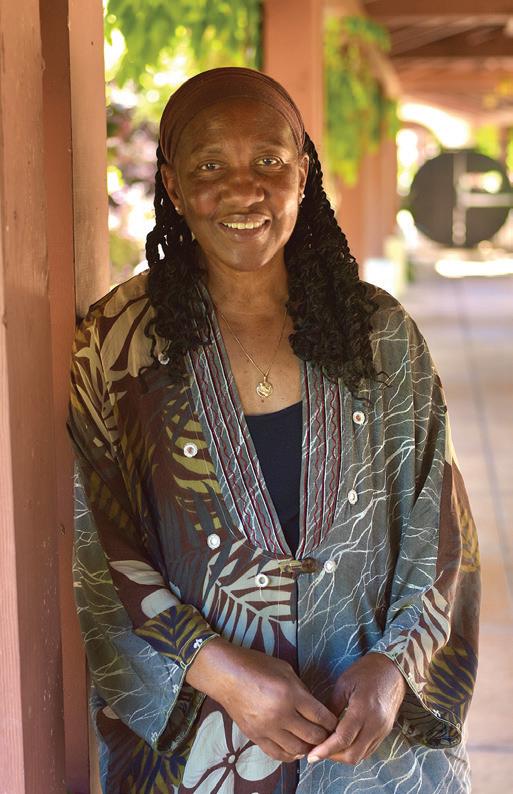
Elizabeth Thorn Scottt Flood was 26 in 1854 when she established the first private school for African American children in Sacramento.
ELIZABETH FLOOD
Rae Alexandra restores women to Bay Area history in ‘Unsung Heroines’
HerPlace Here
BY Samantha Campos
History has a way of pretending certain people didn’t exist. In a region that prides itself on progress, women who built institutions, changed laws, fought segregation, defended bodily autonomy and reshaped culture have largely vanished from the public record. Their names are missing from monuments, street signs, statues and textbooks. Their work survives, but their stories do not.
That erasure is what drove journalist Rae Alexandra to rage—and eventually to obsession.
rights activist Judy Heumann co-founded Berkeley’s Center for Independent Living in the early 1970s, laying the groundwork for the Americans with Disabilities Act.
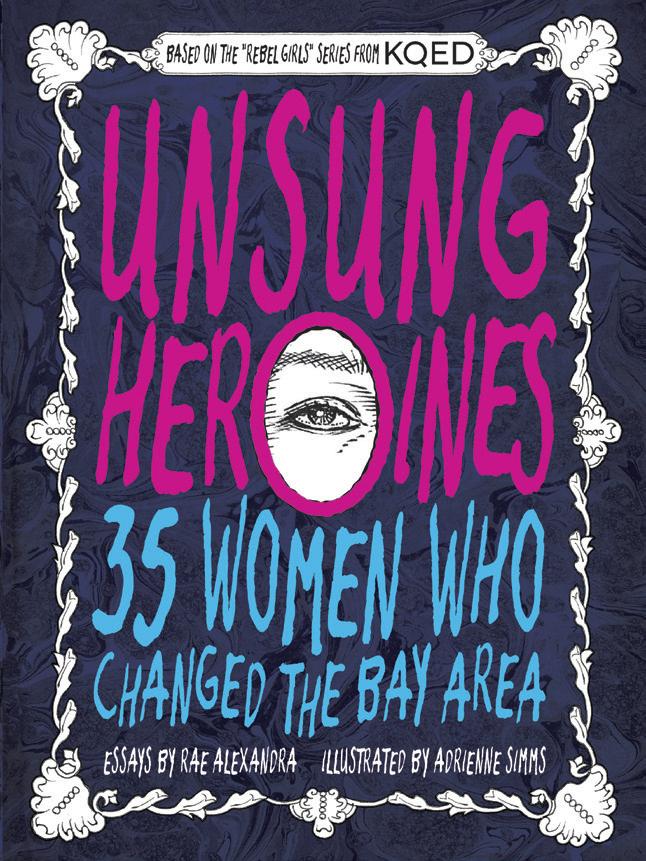
These women, and dozens more, are featured in Unsung Heroines: 35 Women Who Changed the Bay Area, Alexandra’s forthcoming book, illustrated by San Francisco artist Adrienne Simms and published by City Lights. The book is adapted from Alexandra’s long-running KQED series, Rebel Girls from Bay Area History, which launched in 2018.
Elizabeth Thorn Scott Flood opened Oakland’s first private school for African American children in 1857, paving the way for desegregated education in California. In 1913, Piedmont nurse Bertha Wright founded Children’s Hospital Oakland and established the state’s first public child daycare center. Frances Albrier became the first Black woman to run for Berkeley City Council in 1939 and the first Black female welder in the Richmond shipyards during World War II.
And that’s just the beginning.
San Francisco lab technician Pat Maginnis helped lead the fight for abortion rights in the 1960s. Del Martin and UC Berkeley graduate Phyllis Lyon co-founded the first lesbian rights organization in the U.S. in 1955—and later became the first same-sex couple legally married in San Francisco. Disability
“To be frank, I did not know what I was doing,” says Alexandra. “I was just very angry about women being written out of history.”
That anger was measurable. As Alexandra notes in the book’s introduction, only 12% of San Francisco’s street names, statues, parks and public artworks honor women. So she decided to respond the only way she knew how: by writing them back in.
She committed to producing one profile a month. The research curve was steep. When pandemic closures shut down public libraries, Alexandra began buying every history book she could find online. The collection grew so large she eventually moved to a house in Stockton to make room for it.
But the work also created community. Each year since 2020, KQED has hosted “Rebel Girls” Bingo Nights, where Alexandra distributed zines featuring the women she had researched. Extra copies
MARY KELLY
WOMEN’S HISTORY ‘Unsung Heroines’ will be released March 17.
CHUNG
were dropped at bookstores, cafés and record shops across the Bay Area.
One year, she brought zines to City Lights Bookstore and was told to place them on the stairs leading up to the poetry room.
“I was so upset about this,” says Alexandra. “I almost didn’t leave any because I was like, no one’s ever going to find those.”
What she didn’t realize was that the stairs also led to the publisher’s o ce. The placement worked. A week or two later, City Lights called.
“There’s a thing we say in my house now when something is happening to us, like a momentary disappointment, and we’re all pissed o about it,” says Alexandra. “We’ll say to each other, ‘Put it on the stairs.’ Just as a reminder that the thing that’s bothering us now might turn into something wonderful later.”
Over seven years, Alexandra’s initially planned five-essay project expanded into 56 installments, with the final piece published on KQED.org in August 2025. Along the way, certain women changed how she understood Bay Area history entirely.
“Those women gave me a complete reframing of local history that I wasn’t expecting,” she says. “We all know about the earthquake and the destruction and the fires. But in telling the story of Mary Kelly, who became homeless and jobless with her family [post-1906], and then
PAT
MAGINNIS FRANCES ALBRIER
had to go to war with the city because the city was not distributing aid to the poorest refugees—reading her story really puts you in the center of the hellish circumstance of being in San Francisco at that time in a way that I haven’t considered before.”
She had a similar reckoning researching Myra Virginia Simmons, a domestic cook and newspaper seller who organized a parade protesting racist exhibits at San Francisco’s 1915 Panama-Pacific
International Exposition.
“This is supposed to be the beacon that the rest of the nation is looking at, and also a symbol of San Francisco’s great rebuilding,” says Alexandra. “If I hadn’t ever found Myra Virginia Simmons, I wouldn’t have known about the egregious racism on display at that world fair, because that’s not how we like to remember it. When you start telling the stories of individuals, you get a completely di erent idea of what was happening as it was happening.”
Alexandra deliberately sought women from across the Bay Area and across lines of race, class and nationality. “This became an obsession,” she says. “If you only write about white women, you’re missing the full story.”
ELANA ZELAYETA
One search took years. Alexandra was determined to include a Palestinian woman. “It took me until May of last year,” she says. Even her best friend, whose family is Palestinian, told her, “It’s all men.” And Alexandra thought—that’s the problem So she kept going.
Another challenge emerged: images. Many of the women—particularly Black women—were never photographed, or their images were lost.
That absence became the book’s second act.
City Lights publisher Elaine Katzenberger met illustrator Adrienne Simms by chance at a swimming pool. Simms had recently self-published
« MARGARET
Portraits of Gaza, a zine depicting people whose lives were shaped by Israeli occupation, inspired by ancient RomanEgyptian funerary portraits that rendered subjects regal and enduring.
Alexandra immediately knew Simms was right for the project.
“I was working with images that I didn’t feel reflected the women in the way that I wanted to,” she says. “Adrienne elevated all of them.”
Simms, a self-taught artist with an art history degree from Mills College, has exhibited her work for more than 25 years. Her influences include religious iconography, gold-leafed halos, ornate symmetry and mythic femininity.
“I always try to imbue my characters with a sense of independence, defiance even,” Simms says. “I like to create things that are beautiful and also powerful.”
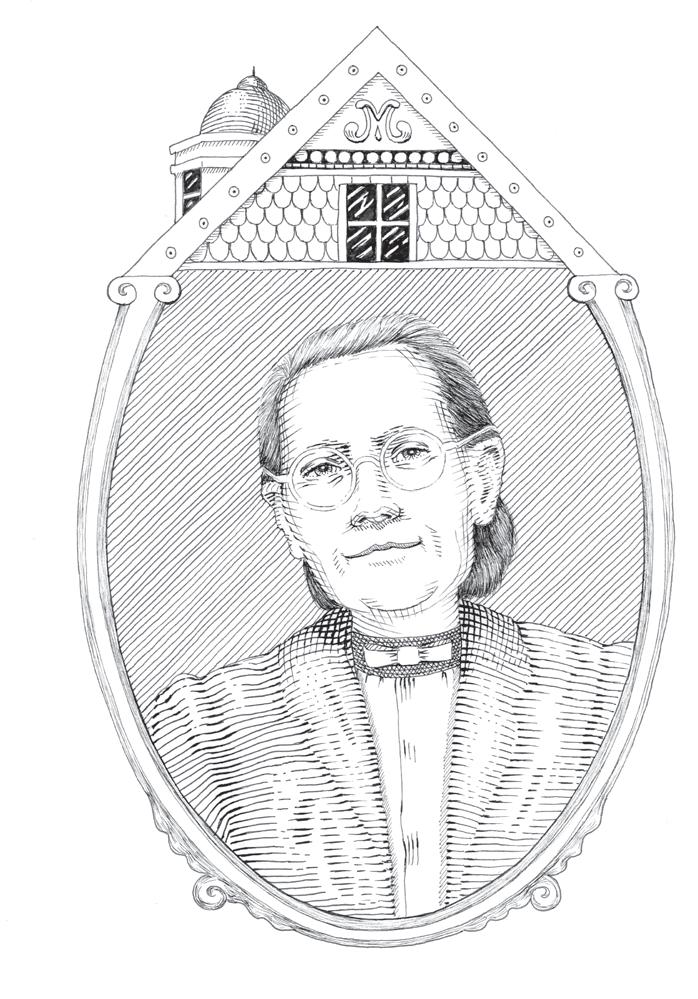
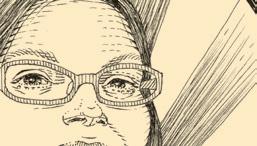
For women with archival photographs, Simms created oval portraits framed with visual cues to their lives. Elena Zelayeta, a Mexican American cookbook author, is surrounded by ornate patterns, peppers, corn and avocados. Palestinian American activist Nabila Mango’s portrait includes both the Palestinian and American flags, alongside lilies—a nod to her love of gardening.
For women without photographs, Simms designed rectangular “scrapbook” frames built from artifacts. Charlotte L. Brown, who sued a San Francisco streetcar company for segregation in 1863,
is represented through a legal complaint, a ticket stub and a horse-drawn carriage from the era.
The illustrations took a year to complete. “I tried to be very methodical because I didn’t want to rush anything,” says Simms. “As you can imagine, it’s very precise work. All those little lines took a while, took a lot of focus. It’s very soothing work in its own way, even though there’s a thin margin for error, but the work itself was very pleasurable.”
As she worked, Simms found herself
awed by what these women accomplished under conditions far harsher than today’s.
She points to Dr. Margaret Chung, the first American-born Chinese woman doctor, who opened a Western clinic in San Francisco’s Chinatown in 1916, treated Hollywood stars, supported World War II soldiers, drove sports cars, wore men’s clothing, and dated men and women.
“She lived her life the way that she wanted to,” says Simms. “She succeeded career wise, and she was also helping other people. Back then, this woman was able to do all that when things were arguably even harder for women and people of color. We don’t have any excuses to hold back, you know?”
Unsung Heroes does more than recover forgotten names. It reframes Bay Area history as something built not just by earthquakes, gold or tech, but by pioneering women who refused to disappear. When we’re bearing witness to rights being rolled back and communities threatened, the book o ers something quietly radical: proof that resistance has always lived here—and that the stories we choose to remember shape the futures we’re willing to imagine.
Sometimes all it takes is putting the truth back on the stairs.
‘Unsung Heroines: 35 Women Who Changed the Bay Area’ by Rae Alexandra, illustrated by Adrienne Simms; published by City Lights, to be released March 17, 2026. $16.95. Pre-order at citylights.com.
DEL MARTIN & PHYLLIS LYON
NABILA MANGO
JUDY HEUMANN BERTHA WRIGHT
Oscar Noms
Here’s how I know my brain is a giant old warehouse full of contradictions: I hold space for the two competing thoughts that the Oscars are an outof-touch racket that only celebrates films with marketing budgets in the tens of millions, while also obsessively theorizing for weeks over what will get nominated and then making guesses on what will actually win. I hate the Oscars and I love the Oscars, and never the twain shall meet.
Now that the nominations were announced in January, let’s talk about
What to watch before this year’s 98th Academy Awards
BY Jared Rasic
them and what one should try to see before the big show (the Oscars are March 15 this year). There were some snubs this year that I should have expected, but they still bother the hell out of me.
Park Chan-wook’s No Other Choice feels like the South Korean master leaning into his Coen Brothers period with a comedy so dark and suspenseful that one doesn’t know whether to laugh or call their therapist. Not to be nominated for Best Picture, Director, Production Design, Cinematography, International Feature Film or Lee Byung Hun for Best Actor is insane.
There is no world in which the forgettably entertaining F1 or the visually stunning but dramatically inert Frankenstein should take up space in the Best Picture race when films like No Other Choice; Eddington; The Life of Chuck; The Testament of Ann Lee; Sorry, Baby; On Becoming a Guinea Fowl; or Blue Moon exist.
I can complain about the snubs all day long, to no avail. Like the irony of finally adding a Best Casting category to the Oscars, but not nominating Yngvill Kolset Haga and Avy Kaufman, the casting directors for Sentimental Value. The four leads (Renate Reinsve, Stellan Skarsgård,
PHOTO COURTESY OF WARNER BROS.
HOMETOWN HERO
Ryan Cooglar’s brilliant ‘Sinners’ is nominated for 16 Academy Awards this year.
Let us help you with your next rebranding, product launch, media campaign, digital initiative, website redesign or image refresh.
identity + strategy + design
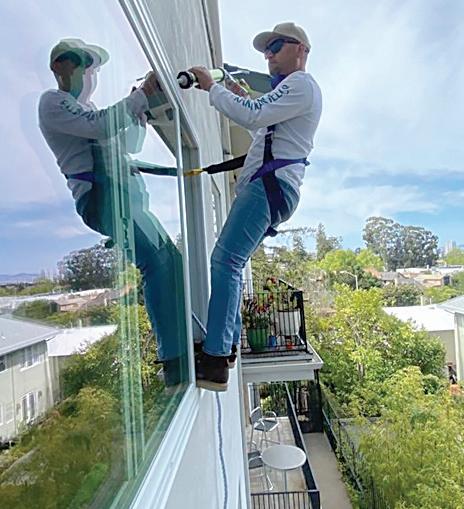
SENSEI SUPPORT
Inga Ibsdotter Lilleaas and Elle Fanning) were all nominated for acting awards. If that isn’t the objectively best casting of the year, then I guess I don’t understand the rules anymore. What else? There should be recognition for William H. Macy, Felicity Jones and Joel Edgerton for their acting in Train Dreams; Jafar Panahi’s direction of It Was Just an Accident; Paul Mescal’s work in Hamnet; the screenplays for Black Bag, Eddington and Nouvelle Vague; the production design for The Phoenician Scheme; Eva
Victor’s acting/writing in Sorry, Baby; or the cinematography in Weapons and If I Had Legs I’d Kick You, among many others. Still, the Academy got quite a bit right. Ethan Hawke was a long shot to be nominated for Blue Moon (and has lessthan-zero chance of winning), but his work is so heartbroken and tender that it deserves the spotlight. He’s in nearly every frame of the film, and he luxuriates in the brilliance of Robert Kaplow’s (also unlikely to win) crackling dialogue.
Sinners getting nominated for 16 awards is astonishing because, not only is it a great movie, but the Academy doesn’t usually recognize or reward genre films. Don’t quote me on this, but it feels like the last time something “fantastical” was given the respect it deserved by the Oscars was 2003’s Return of the King. The problem is because Sinners is nominated for so many awards, it’s unlikely to win very many of them. I think it’s guaranteed to win for score and cinematography, but everything else is up in the air.
If one is looking to catch as many of these films as they can before the Oscars, here are a few recommendations:
Even if one doesn’t like vampires, watch Sinners. This movie will only grow in esteem over the years and has more to say about race in America than one can catch in a single viewing.
Timothée Chalamet’s inability to hide his desperation to be considered a generationally great actor is offputting, but his work in Marty Supreme
is undeniable. The film (and his performance) is colossal and only grows the more one thinks about it, but I still don’t really want to watch it again and re-soak in that level of anxiety.
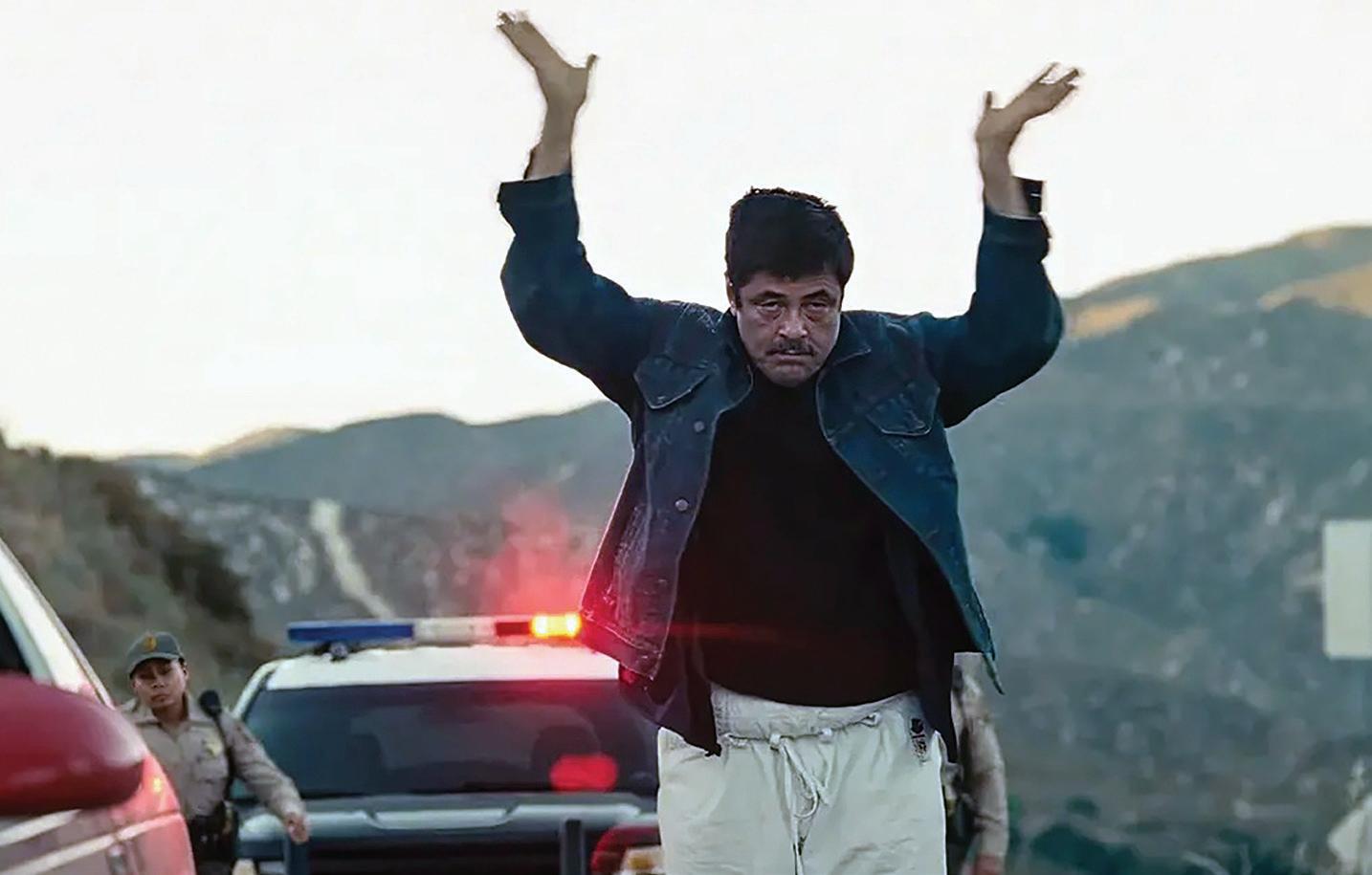
Benicio del Toro’s and Teyona Taylor’s effortless charisma in One Battle After Another; Rose Byrne’s astonishing deconstruction of motherhood in If I Had Legs I’d Kick You; the stunning animated short Retirement Plan; the singularly brilliant live action short Two People Exchanging Saliva; the poetry of the Pacific Northwest seen from Adolpho Veloso’s cinematography in Train Dreams; Ruth E. Carter’s immaculate period costuming and Ludwig Goransson’s all-time classic score in Sinners; and the deceptive brilliance of Brazil’s The Secret Agent are all genuinely great elements that have made 2025 one of the finest years for films of the century.
Watch what there’s time for, but don’t stress. These movies will last.
Even as I bemoan the things that I know will lose or didn’t even get nominated, I still love celebrating movies, an art form I’ve spent nearly half my life writing about. These artists and their films deserve to be recognized because, at the end of the day, making a movie is a minor miracle, and making a great one is something even more ephemeral and rare. They’re pieces of forever that we were lucky enough to experience in our all-too-brief lifetimes. Why am I even complaining? ❤
Benicio del Toro steals every scene he’s in as a karate instructor in Paul Thomas Anderson’s ‘One Battle After Another.’
MOVING PORTRAIT Prime acting and the poetry of the Pacific Northwest seen from Adolpho Veloso’s cinematography make Clint Bentley’s ‘Train Dreams’ a must watch.