

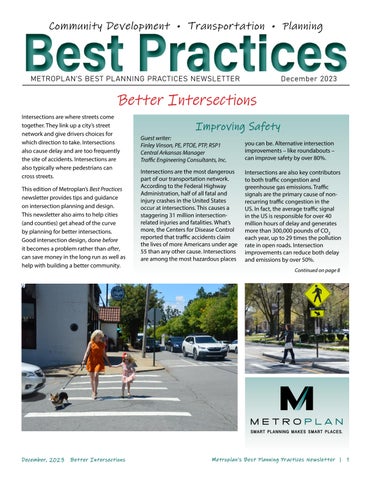
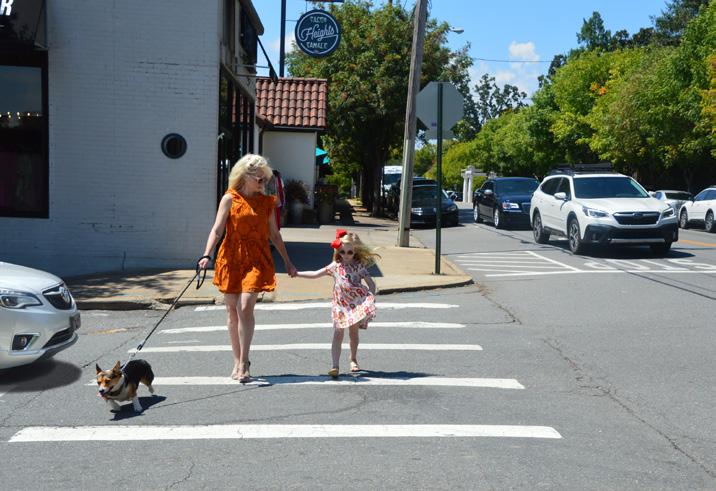
Intersections are where streets come together. They link up a city’s street network and give drivers choices for which direction to take. Intersections also cause delay and are too frequently the site of accidents. Intersections are also typically where pedestrians can cross streets.
This edition of Metroplan’s Best Practices newsletter provides tips and guidance on intersection planning and design. This newsletter also aims to help cities (and counties) get ahead of the curve by planning for better intersections. Good intersection design, done before it becomes a problem rather than after, can save money in the long run as well as help with building a better community.
Guest
writer:
Finley Vinson, PE, PTOE, PTP, RSP1 Central Arkansas Manager Traffic Engineering Consultants, Inc.
Intersections are the most dangerous part of our transportation network. According to the Federal Highway Administration, half of all fatal and injury crashes in the United States occur at intersections. This causes a staggering 31 million intersectionrelated injuries and fatalities. What’s more, the Centers for Disease Control reported that traffic accidents claim the lives of more Americans under age 55 than any other cause. Intersections are among the most hazardous places
you can be. Alternative intersection improvements – like roundabouts –can improve safety by over 80%.
Intersections are also key contributors to both traffic congestion and greenhouse gas emissions. Traffic signals are the primary cause of nonrecurring traffic congestion in the US. In fact, the average traffic signal in the US is responsible for over 40 million hours of delay and generates more than 300,000 pounds of CO2 each year, up to 29 times the pollution rate in open roads. Intersection improvements can reduce both delay and emissions by over 50%.
Continued on page 8
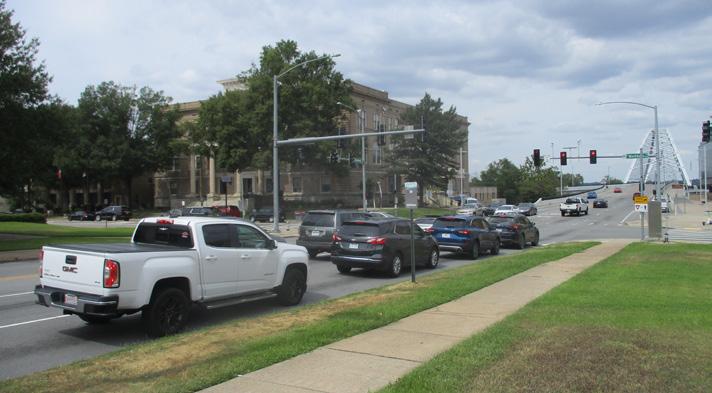
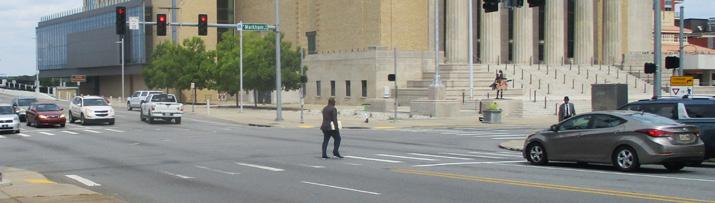
Traffic signals cause lengthy delays for drivers. They are also frequently correlated with crashes, sometimes fatal ones. Much of the danger, congestion and confusion can be reduced by adding designated lanes for right and left turns. A four-lane road cross-section with a separated median (as opposed to a two-way turning lane) is safer, has more capacity and moves traffic more efficiently.
Signal timing coordination can reduce delay while making streets safer and less congested. Timing should be updated at least every three years for changing traffic conditions.
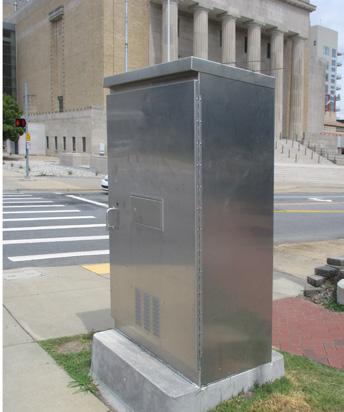
At intersections between minor side streets and major arterials, a trafficactuated signal is often helpful. These are often activated by video detectors, or (often older ones) by magnetism when a vehicle pulls up on a side street.
When no side traffic is present, the signal remains green for through traffic. In fact, signals are sometimes preferable to roundabouts with arterial / side street intersections because roundabouts slow all traffic which can impede traffic flow on the arterial street.
Pedestrian safety is always an issue with signalized intersections, partly because signal cycles can give a false sense of
1 Available on Metroplan’s web site at http://www.metroplan.org.
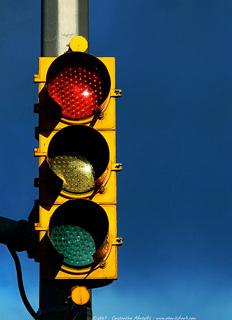
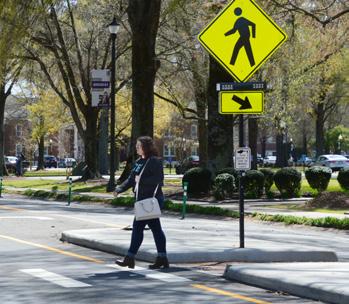
security. Reducing traffic speed is critical for pedestrian safety. Minor measures can help control speed, like raised pedestrian walkways, intersection bulbs, and other measures. For a full range of options, we recommend Metroplan’s Multimodal Infrastructure Guidelines. 1
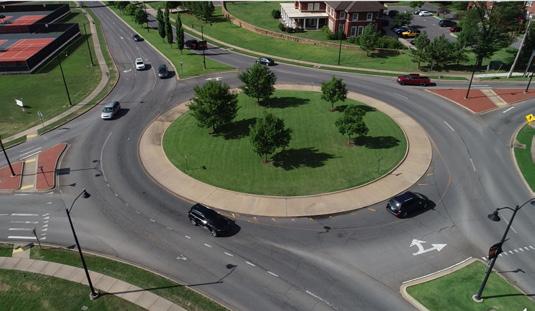
Driving around Central Arkansas you are probably seeing more roundabouts. They are safer and move more traffic than the typical signalized intersection. Roundabouts slow traffic without stopping it, and are easier for pedestrians too. Roundabouts don’t belong everywhere, but they are becoming more widespread because they work. Roundabouts can allow for narrower streets, two-lane streets rather than four(or five)- lane ones. Why? Because a lot
of street width is actually for traffic storage during signal cycles. Signal-directed traffic proceeds in “platoons,” with the street empty and jammed in alternating cycles. With a roundabout, traffic usually slows a little, then moves on through. There is less queuing and hence a smoother flow.
There are typically two main obstacles to implementing roundabouts:
• Higher cost up-front for the new roadway and landscaping.
• Space limitations, especially in already built-up areas where private buildings, parking lots and other property might have to be condemned.
There are two other considerations though. Despite higher up-front cost, roundabouts do not require the maintenance and repairs that signals do. Roundabouts are a lot safer. Crashes, even when they happen, are less severe, and less likely to cause fatalities or injuries. When a city replaces a significant share of signalized intersections with roundabouts, it can expect fewer police and fire calls. While improving quality of life for drivers and pedestrians, roundabouts can thus help the bottom line, too.
Whether an intersection is signalized, a roundabout, or a stop sign a few critical principles almost always apply:
• Drivers should not be faced with too many decisions at once. Preferably no more than one decision at a time.
• It is almost always safer to channelize traffic movements.
This means providing separate lanes for different movements, such as dedicated left-turn lanes. Channelization is especially necessary for intersections with complex movements and large traffic flows.
• Sight distance is critical. Ideally, sight distance should be greater than stopping distance for drivers but,
where this is not possible, signals and dedicated lanes can help.
• Pedestrians must be provided with safety and visibility. Wherever possible, there should be pedestrian refuge islands between differing directional flows for walkers, bikers, and handicapped pedestrians.
A city can sometimes avoid widening a street by using roundabouts in place of traffic signals. This is because, with typical four- and five-lane streets, traffic tends to queue up behind signals. The extra lane in each direction serves mainly to store traffic while awaiting signal changes. With roundabouts, traffic flow is smoother, with less queuing.
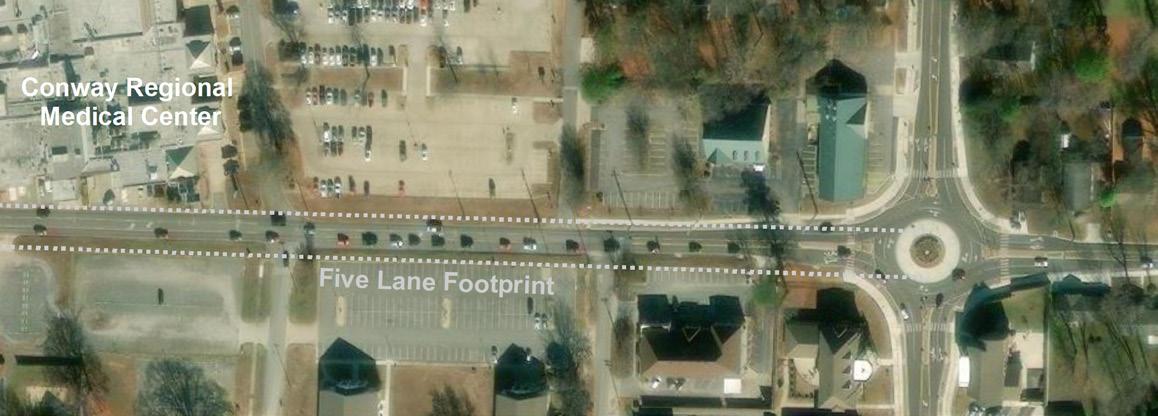
A classic example of this is a stretch of College Avenue in Conway between
Salem Road on the west and Donaghey Avenue on the east. This is a busy street, serving the Conway Regional Medical Center a few blocks north of the University of Central Arkansas (UCA). Around 2010 it looked like the street would have to be widened to a five-lane cross-section. Instead, however, the city replaced signalized intersections at Salem Rd. and Donaghey Ave with roundabouts. Today, traffic flows
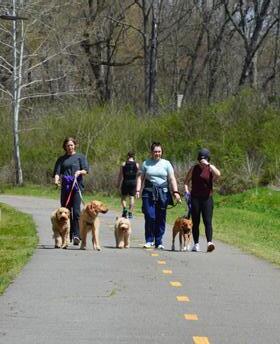
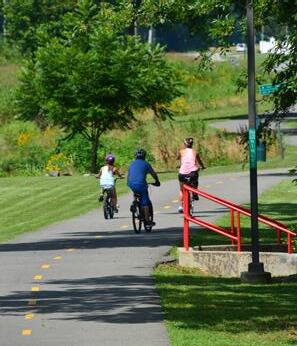
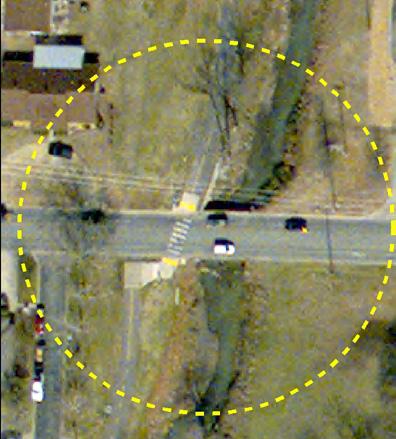
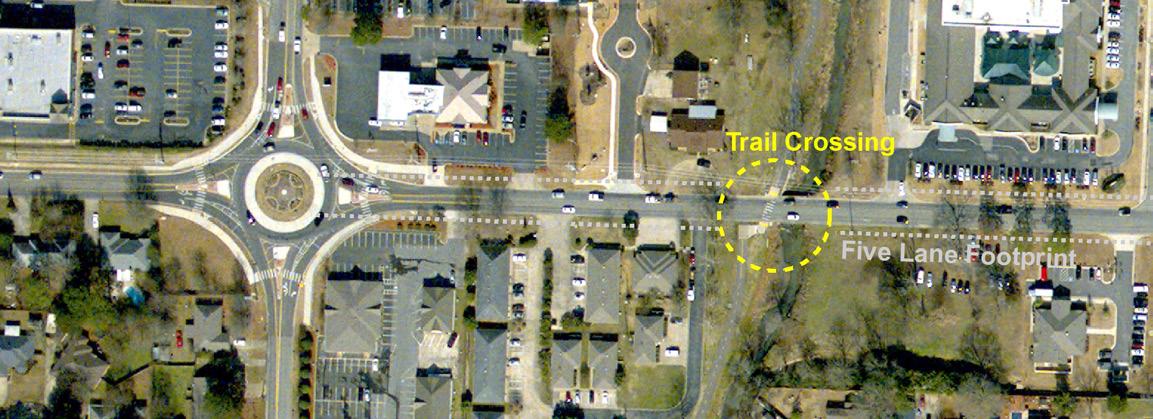
Special note: Metroplan is working with the City of Conway to redesign the crossing of College Avenue over Tucker Creek, with improved drainage and an enlarged box culvert that will allow the trail to pass under the street.
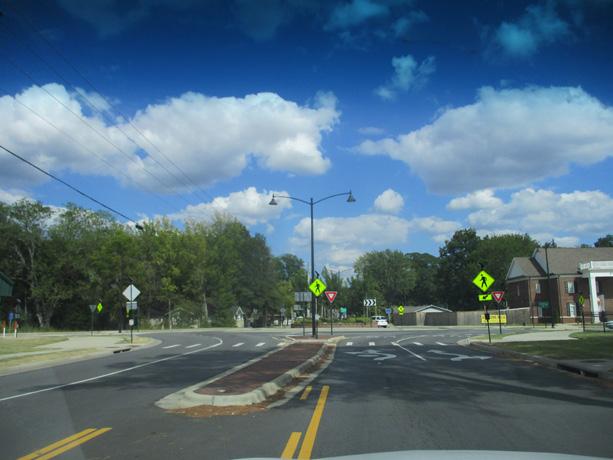
how
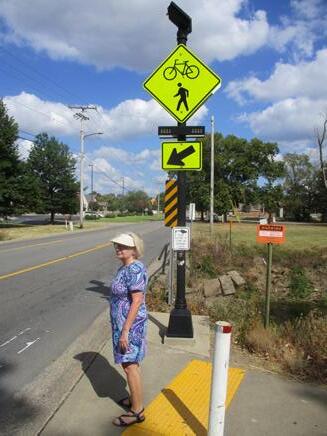
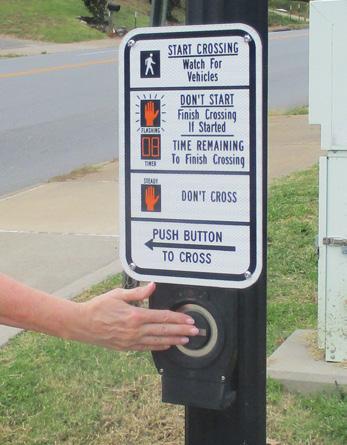
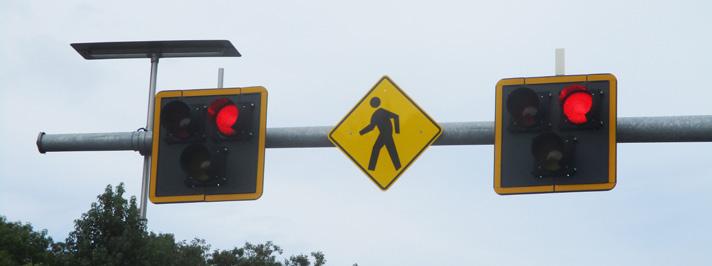
RRFB is a tongue-twisting abbreviation for pedestrian warning sign that improves safety for pedestrians (and bikes, wheelchairs, scooters, etc.) crossing streets. Typically the pedestrian can activate the RRFB by pushing a button. The bright flashing beacon alerts drivers to the presence of pedestrians, with an increased yield rate of about 98 percent. RRFBs typically reduce pedestrian crashes by about 47 percent. RRFBs work best with road speeds under 40 mph, often coupled with a narrowing of the roadway and/or a raised pedestrian crosswalk. RRFBs can be helpful when coupled with roundabouts.
The simple stop sign is and will remain the primary form of intersection control. Its main advantage is that is simple and inexpensive. When over-used, though, stop signs can impede traffic flow. All-way stops are also extremely inefficient and can result in increased congestion.
The classic four-way, or all-way stop works well in areas where traffic moves slowly. They are especially useful
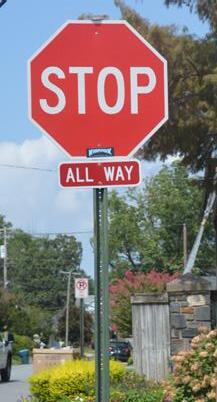
when sight distance is poor, so long as drivers can see the front of other stopped vehicles. Stop signs are also useful where side streets intersect busier streets, giving the busier streets continuous movement while entering traffic must stop before entering, or crossing. Heavy traffic flows, especially at peak times, may leave too few gaps for drivers to cross or turn, in which case a signal or roundabout is warranted.
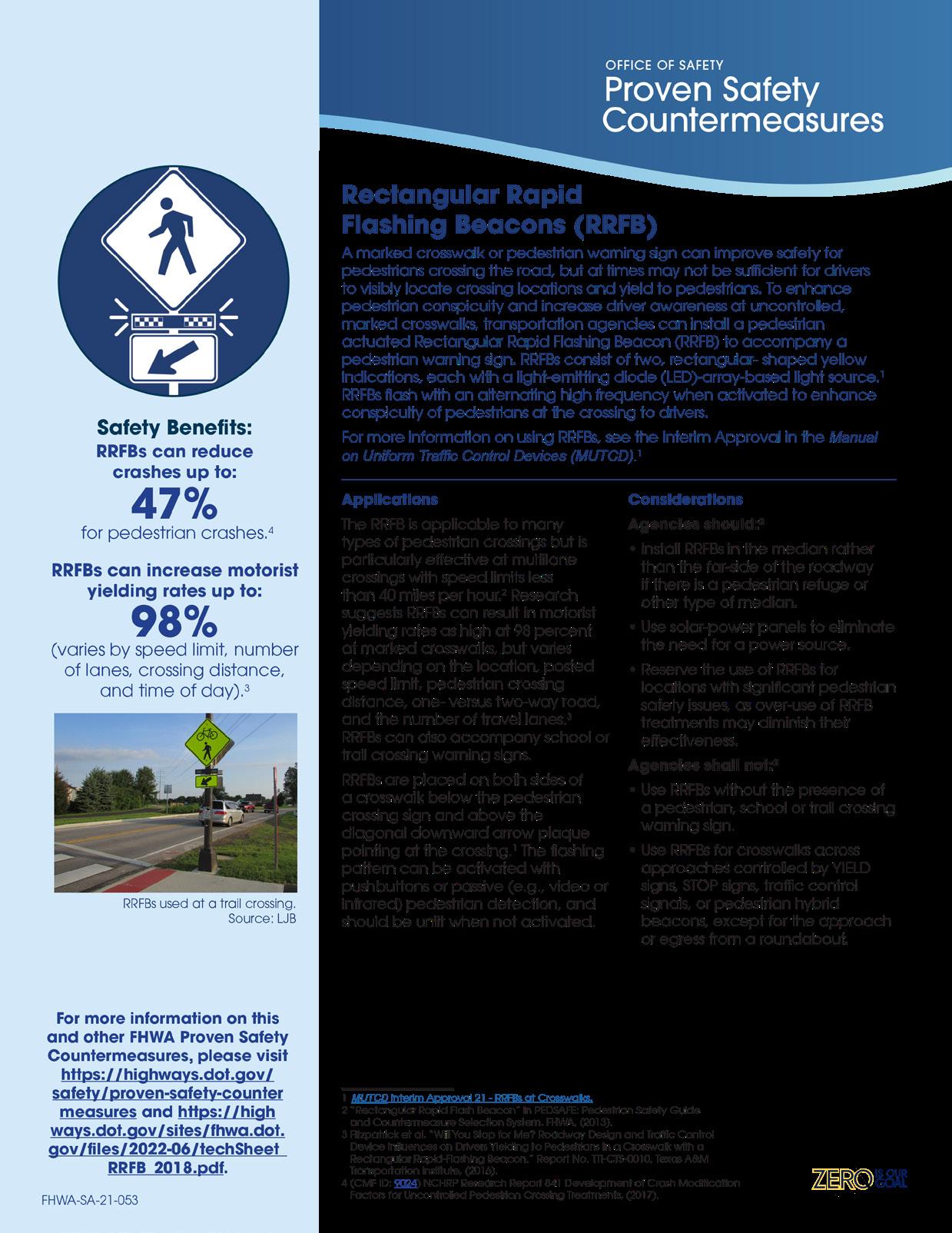
https://highways.dot.gov/safety/proven-safetycountermeasures
There is no hard-and-fast rule when choosing between signals and roundabouts. The table below gives some pros and cons for each. Since roundabouts are newer in the United States, there is often political resistance at first. Many cities have found it best to introduce roundabouts in small lowtraffic intersections at first, allowing drivers to gain familiarity. Roundabouts can later be built for busy intersections as well.
More predictable for visually-impaired persons.
Safer for pedestrians and bikes.

Cost Lower cost up front
Cost Factors Signal maintenance and hidden costs generated by crashes (police and fire), still need marking and pavement maintenance.
Space Limitations. Better suited to older locations with physical restrictions like buildings and private property.
Pedestrian/bike safety More predictable for visually-impaired persons..
Street width Can often require more lanes to allow for traffic storage during signal delays.
Traffic noise Louder due to long idling time, vehicle acceleration after stopping.
Public support Public is familiar with signals, although often frustrated by lengthy waits.
High-volume intersections.
Low-volume intersections on major arterials.
Major roads with frequent heavy trucks.
General traffic safety
Long-term capacity
Sometimes signals are the only alternative, but long delays can be expected.
No signal or traffic-actuated signal for minor street traffic may minimize delay.
Signalized intersections may be preferable in most cases.
Fatal and injury-causing crashes are more common at signalized intersections.
Signals can adapt to greater traffic volumes in growing areas, although delays will increase.
Higher cost up front, typically lower costs long run.
No need for signal maintenance costs. Some long-term marking and pavement maintenance.
Mini-roundabouts in low-traffic areas can often fit with space limitations.
Safer for pedestrians and bikes.
Less queuing of traffic means less need for widening streets.
Quieter due to lower traffic speeds, less stopping means less acceleration.
Initial resistance is best overcome by introducing simple one-lane roundabouts first.
Roundabouts can have two-or even three-lane configurations, and will flow more evenly with less delay than signalized intersections.
Roundabouts will cause unnecessary delay for through traffic, since all traffic must slow through a roundabout.
Roundabouts can force trucks to make problematic turning movements. However, tis can be minimized via design that allows trucks to drive over central portion.
Crashes are less severe in nature, fewer injuries and fatalities.
One-lane roundabouts can be designed for future widening to two-lane format for future capacity needs.
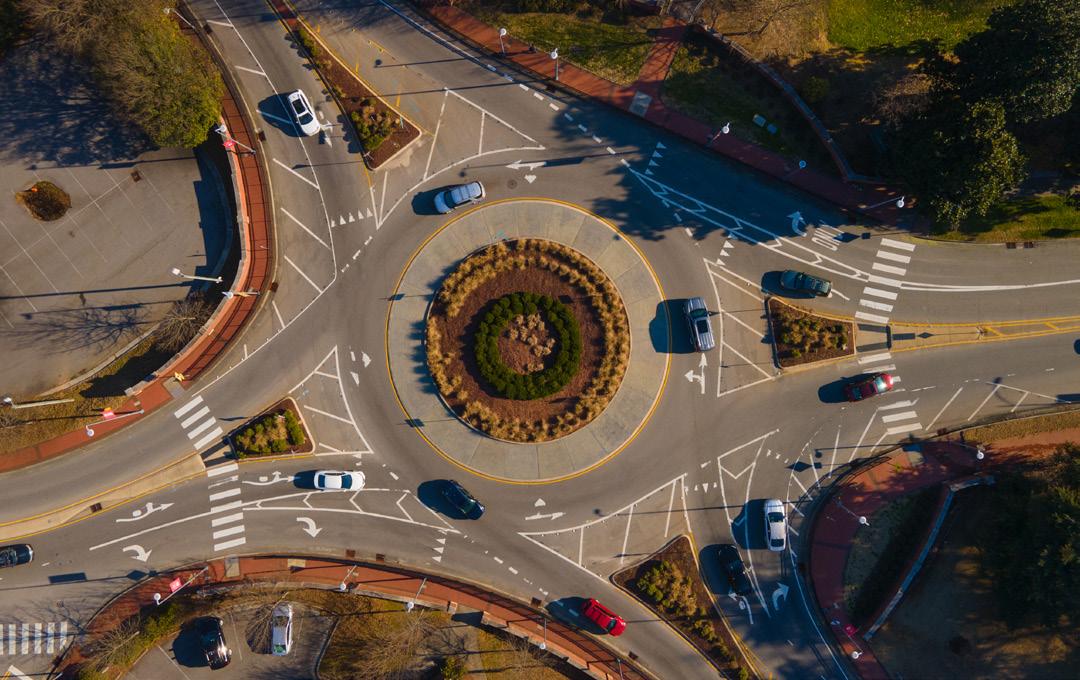
The image above depicts some of the key features in a typical roundabout. Traffic in the roundabout gets the right-of-way; traffic entering must yield. Traffic rotates counterclockwise around a central island, which can be landscaped with garden plants, trees, art or a monument. The splitter islands allow pedestrian refuge. Pedestrians can cross in stages, and are more visible to motorists than in a signalized intersection.
Continued from page 1
Opportunities to increase safety and efficiency are just two reasons why intersection improvements are generally the most important part of an agency’s infrastructure funding. The FHWA recommends intersection analysis, or Intersection Control Evaluations (ICE), to identify optimal geometric and control solutions for intersections.
With expert help from Metroplan, consultants and your own staffs, you can conduct a performancedriven analysis of your intersections
to improve safety, environmental impact, and cost. As a practicing traffic engineer, I want to leave you with this thought: to improve the lives of residents in your city or county, look at your intersections. This edition of Metroplan’s Best Practices newsletter aims to help you with this task.
Sources:
• Federal Highway Administration (FHWA)
• National Safety Council
• Centers for Disease Control
• American Association of Highway and Transportation Officials (AASHTO)
• INRIX
A Special Thanks: Metroplan wants to recognize the help of two engineers outside the organization, who reviewed this document and provided helpful corrections, edits, and re-writes. These were: Jon Honeywell, Little Rock’s Director of Public Works, and Finley Vinson, Central Arkansas Manager for Traffic Engineering Consultants Inc. Finley was also the guest writer of the “Improving Traffic Safety” article within this newsletter. Thanks Jon and Finley, we couldn’t have done it without you!