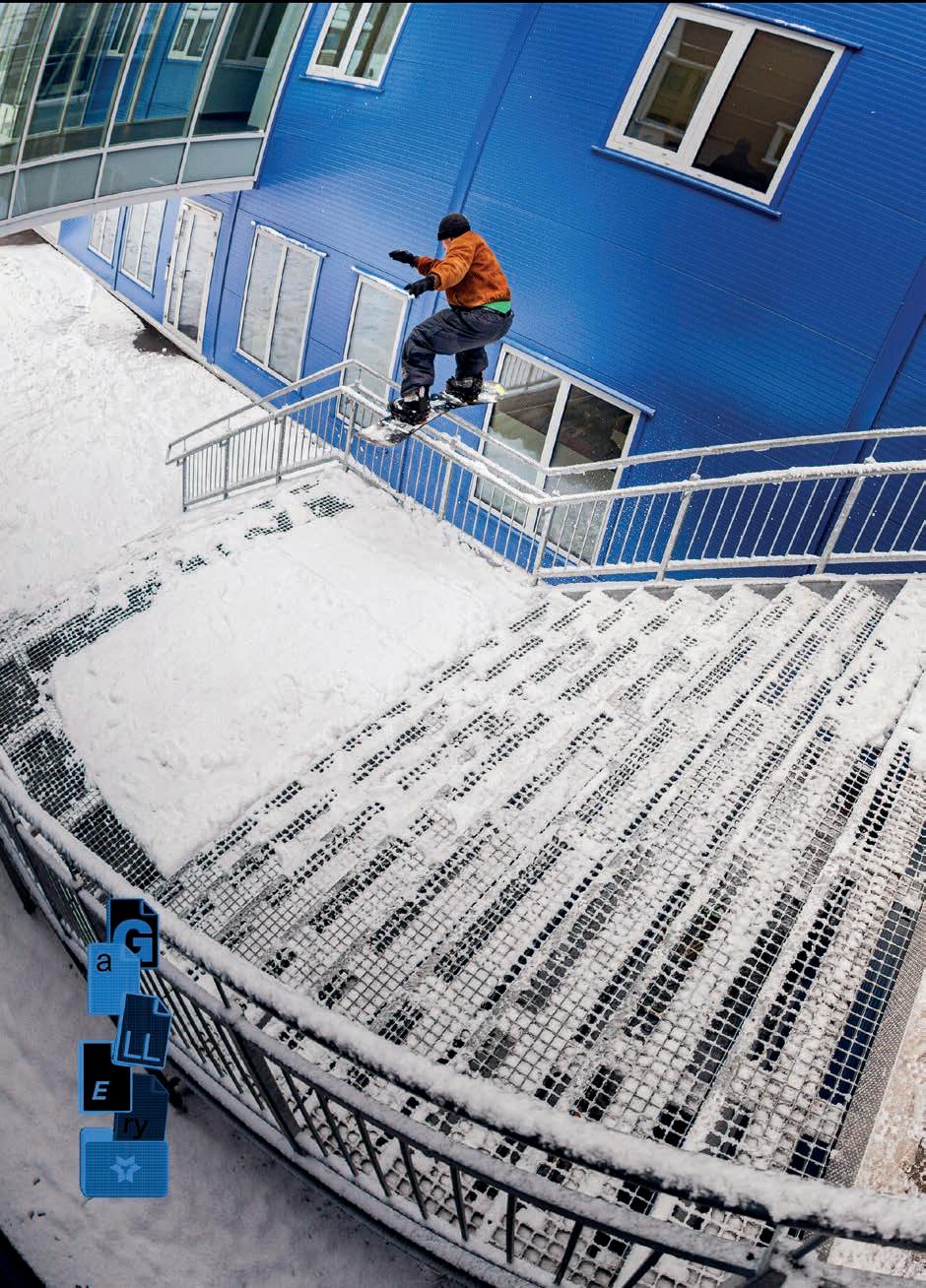
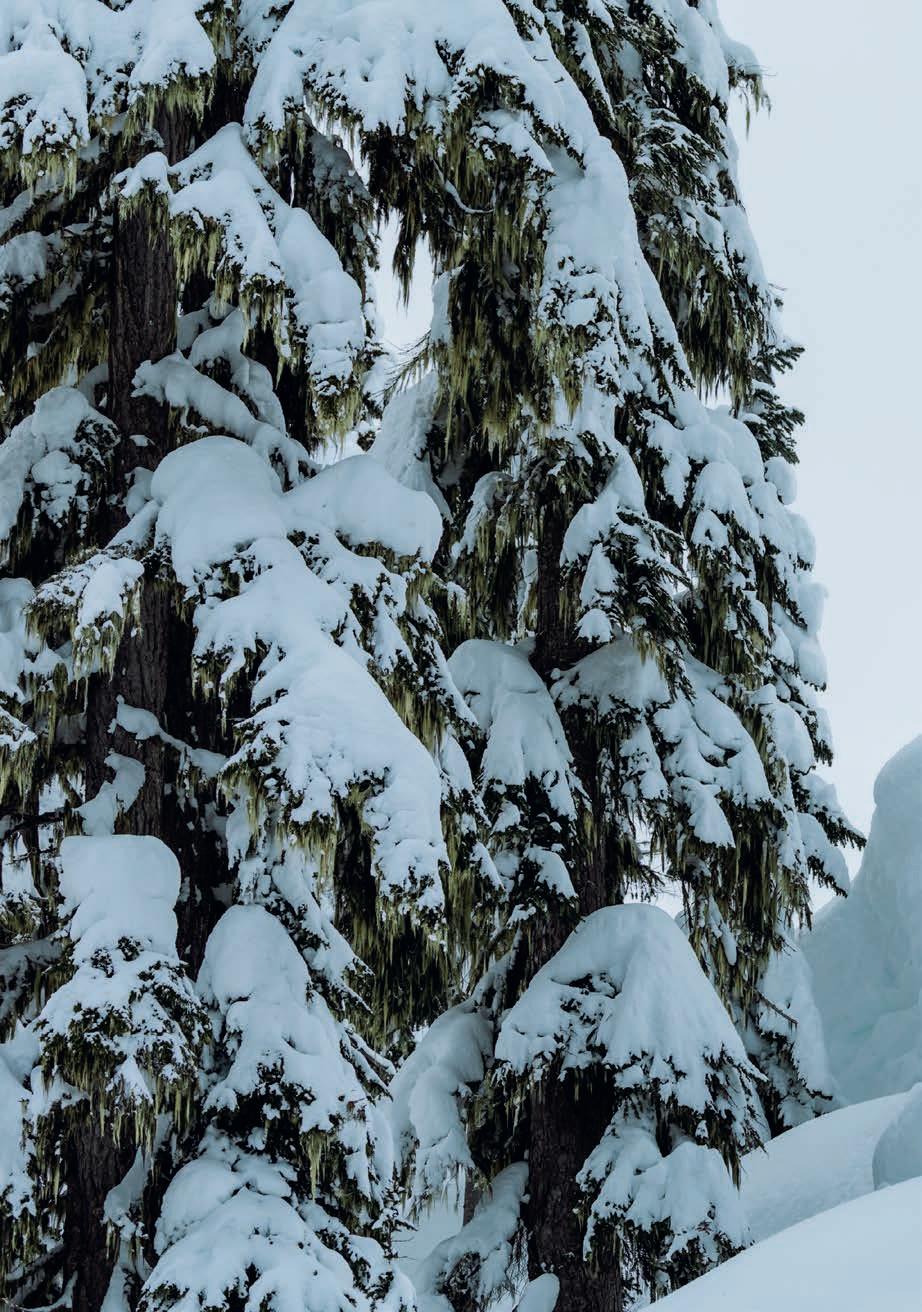
First. Feet
The Kita
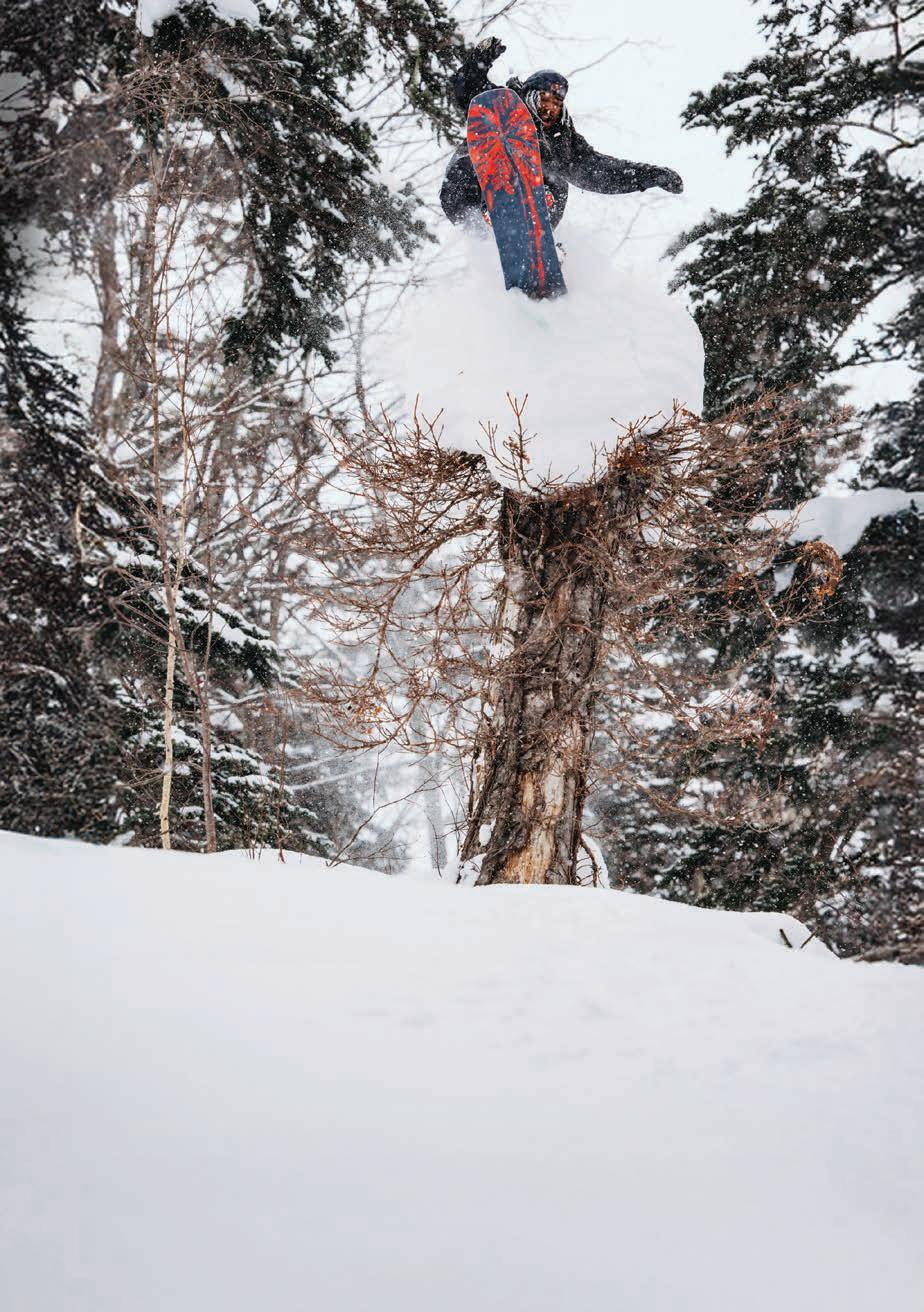
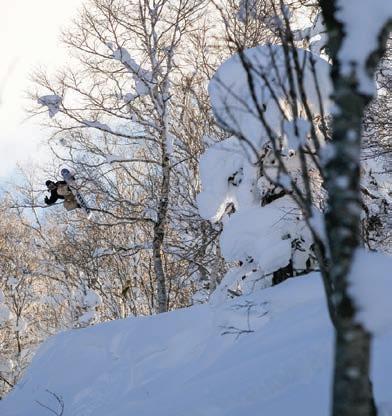
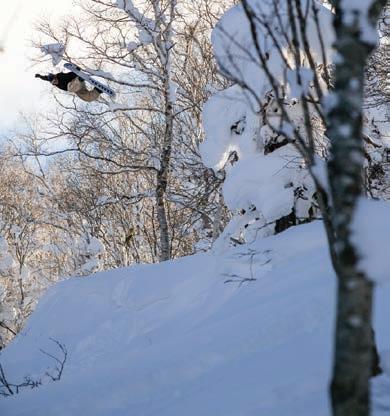
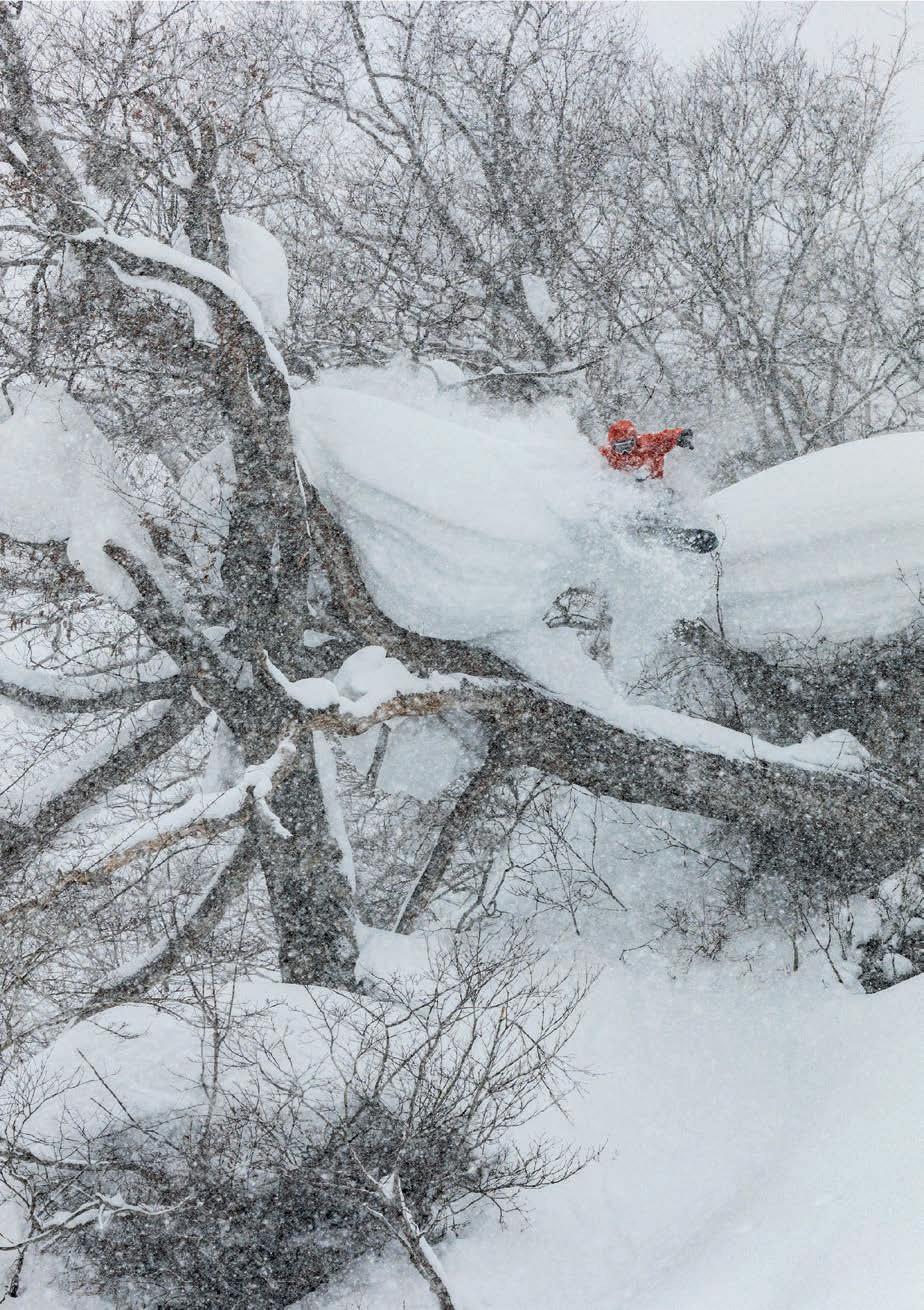
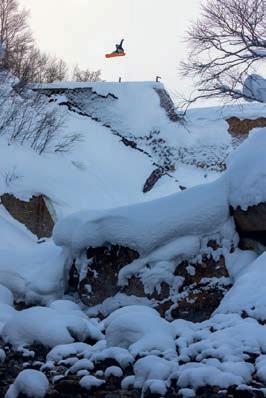
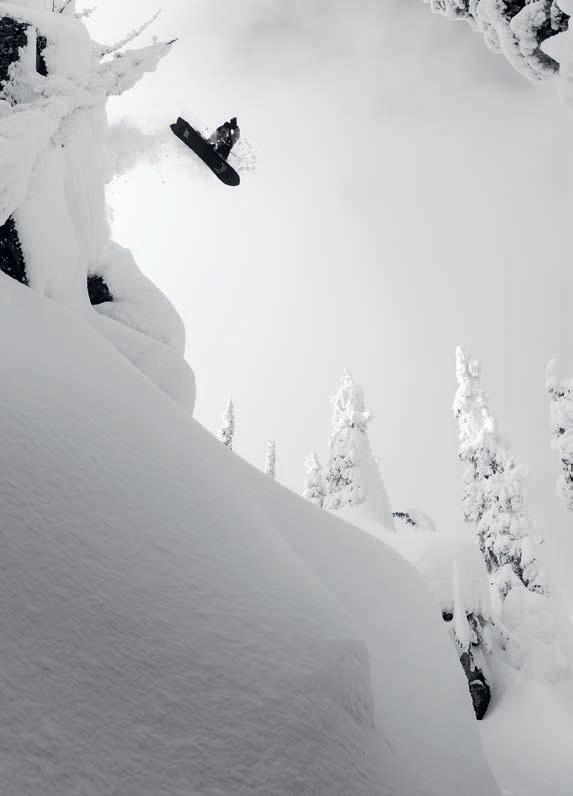
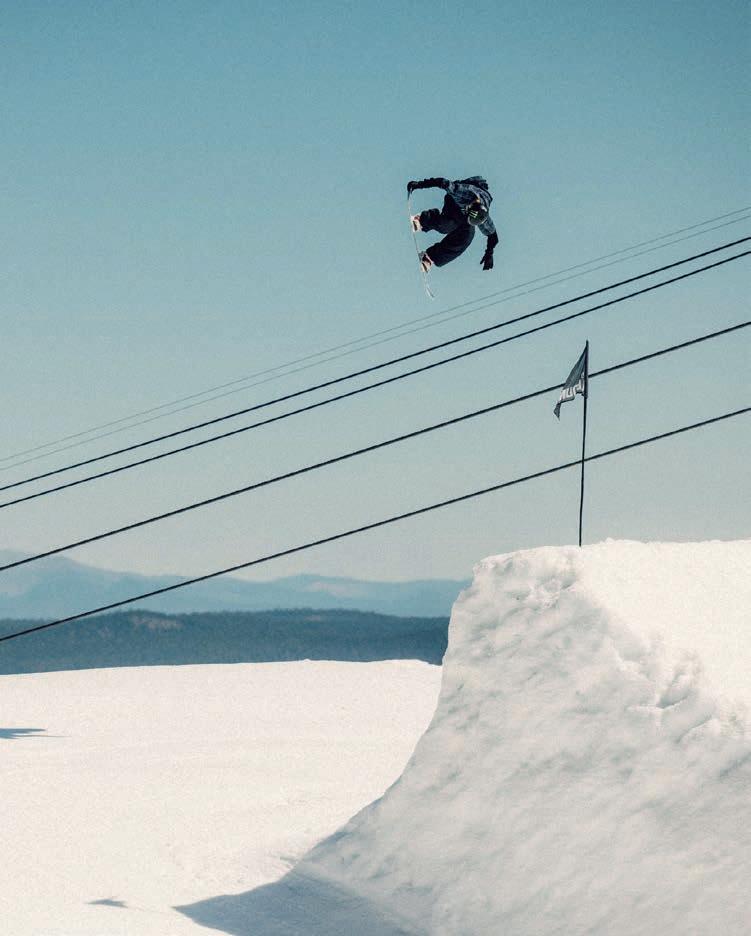
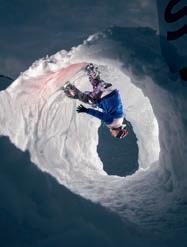
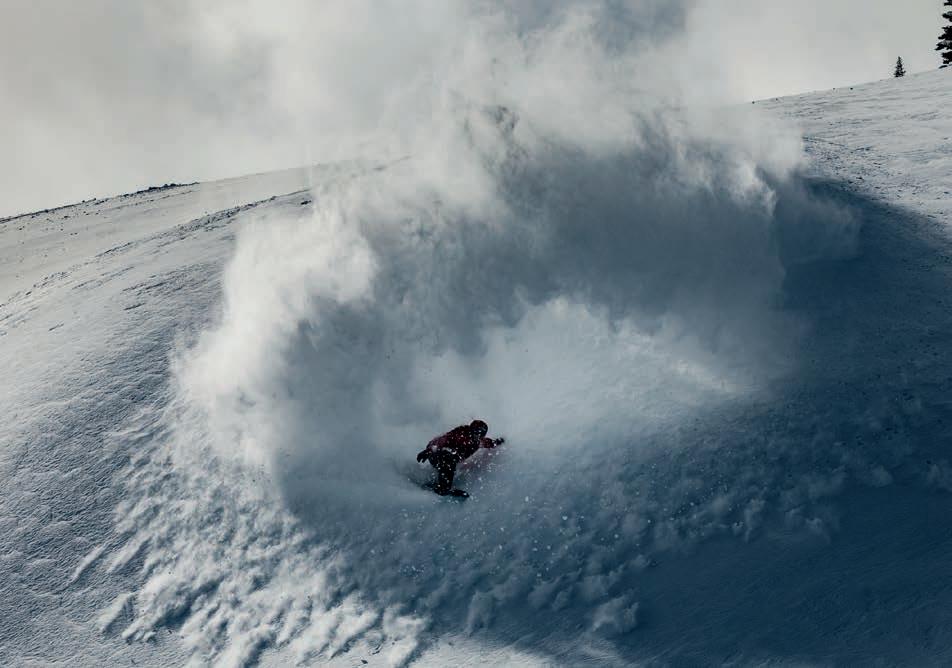
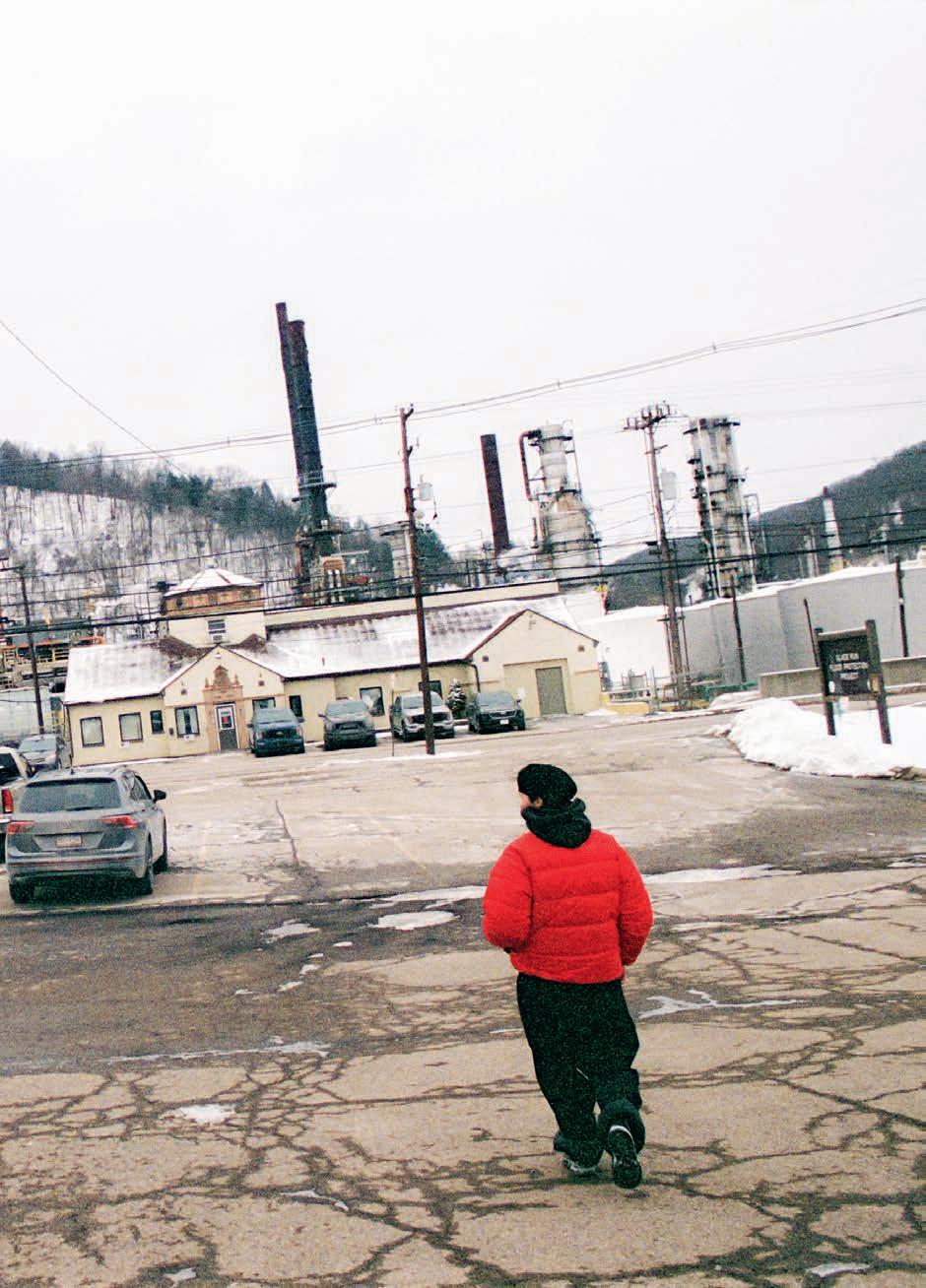
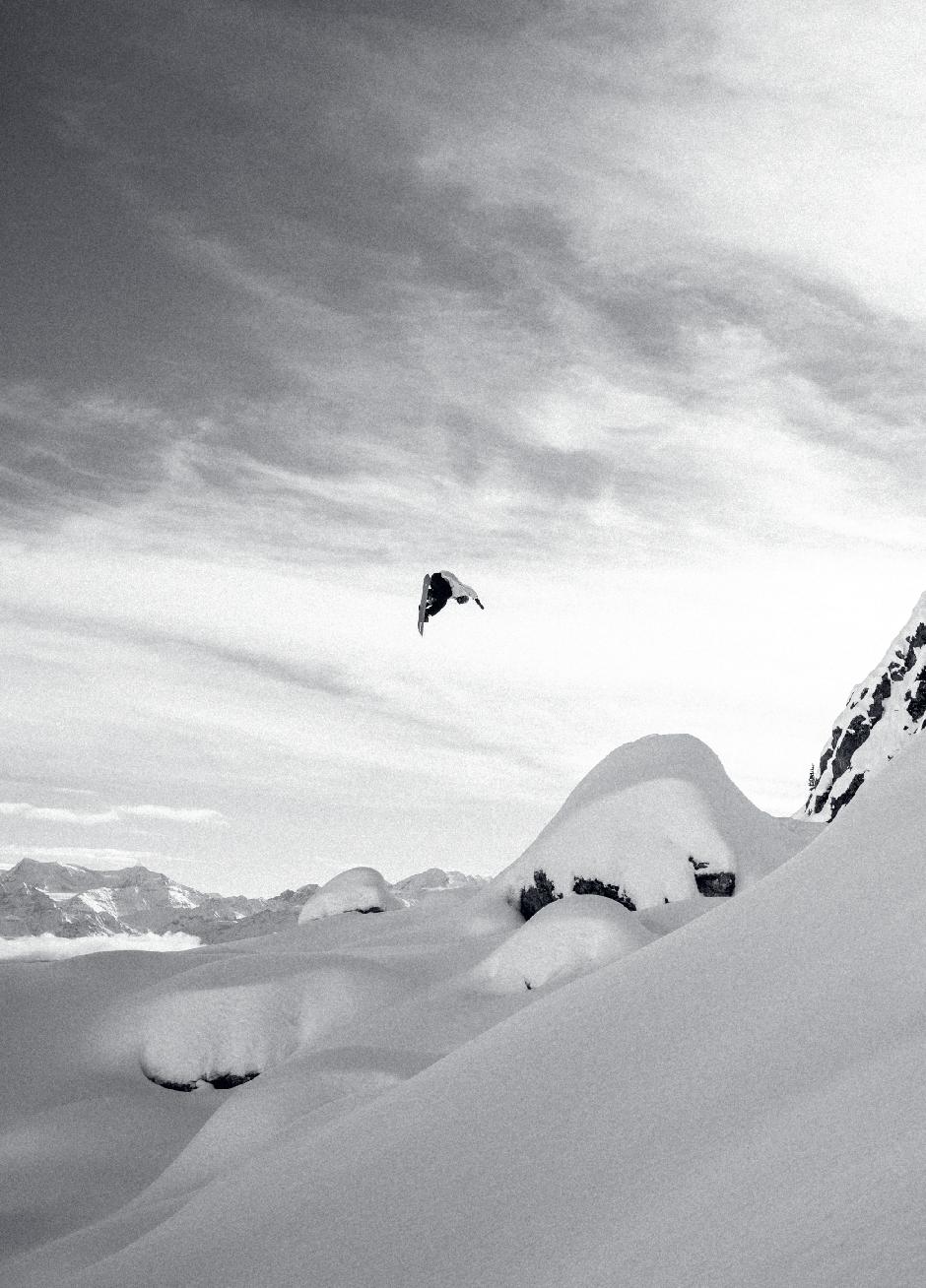
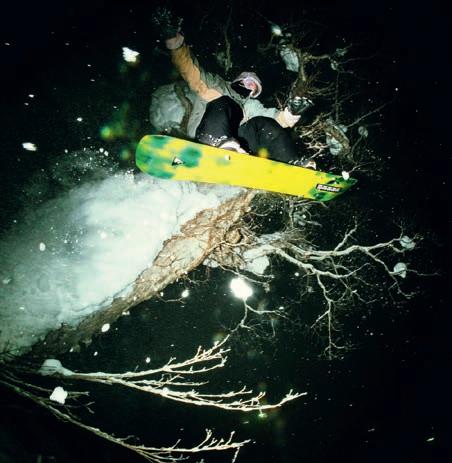
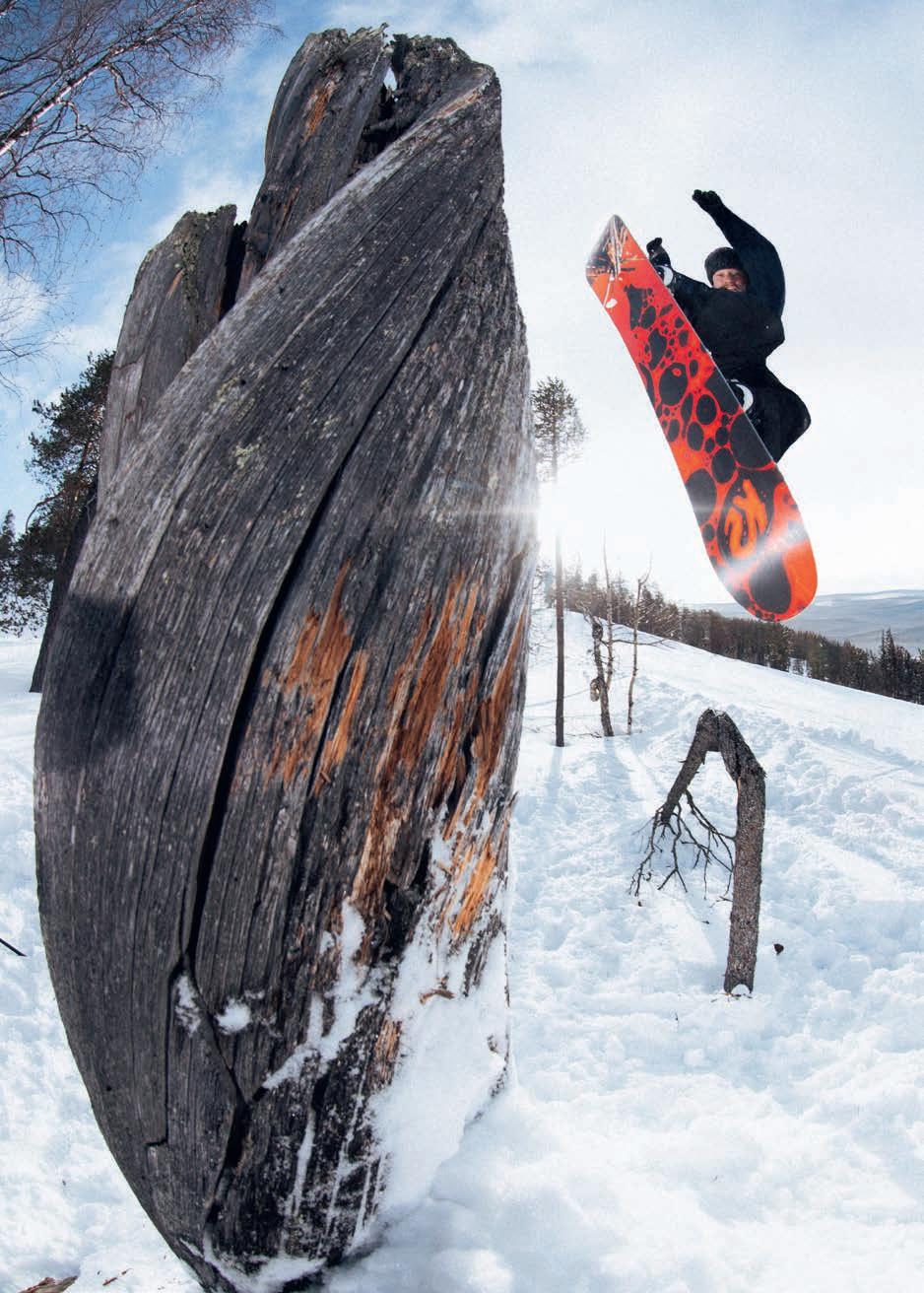
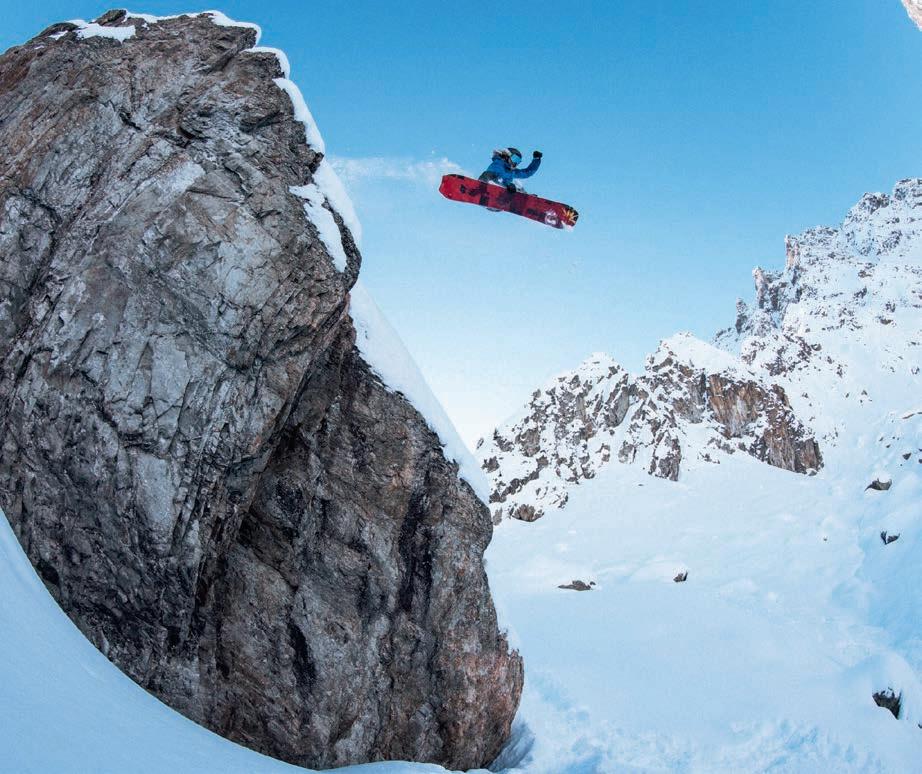
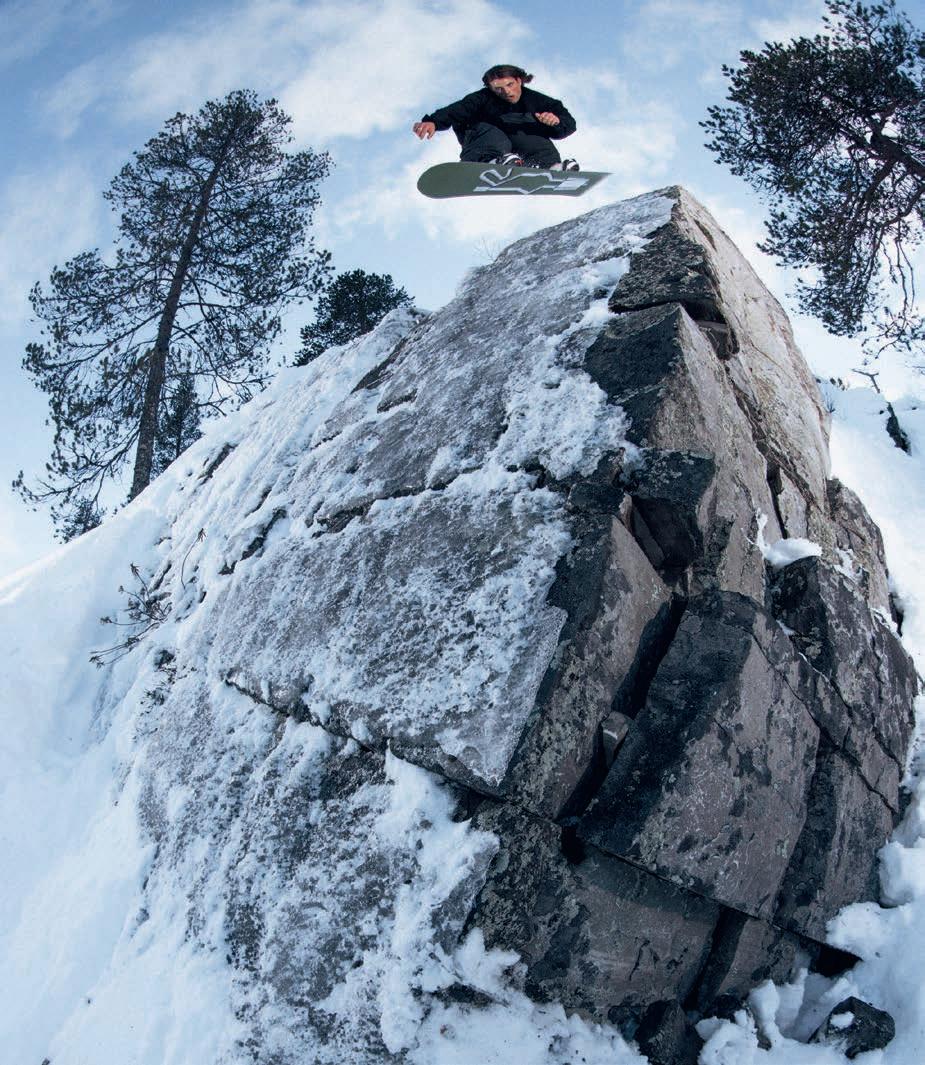
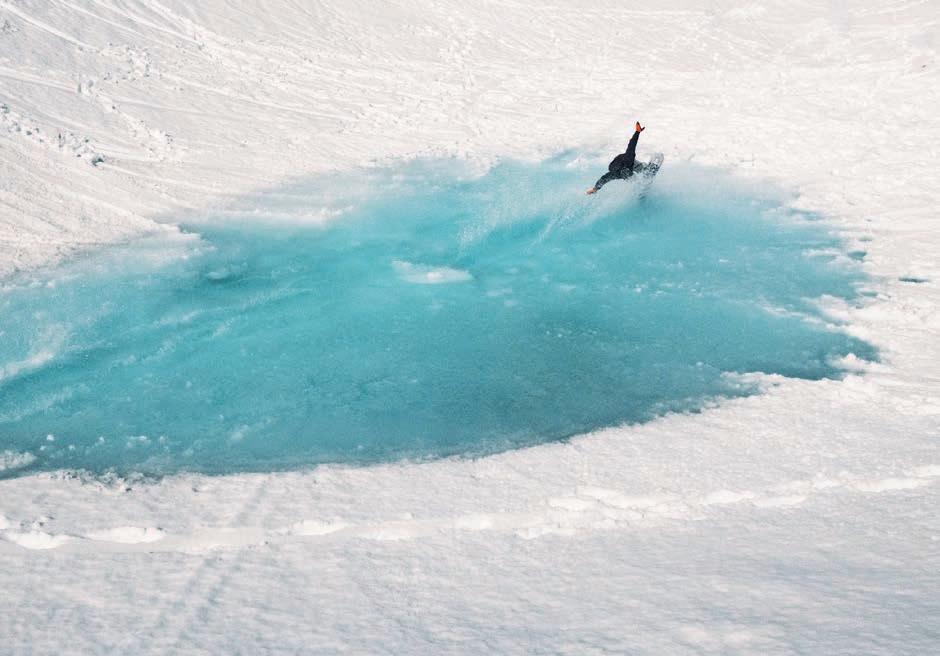
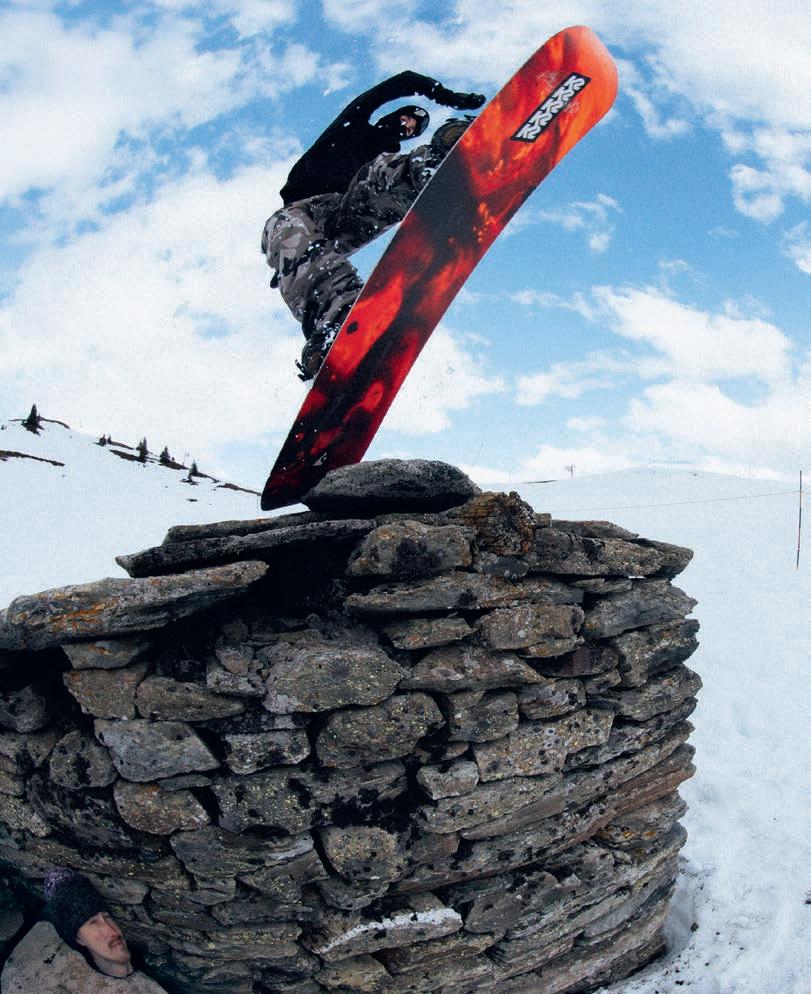
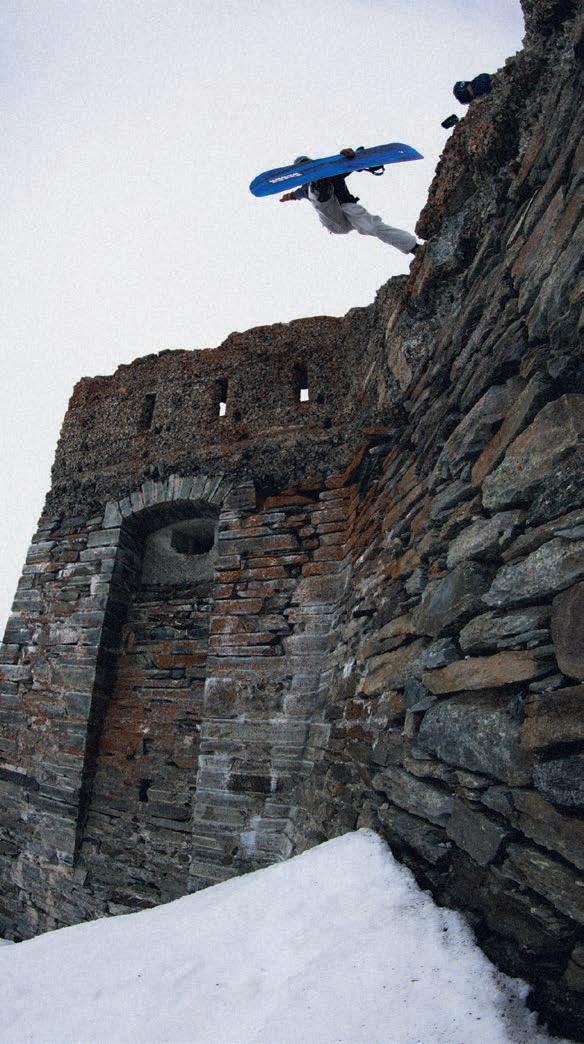
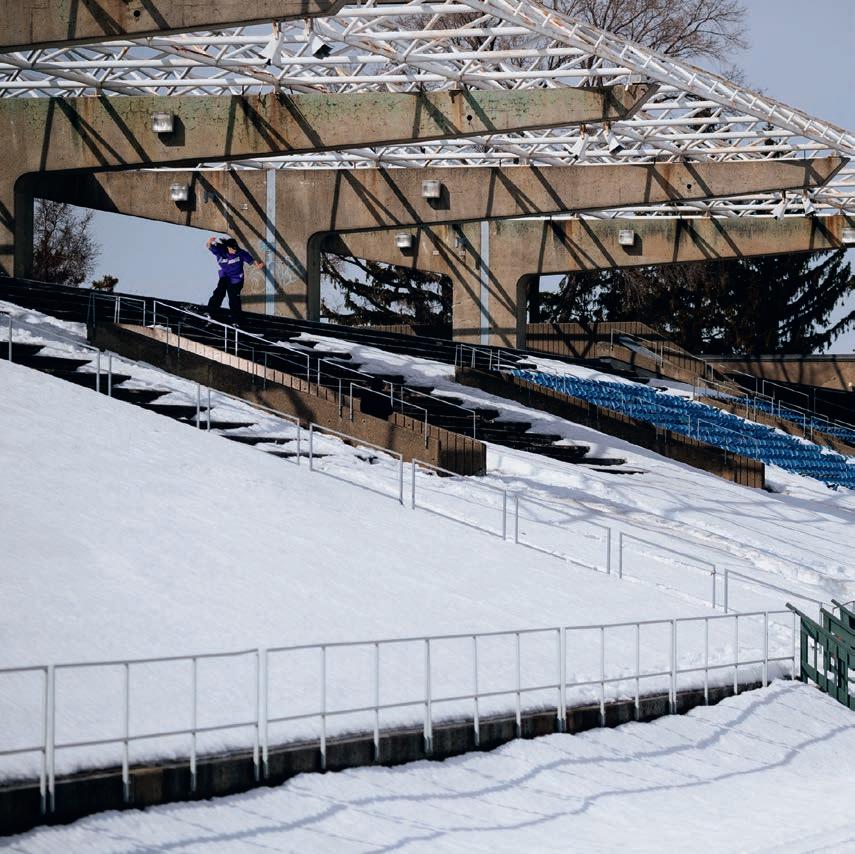
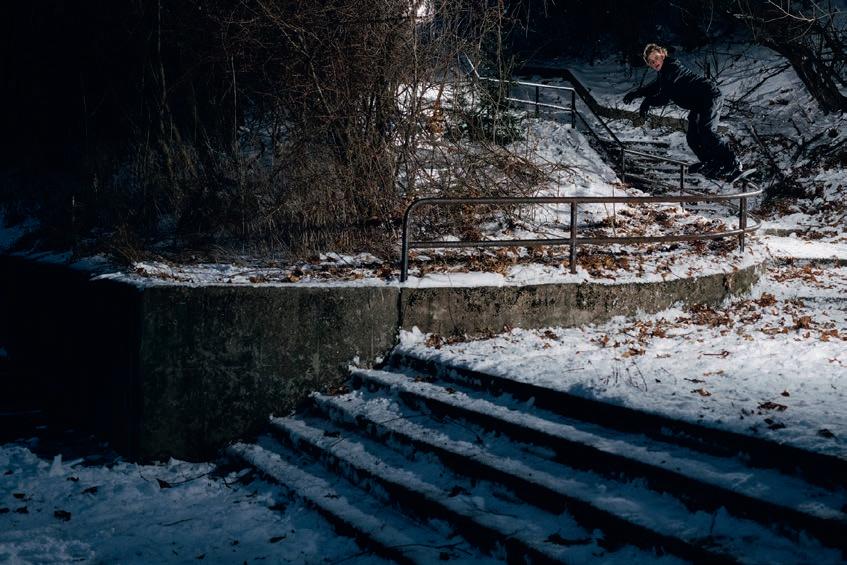
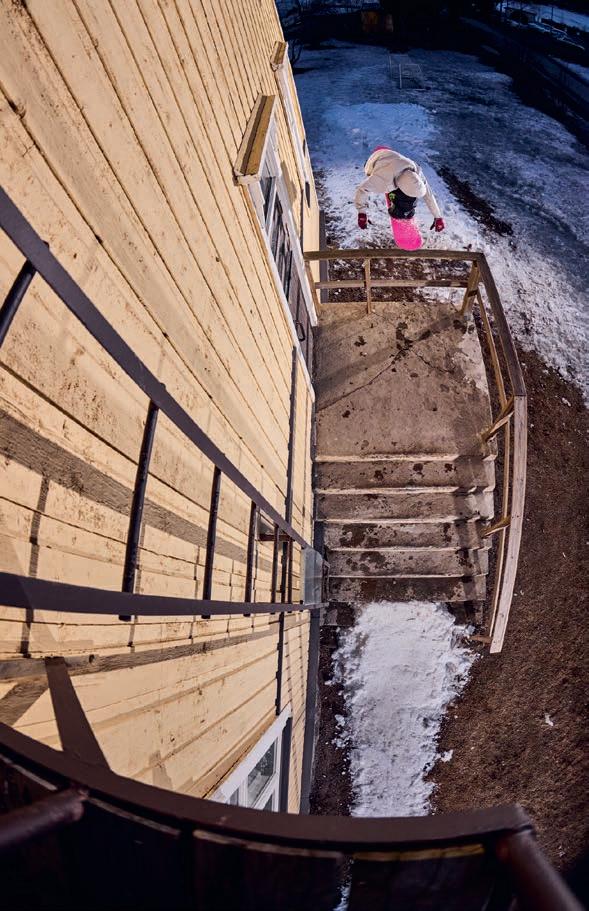
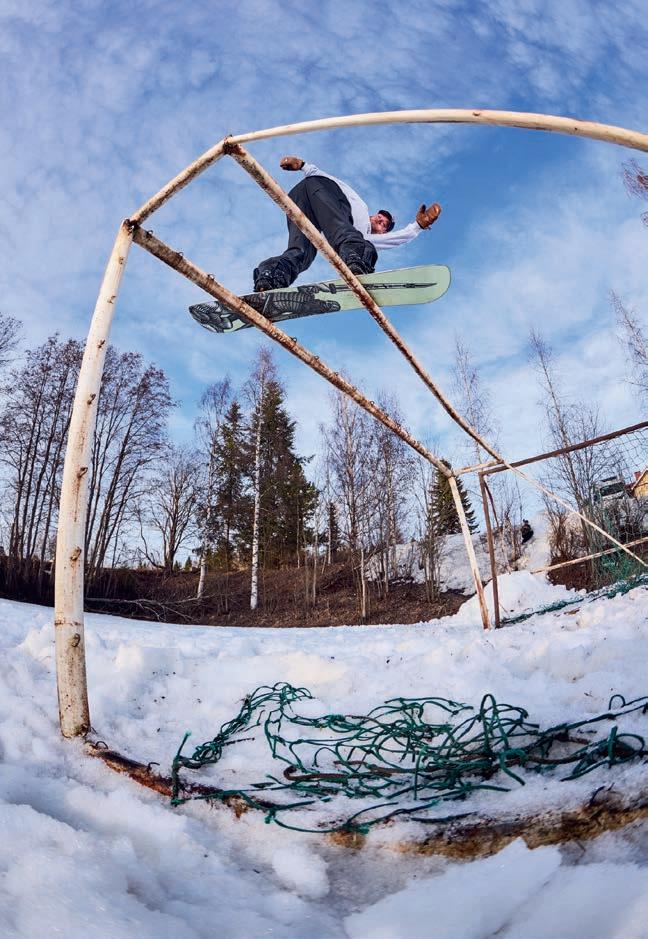
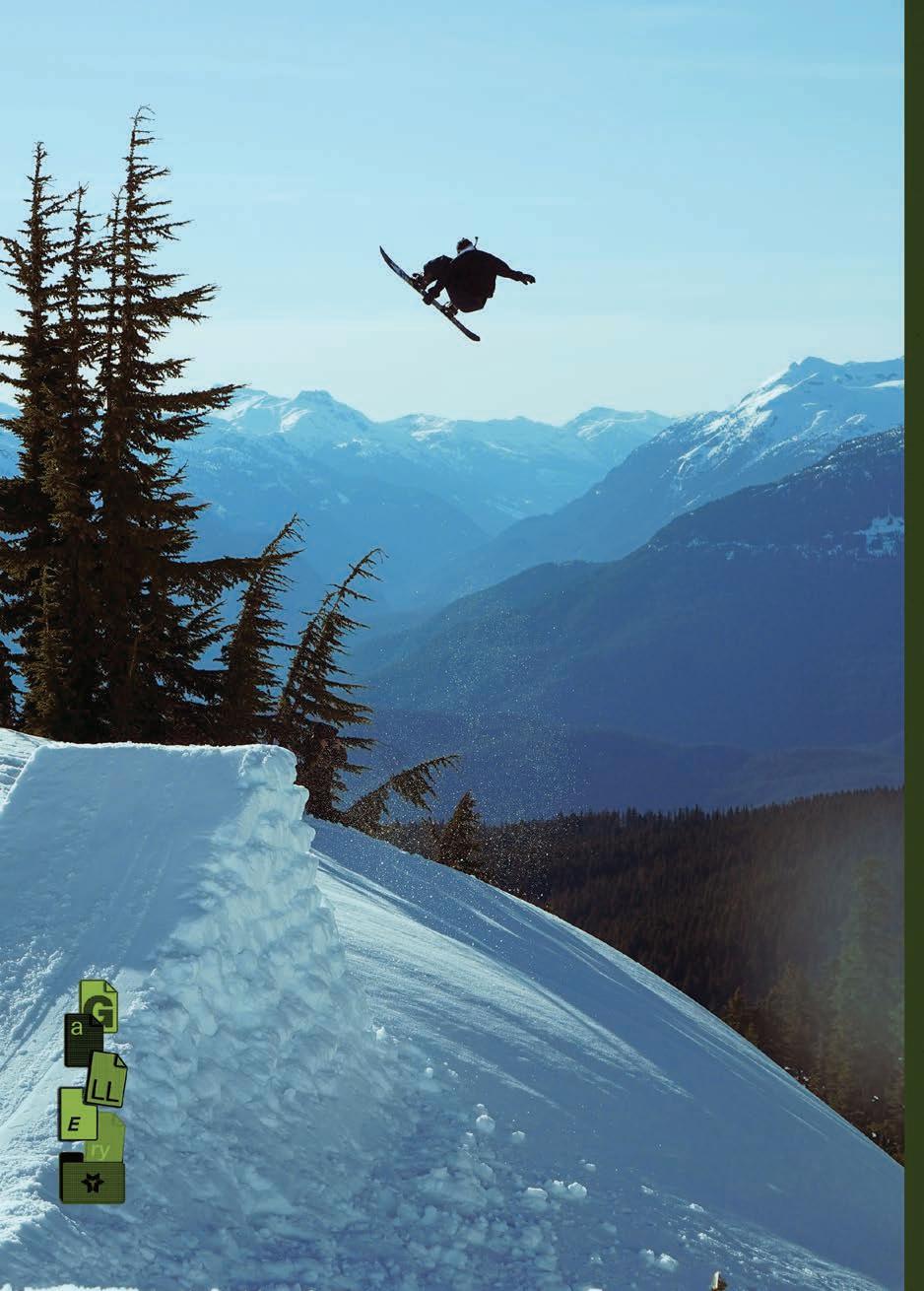
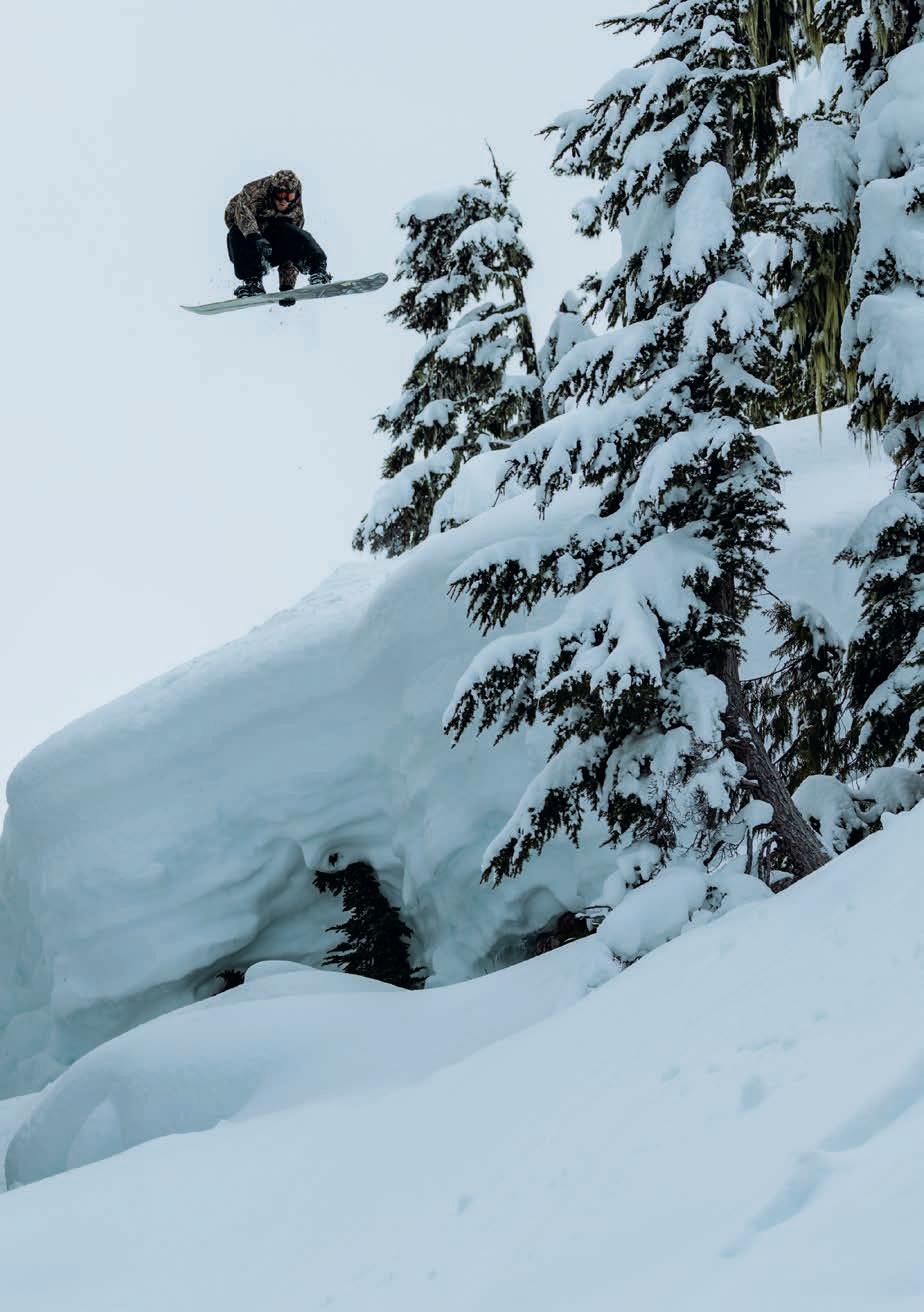
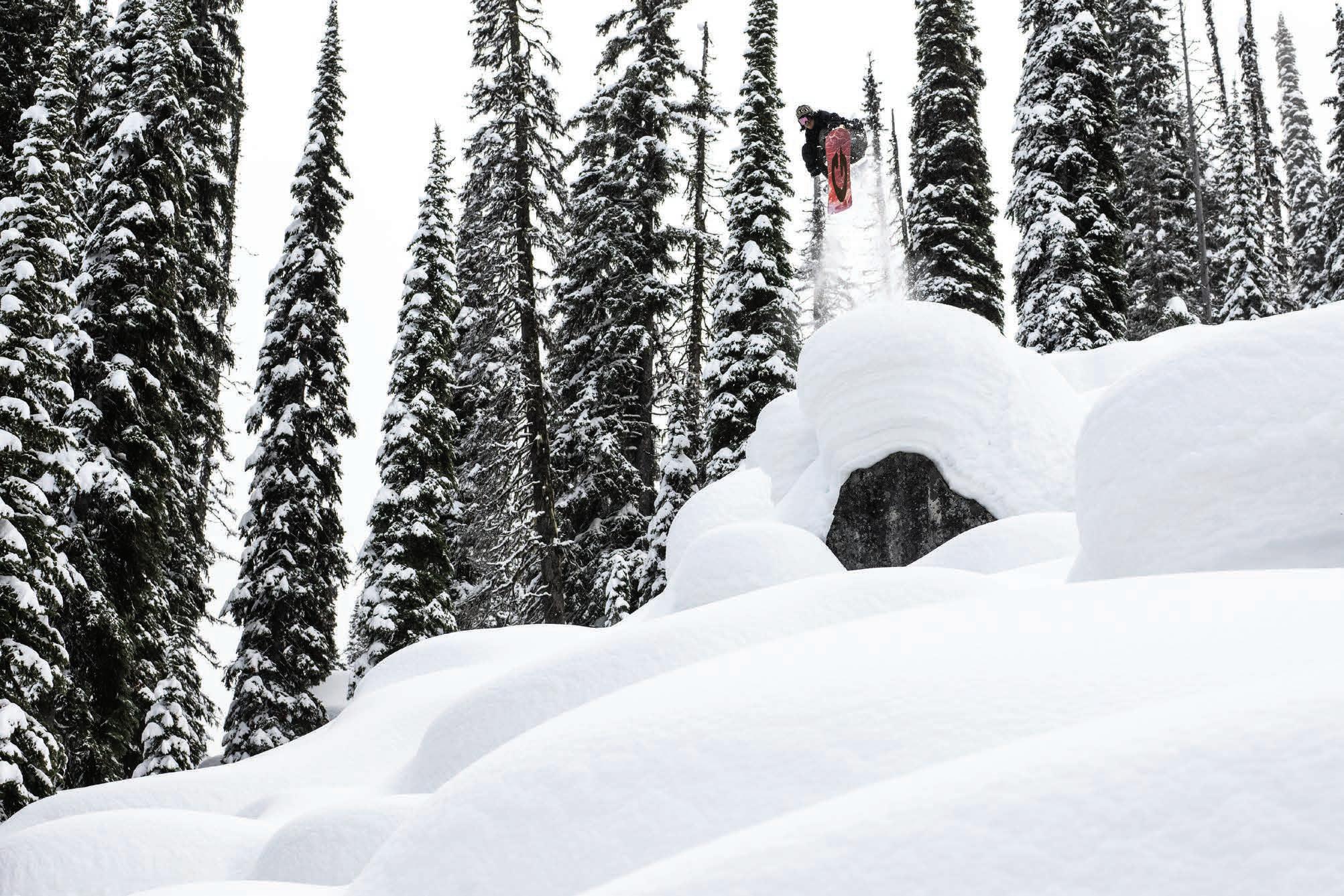
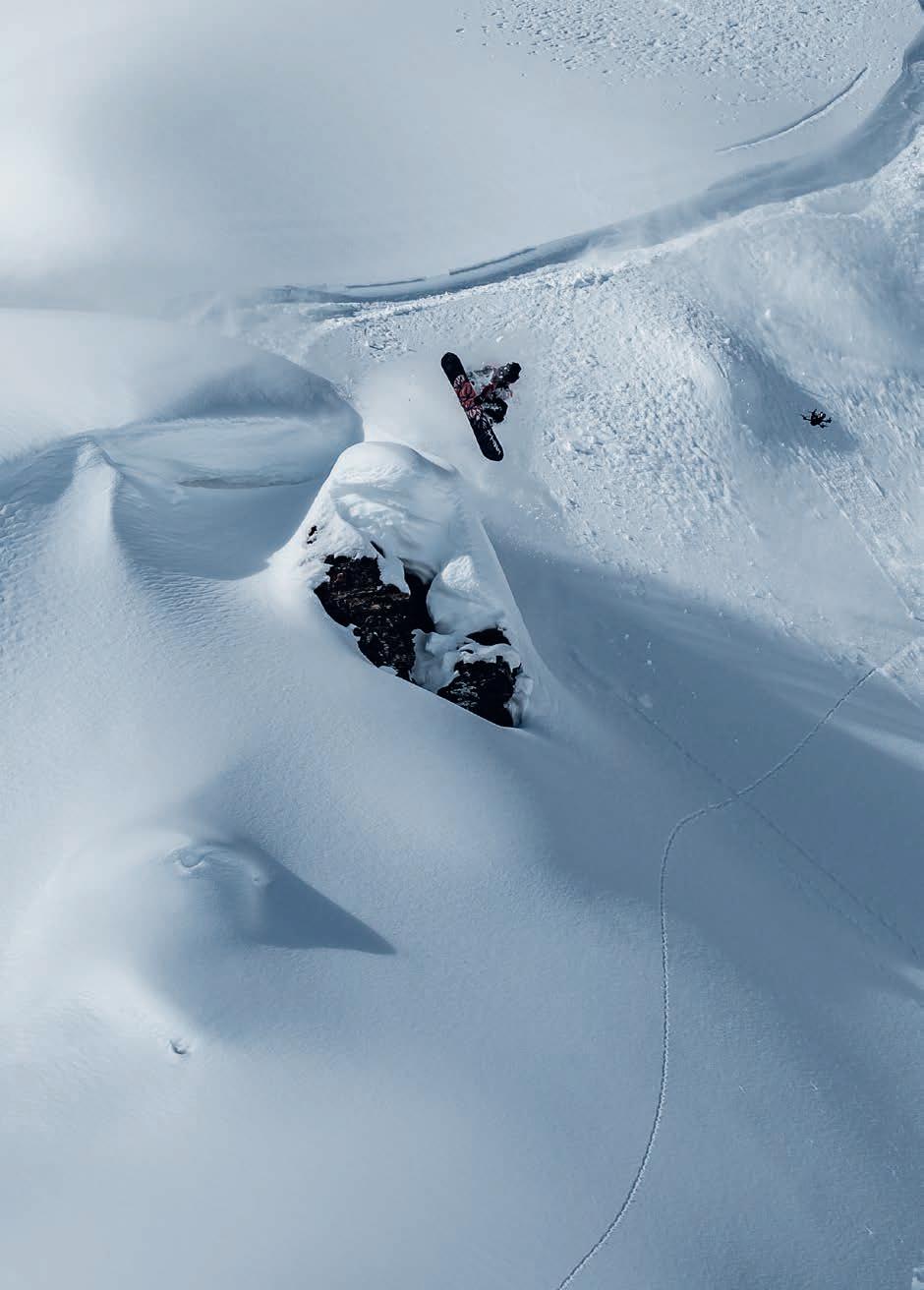
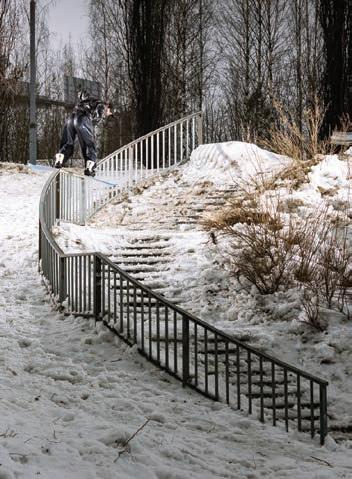
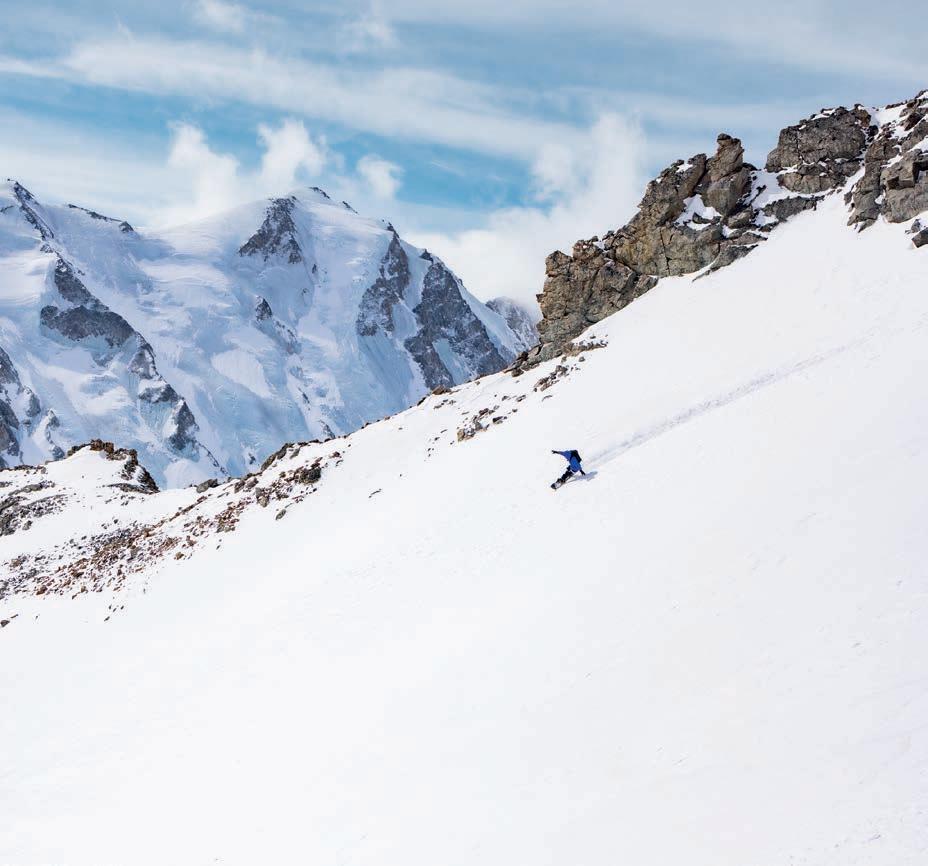
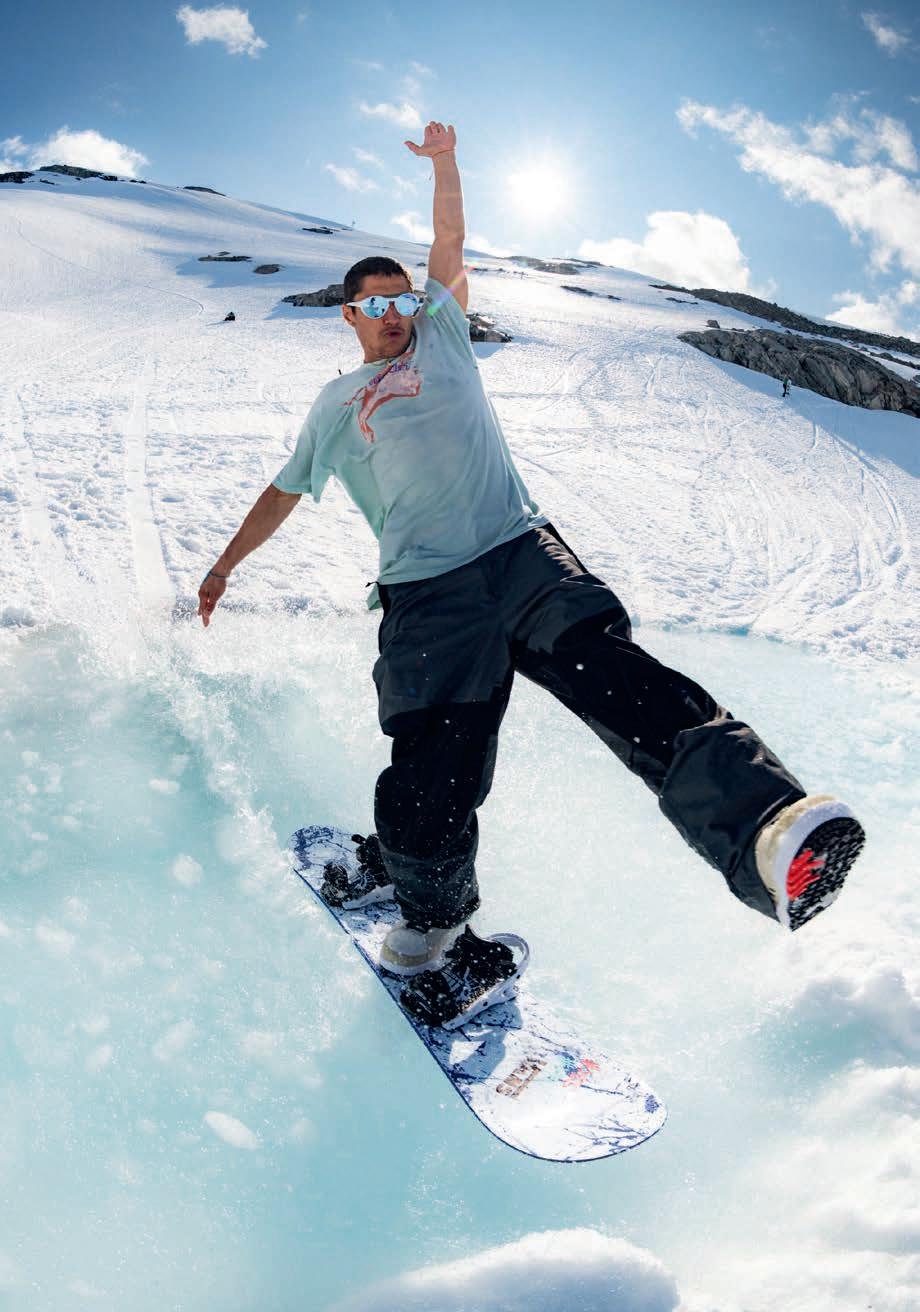
TRAVIS RICE ABOUT TO DROP FRESHER THAN HIS FIRST
TECH PRO MODEL, 20 YEARS AGO... VELVET CASTLE, BC.
PHOTO: CHAD CHOMLACK
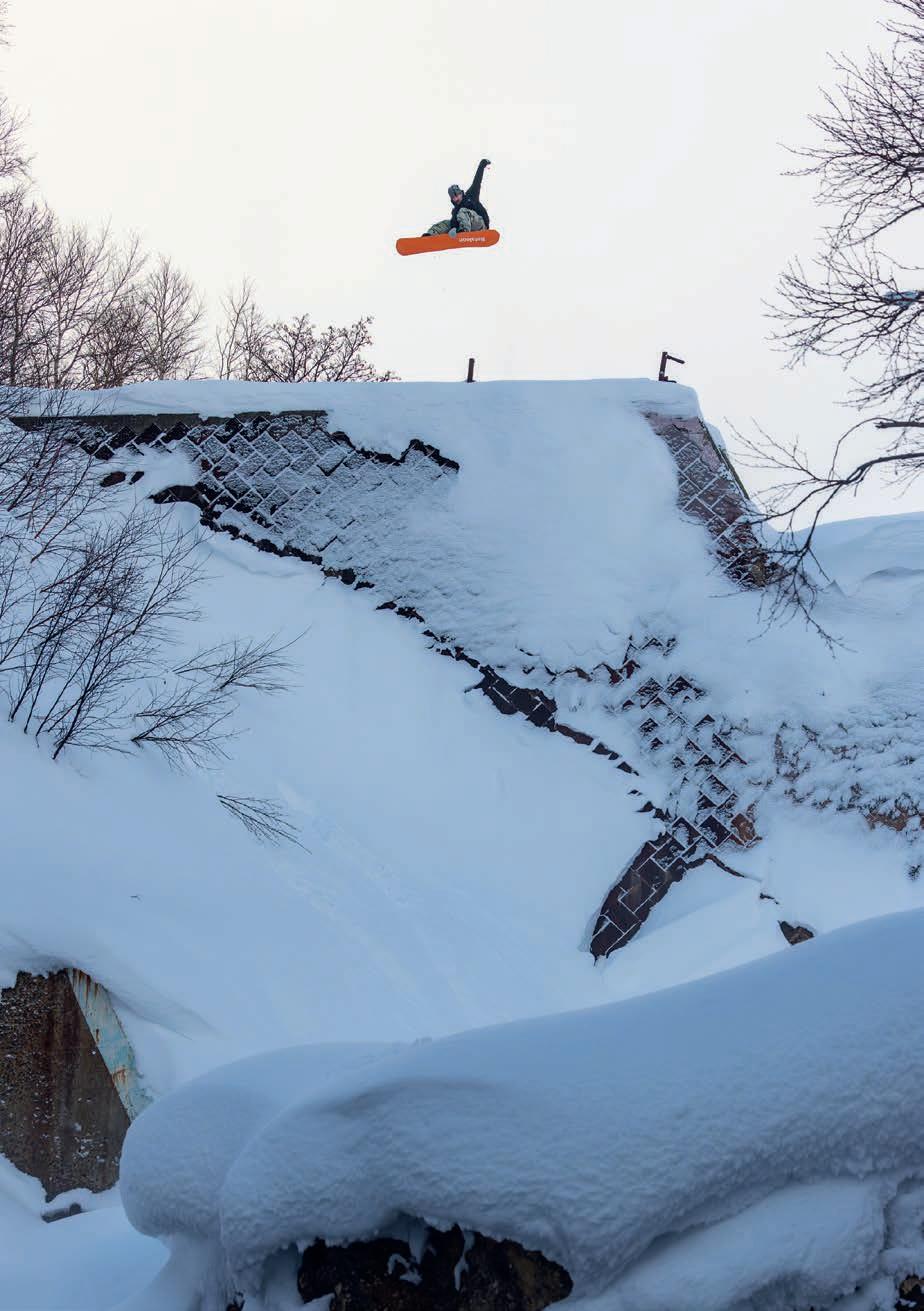
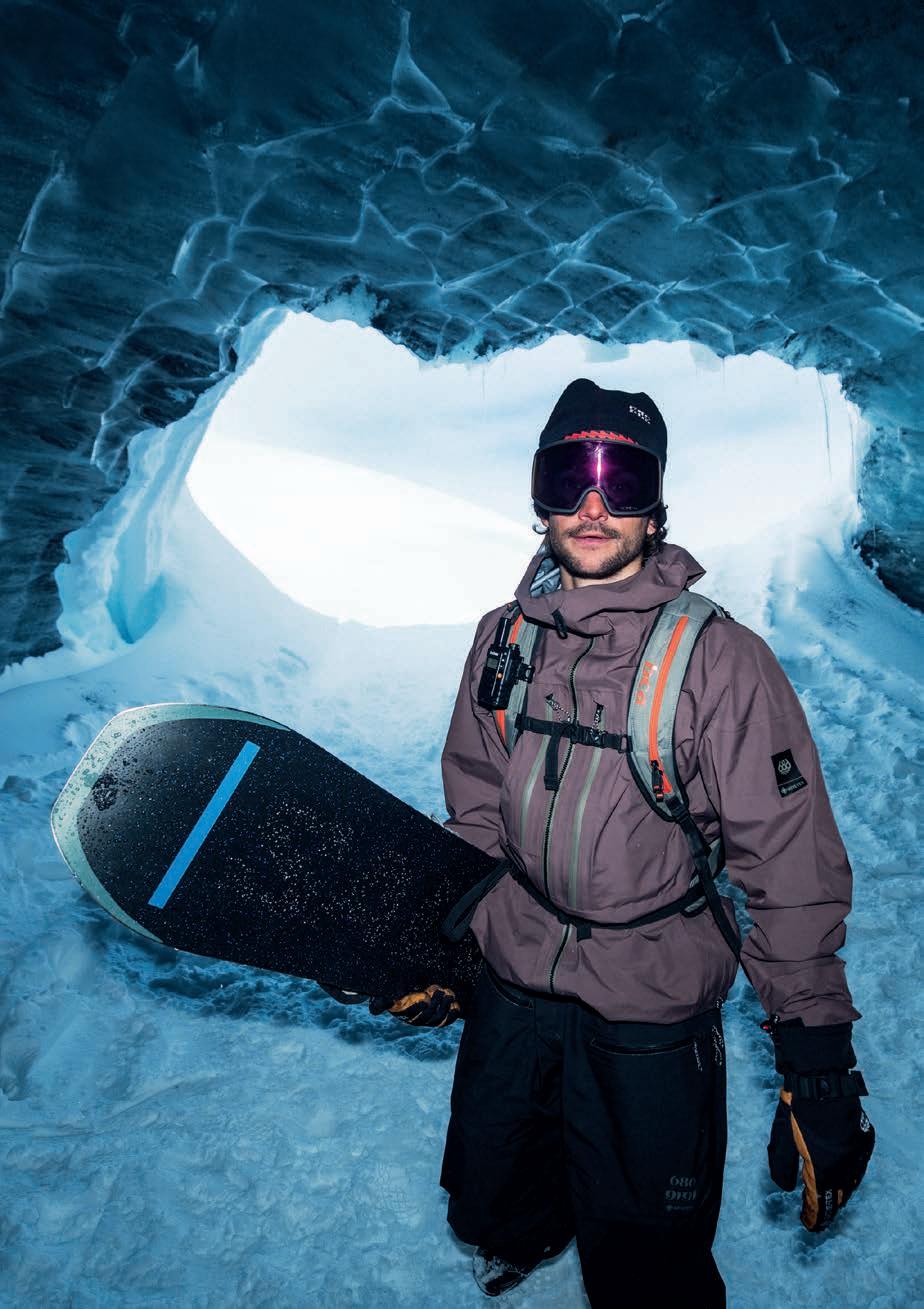
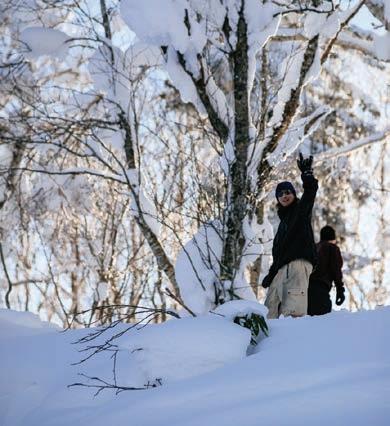
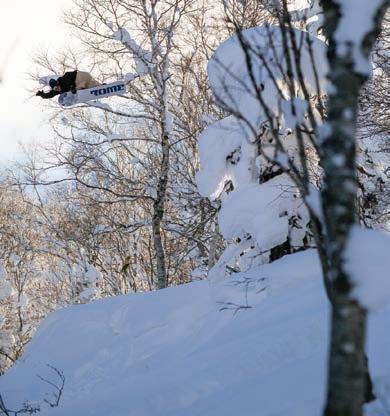
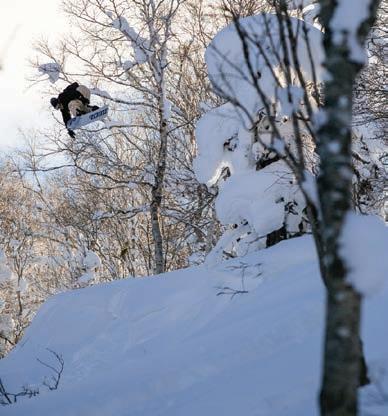
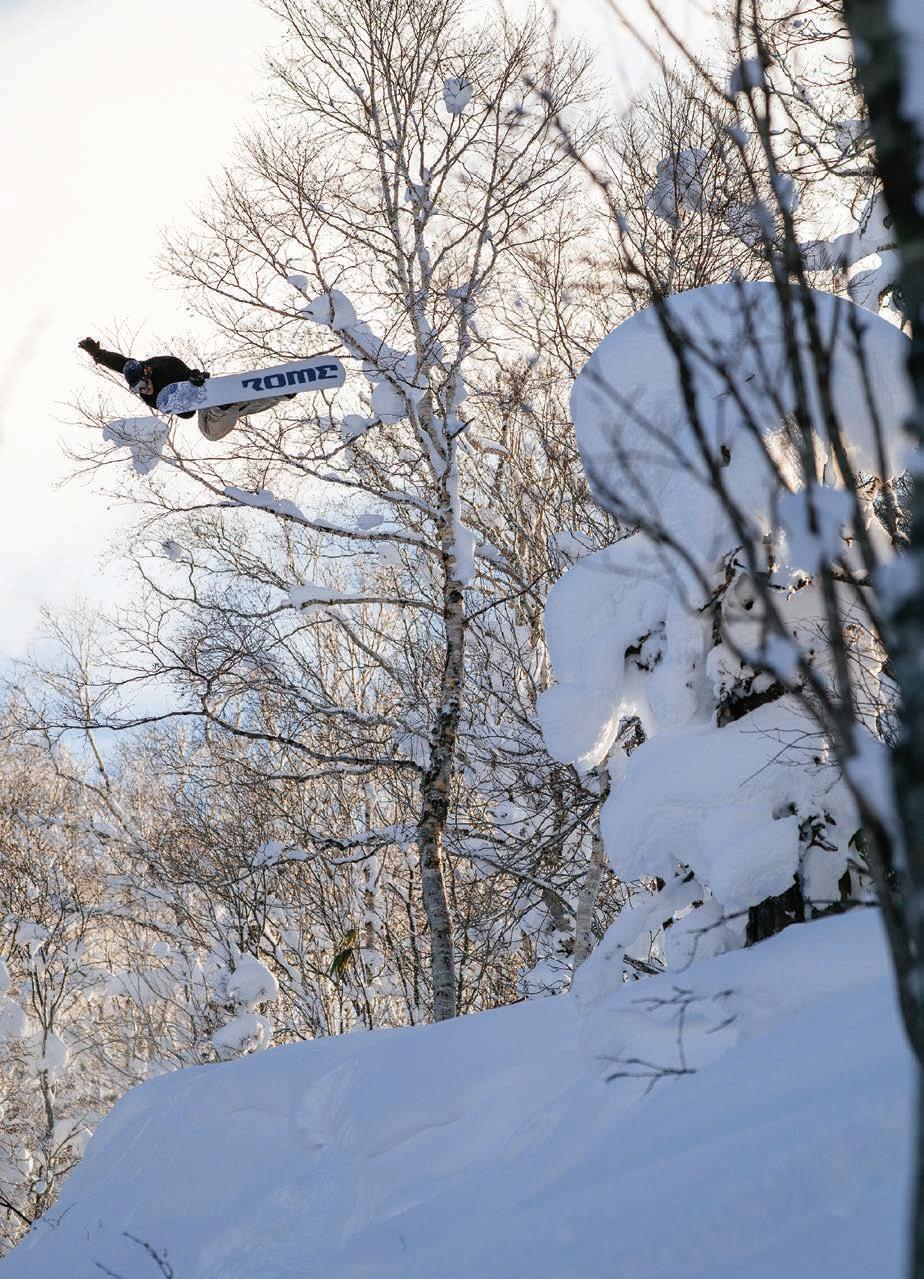
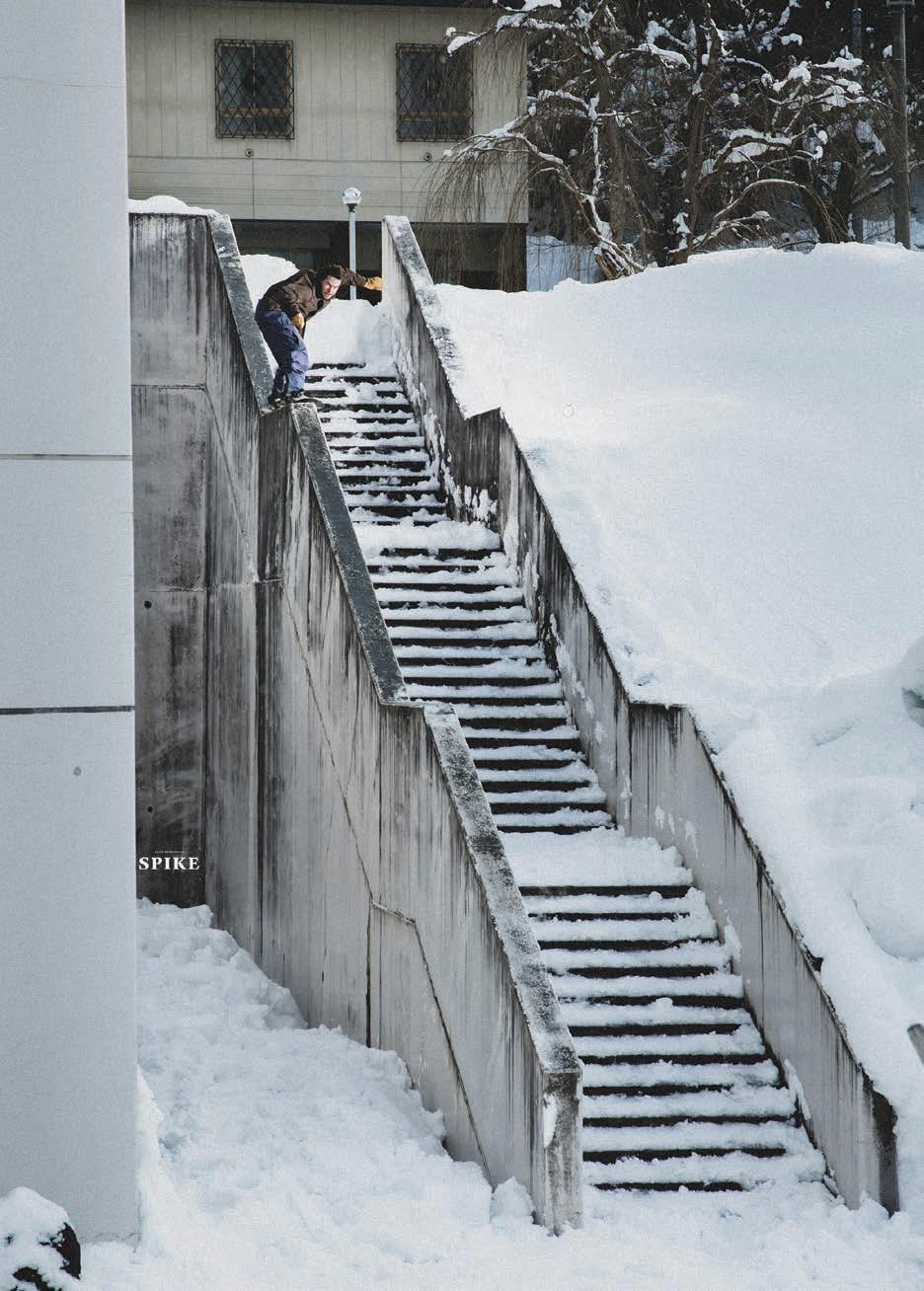
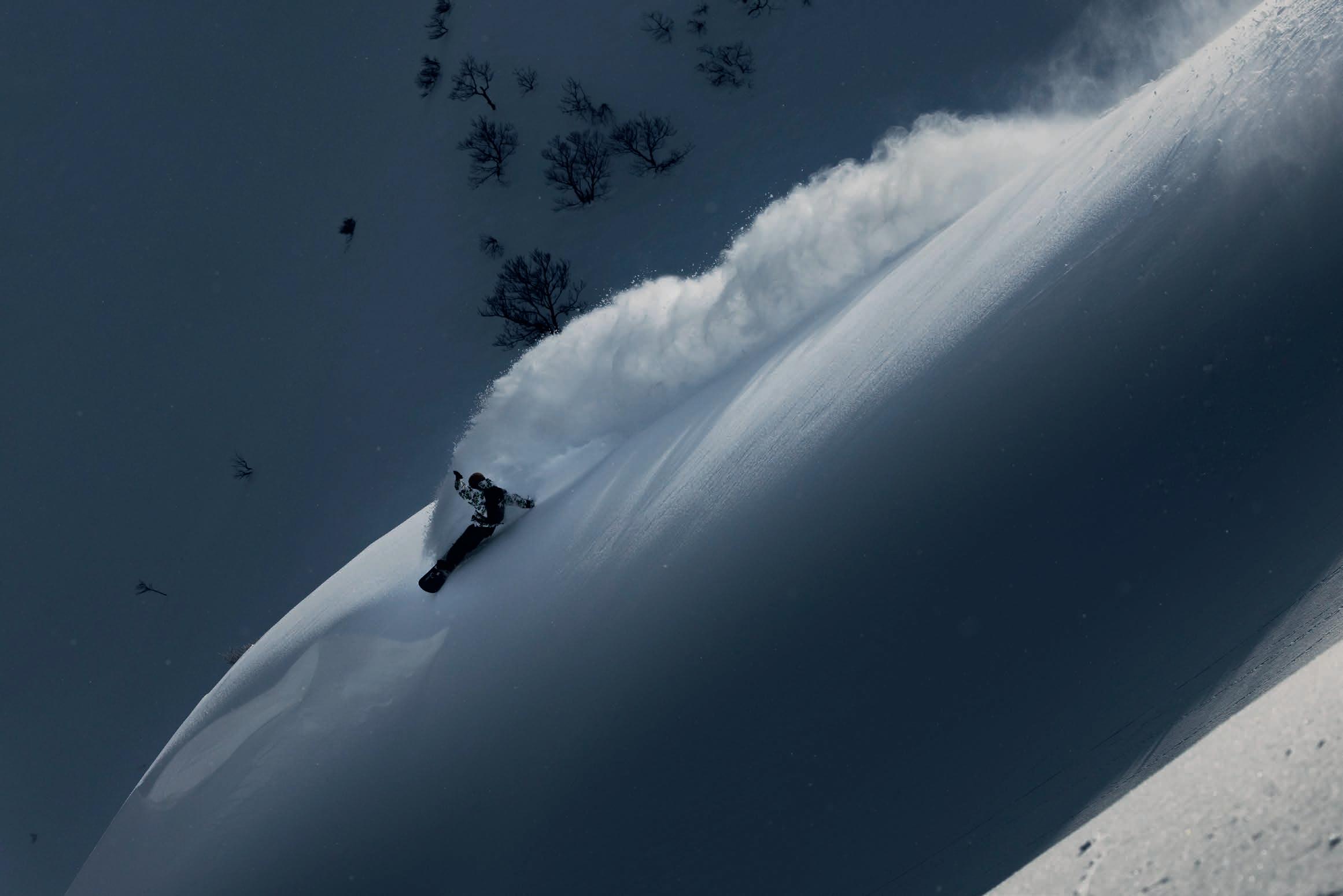
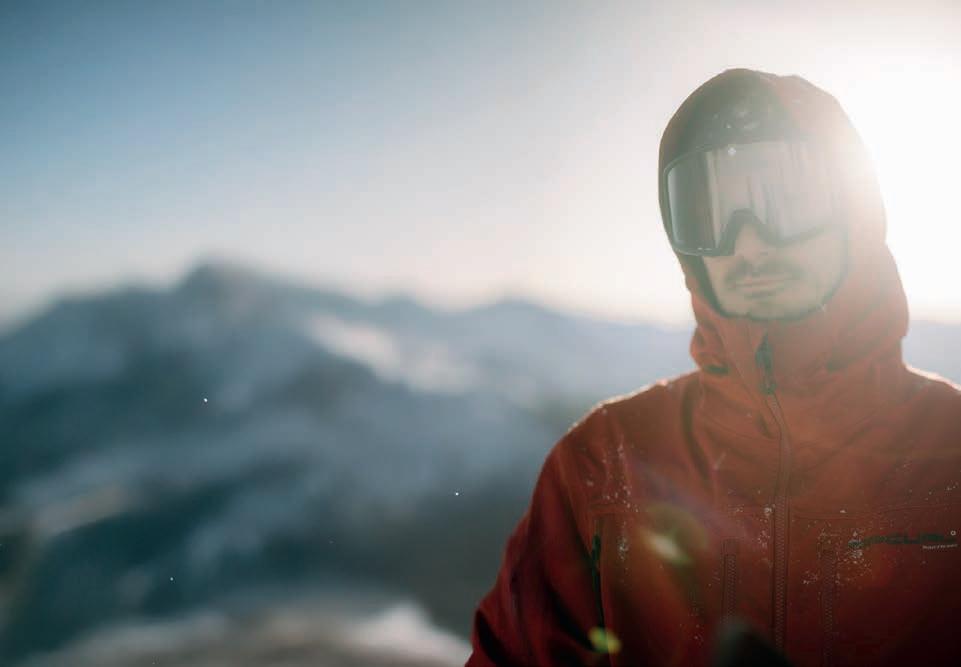
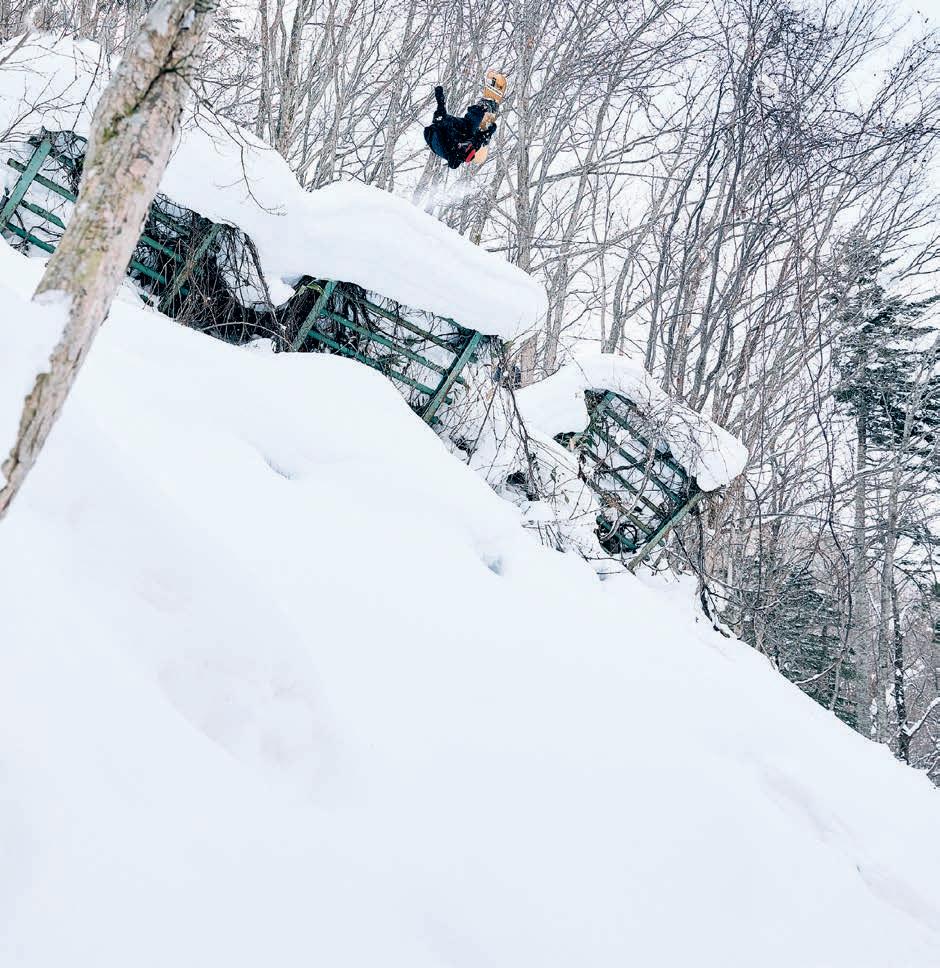
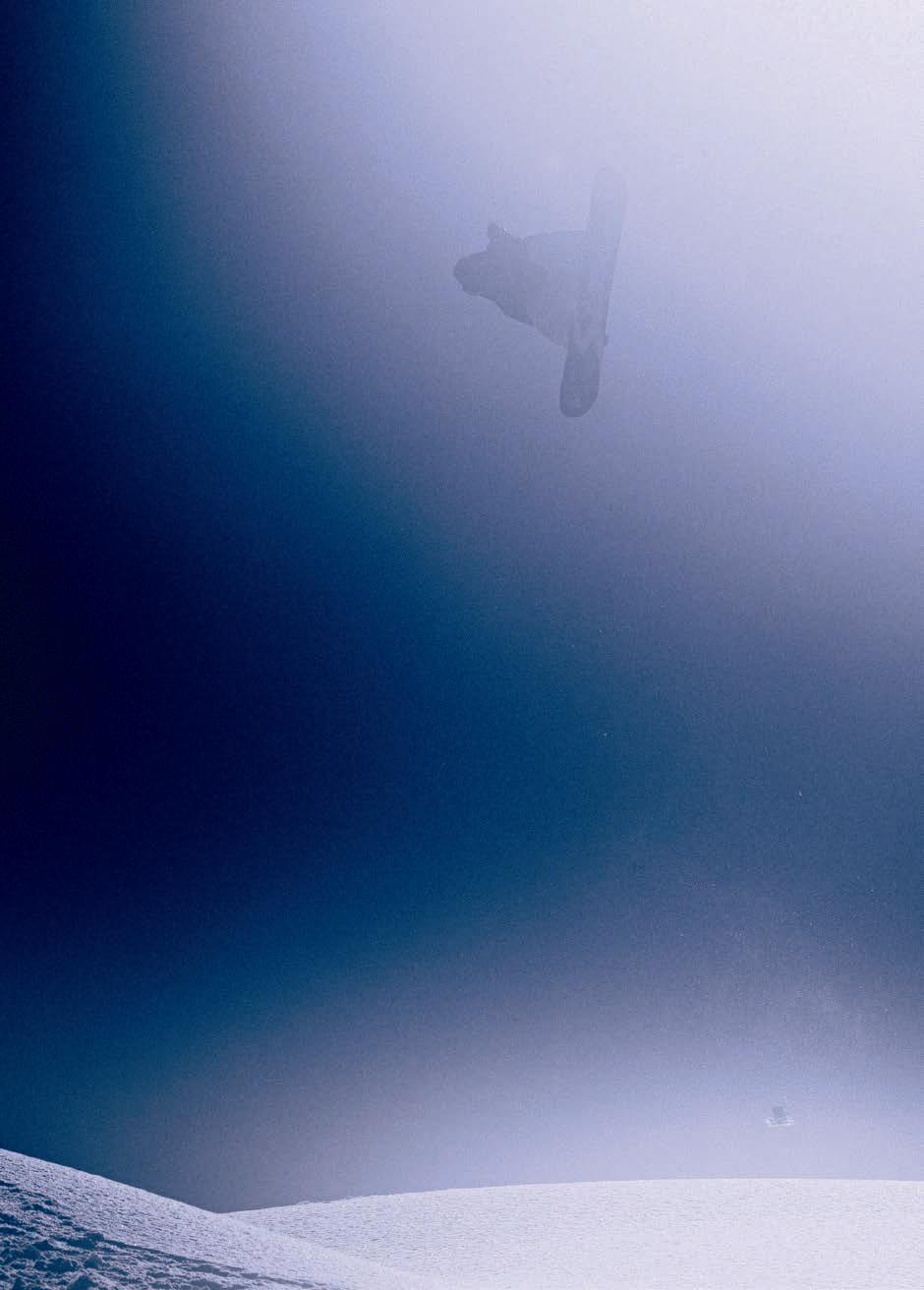
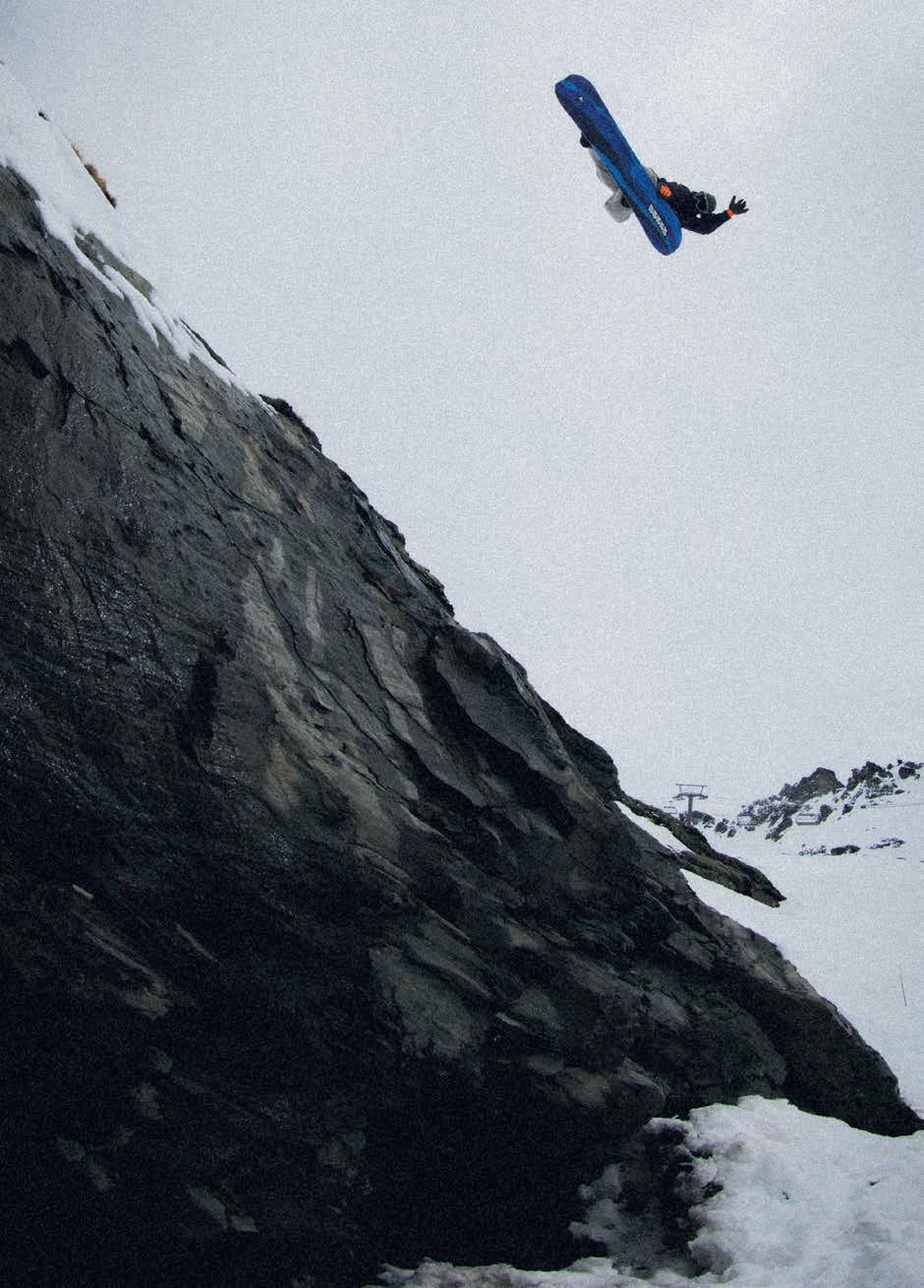
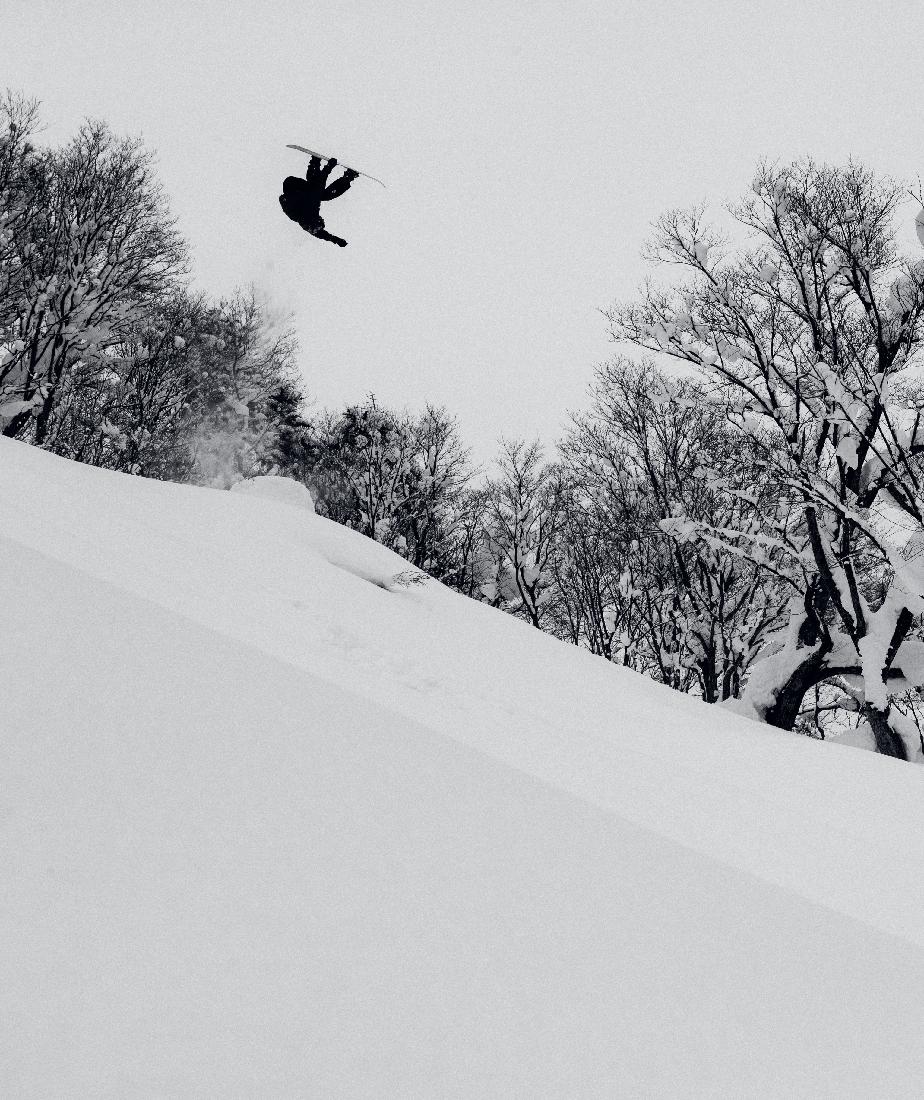
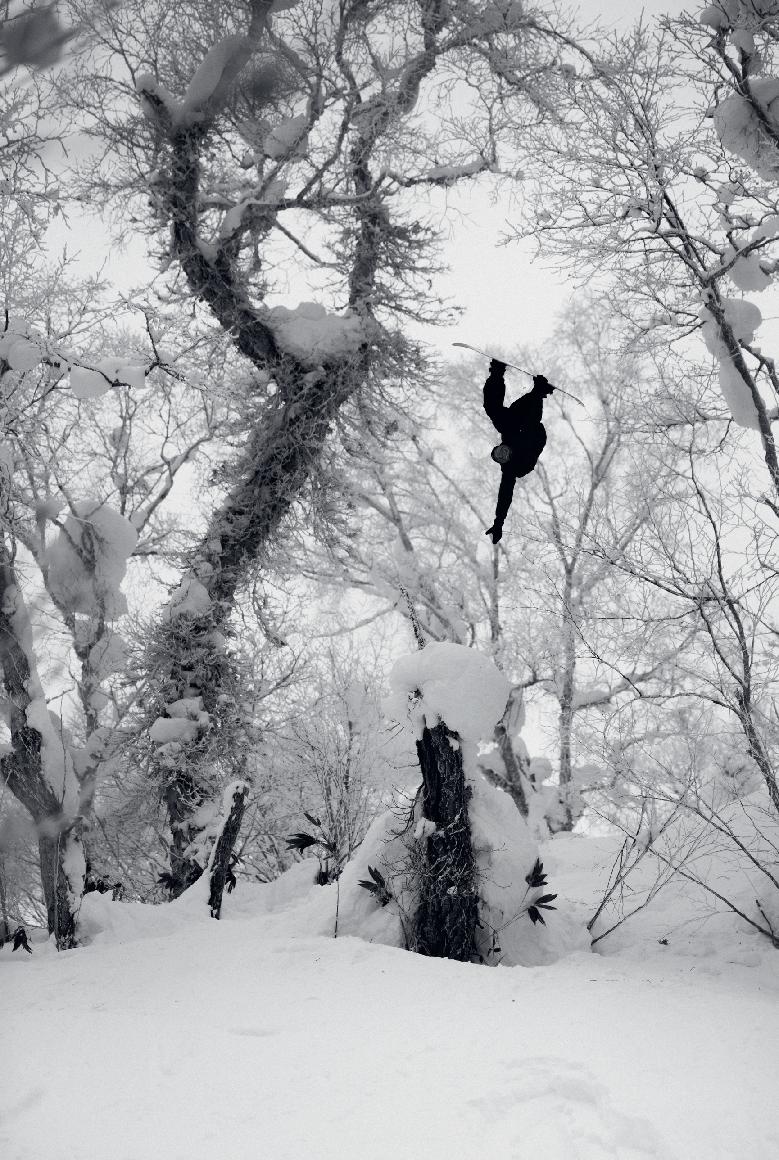
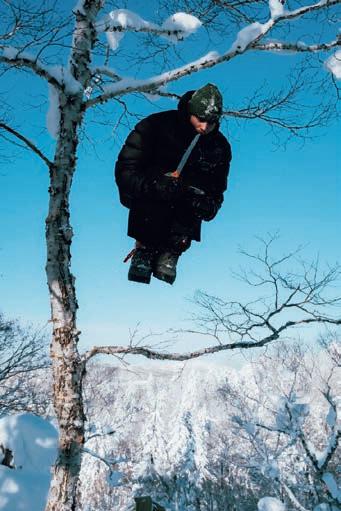
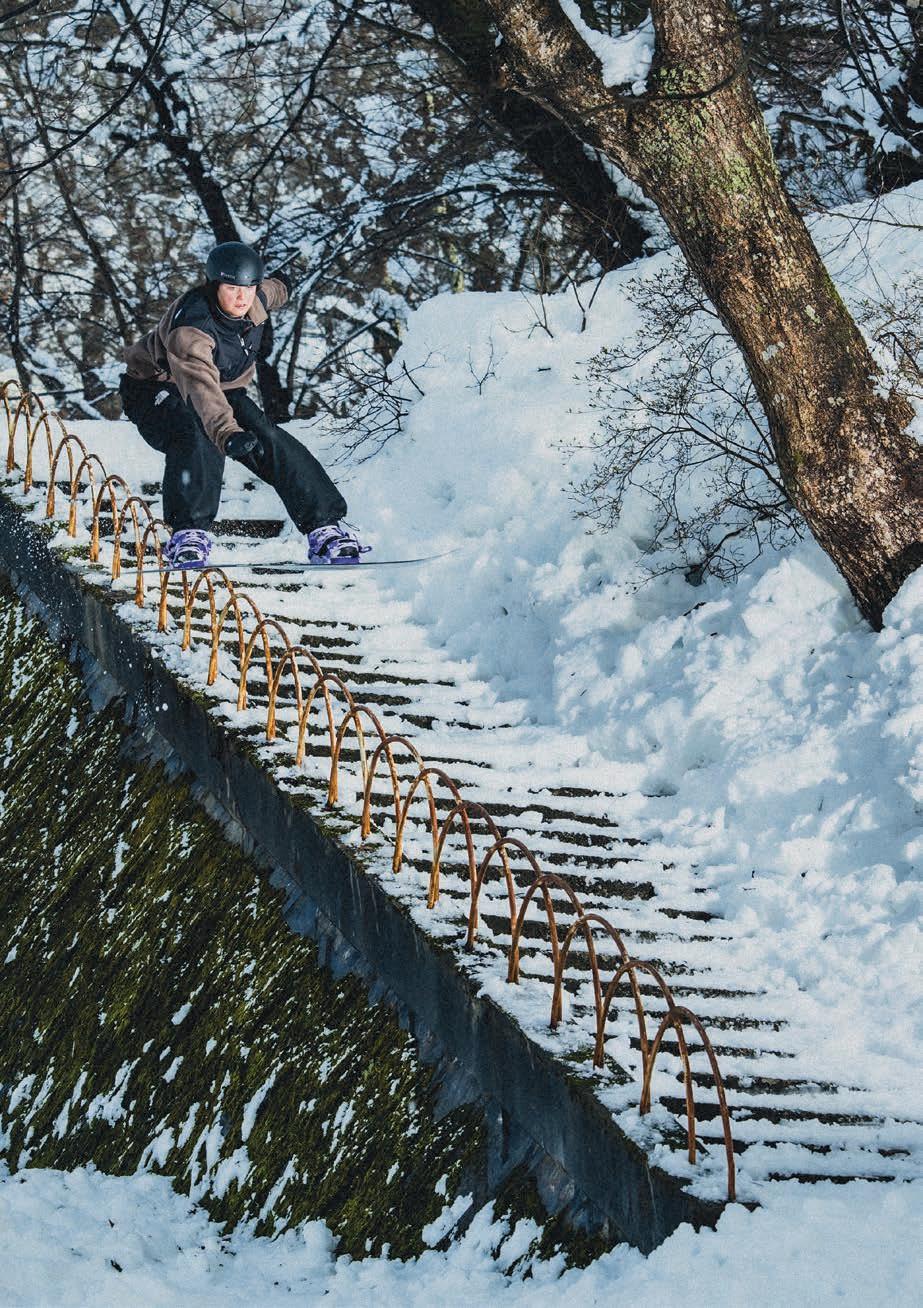
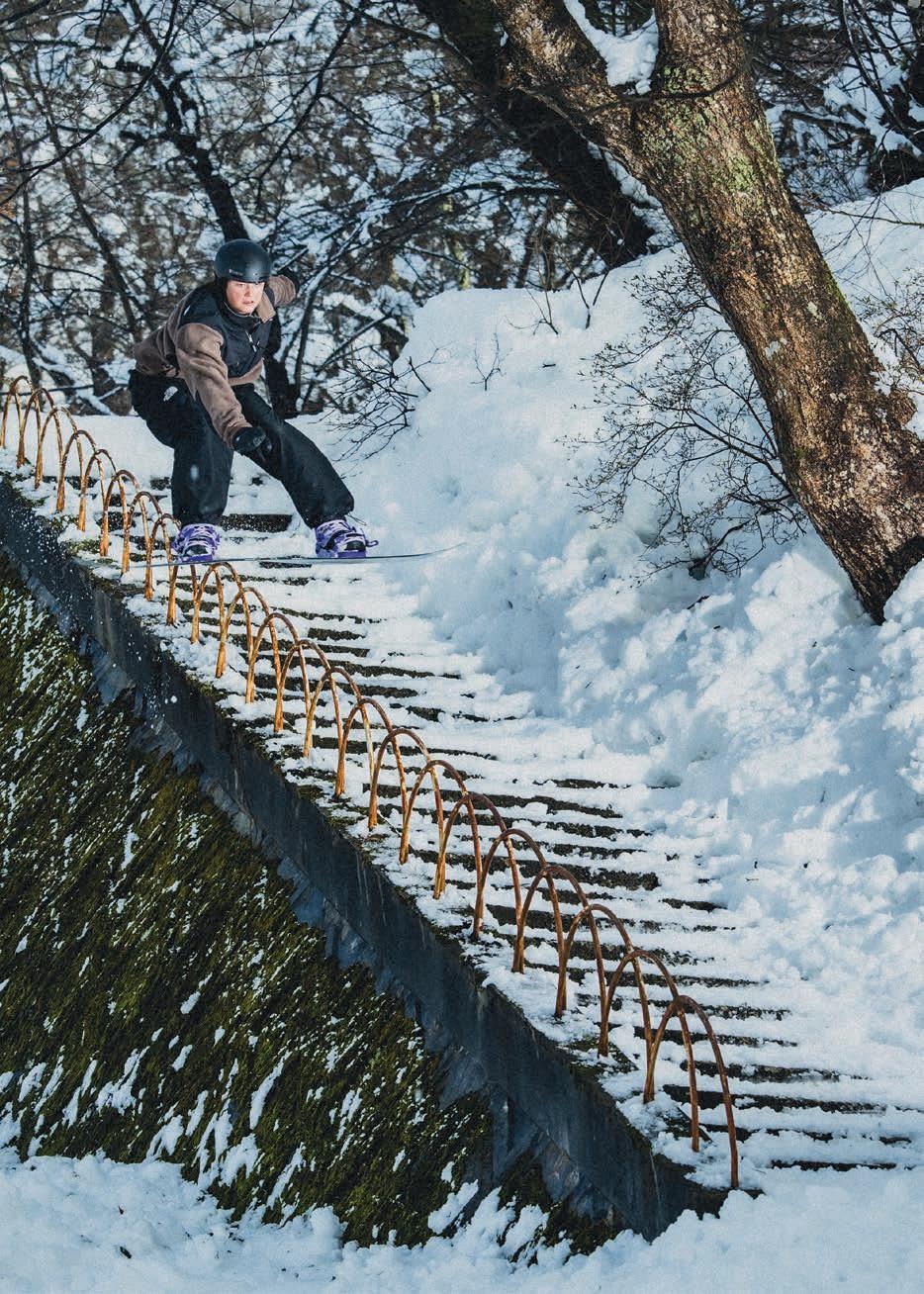
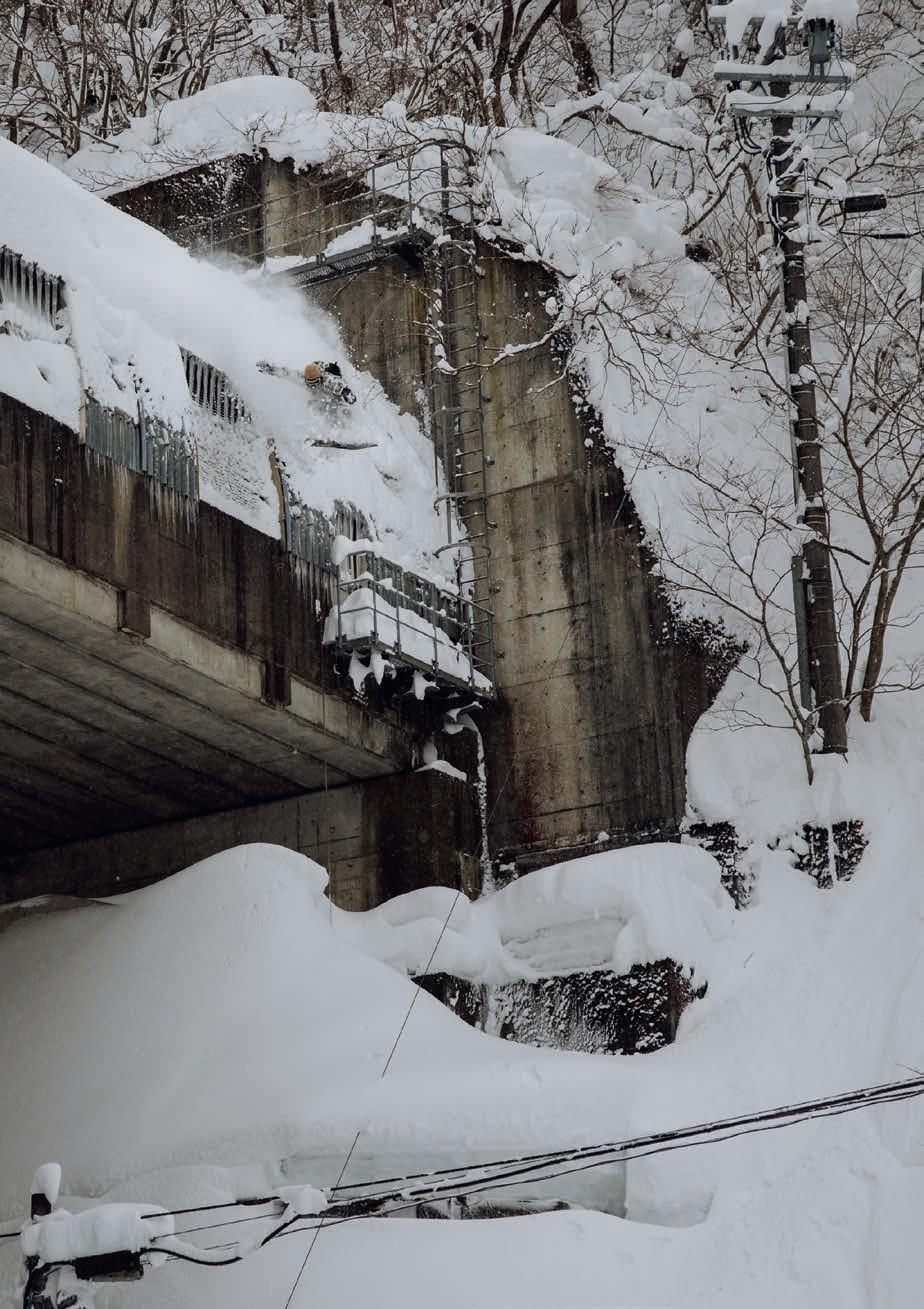
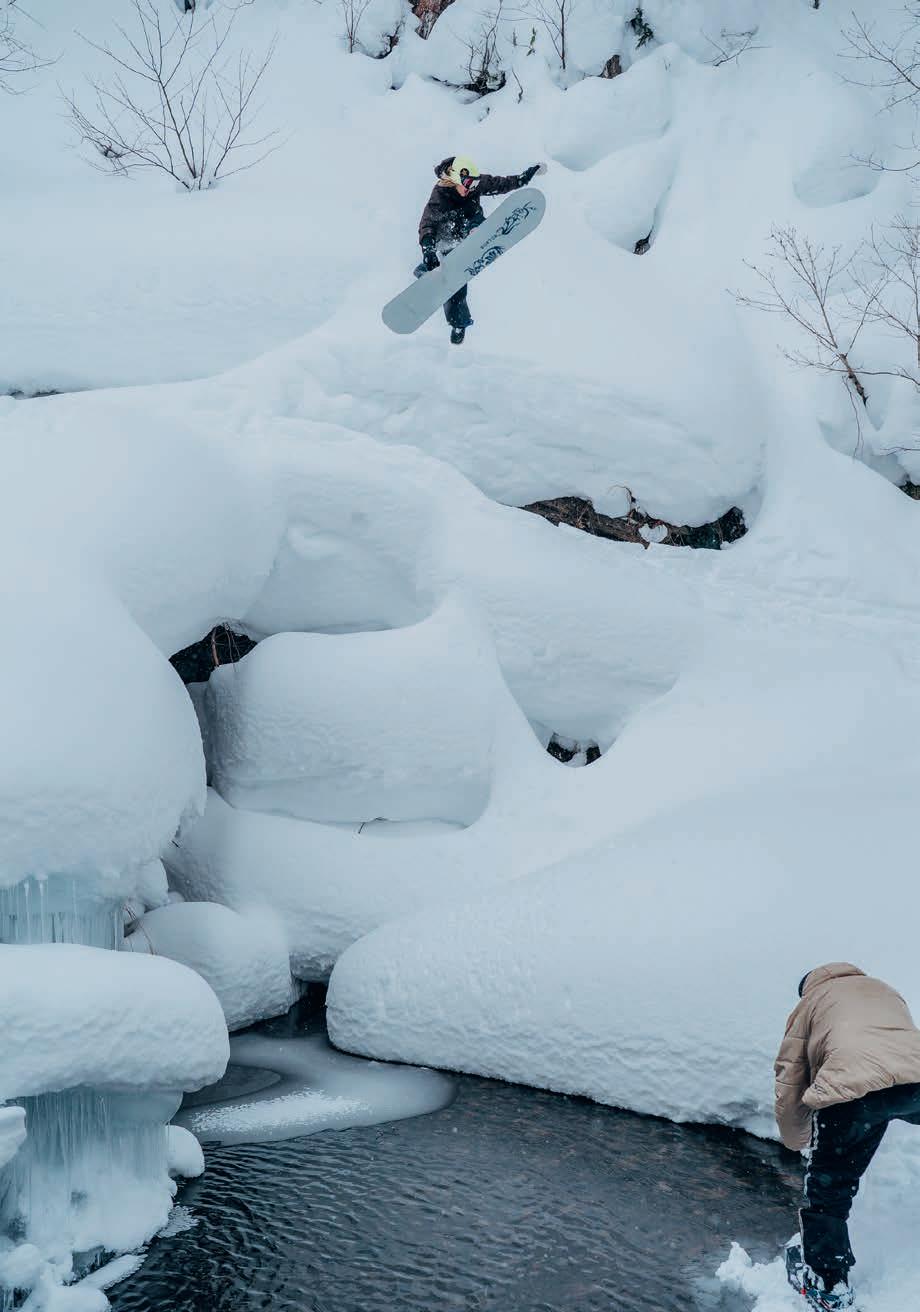
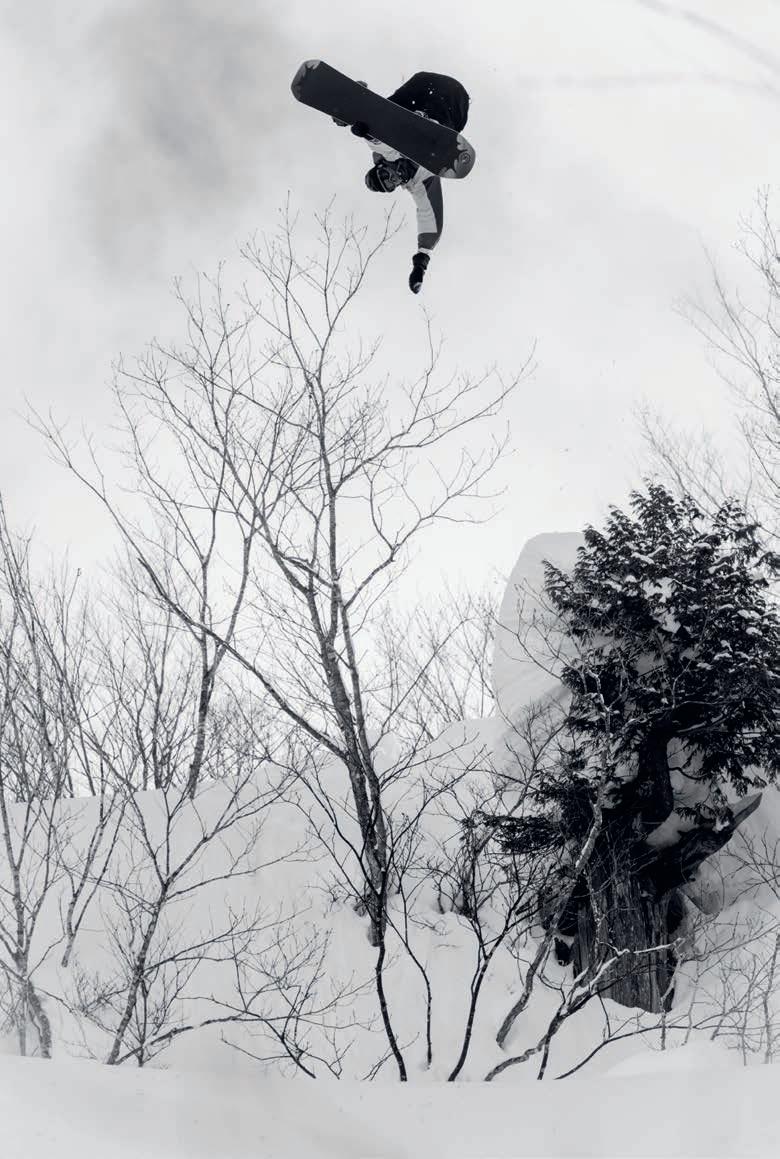
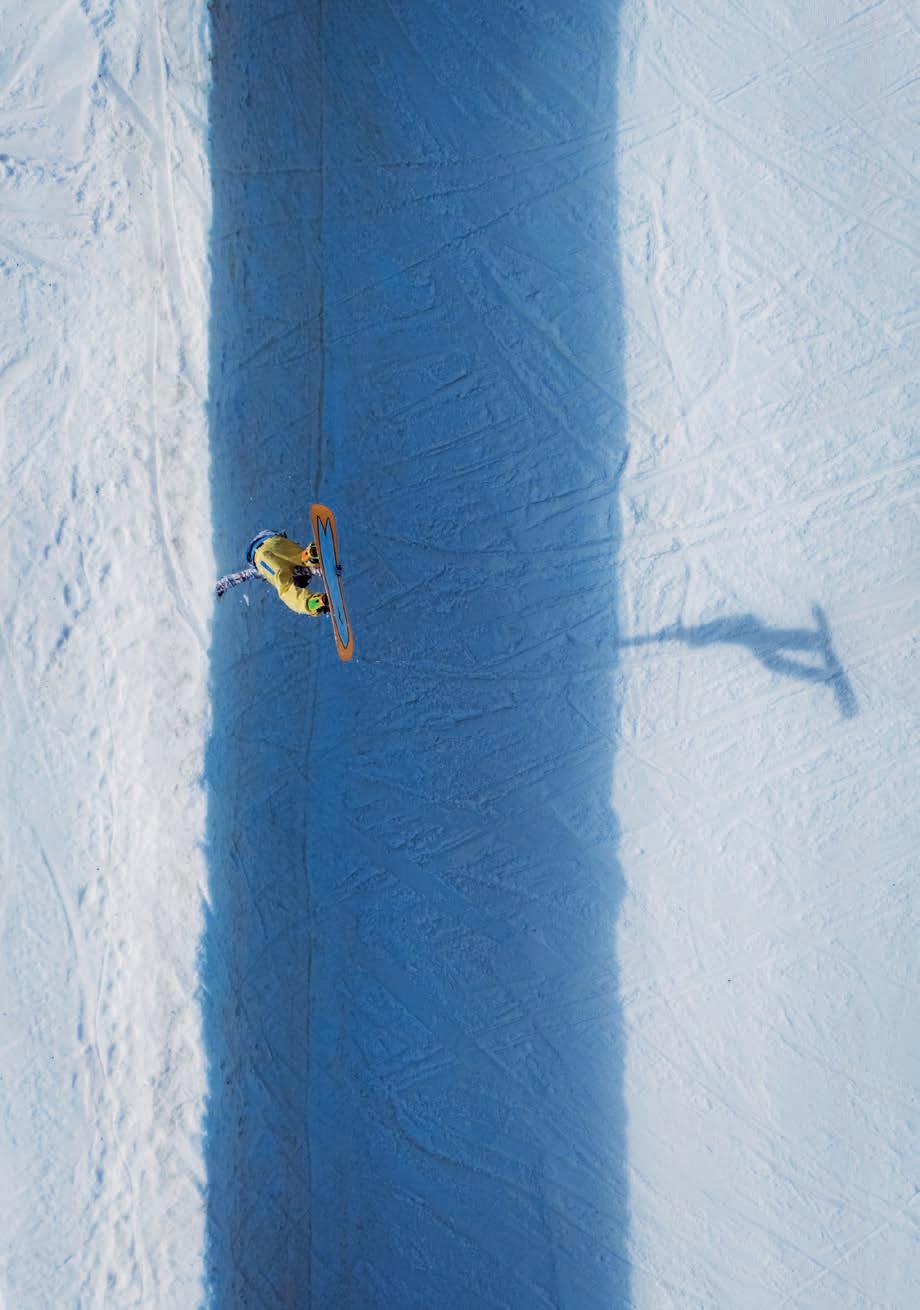
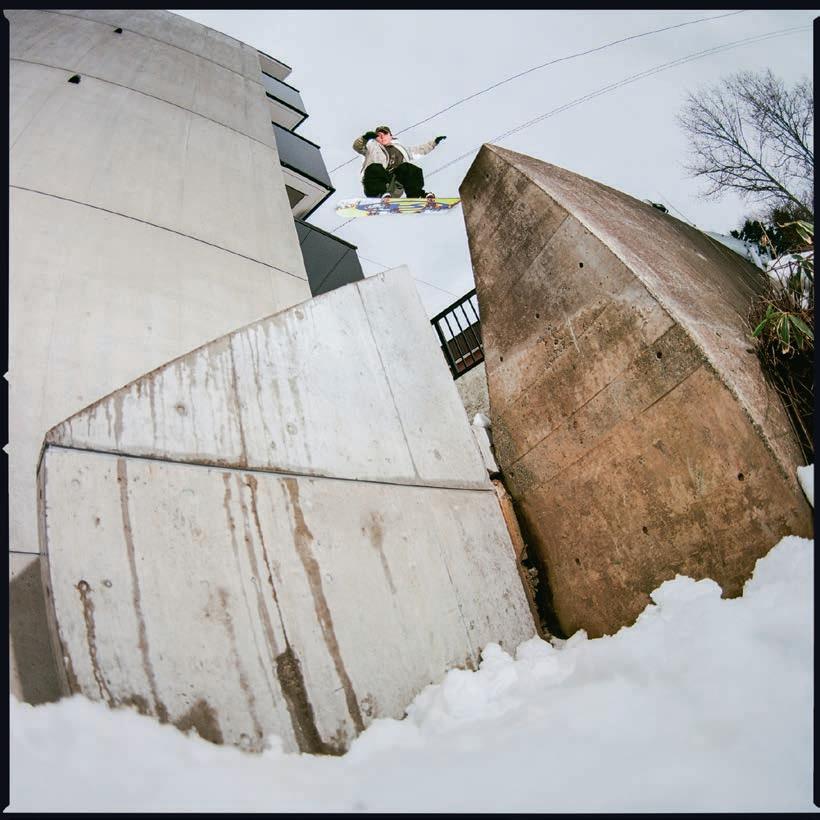
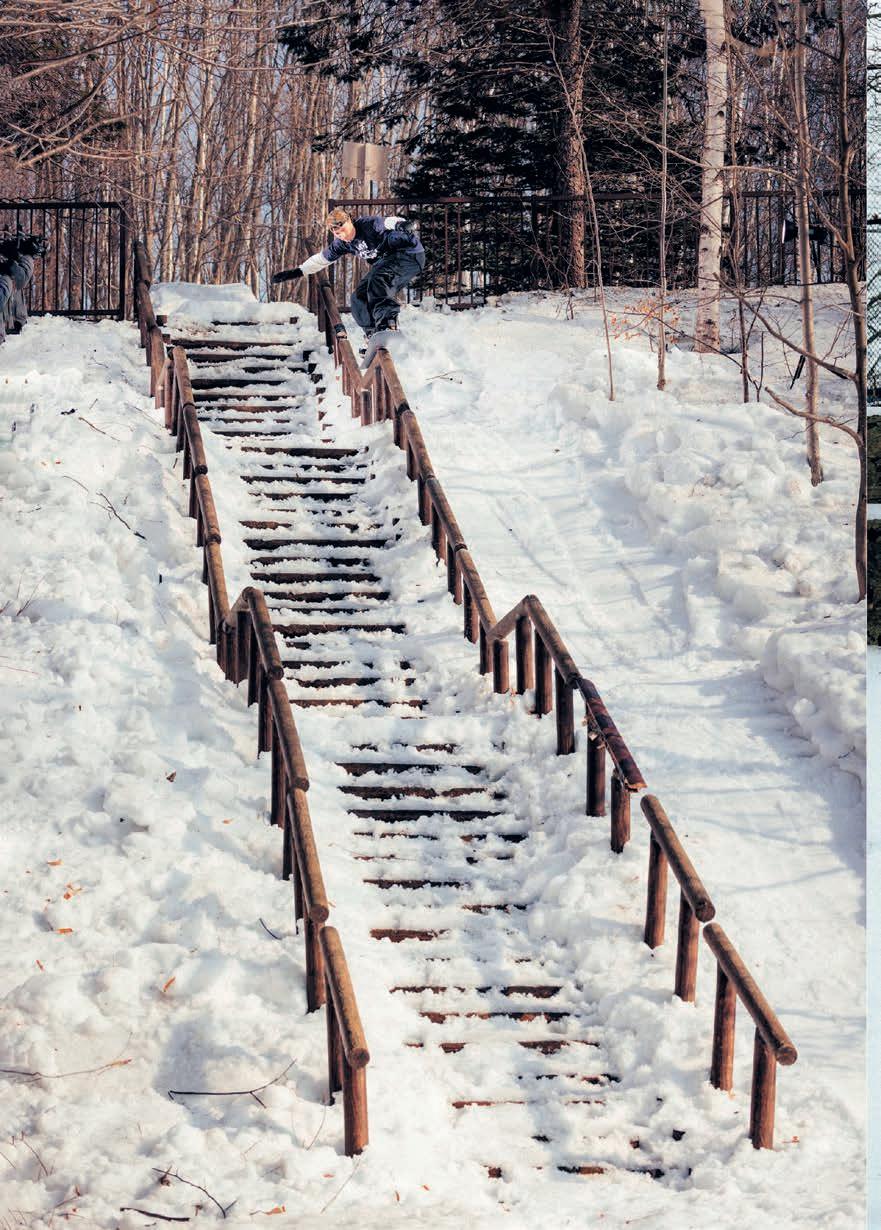
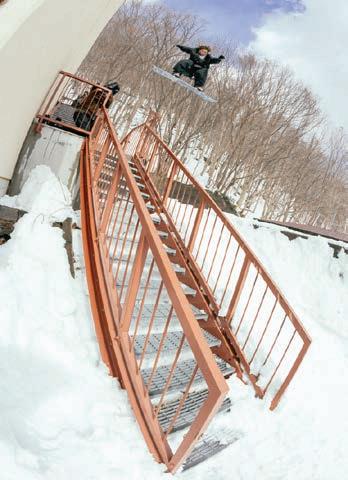
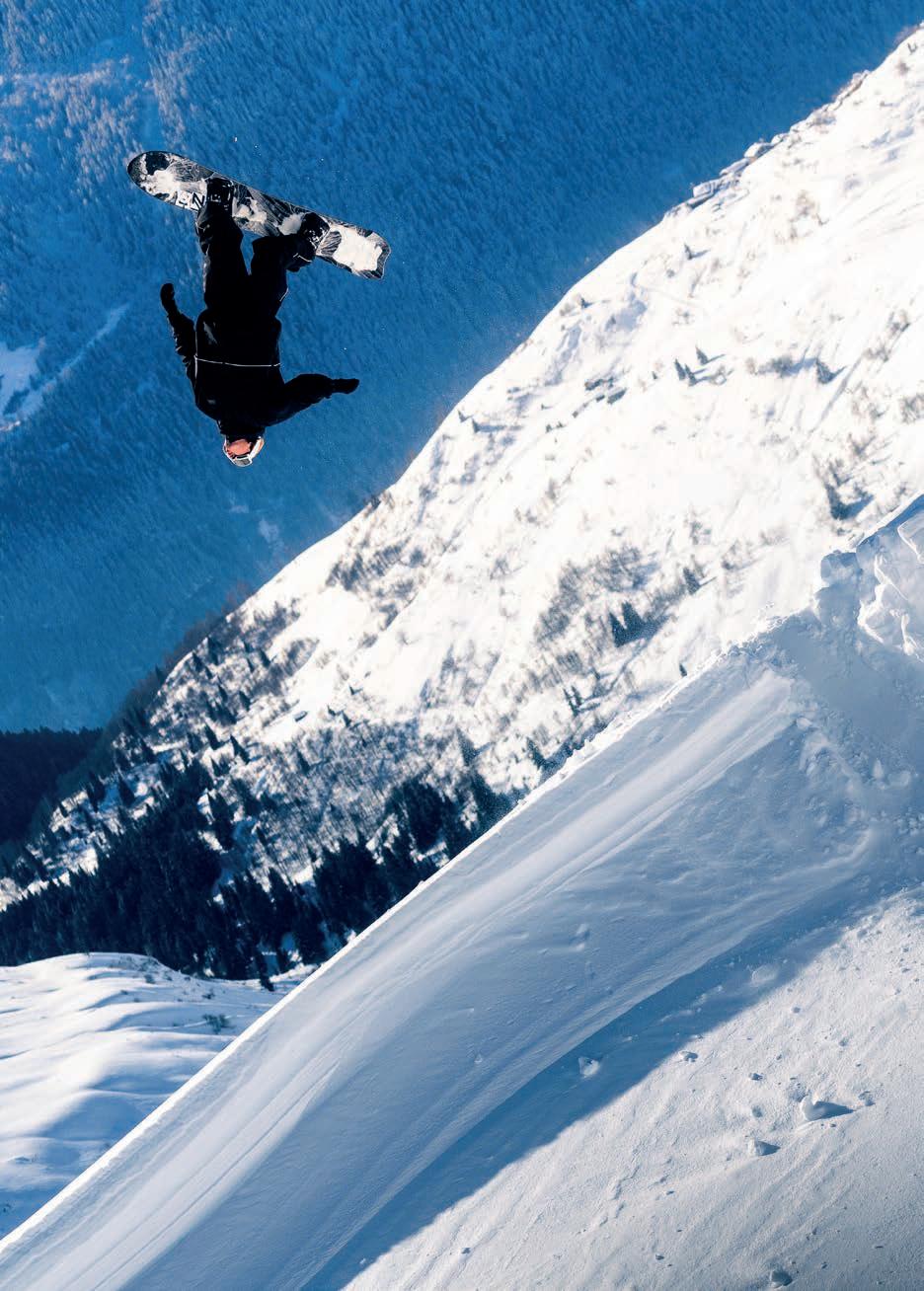
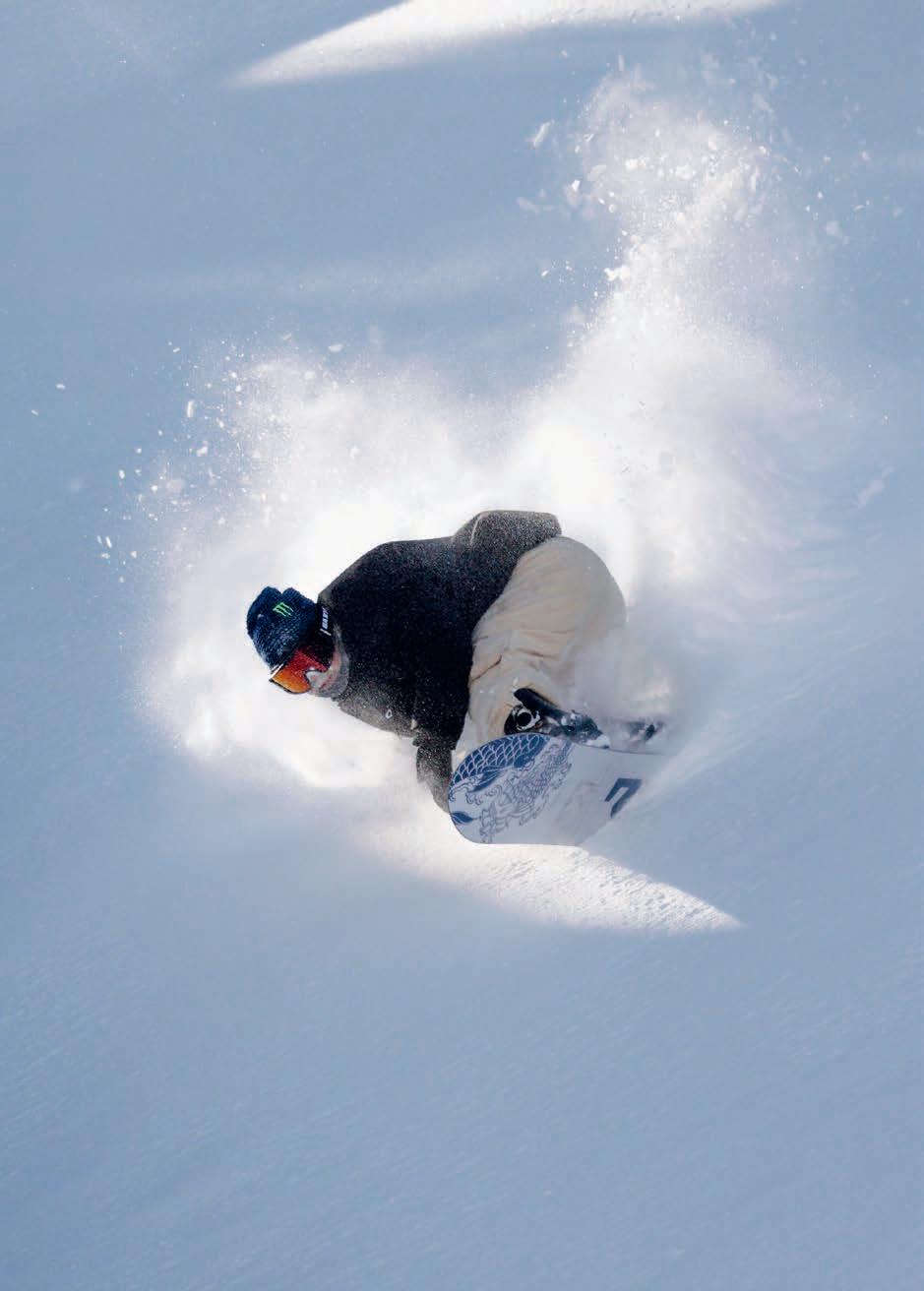
RIDER: KAZU KOKUBO
PHOTO: TYLER RAVELLE
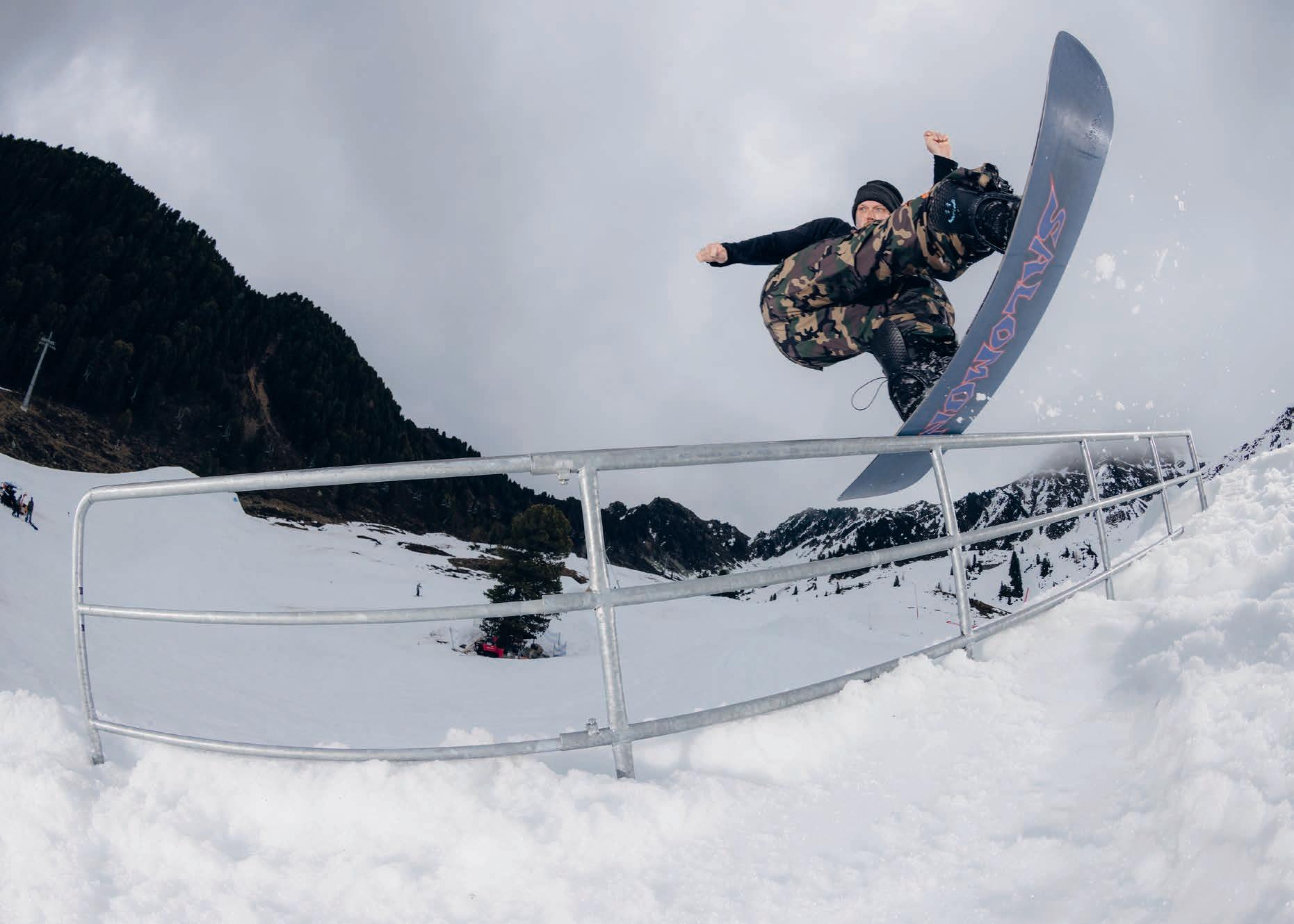
BINDING MODEL: ATLAS PRO
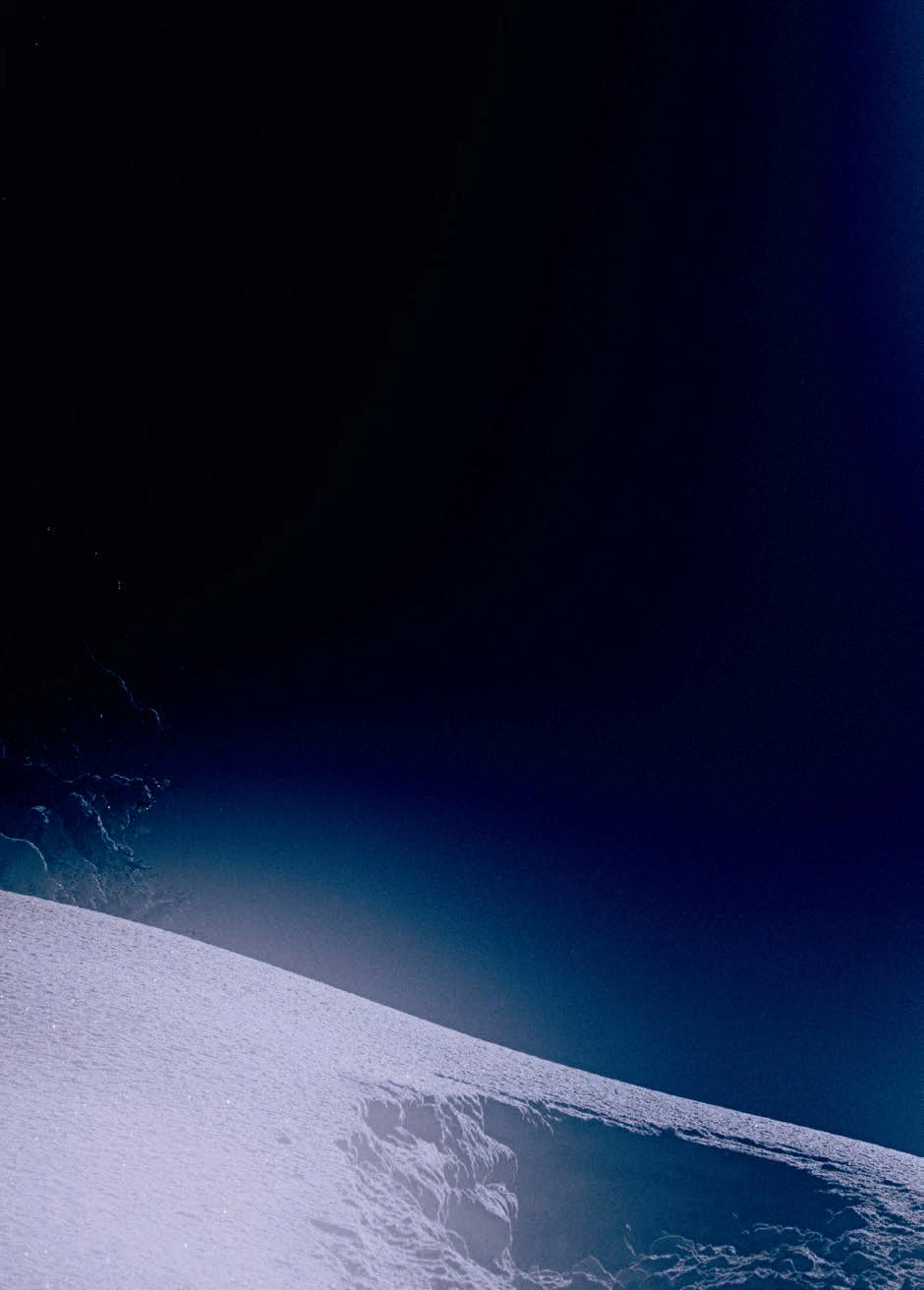
LOCATION: HOKKAIDO, JAPAN
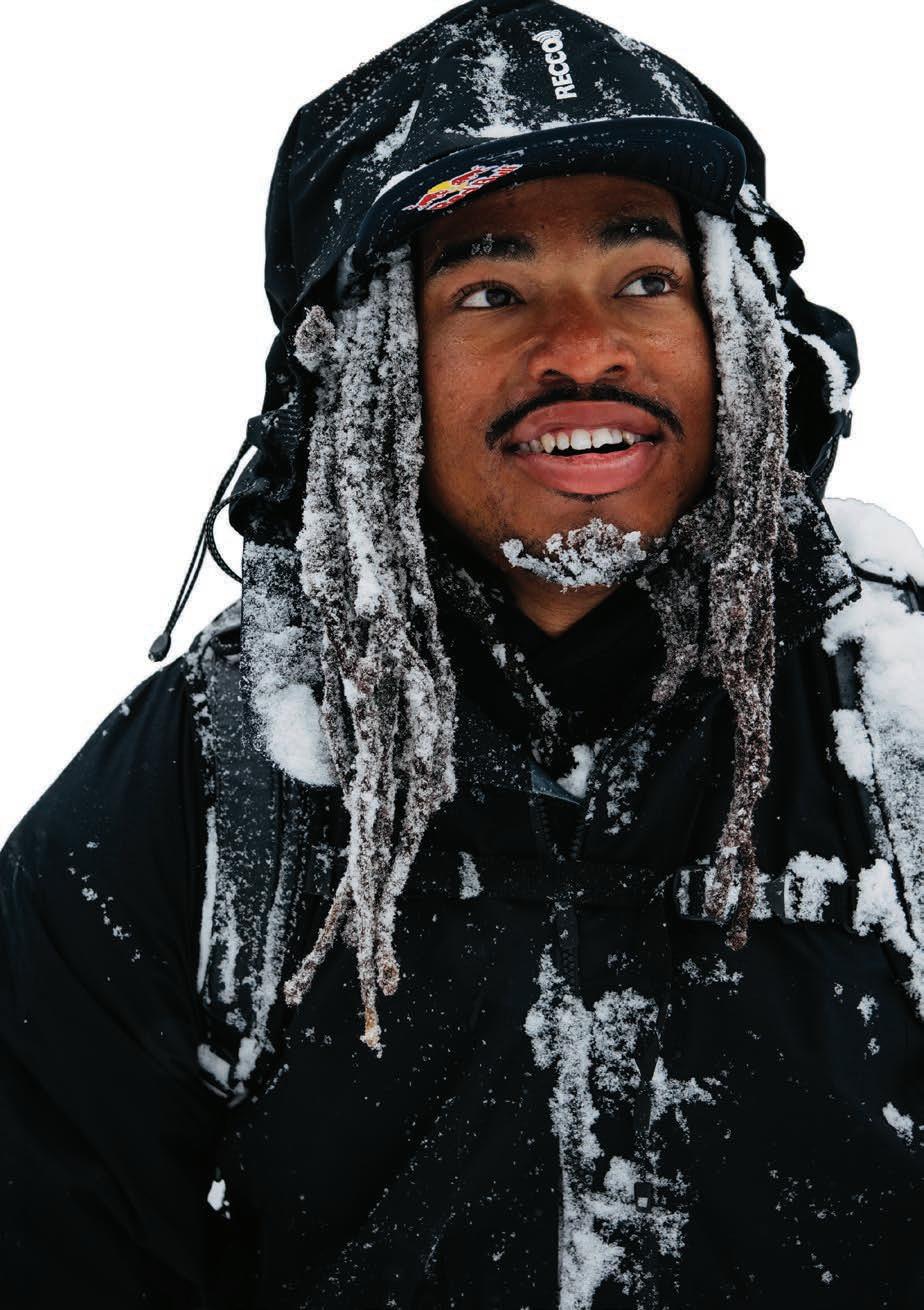
5 things about riding a snowboard shaped by a surfer:
- You get to connect the two crafts
- It is usually easy to ride and excels in powder
- It’s usually shaped by a snowboarder
- An attractive and timeless shape
- You get to ride a snowboard
5 reasons surfing is better than snowboarding:
- You don’t need very much gear
- You get to fully immerse yourself into the ocean and absorb its energy
- Gliding down the line allows you to be completely still and let the ocean move you
- Surfing perfect waves with just Robin (Van Gyn) and I
- You can stare out into the ocean for hours and dream
5 reasons snowboarding is better than surfing:
- You get to use all the coolest gear
- You get to fully immerse yourself into the mountains
- You get to ride pristine powder and draw a line that is uniquely yours
- Sharing a skin track and pow turns with Robin
- You can stare out into the mountains for hours and dream
5 places you have gotten lost:
- Mt Baker Chair 1
- Mt Baker Chair 4
- Mt Baker Chair 5
- Mt Baker Chair 6
- Mt Baker Chair 8
5 best places to surf the snow:
- Hakuba
- Baldface Lodge
- Mt. Baker Natty Pipe
- Mammoth Mini Pipe
- Hokkaido
5 snowboard films to get you hyped:
- “Heaven” by Rene Rinnekangas
- “TB10 Optigrab” by Standard Films
- “Lame” by Robot Food
- “Subjekt Haakonsen”
- “In Short” by David Benedek
5 tips to survive a 2km long pillow line:
- Deep breath
- Trust your ability and let it ride
- Stay light on your feet
- Use the natural undulations to absorb impact, find flow and moments of weightlessness
- Breathe
5 things to do without a board:
- Hiking / camping with Robin
- Play music and write songs with Buoy Razz
- Trail running / training for Half Marathons
- Gravel biking
- Take photos and make art
5 fun facts about the Pacific Northwest:
- “Believe the hype, don’t follow the locals” - BMJJ
- 36 degrees and snowing
- The rain is dryer up here
- The moss is softer
- If you point Gunsights switch you get free Duncan fries for life
5 most influential snowboarders:
- Temple Cummins
- Barret Christy
- Craig Kelly
- Pete Saari
- Travis Rice
5 things that freak you out:
- Persistent weak layers
- Backside Rodeos
- Reversing chairlifts
- Tree wells
- The United States of America
PHOTOS: TIM ZIMMERMAN
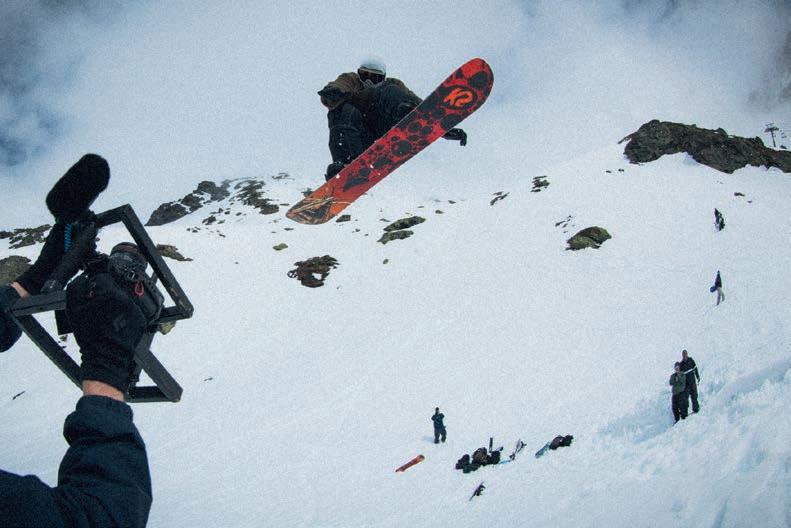
While tagging along with the K2 crew when they were filming their latest Euro team project ‘Thermal’, I noticed that Stefan Schneiker, the man behind the movie, had quite an interesting approach to filming gear and photography.
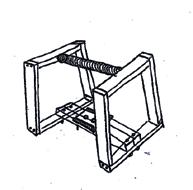
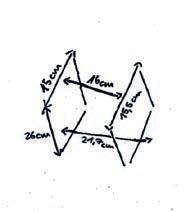
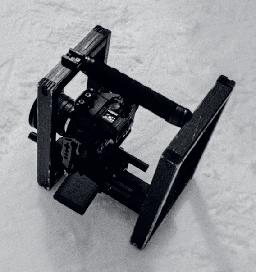
He’s pretty young in the filming game, but has a very cool DIY approach to his craft. It looks like he’s aiming to try as many different camera and lens combinations he can get his hands on. But he will also experiment and build his own stuff. Especially if he notices a feature that no product can fulfill. All dedicated and passionate camera people do this to some extent I guess, but it’s pretty rare to see a handmade wooden-built camera rig on a snowboard shoot. I haven’t tried it yet, but I’m sure it’s quite fun to use. Anyway, this is Stefan’s Method Patent, and it’s legally rock (wood) solid!
CONTEXT OF THE INVENTION:
I hate digital cameras, especially DSLRs. DSLRs are the worst. They tend to tremble and shake more than a bigger camera. That’s why I created this wooden rig to go about it, and to avoid putting the camera directly on the snow, too. I also find it good to prevent the fisheye from getting hit by a snowboard. Meaning I can give it to my friends and don’t have to worry about destroying a rare fisheye I have. The best part, though, is that it helps with filming a lot! It gets a bit heavier, but it’s also steadier and you can handle it much better, too. The only downside to it is that it’s really bulky and tricky to pack in a backpack or somewhere else. It’s also awkward to have on a mountain. It’s fun to use, and it works too well, actuallyStefan Schneiker
DESCRIPTION OF THE INVENTION:
A wooden cage shaped as a cube, where the camera sits inside, in a safe space.
MEASUREMENTS AND SPECIFICS:
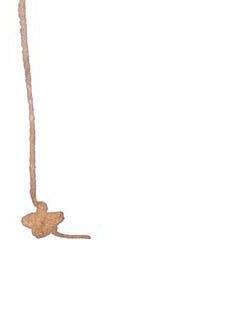
200 centimeter-long wooden string
24 screws
1 cold shoe
1 camera baseplant
Rubber bands
Weather resistant magic potion
PHOTOS: THEO ACWORTH / STEFAN SCHNEIKER
CAN’T MISS MATHIS BOZZOLO WITH THAT RIG
WORDS: JUSTIN DUTILH
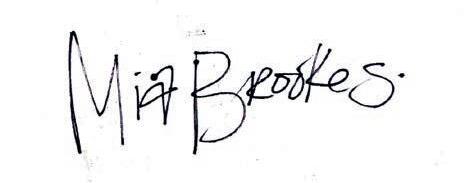
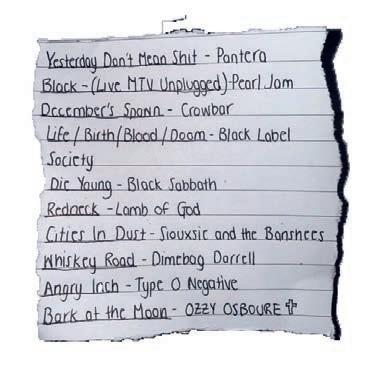
Ever wondered what Mia Brookes is blasting to her ears before dropping into the most high-pressure comp runs or on her casual park sessions? Here’s
In the day and age of internet prevalence, we see misinformation being spread like wildfire and opinion being masqueraded as fact on a daily basis. With all the razzmatazz surrounding the release of FASE bindings, there’s been an overload of information coming from every angle, but we all know you can’t believe everything you read on the internet, right? We tracked down Erwin Knoester, Marketing Lead and Engineer for FASE, and put on our MythBusters hats to get the real scoop direct from the source.
What are the main misconceptions you’ve been seeing or hearing surrounding FASE?
A big one is that people think FASE is just another “step-in” or “rearentry” binding. It’s not. FASE is a next-generation two-strap system. It delivers enhanced locked-in feel, two-strap performance, and universal boot compatibility, but completely evolves the experience of getting in and out of your binding. FASE fills a crucial gap as the first fast-entry binding with truly uncompromised performance. Another common misconception is that FASE is a single binding or product line. It’s actually an ingredient brand similar to BOA and GORE-TEX. It’s integrated into bindings from brands like Jones, Bataleon, Rome, and ThirtyTwo. Each of our partner brands’ bindings has its own tech, flex, and feel that reflect its personality. And finally, some assume it’s bulky or heavy. The system itself only adds about 40 grams of mechanism and matches the weight and footprint of a traditional binding. In short, it feels the same underfoot, just faster and cleaner to use.
Any internet rumours you want to put to bed once and for all?
Some people think FASE just eliminates ratcheting the toe strap. FASE goes way beyond that. You never have loose straps in the way, there’s nothing to connect, and strapping in takes just one hand and a couple of clicks. It makes every move faster, smoother, and more natural, while keeping the trusted two-strap feel. As Jeremy Jones put it, “It’s one of those things that you don’t realise how much you love it until you have to go back to old bindings.”
Having ridden FASE bindings, how would you say they’ve changed your riding experience?
Because of the way you slide in with your heel along the highback your boot is always snug into the heelcup. I really noticed I never feel loose in my binding and don’t have to retighten my ankle strap to feel locked in, besides the mandatory one more click of course. The fluidity of sliding my boot in on the go and strapping in with one hand just keeps a nice flow and is perfect for hotlaps. Slamming my boot in and tightening the ankle strap without taking my eyes off the line I’m about to drop is just a vibe that makes every drop-in way more fun. Overall, I’m always locked in and just having even more fun.
How have you seen FASE evolve since the early designs and ideas?
The early prototypes proved the concept, but it took hundreds of refinements and seasons of rider feedback to shape FASE into what it is today: intuitive, durable, and seamless. It’s hard to explain all the subtle geometric interactions between the parts that make the system work
so cleanly, but that’s where a lot of the evolution happened. The challenge with any fast entry system is avoiding excess weight and many complex parts that end up compromising performance. We didn’t stop refining until we had a lightweight, low-profile, universal solution. That process turned the original concept into the minimalistic FASE system we have today.
And what can we expect to see from FASE moving forward?
You’ll definitely see more FASEfeatured bindings hitting the market. The minimalistic architecture of the system allows all brands to design their bindings however they want, just like their traditional two-strap bindings. FASE will keep refining and evolving within the brands that share our rider-first vision.
Three things you want people to know about FASE?
1: Every FASE-featured binding is a true two-strap. The performance, control, and adjustability you trust, just faster and more intuitive.
2: It works with any boot. No special gear needed, full compatibility, no compromise.
3: It enhances, not replaces. Every FASE-featured binding stays true to its brand’s design and ride feel. FASE simply makes the whole experience smoother, faster, and more fun.
“FASE is about evolution, not disruption. We didn’t reinvent snowboarding; we’ve made strapping in effortless and ultrafast. Our goal is to help brands evolve with innovation while preserving the performance and feel their customers and pro teams rely on. Check www.fasesystem.com for more info” – Erwin Knoester
INTERVIEW: JOY DUTCH
HALLDOR HELGASON, LONG TIME TWEAKER, STRYN, NORWAY
PHOTO: DANIEL BERNSTÅL
Photo : Theo Acworth Rider : Frank Bourgeois Board : Sender XTRM
Where did the name Team Perfect Landing come from?
Marko: Team Estonia was taken.
Who is a part of Team Perfect Landing? What are the requirements for entry?
Simon Pettai: Marten Kikas, Marko Malsub, Juho Laine and myself. We have a massive list of close homies all over the world. You just become one if you are around and are a match.
How important is landing to you?
Marten: There are always hopes and dreams about different landing scenarios. We all know how it goes. Bails are definitely more important. Some sort of landing will always be there, whether you want it or not. I’ll try not to think about the landings so much. I guess that means landings are not necessary.
Marko: We don’t really care too much about landings.
Define perfection, and what is a perfect landing to you.
Marten: When you’re committing to something with speed and uncertainty. A lot of uncertainty, actually. That’s the main formula to achieve a perfect landing.
Simon: Perfection can go two ways, first or last, either the best landing or the worst bail.
Marko: When you eat it so good that others get full too.
Most epic landing in the history of the crew:
Simon: Juho naked, stuck on a zipline over the road with no harness.
You all come from a pretty flat country with not much snow. How did you all learn to shred, and how did TPL come into existence?
Simon: Coming from a small place makes you dream bigger. We all have a lot of energy to boost ourselves. When we were growing up, the older generation was doing sick shit here as well. So we have been hyped ever since the beginning.
Do you think the snowboarding scene needs more looseness?
Simon: Yes. With a good crew, you push the limits all the time, on and off the hill. If you take the fun off the hill, the vibe/spirit isn’t the same. We are all best friends, and it’s because of all the crazy stuff we have done together over the years.
Marko: It’s hard for a miracle to happen if you calculate too much. With all the training happening in snowboarding, it would be refreshing to get more of the raw send as well.
Are all your stunts made in-house? Or do you outsource some of those horrendous bails?
Marten: We are all over the place, and with a good crew, everything is possible. Other people are also hyped about a perfect landing, and they dm their videos to us. Keep sending them (@teamperfectlanding)! For example, people jumping in a car and doing random party stunts are amazing.
You guys have gone from filming each other with handycams to going on Cream Week all together. Did you ever think it would get that far?
Marko: Holy shit, we were just snowboarding and having fun at Marty’s place, and BOOM, they put us in a fucking helicopter. Never thought that just having a good time with your best friends could actually take you there. It would not have happened without Lobster and Yes and all the beautiful people there. Halldor managed to create and fulfil our dream. *laughs* True legend!
PHOTOS: DANIEL BERNSTÅL
INTERVIEW: JOE SIMPSON
The storm had cleared up, and the last rays of the setting sun finally managed to beam through the dissipating clouds. He hoped the fresh air and sun on his face would help calm his bitter thoughts. Arriving at his favourite park, he heard laughter bouncing through the trees, the smell of barbecue dancing on the breeze. He took a deep breath and already felt his mind clearing. He felt bad for Glenda and thought he would message her when he got home to check if she was okay. He strolled further along the path, coming to a slope with a nice bench to sit on and enjoy the view. Lo and behold, the same disrupters were jumping on his favourite bench!
He stared incredulously, unbelieving that he would bump into this lot again on this silly day. He realised that both groups of “snowboarders” he had shouted at were here together! The universe must be trying to tell him something. They were singing along to music blasting out of a speaker and laughing at someone who had fallen face-first into the snow. Some were heating their hands over the coals, sharing beers and easy conversation. They seemed so... free, so childlike. So vivid. Did they all come here together?
They spotted him and waved him over to join them. He was surprised by their invitation, as he felt like he’d spent most of the day screaming abuse at them. Waving back awkwardly, he made his way over to the group standing around the barbecue. They greeted him with grins and asked if we would like a beer and a hot dog,
WORDS: JOE SIMPSON
ILLUSTRATIONS: JUSTIN DUTILH
Roger’s five pm alarm rang and he hadn’t even started on Glenda’s tasks. Damn Glenda’s non-existent fitness routine. He didn’t care anyway, he’d had a hard day and Glenda could go do one. I bet she didn’t even break her ankle, he thought. He decided to take a stroll through the park on his way home, which normally helped calm his nerves.
to which he gratefully nodded his head, stunned by their generosity. He couldn’t figure out why they were being kind to him. Not wanting to break the spell, he enjoyed his hot dog and beer and listened to their mystical conversation. The more he listened, the less he understood. They talked about handrails with reverence, hoping and wishing to one day find the perfect one. They used words in ways they shouldn’t be used. They said ‘sick’ so much that he wasn’t sure he wanted to share any of their beers.
After a while, he felt a little awkward and thought he should probably get more involved. He asked them how long they had been here, how they had decided to come to this city, and how they didn’t get scared doing what they did. As he discovered more about their unbelievably strange lives, he felt his worldview shifting, the weight of the day-to-day grind easing off his shoulders. He felt grateful for the small things in his life, like his health, the roof above his head or his friends he hadn’t seen in ages. He saw how these kids saw the world differently, how they embraced a challenge and how they interacted with strangers. He noticed as he listened to their funny stories that he hadn’t thought about all the work he had to do tomorrow or his sore toe that had bothered him all day. He laughed at a joke, took a swig of beer, and appreciated being in the company of these weird and wonderful people.
He stayed with them long after the sun disappeared below the horizon,
until he realised he’d almost missed the last bus home. Just making it in time, he found a vacant seat and watched the cold streets pass by with a fresh outlook on the possibilities this concrete jungle had to offer. Arriving at his stop, he jumped off the bus and headed for the stairway, noticing that the crew had in fact cleared up their mess. He hopped over the silly ice patch and ran up the stairwell, barely noticing that the ‘Broken Down’ sign on the elevator had disappeared.
He burst into his apartment, kicked off his boots and threw off his clothes. He jumped into his comfies and rummaged through his wardrobe. With a giggle of excitement, the kid’s passion for life having infected him as well, he pulled out his guitar, blew off the dust and sat down on the edge of his bed. He tuned it by ear, gave it a few tentative strums, then played one of his favourite songs he used to know off by heart. He sounded rusty, corroded even, but he didn’t care. He played late into the night, losing himself in the rhythms and melodies until he could no longer keep his eyes open. He put the guitar down, laid his head on the pillow and fell asleep faster than he had in months, the lyrics of the song providing the soundtrack on his road trip to the dreamworld:
“Hey babe, take a walk on the wild side.”
WORDS: JOY DUTCH
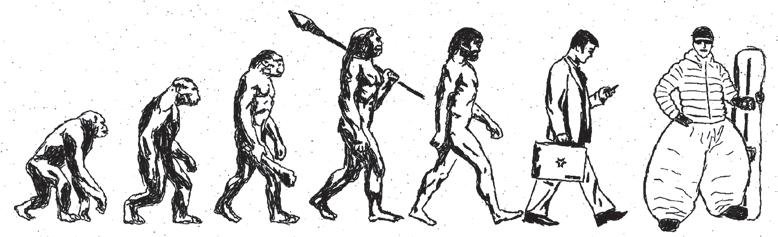
If your algorithm is anything like mine, scroll down your social feeds in 2025, and you’ll be bombarded with two things: Debates on whether cover shots have to be makes. And Baggy. Pants. Everywhere.
XXL pants are inescapable at this point. They’re the fad du jour, the Gucci garnish, the flavour of the month, we get it, they’re cool, but how baggy is too baggy? Surely there’s a point where fashion butts heads with function to the point that it becomes quasi-satirical? And I’m not talking about sizing up a lil’ bit for aesthetics, I’m talking about the people who could comfortably sleep a family of four in each pant leg. If you’ve been on Instagram in the past year, you know exactly which MC Hammer wannabees I’m talking about.
As anyone who’s seen my sorry excuse for a wardrobe can attest, I definitely don’t have the credentials to comment on style, but as I’ve said before, I have unfettered access to the internet and too much time on my hands, so I’m going to do it anyway. On a good day, I’m about as edgy as a satsuma, and I’ve been on Interpol’s Fashion Police watchlist since I wore a pair of plaid jeans with a lime polo shirt, so maybe I just don’t get it? Maybe I’m boring and old, and when I fart, dust comes out.
Fashion is cyclical, and baggy pants have for sure been on trend before. They had a glorious rise to the top during the Mack Dawg era and through whatever the hell it was JP Walker used to get up to. And I will give the kids today credit that most people nowadays at least pair them with a cuffed hem. As a vertically challenged specimen who has been
patiently waiting for the promised puberty growth spurt for over 15 years, I’m fully on board with the elasticated phenomenon.
But post-baggy pants, we lived through an era of haggard skinny ones that were popularised by the likes of Sh*un Wh*te. Like anyone with eyes, I’m so relieved we stepped away from pants so horrifically tight, they looked like they were picked off the BDSM rail at an underground kink store. Pants so snug the outline of everyone’s meat and veg was on full display. Every day, I thank sweet baby Jesus I never succumbed to the super-tight pants phase that plagued the 2010s (I did sip from the altar of skinny jeans, though, so I’m not completely exempt from ridicule). The sheer determination it must have taken to wear those is admirable, and having to employ two friends to help you yank the ends over the tops of your boots does little for time efficiency, but fostered connection and community, I suppose?
Look, I’m all for freedom of expression and creativity, but when your pants are so baggy it looks like you’re wearing reverse clown shoes, have we not taken things a step too far? Have we swung the needle too far in the opposite direction? Some of these pants could fit three or four riders in them. Is it a cost-saving measure? I know lift tickets are eye-wateringly expensive, so have people turned to smuggling their friends up the hill and letting them out at the top?
There’s so much material, surely they’re being rented out on the weekends as Slip N Slides for kids’ parties. And are we not having mobility issues? I get having a bit of
ILLUSTRATION: JUSTIN DUTILH
extra room for freedom of movement or space for a lil’ junk in the trunk, but how are you slotting a T-Bar between your legs when your pant gusset hangs so low? Can you tuck it into your sock? It feels like we’re stepping towards tiny pole skier territory, and tall tees are gonna be the next unwanted comeback.
Or maybe it’s a safety feature? I know we’ve all imagined what we’d do if we got stranded on a chairlift (I’d take off my board and use it to zipline down to the nearest pylon and climb to safety), but maybe these Gen Z hip cats have taken it a step further and now their pants double as literal parachutes in case of emergency. In that case, I applaud the practicality and forward thinking.
I’d wager a guess that anyone over the age of 25 has seen at least one picture of themselves from their teen years and thought, “Christ on a bike, who let me out of the house wearing that monstrosity?”, so maybe it’s a rite of passage that everyone needs to go through? A humbling from your future self.
Now, aside from being all fur coat and no knickers, I don’t have the hubris to kickstart something new, so I’m not gonna be the one bucking trends and releasing myself from the shackles of bagginess, but I’ll say ‘right on brother’ to anyone who has the minerals and on-board style to do so. In any case, skinny, baggy, perfectly conforming in between – whatever tickles your pickle, I think if we can agree on nothing else, we can agree on the fact that cover shots should, in fact, be makes.
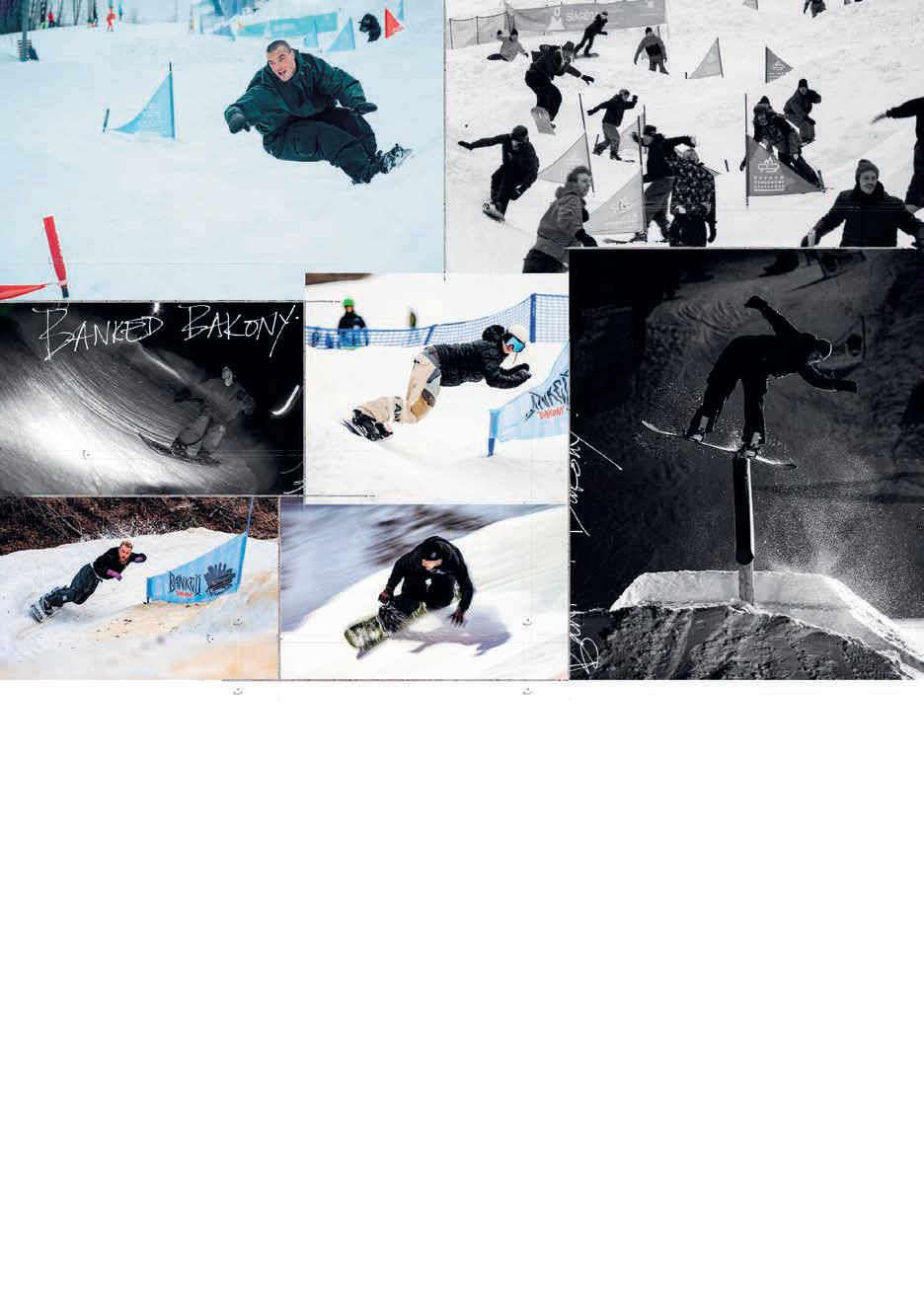
Wait, can you actually snowboard in Hungary? When I was first invited to Banked Bakony three years ago, these were my initial thoughts.
Turns out, it’s possible, though in ways that people used to the superficial glamour and glitter of the Alps could never imagine. Located in the Bakony Hills of western Hungary, basically in the middle of nowhere, a group of enthusiastic people putting together Banked Bakony make it happen with whatever means at hand. While the winters over there are dry and haven’t improved over the past four years, the crew has never failed to provide, and the event keeps evolving, despite whatever obstacles life throws at them.
The main event, as the name suggests, is a banked slalom, but there’s so much more to it than that. Grim-faced people fanatically preparing their boards to be as fast as possible before every run? Not at this event. The turns may be fierce, but the competition isn’t. Sure, everyone’s a little shaky at the start gate, but that’s usually more due
to the lingering effects of the night before and hopeful expectations of making it through the banks without crashing into the fence.
Spending a weekend at Banked Bakony, you’ll encounter a lot of smiles, most of them joyful, some of them drunken, and then some in utter disbelief of how all this came to be.
A tiny resort in the middle of the flatlands consisting of two slopes. Rock music blasting out of retro speakers on a chairlift in the pitchblack night. Tree trunks pulled from the woods and turned into jibs on the way down to the course. A Friday night freestyle session where you can jib a boar made out of car parts. Loose parties with the locals every evening. What more can you ask for?
Year after year, Banked Bakony reminds me of the true essence of snowboarding, and year after year, I get a smile out of the resort hosting the event being called Síaréna Vibe Park, because, well, the vibe. Time and time again, I am baffled by
the effort put into Banked Bakony and how, no matter the difficulties encountered, the event evolves and keeps getting better.
Everything is built from scratch: the course, the obstacles, and the participation. My friends and I were first invited by Boti Fricz three years ago. Even though the thought of snowboarding in Hungary had never crossed our minds before, we went in for an adventure that has made us eager to come back every year since. I think that says a lot.
The starting numbers for the race are handed out as stickers you put on your board. My friends have collected three of them in the last three years, one of them (Hennes) even has two of them on the same board. Months after the event, I’m already excited to find a place for my third sticker and curious to see how many more we’ll rack up in the next few years.
I’m also wondering whether one of us will ever take home the infamous VadKanyo trophy – but that’s not the point, is it?
JOE
WORDS: ALEX TAFERNER
BOTI
PAULI
PETR
PHOTOS: ADAM HORVATH, BALAZS PALFI, TAMAS AGARDI, TAMAS GAL
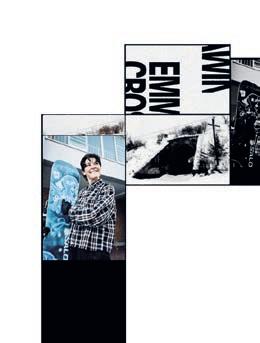
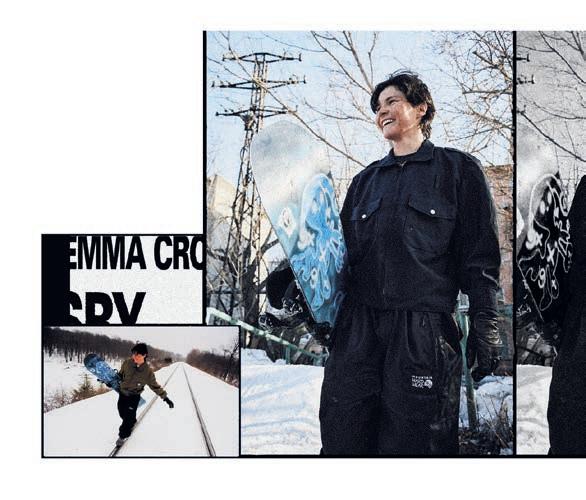
EMMA BENEDEK




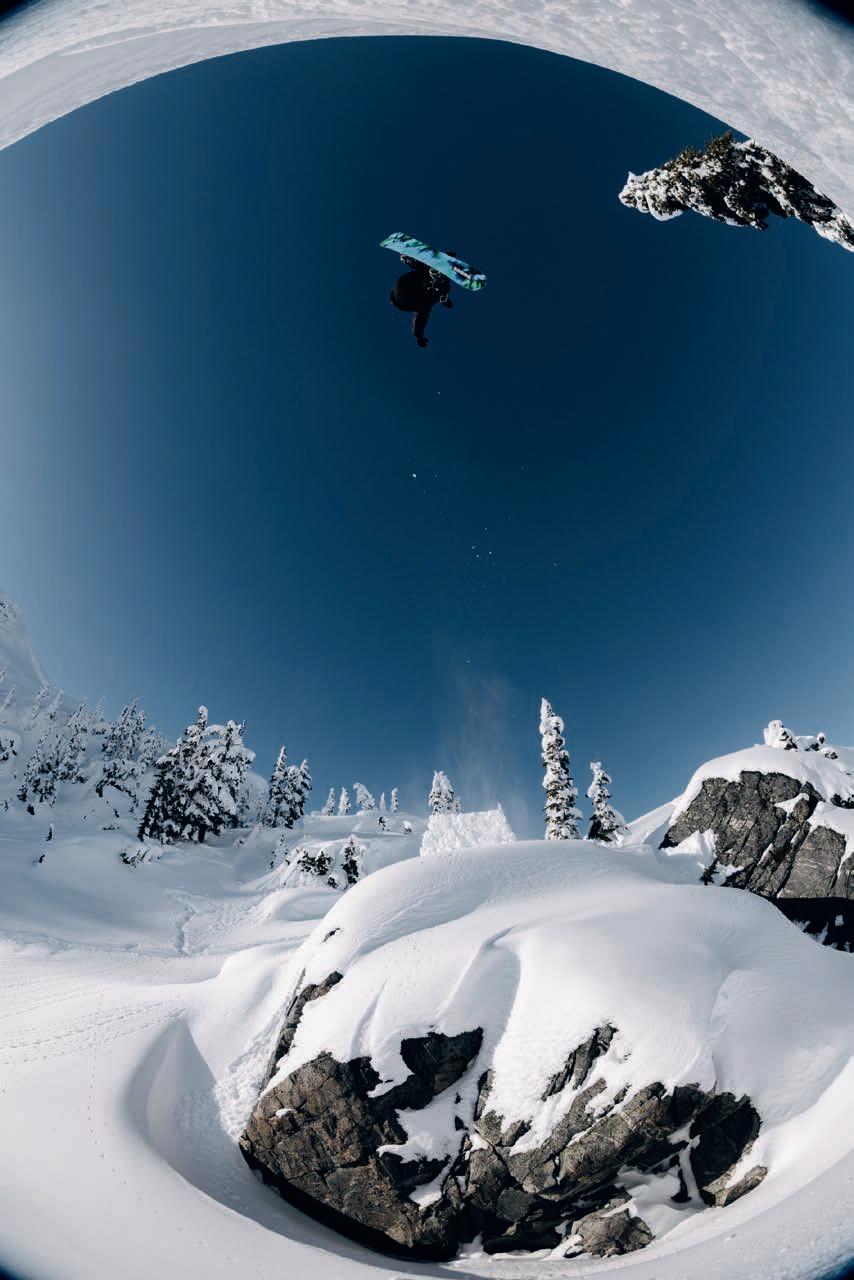




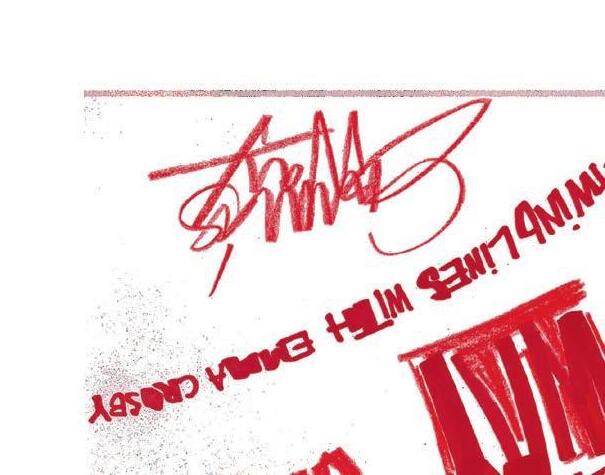
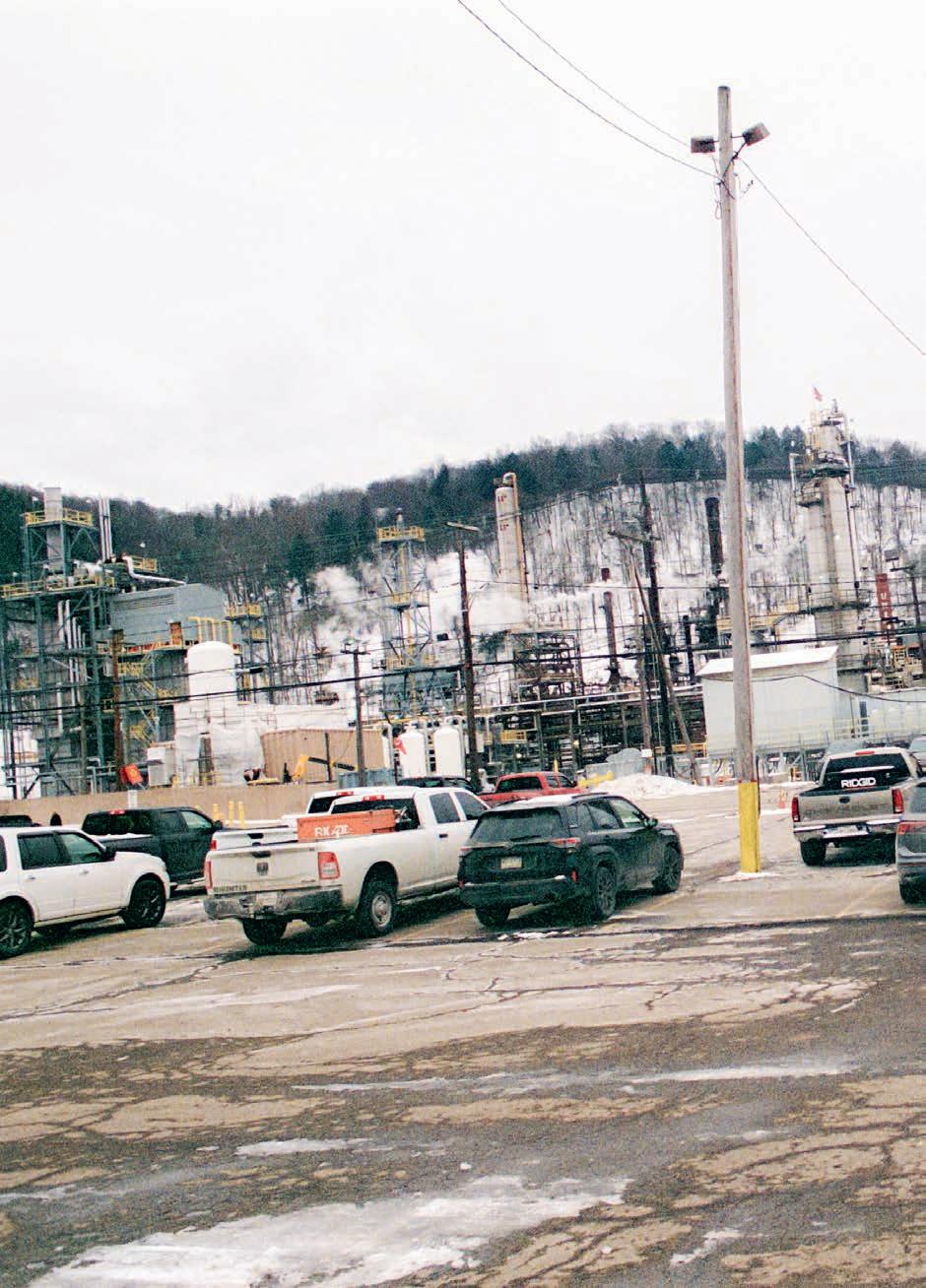
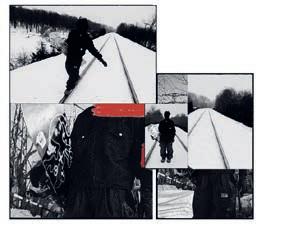
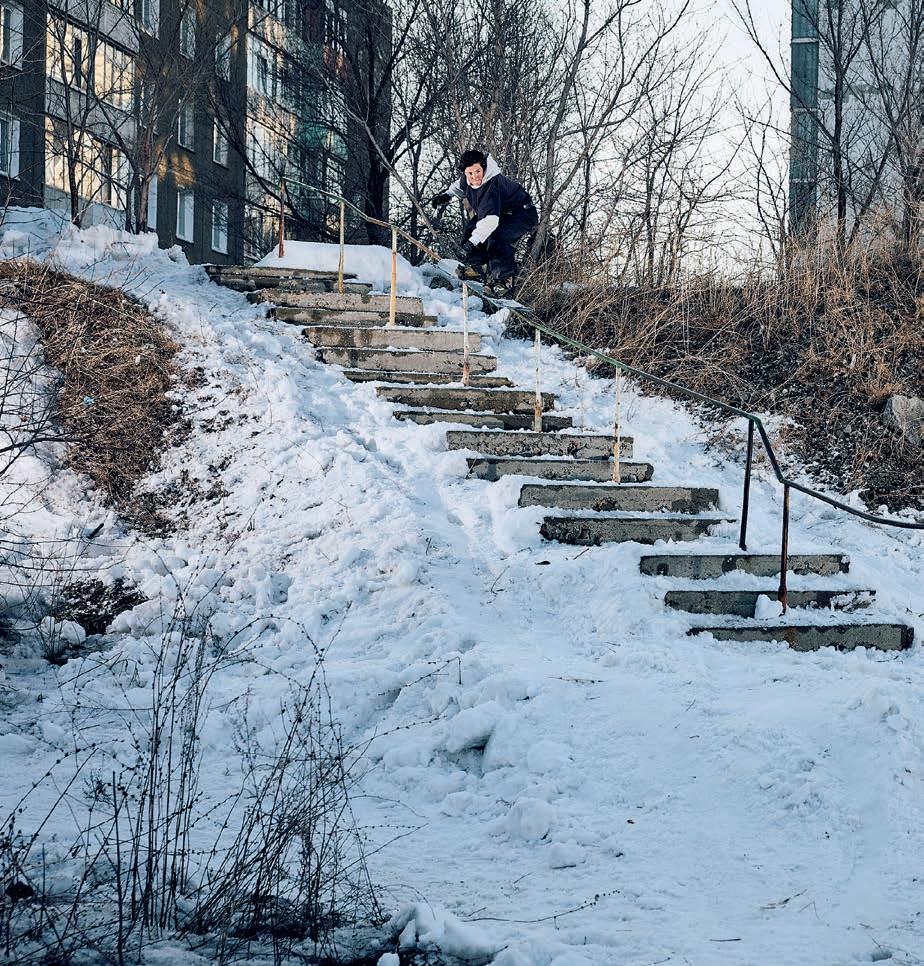
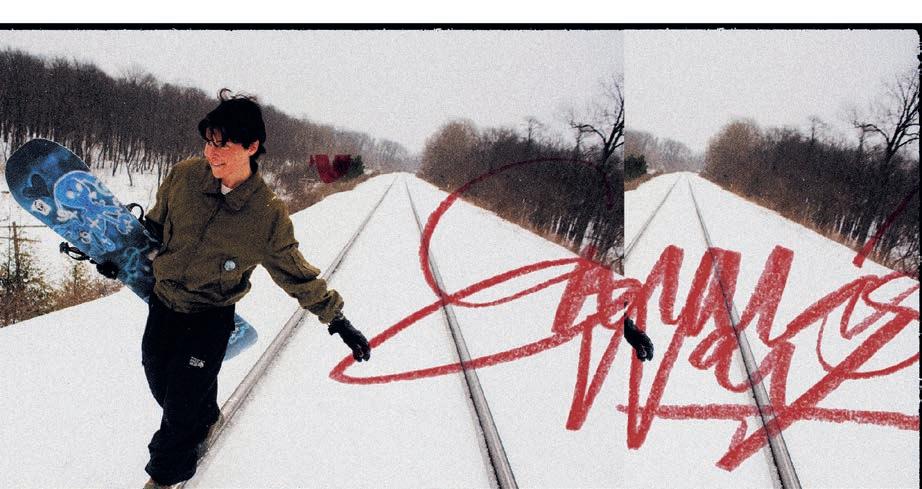
FINDING OUR WAY MIGHT BE THE BIGGEST CHALLENGE OF OUR EXISTENCE, AND YET IT CAN BE QUITE A SIMPLE THING, TOO. Damn, that’s probably a bit too profound and heavy for this intro, but I guess seeing Emma Crosby over the last few years, and chatting with her about life lately, made me realise that. It is inspiring to see when things come together nicely without paying too much attention to the obstacles we can come across. But where do you draw the line, exactly? How do you pick your battles? How do you make yourself feel that where you are is exactly where you belong? Some things are only important if you think they are, and that might be the key right here! It seems to me that Emma has figured that one out. It’s quite refreshing to see, and probably the reason why what we’ve seen of her over the last years is so compelling. Whether it was in movies like Salomon’s ‘Foyer’ or Bryden Bowley’s ‘Dorothy’, it’s pretty clear that Emma is bringing so much more to our snowboard realm. The riding, of course, but there’s more to it, as if she and the group of people around her were capable only of spreading tremendous good vibes around, and it shows. Whatever it is, her singular style and commitment have been tearing our screens and pages.
A question remains. Is what we see mostly how it shows, or is it genuinely authentic? Is it just the beauty of cinematography, the power of filmmaking, the editing, or some sort of bigger marketing ‘happy/cool-washing’ program that’s responsible for it? Ha! Of course, nothing is and can be so binary, especially with human beings. Add to it the fact that we often try our best to show something and it never comes across to others as we intended to. I say, it’s probably somewhere in between, and thanks to the talent of the cinematographer and photographer she’s been hanging out with, it tends to lead more to the genuine side than the superficial other one, making it the epitome of uplifting! As we patiently wait to see what comes next, we decided to catch up with her and try to find out Emma’s way, and where and how she draws her lines.
EMMA CROSBY
/ INTERVIEW:
INTRO
JUSTIN DUTILH PHOTOS: JOSEPH ROBY + WIETSE THOMAS
Hey Emma, how was your summer?
It’s been good. I feel like it’s nice to decompress a bit and stay home for longer than two weeks, you know. You get into rhythms of doing small things you really look forward to, like cooking dinner, reading a book, going for walks, catching up with your friends, biking, sewing, and more low-key stuff that helps me get mentally regulated for winter, too. I also visited my parents back home in Minnesota.
Cool! How was growing up snowboarding in Minnesota like?
I’m from Edina, Minnesota, and I got into snowboarding because Hyland Hills was kind of in my backyard. I
actually grew up ski racing because my dad is a big skier, and naturally signed me up for ski school. I would always skateboard in my garage at home, though, and when I was going up the ski lift, I would look over onto the terrain park with all the snowboarders. To me, that looked way cooler and way more fun than this ski racing stuff. My dad was really awesome, and put me in a snowboard lesson, and then I’ve just been snowboarding ever since. Dropped the skis pretty quick *laughs* I was 13 then, and growing up at Hyland was so action-packed. The tow-rope life is ingrained in you forever. It was a very exciting experience to start snowboarding in that way.
Sounds like it! And then you decided to move west, right?
Then I moved to Salt Lake City for college in 2014. I studied for four years. After that, I had a little bit more free time and started snowboarding more. Desiree (Melancon) was helpful in facilitating some more snowboarding opportunities with Salomon, and it kind of picked up from there.
So how was it moving from the Midwest to the West? Do you miss the rope-tows a lot?
Yeah, definitely. I really miss just that high pace repetition where you can snowboard for an hour and you’re good, whereas out here it takes an
EMMA CROSBY
the same age as so many other people who moved there to snowboard. So it kind of happened naturally, whereas in Minnesota, I didn’t really have those kinds of friends yet. Back there, there was like one other person in my entire high school who snowboarded, so I kind of kept it to myself.
hour just to get to the mountains. At the same time, it was really exciting to be in new types of terrain and try new types of snowboarding. At Hyland, you can ride a lot of rails, but jumps and powder don’t really exist there. It got me even more motivated to figure it out, I feel. Also, the season is way longer out west, so just having more time to snowboard was cool.
But honestly, having a bigger community and more friends to go ride with, arriving here was really helpful. That really shifted my experience as well. Back home in Minnesota, I had some friends who snowboarded, but it just wasn’t as many. I also think the age I was when I moved to Salt Lake was
Could you describe the Salt Lake City snowboard scene in just a few words?
It’s a big scene with a lot of people, a lot of black clothes, and very good snowboarding. Everyone’s talented, creative, and inspiring.
That’s cool. Was that your first impression as soon as you got there? Yeah, it felt like I was really diving into an entirely different community, and I was super inspired. I kind of got integrated into a friend group through my roommate, whom I have now, and it was like jumping in the deep-end and being immersed with the snowboard culture of Salt Lake City. It was super inspiring. I’m really glad that I moved out here at the time that I did. It really helped my career, and it made the shift in my mind where I was like, “Okay, this is something I want to do, and I feel like I’m in the right place for it.”
I imagine you started to go more and more into the backcountry to ride and shoot. What are you looking forward to when you go session the mountains, there?
I always loved jumping, which is kind of funny, coming from Minnesota. But I love how different it feels compared to being at home. Something about being in the backcountry is that you’re outside and immersed in the elements. You can’t drive and get a coffee or go to the bathroom easily. You’re out there. There’s something really special about that, because you’re just one with the elements. That creates a different energy for you to navigate and experience.
Yeah, there’s not as many distractions as filming in the streets, I guess.
No, and you’re just like, there, and you have to be prepared and ready too, which feels cool. It’s just really nice to be outside and pack your lunch, and just be settled in the mountains.
Do you manage to bring a low-pressure, friendly-park shredding vibe out there?
Yeah, I think it’s quite similar than
park riding. The cool thing about being in the backcountry is that even if you don’t get a clip, and more often than not you don’t, at the end of the day, you get home and you’re like: “Wow, I just spent 12 hours outside hiking in snow with my friends.” That’s pretty remarkable. And the fact that we do it for a job is insane and awesome. So yeah, it’s the same vibe, you’re just hanging out with your friends, whether it be outside in the mountains, on the ropes, or at a street spot, that’s what you rely on, your friends, your dynamic, and the trust in one another.
Sounds like the way to go! In the past, you’ve mentioned that personality and character were more important than the snowboarding talent of a rider. Can you elaborate on that?
Yeah, it’s funny that I said that. I think style is always something that’s an inspiration to me. How people choose to hit a spot or snowboard on or what kind of music they snowboard to, or how they choose to do a trick is really inspiring to me, and something that I’ve always been driven by. It’s fun to be able to say: “Oh, I like this person who does it this way, because I like how they do it, or whatever.”
I totally agree, I would not be doing my job if I had to shoot and publish people who all look alike. And that’s the cool part, too. What you think looks good, someone else might not feel looks good. And that’s the whole art of it and how people express themselves.
Well, it’s a real pleasure to see you rip more and more every year! Are you proud of what you’ve become today?
Thank you. Yeah, I think every year you gain more experience and more confidence in yourself. No matter what, I can look back and see that I’ve gotten better at snowboarding, and I’m excited to keep doing that and keep feeling like that. It’s probably something I will feel forever, you know, that I want to keep getting better. But yeah, I’m proud of what I’ve been able to do, but I’m also excited to keep learning and getting better. I wanna be making more video parts that I’m proud of and keep building off my own experiences.
Yeah, and there’s probably something a bit more subtle about pride and progression, especially when
ALWAYS LOOK AT THE DONKEY IN THE EYE PHOTO: JOSEPH ROBY
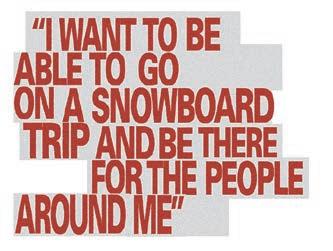
you consider personality more important than talent. How do you actually progress as a person? Yes, it’s a great point and interesting to think about and talk about. As people grow, they take their experience and try to be better as people, you know. Be a better friend, a better sibling, or a better daughter for me, and I think that kind of goes into snowboarding as well. I want to be able to go on a snowboard trip and be there for the people around me, and be there for myself, too, with a really good mindset and attitude. I think that’s like a big inspiration for me to thrive. It’s really closely linked to snowboarding well, too. If you’re able to find this mindset of being the best person that you can, it also elevates your snowboarding naturally because of the energy that you’re giving to everybody.
There’s how you are and how you look, too. Having so many cameras pointing at you now, do you try to inspire others in what you do and how it shows? Do you think of that? Not too much. The biggest thing that I try to do is live my life and snowboard. I feel like I never think too much about the cameras or anything like that. It’s more so how I want to snowboard that day, or what I want to snowboard on, you know, on more of a chill scale.
You focus on what you do, that’s good. And then there’s the editing. The way you show in the film depends on that and stuff like songs or clips that are chosen and such. Do you ever get involved in the editing, or do you want to?
I’ve been working with Bryden for three years now, and it’s awesome, because I really trust him to edit and choose music and portray me in a way that feels authentic to me. Because that’s part of it as well, you can snowboard, but it’s how Bryden sees things. And there are still definitely times when I’m like, “Dude, I look crazy in that clip, or lifey or whatever. Can we swap it with something else?” And he’s always down. But ultimately, with Bryden it’s been a privilege, because I trust him, he makes a great video, and I’m really proud to be a part of that. I’m proud to be someone that he likes to create with. But it would be cool down the line to keep that door open for creativity for my own editing, or whatever it may be.
About inspiring others through films, photos, or whatever, I feel that usually, people become true models or icons without really planning it, kind of naturally. What are your thoughts on this, and how are you living your ‘fame’ situation? I think about who I looked up to as a kid, and I was really inspired by Desiree and MFR (Marie France Roy) and how they snowboarded. Obviously, you didn’t have as much accessibility to people and how their lives were through Instagram as much as today. I feel like you can get a little bit more insight into who people are now. Back then, I was really inspired by people for being authentically themselves and snowboarding how they want to snowboard, and being powerful. So I just try to live like that and be myself, and hopefully the rest will follow. If there are people who are inspired by that, and if it happens to just a couple of people, I’m stoked. That’s really the goal and would be amazing to have it come full circle like that.
Yeah, it also seems like you don’t overthink it too much, which is good.
Yeah, that is kind of nice.
How’s your imposter syndrome going these days?
Yeah, the imposter syndrome is always through the roof, and so high and present. The last two years, we’ve gone on a couple of trips with Louif (Paradis), and even just being there, you’re like: “This is crazy. What am I doing here? I don’t deserve to be here or whatever”. You have this battle in your mind where you try not to go down that hole. You deserve to be here and should try to enjoy it. This is where staying present and being grateful for what’s happening helps. So I try my best to keep those thoughts down and bury it.
Yeah, I guess it’s only feelings in the end. They exists if you make them exist, kind of.
Exactly, you don’t want to give it too much power.
Is the confidence in the sense of belonging getting better then?
Yeah, I think so, for sure. I think the more time you’re in a space, the more you feel comfortable being there, and that kind of dictates it for sure.
That’s nice to hear. As a proud queer snowboarder, can you elaborate on
that sense of belonging and how you’ve been dealing with it growing up as a person and a snowboarder?
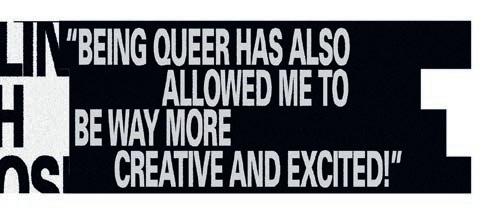
Yeah, I feel like that kind of ties back to what we were talking about earlier. When I was able to move to Salt Lake, have more queer friends, see it and experience firsthand the queer community, which is very big and welcoming here, opened my mind to be like: “Okay, if I’m comfortable in this area, I’m also now getting more confidence in other areas of my life, like creativity, clothes, and music”. Being queer has also allowed me to
EMMA CROSBY
be way more creative and excited. It kind of has this domino effect on other areas of your life. The snowboard community is obviously predominantly straight males, but the piece that is queer folks is also really important and a really strong one that makes you feel seen and heard. It’s like a small piece of my life that has now become a big piece that goes into all different types of confidence in different places. It’s nice to feel that I’m fully myself. And that has come with time, but also with the community that I found in Salt Lake.
Do you think it would have been a lot different if you were still in the Midwest?
I have no idea what my life would look like if I had stayed home. I’d like
to think that no matter what, I would have ended up in at least a similar position that I’m in now with my queerness and with my confidence in all these areas of life. But I think it would have taken way, way, way longer. I think moving here has really allowed me to open up this new life that feels like I’m actually myself. It’s all tied together with snowboarding, my friends, and Salt Lake City as a community. Everything that I love and wanted to do was here, and there was also this added layer where I was like: “Oh, and you have a queer community, the art community, the music, and hiking!” All of these other areas of life are thriving, and you can take part in them all, and it has really blossomed for me. Minnesota is a great place, and I love it so much,
but I think what I needed in life was presented to me in Salt Lake, and really allowed for everything to fall into place after that. I’m talking about all of those things that happened for me and brought me where I am now with snowboarding. That definitely wouldn’t have happened if I had stayed home.
How would you say the snowboarding community participated in that process of building your identity, and why is it so important? I feel like, once you can see yourself in other people, then you have an idea of maybe how to move. You can be successful and be you, and having our crew with Jill (Perkins), Desiree, and Kennedi (Deck), for example, has been immensely powerful for me. Just
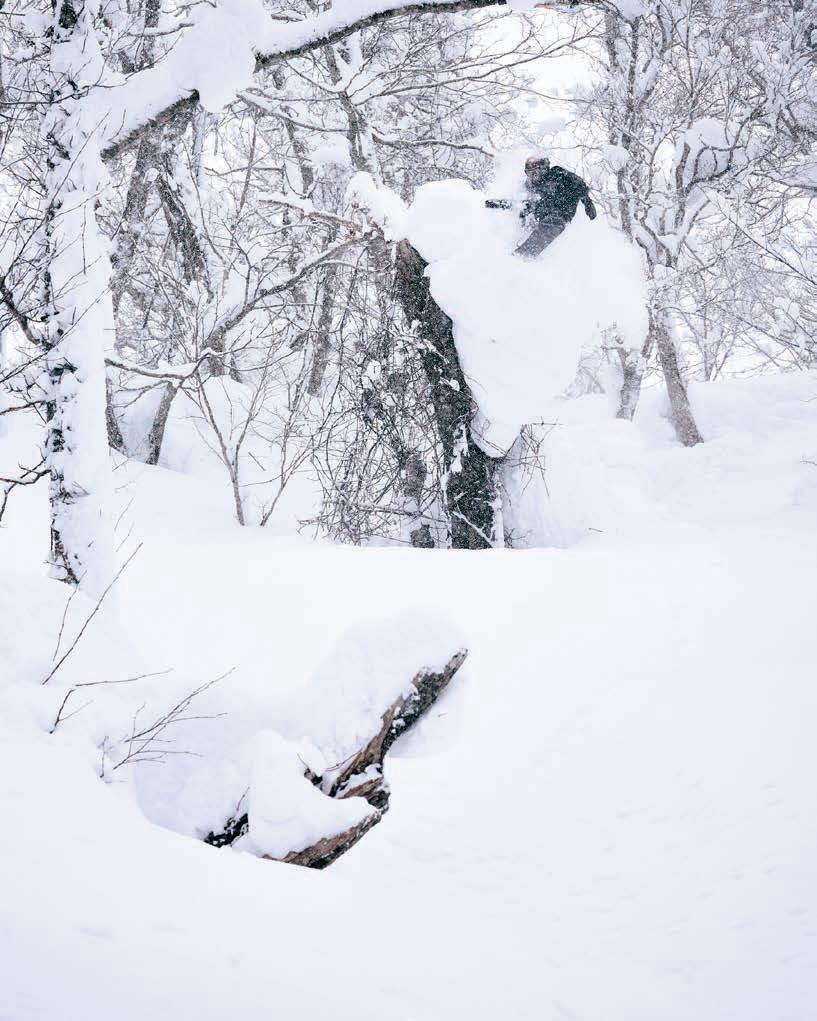
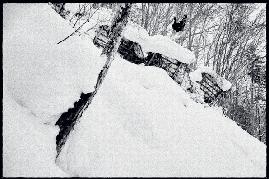
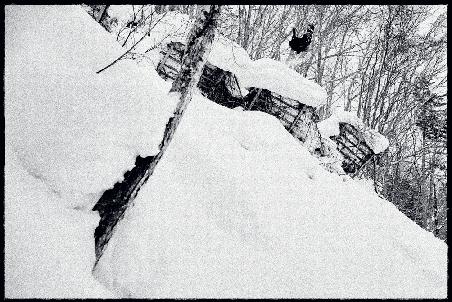
EVERYONE BELONGS IN THE DEEP POWDER OF JAPAN PHOTO: JOSEPH ROBY
EMMA CROSBY
AN AUTHENTICALLY HEAVY DROP
PHOTO: WIETSE THOMAS
having friends you can talk to about shared experiences goes so far that it makes you feel like you’re normal and you know, just like everybody else. And it’s important to have friends who are also professional snowboarders who are also doing it, and you just feel like: “Okay, this is us, let’s do this together.”
Yeah, I imagine it makes you feel strong, or stronger. Yeah, absolutely.
Why is it important to promote yourself not just as a snowboarder, but also being out there knowing that sexual orientation or sexual identity is such a personal and intimate part of everyone?
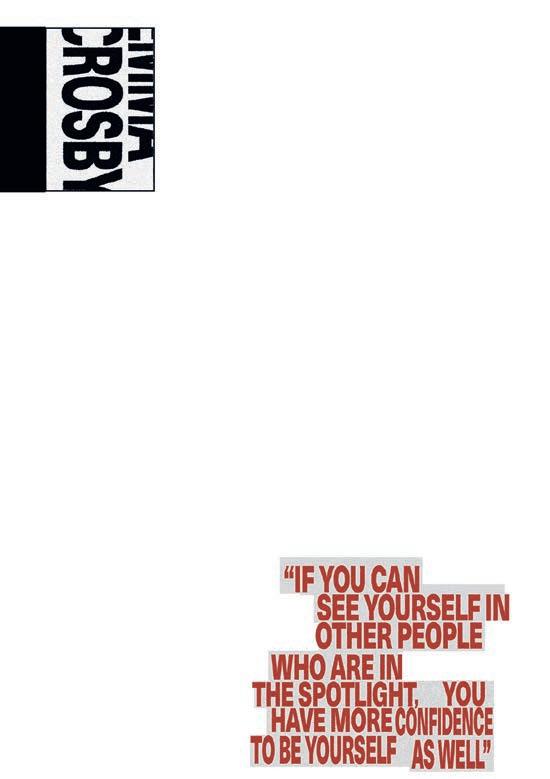
If you can see yourself in other people who have more of a spotlight,
then you have more confidence to be yourself as well. I think that the most important thing is just to be authentically you. So if people identify with you, they might find the space and the confidence to do the same. It’s obviously a little bit hard in the States right now, but luckily for the most part these days, it’s normal. It’s been more normalized and more okay.
What place do you want it to be as a snowboarder, though? Is it something you really want to emphasise with so much of it being about personality and how you present yourself in photos, videos, or even this interview?
Yeah, it’s hard to find a balance. I always want to be a snowboarder and a supporter like everybody else, get on this spot, talk bullshit, and where
I want this jump to be or whatever, but at the same time, I want to be a voice for people to find themselves in. If people read about this, align, feel close to me, and maybe are inspired by my story, then that’s cool. It’s cool to be different, but you can exist as a snowboarder who has accolades for being a snowboarder and also share light into the queer community. I think that’s just as important. We can have a scene that is less divided, and that’s something that I hope to carry as well.
Yeah, for sure, how do you see the level of representation and inclusivity in the snowboard world today? You know what, this is a hard question, because inclusivity levels are an everevolving thing that always needs to be checked and looked at. It’s great that
EMMA CROSBY
more, I think that would help, maybe change the metric a bit, but ultimately, it’s a bigger issue than that. There are many reasons why your audience is a high majority of men but, for example, the people who can afford snowboards, have accessibility, survives and thrives off the snowboard environment, in itself, are males. In order to change this, we have to go way back to the basics and work on making snowboarding more accessible, and how to get different types of people snowboarding. This is where I feel that the conversation should go, rather than Instagram metrics, right? How do we then get more people involved in snowboarding who look different and who aren’t in that metric?
I can have, what, five gay friends in the snowboard world that are like my close friends. That’s pretty amazing. I think there can always be more. If you look at a team and it’s fifty-fifty, that’s powerful and a hard number to achieve. But it’s inspiring to look around and see how many covers women have gotten in the last three years, all these inspiring video parts coming out, and primarily non-male, you know. There are so many different types of snowboarding, and groups of snowboarders, and I think that there can absolutely always be more. But I think where we’re at right now is a good step in the right direction.
I checked Method’s Instagram insights before our chat, and we have an 88% male audience. I’m not saying our followers are the entire snowboard community, but it’s definitely an information, right? Knowing how it’s heavily leaning towards a majority of males, and mostly straight, I imagine, do you see it as crucial to have it more equally balanced, or should we concentrate mostly on getting better at including people from minority groups? I think that metric kind of makes sense. This is a huge thing that’s hard to begin to talk about or have all the answers to, especially for me individually. Let’s say you show
That said, I would imagine that the more content of female, non-binary, or people of colour, there is, would also change the interest of people who identify similarly to those who follow the account and what’s being posted, because they like to see themselves in that as well.
Yeah, for sure! We do it as much as possible, whether it’s online or in print. One day, we’d love to only focus on publishing what we think is the raddest of snowboarding at the moment, period, and not think of that, but for now, it’s definitely important to shift our focus a bit. The truth is, even if we’re super keen to push a bunch of different people, we see less content coming from minority groups, so we have to juggle with that. How do you think the snowboard industry could deal with this in better ways?
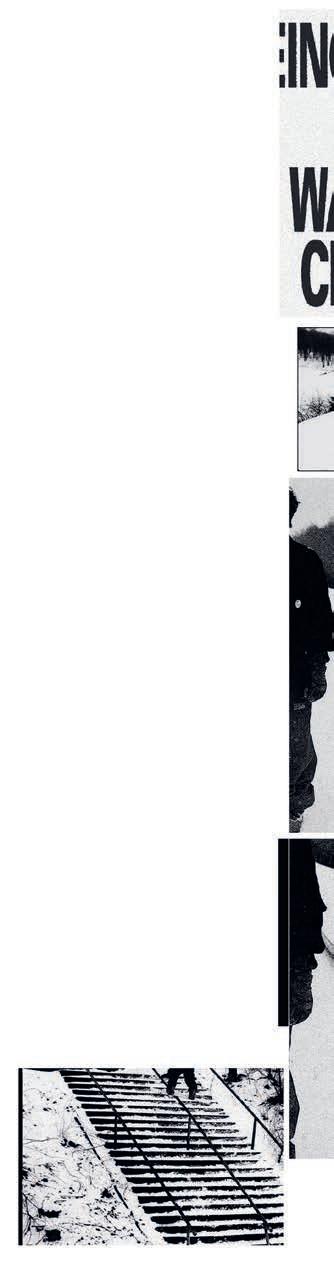
LOCKED IN ON ONE THIN AND SKETCHY RAIL
PHOTO: JOSEPH ROBY
The work that you guys have done for print is definitely super important. With the different interviews and the covers, I feel that the representation is absolutely there. I understand there are reasons for everything, and for both sides, as a snowboarder, a brand, or a magazine. There are so many groups of people who have never had a proper photographer or videographer with them. And that goes a long way if you have an amazing photographer on a trip. Take “Seen” snowboarding or “Sensesse”, how can you get a great photographer on the road with them? They don’t have the budget for that. Mikaela (Kautzky) is a great photographer, and I don’t want to diminish that by any means, but she’s also filming and creating the whole project. Maybe that would be a good place to start. Try to prioritise these different types of people getting access to great filmers or great photographers.
Yes, it’s such a crucial point, and I hope to see some progression here.
How do you think every snowboarder could get better at making people feel more included and comfortable?
Even the smallest things, like introducing yourself to people, go a long way. Just saying hi and trying to make more friends outside of your bubble, you know. Then, showing support in specific community snowboard days, activities, or events that may happen, like a Pride festival, and showing up as an ally for your friends there is good too. You can also try to sit and listen to the struggles other people may face and make them feel seen and heard. You can begin to maybe understand some of the difficulties they may face.
These are good, simple tips, thank you. And by doing this, it doesn’t mean that you’ll make others be in a total safe space, right?
Yeah, I think that’s just something to know. However, you may choose to move with different people; you’ll never be someone who fully
understands them, and that’s okay. You won’t completely understand where they’re coming from, and they probably won’t behave fully themselves with you or feel fully safe, seen, and heard, and I think that’s okay. So just to recognise that where I’m coming from is different than where you’re coming from and be thoughtful is a huge step.
To some extent, most people don’t feel fully safe enough to be fully themselves with everyone, so we can all understand that, I think. How does the actual political and social environment of the US make you feel right now?
It’s super gnarly. It feels really scary, and you feel helpless and hopeless. I don’t know how we’ll get out of this. I don’t know how this will impact the world for the next years. It’s just a really sad time. Yesterday, there was a shooting at a school in Minneapolis right down the street from my parents’ house. You wake up to that news every day. If something hasn’t
OVER ENGAGED FRONTY BOARDY PHOTO: WIETSE THOMAS
EMMA CROSBY
affected you, it will soon, and it’s just scary. I feel scared and worried. Yeah, it’s not fun.
Do you feel more insecure now than before, then?
these days and what you’re looking forward to.
Do you find support around you and within your community?
It’s hard because I feel like you do feel hopeless. My friends and I have gone to plenty of protests and rallies. We’ve done what we can and voted, but at a certain point, you just feel like the political environment outweighs everything, and everything you try to do ultimately feels like it doesn’t matter. So oftentimes, you can just seek help and mental comfort with your friends. There have been plenty of days when we feel really upset and sad, and go outside and just go for a walk. That’ll help us a bit and make us feel a bit better to just hang out in our safe space.
It’s scary to be a gay person now, and I can only imagine how other types of individuals feel. I would imagine they feel just the same way, you know, anyone who’s not straight and white. So it’s important now more than ever before to still be yourself and speak up for what you think is right. We’ll never conform to the realities that the political parties are trying to push you into. That’s all I can do now, to continue to push and stand up for what I believe in, and be myself.
Well, Emma, thanks for sharing these experiences and what’s on you’re mind. Very nice chatting with you. To end this on a more positive note, how about you share with us what inspires you in snowboarding
Yeah, thanks for including me and for this interview! Something that’s inspiring to me is just seeing different types of people snowboarding. I’m really inspired by Sensesse. I’m really inspired by Seen snowboarding, by my friends, Jill, Kennedy, Desiree, Savannah (Shinske). I’m really excited to see Sierra’s (Forchheimer) footage in the new DustBox video, because I haven’t been able to see her snowboard a whole lot. I want to see what Iris (Pham) snowboarded on, too. It’s just exciting to see those types of people snowboard, and that’s what I’m really inspired by and would love to see more of. I would also love to see different groups like Sensesse emerge and stuff like that.
CLASSIC JAPANESE PILLOW SMASHER PHOTO: JOSEPH ROBY
PHOTOS: MARK CLINTON, GIAN SUTTER, ELIO FUMAGALLI, MARTIN LÄSSER
IS FREERIDING TRULY FREE? Now that is one pretty deep question not a lot of people have dared to ask or answer within the snowboard world over the years. Probably because it’s dumb or impossible to do so. Or maybe just because it’s not worth losing time to try. Either way, a bit like our snowboarding at times, since day one, we’ve been quite stupid and ambitious on these pages. Ironically enough, what we mostly do in the summer, though, is play smart, take a step back, and reflect on the meaningless things we do in the winter.
So here we go, let’s deconstruct the concept of freeriding with the help of the K2 euro gang and figure out how free it can be.
Why I asked myself that question in the first place is not so glamorous. It actually comes directly from another marketing pitch. Indeed, K2 Europe tangled their previous winter with the objective to portray in a film what they defined then as ‘Faces of Freeride’.
Nico Steidle, Stefan Schneiker, Theo Acworth, and quite a full house of more or less “free riders” from the K2 am team, went on a mission to picture the different facets of what they imagined could fit under the umbrella of ‘freeriding’. From what I’ve seen in photos, I believe they succeeded in doing that, especially dealing with one of the worst winters we’ve seen in Europe in decades. Focusing on very different ways of riding down a mountain, a forest, or basically any hill, as well as whatever kind of obstacle or material, even. Snow, ice, water, rocks, dirt, powder, wood, and a ton of more or less so-called ‘natural’
elements, nothing was left behind. I have the feeling that freestyling their way through this program definitely helped them broaden their spectrum, and it shows.
Since then, the name of the project shifted to something more abstract and suiting to what they filmed: ’Thermal’
I have to admit that I was pretty skeptical about their initial endeavor at first, but I quickly came around and felt very grateful for the fact that they made me think and reflect on the subject of one of the most sacred categories of snowboarding, freeriding itself.
But what is indeed freeriding?
Let’s break it down and start with the ‘riding’ aspect of the concept. After over 30 years of methodical
snowboard publications, the Method team feels pretentious enough to sort of know what the action of riding is supposed to mean by now. I do believe we gotta leave room for interpretation and most importantly, innovation, or we take the risk of losing one of the most precious components of the very essence of riding, spontaneity. But, even though we like to believe that it’s impossible to contain it in one shape or form, let’s declare that riding is more or less the act of using a piece of wood to slide on snow and do all sorts of tricks with it. Sick tricks for us, but more like weird-looking manoeuvers for the common moguls out there.
Now that we’ve vaguely cleared one part of the word, let’s try to figure out what’s up with the free aspect of it. For hundreds of years, philosophers have burned their minds trying to pin down the concept of freedom, often going round in circles around each other’s thoughts of what became a philosophical grail for the discipline.
JESPER LANDMARK IS FREE ON WATER...
... AND ICE
PHOTO: STEFAN SCHNEIKER
MATHIS BOZZOLO FREE AT NIGHT
PHOTO: ALICIA MERMILLOD
ANTTI JUSSILA WALLIE TO TREE SMACK
It is safe to say that this won’t be easy to come around. Let’s begin with a definition.
Freedom (noun): The power or right to act, speak, or think as one wants.
That sounds very much like an infinite concept, but unfortunately, we live in a finite world full of possibilities, for sure, but also full of other disruptive elements, including other people. And people always mess with the purity of things or make things more complicated, at least. In our reality, freedom can take so many different forms depending on the context. Because this is a key element, the context. We all know the saying “one person’s freedom ends where another’s begins.” This works with people, but it also applies to the most environmental
elements surrounding us. Among so many things, I’m talking about topography, climate, weather, or the laws of physics, for example. I have the freedom to strap in, charge a 500-meter cliff, and fly away like an eagle, but thanks to Darwin and Newton, there’s a 99% chance I will end up at the bottom of the mountain with my body smashed right next to my illusions. A bit like Kanye West, when he saw how many votes he got after his US presidential candidacy, except that I would be dead. Dead as a free man, though. Like Mathis Bozzolo says: “You’re free to ride, but you’re also free to die”.
To make things even harder, there’s quite a nuance between something that’s free and someone being free.
For the first one, I’m not even sure anything is really free in the world. I mean, think about it, even if you take the monetary system out of the loop, you still need a minimum of effort or
labor to get something you need or want. If you want to hike a summit to ride it down, it’s gonna cost you a whole lot of energy. Way before the concept of money was created, I’m pretty sure early cavemen needed to work hard to get some food and water. Nowadays, the only context where things are free is when someone’s offered everything on a silver platter. And even for these ‘lucky’ spoiled kids, there is most likely some sort of sneaky price to pay behind what’s given to them. Even within the concept of gift, some sociologists claim that an isolated gift is not a thing. In the course of someone’s life, no one takes without ever giving in return at some point or in some form.
Some will say that some things are free in this world, like the air we breathe, for example. Sure, for now, at least. A while ago, fresh water was free, but I’m not sure we can really say that anymore…
CLIFF DROPPING LIKE A FREE CHAMP FOR NOÉMIE
Apparently, some people seem to think love between people is free as well. Well, my experience tells me that it’s a bit more complicated than that. Sure, you’re free to love whoever you want, but in almost every case, loving, giving, and taking in our social realm is probably one of the most emotionally costly things out there. You’re gonna pay a certain price through your feelings eventually, and some work will have to be done to preserve love in most relationships.
GOTTA LOVE BOTI’S ROCK DROPS
Then, there’s the notion of being free.
Philosopher Steiner, actually thinks love is the first ingredient of free will. In the Philosophy of Freedom, he wrote that you need to love an action before you decide to carry it. You also have to be aware of your being, be obedient to yourself, and determine yourself in a non-objective way. Four concepts that make quite the recipe. You would have to be a super conscientious being and love every desire you might have to actually be free.
Before we go further, and to make this a bit easier on us, I’d like to exclude any situation of imprisonment or sequestration imposed on any individuals. Out of respect, though, I would like for us to pause for a minute and think about all those who are innocently captivated, or sequestrated and therefore not free to move wherever they’d like to; may they reach a sense of freedom, soon.
If we consider that our reflection applies to everyone who’s part of the so-called “free world” (wherever that may be), I’m not even sure anyone can claim to be really free in this world. Many loudmouth and proud souls will say so, but I believe the highest chance of being truly free might be to be completely emancipated from the very concept of freedom. To challenge Steiner’s theory, I like to believe that if you’re a conscientious being, it makes it harder for you to be free unless you evolve in an environment where freedom isn’t even a thing.
ANTTI JUSSILA FS BOARD ICE
Why would we invent the concept of freedom if not because we notice that we’re missing it? If we actually experience it all the time, then we’re simply living freely, and have no reason to put a name on it.
What I’m saying basically is that apart from a handful of humans and most likely most of the living world, free will might just be an illusion. On top of that, every living thing is still quite alienated from its primary needs for survival. Feeling that you constantly need to nourish your body and protect it from outside elements doesn’t sound like the most emancipated way of life, either, whether you are a human or any other living organism.
It is very likely that every individual’s free will might also be alienated by unconscious markers with external origins or even genetic origins, thus making everyone’s free will even less free. Moritz Amsuess is convinced that “our minds aren’t free, and since we experience everything through our minds, we’re not free.”
Wow, did we all get a bit carried away? Probably.
I guess it’s time to bring this back to actual riding, or should I say freeriding. Let’s try to land back on it with a weird question. Who’s the freest rider out there? The range of answers between the K2 euro team was quite surprising. It went from Travis Rice to Sami Luhtanen, or Sparrow Knox, and even mentioned other teammates (apparently Mathis Bozzolo is the closest one on the team to freedom in the riding, spending winters riding pow in Japan, then shaping and surfing on the French coast during summer).
MORITZ AMSUESS, MELTING SNOW BUTTER COMBO
PHOTO: JUSTIN DUTILH
My favourite answer, though, is that we don’t know that person. According to Moritz (Amsuess) and Marc (Schumy), the freest rider in the world is probably somewhere living in his van next to the spot, getting his powder-fix every day, and for sure not seen anywhere near a camera lens whatsoever.
Stefan, the main camera guy behind K2’s ‘freeride’ film project, actually thinks freeriding can’t be free if you film it. I guess their movie won’t be about freeriding then, ha.
I still wonder, though, even if the freest of riders are never filmed, are they completely emancipated? I say probably not most of the time, because of their addiction to shred,
but probably yes when strapping in. Hence, the addiction to shred. As Jerome Tanon puts it in his movie ‘Freerider’, “The freerider thinks he’s free but he’s nothing more than an adrenaline junky”. Because that’s the thing. Snowboarding can be quite addictive, from its adrenaline rush for sure, but also because it’s one of the rare things in life that works so well for freeing our minds.
Being in the moment, enjoying every turn, jumping, or moving around with our boards is probably the closest we can feel to being free, riding. The therapeutic aspect of riding might be the key to its freedom.
As far as finding a definition of freeriding, my very serious Google research got me quite depressed.
From a suspected AI-generated description on Wikipedia, building it in opposition to corporate skiing, to the most stupid one on Reddit comparing it to roller-skating only on snow, got me pretty much to point zero. I was better off trying to pin one down just by talking to my fellow rider friends from the K2 gang. And, after quite a few interesting
deconstructing conversations, this is what we’ve come up with:
We’re now calling it freeriding as long as the rider decides wherever and however he wants to ride something. The itinerary is key. Freewill is then the central element of it, and not the terrain where it occurs. It is quite hard to step away from what we’ve always associated with freeride. But think about it, how free can it be if you can only do it in a certain type of terrain known as backcountry, sidecountry, or off-piste? Imagine now that the wilderness, the remoteness, the mountains, couloirs, steep lines, or whatever terrain we associate with is, in fact, secondary. It is how you do it and your mindset that drives you that counts. So, yes, as long as you’re free to pick your line, tricks, and trajectories, you can freeride wherever you want. In a resort, in a park, or even in the streets, for what I care. The only thing you might need is snow, though, and that was even argued by some of us.
If we consider it like that, then the main things that might come across its free aspect seem to be either the direct environment, conditions, and the riders’ personal capacities. In fact, it might just be the rider’s set of skills. If humans could see through the fog or land from a 500-meterhigh cliff without exploding, just like ants do when they fall off a building, a lot more lines would open up to snowboarders, that’s for sure!
MORITZ AMSUESS, CASTLE BOMB DROP

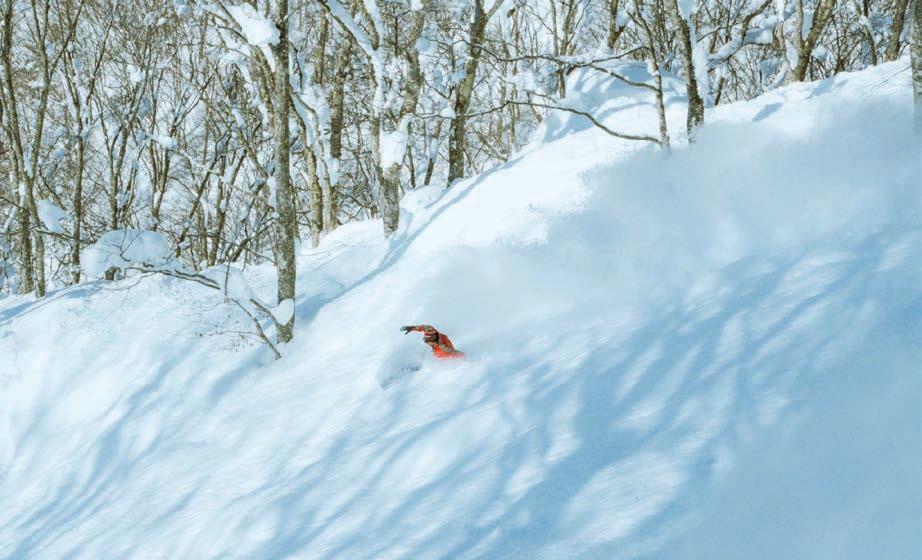
This slight change of perspective was consolidated when I consulted footage of what many believe to be the godfather of freeriding, Craig Kelly. Being undoubtedly one of the greatest to do it, let’s never forget his huge influence on what it meant to be a professional snowboarder, how his vision shaped the industry, and more importantly, the snowboarding culture as a whole. Craig decided to turn around from the snowboarding industry at the peak of his career and stop competing. He refused very steep contracts to focus on riding in a way he believed was more pure, and a lot freer. This is considered the birth of freeriding as we know it. It’s funny to think how he set the tone for almost every professional snowboarder back then, and still today. Quitting contests to focus on riding more is still the most common trajectory for a pro today. I also wonder what he would think seeing that, since then, some people invented competition tours including the name freeride in it. Anyway, he probably won’t care and focus on what’s important, for him: “freeriding, getting out there, riding a big slope is your chance to be free of all society’s little rules, free of expectations of what people have of you. You look at the mountain and interpret it however you want, and just snowboard down it. And hopefully, you’re not even worried about what other people see and what
they’re thinking or their expectations might be of you.” (Let it Ride - 2007). The current freeride world champion (if that’s even possible), Noémie Equy shared that although her choices are influenced by the judging environment she’s in while competing, she still finds a sense of freedom when she drops. She in fact, does exactly what Craig suggested. Since she realised that judging freeriding doesn’t make much sense, it’s easier for her to free herself from the pressure of having all these eyes on her and expecting her to perform. That and being able to forget about drones, cameras, helicopters and hundreds of people might just be the ultimate secret to make it on top. Who knows? Who cares?
Eitherway, it’s interesting to notice that although environment seems important in the search for that freedom in riding, it is definitely more of a mindset and a way of perceiving your physical and social surroundings. There’s undoubtedly a philosophical dimension associated with his way of seeing things, too, I believe. Those who knew Craig might say spiritual, even.
So there you have it, we might’ve come to the bottom of one of the biggest marketing scams the snowboarding industry ever promoted. Over the years, the industry grabbed concepts of freedom that a handful of riders were in search of in the early 2000’s and made it into something identifiable and therefore marketable, while in fact, freeriding is simply snowboarding as it always has been. The very foundation of snowboarding is notoriously known for emancipating itself from a whole set of rules.
I guess humans love to put things in boxes, and I love how the K2 project challenged the very definition of something so important to our culture. Trying to portray the faces of freeride is at the same time putting an obvious limit to the concept of freedom, but also eye-opening to its infinite aspect if these boxes stay limitless. And that’s the thing, freeriding is not something you can put an end to. Remember what might be the most profound pieces of advice Craig Kelly ever shared when it comes to riding a snowboard: “When I look down a run (...) I like thinking in terms of a ball doing a smooth line down a hill.” If anything, freeride is more like a ball, and a ball doesn’t have several faces, only one, with no end or beginning, it is infinite.
GRAVITY AND POWDER SETS MATHIS FREE PHOTO: ALICIA MERMILLOD
B l u e T o m a t o T e a m R i d e r : Toni Kerkelä | P i c : H an n e s M a u t ne r o n li n e & i n m o r e t h a n 8 0 s h o p s i n n i n e c o u n t r i e s
INTRO: MATT STILLMAN
WORDS: MAX LYONS
“My first memories of Max are of him sending me clips from Mt Hood mixed with memes he likely hoped would catch my eye. At the time, he was an up-and-coming AM rider for Rome, and I was running the in-house social accounts. His tall guy style and pretzel outs were gram worthy, and it didn’t hurt that the memes were zesty. We actually went on a rail trip to Minnesota pre-covid, before I eventually hired him to run the digital kingdom he once helped propagate.
It’s been incredible to watch him grow into his own as a photographer. His laidback demeanour and skill set as a rider help him fit into any crew. He uniquely understands the challenges and value of having proper photos from a session. Max is nice with the fisheye lens, but I’m also a big fan of how he sees backcountry terrain and frames tricks in often challenging settings. The record should also show that he absolutely still rips on a board and is nice with the wiffle ball.” – Matt Stillman
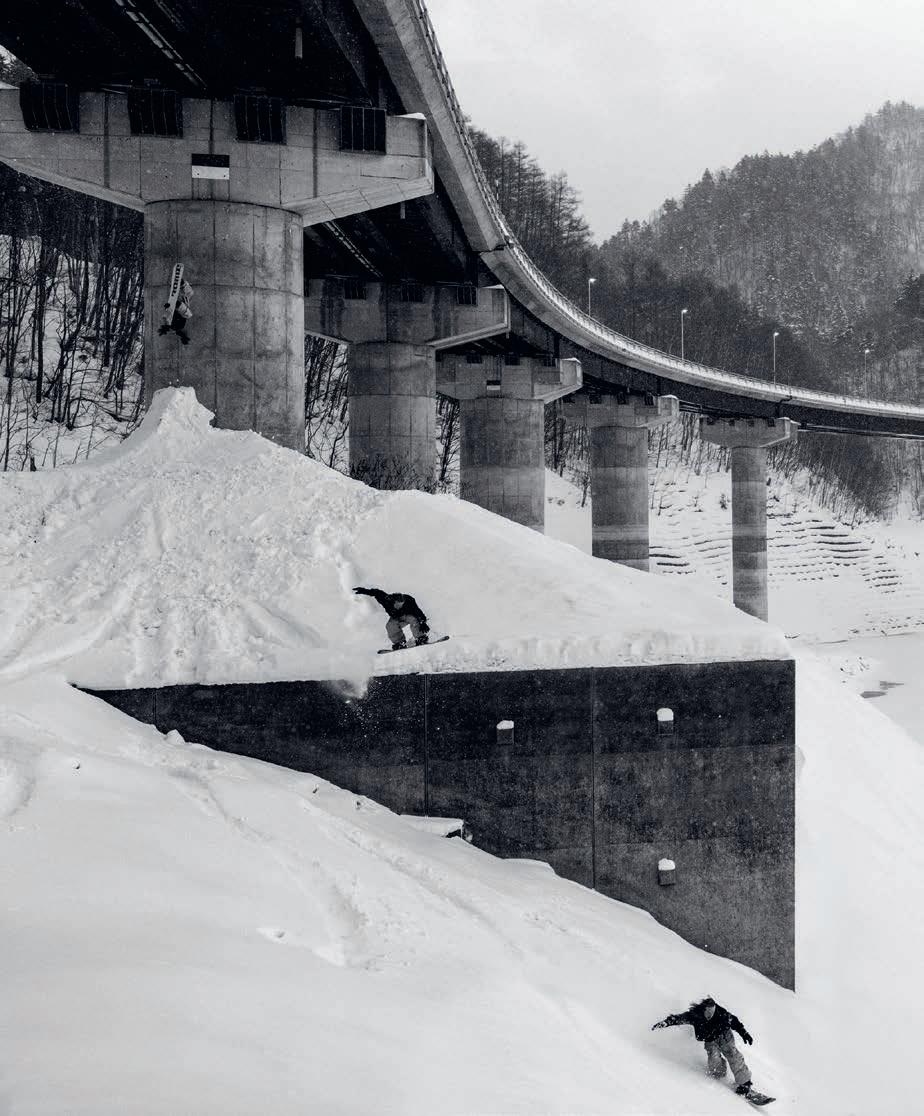
Rene Rinnekangas – Handplant
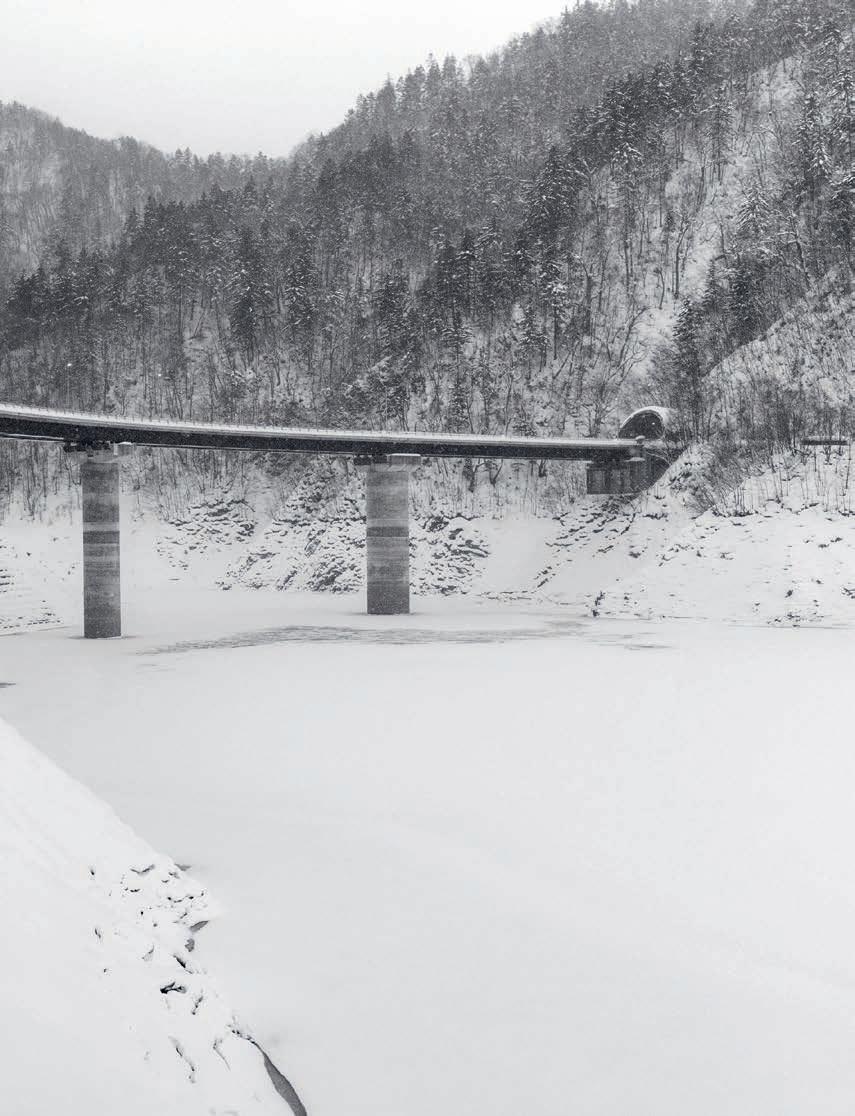
We’d drive over this bridge every day in Japan, and every day I would think about how sick it would be to find a way to shoot a photo of it. About halfway through the trip, Rene and Martin Laesser set up a sick handplant zone on one of the supports, which happened to perfectly line up to show the entire bridge as a backdrop. I didn’t have a lens with a short enough focal length to get the entire structure in the shot, so I ended up stitching together a panorama of 50ish images to get the composition right. The computer was definitely overheating when I was editing this one.
“Both my grandparents on my Dad’s side were fine art photographers, so I’ve always been around photographic influence, taking photos here and there on trips as a rider. Towards the end of my first season working in-house at Rome, we needed an extra lens for an event. I offered to shoot since I’ve always been interested in photography and generally knew what a snowboard photo should look like, thanks to countless hours looking through mags. The homie Pete Cirilli let me borrow a camera for the event, and pretty much immediately, I fell in love with taking photos. I think the day after I got back from the event, I texted him to ask how much he’d sell the camera for. Rome has been rocking with me ever since, so shouts to Cirilli for starting my photography career.”
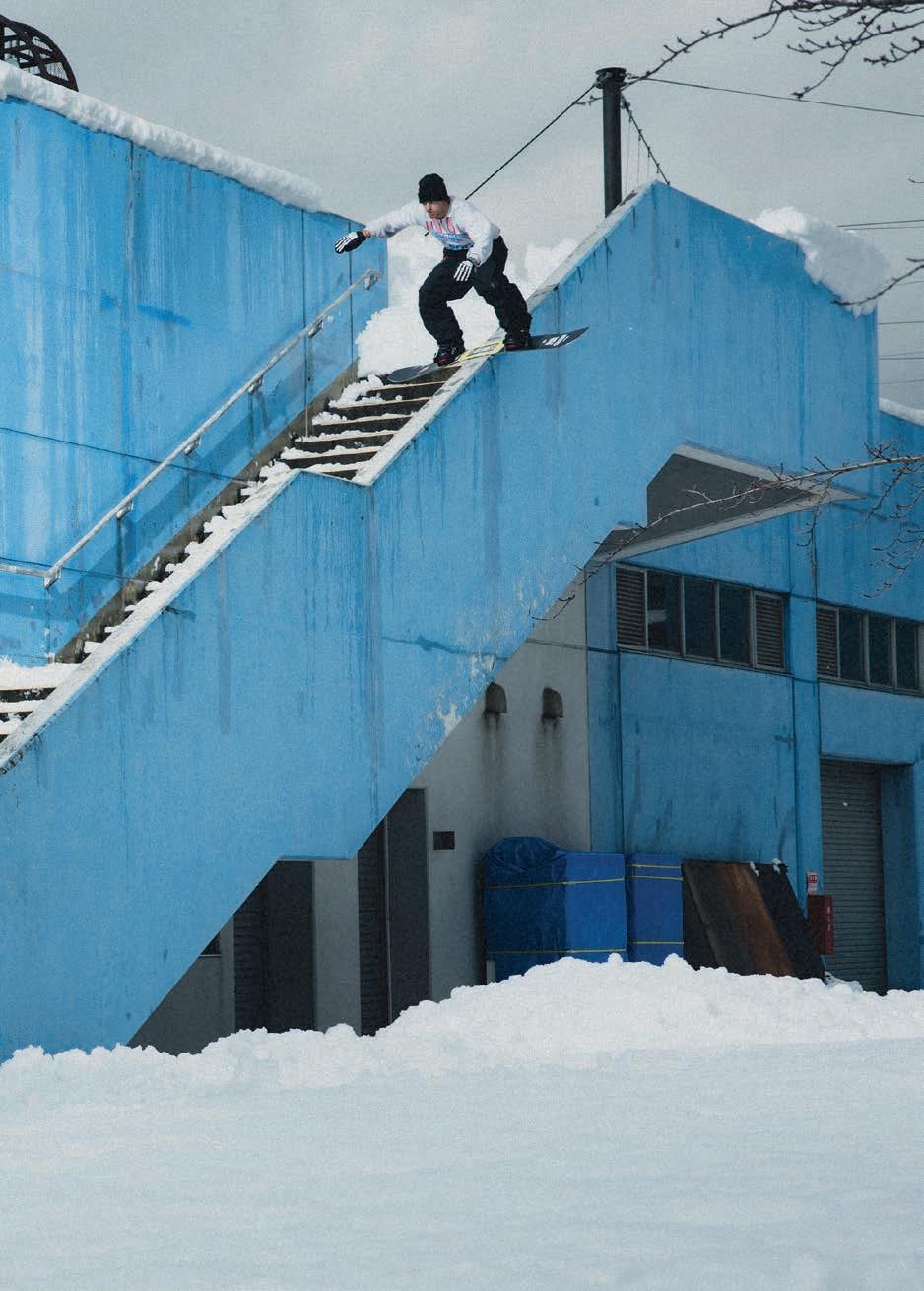
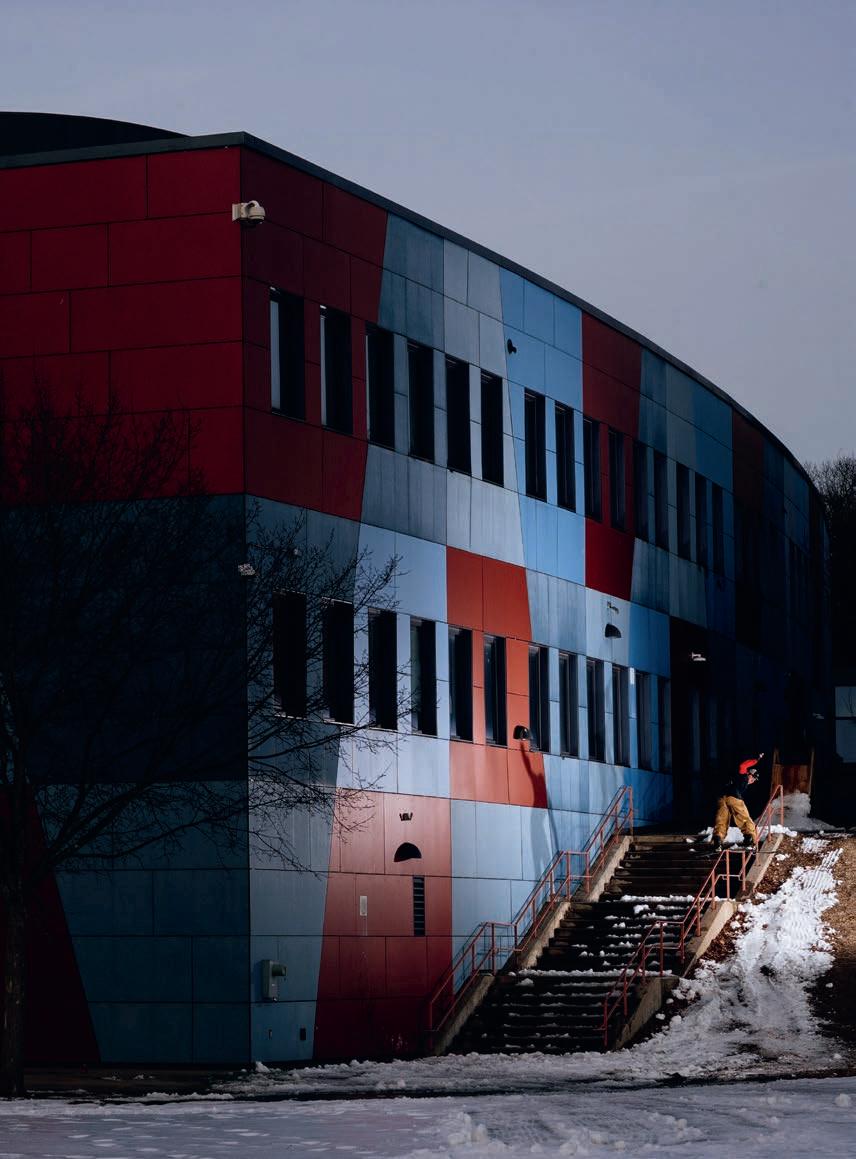
Micah Coville – Frontboard - 85mm_F8_1/250_ISO100
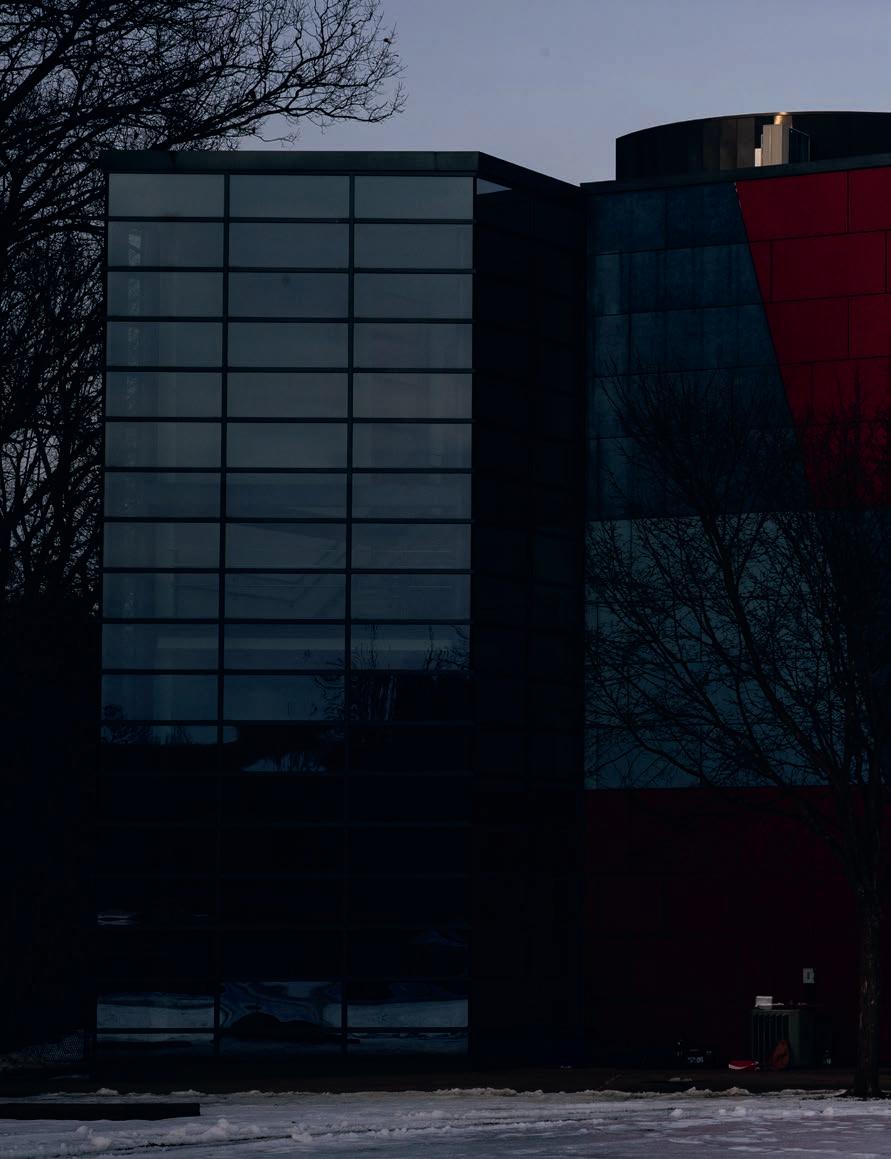
This was one of those spots that was impossible to take a bad photo of. The unique architecture and colours of the building are something you don’t often get at spots. I think I have 10 or so angles of this spot, but this shot with the whole building incorporated ended up being my favourite from the day.
“When I look at a photo, the first thing that jumps out to me is always form and framing. Shapes and lines in the environment that lead the eye to the rider and enough space to let the trick breathe and be appreciated. If everything balances just right, at the risk of sounding like a pretentious art nerd, it feels like a more complete photograph to me. It’s also super important to do the spot and trick justice. Gotta make sure the rider putting their body on the line walks away stoked too, or else what’s the point? At the end of the day, we’re still snowboarding, so I don’t stress too much.”
Keegan Hosefros – Crippler - 50mm_F8_1/2500_ISO800
High contrast black and white photographs are far and away my favourite. It strips everything down to the simplest elements of ‘what trick is the rider doing?’ and ‘is the composition interesting?’ It also really highlights when you fuck up the framing. Luckily for me, this Keegz shot lined itself up without much thought, and I just had to click a button.
Yuri Okubo Gotta have a hideout to eat rice triangles.
Lolo Derminio – 5050 - 135 mm_F2,8_ISO50
At the tail end of a trip to Canada, the crew’s creative juices were fairly tapped. We rolled up to scope this the night before, and while not a huge or wildly tech spot, the surrounding area looked super cool, and I knew I really wanted to shoot a photo here. Sitting at Tim Horton’s the next morning, debating if we just send it back down to Vermont to rest, I may have lightly guided them to check out the spot.
CHEERS!
A well-deserved shotgun at the end of a day of clipping up
MF
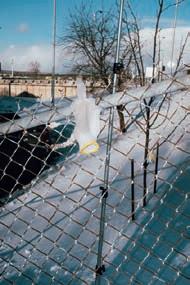
Drake clipped his glove on the top of a chain link fence mid-battle, leaving it perfectly flipping off the spot. I’m sure there’s a metaphor in here that someone smarter than I could come up with.
Drake Warner – Car-Tow Snow is optional sometimes.
Keegan Hosefros – Sloth Roll - 135 mm_F2,8_1/4000_ISO200
The trees in Japan are really dope. Keegz’s style is really dope. Simple formula!
Noah Coville – 50-50 - 50mm_F4_1/2000_ISO1600 Noah and Micah have such sick style and spot selection. Really made my job easy this season. Keep an eye out for these dudes, they’re the future.
Keegan Hosefros – Cannonball Personally, I would’ve tossed the saw down before I jumped, but Keegan’s middle name is ‘danger’ for a reason.
CAMERA GEAR
Canon 1dx ii
Canon 15mm fisheye
Zeiss 135mm
Sigma 85mm
Sigma 50mm
2 Godox AD600bm strobes
Fujifilm X100F
I discovered Livia in the Escape and Man We Need
A Cam videos over the past few years. Last winter, she closed out MWNAC’s most recent video ‘We Finally Met’, with some heavy clips cut to a tasteful song. She also had some clips in the Sensesse and Escape videos. It wasn’t until this winter, when we ended up on a trip together, that I realised she brings much more to the table than just her riding.
I’ve never gone on a mission with someone that young who already had a strong vision of what they wanted their footage to look like; she knew exactly what she wanted to ride, was willing to put in the effort, and wouldn’t stop until satisfied. She’d drop obscure bangers when the aux cord was in her hands, happily pick up a camera, and she stayed motivated the entire time she was with us.
I expect we’ll be seeing big things from Livia, and I’ll be sitting in the front row with an XL bucket of popcorn to take it all in.
PHOTOS: JAMES NORTH
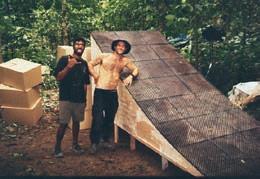
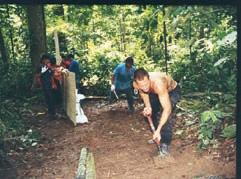
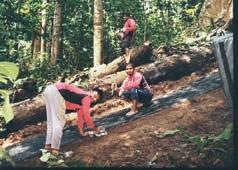
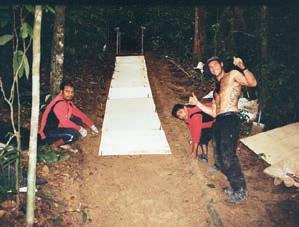
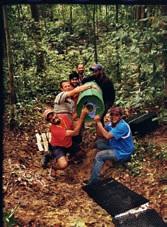
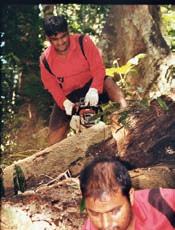
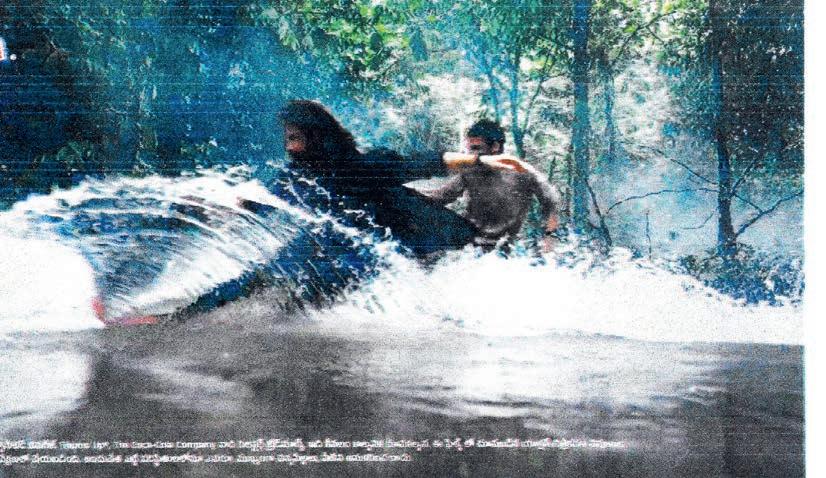
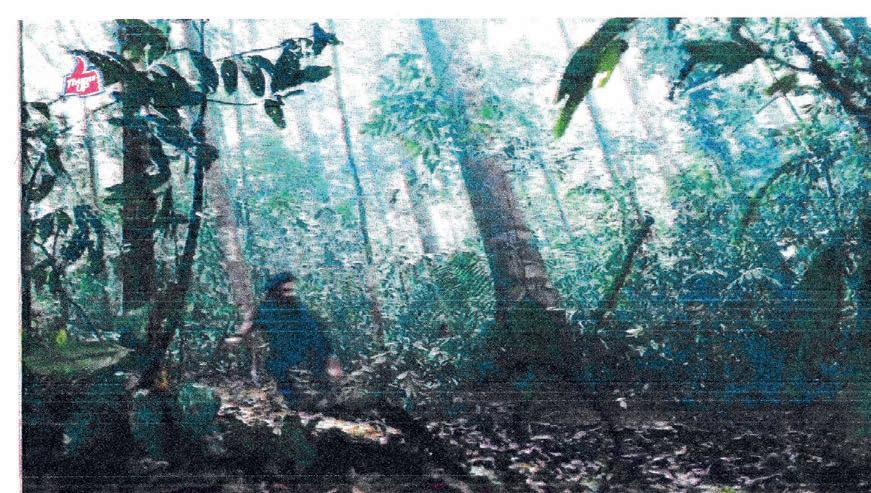
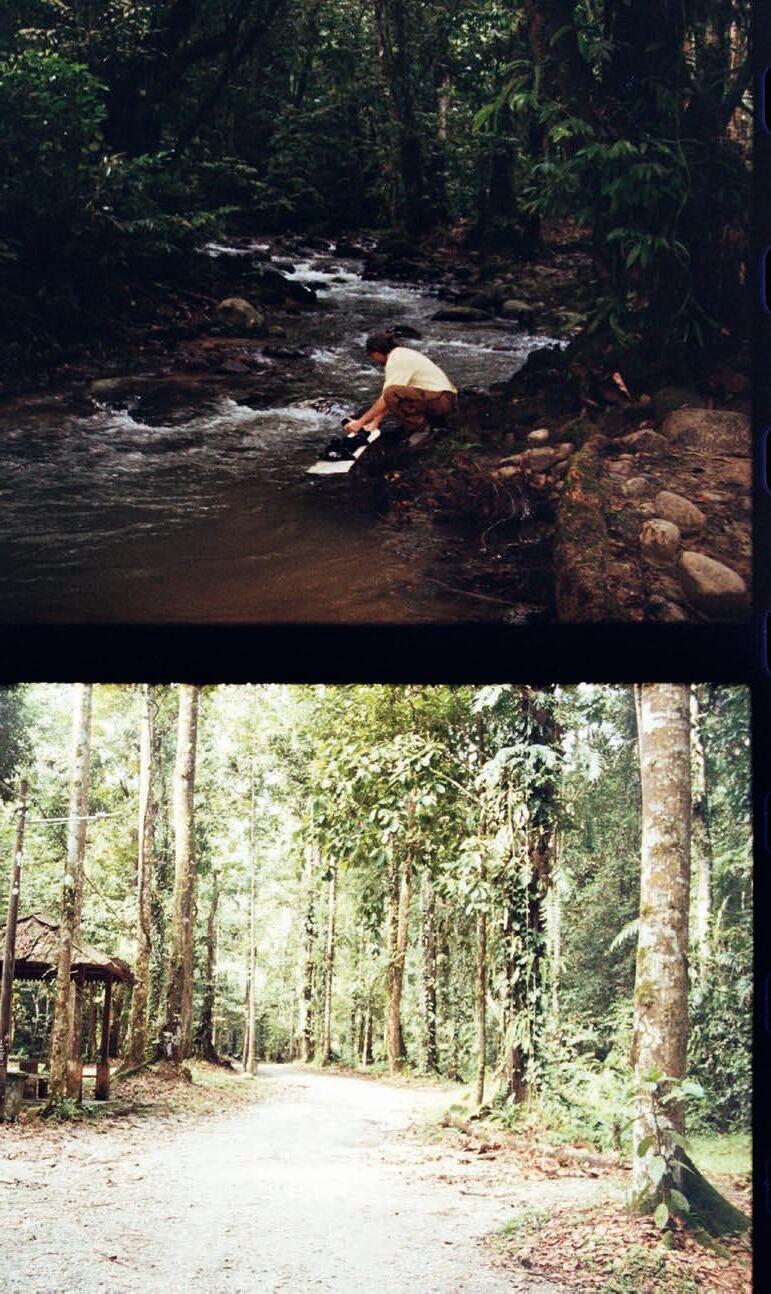
“AN ITALIAN, A KIWI, AND 40 BANGLADESHI END UP IN A RAINFOREST”, sounds like the beginning of a crappy joke. Well, it’s not. This is how one of the craziest “snowboarding” jobs ever started. When Alex Stewart told me about how he ended up in Malaysia filming for a Bollywood production movie company, I assure you that I had laugh-cramps for days afterwards. So, for your pure reading pleasure, here it is printed with ink on paper, and unless I got my quantum physics wrong, it will be printed forever, until the end of time if there is one.
So, how did you end up being snowboard stuntmen in a Bollywood movie production?
It was completely random. What I understood is that it came from a snowboarder friend of Nicholas Bridgman, who did a few stunt jobs for this production company, which he met at an Indian wedding or something like that. That guy couldn’t do this gig for whatever reason, so they hit up Bridgeman on Instagram. He thought it was a scam at first. I mean, they sent them a link to watch a scene from the Triple X action movie with skiers in a forest doing tricks and shit to make it look legit.
*laughs* That would make it look like a scam even more!
Yeah exactly. We eventually found out it was legit when my Scottish neighbour recognised the name of that company. It turns out he also did a stunt job with them ten years
I guess the Italian Dolomites are where stuntmen come to retire now…
Yeah, man. But it all just fell on our laps, perfectly. So the director of this video goes by the name of Bob. He’s Indian and dresses in Hawaiian shirts, but real quirky, you know. He’s kind of the most famous guy in Bollywood for doing ads. So he does all the ads for Thumbs Up, which is like CocaCola over there. They always do these ridiculous things for their ads.
So they saw the Triple X thing and just decided that they were going to do it only with snowboards. When they did the storyboarding, the agents inside the company had storyboarded it on skis, and they had lined up a skier stuntman to do it, who had already done a bunch of stuff. Then
right when they’re about to lock in everything, in a meeting with the skier, Bob, the director’s like: “Yeah, okay, cool, we’re all sorted, but can you just do it with one ski?” *laughs* The guy was like: “What do you mean, one ski? Like on a snowboard?” And the director’s like: “Yeah, yeah, just do it with one ski.” So the skier bailed and told him he would have to ask someone else. *laughs*
*laughs* That’s insane, so that’s when you jumped in!
Yeah! *laughs* They don’t conceptualise that it’s two totally different things.
It’s probably because of FIS! So what did the local production expect from you?
Oh, man, it was kind of nuts. I was super hyped, this was perfect for me, and right up my alley. It just sounded like the most insane experience, aside
ago, tightrope walking for the Cricket World Cup. So trippy!
INTRO / INTERVIEW: JUSTIN DUTILH
PHOTOS: ALEX STEWART
from the money and stuff, which was pretty good. Obviously, 1000 euros a day is pretty solid. We had to send in our photos of what we look like and our heights and weights, and all this shit, because they had to source things like the clothes and stuff for us. It was all up in the air until the last minute, though. The green light came just fifteen hours before we had to go. I was snowboarding that day, got a call, and had to be at the airport at 8 am the next day. In the meantime, they’d gone there, with a recce crew to look at the locations. On our way
there, we were talking to them, they were asking all sorts of stuff like: “You think you can snowboard down this waterfall? And I was like: “Yeah, we’ll find a way, all good.”
Bridgeman had to tell me to chill because he was afraid they’d think we could do all this mad shit that we can’t. We were telling them mostly that things are possible, as long as they have artificial mats, or some shit.
Ah yeah, to slide, obviously. Yeah, exactly. But they couldn’t find
that in Malaysia, so they asked us if we could pack some in our boardbags before we came. How were we supposed to put 100 meters of sliding mats in our bags, and where would we get them from with six hours’ notice anyway? *laughs*
*laughs* At this point, they could’ve asked you to do it with two skis, right?
*laughs* So we showed up at the start of the week, and it was basically our job to figure out how to actually pull it off. They just had the concept,
Were 40 people helping you just enough, then?
and they gave us 40 Bangladeshi dudes as our crew; one dude spoke English. They told us whatever you need them to do, you tell them. So we just started, literally shaping the rainforest. They’re all barefoot as well, with machetes, with scorpions everywhere, and fucking leeches and shit, in the middle of the jungle, and fucking 50 degrees, 120% humidity, just ridiculously hot. So we bought rolls of fake golf course grass. These guys were hauling it into the rainforest, and we were rolling it out to see if it would work and if we could turn on this shit, or if it would even slide. Epic fail, it didn’t fucking work. I ate shit on the first try. Mega carpet burn.*laughs*
both sides, and there’s no snow! He started telling me we could put crash mats and boxes, and build a drop-in and ramp. I had to show him a giant scaffolding big air jump with the same dimensions to calm him down.
Yeah, you could do all this, but it’s not going to defeat the laws of physics. *laughs*
Yeah, it was tight. They had a pretty, pretty big shot list they wanted to do. We were going around with them, and obviously, in Bollywood, everything’s possible. Things are fucking crazy. They really wanted a backflip in the video. The whole story was basically about this main actor, who was doubled by Bridgman, and I, who doubled as his sidekick, who wasn’t meant to be able to snowboard that well. There was this bit where the main character is in front, and he does a backflip, only to end up chasing the guy who was chasing him first. In their Bollywood mentality, a backflip is actually a loop-the-loop. It’s not like you move forward and flip. For them, you go up and then back in time. In their timeline, he does this backflip, and the other guy passes underneath him, and he comes back around and then catches him from behind after the backflip. *laughs*
Yeah, real pro! *laughs* *laughs* Yeah, exactly, I kooked it hard. So that didn’t work. Then we just went to collect as many leaves as possible and take out the rocks. These guys basically cleared, like, a 200-meter slope and built some platforms with bamboo underneath. It was monsoon season, too, so it was getting washed out every night, and they had to rebuild it each day. There were guys going around for days collecting leaves and chucking them on this piste. It eventually worked; we could get a bit of speed and sort of do some turns and shit.
*laughs* The famous Backflip loop of time.
*laughs* That’s how they understood how physics works. Also, they wanted to do this loop-the-loop thing over a fucking river! He was like, “So, can you do that, over the river?” Well, first of all, the fucking river is like a 30 metre gap, it’s completely flat on
They really live in the movies. Thank God we had a stunt coordinator from Europe who showed up two days before the shoot. He was like, “Guys, okay: first of all, loop-the-loop, not possible.” This is a guy who’s a stunt coordinator for all kinds of big Hollywood movies and shit like that. Then we had this whole stunt team who arrived. The first day was just me, Bridgman, and these 40 Bangladeshi guys, legends. Then, in the final days, it was like 120 people on the crew to pull off the actual stunts. We did all kinds of stuff like river jumping, river skimming, being towed by quad bikes on a rigged-up pulley system, jumping through the trees...
That’s insane! Any major culture shock in the work environment compared to what you’re used to?
For sure, man. I mean, seeing 120 people working just for Bridgman and me to do a couple of things on a snowboard in the jungle was a trip.
They told us, pretty much straight away, there’s a hierarchy on the set, there’s the director, then it’s you guys, and then it’s the rest. So it’s whatever you need or want, you can get it, but when it’s shoot day, you have to go, and you just don’t stop.
When it was shoot time and the cameras were rolling, it was fucking insane. Not only were we snowboarding in the forest, but it was meant to be during a storm. So they brought in these huge fans, these massive wind machines, and lightning machines. So when it’s on, there’d be six fucking cameras going, wind machines would come on, some smoke machines going, the lightning goes. And these fans are huge, so all the trees start moving, and all the animals, like the ants, giant insects, and all kinds of shit living in the trees, were just falling and landing on everybody. It was fucking madness! Everything was so full of dirt, we
had to put CRC or WD-40 all over the boards and on our drop-in plastic mat every try to get a bit of speed. After that, you get to the leaves, you do a little turn, to then jump onto a rotten old log or whatever. Then whatever you do, there’s like 20 Bangladeshi dudes holding the crash mats, and you’re just kind of smashing into them at full speed. And everybody’s like, ‘yeah, awesome!’ Then there’s one dude who comes in and washes your hands. One dude’s washing your left shoe, another dude washing your right shoe, and some guy cleaning your hair. The makeup artist comes and fixes your makeup, a guy grabs your snowboard and takes it to the top, and someone’s holding your hand to pull you up. You just don’t do anything at all, apart from the stunt.
bit of a flow. I was kind of hyped. I was enjoying it. There was a point where we were actually shredding and having a session. Just a couple of little butters, 180’s and stuff.
Did you get clipped?
Wow! And how was snowboarding in the jungle?
After a while, with enough leaves, it gets pretty thick so you can get a
For sure, but they’re hanging on to them. I can’t use them. I actually don’t even know if we can have this interview because I did sign a non-disclosure agreement. Bridgman got a banger clip on that log! He was the main dude, so he had to do it. I was the sidekick, so I didn’t have to do anything too crazy, but he stepped up to the 50-50. *laughs* First try, locked in, to the bottom. He couldn’t get off the log, pretty much. It was sketchy. Off one side, there were all these other broken logs and all kinds of crap. If he had gone on to that shit, he would’ve been fucking wrecked. A funny thing is that he was always in front because of the script, so I always had to drop in after him, follow him,
and at the bottom, when he would smash into the mat, I would just land on top of him, and take him out. There’s a point where you can’t really turn, I mean, you can kind of turn, but you can’t really change direction, you know? *laughs*
*laughs* Gnarly! Was the crew happy with your performances? Is this the start of a new career or something?
I reckon. I mean, they were hyped because we just kept going and got it done. Especially on the shoot days, that’s what matters to them. We took a few slams, and we were bleeding a little bit and whatever. I don’t think they’re really used to the snowboard mentality, you know. For us, it was like a mellow session, except that they bring you to the top, carry your shit, give you water. All the things you never get when you film by yourself, you know. *laughs*
What do you mean? You don’t have 40 people coming your way to help when you snap your fingers on your filming trips? Do you think filming snowboarding all these years has built the perfect set of skills to become a stuntman?
one thing that took a little while to figure out was that they don’t want you shovelling, they don’t want you shaping, they don’t want you to do anything. That was the hard thing to get used to as when you come from snowboarding in the streets, filming, etc you’re kind of used to hustling, building your spot, shaping, being tired, then hitting it, not sleeping properly, and all that stuff.
Yeah, but you still had to build the jumps and all, right?
Yeah. Actually, I just had to draw the jump. They were asking what the measurements and radius were for the jump. Obviously, I didn’t know how to tell them the angles and shit like that. So I just got them to bring me the piece of plywood that was going to be the side of the jump, asked them to hold it up, and I just kind of drew the kicker with a pen on the side of it. I eyed it up in the bush so they knew where to cut. *laughs*
the gods or some shit. So he drinks the Thumbs up. He jumps off the temple in the clouds, comes down from the sky, and then lands in the forest. Then I don’t know why, but the homie is also snowboarding, chasing him. Then we get to the bottom, and it’s like, cheers! I don’t know exactly what the concept was. Probably just Thumbs up makes you do cool shit. Straight after this shoot, they flew to Nazaré and did another one with a surfer.
Okay, a bit gnarlier set over there! Were you happy with how the edit turned out?
I couldn’t give a shit. I was just hyped on the experience. The fact that we were there, and I can say I was a stuntman in a Bollywood ad. It’s definitely going to be something that I’ll cherish in my old age.
Oh yeah. It’s definitely a good segue into being a stuntman, for sure. The
So, what was the plot of the film? This main Bollywood actor guy comes out of this temple, and the storms are coming in or some shit, and he’s carrying a snowboard, obviously the wrong way round, bindings, inward, classic. *laughs* It’s like the temple of
What I’m understanding is that you’re not so hyped the clip. I wanted more action, to be honest. I think they’re sitting on too many clips there, you know. I’m waiting for the Director’s Cut, which they said has got more action. I gotta hit up Bob, and tell him to drop it. But mainly, I’m just grateful we were a part of this.
Yeah, I want to see that log clip and most of all the quantum physics backflip loop of time. If they’re holding on to that, it’s just not fair for the rest of humanity. *laughs* Are you gonna watch some more Bollywood movies now that you’re
I mean, I’m gonna stay on top of my guy, make sure he’s still hustling. If he’s looking for another stunt double gig, I’m there!
INTRO / INTERVIEW: EERO ETTALA
PHOTOS: KEKE LEPPALA + EERO ETTALA + PASI SALMINEN
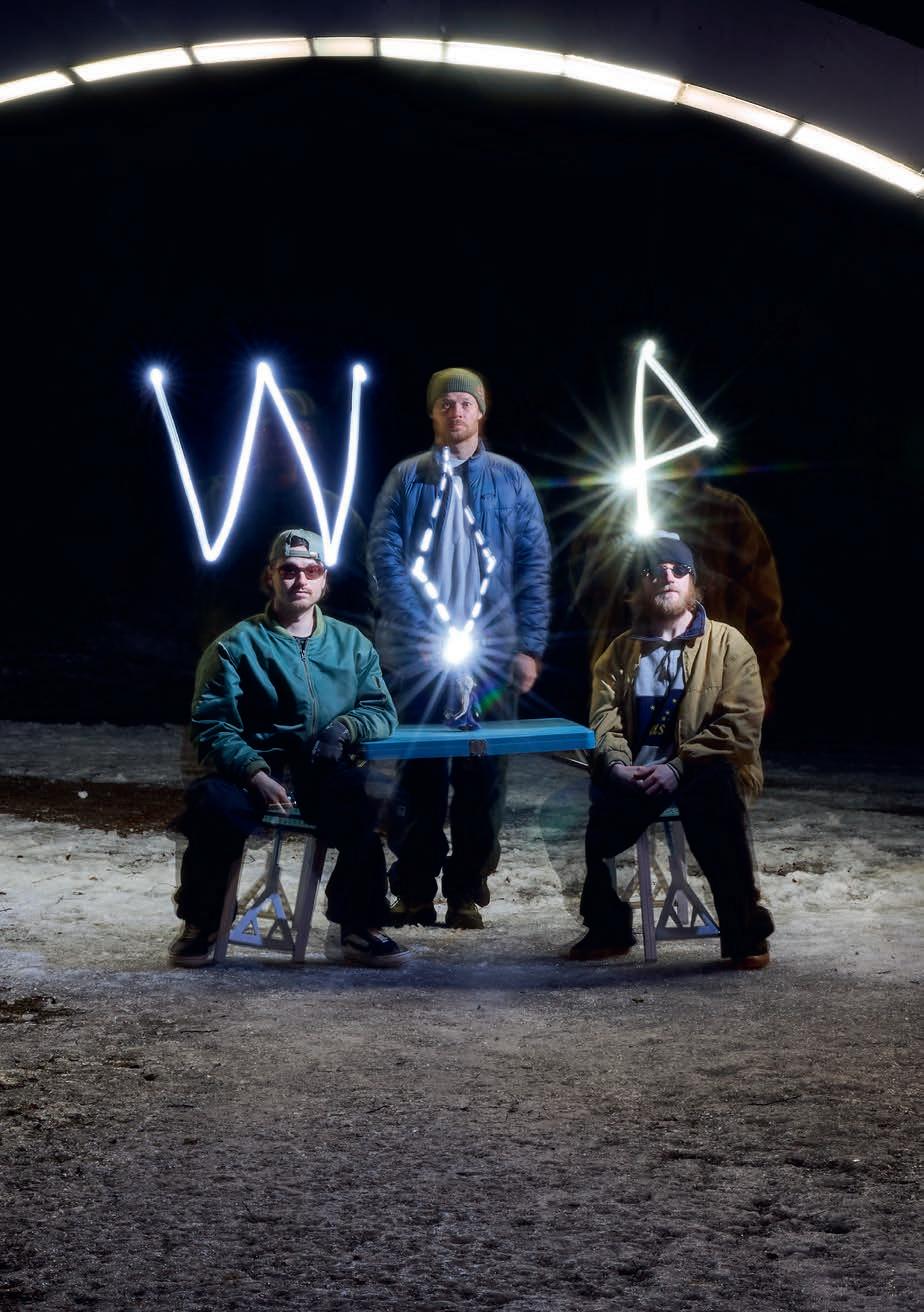
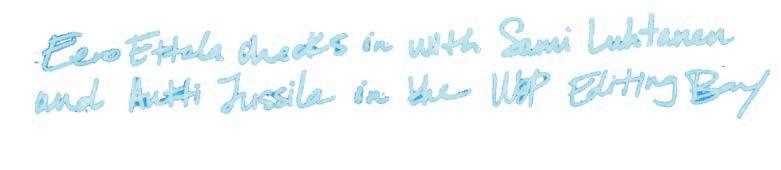

SAMI IS LIKE A SNOWBOARDING HERO FROM THE LATE NINETIES. All you ever got to see from him would be a few hilarious lifestyle shots and insane riding clips. Just how it used to be when snowboarding could only be seen on VHS and DVD. Social media has ruined the mystique of a snowboard pro. We all know what deodorant Mark McMorris uses and which car Sven Thorgren drives, but we know nothing about Sami, and that is the beauty of him and the reason for us to want more! When he realised that the bigger Productions wouldn’t meet with his vision, he decided to create something magical, something that was missing in snowboarding…WOP. Sami has proven to our industry that a big budget doesn’t make a great snowboarding video. Fuck Red cameras, fuck cheesy voice-overs, and fuck helicopters filming another helicopter. All you need are your homies, good vibes and a filmer with a fisheye. It has been 10 years since the release of his first WOP video, and I finally built up my confidence to hop in the van to witness the sickness of the crew. I sat down with him and Antti for a WOP chat, and this is what came out of it.
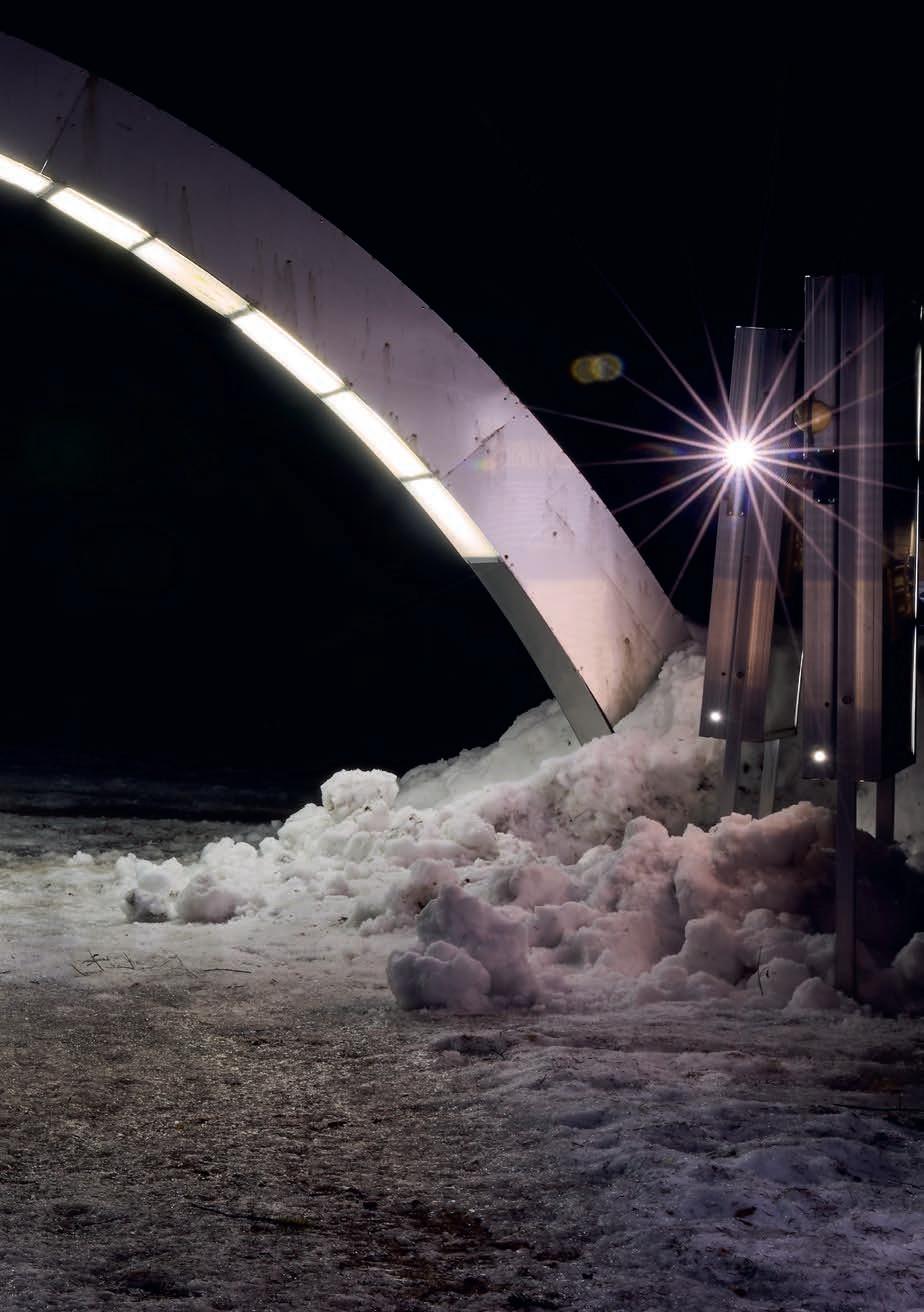
What does WOP actually mean?
S: We just wanted to figure out a name that was short and easy for people to recognise. Then everyone started asking what it meant. I always say everyone can choose what it means.
But what does it mean to you? Because I thought it meant ‘Without Pussy’. It made sense to me because everybody who’s in the video never gets pussy. That’s why I’m in the movie now.
S: *laughs* Yeah, that’s true. Or With Old Pussy. Toni Kerkela is always saying it’s Wheelchair Or Paradise. When Theo (Acworth) was with us on the Spring Tour, he told me he always
thought it was Without Pirates, because I created WOP when I stopped filming with those guys.
A: I’ve also heard someone say it’s Without a Plan, too. Maybe that was you, Sami?
S: Or maybe Without Panic.
Okay, it means something different for everybody, I think. What were the influences in the early days, when you started WOP? Did you think there was something missing in snowboarding?
S: I think the only part that was missing in snowboarding at that point
was that the riders who liked to film had to be in big video productions, you know what I mean? If you wanted to be on point, to film in a proper way, you had to be in a bigger crew. With WOP, you can simply prepare your camera and go film something, and have a good time. If you are ready to put some effort into it, then you can make some shit happen.
Antti, do you remember when you saw the first WOP video?
A: Yeah, definitely. It was something very unique; the whole approach was totally different from what others were doing at the time. The general vibe was something else that I really liked. I’ve always been a fan.
I remember it felt less structured; it was kind of an organised chaos in a way. It was also something that was missing in snowboarding. At that time, everything was shot
SAMI GOING BUMP TO BAR WOP STYLE
PHOTO: KEKE
in 4k and super slow-mo without rawness or some sense of reality. It was amazing, beautiful pictures, but there was no raw snowboarding in it.
S: Yeah, it’s something I felt when I watched my snowboarding. If everything is in slow-mo, I can’t see how it looks compared to when you might see it in person. The way I use my power, how fast I go, and how I do the tricks. When you have everything in slow-mo, it doesn’t fit my snowboarding in my eyes. One reason why I wanted to leave the Pirates and start creating something different was to show the way I feel my snowboarding should look.
I agree 100%, I feel like you always had some of the craziest stuff in the Pirates movies. But still, I think your footage didn’t look as good as it could have done with the right filming, the right cameras, the right vibe, the
right music, and everything. The way it was put together, maybe it wasn’t fitting for you.
S: Yeah, you’ve seen how I snowboard in real life, how I use my board and stuff like that. You can never see that if you’re just watching those other videos, something is missing in them.
Is the budget another big difference between filming with the homies versus filming for a big production?
S: Yes, the budget is the main thing. But I’ve always been filming as if
I’m part of a big production. I make things happen the same way I did when I filmed with Pirates. After a couple of years filming with Basti (Balser) and those guys, they taught me how to film professionally, and I’ve always wanted to keep that standard and effort; that’s the way I like to do it.
Filming with Pirates must have been a great education for you to understand what it takes to film a part or film a movie. You can apply
SAMI SHOWCASING WHAT ”JUST THE TIP” MEANS IN SNOWBOARDING
PHOTO: KEKE
that learning experience to your own stuff as well.
S: Yeah, exactly. I respect Gigi (Rüf), Ludschi, and all of those guys so much. I miss those guys. I speak to them sometimes, but haven’t seen them for a long time.
How do you choose the riders for the WOP movies?
S: Just whoever has a good vibe, I never thought too much about it. Everyone is welcome if they feel it and like riding the spots. We’ve just been going with the flow. Everyone is a homie who I can chill with, even without snow.
So it’s basically people you get along with, feel comfortable hanging out with, and like to ride with?
S: Yeah, and it can also be because something happened, someone brought those people to us, you never know. It’s hard to say how the people end up coming to film with WOP because no one really knows.
Antti, you filmed with KBR in the beginning, then you shifted to doing a solo K2 project, and now you’re back to crew videos. Did you miss riding with a crew?
A: Both types of projects can be good, for sure. When you’re doing your own thing, you have time to just focus on yourself, but you still have the crew behind you.
Are there benefits to doing something by yourself, or is it more stressful?
A: The benefit is that you probably have more filming days available, allowing you to choose more days for yourself. But it’s a little bit more stressful sometimes. If you plan to film the next seven days with your filmer, you know that you just have to go for it. Instead of filming with the crew, where you can have one day here, then wait out two days, and then do another spot, that’s more relaxed in a way. I definitely prefer filming with a crew nowadays. And I like people, so yeah, I would always choose a crew.
woodworking work with big planers and stuff, but it’s something inside me, or maybe outside me, it’s everywhere. Snowboarding drives me in every way in my life. It gives me motivation to make things happen. I can go snowboarding or go on trips with other people, we can have a good session or demo, and it’s been driving my whole life. Everything is based on snowboarding, which is crazy.
even really care or help that much, you can wonder why you would do this for someone other than yourself.
It’s inspiring the way that you just decided: ‘I’m doing my own thing, and I don’t fucking care if my sponsors are coming with me. I’m still gonna be fucking riding, and I’m gonna be doing the gnarliest stuff.’ Are you having more fun snowboarding without the bigger support and having less pressure?
Luti (Sami), what’s the drive for you? You’re getting really minimal support from the industry, but you’re still getting after it, you’re going out there and doing the gnarliest stuff with no support.
S: I’ve been trying to quit snowboarding, for sure. I had all kinds of
You’re not getting paid a crazy amount of money now. I don’t think you need to do as crazy stuff as you’re doing, like going on top of a building, and doing something fucking crazy. So what’s the reward for you?
S: Yeah, but sometimes you do the more gnarly stuff when no one else is pushing you to make shit happen, other than yourself. If you sign a contract with someone who doesn’t
S: No, maybe some days, but nowadays, it doesn’t really matter. I’m clear with what I want to do. I’m down to do whatever, go on trips, just have fun wherever I go.
You’ve been asking me to film for WOP for a long time, and I always thought that it was way too crazy, because you do the craziest tricks and hit the craziest spots, and I
TWO THINGS YOU DONT SEE TOO OFTEN IN FINLAND. ANTTI WITH BANK TO BANK WALLRIDE AND SUNSHINE PHOTO: EERO
wasn’t prepared. But I realised filming for WOP is actually more fun because you don’t have any rules about what you’re allowed to ride. We’ve been able to ride rocks, ride trees, or whatever, anything could be a spot. I feel like you’re loosening the rules, and anything could work when you have the right vision for it. I think encouraging people to do their own DIY projects is your biggest influence with WOP, Sami.
S: Yeah, and you (Eero) have always been a big influence on me from the early days as well.
Yeah, like with power tools, for example, what’s up with using them to modify spots or boards to get clips? Sami, I’ve heard you say: ‘Let’s just make it work. What do you need? Let’s just fucking cut that pole or take down that tree, or whatever it is.’
S: Yeah, for sure. I’m always thinking that way. If you have a really special rail, maybe it’s wood or something, then I’m down to put metal on it, if I can make it look really good. Because you don’t have much unique stuff in Finland. I don’t see why we shouldn’t modify spots.
A: Yeah, there’s definitely only a certain number of spots left in Finland. So if something needs to be modified a little bit, then we do it if it’s not too crazy. For instance, if it’s an abandoned place, it doesn’t hurt anybody if you cut a little piece of metal out of something because it’s gonna be taken down anyway in a year or two. But if it’s somewhere more public, then I wouldn’t do it too much.
I remember being one of the riders in Finland who introduced the winch to snowboarding. Pasi (Salminen)
built it, but I was one of the first to use it. There was a phase, maybe 10-15 years ago, when everything had to be hit with a winch, and now we’re trying to avoid using them as much as possible. How do you guys feel about using winches at spots?
A: Yeah, there was a five-year golden era of winching.
S: But it’s still really cool to use them because Finland is really flat. It’s crazy how flat it is. With a winch, you can open up so many possibilities. I don’t use it much nowadays, but I don’t see anything bad about using them if you’re up for it. For sure, you should hit the spot if you need the winch. The reality is that we just don’t have that many hills here in Finland.
Whatever it takes to make the spot work. It’s kind of the same thing
EERO FRONT BOARDING FLAT TO DOWN. UNFORTUNATELY THIS RAIL IS GONE NOW, BUT LUCKILY THE CLIP WILL BE SEEN IN THE WOP VIDEO.
as modifying the spot with power tools. But it’s not like we have to highlight the winch anymore, like we used to, when you would always have the lifestyle in-run shot holding the rope. Now you’re trying to hide the winch instead of highlighting it.
A: I want to get one of those in-run shots in the video. *laughs*
Up until my ‘Ender’ part, I always wanted to top my level from my previous video parts. When I did Milestone, I felt like I was still able to raise the level of my riding, you know? I would still go to spots and try to do something better than I would do on my normal day riding. I was able to push it 100%, but I would also get inspired by the WOP videos, by filming with Tobbe (Tiusanen). I started looking at spots that would look good through a fisheye lens
PHOTO: KEKE
BEFORE EERO STARTED SNOWBOARDING HE WAS A SOCCER GOALIE. IT ALL MAKES SENSE NOW
PHOTO: KEKE
that you guys use. Smaller spots, but more technical, with good flow, a good line, and more creativity. Instead of just finding the biggest fucking rail and thinking, ‘Okay, this is gonna look good with the long lens from far away.’
S: Yeah, you bring your fast legs when snowboarding, in my eyes. We used to skate together, and you always had those fast tricks, reverts, all that stuff. But you never showed that in your snowboarding parts until Milestone when you started moving that way, different spots, fast tricks, combos.
That’s the kind of riding that speaks more to me nowadays. If I see someone riding something smaller, more relatable, more technical, or creative, that makes me want to go riding as well. It just looks more fun than finding the biggest fucking thing to jump off, you know. I found my way of riding where I feel that I can keep doing this, at this level, for years to come compared to doing something fucking crazy. I’m not sure if I really want to do that anymore anyway.
S: Yeah, it’s the same for me. I can’t land from really high too many times. My body can’t take the big impacts. That’s why I like the tree spots, the forest, there are so many sketchy things. You can’t see it as clearly, but you can get the same feeling. Sometimes it’s so crazy, even if it’s a smaller spot, you never know what’s gonna happen.
All of us have been doing this for so long, so if we’re hitting a regular down rail, we know what’s gonna happen, we know what to expect. But finding something that hasn’t been hit before, something random, as you said, like a rock or a tree or whatever it is. I think that’s the motivating aspect for us to keep going forward and not always do the same thing.
think that has really inspired me a lot for my riding as well.
S: Yeah, and we’ve been hitting a lot of spots, with the fisheye. WOP is full of filmers who can shoot really well with the fisheye.
would look fun, and what would feel fun for us. I want to showcase my riding the way I feel like it should be presented. The spots have to look fun. They have to look creative, and sometimes be kind of random.
A: Yeah, and kind of influential spots, too.
S: Exactly.
The WOP videos are the perfect outlet for me to showcase my snowboarding how I want to be presenting it. You know, this gave me the freedom. I think some of the spots that we filmed for this movie, I wouldn’t have filmed for Milestone, for example. It’s just two different concepts. So I think that opened some new doors to me for how to look at snowboarding.
S: Yeah, which was nice. I remember a couple of times when you were surprised by how some spots ended up looking through the camera, like ‘oh, fuck, this works so good, what the fuck?!’
Yeah, exactly. And I think this is also where the ideas from Antti, Sami, Tobbe, and everybody else involved come in. You guys can tell really well what’s gonna look good shot with the fisheye, or the filming style WOP is doing, you know. I
Yeah, and there are no rules, like what you can film or what you can’t film. I still think one of the best WOP clips is the fucking backside 630 on the grass Niels (Shack) did. Like, that’s not really a clip to the usual filming standard, but the fisheye makes it the best clip ever!
S: Yeah, exactly.
You guys are just down to use something like so random that other people wouldn’t use, which makes it the best.
S: Yeah, when it makes some sense, like if it’s working, then it’s working. It’s really simple.
A: Yeah, we’re not scared of trying different stuff. *laughs*
I’m down to have more fun filming. Filming has been so serious in the past. With Mackdawg Productions or Standard Films, or even making Ender, it was always so serious. Trying to do the best possible fucking trick that looks the gnarliest on the video. Now it’s kind of like, let’s just go out there and see what kind of spots we want to hit, what
Also, I don’t want to leave my wife and kids at home, and go to a spot where I don’t know if I’m gonna come back home or wake up in the hospital afterwards. I’d rather go and hit a fun spot and hopefully get a cool clip. Sometimes those cool clips are even harder to get. If you’re jumping off a roof, those clips usually take a couple of tries. But if you want to get something more technical, more creative, you could spend two hours just trying the trick.
S: Yeah, for sure. But as long as you leave the house, you are a winner. That’s how I’ve thought about it. Once I get out of my home and I’m just outside with my friends, and we film or snowboard, then I’m a winner already, no matter what happens. I’m hyped on that already, so everything is a bonus. I’m hyped to get some clips, but I’ve realised that’s not the main thing. The main thing is hanging with the homies.
That’s something I’ve started to appreciate more, especially after
SAMI COMBINING THE STREETS AND THE WOODS. 50/50 TO FRONTSIDE TREE
PHOTO: EERO
NATURAL SELECTION STREET EDITION. NOSE BONK 180 BY EERO
PHOTOS: PASI SALMINEN
having kids, just being out there with homies, doing the thing you love the most. That’s the special moment, right? And getting the clip is considered the work, you know. Everything around it, that’s the fun part for me.
in 20 minutes’. I was never good at operating that way. I always had a really strict plan of what I wanted to do, then do it, and then leave. Now I’m going somewhere to see what’s going to happen. And then usually something even better happens.
He said you chill for as long as you can, and then you start to work when you really need to.
S: But when you get that clip, you also remember that moment for longer, especially when we are outside and enjoying the day. Crazy things can happen every day.
Yeah, that’s true. Most of the spots I’ve hit last season felt more like a session with homies, instead of going there to get one clip. If you look at my footage, I ended up doing two tricks at almost all of the spots. I would do a trick and then be just chilling while the session is still going on, then think, ‘Maybe I’ll go back up and try something else, then get a second clip because I’m more relaxed.
S: Yeah, that’s always the way, especially when we’re filming with Niels.
Yeah, I’ve noticed that you guys just hang out at a spot and see if someone comes up with anything, and then something magical happens. Sometimes you’re like, ‘I’m just gonna go to my van and cook some food and maybe see you
S: Yeah, and like that, some new spots can open up that you didn’t plan. It’s so weird how many times that has happened, you’re hitting some spot, but then you end up noticing a different feature that turns out to be an amazing spot.
A: I always find you around the corner, setting up a different spot than the one you came for.
Also, when the spot is more playful, everything doesn’t have to be set up as perfectly as it would have to be for bigger stuff.
S: Yeah, exactly. Sometimes, you just end up at the spot that’s wherever you are. You just put a rock on the ground, and it becomes your hype! *laughs*
A: And then there’s a new spot! *laughs*
Niels was talking about the Gremlin hour, where you always get the shot on the last minute, you know, when it’s almost getting too dark to film.
S: Sometimes you need more time; it depends on the spots. You’re also juggling a lot of stuff in your life, and you’re taking some big risks, so you can’t make any mistakes.
While we’re talking about time, what’s the idea behind the burning clock in some of the videos?
S: Oh, that’s when we need some more time. We fire up the clock with Hans Trössel in my backyard when we need some extra seconds for the edit.
*laughs* Yeah, that’s pretty funny and magical. Why is WOP so obsessed with Harry Potter?
S: Niels is always so crazy about Harry Potter; he loves those movies. When he stayed with us in Finland, he would always be watching those movies after filming. That’s where it came from, for sure.
A: Yeah. He definitely loves magic, that’s for sure!
Alright, I think we’re all good now, guys. Thanks for the interview!
S: Thank you, thank you.
A: Thank you, easy!
M263/GALLERY/Ludvig_Billtoft–Stalefish–BC–Photo_Tyler_Ravelle.tif
M263 /GALLERY/ Ylfa_Rúnarsdóttir–Japan–Photo_DeanBlottoGray.tif
P: Tim Zimmerman
Celebrating 30 years, over half a million boards, and one legacy. Our benchmark board.
YOU’RE INVITED! JOIN THE PARTY
FROM THE OUTSIDE, IT’S EASY TO THINK THAT ALL YOUR FAVOURITE SNOWBOARDERS SPEND THEIR SUMMERS SCROOGE MCDUCKING THEMSELVES INTO SWIMMING POOLS FULL OF TREASURE. In reality, a lot of your heroes will have washed dishes, poured coffee, and done just about anything in the summer months to be able to chase the dream in the winter. The days of two-month pent-house suits in Helsinki are long gone. Does this mean people are riding for the love of it more than ever?
Jordan Morse has managed not only to create the perfect scenario for himself by running a company that can only operate in the warmer months of the year. He also provides work opportunities for his fellow dreamchasers in Salt Lake City, giving the local snowboard community a steady stream of work. On top of all this, he shows a code of honour, respects where respect is due, trusts friends to work hard, and makes sure everyone involved is enjoying themselves.
Though it was never said outright during our conversation, I could feel the care he took in his job, his friends, and snowboarding. Juggling all these passions is no easy feat, so you can try to decipher the Morse Code hidden within these words and use it in your own life. Or enjoy a good ol’ conversation with one of snowboarding’s somewhat unsung heroes.
INTRO / INTERVIEW: JOE SIMPSON PHOTOS: MARKUS ROHRBACHER + BOB PLUMB
JORDAN MORSE
CONCRETE-SOLID
FIFTY TO FIFTY
PHOTO: BOB PLUMB
Over here at Method HQ, we heard that you run your own groundworks company. How did it come about, and how do you juggle running the company while chasing the snowboarding dream?
Yeah, it’s called UVC, Utah Valley Curb. We’re kind of a mix between a concrete company and a landscaping company. It’s this niche thing that’s popular out here called landscape edging. We pour concrete borders that separate lawns and flower beds. We’re based in Salt Lake, which works out perfectly because I always have snowboard homies around looking for summer work.
It actually came together pretty smoothly. My brother started the business, and I’d work with him in the summers and take winters off. It’s seasonal work; once the temperature drops below a certain point, you can’t pour concrete or it’ll crack, so no one in the industry really works through winter. That lined up perfectly with snowboarding. Then my brother started another company making leather bags, which took off. He told me, “Hey, I don’t have time to do curbing anymore, you should take over.” At first, I thought, “This seems like a lot of stress,” but it was too good an opportunity to pass
up. I bought it in the fall of 2019. Then 2020 hit, COVID year, and I got dropped by DC. They cut pretty much everyone, even Torstein. So I figured, okay, perfect timing to start the business, and it took off. Everyone was stuck at home doing house projects, and that’s precisely what curbing is.
So you got slammed straight away? Yeah, I thought I’d ease into it – work a little, snowboard a bunch. But when COVID hit, there was nothing else to do. I was like, alright, I’ll go full-on. So we had crazy demand right out of the gate, followed by nonstop work. The snowboard community saved me there, too. That’s a tricky part of any manual labour job, finding good help. But every other landscaper was like, “Dude, how do you always have workers?” “It’s the snowboarders.” I’d answer. There’s always someone who’s down to work a few days here and there.
And you know they’ll work hard because they don’t want to let the homies down.
Exactly. The vibe’s good. Everyone’s hyped to be there, joking around, working hard. No one wants to let the team down. And if someone is slacking, it shows immediately. No
one wants to be that guy, which helps keep the energy up.
Have you ever had to crack the whip with someone?
Yeah, there’ve been a few who got a little lazy, but they usually read the room and step it up. The only real issue is people being late. We always meet up at Home Depot in the morning to pick up cement and other materials. If someone’s late, the whole crew’s waiting, so as long as everyone shows up on time, it all runs smoothly.
Do you have any names for the laziest and the best worker? Or does that call the homies out too much? *laughs* Yeah, this always comes up. Cale Zima as “Best Worker”. Dude crushes it. We don’t say “Worst Worker” anymore, but we’ll go with “Most Improved,” and that’s got to go to Gavin McNeil. He works at Milo. He used to be the worst; he could never wake up and was always late, but now he’s got it dialled. So yeah, I’ll hit him with “Most Improved.” That’s a nice way to put it.
That’s a nice diplomatic answer. What’s your favourite, and least favourite, part of employing snowboarders?
GOTTA TOUCH A BIT OF CONCRETE IN YOUR STREET LINE, WALLRIDE TO FIFTY
PHOTO: MARKUS ROHRBACHER
Honestly, there’s not really a downside. For the first couple of years, I did it differently. I had a few full-time employees who all worked five days a week, and that didn’t work out so well. It’s pretty aggressive because it’s exhausting, and you end up destroyed by the end of the week. So now I have a ton of homies who work a couple of days a week, and only two guys who work pretty much full-time. So it’s easier for people to come and go. It also creates a better environment when new people are in the mix, because you’re excited to hang out with a new friend and have different conversations, whereas if it’s the same people every day, you can get over it. Just switching up the crew a lot here and there helps a ton.
So you’ve basically created the perfect summer job for snowboarders. A bit of work, but not too much.
Exactly. A nice rotation. I’m scared I’ll run out of homies and have to hire randoms; that’ll be rough. But it hasn’t happened yet! I’m worried that with randoms, they won’t respect the work, or you could end up with some lazy people. At least with snowboarders, you know they’re gonna be hard workers, or at least appreciate the summer job.
NAVIGATING ANGLES, SWITCH, THROUGH THE KINKY ELBOW PHOTO: MARKUS ROHRBACHER
I looked it up the other day, and I’ve had 28 different snowboarders work with me over the past six years. Some just for a day, others for full seasons. They come and go quickly, but it’s always been homies.
You’ve sorted yourself out a nice little gig there, that’s amazing. Have you ever noticed any similarities between building a street spot and landscaping a yard? What about organising a trip compared to a job? I guess so. I often show up to most of these job sites without seeing them beforehand. We just pull up and figure out the design. So, it’s similar to showing up at a street spot and wondering, “Okay, what do we need to do to actually make this work?” It’s the little things you gotta figure out to make it realistic to hit.
Honestly, it’s a lot easier with work because I know what needs to get done and how to schedule it. Plus, everyone’s working and getting paid, so it’s easy to organise things and make sure everyone shows up on time. Whereas on a street trip or planning out the day to snowboard, it’s like there’s always someone running late, or someone can change their mind. Having a stricter approach helps to be organised: this is what we’re doing, this is where we’re meeting, and these are the expectations. It works way smoother. It’s easier to be a boss at work than to try to lead the charge on a trip.
And you must stay shovel-fit all year round, which is a massive bonus. It seemed like you were on the mission quite a bit with Nitro. What’s the project called, and how did it go? It’s called Spike. We messed around with a bunch of names, but we knew we wanted something dog-related. The Nitro crew is so varied, and everyone’s got different strengths, like different dog breeds. We landed on Spike, like a loyal street dog. It felt right.
And the winter went really well. I got out on three full trips. It was the first time I’d filmed for a full project in years, so it was great to get a few trips under my belt. First trip was to Japan in January. That was sick. Once you get there, everything’s cheap, and the food’s amazing. Spots were tricky, though, lots of busts.
I’ve heard riding street in Japan is tough due to getting kicked out. Yeah, especially later in the season. There was a legit “Jib Task Force” on the North Island because there had been so many crews out there. A police unit specifically tasked with stopping snowboarders. But even early in the year, we got busted a lot. It’s so hard because the people were so nice about it. The security guards are super polite when asking you to leave. “Please, can you stop?” and we’re like, “Just one more,” and they’re like, “Please go now.” You feel bad.
Did you still manage to get some clips?
Got a few, not a ton. Snow was melting where we were on the main island, but then we went north, and the situation flipped. Every spot was buried. We went from no snow to every single spot we found on Google Earth was buried. You’d see a hump in the snow and be like, “I think there’s a rail under there.” We did a lot of driving around and figuring things out, but we definitely got some good stuff.
What other trips did you do?
Sweden was next, and probably the best one. Dom (Wagner), Nils (Arvidsson) and I were riding, with Alex Pfeffer filming and Marcus (Rohrbacher) shooting photos. Dom’s like the winter version of me – he’s on it. 6 am wake up, ride all day, shovel all night, same thing the next day. A good
JORDAN MORSE
program, which is sick because it feels good to be productive and not feel like you’re wasting time. I’m more like, “This is my vacation,” but it was good to be productive. We all did really well out there.
I heard there were a few crews in Sweden at the same time. Did you have any issues with hitting each other’s spots or anything?
It wasn’t too bad for us. I think we arrived a bit earlier than everyone, so by the time we finished in the first town, other crews had started showing up. We were never in the same town as anyone. It felt like we were either being followed or following someone. It wasn’t too much of an issue in Sweden, but
the next trip we took to Toronto got pretty wild.
It was such a tough season with the snow conditions, so I imagine everyone would be heading to the same places.
There are so many spots in Toronto, but getting to them was much harder than I thought it would be. It’s a major city, so driving just around the corner would take 45 minutes.
On top of that, I think there were something like ten crews in Toronto at the same time. A couple of crews definitely left their lips and drop-ins behind, like, “Hey, we hit this.” We showed up a little later than everyone, and it started raining the
day we got there. Three days later, it hadn’t stopped raining, and all the other crews had left. We powered through the rain and garbage weather and got some solid stuff. Those two trips – Sweden and Toronto – were the best for me.
Is it a one-year project?
Yeah, one-year project. Should be out this fall.
There aren’t enough of those anymore. It always sucks waiting a year to see clips. Yeah, but then it’s hard, because the two-year projects just hit so hard. You’re like, damn, they really went for it, whereas with a one-year project, you can feel like you want more.
BS 180 OVER A ‘BARB WIRE-REINFORCED’ FENCE PHOTO: MARKUS ROHRBACHER
Very true. I was in Kitsteinhorn when you guys were there for “Camp Good Times”, and the whole team was rocking the football jerseys. What was that about?
They did a collab with Inter Milan, which was a crazy year to do it, since they made it to the Champions League final.
I didn’t realise it was with Inter Milan. That’s a huge club to have a collab with.
Yeah, it’s crazy. They made Inter Milan jerseys with our names on them, and they’re also working on a snowboard collab. Five people from the team that weren’t really trying to snowboard bailed and got to go to an Inter Milan game, which is sick.
How was this year’s edition of “Camp Good Times”?
Oh, it was so fun. It went way too quickly, unfortunately. I think it was like five days total, with a travel day, three days of riding, and another travel day.
That park was pretty intense as well. It destroyed your body. I was like,
“Am I fucked up, or is this hard to ride? I hope no one else feels really good riding this”. The park set-up was so much fun, but the slush made it tough on the legs. It was definitely another successful edition of Camp Good Times. It’s pretty straightforward. Chill, take it easy on the board, then head down to jump in the river, and enjoy all the activities after the hill. It’s essentially a super fun sales meeting for everyone involved. People from Germany, China, the US, everyone kind of comes in for a bunch of meetings, and they also put on another camp, the real “Camp Good Times”, which I don’t know if you realise, but it’s an actual camp they put on, so people can sign up and join the party. It’s not just a bunch of people staying at the hotel; there are campers paying to be a part of it all.
I didn’t realise all that was going on. It always looks like so much fun. Yeah, it can get pretty loose, too. One night, they did a big beer pong tournament with 32 teams. On the hill, they told us about it, and I was joking around, being super cocky like, “Yeah, I’m gonna win. I’m
gonna beat everyone.” And then me and Nick Miller made it all the way through to the end. We won 16 games or something like that, and took home the ‘championship game’ with the jerseys on. I reckon the jerseys helped. *laughs* It made the return flight home the next day much more difficult.
*laughs* Well, thanks for the fun chat, man. Can we expect anything from UVC in the future?
I won’t say too much yet, but there is talk of maybe filming something with everyone who has helped out over the years.
FIFTY TO FS BOARD ON JAPANESE URBAN
CLAIMING THIS IS THE HEAVIEST FS BOARDY OF THE MAG
PHOTO: MARKUS ROHRBACHER
Ride PÄnda Snowpark:
from September until May the longest snowpark season in
Hey Kennedi, how’s it going?
Where abouts are you??
Hey! I am in Salt Lake City right now. I flew down for the weekend to be around for some video premieres and surprise covers. I’m doing well, I just borrowed Jill’s truck to hit my favourite drive-through coffee shop. Shouts Cafe Espresso!
Did you get up to much over the summer?
Ya, it was a busy one, I feel like it flew by faster than most. I was living in SLC for the last year and a half, and in May I moved back to Vancouver, Canada. So the summer has been a blast, hanging with all my friends up there, skating lots, biking, swimming, just taking it all in really. I got to do some travelling with my family as well. It’s been lovely, busy and kinda crazy. *laughs*
INTERVIEW: JOY DUTCH
PHOTOS: OLI GAGNON
Looks like you had a pretty busy season on the road last year. Any favourite spots you hit?
Ya, I was lucky to be able to travel a lot last winter. One that sticks out the most was probably the trip to Japan in March. I finally made it over there to check it out, and it did not disappoint. Obviously, a huge snowboarder’s destination in the winter, and I now understand why. We were mainly in the streets, but I can only imagine how fun riding pow would be there. It was really cool to experience such a cultural shift. I was really enjoying all the cute little things that seemingly streamline our existence. Automatic smoothie machines at every 711, heated toilet seats and rainfall noises in the bathrooms.
Japan’s such a big spot for riding powder. How was it to ride street there? Did you still take time away from filming to snag any deep days?
The street stuff was great. We were a little late in the season, so the snow was a bit spotty, but overall we had a great trip, and didn’t run into too much kick-out trouble, thankfully. We did get to ride the resort a little bit for a couple of days. We started the trip off by going back to Spencer’s chairlift cable grind. But that was about it. I’m really excited to head back there and hopefully get to ride some powder.
What’s on the agenda this season?
Any big filming or travel plans on the cards?
A couple of ideas in the mix for sure. It’s the second year of filming for the new Videograss movie. I snuck into
the mix with that a little bit last year after finishing off the Fruit Fly video. I went on a couple of trips for that, so I’m going to hop back in with the crew this winter. Got a couple of other smaller things to work on too, which I am excited about, but hoping to get a good stack going for VG :)
George’s Junk Jam was such a vibe. Loved the DIY feel. How did that all come about?
Aww, thank you. We got tasked with trying to come up with an idea to film the freestyle boards for K2. I had always had this idea about wanting to get old, crappy, cool-looking rails and trash and moving stuff around and making a little video out of it. I ended up bringing this idea up to Seamus, and then things just took off from there. He found this junkyard in
SLC, the guy’s name was George, we borrowed tons of scrap from him and found a patch of snow to mess around on. Seamus did a great job of cutting it all up. I’m hyped how it turned out, it was a fun way to get some assets for the new boards.
Riding on the K2 pro team, how much input do you have when it comes to gear design and build?
Tons, for sure. The board designer, Justin, and I are close, and he is an absolute legend! Always asking for my opinion, I’ve done lots of different product testing with him. It’s really interesting stuff, I really appreciate being able to have an opinion and get the opportunities to learn more about what makes a good snowboard. It’s really sick to be able to actually say you like a snowboard inside and out.
Big fan of the Spellcaster, what makes it your weapon of choice?
The Spellcaster has been in my board bag for quite some time, for sure. It’s a great board. It is actually no longer going to be my go-to, though. I just got to design my own board with K2, a full overhaul. New shape, new structure and new graphics. It’s going to take the place of the Spellcaster. It’s dropping Fall 26, and I couldn’t be more hyped. I think folks will really enjoy it, similar to the Spellcaster, just a little more board so you can fly around a bit more on all-mountain terrain.
What do you feel snowboarding needs more/less of going forward?
I feel that snowboarding needs more money invested in non-traditional snowboarders, more opportunities for
folks to film videoparts, more filmers, more diversity, more fun. Less contests, less spins, less Instagram snowboarders.
If you had to choose between park features or street features, what’s the call?
Streets all day, I like being able to set things up how I like them, plus if you’re scared, you can pile up snow and make it super safe. Can’t do that in the park.
Three riders from any era you’d love to film with?
Jess Kimura, Desiree Melancon, and Raewyn Reid.
Any parting comments or shoutouts? Shouts to Method, thanks for hitting me up to chat!
LIMBO LIPSLIDE IN MONTREAL
REMEMBERING JEFF KEENAN, whose contributions to the industry and unwavering support for others will never be forgotten. His kindness, passion, and dedication shaped snowboarding and touched countless lives. Forever in our hearts, his legacy will live on through the community he built and the love he shared.
PHOTOS: BEN GIRARDI
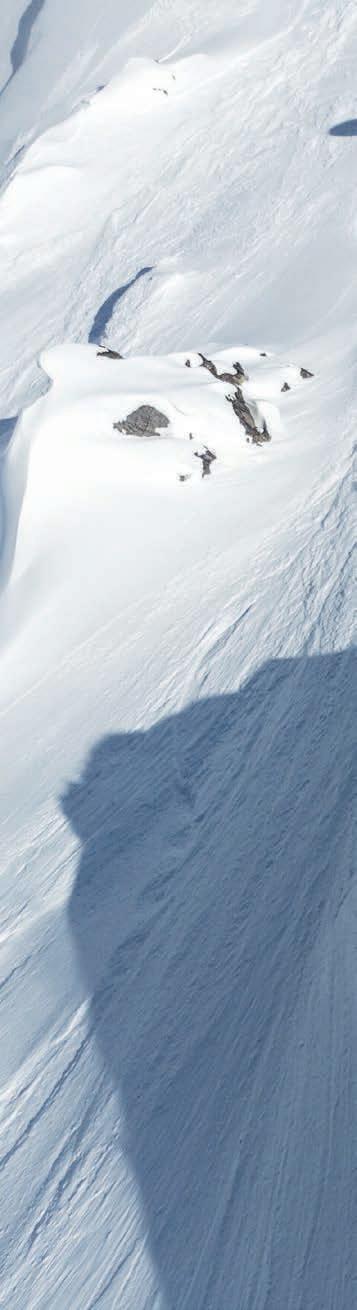
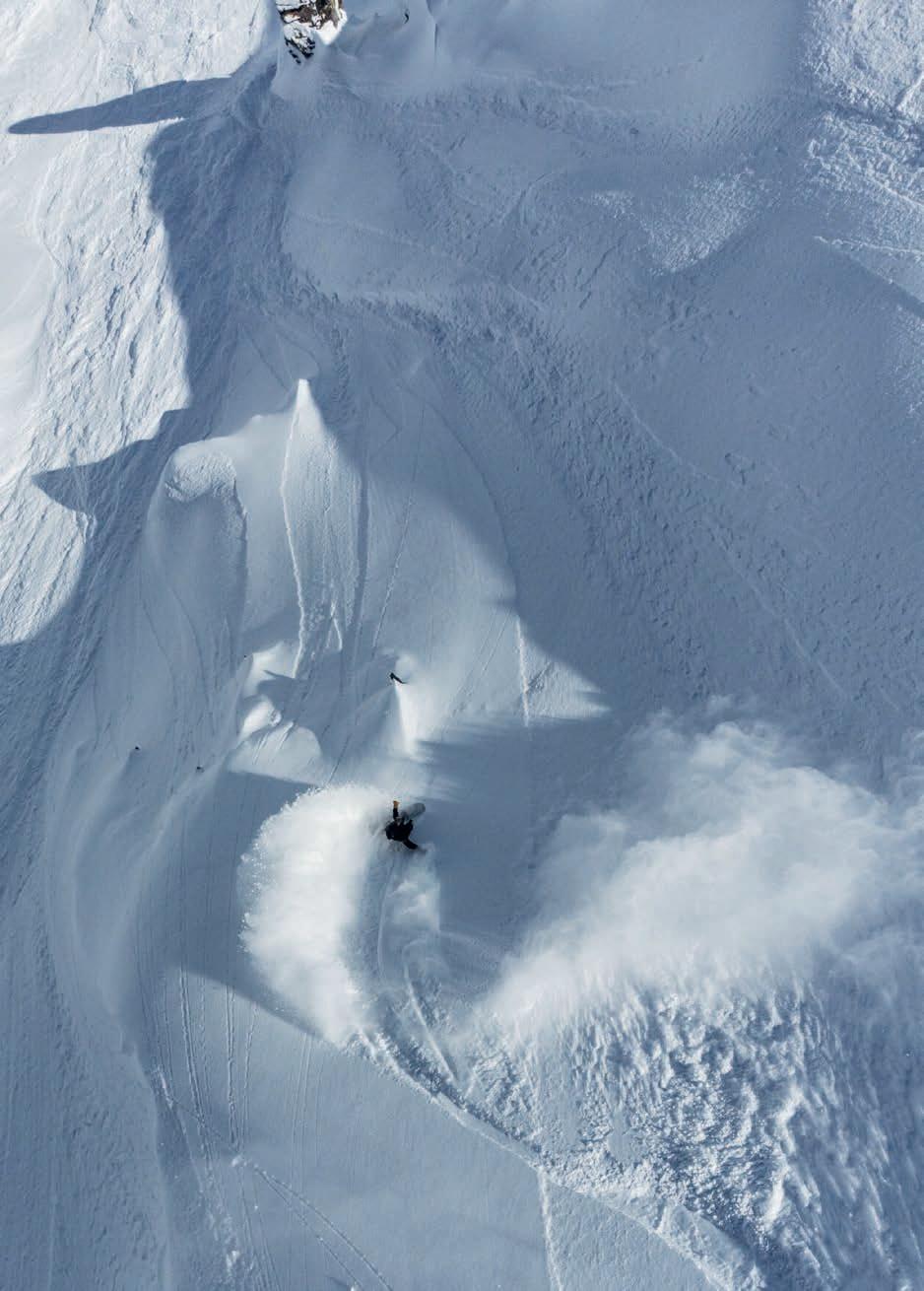
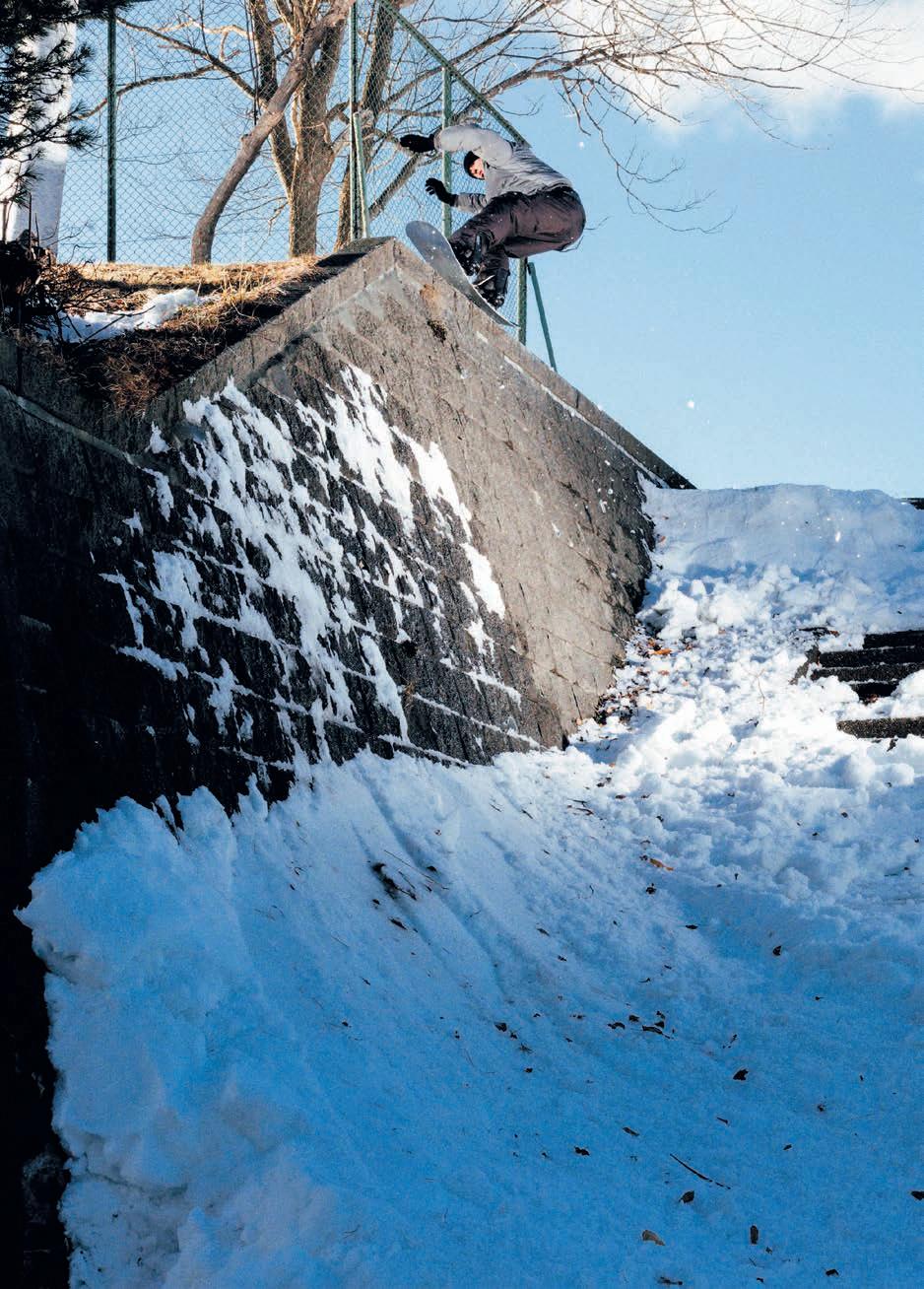



PLAYING HIDE-AND-SEEK WITH AUTHORITY FIGURES IS DEEPLY INGRAINED IN THE VERY ESSENCE OF STREET RIDING. When the 686 crew went all-in filming for the second year of Atlas 2, it sounded like they had their fair share of run-ins with the authorities, so we reached out to them for more details on the situation and asked them to share their experience filming in the streets. It got our brains thinking more deeply about the love/hate relationship snowboarders have with security “officials” and the constant game of cat-andmouse that ensues. Something we have been forced to juggle since, well, the very birth of it all. From the very beginning of our short but illustrious history, snowboarders have always been viewed as rebels. When snowboarding exploded onto the mountain scene in the 1980s, it wasn’t a welcome revolution. Ski patrols called us “knuckle-draggers.” We were banned from ski resorts. They told us we had missiles on our feet and that we caused nothing but problems. The gatekeepers of ski culture saw the snowboard uprising as a middle finger to their polished, twin-planking kingdom. This has never stopped us, and never will.
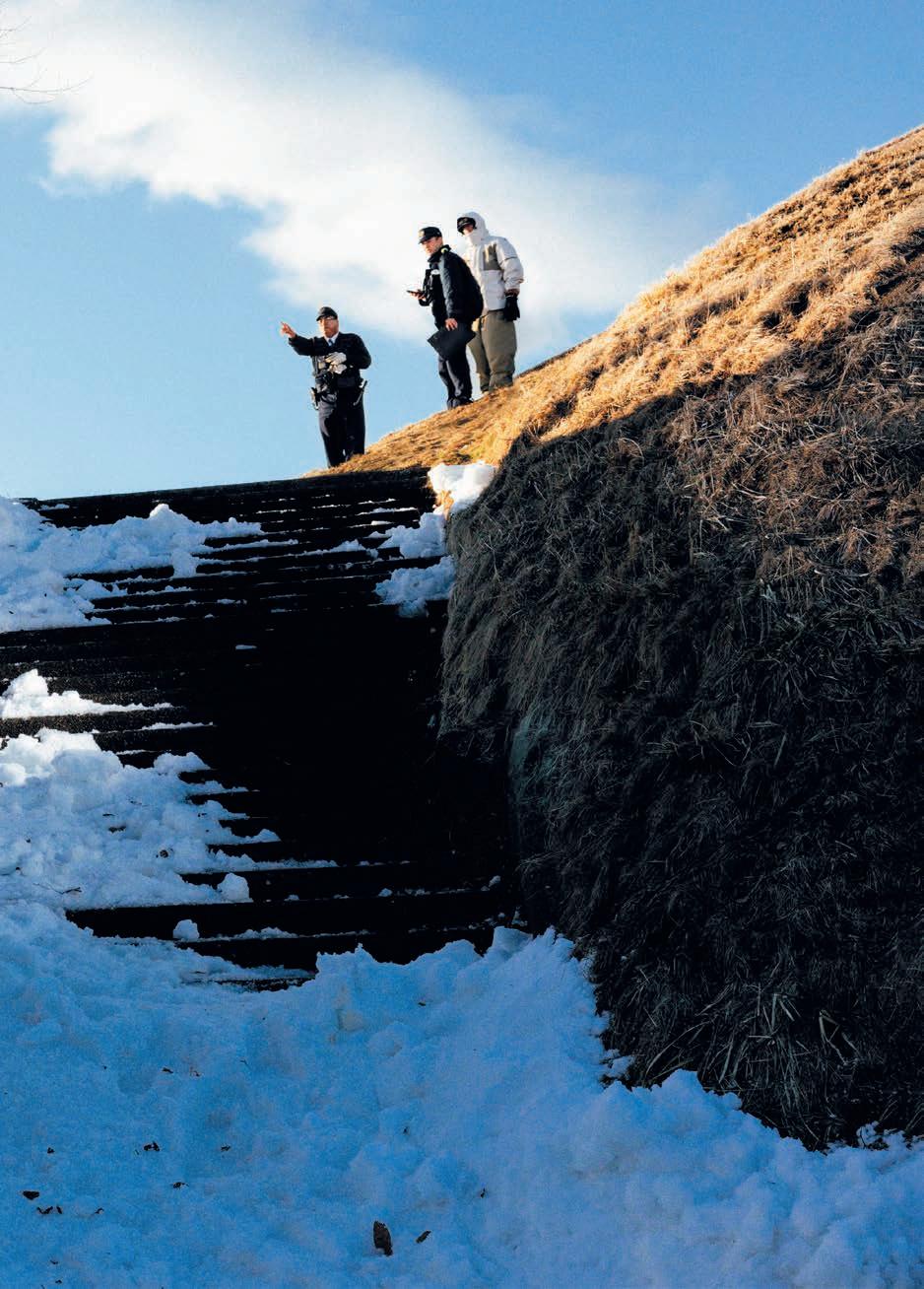
WORDS: JOE SIMPSON
PHOTOS: ERIK HOFFMAN
COOPER CAN RUN AWAY WITH STYLE, HALFCAB FIVE-0 REV
Fast forward 40 years or so. Snowboarding has blown up, gone viral, made it to the Olympics, and some may say, even become mainstream. But there is still a way to experience the rebelliousness of our forefathers: get a crew together and head out into the streets. Kickouts are a regular occurrence on a street trip; it wouldn’t be as exciting without them. There’s something about a successful argument with a stranger, hiding from the police, or avoiding confrontation at a high-risk spot that really gets the blood pumping. That feeling of ‘sticking it to the man’ is embedded in snowboarding’s DNA, making it less of a sport and more of an art form.

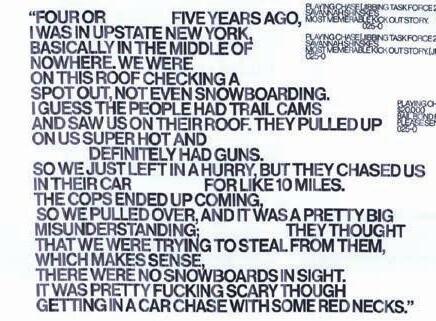
Handling kickouts is a definite skill, with some techniques yielding better results than others, depending on the situation. Chances are high that someone will come over and tell you to stop what you are doing because you are on private property, or you are obstructing passage, or one of the million other excuses that one may encounter. You could laugh in their face, but that doesn’t usually go very well. You can play dumb, claiming you didn’t know you weren’t allowed to hop over that fence, or that you didn’t see the private property sign. That can also not go down very well. Rising to their level and screaming back definitely doesn’t work, but it is pretty hilarious. Ignoring people
OUTLAW TRANSFER 50 FOR SAVANNAH
can work, or at least give you another ten minutes before the authorities arrive. The best techniques are often when you avoid the situation altogether, either by waking up before the sun rises and getting out of there before your average Joe even knew you were there, or by stealth moding it, and having a few members on the crew on look-out duty, ready to warn everyone to hide at the drop of a beanie. Being extra nice, apologising, and explaining that you’ll clear up after yourselves works well. It is a complex skill to master, as every situation you encounter will be unique.
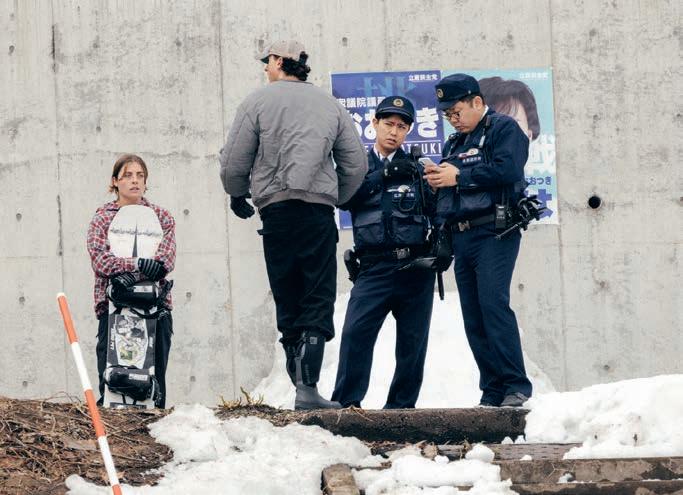



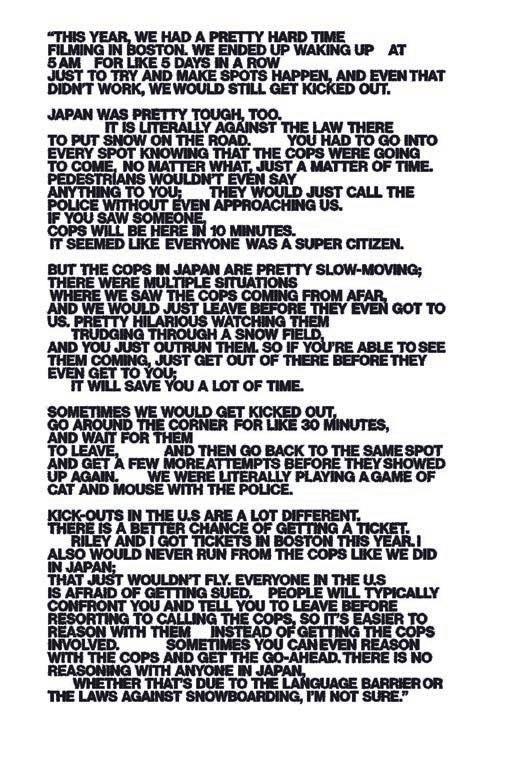

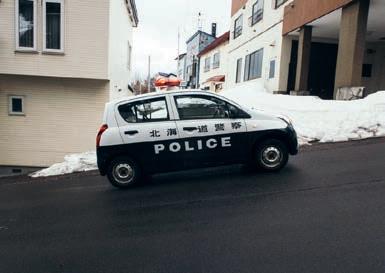


Depending on where a street trip takes place, the bust factor will vary widely, and is a big part of the ‘spot chat’, a continuous conversation on spot selection and daily organisation on the trip. The ‘spot chat’ involves discussing potential spots, considering factors such as the bust factor, the spot’s quality, and how long the shovelling will take. In northern European countries, accustomed to having snow on the ground and with a much more relaxed attitude toward people trying to enjoy themselves, kickouts can be much mellower. Often, people just want to understand what is going on. Eastern Europe will provide some more colourful interactions, but it can go either way with actually getting booted. In other places, like Japan, the society’s code of conduct means people follow the rules, and stepping outside those rigid boundaries is not welcome. The thought “how did they manage to hit ‘that spot’ without going to jail?” really adds some flavour to a video part.
Regardless of the location, the police getting involved is always a possibility, with some countries’ authorities reacting differently from others. Some will clearly state the rules, get you to clean up, and move along. Some will make you clean up and take you down to the station. Others will threaten fines and incarceration. In Japan, it is literally against the law to put snow on the road, making it hard to do anything involving a street, which is the majority of spots. Most people would guess correctly that the only way around these scenarios is to accept your fate, apologise, and be as respectful as possible, but only after you’ve hussled for one more try. The bravest of us will risk the wrath of authority by going back at a more suitable time, like five in the morning.
Getting moved along at different times in a session can be a real kick in the gut, or a rather elating experience. For example, getting told off just as you feel like you’re going to land a trick is the saddest thing ever, whilst getting kicked just as you get the clip is like a middle finger to whoever is doing the kicking (bonus points if you get a shot of the angry kicker-outer). Getting busted just as you’ve finished setting up the spot is downright frustrating. “Couldn’t they have kicked us out before we shovelled for three hours?”. Getting kicked out as you rock up to a tantalising spot, not even having time to get the shovels out, becomes a challenge; many a conversation about how to get around it will ensue. You could knock on the door and ask, which can be an effective and honourable way around a situation, but where’s the fun in that? Ask for forgiveness, not permission, as they say. It’s a sign of the enjoyment of getting away with things that simply asking for permission is pretty far down the list of ‘how can we make this work?’








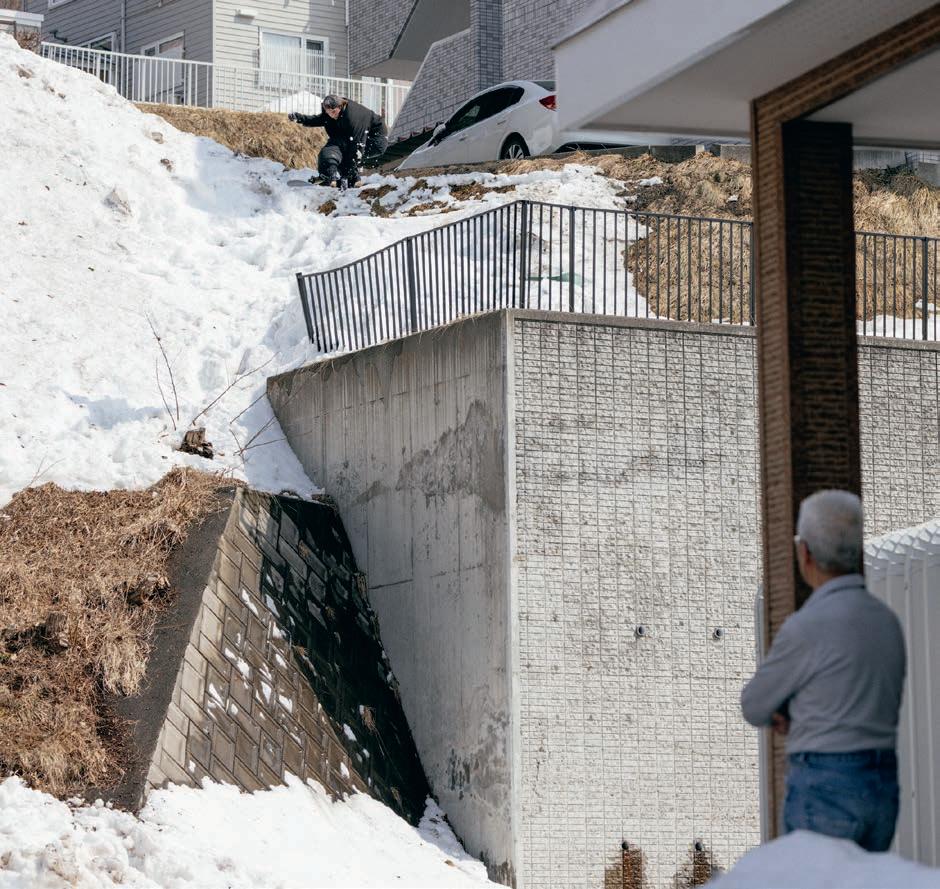


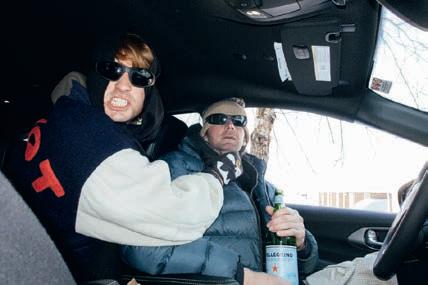

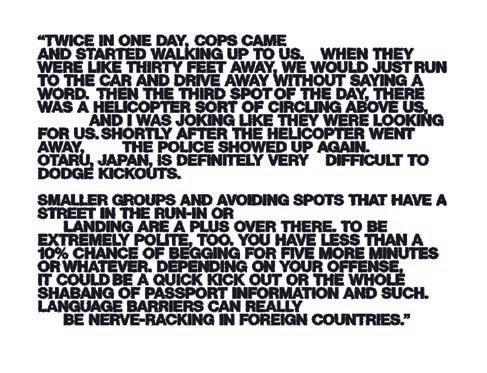

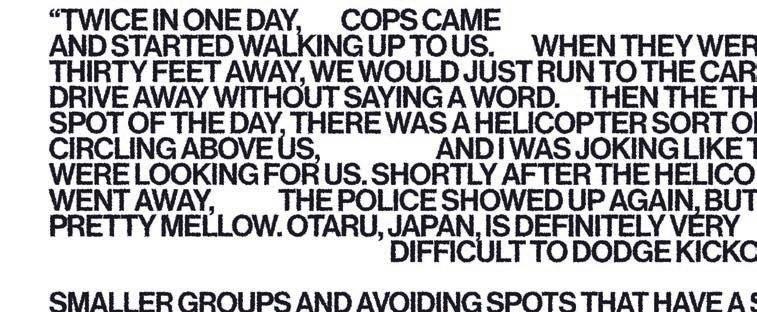
CAREFUL ROBBY, THIS IS A NEIGHBOURHOOD WATCH AREA
BETTER TO BE LOCKED IN A 50 THAN IN JAIL
Maybe it’s the pride of being on your own mission, letting nothing get in your way. Perhaps it’s a feeling of ‘bursting the bubble of reality’ you find yourself in when on a street trip, on a mission that no one understands or sympathises with. It may even be the mindset of our first brave warriors hiking a mountain that wouldn’t let them on the lifts, reaching through time and space to grab hold of our emotions without us even knowing it. Whatever the reason, it almost feels like giving up when asking for permission.
Now, we are not advocating for people to head out into the streets and run a mock, disregard people’s feelings, and make society as a whole hate snowboarders. Keeping things civil can go a long way in this existence, so try to keep things respectful. We never know what’s going on in someone’s life. Each individual will have their own boundaries for what’s going too far when scoping out a spot. It’s a good thing that people will happily hit something on the side of a police station, but won’t jump off someone’s grandparents’ roof. Damaging personal property should be high up on the list of ‘Not to dos’. We aren’t trying to piss people off, we just have a looser view on society’s unwritten rules. “Why does it matter that I’m jumping on this steel railing with my snowboard? I’m the only person taking the risk”. When we use something in a way that it is not meant to be used, you can feel those rigid rules being questioned, and challenging the status quo is fundamental to our survival.


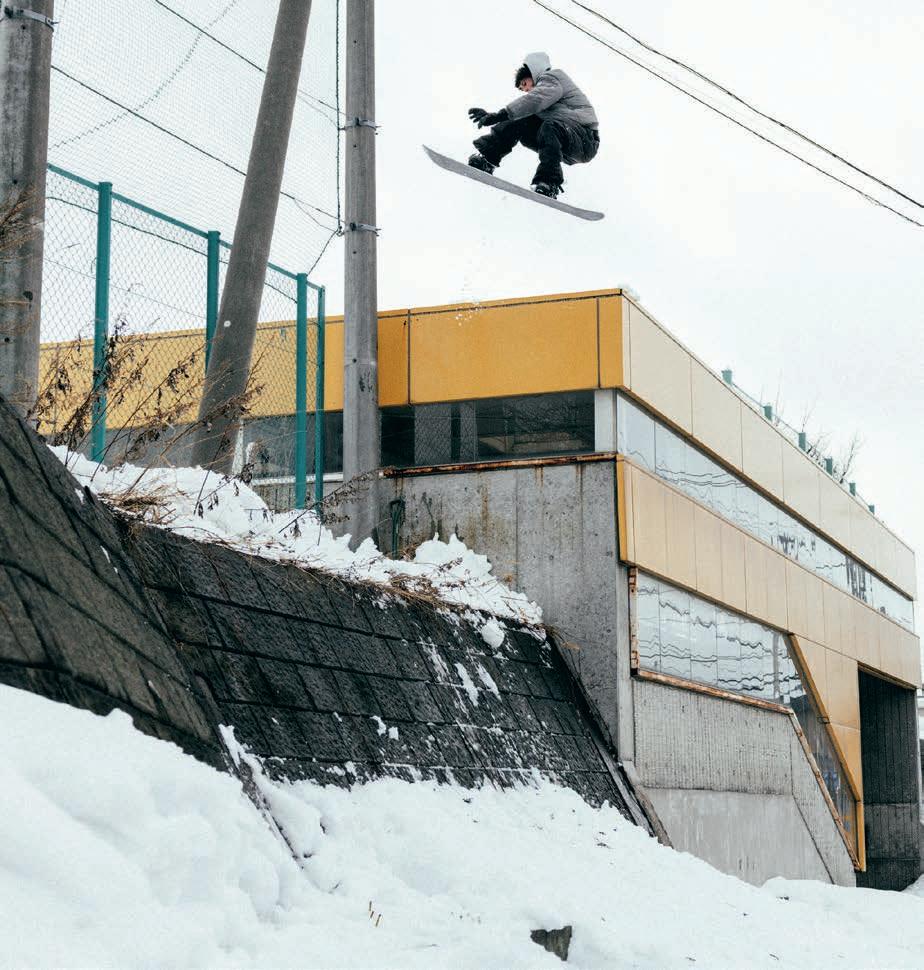
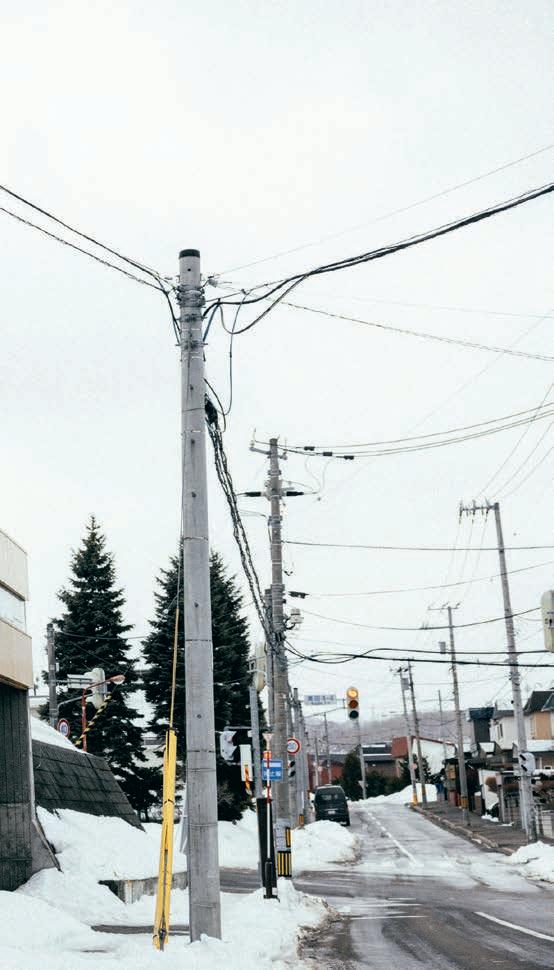
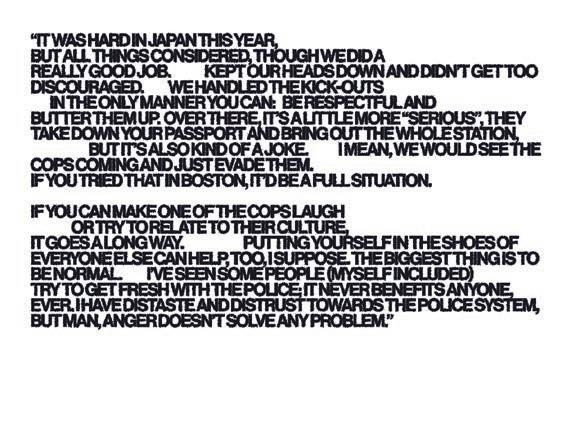
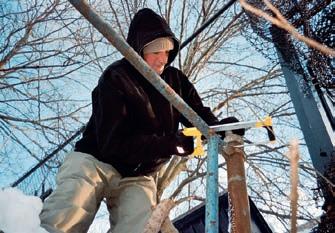
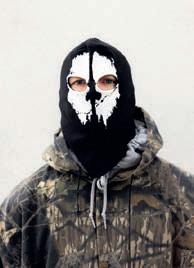

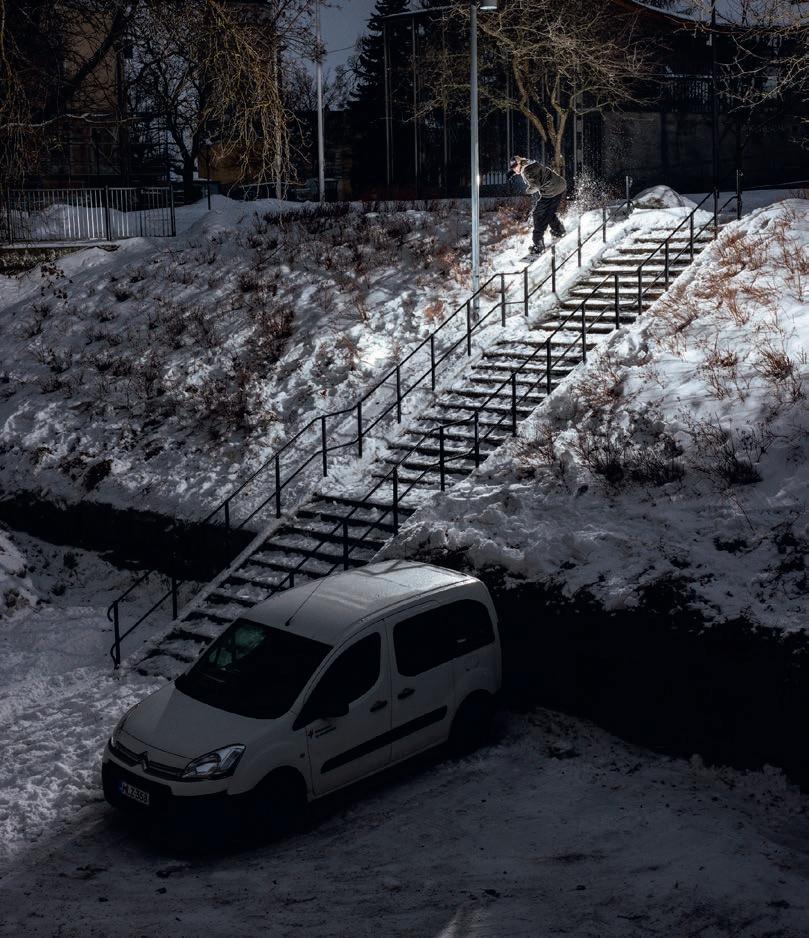


We have heard some horror stories. Head butts from Russian security guards, whisky-stinking jail cell/police head offices, holy priest conning. When a crew is scoping out a spot, it can look very dodgy. A group of people, often with covered faces due to the cold, checking out roofs and railings on private property and trying to do so discreetly, does come across as very breaking-and-enteringy. No wonder people get worried and, therefore, pissed off. You can’t blame the populace for their reaction; you can only explain yourself to them in a calm and orderly manner. You might be surprised to find that humans can be quite understanding, once they realise you aren’t trying to break into their house and run off with their cherished belongings.
As you may have noticed, Japan had some of the best snow conditions last winter, so it’s no wonder that an abnormal number of crews went over there to chase the goods. So many people were trying to hit the streets out there, in fact, that we heard a literal “Jibbing Task Force” was put in place to stop them. Their sole job was to find the crews and kick them out. The fact that snowboarders made that happen kind of makes us proud. It reminds us of how snowboarding started: disrupting the status quo. Japan may be the place to explore the ultimate outlaw snowboard experience rooted in our culture. But remember, it isn’t about getting in the way of everyday people, but about sticking it to the man, and an entire police force being put in place to counteract snowboarding activities seems like the very first feelings of our ‘artform’ are still running strong in the wild beast it has become today.
RILEY WITH ‘DEFYING THE KNOBS’ WHILE FREE IN FINLAND