
Where To Find


By Madison Warren
At Tuesday’s General Meeting of the Suffolk County Legislature, officials heard lengthy testimony during a public discussion on what should be done regarding a proposed ban on Kratom. More than fifty speakers came forward to share how the ban would impact them, offering both support and opposition.
The legislative discussion follows Nassau County’s recent prohibition on the sale and distribution of Kratom, which removed products from store shelves and imposed penalties on businesses that continue to sell it.
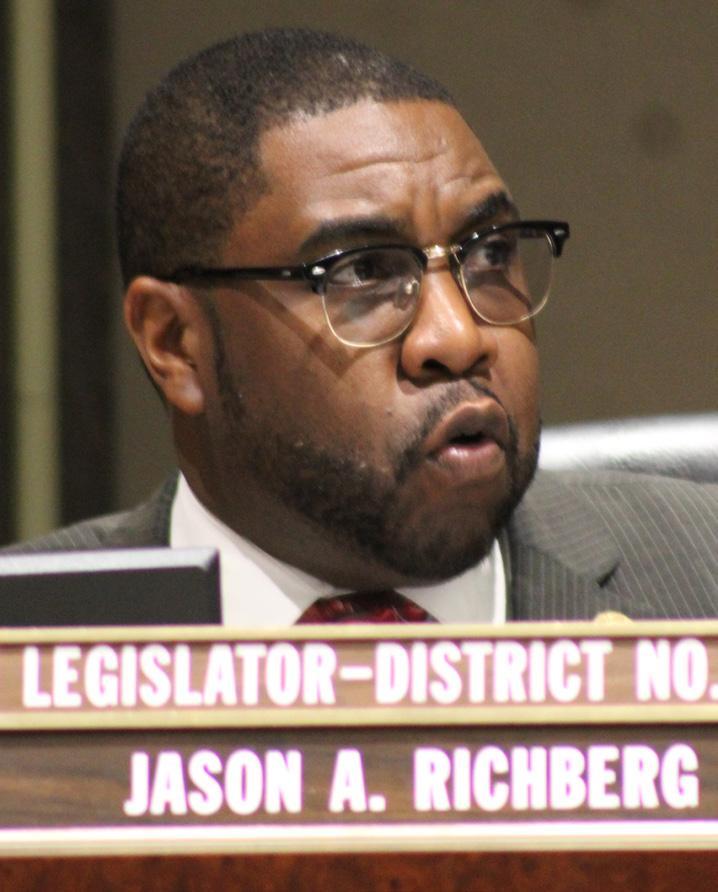
The Legislation, I.R.1279, sponsored by Deputy Presiding Officer Jim Mazzarella (R-Moriches) and co-sponsored by Legislators Leslie Kennedy (R-Nesconset), RJ Renna (R-Lindenhurst), Chad Lennon (C-Rocky Point), and Jason Richberg (D-West Babylon), would ban the sale and distribution of Kratom in Suffolk County.

Continued on page 5
By Matt Meduri
A twenty-four-year-old Salvadoran national is facing multiple weapons charges after being found with a loaded firearm in Nissequogue State Park.
According to a press release from Suffolk County District Attorney Ray Tierney’s (R) office, Miguel Enrique Astudillo Ruiz was observed by Smithtown Park Rangers on April 4 near an abandoned building in a restricted area of the Kings Park Psychiatric Center.
The investigation states that rangers allegedly observed expended shell casings in the cupholder of a vehicle parked outside the abandoned facility, while Ruiz was allegedly seen near the vehicle collecting scrap metal from the building.
Continued on page 10




Books and Bites at Fire Island Vines Bay Shore
April 24, 6:00 PM to 9:30 PM
BAFFA’s Annual Juried Student Art Exhibit at BAFFA Art Gallery, Sayville
April 25, 1:00 PM to 4:00 PM
Superhero Strong- Self Control Class with GoYo Creative at Chance to Dance East Setauket
April 25, 10:00 AM to 10:45 AM
Andrew C. DeMarco Foundation and Tiny Songbirds Fundraiser at Islip Terrace Fire Department
April 25, 10:00 AM to 11:30 AM
Sakura Matsuri: Cherry Blossom Festival at Charles B. Wang Center
April 26, 12:00 PM
Spring Craft and Vendor Fair at Polish American Independent Club, Port Jefferson Station
April 26, 10:00 AM to 4:00 PM

Tiny Tots:
Hoppy Spring Frogs
April 29, 10:30 AM to 11:30 AM
Hello Spring Fest at St Thomas of Canterbury Church, Smithtown
May 2, 11:00 AM to 5:00 PM
East Islip Spring Craft Fair at East Islip District Grounds, Islip Terrace
May 2, 10:00 AM to 4:00 PM
Toss For a Cause - 50/50 Cornhole Tournament at Great South Bay Brewery Ronkonkoma
May 2, 12:00 PM to 2:00 PM
Spring Craft Fair in Yaphank
May 2, 10:00 AM to 5:00 PM
Bald Hill Fair at Farmingville
The Catholic Health Amphitheater: 1 Ski Run Lane
May 7 through May 17
Passport through Parks: Heckscher, Family Program May 9, 10:00 AM

269-6421








HAUPPAUGE:
Teen Game Night - Mario Kart- April 24, 5:30 PM to 6:30 PM
Cinco de Mayo Social- May 6, 3:00 PM to 4:00 PM
COMMACK:
Thursday Movie of the Week - Ghostlight - April 24, 5:30 PM to 6:30 PM
NESCONSET:
You, Me, and Tea- May 2, 11:00 AM to 11:45 AM
From Caterpillar to Butterfly- May 5, 3:00 PM to 3:45 PM
KINGS PARK:
Friday Movie of the Week - Is This Thing On?- May 1, 2:15 PM to 4:45 PM Garden Growers- May 5, 4:15 PM to 5:00 PM
SACHEM:
Patriotic Paint Night: American Eagle - - April 29, 4:45 PM to 5:30 PM
Soar into Space - May 5, 10:00 AM to 10:30 AM
SMITHTOWN:
Cricut Cards - Mother’s Day- May 8, 2:00 PM to 5:30 PM







By Greg Wolf
Many policyholders have noticed a frustrating trend in recent years: insurance premiums continue to rise, even for those who haven’t filed a single claim. For many, this feels unfair and confusing, especially when they’ve had no recent losses. However, there are several larger factors influencing these increases.
While this may seem unfair at first glance, insurance pricing is influenced by far more than an individual’s personal claims history. Even if you haven’t filed a claim, you are still part of a larger system where losses are shared across many policyholders. In areas like Long Island, this can become more noticeable as claim activity increases and insurers adjust how they operate in the market.
In my previous column, “Markets Change with the Wind,” I discussed how some companies have begun reducing their presence in certain areas. As insurers leave and fewer options remain, those that stay often take on more risk, which can contribute to rising premiums and
reduced competition. This “shared risk” model means losses are spread across a large pool of policyholders rather than tied to any single individual.
One of the biggest drivers of rising premiums is the increasing cost of repairing both vehicles and homes. Labor costs have risen significantly, and materials are more expensive than they were just a few years ago. Even routine repairs now come with higher price tags, leading to larger claim payouts for insurers.
Modern technology, while improving safety and efficiency, has also made repairs more expensive. Vehicles today are equipped with sensors, cameras, and advanced systems that can be costly to fix after even minor accidents. Similarly, homes now include more complex systems and materials that increase rebuilding costs. As a result, even smaller claims can cost significantly more than they once did.
Beyond individual claims, insurers must also account for large-scale losses occurring across the country.
Events such as hurricanes, wildfires, and floods have led to significant payouts in recent years. Even if these events don’t directly impact Long Island, they still influence the overall cost of insurance nationwide. As these large-scale losses increase, so does the financial pressure on insurers to manage risk more carefully.
Behind the scenes, insurance companies rely on reinsurance to protect against major losses. As largescale claims have increased, the cost of reinsurance has risen as well. These added costs are often passed through the system and can ultimately impact policyholders in the form of higher premiums.
As these pressures continue to build, insurers are adjusting how they manage risk. This can include raising premiums, tightening underwriting standards, or limiting the number of policies they write in certain areas. For consumers, this often results in higher costs and fewer available options.
While many of these factors are outside of an individual’s control,

there are still steps policyholders can take. Reviewing coverage regularly, adjusting deductibles, and asking questions about available options can help manage costs. Staying informed is one of the best ways to navigate a changing insurance market.
In a changing insurance landscape, understanding what drives premium increases can help consumers make more informed decisions. As the industry continues to evolve, being proactive about coverage can make a meaningful difference. Awareness and preparation remain key for policyholders moving forward.
Greg Wolf is an insurance broker who works with individuals and families to help them better understand their coverage and risk. Through his monthly column, he shares insights on industry trends, policy changes, and practical tips to help readers make informed insurance decisions. He can be reached at 631-820-8354.


Published by Messenger Papers, Inc.
April 23, 2026
Kratom is a tropical tree native to Southeast Asia whose leaves contain active compounds, primarily mitragynine and 7-hydroxymitragynine (70H), that can produce stimulant-like effects. Many people use it for energy, focus, mood enhancement, relief from pain, managing withdrawal symptoms from substances such as opioids, or relaxation.
While some describe benefits, many argue it is far from a risk-free supplement. Several speakers shared personal accounts of becoming dependent on Kratom, experiencing adverse health effects, or using it as a gateway to other substances.
As of now, the U.S. Food and Drug Administration (FDA) has not approved Kratom for the treatment of pain, anxiety, opioid withdrawal, or any other medical condition. Federal agencies have also raised concerns regarding its safety, potential contamination, and risk for dependence or addiction.
A wide range of voices had the opportunity to be heard, including doctors, attorneys, law enforcement, parents, members of the sober community, and residents from across Suffolk County.
Megan O’Donnell, one of the first speakers at the afternoon meeting, shared her perspective from her role as Division Chief with the District Attorney’s office, where she oversees four bureaus, including the Narcotics Bureau. Drawing on nearly thirty years of experience in law enforcement, she said County-level legislation would provide a stronger model for police and prosecutors, noting that current state law only addresses the minimum age at which Kratom can be sold.
O’Donnell (pictured below) explained that under existing law, enforcing underage sales violations can place

minors in uncomfortable positions, as their identity and age may be required as evidence in a criminal case. She added that a county law could help create clearer enforcement standards while better protecting young people
involved in investigations.
She also noted safety concerns surrounding individuals who ingest Kratom and then drive. Unlike alcohol and other substances that have been extensively studied for years, she said, there is little established guidance or clear legal comparison when it comes to Kratom and impairment. Her central message was that restricting the sale of the substance would help reduce access and, in turn, could help prevent dangerous driving situations.
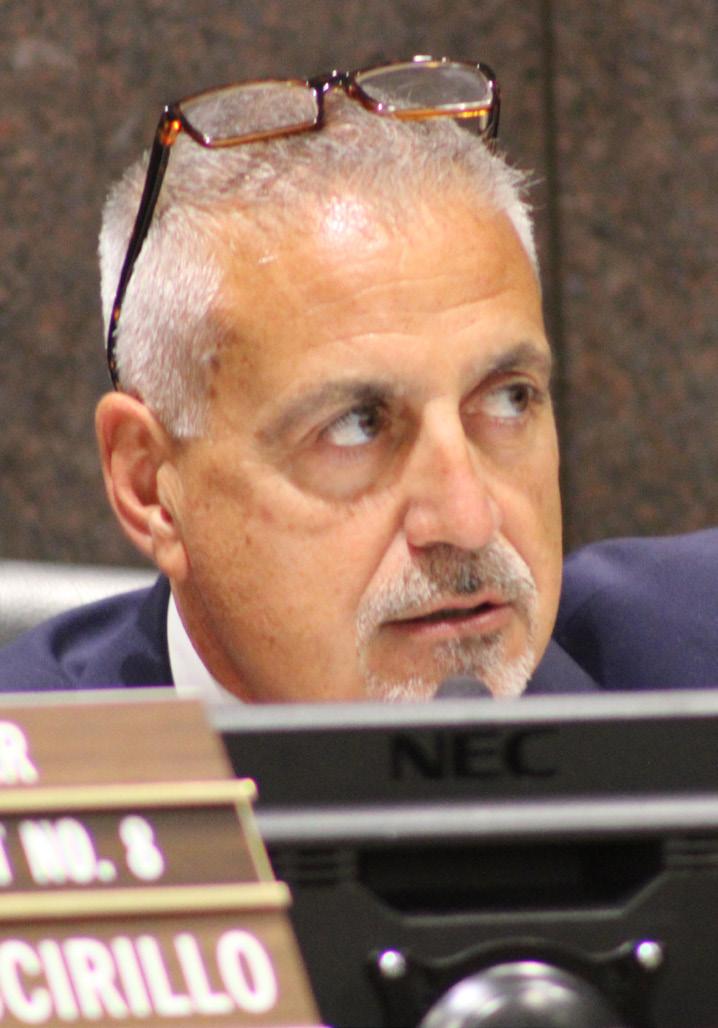
Legislators are also weighing whether any ban should specifically target 7-Hydroxymitragynine (70H) products while still allowing natural Kratom leaf to be sold legally. Presiding Officer Anthony Piccirillo (R-Holtsville) (pictured right) said one of his concerns is that removing a product that has been sold for decades could unintentionally create a black market where none previously existed. He noted that forcing consumers to seek it through illegal channels could make access more dangerous and create an entirely new challenge for law enforcement.
Adam Birkenstock, a social worker who said he regularly works with individuals struggling with addiction and those in recovery, shared concerns about Kratom during the meeting. He said the substance is often marketed as a remedy for anxiety and relaxation, but in his experience, he has frequently seen addiction continue to develop through Kratom use. He also added that many people are told the product is completely safe but said that it does not reflect the full
reality he has witnessed.
A Long Island mother delivered one of the more emotional testimonies of the day, saying Kratom had “completely destroyed” her life. She said that while on her sobriety journey, she was served a drink at a Kratom bar after being told it contained no alcohol and was considered “safe” for those in recovery. According to her testimony, she became immediately dependent and returned day after day for more.
With her 14-year-old son beside her for support, she said he watched her life unravel as she lost focus on everything except the drug. She described becoming deeply depressed toward the end of her use, questioning whether she wanted to keep living and feeling unable to stop. She told legislators that after a long and difficult battle to quit, she is now three years free from Kratom and has never been happier.
Another speaker shared a vastly different perspective, describing Kratom as something that greatly improved his quality of life. He said he was involved in a serious accident as a child and had lived with chronic pain for much of his life afterward. According to his testimony, years of discomfort and limited relief led him to eventually try tea made with Kratom.
He told legislators that the substance helped ease the pain he
had carried for decades and allowed him to function more comfortably in everyday life. Becoming emotional as he addressed the room, he said Kratom had made a meaningful difference for him and expressed concern over losing access to something he credits with helping him regain a better quality of life.
Retailers of the product brought forth a different perspective but
imparted to the Legislature that the industry is currently self-regulated, and products sourced from Indonesia go through multiple rounds of scrutiny before hitting shelves.
Moreover, nearly all speakers, either opposed to or in favor of the ban, said that 70H should not be marketable. The Legislature voted to recess the bill until the next General Meeting, as they continue to weigh how to effectively enforce sale and distribution of the relatively new substance.

For all the grief that blue state living gives many people, we’re at least fortunate enough to have the A-Team here in Suffolk.
District Attorney Ray Tierney (R) regularly tops that list, along with Sheriff Errol Toulon (D) and County Executive Ed Romaine (R-Center Moriches), we find.
Tierney needs no further introduction past Gilgo Beach. The historic breakthrough in the decades-long cold case came within less than two years of his first term. Rex Heuermann then pled guilty just months after Tierney was re-elected.
While Tierney and company deserve all the accolades they rightly receive for that case, it’s the rank-and-file cases and prosecutions of local losers that really improves Suffolk’s quality of life.
This week, Tierney announced the indictment of a Ridge man who allegedly purchased child sexual abuse material (CSAM) using cryptocurrency. Not only is a member of the Ridge Volunteer Fire Department and an Airforce Reservist, he’s also a County Corrections Officer.
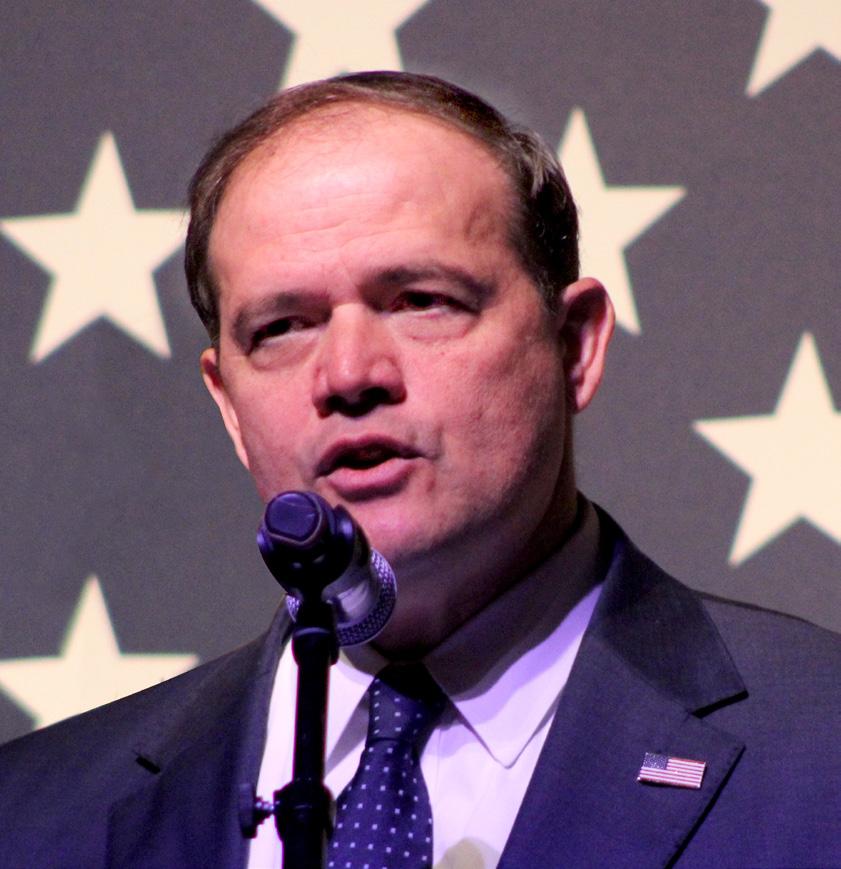
No favoritism or back-room deals for fellow law enforcement to be found, and Tierney and Toulon made that abundantly clear in their statements.
The ironic part is, this alleged predator gets a temporary slap on the wrist because of New York’s backward bail laws. Believe it or not, the charges in this case are not bail-eligible in New York State.
Another win for progressive ideology…
Also this week, a Salvadoran national faces multiple weapons charges for possessing a loaded and illegal firearm. He was found collecting scrap metal near the abandoned Kings Park Psychiatric Center in Nissequogue River State Park. A nature preserve in the heart of Smithtown that is revered by families and outdoor enthusiasts was faced with what Smithtown Park Rangers called an “uncommon” event in the arrest.
Moreover, the federal immigration authorities have already lodged a deportation detainer for the alleged defendant.
It’s one thing to commit such crimes in a peaceful, public space - allegedly. It’s another to not have the proper paperwork allowing one to reside in the country in which the crime was committed - allegedly.
While seemingly minute, cases like these can have massive reverbations in just one or two lives. Trauma from sexual exploitation or a potential fatality from possessing an illegal firearm might not affect every Suffolk resident, but they sure can affect just one resident’s entire world.
Suffolk is ever so fortunate to have competent leadership at the helm in people like D.A. Tierney.
If only we could say the same about Albany…
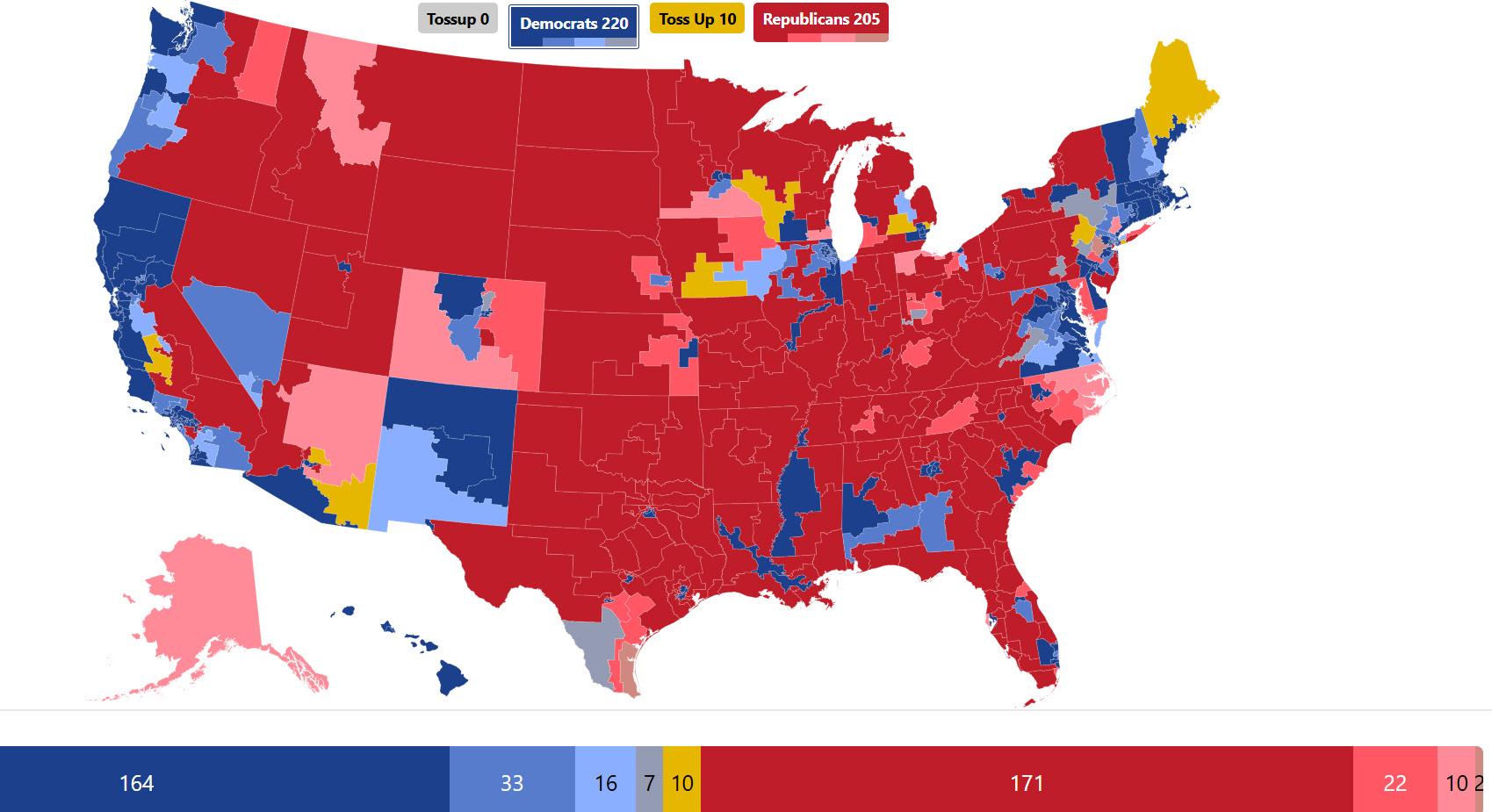
For the first time in our forecasting lens, Democrats are now poised to retake control of the U.S. House of Representatives in 2026.
While not a shock to many - opposition party’s chances of making congressional gains in midterm years is the cornerstone of conventional political wisdom - we’re able to finally make the distinction by assessing that at least 218 seats are now at least tilting in favor of the Party of Jackson.
While President Donald Trump’s (R-FL) second term has been a disappointment to many - Epstein, Iran, affordability, and tension in the Cabinet, to name a few reasons - it remained to be seen if Republicans could defy history and retain control of the House this November, or at least only be in the minority by just a few seats, as Democrats currently are.

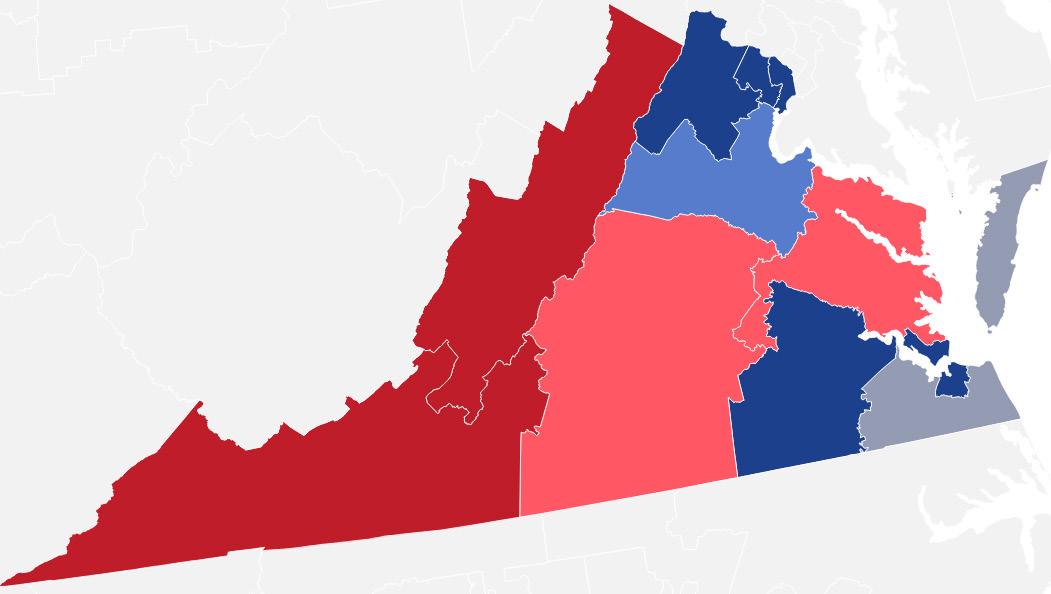

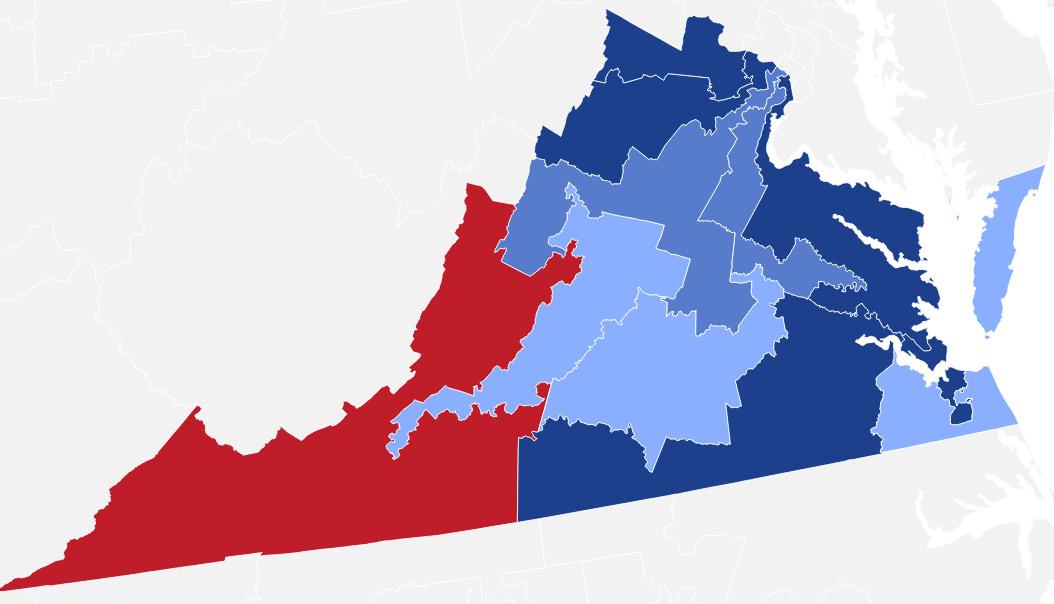
However, one of Trump’s most foolish gambits has been that of mid-decade redistricting. We strongly disagreed with this initiative in August, when the President implored Texas Republicans to gerrymander their map to give the GOP the upper hand in the midterms. We predicted then that this would only be fighting fire with fire and “burning the whole thing down,” and that’s exactly what Tuesday’s election promulgated.
Our forecast now sees Democrats clinching at least 220 seats in the House, with 218 seats needed for a majority. That’s a four-seat shift from our last update that showed Democrats with 216 seats. Virginia’s Tuesday referendum narrowly passed, which now empowers a Democratic-drawn map that egregiously gerrymanders the 6D-5R delegation into one that will likely be a 10D-1R delegation.
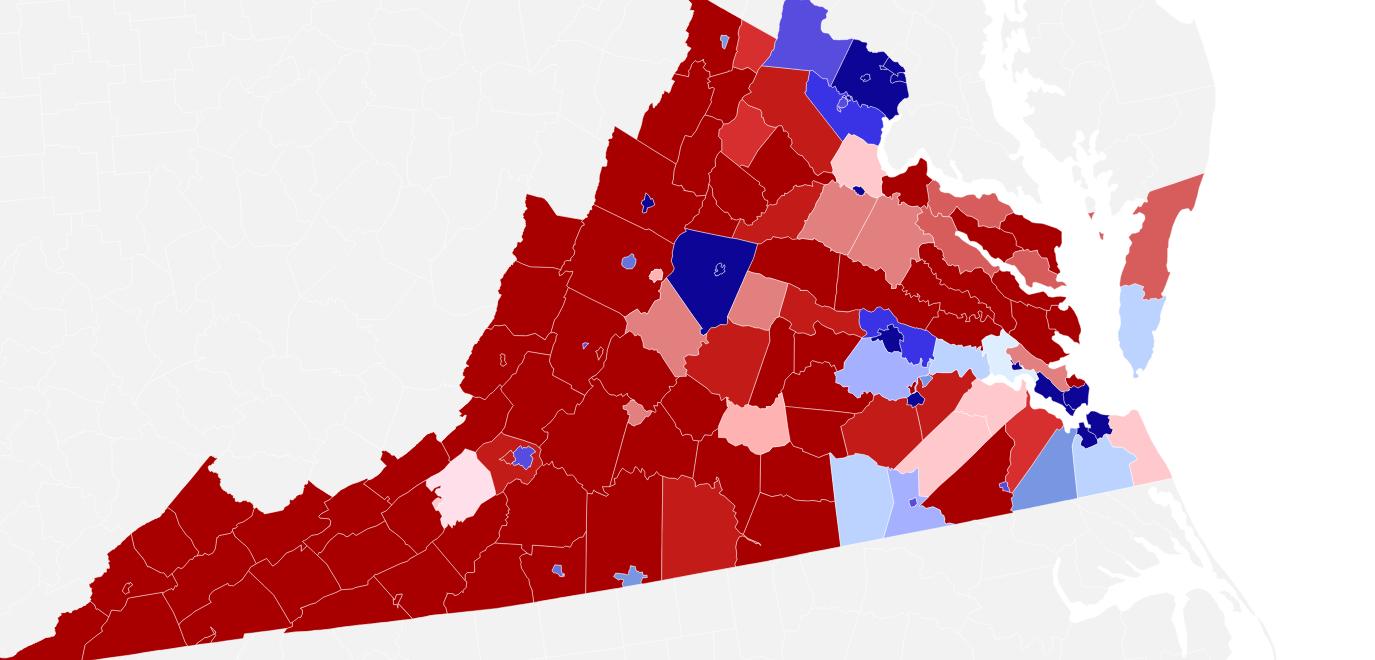
Ironically, the Northern Virginia-D.C. suburban counties were the reason it passed. The rest of the state, even blue-trending Virginia Beach, rejected the amendment. Because of that one-track mind in Northern Virginia, the rest of what is a diverse state will now be packed into districts that are tortuously drawn towards the D.C. metro area.
To that, we say, because of Trump’s ridiculous gamble, Virginia Republicans and swing voters must now be represented by a map that’s solely for political
gain, just as Republicans did in Texas, North Carolina, and Missouri, and as Democrats did in California. Who could have thought that Democrats would respond in kind? Ostensibly, Trump and company didn’t see that one coming, which begs the question, who is handling broader strategy on Pennsylvania Avenue?
The jury is still out on what Florida will do, which could tilt the scales back in the GOP’s favor.
But the real question this boils down to is, what is the actual, long-term cost? It’s not just about winning the majority in 2026; it’s about political implications that will outlive the current zeitgeist and set precedent for any executive to mobilize his/her partisan loyalists across the country to shift goalposts on a whim. States are reserved the right to administer their own elections and congressional redistricting. While it might be inconvenient for partisans in other states, the reality is, that’s a fine way to conduct business. We can’t be a federalist republic without the states being afforded significant autonomy.
That’s why Trump’s self-insertion is troubling for the future. We hope steadier heads prevail after he leaves office, but there’s no guarantee that the cutthroat nature of politics ceases in January 2029. Our fear is that no longer will redistricting be about population shifts, accurate representation, and consistency one decade at a time. Instead, it will be about “how many seats can we cook up so we retain power?”
How about our elected officials in Washington concern themselves with proper governance to retain the power on merit?
As one party tries to outdo the other, and as one side compensates for the actions of the other, it’s just a flaming race to the bottom. At this point, the House battleground landscape continues to shrink, voters are more partisan than ever, and leadership is intent on playing to that tune for their own gain.
Voters have once again been used as political pawns to increase power and there is seemingly no regard for the future stability of our republic, if we can keep it.
By Comptroller Tom DiNapoli
Artificial Intelligence (AI) is rapidly reshaping how companies operate, compete, and profit. From software development to logistics to customer service, AI promises major gains in productivity. It is increasingly driving hiring decisions, workforce size, and layoffs. Yet companies consistently fail to give investors clear, comparable information on how their AI strategies are affecting employees and long-term business growth. They’re eager to highlight productivity gains but rarely provide transparency on AI’s consequences.
That’s why, as trustee of the New York State Common Retirement Fund, I’m calling on corporations in our portfolio to increase transparency around AI’s impacts on their operations, especially when innovation has significant implications for a company’s workforce.
This lack of corporate transparency matters. Our state pension fund supports innovation that strengthens long-term growth and shareholder value, but durable growth requires more than technological ambition. Yet the SEC’s Investor Advisory Committee found in December 2025 that AI disclosures across public companies remain “uneven and inconsistent,” making it difficult for investors to assess and compare risk.
Research suggests that when AI is used exclusively to automate tasks and eliminate roles rather than augment human judgment, it can undermine institutional knowledge. It also disproportionately erodes employment opportunities for early-career and entrylevel workers, a group that National University data shows accounts for nearly 50 million U.S. jobs at risk.
Anthropic’s CEO has warned that AI could eliminate half of all entry-level white-collar jobs and spike unemployment 10% to 20% within five years. Federal Reserve Bank of St. Louis research corroborates this concern, finding that occupations with higher AI exposure experienced larger unemployment rate increases between 2022 and 2025. Poorly managed workforce transitions can expose companies to reputational, legal, and regulatory risks that ultimately impact shareholder value.
Economists have long argued that labor-saving technology creates new demand for work over time. The concern is the massive speed of a shift that creates enormous risks. Unlike earlier waves of innovation that spread gradually across sectors allowing for measured adaptation, AI is being deployed simultaneously across industries, compressing into a few years disruptions that once unfolded over decades. The World Economic Forum’s 2025 Future of Jobs Report finds that 41% of employers worldwide plan to reduce their workforce over the next five years due to AI. This speed may damage the quality and productivity of a company’s workforce and, more broadly, add to the large-scale instability of the economy.
Workforce disruption on a grand scale can have broad economic consequences by affecting consumer demand and economic stability and creating a more uncertain operating environment for businesses. Investors need better information to judge whether AI-driven workforce changes reflect thoughtful strategy or short-term cost cutting that undermines long-term future performance.
Investors should be able to understand how companies are managing AI’s impacts on employees, including job reductions and investments in retraining or redeploying workers, and what governance structures are in place to oversee their AI strategy.
I have reached out to the largest publicly traded companies in our state pension fund’s portfolio, including many like Amazon, Salesforce, Meta, and Pinterest, that have pursued layoffs in the name of AI efficiencies. I’ve asked them to disclose information on layoffs and other workforce impacts of AI, because without it, it’s much harder for investors to evaluate whether the changes are sustainable and in the company’s long-term interests.
There’s a reason AI’s labor impacts have drawn rare bipartisan attention and legislation in Congress.
The SEC’s own Investor Advisory Committee voted in December 2025 to formally recommend that the Commission require companies to disclose AI’s impact on workforce management, including workforce reductions and upskilling, precisely because current disclosures are inadequate. The underlying message is clear: policymakers, regulators, and investors alike lack reliable information about how AI is changing jobs, skills demand, and workforce stability. Transparency is not an impediment to innovation; it is a hallmark of sound corporate governance.
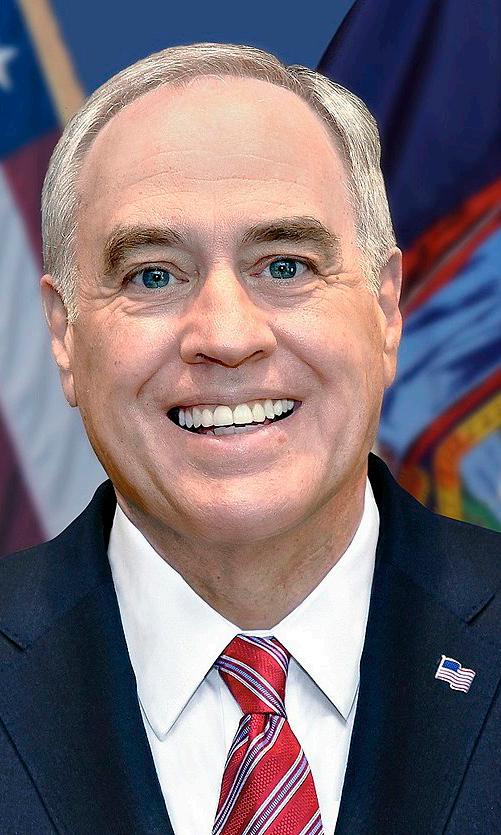
Greater transparency benefits companies. Firms that clearly explain how AI fits into their workforce strategy are better positioned to retain talent, demonstrate sound governance, and manage growing regulatory scrutiny. Already, 72% of S&P 500 companies cite AI as a material risk in their annual filings. Consistent disclosure improves comparability, reduces uncertainty, and helps companies allocate capital more efficiently. Clear disclosure also helps investors judge whether AI investments are strengthening businesses or weakening them over time. As the person in charge of pension fund assets for more than 1.2 million public employees, retirees, and beneficiaries, I believe that increased daylight on how companies are managing their workforce in the AI era is essential to assessing risk, resilience, and value creation.
Investors need to see risks just as clearly as rewards if markets are going to function well. A clear view of how AI will affect a company’s workforce is a material necessity in the current age, and corporations need to embrace it.
Tom DiNapoli (D-Great Neck Plaza) has served as New York State Comptroller since 2007.
Dear Editor,
Public financing of campaigns offers a practical way to strengthen democracy and restore public trust. Today’s system relies heavily on large donors, special interests, and political action committees, creating the perception—and often the reality—that elected officials are more responsive to funding than to voters. This weakens confidence in government and discourages needed civic participation.
A public financing system would provide qualified candidates with sufficient funds to run competitive campaigns without depending on private contributions. In return, candidates would agree to strict limits on private fundraising and transparency requirements. This approach would level the playing field, encourage more diverse candidates to run for office, and allow elected officials to focus more on governing rather than fundraising.
Public financing is already used successfully in several countries, as well as in a few states and municipalities, demonstrating that it can reduce the influence of money in politics while maintaining robust political competition. It would mean $15 per year per taxpayer, or a 1% increase in corporate taxes.
By shifting campaign funding to the public, we can promote fairness, reduce corruption, and ensure that democratic representation reflects the voices of citizens rather than the size of financial contributions.
Sincerely,
Charles Gueli Laurel
Dear Editor,
Seeing The Messenger’s reporting on the great work that D.A. Tierney, Sheriff Toulon, and Police Commissioner Catalina are doing to enforce our laws, protect our residents, and make Suffolk’s backbone stronger make putting up with insane laws and priorities out of Albany a little more worthwhile. I’m proud to live in a county where officials take all crimes, from serial killings to charges that seem less petty but are all the more important.
Ray Tierney is certainly America’s D.A. and I’m proud to have voted for him twice. He ought to run for New York Attorney General. He’d do a heck of a better job than the people we have up there now.
Sincerely,
Tom East Shoreham
By Madison Warren
April 20 (4-20) is viewed differently by different people.
For some, it is a day associated with cannabis culture and marijuana legalization.
This year, however, Suffolk County officials used the date as an opportunity to raise awareness about the potential dangers and risks associated with marijuana use during an event held at Wellbridge Addiction Treatment and Research in Calverton.
Led by Steve Chassman, Vice President of Organizational Development at Wellbridge and licensed healthcare professional for 32 years, the event was attended by Suffolk County Executive Ed Romaine (R-Center Moriches), Suffolk District Attorney Ray Tierney (R), Sheriff Errol Toulon (D), Suffolk Police Chief William Doherty, Riverhead Town Supervisor Jerry Halpin (D-Riverhead), Suffolk County Legislator Ann Welker (D-North Sea), clinicians, and treatment professionals from Wellbridge, and representatives from Outreach Development Corp, and other Long Island residents and professionals when it comes to the use of marijuana.

induced psychosis nationwide. They said research has also shown that roughly one in three cannabis users may develop some level of problematic use or Cannabis Use Disorder, underscoring the need for education, prevention, and treatment resources.
D.A. Tierney (pictured left) delivered an extended warning on the public safety concerns tied to marijuana misuse, stressing that legalization in New York should not be mistaken for harmlessness. Tierney said his office has seen the consequences of cannabis-impaired driving, accidental ingestion of THC edibles by children, increased emergency room visits among teenagers, and criminal activity surrounding illegal cannabis sales. He referenced fatal roadway crashes, youth overdose incidents, and cases involving THC-laced products reaching minors as examples of why continued education and enforcement remain necessary.
with marijuana because it is legal.
Toulon added that enforcement alone cannot solve the issue, and that continued collaboration between law enforcement, treatment providers, schools, and families is essential to keeping residents safe and informed.
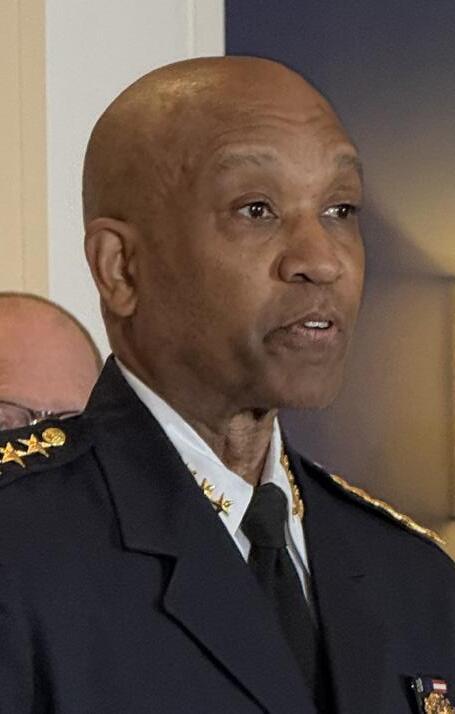
Chief Doherty emphasized the devastating human toll of impaired driving, saying one of the hardest responsibilities in law enforcement is notifying families that a loved one will not be coming home after a preventable crash. He said traffic safety remains a top priority for the Suffolk County Police Department because every resident depends on others to make responsible decisions while using the roads.
Doherty (pictured below left) noted that Police Commissioner Kevin Catalina has expanded the Highway Patrol by roughly 30% to increase enforcement and visibility on major roadways.
In March 2021, New York legalized adult-use marijuana, creating a regulated market for cannabis and THC products. Since then, the availability and commercialization of marijuana products in the state have expanded significantly.
Chassman said that since legalization, concerns surrounding marijuana use have grown, adding that as access and usage numbers have increased, treatment professionals have become more concerned about the potential risks associated with misuse.
He added that there is a recognized clinical diagnosis known as Cannabis Use Disorder, though this is separate from cannabis-induced psychosis, a condition that can occur in some users. Chassman said both issues have become more serious concerns in recent years, alongside an increase in accidents involving drivers impaired by marijuana. He made it clear that the main goal of the event was to let those who may be struggling know that resources are available, while also encouraging anyone who chooses to use marijuana to do so responsibly.
Tierney said misconceptions that marijuana improves driving ability or carries no risk are dangerous and false, adding that public awareness is critical as cannabis products become more common and accessible.
“Impairment through cannabis is real. There is a misconception that since marijuana was legalized, it suddenly became okay to consume marijuana and drive a motor vehicle,” Tiereny stated.


Professionals from Wellbridge Addiction Treatment and Research said they have witnessed the rapid growth of Long Island’s cannabis market and warned that today’s marijuana products are far different from those available decades ago. They explained that modern strains are often significantly more potent, with THC levels that once averaged around 4% now commonly reaching 20% or higher, while some concentrated products can range from 60% to 70% THC. Officials said the increased potency has raised concerns about brain development, dependency, and other mental health effects, particularly among younger users.
Wellbridge professionals added that admissions to treatment centers for cannabis-related issues have increased, along with reported cases of cannabis-
Executive Romaine (pictured left) said Suffolk County’s roads are already dangerous enough without adding the risks of drivers under the influence of cannabis or other drugs, noting that slower reaction times and impairment can lead to serious crashes and tragedies. He also called on New York lawmakers to strengthen legislation surrounding drug-impaired driving, including clearer standards for impairment and more reliable testing methods similar to those used for alcohol. Romaine said protecting residents remains his top priority and urged those who legally use marijuana to understand that using it before getting behind the wheel can put lives at risk.
Sheriff Toulon (pictured right) focused on the broader community impact of substance misuse, emphasizing the importance of prevention, education, and early intervention. Toulon pointed to reports that thousands of Long Islanders sought treatment or emergency care related to marijuana use last year, while teenagers between the ages of 15 and 19 recorded the highest rates of cannabis-related emergency room visits and hospitalizations. He said those figures show why public awareness efforts are critical, especially for young people who may underestimate the risks associated
Doherty also highlighted the department’s Selective Alcohol Fatality Enforcement Team, whose officers are specially trained in roadside detection, breath analysis, and identifying drugimpaired drivers. He said officers made more than 1,500 arrests last year for driving while intoxicated or impaired by drugs, a 16% increase from the previous year, with nearly 550 arrests already made this year. Despite those efforts, Doherty said the number of fatal crashes remains troubling, noting that eleven people were killed in impaireddriving crashes in 2024, five in 2025, and two already this year. He urged drivers to make responsible choices, arrange alternate transportation, and avoid becoming the cause of another family tragedy.
One mother in attendance, who unfortunately has been personally affected by impaired driving, is Alisa McMorris, who lost her son Andrew in 2018 to a drunk driver. She said the loss changed her life forever and has driven her commitment to preventing other families from experiencing the same pain. She stressed that what happened to Andrew was not an accident, but a preventable crash caused by impaired driving.
Speaking directly to those making decisions, she asked them to remember the real lives behind the statistics and policies, saying the issue is not abstract, but one that impacts real children, real families, and entire communities.
While the speakers came from different backgrounds in healthcare, law enforcement, government, and advocacy, they shared one common mission: to create awareness, save lives, and keep the community safe. They also reminded residents that anyone struggling with substance use is not without options; help, treatment, and recovery resources are available.
Wellbridge Addiction Treatment and Research, located at 525 Jan Way in Calverton, offers support for those in need and can be reached at (631) 203-1518.
Thursday, April 23, 2026
By Matt Meduri
It was another tumultuous week on Capitol Hill.
The U.S. House saw yet another resignation, making for the third in a week. Now-former Congresswoman Sheila Cherfilus McCormick (D, FL-20) resigned on Tuesday, just hours before she faced an expulsion vote. She was indicted and charged with allegedly stealing $5 million in FEMA funds, which she laundered to her campaign account. The House Ethics Committee found her guilty of 25 out of 27 charges. She faces up to 53 years in prison.
First elected in a 2022 special, she won two more terms, her last in 2024 unopposed. She represented FL-20, a deeply Democratic district that includes Fort Lauderdale, Plantation, and parts of Lake Okeechobee. Democrats are all but certain to retain the seat.
Last week saw the simultaneous resignations of Congressmen Eric Swalwell (D-CA) and Tony Gonzales (R-TX), both for heinous sexual misconduct/rape allegations.
Congressman Cory Mills (R, FL-07) now faces a possible expulsion vote of his own sexual misconduct allegations. Congresswoman Nancy Mace (R, SC-01) is sponsoring the resolution to expel him. Mills has denied the allegations and said he will not resign.
In other news, Delegate Stacey Plaskett (DVI) is running for Governor of the U.S. Virgin Islands. Plaskett made headlines for her correspondence with Jeffrey Epstein during a congressional hearing, essentially asking for coaching on what questions to ask.
President Donald Trump (R-FL) announced on Tuesday that he is extending a ceasefire with Iran at Pakistan’s request while awaiting a “unified proposal” from Tehran. The U.S. maintains its blockade of the Strait of Hormuz, one running coterminously with Iran’s. Vice President J.D. Vance (R-OH) is due back in Islamabad for a second round of negotiations.
Iran, meanwhile, is warning its Gulf neighbors, allied with the U.S. and Israel, to “say goodbye to oil production in the Middle East” if they allow further attacks from the West.
The death toll now rises to more than 3,000 Iranians and almost 2,300 Lebanese. Fifteen Israeli soldiers and thirteen American soldiers have been killed.
Lebanon has appeared in the periphery in the greater context of the Iran War, mostly as Israel seeks to rid the southern part of Lebanon of Hezbollah, an Islamist militant group that is Iran’s most powerful proxy in the Middle East. The Israeli government is accused of killing thousands of civilians and displacing nearly one million Lebanese.
Israeli Prime Minister Benjamin Netanyahu has agreed to pause Hezbollah-targeted attacks, but that Israeli troops would not withdraw. He added that Israeli troops would remain in what he calls an “expanded security zone.” Hezbollah, a group widely considered more powerful than the Lebanese military,
said that the ceasefire must not allow Israeli troops any “freedom of movement.”
The group added that their actions would be “based on how developments unfold,” according to The New York Times.
The ten-day ceasefire announced on April 16 has been jeopardized by Israel’s continued incursion into Lebanon, which is now making headlines for an Israeli Defense Force (IDF) service member’s deliberate destruction of a statue of Jesus Christ. Lebanon boasts the highest proportion of Christians in the Arab world, at about 30% of the country’s population.
Thursday evening saw a special election to fill NJ-11, a North Jersey-based congressional district that was vacated by now-Governor Mikie Sherrill (D-NJ). The district includes notable affluent Newark suburbs like Verona and Montclair and stretches west to take in Parsippany, Dover, and Morristown. This part of New Jersey was once traditionally Republican territory, but has raced to the left in the Trump era. Sherrill flipped it blue in 2018 and was re-elected three times. She won her final term in 2024 by a fifteen-point margin.
In 2024, the district backed then-Vice President Kamala Harris (D-CA) 53%-45%.
Progressive organizer Analilia Mejia (D) won the special election in a landslide over former Randolph Mayor Joe Hathaway (R). She defeated him 59.6%-40% as of early Friday morning. Independent candidate Alan Bond took just 0.5% of the vote. Over 120,000 ballots were cast.
Mejia won a close primary over former Congressman Tom Malinowski (D), who lost re-election in the neighboring NJ-07 in 2022. The showdown between Malinowski and Mejia was one of progressivism versus establishment, as well as a commentary on U.S. relations with Israel.
Another major piece of news this week was that of the long-awaited referendum in Virginia to redraw the commonwealth’s congressional map amid a nationwide redistricting “arms race” kicked off by Texas at the behest of Trump in August.
Virginians backed the referendum by a narrow three points - 51%-48% - as core support for the move came from the Northern Virginia-D.C. suburbs and parts of Hampton Roads and the Richmond suburbs. The move had faced legal scrutiny, but appeals to courts have allowed the referendum to take place and the map to be effective for the 2026 midterms. Virginia Republicans are now heavily endangered, as the map goes from a 6D-5R delegation to one that will likely be 10D-1R.
In other developments, Virginia has become the eighteenth state to join the National Popular Vote Interstate Compact (NPVIC). For more on this compact, turn to Page 14 for an in-depth look.
As State budget negotiations continue, Governor Kathy Hochul (D-Hamburg) is making a last-minute pitch to include tax
hikes on the wealthy, as New York City Mayor Zohran Mamdani (D-Astoria) seeks signature campaign promise wins in his first year at Gracie Mansion.
Hochul is proposing a tax on secondary luxury homes, and Spectrum News NY1 reports that the move is “winning her support in the legislature - and skepticism from the real estate industry.”
If passed, the bill would apply to secondary properties in New York City valued at over $5 million. Mayor Mamdani expects the tax hike to bring in $500 million in revenue, as New York City faces a $2.2 billion deficit for FY2026. Big Apple Comptroller Mark Levine (D-) projects a $10.4 billion shortfall for FY2027. In a press release, he said it’s the “first time since the Great Recession that the City faces a budget shortfall of this magnitude this late in the fiscal year.”
The retirement now complicates the GOP’s efforts to claw back the Senate majority, a feat that will require a net gain of ten seats. The current balance of power is 41D-22R.
Martins (pictured below) joins four other State Senators retiring this year: Alexis Weik (R-Sayville), Peter Oberacker (R-Schenevus), Michael Gianaris (D-Astoria), and Brian Kavanagh (D-Manhattan).

Debate over whether it will be a flat or bracketed taxes continues in Albany, however. The New York Times reports that a bracketed model could include ranges for homes valued at $5 million to $15 million, $15 million to $25 million, and $25 million or more.
Real estate agents worry about a decrease in projects and the associated costs on jobs and wages for workingclass New Yorkers.
In electoral news, Senator Jack Martins (R-Great Neck) has announced he is not running for re-election.
The former Mineola mayor has represented the Seventh District in the New York State Senate since 2023, after he held the seat from 2011 to 2016.
The Gold Coast-based Seventh District stretches from Great Neck and Port Washington to the county line, taking in Oyster Bay, Jericho, Old Westbury, Syosset, and Woodbury, among other localities.
The district is a perennially competitive one. Martins defeated then-Senator Anna Kaplan (D-North Hills) in the 2022 red wave by eight points. He was re-elected in 2024 by eleven points.

Suffolk County District Attorney Ray Tierney (R) announced on Thursday that a Suffolk Corrections Officer was arrested for possessing child sexual abuse material (CSAM). Robert Sorrentino, 42, of Ridge, was arrested for Possessing a Sexual Performance by a Child, for allegedly accessing the material on his cell phone. The investigation was aided by the FBI, and it found that Sorrentino allegedly used cryptocurrency to purchase the material. D.A. Tierney’s team was able to link the purchase of the material to Sorrentino’s home in Ridge. A search warrant of his iPhone found that he allegedly accessed numerous videos depicting sexual abuse of children between the ages of five and thirteen years old.
Sorrentio was arrested on April 16 and faces seven counts of Possessing a Sexual Performance by a Child, Class E felonies.
Remarkably, these charges are not bail-eligible under New York State’s bail laws.
“My office is legally prohibited from seeking bail in a case such as this,” said Tierney in a statement. “Our legislators and Governor need to understand that only child predators would willingly and repeatedly possess child sexual abuse materials. Not allowing us to ask for bail is dangerous.”
Sorrentino is also an active member of the U.S. Airforce Reserves and a member of the Ridge Volunteer Fire Department.
Continued from front cover
Thursday, April 23, 2026
Park Ranger Sergeant Brendan Dennihy, according to a statement from the Town of Smithtown, found the scrap metal-loading “suspicious” and requested backup from Fire Marshals Kyle McCarthy and Matthew Lauri and Park Rangers Michael Abbazia and Leyland Crocilla. Officers then saw and recovered a loaded 9mm Taurus handgun allegedly protruding from beneath the passenger seat. The magazine was capable of holding more than ten cartridges. Ruiz was then immediately taken into custody “without incident” and transported to the Fourth Precinct.
Suffolk County Police later lifted a “latent fingerprint” off the magazine found inside the gun, which allegedly matches that of the defendant.
being represented by the Legal Aid Society.
The U.S. Department of Homeland Security (DHS) and Immigration and Customs Enforcement (ICE) has lodged a detainer to deport Ruiz following his prosecution.
Ruiz was ordered held on $50,000 cash, $500,000 bond, or $500,000 partially secured bond while his case is pending. He is charged with Criminal Possession of a Weapon in the Second Degree, a Class C felony; Criminal Possession of a Weapon in the Third Degree, a Class D felony; and Criminal Possession of a Firearm, a Class E felony. He is due back in court on May 7 and faces up to fifteen years in prison if convicted on the top count. He is
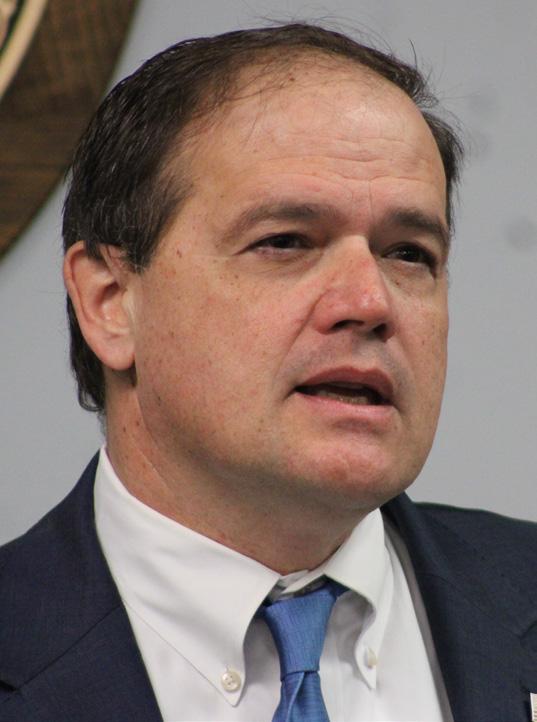
“This defendant allegedly possessed a loaded firearm in a state park, putting law-abiding families and other park visitors at serious risk,” said D.A. Tierney (pictured left) in a statement. “We cannot allow our communities to be endangered by those who show such disregard for our laws and our safety. My office will continue pushing for policies that prioritize the protection of Suffolk County residents and the integrity of our laws.”
For the Town of Smithtown, they say it “highlights the effectiveness of proactive patrol and vigilance,” adding that incidents involving illegal firearms are “not commonplace” in the area.
“Through keen observation and coordinated response, our officers were able to identify suspicious activity and remove an illegal firearm from a public
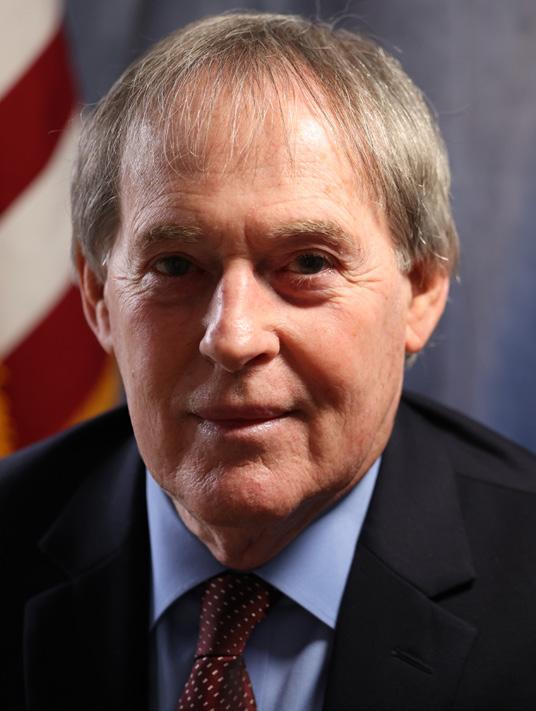
space - helping to ensure the continued safety of our parks and the residents who enjoy them,” said Town Supervisor Ed Wehrheim (R-Kings Park) (pictured below) in a statement. “The Kings Park Hike and Bike Trail is a highly frequented destination for walkers, bicyclists, and families who spend their days exercising and enjoying the scenic, tranquil surroundings - marking this type of vigilance all the more critical.”
Chief Thomas Lohmann, Director of the Smithtown Department of Public Safety, says the arrest highlights the “instincts and professionalism” of their officers, hailing their “situational awareness, knowledge of their sector, observation, sound judgement, and the ability to quickly assess and address a potentially dangerous situation.”
“Just as importantly, their calm, measured approach and effective de-escalation tactics ensured that this incident was resolved safely and without injury,” said Lohmann in a statement. “I commend all of the officers involved for their commitment to serving the residents of the Town of Smithtown in the highest fashion and removing an illegal firearm from the streets.”
The Town of Smithtown marked a successful start to Spring 2026, as a record 806 households participated in the Town’s Earth Day Household Hazardous Waste Collection Event. On Saturday, April 18, at the Municipal Services Facility, residents safely disposed of more than 31.38 tons (62,760 pounds) of hazardous household materials, representing a nearly 25% increase over 2025 participation levels.
A portion of the wastes collected for manifested disposal included: mercury, waste oil-based paints/ flammable paints, gasoline, paint thinners, waste gases, petroleum distillates, flammable solids, oxidizers liquids and solids, sodium/potassium nitrates, acids, corrosives, pesticides, herbicides, fertilizers, misc. toxic liquids (i.e. Chlordane, etc.) and solids, lacquers, lithium batteries, battery acids and various other toxic compounds. Proper disposal of these materials helps protect local drinking water, air quality, parks, and waterways.
“As we celebrate Earth Day, it was inspiring to see our community come together in record-breaking numbers for the first of three Household Hazardous Waste Disposal events this year,” said Supervisor Ed Wehrheim (R-Kings Park) in a statement. “Because of our environmentally conscious residents and the dedicated staff who made this event possible, we are protecting Smithtown’s natural resources and quality of life for generations to come.”
A special hazardous waste diversion initiative targeting lithium-ion batteries, propane tanks, and

mercury-containing devices also saw record participation. Reworld (formerly Covanta) distributed nearly 200 $5 Dunkin’ gift cards to residents who recycled qualifying materials. A record-setting 109 propane tanks were also safely recovered during the event.
Town officials recognized the efforts of Municipal Services Facility staff, Public Safety Fire Marshals, Department of Environment and Waterways personnel, Smithtown Supervisors Office, Reworld, and contractor Radiac for ensuring a safe and efficient event for residents.
“The tremendous response to this year’s event shows how committed our residents are to protecting the environment,” said Michael P. Engelmann, P.G. Solid Waste Coordinator, in a statement. “Every gallon of paint, battery, propane tank, or hazardous chemical kept out of the waste stream helps preserve our drinking water, roadways, parks, and public spaces.”
The next Household Hazardous Waste Collection Events are scheduled for July 11, 2026, and October 3, 2026. Proof of residency is required.
Residents are also reminded of upcoming Free Paper Shredding Events on May 2, 2026, and October 17, 2026, from 9:00a.m. to 3:00p.m.
Did You Know?
Residents can also dispose of electronic waste, free of charge, at the Town Recycling Center located at 85 Old Northport Road. Electronic waste, such as computers, printers, TVs, monitors, and automotive and household batteries, can be dropped off during regular hours for proper recycling.
FREE MULCH: Mulch is also available free of charge to residents. Smithtown residents can line up for prepackaged bags of mulch with a maximum of 10 bags per visit. We offer free loading of loose mulch into your pick-up or dump truck. A cover is required.
The Smithtown Municipal Services Facility is located at 85 Old Northport Road in Kings Park. Regular operating hours are Monday through Saturday from 7:00a.m. to 3:15p.m.
By Matt Meduri
For the first time ever, The Messenger now forecasts enough seats as at least tilting in Democrats’ favor.
Our April 9 forecast shifted fourteen seats, all but one in Democrats’ favor, giving them 216 seats to Republicans’ 208. A majority is clinched with 218 seats.
The major shift comes from Virginia. On Tuesday night, Old Dominion voters narrowly approved the referendum to temporarily suspend the state’s redistricting commission to utilize a map crafted by Richmond Democrats, who made earnest on their party’s promise to fight the nationwide redistricting “arms race” promulgated in August by President Donald Trump (R-FL). The fight that started in Texas has seen the battleground expand to California, North Carolina, and Missouri. Efforts in Florida remain on the table.
While the Virginia referendum must still face some legal scrutiny, it seems likely at this point that the map will stand. For now, the map dilutes four Republican districts by bacon-stripping the deepblue D.C. suburbs.
NC-01 (Davis) - Likely R (Flip) to Leans R (Flip): Apart from the Virginia update, this 40% black district was redrawn to be more Republican. A Trump +5 seat in 2024 is now a Trump +11 seat, but Congressman Don Davis (D) won re-election in 2024 by about 2 points. He’s certainly endangered, but we think this environment means that Democrats who regularly get crossover support might be in a somewhat better position to survive this midterm.


VA-02 (Kiggans) - Tilts D (Flip) to Leans D (Flip): This Virginia Beach seat didn’t get much bluer, but just enough to make us think former Congresswoman Elaine Luria (D) has a greater chance of winning a rematch with her 2022 ouster Jen Kiggans (R). The seat went to Trump by a razorthin margin in 2024, but is now one that would have went for Harris by just under 5 points. It’s close enough where the GOP can still compete, but given that this region is a “usual suspects” type of seat in a conventional midterm environment, we think the redraw has only increased Democrats’ chances here.
Democrats remain favored to retain the Richmond suburban VA-07, which went from a Harris +3 seat to a Harris +8 seat. In a redder environment, this one could be competitive, but this lobster-shaped seat looks likely to remain in blue hands.
The Northern Virginia-based VA-10, once solidly red turf, goes from Harris +9 to Harris +13 - not a seat Republicans can realistically contend this year.
A curveball that Democrats dealt themselves is

Recently, Kings Park’s Superintendent of Schools, Dr. Timothy Eagen, was recognized by Suffolk County Council with the Silver Beaver Award. The Silver Beaver Award is Scouting America’s highest council-level award for registered adult leaders, recognizing distinguished service to youth and outstanding contributions to Scouting within the local council.
Recipients are recognized for showing exceptional character and impact over many years through various roles, nominated by peers, and approved nationally. Professionally, Dr. Eagen is the proud Superintendent of Schools in the Kings Park CSD, where he has served in this role for 12 years. During his tenure in Kings Park, Dr. Eagen has

worked closely with numerous Kings Park scouts in Troops 75 and 539 to complete their Eagle Projects and earn the rank of Eagle Scout.
In additional to the role he plays in Kings Park, for the 2025-2026 school year, Dr. Eagen is serving as President of the Suffolk County School Superintendents Association (SCSSA).
Dr. Eagen’s involvement in Scouting spans over four decades as a scout, adult leader (Troop 106, Pack 312, and Troop 52), and council-level volunteer.
He is a proud Life Member of the National Eagle Scout Association (known locally as “The Bald Eagle”), Order of the Arrow Shinnecock Lodge #360 Member, and Scoutmaster of Troop 52, East Northport.
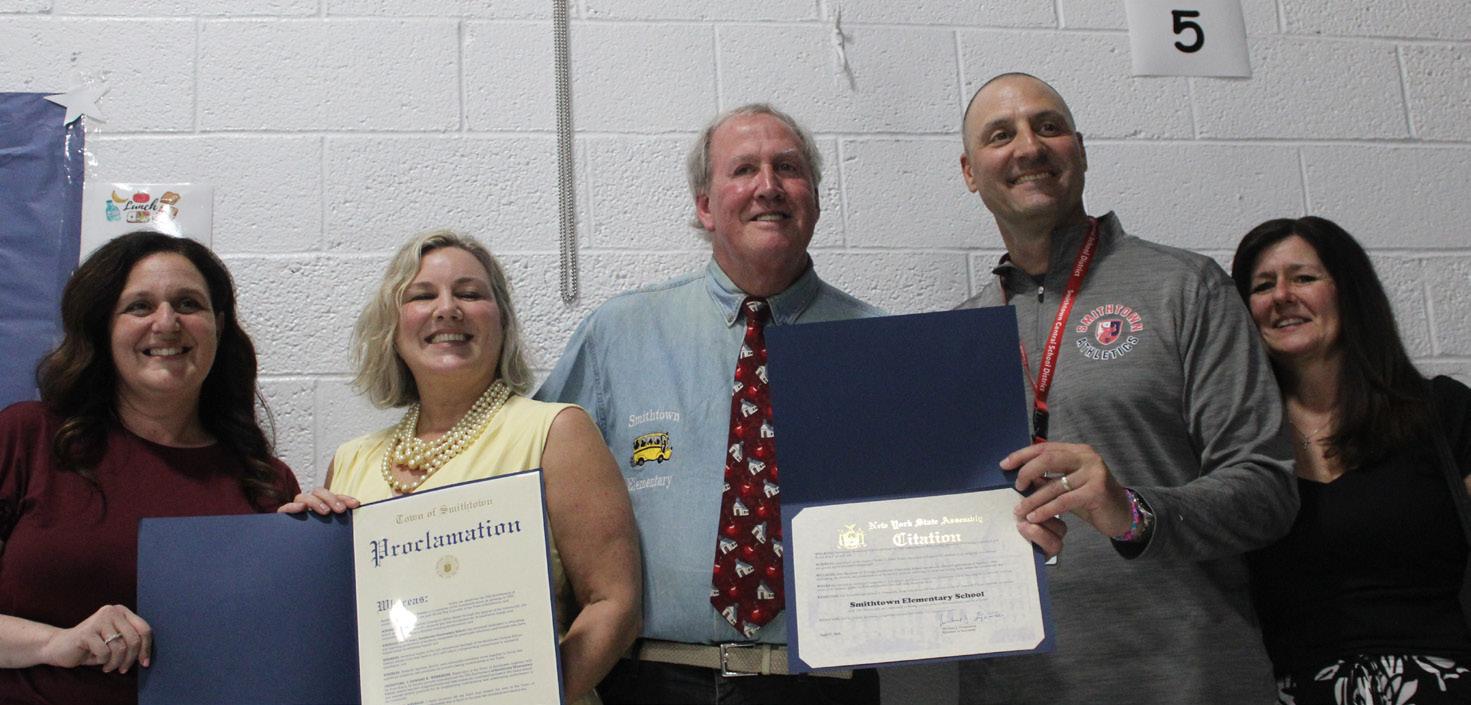
to Dr. Eagen, “Scouting America is the biggest and best youth leadership development program in the country, I am proud of my service, and I was humbled to receive this award.”


By Matt Meduri
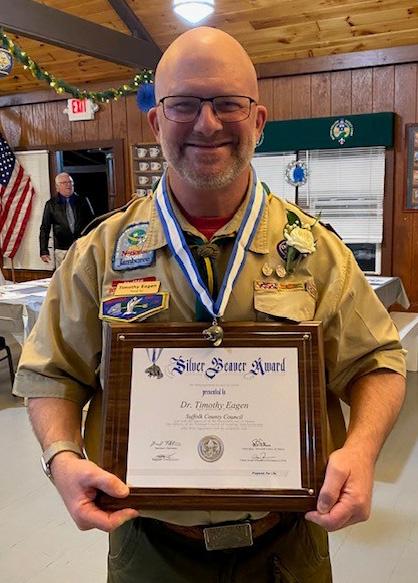
The Smithtown community turned out in droves over the weekend to celebrate the seventyfifth anniversary of Smithtown Elementary School.
The Lawrence Avenue facility got its humble start in 1950 as a quaint cottage schoolhouse that would later turn into one of the more avant garde institutions in Suffolk County.
The grounds were turned into a 1950s-themed party, complete with games, food, music, and a walk-through “museum” of artifacts from the school’s storied history. Alumni were able to identify themselves in photographs taken decades ago, flip through old newspapers - including The Messenger - and reminisce with friends, neighbors, and staff.

Dr. Paul Graf, described by many as a local “legend,” delivered a presentation outlining the school’s metamorphosis to what it is today, as well as key figures of life during the 1950s. A house cost about $9,000, a car

cost about $1,500, a gallon of milk was only $0.83, and Harry Truman (D-MO) was president at the time.
Graf, who served as the school’s principal for twenty-five years (19872012), is also known for sporting a guitar and singing songs, many of them original. He closed his presentation with a fan favorite that had many alumni singing along, “Drop Everything and Read,” a song he wrote in the 1990s that would play over the PA system to lull the school into thirty minutes of silent, independent reading time.
“What’s impressive about this school is that it moved from this country cottage to a school that had technology going on in 1988, and it only got better with time,” Graf told The Messenger. “By the mid-1990s, we were teaching computers in the classrooms. We kept growing the school and the technology.”
Despite the changes at break-neck speeds, Graf said that something remains constant: “kids are kids.”
“Staffing is everything, and the people we hired to work here at Smithtown Elementary School are some of the best on the Island,” said Graf. “We were discerning.”
Graf said that teachers weren’t obtained simply to fill spots. Rather, it was about the long-term investment in the enrichment of Smithtown’s children.
“We needed to make sure we
brought in the best and the brightest people around here. The good news is, today, I see engaged and committed teachers and smart kids who are involved in what they need to be involved with in school. The journey has just continued.”
Graf, who calls the Village of Nissequogue home, says he’s now invested in his four grandchildren, and that the celebration on Saturday speaks volumes of the school’s legacy.
“It says to me that teachers care about this school. The investment of teachers is what made this school happen. Leadership is one thing, but teaching is everything.”


After weeks of excitement and preparation, second graders at Dogwood Elementary School brought storybooks to life as they transformed into their favorite fairy tale characters for the school’s beloved annual Fairy Tale Ball, held on March 30. Dressed in creative costumes, students sang, danced and delighted families with a magical performance to remember.
A cherished tradition at Dogwood, the Fairy Tale Ball serves as the grand finale to the second grade’s reading and writing exploration of the fairy tale genre. This year, students presented performances involving “Little Red Riding Hood, “The Three Little Pigs” and “Goldilocks and The Three Bears.”
Blending English Language Arts and social studies, the experience gave students a chance to showcase both their creativity and their learning in a meaningful way.






By Matt Meduri
In response to the news of Virginia joining the National Popular Vote Interstate Compact (NPVIC), we figured we’d take a look at this contrarian initiative that’s gained steam since 2016.
What is the NPVIC?
This coalition is made up of eighteen states and the District of Columbia. Their agreement is to award their electoral votes to the winner of the national popular vote in presidential elections, regardless of which ticket wins the popular vote in their own state. The compact is formed on the basis that the national popular vote winner should be elected president, effectively rendering the Electoral College as a formality.
It only takes effect once states representing 270 electoral votes vote to join the compact. This week saw Virginia lend its thirteen electoral votes to the compact, bringing the total to 222 electoral votes.
Popular vote-electoral vote disparities have almost always seen an uptick in public support for doing away with the Electoral College. The topic was especially salient in the razor-thin 1968 election, in which Richard Nixon (R-CA) prevailed but only narrowly won the popular vote over Hubert Humphrey (D-MN). Interest was regained in the movement when Jimmy Carter (D-GA) very narrowly defeated Gerald Ford (R-MI) in 1976. Just weeks after the election, a poll found that 73% of Americans supported eliminating the Electoral College and transitioning to a popular vote system. Carter would then propose a constitutional amendment to enact this change, but it failed to pass the Senate towards the end of his presidency.
But interest was renewed yet again in 2000, when George W. Bush (R-TX) won the Electoral College with 271 votes, barely above the threshold for victory, but narrowly lost the popular vote to Al Gore (D-TN). Only six elections have seen the popular vote loser win the election: 1824, 1876, 1888, 2000, and 2016.
That led John Koza, a Stanford professor, computer scientist, and former Democratic elector, to create the NPVIC. Koza used his wealth from co-inventing scratch-off lottery tickets to barnstorm think tanks to promote his strategy. It was unveiled in February 2006, with national newspapers writing favorable editorials and many states playing host to high-stakes battles between legislatures of one party and governors of the other. Arnold Schwarzenegger (R-CA) famously vetoed California’s joining of the compact.
The first state to join was Maryland when Governor Martin O’Malley (D) signed the bill into law in 2007.
By 2019, all fifty states have seen NPVIC legislation introduced.
Who’s a Member?
As of 2026, eighteen states and the District of Columbia collectively representing 222 electoral votes have approved legislation. After Maryland became the first state to join, New Jersey, Illinois, and Hawaii followed the next year. Hawaii saw the first enactment of the NPVIC through the override of a gubernatorial veto. Then-Governor Linda Lingle (R) had her veto overturned by the Democratic state legislature. From 2009 to 2018, eight more states would join, including New York, when then-Governor Andrew Cuomo (D) signed the initiative into law on April 15, 2014.
2019 was the busiest year to date, as it saw Colorado, Delaware, New Mexico, and Oregon all sign on in the post2016 haze of partisan politics.
Governor Tim Walz (D-MN) approved Minnesota’s ratification in 2023, followed by Maine in 2024, and Virginia just this week.
It’s no secret that all of these states, plus D.C., are blue states of varying shades. In fact, no Republican governor has ever signed NPVIC legislation into law, although such bills have passed Republican-held legislative chambers.
Lower state houses in Kansas, Pennsylvania, and South

This column will seek to address the long-forgotten concept of civics and how it relates to American government in general, from the federal level to the local level. This column will explore Constitutional rights, the inner workings of government, the electoral process, and the obligations and privileges of citizens.
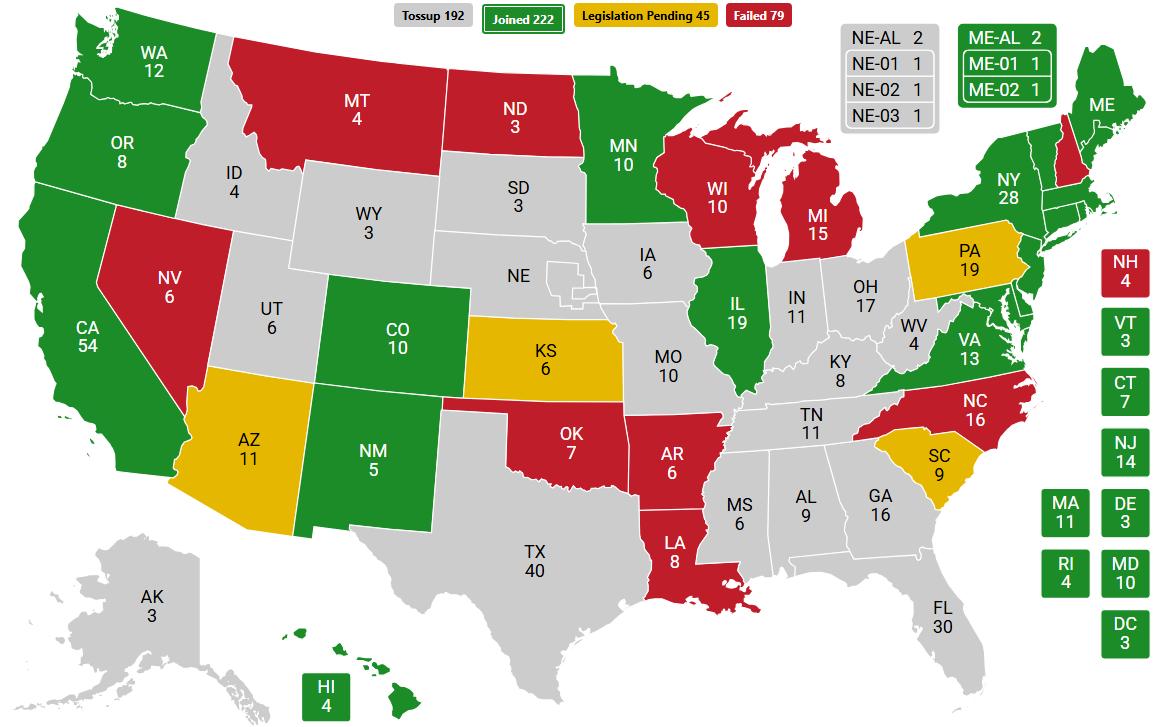
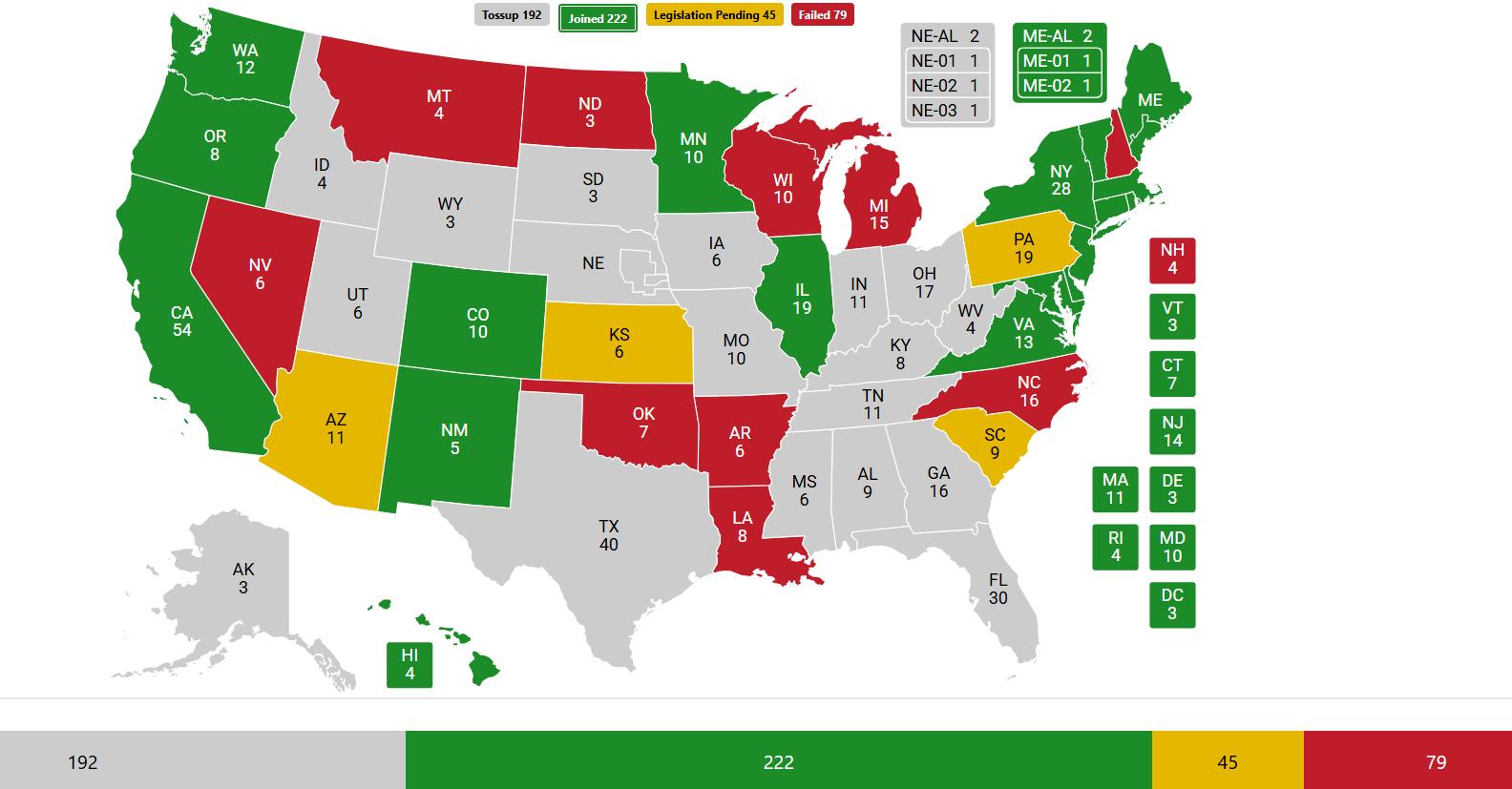
Carolina currently have legislation pending for the current session, as does the upper house in Arizona. Given that these bodies are all controlled by Republicans, it’s unlikely these bills will see any movement. Republicans in the Wisconsin State Legislature killed the bill in this session’s rounds of committee meetings.
The NPVIC exists with two primary legal standings. First, states are allowed to enter interstate compacts, which are legally binding agreements between multiple states for a shared interest or reason. They’ve typically been used to settle border disputes and manage infrastructure, primarily. Interstate compacts are subject to congressional review, as per Article I, Section 10, Clause 3 of the Constitution - also known as the Compact Clause.
An example of an interstate compact is the Atlantic States Marine Fisheries Commission, which includes New York and every state bordering the Atlantic Ocean.
The NPVIC is also allowed oxygen under Article II, Section 1, Clause 2 of the Constitution, which requires each state legislature to define their methods of appointing electors to the Electoral College. States have exclusive power to do this, and some have made good on that privilege. Maine and Nebraska regularly receive attention for being the only two states that do not award electoral votes in a winner-take-all format. Instead, they are awarded by the popular vote in each congressional district. 2008 saw the first time Nebraska split its votes, 2016 saw Maine do the same, and 2020 saw the first time both states had split their votes in the same election.
Proponents of the NPVIC also state that the protective function of the Electoral College, as conceived by Alexander Hamilton and James Madison, has never been used. Some Founding Fathers envisioned a system where the Electoral College could prevent someone who is unfit for office from assuming it. Electors have almost always voted in lock-step with their state’s winner and no election has ever seen its outcome determined by a faithless elector. In fact, thirty-two states and D.C. have laws preventing these faithless electors.
But the NPVIC’s constitutionality comes into question with the vertical balance of power between the federal government and various state governments. In 2019, the Congressional Research Service (CRS) cited the Supreme Court’s ruling in
Virginia V. Tennessee (1893) that congressional consent is required for interstate compacts that are “directed to the formation of any combination tending to the increase of political power in the States, which may encroach upon or interfere with the just supremacy of the United States.”
Some analysts hypothesize that the NPVIC cannot even be considered a “compact,” as it does not create a new interstate governmental body and they would not be awarded any new powers they are currently not afforded.
The NPVIC is also at odds with the Twelfth Amendment, which provides for contingent elections in the event no presidential candidate receives a majority of electoral votes. It also provides for the Senate’s election of a vice president under the same scenario.
In addition to vertical power, horizontal power - that between the states - is also in contention. Supreme Court rulings in Florida V. Georgia (1855) and Texas V. New Mexico and Colorado (2018) have solidified that congressional consent is required for interstate compacts that alter the balance of power between the states in question.
Ultimately, it remains to be seen just how a transition from electoral vote to popular vote would affect other states’ political power in presidential elections. Proponents of the NPVIC, largely, state that the focus from a core group of swing states would be shifted to the entire country, while opponents argue that presidential elections would be largely controlled by urban areas and many states that are given attention under the Electoral College would be mostly forgotten.
For now, the NPVIC is more a political statement than one of great effect. If states collectively possessing a majority of the nation’s electoral votes - 270 - join the compact, then perhaps one of the most consequential legal battles in American history would unfold before the Supreme Court. Given that Democratic states and legislators are in favor of this compact, that party would need to win control of more state legislatures and governor’s mansions in order to get the compact over the finish line.
The open question of just how this compact would affect presidential elections remains to be seen, as a lack of precedent and case law makes it difficult to untangle the compact’s constitutionality, or lack thereof.
By Matt Meduri
Smithtown’s long-served Receiver of Taxes Deanna Varricchio (R-St. James) retired in February, creating a vacancy and a special election for the fall.
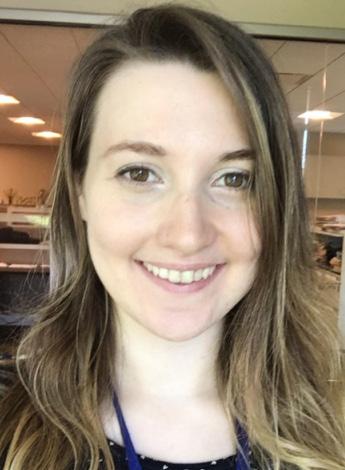
Republicans are going with Kim Carros (R-Smithtown), who brings to the table a storied career in banking and finance, while Democrats are going with Brianna Baker-Stines (D-Smithtown), a trustee on the Smithtown Library Board.
Baker-Stines has served on the Library Board for nine years, two as Board President. Elected three times, she says she’s “immensely grateful for the continued support of the Smithtown community” for “entrusting” her with the role.
“Over the years, I have been privileged to oversee the largest library district on Long Island, with a budget of approximately $18 million,” Baker-Stines told The Messenger. “I have contributed to the development of numerous public policies. I also represent Zone 4 (Towns of Huntington and Smithtown) of the Suffolk Cooperative LIbrary System, the organization that provides support to all fifty-six libraries in Suffolk County.”
Baker-Stines hails the recovery after the disastrous 2024 floods as one of her most significant accomplishments. The floods notoriously damaged the main branch of the Smithtown Library. The 2025 bond vote helped remedy the devastation.
“This effort involved extensive deliberation by the Board, with a strong focus on timing, communication, and a community engagement to ensure a successful outcome,” said Baker-Stines. “The community was loud for their support of the Library and its continued funding.”
communities,” said Baker-Stines. “Smithtown should also be a community that attracts a diverse demographic and encourages our children to stay and build their futures here. Right now, too many families feel divided, and that is something I believe we must actively work to change.”
She added that while she cannot “promise perfection,” she can promise a “commitment to professionalism and respect.”
and project management.” To boot, she’s a homeowner and 34-year resident of Smithtown, owing to her understanding of the town in the way that “only a lifelong resident can.”
“I have consistently prioritized missionbased organizations, such as nonprofits and government-entities. With nine years of local board experience and a background in finance and accounting, I have the skills to improve how this office operates.”
If elected, Baker-Stines says her primary goal is to make the office of Tax Receiver more “resident-focused.”
Describing her impetus to run for this seat, Baker-Stines said, “Too often, when Smithtown makes the news, it is for the wrong reasons,” such as “public disputes or concerns about raising taxes.”
“Smithtown should be a model for organization, stability, and good governance for our neighboring
“I would love to see Smithtown in the news for what it truly is - a bustling township with vibrant businesses, beautiful parks, and a community where families can thrive.”
Baker-Stines also touts her MBA in finance and accounting, one she’s held for over a decade, as well as experience in “full-charge bookkeeping, billing and accounts receivable, financial auditing,
“Currently, the process can be difficult to navigate, with added fees, limited hours, and unnecessary red tape. I believe the office should be structured to better serve the needs of the community. That means evaluating how we can improve accessibility, reduce or reassess burdensome fees, and offer more flexible options for residents to manage their tax obligations. Ultimately, my objective is to shift the experience so that the Tax Receiver’s office works for the residents— not the other way around.”
By Madison Warren
This past Saturday, the Smithtown Youth Bureau honored some of the town’s most selfless and community-minded students during its Altruistic Youth Awards Ceremony at Smithtown Landing. Fourteen students, each nominated through letters submitted by residents across the town, were recognized for the many ways they have made a positive impact throughout the community.
Cassidy Coakley, Lily-Belle Vasquez, Alexandra Wasielsky, Cooper Aull, Cristina Lombardo, Hannah Sack, Brenna Sweeney, Corie Paolillo, Jacob Wolmetz, Hannah Hartem, Matthew Davide, Chase Kastan, Peyton Kulesa, and their fellow honoree were recognized for efforts such as community service, helping neighbors, mentoring younger students, fundraising, and showing compassion in everyday life. Several of the students were nominated more than once by different community members, further reflecting the meaningful impact they have made on those around them.
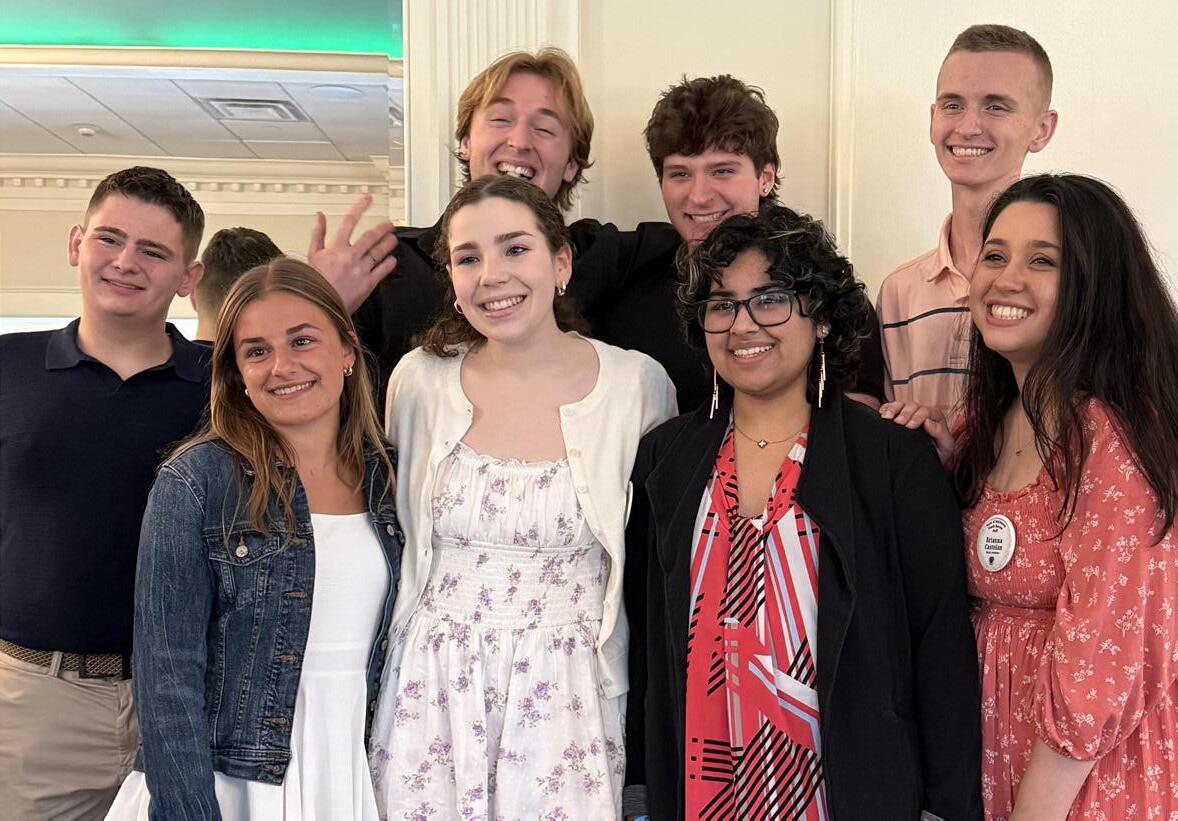
The Altruistic Youth Awards Ceremony was once an annual tradition in Smithtown but was placed on hold for several years. This year marked the event’s return, led by Laura Campanelli.

Each month, members of the Smithtown Youth Bureau gather to discuss ways to better serve the community and identify whom they can help next. While all the children involved in the bureau make a positive impact on the town, recipients of this award go above and beyond in their service to others. Honorees can be members of the bureau or other students throughout the community who exemplify selflessness and leadership.
The ceremony brought together the nominees, fellow members of the organization, families, and community members for breakfast and a morning of celebration honoring all those involved.
“In a time when it is easy to focus on personal success, you have chosen to give back, think of others, and make a meaningful difference. That is something truly special, and it does not go unnoticed,” a spokesperson for Supervisor Ed Wehrheim (R-Kings Park) told The Messenger Councilwoman Lisa Inzerillo (R-Kings Park) said the honored students demonstrate leadership and dedication in many areas throughout the town. From assisting local fire
departments and supporting food pantries to advocating for mental health awareness, she said each student stands out in their own unique way.
Although all of the students have accomplished remarkable acts of service in their own way, one student, Hannah Sack, was nominated three separate times. On Fridays, Hannah spends her after-school hours volunteering at St. Catherine of Siena Hospital, while Saturdays are dedicated to St. Charles Hospital.
One of her nominators, Loretta Cocuzza, said Hannah’s kindness has directly impacted her father, who receives dialysis every Friday. Through Hannah’s consistent visits, she said treatments have become much easier for him, and the friendship they have built has given him something to look forward to each week. Cocuzza added that Hannah’s positive spirit and companionship make a difficult process far more manageable.
Along with recognizing the fourteen students for their dedication, the Smithtown Youth Bureau also honored three graduating seniors whose journeys with the organization are coming to a close. Each has shown exceptional dedication to their community throughout the years and is expected to carry those values with them into adulthood.
Youth counselor Brianna said it has been a privilege working with such “amazing kids,” adding that if she could have nominated every child in the organization, she would have. Seniors Gabriel, Nicholas, and Ryan were recognized for all they have accomplished over the years.
As the ceremony came to a close, one message was clear: Smithtown’s future is in good hands. Through acts of kindness, leadership, and selfless service, these young honorees have already made a lasting impact on their community, proving that the power to make a difference has no age limit. The Smithtown Youth Bureau is already looking ahead to more community-driven events, including Battle of the Bubbles on May 29, a faculty bubble soccer competition between Smithtown schools that will also collect nonperishable donations for the Smithtown Emergency Food Pantry.
To learn more, you can reach them at 631-360-7595 or www.smithtownny.gov/215/Youth-Bureau.
By Ellyn Okvist, B.Sc.
What could be more exciting than going to the Lake to admire the lifeguards?
We had some handsome lifeguards over the years. Shake that thought from your head, because now it’s time for real history.
My book, “Drownings in Ronkonkoma Lake”, tells of ninety-five confirmed drownings between 1857 and 2017. The need for trained lifeguards was a necessity as a result of the drownings. We are aware that paid lifeguards were implemented by William Vanderbilt at the Petit Trian for his private establishment, which opened in 1911. Research shows that lifeguards were placed at the lake as a large group, not yet at beaches surrounding it. Many Lake Ronkonkoma lifeguards went on to be war Veterans: Ivar Okvist, Charles Davis, Jr., David Giradet (KIA), William Wickers, Mike McCormick, to list a few of many.
From The Mid-Island Mail, June 8, 1938, the announcement that “Select Life Guards at Lake Ronkonkoma” was made. At least nine lifeguards, all certified under Red Cross regulations, would be on duty to protect bathers at the various beaches around Lake Ronkonkoma during the coming season. The beaches and the life guards employed follow: Raynor’s Beach - Albert Lehninger; BeckersTeddy Johnson; Green Pavilion - Jack Dailey; Rugen’s - Fred Kraics; Hollywood - Larry Anderson; Yerk’s Beach - Arthur Rothchild; Lighthouse - Al Ratainck; Duffield’s - Frank Doerr; Busch’s - Warren Kelocr; Lifeguard Albert Lehninger, Raynor’s Beach.
At the end of 1940’s the guards formed the NYS Corporation “The Lake Ronkonkoma Lifeguard Association” and they held countless races of any water sport that could be devised. The main purpose of the group was to raise money for needed up-to-date equipment to better serve the community. Dances and activities were done in a very large and welcoming scale to build the funds.
Twenty-two years later, on June 10,

1960, the Lake Ronkonkoma Lifeguards Association, at a meeting held at the Lighthouse Hotel, voted to disband. Twenty-two members were present and decided to donate all of their life-saving equipment to the Suffolk County Police Department. The police assured the group in writing to keep the equipment in use by assigning two men to life-saving duty at the lake’s Islip Town Beach during normal daytime hours. Islip still maintains the drowning duties at the lake. The non-profit group found it impossible to continue to operate physically and financially their volunteer service. There were reasons, such as lower profits from dances and affairs, the lack of permanent headquarters where equipment could be stored, and the fundraisers needed to keep them alive. Their prized 1959 fiberglass boat and outboard motor, valued at $1,200, and the Stevenson resuscitator, retailing at $650, were given to the Suffolk Police force. The Lake Ronkonkoma Lifeguard Association’s (LRLGA) membership was at 40 when the group disbanded.


August 20, 1959 - Ms. Roberta McCoy, of Oakdale, displays her trophy for winning the LRGLA’s winter carnival diving contest
We recognize some of the names, and families from that period. Almost all the guards were well-liked by the community. The lifeguard groups have been classified by period for history purposes. The first would be the photo of fourteen young men. If you know the names of any of these guards, please contact us. Extensive research has been done, and we only know one, Ivar Okvist. The second group contained the next generation, such as Charles Davis, Jr. and David Lloyd Girardet.
March 28, 1952 - The Lifeguard Group at Lake Plans Reunion Tomorrow. The LRLGA will hold its Spring Reunion at the Hotel Commodore in New York City tomorrow night, it was announced this week by William F. Wickers, president.
August 6, 1952 - Lifeguard Activities. The canoe race sponsored by the LRLGA was held. The race was won by Walter and Jerry Hickey of Yerk’s Beach. The race started from Ronkonkoma Shores and finished at Hollywood Beach. The time was 8 minutes and 19 seconds.
Saturday August 30, 1952 - Over 300 people attended the dance in the Green Pavilion Saturday night which was sponsored by the LRLGA. There was a full orchestra for dancing. The proceeds from the dance will be used to purchase equipment for the lifeguards around the lake. During the evening, Arthur Driscoll was given an award for outstanding service to lifeguarding. The Across-theLake swim was held, and first place to Jerry and Walter Hickey, twins with a time of 23.5 minutes. William Okvist came in second, with his time at 24 minutes and 12 seconds.
August 23, 1961- A Rowboat Race was held by the LRLGA, from Ronkonkoma Beach to Hollywood Beach, and had many team entrants. They were a team of three, and each represented their lifeguard “home” beach. First place: Lakeview Beach with Dan Mulcahly and Arthur Driscoll at the oars and Roland Driscolll as coxswain; Second Place: Raynor’s Beach with Arthur Browne and David Grun at the oars and Norman Gimmler as coxswain; Third Place: Duffield’s Beach with Richard Bennett and Joseph Lombardly at the oars and Anthony Keller, as coxswain. The night
before, a rowboat race for contestants 16 years of age and under was held. Medals for winners of all events sponsored by the Lifeguard association during the summer were awarded at the annual dance, which in 1961 was held at Green Pavilion on September 1.
A Few Spectacular Saves
August 14, 1931 - Rescued from Ronkonkoma Lake after she had gone down for the third time, Katherine Wagner, aged 14, of 60-57 Myrtle Avenue, Brooklyn, was revived last Friday by Reiff Roscott, a lifeguard at Turner beach. Roscott saw her plight and then dove to the bottom of the lake and pushed the girl up until she reached the surface. He worked on her for about 20 minutes before she began to show signs of life.
June 17, 1934 - Quick work on the part of Reiff Rescott, plus his knowledge of life saving brought about the rescue of a swimmer at Ronkonkoma Lake Sunday afternoon. The near drowning occurred at Turner’s beach where Rescott rescued Edward Polka, aged 21 years of 352 19th Street, Brooklyn. He towed the body ashore, where he performed successful resuscitation after 45 minutes when he showed signs of life.
June 29, 1934 - Ronkonkoma Lake lifeguard James Skinner, of Jennings Avenue, saved an unidentified boy from drowning. The young boy had fallen from a diving board into deep water, and unable to swim, he called for help as he went down. Skinner dove in to get the lad, who struggled so hard he tore Skinner’s shirt to shreds. He placed the lad on the beach, but not even worth thanking the person for saving him. Judging by the actions of the boy after he had been rescued, no name, no thanks, he just ran off at top speed without even introducing himself.
May 28, 1938 - Christino Luccnesi, 21, of 58 Beaver Street, Brooklyn, was rescued by Lifesaver Arthur Rothchild of Yerk’s Beach staff. It was the first rescue of the year.
August 6, 1959 - Anthony DeGennaro, 16, was credited with saving the life of a 9-year-old Susan Fields of Brooklyn. Anthony found the girl at the bottom of the lake after she was discovered missing and administered mouth-to-mouth resuscitation while a fire department rescue squad was being summoned. A squad member later said Susan had not been breathing when he was pulled from the water.
By Mollie Barnett
Imagine an attack so small it fits inside a single pixel on your screen. You can’t see it. You can’t point to it. And by the time it matters, it’s already inside.
That is not a metaphor.
On March 26, 2026, security researchers at LayerX Security and the University of Cambridge discovered that nearly 3,000 internal Anthropic documents were sitting in a publicly searchable data store. No encryption. No login required. Draft blog posts, PDFs, internal memos, all of it was just there. Fortune Magazine reviewed the documents and contacted Anthropic, which locked them down and attributed the exposure to human error in its content management system.
Among the files: a draft announcement for a model called Claude Mythos, described internally as “by far the most powerful AI model we’ve ever developed,” and one that “presages an upcoming wave of models that can exploit vulnerabilities in ways that far outpace the efforts of defenders.”
Eleven days later, Anthropic officially launched Project Glasswing. Partner list ready. Technical documentation live. More than 40 organizations including AWS, Apple, Microsoft, Google, CrowdStrike, JPMorganChase, and others were granted exclusive early access for defensive cybersecurity work. The public will not get access yet. Anthropic says the model is too powerful to release broadly.
Whether the leak was accidental or not, the effect was identical. The story landed exactly where it needed to, with the right audience, right before the official announcement of Anthropic’s new model, Mythos. That is either very good luck or very good planning.
The irony isn’t lost. The company building the world’s most capable AI model couldn’t lock down its own CMS. That’s not an attack on Anthropic — human error happens everywhere. It’s an illustration of the central point. The biggest vulnerabilities aren’t sophisticated. They’re a configuration setting someone forgot to check.
Or maybe that’s exactly the point. Anthropic knows how to read a room. And the room was ready.
Mythos is not a better chatbot. It’s a new capability tier sitting above Anthropic’s most advanced Opus models.
The difference is autonomy and scale. In early evaluations, Mythos identified thousands of previously unknown software vulnerabilities, including critical flaws that had existed for decades. It wasn’t narrowly trained to do this. It found them as a byproduct of general reasoning ability.
Over 99% of those vulnerabilities remain unpatched — which is why Anthropic won’t disclose the details.
Anthropic is not alone in sounding the alarm. OpenAI has warned that its nextgeneration models carry high cybersecurity risk. Google’s systems are on a similar trajectory. Open-source models are advancing quickly behind them.
Mythos is simply the first to cross a visible threshold, and Anthropic, the first to say it out loud.
Cybersecurity has always been asymmetric. Attackers need one way in. Defenders need to protect everything.
AI widens that gap.
Historically, discovering and exploiting a vulnerability required time, expertise, and effort. That friction meant not every actor could operate at scale. That friction is collapsing.
AI systems can now identify weaknesses, generate exploit strategies, and execute them faster than defenders can respond. The timeline between discovery and exploitation, once measured in months, is narrowing toward days. Or less.
Lower skill required. Lower cost to attack. Higher volume of attempts. Faster execution.
This is not an incremental shift. It is structural.
For many businesses, the most immediate risk isn’t a Mythos-level system. It’s internal behavior.
More than half of employees are already using unapproved AI tools at work -
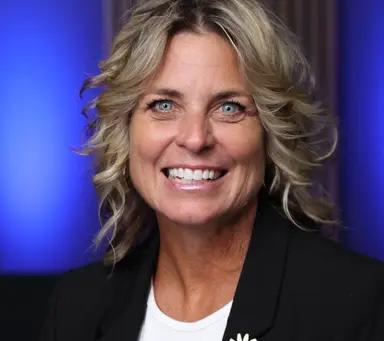

uploading documents, pasting client data, generating business materials through systems their organizations don’t control. This is shadow AI. It isn’t malicious. It’s practical.
A bookkeeper automates reconciliation. A salesperson improves follow-ups. An office manager summarizes contracts. Each action is rational. Together, they expand the number of potential entry points into a company’s systems.
The same dynamic plays out at a different scale in banks, hospitals, and critical infrastructure — with higher stakes at every layer.
A hospital employee using an unapproved AI tool to reduce paperwork is operating on a network where medical devices run decades-old firmware. A bank’s fraud detection system was built for human-speed attacks with traceable origins. Agentic AI breaks both assumptions simultaneously.
This raises the question nobody has a clean answer to yet: when an autonomous agent finds a vulnerability, moves through a system, and drains a bank account through a chain of intermediary transactions, who is responsible?
The bank will say it followed compliance standards. The software vendor will say the patch was available. The AI company will point to the terms of service. The attacker — if it’s a state actor operating through obfuscated accounts — may never be identified at all.
There’s a word for what’s coming: attribution collapse. When you can’t reliably identify who directed an attack, the entire liability framework loses its foundation. Consumer protection law, cyber insurance policy language, even Regulation E — all of it was written assuming human-speed attacks with traceable origins.
That’s not a gap in the system. It’s a chasm. And Mythos just made it wider.
The traditional model assumed threats could be kept out through strong perimeters and known defenses. That assumption is weakening.
What’s replacing it isn’t a single new tool. It’s a different posture — not the elimination of all risk, but the reduction of exposure and the limitation of impact when failures occur. Visibility into systems. Consistent authentication controls. Faster response to known vulnerabilities.
These aren’t new ideas. What has changed is the margin for error.
The history of technology suggests these capabilities don’t stay contained. They move — through competition and iteration — into products, platforms, and eventually tools that are widely accessible.
Mythos may be restricted. The trajectory it represents is not.
What is emerging is not a single new threat. It is a change in the underlying environment. The internet is becoming a system of continuous, automated probing, persistent, low-cost, and increasingly intelligent. Most of it will never be seen. Some of it will succeed.
The question is no longer whether the surface can be fully secured. It is how exposed you are within it, and how well you can absorb disruption when it arrives.
The systems are changing. The advantage will belong to those who change with them.
By Madison Warren
Christopher Barradas, a 22-year-old Kings Park resident, was living the life of a typical young adult, spending time with friends, enjoying his family, loving his dog, staying active in the gym, and embracing life to the fullest.
That all changed in September 2025, when he was involved in a catastrophic motorcycle accident that nearly claimed his life.
Barradas was rushed to South Shore University Hospital in critical condition, where his chances of survival were slim. But through his own determination and the extraordinary efforts of the hospital’s medical team, he defied the odds. Today, Barradas is not only alive but also able to personally thank the doctors, nurses, and staff whose skill, dedication, and quick action helped save his life. He did so when reuniting with the team back in February, which is impactful not only for Christopher but also for the team.
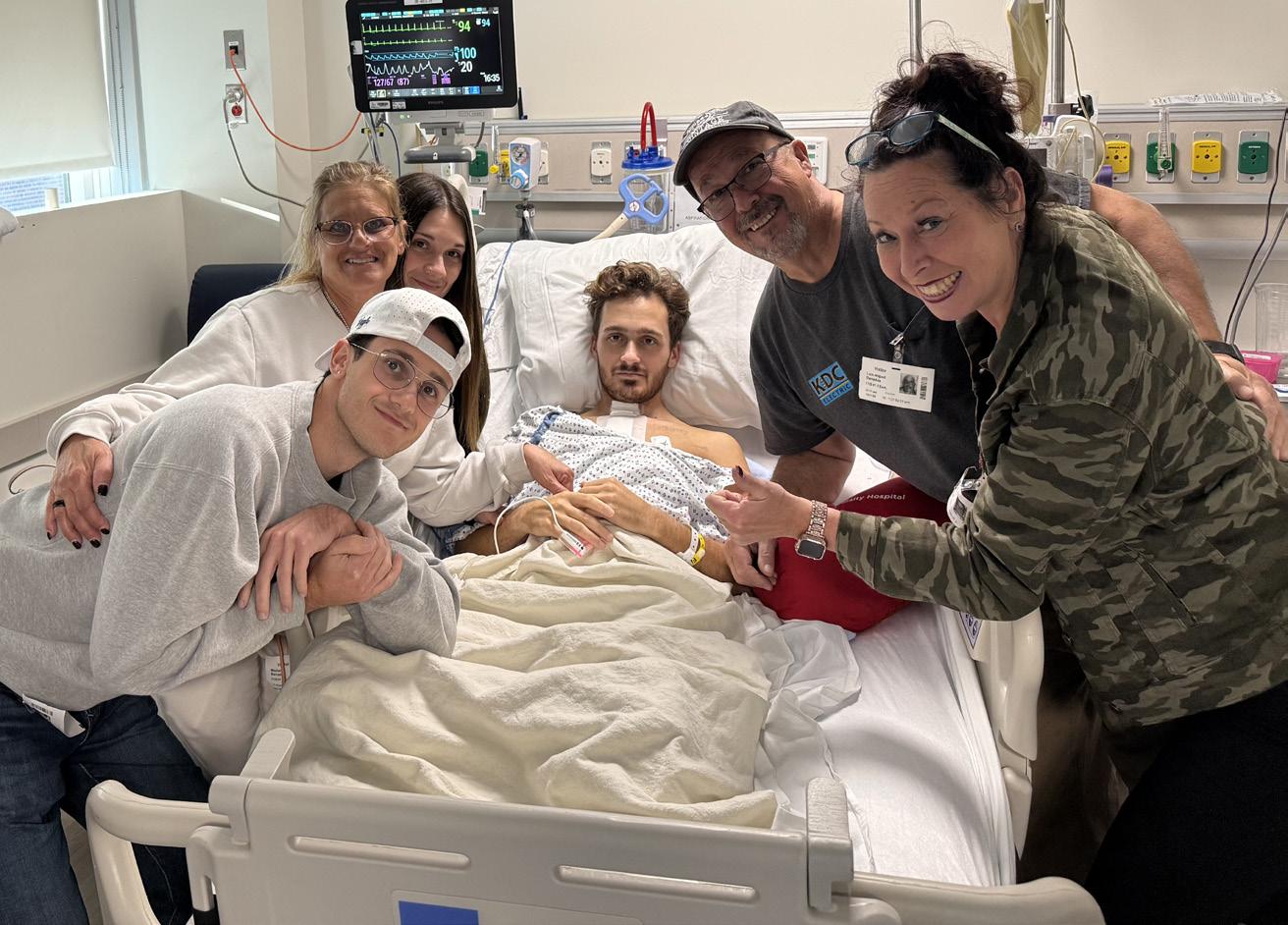
Two of the doctors who treated Christopher almost immediately upon his arrival were trauma surgeon Dr. Bank and thoracic surgeon Dr. Fallon. Both said the condition Christopher was in when he reached the emergency room was a worst-case scenario. At the time, they knew very little about him or the details of the crash, only that he was young and had been involved in a motorcycle accident.
Dr. Bank told The Messenger he quickly realized the severity of Christopher’s condition, noting that he had dangerously low blood pressure, was unconscious, and was suffering from bleeding in his chest.
A chest tube was placed, and Christopher was immediately rushed into the operating room as doctors worked to stop the bleeding. It was there that they realized just how extensive his internal injuries were. At that point, the medical team was unable to determine whether he had suffered any additional trauma elsewhere in his body. Their sole priority was controlling the life-threatening bleeding in his chest.
Surgeons performed a clamshell thoracotomy as well as a sternotomy and spent hours attempting to repair the damage. Christopher required multiple units of blood due to severe loss. He was later transported to the intensive care unit with his chest temporarily closed, but soon became unstable once again, forcing doctors to perform another emergency chest surgery at his bedside in the ICU.
Dr. Fallon said that at that point, it was all hands on deck, with team members from multiple departments coming together to effectively transform the ICU room into an operating room. For several more hours, doctors worked to stabilize Christopher and replace the blood he had lost, eventually bringing him to what they described as a somewhat manageable condition.
Dr. Fallon later left for home, only to receive another call that Christopher’s condition was declining once again. He returned immediately, but upon arrival, Christopher appeared to no longer need another surgery. Throughout the ordeal, Christopher coded multiple times and required hours of resuscitation efforts.
Doctors spoke candidly with Christopher’s family, telling them they did not believe he would survive the night. They explained that even if he managed to overcome the slim odds, he likely would never be the same.
Dr. Bank said that based on the catastrophic bleeding in Christopher’s chest alone, he estimated there was only a 5% to 10% chance of survival. At that point, doctors had not yet been able to perform additional scans or testing to
determine whether he had suffered other serious injuries elsewhere in his body, meaning those odds were based solely on the chest trauma and could have been even worse.
Dr. Fallon said Christopher suffered a catastrophic chest injury that extended from the left side of his chest to the right, fracturing his sternum in multiple places. The force of the impact caused devastating internal damage, including trauma to his aorta and torn arteries near the breastbone. He also suffered tears to both lungs and severe bleeding from multiple broken ribs.
Both doctors agreed there was no margin for error and that every second mattered. Dr. Bank said the entire trauma team spent more than twelve hours doing everything possible to keep Christopher alive. Dr. Fallon said every team member did what they could to buy him time; there was no break in any step, which kept Christopher alive.
He explained that Christopher had lost so much blood that there were moments when he and Dr. Fallon were unsure whether it would even be possible to stabilize him. The situation became so dire that they were forced to confront whether continued efforts would be enough, but despite the overwhelming odds, the team never stopped fighting for him.
By the next morning, doctors were surprised Christopher was still alive. No additional surgeries were needed, and further testing revealed he had not suffered any other catastrophic injuries as severe as the trauma to his chest.
For the next two weeks, Christopher remained unconscious as he continued to fight for his life. During that time, doctors told his family they were uncertain whether he would ever wake up.
That changed one day when the nurses on shift told the doctors that Christopher had begun fluttering his eyes open. At first, they were unsure, but as the days passed, more staff
members realized it was true.
Dr. Bank said Christopher continued to make progress each day. First, he opened his eyes for a minute, then two. Soon, he was able to follow simple commands such as closing his fist and nodding his head. From there, he began staying awake longer, speaking, and eventually taking steps. It was then that doctors realized the young man was truly on the road to recovery.
“He should not have survived this, in reality,” Dr. Fallon said. “If you presented this case at a national conference and explained the scenario and what happened, everyone would say, ‘there’s no way this kid survived.’”
Today, Christopher is back to living a largely normal life and has made a recovery so remarkable that it is as if the accident never happened. Both doctors said they have remained in touch with him since he left the hospital and described his progress as nothing short of shocking.
Christopher previously told Northwell Health how deeply grateful he is to everyone who helped save his life and said the experience has made him appreciate life even more.
Both doctors said cases like his are the reason they do what they do.
Dr. Bank said there were countless people to thank in Christopher’s recovery, from the EMTs who first responded to the physicians, nurses, and physical therapists who cared for him throughout the process. He said every person involved played a role in making the outcome possible.
When Christopher was finally discharged after months in the hospital to continue his recovery at home, staff lined the hallways, clapping and cheering as he left. But Dr. Bank said the applause was not only for Christopher, but it was also for every member of the team whose efforts helped save his life.
Nicole Cervone, a CCRN-certified nurse who played a key role in the case, told The Messenger, “Teamwork in the healthcare setting is always extremely important. It’s never one person who saves a life. Staying focused, keeping composure, and communicating with each other is crucial to saving someone like Chris.”
“I have been a nurse for four years now, and I can confidently say I’ve never seen a group of people more focused and clearheaded in such an intense situation. In healthcare, there are a lot of big brains working at once, and sometimes it can get tricky when making decisions about what is best for the patient, but everyone worked so well together.”
Christopher’s story is one that few thought would end this way. A young man doctors believed might not make it through the night is now back to living his life and moving forward. His recovery also stands as a testament to the EMTs, doctors, nurses, therapists, and countless hospital staff members whose skill and dedication helped make it possible.
For those teams, seeing Christopher healthy again was the greatest reward of all.
Published by Messenger Papers, Inc.
Thursday, April 23, 2026
By Shane Harris | Editor-in-Chief of AMAC Newsline
On Tuesday, Virginia voters approved a constitutional amendment that will allow Democrats to draw new maps, handing them control of 10 of 11 U.S. House seats in a state that Kamala Harris won by just five points in 2024. The result should be a shock to the senses for Republicans nationwide that it’s time to get serious about redistricting – starting with a push in Florida next week.
What Americans witnessed over the past three months in Virginia was one of the most corrupt, dishonest – and well-funded – campaigns in American history. As I detailed back in March, Democrats appear to have blatantly violated the plain language of the Virginia Constitution multiple times in advancing the amendment in the first place. (Multiple court cases challenging that process are still ongoing, but it seems unlikely that the state supreme court will now effectively overturn the election results by ruling the amendment invalid.)
Democrats also intentionally and egregiously deceived voters – from the talking points they used to sell the gerrymandering amendment to the ballot language itself. The Princeton Gerrymandering project gives Virginia’s current congressional map an “A” as one of the fairest in the country, while the proposed new map will be statistically the most gerrymandered and unfair map in the nation.
Yet Democrats outrageously wrote a ballot question stating that a “yes” vote was to “restore fairness.” In reality, a “yes” vote takes Virginia’s already fair map and destroys it to create an unfair map. We will never know how many voters were confused by this intentionally misleading language.
Regardless, Virginia, a state that has leaned Democrat in recent years but remained a battleground state, will now have a more lopsided Democrat map than California, Illinois, or New York. A state where Republicans consistently win 45-48 percent of the vote will have just one Republican member of Congress.
There are undoubtedly plenty of lessons for Republicans to draw from this defeat. The “no” campaign opposing gerrymandering was massively outspent, with as much as $70 million pouring in to support the “yes” campaign – mostly from national Democrats and Dark Money groups. The “no” campaign, meanwhile, was largely funded at the grassroots level – a spirited and admirable effort, but one that will always struggle to compete against deep-pocketed liberal elites.
But while a post-mortem of this specific election is perhaps in order, Republicans’ biggest takeaway should be that Democrats are willing to be as ruthless as necessary – even violate the law – in pursuit of power. Republicans’ only option is to respond with similar determination.
Democrats will cry that “Republicans started it” with Texas’s mid-decade redistricting effort. But this line conveniently places the starting point for the “redistricting wars” in July 2025. That narrative ignores New York’s mid-decade redistricting effort in 2024, and decades of egregious Democrat gerrymanders in states like California, Illinois, and New York.
As Vice President JD Vance pointed out on X, New England’s six states – with a total of 21 U.S. House seats – consistently vote about 40 percent Republican but send zero Republicans to Congress. Within this context, Texas’s redraw was actually a relatively mild response that only partially offset rampant unfair maps in Democrat states.
In light of Virginia’s new maps that will almost certainly send four more Democrats to Congress, Republicans should immediately begin pursuing aggressive redistricting efforts everywhere they can –starting with Florida. Governor Ron DeSantis has called on legislators to hold a special session to add as many as five new GOP seats.
Republicans must also avoid fiascos like the one that unfolded in Indiana earlier this year, when a
handful of Republicans in the state legislature blocked an effort led by their own party to draw out two Democrat members. That shameful episode could be the difference in who wins control of the House come November. Indiana notably votes far more Republican than Virginia does Democrat.
Republicans were undoubtedly dealt a serious setback on Tuesday, but the battle is far from over. What matters now is that the GOP steels its resolve to fight fire with fire – or else be gerrymandered into a permanent minority.
Overview - AMAC -
The Association of Mature American Citizens
The Association of Mature American Citizens represents Americans 50 plus. AMAC is centered on American values, freedom of the individual, free speech, and exercise of religion, equality of opportunity, sanctity of life, rule of law, and love of family, with benefits at all levels.
AMAC plays a vital role in helping build the services that will enrich the lives of America’s seniors. AMAC Action, a 501 (C)(4) advocates for issues important to AMAC’s membership on Capitol Hill and locally through grassroots activism. To Learn more, visit amac.us













adjective
Etymology:
late Middle English: via Old French from Latin tortuosus, from tortus ‘twisting, a twist’, from Latin torquere ‘to twist’.
Pronounced: /tor·choo·uhs/
Definition: full of twists and turns; excessively lengthy and complex
Example: “The applications were not filled because of the tortuous process they required.”
Synonyms: convoluted, deviating, labyrinthine
Antonyms: straightforward, direct, linear
Source: Oxford Languages


U
P A S L
See how many words you can create.
Must have center letter in word and can use letters more than once. 4 letter word minimum.


See left for the answers (please don’t cheat!)
April 26, 1941: A tradition begins with the first organ at a baseball stadium (Chicago Cubs).

April 29, 1852:
First edition of Peter Roget’s Thesaurus is published in Britain and has never been out of print since.


April 28, 1910: First night air flight by Claude Grahame-White takes place in England.

April 25, 1846:
Thornton Affair: Open conflict begins over the disputed border of Texas, triggering the Mexican–American War.


April 24, 1184 BC:
The Greeks enter Troy using the Trojan Horse (traditional date).
Source: Onthisday.com.

April 27, 1667: Blind and impoverished, English poet John Milton sells the copyright of “Paradise Lost” for £10.

April 23, 1961: Judy Garland appears in concert at Carnegie Hall. The event is recorded for a double live album and wins a Grammy Award for Album of the Year, the first by a female artist.

By PJ Balzer
This past week, two Long Island teenagers were gunned down. One was in Eisenhower Park in Nassau County and the other was in a public park in St. Albans in Queens. Both young men were barely just beginning their lives at only 15 years of age.
While we may be willing to easily dismiss these two incidents because they aren’t in your direct community or because of speculation surrounding the shootings, every time a young person dies prematurely and tragically, it inadvertently affects us directly. We hear about it, we view it on a news station, and we either become further hardened or heartbroken. Our hearts either become more like stone or more like flesh.
Flesh can feel the pain of another family and community. Stone feels nothing at all.

Speaking only for myself, I personally feel these losses because my own community has lost young people to gun violence - several of them, actually. We’ve also lost young people to car accidents, stabbings, drug overdoses, and the like. My personal life has been touched by deaths like these, and I’ve seen the despair and destruction it causes up close. Similar to a domino effect, family, friends, and entire communities are forever changed when they lose someone they love, especially when it’s a child or teenager.
We’ve been focused on fighting back some of these issues with certain weapons, which certainly do have their place - the weapons of legislation and heavy outside force. We’re laser focused on using arrests, intel, and new police units that fight gangs, drugs, and violence. After a shooting in my community that landed on a local official’s front lawn, the result was a relatively large sweep of a local street gang that was behind this incident and more. It was a needed victory that chopped off a few branches, but the very root of the issue still remains and grows.
Just a few days ago, a local journalist posted on our local community page. Her post was basically a plea for help, for mentors, and for some change to happen. She is on the board of Big Brother and Big Sisters, who are currently experiencing an overwhelming need for adults to volunteer. There are at least 100 young people who signed up to be mentored but still waiting for the actual mentor. There are more kids asking for help, time, and love than adults willing to give of themselves.
While I thought her post would be well-answered, it wasn’t. A handful of people commented asking for more information on becoming a mentor. Thousands of people who viewed the post just conveniently scrolled by, most likely the same thousands who will head to another post to complain about how lost the same youth are.
We may have so easily forgotten about the weapon of love. Love mixed in with the ingredients of compassion, care, and time can do a great deal in the
heart of a young person. There are so many young people who are silently crying out for someone who cares enough to show up, even if it isn’t exactly convenient. Imagine if those one hundred young people each had one stable adult that pulled the weapon of love out of their own personal arsenal. Chances are that at least a few of their lives would be redirected, preserved, and altered for the better.
While we can’t save everyone, we also can’t do absolutely nothing at all.
“It’s easy to say, ‘It’s not my child, not my community, not my world, not my problem.’ Then there are those who see the need and respond. I consider those people my heroes.”
- Mr. Rogers

By Ashley Pavlakis
The Eagles have practically deemed the end zone as their official home. The Hauppauge girls’ varsity flag football team has been throwing spirals, capturing flags, and winning on the field.
The Hauppauge girls’ flag football team is a member of the New York State Public High School Athletic Association (NYSPHSAA) and competes in League II. The girls are led by head coach Steve Mileti. He’s been at the helm of the program since its inception in 2022. Mileti earned Coach of the Year in 2025. Mileti is joined by assistant coach Joe Tasman.
“We’ve been fortunate to have a great group of athletes who just bought into and love flag football; they love playing it,” assistant coach Joe Tasman told The Messenger. “We work really hard, we have a six-day-a-week commitment, and our practices are intense. We have so many girls who are incredible athletes who have dedicated themselves to being a team and met all expectations. We lost the County championship the last two years, and I think this year, the girls coming back really want to finish what we have not been able to do.”

Currently, the Eagles are 8-0-0 in League II and are one of five teams to remain undefeated so far this season. The Eagles are absolutely soaring on offense, putting up a nifty 204 points in eight games. In doing so, they’ve limited their opponents to 33 points and shut out four.
We like to call a team like this a powerhouse.
The source of their offense? Quarterback Taylor Mileti.
Literally and statistically, Taylor Mileti is doing it all this season. Passing: 102 completions, 1,140 yards, 20 touchdowns, 6 interceptions, 150 att’s, and 49 flag pulls. Rushing: 34 Att, 267 yards, 5 touchdowns. Mileti is fifth in the Section XI standings for passing leaders and fourth for flag pulls. In 2025, Mileti received AllCounty, All-Long Island, and Defensive Player of the Year Honors. Mileti will attend the University of Buffalo, where she’ll play Division I soccer in the fall.
“She’s the glue of our team; she’s a four-year starter. She has gotten better and better every single year. For some people, it’s hard to believe because she came in as a ninth grader, and she was so dominant as a freshman. She’s worked really hard
at learning how to play quarterback, which is a very difficult position to play. We have a saying, ‘nothing changes if nothing changes,’ and she’s taken that to heart, and she’s always looking for things to do to change,” said Tasman.
A QB is nothing without a receiver. The ball has to go somewhere, and Charlotte Derby has been very popular on the receiving end of the ball. The junior has run for 492 yards, catching 14 touchdowns, completed 3 pats, and 39 recs. This stat line puts Derby in fifth in the Section XI receiving standings.
“Charlotte Derby and Lindsey Adams are two outstanding receivers who have been dominating. Charlotte has also approved her speed and work ethic, and now she’s catching everything. She’s really become a force,” said Tasman.
A few seniors will graduate this spring before heading off to college in the fall. Taylor Mileti is headed to the University of Buffalo to play soccer, Alexa Fortune is off to Oneonta for basketball, and Olivia Condos will be attending LSU. Catherine Bartone, Sabrina Fazio, and Brooke Tarasenko are graduating as well.
“What I love about it is that the kids are getting an opportunity to play at the beginning grassroots level, where it hasn’t been tainted by youth coaches or by overbearing travel teams, over-scheduling, and all that stuff that comes with these other sports that flag football doesn’t have. So, our girls, when they come to us in March, they can’t wait to play,” said Tasman.
Flag Football is emerging on Long Island as a vastly popular varsity sanctioned sport. What started out in 2022 with only eight teams has now expanded to 38 teams. The sport has been a great addition to the rotation for multi-sport athletes. The Hauppauge Eagles have a bird’s-eye view of the 2026 season, with their end goal being a first-ever Suffolk County title.
“I think it’s really just a matter of our girls believing that they’re good enough and that when the big game comes, wanting it, knowing that they can take it,” said Tasman. Thursday,
By Ashley Pavlakis
The Longwood Lions have found their groove on the diamond this season, and nine games in, they just keep finding ways to win. The boys’ varsity baseball team has consistently put runs on the board.
The Longwood varsity boys’ baseball team is a member of the New York State Public High School Athletic Association (NYSPHSAA) and competes in League I. The Lions are led by tenth-year head coach Ryan McSherry.
Longwood won the League I title in 2025 after a strong 19-5-0 season, where they fell short in the final four of the playoffs. The Lions have yet to conquer a Suffolk County title, but they’re certainly on the hunt to make it a reality this season.

Currently, the Lions boast a 10-0-0 record this season. They’re sitting at the top of League I and are one of three teams remaining in Section XI to have not yet lost a game in 2026. Being undefeated is just a strong motivator to keep winning and keep the goose egg in the “L” column.
The Lions have faced three opponents so far, each for a three-game series. They’ve competed against Riverhead, Central Islip, and William Floyd. Longwood has swept all three opponents up to this point. They’ve outscored their opponents 78 to 20, shutting out Central Islip completely.
Brendan Rivera was named as one of Newsday’s Top 100 baseball players prior to the 2026 season. Rivera, a pitcher for the Lions, is a dominant force on the mound. Rivera received All-County honors in 2025. In the 2025 playoffs, Rivera threw his first-ever no-hitter against Patchogue-Medford. Earlier this year, Rivera threw his second no-hitter versus Walt Whitman on Monday.
Jagger Franco has three wins, Ryan Audette has three, Brendan Rivera has two,
and Adam Szczepanik has one. The Lions are confident in all their pitchers and can hand the ball to anybody on any given day. Pitching is unique because, as a coach, you want to utilize your pitchers’ skill sets. A variety of pitches can be thrown, and some pitchers are better at certain ones than others.
Longwood baseball is playing for more than just themselves this season. In 2024, the Lions lost one of their own to pediatric cancer. Nolan Horn’s battle with cancer has served as a source of motivation for the Lions to give it their all on the baseball field. McSherry has leaned into the #NolanNation & #Lov3ForNolan mantras.
The Lions have eight seniors who will graduate this spring and attend college in the fall. They are Adam Szczepanik, Brendan Rivera, Patrick Pfister, Stephen Moscatiello, Mike Mackenzie, Nick Luizzi, Tyler Groblewski, and Brayden Franco. Of the eight, Groblewski, Franco, and Moscatiello were named Captains for the 2026 season. Rivera’s headed to Cortland, Pfister’s off to Ole Miss, Moscatiello is going to Hudson Valley, and Franco will be attending Mercy U
On Monday afternoon, the Lions clinched a spot in the Section XI playoffs after their win over Walt Whitman.
The Longwood Lions boys’ varsity baseball team has 15 games remaining on the docket for the 2026 regular season. In those 15 games, they’ll play three more three-game series against Walt Whitman, Patchogue-Medford, and Brentwood. Scattered in between, they’ll play games against Sayville, West Islip, Rocky Point, Newfield, Eastport-South Manor, and Commack.
Plenty of season left to continue swinging the bats, throwing strikes, and notching ‘Ws’.

By James Haupt
It’s not every day Long Island baseball fans can watch a Cy Young award winner and MLB All-star for $20.
On Tuesday night in the Long Island Ducks’ home opener, Trevor Bauer made this possible.
Often labeled as one of the most controversial players in baseball, Bauer is now nearly five years removed from MLB. His last stint was with the Los Angeles Dodgers in 2021, which was cut short due to a suspension for violating MLB’s Joint Domestic Violence and Sexual Assault Policy. This suspension stemmed from allegations of sexual assault that he has since denied and was never charged for.
Bauer won a Cy Young in 2020 with the Los Angeles Dodgers, which was a shortened season due to COVID-19. He posted a 1.73 ERA and 100 strikeouts across 11 games, proving to be the most dominant pitcher in the National League. 2018 was arguably his best season as he earned an all-star nod with the Cleveland Guardians and finished with a 12-6 record, 2.21 ERA, and 221 strikeouts.
The Long Island Ducks have had a ton of success in their 25 years in the Atlantic League of Professional Baseball (ALPB), including four championships. The Ducks have become well-known in the ALPB for housing former MLB stars. Now with Bauer joining the team, the Ducks have signed one of their most notable former big leaguers ever.
“In history, they’ve had a lot of good players here,” Bauer said in the Ducks’ Media Day press conference. “A lot of guys that have come through here and then signed elsewhere, elevating their careers. They win. I don’t like losing. Teams I’ve been on have been in the playoffs in the last decade. I want the chance to be in the playoffs and play for something meaningful at the end of the year.”
Since his last appearance in MLB, Bauer has been adamant about making a return. He played professionally in Japan for the Yokohama DeNA Baystars and in Mexico with the Diablos Rojos del Mexico. Signing with the Ducks makes him one step closer to his goal.
“I’ve been wanting to play back in the States for a long time,” Bauer said. “It was great being able to come out and see the American fans in the stadium and interact with them. I wanted to do this for a long time and this is a great place to be. There’s great attendance here and great support from the community. Obviously, being from New York, great baseball fans here so it just made sense for me.”
Bauer has also been active on social media during his time away from the MLB, accumulating 1.14 million subscribers to date. His content consists of vlogs of his daily life, baseball training and pitching mechanics tips, behind-the-scenes looks of his professional baseball career, and live “mic’d up” at-bats during games.
As a part of his signing with the Ducks, Bauer will be “mic’d up” for all games and practices to produce content for his social media. This content will also be available to the team and partnered streaming outlets.
“I think being mic’d up impacts my performance in a positive way,” Bauer told The Messenger. “A lot of times, I’m pretty relaxed doing it. Having to explain to the camera or to the mic what I’m thinking actually helps me solidify my thought process a lot of times. It’s kind of what they say about

teaching. You learn a lot more about your process when you have to teach it.”
Bauer will have plenty of opportunities to teach this season as he will be the oldest player on the roster and will take on a veteran leadership role.
With this upcoming season it will be interesting to see how he meshes with the rest of the Ducks’ roster, especially with his daily content. But it seems like Bauer has made a good impression so far.
“What can’t you learn from a guy like that,” Ducks outfielder Matt Hogan said. “That’s a guy who has been through it, who knows pretty much everything you can possibly know about baseball. The ins and outs of everything. I’ve had the chance to talk to him briefly so far and he’s a tremendous guy. He’s really nice and I look forward to getting to know him better. I think we all have a lot to learn from him.”
Hogan is a Long Island native who has bounced around the minor leagues and was most recently released from the Birmingham Barons, the Chicago White Sox’s Triple-A affiliate. He played for Half Hollow Hill’s East High School, where he broke the record for home runs, RBIs, and hits and won the Carl Yastrzemski

award in 2018 for being best player in Suffolk County. Hogan doesn’t have any issues with Bauer’s content creation.
“Honestly, I think it’s a really cool thing,” Hogan said. “It brings in the small pieces of the game that people don’t really see. It shows you what happens in the background, what is really going on, and the relationships that are created in baseball.”
Bauer’s content truly has been beneficial to fans which is evident by his massive following on social media. He offers a unique perspective into the mind of a professional baseball player and gives younger fans the chance to learn from one of the best. This mindset and advice was on display as he reflected on how to bounce back from a tough outing.
“My mindset coming out of a bad outing is the same as it always is: I’m furious,” Bauer said. “More than anything in the world, I hate losing. I found that if I try to not be mad after a bad outing it takes the edge as a competitor away from me so I developed a system. I give myself 24 hours to be miserable. Then, once the 24-hour mark hits, I get ready for the next one. Being miserable for the 24 hours makes me care, keeps that intensity alive, but it also doesn’t affect my teammates and doesn’t affect my preparation for the next one.”
For the rest of the Ducks family, President Michael Pfaff, General Manager Sean Smith, and Manager Lew Ford, it’s about “delivering affordable, familyfriendly entertainment.”
Bauer served as the starter for the Ducks home opener on Tuesday, April 21. The right-hander pitched four innings of two-run ball and struck out eight batters . Bauer (0-1) conceded five hits and three walks, throwing 93 pitches in the outing.
For the Ducks’ 2026 home opener, a past-capacity sell-out crowd of 6,896 fans flocked to watch the Flock, making for the Ducks’ 722nd sellout crowd in history. The Ducks lost their first game of the season to the Hagerstown Flying Boxcars 7-0, but the three-game series continues.