

County Officials Warn Boaters of Dangerous Debris in Suffolk Waterways
By Madison Warren

This week has begun to feel like the start of spring for New Yorkers, something we have all patiently waited for since the end of November. For Long Islanders, springtime is the light at the end of the tunnel. Days filled with sunshine, outdoor activities, afternoons at the beach, and the long-awaited return of boating on the South Shore and North Shore waters are finally within reach.
Continued on page 5

LaLota Secures Funds for Miller PlaceSound Beach Drainage Project



A storm drain at the end of Woodhull Landing Road in Miller Place (Credit - Matt Meduri) Story on page 10
Sea debris in Great River (Credit - Madison Warren)
WINTER EVENTS

Comedy Night Fundraiser
Presented by The Long Island Limousine Association at The Hamlet Wind Watch Golf & Country Club, Hauppauge
March 12, 6:00 PM to 10:00 PM
Rhythm of the Dance at Staller Center for the Arts, Stony Brook
March 14, 8:00 PM to 10:00 PM
Station Paddy’s Day at Station Yards, Ronkonkoma
March 14, 2:00 PM to 6:00 PM
2026 Annual Spiritual Awareness & Charity Event at Stonebridge Country Club, Smithtown
March 14, 10:30 AM to 3:30 PM
Irish Luck on the Farmat Smithtown Historical Society, Smithtown
March 14, 12:00 PM to 4:00 PM
Craft Fair at Robert E. Reid, Sr. Recreation Center, Shoreham
March 14, 9:00 AM to 3:00 PM
Pancake Breakfast with the Easter Bunny at Polish American Independent Club, Port Jefferson Station
March 15, 9:00 AM to 12:00 PM
Sunday Funday: Ssssensational Ssssnakes at Sweetbriar Nature Center, Smithtown
March 15, 1:00 PM
Jigs on the Sound at Bridgeport & Port Jefferson Steamboat Company, Port Jefferson
March 19, 6:45 PM to 9:30 PM
Hauppauge Spring Craft Fair at Hauppauge High School
March 21, 10:00 AM to 4:00 PM
Frozen Jr The Musical at The Ballet Center, Ronkonkoma
March 21, 3:00 PM to 4:15 PM
Pysanky Egg Decorating with Larissa Grass at Gallery North Setauket
March 21, 3:00 PM to 6:00 PM

(631) 269-6421
Conveniently








WHERE TO FIND OUR PAPER
BELLPORT
Cafe Castello • South Country Deli
CENTEREACH
Centereach Deli
CENTER MORICHES
King Kullen
EASTPORT
King Kullen
EAST SETAUKET
Bagel Express • Se-port Deli
RONKONKOMA
718 Slice Pizzeria – (719 Hawkins Ave) Ronkonkoma Train Station
LAKE GROVE
Lake Grove Village Hall
MILLER PLACE
Better on a Bagel • Bigger Bagel and Deli
Miller Place Bagel & Deli • Playa Bowls
Town & Country Market
MT. SINAI
Bagels Your Way • Northside Deli
PATCHOGUE
California Diner • King Kullen • Shop Rite
PORT JEFFERSON STATION
Bagel Deli Gourmet
Toast Coffee House • Wunderbar Deli
ROCKY POINT
Fresh & Hot Bagels
Rocky Point Cardsmart (Kohl’s Plaza)
SELDEN
Cella Bagels
SHIRLEY
Laundry King • Stop & Shop
STONY BROOK
Long Island Bagel Cafe • Strathmore Bagels

March
LONGWOOD:
Needed Felted SheepMarch 18, 7:00 PM to 8:30 PM
PORT JEFFERSON
Spring Wildlife BabiesMarch 19, 6:00 PM to 7:00 PM
THREE VILLAGE:
Introduction to Microsoft WordMarch 24, 6:30 PM to 8:30 PM
CENTER MORICHES:
Acrylic for EveryoneMarch 21, 1:30 PM to 4:00 PM
Watercolor with CamilleMarch 21, 1:30 PM to 4:00 PM
Grab & Go Spring Coconut Lemon Shortbread CookiesApril 2, all day
RIVERHEAD:
Intermediate GermanMarch 17, 9:45 AM to 11:00 AM
Meta Quest VR Free PlayMarch 31, 4:00 PM to 6:00 PM





The FRES Files
Volunteer to Be Amazing, Today!
By Commissioner Rudy Sunderman
In Suffolk County, nearly all 109 fire departments and 27 ambulance corps consist of a completely volunteer-based force from the community. While there are over 11,000 volunteers that make up the fire and emergency medical services in Suffolk County, the need for more volunteers has increased. Becoming a volunteer comes with comradery, tangible and intangible benefits, and a way for everyone to serve.
Besides volunteering to fight fires, administering emergency medical treatment, or both, there are many other ways to get involved. Administrators, dispatchers, fire police who direct traffic, and service personnel to provide comfort and support at the scene are just a few of the many opportunities that exist for adult volunteers of any age. Volunteering requires you to devote time to learning and maintaining skills. All your training and equipment will be provided. Once your training is complete, you will be expertly prepared to respond professionally as part of your community’s first line of defense in time of emergency.
“These brave men and women are our friends’ loved ones and community members. But now more than ever they need your help”, says Suffolk County Executive Ed Romaine (R-Center Moriches).
Volunteering benefits you in both personal and public ways. As a volunteer you will earn the respect of your community, gain immense
pride from your accomplishments, increase your knowledge and skills from your training, make strong social ties with your fellow brother and sister volunteers, and, of course, there is little that can compare to the satisfaction that comes from doing an important job that contributes to the security and welfare of your community.
There are also numerous material benefits as a volunteer as well. With a variety of incentives available from the federal, state, and Suffolk County governments, as well as your local Fire and Emergency Medical Service companies.
• Property Tax Reductions
• State Income Tax Benefits
• Free Health Checkups
• Free Insurance
• FASNY College Tuition Reimbursement
• Suffolk County Higher Education and Vocational Training Reimbursement
• Service Pensions
• Affordable Housing Options
• New York State Fire Training Stipend
• Suffolk County Fire Academy College Credit
To volunteer or to learn more of the incredible rewards that come with being a volunteer, scan the QR code above or visit: www.suffolkbravest.com/volunteernew
We look forward to seeing you in uniform! Stay Safe Suffolk County!




The Moloney Family
Suffolk Matters
County Officials Warn Boaters of Dangerous Debris in Suffolk Waterways
This week, Suffolk County Executive Ed Romaine (R-Center Moriches) (pictured right) was joined by Suffolk County Legislators Trish Bergin (R-East Islip) (pictured far right) and Steve Flotteron (R-Brightwaters), Deputy Commissioner Thomas Galati, and officers from the Marine Bureau at Timber Point Country Club in Great River to discuss safety concerns for boaters as winter comes to an end and residents begin preparing to get back out on the water.
Romaine warned boaters about dangerous debris in local waterways caused by recent winter storms. While floating debris is common each year after the winter season, officials say there has been a noticeable increase this spring due to the harsh winter and extended periods of freezing conditions.
Much of the debris being recovered comes from docks along the shoreline that were pushed up or damaged when the water froze. With the waterways frozen for much of the season, structures were shifted and broken apart as the ice moved. The Marine Bureau has discovered debris scattered throughout the waterways, both near the shoreline and farther out in open water.
Romaine also emphasized how dangerous this debris can be for boaters, noting that it has the potential to cause significant

damage to vessels and could easily lead to injuries. Much of the debris floats just below the surface near the shoreline, making it extremely difficult to see, especially for boaters traveling at higher speeds.
“We are very grateful that we do have the Marine bureau that is out there, seeing firsthand the debris because they patrol around the clock,” Romaine stated.
Legislator Flotteron, Chair of the Public Safety Committee and an avid boater himself, echoed Romaine’s message, noting that it has been decades since debris conditions in the waterways have been this severe. He urged boaters to use extra caution and be mindful of potential hazards before heading out on the water.
The Marine Bureau continues working daily to clear as much debris as possible, hoping conditions will allow for safe boating once the season fully begins. Flotteron also encouraged residents to report any hazards they see in the waterways by reaching out to county or town officials so they can be addressed as quickly as possible.
Legislator Bergin also offered advice for boaters heading out for the first time this season. She suggested bringing someone along as a spotter and taking it slow while navigating the waterways, especially in areas where debris may be present.
Bergin added that if a boater does strike debris, they should bring the vessel to a safe location if possible and carefully check the boat for any damage before continuing.
Deputy Commissioner Thomas Galati and Deputy Ostrow reminded residents that anyone who notices debris in the waterways can report it by calling 631-852-COPS. During the briefing, officials also displayed several pieces of debris that have been recovered from the water over the past few weeks, including broken wood, sections of docks, and displaced navigation buoys.
Officials noted that, so far this season, no boaters have reported accidents involving debris, largely due to the limited boat traffic during the colder months. However,

they hope to keep it that way as activity on the water increases. Some of the debris recovered has weighed anywhere between 500 and 1,500 pounds, which officials say could cause catastrophic damage if struck by a boat.
As the weather begins to warm and the boating season approaches, county officials are reminding residents to stay alert while out on the water. With debris still being cleared from recent winter storms, boaters are encouraged to take extra precautions, travel at slower speeds, and report any hazards they may encounter. Officials say a little extra awareness early in the season can help ensure a safe and enjoyable boating season for everyone.
SCPD Asian Jade Society Holds Lunar New Year Celebration in Commack
It was standing room only as nearly 600 elected officials, members of law enforcements and others attended the Suffolk County Police Asian Jade Society Lunar New Year Celebration honoring the Year of the Fire Horse at the Hamlet Golf and Country Club. The event also honored a group of individuals who are vested in helping police officers better serve the community.
The Asian Jade Society is the Island’s oldest and largest Asian American law enforcement organization, whose goal is to connect law enforcement with the community. In addition to celebrating the Year of the Fire Horse, the organization honored a group of individuals who also are tireless in their efforts to keep the community and the officers safe. These were Attorney Greg Caggiano, New York State Senator Monica Martinez (D-Brentwood), Suffolk County Legislator and Deputy Presiding Officer James Mazzarella (R-Moriches), James M. Gruenfelder, president of the Suffolk County Superior Officer’s Association, and the late Dr. Ahmed Elkoulily.
“We couldn’t do our job without the help of the public and those who support
our organization,” says Thomas Joy, vice president of the Asian Jade Society. “And from those who support and contribute to the causes we support.”
Joy says that Attorney Caggiano and his law firm support not just the injured officers, but the things the organization supports in the community.
“Greg and his firm have our backs,” Joys says. “They are capable and willing to take care of us if we’re injured. They also support us monetarily and the causes that we support. There are a lot of people who will contribute to our causes, but they don’t come out to the events and support us, hang out with us. It matters.”
Each person being honored has assisted the membership and the community in some way.
Senator Martinez was the driving force behind a law that shaves 50% off the property taxes of widows of officers killed in the line of duty. Mazzarella is a lifetime union member and leader and is a big supporter of law enforcement in Suffolk County.
Gruenfelder is a longtime advocate and union leader and has been instrumental in negotiating pay,

retirement and other benefits for police officers. Dr. Elkoulily, who died in 2025, is being honored posthumously for his willingness to give back to officers and other on Long Island and in Queens.
“The Lunar New Year Celebration is not just for Asians,” Joy says. “We want to share our culture with others and help them understand what this celebration means to our communities. It gives us a chance to education our friends about our traditions and culture.”
Miller & Caggiano was founded in 2004 by Greg Caggiano and fellow founding partner Todd Miller. Their practice areas include New York State Workers’ Compensation, personal injury, social security disability, Veterans’ disability claims, and NYS disability retirement.
“I am honored to be recognized by
the Suffolk County Asian Jade Society,” says Gregory Caggiano. “They do a great job of reaching out to the community. They’re not just there when on duty. Members really interact and are part of the community. Their mission is in line with our efforts to be of service to the community. It is a blessing to live in Suffolk County, and I can’t thank the members of the Asian Jade Society and my fellow honorees for all their efforts. It is an honor to be included in this group.”
Festivities included a 40-course traditional banquet, a Lion Dance, the Cabbage Celebration, Lunar New Year entertainment and a range of Asianinspired music.
For more information about the Asian Jade Society, visit asianjade.org.
Maybe, Just Maybe…
“Maybe - just maybe - voters don’t really disagree as much as it appears that they do.”
Truer words haven’t been spoken in quite a while, but Siena College pollster Steven Greenberg found an interesting statistic while polling New York’s voters on the tumultuous year in Washington and the fever pitch-striking midterms we’re quickly barreling towards.
The Siena College poll is released regularly, usually on or around every month, with temperature checks on state, federal, and local figures’ job approval and favorability ratings, as well as hot-button issue polls taken in man-onthe-street fashion.
Political registration crosstabs and infographics galore, it’s any political junkie’s cup of nightmare fuel.
But Greenberg provided a twist on the March update: the pollster posed six quotes to respondents - three said by Governor Kathy Hochul (D-Hamburg) and three by Nassau County Executive Bruce Blakeman (R-Atlantic Beach), the two presumptive nominees for governor this year.
Voters were then asked how much they agreed or disagreed with the quotes.
Quotes 1-3

1. “It is time that we cut the red tape that too often slows down projects and let communities build, so we can offer all New Yorkers the more affordable and livable state that they deserve.”
2. “You can make historic investments without raising income taxes, without mortgaging the next generations, and without losing sight of what people can afford.”
3. “When individuals enter this country illegally and commit crimes, I want them arrested and tried. If they’re convicted, they must be imprisoned and deported.”
Before looking at the results, read the quotes below to see if you can tell who said what.
Who Said What?
We’ll give it to you straight: Hochul said the first set of quotes, while Blakeman said the second set. You might not have been able to tell, and according to Siena College, these aren’t particularly controversial statements.
Between 71% and 79% of voters agreed with Hochul’s three quotes, including between 68% and 90% of Republicans - to varying degrees. On the other hand, between 77% and 88% of voters agreed with all of Blakeman’s quotes, including between 67% and 87% of Democrats.
And for those who decide virtually all elections, between 70% and 90% of Independents agreed with all six quotes.
Now, we could cherry-pick the results and say that they show how there’s more diversity of thought on the right and middle than there is on the left. Two problems: one, the poll consists of just 805 respondents, hardly enough to make that sort of extrapolation; and two, the numbers are
Quotes 4-6
4. “It’s grocery bills, utility costs, rent, property taxes, and paychecks that don’t go far enough. Families don’t need more rhetoric — they need results.”
5. “Hardworking New Yorkers shouldn’t have to choose between heating their home and putting food on the table. We need to take advantage of the natural resources we have and lower utility costs.”
6. “I will stand with our police, not against them. I will fight to keep violent criminals and cop-killers behind bars, because the safety of our children and neighborhoods demands it.”
only off marginally, not a night-and-day difference. So, if we’re being intellectually honest, it seems that even in deep-blue New York, voters aren’t keen on being merely obsequious to one party, whose altars at which they lay their nuance for the sake of “progress” or “revolution.” In reality, they seem to agree on basic facets that should, frankly, be no-brainers. And if they were of that subservient mindset, those questions probably made them reevaluate their own prerogatives.
Obviously, the quotes are just those - quotesand without much context and nuance, the results might seem misleading. Hochul talks about cutting red tape to ease the housing market. We agree at face value, but not if the repeat of her 2022 plan to override local zoning is part of it.
In the same way, who could disagree with Blakeman’s quote on “results” over “rhetoric?” At the same time, how exactly are those “results” accomplished?
We’re not using this as an opportunity to grill either candidate. Rather, show an inherent flaw in the poll’s line of question.
But it nonetheless spotlights that not many voters are dogmatic lap dogs for the political industrial complex. Blakeman talks about standing “with” police and not “against” them. We could
name a few liberals who would probably balk before Blakeman could even get to talking about neighborhood safety.
Hochul’s quote on not raising income taxes would probably play well to a conservative, laissezfaire government voting base.
Despite its surface-level dive, the poll displays that the fierce electoral dichotomy is either fading away or was never that fierce to begin with. Movements become fads inasmuch as support seems like fealty - all while folks continue to get tired of being tired.
“Here we have three quotes from the Governor [Hochul] – who Republicans call the worst governor in America – that Republicans agree with. And we have three quotes from her challenger [Blakeman] – said by many Democrats to be another MAGA Republican – that Democrats agree with,” said Greenberg. “Maybe the divisions in our politics are more related to the ideological and media silos that voters place themselves in, rather than the actual words and promises from the candidates.”
Well said.
Sayville Gets it Right with Financial Education
This week, one of our journalists had the opportunity to cover a teacher bringing to a classroom a subject for which many have been clamoring for decades: finance.
“They should be teaching finance in high school,” we hear frequently. “I use finance every day. I don’t use the Pythagorean Theorem,” is also commonly heard.
Our favorite, however, is the classic ironic twist on regurgitating information with little to no bearing on our immediate lives, “the mitochondria is the powerhouse of the cell.”
That’s not to say those aspects of study aren’t
important or have no purpose, but the cynicism on the streets makes it a difficult problem to ignore. We’ve had some parents tell us that they think time could be used better in schools, and that there are so many “celebrations,” the concept of school loses its inherent values of education and social development.
These are just opinions after all, but regardless of one’s agreement, we here at The Messenger all agree: engagement and the break of monotony can be utilized in the best ways possible.
And Sayville does it right with The Stock Market Game, meant to teach students to track numbers, learn budgeting, assess risk, and get a healthy mix of
knowledge and gut needed to make bold decisions and plan pragmatically. Perhaps no other skill will be needed as much as finance with the tough time we’re in and possibly tougher times that lie ahead. Finance isn’t just about being savvy with money anymore; it’s more or less survival at this point.
We see that other schools take financial education seriously, and we appreciate that many schools across the county utilize students’ and educators’ time wisely with these types of exercises. We thank Sayville for allowing us to cover this workshop indepth and the students for their remarks on how helpful they found this unit.
By Commissioner Scott Munro
Op-Ed Response to Kyle Rabin
The recent response – 3-05-2026 edition of The Messenger - to my op-ed attempted to portray concerns about Battery Energy Storage Systems (BESS) as exaggerated or rooted in fear rather than facts. But for many New Yorkers who have experienced these incidents, the word “frightening” is not rhetoric, it is reality.
Before addressing the substance, it is important to understand something. I serve as a publicly elected fire commissioner. I do not receive a paycheck for raising these concerns or writing about this issue. My responsibility is to the residents and firefighters in the Hauppauge community.
The response to my op-ed was written by Kyle Rabin of the Alliance for Clean Energy New York an organization that represents and advocates for large-scale renewable energy developers, including battery storage companies. In other words, he is paid to promote this technology. My perspective comes from the public safety side. Based off conversations with firefighters and residents who have experienced these incidents firsthand.
In East Hampton, a 2023 BESS fire forced residents to shelter in place. Roads were closed and service on the Long Island Rail Road was halted for hours. I spoke directly with nearby residents and fire officials. The word they used repeatedly to describe the experience was simple: frightening. Residents did not know what was in the smoke, how long the situation would last, or whether they would need to evacuate.
It is also important to note that the East Hampton facility was only a 5-megawatt system — relatively small compared with many of the large-scale projects now being proposed across New York, some of which are ten to twenty times larger.
Similar concerns followed incidents in the Town of Warwick and in Jefferson County (both in New York). These events highlight something firefighters already understand: lithium-ion battery fires behave very differently from traditional fires. Thermal runaway, hazardous off-gassing, and the inability to extinguish a lithium battery fire often require extended monitoring and containment. When these incidents occur, they can last for days and require a significant level of resources. On Long Island, those resources largely come from volunteer firefighters. That is not speculation. It is an operational reality.
At the end of the day, this issue comes down to a simple question: who bears the risk when something goes wrong? It is not the developers headquartered hundreds of miles away. It is the residents living nearby and the volunteer firefighters who will be called to respond. Those firefighters will stand on the front line of an incident that could last for days, using equipment and resources funded by local taxpayers and supported by volunteers who already balance jobs, families, and service to their communities.
Across New York, many municipalities are now adopting temporary moratoriums on
large-scale battery storage facilities. These moratoriums are not about opposing clean energy. They are about giving communities time to understand the risks, review emergency response capabilities, and ensure public safety is not treated as an afterthought. Right now, the tracks are being laid while the train is already moving.
Even more telling, Doreen Harris, who leads the New York State Energy Research and Development Authority, lives in a community that has a ban on battery storage facilities. Battery storage may play a role in the future of our energy grid. But responsible planning requires honest discussions about both benefits and risks. Communities deserve clear guidance that is balanced.
Insurance companies already ask questions about lithium-ion batteries in everyday life. When applying for homeowners’ insurance, many insurers now ask whether you own an electric vehicle, where it is parked, and whether you have a charging station in your home. Those questions exist because insurers recognize that lithium-ion battery risks require careful evaluation. If insurers are asking those questions about a single vehicle in a garage, it is reasonable for communities to ask questions about large-scale battery storage facilities being placed near their homes. These are not fear-based questions. They are public safety questions.
The answer is not removing local voices from the process either. Current legislation such as New York Senate Bill S.5506 is attempting to shift zoning and permitting authority away from local municipalities and concentrate those decisions at the State level. Local communities deserve a seat at the table especially when projects of this scale are proposed in their neighborhoods. When residents who have lived through these incidents are told their concerns are exaggerated, it only deepens mistrust in the technology.
New Yorkers deserve a conversation that includes industry voices. However, they also need to listen to the firefighters and residents who will be on the front lines if something goes wrong. Because when you speak with the people who have lived through these events, you hear words like frightening, repeatedly.
Public safety should never be an afterthought, especially when the people asked to manage the risk are the very communities being told not to question it.
Scott Munro serves as Commissioner of the Hauppauge Fire District.

Albany Shouldn’t Force Packaging Mandates on Small Businesses
By Raye Lomini | Long Island Life & Politics
Running a small food business on Long Island isn’t easy. Between rising food costs, fuel prices, insurance, and inflation that hits our customers just as hard as it hits us, food truck owners like me are already stretched thin. We work long hours, operate on razor-thin margins, and take pride in serving our communities with affordable, convenient meals.
That’s why I’m deeply concerned about the Packaging Reduction and Recycling Infrastructure Act now being pushed in Albany. While the goal of reducing waste is one I share, this bill takes a one-size-fits-all approach that would unfairly burden small businesses — especially food trucks and mobile vendors — while driving up costs for everyday New Yorkers.
For food truck operators, packaging isn’t a luxury. It’s essential. Safe, affordable packaging keeps food fresh, prevents spills, and ensures we meet strict health and safety requirements. This legislation would impose sweeping new mandates and aggressive reduction targets that ignore the realities of how small food businesses operate.
Unlike large corporations, small operators don’t have compliance departments or the leverage to redesign packaging overnight. Any new costs imposed on manufacturers will inevitably be passed down the supply chain — to distributors, to small businesses like mine, and ultimately to customers. Estimates suggest this bill could raise household costs by hundreds of dollars a year, at a time when families are already struggling to keep up with the cost of living.
On Long Island, many of my customers rely on food trucks and small convenience businesses because they’re affordable, accessible, and close to home or work. If my costs go up, I don’t have many options. I can raise prices, which hurts customers, or cut back on offerings, hours, or staff. For some operators, the math simply won’t work, forcing them to shut down altogether.
Food trucks also face unique space and operational constraints that Albany
lawmakers seem to overlook. We don’t have room to store multiple types of redesigned packaging, bulk containers, or alternative materials that may cost more and perform worse. If certain packaging is restricted or banned, it could mean entire menu items disappear – not because customers don’t want them, but because we can’t package them safely or affordably.
This bill would also reduce consumer choice. Many every day, SNAP-eligible food items could come off the shelves or menus due to packaging restrictions, creating new barriers to food access — particularly for working-class and lower-income New Yorkers who depend on small, neighborhood-based food businesses.
What’s most frustrating is that this legislation was crafted with little input from the small businesses it would most affect. Environmental progress shouldn’t come at the expense of the very communities policymakers claim to protect. There are smarter ways to reduce waste — investing in recycling infrastructure, supporting advanced recycling technologies, and working collaboratively with businesses instead of imposing rigid mandates that ignore real-world conditions.
I want to be part of the solution. Most small business owners do. But solutions must be practical, equitable, and achievable. The Packaging Reduction and Recycling Infrastructure Act misses that mark.
I urge the New York State Legislature to slow down, listen to small business owners, and oppose this bill in its current form. Albany shouldn’t solve one problem by creating many more — especially for the hardworking entrepreneurs who keep Long Island’s local economy moving every day.
Raye Lomini is the owner of Raye’s Mobile Kitchen and Convenience in Farmingdale. This op-ed originally appeared in Long Island Life & Politics. For more from LILP, visit them online at lilifepolitics.com.
By Greg Wolf
Published by Messenger Papers, Inc.
March 12, 2026
Markets Change with the Wind
Across Long Island and New York, many homeowners and drivers are discovering something unexpected when they shop for insurance: fewer options.
In recent years, some companies have reduced the number of policies they write in certain areas or stepped away from markets altogether. For customers, that raises an obvious question: why are insurance companies leaving places where
advanced technology such as cameras, sensors, and driver-assistance systems, which are expensive to repair or replace after accidents. Homes are also becoming more costly to rebuild due to persistent inflation, shortages of skilled labor, and higher prices for building materials like lumber, steel, and concrete.
Global supply chain disruptions have also played a role. When shipping routes
companies — to protect against catastrophic losses. As disasters become more frequent and costly, reinsurance prices have risen sharply.
Even when severe weather does not directly affect Long Island, the national insurance market still influences local pricing. In 2024 alone, the United States experienced 27 separate weather events that each caused more than $1 billion in

more policies, their overall risk increases, which can place additional pressure on pricing. With less competition, consumers may also find fewer choices in coverage options or policy structures.

While these changes can be frustrating for policyholders, they are often the result of larger economic and environmental pressures shaping the insurance industry. Markets constantly evolve as companies respond to new risks, shifting costs, and changing regulations. In a changing insurance landscape, staying informed and periodically reviewing coverage with a trusted professional may be one of the best ways for policyholders to ensure they
Greg Wolf is an insurance broker who works with individuals and families to help them better understand their coverage and risk. Through his monthly column, he shares insights on industry trends, policy changes, and practical tips to help readers make informed insurance decisions. He can be reached




This Week Today
Thursday, March 12, 2026
National, State, and Local Temperature Checks
By Matt Meduri
National
It was a tumultuous week in Washington.
The 2026 Iran War continues to unfurl across the Middle East. The U.S. and Israel have struck dozens of sites across Iran, mostly in the western part of the region, as well as parts of Iraq and Lebanon. Iran, Hezbollah, and the Popular Mobilization Forces (PMF), an Iranian-backed paramilitary group that operates within Iraq, have carried out strikes in Azerbaijan, Israel, Jordan, Cyprus, Turkey, Iraq, Saudi Arabia, Kuwait, Bahrain, Qatar, Oman, and the United Arab Emirates.
The cost of U.S. operations is estimated at around $1 billion per day.
The assassination of Ayatollah Ali Khamenei triggered an election for the new supreme leader, resulting in the election of the Ayatollah’s son, Mojtaba Khamenei, as the successor. President Donald Trump (R-FL) has called the younger Khamenei a “lightweight,” and that the new leader would not “last long” without his “approval,” highlighting American interests in regime change in Iran.
Moreover, the week brought the first high-profile departure from the second Trump Administration, that of Department of Homeland Security (DHS) Secretary Kristi Noem (R-SD). Noem had received intense backlash for the actions of Immigration and Customs Enforcement (ICE) and Customs and Border Patrol (CBP), which resulted in the deaths of two Americans in Minnesota, and for the $220 million taxpayer-funded ad campaign that featured herself prominently.
The reported last straw was Noem’s insistence that President Trump had cosigned the ad buy but has denied having any foreknowledge of it.
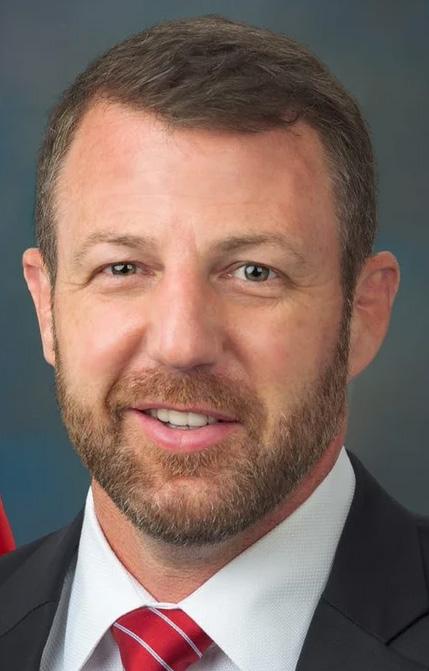
Trump’s nominee to lead DHS is Senator Markwayne Mullin (R-OK) (pictured right), who has represented Oklahoma in the U.S. Senate since 2023. Most of Mullin’s time on the Hill is spent on the Appropriations Committee. He sits on six subcommittees of Appropriations and chairs the Subcommittee on the Legislative Branch. Mullin also sits on the committees on Armed Services; Health, Education, Labor, and Pensions; and Indian Affairs.
to Trump’s nationwide redistricting “arms race” with Proposition 50. Approved in November, Prop 50 suspends the Golden State’s independent redistricting commission (IRC) in favor of one of the most aggressive gerrymanders in the country. Democrats are favored to flip at least three seats, and possibly another, due to the redraw.
Kiley’s seat went from one that backed Trump by four points in 2024 to one that would have backed Kamala Harris (D-CA) by ten points. A Republican win is still possible on paper, but likely untenable given the modern environment.
Kiley, instead, is running CA-06, a suburban Sacramento seat that got moderately more competitive with the redraw but is still obdurately Democraticleaning. He said the registration change reflects the “way” that he “approache[s]” his “role” in Washington, according to Politico.
Kiley is the first Independent House member since Michigan Congressman Justin Amash left the party in 2019. While Kiley said he’ll continue to caucus with the House Republican Conference, the change leaves Speaker Mike Johnson (R-LA) with 217 seats with vacancies in Georgia and California considered. 218 seats are needed for a majority, so while Kiley preserves that quorum by caucus, it shows that Johnson has perhaps the least margin for error yet.
Former Congresswoman Marjorie Taylor Greene’s (R, GA-14) resignation in January sent political shockwaves through the MAGA wing of the GOP and imposed broader implications of a no-confidence attitude towards the party’s prospects in the midterms. Her falling out with Trump made it all the more public, and the special election for her seat headed to a runoff on Tuesday night.
In other news on the Hill, Congressman Kevin Kiley (I, CA-03) has broken from the Republican Party, registered as an Independent, and will run as such in CA-06 amidst a brutal gerrymander that took his sprawling, eastern California district into one that contains Sacramento and one of the most liberal parts of the state, Lake Tahoe.
Kiley was first elected to the open seat in 2022 in a close, yet still decisive, margin, followed by a more comfortable elevenpoint win in 2024.
But California Democrats responded
Retired Brigadier General Shawn Harris (D-GA) advanced to a runoff election with former assistant state attorney Clayton Fuller (R-GA). In Georgia, special elections have all parties run on the same ballot and if no candidate notches at least 50% of the total vote, the top two vote-receivers advance to a runoff featuring just those two candidates. All others are eliminated. Georgia uses the same format in partisan primaries and general elections.
Gen. Harris had lost to Greene in 2024, when he captured just 36% of the vote. Trump had won this seat with almost 70% of the vote. Thus, Republicans are heavily favored to retain this northwestern-Georgia seat, although a Democratic overperfor-mance isn’t off the table.
Gen. Harris took 37.3% of the districtwide, all-party primary vote on Tuesday night. Fuller took 34.9%. The two emerged from a field of fifteen other candidates - two Democrats, eleven Republicans, a Libertarian, and an Independent. The runoff is scheduled for April 7.
The GOP got a last-minute shakeup
on their U.S. Senate deck this week as two-term Senator Steve Daines (R-MT) announced just minutes before the filing deadline that he will not seek re-election. Filing his candidacy simultaneously was U.S. Attorney Kurt Alme (R-MT). He effectively locked up the Republican nomination before any other candidates had the opportunity to file. The move has been criticized by both parties.
Montana sits at the edge of the competitive table. Once friendlier to Democrats, its state-level politics have shifted right. Senator Jon Tester (D-MT) served three terms and was defeated in 2024. Daines won his second term in 2020 by ten points over two-term Governor Steve Bullock (D-MT). The 2026 race has a shakeup: former University of Montana president and Independent candidate Seth Bodnar. Montana’s libertarian, western electorate could play host to an interesting race in November.
Democrats are also fresh off a massive special election win, this time from the State of Arkansas.
Last Tuesday, Alex Holladay (D-AR) flipped the 70th State House District from red to blue. The district, which includes northern parts of Little Rock, had backed a Republican in 2024 by a narrow 51%-49% margin. Holladay cruised with almost 70% of the vote. The GOP still holds a supermajority in the Arkansas House.
State
Governor Kathy Hochul’s (D-Hamburg) lead in 2026 polling against Nassau County Executive Bruce Blakeman (R-Atlantic Beach) has dwindled, according to the Siena College, but she remains in the driver’s seat.
In their March poll, Siena College found Hochul leading Blakeman 51%31% (+20) - a lead that’s down slightly from February’s 54%-28% (+26) matchup.
The six-point swing is accompanied by a 46%-42% (+4) favorability rating for the Governor, who is seeking a second full term, which is down from a 49%-40% (+9) last month. Her job approval rating sits at 53%-41% (+12), mostly unchanged from last month’s 54%-41% (+13).
“Democrats still outnumber Republicans more than two-to-one, so it’s not surprising to see Hochul continue to maintain a large double-digit lead over Blakeman, although it’s tightened a little bit in the last month,” said Siena pollster
Steven Greenberg in a statement. “What was a 25-point lead in December and a 26-point lead in January is now a 20-point lead, largely due to Republicans coming home to Blakeman, and the race tightening among men – Hochul had led by 22 points and now leads by 4 – and in the downstate suburbs, where she led by 14 points and now leads by 2 points.
For Blakeman, the bigger problem is name recognition. The College found that 61% of New Yorkers have either never heard of Blakeman, who was reelected in a landslide in 2025, or have no opinion about him. His favorability rating, however, improved from last month. Underwater at 18%-20% (-2) last month, Blakeman is now at a 21%-18% (+3) rating.
President Trump’s numbers improved slightly, but he remains heavily underwater in sapphire-blue New York. His favorability rating - 35%-60% (-25) - has improved from his -30 rating last month, and his job approval numbers went from 34%-63% (-29) to 36%-61% (-25).
New York City Mayor Zohran Mamdani (D-Astoria) has a 47%-35% (+12) approval rating, down slightly from last month’s 48%-32% (+16).
The Siena College poll was conducted February 23-26, 2026, among 805 registered New York State voters. The margin of error is +/- 4.5%.
Local
Suffolk County Sheriff Errol Toulon (D) recently welcomed thirty-five new Correction Officer Recruits at their swearings-in on Monday at the Yaphank Correctional Facility.
The new recruits will begin a “rigorous fifteen-week training program that includes instruction in direct supervision, de-escalation techniques, report writing, defensive tactics, firearms, and much more,” according to the Sheriff’s Office. The new enlisters will graduate this summer to join an 840-strong Suffolk County Corrections Officers force.
Toulon reminded the new recruits that they “now hold a position of authority in Suffolk County, and with that authority comes great responsibility.”
The thirty-five recruits consist of twenty-nine males and six females. Six members have military or prior law enforcement backgrounds, including experience with the NYPD.

CreditSuffolk County Sheriff’s Office
Brookhaven Matters
LaLota Secures Funds for Miller Place-Sound Beach Drainage Project
By Matt Meduri
The North Shore of Brookhaven is no stranger to flooding and water quality issues, especially the monstrous landslides seen almost two years ago when Hurricane Ernesto dropped nearly a foot of water in just a few hours. Sound Beach saw the lion’s share of that catastrophic rainfall.
Congressman Nick LaLota (R-Amityville) recently secured $1.25 million for the Miller Place-Sound Beach Drainage Project as part of tens of millions of federal dollars returned to NY-01 through Appropriations legislation that was signed into law by President Donald Trump (R-FL). The spending package includes more than $15 million for critical infrastructure, environmental, and preservation efforts across Suffolk County.
In his letter to Congressman Tom Cole (R-OK), Chairman of the House Appropriations Committee, and Congresswoman Rosa DeLauro (D-CT), Ranking Member, LaLota outlined the specifications of the project.
The funds go towards two diffusion wells in the new southwest quadrant recharge basin, which is “essential” to settling sediment and enhancing leaching capacity. Funds would also go to the construction of a new recharge basin north of Rocky Point Road to replace an outdated 24-inch drainpipe with a “more efficient” 30-inch pipe.
“This seemingly small upgrade will significantly reduce flooding, making it a costeffective solution in the long run,” said LaLota in his letter.
The funds will also help the replacement of deteriorating retaining walls and headwalls that have been weakened over the years. Pavement restoration, revetment reconstruction, the replacement of three damaged leaching basins, the replacement of damaged asphalt tip-up gutters, and replacement of washed-away soil are in the purview of these appropriations.
“This project is an appropriate use of taxpayer funds because in 2021, Hurricane Ida caused major flooding and severe damage to approximately 9,975 square feet of asphalt in the Town of Brookhaven, exposing leaching basins and undermining the drainage system, particularly in the Woodhull Landing community of the Miller Place-Sound Beach area,” said LaLota in his letter. He added that while damaged roads have been stabilized, “significant” work remains ahead to fully repair these roads.
“There is an equally important need to modernize the drainage infrastructure to improve flood resilience and mitigate further storm damage in the future,” said LaLota. “Funding this project protects taxpayer investment by preventing further roadway damage and costly repairs from future storms.”
LaLota added that water quality and shoreline stability improvements are “vital to New York’s coastal ecosystems and economy.” Locally, it “enhances public safety, preserves property values, and protects natural habitats” in the area.
“Drainage has become the biggest issue for municipal highway departments,” Brookhaven Town Supervisor Dan Panico (R-Center Moriches) told The Messenger. “Congressman LaLota has delivered for the people of the Town of Brookhaven. He deserves the credit for helping the residents of his congressional district on a very

costly capital project.”
Panico added that it will “serve to mitigate” the landslides and flash flooding seen in August 2024, but that the weather is “more and more unpredictable these days.”
“One-in-a-hundred-year storms are happening every couple of years. The requirements that we have regarding stormwater retention are costly.”
Panico added that “every single thing” done in government is affected by inflation and national markets. Costs have increased but revenues haven’t. Moreover, the traditional role of local government, according to Panico, should be nuts-and-bolts issues like garbage pickup, parks maintenance, roads, and open space, for example.
“The cost of trying to do everything that is outside the core services has become overwhelming for every municipal government,” said Panico.
Councilwoman Jane Bonner (R-Rocky Point) took The Messenger on a tour of the area earlier this week.
“We are experiencing massive amounts of runoff problems. It’s rained buckets, wreaked such havoc with the runoff and erosion, not to mention the pollutants that end up in our waterways,” Bonner told The Messenger. “Congressman LaLota has been so helpful with this. We’re able to leverage our dollars more efficiently and get more done with the money.”
Bonner, a forty-year resident of the hilly North Shore, said that the various landings bordering the Long Island Sound were created when cordwood was cut down and barged into New York City. The hilly topography cascades into the Miller Place-Sound Beach area, particularly on Woodhull Landing Road.
“We’ve installed a tremendous amount of storm drains, recharge basins, and we’re constructing another basin,” said Bonner. “We’ve acquired property for drainage purposes and encouraged people not to cut all their trees down because the trees help hold the soil together, prevent erosion, and absorb water to prevent runoff. It’s multi-pronged.”
Bonner said that in August 2024, “all Hell broke loose” on the North Shore, adding that to deal with the urgency from “multiple angles” requires having “many tools in the toolbox.”
“We’re not leaving any stone unturned when it comes to ameliorating these flooding issues we’re experiencing. To that end, we’ve increased our drainage budget and our budget for acquisition for property for drainage purposes,” said Bonner.
Along Woodhull Landing Road are downed trees and open spaces, which will house the ambitious stormwater sump to collect runoff from the North Shore hills before they can reach the Sound. A small, private road just east of Woodhull Landing Road was completely washed away last summer. Bonner said she’s “never seen anything like it” with all of her years living on the North Shore.
The improvements in the area, including a concrete wall separating Woodhull Landing Road from adjacent private property, and hundreds of storm drains across the area have been ongoing since Superstorm Sandy.
“We don’t just have gentle rain anymore. We have Florida-type deluges,” said Bonner.

Storm wall constructed after August 2024 (Credit - Matt Meduri) A washed away road after the August 2024 (Credit - Jane Bonner)
Legal Insights
Beyond the Doctor’s Office: The Real Work of Caring for Older Adults at Home
By Reilly Graupp, MSW
The need for older adult care is something most of us will encounter, yet many are unprepared for its realities. Over the past several decades, older adult care in the United States has shifted away from institutional models, driven by a culture that prizes independence and self-sufficiency. With many families viewing rehabilitation or nursing home care as a last resort, home-based care has become more common.
Home care is often imagined as a simple alternative to facility care and one that minimizes stress and disruption. Families frequently promise loved ones they will remain at home, believing this preserves autonomy, dignity, and emotional comfort. What is often overlooked is the growing complexity and responsibility that home care demands. Families may initially assume they can simply hire a nurse or home care aide, until they confront the cost and realize that medical needs are only one piece of the puzzle. They often require help with daily tasks such as dressing, eating, mobility, and emotional support. There are needs that rarely fit into medical billing codes or insurance coverage.

With the healthcare system focused largely on medications and procedures, the everyday demands of living longer often go unaddressed. Families are frequently expected to fill these gaps without regard for their own lifestyle, geographic distance, finances, work obligations, or other priorities.
Navigating this system can feel isolating and overwhelming. Insurance denials, limited physician guidance, and mounting service fees collide with the daily demands of caregiving, leaving families feeling they must figure it out alone. Over time, caregiving becomes not just one role, but a constant state of vigilance.
Understanding these realities, however, can become a source of strength. Recognizing home care challenges as systemic, rather than personal, provides a foundation for advocacy, which is key to improving outcomes for both older adults and caregivers.
So, what is advocacy in this context? While some associate it with public demonstrations or policy campaigns, advocacy can be any action taken to ensure someone’s needs are met no matter how seemingly small. At its core, it means speaking up, having the confidence to raise or investigate concerns, and ensuring the full scope of need is recognized.
Advocacy in home care takes many forms. One of the simplest and most effective is communicating functional needs to medical providers. Asking doctors to document limitations in daily activities such as bathing, dressing, mobility, fall risk, and medication management ensures that insurers and home care services have a complete picture. Clear documentation brings the realities of home life into view for the healthcare system, increasing the likelihood of appropriate referrals and services.
Keeping detailed, organized records is another practical form of advocacy. Maintaining logs of medications, appointments, and task instructions for home health aides helps prevent errors and provides a reference in the event of disputes. Similarly, questioning unclear guidance or care decisions can significantly improve the support a person receives. If a care plan does not reflect the realities at home, requesting clarification or a revision ensures that needs are truly met.
Persistence is equally important. Following up, maintaining documentation, and submitting appeals when necessary, can be the difference between minimal care and comprehensive support. Families who track services and communicate consistently are
far more likely to secure reliable assistance.
Advocacy also extends within the family. Honest conversations about boundaries, responsibilities, and care plans can prevent burnout and protect their loved one’s safety. Seeking outside support through Medicaid home care programs, assisted or independent living communities, community organizations, counseling, or caregiver support groups is not a failure, but a proactive step toward holistic, dignified care for everyone involved.
Facing the realities of home care does not mean fearing it. It means approaching care with clear expectations, stronger tools, and greater compassion for loved ones and for oneself. When families are informed, supported, and empowered to advocate, home care can truly uphold the values of dignity, autonomy, and emotional comfort.

The commitment of Futterman Lanza, LLP goes beyond traditional legal services. Our Elder Care Advocacy department provides hands-on support to families, helping develop care plans and guiding them through healthcare complexities. A key part of their role is preparing families for agency assessments and attending alongside the clients to help secure the proper Medicaid home care hours and services they are entitled to. This support extends to representing clients in both internal and external appeals with Managed Long Term Care (MLTC) plans.
Reilly Graupp, MSW, the author of this article, is in the Elder Care Advocacy Department at Futterman Lanza. You can learn more about Reilly or the firm at www.trustedattorneys.com

School Highlights
Port Jefferson School District to Honor Three Outstanding Educators
The Port Jefferson School District is proud to announce that three exceptional team members have been selected for recognition at the SCOPE Education Services’ 25th Annual School District Awards Dinner. This prestigious event celebrates excellence in education and honors educators, administrators, and support staff who consistently go above and beyond in service to their school communities. The event will take place on Monday, March 23, 2026, at Villa Lombardi’s in Holbrook.
Representing Port Jefferson this year are Cindy Woodward, Support Service Category; Eva Grasso, Teacher Service Category; and Brian Sandak, Administrative Service Category. These individuals exemplify the very best of our district, and their recognition is a testament to the extraordinary talent, dedication, and heart that define Port Jefferson Schools. Last year, SCOPE honored 172 professionals across the region, and we are deeply honored to continue this tradition of excellence.
Brian Sandak is the quiet, reliable force behind the scenes who keeps the Port Jefferson School District connected, secure, and ready for learning each day. As the district’s technology leader, he ensures that every student has access to a functioning Chromebook, swiftly distributing, repairing, or replacing devices so learning never misses a beat.
A champion of safety, Brian strengthens student and staff security through robust lockdown systems and proactive cybersecurity measures that safeguard personal data and minimize disruptions. His hands-on expertise extends to maintaining the district’s innovative computer science classroom and live streaming concerts, graduations, and Board of Education meetings—bringing the broader community closer together.
Dependable and forward-thinking, Brian consistently anticipates and resolves challenges before they arise, empowering teachers to focus on instruction and students to thrive in a secure, technology-rich environment.
For more than twenty years, Cindy Woodward has been the warm and steady heart of the health office at Edna Louise Spear Elementary School. With genuine kindness and calm professionalism, she creates a safe, comforting environment where students feel cared for during moments of worry or illness.
Her gentle listening and reassuring presence quickly put even the most anxious child at ease. Cindy also has an extraordinary ability to support families, building lasting trust through her reliability, positivity, and unwavering commitment to student well-being. A dedicated team player, Cindy consistently goes above and beyond, quietly strengthening the school community and leaving an enduring legacy of compassion at Port Jefferson.
Eva Grasso shines as a dynamic leader in the district’s middle and high schools, redefining what innovative teaching looks like. Her library is a vibrant hub of curiosity—filled with puzzles, strategy games, and engaging book displays that spark student interest and critical thinking.
By collaborating with fellow educators and local experts, Eva integrates real-world relevance into instruction, deepening student engagement. A trailblazer in AI education, she has been featured in news articles for guiding colleagues in the ethical use of artificial intelligence and leading hands-on professional development workshops. Through co-teaching partnerships, she strengthens students’ research, literacy, and analytical skills. Eva also co-created Royal Readers Night, a joyful K–12 literacy celebration that brings families together through read-alouds, author visits, and creative activities. She authored the Readers, Researchers, and Writers Handbook, which equips students across disciplines with essential tools for inquiry, integrity, and thoughtful analysis.
to different conservation programs and grants that the Suffolk County Soil and Water Conservation District helps manage or distribute. Most of the funding comes from New York State environmental or agriculture programs, and the district helps plan projects, distribute grants, and implement conservation practices.
The board has recently announced the availability of funding for “environmentally focused initiatives aimed at conserving Suffolk County natural resources,” according to their website. The grant is open to municipalities and non-governmental organizations interested in partnering with the district to spearhead projects focused on revitalizing and protecting Long Island’s ecosystems, waterbodies, groundwater, and habitats. The highest grand allotment for 2026 is $100,000. Qualified candidate awards range from $3,000 to $50,000.


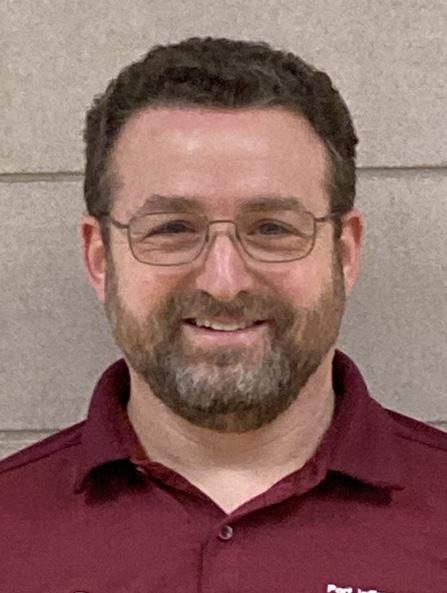
Bayport-Blue Point High School Earns AP School Honor Roll Recognition
College Board announced that Bayport-Blue Point High School has been named to the 2025 Advanced Placement Program School Honor Roll, earning the silver distinction.
The AP School Honor Roll recognizes schools whose AP programs are delivering results for students while broadening access. Schools can earn this recognition annually based on criteria that reflect a commitment to increasing college-going culture, providing opportunities for students to earn college credit and maximizing college readiness.
In the 2024-25 school year, BayportBlue Point High School had 249 students from grades 10-12 that took AP exams. In total, there were 617 tests taken; 88% of students scored a three or better, while 55% scored a four or higher.
Bayport-Blue Point High School had 30 AP Scholars, 12 AP Scholars with Honor, and 31 AP Scholars with Distinction.

School Highlights
Top Notes for Shoreham-Wading River Student Musicians


The Shoreham-Wading River School District congratulates seven high school student-musicians who were selected to perform with the 2026 Long Island String Festival Association at Eastport-South Manor Jr.-Sr. High School this semester. These talented students were selected on a competitive basis, with New York State School Music Association scores as the main criteria along with teacher recommendations.
Congratulations to Alexis Cordano, Kai Hidaka, Zachary Lister, Clara Pedersen, Aiden Weng and Mia Wentz who were instructed by high school orchestra teacher Ashley O’Connor.
Additionally, 12 Albert G. Prodell Middle School student-musicians in grades 6-8,
under the baton of instructor Fred Volz, were also selected to perform at LISFA this winter. Evelyn Lauckhardt (cello), John Lister (cello), Emmett Stadler (double bass), Aidan Thomas (violin), Elliot Thomas (cello) and Erin Weng (violin) participated in the sixth-grade orchestra. Seventh and eighth grade orchestra participants also included James Klein (cello), Ailie Korsakas (violin), Griffin Schwartz (violin), Owen Schwartz (viola), Sophia Tishchenko (cello), and Alexis Yau (violin).
The district congratulates the students on this outstanding academic accomplishment and extends best wishes for success in their future music endeavors.
Eastport-South Manor Virtual Enterprise Wins Silver for Booth Design
Eastport-South Manor’s Virtual Enterprise team, Duvaire de Parfum, won Silver (top 20) for booth design at the Virtual Enterprise New York State and Northeast Business Plan Competition and Trade Show, held at Long Island University in Brookville. The competition hosted more than 2,300 students and 150 firms from across the state and New England areas.
Virtual Enterprise mimics real-world commerce as students simulate a business while learning entrepreneurship and business operations in a classroom setting. Students assume specific roles in the company, such as CEO, marketing manager or CFO. VE teams create business plans, develop products and attend trade shows to engage in competitions against other VE student-run firms. VE firms
are ranked on the business overview, oral presentation and Q&A competency scores. Virtual Enterprise has been running in the Eastport-South Manor Central School District for six years.
During the competition, the team also competed for best sales pitch and business plan.
Duvaire de Parfum is a company whose mission is to create bold and long-lasting fragrances that make people feel confident. The company focuses on clean ingredients and high-quality oils to offer a stylish and sustainable scent experience. The company goal is to inspire self-expression through fragrance while making luxury feel accessible to everyone.

Clayton Huey Elementary Gets Special Visit from Author of ‘Biscuit’ Series

Alyssa Satin Capucilli, author of the beloved Biscuit books, visited Clayton Huey Elementary School in Center Moriches in early March to share insights into her writing process. Ms. Capucilli’s series, focused on a delightful puppy named Biscuit are loved by students everywhere; during her visit to Clayton Huey, many students brought their own copies of the books and stuffed animal versions of the dog.
Throughout the day, each grade level attended a special assembly where they listened to Biscuit stories read aloud and learned about the many steps involved in the writing process, from brainstorming ideas to publishing a finished book. Ms. Capucilli also offered first-hand tips and encouragement for students who may one day want to pursue their own writing journeys.
The author visit was part of the school’s We Are Reading More—or, WARM— Week. This schoolwide initiative features themed book days and a variety of reading activities designed to spark excitement and deepen students’ interest in books.
The Biscuit series is celebrating its 30th anniversary, marking three decades of bringing smiles and cheer to Clayton Huey and audiences everywhere.
For more information on the Center Moriches Union Free School District, visit the district’s website at cmschools.org. Happenings in the district can also be found on the district’s Facebook page at https://www.facebook.com/ cmschools.org/ #CMSchools
The district congratulates Thomas D’Agostino, Justin Dux, Brady Franco, Dean Fontanetta, Vincent Milano and Christopher Randazzo on their VE presentation.
The Necessary Standard for American Education
The Department of Labor
By Matt Meduri
We’re getting back into our mini-series on the federal executive departments. This week’s model is the Department of Labor.
History and Origin
The first signs of a Department of Labor were in 1884, when Congress established the Bureau of Labor Statistics - then a bureau of the Department of the Interior. Their purpose was to collect economic data, which they began in 1884, and published their first report in 1886. In 1888, the Bureau of Labor became an independent Department of Labor, but it was not given any executive rank in the Cabinet.
The Department of Labor (DOL) was formed on March 4, 1913, the final day of President William Howard Taft’s (R-OH) presidency, as he had been defeated for re-election in 1912. The department’s establishment arrived at an opportune time, as the Taft Administration is generally seen as more of the tail end of the Progressive Era, which had dominated American politics with the onset of the Industrial Revolution. Two significant prerogatives of the movement were to advocate for better working conditions and conservation of resources.
The organic act that established the Labor Department cited its main purpose, “to foster, promote, and develop the welfare of working people, to improve their working conditions, and to advance their opportunities for profitable employment.”
The Labor Department originally consisted of just four pre-existing bureaus of the Department of Commerce and Labor, with a total staff of about 2,000 and a budget of $2.33 million, according to the Labor Department’s official website.
The first Labor Secretary was William B. Wilson (DPA), appointed by President Woodrow Wilson (D-NJ) - no relation. His father left his native Scotland during a mining strike to find work in the U.S. After he settled down in Pennsylvania’s coal country, he sent for his family. Secretary Wilson would, at the age of 9, quit school and help his father in the coal mines. He would become a labor organizer and later serve as secretarytreasurer of the United Mine Workers for American from 1900 to 1908 before serving a short stint in the U.S. House, where he would chair the House Committee on Labor.
Wilson’s tenure would be marked by wage-earner interests, the creation of the U.S. Conciliation Servicean agency within DOL that would bring settlements to labor disputes through mediation - and the organization of wartime employment during WWI, which included the eight-hour work week and collective bargaining.
Early bureaus included the Bureau of Labor Statistics (BLS), the Bureau of Immigration, the Bureau of Naturalization, and the Children’s Bureau.
The department would also mitigate a wake of strikes that threatened the post-war economy, and it would have oversight during the “Red Scare.” The Bureau of Immigration was ordered by the Department of Justice to deport all “dangerous” Communist aliens. Only 556 proven Communists were deported.
In 1933, President Franklin D. Roosevelt (D-NY) appointed Frances Perkins (D-NY) to head DOL, making her not only the first woman to preside over DOL, but the first woman ever to serve in a presidential cabinet. She was one of just two officials to remain in Roosevelt’s cabinet for his entire presidency, which ended with his

death in 1945.
The DOL enforces over 180 federal laws that are concerned with worker safety, wages, benefits, and rights. Some key pieces of legislation include:
• 1. The Fair Labor Standards Act (FLSA) of 1938, which set federal standards for minimum wage, overtime pay, and child labor work thresholds.
• 2. The Occupational Safety and Health Act (OSHA) of 1970, which enforces safe working conditions.
• 3. The Employee Retirement Income Security Act (ERISA) of 1974, which offers protection for pension and welfare plans.
• 4. The Employee Polygraph Protection Act (EPPA) of 1988, which prohibits most private employers from utilizing lie detector tests.
• 5. The Family and Medical Leave Act (FMLA) of 1993, which allows employees to take unpaid leave for specific family and medical issues while the worker’s job is protected.
• 6. The Health Insurance Portability and Accountability Act (HIPAA) of 1996, which regulates health insurance coverage and patient privacy protection.
The Department of Labor Today
Today, the DOL workforce is just under 11,000 fulltime employees and their requested budget for FY2026 was $53.3 billion - a $16.2 billion decrease from FY2025. A big chunk of that came from a $4.5 billion reduction in the department’s discretionary spending.
The thirtieth and current Secretary of Labor is Lori Chavez-DeRemer (R-OR). She served eight years as the Mayor of Happy Valley, Oregon, before flipping a swing seat blue in 2022. She defeated a progressive Democrat who had primaried a moderate, long-served incumbent in OR-05, a suburban swing district that runs from southern Portland to the tourist town of Bend. ChavezDeRemer was narrowly defeated for re-election in 2024.
President Donald Trump (R-FL) unveiled the Oregon Republican as his pick to lead DOL. Chavez-DeRemer was seen as one of the less controversial Trump nominees and was confirmed by the full U.S. Senate in a 67-32 vote last March.
Chavez-DeRemer has prided herself on returning the aforementioned $4.5 billion in unused COVID-era funds and has urged states to not provide unemployment benefits to illegal immigrants. The DOL, under her leadership, has rescinded a 2022 directive that warned fiduciaries to “exercise extreme care” when handling cryptocurrency in 401(k) plans. That plan later made itself the basis of a Trump Executive Order.
Chavez-DeRemer, however, is under investigation for alleged misuse of office, including using official trips to see family and personal friends, drinking on the job, and an affair with a member of her security detail. Her husband, Shawn DeRemer, is also alleged to have inappropriately touched two women at DOL Headquarters in Washington. Two top aides to the secretary have resigned as of last week.
Agencies, Boards, and Bureaus
DOL has several offices and administrative divisions. For our purposes, we’ll discuss the various categories that represent the true teeth of DOL.
Administrative Review Board (ARB): A five-member board appointed by the Secretary of Labor who issues
This column will seek to address the long-forgotten concept of civics and how it relates to American government in general, from the federal level to the local level. This column will explore Constitutional rights, the inner workings of government, the electoral process, and the obligations and privileges of citizens.
final agency decisions on appeals of worker protection laws. Established in 1996, the ARB hears cases including whistleblowers, environmental, immigration, child labor, and federal contracts.
Benefits Review Board (BRB): Created in 1972, this board reviews and issues decisions on appeals of workers’ compensation claims under the Longshore and Harbor Workers’ Compensation Act and the Black Lung Benefits Act. In other words, the BRB handles appeals related to injuries in maritime and coal mining environments, primarily.
Bureau of International Labor Affairs (ILAB): Manages DOL’s international affairs. As per their mission statement, they work to “ensure that workers around the world are treated fairly and are able to share in the benefits of the global economy.” Founded in 1947, ILAB represents the U.S. at trade negotiations and international bodies, such as the World Trade Organization (WTO). It also provides technical assistance to other countries to combat child labor and human trafficking.
Bureau of Labor Statistics (BLS): Founded in 1884, the BLS is the principal fact-finding federal agency on labor economics and statistics. It collects, analyzes, and distributes statistical data to the public, Washington, state and local governments to inform on economic and labor issues.
Employee Benefits Security Administration (EBSA): This bureau, created in 1970, administers, regulates, and enforces the provisions of Title I of ERISA. Employees’ Compensation Appeal Boards (ECAB): This body hears appeals and awards in workers’ compensation cases under the Federal Employees’ Compensation Act. The board has final say in determining liability of the federal government regarding death or injury of employees within the scope of employment. Three members are appointed by the Secretary of Labor.
Employment and Training Administration (ETA): Provides training, employment, labor market information, and income maintenance services, according to DOL’s website. ETA handles federal job training, federal grants to states for public employment programs, and unemployment insurance benefits. Programs such as Job Corps, Trade Adjustment Assistance, and Workforce Innovation in Regional Economic Development (WIRED) are projects of the ETA.
Mine Safety and Health Administration (MSHA): Created in 1977, MSHA administers the provisions of the Federal Mine Safety and Health Act of 1977 with the goal of eliminating fatal accidents, reducing frequency and severity of injuries, promoting health conditions in the mines, and minimizing health hazards. MSHA’s Coal Mine Safety and Health Division is divided into twelve districts that contain coal mining across the country. The Metal-Nonmental Safety and Health Division has six districts.
Occupational Safety and Health Administration (OSHA): Founded in 1934 as the Bureau of Labor Standards, OSHA has federal visitorial powers to inspect workplaces under the OSH Act, signed into law in 1970. OSHA’s purpose is to set and enforce workplace safety standards and provide training and education.
Pension Benefit Guaranty Corporation (PBGC): The PBGC was created by ERISA to encourage the use of private defined benefit pension plans.
Around Town
Living History in Setauket
By Matt Meduri
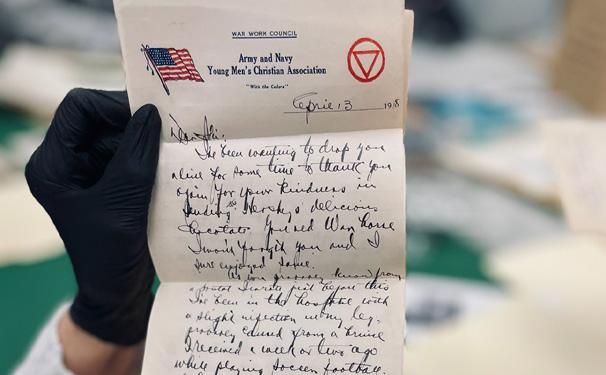
As Suffolk gears up for the America 250 event, Setauket historians and community members dust off some old documents that date back centuries to not only digitize and refurbish such precious history, but also get people in touch with their roots ahead of the remarkable milestone this summer.
The event was sponsored by Assemblywoman Rebecca Kassay (D-Port Jefferson) as part of their March Monthly Mission on Saturday. Monthly missions galvanize volunteers from local high schools, who happened to have plenty of documents in need of transcription and archiving.
“It’s exciting for volunteers to see letters from the 1800s for the very first time,” Kassay told The Messenger. “We turned the old script handwriting into a digital format that can be referenced by historians from around the world. Personal stories of commerce, marriage, deathall incredibly intimate moments from hundreds of years ago that happened up the street from where we were sitting.”
Kassay said that one volunteer was “almost in tears” transcribing a letter informing a family member of the passing of a sister. Kassay said that “soul-wrenching” language is indicative of the “lost art” of letter writing.
“It makes you feel so deeply connected to these people who are long gone; humanity is so fresh,” said Kassay.
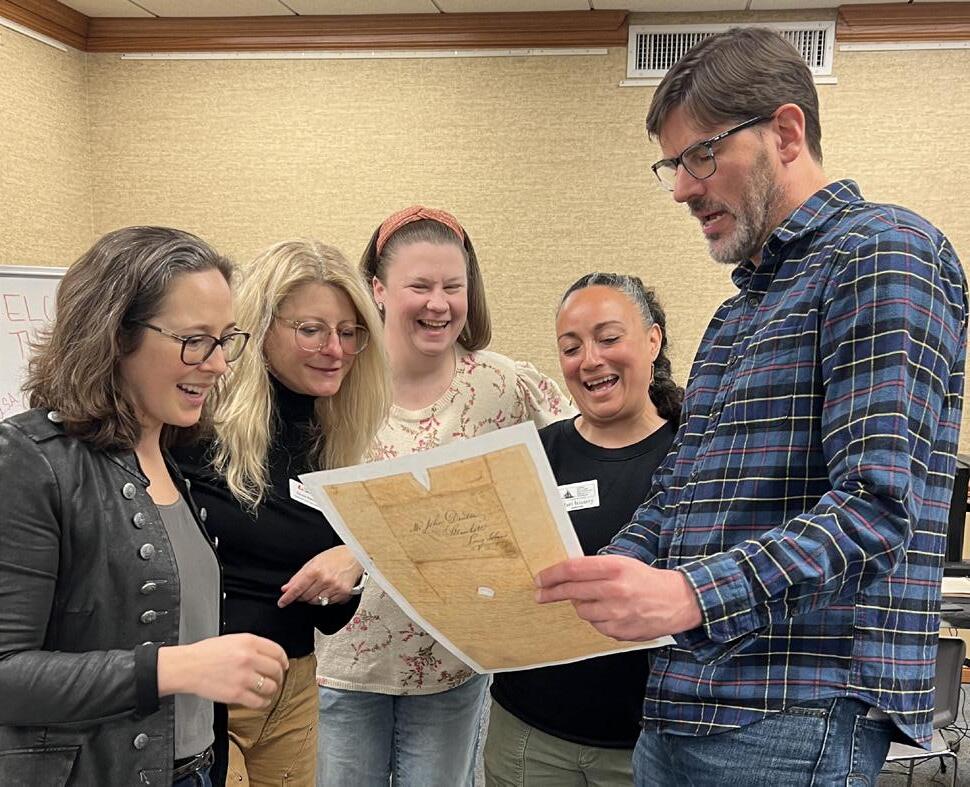
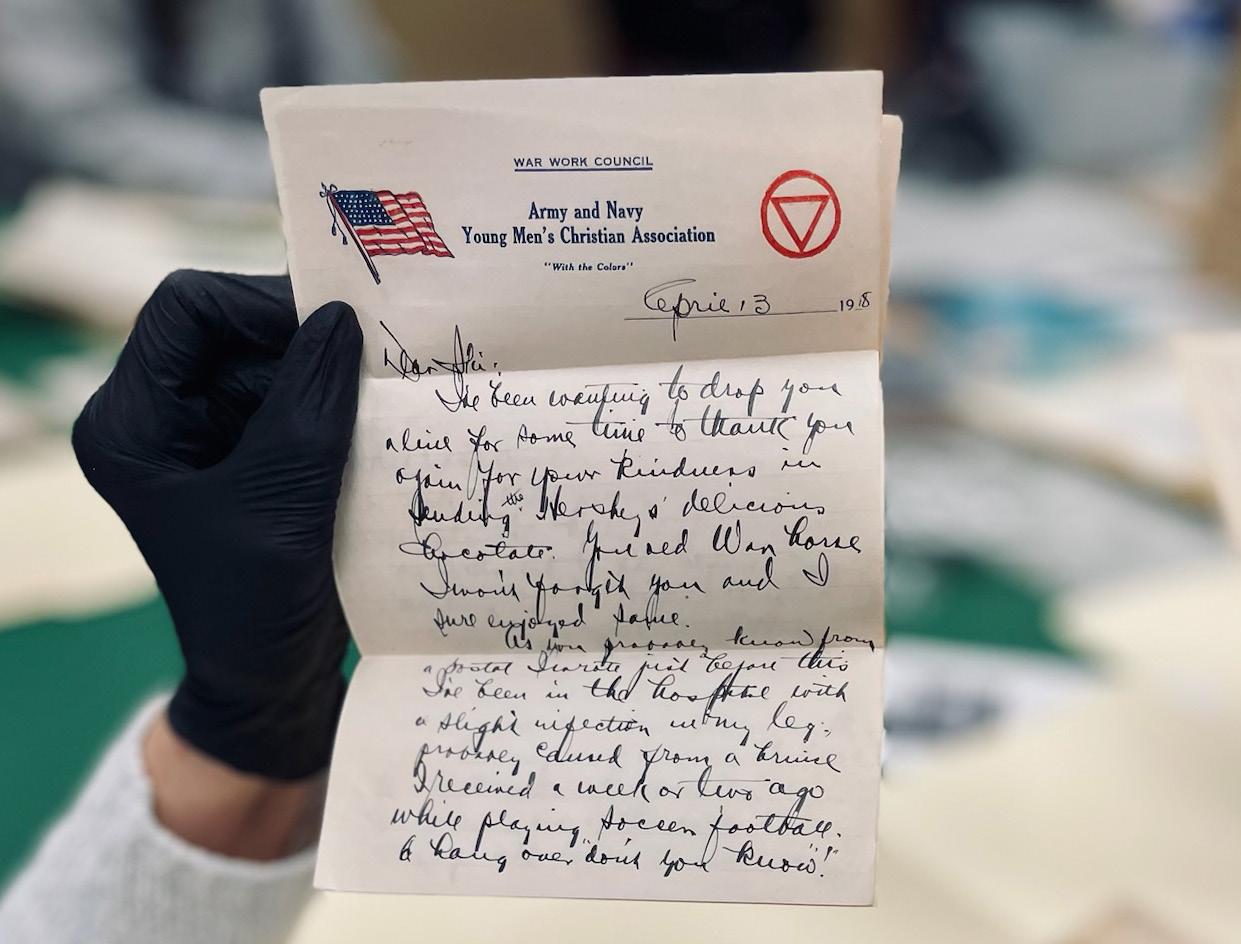
Partners for the event included the Three Village Historical Society and Museum of Setauket, Old Field Farm, Cumsewogue Historical Society of Terryville, the Davis Town Meeting House Society of Coram, and Drowned Meadow Cottage. The Port Jefferson Historian and the Long Island Library Resources Council (LILRC) also participated.
The never-before-read Denton letters were also a highlight of the day, as volunteers learned the process of carefully handling delicate artifacts from professional archivists and historians. Over sixty volunteers participated.
“Efforts like this remind us that preserving history isn’t just about protecting the past: it’s about ensuring future generations can understand how the past helped shape the community and country we share,” said Kassay in a statement.
Retired librarian Corrinne Gardiner described the event as “solving hidden mystery puzzles,” while Three Village Historical Society (TVHS) member Elizabeth Marra said that seeing people care about history “makes it feel alive.”
“When I was curator at Three Village Historical Society, I gave Assemblywoman Kassay an insider’s tour of the archives during one of her open houses at Emma Clark Library,” said Scott Ferrara, Assistant Director of Historic Services for Suffolk County Parks, in a statement. “I suggested a community archiving event, and she ran with it — connecting TVHS with LILRC and historical partners across her district. Engaging the public with 6,000 years of artifacts and 300 years of archival material is invaluable.”
Meanwhile, Rob Von Bernewitz, Vice President of the Davis Town Meeting House Society, called the event “unusual and powerful,” to witness many organizations “collaborating instead of competing.” “The Revolution was a collective responsibility, and preserving our shared heritage is too,” said Von Bernewitz in a statement.
Holden Cone, a tenth-grader at Ward Melville High School, said in a statement, “It was intriguing to learn about the community’s past firsthand. Reading cursive takes patience - and you really have to go slowly. I used AI to generate a first draft of the transcription, but then I went back and reviewed it carefully for context and mistakes. It still needs a human eye.”
Kayleigh Smith, Research and Collections Archivist at TVHC, said that “archives shouldn’t feel closed off or intimidating. They should be welcoming spaces where people can explore, ask questions, and discover the stories that make up their community.”
Registration is Open for 2026 Great Brookhaven Cleanup
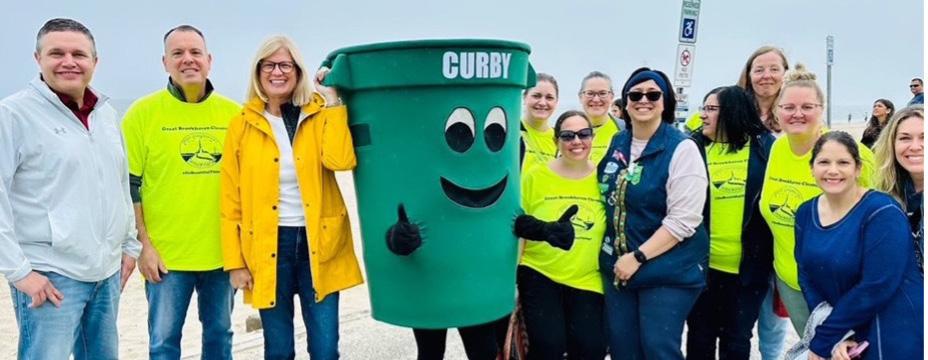
Brookhaven Town Supervisor Dan Panico (R-Center Moriches) has announced that registration for the 18th Annual Great Brookhaven Cleanup is now open.
The event, which is sponsored by the Town of Brookhaven’s Department of Recycling and Sustainable Materials Management along with Arrow Scrap Corporation, will be held on Saturday, May 16, at various locations throughout Brookhaven Town. It is part of a national effort that draws over 5 million volunteers in more than 20,000 communities across America who come together to pick up litter and clean miles of roadway, rivers, lakes, and more. Last year, the Great Brookhaven Clean Up drew more than 2000 volunteers.
Free gloves, trash bags, and t-shirts will be provided by the Town for the Great Brookhaven Clean Up volunteers. The supplies will be available for pick up at the Department of Recycling and Sustainable Materials Management’s third-floor office at Town Hall during regular business hours (9:00a.m. to 4:30p.m.) from May 4 to May 15. Appointments are necessary and must be scheduled during the registration process. Brookhaven Town Hall is located at 1 Independence Hill in Farmingville.
Individuals or groups can register online for the Great Brookhaven Clean Up and get more information at www.brookhavenny.gov or by calling 451-TOWN (8696).
Photo Credit - Office of Assemblywoman Rebecca Kassay
By Ellyn Okvist, B.Sc.
Local History
Thursday, March 12, 2026
The OWLS
Lake Ronkonkoma village has always been on the quiet side when it comes to the good deeds and work in the community. The OWLS were a way to develop a true sense of giving, started in the 1920s as a form of recognition to one in the village that had shown exemplary work and needed to be recognized. This was a different award, one not imagined or for sale, but decided by the quiet recognition of the citizens. The OWLS name was said to be chosen for the fine selection of owls in the village, and their ability to communicate “loudly” to the area.
Lake Ronkonkoma community, groups, and organizations become aware of a citizen which has shown remarkable devotion and has volunteered in many of the groups over their years as a member of the community, The OWLS (Only Wish Lake Ronkonkoma Success) was developed with the intent to introduce and showcase all citizens and their groups of Lake Ronkonkoma that promote goodwill to the public. They also wish to encourage and develop communication for the entire town, and with this award, we have developed a unity which has led to the recognition of Lillian Devere (1921), Charles Hawkins (1952), Jo Molinari (2014), and Kevin Hyms (2024). Four unique citizens who have caught the appeal of fellow citizens, and put them in the category of The Owls, being nominated and approved with a unanimous vote to earn The Lake Ronkonkoma Citizen of the Year Award.
The OWLS offer to the participating community, groups, and organizations in the area known as Lake Ronkonkoma, jointly known as the OWLS, and consist of the following, variegated over the years but still consistent in working together for this award: LR Heritage Association; LR Historical Commission; LR Veterans Association; William Merritt Hallock Post #155 – American Legion Inc.; American Veteran “AMVETS” Post #48; American Veterans “AMVETS” Ladies Auxiliary Post #48; Knights of Columbus - St. Regis Council #4651; Knights of Columbus St. Regis Columbiettes Council #4651; LR Civic Organization; LR Historical Society; LR Civic Organization; LR Homemakers Unit #38; LR Ice Boat & Yacht Club-1923; Ronkonkoma Fire Department; The Chamber of Commerce of the Greater Ronkonkoma’s; VFWWilliam F. Taylor Post #9486; LR Writers Guild; LR Equal Rights Suffrage Club 1912; W.S. Commerdinger, Jr. County Park Preservation Society, Inc.; LR Ice Boat and Yacht Club - 1923; Ronkonkoma Chamber of Commerce; and others.


an elder in our town due to his diversified love and knowledge of much of the history and eye on the future, and can be found at any one of the charitable groups at any given time as they support everyone, and Lake Ronkonkoma is blessed by their smiling and truthful nature, and their favorite stories should remind all of us of the loyal and giving people that have passed through our great village at one point or another. Lillian Devere shared one of her favorite stories, which was the initial visit of Rosalie Gardiner Jones and members of the suffrage movement to Lake Ronkonkoma. They came to formerly establish the Lake Ronkonkoma Equal Rights Suffrage Club in 1912 and added it to the growing groups of women seeking the suffrage opportunity in the United States. After the meeting, the women made their way to the Lake and enjoyed a dip to cool down, perfectly fitting for a group to finalize their plans frolicking in our Lake. Charles Hawkins very much enjoyed the legend of the cow getting its head stuck in the window of Gatelot Avenue School. The cow had wandered from Charles’ own farm, and curiously put its head into the window, perhaps to see what the class was up to in the cafeteria. It took the help of many, including the Ronkonkoma Fire Department to ease the head out. Jo Molinari had a favorite. As a young girl, Jo would so look forward to the family summers and weekend trips from “the city” to Lake Ronkonkoma. Her little heart jumped with joy when they turned into their driveway on Ronkonkoma Avenue. She describes it as a “great time of innocence” when she could tramp through the woods and bike all over. She had fifteen cousins and friends in a three-mile area and had so much fun at Hollywood Beach - after her chores, of course!
The OWLS recipient is also noted for their service to their beloved town with honor and respect for over semi-centennial years. The entire family is commended for the great work one has done, as it is almost impossible to do such work without family support. The recipient is honored and is considered

During this time, the MacArthur Airport was being constructed, and many servicemen would take their R&R at Ronkonkoma Lake. They drove military jeeps, and many times would give the young girls a ride to the Lake, yelling “pile in, pile in.” Those trips in the military jeeps became a trademark in Jo’s heart, and as the years passed, she was able to obtain one of the jeeps. It is everywhere—parades, events, daily trips. But so dear to her heart is the memory of those young servicemen, preparing for the trip oversees to face the war. That jeep is for all of them. Forever.
Kevin Hyms has stated that he has yet to decide on a favorite story, as there are so many wonderful events and memories he has experienced so far as a resident of Lake Ronkonkoma.
There was a need for a first-time proclamation for beautification and care, and it was issued to Dave Crowe and Matt Venturini on December 14, 2014, “For their unselfish and Humble Acts of Personally Improving Lake Ronkonkoma Thereby Making it a Better Place to Live and Enjoy.” Dave and Matt had bought Flanagan’s into our village, and not only did they improve the restaurant, they made their way outside with painting and restoration of nearby buildings and even picked up the garbage and debris by my house every week!
This is the perfect time to formerly announce that a proclamation has been approved, and will be issued to “Jay’s Hidden Treasures Flea Market and Gift Shop”, 466 Hawkins Avenue. Not only is their business a great place to shop, the exterior beautification has caught the eye of many people, and recommended to us for an OWLS proclamation. Date to be announced.
The Committee for the OWLS is responsible for preparing the Proclamation, and proclaim the LAKE RONKONKOMA CITIZEN OF THE YEAR, as fitting, and submitting the Proclamation regarding the decision, and then set our hands and caused the official seal of the OWLS, Lake Ronkonkoma, New York, to be affixed at Suffolk County in the appropriate year of our Lord. God Bless the recipient and God Bless the United States of America.
We are thankful to Kenneth Brady, born and raised Lake Ronkonkoma, who discovered the OWLS folder and placed it in our hands to build for the future, beginning in 2014 with Jo Molinari. We have vowed to continue the highest award in Lake Ronkonkoma.
Published by Messenger Papers, Inc.
When The Government Wants Your AI
By Mollie Barnett | AI Strategist, State & Signal
The U.S. Department of Defense isn’t asking.
According to reporting on recent negotiations, Pentagon officials demanded Anthropic — the company behind the Claude AI models — sign an agreement granting the military unrestricted access to its systems for “all lawful uses.”
Anthropic refused.
At the crux of the argument is the company’s refusal to remove its internal safety limits on mass surveillance and fully autonomous weapons. Defense officials reportedly threatened to designate the company a “supply chain risk,” a label historically reserved for foreign adversaries like Huawei and Kaspersky.
At first glance, this seems like story about an American AI company, built to compete globally, potentially blacklisted by its own government for maintaining ethical guardrails on its products.
From that lens, it’s a business story.
If your company touches defense contracting, aerospace manufacturing, or government supply chains, as many Long Island companies do, understand what’s happening and why it matters, matters to you.
The Ownership Problem Nobody Planned For
Throughout most of modern history, technologies with serious military implications — nuclear systems, satellites, missile guidance — were developed inside government labs or under tightly controlled defense contractor relationships.
The rules of ownership and use were established behind super secure walls, long before deployment.
Frontier AI is inherently different.
The companies enabling the most powerful models today, Anthropic, OpenAI, Google DeepMind, present as private technology firms with their own safety policies and product governance.
That framing, however, obscures the lineage.
These tools weren’t built in a vacuum, separate from national security. They were built on top of it.
DARPA, the Defense Advanced Research Project Agency, an is an independent
research and development agency within the U.S. Department of Defense. It has funded foundational AI research for decades.
Google’s founding algorithms trace to a federally funded project at Stanford. The Internet itself was a defense initiative before it was a consumer product. Private companies commercialized and scaled what public investment made possible — and now they own it.
What’s new isn’t the government’s interest in the technology. What’s new is that private companies hold the keys, and the terms of access were never formally negotiated before the technology became strategically indispensable.
The Anthropic dispute is the first major public confrontation over a question nobody officially answered: Who governs the use of frontier AI systems — the companies that built them, or the nation-states whose funding helped create the conditions for them to exist?
What the Pentagon Wants
Secretary of Defense Pete Hegseth (R-TN), in a January 2026 speech, framed the current moment as a race — one where “the fastest innovator and iterator wins.”
His department issued three coordinated memos establishing an “AI-first wartime speed” agenda, calling for the elimination of bureaucratic barriers to AI deployment and signaling to defense contractors that “any lawful use” expectations around AI model behavior are now standard.
Translation: the Pentagon wants AI tools that don’t say no.
That’s a direct collision with how companies like Anthropic operate.
Safety restrictions aren’t bureaucratic fine print — they’re foundational to how the models are built and marketed. Removing them isn’t a policy adjustment. It’s closer to ripping off a Band-Aid.
That’s not a metaphor. It’s a legal exposure.
Officials also raised the possibility of invoking the Defense Production Act — a wartime authority that allows the federal government to compel private companies to prioritize national defense contracts. Legal scholars have noted that forcing an AI developer to alter its training safeguards could amount to something close to the nationalization of frontier AI capability.
That is a significant sentence. Read it again.
The Long Island Dimension
Long Island has one of the most concentrated defense and aerospace ecosystems on the East Coast. Companies like Air Industries Group in Bay Shore


manufacture precision components for mission-critical military platforms — landing gear, flight controls, engine mounts for programs including the CH-53K and SH-60 Seahawk. East/West Industries in Bohemia supplies survival and safety equipment across military aviation.
Organizations like ADDAPT have connected and supported this community since 1991.
These companies are not AI developers. But increasingly, they are AI users — and as the DoD pushes an AI-first mandate through its entire supply chain, the tools those manufacturers, suppliers, and service firms rely on will be subject to the same governance tensions playing out between Anthropic and the Pentagon.
Defense contractors will need to align technical roadmaps and internal governance with an “AI-first” standard, including tolerance for more open data sharing and “any lawful use” expectations around model behavior. That language comes directly from a Holland & Knight legal analysis of the new DoD strategy.
In plain terms: if your company does government work and uses commercial AI tools, you may soon be asked to certify which AI systems you’re running — and whether those systems meet the Pentagon’s requirements.
If Anthropic were formally designated a supply chain risk, defense contractors using Claude would need to remove it from their operations entirely or risk losing contracts. That kind of cascade is not hypothetical. It’s how supply chain risk designations work.
Three Actors, No Referee
What makes this moment genuinely complicated — and genuinely important — is that three different entities are pulling in different directions with no established framework to resolve the conflict.
Governments want strategic control over the most powerful decision-support tools ever built. AI companies want to govern their own products and preserve the safety architectures they’ve designed. And society — which includes every business owner, employee, and household that interacts with these systems — wants accountability, reliability, and some assurance that nobody weaponized the thing running in the background.
Right now, none of these interests have a formal seat at the same table.
The global dimension makes this more urgent, not less. China’s national strategy explicitly integrates commercial AI companies with defense research under its civil-military
fusion policy. Baidu, Alibaba, and Tencent operate within a framework where the line between private capability and state use is deliberately blurred. The rapid emergence of DeepSeek’s reasoning models demonstrated that high-performance AI can be developed at dramatically lower cost than previously assumed — and that the U.S. does not hold a permanent lead.
When defense planners look at that landscape, the desire for unrestricted access to frontier AI becomes easier to understand, even if the methods are troubling.
What Business Owners Should Do Right Now
It is too early to take a position on Anthropic’s ethics policies or the Pentagon’s strategic posture. But you do need to pay attention, because the governance decisions being made right now will shape the operational and compliance environment your business operates in — probably within two to three years. And the safety of your country.
Here’s a practical frame:
Know what AI you’re running. If your company uses AI tools — for drafting, scheduling, analysis, customer service — document them. Know which models power which tools. This is basic operational hygiene that will become compliance hygiene.
Understand your supply chain exposure. If you’re a defense contractor or subcontractor, or if your clients are, watch the DoD’s evolving AI procurement standards closely. The “any lawful use” language is already showing up in contract guidance.
Don’t outsource your judgment. The Anthropic dispute is fundamentally about who gets to decide how powerful tools are used. That question will land on your desk too — not in a Pentagon briefing, but in a vendor contract, a software terms-of-service update, or a procurement requirement.
Know where your lines are before someone else draws them for you.
The AI governance era has arrived. It didn’t announce itself with a press release. It arrived as a contract dispute between a safety-focused AI lab and the most powerful military in the world.
That’s the signal. The question is whether Long Island businesses are watching closely enough to act before the rules are written without them.
Mollie Barnett is Founder of State & Signal, LLC, and an AI Native Strategist helping Long Island businesses position for the AI era. This article was researched and drafted with AI assistance.
MOLLIE BARNETT is the Founder of State and Signal, LLC, advising leadership teams on strategy in the age of AI.
18 State News
Published by Messenger Papers, Inc.
Thursday, March 12, 2026
Why Did Letitia James Go After Valve?
By Tom Lloyd Andrews
On Wednesday, February 25, New York State Attorney General Letitia James (D-Park Slope) filed a lawsuit against Valve Corporation for “illegally promoting gambling through video games popular with children and teenagers.”
The Valve Corporation, colloquially known as just Valve, is the developer of the video games Counter Strike and Team Fortress 2, which were named in the lawsuit. Valve is also the owner of Steam, the largest online video game distribution service.
Counter Strike and Team Fortress 2 feature loot boxes, which is a system in a video game in which someone pays real money for a chance at an in-game item, usually of varying rarities and resale values. The lawsuit primarily focuses on Counter Strike in which the loot boxes are only cosmetic, meaning the firearms you use in that game carry a different visual appearance. These in-game cosmetic items, referred to as skins, can be resold on Valve’s community market, in which some of these skins can sell for hundreds and even thousands of dollars.
The crux of the AG’s argument is that the loot boxes in Counter Strike are tantamount to gambling because you spend $2.50 to open a loot box, and in return you can get a skin anywhere from three cents to thousands of dollars. Of note, the value of the skin you get is determined by what someone else decides to pay for it, meaning that it’s not a one-toone slot machine. The value of these skins fluctuates to the point that so-called investors have made large amounts of money timing this in-game cosmetic market.
Second, Counter Strike is currently rated M, meaning you need to be 17 or older to play it without parent permission, so saying that it promotes child gambling is somewhat dubious.
Thirdly, ethics aside from the system of loot boxes, one of the quotes from AG James’ press release reads, “In addition, although this case is about illegal gambling, it is important to note that Valve’s promotion of games that glorify violence and guns helps fuel the dangerous epidemic of gun violence, particularly among young gamers who can become numbed to grave violence before their brains are fully developed.”
There is no study that proves a substantial link between consumption of violent video games and a higher incidence of committing violence. Only in New York would an Attorney General use the fear of gun violence to regulate a video game.
Furthermore, the loot box system of Counter Strike is much tamer when compared to other contemporaries in the video game space; oftentimes, player power is locked behind these gambling systems. This is usually called “pay-to-win.”
Many consider the video game FIFA to be one of the worst examples of predatory loot boxes in video games. FIFA, published by the media company Electronic Arts (EA), is the perennial soccer video game that is consistently one of the highest-selling video games

year after year. In the most popular game mode of FIFA, players are able to put together teams of their favorite real-life soccer players. To get these real-life soccer players, players must spend money on “packs” which contain a chance of having any single player in the video games database.
In short, if you purchase the video game FIFA for your child and he wants to have Lionel Messi on his team, he needs to spend money on loot boxes until he gets Lionel Messi.
While there is a player-driven market where FIFA players can trade their collected professional soccer players for in-game currency, it is nearly impossible for someone who does not spend money on loot boxes to obtain these players. And yes, having Lionel Messi (and other similar rare and high rated soccer players) on your team in FIFA gives you an advantage compared to those who do not. This is not the case in Counter Strike, where cosmetic skins for weapons do not affect player power at all.
The issue of loot boxes in video games is not new to the political world, nor is it partisan. In 2019, U.S. Senator Josh Hawley (R-MO) introduced a bill to “regulate certain pay-to-win microtransactions and sales of loot boxes in interactive digital entertainment products, and for other purposes.” The bill would make it illegal to include pay-to-win microtransactions and/or loot boxes in video games oriented towards children. This is a bill I support, and I hope it gets reintroduced one day.
But if I’m against Letitia James going after a company for loot boxes, why am I for Josh Hawley’s bill? Aside from the reasons listed above, the answer is rather simple, and it is why the position of Attorney General has become problematic. The Attorney General is not supposed to be a mechanism for change. If you want to change the way companies conduct business, you do it through passing laws. You don’t get to rule via selective enforcement. Now, the New York State Attorney General is specifically targeting one company out of thousands that engage in this practice. Why has Attorney General James chosen to pursue only Valve?
While there is a myriad of speculation regarding this, one of the more peculiar arguments is that Valve is a privately owned company, while most of these other massive media conglomerates that engage in selling loot boxes through their video games are publicly owned and traded. If Letitia James went after a publicly traded company for the same reason she is currently going after Valve, that would have effects on the value of their stock. Perhaps this is why she chose to go after a privately owned company.
I hope one day the video game market moves to a more consumer-friendly model, but lawfare is never the way to accomplish this. Legislatures exist for a reason, even if many think them to be vestigial.
Official Calls for More Money for Long Island Roads
By Hank Russell | Long Island Life & Politics
A local state assemblyman is calling on Governor Kathy Hochul (D-Hamburg) to provide more money for Long Island’s roads, which he says are crumbling and in need of repair.
Assemblyman Keith Brown (R-Northport) joined colleagues from across the aisle in the Well of the Legislative Office Building on March 4 to urge the governor to include an additional $250 million in Consolidated Local Street and Highway Improvement Program (CHIPS) funding in this year’s state budget.
Brown said the increased investment is critical for communities on Long Island, where heavy traffic volume, coastal weather conditions and rising material costs are accelerating wear and tear on local roads.
“Long Island drivers already face some of the highest costs of living in the country. The last thing families need is crumbling roads and higher local taxes because Albany failed to properly fund infrastructure,” Brown said. “If we’re serious about affordability and public safety, we need to strengthen CHIPS funding now.”
CHIPS provides direct state aid to towns and villages for road and bridge maintenance. According to local highway officials, the cost of asphalt, concrete and fuel has surged in recent years, stretching municipal budgets thin and forcing difficult choices between delaying repairs or increasing property taxes.
Brown emphasized that proactive investment saves taxpayers money in the long run.
“It’s far less expensive to maintain a road than to completely reconstruct it,” Brown said. “By increasing CHIPS funding by $250 million, we can help local governments stay ahead of costly deterioration, improve safety for drivers and pedestrians, and protect taxpayers from bigger bills down the line.”
Brown added that infrastructure reliability is essential not only for residents’ daily commutes, but also for supporting small businesses and ensuring first responders can reach emergencies without delay.
“Our roads are the foundation of our local economy and our public safety network,” Brown said. “This is a practical, commonsense investment that delivers real value to
Long Island communities.”
Brown is not the only elected official to call for more money and immediate repairs to local roads. As previously reported in Long Island Life & Politics, Suffolk County Legislator Nick Caracappa (C-Selden) held a press conference demanding that the state repair the Middle Country Road (NY-25) corridor in the Selden-Centereach area as soon as possible. He cited LILP the potholes and safety concerns when making left-hand turns.
LILP also reported that Nassau County Executive Bruce Blakeman (R-Atlantic Beach), who is running for governor, Assemblymen Jarrett Gandolfo (R-Sayville) and Michael Durso (R-Massapequa Park) viewed a video that revealed a large hole in the roadway of the state-owned Fire Island Inlet Bridge. Gandolfo and Durso also noted that Long Island’s share of state transportation funding has fallen from nearly 24% historically to well under 15% today — even as vehicle registrations and travel demand continue to rise. In inflation-adjusted terms, state highway investment on Long Island has dropped by more than 50% from peak levels.
A spokesperson for the New York State Department of Transportation said, “New York State is investing more in the modernization of its transportation infrastructure than at any other point in the state’s history thanks to the historic $34.4 billion, five-year Capital Plan for the State Department of Transportation, which provided nearly $6.5 billion for local highway plans (an increase of 89% over the last five-year plan.) “
The spokesperson noted that Hochul’s proposed 2027 Executive Budget includes $6 billion for the fifth and final year of the Capital Plan, including $1.4 billion to improve local roads and bridges. “NYSDOT will also invest an additional $600 million in over 180 paving projects across the state, which when combined with the Department’s core paving programs, totals a nearly $1.2 billion investment that will resurface more than 4,000 lane miles.”
This article originally appeared in Long Island Life & Politics. For more from LILP, visit them online at lilifepolitics.com.
Published by Messenger Papers, Inc.
Thursday, March 12, 2026
EXCLUSIVE: Taxpayers Will Finally See Which Foreign Entities Fund US Universities
By Elizabeth Troutman Mitchell | Outside Contributor for AMAC
FIRST ON THE DAILY SIGNAL—The Department of Education will soon require universities to publicly disclose the counterparties of foreign funding, a senior Education Department official told The Daily Signal.
Section 117 of the Higher Education Act requires higher education institutions to report gifts and contracts valued at $250,000 or more to the Department of Education, to make them available for public inspection.
Universities currently report counterparties, their gifters or contractors, to the agency. However, the identities of foreign counterparties are not made public, which the senior department official said violates the law. The totals received from counterparties of concern are listed in the Section 117 Foreign Gift & Contract Reporting portal, but the gifters’ identities are not named.
“The law is very clear,” the official said. “It says that the Department of Education has to make available for public inspection the reports submitted by the universities. We’re not doing that right now.”
Naming the counterparties will reveal to the public if universities are funded by concerning entities, the official argued.
“It’s appropriate for them to have to be transparent with the American people, with Congress, with the media,” the official said.
Currently, even members of Congress don’t have access to the identities of counterparties of concern.
The Education Department is following the rulemaking process, providing notice to universities and allowing for public comment on the new requirement. The department plans to make the counterparty information available for public inspection by early to mid-summer.
“That’s the part the universities do not want to see happen,” the official said. “They’ve spent years trying to make it not happen.”
Previous administrations allowed universities to mark certain funding sources on their records as exempt from disclosure in public records requests.
“The department, for years, has actually provided a way for universities to not disclose this information to the public,” the official said. “We’re done with that business. We’re not doing that. The law says we have to make available these records for public inspection. We’re going to do it.”
Harvard University receives the most from counterparties of concern—$634 million—according to the agency’s portal. Almost all of the gifts and contracts came from counterparties in China.
One of the premier research universities in the United States received more than $7 million from counterparties of concern in China that also appeared on a U.S. government watch list.
“The American people have every right to know that,” the official said.
The Section 117 Foreign Gift & Contract Reporting portal, which launched Jan. 2, had a record-breaking number of submissions in the last reporting period. The Biden administration did not prioritize enforcing Section 117 or monitoring potential foreign influence at American universities, an agency official said.
On Friday, the department updated the portal to include an additional $4.5 billion in gifts and contracts from Dec. 17, 2025, to Jan. 31, 2026. The total amount of disclosed funding increased by approximately $4.5 billion, from $67.6 billion to
$72.1 billion.
“Under Secretary [Linda] McMahon, we’ve made a lot of progress in a very short period of time,” the senior official said. “Universities know that we’re serious about this. We’re consistently telling them that this is very important. We’ve made it a lot easier, through the new reporting portal for them to provide these reports, and we’re going to make more information available on counterparties for the American people.”
“In the most recent reporting period, there was
Overview - AMACThe Association of Mature American Citizens
The Association of Mature American Citizens represents Americans 50 plus. AMAC is centered on American values, freedom of the individual, free speech, and exercise of religion, equality of opportunity, sanctity of life, rule of law, and love of family, with benefits at all levels.
AMAC plays a vital role in helping build the services that will enrich the lives of America’s seniors. AMAC Action, a 501 (C)(4) advocates for issues important to AMAC’s membership on Capitol Hill and locally through grassroots activism. To Learn more, visit amac.us
at least $11 million that came in from counterparties that are directly affiliated with various counterparties of concern that appear on U.S. government lists,” the senior official said.
Universities are “on notice” about their foreign funding sources, the official said.
“Most of them are doing a very good job,” the official said. “Some could do a better job, and they should all prepare for the counterparties they’re interacting with to be made available for the American people to see.”












WHERE BROADWAY MEETS MAIN STREET
WORD OF THE Week
Etymology: late 15th century (not depreciatory in sense in early use): from Latin obsequiosus, from obsequium ‘compliancy’, from obsequi ‘follow, comply with’.
OBSEQUIOUS
adjective
Pronounced: /aab·see·kwee·uhs/ Definition: obedient or attentive to an excessive or servile degree.
Example: “She took care to balance her attentiveness and boundaries so as to not appear obsequious.”
Synonyms: ingratiating, unctuous, subservient
Antonyms: domineering, obstinate, unmanageable
Source: Oxford Languages

WORD WHEEL

L G T F E O M
See how many words you can create. Must have center letter in word and can use letters more than once. 4 letter word minimum.

SUDOKU

See left for the answers (please don’t cheat!)
This Week in History

March 18, 1902: Italian operatic tenor Enrico Caruso becomes the first well-known performer to make a record.
March 17, 1898: John Philip Holland achieves a successful test run for the first modern submarine off Staten Island, submerging for 1 hour and 40 min.

March 14, 1950: FBI starts a public list of the Ten Most Wanted Fugitives.
March 12, 1455: First record of Johannes Gutenberg’s Bible, a letter dated this day by Enea Silvio Piccolomini refers to the Bible printed a year earlier.



March 16, 1968: General Motors produces its 100 millionth automobile, an Oldsmobile Toronado.
Source: Onthisday.com.

March 13, 1877: American Chester Greenwood patents earmuffs after inventing them at age 15.


March 15, 1869: Cincinnati Red Stockings become baseball’s first professional team with ten salaried players.

By PJ Balzer
Hopping Off the Hamster Wheel
I have a friend who totally left the “hamster wheel,” and it intrigued me personally. After much experience, much reflection, and deep selfreflection too, he just jumped off of the infinite wheel of striving that was running him endlessly into a lonely grave.
I’ll tell you a little more about him.
He’s been an achiever and overachiever his whole life, starting very young. He’s always been a fierce competitor and a person who hates to lose and hates to be in the same conversation with the status quo. He worked extremely hard to be at the top of his class in high school. He did the same thing in college and picked a profession that he made sure was extremely lucrative – nothing wrong with that at all. Hard work is honorable and should be rewarded accordingly.
As he settled into his profession and started to reap the rewards of years of hard work, he did what we’re all conditioned to do. He began buying things - a structure with four walls to sleep in, something decent to drive around in, and a few toys to play with on the weekends. They were initially mediocre and affordable things, but as you may know, part of the conditioning is always looking at bigger, better, prettier, more and “in” result. We’re constantly busier.
The concept of “The American Dream” was presented to us in the early 1900s. We were intentionally fed images and ideas that the only and truly successful life resulted in a plot of land in the suburbs, a house with a white picket fence, our family, and a golden retriever standing on lush green grass in the front yard. They told us that until we achieved this image, we hadn’t really made it and couldn’t possibly be happy.
Later in the century, specifically the 1980s, television shows started surfacing that purposely flashed before our eyes the lives of glamour and luxury. “Lifestyles of the Rich and Famous” showed us multi-million-dollar

mansions, yachts costing far more than our simple residences that were full of love and laughter, and the lives of extreme luxuries that the famous were living were presented to us weekly. Many of us, or our parents, watched these shows weekly while becoming more discontented with our simplicity. Many set out to achieve what they saw on television and did it no matter the personal cost. The real personal cost they were paying wouldn’t be seen until years later.
In the process of bigger and busier, our home lives suffered, our relationships and marriages became increasingly distant, and the home full of love and laughter was now hollow, with only echoes of other conversations and sounds of slamming doors. The family dinner table slowly disappeared as we spent more time striving for bigger, with much less time forming strong family bonds. We accrued debt on stuff instead of spending our most valuable resource: our time.
The new slogan became, “Not now son, your dad’s busy with extra work.” Meanwhile, our children slowly found refuge in everything else besides a
had an unseen, tremendous price tag to our personal and private lives. This is generally speaking, of course, and without any condemnation or judgement passed. The “people” who formed this system of discontent and endless running on the hamster wheel that they built with this desired end in mind.
So, back to my friend.
He called me one day and said, “I’m finally at the end of myself. I’m hopping off of the hamster wheel. I’ve been running on this thing; to gain more things and it wore me down to a zombie. I’m selling my toys, downsizing from the excess, paying off the debts and going back to a simple life. Working less, loving more, picking back up hobbies I once loved and eating dinner with my family again. Something I haven’t done in a decade.”
“Never get so busy making a living that you forget to make a life.”
- Dolly Parton

Bereavement Support Groups
Will be offered at St. John Nepomucene and are open to people of any faith
Loss of Spouse
General Loss
Loss of an Adult Child
Thursday, March 5th – April 30th at 7PM
(Note: there will be no meeting April 2nd as it is Holy Thursday)
The General Support Group & Loss of a Spouse Group is open to anyone who has suffered a loss at least three months prior, which would be December 5, 2025.
The Loss of Adult Child Group has no wait requirement.
Each group meets weekly for 90 minutes followed by refreshments and hospitality. There is no cost but a commitment to attend each meeting throughout the program is required. All groups are offered in a closed and confidential setting with highly trained f acilitators and are limited to 12 people.
Pre-registration is required. Please call 631-589-0540, ext. 250 for more information or to reserve your seat for the group you would like to attend.
strong family unit. Overtime erased the children’s time. We did give them the bigger home in a better ZIP code to live in - alone though. The better ZIP code
Smithtown West Boys Basketball
Wins First-Ever County & L.I. Titles
By Ashley Pavlakis
Signed, sealed, and delivered - the Bulls are Suffolk County Champions for the first time in program history!
The Smithtown West varsity boys’ basketball team took on Half Hollow Hills West in the Suffolk County Final on Saturday afternoon.
The West Bulls are a member of the New York State Public High School Athletic Association (NYSPHSAA) and compete in League III. The boys are led by first-year head coach Michael Agostino. In his first season, Agostino led the Bulls to a 22-1-0 record, placing them at the top of League III.

A Suffolk County title has eluded the Bulls for a while now. They’ve been playing well the last few years, so it’s not for lack of effort. The Bulls reached the title game the last two seasons but fell short. Having come so close but not winning gave Smithtown West a taste.
The Bulls are a dominant team; they’ve always been a top contender in Suffolk County. This season was no different. They put up a 22-1-0 record with their only loss coming in game two of the season against Baldwin. The loss was by a 10-point deficit, which is not bad at all. West outscored its opponents this season 1,744 to 1,242. Their highest-scoring regular-season game was a 97-51 win over West Babylon. The lowest score they held their opponent to was a 70-24 win over East Islip.
For Smithtown West, the Class AA playoffs began on February 20 versus West Islip. The Bulls’ offense had a knack for the basket that night, beating Islip 9561. Up next was league opponent Half Hollow Hills East. HHH East ranked fourth in League III standings this year. The Bulls picked up the win by a closer margin, winning 72-58. The ‘W’ earned them a spot in the Suffolk County
championship game.
Their opponent? Half Hollow Hills West.
On Saturday, March 7, Smithtown West arrived on the campus of Stony Brook University to compete for a Suffolk County title. HHH West, a non-league opponent, had itself a strong year, finishing the regular season with a 21-1-0 record. The two firstplace West teams were set to battle it out for a title.
The Bulls were led by none other than Michael Cascione. Yes, that Michael Cascione, the very same Michael Cascione who dominated on the football field in the fall. He’s also a phenomenal basketball player as well. Cascione led the Bulls with 28 pts, he accounted for 9 FGS, 2 3PTS, 4 FTS, 8 assists, and 11 rebounds. Scoring came from everybody and the Bulls were feeling it. From the arc, the Bulls completed 11 of their 3-point attempts.
Anyways, the Bulls emerged victorious over HHH West, winning their first Suffolk County title in program history by the score of 98-68. The Bulls handed Hills West their second loss of the season with the title win. The scene at Island Federal Credit Union Arena was euphoric as the Bulls bench stormed the court to celebrate their monumental win as a team.
The Bulls’ season had more to come, as they now had an opportunity to compete for the Long Island championship. Another neutral site location at Farmingdale State College, the Bulls battled for title number two against South Side at 7:30p.m. The Bulls emerged victorious, defeating South Side to win the Long Island Championship. A 65-50 win is in the books for the Bulls.
Congratulations to the Smithtown West varsity boys’ basketball team on winning the Suffolk County Championship! Thursday, March 12, 2026
Bellport Wrestlers Win at State Championships
By Ashley Pavlakis
The trek to Albany turned out to be a good one for three wrestlers at Bellport High School. The New York State Championships took place at the end of February, and the Clippers sent four to Albany with two state champions and a third-place finalist.
Camryn Howard, Aaliyah Morrow, and Caitlin Maragioglio had the chance to compete at States and put their best moves on display to take home some hardware.
“It is an honor to be able to coach this program; these studentathletes work so hard in and out of the classroom all year round, and they have earned everything,” said boys varsity head coach Chuck Maragioglio.

Camryn Howard (So.) is a household name at this point in his early varsity wrestling career. Howard is only a sophomore and already has two New York State titles, four Suffolk County titles, four All-State titles, a Fargo national title, and a Double Pan Am U16 World Title. Howard’s run at states saw him keep his opponents scoreless in the 157lb weight class. In addition, Howard finished the year with a 50-0-0 record.
“The goal is to continue to build the wrestling program and hopefully maximize on our talent. We’ve become a hotbed for talent in both the boys’ and girls’ program and we want to produce more future success,” said girls’ varsity head coach Joe Scioli.
Aaliyah Morrow (Sr.) competed in the 152lb weight class at states and took home the state title for the first time in her career. Morrow is also a two-time Suffolk County champion and a two-time All-State champion. Morrow went 4-0 in the tournament, keeping her opponents off the scoresheet.
“It feels great to see our girls wrestling team flourish, especially our captains [Caitlin and Aaliyah]. They’ve put in countless hours of training year-round and it’s paying off,” said girls varsity head coach Joe Scioli.
Caitlin Maragioglio (Jr.) made a run at states and finished as a top three finalist in the 132lb weight class. Maragioglio earned All-State Honors, 2026 Suffolk County Champion, and a two-time finalist, a two-time All-State champion, and a Fargo All-American.
Coach Maragioglio also gave a shoutout to Jayden Tyson (Jr.), who went 2-2 in the tournament in the 138lb weight class.
“Obviously, they are getting the recognition that they deserve, but this is only accomplished through hard work and dedication. As a program, we are proud of every one of our student-athletes. They all push each other to be the best that they can be,” said Maragioglio.
The South Country School District put together a parade in celebration of the athletes on March 6. The parade made stops at each of the seven schools in the district, highlighting their New York State Champions’ achievements.
“It was really heartwarming to see all of the students in our district come out to show such an outpouring of support for our wrestlers. Especially our elementary school kids who look up to our athletes. Equally our staff really came out to support our athletes. Many of them worked with our athletes when they were little- so we are thankful for their early development,” said Scioli.
The wrestlers are winning on the mat and in the classroom, putting 100% effort into both athletics and academics. That’s not always the case with student athletes, but Bellport prides themselves on this level of dedication.
“All three of them had over a 100 GPA during the season. That requires a tremendous amount of discipline and dedication. They all attend two practices a day and compete multiple times per week. They are very detail-oriented and approach each day with a plan,” said Maragioglio.
“We see character & academics as equally important to athletic development. We want to build champions not only on the mat but for life. Our athletes represent the future of our community, and we make sure they know that so they represent us all well,” said Scioli.
Congratulations to Camryn, Aaliyah, and Caitlin on their achievements at the New York State wrestling championships and for making the Bellport community proud!
Photo Credit: South Country School District

Bay Shore Boys Take AAA Title
By P J Balzar
For the past several years, Bay Shore has produced some highpowered boys’ basketball teams.
This year was certainly no different.
After splitting their matches in regular season league play, William Floyd and Bay Shore faced off for a third time this past weekend for the 2026 Suffolk County Class AAA boys’ basketball championship crown.
This game certainly didn’t disappoint. Floyd came out to a slow start in the first quarter and got down by as much as twelve points early on. Despite a slow start, the Colonials came alive with a few key buckets and defensive plays from Sharod Sutton, JJ Smith, and Jesse Durham. The score was deadlocked at 33 going into halftime.
The second half was much closer, a true back-and-forth battle right up until the final whistle. Corey Faines, who finished with 20 points, made some clutch shots and free throws that kept Bay Shore ahead in the fourth quarter. Trey Blair and King James added on 14 and 12 points, respectively. Floyd had a last second chance to tie the game at the buzzer but missed a close shot off of the rim from near half court. With the missed shot, Bay Shore edged out over William Floyd by a score of 61-58.

Mt. Sinai Boy Wear Class A Crown – Again
By PJ Balzer
The boys’ Suffolk County Class A hoops crown won’t be leaving the North Shore this year. It will stay in Mount Sinai for the second consecutive year as the Mustangs defeated Kings Park 62-30.
The top-seeded Mustangs grabbed and kept control of the game from the get-go. They bolted out of the start gate and established a 14-4 lead by the end of the first quarter. The Mustangs defense then went to work in locking up Kings Park offensive tries. Holding Kings Park to only 10 points by halftime. The score at the half was 28-10.
The second half of the game was no different. Mount Sinai kept the defensive pressure on while Brian Vales led the offense with 18 points, 12 rebounds, and three steals.
Next to Vales was Andrew McNeely, who put up 14 points and 8 assists while helping keep the team’s ball movement sharp and effective. Dante
Gervino also contributed 12 points and 4 rebounds. The Mustangs controlled both sides of the
and the boards as well.

Photo Credit: NIcholas Umina, @flicksbynick
Photo Credit: NIcholas Umina, @flicksbynick
floor
Mount Sinai finished their Suffolk playoff run in impressive fashion, improving their overall record to 21-2 on the season. With the Suffolk County
Championship under their belt, Mount Sinai now looks ahead to facing a really tough Floral Park team for the Class A Long Island championship.
Port Jefferson Middle School Presents a Magical Production of Aladdin Jr.

The Port Jefferson Middle School Drama Club dazzled audiences with its spirited production of Aladdin Jr. earlier this month. Featuring a vibrant ensemble of both new and seasoned performers, the show brought to life the beloved tale of Aladdin, an orphan whose kindness and bravery ultimately transform the kingdom of Agrabah.
Under the direction of Laurel Ormiston and with outstanding music direction by Laurel Zimlinghaus, the production showcased the extraordinary talents of the school’s young performers. Angelina Marsala shone in the title role of Aladdin, capturing the character’s heart and humor. Reese Fallon portrayed Princess Jasmine with poise and strength, while Isla Clements delivered a show-stopping performance as the Genie. Lexi Amtmann brought a commanding stage presence to the role of Jafar, with Ari Gearns providing comedic flair as Iago.
Adding fresh dimension to the story were characters unfamiliar to fans of the Disney film: June Rhame as Babkak, Leah Thone as Omad, and Scarlett Russo as Kassim. The trio delighted audiences in the vaudevillestyle number “Babkak, Omar, Aladdin, Kassim,” blending humor, harmony, and high-energy choreography.
The full ensemble cast sustained a dynamic presence throughout the production, with voices and choreography that sparkled in every musical number. A highlight of the show was the immersive performance of “High Adventure,” which extended beyond the stage and into the audience, creating an unforgettable theatrical experience.
The production team and stage crew, comprised of dedicated high school students Josh Kwon, Kay Moran, Victoria Snaden, Ollie Rhame, Patrick Hutchinson, Ava Romonoyske, Ruairi Hogan, Tori Joseph, Nick Hogan, Evan Keesler-Whitehouse, Brian Hyrycz, and Charlotte Panker, merit special recognition. Their mentorship and technical expertise not only supported the middle school performers but also fostered their own growth and leadership in technical theatre.
Notable production elements infused the show with magic and mystery. Through inventive physical theatre devising, puppetry, and the creative use of finger lights placed both onstage and on the fingers of audience members, the world of Agrabah came alive in imaginative ways. Families of the cast generously contributed their time and talents to constructing and outfitting the vibrant Arabian setting, with special thanks to the Marsala, Russo, Von Oiste, Fraccia, Clements, and Lago families. Technology teacher Brian Chalmers crafted the spectacular genie lamp, adding a memorable centerpiece to the production’s design.
“This production really spoke to how supportive our district’s families and staff are about giving young performers an equitable opportunity to develop a unique skillset and have fun with their peers,” said director Laurel Ormiston. “Thanks to that mindset, the cast was able to do unique, beautiful things that let us celebrate putting our stamp on a Disney classic.”
With its imaginative staging, committed performances, and strong sense of community collaboration, Aladdin Jr. proved to be a shining example of the creativity and dedication thriving within the Port Jefferson school district.
For more information about the Port Jefferson School District and its students’ numerous achievements, please visit the district’s website at https://www.portjeffschools.org and follow its Facebook page at https://www.facebook.com/PortJeffSchools.