When living on a farm, predators can come in all shapes and sizes.
From coyotes, birds of prey, racoons, opossums, mink, and other domesticated animals, predators in Iowa make it their business to locate where their next available meal might come from.
According to the most current USDA data, depredation cost U.S. sheep producers $121.6 million in 2019 alone. Whether small livestock are kept in an enclosure or free-range, they are at risk. Producers can protect valuable livestock and minimize predation by adding a livestock guardian dog (LGD) to their operation.
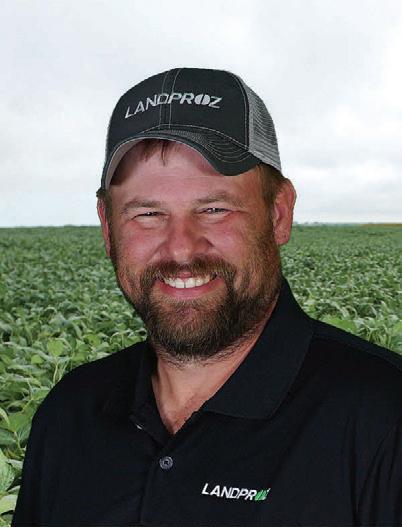
Bill Costanzo is an LGD program specialist and part of a joint project between the Texas Sheep Goat Predator Management Board and Texas A&M University AgriLife Center — San Angelo. He cares for and manages
over 20 livestock guardian dogs at San Angelo and its research ranches. Costanzo’s work and expertise reaches far beyond where he lives and works; he has advice for producers looking to add a livestock guardian dog to an operation in any geographical location.
It comes as no surprise that the Texan landscape and variety of predators are different compared to Iowa.
“It’s like that saying, ‘Everything is bigger in Texas,’” said Costanzo.
Texas has two distinct weather patterns that cause the western half to be dryer than the eastern half. Grazing quality can be poor, so producers use rotational grazing on large tracts of land to sustain livestock. There is also dense brush for predators to hide in, which challenges the control of coyotes and feral hogs. Utilizing livestock guardian dogs is crucial to livestock operations that can span from 250 acres to 2,500 acres or more.
By BILL SHEA
A Webster County couple that has raised pigs, corn and soybeans for 40 years has received a top state award for Iowa livestock farmers who demonstrate outstanding animal care, environmental stewardship and a strong commitment to their community.
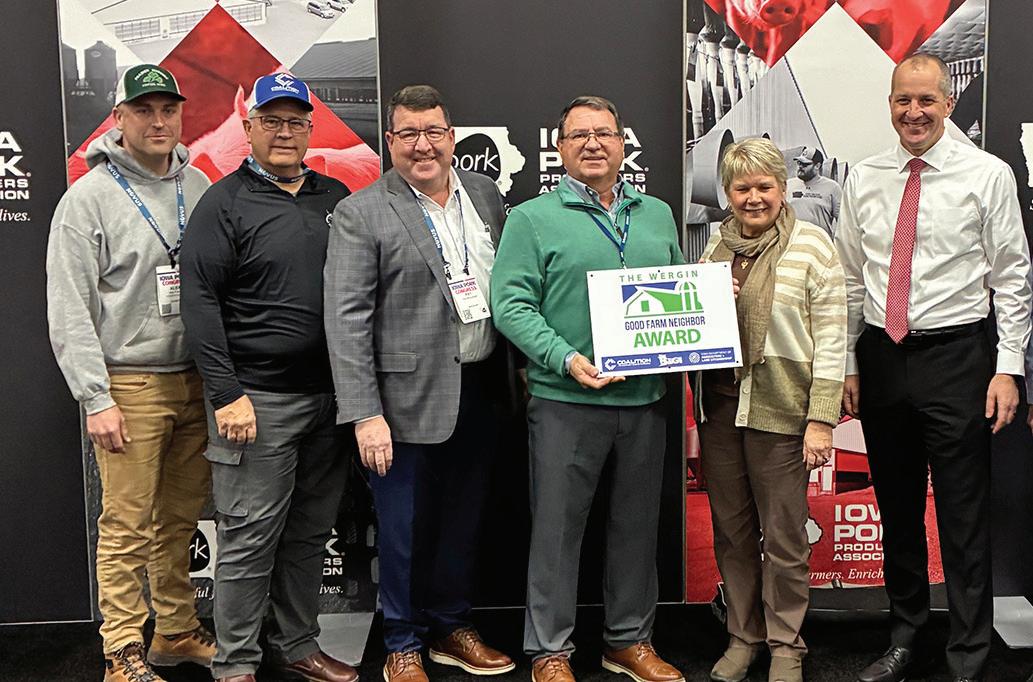
Gregg and Liddy Hora were presented the Wergin Good Farm Neighbor Award recently at the Iowa Pork Congress in Des Moines.
“We’re pretty humbled,” Gregg Hora said.
“There are a lot of farm families that do what we do and that’s why this is so humbling,” he added.
He thanked the part-time workers on the family farm and the members of the Webster County Pork Producer whose support, he said, is essential.
Gregg Hora said he and his wife did not know they had been nominated for the award. He said they were told in early December that they were going to receive it.
“It was a big surprise to Liddy and I,” he said.
Iowa Secretary of Agriculture Mike Naig was on hand to honor the Horas.
“Gregg and Liddy take pride in helping people better understand that agriculture is about real people doing real work,” Naig said in a written statement. “By engaging with their neighbors, local businesses and their community, they help build trust and strengthen connections. Their commitment to advocacy, along with their focus on animal care, stewardship and community involvement, reflects
By KOLLEEN TAYLOR
WEBSTER CITY —
Secretary of Agriculture Mike Naig’s stop in Webster City in January to view the Career Ag Academy was like a visit with old friends and family.
Because it was.
Naig grew up on a family farm in northwest Iowa near Cylinder. He was obviously at ease touring the building and greeting the assembled farmers, educators and leaders who were involved with the newest addition to the Hamilton County Fairgrounds.
His enthusiasm radiated from him as he greeted the small group who was there to explain the project, and smiles abounded as he congratulated the team who made the ag education center a reality.
“I learned about this project before,” Naig said. “Now I get to be here.”
As he greeted Matt Berninghaus, Webster City superintendent of schools, it was a greeting between friends.
“Of course you’d be here,” he grinned. Naig and Berninghaus grew
The U.S. Environmental Protection Agency issued a clarification letter Feb. 2 to manufacturers saying that the Clean Air Act does not prohibit independent repairs to offroad diesel equipment such as farm machinery.
A news release from EPA said manufacturers “can no longer” use the act to “justify limiting access to repair tools or software.”
EPA Administrator Lee Zeldin said in the release that the agency is “proud to set the record straight and protect farmers.”
“For far too long, manufacturers have wrongly used the Clean Air Act to monopolize the repair markets, hurting our farmers,” Zeldin said.
The letter from EPA explains that while the Clean Air Act prohibits the removal or disabling of emission control systems, the law has a written exception that the systems
-Submitted photo courtesy of Texas Agri Life
BILL COSTANZO, Extension program specialist III, cares for
dogs at San Angelo and its research ranches.
Farm News
Bird flu detected in Kossuth County game bird hatchery
By CAMI KOONS Iowa Capital Dispatch
KOSSUTH COUNTY — The Iowa Department of Agriculture and Land Stewardship has detected a second outbreak of the highly pathogenic avian influenza in a Kossuth County mixed-species flock in late January.
A spokesperson with IDALS said the flock had about 25,000 birds. The outbreak occurred at a mixed-species game bird hatchery and included pheasants, quails and chukars, a game bird in the pheasant family.
The previous bird flu detection in Kossuth County occurred earlier the same week in a flock of chickens and game-bird pheasants and affected about 7,120 birds.
The spokesperson could not disclose if the outbreaks occurred at the same facilities.
This is the second, 2026 outbreak of the H5N1 strain of the bird flu in Iowa.
Since the start of the current outbreak, which began in 2022, more than 186 million domestic birds, nationally, have been affected by the strain of the virus, according to the U.S. Department of Agriculture’s Animal and Plant Health Inspection Service.
The current public health risk of the highly pathogenic avian influenza is low, according to the U.S. Centers for Disease Control and Prevention, as the flu is not currently known to spread between humans.
IDALS urges livestock producers to “continue bolstering” biosecurity measures on their operations to prevent future outbreaks. Additionally, producers who detect symptoms like lethargy, a sudden increase in deaths, swollen heads, or difficulty breathing in their flocks, should contact their veterinarians immediately.
The highly pathogenic avian influenza has also been detected in wild birds in Iowa. The Iowa Department of Natural Resources urges Iowans who notice 20 or more sick or dead birds in an area to contact the department.
Repair
can be disabled for the purpose of a repair.
According to the news release from EPA, the letter is “a direct response” to a request for guidance from farm equipment manufacturer John Deere. The company asked EPA to confirm that temporary emission control overrides were permitted under the law.
Deere & Co. has been central to the right-to-repair issue, with the Federal Trade Commission and attorneys general from several farming states suing the company at the tail end of the Biden administration for “unfair practices” related to equipment repairs.
The lawsuit alleged John Deere equipment had sophisticated technology that could only be worked on by company technicians, which limited farmers’ abilities to work on their own equipment. The company said the lawsuit was based on flawed legal theories.
The release from EPA said the anti-tampering provisions in the Clean Air Act have “for years” been interpreted by equipment manufacturers as something that prevented them from making certain repair tools available to farmers, which has meant farmers spend more on repairs or opt for older equipment.
U.S. Secretary of Agriculture Brooke Rollins said in the release that the clarification is “expected to save farmers thousands in unnecessary repairs.”
“This is another win for American farmers and ranchers by the Trump Administration,” Rollins said. “By clarifying manufacturers can no longer use the Clean Air Act to justify limiting access to repair tools or software, we are reaffirming the lawful right of American farmers and equipment owners to repair their farm equipment.”
EPA said the guidance does not change the law or “weaken emission standards” but “clarifies” language in the Clean Air Act to show that “farmers and equipment owners are not required to rely on authorized dealers exclusively to fix equipment.”
In a separate action from August, Zeldin announced guidance to revise diesel exhaust fuel systems to prevent diesel farm equipment and vehicles from losing power as they run out of the fluid.
DEF, as the fluid is abbreviated, helps to reduce the presence of certain greenhouse gases as diesel fuel is burned in an engine.
President Donald Trump, in his Jan. 27 visit to Iowa, noted the DEF regulation change and said his administration has also removed certain emission requirements from cars.
Central Iowa is marked by differences in climate and land use, but incorporating a livestock guardian dog helps in the same way, especially when deterring predators in common.
Livestock guardian dogs have been used around the world for centuries, but have only been in common use in the U.S. since the late 1970s.
When properly bonded and placed with livestock, guardian dogs prevent predation by deterring predators around the clock. They do this in three distinct ways: 1) Territorial exclusion: monitoring their territory on a regular basis. 2) Disruption of predatorial behavior: being in pastures and/or proximity to livestock. 3) Confronting predators who are threatening livestock: barking at and chasing threats away.
Costanzo explained that the most important aspect of a good guardian dog is for it to be properly bonded with the livestock it needs to protect. He also noted that it’s important to know that not every dog can fill this role. There are specific breeds of livestock guardian dogs that are bred to protect livestock, rather than to hunt or herd. Some common LGD breeds include Great Pyrenees, Anatolian shepherd, Karakachan, Akbash, and Maremma.
Using crossbred guardian dogs is generally not encouraged.
According to Costanzo’s research, introducing livestock guardian pups beginning at 4 to 16 weeks old in bonding pens is ideal.
Only sheep or goats that have been previously socialized to guardian dogs should be used in this circumstance. They can then be moved to bigger pens or paddocks, but will need to be monitored closely. Bad behaviors need to be corrected immediately, and it will take a few years before a livestock guardian dog is fully effective. LGDs need to be taught basic commands, but in the same token, should not be made into pets. If a producer has limited experience, he/she might benefit from purchasing a fully trained or bonded guardian dog.
When asked for important advice on how producers can get started
Hora
Continued from Page 1A
the spirit of the Wergin Good Farm Neighbor Award. I am pleased to recognize Gregg and Liddy with this well-deserved honor.”
The Wergin Good Farm Neighbor Award is made possible by a partnership of the Coalition to Support Iowa’s Farmers, The Big Show on WHO radio and the Iowa Department of Agriculture and Land Stewardship.
The Hora farm includes up to 10,000 pigs on three sites, plus 1,800 acres where corn and soybeans are grown.
Gregg Hora said the livestock portion of the farm is a contract grower operation in which pigs weighing about 50 pounds are brought in and raised until they reach the market weight of about 280 pounds.
Liddy Hora balanced decades of both full-time and part-time work off the farm while managing the farm’s books and tax preparations.
The three Hora children, Lindsay, Dan and Joe, have all worked on the farm. Joe Hora, who works for Channel Seeds, still regularly helps. The Horas have four grandsons ranging in age from 2 to 5 who have already visited the pig barns.
Gregg and Liddy Hora are longtime leaders and volunteers within the pork industry and their community. He has served as past
Forestry On Tap virtual field day set for Feb. 26
AMES — Iowa Learning Farms will host a virtual field day at 1 p.m. on Feb. 26. The event, which is available at no cost, will feature a live discussion with Billy Beck, associate professor and extension forestry specialist at Iowa State University; Michelle Soupir, professor of agricultural and biosystems engineering at Iowa State; and Clarisse Siababa, Fulbright Scholar and agricultural and biosystems engineering graduate research assistant at Iowa State.
The virtual field day aims to highlight how woodland management and woodchip bioreactors can work together to reduce nitrates and improve water quality.
“If you came to Iowa 200 years ago, you would have seen a prairie, woodland and wetland system. But today, you'll see a highly agricultural production system. The difference is that tile drainage has been installed to manage the moisture content in the soil to allow crop production,” said Soupir. “While tile is very important, it has also created a situation where water is able to move through the system, collect nitrate and move offsite rather quickly.”
Through an innovative research and demonstration project supported by the USDA National Institute of Food and Agriculture, the team is exploring how traditionally low-value timber species perform in woodchip bioreactors to meet both landowner woodland management and statewide water quality goals. Any person interested in woodland management or water quality is welcome to attend the virtual field day. Participants are also encouraged to bring any questions. To participate in the Iowa Learning Farms Field Day Forestry On Tap: Microbiome, Local Wood Resources and Bioreactors,” join the live virtual field day online or join from a dial-in phone line (dial 646-876-9923 or 646-931-3860, with meeting ID 914 1198 4892). The field day will be recorded and archived on the ILF Virtual Field Day Archive for future viewing. Participants may be eligible for a Certified Crop Adviser board-approved continuing education unit. Information about how to apply for and receive the CEU will be provided at the end of the event.
adding a livestock guardian dog to their operation, Costanzo reiterated, “Do your research, then do more research for your specific situation. Find someone who has a similar livestock operation and find out what kind of LGD works for them.”
When it comes to finding the right dog, it’s important to support local breeders if possible. Again, asking other producers about their livestock guardian dogs and what works for them is a good lead.
Constanzo encourages producers to reach out with questions. Along with hosting LGD field days, presentations, written educational
To learn more
To learn more about Bill Costanzo and livestock guardian dogs, go to sananglo.tamu.edu and search his webinars on YouTube.com.
projects, and webinars, he has a plethora of knowledge to share. He is well versed in helpful guidance for bonding, working pairs, and any problems that may arise.
president of the Iowa Pork Producers Association and continues to serve in leadership roles and committees, while also serving on the Iowa Farm Business Association board.
The family has been 40-year members of the Iowa Corn Growers Association, the Iowa Soybean Association and the Iowa Farm Bureau Federation. They are active
members of the Webster County Pork Producers, helping with community grilling events and meat donations, and have been members of First Presbyterian Church in Fort Dodge for more than 40 years.
“The rewarding part is that we know that we are growing food to provide good wholesome food for people,” Gregg Hora said.
-Farm News photo by Elizabeth Adams
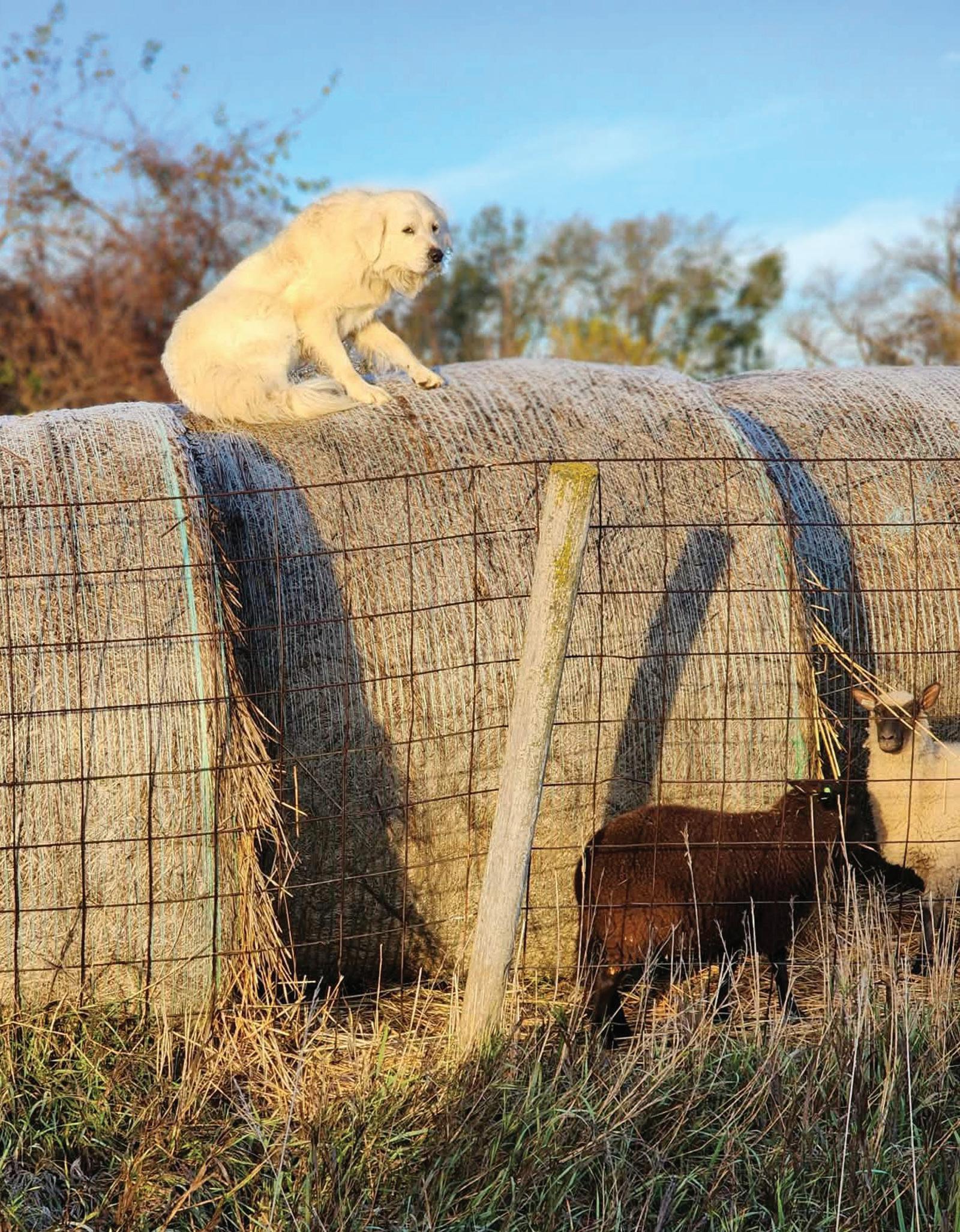
THIS GREAT PYRENEES keeps watch over the sheep in the paddock. Great Pyrenees is one of the breeds commonly used as livestock guardian dogs.
-Submitted photo
GREGG AND LIDDY HORA received the Wergin Good Farm Neighbor Award during the Iowa Pork Congress in Des Moines. Shown from left are Alex Frazier, of Frazier Nursery; Bob Quinn, host of The Big Show on WHO radio; Pat McGonegle, chief executive officer of the Iowa Pork Producers Association; Gregg Hora; Liddy Hora and Iowa Secretary of Agriculture Mike Naig.
M arket I ns I der W eekly n e W sletter
NEWS
*Tyson Foods is paying $48 million to settle a classaction lawsuit. The allegations were that Tyson and other pork processors conspired to fix prices from 2009 to 2018. Earlier this month, Tyson paid $55 million to settle a similar lawsuit in its beef business segment.
CORN
ANALYSIS
Corn closed the week $.01 1/4 lower. Last week, private exporters announced sales of 5.14 million bushels (mb) of corn to an unknown destination.
In the weekly export inspections report, U.S. corn export inspections, for the week ended Jan. 29 were 44.7 million bushels but down from the previous week’s 60.9 mb, below last year’s same-week exports of 49.6 mb and the lowest of the first 22 weeks of the 2025-26 marketing year. Over the last four weeks, corn inspections averaged 55.8 mb/ week vs. last year’s 54.1 mb/ week average during the same period, with cumulative corn inspections of 1.284 billion bushels still up 50% from last year’s 857 million, but slipping as cumulative exports were up more than 70% year-over-year in early December.
In order to reach the USDA’s 3.200 billion bushel export projection, corn inspections will need to average roughly 57.0 mb/week through the end of August vs. last year’s 59.2 mb/ week average from this point forward.
In the weekly EIA report, U.S. ethanol average daily production for the week ending Jan. 30 averaged 0.956 million barrels. This was down 14.2% from last week and down 14.0% from last year. The five-year average for this week is 1.015 million barrels per day. Ethanol stocks were 25.136 million barrels. This was down 1.0% from last week and down 4.8% from last year. The five-year average stocks for this week is 24.945 million barrels. The amount of corn used for the week is estimated at 95.21
Midwest Marketing Solutions Brian Hoops
million bushels. Cumulative corn use for the crop year has reached 2.358 billion bushels. Corn use needs to average 106.55 million bushels per week to meet the USDA’s marketing year forecast of 5.600 billion bushels.
STRATEGY & OUTLOOK
Record demand and strong ethanol grind has supported corn values, however ending stocks remain large and the carry will unlikely be met.
SOYBEANS ANALYSIS
Soybeans closed the week $.48 1/4 higher. Last week, private exporters did not report any export sales.
In the weekly export inspections report, U.S. soybean export inspections last week of 48.2 mb were little-changed from the previous week’s 49.1 mb while being modestly above last year’s same-week shipments of 41.9 mb. As exports to China continue to play catch-up, soybean inspections over the last four weeks averaged 51.3 mb/week, solidly above last year’s 38.8 mb/week average during the same period, allowing cumulative inspections of 808 million bushels to continue trimming the year-over-year deficit to last year’s 1.256 billion bushels, now down 36% after being down 46% in late December. Soybean inspections would need to average roughly 23.9 mb/week through the end of August, above last year’s 19.1 mb/week average from this point forward.
In the December census crush report, USDA reported U.S. soybean crush was 229.9 million
bushels, rising from November crush of 220.5 million bushels, while being 5.6% above last year’s December crush of 217.7 million bushels. Through the first four months of the 202526 U.S. soybean marketing year, cumulative crush of 892 million bushels is up 7.4% from last year’s 830 million, leaving January through August crush needing to total 1.678 billion bushels in order to reach the USDA’s current marketing year total crush estimate of 2.570 billion bushels, which would be up 3.9% from last year for the eight-month period.
U.S. soybean oil production in December was 2.657 billion pounds, up from 2.532 billion in November and last year’s December production of 2.573 billion pounds, bringing 202526 U.S. soybean oil marketing year-to-date (October through December) production to 7.931 billion pounds, up 4.3% from last year’s 7.606 billion vs. the USDA’s current marketing year total soybean oil production estimate of 29.940 billion pounds, reflecting an expected 2.5% increase from last year’s 29.218 billion.
USDA reported 488.3 million bushels of corn were used for ethanol production in December vs. 464.4 million in November and 479.5 million bushels in December last year, but is likely to be revised modestly lower once again as USDA’s initial reads of monthly corn used for ethanol production of late have consistently faced downward revisions in subsequent updates.
STRATEGY & OUTLOOK
Producers were advised to sell inventory and re-own with lower risk options due to the huge South American crop that is being produced.
WHEAT ANALYSIS
For the week, Chicago wheat closed $.07 3/4 lower and Kansas City wheat closed $.09 3/4 lower. Last week, private exporters did not announce any export sales.
In the weekly export inspections report, U.S. wheat export inspections last week of 12.0 mb, little-changed from the previous week’s 13.9 mb and last year’s same-week exports of 9.3 mb. Over the last four weeks, wheat inspections averaged 13.1 mb/week vs. last year’s 12.0 mb/ week average during the same period, with cumulative export inspections of 613 million bushels maintaining a 19% gain vs. last year’s 517 million. In order to reach the USDA’s 900 million bushel export projection, wheat inspections will need to average roughly 15.1 mb/week through the end of May vs. last year’s 16.2 mb/week average during the same period.
In the monthly winter wheat conditions report, the state of Kansas was up 1% to 61% good to excellent, Oklahoma was down 8% to 23%, Texas was down 7% to 13%, Colorado was up 14% to 57%, North Dakota was up 7% to 59%, South Dakota was down 1% to 36%, and Illinois was up 3% to 67%.
STRATEGY & OUTLOOK
Producers should have rolled hedges on stored wheat to March or May to capture the large carry. Meeting the carry seems unlikely with the large supplies of world wheat.
LIVE & FEEDER CATTLE
ANALYSIS
Last week, live cattle closed $.90 lower while feeder cattle closed $8 higher. Last week, the North had moderate fed cattle cash trade at $240 to $244 live and $378 dressed, which is steady to $4 higher live and steady dressed when compared to the prior week. There was moderate to active fed cattle cash trade volume in the South at $242 to $245 live, which is $2 to $5 higher than the prior week. Boxed beef sold for export last week saw the total load count decline 446 loads to 928 loads, which was still a good-sized load count when compared to the other weeks of 2025. Year-todate load count was 4,390 loads,
45 Valentine's Days
A crucial national holiday is looming on the horizon. Ignoring this holiday could imperil your current and future happiness, especially if you’re a guy.
Valentine’s Day is a boon for the greeting card, floral, and jewelry industries. Sales could be tripled if their stores’ sound systems played “Mandy” by Barry Manilow on a continuous loop. One guy, after hearing that sapdrenched song for the first time, said, “It made me want to call all of my old girlfriends and beg them for forgiveness.”
I mentioned that quote to my wife and she replied, “You darn skippy he should!”
But what to do if you’re a guy who, like me, has
been married to the same lady for 45 years? By now we’ve said everything we need to say and have expressed every possible expression of affection. I’ve decided that one way to accomplish this is by doing my fair share of the housework. As a female comedian once observed, “No husband has ever been shot by his wife while he was washing
the dishes.”
The story goes that Ole and Lena had been married for many years. One day Lena asked Ole, “Why don’t you ever say that you love me?”
“I said it once when we were standing at the altar,” Ole replied. “And I would have let you know if I’d changed my mind.”
Evolution seems to have put us guys mostly in charge of romance even though we stink at it. It’s like forcing a right-handed pitcher to throw with his left arm. Nobody will be happy with the results.
Romantic music can help a guy set the mood. Among my top choices for that purpose is “I’ll Have to Say I Love You in a Song” by the late, great Jim Croce. An example of a less desirable love tune, from a feminine point of view, might be a song such as “Pour Some Sugar on Me” by Def Leppard. So, what’s a guy to do when he has been married for as long as my wife and me? In our case, we’ve been watching the Netflix series “Bridgerton.”
I am secure enough in my masculinity to admit that not only do I watch “Bridgerton,” I actually enjoy it. My wife likes the show for all of its lace and
an increase of 242 loads which is a 5.8% increase.
At the Joplin, Missouri auction on Feb. 2, feeder steers were $5 to $20 higher with feeder heifers $5 to $7 higher and steer and heifer calves mostly steady. Demand was decent with 5,456 head traded vs. 9,695 head last week and 11,934 head last year. At the Oklahoma City auction on Feb. 2, feeder cattle and calves were steady to $4 lower. Demand was decent at 9,800 head vs. 11,549 head last week and 7,205 head a year ago. The latest USDA steer carcass weights were higher than last week by 3 pounds at 987 pounds, which is 39 pounds above yearago levels.
Net beef sales were 19,700 mts with shipments at 13,000 mts.
STRATEGY & OUTLOOK
The COF report and tight supplies remain bullish to the market, however a re-opening of the U.S.-Mexican border poses headline risks.
LEAN HOGS
ANALYSIS
Lean hogs closed the week $2.72 higher.
Total pork export shipments during November were reported at 613 million pounds on a carcass weight equivalent, down slightly from the 632 million pounds the prior month, and down 5% from this same month last year. Cumulative yearto-date pork exports through November are now down 2% vs. the prior year.
Iowa/southern Minnesota weekly hog weights for the week ending Jan. 31 has weights down to 291.6 pounds vs. 293.1 pounds last week and 290.7 pounds last year.
Net pork sales were 35,100 mts with shipments at 37,600 mts.
STRATEGY & OUTLOOK
A large discount to the cash markets should provide limited downside risk.
frills and swoopy hairdos. And that’s just the men. The ladies’ coiffeurs and garments are even more over the top. A woman’s outfit can involve enough cloth to rig a triple-masted clipper ship.
Even though “Bridgerton” is, as my wife calls it, a “girlygirl show,” there is much entertainment and edification to be had from watching this Regency romantic drama. There are the secret yearnings, the struggles to find true love, the sneaking around in the shadows, the viper’s pit of gossips, the backstabbing, the perpetual peril of social snubbing. In other words, it’s exactly like junior high school.
But my wife is a great sport and our TV watching choices are a two-way street. She will sit with me patiently while I drool over such shows as Antique Tractor Fever and the televised Mecum or Barrett-Jackson car
auctions. In our own ways, we are each indulging in fantasies that will likely remain mere daydreams. My wife and I have a somewhat unusual relationship in that she saved my life. Literally. When I was 30 years old, I entered a manure pit on our family’s dairy farm and was overcome by toxic hydrogen sulfide gas. I was ambulanced to a local hospital where the ER doctor told my wife that I had zero chance of surviving.
She insisted that I be helicoptered to a larger hospital. After I’d been there for a few days, I suffered life-threatening complications. My doctor told my wife to call the family, that it was the end of the road for me. She again insisted that additional steps be taken. After a month in Intensive Care and a week in a regular room, I was able to walk out of the hospital and resume my life.
In the song “To Sir with Love,” Lulu croons, “How do you thank someone who has taken you from crayons to perfume?”
I have a better question. How do you thank someone who has taken you from death’s door to a full and happy life? What could I possibly give in return?
The only thing I can think of is my time. And so, this Valentine’s Day, I think my wife and I will settle on the couch with a bowl of popcorn and take in a TV show that we’ll both enjoy.
I’m up for rewatching “Downton Abbey.”
FFA enriches the lives of students
The organization has adapted to changes in agriculture
FFA was established in 1928 as Future Farmers of America. It was renamed the National FFA Organization in 1988 to reflect the rapid changes and greater employment diversity in agriculture. To most of us, it is known simply as FFA.
After more than eight decades, FFA continues to enrich the lives of students by helping them develop their potential for leadership, personal growth and career success through agriculture education.
The FFA motto captures the spirit of the organization succinctly: “Learning to do, doing to learn, earning to live, living to serve.”
Those 12 words help explain why this vibrant organization is as important today as it was in a more rural America.
In the 21st century, FFA embraces a lot more than traditional farm life. According to its national website, more than 300 careers are facilitated by FFA — everything from agriscience to biotechnology to turf grass management. The organization now has a membership of nearly 700,000. There are 8,630 chapters. FFA boasts members in all 50 states as well as Puerto Rico and the Virgin Islands.
National FFA Week begins Feb. 21 and continues through Feb. 28.
Different elements of FFA will be highlighted on different days of the week. For example, Tuesday, Feb. 24, has been designated alumni day. Thursday, Feb. 26, has been designated as Give FFA Day to encourage donations to the organization. Friday, Feb. 27, is Wear Blue Day during which FFA members are encouraged to wear their iconic blue jackets and other blue clothing.
Those of us who live in rural Iowa need little reminder of the importance of agriculture education and the contributions to our nation made by those who pursue careers in agriculture. Even so, this is a welcome opportunity to showcase the activities of FFA at the local, state and national levels.
Letters to the editor
The pipeline that almost no one wants
To the editor:
I can’t imagine any farmer hoping that a pipeline will get installed across their farm. That said, I think we need the carbon pipeline anyway.
I was encouraged to hear that there is a proposal in the Iowa legislature to widen the pipeline route in an effort to work with landowners willing to sell. That’s a great step, in my opinion, but the simple truth is that a pipeline of this magnitude simply cannot be built without at least some use of eminent domain. Some would say that it is wrong to use eminent domain for the construction of a private project, but I argue that this pipeline would bring benefits to our communities at large. When the Poet ethanol plant was built near me by Emmetsburg, it did not just reward its owners and investors. It brought jobs, children into our schools and customers into our local businesses. Our grocery stores and gas stations are also private businesses, but few would argue, especially in small towns where they’ve been lost, that they don’t have a public benefit. That said, farmers and landowners MUST be fairly compensated for the use of their land, and our state needs a vigorous regulatory program in place to insure the safety of area residents. We CANNOT allow this to be built and then simply ignore it. Pipelines are by far the safest way to transport almost anything in bulk, and they are already transporting far more dangerous products than carbon underneath our soils, such as anhydrous ammonia and natural gas. Because of the sheer volume of product that would be moved through this pipeline, however, safety protocols are vital. Criticism of this project has included that it’s funded by “big money and big business.”
I would counter that that does not make it inherently bad, just that we need to go in with eyes wide open. Some of the big money being spent against its construction is using landowner rights as a flashpoint to ignite opposition, when their real aim is to discourage anything that supports liquid fueled vehicles, in the hope we are forced to move more rapidly to electric vehicles.
Crop prices are in the tank, demand is iffy, and productivity keeps rising. We can ask for an acreage set aside program, beg for money from our fellow taxpayers, or we can be proactive and work to increase demand for our corn. Our local ethanol plants have been a major boon to our rural economy, but they’re not keeping up with the increasing corn supply. New plant construction or expansion is only occurring in areas where carbon capture is possible, such as in Nebraska, where they were able to re-purpose an existing pipeline, or areas of the eastern Corn Belt where the local geology lends itself to carbon capture. We need more demand for corn here!
To see more on the pipeline and carbon capture, go to: https://www.youtube.com/watch?v=IkHtrQipyD8.
Fred Wirtz West Bend
There's no heresy in law of supply and demand
If growing corn is a religion among Midwestern farmers, its Vatican is somewhere in central Iowa.
That fact was confirmed in late January when a Des Moines-based ag consulting firm released a report that predicted dire consequences for Iowa farmers, its ag economy and the nation if Congress doesn't soon approve year-around E15 use.
E15, as you may know, is gasoline that contains 15 percent ethanol, or 50 percent more than today’s federallymandated E10, a 10 percent blend. While few Americans are clamoring for more ethanol, corn farmers are hollering themselves hoarse for it.
Without year-round E15, the report predicted, by “2034 we could be facing ending stocks” — corn carried over from one year to the next — “nearly as large as a full year’s worth of demand … similar to the 1980s farm crisis.”
That’s not an overstatement, noted Monte Shaw, executive director of the Iowa Renewable Fuels Association that, in conjunction with the Iowa Corn Growers Association, commissioned the report.
Shaw then offered a terrific example of overstatement: “I think E-15 is going to be the single most important ag-policy decision that’s made this decade. It literally sets us up to move forward or to go into a very bad place.”
Unsurprisingly, his paid-for report supports his heaven-or-hades forecast. “Historically, corn provides the largest share of farm revenue in Iowa.” Trendline yields, however, will “push … production to new
record highs” requiring new “demand drivers … to support and sustain … corn production.”
But
“Lowering acreage by 10% as forecast by the USDA … will significantly weaken the rural economies that rely on the associated activities of corn production,” including, presumably, ethanol manufacturing.
The report then dives into what it sees as several E15 benefits like sustainable aviation fuel, carbon pipelines, and carbon “conservation.”
Its thrust from start to finish is ginclear: farmers need E15 to fulfill their mission to grow billions more bushels of corn.
Not mentioned, however, are the costs all this corn growing will have on Iowa. Presently, for example, the Iowa Cancer Registry notes that “Iowa has the 2nd highest cancer incidence–new cancer–rate in the U.S.”
Also, “Iowa ’ s overall cancer incidence rate is rising while the U.S. rate is falling. Only six states have rising incidence rates, but Iowa s is rising the fastest.” So fast, in fact, that the American Cancer Society's advocacy arm calls it a “cancer crisis.”
Researchers are now examining today s agriculture as a contributor
to the rise; 31 million of Iowa’s 35.7 million acres are intensively farmed. Other anticipated E15 costs are known. For example, claims the report, a “potential” 6 billion gallons of “ultra-low-carbon ethanol” — created by simply capturing CO2 while making ethanol, then piping and storing it underground — could be sold by 2040.
The word “potential” does a lot of lifting here, however. First, Iowans, like residents of several other Midwestern states, have repeatedly told their state officials they want nothing to do with ethanol pipelines. Second, current estimates peg federal subsidies tied to the notyet built pipelines at $10 billion and climbing. That open taxpayer checkbook for a controversial, unproven product is far from assured.
And, third, there is still a roaring debate over whether ethanol is even “green,” or, at best, at least environmentally neutral, as its farm proponents preach. Opponents point to decades of independent studies that prove the exact opposite.
Most importantly, the report fails to mention the simplest solution to what it sees as the coming catastrophic “demand gap:” plant something else. After all, there s no rule, federal or otherwise, that requires farmers to grow corn.
That's not heresy; it is, in fact, a law. The law of supply and demand.
There are a few in every bushel
I did participate in a demonstration, so to speak, at the Iowa State Capitol. I joined ethanol and CO2 pipeline supporters who were lobbying against an Iowa House Bill that would bar use of eminent domain for virtually anything. That was overkill. It was no surprise that the bill passed in the House, however it is not going further from there and is like the bill that Gov. Reynolds vetoed last session. There was a strong show of opposition from the ethanol industry to the bill personified in the group I joined at the Capitol. House members who voted for this bill should not receive the endorsement of the Iowa Corn Growers Association or Iowa Farm Bureau Federation next election.
The Iowa Legislature is dealing with eminent domain. There is at least one in every bushel, so you will not be able to plan a route for a pipeline, road or powerline etc., that doesn’t encounter someone who opposes selling an easement. Landowners should be compensated for use of their property and eminent domain is the mechanism that does that. No one likes it. I do not think that the valuation was often fair which the landowner has to weigh against their selling an easement. Being on the route chosen for the Summit Carbon Solutions CO2 pipeline was in my experience like winning the lottery.
I cannot admit to understanding the opposition. Easement compensation that we accepted so-far eclipsed anything comparable to eminent domain, that it did not even enter our minds as relevant. Historically, values set by the eminent domain process were based on farmland values. The easement compensation paid by Summit Carbon Solutions was based upon the value of the use so was a multiple of that. This was something that I had long argued for. So why did I drive to Des Moines to support it? Because we need the corn demand that it will generate.
Our 500 acres of corn in Clay County this year yielded 270 bushels per acre. That was a record yield for us, representing the rising national corn yield that USDA says produced over 17 billion bushels of corn in 2025.
My son tells me that our 2026 cost of production is $4.58 a bushel. You may note that the price of cash corn is not that high and with the projected carryover, the corn price could fall below $4 this year. When I started
farming over 50 years ago, my average corn yield was not much more than half our 2025 yield. The trendline for corn yields continues to climb, which means that in order to be profitable we need to grow demand. This has been a challenge all my career as a market analyst and market maker. I did not only spend effort growing more corn, I worked with the industry to grow more demand. Unless Robert F. Kennedy decides that people need to eat four meals per day we are limited as to the domestic growth of meat production. Livestock production was not enough to support corn market profitability so I got involved in the organization and promotion of the ethanol industry. That industry now utilizes over 5.6 billion bushels of corn annually and became the third leg under the stool that corn demand along with feed demand and exports sits upon. Ethanol production is the most successful creation of wealth for the farm community that I have seen develop in my lifetime. As long as our corn productivity increases, we need to grow demand. Where are we at with that today?
President Donald Trump said that we would go through a period of pain, but that his new trade deals would deliver a gain. We could buy new tractors and more land. Personally, I never believed that and I do not think that is going to happen. We are not seeing ag commodity export growth result from his trade agenda. The problem with exports is that we do not control them. Buyers do. Geopolitics interferes. We also have competitors, and our track record is that we are losing market share to them. I do not see the switches that we can throw that will change that. I do not think that we are the world’s first choice to buy from. So that leaves us with biofuel as the remaining fruit that can be harvested to fill the need for demand and profit generation … that we can control and manage. There are a number of different ways in which to grow biofuel demand, but the greatest opportunity with the most
potential is low-carbon ethanol. Brazil produces low-carbon ethanol. which is preferred by most export buyers and required as Sustainable Aviation Fuel (SAF) feedstock. The potential market for SAF is large enough to grow ethanol demand for some time to come. U.S. ethanol plants have lowered their carbon intensity scores since inception, but the way at scale to qualify as low-carbon ethanol requires CO2 sequestration. The ethanol industry in Nebraska has brought CO2 sequestration on line with the Tall Grass CO2 pipeline which 70% of Nebraska ethanol plants have hooked onto. That means that Nebraska has taken the lead as the low carbon ethanol producer in the U.S. Plants with their CO2 sequestered can add enormous value. Iowa plants that intend to sequester CO2 through the Summit pipeline have plans to immediately expand production by 25% to 100%. This means they need more corn, which means improved prices and basis levels. This would be the equivalent of ethanol industry 2.0 for its impact on corn demand, prices and basis. We have seen this once before with ethanol industry 1.0, so we know what the result will be. CO2 pipeline critics have cited opposition to use of eminent domain as their primary reason for opposing the industry. Iowa Senate Majority Leader Mike Klimesh introduced SF 2067, a bill which would solve the eminent domain issue for reasonable people. Instead of the IUB approving a specific route for pipelines, they instead designate a corridor of five miles to either side of the route that the pipeline can deviate from in order to find landowners willing to sell an easement. Summit Carbon has over 74% of the easements needed now and with this much latitude within a corridor, the need for use of eminent domain to find a path forward becomes unlikely. The bill needs to be approved by the legislature while we still have a governor that will sign it. This is a Solomon wisdomlike solution to a vexing problem. Of course, if you don’t want corn to be profitable, prefer state budgets to remain unbalanced and are bothered in general by progress, a reasonable solution such as provided by SF 2067 may not change your mind. As I said, there are a few in every bushel — more than a few in the Iowa House.
Farm and Food File
Alan Guebert
CommStock
David Kruse
DONNING THE BLUE JACKET WITH PRIDE
State officers reflect on their time leading
Iowa FFA
By KRISTIN DANLEY GREINER Farm News writer
M
ore than 90 years have passed since the first FFA chapter was assembled in Iowa. Current state officers are wrapping up their term with the Iowa FFA, which serves more than 20,600 student members belonging to 270 local FFA chapters.
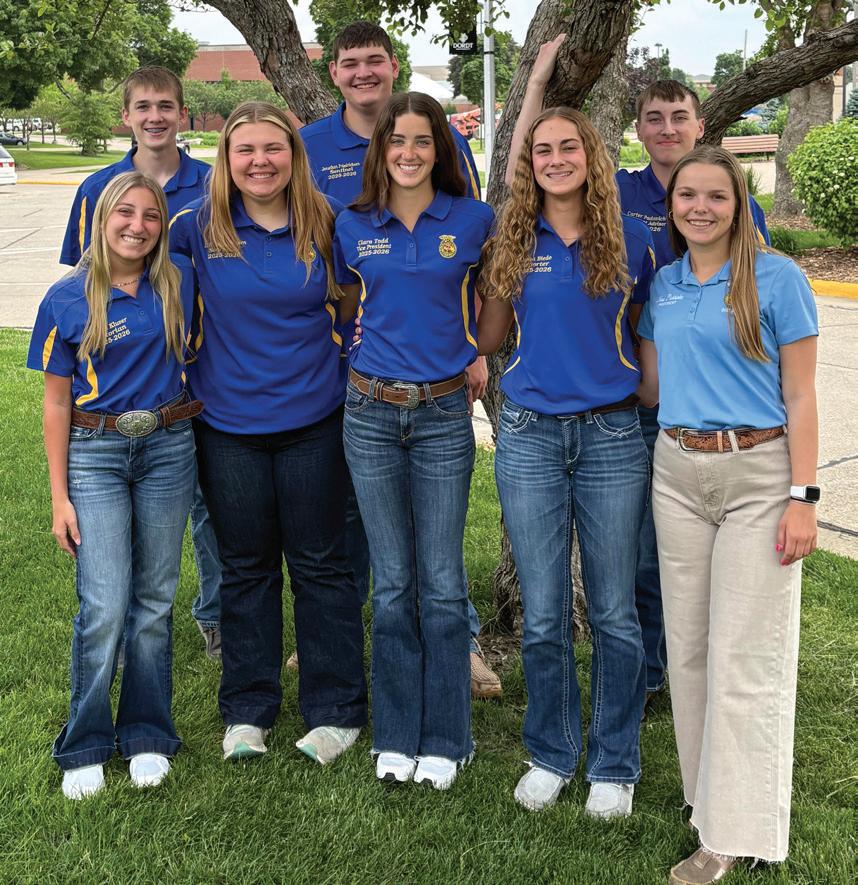
Three of those FFA leaders reflected on the past year in office where they’ve served as state officers.
The officers attend a variety of events throughout the year, including the State Leadership Conference, Chapter Officer Leadership Training, the Iowa State Fair, chapter workshops and banquets, the Greenhand Fire-Up, National FFA Convention and Expo, Ignite/Amplify/Transform Conferences and the Legislative Symposium.
State officers also engage in leadership programming and meet with agribusiness representatives and government officials, among other duties.
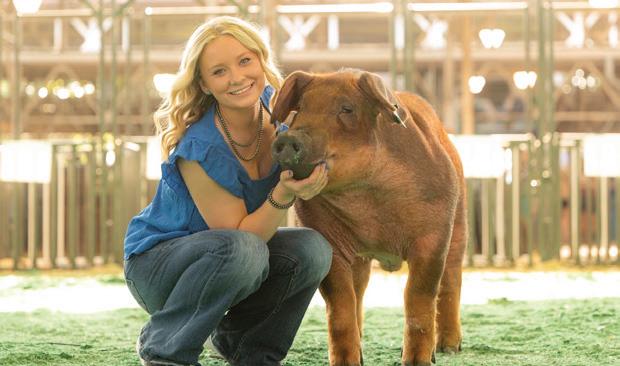
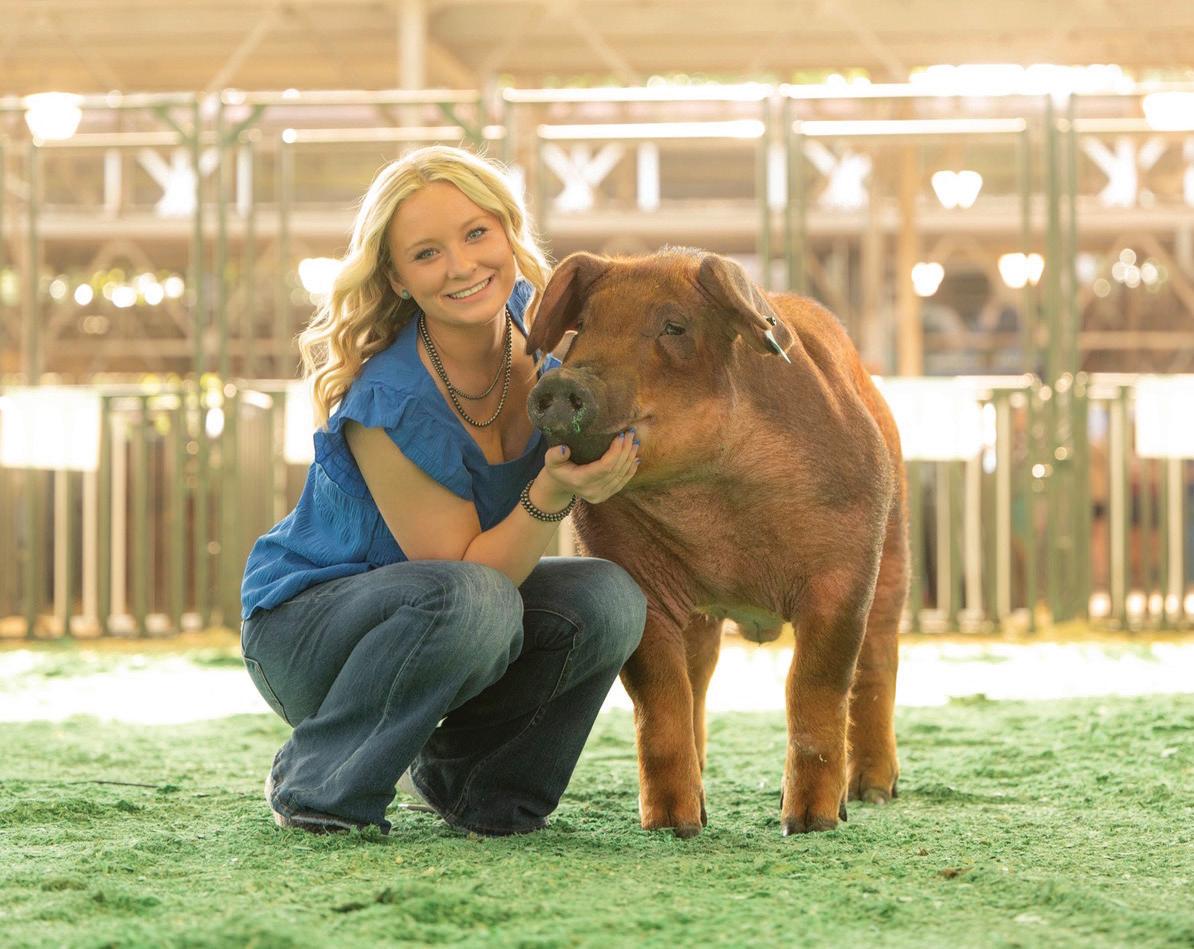
Kelsey Greenslade currently attends Northwest Missouri State University as a freshman majoring in agriculture education. She hails from Adel and graduated from ADM High School where she was involved in FFA since her freshman year. She’s a member of the Adel DeSoto Minburn chapter and didn’t grow up on a typical family farm, but did raise pigs and a few other critters for show purposes. She spent her summers traveling to different livestock shows.
Greenslade serves as the 2025-2026 Iowa FFA South Central State vice president and before that role, she served as the 2022-2023 ADM Chapter reporter, 2023-2024 ADM Chapter vice president, 20242025 ADM Chapter president, 2023-2024 South Central
District secretary and 20242025 South Central District vice president.
“This year has truly been a once-in-a-lifetime experience with countless memorable opportunities. Some of the first memories that come to mind are with all of the different people I have had the chance to interact with,” Greenslade said.
“One of my favorite memories was attending the State Officer Summit in Washington, D.C., where we were able to visit with legislators on Capitol Hill, advocating for FFA and agriculture education, work with the national officer team and develop bonds with state officers from all over the country.”
The Dallas County native said she loved her time at the National FFA Convention in Indianapolis where she functioned as a voting delegate, representing the thousands of Iowa FFA members at a national level, surrounded by a “sea of blue jackets.”
“Another one of my favorite things has been chapter visits,” Greenslade said. “On visits, I have been blessed to connect with many different members and really feel the true impact of the jacket. While serving in this role I have truly learned that it is the people that make the position so worth it and each of these opportunities have brought me some of the most amazing people.”
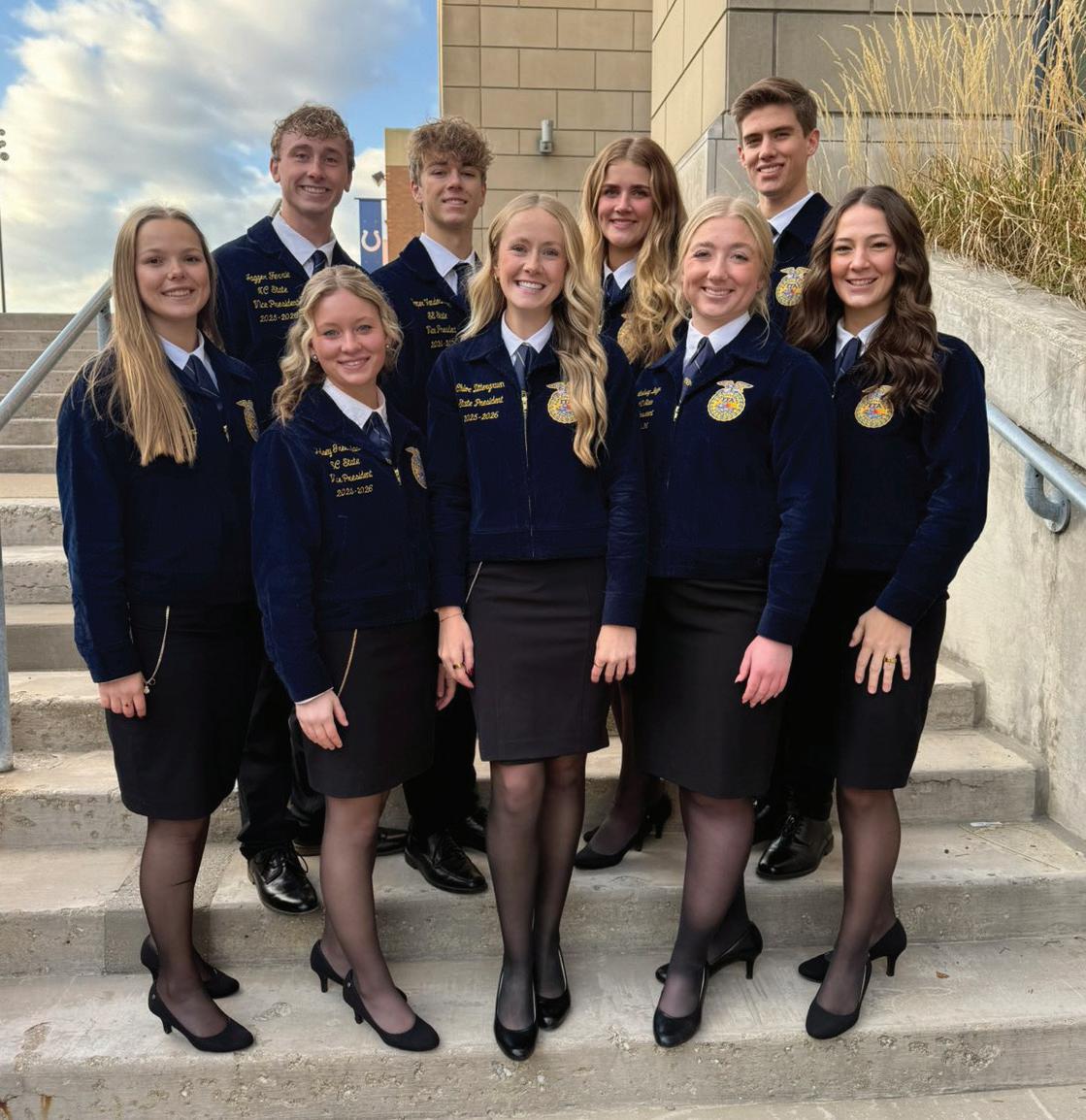
Jagger Ferrie attends Iowa State University where he’s a freshman studying horticulture. He’s from Story City where he grew up on an acreage, but his family’s farm is 40 miles to the east. He’s hands-on with farm chores, but especially enjoys lambing season, he said.
As the North Central State vice president, Ferrie belongs to the South Hamilton FFA and,
in the past, served as secretary, vice president and president of his local chapter.
“Outside of FFA and the farm, I have been really involved in the classroom. I have always wanted to absorb as much information as possible,” Ferrie said. “FFA is so much more than just agriculture. We are a student-led organization that allows students to develop their leadership, teamwork, communication and real-life soft skills. Agriculture is a pathway through which we can teach these skills. However, agriculture also has a way of making our world continue to turn and feed all of the people around us.”
During his time with the FFA, Ferrie said he enjoyed meeting new members and other state officers.
“It has allowed me to gain a broader understanding of agriculture and see more of our great industry,” Ferrie said.
As a freshman at Iowa State University, Nora Pickhinke is majoring in agriculture business. She’s originally from Early in Sac County and has been involved in FFA all of her high school years through the
-Submitted
I am certain that if I never gave the blue jacket a chance, I wouldn't be near the person I am today and I hope other people continue giving it a chance and allowing their lives to also be forever changed.
Kelsey Greenslade
Adel DeSota Minburn FFA
Iowa South Central State vice president
Ridge View FFA in Holstein. Pickhinke currently serves as the Northwest District president, and previously served as both president and vice president within her local chapter.
Although she grew up in town, Pickhinke’s father and grandfather farmed ground together, which exposed her to the crop and horticulture side
See FFA, Page 10A
Todd A. Nelson Dr. Jess Meseck and Dr. Torrie Ferrari
FFA LEADERSHIP SKILLS JUMPSTART BEEMER'S CAREER
By LORI BERGLUND Farm News writer
KANSAS CITY —
When Mark Beemer
attended his first National FFA Convention in his long-ago high school days, he never imagined that Kansas City would become his home. In those days of the late 1970s and early 1980s, Kansas City still hosted the huge convention of young, blue-jacketed FFA members.
It was an inspiring trip and helped send Beemer on a long and successful career, not just in FFA, but in life. He and his family have called Kansas City home for more than 20 years now.
“I was always interested in production agriculture and agribusiness, so FFA just seemed like a natural fit,” Beemer recalled.
A 1982 graduate of Webster City High School, Beemer was an active FFA member at the local, state and national levels.
The son of Bill and Pearl Beemer, he came from a family that understood hard work. To this day throughout central Iowa, there are deep wells pumping fresh water that were drilled by his father’s business, Bill Beemer Well Company.
FFA gave Beemer the opportunity to hone his leadership skills and build an off-farm career that was still built on hard work.
“There was always so much focus on leadership potential,” Beemer recalled of his FFA days. “You learned to motivate others, which leads to learning about management of people.”
After high school, Beemer was elected Iowa FFA
“ ”
I was always interested in production agriculture and agribusiness, so FFA just seemed like a natural fit.
Mark Beemer Former Webster City High School FFA member
year ago we were in Italy for three weeks so we met up with the whole family. The mother is 94, the father is deceased, but the family still lives on this large, Italian farm.”
It was a great FFA career, but it was only a beginning. Beemer proudly stated that he began his post high school education at Iowa Central Community College. He attended classes at Iowa Central for two and a half years before transferring to Purdue University in Indiana to earn his bachelor’s degree in ag economics.
Secretary and was a national officer candidate in 1984. He earned FFA’s highest degree, which was still known as the American Farmer Degree.
While a state officer, he attended the National Leadership Conference in Washington, D.C., meeting fellow state officers from across the nation.
Public speaking came naturally to Beemer, and his speech on hedging and use of the futures markets led him to a top-five finish in the National Public Speaking contest when he was still only 19 or 20.
In addition, improvements to the family homestead helped him earn a top place finish in the Home and Farmstead Improvement Proficiency Award contest.
Always looking for new adventures, Beemer applied for FFA’s Work Experience Abroad (WEA) program. He was sent to a corn and soybean farm in Italy, broadening his vision of the world and making friendships that last until today.
“I still keep in contact with my Italian farm family,” Beemer said. “Their grandkids have been to my house, and a
Attending Purdue also helped Beemer see potential for greater growth in his professional life, he recalled. He worked for several years for Archer Daniels Midland and has a wide-ranging career that demonstrates his entrepreneurial spirit. He has operated an ethanol company and served on the boards of several other ethanol companies.
“In 2012, I went in to turn around Aventine Renewable Energy Company in Peoria, Illinois,” he said. “That company was near bankruptcy and we turned it around in about three years and then sold it to another public company.”
After taking a year off in
2016, Beemer moved on to become CEO of Agspring, closer to home in Kansas City.
“We took it through a complete restructuring and turned four large companies around; one was a specialty wheat company in Idaho, another was a brokerage that shipped wine out of Napa and Sonoma. We also had a grain business in northeast Louisiana, as well as a gluten free mill in North Dakota. We turned all of those companies around after five years and sold them to strategic buyers.”
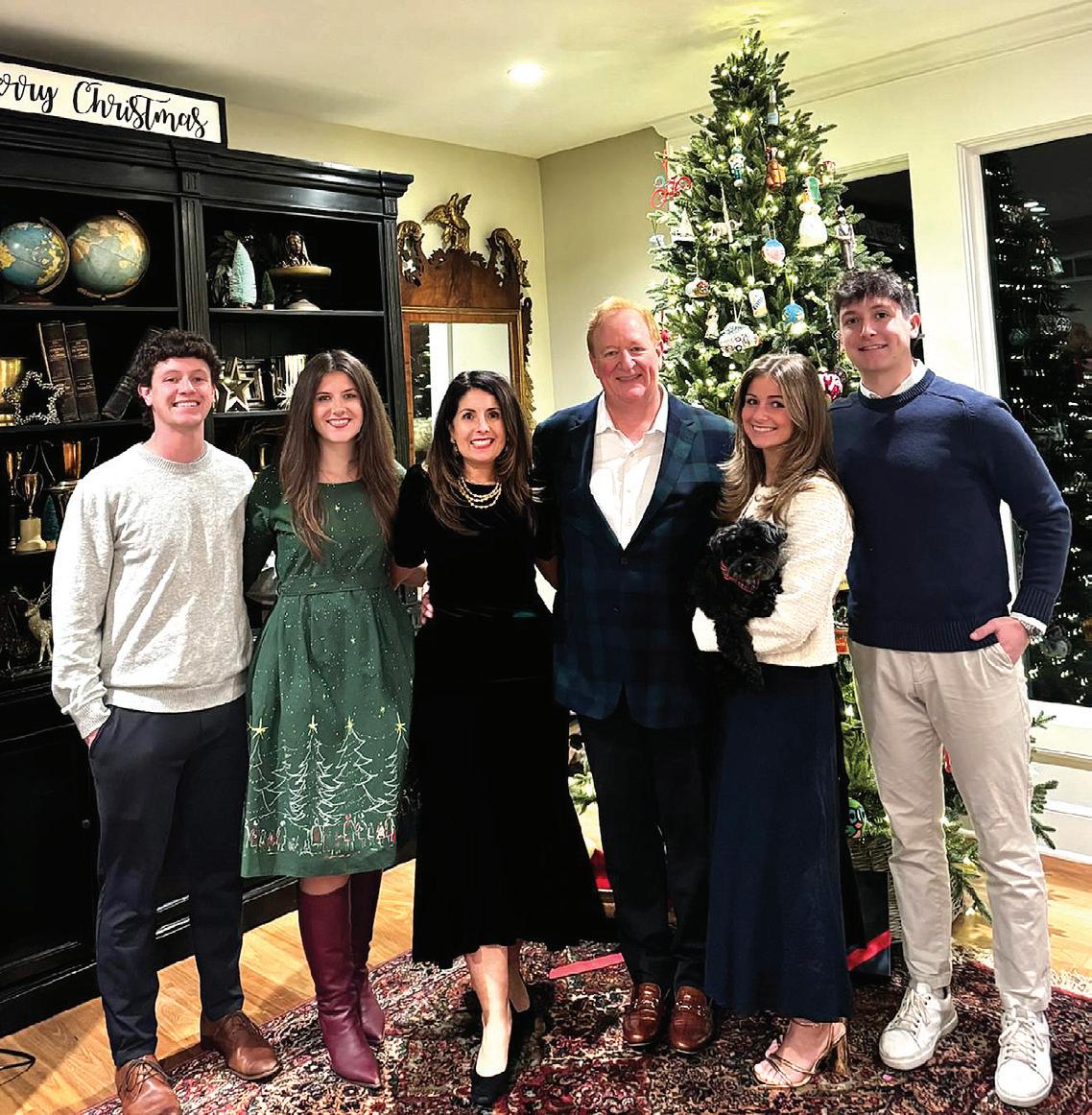
In the last few years, Beemer has been consulting full-time for a Japan-based renewable energy company. He and his wife, Aimee, have four children, who range in age from young college graduates to a senior in high school.
Now in his early 60s, Beemer doesn’t really think about retiring. Youthful energy still bubbles from his voice when he talks about his family, his career, and his next challenge.
FFA was only a few years in his life, but they were years that served him well to put him on a path to a fulfilling personal life and professional career.
-Submitted photo
MARK BEEMER, third from right, is shown with his family celebrating the holiday season. From left are son Will, daughter Morgan, wife Aimee Beemer, daughter Mary and son John. Also getting in on the photo is the family dog, Blitz.
EGGERS FAMILY SHARES LOVE OF FFA AND FARMING
By LORI BERGLUND Farm News writer
Win Independence Township.
At 17, Leland Eggers is the latest generation to be active in FFA. A junior at Webster City High School, he enjoys many of the public service areas of FFA.
“I like selling fruit when we do that,” he said.
Leland Eggers also gets a thrill when he gets a chance to drive the family’s Case 310 to school for the FFA’s annual Drive Your Tractor to School Day.
It’s pretty much always the biggest tractor in the parking lot, but this isn’t just a show appearance for the young Eggers. He’s a very willing farm hand and operates a variety of machinery on the farm. Just as father and grandfather did before him, he learned young.
“I enjoy driving the tractor,” Leland said. “I like to rip the fields and cultivate.”
He said he doesn’t even mind when he’s called upon to go out and pick up rock.
While he has a year and a half left of high school, Leland Eggers is already thinking ahead to his plan for after graduation.
“I’d like to go into the trades; not sure what I’m going to do yet,” he said. “And I want to help on the farm, too.”
His father, John Eggers, is a 1997 graduate of Webster City High School and earned a degree in economics from the
University of Northern Iowa.
Like his son, he recalls selling fruit during his FFA years. “We did things like grill hamburgers on different occasions, golf outings, and things like that,” he said.
John Eggers also enjoyed the family tradition of showing livestock at the county and state fair. While his sisters showed for 4-H, he showed for FFA once he was old enough to join.
“We showed pigs at the county and state fair, and usually our immediate family would go down and stay for the week or for the three days of the show,” he recalled. “We had a lot of fun.”
In addition to hogs, he also showed sheep over the years. The family at one time raised a few cattle, mainly for the quality of beef to take to the locker and process for home use.
In addition to farming with his dad, Delbert Eggers, John Eggers has worked for Seaboard Farms since 2016. He and his wife Becki Eggers, along with children Leland and daughter Natalie had been living in the Dike and Grundy Center area.
When the opportunity arose to move into the farmhouse that had long been home to his aunt and uncle, Gretchen and Henry Anderson, the family was happy to return home.
We moved back in 2014, and at first we just enjoyed being back on the farm,” John Eggers said. “And then I started farming in 2020.”
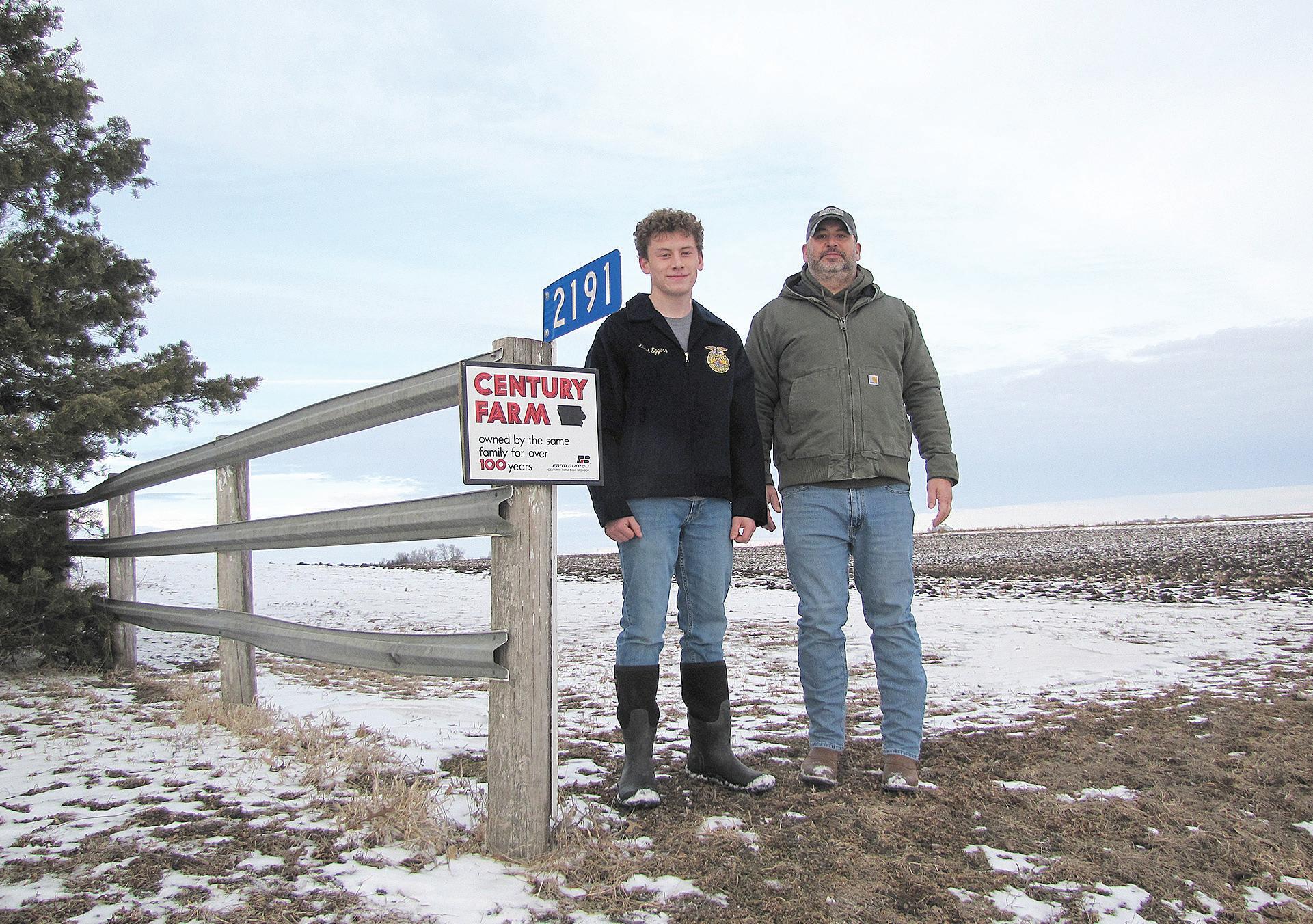
The farm they call home is a Century Farm, first purchased in 1907 for a cost of $95 per acre. It was his great-great-
grandparents, H.D. and Maggie Blue, who took the risk and sunk their hard-earned savings into the farm.
H.D and Maggie Blue were only on the farm a few years before they did what most farm families do, move the next generation on to it, according to Delbert Eggers.
Delbert Eggers, Leland’s grandfather, is a 1971 graduate of Webster City High School. During most of his FFA years, girls were still not allowed to join the organization then proudly known as the Future Farmers of America. Delbert Eggers recalls the knowledge and the field efficiency aspects of his time in FFA and the accompanying agriculture classes.
“ ”
I enjoy driving the tractor. I like to rip the fields and cultivate.
Leland Eggers Webster City High School FFA member
He also recalled having great relationships with FFA advisors.
He recalled Al Hennigan, a young advisor from Texas who related very well to the students.
At this point in his farming career, Delbert Eggers has already picked up his share of
rock, and is so happy that his grandson has taken over the work with a cheerful attitude.
“I’m very pleased to see that he has an interest in FFA and in farming,” Delbert Eggers said. “We’re proud of all of our grandchildren.”
-Farm News photo by Lori Berglund
JOHN AND BECKI EGGERS were glad when they had the chance to move to the Century Farm that still remains in the Eggers family. John, with son Leland, above, are both veterans of FFA membership.
GAUL TEACHES STUDENTS TO GIVE BACK THROUGH FFA
By DEANNA MEYER Farm News writer
MANSON — For Doug Gaul, becoming an ag teacher and FFA advisor just made sense.
“My dad was a farmer; my mom was a teacher,” said Gaul.
He grew up attending school in Harlan, where he was involved in the school’s FFA program, then went on to get his bachelor’s degree in ag education from Iowa State University.
A December graduate, he first began by substitute teaching since there weren’t any teaching positions open mid-school year. But by the end of January 2003, a position opened up at Manson Northwest Webster — and the rest, as they say, is history.
Gaul has led MNW’s FFA program for the past 23 years. As a former FFA member, he said what stuck with him as a student was all “the stuff beyond the school day, where you had the opportunity to go and do things.”
“At the time, it was just fun,” he said. “Also, as you look back on it later, there was a lot of learning that took place.”
Today, that “learning by doing” is what Gaul still hopes happens for his students.
“You want to fool the kids into learning stuff,” he said. “They think they’re just having fun.”
As a young teacher, Gaul said he was fortunate to inherit a solid FFA program.
“It was neat,” he said, “I had a really strong group of officers that first year that took the lead and made me do things that otherwise I might not have.”
An FFA FoundAtion
Formerly known as Future Farmers of America, FFA became known as the National FFA Organization in 1988. This name change reflected that agriculture had expanded beyond farming and could meet the needs of students with more diverse interests.
According to Gaul, the National FFA Organization has three foundational tenets: community betterment, strengthening agriculture and building leadership.
Gaul considers community involvement one of the MNW program’s strengths.
“It’s something I’m really passionate
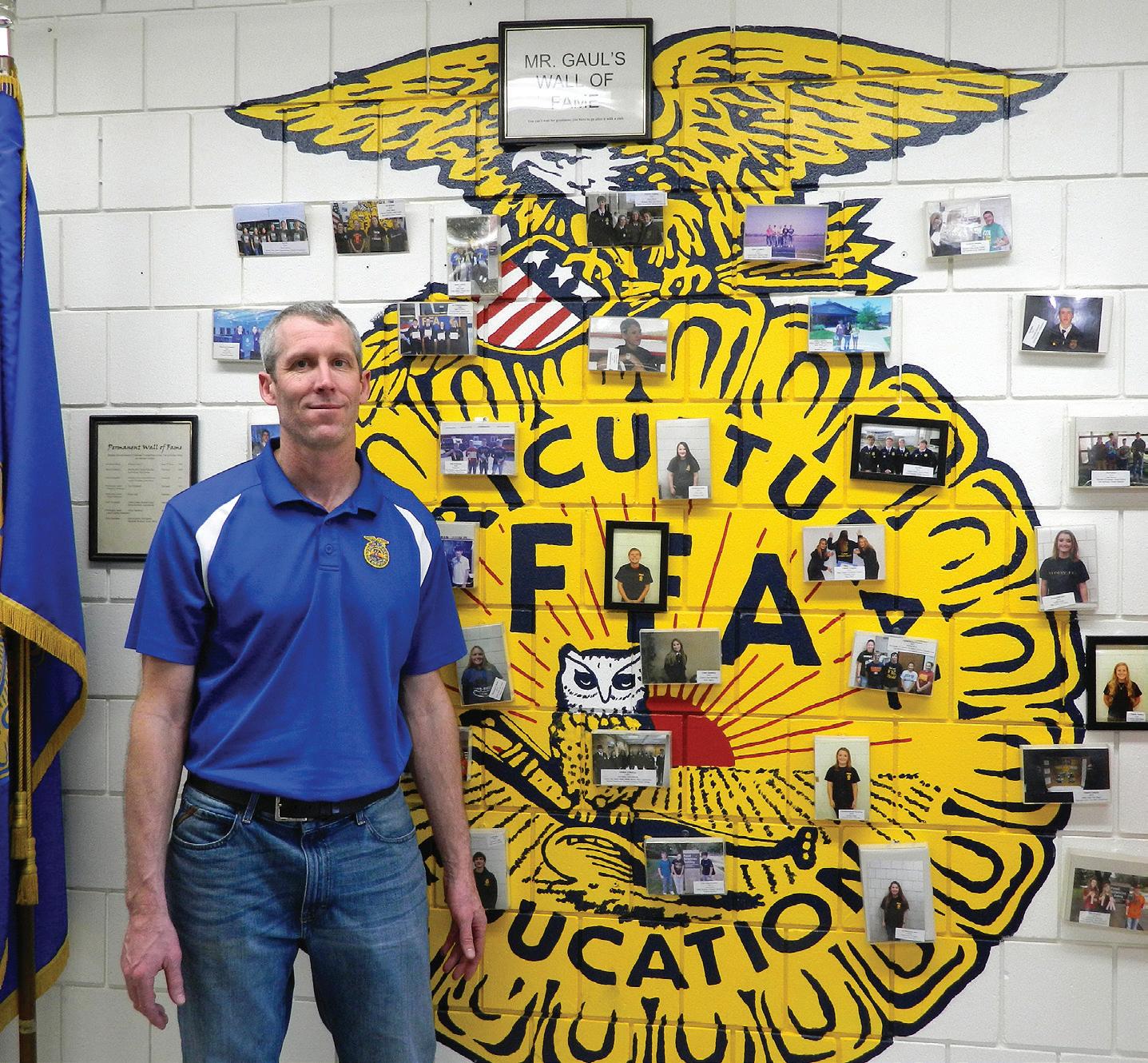
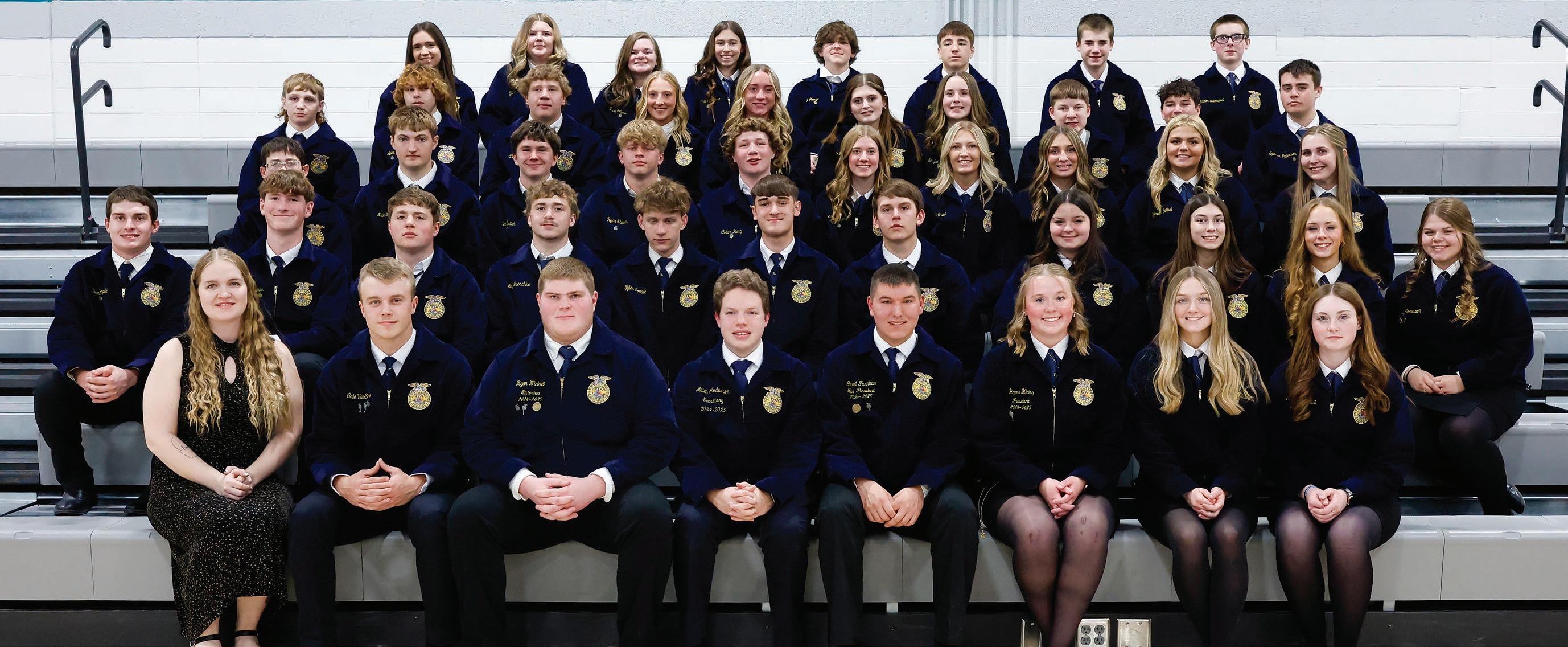
ABOVE: Doug Gaul, FFA advisor and ag teacher at Manson Northwest Webster High School, stands next to his FFA Wall of Fame. On the wall is a photo for every FFA contest members have entered. Members get their picture on the wall by doing the best an MNW student has ever performed in that particular contest.
-Submitted photo
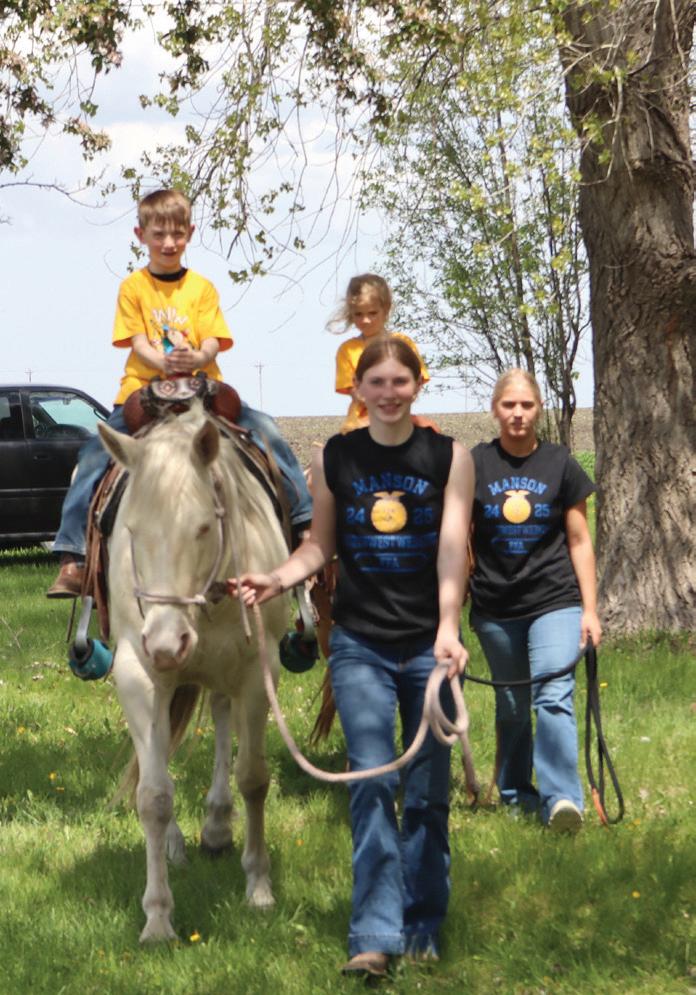
LEFT: Manson Northwest Webster FFA members Ava Messerly, front, and Alexis Essing give horse rides to kindergartners during the annual Kindergarten Forest Event in Manson.
about is doing those community service activities,” he said.
This year, the Manson Northwest Webster FFA chapter has about 80 members.
Every spring, they participate in what has become known as “The Big Event,” where FFA members spend a morning
We're trying to build kids who have that sense of, 'You've got to do something for your community.' Communities fall apart if you don't, if everybody doesn't do their part.
Doug Gaul Manson Northwest Webster FFA advisor
doing service projects around the school and community.
“We’ve built things; we’ve painted; we’ve cleaned up things,” Gaul said. “We do whatever needs to be done.”
Other service projects have included cleaning up a stretch of highway, helping put up flags for Memorial Day, and volunteering during Manson Greater Crater Days — the town’s annual summer festival.
“We’re trying to build kids who have that sense of, ‘You’ve got to do something for your community,’” he said. “Communities fall apart if you don’t, if everybody doesn’t do their part.” FFA has also been involved in several landscaping projects on school grounds.
“We do a lot of work at the baseball/ softball fields,” which Gaul admitted is a bit “self-serving” as the school’s high school baseball coach.
“But what a great way to get the field edged the first time,” he said. “That’s a neat project because you can see what it
See GAUL, Page 9A
I watch our officers from the first day they become officers, and they’re stumbling through talking in front of a group — to when they are done being an officer and they’re more fluent. Those are skills that are hard to teach unless you just expose a kid to it, push them into it.
“ ”
Doug Gaul, Manson Northwest Webster FFA advisor
-Farm News photo by Deanna Meyer
looks like when you’re done. Whether kids will tell you or not, they take a lot of pride in stuff like that.”
Gaul said there’s an added benefit in any project that benefits the school.
“You help the school, it helps your program because people see it,” he said.
Strengthening Ag
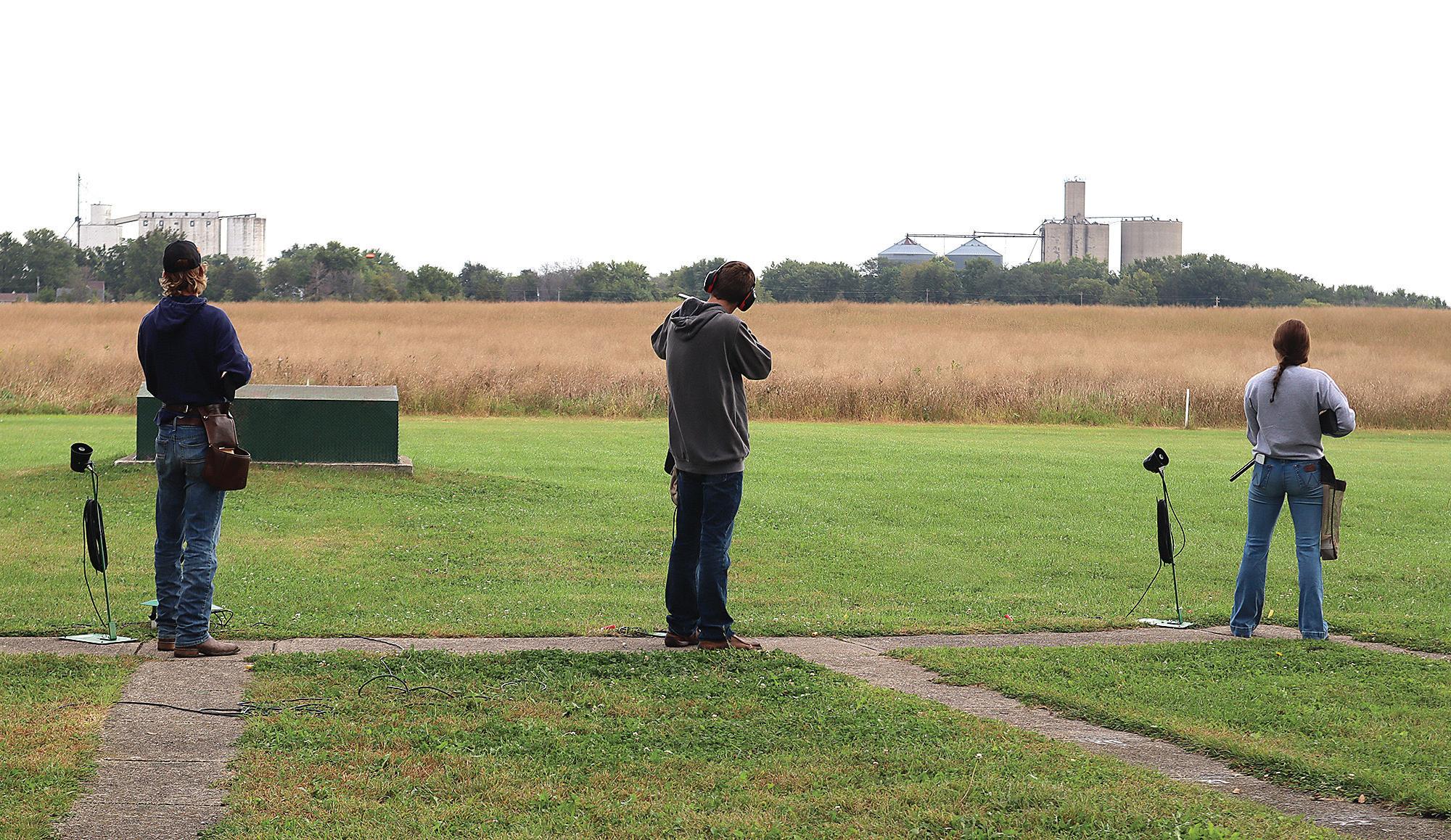
FFA agriculture activities have included a trap shoot, “Drive Your Tractor to School Day,” raising plants in the school’s greenhouse, planting and caring for a test plot, raising chickens, and the school’s aquaculture facility, where fish are raised for their meat.
Gaul said the aquaculture program had died before he was hired, but FFA members pushed to bring it back.
“We didn’t know what we were doing, but it was fun,” he said. “There was probably more learning that first year when we were trying to figure it out than there is now.”
Through the aquaculture program, students also learn about the environment — how to test and maintain water quality.
“There’s some serious science involved in what we do there,” Gaul said.
He said FFA and his ag classes are co-curricular. Much of what is learned in ag classes is expanded upon in FFA and vice versa.
“We’ve been really good over the years on soils judging,” he said, “and I mostly just teach that in a class.”
A student favorite has been organizing the annual “Kindergarten Forest,” where FFA members plan an event to teach the school’s kindergartners about nature and the outdoors. Many former MNW kindergarten students still remember getting a wooden nametag and the special T-shirts they received.
Future LeAderS
As far as leadership, Gaul said much of that develops from serving as officers.
“I watch our officers from the first day they become officers, and they’re stumbling through talking in front of a group — to when they are done being an officer and they’re more fluent,” he said.
ABOVE: FFA members Garrett Swartzendruber, Cody Jondle and Madison Becker participate in the annual FFA Trapshoot.
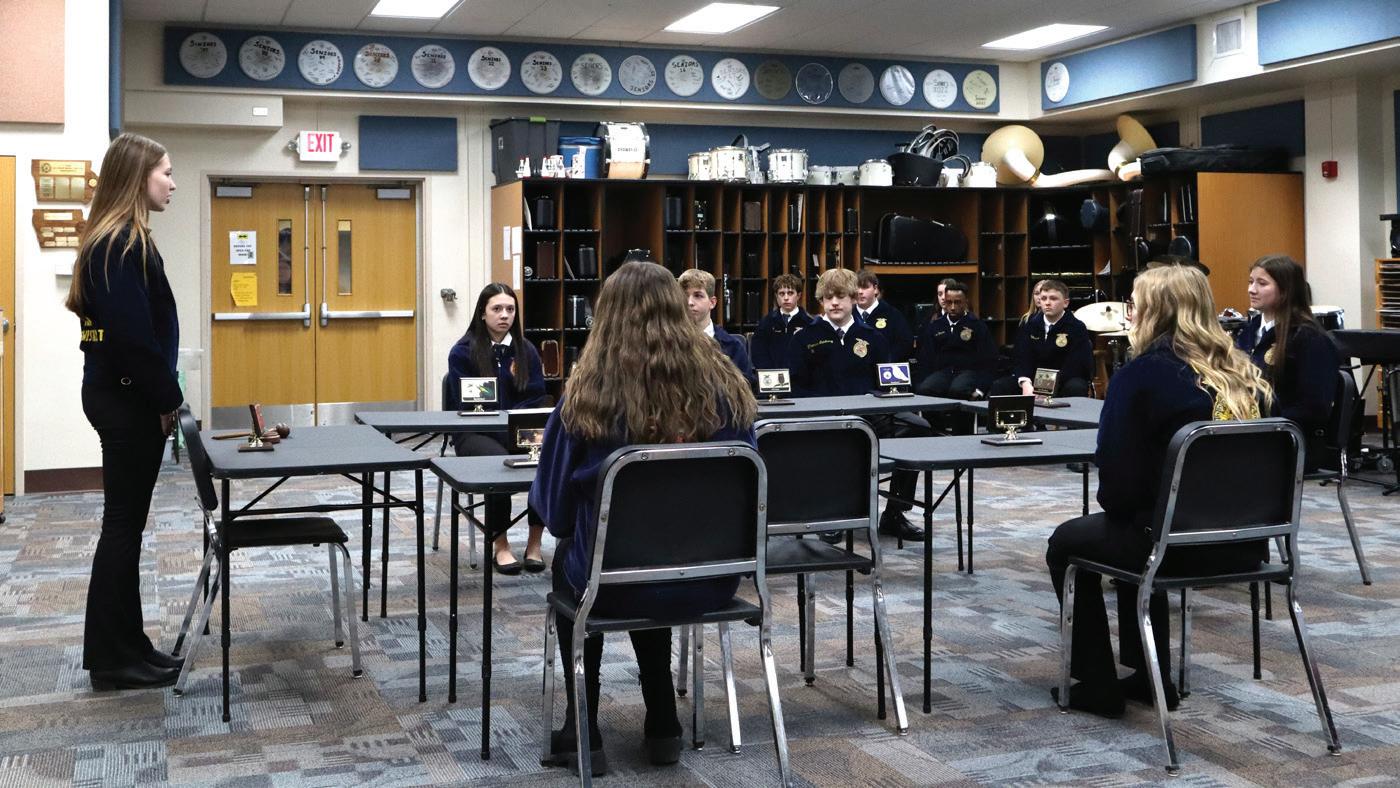
BELOW: Emery Pelz, standing, along with other MNW FFA members, seated from left, Bellah Aquino, Hannah Rosenboom, Parker Ollinger, Thomas Lundberg, Abby Langenwalter and Alison Nimke participate in the Conduct of Meetings Leadership Development Event.
Even if a student never goes into an ag-related field, Gaul said the ability to speak to people has lifelong value.
“Those are skills that are hard to teach unless you just expose a kid to it, push them into it,” he said.
Students also gain leadership skills through getting involved in FFA contests at the local, state and national level.
Event planning puts FFA members in positions where they must step up and take a leadership role to see a project through to completion.
At the end of January, FFA members were involved in a community mealpacking event called “Then Feed Just One” that resulted in packing more than 23,000 meals for those in need
in Honduras. Gaul said that project was given to his leadership class to organize. They set a goal and a date, and planned the event.
Last year, FFA members brought “Donkey Basketball” to Manson and chose to donate the proceeds to a local student who had been injured in a farming accident. While other organizations got involved in the benefit, the FFA students organized the teams and sold tickets for the basketball games.
“It’s technically a student-run organization,” he said, so when members bring up ideas, they have to work together to make them happen.
LASting BeneFitS
Gaul said much of FFA’s value lies in the exposure element.
“The whole thing to me is like an exploratory where they just get exposed to so many new things that maybe they didn’t think about before,” he said.
Gaul recalled one girl who took an ag class only because her boyfriend was taking it. By the end of the class, she had decided she wanted to go to college for agronomy.
He advised another girl who had been involved in the Kindergarten Forest for four years to consider becoming a teacher because she was so good with the kids. At the time, she said no, but five years later, he learned she had, indeed, become a kindergarten teacher — a seed that was planted through her FFA experience.
Another former student, who now has a doctorate in chemistry, recently called to say he was hired for his current position in part because the company was impressed with his FFA/ ag background. Ultimately, it’s connections like these that have meant the most to Gaul over the years.
“It’s the trips with the kids. You get to know the kids so much better than you would as a regular teacher,” he said. “It’s seeing them outside of the building in their own environment. You see a different part of the kid.”
Gaul Continued from Page 8A
-Submitted photos
of farming.
“Over time, I developed a fondness for livestock, particularly horses, and my parents were able to help me pursue that interest,” she said. “I trained and boarded a horse at a local facility throughout high school, which I sold shortly before starting college.”
StAte oFFicer goALS
This year, Greenslade and her team have been focused on increasing the involvement and opportunities available to students, she said.
“By going into our year of service with this goal set for ourselves, we have been able to have more impactful and intentional interactions with FFA members all across the state and even outside of Iowa. While this may seem like a super small thing compared to some of the other work we have done as officers, I believe it is one of the things that has made the biggest difference in the way we have served,” Greenslade said.
“By making these small interactions more meaningful and gaining deeper connections with members, we are showcasing how life-changing the FFA organization can be to all members and opening their eyes to the opportunities in front of them,” she continued.
“Going into the future, we hope and know that this impact will continue to have a domino effect on members for years to come. By sharing our stories with one another and making valuable connections, we are making the organization a place where more people can feel at home and be impacted by all FFA has to offer.”
As a state officer, Ferrie focused on planning multiple conferences that included various workshops.
FFA.
FFA is a formative organization that fosters personal and professional growth while building meaningful connections among students who share a passion for the future of agriculture.
Nora Pickhinke Ridge View FFA
Iowa Northwest District president
events to make them easier for members to understand and compete in.”
MeMorABLe ProjectS
FFA is so much more than just agriculture. We are a student-led organization that allows students to develop their leadership, teamwork, communication and real-life soft skills.
Jagger Ferrie
South Hamilton FFA
Iowa North Central State vice president
Ferrie said his time with FFA has encouraged him to develop various supervised agricultural experience projects.
personal growth and career success through agricultural education.”
Looking AheAd
FFA, I have been able to have opportunities to learn and grow that I would not have had elsewhere.”
Ferrie plans to continue with his college education and has set his sights on horticulture and the sports industry. But he’s also open to returning to his rural roots one day.
“I plan to someday enter a job in turfgrass management. Ideally, I would love to work for the MLB or NFL. However, if given the chance, I would like to come back home to the family farm someday,” he added.
Looking ahead, Pickhinke said she plans to pursue an internship within the agricultural industry that will eventually lead to a full-time career.
Why FFA?
Greenslade encourages everyone to get involved in FFA.
“I have traveled to other countries to experience ag and leadership abroad, tried contests and found passions I never even dreamed of having, developed crucial life skills and improved my confidence level, and have overall become the person I always wanted to be. FFA is so much more than a group of farm kids — it is somewhere no matter your background you are welcome, have unlimited potential and opportunity, and is something that can truly leave a lasting impact on your life,” she said. “I am certain that if I never gave the blue jacket a chance, I wouldn't be near the person I am today, and I hope other people continue giving it a chance and allowing their lives to also be forever changed.”
Ferrie agrees that anyone curious about FFA should take that leap of faith and get involved.
“Each of these events and workshops allow students to develop their communication, leadership and teamwork skills; additionally, they have been able to learn more about the National FFA organization and the agricultural industry as a serve on the Iowa FFA student
One of Greenslade’s favorite FFA projects she was involved with each year as a high school member was ADM Ag Day.
“We would invite all ADM third-grade classes, as well as a local preschool to come visit with our FFA members at the Dallas County Fairgrounds.
Throughout the day, students had the opportunity to interact with high school FFA members by working through different stations. They got to learn about pigs, cows, goats, corn, tractors and so much more,” she said.
“This was always one of my favorites, because when working with students at this young age you get to see the pure joy in their learning and make it a fun and memorable experience for everyone involved.”
board of directors, explained the project in a round table discussion. Naig was curious and his questions were directed to board members and to Emma Lorraine, a student who represented the many youth involved.
“It’s the wrong time of day to expect students to be here,” Naig quipped, as his scheduled visit began shortly after 3:30 p.m. on a Friday afternoon.
Kurt Velduizen, Webster City High School ag instructor and FFA advisor, led the tour through the building, opening doors to the kitchen, the cooler, storage areas and even the bathroom that includes a shower just off the livestock area.
The pristine facility was ready for the visit, with the group invited to enter the biosecurity stock area, where hens, roosters, and two sows were waiting to farrow.
It was not a normal visit for dignitaries. Clad in jeans and ready to step into the
“Some of my favorites include farm labor, agriscience research and turfgrass management,” he said. “Each of these allow me to develop my passion for agriculture and have shaped what my future will look like.”
When Greenslade wraps up her time with the Iowa FFA, she will continue working on her ag education degree at Northwest Missouri State. She can’t wait to get involved professionally in agriculture.
“With time, you may find yourself wanting to be a part of the amazing industry. When you join FFA, you will find yourself becoming a more well-rounded person as well as meeting lots of new people,” he said.
A project that stands out for Pickhinke was a supervised with the general public,” she
“With my ag ed degree, I hope to either teach in a classroom setting or work with ag education in some form at events and things like fairs. I look forward to continuing my involvement with the organizations I am involved in at college and continuously advocating for agriculture and our future generations of leaders,” Greenslade said. “I believe FFA truly has a place for everyone no matter who you are, where you are from or your background. Through
facility, Naig was the first one to don the booties, which allowed visitors to step into the stock area. His farming background was evident as he quickly took in the facility, marveling at the foresight and long-term planning for the project, which is a partnership between the Webster City School District, the Hamilton County Fair Expo and Career Ag Academy, Inc.
Gourley spoke on the need for the
“With more and more urban kids in the classrooms, and the biosecurity needs that keep them from experiences on farms,” he said, “we needed and wanted to get kids exposed and into ag education.”
The facility, he explained, allows students to build a relationship, and a visual and physical attachment to build a passion for agriculture.
“There’s nothing better than following your grass roots and showing them career opportunities,” Gourley said.
Naig was in full agreement.”
“I’m a big believer; the livestock interaction is so important,” said Naig, “We need to create those pathways; we need more people working in ag.”
Naig commented on the connectivity of the facility, using his own son and kids as an example, “Sometimes you don’t know what you don’t know.”
As he and Veldhuizen compared notes about the students, he noted the fields
Pickhinke recommended students get involved in FFA because “there truly is something for everyone, regardless of their
“There are livestock competitions, public speaking events, leadership conferences and opportunities to serve at the local level,” she said. “FFA is a formative organization that fosters personal and professional growth while building meaningful connections among students who share a passion for the future of agriculture.”
that have a definite place in agriculture. Veterinarians, bankers, plumbers, electricians, information technology and many other careers link directly to hometown jobs in agriculture. A future focus in the meat identification and grading ties directly to culinary arts, noted Veldhuizen, a field that is taught nearby at Iowa Central Community College.
Naig, who was heading to a conference in Washington, D.C. at the end of the weekend, was asked about his priorities in his role in helping the farmers in Iowa.
He was hopeful with the recent comments from President Donald Trump in getting E15 authorized for year-round distribution.
“The cost of production is higher than the price of the crop,” Naig said, “It’s tough. The prices are down, but the inputs are up.”
He is hopeful that increasing the global market will drive the demand, and increase the prices paid for the crop. The farm bill, inflation and competition all will play a role in the future for the ag community, he said.
“Some of the costs are supply chain issues, some trade issues, there’s not one simple solution,” he said.
Whatever lies ahead, he assured, the things happening in Webster City, the Ag Academy building and the classroom, are things that will help.
-Farm News photo by Kolleen Taylor
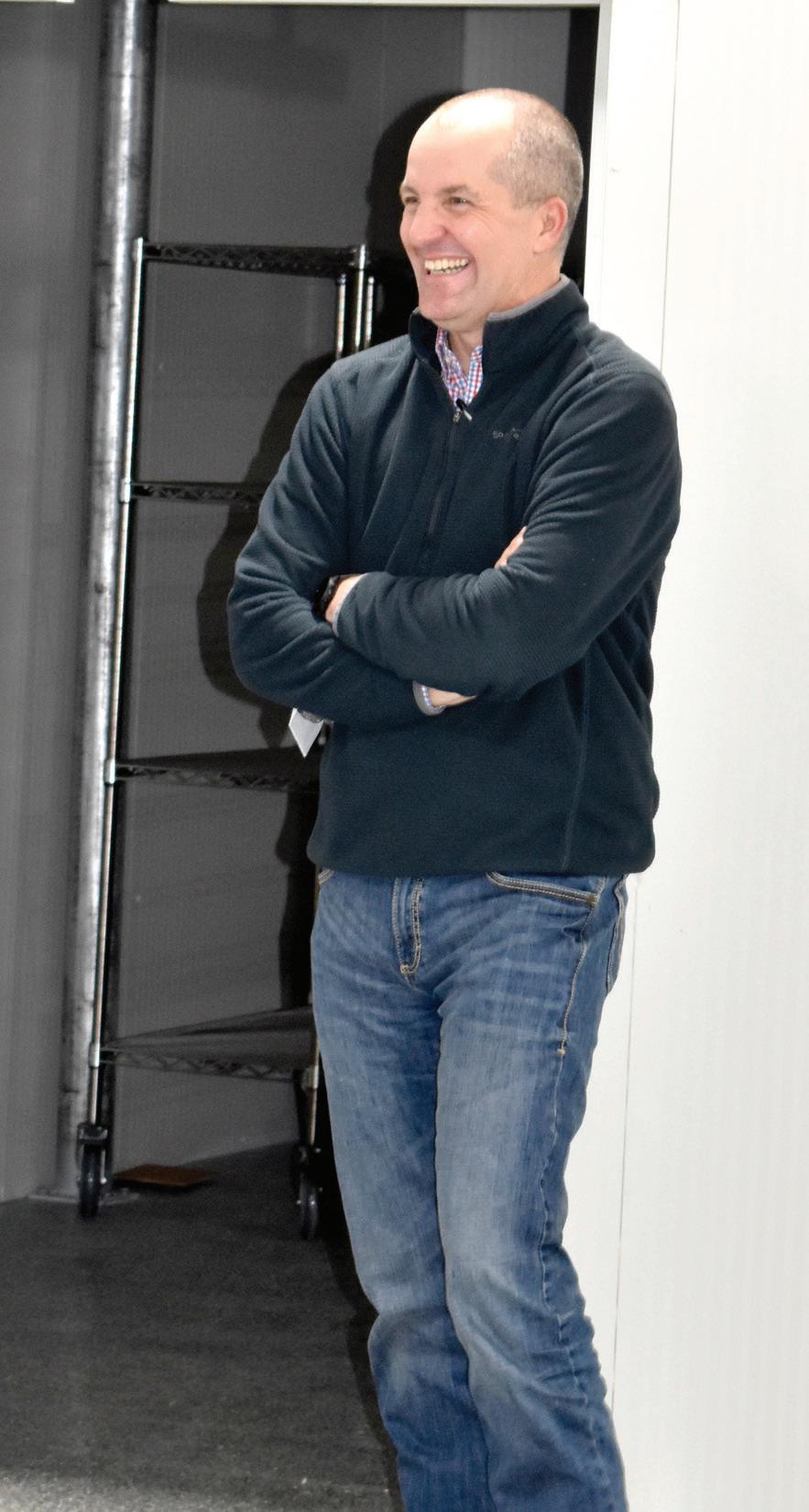
IOWA SECRETARY OF AGRICULTURE Mike Naig toured the Career Ag Academy in late January in Webster City.
-Submitted photo
JAGGER FERRIE, far left in back, is a freshman at Iowa State University where he's studying horticulture. Ferrie is the North Central State vice president and belongs to South Hamilton
-Submitted photo
NORA PICKHINKE, far right in the front row, is a freshman at Iowa State University majoring in agriculture business. She was involved in Ridge View FFA in Holstein all four years of high school.