





Just click any icon in




| Please send
RABBI MOSHE BEN-CHAIM
Recap of talks with friends and Torah observations
RABBI MOSHE BEN-CHAIM
God’s Hebrew language and Bible structure are essential to understanding His cryptic messages
RABBI MOSHE BEN-CHAIM
Moses and King Solomon urge man to follow God’s wisdom and not forfeit the Afterlife
MAIMONIDES
Why so severe? What’s the justice?
RABBI REUVEN MANN ZT”L
The purpose of the Reed Sea miracle
RABBI MOSHE BEN-CHAIM
An analysis of the many events and questions
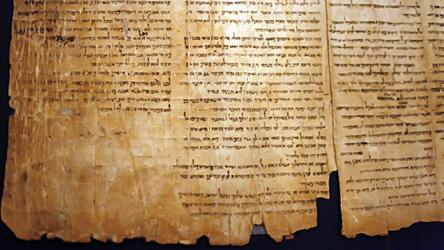
Translations lose many crucial lessons, as the Hebrew language, Bible structure and verse delineations are not carried over. To know God’s messages, study only from Torah scholars uent in Hebrew with decades of Torah study.
RABBI MOSHE BEN-CHAIM
READER: Do we get judged for every detail of what we do on this Earth?
RABBI: I don't see why God would distinguish between a greater sin that one perpetrates versus a smaller evil. God knows all. In both cases a person is corrupt and does not follow God. This applies to good deeds too, whether small or large. God knows every detail and the Torah is based on a system of reward and punishment, without qualification of the severity of our good and evil actions: any good or evil we do is judged. Additionally we see that Yom (CONT. ON NEXT PAGE)
Kippur atones for a di erent level sins in di erent ways, whether we sin against our friends which requires us to appease them and gain their forgiveness, or whether we sin by eating non-kosher which is forgiven without such appeasement. We see that there are levels of atonement because all of our actions are taken into consideration. And in the Yom Kippur prayers—“Al Chate”—we confess dozens of di erent o enses. This clearly teaches that every single o ense—great or small—is something for which we must atone.
Talmud Rosh Hashanna 17 says:
A Sage from the school of Rabbi Yishmael taught in a baraita: “He overlooks each and every first transgression, and that is the attribute of mercy, that God forgives one’s first sin, and therefore He tips the scale in favor of the merits.” Rava said: “But that sin itself, which God overlooks, is not completely erased; if the individual’s actions are still mostly sins, God counts the overlooked sin with them and metes out punishment accordingly.”
Rava understood this verse di erently and said: “With regard to whoever forgoes his reckonings with others for injustices done to him, the heavenly court in turn forgoes punishment for all his sins, as it is stated: ‘He bears sin and forgives transgression’ (Micah 7:18). Whose sins does He bear? The sins of one who forgoes his reckonings with others for injustices committed against him.”
Thereby we see there is more to God’s mercy than simple math of our sins versus merits; other mitigating matters are also weighed when judging man, such as his total proportion of sins to merits, and also if man was forgiving of taking others to task for their wrongs to him. If he let others slide, God lets him slide and does not punish him for his own sins. ■
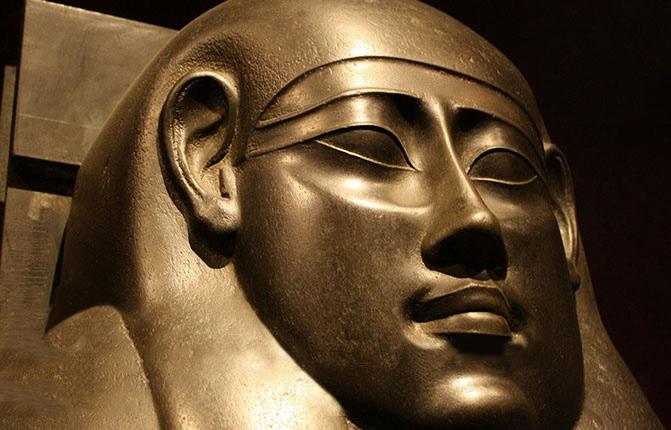
Moses pointed out to Pharaoh (Exod. 9:30-32) that during the plague of hail, the sti and hard plants of flax and barley were crushed, while the unripe soft wheat and spelt bounced back unharmed. This was not an agriculture lesson. Moses revealed to Pharaoh that God created a parallel: if Pharaoh was sti he would break, but if he was flexible he could survive the plagues. The more profound lesson however is that Moses was teaching Pharaoh a great di erence between his idols and between the Creator of the world. The Creator knows Pharaoh’s stubbornness and can craft a plague specifically around his personality. This should wake up Pharaoh to the lifeless nature of his idols that never once responded to his prayers and never once reacted. In contrast, the true God knows Pharaoh intimately and portrays his personality in this plague.
RABBI MOSHE BEN-CHAIM & RABBI MOSHE ABARBANEL
The Shima prayer quote Moses’ words:
If you obey the commandments that I command you this day, loving your God and serving [God] with all your heart and soul, I will grant the rain for your land in season, the early rain and the late. You shall gather in your new grain and wine and oil. I will also provide grass in the fields for your cattle—and thus you shall eat your fill. (Deut. 11:13-15).
Therefore, one is justified to “suggest” (not say with any certainty) that his success might be due to God’s providence, through His reward and punishment. Why then did Sarah accuse Hagar of feeling righteous after becoming pregnant from Abraham? Hagar looked down upon Sarah who could not get pregnant after many years, while Hagar became pregnant immediately. Hagar felt righteous.
There is a major di erence. Hagar’s case is not similar to Moses’ promise of success which require alignment with Torah commands and values. Hagar's feeling of righteousness was based solely on pregnancy. That’s not what Moses said. Moses said goodness from God results from following Torah. But to assess good fortune as a sign of righteousness without having performed Torah—the case of Hagar—one is superstitious, as if success alone validates one as righteous. Hagar thought any success indicates God’s favor, even with the lack of Torah values. That’s not what Moses said, and it is idolatrous to say so because this assumes knowledge of God, or worse, knowledge of false powers. ■
Any new alteration of a law system indicates ignorance by the law’s original drafters, as such adjustments admit of unseen new circumstances. However, God’s foreknowledge of all future events and His design of man’s unchanging nature defend God’s command to never alter His Bible (Deut. 4:2, 13:1). Thus, Bible is never outdated or inapplicable in any generation as Bible was designed with God’s complete knowledge of man and knowledge of all future events. ■
Ibn Ezra teaches (Exod. 8:12) that Aaron performed the lower miracles (those in the Earth) while Moses performed the higher miracles (those in the heavens). This correlates the level of a human’s understanding with the miracle’s performance. As there a greater laws operating in the heavens than in mere soil and water, the greater man Moses was necessary to perform those plagues. Thus, the purpose of the plagues was to reveal that the world operates through wisdom which refutes Egyptian idolatry assuming powers exist with no rhyme or reason. ■
Their idols are silver and gold, the work of human hands. They have mouths, but cannot speak, eyes, but cannot see; they have ears, but cannot hear, noses, but cannot smell; they have hands, but cannot touch, feet, but cannot walk; they can make no sound in their throats. Those who fashion them, all who trust in them, shall become like them. (Psalms 115:4-8).
Idols are inanimate. But how are the worshippers “like them?” It is precisely because their eyes see the lifelessness of idols, yet they attribute life to them. Just as idols are not alive but are considered to live, their worshippers are have senses but deny the lifelessness of idols! Worshippers see the lifeless nature of idols and assume they are alive. Both, idols and their worshippers contradict reality. ■
God certainly could have destroyed all Egypt’s crops with a single plague of hail. Therefore we wonder what is God’s plan in the next plague of locusts in consuming “the remnants” of the hail,” repeated 3 times (Exod. 5,12,15)? But if we are mindful of the purpose of the plagues we are directed to a beautiful answer. God intended to expose Egypt's idolatrous beliefs in multiple gods, magicians, astrologers, et al. as the prophet says, “I do not desire the destruction of the wicked person says God, but in his repentance and his continued life” (Ezek. 18:32). And part of exposing false gods is to identify the various realms of reality Egyptians deified, which included the heavens as well as the animal kingdom among. And if they can realize that these two realms are actually under the control of a superior being, this would help them reject their deification and accept God alone, the true controller of the universe. Therefore God orchestrated
that a single objective of destroying crops was targeted by both the meteorological phenomena—hail—and the animal kingdom—locusts. When one witnesses two unrelated spheres of reality with one objective, one realizes there must be something greater that is controlling these two parts of reality to achieve a singular purpose. Therefore God left over some of the vegetation during the plague of hail in order that the locusts would duplicate the same objective in eating the crops’ remnants.
Another interesting statement is that during the plague of darkness, Torah tells us that “Man could not see his brother” (Exod. 10:23). Again as the objective of the plagues was not annihilation of people, but an attempt to correct their idolatry and instead, follow reality, this also must point to that in some way. What darkness does as this verse clearly states, is it suspends the ability to be social, you cannot see others and you cannot communicate with them. But as man is inherently social, he is forced into some dialogue and the only being whom to communicate is the one that just brought about this darkness, namely the Hebrew God. As a last step God wished that the Egyptians would confront His reality. Isolation through absolute darkness and lack of communication enables this confrontation in the minds of every Egyptian. ■
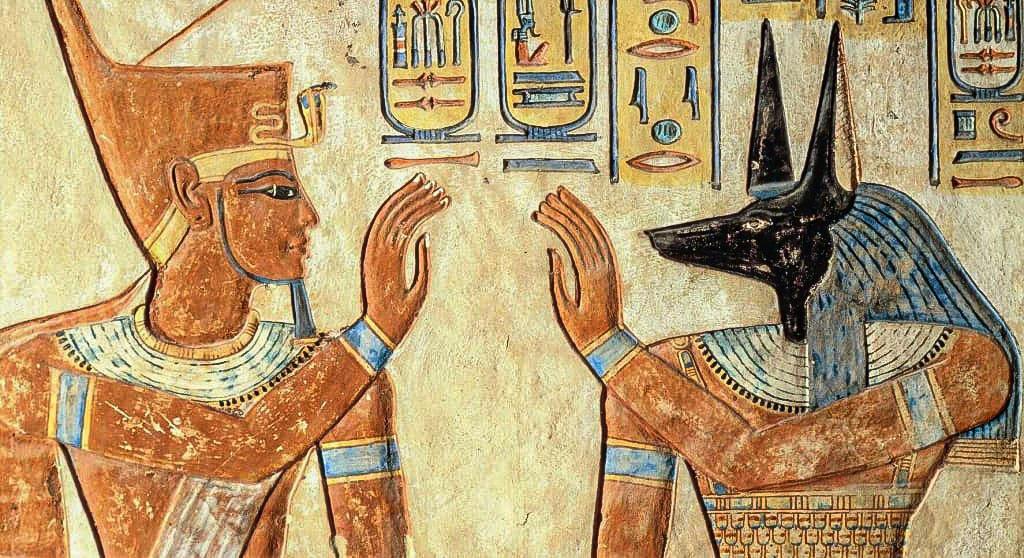



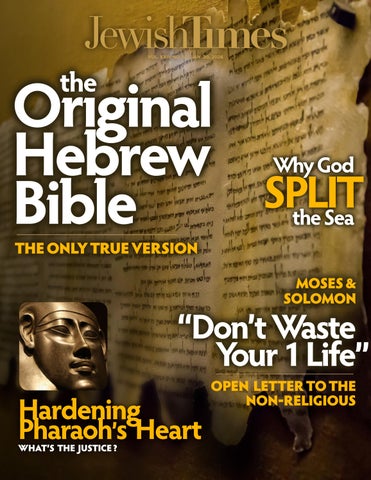
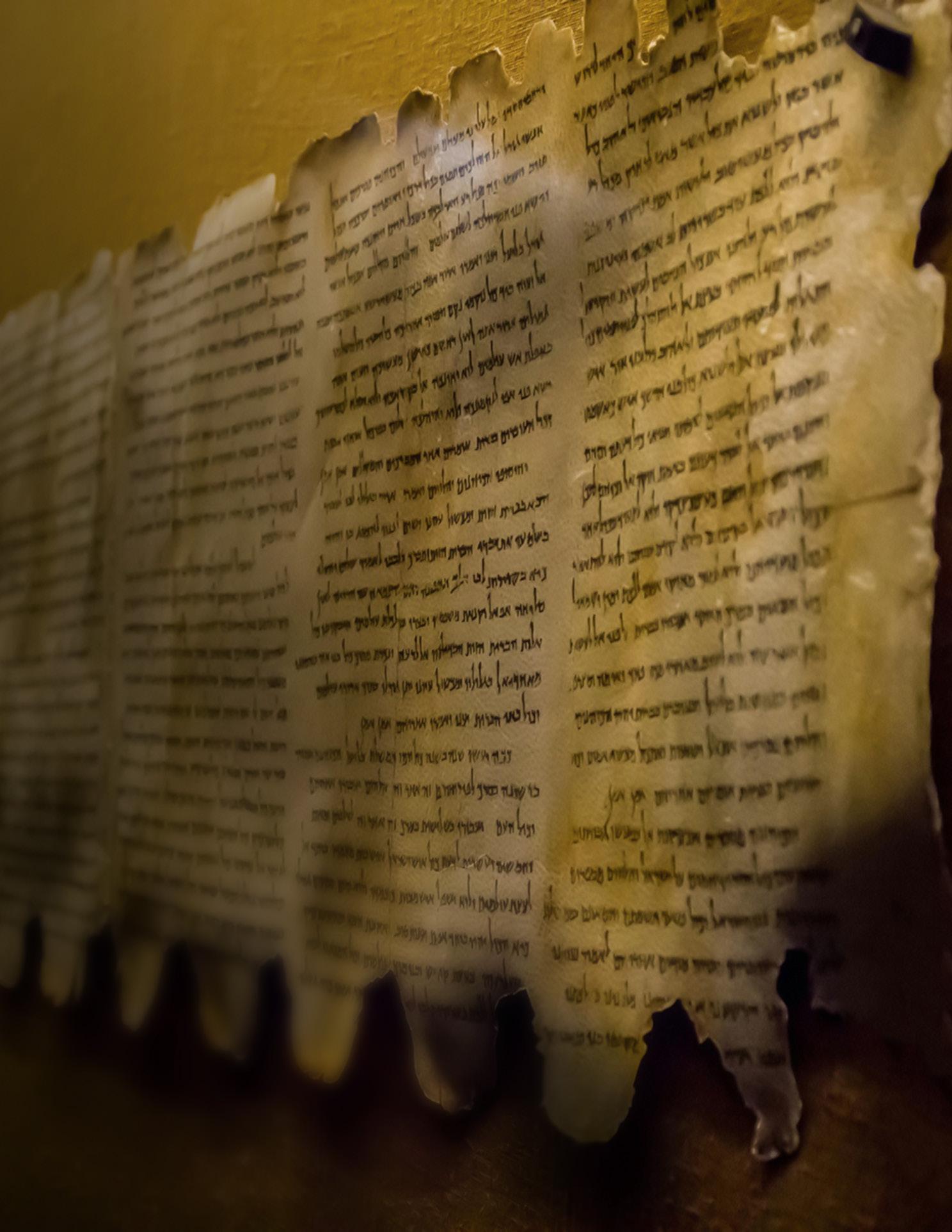
The original Bible, God gave to Moses and 2 million Jews upon Mount Sinai 3338 years ago. It was written in ancient Hebrew. Bible law demands painstaking accuracy when writing new Bibles so not a letter is missing. That ancient language is vital to accurately deliver all God’s messages, explaining why God formulated that language. But there are also “methods” to deciphering God’s cryptic and deeper messages within the text. God’s messages are not simply textual, but God also hints to deeper ideas through juxtaposition, metaphor, categories, repetition, interruption, anomalies, and intimation. Many priceless lessons are lost in Bible translations. I will share two examples from the Bible sections recently read in Temple on Sabbath.
And the magicians were not able to stand before Moses because of the boils, for the boils were on the magicians and the Egyptian people (Exod. 9:11).
As the plague of boils do not a ect one’s posture—they do not harm one’s skeleton or muscles—we wonder why the magicians could not “stand” before Moses. Furthermore, the fact that the boils were on the Egyptian people has no relationship to the magicians confronting Moses. Why then are we told that the magicians’ inability to stand before Moses was related to the rest of the Egyptian population having boils? With these questions we now appreciate God's underlying message. The magicians had no problem standing upright. But “standing” here it means they had a problem “presenting” themselves before Moses; they lost dignity. Because what is the claim of the magicians? It is that they can produce magical feats.
Yet, they could not remove the boils from their own bodies! Therefore they could not “stand” before Moses refers not to posture, but to dignity. And the end of the verse explains because now the boils were on them and the rest of the Egyptian population, equating the magicians to the normal population, exposing their inability to do magic…just like the common man. God exposed them as charlatans.The purpose of the plagues was to refute any claim of power other than God. God refuted idols, as well as the magicians.
But if a translation corrupted the words “stand before Moses” to “arrive before Moses” this forfeits a crucial lesson. Or if a translator decided that the boils “on the rest of Egypt” was not crucial and omitted it, again God’s lesson is lost. The original Hebrew is crucial, as is the exact structure of each verse.
Another lesson:
If you refuse to send my people, behold I will bring tomorrow locusts into your borders. And the locusts will cover the view of the land and you will not be able to see the land, and they will eat the remnants that were left over for you from the hail and they will eat every tree that sprouts for you from the field (Exod. 10:4,5).
As God desired that all vegetation was destroyed, why did He not do so with a single plague of hail? And why is the second plague after hail not also meteorological, but this time it's from the animal kingdom, namely the locusts? Framing the question this way points to the answer. As we keep in mind that God's objective of the plagues was to refute claims of any power other than Him, with two plagues having a shared plan (destroying vegetation) we appreciate some higher power orchestrating hail and locusts to execute the same plan. Arranging both meteorology and the animal kingdom to destroy crops, indicates a power behind all corners of the universe that controls them. It teaches there is one power behind all that exists. God alone controls the heavens and the Earth, rejecting Egypt’s idolatry. But if a translation omitted the word “remnant” we would again lose the primary lesson.
These examples start to uncover a small glimpse into God’s brilliance, how He teaches man in His actions, and in His precise writing of His Bible, His Torah. ■
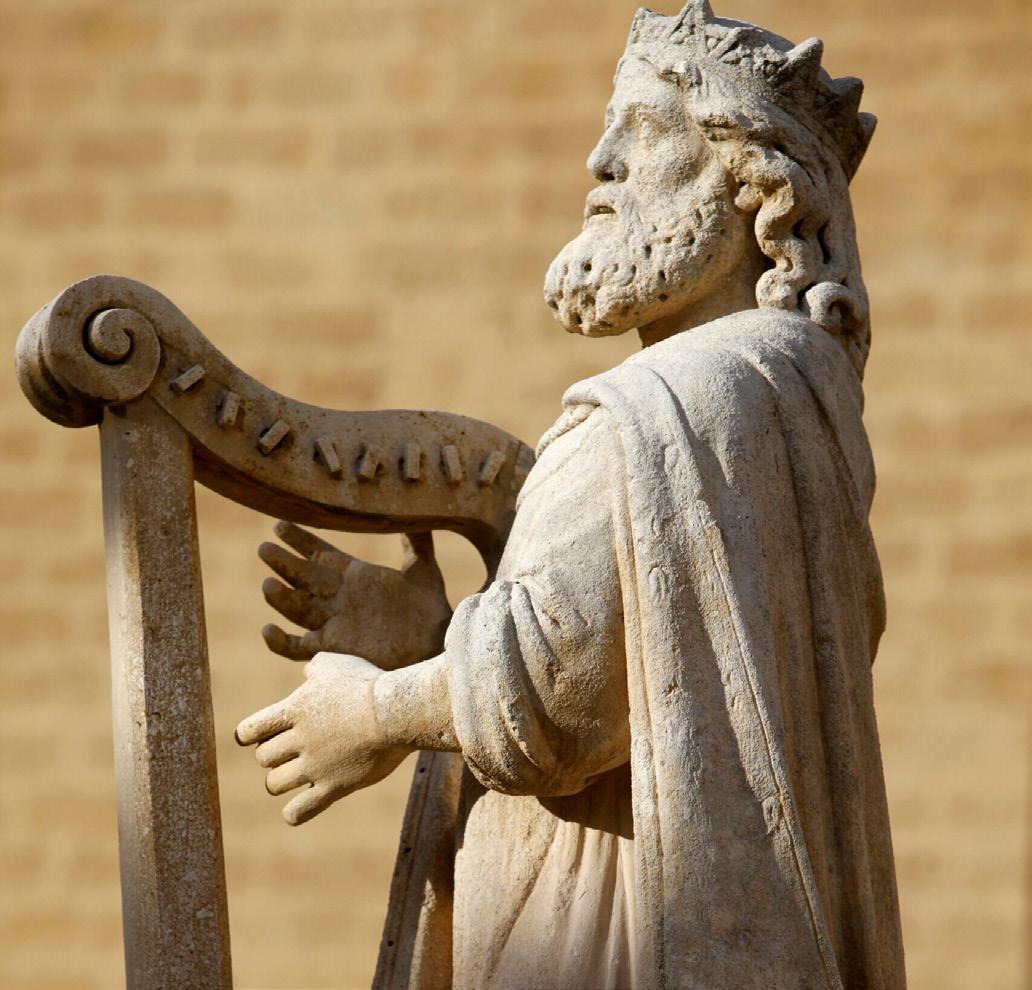

S“ ee I place before you today life and goodness, and death and evil” … “Choose life so you and your o spring would live” (Deut. 30:15,19).
Moses warns the people that by choosing one you avoid the other: choosing goodness grants eternal life, while selecting evil—that which God forbids—forfeits eternal life. Similarly:
“Rabbi Jacob said: ‘This world is like a vestibule before the world to come; prepare yourself in the vestibule, so that you may enter the banquet hall’” (Avos 4:16).
But if one does not prepare, he forfeits the afterlife. Same message. As we age, parents, friends and loved ones pass on. Our own mortality becomes real. It is foolish to ignore God’s message through Moses and Rabbi Jacob and ignore a Torah life which forfeits your eternal existence. How do we earn an eternal life? Moses told us and God endorsed his word: follow Torah. But what essentially is Torah?
Moses received the entire Bible (Torah) and the 10 Commandments, the main headings (Saadia Gaon). Maimonides classified 13 foundations of Torah. So we have resources that define the essential Torah truths. It vital to start with these to learn what is most crucial. Knowing these fundamentals also lead us to many other of the 613 commands. But these are only the starting point. As God created each human for the single purpose of arriving at truths about God and how to treat others, failing to adhere to God’s terms of existence, He has full rights to terminate our existence upon our physical death. Why accept such a fate when you can live eternally? If you follow His commands you eventually see the beauty in His wisdom which permeates them all, you start living a more enjoyable life here as you abandon empty pleasures of the body, and enjoy the pleasures of the mind. Additionally, you earn the afterlife. We must not respect the masses and assume they are correct in a life without Torah. We should not look at those successful and famous, and envy their lives either. If you would read about some of these personalities you would learn how most of their lives are in frustration until they get those five minutes spotlight, which is an awful bad trade-o for the decades it took to get there. It's also not worth the toil and sacrifice required to amass fortunes, wealth never spent and only left to those after we die…another futility. King Solomon already experimented with the popular lusts and ambitions. He was the second wisest man after Moses and he advised us that such pursuits are vanity and do not provide happiness. Moses too instructs us that a life of pursuing Torah wisdom is goodness and ensure our afterlife.
While you still have many years remaining, listen to the 2 wisest men Moses and King Solomon. They certainly o er greater advice than today’s ignorant masses. Find a competent Torah scholar. Make time to investigate Torah. Ask him all your questions. Or be in touch here on Mesora.org and search over 3600 essays to gain answers. Email us with your questions. But don’t lose your once chance. ■
6) Maimonides mentions three possibilities of punishment: 1) punishment during earthly life alone, 2) during the afterlife alone, 3) or punishment in both lives. Why?
Sins vary in degrees of personal corruption and harm to others. At times, one can sin so grievously that he harms his eternal soul, compromising the level of his afterlife, described as “punishment in the afterlife.” Lesser sins result in earthly punishment alone, intent on correcting the sinner, with no loss of the afterlife.
Maimonides then says severe punishment can be met with God withholding repentance, as was the case of Pharaoh, Sichon, the Canaanites and the Jews. God can remove the ability to repent. But God also restricts repentance by wiping out societies, as with the Flood and Sodom. In those cases repentance was removed through premature death. But let’s understand the first case of Pharaoh. Maimonides says the punishment is that the sinner “must die in the sins he committed of his own free will…he should expire in his sinful state.” What determines that repentance is removed…a point of no return? What is the justice in removing repentance? As Creator, God determines what entitles man’s continued
existence. Life is not granted unconditionally. This means that repentance is not always just. How so?
Maimonides says that a person can commit a quantity of sins, or one very severe sin, that removes his entitlement to repentance. Perhaps repentance is only for that which can be corrected, but some sins are too severe and cannot be corrected so repentance is not o ered.
It would not be just for somebody to perpetrate tremendous evils and not have to pay a price for them. Maimonides says there's a certain amount of evil—too many sins or too grave a sin—to o er one forgiveness. The e ects of the sins either on himself or others are too severe and irreparable that repentance can correct the evil. Something which is a lasting negative is not something that repentance absolves. Think of it as stealing $100 demanding repaying the $100. That is what is justly due, and if one does not have the $100 to pay back, he cannot correct the wrong.
Maimonides says that when the person does proper repentance says, “yesterday he may have been despised before God, but today he is beloved by Him.” That indicates a complete removal of the evil. Ezekiel chapter 18 also states that God does not recall any of the sins of the sinner when he repents. But that is not always the case, there could be severe e ects that can't be erased through repentance. The person can destroy somebody else's life, so how can repentance alone correct that? It can't and therefore there is no forgiveness. Repentance has to be suspended from being e cacious and even being performed. Meaning that repentance is only something which fully atones if the evil can be completely corrected. But if it cannot be completely corrected through repentance, perhaps this is why repentance is not allowed. ■
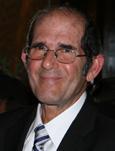
Rabbi Reuven Mann, ZT”L
Edited by B. Silberstein
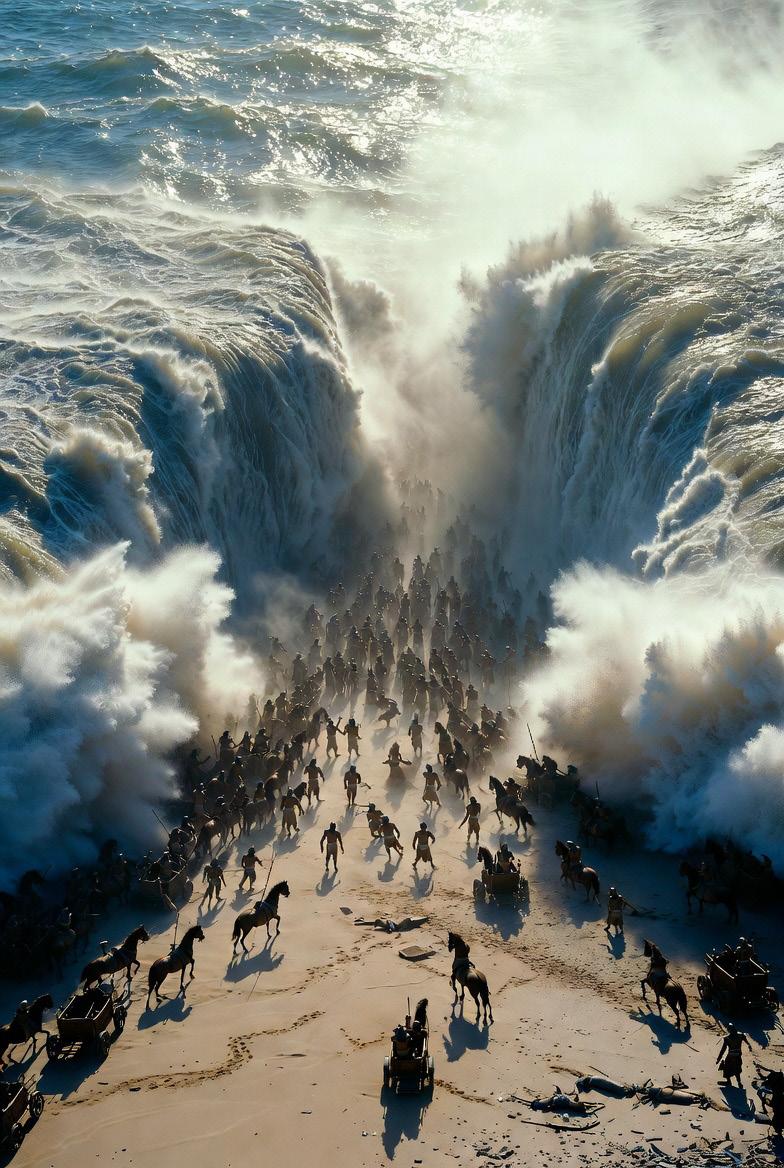
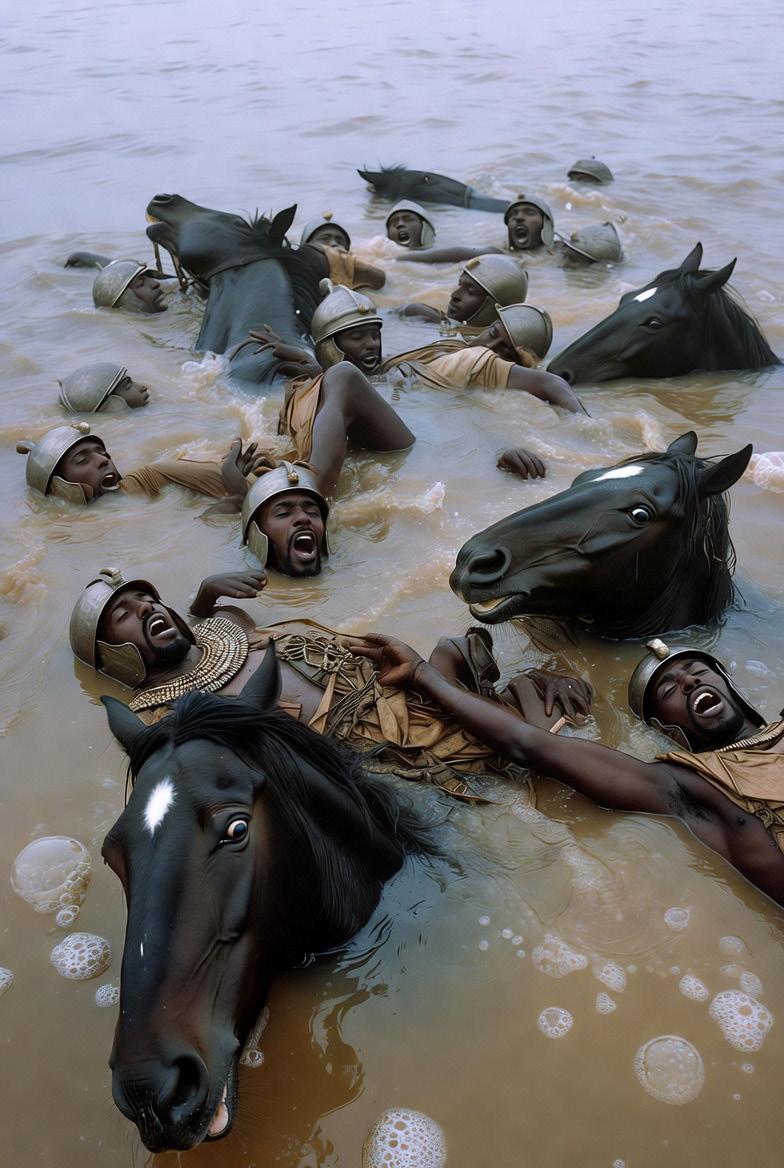
This week’s Parsha, BeShalach, describes in gripping detail one of the greatest miracles in history. If I could choose one biblical event I could have been present at, it would be the splitting of the Red Sea.
The sudden transition from imminent disaster to dramatic salvation would produce the greatest emotional high I could imagine. Not to mention my joy at the utter destruction of the Egyptian expeditionary force, which had struck paralyzing fear into the hearts of Bnei Yisrael (the Children of Israel) only a short while before.
This aspect of the miracle had a profound spiritual impact. The Pasuk (verse) records that:
“Israel saw the Egyptians dead on the seashore...and the people revered Hashem, and they believed in Hashem and in Moshe, His servant.” (Shemot 14:31)
Bnei Yisrael had witnessed awesome wonders in Egypt, yet none matched the profound spiritual impact of this one. It engendered the singing of the Shira, the most exalted Song of praise ever recorded. This Song of the Sea describes in fine detail every aspect of the miracle, especially the utter havoc wreaked on the hapless Egyptian warriors.
My sense is that many contemporary Jews, especially those who would identify as “liberal,” might not be entirely comfortable with this Song. It is not in sync with a mindset that views war as an evil that “never solves anything.” It might be additionally troubling that a sacred hymn seems to be idealizing mortal combat and glorifying Hashem as “a Master of War.” (Shemot 15:3)
So what is the Jewish attitude toward war? For the past two thousand years, this was only a matter of abstract theory. With the restoration of Israel’s political independence and her confrontation with a slew of implacable enemies who seek her destruction, resolution of this matter is an existential imperative.
The virtue of peace is at the heart of Judaism. The longing for it is expressed in the final blessing of the Amidah prayer and is the central theme of the Priestly blessings. However, we do not believe in peace at any price. When Yaakov prepared to confront the more powerful Eisav, his weapon of choice was diplomacy. And Jews love nothing more than negotiating. But, and this must be constantly emphasized, he also prepared for battle. We are not pacifists, but are fierce defenders of the right, indeed the obligation, of self-defense. Whoever joins the Israeli army and fights against her enemies (and none is exempt) fulfills a great Mitzvah.
It would seem, then, that Judaism prefers peace, but regards war as an evil that sometimes cannot be avoided. If so, how can we justify the great praise heaped on Hashem for the destruction of the Egyptians? This song does not seem to reflect a culture that abhors war?
In confronting this issue, we must ask, why didn’t Bnei Yisrael take up arms against the pursuing Egyptians, as Yaakov was prepared to do against Eisav? Only a few weeks later, when Amalek attacked, Yehoshua chose warriors who, inspired by the sight of Moshe’s upraised hands, defeated their antagonists.
It is because the Egyptians evinced an aura of invincibility. These were their former slave masters to whom they had been obedient and upon whom they projected supernatural power. The ultimate idolatry, which persists to this very day, is the worship of human might and the deification of the works of man. The sight of the Egyptian legions roaring down on them in all their fierce magnificence aroused a feeling of utter helplessness in Bnei Yisrael and triggered a complete emotional meltdown.
And when Hashem intervened, they saw the truth that human might is an absolute illusion and that Hashem is the only absolute source of power Who can alter the human condition.
The purpose of the great Song of the Sea is not to exult in the su ering of the Egyptian warriors, but to depict the futility of man’s aspiration to assert a supreme power that he simply doesn’t have. That is the meaning of the refrain, “Hashem is a Master of War” (ibid.). Only He has the power of true dominance over the course of human a airs.
This Shira contains vital lessons. We must learn from it that we cannot produce lasting change through might, which is illusory. It is only through the voice of reason and the persuasion of clear, calmly articulated ideas, the “still, small voice” (Melachim I 19:12) steadfastly reiterated, that truth and justice will triumph.
The Shira exhorts the entire world to abandon war and engage in the search for truth. When mankind learns and internalizes its message, the messianic era will arrive.
May we merit to see it in our lifetime. Shabbat Shalom. ■



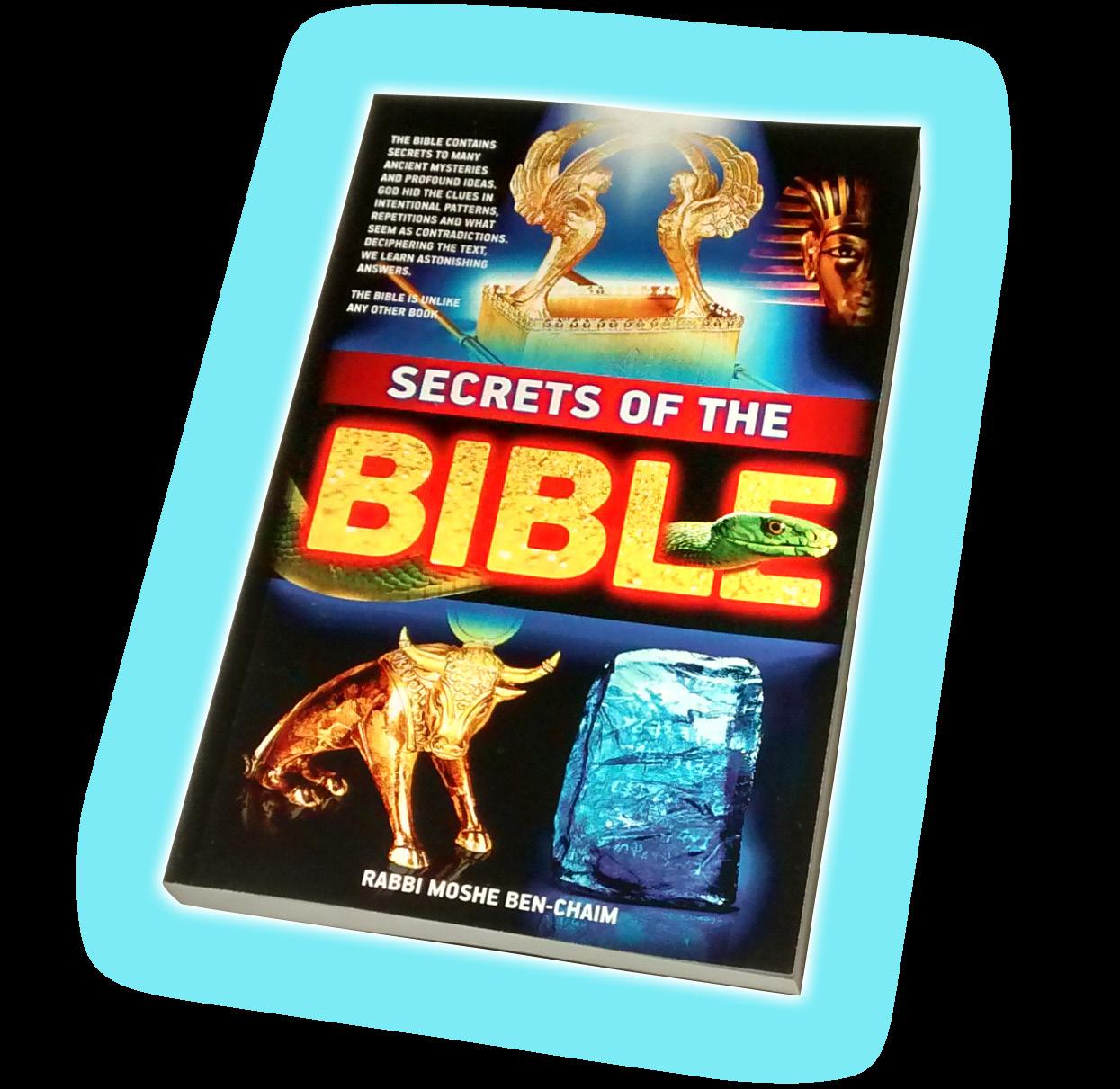
All books depict history, facts, theories, fiction or poetry. No book is coded with hidden messages beyond the words or patterns revealing marvels. But the Bible (Torah) was written by God, and is “coded.” The order of verses, use of certain phrases, apparent contradictions and other Biblical patterns are pur poseful clues to God’s wisdom.
This book unveils those patterns and shares the hidden messages.


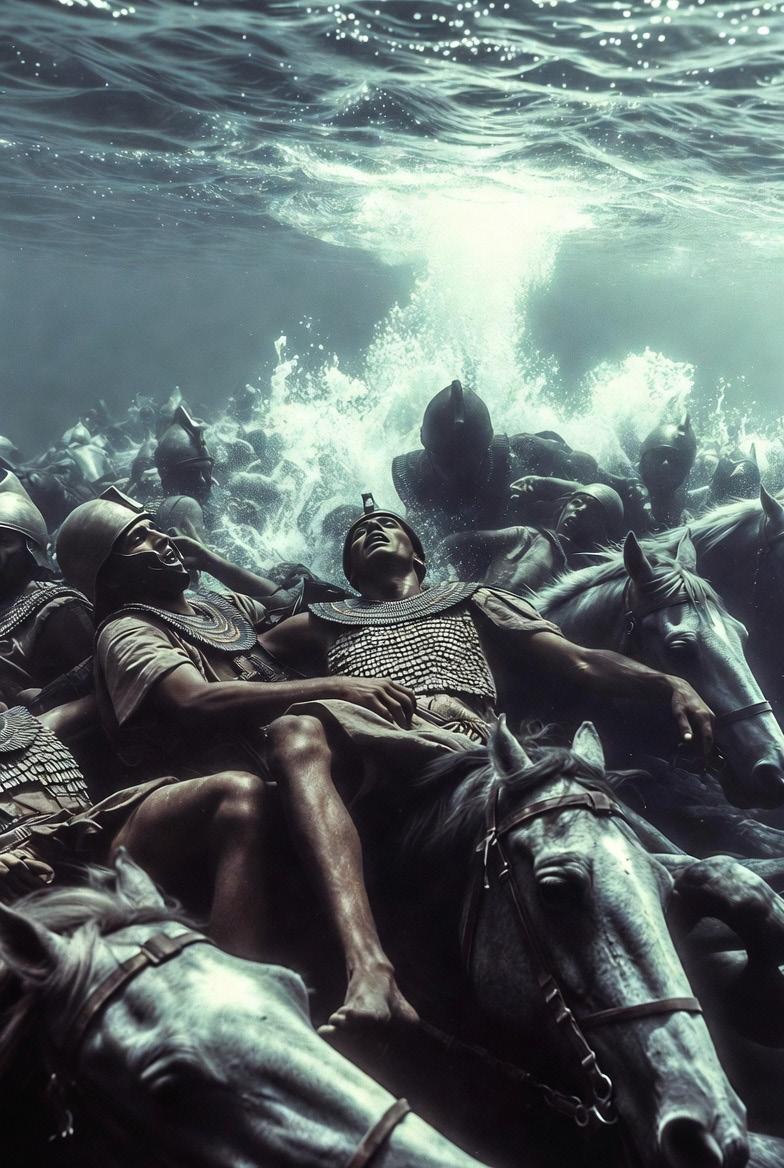
Parshas Bishalach opens with God not leading the Jews directly through Philistine territory, “lest they see war and return to Egypt.” Maimonides explains that God’s original plan was a direct route, but a separate concern required avoidance. This raises the question: why would newly freed slaves want to return to Egypt? God then deliberately positions Israel by the Reed Sea to entice Pharaoh into pursuit. This introduces an apparent contradiction: was the route change to avoid Philistines or to lure Egypt to destruction and gain divine honor? Why would God seek “honor” at all?
When Pharaoh approaches at the Reed Sea, Moses prays and God responds, “Why do you cry unto Me?” This seems to contradict the Jewish principle of prayer in distress. The question arises: why is prayer rejected here, and what was already set in motion that made it unnecessary?
Another fundamental question compares the Ten Plagues to the Reed Sea miracle. If God wished merely to destroy Egypt and save Israel, He could have done so during the plagues. Since God prefers minimal miracles, the sea’s splitting must have served a distinct purpose beyond the Plagues.
Rashi, citing Medrash Tanchumah, states that Israel saw the “o cer of Egypt” descending to strengthen Egypt. This metaphor demands explanation: what does it reveal about Israel’s perception of Egypt?
The ‘Wonder Within a Wonder’ at the Reed Sea Ibn Ezra notes that the Torah describes Egyptian destruction and Jewish salvation as simultaneous: turbulent waters destroyed Egypt while calm walls protected Israel. This “wonder within a wonder” raises the question of why God intertwined salvation and destruction instead of sequencing them separately.
Moses’ experience killing the Egyptian and being informed upon by the very Jew he saved reveals the root of Israel’s bondage. Rashi explains Moses’ realization: Israel’s su ering stemmed from internal corruption—unconditional allegiance to Egypt. This act exposed a preexisting flaw, not merely one caused by slavery, answering Moses’ long-standing question of justice.
The Jew’s betrayal reflects a deeper inability to challenge Egyptian authority, akin to Stockholm Syndrome. Israel had become psychologically dependent on Egypt, preferring security in bondage to freedom with responsibility. This mentality justified their punishment and explained their fear of war and return to Egypt.
God’s redirection to the Reed Sea addressed Israel’s dangerous attraction to Egypt. Destroying Pharaoh and his army was not vengeance but a necessary step to remove Egypt as a psychological crutch. God’s “honor” meant establishing Himself as the sole authority, essential for Israel’s readiness to accept the Torah.
God’s response, “Why do you cry unto Me?” meant that Moses’ prayer for salvation was already being fulfilled through the planned destruction of Egypt. Prayer was unnecessary because the solution was in progress.
This statement conveys two ideas: Egypt would be permanently eliminated, and God alone would be recognized as Israel’s redeemer. Silence signifies that no other power shares credit for salvation, reinforcing God’s exclusive authority.
The Torah’s laws on slavery redefine it as a temporary monetary condition, not a degradation of human worth. This reframes Israel’s Egyptian slavery as abnormal and unjust. The bored ear of a slave symbolizes refusal to accept God’s declaration: “You are servants to Me, not to man.”
The Reed Sea miracle aimed to instill appreciation for God and exclusive allegiance to Him. This appreciation underlies many commandments that recall the Exodus, guiding Jews to see mitzvot as rational, benevolent, and perfecting rather than burdensome.
Both men and women sang identical prophetic praise, demonstrating unified recognition of God’s supremacy. The simultaneous destruction of Egypt and salvation of Israel achieved God’s stated goal: honor that benefits humanity by clarifying truth.
God does not need praise; all His actions benefit man. Passover exemplifies divine education toward monotheism. Only after Egypt ignored the lessons of the plagues did destruction become necessary.
The Medrash reflects Israel’s mindset, not a literal vision. They perceived Egypt as invincible, as if protected by heavenly forces—revealing their psychological subjugation.
The plagues publicized God’s name globally; the Reed Sea addressed Israel’s internal corruption. By witnessing Egypt’s fall, Israel overcame its impulse to return and developed faith in God and Moses.
Jewish salvation and Egyptian destruction formed a single objective: eliminating false authority and establishing divine authority. This explains why both occurred together.
Despite later lapses into nostalgia for Egypt, God’s actions remain perfect. God provides the best solution at each moment; human regression does not diminish divine wisdom.
The splitting of the Reed Sea corrected Israel’s slave mentality, replaced Egypt with God as the sole authority, and prepared
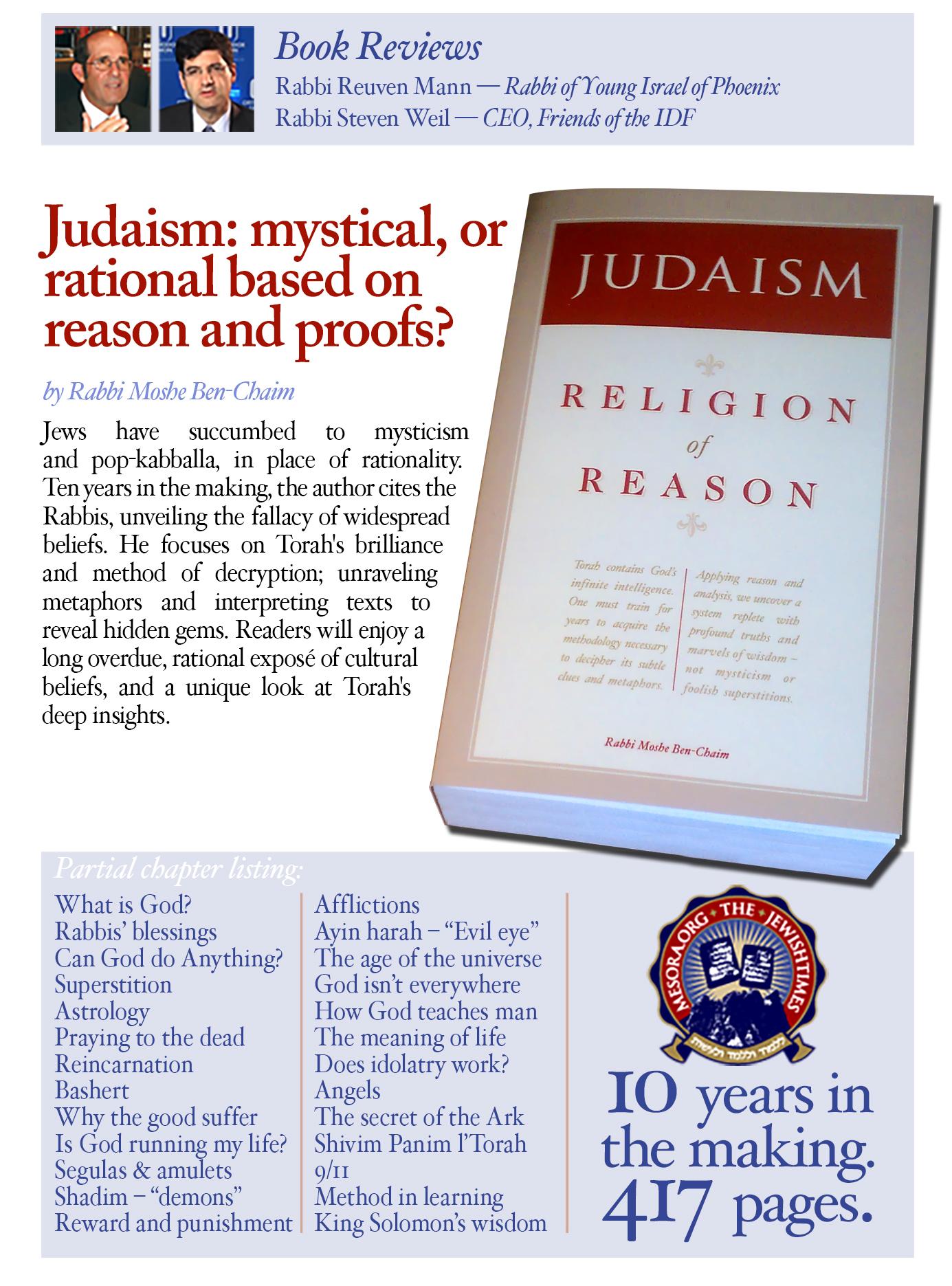
Is Judaism mystical, or is it rational, based on reason and proofs?