RAIL TRAIL CLOSURE






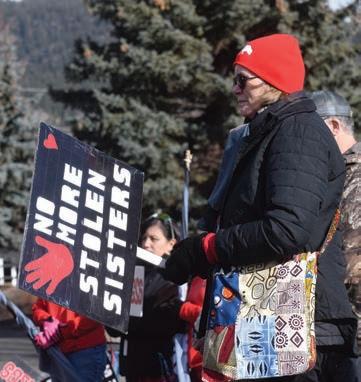
MMIWG MARCH: Residents of the Nicola Valley marched through the streets of Merritt on Feb. 14 to remember B.C.’s Murdered and Missing Indigenous Women and Girls. Photos on page 20.




































JAKE COURTEPATTE + HARIT
J OSHI newsroom@merrittherald.com
The killing of eight in Tumbler Ridge, six of which were children, has shaken communities across British Columbia to the core and send the country into mourning. The scars will be permanent for the families of those five children - three girls aged 12 and two boys aged 12 and 13 - and a female educator, age 39, who were the victims of the mass shooting at the school. Another 12-year-old was severely injured and remains in critical condition at BC Children’s Hospital.
Eighteen-year-old Jesse Van Rootselaar, the shooter who died of a self-inflicted

injury, had earlier shot their mother and half-brother at home before going on a rampage in the school.
To the survivors, mental toll would be unimaginable. Going back to the school premises would need tremendous courage and mental toughness to overcome the horrific scenes that played out on February 10. However, this incident has brought to the forefront security and safety aspects at schools across the province while pressing us into introspect as to what safety measures are in place locally.
In the wake of the Tumbler Ridge incident, Merritt Herald took stock of security aspects for schools in the city of Merritt.
We visited Bench Elementary, the Central Elementary and Merritt
Secondary schools, Diamond Vale Elementary and École Élémentaire
Collettville to get a first-hand view. The safety and security features are similar for all these schools thoroughly following the direction and mandate from School District 58 Nicola-Similkameen.
The Herald spoke with SD58 Assistant Superintendent Misty Sheldon, who said that while they understand the heightened interest in school security protocols, it is also crucial to ensure the message is maintained that schools remain safe places for students and staff.
“We work closely with our provincial partner, Safer Schools, to follow up on all threat- related behaviours through a process called Behavioural Digital Threat Assessment (BDTA), a multidisciplinary approach that includes our community partners,” said Sheldon. “We are consistently grateful for our strong working relationship with the local RCMP. Lockdown drills are conducted each year, with a minimum of two annually, in alignment with our Emergency Response Planning.”
Upon our visit to these schools, the front door remained open throughout the school time, whereas all other entry/exit points remained locked.
Sheldon explained that this protocol supports student access needs, while always requiring visitors to report to the office immediately upon arrival.
The Behavioural Digital Threat Assessment may, at surface level, sound like protocol jargon. However, the Safer Schools program has a team of well-trained professionals to deal with BDTAs.
“When a threat is received and reported, we follow up with Safer Schools to do a digital assessment,” said Sheldon. “We provide them all of the information surrounding the threat, and we make sure that all agencies and pertinent players are involved. We take all threats seriously, and when we do that we inform families that

we are following up with this process.”
Sheldon added that RCMP are always included in the process, and the school district is always willing to take their orders from police first.
While the Tumbler Ridge
event was an extremely rare case, it is exactly these cases that speak for the need for fluidity in our schools’ safety protocols.
“We’re always reflecting and seeing what we can do better,” said

Sheldon.
“Unfortunately in situations like this, that organically comes up as to what we can do better. But that’s one of the beautiful things about education, is that we’re always trying to do better.”
JAKE COURTEPATTE newsroom@merrittherald.com
A prominent court case at the Merritt courthouse is once again moving to a new date.
Christopher Jarvis, 49, was scheduled to appear in court via video conferencing on Feb. 17 to set a trial for a charge of second-degree murder in the death of his wife, Pamela Jarvis on Dec. 16.
Jarvis and his legal counsel were to make their decision known to be tried by judge alone or have a jury
present, however the date has been adjourned to one month later on March 17, once again in Merritt. It is the second time the election date has been rescheduled, after Jarvis was first set to appear to make the decision on Feb. 3. If the accused does not choose, they are often deemed to have elected for a judge and jury trial, especially for more serious c harges.
The Merritt Herald will continue to update the public on the proceedings.

A 67-kilometre stretch of the Kettle Valley Rail Trail is set to be permanently closed.

MORGAN HAMPTON
Contributed
The Provincial government has announced that more than four years after widespread flooding in Nov. 2021, the portion of the Trans Canada Trail formed by the former Kettle Valley Rail Trail between Princeton and Merritt will be permanently deactivated.
But many of those along the trail, including community leaders and recreational groups, are pushing back against a decision they say will have serious negative impacts.
The Kettle Valley Railway (KVR) opened for service in 1915 and operated until the last train ran in 1989. By the 1990s the rails had been removed and sections of the track began a new life as a multi-use trail which was later incorporated into the Trans Canada Trail (TCT).
Today, the trail infrastructure is used by pedestrians, backpackers, cyclists, ATVs, and snowmobilers, some of whom come from as far away as Europe, Asia, and Australia to enjoy the engineering marvel and scenic natural beauty.
However, when the Nicola and Similkameen valleys suffered catastrophic flooding during the atmospheric river event in 2021, roughly 67kms of the trail was damaged.
Communities along the trail, and the recreation groups who have been utilizing it for decades, believed that plans were
underway to carry out repairs and eventually reopen the highly popular route.
Following the province’s announcement of deactivation, these groups, community leaders, and local governments say they have been “blindsided” by the decision.
Bob Coyne, the Electoral Director for Area ‘H’ of the Regional District of OkanaganSimilkameen (RDOS) which includes the communities of Princeton, Coalmont, and Tulameen, was informed of the decision via email, and never given the opportunity for input.
“It sucks the way they did it,” said Coyne.
“They said they did consultation with all of the groups, all of the stakeholders but no… because they never consulted the RDOS, they never consulted with the Town of Princeton, we all just got an email that said they were closing it. There was no questions, no discussions, nothing.”
Across the Tulameen trestle is a community walking path with half a dozen memorial benches placed by locals who enjoy the “beautiful walk” on a near daily basis.
“It’s going to be devastating to the community of Tulameen,” said Coyne, who also questioned the decision to remove “all infrastructure” as planned by the province, noting that a few bridges on the trail were just replaced in 2021/2022.
“You just spent a couple million bucks


The fundraiser is held in loving memory of Pamela Jarvis, a former member of the The Grand Pub family, and in support of her children after her passing. Every ticket, every tip and every shared moment helps surround these kids with the care of the community


$15 Towards Steak Dinner


there now you’re going to tear it all up, spend another couple million to tear it out? A lot of it could be reopened with, I believe, a little ingenuity. I don’t think they’re putting that effort into it, all they can see is rebuilding the straight railway line that was there… There’s way too many options out there for them just to turn around and say we’re just going to tear it out.”
Coyne hopes that the province will come to the table with all those impacted and perform proper consultation.
“My head is still reeling about this I just can’t believe the province would do something like this solely on their own without consultation. The amount of money that’s been put into that KVR through private donations and foundations, yeah the government has put in some money, but most of it has been done by volunteers. For them to arbitrarily make that decision without consultation? Wrong… I’m absolutely, 100 per cent disappointed in our government for doing this without public consultation… it’s plain downright wrong.”
And after speaking to a member of the local snowmobile club, Coyne questions when the province took such an abrupt change in attitude. “They were in consultation less than a year ago with them about fixing it.”
Similarly, the President of the Brookmere Property Owner’s Association (BPOA), Leesa Kuit, was
under the impression that the trail was slated for repair and was unaware of the plan to deactivate until this reporter contacted her for a statement.
The KVR runs directly through the middle of the community of Brookmere and predates the now main road.
“I’m going to call B.S. on it, that’s the simplest way to say it, it’s B.S.” — Princeton Mayor Spencer Coyne
“It’s our heritage, it’s what Brookmere is – a historical part of the KVR,” said Kuit.
“My main concern is that it is an emergency escape avenue for us. We’ve had plenty of emergencies in the past, and this stretch is only eight flat kilometers.”
Herb Graham, Thompson Nicola Regional District (TNRD) Director for Area ‘N’, which includes Brookmere, echoed these sentiments.
“When I saw the Provincial government announcement to decommission the KVR it came as a great surprise and disappointment,” said Graham, who noted that the TNRD was also not consulted and only informed of the decision by email.
“First and foremost my concern is for the safety issue for the community of
Brookmere. That eight kilometer section of the KVR between Brookmere and Coalmont Rd. serves as an emergency evacuation route and to decommission that section of the KVR is a safety issue, and it would take a small amount of repair to make it safe to use again.”
Brookmere residents have used the route for evacuation in the past, as well as extensively for recreation.
“It’s going to be a bit of a hardship for tourism… it’s going to cost us a lot of money in the tourism industry that’s for sure,” Graham continued.
Spencer Coyne, Mayor of Princeton, the largest municipality along the damaged section of the KVR, said as a lifelong resident of Princeton the battle to save the KVR is a “personal” one for him, and in a now familiar story also expressed his frustration at being entirely left out of the decision making process.
“I’m going to call BS on it, that’s the simplest way to say it, it’s BS,” said Coyne, about the community engagment.
“When was the consultation? We’ve been using this trail for 100 years and probably even before that. We need some consideration on that point… There a re massive implications that if you don’t live here you don’t understand… there’s a social impact and an economic impact and I don’t know if you can separate the two because they’re hand in hand.”
The Town of Princeton has historically relied on natural resource industries as economic drivers, but in

Dr. Ross will be closing his practice effective March 31, 2026.
As a Medical Office Assistant you will be responsible for providing administrative ensure the efficient operation of the medical office. You will support the doctors and patients through a variety of tasks related to patient care management, communication.
RESPONSIBILITIES:
Medical Office Assistant Duties:
o Organize and schedule appointments.
o Update and file medical records and insurance reports.
o Assist during medical examinations and minor procedures.
o Produce and distribute correspondence memos, letters, faxes, and
o Prepare and clean treatment rooms and medical instruments.
QUALIFICATIONS:
o Experience as a Medical Office Assistant would be an asset.
o Knowledge of Office & Medical procedures.
o Excellent time management skills and ability to Mult-task and prioritize
o Social perceptiveness and service oriented.
o Excellent written and verbal communication skills.
o Strong organizational and planning skills.
o Proficiency in MS Office and patient management software.
Competitive salary and full benefits
Email Resume and References to admin@schss.com or apply in person at Street, Merritt.




When it comes to protecting your heart, food is foundational ~ but targeted supplements and herbs can offer additional support. As we continue our Heart Health conversations, let’s look at a few nutrients that research shows may benefit cardiovascular wellness.
CoQ10 (Coenzyme Q10) plays a key role in energy production within your cells. The heart is one of the most energy-demanding organs in the body, and CoQ10 helps fuel healthy heart muscle function. Levels naturally decline with age and may be lower in people taking statin medications.
Garlic has long been treasured for heart health. It may help maintain healthy cholesterol levels, support balanced blood pressure, and improve circulation. Fresh garlic or aged garlic extract are commonly used forms.
Vitamin C is a powerful antioxidant that helps protect blood vessels from oxidative stress. It also supports collagen production, which strengthens the structure of arteries.
Fish Oil, rich in omega-3 fatty acids (EPA and DHA), helps reduce inflammation and supports healthy triglyceride levels. Regular intake has been associated with


improved overall cardiovascular health.
Vitamin D plays a role in regulating blood pressure and supporting immune balance. Low vitamin D levels have been linked to increased cardiovascular risk, particularly in northern climates where sun exposure is limited.
Vitamin E (natural form) acts as an antioxidant that helps protect cell membranes from oxidative damage. The natural form (often listed as d-alpha-tocopherol rather than synthetic dl-alpha) is generally better utilized by the body and may support healthy circulation.
Several herbs also stand out. Hawthorn has traditionally been used to support circulation and heart rhythm, while Ginger may help reduce inflammation and promote healthy blood flow.
Supplements are meant to complement ~ not replace ~ a heart-healthy lifestyle that includes movement, hydration, whole foods, stress management, and meaningful connection. As always, consult your healthcare provider before beginning any new supplement, especially if you take medication.
Your heart works tirelessly for you. A little targeted nutritional support can help it keep beating strong for years to come.



The first 60 days of the year are often called ‘RRSP Season’ in the media and online.
It is the time of year you can contribute to a plan and ‘go back’ to reduce the taxes you owe for the previous year. To claim a deduction on your 2025 tax return, you must make your contribution by Monday, March 2, 2026.
Before we all just run to the bank and blindly contribute to our RRSP, we need to know a few important facts. Firstly, an RRSP is a registered retirement savings account. As the name suggests it is an account that allows you to save for your retirement. It is also a fantastic tool when it comes to tax planning for the previous year. RSP contributions made during the remainder of the year will be attributed to the current year.
For every dollar you contribute to an RRSP during the first 60 days of the year, you will get a receipt for a correlating deduction from your income for the previous year. This allows you to reduce your taxable income and increase your retirement savings. While inside the RRSP ‘wrapper’ your investments will grow tax free. At retirement or the year someone
CANADA/CHINA NOT ALL IT SEEMS?
Editor,
The Chinese government is likely using our own Western corporate greed, as well as our domestically-destabilizing democratic freedoms, against us. T he CCP knows that governance in Canada and the U.S. are heavily steered and may therefore be disadvantaged by domestic corporate interests, sometimes through the latter’s economic intimidation. We exist in a virtual corpocracy, where

turns 71, the RRSP will be converted to a RRIF which is a Registered Retirement Income Fund. Withdrawals from any registered accounts are 100% taxable in the year they were withdrawn from the account. Before you contribute, you need to know your ‘contribution room’. This isn’t a guess; it is a specific number calculated by the CRA. You can find your exact 2025 RRSP Deduction Limit on your most recent Notice of Assessment (NOA). The general rule is that your contribution room is 18% of your earned income. Please keep in mind that it is based on “earned” income, namely wages and salary. Self employed, and pensionable Canadians need to be mindful of this.
When it comes to retirement and tax planning, I always recommend Canadians seek financial advice from professionals such as Certified Financial Planners (CFP) to assist them in making the appropriate choices for their financial plans.
Lyle is a Certified Financial Planner in the Nicola Valley, an advocate for financial literacy for Canadians and an author of three books.
The Merritt Herald welcomes your letters, on any subject, addressed to the editor. Letters may be edited for length, taste and clarity. Please keep letters to 300 words or less.
Email letters to: newsroom@merrittherald.com.
mega-corporation lobbyists pull corpocratically orientated governments by the nose. High-level elected officials can become crippled by implicit/ explicit corporate threats to transfer or eliminate jobs and capital investment, thus economic stability, if corporate ‘requests’ aren’t met.
Corporate lobbyists write bills for our governing representatives to vote for and have implemented.
– Frank Sterle Jr. White Rock, B.C.
Hang in there, ranchers, the future will be brighter.
Following a generally downbeat cattlemen’s conference in Kamloops, Feb. 10, Judy Guichon says there is hope for the battered industry.
Guichon, vice-president of the B.C. Cattlemen’s Association, and an owner of the Gerard Guichon ranch near Merritt, told the Herald that while there are few short-term options for ranchers, those who can hang on for another two years will see better times.
Guichon said she is optimistic the market will turn around within the next two years and that ranching is still a viable endeavour in this province.
“We need to find other ways to diversify, and I hope that’s what people can find the energy and support to do,” she said.
Guichon spoke as part of a panel discussion for ranchers in the Interior at the Kamloops Convention Centre last week.
The event, titled ‘Current Cattle Industry Melt-down,’ was hosted by the Kamloops Stockmen’s Association.


This is a question many caring dog owners ask. For most people, it’s true. Dogs are loved family members who are usually right by our side. Still, even with the most attentive owners, unexpected situations can happen. A gate can be left open, a leash can slip from a hand, or a loud noise can startle a dog and cause them to run. When this happens, a licence on a collar helps the City reunite a lost dog with their owner as quickly and stress free as possible.
Dog licence fees also support the many behind-the-scenes services that protect animals and the community. Not every dog that comes into the City’s care is immediately claimed. Some are never reclaimed at all. These dogs may stay in the animal shelter for an extended period while City staff work with the BC SPCA and a variety of rescue organizations in the Thompson and Okanagan areas to find safe placements, arrange veterinary care, and coordinate transport to foster homes.
In rare, but serious situations, incidents such as dog bites or attacks can occur. These cases require careful investigation and may involve legal processes, court costs, and professional behavioural assessments. Licence fees and related fines help cover these expenses, ensuring that the costs are shared fairly through a user pay system rather than placing the burden on the broader community.
Licensing is ultimately about care, reponsibility, and being prepared for the unexpected so that both dogs and people are protected and supported when it matters most. Please visit City Hall or the website to renew or licence your dog.






MORE CONSULTATION: continued from page 5
recent years have been moving towards embracing tourism as these industries falter. The KVR plays a large role in regional tourism, which Coyne says is threatened by its deactivation with residents already noticing a drop since the 2021 damage.
As recently as the Union of BC Municipalities (UBCM) Convention in Sept. 2025, Coyne said that plans to repair vital parts of the trail seemed to be moving ahead, particularly the replacement of a “landmark” trestle near Princeton.
“There was no consultation that they were tearing anything out,” said Coyne.
“We were led to believe that we were slowly making some headway and we were all on the same page… To do this? it blindsided everybody.”
The province has estimated the costs of deactivation at $20 million and the cost of repair at roughly $60 million, but all affected parties question how the Province arrived at this estimated $895,522 per km figure without ever consulting with local governments and organizations who could possibly help to reduce this cost. When questioned, the Province declined to explain how they had reached their stated dollar values.
“The province needs to understand we do not expect $60 million to repair this trail, that’s an important point, we’re not expecting miracles here we understand that there’s a financial situation in this province,” said Coyne.
Coyne explained that it was originally the Vermilion Trails Society that spearheaded the efforts to turn the KVR track-bed into a usable trail, being one of the first to get a license of occupation for the right of way. The trail was maintained this way for over a decade before the then-government decided to hand management over to the Town of Princeton and the Regional Districts, after which Coyne said it became increasingly difficult to get approval for any kind of maintenance or improvement.
“It’s been shortsightedness on behalf of the provincial government since the beginning of the trail network,” said Coyne.
“Centralization of government is killing rural BC. I think that’s a fair analogy, it’s killing us. We did pretty well before everybody else got involved. There’s a whole part of this where if you’re not from here you really don’t understand what’s being lost… I’m very disappointed that they
just did it and never considered what the impact is, economic or social. Let us have a crack at it, I think that’s the best way to go. Let locals figure this out or at least let us drive the decisions here.”
When Coyne called the Chief of the Lower Similkameen Indian Band, he discovered that they had not been consulted either.
“Sit down with us, sit down with the stakeholders and let’s have a conversation.”
Both Donegal Wilson, MLA for BoundarySimilkameen and Tony Luck, MLA for Fraser-Nicola have spoken out against the proposed deactivation, with Luck saying it is another instance of the government disregarding the concerns of rural BC residents by making major decisions that directly impact them “in secret”.
Likewise, Tourism Nicola Valley issued a statement condemning the decision to close the trail, calling it a “lifeline”. The Merritt Snowmobile Club (MSC) has also submitted a formal objection to the closure, noting “The KVR corridor is far more than a former rail bed. It is a safe, flat, multi-use access route that connects staging areas, warming huts, trail systems, and backcountry zones… Removing this corridor significantly reduces safe entry points and increases pressure on alternative access routes that are steeper, more technical, and less suitable.”
The province maintains that the trail must be deactivated and wholly removed, that there are no alternative options due to safety and environmental risks such as “threats to the integrity of fish-bearing streams due to potential sedimentation and slope instability.”
According to a spokesperson for the Ministry of Environment and Parks, “Recognizing the deep cultural and social attachment the community has to this historic trail, the Province has prioritized stakeholder engagement throughout this difficult process.”
However, when pressed, the Ministry could not provide a specific list of stakeholders that had been engaged in the project prior to press time, only insisting that they would look for a permanent alternate route and focus on other tourism and recreation projects in the area, such as the Skyview and Buckhorn campgrounds and Coquihalla Canyon sections of the KVR.
An online petition, Save the KVR, received more than 2,500 signatures in less than 24 hours and has now surged past 7,000.

Legal services for your family and your business. Real Estate | Wills & Estate | Business
Ben van der Gracht
250-374-3344 ext 244 bvandergracht@morellichertkow.com
Jacob M. Brown
250-374-3344 ext 264 jbrown@morellichertkow.com

JAKE COURTEPATTE
newsroom@merrittherald. com
The raw nature of supply and demand reared its ugly head this week, as the Nicola Valley Food Bank temporarily closed its doors due to lack of product.
“We were hoping that donations would allow us to remain open; however, we have decided we need to close to replenish our stock,” reads a social media notice.
Though last-minute generous donations turned a full-week closure into a one-day operation, it still sheds light on the issue at hand - while more and more residents rely on the food bank, the donated supply struggles to maintain pace.
The food bank partners with both major grocers in town in Save on Foods and No Frills, with their Loop and Second Harvest programs, respectively.
These resources are able to provide much of the perishables that can be found within the food bank’s walls.
“Lately it’s been a little lower,” said Food Bank Manager Derlanda Hewton.
“So we’re pretty depleted. We totally appreciate everything we get from them, but unfortunately sometimes the supply does not meet the demand, so we are kind of trying to rearrange things again.”
Behind the scenes, the Food Bank’s day-to-day
operations are tireless and akin to any other business, with staff, volunteers, product, and finances all moving together to create a well-oiled machine.
“We know that there are hard times out there, but we face it too. Donations are down, we’re managing, but our accounts are pretty low.”
Looking ahead, Hewton and her team hope that self-sustainability will be achievable when the organization is able to move into its future home at 1898 Blair Street.
“We’re working on a project that is going to sustain us, so that we don’t have to go to the community for donations so much.”


Lower Nicola Indian Band as well as BC Wildfire Service is advising the public of possible smoke sightings in early spring, as they complete the next phase of a scheduled cultural burn.
A three-year project that began in 2024, around 200 hectares have already been burned approximately six kms west of Merritt, adjacent to Hwy. 8 and 97C.
This spring, and as early as March 2, the remaining 50 hectares of the project will
be burned, with the exact timing of this burn depending on weather and site conditions.
These scheduled burns reduce fuel loading in urban interface areas, reduce cured grass to allow traditional foods and plants to flourish, improve grazing, and provide a cross training opportunity for the Lower Nicola Fire Department.
Smoke may be visible from Lower Nicola, City of Merritt, Nicola Mameet IR #1 and surrounding areas, and to drivers travelling along Highway 8, 97C and 5.











Nicola Valley Museum & Archives Manager
Overwaitea’s lineage stretches back over 100 years here in Merritt. The original Overwaitea store opened at what is now Carrie Ware & Company on Quilchena Avenue back in 1922. The iconic tea pot sign hung over the street at that location for over 30 years until they felt they needed more space. In December 1958, the doors were opened at the new Overwaitea store, just down the road from the old location, located at what is now Stoyoma Dental.
Bob Turko arrived in Merritt as the general manager of Overwaitea in 1969 and wanted to see a new store built from the ground up to allow more
floorspace and accommodation to the customers.
Overwaitea would eventually give the go ahead and in the early 1970’s, found the location.
Overwaitea purchased the New York Kitchen and Alf’s Auto Repair (formerly Laurie’s Auto Service) buildings and applied for permission to tear
them down and build a new store from the ground up. The buildings were torn down on June 5th, 1973. The Herald reported mixed feelings from the onlookers, as to many this represented a change in t he community, a replacement of the older downtown that they all knew with a newly renovated
downtown. Around this time there were many changes to the downtown core, the old CIBC building would be demolished and replaced with the current building, the Nicola Valley Indian Services were getting a new building, an apartment building was being built, and many other building permits
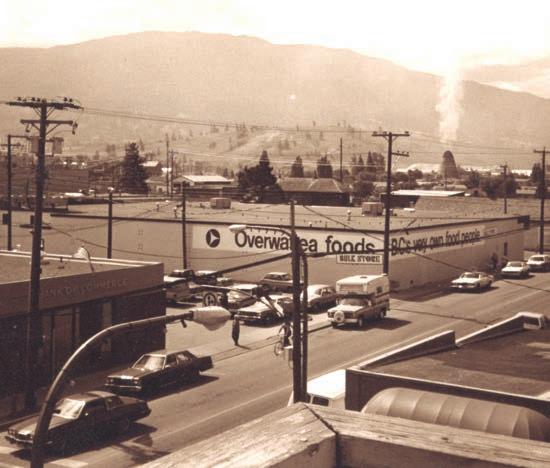
had been issued. Construction was underway quickly, and on February 27th, 1974, the third Overwaitea store in Merritt’s history was open for business. The new store tripled the amount of display area and more than doubled the number of freezers and parking spots. They also included an air conditioning system and intercom speakers which were lacking at the previous location. Local ranchers were invited over the following weeks to come into the store and use their brand to brand a piece of wood that would hang over the meat’s department, which still exists at the current Save On Foods.

This location would serve as one of Merritt’s main grocery stores until 1997 when they moved into the Railyard Mall. The name would change to Cooper’s Foods, and then in 2016, it was changed to its current name, Save On Foods.
Nicola Valley Museum & Archives Manager
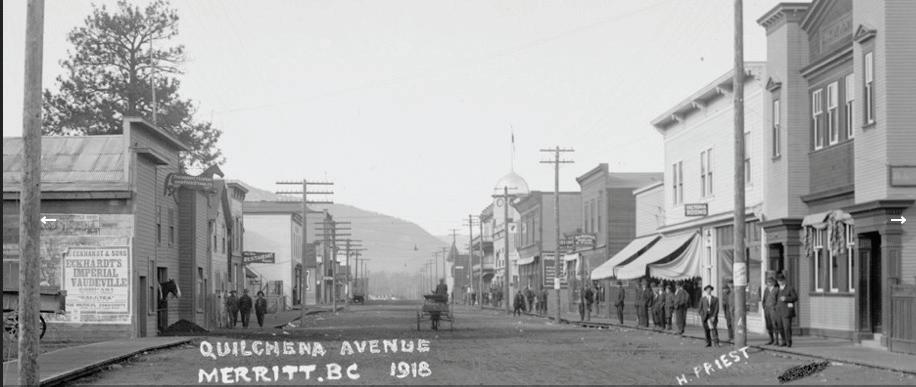
The story of the Nicola Valley Brewery starts with Louis Forschner, a German brew master who came to what would become Merritt around 1908 to establish a brewery in the newly forming town. He set up his brewery near what is now Spring Street at the end of Granite Street. He did so because at the time there was a natural spring that formed a creek that ran into the Nicola River. The brewery was set up to draw water out of this creek, and as a result, the creek was sometimes referred to as “Brewery Creek”. Forschner personally would deliver five-gallon drums of beer to people’s door steps via horse and wagon, and would take back any empty
kegs and bottles. He would also sell the used malt to local farmers as feed.
Mayor Collett recalled in a 1982 Merritt Herald article that his father would buy malt from the brewery and feed it to their livestock, resulting in tipsy livestock.
In 1915, a NV Brewery employee named Herman Nicolai received a $150 fine ($4,050 in today’s money) for selling less than the required four quarts (3.75L) of alcohol. He sold the man three bottles of beer, which would equate to around one litre.
In September 1916, the province of BC held a referendum on prohibition which would pass and the following October, the Prohibition Act came into law, banning the sale of all alcohol with an exception for medical purposes. For a


time, the Nicola Valley Brewery became a speakeasy, until in April 1918, Forscher pled guilty to selling alcohol and storing alcohol in an area that was not his primary residence. He was fined $80 ($925 in today’s money) and sentenced to six months at the Okalla Prison Farm in Burnaby. Upon returning from prison, Forschner began applying for a new license to sell non-intoxicating drinks from the brewery, which he would eventually receive in July 1919 after many failed attempts.
At some point, around 1920 the ownership of the Nicola Valley Brewery changed. Louis Forschner sold the brewery around 1920, to Noah Boyden and his family. In July 1921, the provincial government
began lifting prohibition through the opening of the first government-controlled liquor store. A year later, in July 1922, the Nicola Valley Brewery received permission after testing to sell in Merritt’s government liquor store. The Boyden family continued operations until the death of Noah Boyden in March 1925, when it then sat abandoned for a period of time until the property was purchased by a German brew master from Alaska, Ernest Richter. Richter ran the brewery from 1925 until 1928 when he sold it to W. H. Biner, a brewer from the Kootenays. Richter moved back to the US, starting up another brewery in Seattle. Biner then ran the brewery until
BREWERY: continued on page 13

he sold it later that year to Pacific Brewers Amalgamated, a Vancouver based organization, for $12,500 (a little over $250,000 in today’s money) in a bid to obtain the franchise and force out any private competition within the Brewery Trust.
A fter purchasing the Nicola Valley Brewery, Pacific Brewers amalgamated then closed down operations there, and the building sat vacant until April 1st, 1942 when the building burnt to the ground. There was a time, either during this period of abandonment, or prior that the buildings were briefly used for making cheese. The cause of
the fire was unknown, however because the buildings had been abandoned for some time, it was a well-known location for parties or for people without a place to sleep.
Nicola Valley Museum & Archives Manager
James Teit was a pioneering anthropologist in Interior B.C. in the late 19th and early 20th centuries, having lived in Spences Bridge and now buried here in Merritt.
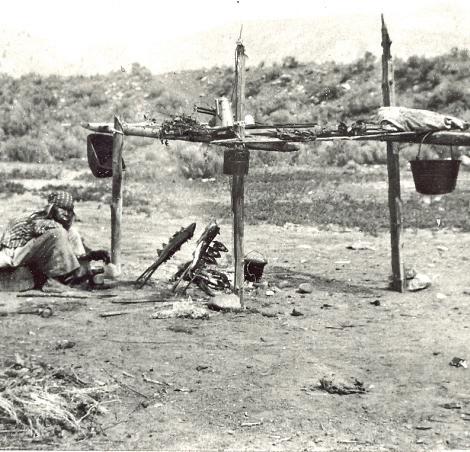
Teit begins his writings on food by listing deer, salmon, roots, and berries as being the main staples of the Nlaka’pamux peoples with deer being more of a staple food over salmon for the Upper Nlaka’pamux people, and the other way around for the Lower Nlaka’pamux peoples. It was common for people to live in the mountains, moving from one root gathering or deer hunting area to another in accordance to the harvest-time. In conversations with some of the peoples, Teit notes

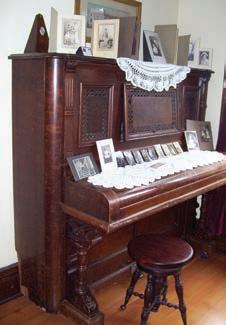
at the Baillie House. Constructed in 1913 by Cosom A. Bigney, the house was originally built to welcome his mail‑order bride from England. However, she never arrived, and Bigney remained unmarried, passing away in 1933. In 1938, the property was acquired by blacksmith Melville Baillie, whose family operated a successful blacksmith business on the premises. The Baillie family continued to reside in the house until 1990, when John Baillie, known as Melville Jr., passed away.
Today, the Baillie House serves as a hub for visitors and locals, offering free information, refreshments, games and tours in the summer. The tours are especially popular with groups looking to find a glimpse of potential paranormal activity.
that there had been a rapid decline in the number of deer over the past sixty years, with some elders being able to recall much larger amounts of deer in their youth. Elk and mountain goats were also a staple at one point, but they too had a very rapid population decline to the point they were relatively rarely eaten by the time Teit was writing. While deer and
salmon were staples, they were not the only meats eaten. Teit notes that a number of other meats were eaten as well, such as bear, porcupine, rabbit, squirrel, ducks, trout, and marmots were hunted and eaten. Moose, buffalo, antelope, and caribou were not in the a rea, but their meats were obtained through trade. Roots and berries were the other half of the staples, with roots being commonly gathered in the spring and fall. Roots were harvested using a root digger, which was a piece of hardwood, 2 feet in length and bent slightly at the point. On the other end of the stick there was a handle to manipulate the digger. Women would often carry a basket on their back so that they could toss the roots into, and when
FOODS FROM: continued on page 15
pop up barn sales throughout the year at the Baillie House. Every purchase helps support and preserve this historic property. Donations gratefully accepted.



In the early 1980’s, Canada was in the midst of one of the worst economic downturns since the Great Depression. A shockwave that began with the Energy Crisis of 1979 had rippled and peaked in the early 1980’s. Interest rates skyrocketed around Canada, averaging 12 per cent, and unemployment also peaked at the same. Merritt was hit particularly hard during this time. One of the main economic drivers of the region, Craigmont Mines, closed in 1983. StatsCanada’s figures in early 1983 placed the Kamloops area’s unemployment, which included Merritt, at 27.4 per cent. That same year, R.B. Bennett’s Social Credit party was re-elected under a banner of cutting government spending and restraint. The government quickly enacted austerity measures, including the laying off of 1,600 provincial employees, including many here in Merritt.
As a response to the government’s austerity measures, a coalition of workers, unions, and activist organizations came together from across B.C. to form the Solidarity Coalition. This was a movement that was meant to provide a unified force for British Columbian workers across the province to push back against the government policies.
The Solidarity Coalition came to Merritt in October 1983, when groups such as the BCGEU, CUPE, the Nicola Valley Teachers Federation, hospital

workers, renters, and citizens came together to form the Merritt chapter of the Solidarity Coalition. Part of the Solidarity Coalition’s operations was, in response to unemployment, loss of EI funds, and food insecurity across the Province, to set up Food Banks.
And thus, in November 1983, the Merritt Food Bank was established. It was initially set up at the Solidarity Coalition offices at 2052 Nicola Ave (what is now Gun Fishin’, across from the Murray Car Dealership).
This was the first instance of a Food Bank in Merritt. Previously one had to rely on the generosity of neighbours or their churches, or simply go without food.
The Food Bank became independent in February 1984 after holding their first Annual General Meeting and electing their first President, George Redknap. Over the following year they received support from Merritt organizations such as the Merritt Sikh Society, MSS Student food drives, Taylor’s Jewellery, Aspen Planers, The Women’s Institute, and the Cadet Corps, on top of donations

from regular Merrittonians. It was noted from the Food Bank that a lot of the support came from seniors who remembered the kindness and generosity that their families had been afforded during the Great Depression in the form of food baskets being left at the door from their neighbours. But despite this, they struggled to find a suitable location. They moved from their original location on Nicola Avenue to Quilchena Avenue, but the space lacked proper freezer space. From there they moved to the basement in the City Hall where there was some unused office space that had previously been occupied by the Civil Defense Force.
Over it’s first year of operation, the Merritt Food Bank supplied food to over 300 families, a sizable portion of the population of Merritt, which at the time hovered just over 6,000 people. Even with the outpouring of funds and food, there were still points of the year where the Food Bank began to run dry, and over the next few years, did nearly close it’s doors multiple times due to lack of funding.
The Merritt Herald has been serving the Nicola Valley since 1905, covering local news, community events, and industry developments. Over the years, it has adapted to changes while remaining a trusted source of information for residents.
Now owned by K’en T’em Limited Partnership, the Herald continues its commitment to local journalism in both print and digital formats. It remains a vital part of the community, highlighting important issues and celebrating local achievements.








: continued from page 13
it got full they would empty it into a larger basket nearby. It was sometimes practice to set fire to the woods in order to secure a greater abundance of roots. Berries too were gathered depending on the time of year, including currants, gooseberries, choke-cherries, salmon berries, and elderberries.
Teit notes that while eating, fresh water was not often drank along side. Instead, it was more common to use the water that the meat or fish had been boiling in, and adding celery stalks and leaves, as well as a plant called “Hudson’s Bay tea” and sometimes things like bearberry stalks and leaves were dried and used for preparing drinks.
Later in his writings, Teit describes some common dishes. A favourite that he noted was made up of roots with a flour-like texture, such as bitterroot and berries that are boiled together until they are soft. Then some deer grease is mixed in, and the dish is eaten with a spoon. Another was salmon roe being boiled with berries, in water that had just boiled salmon or trout. Dried venison and dried berries were commonly pounded together and mixed with hot deer grease. They would then be cooled into cakes and stored in sacks.
Teit goes into further descriptions of dishes in The Thompson Indians of British Columbia, available for perusal at the Nicola Valley Museum & Archives.
Nicola Valley Museum & Archives Manager
The New York Kitchen was opened by Gus Grote in September, 1915. Grote had been living in the Nicola Valley for many years and ran a number of kitchens across the Valley.
He was the chef of the Coutlee Hotel and ran the Middlesboro Boarding House before leaving for Vancouver in 1911 for a couple years where he owned and operated the Couver Café. He would eventually return after a few slow years and open up the New York Kitchen which promised a first-class meal at a reasonable price. The restaurant was located along Voght Street, across the street from what is now the Hospital Auxilliary Thrift Store. Although Grote opened the restaurant, he wouldn’t own it for long. He would sell it to the Lee Brothers in July, 1916 before returning to Vancouver. The Lee Brothers were two men from China who came to Canada to work and ended up living in Merritt in the early 1900’s. In cooperation with a handful of other Chinese men, they first started out as potato farmers along the Sunshine Valley Road. Eventually the partnership dissolved and the brothers began looking for other forms of work, Fred Lee opened Fred Lee’s Shoe Repair Store, and David Lee began running the New York Kitchen until the 1940’s. In 1935, Lee made local news after being unable to pay a fine for allowing drunkenness on his property, David elected to serve a jail sentence. Rather than trying to mask why he was away, he posted a sign in the window saying “Café Closed, Gone To Jail”.
The final owner of the New York Kitchen was Charlie Sing. Charlie came to Canada in 1911 and begun
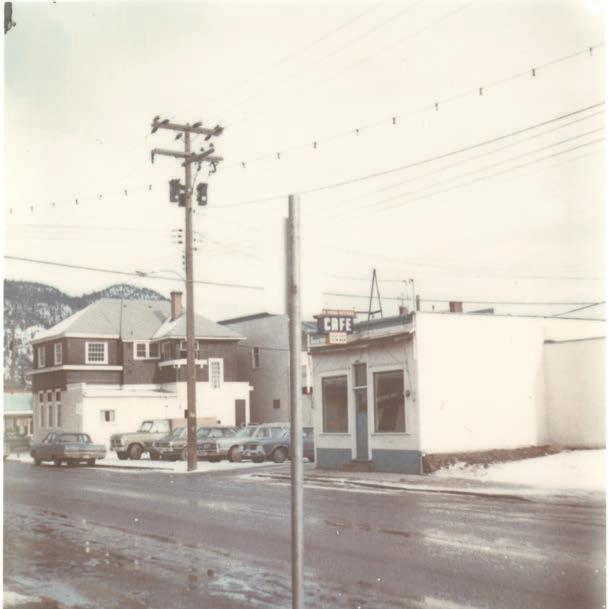
working at a hotel in Vernon where he worked until 1914 when he moved to Kelowna to work at his first restaurant. He then moved to Brookmere where he worked at the Brookmere Hotel and Store, which he would purchase six months later. He ran the hotel and store for years before selling them and moving to Merritt around 1933. Not long after arriving, Charlie Sing took over ownership of the Sam Wah Laundry, next door to the New York Kitchen. When Dave Lee retired in 1945, Charlie took over ownership of the New York Kitchen. At some point, I was unable to find out when, but under the ownership of either David Lee or Charlie Sing, New York Kitchen became a Chinese food Restaurant, one of the first in Merritt. Charlie Sing came to Canada by himself to earn money and send
back to his new family. However, once the Exclusion Act of 1923 came into effect, his family was unable to move to Canada. With the exception of one trip to China, Charlie Sing was unable to see his family for over 20 years until the Exclusion Act was finally lifted in 1947 when his now fully-grown sons were able to move to Canada one moved to Vancouver with his wife and son, and Charlie’s other son, Kim Wing, moved to Merritt to work in the restaurant.
The restaurant was eventually closed in April 1973 when the properties were bought by Overwaitea and torn down in June of the same year to allow for the construction of the new Overwaitea store, which is now City Furniture. Charlie Sing himself retired after the closure of the New York Kitchen at the age of 82.
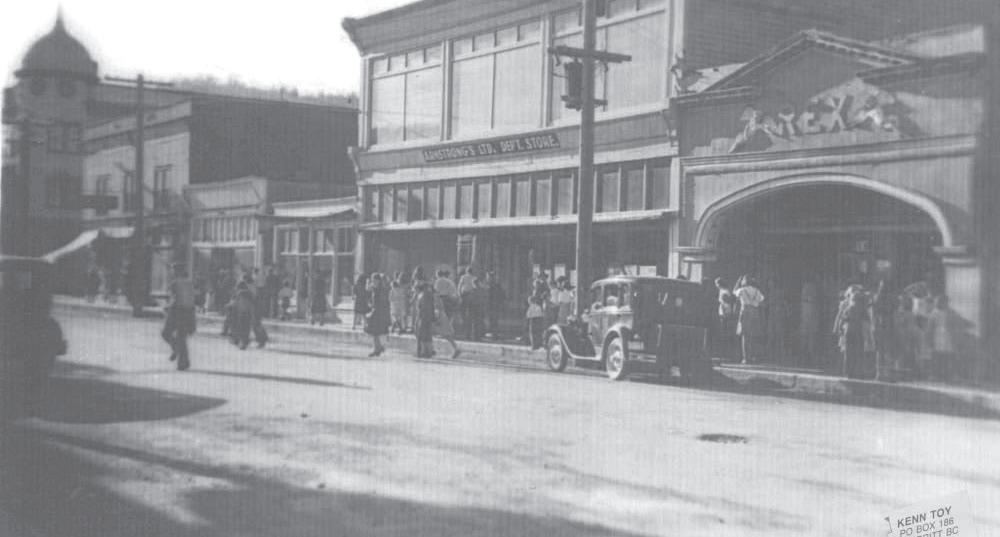
For decades, Black’s Pharmacy has been more than a place to fill prescriptions. It has been a place where neighbours were known by name, advice was freely given, and care came first. From its early days in downtown Merritt to the generations who have walked through their doors, Black’s Pharmacy has remained a trusted constant in an evolving town.

• Originally home to the historic Rex Theatre, closed in 1952
• Later operated by Ms. Tweed (pharmacy)
• Blumenauer Pharmacy
• Erwin Brandley’s Drugstore
• 1969 – Archie Black purchases and renames it Black’s Pharmacy
• 1972 – David Quinn purchases the store
• 2001 – Curt Thoms becomes owner
• 2015 – Blaine & Danielle join as partners
• 2020 – Blaine & Danielle become 100% owners
• 2025 – Jeff Lawrence joins as partner
Proudly serving our community through every chapter.




Blaine, Danielle & Jeff
JAKE COURTEPATTE newsroom@merrittherald. com
The final stretch has arrived in the 2025-26 KIJHL season, while the Merritt Centennials continue to prove that they can hang with the league’s big dogs.
Friday, Feb. 13, 2026 - Merritt Centennials 6, Beaver Valley Nitehawks 5
Playing through perhaps the toughest stretch of schedule on their calendar, the Cents hosted the Beaver Valley Nitehawks for the first and only time this season at the Nicola Valley Memorial Arena on Friday, who continued to boast a single-digit total in the loss column with just weeks left on the schedule. It was the visiting team that got on the board first when Brady Walker beat Cents goaltender Sam Siskiw just under five minutes in, before the Cents took over at the other end of the rink. By the time the buzzer

sounded to end the second period, five different Merritt skaters were on the board, including one each from Brayden Thurlow, Ryker Swanson, Noah Lawless and Travis Langlois, as well as a pair from Callum MacLean to give the Cents a 6 - 2 lead.
Despite a late third period charge from the powerhouse Nitehawks that saw scoring right until the final four seconds of regulation, the lead proved insurmountable as the Cents hung on for a 6 - 5 win. Siskiw made 21 stops in the bounce-back effort after two straight losses.
Saturday, Feb. 14, 2026 - Revelstoke Grizzlies 2, Merritt Centennials 0
Siskiw was back between the pipes the following night for another difficult challenge against the divisional rival Revelstoke Grizzlies, the leaders of the Bill Olhausen division. The Cents top netminder spent all 60 minutes battling Revelstoke’s
Austin Seibel, as just one goal was scored in the first 59 minutes of play by Revelstoke’s Jake Neufeld late in the first period.
Neufeld added a late empty-netter to seal the shutout, but not before some late-game antics set up the chance for some real animosity in a possible playoff matchup with a pair of fights in the final 15 seconds of play.
Despite the loss, Siskiw was stellar in stopping 37 of the 38 pucks he faced.
Just four games remain in the regular season for the Centennials, including their final road game against the Osoyoos Coyotes this Friday, a chance for two points against the division basement dwellers.
They return home the following evening to host the Coyotes at the Nicola Valley Memorial Arena for a 7p.m. puck drop.
The Centennials enter the week holding a 22-14-2-2 record, good for fourth place in the six-team division.



Children may not always realize that they are being bullied. They might think it is bullying only if they are being physically hurt; they might believe the other child is joking; or they may not understand the subtle social norms and cues. Children can benefit from a definition of the differences between friendly behavior and bullying behavior.
The basic rule, which is not a legal or comprehensive definition: Let children know bullying is when someone is targeted by words or actions that are repeated, aggressive and unwanted. Those targeted are hurt or harmed either physically or emotionally and have a hard time stopping what is happening to them.
Parents can prepare themselves to talk with their children by considering how they are going to respond to their child’s questions and emotions. They can also decide what information they would like to give their child about bullying.
Parents should be ready to:
• Listen. It is the child’s story; let him or her tell it. They may be in emotional pain about the way they are being treated.
• Believe. The knowledge that a child is being bullied can raise many emotions. To be an effective advocate, parents need to react in a way that encourages the child to trust.
• Be supportive. Tell the child it is not his fault and that he does not deserve to be bullied. Empower the child by telling her how terrific she is. Avoid judgmental comments about the child or the child who bullies. The child may already be feeling isolated. Hearing negative statements from parents may only further isolate him or her.
• Be patient. Children may not be ready to open up right away. Talking about the bullying can be difficult because children may fear retaliation from the bully or think that, even if they tell an adult, nothing will change. The child might be feeling



Together, we can create a bully-free world for everyone.
insecure, withdrawn, frightened, or ashamed.
• Provide information. Parents should educate their child about bullying by providing information at a level that the child can understand.
• Explore options for intervention strategies. Parents can discuss options with their child to deal with bullying behavior. Questions to ask your child about bullying
Open-ended questions will help the child talk about his or her situation. Begin with questions that address the child’s environment. For example, “How was your bus ride today?” or “Have you ever seen anyone being mean to someone else on the bus?”
Then move on to questions that directly affect the child such as, “Are you ever scared to get on the bus?” or “Has anyone ever been mean to you on the bus?”
If the child is talking about the situation, parents can help their child recognize bullying behavior by asking more questions such as:
Did the child hurt you on purpose? Was it done more than once? Did it make you feel bad or angry? How do you feel about the behavior? Did the child know you were being hurt? Is the other child more powerful (i.e. bigger, scarier) than you in some way?
For the child who is reluctant to talk about the situation, questions may include:
How was gym class today? Who did you sit by at lunch? You seem to be feeling sick a lot and want to stay home. Please tell me about that. Are kids making fun of you?
Are there a lot of cliques at school? What do you think about them? Has anyone ever touched you in a way that did not feel right?


When children choose to tell their parents about bullying, parents might have one of three responses.
1. Tell their child to stand up to the bully
2. Tell their child to ignore and avoid the bully
3. Take matters into their own hands
While these reactions express genuine caring, concern, and good intentions – and often reflect what parents were told by their own parents or other adults – they are likely to be ineffective. Parents may feel better for having taken action, but these reactions can have harmful consequences. Here’s why these responses will likely be unsuccessful:
1. Tell your child to stand up to the bully – This can imply that it is your child’s responsibility to handle the situation. While there is a ring of truth to this statement (being assertive is often a good response) sending your child back into the situation without further information will probably cause more harm.
A more effective response is to brainstorm options with your child about what you can do as a team to respond to the situation.
2. Tell your child to ignore the bully – This is easier said than done. Your child has probably tried ignoring the situation, which is a typical response for children. If that method had been effective, however, there wouldn’t be a need for the child to seek your help. It is difficult to ignore someone who is sitting behind you on the bus or next to you in class.
3. In addition, if the student who is bullying realizes that their target is purposefully “ignoring” them, it can actually ignite further bullying, since that response provides the sense of power and control the student seeks.
4. Take matters into your own hands – A normal gut response from parents is to try to fix the situation and remove their child from harm. For example, a parent might call the
parents of the student who is bullying, or directly confront the bully. Remember, when children tell a parent about bullying, they are looking for the parent to guide them to a solution that makes them feel empowered. Involve them in the process of determining next steps. Typically, calling the other parent or directly confronting the bullying student is ineffective. It is best to work through the school and implement steps to respond.
It is important to help your child know that they are not alone You are not alone. Many children feel that they are the only ones who are bullied and that no one cares.
Let them know that there are people who do care.
It is not up to you to stop the bullying. It is never the responsibility of the child to change what is happening to them.



























■ Approved mini-storage ■ On-siterentals
■ Secured ■ SaleofNew&Used storagecontainers



1750HillStreet ■ Phone:250-315-3000
Crossroads Community Church 2990 Voght St. • 250-378-2911
Service Time: Sundays 10:00 a.m.
Merritt Baptist Church
2499 Coutlee Avenue (at Orme) Sunday service 10 am, Phone (250)378-2464
Merritt Lutheran Fellowship in St. Michael's Anglican Hall • 250-378-9899
Service Time: 3rd Sunday each month 1:30 p.m.
Sacred Heart Catholic Church Corner of Jackson & Blair • 250-378-2919
Mass Time: Sundays 9:00 a.m.
St. Michael’s Anglican Church 1990 Chapman St. • 250-319-8823
Service Times: 2nd and 4th Sundays only - 10:00 a.m.
Trinity United Church Corner of Quilchena & Chapman • 250-378-5735
Service Time every Sunday - 10 am
Somang Mission Community Church (SMC) 1755 Coldwater Ave. (The Cadet Hall) Sunday Service Time: 2:30 pm • 250-280-1268 Sunday School Time: 12:15 pm
Nicola Valley Evangelical Free Church 1950 Maxwell St. • 250-378-9502 Service Times: Sunday 10 am
Motion Church Merritt Sundays 10 am
Coquihalla Middle School (2975 Clapperton Ave) www.wearemotionchurch.ca/merritt

DEADLINE: MONDAY at noon. for that week’s paper.
Available April 1. References required. No pets. For more information, call Don at
It is with great sorrow that we announce the passing of George John Mathieu - long time resident of Merritt. He passed away on Tuesday, February 5, 2026 with his loving wife and best friend, Josephine by his side.

George is survived by Josephine, his wife of 59 years, 3 brothers - Marcel (Nancy), Bernard, and Guy (Sylvia) and sisters-in-law Isobel, Grace, Marie and Minnie, and many nieces and nephews. He is predeceased by his parents Arthur & Albertine Mathieu, and siblings, Paul, Evelyn, Maurice, and Renee.
George was born October 1, 1940 in St. Paul, Alberta. The family moved to Merritt in 1950 and George decided to join the Royal Canadian Navy when he was old enough to enlist. He served for five years while travelling the world before deciding to pursue a different career. Upon discharge from the Navy, George attended Nelson Vocational School for welding courses and then went to BCIT for further certification.
In 1966 George and Jo were married in Nelson and settled in North Vancouver. Two years later he and Jo made their permanent home in Merritt and he worked at Craigmont as a welder.



George and Jo bought an existing furniture business on Quilchena Avenue. They later expanded and added flooring to their business. They built a new store, George’s Furniture and Flooring and worked together at the store from 19721989.
George is a Life Member of Kinsmen. He served many years on the executive before becoming Kinsmen president and Deputy Governor of the Mainline Zone. He was honored with a plaque for Outstanding Deputy of the Year. He really enjoyed travelling to conventions with Jo and their Kinsmen friends. Throughout his life, George embodied the Kinsmen motto “Serving the Community’s Greatest Need”.
George was an active member of Sacred Heart Catholic parish. He also was a member of the Royal Canadian Legion Branch 96. He was chairman of the Merritt Community Futures from 1994-2002. He was a member of the Merritt Curling Club and Merritt Golf Club.
He and Jo were longtime Merritt Centennials Hockey season ticket holders. George liked to travel and go camping with Jo. He also enjoyed fishing trips and gold panning with friends. George will be dearly missed by his family and friends.
Father Brendan Mgbenwelu will celebrate the funeral Mass at Sacred Heart Catholic Church, 2302 Jackson Avenue, Merritt Saturday, February 21, 2026 at 11am.


Administrative Assistant/Guest Services, full time:
Must have administrative experience running a busy office. $22-$25/hour depending on experience, plus gratuities.
Housekeeping/Food & Beverage Staff:
Experience is an asset but will train. $19-$21/hour depending on experience, plus gratuities. Full time, part time and casual positions.
Please apply by email only corbettlake@gmail.com with a resume and references.
$20–$25/hour | Full-time (4–5 days/week)
Cascade Family Dental does dentistry differently—for both patients and staff. We’re looking for a friendly, reliable Office Administrative Assistant who enjoys creating a great patient experience and being part of a supportive team.
As the first and last point of contact, you’ll play a key role in helping patients feel welcome and cared for. You’ll work closely with the dental team to schedule appointments, process payments, and keep the office running smoothly. This role reports directly to the Office Manager and includes a variety of administrative tasks.
What we’re looking for:
• Personable and patient-focused
• Dependable with strong attention to detail
• High level of integrity and professionalism
What you’ll do:
• Deliver an exceptional patient experience
• Schedule appointments and manage billing accurately
• Support daily front-office operations
Benefits:
• Competitive pay ($20–$25/hour)
• Medical, dental, and vision benefits
Apply: Send your resume to jenna@kootden.com

Full Time Permanent Position
Bridge River Head Start/Daycare Program is seeking an individual to commit to providing high quality care to children aged 0-6 years with interest in working in an unique program and ensuring that there is use of best practice provided during the program delivery.
Duties & Responsibilities:
• Ability to work with parents, children, and elders
• Must participate in all aspects of the program including outdoor activities, luncheons, community functions and workshop/training opportunities
• Strong communication skills (Oral and Written)
• Strong computer skills an asset (Email, Word, Excel, PDF, PPT, Outlook, Fax, Photocopier, Scanner)
• Assist with administrative duties (or willing to learn) report writing, filing, proposal writing, daily attendance, invoice writing as per parent/guardian and government agencies, etc.
• Apply St’at’imic cultural values and benefits to all aspects of daily programming
• Work flexible hours and willing to attend conferences & professional development programs, sometimes outside of office hours
• Chaperone all trips, Driving Bridge River head Start / Daycare vehicle as needed
• Maintain the cleanliness and service Bridge River Head Start / Daycare vehicle routinely
• Other duties as assigned by Headstart/Daycare Supervisor, Health Manager, Administrator, and Chief and Council
Qualifications:
• Early Childhood Education License to Practice
• CPR Infant First Aid
• Clear Criminal Record Check
• Current on all immunizations shots
• Food Safe Certificate
• Class 4 Drivers License Preferred
• Speak the basic St’at’imc words and commands an asset (or willing to learn)
• Knowledge of St’at’imc Traditions and Culture an asset
Wage: $23.00 to $25.00 per hour minimum and depending upon experience
Please submit your Cover Letter and Resume to:
Gary Forsyth, Administrator
Bridge River Indian Band
P.O Box 190, Lillooet BC, V0K 1V0 Fax: 250-256-7999
While we welcome all candidates, only those selected for an interview will be contacted.


Reporting to the Health Manager the Administrator will be responsible primarily for the overall Supervision of the Headstart/Daycare program. This includes and understanding to staff supervision and scheduling, ensuring all licensing, and reporting requirements are being met, and ensuring a quality land-based program is being offered to children and families.
DUTIES & RESPONSIBILITIES:
Under the direction of the Health Manager the Headstart/Daycare Supervisor is to carry out the following duties:
• Follow and understand licensing guidelines and program policies & procedures
• Supervise an activity program based on Xwisten (Bridge River) Head Start/Day Care that includes Aboriginal Headstart on Reserve, and Ministry of Children and Development Multi-Age Programming (Licensed), Land Based First Nation Programming. The Manager will create a welcoming work atmosphere, social interaction, a safe physical environment, and intellectual age-appropriate learning centers, stimulating creative activities, emotional growth for school readiness, and the Early Childhood Code of Ethics. Ensure confidentiality guidelines are followed as per Bridge River Band Confidentiality Agreement.
PROFESSIONAL LEVEL AND UNDERSTANDING THE FOLLOWING:
1. Encourage Parental/Guardian involvement and participation
2. Discuss written professional progress, or areas to work on, with ECE Team and parent/guardians.
3. Ensure all equipment and materials are in safe working order.
4. Ensure Continuous supervision (or Alternate) at all times.
5. Guide staff to assist children in the development of proper eating, dressing, and toileting.
6. The center must keep a “Daily Log of activities, visitors must sign in and out, citing and describing in detail all incidents of concern (e.g.: injuries to children, any questions or concerns).
7. Ensure positive working relationships and ensure community and family are informed through monthly newsletter and reports.
1. Early Childhood Education Certificate is valid.
2. Valid First Aid Level 1 Certificate and Childcare First Aid.
• Ensure all six components of the Aboriginal Head Start Program are established and implemented in accordance with the Principles and Guidelines of the Aboriginal Head Start Program.
• Must ensure their professional code of ethics is followed at all times.
• Ensure all funding and invoices are received in a timely matter from the Province of BC and parents.
• Must have ability to work with Finance Department to prepare an annual budget and ensure that all expenditures follow within budget.
• Prepare and submit all documents required for reporting to FNHA and other funding agencies.
• Prepare and submit all documents required to maintain the daycare license.
8. Ensure duties and tasks are carried out by staff:
a. Lead and facilitate children in daily activities which are age appropriate, safe, and healthy.
b. Make use of community resources relating to health, safety and general educational development
c. Knowledge and understanding of Ages and Stages Questionnaire as a guide and program delivery tool.
d. Attend meetings and workshops to develop and discuss new teaching methods.
3. Must be physically capable of carrying out all job duties and must report any injuries or changes in physical condition to Administrator immediately.
4. Must undergo a tuberculosis check within three months of start of employment.
5. Must complete and clear Ministry of Child & Family Criminal Record Check before start of employment as needed per licensing requirements.
6. Must have and maintain a valid Class 5 BC driver’s license and reliable vehicle.
Wage: $30.00 to $32.00 per hour minimum and depending on experience.
Please submit your cover letter with resume and contact for full job description to: Grary Forsyth, Administrator
Bridge River Indian Band Fax: 250-256-7999

Under the direction of Xwisten’s Health manager, the Community Health Representative (CHR) is responsible for providing health promotion and prevention programs for Xwisten community members.
RESPONSIBILITIES INCLUDE:
• Perform all duties and responsibilities in accordance with Xwisten policies, standards, and procedures, as directed by the Health Manager.
• Maintain confidentiality on all matters relating to the affairs of Xwisten.
• Provide health care services through planned home visits, clinics, and educational workshops.
• Provide clients with information and access to First Nations Health Benefits and Pharmacare coverage.
• Organize workload management and communication strategies related to the health programs.
• Assess community members’ health needs with the Xwisten Community Health Nurse.
• Administration (Record Keeping/Information FLow); maintain Xwisten client file system to ensure confidentiality of Health Files including Patient Files.
• Make referrals to other health professionals and service providers as required.
• Complete reporting requirements as per FNHA policies and guidelines.
• Participate as a team member in planning community health plans, attend staff meetings, and departmental planning sessions.
• Act as an advocate for families in need of health care services and encourage ownership and responsibility of the individual’s health care needs.
• Keep updated on the health of the Bridge River Community and its members.
• Education & Training background in the health field.
• Grade 12 with post-secondary education and Community Health Representative Certification.
• Knowledge of First Nations Health Authority, Interior Health Authority, Northern St’át’imc Health Outreach Services, and other health care providers of the surrounding communities is beneficial.
• Minimum 3 years’ experience working in the health field in a First Nation community or setting.
• Knowledge of First Nations culture, traditions, and history.
Wage: $21.00 to $27.00 per hour minimum ~ Depending on experience
• Perform other duties and responsibilities as necessary in the performance of the position, as assigned by the Health Manager.
• Ensure the Bridge River Community is informed on health issues (hold or promote attendance at health fairs, information sessions, workshops, testing, etc.).
• Ensure all reporting requirements and funding agreements through First Nations Health Authority are adhered to.
• Administer the First Nation Programs you oversee:
- Non-Insured Health Benefit (NIHB) Program
- Canada Prenatal Nutrition Program
- CHR - Water Sampling
- AIDS/HIV
- Diabetes
- and other short-term funding programs as they arise
• Assist and work with other health departments, Ama7Swa7, and Social Development, Recreation and Elders, to carry out programs for the community.
• You (and other Bridge River Staff Members) are not responsible for transporting community members to medical appointments.
• Other duties as assigned by the Health Manager or Administrator.
• Good interpersonal and communication skills.
• Lead a healthy lifestyle.
• Excellent oral and written communication skills.
• Strong Computer Skills Certification Training
• Must pass a criminal record check.
• Must hold a valid B.C. driver’s license.
• Must have a reliable vehicle.
While we welcome all candidates, only those selected for an interview will be contacted.
Fax Cover Letter with referrals and Resume to: Gary Forsyth, Administrator
Bridge River Indian Band Fax: 250-256-7999