The Herald pays homage to the Murdered and Missing Indigenous Women and Girls of B.C., with the annual Red Dress Day coming up on May 5.
APRIL 30,

The Herald pays homage to the Murdered and Missing Indigenous Women and Girls of B.C., with the annual Red Dress Day coming up on May 5.
APRIL 30,
The highway was one of the most devastated during the flood of November 2021.
JAKE COURTEPATTE newsroom@merrittherald.com
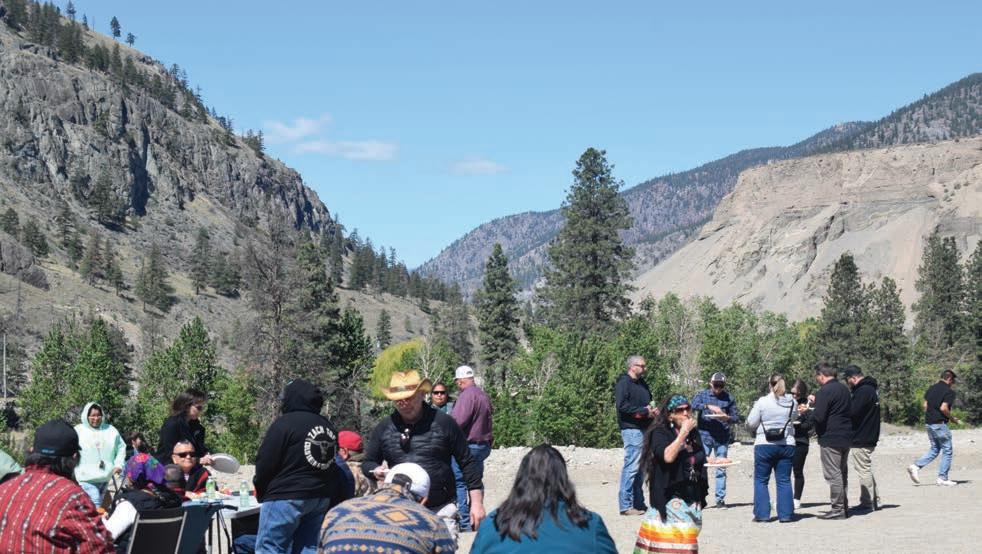
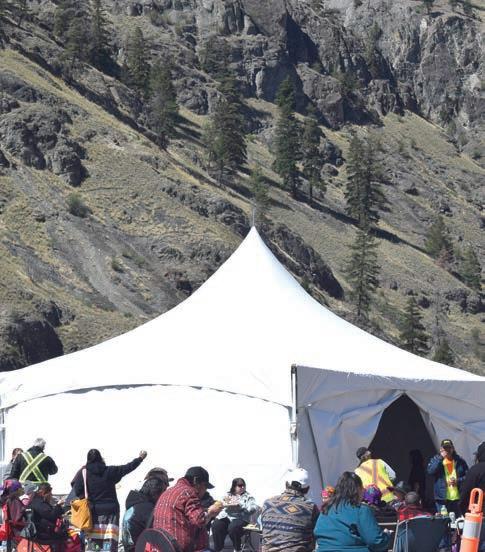
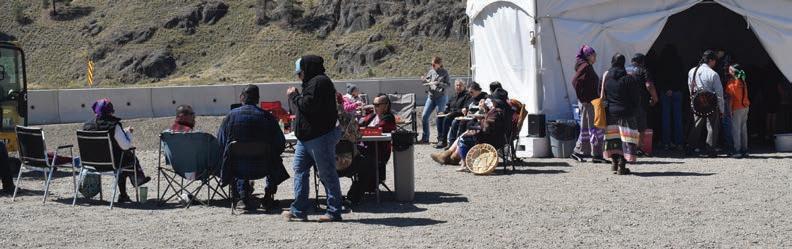
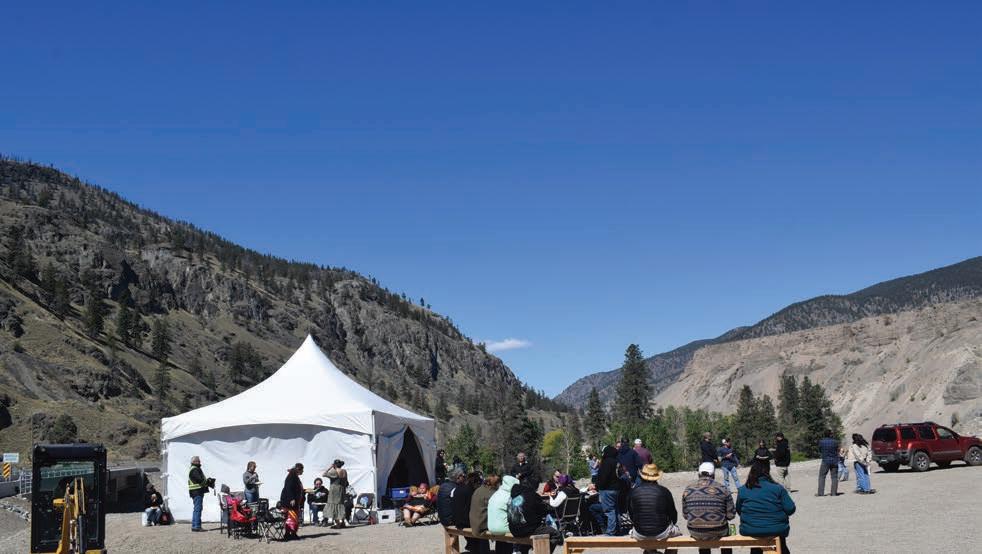
It was a beautiful spring day to celebrate a project almost five years in the m aking, and a welcome return from the turmoil of the destruction of Highway 8.
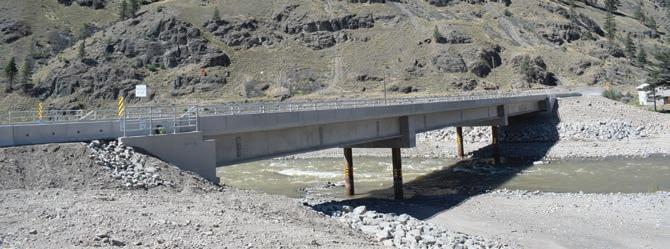
Residents from Spence’s Bridge, Nicomen, Merritt and beyond gathered at the Site 10 bridge of the highway on April 25 to celebrate the completion of the restoration of the final two sites, after the highway was devastated in the November 2021 atmospheric river event. It was overnight on Nov. 14, 2021 that the Coldwater River’s waters began to rapidly rise around the communities of Spius Creek, Petit Creek and Nooaitch. By the following morning, residents awoke
9
Want news straight to your inbox? Scan the QR


JAKE COURTEPATTE
newsroom@merrittherald.com
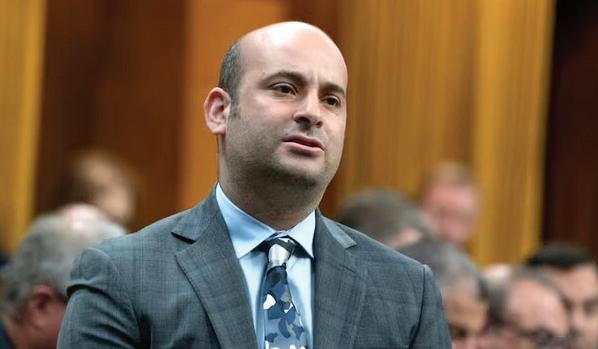
A bill aimed at harsher punishments for intimate partner violence has taken its next step towards becoming law, passed by the House of Commons after it was first introduced by Kamloops-ThompsonNicola MP Frank Caputo last September.
Bill C-225, also known as ‘Bailey’s Law,’ was introduced in response to the tragic murder of Kelowna woman Bailey McCourt, who was killed by her former intimate partner just hours after he was found guilty.
With the passing of the third reading in the House and now on its way to the Senate, Caputo said the bill is “a crucial step forward in strengthening the legal response to intimate partner violence” and called it a “giant step forward as a country”.
“As a former parole officer and Crown prosecutor, I am convinced that our laws on intimate partner violence (IPV) have been inadequate in addressing the seriousness of this insidious crime.”
If successful in passing through the Senate, the bill would create new offences for the assault and harassment of a partner.
One of the largest changes to law involving intimate partner violence in Canadian history, once enacted the bill would:
- Make murder of an intimate partner a first-degree charge when there is a history of coercive control;
- Create the offence of “violence against intimate partner”;
- Increase sentences for violence against an intimate partner;
- Create a reverse onus for those on peace bonds; and
- Increase the time for holding of evidence after seizure.
The promotion of the bill to the next step towards law comes just one week before the next court date set for Christopher Jarvis, who is accused of the second-degree murder of his wife Pamela Jarvis in their Merritt home last December. He is scheduled to return to Merritt court on May 4 to set a date for his trial.
“This bill will better protect victims, hold repeat offenders accountable, and strengthen our justice system’s response to IPV,” Caputo added. “I urge senators to move quickly to pass this critical legislation. Bailey’ McCourt’s family and countless other Canadians are depending on it.
“I also want to thank Bailey’s family for their courage and determination in helping to pass this legislation,” continued Caputo. “As you grieve your loss, please know that we will continue to stand with you and support you every step of the way. If you are experiencing violence from an intimate partner, I urge you to contact police or confide in someone you trust. You do not have to face this alone.”
After many years in the same home, the process of selling and moving can feel overwhelming. As a Seniors Real Estate Specialist (SRES®) I am specially trained to help seniors and their families navigate these important transitions with patience, understanding and care.


• Downsizing and preparing your home for sale
• Selling a long-time family home
• Exploring housing options for the next stage of life
• Making the moving process easier and less stressful

JAKE COURTEPATTE + TYLER REIS-SANFORD newsroom@merrittherald.com
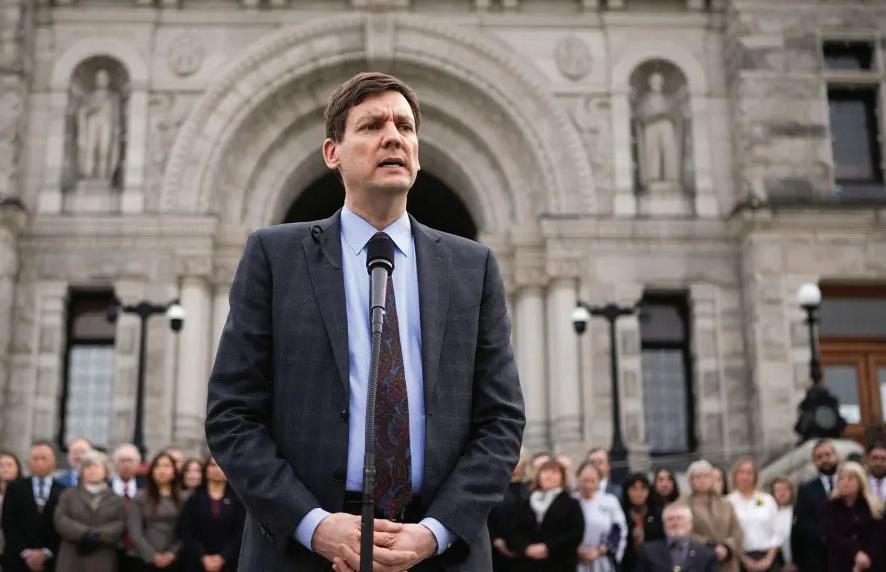
B.C Premier David Eby and the First Nations Leadership Council have announced they will no longer be introducing legislation to suspend or amend DRIPA in the upcoming spring legislation session.
In 2007, the United Nations introduced and adopted the Declaration on the Rights of Indigenous People (UNDRIP), a policy meant to create an international standard for the treatment of Indigenous Peoples around the world.
While under the Harper Conservative government at the time, Canada was one of four countries to vote against the resolution, and was criticized by political opponents and Indigenous leaders alike. Three years later, the Harper government changed its decision and called the declaration “a significant step forward in strengthening relations with Aboriginal peoples.”
In 2015 the Truth and Reconciliation Commission called for all levels of government to adopt UNDRIP. It wasn’t until 2019 that B.C. became the first province to implement legislation based on the U.N’s suggestions. The act was called the Declaration on the Rights of Indigenous People Act, or DRIPA, and passed unanimously with less than 15 minutes of debate in the L egislative Assembly of British Columbia.
DRIPA’s first real challenge in court came in August of 2025, in the Cowichan Tribes v Canada (Attorney General) case regarding the land rights of the Quw’utsun (Cowichan) people. The Supreme Court judge presiding on the case ruled in favour of the Quw’utsun holding Aboriginal title over 300-350 hectares of land in Richmond, some of which includes private property.
The second case, and the one that started the most recent round of backlash to DRIPA, came in December of 2025. In the case of Gitxaala v British Columbia, the original B.C. Supreme Court justice ruled in favour of the Gitxaala people, saying that they do need to be consulted before staking mineral claims, but that it was not making the claim under DRIPA law, and that
the decision “does not implement UNDRIP into the domestic law of B.C.”
Later, the B.C. Court of Appeal disagreed, citing that the language in DRIPA is obligatory, which set precedent for DRIPA being implemented into provincial law. With that implementation came questions into whether many of B.C’s laws would need to be changed, amended, or rewritten entirely. “In consultation and cooperations with the Indigenous peoples in British Columbia, the government must take all measures necessary to ensure the laws of British Columbia are consistent with the Declaration” the Court of Appeal
decision states.
Shortly after, NDP Premier David Eby said he would amend DRIPA, but after major pushback from his own party, reports of forcing a no confidence vote and pushback from Indigenous rights groups, he has since stated the NDP have no plans of repealing or amending DRIPA in the upcoming spring assembly.
The uncertainty and back and forth of the Provincial government has left many First Nations groups frustrated.
INDECISION: continued on page 4


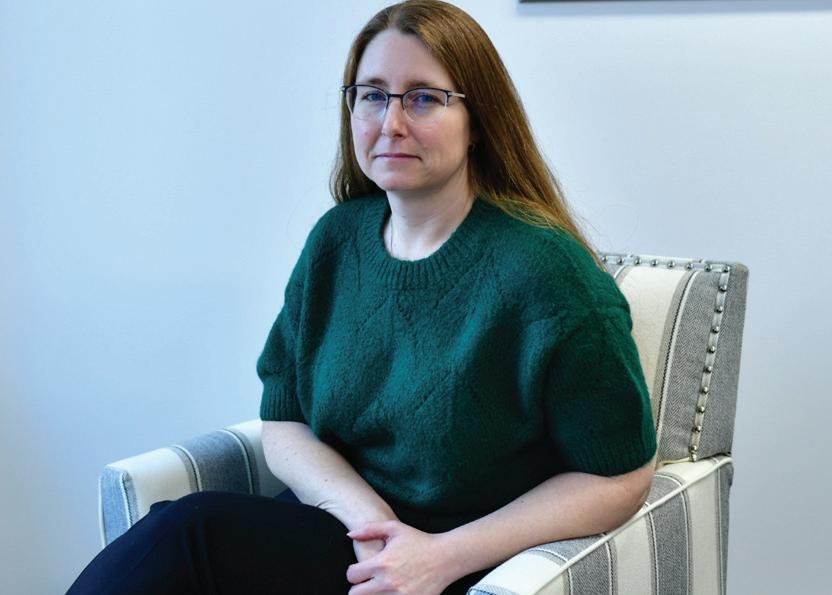



“This has instilled this public belief that First Nation people are going to be able to take land from you, which is absolutely false,” said Cook’s Ferry Indian Band Chief Christine Walkem. “But the government isn’t participating in correcting that narrative.” Walkem says that the indecision by the Premier and his willingness to unilaterally change a piece of legislation that so many First Nations groups have worked
together to create has hurt the relationship and trust she has in the government.
She says that to use “heavy handed” legislation to make that c hange would make some First Nations groups lose respect for the process as well, and that the implementation of DRIPA has a lready taken much too long.
“My fear would be that they leave it to just the First Nation Leadership Council, and then we’re left with no voice,” said Walkem. “It’s great to have the support of the
leadership council, who has lawyers and resources that tap into that higher provincial level, but if they don’t have that relationship back down to the communities who are going to have to feel every change that happens with DRIPA, it’s a giant void.”
Premier Eby has said the decision on how to handle the implementation has been “the h ardest issue I have ever had to work on” and “incredibly challenging.”




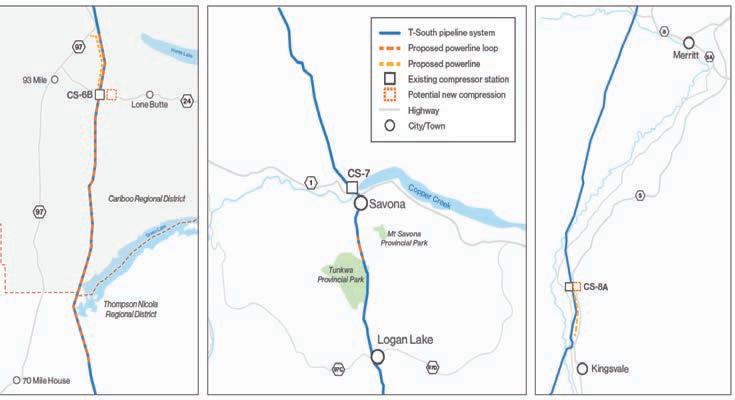
The three areas that will see construction for the Sunrise Expansion program, including Kingsvale.
newsroom@merrittherald.com
The boxes have been checked, and the papers signed to begin the Sunrise Expansion pipeline construction project south of Merritt.
The Sunrise Expansion Project, a proposed expansion of the southern portion of the Westcoast pipeline system by Enbridge, has been on the table for the Thompson-Nicola region since early 2023. Since then, the project has gone through extensive environmental and engagement work in collaboration with Indigenous groups, local communities, and other stakeholders, including being brought before Merritt city council.
Sunrise Expansion Program Project Lead Ali Hendi told the Herald that the project is “shovel-ready” and is projected to employ over 600 workers from the Thompson-Nicola region for the pipeline work and almost 100 workers for the compressor station during the peak construction period.
These workers will be using local accommodations, restaurants and services, benefiting local businesses.
In the Thompson Nicola Regional District (TNRD), this work will involve adding pipeline loops, which are sections of the pipe added to the existing pipeline system to increase capacity. An additional compressor unit and upgrades to existing compressor stations are also proposed, to help push the additional natural gas through the pipeline system.
A total of 11 kilometres of 42-inch diameter
pipeline loop is proposed for two different locations in the Thompson Nicola Regional District: one near Lone Butte, and one just outside of Kamloops.
An additional electric-powered compressor unit is proposed to be installed in the existing compressor station 8A (CS-8A), located north of Kingsvale. To power this unit, about three kilometres of overhead powerline will be installed from CS-8A to an existing third-party powerline, located north of Kingsvale.
“This multi-year project has required hundreds of thousands of work hours to reach this stage, including design, environmental studies and engagement work with Indigenous and local communities,” said Hendi. “These efforts have strengthened and made the project better, and we remain committed to ongoing collaboration throughout this project’s construction and operation phases.”
Construction is targeted to start as early as July for the facilities work, and August for the pipeline installation.
Senior Communications Advisor Rawnna Low said that there may be some preparatory activities occurring prior to this, which may include site set-up and the transportation and mobilization of equipment and construction materials.
The project has a targeted completion date of the end of 2028. Once operational, it is expected to add 300 million cubic feet per day of natural gas transportation capacity to the pipeline system.



It’s finally here ~ spring! The season of fresh air, blooming gardens, and getting our hands back into the soil. And if you’re anything like me, your hands are already feeling the effects ~ dry, rough, and asking for a little extra care.
One of my favorite simple treatments is right from the kitchen. Place a teaspoon of olive oil and a teaspoon of sugar in the palm of your hand, then gently rub over rough spots until your skin feels smoother. Rinse with warm ~ not hot ~ water, and finish with your favorite lotion. It’s quick, natural, and surprisingly effective. My personal favorite is The Cream, made locally by KiEssentials and is available at The Arts Council.
Prevention goes a long way this time of year. Wearing gloves while gardening or even while washing dishes can protect your skin from drying out. When you’re out and about, public washrooms can be tricky ~ especially those with only hand dryers. If you must use one, hold your hands about six inches away to


avoid overheating and further drying your skin.
Nighttime is the perfect opportunity for repair. Before bed, wash your hands gently (skip the soap if you can), pat dry, and apply a generous layer of moisturizer. You might choose a rich hand cream, coconut oil, olive oil, or even a small amount of petroleum jelly. For an extra boost, slip on a pair of cotton gloves overnight to lock in moisture.
H ydration matters more than we often realize. Drinking enough water daily supports your skin from the inside out, helping it stay supple and resilient. And if you do end up with small cracks around the nail beds, I often use a dab of antibiotic cream and keep them protected with a bandage while they heal.
Spring invites us to dig in, plant, and grow ~ but it also reminds us to care for the hands that make it all possible. A little attention goes a long way in keeping them soft, strong, and ready for the season ahead.

Merritt Herald is a member of the National Newsmedia Council, which is an independent organization established to deal with acceptable journalistic practices and ethical behaviour. If you have concerns about editorial content, please contact newsroom@merrittherald.com or call (250) 378-4241. If you are not satisfied with the response and wish to file a formal complaint, visit the web site at www.mediacouncil.ca or call toll-free 1-844-877-1163 for additional information.
In every conversation I have with employers – from mining and construction to energy and manufacturing – the message is consistent: ‘We need more skilled workers, and we need them faster.’
Across Canada, hundreds of thousands of tradespeople will retire by 2028. Almost every province in the country will need thousands of new apprentices and journeypersons just to maintain momentum.
Canada helps feed the world, powers global industries and anchors the energy and mining future. But even the strongest engine sputters if it runs out of fuel – and right now, our labour force is running dangerously low.
Robust apprenticeships are the immediate answer.
For years, pundits framed polytechnics as one option among many to address our skilled labour crisis. But as labour needs accelerate, it’s clear that polytechnics are the model best suited for apprenticeship training.
Polytechnics know how to prepare learners to succeed on day one of a jobsite; support employers with mentoring and supervision; tie practical experience back to competency‑based assessment and ensure workplace learning is structured, monitored and high‑quality. Workplace integrated learning (WIL) isn’t an add on – it’s a defining feature. It’s time Canadian leaders lean into our polytechnics as the obvious solution. Every year, polytechnics graduate large cohorts in high demand trades – electricians, HVAC technicians, welders and other critical construction and mechanical trades. But we still remain an overlooked resource.
Apprenticeships require four things.
First, apprenticeships depend on consistent, accredited technical training tied to national and provincial standards. No individual employer can provide that. It requires curriculum oversight, quality assurance and assessment.
Second, apprenticeships require broad based learning. Workplaces are essential partners, but no employer can expose apprentices to the full range of equipment, technologies, safety scenarios and practical skills they must master. Polytechnics invest in welding labs, simulation suites, virtual mine environments, robotics facilities and technology‑rich workshops – spaces that turn “job experience” into “trade readiness.”
Third, is alignment with industry – at scale. Industry partnerships are critical. Program advisory committees, applied research collaborations, co‑developed curriculum and constant employer feedback keep training current and tied to real‑world needs and at a scale that union training centres can’t match.
Finally, WIL by design is essential, including teaching models that connect classroom learning, lab practice and real world application. Learning should flow seamlessly between campus and workplace.
If Canada wants a modern, productive apprenticeship system capable of producing the skilled tradespeople this critical economic moment demands, it must recognize and invest in the institutions built for the job – and, indeed, already doing the work.
The skilled trades are the backbone of our economy. The institutions that train them are the backbone of the apprenticeship system itself.
If Canada wants to build homes, expand energy production, modernize infrastructure and fuel economic growth, we don’t need to reinvent apprenticeship training; we simply need to invest in the institutions that already deliver it best.

The Merritt Herald welcomes your letters, on any subject, addressed to the editor. Letters may be edited for length, taste and clarity. Please keep letters to 300 words or less.
Email letters to: newsroom@merrittherald.com.
– Dr. Larry Rosia Vancouver, B.C. Are
B .C .’s Interior is on flood watch.

So says Merritt government agent Gordon Swan who confirmed Tuesday Merritt is one of the communities watching for flooding problems.
“We’re on flood alert,” he said.
Emergency officials, city staff and city council members are meeting this morning to discuss what can be done should signifi cant flooding problems arise.
Mayor Clara Norgaard said the group wanted to discuss flood management strategies to better prepare themselves for a potential flood.
She and other city officials recently toured the area by helicopter to see the levels of the rivers and determine how fast the water in them is moving.
City Administrator Tom Day warned members of the public to not worry about flooding problems as disaster plans were being put into place.

The
•Your
•How
•Which
•Transportation
•Resources












to find that the Spius Creek bridge had been washed out due to the unprecedented water flows, setting off a chain r eaction that effectively cut off the communities from the rest of Thompson-Nicola.
The highway was reopened in a limited capacity 11 months later, thanks to a collective restoration effort between six different contractors and five First Nations bands.
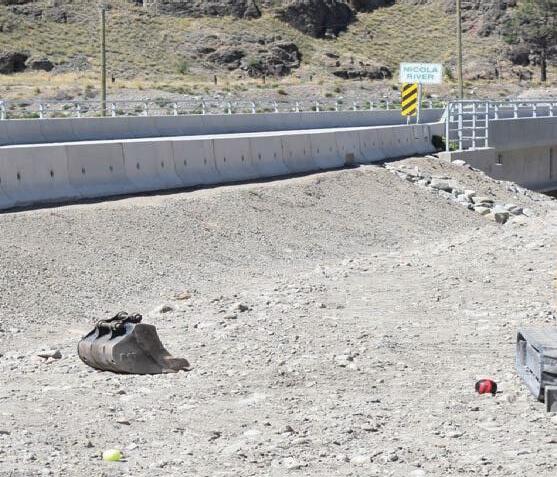
Since then, the extensive rebuild has included reinstating and retrofitting three compromised bridges, constructing two new climate-resilient bridges and restoring 13 kilometres of laneway lost to flooding. These upgrades are expected to improve safety and reliability along the corridor and strengthen its ability to withstand weather-related events.
channels to support fish habitats. These improvements will help accelerate ecosystem recovery following the damage caused by the atmospheric river.
Cook’s Ferry Indian Band Chief Christine Walkem spoke to the Herald about the relief that the highway completion brings her remote community.
“I didn’t want to see anybody sitting on a lawn chair watching outsiders come into the community and them not be provided with that opportunity.”
— Cook’s Ferry Chief Christine Walkem
Environmental enhancements were also added along the corridor to help offset the impacts of highway reconstruction, including planting vegetation a long stream banks and creating side

“We can go to the grocery store, we can go fishing,” said Walkem. “We can go visit family, that connection is now there.
“They’re still doing some paving, but after May or June, we should have almost no interruptions on the highway.”
Often, devastation and destruction brings about new beauty. Walkem said that the last four-and-a-half years have “really brought together” the communities that rely on Highway 8 to be a major artery for their everyday life, like Spence’s Bridge, Nicomen, and Shackan, to name a few.
“To me, that was a need. That was evident throughout the whole project.
: continued on page 11 HIGHWAY 8: continued from page 1


- 7.00 P.M.






one knows what the future holds. Despite the mystery shrouding the future, it’s still vital that people plan for the years ahead, particularly in regard to saving for retirement.
Advice abounds regarding how much money retirees will need to live comfortably in retirement. One common approach suggests retirees should aspire to replace 70 to 80 percent of their pre-retirement income, while another strategy urges retirees to save twelve times their final pre-retirement income, meaning someone making $100,000 in the year they retire will need at least $1.2 million in retirement savings to maintain their lifestyle. E ach of these approaches are just strategies, and how much a person actually needs in retirement will depend on a host of variables unique to each individual, including the age a person retires, his or her health status at the time of retirement and personal goals for their golden years. For example, those who hope to retire at 65 and travel extensively in retirement will likely need more savings than someone who hopes to retire at 70 and travel less frequently. Though variables unique to each person will help to determine how much to save for retirement, there are some additional ways to identify how much you might need to live comfortably after calling it a career.

savings that person will need. When trying to determine how much to save for retirement, first identify your ideal retirement age and then go from there, recognizing that this important variable can change over time.
- Identify the lifestyle you hope to live. If the romanticized ideal of a jetsetting retirement lifestyle appeals to you, then you’re likely going to need to save more for retirement than someone whose vision of life after working is less glamorous. It’s possible for many retirees to live their ideal lifestyle in retirement, but those whose ideal is marked by expensive pursuits like regular international travel will need to start earlier and save more than someone who envisions occasional trips but more time at home.


- Identify your ideal retirement age. Arguably the most significant variable related to saving for retirement is the age at which a person hopes to retire. Some may have the luxury of choosing their own retirement date, while others’ personal health or employers may make that choice for them. But it’s good to remember that the longer a person continues to work, the less retirement
- Don’t overlook health care costs. Health care costs for retirees are heavily dependent on individual health. But even the healthiest retiree might experience a sudden and potentially costly medical issue, so it’s best for everyone to plan for sizable health care expenses in retirement. The Employee Benefit Research I nstitute estimates that couples will need to have saved at least $188,000 to have a 90 percent chance of covering their health care expenditures in retirement. That figure is subject to variables unique to each individual, but it can serve as a useful measuring stick as adults try to determine how much they need to save for retirement.
Financial needs in retirement depend on the individual. However, some key planning strategies can help individuals determine how much they might need to save to live comfortably in retirement.




HIGHWAY 8: continued from page 9
We were not going to get it done by piecemealing things together, but collectively we were able to advocate on behalf of our communities and their collective histories. That is what I really consider the successful part of the whole thing.”
The Herald asked Walkem how much influence her community of Cook’s Ferry, along with what she saw from other bands, were able to ahve on the project.
“Quite a bit. From Cook’s Ferry’s perspective, when that highway blew out we had relationships with people that knew the industry and what could be done. The devastation that went through created lots of construction and jobs, it was a major deal.
“So from our perspective, we just had to be involved. I didn’t want to see anybody sitting on a lawn chair watching outsiders come into the community and
them not be provided with that opportunity.
“Phase One was really successful for Cook’s Ferry, and I know that the other communities were advocating for jobs and involvement too. I think it really provided us an opportunity to really tell the story of our history, or even gather some of that stuff that hasn’t been talked about in a long time.”
Walkem said that there were plenty of challenges along the way.
“There were rough spots, even amongst ourselves, but once we agreed that we have a common goal we just came together. And so there were jobs, and there were respectful relationships with the Ministry knowing that we’ve got work to do that isn’t industrial as well. At the end of the day, it’s about our people and who we are, and we got to protect that.”
PHOTOS ON PAGE 25
Brandy is excited to begin her new chapter at The Social Lounge and be part of such a talented team.
A Merritt local, she graduated from MC College in 2024 and has spent the past two years at Kruse N’ Style building her skills and wonderful clientele. She brings passion, creativity, and meticulous attention to detail to every appointment—if you ask for a quarter inch, that’s exactly what you’ll get.
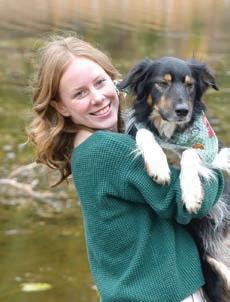
While more relaxed than chatty, Brandy creates a comfortable, easygoing experience and always listens to what you want.




Brushing and flossing your teeth may save you extra sessions in the dentist’s chair each year, but the benefits of dental hygiene do not end with pearly whites. In fact, there’s a direct correlation between oral hygiene and overall health.
Oral health offers clues about overall health, advises the Mayo Clinic. When a dentist or hygienist checks a person’s mouth, he or she is getting a window into that person’s overall wellness - including if something is amiss.
Dental hygiene matters because, without proper brushing and flossing, bacteria in the mouth can grow unchecked. Over time, that bacteria can infiltrate and break down the soft tissues in the gums and teeth, eventually leading to decay and gum disease. Greenwood Dental Care in Illinois states that the bacteria from the mouth could travel into the bloodstream and elsewhere, causing a host of issues.
There’s a high correlation between an unhealthy mouth and systemic diseases. The United Kingdom-based dental group Fulham Road Dental indicates that gum disease is linked to heart problems, kidney diseases and certain types of cancer. Dentists who notice problems in their patients’ mouths may be able to predict potential illnesses elsewhere in the body, advising those patients to seek consultations with other healthcare providers.
Here’s a deeper look at some of the correlations between oral health and overall health, courtesy of the Mayo Clinic.
- Endocarditis: When bacteria or other germs from the mouth or another part of the body spread through the bloodstream, they can attach to certain areas of the heart. This causes an infection in the inner lining of the heart chambers or valves.
- Pregnancy and birth complications: Periodontitis has been linked to low birth weight and premature birth.
- Cardiovascular disease: While it’s not fully understood why, clogged arteries, stroke and heart disease may be linked to inflammation and infection caused by oral bacteria.
- Pneumonia: Bacteria in the mouth may be pulled into the lungs, where it can lead to respiratory illness, such as pneumonia.
It’s a two-way street with health and the mouth. Certain diseases can lead to issues in the mouth. HIV/AIDS may cause mucosal lesions in the mouth; those with osteoporosis may have weakened periodontal bone and tooth loss; and research has shown that diabetes puts gum health at risk.
Individuals should make oral health a priority, as it has a significant effect on their overall health and well-being.






May 5 is the National Day of Awareness of Missing and Murdered Indigenous Women and Girls.
CNA Advisor and Coldwater Indian Band member Jerry Voght shares with the Herald that sometimes the old beliefs are still the most effective beliefs.
newsroom@merrittherald.com
In the Western world, the concept of “medicine” refers to the concoctions that create remedies for ailments. This varies greatly from the Nlaka’pamux concept of medicine, which refers to the healing process of the body, mind and spirit.
The Herald sat down with Jerry Voght, a Coldwater Indian Band member and advisor with Citxw Nlaka’pamux Assembly to learn more about the traditional healing methods of our ancestral peoples. It begins, just like most healing methods, with determining the intangibles of the process.
“To my knowledge anyways, a traditional way of healing would be each person heals in a different way depending on what they believe in, their beliefs, or which path they’re going in their life,” said Voght. “Where are they, what they’re doing, depending on where people live and how accessible things are to them. And where they are in their lives. I mean, you don’t know where people are in their lives, whether everybody’s in a different place.”
Talking with the Creator is often an important and crucial first step.
“You have to really believe in what you’re doing for it to work,” said Voght. “We can do things, but you have to believe in what you’re doing. Just like if you believe in your job, if you don’t believe in your job, you’re not going to do a very good job. So believing in this, the old ways, all our old people trusted in the Creator.”
Similarly to many other cultures and traditions around the world, a ‘cleansing of the soul’ is often utilized early on in the healing process when it comes to grief and loss. Often that is done with fir or cedar boughs, using water to sprinkle and cleanse.
“Everything has a spirit,” said Voght. “Plants, the waters, trees, everything.”

Part of the concept of spirits within all living things is the need to speak to the plants before they are picked and while they are being picked. This assists in the process as it gives the plant the sense of urgency and need that one is trying to draw from its energy.
“You really have to believe in the Creator and that He can help you, and then that all things have a spirit and then you ask those things for help. But your belief has to be really true in there. Then the plants will help you.”
Voght added that in today’s modern age, these beliefs are becoming less and less held amongst the newer generations with much more skepticism.
“I don’t know how many people believe in those things anymore. If you follow that and really trust in what you’re doing, you can heal. Maybe the pain will
In recognition of the ongoing crisis impacting Indigenous communities, we honor and remember the Missing and Murdered Indigenous Women, Girls, and Two-Spirited people. We stand with families and survivors in seeking justice, healing, and meaningful change. Aligned with SD 58’s commitment to Truth and Reconciliation, we encourage our community to listen, learn, and take action to support Indigenous voices and safety. Together, let’s create a future where every life is valued and protected.

never really go away, but you will be at a place where you’re more comfortable and accept what has happened and you can carry on with your life.
“In this age and time they would think differently, maybe laugh it off as well. A lot of people will laugh it off and think you’re crazy and everything, but then they’re still at the level they’re at or wherever they’re at. “
However, Voght, who worked as a first responder for a bout 25 years,said that he saw a lot of life-changing scenarios in his life of work. And in a lot of people’s last moments, that’s when they finally start believing in the Creator.
You know, you wonder what they’re looking at as their last moments come, and they’re reaching for something. In those last moments of your life, I guess that’s w hen you really start to believe in something. And it’s too bad you can’t believe in those things way before that. And I guess maybe you’re scared. Scared at that last moment.”
In thinking, Voght remembered his aunt who passed just before turning 100 years old. He said that she was a believer, and accepted the Creator many years before.
“When her passing came, she was gone. It was nothing for her. It was like it was peace for her.”
For those grieving lost ones, the healing process can be a similar one of acceptance.
“Beliefs today are way different than what they were,” said Voght. “Depending how you grew up, lots of people grew up in residential schools, so they’re pretty lost, and then they pick up different ways of surviving.”
Whatever method those experiencing loss use to grieve, belief, like in many other cultures around the world, can play a role in healing that is intangible yet incredibly effective.
“The belief in the ways of our ancestors and everything is they all talk to the Creator every day, every day, and talk to everything that is around them,” said Voght. “And today if you walk down the street and tell people that, they think you’re pretty crazy, I think.”


Wyatt Collins painted a series of works around the topic of Murdered and Missing Indigenous Women and Girls.

JAKE COURTEPATTE
newsroom@merrittherald.com
Wyatt Collins, a Nlaka’pamux artist from the Joeyaska (Merritt area), has shown his creative talents since an early age.
Taking up acryclic painting in 2017, many of Collins’ works are indicative of the traditions and cultures he grew up in and around, including a series of Red Dress paintings commemorating and honouring local Missing and Murdered Indigenous Women and Girls.
“Wyatt’s style of abstract expressionism allows for his unique perspective i n creating this body of work and awareness,” reads Collins’ bio, adding that his perspective is “a breath of fresh air”.
That unique perspective is accentuated by his navigation of the world through his experience with autism, paired by a “positive and cheerful outlook on life.” He found his creative calling through art courses in high school, which have since turned into four of his own art


shows since 2017, including two collaborations with the Nicola Valley Community A rt Centre. He was also invited to showcase his artwork in Vernon in 2020 at the Kama Aboriginal Arts Collective Exhibit.
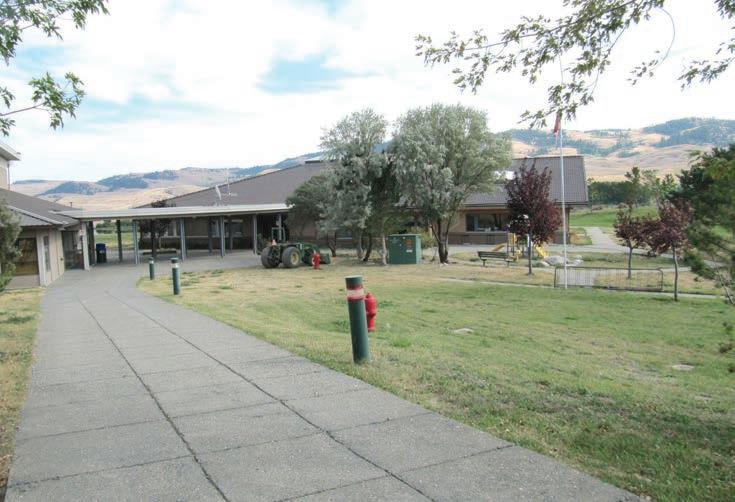
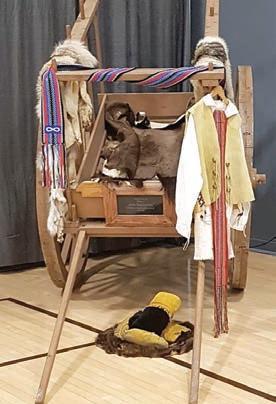
Collins’ Red Dress Series is a collection of seven paintings, all of which are on display at Lower Nicola Indian Band School. The main focal piece is his Red Dress Painting, which includes three-dimensional aspects alongside cloth red d resses hanging from the painting.

JAKE COURTEPATTE newsroom@merrittherald.com
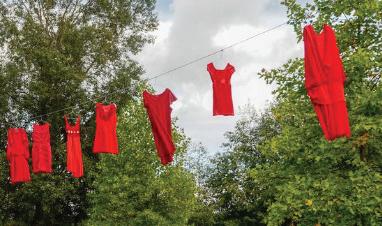
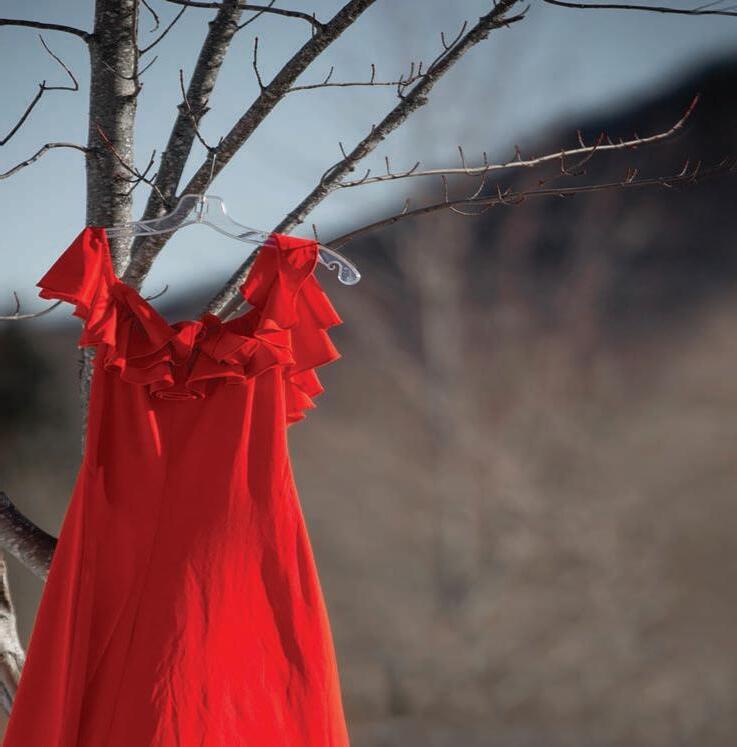
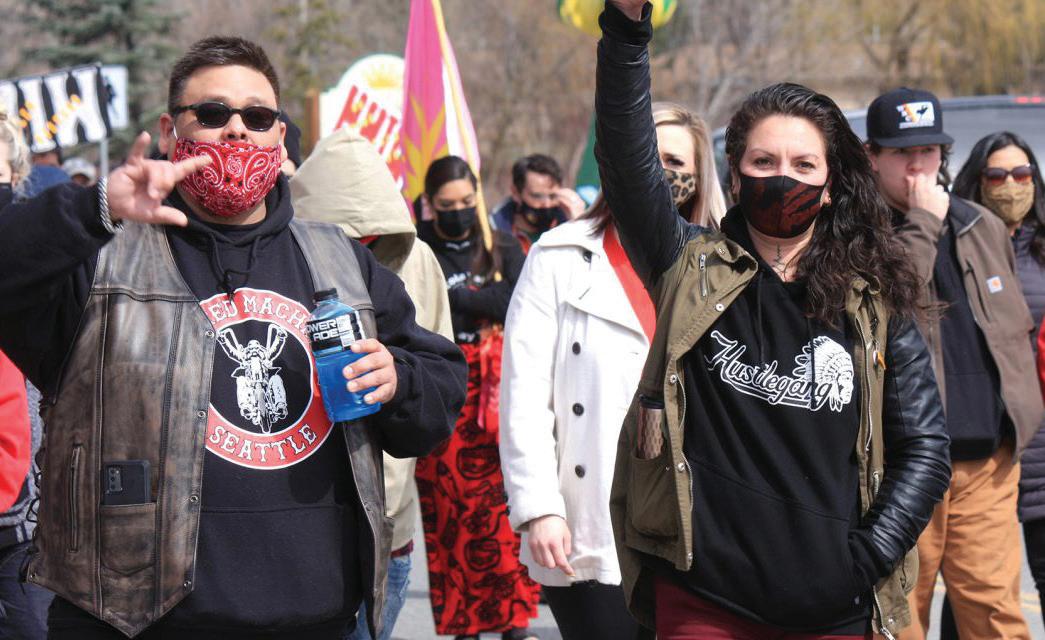
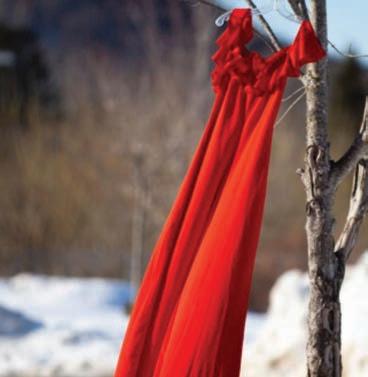
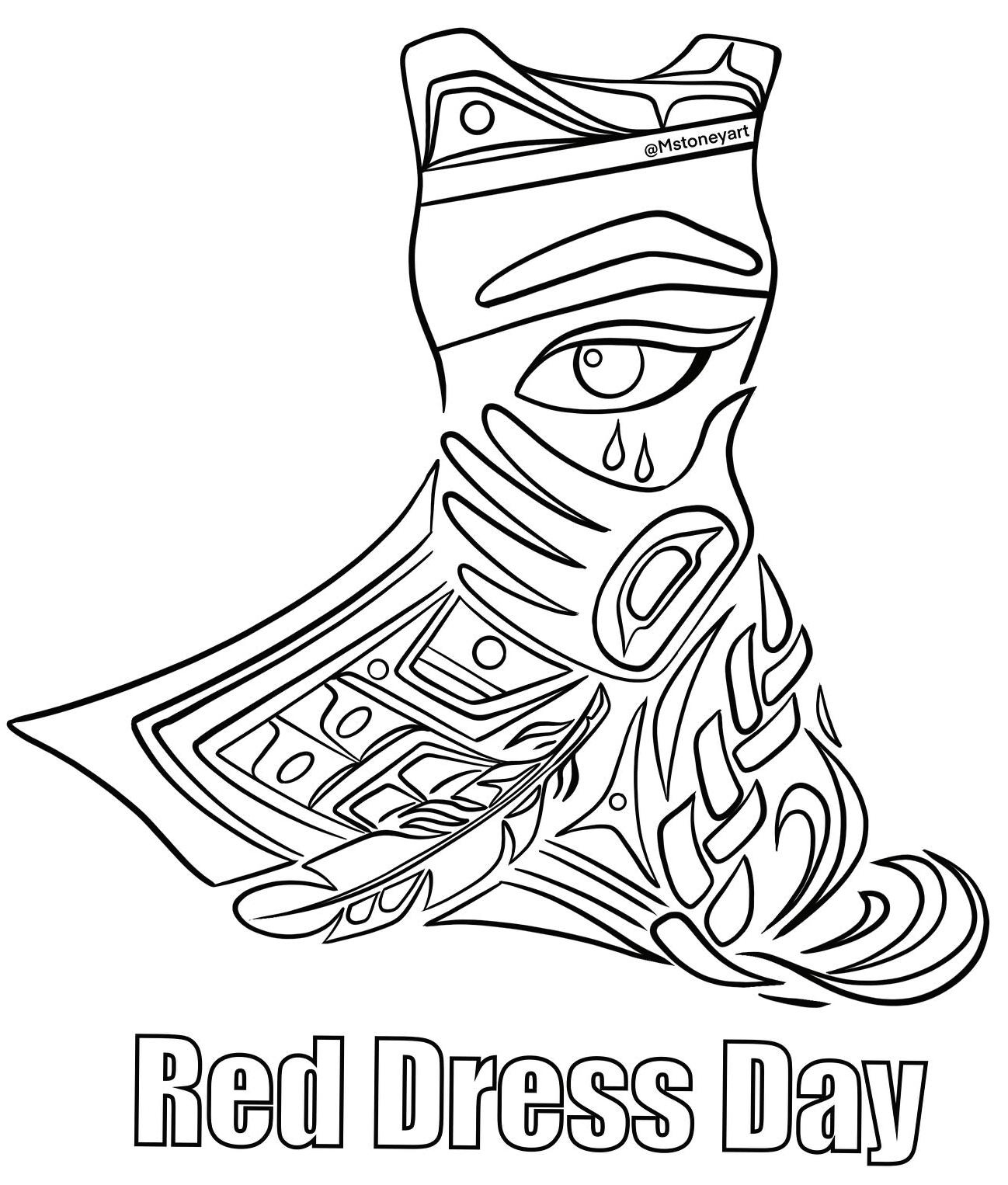
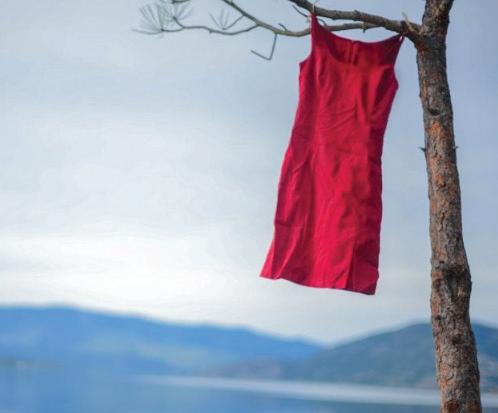
May 5 is Red Dress Day in Canada, and Canadians are encouraged to wear red in order to draw attention to the more than 1000 missing and murdered indigenous women in Canada.
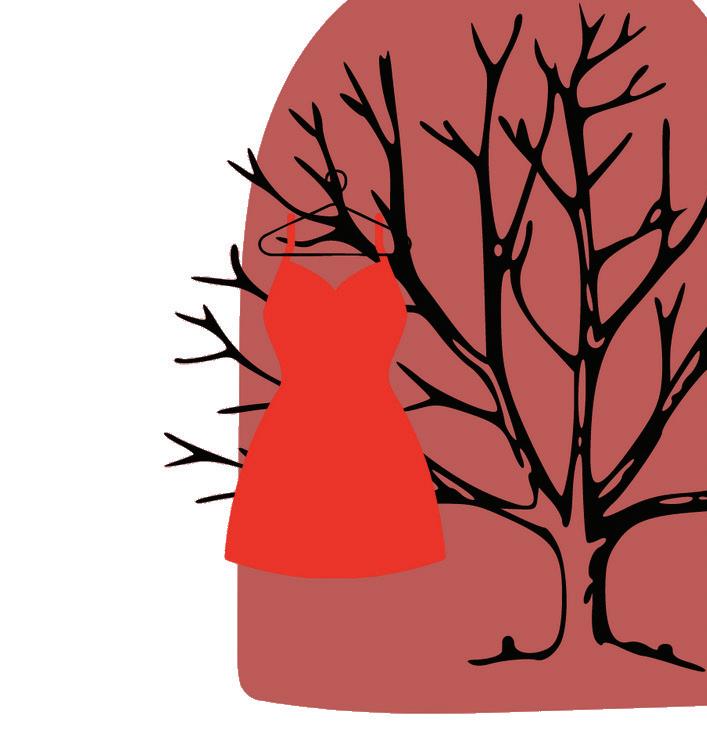
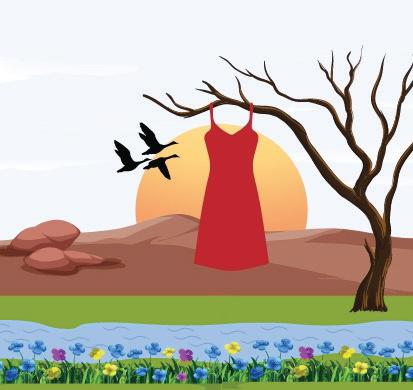
The REDress Project was the idea of Metis artist Jaime Black, who is based in Winnipeg, MB. Black was inspired to commemorate missing and murdered aboriginal women while attending a conference in Germany, where Jo-Ann Episkenew – an indigenous professor, writer and researcher – spoke about the crisis of missing and murdered indigenous women.
According to Black’s website, “The REDress Project, focuses around the issue of missing or murdered Aboriginal women across Canada. It is an installation art project based on an aesthetic response to this critical national issue. The project seeks to collect 600 red dresses by community donation that will later be installed in public spaces throughout Winnipeg and across Canada
as a visual reminder of the staggering number of women who are no longer with us. Through the installation I hope to draw attention to the gendered and racialized nature of violent crimes against Aboriginal women and to evoke a presence through the marking of absence.”
Black chose the colour red after speaking with an indigenous friend who told her that red is the only colour spirits can see and is a way of calling the spirits of missing and murdered women and girls back to their loved ones.
The project lasted beyond its initial installation in 2015 and has been exhibited in more than 30 locations in Canada and the United States.
Something of a grassroots movement has grown around Black’s idea and displays of empty red dresses around the country eventually prompted the creation of Red Dress Day, which falls on May 5.
Other notable examples include the Red Dress Jingle Special, which is performed at many powwows in respect
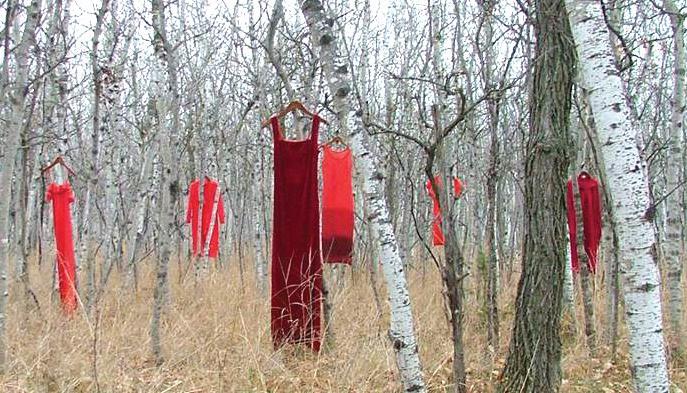
to missing and murdered indigenous women and girls. Singer-Songwriter Buffy Sainte-Marie was also inspired by the project to hang an empty red dress prominently on stage at each of her concerts.
Each year, as the number of missing and murdered aboriginal women and girls grows, more and more people of all

backgrounds are donning red and hanging empty red dresses outside of their homes and around their towns to memorialize those who have been taken from their own homes and families. Those taking part in Red Dress Day are encouraged to share photos on social media using the hashtags #mmiwg #reddressproject and #reddressday.
Though we pay tribute to our lost sisters, daughters and mothers throughout the year, find out where you can join in a local cebration around the Nicola Valley.
JAKE
COURTEPATTE
newsroom@merrittherald.com
Lower Nicola Indian Band
The LNIB walk will begin at Shulus Hall at 10:30a.m., and culminate in a light lunch at Shulus Arbour at 11:30. For more information, contact Carole Basil at 250-378-5157.
Merritt
Secondary School
School District
58 is commemorating the day with a walk beginning at 11:27a.m. from the school, running until 12:44p.m.
Students will gather for a brief assembly in the gymnasium before following a designated walking route led by the RCMP. All are asked to wear red as well as bring signs, photos of loved ones, posters, etc., and hand drummers are welcome.
All CNA, K’en T’em, Cantex, and Merritt Herald staff as well as the public are invited to take part in a Red Dress Walk on May 5 at 12:00 pm. The walk will start and end at Citxw (1840 Nicola Ave), with a short
1.2 km loop through downtown Merritt.
“This walk is about raising awareness, creating space for reflection, and honouring those affected by the MMIWG2S+ crisis and the impacts it continues to have on our communities. We’re proud to be hosting this alongside several partner organizations including S cw’exmx Child and Family, Nlaka’pamux Health, Shackan, Interior Community Services, Conayt Friendship Society, with more expected to join,” said K’en T’em Communications Manager Marius
Auer.
There will be a hot dog and chips lunch provided afterwards.
Han Knakst Tsitxw Society in collaboration with Nlaka’pamux Child and Family Services as well as Nlaka’pamux Health Services will honour Red Dress Day at the Stein Valley Nlaka’pamux School, beginning with a walk starting at 9.a.m. A catered lunch will be provided at noon, and bear dancers will be performing at 1p.m.


A report released by the RCMP in 2021 tmarks the first time that police in Canada have attempted, at the national level, to identify how many First Nations, Inuit or Métis women and girls have been murdered or have gone missing. Here are the facts.
According to the report, 1,017 women and girls identified as Indigenous were murdered between 1980 and 2012—a homicide rate roughly 4.5 times higher than that of all other women in Canada.
In addition, the report states that as of November 2013, at least 105
Indigenous women and girls remained missing under suspicious circumstances or for undetermined reasons.
These appalling statistics are consistent with previous estimates from sources such as Statistics Canada that have long pointed to a greatly disproportionate level of violence against that First Nations, Inuit and Métis women and girls. The latest numbers also underline what Indigenous women and advocacy organizations have long been saying–that this violence requires a specific and concerted response from police and all levels of society.
The RCMP’s release of official, national police statistics confirming these previous estimates is an important and welcome step because such numbers are critical to inform and mobilize police and public response.
Unfortunately, in the hands of some government officials, the new RCMP statistics have become, not a source of clarity, but an excuse for misrepresenting the reality of Indigenous women’s lives and an excuse for continued inaction.
The RCMP report does not tell us everything we
VOICES WITH: continued on page 19





need to know about violence against Indigenous women. The release of this report is not a substitute for a national inquiry.
The RCMP report does not reflect the voices of affected families and communities. Nor does it provide a vehicle for t he consideration and implementation of the solutions that they have identified. And even as a statistical picture of missing and murdered Indigenous women, the RCMP report has important gaps that need to be acknowledged.
In its statistics on homicide, the RCMP report only includes cases where the original investigating police force has concluded that a murder has taken place. The report explicitly does not include unexplained and suspicious deaths. Amnesty’s own research has raised concerns that deaths of Indigenous
women and girls are not always fully and properly investigated and that as a result some murders of Indigenous women and girls may have been wrongly classified as accidental deaths.
In addition, police in Canada do not consistently record the Indigenous identity of victims of crime. Statistics
Canada reports that in 2009, for example, police recorded failed to note whether the victims of crime were Aboriginal or non-Aboriginal in 384 out of 610 homicides. Some victims of crime are being i naccurately identified as non-Aboriginal because police have not had proper training on why accurate identification is important and how it’s to be determined.
The RCMP report acknowledges the unreliability of current police practices of determining Indigenous identity. The report claims that a file review, carried









out over a period of several months, established the Aboriginal or non-Aboriginal identity of all but 95 homicide v ictims whose identity was previously recorded as “unknown.” The RCMP did not review files to determine whether Indigenous women had been inaccurately recorded as non-Indigenous.
The RCMP report also does not distinguish between First Nations, Inuit and Métis women and girls. As a consequence, it does not provide any i nformation on whether the homicide rate is the same or differs among these groups. The report provides a number of statistics on the lives of the victims. The nature of many of these statistics—such as history of illegal drug use or involvement in illegal activities—suggests an i nappropriate focus on the possible role of the victim’s own actions and behaviours.
The report does not include any information on how many of the women and girls previously sought help or protection from the police or service agencies or the response they received.
Although the report breaks down the statistics according to some potentially significant factors—such as whether homicides were committed outside the residence (27% for Indigenous women compared to 20% for non-Indigenous) —it does not provide figures for homicides on and off reserve.
The report does not identify how many of the perpetrators of the crime were Indigenous and how many were non-Indigenous. The report also does not provide any information on the numbers of perpetrators and the role of others in helping carry out or cover up the crime.

It is a day dedicated to raise awareness of missing and murdered Indigenous women and girls and to end the violence.
We acknowledge all missing and murdered women, girls, trans and two spirited people across turtle island. Our thoughts and prayers extend to their families and communities impacted by missing their loved ones.
Any women, girls, trans, or two spirited people experiencing any abuse please reach out and call our number below.


Though the numbers vary on how many victims have been lost on the Highway of Tears, some believe that as many as 40 have gone missing over the years.
Contributed
The Highway of Tears is an approximately 725 kilometre stretch of highway ranging from Prince George to Prince Rupert in northern British Columbia. The route has been the location of numerous crimes against women, many of whom are indigenous, and has been associated with the Missing and Murdered Indigenous Women and Girls movement.
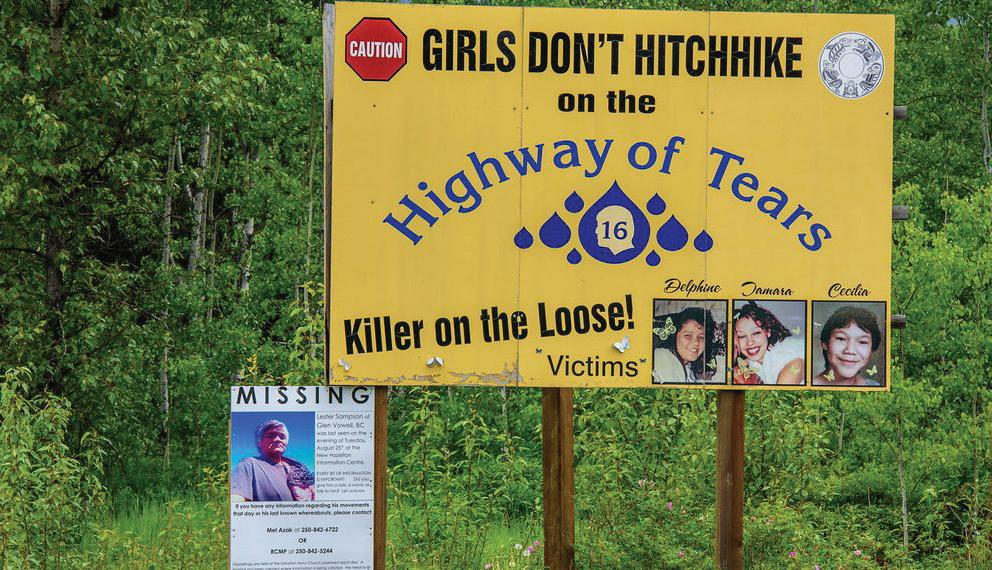
Although it’s officially known as Highway 16, the better known name “Highway of Tears” comes from a speech by Florence Naziel delivered at a 1998 vigil held in Terrace, B.C.. Naziel said she was thinking of the victims’ families crying over the loss of their loved ones. One billboard along the route features pictures of victims, with the chilling words, “Girls don’t hitchhike on the Highway of Tears. Killer on the loose!”
The number of victims on the Highway of Tears varies depending on who is reporting them. According to Project E-Pana, the RCMP task force dedicated to solving the cases of missing and murdered women along Highway 16, there are only 18 unsolved cases along the Highway of Tears. Many Indigenous organizations believe the number could be more than 40.
The stretch of highway is isolated and remote, and factors like poverty, drug abuse, systemic discrimination and a high number of hitch-hikers are often cited as reasons why the area is a hot spot for unsolved crimes.
In 2006 the Lheidli T’enneh First Nation, Carrier Sekani Family Services, Carrier Sekani Tribal Council, Prince George Native Friendship Centre and Prince George Nechako Aboriginal Employment and Training Association submitted the Highway of Tears Symposium Recommendations Report. The 36-page document was subtitled “a collective voice for the victims who have
been silenced”, and included dedications to the memory of the young women who have gone missing and were found murdered along the Highway of Tears, as well as 33 recommendations to prevent further violence along the Highway 16 corridor.
Earlier this month, many of the same members who published the original document marched from the Red Dress Monument to the Prince George Civic Centre in Prince George B.C. to mark the 20th anniversary of the Highway of Tears Symposium.
“There’s many reasons we need to have this symposium - one is to make sure that we never forget. We’re always reminded that in Canada we still have girls and women that go missing,” said Mary Teegee, an executive director at Carrier Sekani Family services in an interview with CBC earlier this month.
“How do we make this change so that in another 20 years we don’t need to have another symposium? Hopefully we’re going to somehow be able to get to a place where there are no more missing and murdered Indigenous women.”
Since its inception in 2005, E-Pana has grown in scope to include victims along Highways 5, 24, and 97. The division gets its name from a combination of the E in “E Division”, the RCMP division that has jurisdiction in B.C., and Pana (or Pavna), the name of an Inuit goddess who cares for souls in the underworld, and is associated with the northern lights.
So far, only one suspect has been charged in relation to any of the 18 E-Pana cases. In 2014 the RCMP laid two charges of first degree murder against Garry Taylor Handlen in the cases of 11-year old Kathryn Mary-Herbert, and 12-year-old Monica Jack.
In 2019 Handlen was found guilty of the first degree murder of Monica Jack. Jack was last seen riding her bike on May 6,





20 YEARS: continued from page 22
1978 back to her home on Quilchena Reserve. She had picked that bike out the same day, it was a birthday gift from her father.
Jack’s body was found just north of Merritt in June 1995.
“It didn’t only affect our family, it affected the whole community. Because prior to that, I think we all lived with rose-coloured glasses. No one thought anything like that could ever happen here in Merritt,” said Monica’s oldest sister, Carol Michell, in an interview with the Merritt Herald in 2025.
Despite an increase in awareness and improvements in law enforcement practices since the Highway of Tears opened, Indigenous women are still four times more likely than non-Indigenous women to be victims of violence according to a study done by the Assembly of First Nations Canada.
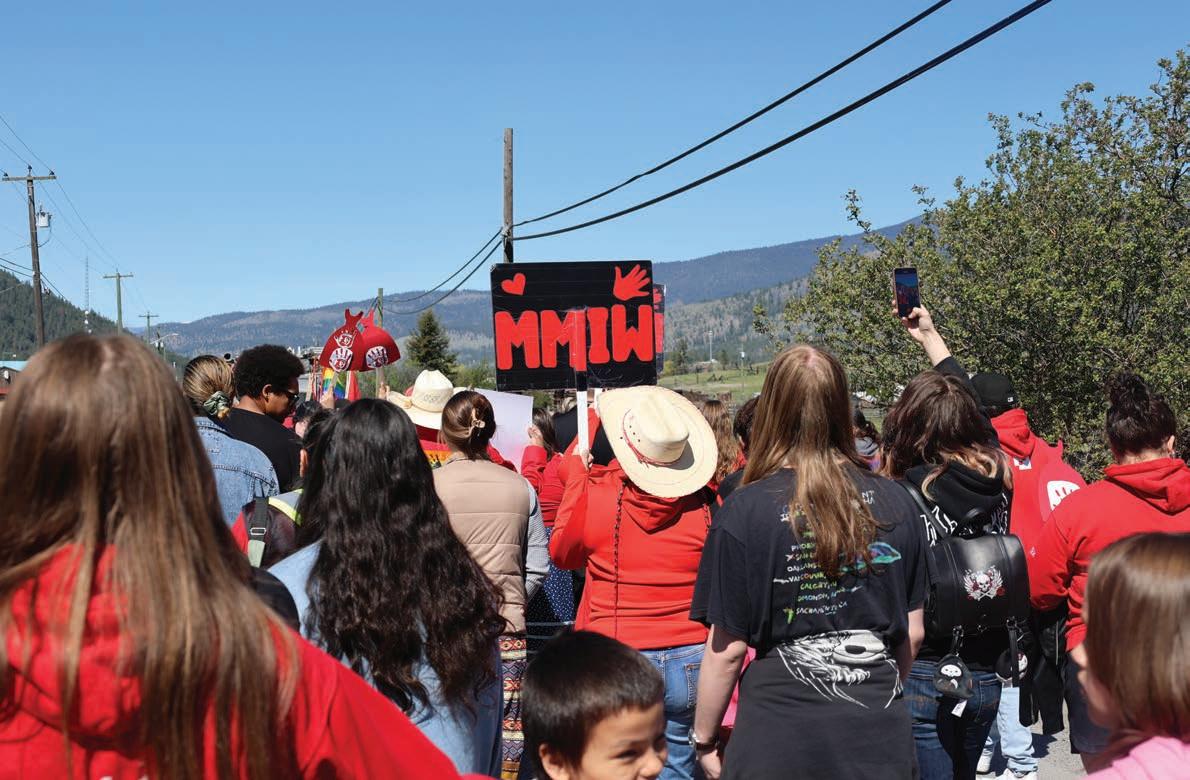
Red Dress Day is the national day of awareness for Missing and Murdered Indigenous Women, Girls, and Two-Spirit People. Observed annually on May 5, participants are encouraged to wear red to raise awareness of the high rates of violence against Indigenous women, girls, and two-spirit peoples.

Join Citxw Nlaka’pamux Assembly (CNA) and K’en T’em Limited Partnership on Red Dress Day for a community walk to honour Missing and Murdered Indigenous Women, Girls, and Two-Spirit people (MMIWG2S+). The purpose is to raise awareness, create space for reflection, and honour the lives and experiences of those impacted by MMIWG2S+



Date: May 5
Time: 12:00 pm
Location: Citxw, 1840 Nicola Avenue
Route: 1.2 km loop through downtown Merritt
Press
Ross and Judith Urquhart have called Lytton home for half a century, leaving only for as long it took to rebuild after a raging wildfire forced them to flee in 2021.
“All the homes around us were burning and we had to just jump in the vehicle and get out,” Ross Urquhart recalled, nearly five years after the disaster.
The blaze killed two people and destroyed 90 per cent of the village, scattering its couple hundred residents “to the winds,” Judith Urquhart said.
The Urquharts, now in their 70s, missed their close-knit community and were among the first residents to rebuild, moving back about 18 months ago.
But now they and others, including the former mayor and a current village councillor, fear Lytton is heading f or another disaster, even as recovery funding pours in.
They worry it faces bankruptcy from the costs of m aintaining more than $50 million in planned infrastructure that is being funded mo stly by higher levels of government, saying the facilities will be overbuilt for the village that is currently home to about 75 residents and still lacks amenities as basic as a grocery store.
The projects include a community hub with an adjoining six-lane swimming pool to be built with nearly $26 million from the federal government. Ottawa has
committed another $23 million for a firehall and emergency operations centre.
The former mayor, a sitting councillor and the Urquharts said there were no clear answers to how much it will cost to run the planned facilities and how exactly the village will pay for their operations.
Lytton’s chief financial and administrative officer — who lives in Halifax — was meanwhile paid nearly $574,000 over two years in 2023 and 2024, compensation in line with top city staff in communities such as Victoria.
The Urquharts welcome the idea of new amenities. “The village council, they want to have nice things for our community. Who doesn’t, right?” Judith Urquhart said.
“What we’re saying is, could you talk with us to say, how is all of this going to work? I want to see the big picture.”
Lytton was very small even before it was razed by the fire on June 30, 2021, a day after the temperature in the village hit 49.6 degrees, the hottest ever recorded in Canada. The census that May found there were 210 residents in 104 private homes, the population having declined 15 per cent compared with five years earlier.
However, it did act as a service hub for residents of the surrounding area, with its bank, health centre, post office and store.
Under the Forest Act, the public is invited to ensure that the best actions are taken for sustainable forestry. The chief forester must determine the allowable annual cut (AAC) in each of the province’s 37 TSAs and 34 tree farm licences at least once every 10 years. The public is invited to review the technical report for the Merritt Timber Supply Area (TSA) Allowable Annual Cut (AAC) adjustment and provide comments on this update.
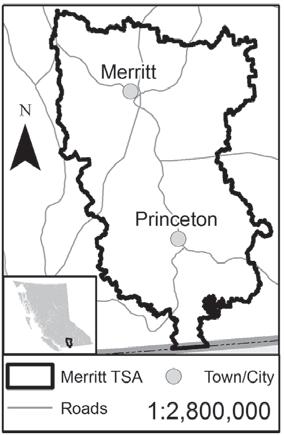
The Merritt TSA is in the southern interior region of British Columbia, covering about 1.13 million hectares. The Merritt TSA is bordered by the Kamloops TSA to the north, the Okanagan TSA to the east, the Fraser and Lillooet TSAs to the west, and Manning and Cathedral Parks and the Canada–U.S. border to the south. The AAC determinations must be made by the chief forester.
The Technical Report provides background information, details of the AAC adjustment process, outlines key issues, and a summary of the joint recommendations. The report will provide the province’s chief forester with information required to determine the AAC– the maximum volume of timber available for harvest from the TSA – until the next determination, likely following the completion of the Cascades Forest Landscape Plan currently underway.
Members of the public can review the technical report from April 28 – May 29, 2026 online at: www2.gov.bc.ca/gov/content/industry/forestry/managing-our-forestresources/timber-supply-review-and-allowable-annual-cut/allowable-annual-cuttimber-supply-areas/merritt-tsa or at the address below during business hours:
Cascades Natural Resource District Ministry of Forests
3840 Airport Road, Merritt, B.C., V1K 1M5 Telephone: 250 378-8400
The chief forester will consider public and First Nations input, along with information required under the Forest Act, when determining a new AAC. Comments will be accepted from April 28 – May 29, 2026. For questions or comments, contact:
Suzanne Shears, RPF Stewardship Officer
forests.cascadesdistrictoffice@gov.bc.ca Telephone: 250 378-8400
Photos/Jake Courtepatte + Kassidy Haggstrom

Photos/Jake Courtepatte

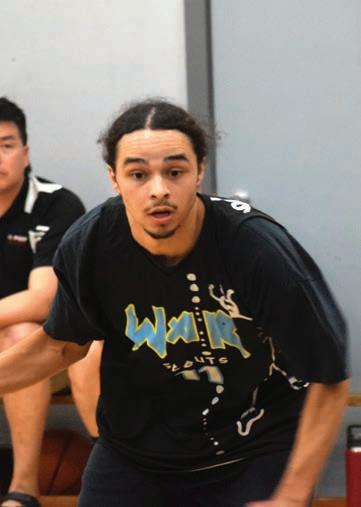
The Tl’kemchEEn Warriors Basketball tournament saw large crowds and plenty of action at Merritt Secondary School, the second year that the tournament has been held in Merritt.
With origins in Lytton before the 2021 fire, the floor saw a Men’s, Women’s and Champion’s division. Results online at www.merrittherald.com.












Secured ■ SaleofNew&Used storagecontainers
Crossroads Community Church 2990 Voght St. • 250-378-2911
Service Time: Sundays 10:00 a.m.
Merritt Baptist Church 2499 Coutlee Avenue (at Orme) Sunday service 10 am, Phone (250)378-2464
Merritt Lutheran Fellowship in St. Michael's Anglican Hall • 250-378-9899 Service Time: 3rd Sunday each month 1:30 p.m.
Sacred Heart Catholic Church Corner of Jackson & Blair • 250-378-2919
Mass Time: Sundays 9:00 a.m.
St. Michael’s Anglican Church 1990 Chapman St. • 250-319-8823
Service Times: 2nd and 4th Sundays only - 10:00 a.m.
Trinity United Church Corner of Quilchena & Chapman • 250-378-5735
Service Time every Sunday - 10 am
Somang Mission Community Church (SMC) 1755 Coldwater Ave. (The Cadet Hall) Sunday Service Time: 2:30 pm • 250-280-1268
Sunday School Time: 12:15 pm Nicola Valley Evangelical Free Church 1950 Maxwell St. • 250-378-9502 Service Times: Sunday 10 am
Motion Church Merritt Sundays 10 am
Coquihalla Middle School (2975 Clapperton Ave) www.wearemotionchurch.ca/merritt


DEADLINE: MONDAY at noon. for that week’s paper.
Hours: Monday to Friday, 9 a.m. to 5 p.m.


February 12, 1997 - April 14, 2026
It is with heavy hearts that we announce the sudden passing of our beloved Jessie-Lee Cunningham. Sunrise February 12, 1997 to sunset April 14, 2026.
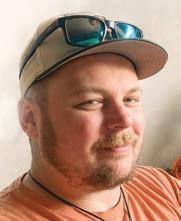
At 29 years old, Jessie had lived quite the life. From family vacations to solo travelling to Thailand, living abroad, to all of the music festivals he attended, he lived life to the absolute fullest.
He leaves behind his father, Gary, his mother, Robyn, his sisters Kendel (Ty) and Larissa, his niece and nephew Josie May and Beau-Riley, and his true love, Brooklyn, along with grandparents, aunties and uncles, cousins, and all of his friends who were his extended family.
We invite you to join us as we celebrate the life and legacy of Jessie-Lee on May 2, 1:00 pm at Crossroads Community Church. Doors open at 12:00 pm, and there is a reception to follow.


November 26, 1953 - March 1, 2026
With heavy hearts, we announce the passing of Lois Amelia Duncan on March 1, 2026 at the age of 72. Lois (Lu, Aunty Patty) will be deeply missed and lovingly remembered by her family, friends and all who had the privilege of knowing her.
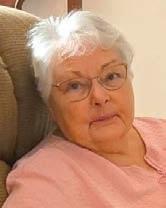
She was born in Oliver, B.C. on November 26, 1953. Lu was predeceased by her parents Art & Rose Duncan and her brothers Loren, Alec, James and sisters Elizabeth, Joyce, Marion, Nelda & Marie.
She is survived by her brother Tom (Angie) and sister Fran (Terry), her niece Kim and many more nieces and nephews. She grew up in Oliver, went to school and became an LPN. She started her career in Lillooet and moved to Merritt and worked at the Nicola Valley General Hospital for over 40 years. She was loved by everyone she worked with and took so much pride in looking after everyone. She made many friends while working there and everywhere she went.
Lois loved to kayak, read, go for drives all over the countryside, and going for walks with friends and her cat Oda Joe.
She will be so deeply missed by all her family and friends.
December 3, 1934 - March 26, 2026
Noel Jonathan Haynes, 91 years old, Born and raised in Maple Ridge, BC, passed away peacefully, surrounded by his loving family on March 26th, 2026.
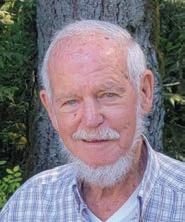
He enjoyed life, always encouraging others, helping them understand that in just a little while Christ will return as King over the whole earth. He lived with great hope for the arrival of the Day of the Lord, and we rejoice with him that he is with Jesus now!
He also made great pancakes and applesauce!♥️
He is survived by his brother, Harold, his five children from his first marriage to Euna (nee) Middleton: Shari, Lila (Ellie), Shannie (Brian), Jay (Dana), and Joe (Heather); 28 grandchildren and 36 great-grandchildren. Predeceased by his beloved wife, Sandra Fiddick Haynes (Oct 01/25), his parents, sisters: Ruth, Grace, Carol, and Edith, and brothers: Alf, and David.
A service of thanksgiving for his life will be held on Saturday, May 23rd, 2026, 1:00 pm, at Maple Ridge Community Church, 20450 Dewdney Trunk Rd #301, Maple Ridge, BC
• Light refreshments will be served afterwards.
• In lieu of flowers, donations can be made in his name to:
https://www.bridgesforpeace.com/donation
Or https://impacthope.ca/casa-compasiva/?give=5WEYRLD2
Please be advised that Stuwix Resources Joint Venture intends to amend Forest Stewardship Plan (FSP) #111 held with Similkameen Forest Products which covers areas within the Cascades Forest District. This amendment will include the addition of Siska First Nation (RFL A96940 and NRFL A98840) as holders and signatories of the FSP.
This plan is a requirement of the Forest and Range Practices Act. The FSP outlines the results or strategies that the holders of the plan intend to implement in order to meet the objectives set by government along with other legal requirements including its area of application.
This plan is publicly available for review and for written comment, beginning on the date of this publication. Those wishing to review the plan may do so by appointment, during normal working hours at our Merritt office until July 1, 2026. Please phone 250 378-2277 to make an appointment. Comments can be made in writing c/o Forestry Planner, 2-98 Hwy 8, Merritt, BC V1K 0A7. All written comments must be received prior to the above-mentioned date.

If you are ever going to love me,
Love me now, while I can know
The sweet and tender feelings
Which from true affection flow.
Love me now
While I am living.
Do not wait until I’m gone
And then have it chiseled in marble,
Sweet words on ice-cold stone.
If you have tender thoughts of me,
Please tell me now.
If you wait until I am sleeping,
Never to awaken,
There will be death between us, And I won’t hear you then.
So, if you love me, even a little bit,
Let me know it while I am living
So I can treasure it.

Sudoku puzzles are formatted as a 9x9 grid, broken into nine 3x3 boxes. To solve a Sudoku, the numbers 1 through 9 must fill each row, column and box. Each number can appear only once in each row, column and box. You can figure out the order in which the numbers will appear by using the numeric clues already provided in the boxes.

The Nicola Valley Rodeo Association has an opening for an administrative assistant. This is a seventeen-week position running from May 11 to September 6, 2026. The successful applicant will work 30 hours per week and will be paid $20.00 per hour.
Duties will include a broad range of clerical, organizational, and communication tasks including general office administration, financial administration support and specific tasks related to the production of the annual pro rodeo scheduled to take place on September 5 & 6, 2026.
Applicants must be proficient with the Microsoft Office Suite and have excellent organizational skills.
As this position is funded through a Canada Summer Jobs grant, preference will be given to a youth who identifies as First Nations, Metis and/or Inuit. Candidates must be continuing an education program in the fall of 2026.
Application deadline is April 30, 2026.
Resumes should be submitted in Word or PDF format by email to nicolavalleyprorodeo@gmail.com