Synopsis
About Angkor Dance Troupe
About Tchaikovsky’s Swan Lake
About Cambodian Classical Dance
A Brief History of Cambodian Classical Dance
About the Mythical Kinnari
An Interview with Program Director Chummeng Soun
An Interview with Costume Keeper
Sophea Nop
Dance – Responding, Connecting
D.R.07, D.R.08, D.Co.10, D.Co.11
English Language Arts – Reading Informational Text, Reading in History and Social Science
RI.3, RI,10, RCA-H.7
Suggested Viewing: A Day in the Life of a Classical Dancer
Watch and Learn: Four Foundational Hand Gestures
Suggested Viewing: Seasons of Migration (2008) and Monkey Dance (2004)
Dance – Responding, Performing, Connecting
D.R.07, D.R.08, D.P.04, D.P.05, D.P.06, D.Co.10, D.Co.11
Consider and Discuss: What is Transcultural Performance?
Dance – Responding, Connecting
D.R.08, D.Co.11
English Language Arts – Speaking and Listening
SL.1, SL.4
Kbach Motifs
Visual Arts – Creating, Responding V.Cr.01, V.Cr.03, V.R.08
Dance – Creating D.Cr.01
Project: Dance Practices of Asia
Dance – Responding, Performing, Connecting
D.R.07, D.R.08, D.Co.10, D.Co.11
English Language Arts – Reading Informational Text, Writing, Speaking and Listening, Reading in History and Social Science
RI.10, W.2, W.6, W.7, W.8, SL.1, SL.2, SL.5, SL.6, RCA-H.7
In the forest, while collecting water, Odette Davy is approached by the powerful Garuda King, who declares his love for her. When she calmly refuses him, he curses her. When night comes, Odette’s grief-stricken mother guides her daughter to the lake, which has formed from her tears. Elsewhere, the queen presents her son, Prince Siegfried Vormann, with his late father’s bow and encourages him to marry for the sake of the kingdom. He agrees to honor his mother’s wishes before venturing into the forest.
Prince Siegfried and his servant, Bunret, discover a flock of swans. Among them is Odette, now the White Swan, who has been made their queen. She explains to Siegfried that she has been cursed and bound by karma by the Garuda. She is forced to live as a swan by day and can only reinhabit her human form at night. She begs the prince not to fall in love with her, but he nevertheless professes his devotion. He asks her to wait for him and promises to return and take her to his palace before leaving with Bunret. Unseen by the lovers, Odile Devi, the Garuda’s daughter, has overheard Siegfried’s vow to Odette, and she flees to inform her father.
The Garuda King reassures his jealous daughter that Odette will be kept from reuniting with the prince. Together, Odile and the Garuda capture and bind Odette, and the Garuda then transforms Odile into the Black Swan. They depart, leaving Odette alone. The forest animals rush to her aid and free her.
At the palace, there is a celebratory ball. Princesses from Laos and Indonesia dance before Siegfried and the queen in the hopes of earning the prince’s heart. Odile Devi, now the Black Swan, enters and dances disguised as the White Swan. Believing her to be Odette, Siegfried proposes to her and presents her with a ring. Odette arrives in time to witness this, and before fleeing to the forest, she leaves behind a single white feather as proof of the deception. The queen witnesses Odette’s flight and realizes the truth, but by the time she turns to warn her son, it is too late.


Alone in the forest, the heartbroken Odette mourns Siegfried’s betrayal. Having discovered the truth, Siegfried rushes into the forest to find his true love. When he finds her, he admits that he was deceived and begs her for forgiveness. Despite initially rejecting his apology, Odette eventually forgives him.
The lovers are interrupted by the furious Garuda, who accuses Siegfried of abandoning his daughter. Siegfried and the Garuda fight, and Odette watches in horror. In an attempt to dodge the approaching Garuda, Odette is pushed toward a cliff’s edge, and a gust of wind carries her over the precipice. Siegfried defeats the Garuda before collapsing, overcome with grief.
Devadatta, the King of Heaven, descends and informs the prince that Odette Devi is now free from her curse and karma. He invites Siegfried to join Odette in the celestial realm, where he, too, can be free from suffering. Siegfried accepts.
In the celestial realm, Odette enters the Heavenly Palace, where she reflects on her past with acceptance and wisdom, rather than sadness. Devadatta enters with the prince, and the lovers are reunited and finally at peace. The celestial beings of heaven offer their eternal blessing.
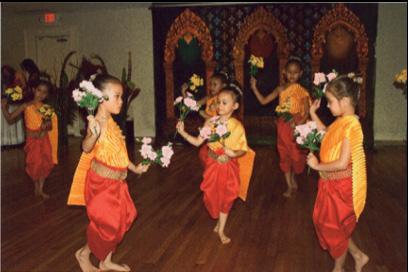
Ankor Dance Troupe (ADT) is a Lowell-based nonprofit performing arts organization dedicated to preserving, staging, teaching, and innovating Cambodian performing arts practices. ADT offers classes in classical Cambodian dance, Cambodian folk dance, and traditional Cambodian music for children, adolescents, and adults at all levels of experience.
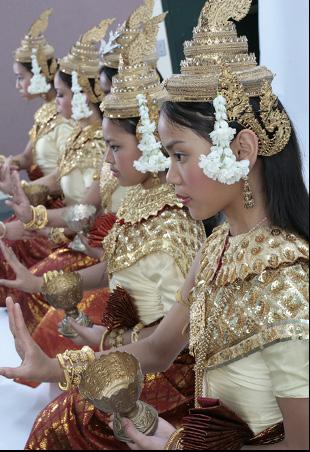
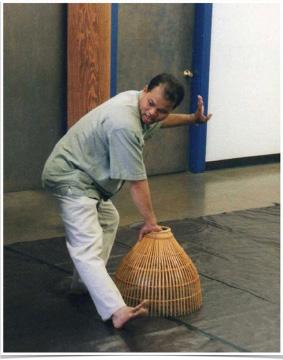
Tim Chan Thou, a survivor of the Cambodian genocide who settled in Lowell when he was twenty-one, founded Ankor Dance Troupe in 1986 with other Cambodian refugees. Thou’s grandmother had been a classical dancer and instructor before the Khmer Rouge’s regime, and before immigrating to the United States, Thou became certified in Cambodian folk dance at the Kao-I-Dang refugee camp in Thailand. In founding ADT, Thou sought not only to preserve Cambodian performing arts practices that were in danger of being lost, but also to “empower youth, foster pride, and reconnect Cambodian Americans to their ancestral roots.”1
Today, ADT is nationally recognized for its remarkable accomplishments in Cambodia arts education, preservation, performance, and innovation.
Explore the Archives: The University of Massachusetts Lowell is home to the Angkor Dance Troupe Inc. Collection, 1991-2017, an archive that includes photographs, program materials, correspondence, and records. Some materials from the archive have been digitized and are available HERE. Additional archival materials are available on Internet Archive HERE.
Suggested Viewing: “My Dance, Children: A Documentary on Angkor Dance Troupe’s Legacy & Cultural Impact” (dir. Chummeng Soun) on YouTube

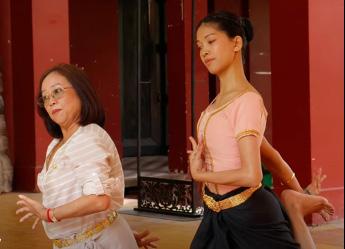

Nalys Sok is a classical dancer at the Royal University of Fine Arts in Phnom Penh, where the music and choreography for A Khmer Swan Lake were developed by the university’s master teachers and visiting Angkor Dance Troupe leaders and educators. During ADT’s visit to Phnom Penh, Sok, who traditionally dances lead male roles (known as nerong or neay rong), helped with the development process by performing the choreography for Odile Devi, the Black Swan.
In this video, Sok takes viewers through a day of rehearsal with ADT and reflects on the story of Swan Lake and the creation of the distinct swan movements and gestures used in ADT’s transcultural adaptation. Watch her video HERE
The word transcultural refers to something that incorporates or encompasses two or more cultures. Transcultural performance, then, describes a piece of theatre, dance, or live art that interweaves, depicts, or engages with two or more cultures. In A Khmer Swan Lake, the story of the famous Russian ballet is reimagined and adapted through Cambodian classical dance. Transcultural performance is part of a broader, long-standing tradition of transcultural art and literature that includes novels, poetry, films, paintings, sculptures, and architecture.
Discuss:
1. Can you think of specific examples of transcultural performance? What about transcultural art, books, films, or TV shows?
2. Why do you think transcultural art and literature are popular? Who is the ideal audience for transcultural performance?
3. Do you think transcultural performance brings people of different cultures together, or does it highlight cultural differences?
4. Are there particular challenges or ethical considerations that should be accounted for when creating or viewing transcultural performance?
5. Transcultural performances often take the form of adaptations, as A Khmer Swan Lake is an adaptation of Swan Lake. What might an original transcultural performance look like?
6. What is required to create a well-executed transcultural performance?
7. Can you think of a transcultural performance or story that you would like to see or create?
In 1875, Vladimir Petrovich Begichev, director of Moscow’s Imperial Theatres, commissioned Pyotr Ilyich Tchaikovsky to compose the music for a new ballet. Tchaikovsky finished his first ballet commission within the year, likely drawing on the classic Russian folk tale “The White Duck,” Johann Karl August Musäus’s folktale “The Stolen Veil,” and Wagner’s opera Lohengrin to craft his ballet’s plot. Swan Lake premiered in 1877 at Moscow’s Bolshoi Theatre, choreographed by Julius Reisinger and conducted by Stepan Ryabov. However, the premiere was poorly received by audiences and critics alike, who found the music too dramatic and emotional, the choreography unmemorable, and the story uneven.
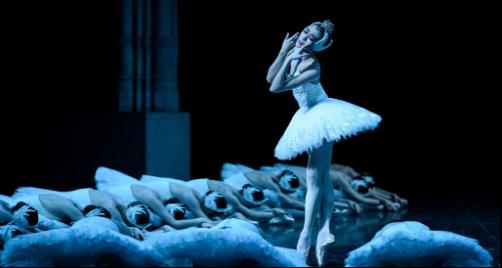

It wasn’t until 1895, two years after Tchaikovsky’s death, that Swan Lake’s reputation changed with a new production in St. Petersburg. This production, choreographed by Marius Petipa and Lev Ivanov, incorporated changes to Tchaikovsky’s score by the composer Riccardo Drigo, and changes to the libretto by Tchaikovsky’s younger brother, Modest. In this version of the story, Odette is not a supernatural swan-human hybrid, but a woman cursed to embody the form of a swan. Additionally, Siegfried became a more sympathetic and heroic character, and the figure of the evil sorcerer Von Rothbart became the story’s primary villain, rather than Odette’s stepmother, who was removed from the plot entirely. Over 100 years later, this 1895 version of Tchaikovsky’s ballet is the one most frequently performed, and today, Swan Lake is recognized as one of the most iconic and beloved ballets of all time.
Suggested Viewing and Reading:
• Swan Lake, performed by the Paris Opera Ballet in 2005, choreographed by Rudolf Nureyev
• Swan Lake, performed by the Kirov Ballet in 1996, choreographed by Oleg Vinogradov
• A detailed history of Swan Lake from the Marius Petipa Society
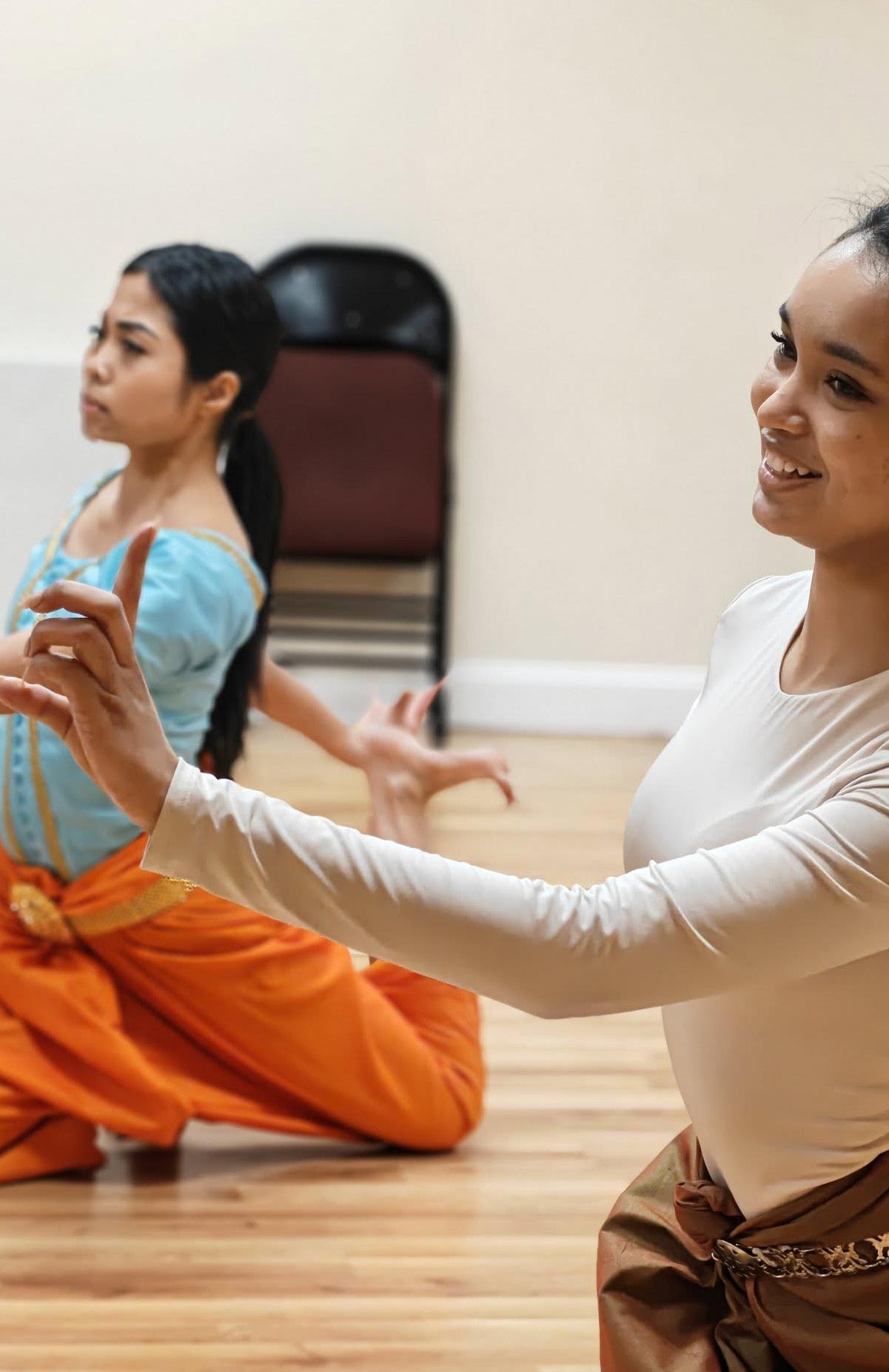
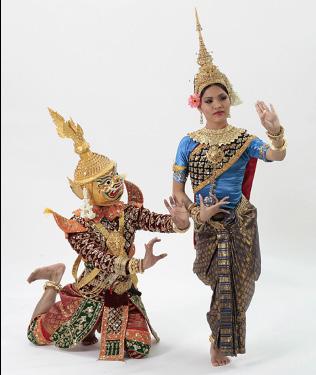
The choreography that constitutes Cambodian classical dance is a graceful, highly stylized language of movements and gestures. Meaning is conveyed by each movement, and these movements can be arranged and merged in innumerable ways. In this way, the classical dancer’s body conveys a given narrative, whether it be a myth, an epic, a tribute, or a more modern tale.
Historian and archivist Paul Cravath, who was granted near-unprecedented access to the Classical Khmer Ballet’s archives, teachers, and dancers shortly before the Khmer Rouge came to power, described Cambodian classical dance as characteristically “slow” with a “wave-like rhythm.” Dancers, he noted, alternated between different forms of “turning, walking, and kneeling,” which could be interspersed with periods of standing, during which the hands and feet were tasked with small, delicate, and seemingly hyper-flexible gesturing. Cravath continues:
…the elbows are continually away from the body, one or both arms are usually extended at shoulder height, the fingers are always taut with energy, the knees are bent, and one foot is often raised for long periods — all of which contributes to a hypnotic balance of movement and stillness. Throughout the dance, there is a smoothness and continuity to all movement which gives the entire scene exceptional grace and lightness.2
Cravath’s observation that this is an art of “smoothness and continuity” is echoed by Prumsodun Ok, a classical dancer, teacher, and researcher, who describes Cambodian classical dance as having a “strong aesthetic of curves.”
For Ok and his teacher, Sophiline Cheam Shapiro, the serpentine nature of Cambodian classical dance is deliberately symbolic. In the ancient Khmer belief system, the serpent was believed to symbolize prosperity, protection, and a bridge between this world and the heavenly realm. “In its fluid, curvilinear movement,” writes Ok, the serpent “mimicked the flow of water and conjured the image of rivers cutting through the land.” By mimicking the serpent’s movements, the dancer’s body promised the “deliverance of water and its ability to nurture life.”3 Ok notes that the figure of the serpent is also bound up in Cambodian cultural identity: in the origin myth of Preah Thong and Neang Neakii, the Cambodian people are said to descend from a hybrid human-serpent race known as the naga, or neak.
Suggested Viewing:
• “The magic of Khmer classical dance” by Prumsodun Ok on YouTube
• “Robam Preah Chenavong” performed by The Royal Ballet of Cambodia on YouTube
• “Reamker” performed by The Royal Ballet of Cambodia on YouTube
• “Look & Listen: Cambodian Art and Dance of the Divine Serpent” by The Smithsonian National Museum of Asian Art on YouTube
The art of Cambodian classical dance is well over 1,000 years old. Historical documentation and archaeological evidence suggest that classical dance was performed in funeral rites and during religious offerings meant to bring rain to the kingdom’s crops as early as the 6th century. The king offered dancers to Buddhist and Hindu temples, where they performed their sacred duties. Historian Paul Cravath notes that the belief in dance’s spiritual power remains prevalent in modern-day Cambodia, where dance is still considered “one of the most powerful temple offerings to obtain assistance from the spirits.”4
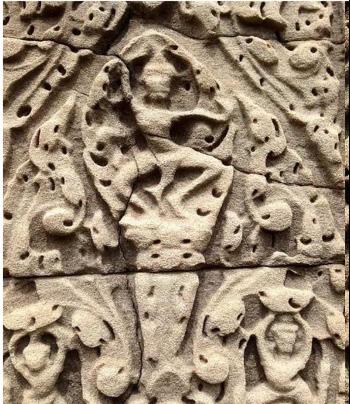
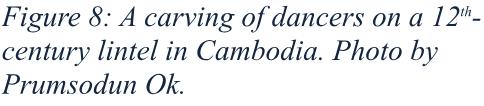
During the Angkorean period (802-1432), when the Khmer Empire spanned much of Southeast Asia, dance’s role in the kingdom flourished. In addition to the grand ensemble of dancers kept at the royal court, records indicate that the number of dancers given to temples drastically increased, with some temples boasting upwards of 600 dancers at the king’s behest. Following the Angkorian period, Cambodia experienced drastic socio-political changes due to frequent invasions by Vietnam and Siam (modern-day Thailand). Because of this centuries-long conflict, there is no historical evidence indicating whether dance remained integral to Cambodian life and culture.
With this lack of documentation, it is impossible to determine how similar Cambodia's classical dance was in the Middle Ages to that of today. However, relief carvings on temples throughout Cambodia depict dancers in poses that reflect the aesthetic principles of contemporary classical dance. Dancer and historian Prumsodun Ok describes how the sculptors of these reliefs depicted the same lifted torsos, arched backs, smiles, and flexed fingers and toes that “today’s most skilled of Khmer dancers are able to express.”5
Indeed, it was these relief carvings that helped to codify Cambodian classical dance as it is performed today. In the mid-19th century, King Ang Duong formalized the movements, hand gestures, costumes, and ornamentation of classical dance by analyzing these carvings. The king’s achievements led to both a robust revival of classical dance and a concerted effort to ideologically bind the modern Kingdom of Cambodia with the Khmer Empire of the past. This arts revival continued under the rule of Ang Duong’s successors, and many of the classical dances and dance-dramas performed today were standardized, developed, and refined during the 19th and 20th centuries. What became known as “The Classical Khmer Ballet of Cambodia” thrived under its royal patronage until the Vietnam War and the subsequent
4 Cravath, “The Ritual Origins of Classical Dance Drama in Cambodia.”
5 Ok, The Serpent’s Tale, 10.
Cambodian Civil War brought conflict and uncertainty to the region. When General Lon Nol seized power in 1970 and transformed Cambodia into a republic, these classical dancers became civil servants of the new government and were often sent abroad to tour in an effort to curry international favor.
In 1975, the Pol Pot-led Khmer Rouge seized power, and the Cambodian genocide began. Classical dance was forbidden, and dancers were deemed too great a threat to live because of their education, their preservation of the old ways, and their connection to the former governments. A few dancers managed to hide their past lives: Proeung Chhieng, a celebrated performer of monkey roles, used his well-honed clowning skills to feign insanity when questioned; and Chea Samy, a classical dancer who received no special treatment for being Pol Pot’s sister-in-law, convinced interrogators that her dainty steps were the result of working in busy marketplaces where one had to be mindful to avoid the scattered chicken droppings. These dancers were sent to the countryside, where they perished or endured family separation, starvation, forced labor, torture, and disease. When the regime fell to invading Vietnamese troops in 1979, an estimated 90% of all professional artists, including dancers, had died.
Dancers who survived gathered in the newly liberated Phnom Penh and in refugee camps abroad, dedicated to recalling, documenting, and preserving their art for future generations. Princess Buppha Devi, who was herself a renowned dancer who later became Minister of Culture and Fine Arts, recalled the struggle of bringing classical dance back from the brink of extinction:
It was devastating. We had to begin again… They had to train the younger teachers to help… Costumes had to be designed and remade, musical instruments sourced, young dancers trained, steps remembered, and the characters…had to be brought back to life…Because the classical dance was never notated, choreography was mainly passed physically from the teacher to the young dancers — the restoration process has relied largely on the memories of the school’s senior masters.6
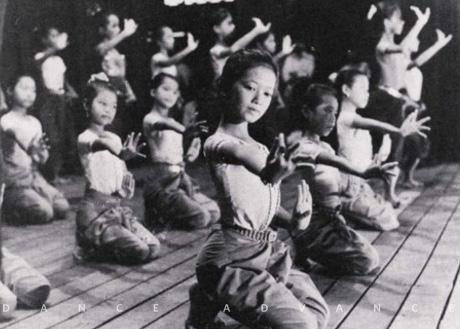
The School of Fine Arts reopened in 1981, and surviving dancers continued the work of sourcing, recalling, and recreating the world of classical dance for the school’s incoming students. Under the rule of communist Vietnam, there was still concern about classical dance’s ties to royalty and tradition. As a result, many classical dances and their accompanying music were pragmatically reinterpreted to appease the new political government and keep the art form alive. References to royalty were removed, prayers to certain deities were changed to prayers for peace, praise was given to the Vietnamese “liberators,” and costumes often featured the bright red associated with communism. In 1993, when Cambodia became a constitutional monarchy, these dances were returned to their traditional forms.
Today, Cambodian classical dance is a revered cultural tradition. Thanks to the tireless efforts of those who preserved it through civil war, genocide, occupation, and political turmoil, it is now taught to and performed by a new generation of dancers, both within the Kingdom of Cambodia and throughout the expansive Khmer diaspora.
Suggested Reading and Viewing
• “The Dancer and Cambodian History” by Toni Phim Shapiro
• “DANCING BACK: Decimated by the Khmer Rouge, Bruised by Political Chaos, and Threatened by a Frenzy of Modern Materialism, Will the Soul of an Ancient Culture Survive?” by Judith Coburn for the Los Angeles Times
• “1000-year-old tradition the Khmer Rouge nearly killed” by PBS NewsHour on YouTube
• “Interview with Proeung Chhieng” for the Khmer Dance Project
• “Em Theay – The Master of Royal Ballet Dance” by UNESCO on YouTube

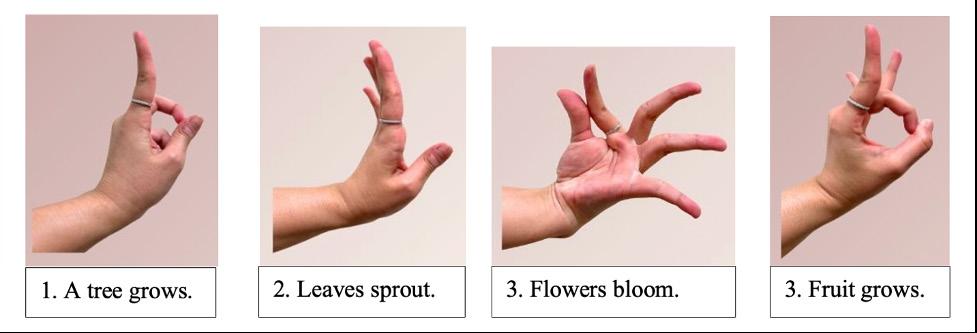
Intricate hand gestures are an integral element of Cambodian classical dance. While there are over 4,500 different hand gestures used in this art form, four gestures serve as the foundation for this graceful language of fingers and palms. These four gestures symbolize the cycle of life as it occurs in nature:
In his 2017 TED Talk, “The magic of Khmer classical dance,” dancer Prumsodun Ok explores the history, practice, and resilience of Cambodian dance. At the 1:54 mark of the video, Ok demonstrates these four foundational hand gestures. Watch Ok’s video, and using his demonstration and the instructional images above, practice these gestures individually or as a class.
More Cambodian Classical Dance Tutorials:
• “Virtual Lesson: Monkey Dance” (with Sam Hor) by Angkor Dance Troupe on YouTube
• “Let’s Dance! The Neang Role Basic Gestures” by Art Sphere Inc. on YouTube
• “Traditional Khmer Classical Dance Tutorial with Srey Len Savath” by cambodia_ streetwise on Instagram
• “Traditional Cambodian Ballet Stretches Pt. 1” by Angkor Dance Troupe on YouTube
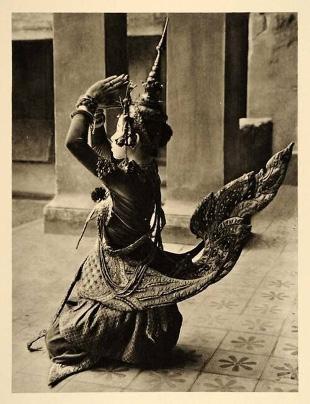

Kinnaris are half-woman, half-swan creatures found in Buddhist and Hindu mythology. These figures, with the head, arms, and torso of a woman and the wings, legs, and feet of a swan, are known for their skills in dance, poetry, and music and are considered symbols of beauty and grace. While kenara, half-swan, half-man creatures are also found in Buddhist and Hindu mythology, in Cambodia, kinnaris are more frequently depicted in art, architecture, and literature than their male counterparts. According to Buddhist tradition, kinnaris and kenara live in the Himavanta, a mythical forest in the Himalayas, which is home to other celestial beings.
Kinnaris and kenar have been prevalent in Asian art and literature for thousands of years. In Cambodia, depictions of these celestial figures can be found carved into temple walls and columns. Additionally, the kinnari is an archetypal figure in classical dance. Robam Kenor is the name of a particular classical dance that depicts an ensemble of kinnaris dancing in a lotus pond.
Lok Kru Chummeng Soun is the Program Director at Angkor Dance Troupe, as well as a principal dancer and teacher. At the age of eleven, Soun began his journey with ADT after following his siblings to a dance class, and by age eighteen, Soun had mastered the role of the yeak, or ogre, in classical Cambodian dance. In addition to his work with ADT, Soun is the co-founder of the Urban Khmer Ballet.
This production reimagines the story of Swan Lake through Cambodian classical dance. What was the process like for adapting this story?
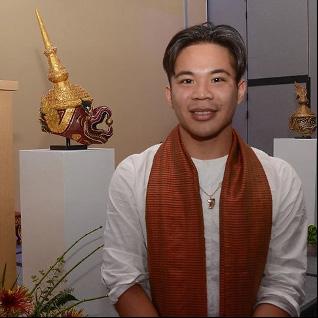

The process began with understanding the original Swan Lake storyline and thoughtfully reinterpreting it through the lens of Cambodian classical dance. We worked closely with Neakru Sot Somaly – a master choreographer, writer, and music composer – alongside Master Teacher Phousita Huy (Artistic Director and leading female role, neang), Master Teacher Pen Sokhoun (leading male role, nerong), Master Teacher Pehn Yom (leading yeak role), Teacher Peter Veth (Creative Director and leading male and yeak roles), Teacher Channa Sath (Assistant Artistic Director and leading female role, neang), and myself, to adapt the narrative structure and movement vocabulary in a way that honored Khmer
traditions while exploring new possibilities.
A major focus was on integrating Mohori music – a refined Cambodian classical genre –with Pin Peat ensemble traditions. This musical fusion allowed us to re-score Tchaikovsky’s iconic melodies into a distinctly Cambodian soundscape. The choreography followed a similar path. We incorporated familiar gestures, such as the “crossed-hands” motif, and reinterpreted their expression within the Cambodian classical framework. The result is both a preservation and a reimagining – Swan Lake retold through our Angkor Dance Troupe’s artistic lens.
You started with ADT when you were eleven years old. What was that experience like?
It was a transformative experience. It was more than just learning dance – it was my first introduction to community, culture, and discipline. As a child of Cambodian immigrants, I was navigating between two worlds: one in my head, rich with stories, language, and history, and another outside, shaped by American culture. ADT became a bridge between the two. The rehearsal space was like a second home. I remember watching elders move with grace and power, passing on dances that carried meaning. The experience taught me how movement could tell stories and carry resilience. I learned about Cambodian history not through textbooks, but through listening and dancing.
Being part of ADT gave me a sense of belonging and purpose at a young age. It shaped my identity, gave me mentors, and helped me discover a deep love for the arts. Those early years grounded me in values of respect, patience, and commitment – qualities that continue to guide my work today as a cultural practitioner, educator, and artist.
What do you find compelling about dance as an art form?
Dance transcends language – it allows us to tell stories, preserve history, and express complex emotions through the body. What I find most compelling is its capacity to evolve. Dance holds tradition while simultaneously pushing boundaries. It invites dialogue across generations, cultures, and even genres. In many ways, it is a living archive – a form of resistance, healing, and celebration all at once.
In your work as program director, instructor, and principal dancer, you’ve said that you are committed to both “preserving Khmer performing arts” and “boldly reimagining them for a new generation.” What advice do you have for young artists who also hope to explore, preserve, and reimagine their culture’s art forms?
My advice is this: Know your foundation before you innovate. Deeply study your roots – your traditions, your elders – and let that knowledge guide your creative evolution. Don’t be afraid to ask questions or challenge ideas, but also carry your culture with care. Collaboration is also key – your vision becomes stronger when it’s grounded in collective experience.
Are there other classic ballets that you would like to see reimagined through Cambodian classical dance?
Absolutely. This is the first step toward the future of Cambodian dance, and I hope to see more emerge from this initial experience.
What do you hope audiences take away from A Khmer Swan Lake at MRT?
I hope audiences leave with a sense of wonder – and a deeper appreciation for the richness of Cambodian performing arts. I want them to see that cultural preservation isn’t about keeping something frozen in time – it’s about breathing new life into it, letting it grow. This Swan Lake is a bridge between worlds, a love letter to Khmer artistry, and a reflection of what happens when tradition meets modernity.
Sophea Nop is the Angkor Dance Troupe’s costume keeper inhouse and a master teacher of Cambodian classical dance. She began her dance training at the Royal University of Fine Arts in Phnom Penh at the age of twelve and later graduated with distinction. Her area of expertise is leading female roles (neang).
How did you become involved with Angkor Dance Troupe?
I returned to Angkor Dance Troupe in 2016 to support Neakru Phousita Huy and help with dancing. Since then, I’ve stayed involved to assist the team however I can.
What are your responsibilities as ADT’s in-house costume keeper?
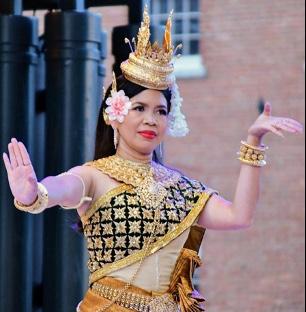

My role is to take care of the dancers and the costumes. I help cook rice for the dancers, organize and maintain the jewelry, and make sure every costume is returned properly after use. I’m responsible for washing, drying, and storing the costumes so they stay in good condition and are always ready for the next performance.
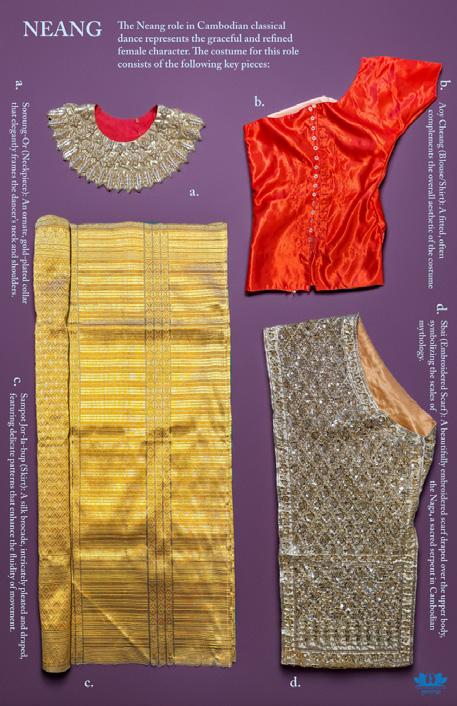
Traditionally, what do Cambodian classical dance costumes consist of?
For a female role, the costume usually includes a neck piece, a sampot (traditional skirt), and a one-sleeve top. Each piece is carefully designed to match the character and the style of the dance.
Can you share a bit about the costumes that will be used in Swan Lake? How do they enhance the characters and story?
For Swan Lake, we plan to add feathers to the hair ornaments and adjust the corset so it sits correctly on the dancer.
The costume helps tell the story, especially during the transformation from human to swan, making the movement and character more believable on stage.
Classical Cambodian dance often incorporates symbols and motifs. Are these included in Swan Lake?
Yes. Many motifs are inspired by nature, such as flowers and seeds. The jewelry patterns reflect complex natural forms that wrap around the body. These details connect the costume to traditional symbolism and cultural meaning.
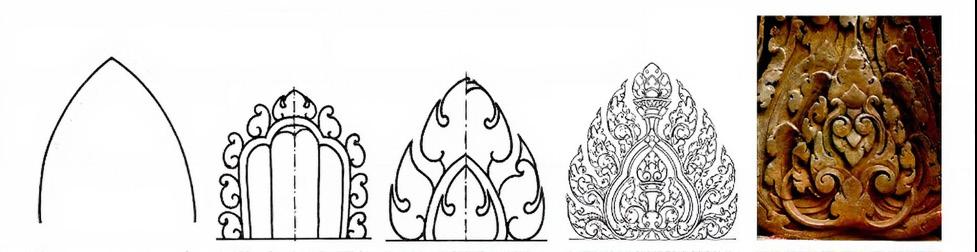
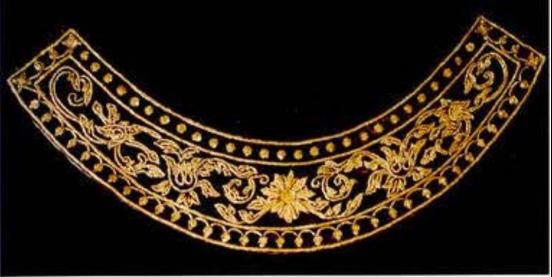
In the Khmer language, “Kbach” refers to a traditional ornamentation style used in Cambodian art, objects, and architecture. Kbach motifs typically depict elements of the natural world, such as leaves, flowers, and animals. Many of these motifs are incorporated into costumes and set pieces used in Cambodian Classical Dance. Below, explore some of the Kbach motifs found in the costumes and set pieces of A Khmer Swan Lake.
Lotus Petal (frontal view)
Lotus flowers symbolize purity and enlightenment in Buddhism. Because they grow in the mud and bloom above the water’s surface, they serve as reminders that enlightenment can be achieved despite the darkness and strife of daily life. The Kbach frontal lotus motif resembles both the shape of a lotus petal and the shape of a lotus bud.
Fish Eggs
Likely a symbol of prosperity, fertility, and luck, the fish egg motif is represented as a simple circle. This circle can then be divided in numerous ways. Divided fish egg motifs are often
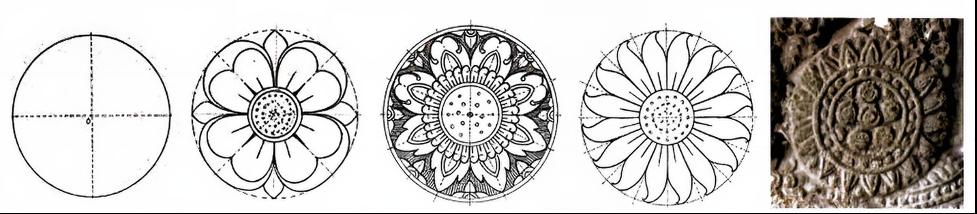
used to depict different flowers.
Romduol
The romduol is a light-yellow flower with three internal petals and three external petals. As Cambodia’s national flower, the romduol represents the beauty and strength of the nation.
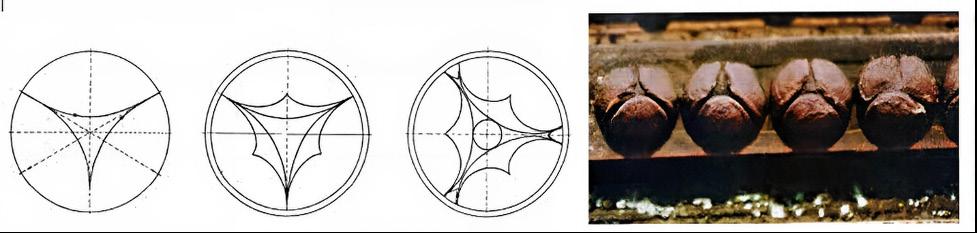
The kbach romduol motif is achieved with a basic fish-egg shape, which is then divided into three parts.
The fish tooth motif is generally used to create borders and rows, and is not typically embellished like other Kbach motifs. There are three basic shapes for this motif: one with a pointed end, one with a flat end, and one with a rounded end.

Tes and Phni Voa Leaves (three-quarters view)
Phni Tes and Phni Voa refer to motifs depicting ornate leaf styles and, sometimes, their accompanying stems, buds, and flowers. When depicted from the side or in a three-quarters view, these motifs are often used to create a decorative, winding vine or garland that mimics the pattern of classical dancers' movements. Phni Tes (first row below) and Phni Voa (second row below) are strikingly similar, and both use the same general shape. However, Phni Voa leaves typically have deeper dividing lines, creating more distinct and separate leaflets.
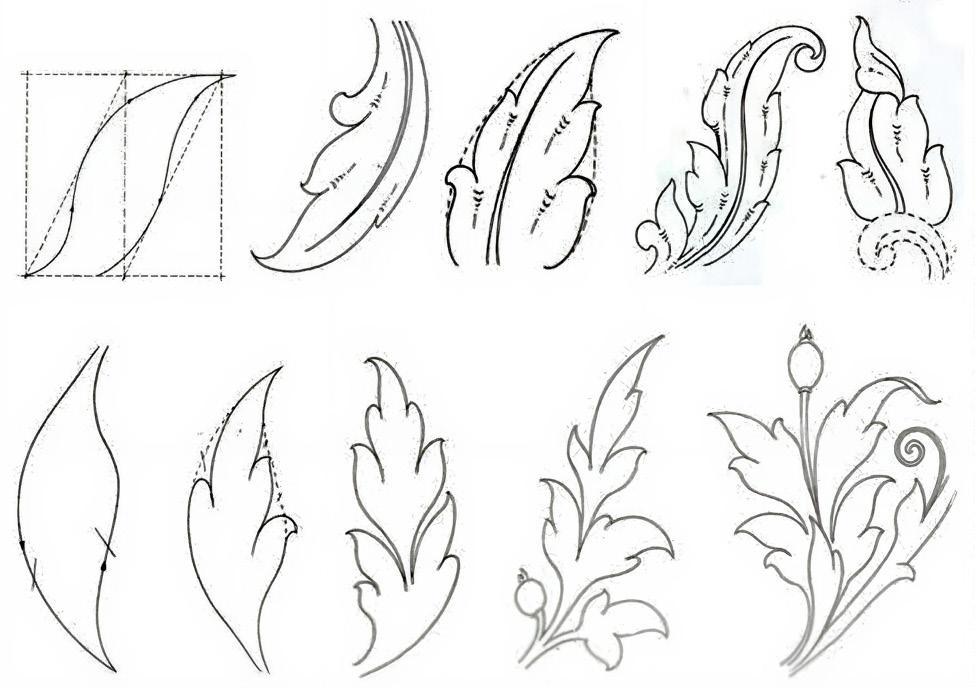
Extension Activity: For visual arts students interested in drawing and incorporating these motifs into their own artistic work, excerpts from Chan Vitharin’s book, Kbach: A Study of Khmer Ornament, which offer detailed instruction on drawing these motifs and their variations, can be found HERE. Have students use Vitharin’s illustrations and their knowledge of Kbach motifs to design a motif pattern that could be used for a classical dancer’s costume or jewelry.
Explore the world of Cambodian classical dance by watching Monkey Dance, directed by Julie Mallozi, and Seasons of Migration, directed by John Bishop. Both documentaries are available to watch for free on Kanopy, a streaming platform available through the Boston Public Library’s online resources, which are free to anyone who lives, works, owns property, or attends school in Massachusetts.
To watch these films, log in to Kanopy using your BPL library card number or e-card number and pin. Those new to BPL’s accessible digital resources can register for an e-card HERE.
Seasons of Migration (2008)
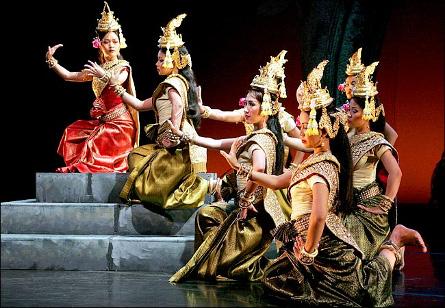

In John Bishop’s documentary, Sophiline Cheam Shapiro, a renowned dancer, choreographer, and educator, explores her four-part choreographed dance, Seasons of Migration. Through Cambodian classical dance, Cheam Shapiro’s Seasons of Migration explores the different stages of culture shock experienced by immigrants and refugees.
Monkey Dance (2004)
Julie Mallozi’s documentary follows three Cambodian American teenagers involved in dance classes at Angkor Dance Troupe. Throughout the film, Lowell natives Samnang Hor, Linda Sou, and Sochenda Uch navigate complex family lives, school struggles, cultural legacies, and financial concerns, balancing their future aspirations with the not-so-distant past that made their parents refugees.
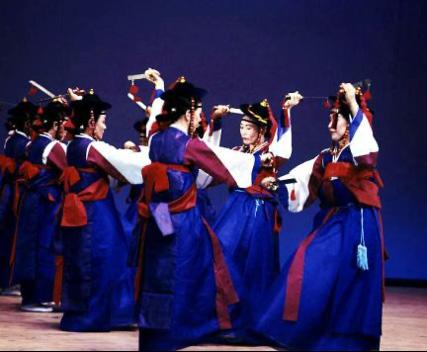
The Asian continent is home to a variety of vibrant and eclectic cultural dance practices. Asian Traditional Theatre & Dance is an accessible online textbook edited by dance scholar Jukka O. Miettinen that provides a detailed overview of many of these performing arts traditions. In this short-term research project, student groups explore and present on classical dance practices from different Asian countries, using Asian Traditional Theatre & Dance as a starting point for their research. To begin, assign each student group a cultural dance practice and a link to its respective entry in Asian Traditional Theatre & Dance. A list of dance traditions that work well for this project can be found HERE
Once students have read about their assigned dance practices in Asian Traditional Theatre & Dance, have them conduct additional research to deepen their understanding (watching videos of their assigned dance practice is also recommended). Using Google Slides, PowerPoint, Prezi, or Adobe, students can then integrate their research into a presentation. Presentations should include a minimum of six slides featuring the information they have learned, along with a title slide and a bibliography slide.
Guiding Questions
1. What is your assigned dance practice?
2. What country or region is this dance practice associated with?
3. Did other countries or regions influence this dance practice?
4. When was this dance practice most popular? Is it still performed today?
5. What are the crucial and unique characteristics of this dance practice? How is this kind of dance performed? Consider: movement, costumes, props, storytelling, music, masks, etc.
6. What was the purpose of this dance practice? Does this dance relay a narrative of some kind? Does this dance serve a religious or spiritual purpose?
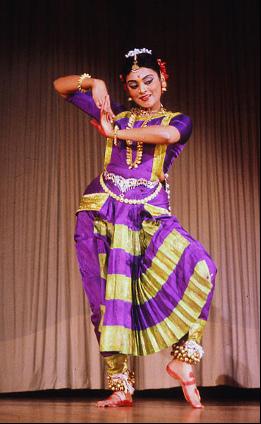

Since the 19th century, immigrant communities have been foundational to the city of Lowell’s community, culture, and industry. By the mid-20th century, Irish, French Canadian, Greek, Portuguese, and Latin American immigrants had ventured to Lowell in search of better lives for themselves and their families.
In the late 1970s, Lowell became a relocation and secondary immigration center for Southeast Asian refugees, and by 1980, the city had welcomed fewer than 100 immigrants from Cambodia and its neighboring countries of Vietnam and Laos. These newcomers were attracted to Lowell’s affordable housing, and, once settled, they established community centers, small businesses, and a temple. That same year, President Jimmy Carter signed the Refugee Act of 1980, which authorized an annual increase in the number of accepted refugees from 17,400 to 50,000. This new legislation led to a great influx of Lowell’s Cambodian and Southeast Asian population.
Throughout the 1980s, this influx reached new heights as Massachusetts experienced expansive economic growth. Known as the “Massachusetts Miracle,” this economic boom resulted in part from the arrival of high-tech, healthcare, and financial service companies. During this period, unemployment declined from 12% to 3% statewide, taxes were reduced, and residents saw a rise in income. Mayor Michael Dukakis perpetuated this boom by funding loans and grants to several cities and towns, including Lowell. His administration also established several refugee support agencies.
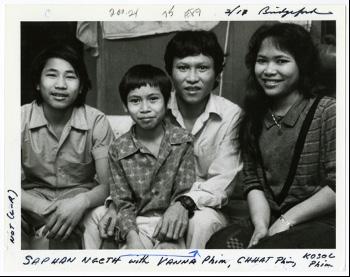

As an industrious, affordable, immigrant-friendly city with a newly established Cambodian community, Lowell appealed to arriving Cambodian refugees more than ever. During this time, an estimated 30,000 Cambodian immigrants and refugees settled in Lowell. Most of these refugees were survivors of the Cambodian genocide who had witnessed the mass atrocities of the Khmer Rouge’s regime.
Today, Cambodian Americans make up a fifth of Lowell’s population. As home to the secondlargest diasporic Cambodian population in the United States, Lowell is a hub of Cambodian community and cultural institutions.
Suggested Further Viewing and Reading: Southeast Asians: A New Beginning in Lowell is a photobook by James Higgins and Joan Ross, with a foreword by Dith Pran and an introduction by Hai B. Pho. This photobook documents the lives of Cambodian, Vietnamese, and Laotian immigrants and refugees in Lowell during the 1980s. The book is available for reading and digital downloading through UMass Lowell’s SEA Digital Archive.