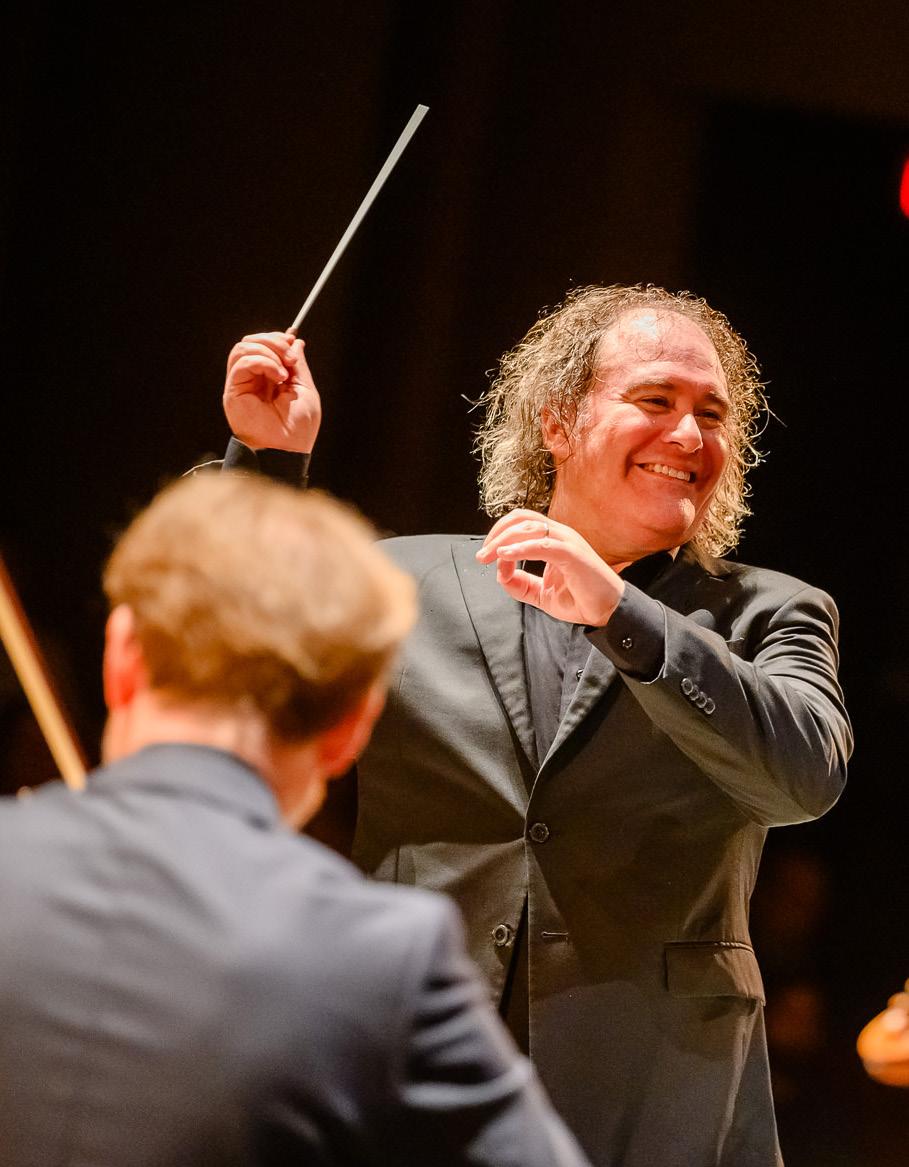

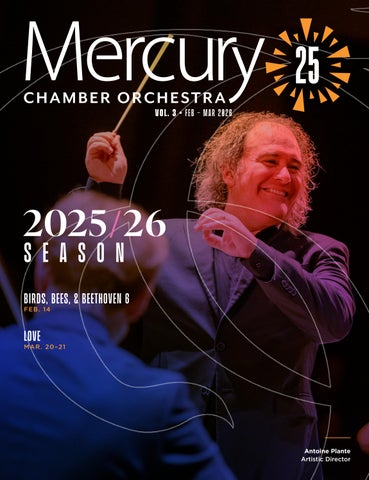
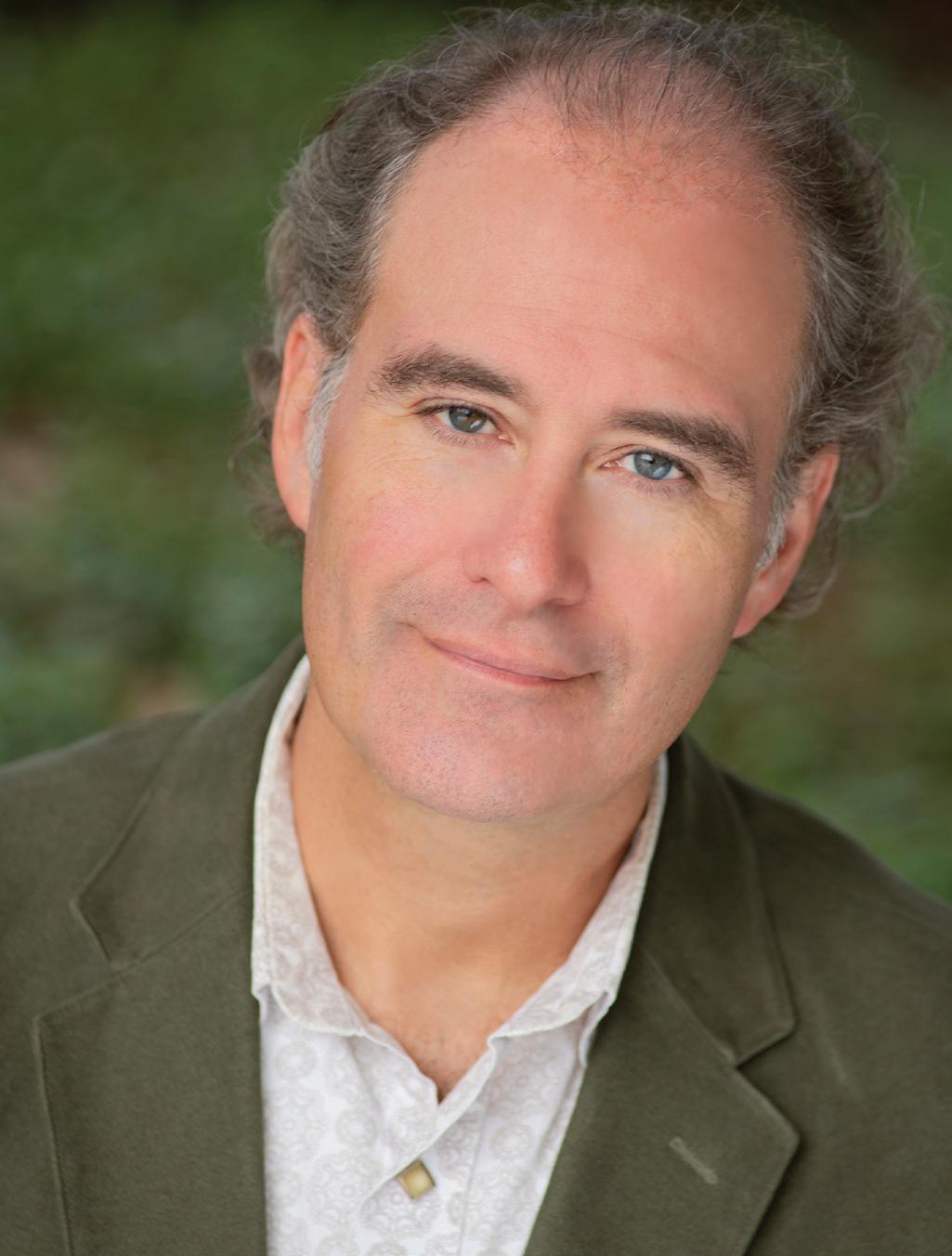
Antoine Plante Artistic Director
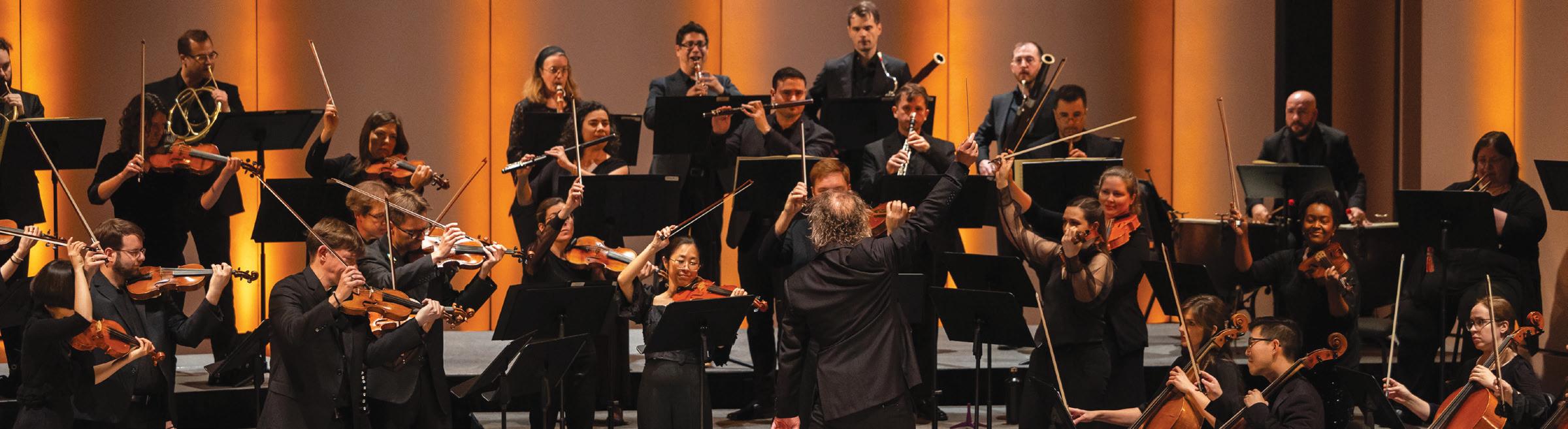
Jonathan Godfrey, Concertmaster
Anabel Ramírez, Assistant Concertmaster
Oleg Sulyga, Principal Second Violin
Joanna Becker
Lucinda Chiu
Laura Cividino
Andrés González
Jackson Guillen
Hanna Hrybkova
Marisa Ishikawa
Kana Kimura
Ela Kodzas*
Matt Lammers
Maria Lin
Mann-Wen Lo
Sean O’Neal
Emily Richardson
Jacob Schafer
Annemarie Schubert*
Ervin Luka Sešek
Rachel Shepard
Ariya Tai
Jaya Varma
Nadia Witherspoon
Kathleen Carrington, Principal
Amber Archibald
Matthew Carrington
Matthew Weathers
Rainey Weber
Molly Wise
Eunghee Cho, Principal
Matt Dudzik
Mairead Flory
Ellie Traverse Herrera
Kristiana Ignatjeva
Caroline Nicholas
Antoine Plante
Herlane Smith
Joy Yanai

Deborah Dunham, Principal
David Connor
Paul Ellison
Erik Gronfor
Austin Lewellen
Antoine Plante
Héctor Torres González, Principal
Dani Zanuttini-Frank
Allison Asthana
Immanuel Davis
Alaina Diehl
Andrea LeBlanc
Mei Stone
Bethanne Walker
David Dickey, Principal
Andrew Blanke
Curtis Foster
Pablo Moreno
Sarah Schilling
Thomas Carroll, Principal
Elise Bonhivert
Nate Helgeson, Principal
Stephanie Corwin
Allen Hamrick
Clay Zeller-Townson
Todd Williams, Principal
Megan Hurley
Rachel Nierenberg
Nate Udell
Lucas Balslov
Matt Gajda
Amanda Pepping
Perry Sutton
Greg Ingles, Alto
Erik Schmalz, Tenor
Mack Ramsey, Bass
Alex Belser
Jesús Pacheco, Principal
Craig Hauschildt
Mario Aschauer, Principal
Bryan Anderson
Martin Jones
Kathleen Carrington, Viola
Andrés González, Violin
Ricardo Jiménez, Violin
Daphnee Johnson, Cello
*Mercury-Juilliard Fellow

Welcome,
I am delighted to welcome you our winter season that opens with two programs devoted— each in its own way—to love, imagination, and human connection.
On February 14, Valentine’s Day, we offer a concert that feels perfectly attuned to the spirit of the occasion. While Ludwig van Beethoven’s Pastoral Symphony is not about romantic love in the conventional sense, it is a profound declaration of love for nature itself. Beethoven paints a day in the countryside: shepherds in open fields, a walk through the forest, birdsong, a sudden storm, rustic dances, and finally a sense of gratitude and calm. These vivid images unfold within the elegant and sometimes strict structures of Classical form—an inspired balance of order and freedom. And what, after all, is more romantic than a walk in the woods?
We close the evening with the beloved suite from Felix Mendelssohn’s A Midsummer Night’s Dream, music equally rich in woodland magic and imagination, culminating in the famous Wedding March. Too early for a wedding? We’ll let you decide.
In March, we turn to a very different, deeply personal exploration of love with LOVE, a new commission by French playwright and director Pascal Rambert. This music-theater work brings together early English music by Henry Purcell, John Dowland, and Thomas Tallis with a contemporary theatrical narrative. The story unfolds around the death of a celebrated conductor, as family members gather before the funeral to share final words. Through their voices, we encounter grief, memory, unresolved tensions—and, above all, love. It is a work about loss, but also about what remains.
Thank you for joining us, and for continuing to share these musical journeys with Mercury.
Warmly,
Antoine Plante Artistic Director
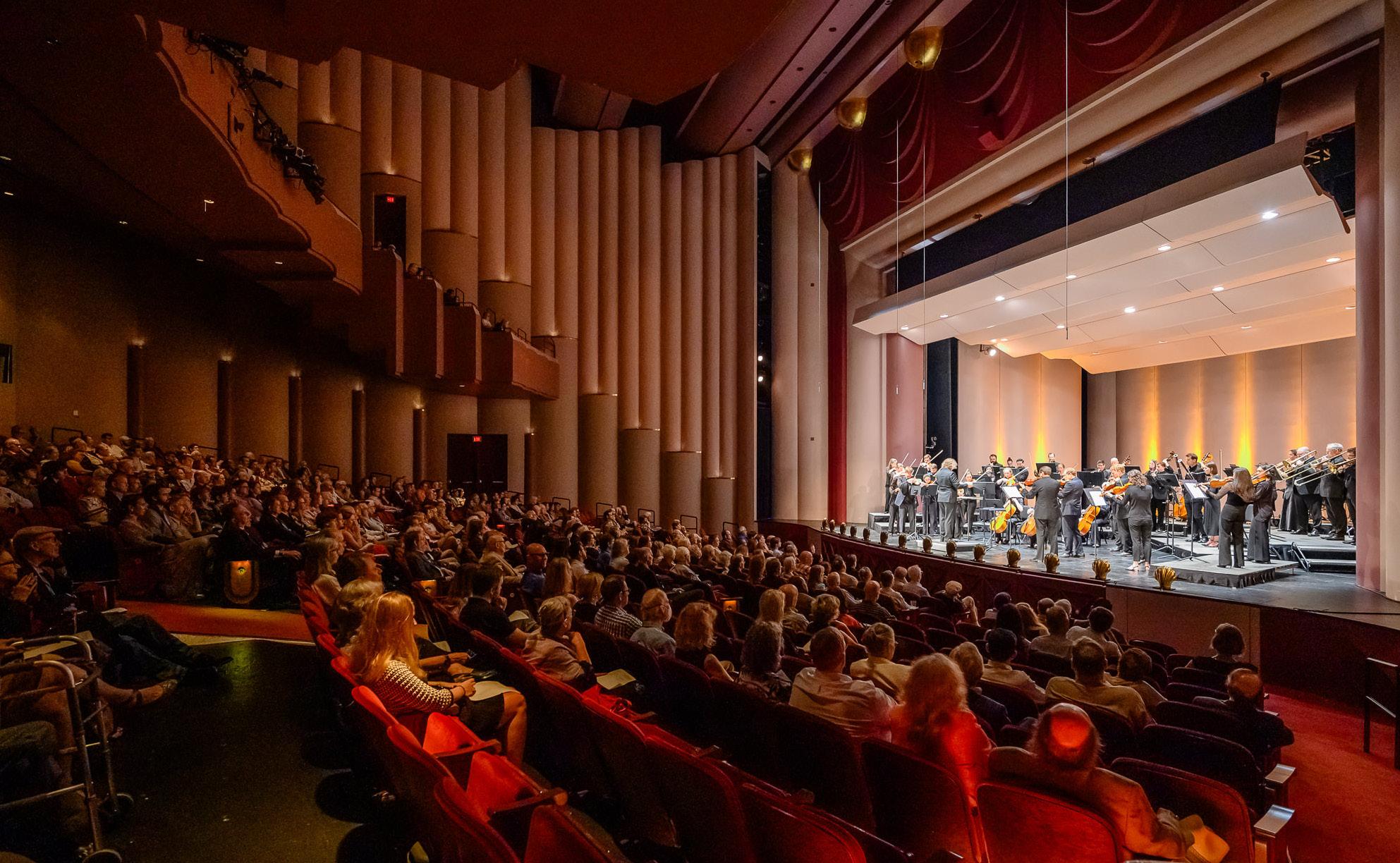
FEBRUARY
14 / 2026
Wortham Center, Cullen Theater
LUDWIG VAN BEETHOVEN (1770-1827)
Symphony No. 6 in F major, Op. 68 “Pastoral”
Allegro ma non troppo - “Awakening of cheerful feelings on arrival in the countryside”
Andante molto mosso - “Scene by the brook”
Allegro - “Merry gathering of country folk”
Allegro – “Thunder, Storm”
Allegretto – “Shepherd’s song, cheerful and thankful feelings after the storm”
FELIX MENDELSSOHN BARTHOLDY (1809-1847)
Suite from Midsummer Night’s Dream Overture
The earliest sketches for Beethoven’s Sixth date from 1803, but as was often the case with his symphonies, the composer would take several years to finish it. In contrast with Mozart, who frequently (but not always) composed complete works in his head and wrote them down quickly without corrections, Beethoven’s method of composition was more laborious. He gradually transformed basic ideas until they reached their final forms, and his sketchbooks are notoriously difficult to decipher. He sketched several themes for the symphony in 1807 and completed the symphony during the summer of 1808. Along with his Fifth Symphony, Fourth Piano Concerto, and Choral Fantasy, the Sixth premiered at the famously long and frigid concert Beethoven gave at the Theater an der Wien on December 22, 1808.
Beethoven’s Sixth is an unusual work within both Beethoven’s output and the context of his times. A devoted nature lover, Beethoven called the work a “Sinfonia caracteristica [a “characteristic symphony”] or recollection of country life,” and gave each of its movements a descriptive title evocative of pastoral scenes, hence the title “Pastoral Symphony.” By this time, many composers had attempted to suggest natural imagery through music, either explicitly (as in opera scenes with a rural setting) or implicitly. In the realm of instrumental music, perhaps the most successful work of this kind is Vivaldi’s The Four Seasons Composers wishing to conjure images of nature in the minds of listeners traditionally had two main stratagems at their disposal: 1) onomatopoeia: using instruments to imitate natural sounds, such as birdsong, flowing water, rustling leaves, rain, thunder, et cetera, or 2) stylistic reference: imitating music one might hear in the countryside, such as the sound of bagpipes or peasant folk dances.
Beethoven resorts to both techniques in his Pastoral Symphony, but he was at pains to emphasize a third possibility: expressing the subjective emotions one might experience when encountering natural phenomena. Indeed,
in the margins of his sketchbook, Beethoven noted “All tone painting loses its value if pushed too far in instrumental music [...] anyone who has even just an idea of country life can imagine what the author [intends], without many headings.” Although one cannot say that previous composers had not taken emotional affect into account in composing their own nature music, this emphasis reflects a burgeoning Romantic sensibility which was also emerging in the poetry and paintings of Beethoven’s contemporaries. As the Industrial Revolution gathered steam, people increasingly viewed nature as a world apart from human life. Romantics frequently associated nature (and those who lived in close proximity to it) with a beauty and spiritual purity at risk of being lost in an increasingly complicated world. This contrasts with the previous ancien regime view, in which the Earth was either a garden to be tamed or merely a picturesque backdrop for aristocratic intrigues and tales from myth or religion.
This new Romanticism is present in Beethoven’s symphony from the beginning. Beethoven titled the first movement “Pleasant, cheerful feelings that awaken in a person upon arriving in the countryside.” Usually, the first movements of Beethoven’s symphonies are full of drama and intense musical development, but this one is a study in sophisticated simplicity as Beethoven crafts music that is relaxing yet engaging. One can count the measures containing minor harmonies on one’s fingers; modal inflections and woodwind voicings imitate folk music and instruments; horse-hoof rhythms and circling, repeated figures evoke travel by carriage; and long crescendi and descrescendi create the impression of drawing near to then away from various sights along the journey.
The second movement, “Scene by the brook,” is among Beethoven’s loveliest creations. Supporting a series of gentle melodies, a nearly unbroken stream of accompanying semiquavers serves as a metaphor for the flowing waters of the brook up until the end of the movement.
Here, Beethoven indulges in some tone painting by having the woodwinds imitate bird calls labeled in the score: a nightingale (flute), a quail (oboe), and a cuckoo (clarinet).
Recalling the linking of the third and fourth movements of his contemporaneous Fifth Symphony, Beethoven fuses together the last three movements of his Sixth. This encourages listeners to hear the entire symphony as one interconnected journey and shifts the weight of the work from the first movement toward the end, innovations that composers throughout the nineteenth century would continue to develop as they placed increasing symbolic and dramatic weight on symphonic forms. In the third movement, “Merry gettogether of the country folk,” Beethoven imitates rustic dances (it is possible that some themes may have been taken from authentic folk music, although no source has been verified). In a humorous episode, a village band made up of an oboe, clarinet, bassoon, and horn makes an appearance—the poor bassoonist only appears to know three notes.
The merry-making comes to a sudden halt with the distant rumble of thunder in the low strings: the fourth movement, “Thunder. Storm.” begins. Various motifs evoke the patter of raindrops, thunderclaps, and howling wind, but more significantly, Beethoven at last delivers the intense symphonic development he has thus far withheld from the symphony— and it thus strikes all the more powerfully. Indeed, this highly original movement follows no familiar formal plan. If one imagines the entire symphony as one movement, the storm serves as its development and climax. Beethoven’s harrowing music seems in harmony with the eighteenth-century philosopher Edmund Burke’s theory of the Sublime as an aesthetic category. Burke explains:
“For sublime objects are vast in their dimensions, beautiful ones comparatively small: beauty should be smooth and polished; the great, rugged and negligent; [...] beauty should not be obscure; the great ought to be dark and gloomy: beauty should be light and delicate; the great ought to be solid, and even massive. They
are indeed ideas of a very different nature, one being founded on pain, the other on pleasure [...]”
If the other movements of the symphony are beautiful, then the storm is certainly sublime.
The storm fades until a clarinet and horn call to one another, signaling the finale: “Shepherd’s song. Benevolent feelings, accompanied by gratitude to the Godhead, after the storm.” Presumably, the dancing country folk of the third movement emerge from their shelters to give thanks after surviving the terrible deluge. The main theme, the “Shepherd’s song,” and variants thereof alternate with contrasting episodes, leading to a glowing coda. Near the end, the strings play the main theme as a hushed chorale reminiscent of a hymn—perhaps a final prayer.
The Mendelssohn family first rose to fame through the career of the German-Jewish philosopher Moses Mendelssohn (1729–1786), one of the key figures of the German Enlightenment. Moses’ sons Joseph and Abraham founded the Mendelssohn and Company banking house which would survive until its dissolution under the Nazis in 1938. Abraham, who initially raised his children without religious instruction, ultimately converted his family to Protestantism. He determined to give his children the best possible private education, and two of them, Felix and Fanny, showed remarkable musical talent from an early age.
Indeed, Goethe, who had heard the child Mozart perform in the 1760s, declared that the young Felix bore “the same relation to the Mozart of that time, that the cultivated talk of a grown-up person does to the prattle of a child.” By the summer of 1826, the precocious Felix was 17 years old and had become engrossed in Schlegel’s classic translation of Shakespeare’s A Midsummer Night’s Dream (Schlegel, incidentally, was married to Felix’s aunt). One family member recalled that summer itself as a sort of dream, “one uninterrupted festival day, full of poetry, music, merry games, ingenious practical jokes, disguises, and representations.”
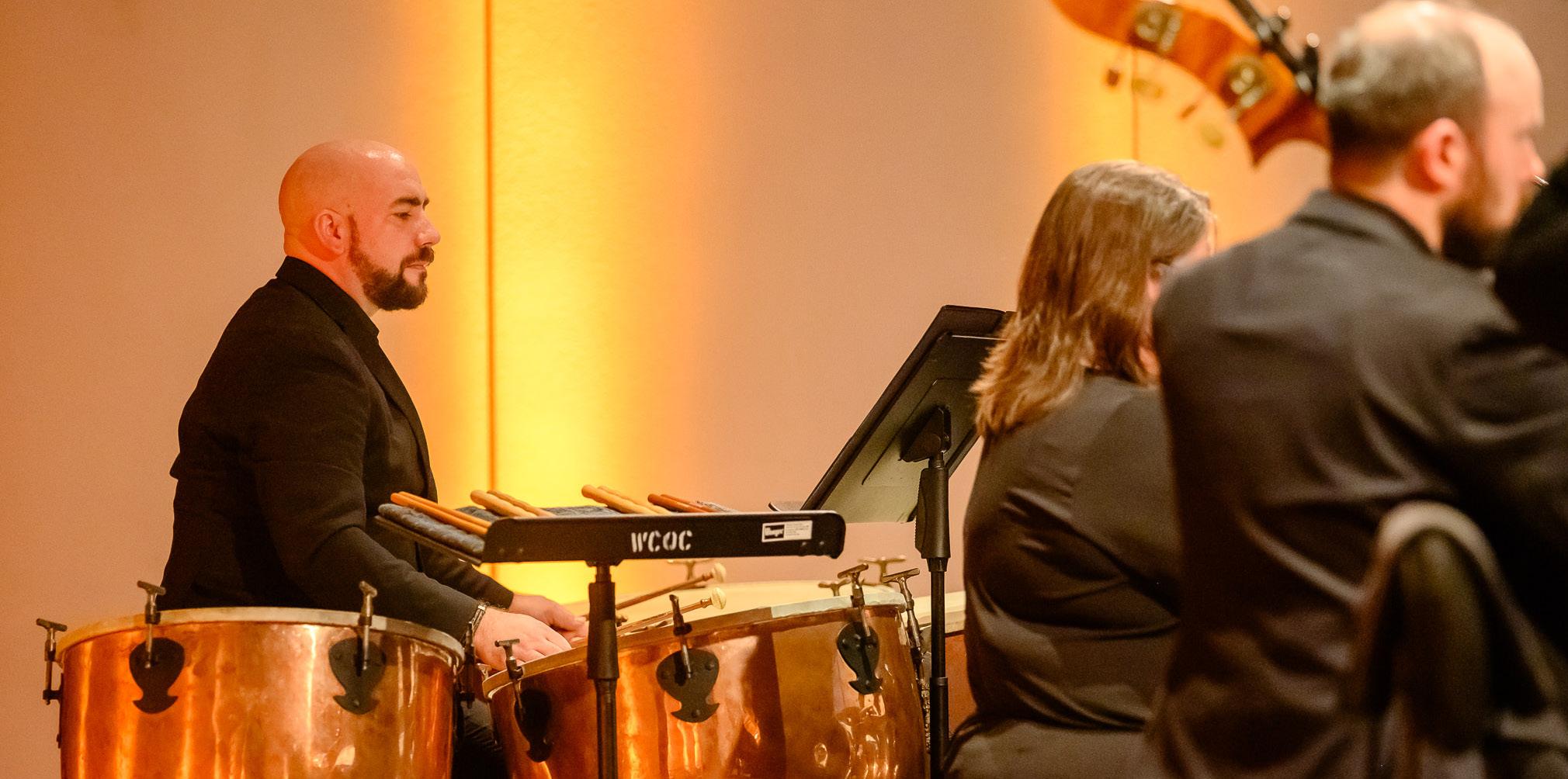
A friend of the family was A. B. Marx (1795–1866), one of the most important music critics of his time and an early champion of Beethoven. “I can still see him entering my room with a heated expression, pacing up and down a few times,” Marx recalled. “I have a terrific idea!” Felix told him. “What do you think of it? I want to write an overture to A Midsummer Night’s Dream .”
“A few days later he, the happy, free one, was back again with the score, complete up to the second part,” Marx continued. The opening was the one we know today, but the rest was “perfectly praiseworthy—only I could perceive no Midsummer Night’s Dream in it,” Marx complained. Upset, Mendelssohn “ran out without taking his leave,” but soon accepted the criticism. Within a month, the overture was complete more or less as we know it today (Mendelssohn would make a minor alteration after its first performances).
The opening of the overture transports us to the dreamworld of Shakespeare’s play with four elfin chords for woodwinds. Fleet fairy music follows, leading to a brilliant transitional passage representing the court of Duke
Theseus. A more lyrical melody depicts the pairs of confused young lovers. We owe the following theme to Marx: “‘It’s too full! too much!’ [Mendelssohn] cried, when I wanted him to make room for the ruffians and even for Bottom’s ardent ass’s braying,” Marx explained. Despite the proliferation of themes already in the overture, Mendelssohn obliged with rustic drones and delightful hee-haws in the violins.
The fairy music returns for a developmental passage that evokes the lovers’ night in the woods. The music gradually slows, dying away as they fall into an enchanted sleep. The main themes are then reprised, but in a different order: after the enchanting opening chords, the fairy music now leads straight into the lovers’ theme, perhaps reflecting their happy pairings upon awakening. The braying theme of Bottom and his fellow actors leads back to the court of Theseus. As the overture approaches a brilliant conclusion, the fairy music returns, paralleling the fairies’ blessing at the end of the play. After a dreamy reminiscence of the Theseus theme, the overture ends as it began with the woodwind chords.
This stunning masterpiece helped launch
Mendelssohn’s meteoric career. Seventeen years later, Mendelssohn had been appointed General Music Director of church and sacred music to the King of Prussia. Friedrich Wilhelm IV requested that Mendelssohn expand on the overture to supply a complete suite of incidental music for a new production of Shakespeare’s play, which premiered on October 14, 1843. Mendelssohn provided an additional thirteen numbers, of which the four entr’acts will be performed at this concert.
The Scherzo was written to connect the first act to the second, and thus leads us from the world of mortals to that of the fairies. Mendelssohn intended the Intermezzo to serve as the entr’acte between Acts II and III; the restless opening of the number follows Hermia becoming lost in the forest while searching for the missing Lysander. At the end of the Intermezzo, a pair of bassoons introduces a jaunty tune representing the mechanicals, who open Act III. The Nocturne was written as the entr’acte following Act III, which ends with the four lovers falling asleep, enchanted so that all that transpired will seem to have been a dream when they awaken. The famous Wedding March links Acts IV and V, which features the festivities of Theseus and Hippolyta’s wedding.
©2026 Calvin Dotsey
Discover the incredible potential of your IRA to make a profound impact on Mercury Chamber Orchestra. Through legacy giving, you will be making a gift to support symphonic music in our community for future generations.
Share the love with your heirs by leaving them less tax-burdened assets while giving the gift of your IRA to MCO. By doing so, you’ll not only reduce their tax obligation but also leave a lasting impact by supporting the timeless beauty of classical music for generations to come.
Age 70 ½ or older with a Traditional or Roth IRA? You can directly transfer up to $100,000 annually from your IRA to MCO while reaping remarkable tax benefits. This transfer counts toward your Required Minimum Distribution (RMD) and offers you the unique advantage of not paying federal income taxes on it.
For more information about how you can make a gift that endures for future generations, contact Chloe Bruns, Development Manager, at chloe@mercuryhouston.org.
*401(k), 403(b), SEP IRA accounts, and other retirement accounts do not qualify.
ConocoPhillips takes pride in being an engaged member of the communities where we live and work. This long-standing commitment to building and strengthening local partnershipsis exemplified by our proud support of the Mercury Chamber Orchestra and this year’s ConocoPhillips Neighborhood Series.
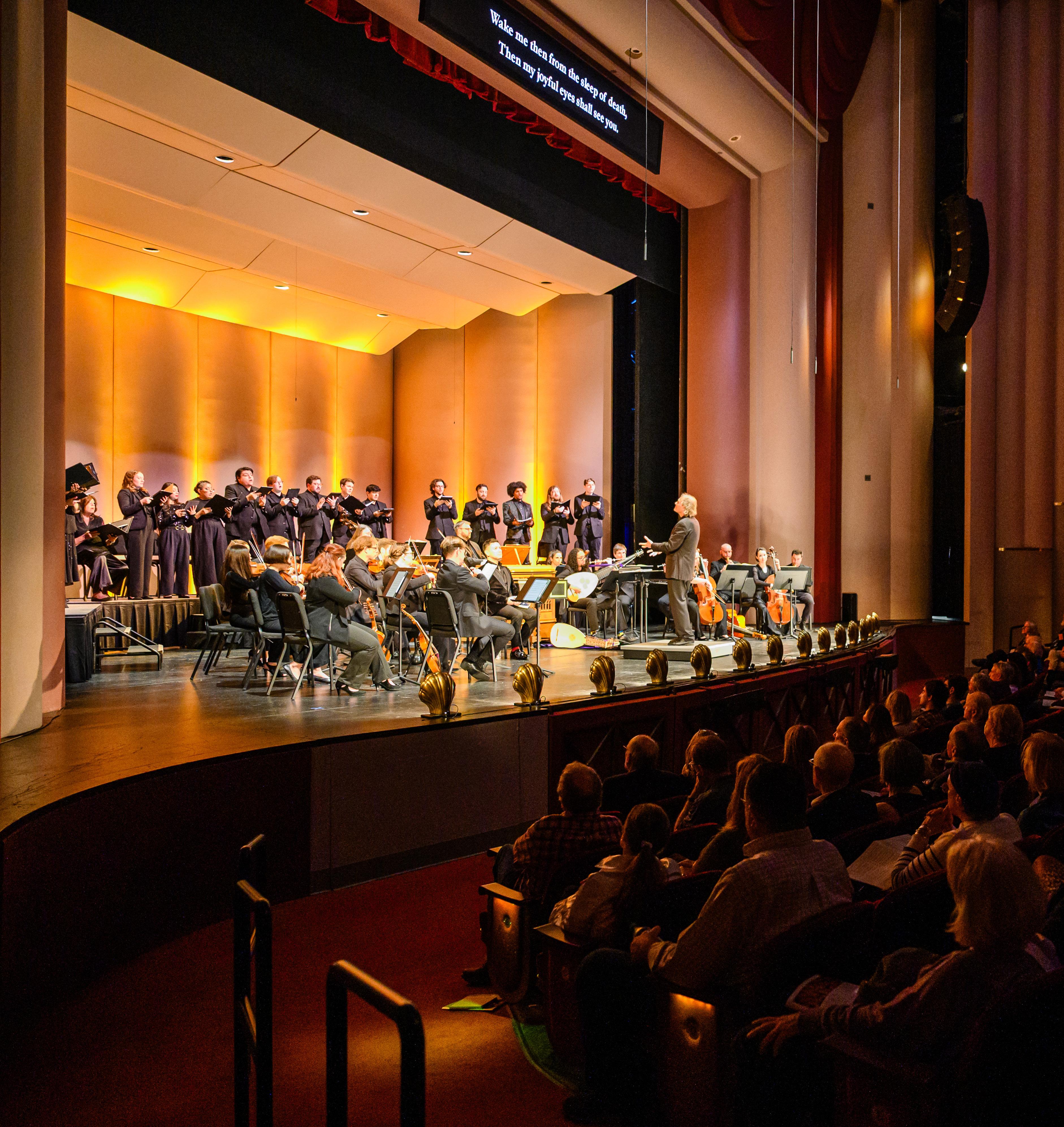
Mercury redefines the orchestra experience with historically informed performances that place audiences at the heart of the music. With a mission to enrich and entertain, Mercury champions music education, cultural awareness, and meaningful community connection across Houston.
www.conocophillips.com
20-21 / 2026
The Hobby Center
Zilkha Hall
Pascal Rambert, Director & Writer
Antoine Plante, Musical Director
Sarah Mesko, Mezzo-Soprano
Len Torrie, Soprano
Donna Bella Litton, Soprano
Mark Diamond, Baritone
Jonathan Godfrey, Violin
Antoine Plante, Gamba
Caroline Nicolas, Gamba
Héctor Torres González, Theorbo/Lute
Martin Jones, Organ
Children’s Chorus:
Victoria Auyanet
Iris Burke
Madison Clites
Felicity Cronin
Amelia Cruz Goss
Isadora Dominguez
Anvi Joshi
Mary Anna LeGall
Amara Mallery
Shreya Puvvada
Matilda Rutledge
Lucas Sequera
Lora Uvarova
Maximus Vu
London Wallace
Katherine Yu
Karen Reeves, Children’s Chorus Director
Elisabeth B.W. Meindl, Assistant Director & Production Manager
Meagan Smallwood, Assistant Stage Manager
Mary Box, Rehearsal Pianist
Performance to include:
Henry Purcell (1659-1695)
O let me weep If Music Be the Food of Love
John Dowland (1563-1626) Flow, My Tears
Thomas Tallis (1505-1585) If Ye Love Me O nata lux
Monsieur de Sainte-Colombe (1640 —1700) Les Pleurs
John Dowland
Time Stands Still Go, Crystal Tears In Darkness Let Me Dwell
Henry Purcell With Drooping Wings
Music arranged by Antoine Plante.
Please note this program runs about 70 minutes and there is no intermission.
When Antoine Plante suggested a new collaboration after our Armide production in 2009 and 2010, I immediately said yes. I have wonderful memories of our work together in Houston, far removed from the clichés of Texas, a city where culture is so vibrant and cherished. Together we conceived a new chamber opera called LOVE. The story is of a great conductor who is the victim of a car accident, painting his portrait through the words and songs of those who loved him: his two daughters, his wife, and the young singers he nurtured through his teaching. Then we attempt the impossible: to bring him back to life before our very eyes through song and the power of music. The history of theater and opera is the history of ghosts. Hamlet. Noh theater. Orpheus and Eurydice. The art of theater is about bringing back those who are no longer with us. Talking with them. Singing together. Art does that. Then returning to the darkness. And sometimes, in between, there is grace.
Pascal Rambert
Paris, February 2026
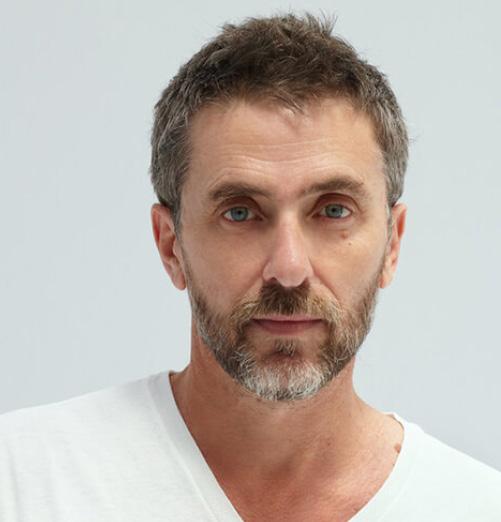
A French writer, choreographer and director for the stage and screen, Pascal Rambert received the received the Theater Prize from the Académie Française in 2016 for his entire body of work. Among the affiliated institutions he worked closely with Paris Théâtre des Bouffes du Nord and the National Theater of Strasbourg.
Rambert’s theatre plays and choreographies have been produced by structure, supported by the French Ministry of Culture and Communication, and staged in Europe, North America, Asia, Russia, South America, Middle East.
His writings (theatre, stories and poetry) are published in France and translated, published and staged more than 20 languages around the world. His dance pieces, including Memento Mori (2013) created with lighting designer Yves Godin, have been performed at major festivals and contemporary dance festivals in Europe as well as New York, Tokyo and Los Angeles.
One of Rambert’s career highlights is Clôture de l’amour (Love’s End) (2011), whose script won the prize for public theater in the Theater 2013 –Dithea competition, the prize for best new French-language play from the Syndicat de la Critique (Critics’ Union) in 2012, and the Grand Prize for dramatic literature from the Centre national du théâtre (National Theater Center) in October, 2012. Clôture de l’amour has been staged more
than 180 times in France and much more all over the world, and translated in 23 languages. Another notable play is Répétition (Rehearsal) (2014), presented as part of the Festival d’Automne in Paris, which won Rambert the 2015 annual prize for literature and philosophy at the Académie Française.
Other acclaimed works in the past decade include Avignon à vie (Avignon for Life), De mes propres mains (With My Own Hands), Argument, Une vie (A Life), Actrice (Actress), Reconstitution, Nos Parents (Our Parents) and Christine.
In 2019, Soeurs (Sisters) premiered in France, followed closely by the Spanish version, Hermanas. In the same year, Rambert was Visiting Belknap Fellow in the Humanities and Visiting Lecturer at Princeton University. In 2022, he created his new play Sowane written for Egyptian actresses and actors during the D-CAF Festival in Cairo (EGY), and adapted his play Finlandia created in Madrid in 2022 for Israel Elejalde and Irene Escolar in French version with Victoria Quesnel and Joseph Drouet at The Bouffes du Nord Theater in Paris (FR). In 2025 he created the Mexican version of Ranger, and the first part of his French trilogy Les conséquences at the TNB in Rennes, which will tour in Paris at the Théâtre de la Ville as part of the Festival d’Automne in Paris, Annecy and Nice. He will recreate Soeurs with Audrey Bonnet and Victoria Quesnel in 2026.
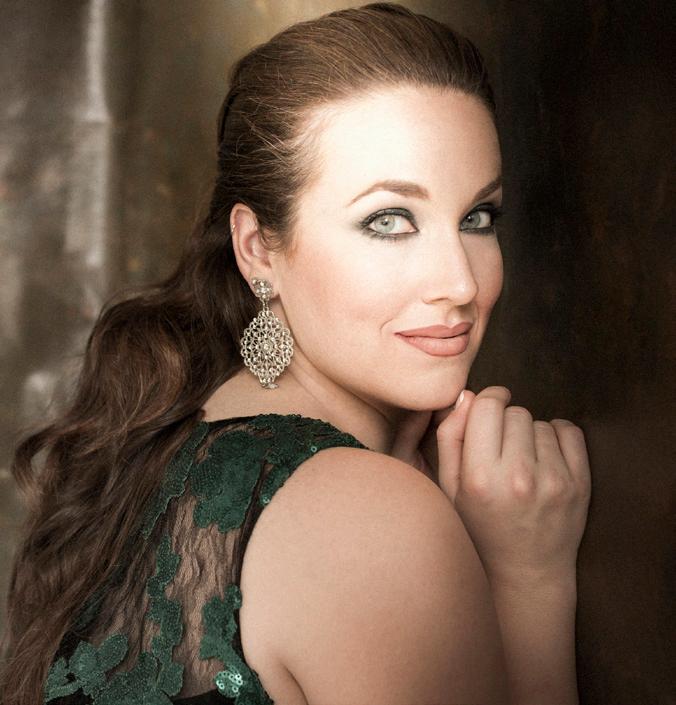
In 25/26, American mezzosoprano Sarah Mesko returns to Houston Grand Opera for Il trittico (La maestra delle novizie) and to The Metropolitan Opera for a new production of I puritani (Enrichetta cover). In 24/25, she made her Lyric Opera of Chicago mainstage debut in Le nozze di Figaro (Marcellina) and
debuted with Sag Harbor Song Festival as a guest soloist in its 2024 concerts.
Other recent engagements include her Vancouver Opera debut as Carmen (title role) and a return to Opera Theatre of Saint Louis for Julius Caesar (title role). On the concert stage, she debuted with the Houston Chamber Choir and Orchestra in the world premiere of Daniel Knaggs’s The Joyful Mysteries. She has also returned to Houston Grand Opera and Opera Theatre of Saint Louis for Carmen (title role) and to The Metropolitan Opera for Rodelinda (Eudige).
Additional Met appearances include Semiramide (Arsace), Carmen (Mercédès), covering the title role in Agrippina, Die Zauberflöte (Zweite Dame), Il trovatore (Ines), and covering Cendrillon (Le Prince Charmant). Mesko made her Met debut in The Magic Flute (Second Lady)
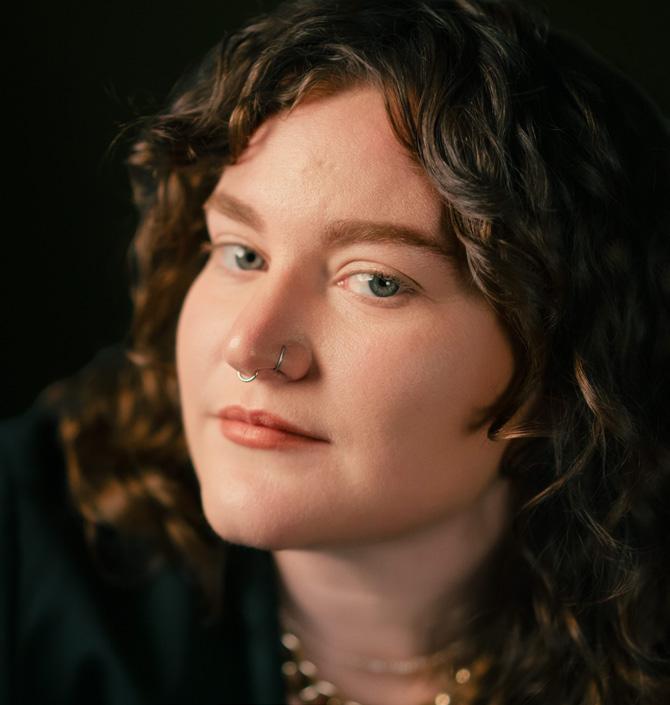
Len Torrie is a Montréal-based soprano, singer-songwriter, and performance curator known for their crystalline tone, expressive versatility, and storytelling depth. A sought-after soloist, Len performs regularly with leading early music ensembles including L’Harmonie des Saisons, Studio de musique ancienne de Montréal, and Ensemble Caprice. Len holds a master’s degree in early music vocal performance from McGill University, where they studied under Suzie LeBlanc and Dominique Labelle. Internationally, Len has
and appeared nationwide with the Met’s Rising Stars concert tour. She made her role debut as Carmen with Washington National Opera in the Cafritz Young Artist performance. Her European debut came in Paris in Lully’s Armide (La Sagesse/Sidonie) with Mercury Baroque and the Théâtre de Gennevilliers.
On the concert stage, some of Mesko’s appearances include the National Symphony Orchestra under Tito Muñoz, Handel’s Hercules (Dejanira) with the Oregon Bach Festival, Alexander Nevsky with the Columbus and Baltimore Symphony Orchestras under Marin Alsop, and Mozart’s Requiem with the Alexandria Symphony Orchestra.
trained with the Accademia Europea dell’Opera and the Internationale Bachakademie Stuttgart. They are one-third of the medieval trio COMTESSA, where they sing and play citole and Anglo-Saxon lyre. A queer, non-binary artist, Len draws on the wisdom of queer elders and ancestors in their research and performance of radically inclusive stories. Their work bridges early music and contemporary folk, with a growing focus on selfaccompaniment on period and modern instruments.
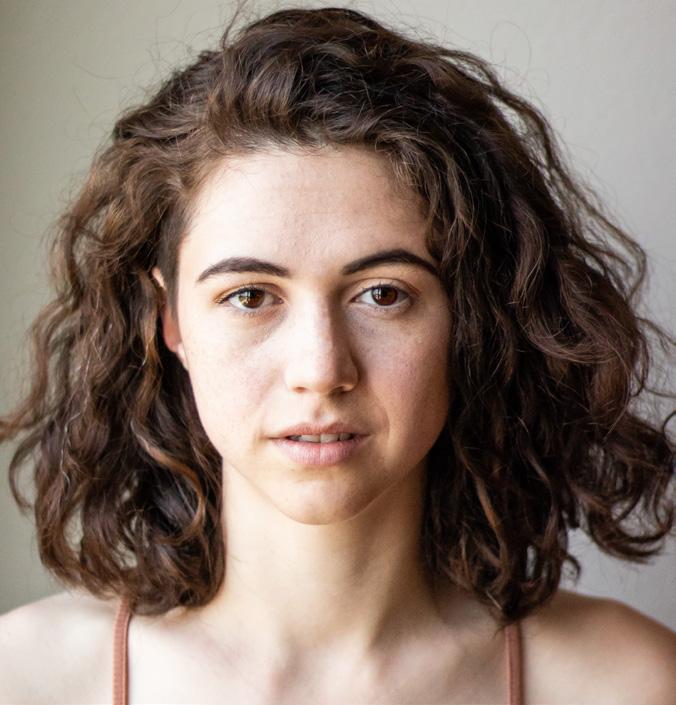
Donna Bella Litton is a singer and stage and voice actor thrilled to once again work with Mercury Chamber Orchestra. Previous theatre credits include A Christmas Carol (Alley Theatre); Chopin’s Letters (Mercury Chamber Orchestra); Sensitive Guys, NSFW (Stages Repertory Theatre); Pulsate a Vampire Musical (Prohibition Theater); Side Show, Elf the Musical (Queensbury Theater); Talk Radio (Dirt Dogs Theatre Co.); Firerock: Pass the Spark (Littleglobe Theatre); Banned Together annual cabarets 2018 and 2019; student play festivals 2019, 2021, and 2022 (Dirt Dogs Theatre Co.). Donna Bella graduated from Santa Fe University of Art and Design
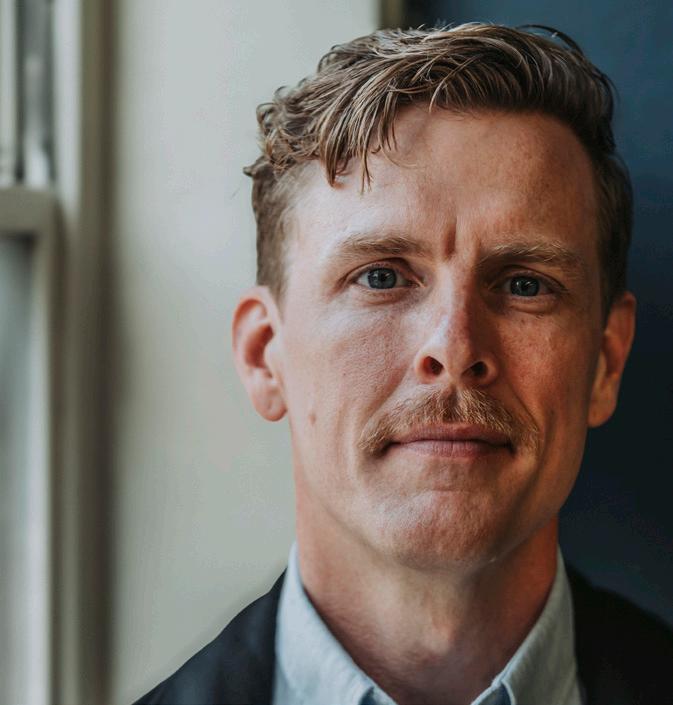
Mark Diamond is a highly sought after lyric baritone and voice teacher. This season, he performs with Austin Opera, Dallas Winds, and Texas Music Festival, among others. Known for his versatility, he excels in a wide array of operatic roles, concert works, and choral music. Highlights include featured performances with Houston Grand Opera, Glimmerglass Festival, and with orchestras such as Cincinnati Symphony and Seoul Philharmonic. Mark is a competition winner and recipient of several prestigious awards, including first prize at the HGO Concert of Arias in 2011. Earning his degrees from
in 2018 with a BFA in musical theatre. She posts updates and videos from performances on Instagram @billy__donna. She sends love to her parents, sisters, partner, and pets for their endless and unconditional support.
Georgia Southern University, Rice University, and University of Houston, Dr. Diamond currently teaches at Baylor University while maintaining an active performing career.
Karen Reeves has been working with young singers at Houston Grand Opera since 1991. Most recently she prepared the children’s chorus for Il trittico and Hansel and Gretel for HGO. She served as chorus director for the HGO Children’s Chorus in the Houston Symphony’s performance of Berg’s Wozzeck, which won the 2017 Grammy for Best Opera Performance. Ms. Reeves was the founding director of HGO’s Bauer Family High School Voice Studio. She received her Bachelor of Music degree from Southwestern University and her Master of Music degree from Rice
Assistant Director & Production/Stage Manager
Elisabeth is an artist, lecturer, writer, and creative curator working across performance, education, and interdisciplinary collaboration. Active in professional and educational theatre since 2003, she brings over two decades of experience supporting live performance across theatre, musical theatre, opera, dance, and hybrid forms. Her early training in dance, piano, voice, and performance continues to inform how she listens, moves, and makes work in collaboration with others. She has called and supported more than sixty productions and events and has worked with organizations including Theatre Under the Stars, Unity Theatre, Rice University, Mercury Baroque, The Alley Theatre, and Théâtre de Gennevilliers. Her work emphasizes clarity, care, and the often-invisible human relationships that allow collaborative art-making to function with integrity.
University. She taught on the voice faculty at Houston Baptist University and in the voice department of HSPVA. She has served as a grant evaluator for the Texas Commission on the Arts and recently retired after serving many years as the opera program administrator at the Shepherd School of Music at Rice University.
Alongside her theatrical practice, she is a writer and educator with a background in research and philosophy. Her practice now extends into technology and artificial intelligence, where she explores how code and computational systems alter the conditions of creativity, authorship, and care. She holds a Bachelor’s degree in Religion from Principia College and an MFA in Interdisciplinary Arts from Goddard College. She is the creator of Creative Refuge Group, an interdisciplinary practice dedicated to collaborating with and cultivating sustainable, reflective spaces for artists, educators, and community leaders.
She would like to thank her phenomenal co-imaginer and director Pascal, as well as her amazing cast and production team. Without you, she is just talking to herself in the dark. As always, from E-Z.
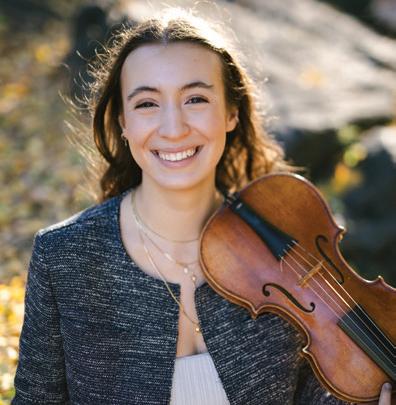


Schubert
This initiative, a collaboration between The Juilliard School of Music Historical Performance Program and Mercury Chamber Orchestra, encourages the development of talented young instrumentalists and fosters a strong relationship between two major players in America’s period instrument performance scene.
Each spring, Mercury holds auditions at Juilliard, selecting two post-graduate students to participate in a one-year fellowship with the ensemble. Fellows will perform with Mercury during the season, gaining valuable performance experience while introducing Houston to the next generation of great period performance musicians.

Sat., March 28, 7:00 PM
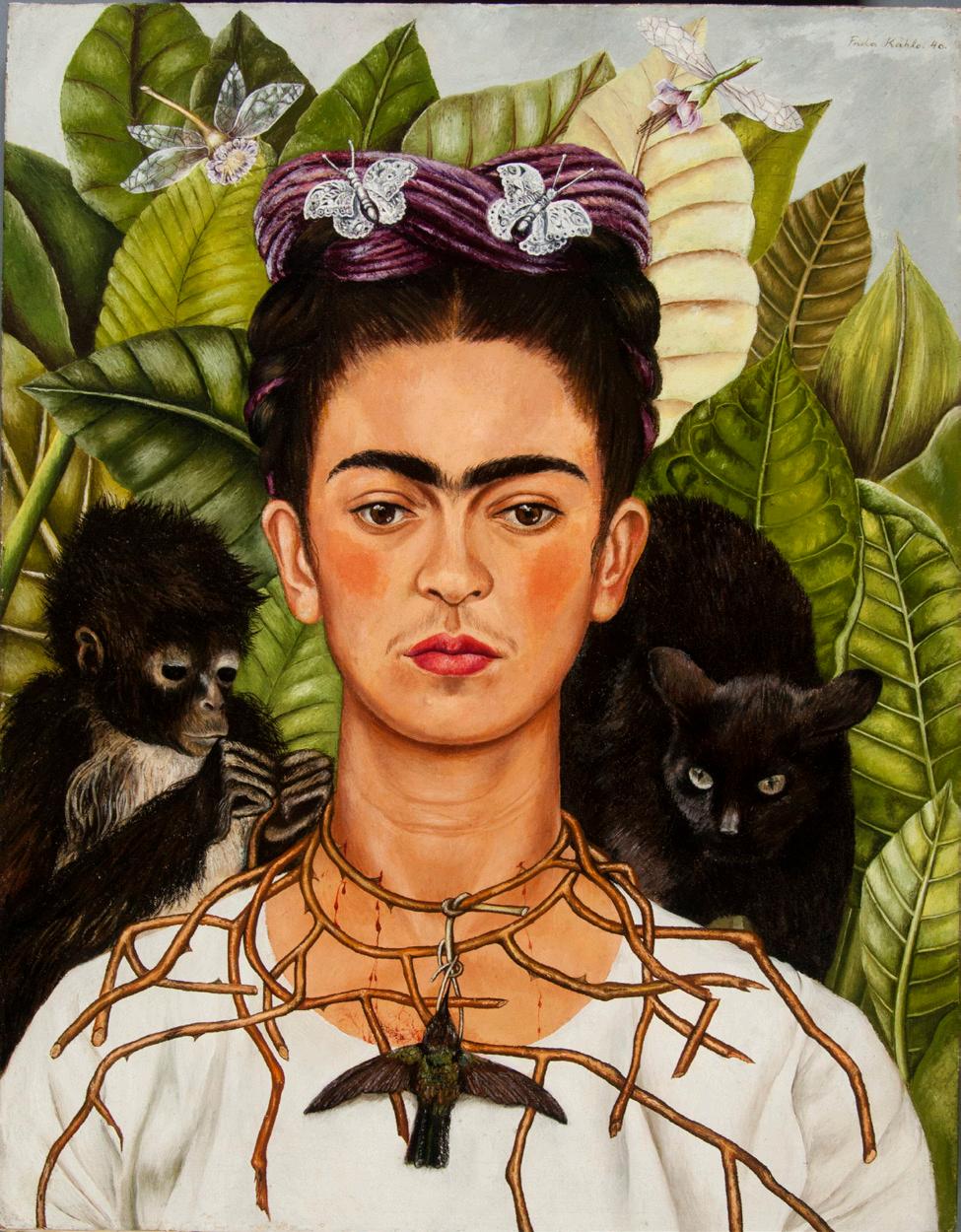



Celebrating the power of music through teaching, sharing, and performing with passion, intimacy, and excellence.
• Be the most welcoming and innovative arts institution in Houston.
• Become an exemplary period instrument ensemble for the Nation.
• Transform the lives of a diverse audience through music.
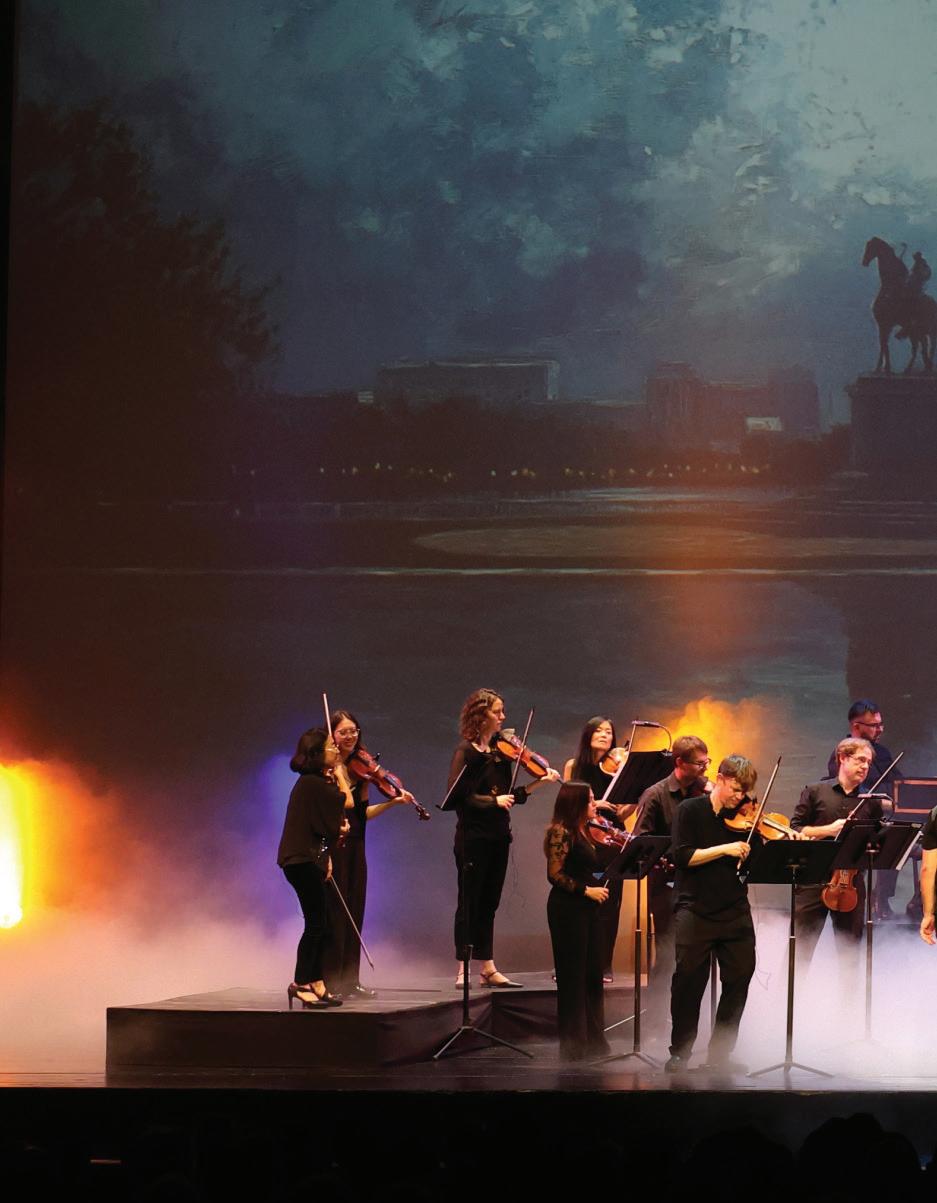

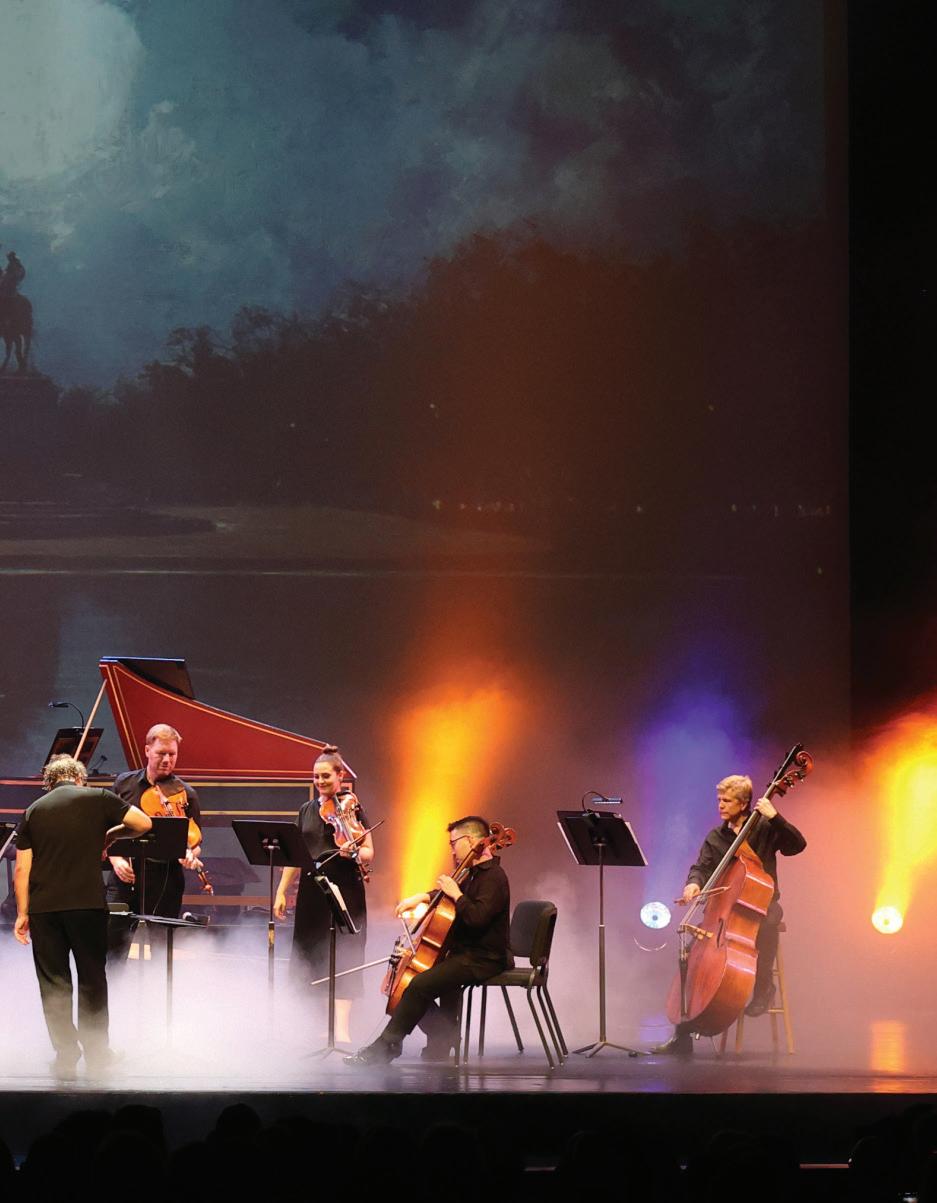
Mercury Chamber Orchestra performs on period instruments to capture the authentic sound of composers from the Baroque, Classical, and Romantic eras. These instruments differ from their modern equivalents by featuring gut strings, wooden flutes and oboes, valveless horns and trumpets, and leather-skinned drums. This versatility with instruments and performance-style offers you a singular listening experience.
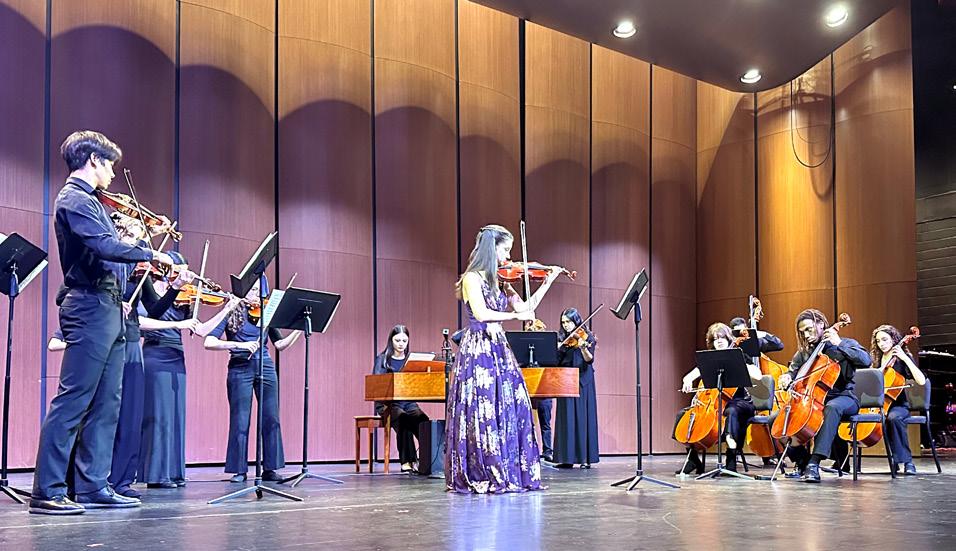
This January, Mercury teaching artists Jonathan Godfrey, Oleg Sulyga, Anabel Ramírez, Andrés González (violin) and Eunghee Cho (cello), worked with students at the Kinder High School for the Performing and Visual Arts on a special performance of Vivaldi’s Four Seasons. Four student ensembles, each focusing on a specific Season, were coached over several weeks culminating in a final performance of the entire work on February 2 at the school.
Mercury participated in two wonderful outreach programs at the Hobby Center this February. The first featured Vivaldi’s Four Seasons with concertmaster Jonathan Godfrey in the Relaxed and Sensory Inclusive Performance Series. The Sensory Series allows audiences to experience a concert in a way that meets their needs. Music truly is for all and this was a special opportunity to share music with guests who don’t always feel welcomed in the concert hall.
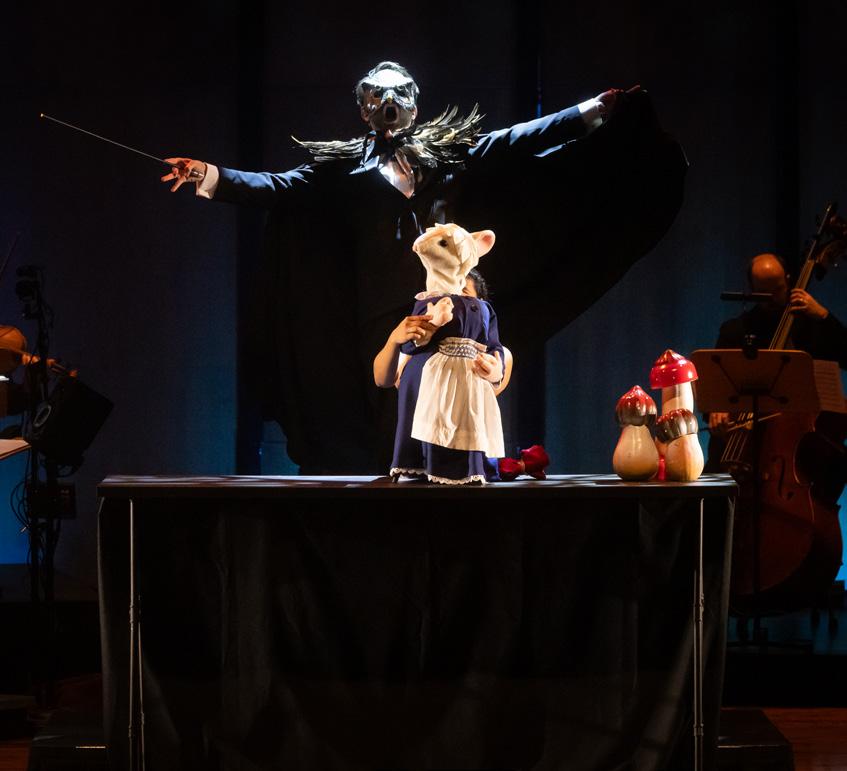
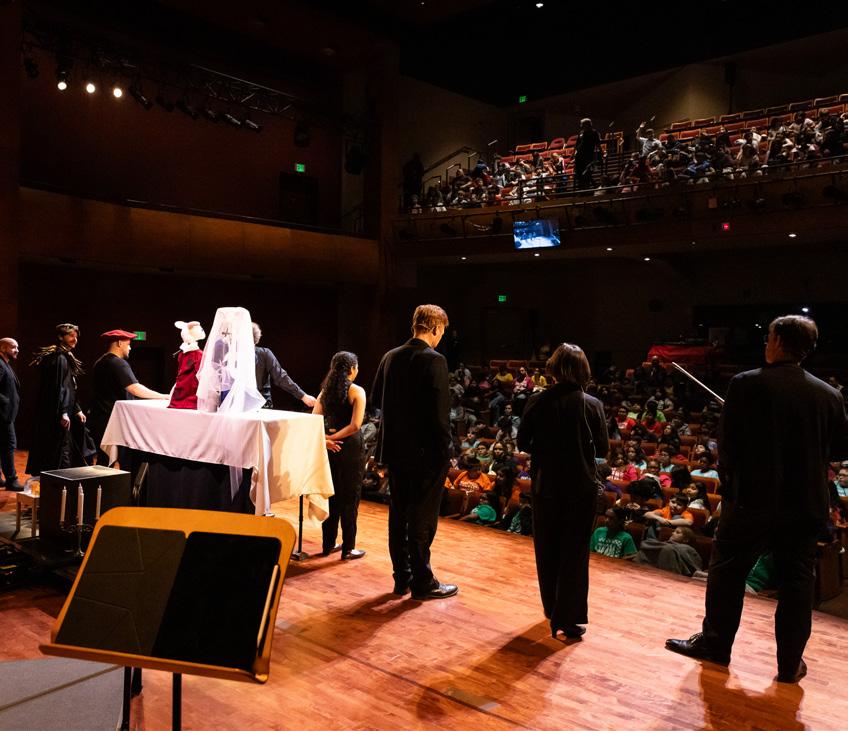
The second was Cats & Mice, a new adaptation of Mozart’s early opera Bastien und Bastienne. This staging, created by Denis Plante along with musical arrangements by Antoine Plante, was specifically designed for young audiences attending the Hobby Center’s ExxonMobil Discovery Series. Featuring puppets and magic and Mozart’s beautiful music, six shows were performed for a packed house of 5th graders. The Discovery Series will reach nearly 40,000 Houston-area 5th graders this year
ARTISTIC DIRECTOR, LYNN WYATT CHAIR
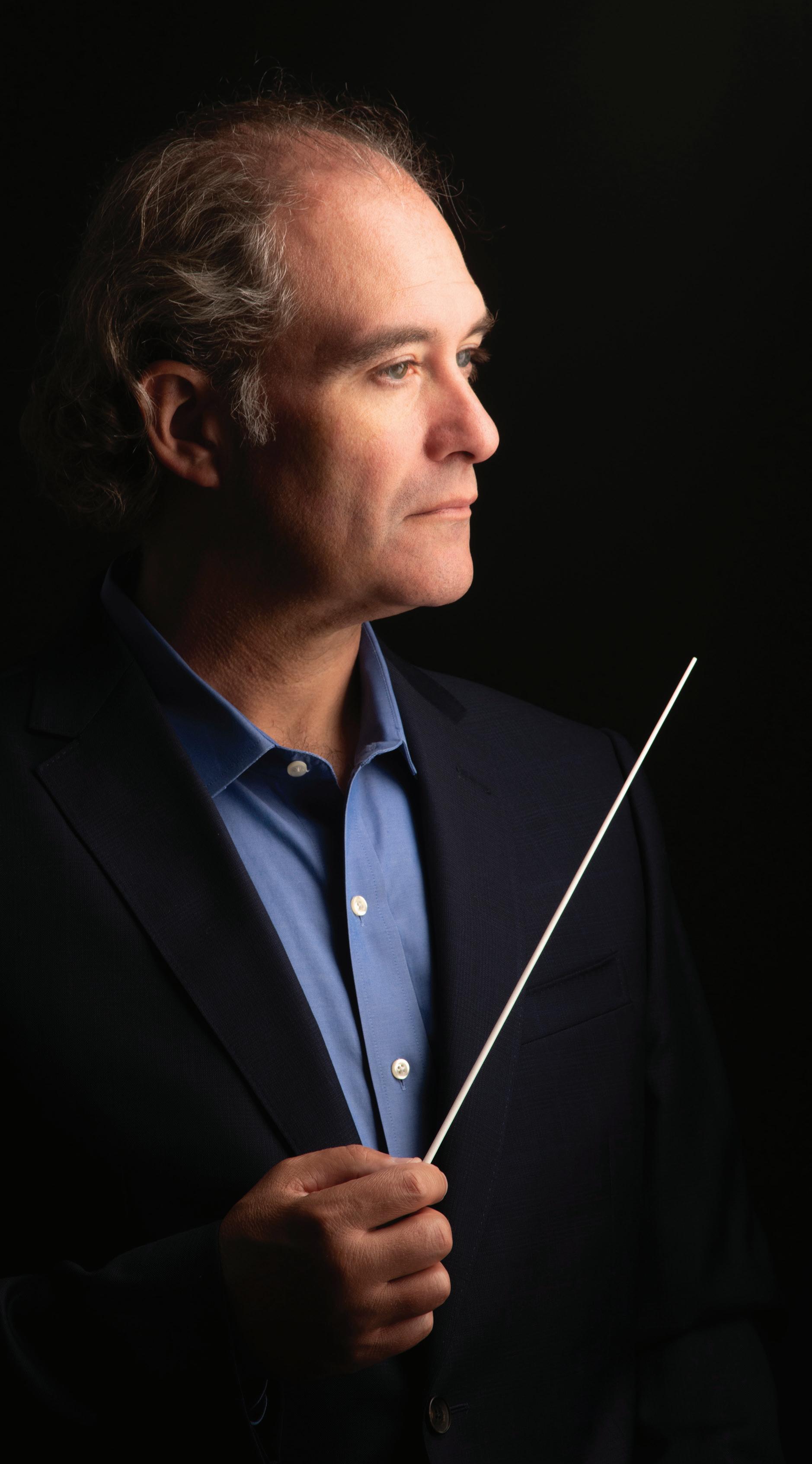
Praised for his conducting vigor and innovative programming, Antoine Plante has captivated audiences and musicians alike with his ability to bring music to life. Charles Ward of the Houston Chronicle lauded him for leading “an impressive account of the Mozart’s Requiem: authoritative, vigorous, emotionally intense, at times utterly gripping.”
As the founder of Mercury Chamber Orchestra in Houston, Texas, Plante has played a pivotal role in the orchestra’s remarkable growth over its 24-year history. Known for his skillful programming of great classical works like Mozart’s 41st Symphony and Mendelssohn’s Reformation alongside lesser-known gems, he has helped Mercury gain a rapidly growing audience. In 2022, he further extended Mercury’s artistic reach by founding the Mercury Singers, the orchestra’s vocal ensemble.
A versatile conductor, Plante excels across a wide repertoire. Equally at home with romantic and modern composers, he also specializes in performing classical and baroque works with period instruments. His expertise extends to staged productions, having conducted numerous operas and ballets. In collaboration with French director Pascal Rambert, Plante produced a modern, critically acclaimed staging of Lully’s Armide in Paris and Houston. He also worked with Dominic Walsh Dance Theater to create the score for Walsh’s ballet Romeo and Juliet. His innovative spirit shone in the multimedia creation of Loving Clara Schumann, a fully staged work featuring orchestra, dancers, and vocal soloists in a compelling dramatic performance.
Plante is a passionate advocate for classical music education. He leads Mercury’s educational outreach program, which brings classroom music education to underserved schools, offers master classes for student orchestras, and provides live performances for schoolchildren.
Under Plante’s leadership, Mercury has grown into a vital cultural institution in Houston, presenting over 40 concerts per season in a variety of venues, making music accessible to the entire community.
Plante has served as guest conductor for esteemed ensembles, including the San Antonio Symphony, Oregon Bach Festival Orchestra, Chanticleer, Houston Grand Opera, Ecuador National Symphony Orchestra, and Atlanta Baroque.
Antoine Plante grew up in Montréal, Québec, Canada and lives in Houston, Texas.
As Mercury celebrates its 25th Anniversary we take a walk through our archives to look at special events in our past. Each program book will cover a portion of our history.
2o12–2o13

A new chapter in Mercury’s history – expanding beyond Baroque and redefining the orchestra as accessible, energetic, exceptional.
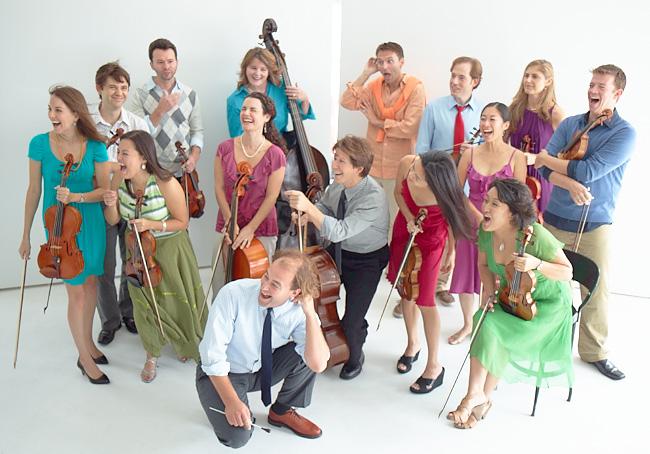
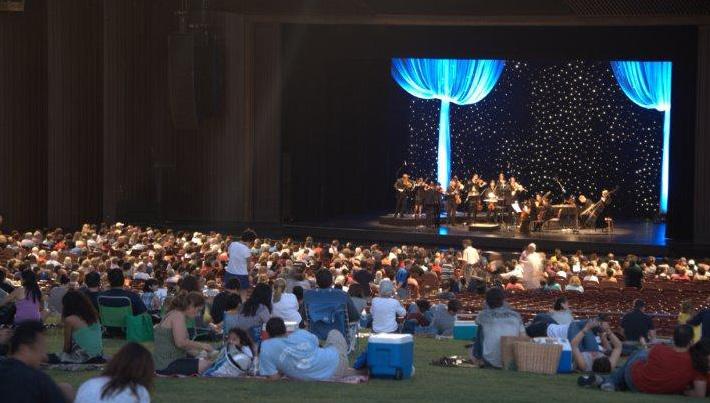
Blazing Baroque at Miller Outdoor! And the debut of the Neighborhood Series
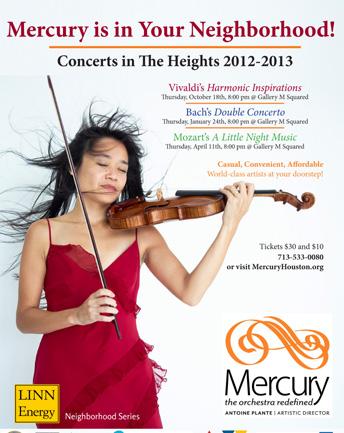
2o13–2o14
Brian Ritter joins Mercury as Executive Director
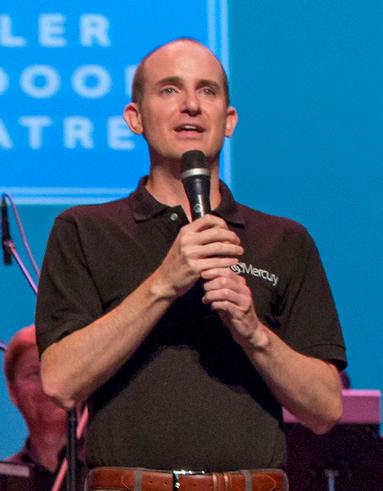
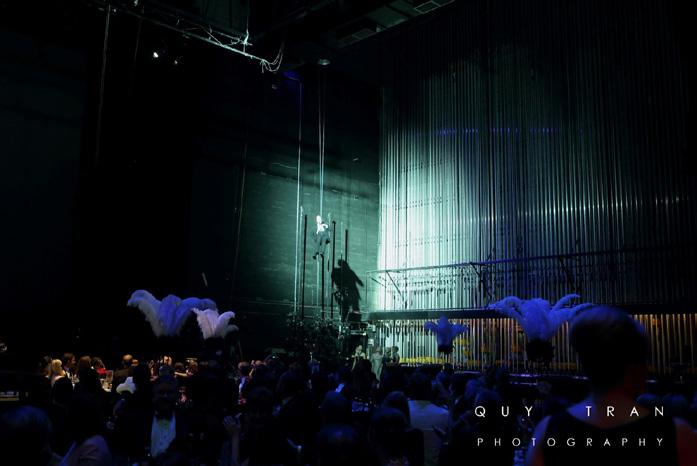
Casino Royale – a most memorable gala when Antoine rapelled into the musical performance!
Mercury’s first Wortham sell out – Jeannette Sorrell leading the ensemble in Bach’s Complete Brandenburg Concertos.
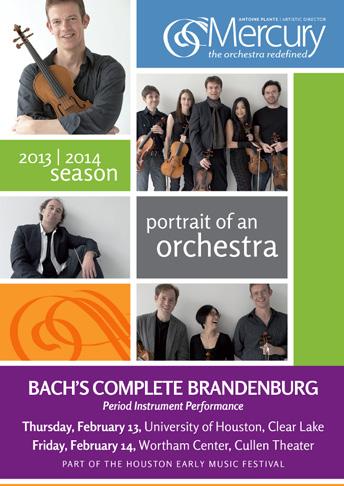
2o14–2o15
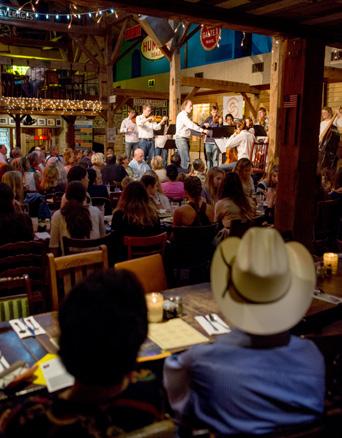
Our Neighborhood Series with a program of Handel & Vivaldi catches the ear of a cowboy at the Dosey Doe.
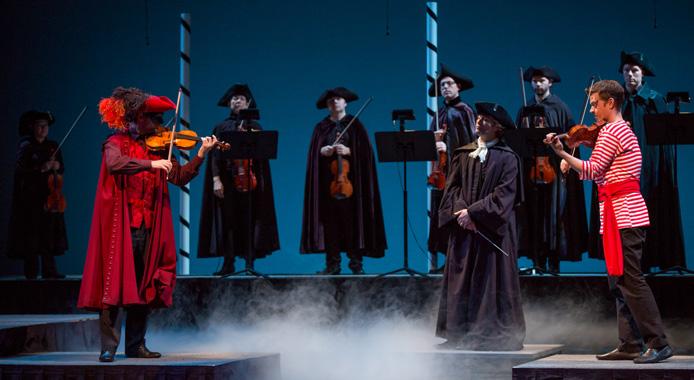
Crimson Prince – one of Mercury’s most popular world premieres, created by Antoine Plante and Denis Plante and featuring Jonathan Godfrey and Oleg Sulyga as dueling violinists vying for the heart of a fair maiden, danced by Melody Mennite of the Houston Ballet.
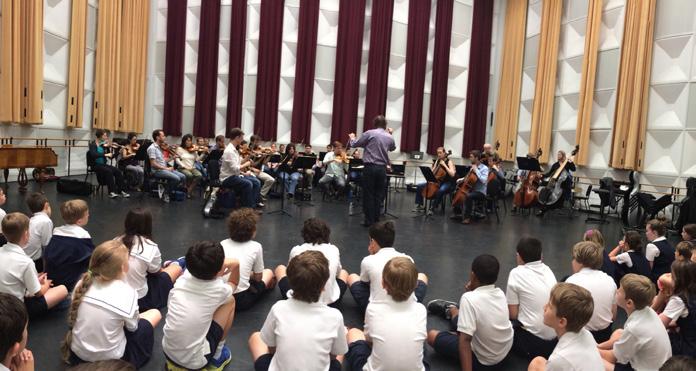
Our education programs continue, reaching over 5,000 students through in-school performances, teaching residencies and group visits, like this rehearsal observation at the Wortham Center.
2o15–2o16
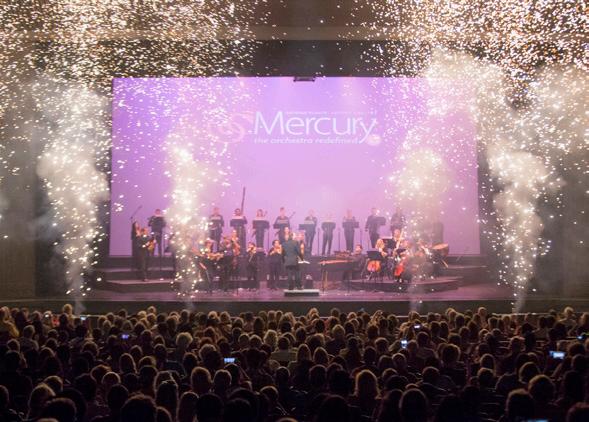
Kicking off the 15th Anniversary with musical and literal fireworks –Handel’s Music for the Royal Fireworks at Miller Outdoor.
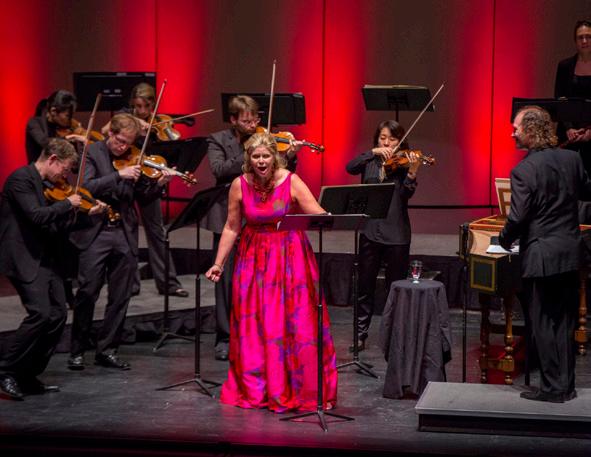
Susan Graham joined us for a special anniversary concert and celebration of Mercury friend and Houston icon, Lynn Wyatt.
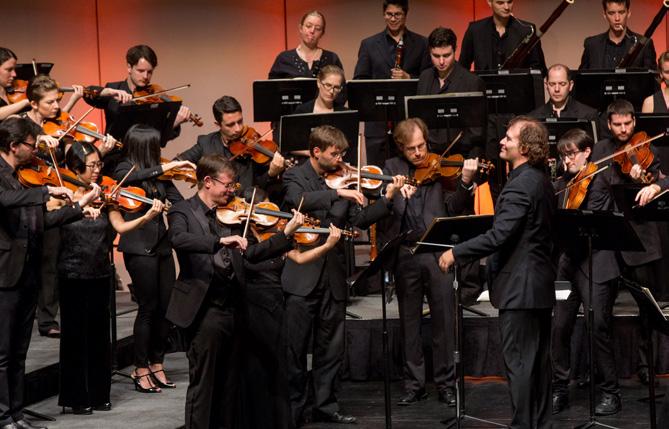
The completion of our Beethoven cycle in our season finale – Beethoven’s Ninth!
2o16–2o17
The beginning or Mercury’s Brahms symphony cycle
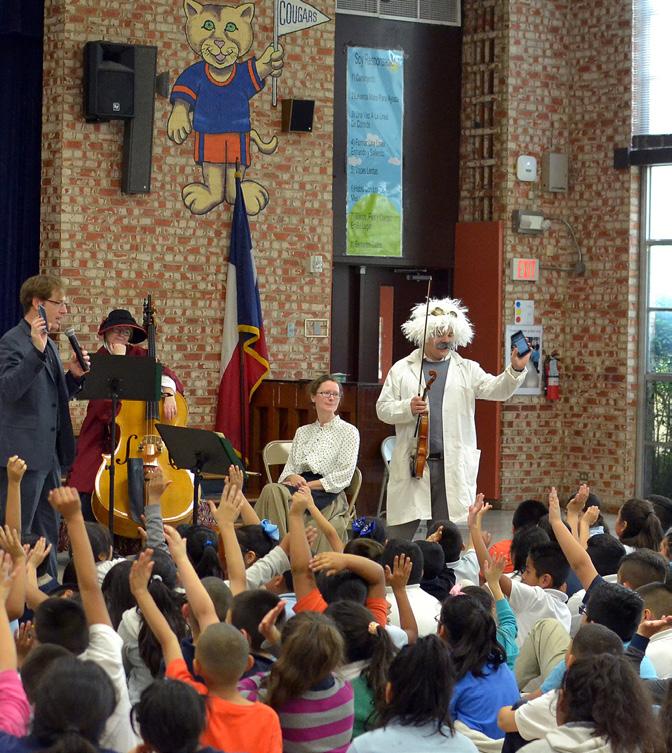
“It’s All Relative!” at Northline Elementary. Each musician is a famous scientist and the ensemble explores music of their eras and also the scientific advancements each are known for.

2o17–2o18
Our Miller Outdoor concert, rescheduled due to Hurricane Harvey, became a celebration of our community.

All Wortham Center performances were relocated due to extensive flooding in the building.
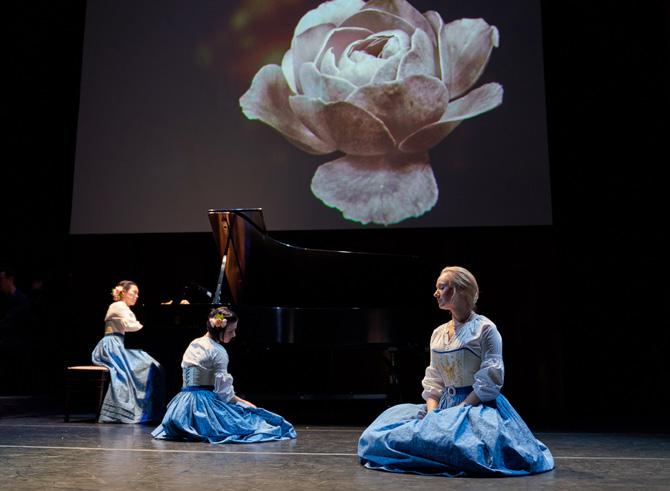
Mercury’s staged shows moved to Zilkha Hall at The Hobby Center, including Tara Faircloth’s beautiful ode to Clara Schumann:
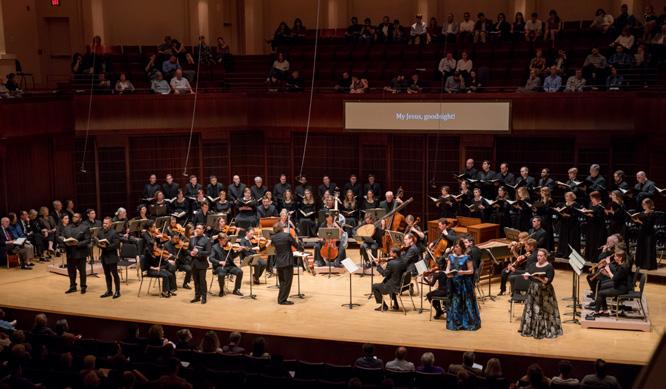
Traditional concert programs were welcomed at the Shepherd School of Music’s Stude Hall, including Mercury’s first ever Bach Passion performance – St. Matthew with Nicholas Phan as the Evangelist:
This year showed the resilience and collaborative spirit of Houston arts organizations and all Houstonians working together.

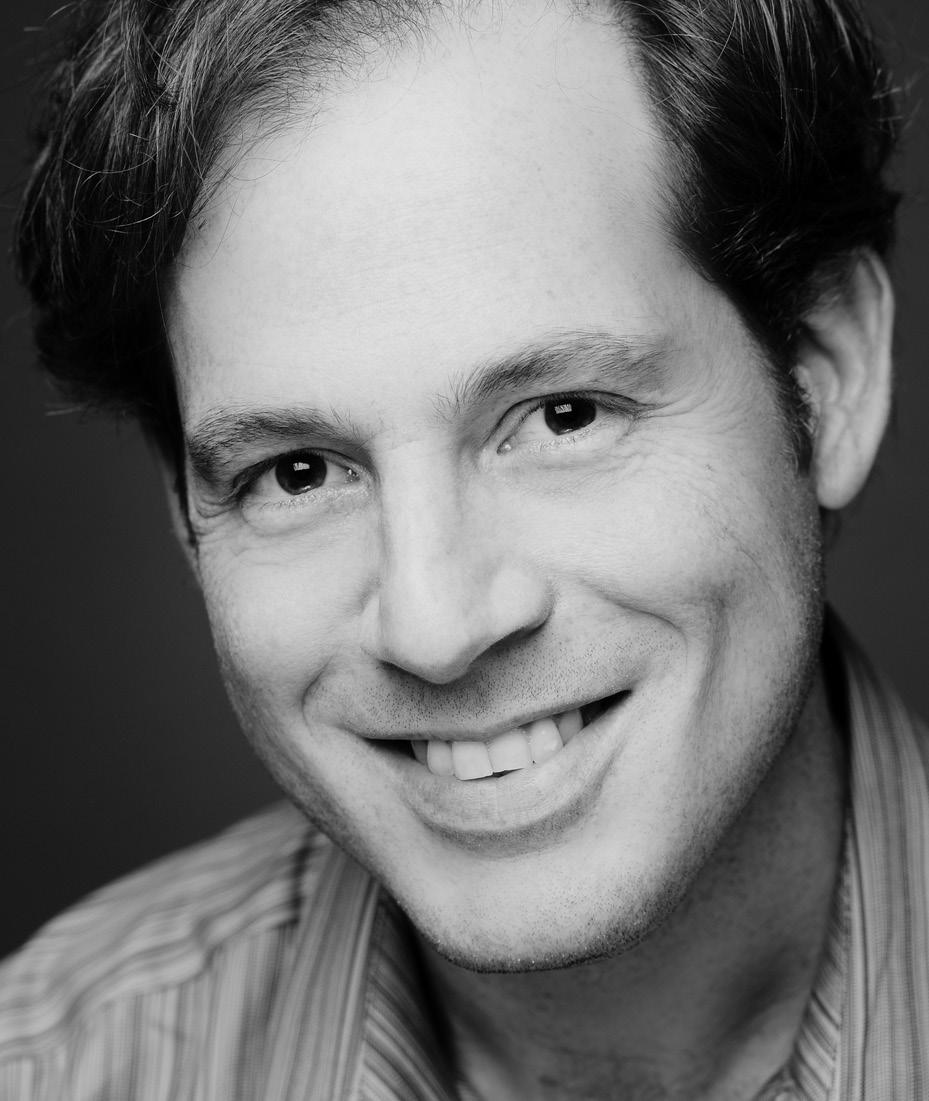
What’s your favorite piece to perform and why?
I’d have to say the Mozart Concerto... There are so many layers to the music, to the way the solo part and orchestra play off of each other, and of course it’s a chance to use the basset clarinet.
What do you like to do when you’re not performing?
I actually build most of the clarinets I perform on. In addition to building the instruments, I also make mouthpieces for myself and for other players.
What was the first concert you ever attended?
I think the first one that meant something deeper to me was going to see the Pacific Symphony in Orange County, CA as a kid in grade school.
Who has influenced you most as a musician?
It hasn’t been one particular person but, instead, the great and supportive musical ecosystem in which we live. I have an amazing group of inspiring and excelling musicians around me that I’m lucky to call my friends.
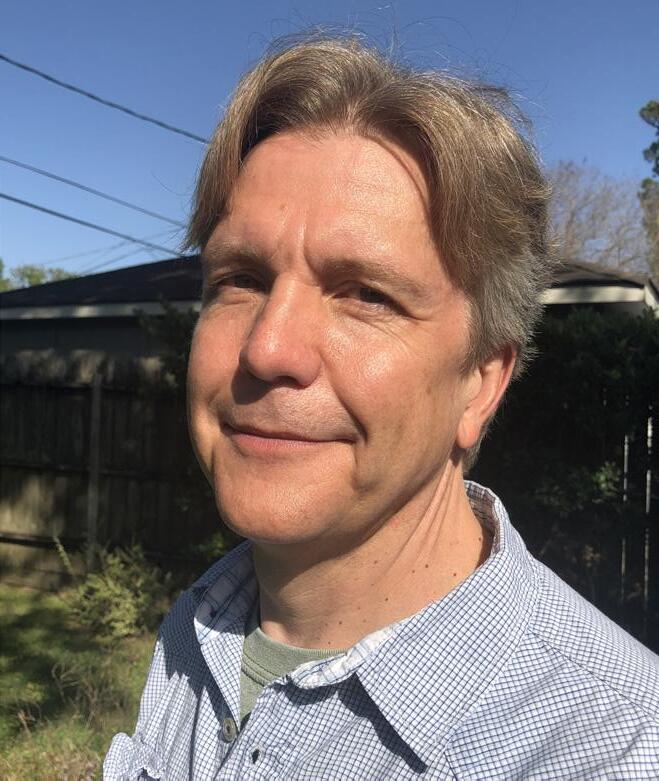
What’s your favorite piece to perform and why?
JS Bach: St. Matthew’s Passion. Such sublime, poignant, and heartbreaking music. It’s a masterpiece.
What do you like to do when you’re not performing?
Cooking for my family or riding my bike with my close friends.
What’s the most memorable concert you’ve played with Mercury?
The Beethoven 9th concert in 2016, an amazingly exciting performance of one of the most celebrated symphonies. Near the end of the final movement I must not have realized how enthusiastic I was becoming, and all the hair on my bow literally flew out! This has never happened to me before. Luckily we were near the end of the piece, and I only missed playing the last 20 measures or so.
What do you like to do when you’re not performing?
I enjoy biking, hiking, taking painting classes at the Art League, and traveling.
One word to describe playing with Mercury?
Exhilarating.
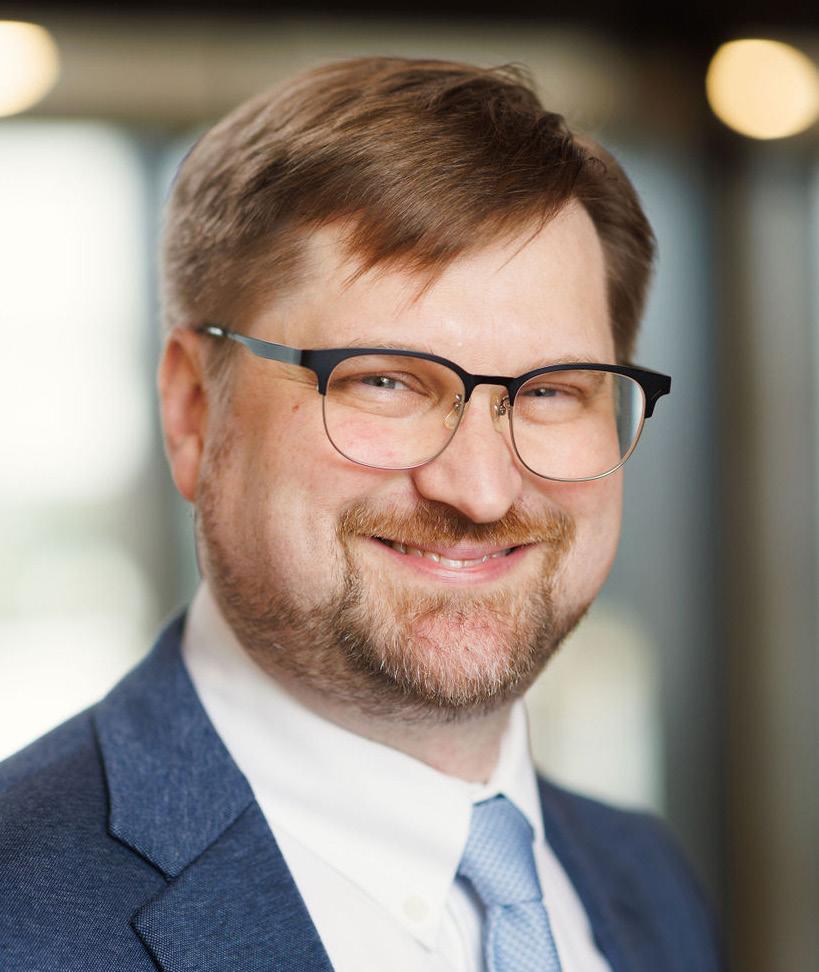
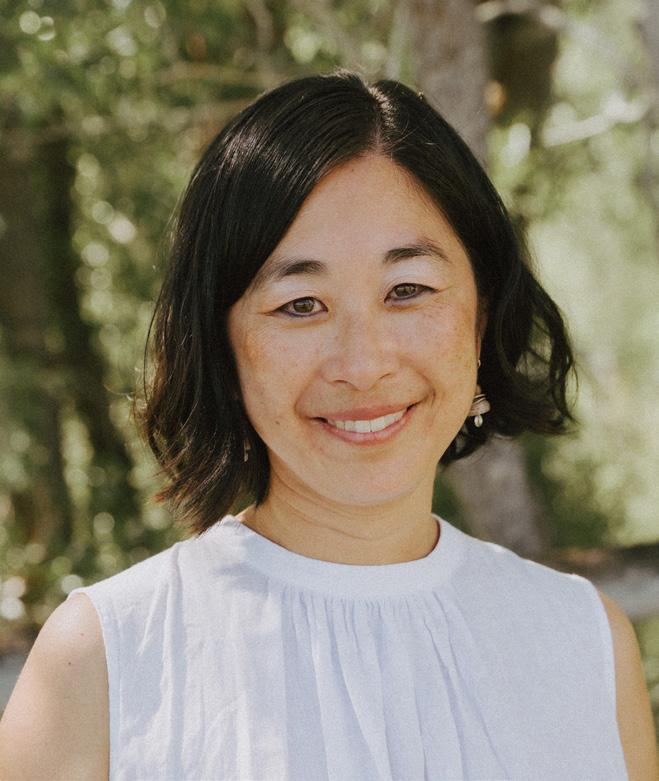
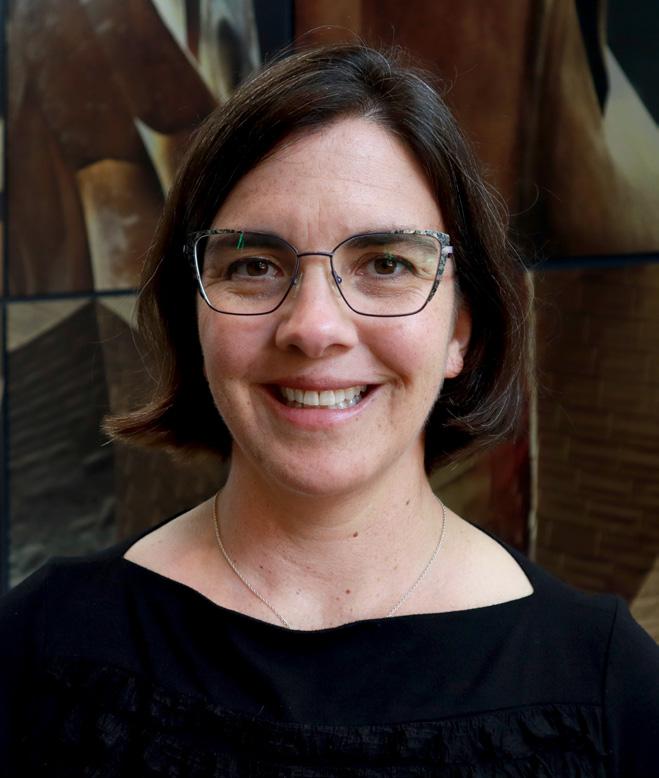
What’s your favorite piece to perform and why?
One of my favorite things to play is Handel’s Messiah. Handel saves the timpani until the end of the second part in the Hallelujah chorus. The build up to that moment is glorious and that first entrance is exhilarating with the orchestra and chorus!
What’s the most memorable concert you’ve played with Mercury?
One of my favorite experiences was playing Beethoven’s Ninth Symphony with period instruments the first time. I played an old set of Turkish cymbals and it was magical to hear the colors of period winds and brass instruments.
One word to describe playing with Mercury? Joyous!
What’s your favorite piece to perform and why?
Handel’s Messiah, Puccini’s La Bohème, and the Beethoven string quartets are pieces that have a particularly special place in my heart. The beauty of the music just never gets old.
What’s the most memorable concert you’ve played with Mercury?
I will never ever forget our thrilling performances in Paris!
What was the first concert you ever attended?
My mom sang in an amateur choir when I was very young, and I remember going to hear her concerts. I don’t know whether one of those was the first concert I ever attended, but they are the first concerts that I can remember attending.
What drew you to your instrument?
My mom played trombone growing up. She said trumpet had better parts, so I’m a trumpeter. I got into natural trumpet because the sound of the instrument and the music are so beautiful. Also, I had a ski accident in my early 20s where I lost use of my right hand for a while. I really didn’t want to give up being a musician and a trumpeter, and that was the catalyst for actually getting started.
What’s the most memorable concert you’ve played with Mercury?
There was a Beethoven 9 concert several years ago where I thought, “This is exactly how this is supposed to go.”
One word to describe playing with Mercury?
A blast!
June & s teve Barth
c onocoPhilli P s
de Boulle d iamond & Jewelry
c ris & Bill Jonson
sP otlight e nergy llc
m arsha & m ichael Bourque
m arissa & s hane g ilroy
l ori m uratta & a ntoine Plante
Kenny & g a B y o wen
a dam & m ichelle c ornelius
m indy & Josh d avidson
m eghan & Kevin d owns
s ofia & t yler d urham
m artha & Bla K e e s K ew | Julie & Keith l ittle
m arcia & t om f asching B auer |
c arolynne & d ouglas w hite
d e B ra & m ar K g regg
v irginia h art & r o B ert n avo h aynes Boone
l loyd Kirchner & a my w aldorf
Porter h edges ll P

As of January 30, 2026

Mercury’s Patron Society recognizes individuals making annual leadership gifts of $2,500 or more. Patron Society members receive complimentary valet parking at Downtown concerts, Green Room access at intermission and after the concert, invitations to private concerts and events, and other exciting benefits.
Mercury Chamber Orchestra gratefully recognizes the following individuals for their leadership support of our artistic, educational, and community engagement programs through generous annual gifts and participation in special events. For more information about joining the Patron Society, please contact Nicholas Gerling, Audience Experience Manager, at nicholas@mercuryhouston.org or 713-533-0080.
($25,000 and above)
June & Steve Barth*
Patricia Branton & William Gould*
Cristela & Bill Jonson*
Kirsten Jensen & David Kerley*
Antoine Plante & Lori Muratta
Dr. & Mrs. Christopher Prince*
Kristine & Stephen Wallace*
Lynn & Oscar Wyatt
Anonymous
($15,000-$24,999)
Mollie & Wayne Brunetti*
Martha & Blake Eskew*
Mary Foster & Don DeSimone*
Mariko & John Jordan*
Mrs. Warren Kreft*
Rosemary Malbin*
Rose Ann Medlin & William E. Joor III*
Gaby & Kenny Owen*
($10,000-$14,999)
Michael & Marsha Bourque*
Donna & Mike Boyd*
Mindy & Josh Davidson*
Rebecca Fieler*
Lloyd Kirchner*
($5,000-$9,999)
Joe Caruana & Kim duClair
Robert N. Chanon*
Kevin & Meghan Downs*
Sofia & Tyler Durham
Marcia & Thomas Faschingbauer*
Marissa & Shane Gilroy*
Peter & Chris Godfrey
Debra & Mark Gregg
Virginia Hart & Robert Navo*
Forrest Lumpkin*
DM Marco*
Carol & Joel Mohrman*
Neil Sackheim & Stephen Voss*
Robert Sartain*
Ally Shell & Martijn van Koolwijk
Linda & Tom Sparks
Ralf van der Ven
Courtney Williams MD*
Nina & Michael Zilkha* Anonymous*
($2,500-$4,999)
Thomas Bevilacqua & Karen Merriam*
Richard Brown*
Carmen Delgado & Duane C. King*
Nan Earle*
Marilyn & Bill Eiland*
Connie & James Garson*
Nancy & Carter Hixon*
Janice & Tim Howard*
Julie & Keith Little*
Angelika & Michael Mattern*
Dr. Maureen O’Driscoll-Levy
Ruth & Michael Pancherz*
Melissa Patin*
Jackie & Roy Perry
Lalana Pundisto & Michael Fortwengler*
Lisa Rich & John McLaughlin
Kelly & David Rose*
Andrew J. Sackheim*
James E. Smith & Sasha Van Nes*
Amy Waldorf
Douglas & Carolynne White*
*Mercury Season Subscriber As of February 1, 2026
Mercury Chamber Orchestra gratefully recognizes the following individuals who support our artistic, educational, and community engagement programs through generous annual gifts and participation in special events. For more information, please contact Nicholas Gerling, Audience Experience Manager, at nicholas@mercuryhouston.org or 713-533-0080.
($1,000-$2,499)
Thomas Beach*
James & Barbara Becker
John Robert Behrman*
Dr. Joan H. Bitar*
The Carl & Phyllis
Detering Foundation
Dr. William & Sharon Donovan
Rena & Richard D’Souza
Gary Gardner & Peg Palisin*
Ed Garrett*
Rexsor Gonzalez
Heimbinder Family Foundation
Nancy & Michael Henderek
Candice & Roger Moore*
Steve & Elaine Roach*
Tricia & Steve Rosencranz*
Mr. & Mrs. Fredric Alan Weber
Leonard Goldstein & Helen Wils
Anonymous*
($500-$999)
Joel Abramowitz & Rita Bergers*
Jessica & Jay Adkins
D. Bentley*
Valerie Cramer*
Zed Choi
Jesse Gongora
Deborah Lugo & Andrés González
Claire Halloin*
Molly & Hugh Rice Kelly*
Mary & Rodney Koenig
Tim & Jordan Lake
Mrs. Laura Leib*
Penny & Sean Lewis*
Jim & Ellana Livermore*
Stephen Magill
Bert Medley*
Melanie L. Rogers*
Merry Schooley
Rebecca Marvil & Brian Smyth
Ann Tornyos*
David & Christine Underwood
Chuck Bracht & Cheryl Verlander
Deborah M. Wagner*
Geoffrey Walker & Ann Kennedy Anonymous
($250 - $499)
Raju Adwaney*
Keith Anthis*
Margaret Preston & Robert Baumgartner*
Mary Louise & Mark Berry*
Dr. Jerry L. Bohannon*
Becky Browder*
Dottie Burge & Vic Driscoll*
Barbara & Jim Carney
Nancy Christopherson*
Lis & Alex Crabtree*
Ms. Theresa M. Craig*
Dana Dilbeck*
Clarice Droughton*
Frank & Mariam Dumanoir
Rev. Paul F. English
Mr. & Mrs. Peter Ferenz*
Sebastian Gobel*
Beth & Kenneth Green*
Ashley & Chris Hotze*
Brad & Alida Johnson*
Michele Joy & Tom Shahriari
Cheryl M. Katz
Frank & Lynda Kelly*
Edward Kenny*
Dennis & Casey Kiley*
Georgia & Stephen Kimmel*
Dr. Nora Klein
Candy & Weir Kyle*
Judy Liu
Juan Ignacio Mangini
Nancy Wynne Mattison*
John H. Meltzer*
Kenneth Moore Jr.*
Audrey Moses
Linda Bennett & Jeff Nunn*
Joan O’Leary
Julie & Chip Oudin*
Linda Pancherz*
Lois Pierson*
Mrs. Jovan Popovich*
Robert Power*
Patricia Rathwell*
Natalie Riley
Elena Lexina & Brian Rishikof
The WS Family
Jurgen Schroder
Kathleen & Sean Shannahan*
Phylis Tomlinson
Keila Torres
Jonathan Godfrey & Ana
Treviño-Godfrey*
Andrew Wallace
Dr. Denise Wilborn*
Neal Wiley, Cristina Cruz-Wiley & Danny Cruz
Elizabeth D. Williams*
Dr. Robert K. Wimpelberg & Peter Hodgson*
Anonymous (2)
(up to $249)
John & Kathy Agee*
Inga Alanne
Carol & Glen Anderson*
Maria Paloma De Arizon & Nelson Bacalao*
Ann Behravesh
Robert & Nancy Benjamin
William Blake
Sara Blumenfeld*
Bradley Blunt
Dr. Sarah J. Bottomley
Dennis Boyle
Mark Brazzil
Kathy & Walker Brickey*
Christine Brown
Leslie Brown
Michael & Michaele Brown*
Rustin Buck*
Ian & Patricia Butler
Bronwyn Campbell*
Jacques Christoffel*
Philip Chumlea
Gary & Susan Clamurro*
Hobart Corwin
Steven Cowart
Chris & Delia Cowles*
Erick Cruz
Lesa Curry*
Benée & Chris Curtis*
Dr. Ken Davis*
Todd & Emma Edwards*
John & Judith Fagg
Karen Findling
Janis Fowler*
Wanda Fowler*
Marie & Miguel Fuentes
Terry Gardner
Vernon Gillette*
Guillermo Gomez Aguilar
John L. Graves
Lindsey Harper
Peggy Hart*
Tamara Haygood*
Mark Hempton
Kirk Hickey & William Maguire*
Mark Hoose*
Luke Howe*
Andrew Hubbard*
Maryann Ingersoll*
Brian Knapp*
Sukejna Kovacevic
Weldon Kuretsch*
Guy Langelier*
Max Macias
William & Nancy Mahley*
Roosevelt Mayes
Yvette Mayes
R Scott & Rebecca McCay*
Marie & Paul Monroe*
Susan Moore
Ana Chacon Morales
Carol & Barry Myones
The Nettletons
Janwin Overstreet-Goode & John Goode
Jehan-Francois Paris*
Jose Pastrana
Bonnie Phillips*
Ralph & Janie Pitman
Ava Plummer*
Patricia de Groot & Marc Puppo*
Claudia Reyes*
Sharon & Frank Rigsby
Jim Robin*
Robert & Rosanne Romero*
Stephen Ronczy*
Rachel Rose*
Leslie Saia*
Daniel Salamander
Deidre Scott
Charles & Andrea Seay
Dorry Shaddock
Hoss & Guita Shariat
Terri Siegel
Carlton Singleton
Carol & Tom Sloan*
Barbara & Michael Smith*
Taylor Smith
Susan & Ed Osterberg
Richard & Joan Spaw*
Meredith & Ralph Stone
Lisa Struthers*
Karen Sumner
Barbara J. Taake*
Boris & Vita Taksa*
Michelle Torres
Jose Troconis
Beatriz & Peter Varman*
Alciades Velasquez
Alejandra Viloria Rincon
Michael & Luisa Wattik
Leone Buyse & Michael Webster
Paul & Melinda Westphal
David Wheeler
Kent Whitten*
Edith A. Wittig
Paul Yatsco*
Ralph Zema
Monica & Larry Ziemba
Gay & Dean Zimmerman
John & Helena Zodrow
Daniel Zotti
Anonymous (76)
*Mercury Season Subscriber
As of February 1, 2026
Barbara & Jim Carney, in honor of Betty Jo Diller
Carl A. Detering Jr., in honor of J. Michael Boyd
Dr. Bill Donovan, in honor of Sharon Donovan
Rev. Paul F. English, in honor of Fr. John F. Robbins, CSB
Lindsey Harper, in honor of Susan Reed
Rosemary Malbin, in loving memory of Michael Malbin
Mrs. Audrey Moses, in honor of Robb Moses
Robert Power, in memory of William H. Power
Patricia Rathwell, in memory of Mark Rathwell
Robert Sartain, in memory of Margaret A. Reinke
Andrew Wallace, in honor of Stephen Wallace
John B. Zodrow, in honor of The Kirchner Family
We greatly appreciate each gift and have made every effort to ensure the accuracy of this listing. Please notify us of any inaccuracies or omissions at help@mercuryhouston.org.
Mercury Chamber Orchestra gratefully recognizes the following foundations, corporations, and government entities that support our artistic, educational, and community engagement programs through generous annual grants and sponsorships. For more information, please contact Chloe Bruns, Development Manager, Institutional Giving at chloe@mercuryhouston.org or 713-533-0080.
($75,000 +)
Houston Endowment Inc.
Anonymous
($50,000 - $74,999)
The Brown Foundation, Inc.
The Cullen Trust for the Performing Arts
Houston Arts Alliance
($25,000 - $49,999)
ConocoPhillips
South Bow
Texas Commission on the Arts
The Wyatt Foundation
($15,000 - $24,999)
De Boulle Diamond & Jewelry
Miller Theatre Advisory Board
National Endowment for the Arts
Shell Oil Company Foundation
Spotlight Energy, LLC
($10,000 - $14,999)
Lucius & Eva Eastman Fund
Rea Charitable Trust
South Coast Terminals
($5,000 - $9,999)
Acretio Consulting & Investments
Albert & Ethel Herzstein Charitable Foundation
Arts Connect Houston
Bp Foundation
Haynes Boone
Neal Hamil Agency
OneLNG Inc.
Porter Hedges LLP
The Sartain & Tamez Family Trust Fund
at the Chicago Community Foundation
Truist
Out of respect for the musicians and your fellow audience members, please be sure to silence your mobile devices and refrain from texting or talking during the performance. Disruptive patrons will be asked to leave.
Late seating is often available during the first convenient break in the performance and is always at the discretion of the ushers. Always allow plenty of time for traffic, parking, and getting to your seat.
Recording of Mercury performances by camera, audio, or video equipment is prohibited. You are welcome to take pictures before or after the orchestra performs. Please share your experience on social media.
At our venues, outside food and drink are not allowed. Wortham Center performances have food and beverages for sale in the Grand Foyer and Prairie Lobby. Drinks may be brought into the Cullen Theater for the performance.
Subscribers may exchange their tickets to any performance at no cost. Single tickets are not eligible for exchange or refund. If you are unable to make a performance, your ticket may be donated prior to the concert for a tax-donation receipt. Donations and exchanges may be made in person, over the phone, or online.
Follow us!





@mercuryhouston

Administrative Offices
2900 Weslayan Street, Suite 500
Houston, TX 77027
Phone: 713.533.0080
Hours: 9 AM – 5 PM Monday-Friday
mercuryhouston.org
As part of its 25th anniversary season, Mercury seeks to raise $3 million to support artistic expansion, community connection, and financial agility over the next ten years. Mercury is grateful to the following who have already made commitments above their annual giving to support the Beyond 25 Campaign.
June & Steve Barth
Marsha & Michael Bourque
Patricia Branton & William Gould
The Chao Foundation
Mindy & Josh Davidson
Meghan & Kevin Downs
Sofia & Tyler Durham
Martha & Blake Eskew
Marcia & Tom Faschingbauer
Rebecca Fieler
Marissa & Shane Gilroy
Virginia Hart & Robert Navo

Kirsten Jensen & David Kerley
Lloyd Kirchner
Julie & Keith Little
Forrest Lumpkin
Rose Ann Medlin & William E. Joor III
Gaby & Kenny Owen
Elizabeth & Christopher Prince
James E. Smith & Sasha Van Nes
Ana Treviño-Godfrey & Jonathan Godfrey
Ralf van der Ven
Kristine & Stephen Wallace
As of January 30, 2026
For more information about the campaign and to make an impact, please contact Executive Director Brian Ritter at brian@mercuryhouston.org or 713-533-0080.
Steve Barth
President
Keith Little
Treasurer
Rebecca Fieler
Secretary
Blake Eskew
Immediate Past President
Antoine Plante
Artistic Director
Brian Ritter
Executive Director
Marsha Bourque
Mindy Davidson
Kevin Downs
Sofia Gomez Durham
Marcia Faschingbauer
Shane Gilroy
Ginny Hart
Kirsten Jensen
Lloyd Kirchner
Forrest Lumpkin
Rose Ann Medlin
Ken Owen
Ally Shell
James E. Smith
Ana Treviño-Godfrey
Ralf van der Ven
Stephen Wallace
Lynn Wyatt
Special Advisor
Antoine Plante
Artistic Director, Lynn Wyatt Chair
Brian Ritter
Executive Director
Brittany Schroeder
Marketing & Revenue Manager
Nicholas Gerling
Audience Experience Manager
Katie DeVore Operations Manager
Matthew Carrington
Personnel Manager & Music Librarian sponsored by Rebecca Fieler
Andrés González Education Manager
Sectorlab LLC Marketing Consultant
Tyler Starkel YPTC Accountant
BEND Productions and Ben Doyle Videography
Melanie O’Neill and Melissa Taylor Graphic Designer
BEND Productions, Melissa Taylor, Lynn Lane, Quy Tran, Si Vo Photography
ConocoPhillips Neighborhood Series
Bolero Querido with Hector Vásquez
Venues around Houston
April 16-26
Downtown Series
Vivaldi’s Voices with the Mercury Singers
Wortham Center, Cullen Theater
May 16 | 8 PM
WORTHAM CENTER | HOBBY CENTER
Bach’s Complete Brandenburg OCT 11
Mozart’s Jupiter Symphony NOV 8
Bach’s Christmas Oratorio DEC 13
Hémisphères JAN 10
Birds, Bees, and Beethoven 6 FEB 14
Love MAR 20 & 21
Vivaldi’s Voices MAY 16
SAENGERHALLE (HEIGHTS) | MDPC (MEMORIAL) MFAH (MUSEUM) | DOSEY DOE (THE WOODLANDS)
Vivaldi’s Four Seasons OCT 23-26
Songs of the Virgin: An Italian Baroque Christmas DEC 18-21
Bolero Querido APR 16-26