

Spotlight HORSE HEALTH
UNDERSTANDING FALL DISEASE RISKS FOR YOUR HORSE
The critters that spread rabies and EPM are more active this time of year, so it’s important to be vigilant in your disease prevention strategies.
By Bryant Craig, DVM
As the leaves begin to change and the air turns crisp, it’s important to recognize that while fall brings an increased risk of common respiratory diseases like equine herpesvirus type 4 (EHV-4) and equine influenza, it’s also a prime time for less recognized threats such as rabies and equine protozoal myeloencephalitis (EPM). Be prepared by working with your veterinarian to help prevent disease and catch any issues early.
Rabies. 100% fatal. Always preventable.
When people ask me about the need for rabies vaccination, I’m transported back to when I was 8 or 9 years old. My pony, Dolly, wasn’t acting herself, so the veterinarian came to check her.
The next day, Dolly passed away. The vet tested her body for rabies and found she’d been positive.
We’d all handled Dolly the day before, which meant we’d been exposed to rabies. Everyone had to get immune globulin shots to try to prevent infection. Luckily, the shots worked and none of us became ill.
Rabies is one of the deadliest diseases a horse can contract, with nearly a 100% fatality rate once symptoms appear. Fortunately, it’s also entirely preventable with proper vaccination. Even though rabies cases in horses are relatively rare, they do occur every year.
1Equine Disease Communication Center https://www.equinediseasecc.org/rabies
Three equine rabies cases have already been reported this year,1,2 highlighting the ongoing risk. There’s always the significant and serious potential for any infected animal to transmit the disease to humans, which carries important public health consequences. That’s why the American Association of Equine Practitioners (AAEP) recommends every horse be vaccinated every year. 3
While rabies can occur any time of the year, cases in horses tend to increase in early fall, likely due to increased interaction between horses and wildlife reservoirs of the rabies virus, such as bats, raccoons, skunks and foxes, which are more active during these times. Horses are naturally curious animals, often exploring their surroundings with their noses, and a nip on the muzzle or limb could be disastrous. Since wildlife may enter barns (especially at night), both stalled horses and horses on pasture have the potential to be exposed.
Even if you don’t think rabies is a concern in your area, it’s crucial to vaccinate your horse annually. 3 Ask your veterinarian about PRESTIGE® EquiRab®, the first rabies vaccine developed specifically for the horse and trusted for exceptional safety.
Increased EPM risk
Equine protozoal myeloencephalitis is another serious disease that tends to spike in the fall.4 The reason? Opossums, which are the primary hosts of the parasites that cause EPM, become more active as the weather cools.
2South Carolina Dept of Public Health https://dph.sc.gov/news/two-rabid-foxes-confirmed-separate-cases-newberry-and-florence-counties-and-rabid-horse
3AAEP Vaccination Guidelines aaep.org/guidelines/vaccination-guidelines/core-vaccination-guidelines/rabies

This increased activity means higher chance of your horse being exposed to these parasites, usually through contaminated feed or water. Autumn is also a time when months of heavy exercise, transport and other stressful events for horses can take a toll, which can increase horses’ risk of EPM.
EPM can lead to severe neurological issues in horses, including incoordination, muscle weakness, and even seizures. If you notice any signs of EPM, such as stumbling or unusual behavior, it’s important to contact your veterinarian immediately. Early diagnosis and treatment are critical to your horse’s recovery.
After diagnosing EPM, your veterinarian may recommend an FDA-approved treatment product like PROTAZIL® (1.56% diclazuril) Antiprotozoal Pellets. Horses treated with an antiprotozoal drug like PROTAZIL® are 10 times more likely to improve than untreated horses.4 PROTAZIL® is the only FDA-approved product that comes in a convenient top-dress formula administered on the daily feed ration. See full prescribing information .
4Reed SM, et al. Equine Protozoal Myeloencephalitis: An Updated Consensus Statement with a
To reduce the risk of EPM, keep your barn and surrounding areas clean and free of food or waste that might attract opossums. While it’s nearly impossible to eliminate all risks, maintaining a clean environment is a good first line of defense.
Fall vaccination and biosecurity tips
Infectious diseases including equine flu and EHV-4 ramp up in the fall and winter months. EHV-4 occurs most frequently in October, while equine flu season extends from December through May. 5 These diseases can spread quickly, especially in barn environments or during travel for competitions.
IMPORTANT SAFETY INFORMATION:
PROTAZIL® is contraindicated in horses with known hypersensitivity to diclazuril. The safety of Protazil in horses used for breeding purposes, during pregnancy, or in lactating mares, and use with concomitant therapies in horses has not been evaluated. Do not use in horses intended for human consumption. Not for human use. For complete safety information, refer to the product label.
5Merck Animal Health and University of California, Davis, School of Veterinary Medicine (Nicola Pusterla). Infectious
Make sure your horse’s vaccinations are current. A booster shot this fall may be necessary to protect your horse throughout the winter and into spring. Beyond vaccinations, it’s important to practice good biosecurity. This includes monitoring your horse’s temperature regularly while traveling, quarantining new horses before they join your herd, and avoiding sharing communal equipment and water sources.
Final thoughts
Fall is a great time for all things horse. By staying vigilant and proactive—ensuring vaccinations are current and practicing good barn hygiene—you can help your horse navigate the season safely and keep them performing at their best.
For more information on these important fall health topics and more, visit Merck Animal Health Equine

About the Author
Bryant Craig, DVM, is associate director of scientific affairs for equine professional services and pharmacovigilance at Merck Animal Health. Prior to joining Merck Animal Health, Dr. Craig owned and operated a private equine veterinary practice for six years in central Oklahoma before joining a top Quarter Horse ranch as resident veterinarian.
TOGETHER WE CAN
‘Knockout Rabies’ Goal: Protect Horses Worldwide
Launched on Sept. 28, World Rabies Day, Merck Animal Health’s “Knockout Rabies” campaign is drawing the attention of horse owners and veterinarians to the critical need
for rabies vaccination. The risk of rabies is often overlooked, and vaccination is a simple, economical and effective defense. Yet every year horses die from this preventable disease and humans are unnecessarily exposed.
The equine team at Merck Animal Health would like nothing more than to truly “knock out” rabies from the horse population. In fact, the company is so committed to rabies eradication that it has donated more than 60,000 equine rabies vaccines through the Unwanted Horse Veterinary Relief Campaign in partnership with the American Association of Equine Practitioners.
Not sure your horse is protected? Talk to your veterinarian today about PRESTIGE® EquiRab®, the first rabies vaccine developed specifically for horses.

What should I do if my horse is exhibiting neurological signs?
By Philip van Harreveld, DVM, MS, DACVS-LA, Merck Animal Health
If your horse starts to display neurological signs such as unsteadiness or difficulty standing, it’s important to take action right away, since early intervention often leads to better outcomes. Below are key steps to take and what you can expect during diagnosis and treatment.
Act quickly; early diagnosis is key.
The sooner you can get a diagnosis, the better the chances are for your horse’s recovery. If your horse displays any unusual behavior—such as stumbling, lack of coordination, muscle tremors or weakness—contact your veterinarian immediately. Neurological diseases can progress rapidly, so early detection and treatment are critical.
Identify and document symptoms.
Pay close attention to any changes in your horse’s behavior or physical condition. Common neurological signs include difficulty standing, muscle tremors or changes in gait. Documenting these symptoms can help your veterinarian diagnose the issue more efficiently.
Ensure safety for your horse and yourself.
Safety is a top priority. Horses with neurological issues can become unpredictable or unstable, which may put you both at risk. Make sure to keep yourself out of harm’s way while managing your horse.
Minimize stress.
Keep your horse calm and quiet while waiting for veterinary assistance. Stress can exacerbate neurological symptoms, so do your best to create a peaceful environment.
Isolate the horse if you suspect infectious disease.
If you think your horse may have an infectious disease, separate the horse from others. This is particularly important if your horse is running a fever. Some neurological diseases—especially equine herpesvirus 1 (EHV-1)—are highly contagious, and isolation helps prevent further spread.
Prepare for diagnostic tests.
Your veterinarian may conduct several tests to determine the cause of your horse’s symptoms. Common diagnostics include:
• Neck X-rays: To check for spinal injuries or abnormalities.
• Blood tests: To rule out infections or toxicities
• Cerebrospinal fluid (CSF) tap + fluid analysis: To analyze CSF for signs of disease or infection.
Start treatment after diagnosis.
Once your veterinarian has a working diagnosis, treatment should begin immediately. The regimen will vary depending on the underlying cause of the issue, ranging from medications to combat infections or toxins to supportive care like intravenous fluids and rest.
By taking prompt action and working closely with your veterinarian, you can give your horse the best chance for recovery from neurological issues.

A Note on EPM
Equine protozoal myeloencephalitis (EPM) is one of the most common infectious causes of neurological disease in horses. It is caused by protozoan parasites that attack the central nervous system. EPM can present in many ways, from mild stumbling to decreased performance to severe paralysis, and early treatment is essential for the best possible outcome. If you suspect EPM, consult your veterinarian immediately, as the disease can progress rapidly without intervention.
Potential causes of neurological disease
Neurological diseases in horses can stem from various causes. Some of the most common include:
• Infectious diseases: These include equine protozoal myeloencephalitis (EPM—see below), equine herpesvirus 1 (EHV-1), West Nile virus, rabies, and Eastern and Western encephalitis.
• Toxicities: Horses can suffer neurological issues from exposure to plant toxins, botulism or lead poisoning.
• Nutritional deficiencies: Lack of essential nutrients like vitamin E or selenium can result in neurological problems.
• Trauma: Head or spinal injuries can also cause significant neurological signs.

About the Author
Philip van Harreveld, DVM, MS, DACVS-LA, is senior professional services veterinarian for Merck Animal Health. Before joining Merck Animal Health, he practiced as an equine veterinary surgeon for more than 22 years, pioneering and operating the first equine referral hospital in the state of Vermont.
Going the Extra Mile: Amanda Compton’s Dedication to Equine Health
When Amanda Compton, BS, CVT, an equine sales representative with Merck Animal Health, got an urgent call from a veterinarian who was concerned about a 27-year-old horse with confirmed equine protozoal myeloencephalitis (EPM), she sprang into action.
The veterinarian, Holly Wendell, DVM, of Carlisle Equine Clinic in Carlisle, Pennsylvania, was in search of the antiprotozoal drug PROTAZIL® (1.56% diclazuril) Antiprotozoal Pellets at a reduced or no price, since the owners were hesitant to purchase due to the horse’s age. Compton immediately agreed to help, reaching out to another veterinary customer who happened to have a sample bucket on hand.
Compton delivered the medication to Dr. Wendell the very next morning, driving several hours out of her way to ensure that the horse could start treatment without delay. When Compton followed up two weeks later, she learned that the horse was much improved.
“What goes around comes around! The horse improved significantly on the medication, and as a result, the owners ordered more at full price,” Dr. Wendell says. “It’s a testament to the effectiveness of the treatment and the trust we have in Amanda’s recommendations.”
This act of going the extra mile—quite literally—underscores Compton’s commitment to equine health and an ability to make a
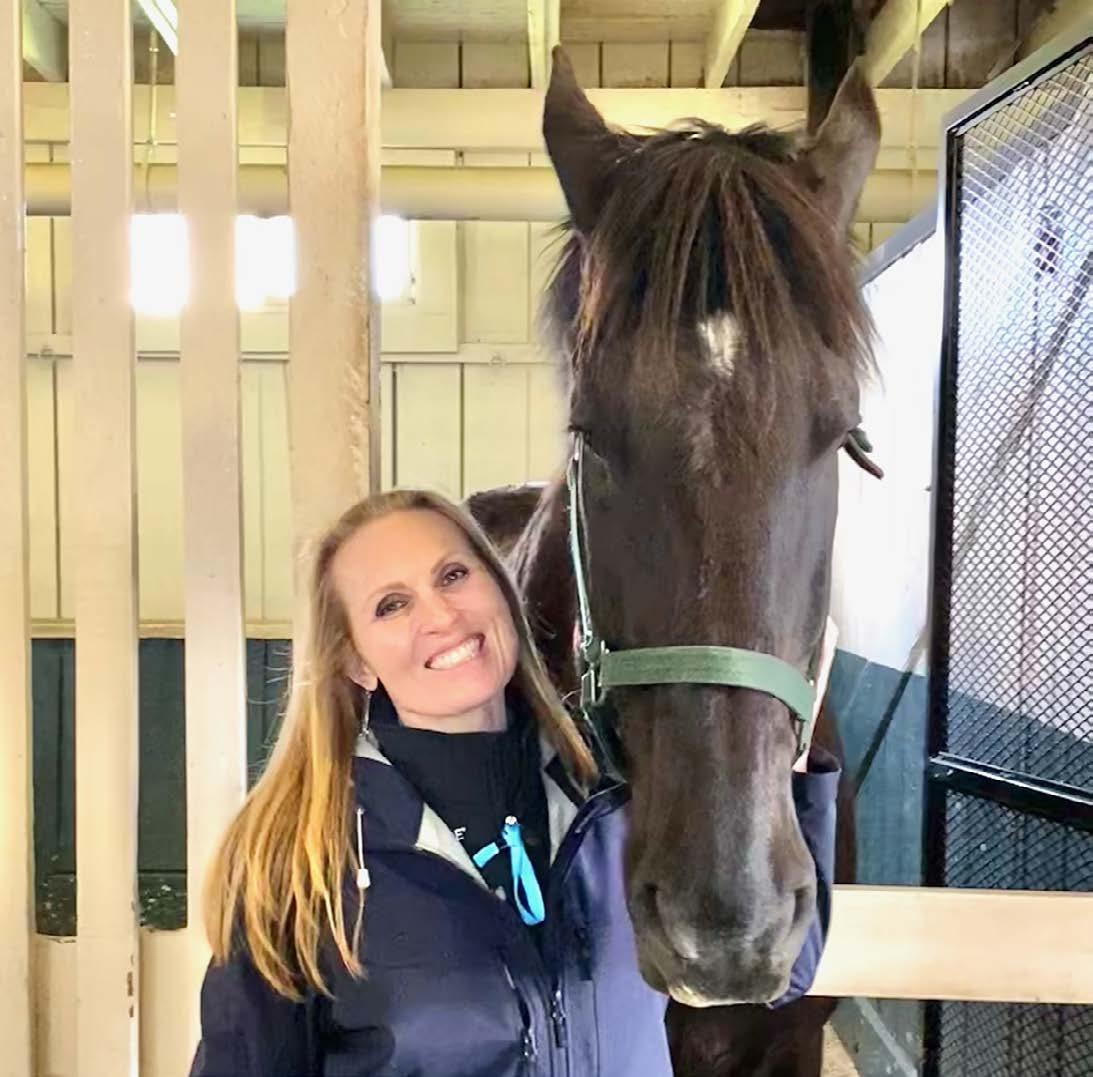
tangible difference in the lives of horses and their owners. While Compton does all this now in her current role with Merck Animal Health, it’s a commitment that has marked her remarkably diverse career.
A horse person from the start
Compton has had a deep-rooted connection to horses from a young age, fostered mostly through riding and caring for Arabians. Naturally, she pursued studies in animal and veterinary science when she went to college. But when she told her adviser she wanted to become an equine veterinarian, he told her to choose a different career.
“As a student who was very shy and lacked confidence, and the first in my family to pursue a college degree, it really affected me,” Compton says.
Despite this discouragement, she continued to be drawn to equine medicine, finding jobs after graduation that allowed her to work alongside veterinarians and be hands-on with horses. When she was working at Virginia Tech’s Marion DuPont Scott Equine Medical Center, a veterinarian there encouraged her to consider becoming a credentialed technician.
“It was a pivotal point in my career,” Compton says. “It eventually opened up so many opportunities I wouldn’t have had otherwise.”
Those opportunities have ranged from moving to Qatar to help launch the country’s first equine veterinary medical center (and connect with fellow Arabian lovers) to building her own equine dental consulting business in the Mid-Atlantic region of the U.S.
“Patient care and supporting the doctors has always been very rewarding to me, and I’m able to continue that passion in my role now as an equine rep [with Merck Animal Health],” Compton says. One key difference? She’s now able to be a resource for many veterinarians in her territory, which in turn plays a part in the lives of numerous horses.
“Even though I’m called a sales rep, I really am a resource who connects veterinary customers with solutions,” she says. “I want to help them solve not only their day-to-day problems but be emotionally supportive of them through the programs that we have.”
Passion for a sustainable equine career
In her various roles over the years, Compton has experienced and also witnessed firsthand the effects of burnout and compassion fatigue—problems the equine veterinary profession continues to battle. In navigating these challenges, she’s developed not only her own personal resilience and coping strategies, but also a passion for making equine medicine a healthy, sustainable career choice.
Open communication is key, she says, even in the face of difficult conversations or situations. So is an unshakable commitment to being an advocate for patients and teammates. Sometimes this also means being an advocate for oneself.
“I’ve learned how important it is to take a break when I’ve needed it,” Compton says. “Sometimes that was simply walking outside of the hospital for a few minutes. Sometimes it was not feeling guilty for taking a sick day. I’ve even taken a month off between jobs! Setting boundaries is important, but just as important is not losing your empathy for others and acting with kindness.”
When Compton’s father—the person who initially instilled her deep love of horses—became ill, it was the busy spring breeding and colic season, and not a good time to take off work. She did it anyway. “My dad was very ill and ended up passing,” she says. “I look back, and I don’t think anyone remembers that extra emergency I wasn’t there for. But I remember every day with my dad.”
When Compton came on board, she was delighted to join the Merck Animal Health Unconditional campaign, a commitment not just to horses but also to a healthy future for the equine profession. “Quite simply, I’m a horse owner,” she says. “I want to be able to connect and consult with knowledgeable veterinarians who are emotionally well and have open communication so we can provide better care for my horses, but also for everyone else’s horses too.”
Building relationships, providing solutions
If Compton’s veterinary customers have anything to say about it, she’s well on her way to doing just that. Lindsay Baltrusch is office manager for Bessemer Equine in Kennett Square, Pennsylvania, which opened in 2023. She says having Compton in her corner as the new practice got off the ground eased her mind.
“I would call Amanda with all kinds of questions,” Baltrusch says. “If she knew the answer, she’d tell us, and if she didn’t know, she checked and got back to us. She was always willing to answer our questions, no matter how small or large.”
Dr. Wendell, whose EPM patient improved thanks to a clutch bucket of PROTAZIL, also has nothing but praise for Compton. “Amanda is an exceptional representative and an asset to Merck Animal Health,” she says. “She’s not only knowledgeable about the products but also understands the practical aspects of horse care because she has horses of her own. She goes above and beyond, making her someone I’d want to be friends with outside of work.”
IMPORTANT SAFETY INFORMATION:
PROTAZIL® is contraindicated in horses with known hypersensitivity to diclazuril. The safety of Protazil in horses used for breeding purposes, during pregnancy, or in lactating mares, and use with concomitant therapies in horses has not been evaluated. Do not use in horses intended for human consumption. Not for human use. For complete safety information, refer to the product label.
7,000 SecondChance Horses Receive
Complimentary Vaccines

A total of 287 nonprofit rescue and retirement facilities across the United States recently received 7,000 complimentary doses of core vaccines through the Unwanted Horse Veterinary Relief Campaign (UHVRC).
Supported in partnership by the American Association of Equine Practitioners (AAEP) and Merck Animal Health, the UHVRC provides qualifying equine facilities with Prestige® Vaccines to protect horses against infectious disease. Since its inception in 2008, the UHVRC has provided more than 60,000 doses of core vaccines for horses in need.
Among the facilities to receive vaccines this year is Paso Robles, Calif.-based Redwings Horse Sanctuary, which provides permanent sanctuary or selected adoptive homes for equines rescued from abuse, abandonment and neglect. Sara Ruggerone, Redwings’ equine care manager, said the vaccines provide the dual benefit of protecting the
health of its herd and creating budgetary efficiencies.
“We are sincerely grateful for the vaccine support of the UHVRC, Merck Animal Health and the AAEP, which will cover over 70% of our herd,” said Ruggerone. “This enables us to have more money in our budget for bringing in new rescues that are in desperate need.”
To qualify for donated vaccines, facilities must have 501(c)(3) tax-exempt status, follow the AAEP Care Guidelines for Equine Rescue and Retirement Facilities, and work with an AAEP-member veterinarian to submit an application.
Know a program that qualifies?
The next application deadline is Feb. 1, 2025.
Download the UHVRC application here.
Unconditional Partnerships
Partnering with these organizations (and more) is just one of the ways Merck Animal Health shows its unconditional commitment to horses and the people who care for them.

Unwanted Horse Veterinary Relief Campaign (UHVRC)
The UHVRC is a nonprofit partnership between Merck Animal Health and the AAEP to safeguard the health and facilitate the adoption of rescue horses. The campaign has provided a total of 60,000-plus doses of vaccines for horses in need.

Remount Foundation
The Remount Foundation uses equineassisted learning for members of the military and veterans recovering from combat-associated injuries. The Merck Animal Health equine team manages a vaccination, medical care and training program for horses under the foundation’s care.
Beachwood
Integrative Equine Therapy
Beachwood provides Integrative Equine Therapy (IET), a data-informed protocol that helps the client heal anxiety, depression, sleeplessness, grief, trauma, and stressrelated illness.
LegUp Program
Leg
Up Program
Merck Animal Health’s LegUp Program is designed to empower veterinary support staff specializing in equine practice, equipping team members with the resources needed to foster healthy practice cultures and maximize their utility in practice.
MERCK ANIMAL HEALTH
Copyright © 2024 Merck & Co., Inc., Rahway, NJ, USA and its affiliates. All rights reserved. US-PRA-241000001