IOTC CRACKS DOWN ON TUNA FADs
The use of fish aggregating devices (FADs) in the Indian Ocean will be increasingly restricted after an agreement was hammered out by fishing nations at a Special Session of the Indian Ocean Tuna Commission (IOTC).

Held in February in Mombasa, Kenya, the three-day Special Session was called due to inaction by the ITOC’s 33 parties with regards to FAD management. These devices, which are used by purse-seine fleets, are criticised by coastal nations and conservation groups for contributing to overfishing and causing damage to marine ecosystems and harm to non-target species.
The proposal on drifting FADs was adopted by a two-thirds majority following a vote by secret ballot in the final hours of the meeting. Coming into effect from 1 January 2024 will be a phased reduction in the number of drifting FADs permitted per vessel from 300 to 250 in the first year and then down to 200 in 2025.
Also mandated was the creation of a drifting FAD registry, allowing for increased transparency and monitoring of the manmade devices. A 72-day closure period for drifting FADs was also put in place.

However, the adopted proposal hasn’t been well received by the European Union, which is the single biggest harvester of tuna in the Indian Ocean. According to IOTC data, the distant-water fleet of EU vessels, mainly Spanish- and Frenchowned, harvested 243,001 tonnes of tuna in the Indian Ocean in 2021.
While the European Commission is supportive of FAD management and had submitted a
8 A rise in FAD use has led to increased scrutiny of their impact on marine ecosystems
proposal that sought to reduce their use, it has criticised the IOTC meeting for adopting the closure measure without consensus, saying that it lacks scientific basis and could prove impossible to implement, in addition to having extremely harsh impacts on fishers and local communities.
Ahead of the meeting, a letter signed by retailers and more than 100 environmental groups warned EU officials that FADs are one of the main contributors to overfishing of yellowfin tuna in the Indian Ocean, because they catch high numbers of juveniles.
It was also highlighted that yellowfin tuna has been overfished in the Indian Ocean since 2015 and that the region’s bigeye tuna has been assessed as overfished.
More IOTC reactions – page 4.
PRESIDENT PROTECTS ALASKA SALMON
A Final Determination has been issued by the US Environmental Protection Agency (EPA) under the Clean Water Act to help protect Bristol Bay, regarded as the world’s most productive wild salmon ecosystem.
With this action, the Biden-Harris Administration is protecting certain waters that are important to sustaining Southwest Alaska’s salmon resources from disposal of dredged or fill materials associated with developing the Pebble Mine deposit.
“The Bristol Bay watershed is a vital economic driver, providing jobs, sustenance, and significant ecological and cultural value to the region,” EPA
Administrator Michael Regan said. “With this action, EPA is advancing its commitment to help protect this one-of-a-kind ecosystem, safeguard an essential Alaskan industry, and preserve the way of life for more than two dozen Alaska Native villages.”
The total economic value, including subsistence uses of the Bristol Bay watershed’s salmon resources, was estimated at more than US$2.2 billion in 2019 and results in 15,000 jobs annually.
Bristol Bay Watershed is home to 25 Alaska native villages and communities and supports one of the last intact, sustainable salmon-based cultures in the world.
NEW
MARCH 2023 l VOL 72 ISSUE 2 worldfishing.net
Viewpoint 3 | Insight 12 | Opinion 17 | Fishing Technology 22 | Analysis 24
HORIZONS
IV
AQUACULTURE Iran plans
We SPECIALISE in ww w m a cd uf f ship ya rd s. c om Facilities in Macduff, Bukie and Fraserburgh capable for vessels up to 65m long. T. 01261 832234 (Macduff) / 01346 519163 (Fraserburgh) E. info@macduffshipyards.com New Builds, Refits + Repairs, Conversions & Fabrications Photo Credit: IOTC
Seaweed and wind farms page 14 NEWBUILDS Venture
brings fresh thinking page 18
pathway to growth page 26

VIEWPOINT
JASON HOLLAND | Editor | jholland@worldfishing.net
WHEN OPPORTUNITY COMES KNOCKING…
We may only be a handful of weeks into 2023, but the World Fishing & Aquaculture team has already racked up a very healthy number of conversations about new opportunities in this New Year.
As befits a hugely diverse seafood economy, the dialogues we’re having with industry folk range widely in terms of themes and scale. Overall, though, it’s been extremely heartening to learn of new investments, initiatives and strategies across the fisheries, farming and processing spaces – particularly as these are coming at a time when many people and ventures around the world are feeling squeezed.
For multiple reasons, the world wants and needs fish. That’s the long and short of it. And that’s what’s continuing to drive our industry forwards –putting it on a more sustainable and commercially-viable footing. The ball has become too important to drop – that’s the message we’re hearing time and again.
When it comes to processing fish and shellfish the onus is of course on doing things better – utilising more of the raw materials available in more cost-efficient ways – and generating more value from those products. In many instances, and alongside new thinking, these goals are being achieved with the help of new technologies and innovations, so while I want you to enjoy the stories offered in the following pages and on www. worldfishing.net, I also want to flag up the next, bumper edition of our magazine – the April issue – which will incorporate WF’s latest Special Report, focused on Smart, Connected Seafood Processing.
My own hope is the expert insights and experiences it contains will further buoy the unwavering positivity that surrounds our industry and inspire more players to explore their own new opportunities.
The international fishing & aquaculture industry magazine
EDITORIAL & CONTENT
Editor: Jason Holland jholland@worldfishing.net
News Reporter: Rebecca Strong rstrong@mercatormedia.com
Regular Correspondents: Please contact our Correspondents at editor@worldfishing.net
Tim Oliver, Bonnie Waycott, Vladislav Vorotnikov Quentin Bates, Terje Engø Eduardo Campos Lima, Eugene Gerden
Production
David Blake, Paul Dunnington production@mercatormedia.com
SALES & MARKETING t +44 1329 825335 f +44 1329 550192
Media Sales Manager: Hannah Bolland hbolland@worldfishing.net


Marketing marketing@mercatormedia.com
EXECUTIVE Events Director:
Marianne Rasmussen-Coulling
Chief Executive: Andrew Webster awebster@mercatormedia.com

WF magazine is published monthly by Mercator Media Limited, Spinnaker House, Waterside Gardens, Fareham, Hampshire PO16 8SD UK t +44 1329 825335 f +44 1329 550192 info@mercatormedia.com www.mercatormedia.com
Subscriptions
Subscriptions@mercatormedia.com Register and subscribe at www.worldfishing.net
1 year’s digital subscription with online access £204.50 For Memberships and Corporate/multi-user subscriptions: corporatesubs@mercatormedia.com ©Mercator
Launched in 1952, World Fishing & Aquaculture is published by Mercator Media, a B2B media and events company specialising in international maritime industries, including marine business and technology, ports and terminals, and environmental strategies.
Through its monthly publication and free access website (www. worldfishing.net), World Fishing & Aquaculture provides expert-written, in-depth coverage of the fisheries, aquaculture and processing sectors, with a strong focus on the emerging solutions, technologies and innovations that are shaping the broader seafood economy’s landscape.

For the latest news and analysis go to www.worldfishing.net MARCH 2023 | 3
Limited
Ltd. All rights reserved. No part of this magazine can be reproduced without the written consent of Mercator Media Ltd. Registered in England Company Number 2427909. Registered office: Mercator Media Limited, Spinnaker House, Waterside Gardens, Fareham, Hampshire PO16 8SD UK.
Media
2023. ISSN 2044-1908 (online). World Fishing is a trade mark of Mercator Media
The ball has become too important to drop –that’s the message we’re hearing time and again
‘‘
US joins biodiversity treaty
The United States has announced its intention to join the High Ambition Coalition on Biodiversity Beyond National Jurisdiction, with the EU-launched coalition currently gathering 51 parties. Areas beyond national jurisdiction comprise 95% of the ocean
New MPA for Chile
The new marine protected area is located in the 181,622-acre Pisagua Sea and is the first such multipurpose MPA of the Tarapacá region. It will directly help artisanal fishers in the region, helping support the local community and economy.
Mowi’s year-end harvest rises
Salmon farmer Mowi ASA harvested 120,500 tonnes of gutted weight equivalent (GWE) fish in the fourthquarter of 2022, up from 115,000 tonnes in Q4 2021. For the full-year 2022, 464,000 tonnes of salmon were harvested – down 2,000 tonnes on the previous year.
Record year for Brixham
Brixham Fish Market has had a record-breaking year of sales with 2022 seeing the UK market trade £60.8 million in fish sales. The new record is £16.5 million higher than in 2021 – its previous record-breaking year when sales reached £43.5 million.
New Protix CFO
The Netherlands-based insect-based protein and lipid supplier has appointed Lynn De Proft as its Chief Financial Officer – to drive the company’s growth and its plans for international expansion.
EUROPÊCHE: TUNA FLEETS AT RISK
The tuna purse-seine fishery’s existence in the Indian Ocean is now at stake following the decision taken by the Indian Ocean Tuna Commission (IOTC) to phase out drifting fish aggregating devices (FADs), according to European fishing industry trade body Europêche.
It also warns that coastal developing states’ economies are severely threatened by the move.
Held 3-5 February 2023 in Mombasa, Kenya, a Special Session of the IOTC a proposal on drifting FADs was adopted by a two-thirds majority following a vote by secret ballot.
As a result, coming into effect from 1 January 2024 will be a phased reduction in the number of drifting FADs permitted per vessel from 300 to 250 in the first year and to 200 in 2025.
A drifting FAD registry will also be created, allowing for increased transparency and monitoring of the manmade devices used to attract tuna.
The adopted proposal also put a 72-day closure period for drifting FADs in place.
FADs typically consist of rafts with buoys attached for its
location that could be drifting in the ocean or anchored at the sea floor to improve efficiency, reduce costs and emissions. All of the EU’s long distance tuna fleet uses this method.
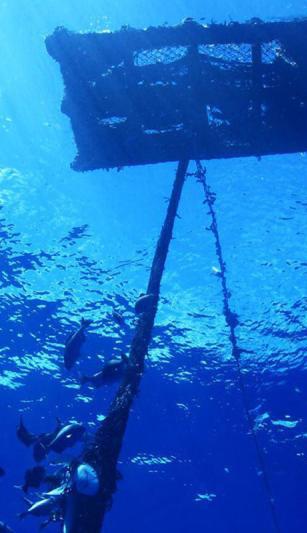
Europêche Tuna Group said that while other fishing fleets catch more than half of the total tuna catches in the IOTC area, the whole burden is placed on purse-seine
fleets. It highlighted that this comprises 46 vessels which employ hundreds of sailors, including from Africa and create employment in processing plants, shipyards and port facilities in the Indian Ocean.
The group stressed that the EU, Seychelles, Mauritius, Comoros and other contracting parties were not opposing the introduction of further FAD measures, saying these countries were only requesting specific scientific advice – to be delivered in the next scientific committee in December 2023, for the IOTC to take a sciencebased decision in 2024.
“No science to base the decision on, no consideration for local economies, and above all, no possibility given to the EU and other opposed developing countries to discuss and find a compromise,” Europêche Tuna Group Director Anne-France Mattlet said of the secret ballot meeting.
The vote’s outcome, arrived at in less than two hours, “will threaten the whole EU long-distance tuna fleet and the purse-seine dependent economies of the region”, she said.
ISSF: IOTC ‘LACKED COMPROMISE’
The Indian Ocean Tuna Commission’s (IOTC) recent Special Session to adopt a conservation and management measure on fish aggregating devices (FADs) in Indian Ocean tuna fisheries concluded with some enhanced management provisions but was found lacking in terms of collaborative effort to realise broader goals, according to the International Seafood Sustainability Foundation (ISSF).
In a position statement issued before the IOTC session, ISSF urged enhanced, sciencebased FAD management provisions.
Following the session, ISSF acknowledged the Commission’s progress
in adopting some of the improvements, including FAD marking guidelines, a timeline for transition to biodegradable FADs, and access to FAD position data for the IOTC Scientific Committee for science needs.
But ISSF said it was concerned by the “lack of a shared effort by all IOTC delegations” in working together toward the realisation of scientific advice.
In a statement, it said the general breakdown of communication and negotiation that was evident at the IOTC Special Session sets an “unwelcome precedent for future meetings” and, ultimately, the sustainable use of Indian Ocean tuna fisheries.
“IOTC parties are beholden to the United Nations Fish Stocks Agreement, the core provisions of which require cooperation and consultation amongst all coastal States and States fishing on the high seas,” ISSF President Susan Jackson said. “Both practices are critically important in managing highly migratory fish stocks like tuna, and both practices seemed to have been unfortunately lacking at this meeting. “We therefore remain cautious in our assessment of the effectiveness of the new FAD measure, especially in helping rebuild the yellowfin tuna stock. And we urge all parties to recommit to working together for the long-term sustainable management of Indian Ocean resources.”
4 | MARCH 2023 For the latest news and analysis go to www.worldfishing.net NEWS BRIEFS
8 All of the EU’s long distance tuna fleet use FADs

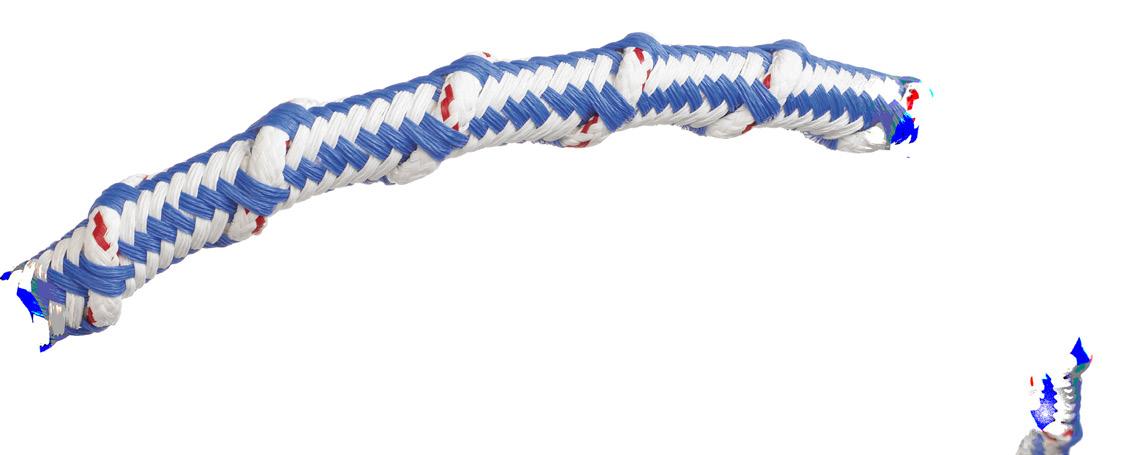





Self-spreading technology is patent protected
Longer ow route over the rope More speed = lower pressure
Longer ow route over the rope More speed = lower pressure
Shorter ow route under the rope Less speed = more pressure
English MPAs ‘unambitious’
UK government is not doing enough to protect offshore marine protected areas in England, according to Greenpeace. It says a recent consultation to manage fishing in MPAs is “sluggish and cumbersome”, ignoring the urgency of the oceans’ crisis and does not go far enough in protecting reefs.
SAIC board expands
Sustainable Aquaculture Innovation Centre has bolstered its board with a trio of new appointments representing three of Scotland’s salmon producers. Joining the board are Anne Anderson, head of sustainability and development at Scottish Sea Farms; Su Cox, communications and business development director at Bakkafrost Scotland; and Hervé Migaud, director of health, welfare and biology at Mowi Scotland.
Santa Monica certification
Rancho Dominguez, California-headquartered seafood distributor and processor Santa Monica Seafood has secured ISO 14001 certification for all four of its major processing facilities: SMS Rancho Dominguez, LA Fish Company, SMS Chicago and SMS Albuquerque.
New secretariat for SSC
3Keel has been named as Secretariat to the Sustainable Seafood Coalition (SSC), a partnership of UK seafood businesses. The role acts to support the strategic direction of the SSC and to facilitate group activities to boost sustainability across the sector.
ICELANDIC FLEET CATCHES MORE FISH
The total volume of fish and shellfish landed by Iceland’s fishing fleet increased by 22% or almost 260,000 tonnes last year, reaching a total 1,417,756 tonnes.
According to preliminary figures for 2022 gathered by the country’s Directorate of Fisheries, there was a substantial increase in the volume of pelagic fish, while demersal, flatfish and shellfish landings all shrank.
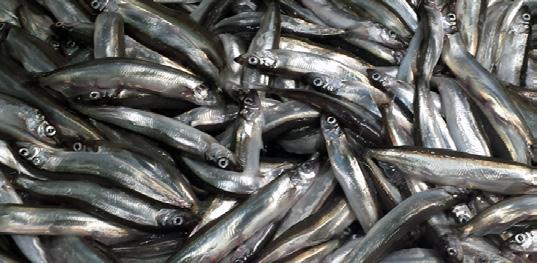
Last year’s total pelagic volume soared by 46% to 955,749 tonnes. While the mackerel and herring catches decreased by 2% and 1% respectively to 129,679 tonnes and 184,323 tonnes, and blue whiting climbed 1% to 191,813 tonnes, the capelin volume soared by 207% to 449,933 tonnes.
Within the demersal category, which amounted to 434,270 tonnes – an 8% drop on
2021 – cod landings decreased by 10% to 243,572 tonnes, and the redfish catch slipped 21% to 39,709 tonnes. However, the volumes of haddock (57,095 tonnes), and saithe (62,051 tonnes) were up by 1% and 4% respectively.
Iceland’s flatfish catch declined 13% to 21,502 tonnes, while its shellfish landings slipped 3% to 6,141 tonnes.
The Directorate of Fisheries’ data also found that the
December 2022 catch totaled just 48,264 tonnes, which was 62% less than in the final month of 2021. There were decreases in the month’s demersal (-18% to 27,866 tonnes) and pelagic (-79% to 4,305 tonnes) species categories, while the flatfish and shellfish landings grew by 25% and 72% respectively to 1,394 tonnes and 174 tonnes.
SHRIMP FARMING WITH ECO-BENEFITS
Shrimp farming can be a driver for mangrove protection and restoration, and in turn, help combat climate change and protect coastal communities and wildlife, finds new research undertaken by the Sustainable Fisheries Partnership (SFP).
According to the marine conservation organisation, its study provides a roadmap for the shrimp farming industry to restore mangrove habitat and return the full range of ecosystem services they provide.
“The farmed shrimp industry can be leaders in the regeneration of critical and endangered mangrove habitat,” said William Davies, chair of SFP’s Farmed Shrimp Supply Chain Roundtable. “Acting now will allow businesses to meet their sustainability commitments, support countries to meet their climate goals, and increase the resilience of coastal communities.”
Mangroves provide a wealth of ecosystem services, including habitat for marine and migratory species, physically
protecting coastal communities, intercepting pollutants, and capturing carbon. Mangroves sequester carbon at up to four times the rate of terrestrial forest, making them vital to tackling climate change and lowering carbon emissions. It is estimated that mangroves protect 18 million people and are worth $120 billion per year for their contribution to coastal defence, fisheries, forestry and recreation.
“The farmed shrimp industry has a huge opportunity to bring back lost mangrove habitat. Shrimp farming can simultaneously improve its environmental reputation and tackle climate change by restoring abandoned ponds and by adopting shrimp farming practices that aim to operate in harmony with mangroves,” SFP lead researcher and Aquaculture Information Manager Paul Bulcock said. “To be impactful, mangrove restoration efforts must operate at landscape-scale across whole areas.”
SFP’s study finds that shrimp buyers and supply chain companies can deliver on environmental, social and governance (ESG) commitments by driving restoration activities across whole landscapes and ecosystems to maximise impact and reduce fragmentation by linking patches of mangroves with each other.
It advises that certification schemes alone cannot meet this goal, because they focus at the farm level. However, by involving farmers, suppliers, and stakeholders within a defined area, multiple farms, including small-scale producers, will be able to meet and go beyond habitat conservation and restoration criteria of major certification schemes.
SFP is also developing a new tool created in association with Longline Environment that identifies active and abandoned farming ponds within and adjacent to mangrove habitat in India, Vietnam, Indonesia, and Thailand.
6 | MARCH 2023 For the latest news and analysis go to www.worldfishing.net NEWS BRIEFS
8 Iceland’s 2022 capelin volume soared by 207% to 449,933 tonnes

Ma x ilo n ensures lo nger Pelagic Trawl lif e GARWARE TECHNICAL FIBRES LTD. Plot No 11, Block D -1, MIDC, Chinchwad, Pune, Maharashtra 411019. Tel.: +91-20-27990301, 27990306 | Toll Free (India): 1800 120 5165 Email : sales@gar warefibres.com | Website : www.gar warefibres.com Follow us on
life
shape retention
Long
Trawl
Easy to shoot and haul
Option available with HMPE in Core for lower drag
NAPA: DON’T BLOW BLUE WHITING OPPORTUNITY
With talks set to take place over new quota sharing arrangements for Northeast Atlantic blue whiting, Skretting, Cargill and BioMar, some of the main global buyers of the species, are calling for the coastal states fishing this stock to scale back their allocations, warning them that they will stop purchasing it if the appropriate actions are not taken.
Predominantly used for fish oil and feeds for salmon aquaculture, blue whiting was stripped of its Marine Stewardship Council (MSC) certification in 2020. This led to the loss of its MarinTrust certification, which authenticates the sustainability of marine ingredients.
The North Atlantic Pelagic Advocacy Group (NAPA), a collective of some 60 global seafood businesses including Cargill, Skretting and BioMar, highlights that coastal states have continued to engage in overfishing, with the blue whiting stock fished above sustainable levels by 30% in 2021 and 47% in 2022.
Cargill Sustainability Programme Lead Dr Dave Robb said the spotlight is on aquaculture to develop sustainably and a key part of that requires sustainablymanaged feed ingredients.
“Blue whiting has been a key part of the development of a sustainable aquaculture sector in Europe – especially the salmon sector in Norway. But Norwegian fish farmers have already shown that they would not buy fishmeal from blue whiting which is not responsibly managed across the fishery. Now is the time for the governments from the coastal states to act and show leadership for sustainable fishing,” Robb said.
NAPA is calling for action, advising that its partners want to see the coastal states put aside their politics, take cooperative steps to agree on quota shares that follow scientific recommendations,
and commit to long-term fisheries management plans.
Cargill, Skretting and BioMar have publicly committed to cease sourcing from the fishery if the coastal states fail to put sustainability first.
In October 2022, the latest scientific advice for blue whiting was published. It found that high levels of recruitment into the fishery last year has led stock numbers to boom –estimated to be at a historical high. Consequently, the scientific advice for the catch in 2023 is 81% higher than in 2022.
NAPA advocates that the boom in blue whiting numbers offers “a golden opportunity” for the coastal states to take that smaller slice and scale back
SALMON TOPS UK EXPORTS
Scottish salmon was the UK’s biggest food export in 2022, new HMRC figures have revealed. Overseas sales of the fish reached £578 million in the last calendar year, with France leading the demand.
In total, Scottish salmon was exported to 54 countries, with North America and Asia both reporting strong demand.
Overseas Scottish salmon sales outperformed all the UK’s other main food exports including bakery goods, chocolate, cheese, cereals and lamb.
However, the latest salmon export sales were down 6% on 2021 (£614 million), while the volume of fish transported overseas fell by 26%.
According to industry body Salmon Scotland, the latter reflected tight supplies globally and that more Scottish salmon is being sold in the UK domestic market, which is valued at around £1.2 billion-a-year.
“Scottish salmon is an extraordinary global success story that we can all be immensely proud of, supporting thousands of jobs
and contributing hundreds of millions of pounds to the UK economy,” Salmon Scotland Chief Executive Tavish Scott said. “With such pressure on public services during the cost-of-living crisis, the revenue generated by our farmers has never been more important.
“Thank you to everyone involved from egg to plate for delivering such a successful year for Scottish salmon,” he said.
Scottish Rural Affairs Secretary Mairi Gougeon said it was “fantastic” to see strong sales in 2022 and that Scottish salmon is
their allocations. It suggests they could take advantage of the current stock size and adopt a more precautionary approach and opting for a sustainable TAC level – without having to cut their catches.
Dr Tom Pickerell, NAPA Project Lead, said the collective has calculated that each state could lower its allocation by 23% to ensure that the sum of all allocations is no more than 100%.
“Because of the increase in the scientific advice, such a reduction would still actually result in an increase in catch for each state of approximately 12%. It’s a win-win,” Pickerell said.
a world-renowned brand.
“That is why we are committed to our ongoing work to encourage investment in research, development and innovation in Scotland’s aquaculture sector alongside robust management measures, so that consumers can continue to have confidence in the sustainability of Scottish seafood.
“We will continue to engage with and listen to the Scottish salmon industry to understand how we can improve export opportunities and remove barriers to trade,” she said.
8 | MARCH 2023 For the latest news and analysis go to www.worldfishing.net NEWS
8 Blue whiting is mainly used to manufacture fish oils and feeds for salmon farming
PROGRESS FOR ALGAE-BASED SEAFOOD

Funded by the European Maritime and Fisheries Fund (EMFF), a project focused on the development of algaebased fish substitutes has been working since 2021 to turn the colours, flavours and texture of algae into an alternative to animal protein.
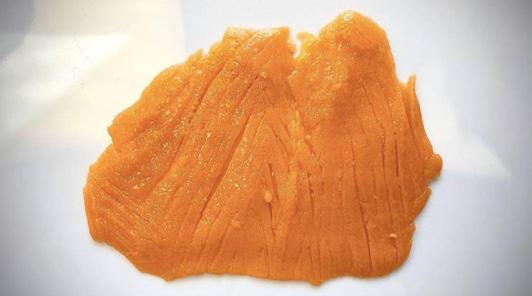
The scope of the so-called “Seafood Algternative” project, led by the joint-venture Seafood Reboot, is large, and has already managed to produce alternatives to smoked salmon and canned tuna.
French SME Algama SAS is coordinating the project. The company has already achieved success with the delivery of its vegan mayonnaise
“We feel a strong acceleration in market demand for this type of innovation. We can be proud of the work done, especially since the so-called alternative sector is becoming




more structured, Algama CEO Alvyn Severien said.



The project is now working to structure the industrial scale up and to adapt its marketing strategy to access this high value-added market segment with a sustainable product.


Meanwhile, a new European initiative is looking to replace the single-use plastic film typically used to preserve frozen fish with a biodegradable/ edible alternative.
With support from the EMFF, the SeaFilm food packaging project aims to create a substitute for single-use plastic film. Its new solution is based on bioactive seaweed extracts and edible algae.

As well as helping to conserve frozen seafood for longer while maintaining quality, the project being undertaken by researchers at the Polytechnic University of Leiria in Portugal is


in line with the EU’s objectives of fighting plastic pollution, reducing food waste and boosting the algae sector.
The recognition that too much plastic was being used and that fish were being poorly conserved got the researchers thinking about different solutions. Coupled with the problems arising from plastic pollution and restrictions on
single-use plastics, the concept of an edible biofilm for frozen fish was born.


SeaFilm is looking to provide the industry with a new algae-based edible solution to replace plastic films whilst increasing product shelf-life through the incorporation of bioactive seaweed extracts.
For the latest news and analysis go to www.worldfishing.net MARCH 2023 | 9 NEWS
8 Algae-based smoked salmon substitute
News
Photo Credit: Algama
Network
Remote Control
Configuration
RC4
Belitronic HP Dec-Jan 2022.indd 1 13/12/2021 13:25
RC12
GSSI chief steps down
The Global Sustainable Seafood Initiative has announced that Herman Wisse will step down as the organisation’s Executive Director effective 31 March 2023.
Cadman buys Quoddy Savour
Seafood farmer Quoddy Savour Seafood has been taken over by investment firm, Cadman Capital Group. The move follows Cadman’s acquisition of a stake in Urchinomics, an aquaculture venture that turns sea urchins into seafood.
Tesco closes fish counters
UK retail giant Tesco has announced the closure of all of its remaining fish, meat and deli counters as part of a series of new measures aimed at ensuring the supermarket chain remains competitive.
BIM appoints new boss
Ireland’s seafood development agency, Bord Iascaigh Mhara, has appointed a new chief executive. Caroline Bocquel has held the role of interim chief executive at BIM since November 2022 when Jim O’Toole stood down after five years
Aid for storm-hit producers
Canada’s government is providing CAN$40 million over two years to support shellfish farmers impacted by Hurricane Fiona – the costliest and most intense storm to ever hit the country.
TUNA BUYERS URGED TO CHAMPION BEST-PRACTICE
There has been a profound loss of nature in the Western Central Pacific Ocean (WCPO), but voluntary actions by tuna buyers can contribute to the recovery of vulnerable marine wildlife populations, suggests a new study conducted by the Sustainable Fisheries Partnership (SFP).
Highlighting that about 51% of the world’s tuna production comes from this region – mostly going to the North American and Japanese markets –the marine conservation organisation’s research finds that tuna buyers can help restore populations of sharks, sea turtles, and seabirds by encouraging the adoption of proven bestpractices for longline fishing in their supply chains.
“Restoring biodiversity and nature is critical to the long-term sustainability of fisheries,” SFP Global Markets Director Kathryn Novak said. “Buyers of longline caught tuna from the WCPO have an exciting opportunity to drive targeted improvements that could rebuild populations of vulnerable marine wildlife, while providing a healthy protein to customers.”
Funded by the Walmart Foundation, the research identified substantial declines of some species of sharks, seabirds and sea turtle populations in the WCPO, many of which are listed as vulnerable, endangered or critically endangered by the International Union for Conservation of Nature (IUCN) Red List.
While many different factors caused these declines, it maintains that by-catch – the unintended catch of non-target species – is currently the key driver of the loss for many of these ETP species. Longlines have one of the highest by catch rates for these species of gear types used in commercial tuna fisheries.
Advocating responsibility
The study recommends that buyers of longline-caught albacore and fresh/frozen
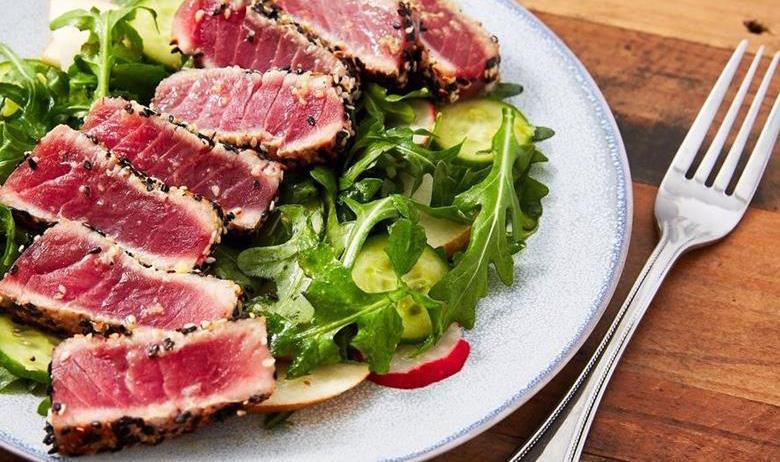
yellowfin, albacore, and bigeye from the WCPO should require that bycatch mitigation best practices are implemented in their source fisheries by 2025, such as adoption of fishing techniques like using circle hooks, eliminating wire leaders and switching bait types.
It also advocates that the buyers should compel their source fisheries to have 50% observer (human observer and electronic monitoring combined) coverage by 2025 and 100% by 2030. In this regard, SFP points out that Thai Union, owner of the Chicken of the Sea and John West brands, has committed to implement 100% “on-the-water” monitoring of its tuna supply chain by 2025, including the deployment of electronic monitoring.
Additionally, the study outlines data-collection protocols that need to be implemented for electronic monitoring, and best practices for specific wildlife species.
“By-catch of ETP species in longline fisheries is a wellknown problem. Thankfully there are proven best-practice options which can be adopted by the industry, such as the use of large circle hooks to reduce sea turtle capture, hook shielding devices to reduce seabird interactions and removing wire leaders to help reduce shark interactions,” SFP Ocean Wildlife Manager Alexia Morgan said. “The use of these best practices options offers the supply chain an opportunity to help reduce by catch mortality of ETP species and
subsequently help rebuild their populations to healthier levels.”
Tools at hand SFP’s study also calls for better management and compliance by the Western Central Pacific Fisheries Commission (WCPFC), the international management body for highly migratory species in the region, and WCPFC countries.
At its most recent meeting in December 2022, the WCPFC did take action to prohibit the use of wire leaders to protect sharks in certain areas beginning in 2024, but voluntary action can be taken sooner, as recommended in the SFP report.
To help tuna buyers to better understand the ETP bycatch interactions in their source fisheries, SFP launched an ETP Bycatch Audit programme last year. It also launched its Solve My Bycatch Tool, an online instrument to help seafood buyers and suppliers find solutions to specific tuna bycatch problems.
Other tools include SFP’s Best Practices for Reducing Bycatch in Longline Tuna Fisheries guide.
According to the report, “What is urgently needed now is for major tuna buyers, particularly in North America and Japan, to require the use of these tools and encourage adoption of these recommendations at scale in longline tuna fisheries.”
10 | MARCH 2023 For the latest news and analysis go to www.worldfishing.net NEWS
BRIEFS
8 SFP is calling on major buyers of WCPO tuna to require best-practice from suppliers


The future of fishing
A PERFECT STORM
Japan’s fish and seafood sectors are being undermined by weakening consumption and high prices, writes Eugene
Gerden
A number of commercial seafood enterprises in Japan are looking to grow their businesses this year. This is despite the market experiencing declines in both fish production and consumption, and consumers facing ever-rising prices.
According to Japan Fisheries Association, which promotes activities designed to increase seafood consumption, while the domestic catch volume in 2022 remained almost on the same level as the previous year, the range of fish and seafood supplied to the domestic market substantially declined.
One of the main reasons for this is weakening local demand, the association advised.
Since the 2010s, the Japanese fish and seafood sectors have been experiencing a steady decline –mainly due to the reduction of domestic stocks, caused by regular overfishing and poaching. There’s also changing consumer patterns to contend with, with increasing numbers of younger consumers showing a preference for meat instead of traditional seafood. As a result, Japan has seen the deepest drop of per capita seafood consumption among those countries where consuming far more than 30 kg per year.
Meanwhile, wild-capture stock reductions have led to the decline of production and catch volumes. According to the Japanese Fisheries Agency’s data, in recent years the country has faced sharp drops in the production of some important species. For example, the volume of saury production has declined from 229,000 tonnes in 2014 to about 30,000 tonnes in 2021, while salmon has fallen from 150,000-160,000 tonnes in 2014 to about 50,000-60,000 tonnes.
Analysts believe these trends are largely due to the country’s poor fish resource management. In the case of salmon, stagnating domestic production has already resulted in a significant increase in imports in recent years. The latter has posed a threat to the positions of leading local red fish producers in the domestic market.
As a result of such declines, Japan’s share of global seafood production has dropped to about 2% in recent years, compared with 12-13% during 1980s, and there’s a strong possibility that a further decline will be observed in 2023.
Russian struggles
The Great East Japan Earthquake of 2011 is still having negative effects on the country’s fish sector and is preventing any further export increases. Amid weak domestic consumption, exports are considered as one of the priority directions of development for the majority of Japanese major fish producers and processors.
According to the Japan Fisheries Association’s experts,
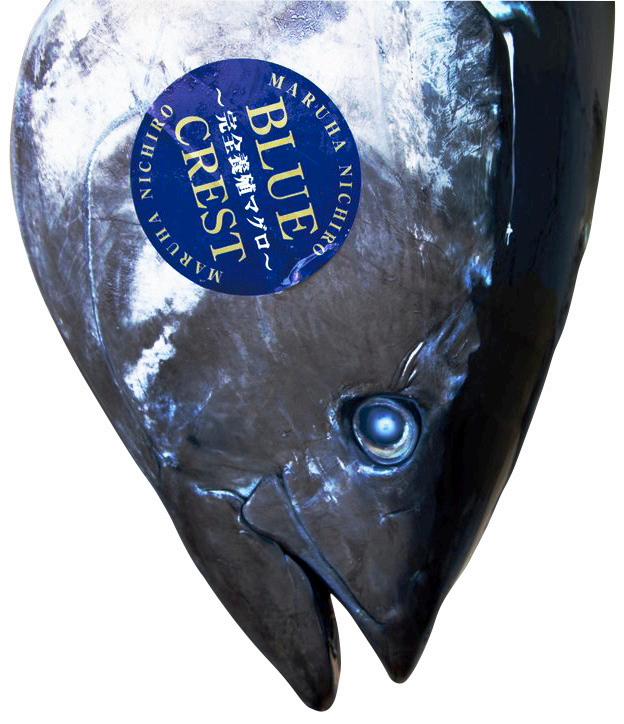
particular hopes have been put on the increase of exports of aquaculture species, such as yellowtail, seabream and scallops. Among the other promising export items are bluefin tuna, amberjack, groupers and pearls.
In the meantime, the consequences of the Covid-19 pandemic, and the ongoing Russian-Ukrainian military conflict have put additional pressure on Japanese fish and seafood sectors, in particular contributing to higher local fish and seafood prices.
12 | MARCH 2023 For the latest news and analysis go to www.worldfishing.net
INSIGHT
Photo Credit: Maruha Nichiro
One of the reasons for the price growth is the deterioration of relations with Russia, and the recent failure of talks between the two countries for catching fish on the Kuriles Islands. This has sparked serious concerns among Japanese fishermen, operating in the area.
According to a recent report in the Japanese Hokkaido Shimbun business paper, many Hokkaido fisherman may face a significant decline of their catches and revenue this year. The talks, regarding the provision of quotas for Japanese fisherman for the catch close to the Russian Kuriles were supposed to be carried in accordance with the 1998 agreement existed between the sides. However, they were recently postponed for an indefinite period of time.
With regards to consumption, the pandemic led to a decline in sales of fresh seafood in Japan with a simultaneous rise in the sales of frozen products, as more local people prefer to cook themselves instead of eating in restaurants. Among the most widely-consumed fish species in Japan are Pacific saury, salmon, tuna and king crab.
land-based salmon aquaculture business, which is in high demand, and are continuing research on fish cell culture.” According to the company, with the declining local population and changing lifestyles of consumers, the Japanese market as a whole is consuming less and less marine products, and this trend isn’t expected to change significantly in 2023.
“In our surveys, people say that fish is difficult to eat and takes time to cook, but on the other hand, some people want to include more fish in their diet due to health reasons,” Fujita said.
As part of its plans, Maruha Nichiro is further expanding of its range this year as well as more active promotion of fish among domestic customers through traditional Japanese concepts.
“One such concept is ‘Sakana Cross’, which conveys diverse values by crossing fish with various themes and things. Specific initiatives include the provision of the group’s farmed fish and fish sausage to the professional sports teams that we sponsor, and the production of videos to introduce the concept of fish protein intake to consumers,” Fujita said.
On a rocky road
Japan’s fish and seafood sectors are currently based on the country’s fifth Basic Fisheries Plan – a legal act that regulates the development of the industry and which was approved by the national government last year.
Firms eye growth
Despite these problems, most of the leading Japanese fish producers and processors are looking to accelerate their expansion in the domestic market this year. One such company is Maruha Nichiro Corporation, one of Japan’s largest seafood businesses, which has recently announced plans for a significant range extension this year.
Maruha Nichiro spokesman Misae Fujita told WF the company is currently “focusing on creating a new business model by leveraging its existing knowledge”.
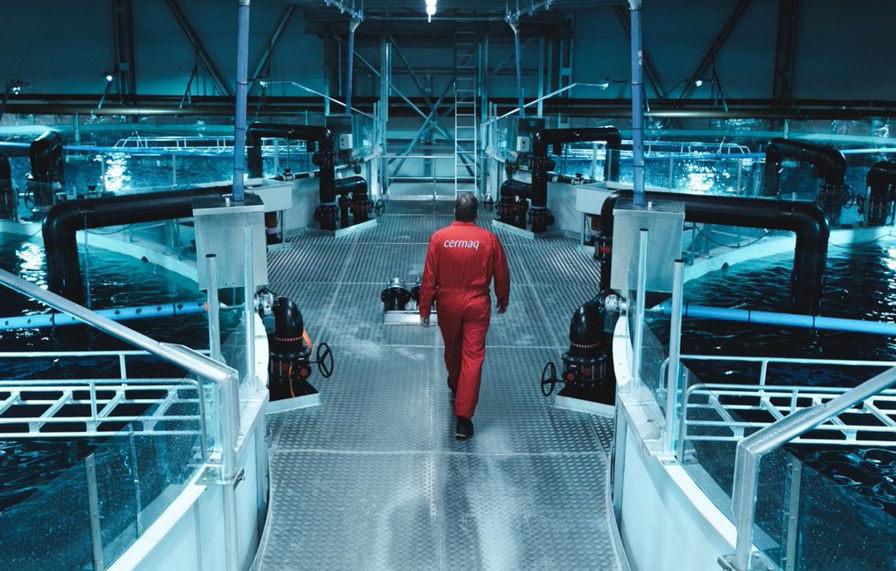
“In addition to further improving the technology for egg-to-harvest farm-raised [bluefin tuna] aquaculture at sea, which we were the first private company to succeed in, we have established a company to conduct large-scale
It involves the use of the concept of total allowable catch (TAC), a system aiming for maximum sustainable yield (MSY), and more active fight with poaching. The existing plan is also based on the more efficient management of the Japanese fish and seafood resources, based on scientific approaches.
In spite of these actions, the majority of Japanese seafood analysts predict tough times ahead. They highlight that in addition to the declining consumption trend, climate change will lead to a further decline of the country’s fish and seafood stocks.
They anticipate this will deplete supply levels in the domestic market and see prices rise higher. This landscape, they say, will lead lower the consumption volumes further.
For the latest news and analysis go to www.worldfishing.net MARCH 2023 | 13 INSIGHT
People say that fish is difficult to eat and takes time to cook
‘‘
Misae Fujita, Maruha Nichiro
8 Maruha Nichiro’s land-based aquaculture facility
Photo Credit: Maruha Nichiro
NEWHORIZONS
Focusing on Fisheries Development
POWER AT SEA: CULTIVATING SEAWEED IN OFFSHORE WIND FARMS
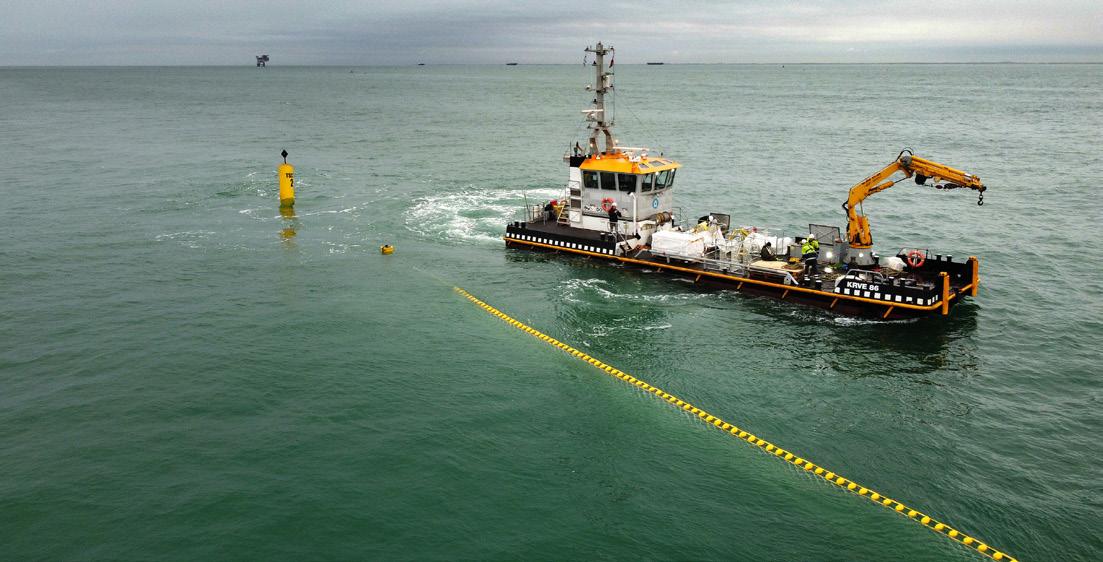
The ocean is becoming an increasingly crowded space with activities and industries such as food production and energy generation, but if the blue economy is to thrive, the coexistence of various activities at sea merits further investigation, writes Bonnie Waycott
“It is possible to create a multi-use space in the marine environment,” said Zinzi Reimert of North Sea Farmers in the Hague, Netherlands. “But how this is accomplished depends on the location, the depth of the sea and other factors such as legislation in different countries.”
In the Netherlands, work is underway to bring together aquaculture, in particular seaweed farming, and offshore wind turbines in the Dutch North Sea.
Established in 2014, North Sea Farmers is a foundation that is working to accelerate and strengthen the seaweed industry. Between 2019 and 2022, Reimert and her team were part of the Wier and Wind project to cultivate seaweed (zee wier in Dutch) on a large scale.
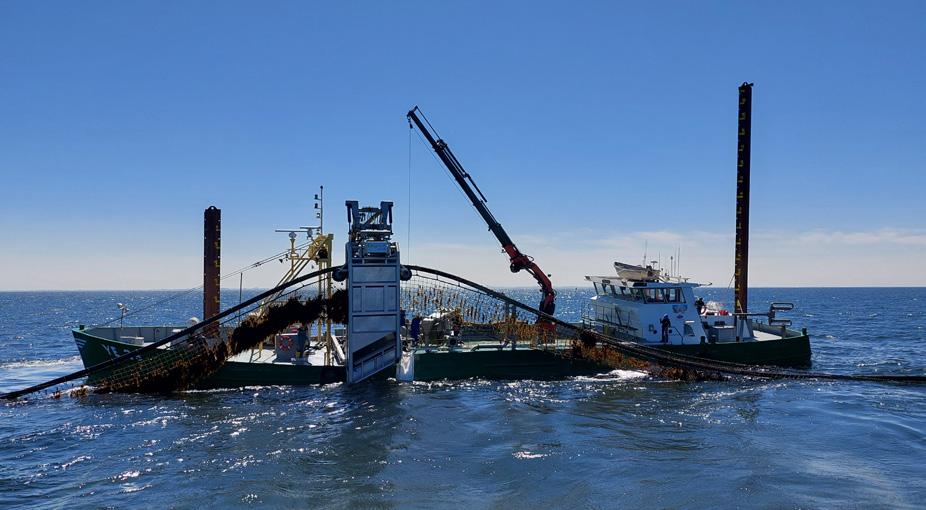
The project was the first seaweed cultivation project with an automated harvesting operation offshore. Its goal was to automate the growth and harvest of seaweed and develop a system that could be used for large-scale seaweed cultivation within offshore wind farms.
“The Wier and Wind project was about trying to cultivate and harvest Saccharina latissima in a challenging environment and working to better understand the types of structures, nets etc, that were required,” Reimert told WF. “We used a cultivation system consisting of a floating pipe with a net hanging vertically in the sea column with seaweed seeds on it. Additionally, a harvesting machine was developed that could operate offshore. Before this, no seaweed was harvested offshore using a machine. It was all done by hand or on land. Wier and Wind was about that next step – developing a system that could farm seaweed offshore.”
Questions to answer
As diets in the west shift towards more plant-based dishes, seaweed is drawing increasing attention. It contains important nutrients, also making it useful in agriculture, and it can be used to produce bio-plastics and bio-stimulants.
Farming seaweed around offshore wind turbines can also have positive effects, including the use of seaweed for the bioremediation of contaminants or seaweed farms providing sheltered areas for nature. There could also be some cost reduction by allowing a multiple use of space and infrastructure through co-located and shared technologies, or an optimisation of marine spatial planning.
But there are also challenges, such as possible changes to the surrounding ecosystem, safe navigation around farms and turbines, the risk of a seaweed structure detaching, the distance from shore, high costs, logistical challenges and processing issues such as how the seaweed will be transported back to shore and whether it will be processed offshore or on land.
Several pilot studies are underway to find workable solutions to the colocation of aquaculture and offshore wind farms. In July 2022, Norway’s Institute of Marine Research (IMR) announced plans for an EU project on kelp and mussel farming among wind farms near Hegoland in Germany and the east of Denmark in the Kattegat.
Three pilot sites for growing kelp and mussels were established to determine the best way of making use of offshore areas that are occupied by wind farms. The team responsible believes that its set-up could be viewed as a marine reserve, and is hoping to shed light on the function
14 | MARCH 2023 For the latest news and analysis go to www.worldfishing.net
8 The Wier and Wind project farms seaweed offshore
Photo Credit: North Sea Farmers
of artificial reef structures that could act as a habitat for various species.
More recently in December 2022, Scottish start-up Impact-9 announced a possible opportunity to use its new Net9 system – net pens for salmon farming – within existing and planned offshore wind energy zones. With an R&D project successfully completed, the company believes that wind turbine sites could double up as salmon farms and quadruple Scottish salmon production.
New farm requirements
Back in the Netherlands, offshore wind farms were built purely to be wind farms, explained Reimert. But the Dutch government has taken a new approach. From now on, every new wind farm must be open for multi-use. Hopes are high that this will make the colocation of wind farms and aquaculture more common and enable pilot schemes to develop further.
double up as artificial reefs, improving biodiversity and water quality as the seaweed grows.
The foundation is also part of the UNITED Horizon European project, which aims to identify all the aspects –technical, legal and societal – that can make multi-use in European seas more widespread.
Livelihood opportunities
As work continues to address the logistical elements, another issue needs to be considered; the impact on local communities and how they can participate. Manpower will be required for the upscaling of seaweed cultivation, said Reimert, and local communities will be able to work offshore, process and transport the seaweed, and make products from it.
“We expect to see a growing importance for communities in areas around the harbours,” said Reimert. “Seaweed farms and other forms of multi-use could also be an opportunity for fishermen, who are currently struggling with legislation issues and high fuel costs. We are talking to them about how they could contribute, the types of vessels they work with and whether they could be used in the seaweed sector.
“The government has also introduced certain criteria in the new tender procedures for offshore wind, for example the need to be nature-inclusive and include different forms of marine energy,” said Reimert. “A pilot project with mussels is due to be installed on a wind farm this year, and we are hoping to place the first seaweed farm in a wind farm at the end of this summer. The colocation of wind farms and seaweed farms is extremely likely, but it depends on how fast the different sectors involved can develop.”
North Sea Farmers is working with its community of roughly 100 partners to develop techniques that will allow seaweed farms to operate with minimal disruption to wind farms and the environment, including research into optimal seaweed farm placement, structure and eco-anchors for optimal synergy with nature. These eco-anchors can
“There is also an increasing need for sustainable resources and a significant interest here in local resources. Seaweed doesn’t require land or fresh water, both of which are scarce, not just in the Netherlands but also worldwide, so growing offshore seems to be a positive way to produce seaweed sustainably. We organise events for local communities and a broader audience, give lectures and there is a seaweed exhibition coming up in a local museum.”
Ultimately, the colocation of seaweed farms and wind farms comes down to a host of issues. But given the changes in diets, and the importance of energy generation and climate, the farming of seaweed and other species look set to grow in future, said Reimert.
“We have opened up our Offshore Test Site to anyone who wants to become involved with the multi-use concept, and have tested mussels, floating solar and artificial reefs in combination with seaweed,” she said. “Collaboration is key – different sectors of aquaculture can learn from one another with the common goal of producing more sustainable food. We believe that we will see more combinations of seaweed, mussels, floating solar energy and so on.”
8 The UNITED Horizon European project aims to make multi-use in European seas more widespread
For the latest news and analysis go to www.worldfishing.net MARCH 2023 | 15 NEW HORIZONS
The colocation of wind farms and seaweed farms is extremely likely, but it depends on how fast the different sectors involved can develop
‘‘
Zinzi Reimert, North Sea Farmers
Photo Credit: UNITED Project
AHEAD OF THE PACK
Solidus Solutions’ CCO Simon Roda predicts key packaging trends for the seafood industry in 2023
Grocery stores will move from frozen to fresh fish
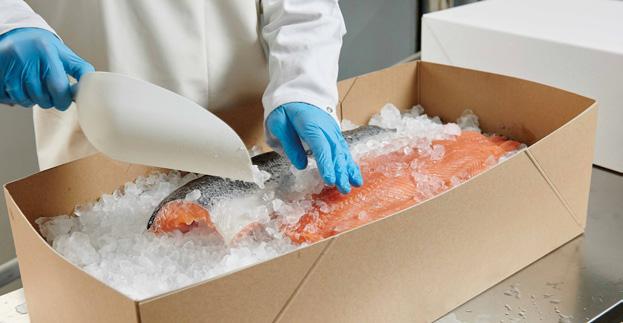
Innovations in packaging are allowing small and medium sized grocery stores to increase their offering of fresh seafood. The packaging OEM reports that this rise in seafood presence can be found at designated fresh counters, in frozen aisles, amongst canned goods, and in emerging grocery grab-and-go sections – all of which have seen increased traffic over the course of the COVID-19 pandemic.
Having the right packaging to both deliver and store fresh fish products is crucial in the success of grocery stores and suppliers.
packaging concepts that include skin and modified atmosphere packaging (MAP) technologies. MAP is a long-established method to extend the shelf-life of fresh food like fresh or processed fish. A long-established method to extend the shelf life of fresh food like fresh or processed fish. The technology substitutes the air inside a package with a protective gas mix. Made from sustainable fibres, skin packaging combines long shelf-life with an attractive presentation and sustainable use of fibre-based materials.
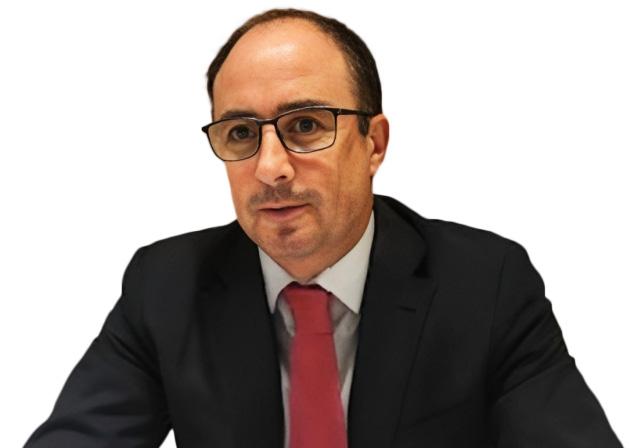
8 Simon Roda
To meet the demand for fresh fish and support suppliers, Solidus offers solid board packaging, an ideal material to package fresh fish, round fish and salmon. The solid board is made from the Packline board line, a fibre-based board which is moisture resistant, environmentally friendly and compact. Even more, it’s fully recyclable and made from renewable resources.
Moving towards sustainable packaging and away from plastics
With tighter regulations and increased consumer demand for less packaging and packaging waste, businesses will be under even more pressure to deliver on eco-friendly options and reduce their carbon footprint. In the EU, plastic packaging will need be recycled or reused by 2030 whilst two policy measures – the EU Single-Use Plastics Directive and Plastics Levy, will impart further considerations for packaging.
About Solidus Solutions
With a history dating back more than 150 years, Solidus Solutions is a leading European sustainable fibre-based packaging provider for food and beverage, consumer goods and industrial applications.
After taking out the product, the thin transparent layer is easily removed from the solid board to allow for separate disposal and recycling.
The deep vacuum method extends the product’s shelf life in store. The skin packaging system has benefits for the brand owner, retailer and consumer as it improves the presentation of the product by using sustainable and recycled materials.
Solidus Solutions CEO Dieter Bergner adds: “CEOs and packaging buyers are under increasing pressure to deliver not just on profitability but sustainability goals and innovation, more so than ever before. As a result, we’ve focused on noteworthy, forward-facing developments in sustainability, customisation, and cost. This is about helping our customers, and the industry, thrive.”
For some businesses, the movement to sustainable solutions can be a challenge. We have a wealth of experience as a business and cross-functional team, but prioritising innovation is key.
Solidus solid board is recyclable and made from renewable resources, but a big focus for us over the next year and beyond is working with customers and partners to create circular value chains. We know moving to circular products is a significant step for businesses, so we work to design for high functionality to provide viable sustainable solutions.
The sustainable packaging market is continuing to outgrow the consumer packaging market. Estimated to reach US$255 billion by 2026, the global sustainable packaging market will need to show considerable innovation to meet sustainability goals, tap into the end user’s need for cost effective, sustainable solutions and thrive.
Solidus is constantly innovating to meet these emerging trends through a range of new innovations. The business has developed a range of new fibre-based retail
Alongside working with customers to address their specific needs, understanding overall trends will help the industry stay ahead; and support customers in establishing and maintaining circular value chains through sustainable offerings.
For the latest news and analysis go to www.worldfishing.net MARCH 2023 | 17 OPINION
8 Solidus’ solid board packaging is an ideal material to package fresh salmon
‘‘
Businesses will be under even more pressure to deliver on eco-friendly options and reduce their carbon footprint
NEW BOW DESIGNS FOR BETTER PERFORMANCE
The design of new trawler Venture IV for skipper and owner Mark Lovie led Macduff Shipyards and partner company Macduff Ship Design to some fresh thinking, with their new ideas backed by testing at the Wolfson Unit in Southampton
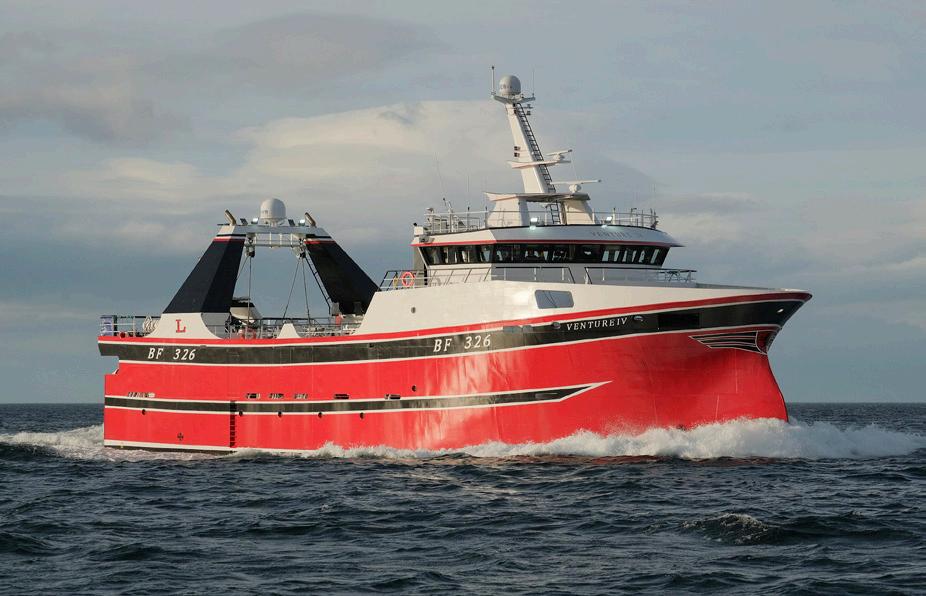
There’s a longstanding relationship between Macduff Shipyards and Lovie, who has fished with vessels built at the yard for many years. This started with the woodenhulled Venture, built by the yard in 1993 as Endeavour II. A few years later, he went back to Macduff for the steelhulled Venture II (delivered in 2001), the larger Venture III (built in 2017), and now an upgrade to Venture IV, which was delivered at the end of last year – in time for a couple of quick trips on fishing grounds in the west of Scotland before Christmas.
Venture IV is a big step. It’s the largest vessel built at Macduff Shipyards, with the hull fabricated at the Finomar Shipyard in Poland.
Back in 2020, Lovie went to the yard’s design team with an interest in having a new trawler to replace his existing <24-metre vessel, and looking for better fuel efficiency, more speed, improved seakeeping and more comfort. The yard’s designers had experience in this direction with recent new vessels, and were in no doubt that all this wouldn’t fit inside a 24-metre registered length.
As they would also have to move beyond the 24-metre size bracket, the decision was taken to also investigate options for different bow designs in relation to speed and seakeeping qualities, and to enable to the full potential of the optimised hull to be realised.
The next step was tank testing at the Wolfson Unit, comparing two hull arrangements of similar length, in
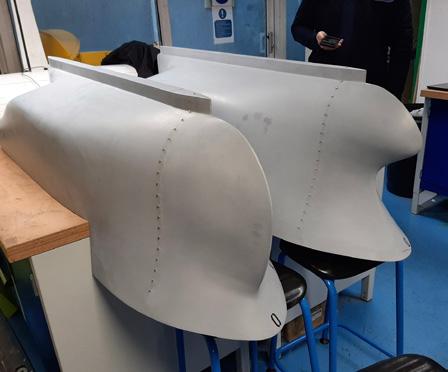
particular to compare a conventional hull with bulbous bow and flared stem against an innovative hybrid bow design with an inverted bow for the majority of the stem but retaining a small-flared portion to keep the fore deck dry.
Trials at the Solent University Towing Tank indicated a significant reduction in both resistance and motion when head to sea with waves, particularly at speeds above eight
18 | MARCH 2023 For the latest news and analysis go to www.worldfishing.net NEWBUILDS
8 The two models tested at the Wolfson Unit’s towing tank
8 Venture IV features an inverted bow, improving fuel performance and seakeeping
knots achieved by the modern design.
Following these trials, Macduff Ship Design finalised the design for a 34.5-metre, 10.5-metre breadth trawler featuring the new semi-inverted bow.
The steelwork was completed by Finomar in Szczecin, and Venture IV arrived in Macduff in late 2021, where the new trawler has been outfitted, trialled and commissioned.
Handover to the owners took place in December 2022. Now, with a few trips behind it, all the indications are that Venture IV is performing as expected – with increased speed, reduced fuel consumption, and improved seakeeping compared to the older vessel it has replaced.
Additional space
Venture IV’s dimensions provide
more space for crew cabins and accommodation areas, better deck space, and a midships chilled fishroom that has capacity for 2,000 stacking boxes and a pair of 10-tonne ice lockers fed by twin Geneglace 2.50 tonne/day icemakers.
There are three Yanmars in the aft engine room. The 1110kW 6EY26W main engine powers a free-standing Mekanord 650HS gearbox with a reduction ratio of 5.44:1 which drives the Kumera Helseth 3300mm diameter controllable pitch propeller.
The low drag high thrust nozzle and the triple rudder system providing high turning force are from Kort Propulsion, who also supplied the KT300H bow and stern thrusters. The MT5000 steering gear is from Scan Steering.
6NY16L gensets each deliver 280ekW of electrical power. The main engine and generators are cooled via freshwater plate coolers. The hydraulic towing pumps along with stern thruster are also fitted within the engine room along with the main electrical switchboard, refrigeration and the ships pumping systems.
Venture IV has a stem-to-stern shelterdeck, of which the aft part is largely open and this provides a walkway around the perimeter and to the aft gallows while also providing shelter for the full-length trawl deck laid out with twin ramps at the stern with a bay for the clump built into the aft structure.
MacGregor gear
The package of deck machinery is from MacGregor, with port and starboard winches set amidship, and the mid-wire winch placed above and ahead of the starboard winch, with all three controlled by a Pentagon autotrawl.
MacGregor also supplied a set of 20-tonne sweepline winches at the head of the deck. three 12-tonne bagging winches fitted above the trawl lanes, two 10-tonne codend winches and two 13-tonne gilsons.
Twin 6-tonnes and three 3-tonne gear handling winches, a 3-tonne fishroom helper winch and the triple-barrel anchor and mooring winch are also from MacGregor, as is the 12.3-metre, 2.3-tonne telescopic boom landing crane.
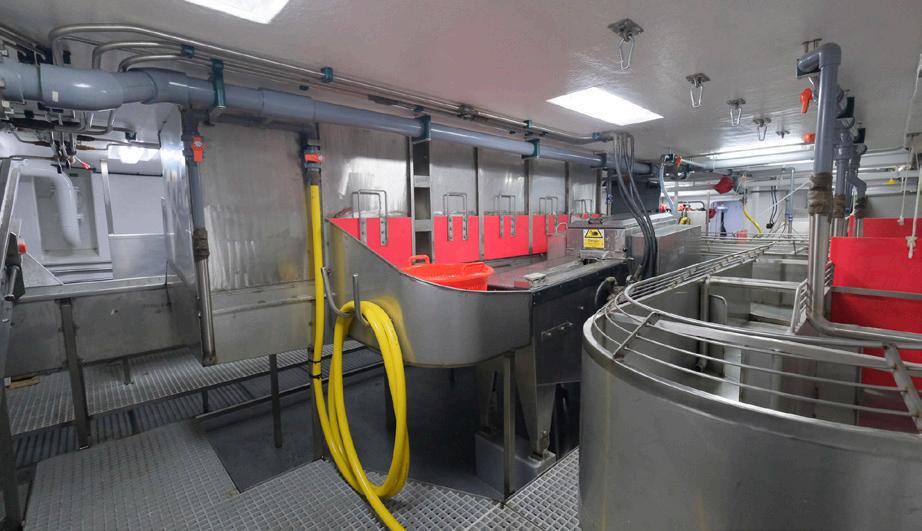
Catches are dropped through deck hatches are the stern to the pounds below, for fish to be routed to the catchhandling deck, designed and outfitted by Macduff Shipyards.
Accommodation on board Venture IV is for up to 12, with the skipper’s cabin and a couple of two-berth cabins below the wheelhouse. The laundry, pantry and galley are above main deck level on the starboard side, adjacent to a large mess and lounge area, and four more two-berth cabins.
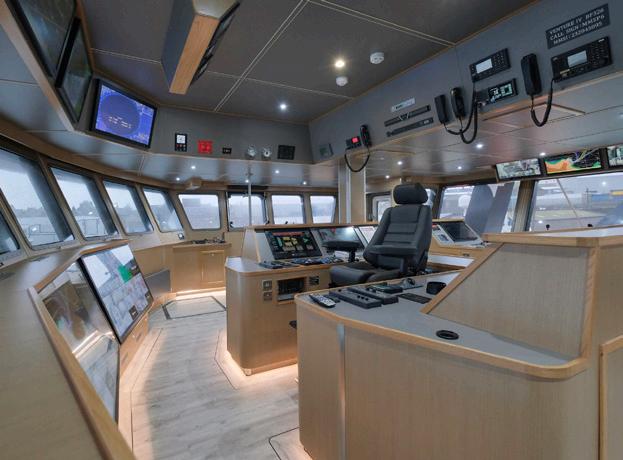
The wheelhouse extends virtually the full breadth of the vessel, providing excellent all-round visibility, and with a set of full-height windows fitted aft on the centreline, giving the operator at the aft wheelhouse control console a complete view of the trawl deck below.
For the latest news and analysis go to www.worldfishing.net MARCH 2023 | 19 NEWBUILDS
8 Venture IV’s wheelhouse control position
8 The catch sorting and handling area is designed and outfitted by Macduff Shipyards
GERMAN FACTORY TRAWLER LAUNCHED
Turkey’s Tersan Shipyard has confirmed the launch of a new freezer stern factory trawler that it has built for Nordbank Hochseefischerei GMBH in Germany, a subsidiary of Parlevliet & Van der Plas
With the building number NB1108, the vessel is soon to be named Jan Maria. Measuring 88.1 metres in length and 18.3 metres wide, Jan Maria will be outfitted with fully integrated onboard grading, filleting, processing and freezing systems.
The vessel will be capable for triple trawling and outfitted with a shrimp factory, an advanced fillet factory and a fishmeal and fish oil factory plant. Additionally, there will be arrangements for the fully-automatic freezing system for fillet and shrimp.
It is arranged with cargo holds with individual cooling elements. Decks will be made from steel and will be painted with a special anti-skid paint system for safe forklift operations. There will be a transport system for moving palletised products from the processing deck to the cargo holds, with the pallets individually wrapped before transfer.
The Skipsteknisk-designed vessel will have accommodation up to 45 people onboard with spacious and comfortable living places.
With a 7,000 kW Wärtsilä main engine, Jan Maria will be capable for efficiently trawling in icy and arctic waters.
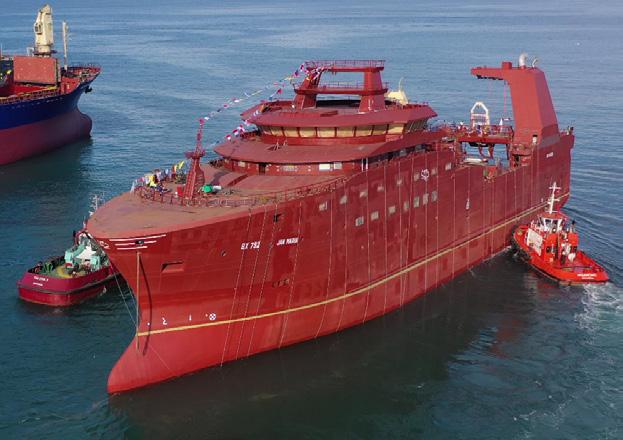
Tersan Shipyard General Manager Mehmet Gazioğlu said, “This project is very important for our shipyard and country because Jan Maria is equipped with the latest technologies, and she represents our strong and future partnership with Parlevliet and Van der Plas family.”
TRIO OF NEW EU PATROL VESSELS
The European Fisheries Control Agency (EFCA) has received three new additional patrol vessels for use by fisheries inspectors in European and international waters
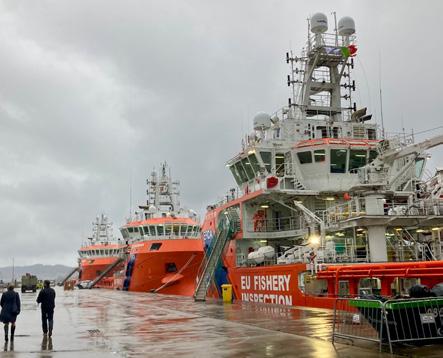
The Portuguese-flagged vessels – Ocean Guardian, Ocean Protector and Ocean Sentinel – will be used to patrol primarily in the Mediterranean and Black Seas, Western Waters and the North and Black Seas.
“The chartering of three inspection platforms marks a turning point and materialises our strong commitment to support member states’ authorities and the European Commission promoting compliance with the fisheries rules, as well as contributing for safe, secure and sustainable seas,” EFCA Executive Director Susan Steele said.
The 62-metre multi-role emergency response and rescue vessels each have a dynamic position system and have been certified to ISO 14001, the environmental management standard.
They are joined by an aircraft contracted by EFCA to carry out aerial surveillance and will also support the coastguard as well as take place in search and rescue operations, and pollution control.
EU Commissioner for Environment, Oceans and Fisheries Virginijus Sinkevičius commented, “These vessels carry out a crucial mission of making our fisheries more sustainable and promoting the level-playing field for our fishermen and women. They are an important reinforcement of
EU fisheries inspections tools. The new vessels will substantially strengthen EFCA’s contribution to monitoring fishing activities in EU waters and beyond, and delivering on our objectives.”
8 EFCA’s three new patrol vessels will serve as additional platforms for EU fisheries inspections in European and international waters
20 | MARCH 2023 For the latest news and analysis go to www.worldfishing.net NEWBUILDS
8 The new vessel will be capable for triple trawling and outfitted with a shrimp factory, an advanced fillet factory and a fishmeal and fish oil factory plant
Photo Credit: Tersan Shipyard
Photo Credit: EFCA
2024 18 20 TO Smárinn Kópavogur Iceland 2024

We look forward to welcoming you in 2024
The Icelandic Fisheries Exhibition covers every aspect of the commercial fishing industry from locating, catching, processing and packaging, right through to the marketing and distribution of the end product.

For more information about exhibiting, visiting or sponsoring, contact the events team

Visit: Icefish.is

Contact: +44 1329 825 335 or Email: info@icefish.is
#Icefish
Organised by: Media Partner:
14 th IN PERSON l ONLINE
& Awards
SEP
SAMHERJI OPTS FOR EKKÓ DOORS
Icelandic fishing company’s fresher trawler Björgúlfur has been fitted out with a new pair of fuel-efficient trawl doors
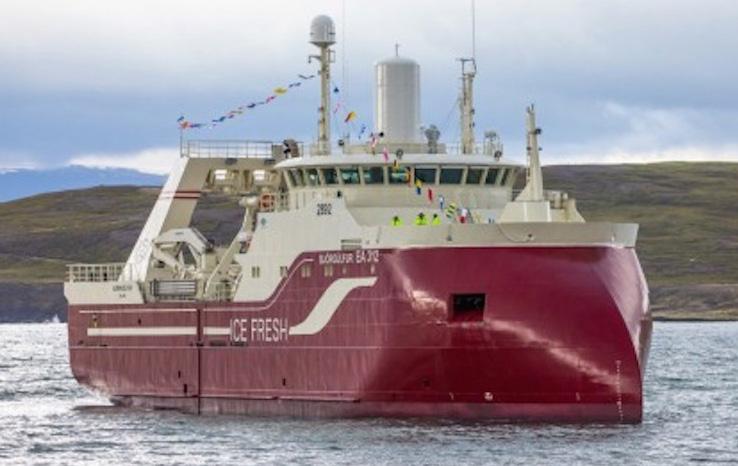
The expectation is that the innovative Ekkó trawl doors will reduce fuel consumption. Indeed, Samherji’s fleet manager Hákon Th Guðmundsson highlighted that the company has a long history of keeping a close eye on new developments and has participated in numerous such projects.
“By investing in these doors, we are looking to support a worthwhile and interesting initiative, and hopefully the next few months will demonstrate how they perform. One or two trips is too soon to draw conclusions, as conditions can be so variable,” he said.
“Fuel costs have risen dramatically recently, so there’s a lot at stake. Developing these trawl doors has taken some years, so the manufacturers have obviously been taking pains to get things right.”
The development of the Ekkó trawl doors goes back to 2012, and the first pairs of doors emerged in 2016, after which trials took place both in Iceland and elsewhere.
doors and are also towed with a much lower angle of attack. A unique air lock incorporated into the shell plating of each door allows the distance to the surface to be managed.
“This is a real advantage, plus weight can be added to or removed from the doors,” Jósafatsson said.
“Our calculations indicate that a trawler’s fuel consumption is reduced by an average of 12% compared to other trawl door designs – so we are talking about significant amounts of money. With the fuel cost at its peak, each percentage point makes a difference, and especially when the saving can reach double figures.”
Jósafatsson sailed with Björgúlfur for the first trip with the Ekkó doors and reported that it was encouraging to see how well they performed.
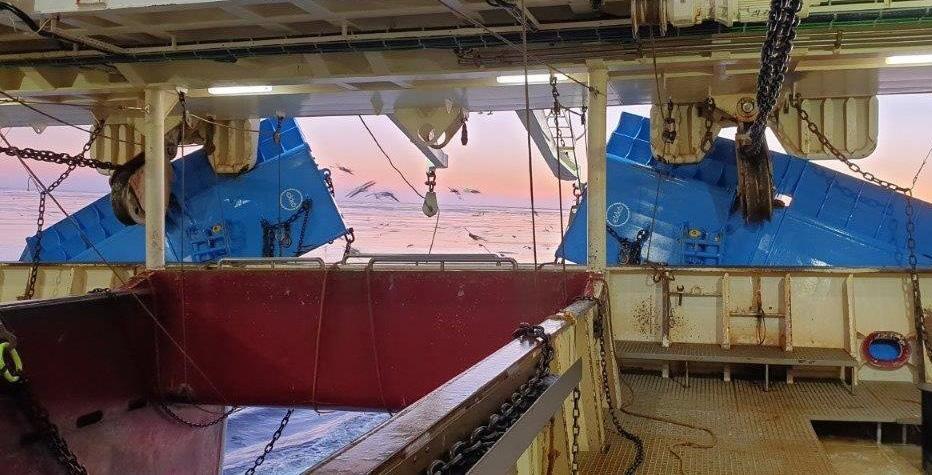
“During the trip two types of trawl were used on different fishing grounds and I was able to take pictures of the doors and record how they perform. It’s also great to sail on board Björgúlfur, which is a magnificent ship and well equipped in every respect,” he said.
According to Smári Jósafatsson at Ekkó, a great deal of development work has gone into these doors, which are now patented in the US, Europe, Russia, China and Australia. “I’ve spent a lot of time on fishing vessels testing these doors, and we have also carried out trials in testing tanks as part of the development,” he said.
“So far, 11 pairs have been constructed and we’re ready to put these on the market now.”
The pair of Ekkó doors supplied to Björgúlfur are approximately 8 square metres.
“I’m positive that these doors represent a turning point,” he said commenting that the wing shape and the design of these doors means that they square differently to other trawl
22 | MARCH 2023 For the latest news and analysis go to www.worldfishing.net FISHING TECHNOLOGY
8 Björgúlfur’s eight square metre Ekkó doors hung at the stern during the first trip using them
Fuel costs have risen dramatically recently, so there’s a lot at stake
‘‘
Hákon Th Guðmundsson, Samherji
8 Samherji’s fresher trawler Björgúlfur
ROYAL GREENLAND ORDERS CARSOE FACTORY FOR LATEST SHRIMPER
for the factory deck
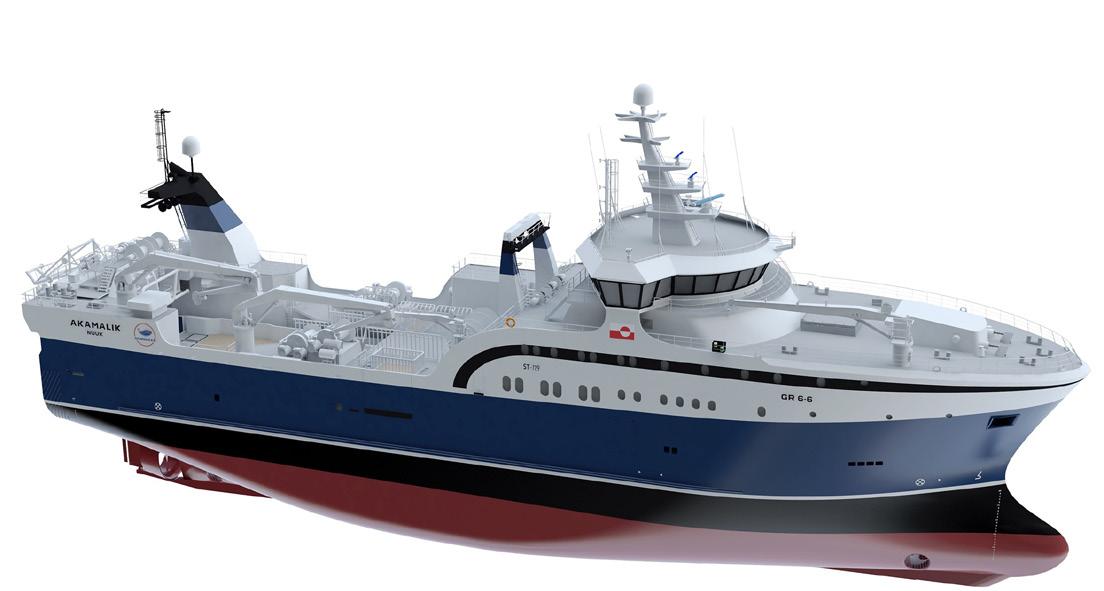
The previous four new vessels that have joined the Royal Greenland fleet in the last few years all have Carsoe processing systems on board. This latest vessel, Akamalik, is to be outfitted with a complete shrimp processing factory with a high level of automation including robot handling and automatic freezing of the processed catch. The factory will include an innovative palletizing section with three integrated palletising robots.
“On the compact factory deck of a factory trawler, it is essential to make the most of the space, all while ensuring an operationally reliable factory. With a total of three palletising and sorting robots, handling can be adjusted according to product type and production flow to keep the final part of the processing plant running smoothly,” Carsoe Group Sales Director Jeppe Christensen said.
Three robots, each overlapping the next robot’s range of motion, ensure uninterrupted production, even if one robot is inoperative. It is possible to bypass one or two robots and send the products straight to the cargo hold, if the catch does not require further sorting.
The design of the processing factory is based on Carsoe’s numerous shrimp processing systems and is almost identical to the one on Nataarnaq, including automatic bycatch separation and shrimp grading, a continuous cooking line as well as four IQF-tunnel freezers, each with a capacity of 25 tonnes per day.
The factory is also designed with a separate line for Japan-grade shrimp, including an automatic horizontal plate freezer and a masterpack line.
Stødig opts for Vónin
New Stødig under construction at the Karstensen yard in Skagen for Norwegian owners Asbjørn Selsbane is getting a full set of shrimp trawl gear from Vónin.
Stødig’s owners opted for four 1838 mesh Vónin Kodiak shrimp trawls – a design that is in widespread use and which has been shown to perform well on soft ground, and the wide horizontal spread and close ground contact make it ideal for shrimps that hug the seabed.
A key part of the Kodiak design is ensuring steady water flow that delivers the shrimp to the codends.
The Kodiak trawl is a towed on two bridles,
making it highly stable, and it is widely used for both single- and multi-rig trawl setups.
“The feedback from skippers using the Kodiak trawl has been positive ever since this design was introduced and we have many repeat customers for this trawl model,” said Vónin’s Óli Horn.
The owners of the 39.3-metre LOA, 11.5-metre breadth Stødig have gone for the full package of shrimp gear from Vónin, with four 1838 mesh trawls rigged on rockhopper footropes, a pair of 6.5-square metre Storm trawl doors, sorting grids and codends, as well as spare netting and other spare components.
8 Royal Greenland has ordered a Carsoe factory deck with innovative new features for the new Akamalik
For the latest news and analysis go to www.worldfishing.net MARCH 2023 | 23 FISHING TECHNOLOGY
The renewal of the Royal Greenland fishing fleet has been an ongoing process for the past years and now the fifth trawler in the Royal Greenland fleet has been ordered from Astilleros Murueta, and the company has gone back to Carsoe
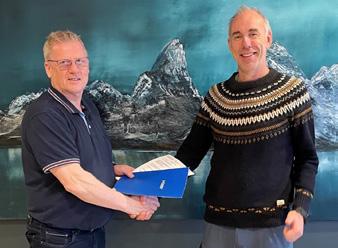
8 Vónin’s Óli Horn and Andreas Hansen of Norwegian fishing company Asbjørn Selsbane shake on the order for Stødig’s shrimp trawl gear
EU FISHING FLEET URGED TO ACCELERATE DECARBONISATION
There are many potential paths to achieve the EU’s ambition of reducing the fishing sector’s contribution to greenhouse gas (GHG) emissions by 30% by 2030 and of becoming climate neutral by 2050, maintains a new report by conservation organisation Oceana
The report, “A pathway to decarbonise the EU fisheries sector by 2050”, has been released by Oceana ahead of the European Commission’s preparations to publish a strategy to accelerate the energy transition in the EU fisheries sector.
It identifies that in terms of litres of fuel used per kg of landed fish, mobile bottom-contacting fisheries such as bottom trawlers are the most fuel-intensive fishing techniques in the EU. This high fuel dependency is largely due to bottom trawlers requiring particularly large quantities of fuel and powerful engines to drag their gear across the seabed.
Bottom-contacting gears also release large amounts of carbon stored in the seabed into the water, possibly as much as 10 to 15 times the amount of carbon released through fuel burnt during fishing activities, states the report.
It also suggests that while fishing tends to be considered a low-carbon source of food, the most fuel-intensive and least energy-efficient fishing techniques available could result in emissions comparable to those of land-based animal protein production.
and economic cost than a transition to a net-zero carbon future.”
Despite some barriers to innovation, the report identifies short and long-term solutions for reducing emissions in the fisheries sector and meeting climate targets. These include the uptake of existing technologies, such as vessel and gear optimisation, to make fishing techniques and activities less fuel-intensive, incentivising the use of alternative gears to partially replace the most energyintensive fishing gears, and implementing a full ban on the most detrimental fisheries in marine areas where blue carbon habitats are known to occur.
Oceana said phasing out the most energy intensive and destructive fisheries and replacing them with more passive fishing techniques offers multiple win-wins for the environment, the economy and society. These include contributing to reducing global GHG emissions through reduced fuel use, increased benefits from catching higher value fish with less fuel and lower operational costs, and protected carbon stores.
‘A matter of will’
It’s the responsibility of all sectors, including the fishing industry, to reduce emissions, Oceana Senior Advisor Alexandra Cousteau said. “Oceana’s report shows how adopting specific technical measures and management approaches would make it feasible for the EU fishing fleet to help achieve the EU’s environmental goals and deadlines to mitigate climate change. Reaching these objectives is now a matter of will.”
Vera Coelho, Senior Director of Advocacy at Oceana in Europe, added that the EU needs to better reconcile environmental and economic priorities in fisheries management and stop viewing one as opposing the other.
“Decision-makers must start by decoupling the fishing industry from its heavy reliance on fossil fuels and aid its transition to low-carbon alternatives, which will also help it economically. Climate inaction has a higher environmental
Oceana said its report’s findings serve to feed into the European Commission’s upcoming strategy to promote the fisheries sector’s energy transition, in the context of the EU’s efforts to make its climate, energy, transport and taxation policies fit for reducing net GHG emissions by at least 55% by 2030 (compared to 1990 levels). In the fishing sector, this translates to a reduction of 30% by 2030 compared to 2005 levels.
Missing the mark
However, the report has been criticised by European fishing representative body Europêche, describing it as “deceptive and unhelpful”. In a statement, it said Oceana had taken an overly simplistic, biased approach and does not rely on the advice of experts and scientists or offer “a fair portrayal of the great challenge” of decarbonising the European fishing fleet.
Europêche said it supports the effort to make the decarbonisation of the sector a reality but highlighted that the EU fleet has been continuously investing in technologies to reduce energy consumption, improved gear design and vessel efficiency, upgraded waste management plans, smarter procurement of sustainable materials and supplies to decarbonise the industry. It also pointed to the constant reduction of the fleet, which currently has 65,000 active vessels (75% under 12 metres), compared to 81,600 in 2018 and 103,800 in 1996.
It insists that complete decarbonisation is a serious challenge that will require time, research, funding, innovation, digitalisation, training and port infrastructures to make technologies and low-emission energy sources commercially available, cost-efficient and safe.
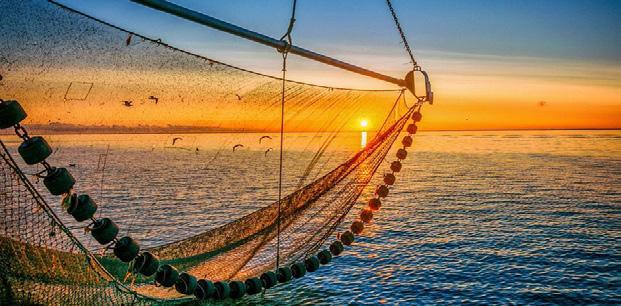
8 Commercial fishing is regarded as a low-carbon source of food but some catching methods are much more fuel intensive than others
24 | MARCH 2023 For the latest news and analysis go to www.worldfishing.net ANALYSIS
Decision-makers must start by decoupling the fishing industry from its heavy reliance on fossil fuels and aid its transition to low-carbon alternatives
‘‘
Vera Coelho, Oceana

Promote your business to the right audience in the right place at the right time. Engage with our international audience of decision makers and buyers. The World Fishing & Aquaculture multi-media platforms offer our commercial partners a wide range of opportunities for campaign delivery. We deliver bespoke marketing packages with quantifiable ROI. Hannah Bolland, Brand Manager t: (+44) 1329 825 335 e: sales@worldfishing.net www.worldfishing.net Contact us today WORLDFISHING SINCE 1952 & AQUACULTURE Reach industry professionals with World Fishing & Aquaculture MAGAZINE RECIPIENTS 14,500 DECISION MAKERS 70% PAGEVIEWS PER MONTH 53,000 World Fishing & Aquaculture’s valued content focuses on all aspects of commercial fishing, relied upon by vessel operators, fleet managers, ship’s officers, and government departments.
IRANIAN AQUACULTURE ON A PATHWAY TO GROWTH
Iran’s government has set out ambitious plans to double the country’s production in the next four years, with hopes it will ramp-up domestic seafood consumption and generate more export earnings. But despite some steady growth, such bold targets might be unrealistic, writes
Vladislav Vorotnikov
Under the latest development plan of the Iranian Fisheries Organisation (IFO), the country will seek to boost its fish and seafood production from 1.26 million tonnes last year to 2.6 million tonnes annually by the Iranian calendar year 1404 (starts March 2025), IFO chief Seyed Hossein Hosseini told WF.
To provide some context of aquaculture’s contribution to this target, last year’s production stood at 557,000 tonnes, including 57,000 tonnes of shrimp.
Hosseini, who also serves as Deputy Minister of the Agricultural Jihad said Iranian scientists believe the country could lift its marine aquaculture production to as much as 1.5 million tonnes per year. However, he added that the plan for the next four years is to raise its fish production in cages by a more modest 500,000 tonnes, primarily in the Persian Gulf and the Oman Sea.
A shift in production is also expected. Historically, Iranian aquaculture has been dominated by freshwater species, including cyprinids (Cyprinidae), trout (Salmo gairdneri), sturgeon (Acipenser), and crayfish (Palinurus vulgaris), but under the new development plan, the focus
will increasingly be on more valuable marine fish species –primarily sturgeon, seabream and seabass.
Building aquaculture cities
Breeding fish in cages is a relatively young industry in Iran, said Rajab Ali Ghorbanzadeh, Director of the IFO’s Planning and Budgeting Department. Last year, this segment’s output reached just 18,000 tonnes. And despite IFO spending on average some 10 billion tomans (approximately US$25 million) on research and development and several other initiatives in this field, the growth rate of cage farming continues to lag behind government forecasts.
Ghorbanzadeh assumes this is because of limited resources.
“This industry has vast prospects of production growth. Nearly 5,800 km of coastline can be used to grow fish in cages. However, this segment is also very expensive,” he said.
The solution, though, is already on the table. In the next four years, the Iranian government plans to additionally spend 50 to 70 billion tomans ($120 to $170 million) on encouraging investors to build cage farms.
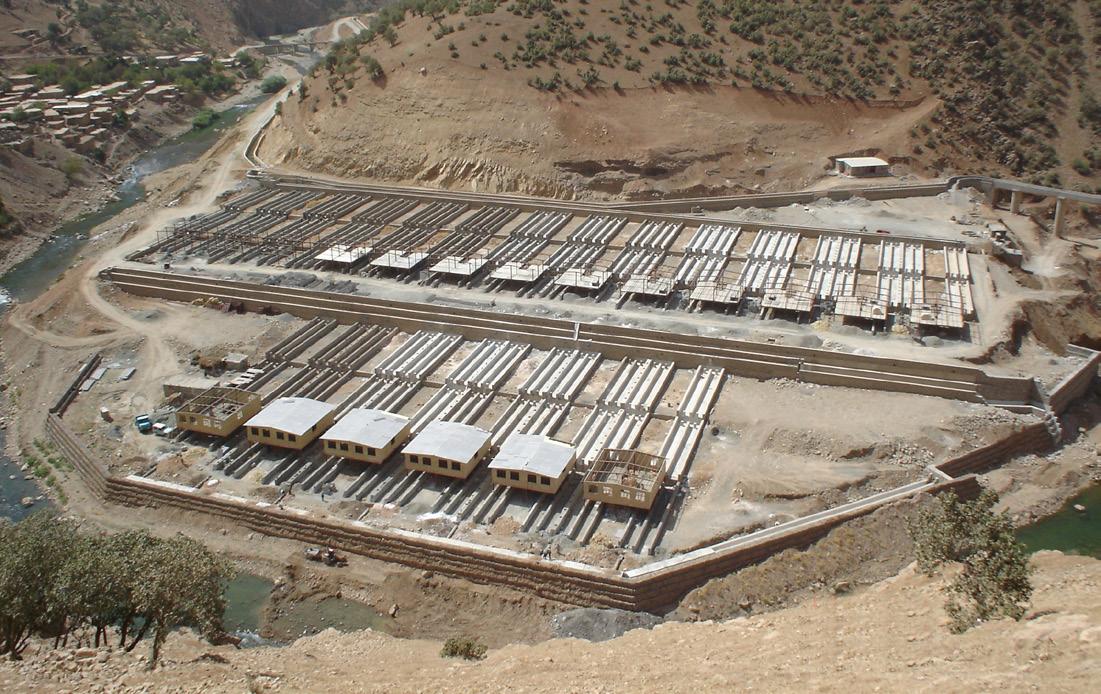
26 | MARCH 2023 For the latest news and analysis go to www.worldfishing.net AQUACULTURE
8 Iran has ambitious aquaculture growth plans
Photo Credit: Ministry of Agricultural Jihad
It’s widely felt that a significant proportion of that money should be allocated to the development of some necessary infrastructure. This is because Iranian fish farmers are suffering from Western sanctions, so to achieve the bold targets, they need aquafeeds, broodstocks and equipment.
Stakeholders suggest some of the new production capacities should be located in the five agricultural and fisheries cities that the Iranian government plans to build in the Khuzestan, Bushehr, Hormozgan, Sistan and Baluchistan provinces over the coming several years.
The idea is to create a production cluster where fishing and aquaculture will be the core business. It’s hoped these new cities will help Iran to unravel its aquaculture industry’s potential.
In theory, Iran could produce nearly 4 million tonnes of fish in cages, Ghorbanzadeh estimated.
However, some environmentalists are warning that these ambitious development plans could harm coral reefs in the Persian Gulf.
damage the mangroves and kill every reef in the Persian Gulf in a very short period of time. They also say there is a high probability of affecting fisheries resources in the neighbouring countries – a situation to be avoided in politically volatile regions.
Instead, they suggest either running the fish farms so that nutrient discharges are kept to acceptable levels, using an ironclad monitoring system, or to bring the operations on land by establishing recirculating aquaculture systems (RAS).
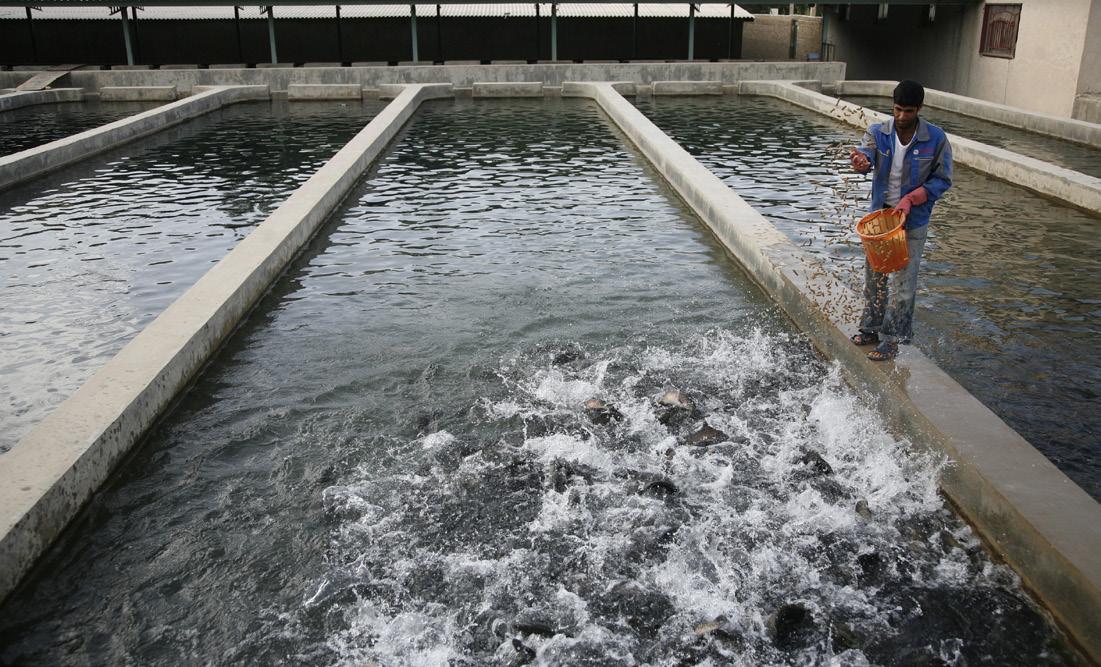
Exports for viable operations
Crucially, the planned upcoming growth should fill the Iranian treasury with much-needed foreign exchange currency. Last year, Iran exported 166,000 tonnes of fish and seafood worth $554 million. If all goes according to plan, in 1404, the exports are expected to jump to 660,000 tonnes, bringing $2.4 billion in foreign currency.
“Fishery product exports played an important role in our country’s economy in the past years when Iran faced the worst period of monetary and banking sanctions and it was difficult for exporters to return their currency to their homeland,” Ghorbanzadeh said.
Nevertheless, Iran managed to establish fish trades to numerous markets, including some large countries, like Russia and China, he added.
Now though, the Western sanctions have come at a considerable cost for Iranian fish farmers – they are currently stripped of European technologies and constantly suffer from high aquafeed prices.
In a model prepared by a group of local scientists in 2021, it was estimated that when new cage farms begin operation, most of the reefs on the Iranian side will be bathed in waters with nutrient levels higher than will allow for reef survival.
The scientists have gone on the record to say that these planned aquaculture projects have the potential to
Iran largely relies on imported feeds, and in order to tame domestic food inflation during the past several years, the government has been purchasing these at a subsidised rate for distribution amongst the country’s farmers.
But this system has faced a lot of criticism, not only in aquaculture circles but also in the poultry and dairy industries, as supplies were insufficient and distributed unevenly, thereby putting some operations at a disadvantage.
For the latest news and analysis go to www.worldfishing.net MARCH 2023 | 27 AQUACULTURE
8 Most fish farms in Iran rear freshwater species
This industry has vast prospects of production growth. Nearly 5,800 km of coastline can be used to grow fish in cages
‘‘
Rajab Ali Ghorbanzadeh, IFO
Photo Credit: Ministry of Agricultural Jihad
Therefore, in 2022, the Iranian government took steps to liberalise the aquafeed market.
Ali Akbar Khodayi, Secretary of the Iranian union of aquaculture producers and trade companies, explained that after the state control was abandoned, aquafeed prices soared, but paradoxically, Iranian producers managed to increase their exports by 33% to 30,700 tonnes in the first nine months of last year.
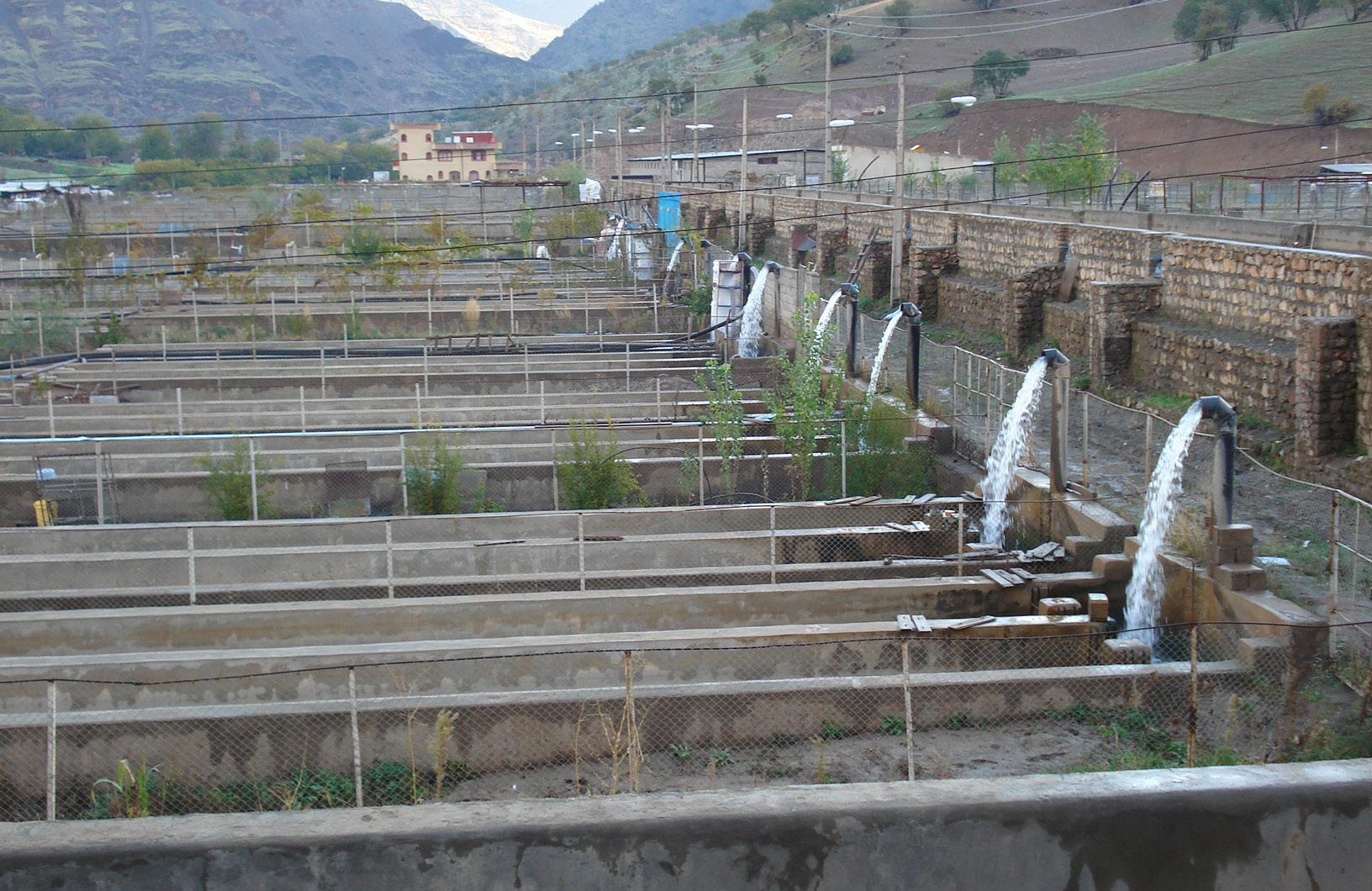
The key sales markets for Iranian aquafeeds are Iraq, Armenia, Uzbekistan and Afghanistan, but last year’s sales were also on the rise to Russia (including possibly through third-countries,) where the aquafeed market was in turmoil – also due to the Western sanctions, Khodayi said.
In general, it’s believed the export growth should help Iranian aquafeed companies to keep their operations running.
Additionally, the new programme is seeking to bolster the demand in the domestic fish and seafood market. IFO’s Hosseini estimates that this amounted to just 13kg per capita last year, compared to a 25kg world average.
The production growth is also expected to lower prices in the Iranian market.
In general, the Iranian authorities see bolstering domestic food security as a paramount task. Low living standards are believed to be one of the factors fuelling the unprecedented protests that have been taking place on the streets of Iran over the past several months.
Shrimp need a market
A significant part of the growth in Iranian aquaculture production in the next four years is expected to be achieved by the shrimp industry. In the current Iranian year, shrimp production is projected to rise 5% to 61,000 tonnes, IFO estimates.
The organisation also stressed that this sector has a high level of self-sufficiency, as the domestic production
of shrimp feed currently stands at 90,000 tonnes, and broodstock at 5.5 million units per year.
However, as the domestic consumption of shrimp remains relatively low, almost the entire growth in production could go to expanding overseas sales.
During the first nine months of the current Iranian year, the country exported 26,400 tonnes of shrimp, 5.5% less than in the previous year. But the trade picked up pace in December when a monthly record 5,400 tonnes went to foreign markets, Khodayi said.
A decrease in exports to China – from 12,000 tonnes in the first nine months to only 3,000 tonnes in the same period of the current Iranian year – could have dealt “a fatal blow for the industry”, Khodayi highlighted. But Iran’s shrimp farms were saved by rising exports to Russia, which totalled 13,000 tonnes, compared to only 3,171 tonnes in the same period of the previous year.
The current turmoil, caused by the Ukraine conflict, could still derail the growth plans, however. Russia increased its shrimp buying from alternative destinations after imports from Western countries came to a virtual halt. But it’s also making efforts to boost domestic shrimp production so as to lessen its dependency on imports.
Khodai also advised that some countries, like Turkey, Oman and Lebanon, increased their shrimp imports from Iran, and supplies also started to go to some new markets, including Belarus and Romania.
With IFO’s plans envisaging that Iran could boost its shrimp production to 130,000 tonnes by 2025, almost all the additional volume will probably be destined for export, although its currently not clear to which markets.
In the meantime, observers believe the future of all Iranian fish farming industry will most likely depend on political developments, as the easing or lifting of Western sanctions would probably help the country fulfil its new production and export goals.
28 | MARCH 2023 For the latest news and analysis go to www.worldfishing.net AQUACULTURE
8 Iran’s producers are challenged by expensive aquafeeds
CIEL AQUACULTURE PROJECTS UNDERWAY
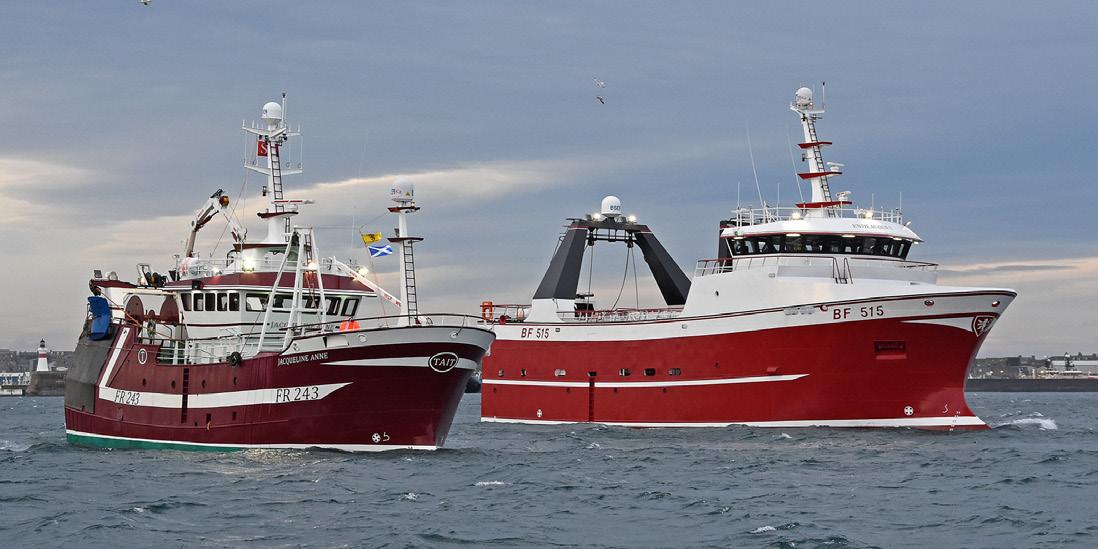
A project assessing the best cultivation methods for growing seaweed to feed to egg laying hens is among four innovative projects being supported by the UK’s Centre for Innovation
Excellence in Livestock (CIEL)
This is the first aquaculture-related seed funding initiative from CIEL which aims to help accelerate innovation, research and development in the sector with a focus on two themes: life cycle assessment (LCA) of aquatic species and using seaweeds to create a link between aquatic and terrestrial food production.
The projects in receipt of support include a seaweed protein biomass cultivation system project run by seaweed start-up company Seaweed Generation Ltd. This will explore different cultivation methods for different species of seaweed, while also assessing the palatability for feeding the seaweed to egg laying hens.

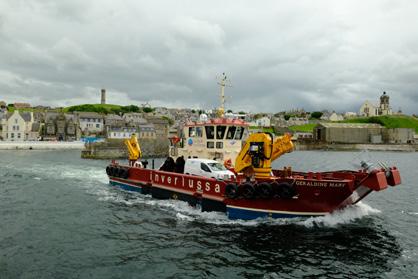

Other projects in receipt of funding include a study assessing the greenhouse gas emissions from pangasius production in Vietnam. Another project will focus on the life cycle analysis of UK-grown warmwater prawns. The final project is focused on enhancing the LCA of cleaner fish as a sustainable tool for sea lice management, with improvements that could have positive impacts on the salmon industry in Scotland.
The four projects will be completed in 2023.
CIEL is one of the UK’s four Agri-Tech Centres, established as part of the government’s Agri-Tech
Strategy. It works in partnership with many of the UK’s leading livestock research institutions and a network of industry members spanning the entire food supply chain – from pre-farmgate to retail.
Over the past five years, it has invested £70 million in UK livestock research facilities.
8 These seed projects are designed to be developed further in the future – to help drive the industry forward
New
Refits + Repairs, Conversions & Fabrications
For the latest news and analysis go to www.worldfishing.net MARCH 2023 | 29 AQUACULTURE
ww w m a cd uf f s hip ya rd s. c om Facilities in Macduff, Bukie and Fraserburgh capable for vessels up to 65m long. Part of the Macduff Group (Macduff Shipyards, Macduff Crane Hire, Macduff Profilers and Macduff Precision Engineers). T. 01261 832234 (Macduff) / 01346 519163 (Fraserburgh) E. info@macduffshipyards.com
We SPECIALISE in
Builds,
SEAWEED FIRM EYES GROWTH
Norway’s Seaweed Solutions AS has secured NOK 46 million in new funding from a number of private investors as well as World Wildlife Fund (WWF-US) – putting the company in a position to ramp-up production and become one of Europe’s leading seaweed companies
To lead the expansion, Ole Christian Norvik has joined the company as CEO. He brings broad management and production experience from land- and sea-based aquaculture for more than 20 years at companies like Mowi and Norway Royal Salmon (NRS).
“After many years in traditional aquaculture I look forward to joining the exciting and climate friendly seaweed industry, working with the competent and experienced team at Seaweed Solutions. I believe we are well positioned in a growing sector and have all the elements for expansion in place. This will ensure supply of world-class raw materials that will contribute to a sustainable blue growth in the future.” Norvik said.
The board of directors is also strengthened with three new members: David Buckeridge (formerly with Paine Schwartz, and AstraZeneca), Kamel Gabriel El Khaloui (Scanbio, and formerly with Diana) and Alex Mayer Wolf (formerly with Nidera).
“Being able to make a positive impact on the ocean is deeply rooted in all the people working for our company. WWF’s participation in Seaweed Solutions is perfectly aligned with our mission. We are equally excited about the entry of an agribusiness-background strategic investor that brings experience from land-based crops and seed business that will bring valuable insight for Seaweed Solutions.” said Pål Bakken, Founder of Seaweed Solutions AS.
According to Paul Dobbins, WWF-US Senior Director of Impact Investing and Ecosystems Services, seaweed production has the potential to help address the planet’s dual climate and nature crisis.
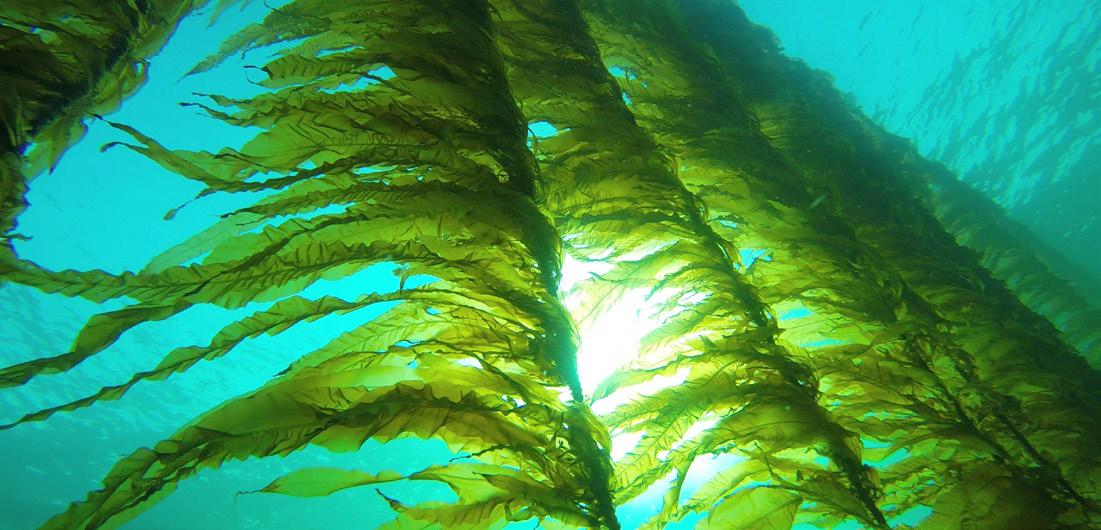
“Seaweed is fast-growing and highly efficient at absorbing CO2 and other excess nutrients from the ocean. With minimal impacts on freshwater or land, its low carbon footprint can help mitigate the worst impacts of climate change while providing a nutritious source of food for our
growing population.
“But unlocking the many benefits seaweed provides will only be possible by expanding farmed seaweed production. WWF is providing capital to Seaweed Solutions to support them as they deliver sustainable food and feedstock at a scale that will positively impact both people and the planet,” he said.
Seaweed Solutions was founded in 2009 and was the first company to start farming seaweed in Norway. It is fully integrated with seed and seedling production in Trondheim and seawater operation at Frøya.
Meanwhile, a new European initiative has been launched to look at replacing the single-use plastic film typically used to preserve frozen fish with a biodegradable/ edible alternative.
With support from the European Maritime and Fisheries Fund (EMFF), the SeaFilm food packaging project aims to create a substitute for single-use plastic film. Its new solution is based on bioactive seaweed extracts and edible algae.
As well as helping to conserve frozen seafood for longer while maintaining quality, the project being undertaken by researchers at the Polytechnic University of Leiria in Portugal is in line with the EU’s objectives of fighting plastic pollution, reducing food waste and boosting the algae sector.
After defrosting the frozen fish, the biodegradable film can either be disposed of or eaten along with the fish.
The film has been validated for shelf-life extension in frozen salmon, significantly reducing freezer burn. Recent results also indicate that it might also extend the shelf-life of seafood after defrosting, by delaying microbial growth.
SeaFilm’s research team has been approached by industry to produce biofilms for other species such as cod and hake.
8 Since its inception, Seaweed Solutions has invested €24.5 million in research and development
30 | MARCH 2023 For the latest news and analysis go to www.worldfishing.net AQUACULTURE
Known as the worlds largest stockist of mooring- and deck equipment


We
Block Liners

Aquaculture
KIKKONET
Aquaculture Nets/Cages
The net for technology-driven fish farming

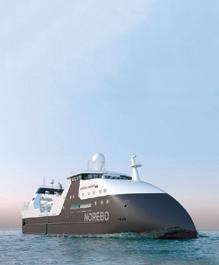
KikkoNet is made of UV stabilised, extremely strong and lightweight Polyethylene Terephthalate (PET) monofilaments, woven into a double twisted hexagonal mesh.
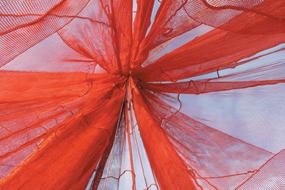
Mayank Batra and Marco Montagnoli
Tel: 0060 126 883 709 info@kikkonet.com
www.kikkonet.com
High quality antifoulings and coatings for fishfarming net pens


Netwax E4 Grenline
Netrex AF
Netpolish NP
+47 66 80 82 15 - post@netkem.no

A Global Leader in Frozen Food Packaging
Beck Pack Systems A/S
DK-3700, Roenne, Denmark
Tel: +45 56 95 25 22 info@beck-liner.com
Beck Pack Systems, Inc. Seattle, WA, USA


Tel: +1 425 222 9515
ISO-9001, ISO-22000, FSSC 22000 certified manufacturer and supplier of block liners, folding cartons, and freezer frames for the international food processing industry. To find the agent in your region visit: www.beck-liner.com
Fish Block Cartons
Cartolit A/S.
Skovdalvej 30, 8300 Odder, Denmark
Tel: +45 86784099
Fax: +45 86784060
Email cartolit@cartolit.dk

Website www.cartolit.dk
Fishing Gear
Email: correo@apoutada.com
Website: www.apoutada.com

Manufacturer of fishing hooks since 1985. Steels and internationally proven designs and best warranty. Specialized supplier of a wide range of material for longline fleet.
ASANO is a supplier and manufacturer of high-quality stainless steel fishing gears sales@asano-global.com https://asano-global.com/

Fishing Gear
Deck Machinery
info@guycotten.com www.guycotten.com

ALL STAINLESS STEEL PRODUCTS DESIGNED IN JAPAN

Metallurgica Abruzzese S.p.a. Strada della Repubblica, 58 43121 Parma – Italy
Tel: +39 0521 221411
Fax: +39 0521 221449
email: a.contini@cavatorta.it web: www.cavatorta.it/EN
Cavatorta Group is a dynamic European manufacturer that specializes in the production of galvanized and PVC coated multifunctional wire mesh products. Our SEAPLAX marine mesh uses include lobster and crab traps, oyser trays, aquaculture and general marine applications.
1-2 Shing Nung Road, Tungkang, Pingtung,Taiwan
Tel: 886-8-8331100~9
Fax: 886-8-8327022
E-mail: export@chingfa.com.tw

Website: www.chingfa.com.tw
industry
The Crosby Group is the world’s leading manufacturer of rigging, lifting, and material handling hardware. With a global network of more than 3,000 authorized distributors and unmatched local support, Crosby sets the standard for quality, training, and technical expertise in the eld.
Specialized manufacturer & exporter of: Hi-tech 7 tuna purse seine nets, Super 20 aquaculture knotless nets (Raschel type), nylon longline & its spare parts, nylon fishing line, nylon mono & multi-mono nets, nylon twisted and braided nets, PE trawl nets, ropes, twines, floats and etc. Bridon-Bekaert
www.thecrosbygroup.com

For the latest news and analysis go to www.worldfishing.net MARCH 2023 | 31 PRODUCTS & SERVICES DIRECTORY
Ropes Group Tel: +44 (0) 1302 565108
Premium quality ropes for the fishing
A Poutada Riveira – A Coruña – Spain Tel.: +34 981 87 60 08 Tel.: +34 686 930 025 Fax: +34 981 87 43 48
us at: (+47) 56 32 68 50 sales@sotra.net
Contact
- www.sotra.net
& Chains
have over 20 000 tonnes of anchors, chains, shackles, buoys and other mooring equipment available from stocks in Norway, Netherlands and China Anchors
SA BP 538 29185 CONCARNEAU Cedex FRANCE
2
Email:
Guy
main
protective
for
Clothing WORLDFISHING SINCE 1952 & AQUACULTURE To advertise in the World Fishing Directory
Bolland
+44 1329 825335 www.worldfishing.net Fortune Net_Directory Nov 2021 copy.indd 1 09/11/2021 10:25
GUY COT TEN
Tel: +33
98 97 66 79
Cotten is the
manufacturer of ver y high quality
clothing, boots, lifejackets and sur vival suits
fisher men and processors.
contact Hannah
on
PRODUCTS & SERVICES DIRECTORY
Fishing Gear
EUROROCK NV ALLEWERELT
Nv Allewerelt, Biekorfstraat 60, 8400 Oostende, Belgium
Tel: +32 478 960744
Email: laurent@eurorock-belgium.com www.eurorock-belgium.com
Contact: COO Laurent Messiaen
Manufacturers of steel bobbins, rubber bobbins, spoked and bunt bobbins, rubber disc (tyres, conveyor and moulded discs), rockhoppers, spacers
Shirmpgear We can make other rubber products as clients needs
Rua da Cerfil (Cap. Gramaxo)
P.O. Box 1029, 4471-909 Maia PORTUGAL
Tel: +351 22 961 9200
Fax: +351 22 960 5757
Email: sales@lankhorsteuronete.com www.euronete.com
Contact: Mafalda Gramaxo
Salvador Castro
Producer of the recognized brands:
Netting: Euroline®, Eurocross®,



Premium®, Premium Plus, Lankoforce®
Wire Ropes: Eurowire® and Europact®
Fibre Ropes: Lankoforce®, Eurosteel®, Tipto® Super 12 net twines.
Recently Launched!
Euroline Tipto® / Eurostone®
TRUSTED BY THOSE FEEDING THE WORLD!
Fishing Gear
Fishing Gear
SICOR
INTERNATIONAL LIMITED
Gore Cross Business Park Bridport Dorset DT6 3UX
Tel: 01308 428 224
Fax: 01308 428 228
Email: sales@sicor-int.com

Website: www.sicor-int.com
Contact: Toby Eeles
SICOR
INTERNATIONAL LIMITED
Unit 3
Murcar Trading Estate, Denmore Road, Bridge of Don Aberdeen, Scotland, United Kingdom
Tel: 01224 707560
Fax: 01224 707561
Email: aberdeen@sicor-int.com
Contact: Gary Mitchell
Manufacturers of all types of fishing ropes, netting and twines including poly steel ropes and compact netting.
Fish Processing
Fish Processing Machines - FPM - for smaller fish



Fish Processing
SEAC FPM-400 Nobbing and Filleting machine now also with Automatic Feeder
SEAC AB
Industrigatan 8 386 32 ISLAND OF ÖLAND SWEDEN
+4648535200 +46704391454 info@seac.se
PIONEER IN HIGH-QUALITY FISH CONTAINERS
PROTECTING FRESHNESS AND QUALITY
BORGARPLAST, industry leader since 1983.


WE WELCOME YOU TO OUR BOOTH AT SEAFOOD EXPO GLOBAL IN HALL 3, NO. 3BB301
borgarplast.is/en
Langerbruggekaai 15 9000 • Gent • Belgium
Tel: +32 9 376 95 95
VMK pelagic processing solutons combines high performance machines with small square meter usage and cost e.cient maintenance.
solutions combines high cost efficient maintenance.
Fax: +32 9 376 95 96
info@cretel.com www.cretel.com
Cretel is manufacturing in Belgium
FISH SKINNERS FISH SCALERS
Kroma A/S
RÆVEVEJ 22 - DK-7800 SKIVE
Phone: +45 9752 2099
Fax: +45 9752 0572
Web: www.kroma.dk
E-mail: kroma@kroma.dk


Kroma A/S is a supplier of high quality de-scaling, gutting and filleting machines for all kind of fish species. Specialist in handling of roe, and filleting of soft fish species like mackerel.
TRAUST Knowhow
Trusted solutions for 40 years
Advanced raw material usage

Founded in 1927, Sounete focuses its activity on the design and manufacture of hardware for trawling/ industrial fishing: steel and rubber bobbins, rubber spacers, trawl doors, blocks, swivels, large size thimbles, shackles, and other metal gear, including customized models

SOUNETE INTERNACIONAL, S.A.
Rua da Seara 588, 4430-291 Vila Nova de Gaia, PORTUGAL
Sales: André Pinho Phone: +351 227 860 930
GSM: +351 917 207 052
Email: andre.pinho@sounete.pt www.sounete.pt
Fornandergatan 1, 392 33 Kalmar, SWEDEN +46 (0) 480 945 12 vmk@arenco.com www.vmkfish.com
Fornandergatan 1, 392 33 Kalmar, SWEDEN +46 (0) 480 945 00 vmk@arenco.com
-we make fishing more profitable
VÓNIN LTD


VACUUM PACKAGING MACHINES



INDUSTRIAL WASHING AND DRYING EQUIPMENT



Consult us and take advantage of our worldwide experience and expertise.
Injectors and Protein-Tec
Increases yield natural way
P.O. Box 19 FO-530 Fuglafjørõur
P.O. Box 19
Faroe Islands
FO-530 Fuglafjørður
Faroe Islands
Tel: +298 474 200
Tel: +298 474 200
Fax: +298 474 201
Fax: +298 474 201
Email: info@vonin.com
E-mail: info@vonin.com
Web: www.vonin.com
Web: www.vonin.com
Contact: Bogi Non
Contact: Eystein Elttør
Since 1958, FAIVRE Group designs, manufactures and commercializes high quality machines for the aquaculture industry.
Low pressure injection
Adjustable injection levels
Packing yield increase
Increases yield natural way
Protein in Protein
Reduced drip
Lower cook and chill loss
Vónin is a major supplier to the fishing fleet and aquaculture industry with branches in the Faroe Islands, Greenland, Canada, Denmark and Norway. Vónin manufactures pelagic trawls, semi pelagic trawl, shrimp trawls, bottom trawls, sorting grids, crab pots, net cages, mooring systems and net washing systems.
Manufacturer of pelagic trawls, semi-pelagic trawls, shrimp trawls, various bottom trawls, purse seine nets, fish farming nets and sorting grids. Vónin is a major supplier to the North Atlantic/Arctic fishing fleet. We have all accessories in stock.
Today, Faivre goes further and offers its know-how to the fishing industry! www.faivregroup.com

No chemicals
Sale: +354 516 3000 traust@traust.is www.traust.is
32 | MARCH 2023 For the latest news and analysis go to www.worldfishing.net
Cretel Directory Dec 2020-Jan 2021.indd 1 27/11/2020 08:39 WORLDFISHING SINCE 1952 & AQUACULTURE To advertise in the World Fishing Directory contact Hannah Bolland on +44 1329 825335 www.worldfishing.net Fortune Net_Directory Nov 2021 copy.indd 1 09/11/2021 10:25
Fish Processing

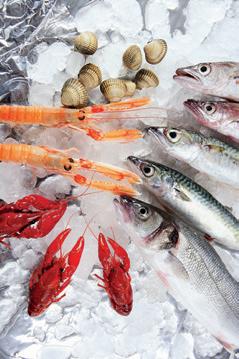
LIMA are specialists in the manufacture of meat-bone separators, deboning and desinewing machines for poultry, pork, fish, lamb and beef industries. 70 different models are available from 100 to 20.000 kg/hr. (220 – 44.000 lbs/hr).


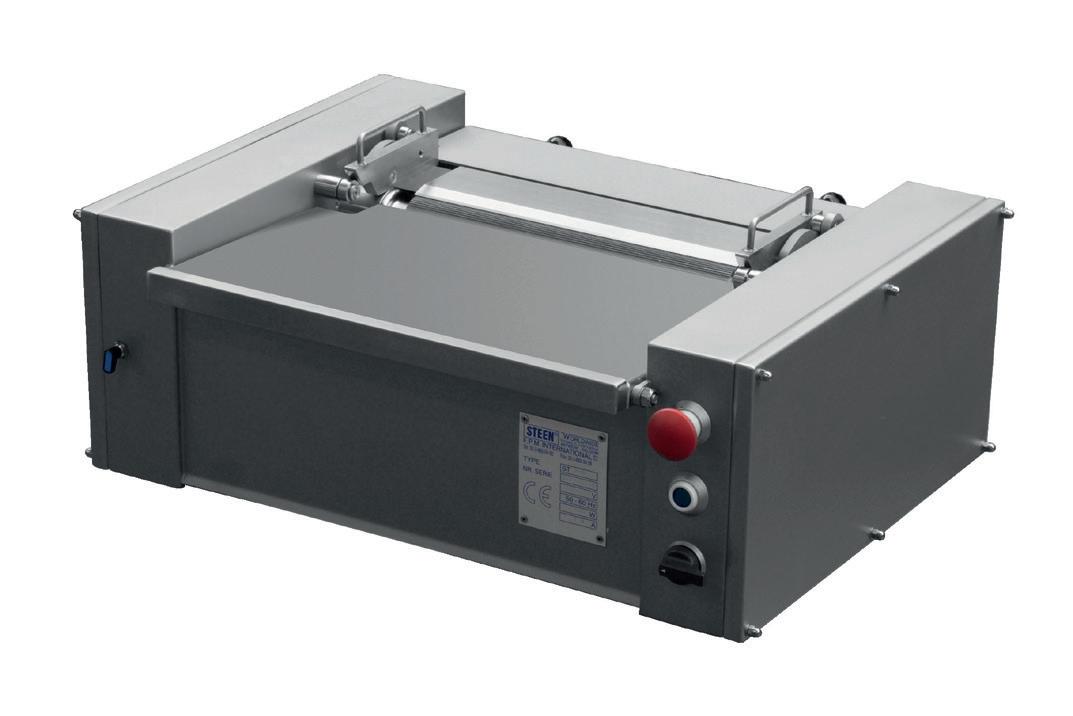




LIMA S.A.S.
456 Route de Rosporden
Z.I. du Guélen • 29000 QUIMPER Tel. : 02 98 94 89 68 • Fax : 02 98 94 89 69 E-Mail : lima@lima-france.com www.lima-france.com
Netting
Serious Fishing Gear for Serious Fisherman
Fishing Net, Rope, Float, Crab Trap, Long Line Fishing.
E-mail: ericdu@dnsnetting.com www.fishingnetchina.com
IRAS A/S Gammelby Mollevej 3

DK-6700 Esbjerg, Denmark Tel: +45 7611 4949


Email: iras@iras.dkWeb: www.iras.dk Ice
IRAS is supplying the modern fishing and aquaculture industry with innovative solutions within: Pumping, Classification,



BELITRONIC SWEDEN AB
Rattarevagen 7, S-872 63 Lunde, Sweden
www.belitronic.se


Top of the line Jig fishing machine – BJ 5000Ex. Friendly, Flexible and Intelligent! Reliable, effective and recently improved Jig Fishing Machine, special programs on request. The BJ 5000Ex can reach fishing depth fast!
No.88, Di An Truong Tre St., Di An Town, Binh Duong, Vietnam Tel: (+84) 916 225 068 (+84) 251 378 9125 sales@forevernetco.com

Fortune Net Group of Companies No.42 Sto. Domingo Ave, Brgy. Matalahib, Quezon City, Metro Manila, Philippines Tel: 0063287125362, 0063287119238 Fax: 006387125351, 0063287110169


Email: export_fntgrp@yahoo.com melmorales_728@yahoo.com alextanfortune@yahoo.com
Contact person: Mel Morales, Alex Tan
Braided knotted nets; Twisted knotted nets; Raschel knotless nets; Monofilament double knots net; PE Shade nets. All types of twines and ropes, Specializing in: Tuna & Sandrine Nets; Purse Seiners; Mono and Multi gill nets; Nylon & HDPE Trawl nets; Aquaculture Fence & Cage nets; Safety and Sports nets; Ornamental nets.

For the latest news and analysis go to www.worldfishing.net MARCH 2023 | 33
DIRECTORY
PRODUCTS & SERVICES
Plants for Fish and Seafood
Ice
Plate Ice up to 100t /
Ice Storage with Automatic Rake
Systems for Ice Conveying and Weighing Built in a Container or on a Frame info@kti-plersch.com
Flake
&
24h
System
Ice
Worldwide #1 in
Factories
BJ 5000Ex
Tel:++86 631 5306208 Fax:++86 631 5306209 Cell/Whatsapp:++86 138 0631 1778 D&S Fishing Directory Dec20-Jan21.indd 1 24/11/2020 16:15
www.forevernetco.com Forever Industries
Co., Ltd.
plate freezers 11/01/2021 13:11
Fishing nets, aquaculture nets, agriculture nets, sports nets, all types of ropes and twines. Manufacturing
www.frost.is | frost@frost.is WE PROVIDE • Energy savings • Environmental friendly solutions • Natural refrigerant’s Ice & Refrigeration WORLDFISHING SINCE 1952 & AQUACULTURE
advertise in the World Fishing Directory contact Hannah Bolland on +44 1329 825335 www.worldfishing.net Fortune Net_Directory Nov 2021 copy.indd 1 09/11/2021 10:25 Know-how in food processing ! Made in Germany WORLDFISHING SINCE 1952 & AQUACULTURE To advertise in the World Fishing Directory contact Hannah Bolland on +44 1329 825335 www.worldfishing.net Fortune Net_Directory Nov 2021 copy.indd 1 09/11/2021 10:25 Ice & Refrigeration
To
Netting
Netting
World’s leading supplier of Fishing nets (our globally trusted brands are SNG, Sapphire and Olivene), assembled trawls, Purse Seines, Aquaculture cages and anti-predator nets for aquaculture industry, ropes for the fishing, aquaculture and shipping industry. Our products are exported to over 60 countries globally.
Garware Technical Fibres
Plot No 11, Block D-1, MIDC, Chinchwad, Pune, India
Web: www.garwarefibres.com
Tel: (+91)2027990381
Contact: Vivek Kumar
Email: vkumar@garwarefibres.com
Mobile: +917767802806
KING CHOU MARINE TECHNOLOGY CO., LTD.


Van Beelen
Van Beelen Group bv +31(0)255 560 560 info@vanbeelengroup nl vanbeelengroup.nl
P E vb-ropes.com D
Propulsion
Caterpillar Marine provides premier power solutions in the medium and high-speed segments with outputs from 93 to 16,800 kW in main propulsion and 10 to 16, 100 ekW in marine generator sets.
Purse Seine Nets
Catch all the fish all
the time!
AS Fiskenett is the only company in Norway to design, manufacture, maintain and repair commercial fishing nets for both offshore and coastal fishing fleets.

Contact Hugo Ulvatn, MD, to learn how we can help you.
Call: +47 48009504
Email: sales@fiskenett.no
Info: www.fiskenett.no
NET MANUFACTURERS
We are a professional fish net maker and provide assembly & design service for various nets. We use Nylon, HDPE, PP, PE to make purse seine net, fish farming cage net for smolt, grower, growout, predator & anti-bird, trawl net, trap net, safety net, sports net, twine, float and steel wire. The making of fish nets can be twisted, braided, super-knot knotless or raschell knotless, mono or multi-mono filaments.
Website: www.king-net.com.tw
Email: sales@mail.king-net.com.tw
Main phone No. +886 7 535 2939
Fax No. +886 7 535 2938
23F-2, No.2 Chung Shang 2nd Road
Kaohsiung City, Taiwan , Zip code: #806
Join
How
manufactures a full range of products for fishing applications: Steel Wire Ropes: Green Strand®, Super Yellow Fin®, Super Atlantic®, Zincal® Compact and several other constructions also with possibility of a plastic core impregnation. Combination Ropes: we produce combination ropes, both in 4 and 6 strands. Synthetic Ropes: Braided/Twisted and Double Braided ropes with recognized brands such as Astra Line®, Libra Line® and X Trema Line®
• Keynote Address: Iceland’s Use of Captured Seafood By-Products
Jonas R. Vidarsson, Director of division of value creation, Matís
• Keynote Address: What role may byproducts play in the future of marine ingredients?
Petter Johannessen, Director General, IFFO
• Innovative Technology unleashing fish waste value potential
Wenche Uksnay, Cluster Manager, NCE Blue Legasea
• The Journey to 100% Utilisation
Erla Ósk Pétursdóttir, Managing, Director, Marine Collagen ehf
Note: recordings of the sessions are also available
To make your purchase, or download the papers visit: icefishconference.com contact: +44 1329 825335 or email: info@icefishconference.com
#FishWasteForProfit
Media Partner: WORLDFISHING




SINCE 1952 & AQUACULTURE
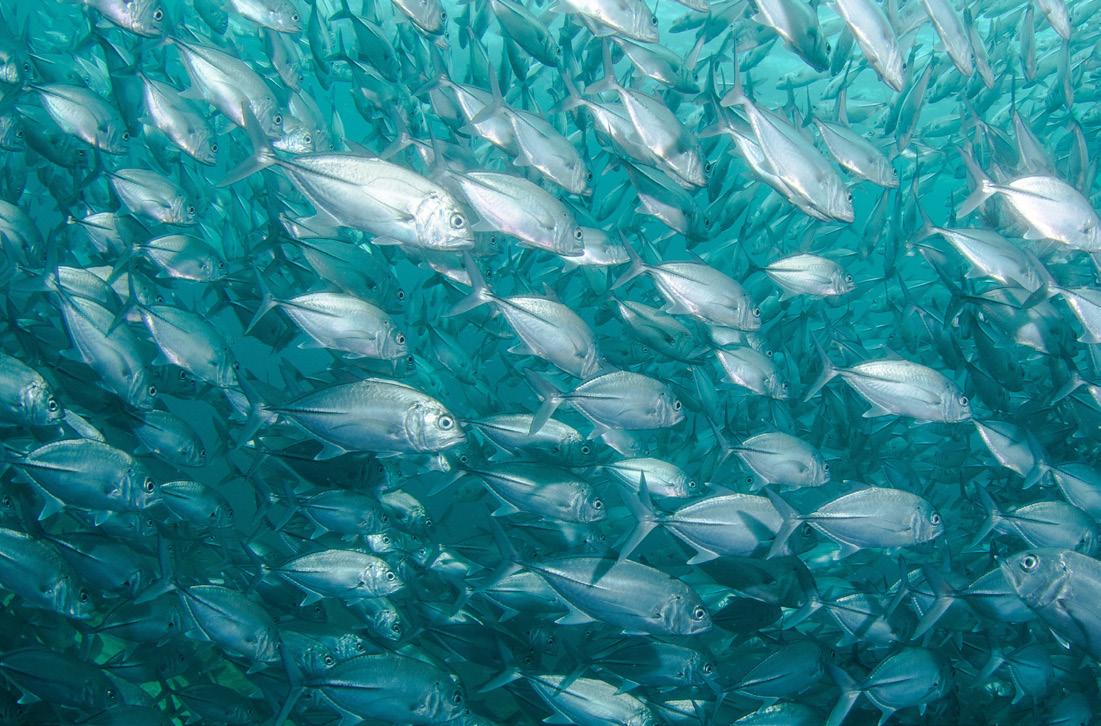
34 | MARCH 2023 For the latest news and analysis go to www.worldfishing.net PRODUCTS & SERVICES DIRECTORY WORLDFISHING SINCE 1952 & AQUACULTURE To advertise in the World Fishing Directory contact Hannah Bolland on +44 1329 825335 www.worldfishing.net
NETTING ROPES TWINES
12
d D3/D16
Enkalon
ropes
the
High tenacity Supercatch polyester
ducts and HDPE in Powerblue and Powergreen We make w
IJmuiden Netherlands
ropes an
nets with Dyneema®.
® nylon netting and
with
highest strength in the industry
pro
hat works for you.
www.cat.com/marine Tel:+491719629676 Caterpillar_ID_June 2021.indd 1 09/06/2021 13:24 BORN TO FISH. Her family’s fishing legacy. Powered by John Deere. MEET CAPTAIN MICHELLE RITTENHOUSE > OLIVEIRA SÁ Rua do Outeiro, 906, 4470-150 Gemunde I Portugal Tel: +351 22 943 49 00 Fax: +351 22 943 49 49 Email: salvadorcastro@wireco.com
Miguel Oliveira Sá
Oliveira
Contact:
/ Salvador Castro
SÁ
2024
5th
to maximise return on investment from potentially discarded parts of the catch that can be turned into high value products for non-food sectors.
Operated by: us in 2024
2022 Downloads still available including:
Ropes & Net Coatings
REDES SALINAS S.A

Carretera de Catral, 30
03360 Callosa de Segura, Alicante, Spain
Tel: 0034 965 310 408
Tel: 0034 965 310 354
Email: redessalinas@redessalinas.com www.redessalinas.com
Contact: Srta. Carmen Salinas
Manufacturer of special purse seining nets for tuna and horse mackerel, also trawl gear, ropes and twines
I-COATS N.V.
K. Mercierlei 29 • B-2600 Berchem • Belgium
Tel: +32 32 81 73 03 • Fax: +32 32 81 73 04 info@i-coats.be • www.i-coats.be

Contact: Koen Van Goethem
We offer environmentally friendly, waterbased coatings for ropes and nets made out of all types of synthetic fibers.
(ARAMIDS, HMPE, LCP , …) Tailor-made products developed to the needs of the market. Waxes, acrylics, polyurethanes, pigments and specialty coatings (LAGO 45, LAGO BF 10A, ICO-LUBE 10, ICO-THANE 10, ICO-THANE 32, ICO – THANE 96, ICO-THANE 98) All coatings are compatible, allowing development for individual solutions.




REACH PREREGISTERED
WORLDFISHING
To advertise in the World Fishing Directory contact Hannah Bolland on +44 1329 825335 www.worldfishing.net
1 09/11/2021 10:25
MARKUS LIFENET LTD

Breidvangur 30
IS-220 Hafnarfjordur, Iceland
Tel.Iceland: +354 5651375
Tel. UK: 01525 851234
Email: sales@markusnet.com
Contact: Petur Th. Petursson
We specialise in the development and manufacture of man overboard recovery systems suitable for all types of fishing vessels, such as the Markusnet and the Markus MOB Scramble-net/Cradle.

SINCE 1952 & AQUACULTURE
PEGUET & Cie 12 Rue Des Buchillons 74105 Annemasse, France
Tel: +33 450 95 54 54
Fax: +33 450 92 22 06
E-mail: info@peguet.fr

Website: www.peguet.fr
Manufacture of Maillon Rapide® quick links for permanent connection in aeronautics, architecture, rigging equipment, industrial supplies, sailing, parachuting & paragliding, professional fishing, tramways facilities, climbing. All product range self-certified. YOUR PARTNER SINCE1941
Trawl Makers
AKVASERVIS TRAWLS
Email: office@akvaservis.lt
www.akvaservis-trawl.com

Tel: +370 46 365 363
Las Palmas - Baltic - Murmansk
Designer & manufacturer of Pelagic, Semi-Pelagic & Bottom trawls since 1992 with active trawls in North Atlantic, Far-Eastern & Western-African fisheries.

COMPETITIVE PRICES WITHOUT COMPROMISE IN QUALITY
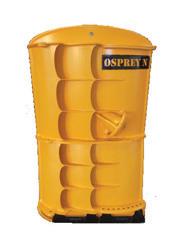
Complete range of high efficient trawl doors for demersal fishing, “off the seabed” semi-pelagic fishing and pelagic fishing.
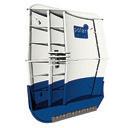
Reykjavík, Iceland atlimarj@polardoors.com www.polardoors.com
Estrada de Fortons 23 36812 Redondela (Pontevedra) Spain
Tel: +34 986 20 33 12
E-mail: info@grupoeurored.com

Website: www.grupoeurored.com
Hi tech design and production of pelagic and bottom fishing trawl systems. Nets and deck material for tuna purse seiners, inshore fishing and longliners. Everything necessary for fishing activities:
MORGERE trawl doors, COTESI nets, ropes, mooring, BRIDON cable, flotation, CROSBY GROUP naval hardware, longline material, etc. Aquaculture integral supplies and installation of fish farming and Long Line production systems, OFFSHORE facilities.
Eurored Directory.indd 1 30/09/2020 14:32






Thyborøn & Poly-Ice Trawldoors for all kinds of pelagic, semi-pelagic and demersal trawling with single, twin- and multipurpose rigging. All doors are “Made in Denmark” according to customer demands and wishes.

8, Sydhalevej, DK-7680 Thyborøn, Denmark mail@thyboron-trawldoor.dk www.trawldoor.dk
-we make fishing more profitable
VÓNIN LTD
P.O. Box 19 FO-530 Fuglafjørõur Faroe Islands
P.O. Box 19 FO-530 Fuglafjørður Faroe Islands
Tel: +298 474 200
Tel: +298 474 200
Fax: +298 474 201
Fax: +298 474 201
Email: info@vonin.com
E-mail: info@vonin.com
Web: www.vonin.com
Web: www.vonin.com
Contact: Bogi Non
Contact: Eystein Elttør
Vónin is a major supplier to the fishing fleet and aquaculture industry with branches in the Faroe Islands, Greenland, Canada, Denmark and Norway. Vónin manufactures pelagic trawls, semi pelagic trawl, shrimp trawls, bottom trawls, sorting grids, crab pots, net cages, mooring systems and net washing systems.
Manufacturer of pelagic trawls, semi-pelagic trawls, shrimp trawls, various bottom trawls, purse seine nets, fish farming nets and sorting grids. Vónin is a major supplier to the North Atlantic/Arctic fishing fleet. We have all accessories in stock.

For the latest news and analysis go to www.worldfishing.net MARCH 2023 | 35
& SERVICES DIRECTORY
PRODUCTS
WORLDFISHING
World Fishing Directory
Fortune Net_Directory Nov 2021 copy.indd 1 09/11/2021 10:25
To advertise in the
contact Hannah Bolland on +44 1329 825335 www.worldfishing.net
ØY SERVICE POINT FOR THE NORTH SEA Centrally located in the North Sea basin Available 24/7 SHIPYARD SERVICES FISHING GEAR TECHNICAL EQUIPMENT & SERVICES DESIGN & ENGINEERING GENERAL SUPPLIES PORT & FISH LANDING FACILITIES
Ship Yards Steel Wire Ropes & Trawl Wire Trawl Doors
Safety
osprey
Tel: +33 (0) 2 99 56 14 36 trawldoor.morgere@morgere.fr www.morgere.com The Fuel Efficient Trawl Door
n
Ship Design
1952 & AQUACULTURE
SINCE
Fortune Net_Directory Nov 2021 copy.indd