UN: GLOBAL FOOD SYSTEMS ARE ‘BROKEN’
In a world of plenty, it’s outrageous that people continue to suffer and die from hunger, United Nations Secretary-General António Guterres told the recent UN Food Systems Summit +2 Stocktaking Moment (UNFSS+2), in Rome.

In his address, Guterres told the summit there’s a pressing need to address global hunger, promote cooperation between businesses and governments, and mitigate the damaging impact of continuing climate change on food production. “Global food systems are broken – and billions of people are paying the price,” he said.
According to UN estimates, over 780 million people experience hunger, almost one-third of all food produced globally is lost or wasted and nearly 3 billion people cannot afford healthy diets. Developing countries face additional challenges, as limited resources and debt burdens prevent them from investing fully in food systems which can produce to nutritious food across the social spectrum. Unsustainable food production, packaging and consumption are also contributing to the climate crisis, accounting for a third of all greenhouse gas (GHG) emissions, 70% of the world’s freshwater usage and driving biodiversity loss.
Guterres cited three key areas for action, starting with “massive” investment in sustainable food systems. Second, he called on governments
and businesses to collaborate and “put people over profit” in building food systems. Thirdly, with food systems playing a key role in reducing carbon emissions and limiting global warming to 1.5 degrees Celsius, the Secretary-General called for food systems that reduce the carbon footprint of food processing, packaging and transportation. Harnessing new technologies to reduce the unsustainable use of land, water, and other resources in food production and agriculture is vital, he said, urging “stronger and faster action” to tackle the climate crisis and commit to reaching net-zero emissions by 2040 for developed countries and 2050 for emerging economies.
SCOTLAND’S UNVEILS ITS VISION FOR AQUACULTURE

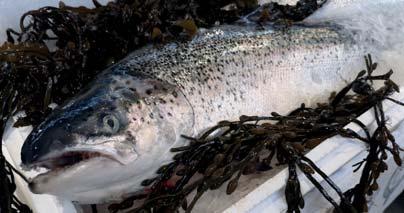
Plans to increase the productivity of Scotland’s aquaculture sector and help reduce its impact on the environment have been drawn up in a new strategy by the Scottish government.
Delivered in cooperation with businesses and other stakeholders, the Vision for Sustainable Aquaculture will also seek to develop Scotland’s Blue Economy and create more sustainable economic and social benefit from fish, seafood and seaweed farming and the wider aquaculture supply chain through to 2045.
“Scotland’s aquaculture sector is a significant contributor to our economy,” Scotland’s Rural Affairs Secretary Mairi Gougeon said. “Farmed salmon continues to be hugely popular in both domestic and foreign markets whilst Scottish businesses are at the very forefront of global innovation within the industry.”
Scotland harvested 205,393 tonnes of farmed salmon and 7,655 tonnes of rainbow trout in 2021, as well as 9,092 tonnes of mussels, over 4 million Pacific oysters, 109,000 native oysters and 39,500 scallops in 2022 – all for human consumption. The country’s aquaculture businesses support some 11,700 jobs and generate GBP 885 million in added value.
ICEFISH 2024 PREVIEW
Countdown begins to show’s 14th edition page 14
Ukrainian fisheries and aquaculture in tatters page 10
NEWBUILDS
Tuugaalik joins Royal Greenland fleet page 20
SEPTEMBER 2023 l VOL 72 ISSUE 9 worldfishing.net
Viewpoint 3 | Opinion 8 | New Horizons 12 | Fishing Technology 22 | Analysis 26
Photo Credit: FAO/Harsha Vadlamani
INSIGHT
AQUACULTURE Japan’s squid farming breakthrough page 28
&Awards 14th IN PERSON l ONLINE 2024
■ Women sell dried fish at a market in Visakhapatnam, India

VIEWPOINT
IS UNCERTAINTY OUR ONLY CERTAINTY?
There’s plenty of optimism surrounding the blue food economy these days and much of it is underpinned by healthy production growth forecasts. One of the latest of these is the new Agricultural Outlook 2023-2032 from the offices of the Organization for Economic Co-operation and Development (OECD) and the Food and Agriculture Organization (FAO) of the United Nations (see Analysis). This bumper, top-level report projects the total volume of seafood produced for human consumption will increase 14% through to 2032 to reach 182 million tonnes.
While some modest growth in supply will come from capture fisheries, OECD and FAO reckon that up to 96% of the additional seafood volumes will come from aquaculture production – reaching 111 million tonnes by 2032. What’s perhaps the most important part of their projection is that worldwide fish and shellfish consumption will reach 21.2kg per capita, up from an average 20.4kg in 2020-2022. The added expectation is that consumption will grow across almost all continents over the next decade, which will be very welcome news to many seafood players.
There are, of course, some “buts”. The same report believes the rate of consumption growth will slow over the coming decade. This, say OECD and FAO, will be largely due to softening demand in hugely important Asian markets, as well as expected price increases (particularly in the second-half of its outlook period). They also suggest fisheries and aquaculture could face “significant uncertainties over the next decade”, with the former potentially impacted by amongst other things the recently concluded WTO negotiations on fisheries subsidies, and aquaculture productivity hindered by environmental regulations, diseases and the availability of suitable production locations. At the same time, they identify that climate change represents a major source of environmental and regulatory risk for both sectors.
Added into the mix, the report projects the world trade of seafood for human consumption will be 5% higher in 2032 than in 20202022 and highlights this is just half the growth seen in the previous decade. High transportation costs, slower production expansion, and a desire to fulfil domestic demand with local production in some key countries (including China) are expected to be the main drivers of this slowdown.
All this points to more challenges ahead, but also fresh opportunities for our industry to demonstrate its strength, resilience and innovation.
About World Fishing & Aquaculture
Launched in 1952, World Fishing & Aquaculture is published by Mercator Media, a B2B media and events company specialising in international maritime industries, including marine business and technology, ports and terminals, and environmental strategies.
Through its monthly publication and free access website (www. worldfishing.net), World Fishing & Aquaculture provides expert-written, in-depth coverage of the fisheries, aquaculture and processing sectors, with a strong focus on the emerging solutions, technologies and innovations that are shaping the broader seafood economy’s landscape.
The international fishing & aquaculture industry magazine
EDITORIAL & CONTENT
Editor: Jason Holland jholland@worldfishing.net
News Reporter: Rebecca Strong rstrong@mercatormedia.com
Regular Correspondents: Please contact our Correspondents at editor@worldfishing.net
Tim Oliver, Bonnie Waycott, Vladislav Vorotnikov
Quentin Bates, Terje Engø Eduardo Campos Lima, Eugene Gerden
Production
David Blake, Paul Dunnington production@mercatormedia.com
SALES & MARKETING t +44 1329 825335 f +44 1329 550192
Media Sales Manager: Hannah Bolland hbolland@worldfishing.net


Marketing marketing@mercatormedia.com
EXECUTIVE Events Director: Marianne Rasmussen-Coulling
Chief Executive: Andrew Webster awebster@mercatormedia.com
WF magazine is published monthly by Mercator Media Limited, Spinnaker House, Waterside Gardens, Fareham, Hampshire PO16 8SD UK t +44 1329 825335 f +44 1329 550192 info@mercatormedia.com www.mercatormedia.com
Subscriptions
Subscriptions@mercatormedia.com Register and subscribe at www.worldfishing.net
1 year’s digital subscription with online access £204.50 For Memberships and Corporate/multi-user subscriptions: corporatesubs@mercatormedia.com
For the latest news and analysis go to www.worldfishing.net SEPTEMBER 2023 | 3
©Mercator Media Limited 2023. ISSN 2044-1908 (online). World Fishing is a trade mark of Mercator Media Ltd. All rights reserved. No part of this magazine can be reproduced without the written consent of Mercator Media Ltd. Registered in England Company Number 2427909 Registered office:Mercator Media Limited, Spinnaker House, Waterside Gardens, Fareham, Hampshire PO16 8SD UK.
JASON HOLLAND | Editor | jholland@worldfishing.net
The expectation is that consumption will grow across almost all continents over the next decade, which will be very welcome news to many seafood players
‘‘
BRIEFS UK SEIZES POST-BREXIT FREEDOMS FOR FISHERIES
Extended closures for Russian vessels
The Faroe Islands has imposed further restrictive measures against Russia by considerably limiting port access for Russian fishing vessels. Only vessels exclusively conducting fisheries under the bilateral agreement between the Faroe Islands and Russia are now allowed to enter Faroese ports.
US seafood standards campaign
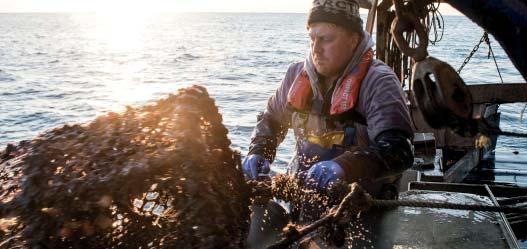
Global Seafood Alliance has launched a new campaign in the US. Launched ahead of October’s National Seafood Month, ‘Choose Seafood with Standards – Shape Your Future, Shape the Future’ will raise awareness of the Best Aquaculture Practices certification programme to promote responsibly produced and sourced seafood.
New advice for eating smoked fish
Food Standards Scotland and the Food Standards Agency are advising pregnant woman and people with a weakened immune system, such as those with underlying health conditions, to avoid eating ready-toeat cold-smoked or cured fish. This follows a risk assessment that found they are at higher risk of severe illness from listeriosis.
Sustainable fisheries funding boost
Schmidt Marine Technology Partners has pledged US$3.5 million in funding to help improve the sustainability of fisheries worldwide. The grants will go to 10 organisations and universities in seven countries to help them develop innovative new tools.
The country’s government has set out further steps which it says will deliver a thriving, sustainable fishing industry for the future.
Seizing the freedoms given outside the EU and the Common Fisheries Policy, the UK is introducing a system of fisheries management underpinned by Fisheries Management Plans –with the first six including bass, king scallops, crab and lobster.
”Measures to strengthen fishing businesses and enhance their sustainable growth will bring tangible benefits to the UK,” said Mike Cohen, chief executive of the National Federation of Fishermen’s Organisations.
“Fisheries Management Plans represent a genuinely ambitious attempt to break away from the unsuccessful top-down impositions of the CFP and unite fishers, scientists and regulators in building something new and better. Fishermen’s livelihoods depend on healthy seas and sensible regulations. We welcome this opportunity to collaborate in shaping them.”
The new management plans, developed together with industry and anglers over 18 months, deliver commitments from the Fisheries Act 2020
which aims to build a modern, resilient fishing industry, while securing sustainable fish stocks.
These plans will be a combination of actions that can be taken now to protect stocks, such as seasonal closures or further scientific studies, and longer-term approaches using the latest scientific evidence.
The announcement includes a boost for small under-10metre vessels by removing a cap on the amount of quota they can use and opening up more potential income for smaller businesses.
There will also be a consultation launching the government’s vision for remote electronic monitoring (REM) in English waters. The aim is to
support the fishing industry to manage stocks sustainably and give fish buyers and retailers greater confidence in the sustainability of British fish. UK government has also announced that it is setting out a new approach to managing discards in England which will support the long-term future of the English fishing fleet and coastal communities. It will also be consulting on the establishment of a licensed recreational bluefin catch and release tuna fishery, providing economic opportunities for coastal towns and rural communities, plus awarding a further GBP 45.6 million from the UK Seafood Fund to modernise infrastructure across the UK seafood sector.
WORLDFISH, NORWAY TARGET EGYPTIAN AQUACULTURE GROWTH
International research organisation WorldFish has embarked on an initiative with Norway aimed at refining, testing and scaling innovative renewable energy solutions for the aquaculture sector in Egypt.
The four-year initiative, Centre for Renewable Energy in Aquaculture (CeREA), is funded by the Royal Norwegian Embassy in Cairo until 2027. CeREA is part of Norway’s commitment to enhance nutrition, promote job and value creation and empower local fish value chain actors with climatesmart technologies, particularly
small- and medium-scale fish farmers in Africa.
Commenting on the impact of the programme, the Ambassador of Norway to Egypt HE Hilde Klemetsdal said the project will enable 5,000 fish producers, processors and other fish value chain actors to increase their productivity and incomes, leading to a reduction in food waste and loss and promoting the transformation to more energy-efficient and climate-smart food value chains.
“The project is a prime example of an initiative that aligns with Norway’s
development cooperation priorities. I am very pleased to see so many important and timely elements, including food security, climate adaptation and gender equality addressed in one programme.”
WorldFish has been supporting the Egyptian aquaculture and fisheries sector since the launch of its research and training centre at Abbassa in Sharkia in 1998. A key focus of the centre has been improving fish genetics and research capacity to transform Egypt into a role model for subSaharan African aquaculture development.
4 | SEPTEMBER 2023 For the latest news and analysis go to www.worldfishing.net NEWS
■ The UK is introducing a system of fisheries management underpinned by Fisheries Management Plans
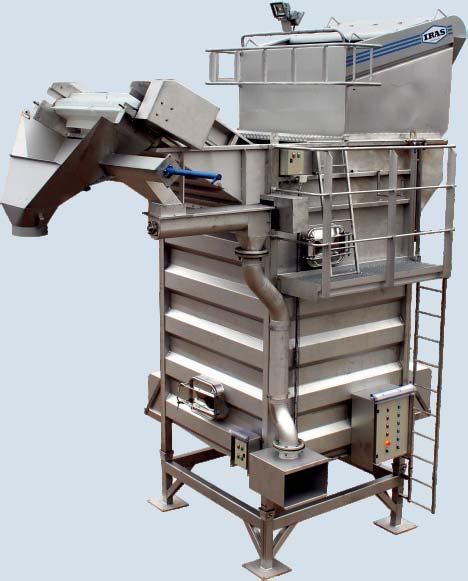
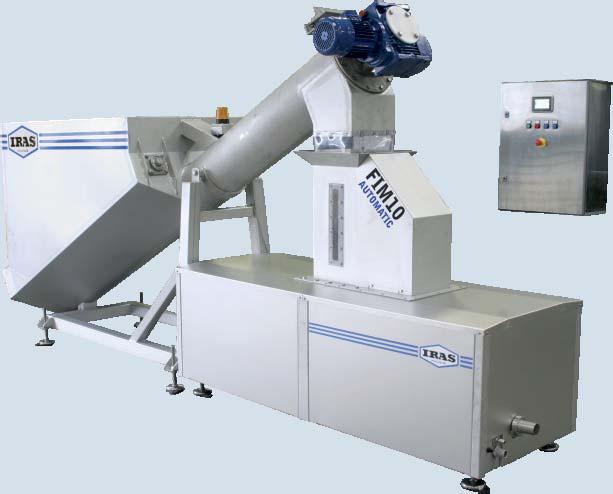

We know how to handle fish www.iras.dk Vacuum PumpsGrading Lines Ice Handling Dewatering Systems Phone +45 76 11 49 49 • email: iras@iras.dk Meet us at DanFish International Stand H812 AALBORG, DENMARK 10–12 OCTOBER 2023
New Japanese aqua venture
Japanese telecoms company
NTT has launched a new venture to promote more efficient and sustainable food production. In partnership with Regional Fish Institute, NTT Green & Food Corporation will bring together AI, IoT and other technologies to initially focus on carbon capture to reduce the environmental impact of land-based seafood farming.
Small-scale fish farming boost
Global Seafood Alliance, The Center for Responsible Seafood and Choice Canning Co have signed a new memorandum of understanding designed to uplift small-scale aquaculture farmers in India by offering more education and training opportunities on responsible aquaculture practices.
UK mussel farm benefits study
The impact of offshore aquaculture on ocean health is to be explored in a new project funded by UK government. Ropes to Reefs will assess the wider benefits of the country’s first large-scale offshore mussel farm, located in Lyme Bay on England’s south coast, examining its impact on the area’s biodiversity including the habitats of other species.
ARCTIC bill for Alaskan seafood
Alaska’s seafood industry will be given a boost by the Improving Agriculture, Research, Cultivation, Timber and Indigenous Commodities (ARCTIC)
Act, introduced by Senator Lisa Murkowski on 18 July. The act is part of the Farm Bill legislation, enacted every five years to address a variety of programmes in areas such as farming support, conservation, rural development and speciality crops.
FUNDING WIN FOR US PACIFIC SALMON
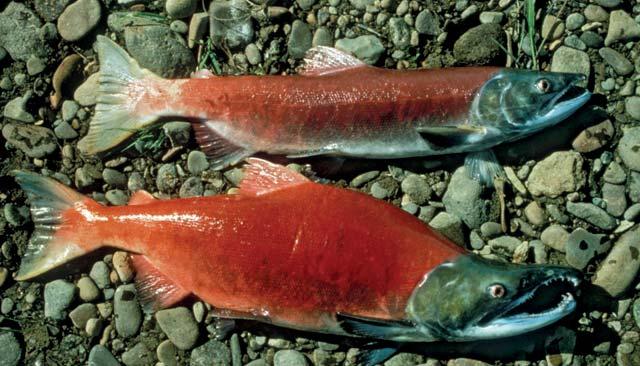
A new funding bill recently approved by the Senate Appropriations Committee will secure more than US$206 million for salmon recovery and marine habitat restoration.
The Commerce, Justice, Science and Related Agencies bill for fiscal year 2024 funds the US Departments of Commerce and Justice along with critical agencies including the National Oceanic and Atmospheric Administration (NOAA).
Senator Patty Murray, chair of the Senate Appropriations Committee, has long made clear that the federal government must play its part in funding salmon recovery efforts, particularly as part of its obligation to Indigenous peoples.
“I can’t overstate how important this bill is to our economy,” said Senator Murray, “[such as] investments in NOAA to restore salmon, which are not just a cornerstone of our
economy in Washington state, but a way of life.”
The legislation includes $76 million for the National Marine Fisheries Service’s Pacific Salmon account, $4 million more than the previous year, to support the agency’s work with endangered Pacific salmon species, as well as $65 million for the NOAA Pacific Coastal Salmon Recovery Fund, and $65.25 million for the Salmon Management Activities account.
NOAA also receives funding totalling more than $245 million to help protect native species from the European green crab and support a variety of programmes and institutes, namely the National Sea Grant College Program, Integrated Ocean Observing System, Climate Laboratories and Cooperative Institutes, Climate Adaptation Partnership Program, and Joint Coast Guard-NOAA Cetacean Desk Pilot Program.
SEAFOOD BOOST AS NZ, EU AGREE FREE TRADE DEAL
New Zealand has negotiated a free trade agreement with the EU worth an immediate NZ$20 million in tariff reductions to its seafood industry.
The deal, which will come into force in the first quarter of 2024, will considerably increase the country’s income from seafood exports, said Seafood New Zealand Chief Executive, Dr Jeremy Helson.
“New Zealand seafood exports were forecast to rise 8% to $2.1 billion for the year just ended, and by a further 2% by 30 June next year, driven by a recovery in demand and high prices due to the reopening of the food service industry after Covid-19,” he said.
“The impact of this deal will be felt across the sector, from the many small familyrun fishing businesses to the
larger companies that are major employers in our regions.”
From day one, 99.5% will be tariff-free, rising to 99.9% within five years, and 100% percent within seven years, with tariff savings of NZ$19.6 million per annum.
Helson said the agreement
has been keenly awaited by the commercial seafood sector. When it comes into force it will have been more than eight years since negotiations started. “New Zealand relies on free trade agreements to compete with goods from other global exporters. The existing tariffs, compounded by several very tough years of pandemicrelated restrictions on operation and trade, have put a lot of pressure on this hard-working sector,” he said.
The signing of the FTA with the European Union follows the new FTA with the UK that came into force on 31 May 2023. Under the UK-NZ FTA, 45% of New Zealand’s fish and seafood now enters the UK tax-free. Of the remaining, 99.5% will enter duty free within three years, and 100% within seven years.
6 | SEPTEMBER 2023 For the latest news and analysis go to www.worldfishing.net NEWS BRIEFS
■ The FTA was signed in Brussels on 9 July 2023, just over a year after negotiations concluded
Photo Credit: Seafood New Zealand
BIDEN HOLDS OFF ISSUING MEXICO TRADE BAN
US President Joe Biden has elected not to issue an embargo on Mexican wildlife products despite the country being found in breach of a US law requiring federal action against countries found to be violating the Convention on International Trade in Endangered Species of Wild Fauna and Flora (CITES).
As previously reported by WF, the US Fish and Wildlife Service (USFWS) advised in May that Mexico has failed to halt the illegal wildlife trade of the critically-endangered totoaba, which was also resulting in the deaths of the also criticallyendangered vaquita porpoise. As such, Biden had until mid-August to decide whether to take action against Mexico, including imposing a trade embargo.
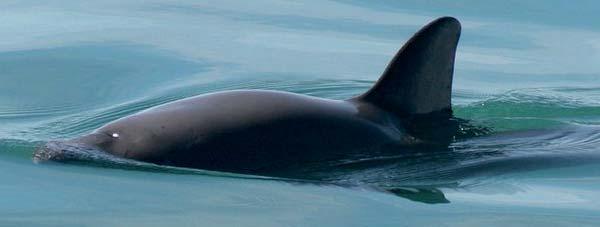
In letters to the Speaker of the House and the President of the Senate , Biden acknowledged that “illegal fishing for totoaba has continued” but advised that he wouldn’t be directing the Secretary of the Treasury to impose trade measures on Mexican products.
Instead, to “ensure that this issue continues to receive the highest level of attention”, the
president confirmed he has directed relevant executive departments and agencies to convene a high-level dialogue with the Government of Mexico to discuss the steps it will take to reduce illegal trafficking of totoaba and enhance conservation of the vaquita.
Through this dialogue, the US will encourage Mexico to strengthen and implement its CITES compliance action plan and comply with all relevant CITES decisions regarding totoaba and vaquita, including the expansion of enforcement efforts.
The US will also establish a schedule of at least quarterly meetings with the Government of Mexico to review its CITES Compliance Action Plan
implementation, with a focus on enhanced monitoring and enforcement actions to prevent and deter totoaba fishing and trafficking, including seizures, arrests, and prosecutions.
The States will also include totoaba and vaquita enforcement matters on the agenda for the next High Level Security Dialogue with Mexico.
Additionally, Biden has tasked relevant agencies with coordinating efforts to assist and support Mexico’s compliance, antitrafficking, anti-corruption, and other measures as appropriate.
If requested by the Government of Mexico, the United States will assist Mexico with relevant training and capacity building, he said.
BRUSSELS PRAISED FOR SHARK FIN STANCE
The European Commission’s decision to launch an impact assessment that measures the effectiveness and contribution of EU rules against the practice of shark finning whilst also improving data relating to the import and export of shark products has been welcomed by campaigners and industry alike.
Although the practice of removing a shark’s fins and throwing the fish back into to sea is illegal in the EU, the import and export of loose fins is not specifically outlawed.
The Commission has published a communication in response to the citizens’ initiative ‘Stop Finning – Stop the trade’, a campaign that aims
EU to make IUU law changes
Fisheries ministers in the European Parliament have voted to overhaul fisheries control rules to help combat illegal, unreported and unregulated fishing. When passed into law, catches will need to be reported electronically regardless of vessel size.
Migrant labour abuse investigation
The Seafood Ethics Action (SEA) Alliance has said it will “robustly” investigate allegations made by the Financial Times about the mistreatment of migrant crew in the UK. In an article published in June 2023, the paper allegeda fourstrong Filipino crew on board a trawler working out of Kilkeel in Northern Ireland had their lives put in danger, were exploited for labour and threatened with deportation.
Increasing recycling in aquaculture
enhance the bloc’s role in the global fight against shark finning.
According to the StopFinningEU initiative, more than 1.1 million statements of support were collected for ending the shark fin trade in Europe.
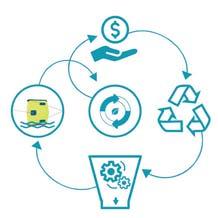
A new project is exploring how the aquaculture sector can better use recycled plastics. ‘Pathways to sustainable post-consumer plastic in aquaculture’ (POCOplast) brings together researchers from SINTEF with seven partners to determine ways in which the sector can create a ‘circular economy’ and reduce waste.
to end the international trade of loose shark fins. Its impact assessment will be launched before the end of this year. It has also said it will aim to better enforce the EU’s already strong traceability measures and
In a statement, EU fishing industry body Europêche said it believes the current framework in Europe guarantees that all shark catches are legal and sustainable but added that there’s always room for improvement.
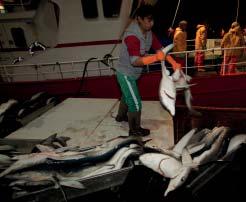
For that reason, the fishing sector welcomes the decision to assess the situation in depth before taking any legislative measure, it said.
Europe, Madagascar agree partnership
A new sustainable fisheries partnership agreement (SFPA) has been signed by the European Union and Madagascar which will allow 65 tuna fishing vessels from EU member states to access Madagascar waters for the next four years.
BRIEFS
■ It’s estimated there are fewer than 15 individual vaquitas remaining in the wild
■ The practice of removing shark fins and throwing the fish back into to sea is illegal in the EU For the latest news and analysis go to www.worldfishing.net SEPTEMBER 2023 | 7
Photo Credit: Europêche NEWS
HOW AQUACULTURE HAS RESHAPED THE SEAFOOD INDUSTRY (AND WHY IT’S A GOOD THING!)
Award-winning fishery scientist, educator and brand ambassador for Secret Island Emily De Sousa explains why sustainable aquaculture is beneficial for the environment and consumers alike

Over the last three decades, the face of the seafood industry has changed dramatically. Today, over 50% of the seafood that we eat is farmed. This wasn’t the case only 30 years ago when only about 17% of our seafood came from aquaculture.
Aquaculture is becoming an increasingly more important part of the seafood industry and of the global food system. But, depending on where you are in the world, the term “aquaculture” will be met with excitement, confusion, or downright rage.
While aquaculture’s rapid growth might make it seem like a new and novel method of food production – and let’s face it, no one likes change – the reality is that aquaculture has been practiced for thousands of years. Oysters in Japan and fish in Egypt were cultured before 2000 BC.
Fish farming is actually an ancient method of food production and has been used for decades to responsibly harvest marine resources in order to sustain communities year-round. Unfortunately, that’s not usually what people have in mind when they picture aquaculture in 2023. Instead, they’re worried about things like disease, sea lice, escapes and waste build-up.
■
Learning curves
But much of what people think they know about aquaculture is either completely false or incredibly outdated. And I’ll be honest, 30 years ago the aquaculture industry was not the beacon of hope that it is today. Thirty years ago, the industry was very much dealing with growing pains, so to speak. It was failing publicly, the way any of us do with any new venture – from learning to walk to summiting Everest or starting a new business – no one gets anything right the first time.
And so modern aquaculture had a messy entry into the scene in a lot of ways. But what’s been more remarkable than anything, is how quickly they’ve cleaned up that mess and gotten steamrolling on the path to being a global leader in sustainable food production. Today, aquaculture is the largest growing food producing sector in the world.
30 years ago, the industry was still grappling with how to reduce its wild fish use in feed, how to build better cages to withstand weather and limit escapes, how to manage disease without antibiotics, and how to grow healthier, high-quality fish.
30 years ago, you could also smoke in public places like restaurants and offices.
30 years ago, most people would go out in the sun without sunscreen, unaware of the risks of UV rays. 30 years ago, we didn’t have nearly all the “nut-free” options we have now thanks to our better understanding of nut allergies.
I could go on forever, but the point is, the world has changed a lot in 30 years. And aquaculture is no exception.
This is the epitome of science and technological innovation. This is the definition of progress. And the aquaculture industry isn’t recognised enough for the amount of progress it’s made in the world.
Leading the way
Thirty years ago, global seafood production was 95 million tonnes. Today, it’s 179 million tonnes. With over 50% of it coming from aquaculture. And that
About Emily De Sousa
Portuguese-Canadian sustainable seafood educator and content creator De Sousa is based in Niagara, ON. Her brand, Seaside with Emily teaches followers about healthy oceans, sustainable seafood and culinary adventures focused on the rise of Pescatourism. She also works as a Market Expert on Fisheries and Aquaculture Products for the Food and Agriculture Organization (FAO). She has also featured on Good Morning America as a sustainable seafood expert and is a TEDx speaker.
8 | SEPTEMBER 2023 For the latest news and analysis go to www.worldfishing.net OPINION
Emily De Sousa
number is only expected to increase. And according to research like The Future of Food from the Sea, if managed sustainably aquaculture will be able to produce up to 74% more food than it currently does.
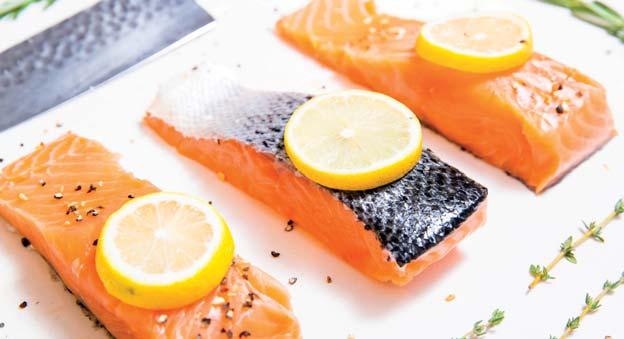
All methods of food production have impacts, but aquaculture has one of the smallest environmental footprints. Especially when farming is being managed sustainability and utilising good technology.
Companies like Secret Island Salmon are at the forefront of this blue revolution of our food system. They’re sustainable salmon farming operation in the south of Chile uses state of the art technology to limit escapes, improve disease resistance, and increase efficiencies by employing recirculating technology.
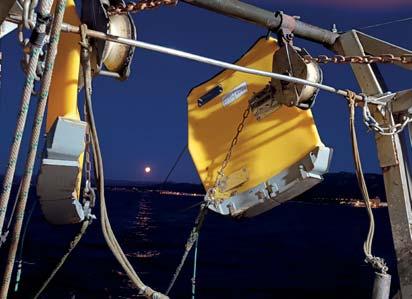
And as an operation who’s achieved 4-star Best Aquaculture Practices certification, we can feel confident knowing that third-party auditors have assessed every step of the supply chain and found that the highest standards of environmental stewardship, social responsibility and animal welfare are being met.
Third-party certifications are just one way to keep the aquaculture industry in check and ensure that everyone is held to rigorous standards. Government regulations,

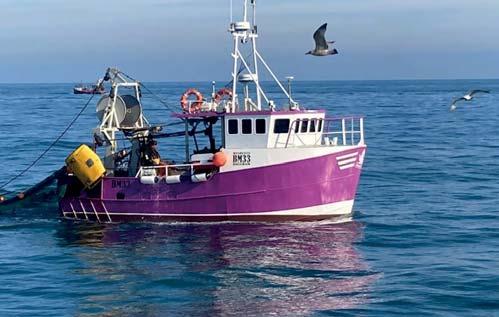

investments in technology, and consumer demand for sustainable products will all help ensure that the aquaculture industry continues to provide food in a responsible way.
If we embrace the power of the ocean and support sustainable aquaculture production through innovation, technology, and policy reform, aquaculture could produce almost 25% of the protein increase we’d need to feed 9.8 billion people by 2050.
In 1971, beloved ocean explorer Jacques Cousteau called for us to embrace fish farming in order to protect the oceans and feed the world. He said, “We must plant the sea and herd its animals using the sea as farmers instead of hunters.”
For the latest news and analysis go to www.worldfishing.net SEPTEMBER 2023 | 9 OPINION
‘‘
The aquaculture industry isn’t recognised enough for the amount of progress it’s made in the world
Mar Eco SOLUTIONS Blue circular economy every year Pluto Mar Eco, part of Polar Fishing Gear, www.mar-eco.eu, atli@mar-eco.eu WhatsApp: +354 898 66 77 www.polardoors.com Visit us at at us DanFish stand #H990
■ Seafood brand Secret Island sells salmon that has been harvested from farms in Chilean Patagonia
INSIGHT
The future of fishing
UKRAINIAN FISHERIES AND AQUACULTURE IN TATTERS
Destruction of the Kakhovka Dam on the Dnypro River could be the worst thing to date to have happened to the already heavily-troubled sectors
While the ongoing conflict with Russia raged on, Ukrainian fisheries companies faced all manner of challenges throughout 2022. Among these was the seaport blockade which, according to the state agency for land reclamation and water resources Gosryboagentsvo, resulted in commercial fishing in Black Sea becoming virtually paralysed, with fishers only able to conduct operations in small pockets of coastal zones near the regions of Mikolaiv and Kherson.
There, they could feel relatively safe, but caught only a very modest 10,100 tonnes of fish last year, Gosryboagentsvo calculated.
“Years ago, we caught about 220,000 tonnes of fish [per year]. After the annexation of Crimea, this figure halved to about 100,000 tonnes. In 2021, it stood at between 65,000 and 70,000 tonnes,” said Dmitry Zagumenny, general director of the Ukrainian Association of Fish and Seafood Importers.
It’s also a grim picture in the fish farming segment, with Gosryboagentsvo confirming that in most of the regions that saw conflict in 2022, the fish farms present in those territories sustained damage, with many losing their ponds, equipment and fish. Some farmers also lost access to their assets after the territories around them were mined, it added. Indeed, it’s estimated that landmines and unexploded shells can now be found across 30% of the country.
Blocked supplies
Historically, Ukraine consumed around 40,000 tonnes of fish per month, Zagumenny said. Unfortunately, coupled with the logistics chaos seen in the first months after the Russian troops crossed the Ukrainian border, the problems encountered in the fisheries and aquaculture sectors
triggered a shortage of fish on the domestic market. Also, in March 2022, Ukraine imported only around 10% of the fish that it brought in during peacetime.
While these imports did bounce back in the subsequent months, they haven’t returned to pre-conflict levels. This is attributed to a mix of factors, including the continuing seaport blockade and a slump in domestic consumption with millions of Ukrainians fleeing their homes seeking shelter in neighbouring countries.
Fish catches in domestic waters also dwindled last year, though this may be partly associated with natural reasons, with the Ukrainian National Academy of Agrarian Sciences previously predicting that from 2024, the country might need to import not only sea fish but also fish from rivers.
Scientists have also estimated that between 2013 to 2022, the population of the key river species in the country plummeted by 70% owing to poaching and ecological issues.
To deal with these challenges, Ukrainian government has heavily invested in various recreational programmes, although there’s been little success from these so far.
Heaviest of blows
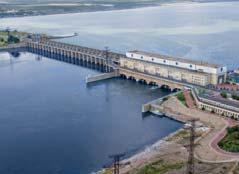
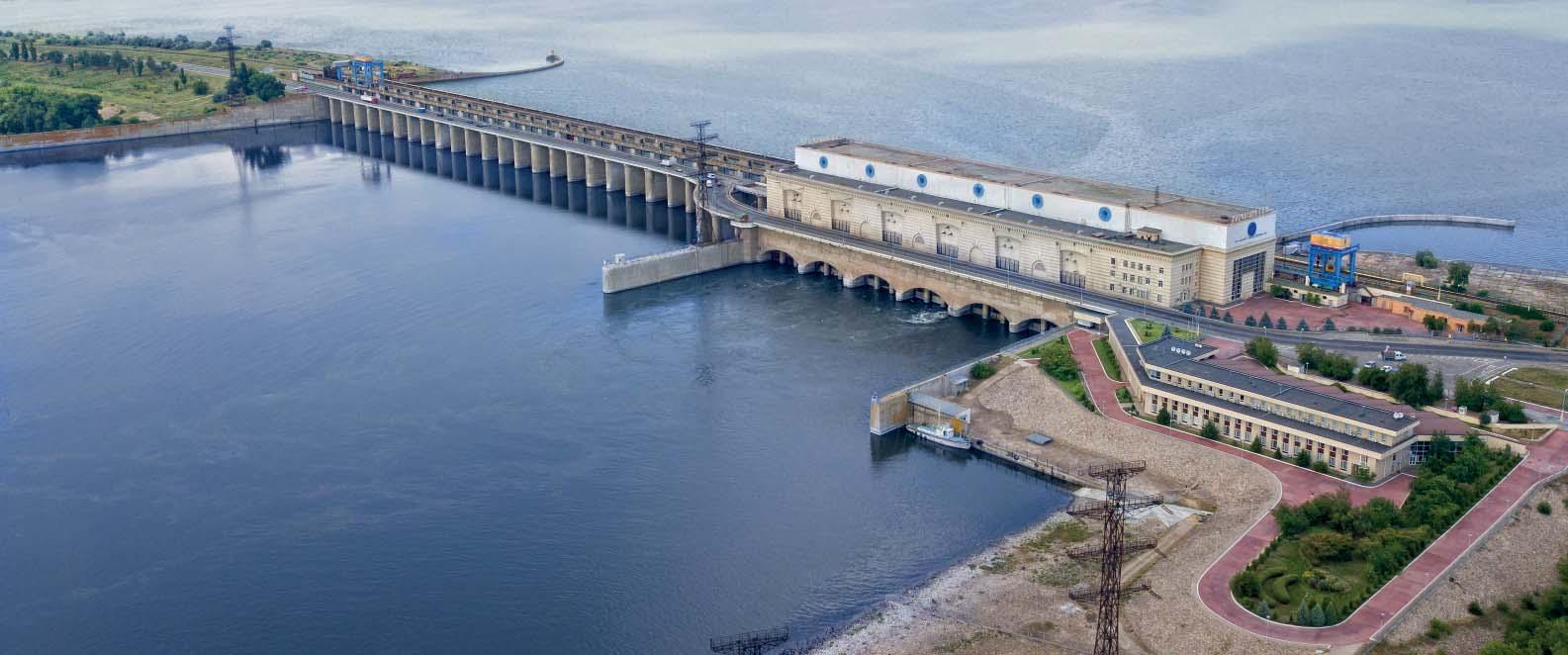
Destruction of Ukraine’s Kakhovka Dam on 6 June 2023 is considered to be Europe’s worst technogenic catastrophe since the Chornobyl nuclear plant accident. And like that disaster three decades ago, it’s going to have long-lasting consequences.
“I believe that the catch in the [Kakhovka water] reservoir accounted for about 5% of the [consumption on the] Ukrainian fish market. Its destruction will lead to an increase in retail prices. Enterprises that are engaged in processing and exporting valuable fish species will suffer,”
10 | SEPTEMBER 2023 For the latest news and analysis go to www.worldfishing.net
■ The Kakhovka water reservoir is vital for Ukrainian aquaculture
Photo Credit: Ukghydroenergo
said Lubomir Haidamaka, CEO of the Ukrainian fish farming company Vismar Aqua.
Ukrainian authorities reported that several pond-type fish farms downstream of the Dnypro River were also destroyed by the flooding. As a result, Ukraine is likely to lose a lot of its pikeperch (Sander lucioperca) export trade.
“I know the owners of several factories who exclusively bought pikeperch – processed it, made fillets and frozen products for export. In Europe, pikeperch is highly valued; there is a huge demand for it. For these companies, the destruction of the [Kakhovka] reservoir is a huge loss,” Haidamaka said, estimating this segment of the fish industry had been generating revenues close to US$15 to $20 million per year.
In general, the Kakhovka reservoir, together with nearby territories, accounted for 30% to 40% of Ukrainian freshwater fish catches. A lot of fish are also grown in ponds between this part of the Dnypro River and the Black Sea.
adding that it may be the consequences of the dam destruction are felt across the Ukrainian fish industry for generations to come.
Lost opportunity
The loss of the Dneprovsky hatchery is a big blow for Ukrainian ecology. Igor Pilipenko, a professor at Kherson University, confirmed the entire plant territory was flooded and it’s unlikely the complex will resume operation in the foreseeable future.
“Breeding stock that was used for reproduction, fry, equipment – all this is lost. And how we will restore these is unclear,” said Pilipenko.
There are other pressing issues to deal with. Among these, numerous companies had purchased rights to grow and catch fish in the affected territories. Now, they may find themselves on the edge of bankruptcy.
To address this situation, Haidamaka suggested the Ukrainian government should consider partially compensating for the losses.
Viktor Komorin, Ukrainian National Centre for Marine Ecology
“It is not advisable to catch fish or swim in the Black Sea for at least a year,” said Viktor Komorin, director of the Ukrainian National Centre for Marine Ecology, pointing out the fact that the flood raised all sorts of chemicals, including those used in various explosives and landmines. “Toxic substances accumulate both in [sea] organisms and on the seabed.”
Ukrainian scientists are trying to figure out to what levels the dam’s destruction has impacted the environment. This work will take time, but it’s already widely thought the consequences could last for years if not decades. Several Ukrainian cities have already restricted the selling of fish, citing safety concerns.
In addition, it seems the flood affected the Dneprovsky sturgeon hatchery in the village of Dneprovskoe as well as the Kherson production and experimental plant for breeding young fish in the city of Golaya Pristan. Both were engaged in recreational programmes and supplied Ukrainian fish farmers with broodstock.
“As far as I understand, both will be destroyed, and the state will lose an opportunity to grow young fish for its stocking efforts. This will hit the fishing industry, the ecosystem in the region, and business,” Haidamaka said,
It’s estimated that 8 to 10 cubic kilometres of freshwater entered the Black Sea after the Kakhovka dam destruction. Some Ukrainian ecologists believe this could lead to dire consequences for the environment, but Pilipenko is more optimistic. In his opinion, in the long run, the Black Sea ecosystem could eventually consume this water without any issues.
Meanwhile, Ukrainian nuclear plant operator Energoatom warned the Kakhovka accident could pose some threat to the Zharopizia nuclear power plant since the water reservoir fed the station’s cooling ponds. Since the beginning of the conflict, both sides have been warning about the risks of nuclear disaster at the Zharopizia plant.
Rife uncertainty
It remains to be seen how Ukraine’s fish industries will cope with this year’s challenges. That said, some reports have determined that fish farmers are struggling to make ends meet and that a recent sharp rise in fuel and energy tariffs is making this even harder to achieve.
This is likely to drive further increases in fish prices on the Ukrainian market, Zagumenny said. But he added it’s unclear to what extent since the current purchasing power of the population leaves a lot to be desired.
In the main, with the conflict showing no sign of letting up, market players have been refraining from making any forecasts about the future of Ukraine’s fishing and aquaculture sectors. They say too much depends on the progress on the battlefields.
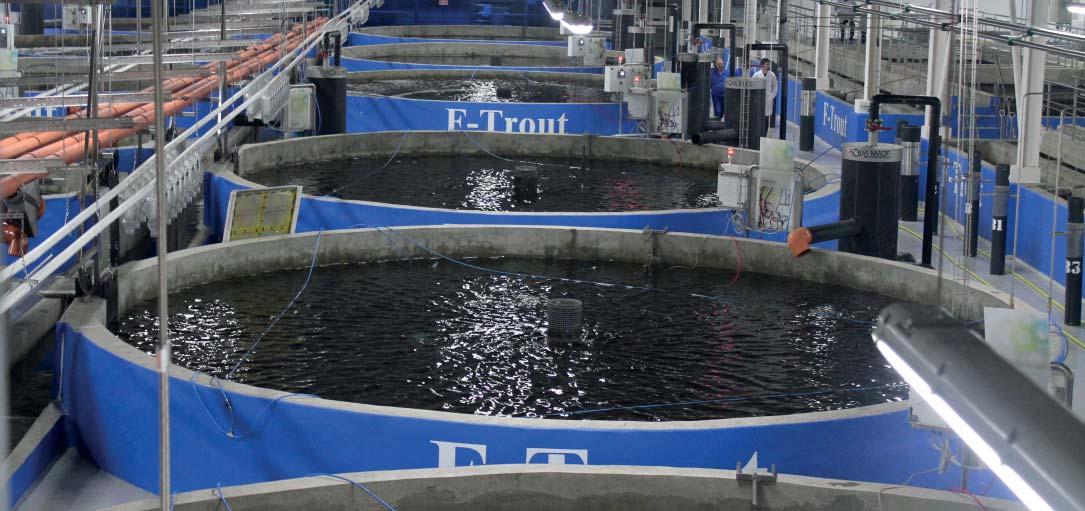
■ Amid the pressures, Ukraine fish farms continue to mull their postwar recovery
For the latest news and analysis go to www.worldfishing.net SEPTEMBER 2023 | 11 INSIGHT
It is not advisable to catch fish or swim in the Black Sea for at least a year
‘‘
Photo Credit: Megalodon
NEWHORIZONS
Focusing on Fisheries Development
THAI UNION EXPLAINS ITS $200M SUSTAINABILITY COMMITMENT
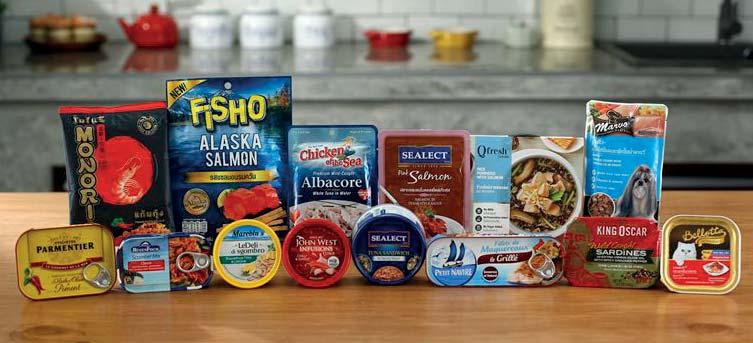
Seafood giant Thai Union, the largest producer of shelfstable tuna in the world with brands including Chicken of the Sea and John West and the biggest importer of shrimp in the United States, has launched SeaChange 2030, the next stage of its sustainability plan. It has set “aggressive goals” that it intends meet by 2030 which aim to impact the global seafood value chain on a global scale and bring the company’s total sustainability commitment since the programme’s inception to US$200 million – the equivalent of its entire 2022 net profit. Targets include reducing carbon, minimising waste, safeguarding ecosystems and ensuring safe and equitable work across the food chain.
WF: Thai Union has made 11 interconnected commitments for SeaChange 2030. What were the reasons for selecting these goals, and what will be the immediate priorities moving forward?
Brennan: In developing our plan for SeaChange 2030, we identified five key future outcomes that we deemed paramount to help drive and selected goals that would help do so. Two of these future outcomes are for our people, restoring and protecting communities. The first is ensuring fair wages, fair benefits and safe, healthy working conditions, and the second is helping to advance a healthier world by delivering critical resources to those most in need. The other three serve our planet, restoring and protecting ecosystems. Thai Union will deploy actions that reduce greenhouse gas emissions, safeguard life and ecosystems, and design and operate systems that minimise waste.
One major priority is our path to net zero emissions. We’ve already begun making changes to our own processing footprint, but this is only 10% of our total greenhouse gas emissions – the other 90% comes from
within our supply chain. It’s crucial that we work with our suppliers – vessels, farms and the feed supply chain – to identify opportunities where we can all reduce emissions.
WF: Why does Thai Union believe these sustainability targets are critical for the company and the broader global seafood industry?
Brennan: Climate change has been deemed a “code red for humanity” and to prevent devastating effects on our planet and its people, we must rapidly cut global greenhouse gas (GHG) emissions by half before 2030 and achieve net zero by 2050. Further, unless we change how we produce, use, and dispose of plastic, the amount of plastic waste entering aquatic ecosystems could triple and reach 37 million tonnes per year by 2040. And wildlife populations in our oceans, the planet’s largest ecosystem, are declining at alarming rates, while mangroves, coral reefs and rainforests are also under threat. The time for change is now.
It’s also simply imperative that we protect the safety, dignity and well-being of our communities, workers and consumers. Additionally, if produced responsibly, seafood can provide a healthy and nutritious protein for a growing population, helping tackle food insecurity.
12 | SEPTEMBER 2023 For the latest news and analysis go to www.worldfishing.net
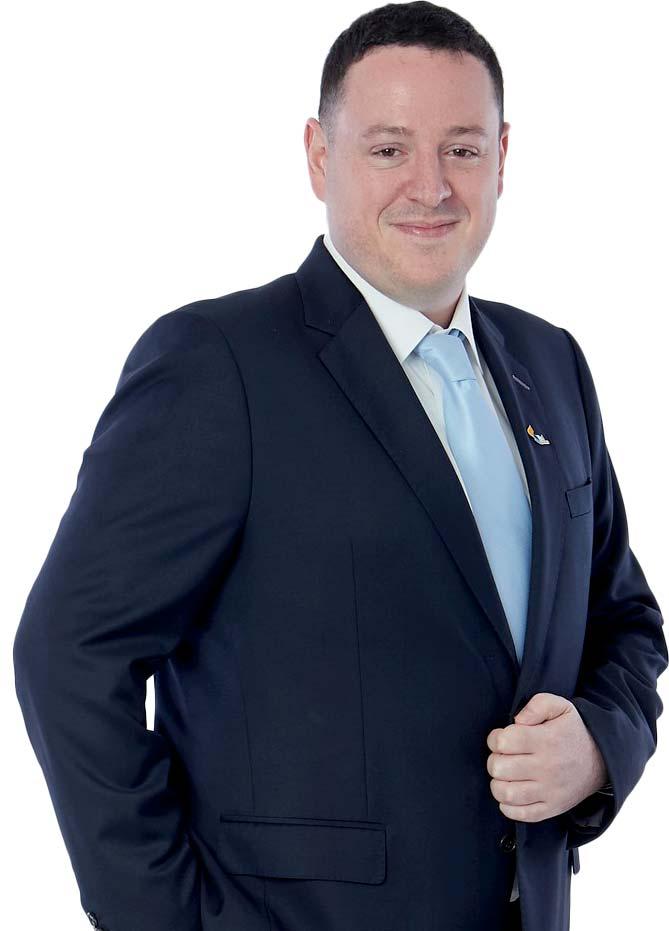
Chief Sustainability Officer Adam Brennan talks SeaChange 2030 and reshaping seafood
We see it as our responsibility to drive effective and lasting improvements throughout the entire supply chain
‘‘
Adam Brennan, Thai Union
■ The Thai Union family of brands
Photo Credit: Thai Union
WF: What do you foresee being the biggest challenges and opportunities for the programme?
Brennan: The biggest challenge of SeaChange is that our goals extend across our value chain, impacting not only our owned activities, but purchased goods and services, fuel and energy related activities, and upstream and downstream transportation and distribution. However, we see it as our responsibility to drive effective and lasting improvements throughout the entire supply chain.
The biggest opportunity has been to create a plan that is even more comprehensive, which we’re proud to say we’ve done with SeaChange 2030. This is a significant expansion from our last strategy because of the additional interconnected solutions for our people and our planet that we’ve introduced. This strategy has expanded components addressing carbon reduction, responsible sourcing and corporate citizenship.
WF: What have been the key deliverables of the SeaChange programme so far?
Brennan: For the last few years, we’ve been heavily focused on conditions onboard the fishing vessels we source from, as we see it as our responsibility to safeguard workers in our supply chain. We’ve also been focused on sourcing from fisheries that are either Marine Stewardship Council (MSC) certified or helping put them in fishery improvement projects (FIPs) to move them towards MSC certification.
To name some other recent achievements we’re proud of, we completed our first greenhouse gas inventory across Scope 1, 2 and 3 emissions. Thai Union also introduced a Tuna Commitment up to 2025 to source from vessels operating best practices and adopted the Employer Pays Principle to ensure no worker should pay for a job. Additionally, through the Thai Union Cares programme, we donated nearly 1 million servings of food along with other COVID-19 supplies.
To “check in” and understand if we are doing the right things, we have been engaging with third parties who are able to benchmark our progress against their independent standards and other companies. We have found these really useful to understand how we can improve and what areas are considered most important. Through these we have been ranked #1 on the Dow Jones Sustainability Index and listed for the ninth straight year. We also ranked No. 1 on the Seafood Stewardship Index in recognition of Thai Union’s leadership among global seafood companies in contributing to the UN Sustainable Development Goals.
WF: In which areas will the majority of the $200m be spent?
Brennan: At Thai Union, we have long referred to traceability as the backbone of SeaChange. Traceability is the key to improving the transparency and operational practices of the entire seafood supply chain, so it’s an area we’ll continue to invest in as we bring SeaChange 2030 to life.
Most of the funding for SeaChange 2030 will drive improvements throughout our supply chain, where we have a completely global footprint.
This includes the 11 commitments we’ve set, such as 100% of both wild-caught and farmed seafood being sourced responsibly or from in an improvement programme, so we’re continuing to invest in fishery and aquaculture improvement projects.
Our commitments also include direct investments in both ecosystem restoration and the communities in which our company operates. We’ve committed more than $7 million (THB 250 million) specifically to each of these two areas. From an ecosystem perspective, this investment will go toward the protection and restoration of mangroves, coral reefs, and rain forests. Some examples from the past of how we’ve given back to our local communities include building pre-schools for the children of migrant workers in Samut Sakhon, cleaning marine environments, and providing food donations.
WF: How important are these goals in terms of meeting consumer expectations, what are they telling you, and what shifts/trends are you seeing in this regard?
Brennan: When it comes to ESG, the world is watching, and expectations – from investors, regulators and consumers – have never been higher. From greenwashing watchouts and new regulations to competitive pressures, it was imperative for Thai Union to be bold, transparent and crystal clear as we developed SeaChange 2030. That’s why we set out to create a distinct, ownable, and authentic strategy that captures Thai Union’s unique line of sight as an industry leader. ESG trends around climate change, threats to biodiversity, social inequalities and more helped shape our strategy. Ultimately, it became clear we needed a more unified plan with comprehensive, interconnected solutions for both people and planet that better sustain a future for all
SeaChange 2030 will also support the efforts of our customers, better enabling them to execute their own ESG programmes. For example, one of Walmart’s sustainability priorities is to protect, manage or restore at least one million square miles of ocean by 2030. Among Thai Union’s new goals for 2030, the company will contribute over $7 million (THB 250 million) towards the protection and restoration of critical ecosystems and will divert 1,500 tonnes of ocean-bound plastic from our waterways and oceans. Many of our customers also have responsible sourcing and carbon commitments which we can help them meet.
Sustainable development is essential to the future of our business and the company’s growth, it is fundamental to being a responsible corporate citizen, and it is one of the routes through which Thai Union will achieve its vision of being the world’s most trusted seafood leader. As a global seafood leader, at Thai Union we believe we have a responsibility to drive continuous improvement that raises the standards for social, environmental, and economic performance across our operations and in seafood supply chains.
■ Thai Union’s Chief Sustainability Officer Adam Brennan
For the latest news and analysis go to www.worldfishing.net SEPTEMBER 2023 | 13 NEW HORIZONS
Photo Credit: Thai Union
CHAMPIONING BLUE FOOD –FROM SEA TO PLATE
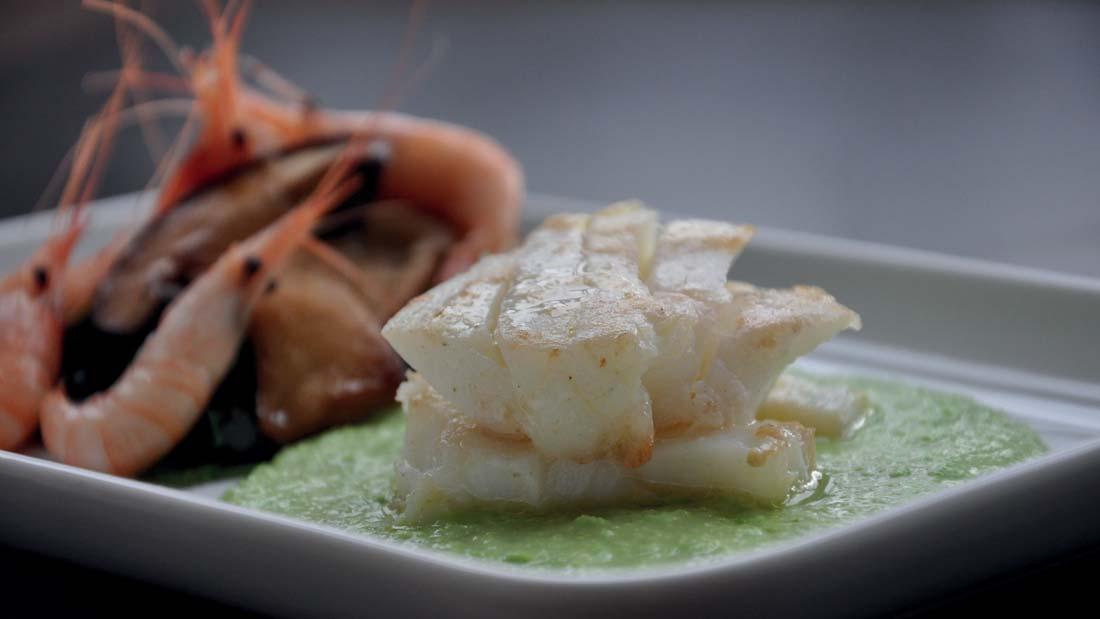
The countdown to ICEFISH 2024 has begun, writes Jason Holland
Preparations are now well underway to again welcome thousands of visitors – spanning the entire fisheries, aquaculture and seafood processing landscape – to the 14th edition of the Icelandic Fisheries Exhibition. Being staged in Kópavogur on 18-20 September 2024 and organised by Mercator Media, this is already promising to be the most comprehensive and industry inclusive ICEFISH to-date.
“We are excited to be relaunching ICEFISH back into its traditional September dates in 2024 after a turbulent Covid period. Celebrating its 40-year anniversary and with so much activity in the sector, ICEFISH 2024 will be a ‘from the sea to plate’ showcase,” said Marianne RasmussenCoulling, Events Director at Mercator Media Limited.
The event also continues to have the support of the Icelandic government, with the Minister of Food, Agriculture and Fisheries Svandís Svavarsdóttir commenting: “Fisheries is one of the cornerstones of the Icelandic economy. We can proudly state that due to the responsible management of our valuable fisheries stocks, we are able to maintain our position as one of the leading fishing nations in the world today. Collaboration between the fishing and processing companies, Icelandic technology and knowledgebased companies has created the conditions for the seafood sector to enhance its competitive advantage and continuously increased value. Events like ICEFISH 2024 are an important part of this synergy that has put the Icelandic fishing industry at the forefront when it comes to fisheriesrelated innovation and full utilisation.”
Value chain growth
With the focus firmly fixed on navigating the future and expanding the possibilities of the value chain, ICEFISH has always profiled the latest innovations and services coming to the commercial fisheries sector, covering everything from catching and locating fish to processing and packaging, and through to the marketing and distribution of final products. ICEFISH 2022, held in June that year, again featured hundreds of companies, products and brands from dozens of countries – proving that it’s a mustattend event for all commercial fisheries organisations and associated businesses.
As WF went to press, the ICEFISH 2024 team confirmed that with the deadline for the early booking incentive expiring shortly, reservations are coming in on a daily basis. New companies from the processing and aquaculture sectors have signed up having identified the importance of Iceland and ICEFISH in their marketing strategies.

According to the organisers, this also illustrates the evolution of the wider seafood economy and the acceptance that value chains need to keep on top of shifting consumer and market demands and progressively introduce new technologies and innovations as they become financially feasible, whilst also demonstrating their sustainability credentials.
Furthermore, with healthy eating having become a dominant trend in food consumption, the long-term global demand for seafood is certain to continue to rise at an increasing rate. And with any substantial increase
14 | SEPTEMBER 2023 For the latest news and analysis go to www.worldfishing.net ICEFISH 2024 REVIEW
&Awards 14th IN PERSON ONLINE 2024




Organised by: Media Partner: &Awards 14 th IN PERSON l ONLINE 2024 8 20 TO Smárinn Kópavogur Iceland SEP We look forward to welcoming you in 2024 The Icelandic Fisheries Exhibition covers every Visit: Contact: +44 1329 825 335 or Email:
to terrestrial food production unlikely due to declining yield rates and general land and freshwater scarcity, the seafood economy knows the onus is on it to provide much, much more healthy and sustainable food.
Recognising the increasingly critical contribution that so-called “blue foods” – those products we consume that are derived from aquatic animals and plants which are caught or cultivated in marine and freshwater environments – can make in terms of global food and nutritional security, the ICEFISH team says it’s going all out to ensure next year’s edition is also a platform for young companies, start-ups and entrepreneurs to showcase their latest products, solutions and technologies and take the next important steps in their respective journeys.
Marianne Rasmussen-Coulling, Mercator
Full fish utilisation
Limited
The delivery of innovative solutions is also a running theme for ICEFISH’s hugely popular Fish Waste for Profit conference, which will take place 19-20 September 2024.
A lot of work is going into the conference’s programme, with the final details and an exciting line-up of speakers to be announced in due course, but what’s clear in the months that have passed since the conference’s 2022 edition is that the interest from the industry and beyond in the opportunities that fish by-products and side streams offer has soared, with potentially 10 million tonnes of additional products to create economic, social and environmental value from.
There are a vast number of products that can be made from these raw materials, with more opportunities opening up all the time, and there’s also a lot of revenue to be made from it, last year’s delegates heard.
Through heavy investment in education and R&D a lot of young people with fresh ideas joining and revolutionising the country’s seafood sector over the past few decades, Iceland is regarded as perfect home for this event. Indeed, it’s widely acknowledged as a world leader in full-fish utilisation. For example, in 2017, it was using 72% of its cod in conventional products, but by 2021, 90% of the country’s cod catch was being used, including the production of side products.
But Iceland is not resting on its laurels, with the acceptance that it can do more with some of the other species it’s producing, including its very fast growing farmed Atlantic salmon sector. And with regards to the bigger picture food security challenge, the conference was reminded that while 71% of the Earth’s surface is covered by water, fish production only accounts for 158 million tonnes of the total 4 billion tonnes of food produced annually. It also heard that to feed some 10 billion people in 2050, the challenge is to use all of the resources available to their sustainable limits.
Awarding excellence
Also returning to the ICEFISH programme next year will be the 9th Icelandic Fisheries Awards. Last year hosted by the Icelandic Ministry of Industries and Innovation and the City of Kópavogur, the ceremony bestowed some 13 awards.

First introduced in 1999, the accolades distinguish excellence within Icelandic and international fisheries, highlighting the most innovative and ground-breaking
products and outstanding service. Among 2022’s winners were: Hampiðjan, which won the award for the Best New Product launched at the show for its new fibre-optic cable that’s delivering unprecedented gear-to-ship data transfer rates; Bakkafrost scooped the Outstanding European Processor award; the two Processing Sector Value Creation awards went to Sæplast and ALVAR; while WiseFish and Olen landed the two Efficiency in Fishing and Aquaculture accolades; the Smart Award for By-product Innovation went to Marine Collagen; and the Overall Outstanding Supplier prize was won by Vonin.
Two other important awards were handed out in praise
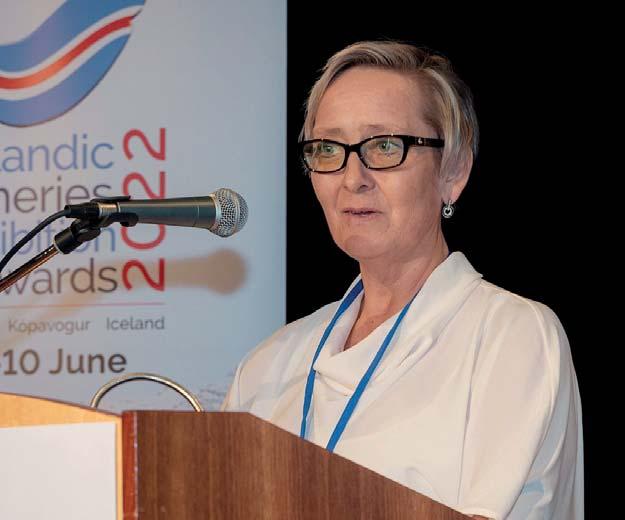
■ Mercator Media’s Events Director Marianne Rasmussen Coulling welcomed ICEFISH 2022 visitors after a five-year, Covidenforced hiatus
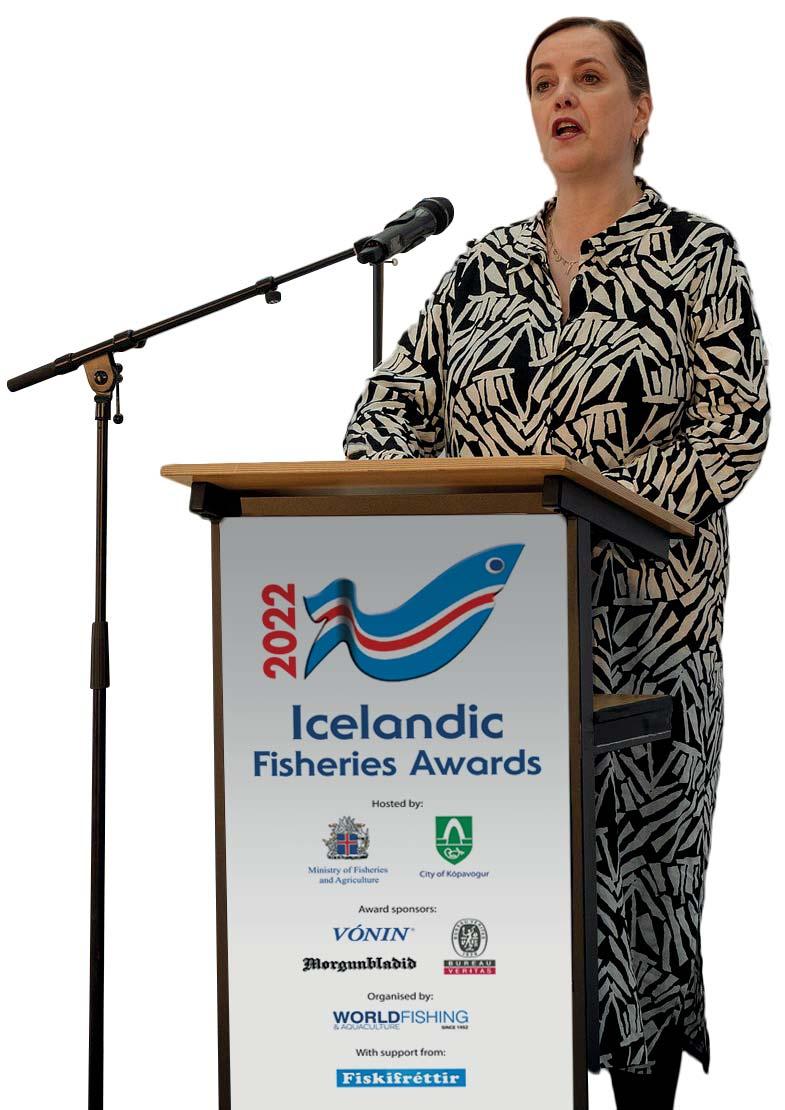
■ Iceland’s Minister of Food, Agriculture and Fisheries Svandís
16 | SEPTEMBER 2023 For the latest news and analysis go to www.worldfishing.net ICEFISH 2024 REVIEW
&Awards 14th IN PERSON ONLINE 2024
Photo Credit: Bragi Thor
Celebrating its 40th year anniversary and with so much activity in the sector, IceFish 2024 will be a ‘from the sea to plate’ showcase
‘‘
Media
High-end Fish Finder featuring the groundbreaking IDENTI-FISH™






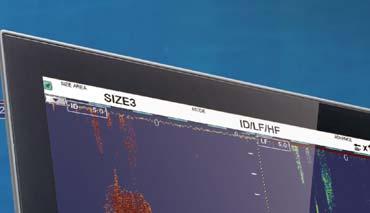






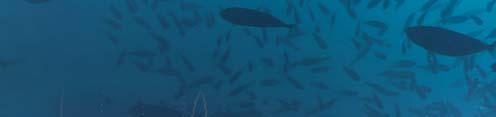


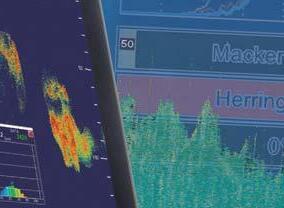
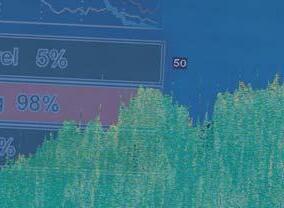


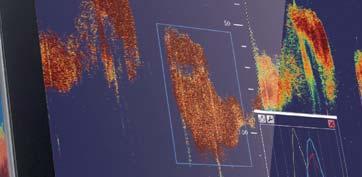










The FURUNO FSS-3BB, equipped with the revolutionary IDENTI-FISH™ function, enhances fishing operations by enabling real-time identification of fish species. This advanced feature improves efficiency and promotes sustainable fishing practices by reducing by-catch. The IDENTI-FISH™ function comprises the IDENTI-FISH echo display and histogram, offering clearer visibility of swim-bladderless fish like Atlantic mackerel. Additionally, IDENTI-FISH™ allows users to register custom histogram curves for different encountered species. Combining cutting-edge fishing innovations with powerful customization capabilities, the FURUNO FSS-3BB ensures the success of fishing operations.

www.furuno.com








Svandís
of career contributions to the sector: Gísli V Jónsson was presented with the Outstanding Icelandic Skipper prize, while the Outstanding Achievement honour went to Guðmundur Gunnarsson in recognition of his long career at Hampiðjan. Gunnarsson is known around the world as the godfather of the Gloria, having been at the centre of the development of the Gloria pelagic trawl that has since the 1990s been through a great many versions for a variety of fisheries.
Stakeholder engagement
The delivery of ICEFISH recognises that not only does wild-caught and farmed seafood now provide more than 3 billion people with at least 20% of their animal protein, the high nutritional profile, considerable species diversity and abundance of these blue foods mean they are also ideallypositioned to help establish resilient and sustainable global food systems.
The production and harvesting of these products also often have a much lower carbon footprints and fewer
biodiversity impacts when compared to the production systems of most livestocks. Additionally, many supply chains stand up to close consumer scrutiny in terms of their environmental responsibility, ethical sourcing and production processes, as well as offering heightened levels of transparency and trust. As such, fish and shellfish are increasingly being identified for their role in food security, while most health organisations have long advocated including them in the human diet a minimum of two to three times a week.
With the global demand for seafood climbing to new levels with every passing year as more and more consumers come to appreciate the many benefits the category offers, ICEFISH 2024 and its busy programme of events will aim to establish an even tighter alignment with this critical food production sector – providing industry professionals with greater insights on incoming and outgoing trends and supply chain innovations and disruptions, as well as the environment in which to establish valuable, collaborative relationships.
■ ICEFISH 2022 again proved to be a must-attend event for all commercial fisheries organisations and associated businesses

18 | SEPTEMBER 2023 For the latest news and analysis go to www.worldfishing.net ICEFISH 2024 REVIEW
&Awards 14th IN PERSON ONLINE 2024
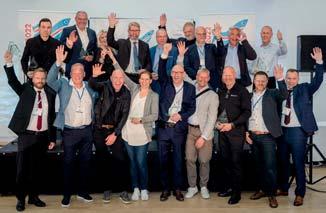
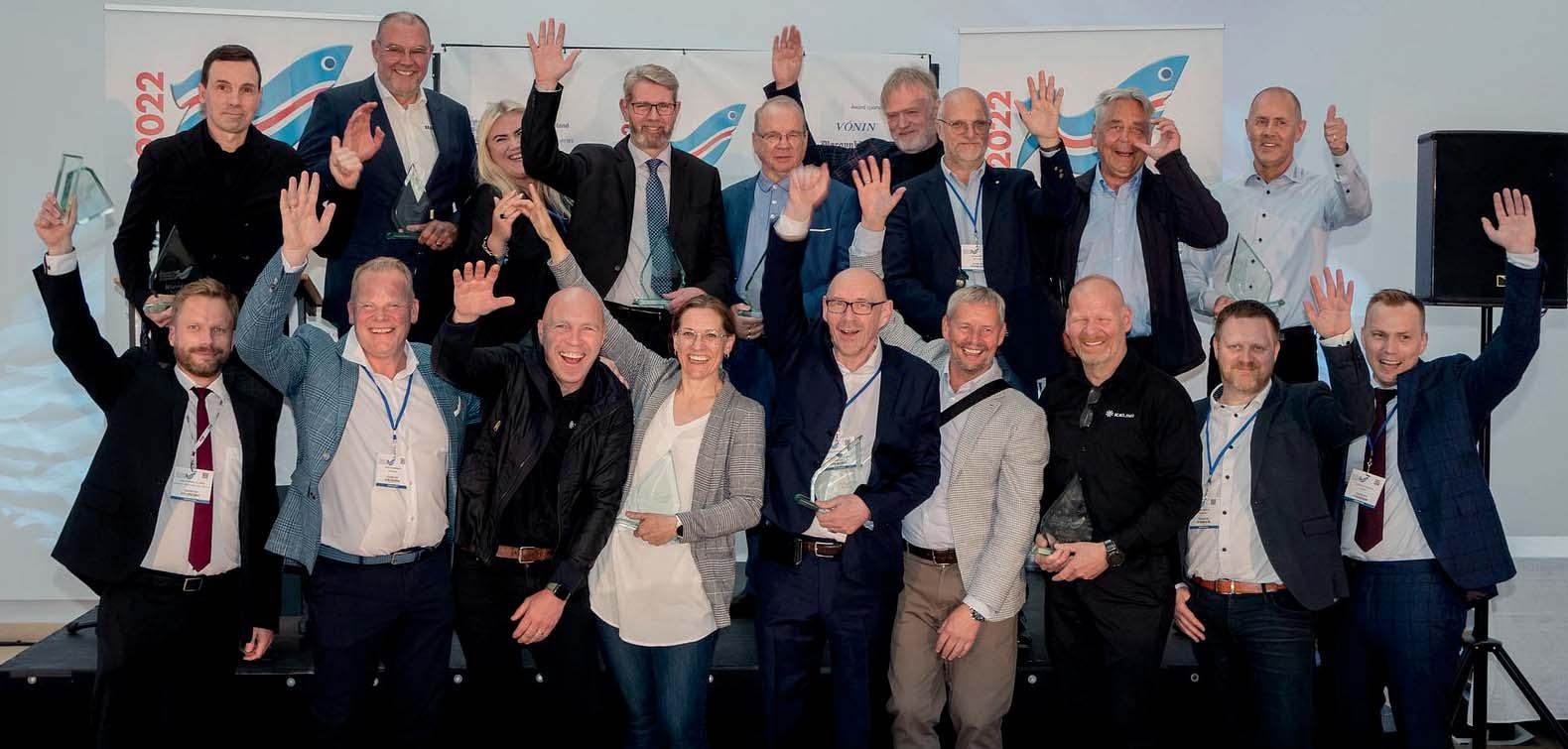
■ The 2022 Icelandic Fisheries Awards winners
Photo Credit: Bragi Thor
Collaboration between the fishing and processing companies, Icelandic technology and knowledge-based companies has created the conditions for the seafood sector to enhance its competitive advantage and continuously increased value. Events like ICEFISH 2024 are an important part of this synergy that has put the Icelandic fishing industry at the forefront when it comes to fisheries-related innovation and full utilisation
‘‘
Svavarsdóttir, Iceland’s Minister of Food, Agriculture and Fisheries
How to maximise return on investment from potentially discarded parts of the catch that can be turned into high value products for
2022 Downloads still available including:
• Keynote Address: Iceland’s Use of Captured Seafood By-Products

Jonas R. Vidarsson, Director of division of value creation, Matís
• Keynote Address: What role may byproducts play in the future of marine ingredients?
Petter Johannessen, Director General, IFFO
• value potential
Wenche Uksnay, Cluster Manager, NCE Blue Legasea
• Co-Product Valorization – Towards an industrial Implementation of innovative Food Processing Concepts to achieve 100% Utilization
Dennis Lohmann, Head of Technology Management, BAADER & Dr Pia Meinlschmidt, Product Manager Fish, Food Science & Technology, BAADER
• The Journey to 100% Utilisation
Erla Ósk Pétursdóttir, Managing, Director, Marine Collagen ehf
• from Herring and Mackerel - The new times shortage
Snorri Hreggvi Osson, CEO, Margildi
Please note: recordings of the sessions are also available
Innovation | Industry insight | Knowledge Sharing
Operated by:
To make your purchase, or download the papers visit: contact: +44 1329 825335 or email: Media Partner:
th
1952 & AQUACULTURE
WORLDFISHING SINCE
LATEST DELIVERY AS ROYAL GREENLAND RENEWS FLEET
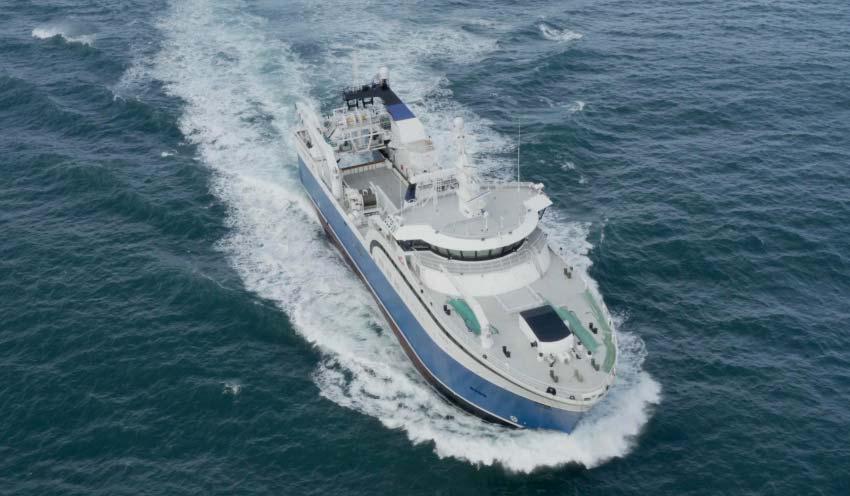
Tuugaalik, the latest newbuild in the series of factory trawlers built by Astilleros de Murueta, continues a process of fleet renewal that began with Sisimiut, and is set to continue with a contract signed for a replacement for Akamalik to be delivered in 2025
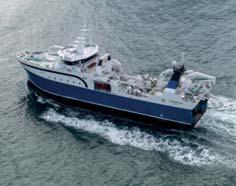
■ Tuugaalik is the latest delivery in the series of newbuilds for Royal Greenland
The series of trawlers for Royal Greenland and its partner companies follows what has become an established formula. New Tuugaalik entered service this summer, and is an 82 3-metre factory vessel, built like the rest of the Murueta-built series to a Skipsteknisk design.
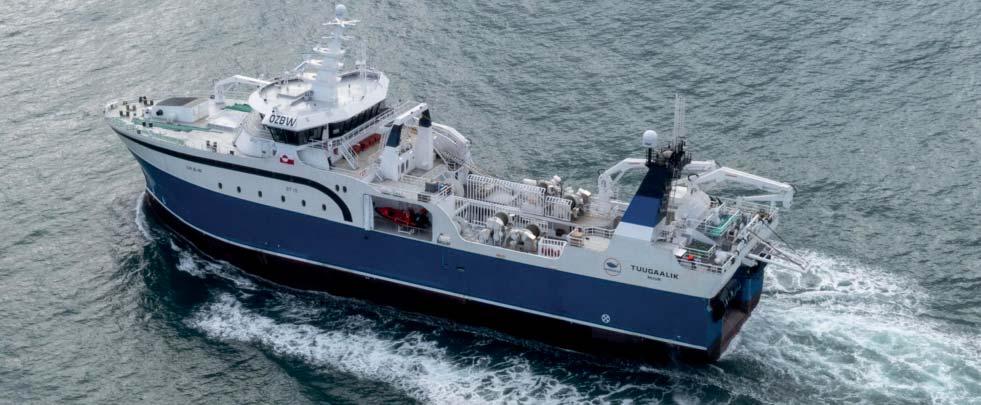
Tuugaalik has a 1,550-cubic-metre upper-refrigerated fish room with a 334 pallet capacity, while the 1,400-cubicmetre lower-level fish room can hold 287 pallets. In addition, there’s a 200 cubic metre packaging store.
Carsoe has supplied factory decks for the series of trawlers built at Murueta and Tuugaalik’s processing layout is no exception. There is a three-lane factory layout with processing systems tailored for halibut, cod and shrimp. On the shrimp line the catch is sorted and graded before continuing to the cooking line. Halibut are sorted and J-cut, whole round processed, headed and tailed. The cod line is designed for effective H&G production.
The three processing lines meet at the freezing section, where the processed catch is frozen before proceeding to automatic sorting and palletising in the packing section where frozen blocks and IQF-shrimp are sorted and palletised by species.
Layered wrapping ensures safe storage at sea. Pallets are transferred via elevators to the cargo hold. This is a fully-automated Carsoe handling system designed to optimise processes, while also minimising need for crew to work in the refrigerated fish room.
Efficient processing
With a combined freezing capacity of 80 tonnes per 24 hours, Tuugaalik has two automatic plate freezers, two complete IQF freezing tunnels and four vertical freezers designed to ensure effective and high-capacity freezing. This ensures that the factory vessel can process and freeze rapidly to allow quotas to be fished effectively.
All three types of freezers are designed, produced, and installed by Carsoe.
Tuugaalik has a MAN propulsion system, with a 7200kW 12V32/44CR main engine powering a 4500mm diameter
MAN CCP VBS 1180 turning at 127 9 rpm, driven via an ACG 1080 5.86:1 reduction gearbox. MAN also supplied the 3200kWe PTO shaft generator. Auxiliary power is delivered by a pair of 940kWe CAT32 gensets, and a 163kWe CAT7.1 harbour set.
Brunvoll supplied the 750kW FU63LTC1750 bow thruster and 500kW FU63LTC1500 stern thruster.
Tuugaalik is fishing with groundfish gear from Vónin, using Bacalao trawls rigged on rockhoppers and spread with a pair of Storm trawl doors. The package includes a full inventory of spares and chandlery.
The Seaonics deck equipment layout starts with four 55-tonne PM trawl winches with a Seaonics Scantrol control system, and there is a bank of eight 18-tonne sweepline winches at the head of the full-length trawl deck. The electric deck hardware also includes 16-tonne outhaul winches, 7-tonne auxiliary winches and a 26-tonne net drum mounted over the deck, plus smaller auxiliary, retriever, brackstrop and mooring winches, and the anchor windlass.
■ Like the other new vessels in the Royal Greenland fleet, Tuulaagik is a Skipsteknisk design
20 | SEPTEMBER 2023 For the latest news and analysis go to www.worldfishing.net NEWBUILDS
Photo Credit: Astilleros de Murueta
Photo Credit: Astilleros de Murueta
RAPID BUILD TO TAKE PLACE IN URK
Jelle Hakvoort has opted to build a new multi-purpose fishing vessel in his home community of Urk, with the new Janneke Z-575 scheduled to take shape rapidly and to be ready to start fishing in the summer of 2024
The 28-metre Janneke is to replace the existing Eurocutter his company Rederij De Toekomst operates under the Belgian flag and represents a move from the smaller under 24-metre size bracket to the larger vessel class.
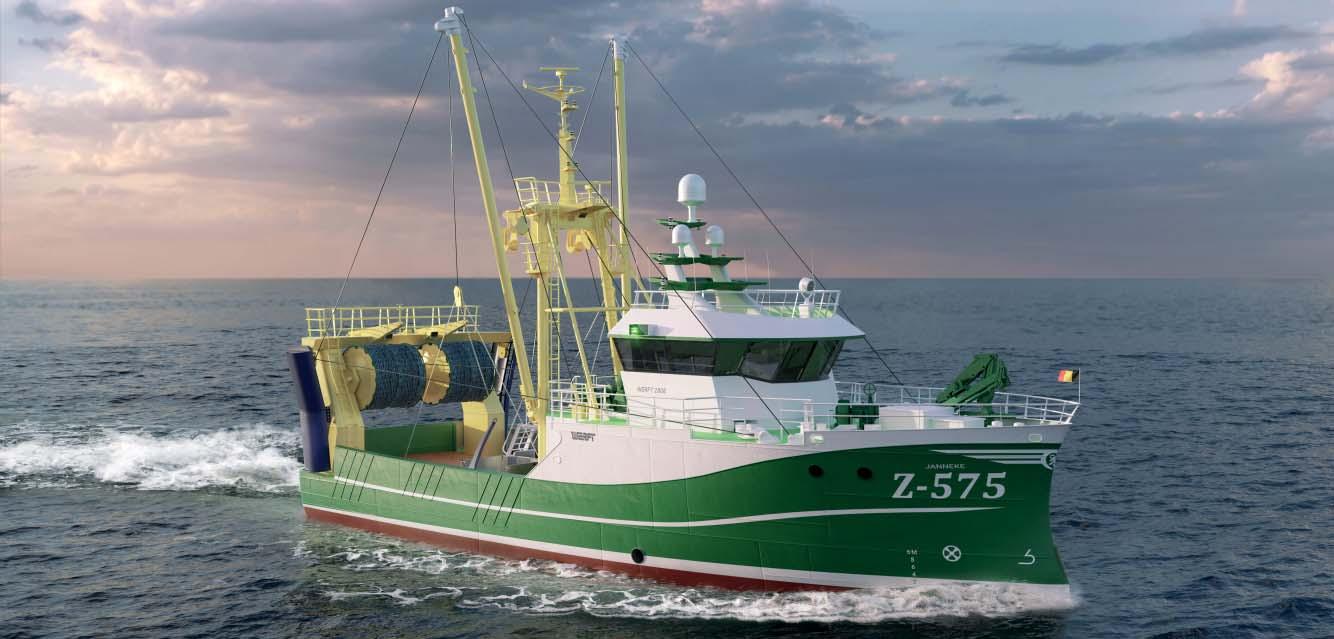
He’s excited at the prospect of a new vessel designed to meet his needs.
“It’s ideal for stone-mat gear in the winter months and for twin-rigging in the summer, either on plaice or on langoustine,” he said.
Janneke will have an overall length of 27 99 metres with an 8.25-metre breadth – and will be the first large fishing vessel to be built in Urk for more than 20 years. For main contractor Werft Shipbuilding, this is a significant milestone the company has built other commercial craft, but this is its fishing vessel
“This is the first large fishing vessel in 24 years to be completely built in Urk. This strengthens the maritime cluster and cooperation in the region,” said Pieter Pruiksma, director of Werft Shipbuilding.
“The hull should be ready to be transported to the port for outfitting at the end of this year. We can say that with the design and construction of this new vessel, we are taking major steps in terms of sustainability and multifunctionality in the fishing industry.”
First for Yanmar
The build is also a milestone for Yanmar Europe, which will be delivering its first main engine to a customer in the Dutch fisheries sector.
The choice of main engine went to a 736kW Yanmar 6N21AW with a ZF W10220 reduction gear. According to Pieter Pruiksma, the output is consequently half that of a traditional large Dutch beam trawler.
“However, it will be possible to handle 10-metre gear and it will have two 10 cubic metre net drums, with a gate for handling gear over the stern. This vessel will have a 3400mm propeller, a bollard pull of 21 tonnes and a speed of 10 knots. This multi-functional fishing vessel is designed in such a way that it has minimal fuel consumption while fishing. Due to the low speed of the main engine, an optimum efficiency of 97rpm on the propeller can be achieved,” he said.
Hakvoort is satisfied with the choice of engine.
“The reasons are simple – the low speed, the large litre capacity, the cost-effective diesel consumption, and it is a mechanical engine enabling a lot of maintenance that can be done yourself, so not a lot of electronics that can break down quickly, and also there’s a large parts depot in Almere, not far from Urk. The fact that many Norwegian and Scottish fishermen are currently opting for Yanmar also has a lot to say,” he said.
While Marimecs is responsible for the engineering, the rest of Janneke will be built mainly by local companies in Urk. The hull construction is in the hands of VCU-TCD, the electrical installation has been contracted to Piet Brouwer Elektrotechniek and the electronics to De Boer Marine. Carpentry will be handled by De Flux, blasting and painting will be conducted by Straalbedrijf Flevoland and the pipework and cooling systems by ITech.
For the latest news and analysis go to www.worldfishing.net SEPTEMBER 2023 | 21 NEWBUILDS
■ Janneke Z-575 is to be named after Jelle Hakvoort’s daughter
GOLLENES GOES FOR FURUNO
When skipper and owner Frode Kvalsvik’s new Gollenes was under construction at the Karstensen yard in Skagen, the choice went to Ålesund Furuno dealer Marineelektronikk AS to supply the wheelhouse electronics
This includes a BlueBridge Matrix display system that provides presentations of fishing and navigation systems on the array of monitors facing control positions in the wheelhouse of the 70-metre, 1,970-cubic-metre capacity RSW vessel that has opportunities to fish for pelagic consumption species as well as industrial stocks and whitefish.

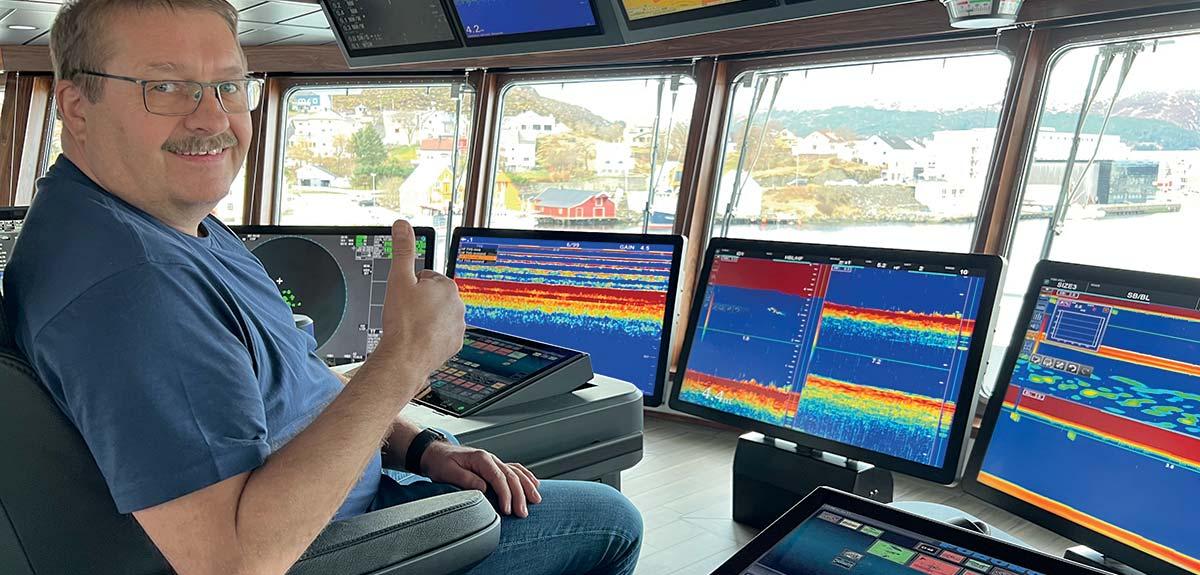
There’s a lot of Furuno in Gollenes’s wheelhouse, starting with the BlueBridge Matrix, a complete scalable screen management matrix that can be adapted to all types of vessels. This combines screen management, system integration and centralisation of operation for various systems in a user-friendly way.
“We see it an advantage to be able to choose a local supplier. We have known Marineelektronikk AS well for a long time, and with the Furuno bridge package we feel that we are in safe hands,” Frode Kvalsvik said.
“The BlueBridge screen management is new to us, but I believe this matrix will systematise and simplify the work on the bridge. We have two touch screens that function as control panels, and we can easily choose what we present on each screen. We also have pre-defined layouts adapted to our mode of operation. We have central dimming on all screens and manage this with at the touch of a button.”
The BlueBridge Matrix offers opportunities for space and cost savings, providing effective utilisation of screen surfaces as well as better ergonomics is achieved for the workstations on the bridge, as the most used systems can be operated from a comfortable range. This also eliminates the problems of having multiple screens and control panels that have been part of conventional wheelhouse setup.
Frode Kvalsvik also chose Furuno fishfinders, with an FSS-3BB species and biomass sonar and FCV-38 stabilised fish size sounder and FCV-1900 and DFF3sounders. The sonars are a DFF-3D multibeam unit, a high-frequency
FSV-75, intermediate frequency FSV-85 MK2 and a low frequency FSV-25S MK2 for long-range detection, plus a TS-360 trawl sonar.
All of these, as well as the MaxSea Time Zero, radars and other navigation systems are routed through the BlueBridge Matrix display system.
“It has been a pleasure to participate in the construction process of Gollenes,” said Sture Vatnehol at Marineelektronikk AS.
“In collaboration with the fishing company, we have come up with an innovative bridge concept. They have chosen large screen surfaces where the instruments can be presented either in full-screen mode or as split views with BlueBridge Matrix screen control We look forward to following up this great ship in the future, and wish them the best of luck with their fishing.”
■ Two touch screens are used to manage the BlueBridge Matrix display system
22 | SEPTEMBER 2023 For the latest news and analysis go to www.worldfishing.net FISHING TECHNOLOGY
■ Skipper and owner Frode Kvalsvik opted for a Furuno package of electronics for Gollenes

Promote your business to the right audience in the right place at the right time. Engage with our international audience of decision makers and buyers. The World wide range of opportunities for campaign delivery. We deliver bespoke marketing Hannah Bolland, Brand Manager t: (+44) 1329 825 335 Contact us today WORLDFISHING SINCE 1952 & AQUACULTURE Reach industry professionals with World Fishing & Aquaculture MAGAZINE RECIPIENTS 14,500 DECISION MAKERS 70% PAGEVIEWS PER MONTH 53,000 World Fishing & Aquaculture’s valued content focuses on all
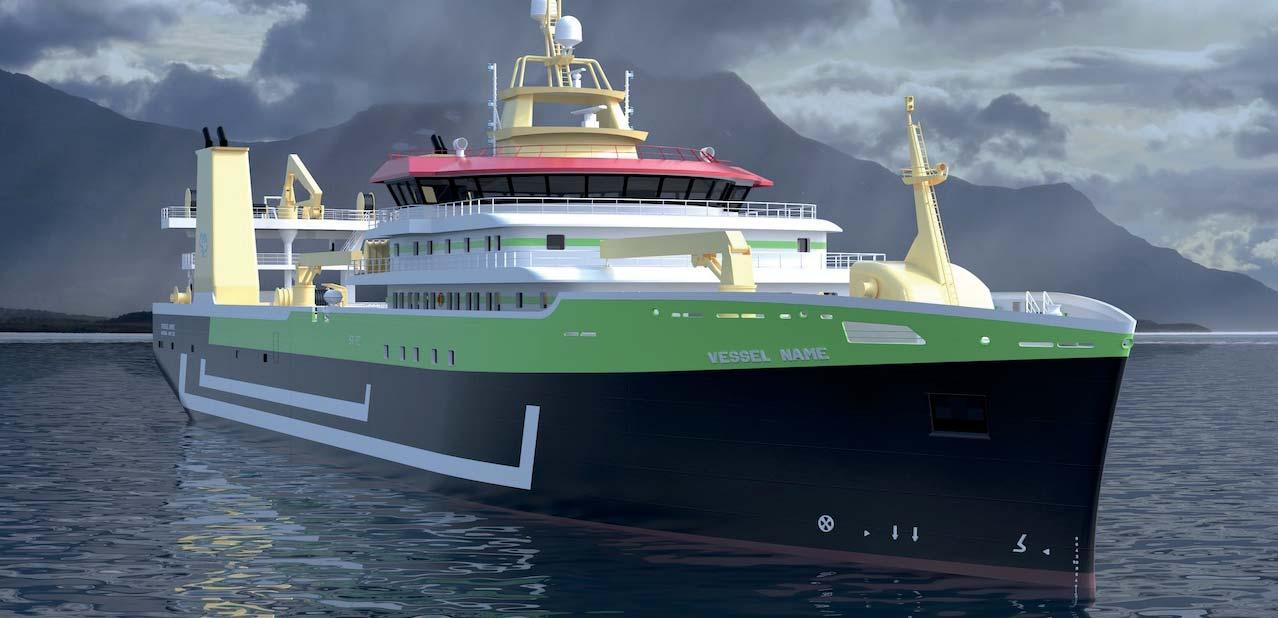
NAUST DECK SYSTEMS CHOSEN FOR NEW PELAGIC CATCHER
Naust Marine is supplying a full set of deck hardware for P&P newbuild under construction at the Tersan yard in Turkey
The Naust package extends to 23 winches, as well as the Automatic Trawl Winch (ATW) control system and other critical deck equipment in a system that has been custom-designed to meet the P&P’s requirements.
The package as a whole includes three trawl winches managed by the Naust ATW system, four net drums and two net sounder winches. In addition, the new vessel will be outfitted with ten auxiliary winches of various sizes, an
anchor winch, two stoppers and three mooring winches, as well as additional deck equipment.
The 115-metre new pelagic vessel is designed by Skipsteknisk and is expected to replace Annelies Ilena KW-174. It is designed for worldwide operation and will be able to fish for small pelagics that are frozen onboard, with 100% of catches intended for human consumption.
Tersan expects to deliver the new vessel in November 2024.
Hampidjan Australia latest CatchCam distributor
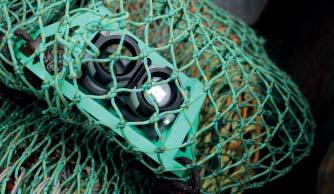
SafetyNet Technologies has struck an agreement to supply the CatchCam fishing gear-mounted camera to the Australian market, signing up Queensland-based Hampidjan Australia as its distributor.
“We like to be in the forefront with fishing gear technologies in Australia and are excited to introduce CatchCam to the commercial fishing market,” said Hampidjan Australia Managing Director Thorsteinn Benediktsson, commenting that both Hampidjan and SafetyNet Technologies firmly believe that their partnership will make a real impact on the fishing industry by introducing precision fishing technologies and practices to the Australian market.
CatchCam is seen as a logical addition to the company’s suite of products as it allows fishermen to easily see their gear underwater,
making it possible to quickly identify any issues and solve them as needed.
Hampidjan Australia recognises that innovation starts with fishermen, and Benediktsson said that by providing “eyes on the net”, CatchCam cameras can accelerate
innovation and help the fishing industry hit its sustainability goals.
CatchCam is the most robust underwater video camera on the market for commercial fishing. It comes with a battery life in excess of four days, complete wireless operation, and a suite of settings specific to fishing operations.
“Working with Hampidjan is perfect for us. They are an internationally recognised brand with a very strong reputation in fishing,” said Tom Rossiter, head of precision fishing at SafetyNet Technologies.
“The fishermen trust them, and they are the partner we need in Australia. Our products have been designed with fishermen, for fishermen and working with Hampidjan will help us to build on this with new customers in Australia.”
24 | SEPTEMBER 2023 For the latest news and analysis go to www.worldfishing.net FISHING
TECHNOLOGY
■ P&P has opted for a package of Naust Marine deck hardware for its new pelagic vessel
■ The CatchCam produced in the UK by SafetyNet Technologies is now available from Hampidjan Australia
UP
Seawork celebrates its 25th anniversary in 2024!
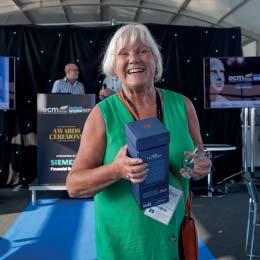
The 25th edition of Europe’s largest commercial marine and workboat exhibition, is a proven platform to build business networks.
Seawork delivers an international audience of visitors supported by our trusted partners.
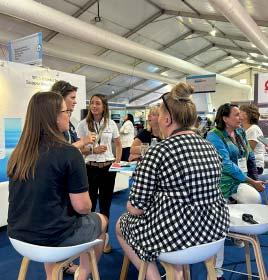
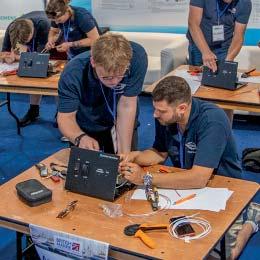

Seawork is the meeting place for the commercial marine and workboat sector.
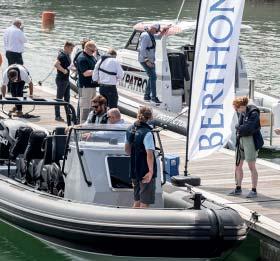
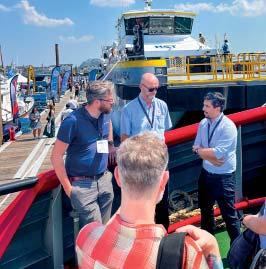
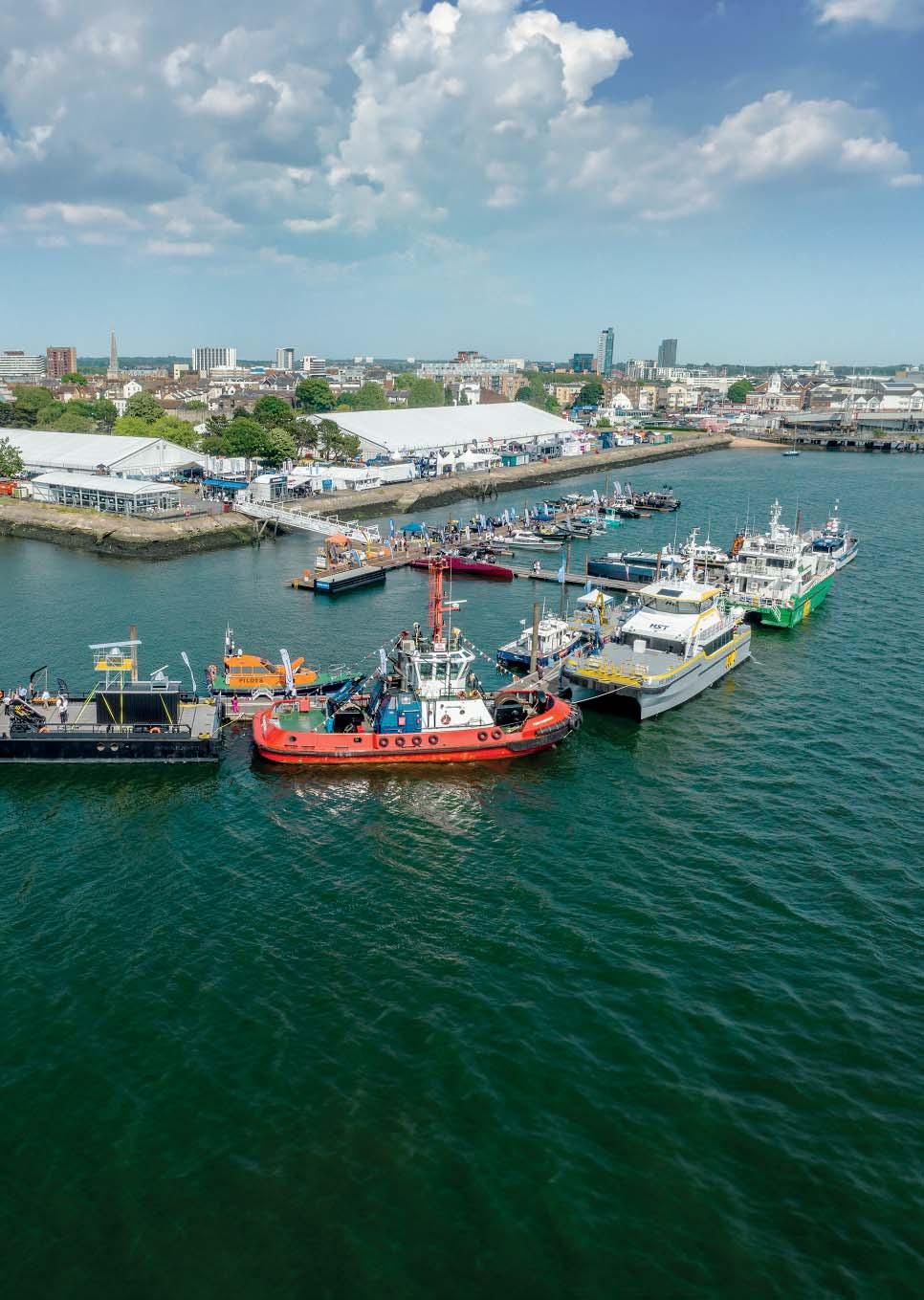
12,000m2 of undercover halls feature 400 and equipment on the quayside and pontoons.
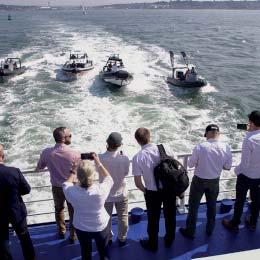
Speed@Seawork on Monday 10 June in vessels operating at high speed for security interventions and Search & Rescue.
For more information visit: seawork.com contact: +44 1329 825 335 or email: info@seawork.com
The European Commercial Marine Awards (ECMAs) ceremony celebrates individuals and innovative companies on Tuesday 11 June.
experts, helps visitors to keep up to date with the latest challenges and emerging opportunities.
The Careers & Training Day on Thursday 13 June 2024 delivers a programme focused on careers in the commercial marine industry.
JUNE Southampton United Kingdom 11 13 TO
partner MARITIMEJOURNAL COMMERCIAL MARINE BUSINESS
SIGN
TODAY #Seawork Media
Speed@Seawork
Sea Trials & Conference
RISKY BUSINESS
Future fish production could be significantly impacted by environmental and regulatory uncertainty, writes Jason Holland
While forecasting that global fisheries and aquaculture production will grow 12% over the 10-year period through to 2032 to reach 202 million tonnes, with the total volume produced for human consumption expected to increase by 14% to 182 million tonnes, the new Agricultural Outlook 2023-2032 compiled by the Organization for Economic Co-operation and Development (OECD) and the Food and Agriculture Organization (FAO) of the United Nations also cautions that the fisheries and aquaculture sectors will continue to face significant uncertainties over the next decade.
In particular, OECD and FAO anticipate there will be challenges related to the environment, policy changes and effectiveness of governance.
While much of the aforementioned production growth is expected to come from aquaculture (rising to a total harvest of 111 million tonnes in 2032), shifting government policies, principally related to environmental impacts could alter the distribution and rate of growth, states the report.
It also maintains any policy shifts in China, the world’s largest producer of both aquaculture and capture fisheries, will have significant impacts on global production. As such, the country’s 15th Five-Year plan 2026-2030 represents a source of uncertainty for the second-half of the report’s projection period.
pressure to reduce greenhouse gas (GHG) emissions from the food system and transition to net-zero, the prices of key energy inputs into capture fisheries (such as diesel fuel) and aquaculture (electricity) may change altering the profitability of some activities, with impacts on the types of production and the structure of the fleet.
The impact of those policies on agricultural markets is another source of uncertainty, it adds.
Blue transition support
■ Seafood consumption will increase in all continents except Africa, where it’s projected to fall from 9.8kg in 202022 to 9.6kg in 2032, projects OECD-FAO
OECD- FAO, Agricultural Outlook 2023-2032
Climate disruption
According to OECD and FAO, climate change will have both direct and indirect impacts on capture fisheries and aquaculture and is perhaps one of the largest sources of uncertainty for fish production over the next decade. They say the direct impacts of climate change on capture fisheries include the shifting geographic distribution of stocks, and changes to species composition, turnover, abundance and diversity in marine ecosystems.
“Climate change will not only impact the resources available to fishers, but also complicate the job of fisheries managers, and increase the number of shared stocks heightening the need for co-operative management regimes,” states the report. “On aquaculture, climate-driven changes in temperature, precipitation, ocean acidification, incidence and extent of hypoxia and sea level rise, availability of wild seed as well as reducing precipitation leading to increasing competition for freshwater, amongst others, are expected to have long-term impacts.”
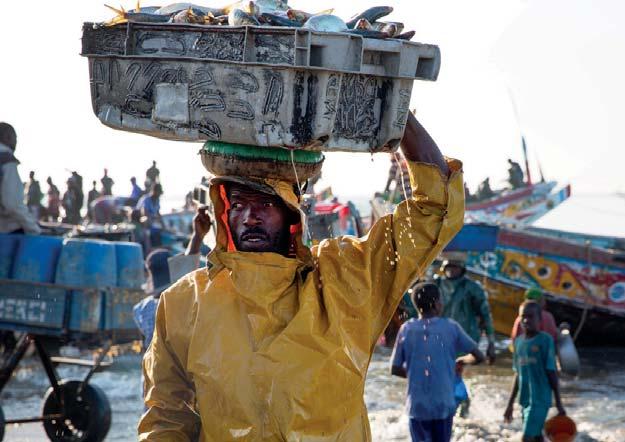
Climate change impacts will not be evenly distributed, with larger changes expected in tropical regions and less temperate zones, it adds.
The report explains that climate change also creates multiple regulatory risks for both capture fisheries and aquaculture. As governments come under increasing
Meanwhile, risks posed by the transition to net-zero depends on both the energy intensity of production and the nature of the policies put in place, making them both hard to predict and heterogenous across countries and fleet segments.
To help governments understand these challenges and share best practices, OECD has two new initiatives: one related to the impacts of climate change on policy making for capture fisheries; and the other looking at the role of aquaculture in meeting the challenges faced by food systems globally.
Additionally, it’s highlighted that to help vulnerable states mitigate the often-devastating effects of climate change, the FAO Blue Transformation can provide “a pathway for hunger reduction and sustainable management of oceans, seas, and marine resources” through reconciling environmental sustainability, food security and livelihood priorities.
The report explains that Blue Transformation focuses on more efficient, inclusive, resilient and sustainable blue food systems from capture fisheries and aquaculture, promoted through improved policies and programmes for integrated science-based management, technological innovation, and private-sector engagement. It has three main objectives: sustainable aquaculture expansion and intensification; effective management of all fisheries; and upgraded value chains.
“Achieving the objectives of Blue Transformation requires holistic and adaptive approaches that consider the complex interaction between global and local components in food
26 | SEPTEMBER 2023 For the latest news and analysis go to www.worldfishing.net ANALYSIS
Photo Credit: Pew Charitable Trusts
Climate change will not only impact the resources available to fishers, but also complicate the job of fisheries managers
‘‘
systems and support multi-stakeholder interventions to secure and enhance livelihoods, foster equitable distribution of benefits and provide for an adequate use and conservation of biodiversity and ecosystems,” states the report.
Subsidy changes
It’s also pointed out in the report that in 2022, the international community agreed binding discipline on fisheries subsidies at the WTO, and its application represents another source of uncertainty for capture fisheries production.
The agreement inter alia prohibits subsidies to fishing activity on overfished stocks, to illegal unreported and unregulated (IUU) fishing and, to fishing on the high seas outside the area of competence of an RFMO. An analysis of government support to fisheries presented in the OECD Review of Fisheries 2022 suggests that over 60% of support (2018-2020 average) presents a high or moderate risk of encouraging unsustainable fishing in the absence of effective management. This intimates that when the WTO agreement enters into force (once two-thirds of members have accepted the agreement), the impacts on capture fisheries production may be significant if governments are required to alter their subsidy programmes to ensure compliance.
The agreement also contains provisions for adopting more comprehensive disciplines within four years of the initial agreement entering into force, potentially resulting in another, more stringent, set of disciplines being applied in the projection period – thereby introducing further uncertainties.
Lastly, from a trade perspective, future policy decisions could impact the projections. For example, while sanctions
Passionate about quality




remain in place for Russia following the invasion of Ukraine, any changes to this situation are difficult to predict and may impact the expected trading relationships.
The report suggests ongoing tensions between the United States and China may have increasing impacts on the trade in fisheries products, particularly if trade and fishing activities in the Pacific are affected.
“The imposition of sanctions, tariffs and trade restrictions over the long term could alter established markets, leading to reduction in trade and higher consumer prices in some regions,” it states.
■ The new Agricultural Outlook projects that by 2032, aquaculture will account for 55% of total fish production
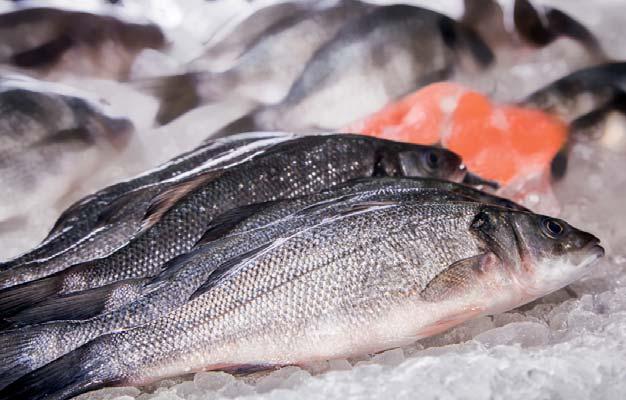
SEPTEMBER 2023 | 27 ANALYSIS
The Beck Liner™ is designed to provide the customer with a perfect block 5 Perfect dimensions 5 Perfect weight 5 No freezer burn 5 No dehydration 5 No ice 5 No air pockets Contact Information Beck Pack Systems A/S Sandemandsvej 6, DK-3700 Roenne, Denmark Tel:+45 56 95 25 22 Email: jkj@beck-liner.com www.beck-liner.com
Products for block production
Beck Pack Systems
JAPAN’S SQUID FARMING BREAKTHROUGH
University researchers in Japan are aiming to address declining squid populations by farming the species. Bonnie Waycott reports
In August 2022, researchers at the Physics and Biology Unit of the Okinawa Institute of Science and Technology (OIST) announced they had developed the first squid aquaculture system with potential for commercialisation. Aimed at a group of species known as oval squid (Sepioteuthis lessoniana), the researchers hope their new system will be a way of reducing the pressure on wild squid populations and providing Japanese consumers with healthy, sustainable seafood.
Established in 2011, OIST is an international science and technology institution that fosters collaboration among individuals from 65 countries and regions to engage in cutting-edge education and research. Among the researchers at the Physics and Biology Unit is Dr Zdenek Lajbner from the Czech Republic. He arrived at OIST in 2012 and has been involved in cephalopod research since 2014.
“I was very excited when we started to work in the brand new OIST Marine Science Station back in 2016,” Lajbner told WF. “We closed the oval squid life cycle at the station in 2017 and since then, we have been improving squid aquaculture techniques.”
As a healthy food source that is packed with protein, squid contributes to high-quality meals and forms a significant part of the Japanese diet, but catches have been declining rapidly since the late 1980s.
In 1968, Japan’s annual squid catch was at its highest at 773,777 tonnes, but the figure has continued to decline since, falling to 83,593 tonnes by 2018. As a result, Japan has had to rely on imports for a large portion of the squid it consumes. While detailed factors are unknown, the causes
of the decline in wild squid are thought to be related to overfishing, poor regulatory oversight and climate change.
“We believe that the decrease in squid populations in the wild could be connected to changing oceanic currents and other environmental changes caused by a complex interplay of anthropogenic and natural factors,” said Lajbner. “Many organisms are affected by increased pollution, decreasing levels of dissolved oxygen in adjacent seas and so on.”
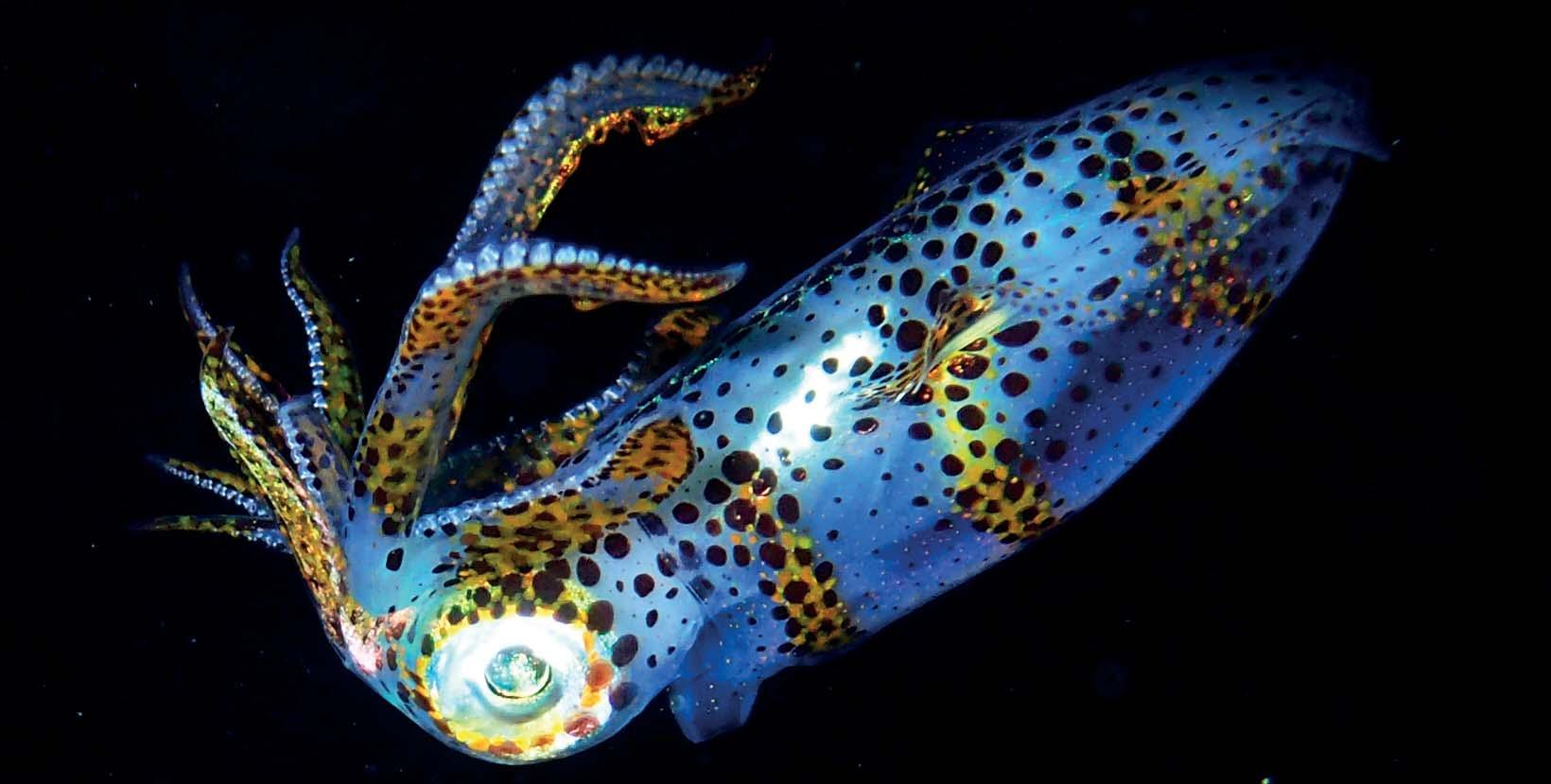
■ OIST has successfully kept squid throughout their entire lifecycle and over multiple consecutive generations
Difficulties overcome
Research on squid farming has been conducted around the world for many years but making it a reality has proven difficult due to the animal’s behaviour. Wild squid are known to be picky with particular food preferences, are constantly on the move, require highly oxygenated and clean water and are very sensitive to manipulation, said Lajbner.
Their skin is also delicate, and they have a complex life cycle. Any slight change in rearing environment can have disastrous consequences, as squid are extremely sensitive to water temperature and quality.
28 | SEPTEMBER 2023 For the latest news and analysis go to www.worldfishing.net
AQUACULTURE
I believe that the potential for squid aquaculture to be commercialised is huge
Dr Zdenek Lajbner, Okinawa Institute of Science and Technology
‘‘
Photo Credit: Ryuta Nakajima
But despite the difficulties, the Physics and Biology Unit has successfully raised larvae into adults, making it possible to keep squid throughout their entire lifecycle and over multiple consecutive generations.
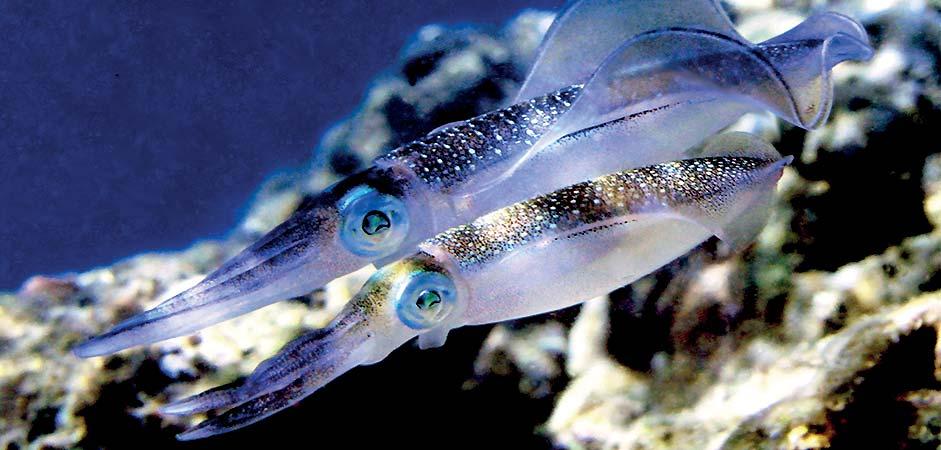
The unit has been focusing on the psychophysics of cephalopod camouflage since 2014, and originally needed to establish a reliable culture method for squid as part of this research. For its new rearing system, it selected the oval squid as a target species, partly based on pre-existing knowledge from prior research and also because oval squid is an excellent model for the unit’s fundamental research and is considered a delicacy in Japan as one of the highest valued squid on the food market.
While working in restricted conditions, the researchers established appropriate techniques to develop a cheap and efficient rearing method with high hatching and survival rates. The system relies on a body of research into squid feed composition for the optimal amount of feed and feeding frequency, and specifically focuses on providing good conditions for spawning and hatching with high quality food and water.
“We have been able to keep an inbred line of the oval squid for 10 consecutive generations that produced tens of thousands of high-quality fertilised eggs,” said Lajbner.
“Various experiments related to squid reproduction and rearing have been conducted. There are large differences between the experiments and accidents also happen, but nonetheless, we have been able to record hatching and survival rates exceeding 90% in our inbred line.”
Commercial opportunities
Having created an optimal environment for farming squid, Lajbner went on to say that the Physics and Biology Unit’s system has significant potential to be commercialised soon.
“The unit is not engaged in aquaculture itself,” he said. “At this stage, we are continuing our work to research and develop technology that will probably help to establish commercial cephalopod aquaculture. Since our announcement last year, we have been in contact with fishing industry representatives, government bodies and other universities that are interested in the commercialisation of our research.
“There are still challenges when it comes to farming squid. These need to be addressed and solutions will differ based on various setups, but despite these challenges, I believe that the potential for squid aquaculture to be commercialised is huge. As we continue to collaborate with established companies, we are also hoping to build a new squid farm one day.”
Consumer interest
While plans for a commercial squid farm get underway in Japan, the world’s first octopus farm in Spain has environmental and animal rights activists worried. A 52,000m2 farm capable of producing nearly 3,000 tonnes of octopus per year is set to begin operations on the Canary Islands, prompting concerns it could be an ethical and environmental disaster.
While this topic is hotly debated within the global scientific community, said Lajbner, Japan has one of the highest rates of fish and seafood consumption globally, and with declines in wild squid populations likely to significantly alter the Japanese diet and culture, squid aquaculture is drawing increasing attention.
“My own research largely focuses on cephalopod behaviour and one of my aims is an improvement of captive cephalopod welfare,” said Lajbner. “Squid have an enormous cultural value in Japan and society relies on a stable supply of squid. The current population of Japan is about 125 million, and the vast majority of Japanese appear to be concerned about the lack of squid on the market.
“In this sense, we urgently need to work towards a solution that can meet the needs of cephalopod consumers, but at the same time, our role is to guarantee cephalopod welfare together with environmentally friendly and sustainable production. OIST has very strict and progressive policies regarding animal welfare and the responsible conduct of research, while potential consumers are very interested in our work and are very keen to taste farmed squid,” he said.
With further improvement of squid culturing techniques, OIST’s Physics and Biology Unit team hopes to help control the over-exploitation of natural resources including squid populations and is looking forward to promoting squid aquaculture externally for potential licensing opportunities and more.
■ Visiting researcher Ryuta Nakajima meets local high students to explain ongoing cephalopod research conducted at the OIST Marine Science Station, Seragaki, Okinawa
■ It’s hoped the new system can reduce the pressure on wild squid populations and provide Japanese consumers with healthy, sustainable seafood
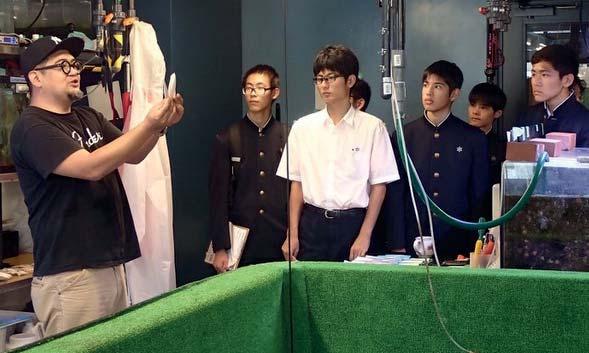
AQUACULTURE
SEPTEMBER 2023 | 29
Photo Credit: Ryuta Nakajima
FALLING DEMAND AND EL NIÑO TO CHALLENGE GLOBAL AQUACULTURE
With demand softening and El Niño driving up fishmeal prices, the second-ha
is expected to be the most difficult period since the peak of the Covid
according to a new report from Rabobank
Rabobank’s latest “Global Aquaculture Update” finds that salmon prices have largely returned to more normal levels after 2022’s peak but remain relatively high. The report also advises that soft demand driven by inflation in the US and Europe continues, with salmon appearing better placed than shrimp. It adds that the slump in shrimp demand may even get worse in the second-half of 2023 as Chinese demand moderates.
In the third-quarter, the salmon supply will return to growth after nearly two years of contraction, the report states, adding that from now on, there should be positive but low supply growth until at least the end of 2025 – provided there’s no unforeseen biological or climatic events.
“The salmon industry, in terms of profitability, had one of the best periods ever recorded in the first-half of 2023, driven by record prices. The industry will remain highly profitable in the second half of 2023 despite more normalised prices, as salmon is currently competitively priced relative to alternatives,” said Rabobank Senior Global Seafood Specialist Gorjan Nikolik, who compiled the report.
Salmon won’t be without its challenges, however. Not least a 25% resource tax was voted into Norwegian law that will impact the industry until at least 2025, when an election could bring a new government coalition and policy. While the report notes the taxation level approved by the government is “considerably lower” than the original proposal of 45%, the industry will be disappointed with the combined tax rate increasing to 47% when factoring in the 22% corporate tax.
It also points out that “much remains unknown”. For instance, it’s not yet determined how profitability will be estimated or how land-based, closed-containment and
offshore production will be considered.
“Another possible challenge for the industry in the second-half of 2023 will be a shortage of sustainablycertified fishmeal and fish oil,” Nikolik said. “Increased use of vegetable oils and novel alternatives like algal oils could be a partial solution.”
Weak Chinese demand undermines shrimp
The shrimp industry faced a very challenging first-half of 2023, advises Rabobank. Prices continued to fall due to soft demand from the west and high supply from Ecuador. Its report also highlights that China imported record amounts of shrimp as importers anticipated pent up demand, but that demand has not been recovering from the pandemic as fast as expected, resulting in low protein prices and high inventories.
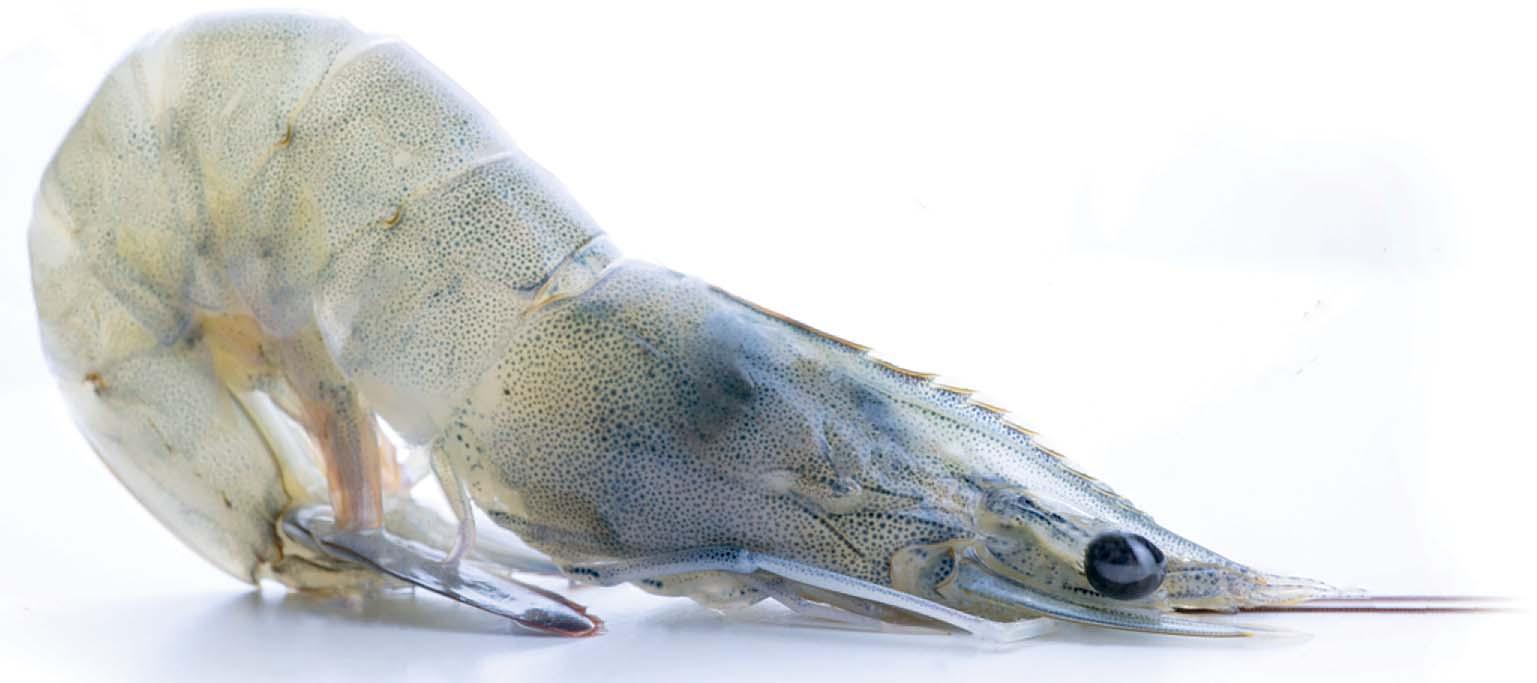
“The Asian shrimp industry in particular is facing a challenging period of record-low prices due to oversupply caused by Ecuadorian growth,” Nikolik said. “Persistently low prices and high costs have made shrimp farming unprofitable. Weaker-than-expected Chinese demand and supply growth from Ecuador mean a sizable supply correction in Asia is needed to balance the market.”
Ecuadorian producers can also expect a difficult rest of the year, not only due to weaker Chinese demand expectations, but also the risk of El Niño bringing heavy rains and possible flooding. This should temper the record supply growth that Ecuador has had so far in 2023.
At the moment, though, the country remains in growth mode, states the report, adding that if it is unaffected by El Niño, the industry will expand by between 16% and 18% this year.
It advises that Asian producers have already started to
■ White shrimp prices have fallen below prepandemic levels to 10-year lows
30 | SEPTEMBER 2023 For the latest news and analysis go to www.worldfishing.net AQUACULTURE
lf of 2023
pandemic in 2020,
reduce their shrimp production amid the low-price/highcost environment and this will continue in the closing six months. Rabobank believes India’s shrimp production is likely to decrease by 20% in the second half of this year, and that Vietnam and Indonesia are also likely to produce less product.
Fishmeal shortage to bring higher prices
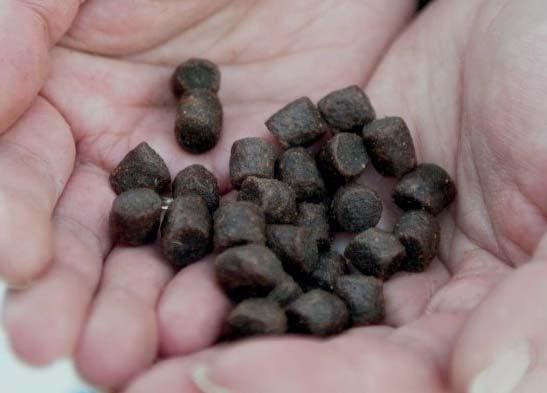
Fishmeal and especially fish oil producers enjoyed record prices due to good demand and the high prices of alternatives in the first-half of the year, when supply was relatively good, the report states.
Rabobank anticipates that aquaculture feed prices will continue to be supported through the end of the year due to a scarcity of fishmeal and fish oil. Notably, El Niño conditions caused the cancellation of the first fishing season in Peru – key for fishmeal and oil supply – creating the potential for an acute supply shortage.
Only 40,000 tonnes were caught before the closure was implemented. By comparison, the first season of 2022 had a 2.8 million tonne quota, with an 85% catch rate recorded before it closed. This creates a major reduction in the fishmeal and fish oil supply, which the report states “will be impossible to replace”.
Nikolik also highlighted that Peruvian fishmeal and oil have sustainability certifications, and that buyers seeking alternatives will not be able to find them, which will impact the sustainability commitments of the entire aquaculture value chain.
The update explains that in 2014, the last time a fishing season was cancelled in Peru, the fishery recovered rapidly and the subsequent season had both a high quota and


catch rate. The resulting supply recovery also normalised fishmeal prices to levels seen before the cancellation.
“Fishmeal and fish oil demand seem robust for now, but high prices as supply contracts will force rationing and substitution for many aquaculture producers,” said Nikolik. However, the report adds that with soymeal continuing to ease, aquafeed prices can be expected to stay relatively stable through to the end of this year, with formulators becoming more reliant on vegetable proteins and oils.
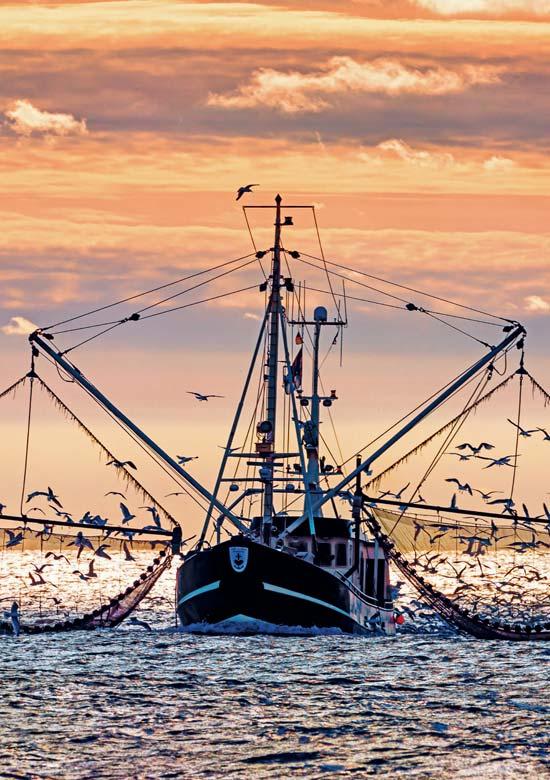
■ Aquafeed formulators will face sourcing challenges if there are acute shortages of sustainablycertified fishmeal and fish oil
Your advantages
·More than 60 years of experience in separation technology

·Highest performance and separation efficiency
·Highest reliability and availability of machines and systems explicitly adapted to customers’ requirements
·Highest possible cost efficiency due to continuous and automatic operation

AQUACULTURE
For the latest news and analysis go to www.worldfishing.net SEPTEMBER 2023 | 31
F FL L O OT T T TW W E EG G C E EN T TR R IF UG G E ES F OR M A N NU U F FA A C CT UR R IN N G AN D PR O OC E ES S SI NG G O OF F F I S H O OI L, F IS S H ME A AL L , F I SH B BYY-P P R RO O D DU U CT S A AN N D SU U R RI M MI
Known as the worlds largest stockist of mooring- and deck equipment





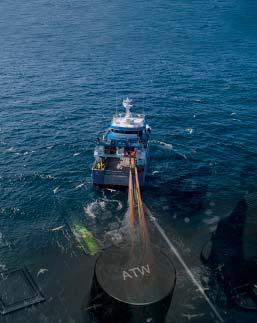





A Global Leader in Frozen Food Packaging


Beck Pack Systems A/S DK-3700, Roenne, Denmark
Tel: +45 56 95 25 22 info@beck-liner.com
Beck Pack Systems, Inc. Seattle, WA, USA Tel: +1 425 222 9515








The






ISO-9001, ISO-22000, FSSC 22000 certified manufacturer and supplier of block liners, folding cartons, and freezer frames for the international food processing industry. To find the agent in your region visit: www.beck-liner.com

32 | SEPTEMBER 2023 For the latest news and analysis go to www.worldfishing.net PRODUCTS & SERVICES DIRECTORY
Aquaculture
Deck Machinery WWW.WASSP.COM Sales@wassp.com +64 9 373 5595 MORE FISH LESS TIME LESS FUEL WASSP Dir 21 11:32 High quality antifoulings and coatings for fishfarming net pens Netwax E4 Grenline Netrex AF Netpolish NP +47 66 80 82 15 - post@netkem.no
Block Liners
net for technology-driven fish farming
is made of
stabilised,
and
Terephthalate (PET) monofilaments, woven into a
twisted hexagonal mesh.
KIKKONET Aquaculture Nets/Cages
Batra and Marco
Cartolit A/S. Skovdalvej 30, 8300 Odder, Denmark Tel: +45 86784099 Fax: +45 86784060 Email cartolit@cartolit.dk Website www.cartolit.dk Fish Block Cartons Contact us at: (+47) 56 32 68 50 sales@sotra.net - www.sotra.net
KikkoNet
UV
extremely strong
lightweight Polyethylene
double
www.kikkonet.com
Mayank
Montagnoli Tel: 0060 126 883 709 info@kikkonet.com
000
shackles,
and other mooring equipment available from stocks in Norway, Netherlands and China Anchors & Chains GUY COTTEN SA BP 538 29185 CONCARNEAU Cedex FRANCE Tel: +33 2 98 97 66 79 Email: info@guycotten.com www.guycotten.com Guy Cotten is the main manufacturer of very high quality protective clothing, boots, lifejackets and survival suits for fishermen and processors. Clothing borgarplast.is/en WE WELCOME YOU TO OUR BOOTH AT SEAFOOD EXPO GLOBAL IN HALL 3, NO. 3BB301 PROTECTING FRESHNESS AND QUALITY PIONEER IN HIGH-QUALITY FISH CONTAINERS BORGARPLAST, industry leader since 1983. Containers 25+ YEARS OF NET MONITORING AND FISHING FINDING www.notus.ca notus@notus.ca | +1 709 753 0652 The only solution for twin trawling Notus Electronics Ltd. is a developer and manufacturer of advanced, wireless net monitoring, gear finding and target detection systems. StepliteX StormGrip your new boot legacy www.bekina-boots.COM | info@bekina-boots.com Electronics WORLDFISHING SINCE 1952 & AQUACULTURE To advertise in the World Fishing Directory contact on +44 1329 825335 Fortune Net Directory Nov 2021 copy indd 1 09/11/2021 10:25
We have over 20
tonnes of anchors, chains,
buoys
Fishing Gear
Metallurgica Abruzzese S.p.a. Strada della Repubblica, 58 43121 Parma – Italy
Tel: +39 0521 221411
Fax: +39 0521 221449
email: a.contini@cavatorta.it web: www.cavatorta.it/EN
Cavatorta Group is a dynamic European manufacturer that specializes in the production of galvanized and PVC coated multifunctional wire mesh products. Our SEAPLAX marine mesh uses include lobster and crab traps, oyser trays, aquaculture and general marine applications.
Fishing Gear
Email:

1-2 Shing Nung Road, Tungkang, Pingtung,Taiwan
Tel: 886-8-8331100~9
Fax: 886-8-8327022
E-mail: export@chingfa.com.tw

Website: www.chingfa.com.tw
Specialized manufacturer & exporter of: Hi-tech 7 tuna purse seine nets, Super 20 aquaculture knotless nets (Raschel type), nylon longline & its spare parts, nylon fishing line, nylon mono & multi-mono nets, nylon twisted and braided nets, PE trawl nets, ropes, twines, floats and etc.
Fishing Gear
EUROROCK NV ALLEWERELT
Nv Allewerelt, Biekorfstraat 60, 8400 Oostende, Belgium
Tel: +32 478 960744
Email: laurent@eurorock-belgium.com
www.eurorock-belgium.com
Contact: COO Laurent Messiaen
Manufacturers of steel bobbins, rubber bobbins, spoked and bunt bobbins, rubber disc (tyres, conveyor and moulded discs), rockhoppers, spacers
Shirmpgear. We can make other rubber products as clients needs.
Fishing Gear
Founded in 1927, Sounete focuses its activity on the design and manufacture of hardware for trawling/ industrial fishing: steel and rubber bobbins, rubber spacers, trawl doors, blocks, swivels, large size thimbles, shackles, and other metal gear, including customized models.

SOUNETE INTERNACIONAL, S.A. Rua da Seara 588, 4430-291 Vila Nova de Gaia, PORTUGAL
Sales: André Pinho Phone: +351 227 860 930 GSM: +351 917 207 052
Email: andre.pinho@sounete.pt www.sounete.pt
Rua da Cerfil (Cap. Gramaxo)
P.O. Box 1029, 4471-909 Maia PORTUGAL Tel: +351 22 961 9200

Fax: +351 22 960 5757
Email: sales@lankhorsteuronete.com www.euronete.com
Contact: Mafalda Gramaxo Salvador Castro
Producer of the recognized brands: Netting: Euroline®, Eurocross®, Premium®, Premium Plus, Lankoforce®

Wire Ropes: Eurowire® and Europact®


Fibre Ropes: Lankoforce®, Eurosteel®, Tipto® Super 12 net twines. Recently Launched! Euroline




ASANO
of high-quality sales@asano-global.com https://asano-global.com/

Fishmeal Plants
ALL STAINLESS STEEL PRODUCTS DESIGNED IN JAPAN

The Crosby Group is the world’s leading manufacturer of rigging, lifting, and material handling hardware. With a global network of more than 3,000 authorized distributors and unmatched local support, Crosby sets the standard for quality, training, and technical expertise in the field.
www.thecrosbygroup.com
SICOR INTERNATIONAL LIMITED
Gore Cross Business Park
Bridport Dorset DT6 3UX
Tel: 01308 428 224
Fax: 01308 428 228
Email: sales@sicor-int.com
Website: www.sicor-int.com
Contact: Toby Eeles
SICOR INTERNATIONAL LIMITED

Unit 3
Murcar Trading Estate, Denmore Road, Bridge of Don Aberdeen, Scotland, United Kingdom
Tel: 01224 707560
Fax: 01224 707561
Email: aberdeen@sicor-int.com
Contact: Gary Mitchell
Manufacturers of all types of fishing ropes, netting and twines including poly steel ropes and compact netting.


VMK pelagic processing solutons combines high performance machines with small square meter usage and cost e.cient maintenance.

solu ons combines high performance machines with cost efficient maintenance.
Fornandergatan 1, 392 33 Kalmar, SWEDEN +46 (0) 480 945 00 vmk@arenco.com
Fornandergatan 1, 392 33 Kalmar, SWEDEN +46 (0) 480 945 12 vmk@arenco.com www.vmkfish.com
For the latest news and analysis go to www.worldfishing.net SEPTEMBER 2023 | 33 PRODUCTS & SERVICES DIRECTORY Fishing Equipment & Boat Parts Bridon-Bekaert Ropes Group Tel: +44 (0) 1302 565108
ropes
the
industry.
Premium quality
for
fishing
A Poutada
– A Coruña – Spain Tel.: +34 981 87 60 08 Tel.: +34 686 930 025
+34 981 87 43 48
Riveira
Fax:
Manufacturer of fishing hooks since 1985. Steels and interna onally proven designs and best warranty. Specialized supplier of a wide range of material for longline fleet.
correo@apoutada.com Website: www.apoutada.com
is a supplier and manufacturer
Tipto® / Eurostone® TRUSTED BY THOSE FEEDING THE WORLD!
Fish Processing
Fish Processing Machines - FPM - for smaller fish




-
TRAUST Knowhow
SEAC FPM-400 Nobbing and Filleting machine now also with Automatic Feeder
SEAC AB Industrigatan 8 386 32 ISLAND OF ÖLAND SWEDEN +4648535200 +46704391454 info@seac.se

SEACAB

and seafood industry include solutions for reception of raw material, sorting, grading, cooking, cooling, weighing and packing.


www.cabinplant.com
Since 1958, FAIVRE Group designs, manufactures and commercializes high quality machines for the aquaculture industry. Today, Faivre goes further and offers its know-how to the www.faivregroup.com





MARELEC Food Technologies designs and manufactures hightech portioning, weighing, grading and control systems for the fishing and food industry.


Trusted solutions for 40 years

Advanced raw material usage


Langerbruggekaai 15
9000 • Gent • Belgium
Tel: +32 9 376 95 95
Fax: +32 9 376 95 96 info@cretel.com www.cretel.com
Cretel is manufacturing in Belgium
FISH SKINNERS FISH SCALERS
VACUUM PACKAGING MACHINES






INDUSTRIAL WASHING AND DRYING EQUIPMENT




Consult us and take advantage of our worldwide experience and expertise.
Kroma A/S
RÆVEVEJ 22 - DK-7800 SKIVE
Phone: +45 9752 2099
Fax: +45 9752 0572 Web: www.kroma.dk

E-mail: kroma@kroma.dk


Kroma A/S is a supplier of high quality de-scaling, gutting and filleting machines for all kind of fish species. Specialist in handling of roe, and filleting of soft fish species like mackerel.
www.marelec.com






Injectors and Protein-Tec

Increases yield natural way
Low pressure injection
Adjustable injection levels
Packing yield increase
Increases yield natural way
Protein in Protein
Reduced drip
Lower cook and chill loss
No chemicals
Sale: +354 516 3000 traust@traust.is www.traust.is
IRAS A/S
Gammelby Mollevej 3 DK-6700 Esbjerg, Denmark
Tel: +45 7611 4949
Email: iras@iras.dkWeb: www.iras.dk


IRAS is supplying the modern fishing and aquaculture industry with innovative solutions within: Pumping, Classification, Weighing, Ice handling, Storage, Transport and Distribution systems. IRAS offers single products or complete systems for raw material handling.
Based on decades of experience, IRAS KNOW HOW to handle fish
LIMA are specialists in the manufacture of meat-bone separators, deboning and desinewing machines for poultry, pork, fish, lamb and beef industries. 70 different models are available from 100 to 20.000 kg/hr. (220 – 44.000 lbs/hr).


LIMA S.A.S.
456 Route de Rosporden
du Guélen • 29000 QUIMPER
34 | SEPTEMBER 2023 For the latest news and analysis go to www.worldfishing.net PRODUCTS & SERVICES DIRECTORY WORLDFISHING SINCE 1952 & AQUACULTURE
advertise in the World Fishing Directory contact on +44 1329 825335 Fortune Net Directory Nov 2021 copy indd 1 09/11/2021 10:25
To
Z.I.
Tel.
E-Mail
Processing
: 02 98 94 89 68 • Fax : 02 98 94 89 69
: lima@lima-france.com www.lima-france.com Fish
Germany Ice & Refrigeration
Know-howinfoodprocessing! Made in
Processing Optimar AS (+47) 70 10 80 00 optimar.no
Fish
Fish Processing
Netting
Ice
RSW cooling systems.
LAND BASED SOLUTIONS - Pelagic systems, Ground fish factories, Shrimp factories, Meat and Dairy systems.


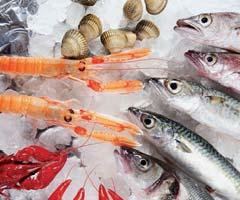
WE PROVIDE
Industrial Ice Making & Storage Systems




We have specialized in the development, construction, installation, service and maintenance of key components and technical solutions.
REAL-SNOW AS Filipstadveien 15, 0250 Oslo, NORWAY
Phone: +47 9687 4080
WORLDFISHING SINCE 1952 & AQUACULTURE To advertise in the World Fishing Directory contact on +44 1329 825335 Fortune Net Directory Nov 2021 copy indd 1 09/11/2021 10:25 Ice & Refrigeration +44 (0) 1779 400590 office@ptguk.com www.ptguk.com Marine and industrial refrigeration specialists



Fishing nets, aquaculture nets, agriculture nets, sports nets, all types of ropes and twines.



Forever Industries Co., Ltd.
No.88, Di An Truong Tre St., Di An Town, Binh Duong, Vietnam Tel: (+84) 916 225 068 (+84) 251 378 9125 sales@forevernetco.com
www.forevernetco.com

World’s leading supplier of Fishing nets (our globally trusted brands are SNG, Sapphire and Olivene), assembled trawls, Purse Seines, Aquaculture cages and anti-predator nets for aquaculture industry, ropes for the fishing, aquaculture and shipping industry. Our products are exported to over 60 countries globally.
Garware Technical Fibres
Plot No 11, Block D-1, MIDC, Chinchwad, Pune, India
Web: www.garwarefibres.com
Tel: (+91)2027990381
Contact: Vivek Kumar
Email: vkumar@garwarefibres.com
Mobile: +917767802806
KING CHOU MARINE TECHNOLOGY CO., LTD.



Ropes & Net Coatings
NET MANUFACTURERS

We are a professional fish net maker and provide assembly & design service for various nets. We use Nylon, HDPE, PP, PE to make purse seine net, fish farming cage net for smolt, grower, growout, predator & anti-bird, trawl net, trap net, safety net, sports net, twine, float and steel wire. The making of fish nets can be twisted, braided, super-knot knotless or raschell knotless, mono or multi-mono filaments.
Website: www.king-net.com.tw
Email: sales@mail.king-net.com.tw
Main phone No. +886 7 535 2939
Fax No. +886 7 535 2938
23F-2, No.2 Chung Shang 2nd Road
Van Beelen
NETTING ROPES TWINES
Van Beelen Group bv +31(0)255 560 560 info@vanbeelengroup.nl
Fortune Net Group of Companies No.42 Sto. Domingo Ave, Brgy. Matalahib, Quezon City, Metro Manila, Philippines Tel: 0063287125362, 0063287119238

Fax: 006387125351, 0063287110169
Email: export_fntgrp@yahoo.com melmorales_728@yahoo.com alextanfortune@yahoo.com
Contact person: Mel Morales, Alex Tan
Braided knotted nets; Twisted knotted nets; Raschel knotless nets; Monofilament double knots net; PE Shade nets. All types of twines and ropes, Specializing in: Tuna & Sandrine Nets; Purse Seiners; Mono and Multi gill nets; Nylon & HDPE Trawl nets; Aquaculture Fence & Cage nets; Safety and Sports nets; Ornamental nets.
IJmuiden, Netherlands
vanbeelengroup.nl
P E vb-ropes.com
D12 ropes and D3/D16 nets with Dyneema®. Enkalon® nylon netting and ropes with the highest strength in the industry. High tenacity Supercatch polyester products, and HDPE in Powerblue and Powergreen. We make what works for you.
For the latest news and analysis go to www.worldfishing.net SEPTEMBER 2023 | 35 PRODUCTS & SERVICES DIRECTORY Ice Plants for Fish and Seafood Flake Ice & Plate Ice up to 100t / 24h Ice Storage with Automatic Rake System Systems for Ice Conveying and Weighing Built in a Container or on a Frame www.kti-plersch.com | info@kti-plersch.com Worldwide #1 in Ice Factories BELITRONIC SWEDEN AB Rattarevagen 7, S-872 63 Lunde, Sweden Tel: +46 6123 2000 mailbox@belitronic.se www.belitronic.se Top of the line Jig fishing machine – BJ 5000Ex. Friendly, Flexible and Intelligent! Reliable, effective and recently improved Jig Fishing Machine, special programs on request. The BJ 5000Ex can reach fishing depth fast! BJ 5000Ex Longlining & Jigging Tel:++86 631 5306208 Fax:++86 631 5306209 Cell/Whatsapp:++86 138 0631 1778 Manufacturing plate freezers since 1989 Tel: +34 981 705722 Email: tucal@tucal.es www.tucal.es Tucal ID Feb 2021 indd 1 11/01/2021 13:11 www.frost.is | frost@frost.is MARINE SOLUTIONS - Freezing and cooling systems,
• Energy savings • Environmental
• Natural
mp
ems ergy itlfidllti
friendly solutions
refrigerant’s
Meat and Dairy
E-mail: post@real-snow.com & Refrigeration
Kaohsiung City, Taiwan , Zip code: #806
Netting
Purse Seine Nets
PRODUCTS & SERVICES DIRECTORY






Catch all the fish all the time!
AS Fiskenett is the only company in Norway to design, manufacture, maintain and repair commercial fishing nets for both offshore and coastal fishing fleets.

Contact Hugo Ulvatn, MD, to learn how we can help you.
Call: +47 48009504
Email: sales@fiskenett.no
Info: www.fiskenett.no
Safety
MARKUS LIFENET LTD
Breidvangur 30
IS-220 Hafnarfjordur, Iceland
Tel.Iceland: +354 5651375
Tel. UK: 01525 851234
Email: sales@markusnet.com
Contact: Petur Th. Petursson
We specialise in the development and manufacture of man overboard recovery systems suitable for all types of fishing vessels, such as the Markusnet and the Markus MOB Scramble-net/Cradle.
Trawl Doors
Complete range of high efficient trawl doors for demersal fishing, “off the seabed” semi-pelagic fishing and pelagic fishing.
Reykjavík, Iceland atlimarj@polardoors.com www.polardoors.com
Trawl Makers
OLIVEIRA SÁ
Rua do Outeiro, 906, 4470-150
Gemunde I Portugal
Tel: +351 22 943 49 00
Fax: +351 22 943 49 49
Email: salvadorcastro@wireco.com
Contact: Miguel Oliveira Sá / Salvador Castro
Oliveira SÁ manufactures a full range of products for fishing applications:

Steel Wire Ropes: Green Strand®, Super Yellow Fin®, Super Atlantic®, Zincal® Compact and several other constructions also with possibility of a plastic core impregnation.
Combination Ropes: we produce combination ropes, both in 4 and 6 strands.
Synthetic Ropes: Braided/Twisted and Double Braided ropes with recognized brands such as Astra Line®, Libra Line® and X Trema Line®
Ropes & Net Coatings


Ship Design
trawldoor.morgere@morgere.fr www.morgere.com
REDESSALINASS.A.
Carretera de Catral, 30 03360 Callosa de Segura, Alicante, Spain
Tel: 0034 965 310 408
Tel: 0034 965 310 354
Email: redessalinas@redessalinas.com
www.redessalinas.com
Contact: Srta. Carmen Salinas
Manufacturer of special purse seining nets for tuna and horse mackerel, also trawl gear, ropes and twines
PEGUET & Cie 12 Rue Des Buchillons 74105 Annemasse, France Tel: +33 450 95 54 54 Fax: +33 450 92 22 06
E-mail: info@peguet.fr

Website: www.peguet.fr
Manufacture of Maillon Rapide® quick links for permanent connection in aeronautics, architecture, rigging equipment, industrial supplies, sailing, parachuting & paragliding, professional fishing, tramways facilities, climbing. All product range self-certified.
Thyborøn & Poly-Ice Trawldoors for all kinds of pelagic, semi-pelagic and demersal trawling with single, twin- and multipurpose rigging. All doors are “Made in Denmark” according to customer demands and wishes.

8, Sydhalevej, DK-7680 Thyborøn, Denmark mail@thyboron-trawldoor.dk www.trawldoor.dk
Trawl Makers
AKVASERVIS TRAWLS
Email: office@akvaservis.lt www.akvaservis-trawl.com
Tel: +370 46 365 363
Las Palmas - Baltic - Murmansk
Designer & manufacturer of Pelagic, Semi-Pelagic & Bottom trawls since 1992 with active trawls in North Atlantic, Far-Eastern & Western-African fisheries.

Estrada de Fortons 23 36812 Redondela (Pontevedra) Spain
Tel: +34 986 20 33 12
E-mail: info@grupoeurored.com

Website: www.grupoeurored.com
Hi tech design and production of pelagic and bottom fishing trawl systems. Nets and deck material for tuna purse seiners, inshore fishing and longliners. Everything necessary for fishing activities:

MORGERE trawl doors, COTESI nets, ropes, mooring, BRIDON cable, flotation, CROSBY GROUP naval hardware, longline material, etc. Aquaculture integral supplies and installation of fish farming and Long Line production systems, OFFSHORE facilities.
urored Directo y dd 30 09 2020 14:32 -we make fishing more profitable




VÓNIN LTD

P.O. Box 19
P.O. Box 19 FO-530 Fuglafjørõur Faroe Islands
FO-530 Fuglafjørður Faroe Islands
Tel: +298 474 200
Tel: +298 474 200
Fax: +298 474 201
Fax: +298 474 201
Email: info@vonin.com
E-mail: info@vonin.com
Web: www.vonin.com
Web: www.vonin.com
Contact: Bogi Non
Contact: Eystein Elttør
Vónin is a major supplier to the fishing fleet and aquaculture industry with branches in the Faroe Islands, Greenland, Canada, Denmark and Norway. Vónin manufactures pelagic trawls, semi pelagic trawl, shrimp trawls, bottom trawls, sorting grids, crab pots, net cages, mooring systems and net washing systems.
Manufacturer of pelagic trawls, semi-pelagic trawls, shrimp trawls, various bottom trawls, purse seine nets, fish farming nets and sorting grids. Vónin is a major supplier to the North Atlantic/Arctic fishing fleet. We have all accessories in stock.
36 | SEPTEMBER 2023 For the latest news and analysis go to www.worldfishing.net WORLDFISHING
1952 & AQUACULTURE To advertise in the World Fishing Directory contact on +44 1329 825335 Fortune Net Directory Nov 2021 copy indd 1 09/11/2021 10:25
SINCE
YOUR PARTNER SINCE1941 SERVICE POINT FOR THE NORTH SEA Centrally located in the North Sea basin Available 24/7 SHIPYARD SERVICES FISHING GEAR TECHNICAL EQUIPMENT & SERVICES DESIGN & ENGINEERING GENERAL SUPPLIES PORT & FISH LANDING FACILITIES
Ship Yards Steel Wire Ropes & Trawl Wire
PRICES WITHOUT COMPROMISE IN QUALITY
COMPETITIVE
Tel: +33 (0) 2 99 56 14 36
Tl33(0)299561436 The Fuel Efficient Trawl Door
Self-spreading
self-spreading technology
Opensquicklywhenshootingaway
Opens quickly when shooting away More opening during a tow


Maintains gear shape in a turn Sound waves are directed inwards








































































Self-spreading technology is patent protected
he rope Longer flow route over the rope More speed = lower pressure
S
Shorter flow route under the rope Less speed = more pressure
