Providing thought leadership on the role of ports in a connected world
EDITORIAL & CONTENT
Editor: Martin Clark editor@ports-and-harbors.com
Features Editor: Felicity Landon
Publisher
Dr. Masahiko Furuichi
IAPH Secretary General info@iaphworldports.org
Dr. Patrick Verhoeven
IAPH Managing Director patrick.verhoeven@iaphworldports.org
Regular Correspondents:
AJ Keyes, Mike Mundy, Vladislav Vorotnikov
Production David Blake, Paul Dunnington production@mercatormedia.com
SALES & MARKETING
t +44 1329 825335 f +44 1329 550192
Marketing marketing@mercatormedia.com
Chief Executive: Andrew Webster awebster@mercatormedia.com
Ports & Harbor magazine is produced and edited bi-monthly by Mercator Media Limited, Spinnaker House, Waterside Gardens, Fareham, Hants PO16 8SD UK t +44 1329 825335 f +44 1329 550192 info@mercatormedia.com www.mercatormedia.com
Subscriptions
INTERNATIONAL ASSOCIATION OF PORTS AND HARBORS
IAPH members enjoy a free subscription to P&H. If your organisation is not a member and you would like a paying subscription to the magazine, please contact the IAPH for more information at: 7th Floor, South Tower, New Pier Takeshiba 1-16-1 Kaigan, Minato-ku Tokyo 105-0022, Japan
Ports & Harbor is a trade mark of Mercator Media Ltd. All rights reserved. No part of this magazine can be reproduced without the written consent of Mercator Media Ltd. Registered in England Company Number 2427909. Registered office: c/o Spinnaker House, Waterside Gardens, Fareham, Hampshire, PO16 8SD, UK.
PEDITOR’S COMMENT
MARTIN CLARK Editor
A world without pause
orts and harbours across the world face many of the same issues at the start of 2026 as they did the previous year. The sector continues to address fundamental challenges such as the transition to cleaner energy systems and the wider adoption of digital technology in work processes. While these shifts require sustained effort, the long-term goal is expected to yield wide-ranging benefits, ultimately contributing to a more sustainable and efficient maritime transport and logistics network.
Yet other factors are also at play. At the same time, ports operate within a broader global context, and developments beyond the industry inevitably shape outcomes. The fast-moving and often unpredictable news flow of recent years adds complexity,
CONTRIBUTORS
STEVE CAMERON Consultant
Steve Cameron started his career at sea and is a founding member of a team at the Maritime Professional Council developing Kind Leadership as the successor to the sector’s traditional authoritarian leadership style. He explores this in our Wake-Up Call column, writing alongside Kevin Martin, a colleague at Independent Port Consultants. ■
but it also reinforces the importance of adaptability, resilience and informed decision-making, all industry values championed by IAPH.
Recent events in Venezuela and Iran continue what has been termed an ‘avalanche period’ of news. The 2000s have been characterised by a tumultuous cycle of news driven by a rapid succession of transformative events, from the financial crisis first and global pandemic to major geopolitical conflicts around the globe, including the war in Ukraine and the conflict in the Middle East. Each has influenced shipping and maritime trade, testing the sector’s capacity to respond and adjust.
However, many of these events reflect a longer-term geopolitical shift, and must be viewed as such, rather than as single, individual items of news. The backdrop to this is the departure from a largely unipolar world dominated by the US after the Cold War toward a multipolar order, with a diffusion of global power shared among other major centres such as the EU, China, India and Russia, as well as the US. This shift creates a more complex and competitive international environment, but also one that is more diverse and dynamic.
While this transition brings with it new challenges in terms of global governance, perhaps it also brings with it opportunities. Emerging economic players, expanding regional blocs and the growing influence of the Global South point to a world in which power and opportunity are more widely distributed. For trade-focused industries such as ports and shipping, this diversification can support new routes, partnerships and growth prospects.
These are undeniably fascinating times, but circumstances
Felicity Landon is a journalist and features editor on P&H.
A well-known figure in maritime circles, with the depth of knowledge and network of contacts to prove it, Felicity is versatile in her areas of coverage from container, dry and liquid bulk to energy and other areas. ■
that make planning far more complex, even in the ordinary, day-to-day running of an individual business — a situation ports and harbours find themselves in today. These times call for both resilience and flexibility. If volatility and rapid change become enduring features of our landscape, then integrating uncertainty into strategic planning becomes not a weakness, but a strength.
At a time when the industry is already grappling with evolving compliance regimes, technological disruptions and the urgent call for decarbonisation, it makes for a testing environment indeed. Against this backdrop of variables and volatility, port leaders must make careful, strategic choices about where to direct investment and resources, balancing ambition with realism in what is an increasingly complex world.
What is certain is that no one knows the future. In such times, our ability to pull together, as an industry dedicated to the highest standards possible, counts for a great deal. The ability of the maritime, shipping and ports community to collaborate, to share knowledge and to uphold high professional standards becomes more important than ever, all fundamental tenets of IAPH and its partnership approach to the wider industry.
There is an old saying, ‘May you live in interesting times’, which could most definitely be applied to the early weeks of 2026. However, working together is the best way for the industry to not only manage these higher levels of uncertainty, but also to shape a more sustainable and prosperous future. ■ Get in touch: editor@ports-and-harbors.com
Vlad Vorotnikov is an international journalist specialising in coverage of the energy, agriculture and transport services markets. He holds a master’s degree in journalism and specialises in covering Eastern Europe and Asia. Based in Georgia, he has been contributing to Ports & Harbors since 2018. ■
FELICITY LANDON Freelance journalist
VLAD VOROTNIKOV Freelance journalist
IN CONVERSATION WITH DR ABUBAKAR DANTSOHO
Building back better
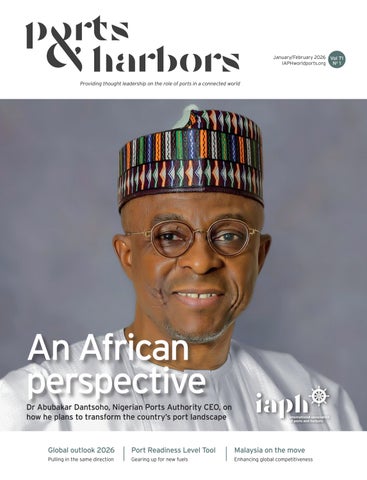
Dr Abubakar Dantsoho, CEO and managing director of Nigerian Ports Authority (NPA), was recently appointed IAPH regional vice president for Africa. Here, in conversation with IAPH managing director Patrick Verhoeven, he outlines the challenges facing Nigeria’s ports, along with the historical context that shaped them, and highlights a clear vision for the future
MARTIN CLARK
QAbubakar (A), can you give us a brief introduction to NPA and its priorities??
A: In Nigeria, the port authority is owned by the government and manages navigation, safety, maintenance of the channels, while cargo operations have been privatised to multinational and local terminal operators, such as MSC and APMT. With a large, growing population of over 230 million, and Africa’s leading economy, we require a more efficient ports system than what we inherited. Fortunately, we now have a forward-looking leadership in His Excellency President Bola Ahmed Tinubu GCFR, who created the Federal Ministry of Marine and Blue Economy to supervise the NPA and appointed a result-oriented professional in the person of Adegboyega Oyetola, Honourable Minster of Marine and Blue Economy who is poised to do a lot in terms of expansion, upgrading, rehabilitation to meet our projected capacity. This has motivated us to deploy our experience into transforming the ports.
Q: How would you assess Nigeria’s ports infrastructure today?
A: With regards to port infrastructure, what we missed doing on time was to construct brand new ports, which we have aggressively commenced with the operationalization of the Lekki Deep Seaport, which is fully automated and has a natural draught of 17 metres and we are ramping up investment, in order to build more deep sea ports.
Our major ports, like Apapa and Tincan, are outdated. The Port of Apapa was built 100 years ago. Even though it has 24 berths, most of them are old. Limited expansion and modernisation makes it difficult to accommodate larger,
modern vessels. Our second-biggest port, Tincan, was built almost 50 years ago. But the size of vessels, their speed, the technology that drives them, has changed so much, so it has become difficult for them to come to Nigeria. Also, these two ports are river ports, so they are a bit shallow.
By contrast, neighbouring countries, like Ghana (Tema), Ivory Coast (Abidjan), Togo (Lome), Benin (Cotonou) have acted faster, so they are now ahead of us. Their ports are deeper, more modernised. But the fact remains we are more populated than all of these countries. We are stronger economically, but the boxes have to be dropped there because they have strategically positioned their ports to be more efficient than ours in terms of infrastructure, equipment, technology. So, these are all things that we see as a challenge, but also as an opportunity for growth which we are poised to maximise.
Q: Patrick (P), in what ways is IAPH working with Nigeria, and other developing countries, on these challenges?
P: This links to our ‘’Closing The Gaps’’ exercise we did a few years ago, towards the end of the pandemic, to identify regional investment priorities for ports when it comes to infrastructure, technology, port community systems. Since then, we have been working with regional institutions, development banks and the World Bank, to see how investment support can be provided so that, ultimately, we have competitive ports across all regions. Nigerian Ports Authority is a very interesting port administration because it is closely linked to the government, and the maritime administration, creating stronger coordination with the IMO than in many other countries, which is a great strength.
A: Our challenges are many, but it’s important to understand some of the history and context to Nigeria and its ports. So if you want to be accurate in assessing us, this historical background is essential, you can’t just jump to saying Nigeria is not doing as well as Belgium or the Netherlands, for example. We have modelled the reform of our port system on recommendations from an international consulting firm and, to a large extent, on the Antwerp system. The execution of a masterplan like that takes a lot of time, but that is the course we’ve chosen to take.
P: The reform of the port organisation is another topic we’ve been addressing with the recent publication of the World Bank Port Reform Toolkit, which is based on good practices in terms of governance and organisation. An important conclusion is that governance models need to be adapted to
Our challenges are many, but it’s important to understand some of the history and context to Nigeria and its ports ‘‘
local circumstances. Maybe that was less clear in the past, where people tried to copy one model from Europe or the United States and implement it elsewhere. One of the lessons learned is that you need to be much more aware of local
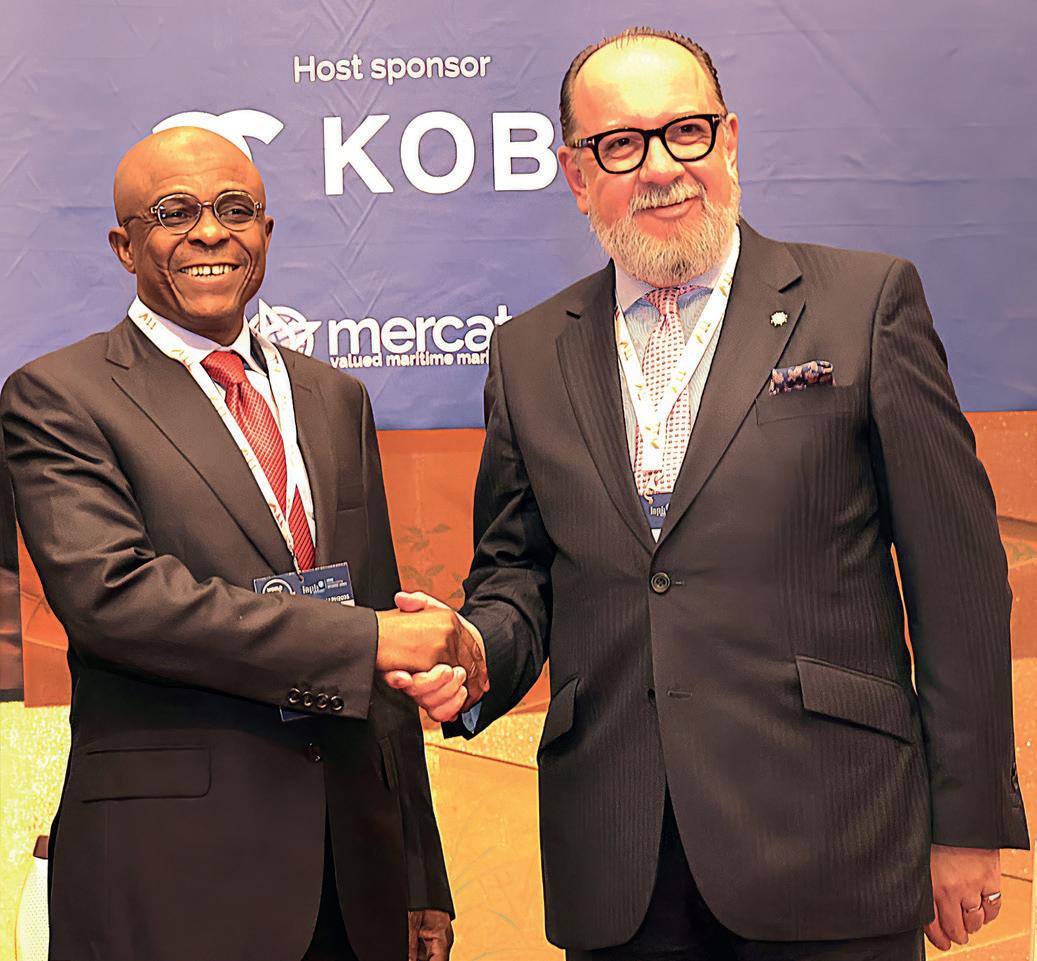
Pictured: Dr Abubakar Dantsoho and IAPH managing director Patrick Verhoeven pictured together at the World Ports Conference in Kobe in October, 2025
Photos: Nigerian Ports Authority
circumstances, political sensitivities and the economic and cultural environment of a port. The new toolkit also takes into account more recent challenges, like digitalisation, technology and, of course, the energy transition. So there are certainly governance challenges on the one hand, but there are also new business opportunities for ports around the world, especially in Africa and South America, for example, to play a role in that global energy transition.
Going forward, IAPH will organise a regional Harbor Cafe, one focused solely on Africa ‘‘
PATRICK VERHOEVEN, MD, IAPH
but I certainly hope that we can do one of them. And we are going to emulate a project like Tanger-Med in Morocco, for example, with a brand new terminal equipped with the latest technology, and in collaboration with the best partners in the world. With these things in place, foreign investors will naturally come because they have seen that the government is also committed and on board.
Q: How do you think your role at IAPH can help in this transformation?
A: Nigeria is already developing Africa’s first fully green port operation, led by APM Terminals with a $60mn investment, in partnership with NPA. This project is now underway. I would say the energy transition is also closely linked to modernising our port infrastructure, as outdated equipment limits efficiency and sustainability. In general, modernisation will enable greener operations, larger vessels and improved capacity.
Q: To what extent can port modernisation help Africa’s economic growth?
A: Africa is unique because it is the only continent in the world where the most populous country and the strongest economy does not have the biggest seaport. Africa’s total population is around 1.5 billion, so our potential is huge, but the opportunities for growth are still very much intact. So in terms mining capacity, we have the resources still in the ground. But lack of technology, lack of economic strategy, lack of support and organisation compared to say, China, has denied us. For instance, the Port of Shanghai handled about 41 million TEUs last year, but Africa as a whole handled just 34 million TEUs. And, of course, China is now investing heavily in Africa because of this, for example in Guinea Conakry with the US$16bn Simandou iron ore project.
Q: What about Nigeria specifically and the port sector’s overall contribution?
A: We are going to adopt a multi-dimensional approach and encourage more mining, more agriculture, so our seaports will grow to have the capacity not only to receive imports but also to export. We are also going to pursue a relationship that will lead to the establishment of a new deep sea port in Nigeria. We have licences or permits for six, in fact,
A: I appreciate the leadership of Patrick and IAPH. His leadership style and the quality of decisions being made are very important, especially for developing economies like those in Africa. I recall a recent board meeting and the discussions and directions that were taken. To me, those decisions were focused on supporting developing systems, not just Africa, but also smaller regions and mid-level economies such as Indonesia, Malaysia, South Africa, and Nigeria. I believe it is important for IAPH to spend more time understanding the ecosystem of developing economies, because of their strong potential. We are certainly not looking for sympathy, we are just looking for collaboration and support.
P: I think it’s been a very good opening to our cooperation in Dr Abubakar’s mandate as vice president for Africa. It’s a great opportunity to work on the issues addressed here, such as infrastructure development, the application of technology and innovation, and the energy transition. Dr Abubakar will also join our Harbor Cafe in January to provide us with an indication of NPA’s priorities. Going forward, we will organise a regional Harbor Cafe as well, one focused solely on Africa.
Q: What is your takeaway message to P&H readers?
A: I was fortunate to have the opportunity to listen to what all the experts said at the World Ports Conference in Kobe last October, so I took home a lot of ideas from that. But basically, we are looking at a more modernised port system in Nigeria, one that is able to accommodate most of the crucial elements governing maritime in the present age. We're also going to strengthen our capacity to relate better and to cooperate more fully with international groups, such as IAPH, and other industry bodies. ■
PERSPECTIVE PRL CARGO
Preparing for low-emission fuels
he IAPH Port Readiness Level
Tworking group is developing a tool for ports to prepare themselves as hubs for trading clean fuels — it aims to unlock potential for ports to become Clean Energy Marine Hubs (CEM-Hubs).
Ports sit at the crossroads of global trade and energy flows, making them uniquely positioned to accelerate the transition to cleaner fuels. As hubs for shipping and logistics, ports can play a pivotal role in acting as a hub for zero- and near-zero emission fuels — such as e-fuels, biofuels, hydrogen, ammonia, clean electricity, and carbon capture, utilisation and storage (CCUS) — across multiple pathways.
This transformation is not just desirable; it is essential. However, achieving these goals requires ports to become active enablers of clean energy supply chains.
Readiness and roadmap
The energy transition at ports is more than building infrastructure: it’s about creating well-functioning, future-ready
handling networks. To succeed, ports must integrate robust physical infrastructure, an integrated safety framework and a strong governance framework to ensure resilience, reliability, safety and operational efficiency. This also requires a clear market strategy: aligning stakeholders, setting competitive positioning and ensuring operational readiness for new energy commodities.
The Port Readiness Level (PRL) assessment tool for Clean Fuels trading is under development to guide ports through this complex process.
Developed under IAPH by the Port Readiness Level Working Group, in collaboration with ICS, the Global Centre for Maritime Decarbonisation and other world-renown shipping, energy and policy experts, it empowers ports to make informed decisions, align stakeholders and accelerate on their
Pictured: Getting ports ready for maritime transport of low-emission fuels
Photo: Port of Antwerp-Bruges
energy transition plans towards becoming CEM-Hubs.
PRL assessment tool for Clean Fuels trading is a new development following the introduction of the PRL assessment tool for Clean Marine Fuels bunkering. (CMF) bunkering is an assessment framework that ports can use to self-assess their readiness and identify areas requiring further development to facilitate bunkering of low- or zero-carbon marine fuels.
Aim of the initiative
The PRL assessment tool for Clean Fuels trading — PRL (CF) trading — is designed to accelerate the global readiness of ports to handle and facilitate seaborne transportation of zero- and near-zero emission fuels at scale, supporting the wider energy transition.
As countries and industries intensify efforts to reduce emissions, demand for sustainable fuels is expected to grow significantly over the coming decades. This shift creates both opportunities and
challenges for ports. Up to 50% of future fuels are projected to be transported by ship, requiring new or upgraded infrastructure and positioning ports as critical energy hubs in the global supply chain.
While ports have experience handling fuels and related infrastructure, the scale, speed and sustainability requirements of this transition are new. Ports considering the movement of sustainable fuels need clear guidance to navigate this complexity. The PRL trading tool offers exactly that: a structured, experience-based approach to ensure readiness for clean fuels.
By empowering both exporting and importing ports, the tool transforms port readiness into a solution for accelerating the energy transition. It enables ports to make informed decisions, align stakeholders, and take faster action on their energy transition plans.
How the PRL Clean Fuels trading tool can
be applied?
The PRL Clean Fuels trading tool, common to the bunkering version, is a self-assessment framework that guides ports through nine readiness levels – based upon the Technology Readiness Levels (TRL) from NASA —
from initial research to full deployment. Each level represents a step toward maturity, combining general actions with specific focus areas that reflect both the hard side (infrastructure, integrated safety) and the soft side (governance, institutional capacity, stakeholder alignment) of port development.
The development journey follows three key phases:
● Research: Establishing relevance and feasibility
● Development: Port position, strategic planning and proof of concept
● Deployment: Implementation and integration of scaling up for clean emission commodities
It is adaptable to local context, meaning steps taken by individual ports may vary depending on local structures and regulations. This adaptability ensures that the PRL framework remains relevant across different governance and operational models.
Benefits for ports and industry
The PRL Clean Fuels trading tool delivers multiple benefits:
● Accelerates global port readiness for low emission fuel commodities at scale.
● Supports coordinated decarbonisation across maritime and energy sectors.
ABOUT THE AUTHOR
FRANÇOISE VAN DEN BRINK is programme manager, energy transition, at the Port Authority Division Harbour Master, Port of Rotterdam. Françoise is also lead of the IAPH PRL working group and a member of the IAPH Clean Marine Fuels workgroup, and has involvement in many other international clean marine fuels initiatives.
● Empowers exporting and importing ports to act decisively.
● Provides a universal framework for ports worldwide to take faster action on energy transition plans.
● Ultimately, the tool helps ports transform from traditional cargo hubs into future-ready energy hubs, capable of handling sustainable fuels efficiently and safely.
From ambition to action
The shift to clean energy is inevitable. By adopting the PRL Clean Fuels trading tool and embracing the Clean Energy Marine Hub concept, ports can accelerate progress toward zero- and near-zero emission fuels.
Call to Action: Ports, policymakers, and industry stakeholders are invited to join the development of the PRL assessment tool for Clean Fuels trading. Together, we can ensure that ports become catalysts for a faster, more coordinated global energy transition. We openly invite both IAPH regular and associate members to join the PRL working group to help develop the tool and act as peer reviewers when it is ready for trying out. ■
For more information email: Françoise van den Brink (f.brink@portofrotterdam.com)
Pulling in the same direction
Across the globe, a range of similar themes, issues and challenges were faced by the maritime supply chain in 2025…so what is expected in 2026?
P&H canvassed port and other industry professionals to find out
DEAN DAVISON
or the port and maritime supply industry, 2025 finished as it largely began. "The maritime industry continues to face a dynamic and complex operating environment,” noted Ang Wee Keong, CEO, Maritime and Port Authority (MPA) of Singapore, when opening the Singapore Registry of Ships Forum in October 2025. “We are dealing with geopolitical shifts, evolving compliance regimes, technological disruptions, and the urgent call for decarbonisation. In such times, our ability to work together, with trust, transparency and shared purpose, is crucial to carry us forward.”
The spirit of collaboration is very much reflected in the work of IAPH, in bringing the global ports community together, but the sentiment is seemingly shared widely.
Indeed, the comments from the MPA chief reflect similar from Bethann Rooney, port director at Port Authority of New York/New Jersey 12 months earlier, when outlining challenges coping with future container capacity demand: “We’re all in the same boat, and we need to make sure we’re rowing in the same direction. We’ll all either succeed together or fail together. And we don’t have the option to fail.”
Perhaps this is especially important at a time “defined by trade disruption, rising geopolitical fragmentation, and unexpected political shocks across Africa, Asia and the Middle East,” according to Pangea-Risk, a specialist risk intelligence advisory firm.
So, what’s been happening across the industry — and what are the forecasts for 2026?
Asia-Pacific region
The industry consensus suggests several common threads, that ports must work together strategically, with resilience and sustainability as core priorities, while finding innovative financing solutions for necessary infrastructure upgrades.
Marika Calfas, CEO, NSW Ports in Australia expects many of the issues faced in 2025 to continue into 2026. In addition to decarbonisation, she says these include resilience challenges related to climate change, global disruptions and geopolitical issues, as well as capacity investment requirements, such as the cost and timing to implement infrastructure to cater for growing trade needs and vessel sizes.
Pictured: The world’s ports and other supply chain partners enter 2026 amid a dynamic and complex operating environment Photo: Dreamstime.com (Harbor
Hxdylzj)
FEATURE GLOBAL OUTLOOK 2026
“Resilience covers many aspects including resilience to disruptions associated with climate change; global shipping; and geopolitical issues. In 2025 we have observed disruptions in all of these areas, resulting in issues with on-time arrival for container vessels against their scheduled windows and port delays due to inclement weather.”
Looking forward, NSW Ports will commence delivery of its new three-year Sustainability Strategy. “This prioritises initiatives to remain resilient and adapt in a world of change and increased uncertainty,” says Calfas. “We continue to build up a database to capture disruptions. We are investigating the use of AI solutions to assist with quantifying the timing and duration of disruption events within the port.”
Resilience covers many aspects including resilience to disruptions associated with climate change; global shipping; and geopolitical issues ‘‘
The other key area, Calfas notes, relates to the common industry challenge of capacity investment. “With growing and diversifying trade volumes and larger vessel sizes, there is a need for investment in capacity at the ports on the waterside and landside. Cost of infrastructure construction has escalated significantly in Australia in recent years, impacting on the business cases for such investments. The time taken to obtain the required regulatory approvals also impacts on delivery of infrastructure.” The port has completed the Phase 2 rail investment at Port Botany, but in 2026 plans to extend the quay line for larger container vessels, as well as increase Port Kembla’s berthing for additional ro-ro ships, with a new offshore wind terminal that could be repurposed in the future to a container terminal.
The words of Calfas echo across Asia. A leading terminal operator in the region confirmed similar challenges exist and will remain. “Sustainability, notably which way to jump in preparing for future fuels, and the reality that financially and practically it is much harder for a large number of small- to medium-size ports to prepare, while finding the finance to develop the facilities necessary, remains a critical challenge,” a spokesperson said.
Across the Americas
Container ports in North America in 2025 have also seen challenges. “We’ve been impacted by the trade downturn, so we look forward to seeing more trade deals come together and we’re hopeful the market bounces back in the new year,” says Griff Lynch, CEO, Georgia Ports.
Mario Cordero, former CEO at Port of Long Beach — now succeeded by Dr. Noel Hacegaba, effective from January 1, 2026 — references shifting trade policies bringing uncertainty to consumers and the supply chain, with expected price rises in the year ahead generating caution.
“The consumer has not seen significant tariff impacts given
that manufacturers, retailers and others have shared in incurring some of these costs and mitigating price escalation to the consumer, but that may change,” says Cordero. “Consumers will likely see price escalation in the coming months as shippers continue to pass along the cost of tariffs on goods and a higher percentage of these costs will be passed on to the consumer.”
Port Houston confirmed its plans for 2026 will follow 2025, by being “committed to meeting cargo demand efficiently, while ensuring the Houston Ship Channel is safe and maintained for all users, and creating opportunities for sustainable growth in the communities served.”
Outreach remains a key factor, as a Port Houston spokesperson explains: “We know we are part of a larger community; our goal is to be a good neighbour and communicate openly with those around us. Soon, we will be launching a new, innovative way for industry to support the communities around the Channel. It is a uniquely strategic approach to community engagement that will align the resources of Houston Ship Channel industry with the needs of local communities.”
Clearly, further evidence of all stakeholders working together, collaboratively. New, modern infrastructure is on the agenda in Central and South America for 2026.
David Taylor, managing director, Apex Maritime Advisors & Consultants, offers insight: “There is no doubt that 2026 will be a significant year for Central and South America. For the first time in more than a decade, there are several major new projects due to be awarded in the region in 2026: TECON10, San Antonio Outer Port and Nuevo Manzanillo. I see the level of interest in these opportunities to be an important barometer for the investment needed in other areas, such as additional capacity, densification, decarbonisation and automation.”
While adding capacity is important in this region, competitive market dynamics will also be a factor in 2026. The new COSCO transshipment hub in Peru, for example, will gather pace on the West Coast of South America (WCSA). “To achieve an economic level of utilisation, Port of Chancay will need to compete well with the existing terminals in Callao and gain market share transshipment volumes other ports to the north and the south,” says Taylor. “COSCO is not currently a major player in the WCSA market, so it will be interesting to see what level of volume growth it achieves in 2026.”
EMEA region
Port space remains on the agenda in North Europe, according to Johan-Paul Verschuure, director, Rebel Group, an advisory and consultancy firm based in Rotterdam. “A key challenge for 2026, as it was in 2025, will be the battle for space in ports. This includes for energy transition projects, which are equally important, but a balance needs to be struck.”
Verschuure also believes that future investments will need to keep going beyond the port gates across the region. “We are definitely going to see the return of the strategic angle. Resilience of port infrastructure is key here – not so much the
‘concrete’ of the ports and terminals, but the ability to target and successfully see cargo reaching consuming and producing hinterlands.”
In Africa, infrastructure keeping pace with maritime trends — and finding ways to pay for it — remains the challenge, albeit with some increasing success.
At the end of 2025, Transnet signed a 25-year port agreement with ICTSI for a new concession at the country’s largest volume container port, Durban, which sees the operator buy almost half of Container Terminal Pier 2 and manage the facility for 25 years. ICTSI is expected to spend R11 billion (approximately US$656 million) at the terminal.
Michelle Phillips, Transnet’s CEO, described the deal as a “ground-breaking partnership” while the World Bank said the agreement represents “the biggest attempt yet to bring in private expertise to revive state-owned ports, which rank among the least efficient globally.”
In Morocco, the new Nador West Med port is targeting operations starting before the end of 2026, after announcing in 2025 it will be jointly operated by Marsa Maroc and CMA CGM. “The port is ready. We are now moving into the operational phase with leading international partners,” according to Nizar Baraka, the country’s Equipment and Water Minister.
Stewart Lawton, director special projects at Dubaiheadquartered World Crane Services (WCS), also flagged scale and capacity issues that will run into 2026 and test ports across the globe.
“As the container shipping market continues its progression towards larger tonnage, driven by slot-cost economics and the pursuit of scale efficiencies, the 18,000 TEU – 24,000 TEU generation is now mature,” he notes. “Designs for 27,000 TEU – 30,000 TEU vessels are already on the table. While shipping lines gain from lower unit costs at sea, this escalation places disproportionate and rising pressures on terminals. WCS benchmarking shows an 11% OPEX increase when handling an 18,000 TEU vessel versus a 4,000 TEU ship, and extrapolations indicate that 30,000 TEU-class tonnage could drive OPEX 20% to 25% higher, even before factoring the capital required for deeper drafts, extended berths and the larger cranes required to service these ships.”
Indeed, there is a further knock-on impact to this trend, as Lawton highlights. “The cascading effect is accelerating and this is creating a structural mismatch, as older cranes, many still only halfway through their design life, cannot service these vessels due to insufficient lift height, boom length or structural stiffness. The commercial result is rising berth congestion, restricted vessel windows and operational inefficiency in smaller- to medium-sized ports never designed for ships of this scale.” ■
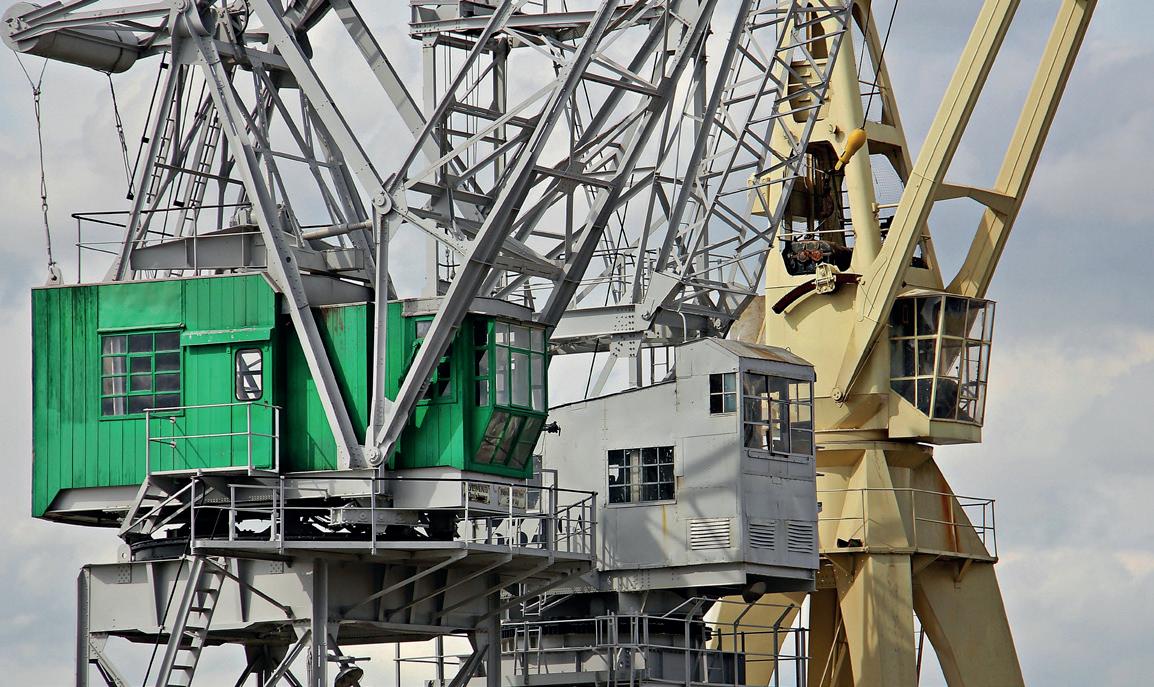
Pictured: Infrastructure upgrades are another critical challenge facing global ports Photo: Pixabay
Coastlink is a neutral pan-European network dedicated to the promotion of short sea shipping and intermodal transport networks.
Media supporters: The short sea shipping & sustainable logistics network
Learn from and network with international attendees representing shipping lines, ports, logistics companies, terminal operators, cargo handlers, and freight organisations.
For more information on attending, sponsoring or speaking contact the events team: visit: coastlink.co.uk contact: +44 1329 825335 or email: info@coastlink.co.uk
Gold Sponsor Supported by: Silver Sponsors
Lanyard sponsor: PDA sponsor: Badge sponsor:
STEVE CAMERON
Independent
&
KEVIN
MARTIN
Port Consultants
Wake-up call
Automation has transformed work on ships and in ports, creating opportunities for leadership models to evolve and unlock greater strategic value
Automation has reshaped shipping and ports; leadership has barely moved. On the bridge, navigation systems now integrate radar, ECDIS, AIS and predictive analytics into a single operational picture. In ports, cranes are operated remotely, terminals are run through software, and performance is managed via dashboards rather than deck plates. The work has changed. Authority remains command and control.
At sea, automation was meant to elevate the captain from manual navigator to strategic decision-maker. Instead, regulatory training and certification frameworks continue to reinforce hierarchy, compliance and certainty. Despite improved decision support, leadership expectations for seafarers remain rooted in a world where authority flows one way. The result is a widening gap between system capability and human behaviour.
Ports face the same contradiction. Terminal automation replaced direct supervision with remote oversight, yet leadership practice still focuses on short-term output metrics rather than system performance. Moves per hour are measured precisely; customer experience is not. Technology is treated as a cost-control tool, not a strategic capability, and leadership has adapted accordingly.
The reason is not cultural stubbornness. It is structural risk aversion. Maritime is conservative by necessity. The sea tolerates no complacency. As ports are absorbed into global logistics chains, that conservatism is reinforced by financial governance. Investment decisions are judged through narrow, short-term return lenses, while
digital benefits - resilience, adoption speed, customer retention - arrive later and are harder to quantify.
Digital transformation is misread as an engineering problem. In reality, it’s a human one. Automated systems only deliver value when they are trusted, challenged appropriately and used consistently. That requires a different form of authority: leadership that shifts with context, encourages early reporting of problems, and enables judgement rather than suppressing it.
This is not ‘soft' leadership. Psychological safety improves decision quality. Trust accelerates adoption. Empathy reduces resistance and failure rates. In high-automation environments, these are performance multipliers. The absence of them increases operational risk.
Responsibility for this shift cannot sit with finance. When technology adoption is owned by CFO-led logic, qualitative gains are discounted, and systemic risk is misunderstood. Effective automation demands executive sponsorship at board level, with CIOs and CTOs empowered as strategic leaders, not delivery managers.
The divide between global operators with deep capital and smaller ports without it is widening. But capital is not the differentiator. Leadership intent is. Automation has already changed how ports and ships operate. Leadership must now change how decisions are made, how risk is owned, and who is trusted to lead that change. The greatest risk is no longer technological failure, but leadership models that no longer fit the systems they govern. ■
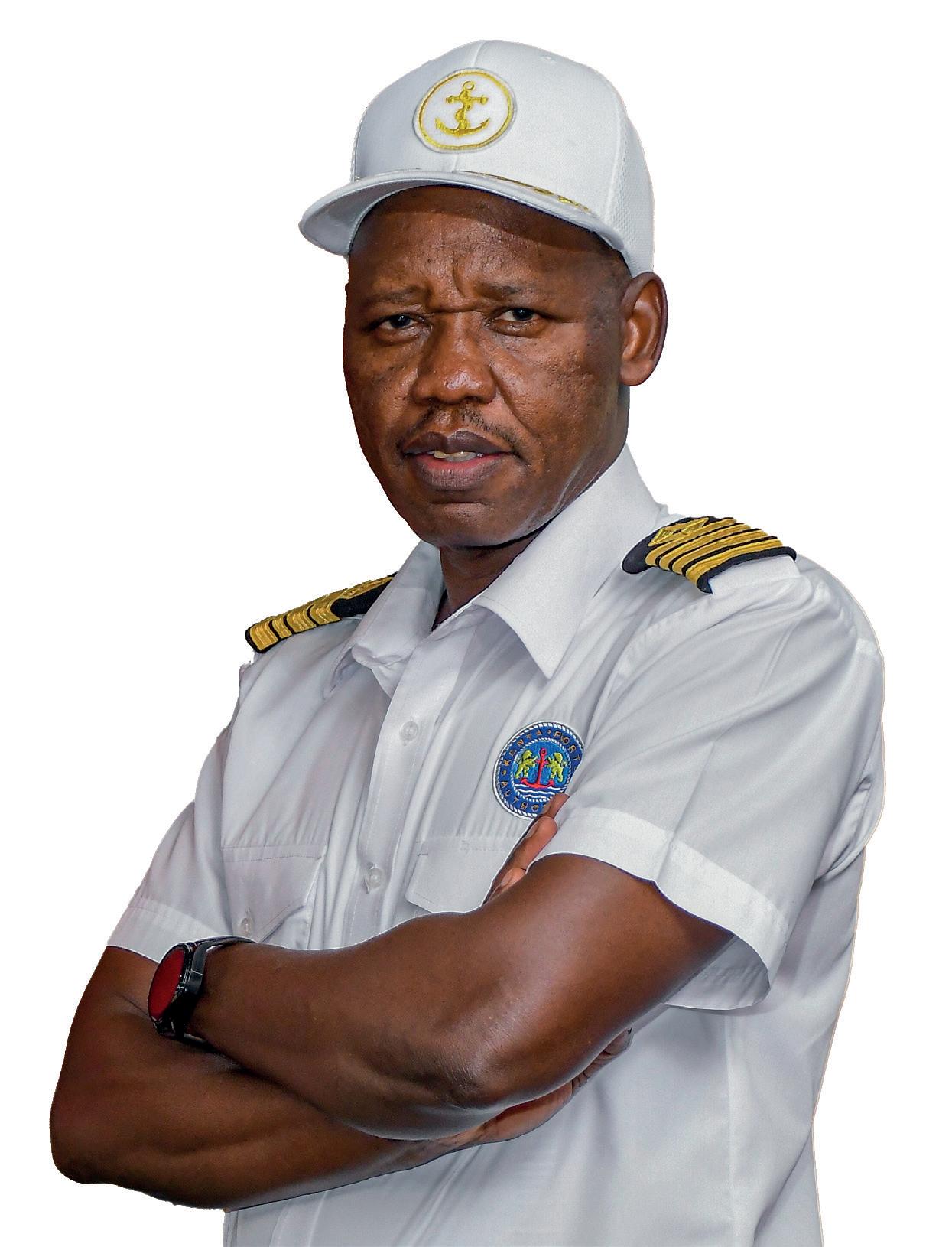
Captain William K. Ruto
n the western seaboard of the Indian Ocean lies Kenya’s Port of Mombasa. The economic heartbeat of the East and Central Africa region, the port serves as a lifeline for more than 400 million people, through the facilitation of trade and cargo movement. Export cargo from as far as the hinterlands of the Democratic Republic of Congo finds its way into markets across the globe via the port, a key part of the Kenya Ports Authority (KPA) network.
Leading from the front is Captain William K. Ruto, a master mariner with over 30 years’ experience in the industry, and KPA managing director for the past three years. The former harbour master and general manager at Kisumu Port, a key transit hub on Lake Victoria, says the significance of Mombasa and its role in the growth of the region over recent years cannot be overstated.
In the last decade, the East Africa region has recorded sustained economic growth rates surpassing 5% annually, driven by infrastructure investment, diversified sectors, as well as increasing intra-regional trade, and greater links with the rest of the world. Mombasa itself now offers direct connections with over 100 seaports worldwide.
As such, KPA, the government parastatal tasked with managing Kenya’s seaports and inland waterways, has implemented a robust strategy for Mombasa in support of the region’s trade and broader economic growth.
“As a regional asset that serves our neighbouring landlocked countries, our planning has to go beyond our borders,” he says. “For us, it is imperative that the port works. We have done a lot of work in the past decade to ensure that trade flows, and our economies thrive.”
Among recent initiatives were the construction of phase one and two of Mombasa’s second container terminal, which increased capacity to 2.1 million TEUs annually. Plans are underway for the development of phase three to further accelerate capacity expansion and grow the port. KPA also implemented a modernisation
The growth of Kenya’s largest port, Mombasa, mirrors the economic rise of the wider Eastern Africa region in recent years. Managing director of Kenya Ports Authority, Captain William K. Ruto, explains what’s next
MARTIN
CLARK
programme that has seen the procurement of state-of-the-art equipment and the adoption of new technologies to complement its infrastructure for more efficient, seamless service delivery.
Then there is the new offshore oil terminal, Kipevu Oil Terminal 2, significantly enhancing oil-handling capabilities at the port, tripling the number of tankers that can dock simultaneously from one to three. “As you can imagine this has been a big win for our stakeholders and customers, as we have reduced on demurrage, improved the cost of doing business and general efficiency at the port.”
Mombasa is currently upgrading its terminal operating system to further enhance seamless cargo operations and documentation, as part of a KPA wider commitment to digitisation and the adoption of new information and communication technologies.
With the general increase in ship sizes putting further pressure on ports, Ruto cites the KPA mantra of ‘creating capacity ahead of demand’, a guiding strategy to remain efficient and competitive. Together, all of these initiatives have had a direct impact on productivity and profitability at the port, which surpassed the 2 million TEUs mark for the first time in 2024. “This is no mean feat, as we had projected to reach this milestone sometime in 2027.”
After all the changes at Mombasa, what’s next for Kenya’s ports?
According to the KPA chief, the East Africa region’s shipping and maritime industry holds tremendous long-term potential. As well as expanding Mombasa, KPA is also developing other facilities, including Lamu, the nation’s second-largest commercial port, its inland waterway ports, notably Kisumu, which serves Lake Victoria and borders
Kenya, Tanzania and Uganda, plus the first ever fish port in Shimoni, along Kenya’s south coast.
Given the vastness of the region, and the landlocked nature of many of Kenya’s near neighbours, the overriding strategy is to ensure that this growing economic community and the various transport corridors it utilises have access to modern, functioning port facilities to reach onward markets.
Lamu, for instance, is dedicated to opening trade in the north of Kenya, which connects to Ethiopia and South Sudan. Like Kenya, landlocked Ethiopia is another country seeing waves of inward investment, such as the recent inauguration of the Grand Ethiopian Renaissance Dam, Africa’s biggest dam and hydroelectric power project with an installed capacity of 5,150 megawatts.
At Shimoni, Ruto says KPA is keen to tap into emerging blue economy opportunities that are abundant, but yet to be explored. This facility will enhance fish production through value addition for both local and export markets.
This ties into KPA’s commitment to sustainability, balancing development with environmental conservation and community wellbeing through a ‘green ports’ policy. The policy is a strategic framework for eco-conscious port operations that aligns Kenya’s maritime sector with international climate commitments.
Indeed, its work in this field landed KPA an IAPH Sustainability Award in the Environmental Care category during the World Ports Conference in Kobe. “It was a moment of great pride and honour, not only for Kenya Ports Authority, but for our region, as it demonstrated to the world our resolve to be the guardians of our environment for posterity and for the benefit of generations to come.” ■
LOOKOUT CLEAN FUELS
Biogas bunkering
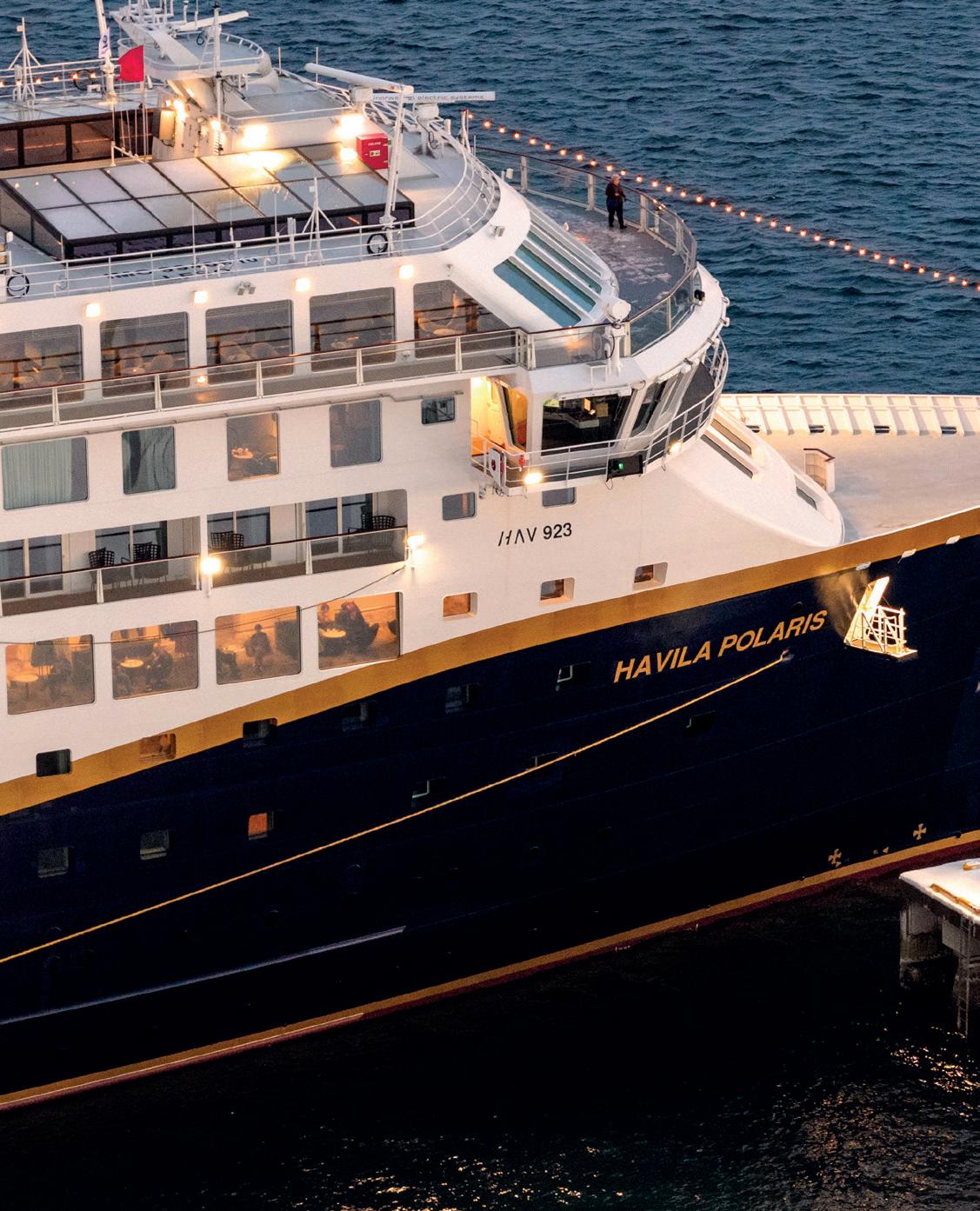
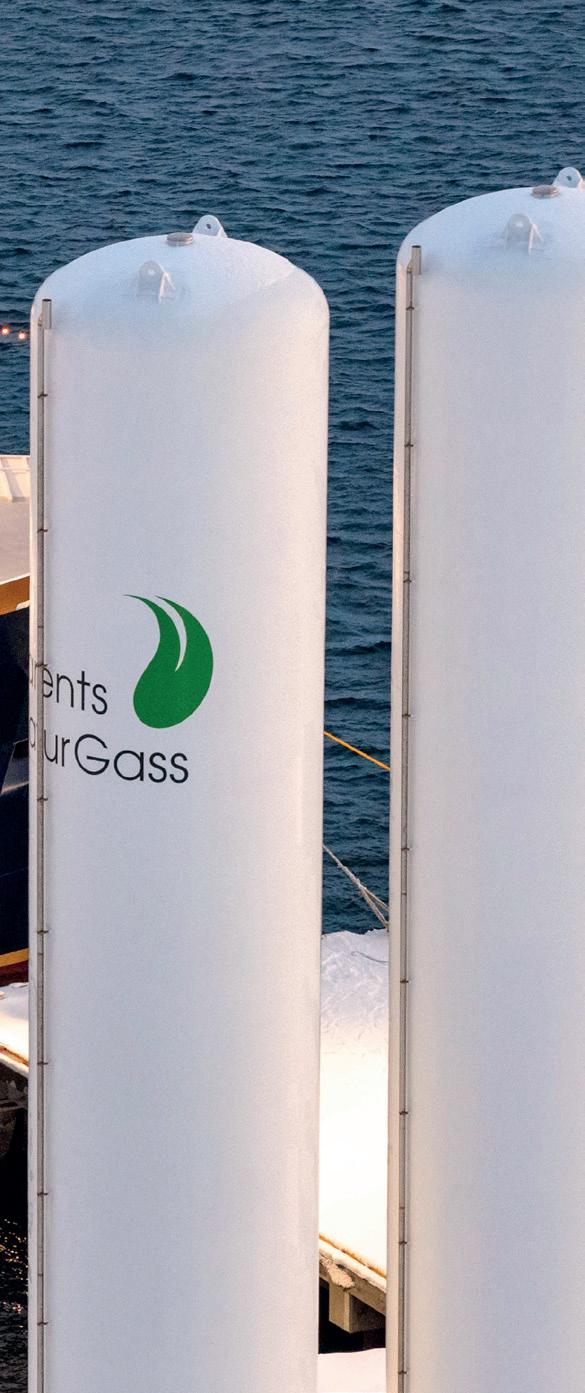
The image shows the Havila Polaris loading up on liquefied biogas supplied by Barents Naturgass at Polarbase in Hammerfest, Norway, ahead of a recent voyage to Bergen.
Its first climate-neutral voyage along the coastal route, the cruise ship was fuelled with a total of 350 cubic metres of biogas for the 12-day journey from Hammerfest to Bergen and back.
According to Havila Voyages, it reduces CO2 emissions by more than 90% and highlights how environmentally-friendly shipping is already possible today. In addition, local emissions of NOx and SOx are completely eliminated when using biogas.
The vessel went on to complete its voyage of more than 5,000 kilometres along the coastal route, powered only by biogas and the ship’s batteries.
It also shows industry taking responsibility for greener shipping at a time when the regulatory environment remains shrouded in uncertainty after adoption of the International Maritime Organisation’s Net Zero Framework (NZF) was pushed back by at least a year at the close of the Marine Environment Protection Committee extraordinary session in October, 2025. The NZF lays out global regulations to reduce greenhouse gas (GHG) emissions from international shipping, featuring a twotiered global fuel standard, and a pricing mechanism to penalise high-emitting ships.
On the ground, however, cruise operators, shipping companies, ports, energy suppliers and other industry partners are coordinating efforts to effect real change, regardless.
“We have a responsibility to the people and communities along our unique coastline,” said Bent Martini, CEO of Havila Voyages.
“And we know that biogas is already an effective solution for sailing the coastal route with very low emissions without having to make technical changes to our ships.”
However, to achieve this, it is necessary to push ahead with numerous initiatives to expand and provide the necessary infrastructure, Martini added.
“If you want to lead the way, you always have to expect tailwinds and headwinds,” he said. “But recent developments and discussions have shown that the wind is now blowing from a different direction. That's why we are sticking to our goal of operating the coastal route climate-neutral with all four ships from the end of 2028,” he said. ■
Pictured: Havila Polaris bunkers liquefied biogas at Polarbase, outside Hammerfest
Photo: Martin Giskegjerde, Oclin for Havila Voyages
REGIONAL FOCUS MALAYSIA
Malaysia on the move
Major investment and modernisation programmes in recent times have put Malaysia’s seaports on the road towards enhanced global competitiveness
VLAD VOROTNIK
alaysia is making significant strides to reap the benefits of its strategic location along key shipping routes, expanding capacities, while focusing on sustainability and digitalisation.
MIts port network comprises seven major federal ports and over a dozen smaller state-run ports. The biggest seaport is Port Klang, located in Selangor, serving as the nation's primary gateway and a major global transshipment hub, handling vast container and cargo volumes. It is followed closely by the Port of Tanjung Pelepas (PTP) in Johor, and Johor Port, both managed by MMC Ports, Malaysia's largest port operating group.
All of Malaysia’s seaports have seen significant development in recent years. The country is working hard to keep its seaports relevant, both regionally and globally, and to boost its competitiveness as a transshipment hub, according to Glen Hilton, CEO and managing director, Asia Pacific, DP World.
“In 2024, Malaysia was the fifth-largest country in the world by container throughput, and capacity expansion efforts continue across its major ports, including at Sapangar Bay Container Port (SBCP),” he said.
Pictured: Some of Malaysia’s biggest ports face out to the Strait of Malacca, one of the world’s most important waterways
Photo: Nalidsa Sukprasert (Dreamstime.com)
DP World established a strategic partnership in 2024 with Sabah Ports Sdn. Bhd. to manage SBCP with the aim of making the port the premier regional trade hub for the Brunei DarussalamIndonesia-Malaysia-Philippines East ASEAN Growth Area.
This partnership is already bearing fruit, Hilton noted. Since DP World began managing SBCP in 2024, throughput has grown 30%, and there is more to come. “The expansion project undertaken by the government is expected to be completed by 2027,” he said. “We have also implemented new systems to bolster performance, terminal workflows and operational efficiency.”
Modernisation drive
Malaysia is also expanding its Port Klang container port, often described as the heart of the nation’s seaport industry. Under existing plans, the Port Klang Authority (PKA) intends to build a third port on Carey Island as the two existing ports – Northport and Westports – approach capacity constraints.
“A key milestone was reached in 2025, when Port Klang entered the top 10 busiest container ports in the world for the first time," said Capt. K. Subramaniam, PKA’s general manager and immediate past IAPH president. “This achievement reflects rising volumes and the port’s growing role in global and regional trade.”
In 2024, the port handled 14.64mn TEUs, a new record, and a 4.1% increase from 2023. In addition, Port Klang now has a more balanced cargo profile. The indigenous cargo continues to grow, with a ratio now 48% against 52% for transshipment, supporting long-term stability.
This growth has been supported by ongoing expansion at both Westports and Northport, Captain Subra added. Under the Westports 2 development, the port will double its capacity to 28mn TEUs. The project features deeper berths, longer quay lines, automation and greener technologies.
Northport's modernisation includes Wharf 9 upgrades, new Super Post-Panamax cranes and expanded yard facilities. In addition, the ‘Reinventing Northport’ programme, a transformation initiative started in 2016, has improved performance for both container and conventional cargo, Subramaniam said.
MMC Ports also boasts of significant achievements in the ports
under its management. For instance, in 2025, PTP surpassed the 13mn TEU milestone on 6 December 2025 for the first time in its history, making it the first single terminal in Malaysia to reach this annual record.
This marks an important moment as the terminal celebrates its 25th anniversary, said Dato' Azman Shah Mohd Yusof, CEO, MMC Port Holdings Berhad. PTP accomplished “remarkable” operational milestones throughout 2025, he noted, including handling an average of approximately 1.1mn TEUs per month and achieving more than 178,000 moves in a single week.
Moreover, PTP has been recognised as the world's fastestgrowing port in the first half of 2025 by Alphaliner.
The World Bank’s Container Port Performance Index (CPPI) shows Malaysia's ports already rank among top performers, according to Jan Hoffmann, global lead, maritime transport and ports, the World Bank. In the 2023 CPPI report PTP was ranked as the fifth most efficient container port in the world and top for southeast Asia.
Navigating troubled waters
Ongoing geopolitical tensions have had an impact on Malaysian port operations as they shift trading patterns between regions. Trade sanctions, re-routed shipping lanes, Red Sea disruptions, US tariffs, and changing Asia–Europe trade patterns may influence cargo flows, Captain Subra said.
Besides, competition is clearly on the rise, as both Singapore and other Malaysian ports, such as the Port of Tanjung Pelepas, continue to expand capacity, improve efficiency and strengthen global connectivity.
“Port Klang is taking mitigation measures such as diversification of cargo sources and international markets, as well proactive engagement with shipping lines on route adjustments, to be a more resilient port and provide high-quality services to shipping lines and stakeholders,” said PKA’s Captain Subra.
Among the challenges faced by Malaysia’s seaports are increasing network competition, said DP World's Hilton. “Route
Malaysia’s major seaports are seeing a rise in container volumes, reflecting the country’s growing role in support of regional and global trade
Pictured:
Photo: Shutterstock
decision making by shipping lines is based on myriad factors, including port capacity, service reliability, and cost,” Hilton added.
Given the context of a shifting geopolitical environment, it may be wise for the Malaysian authorities to consider updating existing development plans, the World Bank’s Hoffmann stated.
"Given the substantial changes in the liner shipping sector over the last decade and the emerging trends, it would be recommended that a new strategic development plan be prepared for implementation in the near-term,” he explained.
MMC Ports is also proactively adapting to shifts in global trade policies, according to Dato' Azman Shah Mohd Yusof. "The China+1 strategy has spurred manufacturing growth in Southeast Asia, and we are ensuring our ports remain the primary gateways for this volume,” he said. “We operate a balanced portfolio of transshipment hubs and gateway ports. This mix protects us from short-term volatility. While transshipment reflects global trade lanes, our gateway ports are buoyed by robust Malaysian domestic demand and intra-Asia trade.”
DP World’s Hilton also added that the risk posed by extreme weather events driven by climate change is relatively low for Malaysian ports. “Nonetheless, port operators are looking at near-term disruption mitigation and long-term resilience building," he said, adding that the most common tool is the climate adaptation framework by PIANC for ports and waterways facing sea-level rise and more frequent extremes.
Sustainability in the spotlight
In parallel, Malaysia's ports are actively advancing sustainability through ‘green port’ initiatives such as hybrid cranes, B20 biodiesel, LNG bunkering, solar power and energy efficiency, driven by national goals, such as a 45% reduction in greenhouse gas (GHG) emissions by 2030 and IMO commitments.
“In recent years, we have accelerated a range of decarbonisation initiatives across the port ecosystem,” said Port Klang’s Captain Subra. These include deployment of solar power systems at Westports, Northport and PKFZ facilities and a progressive shift from diesel equipment to electric and hybrid cargo-handling machinery, such as electrified Rubber Tyred Gantry (e-RTGs) cranes. In addition, Captain Subra said there is support for cleaner marine fuels such as ammonia and hydrogen. LNG bunkering services are already available at Port Klang.
MMC Ports' key sustainability initiatives focus on decarbonisation via electric equipment, enhancing efficiency with digitalisation, community engagement and waste management, all aimed at reducing environmental footprint and promoting a circular economy within port operations.
Malaysia is making progress in improving the sustainability of seaport infrastructure, according to Hoffmann. In particular, he said that Westports is installing 7.7 MWp rooftop solar in Port Klang, and MMC Ports has commissioned multi-MW solar phases and is exploring cold ironing, demonstrating viable pathways to scale. "To accelerate adoption, ports need upgrades, shore power infrastructure, battery and energy management systems, and digital energy management, aligned with Malaysia's National Energy Transition Roadmap NETR and IMO decarbonisation trajectories," he noted.
MMC Ports' key sustainability initiatives focus on decarbonisation via electric equipment, enhancing efficiency with digitalisation, community engagement and waste management, all aimed at reducing environmental footprint and promoting a circular economy within port operations. Sustainability is central to MMC Ports' long-term strategy, added Dato' Azman Shah Mohd Yusof, noting that each port is executing a tailored, science-based roadmap towards decarbonisation, guided by the Minimise–Modernise–Convert (MMC) approach.
For example, PTP is aggressively upgrading to newer and more efficient equipment. In 2025, the port received the first batch of 35 e-RTGs. A second batch of 22 units has also been delivered with the remaining units expected by 2026.
“In Northport we began using e-RTG cranes in 2013. Northport was also the first Malaysian port to establish on-site port reception facilities which began operations in 2020,” he said.
To support green shipping, PTP has facilitated LNG bunkering operations, including simultaneous operation (SIMOPS) at berth. More is to come. “We are actively planning dedicated infrastructure for future fuels such as ammonia and hydrogen," he added.
Into the digital age
In parallel, all Malaysian seaports are channelling efforts into data collaboration and digitalisation.
“Our strategy focuses on building a connected, interoperable digital ecosystem that enables seamless trade through Malaysia Maritime Single Window where it can streamline vessel clearance, reduce paperwork, and improve transparency," said Port Klang's Captain Subra.
To achieve harmonised data exchange, Port Klang is also in the midst of developing an integrated Port Community System (PCS) where data can be shared with government agencies and port stakeholders. “We are also investing in cybersecurity to protect sensitive trade data as well as ensuring resilience against cyber disruptions.”
At SBCP, DP World is rolling out technologies to automate processes such as container handling and tracking. These solutions have enabled real-time data collection and analysis, allowing for predictive maintenance, pre-emptive identification of bottlenecks, optimisation of port workflows, and enhanced planning accuracy, Hilton said. “With our technological solutions, we help ensure that goods move smoothly with minimal disruption along critical trade corridors,” he said.
Digitalisation is the backbone of MMC Ports’ Smart Port strategy, intended to move the company toward a harmonised, data-driven ecosystem. As part of these efforts, MMC Ports is embarking on the crafting of a new five-year Digital Blueprint which will provide a clear roadmap for digital and automation transformation. In addition, it is also upgrading the Terminal Operating Systems (TOS) across its group of ports to facilitate smoother trade flows and integrating a unified Enterprise Resource Planning (ERP) system to ensure seamless data flow for HR, finance and procurement.
MMC Ports targets increasing its total container handling maximum capacity from 24mn TEUs in 2024 to 26.9mn TEUs in 2029, and conventional capacity from 51.4mn FWTs to 66.1mn FWTs. ■
Planning for power failure
Building port and terminal resilience
HARRY PALMER, RISK ASSESSMENT MANAGER, TT CLUB
Today’s transport and logistics environment, and indeed society in general, increasingly relies on electrical energy, making power outages a growing concern. Increasing energy demand, ageing energy grids, increasing reliance on electrical and digital systems, and the complexities of renewable energy integration all mean that power outages are not exceptional. For ports and terminals, the consequences can be profound - disrupting operations, compromising safety, and generating serious commercial exposures.
Against this backdrop, businesses must make sure their operations can withstand and recover from unexpected power interruptions. Preparation, training and clear procedures are key to building that resilience.
A growing hazard
Electricity grids are under escalating strain, from the increasing electrification of hydrocarbon powered equipment. Balancing conventional baseload generation with intermittent renewables such as wind and solar adds complexity and sensitivity. While this transition is critical for sustainable energy, it can heighten instability. At the same time, climate change is intensifying weather extremes. Assets designed for more moderate conditions - including many substations
- are more frequently overwhelmed by heatwaves or storms, triggering surges and outages.
The Iberian Peninsula blackout of April 2025 exemplified this vulnerability. A single transformer trip caused cascading failures across Spain, Portugal, Andorra and parts of southwestern France, halting power for up to ten hours and paralysing transport networks.
Increasing exposure
Automation, integrated operating systems, and remote communications have revolutionised efficiency, but if the power fails, operational data, procedures and contact information may become inaccessible. The shift to electrically powered assets adds further risk. High voltage quay cranes can suffer component damage if restarted incorrectly after a power trip. Battery powered vehicles and tools eventually stand idle when charging points fail, while loss of electrical pumping can interrupt even essential services like water supply and fire protection.
must adopt an integrated energy resilience strategy
Pictured: Rising demand for electrical power means ports
Photo: Dreamstime
When regional power outages occur, recovery resources are limited. Emergency services rightly take priority for generator fuel and equipment, creating delays for commercial users. Due to high demand electrical engineers and specialist contractors are also likely to be in very short supply immediately after such events.
Managing the risk
Adopting a structured approach – anchored in risk assessment, redundancy and rehearsal – is central to reducing exposure:
● Criticality assessment – Identify which systems are essential and how long each can remain offline before business, safety or environmental risks become unacceptable. This prioritisation informs contingency planning and helps focus investment where it will yield most resilience.
● Building redundancy – Information technology architecture should be robust and diversified. Hosting business critical servers and communications on separate networks, with uninterruptible power supply (UPS) backups reduces the chance of total loss. Secure repositories or portals can store essential documents externally, ensuring access even when local systems fail. QR codes can support quick access to emergency information, if mobile connectivity remains available.
● Emergency power and fuel – Backup generation is fundamental and should be maintained accordingly. Fixed or mobile generators - and increasingly, battery systems - can sustain critical functions. Onsite fuel reserves need to be sufficient, safely stored and monitored for usability. Manual transfer options should be considered in case automated refuelling equipment becomes inoperable.
● Safe shutdown protocols – Sometimes a controlled stopworks procedure is the safest response. Well-rehearsed shutdown procedures protect personnel, cargo and equipment when the power goes down. Operations inside artificially lit or ventilated buildings should halt, while quay cranes and hoisting gear should default to failsafe braking and emergency lowering. Temporarily closing gates may also prevent traffic congestion spilling into local roads.
● Communication resilience – Because national power failures can also disable mobile networks, non-centralised communication systems are essential. VHF and UHF radios often continue working on battery power, for a period. Keeping hardcopy emergency plans and contact lists accessible ensures coordination can continue even if IT and communication systems go down.
Cyber resilience
Ports and terminals operate complex digital ecosystems linking operational technology (OT) with information technology (IT). A cyberattack or malware infection can mirror many of the same effects as a physical power failure, disabling equipment, confusing signals and preventing operators from accessing control interfaces or documentation.
Cyber threats can also arise in the immediate aftermath of an outage, precisely when defences are weakest and oversight
is stretched. Restarting systems from backup or reconnecting to external networks creates windows of vulnerability that, if not properly managed, can allow malicious code or phishing intrusions to enter.
● Segmentation of networks to limit contagion between administrative and operational systems.
● Offline or cloud-based data backup, with tested restoration procedures that do not rely on live connectivity.
● Multifactor authentication and strict privilege control to prevent unauthorised access during emergencies.
● Staff training and rehearsal, ensuring personnel recognise phishing and spoofing attempts that may accompany crisis messaging.
● Incident response coordination between IT security teams and power or facility management staff, so a cyber event or blackout does not trigger overlapping or conflicting recovery actions.
A facility that is both electrically and cyber resilient is better positioned not only to withstand outages but to recover without compromising system integrity.
Planning for recovery
Restoring operations after a power outage demands both precision and patience. High voltage systems cannot simply be switched back on; they need to be reenergised in a deliberate, sequenced manner to avoid damaging sensitive components such as cables and drives. Drills and practical exercises can be invaluable in building confidence and competence, ensuring that teams know exactly how to restart systems safely before they are faced with a real incident.
As power returns, the immediate challenge often shifts from machinery to mobility. Long queues of trucks may build up at the gates as drivers wait for operations to resume, and congestion can spread quickly to surrounding roads. Clear communication with hauliers, customers and local authorities is therefore critical to restoring order and preventing secondary safety risks.
At the same time, people must remain a central consideration. Prolonged outages can interrupt access to food, water or payroll, and the uncertainty of a stalled operation can take its toll on morale. Transparent and regular updates help keep the workforce informed and reassured, supporting recovery as much as any technical procedure.
Embedding resilience
True resilience goes far beyond emergency checklists. It is an ongoing process that needs to evolve alongside technology, infrastructure and operating practices.
Ultimately, building resilience is about integrating preparation across the organisation so that recovery is instinctive rather than improvised. By combining technical readiness with proactive planning, open communication and staff engagement, ports and terminals can better absorb the shock of a power failure and resume operations safely and efficiently. ■
ABOUT THE AUTHOR
LEX HANHAM is head of commercial for Wales and short sea ports at Associated British Ports (ABP), the UK’s largest port operator.
Nine to five
In her role as head of commercial for Wales and short sea ports at ABP, Lex Hanham leads the commercial team across 16 of the company’s ports, serving customers all around England, Scotland and South Wales, helping to drive regional growth, attract investment and support local businesses and communities. Here, she outlines key aspects of the job and a typical day
7 : 3 0 6 : 0 0
As is the case with many colleagues in maritime, I love the sea. During the summer, my ideal Monday morning begins with a sea swim with friends. Starting the day by connecting with nature and friends leaves me energised and centred, providing a sense of calm focus that I carry with me into my leadership throughout the day.
To stay ahead of the curve, I catch up on the latest news and industry insights via LinkedIn. In today’s fast-paced, information-driven world, staying connected to what’s happening beyond our organisation is essential. Understanding global trends and macro events helps me anticipate challenges and opportunities and ensures the decisions we make internally are informed by the wider context in which we operate.
1 0 : 0 0 9 : 0 0
Morning briefings are a way to connect with my team, align on priorities and ensure everyone starts the week with clarity and purpose. Understanding our collective strengths and areas for development allows me to play to those strengths whilst creating space for growth. Ultimately, success comes down to the people. If you want to be the best, you need to attract the best talent and empower them to succeed.
I make it a priority to stay accessible to customers via email and phone throughout the day. Where possible, I will arrange face-toface meetings, often paired with a relevant site visit. Regular online catch-ups are valuable for maintaining momentum, but nothing compares to meeting in person; that’s where trust is built and relationships truly strengthen.
Preparing for a media interview focused on the role of ports in enabling industrial decarbonisation.
As part of my role, I am an ambassador for ABP’s brand and often find myself speaking at global industry conferences or with journalists about the company’s missions and the large-scale projects we support from Sizewell C to Green Port Hull.
Having lunch with a mentee I met via the ‘Women in Ports’ mentoring scheme. This programme, spearheaded by the biggest port trade associations in the UK and sponsored by ABP, is a fantastic example of how the UK ports sector is taking steps to foster the next generation of talent and achieve greater gender equality.
Working on slides for our annual Leadership Conference, an opportunity for senior leaders within the organisation to come together, exchange ideas and leave inspired, ready to energise their teams. Communication and collaboration are essential; by sharing insight and expertise across all of our functions, we strengthen the business as a whole.
I make it a priority to create opportunities to expand my network and meet new people whether at trade conferences, private roundtables or exclusive events we organise with our customers to help them achieve their ambitions. I value the fresh perspectives that come from engaging with people from across value chains.
Once the formal part of the day winds down, I take time to reflect on what has been achieved. I review the progress of opportunities in our CRM and set priorities for the following day. At this point I also send out ‘appreciation’ emails to members of the team who have gone above and beyond. I also like to remind myself of the 1% mindset, which states that if you end each day knowing more than the day before, you are winning.
On the train journey home, I like to listen to a podcast. Something less about current affairs and more geared around ‘big thinking’. It’s a simple yet effective way to broaden my thinking and draw lessons that reach far beyond the boundaries of our own industry.
Holding the course
What next for the world’s ports in their decarbonisation journeys after the extraordinary outcome of the IMO Marine Environment Protection Committee (MEPC)’s discussions in October?
FELICITY
LANDON
The combative nature of the MEPC’s session last October, eventually resulting in postponement of the long-awaited Net Zero Framework (NZF), caught much of the maritime world unawares.
Despite the postponement, plans are proceeding in preparing ports' infrastructure for a multi-fuel future, as was explained by leading experts from Port of Açu, Kamarajar Port Limited, North Sea Port and Namibian Ports AuthorityNamport at the recent IAPH World Ports Conference webinar (https://www.youtube.com/watch?v=RMqy5zMILY8) on Decarbonisation and the next steps for ports.
The NZF may be all about ships and their future fuel choices – but whatever is ultimately agreed, ports must be first in line to anticipate and respond, while also considering their own carbon output. This was underlined by IMO secretary general Arsenio Dominguez in his message marking the IAPH’s 70th anniversary; he urged ports to “commit boldly to decarbonisation by enabling the safe handling of alternative fuels, supporting green shipping corridors and fostering innovation in energy efficiency.”
Keep on going
The overriding message from the IAPH webinar was clear: let’s keep going, little has changed.
“Instead of a decrease in decarbonisation projects, we see a slight increase and momentum gaining,” said Sophie Delannoy, programme manager, sustainable transport fuels at North Sea Port. “There is a concern that investments will be delayed but that is not something we see for now. We have our green shipping corridors, and we are looking into transition fuels.”
Stefanus Gariseb, risk management executive of Namport, said: “The momentum from our perspective remains; our plans and priorities don’t change with regards to the decarbonisation agenda we are pursuing,” highlighting the significant potential for production of renewable fuels in Namibia, with the focus on green hydrogen.
Cynthia Irene, managing director of Kamarajar Port, said that despite the MEPC development, ports are still aligned to achieve decarbonisation, and she described a programme to introduce green tugs, trial and construction projects for new fuels, and work to encourage the take-up of shore power.
Pictured: Methanol bunkering taking place at the Port of Gothenburg, Sweden
Photo: Port of Gothenburg
Hopes for 2026
This holding the course approach was echoed by Edvard Molitor, head of international public affairs and sustainability at the Port of Gothenburg, when speaking to P&H.
He said the Port of Gothenburg was disappointed by the NZF delay but hopeful that progress will be achieved in 2026. “While the postponement might have led to a slowing down of global efforts towards decarbonisation for shipping, the European legislation remains intact,” he said. “In fact, ETS (the Emissions Trading Scheme) and FuelEU might have been strengthened by the lack of progress in IMO, as they are no longer being questioned as ‘double regulation’ to the same extent. Within the European port community, the case remains the same and our concern is therefore towards our customers and partners from the shipowners’ side, as they will now likely face more regional legislation and a fragmented regulatory landscape.”
Momentum continues
Grace Rawnsley, director of sustainability and net zero transition at the Port of London Authority (PLA), said: “The NZF was a real opportunity for leadership for the sector, in terms of being the first industry to have a carbon pricing mechanism and structure with an international view. When that was delayed, it was obviously a disappointment.”
However, she emphasised, the UK government is firmly behind the NZF concept, as evidenced by its Maritime Decarbonisation Strategy and by the upcoming expansion of UK Emissions Trading Scheme (UK ETS) to include maritime from July 2026.
“The MEPC outcome creates uncertainty around pricing and fuel choices, but we are still seeing investment across the sector globally in terms of dual-fuel ships and ships coming online that are capable of using alternative fuels. I think the next stage will be the scaling up of the alternative fuels,” she said.
Even if there is uncertainty, “there are so many regional and national pieces of legislation that are also pointing in that direction and signalling that the industry needs to move to Net Zero; I don’t sense it’s stopping the industry from moving in that direction.”
Port of London Authority
Rawnsley, who joined PLA from a non-maritime background three years ago, also observed: “The energy and drive of this industry to decarbonise is really heartening. It’s a very forward-thinking sector.”
PLA looks at decarbonisation through three ‘lenses’: minimising the carbon impact of its own operations; helping to deliver a decarbonised River Thames, including infrastructure and vessels; and focusing on how the Thames, as a major port hub, supports the decarbonisation of London and the UK.
“We are particularly looking at inland vessels at the moment, something that is often forgotten in policy and strategy,” said Rawnsley. “We have these big focuses on international vessels and regimes like the IMO, which are
needed, but there tends to be less focus on vessels in inland waterways, so we are taking a lead here.”
PLA is working with its electricity distributor to map out future power requirements, including for charging points, on the river, and supporting tug operators to decarbonise, mindful that the Maritime Decarbonisation Strategy hints at a future requirement for zero emissions at berth. It has also completed a ‘hydrogen highway’ project analysing an end-to-end concept of creating hydrogen offshore, shipping it to the UK on autonomous vessels and delivering it to vessels and industry.
Port of Gothenburg
New fuels remain top of the agenda at the Port of Gothenburg, said Edvard Molitor. “We have seen several new businesses arise from the FuelEU regulation relating to the concept of pooling – for example, Gasum and Futuretanks’ initiatives. These are also reason to both keep and strengthen the European legislation, as it is already leading to actual reductions of emissions and new business ventures.”
Among examples of the port’s sustainability programme, he highlighted the railway network, Railport Scandinavia, which has been expanded over the past 30 years with new infrastructure and equipment, and offers links to an increasing number of destinations and dry ports across Sweden. More than 60% of the port’s container volumes move by rail, a proportion he believes is unmatched among major international ports.
Tranzero Energy is another key initiative, launched to secure the electricity needed for the port’s as well as the regional industry’s large-scale transition. “This work is carried out together with major energy users such as Volvo, Scania and Preem, as well as grid owners and power providers.”
Molitor also highlighted the port’s climate adaptation efforts, including risk analyses, research collaborations and integration into investment decisions. “Much remains to be done, and this work will only grow in importance as we seek to minimise climate change impacts on port flows and infrastructure.”
COP30 effects
The IAPH webinar also touched on the question of whether COP30 brought any further clarity. Vinicius Patel, port administration director at Porto do Açu, who participated in several panels in Belém, reported a generally positive view and good cooperation. The MEPC result “will only be a setback if we stop our actions”, he said. While everybody is committed to reducing emissions, they are not completely open to paying for it, he noted, adding: “It was good to see that everybody was committed to get the best we can.”
Molitor told P&H: “We have seen limited effects from the COP30 meeting in Belém, further underlining the need for decisive action and real development. Nonetheless, we are happy to see a continued support for the Paris agreement and a dedication to further decarbonisation, not the least from the business side.” ■
PERSPECTIVE DIGITALISATION
Digital leadership in smaller ports
Digitalisation has reshaped port operations globally over the past two decades.
The largest ports have led the way by investing aggressively in digital and cyber-physical systems to improve efficiency, predictability and resilience.
Simultaneously, many smaller ports still rely heavily on manual information sharing and human-centric processes.
The digital gap between the global front-runners and smaller ports is already widely recognised, and it is likely to continue growing in the coming years.
For smaller ports, the challenge is not a lack of ambition but a lack of clarity: Where should they begin, and what role should a Port Authority play in enabling ecosystem-wide progress? At Port of Helsinki Ltd, we have explored these questions through stakeholder surveys, interviews and development projects. Our key stakeholders consistently highlight the value of digital services and tools.
From a Port Authority’s perspective, port digitalisation has two equally
important dimensions: improving one’s own processes and enabling stakeholders to improve theirs. To support both, the Port Authority must understand the current operational systems and practices, the technological capabilities, limitations and development needs of different organisations. In 2025, I investigated these topics in my Master’s Thesis, a case study on the development of digital monitoring and control at Vuosaari Harbour, our main cargo hub and the only harbour handling container cargo in addition to RoRo traffic.
Five use cases for digital tools
A digital port can be understood as a set of interconnected layers ranging from data acquisition to data-driven decisionmaking. Using this layered approach helped me define five general use cases for digital tools and cyber-physical systems in ports:
● Gathering data: Gathering or producing raw data from port operations or port infrastructure.
● Processing, modelling and analysing data: Turning raw data into applicable and interpretable information.
● Sharing information: Transferring and sharing data or interpretable information of interest between different stakeholders operating in the port area.
● Consolidating information: Collecting and combining information from various sources to the same system or platform.
● Using information: Monitoring information related to the port ecosystem, using it to support decisionmaking, and potentially implementing the decisions made.
These use cases demonstrate the journey of data from real-world events to actionable decisions. They also highlight the importance of viewing a port’s technological architecture as a layered mechanism instead of a set of siloed subsystems or one enormous system. If ports ignore these interdependencies,
Pictured: Vuosaari Harbour, Port of Helsinki’s main cargo hub Photo: Port of Helsinki
digitalisation projects can easily become fragmented, inefficient or fail completely.
The recent acceleration in machine learning and AI technologies makes this layered perspective even more important. As machine learning tools become more capable and complex, ports must be very precise in defining the use cases and cause-and-effect relationships they expect digital solutions to improve.
Three key roles of the Port Authority
Based on empirical stakeholder interviews, I identified three key roles for the Port Authority in enabling the development of digital monitoring and control within a port ecosystem:
● Strategic Leader: The Port Authority must define the shared direction for digital development and communicate clear requirements for data sharing and collaboration. This involves gathering feedback from stakeholders, understanding their operational realities and clearly communicating the benefits of coordinated digitalisation. A well-defined strategy helps prioritise development initiatives and ensures that potential investments are well aligned with ecosystem-wide needs.
● Data Source: The Port Authority is often the only neutral party without
competitive interests within the port community. This makes it a trusted source for consolidated, anonymised and objective operational data. By collecting and combining information from its own and stakeholders’ systems, it can deliver insights that improve efficiency throughout the supply chain.
● Platform: In addition to gathering and consolidating data, the Port Authority must ensure that its stakeholders have the technological capabilities to gather, share and use information effectively. This includes enabling interfaces, standards, tools and systems that align with the targets and requirements defined in the roles of a Strategic Leader and a Data Source. Since many logistics processes are interconnected, a coordinating party is needed to ensure consistency across different organisations and reduce inefficiencies. Together, these roles allow the Port Authority to act as a fair and well-connected central actor capable of combining different interests and promoting development in complex operational networks.
A systematic approach for smaller ports
For small and medium-sized ports, the stakes are high. Large-scale digitalisation
ABOUT THE AUTHOR
TEEMU ERHO began his career at the Port of Helsinki’s Cargo Business Unit as a summer intern in 2022 and became a full-time business analyst in 2025 after completing his Master’s Thesis. Today he contributes to the development of the port’s cargo business, with a particular focus on digitalisation and energy-related solutions.
projects are complex, resource-intensive and therefore risky. Failed projects can produce significant financial and stakeholder trust losses. To avoid this, smaller ports need a systematic and ecosystem-wide approach that reflects their specific capabilities, limitations and operational characteristics.
This starts with careful investigation: understanding the existing practices, identifying development needs, mapping technological readiness and engaging stakeholders from the start. Academic partnerships can support this process, as demonstrated by my Master’s Thesis, which combined academic and empirical insights into an integrated analysis that can guide decision-making.
At Port of Helsinki, we are now launching follow-up research on our stakeholders’ capabilities and development needs regarding digital solutions. This will allow us to prioritise actions and develop a harbour-wide digital monitoring and data-sharing platform. Digitalisation doesn’t need to be disruptive or overwhelming. With a structured approach, clear roles and active engagement from the ecosystem, even smaller ports can take confident steps toward more efficient, predictable and resilient operations. ■
CREATIVE SIDE PORTLANTIS: ROTTERDAM
As Europe’s biggest and busiest port, the Port of Rotterdam has always been something of a pioneer. For centuries, it has grown alongside the city and the region it serves, steering a course together through changes and challenges — working collaboratively with the local community has become a part of its DNA.
That spirit is now something very real and tangible with the launch of its latest innovation: Portlantis.
A new permanent exhibition, destination and restaurant all in one, it is designed for young and old alike, and pushes the boundaries of what is possible in port-community relations. It underscores Rotterdam’s ambition to make its industrial heart more accessible, inviting and inclusive, transforming complex port processes into engaging experiences.
Located at the port’s western-most point, the building itself is striking and unique, comprised of a stack of five rotated exhibition spaces. Inside, the interior unlocks a world of immersive learning for maritime explorers of all ages, blending technology, storytelling and hands-on exploration to spark curiosity.
Fun activities include scavenger hunts through the building, augmented reality films, standing at the helm of a tug in a real-life simulator, or loading and unloading containers. These elements highlight the scale and complexity of modern logistics in a way that is both playful and informative.
Afterwards, visitors can head to the panoramic deck for spectacular views in all directions of the North Sea, the coastline, and the port. The building overlooks the ships, plants and container terminals, as well as the dunes, the beach and the sea — a place where visitors get to witness the dynamic workings of the port with their own eyes.
The vantage point offers a rare opportunity to appreciate how nature and industry coexist at the edge of the Netherlands.
There’s also a road and water tour that takes visitors on a two-hour journey of discovery through Maasvlakte 2 by both land and water, providing deeper insights into the port’s continuous expansion, sustainability projects and its enduring role in connecting Europe to the rest of the globe. ■
Main picture: The new Portlantis exhibition centre at the Port of Rotterdam
Inset picture: Connecting the port with the community
Photos: Robin Utecht/Port of Rotterdam
Mapping the unknown
Secret maps and hidden harbours: cartography’s quiet role in the maritime world through the ages
Throughout history, mapmakers and sailors have depended on one another. Sailors explored unknown seas, recording coastlines, currents and dangers; mapmakers transformed these experiences into charts, guiding future voyages. Together they turned risk into knowledge, adventure into accuracy, and curiosity into expanding worlds, through shared trust, skill and courage across the generations, worldwide.
Ports have always been where maps matter most. Long before satellites and digital charts, harbours were the gateways of the known world; mapmaking evolved, at least in part, to serve them. In this sense, the history of cartography is inseparable from the rise of ports and the far-flung maritime trade routes that crisscross the earth today. Detailed maps now plot each and every harbour across the world, as well as the seas and oceans that separate them connecting each and every continent.
This vast body of information is presented in countless maps — print and digital — that document virtually every corner of the earth. It is also collated in peer-leading volumes such as Lloyd’s Maritime Atlas of World Ports and Shipping Places, a reference for locating the world’s busiest ports and shipping places, as well as offshore terminals and other anchorages.
While the craft of mapmaking itself may have changed beyond recognition from hundreds of years ago, the essential purpose of maps remains unchanged. The hand-drawn charts of yesteryear are now produced with the aid of satellites, GPS and digital modelling to achieve near-complete precision. These tools are invaluable as our world, and the maps that seek to document it, continues to evolve.
But not all maps are what they seem. Indeed, maps do not simply show the world, they help to shape it. This is the central theme behind a recent British Library exhibition in London entitled Secret Maps. “Maps have always been more than just tools for navigation – in the hands of governments, groups and individuals, maps create and control knowledge,” the museum states in its exhibition notes.
Pictured: A world chart of 1547, produced for the French King Henri II, that illustrates a southern landmass with an eastern coastline that recalls the shape of eastern Australia
Photo: The Dauphin World Map, around 1547 British Library Board
above: Part of a 1648 world map containing previously confidential Dutch coastal data of South America. The map was presented to Charles II of England
Maps have been used for a wide range of purposes, it adds, from devising imperial strategies and wartime deceptions to revealing hidden cables and coded messages, right up to the surveillance tools of today. Secret Maps uncovers how, across history, maps have been used to conceal as much as they reveal, exploring secrets, power and the enduring tension between public visibility and personal privacy.
Spanning the 14th century to the present, the exhibition traces the forces of secrecy, coercion and authority embedded in cartography, uncovering the invisible influences that shape and distort our view of the world. Some maps reveal hidden
Pictured below: A world chart of 1547, produced for the French King Henri II, that illustrates a southern landmass with an eastern coastline that recalls the shape of eastern Australia
Photo: The Dauphin World Map, around 1547 British Library Board
landscapes erased from official histories; others are deliberately deceptive, designed to protect treasures, obscure strategic locations, or redirect perception — charts that guide the viewer toward places they were never meant to see. Through over 100 items it examines how maps have played a role in preserving secrets for the benefit of their creators from the 14th century to the present day, from the hand-drawn opulent naval charts gifted to Henry VIII, to
Pictured: Part of a 1648 world map containing previously confidential Dutch coastal data of Australia. The map was presented to Charles II of England (Maps K.A.R.1,2)
Photo: Joan Blaeu, world map, 1648 (Maps K.A.R.1,2) British Library Board
Pictured
(Maps K.A.R.1,2)
Photo: Joan Blaeu, world map, 1648 (Maps K.A.R.1,2) British Library Board
maps of cable networks used to intercept messages between the world wars; and the satellite tracking technology used by apps in our everyday lives. Maps are as relevant today as they have ever been and retain every bit as much power as they did many centuries ago.
The Secret Maps exhibition is supported by Tony and Maureen Wheeler, co-founders of the popular Lonely Planet travel books series, as well as Wayland Games, a retailer of tabletop games that draws on the power of maps to spark imagination. It is also accompanied by a book — Secret Maps: How they Conceal and Reveal the World — that delves into the cartography of concealment.
Maps have been used for a wide range of purposes, it adds, from devising imperial strategies and wartime deceptions to revealing hidden cables and coded messages, right up to the surveillance tools of today. Secret Maps uncovers how, across history, maps have been used to conceal as much as they reveal, exploring secrets, power and the enduring tension between public visibility and personal privacy
Tom Harper, lead curator of antiquarian maps at the British Library, said mapping over the centuries has responded to the human desire both to explore and define our world and also as a tool of concealment. “Through atlases, globes and charts in the British Library’s collection and special loans from GCHQ, the Imperial War Museum, the British Museum and other lenders, the exhibition takes visitors on a journey through the history of secrecy in cartography,” he said. “Secret Maps explores how maps reflect social change, geopolitics and advances in technology while also inviting visitors to discover how often maps conceal as much as they reveal.” ■
Pictured top left: A hand drawn sketch of the sea route into the Zuider Zee, made in autumn 1539 for Henry VIII
Photo: Sketch chart of the Zuider Zee, the Netherlands, 1539 British Library Board
Pictured top right: Chart of the North Sea and the English Channel, 1539 (Cotton Augustus I.ii.64)
Photo: Chart of the North Sea and the English Channel, 1539 British Library Board
Pictured above: A chart of the western Indian Ocean, from an atlas commissioned by English Queen Mary I as a gift for her husband Philip II of Spain. (Add Ms 5415 A ff.15-16)
British Library Board
Photo: Queen Mary Atlas,1558
Join us in Singapore
Plan your trip to attend the 2026 Technical Committee Days, to be held in Singapore this April
The IAPH 2026 Technical Committee (TC) days will be held in Singapore on 22-24 April, 2026, at the Suntec Convention and Exhibition Centre.
New members
We are pleased to welcome as new members of the association:
Paul Welling, President National Cargo Bureau USA 212 785 8300 tasova@natcargo.org www.natcargo.org
Ian Lennard, President and CEO
The decision to hold the TC days in Singapore marks a break from recent years, when the meetings took place in London — this year’s host city for the #IAPH2026 World Ports Conference, scheduled for 3-5 November.
The agenda for the TC meetings is now taking shape with more details to follow.
Members can expect a Data Collaboration committee session focused on emerging technologies, such as drones and digital twins, as well as one focused on Port Call Optimisation and data exchange. From a Risk and Resilience perspective, there will be a discussion of potential updates to the ISPS Code and a look at the challenges of climate resilience, the latter in conjunction with the Climate & Energy committee. The committee also intends to hold a session focused on supporting the port industry on the topic of lithium-ion battery safety. Meanwhile, Climate and Energy committee members will exchange views and information on clean marine fuels
and onshore power supply. Finally, the Cruise committee is due to present a first draft of its pilot sustainable cruise accreditation scheme.
These in-person meetings will also take place during Singapore Maritime Week (SMW) – the Suntec Convention and Exhibition Centre is the official venue for SMW. As a result, we strongly encourage members to book their accommodation early, as hotel demand will be exceptionally high during this period – suggested hotels can be found with the schedule (see below).
If you are interested in participating in contributing to our technical committees, contact IAPH director, technical committees and ESI liaison, Masaoki Shirai (m_shirai@iaphworldports.org).
For schedule and practical information on the TC days, including venue address and suggested hotels nearby, please visit: https://tinyurl.com/IAPH2026TC
Singapore’s spectacular cityscape by night Photo: Dreamstime
Pictured:
New ESI administrator appointed
OceanScore has been appointed as administrator of the Environmental Ship Index (ESI) – the global benchmark and industry standard tool for incentivising environmental performance, recognised by the International Maritime Organization (IMO) as the standard basis for port incentives for low- and zero-carbon ships.
OceanScore is a leading provider of software and data solutions that help shipping companies – as well as ship financing banks, insurers and ports – to efficiently manage sustainability compliance and to secure transparency in an increasingly complex operational environment. OceanScore has built a global footprint with offices in Germany, Portugal, Poland, Greece, Singapore and Japan. Being deeply rooted in the industry, OceanScore brings substantial experience with regulatory compliance and sustainability to benefit all ESI stakeholders, combined with deep software and data expertise.
Together with IAPH, OceanScore aspires to further expand the reach and effectiveness of the Environmental Ship Index, increasing the value of the scheme for Incentive Providers and Incentive Receivers alike.
“We are honoured by the trust IAPH puts into us and look forward to working with IAPH, the ESI board, the technical advisory group and you to expand the scheme’s adoption and to add additional value for Incentive Providers and Incentive Receivers alike,” commented OceanScore’s
managing directors Ralf Garrn and Albrecht Grell in a joint communication to ESI stakeholders.
Taking ESI to the next level
The index was created by major ports in cooperation with the IAPH and has been fully integrated into the IAPH’s governance structure since 2020. ESI will continue to reward those vessels that exceed current IMO emissions standards, now and into the future.
From 2027, ESI will offer a revised and expanded suite of performance modules, adjusted to align with and incorporate the requirements of the IMO Net Zero Framework and the expectations of the global maritime and port industries. These changes will take into account a range of potential emissions, introduce a new GHG
methodology, and reward innovation and application of zero-emissions techniques onboard vessels.
In its revised format, ESI will remain consistent with the approach with which Incentive Providers and Incentive Receivers are familiar, supporting ports and vessel owners on the journey to decarbonisation and lowering emissions.
In addition to air quality and GHG emissions, ESI also addresses global concerns about the environmental impact of vessels on marine life. From 2026 ESI will offer a new option to reward the mitigation of underwater radiated noise – a change that is unaffected by decisions at the IMO in April.
Pictured: OceanScore managing directors
Ralf Garrn and Albrecht Grell
BOOK AUTHORS
HILDE MEERSMAN is doctor in applied economics and emeritus full professor at the University of Antwerp, where she teaches in the fields of econometrics, transport modelling and economics.
EDDY VAN DE VOORDE is emeritus full professor at the University of Antwerp, Faculty of Applied Economics, focused on maritime economics, port economics, air transport and logistics.
THIERRY VANELSLANDER is professor at the Department of Transport at the University of Antwerp and course coordinator for numerous port and maritime courses at the university.
THE REVIEW
1st Edition
Port Economics and Business (1st Edition)
MARTIN CLARK
✭✭✭✭✭
Port Economics and Business, produced by a team from the University of Antwerp, offers a comprehensive foundation for readers, students and researchers interested in a field of global significance.
The book moves beyond traditional stakeholder perspectives to address the expanding world of port economics, where commercial, political and societal interests increasingly converge.
In recent years, interest in the port economy has surged worldwide. Business leaders, policymakers and scholars are paying closer attention to ports and their unique economic, logistical and strategic dimensions.
As global trade evolves and supply chains become more complex, understanding port operations and their broader economic impact has become essential.
Within the constantly shifting port landscape of 2026 and beyond, new questions arise daily, from the financing of infrastructure and operational activities to issues of competitiveness, productivity, sustainability and resilience.
The book examines all major port activities through an economic lens, addressing every actor that uses, manages, or depends on port infrastructure. In freight traffic, this includes shipping companies, transshipment and storage firms, land transport operators, logistics providers and an array of specialised service companies.
For passenger traffic, the analysis extends to ferry and cruise lines, terminal operators, ground transport providers, and associated suppliers.
The opening chapters introduce the fundamental functions of seaports, then progress to topics such as demand for
cargo-handling capacity and port services, along with the cost structures and pricing models that shape port operations. Subsequent sections explore market dynamics, port competition, productivity and efficiency, providing both theoretical insight and practical context.
Other chapters address investment and financing, land-use policy, industrial development, concessions, regulation, deregulation and liberalisation.
With its strong emphasis on economic principles and decision-making, Port Economics and Business equips readers with the analytical tools needed to independently assess and solve port-related challenges, making it a highly useful resource for students, researchers, and professional port managers.
The book is available in paperback, hardback, and ebook formats. ■
Reach the decision-makers in the ports & terminals industry
Connecting brands with the Ports & Terminals Industry
37,500
Port Strategy is the leading information source for the port executives in the port management industry. It is also the official partner to Coastlink, the short sea shipping conference and the GreenPort Congress, addressing environmental challenges in ports.
Audience: Senior port executives from port authorities, terminal operators and equipment suppliers
Let’s build your marketing campaign
Request
3 – 6 November 2026
London, United Kingdom
IAPH has developed into a global alliance, representing 200 ports and 173 port-related businesses across 94 countries. Member ports together, handle well over one third of the world’s sea-borne trade and over 60% of the world container traffic.
#IAPH2026 will bring together stakeholders from the global maritime supply chain including port authorities, policy makers, ship and cargo owners and service providers, delivering an international platform for networking, innovation and debate.
For information on attending/sponsoring contact the events team:
visit: worldportsconference.com contact: +44 1329 825335 or email: wpc@mercatormedia.com