



www.bobst.com/contact www.bobst.com

www.bobst.com/contact www.bobst.com
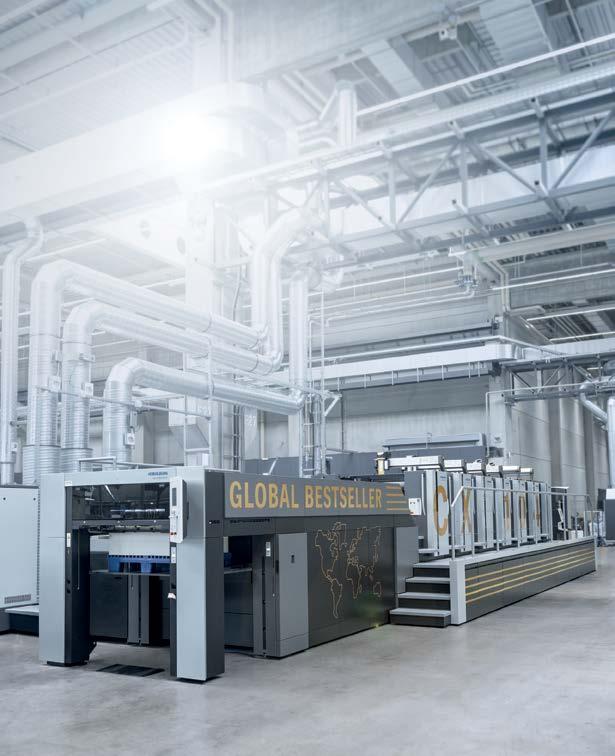
Built for quality, efficiency, and reliability – with over 950 installations in more than 60 countries, it is the globally best-selling press from HEIDELBERG of the current generation. The Speedmaster CX 104 impresses with flexible configurations, seamless integration into the Prinect workflow and strong performance in everyday use. A genuine HEIDELBERG – made for print shops that won't settle for less.
› heidelberg.com/en/cx104

AJT Group’s Greenfield Plants to Propel RAK as Packaging Hub
AJT Group’s Greenfield Plants to Propel RAK as Packaging Hub
Chamber of Printing Ramps Up Egypt’s Circular Economy
Paper & Tissue Show Announces Strategic Move to Sep 2026
Egypt PM Inaugurates $5M Plastic Recycling Plant in Sokhna
SIEMA 2026: Defining the Future of Agrifood Technology
Print4All Conference 2026: Redefining Human-Tech Dynamic
FESPA MENA Forum Concludes, Sets Stage for 2027 Expo
FESPA Middle East 2027 to Reinforce MEASA Print Sector
BOBST, Partners to Unveil CuttingEdge Tech in Tanzania





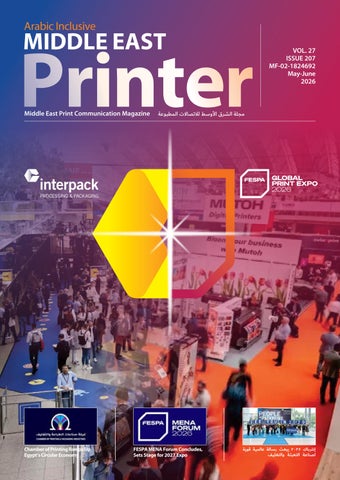
As the global print and packaging industries move deeper into 2026, one message is becoming increasingly clear: the future belongs to companies that can connect innovation with real business value.
This issue of ME Printer reflects an industry in rapid transition. Across the Middle East and beyond, print service providers, packaging converters, technology suppliers, and brand owners are rethinking how they produce, compete, and grow. Artificial intelligence, automation, digital workflows, sustainability, and smart materials are no longer distant concepts; they are becoming essential elements of everyday production.
The recently concluded FESPA Global Print Expo 2026 in Barcelona strongly reinforced this direction. Bringing together more than 550 exhibitors and over 14,000 international visitors, the event highlighted the growing convergence of wide-format print, signage, textile, personalisation, corrugated packaging, workflow, and automation. Its newly launched Corrugated and Textile zones showed how speciality print is expanding into new applications and becoming part of a wider, connected value chain.
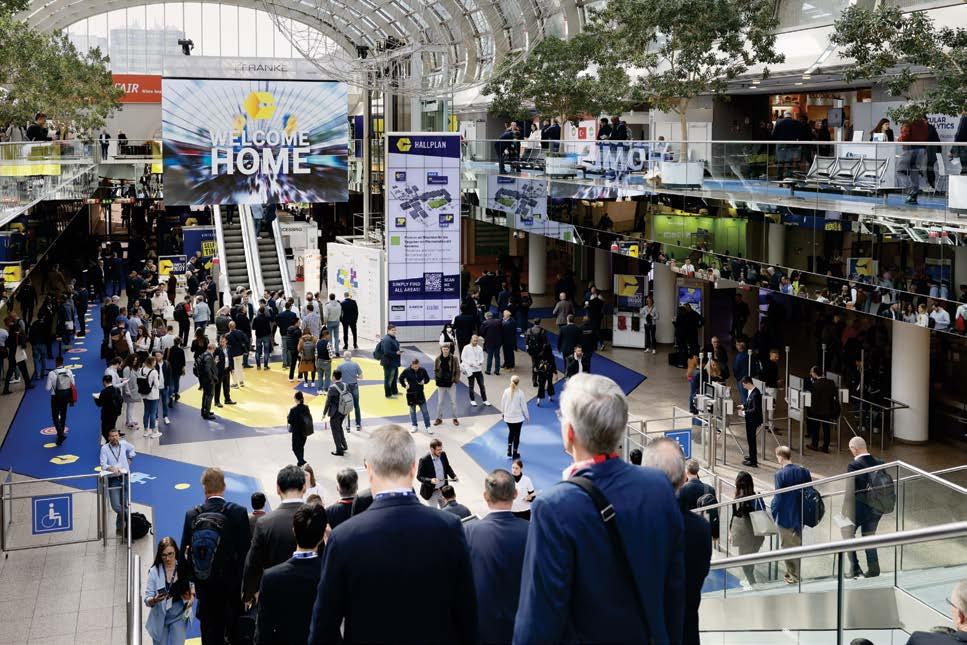
At the same time, interpack 2026 in Düsseldorf, held from 7–13 May 2026, once again placed packaging and processing at the centre of global industrial transformation. As the world’s leading trade fair for packaging and related process technologies, interpack underlined the importance of sustainable materials, efficient machinery, automation, and futureready packaging solutions across food, beverage, pharmaceutical, cosmetics, industrial goods, and consumer sectors.
Together, these two major events show where the industry is heading: toward smarter production, shorter runs, stronger sustainability, datadriven efficiency, and closer integration between print, packaging, design, and technology.
For the Middle East, this transformation carries significant opportunity. The region is entering a more mature phase of investment, where companies are moving beyond isolated upgrades and focusing instead on complete, integrated production strategies. Packaging is emerging as a strategic frontier, while print continues to prove its relevance across communication, education, events, branding, and industrial applications.
In this changing landscape, success will not depend only on owning the latest machine. It will depend on understanding how technology, creativity, sustainability, and customer needs work together.
This issue is dedicated to that journey.

ME Printer FZE LLC PO Box: 502183, UAE Tel: +971 4 3911210 E-mail: info@meprinter.com
Group Publishing Director Morteza Karimian karimian@meprinter.com
ME Printer Editorial Team Editor in Chief Alex Jahanbani alex@meprinter.com
Editor- Arabic Rana Ahmed Yehia E-mail: arabic@meprinter.com
News Editor Sanjeev Varma E-mail: sanjeev@meprinter.com
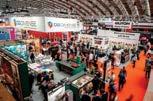

FESPA 2026 in Barcelona and interpack 2026 in Düsseldorf captured the new direction of global print and packaging: smarter production, stronger sustainability, digital integration, and application-driven innovation. Both events reflected an industry moving confidently toward a more connected future.
Specialist Contributing Editors Frank Romano fxrppr@rit.edu
UK - Laurel Brunner lb@digitaldots.org
UAE- Dr.Nicholas Hellmuth E-mail: nhellmuth@flaar.org
Advertising Digital Manager Prabhulla Chandran +971559322637 meprinter@meprinter.com
Art Director Karim Heydari info@amir-heydari.com
Classifieds & Subscription +971 4 391 1210 info@meprinter.com

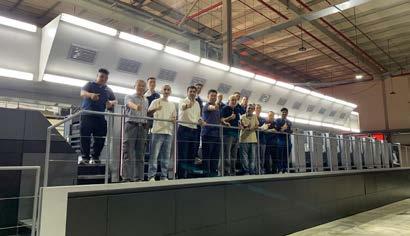
It is intended to be a platform for world-class packaging that serves the Middle East, Africa, and international markets
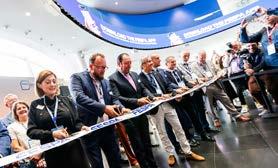
AJT Group, a Dubai-based joint venture specialising in advanced packaging and paper-based solutions, officially marked a major milestone in the region’s industrial sector as it welcomed HH Sheikh Mohammed bin Humaid Al Qasimi, Managing Director of RAKEZ, to its newly commissioned printing and packaging facilities in Ras Al Khaimah. The visit, which also included RAKEZ Chief Government and Corporate Relations Officer Yaser Al Ahmed, highlights the strategic importance of the project to the economic
landscape of the Emirate.
The delegation toured two primary sites: a corrugated factory and a printing and converting factory. These facilities represent one of the largest greenfield packaging investments in the region, transitioning from an empty desert floor to a high-tech industrial hub in just a few months.
AJT Group also announced the successful commissioning of its first HEIDELBERG 9+2 press, signalling commitment to utilising world-class technology. The HEIDELBERG 9+2 is
a high-performance sheetfed offset printing press designed primarily for complex, premium packaging, and commercial printing. Typically operating with 9 printing units and 2 coating units, the press focuses on speed, flexibility, and automation to handle challenging substrates, including thin materials and plastic, at high production speeds.
“Building a greenfield packaging factory from zero is not for the faint-hearted. It takes a team that believes in the vision—engineers from China, expertise from Europe, and the ambition of the Middle East—all coming together to create something that didn’t exist before,” says AJT Group CEO Vitor Santos. He noted that the project is more than just a factory; it is intended to be a platform for world-class packaging that serves the Middle East, Africa, and international markets.
By positioning Ras Al Khaimah as a global packaging hub, AJT Group aims to support the continued industrial development of the Emirate. “The successful launch of these facilities underscores the collective effort of a global team of engineers and partners dedicated to bringing cutting-edge industrial capabilities to the heart of the Middle East,” adds Santos.
Backed by a vision to lead rather than follow, Jordanian manufacturer New Plastic Industrial Company (NPICO) has launched its flexible packaging division with a dual investment in BOBST printing and laminating technologies.
Founded in 2005, NPICO is part of Al-Hazaa Investment Group and has grown to become one of the largest manufacturers of woven polypropylene bags in Jordan and across the Middle East, producing a minimum of 150 million bags and approximately 250 tonnes of raffia rolls annually. Resilience, Growth, and Changing
Like many manufacturers in the region, NPICO has had to navigate external pressures in recent years, including supply chain disruptions and significant increases in raw material costs. In response, the company prioritised investments in internal technology and operational capabilities
Concurrently, regional market conditions were becoming increasingly demanding. Customers began to pay far greater attention to print quality, consistency, and finishing standards, and competition across the region was intensifying. The decision to
enter the flexible packaging segment was a deliberate strategic move to diversify, add value, and serve both external customers and the group’s sister companies with a higher-tier offering.
Driven by an expansion into flexible packaging, the leadership team prioritised cutting-edge technology, a robust industry reputation, and a preference for European manufacturing standards. Packaging giant BOBST successfully met every one of these criteria.
In 2024, NPICO invested in two
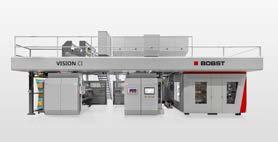
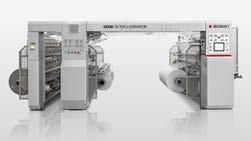
machines, the BOBST VISION CI flexo printing press and the NOVA SX 550 solventless laminator. It was the company’s first investment with BOBST and marked a significant step in its evolution.
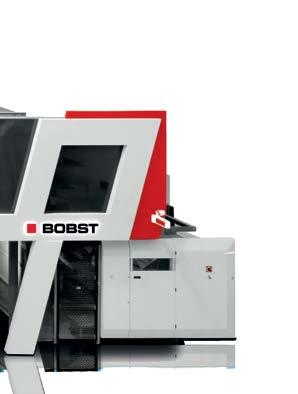
The VISION CI is a high-performance central impression (CI) flexo press designed for converters seeking to automate and optimise flexible packaging production. Capable of running solvent-based and waterbased systems with consistent, repeatable quality across a wide range of substrates and thicknesses, it is engineered to deliver speed without compromising on output.
The NOVA SX 550 solventless laminator complements the press seamlessly, enabling high-speed lamination across a broad range of applications from standard food packaging structures through to more technically complex configurations.
NPICO Production Engineer Ameen Al Hazaa says, “Our partnership with BOBST began as part of our expansion into the flexible packaging division. As a company, we always strive to invest in the best available technologies, and BOBST was a natural choice. We also have a preference for European manufacturing standards, which we associate with reliability and precision, and BOBST fully reflects those values.”
has been particularly important in a market where end customers are increasingly exacting, and the ability to produce print that is precise and repeatable run after run has become a clear competitive differentiator.
“The BOBST machines have fully met our expectations,” says Al Hazaa. “They have delivered the performance, quality, and reliability we were looking for. These machines have proven to be a very solid investment.”
The BOBST VISION CI and NOVA SX 550 also support the team’s operational ambitions through BOBST Connect, the company’s cloud-based platform that provides real-time monitoring of production data and performance. For a business that takes data seriously, the ability to track output and respond quickly to any variation in process has been a valuable addition to daily operations.
The transition to new technology always carries a learning curve, and NPICO is open about the initial adjustment period. Getting operators fully comfortable with the new machines required time and close collaboration. BOBST technicians worked on site to guide the team
Since installation, the results have exceeded expectations. In less than one year of operations, NPICO has acquired more than 50 new customers in the flexible packaging sector and reached approximately 1,500 tonnes of production. This growth is a strong indicator of both the capability of the new equipment and the speed at which the team has been able to scale.
Beyond the headline numbers, the machines have delivered measurable improvements in production efficiency, waste reduction, and quality consistency. This last point
erations and resolve any technical issues quickly,” says Al Hazaa.
New Market Opportunities
With the flexible packaging division now established and gaining
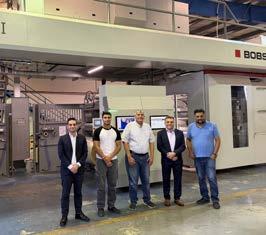
momentum, the Jordan company is looking ahead with confidence. The investment in BOBST technology has opened new market opportunities, created a stronger offering for the group’s affiliated companies, and positioned the business to scale further as demand in the region grows.
through every aspect of operation, building competence at each stage of the process.
“Initially, it was challenging for operators to adapt to new machines, but with the support of BOBST technicians, the process became much easier. They worked closely with our team, ensuring they understood each step and gained real confidence. BOBST support has been excellent. The technical team has been in continuous contact with our maintenance department whenever needed, providing timely assistance and guidance. This has helped us maintain smooth op-
“New Plastic Industrial is exactly the kind of partner we are proud to work with; a business that sets high standards for itself and backs them up with genuine investment. Its move into flexible packaging is a bold and well-executed one, and the results they have achieved in under a year speak for themselves. The Middle East is a market of real and growing importance to BOBST, and we look forward to building on this partnership as New Plastic Industrial continues to scale,” adds Khaled Joundi, BOBST Regional Business Director Turkey, Middle East, Egypt, and Pakistan.
Presenters emphasised that circularity and recoverability are no longer optional, but are now baseline requirements for international trade

The Chamber of Printing & Packaging Industries successfully hosted an exclusive seminar on 4 May 2026, aimed at accelerating Egypt’s green industrial transition. The event focused on aligning local manufacturing processes with aggressive new international sustainability laws. As global markets shift towards a circular economy, Egyptian industrial leaders convened at the Federation of Egyptian Industries (FEI) building in Cairo. Their goal was to bridge the gap between local production and global compliance. The event, titled
‘Packaging Sustainability and Waste Management’, marked a critical turning point for the sector. Presenters emphasised that circularity and recoverability are no longer optional, but are now baseline requirements for international trade.
A group of experts headlined the panel discussion, including Fairouz Galal, Founder and CEO of Global Arc. The panel held a special session at the Industrial Modernisation Centre (IMC) to learn about the technical services and projects provided by the centre to support factories in re-
ducing carbon footprint, deepening local manufacturing, and improving green economy projects and productivity. During her address, Galal shared the latest global legislation, waste management strategies, and innovative models for sustainable packaging and also detailed practical ways to apply them in the Egyptian market.
The seminar served as a foundational component of a broader wave of sustainability initiatives in Cairo this year, leading up to major trade events.

Organisers of the Paper & Tissue Show have officially announced that the highly anticipated industry event will now take place from 21-23 September 2026 at ADNEC Abu Dhabi. This strategic decision comes as the team closely moni-
tors regional developments and follows the guidance of the UAE authorities to ensure the event delivers an experience that far exceeds industry expectations.
In a move designed to maximise
commercial impact and provide unparalleled value for attendees, the event will be held simultaneously with two other major exhibitions: the Hygiene & Nonwoven Show and the Packaging & Recycle Show. By bringing these three sectors together under one roof, the organisers aim to create a powerhouse environment for business and innovation.
The consolidated gathering is built on a foundation of maximum efficiency, where every interaction is designed to spark a new partnership or business opportunity. Participants can expect enhanced global visibility through strategic collaborations and high-impact marketing activities. Furthermore, the choice of ADNEC guarantees access to the strongest possible network, connecting attendees directly with leading decision-makers and global industry leaders.
Marking a significant milestone in Egypt’s ongoing transition towards a sustainable green economy, Prime Minister Dr. Mostafa Madbouly officially inaugurated the Green Recycle plastic recycling plant. Located within the Sokhna Industrial Zone, the $5 million facility is dedicated to advanced plastic recycling and waste management operations.
The inauguration was a highlight of the Prime Minister’s broader tour to the region, which saw the launch of nine industrial projects within the zone operated by the General Authority for Suez Canal Economic Zone (SCZONE).
During the event, Dr. Madbouly said that the project align’s with the state’s direction in adopting green economic policies and promoting environmental sustainability. He added that the government is encouraging investments in recycling and waste management, describing them as promising sectors that achieve economic and environmental returns.
Accompanied by SCZONE Chair-
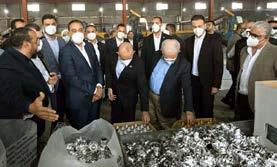
man Waleid Gamaleldien, the Prime Minister toured the 30,000-squaremetre-site. The facility, with an annual production capacity of 8,000 tonnes, is expected to create around 50 direct jobs. The recycling plant represents a key component of a larger strategy aimed at localising manufacturing and attracting high-quality foreign investment to the region.
The SCZONE Chairman Gamaleldien heralded the Green Recycle facility
as a pivotal advancement for the region’s sustainable industrial sector. According to him, the project underscores the authority’s ability to secure investments that drive the transition towards a circular economy and enhanced resource efficiency. The factory is slated to provide recycled production inputs across various sectors, a move expected to fortify local supply chains and significantly decrease dependency on imported raw materials.
The much anticipated 9th edition of MOROCCO SIEMA—the international food processing, packaging, and machinery exhibition—is officially set to return to Casablanca from 22–24 September 2026. This year’s showcase at the AMDIE (OFEC) exhibition centre arrives at a pivotal moment, with Morocco’s agrifood and machinery sectors experiencing an unprecedented surge fuelled by soaring sales and nationwide push towards advanced mechanisation.
Organised by Elan Expo, Morocco’s leading trade exhibition dedicated to food processing and packaging technologies, brings together exporters, industry leaders, and qualified buyers from across the region and beyond. It also provides a powerful platform for networking, business development, and exploring the latest innovations in packaging, food processing, agri-

culture, and logistics. Live product demonstrations will be one of the show floor highlights.
The momentum behind the 2026 expo is driven by the huge success of the previous edition which featured 236 global brands from 26 countries, ranging from Canada and Switzerland to Japan and India.
The massive international footprint attracted over 16,700 professional visitors, creating a high-octane
environment for networking and trade. Beyond the exhibition floor, SIEMA 2025 featured 13 conferences where 43 industry leaders shared insights with thousands of eager attendees on food technologies, agricultural advancements, packaging innovations, and sustainable solutions.
Visiting Time: 10 am – 7 pm (all days).
The recycling plant represents a key component of a larger strategy aimed at localizing manufacturing and attracting high-quality foreign investment to the region
This year’s showcase arrives at a pivotal moment, with Morocco’s agrifood and machinery sectors experiencing an unprecedented surge
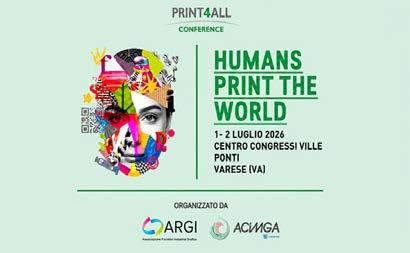
The 2026 edition is built around the concept ‘Humans Print the World’, developed along two main directions— Human+Machine and Human+Life—guiding discussions on technological innovation, skills, sustainability, and the social role of packaging.
Registrations are now officially open for Print4All Conference 2026, taking place on 2 July 2026 at Centro Congressi Ville Ponti in Varese, Italy. The event is designed to bring companies and their contributions back to the centre of the debate on the future of printing, converting, and packaging.
Organised by ACiMGA and ARGI—Italian trade associations representing the printing and converting machinery industry—in collaboration with Fiera Milano, the conference aims to become a key moment of synthesis between market data, strategic visions, and practical applications, offering the supply chain a content-rich agenda designed to support industrial and strategic decision-making during a period of profound transformation. The 2026 edition is built around the concept ‘Humans Print the World’, developed along two main directions—Human+Machine and Human+Life—guiding discussions on technological innovation, skills, sustainability, and the social role of packaging.
Human+Machine: Process Intelligence and Corporate Culture
The Human+Machine track focuses on the transformation of production processes through artificial intelligence (AI), automation, and
data management. The challenge is not simply introducing new technologies, but rethinking corporate organisation and decision-making models around tools that are becoming structural elements of manufacturing systems.
Keynote sessions will explore how AI is evolving from operational support into a true industrial tool capable of influencing planning, quality control, and predictive maintenance. Companies will present concrete solutions—from bottleneck management in folder-gluer systems analysed by Petratto, to slitting and rewinding technologies by Bimec designed to improve interactivity and operational continuity, up to the integration of UV inkjet printing, digital embellishment, and laser die-cutting into unified workflows proposed by SEI Laser.
The common thread is the ability to connect machines, data, and human expertise in order to reduce downtime, optimise quality, and increase overall productivity.
Human+Life: Packaging as Relationship Interface
Human+Life shifts attention to the role of printing and converting in everyday life, and to packaging as a relationship device between companies, consumers, and the environment.
Packaging is no longer viewed solely as a functional container, but as a communication and accessibility surface capable of expressing corporate values and sustainability commitments. Topics will include inclusive design, usability, sustainability communication, and new sensory experiences connected to materials.
The conference will also present the first Italian research study dedicated to inclusion, workplace culture, and skills within the sector—a document mapping employment transformations, industry attractiveness for younger generations, and the upskilling paths required to face technological and cultural transitions.
Sustainability will be addressed as an operational capability rather than a simple communication claim. In particular, TCE Printing will present a pragmatic approach focused on making sustainable production an everyday practice, realistically applicable under routine operating conditions.
This means working simultaneously on multiple fronts, including materials (water-based inks, recycled and compostable substrates), machine conditions (drying systems and ink rheology), process control (mechanical defoaming, viscosity and temperature control, surface energy management of substrates), and enabling technologies such as turbulent drying with energy recovery, new anilox technologies, and hydrophobic high-release plates.
The objective is clear. It involves transforming sustainable solutions into robust and repeatable practices, reducing operational complexity for printers and converters, and enabling a truly scalable transition.
Participating companies will provide practical examples of how technology and quality can be integrated. SIMEC Group will explore anilox configuration as a strategic lever for quality, process control, and waste reduction. Canon, on the other hand,
will highlight the role of inkjet technology in shifting from efficiencyoriented production to a broader business transformation model for printing. In a similar stride towards modernisation, Uteco will present solutions for integrating sustainability into flexible packaging printing lines, while HEIDELBERG will showcase the evolution of its technologies in response to new packaging and industrial transformation needs. Finally, OMET will present approaches combining flexibility, personalisation, and premium finishing within printing and converting applications.
The conference will also analyse market figures and external scenarios influencing industrial decision-making.
Recent indicators show a sector moving at two different speeds. On one front, a growing demand for printing is being driven by investments in high value-added applications and UV/UV LED technologies. Conversely, machinery manufacturers continue to face increasing competitive pressure and rising imports. At the same time, strong resilience signals remain evident through high levels of industrial investment and employment growth within the sector.
From a regulatory and geopolitical perspective, discussions will focus on PPWR, cellulose and recycled fibre availability, food contact requirements, dependence on Asian supply chains, and the impact of energy and raw material costs on
European competitiveness. These are the conditions within which companies must design mediumand long-term strategies.
Another key theme concerns skills development. Technological transition requires targeted educational paths and corporate policies capable of attracting and training younger generations. The Italian research study on inclusion and skills will provide practi-
Thanks to the support of Italian Trade Agency (ITA) and the participation of an international delegation of around 60 operators from more than 30 countries, Print4All Conference 2026 further strengthens its international positioning as a strategic platform leading towards Print4All 2027.
Consequently, the event is positioned not only as a space for technical and market updates,
The conference will also present the first Italian research study dedicated to inclusion, workplace culture, and skills within the sector
cal insights into how companies can rethink organisational models, career paths, and upskilling initiatives in order to ensure workforce adaptation and increase the attractiveness of the industry.

but as a collective laboratory where technology suppliers, printers, converters, brand owners, and stakeholders contribute to shaping a shared vision for the future of printing and converting.
Participating in the conference means gaining access to real business cases, strategic reflections, and operational solutions directly tested by industry players. It is an opportunity to evaluate practical tools for increasing production efficiency, implementing sustainable processes, and redesigning business models within an evolving competitive and regulatory landscape—the first step on the road towards Print4All 2027.
The forum highlighted the strength of our regional community and the importance of collaboration, education, and knowledge-sharing
The FESPA MENA Forum 2026 has successfully concluded in Barcelona, Spain, marking a significant milestone for the visual communications industry across the Middle East, Africa, and South Asia (MEASA).
Held alongside the FESPA Global Print Expo, the forum brought together an influential gathering of industry leaders, innovators, print specialists, signage professionals, and regional stakeholders. Participants engaged in vital discussions regarding challenges faced by the industry, emerging
opportunities, and the future of visual communications across MEASA. “Beyond the conversations, the forum highlighted the strength of our regional community and the importance of collaboration, education, and knowledge-sharing as we continue to navigate industry transformation together,” says FESPA Middle East Regional Manager Bazil Cassim.
A major highlight of the event was the strong momentum building towards the future of the regional market, particularly look -
ing forward to FESPA Middle East 2027. Scheduled to take place in January 2027, the upcoming expo is already generating significant excitement as it promises to further reinforce the growing importance of the MEASA region within the global print sector.
Organisers expressed sincere gratitude to all the attendees and the FESPA Global leadership team for exchanging valuable perspectives and fostering deep regional collaboration that will help shape the industry’s trajectory for years to come.
FESPA Middle East—the premier regional expo for speciality printing and signage—will return to Dubai from 12–14 January 2027 at Dubai Exhibition Centre (DEC).
With over 150 global brands showcasing the latest in wide format digital, textile, and signage technologies, the event draws thousands of industry visionaries to network, discover innovations, and drive investment decisions.
Free-to-attend educational content features conference sessions, and the World Wrap Masters Middle East competition, empowering senior professionals—many of whom hold purchasing authority—to explore best practices, sustainability trends, and skill development. As the fastest-growing event of its kind in the region, FESPA Middle East is the ultimate platform for regional printers, sign makers,
and visual communicators to connect, learn, and embrace the future of speciality print.
“FESPA is the main show, they have the biggest client database worldwide, they are the most recognised in terms of digital printing, and the most market innovative exhibition across the globe,” says Massoud Saad, an exhibitor at FESPA Middle East.
A visitor to the event adds: “FESPA is honestly one of those truly
excellent events, it’s a massive opportunity for the community from all over the world. The level of innovation is incredibly high.”
FESPA Middle East serves as a gathering point for print service providers (PSPs), sign-makers, visual communication specialists, textile professionals, and prospective industry entrants. Attendees have the opportunity to network with industry peers, see the very latest innovations from key players, and make investment decisions. Additionally, the event features a free educational programme designed to facilitate knowledge sharing and learning opportunities within the sector.
The successful conclusion of the FESPA MENA Forum 2026—held alongside the FESPA Global Print Expo in Barcelona—succeeded in building a strong momentum for the regional market ahead of FESPA Middle East 2027. The upcoming 4th edition in Dubai is expected to further reinforce the growing importance of the Middle East, Africa, and South Asia (MEASA) region within the global print sector.
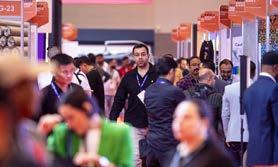
BOBST and Multigraph, alongside technology partners Esko, Dow, Snetor, and Shanghai Eternal Machinery Co., Ltd. (ETERNA) are hosting an exclusive industry gathering on 3 June 2026 at the luxurious Hyatt Regency Dar Es Salaam, The Kilimanjaro, in Tanzania.
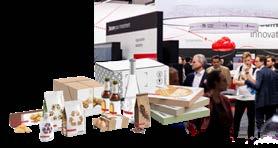
The single-day event will focus on showcasing the latest innovations and sustainable solutions across key sectors, including folding cartons, corrugated board, labels, and flexible packaging. Attendees will explore cutting-edge technologies designed to drive operational efficiency, advance sustainability, and spark new innovation in packaging and printing.
“The roadshow provides a platform to connect with industry experts and uncover smart solutions that simplify everyday manufacturing operations, enhance performance, and open new growth opportunities for your business,” says Mohamed Hassairi, Regional Marketing & Communications Manager, BOBST Africa & Middle East and Turkey/Caucasus.
Timing: 9.30 am – 5.30 pm.
The upcoming 4th edition is expected to further reinforce the growing importance of the MEASA region within the global print sector

interpack 2026 sent a clear signal: the packaging industry is more closely connected, more innovative, and more dialogue-oriented than ever before
interpack 2026 made the energy of an entire industry truly tangible; once again, it became global meeting place for processing and packaging industry and impressively demonstrated how concrete transformation is already being implemented in technology, materials, and processes
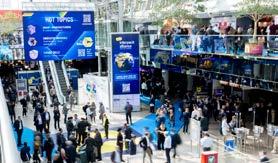
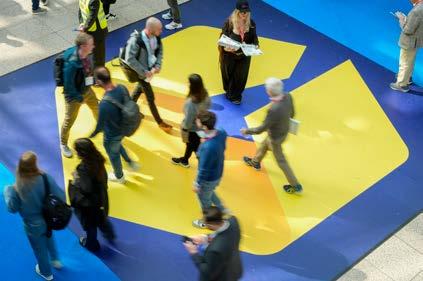
interpack 2026 sent a clear signal: the packaging industry is more closely connected, more innovative, and more dialogue-oriented than ever before. This momentum was immediately visible in the exhibition halls. High visitor traffic, intensive discussions, and a consistent international presence shaped the atmosphere. Everywhere, it was possible to experience the determination with which companies are working on solutions for the future. Ideas were discussed, tested, and decisions were made. The entire value chain was presented in live. From 7 to 13 May, 2,804 exhibitors from 65 countries and trade visitors from 161 countries came together in Düsseldorf on the fully booked exhibition grounds. Of all visitors, 75% came from outside Germany, including 28% from outside Europe.
Around 100 additional companies were represented at components, the supplier trade fair held in parallel. This made interpack 2026 the largest edition in its history in terms of exhibitors, underlining what was clearly felt in the halls, as this was an event with exceptional impact.
“That was a top interpack. Busy halls, intensive exchange and concrete projects showed the strength of this global community. interpack is the most important meeting place for the industry worldwide, and this edition impressively confirmed that,” says interpack Director Thomas Dohse, at the close of the trade fair.
For seven days, concrete solutions
and partnerships took centre stage. Many discussions led to projects and investment decisions. The trade fair thus confirmed its role as the leading platform for the global processing and packaging industry—with strong visitor attendance, particularly from the food and pharmaceutical industries, as well as a high quality and density of leading and innovative suppliers.
interpack 2026 took place at a time when the industry is undergoing transformation. Demand for packaged products continues to rise, but requirements for materials, production systems, and supply
structures are changing. A key focus at the trade fair was the EU Packaging and Packaging Waste Regulation (PPWR), which marks a turning point for the industry in many respects.
interpack made one thing clear that companies are not responding in isolation, but systemically. Exhibitors presented solutions in which materials, machines, and processes are increasingly considered together and coordinated with one another. In this way, interpack confirms its role as an economic driver for the industry: this is where projects are initiated, investments prepared, and economic momentum generated.
Systems, Materials, Skills
Automation, data-based applications, and flexible plant concepts have arrived in industrial practice and were presented at interpack as concrete applications of smart manufacturing. In the field of materials, the focus was on innovative solutions that work under real-world conditions and meet regulatory requirements. Future skills became tangible wherever connected and data-driven systems require new competencies in production. Personal proximity, shared
experiences, and open dialogue gave interpack a special intensity.
Specials Provide Additional
sustainability to diversity, start-up culture, and the promotion of young talent, as well as qualification and future skills.
Impetus
interpack also set important accents beyond the exhibition stands. The enhanced specials complemented the trade fair activities and brought in additional perspectives. The interpack SPOTLIGHT Forum, SAVE FOOD Highlight Route, SAVE FOOD Expert Talks & Awards, SAVE FOOD Project Competition, SAVE FOOD Design & Sustainability Design Awards, Women in Packaging, the Start-up Zone, and Young Talents Day showed how broadly the industry’s transformation is being discussed—from technology and
What remains is more than a successful trade fair. The industry faces major challenges and is meeting them with innovative strength, cooperation, and the will to actively shape the future. Added to this is a special combination of international density, technical depth, and a palpable spirit of new beginnings that characterised this year’s interpack.
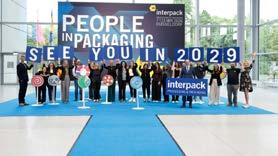
The next interpack will take place in 2029. The date will be announced shortly.
interpack confirms its role as an economic driver for the industry: this is where projects are initiated, investments prepared, and economic momentum generated
Using concrete examples, PDC 2026 will demonstrate how print is evolving in conjunction with e-commerce, data, and brand communication, making this development tangible for practical application
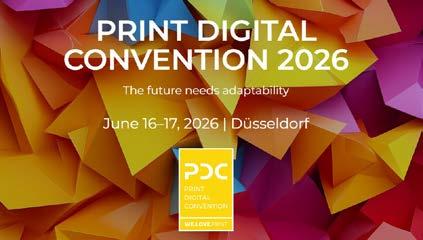
When representatives from Bayer, Teekanne, and leading brand strategists will meet in Düsseldorf on 16–17 June to discuss the role that print and packaging play in the customer experience, it becomes clear just how much the industry is changing. Using concrete examples, PRINT DIGITAL CONVENTION
2026 will demonstrate how print is evolving in conjunction with e-commerce, data, and brand communication, making this development tangible for practical application.
“The conference programme highlights just how much print is currently changing. Topics such as e-commerce, data-driven communication, and brand management are now intertwined—and we have put together a particularly strong programme featuring relevant voices from the communications industry,” explains Rüdiger Maaß, Managing Director of Fachverband Medienproduktion e.V. (FMP).
Industry Transformation as Leitmotif of Keynotes
The thematic framework is set by two keynotes, each of which kicks off the respective day of the congress. Tessitura’s Markus Morawe will open the first day of the event with his presentation,
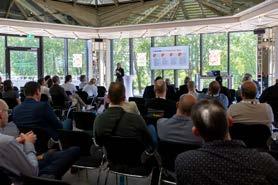
‘The future requires the strength to change’. His speech will address how companies can actively shape the connection between people, organisation, and technology, while leveraging change as a core strategic competence.
The second day will shift focus to a personal perspective with a keynote by Osman Tüccaroglu titled ‘Speed Requires Attitude—Personal Skills as the Foundation for Success.’
Tüccaroglu takes the audience on an extraordinary journey through motorsport, centred on his son Gian Luca’s path to the Porsche Carrera Cup to illustrate the critical roles that attitude, decision-making, and personal development play in everyday business life.
The initial day of the upcoming event will feature dedicated sessions focusing on concrete applications in the marketing and communications sector. Following the keynote, the programme continues with three parallel session tracks, designed in collaboration with association partners and bringing together different perspectives from industry, design, and application.
The morning sessions will focus on sustainable print production as well as the use of new technologies. Guest speaker Lea Eggers of Initiative Pro Recyclingpaper (IPR) will demonstrate how environmental standards, including the
Blue Angel certification, influence print production. Additionally, Simon Pietsch of DHL Group will contextualise requirements from the perspective of international supply chains. Complementing this, the role of artificial intelligence in the design process will be discussed. Caroline Mörnås of Paulig Group and Tim Gelzleichter of WIN Creating Images will demonstrate how generative approaches and data-driven applications can be meaningfully integrated into branding and packaging processes, and where a distinction must be made between hype and actual value creation.
The afternoon session will focus on data-driven communication and automated processes. Ahmet Baydan and Christian Boy of Eurotops will demonstrate how personalised customer engagement is implemented, whilst Fabian Dudek of nucao and Tom Streefkirk of colordruck will provide insights into how print and packaging can be effectively extended into digital channels and social media.
One of the highlights of the programme is the panel discussion on the first day of the event, which re-evaluates the role of print and packaging in brand management. Titled ‘A brand you can touch’, the discussion centres on the significance of physical touchpoints in an increasingly digital brand landscape. With contributions from BBDO’s Christian Rätsch, as well as representatives from the Peter Schmidt Group, Bayer, and Teekanne, the discussion brings together perspectives from strategy, design, and brand practice. The focus is on how print and packaging function as part of the customer experience and what contribution they make to perception, differentiation, and brand loyalty. The subsequent PDC Night offers the opportunity to continue the discussions in an informal atmosphere and to deepen contacts. “It is precisely the combination of
brand, design, technology, and application that makes this panel so exciting. We are delighted to have secured high-calibre voices from the world of brand practice for the programme, together with our partners. It is this interplay of different perspectives that is becoming increasingly important for the further development of the industry,” explains Sabine Geldermann, Director drupa, Portfolio Print Technologies, Messe Düsseldorf GmbH.
The second day of the event builds on the topics from the previous day and focuses in particular on ecommerce, data, and new business models.
In the morning, digital rockstar and e-commerce expert Michael Atug will provide insights into the transformation from brick-andmortar retail to online business and highlight the opportunities arising from digital sales models. In parallel, WE.LOVE.PRINT’s Matthias Windolph and Konica Minolta’s Thorsten Kinnen will discuss the role of print as a trust-building medium in the digital communications landscape. Andreas Riekötter of IFH MEDIA ANALYTICS will analyse how communication is changing amidst the interplay
into its own, as an attention-grabbing and trust-building medium in combination with digital applications. The afternoon session will have Markus Meyer of Eismann demonstrate how print, online retail, and digital touchpoints can be combined to create integrated customer journeys.
The conference programme comprises around 30 presentations and themed workshops across three parallel sessions, complemented by keynote speeches and discussion panels. The focus is on current developments in programmatic print, marketing automation, sustainable media production, and print finishing—with a clear emphasis on practical applications.
The PRINT DIGITAL CONVENTION
It is this interplay of different perspectives that is becoming increasingly important for the further development of the industry
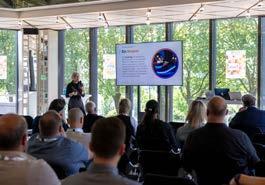
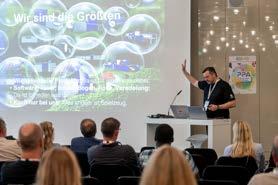
of AI, digitalisation, and growing media diversity. The key here is the intelligent integration of channels—this is where print comes
will take place from 16–17 June 2026 in Düsseldorf and is organised by FMP in partnership with Messe Düsseldorf and drupa.
Packaging is not just a cost centre or a compliance requirement. It is a visible part of a brand’s environmental footprint – and an opportunity to demonstrate progress
Carbon Balanced Paper has long been associated with publishing –books, magazines, and print media. But the role of paper has evolved and so can the opportunity to reduce its environmental impact.
Today, there are important applications for Carbon Balanced Paper in packaging – from folding cartons to e-commerce materials – where sustainability expectations are rising quickly and procurement decisions are under increasing scrutiny.
Packaging sits at the intersection
lower-impact alternative to plastic, even though it still carries a carbon footprint tied to fibre sourcing, manufacturing, and transportation.
Many brands have made public commitments to reduce emissions, including Scope 3 emissions across their supply chains. For packaging buyers, this is where things become complex.
Packaging can be a significant contributor to product-level emissions, yet it is rarely addressed directly beyond general material choices.

of climate, materials, and consumer perception. It is visible, measurable, and increasingly tied to corporate sustainability commitments.
At the same time, demand for paperbased packaging continues to grow, driven in part by the shift away from plastics and the rise of e-commerce.
According to the Food and Agriculture Organization of the United Nations (FAO), global paper and paperboard production has remained strong, supported by packaging demand even as other paper grades decline.
E-commerce is a major driver. The International Energy Agency (IEA) notes that growing online retail activity is increasing demand for packaging materials, particularly corrugated and paper-based formats.
This growth creates both an opportunity and a challenge because packaging is increasingly positioned as a
Regulators are also raising expectations around environmental claims. Authorities such as the Competition Bureau Canada and the Federal Trade Commission (FTC) emphasise that environmental claims must be substantiated, specific, and supported by evidence, not broad or implied. This is changing the conversation from “sustainable packaging” as a concept to measurable environmental performance at the product level.
Carbon Balanced Paper provides a practical way to address the carbon footprint of paper-based packaging without requiring changes to materials, suppliers, or production processes.
The model is straightforward. The carbon footprint of packaging projects is calculated using recognised
methodologies and subsequently balanced through the protection and restoration of high-value forests via World Land Trust (WLT) – an international conservation charity that protects the world’s most biologically significant and threatened habitats. This streamlined approach produces a traceable, verified climate contribution tied directly to the packaging being produced.
These are not abstract offsets. Projects supported through WLT focus on the permanent protection of threatened ecosystems, preserving biodiversity while preventing the release of carbon stored in forests.
To date, WLT and its partners have helped protect millions of acres of threatened habitat globally, supporting both climate and biodiversity outcomes.
Sustainability in packaging is often framed as a choice between materials, formats, or suppliers. Those decisions remain important, but they are not always enough on their own.
Carbon balancing your paper-based packaging provides an additional benefit by directly addressing its carbon impact, while supporting forest conservation and biodiversity protection.
For packaging buyers, this means aligning packaging decisions with corporate climate goals while adding measurable environmental value to existing materials. This approach strengthens the credibility of sustainability claims and ensures a direct contribution to tangible, long-term conservation outcomes.
Packaging is not just a cost centre or a compliance requirement. It is a visible part of a brand’s environmental footprint – and an opportunity to demonstrate progress.
Carbon Balanced Paper extends that opportunity beyond publishing and print into one of the fastest-growing segments of the paper industry. And as expectations around transparency, verification, and climate accountability continue to increase, packaging decisions will carry more weight.
Print with confidence and achieve top results fast and effortlessly. This all-in-one DTF solution meets Brother’s high standards – offering exceptional print quality, reliability, and efficiency – and supports 800 mm wide film for extra flexibility.

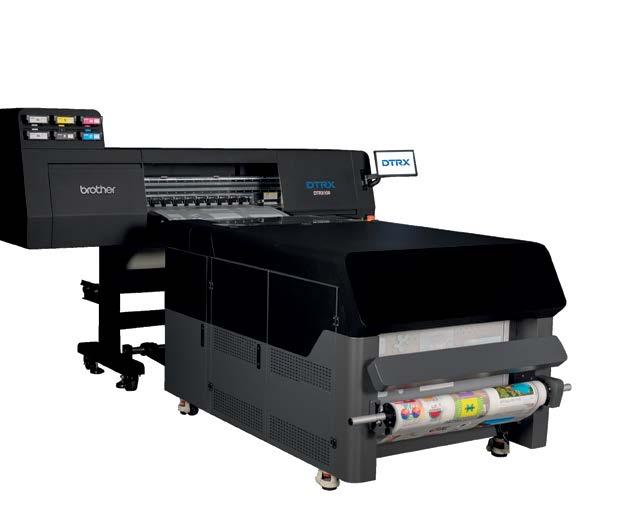
Compatible with 800 mm film width
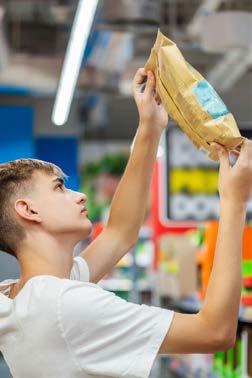
measurable data—calories, fats, sugars, and micronutrients. While this system remains a cornerstone of global food regulation, studies consistently show that its effectiveness is limited. Consumers rarely engage deeply with the information. Time constraints, cognitive overload, and lack of nutritional literacy reduce its practical impact. More importantly, research suggests that consumers do not interpret labels in a purely analytical way. Instead, they rely on heuristics—mental shortcuts that simplify decision-making.
According to the BBC Future analysis, these systems act as behavioural nudges. They guide decisions quickly and effectively— but not always comprehensively. In other words, they are powerful, but not neutral.
Parallel to regulatory labeling, the industry has embraced the concept of “clean labels.” Terms such as “natural,” “free from,” and “no additives” have become central to packaging design. These claims are often loosely defined, yet highly persuasive.
Labels have evolved into strategic communication tools that influence purchasing decisions at a subconscious level, often with direct implications for public health
Food labels were created as tools of transparency. They were meant to inform, standardise, and empower consumers to make rational decisions about what they eat. Yet the modern reality is far more complex. Labels today sit at the intersection of regulation, psychology, and marketing—shaping not just what consumers know, but how they feel, perceive, and ultimately consume. A recent feature by BBC Future highlights a crucial shift in understanding: food labels are not passive carriers of information. They are active drivers of behaviour. In the highly competitive landscape of packaged goods, labels have evolved into strategic communication tools that influence purchasing decisions at a subconscious level, often with direct implications for public health.
From Information to Influence
The traditional “Nutrition Facts” panel was designed to provide
A product labeled “low fat” may automatically be perceived as healthy, regardless of its sugar content. This phenomenon, widely documented in behavioural science, is often referred to as the “health halo” effect.
The implication is clear: labels do not simply communicate facts; they frame perception.
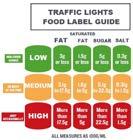
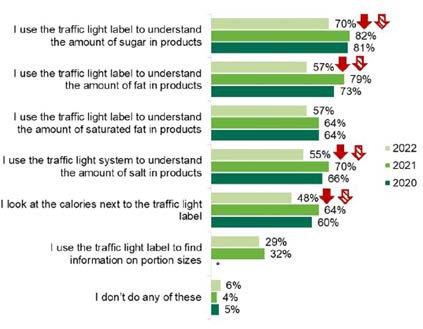
To address the limitations of complex back-of-pack information, many countries have introduced simplified front-of-pack labeling systems. These include traffic light indicators, star ratings, and warning symbols. Their objective is to make nutritional quality instantly understandable.
While these systems improve accessibility, they also introduce new dynamics. Simplification can override nuance. A single green indicator may outweigh multiple negative attributes in the consumer’s mind. Conversely, warning labels can discourage purchase even when a product may be acceptable
The clean label movement reflects a broader consumer desire for transparency and simplicity. However, it also reveals a critical tension between perception and reality. A product can be marketed as “natural” while remaining nutritionally unbalanced. Conversely, foods with scientifically sound additives may be perceived negatively due to unfamiliar ingredient names.
This shift places increasing responsibility on packaging design. Labels are no longer just regulatory elements; they are brand narratives. Typography, colour palettes, and wording all contribute to a perception of health, purity, or indulgence.
One of the most pressing challenges in modern nutrition is the rise of ultra-processed foods. These products dominate supermarket shelves and are strongly associated with long-term health risks, including obesity and metabolic disorders.
Yet current labeling systems struggle to capture the concept of processing. A product may display acceptable levels of fat, sugar, and salt while still being heavily processed. This creates what researchers describe as a “health illusion,” where the label suggests balance, but the product’s overall composition tells a different story.
The absence of clear indicators for processing levels represents a significant gap in current regulatory frameworks. As highlighted in the BBC Future report, there is growing debate on whether future labeling systems should explicitly address this dimension.
For the printing and packaging industry of these developments represent both a challenge and an opportunity. Labels have become one of the most critical touchpoints between brands and consumers. The shift from information to influence demands a new level of precision, creativity, and responsibility.
Packaging converters and print service providers are increasingly required to deliver:
- High-resolution, multi-layered label designs that integrate regulatory compliance with brand storytelling.
- Flexible printing solutions capable of handling short runs and frequent design updates as regulations evolve.
- Advanced colour management to ensure consistency across different labeling systems and markets.
At the same time, sustainability considerations are reshaping material choices. Labels must now balance visual impact with recyclability and environmental compliance.
The future of food labeling lies in greater integration of science, regulation, and design. Policymakers are increasingly exploring systems that combine simplicity with depth, potentially incorporating indicators for processing, sustainability, and overall dietary impact.

Labels are no longer just printed elements attached to products. They are decisionmaking interfaces

For the packaging industry, this evolution will require continuous adaptation. Labels will need to communicate more information in less space, with greater clarity and stronger visual hierarchy.
Ultimately, the lesson is straightforward. Labels are no longer just printed elements attached to products. They are decision-making interfaces. They shape perception, influence consumption, and, as emerging evidence suggests, may even affect long-term health outcomes.
For an industry built on precision and communication, that responsibility is significant—and growing.
Offenbach is not only a factory closure. It is evidence that even highly respected German machinery brands can become vulnerable when their market narrows too far
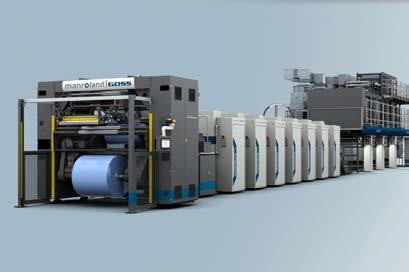
The announced closure of Manroland Sheetfed’s Offenbach operations is more than a company failure. It is a symbolic moment for German engineering, the global printing machinery industry, and the future structure of offset printing. According to the news, the Offenbach factory will close permanently on 1 June 2026, after protective insolvency proceedings, failed investor talks, a sharp fall in Chinese demand, €43.2 million in 2025 losses, and the expected loss
manufacturing, long production cycles, and export-driven demand. That formula works when global markets are stable and customers are investing in expensive capital equipment. It breaks down when printers delay investment, China weakens, financing becomes costly, and machine builders cannot spread R&D and factory costs across enough new press sales.
In that sense, Offenbach is not only a factory closure. It is evidence that even highly respected German
of around 748 jobs.
A German industrial warning sign Manroland’s collapse comes at a bad moment for Germany. The country’s manufacturing model is under pressure from high energy costs, weaker export demand, geopolitical uncertainty, tariffs, and competition from Asia. Recent German data points to renewed industrial weakness: Reuters reported that German private-sector activity contracted in April 2026, while business sentiment fell sharply amid war-related uncertainty and energy-price pressure. This matters because companies like Manroland were built on the classic German formula: deep engineering, high labour skill, precision
machinery brands can become vulnerable when their market narrows too far.
The historical weight of Manroland
The tragedy is heavier because Manroland was not a marginal player. Its roots go back to Faber & Schleicher, founded in Offenbach in 1871, and the company built the first Roland sheetfed offset press in 1911. Manroland’s own history highlights milestones such as the Ultra four-colour sheetfed offset press at drupa 1951, the Roland 700 in 1990, the Roland 900 in 1995, DirectDrive technology in 2006, and the Roland 700 Evolution in 2014.
The name “Roland” itself became part of offset history. Offenbach
was one of the places where lithographic heritage evolved into industrial offset technology. The city’s history notes that Faber & Schleicher and its successors were at the forefront of innovation, and that Roland machines reached print shops on every continent.
So the closure is not simply the disappearance of one production site. It is the end of one of the great homes of sheetfed offset engineering.
Is offset technology dying? No. That would be the wrong conclusion.
What is dying is the old business model of selling large numbers of heavy mechanical presses into a broad commercial-print market. Offset itself remains highly relevant, especially in packaging, folding cartons, high-volume commercial work, labels, and security printing.
The future of offset is narrower but more sophisticated. It will be driven by:
• packaging rather than general commercial print;
• automation rather than manual craftsmanship alone;
• shorter makeready and lower waste;
• hybrid workflows combining offset, digital, coating, foiling, inspection, and finishing;
• data-driven production and predictive maintenance.
This is already visible in the strategies of surviving competitors.
Koenig & Bauer’s drupa focus was end-to-end packaging workflows, digital solutions, automation, and Rapida sheetfed performance up to 22,000 sheets/hour. Heidelberg has also emphasized packaging growth and high-capacity sheetfed technology, including strong China Print 2025 sales in packaging and the expansion of VLF sheetfed offset for packaging.
Digital printing is growing, especially for short runs, personalization, labels, and flexible packaging. But digital has not replaced offset at industrial scale. Drupa’s own analysis notes that digital packaging adoption is increasing, but large-scale
adoption by major brands remains slower than predicted. So the future is not “digital versus offset.” The future is automated offset plus digital where digital makes economic sense.
Why Manroland failed despite strong technology
China once represented around 40% of Manroland Sheetfed’s revenue, and the collapse in that market badly damaged the company. Manroland’s own restructuring statement also identifies a sharply shrinking press market and China’s decline as major causes, while confirming the €43.2 million 2025 loss. This suggests the problem was not simply technical inferiority. Manroland presses were respected. The problem was strategic and structural:
Manroland remained too dependent on a shrinking new-machine market, too exposed to China, and too burdened by the cost of maintaining a massive integrated German manufacturing complex. Its Offenbach site included headquarters, production halls, foundry, R&D, training, and print technology centre across roughly 114,000 m². That kind of industrial base is impressive, but it becomes dangerous when sales volume falls. A factory like Offenbach needs throughput. Without enough new press orders, excellence itself becomes expensive.
For Middle Eastern printers, the closure has serious practical implications, especially for companies running Roland 700, Roland 900, and Roland 900 XXL presses. The first concern is spare parts. If the service and parts business is sold and continues properly, the installed base can survive for years. The service and spares business may still attract buyers. But uncertainty will immediately affect confidence. Printers may start buying critical parts earlier, especially electronics, grippers, rollers, bearings, feeder/ delivery components, control boards, and proprietary modules. The second concern is machine resale value. Used Manroland presses in the Middle East may face a discount if buyers fear future service difficulties. This will not make the
machines worthless, but it will shift negotiation power toward buyers. The third concern is service dependency. Middle Eastern printers often depend on external technicians and imported parts. Any delay in the post-closure service structure could mean longer downtime, higher emergency repair costs, and more reliance on independent engineers.
The fourth concern is investment psychology. A packaging printer in Saudi Arabia, UAE, Iran, Egypt, Turkey, or Iraq considering a new B1 or VLF offset press will now be more likely to choose Heidelberg, Koenig & Bauer, Komori, RMGT, or Chinese alternatives, depending on budget and support availability. Even if
press now would be risky unless the service/spares continuity is contractually guaranteed by a credible buyer. For used equipment, the machine may still be attractive if the price is low enough and the buyer has strong technical capability.
The demise of one historic manufacturing model
The closure of Manroland Sheetfed’s Offenbach factory is not the death of offset printing. It is the death of one historic manufacturing model.
Offset will survive where it is productive, automated, packagingfocused, and integrated into smart workflows. But the market no lon-
Offset will survive where it is productive, automated, packaging focused, and integrated into smart workflows
Manroland’s technology remains strong, the fear of orphaned technology will hurt future sales.
Printers operating Manroland equipment should act calmly but quickly.
They should audit their installed machines, identify critical wear and electronic components, secure a one-to-two-year spare-parts buffer, and confirm who will legally handle service obligations after the closure. They should also document software versions, electrical schematics, maintenance records, and local technician contacts. For new investments, the advice is blunt: buying a new Manroland
ger has room for every traditional European press manufacturer to maintain large, expensive factories while depending on cyclical export demand.
For the Middle East, the lesson is practical: Manroland presses remain capable machines, but ownership risk has increased. Printers should protect themselves through spareparts planning, service agreements, and careful investment strategy. The deeper meaning is this: German offset engineering is not finished, but its golden age of broad industrial dominance is over. The future belongs to fewer manufacturers, smarter factories, packaging-led demand, and printers who treat technology not as prestige, but as a controlled business risk.
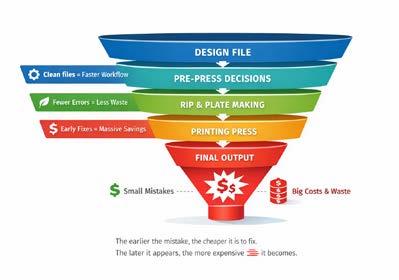
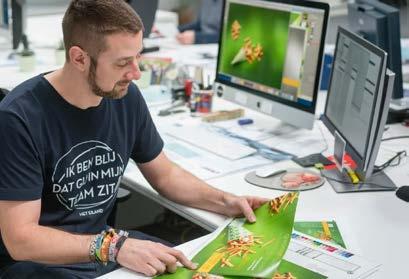
Pre-press is no longer just a technical checkpoint between design and print. In today’s Middle Eastern production environment, it has become a decisionmaking layer
Pre-press is no longer just a technical checkpoint between design and print. In today’s Middle Eastern production environment, it has become a decision-making layer— one that directly impacts how efficiently a job runs, how much waste it generates, and ultimately, how profitable it is.
Here’s a breakdown of the core prepress elements—not just what they are, but why they matter now more than ever.
Why it matters today:
Automation: High-resolution assets ensure smooth processing in RIP systems.
Sustainability: Avoids reprints caused by pixelated outputs.
Cost: Low-resolution errors often go unnoticed until printing—when it’s already expensive.
3. Color Management (CMYK, RGB, ICC Profiles)
What it is: Controlling how colors appear from screen to print.
Sustainability: Reduces trial prints for color matching.
Cost: Brand inconsistencies often lead to job rejection and reprints.
5. Bleed, Trim & Safe Area
What it is: Margins that account for cutting tolerances.
Why it matters today:
Automation: Essential for automated cutting and finishing systems.
Sustainability: Prevents miscuts that result in waste.
1. Artwork & File Preparation
What it is: The original design file created in software like Illustrator or InDesign.
Why it matters today:
Automation: Clean, standardized files integrate seamlessly into automated workflows.
Sustainability: Fewer file errors = fewer reprints and less material waste. Cost: Poorly prepared files lead to delays, manual corrections, and increased labor costs.
In modern workflows, a “bad file” is no longer a small issue—it’s a production bottleneck.
2. Resolution (DPI/PPI)
What it is: The level of detail in an image (typically 300 DPI for print).
Why it matters today:
Automation: Consistent color profiles allow repeat jobs without manual correction.
Sustainability: Accurate color reduces trial-and-error print runs.
Cost: Color mismatches = rejected jobs, wasted ink, and unhappy clients.
Color errors are one of the most expensive “invisible mistakes” in pre-press.
4. Spot Colors & Brand Accuracy (Pantone)
What it is: Pre-defined colors used for exact brand matching. Why it matters today: Automation: Standardized color libraries simplify repeat production.
Cost: A missing bleed can ruin an entire batch—especially in packaging runs.
6. Imposition
What it is: Arranging multiple pages or designs efficiently on a sheet.
Why it matters today:
Automation: Software-driven imposition reduces manual planning.
Sustainability: Maximizes sheet usage, minimizing material waste.
Cost: Better imposition = fewer sheets = lower production cost. Smart imposition is one of the easiest ways to improve margins instantly.
7. Preflight Check
What it is: Automated file inspec-
tion before printing. Why it matters today: Automation: First line of defense in automated workflows.
Sustainability: Stops flawed jobs before they consume resources.
Cost: Prevents expensive last-minute corrections or press stoppages.
8. Fonts & Outlining
What it is: Ensuring text displays correctly during printing. Why it matters today: Automation: Missing fonts break automated workflows.
Sustainability: Avoids reprints due to layout errors.
Cost: Fixing font issues midproduction wastes time and money.
9. Trapping
What it is: Slight overlap between colors to prevent gaps. Why it matters today:
Automation: Built into modern RIP workflows.
Sustainability: Prevents rejects due to misregistration.
Cost: Even minor gaps can lead to entire batch rejection in packaging.
10. Raster vs Vector Graphics
What it is: Pixel-based vs scalable graphics.
Why it matters today:
Automation: Vector files scale seamlessly across formats.
Sustainability: Prevents quality issues that cause reprints.
Cost: Poor graphic choice leads to unusable output.
11. RIP (Raster Image Processor)
What it is: Converts design files into printable data.
Why it matters today: Automation: Core engine of digital workflows.
Sustainability: Efficient RIP processing reduces trial runs.
Cost: Errors at this stage affect the entire print job.
12. Separations & Plates (CTP)
What it is: Breaking files into CMYK layers and creating printing plates. Why it matters today: Automation: Modern CTP systems are highly automated—but only as good as the input file.
Sustainability: Plate remakes waste materials and chemicals.
Cost: Plate errors are expensive and time-consuming.
13. Overprint & Knockout
What it is: How colors interact when layered. Why it matters today: Automation: Requires correct setup to avoid unexpected output.
Sustainability: Prevents reprints caused by invisible design errors.
Cost: A wrong overprint setting can ruin an entire production run.
14. Gamut & Color Limitations
What it is: The range of colors a printer can produce. Why it matters today: Automation: Helps predict output accurately.
Sustainability: Reduces trial-anderror printing.
Sustainability: Incorrect dielines waste board and materials.
Cost: Packaging errors are among the most expensive mistakes.
17. Step & Repeat
What it is: Repeating designs across a sheet.
Why it matters today: Automation: Widely used in label and packaging workflows.
Sustainability: Optimizes material usage.
Cost: Directly reduces per-unit production cost.
For Middle Eastern printers, success will increasingly depend not just on press capabilities—but on how intelligently jobs are prepared before they ever reach the press
Cost: Out-of-gamut colors lead to dissatisfaction and rework.
15. Registration
What it is: Aligning all color layers perfectly.
Why it matters today: Automation: Precision alignment is critical in high-speed presses.
Sustainability: Misalignment leads to rejected prints.
Cost: Even slight misregistration can make products unusable.
16. Dielines (Packaging)
What it is: Templates for cutting, folding, and gluing. Why it matters today:
Automation: Essential for automated finishing systems.
Pre-Press as a Strategic Function
What ties all of this together is a simple but critical shift:
Pre-press is no longer a support function.It is a strategic control point.
In a region where automation is accelerating, sustainability targets are tightening, and margins are under constant pressure, the smallest prepress decision can have a multiplied impact on the entire production chain.
For Middle Eastern printers competing on both regional and global stages, success will increasingly depend not just on press capabilities—but on how intelligently jobs are prepared before they ever reach the press.
The Saudi print market is experiencing a shift toward more domestic sourcing and a preference for partners with a strong, local physical presence
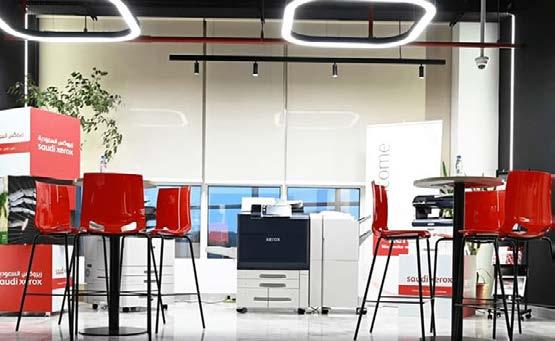
In an exclusive interview with ME Printer, Mehmet Sezer, General Manager of Saudi Xerox, explains how digital transformation can help print businesses navigate a brave yet uncertain world.
Recent geopolitical tensions in the Middle East have once again put pressure on regional trade and logistics. How have these developments impacted the Saudi print market in practical terms? When you look at the current landscape, the most practical impact we’re seeing is a definitive shift toward operational sovereignty. The regional situation has reinforced the importance of strategic self-reliance. In practical terms, the Saudi print market is experiencing a shift toward more domestic sourcing and a prefer-
ence for partners with a strong, local physical presence.
With disruptions affecting shipping routes, material availability, and costs, what have been the most immediate challenges for print service providers in Saudi Arabia over the past months? The reality on the ground for print service providers has been a struggle with predictability. When shipping routes are disrupted, your lead times become moving targets, and your freight costs fluctuate overnight and it impacts on the insurance premium. The immediate challenge hasn't just been the cost—it's been the planning. It has forced a move away from 'Just-in-Time' inventory toward a more buffered approach shifting from expansion to optimization: doing more with the
resources currently on the ground without interruption.
In such an unpredictable environment, how critical has disaster recovery planning become for print businesses, and are companies in the Kingdom adequately prepared for sudden disruptions?
I think we’ve reached a point where disaster recovery is no longer a luxury, rather it’s a business mandate. In the Kingdom, awareness is high, but the transition to being “'fully prepared' is still a work in progress. It isn’t enough to just have a backup of your data anymore; you need a workflow that is flexible enough the moment a physical disruption occurs. Disaster recovery is transitioning from a tick in box compliance to a core operational requirement. I


believe, it will be every company’s core plan since the covid era.
Have recent events accelerated the shift toward more resilient business models—such as localized production, digital workflows, or reduced dependency on complex supply chains?
There is a much stronger appetite now for digital workflows that reduce manual touchpoints and localized printing models that bypass complex shipping routes. Resilience is becoming the primary metric for success, often outweighing pure cost-efficiency. The main area of focus is towards digital transformation, localization and predictive maintenance. The shift toward digital workflows isn't just about efficiency anymore. It’s more of a survival strat-
egy that reduces the dependency on physical output.
From your perspective, how have customer priorities in Saudi Arabia evolved during this period of uncertainty? Are businesses investing differently compared to before?
My current perspective has changed when it comes to conversing with customers. They no longer ask about the speed of our machines, rather – they’re more concerned about their data security and continuous reliability as a trusted partner.
Looking ahead, do you believe the Saudi market is entering a phase of stability, or should the industry prepare for continued volatility—and how can companies best position themselves for both scenarios?
The Saudi market is ever dynamic in nature in alignment with the Vision 2030 directives and at Saudi Xerox, we believe the best way to position for this is through our 'Phygital' approach—seamlessly integrating physical infrastructure with digital agility. By bridging these two worlds, companies can maintain the reliability of physical output while leveraging the flexibility of digital workflows. As we continue our transformation journey from a traditional print business into a leading IT Services and Digital Solutions provider, strengthening our leadership capabilities is a key priority. We aim to be a one stop shop for our trusted partners and customers. You shall be seeing the launch of our unique IT Solutions & Services as an official launch during LEAP / Deep Fest later this year.
The Saudi market is ever dynamic in nature in alignment with the Vision 2030 directives and at Saudi Xerox, we believe the best way to position for this is through our 'Phygital' approach

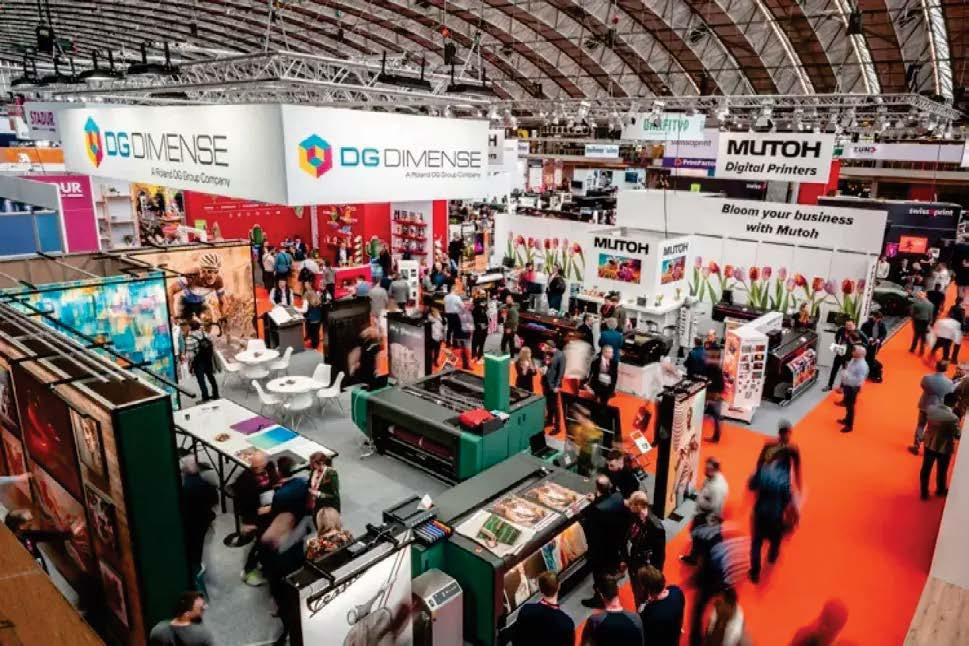
FESPA Global Print Expo 2026 successfully concluded at Gran Via, Fira de Barcelona, bringing together the global print, signage, textile, personalisation, corrugated, and visual communications communities for four days of technology showcases, live demonstrations, knowledge exchange, and business networking.
such as Agfa, Brother, Durst, EFI, HP, Kongsberg Precision Cutting Systems, Morgana Systems, Mutoh, Roland DG, Summa, swissQprint, and Zünd.
This year’s show took place alongside several co-located events, including European Sign Expo, Personalisation Experience, WrapFest, and the newly launched Corrugated and Textile events. Together, these platforms created a broader industry ecosystem, covering everything from wide-format digital print, textile and garment decoration, signage and wrapping, to corrugated packaging and workflow technologies.
The absolute highlight of the 2026 show floor was the spectacular launch of two brand-new, dedicated exhibition verticals, Corrugated and Textile, which fundamentally redefined the scope of the expo. Recognising the massive marketshift toward on-demand packaging and customised apparel, FESPA
plates, reduce material waste, and offer prototyping to e-commerce brands.
Another highlight of Corrugated was its dedicated conference programme. Key topics such as regulations, artificial intelligence implementation, cybersecurity, workflow optimisation, and digital integration were addressed, reflecting the increasing convergence between print, packaging, software, and data-driven production. Simultaneously, Textile emerged as a high-traffic epicenter, showcasing the rapid evolution of digital fabric decoration, advanced direct-to garment (DTG) machinery, and directto-film (DTF) transfer technologies. Attendees witnessed firsthand how modern pigment inks and waterless dye sub-processes are dramatically lowering carbon footprints while maximising vibrant colour output on sustainable fabrics.
A major feature of the 2026 edition was the strong emphasis on
The trade show was a reflection of the continued strength of the global print market and the industry’s appetite for innovation, automation, and new application opportunities
Held from 19–22 May 2026, the event reinforced FESPA’s position as one of the most important international platforms for speciality print and related sectors. Gathering over 550 exhibitors and drawing more than 14,000 international visitors, the Barcelona event vibrantly brought its core theme ‘The Place for Experts’, to life across a bustling exhibition floor. The trade show was a reflection of the continued strength of the global print market and the industry’s appetite for innovation, automation, and new application opportunities.
Across the exhibition halls, exhibitors presented new product launches, live demonstrations, and practical production solutions. Visitors were able to explore technologies for wide-format printing, industrial applications, textile printing, garment decoration, finishing, cutting, workflow, colour management, substrates, inks, and automation. Confirmed exhibitor names included leading suppliers
dedicated major sectors of Halls 2 and 3 to these booming industries. Corrugated addressed the urgent global demand for localised, short-run packaging solutions. This specialised zone brought together machinery manufacturers, software developers, and material sciences experts to demonstrate digital corrugated printing and automated precision converting tools. The event proved that digital tech can now match industrial speeds, allowing packaging converters to eliminate expensive physical
education and expert-led content. The event hosted three conference programmes: the FESPA Conference, the Corrugated Conference, and WrapTalks, all designed to provide practical insights into developments across print, signage, personalisation, textile, corrugated, and vehicle wrapping applications. The show also highlighted how print businesses are adapting to changing market demands. Sustainability, personalisation, smarter production, automation, digital integration, and shorter-run flexibility
were among the central themes. The growing role of software and workflow connectivity was particularly visible, as print service providers (PSPs) increasingly look for solutions that reduce waste, improve turnaround times, and support more efficient production environments.
Industry giants like Canon, Durst Group, and HP utilised live equipment demonstrations to address the overarching themes of automation, rising overhead costs, and strict EU packaging legislation. Parallel sessions unpacked the massive disruption and emerging opportunities presented by artificial intelligence (AI) in workflow design, as well as actionable blueprints for sustainable, eco-friendly material adoption. WrapFest added further energy to the event, with vehicle wrapping, vinyl application, window films, laminating machinery, printable films, ramps, lifts, and finishing technologies on display. The World Wrap Masters Europe and World Wrap Masters Final also returned,
producers, brand owners, converters, and technology suppliers to connect and explore future business opportunities.
Overall, the Barcelona edition demonstrated that speciality print is no longer defined by one technology or application area. Instead, the industry is moving toward a more connected, diversified, and innovation-driven future, where print, signage, textiles, packaging, personalisation, and software-led
production increasingly operate as part of one wider value chain.
FESPA Global Print Expo 2026 closed with strong momentum, reaffirming the industry’s confidence in digital transformation, creative applications, and practical innovation as key drivers of growth across the global print sector.
FESPA Global Print Expo 2027 will be held in Munich, Germany, from 6–9 April 2027.
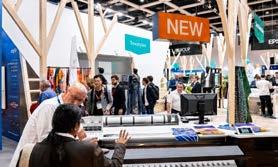
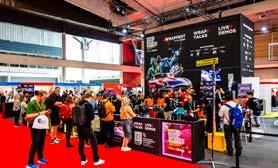
giving visitors the opportunity to watch competitive wrapping challenges and live demonstrations from expert trainers and judges.
FESPA 2026 also underlined Barcelona’s value as an international meeting point for the industry. With strong attendance, active exhibitor participation, and a wide range of co-located platforms, the event created a comprehensive environment for printers, sign-makers, textile
FESPA Global Print Expo 2026 closed with strong momentum, reaffirming the industry’s confidence in digital transformation, creative applications, and practical innovation as key drivers of growth across the global print sector
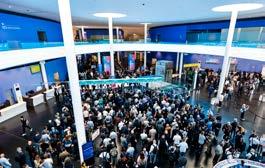
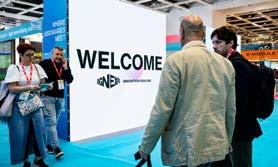
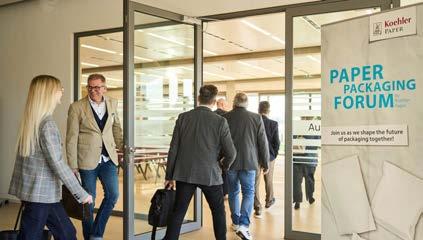
Koehler Paper
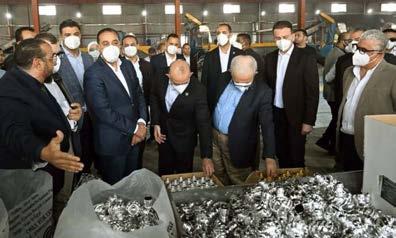

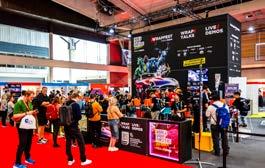
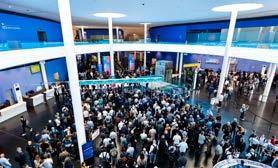
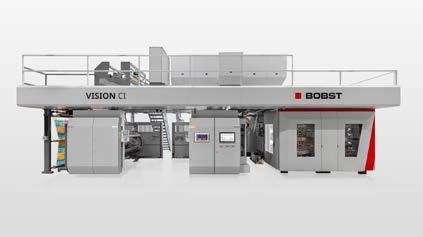
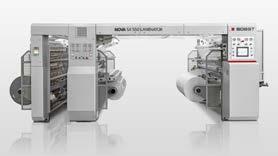
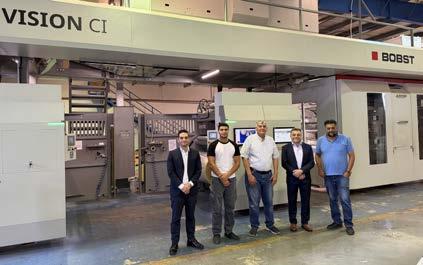


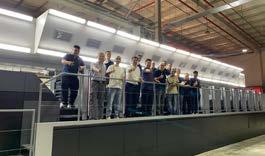

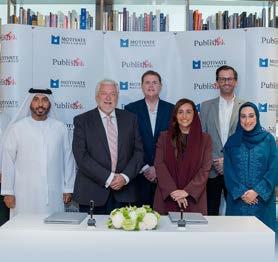










Label and packaging quality starts with finishing
SUNOWA: new configuration of the SATURN platform for SA labels and flexible packaging. Engineered to process different substrates with consistent inspection quality, precise slitting performance and automatic tension control & web guiding. It ensures shorter setup times and smooth workflow continuity.
Performance Engineered for Production Excellence. Applications: paper and plastics PSL (even challenging or reflective surfaces).
Working web width: 370 mm.
Material thickness: 50 microns - 250 g/sqm.
Processes: 100% inspection system, advanced monitoring, precise slitting performance and intelligent workflow.
Synchronized TRIM SUCTION SYSTEM for clean, efficient operation. Advanced LENGTH & LABEL COUNTING SYSTEM with automatic slowdown. Ultra-safe, SELF-SHARPENING SLITTING SYSTEM with 10 knife groups.
High-performance speed up to 250 M/MIN.
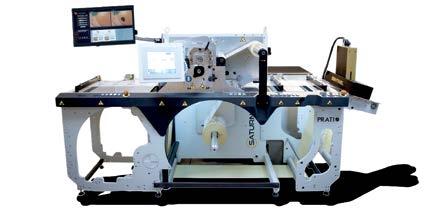
Equipped with N.3 REWINDER SHAFTS for maximum productivity.
www.praticompany.com

PRATI srl Via Deruta, 2 48018 Faenza (Ra) - Italy +39 0546 633 811 info@praticompany.com
PRATI USA LLC 4101 McEwen - Suite 368 Dallas, TX 75244 - USA +1 913 908 8607 fhasselberg@praticompany.com

