Biotech Debuts Embio PLA Portfolio in Saudi Market
Gulf Print & Pack Dates Confirmed for January 2027
Paperworld Middle East to Unveil Next-Gen Paper Trends
Saudi Signage & Labelling Expo Rescheduled to June 2027
Sharjah Booksellers Conference to Shape Industry Future Sudan Packaging: Recovery in Motion Tanzania’s MFPL Raises Flexible Packaging Bar with BOBST
Vision Foods Scales Up Packaging with BOBST Technology
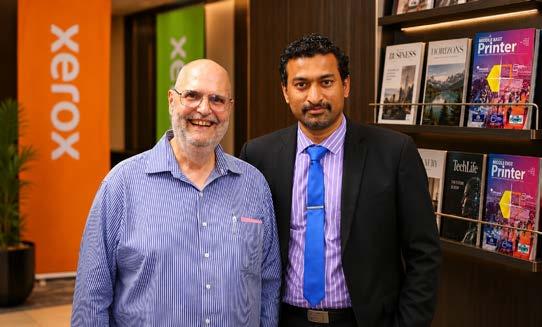
Printing Pioneer Frank Romano Celebrates Double Milestone
The Middle East Print Industry’s New Reality
The Smart Evolution: AI ReEngineers Print Production
Why Egypt’s Paper Prices Move Articles
Issue 208, July-August 2026
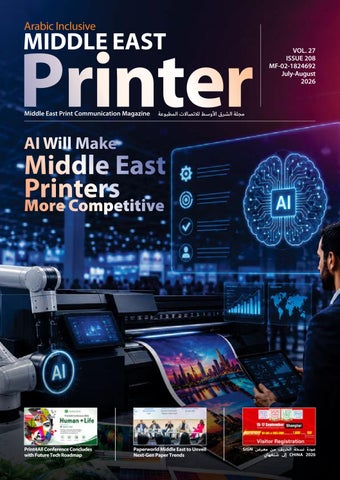
Artificial Intelligence: A New Competitive Advantage for Middle East Printers
The printing industry has always been defined by its ability to adapt. Every major technological shift—from offset to digital printing, from manual processes to workflow automation—has challenged businesses to rethink how they operate while creating new opportunities for those prepared to embrace change. Today, artificial intelligence is opening the next chapter in that evolution.
Over the past year, AI has moved from being a futuristic concept to a practical business tool. Across industries, organisations are discovering new ways to improve efficiency, enhance decision-making, and unlock productivity. For the printing industry, however, the conversation should go far beyond automation. The real opportunity lies in using AI to become more competitive in an increasingly demanding marketplace.
Across the Middle East, print service providers are under constant pressure to deliver faster turnaround times, shorter production runs, greater personalisation, higher quality, and more competitive pricing. At the same time, they face rising operational costs, evolving customer expectations, and an increasingly digital business environment. These realities require more than investment in new machinery—they require smarter ways of working.
This issue of ME Printer explores how artificial intelligence can help printers meet these challenges. AI can streamline prepress operations, strengthen quality control, support production planning, improve customer communication, and make valuable business knowledge more accessible across an organisation. By reducing repetitive tasks and accelerating access to information, it allows skilled professionals to focus on the decisions that create real value for customers and drive business growth.
But technology alone is never the answer. The future of printing will continue to depend on experienced people who understand production, customers, colour, materials, and market dynamics. AI should enhance that expertise—not replace it. The companies that succeed will be those that invest not only in intelligent technologies but also in developing the skills, culture, and leadership needed to use them effectively.
Throughout this edition, we share practical perspectives on AI adoption, examine how regional businesses can integrate these technologies into existing operations, and explore why strategic implementation matters far more than simply following the latest trend. Our goal is to move beyond the headlines and focus on the practical realities that will shape the future of printing in the Middle East.
At ME Printer, our mission has always been to provide meaningful industry insights that help businesses make informed decisions. We hope this edition encourages discussion, inspires new ideas, and helps printers across the region view artificial intelligence not as a disruption to fear, but as a powerful tool to strengthen their businesses and prepare for the opportunities ahead.
ME Printer FZE LLC PO Box: 502183, UAE Tel: +971 4 3911210 E-mail: info@meprinter.com
Group Publishing Director Morteza Karimian karimian@meprinter.com
ME Printer Editorial Team Editor in Chief Alex Jahanbani alex@meprinter.com
Editor- Arabic Rana Ahmed Yehia E-mail: arabic@meprinter.com
Correspondence and advertising material to be sent to ME Printer Magazine meprinter@meprinter.com
ME Printer’s July–August 2026 issue explores how artificial intelligence can help Middle East printers improve efficiency, strengthen decision-making, and become more competitive. It reflects the growing integration of intelligent technologies, automation, and human expertise across the region’s printing industry.
PRATI to Unveil New SATURN Config to Meet Converter Needs
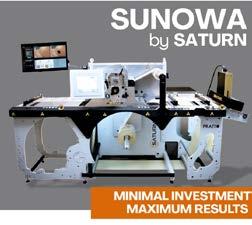
Built on decades of SATURN expertise, SUNOWA combines robust mechanical engineering with intuitive automation and advanced inspection technology
PRATI, the Italian converting and finishing solutions provider, will unveil SUNOWA, a special configuration of its established SATURN platform, developed to meet the evolving needs of modern converters.
SUNOWA addresses a precise market demand by enabling converters to process different substrates with consistent inspection quality, precise slitting performance, and reliable tension control – all within a configuration engineered for operational efficiency and long-term sustainability.
Built on decades of SATURN expertise, SUNOWA combines robust mechanical engineering with intuitive automation and advanced inspection technology. The result is a
practical, production-driven solution that enhances performance without unnecessary complexity.
High Productivity
SUNOWA is designed to deliver high productivity across a wide range of applications. It handles materials of varying thickness and weight, from 50 microns up to 250 g/sq m, offering the versatility needed by converters operating in dynamic production environments.
The unwinder and rewinder setup ensures efficient job handling, while flexible shaft options provide adaptability for different materials. Automatic tension control and web guiding keep material handling stable throughout the production process, ensuring consistent quality, shorter setup times, and smooth workflow continuity.
Integrated Inspection System
At the heart of SUNOWA’s quality control is an integrated 100% inspection system. Equipped with advanced imaging and smart lighting, it detects defects and ensures precise monitoring, even on challenging or reflective surfaces.
This advanced monitoring allows operators to maintain full control over output quality, minimise waste, and ensure reliable, high-performance production at all times.
Precision Slitting and Intelligent
Workflow
SUNOWA features a self-sharpening knife system with up to 10 knife groups, ensuring consistent and precise slitting performance over long production runs. Trim removal is handled by a synchronised suction system that keeps operations clean and efficient.
To further support productivity, the machine integrates intelligent error correction tools. The defective label replacement table allows quick intervention during inspection, while the integrated length and label counter with automatic slowdown enhances control during job completion and changeovers. Together, these features reduce waste, streamline operator intervention, and maintain steady production flow.
Strategic Evolution of SATURN Platform
By combining robust mechanics, advanced inspection, and intuitive automation within a carefully balanced investment framework, SUNOWA enables converters to enhance their competitive position with confidence and efficiency.
With this new configuration, PRATI once again demonstrates its commitment to accessible innovation, offering solutions that meet market needs and support sustainable industrial growth. PRATI will be exhibiting at Gulf Print & Pack 2027 through its distributor, Printech Middle East LLC, at booth (G11).
Xerox Unveils Bold Brand with Lexmark
Integration
In a major move signalling its evolution beyond legacy printing, Xerox has officially introduced a refreshed logo and brand identity. This transformation marks the official union of operational capabilities following the company’s recent acquisition of Lexmark, solidifying its shift towards becoming a unified technology and digital workflow provider.
The corporate evolution aims to combine the structural footprints, service frameworks, and techno-
logical portfolios of both industry giants to better serve a distributed global workforce.
Xerox Chief Marketing Officer Darren Cassidy comments on the significance of the corporate repositioning: “More capability. More intelligence behind everything we deliver. Our heritage got us here. But what drives us forward is the work, simplifying complex operations, expanding what’s possible for our clients, and delivering outcomes that are real and repeatable.”
The global rollout of the refreshed Xerox identity will take place progressively across the company’s enterprise networks, managed service infrastructure, and customer-facing digital touchpoints.
SIGN CHINA 2026 Autumn Edition Returns to Shanghai
Following a highly successful spring edition, SIGN CHINA is set to return to Shanghai as part of its ongoing dual-session strategy.
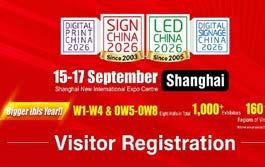
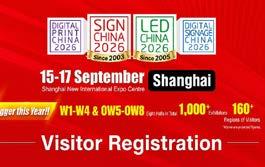
The much awaited autumn installment of SIGN CHINA 2026 will run from 15–17 September 2026 at the Shanghai New International Expo Centre (SNIEC) in Pudong.
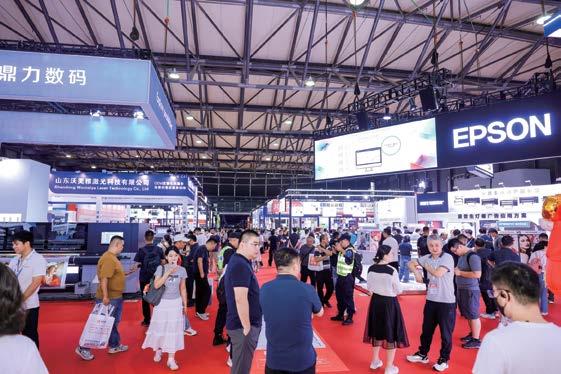
The Shanghai expo will continue to host four powerhouse events under one roof, serving as a comprehensive global platform for sourcing and innovation. Spanning eight exhibition halls, the mega exhibition is projected to feature more than 1000 exhibitors and draw attendees from over 160 countries.
1 Venue, 4 Shows, 9 Topics
Building on its legacy as the industry’s ‘Oscar’ event, the 2026 autumn edition continues to significantly expand its scope, co-locating with LED CHINA, Digital Printing China, and Digital Signage China. This strategic convergence establishes a comprehensive ‘4 Shows in 1 Venue’ platform, enabling visitors to explore the entire signage ecosystem.
Two key industry chains will be highlighted. One covers traditional and digital signage, showcasing intelligent solutions and how signage is evolving in the AI and digital era.
The other focuses on signage and digital printing, letting visitors explore the vast diversity of the print world and see how new technologies are transforming advertising and end-user markets.
Visitors will be spoilt for choice, exploring nine key areas of exhibits that offer a one-stop purchasing platform. These include Digital Printing; Digital Textile Printing; Indoor & Outdoor Printing Materials; Acrylic and Other Sign Panels; Laser Engraving & Cutting; Signage, Lightboxes & Channel Letters; New Retail & POP, POS Displays; LED Lighting; and LED Displays & Digital Signage.
One Destination, Dual Technologies
SIGN CHINA 2026 is strategically colocated with its partner shows, each with a distinct focus. While SIGN CHINA and Digital Printing China delve deep into the latest sign-production
techniques and digital printing advancements, LED CHINA and Digital Signage China complete the picture with next-generation digital display and interactive solutions. This unique synergy empowers professionals to bridge the gap between physical and digital signage, future-proofing their businesses.
Unlocking New Frontiers with Digital Tech Integration
The integration of digital technology to create immersive experiences is revolutionising commercial spaces.
SIGN CHINA 2026, in partnership with the 21-year established brand LED CHINA, is at the forefront of this shift. The exhibition will showcase how concepts like the metaverse and AI are opening new avenues for branding and customer engagement. Visitors will witness groundbreaking applications, including AI-driven digital human display, naked-eye 3D immersive environments, and other avant-garde advertising technologies, setting trends for cultural exhibitions, retail spaces, outdoor advertising, and more.
As the world’s largest application market for digital signage and a benchmark smart city, Shanghai offers a fertile ground for the LED industry. As a leading indicator in the field, LED China brings together cutting-edge technologies such as mini and micro LEDs, transparent displays, and flexible screens. From the latest in traditional signage craftsmanship to insights on how digital signage is driving digital transformation across industries and the groundbreaking use of LED technology in diverse scenarios, this event offers something for everyone—from industry professionals looking for new business opportunities to a tech enthusiast eager to explore cutting-edge innovations. Building on the vast array of innovations showcased at Sign China and LED China, the co-located Digital Printing China is poised to inject fresh ideas into multiple sectors, spanning graphics and vinyl, signage, textile printing, labels, and personalisation solutions. Simultaneously, the spotlight shifts
to Shanghai’s status as a prominent global hub for smart city and digital signage breakthroughs.
Digital Signage China will converge top-tier brands and cutting-edge technologies under one roof, allowing attendees to experience a cross-industry evolution. The transformation extends far beyond traditional advertising, reshaping contemporary culture, tourism, museum experiences, smart city infrastructure, and intelligent transportation networks.
As a key part of digital signage, smart display terminals, commercial display hardware including invisible LED displays and 3D naked eyes, and related software and systems will offer a powerful visual and tech experience.
China’s Thriving LED Signage Market
The LED signage market in China is experiencing substantial growth, particularly in digital signage applications. Increasing digital adoption, robust content management systems, and the popularity of high-resolution displays are the top drivers for this expansion. Market research and consulting firm Grand View Research projects China’s digital signage market revenue, currently valued at $3.59 billion, to reach $7.23 billion by 2033, growing at a steady CAGR of 9.2%.
Timings: (15-16 September 2026) 9 am – 5.30 pm, (17 September 2026) 9 am – 4.30 pm.
To register for the exhibition, apply for VIP status, and latest updates, visit www.signchinashow.com
The Shanghai expo will continue to host four powerhouse events under one roof, serving as a comprehensive global platform for sourcing and innovation
4P Syria 2026 signalled a pivotal moment for the nation’s industrial sector as it rebuilds with renewed purpose following over a decade of severe disruption
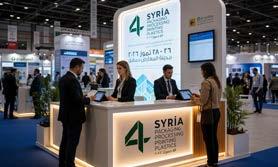
4P Syria 2026—the international trade exhibition for packaging, processing, printing, and plastics—concluded successfully at the Damascus Fairgrounds, signalling a pivotal moment for the nation’s industrial sector as it rebuilds with renewed purpose following over a decade of severe disruption. A decisive macroeconomic shift towards resilient local production and import substitution has created unprecedented demand for modern packaging, processing, printing, and plastics solutions.
The three-day trade fair served as a premier business hub, connecting global decision makers, buyers, and strategic partners across multiple industries. Attendees at the B2B gathering gained firsthand access to an extensive innovation pipeline, which highlighted sustainable packaging, smart processing methods, and advanced printing technologies.
4P Syria delivered a comprehensive
coverage across five foundational industrial sectors to address modern manufacturing demands. Participants delved into the latest developments in packaging machinery, next-generation materials and food processing solutions, advanced labelling systems, cutting-edge printing technologies, plastic manufacturing and plastics recycling technologies, and exhibits from supporting industries including quality testing, safety equipment, and recycling and sustainability solutions.
Dedicated zones also showcased specialised equipment for plastics production and recycling, with a heavy emphasis on automation and transformative Industry 4.0 solutions. Besides a comprehensive look into the entire production cycle and its latest innovations, the professional gathering facilitated connections with top local, regional, and international industry leaders. Visitors explored strategic business partnerships, joint venture opportunities,
and source advanced manufacturing equipment and inputs.
The gathering effectively bridged a significant technological gap caused by decades of isolation. It met critical sourcing needs for advanced food processing machinery in dairy, milling, canning, bottling, and poultry production. Additionally, the event successfully facilitated procurement channels for flexible, rigid, and glass packaging solutions alongside modern commercial printing, branding, and labelling infrastructure for Syrian brands to re-emerge in the market. Co-located with AgriTEK Syria 2026, the international exhibition for agricultural technology and sustainable solutions, and Food Syria 2026, the international trade fair for food and beverages, the three specialised trade exhibitions organised by Beirut-based IFP Group, formed a comprehensive B2B platform, covering the entire production cycle from farm and factory to the final packaged product.
ADGMA, Partners Empower UAE’s Future 3D Print Innovators
ADGM Academy (ADGMA), in partnership with Mawaheb Talent Hub—an employment enablement platform—under the Department of Government Enablement, Abu Dhabi (DGE), the Khalifa Fund for Enterprise Development (KFED), and Sindan, has successfully concluded the inaugural edition of the Future Entrepreneurs Programme 3D Printing. The flagship initiative is
designed to equip UAE job seekers with entrepreneurial capabilities and advanced manufacturing skills aligned with the nation’s future economy.
The three-week programme concluded in a dedicated ‘Demo Day’ held in Al Ain on 22 May, where the first cohort of 50 Emirati job seekers showcased locally designed innovations and manufactured prototypes
through a product exhibition. Additionally, the event featured keynote presentations as well as certificate ceremonies for participating individuals. It brought together senior leadership, industry experts, specialists, partners, and guests to celebrate the achievements of participants and the growing role of homegrown innovation in supporting the UAE’s economic diversifica-
tion ambitions.
The programme is part of the UAE’s national development priorities. Integrating entrepreneurship training with hands-on experience in 3D printing and digital fabrication, the goal is to enable participants to transform innovative ideas into real prototypes and market-ready business concepts. With a strong emphasis on empowering youth and job seekers in Al Ain region, the initiative reinforces the city’s growing position as a hub for innovation, industrial capability, and SME development.
Throughout the programme, participants received comprehensive training in entrepreneurial mindset development, business strategy, pitch building, and advanced manufacturing fundamentals, alongside practical exposure to materials selection, modelling, prototyping, and real-world applications of 3D printing technologies to turn bold ideas into commercial realities.
As part of its role in building a competitive and sustainable entrepreneurship ecosystem and empowering Emirati entrepreneurs, KFED supported the programme by delivering specialised entrepreneurship training workshops for the first cohort. Additionally, it hosted workshops at MZN Hub Al Ain—its entrepreneurship centre—which plays a key role in incubating startups and supporting early-stage Emirati founders by providing a comprehensive support environment that combines workspaces, training, mentoring, and partnership networks.
“In Abu Dhabi, we focus on unlocking human potential. When an ambitious job seeker leaves this pro-
gramme with a working prototype, a validated business concept, and the confidence to build something entirely new, they are not just employable, they are empowered,” says HE Dr. Abdulla Al Shimmari, Executive Director – National Workforce Enablement Sector and Mawaheb Talent Hub, Department of Government Enablement. “Partnering with ADGM Academy and Sindan in Al Ain region proves that world-class opportunities belong in every corner of the emirate. The graduates we celebrate today will help build
ingfully to the UAE’s industrial and knowledge-based economy. Our initiative also aims to highlight Al Ain’s growing role as an emerging centre for innovation, excellence, and economic diversification,” says Ali Al Mehairi, Senior Executive Director – Business Enablement, ADGM Academy and Research Centre. The programme contributes to the UAE’s broader strategic objectives by strengthening local manufacturing capabilities, supporting SME growth, and building a pipeline of skilled talent in advanced tech-
Abu Dhabi’s next-gen industrial economy.”
“The Future Entrepreneurs Programme 3D Printing reflects ADGM Academy’s commitment to empowering UAE talent with futureready skills that support innovation, entrepreneurship, and sustainable economic growth. We are combining advanced manufacturing capabilities with entrepreneurial training and cultivating a new generation of creators, innovators, and business leaders who can contribute mean-
nologies and entrepreneurship. Graduates leave the programme with not just practical experience but also functional prototypes, a validated business concept, and the confidence to pursue employment opportunities or launch their own ventures within priority sectors. The academy continues to support initiatives that align with the UAE’s vision for a diversified, knowledgedriven economy, reinforcing ADGM’s role as a financial centre for futurefocused growth and opportunity.
Integrating entrepreneurship training with hands-on experience in 3D printing and digital fabrication, the goal is to enable participants to transform innovative ideas into real prototypes and market-ready business concepts
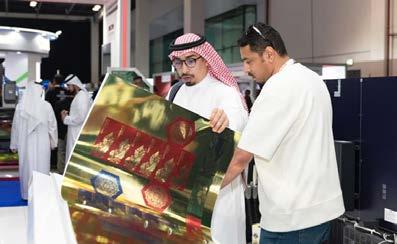
Participants had the opportunity to network with high-calibre industry leaders and explore advanced machinery, sustainable packaging solutions, and next-gen digital printing technologies designed to drive regional market expansion
Regional
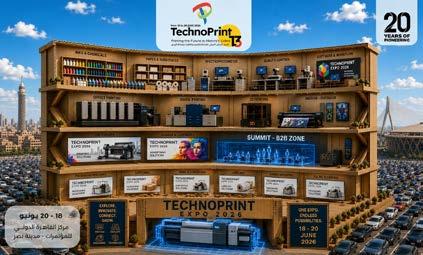
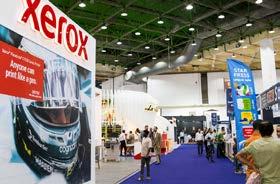
13th TechnoPrint Hits Record Turnout Amid Market Growth
The 13th edition of TechnoPrint— the specialised trade fair for the printing, packaging, and paper, advertising, and labelling industries— successfully concluded at the Cairo International Convention Center (CICC). The event was held from 18–20 June 2026. Building on the commercial success of its previous twelve iterations, event organisers TAG delivered a record-shattering experience this year.
Capitalising on the region’s robust market growth, the venue infrastructure was scaled up significantly for the 2026 edition. The showfloor occupied all the three halls, showcasing a comprehensive array of cutting-edge technologies, spanning conventional newspaper printing equipment to modern digital printing and consumables. Attendees explored a diverse range of exhibits dedicated to packaging, advertising, paper, and carton board sectors, with live demonstrations and workshops giving a hands-on experience of the latest solutions. The event also highlighted essential components such as inks, toners, printing supplies, and pre- and post-press equipment. Beyond industrial machinery—such as secured printing solutions and notebook making machinery— specialised hardware such as label, barcode, and card printers were on
display alongside barcode scanners, labels, stickers, and ribbons, offering a complete look at the modern printing ecosystem. Industry participation reached historic highs, drawing 250 domestic and international companies and over 18,000 professionals from more than 20 countries. In addition to direct exhibitors, more than 200 premier international brands were
Since 2006, TechnoPrint has set a benchmark for Egypt’s printing and packaging industries. Over the years, the biennial event has continued to introduce the latest technologies to Egyptian printers and manufacturers. It connects suppliers with global clients to enhance printing, packaging, and advertising businesses across the Middle East and Africa.
actively represented through their agents in the Middle East and Africa. Participants had the opportunity to network with high-calibre industry leaders and explore advanced machinery, sustainable packaging solutions, and next-generation digital printing technologies designed to drive regional market expansion.
Furthermore, the event helps participants achieve maximum sales deals, leads, and professional contacts. It also promotes the export of locally manufactured packaging materials while highlighting newly launched products and technologies through interactive workshops.
BOBST Fuels Regional Packaging Boom at Packexpo Morocco
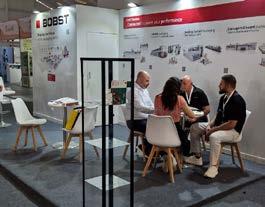
BOBST concluded its participation at Packexpo—the international exhibition for packaging, packing, and proximity logistics—held from 8–11 July 2026 in Casablanca, Morocco. The global packaging giant showcased its latest innovations and engaged with customers, partners, and industry professionals from across the region.
The event reinforced BOBST’s commitment to supporting converters with advanced solutions that improve productivity, quality, sustainability, and competitiveness across the packaging value chain.
During the exhibition, BOBST presented its portfolio of technologies and solutions for folding carton, corrugated board, flexible packaging, and label production, addressing key industry trends such as automation, digitalisation, process optimisation, and sustainable packaging.
Organised by the Moroccan Plastics Federation, Packexpo mirrors a dynamic Moroccan market, where
growing industries such as agrifood, beverages, pharmaceuticals, cosmetics, and consumer goods continue to drive demand for innovative packaging solutions. With its expanding industrial ecosystem and strategic position between Europe and Africa, Morocco represents an important market for packaging development and technological transformation.
“These platforms are always an excellent opportunity to connect with customers, partners, and industry professionals, exchange insights on market trends, and discuss the challenges and opportunities shaping the future of packaging production,” says Mohamed Hassairi, Regional Marketing & Communications Manager BOBST-AFMETC. “Converters are increasingly looking for solutions that combine automation, flexibility, sustainability, and consistent quality. BOBST is committed to supporting them with the technologies and expertise needed to strengthen
their competitiveness and prepare for future market demands.”
Through its continuous investment in innovation and customer support, BOBST helps packaging producers transition towards smarter, more sustainable, and more connected production environments.
Saudi Xerox, Magna AI Drive Saudi Sovereign AI Expansion
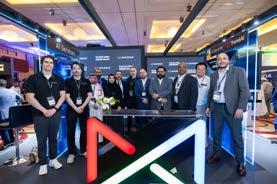
In a major move to bolster Saudi Arabia’s digital landscape, Saudi Xerox has announced a strategic partnership with Magna AI to accelerate the adoption of sovereign artificial intelligence across government and enterprise organisations.
The agreement was formally signed by Elie Boumitri, Sales and Operations Director at Saudi Xerox, and Adel Massarani, Practice Head of AI Applications and Engineering at Magna AI, during the Global AI Show in Riyadh, initiating a collaboration focused
on delivering secure, scalable, and future-ready AI solutions. “This partnership reflects our commitment to innovation, digital transformation, and AI-driven growth,” says Boumitri.
The partnership merges Magna AI’s specialised expertise in AI platforms, AI factories, security, and governance with Saudi Xerox’s local delivery and systems integration capabilities. The combined force aims to empower Saudi organisations to accelerate their AI adoption while adhering to the Kingdom’s evolving infrastructure and regulatory requirements.
“By combining global AI innovation with strong local execution, Magna AI and Saudi Xerox are helping accelerate Saudi Arabia’s journey towards a secure, sovereign, and scalable AI future,” adds Massarani.
The partnership merges Magna AI’s specialised expertise with Saudi Xerox’s local delivery and systems integration capabilities
The three-day event is designed as a powerful catalyst to support the market’s return to full strength, accelerate localised growth, and help businesses futureproof their operations
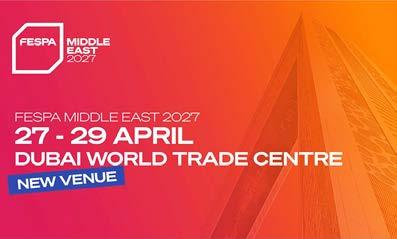
FESPA Middle East 2027 Announces Dates, New Venue
FESPA Middle East 2027—the premier regional expo for speciality printing and signage—has officially announced its return for a highly anticipated 4th edition, locking in its dates from 27–29 April 2027. In a strategic move to better serve the industry, the landmark exhibition and conference will debut at a brand-new venue, the iconic Dubai World Trade Centre (DWTC).
Situated directly in the heart of the city, this highly accessible hub was selected following extensive consultations with regional specialist print and visual communication leaders to maximise convenience and connectivity for all attendees,” says FESPA Middle East
portunities within the sector.
Technology, Knowledge, Sustainability, Creativity
The sprawling exhibition floor will host more than 150 global brands showcasing the latest advancements in wide format digital, textile, and signage technologies, attracting thousands of industry visionaries to network, discover innovations, and drive investment decisions. Beyond the exhibition floor, the 2027 event will deliver a rich programme of learning and engagement. FESPA Leadership Exchange (FLEX) will provide business-focused insights from global experts. Topics includ-
The three-day event is designed as a powerful catalyst to support the market’s return to full strength, accelerate localised growth, and help businesses future-proof their operations.
FESPA Middle East serves as a gathering point for print service providers (PSPs), sign-makers, visual communication specialists, textile professionals, and prospective industry entrants. Attendees have the opportunity to network with industry peers, see the very latest innovations from key players, and make investment decisions. Additionally, the event features a free educational programme designed to facilitate knowledge sharing and learning op-
ing sustainability, AI, automation, and market opportunities will be discussed, highlighting the industry’s appetite for strategic insight alongside technology investment. The free-to-attend educational content empowers senior professionals—many of whom hold purchasing authority—to explore best practices, sustainability trends, and skill development.
Sustainability Spotlight returns to highlight practical ways to embed responsible practices and materials. Sessions will provide useful, informative, and actionable advice for speciality printers and sign-makers looking to make their businesses more sustainable. The content provides an excellent opportunity
to explore ways to adopt new processes, and how to reduce costs by optimising energy and resources. Meanwhile, the World Wrap Masters Middle East competition and live Wrap Demos will showcase skill, speed, and creativity in vinyl and film applications. FESPA Middle East 2027 will welcome the biggest names in vehicle wrapping, printed vinyl applications, colour change wraps, paint production film (PPF), and window tint, as part of the fourth edition of the regional competition. In addition to the lively competition, visitors will benefit from immersive training workshops and live demonstrations delivered by industry experts in the wrapping field.
“With its blend of technology showcases, forward thinking education, and opportunities to connect with global leaders, FESPA Middle East is uniquely positioned as the event where print and signage professionals in the region can harness this growth and collaboratively shape the future of the industry. The upcoming 4th edition in Dubai is expected to further reinforce the growing importance of the Middle East, Africa, and South Asia (MEASA) region within the global print sector,” adds Cassim.
Industry Boom Anchored by Regional Powerhouses
The MENA region’s booming speciality print, signage, and visual communication sectors are being anchored by economic powerhouses, such as Saudi Arabia and the UAE. Driven by Saudi Vision 2030, giga-projects like NEOM and a surging tourism sector are generating massive demand for large-format branding, architectural signage, and smart visual technology. Simultaneously, the UAE reinforces its status as a mature global hub, where luxury retail, world-class events, and strict sustainability mandates push the boundaries of digital textile printing and ecofriendly substrates. Together, these markets have transformed the regional industry into a high-margin, tech-driven ecosystem. This rapid evolution has intensified industry anticipation for FESPA Middle East 2027 next year.
Regional Manager Bazil Cassim.
interpack MEA 2026: New Era for Regional Packaging
The Middle East and Africa packaging printing industry continues to showcase robust growth, with the market valued at $58.7 billion in 2025. Driven by increasing consumer demand, industrial expansion, thriving e-commerce, and a rising focus on sustainability initiatives, the region presents significant opportunities for manufacturers, converters, brand owners, and technology providers alike. In response to this momentum, the 7th edition of interpack MEA is scheduled to place from 7–10 December 2026 at Egypt International Exhibition Center (EIEC) in Cairo. The trade fair will feature over 300 exhibitors and thousands of brands and solutions,
packaging solutions,” says interpack Director Thomas Dohse.
interpack MEA serves as a vital platform to address the requirements of thriving industries like food and beverages, cosmetics, pharmaceuticals, industrial goods, non-food consumer goods, and other related sectors in the Middle East and Africa region.
The accompanying conference programme will address the evolving needs of the processing and packaging industries, as well as the challenges faced by the sector and relevant issues for the future, such as sustainability. Additionally, interpack MEA 2026 will showcase advanced technologies and innovative solutions
ing products in the MEA region. Upward Trend in Regional Packaging Printing Markets
The packaging printing market in the Middle East and Africa is expected to grow from $58.7 billion in 2025 to $86.9 billion in 2031 at a healthy CAGR of 6.8%. The region’s packaging automation sector is projected to grow from $3.89 billion to $5.31 billion between 2026 and 2031.
Paper packaging leads segment volumes, climbing from $25.42 billion to $35.13 billion by 2031.
Food packaging is on track to reach $18 billion dollars by 2033 from a baseline of $12.1 billion, while flexible packaging will grow from $12.9
positioning it as a definitive event shaping the future of processing and packaging in the region.
Rebranded for Global Connection
Formerly known as pacprocess MEA, the trade fair offers excellent opportunities in the processing, packaging, and printing sectors. As a member of the globally recognised interpack alliance, the exhibition brings together local and international industry stakeholders from across the entire value chain to showcase cutting-edge technologies and forge lucrative partnerships. “The shift to interpack MEA strengthens our connection to the global interpack network and reinforces our position as the region’s leading platform for processing and
in packaging and processing that minimise environmental impact and improve operational efficiency.
Another highlight is the Hosted Buyers Program, a dedicated B2B platform, which facilitates business undertakings and maximises return on investment for participants through expansion of their business networks and closing deals on the spot.
By creating localised and international business opportunities, interpack MEA 2026 acts as a strategic gateway to regional and global markets while highlighting one of North Africa’s major economic hubs. With an annual growth rate of 4.1% for the period between 2021 and 2025, Egypt currently ranks as the third-largest market for packag-
billion to 20.03 billion by 2034. Specific material markets are following similar upward trends. Egypt’s plastic packaging market is estimated at $2.49 billion in 2026 and is forecast to hit $2.94 billion in 2031 at 3.37% CAGR. Additionally, Egypt’s paperboard packaging market is projected to steadily rise from $2.42 billion in 2025 to $3.09 billion by 2031 at a CAGR of 4.13%.
interpack MEA 2026 will run alongside the 11th edition of Food Africa. The dual events are organised by Messe Düsseldorf under the umbrella of interpack alliance, together with local partners IFP Egypt and Konzept Exhibitions & Event Management. Opening hours: 10 am – 6 pm (all days).
interpack MEA serves as a vital platform to address the requirements of thriving industries like F&B, cosmetics, pharmaceuticals, industrial goods, non-food consumer goods, and other related sectors in the Middle East and Africa region
BOBST, Partners Bring Cutting-Edge Tech to Addis Ababa
The exhibition, in its 8th edition, highlighted the impressive growth and vast potential defining Ethiopia’s plastics, printing, and packaging sectors
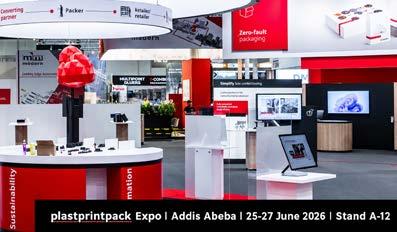
In a major collaborative effort for East Africa’s manufacturing sector, BOBST, ETERNA, and Multigraph Machinery (Kenya) Ltd. participated jointly in plastprintpack Ethiopia 2026. The event ran from 25–27 June 2026 at the Addis International Convention Center (AICC) in Addis Ababa, Ethiopia. The exhibition, in its 8th edition, highlighted the impressive growth and vast potential defining Ethiopia’s plastics, printing, and packaging sectors.
Operating from booth A-12 in close collaboration with BOBST and ETERNA, Multigraph—the East Africa agent for BOBST—hosted a dedicated space to present the latest technologies and production
advancements to regional stakeholders in packaging and printing. Products on display featured the MASTER M5, an automated, highly flexible inline flexo press designed for full digitalisation of the production workflow. Built to handle short to long runs with high profitability, it can handle diverse substrates like films, foils, and labelstock. It features DigiFlexo for automated register and pressure control, reduces waste, and integrates multi-process finishing in a single pass. Another highlight was the NOVA RS 5003, an advanced Electronic Line Shaft (ELS) gravure printing press engineered to provide precise register control and low power consumption. Optimised for flexible
packaging using solvent- or waterbased inks, it runs eco-friendly substrates at production speeds of up to 350 m/min.
Additionally, the VISION CI, a compact flexo press, delivers exceptional price-performance value across a wide range of substrates. Featuring a sturdy anti-vibration design to eliminate bounce, it ensures consistent, high-speed print repeatability with minimal operator intervention.
Other state-of-the-art displays included the ETERNA E Cut 1060 E automatic flatbed die-cutting and creasing machine, the ETERNA E Fold series of automatic foldinggluing machines, the ETERNA die cutters for corrugation, and the CITYLINE EXPRESS—a single-width, single-circumference web offset press from the Manugraph stable.
“The event provided an excellent opportunity to discover how our comprehensive portfolio of equipment, services, and industry-leading solutions can help optimise your production processes, enhance operational efficiency, and support the growth of your business in the region,” says Mohamed Hassairi, Regional Marketing & Communications Manager at BOBST Africa & Middle East and Turkey/Caucasus. Company experts were on-site throughout the three-day event to conduct live consults, discuss upcoming projects, and explore strategic partnerships with regional business owners.
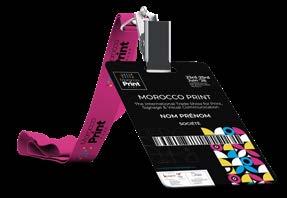
The Morocco Print Expo 2026 solidified its position as a premier regional hub, accelerating North Africa’s print, signage, and visual communication sectors. Held from 23–25 June 2026 at the Casablanca International Fair (OFEC), the international exhibition focused on automated workflows, large-format sign technology, and mass personalisation systems.
The three-day exhibition brought together global manufacturers, suppliers, printers, and visual communication experts under one roof. Attendees experienced an intensive showcase of technological breakthroughs with a heavy emphasis on sustainable eco-print solutions, with live product demonstrations being a major attraction.
Exhibitors representing the full
spectrum of print and visual communication industries showcased the latest solutions in digital, offset, and screen printing; textile and sublimation printing; signage and visual communication; cutting, engraving, and finishing; materials and media; and packaging and personalisation.
Beyond the exhibition floor, Morocco Print Expo offered a range of conferences and workshops
that delved into topics such as sustainable and green printing, digital signage and smart displays, design trends and creativity, and industrial printing and automation.
By drawing key industry players from Africa and beyond, the event successfully fostered critical business matchmaking, bridged the gap between global distributors and regional buyers, and stimulated crossborder partnerships. Staged in Morocco—a strategic gateway linking Europe, the Middle East, and Africa—the Casablanca expo offered exhibitors and investors a reliable platform to access the fast-growing regional markets.
Structured, Mature Print Ecosystem
The print and signage industry in Morocco and across Africa is experiencing accelerated growth, driven by large-scale infrastructure development, rapid urbanisation, digital transformation, and increasing demand for visual communication in public, commercial, and retail environments.
Morocco’s strategic role as cohost of the 2030 FIFA World Cup is significantly reinforcing the momentum. Major investments in transport infrastructure, airports, stadiums, tourist facilities, and smart urban projects are generating sustained, multi-year demand for signage, wayfinding
systems, digital displays, outdoor and indoor advertising, retail branding, and event-driven print solutions.
With annual print and packaging output exceeding $1.1 billion and supported by more than 1,200 companies specialising in printing, signage, and visual communication, Morocco represents one of the most structured and mature print ecosystems in Africa. To sustain this economic activity and drive modernisation, the country is increasingly prioritising advanced technologies, with digital and eco-friendly solutions accounting for over 35% of all new equipment investments. This rapid pace of technological adoption is further reflected in Morocco’s imports of more than $200 million worth of printing machinery, specialised inks, and related materials each year to meet its evolving commercial needs and demand for innovation.
Rapid Growth in Regional Print and Signage Industry
The print and signage market in the Maghreb—led by Morocco, Algeria, and Tunisia—is expanding rapidly thanks to digital transformation, retail growth, and industrial diversification. The market is valued at more than $6.5 billion, with strong momentum in packaging, advertising, textile printing, and industrial labelling.
Key industry shifts include the acceleration of digital signage across the retail, real estate, and corporate communication sectors, alongside a broader expansion of textile sublimation and industrial printing. Furthermore, the market is seeing an increasing emphasis on eco-print solutions, green materials, and energy-efficient equipment, which is attracting growing interest from European and Asian manufacturers looking to establish regional hubs.
By drawing key industry players from Africa and beyond, the event successfully fostered critical business matchmaking, bridged the gap between global distributors and regional buyers, and stimulated cross-border partnerships
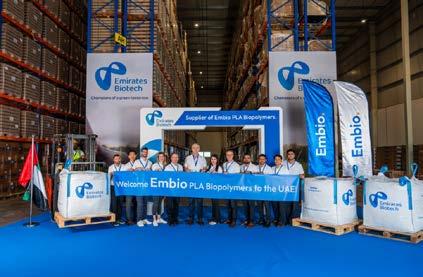
Launched in November 2025, the new line of polylactic acid (PLA) biopolymers align with the UAE’s sustainability goals, including its national commitment to Net Zero 2050
Emirates Biotech Debuts Embio PLA Portfolio in Saudi Market
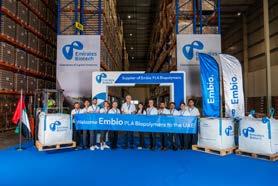
Emirates Biotech, a biopolymers industry innovator introduced its innovative Embio PLA biopolymer portfolio to the Saudi Arabian market at the Saudi Plastics & Petrochem 2026, held from 21–24 June in Riyadh. Operating from the UAE Pavilion during the four-day event, the Dubaibased company showcased its wide range of applications and sustainability benefits to trade show visitors.
The plant-based biopolymers are used in a wide range of applications such as packaging, food service wares, consumer goods, 3D printing, and other everyday products. Embio PLA grades combine high clarity, strength, and processability with a substantially lower carbon footprint than traditional plastics. The material can be recycled or industrially composted, and does not leave behind persistent microplastics in the environment, supporting waste reduction and circularity goals.
François de Bie, Chief Commercial Officer (CCO) of Emirates Biotech, says the event is an important opportunity to connect with Saudi Arabia’s rapidly evolving plastics and sustainability landscape. “The Kingdom of Saudi Arabia is an excit-
ing and fast-growing market for sustainable materials. Biopolymers like PLA provide the Kingdom with opportunities to realise its Vision 2030 sustainability goals; PLA supports the transition towards more circular and responsible material solutions.”
Hashim Alfulful, Sales Development Manager – Bioplastics & Sustainable Materials (GCC), says, “Having a dedicated presence in Saudi Arabia allows us to work closely with customers and support them in evaluating and implementing PLA solutions. We look forward to building strong partnerships as the market continues to demand more sustainable materials.”
Launched in November 2025, the new line of polylactic acid (PLA) biopolymers align with the UAE’s sustainability goals, including its national commitment to Net Zero 2050. By combining regional manufacturing, material innovation, technical expertise, and hands-on customer-focused service, Emirates Biotech is accelerating the transition to a circular, biobased society.
Gulf Print & Pack Dates Confirmed for January 2027
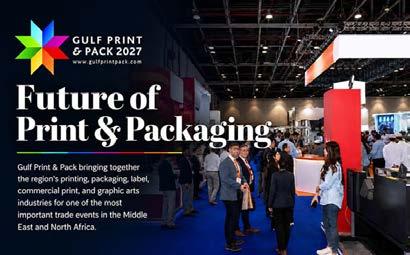
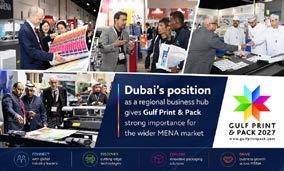
Gulf Print & Pack, the premier print and packaging technology trade exhibition in the MENA region, has officially scheduled its milestone 15th edition for 12–14 January 2027 at the Dubai World Trade Centre.
The expanded timeframe will provide additional flexibility for heavy-duty equipment shipping, logistics planning, and travel arrangements to ensure maximum participation from what is a highly international mix of attendees.
Gulf Print & Pack, an Informa event, offers unparalleled business and networking opportunities for commercial printers, print service providers, packaging converters, and print buyers by welcoming nearly 300 exhibitors showcasing labels and package printing machinery; and attracting over 8,000 industry professionals from 100 countries.
The event’s production, brand, and logistics team are committed to ensuring that the next Gulf Print & Pack iteration is a success for all participants and are on hand to provide support and assistance.
Jade Grace, Managing Director, LOUPE Global, Informa Markets, says, “Our main focus remains on giving our community exceptional experiences and unrivaled opportunities for business and networking. As the leading label and packaging print event in the MENA region, Gulf Print & Pack continues to contribute to the
The expanded timeframe will provide additional flexibility for heavy-duty equipment shipping, logistics planning, and travel arrangements to ensure maximum participation
Paperworld Middle East to Unveil Next-Gen Paper Trends
innovators, and decision-makers will share a stage to tackle themes that currently define the industry— from the new age of AI that continues to dominate global headlines, to sustainability as a strategy, the new retail reality, and beyond.
As the paper industry continues its commitment to producing environmentally friendly products, Project Sustainability will showcase environmentally-friendly product ranges. From recycled stationery, to energy-efficient office supplies, attendees will have the chance to explore a wide array of sustainable offerings and gain detailed insights on their eco-credentials.
Paperworld Middle East offers a unique opportunity to discover innovative, purposedriven products tailored for offices, schools, and educational institutions
Paperword Middle East and colocated Gifts & Lifestyle Middle East to showcase over 650 regional and international brands; over 15,000 visitors expected; Hub Forum, Project Sustainability, and Artistry Workshop to feature industry leaders and experts in paper, gifting, and sustainability
With the global paper and stationery products market projected to reach $433.19 billion by 2030, Dubai is all ready to host Paperworld Middle East 2026 and the co-located Gifts & Lifestyle Middle East 2026. The events, running from 13-15 October 2026 at Dubai World Trade Centre, will feature a dynamic product showcase, engaging thought-leadership sessions, and enhanced visitor experiences to reflect the industry’s growth.
Along with Gifts & Lifestyle Middle East, the dual events will reinforce their status as the region’s most influential trade platforms for the stationery, paper, office supplies, gifting, and lifestyle sectors, connecting brands with regional retailers, distributors, and sourcing professionals.
Building on last year’s huge success, Paperworld Middle East is set to welcome over 15,000 visitors and host over 650 companies this year.
The event will unite global market leaders, with regional industry heavyweights, as they converge
in Dubai, the strategic gateway for sourcing and trade flows between East and West.
Paperworld Middle East will feature a wide-ranging showcase of international solutions spanning office supplies, school products, stationery, writing instruments, writing and printing paper, arts and crafts supplies, kraft paper and packaging, and more. Meanwhile, Gifts & Lifestyle Middle East will present a curated collection of leather finished goods, homeware, corporate gifts, and lifestyle products.
“Paperworld Middle East offers a unique opportunity to discover innovative, purpose-driven products tailored for offices, schools, and educational institutions,” says Teresa Heitor, Portfolio Director –Consumer Goods, Messe Frankfurt Middle East. “Beyond sourcing, the event is a platform for knowledge exchange and inspiration, where sustainability, digital transformation, and creativity take centre stage. Whether through the Hub Forum’s thought-provoking sessions, Project Sustainability’s ecoconscious showcase, or the Artistry Workshop’s hands-on learning, this year’s edition is designed to spark new ideas, foster meaningful connections, and highlight the trends shaping the future of the industry.”
The Hub Forum returns with a dynamic programme of presentations and panel discussions. Visionaries,
The popular Artistry Workshop will welcome artists, art students, and enthusiasts to learn new creative skills and techniques. Guided by some of the region’s most talented creatives, the workshop will offer a range of disciplines, including Arabic calligraphy, painting, sculpting, and many more.
Reserved exclusively for invited high-value buyers and decision makers, the Premium Club at the co-located events, is an invitationonly programme designed to elevate the exhibition experience. Invited participants will have access to tailored networking opportunities and personalised business matchmaking.
Paperworld Middle East and Gifts & Lifestyle Middle East 2025 will be held in DWTC’s Sheikh Saeed Halls 1–3 and Trade Centre Arena.
Timings: 10 am – 6 pm (all days).
For latest updates, log on to www.paperworld-middle-east. ae.messefrankfurt.com
Saudi Signage & Labelling Expo Rescheduled to June 2027
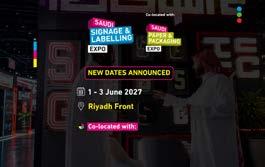
The 3rd edition of the flagship Saudi Signage & Labelling Expo, co-located with the 2nd edition of Saudi Paper & Packaging Expo— the largest gathering for signage, graphics, digital, print, imaging, paper, packaging, and processing solutions in the region—have finalised their official run dates.
Originally slated for 30 August to 1 September 2026, the exhibitions will now take place from 1–3 June 2027 at the Riyadh Front Exhibition & Conference Center (RFECC).
“This strategic timeline shift ensures the strongest possible experience for the entire global community aligning with market conditions, maximising international participation, and to match the rapid growth and innovation driving Saudi Arabia’s branding and visual communications sectors,” says Muhammed Kazi, Senior Vice President of event organiser dmg events.
As the region’s most important business event for the digital, print, graphic, and imaging industries, Saudi Signage & Labelling Expo will attract senior decision-makers
alongside some of the industry’s top manufacturers and suppliers. The co-located Saudi Paper & Packaging Expo serves as the Kingdom’s dedicated event for the paper, packaging, and processing sectors, connecting top suppliers with serious buyers driving demand across manufacturing, retail, FMCG, and logistics.
“Hosting Saudi Signage & Labelling Expo and the co-located Saudi Paper & Packaging Expo on the finalised dates is the right decision for our community. It ensures that we deliver an event that is fully supported, well timed, and positioned to create the trade and sourcing outcomes for all participants. Our commitment to the industry remains unwavering and we look forward with full confidence to a successful edition,” adds Kazi. The 2027 expo will host more than 170 exhibitors showcasing over 2,500 innovative products. Professional attendance is expected to be robust, with more than 15,000 industry experts and key decisionmakers anticipated to attend. Besides an array of cutting-edge
technologies and solutions, the event will feature several interactive attractions for visitors, including live demonstrations in a dedicated car-wrapping zone and the ‘Label It’ competition.
Saudi Signage & Labelling Expo, along with the Saudi Paper & Packaging Expo, remain vital platforms for brands looking to connect with high-powered buyers in the Middle East’s most dynamic economy.
For latest updates, visit www. saudisignageexpo.com
Sharjah Booksellers Conference to Shape Industry Future
The international book community is preparing to gather in the United Arab Emirates for the fifth annual Sharjah Booksellers Conference, scheduled to take place on 19–20 September 2026 at the Expo Centre Sharjah.
Held in conjunction with the Sharjah Children’s Reading Festival, the international professional gathering will bring together booksellers, publishers, distributors, and other book-industry stakeholders from more than 90 countries. Organised by the Sharjah Book Authority (SBA), the conference is aimed at shaping the future of global publishing. The two-day conference centres heavily on strengthening the global book industry ecosystem by addressing contemporary challenges and opportunities. Industry leaders, keynote speakers, and subject-matter experts
will lead critical discussions exploring the rapid rise of AI in bookselling, the evolution of innovative business models, and actionable strategies for long-term sustainability. Attendees can expect a programme packed with specialised workshops, interactive panel sessions, and targeted pitch opportunities designed to foster international collaboration and improve book discoverability across borders.
The upcoming edition stands out as a vital platform for professional networking and knowledge exchange at a time when the literary marketplace is rapidly transforming. By bringing together diverse stakeholders to share best practices and confront distribution hurdles, the conference promises to leave a lasting impact on how literature is produced and shared globally.
It ensures that we deliver an event that is fully supported, well timed, and positioned to create the trade and sourcing outcomes for all participants
As delegates from all around the world prepare to descend on Sharjah, the conference is wellpositioned to drive innovation and spark new commercial partnerships that will resonate across the publishing landscape.
Sudan Packaging: Recovery in Motion
Despite war, supply-chain disruption, and economic pressure, Sudan’s packaging sector is proving its strength as a vital engine for industrial recovery, food security, and future export growth.
For a country like Sudan, where agriculture, food processing, flour milling, animal feed, beverages, pharmaceuticals, detergents, and export commodities are key economic activities, packaging is an essential part of industrial development
By: Duaa Saeed
The packaging industry in Sudan has always played a vital role in supporting manufacturing, food security, agriculture, trade, and consumer markets. Packaging is more than a container around a product. It protects goods, extends shelf life, supports branding, improves logistics, reduces damage, and enables products to move safely from factories to consumers. For a country like Sudan, where agriculture, food processing, flour milling, animal feed, beverages, pharmaceuticals, detergents, and export commodities are key economic activities, packaging is an essential part of industrial development.
Before the war, Sudan had a sizeable and diverse packaging market, supported by strong demand from food, beverages, flour, agriculture, cement, animal feed, detergents, and other essential industries. Major segments such as flexible packaging, corrugated cartons, PP woven bags, PE shrink film, paper bags, and labels were already serving a wide industrial base.
Pre-war figures indicate the scale of this demand, with flexible packaging estimated at around 21,681 MT, corrugated cartons at around 64,000 MT, and PP woven bags exceeding 103
flour, sugar, food products, animal feed, agricultural inputs, beverages, detergents, and industrial products. Because these products are needed by the market every day, packaging demand has remained active even during difficult conditions.
This recovery also shows the strength of local industrial capability. Pre-war data indicated that a large share of corrugated cartons and PP woven bags was already produced locally. This means Sudan had an existing foundation for local packaging production before the war. The return of many packaging factories today builds on that foundation and highlights the sector’s ability to adapt under pressure.
million pieces, with a combined value of more than USD 313 million. This shows that packaging was already a strategic sector with established demand, local production capability, and strong links to Sudan’s core industries.
The war disrupted operations and supply chains, but it did not reduce the importance of packaging. In fact, the need for reliable local packaging became even stronger as imports became more difficult and manufacturers looked for more resilient local supply options.
The war has placed heavy pressure on Sudan’s industrial sector. Many factories faced damage, looting, interruption of utilities, unstable power supply, shortage of spare parts, transport difficulties, banking constraints, loss of skilled workers, and high operational costs. Restarting operations after such disruption is not easy. Packaging factories often require machinery inspection, electrical repairs, spare parts, cleaning, calibration, raw material sourcing, team rebuilding, and reliable energy supply before returning to stable production.
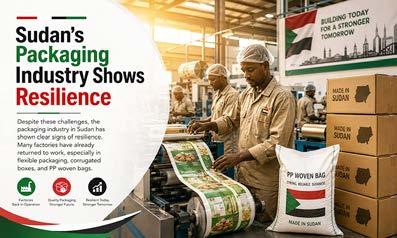
Despite these challenges, the packaging industry in Sudan has shown clear signs of resilience. Many factories have already returned to work, especially in flexible packaging, corrugated boxes, and PP woven bags. This is an important positive signal for the wider manufacturing sector. These segments are closely linked to essential goods such as
Foreign exchange fluctuation remains one of the biggest challenges facing packaging producers. Many packaging inputs still depend on imported raw materials, including paper, polymers, inks, adhesives, spare parts, and machinery consumables. When the Sudanese pound weakens, production costs increase rapidly, and quotation validity becomes difficult to manage. This creates pressure on producers and customers alike, especially in a market where pricing stability is difficult.
For local packaging producers, this situation creates both difficulty and opportunity. The difficulty is that many raw materials and technical inputs are still imported. Any restriction, delay, or currency movement affects cost and production continuity. The opportunity is that manufacturers are increasingly looking for local packaging sources instead of relying fully on imported finished packaging. This gives Sudanese packaging producers a stronger role in the national supply chain, especially if policies supporting local manufacturing are applied in a balanced way.
Recent government direction to support local production and reduce import pressure may become an important driver for the packaging sector. Import-substitution policies can encourage local sourcing, protect domestic industries, create jobs, and reduce dependency on imported finished goods. However, the success of this approach depends on ensuring that local factories can still access essential raw materials, spare parts, machinery, and production inputs
that are not yet available locally. Supporting local manufacturing should mean enabling factories to produce more, not limiting their access to what they need to operate.
Packaging optimization has also become a strategic priority. In the current high-cost environment, companies can no longer afford over-specified, inefficient, or poorly designed packaging. Optimization means choosing the right packaging design, size, strength, and performance level for the product and its supply chain. It also includes improving palletization, truck loading, warehouse utilization, material efficiency, production waste, and product protection.
The impact of packaging optimization can be significant, especially in a market where cost, logistics, and material availability are under constant pressure. During the war, many packaging development projects had to focus not only on cost reduction, but also on keeping supply chains moving under difficult conditions. One practical example was the redesign of corrugated box configuration and packaging material structure, which improved truck loadability and reduced logistics cost, generating annual savings of around USD 1 million. This kind of optimization shows how packaging decisions can directly influence business continuity, transport efficiency, and overall competitiveness. Beyond logistics, suitable flexible packaging structures can reduce unnecessary material cost while maintaining product protection and shelf life, while well-designed woven bags can minimize breakage, complaints, and product loss. In this sense, packaging optimization is not only a technical exercise; it is a strategic business tool that supports cost control, operational resilience, and supply continuity. Sustainability is another important direction for the future. Although Sudan’s immediate priority is industrial recovery, the long-term packaging trend will move toward recyclable materials, reduced material consumption, paper-based alternatives where suitable, recycled content, and better waste management. Sustainability should not be viewed only as an environmental requirement. It can also support efficiency, reduce waste, lower cost, and improve the use of local resources. There are several opportunities for investment and growth in Sudan’s
packaging industry. The first is the rehabilitation and modernization of existing factories. Many producers need machinery upgrades, better controls, improved utilities, and stronger maintenance systems. The second opportunity is technical capability development, including operator training, packaging design knowledge, quality systems, and testing laboratories. The third is supplier development, where packaging producers and manufacturers work together to improve specifications, reduce cost, and increase local sourcing.
There is also potential for regional growth. Sudan has strong agricultural resources and a strategic location connected to African and Arab markets. As stability improves and production capacity recovers, packaging will be essential for export readiness. Good packaging helps reduce damage, improve shelf appearance, meet customer requirements, and build confidence with Sudanese products.
stopped. Its gradual return to operation is a positive sign for the wider manufacturing sector. With the right investment, policy support, technical development, and collaboration between producers and customers, packaging can become a strategic driver of industrial recovery, import substitution, food security, and regional trade.
About the Author
Duaa Saeed is a Packaging Operations and Development Manager at DAL Group, with over eight years of experience in FMCG packaging. She holds an MSc in Chemical Engineering and specializes in packaging development, cost optimization, supplier development, operations, and sustainability. Her expertise spans flexible packaging, corrugated cartons, PP woven bags, paper bags, rigid plastics, and packaging optimization projects that support stronger, more resilient supply chains.
In the current highcost environment, companies can no longer afford overspecified, inefficient, or poorly designed packaging
The future outlook for Sudan’s packaging industry is cautiously optimistic. The challenges remain real, especially around foreign exchange, raw material supply, infrastructure, utilities, power supply, and working capital. However, the return of many factories to operation proves that the sector is resilient. The pre-war figures also show that Sudan had a strong packaging demand base and meaningful local production capability. This gives the industry a real foundation for recovery. Sudan’s packaging industry has been tested by crisis, but it has not
About DAL Group
DAL Group is one of Sudan’s largest and most diversified privately owned conglomerates, with roots dating back to 1951. Active across food and beverages, agriculture, engineering, healthcare, energy, mining, education, and other sectors, the group plays a major role in Sudan’s industrial ecosystem. Through its wide packaging requirements and in-house packaging-related capabilities, DAL Group supports local manufacturing, supply-chain resilience, material efficiency, and the broader development of Sudan’s packaging industry.
Tanzania’s MFPL Raises Flexible Packaging Bar with BOBST
As one of the first installations of its kind in East and Southern Africa, the investment reinforces MFPL’s position as a technology leader in the regional flexible packaging industry
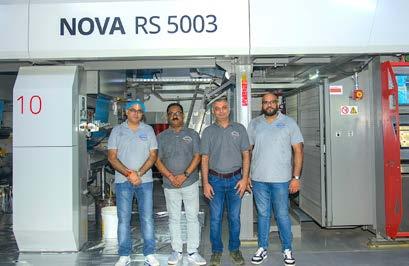
In September 2025, Tanzania’s Modern Flexible Packaging Limited (MFPL) acquired a 10-colour BOBST NOVA RS 5003 rotogravure printing press to expand its manufacturing capabilities. The investment marks MFPL’s first installation of a BOBST machine, representing a major milestone in the company’s growth strategy.
As one of the first installations of its kind in East and Southern Africa, the investment reinforces MFPL’s position as a technology leader in the regional flexible packaging industry. The machine provides the platform to enhance print quality, support innovation, and meet the evolving requirements of both local and international brand owners.
Founded in 2002 in Dar es Salaam, MFPL has transitioned over a twenty-year period from a converting business into a full-service flexible packaging manufacturer. The company currently provides packaging materials to several prominent brands, including Pepsi, Coca Cola, Tanzania Breweries, Azam, Bonite Bottlers, Tanzania Distilleries, Sika, TCC, Azania, Serengeti Breweries, and METL Group.
Processing 6,000 metric tonnes of material annually, the Tanzanian manufacturer supplies packaging
solutions to multiple sectors, including F&B, agriculture, tobacco, personal care, and pharmaceuticals, serving both domestic and regional markets.
Shift in Customer Expectations
In recent years, MFPL CEO Farhaaz Haji has watched customer expectations shift considerably. “Customers increasingly request shorter print runs with more SKU variations, tighter delivery deadlines, and improved barrier properties for extended shelf life. Sustainability, too, has moved up the agenda, with clients asking about recyclable and reducedmaterial packaging solutions,” says Haji.
Simultaneously, the company faces the practical realities of operating in a high-growth emerging market. Key challenges include managing the cost and availability of imported raw materials, navigating currency exchange fluctuations, and continuously upgrading technology to stay competitive. To meet these challenges, a decisive investment in advanced technologies was required, rather than incremental improvements.
Choosing BOBST
The partnership with BOBST in
2025 and the subsequent investment in the NOVA RS 5003 press— engineered specifically for flexible packaging applications—enabled MFPL to make a strategic move into paper-based packaging.
The NOVA RS 5003 was chosen for its superior print quality, high production speed, advanced automation, and BOBST’s robust regional technical support network. Beyond its technical specifications, the machine delivers a strong value proposition by reducing waste, stabilising production scheduling, and offering an optimised total cost of ownership for growing commercial operations.
The press is engineered to handle a wide range of substrates, including films, laminates, and paper-based materials, supporting MFPL’s expansion into sustainable packaging and premium market segments.
“BOBST machines offer superior build quality, advanced automation, and consistently high print registration accuracy. The global support network and BOBST’s deep expertise in flexible packaging technology give us confidence in our investment. For a growing operation like MFPL, it is the clear choice,” says Haji.
Since installation, MFPL has recorded an estimated 25–35% increase in production capacity. Setup and changeover waste has been reduced by around 15–20%, and downtime has fallen by nearly 10–15%. Improved print consistency and quality control have translated into fewer customer complaints and less rework.
“The machines have largely lived up to, and in several areas exceeded our expectations. The automation features and user-friendly controls have helped operators work more efficiently and with greater confidence,” adds Haji.
Focus on Regional Expansion
Currently, the company is focused on expanding its regional presence across East and Southern Africa and growing its customer base in premium food, personal care, and pharmaceutical packaging.
Vision Foods Scales Up Packaging with BOBST Technology
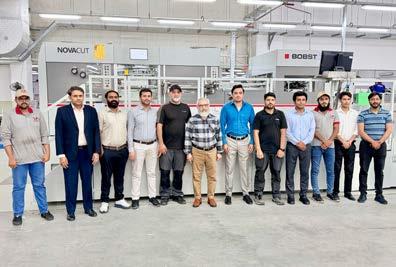
Vision Foods & Packaging, a Pakistanbased folding carton and offset packaging specialist, is expanding its production capacity with further investment in BOBST converting technology. The latest installation of BOBST NOVACUT 106 E die-cutters and a NOVAFOLD 80 A2 folder-gluer is helping the Lahore-based company enhance reliability, efficiency, and responsiveness as customer demands continue to rise.
End-to-End Packaging Solutions
Vision Foods & Packaging was established in 2016 by Choudhary Zulfiqar Ali Anjum, Chairman of SM Foods, as a greenfield project in Sundar Industrial Estate, Lahore. Originally created to provide backward integration for the group’s packaging requirements through a state-of-the-art offset packaging facility, the company has since grown into a major packaging manufacturer serving both SM Foods Group and a diverse portfolio of external customers.
The company currently operates a 1,42,000 sq ft integrated manufacturing facility that provides end-to-end packaging solutions with particular expertise in bakery, confectionery, and chocolate packaging. Its operations include pre-press, plate-making, printing, die-cutting, and gluing, giving Vision Foods the control and flexibility needed to serve demanding brand owners across multiple sectors.
Meeting Growing Demand in Competitive Market
Pakistan’s packaging market is highly competitive. Converters face pressure from several directions at once, including rising raw material costs, increasing fuel and energy prices, tighter lead times, and consistently high customer expectations around quality. At the same time, customers are looking for packaging partners that can support strong brand presentation, product protection, and fast turnaround without compromising consistency. Vision Foods already operates a significant production base, including printing machines, die-cutting machines, an automatic hot foil stamping machine, and folder-gluers. However, continued growth demanded further
investment in dependable, efficient converting capacity.
Muhammad Amer Iqbal, General Manager, Vision Foods & Packaging, says, “Reliable equipment, consistent quality, and shorter lead times are critical to our success. BOBST has been a trusted partner for many years, and this investment will further strengthen our ability to deliver greater value to our customers.”
Investing in Reliable Converting Technology
To support its next phase of growth, Vision Foods invested in BOBST NOVACUT 106 E die-cutters and a NOVAFOLD 80 A2 folder-gluer. The investment builds on a relationship with BOBST that has developed over more than a decade, with the company selecting the technology based on reliability, service support, and proven performance. The new equipment was chosen to support capacity enhancement and strengthen the company’s ability to respond to changing customer requirements. It also aligns with Vision Foods’ broader focus on machine efficiency, operator skill development, and market-leading quality.
Supported by comprehensive installation and operator training from BOBST engineers, the equipment is expected to help the packaging
solutions provider improve productivity, enhance operational efficiency, and support continued expansion in its domestic market, while also contributing to future export market development.
Supporting Future Growth, Market Expansion
The investment is expected to give Vision Foods the additional capacity and consistency needed to grow market share in a demanding operating environment. The company’s operators received training during installation, helping production teams adapt quickly and build confidence with the new equipment. While the latest machines form part of a wider growth journey, Vision Foods expects the combination of reliable technology, skilled operators, and strong service support to reinforce its competitive position in Pakistan’s packaging market. “We expect to gain more market share with the reliable equipment we have purchased from BOBST,” adds Iqbal.
Khaled Joundi, BOBST Regional Business Director Turkey, Middle East, Egypt, and Pakistan, says, “We are proud to support Vision Foods & Packaging on its growth journey with solutions that deliver the reliability, consistency, and performance required in today’s demanding market.”
The investment is expected to give Vision Foods the additional capacity and consistency needed to grow market share in a demanding operating environment
The initial gathering allowed professionals to share market data, explore cross application trends, and negotiate collaborative strategies to navigate the rising costs of raw materials and automation
Print4All Conference Concludes with Future Tech Roadmap
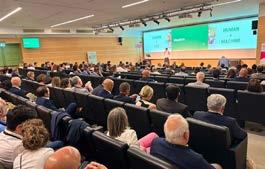
The printing world converged for a defining moment of industry transformation as the Print4All conference unfolded its action-packed agenda. The three-day conference is one of the most important events in the roadmap to Print4All 2027.
The inaugural day (1 July) kicked off with an exclusive B2B networking session designed to connect international buyers, technology suppliers, and industry stakeholders. Around 60 international delegates from 30 countries participated in the event.
The initial gathering allowed professionals to share market data, explore cross application trends, and negotiate collaborative strategies to navigate the rising costs of
raw materials and automation. Participants used the platform to build resilient supply chains, establish international distribution partnerships, and preview innovations that will shape the global packaging and print market.
The day’s agenda (4 pm to 7 pm) was followed by an evening networking party that offered the delegates a relaxed environment to solidify the connections made earlier in the day and foster ongoing cultural and industrial exchange.
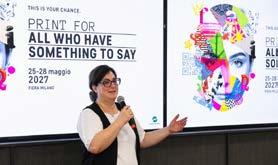
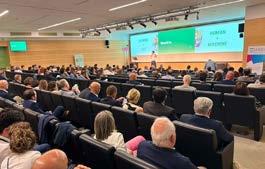
On day two (2 July), the main conference programme was held to a packed audience. Panels focused heavily on the growing role of automation and eco-friendly practices in reshaping trade standards. Industry leaders from both legacy firms and startups emphasised that while digital transformation is essential to stay competitive, com-
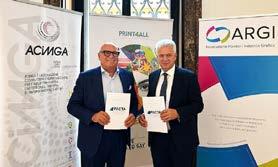
panies must not lose focus on core manufacturing efficiencies. The day kicked off with an optimistic welcome speech outlining the collaborative spirit of the Print4All project. Enrico Barboglio, General Secretary of ARGI and General Director of ACiMGA, alongside ACiMGA President Marco Calcagni, ARGI President Marco Marangoni, and Print4All Exhibition Director Paola Sarco, framed the 2026 event iteration as a celebration of printing and converting tools that turn raw colours, textures, and technologies into a universal language bridging traditional craftsmanship and everyday modern lifestyle.
Artificial intelligence (AI) emerged
insights into commercial execution. Christian Moretti of Neos Group led an entry on AI adoption in the printing and converting industry, mapping out structural shifts from initial curiosity to genuine competitive advantages. Simultaneously, Stefan K. Mueller from Koenig & Bauer addressed management and production bottlenecks affecting print shops, offering concrete workflows for operational stability.
Canon EMEA’s Paolo Organo discussed the evolving role of inkjet technology in shifting business models from efficiency to total transformation.
Production efficiency remains a critical priority for equipment manufacturers. Fulvio Petratto, Re-
as the primary talking point during the initial keynotes. Digital media strategist Mafe de Baggis delivered a riveting presentation titled ‘HUMAN+MACHINE – AI Is a Raw Material’, challenging the audience to move beyond baseline platforms like ChatGPT, Gemini, and Claude. de Baggis noted that while standard corporate environments treat AI as a reactive switch for standard templates, true competitive advantage belongs to firms that integrate these platforms natively into their proprietary corporate culture, language, and workflows.
The conference spotlighted 20 years of digitalisation, headlined by a company pitch from HEIDELBERG CEO Marco Marangoni. Following the pitch, the event transitioned into parallel open labs sessions sponsored by key industry players, providing specialised corporate
search and Development Director at Petratto, addressed the challenge of managing production bottlenecks within highly automated manufacturing environments. Petratto emphasised that optimising the human-machine relationship is vital to maximising throughput. His analysis specifically focused on integrating new hardware innovations and human-machine interaction models to eliminate mechanical delays within foldergluer production lines.
The midday programme highlighted how localised mechanical systems integrate with expansive cloud networks. BOBST representatives delivered an analytical review of digital and sustainable packaging ecosystems, focusing on maximising plant efficiency. This was followed by a technical breakdown of high performing, robust, and
sustainable ink options for flexographic applications, presented by Massimo Mancini of Flint Group. Rounding out this segment, Gallus Group’s Claudio Torrini took to the podium to outline strategic value creation through advanced digital connectivity, illustrating how cloud infrastructure can drive continuous uptime for contemporary labels and packaging lines.
Following a networking lunch, the conference dived into elite segments, highlighting automation, materials science, and macroeconomics. Antonella Manenti, CoFounder and Art Director of HENRY & CO, delivered a keynote address focusing on the evolution of contemporary packaging. Manenti
chains of the global print infrastructure.
This human-centric approach to data was echoed later in the afternoon by Amy Servi Bonner, whose keynote ‘HUMAN+MACHINE – Who Decides? The Operational Discipline of Human+Machine in Print Operations’ addresses the heavy operational decisions, approval workflows, and division of labour required when automated assets step onto the factory floor. Bonner introduced a structured four-pillar operational framework designed to manage AI-augmented systems.
A joint market benchmark report presented by Nathan Safran of Research Alliance and Stefano Portolani of Centro Studi Printing high-
highlighted that packaging design is shifting towards simpler, more intuitive user experiences driven by inclusive design, empathy, and new linguistic trends. She noted that the goal is to make modern packaging universally accessible.
A localised Italian session, presented by Paolo Degano of Morgana Systems, highlighted digital efficiency markers in label printing, alongside a look at sustainable digital converting for premium card stocks by Prati’s Ricardo Giancola.
Bringing the afternoon session to a global scale, Dr. Nicolas Alvarez, an independent analyst in political strategy and geopolitics, delivered a concluding macro-analysis mapping on how shifting international boundaries, emerging trade zones, and evolving regional demographics are reshaping the future supply
lighted the competitive advantages driving AI adoption. Their research contrasted the implementation strategies and operational maturity levels currently observed between the Italian and US printing markets. Physical innovation matched the digital buzz, anchoring the conversation around rigorous compliance and manufacturing hurdles. TCE Printing’s Richard Warnick took the stage for a company pitch titled ‘Sustainability Has to Be Sustainable’. Warnick confronted the practical obstacles of working with water-based inks, recycled materials, and compostable substrates. His presentation illustrated the complex path of stabilising turbulent drying configurations, adjusting ink viscosity, and managing surface energy down to a predictable science to prove that eco-conscious operations can scale profitably.
Environmental, Social, and Governance (ESG) criteria are becoming deeply embedded into manufacturing business models. Uteco’s Lorenzo Faedo outlined how the equipment manufacturer integrates ESG standards into its core growth strategy.
The seminar concluded with a comprehensive look at the human element and supply chain logistics within the industry. GWP Italia President Martina Corradi and PRINTlovers Editor-in-Chief Michela Pibiri presented the first Italian research study dedicated to inclusion, employment trends, and workplace culture in printing and converting. Their analysis tracked labour market dynamics, industry
The seminar concluded with a comprehensive look at the human element and supply chain logistics within the industry
talent acquisition, and emerging skills development programmes. This tied directly into the broader industry framework focused on creating a shared economic and environmental value chain for sustainable packaging across the entire global supply chain.
The final day of the event (3 July) concluded with a visit to Fiera Milano. Delegates spent the day navigating the sprawling, architecturally distinct venue, which boasts over 20 massive pavilions equipped with world-class facilities. Alongside touring the modern infrastructure, attendees received a briefing on the venue’s history. Looking ahead, this landmark location will officially serve as the host venue for the eagerly awaited Print4All 2027, positioning it once again at the centre of global industry innovation.
Printing Pioneer Frank Romano Celebrates Double Milestone
Founder of the eight publications, Romano’s extensive bibliography now forms the foundational curriculum for the graphic art and print industries
Printing legend Frank Romano reached a monumental double milestone in June, celebrating his 85th birthday alongside the release of his 85th book, a 500page historical tome, titled History of the Typesetting Service. The achievement was honoured across the publishing and print industries by highlighting his successful career.
Lifetime of Industry Contribution
While industry circles often affectionately refer to him as the “Godfather of Print”, his remarkable career spans over six decades of profound influence on graphic arts. As an educator at the Rochester Institute of Technology (RIT), he mentored generations of industry leaders, bridging the gap between traditional typesetting and modern digital workflows. Romano has authored an impressive list of books and hundreds of articles, establishing himself as the definitive voice on digital printing, desktop publishing, and typographic history. His analyti -
cal insights accurately predicted major industry shifts, making him an indispensable advisor to global printing manufacturers and practitioners alike.
Famous Works & Historical Artifacts
Founder of the eight publications, Romano’s extensive bibliography now forms the foundational curriculum for the graphic art and print industries. His most notable contributions include the Encyclopedia of Graphic Communications, a massive and definitive 10,000-term volume co-authored with Richard Romano. He also spent 35 years editing Pocket Pal: A Graphic Arts Production Handbook, an industry-standard manual.
His historical overviews, History of Desktop Publishing and History of the Linotype Company, capture how humanity transitioned from typewriters to computer-to-plate (CTP) digital workflows.
His books on QuarkXPress, Adobe InDesign, and PDF workflow were the first in their fields, authoring
several books on digital printing.
Involvement with Fonts Romano’s profound impact on modern typography spans multiple eras of technology, beginning in 1959 at the prestigious Mergenthaler Linotype Company. During his early career, Romano personally delivered mail to and collaborated with legendary type designers Hermann Zapf, the creator of Palatino and Optima typefaces, and Mathew Carter, who later designed Georgia and Verdana. When desktop publishing was in its infancy, Romano worked directly with Steve Jobs to help curate and develop the font library for the original Apple Macintosh, successfully bridging classical typography with modern digital design.
Leveraging his extreme familiarity with letterforms, Romano also serves as a high-profile expert witness in legal cases involving forensic typography. He analyses micro-expressions in typefaces to detect forgery and establish the exact historical authenticity
of documents. Recognising that digital transitions were wiping out physical history, Romano amassed the world’s most complete collection of type specimen books, which are catalogues once used by printers to define font specifications.
library containing thousands of rare books, specimen sheets, and foundational texts on font design. Furthermore, Romano established robust educational programmes, lectures, hands-on workshops that keep the history
Enduring Legacy
Romano joined RIT in 1990. He held the Melbert Cary Endowed Professorship in Graphic Arts, from where he advanced to Director of the School of Print Media. He was awarded Emeritus status in 2010. He also taught courses in book production at Cal Poly as Research Professor From Industry in the Graphic Communication Department.
Beyond his writing and role as an educator, Romano is also the co-founder of the renowned Museum of Printing in Haverhill, Massachusetts. His personal library of 11,000 books and a world-class collection of historical printing presses now live to inspire future generations of designers. Under his guidance as President, the institution amassed a vast collection of rare printing machinery, including functioning linotype machines, historic letterpresses, and early desktop computers that track the evolution of the trade. The museum also became a massive typographic
of visual communication alive for younger generations.
As the “heart” and ‘soul” of the museum, Romano spends nearly every day with volunteers and visitors, working to share the history of print with the young and old alike.
ME Printer Connection
Romano’s luxury cruise trips around the world made him visit Dubai on several occasions. During his stopovers, he would actively participate in events hosted by ME Printer, sharing his observations, personal experiences, and insights about global digital printing and packaging trends to an audience featuring industry leaders from the UAE. Numbering in their hundreds, his articles have also appeared in a variety of publications around the world, including his contributions here at ME Printer. Through his regular columns and expert commentary, he became a vital link between global innovations and regional businesses. Romano consistently provided Middle Eastern print shops with
sharp global market analysis, translating international technical trends into actionable local business strategies. His features served as technological roadmaps that successfully guided the region’s transition from conventional offset printing to highspeed digital inkjet production.
Dual Legacy Powers Printed Word
As the printing industry continues to evolve in the digital age, Frank Romano’s dual legacy of preservation and forward-looking innovation ensures that the roots of graphic communication are never forgotten. His work across global classrooms, the halls of the Museum of Printing, and through the pages of his publications and international journals stands as a monument to the enduring power of the printed word.
As the printing industry continues to evolve in the digital age, Frank Romano’s dual legacy of preservation and forward-looking innovation ensures that the roots of graphic communication are never forgotten
The Middle East Print Industry’s New Reality
When Every Printed Page Costs More
Higher print costs are no longer a temporary disruption. For print service providers, converters, publishers, packaging producers, and brand owners across the Middle
In many Middle Eastern markets, printers operate in a complex environment. They must manage local competition while also dealing with international supply chain pressures. Paper and board may be sourced from Europe or Asia, inks and consumables may come from global suppliers, and machinery often depends on imported spare parts and overseas technical support.
Any disruption in global shipping, currency movements, energy pricing, or international trade quickly affects local production costs
East, cost pressure has become a permanent business reality. Paper, ink, plates, substrates, energy, labour, logistics, finance, and imported spare parts are all becoming more expensive or more unpredictable. The challenge is not only that costs are rising, but that they are rising together.
For the Middle East, this issue is especially important. The region depends heavily on imported paper, printing equipment, consumables, inks, chemicals, plates, and spare parts. Any disruption in global shipping, currency movements, energy pricing, or international trade quickly affects local production costs. At the same time, demand for packaging, labels, signage, commercial print, publishing, and personalised print continues to grow, driven by population growth, retail expansion, e-commerce, tourism, food delivery, healthcare, and industrial diversification.
A Regional Market Facing Global Pressure
cost pressures are connected. Higher logistics costs can increase the price of imported substrates. Currency movement can affect machinery, consumables, and service contracts. Labour costs can rise at the same time as energy, rent, and financing costs.
As a result, printers can no longer rely on old pricing models. A job that appears profitable at the quotation stage may become less profitable by the time materials are purchased and production begins. This is especially true for long-term contracts, government tenders, book printing, packaging supply agreements, and repeat orders with fixed pricing.
For Middle East printers, cost planning now requires greater discipline. Quotation validity periods may need to be shorter. Material prices must be reviewed more frequently. Procurement teams need to work more closely with production and sales teams. The ability to monitor costs in real time is becoming increasingly important.
This means that global disruptions can quickly become local business problems. A delay in shipping, a change in exchange rates, a rise in freight costs, or a shortage of a specific substrate can affect production schedules and profit margins. For printers working on tight deadlines, especially in packaging, labels, publishing, and event-related print, such disruptions can be costly. The Middle East is also a highly active market. Saudi Arabia’s Vision 2030 projects, the UAE’s position as a regional business and events hub, Qatar’s hospitality and infrastructure sectors, and the growth of retail and consumer markets across the GCC all continue to create demand for print. However, this demand is now developing in a more cost-sensitive environment.
Why Cost Planning Has Become More Difficult
In the past, many printers could absorb moderate cost increases or adjust prices gradually. That approach is becoming harder. Today’s
Not Every Printer Feels the Impact Equally
Cost pressure affects the entire industry, but not every company experiences it in the same way. Smaller commercial printers, copy centres, sign makers, and familyowned print shops are often more exposed. They may not have the purchasing power to negotiate better material prices or the financial strength to hold large stock. Many also rely more heavily on manual processes, which can increase waste and reduce efficiency.
Larger print companies and packaging converters are usually better positioned. They can purchase materials in larger quantities, invest in automation, negotiate stronger supplier agreements, and spread fixed costs across higher production volumes. Companies with strong digital production capabilities are
also better placed to handle shorter runs, faster turnaround times, and personalised work.
However, size alone is not enough. Even large companies can face pressure if they depend on outdated workflows, weak cost control, or price-based competition. In today’s market, efficiency, flexibility, and financial discipline matter as much as production capacity.
How Customers Are Rethinking Print Orders
Rising costs are also changing the behaviour of print buyers. Across the Middle East, many customers are reviewing how much they print, how often they print, and what type of print they really need.
In sectors such as retail, education, publishing, real estate, hospitality, and events, buyers are becoming more selective. Some are reducing print quantities. Others are shifting from large-volume general print to targeted campaigns, short-run digital print, personalised communication, or premium printed materials that create stronger impact.
This does not mean print is losing relevance. It means that print must prove its value more clearly. Customers are less willing to spend on print that has no clear purpose. They are more willing to invest in print that supports sales, improves brand image, enhances packaging, increases customer engagement, or creates a memorable physical experience.
For PSPs, this shift creates a new responsibility. They must move beyond simply supplying printed products. They need to advise customers on format, substrate, finishing, targeting, durability, sustainability, and return on investment.
Packaging and Labels Remain Growth Areas
While some parts of commercial print may face volume pressure, packaging and labels remain strong growth areas in the Middle East. Food and beverage, pharmaceuticals, cosmetics, personal care, logistics, e-commerce, and consumer goods continue to drive demand for printed packaging.
The region’s growing population, expanding retail networks, and rising demand for locally manufactured products are supporting
this trend. In Saudi Arabia, the UAE, Egypt, and other regional markets, industrial development and consumer brand growth are creating new opportunities for packaging converters and label printers.
However, packaging producers are also under pressure. Films, board, adhesives, coatings, inks, and speciality materials are affected by global supply and price movements. Flexible packaging producers may also face volatility linked to polymer and petrochemical
often, printers focus only on paper, ink, and basic production costs while ignoring hidden expenses. In a high-cost environment, these hidden expenses can quickly destroy profit margins.
Middle East PSPs should consider clearer pricing structures, shorter quotation validity, separate delivery and freight charges, and escalation clauses for major material changes. For repeat customers, regular price reviews may be necessary.
markets. At the same time, brand owners are demanding better quality, faster delivery, sustainability, and competitive pricing.
This combination makes packaging a promising but demanding segment. Companies that can offer efficiency, quality, compliance, and innovation will be better positioned than those competing only on price.
Pricing Discipline Becomes a Business Priority
In a volatile market, pricing is no longer just a sales decision. It is a strategic business function. Printers must understand their true costs before accepting work.
This includes direct material costs, waste, machine time, labour, energy, finishing, delivery, finance charges, maintenance, and overheads. Too
Clear communication is also important. Customers are more likely to accept price adjustments when they understand the reasons behind them. Printers should explain changes professionally, using facts rather than simply announcing higher prices.
Automation Moves from Advantage to Necessity
Automation is becoming essential for survival. It is no longer only a competitive advantage for large companies. Even medium-sized printers need better workflow control to reduce errors, waste, delays, and unnecessary labour costs. Automation can support estimating, job submission, prepress, colour management, production scheduling, inventory control, finishing, invoicing, and customer communication. Management Information Systems, web-to-print platforms, automated preflight tools, and digital workflow solutions can help printers operate more efficiently.
Across the Middle East, many customers are reviewing how much they print, how often they print, and what type of print they really need
For the Middle East printing industry, the message is clear: the era of cheap, volumedriven print is giving way to a more strategic market
In the Middle East, automation is especially important because skilled labour can be difficult to retain, and manual workflows often create bottlenecks. A job may pass through sales, design, prepress, production, finishing, delivery, and accounts. If each stage depends on manual communication, errors become more likely.
Printers that invest in automation can improve turnaround time, reduce rework, and protect margins. Those that continue to operate with disconnected systems may find it harder to compete.
Suppliers, OEMs, and Distributors Under Pressure
Printers are not the only ones facing cost pressure. OEMs, distributors,
should be based on long-term value. Availability, support, training, parts, response time, and trust are becoming just as important as purchase price.
Moving the Conversation from Price to Value
One of the biggest challenges for printers is changing how customers see print. When print is treated as a commodity, buyers focus mainly on price. But when print is linked to business results, the conversation changes.
A luxury carton can improve product perception. A well-produced catalogue can strengthen a brand. A personalised direct mail campaign can increase response. A high-quality label can build trust on
paper merchants, ink suppliers, consumables providers, and spare parts suppliers are also dealing with higher costs and supply chain uncertainty.
For Middle East printers, this makes supplier reliability more important than ever. The lowest price is not always the best option if the supplier cannot guarantee availability, service, or technical support. A delayed spare part or unavailable consumable can stop production and cause losses far greater than the initial saving.
Regional distributors now play a critical role. They must maintain stock, provide fast technical support, train operators, and help customers improve productivity.
OEMs that invest in local service networks and regional support will have an advantage.
For printers, supplier selection
the shelf. Exhibition graphics can attract visitors and support sales conversations. In each case, print has value beyond its production cost.
Middle East printers need to become better at selling this value. They should show customers how better design, better materials, finishing, personalisation, security features, sustainability, and integration with digital campaigns can improve results.
This is especially important as budgets become tighter. Customers will still spend on print, but they will expect it to deliver stronger impact.
Practical Steps for Regional Print Businesses
To manage this new reality, Middle East print businesses should focus on several practical actions.
They should review pricing more frequently and avoid locking themselves into long-term fixed rates without protection. They should monitor material costs closely and improve communication between sales, purchasing, and production teams. They should reduce waste, improve workflow efficiency, and invest in automation where it delivers measurable savings.
They should also move toward higher-value applications such as premium packaging, labels, personalised print, short-run digital production, embellishment, security printing, sustainable materials, and integrated print-digital campaigns.
Just as importantly, printers should educate their customers. Many buyers do not fully understand how global supply chains, imported materials, finishing requirements, and production complexity affect price. A more informed customer is more likely to appreciate the value of reliable, high-quality print.
What This Means for the Future of Print in the Middle East
Higher costs are unlikely to disappear soon. Geopolitical uncertainty, shipping disruption, imported material dependency, labour pressure, energy volatility, and changing customer expectations will continue to shape the Middle East print market. But this is not only bad news. Cost pressure is also pushing the industry to become more efficient, more automated, more specialised, and more value-driven. Printers that simply absorb higher costs will struggle. Printers that manage costs intelligently, communicate clearly with customers, and focus on highvalue print will be better positioned for the future.
For the Middle East printing industry, the message is clear: the era of cheap, volume-driven print is giving way to a more strategic market. Print still matters, but it must now prove its value more clearly than ever.
The Smart Evolution: AI Re-Engineers Print Production
Artificial intelligence (AI) is driving a rapid evolution across the printing sector, moving operations away from traditional mechanics towards highly automated, data-driven print environments. Top industry leaders are heavily embedding intelligent algorithms into consumer and industrial environments to resolve long-standing limitations, remove historical operational friction, and elevate overall system safety. This transformation optimises everything, from individual home desk top printers to enterprise digital printing plants and huge packaging lines. The use of AI offers users significant added value in terms of transparency, user-friendliness, and time savings.
Current Implementations of AI in Print Production
To streamline initial workflows and optimise job routing, print systems utilise intelligent software that continuously keeps track of which individual presses are currently busy and which are completely free. The software routes new incoming jobs directly to available presses while system tools automatically optimise individual document layouts. Furthermore, direct mail and catalogues automatically generate highly customised mailings with varying content based entirely on a customer’s unique profile. In the realm of natural language production analytics, dedicated platforms like the HEIDELBERG Portal deploy conversational interfaces such as the HEIDELBERG AI Performance Chat. Users query print machinery on-demand using everyday natural language to build intricate analytical reports and customisable dashboards in mere seconds. The AI immediately processes production data and extracts exact metrics like Overall Equipment Effectiveness (OEE), machine performance, shift variations, and deviations, delivering this information in structured formats containing tables, detailed charts, and clear contextual interpretations.
“With the HEIDELBERG AI Performance Chat, we’re making the handling of production data significantly more intuitive. Our customers
can ask exactly the questions that concern them in their day-to-day work, and get the answers they need right away,” says Jürgen Grimm, Head of Prinect at HEIDELBERG. “It’s intuitive, saves time, and helps make informed decisions faster.”
Advanced software experiences have also transformed individual device interaction through tools like HP Print AI, which makes printing frictionless by eliminating common challenges from printer setup to support. Its specialised contextual features—notably Perfect Output— ensures prints look perfect every time. Perfect Output bridges the gaps between what people see on the screen and what they intend to print, reformatting and reorganising content to fit perfectly on the page
creativity, and accelerate collaboration—all while ensuring customer data is protected and kept private.” Additionally, software services like HP Scan AI Enhanced digitise operational workflows, while collaboration spaces like HP Build Workspace form tailored print environments specifically for architecture, design, and construction sectors. Xerox is another tech company pivoting towards AI integration. Xerox coordinates an expansive digital workflow infrastructure built on Intelligent Document Processing (IDP) and their signature Global Capture platforms. These advancements are anchored by hardware innovations like the Xerox AltaLink 8200 Series, which represents the industry’s first AI-assisted multifunction print line.
To streamline initial workflows and optimise job routing, print systems utilise intelligent software that continuously keeps track of which individual presses are currently busy and which are completely free
the first time. It can detect unwanted content like ads and web text, printing only the desired text and images, saving time, paper, and ink.
HP Print AI features also enhance the printing experience at home and at work by unlocking new possibilities for creativity, productivity, and collaboration. “We are transforming the printing experience with HP Print AI, making it easier and more intuitive,” says Tuan Tran, President of Technology & Innovation Organization at HP.
“Introducing AI solutions across our portfolio will simplify printing, ignite
Furthermore, by expanding its technical reach through integrated Lexmark capabilities, Xerox has scaled up its predictive service analytics, remote fleet management, and automated security monitoring across distributed corporate workspaces. Meanwhile, Konica Minolta is focused on moving from superficial tech hype to delivering clear operational value. This is achieved by utilising advanced algorithms to monitor human labour variables, which ultimately streamlines increasingly complex operations and verifies
The future of the printing landscape relies on advanced assistance systems acting as the foundational step towards automated printing
print output system performance in real-time. By applying intelligent analytics to automated pre-press routines and internal system monitoring, the company ensures that digital commercial printing remains highly consistent and increasingly safe for operators.
Quantifiable Advantages of AI Adoption
The integration of smart technology delivers frictionless setup and management as automated guidance walks customers entirely through initial device installation starting from the moment they turn on a machine. Smart applications handle technical troubleshooting, device calibration, and immediate customer support, which allows intelligent algorithms to remove common printing errors and eliminate mistakes.
Resource optimisation and efficiency are also fundamentally improved because software systems minimise material print waste during full-scale manufacturing cycles. Because of this minimisation, plants accomplish environmental sustainability objectives far more successfully, and datadriven decision-making is simplified to sustainably increase efficiency in print production.
Finally, the technology yields sub-
stantial labour savings and worker safety advantages since manufacturing worker lives are made significantly easier by stabilising the overall manufacturing environment. Factories experience reduced corporate labour expenses, and the resulting automation creates a more dependable and safer environment for employment.
Future Outlook of Print and Packaging
The future of the printing landscape relies on advanced assistance systems acting as the foundational step towards automated printing. Modern digital presses are becoming self-monitoring units equipped with integrated sensor arrays to check internal performance. This provides print service providers (PSPs) with advanced remote control and uninterrupted round-the-clock operations. Predictive maintenance tools will utilise big data analytics to examine uploaded sensor data, allowing experts to implement preventive countermeasures and schedule repairs off-shift well before severe equipment failures occur. The integration of AI is no longer an optional upgrade but a fundamental requirement for the survival and scaling of modern printing companies.
Why Egypt’s Paper Prices Move
A print shop owner calls, frustrated:
“You quoted me this price ten days ago. Why has it changed?” It's one of the most common conversations in Egypt's paper trade — and it rarely has anything to do with the supplier changing their mind. It has to do with a chain of events that starts at a pulp mill in Scandinavia or Brazil, moves through container shipping lanes, crosses currency markets, and only then arrives at a Cairo warehouse door.
Brotherhood for Paper Industry has imported and distributed paper in Egypt since 1975, from warehouses in Faggala, Zeitoun, and Obour City, supplying woodfree, coated, carbonless, and specialty papers to print shops, publishers, and packaging businesses. Being on the receiving end of that international
By transitioning away from timeconsuming manual diagnostics and moving directly towards automated, self-correcting print systems, the industry is effectively insulating itself against acute skilled labour shortages and rising time pressures. As print architectures become deeply integrated with cloud-based analytics, businesses that embrace these intelligent platforms will secure an unmatched standard of manufacturing safety, resource optimisation, and operational longevity.
supply chain — and having to explain its swings to customers every week — gives a particular view of two forces that shape nearly every quote we give: currency movement and shipping disruption.
Currency: The First Number That Moves
International paper is priced in USD or EUR. When Brotherhood Paper buys from mills like Champion, Hansol, or Soporset, the transaction settles in hard currency — the Egyptian pound only enters the picture at the final step, when we invoice a local customer. That means every time the EGP weakens against the USD, the EGP cost of imported paper rises, even if the mill's dollar price hasn't moved at all. This isn't a hypothetical. After
Egypt's shift to a more flexible exchange rate in March 2024, the pound moved from roughly EGP 30.85/USD to around EGP 49.4/USD. To put that in concrete terms: on a 100-tonne order of 80 GSM woodfree offset priced at USD 850/tonne, a shift from EGP 49/USD to EGP 54/ USD — just a 10% currency move — adds roughly EGP 425,000 to the same shipment, same paper, same mill price. The only variable that changed was the exchange rate. This is the conversation we have with customers constantly: the price didn't move because we wanted it to. If the currency moved, the EGP price had to move with it. It's also why we tell buyers that when the EGP is stable, it's the moment to lock in volume — and when it's under visible pressure,
no supplier can responsibly hold a quote open for weeks, because the risk isn't ours to absorb alone.
Shipping
and
Import Disruption:
The Delay You Don't See Coming
The second force is less visible dayto-day but can hit just as hard: what happens to paper between the mill and the port. Paper from Asian mills either transits the Suez Canal or, when that route is disrupted, sails the much longer route around Africa's Cape of Good Hope — adding real weeks to lead time before a single sheet reaches Egypt.
The Red Sea disruptions of 2024 were a direct lesson in this. Suez Canal trade dropped roughly 50% year-on-year in the first two months of that year, and vessels rerouted around the Cape added 10 days or more to delivery times on average. Freight rates on affected lanes didn't just rise — they became unpredictable, sometimes jumping from roughly USD 1,500 to USD 6,000 per container almost overnight. On a single 24-tonne container of woodfree offset, that difference alone adds close to USD 190 per tonne to landed cost, before the mill price has moved at all. What makes this genuinely difficult to manage is the lag. When a disruption happens at origin — a canal slowdown, a port delay, a rerouted vessel — paper already in transit keeps arriving for weeks. Warehouse stock looks normal. Prices hold. Then, six to twelve weeks later, the pipeline runs dry: new shipments haven't replaced the delayed ones, stock drops below comfortable levels, and prices move locally — not because the mill raised its price, but because the paper simply isn't there yet. By the time a customer notices the shortage, the disruption that caused it may already be over on the other side of the world.
What This Means for How We Work with Customers
These two forces — currency and shipping — are why the most useful thing a wholesaler can offer isn't always the lowest quoted price. It's early information: real visibility into current stock levels, honest leadtime expectations, and a willing-
ness to say “your grade is getting tight, order now” before it becomes a crisis instead of a heads-up.
The Tool We Built to Solve This Explaining a price change after the fact was never good enough for us — by the time a customer hears “prices went up,” the decision that would have helped them (ordering last week, locking in a quote before a shipment was delayed) has already passed.
So we built a paper price intelligence tool, live now at brotherhoodpaper. com/paper-prices-egypt/, that puts the same information we use internally directly in front of buyers.
It tracks three things in one place: the EGP/USD exchange rate and
us about stock levels on a specific grade before it tightens, instead of discovering a shortage when a job is already on press. That's the actual point of the tool — not to predict the market perfectly, but to remove the information gap that makes price changes feel arbitrary when they're not.
The Practical Takeaway
None of this means Egypt's paper market is chaotic — it's a mature trade, and most weeks are genuinely stable. But when currency or shipping conditions shift, they shift fast, and the businesses that handle it best are the ones with a real relationship with their supplier: asking about stock levels between
That’s the actual point of the tool — not to predict the market perfectly, but to remove the information gap that makes price changes feel arbitrary when they’re not
its recent trend, the status of shipping chokepoints that affect paper imports into Egypt (Suez Canal conditions, major freight route disruptions), and pulp cost movement at the mill level. Instead of a customer hearing “prices changed” as an unexplained fact, they can see for themselves which of the three forces moved, by how much, and judge whether it's temporary or likely to persist.
In practice, this changes the conversation from reactive to proactive. A packaging buyer watching the tool can see currency pressure building before their next order and decide to buy ahead of a price move rather than after it. A print shop tracking shipping disruption status can ask
orders, not just when placing one, and treating a longer-than-usual lead-time quote as the early warning signal it actually is, rather than waiting for a formal price increase notice that, by definition, always arrives too late to act on.
About Brotherhood for Paper Industry
Brotherhood for Paper Industry is a wholesale paper importer and distributor based in Cairo, Egypt, supplying print shops, publishers, and packaging businesses across the country since 1975.