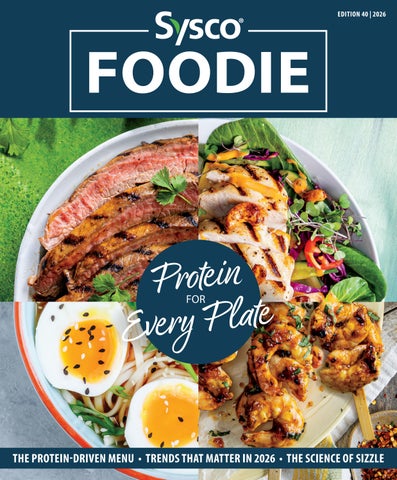
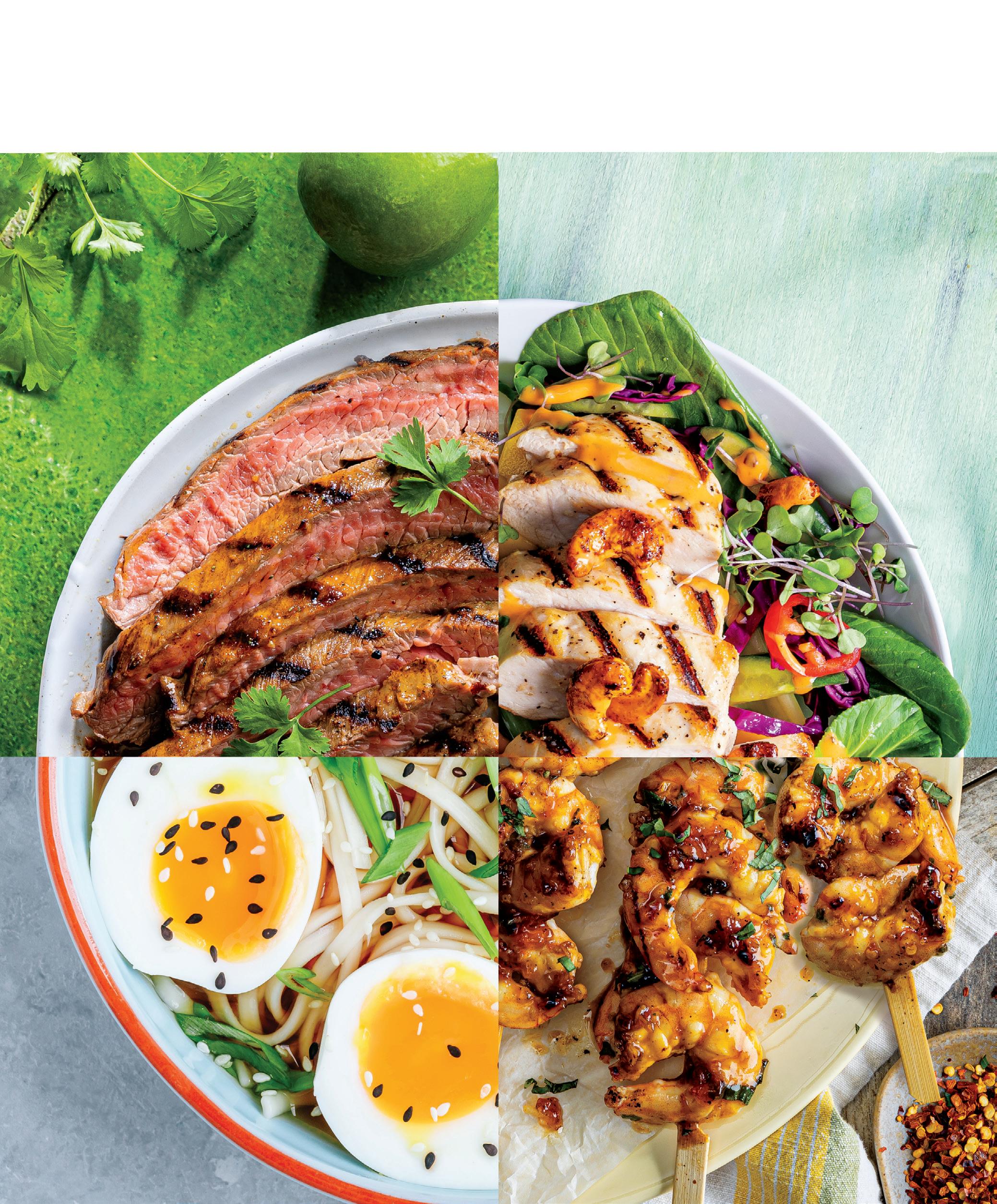
Protein Every PlateFOR
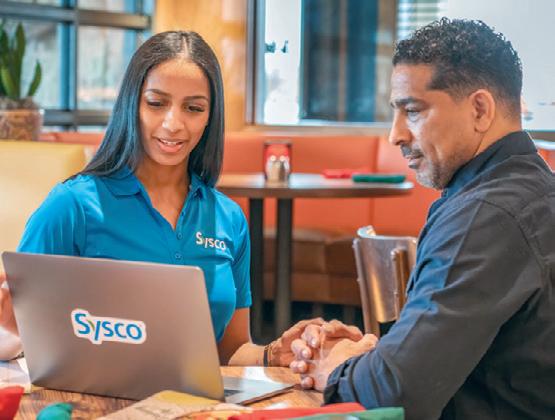

Your Partnership is Our Priority
Our Sysco team provides the best delivery, the best products, and the best services in foodservice.
Delivery
Preferred and premier service – on time and in full!
• Products are delivered as you ordered them
• No order minimums and next-day delivery
• Preferred delivery windows
• Real-time order response and recovery
Products
Everything you need to serve your customers.
• Dedicated support for all your product needs
• Broadest, freshest assortment and locally sourced items
Services
Exclusive, real-time service – just for you.
• Your Sales Consultant has access to instant solutions – for anything you need now!
• Industry experts to support your business needs
• Unlimited menu design services and restaurant marketing solutions to help you grow








Contact your Sales Consultant to learn more.




Features STORIES AND
CUSTOMER SPOTLIGHT
10 BUFFBURGER
See how Sysco Perks customer BuffBurger brings from-scratch flavor and innovation to a fast-casual environment
TASTE
12 AMP UP YOUR MENU WITH ADDED PROTEIN
New-season inspiration from our Culinary Specialists: bar-and-grill hits, globally inspired street food, plus standout builds your menu can own
TIPS
30 CONDIMENTS THAT EARN THEIR SPACE
From tabletop favorites to new wing sauces, learn how House Recipe delivers flavor made to dip, glaze, drizzle, and finish
34 THE AI-POWERED DINING ROOM
How to drive traffic and sales in 2026 with hyper-personalization
TECHNIQUE
38 THE SCIENCE OF SIZZLE: HOW FAT DRIVES TEXTURE AND TASTE
Dial in texture, flavor, and performance by understanding how different fats behave
FROM THE SOURCE
44 THE WORK BEHIND THE HUMBLE POTATO
Explore how Sysco Brand potatoes are grown in the fields of Idaho—and why those details make all the difference on the plate
TRENDS
49 9 TRENDS THAT MATTER FOR YOUR RESTAURANT IN 2026
Explore nine shifts driving demand, with practical ways to adapt your menu, operations, and profitability
TALENT & TRAVEL
54 ROOTED IN THE WATER
Get to know Sysco Culinary Specialist Chef Patrick Britten: his story, his point of view, and his Northern New England travel inspiration
RECIPES
58 FEATURED DISHES
Find the full recipes behind this issue’s inspiration
Dear Chefs & Operators, Every so often, a shift in consumer behavior opens the door to new opportunity. We’re in one of those moments now, and it starts with protein. Protein has always been central to the plate, but today it’s a foundational consumer driver shaping the entire menu conversation. Guests are choosing high-protein options not only for the health benefits, but for the satisfaction and staying power they bring to
Protein Every PlateFOR
a meal. Protein is increasingly how diners measure value, looking beyond portion size to the quality of the protein itself: its flavor, sourcing, and the intention behind how it’s prepared. Protein has become the currency of value, where flavor meets nutrition and trust is earned bite by bite.
At the same time, the rise of GLP-1 medications is adding a new dimension to consumer behavior. If you haven’t heard that term yet, you will.
GLP-1 is quietly but meaningfully reshaping how a growing number of guests think about appetite, frequency, and fuel. Some are eating smaller portions or dining out less often, but when they do choose to eat with you, they want food that’s intentional and nutrient-dense. They want protein-forward options that satisfy without excess. In many cases, they’re eating less overall, but expecting every dining occasion to deliver more value.
For operators, this moment presents a real opportunity. On the menu side, we’re seeing it in high-protein bowls, thoughtfully portioned entrées, smaller plates, and globally inspired builds that maximize flavor and nutrition. It’s also a chance to diversify beyond the traditional protein playbook. Beef and poultry remain staples, but seafood, legumes, plant-based proteins, and blended options are gaining momentum as guests explore new ways to meet their protein needs. For chefs, it opens the
door to creativity. For operators, it creates flexibility. And for guests, it delivers exactly what they’re looking for.
Operationally, these shifts call for sharper strategy. Changes in ordering patterns affect forecasting, inventory management, and waste. Reimagining portion sizes means balancing perceived value with ongoing food cost pressures, making supply chain collaboration more critical than ever. And don’t overlook the data already at your fingertips—your sales trends, order patterns, and guest feedback are telling you where behavior is shifting before you even feel it on the floor. Your messaging matters, too. The key is communicating health and wellness benefits without alienating guests who are still seeking indulgence and celebration. Both mindsets can—and should—coexist on the same menu.
My challenge to all of us is to not just react to these trends, but to anticipate where they’re
be those who track how guest behavior is evolving, who rethink how protein shows up across cuisines, formats, and dayparts, and who work closely with their partners to align cost, quality, and innovation.
At Sysco, we see protein on every plate, not just as a trend, but as a strategic lens for the future of foodservice. Our role is to help you navigate what’s changing, bringing insights, product solutions, and culinary expertise that empower you to adapt with confidence. Talk to your Sysco Sales Consultant about how we can help you build a protein strategy that works for your menu, your guests, and your bottom line.
This industry has never stood still, and the operators who lead are the ones who evolve with their guests. The future won’t belong to those who simply serve more. It will belong to those who serve smarter, with intention, creativity, and an unwavering focus on what matters most to the guest.
“PROTEIN HAS BECOME THE CURRENCY OF VALUE.”
~ Kevin Hourican

Q&A: WHAT OPERATORS SHOULD DO NEXT
Q: What’s changing?
Smaller appetites, higher expectations.
Q: What do guests want?
Intentional, protein-forward, nutrient-dense meals.
Q: What should operators do?
Re-think portions, forecast differently, message wellness without losing indulgence.
Protein-Driven THE MENU
HOW DELIBERATE PROTEIN AND FIBER PAIRING KEEPS GUESTS SATISFIED
Portions may be shrinking, but protein demand sure isn’t. For the fifth year running, protein tops the list of nutrients Americans want more of (Numerator, 2025). Seven in 10 are actively trying to eat more of it, and eight in 10 are prioritizing protein at least once a day—most often at dinner (56%), but also at breakfast (44%) and lunch (42%) (IFIC Spotlight Survey, July 2025). Your guests are walking in with a protein goal in mind. The question is whether your menu makes it easy for them to hit it.
This isn’t a wellness trend for a niche crowd. Across generations—from athletes to aging adults to anyone trying to stay full longer or navigating appetite changes—protein signals strength, sustained energy, satiety, and real value. Every table has someone thinking about it.
And with roughly 11% of U.S. adults currently on GLP-1 medications (Cargill, 2026), there’s an added layer: that group especially needs protein to preserve muscle during weight loss, and they’re eating out just like everyone else. For chefs and operators, this is less a nutrition story and more a menu engineering opportunity. Here’s how to think about it.
PROTEIN IS WHAT GETS THE ORDER. MAKE IT VISIBLE
Guests aren’t doing the math, but they’re absolutely scanning for cues. On packaged foods, grams of protein per serving is the most-referenced nutrition label (IFIC Food & Health Survey, 2025). On menus, the same principle applies—a dish that feels
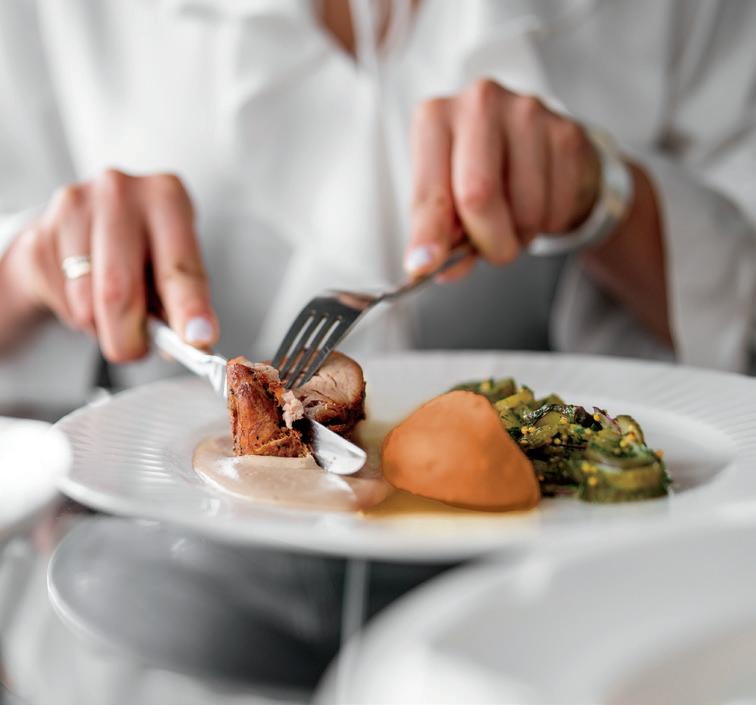
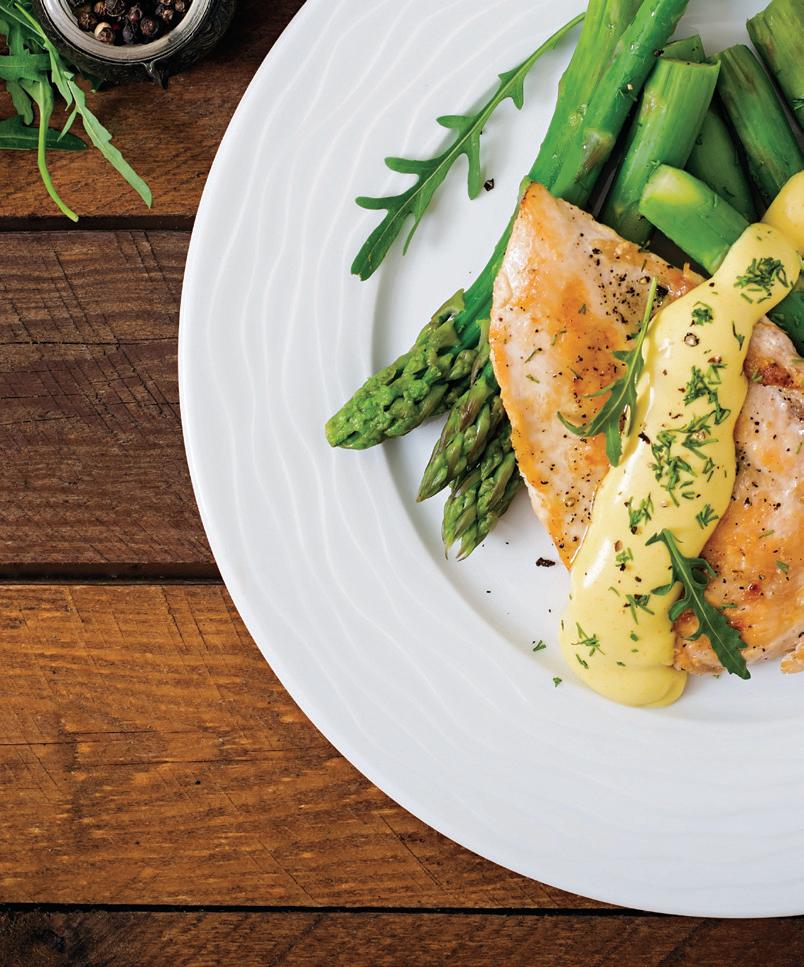
protein-forward gets chosen over one that doesn’t, even when both are equally balanced. Clear names, callouts, icons, or simple build structures all reduce the guesswork. Think of making protein visible as a quiet confidence builder for your guests. It answers their question before they have to ask.
SMALLER PLATES, SMARTER BUILDS
Eating patterns are shifting. More guests are going lighter, choosing shareables, snack plates, or smaller portions across multiple occasions. When volume comes down, nutrient density has to go up.
Here’s the good news: a standard 4-ounce animal protein already gets most guests close to what they’re informally targeting per meal (roughly 25–40 grams).
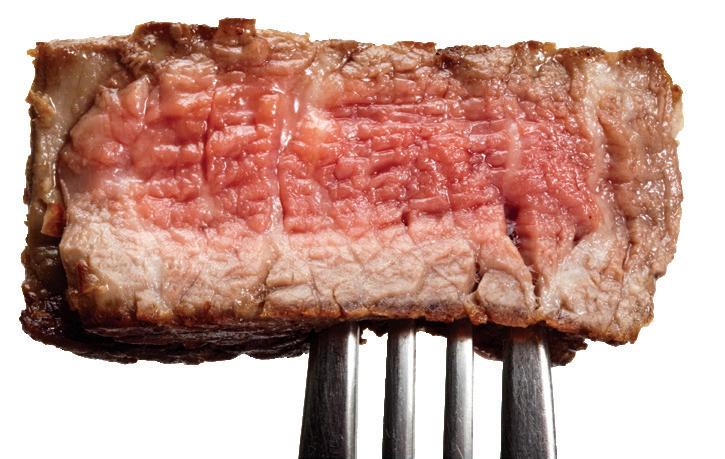
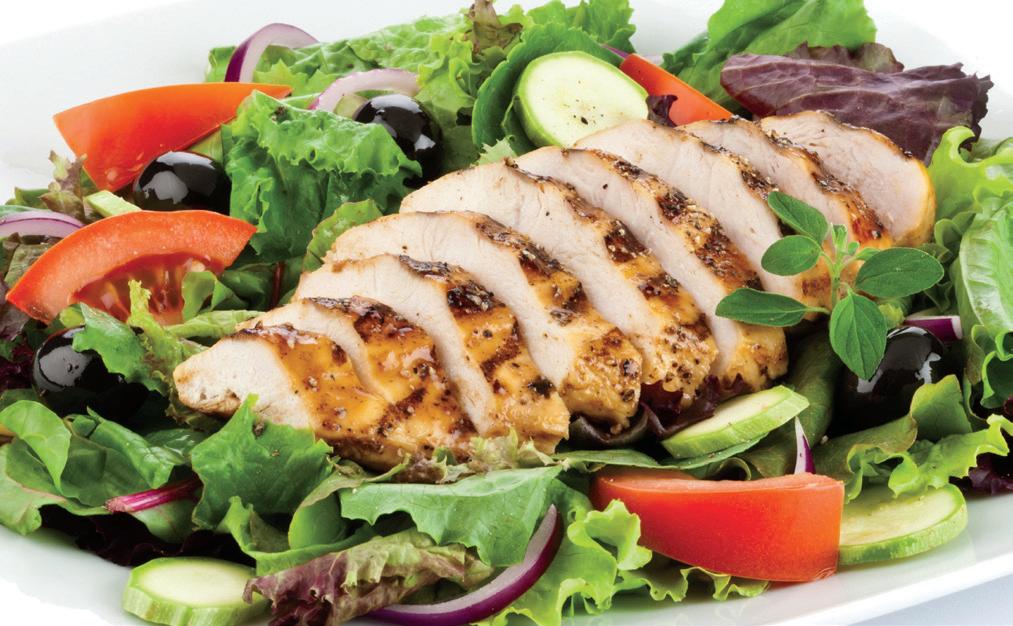
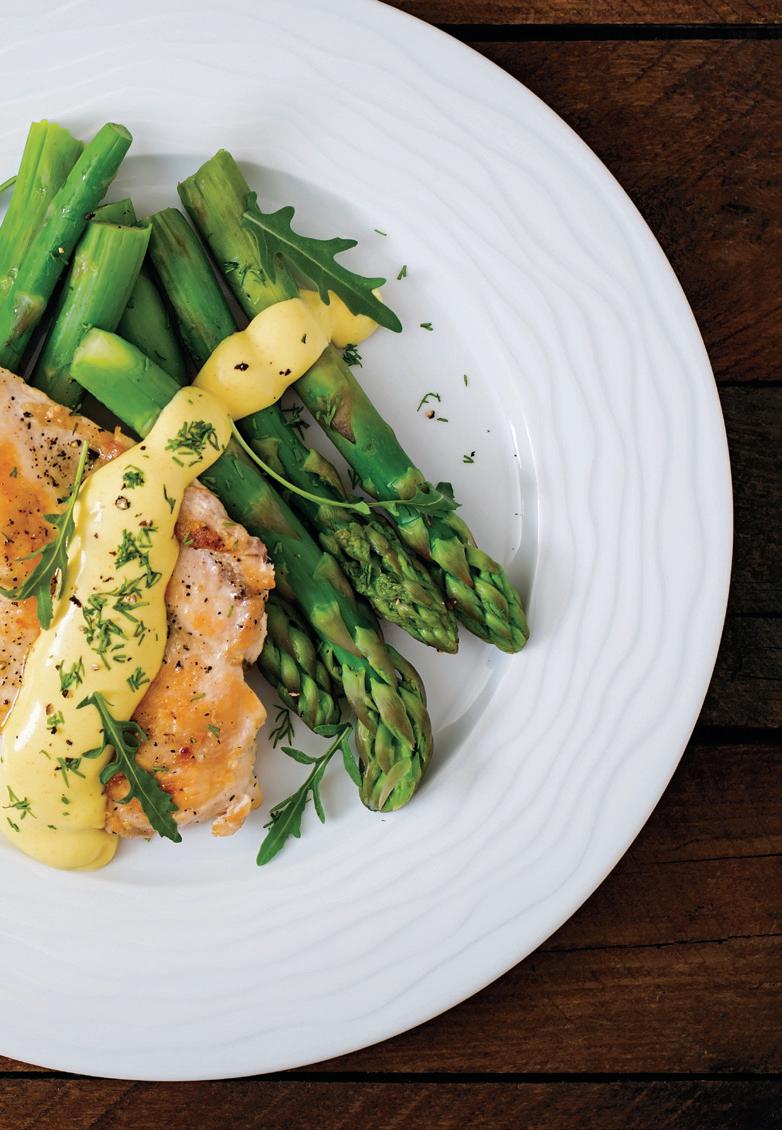
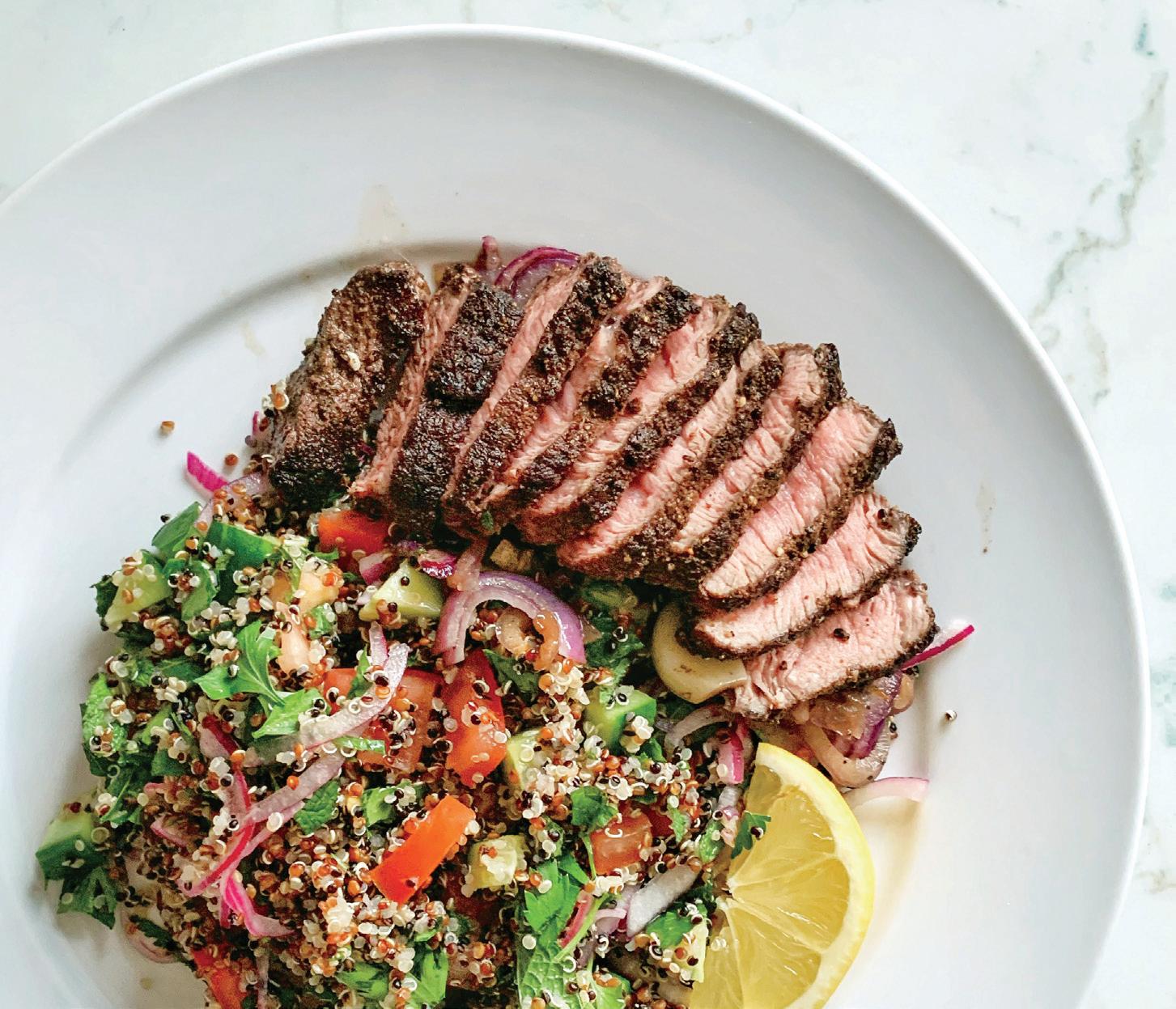
Chicken breast hits 28g. Sirloin, 26g. Salmon, 23g. You’re already in the ballpark with what’s probably already on your line. From there, the move isn’t to pile on more—it’s to pair smarter.
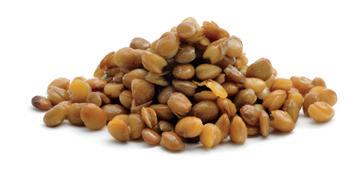
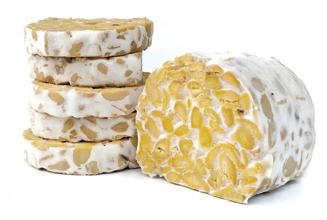
Animal proteins are still the preference—meat and poultry (65%), eggs (62%), seafood (48%) (IFIC Spotlight Survey, 2025)—but plant-forward options are gaining ground, especially for cost control and flexitarian appeal. Tempeh, lentils, and beans provide protein and fiber, making them the most efficient tools in the toolkit.
Muscle health, energy, and overall well-being are the top three reasons consumers say they want more protein—in that order.
(IFIC Spotlight Survey, July 2025)
BUILDING FOR THE GUEST WHO’S PAYING ATTENTION
Today’s diner is eating less but thinking more about what they eat. They’re customizing, scanning for protein cues, and open to bowls, snack plates, and half portions—as long as the build feels intentional. They’re not asking for a nutrition lecture. They’re asking for food that works.
You don’t need to rewrite your menu. You just need to engineer the combinations more deliberately: lead with protein, let fiber ride alongside it, use legumes and whole grains as real structural players, and clearly call out what’s in the dish so guests can make the choice confidently. Protein drives the order. Fiber shapes the experience. Design for both, and you’ve got a menu that meets guests where they are right now and keeps them coming back. of consumers are actively paying attention to protein—more than those tracking sugar, fat, carbs, or even total calories.
78%
(Numerator, 2025)
From center-of-plate favorites to versatile menu builders, Sysco offers a wide range of protein solutions to help keep menus fresh and profitable.
10% + =
Protein mentions on restaurant menus jumped 10% in just one year, with 1 in 5 restaurants now highlighting protein in their dishes.
(Sevendots/Tastewise, 2025)
SCAN TO SHOP Browse the assortment on Sysco Shop.
THE PROTEIN + FIBER PAIRING MAP
Protein drives the order. Fiber shapes the experience. Guests lead with protein, but fiber is what determines whether they leave satisfied or still picking at their plate two hours later—and whether they come back. Satiety, digestive comfort, and steady energy are repeat-visit drivers. And fiber doesn’t need to be a separate conversation. Pair it with protein intentionally, and it becomes part of what makes the dish work. Here’s a practical map using what’s probably already in your walk-in:
Step 1: Start with your protein
No extreme portions. No specialty ingredients. Just deliberate pairing. Even small swaps move the needle: cabbage slaw instead of plain greens, farro instead of white rice, beans folded into a ragout, chia stirred into a yogurt sauce. The dish quietly becomes more nutritious and more satisfying, and guests feel the difference even if they can’t name it.
Nearly 1 in 4 Americans think they’re not getting enough protein.
That’s a gap operators can close, and a reason guests are scanning menus with intention. (Numerator, 2025)
THE GLP-1 GUEST AT YOUR TABLE
About 11% of U.S. adults have used a GLP-1 medication (Cargill, 2026), and many of them are dining out. These medications significantly suppress appetite, so guests often eat less. But needing fewer calories doesn’t mean needing less nutrition. It means every bite has to deliver more.
PROTEIN IS CRITICAL
Rapid weight loss without adequate protein intake can lead to muscle loss as well as fat loss. For GLP-1 users, prioritizing protein at each meal helps preserve lean mass. Experts recommend spreading protein intake throughout the day rather than concentrating it into one sitting.
Step 3: Look at What You’ve Built
Chicken + Quinoa + Roasted Broccoli
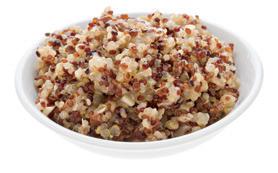
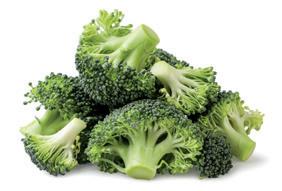
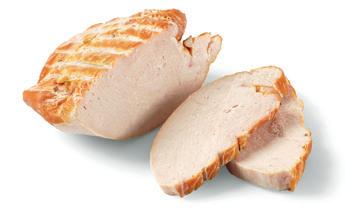
Turkey + Lentils
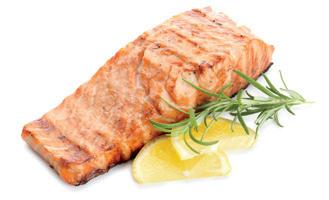
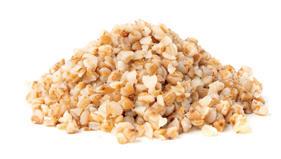
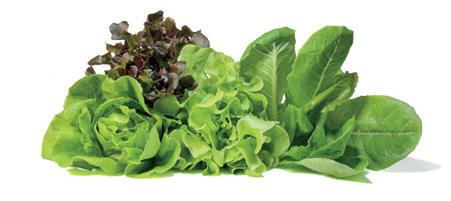
Salmon + Farro + Greens
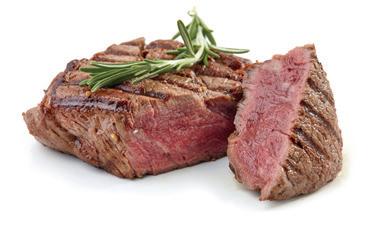
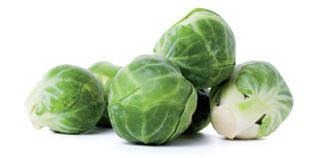
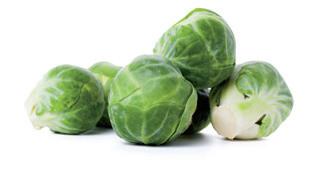
Sirloin + Sweet Potato + Brussels Sprouts
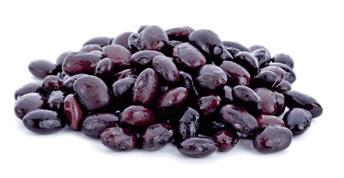
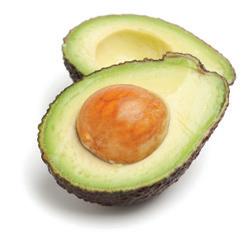
Eggs + Black Beans + Avocado
Tempeh + Chickpeas + Greens
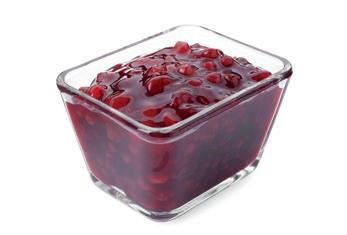
Greek Yogurt Mousse + Berry Compote + Chia Crumble




32g 7g
33g 8g
A bowl that hits a protein target without feeling oversized.
High-density, controlled food cost, and genuinely satisfying.
27g 6g
A modern grain bowl with balance built in.
FIBER
PLAYS
A KEY ROLE
Fiber is an important consideration for guests taking GLP-1 medications (Mayo Clinic). Legumes, whole grains, fruits, and vegetables aren’t just smart menu components; they help support how guests feel after eating.

30g 8g
12g 7g
A classic build that earns its place on any menu.
A breakfast or brunch plate that keeps guests full well past noon.
A plant-forward build with real staying power and strong cost efficiency.
Dessert-adjacent but nutritionally intentional; a smart way to close a meal.
WHAT THIS MEANS FOR YOUR MENU
GLP-1 users often order lighter, skip courses, and favor smaller, intentional builds. They’re seeking nutrient-dense, protein-forward dishes with visible sources of fiber. You don’t need a separate menu. You just need thoughtful engineering with the one you already run.
FEATURED CUSTOMER
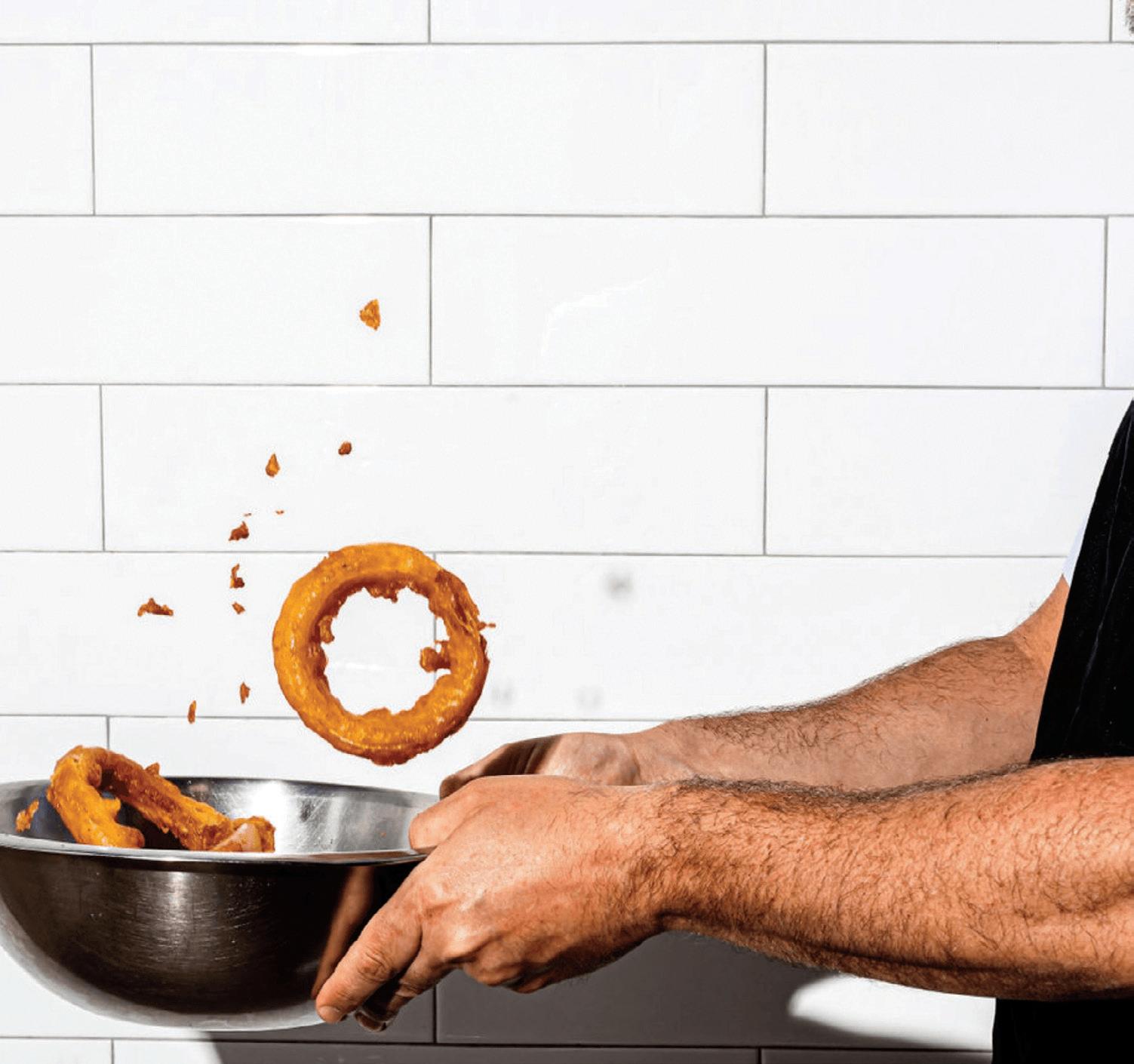
BuffBurger:
FINE-DINING STANDARDS IN A FAST-CASUAL ENVIRONMENT
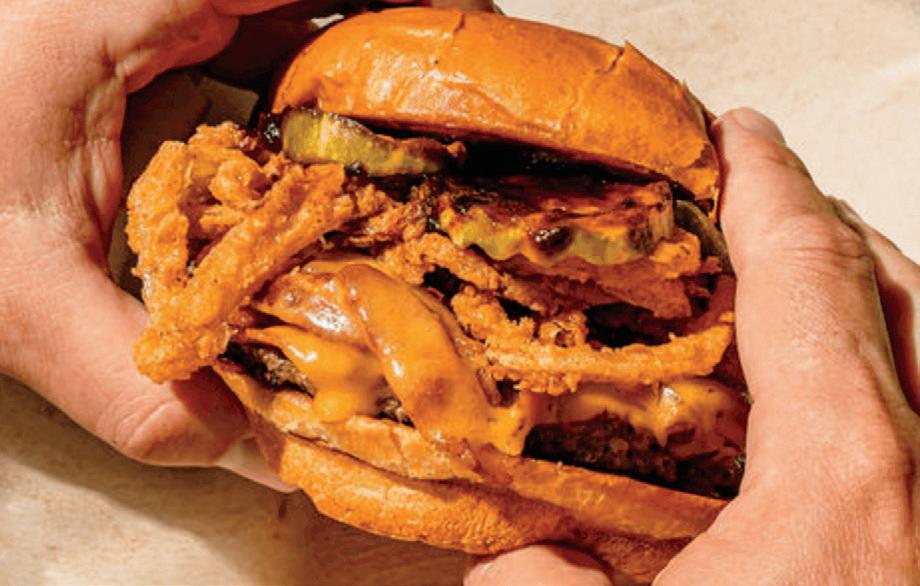
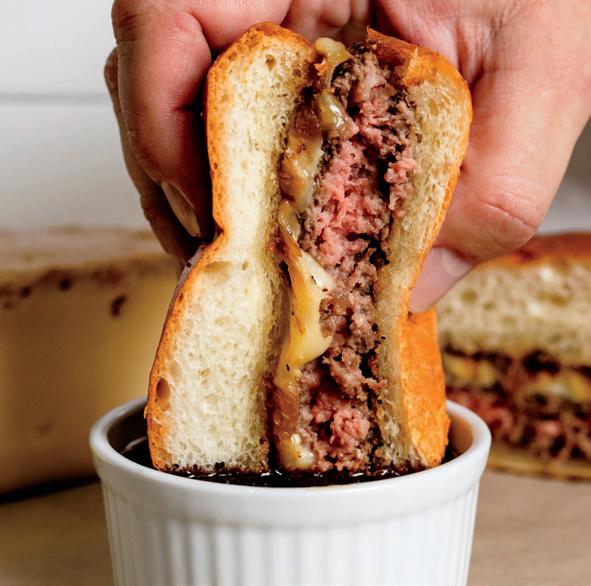
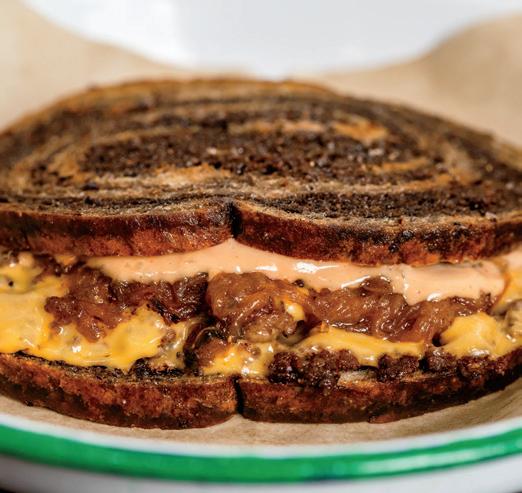
Just off a busy Houston interstate, BuffBurger may look like a convenient stop, but locals know it’s something much more. Owned and operated by husband-and-wife team Paul “Buff” and Sara Burden, this neighborhood favorite has earned a loyal following by holding itself to standards more common in fine-dining kitchens than fast-casual counters.
“ WE KEEP THE MENU SIMPLE, BUT WE USE THE BEST QUALITY INGREDIENTS WE CAN JUSTIFY.”
~ Buff


Paul (Buff) Sara
At BuffBurger, the philosophy is simple: if they can make it from scratch, they do. Nothing here is accidental. Every cut, cook, and process is intentional, and guests can taste the difference.
> FROM NEW ZEALAND TO HOUSTON
The inspiration for BuffBurger was born far from Texas. After meeting in Colorado, Buff and Sara spent a year traveling through New Zealand and Australia, where elevated burger concepts reshaped their idea of casual dining. They returned to Houston determined to bring that same approach home: fine-dining–level quality in a fast-casual format.
Though Buff never attended culinary school, he’s worked in restaurants his entire life. That hands-on experience drives a chef-focused mindset rooted in execution. “We keep the menu simple,” Buff says, “but we use the best quality ingredients we can justify.”
> BEEF AT THE CENTER
At the heart of BuffBurger’s menu is beef. Their signature seven-ounce burgers and smash burgers feature a custom tri-blend of chuck, short rib, and brisket,
with no fillers or added fats. The patties are seasoned simply with salt and pepper, letting the quality speak for itself.
Much of that quality comes from sourcing. Buff often features beef from RC Ranch, a Texas Wagyu producer, sourced through Sysco.
“Everything beef-wise is from Sysco,” he says—a partnership that ensures consistency while supporting premium, local-minded products.
That same attention to detail carries through the build. Thick-cut bacon, vegetables cut fresh daily, and cheeses sliced in-house for better melt and control.
> ELEVATED SIDES, MADE FROM SCRATCH
If the burgers draw guests in, the sides keep them coming back. Fries are hand-cut and triple-cooked, then fried exclusively in beef tallow for added richness. Signature tater tots are made entirely in-house. They’re boiled, shredded, seasoned, formed, and fried, crafted with a level of care rare in fast-casual kitchens.
Scratch cooking extends to sauces many operators buy ready-made. Even mayo is
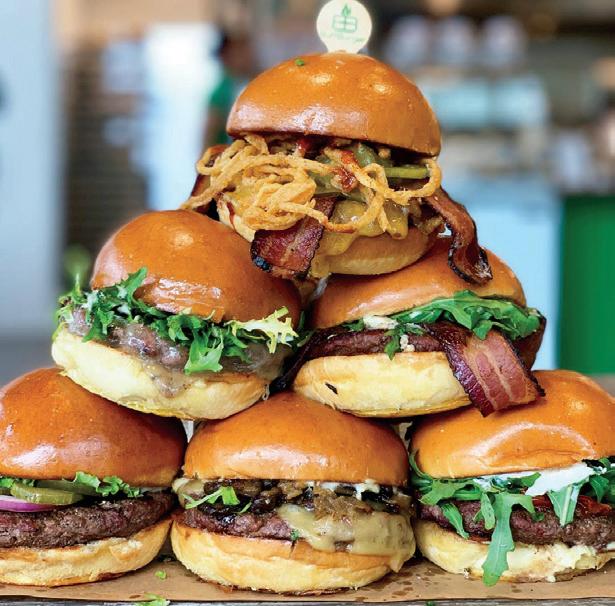
house-made, reflecting Buff’s belief in controlling inputs to control outcomes.
The fried chicken sandwich follows the same approach. Chicken is brined overnight, marinated the next day, and finished with a seasoned dredge using multiple starches; a fine-dining technique applied to a fast-casual staple.
> CRAFT BACKED BY DISCIPLINE
Executing this level of quality at volume requires systems. “We’re doing fine-dining–type products in a fast-casual environment,” Buff says. Training, documentation, and cross-trained teams help balance complexity with consistency.
On the business side, Buff tracks more than 30 metrics weekly, reviewing profit every week instead of monthly. “Nobody cares about your money the way you do,” he says. “You have to stay on top of it.”
> ROOTED IN COMMUNITY
Despite its interstate location, BuffBurger thrives on neighborhood support. Schools, churches, and community groups form its core audience, and Buff and Sara prioritize giving back.
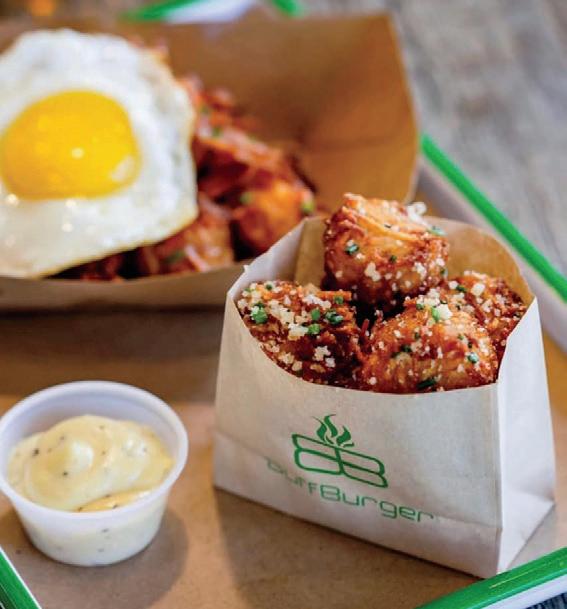
Last year, they catered 1,000 burgers for a local church, proving their systems could scale without sacrificing quality. That success led to a growing on-site catering business featuring a mobile flat-top grill.
> A TRUSTED PARTNERSHIP
BuffBurger has partnered with Sysco for more than a decade, working closely with their Sales Consultant to navigate pricing pressures and maintain consistency. As a Sysco Perks customer, the restaurant also benefits from additional savings opportunities through the program. “Your closest contact is your rep,” Buff says, a trust that has kept the partnership strong. With a second Houston-area location on the horizon, Buff and Sara are growing thoughtfully, focused on preserving the handcrafted systems and uncompromising standards that define BuffBurger. From crisp hand-cut fries to carefully seasoned patties, BuffBurger proves that when craft leads, even a roadside burger can become something exceptional.
Added
Protein
Your diners are chasing flavor—big, bold, can’t-stop-thinking-about-it flavor. And increasingly, they’re looking for dishes that deliver that flavor with real substance, with protein leading the charge. Those flavors aren’t always coming from white tablecloth kitchens; they’re coming from the street. From Tel Aviv sabich stands and Tijuana taco trucks to coastal boils that turn dinner into an experience, these are the dishes guests connect with because they feel real, craveable, and satisfying.
What we’re serving up here is a set of menu power moves built for the way chefs operate today. These concepts tap into global inspiration while putting protein where it belongs: at the center of the plate. They’re trendy, yes, but they also help solve real challenges: handhelds that travel well for off-premise and create easy upsell moments, protein-forward builds that justify the check average, and seasonal combinations that add color and freshness without adding complexity.
Whether you’re leaning into a viral moment, elevating your grill program, or bringing brighter spring flavors to the menu, these recipes showcase protein in fresh, exciting formats while improving your margins. If you’re ready to cook smarter, keep guests curious, and build momentum going into the season, let’s get to it.
MODERN BAR & GRILL CLASSICS
Today’s bar-and-grill guest still craves the comfort favorites—burgers, fries, shakes, indulgent shareables—but they expect bolder flavor, fresher presentation, and a more modern twist. These dishes balance approachability with elevated technique, giving you upgraded versions of menu staples that consistently sell.
FLAVOR NOTES FROM CHEF PHILLIP BAXMAN
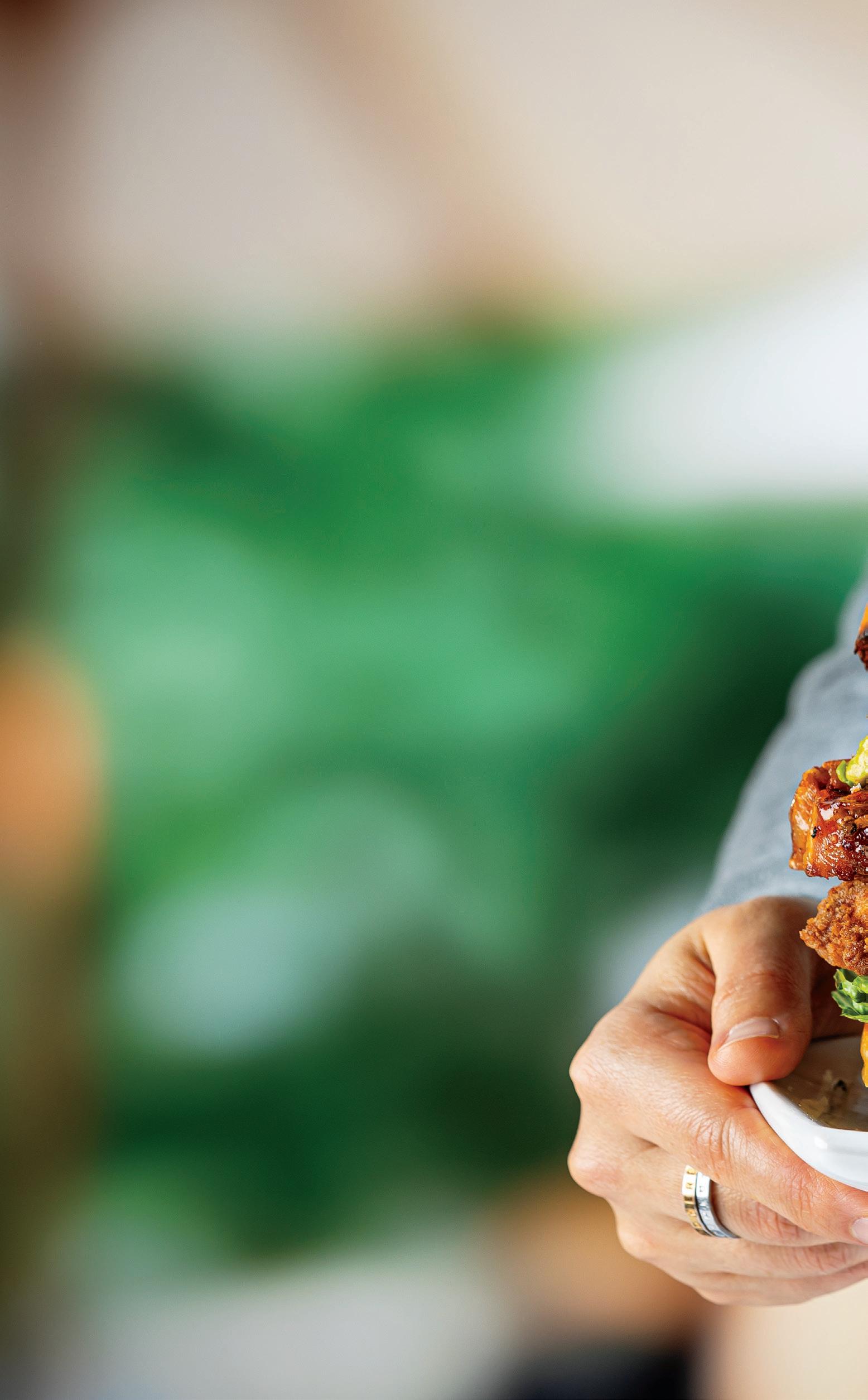
The goal was to take a dish everyone knows and challenge the format. The familiar Cobb flavors remain, but serving it hot with crispy chicken, pork belly, and a runny yolk turns it into something louder, richer, and intentionally indulgent.
MAKE IT A SUMMER HEADLINER
Feature the Cobb Sandwich as a signature for spring and summer, especially for patio dining and game-day promotions. Pair it with upgraded fries, a seasonal side, or a featured craft beer or spritz. Its stacked textures and vibrant presentation create a memorable bite guests will return for.
SCAN TO SHOP Visit Sysco Shop to purchase ingredients.
USE LAYERS TO JUSTIFY PRICING AND PROTECT MARGIN
This multi-component build naturally supports a higher price point. Aim for a food cost in the low-to-mid 30% range while delivering strong dollar profit. The visual payoff—thick-cut pork belly, crispy chicken, visible avocado—makes it ideal for menu photography and social content, driving trial and repeat traffic.
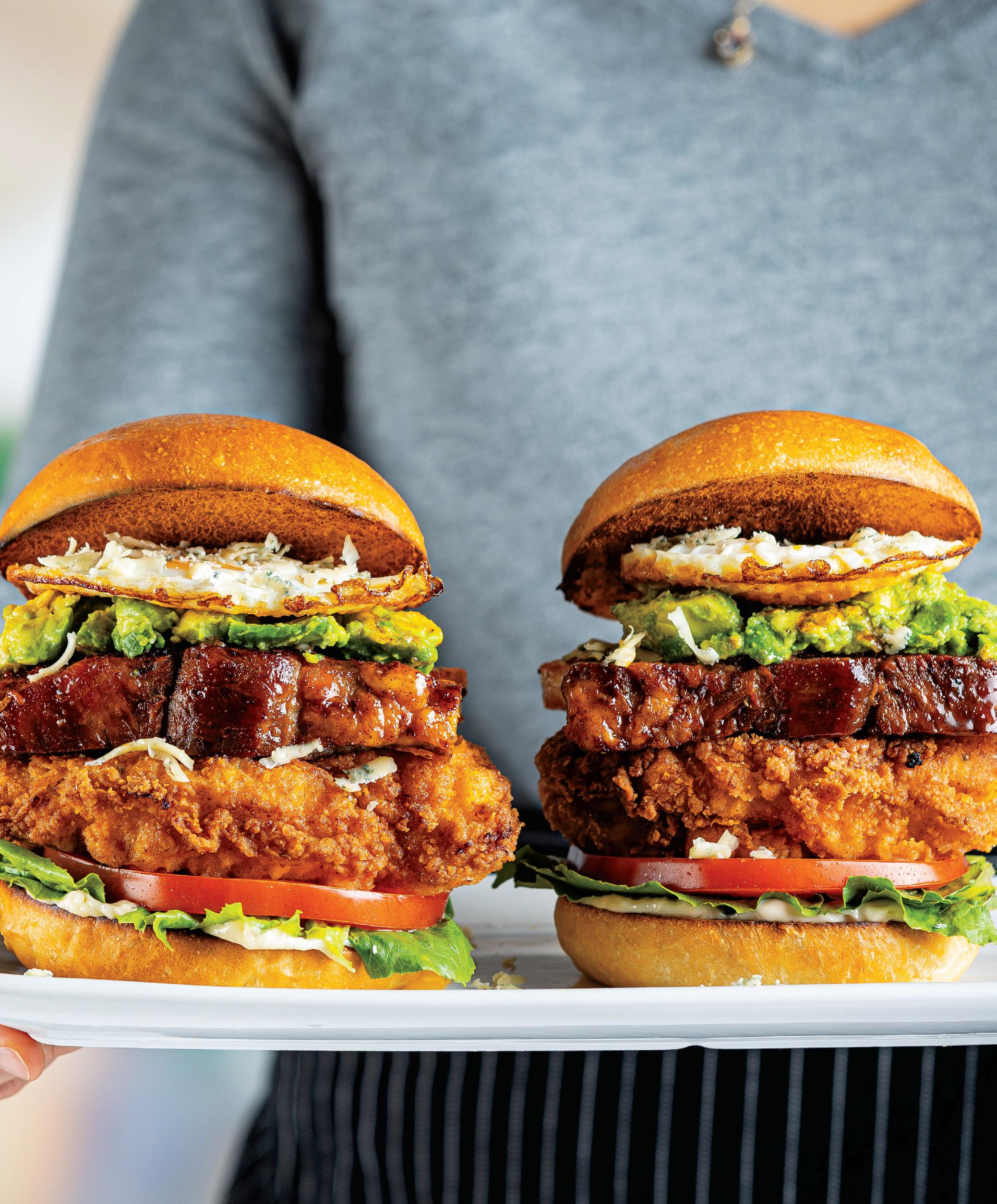
TURN A SALAD FAVORITE INTO A PREMIUM HANDHELD
The Cobb Sandwich stacks everything guests love about a classic Cobb—avocado, bacon, egg, bleu cheese, crisp lettuce, tomato—into a hearty, knife-and-fork-worthy build. It lands as an intentional indulgence perfect for a higher menu tier.
STRETCH COMPONENTS INTO MULTIPLE DAYPARTS
Nearly every component in the Cobb Sandwich can anchor another dish:
> Brined fried chicken: Tenders, salads, chicken & waffles
> Pork belly: Breakfast, burgers, or bar bites
> Bleu cheese, avocado, egg: Salads, grain bowls, brunch builds
> Cobb-inspired applications: Brunch sandwiches or flatbreads that keep the same mise en place working across lunch, dinner, and weekends
Cobb
~ p. 58
Sandwich
THINK BEYOND THE ENTRÉE
Protein innovation is expanding well beyond entrées. From creamy yogurt-based sauces to shakes blended with nut butters or protein-rich dairy, operators are finding ways to add protein to indulgent menu moments. For bar and grill concepts, this could mean mascarpone–spiked shakes, peanut butter-forward desserts, or savory sauces enriched with cheese or yogurt; small additions that make classic comfort foods feel both modern and satisfying.
LAYER FLAVOR ONTO EXISTING PLATFORMS
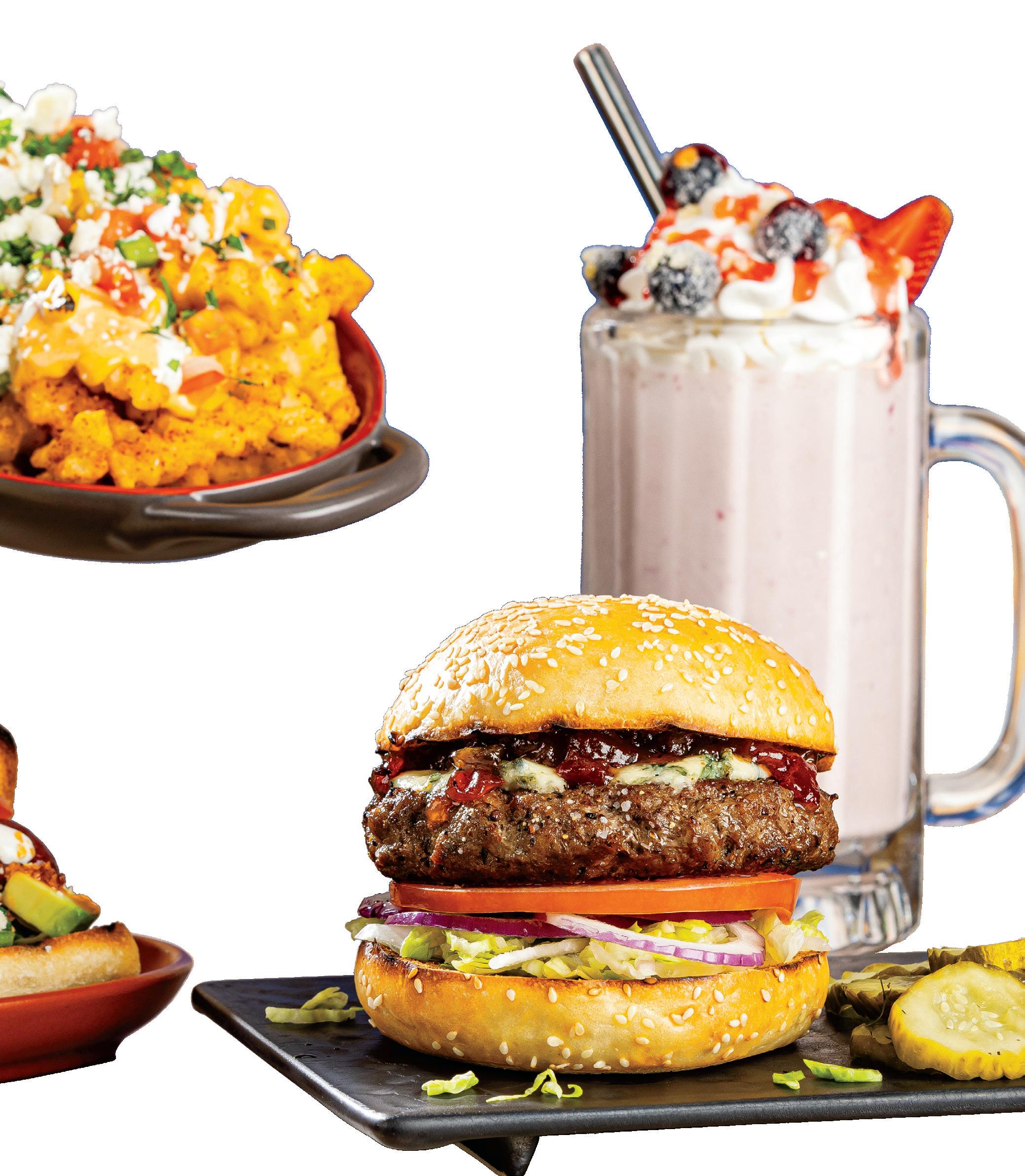
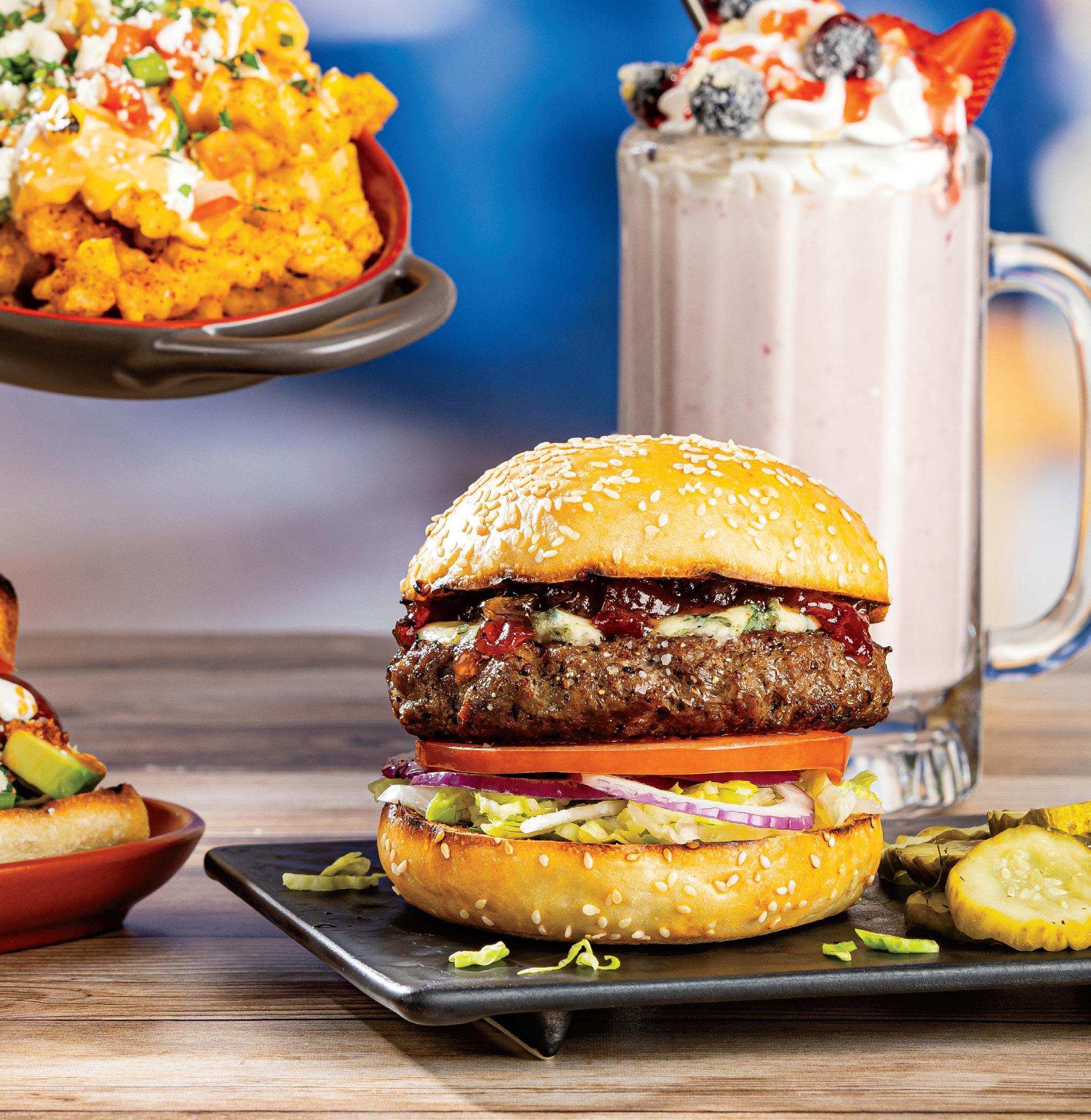
Each item starts with best-selling formats—fries, burgers, sausages, shakes. The differentiation comes from bold toppings: eloté-style street corn on fries, sweet-heat bacon jam and bleu cheese on burgers, smoked burnt ends with Sonoran-inspired garnishes on sausage, and a premium shake with mascarpone, berries, and festive décor. These enhancements keep food cost tight while giving guests a compelling reason to trade up.
PROTEIN-PACKED UPGRADES
Today’s diners are actively seeking protein-rich options, and bar and grill menus are perfectly positioned to deliver. Lean into protein-forward upgrades that build value into familiar formats—think double-patty smash burgers, brisket or burnt-end toppings, bacon-forward builds, or cheese-heavy sauces and spreads. These additions not only increase perceived value but also give guests a more satisfying, craveable experience that supports higher price points.
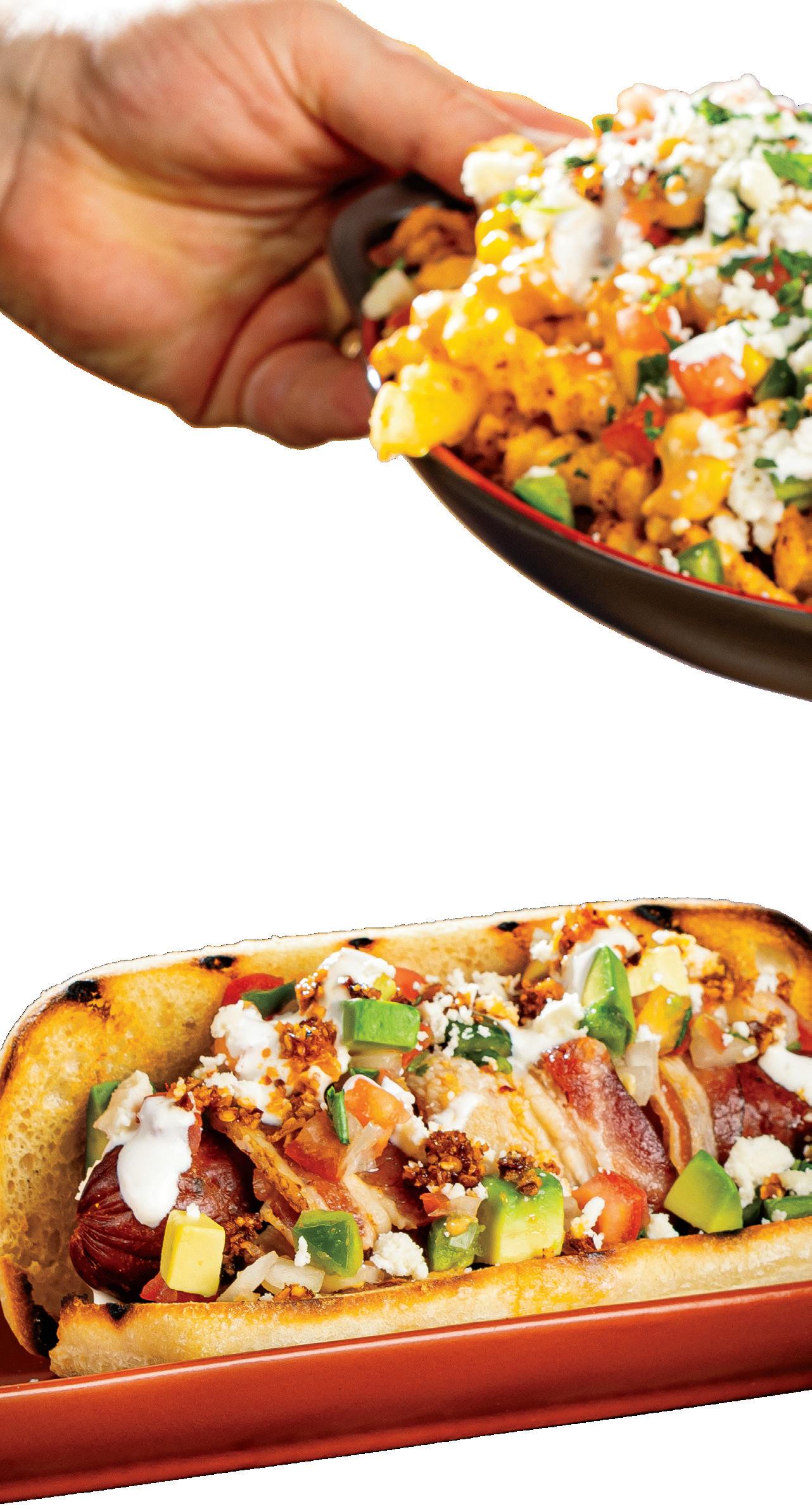
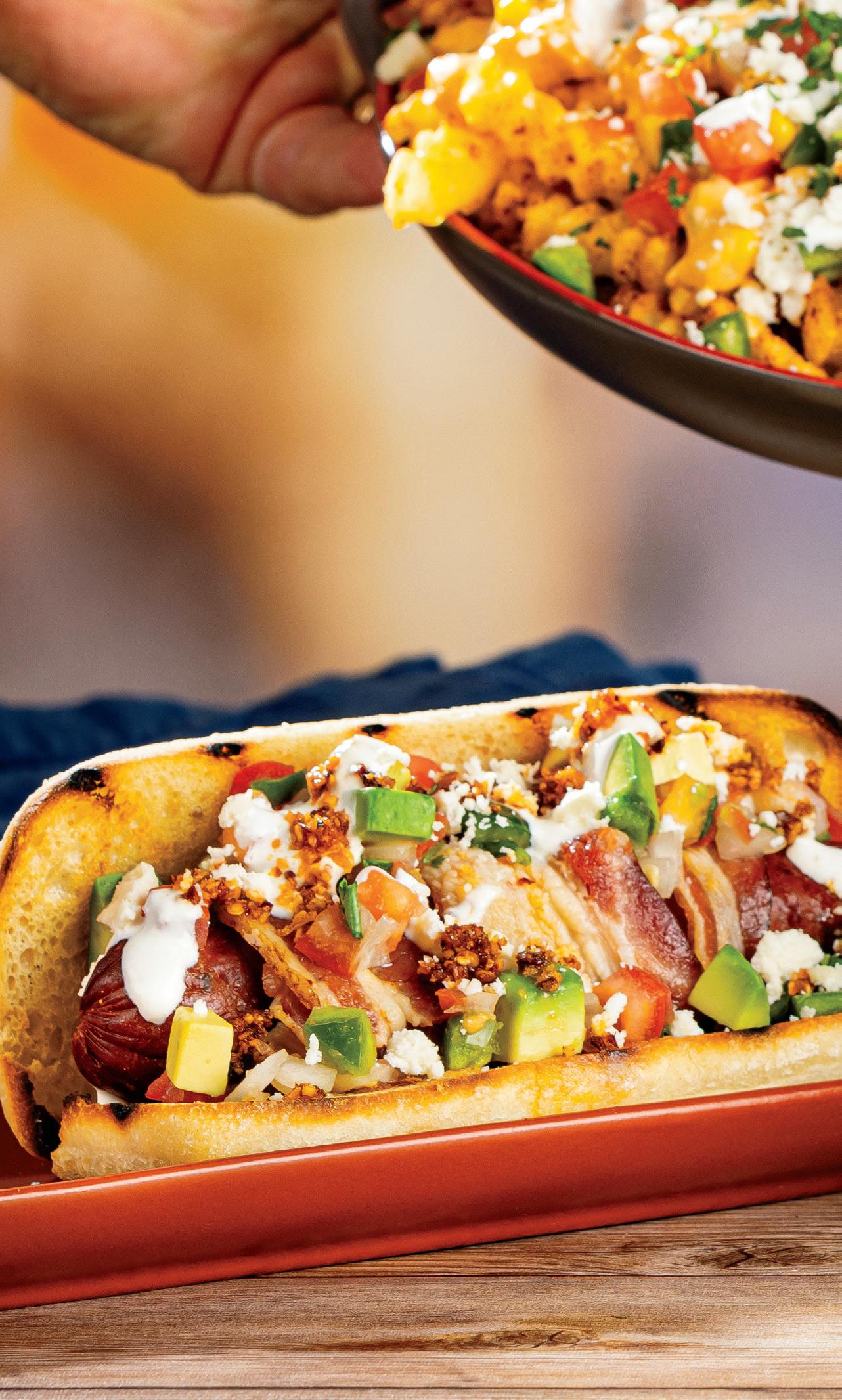
CROSS-UTILIZE COMPONENTS FOR EFFICIENCY
Design components to work across multiple builds:
> Habanero bacon jam: Burgers, fries, sandwiches
> Street corn seasoning & cotija: Eloté fries, grilled corn, tacos
> Strawberry-mascarpone blend: Shakes or shortcake-style desserts
SCAN TO SHOP
Visit Sysco Shop to purchase ingredients.
Sonoran Style Burnt End Sausage ~ p. 58
RECIPES FROM CHEF SHEA ZAPPIA
TIE INTO SUMMER CELEBRATIONS
These dishes are built for warm-weather occasions: patio season, Cinco de Mayo, summer beer flights, margarita features, and Fourth of July celebrations. Create simple, high-margin bundles that increase check averages without slowing down service, such as:
> Eloté fries + beer flight
> Brasserie handhelds + house margarita
> Independence Day shake (spikeable for adults)
4th of July
of consumers are willing to pay more for protein-fortified foods and beverages. (Grand View Research) 70%
53% of consumers associate protein with dinner while only 25% associate it with breakfast, creating opportunity for new menu innovation. (Revenue Management Solutions 2026)
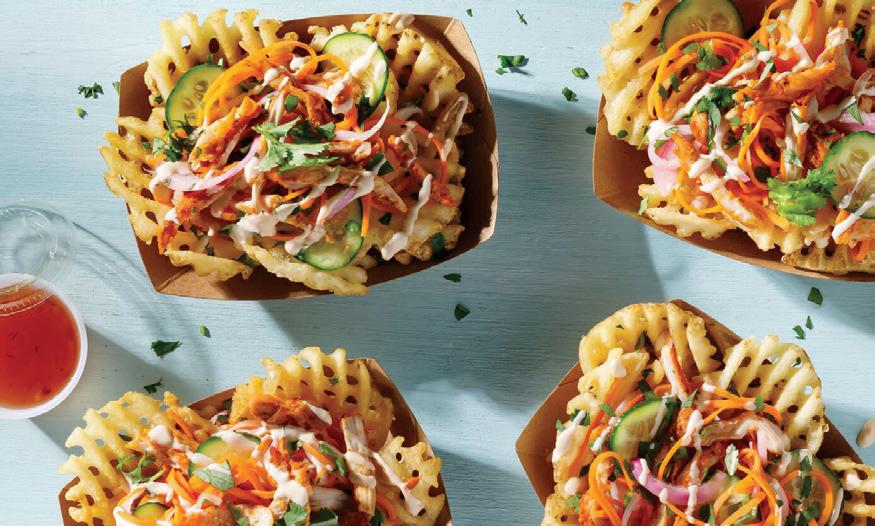
Spicy Mexican Street Corn Crinkle Cut Fries ~ p. 58
Brasserie Burger with Habanero Bacon Jam & Danish Bleu ~ p. 58
Shake ~ p. 58
STREET EATS & GLOBAL TREATS
The warmer months are built for food that feels spontaneous, sharable, and a little adventurous. Street food-inspired dishes check all those boxes—big flavor in familiar formats that play well on patios, bar menus, food halls, and late-night lineups. These ideas earn their keep on the menu while keeping prep practical for the back of house.
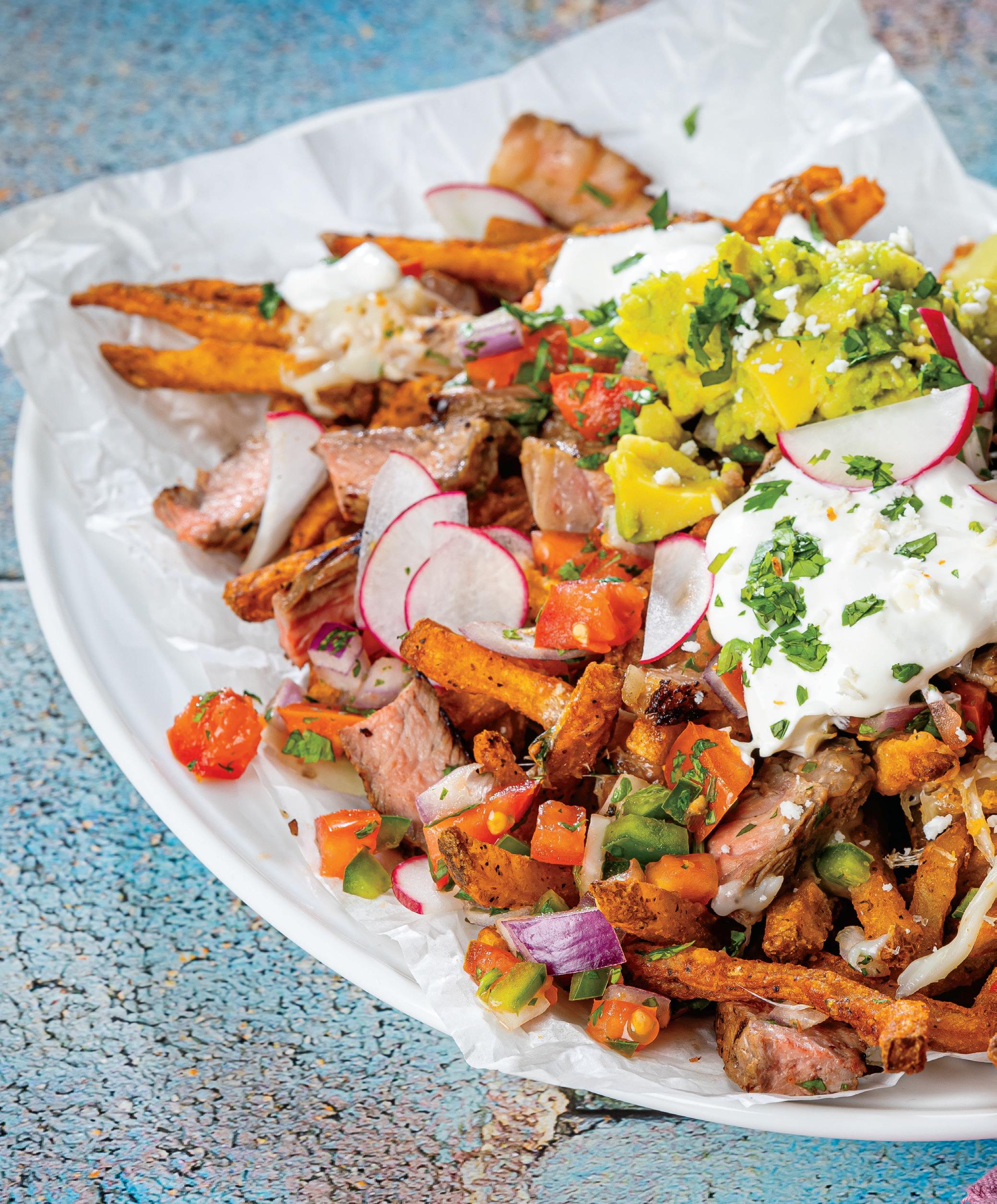
California-Style Carne Asada Fries ~ p. 59
FLAVOR NOTES FROM CHEF BOBBY BRIDGES
Loaded fries are a street food classic, perfect for quick service in high-energy, luxury sports hospitality. Ultimate Crisp French Fries stay crispy longer, creating the ideal foundation for grilled steak and bold, familiar flavors.
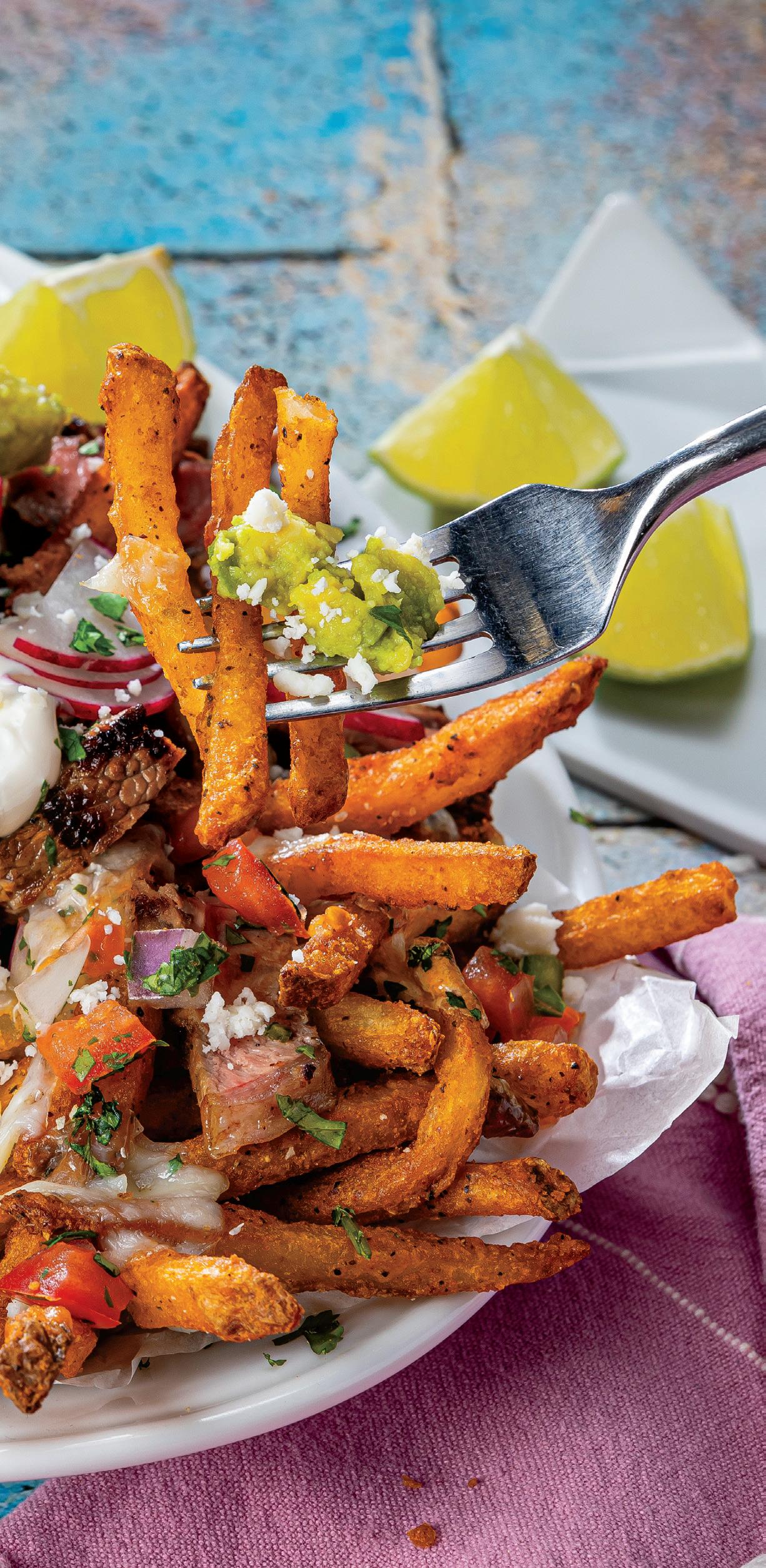
Visit Sysco Shop to purchase ingredients. Guests associate “street-style” items with authenticity, and bold flavor commanding 18-25% price premiums over standard preparations. (Datassential)
SCAN TO SHOP
Fries piled sky-high are a natural focal point for groups. List them under “Street Eats” or “For the Table” and describe them as a loaded skillet or platter meant for sharing. Guests think of them as a fun snack, but the price and portion can sit closer to an entrée, especially when you emphasize layered premium toppings.
MAKE THE MOST OF YOUR MISE
Carne asada and toppings can be prepped in bulk and portioned so the line can assemble fast during peak periods. The same steak, sauces, and garnishes can slide easily into tacos, bowls, nachos, or loaded tots. One prep set supports a full family of dishes, controlling waste while still delivering a sense of choice.
TURN A SIDE INTO A SIGNATURE
This build lets you transform a low-cost staple into a signature item with real margin. Use seasoned carne asada, house-made sauces, global cheeses, and vibrant garnishes to justify a higher price point, then offer simple upgrades like extra proteins, guacamole, or a fried egg. These add-ons feel indulgent, cost little per portion, and help push checks higher when guests are already in “let’s share something” mode.
LET FRIES WORK OVERTIME
Fries are one of the most flexible bases in your kitchen. They fit appetizers, shareables, late-night snacks, and limited-time features without changing your core inventory. You can spin the same approach as carne asada fries into other loaded fry concepts: buffalo chicken fries, gyro fries, or seasonal veg-loaded versions. A simple swap of protein, sauce, or garnish lets you roll out short-term promos or game-day specials with minimal operational change. That versatility makes fries an ideal platform for driving repeat visits and incremental sales all season long.
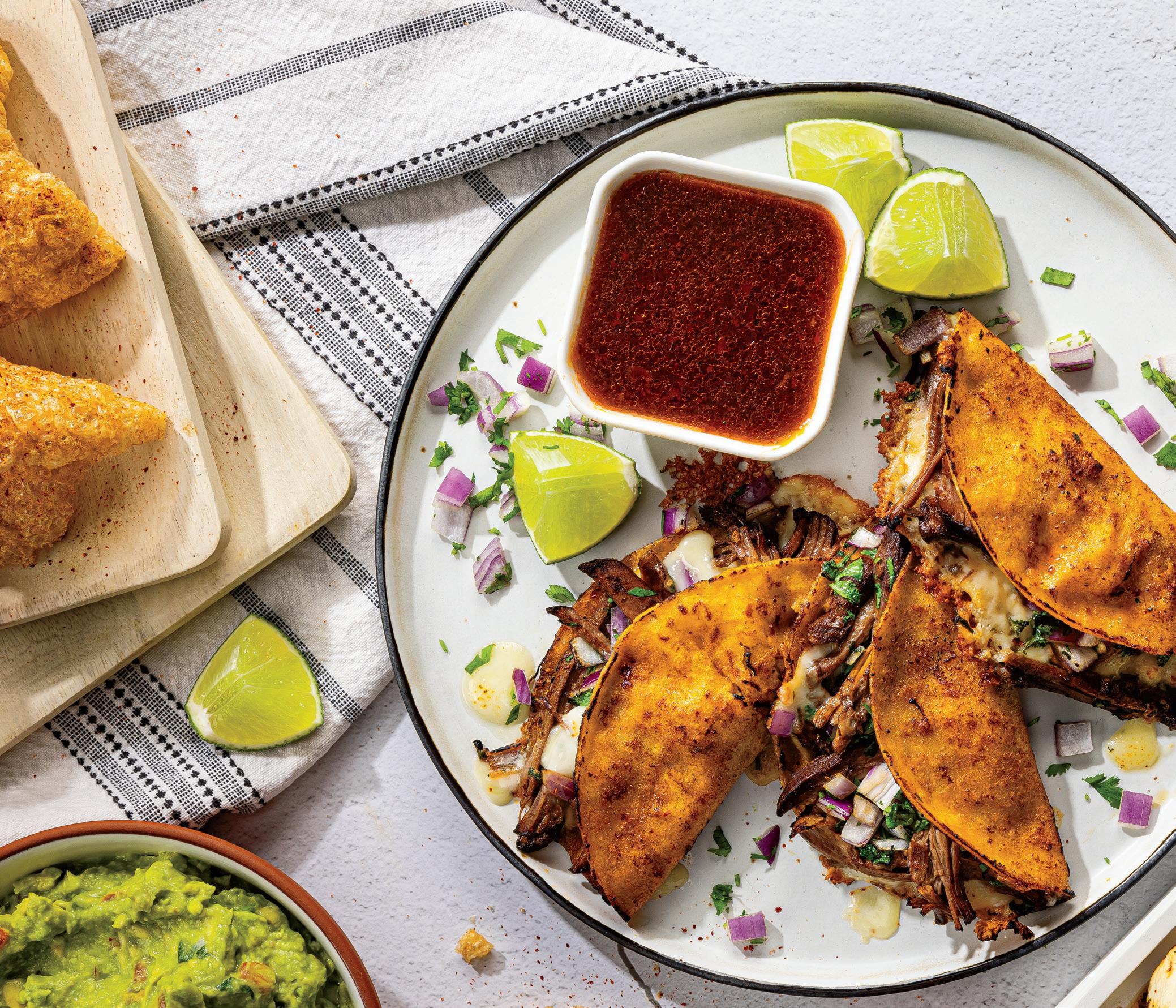
GIVE BIRRIA TOP BILLING
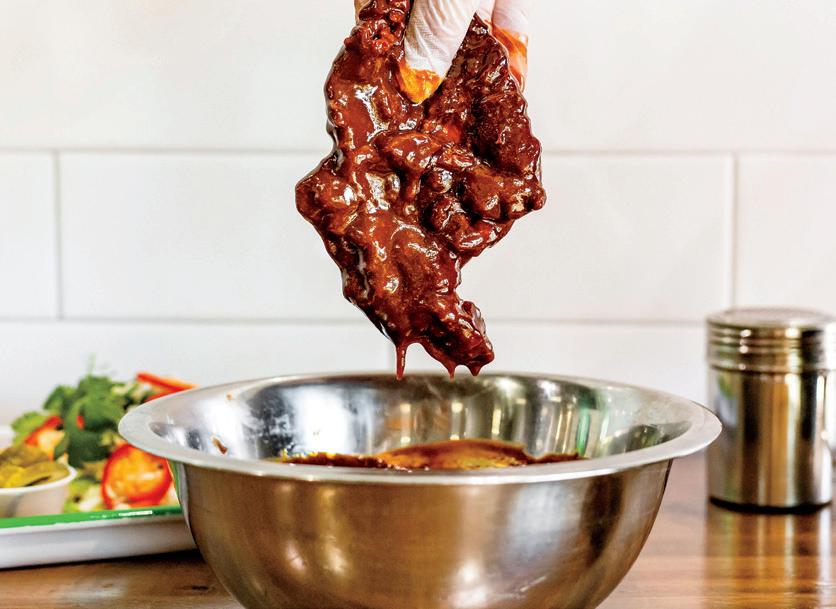
Birria tacos deserve a spotlight. Feature them prominently in a “Street Tacos” or “Global Comforts” section or tag them as a chef’s pick to signal they’re something special. The rich, slow-cooked meat and consommé for dipping deliver a full sensory experience that feels worth a trip—and worth a premium.
BUILD AN EXPERIENCE AROUND THE DIP
Serve birria as a small set—three tacos with consommé and a simple side—so it reads as a complete meal. The dip becomes part of the show, adding craveability and value and supporting stronger pricing than a standard taco plate. From there, spin the same meat into quesabirria, birria-loaded fries, or birria nachos for guests who want to keep snacking at the bar. Each variation gives you another way to sell the same pot of meat.
BATCH ONCE, SELL OFTEN
A high-quality frozen birria lets you skip the time and labor of an all-day braise while still delivering the depth guests expect. Thaw and heat only what you need, then finish on the plancha or flat top to order for crispy edges and consistent texture. Standard portioning per taco keeps plate cost predictable, and the ready-to-heat format makes it easy to expand birria into specials like quesabirria, nachos, or birria fries without adding complexity to your prep list. Consommé can be held hot in small batches to complete the experience.
Birria Tacos, Queso Quemado, & Guacamole
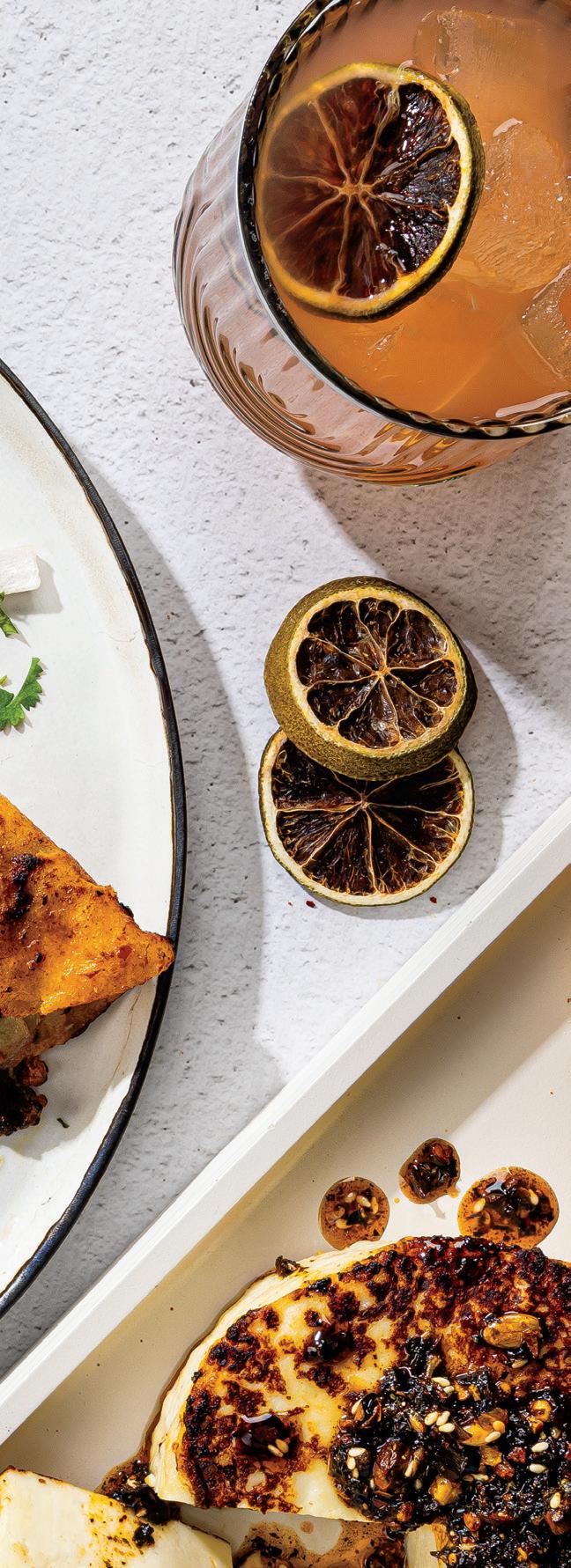
TAP INTO SOCIAL BUZZ
Birria has exploded on social platforms, with cheese pulls, crispy edges, and slow-motion dips into consommé driving engagement on TikTok and Instagram. Lean into that by making birria a visual hero in your content and on your menu boards. When guests recognize a dish they’ve seen online, they’re more likely to order it—and to share their own photos once it hits the table.
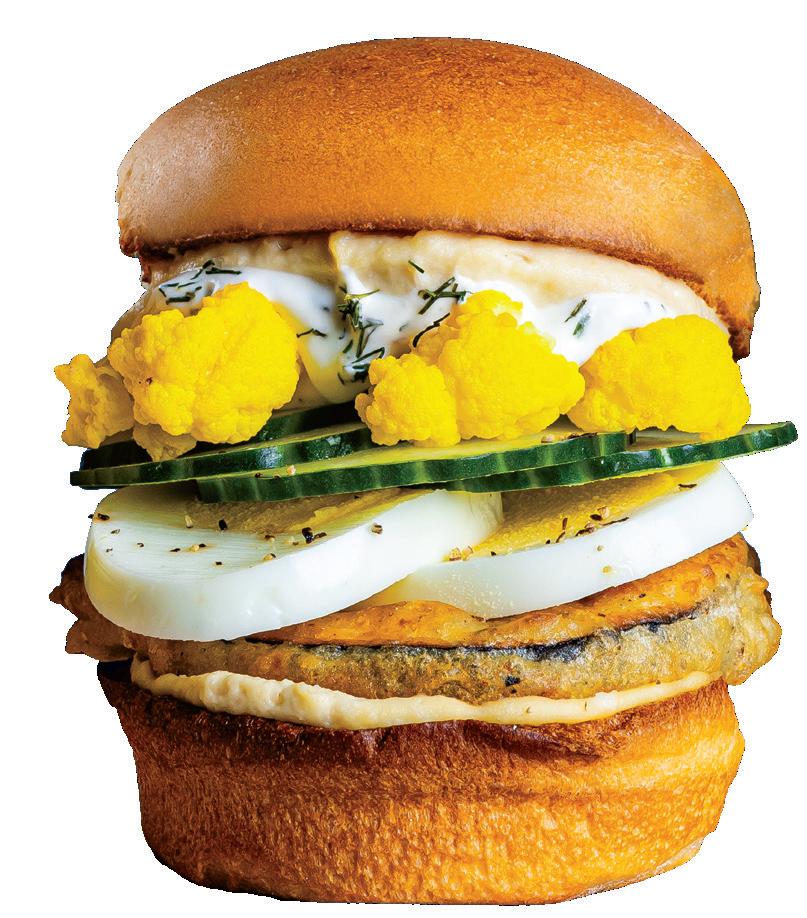
Sabich Sliders ~ p. 59
HIGHLIGHT THE GLOBAL APPEAL


A VEG-BASED SLIDER THAT EARNS ITS SPOT
These sliders introduce a plant-forward option that doesn’t feel like a compromise. The combination of warm components, creamy elements, sliced hard-boiled egg, and layers of sliced eggplant with pickled cauliflower create a layered, textured bite with real personality. Position them as a vegetarian highlight, or as part of a build-your-own slider flight so guests can mix flavors across the table.
USE VARIETY TO LIFT THE CHECK
Sliders naturally encourage guests to try more than one item. Placing them alongside other street foods nudges groups toward ordering several small plates or a trio of different slider flavors. Because each slider is compact, food cost stays manageable while the perceived value of “three global tastes” supports strong pricing.
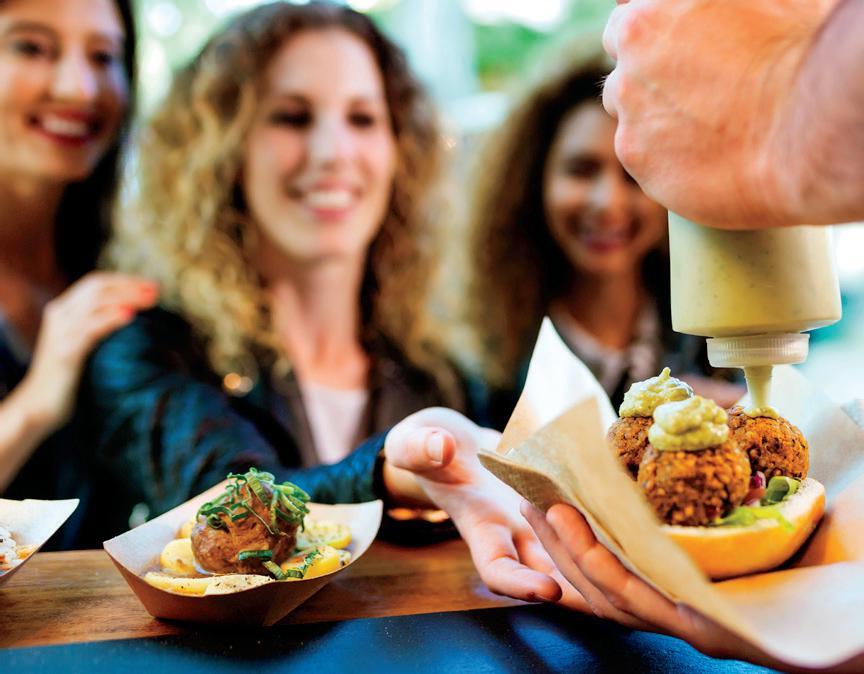
Sabich-style flavors bring a Middle Eastern street-food sensibility to the menu, traditionally built around eggplant and egg, now translated into a slider format. That global twist stands out among burgers and tacos and gives staff an easy story to tell. Guests who are curious about international flavors but hesitant to commit to a full entrée can explore with a slider or two.
PREP ONCE, USE EVERYWHERE
Components can be batched, chilled, or prepped ahead for fast assembly, ready to top sliders, salads, grain bowls, or mezze plates. Clearly spec the slider build so the line can assemble consistently and quickly, even during a rush. These same components can double as garnishes or small plate elements, letting each prep task work across several revenue-generating items.
SCAN TO SHOP Visit Sysco Shop to purchase ingredients.
SURF, TURF & EVERYTHING IN BETWEEN
As patios fill and guests look for reasons to celebrate, they’re looking for dishes they can’t replicate at home: perfectly grilled steaks, impressive seafood spreads, and chef-driven flavors that read as premium yet stay efficient on the line. These dishes do exactly that—elevate your grill and seafood menu and keep margins in check all season long.
MAKE IT AN “EXPERIENCE”
The seafood boil is built for shareability and celebration—something guests gather around and remember. Feature it as a shareable for two or more under “For the Table” or “Coastal Specialties.” You can also promote it as a dish to anchor group occasions: larger parties, celebrations, and patio gatherings by offering multiple sizes (single, for two, for four) to capture different party sizes while keeping the prep consistent.
Serve shrimp customers can feel good about. Portico Simply All-Natural Chemical-Free Shrimp is all-natural, chemical-free, and raised on BAP-certified farms for trusted quality.
OPERATIONAL TIPS: KEEPING IT LINE-FRIENDLY
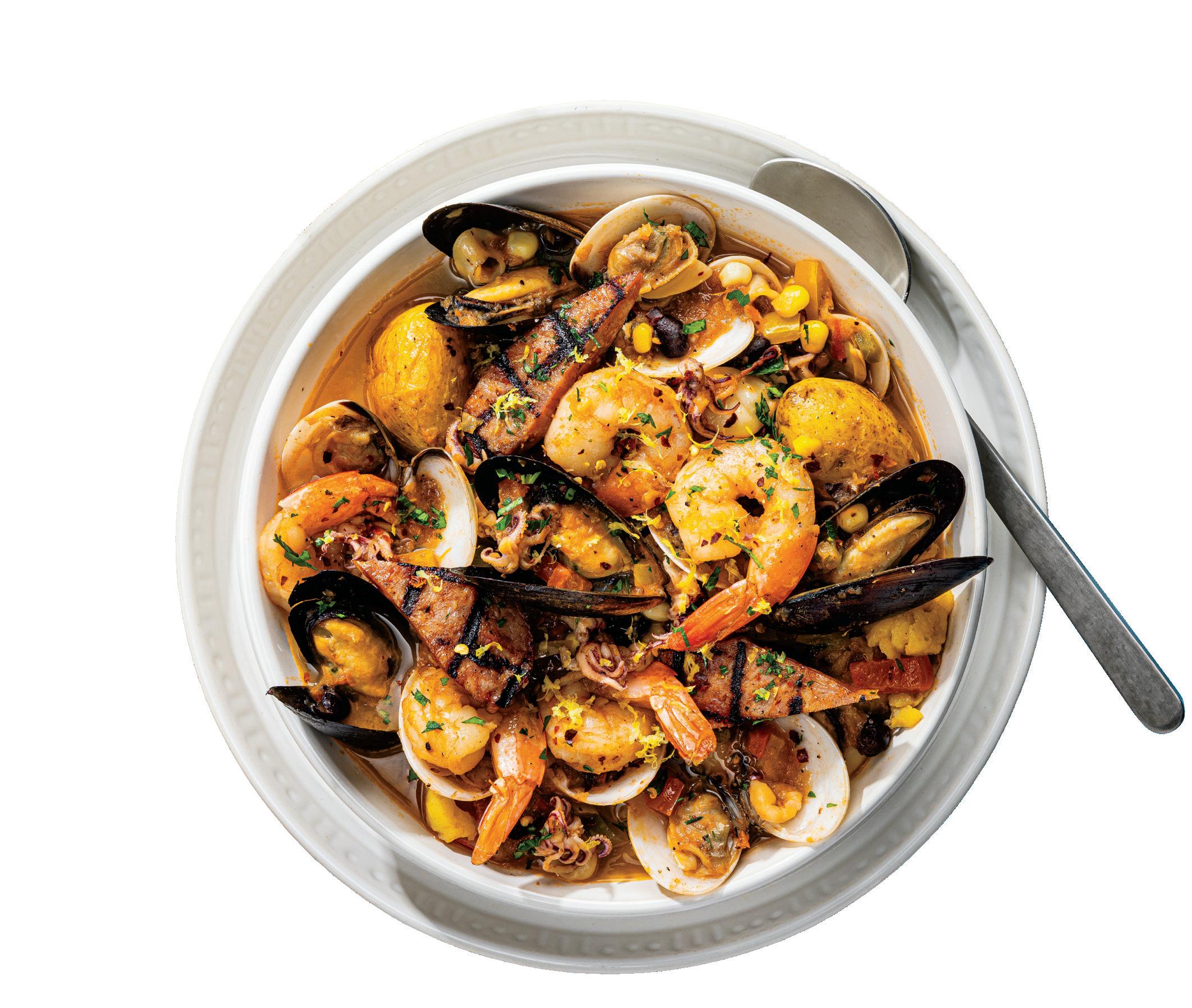

Seafood Boil: Pre-portion seafood and aromatics so chefs can drop pre-assembled kits into boiling seasoned stock. This maintains flavor consistency, speeds execution, and makes the boil easier to run as a nightly special or weekend feature.
Grilled Steak: Use consistent, pre-portioned cuts to control yield and ticket times. This keeps execution predictable on busy nights and ensures every steak hits the desired doneness and plate cost.
OCCASION-BASED SELLING
Encourage servers to lean into celebratory moments: “For Father’s Day, our Lafond Ribeye with blue cheese butter is a guest favorite,” or “If you’re celebrating, many tables share our New Bedford Seafood Boil.” This language positions dishes as part of the experience, not just menu items.
SCAN TO SHOP
Visit Sysco Shop to purchase ingredients.
Use the ribeye as your hero grill feature—a centerpiece for spring and summer occasions like Mother’s Day, Father’s Day, graduation dinners, and weekend date nights. Build in an easy surf-and-turf upsell by offering grilled shrimp, scallops, or crab as an add-on. Or, consider a rotating “Chef’s Ribeye Feature” using different compound butters to keep the item fresh without changing your core prep.
TURNING SURF & TURF INTO SUMMER REVENUE
Feature one premium steak and one shareable seafood item as seasonal anchors. Support them with versatile compound butters and marinades that create upsells and cross-utilization. Together, they form a surf-and-turf platform that boosts check averages, streamlines prep, and keeps guests coming back through the warmer months.
PREMIUMIZATION WITH CONTROL
Premium proteins are already high-interest items. The key is structuring them to lift check averages without overwhelming your kitchen. Ribeye naturally commands a stronger price point and pairing it with simple composed sides and a finishing butter helps reinforce value while protecting margin. Premium butters and marinade-based “flavor boosts” can be priced as small upcharges that add up over the course of a shift.
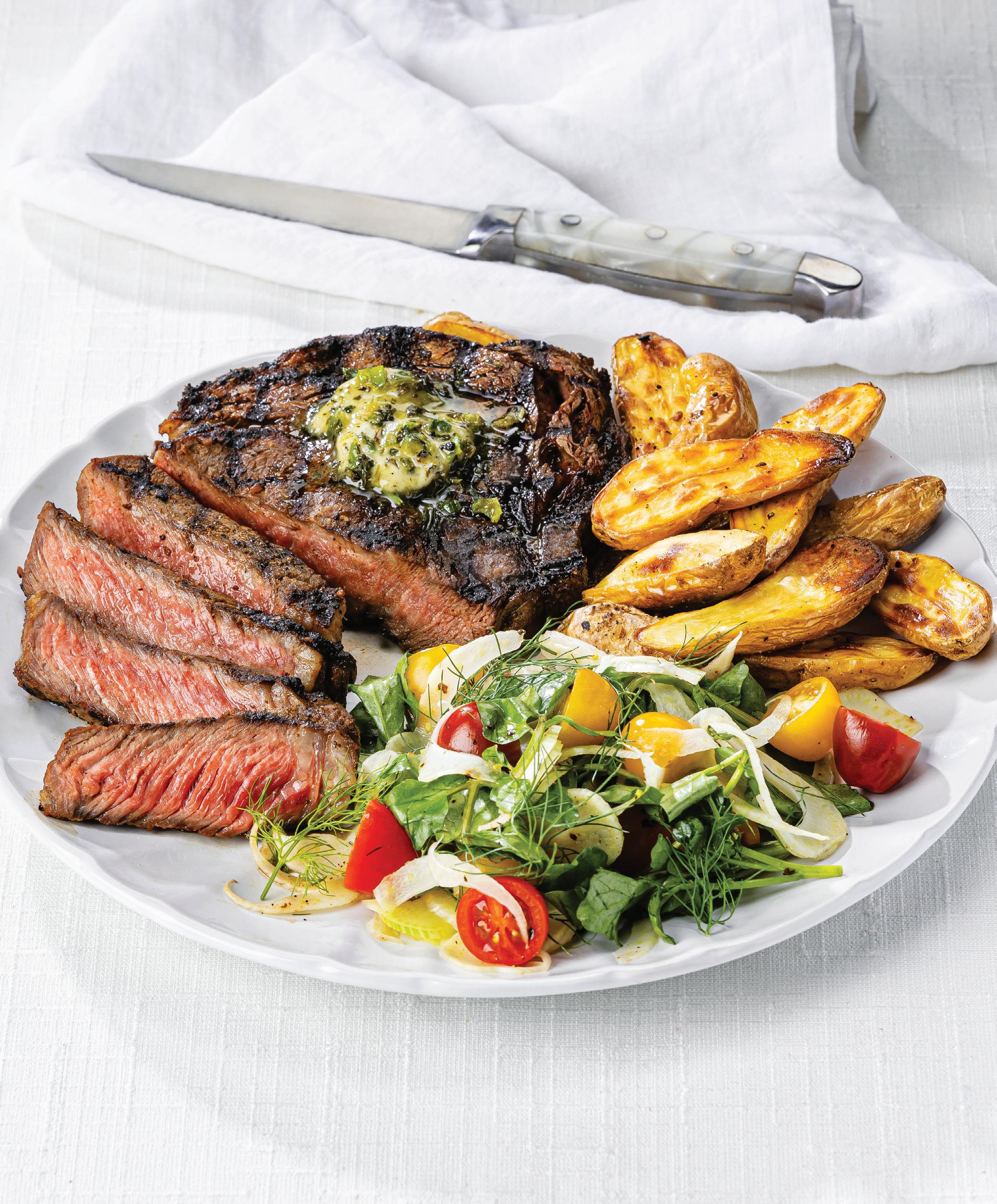

This dish came together during a special night out celebrating, inspired by a standout steakhouse experience that reinforced how much attention to detail and proper execution matter. The goal with this recipe is to deliver those same elevated flavors and consistency in a way chefs can easily execute in their own kitchens.
Lafond Grilled
Ribeye Steak ~ p. 60
FLAVOR NOTES FROM CHEF ANTHONY LAFOND
STACKED WITH FLAVOR
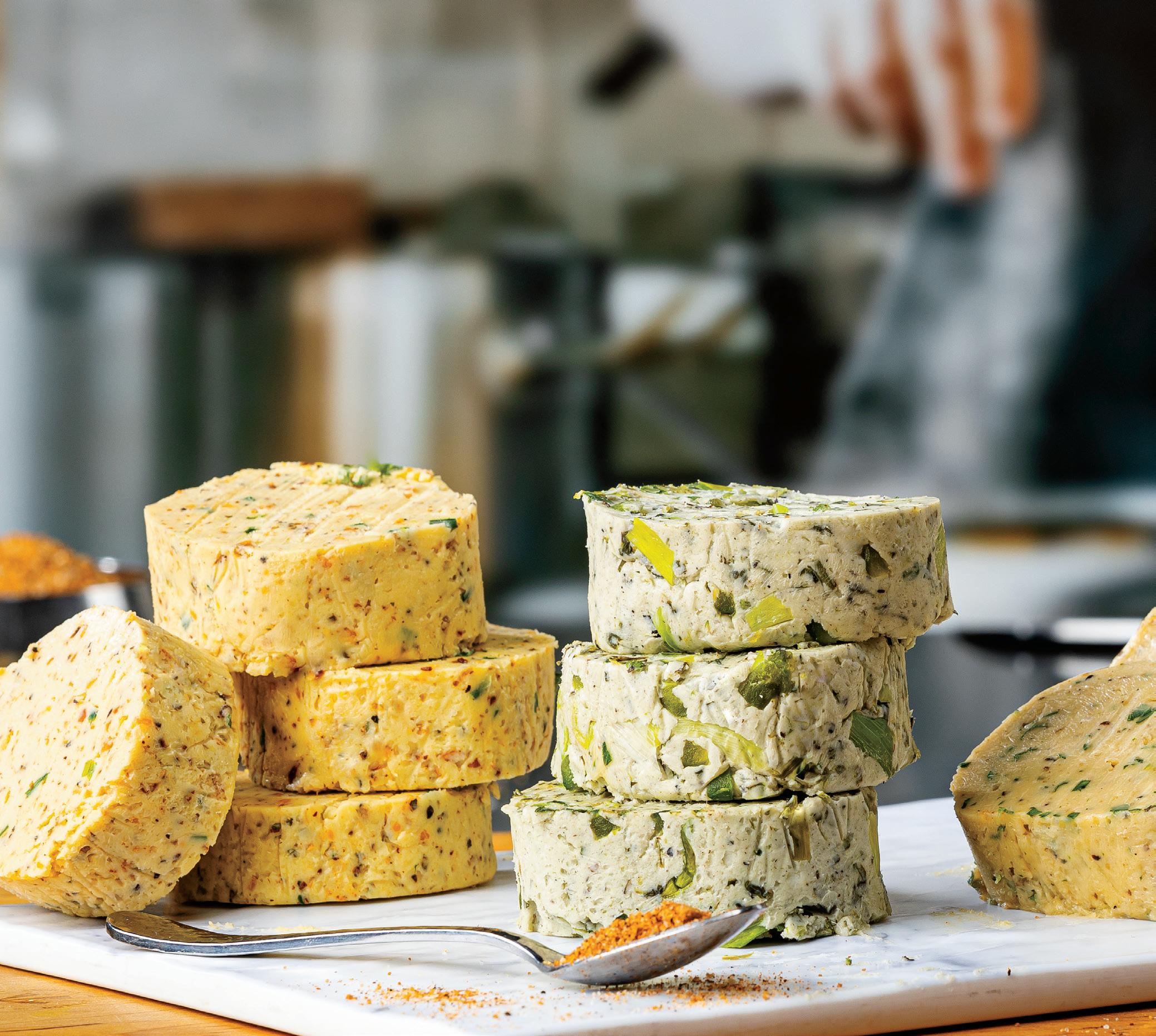
CROSS-UTILIZATION: ONE PREP, MULTIPLE MENU WINS
Big flavor doesn’t have to mean big effort. Herb-packed compound butters, deeply seasoned rubs, and bold marinades are redefining how chefs layer taste with speed and consistency. Prepared in advance and stored smart, these finishing touches help the line move fast without sacrificing creativity. Slice, scoop, brush, or rub, and let every dish leave the pass with a signature touch that feels intentional, elevated, and unmistakably chef-driven.
A single batch of compound butter can finish grilled steak, chicken, shrimp, or seasonal fish while pulling double duty on vegetables, baked potatoes, or grilled corn. Marinades work just as hard—across steak tips, kabobs, mixed grill platters, salads, or tacos. One focused prep session supports multiple menu applications, limiting waste, protecting labor, and maximizing return.
SMALL TOUCHES WITH BIG VALUE
Compound butters and marinades are small accents that deliver big perceived value. Offer compound butters as steak toppers guests can choose for a more customized experience, or use signature marinades to create flavor variations across proteins without expanding your ingredient list.
MAKE IT AN LTO
Promote a “Butter of the Week” or “Chef’s Featured Marinade” as an easy limited time offer that uses what you already have prepped.
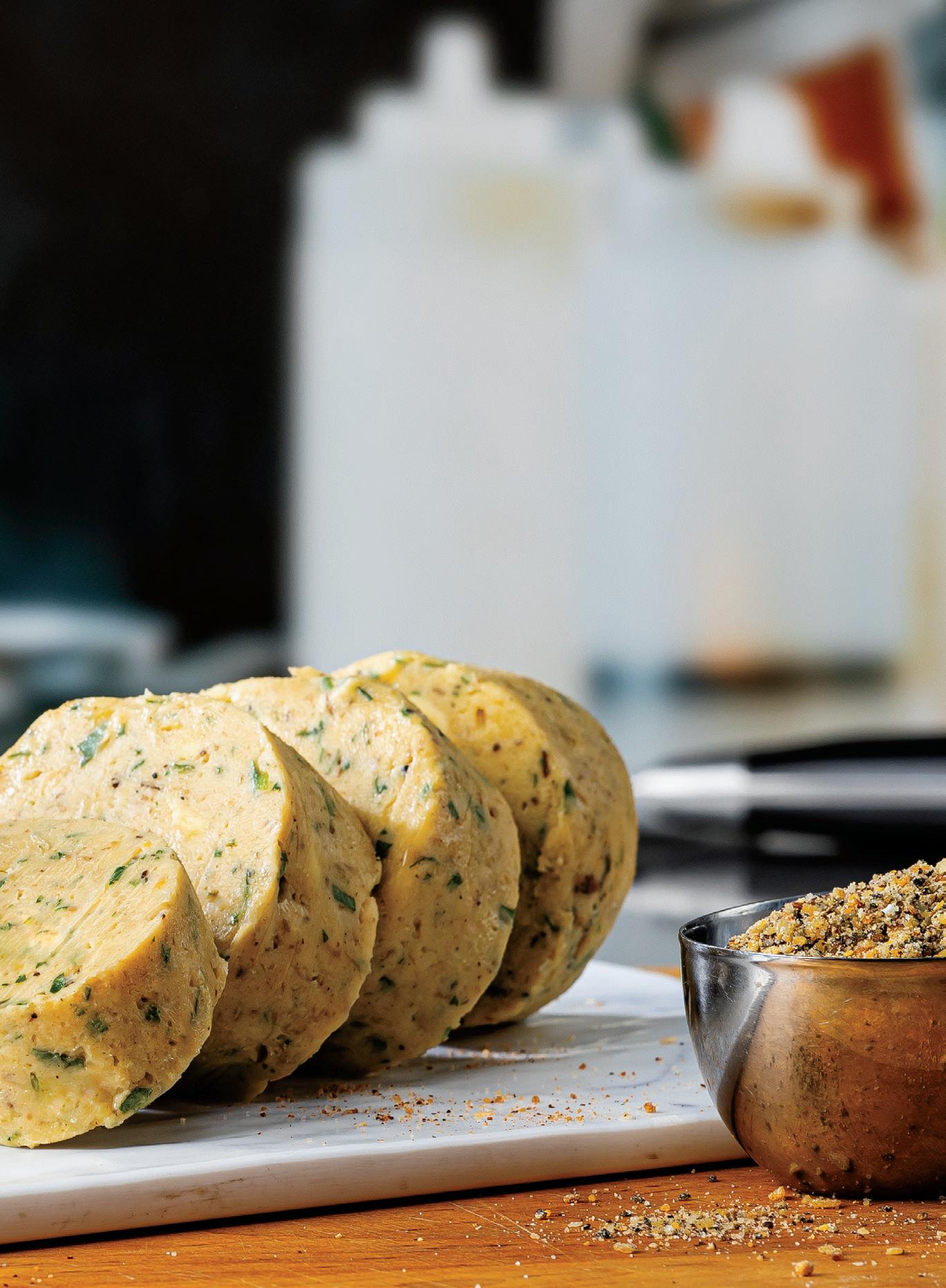
TRACK YOUR FLAVORS
Maintain a simple prep log with batch dates and use-by timelines. It keeps flavors fresh, inventory visible, and mystery containers out of the walk-in, especially when multiple cooks are pulling from prep.
SCAN TO SHOP
STORAGE & SHELF-LIFE TIPS
Compound Butters: Make compound butters a true make-ahead asset with smart storage. Roll finished butters into tight parchment logs, overwrap or vacuum-seal, and label with flavor and date. Refrigerated, they’ll hold for 5–7 days; frozen, up to three months with no loss of quality. Store frozen logs upright for easy inventory, and slice medallions straight from the freezer—firm enough to cut cleanly, fast to thaw.
For high-volume kitchens, pre-portion butters into discs or squares on parchment-lined trays before freezing. Once solid, transfer to labeled containers for a consistent, grab-and-go finish across shifts.
Marinades: Fresh marinades with raw aromatics last 3–4 days refrigerated, while cooked marinades can last 7–10 days and often deepen in flavor over time. Always discard marinades that have contacted raw protein, or reserve a separate portion for glazing and finishing.
Store marinades in clearly labeled squeeze bottles or Cambros, and avoid metal containers for acidic blends. For longer storage, freeze portioned marinades flat in zip-top bags—they stack efficiently and thaw quickly when needed.
Rubs: Dry rubs stay shelf-stable for 2–3 months when stored in airtight containers away from heat and moisture. Batch large quantities and portion into smaller shaker bottles or containers for line use; this prevents the bulk supply from getting contaminated or clumping from repeated exposure to steam and handling.
Label each container with the rub profile and batch date, and store away from the heat of the line. For rubs with high salt content, check periodically for moisture absorption. A few grains of rice in the container can help keep blends flowing freely.
Butters, Rubs, & Marinades ~ p. 60
MENU BUILDS THAT MOVE
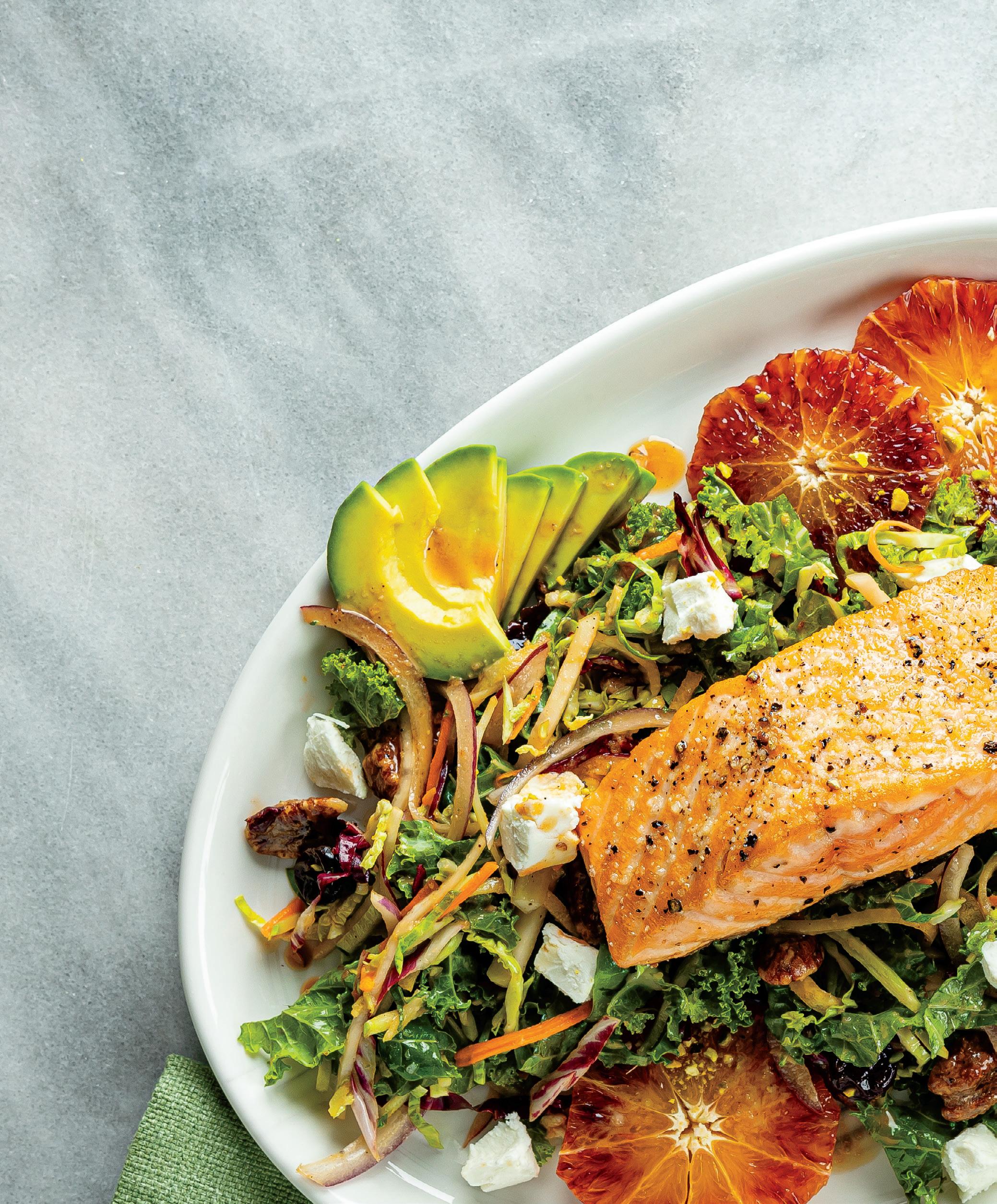
FLAVOR NOTES FROM CHEF CARRICK YOUNKIN
I love building dishes that use every color on the plate to grab attention first. From there, it’s about layering textures and flavors for balance, so every bite stays exciting.
Menus should do three things: move product, boost checks, and simplify prep. The builds in this section deliver all three, pairing vibrant seasonal produce with proteins that anchor the plate and bring real substance to the dish. With fresh flavors and components that cross-utilize across brunch, lunch, and dinner, these plates are built to work as hard as your line does.
When spring hits, guests don’t just want lighter food—they want food that feels alive: crisp greens, juicy citrus, and bright herbs. Pair that freshness with proteins that bring flavor and staying power to the plate, and you deliver both energy and balance. From seafood to layered bowls and salads built around high-impact proteins, these recipes bring vibrancy, smart prep strategies, and strong margin opportunities all year long.
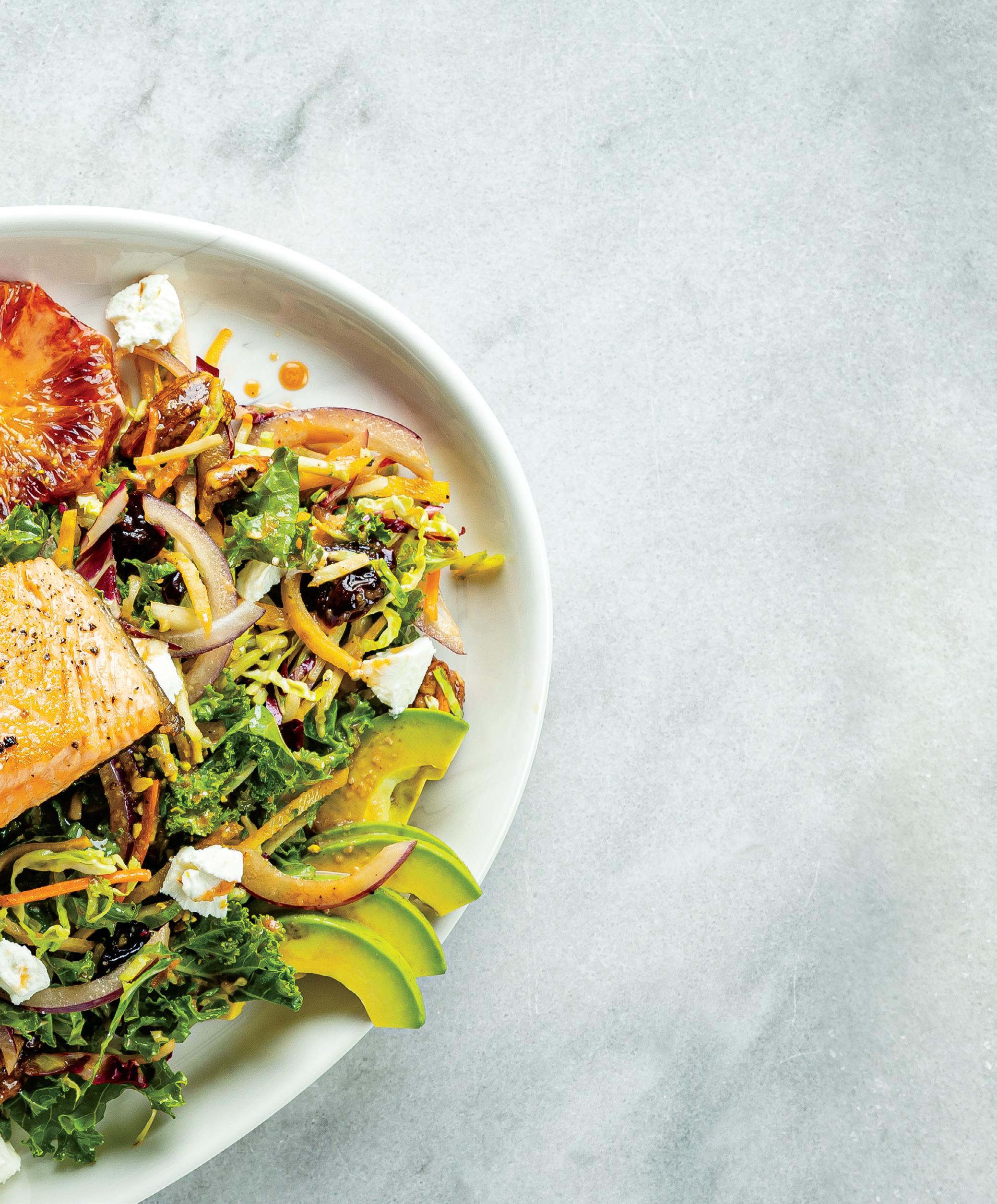
Blood Orange Goat Cheese Power Salad ~ p. 61
LEAD WITH COLOR AND CRUNCH
A salad built around blood oranges, tender greens, and tangy goat cheese practically sells itself from across the dining room. The visual contrast—ruby citrus, deep greens, creamy white cheese, and crisp toppings—instantly signals freshness and seasonality. Even simple additions like torn mint or shaved fennel boost aroma, value perception, and plate appeal without shifting food cost.
PREP ONCE, USE ACROSS THE MENU
Blood orange segments, citrus vinaigrette, toasted nuts, and greens can power multiple spring dishes: grain bowls, flatbreads, side salads, or seafood plates. Batch-prep your citrus and vinaigrette; they hold well for days and instantly brighten other builds. Think citrus drizzle on grilled shrimp, goat cheese on vegetable flatbreads, or vinaigrette as a finishing glaze for roasted vegetables. One prep session fuels a week’s worth of seasonal features.
TURN
SALAD INTO A PROFIT ENGINE
This build starts produce-forward, making it easy to layer in margin-friendly upgrades: grilled chicken, salmon, shrimp, or an ancient-grain scoop all work beautifully here. Pre-portioned goat cheese, nuts, or seeds keep costs predictable while delivering a premium feel. Protein add-ons alone can lift check averages by $6–8, making this an ideal “healthy indulgence” anchor.
PROTEIN TURNS IT INTO A PLATE
Thoughtful protein additions transform a vibrant salad into a true center-of-the-plate offering. Salmon, grilled chicken, shrimp, steak, or plant-forward options add substance and flexibility. For guests, it signals a meal that satisfies; for operators, it creates a natural upsell and supports higher price points without touching the base build. Offer proteins as a plated feature or choose-your-own add-on. Either way, the salad becomes a customizable platform that works across dayparts while keeping prep streamlined.
SCAN TO SHOP Visit Sysco Shop to purchase ingredients.
Whole Wheat
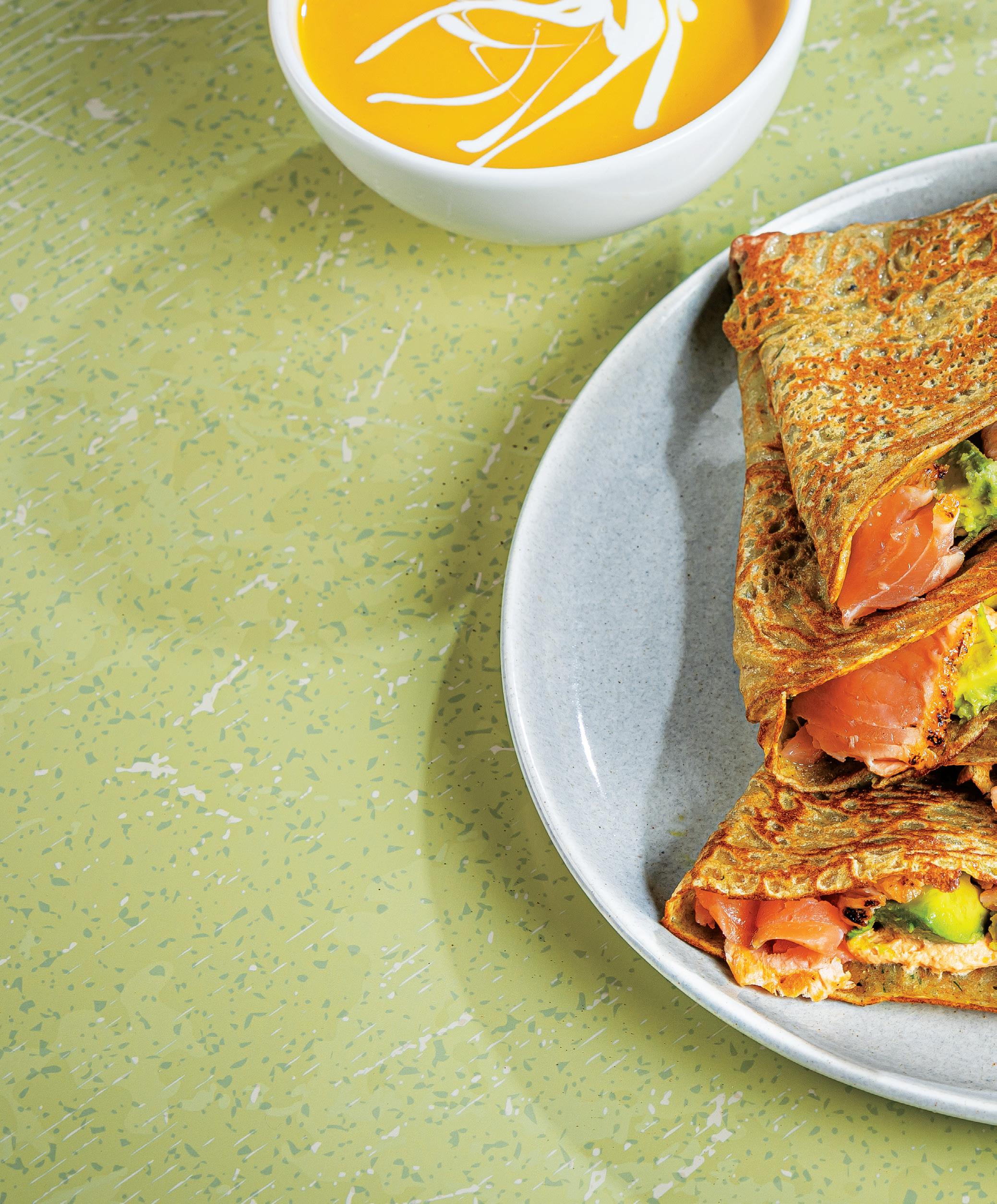
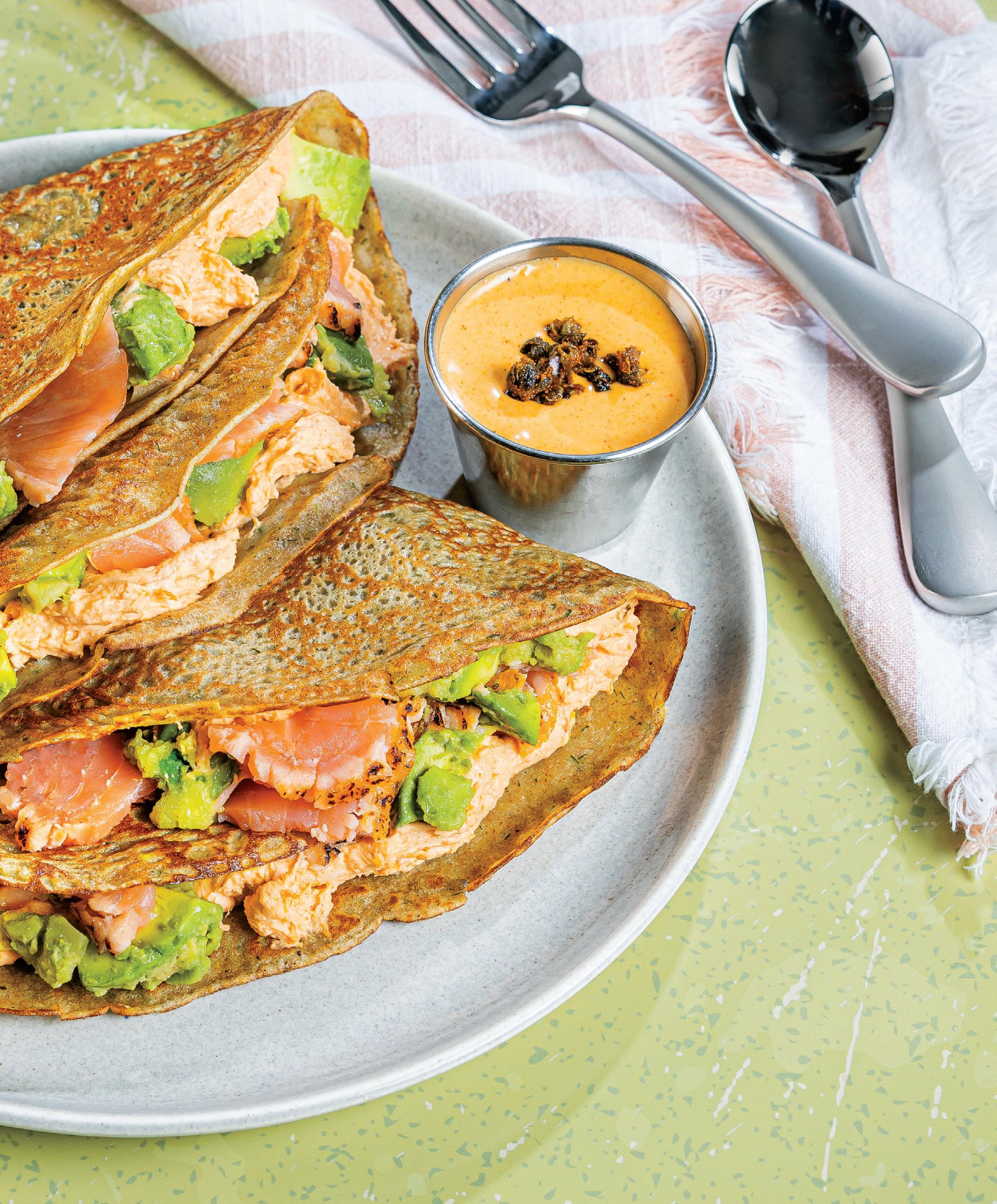
Smoked Salmon and Avocado Crepes ~ p. 61
ELEVATE BRUNCH (AND BEYOND)
Whole-wheat crepes filled with avocado and smoked salmon bring that café-style, modern brunch edge that guests gravitate toward. The combination of whole grains, creamy avocado, and smoky salmon hits today’s sweet spot: indulgent, feel-good, and social media-ready. Position them as a signature brunch item or an “Anytime Crepe” that moves seamlessly from late breakfast to light dinner.
PREMIUM LAYERS, PREMIUM PRICING
Smoked salmon and avocado carry built-in perceived value, supporting a higher price point. One $4 salmon portion can anchor multiple $14+ menu items—crepes, bagels, tartines—without additional prep. Fresh herbs, citrus, or quick-pickled vegetables reinforce that premium story. Add-ons like an egg, roasted potatoes, or a side salad create natural bundle opportunities.
ONE BATTER, MANY BUILDS
A well-made crepe batter holds beautifully and gives you a versatile platform for savory brunch builds, kid-friendly ham-and-cheese versions, or sweet seasonal fruit crepes for dessert. Prepped avocado mash, shaved vegetables, and fresh herbs flex easily to toasts, bowls, and salads. With minimal extra labor, you can run a rotating “crepe corner” all season long as dayparts and promotions evolve.
Perfect for sauces, bold rubs, and compound butters that innovate without intimidating guests. (Source: CDC)
FLAVOR NOTES FROM CHEF SALINNA GRANT

Cooking has always been my way of telling a story. Every ingredient, every plate, and every service is an opportunity to create something meaningful for the people who sit at the table!
Visit Sysco Shop to purchase ingredients.
SCAN TO SHOP
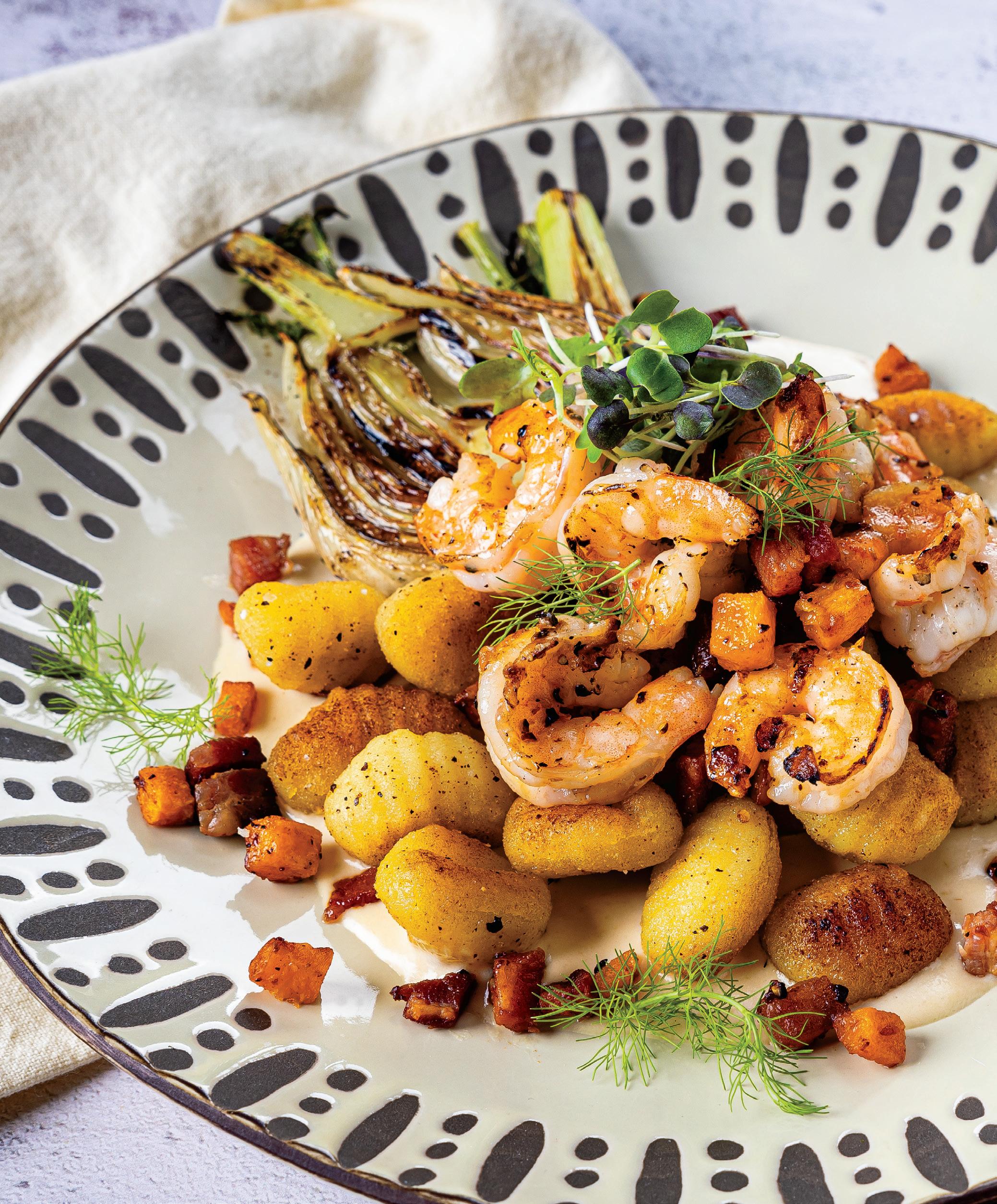
Shrimp & Fried Gnocchi with Fennel Cream and Butternut Squash ~ p. 62
FLEXIBLE FORMAT: SHAREABLE OR ENTRÉE
Serve it skillet-style for the table or scale it up to a full entrée. The approachable format makes portioning and pricing simple—and gives servers a natural upsell (“Let’s add a shareable for the table”). It’s a small operational shift with an outsized revenue impact.
COMFORT MEETS FRESH SPRING FLAVOR
This dish bridges comfort and seasonality—crisp, golden fried gnocchi paired with shrimp and bright spring vegetables. It’s hearty enough for cooler spring evenings yet vibrant enough for early patio weather. Lean into textural contrast: crunchy gnocchi against tender shrimp, finished with herbs, citrus zest, or lightly charred asparagus.
FRY ONCE, REPURPOSE OFTEN
Par-cook and chill gnocchi, then fry to order for a crisp exterior and fluffy center. That same gnocchi can star in a vegetarian plate, act as a premium side upgrade, or pair with a simple pan sauce. Shrimp can be used in salads, pastas, grain bowls, or skewers. Blood orange segments hold up to five days in simple syrup; pre-portioned goat cheese rounds cut plating time by 30 seconds per ticket. One gnocchi batch and one seafood prep create multiple high-value moments without increasing labor.
FLAVOR NOTES FROM CHEF BRIAN REICH
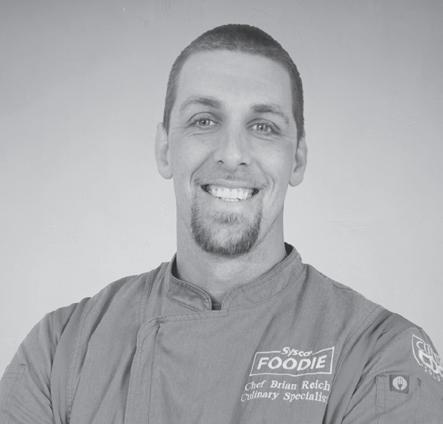
This cozy, comforting spring dish is inspired by my grandma—she’d definitely have opinions!
SCAN TO SHOP
Visit Sysco Shop to purchase ingredients.
Condiments
THAT EARN THEIR SPACE
dips and finishing drizzles, mustard consistency helps with cost control,
ONE BRAND, MANY MOMENTS
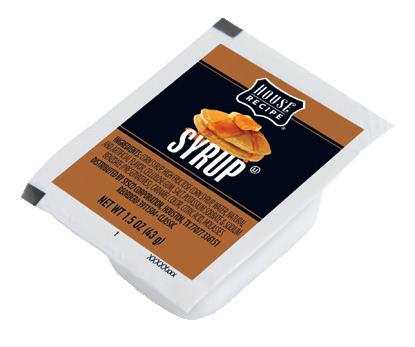
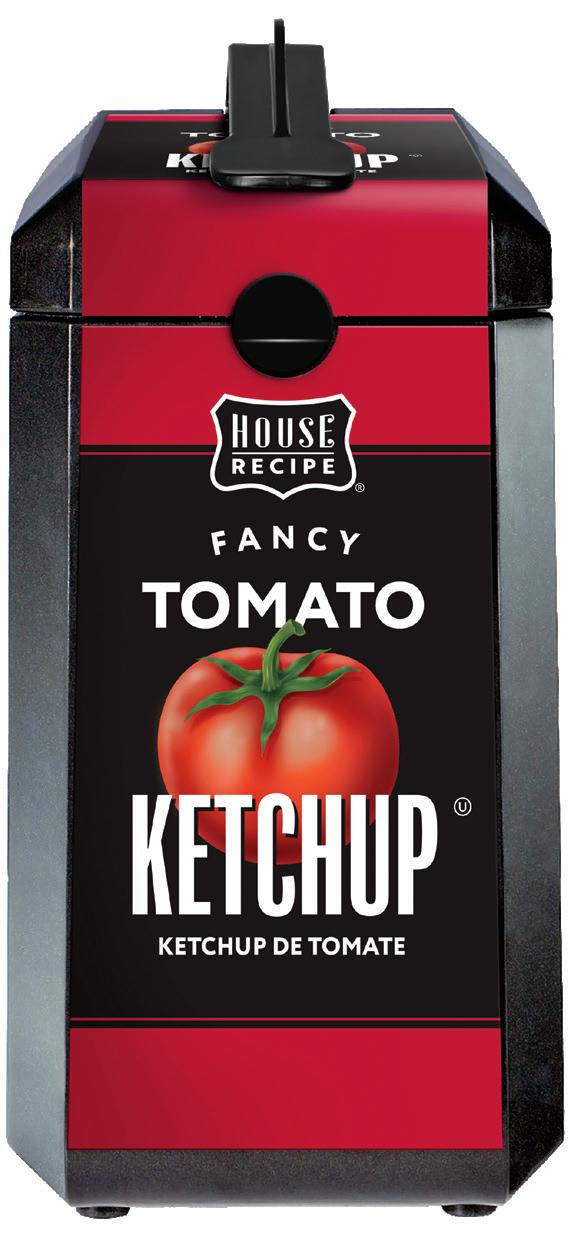
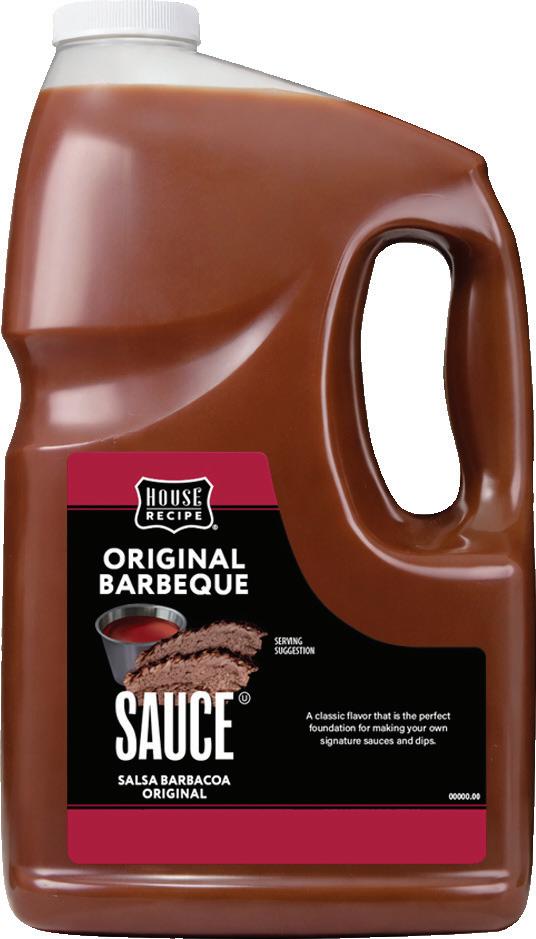
House Recipe covers every daypart, from jellies and maple syrup at breakfast to ketchup, mustard, mayo, and sauces at lunch and dinner, enabling operators to showcase one trusted brand across the table.
BUILT FOR CONSISTENCY
things at once: fresh flavor and fast execution. Guests want the classics,
Condiments need to perform the same way every time. House Recipe is backed by Sysco’s Quality Assurance standards, with tightly controlled specifications designed to reduce batch-to-batch variation and deliver dependable results shift after shift. That reliability matters, especially when multiple team members are working the same stations or when consistency across locations is the goal. And because House Recipe delivers better value compared to national brands, it helps protect margins while still giving guests a condiment experience that feels familiar, satisfying, and intentional.
On average, restaurants offer around
10 WING FLAVORS ON
THE MENU, and guests expect that kind of lineup.
HOUSE RECIPE WING SAUCES
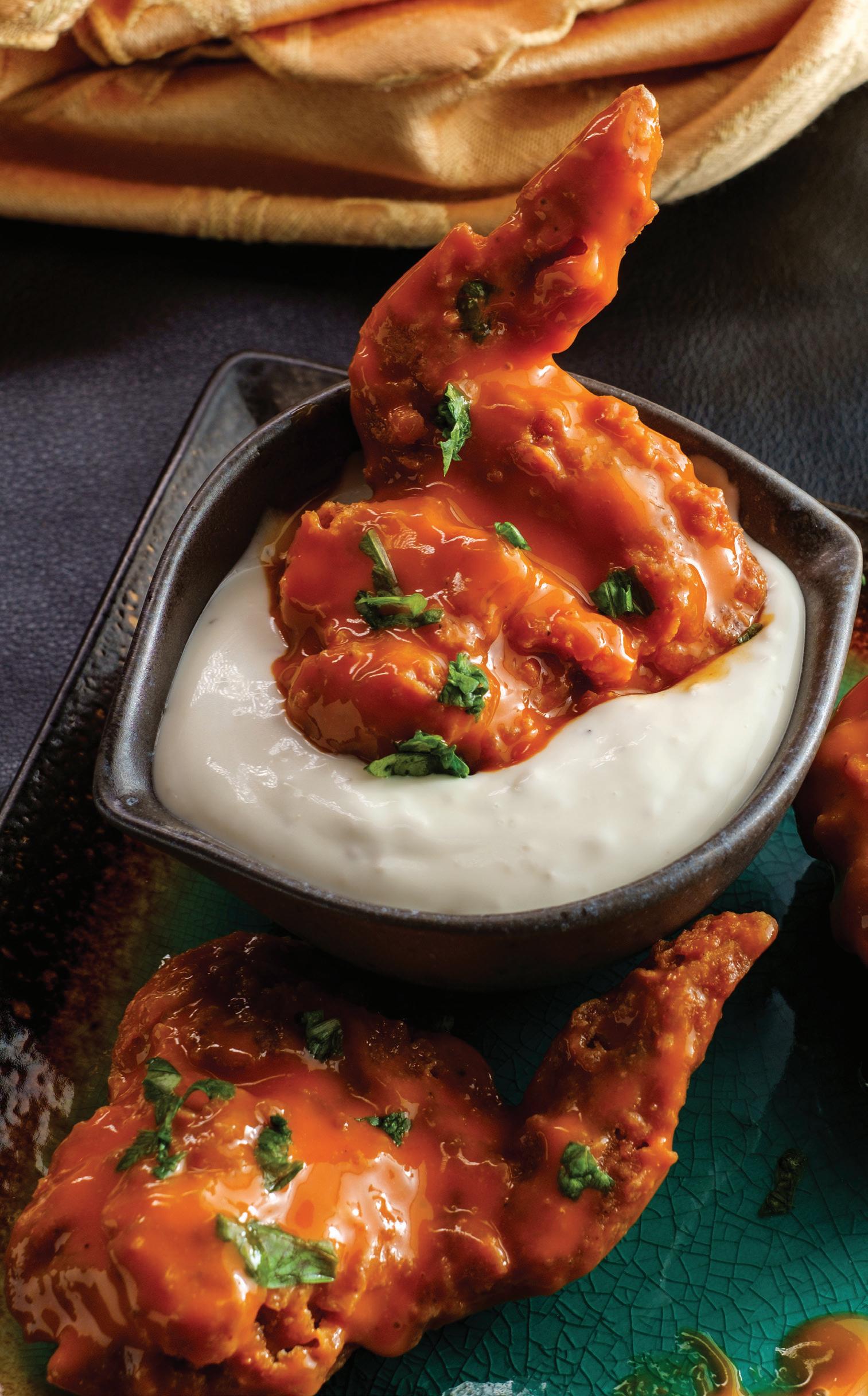
NEW HOUSE RECIPE WING SAUCES. BUILT FOR WINGS. READY FOR THE WHOLE MENU.
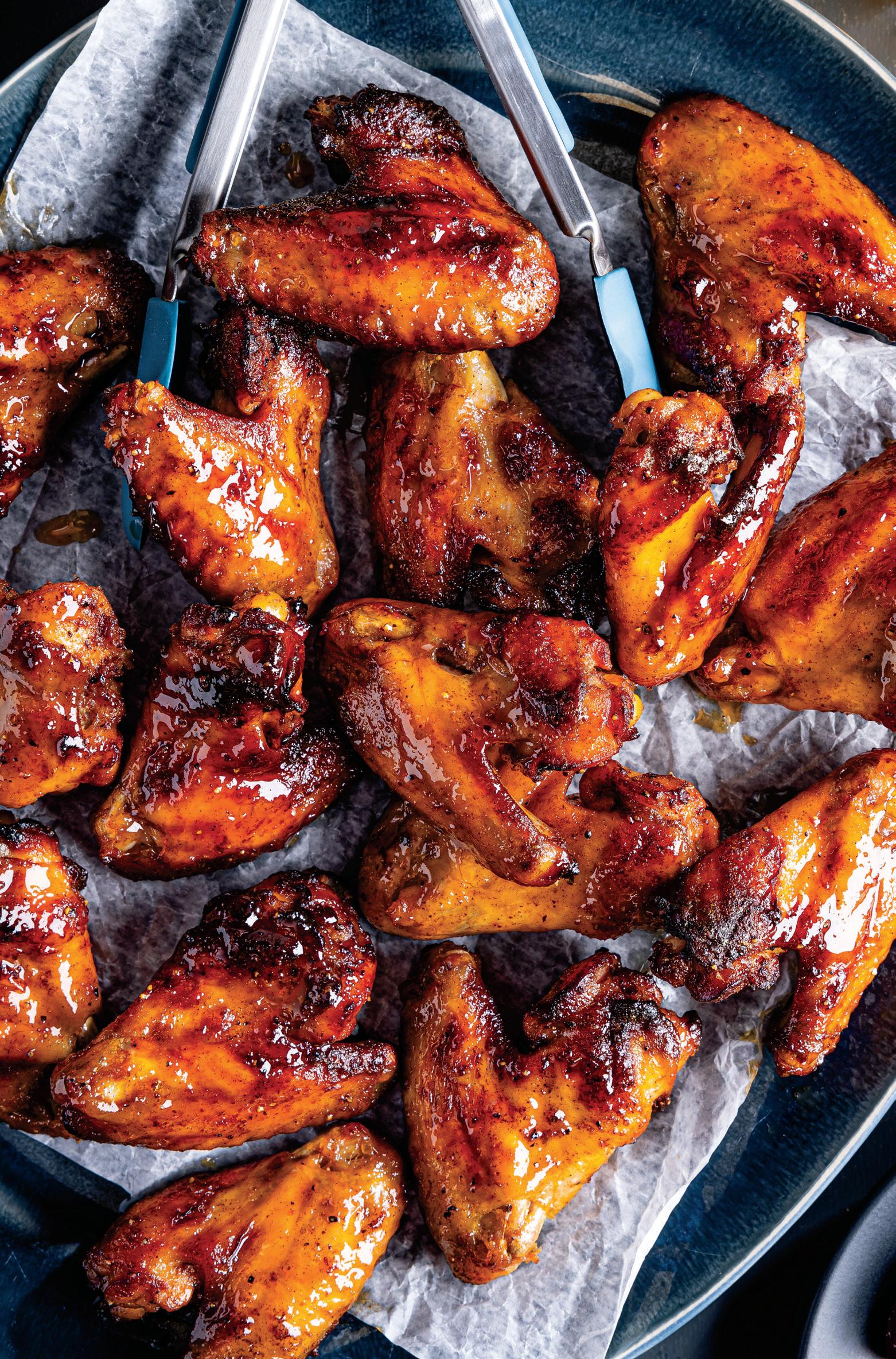
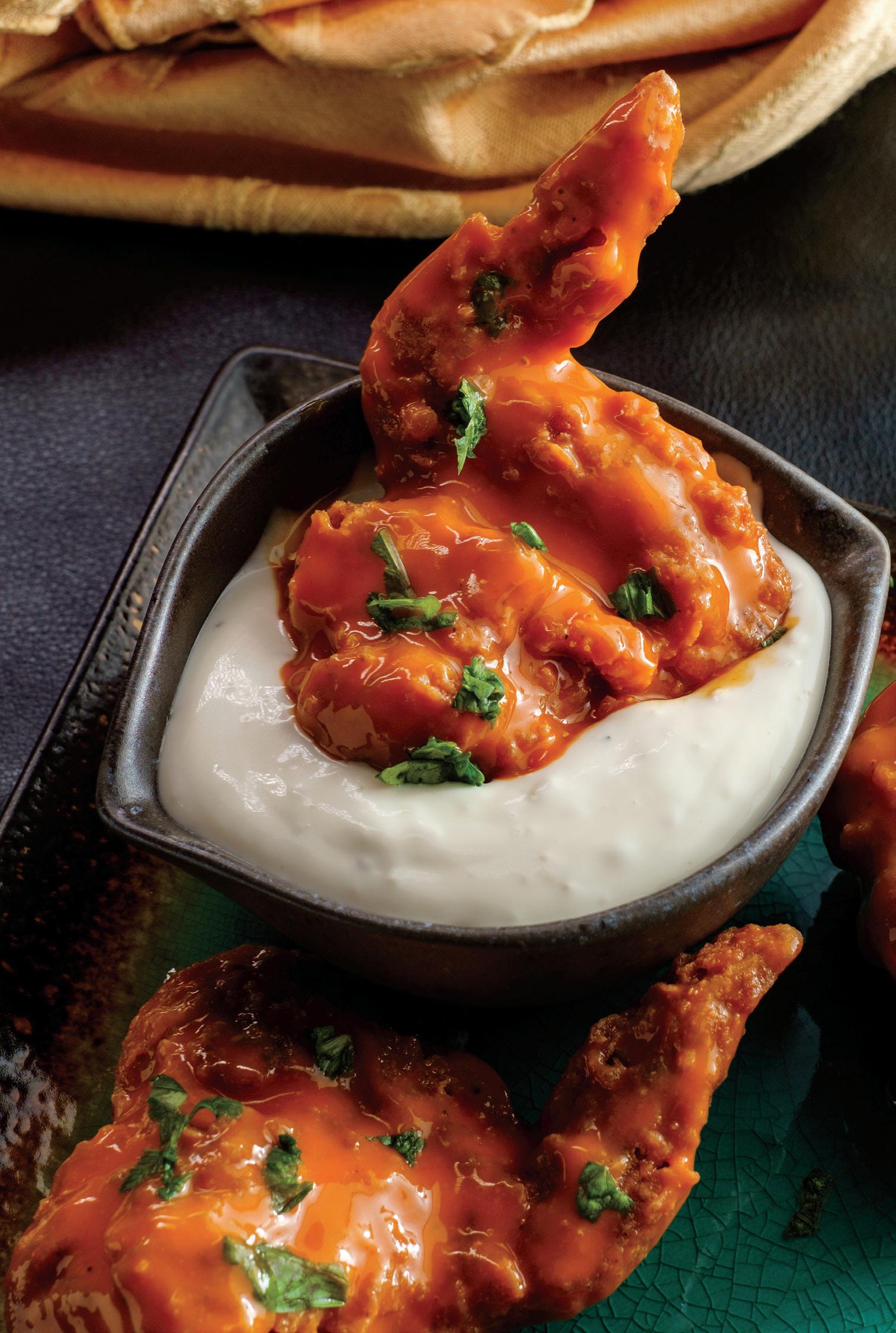
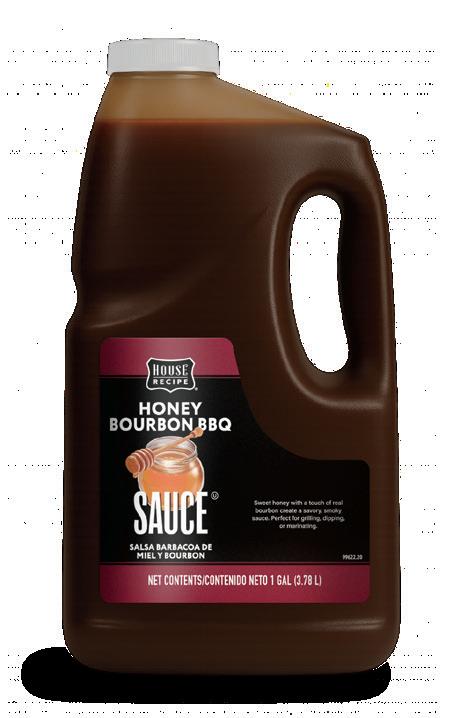
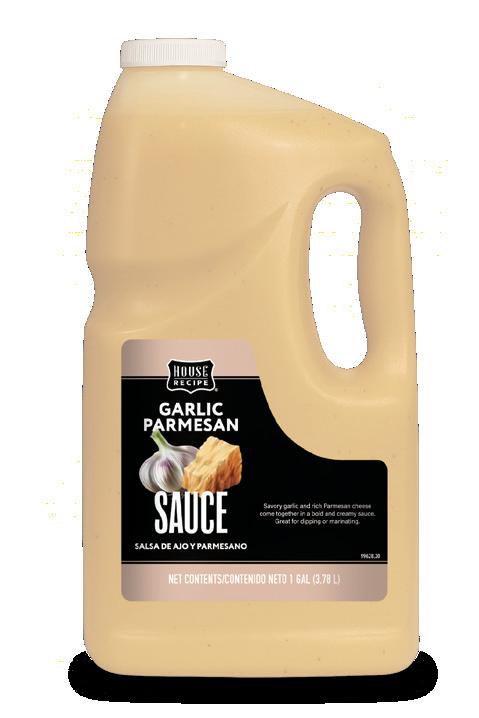
House Recipe just launched a new lineup of wing sauces designed for the varieties guests expect and the speed operators need. With on-trend flavors selected from consumer and menu feedback, these sauces are built to perform through the rush and stand out on the menu—whether they’re tossed on wings or served tabletop. From Garlic Parmesan and Honey Bourbon BBQ to Sweet Chili, Golden Dipping Sauce, and Mango Habanero, these sauces cover everything from rich and creamy to bold heat—ready for wings and more.
And because they’re built for versatility, operators can drive variety, upsells, and flavor impact without adding a long list of new SKUs. Use them beyond wings as:
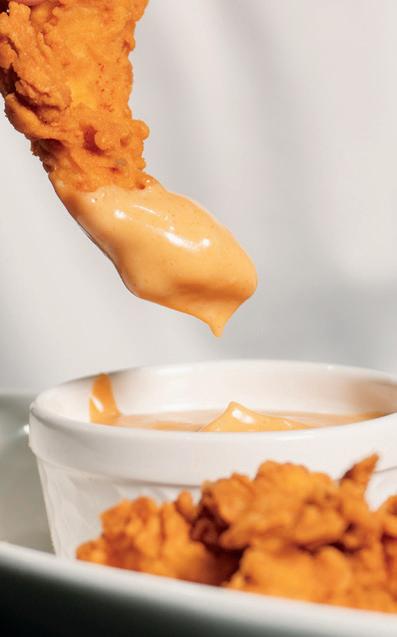
> Tabletop sauces and dips for tenders, fries, and shareables
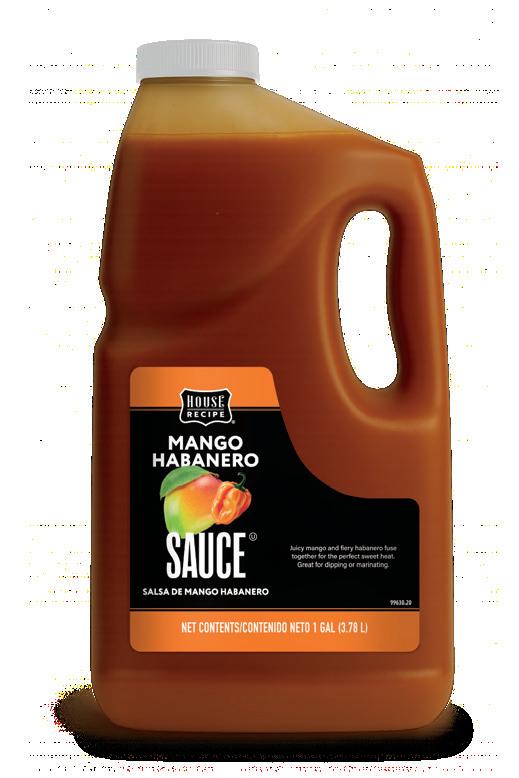
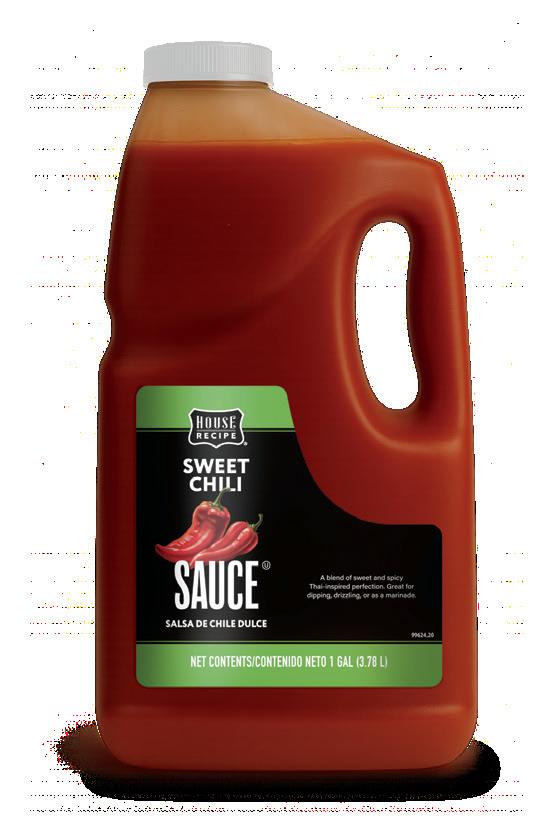
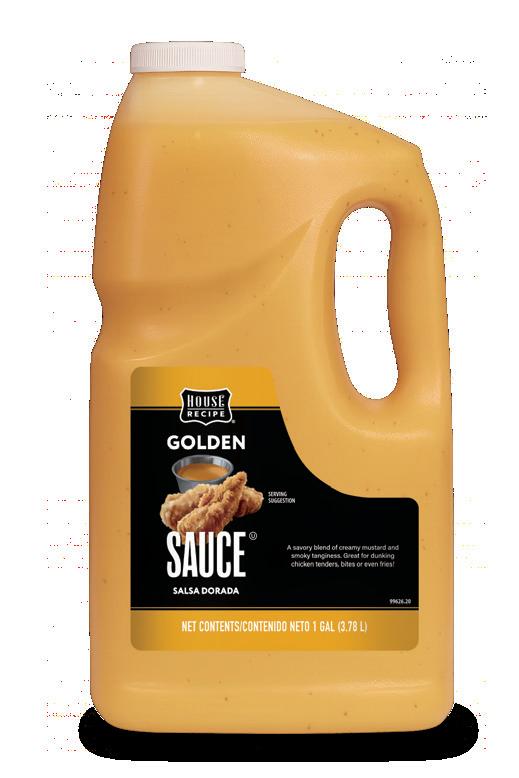
> Glazes for grilled chicken, ribs, and roasted proteins
Drizzles on wraps, flatbreads, bowls, and loaded fries
Finishing sauces that turn a standard item into a signature
SCAN TO SHOP Visit Sysco Shop to purchase the five new flavors.
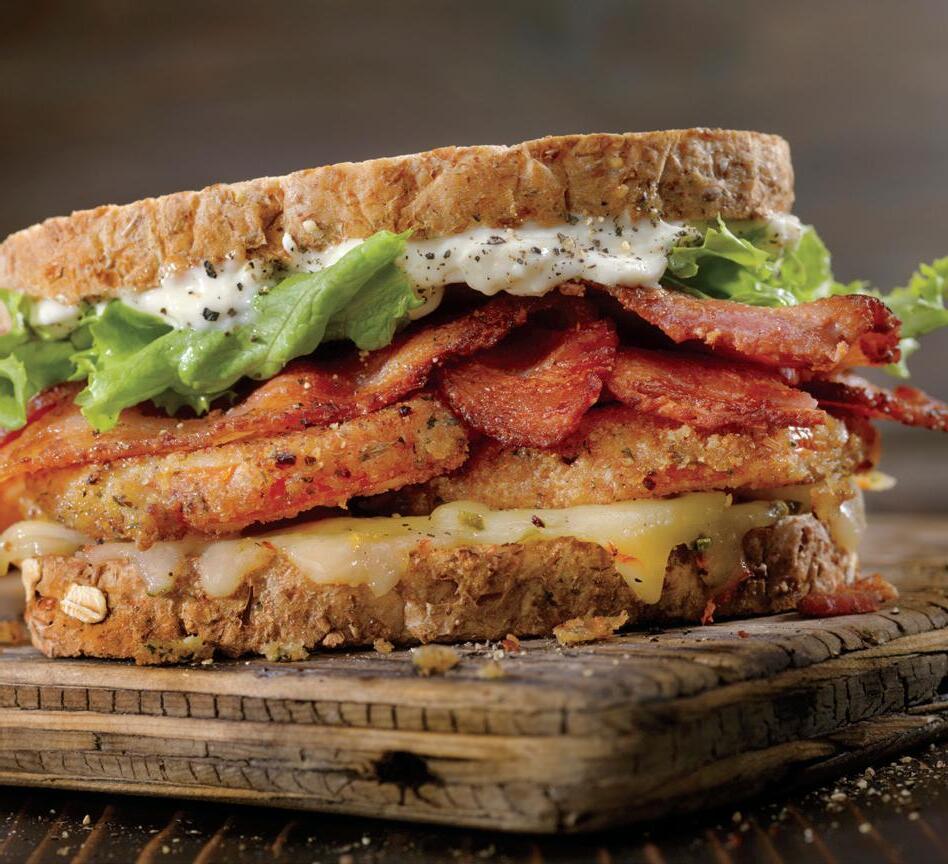

SAUCES, SPREADS, & SIGNATURES
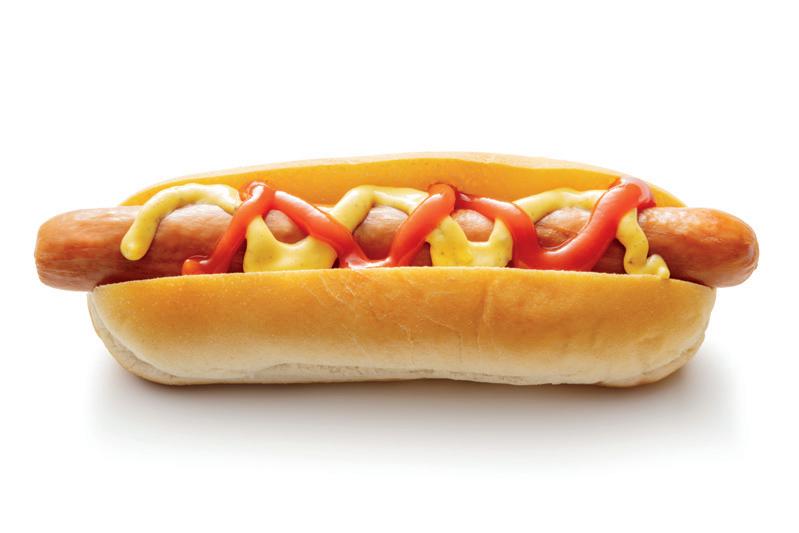
A handful of House Recipe staples is all it takes to build reliable, standout flavor combinations that fit right into summer service. Here are simple ways to turn tabletop essentials into signature flavor, without extra prep or slowing down the line.
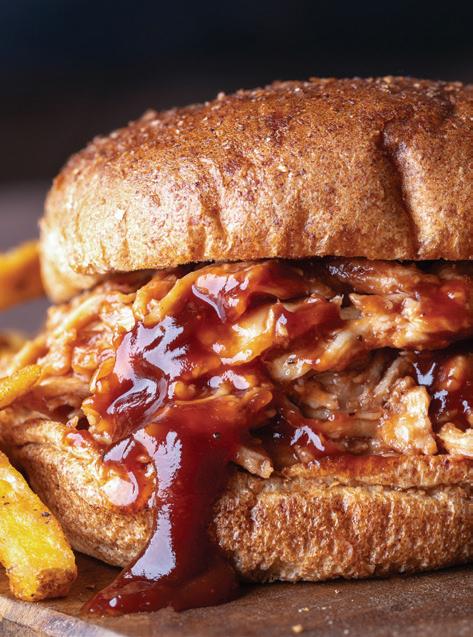
BBQ Glaze: Finish wings, grilled chicken, charred sandwiches, and fries.


Smoky House Spread: A signature spread for burgers, wraps, and chicken melts.


Zesty Ranch Dip: Dip for tenders and shareables or a sandwich spread.



Burger Drizzle: A sweet-savory topper for burgers, loaded fries, and grain bowls.


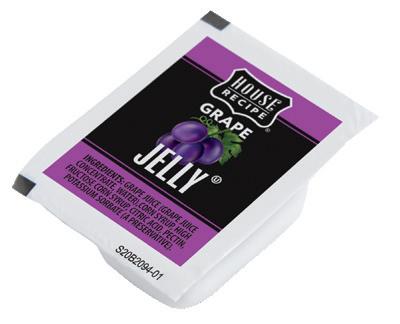
*Images not to scale.




BBQ Sauce Mayo Mustard
Ranch
Honey
BBQ Sauce Honey
BBQ Sauce
Ketchup Honey
House Recipe is a tabletop brand built for all-day service, helping operators deliver consistent flavor, a familiar guest experience, and the right formats for every station and service style.
WHAT “USDA FANCY” REALLY MEANS
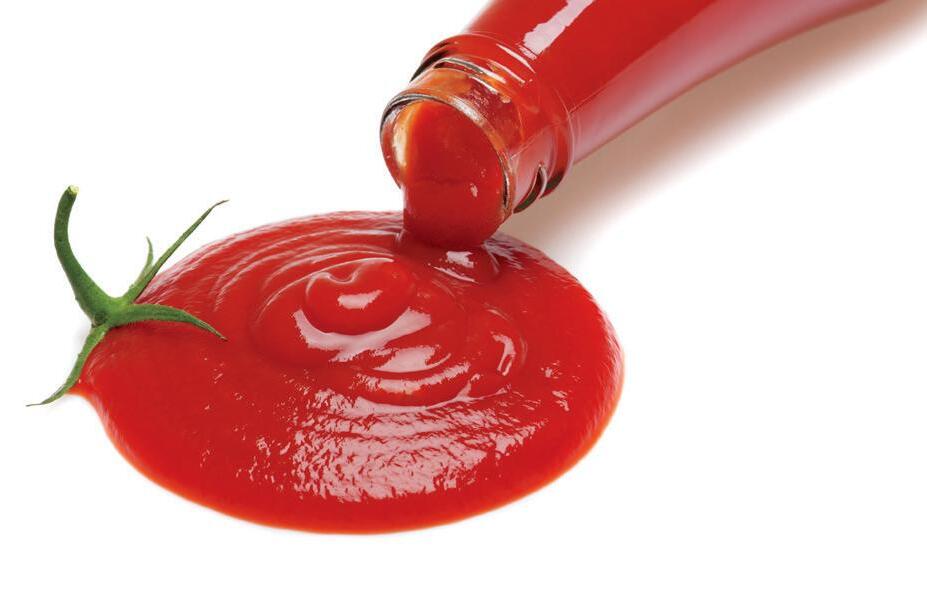
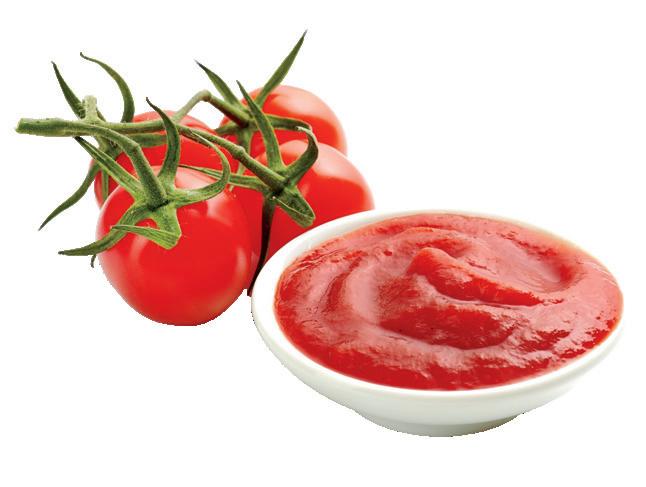
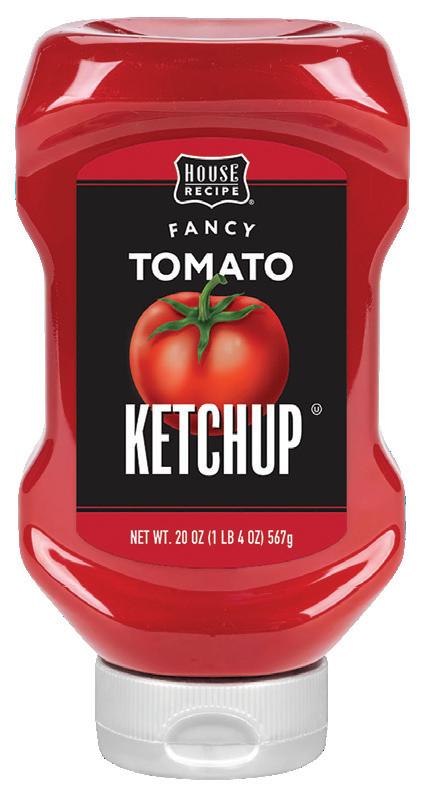
USDA Fancy ketchup contains at least 33% total tomato solids by weight, delivering a thicker texture and richer tomato flavor than non-Fancy ketchup.
Ketchup that works anywhere:
House Recipe Ketchup is USDA Fancy Grade A, with higher tomato solids content for richer body, deeper color, and dependable performance. It’s also available in the formats operators actually need: glass bottles for the table, upside-down squeezes for cleaner stations, BIB/jugs for high volume, #10 cans for prep, and portion packets for takeout. Same ketchup, same quality across every setup.
Built-In Variety, One Brand:
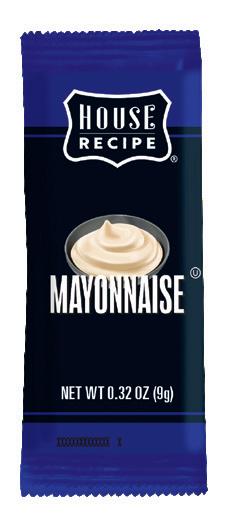
Mustard comes in multiple styles, yellow, spicy, and honey mustard, so you can satisfy different preferences without bringing in multiple brands. Mayonnaise options, including real, light, and cholesterol-free light varieties, and dip cups like ranch help speed up and maintain portion consistency in baskets, shareables, and grab-and-go meals. The lineup also includes bold finishers guests recognize, like steak sauces (green and burgundy) and Worcestershire, the kind of familiar flavor hits that help plates feel complete and intentional.



















How to Drive Traffic and Sales in 2026 with Hyper-Personalization
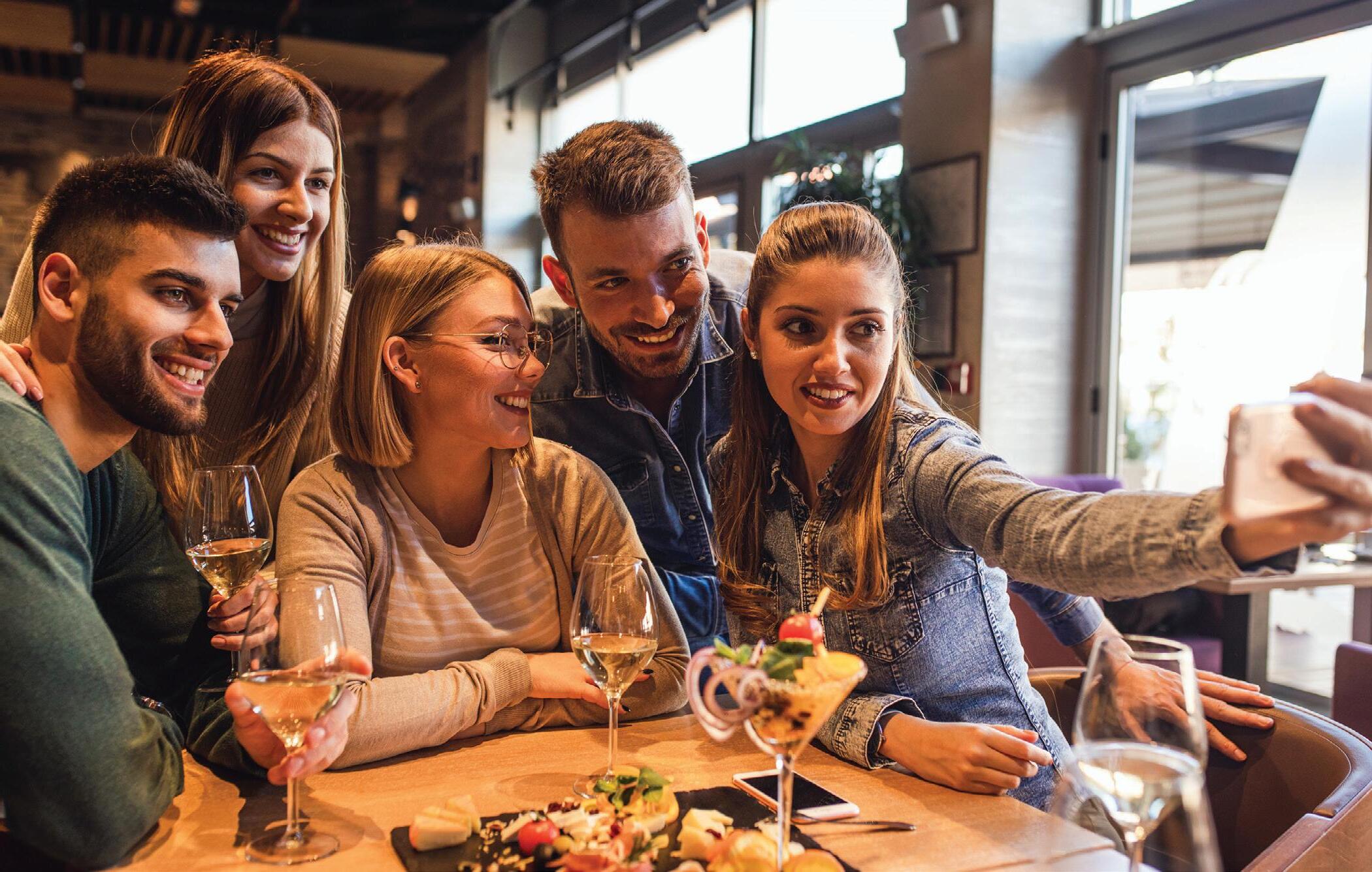
The year is 2026, and the dining landscape is more competitive and dynamic than ever. For restaurant owners grappling with rising costs and the perpetual challenge of staffing, merely serving great food is no longer enough. The key to unlocking sustained traffic and boosting sales lies in a seamless, hyper-personalized guest experience, meticulously crafted through a balance of AI-driven data and creative human marketing. From the moment a customer considers your restaurant to the final bite, AI is transforming how we connect, engage, and delight. But how do independent operators integrate these cutting-edge tools without breaking the bank or losing their unique charm? The answer lies in establishing a strategic partnership, where Restaurant Solutions acts as an extension of the operator’s team for technology integration and expert marketing guidance. This partnership connects them to the right scalable AI platforms and ensures that even local eateries can leverage sophisticated data analytics and automation to personalize every interaction and stay ahead in this evolving digital age.
The Seamless Digital Ecosystem

Digital integration is no longer a luxury, it’s a non-negotiable expectation. Guests demand a frictionless journey across all channels – from online ordering and delivery to the in-person dining experience. Successful operations create a unified experience where mobile ordering, cross-channel loyalty programs, and table management all communicate instantly. The goal is to reduce friction at every turn, which is the baseline requirement for the 2026 diner.


AI in the Front of House: Hyper-Personalization
AI is moving beyond simple chatbots to become a powerful engine for personalization. By analyzing preference and past order history, AI-driven systems are crafting unique customer experiences:
• Predictive Ordering: AI systems now predict what a customer will order before they select it. This predictive intelligence not only drives app functions, like automatically prompting frequent users with a time-saving “usual order” button, but also empowers waitstaff to proactively anticipate reorders or recommend complementary items, leading to faster throughput and greater satisfaction.
• Voice Assistants in Service: AI-driven voice systems are managing high-volume service points, moving beyond QSR drive-thru orders (like Bojangles’ Bo-Linda) to also effectively handle phone calls into the restaurant for reservations, order inquiries, and even placing to-go orders. This deployment addresses persistent labor shortages while improving service speed and accuracy.
• Hyper-Targeted Marketing: The most effective strategy uses the personalization triple threat – Mobile App, Customer Data Platforms (CDP), and AI Push Notifications. This system aggregates data to create unified customer profiles, allowing you to send highly relevant deals (e.g., a new spicy dish promotion only to customers who frequently order high-heat items), maximizing conversion rates.
The POS as a Data Center, Not a Register
Your Point of Sale (POS) system is the most valuable data source in your restaurant. Modern POS providers, such as Square for Restaurants, are evolving into unified commerce platforms that centralize sales, loyalty, and customer data. Moving beyond simple transaction recording and leveraging this data is critical for strategic sales growth:
“The modern POS is the central nervous system of a restaurant. It’s no longer just a register; it’s a real-time data center. Our strategic partnerships, including our collaboration with Square, are designed to unlock that data, moving operators beyond simple transactions to true hyper-personalization, which is the key to enduring customer loyalty and profit.”
– Dawn Fitzgerald, Sr. Director, Restaurant Solutions
The Smart Back of House: Efficiency & Waste

• Audience Segmentation: Group customers based on purchase history to target them effectively. Platforms like Square’s Customer Directory and Loyalty feature allow operators to identify regulars who order baked goods and offer them early access to new seasonal flavors. Use “We miss you” campaigns with personalized discounts on a customer’s favorite item to drive lapsed traffic.
• Check Size Maximization: Analyze sales data to confirm optimal times for bundled offers. Restaurant Solutions partners with operators to create compelling Limited Time Offers (LTOs), such as a “Weekend Brunch Bundle” to strategically maximize the average check size.

• Automated Loyalty: Integrate your loyalty program with your POS so rewards are automatically tracked and issued based on spending habits. Restaurant Solutions offers the best-in-class solution for loyalty through its strategic partnership with Square, providing a seamless system that turns sales data into actionable growth without manual oversight.



AI’s role in the kitchen is about optimization and cost control, helping to stabilize margins against rising operational expenses:
• Labor Optimization: AI can forecast traffic with high accuracy, taking into account local events and weather, which allows managers to fine-tune staffing schedules. This automation can reduce manual workload by up to 30% and cut administrative time in half.
• Sustainability Wins: AI-driven predictive inventory and smart waste management systems (like those that helped reduce food waste by 54% in a test case) monitor ingredient usage and adjust purchasing based on demand. This drastically cuts food costs and improves your operation’s sustainability footprint, appealing to conscious consumers.
The future is here – are you ready to personalize your success?
Hospitality is Personal

The restaurant of 2026 is a smart ecosystem where technology and hospitality blend seamlessly. Success now depends on how deeply you understand your guests. By treating POS data as a strategic asset and using AI to scale marketing and predict demand, you move beyond simple transactions to cultivate fierce loyalty.
Navigating these complexities requires expertise, which is why operators are turning to trusted partners. Restaurant Solutions offers the full spectrum of integrated technology from its robust partner network – from AI-driven personalization tools to comprehensive data platforms (like those provided by Square and its partners) – ensuring you can transition from simple transaction processing to intelligent, profitable guest engagement without needing an in-house tech team.







The Science of Sizzle:
HOW FAT DRIVES TEXTURE AND TASTE
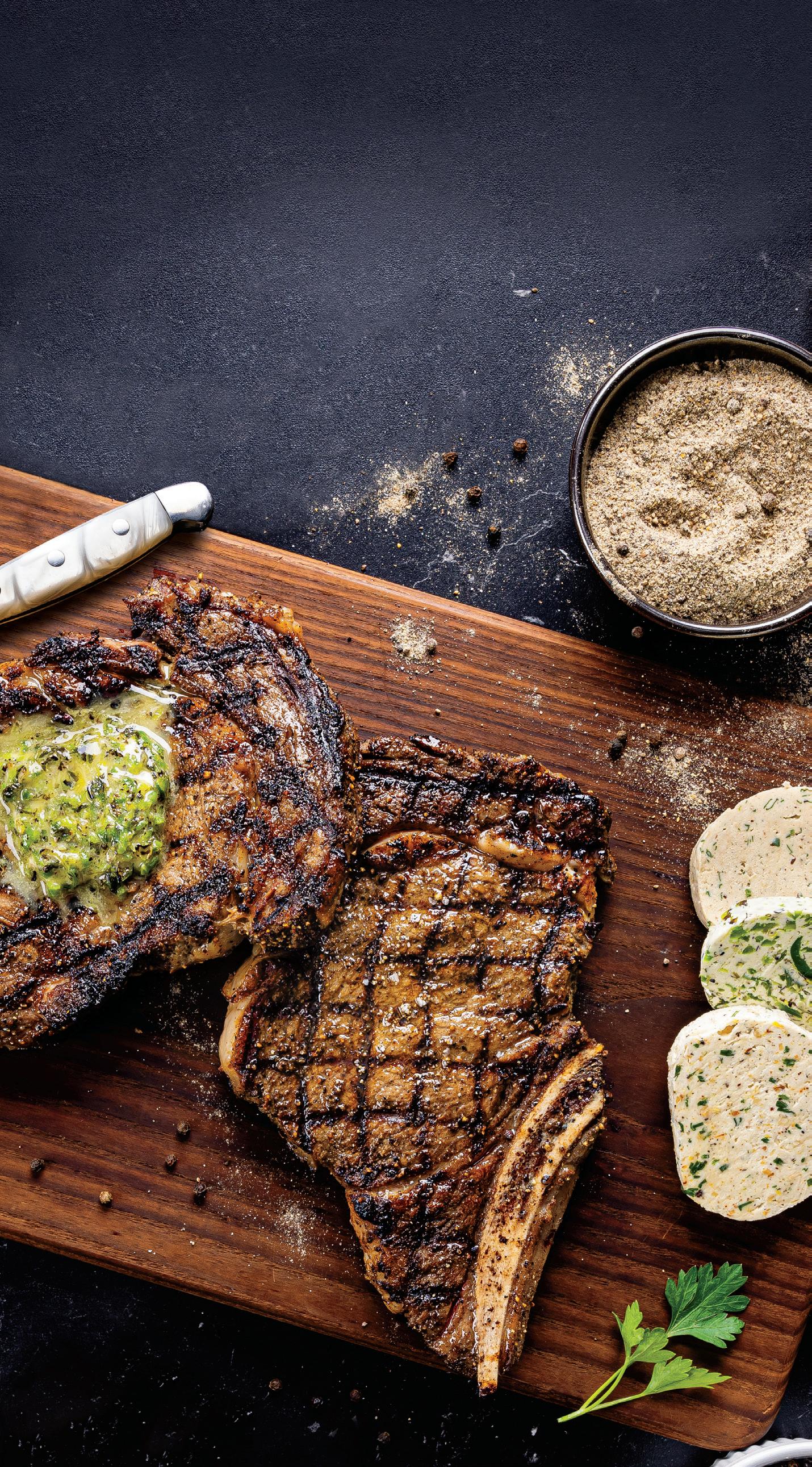
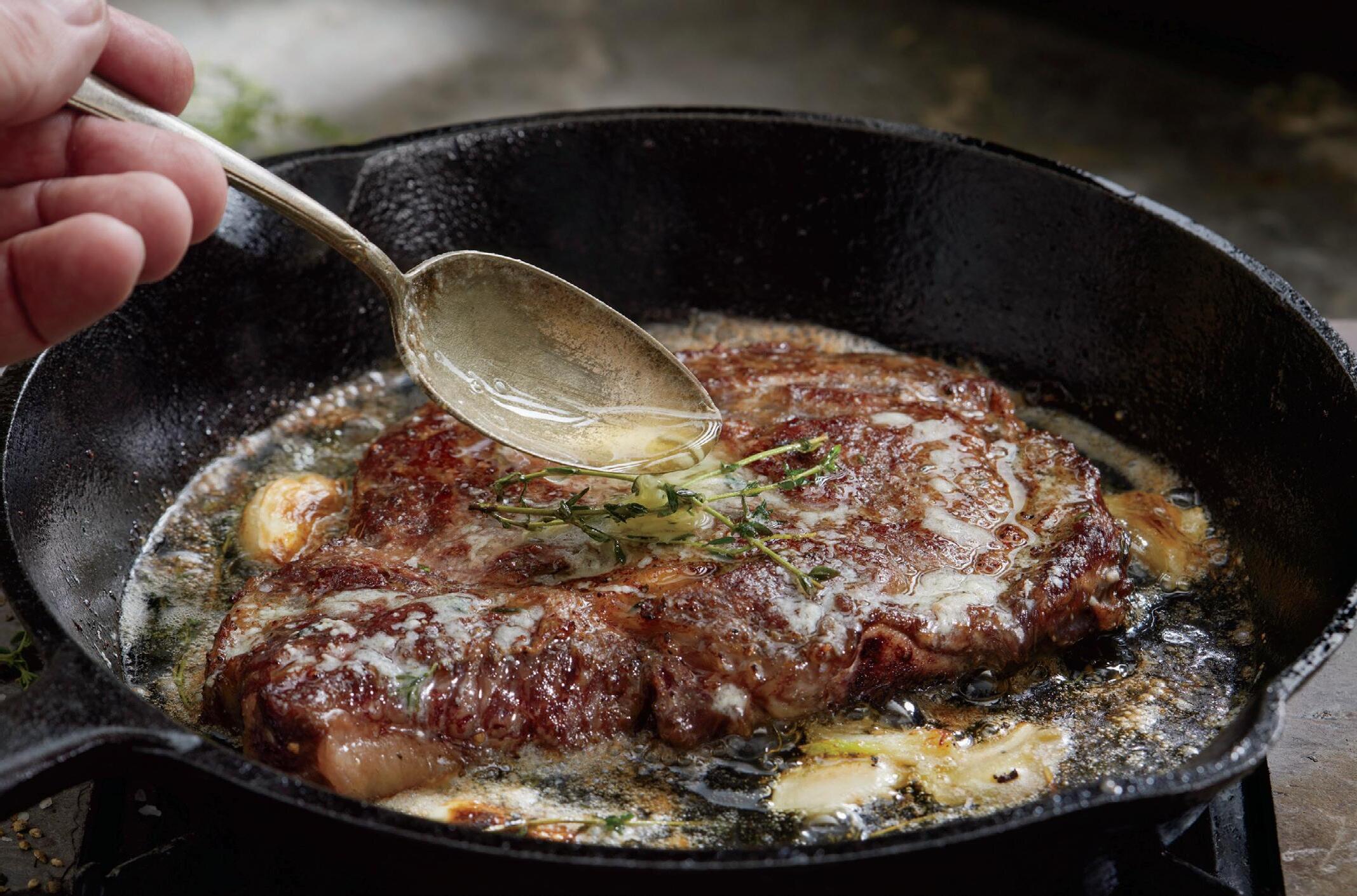
Picture two ribeyes. Same grade, same grill temp. One seared in canola, the other in beef tallow. The tallow steak gets that deep, even crust, holds heat longer on the pass, and plates cleaner every time. That’s not luck; it’s physics. And in a crowded market where consistency sells, knowing how different fats behave is a real competitive edge.
THE MOISTURE PARADOX: FAT DOESN’T ADD JUICINESS—IT PROTECTS IT
Fat doesn’t make food juicy. It keeps you from losing the juice too early. Tallow, duck fat, and other stable fats slip into the tiny surface gaps on a steak or piece of poultry. They buy you a few crucial seconds where moisture stays put while the crust sets. Once that crust forms, it works like insulation. That’s why a tallow-seared ribeye holds temp longer on the pass than one cooked in vegetable oil. Same idea behind perfect crisp duck confit: the fat controls the moisture journey.
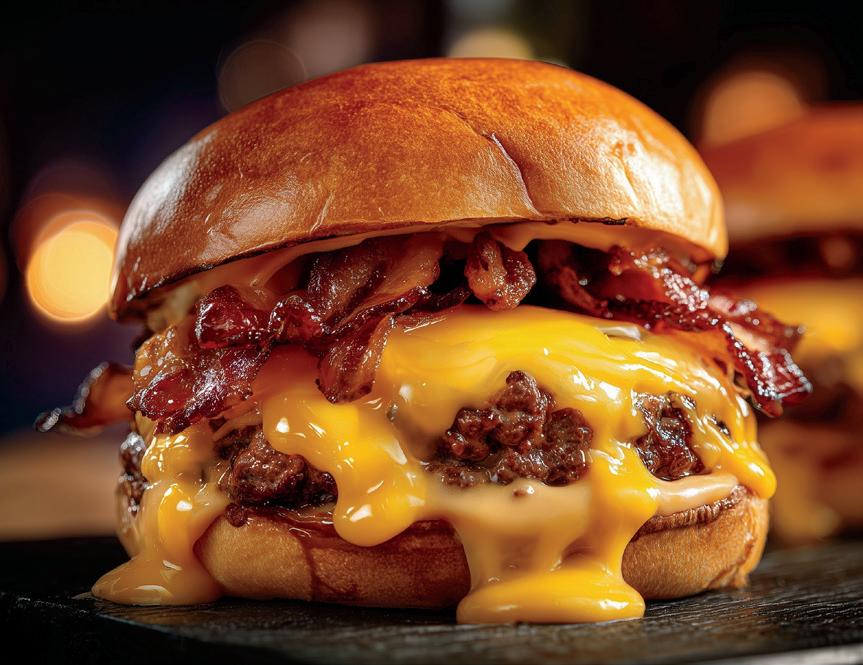
WHY THE RIGHT FAT MAKES THE RIGHT CRUST
When fat hits high heat, the Maillard reaction kicks off and builds those roasty steakhouse flavors we all chase. But you only get the full payoff if your fat can take the heat without breaking down. Smoke point matters, but structure matters just as much.
Beef tallow—now rightfully back in rotation from steakhouses to chef-driven operations—sits around 400°F and stays stable. Because it’s rich in saturated fat, it clings to the meat in a thin, even layer. That means faster dehydration, cleaner browning, and a crust that develops in the same way every time, no matter who’s working the station.
FLAVOR: KNOWING WHEN TO ADD IT, WHEN TO STEP BACK
Animal fats didn’t come back because they’re nostalgic—they came back because they perform. Unlike neutral oils, flavorful fats come loaded with natural aromatic compounds (aldehydes, ketones, volatiles) that lift whatever they touch.
> Tallow deepens beef’s natural savoriness. Cooking ribeye in beef fat just makes molecular sense.
> Pork fat adds subtle sweetness and nuttiness to beans, greens, and root vegetables.
> Schmaltz layers gentle poultry depth into potatoes, grains, and rice dishes.
These fats bring both function and flavor, seasoning food from the inside out. And they do it without raising the ingredient budget.
But there are times when bold fat flavor works against you. Delicate fish like halibut or fluke can get buried under tallow’s richness. Spring vegetables with bright, grassy notes don’t need the weight. In those cases, a neutral oil with a high smoke point gives you the sear without competing with the ingredient. The goal isn’t always more flavor; it’s the right flavor. SCAN TO SHOP Visit Sysco Shop to purchase.
MODERN MENUS NEED MODERN FAT STRATEGY
Not every diner wants—or can have—animal fats. And some proteins just do better with lighter oils. So running a dual strategy—richer fats for searing power, neutral oils for finesse and dietary flexibility—keeps the kitchen smooth and keeps every guest covered.
Grapeseed or refined
clean, neutral, high smoke point—ideal when you want the protein to speak for itself
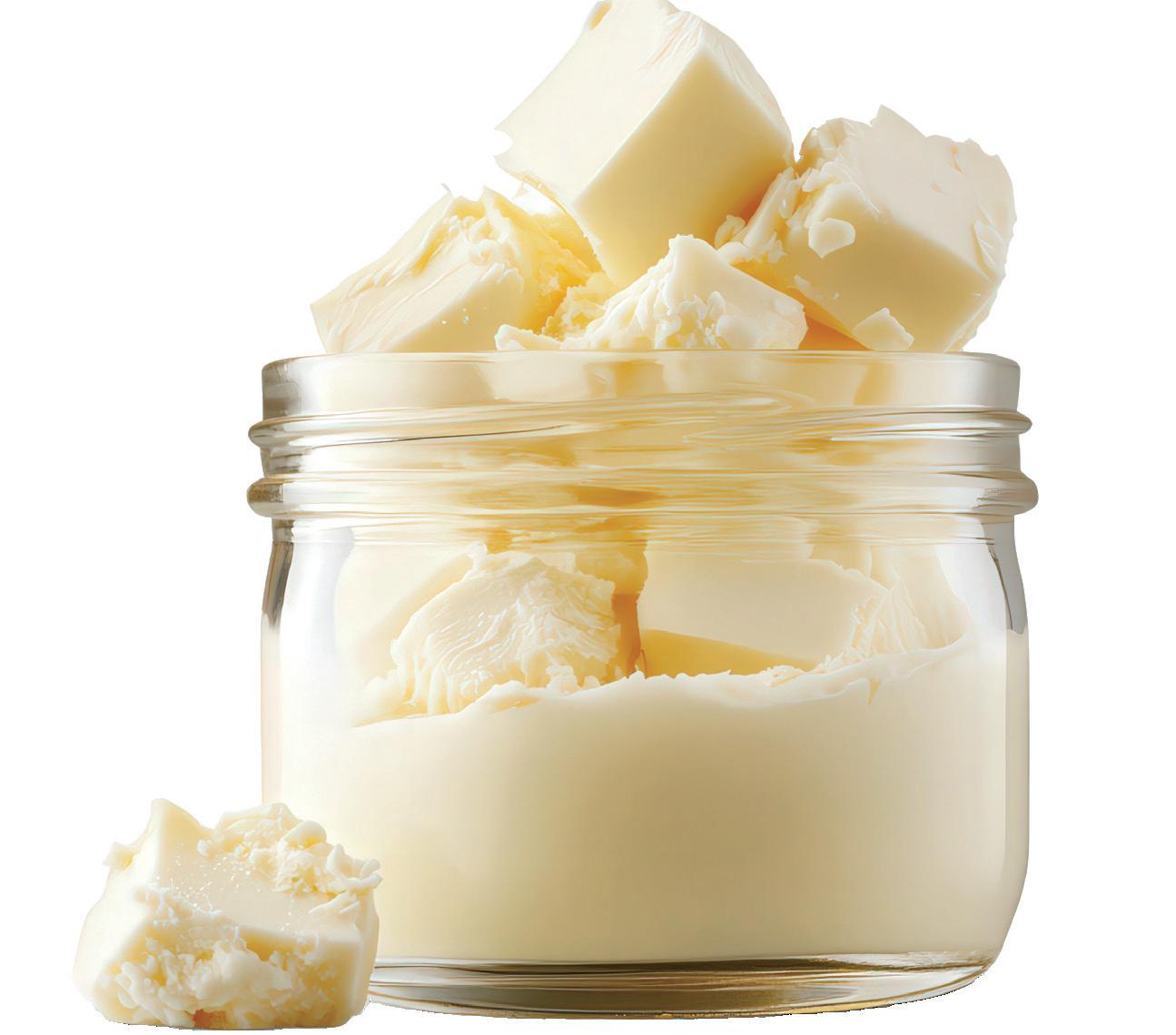
HOW TO PUT FAT TO WORK
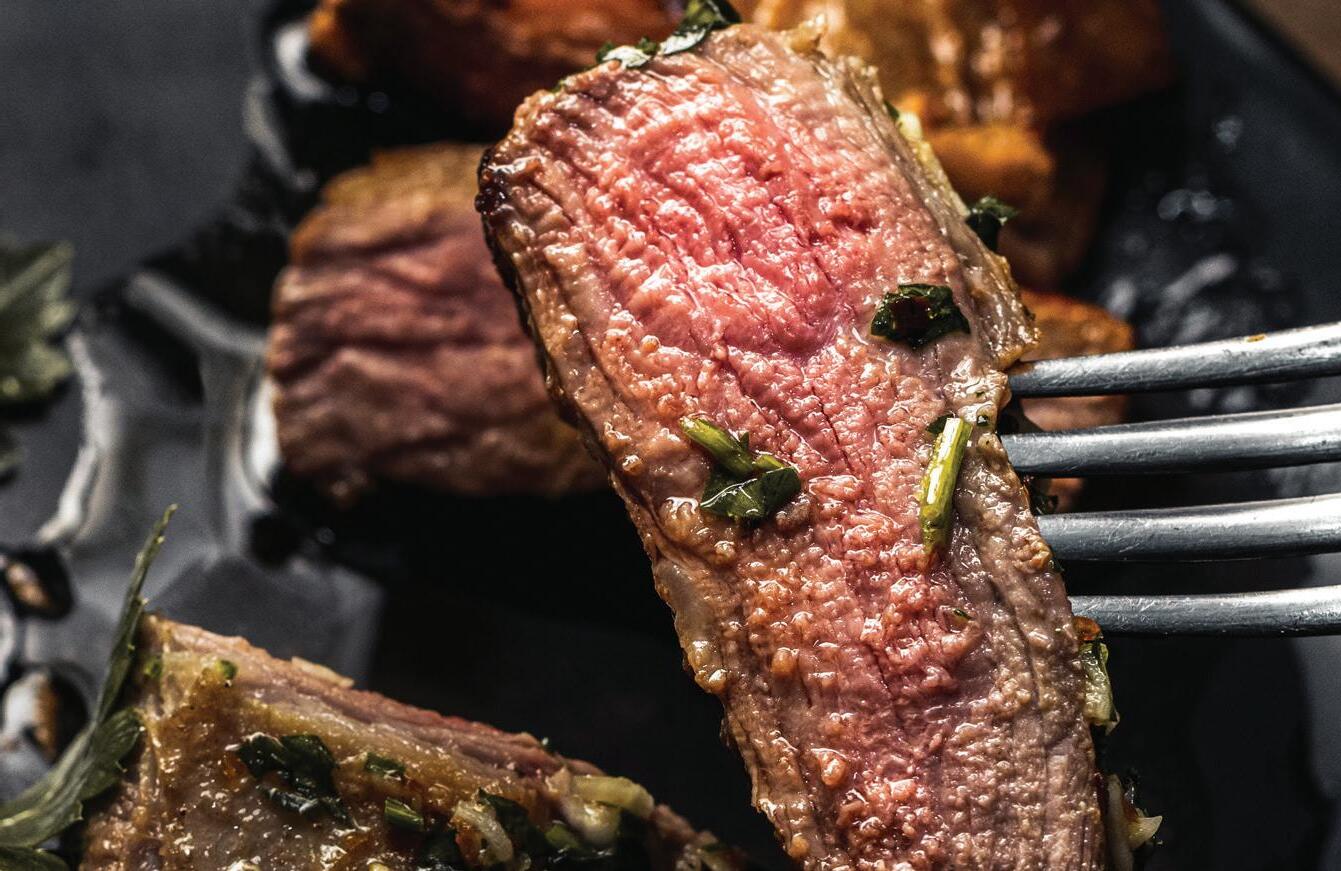
MAP YOUR HEAT ZONES
Match fats to techniques to minimize breakdown and preserve integrity.
High heat: tallow, clarified butter, refined avocado oil
Lower heat + finishing: EVOO, nut oils, compound butters
USE TALLOW WHERE IT SHINES
Tallow reliably creates a deeper, more even crust. It loves steaks, burgers, fries, hearty vegetables and anything you want browned and bold. Rendering in-house is easy, cost-friendly and gives you a story to tell on the menu.
BASTE WITH INTENTION
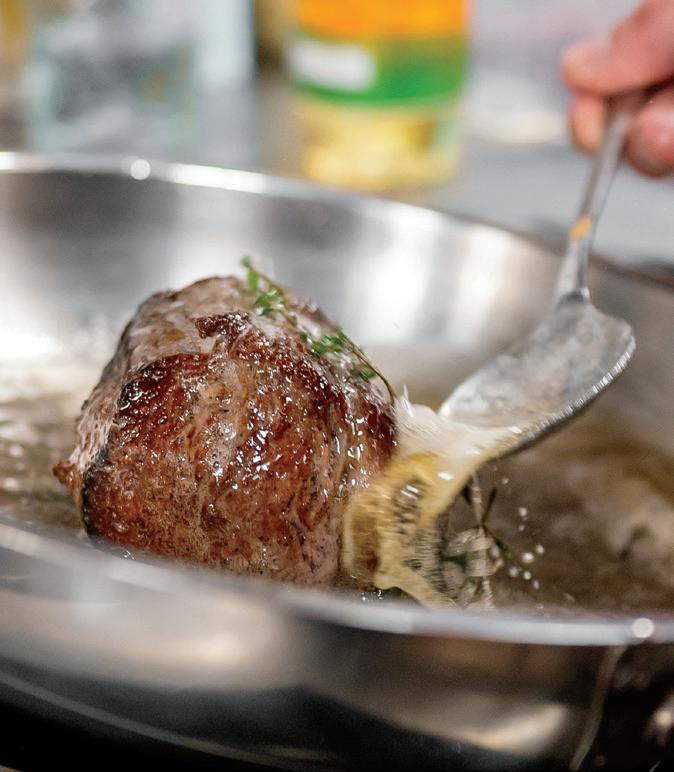
Hot fat picks up flavor from the fond. Use that to your advantage. A tallow or butter baste deepens color and builds layered flavor fast.
FINISH SMART
A spoon of rendered fat or a knob of compound butter, right before plating, thread flavor into every corner of the dish.
MASTER THE SCIENCE, MASTER THE SEAR
Mastering fat science sharpens intuition. When you understand how fat browns, protects, and carries flavor, every sear, sauté, and roast becomes a controlled opportunity to deliver excellence.
THE BOTTOM LINE ON BETTER FAT
Great cooking starts with great fat. Choose the right one and everything gets easier.
> Faster crust + longer holds buys precious time on the line.
> Better crust = better consistency no matter the cook.
> Slower moisture loss means less waste and better plate quality.
> Flavor-rich fats cut down on pricier finishing add-ons.
> Stable tallow and duck fat pricing helps protect your margin.
TELL GUESTS WHAT YOU’RE DOING
People want to know the “why” behind great food. A simple callout like “Seared in beef tallow for enhanced caramelization” signals technique, confidence, and craft. It supports premium pricing without needing to say a word about cost.

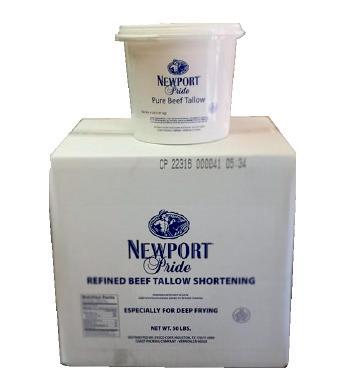
Beef Tallow
Beef tallow is the ultimate kitchen essential that enhances flavor, improves texture, and delivers a host of health benefits.
Elevate your cooking experience with a superior, natural ingredient.
Why Beef Tallow?
Unmatched Flavor—enhance your dishes with a rich, savory depth that only beef tallow can provide
High Smoke Point—ideal for frying, roasting, searing or basting without breaking down or producing harmful compounds
Nutrient-Rich—packed with essential fatty acids and fat-soluble vitamins like A, D, E, and K for optimal wellness
All-Natural & Sustainable—a traditional cooking fat, free from artificial additives, making it a wholesome and eco-friendly choice
Incredible Versatility—perfect for frying crispy fries, searing juicy steaks, or even making flaky, golden pastries


•
• Utilize 100% of product
• Improve portion control
• Cut to order, consistent, reliable, & ready-to-use
• Less storage space needed
• Better inventory management & cost stabilization
• Reduce clean-up & waste disposal costs
•

THE WORK BEHIND
TheHumble Potato
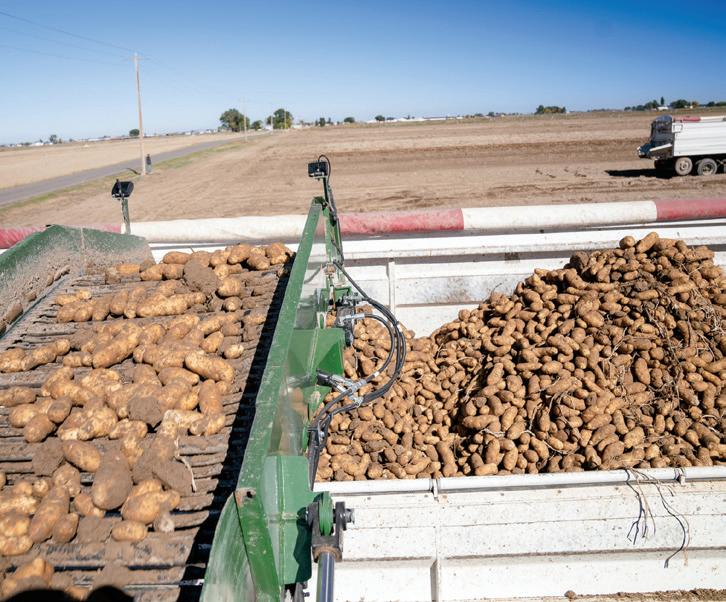
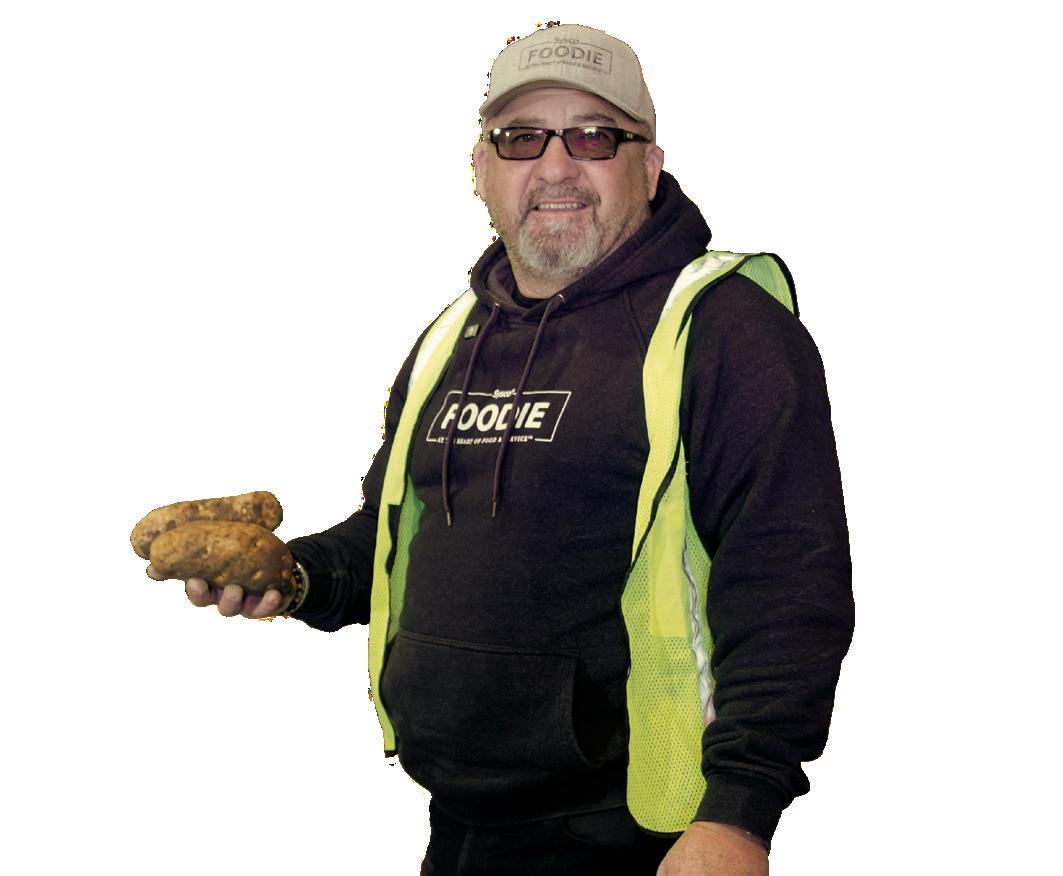
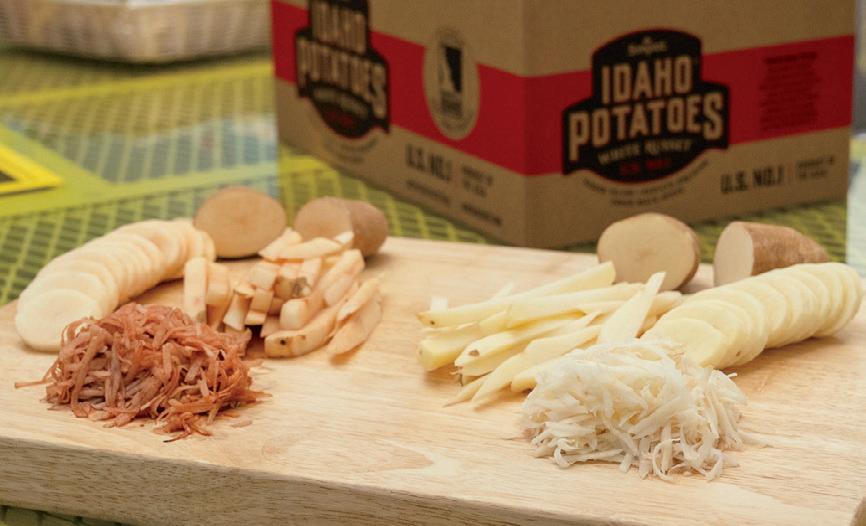
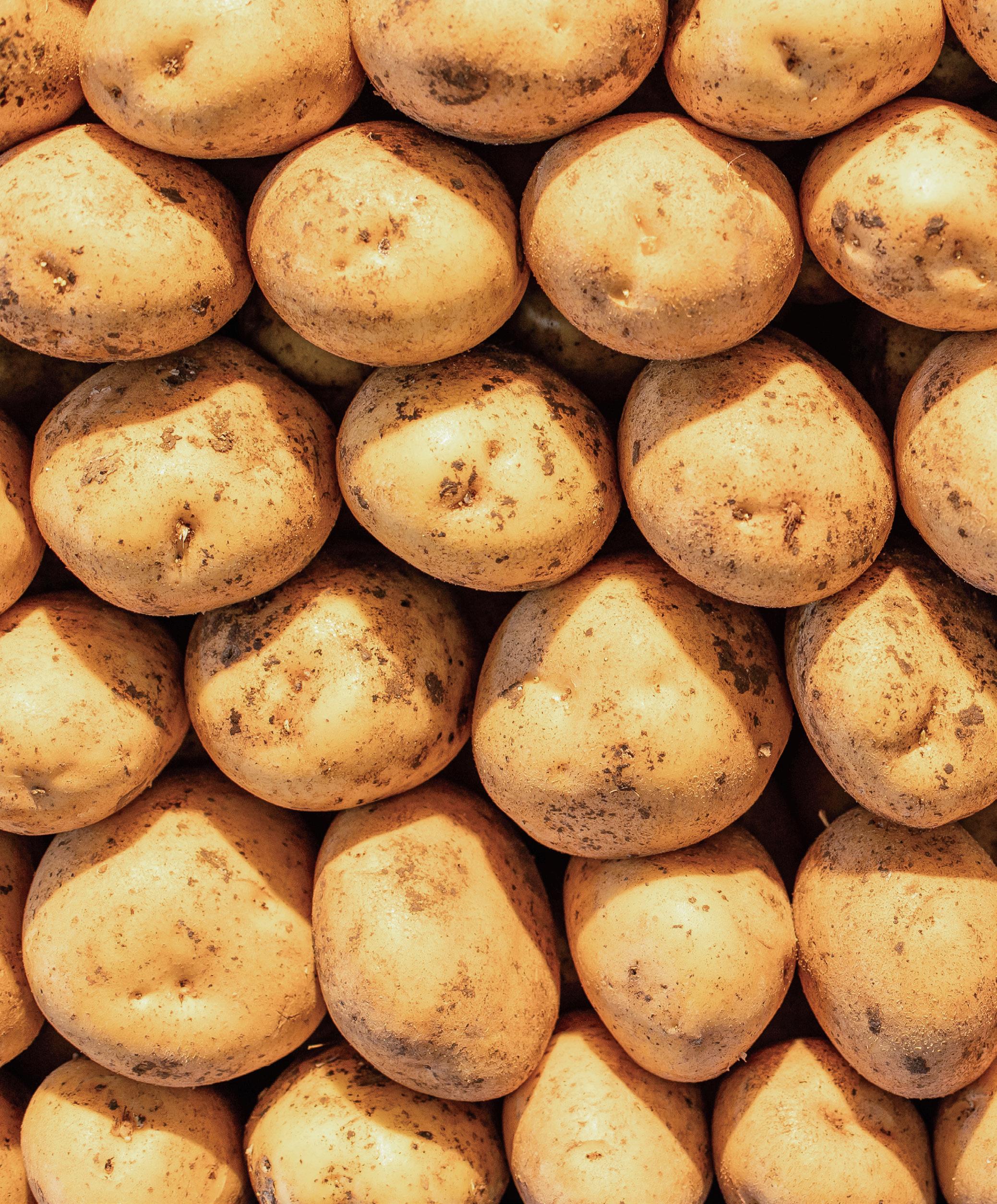
At the tail end of harvest season in Burley, Idaho, the potato plants have already done their job. The tops have dried down, the vines are gone, and what’s left is the part everyone knows; hidden beneath a soil that looks, as Chef Neil puts it, “absolutely gorgeous.” Out in the Magic Valley, the work is loud, deliberate, and surprisingly choreographed: tractors moving in formation, belts humming, trucks rolling steadily
toward storage. It’s the kind of scene that makes you rethink how simple a potato really is.
For Golden View Farms, the harvest is a legacy. Lavel Stoker harvests about 800 acres of potatoes, and his family’s connection to the crop stretches back generations. “My dad really started the farm, and he raised potatoes, even for Simplot,” he says. When his father retired, Lavel and his brother took over. Now Lavel’s son, Spencer, is part
of the operation. “You kind of get attached to the land,” Lavel says, and the joy comes from seeing the cycle repeat—seed to sprout to yield—year after year.
Golden View grows Russet Burbanks and Ranger Russets, both perfect for processing a variety of frozen potato products, including Sysco’s wide variety of premium French fries. “That’s 100% of our process grade potatoes,” Lavel explains, and fall
is when the Rangers are being harvested and prepped for storage. Planning for that crop begins long before any machine touches the field. Golden View runs a four- to five-year rotation between potato crops, managing residue from previous plantings, loosening soil with deep ripping, and bedding rows in the fall. Fertilizer goes in then, too, before planting begins in mid-April.

The soil, Lavel says, is part of what makes Idaho special. He calls it silt loam, and notes that Idaho soils are often described as containing volcanic ash, a long-term contributor to the region’s potato-friendly growing environment. The result is a place where potatoes can thrive with fewer environmental pressures than in more humid regions. That matters when you’re growing a crop where weather can make or break the year. “Mother Nature is really the kingpin in this whole deal,” Lavel says. “We do our best, but Mother Nature is the biggest reason why we either get a good crop or not.”
“ MOTHER NATURE IS THE BIGGEST REASON WHY WE EITHER GET A GOOD CROP OR NOT.”
~ Lavel Stoker
This year, Mother Nature cooperated. Greg Wilcox, a Simplot field representative who works directly with growers during the season and through harvest, calls it “a really good crop.” Quality looks strong, and yields are “average or just a little above average.” Greg grew up around potatoes—his family farmed them for years—and now he’s on the procurement side, helping ensure the potatoes headed for processing meet expectations. His job keeps him close to the field: checking crop development, watching harvest, and following potatoes into storage.
“IT’S AMAZING THE AMOUNT OF WORK THAT GOES INTO WHAT WE LOOK AT AS A POTATO OR A FRENCH FRY.”
~ Chef Neil Doherty


POTATOES THAT PERFORM
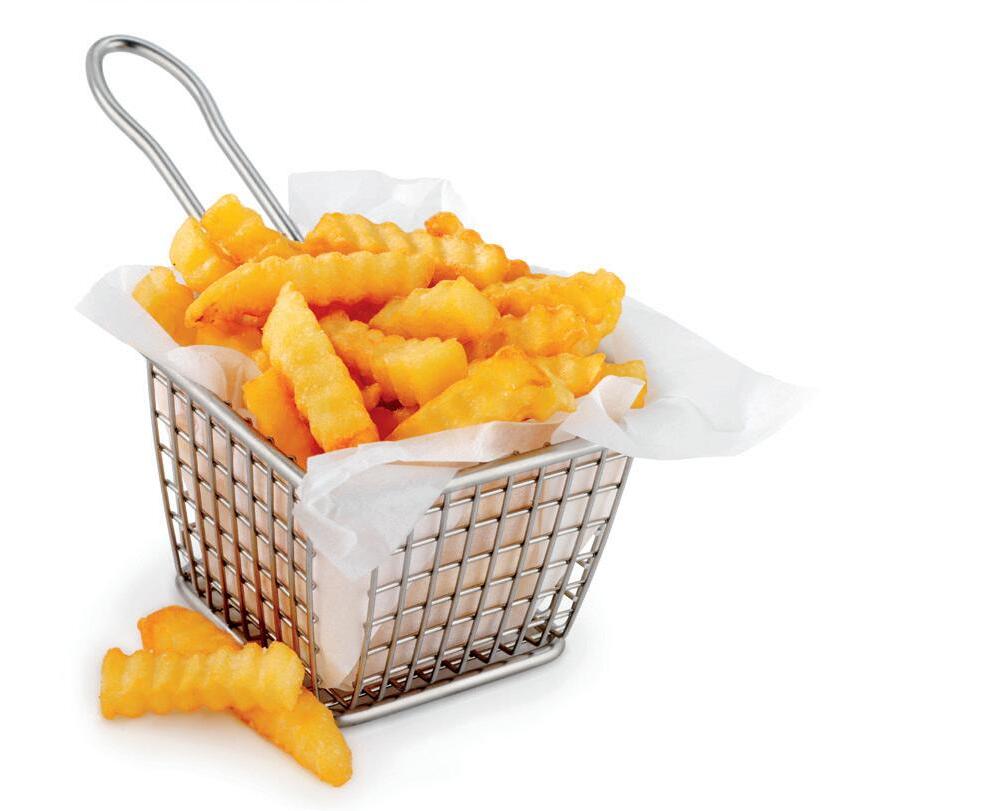
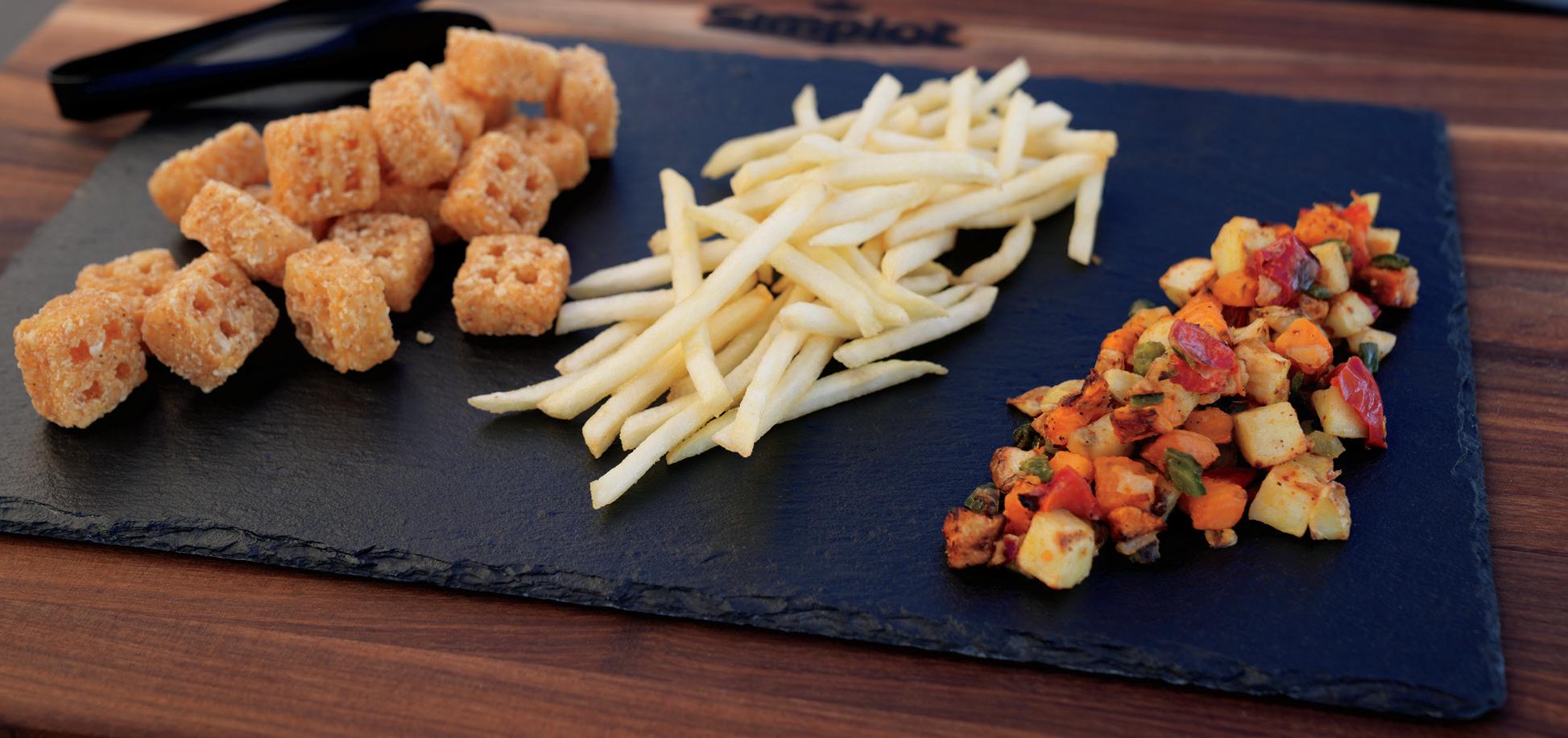
From fries in every cut and style to potato sides and ready-to-prep options for mashing, roasting, and more, Sysco brings potatoes to the table in every form. Built for quality, consistency, and performance, our lineup offers something for every menu, every prep style, and every operator.
Sysco Premium delivers chef-inspired selections crafted to elevate the plate.
Sysco Classic offers staples with national-brand quality and taste.
Sysco Reliance delivers consistent quality at a great value.

Burley, ID


That follow-through is where the scale and the investment become real. Harvest is fast, engineered, and precise. Golden View runs two four-row wind rowers—“crossovers,” as Lavel calls them—that place potatoes on the ground, then a digger moves through, lifting soil and tubers onto chains that drop dirt back into the field while
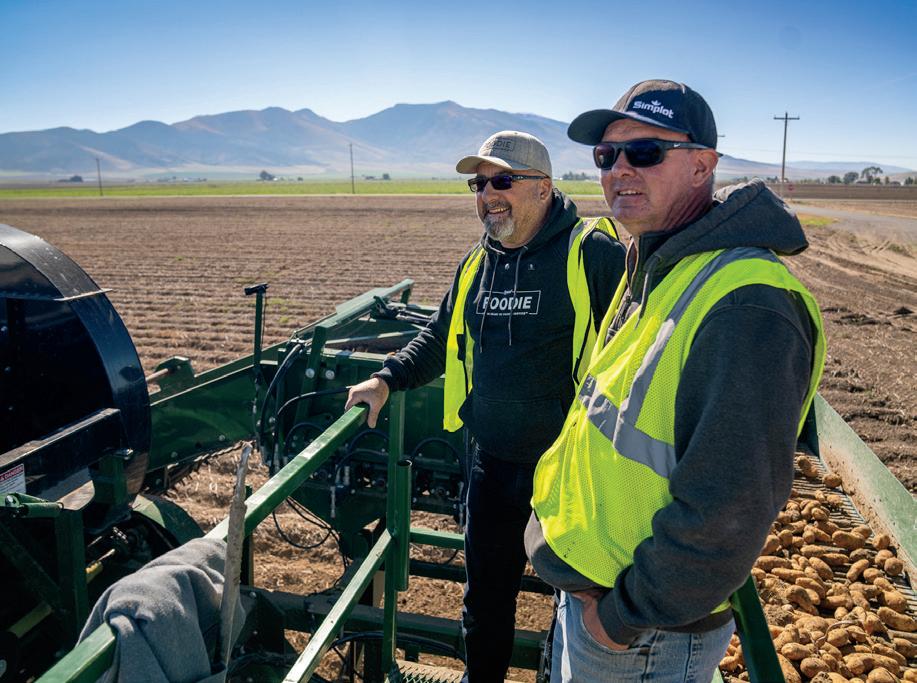

carrying potatoes into trucks. “They’re digging 12 rows at a time,” Greg explains. Up top, someone watches for rocks, clods, and anything that doesn’t belong. Even the tractors themselves reflect how specialized modern harvest has become. One driver isn’t even steering—his machine is guided by GPS while he monitors what’s happening behind him.
labor, and insurance, all tied up in what’s still sitting in the ground. Chef Neil sums it up in plain terms: there’s “a lot of money in the ground and waiting for results,” and weather can undo it quickly.
And the costs behind those machines are no small part of the story.
“People don’t realize how much money it takes to grow a crop of potatoes,” Greg says—seed, fertilizer, irrigation, equipment, fuel,
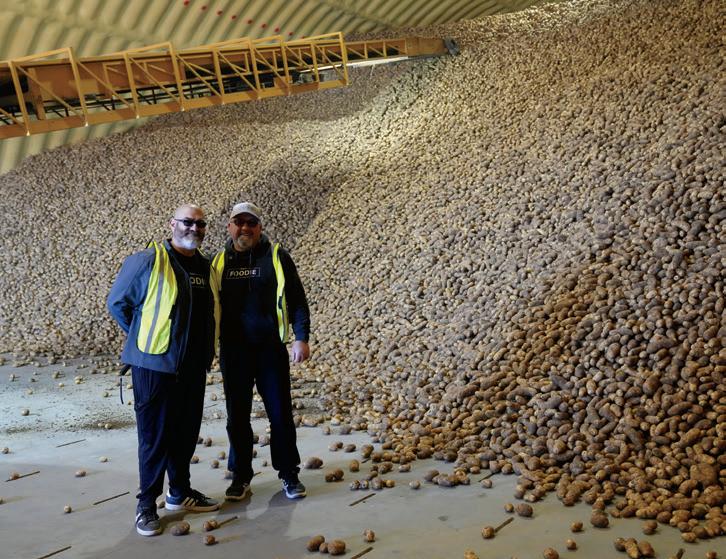
To protect that investment—and to keep potatoes consistent for months—storage is treated like a form of craftsmanship. Golden View’s storage facilities are massive, state-of-the-art structures owned by the farm itself. When Chef Neil asks what two of the buildings cost, Lavel estimates about $3.5 million. And every potato inside is pre-contracted.
Inside, the process shifts from tractors to airflow and temperature control. One storage holds roughly 16 million pounds of potatoes, Greg says, with about 10 million pounds ultimately becoming fries, tots, hash browns, and other frozen products. The air system is designed to maintain quality during the long hold. Potatoes are held at 55°F for a couple of weeks to heal, then gradually cooled to about 46°F, a range that helps manage sugar content and protect fry color. It’s “simple but not,” Chef Neil observes; technology quietly supporting something that still begins as a seed piece in the soil.
Simplot’s role is visible across this entire chain; not as a distant buyer, but as a partner embedded in regions, varieties, and storage strategy. Travis Chase describes the Magic Valley as a major sourcing area for frozen potato products, with growers like Golden View storing potatoes to supply future production. The system is built for reliability: multiple micro-regions, different varieties suited to different conditions, and a calendar that
moves from direct-from-field product in summer into storage crop in the fall. It’s also built to manage risk, from geography to varietal development.
Travis notes that Idaho’s lower humidity reduces late blight pressure compared to more humid potato-growing regions, and that continued breeding, traditional and biotech, adds “tools in the toolbox” as growers and processors adapt.
Back in the field, watching another truck fill and pull away, Chef Neil lands on the point that From the Source stories always return to: what looks ordinary on a plate is anything but. “It’s amazing the amount of work that goes into what we look at as a potato or a French fry,” he says. Simplot carries that care forward by transforming these potatoes into premium-quality frozen potato products, helping Sysco customers deliver fresh, flavorful,
and consistent dishes that reflect the work and dedication that starts long before it ever reaches the plate.
Out here, that work is measured in generations, in soil that’s been cared for year after year, in harvest machines moving twelve rows at a time, and in storage facilities engineered to keep a crop stable deep into spring. The potato may be humble. The story behind it isn’t.
LEARN MORE
Scan to learn more about sourcing premium potato products through Sysco.
Chef The FRESH TAKE FROM
There’s something grounding about standing in a potato field in Idaho. Maybe it’s the vastness of the land, or the honest, roll-up-your-sleeves nature of the work, but for me, it felt familiar. As an Irishman, I’ve always had a deep respect for the humble potato. Out there with my boots in the soil, watching harvest crews move in sync, I felt right at home.
What many people don’t realize is how much effort goes into bringing something so simple to the plate. The timing, the machinery, and the coordination are a carefully choreographed process that demands skill, patience, and grit. Just like a well-run kitchen. And right now, that kind of discipline matters more than ever.
Operators are navigating tighter margins, leaner teams, and guests who expect more every time they sit down. The trends we’re seeing reflect that; comfort-driven and value-conscious menus built with flavor and creativity at the forefront. Diners are looking for food that satisfies, stretches, and makes sense. That’s why potatoes continue to earn their place on the plate.
Whether you’re cooking from scratch or leaning on back-of-house efficiencies, potatoes meet you where you are. Throughout this issue, you’ll see dishes built on smart choices, strong foundations, and ingredients that work as hard as you do. We’re proud to partner with growers who understand that balance.
Cheers, Chef
Neil
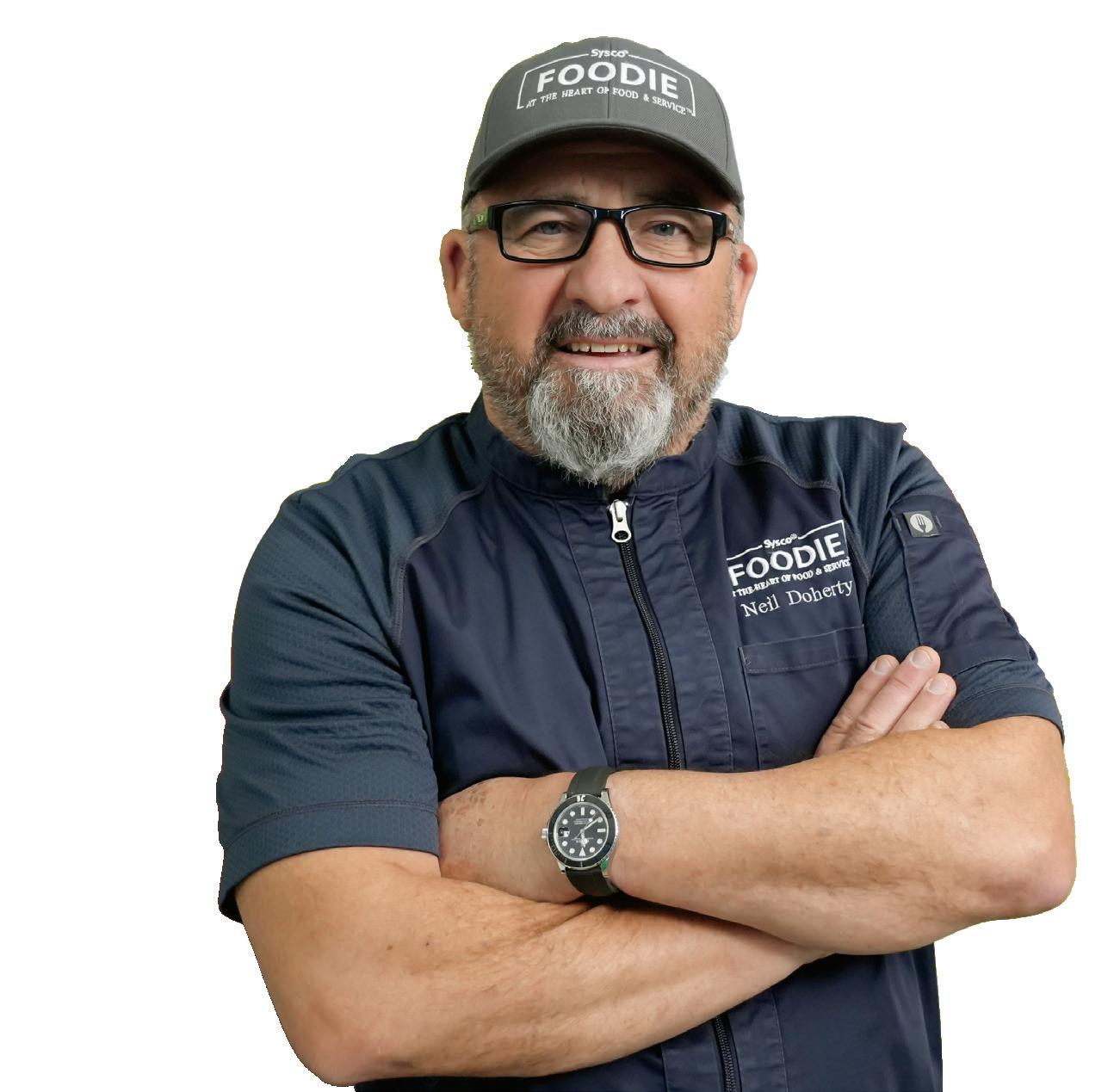
Chef Neil Doherty CORPORATE EXECUTIVE CHEF, SYSCO CORPORATION
Trends That Matter
FOR YOUR RESTAURANT IN 2026
Menu change is accelerating—and chefs don’t have time for flavors that flop or ideas that slow down the line. Diners want familiar comfort with modern execution, and operators want dishes that lift throughput, reduce waste, and raise check averages. Turn the page for the trends that actually matter in 2026: what guests crave, what they’ll spend on, and where your menu can drive real, sustainable growth.
1) EGGS BACK ON TOP
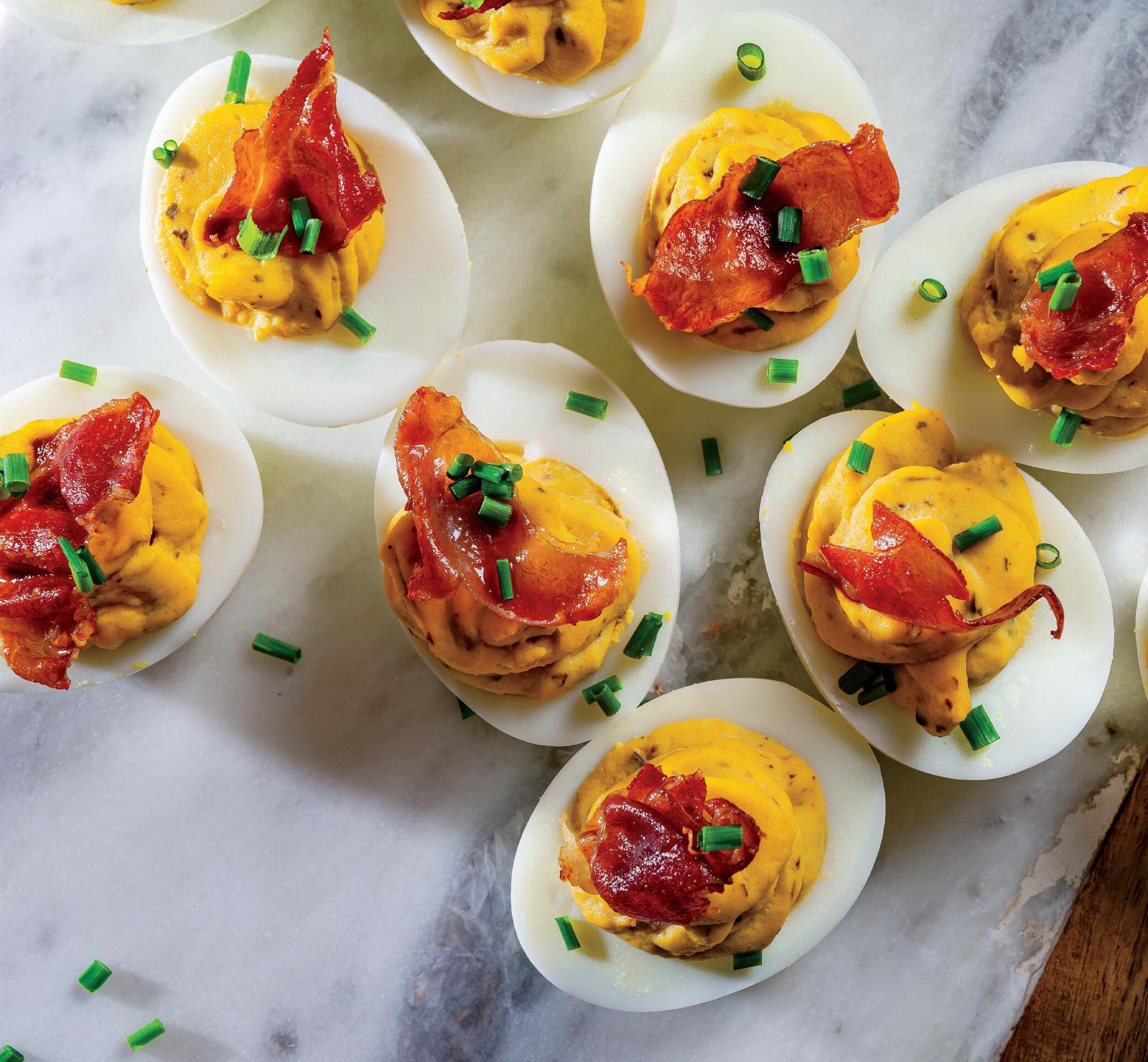
U.S. egg demand is expected to approach 100B annually by 2026 as consumers lean into comfort, richness, and all-day versatility. Chefs are responding with runny-yolk ramen, deviled egg bar bites, egg-topped burgers, and shaved cured yolks that mimic aged cheese for pennies.
Your Play: High-Margin, All-Day Eggs
• Add a fried or jammy egg to premiumize bowls, burgers, and sandwiches.
• Expand brunch—egg builds consistently deliver strong margins.
• Use cured yolks as a low-cost upscale finish.
• Create shareable formats—bar snacks, bites, and small plates to fuel repeat visits.
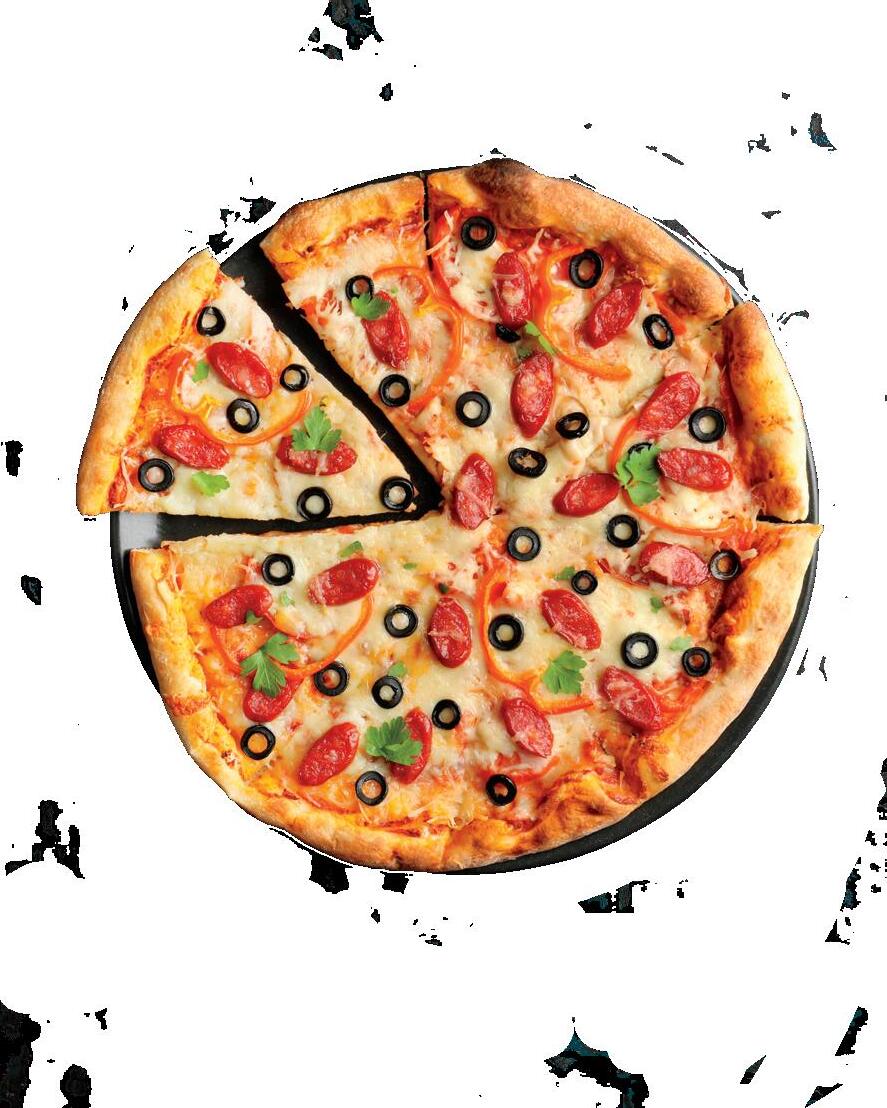
Pizza remains a top performer, growing 5–7% nationally and thriving across dine-in, delivery, and regional formats. Operators are upgrading dough hydration, flour quality, and cheese blends, while diners embrace both classic and emerging styles—from NY and Detroit to high-hydration, Roman, and gluten-free.
Your Play: Elevate Crust, Elevate Value
• Improve your dough through hydration, pre-ferments, or high-gluten flour.
• Consider labor-savers like pre-fermented or par-baked Roman crusts.
• Add premium toppings (e.g., Greco’s old-world sausage, halal beef pepperoni) to widen appeal.
BURGERS: PROFIT BETWEEN THE BUNS
• Treat pizza as an ROI engine; optimize for daypart and channel profitability.
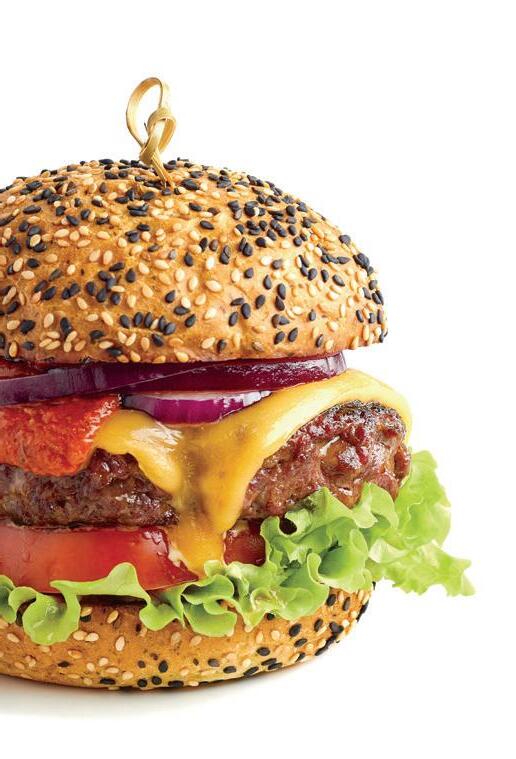
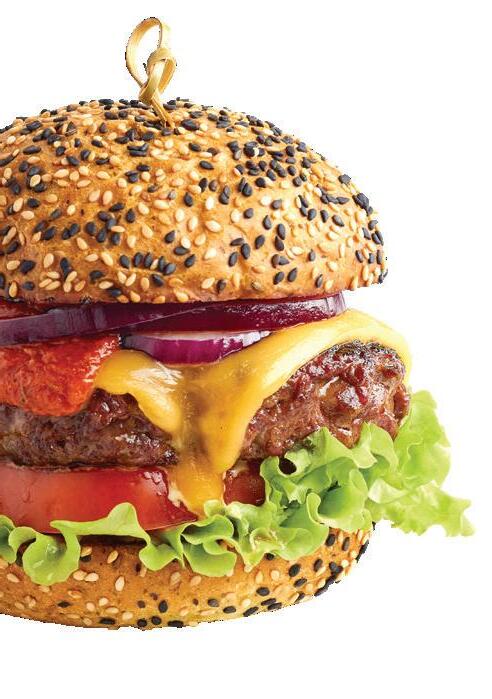
With the global burger market heading toward $809B by 2033, burgers remain one of foodservice’s most reliable profit drivers. Operators are winning with bold sauces, global mashups, smash sears, and premium bun choices like brioche or Baker’s Source Sweet Potato Artisan that instantly signal quality.
Your Play: Build the Next Crave Ritual
• Develop a signature sauce—one of the strongest loyalty levers.
• Offer a second hero burger with global heat, texture, or unexpected flavor.
• Use photogenic formats—smash, molten centers, towering stacks.
• Upgrade buns for instant perceived value.
• Expand into breakfast or late-night to boost traffic.
5) FUNCTIONAL FOODS: WELLNESS WITHOUT THE
“WELLNESS MENU”
Guests want food that supports energy, mood, immunity, and gut health, without giving up flavor. Luckily, most functional ingredients are already in your kitchen. From fermented staples to leafy greens, roots, seeds, herbs, and aromatics, these everyday items offer real wellness cues that resonate with diners.

4)
Street food is surging toward a projected $249B market, fueled by food halls, pop-ups, and global flavors. Operators are turning casual favorites into premium, portable builds powered by sustainability, local sourcing, and functional ingredients.
Your Play:
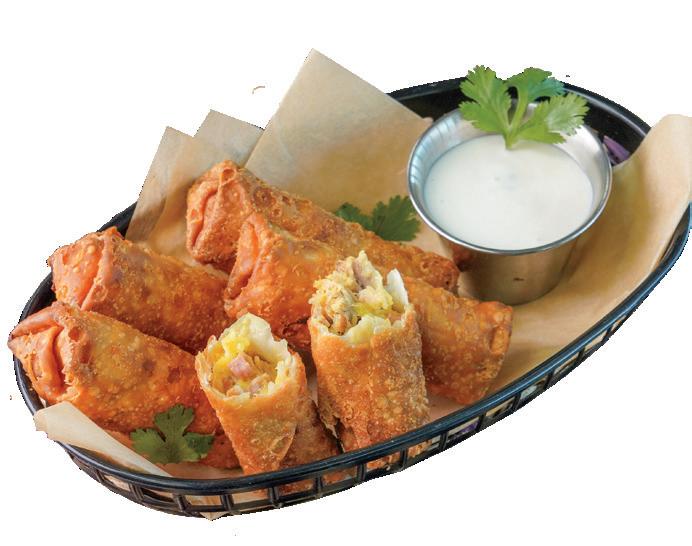
• Use street food as your LTO engine: kimchi tacos, sushi burritos, curry poutine, or Casa Solana’s Cuban Egg Rolls
• Add global condiments (gochujang, tamarind, yuzu, zhug) to boost flavor and wellness cues.
• Repurpose existing proteins into handhelds and bowls to reduce waste.
• Prioritize formats that thrive in takeout and social channels.
Your Play: Sell the Benefit Simply
• Feature heart-healthy and anti-inflammatory staples: leafy greens, walnuts, flax, green tea, and cruciferous vegetables.
• Build gut-health appeal with fermented foods, flax or chia for fiber, and apple cider vinegar.
• Use micro-callouts like “ginger for immunity + digestion,” “garlic for natural antibacterial support,” or “citrus for vitamin C–rich immune defense” to educate without overwhelming.


THE SEED OIL SHIFT
Major chains moved away from seed oils in 2025, and consumer perception is following. “Seed-oil-free” cues quality, care, and cleaner eating—even when guests don’t follow the science closely.
Use Better Fats with Purpose
Call out seed-oil-free cooking on where it fits—guests notice. Shift to tallow, avocado oil, butter/ghee, or coconut oil where they enhance flavor. Lean into “tallow fries” or “butter-seared” proteins to justify premium cues.
• Use premium fats selectively to control costs and maximize flavor ROI.
• Tap Sysco brands like Sysco Classic, Buckhead/Newport, and Arrezzio for high-quality fat and oil alternatives that fit your operation.

7) GLP-1 DRUGS ARE RESHAPING DINING
Smaller portions, fewer impulse add-ons, and more purposeful ordering are the new normal. Fast-casual and QSR feel it first, but all segments must adapt.
Your Play: Protect Revenue While Adjusting
• Add low-calorie, high-margin mocktails and functional beverages.
• Maintain pricing by designing smaller plates with premium touches.
• Offer half-portions, bowls, mini mains, and shareables.
• Shift toward protein-forward and vegetable-forward builds that still feel satisfying.
8) SUSTAINABILITY IS TABLE STAKES
Guests expect meaningful progress on sourcing, ingredients, and packaging. While major players invest at scale, independent operators can make changes that are equally visible and guest-valued.
Your Play: Practical Sustainability with Margin Upside
• Lean into vegetable-forward builds that align with wellness and profit goals.
• Offer yeast-free or low-yeast options to meet rising anti-inflammatory diet demand.
• Add mariculture ingredients like kelp pickles for flavor and environmental benefits.
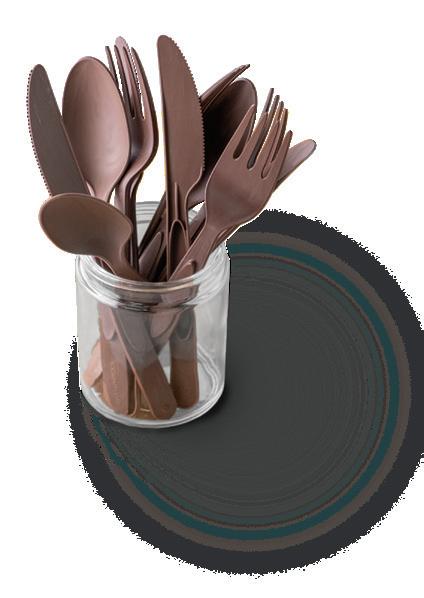
• Upgrade to plated disposables like Earth Plus Agave-Based Compostable Cutlery.


9) TECHNOLOGY IS YOUR COMPETITIVE EDGE
AI, automation, and next-gen equipment are redefining kitchen efficiency. Operators using data technology for menu engineering, payments, staffing, and energy efficiency are seeing real ROI.
Your Play: Upgrade with Intent
• Use AI for forecasting, menu engineering, personalization, payments, and fraud prevention.
Optimize menus with AI insights to drop low-performing SKUs and increase margins.
• Invest in energy-efficient equipment (induction, next-gen ovens) to lower utility costs.
• Consult your Don rep for the latest equipment innovations and upgrades.
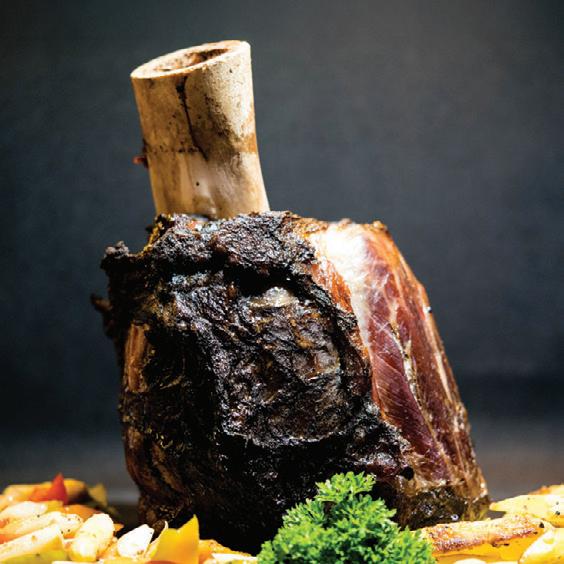
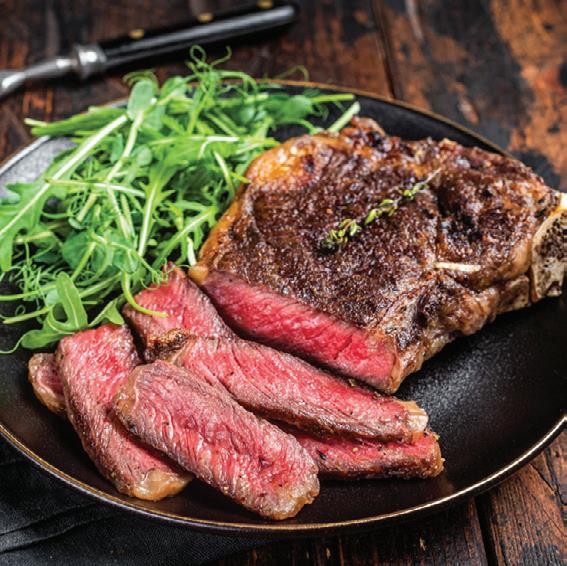
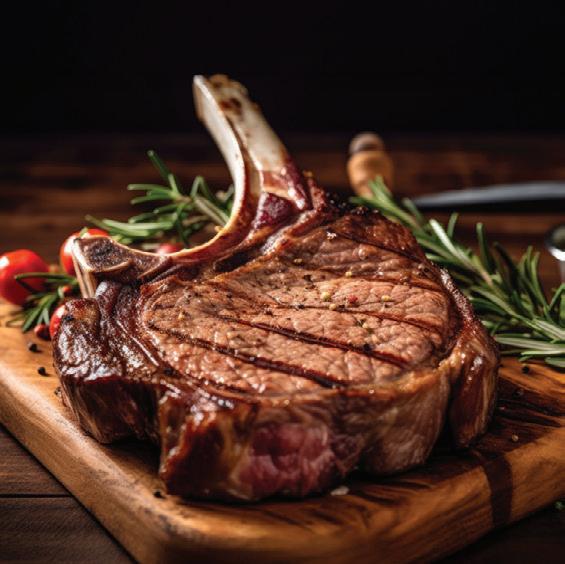
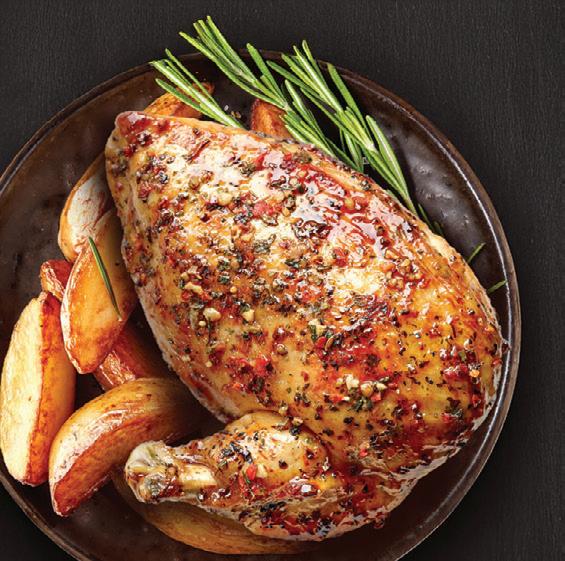
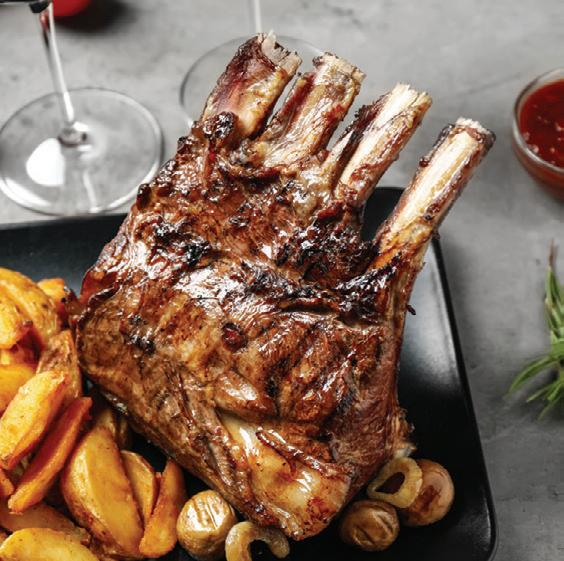
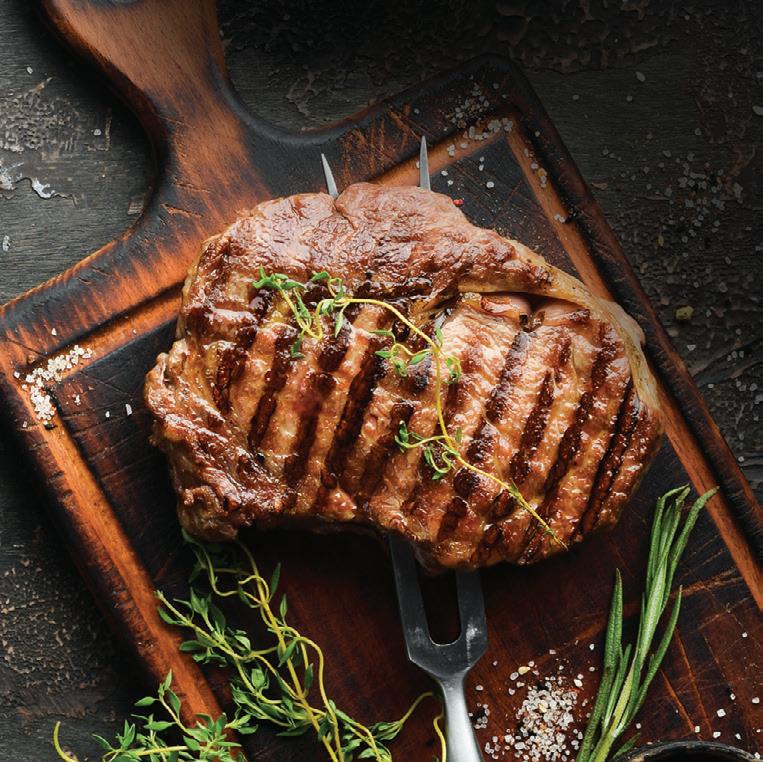
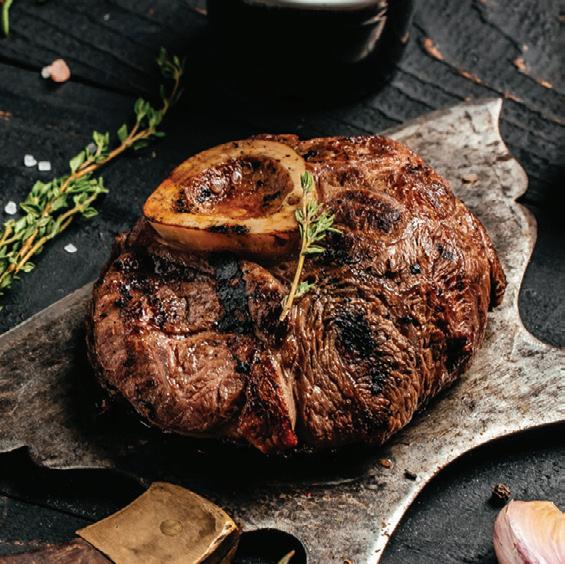
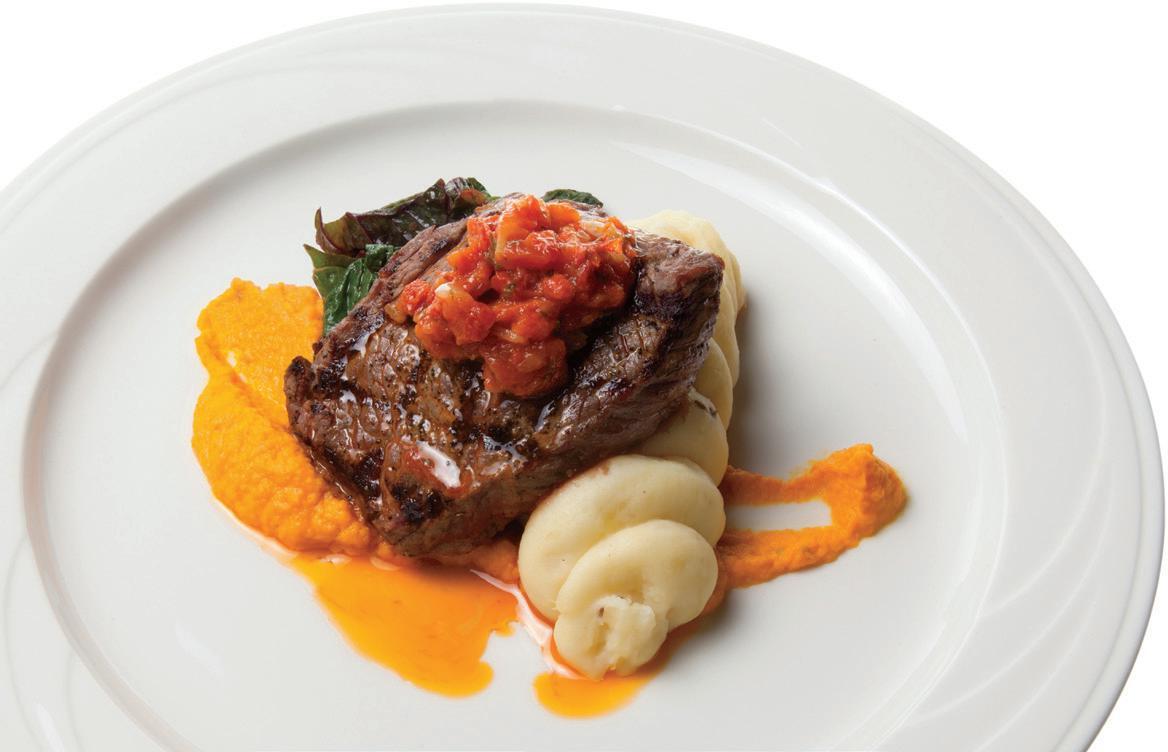
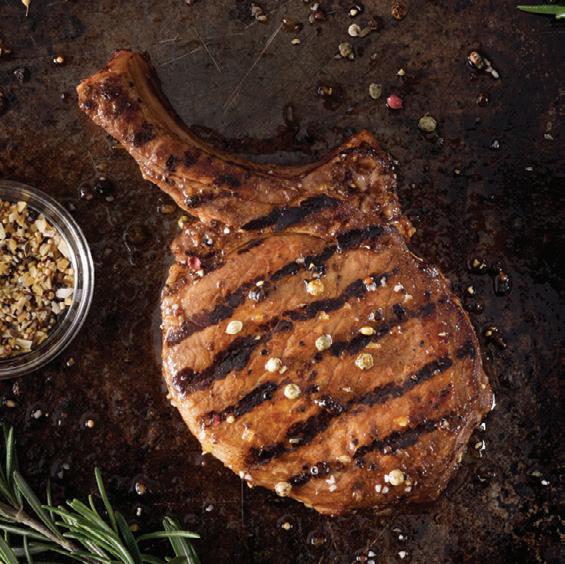
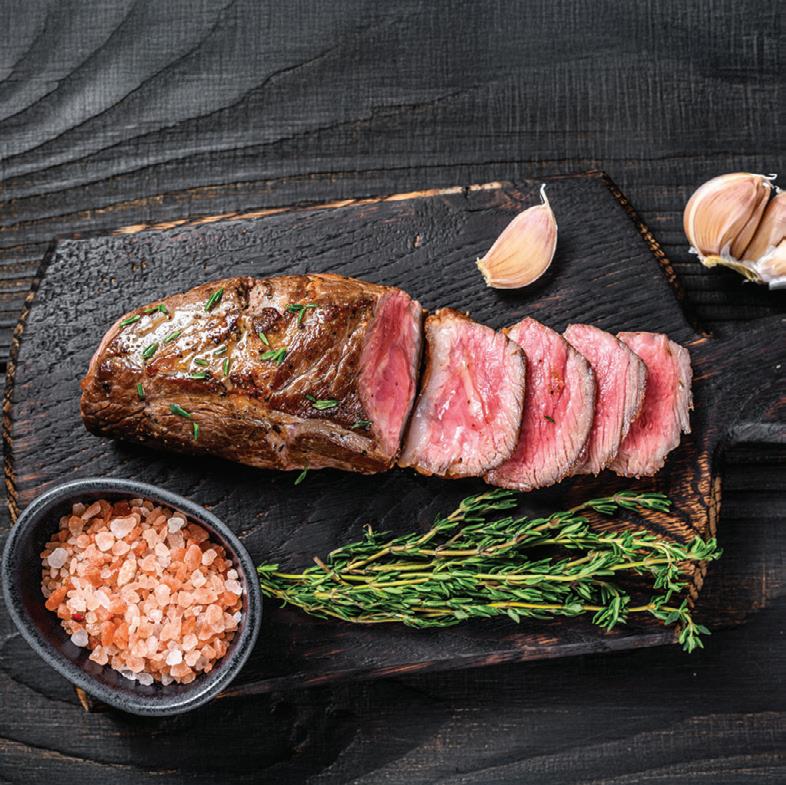
Legendary Cuts for Every Feast
In this business, every second counts. That’s why we deliver expertly butchered, show-stopping centerpieces that perform. You handle the re. We’ll handle the cut.
















Airline Chicken Breast
Frenched Beef Rib Striploin
Ribeye
Veal Osso Buco
Frenched Pork Chop
Tenderloin
Boneless Bone In Braising/Roasts


MENUS & MARKETING

Our team of consultants is here to help you... We partner with you to achieve your business goals!
• Design menus and marketing that represent your brand and grow your business.


• Implement proven engineering and design strategies to maximize the power of your menu.
• Drive traffic by optimizing your digital marketing to connect with your customers.
• Strategize operations with technology and Sysco Solutions Partners that support your goals.


To learn more, ask your Sysco team or visit solutions.sysco.com


Rooted Water: in the
CHEF PATRICK BRITTEN’S GUIDE TO NORTHERN NEW ENGLAND
A LIFE
SHAPED
BY THE COAST
His culinary journey began in 1974 with a dishwashing job secured through a teenage worker’s permit. “I loved watching the cooks in action,” he recalls. “The pace, prep, and energy hooked me.” Soon he was helping with prep and baking, realizing the kitchen was where he belonged.
“I LOVE BEING ABLE TO LOOK AROUND AND SAY, ‘THIS IS WHAT WE’LL COOK TONIGHT.’”
~ Chef Patrick
For Sysco Chef Patrick Britten, Northern New England isn’t just a place; it’s a way of life shaped by tides, seasons, and respect for craft. Born in Springfield, Massachusetts, and raised along the Maine’s southern coast, he’s spent nearly six decades minutes from the ocean. “I can’t move away from the water,” he says. “It’s part of who I am.”
That connection influences everything he does, from how he cooks to how he supports operators across Maine, New Hampshire, and Vermont. A Sysco Culinary Specialist since 2006, Chef Patrick brings decades of experience—much of it earned long before Portland became a nationally recognized food destination.
After earning a culinary degree from Southern Maine Vocational Technical Institute (now Southern Maine Community College) in 1980, he became executive chef of a South Portland seafood restaurant in the early ’80s. “Portland wasn’t on the food scene the way it is now,” he says, “but the ingredients were always incredible.” For more than a decade, he honed his craft and mentored future kitchen leaders.

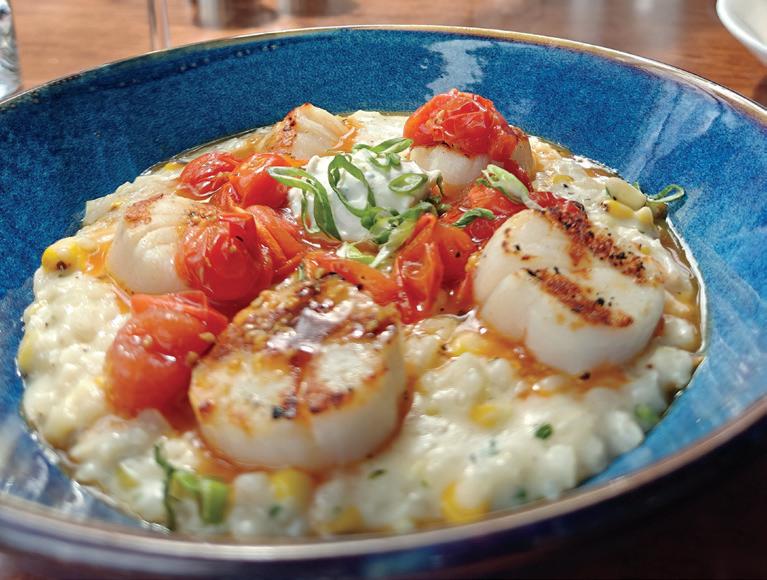
WHERE WATER MEETS THE PLATE
Seasonality still drives Chef Patrick’s cooking. Summer means wood-fired pizzas and roasted mussels, clams, and oysters. Winter calls for braises, French onion soup, and simple dishes that let quality ingredients shine. “It changes constantly,” he says. “I love being able to look around and say, ‘This is what we’ll cook tonight.’”
Seafood remains central. Chef Patrick champions locally caught species like haddock, pollock, hake, and cod from what he calls “one of the world’s richest fishing grounds.” An avid offshore fisherman, he’s battled a 500-pound bluefin tuna and caught and released hundreds of sharks. Freshness, he says, makes all the difference, like the scallop he once shucked straight from the ocean during a winter dive. “It was still moving.”
TASTING NORTHERN NEW ENGLAND
For visitors, his advice is simple: stay curious and venture off the beaten path. Seasonal lobster and clam shacks line the coast from Memorial Day through fall, while farm-to-table restaurants and food trucks highlight the region’s creativity.
Beyond the plate, Northern New England offers something in every season—boating and beaches in summer, hiking and biking inland, and skiing or snowmobiling in winter, and vibrant foliage in fall. “There’s always something happening,” he says.
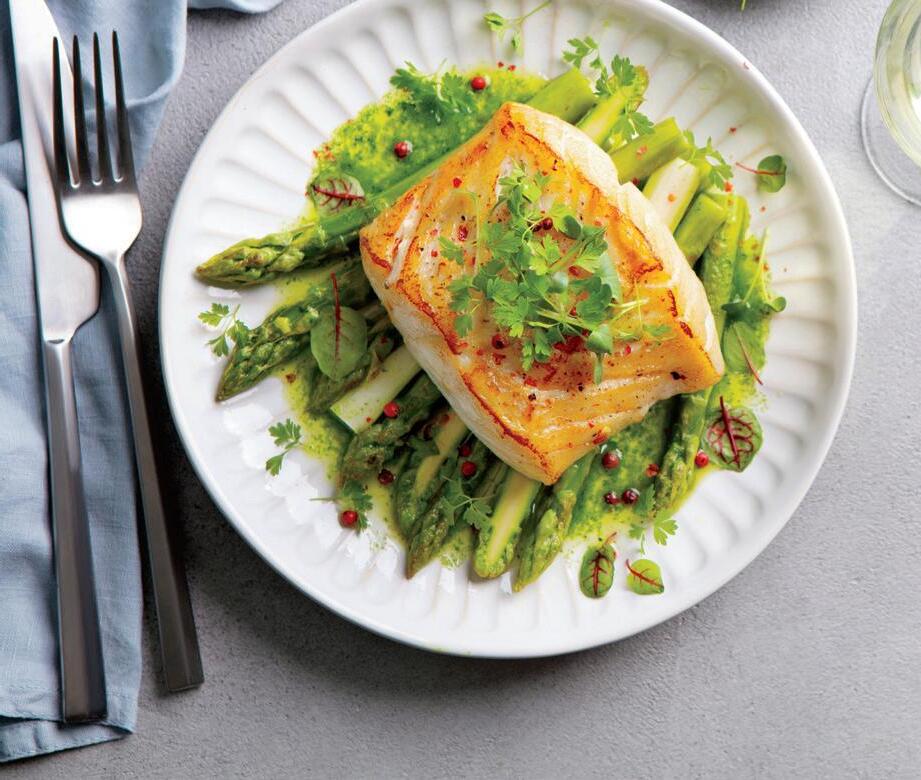
LUKE’S AT PORTLAND PIER
Portland, Maine
For chefs and food-focused travelers alike, his philosophy is clear: respect quality, embrace seasonality, and take pride in what you serve. “It takes just as much time to do it right as it does to do it wrong.” In Northern New England, that mindset isn’t just good practice; it’s tradition.
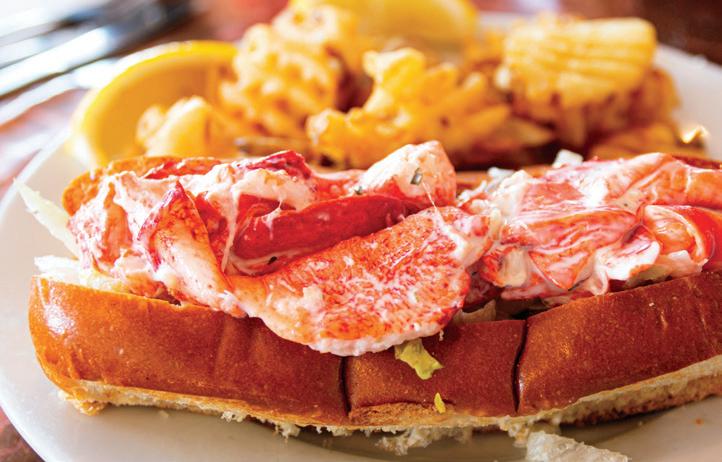

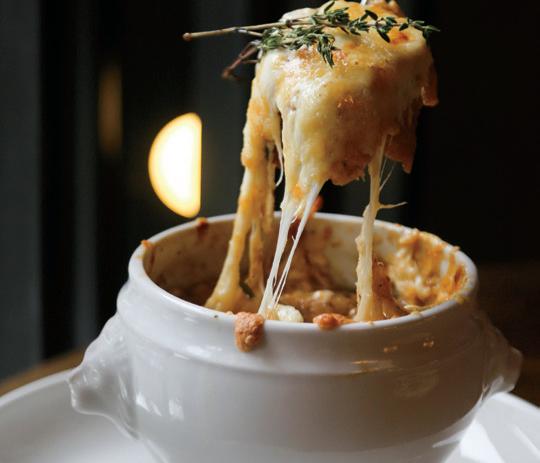
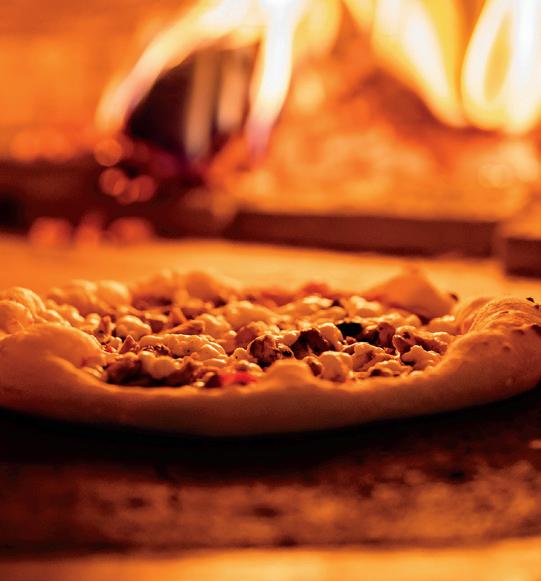
A classic Maine experience on Casco Bay, Luke’s serves fresh lobster sourced directly from local lobstermen, classic preparations, and unbeatable waterfront views. In peak summer, the team serves hundreds of lobsters and lobster rolls daily, making it a must-stop for first-time visitors and locals.
HAVANA
Bar Harbor, Maine
A downtown Bar Harbor institution, Havana blends American fine dining with Latin flair and a deep commitment to sustainability. The menu changes frequently to reflect the best of local meats, produce, and Gulf of Maine seafood, paired with an award-winning wine list and polished, welcoming service.
STONES THROW
York, Maine
Just steps from Long Sands Beach, this modern New England spot elevates coastal classics like perfectly fried fish, inventive vegetable-forward dishes, and house-made favorites. It’s a place where thoughtful hospitality and creativity shine, season after season.
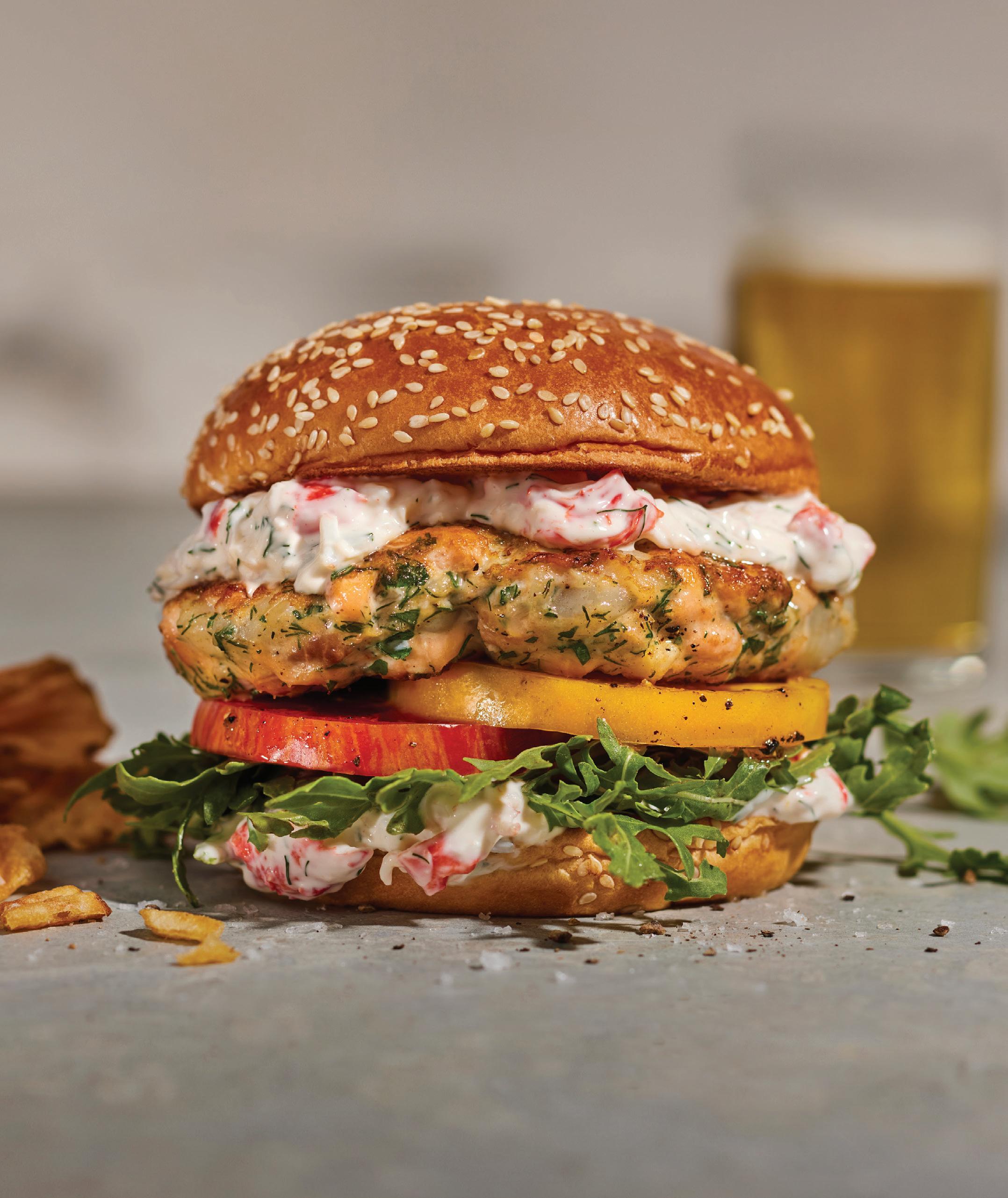



















TRUSTED QUALITY FOR EVERY KITCHEN.
Whether it’s everyday essentials, familiar favorites, or something special to elevate your menu, Sysco brings the consistent quality you can count on.


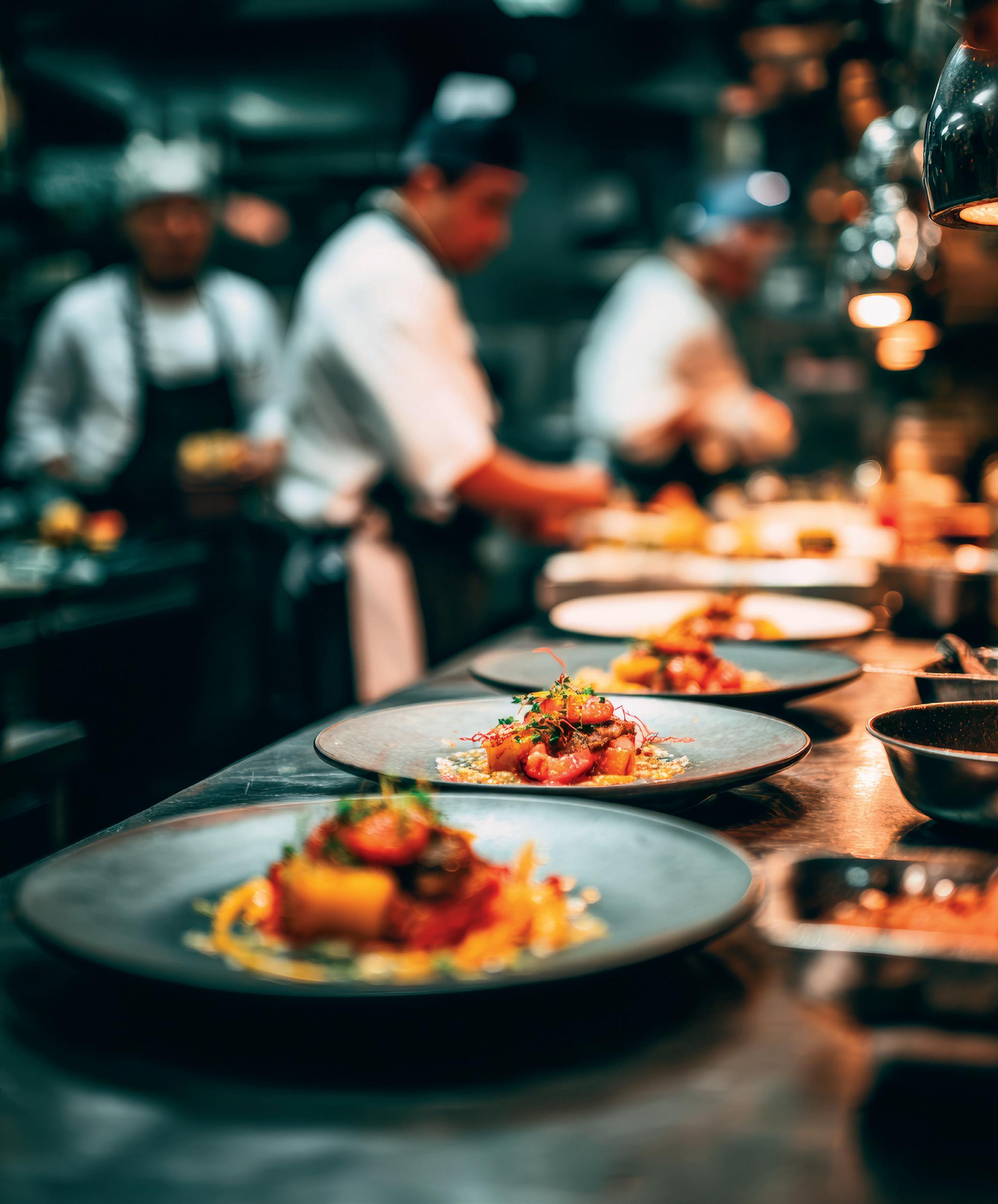
COBB SANDWICH
Yield: 1 serving
½ cup Sysco Classic coarse flake kosher salt
½ oz White Marble skinned pork belly
Arrezzio Imperial olive oil plus additional as needed
Sysco Classic salt
Fresh cracked pepper to taste
¼ cup extra hot buffalo wing sauce
¼ cup Wholesome Farms Classic 1% buttermilk
5 oz Sysco Classic CVP 5-ounce boneless, skinless chicken breast
1 fl oz Sysco Reliance heavy duty mayonnaise
1 ea Baker’s Source Classic sliced brioche bun
1 ea Sysco FreshPoint Natural fresh romaine lettuce leaf
1 slice Imperial Fresh 5 x 6 tomato
¼ ea Hass avocado
1 g tomato tomatador spice
1 ea Wholesome Farms Imperial pasteurized cage free large egg
2 g traditional Danish bleu cheese
1. In a large container, dissolve salt in 2 quarts cold water. Submerge the pork belly completely in the salt water, cover and refrigerate overnight (8 to 12 hours).
2. Remove pork from the brine and pat completely dry. Place between 2 trays or pans and press overnight in the refrigerator (use light weight on top). This firms the texture and keeps the fat layer even during roasting.
3. Rub the pork lightly with oil, and season with a touch of salt, if desired, and pepper. Place in a roasting pan, cover loosely with foil, and roast at 300°F (150°C) for 2½ to 3 hours until tender. Remove foil and increase oven temperature to 425°F (220°C); roast for 20 to 25 minutes, or until the top is golden and crisp. Rest for 10 minutes, then slice into thick pieces for sandwiches.
4. Mix ¼ cup each sauce and buttermilk in a bowl; add chicken and brine overnight.
5. Remove the chicken from the brine and place in 1 step breading. Let rest in the breading for 5 minutes to hydrate the coating. Fry at 325°F until the internal temperature reaches 165°F.
6. Spread mayonnaise on the bottom bun. Add folded romaine leaf, tomato slice and fried chicken.
7. Smash avocado in a bowl. Sear or grill slices of pork belly. Place the pork belly and a dollop of avocado pulp on top of the chicken; sprinkle with the tomato spice.
8. Sauté the egg sunny-side up until the edges are crispy; place on top of the avocado. Finish with grated frozen bleu cheese using a microplane and cap with toasted bun.
Chef Tips: For best texture, brine and press your pork belly at least 24 hours ahead of time.
When frying, let the chicken rest 5 minutes after breading—it helps the coating stay put and get extra crisp. And always microplane the bleu cheese while it’s still frozen; it melts just enough to tie the whole sandwich together.
SPICY MEXICAN STREET CORN CRINKLE CUT FRIES
¼ cup Imperial Fresh pico de gallo salsa
¼ cup roasted yellow corn blend
½ cup roasted Mexican street corn dip
8 oz 7/8 x 9/16-inch spicy crinkle cut potato fries
2 tbl Pica y Salpica crema Mexicana
2 tbl grated Pica y Salpica cotija cheese
Fresh cilantro for garnish
1. For the pico, mix the pico de gallo and the roasted corn together; reserve.
2. Heat up the boil in the bag corn dip to 140°F. Fry the crinkle cut fries and drain very well.
3. Layer the fries on a platter or plate; top with the corn dip, pico corn mixture, crema, cotija and the cilantro. Serve and enjoy.
BRASSERIE BURGER WITH HABANERO BACON JAM & DANISH BLEU
7 oz ground beef chuck, short rib and brisket patty
Sysco Classic salt and pepper to taste
1 tbl clarified butter
1 slice bleu cheese
1 ea 4-inch brioche hamburger bun
2 tsp Sysco Imperial habanero pepper bacon jam
Shredded iceberg lettuce for garnish
2 slices Imperial Fresh 5 x 6 tomato
Sliced red onion for garnish
1. Season the patty with salt and black pepper. Melt the clarified butter on a flat top or skillet; add the patty and sear on both sides. Place the sliced bleu cheese on the burger; transfer to the cooler side of the grill or leave in the pan with heat turned off just to melt the cheese.
2. Toast the bun and spread the habanero bacon jam on top.
3. Construct the burger with lettuce, tomato, red onion, and the burger patty; close the burger and serve.
SONORAN STYLE BURNT END SAUSAGE
2 ea 14-18 per pound hickory smoked layflat bacon
1 ea burnt end jalapeño beef brisket sausage
1 ea 6-inch rustic filone hoagie roll, split
2 tbl Imperial Fresh pico de gallo salsa
1 tbl classic chili crisp
½ ea Imperial Fresh Hass avocado, diced
2 tbl Pica y Salpica crema Mexicana
1 tbl lime juice
2 tbl Pica y Salpica queso fresco Sliced jalapeño and/or cilantro for garnish
1. Place the bacon between 2 sheets of parchment paper and roll out with a rolling pin. Tightly wrap the bacon around the sausage and secure it with toothpicks. Deep fry just until the bacon crisps up, about 3 to
4 minutes. Place in the oven if needed to bring up to temperature; reserve hot.
2. Warm up or toast the roll on a flat top.
3. Place the sausage in the heated roll; top with pico, chili crisp, diced avocado, crema, fresh lime juice, and crumbled queso. Garnish with jalapeño and/or cilantro.
4TH OF JULY SHAKE
2 cups vanilla ice cream
1¼ cups chef ready cuts diced strawberries
� cup Arrezzio Imperial mascarpone cheese
¼ cup Wholesome Farms
Classic whole milk
½ tsp organic Madagascar vanilla extract
1 tbl Chantilly whipped cream
Frosted blueberries for garnish
Carbonated granulated sugar for garnish
1. In a blender, blend the ice cream, frozen strawberries, mascarpone cheese, milk, and vanilla extract.
2. Pour milkshake into a frozen glass mug or glass; top with Chantilly cream, and garnish with blueberries and carbonated sugar.
FROSTED BLUEBERRIES AND CARBONATED SUGAR
1¼ cups Sysco Classic extra fine granulated cane sugar
1 pt fresh blueberries
1 tbl carbonated granulated sugar
1. To make the simple syrup, combine 1 cup of granulated sugar with 1 cup of water in a small saucepot; bring to boil to dissolve the sugar. Remove from the heat and add the blueberries; let cool to room temperature.
2. Combine the remaining ¼ cup granulated sugar with the carbonated sugar and set aside in a shallow dish or ¼ sheet tray.
3. Remove blueberries from the syrup and drain well. Roll the blueberries in the carbonated sugar mixture. This needs to be done daily and held at room temp.
CALIFORNIA-STYLE
CARNE ASADA FRIES
Yield: 2 servings
8 oz USDA ¼-inch-thick beef strip loin
3 ea limes
1 ea Imperial Fresh cilantro bunch
¼ cup Arrezzio Classic 80/20 olive oil blend
Sysco Classic coarse flake
kosher salt
Sysco Classic coarse black pepper to taste
Imperial/McCormick granulated garlic to taste
1 ea Imperial Fresh 5 x 6 tomato, diced
½ ea Imperial Fresh jalapeño pepper
¼ cup diced Imperial Fresh jumbo red onion
¼ cup Casa Solana Imperial fresh chunk Hass avocado pulp
1 lb Sysco Imperial ultimate crisp 3/8-inch potato fries
1¼ cups Pica y Salpica
Monterey Jack/Oaxaca cheese blend
1 oz sour cream
1 ea Imperial Fresh red radish, shaved
Crumbled queso cotija and/ or lime wedges for garnish
1. For the steak, slice the loin into ¼-inch steaks. Toss in a bowl with juice from 2 limes, 2 tablespoons chopped cilantro, oil, salt, pepper, and garlic; marinate at least 30 minutes before cooking.
2. For the pico de gallo, combine the tomato, jalapeño, onion, juice from ½ a lime and ¼ cup chopped cilantro in a bowl; season with salt, pepper, and garlic.
3. For the avocado pulp, whisk the avocado pulp and juice from ½ a lime in a separate bowl until smooth, but leaving some texture; season with salt, pepper, and garlic.
4. For the steak, grill until medium and let rest for 2 minutes before dicing. Right before the steak comes off the grill, cook the fries until crispy and golden, about 3 to 5 minutes. For ultimate flavor and crispiness, use Sysco Imperial FRY-ON
Shortening. As soon as the fries are ready, in a metal bowl, toss the hot fries with the cheese blend, to melt, and a pinch of chopped cilantro; season with salt, pepper, and garlic.
5. Place cheese fries in a paper cone or disposable vessel. Top with the diced steak, pico de gallo, avocado pulp and sour cream. Finish with remaining chopped cilantro, and garnish with radish, queso cotija and/or lime wedges. Enjoy!
BIRRIA TACOS, QUESO
QUEMADO & GUACAMOLE
Yield: 2 servings
BIRRIA TACOS
8 oz Casa Solana Classic frozen cooked beef birria
3 ea 6-inch white corn tortillas
½ cup Pica y Salpica Monterey Jack/Oaxaca cheese blend
¼ cup diced Imperial Fresh jumbo red onion
Chopped Imperial Fresh cilantro for garnish
1. Place thawed birria in a pot of boiling water in the bag; reheat for 23 to 28 minutes or until internal temperature reaches 165°F. Remove from bag; separate the consommé from the meat.
2. To build the tacos, dip 3 tortillas in the fat from the birria consommé and place on the flat top. Place 2½ ounces of the birria on each tortilla and spread with the cheese. Sprinkle with red onion and cilantro. Once the cheese begins to melt, close the tortillas and sear on each side for 1 minute.
3. To plate, place the tacos on a plate. Make sure that the tortillas are crispy. Serve with a cup of consommé garnished with red onion and cilantro.
QUESO QUEMADO
8 oz Pica y Salpica queso panela cheese wheel
Sysco Supreme pan coating spray
Sysco Classic salt and pepper to taste
¼ cup mild macha verde salsa
1. Slice the cheese wheel into ½-inch slices and place on a sheet pan; spray with pan spray on both sides. Lightly season 1 side with salt and pepper.
2. Preheat a flat top or nonstick pan on high heat until the pan starts to smoke. Sear the cheese for 2 minutes or until browned on both sides. Place in desired plate and pour macha on top.
GUACAMOLE
2 lb Casa Solana Imperial fresh chunk Hass avocado pulp
1½ cups Imperial Fresh pico de gallo salsa
2 tsp Imperial/McCormick granulated garlic
2 tsp Imperial/McCormick ground cumin
1 ea Reliance Fresh choice lemon
Sysco Classic salt and pepper to taste
4 oz pork skin rinds for frying
1 tbl smoky chile cumin seasoning rub
1. Place the avocado and the pico de gallo in a large bowl; season with the garlic and cumin. Mix together. Add the zest and juice of 1 lemon; season with salt and pepper.
2. Deep fry the pork skin rinds at 400°F until they have expanded, about 1 minute; drain very well and season with the seasoning rub.
3. Place 8 to 10 ounces of guacamole in a bowl; spread the chicharrons around on a platter and enjoy.
SABICH SLIDERS
Yield: 1 serving
1 ea Imperial Fresh cello wrapped cauliflower head
2 ea Imperial Fresh peeled garlic cloves, chopped
1½ cups 100 grain 10% white vinegar
¼ cup Sysco Classic extra fine granulated cane sugar
1 tsp Imperial/McCormick crushed red pepper
1 tsp Imperial/McCormick ground coriander
1 tsp Imperial/McCormick ground cumin
1 tsp Imperial/McCormick ground turmeric
1 tsp Sysco Classic coarse flake kosher salt plus additional to taste
1 ea Imperial Fresh seedless English cucumber
� cup Imperial Fresh grape tomatoes
2 tbl diced Imperial Fresh jumbo red onion
1 tbl Sysco Imperial delicato 100% extra virgin olive oil
1 tsp Sysco Natural pasteurized lemon juice
1 tsp za’atar spice
¼ cup crumbled feta cheese
3 ea Hawaiian slider buns, unsliced
1 piece sliced battered eggplant
¼ cup hummus
1½ ea whole peeled hard-boiled eggs
3 tbl Greek yogurt tzatziki
1. For the pickled cauliflower, separate the cauliflower head into small florets. Bring garlic, vinegar, sugar, crushed red pepper, coriander, cumin, turmeric, salt, and 1½ cups of water to a simmer. Place the cauliflower in the hot liquid and remove from the heat; allow it to cool down to room temperature for 1 hour. Transfer the cauliflower and the pickling liquid into a sealed container and keep refrigerated until ready to use.
2. For the tomato feta salad, fine dice the cucumber and slice some of the cucumber for the slider; slice the grape tomatoes in half. In a bowl, mix together the diced cucumber, tomatoes, onion, olive oil, and lemon juice. Season the salad with za’atar and salt. Add crumbled feta and mix.
3. For assembly, toast the buns; fry the eggplant and cut to fit the slider bun. Spread hummus on both sides of the buns. Place the eggplant on the bottom half of the buns; slice the eggs and place on top of the eggplant. Top with sliced cucumber, pickled cauliflower, tzatziki sauce, and top buns. Serve with the tomato feta salad on the side.
NEW BEDFORD SEAFOOD BOIL
Yield: 3 to 4 servings
6 oz Imperial Fresh jumbo yellow onion
4 oz Imperial Fresh red bell pepper
8 oz Reliance Fresh Roma tomatoes Arrezzio Imperial olive oil Sysco Classic salt and pepper to taste
10 oz whole roasted baby baker’s potatoes
6 oz Portico Classic 21/25 count peeled and deveined tail-on white shrimp
5 oz Portico Imperial cooked whole baby clams
2 minced Imperial Fresh peeled garlic
¼ cup Sysco Supreme 6% sherry vinegar
1 lb vacuum packed whole 2329 Chile mussels
6 oz full trim 4 to 6-inch calamari tubes and tentacles
½ cup Sysco Supreme roasted corn & peppers vegetable blend
½ cup ready to eat black beans
¾ cup blended clam
12 oz Portuguese chorizo sausage
1. Peel and cut ends off of onion; cut in half. Cut pepper in half; remove seeds. Coat the tomatoes, onion and pepper in olive oil, salt and pepper; place on a sheet tray. Evenly coat the potatoes in oil, salt and pepper; place on a separate sheet tray.
2. Roast vegetables and potatoes at 425°F until onion is soft, about 15 to 20 minutes, and potatoes are soft, about 20 minutes.
3. Remove burnt outside of onion. Place vegetables in a blender and blend for about 1½ minutes; reserve. With the back of a spoon or fork, lightly press down on the potatoes to slightly break them apart.
4. In large sauté pan, add remaining oil until hot. Add shrimp and clams and sauté for a minute. Add minced garlic and cook until fragrant. Deglaze with sherry and reduce liquid by half. Add mussels
and calamari and black bean corn mixture. Pour vegetable purée, mix, and cover. Cook until mussels and clams have fully opened. Add potato and cook until warm throughout. If broth is too thick, add clam juice to thin it out. Adjust seasonings to taste.
5. Cut chorizo link in half and place on grill (if you cannot get the Portuguese chorizo you can use any smoked sausage). Turn to get nice marks and char on the flat side and cook until hot throughout. Pour seafood boil in deep pasta bowl. Arrange seafood to make sure each spoonful will get even servings of the ingredients then add chorizo link on top.
LAFOND GRILLED RIBEYE STEAK
Yield: 1 serving
1 oz Imperial/McCormick crushed red pepper
¼ oz Imperial/McCormick Cajun seasoning
¼ oz Imperial/McCormick garlic powder
¼ oz Imperial/McCormick ground white pepper
¼ oz Imperial/McCormick paprika
¼ oz Sysco Classic coarse flake kosher salt plus additional to taste
.4 oz porcini mushroom powder
12 oz Certified Angus Beef/ Buckhead Beef 0-inch tail boneless ribeye steak
2 oz Arrezzio Imperial olive oil plus additional as needed
10 oz Imperial Fresh mixed fingerling potatoes
Imperial/McCormick coarse ground black pepper to taste
� oz Imperial Fresh lemon
� oz watercress
� ea Imperial Fresh anise fennel
� cup jewel heirloom tomato
.3 fl oz Sysco Supreme 6% sherry vinegar
Charred Chimichurri Butter for serving (see recipe)
1. For the porcini powder seasoning, measure and combine all dry ingredients in a dry mixing bowl, mixing thoroughly.
2. For seasoning the ribeye steak, with gloves on, fully cover the steak with the porcini powder seasoning, ensuring all sides are seasoned; drizzle all over with olive oil, creating a mud effect.
3. For the roasted fingerling potatoes, rinse the potatoes under cold running water; cut the potatoes in half, and season with salt, black pepper, and olive oil. Spread the potatoes evenly on a sheet tray and bake at 350°F until tender and golden brown in color.
4. For the fennel-watercress salad, rinse the lemon, watercress, fennel and tomato under cold running water. Discard any brown watercress leaves. Using a mandolin, julienne the fennel into ¼-inch matchstick and cut the tomato into ½-inch-thick slices. Combine the watercress, fennel, and tomato in a bowl. Use the juice of ½ of the lemon to marinate the salad.
5. For grilling the steak, place the steak on a clean, oiled grill at a 45° angle to create grill marks; rotate the steak on same side to create diamond crosshatch marks. Turn the steak and repeat the same process.
6. Serve steak topped with butter along with potatoes and salad.
BUTTERS, RUBS, & MARINADES
BIG TEX! RUB
2½ cups packed light cane brown sugar
� cup ground dry mustard
¼ cup Imperial/McCormick ground cumin
� cup Imperial/McCormick dark chili powder
½ cup Imperial/McCormick garlic powder
½ cup Imperial/McCormick onion powder
½ cup Sysco Classic coarse flake kosher salt
½ cup Imperial/McCormick coarse ground black pepper
Combine all ingredients and mix thoroughly; place in a deli container, label, date, and store in a cool dry area.
KING’S BUTTER
¼ cup finely chopped Imperial
Fresh Italian parsley
4 oz IQF duck foie gras duck cube
1¼ lb Wholesome Farms
Imperial unsalted butter
½ cup Sysco Classic true source certified grade A pure clover honey
2 tbl Sysco Classic coarse flake kosher salt
2 tbl truffle blend dust
2 tbl white truffle olive oil
1. Sear the foie gras pieces and set aside to cool; save the fat that has rendered.
2. Combine all ingredients in a stand mixer and mix thoroughly. Place in a deli pan, label, date, and store in the cooler.
GARLIC PEPPERCORN RUB
1 cup whole black peppercorns
½ cup McKenzie garlic junkie spice
¼ cup Sysco Classic coarse flake kosher salt
1. Place peppercorns in a sauté pan and toast; let cool.
2. Place all ingredients in a Vitamix and pulverize into a dust. Place in a deli container, label, date, and store in a cool dry area.
CATTLEMEN’S BUTTER
1 lb Wholesome Farms
Imperial unsalted butter
4 oz kobe-shi beef fat tallow
2 lb sized marrow femur beef bone
Arrezzio Classic 75/25 extra virgin olive/canola oil
Sysco Classic salt and pepper to taste
1 ea Reliance Fresh choice lemon
¼ cup Imperial Fresh peeled garlic
¼ cup Montreal steak seasoning
¼ cup sliced Imperial Fresh chives
¼ cup Sysco Imperial Dijon mustard with white wine
1. Pull butter and beef tallow 1 to 2 hours before starting this recipe.
2. Season beef marrow bones with oil, salt and pepper. Place bones in the oven and roast at 425°F until golden brown, about 12 to 15 minutes. Place in walk-in to cool. You need at least 6 ounces of marrow for the recipe.
3. Place the beef tallow, roasted marrow and butter in a stand mixer with a paddle; mix until butter becomes loose. Zest and juice lemon, and add to mixing bowl along with garlic, Montreal steak seasoning, chives, and mustard; mix thoroughly and place in deli pan or wrap in parchment forming a log, label, date, and store in the cooler.
CHARRED CHIMICHURRI BUTTER
½ lb Imperial Fresh green onions
½ lb Imperial Fresh jalapeño pepper
2 tbl Arrezzio Classic 75/25 extra virgin olive/canola oil Sysco Classic salt and pepper to taste
2 lb Wholesome Farms Imperial unsalted butter 1 cup chimichurri sauce
1. Preheat grill on medium-high. Take the green onions and jalapeños, and toss in the oil, salt and pepper. Place vegetables on the grill and char on all sides. Once charred, place in a mixing bowl, cover with plastic wrap and let stand for 10 minutes.
2. Place the butter in a stand mixer with paddle and loosen the butter. Remove seeds and stems from jalapeño and peel; remove the ends of the green onion as well. Finely chop vegetables and place in stand mixer with softened butter; add chimichurri sauce and salt, and mix thoroughly. Place in deli pan or wrap in parchment in the form of a log, label, date, and store in the cooler.
NEW DELHI MARINADE
1 cup Madras style curry spice
¼ cup smoked paprika
¼ cup Sysco Classic coarse flake kosher salt
2 tbl Imperial/McCormick ground cayenne pepper
2 tbl Imperial/McCormick ground coriander
2 tbl Imperial/McCormick ground turmeric
2 tbl Imperial/McCormick ground white pepper
2 cups Arrezzio Classic 75/25 extra virgin olive/canola oil
½ cup minced Imperial Fresh peeled garlic
1. Combine all dry ingredients in a mixing bowl; mix well.
2. Heat oil in a sauté pan over medium-high heat. Once oil has a light smoke point, remove from heat, and add spices and garlic. Stir constantly until all the spices are toasted. Place in a container, label, date, and store in the cooler.
CARNE ASADA MARINADE
2 pt favorite beer
1 ea Imperial Fresh cilantro bunch, coarsely chopped
4 cups Jade Mountain Classic soy sauce
2 cups Sysco Natural ultrapremium pasteurized lime juice
2 cups Sysco Natural ultrapremium pasteurized orange juice
½ cup coarsely chopped Imperial Fresh peeled garlic
Place all ingredients in a mixing bowl; mix thoroughly. Place in a container, label, date, and store in the cooler.
BLOOD ORANGE GOAT CHEESE
POWER SALAD
Yield: 1 serving Arrezzio Imperial olive oil
1 Coho salmon fillet
Sysco Classic coarse flake kosher salt to taste
Sysco Classic ground black pepper to taste
3 oz Imperial Fresh power blend vegetable slaw mix
1 oz Imperial Fresh jumbo red onion
½ oz Sysco Classic glazed pecan pieces
½ oz Sysco Imperial dried cherries
2 fl oz Sysco Imperial blood orange shallot vinaigrette
1½ oz Block & Barrel Imperial crumbled goat cheese
1½ oz Casa Solana Imperial individually wrapped Hass avocado halves
1 blood orange, peeled and cut into rounds
Chopped pistachios for garnish (optional)
1. In a preheated, medium sauté pan with oil, season and sear salmon, skin side down; cook to an internal temperature of 145°F.
2. Add slaw mix, red onion, pecans, cherries and blood orange vinaigrette to large bowl; mix by hand until well coated.
3. Pile salad high in center of plate; top with salmon, goat cheese, thinly sliced avocado and orange to plate. Garnish salad with pistachios, if desired.
WHOLE WHEAT SMOKED
SALMON AND AVOCADO CREPES WITH BROWN BUTTER CAPER HOLLANDAISE
Yield: 2 servings
2 tsp Sysco Imperial imported nonpareil capers Arrezzio Imperial olive oil as needed
2 ea Herbed Whole Wheat Crepes (see recipe)
3 oz Salmon Mousse (see recipe)
3 oz Casa Solana Imperial fresh chunk Hass avocado pulp
2 oz sliced smoked Atlantic salmon fillet
½ cup Brown Butter Hollandaise Sauce (see recipe)
½ cup Marinated Cucumber Slaw (see recipe)
1. Cook the capers in oil in a sauté pan over medium-high heat until crispy, stirring frequently.
2. Lay the crepes with the herb side facing down. Spread the mousse over half of the crepes. Place a spoonful of the avocado pulp over the mousse (it does not have to be spread out over the salmon, but make sure when you fold the crepe, it will be seen).
3. Tear smoked salmon slices and add that on top of the avocado pulp.
4. Fold the crepes in half, and then in half again.
5. Shingle crepes on a serving plate; serve with the hollandaise sauce and cucumber slaw on the side. Sprinkle the hollandaise sauce with the crispy capers.
HERBED WHOLE WHEAT CREPES
Yield: 10 count
1¼ cups stone ground whole wheat flour
3 ea Wholesome Farms
Imperial pasteurized cage free California large white eggs
2 cups Wholesome Farms
Classic whole milk
2 tbl Wholesome Farms
Imperial unsalted butter
3 tbl Imperial Fresh baby dill ¼ cup Imperial Fresh green onions
1 fl oz Sysco Reliance true source certified grade A pure light amber honey
Sysco Classic coarse flake kosher salt to taste
Imperial/McCormick ground black pepper to taste
¼ cup plus 1 tbl Arrezzio Imperial avocado oil
1. Place all ingredients, except the oil, in a blender and blend well; let stand for 15 minutes.
2. In a 10-inch nonstick sauté pan, add ½ tablespoon of oil over medium-low heat.
3. Angle the pan and pour enough batter on 1 side to thinly and evenly cover the pan. Very quickly, swirl the batter around to cover the pan in a thin layer.
4. Use a cooking spatula to immediately push down the thin edges of the crepe around the perimeter. Once the bottom is golden brown with all liquid solid in the center of the crepe, after about 1 minute, remove from the pan, and place on a tray with wax paper to cool.
SALMON MOUSSE
Yield: 18 ounces
8 oz cream cheese spread
4 oz sliced smoked Atlantic salmon fillet
1 tbl Sysco Natural fresh pasteurized lemon juice
½ tbl smoked paprika
Sysco Classic pepper to taste
1. Place the cream cheese, smoked salmon, lemon juice, paprika, and black pepper in a food processor bowl; process until smooth, about 5 minutes.
2. Remove with a spatula, place in a bowl, and let rest in the cooler for 1 hour before using.
BROWN BUTTER HOLLANDAISE SAUCE
Yield: 3 cups
4 oz Wholesome Farms
Imperial unsalted butter, melted
1½ oz Sysco Imperial imported nonpareil capers
3 ea Wholesome Farms
Imperial cage free California large white egg yolks
2 tsp Sysco Natural pasteurized lemon juice
¼ tbl smoked paprika
Sysco Classic coarse flake kosher salt to taste
Imperial/McCormick ground black pepper to taste
1. Heat the melted butter and capers to a simmer in a small saucepan over medium-low heat; simmer until the butter “bubbles” are visually turning tan and the capers are crisp, about 8 minutes. Remove the capers with a slotted spoon and place on a paper towel to dry. Transfer the butter into a measuring cup for pouring.
2. In a medium saucepan, add 1 inch of water; heat to a simmer over medium-low heat. Place the egg yolks and lemon juice in a small metal bowl and whisk together.
3. Place the metal bowl over the saucepan of water that is simmering.
4. While whisking, slowly drizzle the brown butter into the egg mixture, about 6 minutes. Pay close attention, as you may have to heighten the bowl or remove from the heat at times to prevent the eggs from scrambling. Once the emulsion has a velvety finish, remove completely and whisk in the smoked paprika, and season with salt and pepper.
MARINATED CUCUMBER SLAW
Yield: 1 cup
1 ea Imperial Fresh seedless English cucumber
3 oz Imperial Fresh jumbo red onion
4 g Sysco Classic coarse flake kosher salt
4 g Sysco Classic extra fine granulated cane sugar
¼ cup Arrezzio Imperial avocado oil
¼ cup Sysco Classic 50 grain apple cider vinegar
1½ oz Kanzuri black garlic chili sauce
1. Remove the cucumber from the packing and rinse. Trim off both ends, then thinly slice ribbons of the cucumber. Once the cucumber has been sliced, flatten the ribbons and cut juliennes or matchsticks; place in a bowl.
2. Julienne the red onion as thin as the English cucumber and add to the bowl.
3. Add the salt and sugar to the vegetables; incorporate throughout the salad. Add the avocado oil, vinegar, and black garlic chili sauce; let sit for 5 minutes, and it is good to go.
SHRIMP & FRIED GNOCCHI WITH FENNEL CREAM AND BUTTERNUT SQUASH
Yield: 1 serving
1 oz Imperial Fresh jumbo yellow onion
¼ oz Imperial Fresh peeled garlic
1 ea Imperial Fresh anise fennel Arrezzio Imperial olive oil
2½ oz Wholesome Farms Classic extended shelf-life 40% heavy cream
1½ g Arrezzio Imperial ¼-inch diced Italian pancetta
2½ oz Imperial Fresh diced butternut squash
Sysco Classic salt and pepper to taste
.01 g Imperial Fresh fresh thyme
10 oz wheat flour potato gnocchi
6 oz Portico Classic 26/30 count tail-off peeled and deveined white shrimp
¼ oz intensity mix microgreens
1. Chop onions, garlic and ½ the fennel; sweat in the oil in a saucepan. Add heavy cream and slowly bring to a simmer; reduce and cook over low heat for about 45 minutes or until desired thickness, then strain.
2. Add the diced pancetta to a cold saucepan and render fat until crisp. Once crisp, reserve on a paper towellined sheet tray to drain.
3. Toss butternut squash cubes lightly with oil and fresh thyme, and season with salt and pepper in a bowl; spread on a parchmentlined sheet tray and roast at 375°F until golden brown and fork-tender, about 15 to 20 minutes. Coat ¼-inchthick slice of fennel bulb with oil, and season with salt and pepper; roast until caramelized and tender.
4. Remove the gnocchi from the package; massage to separate the gnocchi. Deep fry at 350°F for 2 to 3 minutes, agitating to prevent sticking; remove from fryer, and lightly season with salt and pepper.
5. Butterfly the shrimp; coat with oil, and season with salt and pepper. Grill the shrimp until opaque throughout.
6. To plate, spoon sauce over a warm plate. Add the gnocchi, butternut squash, fennel, shrimp and pancetta; garnish with microgreens.




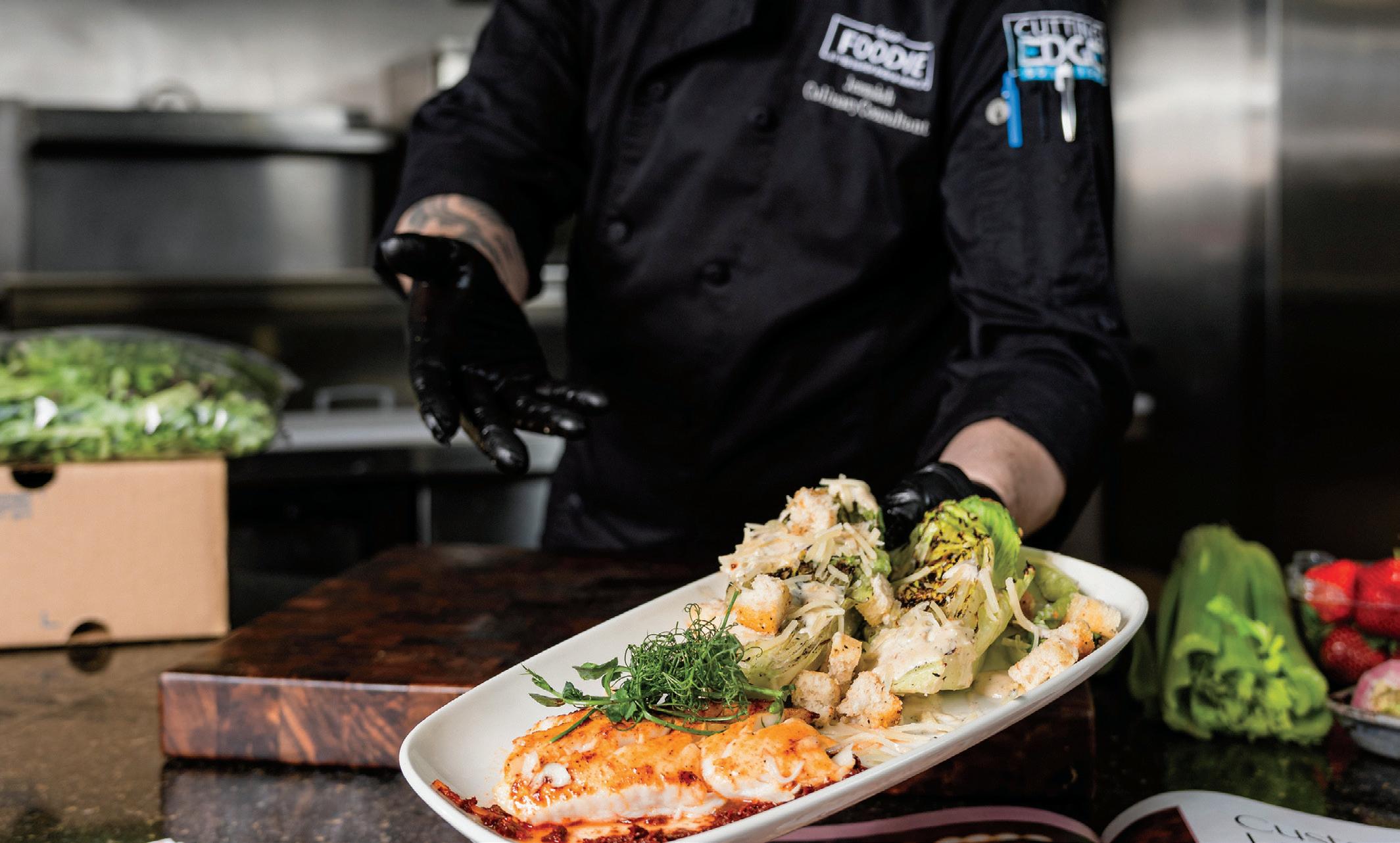



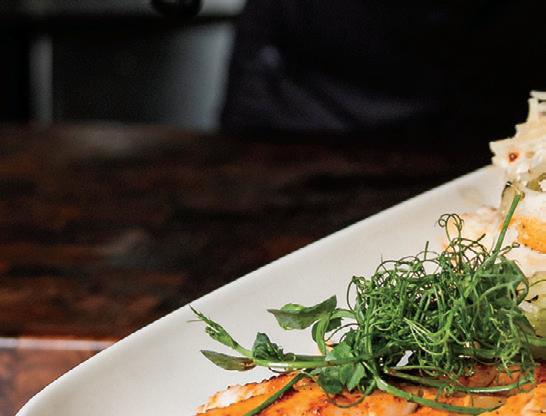
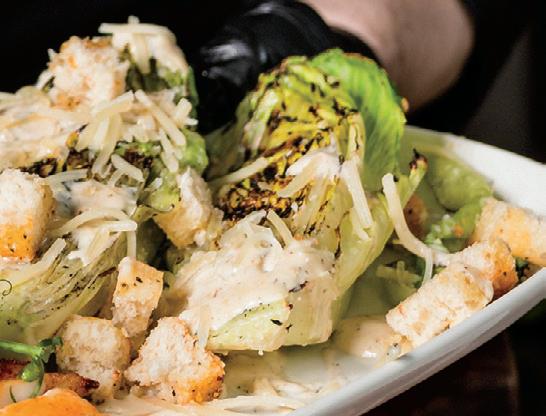



Elevate Your Menu
AT SYSCO’S CULINARY KITCHEN.
Step into a premier culinary experience crafted just for you. Whether you’re refreshing your menu, creating something new, or exploring fresh inspiration, this hands-on session is your chance to collaborate with our expert chefs in a dynamic, innovation-driven kitchen.

Contact your Sysco Sales Consultant to schedule a Culinary Consultation today.




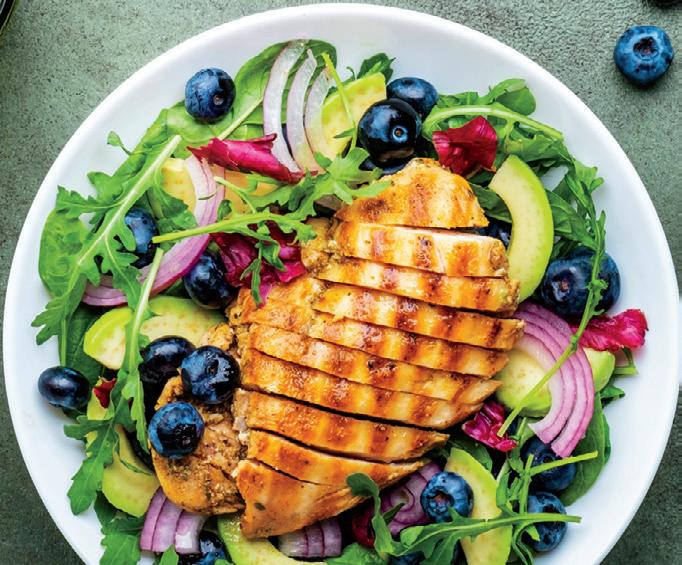
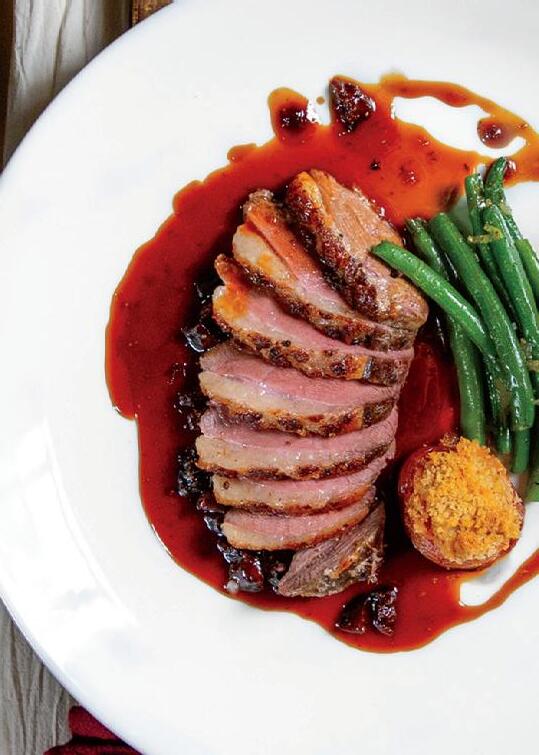





















SPECIALTY EXPERTISE.




ONE TRUSTED PARTNER.
































Our Sysco specialty companies bring together premium products, category expertise, and sourcing solutions to help operators stand out.