


https://mensshedswa.org.au/ shed-resources/sheds-wa/
To discuss stories contribution please contact the team at
admin@mensshedswa.org.au
Credit to Gordon MacGilp for producing the magazine
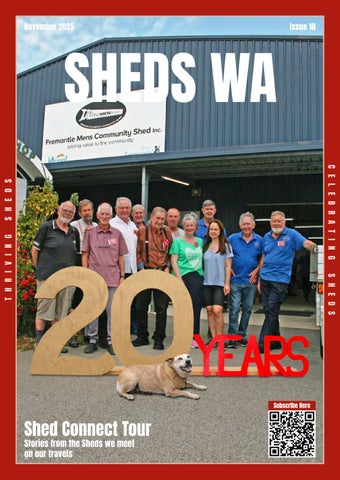
Cover: Gordon MacGilp
Page 4: background Gordon MacGilp
Page 5: James Wild
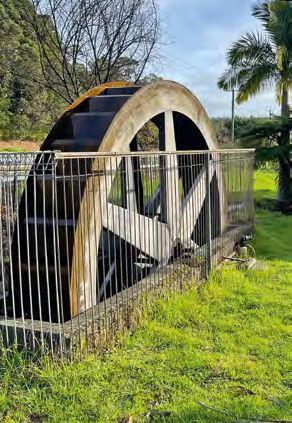
Page 6-7: Waterwheel Community Shed
Page 8-9: Exmouth Men’s Shed
Page 10-12: Rebecca Talbot
Page 14-15: Rebecca Talbot
Page 16-17: Geoff Hutchison
Page 18-21: Fiona Peters, background Gordon MacGilp
Page 22-23: Mayaga Mia
Page 24-25: Rebecca Talbot
Page 26-27: Peter Kenyon: Bank of Ideas / Troll images Thomas Dambo
Page 28-29: Dareton Men in a Shed
Page 30-31: Lake Monger Community Shed
Page 32-33: Fiona Peters
Page 34-35: Wundowie & Districts
Men’s Shed
All rights reserved. No part of this publication may be reproduced, stored in a retrieval system, or transmitted, in any form or by any means, electronic, mechanical, photocopying, recording or otherwise without the prior written permission of the Publisher and copyright owners.
The contents of this publication are believed correct at the time of printing.
If you would like to comment on any aspect of this newsletter, please contact us on: (08) 6381 5324 or e-mail: admin@mensshedswa.org.au www.mensshedswa.org.au facebook.com/mensshedswa
Nevertheless the Publisher can accept no responsibility for errors or omissions, changes in the detail given or for any expense or loss thereby caused.
Men’s Sheds of WA does not warrant that any website mentioned in this title will be provided uninterrupted, that any website will be error free, that defects will be corrected, or that the website or the server that makes it available are free of viruses or bugs. For full terms and conditions please refer to the site terms provided on the website

It is my pleasure to welcome you to this latest edition of Sheds WA Magazine.
As we wrap up what has been our biggest year of travel yet through the Shed Connect Tour, I want to acknowledge the incredible effort, hospitality and momentum we’ve experienced from Sheds across Western Australia.
Over the course of the year, our team has travelled more than 14,000kilometres, visiting Sheds from the Kimberley to the Great Southern and everywhere in between. We have now completed 16 regional and metro gatherings with Sheds, each one offering valuable conversations, fresh ideas and a renewed sense of connection. These visits have allowed our team to spend time with Sheds in communities we had previously not been able to reach, and the insights shared along the way have been nothing short of inspiring.
The decision to replace our traditional Biennial State Conference with an
expanded schedule of meetings, visits and gatherings has definitely proved to be the right one. We’ve been able to engage more Shedders than ever before, reduce the barriers of distance and cost, and ensure that every Shed has the opportunity to contribute to the statewide conversation.
Whatcontinuestoimpressmemostisthe creativity, generosity and determination that define Sheds. From innovative projects to community partnerships, each Shed brings something unique to the movement, yet all share the same commitment to connection, purpose and wellbeing.
Thank you for your ongoing support and enthusiasm throughout the Shed Connect Tour. We are already looking forward to extending the tour into 2026 and supporting even more Sheds across WA. If your community, local Shed wants to be part of the tour, please let us know.


I can’t also sign off without thanking our outgoing communications lead, Rhiannon Arnold. Rhiannon has decided to make a step change and move to the cooler climes of Tasmania. The team wish Rhiannon all the best and thank her for the amazing work in supporting our WA Sheds and in bringing this magazine to life. Good luck Rhiannon!
James Wild CEO, Men’s Sheds of WA


By Men’s Sheds of WA team
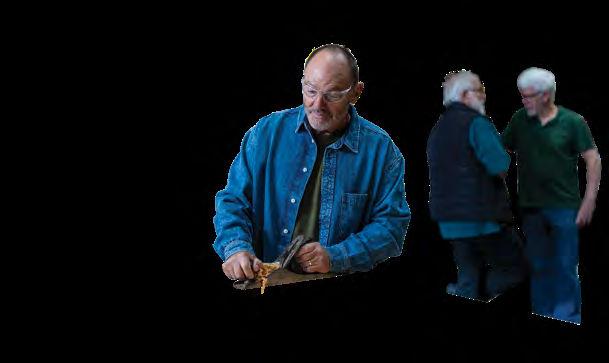
WaterwheelCommunityShedmembershave featured in the latest Act Belong Commit advertising campaign, proudly showcasing the power of community connection and mateship in action.
When filming began, it was business as usual at the Shed - the kettle bubbling away, friendly chatter filling the space, and that familiar sense of belonging that keeps everyone coming back. The campaign highlights how simple, everyday connections, like those found in Men’s Sheds, can make a big difference to mental wellbeing.
As Western Australia’s longest-running mental health promotion campaign, Act Belong Commit encourages everyone to take simple everyday actions to protect and strengthen their mental health by staying

active mentally and physically, staying connected and doing something meaningful. Research from Curtin University’s School of Population Health, led by Professor Peter McEvoy, reinforces the message: “Our research shows that when people feel included in settings like Men’s Sheds, they’re more likely to engage - and that engagement can have profound mental health benefits.”
“This kind of meaningful social connection is a critical buffer against loneliness, particularly for older men facing life transitions like retirement or bereavement. These insights reinforce the core message of Act Belong Commit: that staying connected and involved can be life changing.”
It’s something Waterwheel members know firsthand.
“I worried about what I’d do with my time,” said Garry, one of the Shed’s familiar faces and campaign hero. “But between the grandkids and the Shed, my days are full and rewarding. I come down here, see the guys, learn new skills, have a coffee and a bit of a yarn. All this keeps my mind active, and I feel like I’m part of something.”
For Garry, the Shed isn’t complicated – and that’s the beauty of it.
“It doesn’t have to be sophisticated. It doesn’t have to be formal or anything. It’s just meeting people on a regular basis and being part of, I guess, a smaller family.”
Shed members Ian and Murray agree that the real strength of the Shed lies in its mix of purpose and support. “Sheds are places where people can share problems, listen, and show empathy – a place to feel supported and give support,” said Ian.


“Whether it’s playing cards, board games, or joining a Men’s Shed – it’s better for your mental wellbeing,” added Murray.
Across WA, thousands of men are finding connection and purpose in simple, shared spaces. Whether it’s learning a skill, helping on a project, or sharing a laugh over coffee, every small act of involvement helps strengthen mental wellbeing.
At Waterwheel, it’s clear the members are already living the Act Belong Commit message – one project, one laugh, and one conversation at a time.
Men’s Sheds across WA can also get involved by becoming Act Belong Commit Partners. It’s free and a great way to promote positive mental health in your community.
To learn more or register your Shed, visit actbelongcommit.org.au.

By Men’s Sheds of WA team
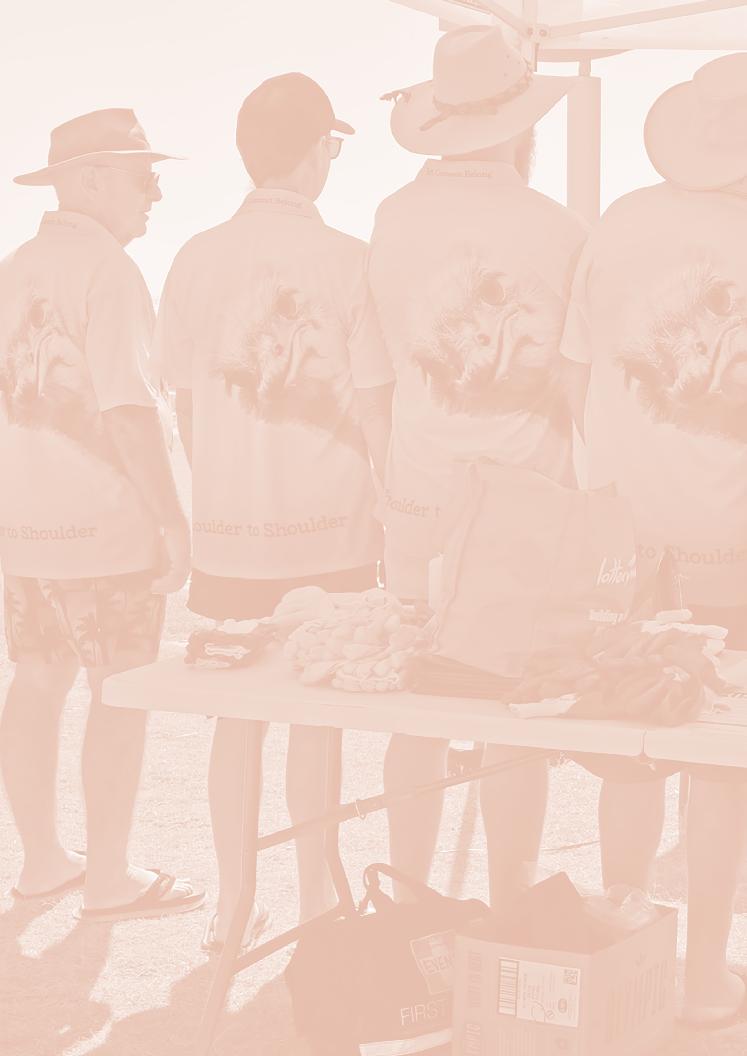
For the Exmouth Men’s Shed, recycling containers isn’t just a side hobby - it’s their main source of fundraising. Since getting involved in Containers for Change in 2021, the group has turned containers into a reliable income stream that helps to keep their Shed running and their projects funded.
Apart from membership fees or the odd grant, this grassroots recycling effort now provides nearly all of the Shed’s fundraising income. In the last 12months, that’s over $4,000.

The Shed has scattered their bespoke collection baskets around town in strategic places like the local short-stay holiday village, where half a dozen baskets are their main collection points. They also place baskets seasonally at the overflow caravan park and the local backpackers.
Occasionally, the group sets up extra baskets at community events, but as Kevin admits,
“There are almost too many groups in Exmouth doing C4C fundraising now – for a small town, there are a lot of collectors!”

The Men’s Sheds members have a regular basket run, emptying the containers and loading up the trailer. Back at the Shed, everything is sorted into bulka bags which get taken to the local depot when full. Like many community groups, they’ve seen some members grow tired of the workload and step back. But the Shed keeps going. Why? Because it works - and because they know how much the funds mean for keeping their space open and active for local men.
If your Shed is fundraising through Containers for Change, take note of these hard-earned tips:
• Get your Shed on board earlyMake sure everyone understands the workload and stays motivated.
• Consider the weight - This Shed’s first custom-built cages were too heavy for one person to lift and empty - a lesson in practical design.
• Keep contamination low - Use clear signage and secure lids to keep rubbish out (if using a 240L Containers for Change bin, a simple screw through the lid does the trick)

• Watch out for volunteer burnout – Rotate responsibilities and recruit helpers.
• Don’t go it alone – If there are multiple groups collecting in your area, consider collaborating instead of competing.
• Adapt and improve – Learn from experience and don’t be afraid to change your setup to lighten the work or address challenges.
• Reach out for support- the Community Team at Containers for Change can help supply bins, signage, and fundraising materials to address common issues.
Despite some hurdles, the Exmouth Men’s Shed continues to prove that with persistence, organisation, and a good system, even a small town can make a big difference.
So, if your group is feeling the recycling fatigue, take heart from Exmouth: with the right setup and a solid team, it’s worth it in the long run.
Because when the Shed gets together, change really does add up.
By Mike Murphy

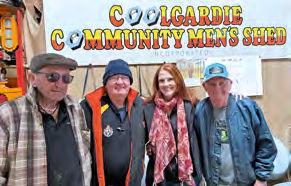
As part of the Shed Connect Tour 2025, Rebecca and Mike from the Men’s Sheds of WA team hit the road in September for the Goldfields Zone Meeting in Kalgoorlie (or “Kal” as the locals call it), joined by Stuart from the Australian Men’s Sheds Association. It was a great chance to connect with Shedders from across the region - and to visit one of the area’s true gems, the Coolgardie Men’s Shed.
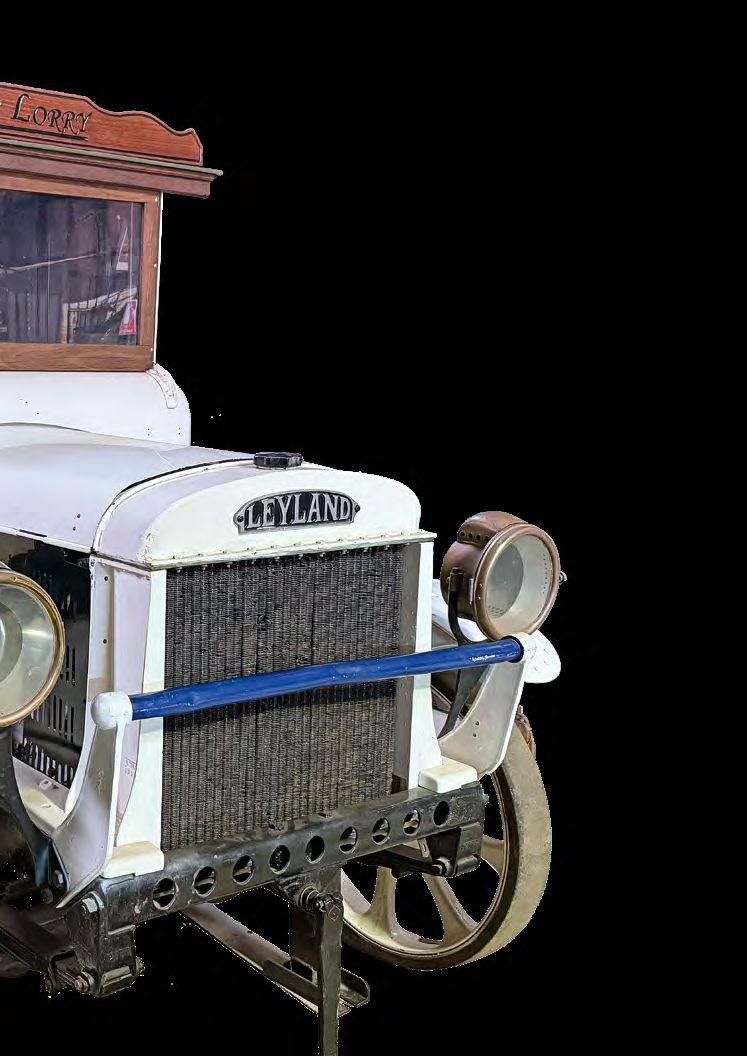
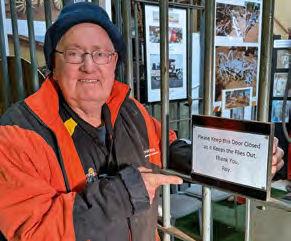
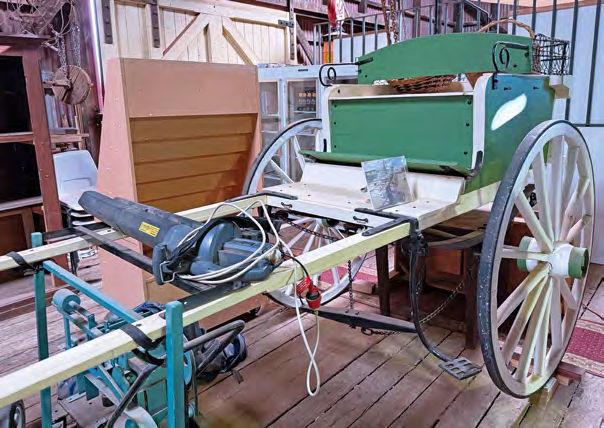
Located just half an hour down the road from Kalgoorlie, Coolgardie Shed is a place packed with history, personality and good humour. Housed in a 120-yearold railway shunting shed beside the old Coolgardie Railway Station, it’s one of those places that tells its own story the moment you walk in. There’s an old prison cell turned office (complete with a sign saying “Please keep the door closed, it keeps the flies out”), a horse-drawn baker’s cart, an old Leyland truck, and jarrah beams solid enough to hold up the Sydney Harbour Bridge.
Unlike most Sheds, Coolgardie focuses on metalwork. President Wayne and his mate Shane proudly showed us their restored engines, tools, and garage memorabilia from the 1940s onwards. Their pride and joy is Gorrie’s Lorry — a beautifully restored 1913 Leyland truck, named in
honour of a much-loved member who helped with its restoration.
They’ve also built an impressive beltdriven setup linking several old stationary engines together - when one fires up, it starts the next and the next! It’s a real crowd-pleaser during Coolgardie Day demonstrations.
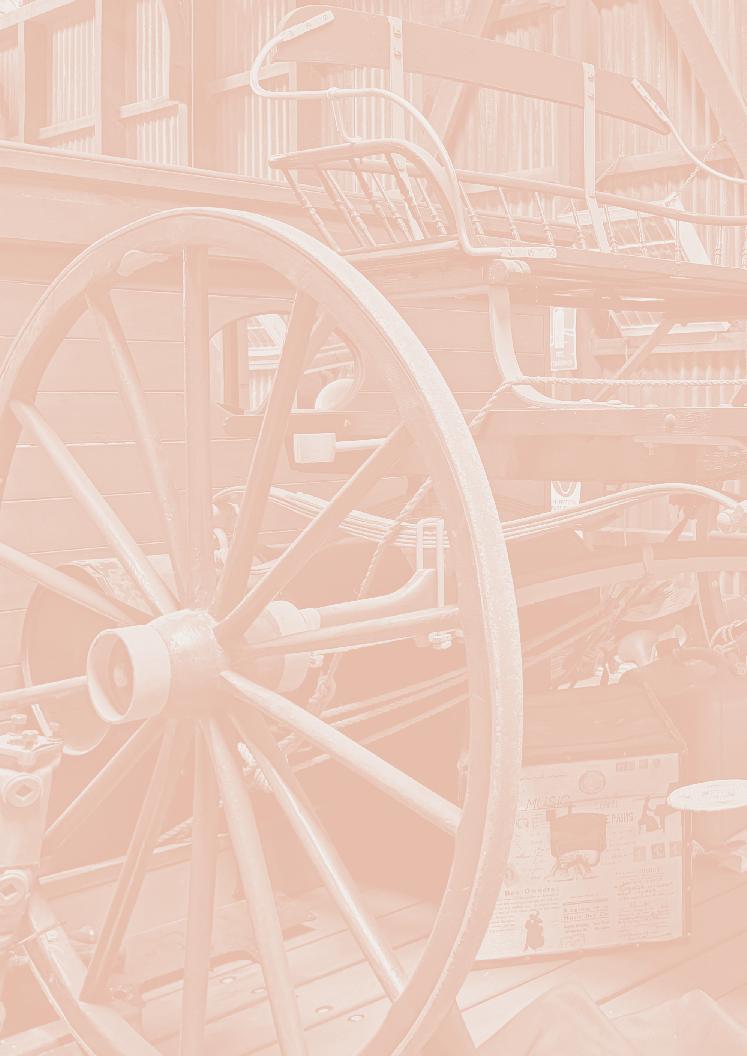
While their passion is metal, there’s still a touch of woodcraft around, including two restored horse-drawn sulkies, one being a bright yellow baker’s van once used for bread deliveries in the local area. (see sulkies overleaf)
We loved the inventiveness of their storage system - repurposed fridges now neatly hold sandpaper, grease and oils (thankfully no longer plugged in).
After “serving time” in their jail cell (the sign-in book), we enjoyed a cuppa and plenty of laughs with the crew. Huge thanks to Wayne, Shane and the team for the warm welcome.
If you’re ever in the area, make sure to stop by - the Coolgardie Men’s Shed is full of character, history, and good company.
(They did mention they could use a bit more timber!)




By Fiona Peters

High blood pressure (or hypertension) often creeps up without warning - you can feel fine and still have it. That’s why it’s called the silent killer. But don’t let the name put you off, with a few simple habits and regular checks, you can keep your numbers in a healthy range and your heart ticking along nicely.
Why it matters
When blood pressure stays high for too long, it puts extra strain on your heart, kidneys, and blood vessels. Over time, that can increase your risk of heart attack, stroke or kidney disease. The good news? It’s one of the most manageable health conditions if you stay on top of it.
What you can do
During this year’s Shed Connect Tour, the team from the Dobney Hypertension Centre shared some great practical tips on how to keep your blood pressure in check and take it seriously:
• Get checked regularly: A quick blood pressure check takes just a few minutes. Ask your GP, local pharmacy, or community nurse – could be a good idea for your Shed to have a machine if you don’t already.
• Keep moving: You don’t have to run a marathon. A daily walk, a bit of gardening, or time in the Shed sanding, sawing or sweeping all help keep your heart strong.
• Watchthesalt: Too much salt can raise your blood pressure. Try flavouring food withherbs,garlic,orlemoninstead.Also try switching for a potassium-enriched salt, such as Heart salt, available in most supermarkets but check with your doctor first if you have kidney problems or take blood pressure medication.
• Go easy on the booze: Enjoy a drink if you like but aim for a few alcohol-free days each week.
• Eat fresh: Load your plate with fruit, veggies, and wholegrains, and cut back on processed foods when you can.
• Add nitrate rich foods to your diet: Regular consumption of foods rich in nitrate such as beetroot (raw or roasted - not boiled), green leafy vegetables and apples, have been found to reduce your blood pressure.
• Cut down on fat and sugar: Eating a diet low in saturated fats that includes lots of fibre (like lentils, almonds, fruits and vegetables) lowers blood pressure. Be especially wary of hydrogenated or ‘trans’ fats, as well as sugars ‘hidden’ as other names such as sucrose, dextrose, fructose, and glucose.
• Take your meds: If your doctor has prescribed tablets for blood pressure, don’t skip them just because you’re feeling okay. They work best when taken daily or as prescribed by your doctor.
• Look after your stress: Time in the Shed, catching up with mates, or taking a few deep breaths can all help keep your blood pressure steady.
Next time you’re at the doctor or chemist, ask for a blood pressure check - it’s a simple step that could make a big difference. And if you’ve got a mate who hasn’t been for a while, encourage him to do the same.
The Dobney Hypertension Centre is inviting Shedders to get involved in research to help improve understanding and treatment of high blood pressure. To find out more, contact the team on (08) 9224 0209, email derrin.brockman@uwa.edu.au, or visit dobneyhypertensioncentre.com.
Did you know elevated blood pressure affects three million people in Australia. It is a major risk factor for heart attack and stroke which are the leading causes of death in Australia. However, effective management of hypertension can prevent such events.Don’t become a statistic. Contact the Dobney Hypertension Centre today to join one of our clinical research trials. Let hypertension specialist Professor Markus Schlaich and his team help you get on top of your cardiovascular health.


Professor Markus Schlaich is the head of the Dobney Hypertension Centre (DHC), which is a collaborative venture between the RPH Medical Research Foundation, Royal Perth Hospital and the University of Western Australia.
The DHC conducts high-quality clinical research that seeks to better understand how to treat and prevent elevated blood pressure. Under Professor Schlaich’s direction, numerous clinical trials and research studies are run by a dedicated research team throughout the year. Their primary goal is to improve health outcomes and treatments for the community.
If you would like more information about participating in a hypertension study, please contact the research team on 9224 0209 or email derrin.brockman@uwa.edu.au


By James Wild, CEO, Men’s Sheds of WA

I was chatting to a mate recently and he putmeontoanewbook,GeoffHutchison’s How Not to Become a Grumpy Old Bugger: A Bloke’s Guide to Living a Better Life. I am not sure what he was trying to say, but I took the hint nevertheless!
From Chapter 1, I found myself smiling, nodding, and all too often wincing with recognition. The book is part humour, part honesty, and part gentle challenge. More than anything, it resonated with me, not only with who I am becoming as the years roll on, but with the work we do every day across the Men’s Sheds of Western Australia.
For those who haven’t read it, Hutchison’s book takes on the stereotype of the “grumpy old bugger”, the older bloke who grumbles about change, who feels left behind, who has lost or may be losing his senseofpurpose.Soundfamiliar(hopefully not too much!) but as Hutchison makes

clear, it doesn’t have to be our destiny. Ageing does not mean bitterness, disengagement, or irrelevance. There are other ways to live, and that message struck me as both deeply personal and professionally important.
Like many men, I’ve noticed how easy it is to slip into habits of complaint or defensiveness as I get older. I thought I was technologically savvy, but with AI feel much the same as my dad did when the Internet surpassed his knowledge, and his ability to keep pace. It just baffles us; society changes in ways we don’t always understand, and the roles that once defined us, employer, employee, parent, shift or fade. In that space, it’s tempting to retreat, criticise, or simply grumble.
But what Hutchison offers is both a warning and a lifeline: we don’t have to go that way. We can choose curiosity over cynicism. We can listen more and judge less. We can find new anchors for our identity beyond work. Those ideas speak directly to my own journey, but they also echo the mission of the Men’s Sheds movement.
Men’s Sheds exist because too many blokes do lose their sense of purpose and connection as they age. Retirement, unemployment, health issues, or family changes can leave men feeling adrift. Without meaningful roles or community,

grumpiness; or worse, loneliness and despair can take hold.
At the Sheds, we see another way. More than 7,000 men in Western Australia gather regularly in their local Sheds not only to make things out of wood or metal, but to make meaning. They share stories, learn new skills, laugh together, and (sometimes without realising it) support each other through life’s toughest seasons.
What I loved about the book is that it doesn’t claim to have a magic formula. Instead, Geoff offers small, practical shifts. Be kinder to yourself. Be less critical of others. Allow space for curiosity. That adds up to a very different way of ageing. I also thought of Shed members who pick up welding for the first time at 70, or who embrace the challenge of singing alongside a mate, or picking up a paint brush. When he talks about the importance of listening without judgement, I think of the quiet conversations over the workbench where

men open up about grief, illness, or family worries.
Not many Shedders join thinking they’re embarking on a grand program of selfimprovement. They come for a cuppa, to fix something, or to escape the house for a couple of hours. Yet those small steps build into stronger friendships, better mental health, and renewed purpose. In other words, the antidote to becoming a “grumpy old bugger.”
How Not to Become a Grumpy Old Bugger is a book I recommend to every bloke, but especially to those approaching or in retirement, and to the families who love them. It’s witty, insightful, and above all hopeful.
And if you’re looking for a place to put its lessons into practice, I can think of no better one than your local Men’s Shed. Because in the company of mates, with a project on the bench and a story to share, it’s hard to stay grumpy for long.

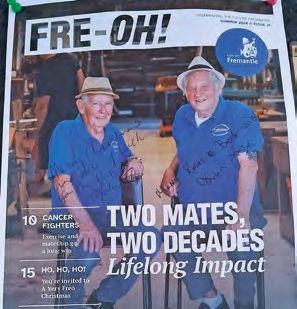
By Fiona Peters
“Travel around Australia, adventures lie ahead
Around every corner, a welcoming Men’s Shed”
Alan Gowland & Bill Johnstone
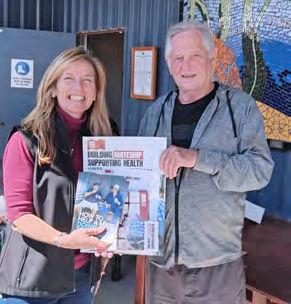
As part of Shed Week 2025, Men’s Sheds of WA dropped by on 8 September with celebratory cakes to mark this incredible milestone.
From a derelict pigeon racing club to a thriving community of more than 350 members, the Fremantle Men’s Shed has come a long way in 20 years.

To mark the milestone, members past and present gathered earlier this year for a special dinner and sundowner drinks at the Shed. Around 60 guests joined the celebration in February, including councillors, politicians, and former Fremantle Mayor Peter Tagliaferri, who played a key role in helping the Shed get established two decades ago.
Fremantle holds the title of being the first Men’s Shed in metropolitan WA. What began in a rundown building once used by the Freo Pigeon Racing Club has grown into a purpose-built facility in
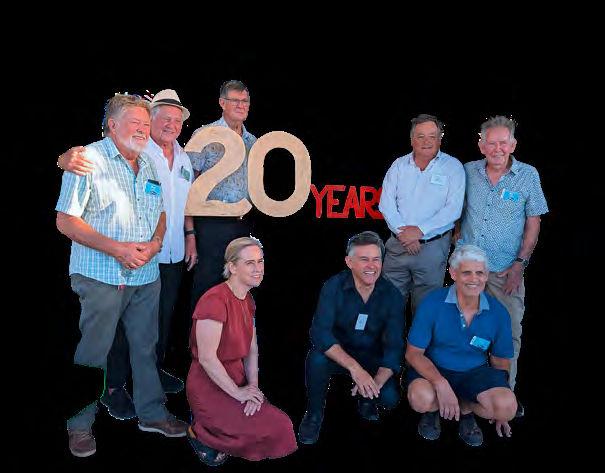
Beaconsfield, next to the Hilton Bowling Club. The Shed is now home to more than 350 members, including 75 women, reflecting the welcoming, community spirit that’s at the heart of the Freo Shed.
Since day one Freo Men’s Shed has had the mantra ‘to add value to our community’.
Co-founders Alan Gowland and Bill Jonstone are really proud to say that successive Management Committees have never wavered from this goal.
“The Shed has always had a “can do” mentality. Challenges are met with “How can we make it happen?”, rather than “It’s too hard, let’s forget it!” approach.”
“Being the first such metropolitan beast in Western Australia, has been a model for lots of Sheds State-wide. Many came to Fremantle Men’s Shed to see just what it was “Shedland” was about and left with a vision for their own community.”

Over the years, it’s become much more than a workshop, it’s a place of connection, support, and laughter, where members build not just projects, but friendships and wellbeing.
Fremantle Men’s Shed, as is with all Sheds, is a comfortable, welcoming place for men (and now women), to be.
Bill explains: “Sheds provide an atmosphere where it is easy to share and that may start with sharing skills and knowledge, passing info onto each other, but it develops a “trust bond” which makes talking with a mate about “real stuff” easier.
“We have men from all walks of life and many always willing to share skills, life experiences and expertise in a diverse range of fields”
“All sorts of positive health and wellbeing outcomes are achieved at Men’s Sheds. Where else can you get groups of men coming together? The Shed’s
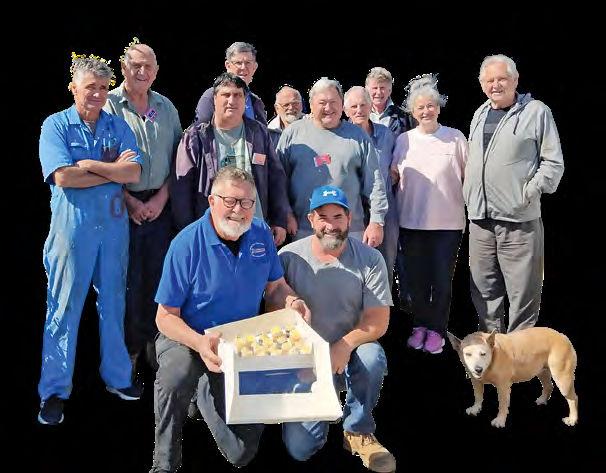
capacity to link men with men cannot be underestimated - the amount of communication at all levels, and member participation in Freo Shed astounds Alan and I. We also see more and more younger men embracing the Shed ethos.”
Over the years, the Fremantle Men’s Shed has become much more than a workshop, it’s a place of connection, support and laughter, where members build not just projects, but friendships and wellbeing.
Alongside the traditional wood and metalwork, the Shed offers a wide variety of activities including art and drawing classes, copper foiling, lead lighting, ukulele lessons, and a thriving veggie garden. Members enjoy ‘Soup Nights’ with guest speakers on all sorts of topics. The Shed also has its very own band, complete with practice rooms, a recording studio and regular jam sessions.
This year, the Shed unveiled a new covered outdoor seating area featuring its own model of the solar systemthe perfect spot for Shedders to relax, chat and expand their horizons. With membership continuing to grow, plans are also underway for an expansion project to accommodate the next chapter of the Shed’s journey.
Congratulations to everyone at the Fremantle Men’s Shed, past and present, on 20 years of mateship, creativity, and community impact. Here’s to many more.




By Men’s Sheds of WA team
Over two years on from opening its doors, Mayaga Mia, meaning ‘Men’s House’, has become a vital gathering place for men in Roebourne to connect, yarn and look after their wellbeing.
Located in the Pilbara region of Western Australia, around 1,500 kilometres north of Perth, Roebourne sits on Ngarluma Country. The Men’s Sheds project came to life from a vision of the Mawarnkarra Health Service team, who recognised the need for a safe, welcoming space for men in the town. Lotterywest was able to support Mawarnkarra in their vision.

Since opening in June 2023, Mayaga Mia hascontinuedtogrow,offeringasupportive environment where men of all ages, from 18 years and up, can take an active role in their own health and wellbeing.
Whether it’s a yarn on Country, learning a new skill or sharing a meal, Mayaga Mia has become a hub of connection and purpose. Regular activities include:
• Health checks from Mawarnkarra GPs to help prevent disease and promote healthy living.
• Yarning on Country, reconnecting with self, culture and community.
• Shared meals, including BBQs or roo tails, that bring everyone together for friendship and support.
• Cooking sessions with a dietitian, learning about healthy eating and nutrition.
• Arts, crafts and skills-based workshops that encourage creativity and confidence.
• Information sessions on mental health, alcohol and other drugs, smoking and vaping, environmental health and more.

At the heart of the Shed’s success is Paul Aubrey, a well-known and respected local community member who works as the Men’s Outreach Worker with Mawarnkarra. Paul supports the men individually and in groups, helping Mayaga Mia remain a place where men feel connected, supported and valued.
“Mayaga Mia is about giving our men a place to belong,” Paul says. “It’s where they can look after themselves and each other, learn new things, and build confidence to be strong, positive role models in their families and community.”
Throughitswelcomingapproachandstrong community spirit, Mayaga Mia continues to make a real difference - creating a safe space where men in Roebourne can grow together in strength, connection and wellbeing.
By James Wild
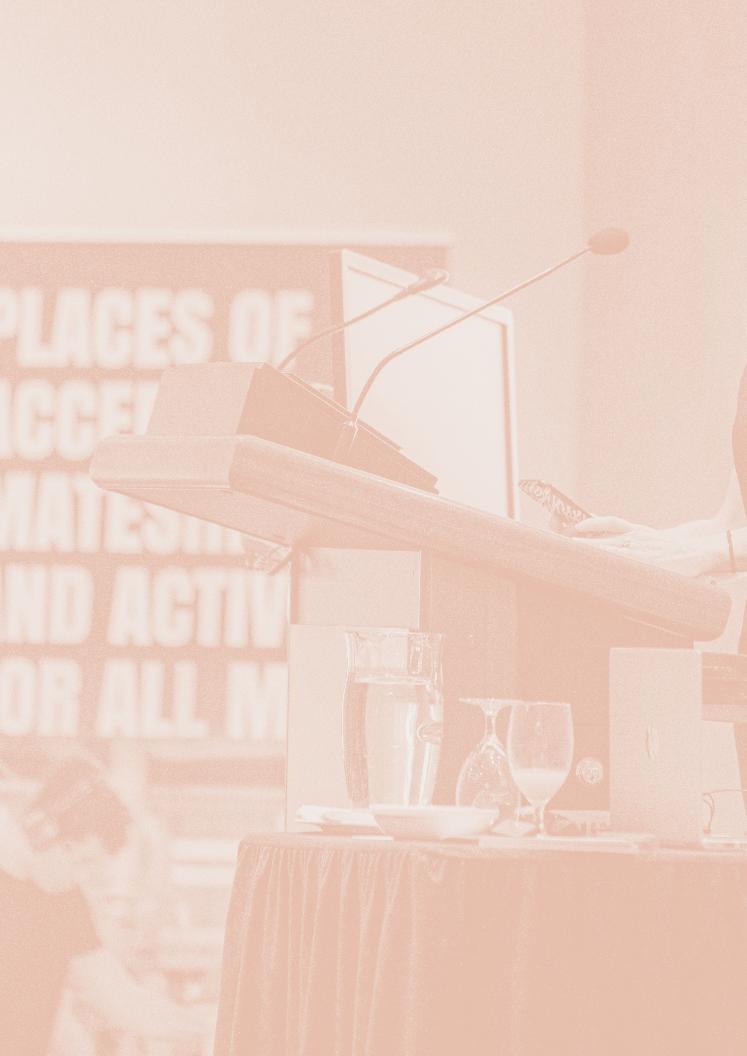
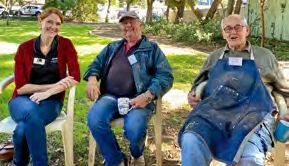
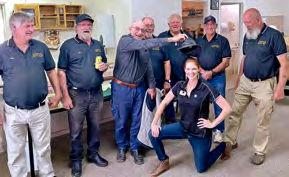
Men’s Sheds of WA’s Senior Engagement Officer, Rebecca Talbot, has been named this year’s WA Men’s Health Champion by the Australian Men’s Health Forum (AMHF), recognising her outstanding contribution to preventative health and men’s wellbeing across Western Australia. She was also voted second nationally in the Men’s Health Champion Awards, an impressive achievement that highlights the impact of her work across the country.
As the driving force behind health and wellbeing initiatives across almost 200 Men’s Sheds, Rebecca ensures that thousands of men, many at risk of social isolation, have access to vital support, information, and resources.
Glen Poole, CEO of the Australian Men’s Health Forum, said:
“Bec is deeply respected by Sheds across Western Australia for her dedication to men’s health and her commitment to ensuring that vulnerable men have a place to go that is accepting, supportive, and safe.Herworksetsahighstandardforwhat genuine community-based preventative men’s health support looks like.”
Drawing on her professional background as an Occupational Therapist in both regional Western Australia, and Emergency wards in both London and Perth, Rebecca brings a deep understanding of the physical, mental, and social needs of men.
Motivated by her Grandad and her memories of his woodworking group, Rebecca recognises the best conversations are often had over a shared meaningful activity and believes all blokes need a place to get together with other blokes. Using her expertise to shape programs that that


make a genuine difference, ensuring men are supported at every stage of life.
Among her many achievements, Rebecca has been the driving force in the WA Wellbeing and Health Officer WHO Program, now embedded in most WA Sheds and adopted by many Sheds nationally. The program empowers each Shed to have a volunteer, or team of volunteers, dedicated to the wellbeing of their members; providing a listening ear, checking in during tough times, and ensuring that no man is left behind JamesWild,CEOofMen’sShedsofWA,said: “Bec cares deeply about men’s wellbeing and inspires others to do the same. Her leadership, compassion, and unwavering commitment have made a profound difference to the lives of thousands of men across Australia.”
Rebecca’s recognition as the WA Men’s Health Champion, and her national runner-up placing, are fitting tributes to someone whose impact extends far beyond her job title. Through her leadership and care, she continues to build stronger, healthier, and more connected communities for men across Western Australia.
Reflecting on the award, Rebecca said: “It’s an honour to be recognised, and I’d like to thank everyone who voted for me. I truly enjoy my role and love being ‘Red from the Shed’. I’m dedicated to improving the lives of men across our communities. While this award is a great honour, especially alongside so many worthy candidates, I also want to recognise the hard work of our wider team - our Wellbeing Coordinator, Development Officers, Chaplain, CEO and the many volunteer Wellbeing and Health Officers in the Sheds who make this work possible.”



By James Wild


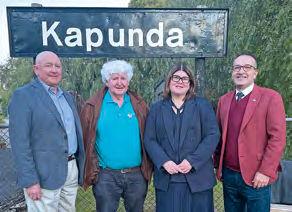
I was recently invited to represent Men’s ShedsofWAatthe2ndNationalSmallTown Reinvention Conference in Kapunda, South Australia. It was amazing to see a regional town come alive with representatives from not-for-profits, local councils, and state governments from across the country.
Coordinated by Peter Kenyon, Director of Bank of I.D.E.A.S, in partnership with the office of Tony Piccolo MP, the event brought together more than 175 community leaders and changemakers from over 90 small towns across Australia and New Zealand. Over four days, participants shared insights, tools, and inspiration for strengthening rural communities and sparking local renewal.
Theprogramwaspackedwithpresentations, case studies, stories, and great ideas from
across regional Australia. Field trips took delegatestoSouthAustraliantownsleading the way in creating sustainable and vibrant communities, including the Eudunda Community and Business Association’s action plan and the Barossa Co-operative.
I was honoured to be invited to present a masterclass alongside Charles Alder of Rebuild Australia. Charles is an inspiring community leader who co-founded Rural Aid Australia with his wife Tracy. Together, we spoke about how to engage men in regional communities, inviting attendees to consider how purpose-driven connection and community involvement are key to men’s wellbeing and the sustainability of small towns.
We discussed the transformative power of Men’s Sheds in regional communities

and showcased examples from WA where sheds are driving community projects that wouldn’t otherwise take place. Sheds thrive because they recognise the barriers many men experience to participation, offering meaningful engagement through community projects that matter. This not only keeps men active and well but keeps their communities alive.
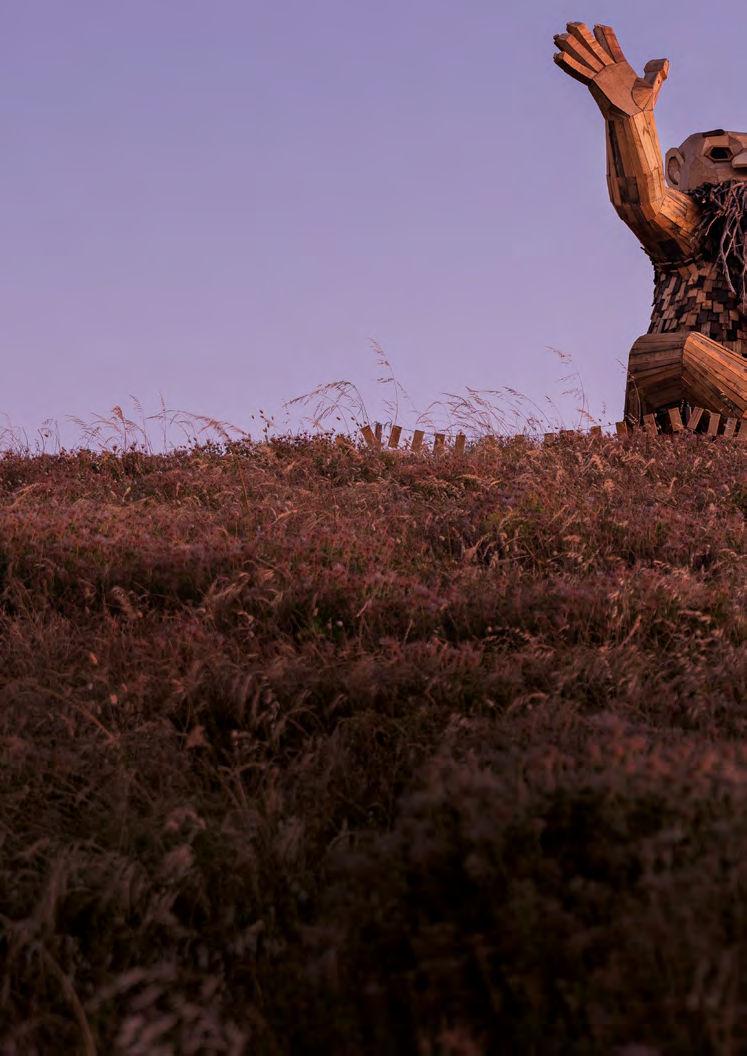
I was particularly struck by how many presenters spoke about their local Men’s Sheds as being central to the vitality of their communities. One great example came from WA’s own Rhys Williams MLA, Member for Mandurah, who shared how the Giants of Mandurah, a project led by the City of Mandurah, FORM and artist Thomas Dambo became a lasting regional icon. Originally planned as a short-term
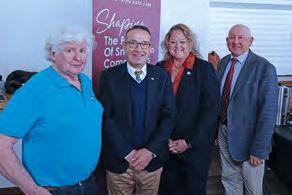
art installation, three years later it’s still going strong thanks to the dedication of the Mandurah Men’s Shed, who have taken responsibility for the maintenance, repairs, and upkeep of the sculptures.
TheMen’sShedsofWAteamoftencomment that Sheds don’t just make things, they build communities! The Conference reiterated this sentiment perfectly and reminded me of the importance of this magazine. When we launched Sheds WA (interestingly with a cover feature on the Giants of Mandurah) we hoped to shine a light on the great work of Sheds and their projects that are revitalising and sustaining communities. We look forward to sharing many more stories in the years to come.
By Men’s Sheds of WA team

Men’s Sheds volunteers have taken on a truly extraordinary project — the full restoration of a De Havilland Vampire Mk35A jet fighter.
Three truckloads of plane parts recently made the long journey from RAAF Base Amberley in Queensland to a Shed in Dareton, south-west New South Wales, where the aircraft will be carefully brought back to life by a dedicated team of volunteers.
The Vampire, one of the earliest jet fighters used by the Royal Australian Air Force, represents a significant piece of


aviation history. It’s not every day that Shed members get the chance to work on something that once soared through Australian skies, and the project has sparked plenty of excitement and pride among the crew.
The restoration is no small feat - it will take months of teamwork, problemsolving, and plenty of Shed ingenuity to reassemble and preserve the aircraft. But as every Shedder knows, that’s exactly the kind of challenge that brings people together, fosters new skills, and creates lasting mateship along the way.


By advertising with Sheds WA you will reach almost 200 Sheds and their 7,000+ members. Contact us today.
Inside front fuII page Full page Half page Quarter page Back cover full page $7,450.00
If you are a WA charity or Not For Profit please contact us for prices. *GST exclusive


By Fiona Peters
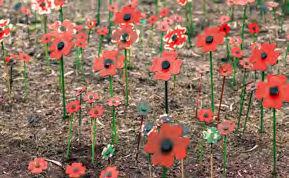
In the lead-up to this year’s Remembrance Day, Lake Monger Community Shed have helped to create something truly special - hundreds of handmade wooden poppies for a community display honouring those who served.
After last year’s successful display of over 1,200 poppies outside the City Administration Building - including 300 handmade by the Vincent Community Shed - the City of Vincent has asked Lake Monger Community Shed to take up the challenge this year, creating 500 new poppies for the 2025 display.
Each poppy serves as a poignant reminder of those who served in conflicts and peacekeeping operations, with purple poppies also included to recognise the animals who stood alongside Australia’s Armed Forces.
Shed members embraced the project with enthusiasm and teamwork, with many contributing their skills to cut, shape and assemble the poppies. Special thanks to Richard (“we can make that”) W, Colin B, Colin S, Trevor, Kim, Samantha, Cornelis, Harold, Elaine, Lucas, Lachlan, Leanne, and Curt, who enlisted support from the Claremont Showgrounds Shed to help cut the poppy centres.
Thanks to everyone’s efforts, all poppies were completed and delivered on timea heartfelt, handcrafted tribute to remembrance and community spirit.
The poppies will be now be painted by children at local childcare centres and kindergartens.







By Fiona Peters
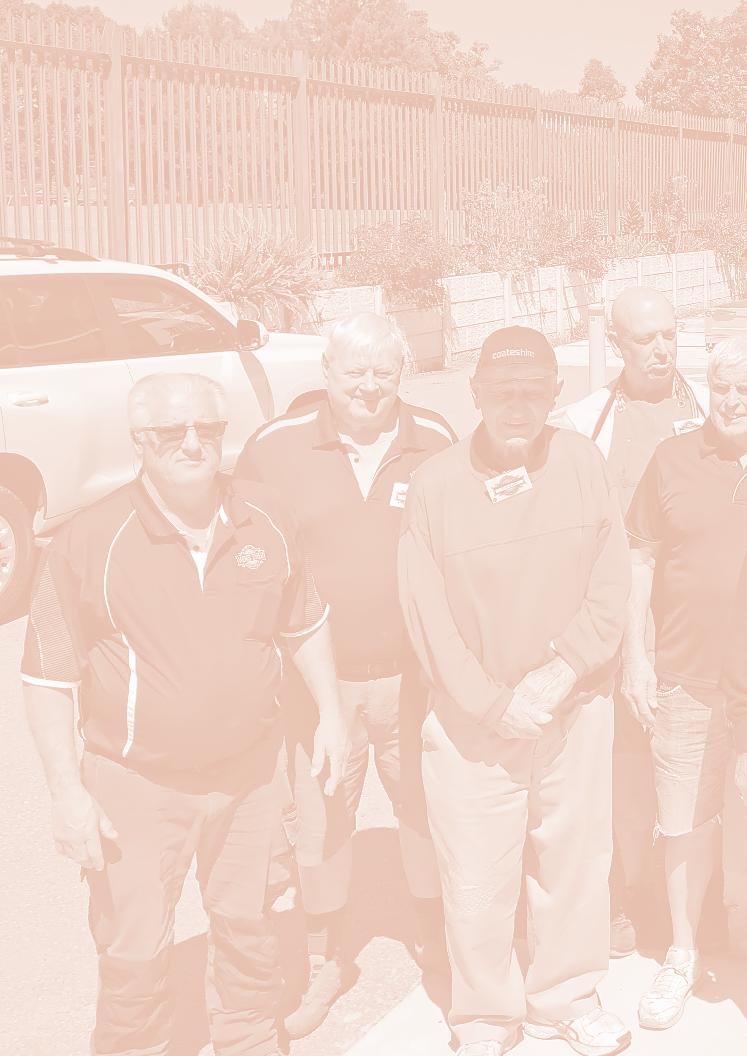
There’s something new sprouting at the Stirling Community Men’s Shed – a freshly planted veggie garden that’s bringing members together to share their knowhow, swap tips, and enjoy time outdoors. Come summer, the homegrown herbs and vegetables will make their way into the Shed’s kitchen, where a new series of cooking classes is planned. It’s a great example of how the Shed keeps evolving, giving members the chance to learn new skills, share healthy meals, and enjoy the satisfaction of eating produce they’ve grown together.
The Stirling Community Men’s Shed has been a hub of creativity and camaraderie since 2011, now boasting over 140 members. Based in Balcatta, it’s one of the busiest Sheds in Perth, with benches filled each morning with projects ranging from furniture restoration and woodturning to building nesting boxes for local wildlife groups.
Last year, Bond Cottage was lovingly restored to become the Shed’s shopfront. Built in the 1920s, this rare piece of local history now houses the wonderful wooden items crafted by members. During the restoration, builders reused as much of
the original materials as possible, bringing back old hand skills that add to the Cottage’s charm.
City of Stirling Mayor Mark Irwin praised the Stirling Community Men’s Shed and its role in building community connections.
“The Stirling Community Men’s Shed provides a space where people can come together for companionship, including those dealing with loneliness, health issues or the transition to retirement. The Shed is an asset to our community and changes lives for the better.”
The Stirling Community Men’s Shed also plays host to the Women Working With Wood (W4) group every second Saturday. The group uses the facility to work on their individual projects and learn new skills.
Over the years, Stirling Shedders have taken on some impressive community projects. Highlights include restoring a 1950s horse-drawn cart for display at a local heritage event and making wooden therapy toys for a nearby children’s hospital, combining skill and care for real impact.
Of course, it’s not just about the projects. The Shed kitchen is the heart of the


space, where morning tea stretches into lunchtime conversations, and the monthly BBQ draws in members for important social connections. A monthly guest speaker program and workshops also add variety and inspiration.
As Shed Coordinator Beth Jasas sums up: “We’ve got plenty of characters, plenty of skills and plenty of laughs. What we all share is the satisfaction of creating something useful and the mateship that comes with it.”
James Wild, CEO of Men’s Sheds of WA, congratulated Beth on her outstanding contribution to the Shed community as she prepares to retire later this year.
“Beth has been one of the driving forces behind the Stirling Community Men’s Shed from the very beginning. Together with Chris Brereton, Manager Community Development at City of Stirling and community member, Ron Mathers, she helped shape the vision that brought the Shed to life back in 2011. It’s a great example of what can be achieved when local councils and community members work hand in hand to build something


lasting. On behalf of the Men’s Sheds of WA network, I thank Beth for her commitment and leadership over the years, she’s leaving a legacy that will continue to inspire others.”
One project that’s turning heads is the Stirling Community Men’s Shed shopping bags. Made from recycled fabric, these super-strong bags come in a large range of colours, or you can pick your favourite. At just $5 each, they’re practical, eco-friendly, and a little piece of Shed craftsmanship you can carry home.
Every Shed has a story worth telling. If your Shed has a new project or development on the go, let us know so we can shine the spotlight on you in an upcoming issue. Email admin@mensshedswa.org.au

By Fiona Peters

Wundowie & Districts Men’s Shed lays down the challenge for next year’s race.
The Motorcycle Men’s Shed traded engines for wheels at this year’s Wundowie Iron Festival with a cart loaned by the Wundowie & Districts Men’s Shed (WDMS).
The Wundowie Shed is now challenging Sheds across WA to build their own and join the action next year.
“I’m extending an invitation to all Men’s Sheds to take part next year,” said Ken Pearce, Secretary for WDMS. “The aim is for 80% of each cart to be built from tip finds or recycled materials. By next year, the Cart Club and the Men’s Shed will have chassis kits available so Sheds can design their own bodywork.”
Members of the Motorcycle Men’s Shed turned out to support the event, cheering on as one of their own tried to keep up with more-modern carts, which over the course of the day reached speeds of up to 38 km/hr.
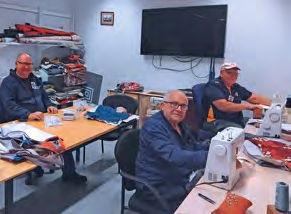
The Wundowie & Districts Men’s Shed was back on the hill for the second year running, racing a cart proudly built by its members. For them, it’s more than just a race, it’s a rewarding mental health project that brings together retired engineers, tradesmen, and tinkerers to share skills and camaraderie.
The Shed also welcomed the Hills Billy Cart Club as members under their umbrella this year, strengthening local connections and sparking new opportunities for creativity and teamwork. Looking ahead, the team

has taken on a new challenge for 2026 and is looking for small donations - to design and build a wheelchair-adapted cart for a young local girl who was thrilled to learn she’ll be able to race too.
“It’s not only fun for the Shedders, but also for the kids – and the big kids who race,” said Ken. “What could be better than building a cart with your grandkids? It’s fun for all ages and genders, with plenty of female drivers this year.”
“It’s time for Shedders to get rid of their image as coffee drinkers and see how much fun we can have. Plus, there’s no reason there couldn’t be an interstate Men’s Sheds challenge in future, Wundowie even has an RV park right next to the race hill.”
The Billy Cart Race is a crowd favourite at the Wundowie Iron Festival, which celebrates the town’s unique history as Australia’s only charcoal iron-making plant. The festival has been running for decades and is a much-loved community event, bringing together families, local groups and visitors with markets, entertainment, and plenty of country spirit. This is the second year Wundowie Shed has been involved.
From classic wooden crate carts to fully engineered racers complete with touchscreens and cameras; creativity is always on display. And now, with a growing call for Men’s Sheds to join the fun, next year’s race promises to be even bigger.
So, who’s ready to roll?




$380 million went back to the community through Lotterywest grants last year.
*Financial year 2024-25. Figures are rounded and not inclusive of writebacks or refund amounts.