No. 239 | March 2026 | Donald Sprague, Executive Editor
Editor’s Note
Dear Colleagues,
One of the attributes of the good teacher is an openness to growth, to lifelong learning, and to revising what they do. If you’re subscribed to and reading Bolchazy-Carducci Publishers’ monthly eLitterae, you are, indeed, a “good teacher.” My hope is that I am able to provide you some food for thought from time to time. In this note, I share some thoughts evoked by March’s celebration of women.
One of my favorite lessons while teaching AP Latin IV was examining the relationship of Dido and Aeneas through the lens of gender difference. I’m not sure how early in my nineteen years of teaching AP Latin I introduced that lesson, but I am ever so pleased that I did. Our discussions were informed by the differences in moral development that Carol Gilligan and Lawrence Kohlberg had researched. Fortunately, I was building on the work the students had done in their required junior-year ethics course. They “kinda” liked the application of the lens of moral leadership decision-making to the literature under study.
How wonderful that the discipline of the classics over the past few decades has blossomed and expanded with a fuller examination of the human experience in the ancient world with attention to gender, race, class, and so much more. For so long, classics was a male-dominated discipline. My high school teachers of Latin and Greek were all male, and my classics courses at Williams were predominantly taught by men. Fortunately, I was blessed to have the late Jean D’Amato, a visiting professor, for a couple of courses and Deborah Stott as one on the instructor team at the Intercollegiate Center for Classical Studies in Rome. Though I did not have a class with her, I enjoyed informal interaction with Meredith Hoppin, now emerita, and appreciated her contributions to my oral defense of the classics major comprehensives. Later I enjoyed a summer graduate course at Tufts with Miriam Bahlmuth and Vergilian Society study programs with Ann Koloski-Ostrow in Campania and Janice Benario for Roman Britain. In my two decades with Bolchazy-Carducci Publishers, I have been blessed to work with several excellent classicists—the late Laurie Haight Keenan, Laurel Draper, Amelia Wallace, and current President Bridget Dean.
As an editor, I enjoyed working with a number of women authors including Elizabeth Heimbach, the late LeaAnn Osburn, Helena Dettmer, Katherine Bradley, Judith Hallett, Barbara Weiden Boyd, Milena Minkova,
Ronnie Ancona, Rose Williams, Emma Vanderpool, and others. It is edifying to work in a classics world where both men and women are leaders and influencers!
Bolchazy-Carducci Publishers salutes its women authors!
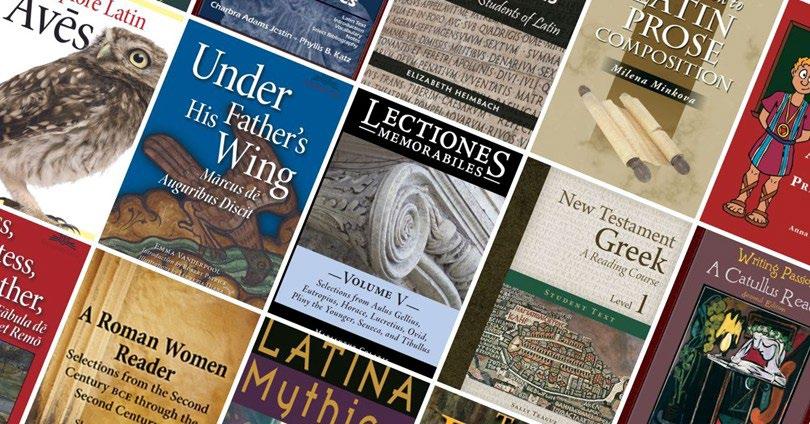
Bolchazy’s complimentary Distance Learning Page includes a number of Latin selections that feature female figures and women authors.
On the beginning level, readings include a letter from Terentia to Cicero as well as Latin stories about Agrippina, Camilla, Cloelia and Andromeda, Andromache, and Minerva. At the intermediate level, we offer a Latin hymn by Hildegard of Bingen. The advanced Latin selections include an excerpt from A Roman Women Reader—on Sulpicia. Do check them out and incorporate them into your courses as makes best sense.
B-C is especially pleased to invite you to April’s webinar—“A Reassessment of Clodia.” Through the centuries, our impression of Clodia has been one molded by male voices. St. Louis University classicist Douglas Boin’s new book Clodia of Rome and his webinar will present the real Clodia whose story has merit not only on its own but also for what it might say to our world today. Rome in Clodia’s day also struggled with the issues of imperialism, immigration, and enfranchisement. Register for this webinar on April 21—what a great way to celebrate Rome’s birthday!
All Best, Don
Donald E. Sprague Executive Editor don@bolchazy.com

LATIN FOR THE NEW MILLENNIUM, LEVEL 2
LATIN STORY TO ACCOMPANY REVIEW 4
This story returns to the last year of that epic ten-year war between the Greeks and the Trojans. Achilles reenters the war determined to avenge the death of Patroclus and related events described in Homer’s Iliad . The concluding paragraph draws from the Trojan War Cycle and includes the trick of wily Odysseus that secured the Greek victory.
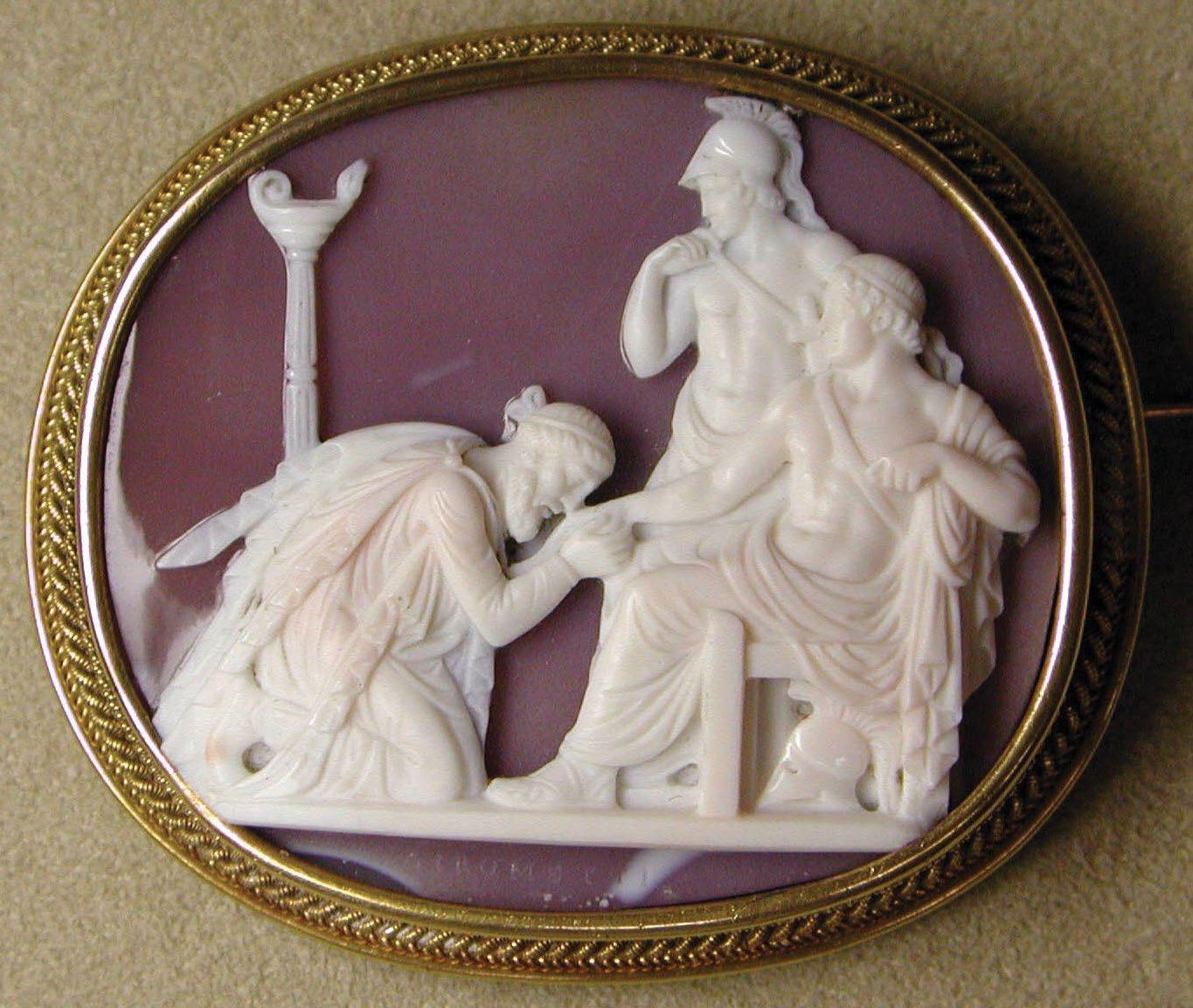
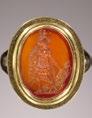
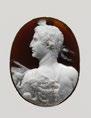
Cameo made of gold and onyx depicts Priam supplicating Achilles as he begs for the return of the body of his son Hector. Italian Giuseppe Girometti (1780–1851) created the cameo now part of the Metropolitan Museum of Art, New York, NY. Public Domain.
RUĪNA TROIAE
1 Cum Hector Patroclum occīdisset, nescīvit quem occīdisset. Hector enim putābat sē Achillem occīdisse. Sed Achillēs etiam vīxit, et propter mortem amīcī furuit. Achillēs iterum pugnāre coepit, et Hectorem in proeliō occīdit. Corpus Hectoris circum mūrōs Troiae trāxit. Cum vetus pater eius Priamus Hectorem occīsum esse audīvisset, dē fīliō occīsō flēvit, nec
5 vīnum bibit, nec cibum cōnsūmpsit. Priamus ad Achillem īvit eumque ōrāvit ut corpus
Hectoris sibi redderētur. Achillēs prō multō aurō corpus Hectoris patrī eius reddidit. Tum Achillēs rogavit Priamum ut sēcum cēnāret. Itaque duo cēnāvērunt.
Postquam Hector sepultus erat, Achillēs iterum contrā Troiam pugnābat. Achillēs nōn potuit occīdī, nisi per calcem, quia māter eius Achillem īnfantem in flūmen Stȳgem immersit,
10 sed eum calce tenuit. Paris, frāter Hectoris, Achillem prope mūrōs Troiae vīdit et sagittā occīdit. Achillēs occīsus est. Iam mīlitēs Graecī mīrantur quōmodo Achillēs occīsus sit,
nūllī crēdentēs Paridem eum occīdisse. Deus enim Apollō sagittam dūxit, et sagittam in calcem Achillis mīsit.
Cum Achillēs occīsus esset, Graecī spem āmīsērunt. Nūllus Graecus tam fortis erat quam
15 Achillēs. Ulixēs nōn magnam virtūtem corporis, sed mentis habēbat. Dolum cōgitāvit, et imperāvit ut equus ligneus aedificārētur et Graecī in equō occultārentur. Cōnsilium eius
Graecīs placuit. Graecī in equō occultātī sunt, et paulisper exspectābant. Cum sōl cecidisset, Graecī ex equō in urbem cucurrērunt, et Troiānōs, quī multum vīnum biberant, occīdērunt.
Graecī urbem dēlēvērunt et sarcinās suās gemmīs aurōque implēvērunt. Graecī sortēs dūxērunt
20 et mulierēs Troiānās ancillās cēpērunt.
VOCABULA NOVA
ancilla, ancillae, f. – (female) slave calx, calcis, f. – heel impleō, implēre, implēvī, implētum – to fill iterum (adv.) – again ligneus, lignea, ligneum – wooden
COMPREHENSION QUESTIONS
1. Whom did Hector think he killed? Cite the pertinent Latin.
2. What actions are the results of Achilles’s rage?
3. What happened to Hector’s body?
sagitta, sagittae, f. – arrow
sepeliō, sepelīre, sepelīvī, sepultum – to bury
Stȳx, Stȳgis, f. – river of the Underworld
Ulixēs, Ulixis, m. – Ulysses, the Roman version for Odysseus, Greek chieftain known for his wily nature
4. What do you suppose the final act between Priam and Achilles represents?
5. How was Achilles killed? Explain its special circumstances.
6. What was the Greek reaction to the death of Achilles?
7. What critical role did Ulysses play in the Trojan War? Cite the Latin.
8. Citing the Latin, list the “rewards” of the victors in ancient war.
This is the fourth in a series of five stories to accompany the five review units of Latin for the New Millennium, Level 2. While complementary to LNM, the stories can serve all second-year Latin students.
Tim Lesinski has loved Latin since he first encountered it in middle school. He has been teaching at Newton North High School, MA, for seven years and previously taught for five years at Newton’s F.A. Day Middle School. He has also served as an instructor for Ascanius: The Youth Classics Institute. Lesinski serves as president of the Massachusetts Classical Association. He is an Eagle Scout and graduate of Thayer Academy. He earned his BA in Greek & Latin and political science from Tufts University and an MAT in Latin and Classical Humanities from Boston College.
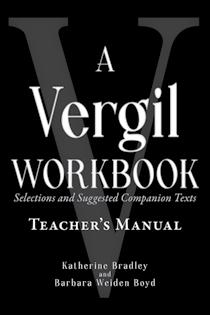
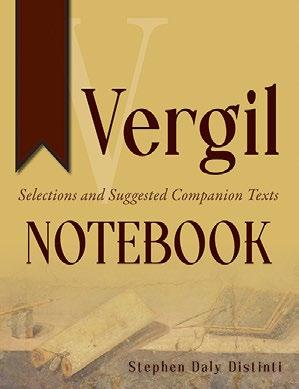
For more information about these texts, their contents, authors, and more, click here.
New Material ADDED to Lumina!
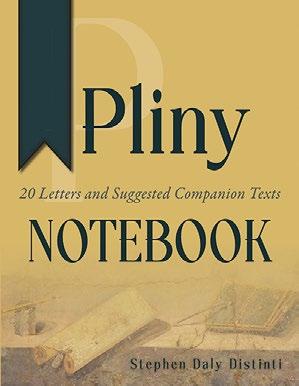
To accompany AP Latin Pliny and Vergil Selections— a splendid tool for student self-review!
Lumina: Pliny and Vergil online exercises prepare students for the challenges of the AP® Latin Exam. Hundreds of multiple choice questions cover ALL syllabus selections from Vergil’s Aeneid and the letters of Pliny the Younger. These automatically-graded activities model exam format and provide students with detailed immediate feedback.
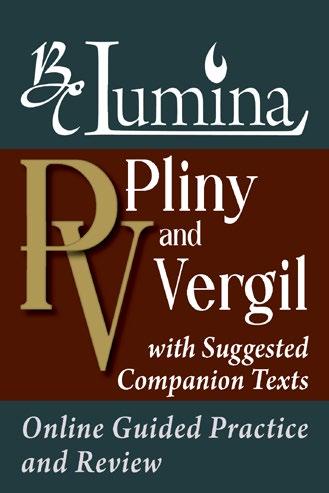
Additional multiple choice question sets promote close reading of companion texts, which meet the teacher’s choice component of the new AP® Latin syllabus. These optional readings are included alongside expert commentary in Pliny: 20 Letters and Suggested Companion Texts and Vergil: Selections and Suggested Companion Texts. With Lumina, students receive invaluable support as they read widely from a variety of unadapted Latin texts.
• Detailed multiple choice exercises for all suggested Pliny letters
• Question sets corresponding to the AP Exam’s four project passages
• “Bonus” content that covers people and places of Pliny, characters of the Aeneid, and features of literary language exemplified in the work of both Pliny and Vergil
• All of the old Caesar multiple choice questions have also been included in Lumina: Pliny and Vergil. These are a good option for teachers using Caesar as a teacher’s choice reading or for sight reading practice.
• Immediate feedback so students can self-monitor their mastery of material
To see extra practice examples.
Contact lumina@bolchazy.com to schedule an online demonstration.
NB: B-C has also developed Lumina for Latin for the New Millennium, Level 1 and Level 2 and for the online selflearning program Artes Latinae, Level 1 and Level 2
2026 Classical Conferences and Meetings
ICMS — International Congress on Medieval Studies
• 61st Congress
• Western Michigan University, Kalamazoo, MI
• May 14–16, 2026
• Bolchazy-Carducci Representative: Donald Sprague
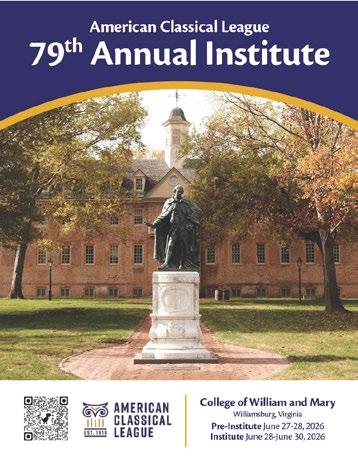
ACL — American Classical League
• ACL Institute 2026
• College of William and Mary, Williamsburg, VA
• June 28–30, 2026
• Bolchazy-Carducci Representatives: Bridget Dean, PhD, and Donald Sprague
NJCL — National Junior Classical League
• Indiana University, Bloomington, IN
• July 21–26, 2026
• Bolchazy-Carducci Representative: Donald Sprague
Report on the Annual Meeting of the Classical Association of the Middle West and South
Some three hundred and fifty classicists from the farflung Classical Association of the Middle West and South (CAMWS), whose core membership comprises thirty-two U.S. states and three Canadian provinces, converged on Mobile, Alabama, the birthplace of Mardi Gras in what became the United States of America. At the invitation of the Classical Association of Alabama, CAMWS held its 122nd annual meeting at the Renaissance Mobile Riverview Plaza Hotel with its views of the busy river. CAMWS Secretary-Treasurer and “Energizer Bunny” T. Davina McClain carefully arranged the geography of key components of the meeting. The registration tables were carefully aligned with the entrance to the Harbor Room where the exhibitors displayed their treasurers. To further ensure exhibit room traffic, McClain made sure the refreshment break goodies were also housed in the harbor room. Special kudos to the hotel’s catering staff who made sure that the coffee urn never ran dry!
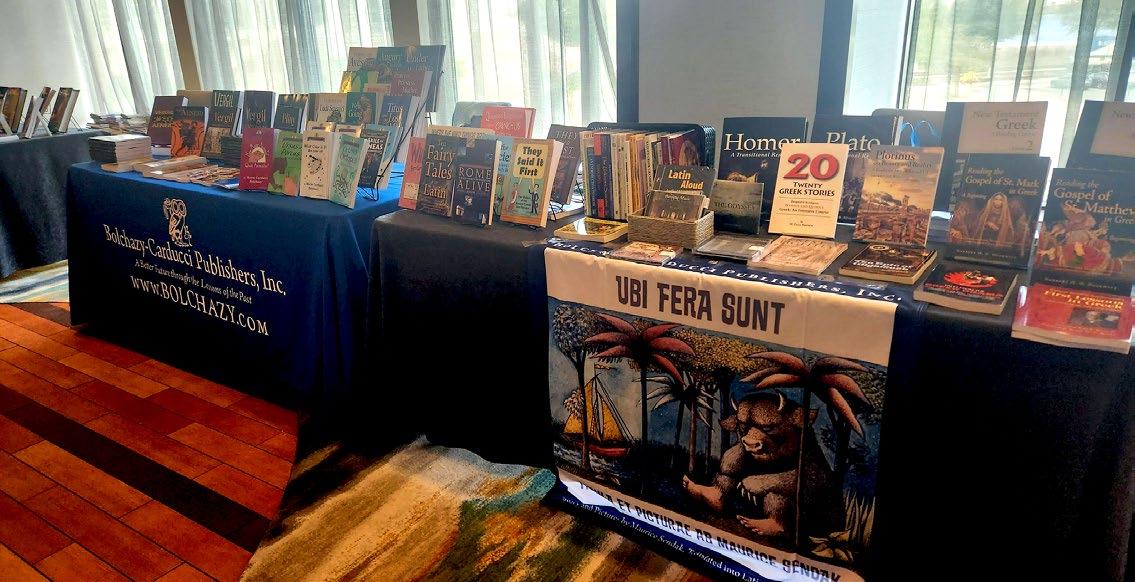
B-C reps President Bridget Dean, PhD, and editor and master teacher Don Sprague wisely chose the tables along the windows. Attendees were especially interested in B-C’s new AP Latin titles for the new curriculum. Many expressed thanks for B-C’s significant contribution to classics classrooms and praised the comprehensiveness of the company’s range of titles. The book display drew authors Jacqueline Carlon, Christopher Bungard, and Anne Groton as
well as CAMWS President Victoria Pagán (author of A Sallust Reader: Selections from Bellum Catilinae and Bellum Iugurthinum, and Historiae) and musician Joe Goodkin. The “small world” phenomenon is especially operative in the world of classics. Professor Pagán was one of Bridget’s undergraduate instructors at the University of Wisconsin at Madison. B-C distributes talented musician Joe Goodkin’s The Odyssey: A Folk Opera (CD). Goodkin fell in love with the classics while a student at the University of Wisconsin at Madison and today travels the country as a modern Homeric bard performing his songs based on the Odyssey and the Iliad. Bungard, author of B-C’s novella series about the theatre, encouraged Bridget to attend the delightful Thursday evening performance of Philoctetes for which Goodkin had written the music.
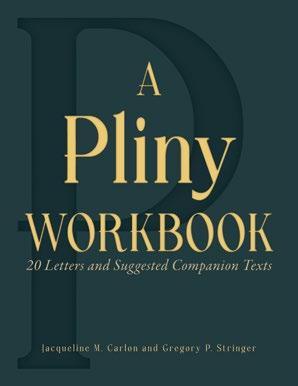
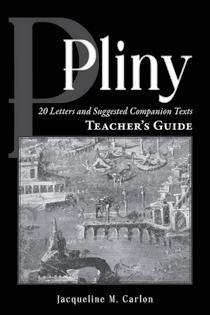
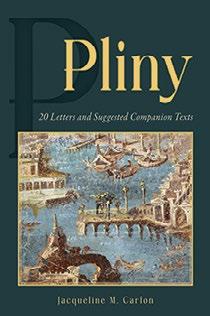
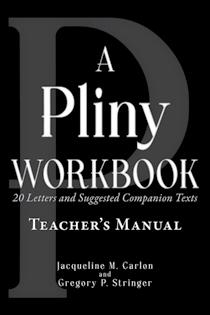
Anne Groton, coauthor (with James May) of one of B-C’s oldest and most well-known titles, Thirty-eight Latin Stories: 5th edition Designed to Accompany Wheelock’s Latin, stopped by for her annual purchase of B-C’s buttons that feature famous quotes from Latin and Greek literature. Groton gives the buttons to new classics majors at St. Olaf College and to CAMWS members who complete interviews for the CAMWS oral history project. Jacqui Carlon, author of Pliny: 20 Letters and Suggested Companion Texts and coauthor (with Gregory Stringer) of A Pliny Workbook, trekked to Mobile from California to give a workshop entitled “Pliny: The Man and His Letters.”
Friday afternoon provided attendees the special opportunity to visit Africa Town and its museum’s special exhibit about The Clotilda, the last known ship to bring enslaved persons to the United States. The moving exhibit tells the story of the ship’s discovery, the journey from Africa to Alabama, and of the enslaved and their descendants. Artifacts from the slave ship are particularly compelling.
Friday evening’s banquet was, ut semper, a highlight of the annual meeting. The cocktail hour and dinner provided an opportunity to socialize. Following the meal,
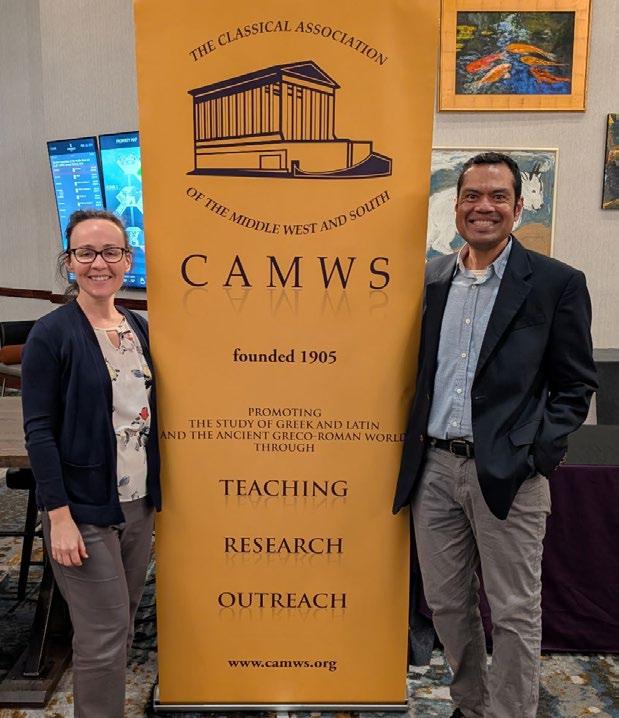
The National Latin Exam reps Lauren Marquand and Michael Posey. Photo courtesy of Michael Posey.
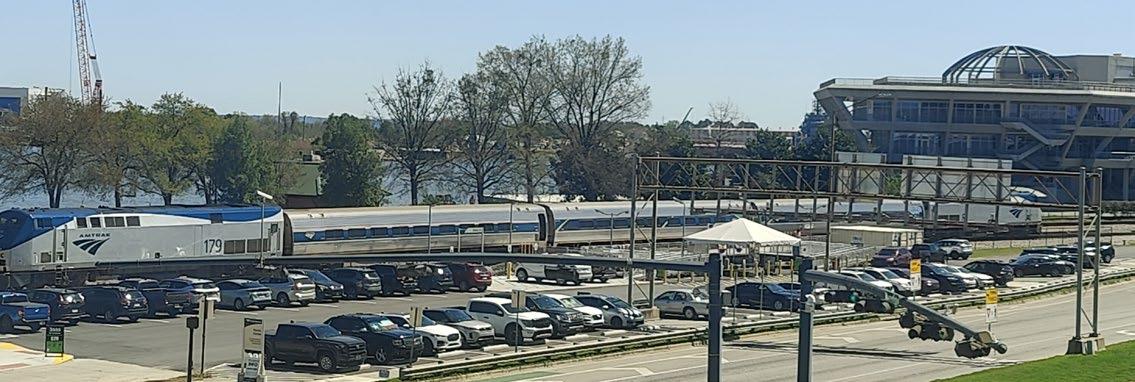
Half of the B-C display at CAMWS and a view out the windows behind the B-C display—Amtrak and the river just beyond.
the audience thoroughly enjoyed Professor Pagán’s presidential address— “Aquilius Regulus.” Classicists marveled at Washington University in St. Louis Professor Tom Keeline, orator optimus, who delivered the three ovationes for three outstanding CAMWS members. Congratulations to CAMWS SecretaryTreasurer T. Davina McClain and the program committee for a terrific meeting in Mobile!
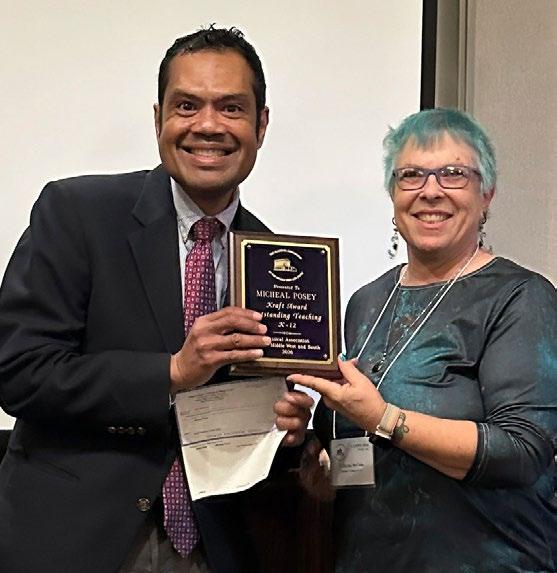
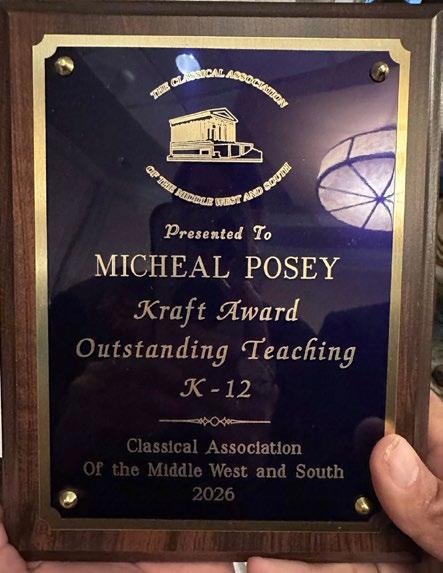
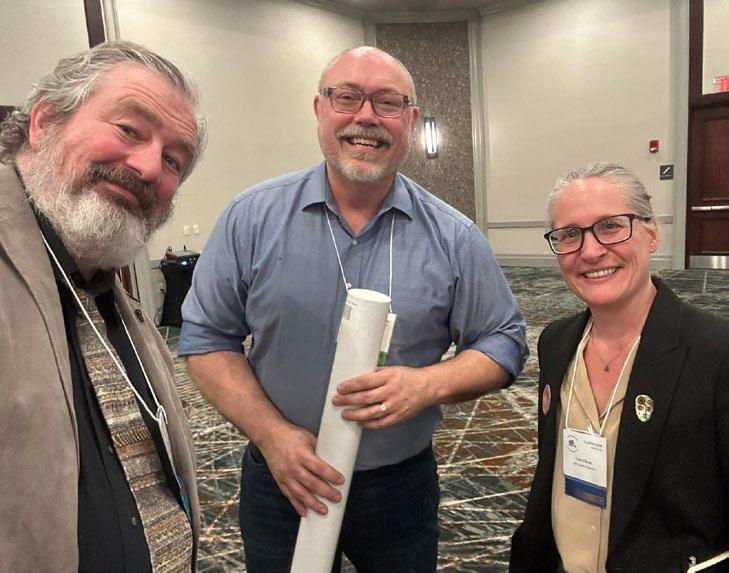
Michael Posey, Mountain Brook Schools, Alabama, Kraft Award Recipient, and T. Davina McClain, CAMWS Secretary-Treasurer, pose with the Kraft Award for Outstanding Teaching K-12 plaque. Photo courtesy of Michael Posey. The Kraft Award plaque up close. Photo courtesy of Nathalie Roy-Mitchell. A trio of excellence: CAMWS ovationes recipients Del Chrol (Marshall University), Jonathan Zarecki (University of North Carolina at Greensboro), and Lisa Ellison (East Carolina University). Zarecki was also named the Kraft Award recipient for college/university teaching. Photo courtesy of Del Chrol.
Webinars
Bolchazy-Carducci Publishers offers complimentary webinars on a range of topics of interest to classicists, with particular emphasis on pedagogy. Recordings of select webinars on our AP Latin curriculum are available on our website.
Please note that the Bolchazy-Carducci Webinar Program is designed as a live, interactive forum in which presenters and participants engage through questions, discussion, and shared examples. To preserve the presenter’s intellectual property, recordings are generally not made available to non-attendees; accordingly, interested individuals are encouraged to attend live sessions.
An exception has been made for recent AP-related webinars. Suggestions for future topics may be directed to Don Sprague
What Equipment Do I Need for B-C Webinars?
To participate in Bolchazy-Carducci Publishers-sponsored webinars you will need high-speed internet access, computer speakers/headphones, a current web browser, and the link to the webinar virtual meeting space, which is provided in your webinar invitation.
“As difficult as her life was to document, it was her courage in the face of extreme hostility—to give more citizens a voice, not just the same old few—that kept me going. She was overlooked and misunderstood by her contemporaries. History largely forgot her.” —Boin on Clodia of Rome (Amazon, Best Books of 2025). One of Rome’s most powerful women, Clodia has been maligned over two thousand years as a promiscuous, husband-murdering harlot―thanks to her starring role in one of Cicero’s most famous speeches in the Forum. But Cicero was lying, in defense of his own property and interests. Like so many women libeled or erased from history, Clodia had a life that was much more interesting, complex, and nuanced than the corrupted version passed down through generations. In this webinar, Boin shares key insights from his celebrated new appraisal. “Freed from the caricature that Cicero painted of her, Clodia serves as a reminder of countless women whose stories have been erased from the historical record.”
Author, translator, and essayist, Douglas Boin is a professor of history at Saint Louis University. An internationally recognized authority on the history of the Mediterranean world, he is the author, most recently, of Clodia of Rome (Amazon, Best Books of 2025). His Alaric the Goth: An Outsider’s History of the Fall of Rome, translated into multiple languages, was named a “Best Book of 2020” by The Economist. His research is concerned with recovering history’s silences, correcting its distortions, and addressing its omissions. For more on Boin, SLU history professor reimagines ancient Rome – The University News

Featuring: Douglas Boin, PhD, St. Louis University
Teaching Tips & Resources
NB: A few of the links are behind firewalls but can be viewed via free trial, preview, or the like.
Res Cogitandae
• Reconsidering “meeting students where they are.”
• What’s the genesis of today’s China love of the classics?
• Reflections on the closing of classics programs.
• NEH grants promote classical art for conservative values.
• The inspiring devotion of Vermont’s pioneering black classicist.
• Every student has a story. A MUST read!
Res Romanae
• Massive Roman bath from the Augustan era excavated in Spain.
• Mystery of Roman game board is solved!
• “Vivid” frescoes emerge from Villa Poppaea in Oplontis.
• Another discovery from the Herculaneum scrolls.
• Hidden Roman staircase in Cologne governor’s palace uncovered.
• Estimating the cost of building the Colosseum —then and now.
• Roman military camp found hiding in Swiss Alps.
• Mineral deposits reveal Pompeii’s bathing culture.
• GPS reveals long lost Roman roads
• Public latrines at Ostia provide new insights to daily life.
• Secret staircase in Pompeii leads to luxury accommodations
• Haunting casts from Pompeii displayed in solemn new exhibit
Res Hellenicae
• Lost city from Alexander the Great’s empire found beneath the sands.
• The Cyclops of Kozani.
• Another long-lost page from the Archimedes Palimpsest.
• Rare Greek dialect surviving in Ukraine.
• The “almost intact” ancient Greek temple.
• Was a fungus the secret to the Eleusinian Mysteries?
Res Aegypticae
• Discovery rewrites history of Egyptian technology
• The layered-history of Egypt’s most beloved street food—koshary.
• Inscription of “Moses’s first words” found in 3,800-yearold Egyptian mine.
Res Aliae Antiquae
• Hilltop in Hungary preserved metal objects as old as 3,400 years.
• 3,000-year-old structure near Jerusalem linked to biblical text.
• 3,000-year-old glass head provides connections about ancient trade and the Bible.
• Mesopotamian pottery shards from 8,000 years ago reveal lesson about ancient mathematics
• Fortress hidden by nature for five millennia.
• Ancient factory in Israel resolves biblical puzzle.
• Israeli researchers crack mystery of cone-shaped vessels.
• Iron Age burial of Polish “princess.”
• Spanish dolmen from 5,000 years ago filled with symbols of power.
Res Post-Antiquae
• Arabic document from trash heap confirms existence of legendary Nubian king.
• “Wires” buried on farm prove to be a Viking treasure.
• Marginalia in manuscript are Galileo’s!
• Galileo’s handwritten notes found in ancient astronomy text
• Lost medieval town Stolzenberg found in Polish forest.
Res Pre-Columbianae
• de Soto and the Lady of Cofitachequi in the Carolinas.
• Long-lost temple in Peru solves historical puzzle.
• Carved, painted Zapotec tomb is most important discovery in Mexico in a decade.
• Oaxaca jungle reveals long-lost city of the Zapotecs.
eLitterae
Women’s
Subscribers Special 40% Discount
History Month Special
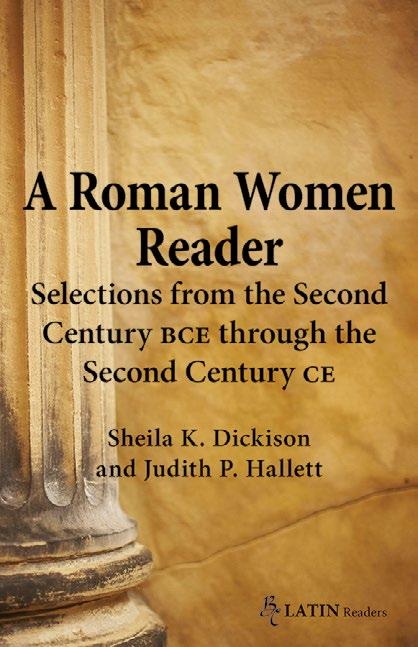
A Roman Women Reader: Selections from the Second Century BCE through the Second Century CE
Sheila Dickison and Judith Hallett provide a comprehensive set of Latin readings about both historical and fictional women from a range of social classes and locales, of varying ages and at different stages of life. A great reader and resource for your classroom library.
Paperback $19.00
Special Price
$11.40
Enter coupon code eLit0326 on the payment page.
The special offer pricing will be charged at checkout.
This offer is valid for up to five (5) copies per title, prepaid, no returns. Discount is not available to distributors.
This offer expires April 30, 2026.
(Please note that there will be no adjustments on previous purchases. Offer is nontransferable and subject to change without notice.)
Classics Tidbits
Fabulous all-star cover in classical Latin by Smash Mouth.
The Odyssey sighted at the Olympics in Milan.

A little Latin in Inverness, Scotland.
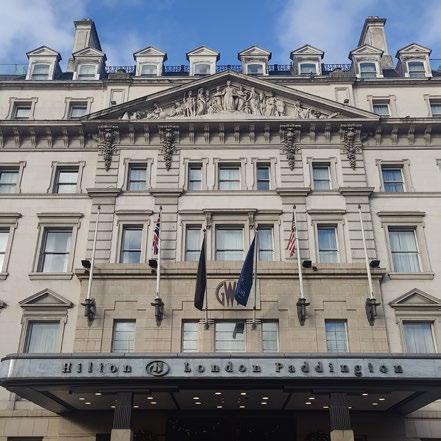
Classical façade adorns the former Great Western Railway Hotel at Paddington.
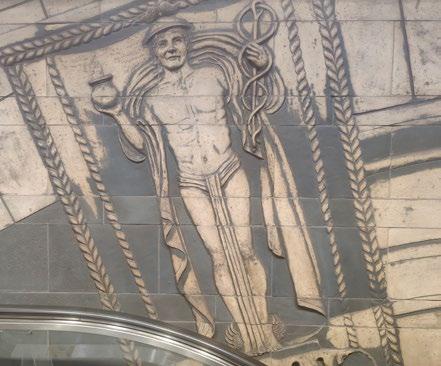
Relief of Mercury at New York City’s Penn Station.
Fabulous AP Latin Resource
B-C is happy to share this free resource for AP Latin: a Notebook for the 2025–2026 Project Passages.
This note-taking guide encourages students to take organized notes on the four AP Latin Project Passages: selections from Augustine’s Confessions, the Laudatio Turiae, Ovid’s Fasti, and the Ruodlieb




Veteran Latin teacher Stephen Daly Distinti created this printable guide in the same format as his Notebooks that accompany the Bolchazy-Carducci Pliny and Vergil textbooks.
Access the Project Passages Notebook here
Shop Online
Bolchazy-Carducci Publishers’ online shop for: audio, software, video, and a treasure trove of teacher-created materials.
B-C Roman Calendar
You can now access this academic year’s complimentary calendar here!
B-C’s Special Distance Learning Content with Complimentary Materials
In response to school closures due to COVID-19, BolchazyCarducci Publishers made a variety of materials available to the classics community. Please see our Distance Learning Page to freely access downloadable packets of fair use excerpts from our books as well as some fun mythology-related activities.
Attract More Students to Greek
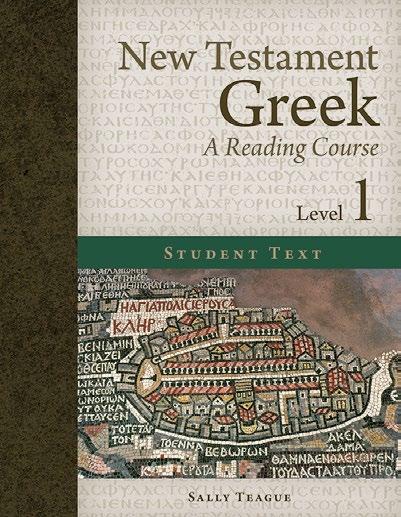
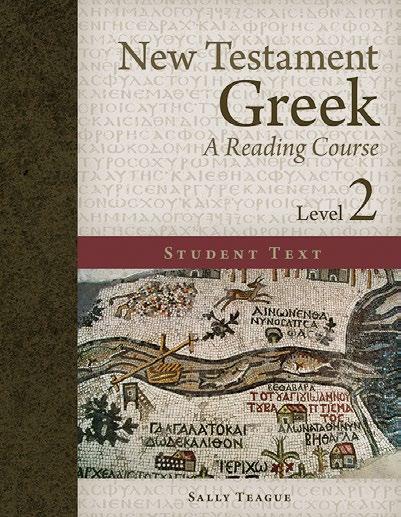
New Testament Greek: A Reading Course, Level 1 New Testament Greek: A Reading Course, Level 2
B-C Facebook Fan Page
Become a FAN of Bolchazy-Carducci Publishers, visit our Facebook Fan page for the latest news from B-C.
Bolchazy-Carducci eBooks
Bolchazy-Carducci Publishers provides eTextbooks on a variety of eBook platforms. Bolchazy-Carducci textbooks are available through VitalSource, GooglePlay, Chegg, RedShelf, Adams Book, Follett, MBSDirect Digital, and ESCO. Each eBook platform offers a variety of tools to enhance the learning process. eBooks have the same content as our traditional books in print.
You can read eBooks on a Mac, PC, iPhone, iPad, Android, or a variety of eReaders. Review the eBook providers’ specifications.