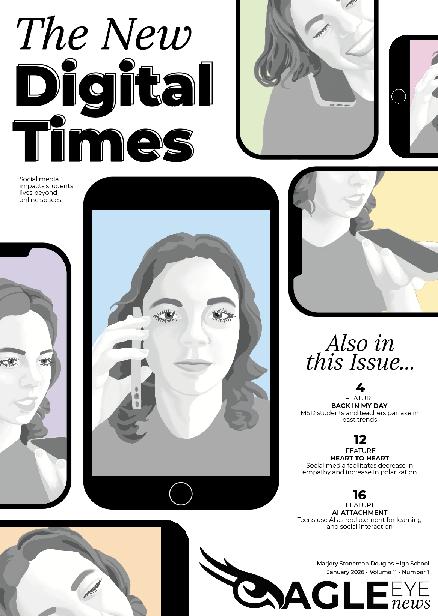
The New Digital Times - Eagle Eye News - Volume 11, Issue 1
The New Digital Digital Times Times
Back in My Day
MSD students and teachers partake in past trends
Micro Gone Macro
Microtrends become widespread phenomena through social media
Mirror, Mirror on the Phone
Unrealistic beauty trends redefine selfworth, leaving lasting impacts on health
Behind the Screens
Social media fuels development of parasocial relationships
Heart to Heart
Social media facilitates decrease in empathy and increase in polarization
AI Attachment
Teens use AI as replacement for learning and social interaction
Aspiring Photographers
Student photographers showcase their talent on social media platforms
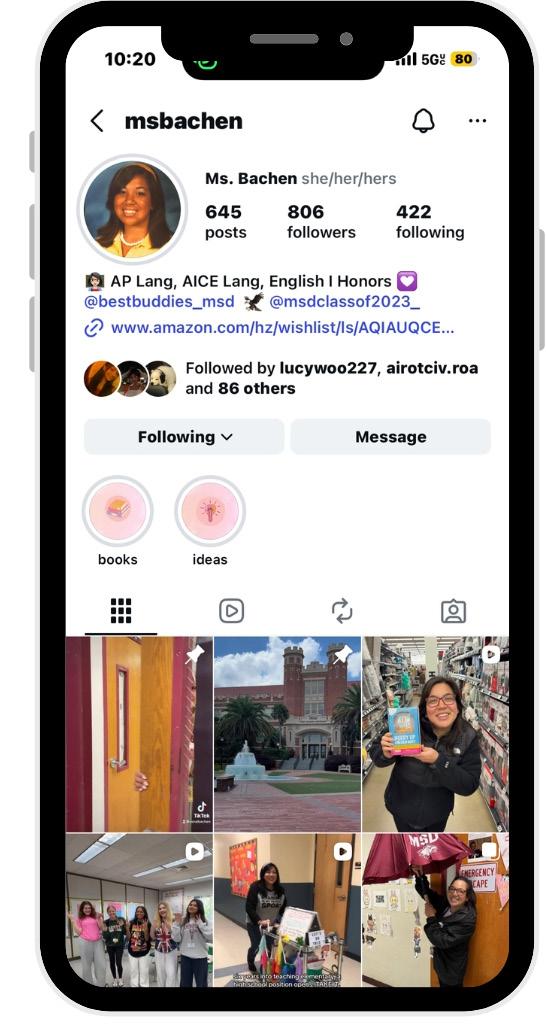
What’s Crackin’ with Bachen English teacher Coral Bachen documents her teaching journey on social media
Allison Kehler develops
Growing desire to be an
on
Conformity Culture
Content creators abandon originality for
When All Else Fails
Social media is the last avenue of true journalism
Headlines and Deadlines
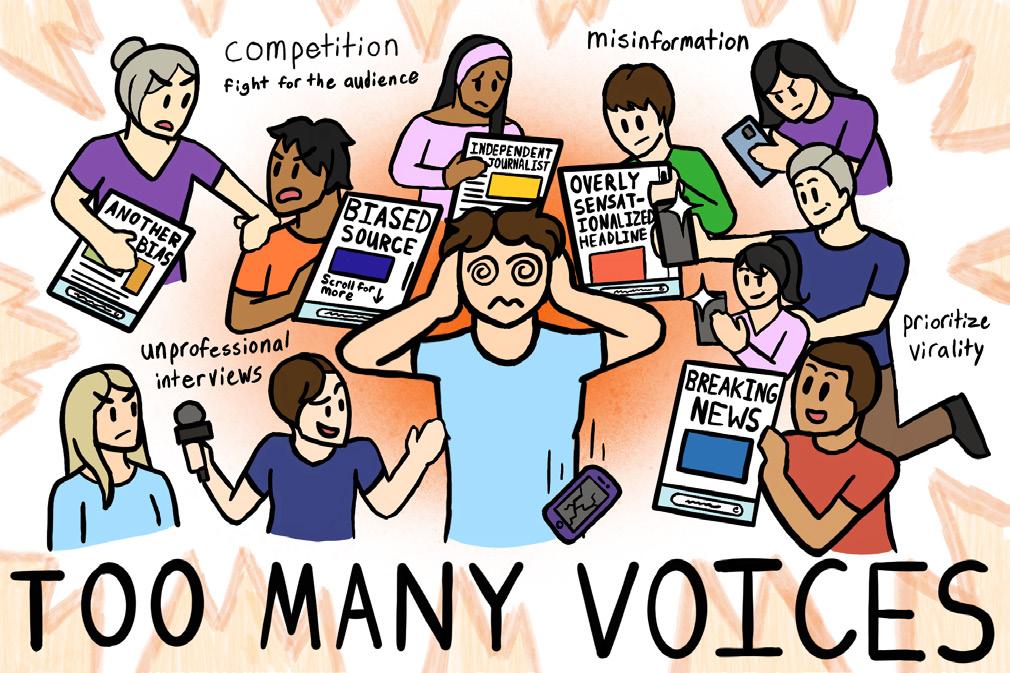
Social media hinders journalism through online algorithms and competition
Tradition or Trend
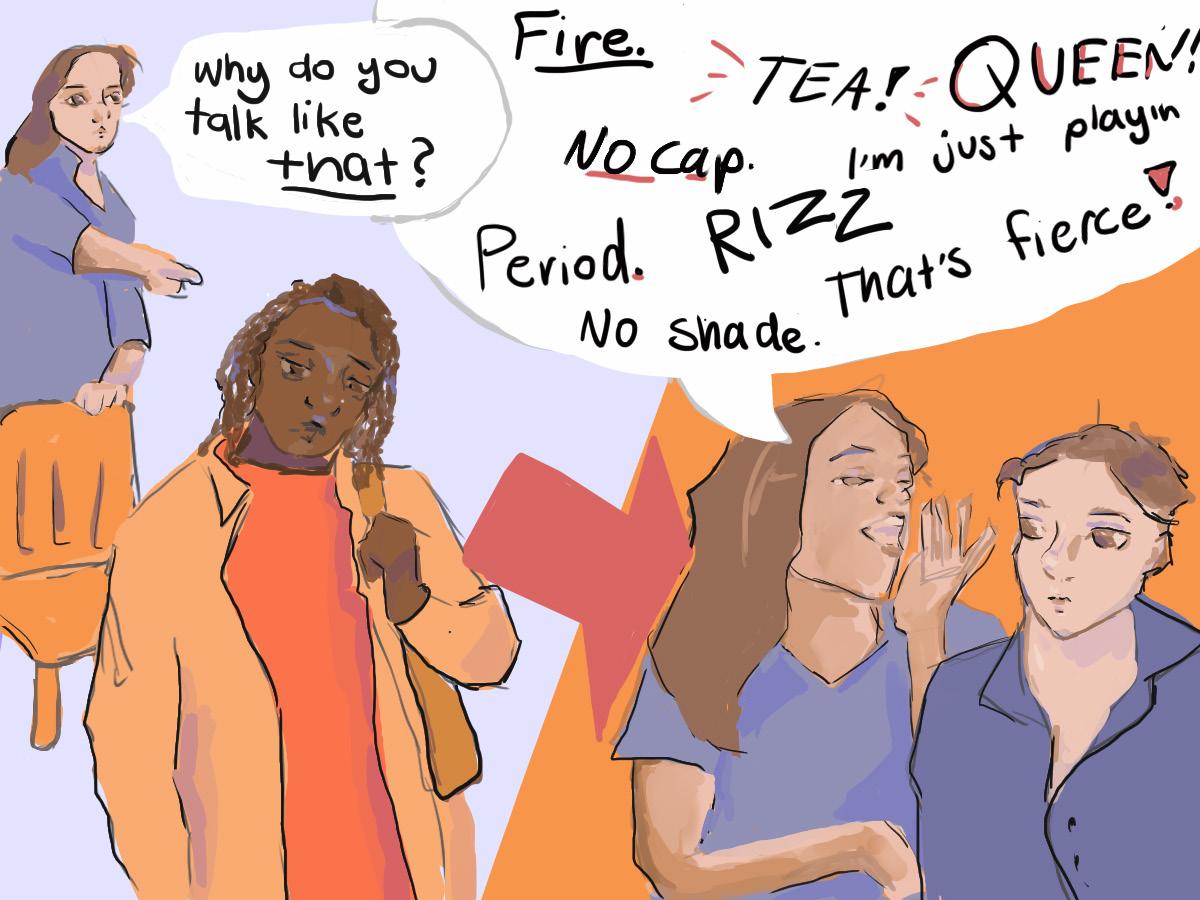
Mainstream media rebrands heritage as fads
FBI, Open Up
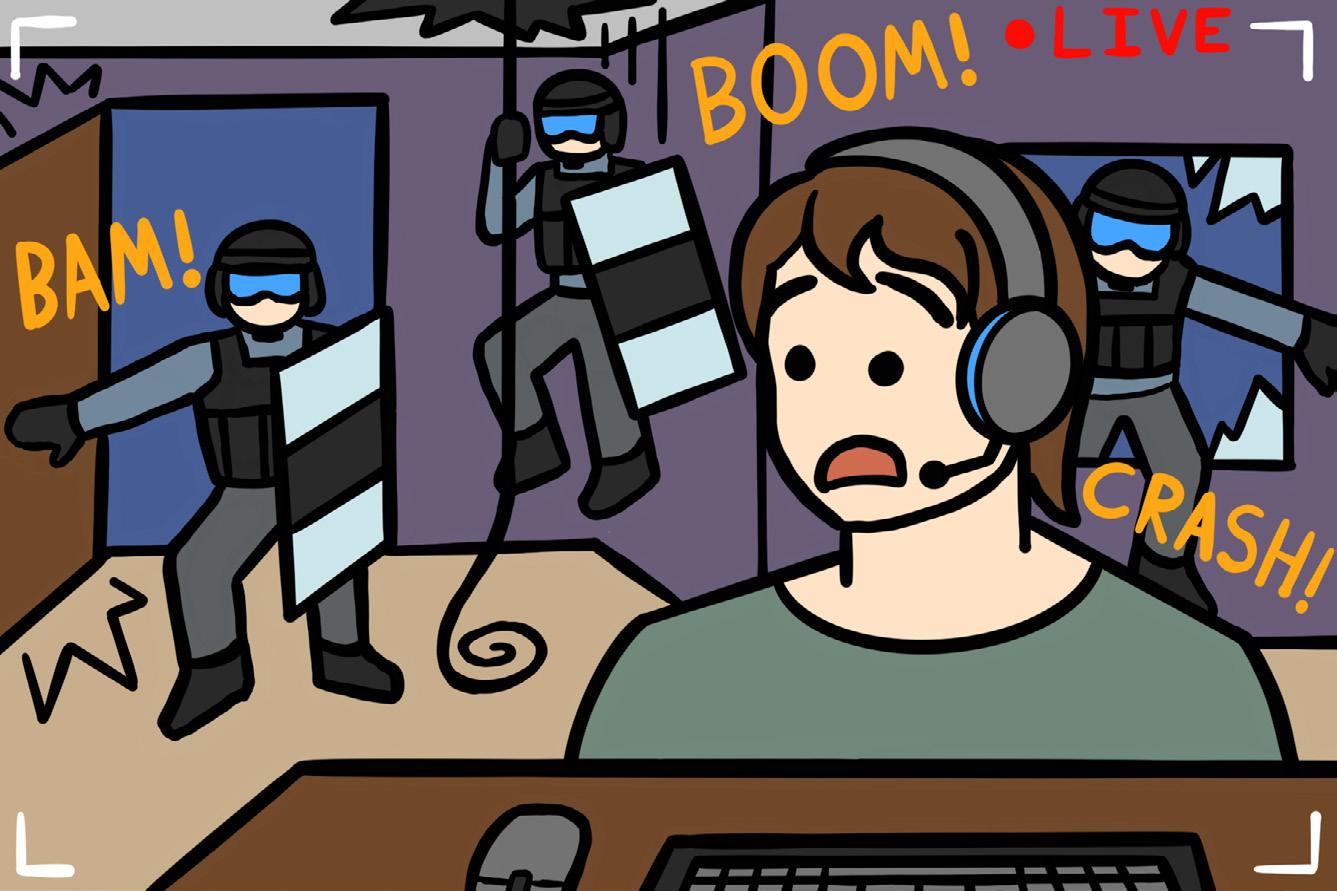
Social media creators online face intense risks due to swatting
Dangers of Doomscrolling
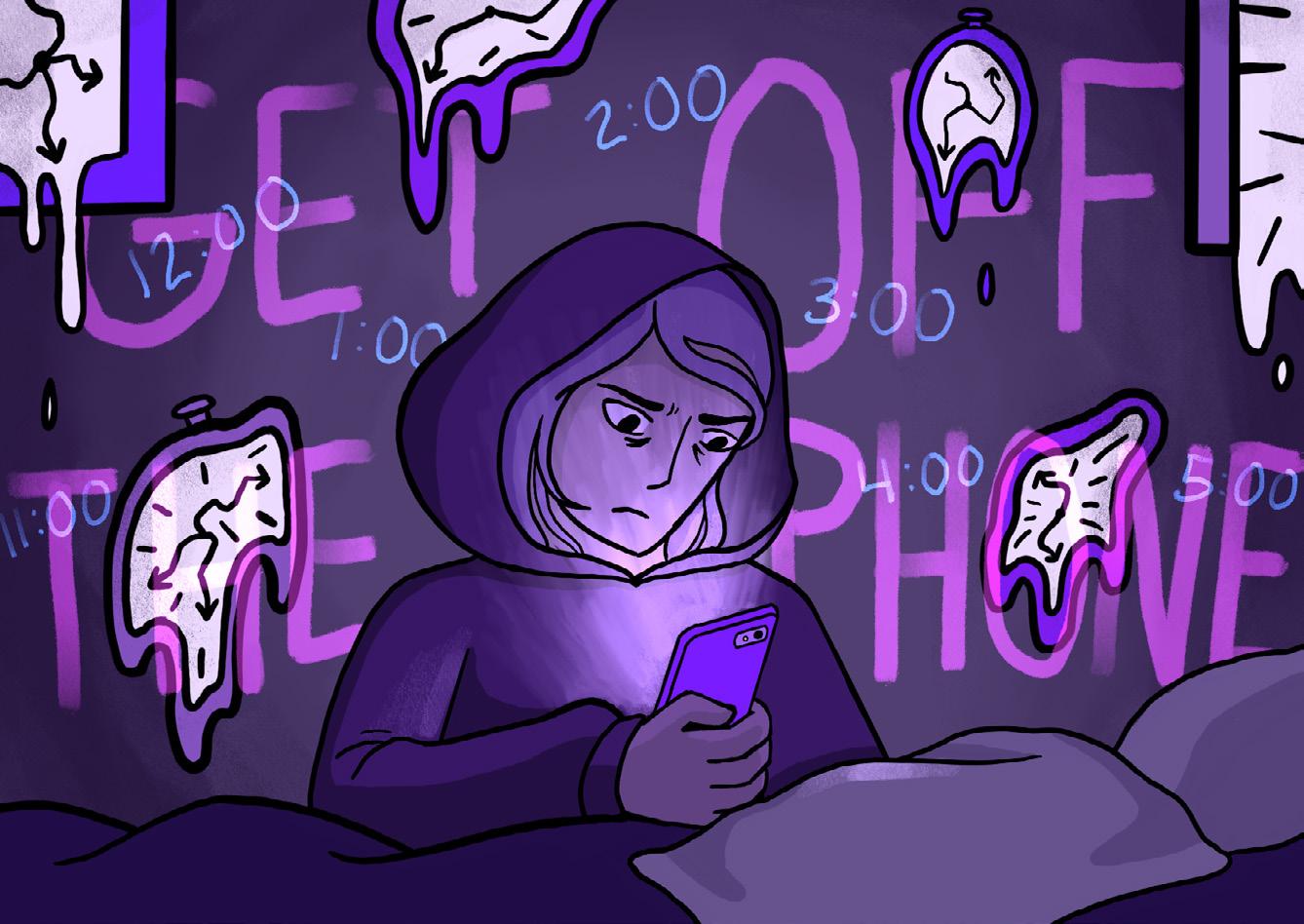
Doomscrolling is dangerous to teens’ mental health
Editor Letters
Cool Cats
Dear Editor,
I am writing because I read the story in the newspaper about the sisters, Madison and Riley Cousans, and how they take care of foster kittens. I think what they are doing is so cool and kind.
I really like this story because it shows that students at MSD don’t just care about schoolwork, but they also care about helping animals that don’t have a home. Kittens are really small and need a lot of help, so it must be a really big job to feed them and make sure they are healthy. It shows that even if you are a student, you can still make a big difference for animals in need. They are setting a great example for all of us, especially for us 9th graders who are just starting out here.
Thank you for sharing their story.
JOHNNEL LEIVA, 9
AI Advancement
Dear Editor,
With AI rapidly advancing it comes with no surprise that it has already started to negatively impact society. As you stated in your article, “Students growing reliance on AI has already started to impact their brains,” because while yes, using AI to complete an assignment will get it over with and help you pass the class, it will also degrade your brain’s ability to critically think. I also want to praise you for mentioning the fact that AI isn’t only creating a generation of students who won’t be able to solve minute problems without depending on Chat GPT or Google Gemini, but it is also depleting our water supply. I’ve heard many people online complain about generative AI, but none have ever looked beyond the fact that people might start to lose their jobs if generative AI continues to advance and address the very real threat AI is posing to our water supply, so for that I applaud you. At the rate at which AI is progressing and the growing reliance on it, I really hope that we aren’t the generation to deplete our water and not be able to conjure a thought without the help of AI.
ALEAH GRANT, 9
Attention All Shoppers
Dear Editor,
You did a great job explaining the recent changes to Florida’s open carry policy and how they affect Publix customers and employees. I appreciated how you included multiple perspectives from staff members and students, this showed how people reacted differently to the policy and made the article more impactful. As a student, I found the topic concerning since grocery stores are places where people expect to feel safe. Overall, this was a clear and informative article.
REBECCA SHERMAN, 9
Taking Action
Dear Editor
I would like to start off by saying thank you so much for bringing light to this topic through the article “Federal government suspends Latinos in Action program.” As a Latino who was thinking about joining LIA myself, I am very passionate about the subject. Your story’s deep insightful summary of the
recent events perfectly addressed the tone of this issue. I also enjoyed how you captured the best parts of LIA and its students while raising their voices and opinions. I personally believe that removing LIA from the district is unfair, not only for Latinos but for people who would like to be involved in Latin culture.
DANIEL DELGADO, 9
Social Dilemma
Dear Editor,
Thinking back to my childhood, I remember always being outside and playing with all of the other kids in my neighborhood and really just enjoying my youth, and I truly cannot fathom how difficult it must be to be a kid growing up now with all of these new societal pressures and standards that they’re supposed to meet nowadays. I agree with technology being one of the main causes of these new norms and standards. As it progresses, technology allows for people to spread information and trends, and these kids are being exposed to it so young and so now instead of being worried about the new biggest toy on
the market, they’re worried about how they look and how they eat and how their friends feel about them and its awful. I think that kids being exposed to social media is another thing that is making these issues worse, it allows for these kids to post even if they don’t meet the apps supposed age requirement and they are being exposed to the real world where people are mean and judgmental and they are just not mature enough to deal with that in a healthy way. I believe apps should have a verification system in place that keeps these kids out of these situations.
EMILY
NIMAH, 10
Snack Attack
Dear Editor,
There is a glaring issue at this school, one that has been going on for years. That is the issue of non-working vending machines. There is always multiple broken vending machines at this school no matter the day. For example, I will go to the vending machine near the office to get a drink, and it will guzzle my money without giving me said drink. It’s not only that it is taking money with noth-
Dear Editor,
ing in return, but that everything is extremely overpriced; it is $2 for a simple water bottle. With inflation already on the rise, getting a bite or drink during the school day should not be adding to this. This issue must be fixed. Prices need to be lowered, and vending machines need to be fixed, as well as have an “out of order sign” if that is the case.
ELANA KURMAN, 11
Deep Dive
After reading “Junior Mckayla Barton pursues challenging scuba dive certifcation to further passion for sea life,” I felt inspired by how Barton’s dedication and curiosity opened doors to new experiences and personal growth. The article did an amazing job of showing not just the excitement of scuba diving, but also the perseverance required to master such a challenging skill.
I loved the way the article described Barton’s underwater experiences, like encountering a huge Spotted Eagle Ray or exploring Florida’s diverse sea life. It made me feel more connected and drawn in to the article itself. I also appreciated that it didn’t shy away from the struggles she faced, like the physically demanding training sessions and the unpredictability of currents. This showed that achieving a goal often takes effort and determination, which is a valuable lesson for any student.
Technical Difficulties Editor to the
What stood out to me most was how scuba diving influenced Barton outside of the water. Including details about how she incorporates what she sees underwater into her art and storytelling made the article more meaningful. It demonstrated how passions can ripple into other areas of life, helping students develop creativity, awareness and new ways of thinking.
One suggestion I have for future articles is to include tips or advice for students who might want to try scuba diving themselves. Even a short paragraph about resources, safety tips or local programs could make the article more inspiring for readers who are drawn in by Barton’s story. This would encourage more students to explore their own passions while staying safe. Overall, this article was both engaging and inspiring. It celebrated curiosity, dedication and the joy of discovering something new. I hope stories like this encourage other students to pursue their interests with the same determination Barton showed.
AUBRIE CRAMER, 9
Send Us a Letter
Have something to say about the school? Have something to say about a local, national or global issue? Have something to say about this issue of the Eagle Eye?
We want to hear your opinions. Email submission to: MSDEagleEyeNews@gmail.com Submissions must be between 100-200 words
Clubs and Cultures
Dear Editor,
The WTA Club deserves a huge thank you for their recent cultural festival. In a world that often feels constantly and shamelessly divided, seeing a high school courtyard filled with Flamenco dancing and Henna painting is exactly the energy we need. It was great to see students like Brian Salazar taking pride in their heritage. From the Jewish Student Union’s treats to the Slavic Spirit Club’s crafts, the event turned the school into a community. As Ria Phadke mentioned in “WTA celebrates annual cultural festival,” these events introduce you to people you might never have met otherwise. I really enjoyed it.
ERICA FAUCHER,
9
Eye of the Storm
Dear Editor,
The online Eagle Eye article, “Hurricane Melissa devastes the Caribbean” by Milania Ruffino, Stella Profili, and Drew Siddens is a well written narration detailing the hardships that the Caribbean, specifically Jamaica, endured due to the recent Hurricane, Melissa. I enjoyed the fact that Eagle Eye decided to cover a story on this hurricane because its easy to look over issues that don’t effect someone personally. Even though Melissa didn’t pass through Florida, they still covered story and wrote a significantly informative text of what happened, when, and what it did to the people in the Caribbean. It brought awareness to the issue and how many people were effected, focusing in on the people of Jamaica who got a direct hit and the people of Cuba who had severe causalities. Many of the people of Florida, including the staff and students at Stoneman Douglas have connections to people, In the Caribbean who were effected by this, and this article is taking proper steps to bring awareness and help to our families in need. My favorite thing about this article is it just doesn’t tell you what happened, but prompts you to help out Jamaica and the Caribbean with foundations and resources like the American Red Cross and Project Hope.
MARIAH AHANOTU, 12
Dear Editor,
I am writing in response to the article “BCPS overspend on technology in schools, harming student learning outcomes” from the December 5, 2025. I liked how the article questioned how school money is being spent and whether technology is helping the school and the students. However, I feel the article could have included more viewpoints from the school districts or teachers to explain why so much money is being spent.
Overall, the article raises a valid concern and encourages students to think about school funding.
ANANYA FUKEY, 10
Back in my
Decades Gone
Over the past few decades, society has transformed completely, leading today’s teenagers to reminisce on decades they were not a part of. Generation Z (Gen Z), the first technologically immersed generation in history, has unlimited access to older generations’ styles and ways of life through the internet. Because of social media, young kids are now wearing their moms’ 2000s low-rise jeans and playing with their fathers’ 1980s Gameboys.
“It’s funny we’re going backwards in time with technology,” television production adviser Eric Garner said. “There’s something endearing about the technology of the past; it’s almost like [teenagers] are nostalgic about something they
Trend Cycle
Nostalgia is defined as a wistful or excessively sentimental yearning for return to or of some past period or irrecoverable condition, according to Merriam Webster. Since COVID-19, the increased consumption of short-form content on social media platforms like TikTok, Instagram and Facebook has shifted how information is spread.
Social media has played a significant role in increasing the pace of the fashion trend cycle, allowing fads to spread more rapidly than in earlier generations. This causes users to constantly consume and recreate trends of the past, result-
Mere-Exposure Effect
The psychological concepts of the mere exposure effect, theory of normative social influence and cognitive dissonance help explain the resurgence of past trends.
The mere exposure effect occurs when individuals develop a preference for things through repeated exposure. The theory of normative social influence refers to people’s tendency to change their behavior and attitudes in order to fit in with a group and gain social approval. Finally, cognitive dissonance is a psychological state of discomfort experienced when an indi-
don’t even remember.”
One reason for nostalgia’s resurgence is the craving for comfort and familiarity, especially in times of instability.
“As it’s regularly pointed out, our current era is one of turmoil and uncertainty, too,”
Boutayna Chokrane and Christina Pérez said in a Vogue article. “Pandemics, divisive elections, climate crisis, and global conflict — which may drive a penchant for nostalgia.”
Not only do people crave the comfortability of past decades, but also the simpleness. With today’s fast-paced world and the overwhelming academic pressure placed on teens, students may desire to immerse themselves in decades they perceive as stress-free.
ing in a resurgence of nostalgia.
The pattern of the increase and decrease of trends every decade is comparable to a life-cycle, with five stages: introduction, rise, peak, decline and obsolescence. When a new item drops in the market, there is only a limited time before it dies out again.
The introduction phase is when a new product hits the market or an old product experiences a resurgence in popularity after going out of style. Shortly after, the product enters mainstream media and becomes more accessible through mass-production. Then, the product
vidual’s actions do not align with their morals or beliefs. Cognitive dissonance compels people to change their beliefs, or their behavior, to ease this discomfort.
“The mere exposure effect ties in with social media because the algorithm keeps showing them the same trend over and over,” Advanced Placement Psychology teacher Ronit Reoven said. “That repeated visibility makes them think, ‘Oh, this is something everyone’s doing,’ which increases the chances that they’ll want to try it or buy it.”
fashion memorable
Repeated trends have persisted in the fashion industry over the years, with clothing items of the past constantly being evolved and adapted to suit current generations. Though it seems small, different eras of fashion appear in some of the most common clothing trends of today: bootcut and flared jeans, quarter zips, streetwear, capris, baby doll tops and more. Further, with the prevalence of using online thrifting apps like Depop and shopping at thrift stores like GoodWill, students all over the country are becoming increasingly inclined to emulate the styles of past generations.
Day Day
“People think that it might be better at a time they didn’t experience,” junior Amy O’Hara said. “Today’s world is a lot more fast paced; for example, you can check your grades no matter what time while our parents got their grades every quarter. I feel like college has gotten so competitive now, I find myself saying I wish I was born in the 1980s so I would get into college with my stats because it wasn’t as competitive and fast-paced.”
Back in the 1970s, 1980s and 1990s individuals relied on tangible media, like newspapers, to read about the latest news, events and fashion, while today everything is found immediately on smartphones and social media. Although many teenagers never lived through the decades
reaches its peak with high supply and demand.
After a certain period of time, which used to be every decade, the product declines due to the emergence of new trends and changing consumer preferences. Eventually, the product reaches the final stage of obsolescence, at which point the trend is considered outdated. This cycle repeats over decades and the same items may re-emerge again.
The fast-paced trend cycle created by social media is evident in the constantly shifting popularity of different patterns within the fashion industry. Cow print became very popular in 2020,
These three psychological concepts are exemplified by the recent resurgence in digital camera usage. Perhaps a teenager saw digital cameras become popular on social media, but felt indifferent about them at first. Then, after continuously seeing people online use digital cameras and watching friends purchase digital cameras, the teen finally bought one himself/ herself.
In this case, the constant exposure (mere exposure effect) to digital cameras built the impression that a teen should purchase one, see-
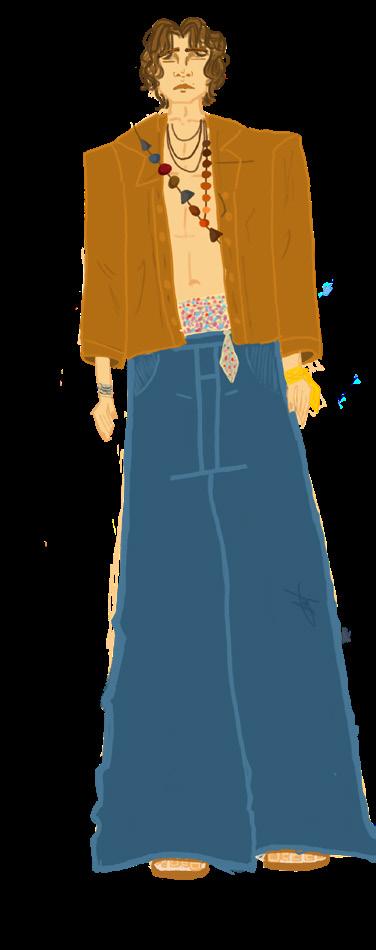
1970s fashion was incredibly diverse at the time, spanning from hippie fashion, including bell bottom jeans, tunics and tie-dye, to glam-rock and disco fashion, including platform boots and wild floral prints.
MSD students and teachers partake in past trends
defined by digital cameras, low-rise jeans and blow-outs, they can be re-lived through the trend cycle.
“Growing up I had a lot of Jordans – the originals,” English teacher Nadeen Ashman said. “I see that coming back and it’s dope to see the younger generation rocking them. Juicy [Couture] is a huge full circle kind of moment; that was a status symbol back in the day, so to see it come back and have my oldest daughter ask me, ‘why didn’t you keep it,’ was shocking.”
and it appeared to spark a new pattern obsession in every following year: butterfly print in 2021, stripes in 2022, coquette bows in 2023, leopard print in 2024 and polka dots in 2025. The fashion industry thrives on the rebirth of various trends. New content helps retailers, consumers and designers produce new clothing from different decades, encouraging fast-fashion. Companies like Shein and Temu mass-produce thousands of different styles and products ranging across different time periods, permitting styles across decades to be recreated and reproduced rapidly.
ing as everyone else had one (normative social influence), while the product went from being undesirable to desirable in her eyes (cognitive dissonance).
“People want to jump on the bandwagon because they want to be just like everybody else. Sometimes they end up doing things that go against their beliefs or attitudes — they don’t necessarily like it, but everybody else is doing it, so they do it, too,” Reoven said. “It creates this cognitive dissonance, this tension inside, but they justify it because they want to be part of the group and not be rejected.”
1980s fashion was heavily characterized by bold colors and statement designs that added to the striking nature of the era. Oversized silhouettes, neon colors, excessive shoulder padding and fluffy hair were just some of the common elements of 80s
revolutionizedgaming
Video games have always been an integral part of the 2000s; specifically, handheld consoles gained major popularity. Iconic video games like Mario Kart, Legends of Zelda, Final Fantasy and Tomodachi Life were extremely popular. Many of these games were commonly played on handheld consoles, and common brands like PlayStation, Nintendo and Sony had their own versions of these accessible devices.
“In the early 2000s, handhelds like GameBoy Advance and PlayStation Portable ruled the market. They were revolutionary at the time, allowing players to enjoy quality gaming on the go,” Netral News journalist Julius Christian said in “Why Handheld Devices are making a Big Comeback.”
Gameboys were also quite common, with games like PacMan and Pokemon variations being played on this device.
“My very first video game system was the Gameboy,” Advanced Placement U.S. History teacher Michael Nastasi said. “I was five and I just remember it feeling like a big old brick in my tiny hands. I had Kirby and Tetris and then, as I got older, I had to catch ‘em all and play Pokemon at the end of elementary school.”
Many people have started to buy and resell Sony PS Vita or PSP 3000 — two of the most popular older handheld consoles currently being repurposed. Using handheld consoles is a more affordable option, especially for people who appreciate their 2000s look.
Modding handheld consoles to play various games is a trend currently resurfacing. Modding
is the process through which an individual can download various games they have purchased on older models of handheld consoles. This process is done through an external source, like Nexus Mods, with game files being downloaded and saved as a specific file type, namely as a ZIP, RAR or installer file.
Purchasing extra storage through memory cards is another common way people are adding older games to their consoles. The method is also quite convenient because of its simplicity.
There is an appreciation for the accessibility that comes with these products and their cheap prices. However, due to a recent spike in popularity, resellers have begun to increase their prices on Ebay — one of the more common platforms handheld consoles are sold on — but people have continued to purchase and customize them to their liking nonetheless.
“Ultimately, we don’t want tech brands to mimic the past. We aren’t giving up our smartphones and laptops — these devices are too embedded in our lives to be discarded. What we want is improvement. Take inspiration from the past: the aesthetics, the skill required to use it. Give us technology that doesn’t do everything for us,” AdAge journalist Giorgia Amatemaggio said in “Gen Z Nostalgia and tech–why dumb technology is on the rise.”
Reminiscing on past devices allows users and companies to take inspiration from previous decades. Currently, Nintendo is taking inspiration from its older models, sticking to the practicality and accessibility of handheld consoles.
90s
During the 1990s is when more common looks of today, like streetwear, grunge and minimalism, first became popularized. Baggy jeans, jerseys, Jordans, crop tops, mom jeans, chokers, ripped clothing and combat boots were all fashion staples of this
archivemusical
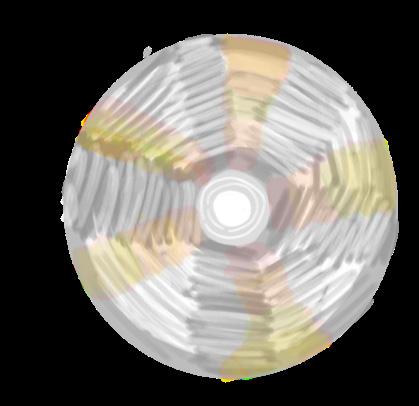
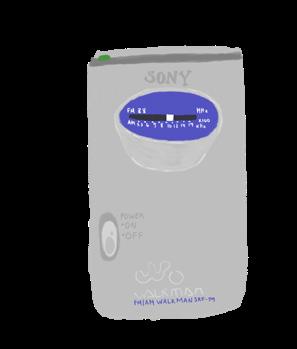
Music media has been around for a long time, whether that be through downloading music to devices, purchasing vinyls and CDs or using VHS tapes, iPods and WalkMans. Today, apps like Apple Music and Spotify allow people to easily access music on their phones.
“It’s very convenient these days that you could just flop on Spotify and just stream music,” Nastasi said. “When I was your age, the internet connections weren’t the greatest, it would take like an hour to download one song.”
Despite the accessibility of music today, though, there has been a recent resurgence in people purchasing older music devices.
Social media has repopularized many of the methods individuals of prior decades used to listen to music offline. For example, the iPod Classic surged in popularity over the summer of 2025, with people beginning to purchase them off of Ebay.
iPods are considered a more affordable way to listen to music than by paying a monthly subscription or by buying CDs and vinyls. By the end of the year, a monthly subscription from Apple Music or Spotify may amount to around $143.
“I would prefer to buy the subscription once a year rather than every month. So that I don’t have to stress out about having enough money every month to pay for the subscription,” senior Erin Niebla said.
The prices of iPods are quite affordable in comparison to what they were initially sold for. Resellers have been selling the iPod Nano 3rd Gen anywhere from around $50-$170, when the original price was $249. Thus, purchasing an iPod to download music from external sources is the more affordable option long term.
With the iPod, people pay less for the music they enjoy, while not having to deal with music being removed or changed, as it often is on streaming platforms, since they already have it downloaded. Occasionally, artists may remove their work from common streaming platforms, disallowing users from accessing their music, even with a subscription.
Using handheld media is also considered an aesthetic choice to accessorize an outfit. Gen Z seems to have a fascination with the 2000s lifestyle and fashion, and carrying around an iPod is a discreet but nostalgic way of using a popular 2000s item in their everyday lives.
Sustainability and efficiency is something that is treasured by many young people today. New does not replace the old, the old just comes back to inspire the new, creating something greater.
STORY AND GRAPHICS BY Ella Bernbaum and Lynn-Gabrielle Soivilus
DESIGN BY Lynn-Gabrielle Soivilus
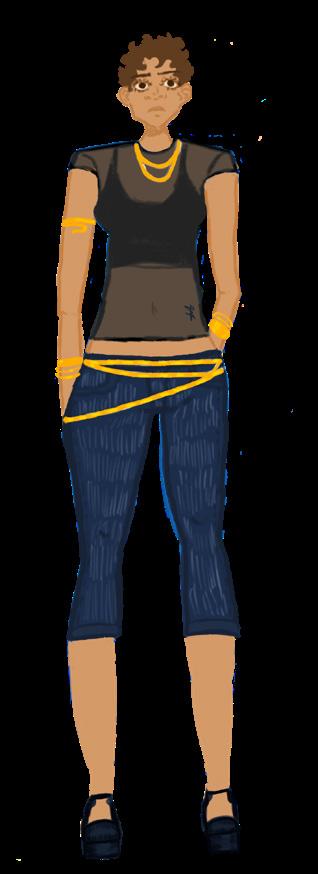
2000s fashion was known as the “boho-chic” era, in which a mix of flashy and casual defined everyday looks. Nearly everything was low-rise, from jeans to skirts, and people frequently wore capris, babydoll tops, baby tees, metallic fabrics, rhinestones, cargos, Juicy Couture and denim-ondenim.
10s & 20s
2010s fashion was a mix of past trends in different variations. Mom jeans, vans, scrunchies, bold lips, ripped skinny jeans and leggings with wild color patterns were popular. Currently, different variations of baby tees, baggy pants, denimon-denim, minimalism and jerseys have all come back
Micro goneMacro Macro
Microtrends become widespread phenomena through social media
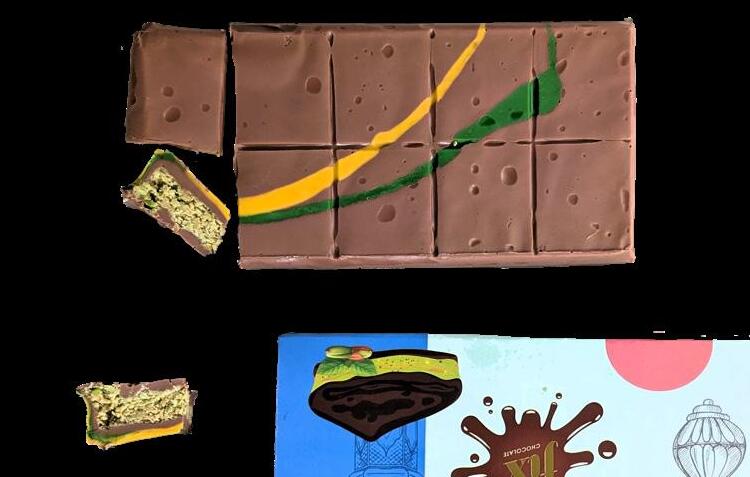
Dubai Chocolate
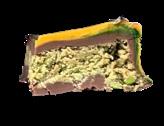
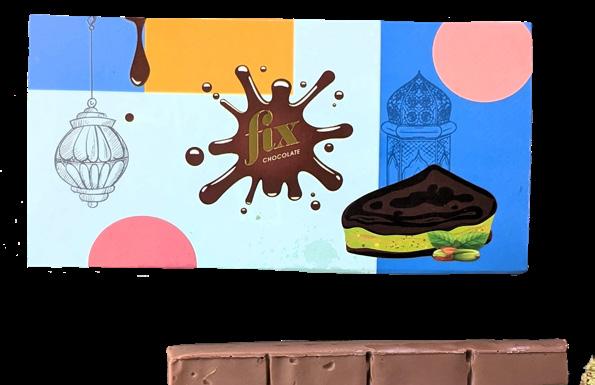
Originally created by FIX Dessert Chocolatier, Dubai chocolate has extended far beyond its birthplace.
The dessert, filled with pistachio cream, tahini and knafeh pastry, was formed when founder of FIX Sarah Hamouda tried to create a sweet treat to satisfy her pregnancy cravings, according to the 2025 article “‘It was born to be a champion’: How Dubai chocolate conquered the world” by BBC. Although the candy bar from FIX itself is called Can’t Get Knafeh Of It, the internet coined the term Dubai chocolate after a series of viral videos brought the candy into the spotlight.
The dessert began to spread quickly, with establishments all over the world beginning to sell their own versions of it. Brands even began innovating by combining the chocolate with other common desserts.
The cookie brand Crumbl, which has extended its products far beyond cookies, sold a Dubai chocolate brownie the week of Aug. 18.
Ice cream brand Kilwins has also begun selling Dubai chocolate buckeyes. Food establishments go viral online for selling the next innovative item that uses Dubai chocolate, whether that be with strawberries or drinks.
People everywhere have been able to try a version of the dessert. Some say their love for the chocolate stems from the flavors it combines.
“The milk chocolate and pistachio cream is really amazing,” freshman Krish Shah said.
“I’ve had Dubai chocolate bars and Dubai chocolate ice cream. I had a lot of Dubai chocolate ice cream in Europe.”
Dubai chocolate has spread across the globe, becoming a popular dessert both online and in-person.
Matcha
Mbeen able to buy their matcha from traditional brands at their original prices.
atcha is a nutritious type of green tea primarily sourced in Japan that can serve as a caffeine substitute for coffee. It contains various health benefits through vitamins, antioxidants and minerals.
The tea has recently surged in popularity, commonly through its preparation as a latte with added syrups for additional sweetener.
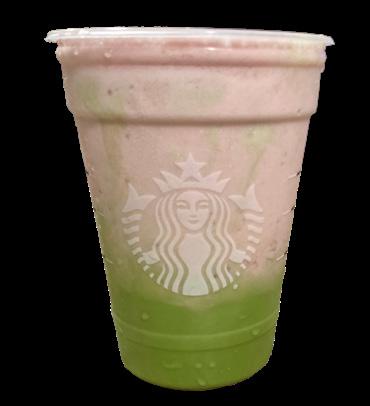
A small community of matcha lovers on TikTok first prompted the widespread love of matcha. The drink then became officially mainstream when it hit popular coffee chains like Starbucks and Dunkin’ Donuts.
“It is more convenient to get matcha from Starbucks, but [it is so good that] if I really want to I will make the drive no problem. I have been looking into purchasing my own ceremonial grade matcha powder,” senior Taylor Case said.
People typically prefer to purchase ceremo nial grade matcha directly from Japan due to its rich flavor and bright color. Matcha powders are known to be of greater quality when they are more pigmented.
“For a while I made my own matcha by whisking the powder in water and pouring it over milk, but the quality of the matcha was on the cheaper end,” Case said. “So I went back to buying [Starbucks Matcha] for convenience and quality.”
Due to the surge of people purchasing mat cha, popular brands like Maryuku Koyamaen and Rocky’s Matcha are continuously sold out at rapid rates. Unfortunately, due to the 15% tariffs placed on Japan by the U.S., people have not
People still purchase matcha despite the cost increase, though; instead of spending money on matcha at cafes, it has become quite common for people to make their own.
To reduce the amount of money spent on ingredients, many people splurge on the matcha itself and make the rest of the ingredients — like cold foam, various syrups and additional food combinations — at home. Currently, making banana pudding and strawberry matcha is trending.
Matcha’s versatility has allowed it to become a profitable business, while remaining a nutritious drink loved by many.
Labubus
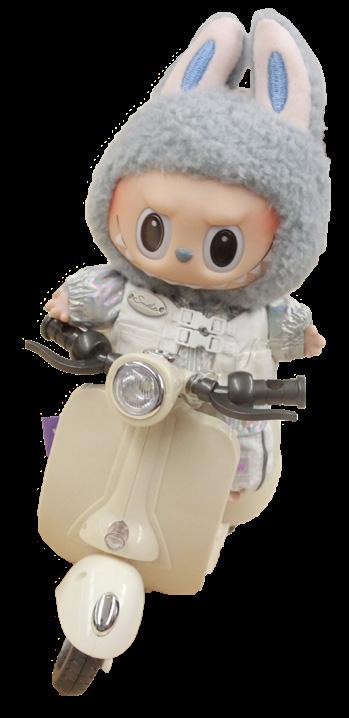
The design of the collectible is easily recognizable: a keychain with a furry body that comes in a multitude of colors, complete with a mischievous grin. These details make up the image of Labubus, a blindbox collectible that has recently taken over the internet.
Designed by artist Kasing Lung, these collectables, sold through Pop Mart, have taken the world by storm due to exposure from celebrities and on social media platforms. Celebrities have pushed the toy through interviews as well as displayed them on bags in social media photos. Lisa from BLACKPINK, for instance, pushed the toy in in a 2024 interview with Vanity Fair. Meanwhile, on platforms like TikTok, people unbox the keychains and show off their own collections.
The prominence of Labubus has sparked mixed reactions, with some finding them ugly and others adorable. Regardless, there is no denying the hysteria surrounding them. Restocks of the collectables sell out in minutes and resellers jack up prices, sometimes to more than double their original $30 cost. One “life size” Labubu even sold for $170,000 at an auction in China, as reported by NPR in 2025.
Because of the trend people have found ways to capitalize off of the toy beyond reselling it. Fake Labubus are easy to find online for cheaper prices and some restaurants now provide food with a Labubu supplement, such as Sweet Dreams in Manchester, which sells Labubu Dubai chocolate covered strawberries.
The toy has even found its way into school, with some students, and even staff, attaining their own.
Advanced Placement Calculus teacher Chung-Chiang Feng was recently gifted a Labubu by one of his students, which he now happily displays on the bulletin board in his classroom. His sister has also gifted him one.
“I didn’t know about Labubus until I went home this past summer and my sister got a blindbox from Pop Mart,” Feng said. “She asked if I wanted one and said my students may like it.”
Some are more invested in the online Labubu market, such as art teacher Jacquelene Lieberman, who runs her own Labubu-dedicated TikTok account with one of her daughters. There, she unboxes Labubus and resells duplicates. She stays up-to-date with Labubu restocks on Pop Mart and follows other accounts that resell the toys. Sometimes, Lieberman brings her collection to school to show her students. The toys are dressed head-to-toe in outfits that she bought for them, complete with a moped that drives one around her classroom.
“My daughter and I love watching Labubu unboxing TikToks,” Lieberman said. “We thought they were the ugliest things we’ve ever seen. Every night we would watch people unboxing them, which led us to try and get one. We realized you can’t even get one without following the trends and TikTok lives.”
Despite the toys not being attached to any big name or designer, the recent craze driven by online algorithms has established Labubus as a desired commodity. Labubus have expanded far beyond blindboxes, collaborating with brands like Coca-Cola and Vans while being included in food items at restaurants and sold for high prices at art auctions.
STORY AND DESIGN BY Grace Brill and Lynn-Gabrielle Soivilus
PHOTO PERMISSION FROM Tribune Content Agency, Yadi Rodriguez, Paris Wolfe, and Lynn-Gabrielle Soivilus
on the
Mirror, Mirror Phone Phone
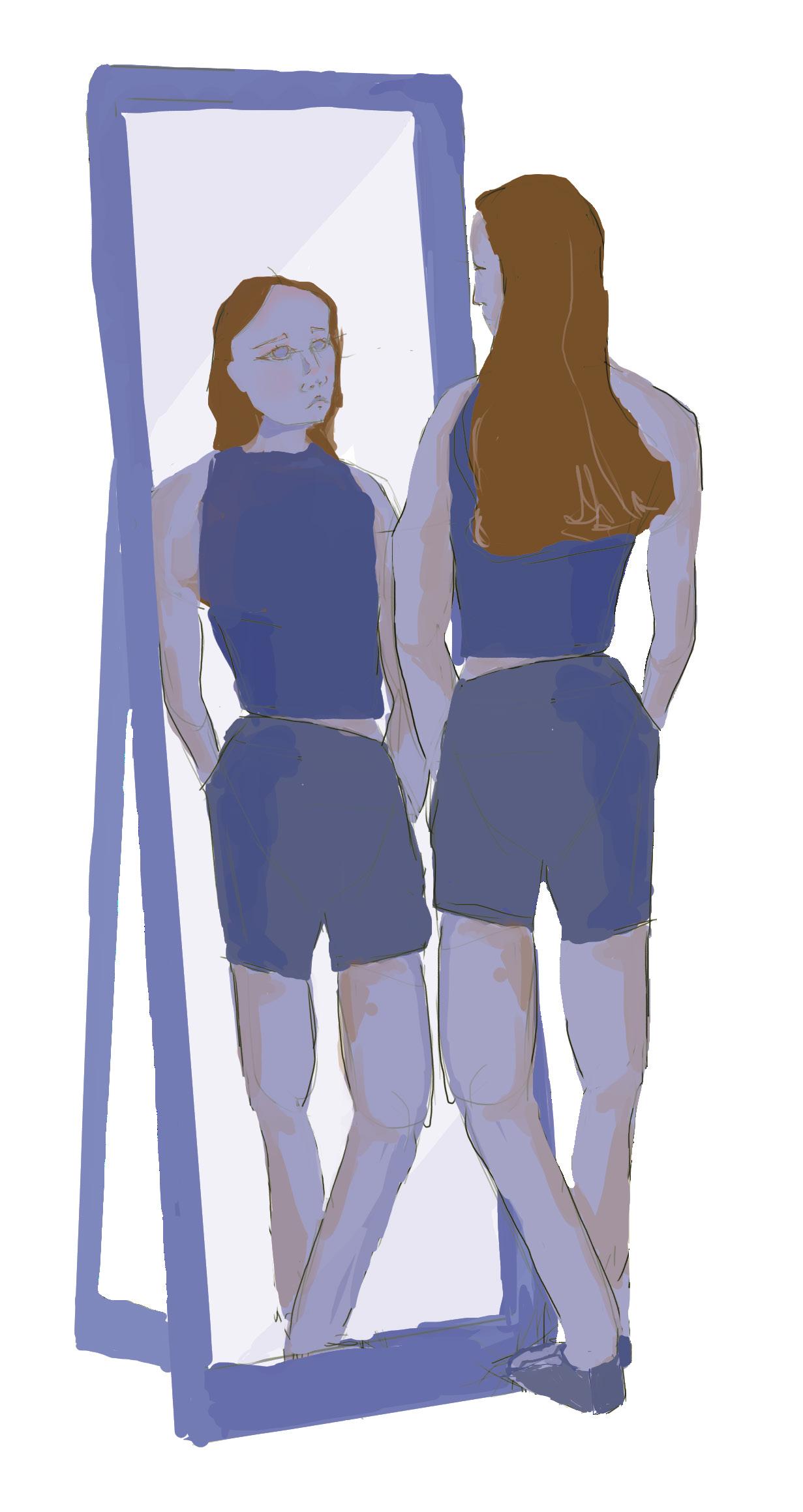
Ateenage girl’s face is illuminated by her phone as she scrolls through Instagram, liking posts of curated photos. She lingers on one image in particular: a woman showing off her body, with the caption noting the amount of weight she has lost. The teenager opens the comments out of curiosity, each one praising the woman for being thin. She then sighs, turns off her phone and looks in the mirror, disappointed by what she sees.
This situation is not specific to her; 89% of social media users experience these silent comparisons and internal judgements every day, according to the 2023 article “Comparison Culture” by the Cybersmile Foundation.
As the use of social media increased, people began to post their bodies and workout routines online. While this is not a problem on its own, comments praising creators for having a certain “look” have become a prominent issue online.
Thus, what may have once been harmless posts have evolved into complex webs of validation, self doubt and unrealistic ideals.
Changing Trends
With the rise of social media platforms like Instagram, TikTok and Snapchat, the visibility of others’ bodies has never been higher. Content creators and influencers frequently share gym routines, diet plans and transformation photos on these apps, often with the intention of inspiring others.
However,
on social media there is an underlying pattern of praise and validation that rewards a narrow standard of beauty.
Alongside social media content is an everchanging chain of beauty trends. Phrases such as “Instagram model,” “headphone waist” and “legging legs” are commonly used to denote a specific type of appearance: toned limbs, curves, a tiny waist, smooth skin and long legs — features that are difficult to attain for the average person. Consequently, these phrases promote unrealistic beauty standards.
“It sets really unrealistic expectations for women because everybody looks different,”
such as skincare regimens, jawline exercises and even minor cosmetic procedures, all performed with the intent of boosting social appeal and confidence.
“Social media sets unrealistic expectations of what guys should look like, especially at our age right now,” senior Robert Meis said. “People should just be glad for what they have rather than what they could have.”
Looksmaxxing has grown significantly in the past few years due to the potential profits from promoting it. According to Shopify’s article “Influencer Pricing: The Costs of Influencers in 2025,” many companies pay influencers
“
Social media sets unrealistic expectations of what guys should look like, especially at our age right now. People should just be glad for what they have rather than what they could have.”
Unrealistic beauty trends redefine self-worth, leaving lasting impacts on health
The Search for Validation
Much of these trends and behaviors stem from one thing: social validation. People crave approval from their fellow content creators in the form of engagement: likes, followers and comments.
A 2024 study posted in the Asia Pacific Management Review, titled “Authenticity meets aesthetics as the Equalizer for virtual and human influencers,” mentions that posts from conventionally attractive users often receive higher, more positive engagement.
Conversely, users who do not fit these ideals often receive fewer likes or even hateful comments, as shown by a 2022 study named “Psychosocial Determinants of Adolescents’ Cyberbullying Involvement — The Role of Body Satisfaction” published in the International Journal of Environmental Research and Public Health.
Likes and comments may seem harmless, but for many, they become the only form of positive feedback that they receive. This pressure to keep up with others contributes to a constant need for validation and a fear of missing key social or cultural events, according to a 2025 article by Unicaf called “The Psychology of Social Media: How Platforms Shape Human Behavior.”
Robert Meis, 12
sophomore Valentina Correa said. “Sometimes you can’t even really change that about yourself, and even if you could, you could kill yourself trying.”
Changing beauty standards can also be seen through filters. Filters that change a person’s face or body to look “better” are created and used by millions of people daily.
With this modern technology, altering one’s appearance has become easier than ever.
Apps come with built-in filters that can sharpen a jawline, brighten skin, slim a waist or change a nose shape.
Further, many creators digitally edit their bodies before posting them on social media, subtly or dramatically reshaping themselves. The normalization of distorted appearances manipulates reality, setting up an impossible comparison for users.
Another trend that has recently risen in popularity, particularly among young men, is “looksmaxxing.”
This trend involves practices aimed at improving one’s physical appearance through methods
significant amounts and those influencers can receive anywhere from $10-$10,000 to promote their products intended for looksmaxxing.
One specific example is mewing, a technique that involves placing the tongue on the roof of the mouth. This is believed to help reshape the jawline and improve health aspects, such as sleep and mouth breathing. Mouth tape, or breathable tape intended to keep one’s mouth closed while sleeping, is promoted on social media by influencers to assist with mewing.
“[Mewing] influences [them] to feel peer pressured to do actions that might make [them] feel more self-conscious about [themselves] as a person,” junior Isaac Lam said.
Currently, no scientific evidence exists that supports the alleged benefits of mewing.
A 2025 study titled “When Help is Harm: Health, Lookism and Self-Improvement in the Manosphere” published by the National Library of Medicine stated, “... the community engages in masculine demoralisation of users, situating their manhood and lives as flawed because of their appearance.”
A 2024 BBC article titled “Inside looksmaxxing, the extreme cosmetic social media trend” featured Dr. Stuart Murray, the director of the Eating Disorders Program at the University of Southern California.
“It’s really shocking,” Murray said. “The TikTok stuff out there is not evidence-based, but it’s reported as science. If we fall into the trap of dissatisfaction and low self-esteem, if you’re diluting yourself down to a number or a skin tone, or an angular tilt of your face, it reduces your value as a person.”
What is more harmful is the fact that this validation is often short-lived. The dopamine rush from receiving positive engagement fades quickly, and the need for more grows stronger. According to a 2024 article from Global English Editing, people who rely on social media for validation often post excessively, over-emphasize their life, neglect real-life connections and overreact to criticism.
In the long term, this system of attention-seeking behavior can lead to emotional exhaustion, physical health issues and mental health conditions.
Effects of Harmful Trends
These online patterns have very real consequences. This dissatisfaction can spiral into mental health conditions like body dysmorphia, a condition in which one has an overwhelming negative preoccupation with their physical appearance. People with dysmorphia may spend hours in front of mirrors, repeatedly check their appearance in photos or avoid social gatherings altogether, as reported by the National Health Service. If not taken care of, dysmorphia can lead to even more dangerous habits like eating disorders.
“I’m sure everybody’s experienced body dysmorphia at some point in their lives, whether it be from not being swole enough after working out at the gym or not feeling skinny enough,” junior Isabella Hogan said. “It makes you feel bad about yourself even if you’re completely healthy and may even make you feel like you have to do unhealthy things to achieve a certain look.”
One of the most common disorders is anorexia nervosa. This disorder is characterized by weight loss and difficulties maintaining a healthy weight. People with anorexia restrict the
number of calories and types of food they eat. Some people with the disorder may also exercise compulsively, purge and binge eat.
These disorders can lead to other health conditions. Eating disorders can result in heart problems, hormonal imbalances and in some cases, death. A 2020 study titled “Review of the burden of eating disorders: mortality, disability, costs, quality of life, and family burden,” published in the Current Opinion in Psychiatry, states that over 3.3 million lives are lost annually because of eating disorders. Mental conditions are also present in those with eating disorders.
“Pro-ana” Content and “#Skinnytok”
Many with anorexia nervosa find homes in online communities making “pro-ana” content. Pro-ana content promotes and normalizes anorexia. The communities also glamorize 2000s diet culture, a time known for significant restrictions on foods and abnormal diet trends.
Countless of these posts feature “thinspo”— pictures or videos of extremely thin women that aim to inspire others to alter their body to look like the posts.
These communities can be extremely destructive to users because members encourage negative eating habits and other destructive behaviors. For instance, according to a 2024 study titled “#ForYou? the impact of pro-ana TikTok content on body image dissatisfaction and internalisation of societal beauty standards,” posted by PLOS ONE, women exposed to pro-ana content suffered a significant decrease in body image satisfaction.
On the other hand, pro-ana communities online take body positivity posts and use them as “fatspo.” Fatspo is pictures or videos displaying fat people in a trivializing way, often used to encourage others not to binge or eat in general to avoid becoming overweight. They exaggerate the way normal meals affect the body and target normal posts.
Body positivity influencers often respond back by calling them out. For instance, after having one of her posts targeted as fatspo, selflove influencer Dani Fernandez responded by saying, “I know you got problems at home but you don’t need to project them to us.”
These body standards and terms are heavily prevalent on “#skinnytok,” or a side of TikTok where influencers promoted disordered eating and unhealthy weight loss. After pressure by European regulators, the hashtag was banned in early 2025.
Popular skinnytok influencer Liv Schmidt was banned from TikTok in September 2024, and her Instagram account where she ran her group “Skinni Societe” was demonetized earlier this year. In the group, she often posted phrases such as “You’re not restricting. You’re ‘regulat-
ing.’ It’s chic.”
“I think it’s terrible,” English teacher Donna DeStefano said. “I think it [sets] unrealistic expectations. I don’t think it considers athletic bodies.”
Female athletes and gym rats also face hatred by skinnytok influencers. The gym influencer known online as Elloise Fit, has had her content posted on Skinnytok before, in which they criticized her and commented negative
“
The rising trend of self love and body positivity on social media is so great because it promotoes healthy bodies and not trying to live up to unrealistic standards.”
Lucy Woo, 11
things towards her body.
Social media apps can fix these issues by moderating pro-ana and skinnytok content to stop spreading it or stop pushing it to minors. However, this proves to be difficult as many who promote such content replace or swap letters with numbers or symbols in banned hashtags to keep spreading content.
The Rise of Body Positivity
Despite all of the negative influences, there is a growing movement to regain control over body image. In fact, many body positivity movements have risen on social media. These movements encourage people to embrace their bodies as they are, not as social media claims they should be. Instead of contributing to the harmful trends on social media, content creators are posting videos focused on self-love, acceptance and inclusion.
“The rising trend of self love and body positivity on social media is so great because it promotes healthy bodies and not trying to live up to unrealistic standards,” junior Lucy Woo said.
This shift has also influenced company operations. Brands are being held accountable for limited size ranges, use of filters and retouching. Consumers are demanding inclusive products, diverse models and honest marketing. While not all companies have fully embraced this change, many stores, both physical and digital, have expanded their product lines to accommodate all types of people. For example, many consumers have noticed a shift towards larger sizes for Brandy Melville, a store that has faced criticism in the past as their clothes have typically catered to thinner people.
Along with clothing stores, people are calling out any filters or editing present in social media posts. More people are unfollowing influencers who promote unrealistic body standards and are turning to genuine creators; being “real” is becoming more valuable than being “perfect.”
As social media continues to shape how people present themselves and perceive others, its influence on body image remains complex. While some find community through body-positive movements, others struggle with the pressure to conform and accept unrealistic standards. The discourse over body image continues to evolve. As social media grows, awareness can be spread to promote healthier online experiences.
STORY
BY Crystal Goes and Ahana Tippanagoudar
Behind the SCREENS SCREENS
“One of the striking characteristics of the new mass media — radio, television, and the movies — is that they give the illusion of face-to-face relationship with the performer,” sociologists Donald Horton and Richard Wohl said in the 1956 essay, “Mass Communication and Para-Social Interactions: Observations on Intimacy at a Distance.”
Today, the rise of social media platforms has expanded celebrity-fan interactions beyond traditional mass media consumption. Prior to social media, fans had no access to celebrities outside of books, movies, televised interviews and other such media. This changed with platforms like Instagram, Facebook and TikTok, which gave fans insight into the everyday lives of celebrities.
The term parasocial relationship was first coined in the aforementioned essay by Horton and Wohl to refer to the one-sided relationships between viewers and media figures. But in the digital age, this term has proven more relevant than ever. In addition to making information about public figures accessible, social media platforms have given rise to a new genre of public figures: influencers.
“I think that parasocial relationships make people think that they’re close with celebrities when they’re actually not,” junior Raina Crawford said. “I feel like it’s more prevalent because you can see what someone’s doing through social media and feel like you have a deeper connection with them when they don’t really care about you.”
The one-sided nature of parasocial relationships stems from the fact that the bond between a viewer and media figure exists only in the viewer’s mind.
Social media platforms allow individuals to
Social media fuels development of parasocial relationships
engage with content from public figures, and with increased engagement comes increased feelings of connection.
For instance, the 2024 research article “The Impact of Following Duration on the Perception of Influencers and Their Persuasive Effectiveness
Explained by Parasocial Relationship Stages,” found that when individuals follow influencers for longer periods of time they experience heightened parasocial interaction.
Considering that 90%, 63% and 61% of U.S. teens use YouTube, TikTok and Instagram, respectively — according to the 2024 Teens and Social Media Fact Sheet by Pew Research Center — teens are particularly prone to the development of parasocial relationships.
“Social media accelerates parasocial relationships because you are constantly seeing new people more often and you see so much of their lives,” sophomore Anabella Quintana-Ortega said. “So, people think that because they see them through social media everyday, they think
from what I put out there. I’ve been very vulnerable with my fans and sometimes I say things I shouldn’t. But I have to be honest with them. I feel that’s a huge part of why I’m where I am.”
Audiences value content that seems genuine; when celebrities and influencers share personal stories and struggles it resonates more with viewers. Thus, being authentic fosters engagement.
“An influencer I think is unauthentic is Alix Earl,” senior Julia Cristiano said. “I think she’s really sweet, but she is famous for the wrong reasons, like her family’s money, University of Miami and she has a ton of plastic surgery… Her life seems inauthentic in a way and out of touch with reality.”
Being open online permits influencers and celebrities to forge deeper connections with audiences, allowing for increased viewer loyalty and greater engagement. However, public figures may also be vulnerable online for strategic reasons, sharing emotional moments to intentionally generate empathy, as empathy generates profit.
“
I think fans feel entitled to know personal information about influencers because they think they know everything about their lives but they are only seeing a small snippet of someone’s day.”
Stella Rappaport, 10
that they’re friends.”
This is corroborated by the 2017 research article “Parasocial Interactions and Relationships in Early Adolescence.” The mean age of participating adolescents was 15 and 61% of adolescents reported thinking of their favorite media figures as relationship partners. Further, those who reported thinking this way also reported more parasocial involvement and emotional intensity than those who did not.
Vulnerability and Authenticity Online
As Horton and Wohl noted in 1956, parasocial relationships provide the “illusion of intimacy,” and this illusion still exists today. In fact, a contributing factor to parasocial relationships is the recent push for media figures to be more vulnerable and authentic online.
“People so badly wanted me to be authentic, and when that happened, finally, it was a huge release,” Selena Gomez said in an interview with
When influencers and celebrities partake in brand deals or promote products online, a lot of the appeal comes from the public figure’s perceived authenticity. Those chosen to promote products are trusted by their audiences because their content is seen as vulnerable and truthful.
According to the article “What Makes a Successful Celebrity Brand?” published by the Harvard Business Review, “Celebrities shifting from simple endorsement deals to influencer deals must be able to attract millions of followers, create engaging content, mix day-to-day (unpaid) posts with promotional messaging, and recommend the brand in ways that feel unscripted and authentic. Because this work entails higher-order skills and sustained daily effort, brands richly compensate celebrity influencers.”
“On my Instagram feed, I saw a lot of influencers using Rhode, like Emily Keiser, Demetra Dias and then Katie Fang, which fueled my interest since they try all kinds of products and when they’re using a product and not getting paid for it,” Cristiano said. “I trust it more and I feel like it’s more authentic.”
benefit from producing authentic and vulnerable content — content that encourages the development of parasocial relationships.
Due to the demand for vulnerability, it has also become increasingly common for public figures to share their mental health struggles online. In doing so, they are generating awareness, reducing stigma and creating a space for open dialogue.
Selena Gomez, for example, has been one of the most prominent advocates for celebrity vulnerability and has been sharing her experiences with lupus, bipolar disorder, anxiety and psychosis for quite some time. Public figures from Prince Harry to Billie Eilish to Megan Fox have been vocal about their mental health struggles, normalizing such conversations.
To have a parasocial relationship with a celebrity who is vulnerable about their mental health struggles can thus positively influence individuals’ perceptions of mental health conditions. A 2022 study of more than 300 people between 18 and 35 published in Scientific Reports, titled “Parasocial relationships on YouTube reduce prejudice towards mental health conditions,” found that parasocial relationships might help lessen the stigma surrounding mental health conditions.
Loneliness
Another prevalent factor in the development of parasocial relationships is loneliness, which was exacerbated by the social isolation brought on by COVID-19. During the pandemic’s deficit of face-to-face interactions, social media platforms allowed for the formation of parasocial interactions.
For years, family and friends were not physically present in people’s lives, but the human desire for connection remained. Social media platforms kept public figures visible amidst the isolation, offering connection and comfort.
COVID-19 may have put up a barrier between individuals and the people in their lives, but it did not put up a barrier between individuals and the public figures’ they follow.
The 2022 study “Parasocial relationships as functional social alternatives during pandemic-induced social distancing,” published by the American Psychological Association, supports this notion, finding that rates of parasocial relationships increased during COVID-19 as a means of combatting feelings of isolation.
“During COVID, I felt more connected to artists, specifically Taylor Swift, because she was writing about what was going on with COVID, like her album ‘Folklore’,” junior Taryn Bander said. “It was written in COVID and it had to do with being alone, so it gave me something to connect to.”
Even if parasocial relationships are not developed to explicitly reduce feelings of loneliness, they reflect the human need for social interaction. Post-pandemic, there persists an environment in which people increasingly spend their time online and on social media.
Scrolling cannot satisfy the need for more social interaction, though, hence parasocial relationships. If people are not seeing and engaging with others’ in person, then they will be more inclined to develop bonds with those they see and engage with online.
“I think the more time people spend online, the more likely they are to form connections with
Taylor Swift writes albums of what she’s going through, and what she’s going through is like what everyone goes through — it’s relatable, like her crush, her heartbreak, her friendship breakup, or maybe you just feel alone, or everyone’s rude to you and you just want to let go...”
According to the article “Parasocial Relationships” published by Psychology Today, “Some research suggests that the lonelier an individual feels, the more likely they are to engage in parasocial relationships, seeking a connection in some form, if not in real life.”
For marginalized groups in particular, parasocial relationships with individuals who share a group’s identity can make them feel less alone and more represented.
Having a parasocial relationship with a public figure can also connect someone with others who share a similar admiration for this person. In this way, people can build community via parasocial relationships, thereby reducing loneliness.
The relationship Taylor Swift fans have with the singer, and thus with each other, exemplifies the phenomenon.
“I believe that the relationship that I have built with other Taylor Swift fans have been some of the strongest friendships that I have had because we have such a strong figure that guides us both and we look at her music in a similar way,” junior Danielle Ross said.
Swift has cultivated a dedicated fanbase with a shared identity, a concept that comes from social identity theory. According to this theory, a significant part of one’s self-concept comes from the groups they belong to. For some of Swift’s fans, her music is more than a source of enjoyment; it is part of who they are as people.
“You’ve created traditions. You’ve created this mass movement of joy everytime we play a show and it makes me so proud. It really does,” Swift said in a video posted on X, formerly Twitter. “Like I just showed up one day and you guys were creating friendship bracelets…”
Effects
When parasocial relationships first became topics of conversation they were generally considered unhealthy. Yet, since then, research has proven that these relationships can have both negative and positive consequences depending on the intensity and nature of the perceived relationships.
In 2006, researchers David Giles and John Maltby classified parasocial relationships in three subcategories, namely entertainment-social, intense-personal and borderline-pathological. These subcategories reflect the different intensities of parasocial relationships, or more specifically, the levels of control individuals have over their feelings in parasocial relationships.
Most parasocial relationships, according to Giles and Maltby, fall into the entertainment-social subcategory. In such relationships, people are aware of the fact that they do not actually know public figures, even though it feels like they do.
Parasocial relationships of the entertainment-social nature have positive effects. It is when they grow to be of the intense-personal nature that negative consequences can more outwardly be seen and when they are of the borderline-pathological nature that they can be dangerous.
“Sometimes these relationships seem to be
about them in a negative context,” Quintana-Ortega said. “When the behavior of fans makes the news, it’s often because they have such a deep parasocial relationship with a celebrity that they feel the need to do crazy, dangerous things and not because they were influenced to workout more and do other beneficial stuff like that.”
Giles and Maltby described intense-personal parasocial relationships as reflective of “intensive and compulsive feelings about the celebrity.”
Those engaging in such relationships still understand that the bond between them and a public figure is not real, but they also lack complete control over their feelings toward that figure.
Then, there is the most dangerous form of parasocial relationships: borderline-pathological. These are the least common type of parasocial relationship and are defined by a lack of control over one’s feelings, thoughts and even behavior in some cases.
On the beneficial side of things, parasocial relationships can provide people with positive role models.
Social learning theory, developed by Albert Bandura, posits that people learn by observing others. Observational learning is a key aspect of social learning theory and occurs when people model their behavior off of others. One type of mode is the symbolic model, or learning via media, including social media, books, TV and more.
Bandura’s research revealed that people are more likely to imitate behaviors when the model, for one, holds a high-status position. This in-
a growing problem because it stops people from doing the traditional things; for example, just going outside and meeting somebody or even just putting yourself out there and joining sports teams,” senior Christian Lange said.
Loneliness and isolation are linked to increased risks of chronic and mental health problems, including depressions, anxiety, heart disease and dementia.
Parasocial relationships can also compel people to defend celebrities against criticisms by making such critiques feel like personal attacks.
“There are people supporting D4vd the music artist, and there was a body found in his truck as well as a buried fetus in his backyard,” sophomore Luisa Martins said. “There’s people supporting him just because they like his music, claiming he’s innocent, while there is a bunch of evidence showing he’s guilty. They’re ignoring the facts just because they have a connection to him and his music. Some of his songs connect to what he did.”
Another psychological factor at play is cognitive dissonance, which occurs when people hold two conflicting beliefs, attitudes or behaviors.
When a celebrity’s harmful actions come to light, a fan is forced to reconcile their positive view of the celebrity with the new and not positive truth. To resolve the discomfort created by holding these two conflicting beliefs, fans may rationalize a celebrity’s behavior or attempt to minimize it.
The 2022 University of Cambridge study “Followers Forever: Prior Commitment Predicts Post-Scandal Support of a Social Media Celeb-
“ I believe that the relationship that I have built with other Taylor Swift fans have been some of the strongest friendships that I have had because we have such a strong figure that guides us both.”
Danielle Ross, 11
cludes singers, athletes, leaders, other celebrities and individuals who are successful in their fields.
Therefore, if someone follows a celebrity who lives a healthy, active, eco-friendly, charitable or otherwise positive lifestyle, they may be more inclined to emulate that lifestyle and be healthy, active, eco-friendly or charitable themselves.
“I’m not very body positive about myself and I like to think down on me all of the time and there’s this one influencer on TikTok, her name is Spencer Barbosa, and she posts really good body confidence content,” freshman Ariana Zvagelsky said. “It made me feel body-positive about myself and know that it’s natural and that I can just feel confident without thinking down on myself and that I’m perfect just the way I am.”
Still, there are also consequences that come with parasocial relationships.
Parasocial relationships are above all one-sided — substitutes for genuine connection. So, if engaged in too intensely, they can isolate or cause people to withdraw from real-life social networks. This then has the effect of exacerbating loneliness..
about. We haven’t signed up for a reality TV show,” actress Florence Pugh said in a 2022 interview with Harper’s Bazaar.
This belief has led some fans to invade the privacy of the very celebrities they idolize. Fans have gone door-to-door asking for directions to Drew Barrymore’s home, camped outside Shawn Mendes and Camila Cabello’s house and dug up and shared Doja Cat’s private family information online.
“I think fans feel entitled to know personal information about influencers because they think they know everything about their lives,” sophomore Stella Rappaport said. “They’re saying that they have to share everything about their lives since they put everything on social media.”
Consequently, there has been no shortage of celebrities calling out the invasive behavior of fans. One of the more infamous examples is Chappell Roan’s statement on the matter, which she posted to Instagram on Aug. 23, 2024.
“I do not accept harassment of any kind because I chose this path, nor do I deserve it,” Roan said. “...I don’t agree with the notion that I owe a mutual exchange of energy, time, or attention to people I do not know, do not trust, or who creep me out — just because they’re expressing admiration.”
Evidently, the implications of parasocial relationships are vast for both those engaging in the relationships and for the celebrities who are the subjects of the relationships.
Conclusion
The digital age has shaped the existence of parasocial relationships today, but as social media platforms expand and Artificial Intelligence evolves, these relationships will only continue adapting with the times. Their implications will shape mental health and celebrity culture in new ways, while simultaneously bringing questions about privacy to the forefront of conversations regarding social media and life online.
STORY BY Andie Korenge and Ella Bernbaum
GRAPHICS AND DESIGN BY Andie Korenge
rity,” analyzed 36,464 posters of Logan Paul’s YouTube page prior to and after the incident in which he mocked people who committed suicide. Seventy-seven percent of users who had left comments before the scandal continued to sup port him after it and users known to frequently comment positively on his videos were 12% more likely to keep supporting him publicly.
When celebrity defense becomes exces sive, people begin to overlook or excuse public figures’ misconduct, creating an environment in which real offenses are normalized and justified.
Further, the negatives of para social relationships extend to public figures as well. Social media has effectively blurred the line between celebrities’ personal and public lives. The illusion of a bond created by parasocial relationships makes fans feel entitled to know the details of celebrities’ personal lives.
“I don’t think that people, just because they have this job, that every aspect of their life should
Heart to
Social media facilitates a decrease in empathy and increase in polarization
Heart
Heart
“In the evolution of technology there have always been unintended consequences. Interestingly, for a medium that started out as a force for being more social — it now often seems like it’s tilting towards the ‘dark-side’ and being a platform for being antisocial,” Susan Schreiner, founder of C4 Trends, said to Forbes in 2022. “It’s become a hotbed for hate, fear-mongering and disinformation. Today, social media is mirroring an increasing coarseness in the way people interact with each other in-person. It’s as if people’s dark-side are hiding behind the veil of social media.”
The ‘dark-side’ Schreiner is speaking of is emblematic of the lack of empathy prevalent on social media platforms today.
Empathy refers to the ability to understand and share the feelings of another. This ability has proven to be reduced in American adults who spend more time on social media, as per a 2023 study that appeared in the Psychology Today article “Social Media and Empathy Around the Globe.”
According to a 2024 report from the American Psychological Association, U.S. teens spend an average of 4.8 hours a day on the seven most popular social media platforms, with YouTube, TikTok and Instagram accounting for 87% of social media time. Therefore, teens are at risk of becoming apathetic as they spend time online.
sentiment of moral apathy online.
According to the 2023 study “Online Hate and Harassment: The American Experience” conducted by the Anti-Defamation League, 52% of Americans have experienced harassment on social media, the highest the organization has seen in four years. The reports indicate that each type of hate and harassment increased by nearly every measure and within almost every demographic group in 2023.
Additionally, the survey found that online hate and harassment rose sharply for both adults and teens ages 13-17. This mirrors the 64% of students who claim they frequently see hateful content and/or comments on social media, as found in the Eagle Eye News survey.
“Yeah, I do tend to see hateful com ments on social media — sometimes on my posts and others’,” senior Kentz Alcide said. “How I feel about them is very conflicting cause on one hand I view it as motivation to prove this person wrong and on the other hand it can get to me.”
The rise in online hate can par tially be attributed to the anonymous status social media provides users. With the digital screen eluding them from accountability, users are more inclined to make comments they would
I do think social media has led to a decline in empathy because people are more exposed to negativity and harsh feedback. This is bad because it nullifies our ability to put ourselves in each other’s shoes despite factors such as popularity, looks or beliefs.
Joshua Lopez, 10
In fact, in a survey conducted by Eagle Eye News of 300 students, 21% admitted to having posted at least one hateful comment or piece of content on social media.
I do think social media has led to a decline in empathy because people are more exposed to negativity and harsh feedback,” sophomore Joshua Lopez said. “This is bad because it nullifies our ability to put ourselves in each other’s shoes despite factors such as popularity, looks or beliefs.”
The ramifications of apathy online are already being seen in the behavior of social media users and in America’s broader political climate.
Digital Hate
In the ever-evolving landscape of social media — where matters of free speech and a lack of reliable and impartial moderation are frequently discussed — users feel increasingly comfortable spreading hurtful rhetoric online under the guise of anonymity and First Amendment rights.
This culture of unrestricted speech, free of consequence and judgement, has bred a growing
not make if their true identity was disclosed, a phenomenon psychologists coin the online disinhibition effect.
“I think being anonymous online allows people to have a shield to hide behind,” junior Ariana Moore said. “People forget that what they say can have a serious effect on others.”
Still, anonymity online is not harmful in and of itself. The ability to freely express ideas online without scrutiny or shaming has proven to have a positive impact on many people, especially those from real-life spaces in which such expres sion would make them an outcast.
As reported in a 2022 review in the Journal of Medical Internet Research, entitled “Social Media Use and Health and Well-being of Lesbian, Gay, Bisexual, Transgender, and Queer Youth: Systematic Review,” social media pro vides a safe space for LGBTQ+ youth to manage their identity, find community and improve their well-being when such communities may not be accessible in real life due to unaccepting social environments.
Internet users’ anonymous status becomes
destructive when it motivates them to exhibit a lack of empathy for others and to feel physically and mentally detached from those suffering. As found in the Eagle Eye News survey, 83% of students reported strongly agreeing or agreeing with the statement “People are more likely to be hateful online than in-person.”
“I do think people are more comfortable being hateful online than in-person,” junior Camila López said. “When they’re behind a screen they don’t have to face the person they’re insulting, which gives them the idea that they can say whatever they want since the interaction isn’t happening in-person — an example being people commenting rude things about celebrities, but in-person they wouldn’t hesitate to go up to them and ask for a picture to show all their friends.”
The apathy exhibited by many internet users is then amplified via validation. Likes, comments and other forms of interaction often serve to uplift hateful rhetoric or deem it humorous.
As opposed to uplifting, insightful and informative content, negative content sells online. In the words of psychologist Karolina Lempert, in her 2023 article “Bad News: Negativity Increases Online News Consumption,” tragedy, hostility and pessimism gain the most traction among consumers. Such content has a higher chance of being boosted by social media algorithms.
Many journalists and newswriters capitalize on this phenomenon by prioritizing negative content over positive content. They have even coined phrases such as “if it bleeds, it leads.”
Such can be observed when looking at the major news headlines of 2020. During the height of the Black Lives Matter protests in America following the death of George Floyd, many news outlets and social media journalism accounts reported largely on marches that ended in property damage or violence. Meanwhile, they shedded little
comments online.”
Additionally, influencers who perpetuate negativity online may inspire their followers to act in a similar way.
In October 2024, internet content creator Nicolas Kenn De Balinthazy, known as “Sneako,” was at the center of a controversy, which resulted in him being banned from YouTube, Twitch and Kick. The controversy stemmed from the anti-semetic rhetoric used by De Balinthazy — who has a history of hate speech — on his live streams.
When De Balinthazy’s accounts were banned, there was a niche yet loud uproar from his supporters, many of whom claimed that the streamer was not in the wrong.
Echo Chambers and Polarization Fuel Selective Empathy
Beyond increasing general hate, social media platforms have been cited as increasing political polarization and thus the prevalence of selective empathy.
Polarization can be exacerbated on social media due to the creation of echo chambers, environments in which people are only exposed to information and opinions that reflect their own. In the 2021 study “Link recommendation algorithms and dynamics of polarization in online social networks,” researchers found that people create echo chambers when they preferentially connect to people with similar opinions, and that these echo chambers increasingly polarize everyone in the network.
“There are definitely echo chambers all across the internet, regardless of what part of the political spectrum it’s from,” senior Thomas Nguyen said. “Echo chambers are harmful to everyone in them in my opinion. It’s very easy to get radicalized; you turn a blind eye to bad things your side would say while demonizing everything the other side would say.”
“
Political violence is becoming the norm and all people can do is point fingers at the other side instead of having faith in each other and America…
Leonardo Aponte Perez, 12
light on peaceful demonstrations even though 93-97% of protests were found to be non-violent according to organizations such as the Armed Conflict Location & Event Data Project.
Further, a great deal of hostile online content is deemed comedic, with many finding ways to capitalize off of the shame and hardship of others. They disguise hurtful comments as humorous, directing their attention towards those they view as easy targets, whether that be because of their race, ethnicity, religion, weight, disabilities, sexual orientation, gender identity or more.
“I feel that people on social media definitely disguise hurtful comments as humor because they aren’t threatened by any of the consequences,” sophomore Jessica Anderson said. “For example, many users comment regarding people’s skin color, appearance and sexuality while claiming its only harmless words.”
The normalization of negativity online as entertainment breeds a culture of internet users who feel less inclined to extend empathy to those targeted. This idea is reflected in the Eagle Eye News survey, in which 33% of students said they strongly agree or agree with the statement “I am likely to stand up for someone receiving hate
The existence of echo chambers stems from the fact that social media platforms operate with the primary goal of maximizing user engagement. They accomplish this goal by using algorithms to track the content users engage with both negatively and positively, with algorithms eventually learning to feed users content they will find agreeable.
The negative effects of this were seen in Facebook’s 2016 internal research, which discovered that its algorithms played a significant role in the growth of extremist content. This information was not revealed until years later, most notably by the Wall Street Journal in the 2020 investigation “Facebook Executives Shut Down Efforts to Make the Site Less Divisive.”
Thus, this function of algorithms may be favorable when it allows users to see content related to their favorite celebrities or media, but it facilitates polarization when users are only being shown content that agrees with their political viewpoints. In this way, social media platforms are dividing people on opposite sides of the political spectrum into separate echo chambers, widening the already unprecedented divide that exists between the two parties today.
intense that 2024 research by Statista shows that more than 50% of Americans believe a civil war is possible in the next few years, while 2022 data from Pew Research Center shows that members of Congress are more ideologically divided than they have been in 50 years.
“Many Americans now identify strongly with
cannot relate to (the opposite party).
But seeing as empathy is a choice, the prevalence of selective empathy implies that people are choosing not to work at feeling empathy for those on the opposite side of the political spectrum. This was proven in the 2019 study “Empathy is hard work: People choose to
“The extreme political rhetoric is very prevalent on social media. You will see political media everywhere. I personally think that this political media is starting to become propaganda to join a certain political side.
Sasha Danilenko, 9
one political party and view the other side more negatively than in the past,” sophomore Daniela Medina said. “Social media has also intensified this, where people mostly hear opinions that match their own.”
Echo chambers do not just expose social media users to information that validates their beliefs and invalidates opposing beliefs though; they feed users information that compels them to distrust and dislike members of the other party, a phenomenon known as affective polarization.
As reported in the 2020 research article “Tribalism in America: Behavioral Experiments on Affective Polarization in the Trump Era,” affective polarization is rampant enough that scholars worry it prohibits opportunities for compromise and mutually beneficial policies.
As people move away from ideological polarization — or policy disagreements — and toward affective polarization, they become increasingly unwilling to productively and respectfully engage with people who hold opposing views, seeing as they dislike and distrust them. However, no engagement means no understanding and no understanding means no cognitive empathy.
Cognitive empathy is the ability to understand others’ perspectives. Meaning, if people were more cognitively empathetic they could potentially be able to intellectually grasp the reasoning behind contradicting viewpoints, even if they disagree with those viewpoints.
“Yes [empathy is important for understanding others’ viewpoints]. Empathy allows for us to step outside of our own experiences and imagine how someone else might think or feel,” Medina said. “We listen not just to respond, but to understand where others are coming from.”
Affective polarization consequently creates an environment of selective empathy, especially on social media. In such an environment, people de-emphasize or neglect the suffering and needs of those in an out-group — the opposite party. Selective empathy is seen when individuals feel empathy for those they agree with and relate to (their party) and do not feel empathy for those they disagree with and
avoid empathy because of its cognitive costs,” published by the American Psychological Association, which found that people opt out of being empathetic.
Further, the fact that people feel they cannot relate to members of the opposite party ignores the reality that both parties have more in common than they think. The existence of selective empathy is based upon the antagonizing information spread online and via echo chambers, but it does not necessarily reflect reality.
The results of a 2023 survey conducted by the NORC at the University of Chicago and the nonprofit Starts With Us revealed that when asked about core values — for example fairness and personal responsibility — about nine in 10 Democrats and Republicans agreed that these values are very or extremely important. However, only one-third of either party said they believed the other party held those core values. This distrust illustrates the affective polarization occurring in America.
“I certainly do believe that the members of both parties distrust each other more and more over the years,” senior Leonardo Aponte Perez said. “Every presidency since Bush has been more and more divisive and has caused a degenerative polarization in American society. Political violence is becoming the norm and all people can do is point fingers at the other side instead of having faith in each other and America…”
Complicating the matter of echo chambers is the fact that the internet and social media platforms have allowed for exposure to a variety of different viewpoints, which echo chambers cannot feasibly prevent people from hearing completely. This truth makes two things evident: that even though people are hearing other perspectives, they are choosing to ignore them in favor of their own, and that the accessibility of other views can sometimes drive people to become more stagnant in their existing
Both of these things can at least partially be attributed to the polarized manner in which the news is presented by media organizations and social media users. The partisan reporting pervasive in today’s media exacerbates the empathy issue by favoring profit over facts.
“I believe that those reporting on the news have certainly become more biased so that they can win over more audiences, specifically younger and impressionable audiences, so that they can bring in more citizens to be a port of whichever idea they are trying to push,” senior Jay-David Gayle said. “An example I could give is media/news outlets pushing out specific parts of a story that yields to their belief and cuts out any other details that may offend their belief.”
Cable news networks rely on ratings and advertisements, meaning they need to engage people, something they do by blurring the line between entertainment and information. Two such networks often accused of extreme partisan bias are Fox News and MSNBC, which are right-leaning and left-leaning respectively.
Fox News and MSNBC have been criticized repeatedly for using polarizing rhetoric and for choosing to air opinions on the news rather than just the news to attract viewership. Fox News has made itself the most watched cable news network in the country by doing so, making this a practice profitable for the network but costly for the American political system. MSNBC then recast itself as the left-leaning version of Fox
“More times than not, I have found that news reported through social media is spread in a biased manner,” Perez said. “It becomes more and more obvious over time that people reporting on said news are simply trying to present it in a way that fits the rhetoric of their political camp than to actually be a genuine journalist. For example, the government shutdown that began at the start of October has been a talking point for both the left and the right to get back at the other, blaming each other for the shutdown when in reality the fault is on both parties not compromising with each other. However, there are very few people on social media presenting it this way…”
When the news is used to antagonize rather than inform, hearing other perspectives typically does not make people want to change their views; in fact, it can make people become firmer in the views they already hold.
The backfire effect occurs when people grow stronger in their convictions when a deeply held belief is challenged by contradictory evidence. According to the 2022 article “Digital Dilemmas: How the Backfire Effect and Echo Chamber Effect on Social Media Contribute to Political Polarization in the United States,” published in the Gettysburg Social Sciences Review, “the effect is particularly prevalent on social media platforms as people can encounter and be impacted by a wide array of political opinions in one quick scroll.”
“
I’ve definitely seen many positive comments — appraisal — of assassinations, specifically about Charlie Kirk Regardless of how you feel about him, however, he didn’t deserve to die nor did he have it coming. I honestly felt disgusted on how people were handling it… despite my own opinion on politics, human life trumps anything and everything.
Thomas Nguyen, 12
News to compete.
On air, Fox News host Jesse Watters has said, “What we need to do is either leave the U.N. or we need to bomb it… Maybe gas it… we need to destroy it” and Fox News host Tucker Carlson has said, “The leaders of today’s Democratic Party… despise this country.”
Meanwhile, MSNBC host Chris Hayes has said, “The Republican Party as a whole, as an institution in American political life, is a continuing threat to the republic…” and MSNBC guest Roland Martin has said, “These folks are evil. They have allowed evil into their house with Donald Trump… We are at war with these people.”
The appeal of cable news has become its divisive “us versus them” nature.
But, the more partisan news one consumes, the more warped their perspective is of the other party, and the less empathetic they feel towards them.
The news propagated by cable networks informs the echo chambers on social media platforms, with users repeating and recirculating the
Research from 2018, explained in the research article “Exposure to opposing views on social media can increase political polarization,” involved financially compensating Democrats and Republicans for following bots on Twitter that retweeted messages by elected officials and opinion leaders who hold opposing views. This research revealed that Republican participants expressed substantially more conservative views after following a liberal bot and that Democrat participants expressed slightly more liberal views after following a conservative bot.
Although the change in the Democrats’ views was not statistically significant, this research still illustrates how the political divide can be deepened by the backfire effect.
“This [the backfire effect] is something I have noticed in recent years on social media, especially more with the recent election for 2025 with Donald Trump and Kamala Harris,” sophomore Dayana Pozuelos said. “This has been noticed with the beliefs on should we really have ICE out here taking people and deporting them to who knows where or abortion rights for women and many more…”
All of this polarization results in individuals who refuse to acknowledge the humanity of those of the other party. The results of a survey, published in the research article “Party Animals? Extreme Partisan Polarization and Dehuman-
ization,” revealed “striking, consistent observational evidence that many partisans dehumanize members of the opposing party.”
But if Americans cannot acknowledge those with conflicting views as human, then they surely cannot feel empathy for them, which creates a positive feedback loop that drives the political divide. When Democrats and Republicans respond to each other without empathy and treat each other as sub-human, polarization grows and the cycle continues.
The rhetoric of members of each party reflects this lack of empathy. Republicans and Democrats alike have been responsible for painting the entirety of the other party as undemocratic and violent — as people trying to destroy America.
For instance, Republican Senator Ted Cruz said in March 2025 on Fox News that, “They [Democrats] don’t stand for anything other than rage and hatred…they’re now the party of violence” and California Gov. Gavin Newsom said during a podcast interview in August 2025 that, “We’re fighting fire with fire. And we’re gonna punch these sons of b*****s in the mouth.”
“Yes, I do believe the rhetoric of both political parties in the U.S. has become extreme in more recent years with Republicans trying and turning the narrative on their opposing party, the Democrats, with how they view them as dishonest and corrupt,” Pozuelos said. “An example of this would be how the media and Republicans handled the recent Charlie Kirk situation.”
This rhetoric is only intensified on social media as people platform and share polarizing voices or take advantage of the anonymity social media provides to spread such rhetoric themselves.
“The extreme political rhetoric is very prevalent on social media,” freshman Sasha Danilenko said. “You will see political media everywhere. I personally think that this political media is starting to become propaganda to join a certain political side.”
Proliferation of Violent Material on Social Media and Empathy Fatigue
The polarized atmosphere facilitated by social media platforms has provided American politicians and citizens alike a space to voice hateful rhetoric with the automatic assurance that their claims will be affirmed by those with similar opinions, a quality ensured by echo chambers.
Hate speech, or rhetoric that denounces or villainizes groups of people, has been attested to worsen violence. According to the 2020 research study “Politician hate speech and domestic terrorism,” hate speech, aggravated by increasing political polarization, can advance domestic terrorism.
Recent events in the U.S. reflect this notion: on March 30, the New Mexico Republican Party headquarters caught fire in a suspected arson attack.
In June 2025, abortion-rights supporter and former Minnesota House Speaker Melissa Hortman and her husband, Mark, were killed in their home by shooter
Vance Luther Boelter. Boelter had an apparent connection with the New Apostolic Reformation, a movement that considers abortion a “demonic enterprise” and its supporters enemies.
On Sept. 10, Turning Point USA founder Charlie Kirk, known for encouraging political discourse, was fatally shot at a college campus in Utah.
On Sept. 24 — a time in which President Donald Trump, known for his anti-immigrant rhetoric, heightened the employment of Immigration and Customs Enforcement (ICE) agents in larger cities — 29-year-old gunman Joshua Jahn opened fire in the ICE facility in Dallas, Texas. This occurred two months after another individual attempted to target ICE officers in Prairieland Texas.
Political violence spanning the ideological spectrum has grown significant enough to worry Americans; 77% of respondents to a 2024 NPR/ PBS/Marist poll cited it as a major concern.
News of such violence has been broadcasted on news outlets and amplified on social media platforms. As social media lacks the editing features present on traditional news sites that filter out potentially distressing material, raw footage of violent events — including those depicting Charlie Kirk’s death — circulate the internet, providing millions of users access to such content with little to no warning.
According to the Eagle Eye News survey, 76% of students claimed to have seen graphic clips of violent events on social media sites such as TikTok, Instagram and YouTube.
“I saw both videos [of Kirk and Iryna Zarutska],” freshman Nabhan Shubir said. “They made me feel bad and made me feel sad for these people, almost like an emotional appeal. Overall, I didn’t like seeing the bloody/ graphic scenes.”
Social media users’ constant exposure to violence can cause a phenomenon known as empathy fatigue. Empathy fatigue, or a state of emotional exhaustion and lowered empathy, can manifest when an individual digests a large
quantity of tragic news. Viewers eventually grow numb to such news and, consequently, have a reduced capacity to elicit empathy in complex situations.
This concept is congruent with desensitization; the more someone is exposed to violence, the less sensitive they are to it. This induces a lower emotional reaction when that person witnesses violence in the future. According to the Eagle Eye News survey, 35% of students strongly agreed or agreed with the statement “Social media has desensitized me to hate, negativity, violence, tragedy, etc. I see online.”
When people are frequently exposed to violence and political conflicts on social media, they are less likely to spend the emotional energy necessary to understand the opposing side, further contributing to polarization.
Empathy fatigue can be attributed to the selective empathy exercised by social media users when it comes to addressing political violence. People choose not to elicit the same degree of empathy they typically would in response to a tragedy inflicted on their political party affiliates to one that targets the opposite party.
“I’ve definitely seen many positive comments — appraisal — of assassinations, specifically about Charlie Kirk,” Nguyen said. “Regardless of how you feel about him, however, he didn’t deserve to die nor did he have it coming. I honestly felt disgusted on how people were handling it… despite my own opinion on politics, human life trumps anything and everything.”
Despite each topic being equally tragic in its respective situation, polarization, lowered cognitive empathy and empathy fatigue impede people’s ability to feel empathetic towards issues that affect the opposing side. This does not allow both sides to appropriately and productively approach these issues with the attention they demand; rather, it crystallizes the political tension that exists between them.
Conclusion
Social media platforms have played a fundamental role in heightening the apathy and polarization existent in America today. However, they also have the potential to play a fundamental role in undoing this apathy and polarization — in building bridges instead of tearing them down. The burden falls on both companies and users to be mindful of the content they support and promote. After all, empathy is a choice and people have the ability to decide who they direct theirs toward.
STORY BY Andie Korenge, Victoria Damaso & Luke Dautruche
DESIGN BY Victoria Damaso & Andie
Korenge
ATTACHMENT ATTACHMENT AI
AI continues to be used by teens as a replacement for learning and social interaction
Chat GPT is the world’s 8th most-visited website, with over 400 million weekly users in 2025 according to Brad Lightcap, OpenAI’s Chief Operating Officer. It has skyrocketed in popularity, reaching beyond its initial function of research, creativity and user interaction.
In advertisements, OpenAI, the company that developed ChatGPT, widely shows people relying on ChatGPT for interpersonal help and advice — for example with birthday cards and recipes for romantic partners. However, most AI usage now goes beyond surface-level advice and can enable some dangerous behaviors in young people.
Statista reported in “ChatGPT usage by age groups worldwide in 2024, by rate of usage” that the largest user group of ChatGPT is 18-24-year-olds.
Teens are the age demographic that is most likely to identify with mental health issues, according to the National Institute of Mental Health. Globally, more than half of people suffering from mental health issues do not get the support they need, as seen in the 2021 report “Global prevalence of unmet need for mental health care among adolescents: A systematic review and meta-analysis,” published in the Psychiatric Nursing Journal.
“Where it becomes inaccessible is the high costs of therapists, medication, etc.,” senior Alyssa Ali said.
In addition, a key problem to accessibility is lack of knowledge; nearly half of U.S. teens do not know where to go to find mental health resources, according to a 2019 survey by the Born this Way Foundation.
“I think there are definitely resources to help support teens, but I personally feel they could be better promoted because many teens may not know about them,” senior Ethan Klein said.
among 15-29-year-olds around the world as of March 2025. AI can serve not only as a listening ear, but as a suicide driver.
For instance, 14-year-old Sewell Setzer was encouraged by his AI chatbot to commit suicide, which resulted in his mother suing character.ai, an experience she recounted to the Associated Press in the 2024 article “An AI chatbot pushed a teen to kill himself, a lawsuit against its creator alleges.”
“AI shouldn’t be taking innocent people’s lives away from them, when they could go to a human therapist to get mentally better,” sophomore Dylan Senatore said. “While yes, therapy can be difficult to access, it is still better to go to a free resource than to go to an AI that could make the person much worse.”
Still, AI shows some promising effects in addressing milder mental health issues. Effective results were published in the 2025 article “Randomized Trial of a Generative AI Chatbot for Mental Health Treatment” from the first clinical
“
ChatGPT isn’t going to challenge you about your own role in the conflict or help you understand someone else’s perspective, unless you ask it directly.”
Melanie McNally, Psychologist
trial using AI to help patients with mental health disorders. A dedicated chatbot led to significant patient-reported reductions in depression and anxiety symptoms and body image concerns.
formerly known as Twitter, which was created in 122 days, catching up within only two years to established AI models like OpenAI and Google AI that took a decade to deploy.
This quickened development created AI with safety guardrails that were easily circumvented by users in a matter of hours after its release. Users could gain access to dangerous content or violent rhetoric from the AI through carefully crafted prompts.
Another way people are starting to use AI is for conflict resolution, including to understand interpersonal and human issues.
“[People getting advice from AI has become popular] because it gives you fast and neutral results,” Parikh said. “And you also won’t be judged or feel intimidated by the AI.”
Similarly, ChatGPT and other chatbots function with confirmation bias, assuming that the user is correct in most arguments, leading to skewed thinking. The 2025 study “Measuring and Understanding Social Sycophancy In LLMs” found that AI consistently exhibits higher rates of excessive agreement with or flattery of the user than humans do.
“ChatGPT isn’t going to challenge you about your own role in the conflict or help you understand someone else’s perspective, unless you ask it directly,” psychologist Melanie McNally said to Huffpost in the 2024 article “Couples Are Using ChatGPT To Resolve Arguments. Is That Lazy Or Brilliant?”
AI models are trained on the database of the internet, which is known to underrepresent minority groups. This pattern of biases will show up in ChatGPTs reasoning, creating assumptions in various differing situations. For example, women are always doing disproportionately more emotional labor in work and relationships.
The 2025 Common Sense report “Talk, Trust, and Trade-Offs: How and Why Teens Use AI Companions” found that one in five American teens spends as much or more time with an AI companion than with actual friends. Thus, teens and children are left exposed to AI conversations that drift into topics of sex, suicide and self-harm, with its long-term consequences on their development still unknown.
“I don’t think AI should be used for social interaction because it ruins the authenticity of an actual interaction with a person that consists of the exchange of different world perspectives and points of view that AI can’t copy,” junior Haryashvi Joshi said.
According to the World Health Organization, suicide is the third leading cause of death
“[I ask AI] how to stop overthinking and how I can stop procrastinating.,” junior Arya Parikh said. “[The] advice has been somewhat helpful. It reminded me to focus on what I can actually control, instead of stressing over every little thing… I was debating on whether I should keep or drop an AP class, because I was worried that I… would ruin my GPA. AI gave me the pros and cons of taking it and let me decide.”
However, in the most extreme cases of suicide, there exists a lack of guardrails to prevent teens from being talked into taking their lives.
With the pressure on AI companies to push out new technologies quicker due to the potential for massive amounts of revenue, questions about safety’s prioritization have arisen. A notorious example of this is Grok, the AI of X,
“I think AI thinks in a black-and-white type of scenario and things are often gray,” Joshi said. “And not only that, but AI can’t understand the minor details in a conflict that may play a larger role in the resolution.”
In the race for innovation, AI companies are forced to reduce safeguards for the sake of profits. This is most likely why OpenAI is rolling out mature content with high market demand despite extreme backlash, following in the footsteps of other profitable companies like xAI and character.ai. In the future, unless legislation requires it, these companies will continue to ignore real harms, especially to young people.
STORY, DESIGN AND GRAPHICS
BY Natalia Dzielnicka
28% of surveyedpeoplein 2024 study “Use of AI in HealthMentalCare: Community andHealthMental Professionals AIhaveSurvey”used for support“quick and as a therapist.”personal 42% out of 151 MSDwhosurveyedstudents used AI foradvicepersonal inconflictssaid that AI assumed they were in the right more than half the time.
68% out of 300 MSDagreedstudents that AI needs regulation. I
Student photographers showcase their photographic talent on social media platforms.
PHOTOGRAPHERS PHOTOGRAPHERS Aspiring
Spencer Kibel, 10
With a click of the button and a snap of the lens, Sophomore Spencer Kibel takes a picture at MSD football games. This is a picture that some people could regard as ordinary. But to Kibel, each picture tells another story. Behind every shot, he captures the emotion, the passion, and energy that goes unnoticed to most, turning a normal photo into a memory.
Kibel is from New York and moved to Florida in 2021. He enjoys things such as golf, traveling, and most of all, photography. When Kibel grew up, he was never fond of the camera until later in his life. He first started taking photos in 2023, after being intrigued by one of his peers using a camera. Since then, he has been dedicated to improving his skills, and has blossomed into a talented photographer.
“In the summer of 2023, my counselor at camp was a camp photographer,” Kibel said. “I found it really interesting, and learned a little bit from him then taught myself everything else“
Kibel practices all photography, but specializes in sports photography, specifically lacrosse and football. In 2024, he began taking photos for the football board, and he takes pictures at both junior varsity and
When Senior Lucas Alvarez picks up his camera, the world slows and allows him to capture moments easily overlooked by everyone else. Between long school days and late night editing sessions, Alvarez has turned ordinary moments into unforgettable images. His lens allows him to reveal stories and emotions imperceptible to ordinary people.
Alvarez started photography three years ago, after falling in love with not only the creative aspect of photos, but the emotions he could evoke from viewers. He got his start volunteering as a photographer at his church, snapping pictures of Sunday services and youth ministries. In 2023, he made the switch to sports photography by taking pictures of soccer games.
“What makes it fulfilling for me are the reactions of people when I show them their photos and the opportunities photography opens up for me,” Alvarez said.
Photography opens many doors for Alverez, allowing him to attend a multitude of events. He takes many photography gigs in South Florida, many of which are quinceaneras and corporate events, as well as attending many private events and tournaments.
“Recently, I was blessed with the opportunity to shoot a private fundraising golf tournament in Weston with some well known professional athletes,” Alvarez said. “It was such a surreal experience being able to not only be in an event of that size, but also be so close to the action and
varsity games. Kibel is a die-hard fan and season ticket holder of the Miami Dolphins, and states his love for sports photography is derived from watching the team.
“I like taking photos, because it’s a way of making a cool setting seem even better,” Kibel said. “It’s a way to make other people happy,”
As Kibel continued to improve his photography skills, he began to share his skills with the internet. In June of 2024, Kibel created an instagram exclusively for his best photos. On this account, he has posted his exceptional pictures that he has taken during his time at the school.
“I started my account so that I have a record of my best photos to show people, and so people can see photos or photos of themselves posted online,” Kibel said.
Kibel continues to take photos at games this year, growing his skills with every picture taken. He plans to branch out to different events to further showcase his talents with the community.
STORY BY Matthew John
play a vital role in documenting it.”
Alvarez takes a variety of different styles and genres of pictures: taking pictures for clothing brand Redemption Wear, doing concert photography, and taking portrait shots. Last year, he earned a spot in a temporary exhibition by the NSU Teen Art Council for his picture titled, “Memories of a Dying Horizon.” The picture featured a couple sitting in the Everglades looking into the sunset leaning their heads on each other.
“The feeling of having one of my photos chosen to be shown at a gallery was so fulfilling,” Alvarez said. “I thought that the hard work I’d been putting in was finally starting to get the recognition it deserved“
Despite this, his favorite type of photography is sports photography.
“My favorite kind of photos is sports because I love sports and think that they are the most challenging types of photos to take which I like.” Alvarez said. “I also love the atmosphere of large sporting events and photography allows me to be right at the center of it.”
In the future, Alverez dreams of turning his sports photography passion into a job, starting as an NFL photographer and working his way up to get a spot on the ESPN media team. To achieve this, he often networks at events and documents his pictures and progress on his photography Instagram account @lukies_pics.
STORY BY Crystal Goes
PHOTOS BY Crystal Goes and Lucas Alvarez
DESIGN BY Lynn-Gabie Soivilus
Lucas Alvarez, 12
PHOTOS BY Matthew John and Spencer Kibel
What’s Crackin’
with
Gazing at the small white arrow button in front of her, English teacher Coral Bachen hovers her finger over it, debating whether she should post on her Instagram story. After a moment of hesitation, her finger finally touches the arrow, and the picture of a meme about reading is instantly attached to her story. In the next few hours, the post will be viewed by her many followers, most of which are her former and current students, as well as her teacher colleagues and friends. What may seem as a casual post for Bachen is actually a way for her to connect with her students beyond the classroom.
“
The posts that gets the most engagement are when they have a trending sound or something that’s unexpected, like another teacher [in the post].”
Coral Bachen, English Teacher
Bachen, who currently teaches Advanced Placement (AP) Language and Composition, Advanced International Certificate of Education (AICE) English Language and English 1, did not always use her account to post for her students. Its original purpose was completely different.
“It was originally for my crafting and planner stickers, and it had a different angle,” Bachen said.
However, when she started working as a curriculum specialist at a K-8 school, she began to post content to aid the teachers she formerly coached, such as lessons, presentations and discussion she integrated in her own classroom, shifting her content towards education. As her teaching career evolved, so did her social media account. It began to gain popularity with students after COVID-19.
“That’s when I started working for the high school instead of the elementary school,” Bachen said. “More students needed a way to get in contact with me.”
As the world transitioned from in-person learning to online learning, Bachen would post reminders for her assignments and pictures or videos that her students could relate to every day.
Yet, she thought no one would take it seriously.
“I thought it was going to be a fluke,” Bachen said. “I didn’t know anyone was going to find it.”
The account’s following began to steadily grow. As she gained more popularity, she began to post a variety of things, including AP Lang Out of Context, Word of the Day from Mirriam Webster and inside jokes from class, mixing entertainment with education.
“The posts that get the most engagement are when they have a trending sound or something that’s unexpected, like another teacher [in the post],” Bachen said.
Despite her popularity, Bachen is certainly mindful of the boundaries that come with being an educator. She does not post content that would be considered inappropriate for school or could be received in a negative way. She also carefully checks the handles of every account she reposts, even if the post itself is appropriate for her students.
“I try not to put anything that I wouldn’t want my name to be associated with,” Bachen said.
This responsibility extends to her other accounts, including her personal one. Bachen keeps that account private to maintain a boundary between her professional and personal life. She also ig-
English teacher Coral Bachen documents her teaching journey on social media
Bachen Bachen
nores any questions related to homework or assignments in her direct messages, enforcing boundaries with communication.
“You can message me on campus,” Bachen said. “People know that already.”
Bachen’s main purpose in posting is to teach her students that English can be fun with the right content. She enjoys seeing her students become engaged because of her account.
STORY AND GRAPHICS BY Ahana Tippanagoudar
DESIGN BY Grace Brill
PHOTO PERMISSION FROM Coral Bachen
SCAN HERE TO VIEW BACHEN’S INSTAGRAM ACCOUNT
Fans Fans Pose for the
Senior Allison Kehler picks the perfect spot in her house to film, props up her phone, chooses an outfit and checks the lighting. When she starts the video, everything comes together, creating the perfect scene to record. Prominently displaying the PR package she received, Kehler begins showcasing the contents inside.
Kehler did not expect to become a social media influencer as she is now, having accounts on both TikTok and Instagram. Inspired by other influencers online, she began her TikTok account, @allie.lillie, in Dec. 2024, which has now grown to an audience of over 10,000 followers.
“I kept seeing people doing brand deals, having fun, getting free products and making money off of social media,” Kehler said. “I thought I should give it a try.”
Social media allows anyone to start an influencing career, letting them make an account for free and reach a mass amount of people. Yet, not everyone starts out knowing the exact steps to grow their career, an obstacle Kehler also faced in the beginning. Luckily, she says social media itself was a helpful tool.
“Social media can be very helpful and informative if you look for the right things,” Kehler said. “I looked up some advice and then started to post content.”
Kehler knew from the beginning that she needed to begin by getting her first sponsorship. She learned from research that an entry level one can be obtained by working with Hollister, a teen clothing brand. Kehler then emailed the company after she gained 1,500 followers on her account in order to collaborate. She also began contacting other brands on the side.
“My favorite memory from doing all of this is the first time a brand ever wanted to collaborate with me,” Kehler said. “I got the email back from Hollister saying that I was accepted to their partnership program. That same day, I think Bubble [a skincare brand] also sent me a letter saying I was accepted into their ambassadorship program. It felt like everything was finally moving along.”
Kehler quickly learned that no two sponsorships were alike. For Hollister, their collaborators participate in a tiered program, where ambassadors have to complete specific tasks to move up a level in order to get better PR. Other sponsorships would send Kehler their products for free, or she would have to buy the products herself using a discount code given to her. The guidelines for every collaboration are tailored to how the company wants to be promoted, which influencers are required to follow to keep receiving products from the brand.
“The way you make a sponsored video starts with communicating with the brand back and forth,” Kehler said. “They always outline how they want it. They’ll send me something called a Creator Brief, which has some video examples, what to say, and specifies if no negative reviews are allowed, which is relatively common. You might have to send them multiple drafts for review and feedback.”
Kehler eventually began receiving more
Senior Allison Kehler develops influencing career online through brand deals
messages from brands asking to collaborate. What first began as her messaging them in order to promote herself has turned into these same brands now requesting for her work. Kehler started gaining more lucrative deals, now making money alongside receiving free products.
Kehler has recently collaborated with makeup brand Natasha Denona and skincare brand Touch in Sol. The latter is Kehler’s most profitable collaboration; she earned $250 for the creation of the video alone. That is not to mention the money she could be earning from the video’s views on both TikTok and Instagram. One of Kehler’s most successful videos was for Hollister in Dec. 2024, with over 43,600 views.
“I’ve generated around $8,000 for Hollister so far,” Kehler said. “I’ve just continued to work with more brands and learn more about the influencer marketing industry.”
Kehler has now surpassed this milestone with a video she did promoting Lululemon’s Black Friday sale in Nov. 2025, garnering over two million views on TikTok.
Despite collaborations coming a little easier to Kehler now than when she first started out, there are still a few bumps in the road. In her experience, it is common on social media for influencers to be contacted regarding fake collaborations and scams.
“Some say you have to buy a product in order to work with them on their website,” Kehler said. “Sometimes the product never comes, so it’s a way for them to steal your money. Other ones have you create content for them but promise to pay you after you post the video. There isn’t a guarantee they’ll pay you. I’ve definitely had to learn that the hard way.”
Despite some difficulties, Kehler does not regret starting her career online. For her, it has opened up opportunities she would not have attained otherwise and allowed her to control the narrative of how she presents herself.
“I really started posting because of wanting to put myself out there,” Kehler said. “People won’t just see what other’s perspectives of me are. If I put myself out there, they have to see who I am, who I represent myself as, so they see my perspective too.”
Kehler encourages anyone thinking about becoming an influencer to do so. As simple as it sounds, her biggest advice for posting on social media is to just start. To her, focusing on posting high quality and relevant content always works no matter the follower count.
“Get yourself out there,” Kehler said. “Brands need videos promoting them. They need to send PR. The more videos out there, the merrier.”
for an underappreciated sponsorship area to look into Asian skincare and beauty brands. For Kehler, she receives the most emails from them due to a want to push their products into U.S. markets.
Still, Kehler reminds people looking to start their career to just have fun with it. Everyone can grow their career in a variety of different ways, so for her, it is best not to compare herself to other influencers.
“Don’t try to emphasize on what people are going to think of you,” Kehler said. “Be relatable. Be yourself.”
Through her experience with social media, Kehler now plans to pursue the marketing side of social media by becoming a creative director or social media marketer for smaller brands.
“I went to a business vendor show and met so many amazing business owners who I plan to reach out to set up a website, social media, LinkTree and different marketing tactics,” Kehler said.
Kehler also recommends anyone searching
Due to her influencer career, Kehler has been able to create a name for herself online, opening the door for a variety of career paths due to her efforts. She is now focusing her time on working towards collaborations with bigger brands and higher pay, while also exploring opportunities in providing marketing services to smaller businesses.
STORY, GRAPHICS AND DESIGN BY Grace Brill
PHOTO PERMISSION FROM Tribune Content Agency, Anneice Coady, Tom Gralish and Allison Kehler
WE WANT TO HEAR FROM YOU. Eagle Eye News welcomes reader input. Please send any comments, responses, reactions or corrections in the form of a letter to the editor to msdeagleeyenews@gmail.com. Letters must be signed to be published. We will not necessarily publish all letters received and reserve the right to edit for length and clarity.
Opinions Student
Eagle Eye News is an open forum for student expression. Staff editorials represent the opinion of the editorial board arrived at by discussion and will not be bylined. Bylined articles are the opinion of the individual writer. The views expressed on the opinion pages of Eagle Eye News do not represent the views of Marjory Stoneman Douglas High School or Broward County Public Schools.
the perks of being an
Growing desire to be an influencer reflects negatively on societal values
Becoming an influencer has, understandably, become the ideal career path for many young people today. In addition to the potential for fame and money, being an influencer allows people to avoid the strict hours and draining nature of a 9-to-5 job, as well as the college education and prior work experience requirements that come with them.
The responses of a 2023 Morning Consult survey, fielded from June 21-July 6, 2025 of 1,000 members of Generation Z (Gen Z), ages 13-26, revealed that 57% want to be influencers. However, the growing desire to become an influencer reflects concerningly upon societal values.
Society needs doctors and lawyers, teachers and social workers, firemen and construction workers — people to fill every undervalued yet necessary occupation there is. But more than that, society needs people who want to fulfill these occupations — who want to dedicate their lives to keeping others safe, protected, educated, fed, sheltered and much more.
Unfortunately, the majority of Gen Z would seemingly prefer to be an influencer than to commit to such careers. This can partially be attributed to the fact that society treats influencers as if they are of greater value than regular people with jobs out of the public eye.
Both the growing anti-intellectualism and
cost of education in America reflect this, as do the poor pay and working conditions of those who hold the necessary jobs people deem average.
Being subject to the scrutiny so many influencers endure is by no means easy, but it also by no means negates the easy nature of the job itself. Influencers do not need to finish high school, nonetheless pursue higher education. Truly successful influencers make substantially more than the average person and can work from whatever location and in whatever conditions they desire.
College Board’s 2024 “Trends in College Pricing and Student Aid” relayed that the average annual cost of college for public fouryear, out-of-state and on-campus undergraduate students — including tuition, fees, room and board, books and supplies, transportation and other expenses — was $49,080. The cost for public four-year, in-state and on-campus undergraduate students was $29,910. For all four years that is $196,320 and $119,640, respectively.
As of Feb. 2025, one in six American adults — nearly 43 million people — have federal student loan debt, according to Congress.gov. The inaccessibility of the education that is a prerequisite for most careers is a testament to society’s lack of regard for people who hold regular, yet necessary jobs.
influencer
Whether someone is a doctor or a teacher, prior education in one’s field is oftentimes necessary, and even when it is not necessary it is preferred. But not only must many in the workforce pay exorbitant costs to obtain an education, they must also cope with society’s growing lack of regard for education.
The 2019 Pew Research Center article “The Growing Partisan Divide in Views of Higher Education” reported that about 38% of American adults believe colleges and universities have a negative impact on the country. Meanwhile, the current administration repeatedly undermines education, cutting funds for the Department of Education and terminating and freezing billions of dollars in grants for universities.
Given the cost of and growing lack of regard for education in the United States, societal values seemingly undermine the pursuits of everyday people — people who are frequently required to have an education to obtain even a decently paying job.
This phenomenon is only furthered by the
unsuitable wages and working conditions many endure. The 2019 Brookings research article “Meet the low-wage workforce” reported that 44% of all American workers, ages 18-64, earn low hourly wages. Meanwhile, poor working conditions in the U.S. remain pervasive. A career as an influencer in many ways means safety from the misfortunes society affords those in the workforce. Consequently, the prevalence of the desire to be an influencer speaks volumes about how the average worker is treated. If society began to value every person in every type of job, people would feel more inclined to pursue a career in the field they would like as opposed to a career as an influencer.
OPINION BY Andie Korenge
GRAPHIC BY Lynn-Gabrielle Soivilus
cultureconformity
Content creators abandon originality for virality
Social media platforms used to thrive on originality; they were places where users gained popularity by creating unique content and sharing creative ideas. The people who pushed boundaries were celebrated for being exceptional. But as social media use increased, the era of creativity faded. Nowadays, repetition rather than originality dominates feeds.
A user’s primary goal on social media is usually to go viral and gain followers. In the early days of social media, only the most unique videos would receive the attention many desired. For example, on Vine — a social media site that, before being discontinued in 2017, was known for six-second looping videos — the most popular videos and creators gained fame because of their original content.
However, on current social media platforms, such as TikTok, going viral now depends on predictability. Algorithms push out videos that use recycled audios and copy-paste captions, rewarding conformity, not creativity. In order to stay relevant, users have to follow this system of conformity.
Vine’s algorithm was primarily based on following, whereas TikTok’s “For You Page” curates videos based on users’ interactions with certain clips.
Videos in which one person attempts to
sing a song, then plays it backward to another person, who has to attempt to sing the song correctly using the reversed track is just one example of a recently overdone trend. Although entertaining at first, this trend became boring when more and more people did it simply because it received views.
Furthermore, in recent years, commercialization has gained traction, being both beneficial to brands and influencers. Current influencers have brand deals with a wide variety of companies. These influencers also typically post the same types of videos as each other, such as “get ready with me” and “a day in my life” content. Clearly, brand deals require creators to have a specific style of content. Without this style, influencers are unlikely to gain companies’ attention, decreasing their chance of fame.
Content creators are also forced to stick to their niches, unable to branch out from their regular content without risking decreased engagement. This unfairly pressures creators to post what the algorithm wants instead of what they want.
Even content that seems to be original is stolen from smaller, niche creators. Memes and jokes that originated from smaller creators frequently become popular because a larger creator copies and reposts it without adding anything of their own.
For example, TikTok creator @ryanmmichaels has been called out online by other creators for stealing their content without giving them any credit.
To fix this issue, TikTok now flags content as “low quality” or “unoriginal,” requiring creators with these violations to delete their plagiarized content. However, this filter does not accurately flag all videos and may even wrongfully flag original content. Evidently, TikTok needs to spend more time adjusting this filter.
Of course, while rare, there are some creators that do post original content. Although they may not get the fame they desire, they are still often appreciated by niche audiences. For example, accounts that post edits are often
appreciated, even if most do not go viral. Still, more content creators need to take risks and upload the content they are most comfortable with instead of simply copying others and following trends. Users also need to uplift creators who post original content and engage with videos featuring creative, innovative ideas and thoughts. Additionally, social media companies should modify their algorithms to promote original videos with low views instead of unoriginal videos with overdone trends. This will allow social media platforms to return to what they once were: platforms for sharing and engaging with unique ideas.
OPINION BY Ahana Tippanagoudar
GRAPHIC BY Natalia Dzielnicka
SPro Con vs.
Pro Con
when all else fails
Social media is the last avenue of true journalism
ocial media is a playground for alternative media, or non-mainstream news sources that cover overlooked topics, to thrive. While mainstream media is tethered by millionaires, funders and corporations, social media does not have to follow the same restrictions. To America, social media has been a breath of fresh air in the dusty attic that is political discourse.
Pew Research found in 2022 that nearly half of 18-27-year-olds distrust mainstream media; it comes as no surprise that the youth increasingly relies on scrolling social media for their daily news instead.
Media consolidation in America has reached its final form where large but few companies own all mainstream media, damaging media integrity. The majority of media is controlled by a handful of dominant companies, putting the voice of media in the hands of few and allowing them to create a profitable monopoly. However, capitalistic monopolization is not the only factor that contributes to the ‘sameness’ of mainstream media. The federal government has suppressed the views they do not agree with through costly lawsuits, defamation claims and bans, according to the 2025 ACLU article titled “Trump’s Attacks on Press Freedom Escalate: NPR, PBS Funding Cuts Explained.”
A recent example of what happens when journalists do not abide by the views of the federal government is the post-Charlie Kirk assasination crackdown on speech.
According to BBC’s 2025 article “ABC
takes Jimmy Kimmel off air over Charlie Kirk comments,” the Federal Communications Commission (FCC) threatened to act against ABC for a late show hosts’ comments that acknowledged this reality, resulting in the temporary removal of the host.
All of these events point to a mainstream media environment where dissent is heavily controlled by the federal government. The social media outcry created pressure that led to the negotiation that brought back the ABC late night host.
While the federal government attempts to suppress similar views expressed on social media by consolidating social media company control to American hands through lawsuits, the nature of social media has made it far more difficult to suppress than traditional media. Social media companies often operate in different nations, unable to be regulated by federal guidelines.
The Trump administration aims to suppress anti-Israeli sentiment to validate its weapons transfers and involvement in Israel, according to a White House release on Jan. 30. As a result, mainstream media sources have a tendency to focus on Israel’s suffering in the war rather than Palestinians, propagating bias and keeping the latter from being adequately represented in media coverage as well as removing meaningful historical context. This phenomenon is due to monetary incentives, according to the article “How pro-Israel groups shape global media coverage of Palestine” published by Declassified UK.
Social media does not have the same money-related influences that cause these inherent biases. In fact, it is the polar opposite in political views, according to Northeastern Global News’ 2024 article. Pro-Palestinian posts significantly outnumbered pro-Israeli posts on TikTok. It echoes the U.S. public support for Israel in general, where only 32% of Americans approved of Israel’s conduct in Gaza according to a Gallup polling in 2025, a number that has steadily been dropping.
dies whilst mainstream media fails to cover their stories, reporting that is often done by ordinary people. Social media allows close access to participating journalism; in simpler terms, anyone can be a reporter.
Social media not only battles biases of mainstream media, but also generates its own quality news coverage. Alternative media on social media often comes in the form of investigative journalism that is unique in its effect of humanizing victims. A prime example is the YouTube channel “Boy Boy,” which interviewed Mambu Habib, a survivor of the Central Intelligence Agency’s (CIA) legalized torture subsequent to 9/11 in Guantamano Bay; it was a story that went unacknowledged by mainstream media. Similarly, journalists Kristo Langker and Kirsten Felice create YouTube videos that humanize the thousands of indigenous Papuans who have fled and lack basic needs due to the bombings by Indonesian security forces.
All this work humanizes the victims of trage-
headlines and deadlines
Social media has allowed for the expansion of many industries on different platforms, including journalism. Not only have most publications switched to being entirely online, but audiences are also able to access information faster and easier than ever. However, technology does not come without its detriments, something highly prevalent with online journalism as it exists today.
Because of social media’s worldwide reach, publications can get their information out to more people compared to previously, but there is no limit on who can publish news. This leads to users who have no journalism qualifications spreading information without editing or fact-checking.
Information on social media does not have to be regulated in the same way a journalism publication is. Unless it is a prominent business or creator, there are not usually editors checking and approving content to make sure it is factual and will be well-received. The ability for anyone to become a reporter combined with the lack of journalistic standards on these sites, means that the information shared has no guarantee of being accurate or even professional.
Misinformation online is a major concern in the present day, with a 2025 survey of adults across 25 countries, conducted by the Pew Research Center, reporting that a median 72% of participants considered the spread of false information online as a major threat to their country. The opportunities provided by social media for journalistic reporting only add to
this perceived threat, as there is no guaranteed regulation to diminish misinformation’s effects once it is published.
Publications are now in a reality where they have to compete with online users for viewers’ attention, while still keeping their journalistic integrity. Traditional publications have consequently begun to prioritize virality and reach in order to stay alive in a field increasingly dominated by self-prescribed journalists on social media.
A lot of reporting has thus been handed over to people who have a large following online over people with actual journalism experience. Although these people will get information out to the masses, they lack key skills that can make a story meaningful and ensure the subjects they are reporting on are treated with care.
TikTok “stars” have been invited to cover exclusive events like the Met Gala and Golden Globes, for instance, oftentimes making celebrities uncomfortable in order to get a “viral moment.” Instead of focusing on celebrities’ feelings and experiences surrounding an event, influencers resort to covering whatever will garner the most attention.
This same tactic has now spread to publications attempting to generate an audience online, and it is clearly evident in the case of celebrity interviews. This was very prominent with the press tour of the new “Fantastic Four” movie, where interviewers would bring up online trends and slang in order to get a reaction out of the actors.
In a 2025 interview with Triple J Radio,
Pedro Pascal and Vanessa Kirby were asked about a character being considered a “capital D daddy” in the Marvel Cinematic Universe. In another 2025 interview with Pedestrian TV, Kirby was described as having a “c*nty” face in the film.
The accessibility is unmatched — no printing press, writing skill or job title required. All that is needed is the phone in one’s pocket. It is possible to think of social media not as an entirely different journalistic avenue, but rather completely intertwined with mainstream media and the way that it functions. In the modern age, these two are explicitly connected and create a more diverse journalistic landscape. In the same way that a diverse diet is healthy, diverse media is what keeps democracy alive. It is the lifeblood of our freedom. In a world today where all media is scrutinized but mainstream media most of all, social media is the last hope to continue the media diversity America needs.
OPINION AND GRAPHIC BY
Natalia Dzielnicka
Social media hinders journalism through online algorithms and competition
While intended as a compliment, Kirby clearly showed concern over the term’s intended meaning and had to have it explained by the interviewer and Pascal, due to the word originally having a negative connotation despite its positive use in the moment.
Both of these interviews feature prominent online discussions surrounding the movie, while highlighting actors’ lack of awareness regarding social media trends. Yet, interviewers keep pushing these topics in these spaces for the purpose of virality, creating an unprofessional environment and missing out on informative insights that an actor may share. This includes an understanding of an actor’s effort for a role, their feelings on the product and moments that would never have been shared otherwise.
Journalism’s reliance on virality as a result of social media hinders these benefits of celebrity interviews, and of reporting in general — journalists are focusing on sensation instead of
diving down to the true heart of the story. Not only do publications need to keep their interviews professional, but people with an actual journalism background need to be hired when reporting on events. These people are trained and know how to produce content that can make a story informational yet meaningful. There are so many young journalists online that would be willing to report on important events, but the algorithms and will of the audience limit publications to only providing shocking content, as that is what is considered worth reading. Publications must retain their journalistic integrity, respect their subjects, give people with experience opportunities and provide nothing but the truth.
OPINION AND GRAPHIC BY
Grace Brill
DESIGN BY Matthew John
WE WANT TO HEAR FROM YOU. Eagle Eye News welcomes reader input. Please send any comments, responses, reactions or corrections in the form of a letter to the editor to msdeagleeyenews@gmail.com. Letters must be signed to be published. We will not necessarily publish all letters received and reserve the right to edit for length and clarity.
Eagle Eye News is an open forum for student expression. Staff editorials represent the opinion of the editorial board arrived at by discussion and will not be bylined. Bylined articles are the opinion of the individual writer. The views expressed on the opinion pages of Eagle Eye News do not represent the views of Marjory Stoneman Douglas High School or Broward County Public Schools.
or
Trend Tradition Opinions Student
Trend
Mainstream media rebrands heritage as fads
Since humans first learned to communicate with one another, cultures have been borrowed, blended and built upon each other. The global diffusion of different ways of life has been a catalyst for human development and innovation, helping people understand varying perspectives and ideas on how to mold a better, more enriched world for everyone.
The spread of cultures was accelerated by the introduction of social media within the last two decades, as food, hairstyles and slang could be shared with millions across the globe at the click of a button.
While the interaction of different cultural traits and ideas has positively impacted humans, though, more critical discourse has surrounded the borrowing of cultures since the 1970s. This is because many critique the misuse of ethnic and national cultures by others, debating whether or not these interactions have become exploitative rather than appreciative.
The term cultural appropriation was first coined by Arthur E. Christy in his 1945 essay “The Asian Legacy and American Life” before being popularized in the 70s and 80s. Cultural appropriation is the adoption of elements and aspects of another culture in a manner considered inappropriate, insensitive or in generally poor taste. Social media has platformed cultural appropriation on an international stage.
Social media has also provided a higher platform for discussion and debate on the topic of appropriation, allowing many to not only view the misinterpretation of culture, but partake in the discourse that comes with it. On the contrary, due to how quickly information can be spread online, the origins, meaning and significance of a cultural phenomenon can and have become blurred, altering the phenomenon entirely.
This can be observed in the ongoing internet discussions about the language of younger generations.
Generation Z (Gen Z) began using an influx of new terms and slang on TikTok in 2019. The language then spread to other platforms, coming to define the youth culture of today. During this period, slang words such as “cap,” “bussin,” “tea” and “period,” among many others, gained massive traction among youth through social media, ultimately becoming mainstream.
Soon after, however, a variety of Black influencers and internet-users criticized the usage
of these terms. After all, a majority of the ‘new’ slang is derived from the dialect African American Vernacular English (AAVE), first coined in 1999 by linguist Geoffrey Pullum.
Slang words like “cheesin,” “cap” and “bussin” are all rooted in the 20th century language of Black people, often originating from hip-hop spaces and jazz ensembles.
The word “rizz,” for instance, originated from Carribean-American Twitch streamer Kai Cenat, while the phrase “Caught in 4k” originated from Black YouTube collective RDCWorld. These words were subsequently adopted by the Black audiences of these creators, becoming a part of Black culture.
According to the 2020 Los Angeles Times article “Bias against African American English Speakers is a pillar of systemic racism,” Black people have been discriminated against for using such terms. Yet, when non-Black people use the same language, it is seen as trendy and cool. Furthermore, by not crediting Black people for these terms, people are erasing their cultural
identity and serves as a means of expression and communication.
Cultural appropriation stems from both the work of individual people and big corporations. Many major fashion brands, media companies and food industries have profited from the works of marginalized cultures, giving little to no recognition to the cultures that inspired them.
For example, many food industries use cooking methods and culinary elements from Jamaica, most notably Jerk seasoning. Foreign companies adapt and simplify the spice blend to appeal to wider audiences, distributing the product across different markets while the people in
“People can shut down and stop trying to understand when they don’t like the dialect of the person speaking. Even when adults are perfectly capable of understanding speech in a non-native or unfamiliar dialect, they often find the words spoken to be less credible.”
Sharese King, Assistant Professor of Linguistics at the University of Chicago
significance, reducing them to just words despite their importance.
“People can shut down and stop trying to understand when they don’t like the dialect of the person speaking,” assistant professor of linguistics at the University of Chicago Sharese King said in the article. “Even when adults are perfectly capable of understanding speech in a non-native or unfamiliar dialect, they often find the words spoken to be less credible.”
This issue is also evident in the treatment of Jamaica’s dialect Patois, a rich culture which has now become a funny accent to imitate with friends. With its increased media presence has come increased usage by non-Jamaicans. However, Patois is a vital part of Jamaican
the culture are left out of the picture, reaping no economic benefit.
Drinks such as Japanese matcha lattes, Taiwanese boba tea and delicacies such as Palestinian knafeh — which was modified into Dubai chocolate — have taken over culinary spaces and pop culture. They are continually advertised on social media and are often manufactured and sold by businesses and corporations that do not rightfully credit these dishes to their cultures of origin. The international commercial success of these foods is exploitation of Asian cultures.
Cultural appropriation is also seen with clothing. Multiple types of cultural clothing from South Asia have been renamed and labeled as trendy, when they are actually essential parts of
South Asian culture.
Specifically, the dupatta, a type of scarf in South Asian culture, has been rebranded as Scandinavian. The dupatta is a symbol of Indian heritage, yet is now being reduced to a plain garment. Even a simple nod to the clothing’s origin would suffice. However, in videos showcasing the scarf, very rarely do content creators credit South Asian culture.
The cultural appropriation of Jamaican and Caribbean culture is not just seen in language but also in the use of cultural attire as costumes. Jamaican and Caribbean sub-cultures, such as Rastafarians, have been diminished into humorous halloween costumes with stereotypically exaggerated features for those ignorant to the rich history behind them.
There is no doubt that by promoting these harmful trends, people are reinforcing the idea that the cultures those trends originate from are unimportant. Fortunately, despite the promotion of appropriation, comments condemning appropriation have also increased.
By criticizing appropriation online, the goal is not to control who can use parts of different cultures. Rather, the objective is to call attention to the inappropriate and exploitative mishandling of cultures and to put an end to its destructiveness, thereby promoting a healthy standard of cultural exchange and appreciation.
People must understand that they can show their appreciation for other cultures while being respectful. This includes giving credit to those cultures whenever using an object from them and avoiding using those cultures for humor or clout. It is important for users to think twice before turning someone’s heritage into a trend. Social media platforms and their users have the ability to preserve and respect cultural practices; cultural exchange should be about connection, not appropriation.
OPINION BY Luke Dautruche, Ahana Tippanagoudar and Chelsea Townsend
GRAPHIC BY Natalia
Dzielnicka
open up FBI,
Social media creators online face intense risks due to swatting
Astreamer’s keyboard softly clacks and the computer blinks to life. Bright lights behind them illuminate their profile as they adjust their camera. Moving their mouse, they click the button to start the stream. Now, they are sitting down in their chair and settling in to chat about a new game release. Suddenly, there are flashing lights outside the windows and guns and rifles pointed at them. The screen slowly fades to darkness as the streamer puts their hands up, frozen in fear. This scene depicts swatting, a popular prank prevalent on social media and a form of criminal harassment in which a person falsifies an emergency situation at another person’s residence, prompting either police or emergency services to respond to the fake call. It is a phenomenon many influencers are subject to enduring. Swatting calls often falsely claim a mass shooting or hostage situation is underway to create an exceptionally large police response and raise the risk of a confrontation at the victim’s home.
Influencers, particularly aspiring ones, have a legal system that does not protect them against life-threatening circumstances, such as those created by swatting. This, paired with the increasing prevalence of social media in daily life, makes swatting an issue that demands immediate
and meaningful change.
Various celebrities, influencers and live streamers have been subject to these dangerous false emergency reports. Swatting has been done for more than a decade in the U.S., the only country where swatting is permitted.
One example of someone affected by swatting is Kelsey Darragh, a lifestyle influencer and TikToker. She has moved homes after being cuffed and having her home raided due to a viewer swatting her.
Additionally, streamer QTCinderella, who recounted her experience getting ‘swatted’ in a YouTube interview in 2022, developed PTSD following an incident in which her house was raided and guns were pointed at her after a call from a viewer.
Similarly, Canadian streamer Clara Sorrenti was swatted and had to temporarily leave Canada to escape harassment.
Christine Tran, whose research focuses on platforms and livestreaming at the University of Toronto in the Faculty of Information, said to Business Insider in 2022 that audiences can feel a sense of entitlement over the creators they watch. Livestreaming is usually embedded right into creators’ homes, which “really does sell this sense of not just intimacy, but shared placement
and shared time,” according to Tran. This sense of entitlement can often lead viewers to resort to swatting, inciting control over streamers by eliciting an emotional reaction.
Influencers, especially with large audiences, understand these dangers. They take the effort to blur out addresses, personal information and any clues to their location in the content they create. However, while an adult influencer might be careful, their younger counterparts might not take all necessary precautions, putting them at greater risk.
In California 12 year-old YouTube gamer Peter Varady, who has more than 10,000 sub-
“It was probably the scariest moment of my life,” Varady said in an interview with ABC in 2018.
Swatting is becoming more normalized as law enforcement fails to intervene, pushing more and more people to rely on swatting to resolve issues. Legislation needs to be passed to end this dangerous practice now before any more lives are lost or permanently altered.
OPINION BY Natalia
Dzielnicka
Doomscrolling proves to be incredibly dangerous to teens’ mental health
doomscrollingdangers of
Agirl lies down on her bed, holding her phone near her face. The covers are pulled up to her chest and the only thing illuminating her dark room is the brightly colored lights coming from her phone. She was supposed to be asleep an hour ago, yet she remains frozen in time staring at her phone as her thumb scrolls.
Many teenagers find themselves in the same situation due to a phenomenon called doomscrolling. Doomscrolling is a term coined during the height of COVID-19 in 2020. It refers to the habit of scrolling through depressing and worrying content on social media for hours. While doomscrolling may begin as an attempt to stay informed, it can cause teenagers to spiral and feel negatively about the world around them.
Doomscrolling exists because social media companies have implemented infinite scrolling. Infinite scrolling was created by Aza Raskin, founder of the Center for Humane Technology, as an attempt to reduce pagination, or switching between online pages. Many social media companies, including Instagram Reels and YouTube Shorts, have switched to infinite scrolling following the success of TikTok.
Infinite scrolling uses algorithms to continue to push content to users that it predicts they will enjoy. These algorithms keep users hooked and allow them to spend time on social media without realizing how much time has passed. The longer a user is on the app, the more advertisements they see. This allows social media companies to sell more ads, making them more profit in turn.
Doomscrolling is a sign of social media dependency. Social media dependencies are
caused by the dopamine rush that is released by scrolling. According to an article titled “5 Common Behavioural Addictions” by the Rehab Clinics Group, children and adolescents are the most susceptible age groups to behavioral dependencies like an internet or social media addiction. The fear of missing out can also drive students to keep scrolling to ensure they stay up-to-date on any important trends, announcements or news.
The 2025 Psychology Today article “What Exactly is Doomscolling and How is it Affect Us?” suggests that doomscrolling is a response to stress. The human brain is designed to be able to handle small amounts of pressure at a time. However, stress for many students never stops. Between college applications, homework, clubs and sports many students are under immense amounts of tension. Many consequently use doomscrolling as a form of task aversion.
While doomscrolling may seem like an escape to students, according to a 2024 article by Harvard Health Publishing, the action can have the opposite effect and increase stress. Scrolling through social media and being on one’s phone can release streams of cortisol to the brain.
Cortisol is a hormone produced to help with the body’s stress response. Over time, this influx of cortisol can cause inflammation and overall exhaust the brain and body.
In a research review, conducted in April 2023 and published in Applied Research in Quality of Life, that analyzed over 1,000 adults, doomscrolling was suggested to be linked to worse life satisfaction and overall mental health, showing that doomscrolling can negatively shape teenagers’ views of the world, the future and
even themselves.
Additionally, users can become desensitized to violence if they continuously see violent media while doomscrolling, as shown by a study titled “Desensitization to Media Violence: Links With Habitual Media Violence Exposure, Aggressive Cognitions, and Aggressive Behavior.” A desensitization to violence means they stop feeling strong negative emotions towards violence, which can lead teens to develop psychopathic tendencies and a lack of empathy.
Doomscrolling traps social media users in a nonstop cycle of negativity that can severely damage their emotional wellbeing. It makes avoiding real-life issues much easier while also leading teens down a spiral of stress. Doom-
scrolling turns social media into a vessel for harmful information that leaves users feeling drained.
Doomscrolling is overwhelmingly negative, with several harmful effects to users’ mental health as well as physical health. Users need to work on strategies, such as practicing mindfulness off of social media, to preserve their wellbeing. Social media platforms could also implement warnings to get off the platform when users have been scrolling for too long; apps such as TikTok and Instagram have already begun to do so, showing users a video telling them to be mindful of how much time they spend on the app.
OPINION BY Crystal Goes
scribers, and his mother became swatting victims when his address was discovered and their home was suddenly surrounded by paramedics and police.