full score the
The Melbourne Symphony Orchestra Magazine
In Conversation with Composer in Residence Joe Chindamo OAM
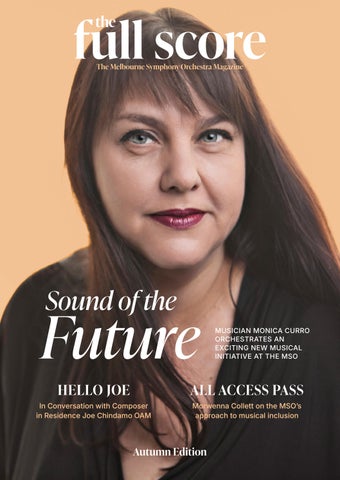
MUSICIAN MONICA CURRO ORCHESTRATES AN EXCITING NEW MUSICAL INITIATIVE AT THE MSO
Morwenna Collett on the MSO’s approach to musical inclusion
As the MSO marks its 120th year in 2026, we’re thrilled to share the story behind our stunning new brand. This project captures exactly what we love most about making music together in this city and honours the living legacy we've built over more than a century.
At the heart of the new brand is the concept of the 'Shape of Sound.' The MSO story unfolds throughout the design of the new MSO logo – the M rises with rhythm and energy, the sweeping S flows through the centre like the swirl of a conductor's baton, while the O isn't closed off but instead resonates outward –welcoming new friends into our musical family, just as we have for 120 years.
"This brand has unified and energised all of us," MSO Chief Executive Officer Richard Wigley said. "It captures who we are, and where we're going. It doesn't just look right. It feels right."
That feeling of 'rightness' comes from honouring our 120-year heritage while opening our arms wider to everyone who might love orchestral music – whether you've been following the MSO for decades or are just discovering the Orchestra now.
"We wanted to create something that reinforced our strong Melbourne identity, while speaking to audiences who may not have traditionally
seen classical music as accessible for them. The beauty lies in its ability to feel both timeless and contemporary," explained MSO Director of Brand and Communications Jayde Walker.
The new-look MSO will be integrated throughout the Full Score newsletter and across everything we do. This evolution represents the MSO’s commitment to reaching every corner of the community – from families at the Sidney Myer Music Bowl to international audiences on tour, from longtime subscribers to curious first-timers.
From our earliest performances to today’s bold and expressive Orchestra, our music has brought people together in concert halls, parks and neighbourhoods, creating shared moments that move us and stay with us.
This milestone belongs to everyone who has listened, discovered, returned and passed these moments on. As Melbourne grows and changes, so do we – always keeping the music at the centre of all we do. ■
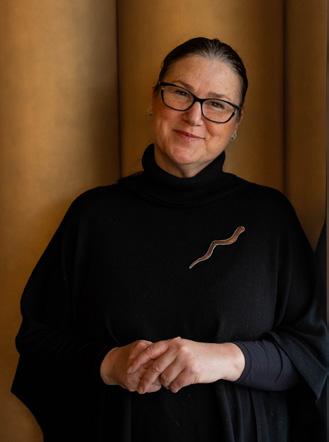
Welcome to our first issue of The Full Score for 2026, a year which is particularly special as we celebrate our 120-year anniversary, marking our place as Australia’s longestrunning orchestra.
It’s a milestone that fills us with pride – and gratitude for the audiences, friends and patrons whose support has helped carry the MSO across generations. As we approach the end of the financial year, your continued support gives the Orchestra the confidence to perform boldly, plan ambitiously and create experiences that remain open, welcoming and relevant.
In this issue we’re featuring beloved orchestral musician Monica Curro, who is stepping into a new role as Creative Director of MSO+. We will of course still see Monica performing with the Orchestra but you can read more on her musician-led initiative on page 4. We also profile Joe Chindamo, our 2026 Composer in Residence, expanding on the bold ideas behind his new commissions on page 7.
This year, we’re continuing to strongly focus on how, and where, we meet new audiences. With thanks to the generous support of the Hansen Little Foundation, MSO In Your Neighbourhood returns for its second year, bringing live music into some of the communities that make this city so vibrant. I hope many of you were able to attend one (or all!) of our four free concerts at the Sidney Myer Music Bowl over summer. SONDER, a stunning collaboration with the Find Your Voice Collective, was particularly moving and memorable; read more about why featuring artists with disability on main stages can have a transformative effect on our society on page 14.
To mark our 120th year in the most fitting way we know, we're inviting all of Melbourne, and beyond, to help write our next chapter. Open Score is a community composition project open to anyone, of any age or background, built around a simple but powerful idea: that music belongs to everyone. No formal training is required, just a sound, a story, or a sense of place you want to share. Selected works will be recorded by our musicians and shared with the world. You can find out how to contribute at www.mso.com.au/open-score. I’d also like to take this opportunity to thank our Head of Development, Christina Chiam, for her incredible contribution to the MSO and our team over the last two years. Her great care of our patron community and team is well recognised and we wish her all the very best success for the future.
With warmest wishes,
Suzanne Dembo Chief Operating Officer
4 Programs with Purpose
Assistant Principal Second Violin Monica Curro steps into an exciting new role as Creative Director of MSO+.
6 Are There Any Questions?
MSO Composer in Residence, the awardwinning Joe Chindamo OAM, talks about his musical reinvention.
9 The Moment
We celebrate our 120-year history with a peek behind the curtain.
10 Snapshots
Go behind-the-scenes at our supporter and Patron events.
14 New Arrivals
Access, diversity, equity and inclusion consultant Morwenna Collett on the MSO’s new Disability Inclusion Action Plan.
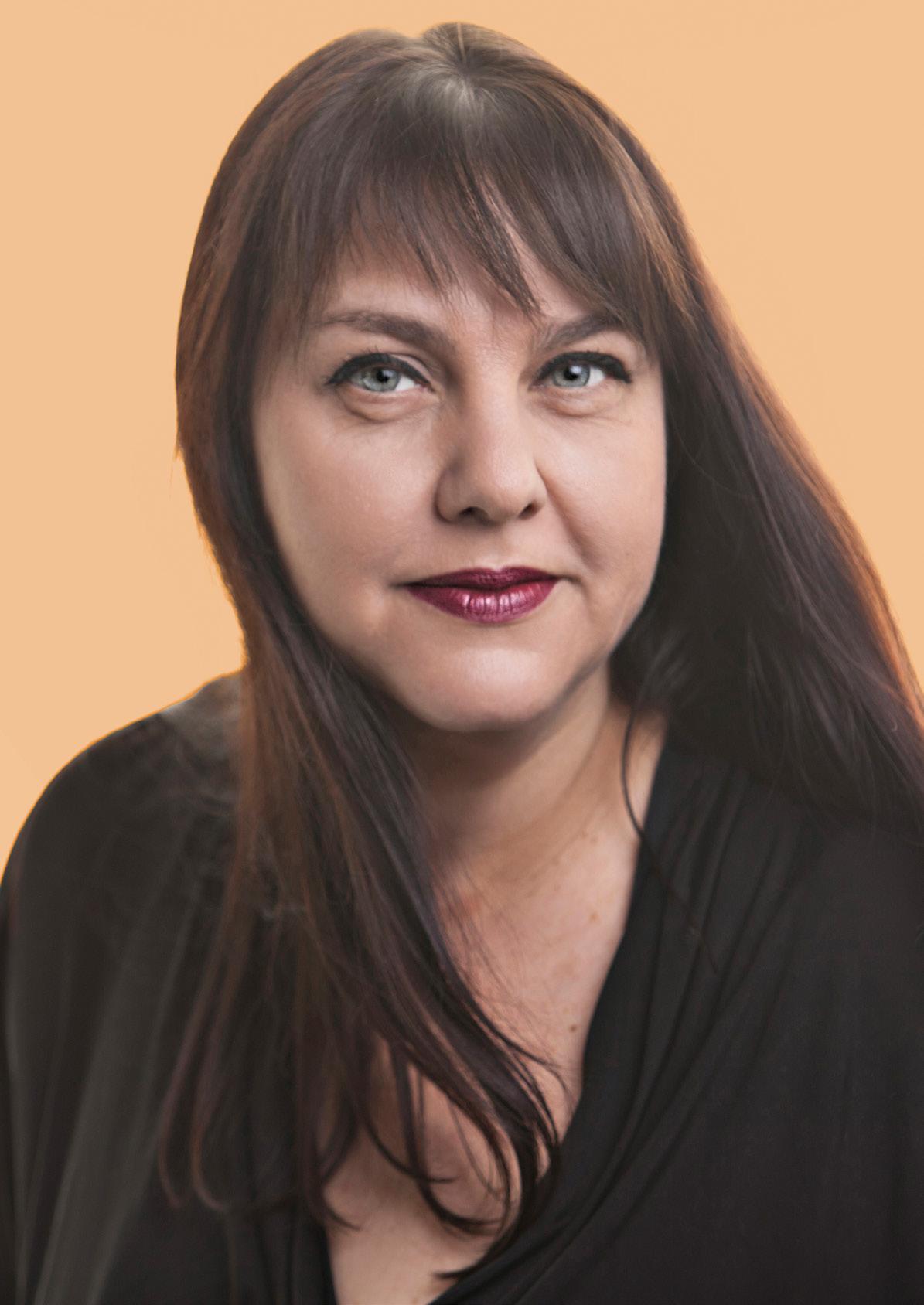
After 29 years playing with the MSO, Assistant Principal Second Violin Monica Curro is stepping into a new role.
Words: Nicole Lovelock
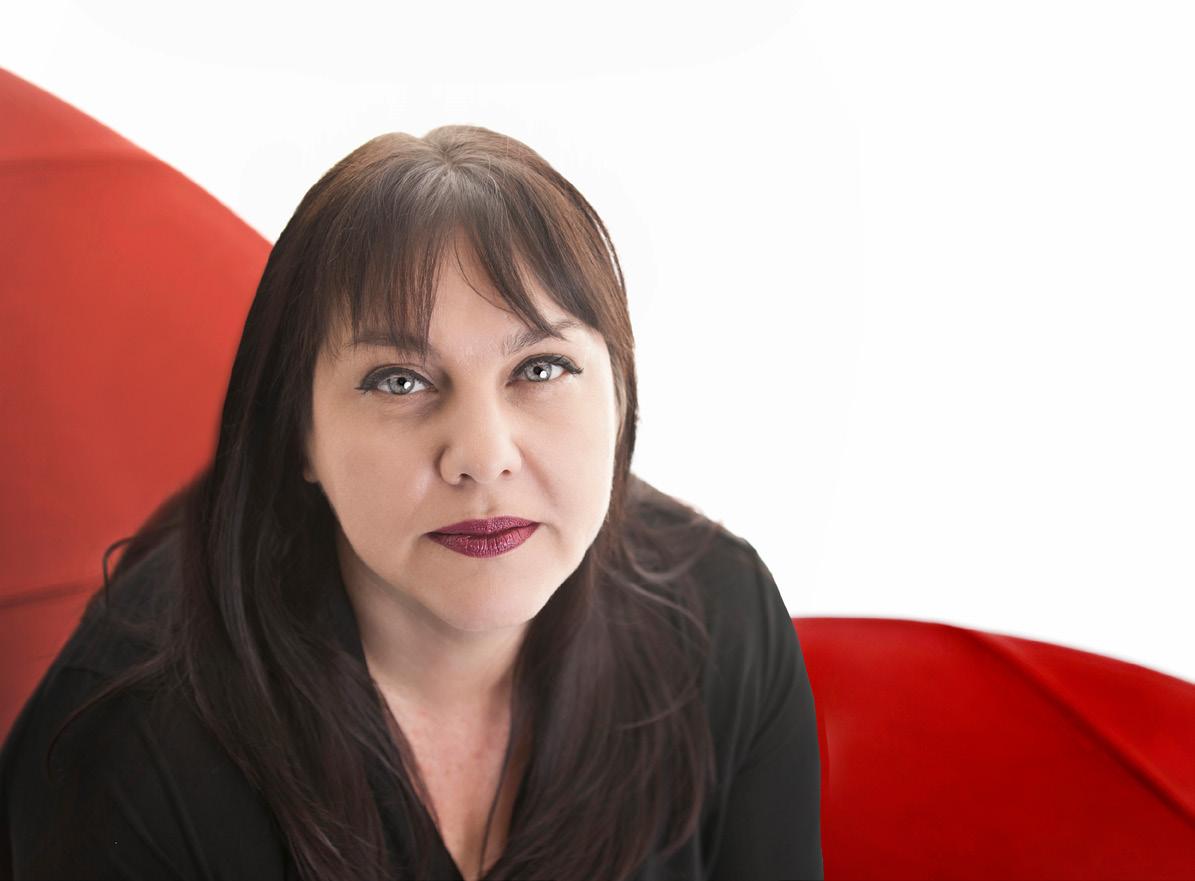
When Monica Curro walks into a room, she brings a charge of warm energy. Engaging and irrepressibly optimistic, the same electric force that has been animating the MSO’s string section for many years is now being channelled into the role of Creative Director of the new initiative, MSO+.
Audiences will still see Monica Curro performing on stage with the Orchestra. She continues in her role as Assistant Principal Second Violin (a position supported by Dr MaryJane H. Gething AO) alongside her new MSO+ responsibilities. Monica Curro has a gift for distilling big ideas into a single sentence. Ask her what MSO+ is, and she doesn’t hesitate:
“It’s taking music to the people, rather than expecting the people to come to us.”
MSO+ is an idea that has been evolving organically for more than a decade. Monica Curro explains that player-led projects, community partnerships and collaborations have always existed slightly outside the traditional concert model. What’s new is the structure, the dedicated creative leadership.
Crucially, MSO+ is player-led – and Monica Curro is emphatic about why that matters.
"This is the first time in my 29 years at the Orchestra that the players have been formally asked to submit their wish lists of passion projects – how they think the beauty and power of the MSO can be harnessed for purpose, impact, reach and connection with the Victorian people we serve," she said.
"Richard [Wigley, MSO CEO] is a change agent, a visionary, and his
Richard is a change agent, a visionary, and his philosophical stance is firmly bound in engagement with all types of communities. It's a very interesting experiment so far –just watch this space.
philosophical stance is firmly bound in engagement with all types of communities. It's a very interesting experiment so far – just watch this space."
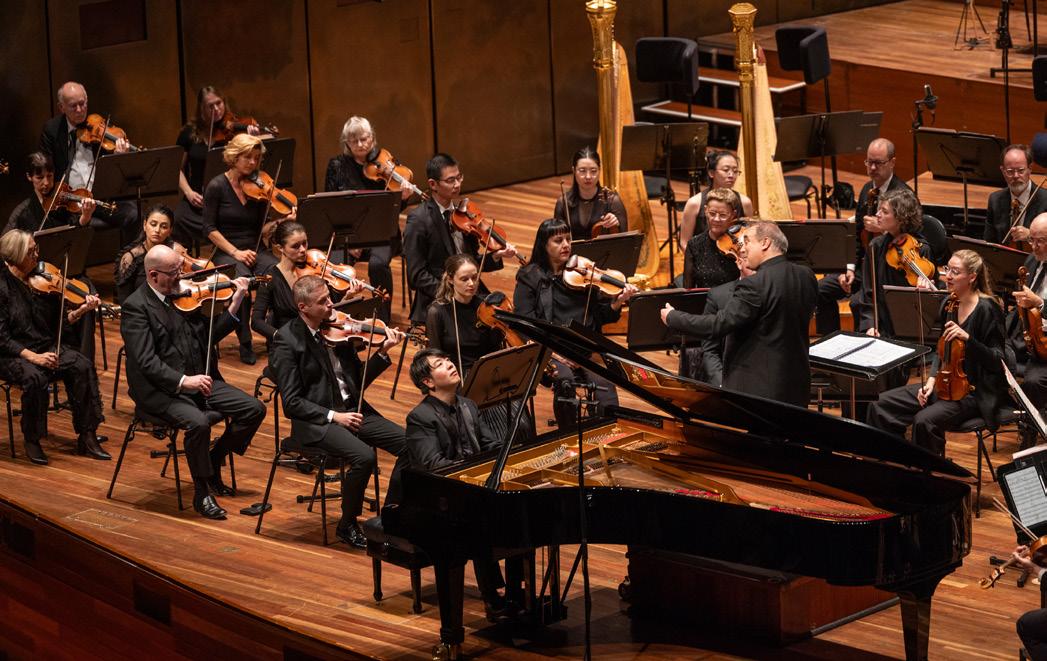
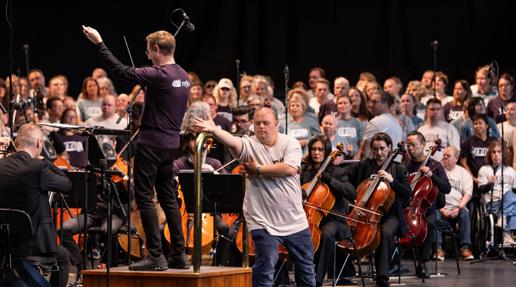
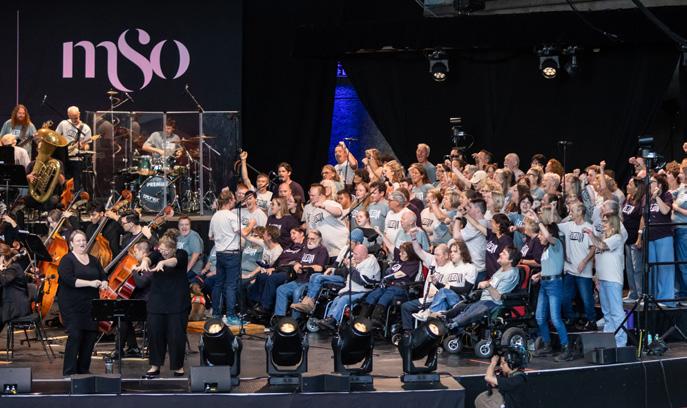
While not an MSO+ project, the recent Find Your Voice Collective performance offers a powerful glimpse of the kind of work MSO+ aims to develop. This groundbreaking and deeply moving choir project brought together singers of all abilities from southwest Victoria to perform with the full Orchestra at the Sidney Myer Music Bowl. The songs were written by choir members themselves, and the Bowl was filled to the brim, with more than 16,000 people watching at the venue and online.
"It was an idea born seven years previously finally coming to fruition," Monica Curro said.
"It was a joyous celebration of humanity. That’s my template for engagement – collaboration, celebration, accessibility. That’s flagship.”
Monica Curro’s journey with the MSO has tracked a deeply personal
evolution, from young musician finding her place, to seasoned artist evolving into a board member, project creator and collaborator. She served nine years on the Australian Youth Orchestra board; founded PLEXUS, a trailblazing commissioning ensemble in 2014 with her partner pianist Stefan Cassomenos and MSO Associate Principal Clarinet Philip Arkinstall; curates a 10-concert music series at McClelland Sculpture Park & Gallery (now in its fifth year); and has spent the better part of a decade quietly germinating the ideas that now form the heart of MSO+.
“It’s partly genetic,” she said of her drive to create and push boundaries, referencing the commissioning prowess of her father, John Curro, founder of the Queensland Youth Orchestra.
At 59, Monica Curro describes this part of her career as "the everybody phase", where she has the capacity, and the connections, to change broader systems.
“There was the ‘me phase’, and then there’s the ‘parenting phase’, but the beauty of this stage of life is that
I know a lot of people and I try to think strategically. I also never shut myself down or think of anything as impossible. I’m excited to make big systemic changes across the sector.”
The MSO currently reaches only a portion of Melbourne's population – something Monica Curro and the MSO see as an invitation. There are untapped audiences out there, in suburbs, regional communities and online, who deserve access to music. MSO+ is a part of how the MSO plans to reach them.
"Everybody consumes arts and culture like oxygen for the soul," she observed. "We need to really acknowledge the power we have. If we don't redefine our purpose and our place – not just the MSO, but every arts organisation – we're missing something enormous."
As the MSO marks 120 years, the company is thinking about the next 120 with the same optimism and creativity. There are bold plans for digital reach, finding ways for the MSO’s performances to travel as far as possible. There is an unwavering commitment to collaboration with multiple art forms and demographics, First Nations artists, artists with disability and communities across the state.
"It's not only for our survival –basically it's a party and everyone's invited," she laughed. "We're an amazing show. But with the right collaborators, the sky's the limit." She has an unshakeable belief that the MSO is not just entertainment, but an essential form of human nourishment and inspiration.
"So many people fall through the cracks of our society," she said. "And that's what art is for – to seal the cracks. To say: come in. You are safe. You are welcome. You'll remind yourself about all those esoteric, spiritual, mindful aspects of what it is to be human."
As the MSO shapes its new era, one defined by bold vision, deep collaboration and a living legacy 120 years in the making, there is no better person to help build that future than the woman who has spent nearly three decades at its heart. ■
MSO+ is the Melbourne Symphony Orchestra's initiative to take music beyond the concert hall and into the heart of the community. Playerled and purpose-driven, MSO+ supports projects that create new connections between the Orchestra and audiences across Melbourne, Victoria and beyond. To help bring these projects to life, contact philanthropy@mso.com.au
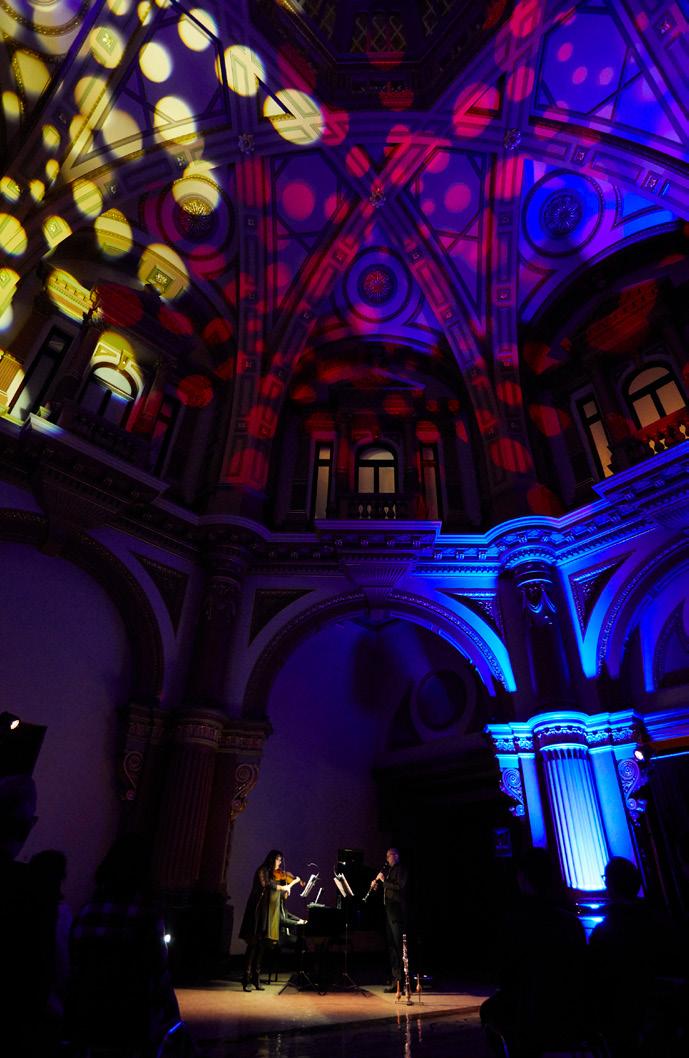
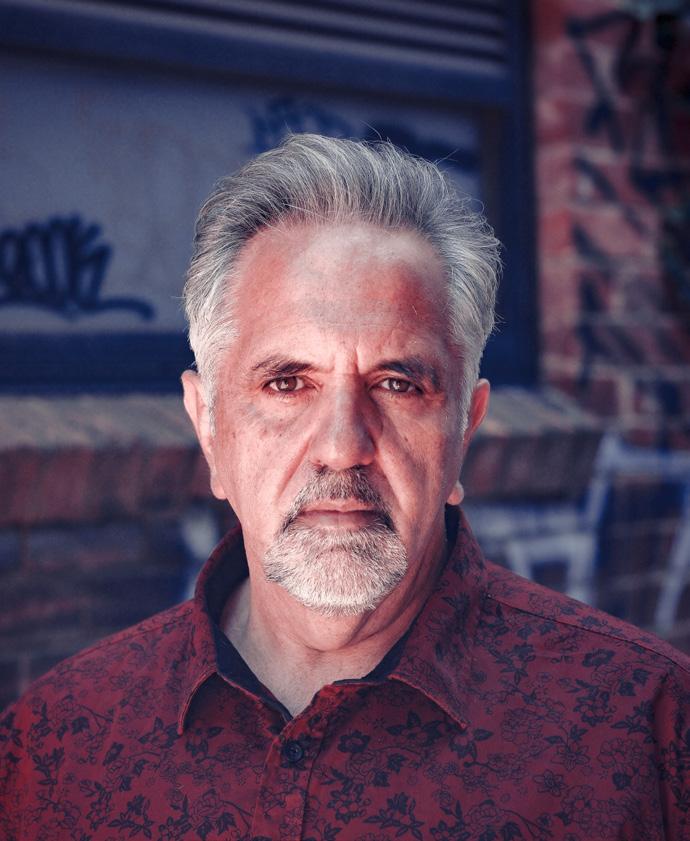
“Everything I’ve done in my career has led me to this point,” he reflects from his home studio in inner Melbourne. “It constitutes a new beginning for me – a reinvention of self.”
It’s a striking statement from a musician who has already lived multiple musical lives. Yet orchestral composition, which he only began pursuing in earnest a decade ago, has revealed itself as home.
“There’s not one scintilla of fear involved,” he said of composing for an orchestra of 91 musicians. “I feel excited rather than intimidated. That tells me this is where I should be."
The genesis of Chindamo’s major premiere, Are There Any Questions?, began about five years ago when Melbourne arts patron Michael Aquilina approached him about commissioning a symphony. The MSO enthusiastically embraced the project as co-commissioners. As discussions evolved, the concept transformed and expanded into a large-scale work for orchestra, chorus, mezzo-soprano and organ.
The title comes from the final line of Margaret Atwood’s The Handmaid’s Tale which, together with George Orwell’s 1984, provides the inspiration for the work.
“I’m fascinated, and frankly disturbed, by how quickly ritualistic
systems can manipulate human behaviour,” Chindamo said. Inspired by Jungian psychology, this exploration of society’s collective shadow and the dystopian effects of power, conformity, and control provide great scope to create a musical corollary.
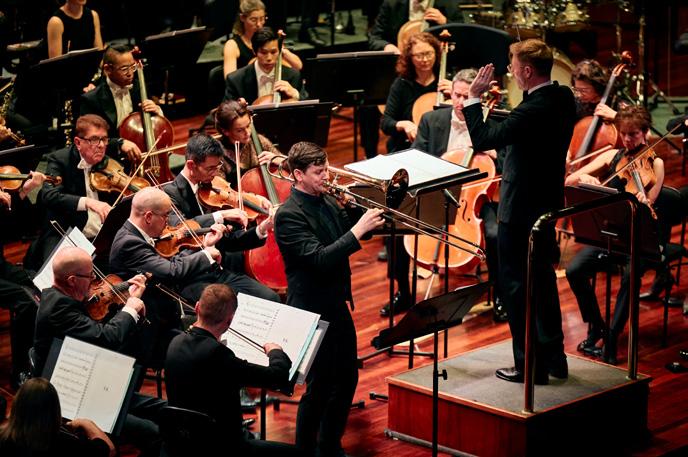
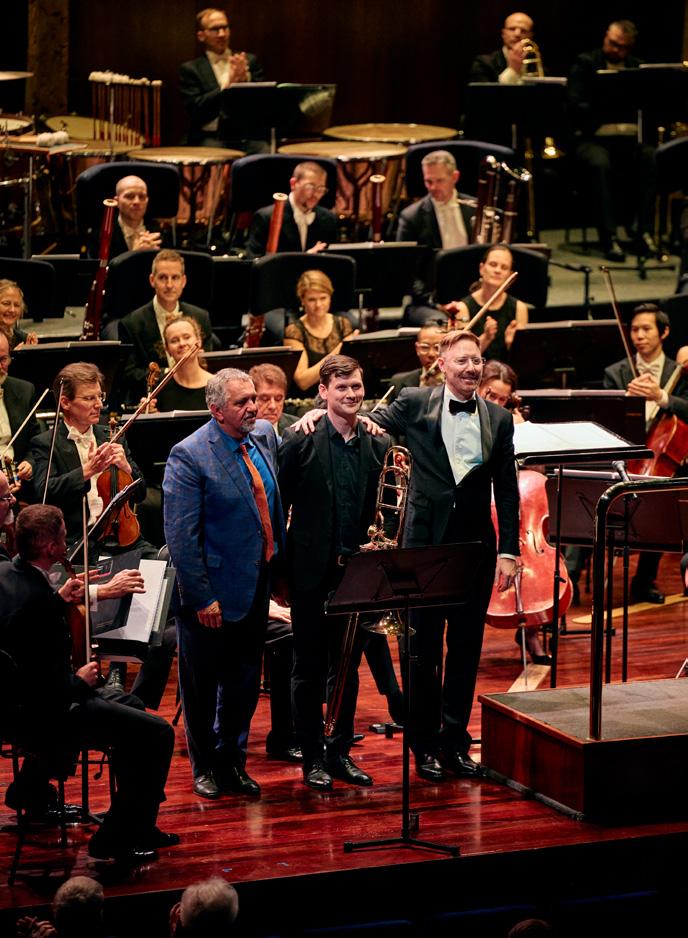
In October, dynamic flautist Eliza Shephard joins the orchestra for the world premiere of Chindamo’s Flute Concerto, the second MSO commission to emerge from his residency. The work draws inspiration from the razor-sharp wit of Dorothy Parker and the dazzling repartee of the Algonquin Round Table – that glittering circle of 1920s New York where intellect and mischief collided with style.
Alongside the concerto, he will present his Fantasie auf Nachtmusik, a bold reimagining of Mozart’s Eine kleine Nachtmusik.
His approach to reimagining Mozart is inventive, much like Chindamo himself.
“Fantasie auf Nachtmusik is less a reimagining than an original work built from Mozart’s musical DNA, abstracting themes from Eine kleine Nachtmusik and reconstructing them into a contemporary, living portrait,” he said.
For Chindamo, writing for orchestra feels instinctive.
“The orchestral palette offers a vast spectrum of colour and possibility. It allows me to weave structure, emotion, and drama into storytelling in ways no other medium can.”
He is equally enthusiastic about touring the new flute concerto beyond the city centre.
“I adore Eliza Shephard’s playing and energy,” he says. “Bringing orchestral music outside the metropolitan
“The orchestral palette offers a vast spectrum of colour and possibility. It allows me to weave structure, emotion, and drama into storytelling in ways no other medium can.”
orbit [the work will be performed in Werribee, Phillip Island and more] is profoundly rewarding. It allows us to connect with broader audiences and share these works with communities who might not regularly experience live orchestral music.”
Across a career spanning diverse musical territories, Chindamo has found deep artistic kinship with the MSO.
“This is my tribe,” he said. He attends as many concerts as possible and feels warmly welcomed by his new Orchestra family. “Being given this residency is a privilege carrying immense responsibility – one that I take very seriously.”
When asked about his role within a 120-year-old institution such as the MSO, Chindamo reflects on balancing tradition and innovation.
“I see my music as rooted in tradition, yet speaking to my own time, in much the way composers like Stravinsky reflected theirs,” he said.
“I consider my role to be custodian and innovator, honouring the MSO’s rich heritage while extending it into new terrain.”
Katharine Bartholomeusz-Plows, MSO Head of Artistic Planning, echoed Joe’s sentiments.
“Supporting Australian, and Melbourne, artists is a core part of what the MSO is here to do. There are so many fantastic artists undertaking hugely creative and ambitious
Scan to view a clip of Chindamo in Conversation: Are there any questions?
projects; it's very inspiring for us to work with our local artists,” she said.
“Composers who have come to writing for orchestras via less-direct means, such as Joe, have different ways of approaching new works; different musical things to say and ways to say them. Diversity is what keeps things interesting, working with composers with a mix of backgrounds means that you could be challenged, surprised or find new ideas to play with.”
As for the unconventional path that led him here – through jazz clubs and festivals, 20-plus albums, working in television and film studios, and touring internationally with US jazz greats – Chindamo sees it as integral to his voice.
“My journey is my own, and I know no other way,” he said. For audiences encountering his work this year, that singular journey promises music that is alive, authentic, and unafraid to ask difficult questions.
In October, the newly commissioned Flute Concerto and Fantasie auf Nachtmusik will have their world premiere in Glenroy, and tour to Cowes and Melbourne Recital Centre. ■
Help shape the sound of tomorrow. Contact philanthropy@mso.com.au to learn more about MSO's Commissioning Circle.
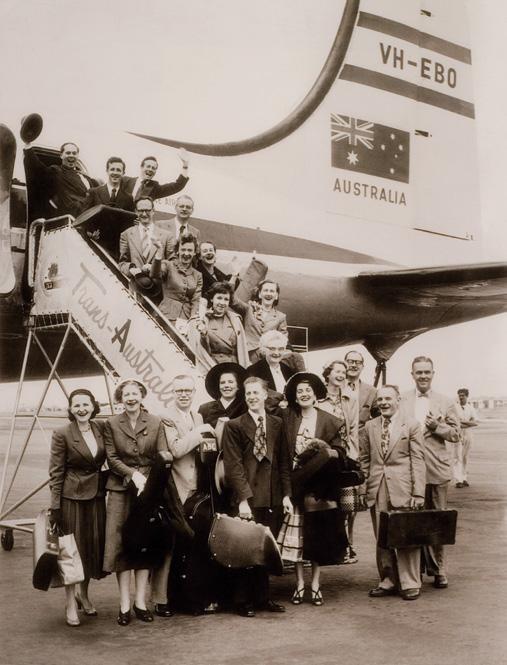
It’s not easy to send many musicians on tour, but the Melbourne Symphony Orchestra has always made it work. Throughout our 120-year history, our musicians have travelled across rural roads that have covered them in dust just to play in outback Australia. We’ve crossed paddocks on bus, taken planes and steam trains, and stayed with locals whose nearest toilet was a hundred yards away. We’ve played for audiences in Sydney and Ballarat, Mildura and Swan Hill, and countless locations in between. With concerts in old cinemas, and makeshift stages that groaned under the weight of a symphony, nothing has stopped our music from reaching all corners of the country – and it’s a legacy we still continue today.
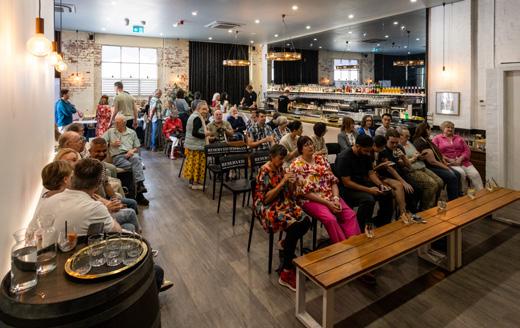
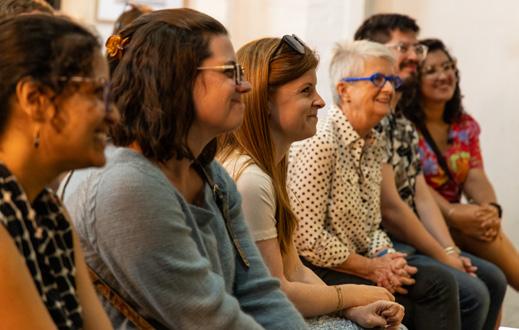
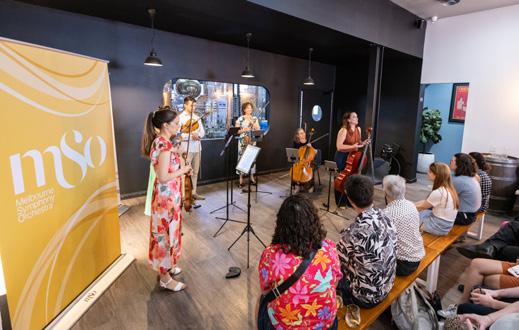
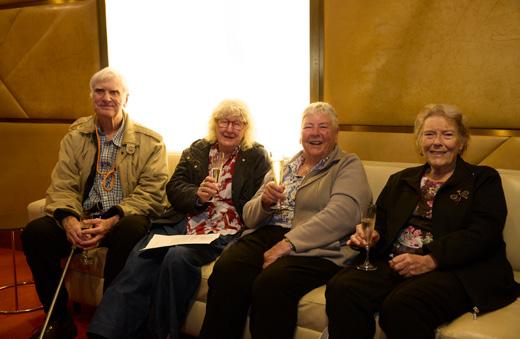
On a sunny Saturday we hosted Friends of the MSO for 'Gin and Music', featuring an MSO string sextet performing music by Tchaikovsky and music from the film Amélie. MSO Cellist Michelle Wood curated the music for this special event hosted by MSO Partner, Patient Wolf Distillery. Photos: Mark Gambino.
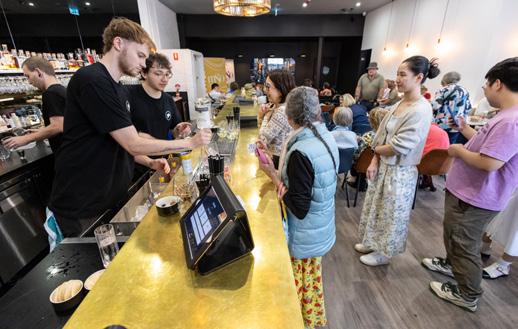
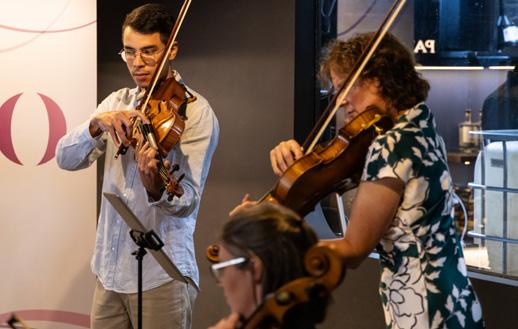
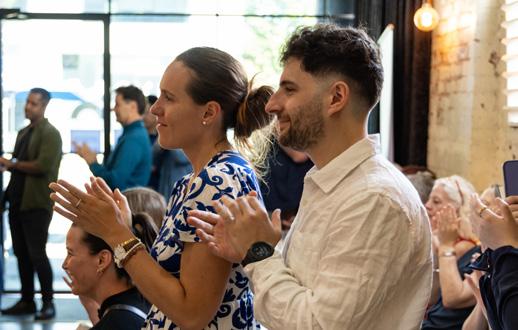
Pictured 1: Who could resist Patient Wolf cocktails on a summer’s day? 2: Guests waiting for the performance to begin. 3: MSO Viola section members Aidan Filshie and Katherine Brockman. 4: There were smiles all around! 5: Guests showing their appreciation of the concert. 6: Anne-Marie Johnston and Emily Beauchamp, MSO Violins; Aidan Filshie and Katharine Brockman, MSO Violas; Anna Pokorny and Michelle Wood, MSO Cellos.
01 02 04 03 06 05
01 02 05 04
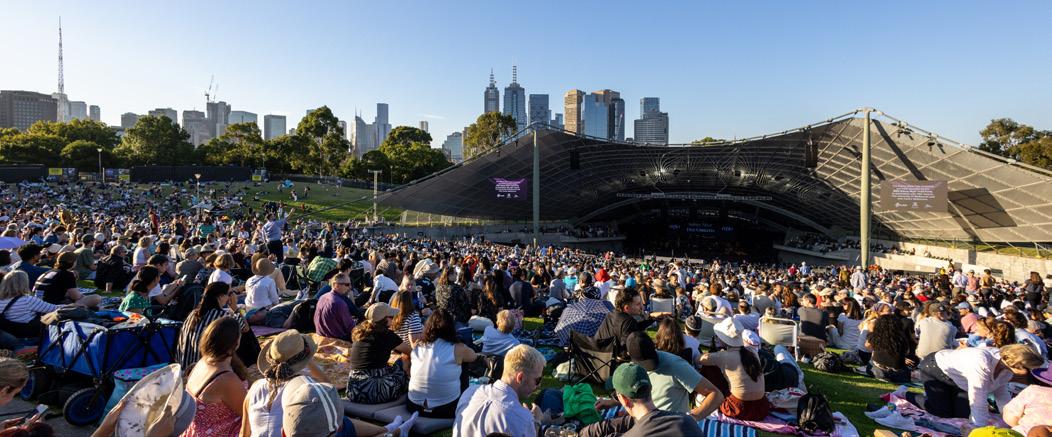
To open our 120th Anniversary year, we proudly returned to the tradition of presenting four free concerts at the Sidney Myer Music Bowl. Symphonic Celebration recreated one of the first programs of the MSO, conducted by Leonard Weiss CF. This series, we hosted a concert by the Australian Youth Orchestra, collaborated with Find Your Voice Collective and wrapped up a very busy week with a celebration of 50 Years of ABC Classic with an all-Australian program.
Photos: Mark Gambino.
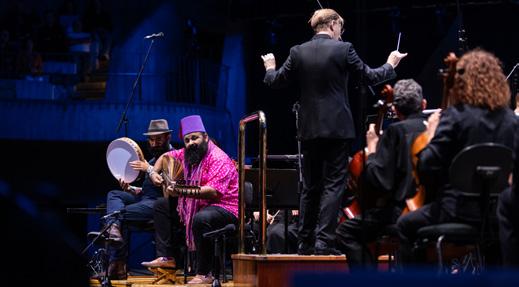
Pictured 1: SONDER was an especially moving event for all of us at the MSO. Under the direction of Ben Northey, Find Your Voice Collective took over the stage of the Sidney Myer Music Bowl with the MSO and sent their messages of love, acceptance and community straight into our hearts. 2: To celebrate the 50th Anniversary of ABC Classic, the MSO, under the direction of Ben Northey, played a selection of new and old Australian compositions. The concert closed with a virtuosic set of music by the Tawadros Brothers. 3: Sidney Myer’s gift to the City of Melbourne continues his legacy to this day with free MSO concerts every February. Melburnian families and groups occupy the grassy hills of the Myer Music Bowl to see their hometown orchestra over wine and snacks. 4: Cybec Young Composer in Residence Andrew Aronowicz with Cybec Foundation Director Adrian Riordan and Cybec Assistant Conductor Daniel Corvaia. 5: MSO Life Member, Lady Marigold Southey, delighted the crowd with her heart-warming memories of her father, Sidney Myer, who established the iconic free outdoor concerts in 1929.
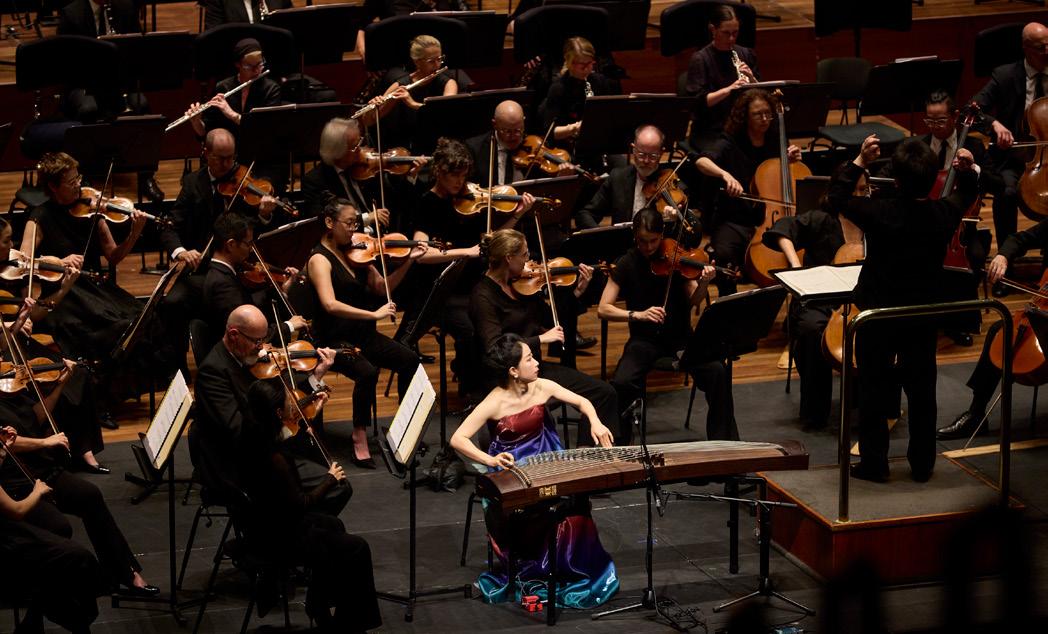
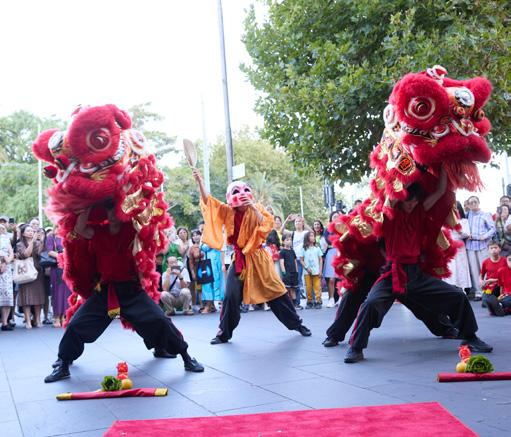
Our annual Chinese New Year concerts have become a staple of the Melbourne cultural calendar and celebrate the long and ongoing collaboration between the MSO and Asian musicians, artists and composers. We celebrated the Year of the Horse with our special partners Godiva and guest soloists Zlatomir Fung and Mindy Meng Wang.
Photos: Laura Manariti
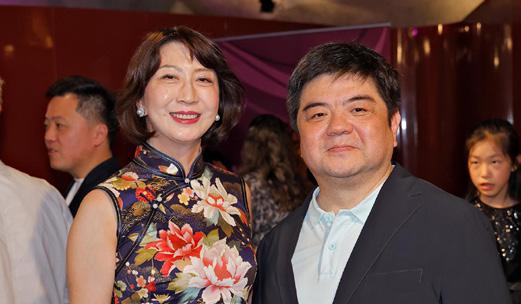
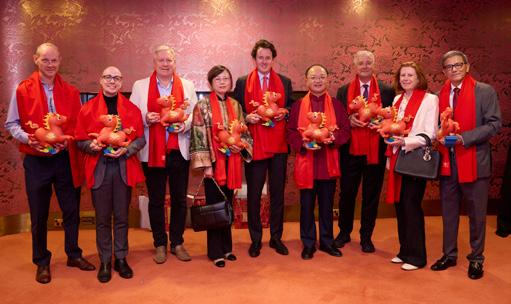
Pictured 1: Mindy Meng Wang dazzling the hall with her interpretation of the Butterfly Lovers Concerto by He Zhanhao and Chen Gang on guzheng. 2: A trio of dancers turned the St Kilda entrance of Hamer Hall into a colourful and noisy celebration of the Year of the Horse. 3: Angela Li and Guest Conductor Li Biao. 4: Paul Stephens, Director State Office (DFAT), Aiv Puglielli MP, Jason Wood MP, Madam Zeng Hui, MSO Board Chair Edgar Myer, Chinese Consul General Fang Xinwen, MSO CEO Richard Wigley, MSO Board Director Mary Waldron, MSO Chair Emeritus Dr David Li AM. 04 02
03
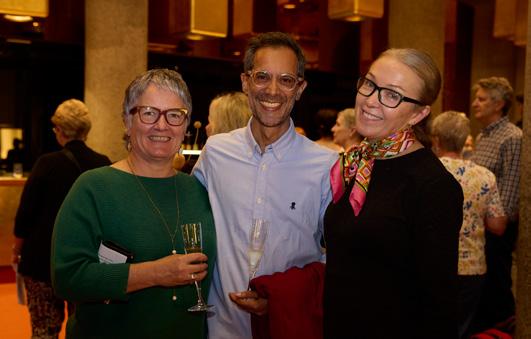
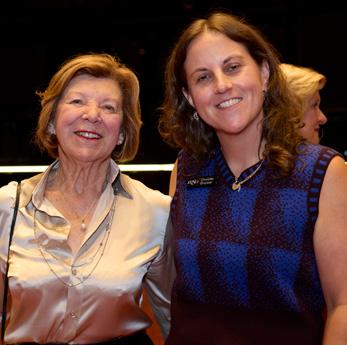
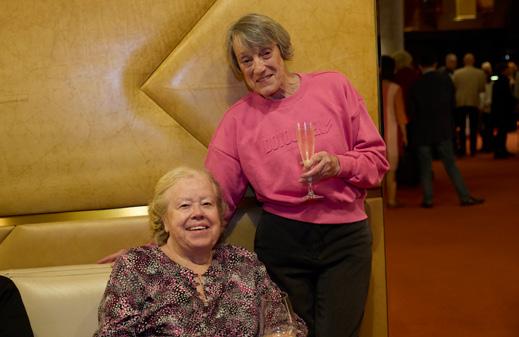
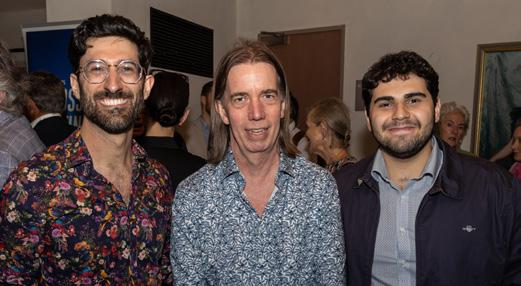
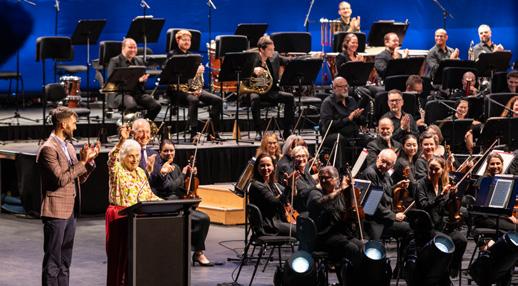
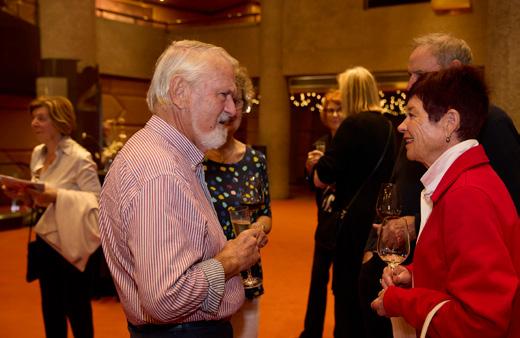
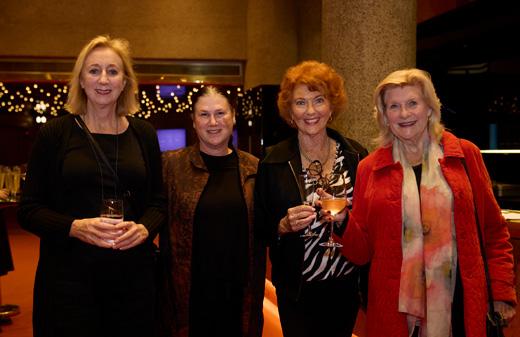
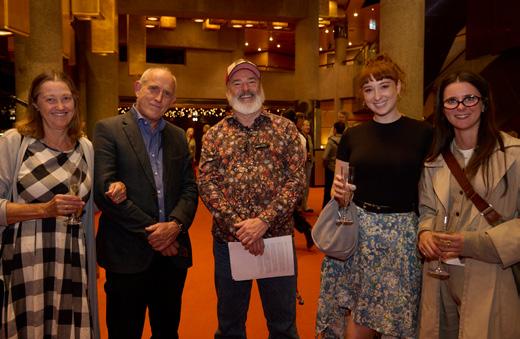
We welcomed MSO Patrons to our first Open Rehearsal of the year with Ben Northey on Tuesday 17 March with a Patron Lounge for our many guests. We were treated to an enthralling glimpse into how a new piece ‒ in this case, MSO Composer in Residence, Joe Chindamo’s work for voices and orchestra, Are There Any Questions?, gets fine-tuned just days before its world premiere. Photos: Laura Manariti. 04 06 02
Pictured 1: Penelope Fairbank, MSO Guardian Charles Hardman, MSO Chorister and MSO Guardian Jennifer Henry. 2: Chair Sponsor Jolene Coultas and Philanthropy Programs Lead Charlotte Crocker. 3: Our Patron Lounges are always abuzz with conversation. Here Chris and Helen Trueman speak with Wayne McDonald and Kaye Schroer. 4: MSO Board Director Meredith Schilling SC, MSO Chief Operating Officer Suzanne Dembo, Chair Sponsor Annie Neil and Jenny Hepburn. 5: Chair Sponsors and Instrument Funders Dr Rhyl Wade and Lyn Edward. 6: MSO Guardians Michael and Lindsay Jacombs, Patrons Wendy Hall and Chris Friday. 7: Chair Sponsors Kim and Robert Gearon, Donor Liaison Keith Clancy, Patron Lili Gearon and Grants and Reporting Lead, Isobel Lake. 01 03 07 05
Words: Nicole Lovelock
When leading disability, accessibility and inclusion consultant Morwenna Collett first met with the MSO in 2024 to support developing their inaugural Disability Inclusion Action Plan (DIAP), she immediately sensed their willingness and buy-in.
"I could tell that the MSO was genuinely interested in doing better in this space," she recalled. "They could see the potential and the opportunity in terms of how it would help make the MSO a stronger organisation. It's coming from an authentic place."
For Collett, who has worked with everyone from Glastonbury Festival to the Sydney Opera House, the MSO's approach stood out.
"I was excited by the timing with new leadership, and that Richard (Wigley, MSO CEO) was deeply involved – that’s not always the case," she said. "We did a lot of upskilling and capacity building of staff as part of the process so that they've now got those skills to bring the plan to life.”
The result is a comprehensive threeyear plan looking at three pillars: internal culture, artistic programs,
and audience experiences. It’s this holistic approach that Collett believes is essential for lasting change.
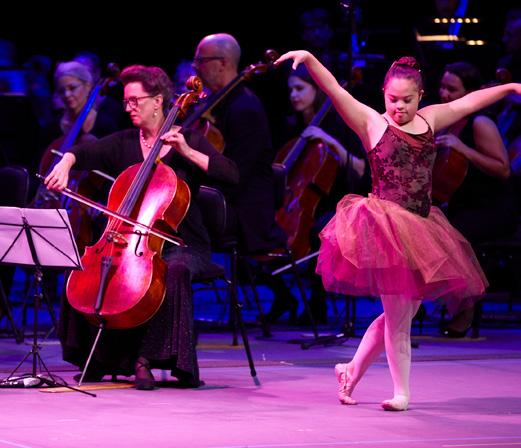
"Audiences can’t shift and change if there’s not a shift in attitudes behind the scenes, and if disability isn’t represented on stage," Morwenna Collett explained. "It has to go together. This plan is a roadmap to ultimately just good business-as-usual practice."
What excites Collett most is the MSO's commitment to leading with art and artists, particularly through collaborations with musicians and composers with disability.
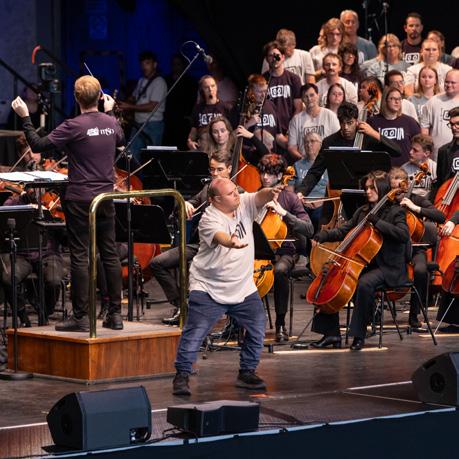
"The MSO has been doing this in the mainstage arena and I love their spirit of collaboration," she said. "They've found really great artists to work with – people like Nat Bartsch for example – and the scale of what recently happened at the Sidney Myer Music Bowl with a choir of 150 plus people, and a range of different disabled composers with the Find Your Voice Collective, are great examples."
She notes that the classical music sector has traditionally lagged in disability inclusion, but attitudes are shifting.
"Certainly, ten years ago there was more hesitance to identify as a disabled artist, but that’s starting to open up as community attitudes and society in general shifts. More people are leaning into their disabled identity and that’s because organisations and artists are working together to increase visibility and access.”
Looking ahead three years, Collett sees enormous potential for the MSO to lead not just in Australia, but globally.
"I hope the MSO demonstrates actively what's possible and finds opportunities to take on that sector leadership piece," she said. Morwenna points to organisations like the Bournemouth Symphony Orchestra in the UK, which has set up a disabled-led chamber ensemble.
"When I think about where the MSO will be three years’ from now, I think it’s going to be a more inclusive and aware organisation that can engage with a broader range of people. That will bring different perspectives and
creativity to their work as well, which will be of benefit to everyone."
For Collett, who brings her own lived experience as a disabled musician to her work, the MSO's commitment represents more than a static plan on paper – it's about opening doors and creating genuine opportunities.
"Ultimately you don't want to need a plan," she smiled. "You want it embedded; but this plan is an important step towards getting to that."
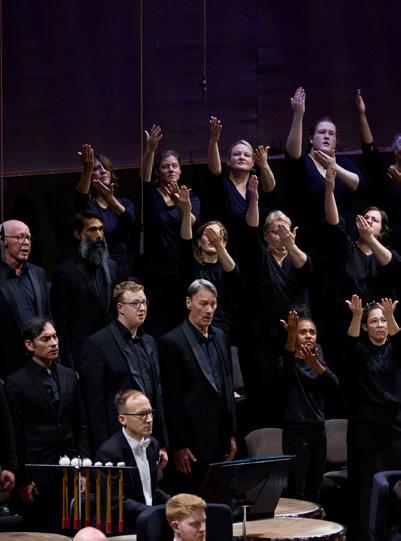
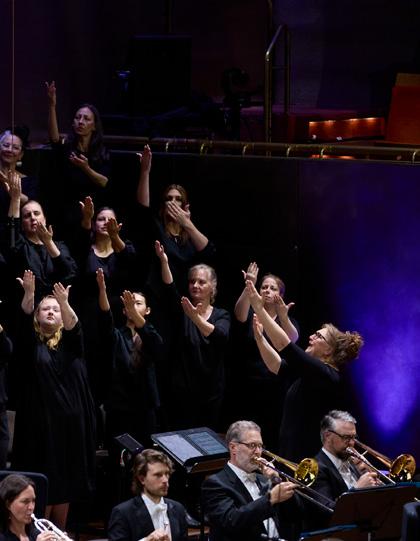
With initiatives like the Auslan Choir, relaxed performances, and the Find Your Voice Collective concert at the Bowl already demonstrating the MSO's commitment to inclusivity, the concert hall doors and stages are only set to become more diverse and welcoming spaces for everybody.
The MSO’s Disability Inclusion Action Plan (DIAP) and DIAP programming initiatives were made possible thanks to the Department of Health, Disability and Ageing. ■
13 & 15 AUGUST, HAMER HALL
I love the music of Spanish composer Francisco Coll –it features intricately-coloured textures, a Stravinskian rhythmic verve and lots of references to Spanish musical traditions. The concert closes with the rarely-performed Antonin Dvořák Symphony No.7, a sweepingly ambitious symphony regarded by many scholars as the finest of the nine.
21 AUGUST, HAMER HALL
There are scores of movies that are as well-known for their soundtracks and sound design as for their visual aspects. Australian composer Thomas Meadowcroft has written a concerto, inspired by different genres of film, and his usual wit and intellect for the unsung heroes of sound effects: “foley artists”. This concert also features music from celebrated Australian films composed by David Hirschfelder (The Dressmaker, Strictly Ballroom and more).
10 & 12 SEPTEMBER, HAMER HALL
Lucas and Arthur Jussen have carved out a niche for themselves with their accuracy, flair and precision in playing two pianos or one piano at the same time. This dazzling concerto for two pianos by Poulenc opens with possibly the funniest couple of minutes of music in the whole repertoire, with both pianos involved in a Keystone Cops chase with Mozart and Stravinsky. The remainder of this program features recently-composed, nature-centred music from Japan featuring Takemitsu and Yoshimatsu.
7 TO 21 NOVEMBER, HAMER HALL
I am “cheating” a bit here because the Brahms Festival that the MSO is mounting in November this year comprises five concerts, all of which I recommend. Showcasing the breadth and depth of this enigmatic composer, the Festival aims to show the human face of the composer behind the imposing beard. Pianist Denis Kozhukhin will perform the two piano concertos in two concerts; there are the third and fourth symphonies on one program; some chamber music; and finally the German Requiem featuring the MSO Chorus, Soprano Alexandra Flood and Baritone Sir Bryn Terfel – both soloists making a welcome return to Melbourne. We will also peel back the curtain at an Open Rehearsal around the 3rd and 4th Symphonies.