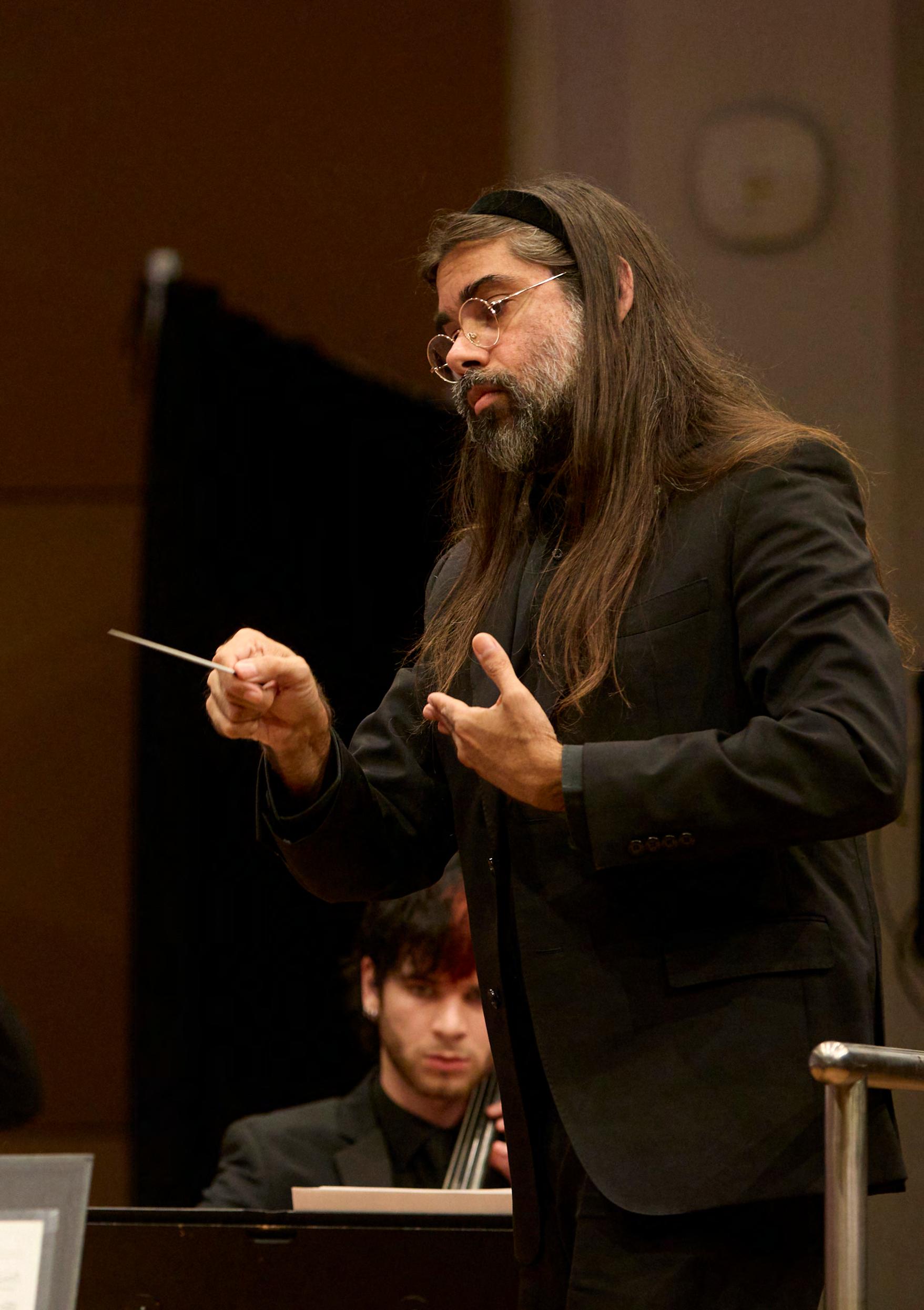
MSO musicians performing in this concert
First Violins
Sophie Rowell° Guest Concertmaster
Sarah Curro
Dr Harry Imber *
Peter Fellin
Deborah Goodall
Lorraine Hook
Jolene S Coultas*
Michelle Ruffolo
Anna Skálová
Clare Carrick°
Jacqueline Edwards° Oksana Thompson°
Second Violins
Monica Curro
Assistant Principal
Dr Mary-Jane Gething AO*
Freya Franzen
Mary Allison
Isin Cakmakçioglu
Cong Gu
Andrew Hall
Robert Macindoe
Roger Young
Shane Buggle and Rosie Callanan* Violas
Christopher Moore
Principal
Lauren Brigden
Anthony Chataway
Peter T Kempen AM*
William Clark
Morris and Helen Margolis*
Jenny Khafagi
Margaret Billson and the late Ted Billson*
Jamie Miles MSO Academy
Cellos
Rachael Tobin
Associate Principal
Rohan de Korte
Andrew Dudgeon AM*
Caleb Wong
Rosemary Meagher and the late Douglas Meagher * Ariel Volovelsky
Double Basses
Emma Sullivan
Caitlin Bass°
Flutes
Wendy Clarke
Associate Principal
Andrew Macleod
Principal Piccolo
Oboes
Ann Blackburn
Margaret Billson and the late Ted Billson*
Jade Wolter°
Clarinets
David Thomas Principal
Karen Chen° Bassoons
Hayden Burge MSO Academy
Brock Imison
Principal
* Position supported by ° Guest musician
Horns
Peter Luff°
Josiah Kop
Kim and Robert Gearon*
Abbey Edlin
The Hanlon Foundation*
Jacob Fenchel MSO Academy Trumpets
Shane Hooton
Associate Principal
Glenn Sedgwick*
Joel Breenan
Trombones
José Milton Vieira
Principal
Pius Choi°
Bass Trombone
Michael Szabo Principal
Tuba
Jason Catchpowle°
Timpani
John Arcaro
Tim and Lyn Edward* Percussion
Robert Cossom
Dr Clem Gruen and Dr Rhyl Wade*
Lara Wilson Harp
Yinuo Mu Principal
Learn more about our musicians on the MSO website.
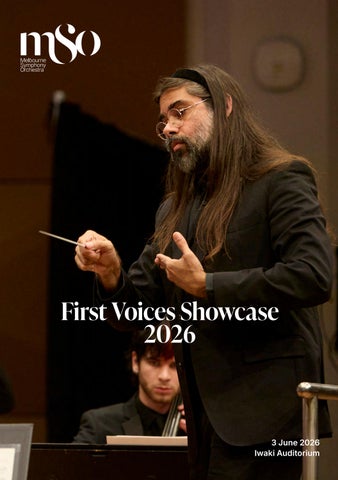
First Voices Showcase
Wednesday 3 June at 6:30pm Iwaki Auditorium, ABC Southbank Centre
Artists
Melbourne Symphony Orchestra
Aaron Wyatt conductor and host
Program
An evening of music and conversation featuring:
James Howard Nyirrimarr Ngamatyata // To Lose Yourself at Sea [8’]
Aaron Wyatt
The Things Which are Most Important Don’t Always Scream the Loudest [3’]
Nicholas Astill Mutations* [8’]
* World premiere of an MSO commission
This concert begins with the full orchestral version of Acknowledging, a musical Acknowledgement of Country by MSO Cybec First Nations Composer in Residence James Henry
CONCERT EVENTS
This event will be filmed; there will be cameras in the auditorium.
Running time: 1 hour without interval. Timings listed are approximate.
Music and Ideas is supported by City of Melbourne
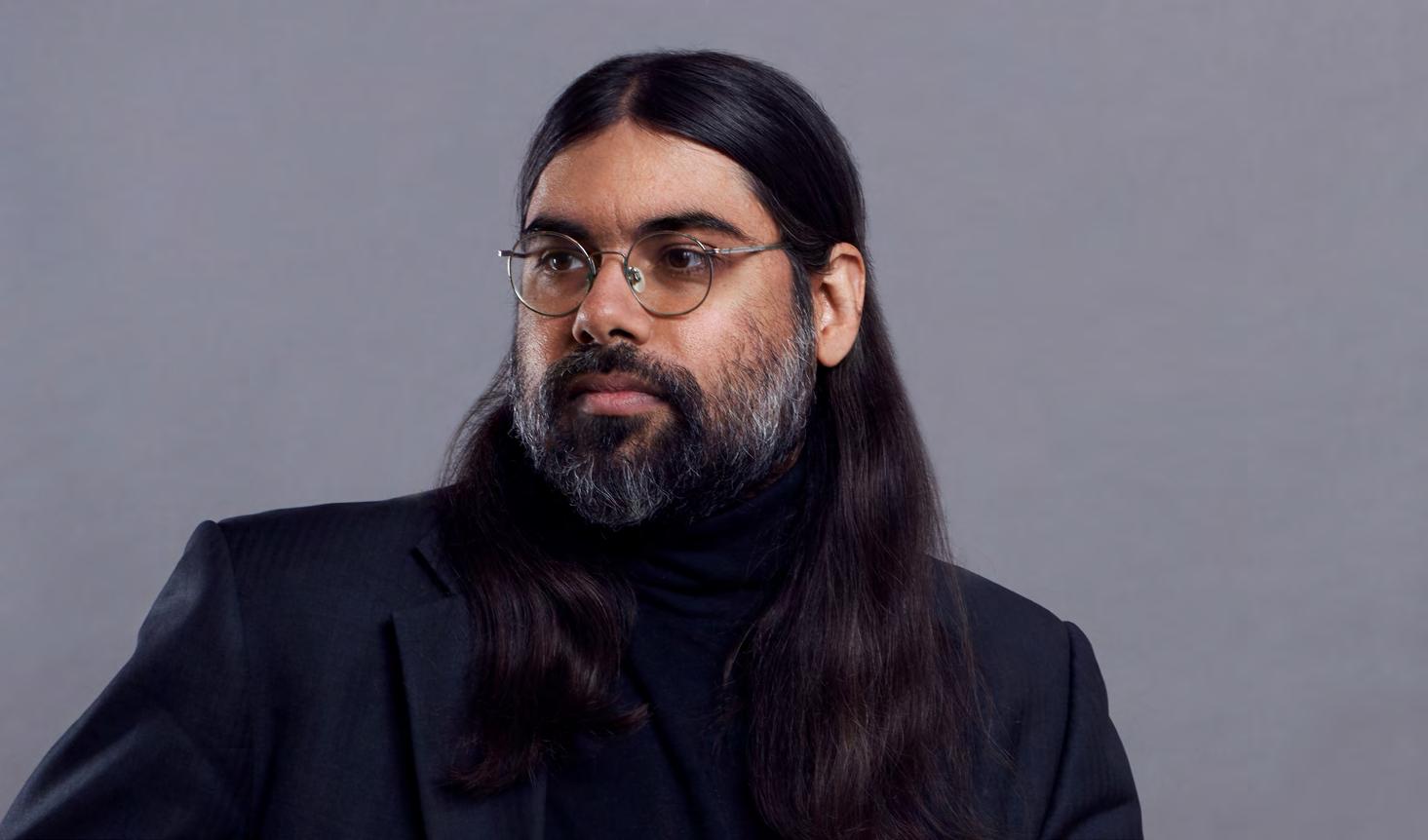
Aaron Wyatt conductor
Aaron Wyatt is a violist, conductor, composer, programmer and academic. As a violist, he played regularly with the West Australian Symphony Orchestra before moving to Melbourne to take up an assistant lectureship at Monash. He continues to play with the award-winning Decibel New Music Ensemble and is the developer behind the Decibel ScorePlayer app, the group’s cutting edge, animated graphic notation software for the iPad. In 2021, he was the soloist in the premiere of Deborah Cheetham Fraillon’s Nanyubak for viola and orchestra, presented by the MSO.
As an emerging conductor, he was musical director of Cat Hope’s first opera, Speechless, at the 2019 Perth Festival, receiving a Helpmann Award nomination. He has since taken on the role of director of Ensemble Dutala, a group created by Deborah Cheetham Fraillon AO to bring together Indigenous classical musicians from around the country. In 2021 he conducted the premiere of the first opera in Noongar, Koolbardi Wer Wardong by
Gina Williams and Guy Ghouse, followed in 2024 by their opera Wundig Wer Wilura, both for WA Opera. In 2022, he became the first Indigenous Australian to conduct a state symphony orchestra in concert, directing the MSO in Long Time Living Here at the Myer Music Bowl. He has since conducted the Adelaide, Sydney and West Australian symphony orchestras, including opening the WASO’s 2024 Master Series with his own work The Coming Dawn.
As a composer, he was a participant in the Ngarra-Burria First Peoples Composers program, writing for Ensemble Offspring, and his recent commissions include work for the Canberra Symphony Orchestra. He has also written a number of electroacoustic works for Decibel, GreyWing, Ensemble Dutala, and Kyla MatsuuraMiller’s Freedman Fellowship project, Three Conversations, and he is Artist in Residence with Speak Percussion.
Aaron Wyatt’s work with the MSO is generously supported by the Sage Foundation.
PHOTO: JESSICA BADER
About the music
James Howard (born 1991)
Nyirrimarr Ngamatyata // To Lose Yourself at Sea
This work is an autobiographical spin on a classic tale of being lost at sea amidst a raging storm.
Following the opening theme, the scene reveals a picturesque nautical journey informed by swaying sextuplet rhythms. The sun is shining and the skies are clear. Our protagonist, a passenger aboard the vessel, is depicted by both the oboe and the clarinet, informing multiple layers of identity and personality. An underlying harmonic tension bubbles over. Night falls and a fierce storm hits. The passenger is thrown overboard, clinging to flotsam as relentless, rolling waves threaten all sense of direction and hope.
Following the calamity, the scene shifts to a calm and incorporeal space. A beacon of light cuts through the darkness, but what it signifies is unclear. The composition closes with a reinterpretation of the opening theme as the sun rises over the water. The passenger has reached their destination, but where that is, we cannot be certain.
JAMES HOWARD is a Jaadwa composer, producer and sound artist with a contemporary music practice that establishes connection to his First Nations culture, Country, and personal identity. His creative work informs a continuous process of cultural reclamation, often layering personal, family, and community narratives into long-form, improvised ambient and electronic works.
Drawing on a sonic palette featuring voice, synthesizers, archival samples and field recordings, Howard’s compositions are driven by the potential for First Nations
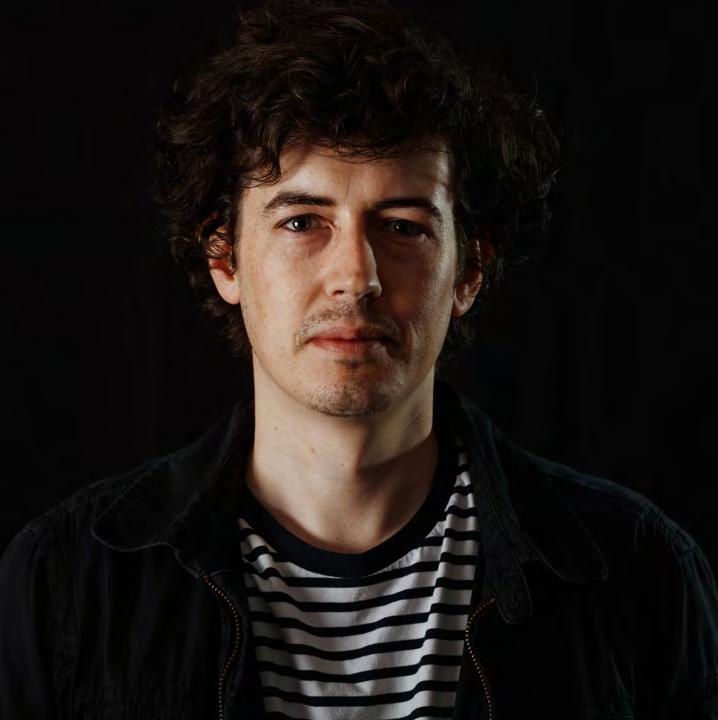
storytelling to be realised through contemporary electronic arrangements. In 2021 he released his first album, Variations on Country, followed in 2022 by the mini-album, Music from ‘The Third’. Later this year, he will release his second full-length album, Marrow, adapted from the soundtrack he composed for Australian Dance Theatre’s 2024 production of the same name.
In addition to Australian Dance Theatre, he has worked with a range of creative organisations, including Bangarra Dance Theatre, Rising Festival, Yirramboi and the Australian Centre for Contemporary Art. Gikilangangu Wergaia, his recent live performance project with Alice Skye and Michael Julian, won Best in Music at the 2024 Melbourne Fringe Festival.
In 2022 James Howard was awarded his PhD (Indigenous Arts and Culture) from the University of Melbourne for his thesis, Composing Cultural Reclamation: Reconnecting to an Indigenous cultural heritage through a music practice.
PHOTO: JONATHAN
KNAAP
Aaron Wyatt (born 1983)
The Things Which Are Most Important Don’t Always Scream the Loudest
This work was commissioned by Bob Hawke College to mark the occasion of their stage two opening in 2023, and it takes its name from a (hopefully not apocryphal) quote attributed to its namesake: ‘The things which are most important don’t always scream the loudest.’
It’s a quote that I feel really captures the ethos of the college: one of quiet, measured confidence that seeks to elevate all, regardless of their background. And the work aims to capture this.
While it’s an orchestral fanfare, its main theme builds from humble beginnings to something that is triumphant without being arrogant, boastful or overly brash. Woven around this theme are a series of textures that represent the house names heard whispered as the piece opens.
The trills and tremolo of the strings as they first enter, the flutter tongue of the flute, and the cymbal rolls represent Kaal (fire). The driving, grounded rhythm of the cellos (later joined by the double basses and bassoons) represents Boodjar (earth). The murmuring patterns in the clarinets and the violas represent the flowing of Kep (water). And the flighty and playful semiquaver runs in the woodwinds represent Maar (wind). With these supporting the melody, the work becomes a celebration of nature and the lands on which the college sits, and ties together purpose and place with hope for the future.
Nicholas Astill (born 2001)
Mutations
Mutations presents a series of musical ideas that are progressively transformed –mutated – by the influence of neighbouring concepts. This strategy is drawn from my doctoral research, using machine learning to map how musical and cultural concepts relate to one another in digital space. By comparing semantic embeddings of writing about these concepts – drawn from a large corpus of online text – I can identify which musical ideas are statistically ‘close’ to one another, even when those relationships are stylistically unexpected. These proximities don’t represent intrinsic truths about music, but they do reflect how we collectively write and think about it, which is its own kind of truth.
Each mutation in the work takes the musical material of the previous section and warps it through the lens of a neighbouring concept or two. Some of these pairings are intuitive, while others are deliberately dissonant. The result is a piece that moves through a chain of stylistic transformations, testing how far musical ideas can be pushed before they become unstable and ultimately collapse upon themselves.
Mutations unfolds in three broad sections. It begins with the winds introducing the recurring thematic material and foreshadowing the mutations to come. The central section presents seven mutations, each compounding the previous: Baroque and Tango; Blues Scale; Rock Band and Tempo; Canon; Big Band and Dissonance; Augmented Scale; and finally, Dissonance revisited alongside Tone Colour. My interpretations of these concepts are filtered through my own knowledge and taste – the ‘Baroque’ section, for example, is more of an allusion than a strict adherence to tradition.
After these musical mutations, a concluding summary draws the threads together, with the cyclical movement of its underlying chords reflecting both the mutative process of the piece and the harmonic tendencies that have accumulated throughout.
Mutations also reflects a personal conviction: individuals – and the cultures they inhabit – are irreducibly complex. Our manifold experiences, dispositions and affiliations resist neat categorisation. The intensified circulation of ideas and cultural forms in the contemporary world has made this complexity harder to ignore; the boundaries we once drew between traditions, aesthetics, and identities have always been more porous than they appeared.
My compositional approach reflects this heterogeneity rather than smoothing it over. Music, like identity, is diminished when it’s pressed into a single defining category – when complexity is traded for legibility. If there’s an idea to be taken from this work, it is a refusal to treat people, or their art, as something that can be tidily resolved.
NICHOLAS ASTILL is a Sydney-based composer and researcher, currently undertaking a PhD and Postgraduate Teaching Fellowship at the Sydney Conservatorium of Music. His research uses machine learning to map
MSO First Voices
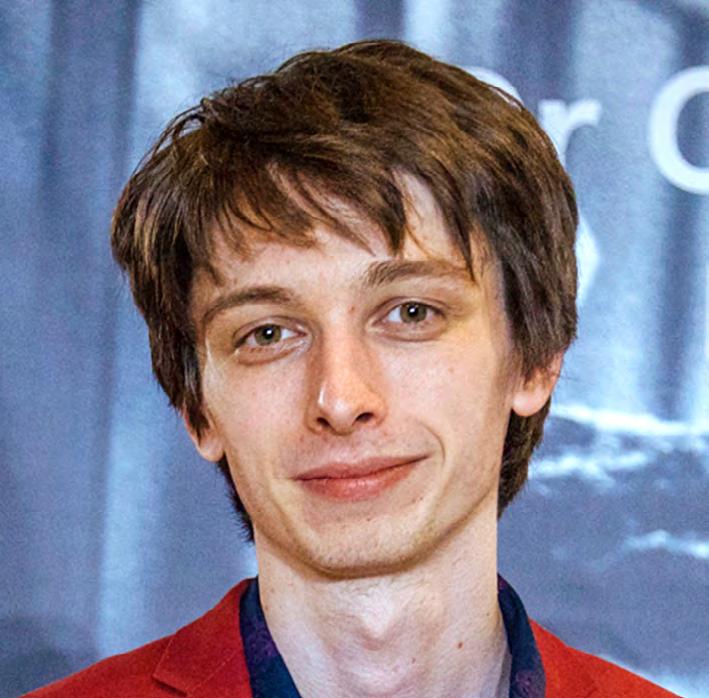
relationships between musical knowledge systems, and his compositional practice draws on these frameworks to create polystylistic works that bridge diverse traditions.
A Gamilaraay composer, his creative work engages with contemporary understandings of pluralism, posing questions about cultural identity, individuality, and the social politics of aesthetic taste. His research has been presented at The Gathering: Indigenous Composers Conference at the Australian National University, and Mutations is his first orchestral commission. He is supervised by Benjamin Carey and Damien Ricketson, and was mentored by Paul Stanhope for this work.
The Melbourne Symphony Orchestra’s First Voices Composer Program is an initiative for emerging Australian First Nations composers. It aims to strengthen capacity and enhance cultural vibrancy through collaborations and the nurturing of talent. Each year, the program offers two participants an orchestral music commission, together with the opportunity to workshop their music with MSO musicians and staff as well as guest composer–mentors. The commissioned works are then premiered in the First Voices Showcase, now in its fourth year. Previous First Voices Composer Program recipients were James Henry, Vonda Last, Adam Manning, Leon Rodgers, James Howard and Nathaniel Andrew.
Live like the locals do, as local as you like it.
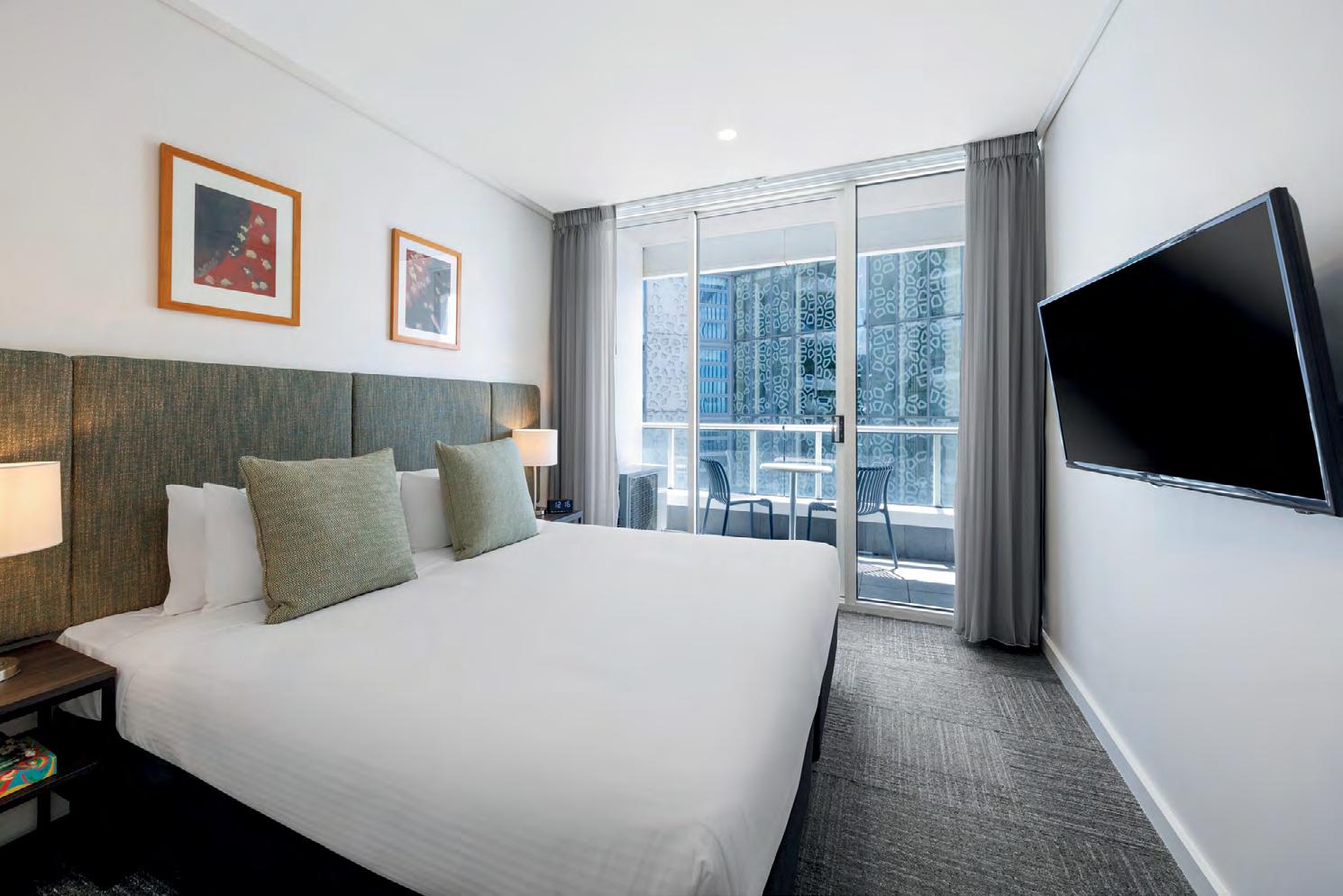
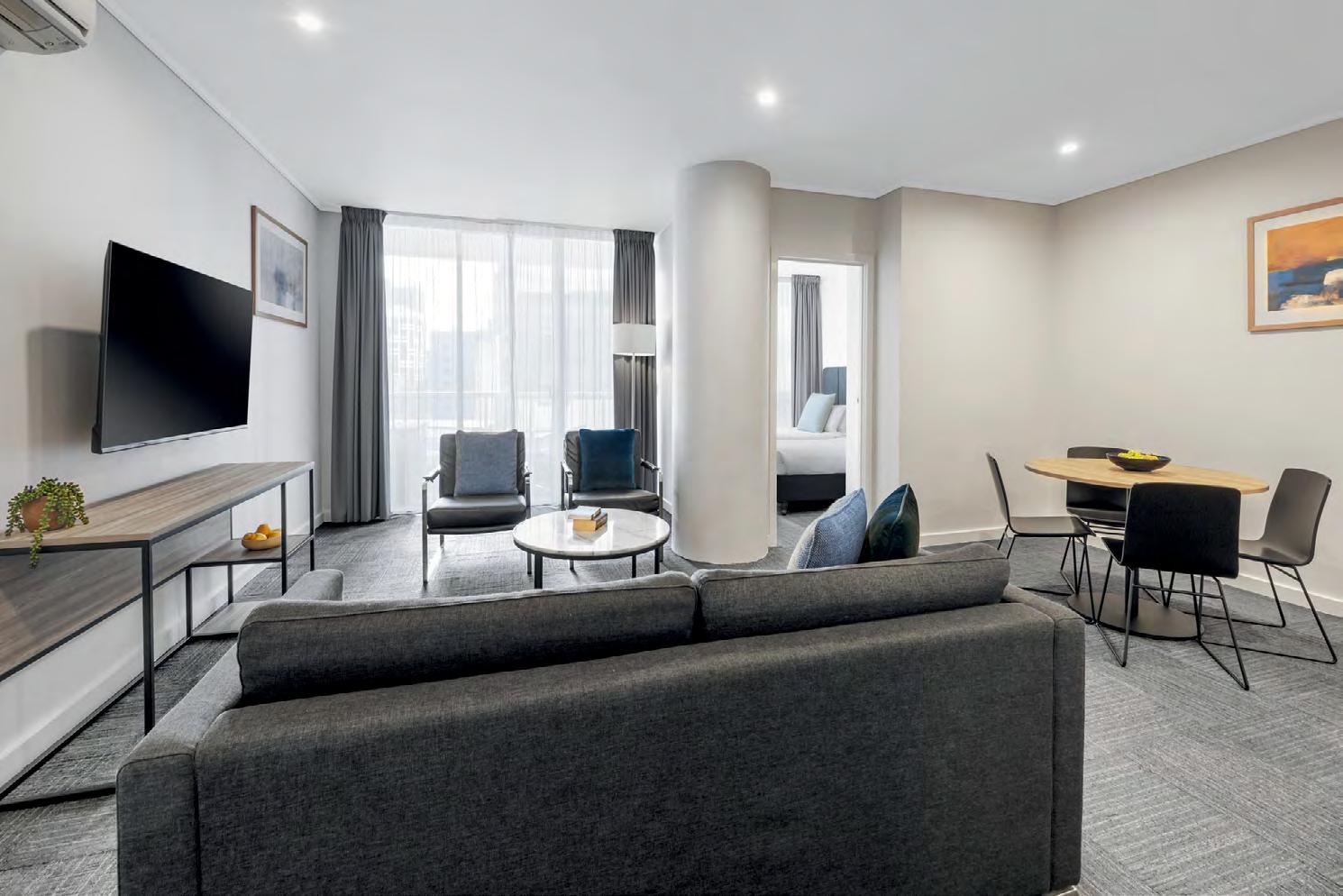
Quest Southbank is located in the Arts Precinct
We are pleased to support MSO and the First Voices Showcasewe are a few minutes away from the venue and offer a wide range of comfortable apartments. Enjoy the concert and stay with us.
Contact +613 9694 5600 or scan the QR code to book