String Spectacular
Sonic Spectacular 2026
16–17





Acknowledging Country
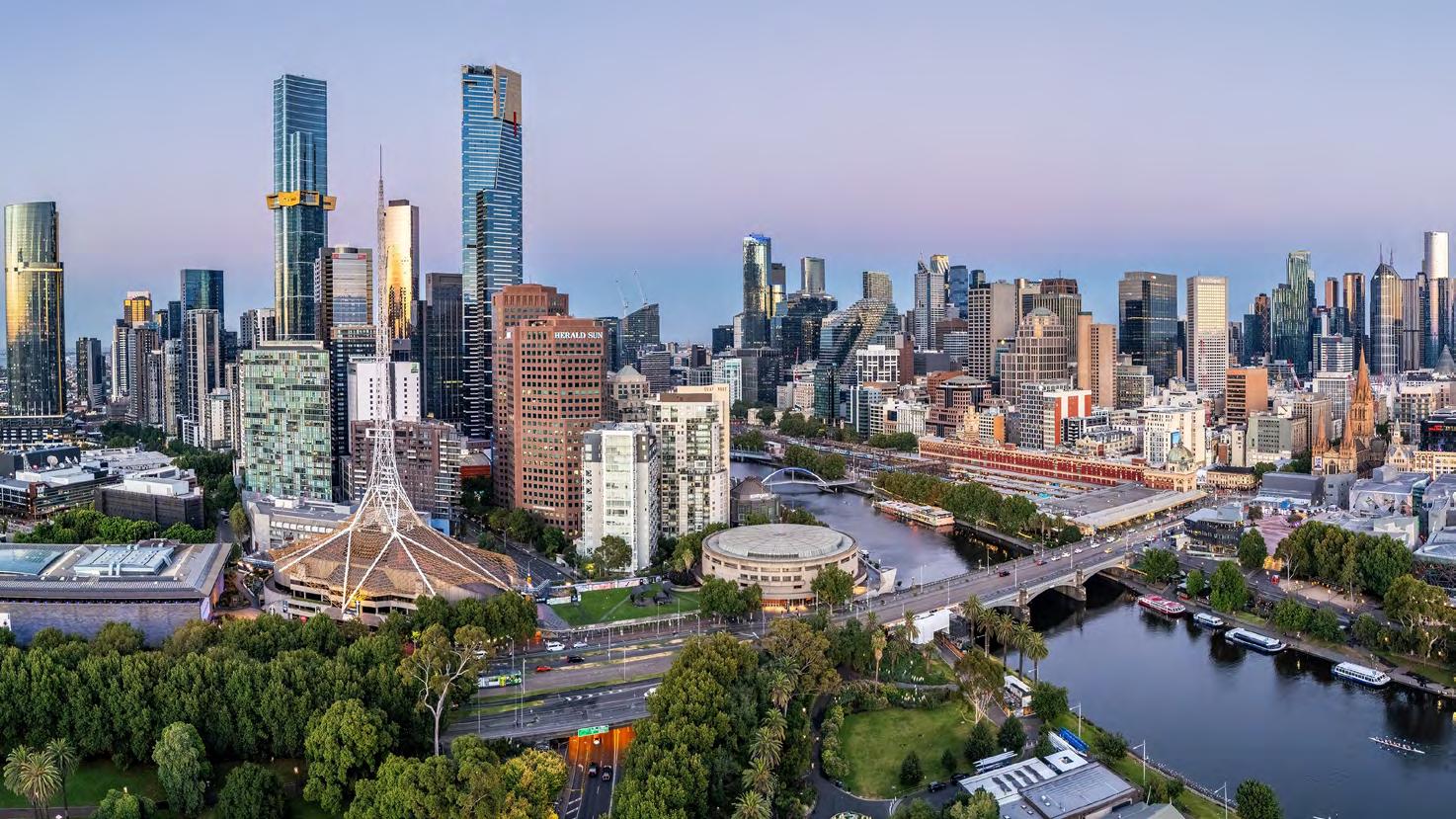
The MSO has developed a musical Acknowledgement of Country with composer James Henry to pay our respects to the traditional owners of the land through the language of orchestral music.
James Henry’s position is supported by Cybec Foundation
About Acknowledgement
‘I wrote this piece to reflect the complex journey toward the recognition of Aboriginal people as the traditional custodians of the land. It opens with rhythms inspired by the character of traditional songs found across many parts of Australia. From this texture, a melody emerges, representing the long period during which Aboriginal ownership of land was disregarded. The piece traces both progress and setbacks over time.
‘With the passing of the Victorian Statewide Treaty Bill, there is a renewed sense of optimism among many Aboriginal Victorians. Through Acknowledgement, I seek to convey a feeling of determination and resilience, reflecting the ongoing work to improve the quality of life for Aboriginal people, and to deepen respect for and awareness of our distinct culture, history and enduring connection to Country.’
James Henry 2025–2026 Cybec First Nations Composer in Residence
Melbourne Symphony Orchestra and MSO Chorus
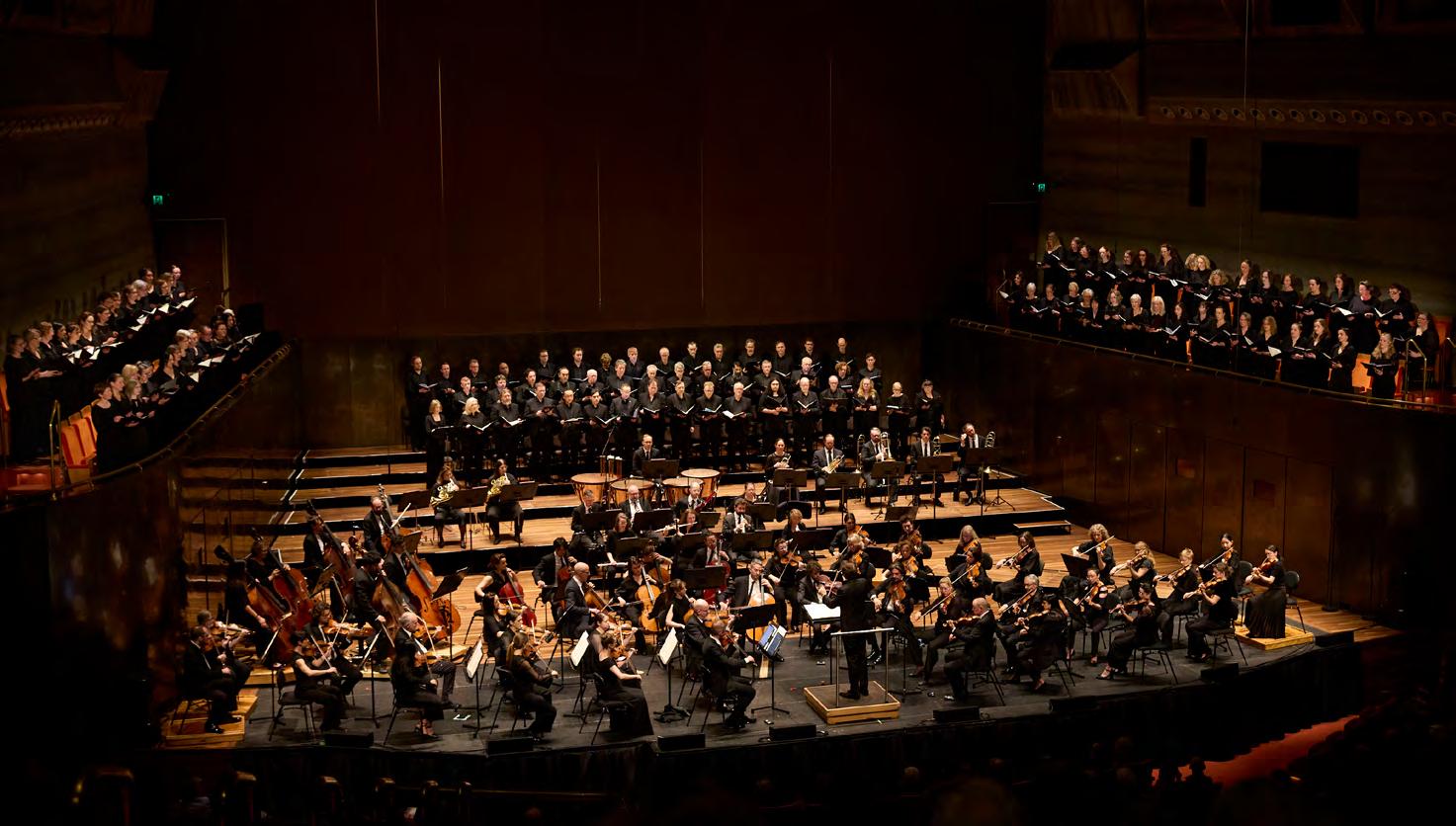
The Melbourne Symphony Orchestra is Australia’s preeminent orchestra, dedicated to creating meaningful experiences that transcend borders and connect communities. Through the shared language of music, and led by Chief Conductor and Artistic Advisor Jaime Martín, the MSO delivers performances of the highest standard, enriching lives and inspiring audiences.
Woven into the cultural fabric of Victoria for 120 years, and driven by the belief that music is a universal right, the MSO brings music to all corners of the community, ensuring that everyone can share in the transformative power of music. The MSO reaches five million people annually through performances and TV, radio and online broadcasts, as well as critically acclaimed recordings.
Whether performing on world stages or in the heart of Victoria, the MSO transforms its mission and vision into reality –enriching lives and creating cultural connections through the unparalleled beauty of music.
Celebrating more than 60 years of creating inspiring musical moments, the Melbourne Symphony Orchestra Chorus, led by Chorus Director Warren TrevelyanJones, gives voice to the Orchestra’s choral repertoire. The MSO Chorus has performed with the some of the world’s finest conductors including Jaime Martín, Sir Andrew Davis, Edward Gardner, Mark Wigglesworth, Bernard Labadie, Vladimir Ashkenazy, Xian Zhang, Nodoko Okisawa and Simon Halsey.
Committed to developing and performing new Australian and international choral repertoire, the MSO Chorus has commissioned works such as Brett Dean’s Katz und Spatz, Ross Edwards’ Mountain Chant, and Paul Stanhope’s Exile Lamentations, and its recordings have received critical acclaim. The Chorus has performed across Brazil and at the Cultura Inglese Festival in São Paolo, with the Australian Ballet and the Singapore Symphony Orchestra, at the AFL Grand Final and at Anzac Day commemorative ceremonies.
PHOTO: LAURA MANARITI
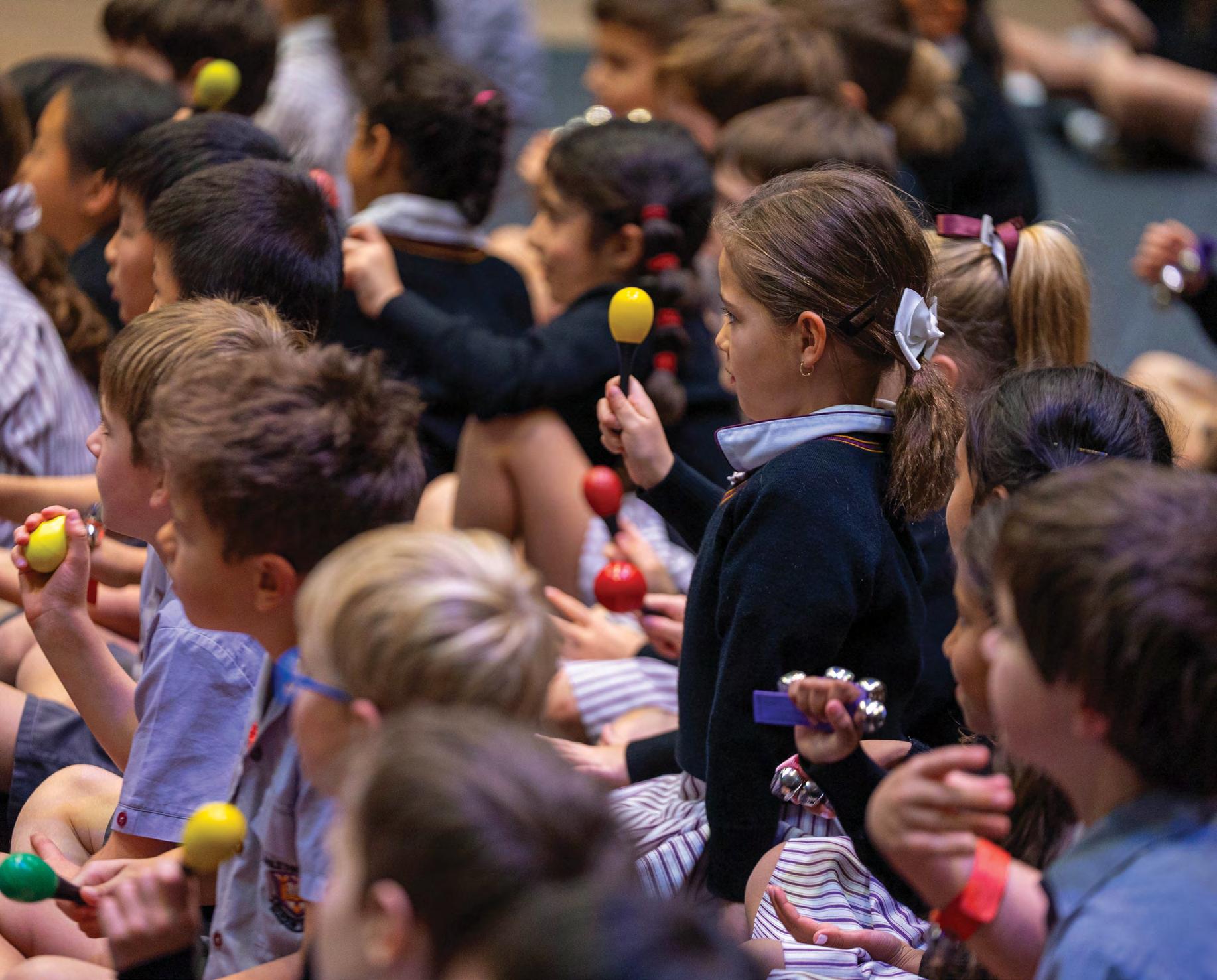
Creating connections one note at a time
As the Program Partner of MSO Jams in Schools, we are building a more connected community and the next generation of music lovers.
String Spectacular
Saturday 16 May at 7:30pm
Elisabeth Murdoch Hall, Melbourne Recital Centre
Artists
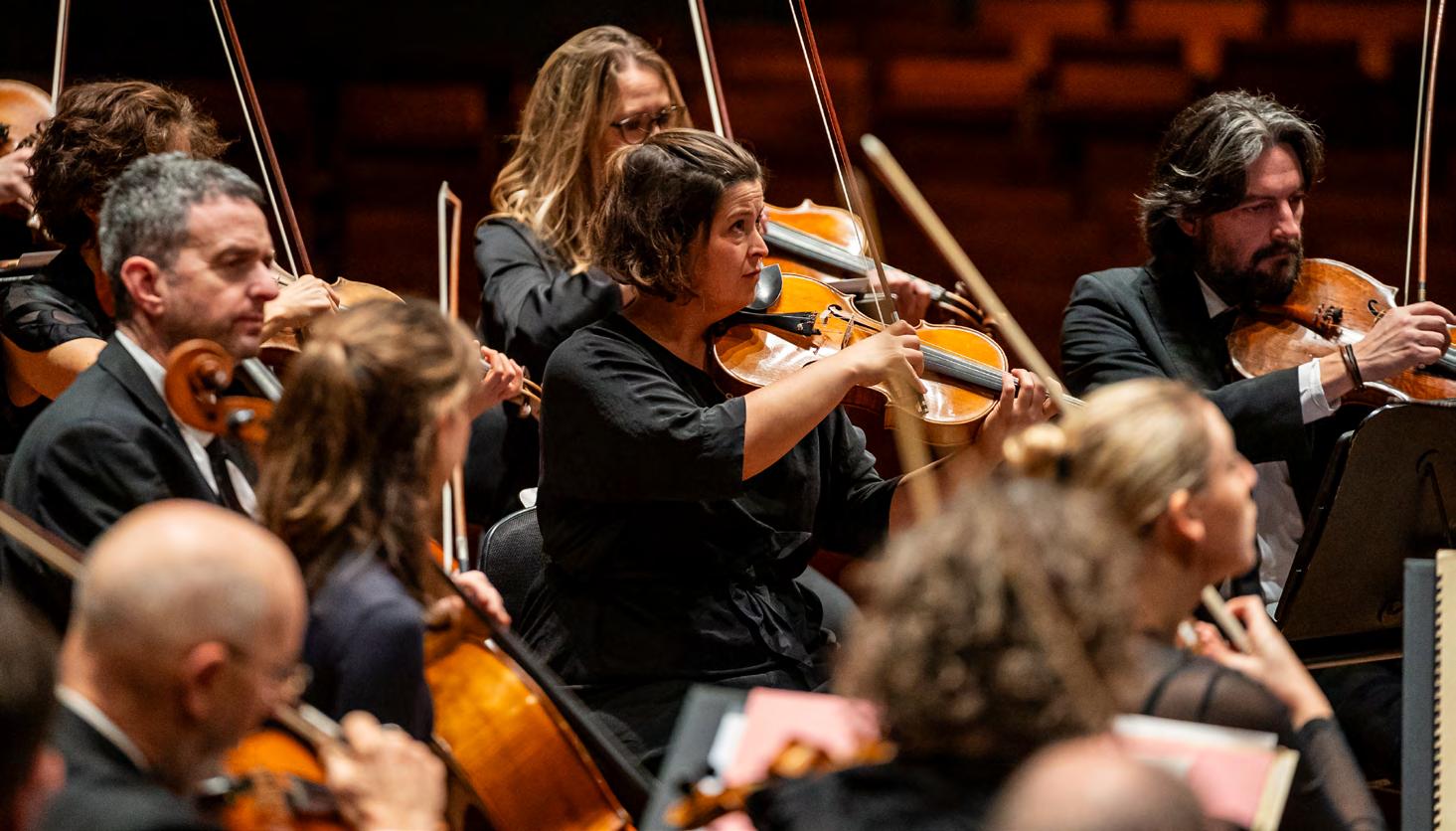
MSO Strings
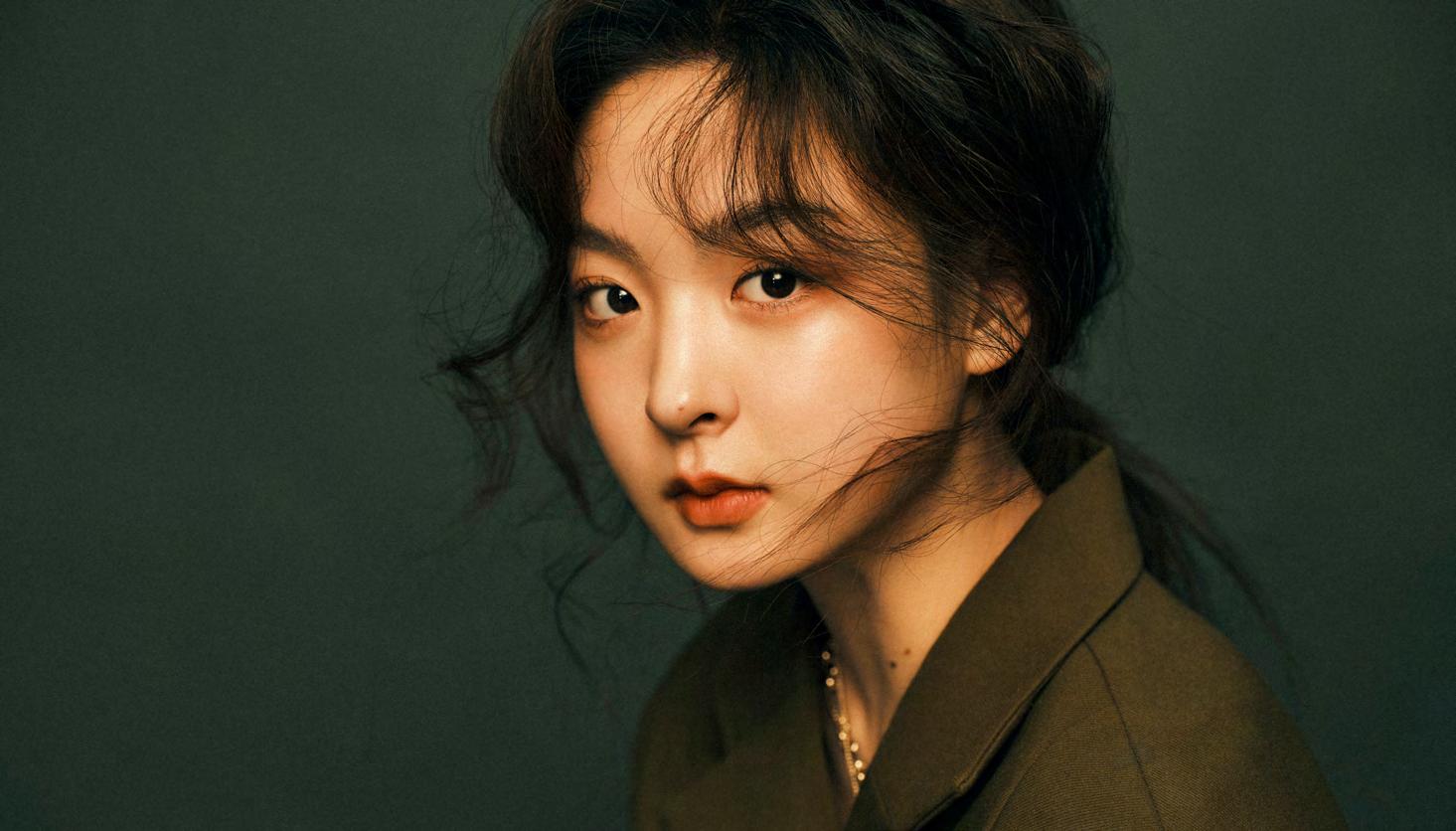
Natalie Chee violin and director
Program
Mozart Divertimento in D major, K.136 [15’]
Grieg Holberg Suite [21’]
interval
Ella Macens The Lake for strings [8’]
Tchaikovsky Serenade for strings [29’]
A musical Acknowledgement of Country by MSO
Cybec First Nations Composer in Residence James Henry will be performed at the start of this concert.
CONCERT EVENTS
Pre-concert talk: Learn more about the music with composer Ella Macens at 6:45pm in Elisabeth Murdoch Hall
Running time: 1 hour and 50 minutes, including a 20-minute interval. Timings listed are approximate.
MSO
Strings
First Violins
Natalie Chee Concertmaster
Tair Khisambeev Acting Associate Concertmaster
Sarah Curro
Dr Harry Imber *
Deborah Goodall
Lorraine Hook
Jolene S Coultas*
Michelle Ruffolo
Kathryn Taylor
Second Violins
Matthew Tomkins Principal The Gross Foundation*
Jos Jonker
Associate Principal
Mary Allison
Isin Cakmakçioglu
Tiffany Cheng
Val Dyke*
Roger Young
Shane Buggle and Rosie Callanan*
Violas
Christopher Moore Principal
Lauren Brigden
William Clark Morris and Helen Margolis*
Aidan Filshie
Suzie and Edgar Myer*
Jenny Khafagi
Margaret Billson and the late Ted Billson*
Jamie Miles MSO Academy
Cellos
David Berlin Principal
Elina Faskhi
Assistant Principal
Joshua Jones
Ariel Volovelsky
Double Basses
Rohan Dasika
Acting Associate Principal
Stephen Newton
* MSO position supported by MSO Academy is supported by the Robert Salzer Foundation
Natalie Chee violin and director
MSO CONCERTMASTER
Natalie Chee learned piano then violin as a child and at the age of ten began studying with Alex Todicescu, a professor at the Sydney Conservatorium of Music and member of the Sydney String Quartet. As a student, she won numerous competitions and prizes, including the ABC Young Performer of the Year (1992), and she performed as a soloist with all the Australian symphony orchestras.
While still in high school, she was accepted into the Soloist Class of Igor Ozim in Bern, Switzerland, receiving her Soloist Diploma with High Distinction. During this time, she was invited to join Camerata Bern, which she also directed. She also co-founded the Tiramisu chamber music ensemble and Mozart Piano Quartet, touring North and South America, Europe and Australia with these groups and making several recordings with prominent Swiss and German labels.
Natalie has held the First Concertmaster roles with Camerata Salzburg (appointed
2000), the Stuttgart Radio (SWR) Symphony Orchestra (2009), and the Gürzenich Orchestra (2019). She was named MSO Concertmaster in 2025 and took up the role this year.
In addition, she is a regular guest concertmaster and director of orchestras worldwide, including the BBC Symphony Orchestra, Munich Philharmonic, Munich State Opera, Hamburg Radio Orchestra, Swedish Radio Orchestra, Royal Scottish National Orchestra, Toronto Symphony Orchestra, Mahler Chamber Orchestra and the Academy of St Martin in the Fields.
Natalie is also a highly regarded chamber musician, appearing in festivals and concerts throughout Australia and Europe. From 2009 to 2025 she was first violin of the Hegel String Quartet in Stuttgart, and their album From Vienna to Hollywood was named by the German Record Critics Award as one of the four best chamber music recordings in 2022.
PHOTO: LUCAS ALLEN
About the music
Wolfgang Amadeus Mozart (1756–1791)
Divertimento in D major, K.136
Allegro
Andante
Presto
If there were a work of Mozart’s to rival his Eine kleine Nachtmusik serenade it would be this, the best-known of his teenage works. As with the later serenade (K.525), this Divertimento in D major falls into the category of informal music intended for social occasions. It is unapologetically entertaining – quite literally, music for our diversion. But there’s nothing frivolous or distracted in its creation. The musical invention, the effervescence: these are hallmarks of a prodigy growing to maturity and savouring the process.
Mozart gave this piece and its companions (K.137 and 138) the label ‘divertimento’ –the only time he personally used this designation. But the music is also a quartet, with parts for two violins, viola and ‘basso’, and many a string quartet has found the soloistic features of the partwriting rewarding to play. It can also be heard as a brilliant chamber symphony without wind instruments, even though it’s quite different in character from Mozart’s symphonies of this period.
Although this Divertimento is sometimes known as ‘Salzburg Symphony No. 1’, recent scholarship has suggested that it was begun in Milan towards the end of 1771 and only completed in Salzburg shortly after Mozart’s 16th birthday. This would explain the lively, Italianate style, with features such as the concerto-like dialogue between the two violin parts in the Allegro, the elegant singing quality of the Andante, and the playful comic opera spirit of the Presto. (Mozart delights in
witty gestures such as asking the musicians to play soft, detached phrases, followed immediately by loud outbursts. You’re allowed to smile.) The threemovement form is also suggestive of the Italian opera sinfonia, whereas string quartets and symphonies were normally cast in four movements.
This congenial music invites you to revel in its wit and beauty rather than analyse its features. There is serious skill in Mozart’s command of his musical ideas and the unexpected thematic linking of the outer movements, but it is a divertimento after all, and not to be taken too seriously.
Yvonne Frindle © 2025
Edvard Grieg (1843–1907)
From Holberg’s Time –Suite in Olden Style, Op. 40
Preludium (Allegro vivace)
Sarabande (Andante)
Gavotte (Allegretto) – Musette (Poco più mosso) – Gavotte Air (Andante religioso)
Rigaudon (Allegro con brio)
Grieg was a modest man, most comfortable when composing in miniature forms. ‘Great musicians like Bach and Beethoven have erected churches and temples,’ he claimed. ‘I have sought – as Ibsen has put it in his last dramas – to build homes for the people in which they can feel comfortable and happy.’
He also found inspiration and pride in the culture and natural scenery of his homeland, Norway, once commenting that it had ‘stamped itself’ on his creative imagination from his earliest years. In return for his devotion, the town of his birth, Bergen, claimed him as their most
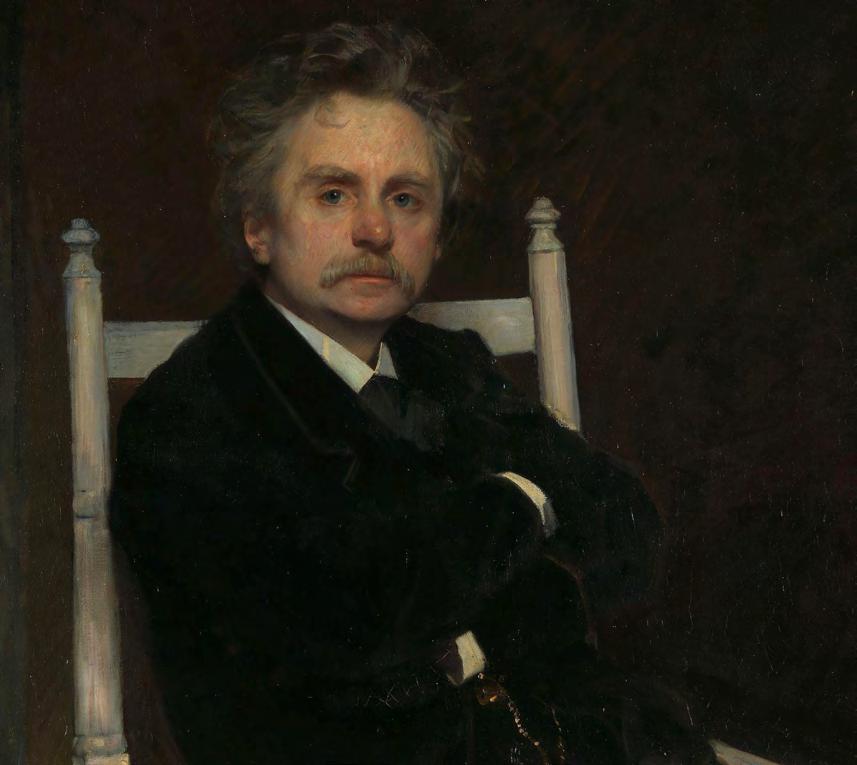
celebrated son. But Grieg was not Bergen’s only local hero. The 18th-century Bergen writer Ludvig Holberg (1684–1754) had become famous as the ‘Molière of the North’ – a title he earned for the satirical bent of his (Danish) plays.
Grieg conceived his Holberg suite as a commemorative work for Holberg’s bicentennial, and its full title – ‘Suite in the olden style, from Holberg’s time, 1884’ –points to an antique flavour. Grieg restricted himself to the musical styles and Baroque dance forms that would have been familiar to Holberg, and yet his own characteristic style is unmistakable.
This ‘costume piece’, as Grieg dubbed it, begins with a jaunty prelude, full of lively contrasts. The Sarabande reflects a Romantic understanding of this courtly dance. By Holberg’s time, the Latin fire of the 16th-century sarabande had already surrendered to a more sedate character, and for Grieg’s contemporaries the sarabande was slow and sombre, almost unrecognisable as dance music.
Grieg’s Gavotte adopts the rhythmic trademark of this lively French dance: its momentum stems from the way each melodic phrase begins halfway through
Grieg achieved great popularity in his own time, yet the widespread acclaim never went to his head. Even the awarding of a Knighthood and Order of Orange-Nassau only prompted his quip that ‘orders and medals are most useful to me in the top layer of my trunk. The customs officials are always so kind to me at the sight of them’.
the bar, always tipping the music onto the next downbeat. Halfway through, the character shifts to a more folk-like character: here the lower strings have the job of imitating the drones of a Musette (a kind of bagpipe).
The Air, marked ‘Andante religioso’, provides a moment of solemnity. The music is reminiscent of a Bach aria, with a tender melody that sings and sighs over a pulsing accompaniment. The spirited Rigaudon begins with the concertmaster and principal viola over the lightest of accompaniments. Gradually the bass line is thickened and the innate boisterousness of the rigaudon, a leaping dance, emerges. In the middle of the movement – as in the Gavotte – there is a shift of mood, with more lyrical writing and a relaxed tempo.
The Holberg Suite was originally written for piano before Grieg reworked it for string orchestra. The string parts are beautifully and naturally written for the instruments, and in many ways the music benefits from the sustained and singing sounds not possible on a piano.
Adapted from notes by Kylie Burtland (Symphony Australia © 1995) and Yvonne Frindle © 2008
Ella Macens (born 1991)
The Lake for strings
Ella Macens wrote The Lake during a Sydney summer, working while those around her were in holiday mode. She found her own escape, she said at the time, through this composition. The result was a ‘meditative piece of music intended to depict the complete serenity one might experience while looking over a still lake where not a single ripple dances’.
In its original form, The Lake was scored for recorder, cello and chamber organ, and was premiered in the 2018 Sydney Festival by Genevieve Lacey, Daniel Yeadon and Neal Peres Da Costa. Performed on period instruments, the colours were Baroque, but the reflective, floating quality of the music spoke to modern ears.
Later that year, the Canberra Symphony Orchestra commissioned an arrangement for strings, which was performed on the occasion of the National Apology to Victims and Survivors of Institutional Child Sexual Abuse. In this new context, the music’s intrinsically solemn character took on renewed meaning. As Macens writes in the score: ‘The work was born out of personal longing for inner peace, strength and healing.’
In the string orchestra version, the original melody lines are assigned to the concertmaster and principal cello. These are supported by parts for seven violins, three violas, cello and double bass – each musician with their own line to play –giving the texture a wonderful richness. The sound world is muted and firmly anchored in familiar tonalities, with just the occasional unexpected chord threatening to create a ‘ripple’ in the music’s contemplative stillness.
Yvonne Frindle © 2026
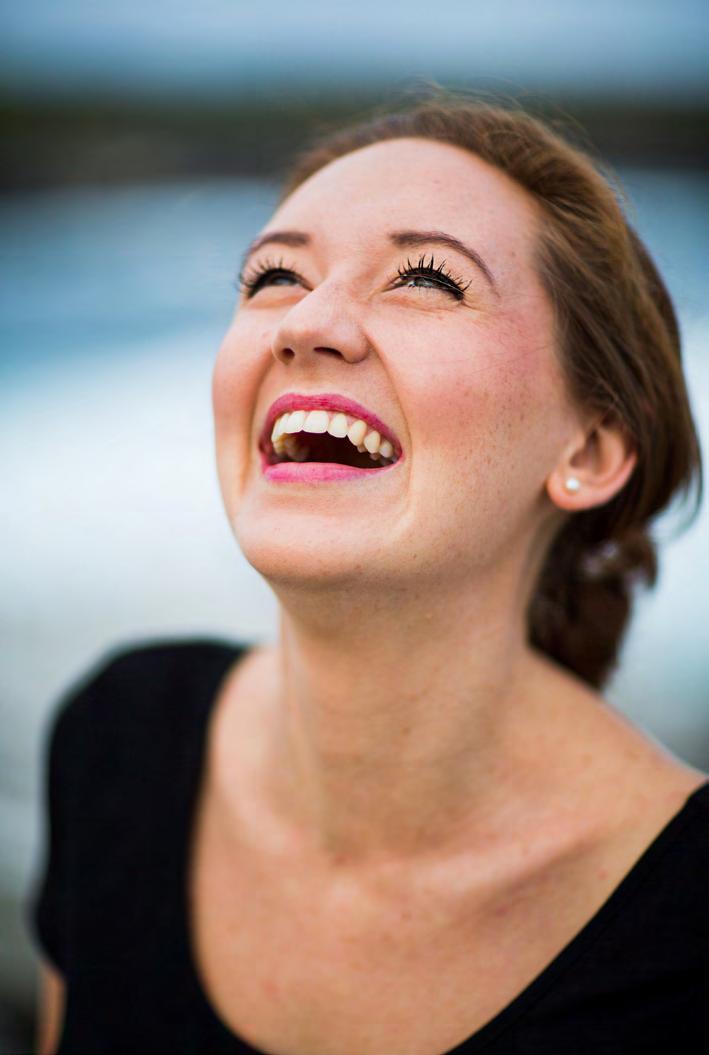
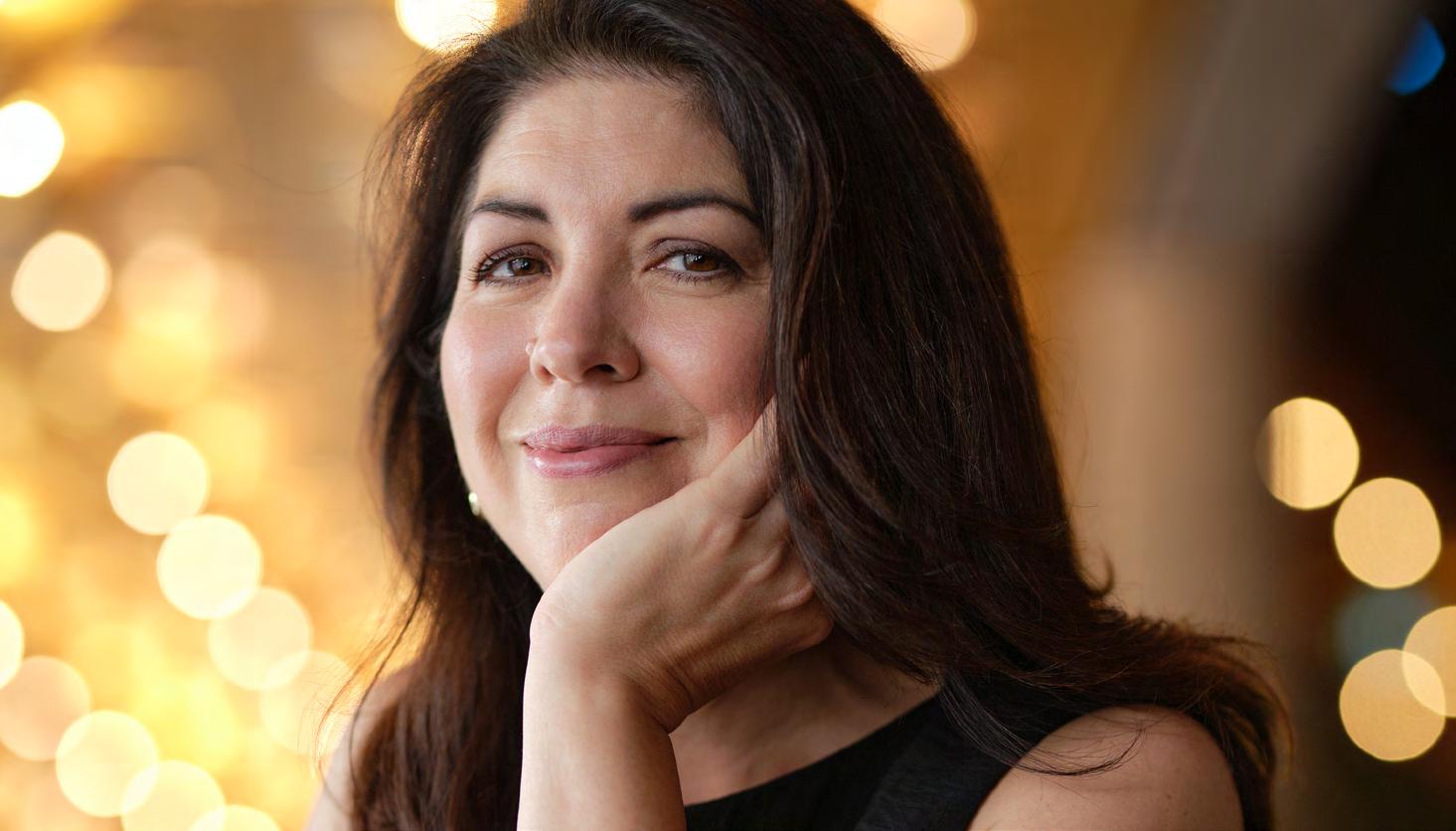
ELLA MACENS draws on elements of her Latvian heritage, fusing these with her love of popular and classical music to create a language rooted in a deeply evocative and sensitive musical aesthetic. Recent highlights include the premieres of Through the Mist (Omega Ensemble) and Forever Ours (Australian Haydn Ensemble), performances of Cloud Magic by the Sydney Conservatorium Wind Symphony on tour in South Korea and Japan, and a performance of The Space Between Stars in the MSO’s 2025 Metropolis Festival. Earlier this year, the San Francisco Symphony and Simone Young performed The Space Between Stars, Cloud Magic received its European premiere in Riga, and the MSO premiered My Heart on Yours, commissioned in celebration of the 50th anniversary of ABC Classic. She is currently composing a new work for the Sydney Symphony Orchestra.
PHOTO: DARWIN GOMEZ
Pyotr Ilyich Tchaikovsky (1840–1893)
Serenade in C major for strings, Op.48
Pezzo in forma di sonatina (Andante non troppo – Allegro moderato –Andante non troppo)
Valse (Moderato. Tempo di Valse)
Elegia (Larghetto elegiaco)
Finale, tema russo (Andante – Allegro con spirito – Molto meno mosso)
In October 1880, Tchaikovsky wrote to his patron, Madame von Meck:
You can imagine, dear friend, that recently my muse has been very benevolent when I tell you I have written two works very rapidly: a Festival Overture for the Exhibition and a Serenade in four movements for string orchestra. The overture will be very noisy. I wrote it without much warmth of enthusiasm; therefore it has no great artistic value. The Serenade, on the contrary, I wrote from an inward impulse; I felt it, and venture to hope that this work is not without artistic qualities.
The overture is of course the ‘1812’, noisier with every passing year, though the Serenade, too, should be performed, according to Tchaikovsky, with as large a band of strings as practicable.
The Serenade is in four ‘classical’ movements. The first is bookended by a striking, solemn and rich slow introduction, firmly in C major yet very expressive. Like so many of Tchaikovsky’s melodies, the theme is essentially a slightly modified scale. It is stated first in the first violins, then with minor-ish harmony by the cellos and basses, then again in a different combination, and finally, an octave lower than the start, it is stated softly and slightly fragmented. The movement is ‘in the form of a little sonata’ so Tchaikovsky gives the classical contrast between a first theme (in C major), based on a sighing
motif, and second theme (Gmajor) that glitters with repeated semiquavers. Here Tchaikovsky plays tricks with the rhythm, accenting off-beats to create the passing effect of a different time-signature.
Everyone gets a share of melody and frenetic accompaniment in the Valse that follows. This has a slightly Italian sound to it (Tchaikovsky was a master of disguise, particularly in the ballets) especially in the motif periodically sounded by just the violins.
The Elegia is pure Tchaikovsky, with its first, rising scale-based melody and passage of song accompanied by pizzicato, to suggest, maybe, guitars. Even the D major music that opens and closes the movement is sombre, but the harmony becomes increasingly chromatic and passionate.
There are two Russian themes in the last movement: ‘On the Green Meadow’ in the slow, muted introduction and ‘Under the Green Apple Tree’, the first theme of the Allegro. After a thrilling development, the music briefly returns to the work’s opening gesture, before a tremendous release of energy in the final pages.
Gordon Kerry © 2015
Mass of Deliverance
Sunday 17 May at 12:00pm
Elisabeth Murdoch Hall, Melbourne Recital Centre
Artists
MSO Chorus
Warren Trevelyan-Jones conductor
Timothy Mallis piano and organ
MSO Brass Ensemble Program
Dan Walker Mass of Deliverance (2014) [30’]
John Rutter Hymn to the Creator of Light [8’]
John Rutter Gloria [18’]
Running time: 1 hour and 5 minutes without interval. Timings listed are approximate.
MSO Chorus
Sopranos
Sheila Baker
Helena Balazs
Tina Battaglia
Michelle de Courcy
Veryan Croggon
Laura Fahey
Rita Fitzgerald
Catherine Folley
Karina Gough
Penny Huggett
Hannah Macmillan
Caitlin Noble
Susie Novella
Julie O’Reilly
Katherine O’Shea
Karin Otto
Amanda Powell
Tanja Redl
Elizabeth Rusli
Beth Richardson
Jemima Sim
Fiona Steffensen
Ellie Sykes
Katy Turbitt
Elizabeth Yong
Altos
Cecilia Björkegren
Kate Bramley
Jane Brodie
Jacqueline Cheng
Alexandra Chubaty
Juliarna Clark
Mari Eleanor-Rapp
Lisa Faulks
Claudia Funder
Jill Giese
Jillian Graham
Sophia Gyger
Madeleine Halls
Ros Harbison
Jennifer Henry
Kristine Hensel
Helen Hill
Julie Lotherington
Christina McCowan
Helen MacLean
Natasha Pracejus
Alison Ralph
Kate Rice
Kerry Roulston
Lisa Savige
Carol Silberberg
Melvin Tan
Libby Timcke
MSO Brass Ensemble
Trumpets
Owen Morris
Principal
Shane Hooton
Associate Principal
Glenn Sedgwick*
Rosie Turner
Dr John and Diana Frew*
Callum G’Froerer
* MSO position supported by
Tenors
James Allen
Kent Borchard
Steve Burnett
Peter Campbell
Allan Chiang
James Dipnall
Ewan
Lyndon Horsburgh
Fergus Inder
Michael Mobach
Linton Roe
Cleve Schupp
Robert Simpson
Eric Slotsve
Cameron Tait
Brad Warburton
Stewart Webb
Stephen Wood
Basses
Maurice Amor
Kevin Barrell
Tharanga Basnayake
Ross Cullinane
Roger Dargaville
Ted Davies
Peter Deane
Elliott Gyger
Luke Hales
Andrew Ham
Jordan Janssen
Tim Kopka
Roderick Lee
Gary Levy
Philip McCosker
Douglas McQueenThomson
Stephen Pyk
Matthew Toulmin
Caleb Triscari
Jiunn Yap
Raoul Zambelli
Trombones
José Milton Vieira
Principal
Richard Shirley
Michael Szabo
Principal Bass Trombone
Tuba
Timothy Buzbee
Principal
Timpani
Matthew Thomas
Principal
Percussion
John Arcaro
Tim and Lyn Edward*
Robert Cossom
Dr Clem Gruen and Dr Rhyl Wade*
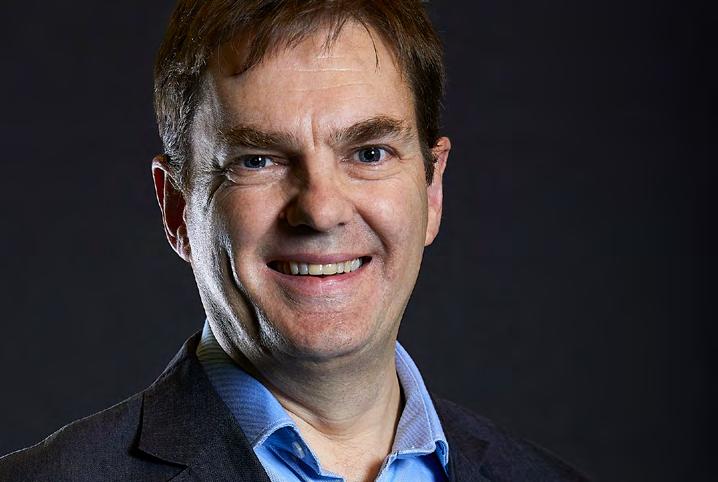
Warren Trevelyan-Jones conductor and chorus director
Warren Trevelyan-Jones is regarded as one of the leading choral conductors and choir trainers in Australia. Chorus Director of the Melbourne Symphony Orchestra since 2017, in 2024 he was also appointed Chorus Master of the Tasmanian Symphony Orchestra. From 2008 to 2024 he was Head of Music at St James’, King Street in Sydney, and under his leadership, the Choir of St James’ gained an international reputation through its choral services, orchestral masses, concerts, recordings, and touring, as well as the commissioning of new works.
Before relocating to Australia in 2008, he enjoyed an extensive career as a vocal soloist and ensemble singer in Europe, including nine years in the Choir of Westminster Abbey, and regular work with the Gabrieli Consort, Collegium Vocale (Ghent), the Kings Consort, Dunedin Consort, the Sixteen, the Tallis Scholars and the Taverner Choir, Consort and Players. He has appeared on more 60 recordings and numerous TV and radio broadcasts, and in many of the worlds’ leading music festivals and concert halls.
Warren is a co-founder of the Consort of Melbourne and, in 2001 with Dr Michael Noone, he founded the Gramophone Award-winning group Ensemble Plus Ultra. He is also an experienced singing teacher and qualified music therapist.
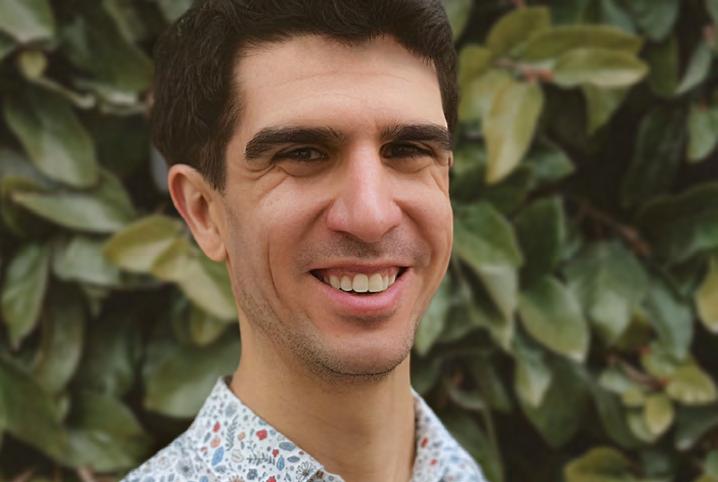
Timothy Mallis piano and organ
One of Melbourne’s leading collaborative pianists and composers, Timothy Mallis is in high demand as an accompanist, organist and conductor, and is the répétiteur for the MSO Chorus. He is also a steadfast supporter of music education and is committed to bringing new Australian compositions to life.
A choral specialist, Tim is Assistant Artistic Director of the Australian Boys Choral Institute, and also works with the Yarra Voices. Recent roles include Associate Director of Music at St Andrew’s Anglican Church.
He has composed for some of Australia’s finest ensembles, including Sinfonia Australis, the Vocal Consort and St Mary’s Cathedral Choir, and in 2019 received the Archbishop’s Prize for New Composers.
Tim is a graduate of the Melbourne Conservatorium of Music, where he majored in organ and composition, and of the Franz-Schubert-Institut (Baden, Austria) where he studied German Lieder. He is passionate about educating the next generation of musicians, and he teaches at the University of Melbourne, Victorian College of the Arts Secondary School and Camberwell Girls Grammar School. He is also employed by Opera Australia and Victorian Opera as a surtitle specialist.
About the music
Dan Walker (born 1978)
Mass of Deliverance (2014)
Timothy Mallis piano
MSO Brass Ensemble
Mass of Deliverance was commissioned in 2014 for the Leichhardt Espresso Chorus in Sydney and emerged from the shared desire of Dan Walker and the choir’s then artistic director Michelle Leonard to create a work that could be programmed with John Rutter’s Gloria. This established the shape and scoring for the work: chorus without soloists (a common requirement in amateur choir programming), brass quintet, piano and percussion.
The composer writes:
This work sets the six sections of the ordinary of the mass: Kyrie, Gloria, Credo, Sanctus, Benedictus and Agnus Dei. In composing the work, I was particularly keen on creating strong and very singable melodic lines for the voices, set amidst material which highlighted true contrasts in colour and dynamics. The inclusion of brass and percussion gives the work an almost filmic quality at times, and allowed me to showcase the ensemble’s ability to create everything from explosive fortissimos to the most delicate pianissimo moments of reverence.
I am not a particularly religious person, though as a chorister myself I have become very familiar with much of the vast canon of sacred music and I understand the gravitas that a musical setting of the mass carries with it. I was determined not be led down the garden path of mimicking extant choral masses. Many of us are familiar with iconic settings of the various movements, so I felt that being constantly considerate of the musical qualities the ensemble had to
offer, rather than the nature of the text itself, helped me explore new ways of treating the all-too-familiar Latin and its inherent structure.
Mass of Deliverance is designed to be an uplifting work of positivity and optimism. For the past few years I have felt that the world has lost its way, and that we very often forget what a privilege it is to live, even fleetingly, on this planet that many of us take for granted. This mass, then, offers a moment of respite and reflection at a time I think we all could use a little rescuing.
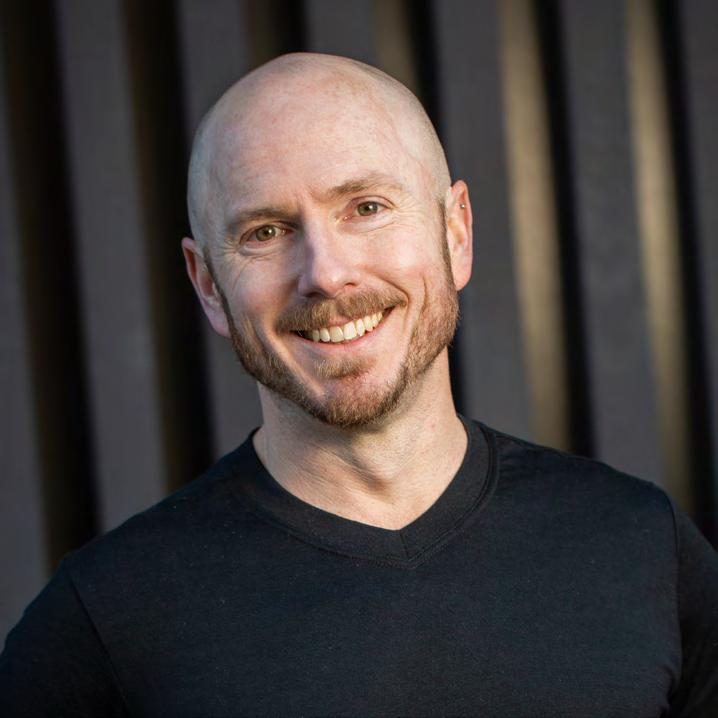
DAN WALKER is one of Australia’s most in-demand choral specialists. He has been commissioned by the Sydney and Queensland symphony orchestras, Australian Chamber Orchestra, Sydney Philharmonia Choirs, Sydney Children’s Choir and Gondwana Choirs. He has also had his work performed by the San Diego Symphony, iSing Silicon Valley and Voces8. In 2015, Mass of Deliverance was a finalist in the APRA–AMCOS Art Music Awards. As an arranger, he regularly produces work for the SSO, Hong Kong Philharmonic Orchestra, ACO and ABC Classic, and his television credits include the 2009 I Still Call Australia Home campaign for Qantas.
John Rutter (born 1945)
Hymn to the Creator of Light
John Rutter wrote this anthem for the dedication of the Herbert Howells memorial window in Gloucester Cathedral at the Three Choirs Festival in 1992. The Festival brings together huge choral forces and he used these to great effect, writing for unaccompanied double choir.
Rutter knew composer Herbert Howells (1892–1983) and American countertenor Christopher Lowrey describes this anthem as a ‘love letter’ to Howells’ rich harmonic language, ‘most obviously in the opening, a vision of the creation of light which grows from a mystery to incandescence at “the sun’s ray, the flame of fire”’.
The anthem is cast in three sections. The first two of these set a prayer by Lancelot Andrewes (1555–1626), which reflects on the opening of the Book of Genesis: ‘Let there be light!’ After the mystical intensity of the opening, the lively central section places the two choirs in dialogue with each other, concluding on the line ‘who hath shewed us light’. This then leads seamlessly into the 17th-century Lutheran chorale tune ‘Schmücke dich’ (Light, who dost my soul enlighten), which Rutter delicately reharmonises, with allusions to the opening motif of the anthem.
Yvonne Frindle © 2026
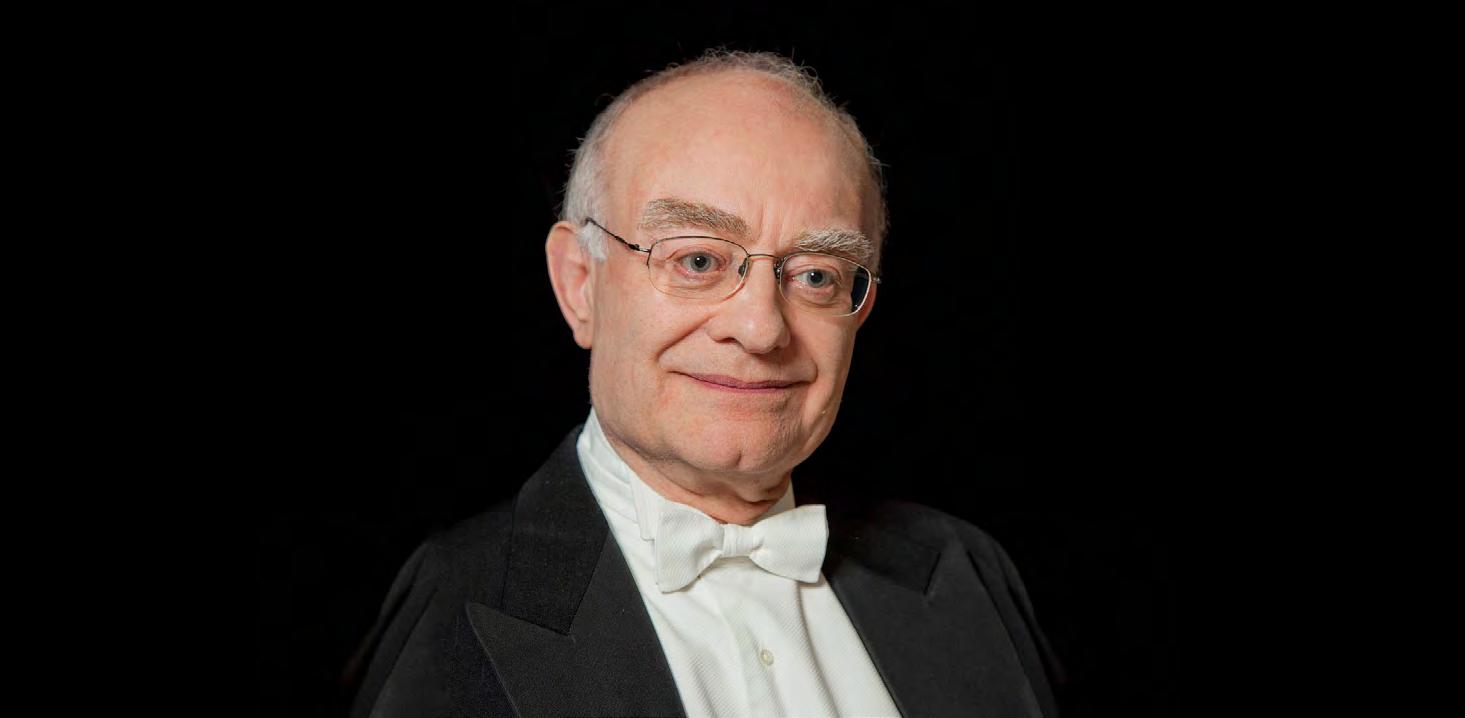
JOHN RUTTER holds an unassailable place within the English choral tradition, beloved by choristers and audiences for his directness of style, sensitivity to his chosen texts and grateful writing for the voice. He studied music at Clare College, Cambridge and first came to notice as a composer and arranger of Christmas carols and other choral pieces during those early years, before his appointment as Director of Music. In 1983, he formed his own choir, the Cambridge Singers, with whom he has made numerous recordings, and today his compositions – ranging from concert-length works such as his Requiem to settings of ‘All Things Bright and Beautiful’, ‘The Lord is My Shepherd’ and ‘For the Beauty of the Earth’ – are performed worldwide. Rutter holds a Lambeth Doctorate in Music, and in 2007 was awarded a CBE for services to music. In 2023, he was named a Fellow of the Ivors Academy and in 2024 he was knighted in the King’s Birthday Honours.
John Rutter (born 1945)
Gloria Timothy Mallis organ MSO Brass Ensemble
‘Gloria in excelsis Deo!’ These words might be heard any time of year but they come from Luke’s Gospel account of the nativity and when we sing them we’re giving voice to the words of angels proclaiming the birth of the Christ child: ‘Glory be to God on high!’
John Rutter’s Gloria was commissioned by an American Midwest choir, the Voices of Mel Olsen, in 1974, when he was director of music at Clare College, Cambridge. Rutter was already known for his church music and carol settings, but this work would be his first major international commission.
Olsen wanted an ‘accessible but challenging’ concert work to a familiar sacred text with a small ensemble accompaniment and no professional soloists. Having settled on the Gloria text, Rutter asked himself what instruments the angels would have played as heralds of glad tidings. ‘The answer was obviously trumpets,’ he says, ‘and that chimed in with what I knew to be a fine tradition of brass playing in the Midwest, where marching bands are an established part of school and college life. I decided to supplement a brass ensemble accompaniment with timpani, percussion and organ.’
The music is based on one of the traditional Gregorian chants associated with the Gloria text; stylistically, there are hints of William Walton (‘who knew a thing or two about brass bands, and about festive and ceremonial writing’), Igor Stravinsky and Francis Poulenc.
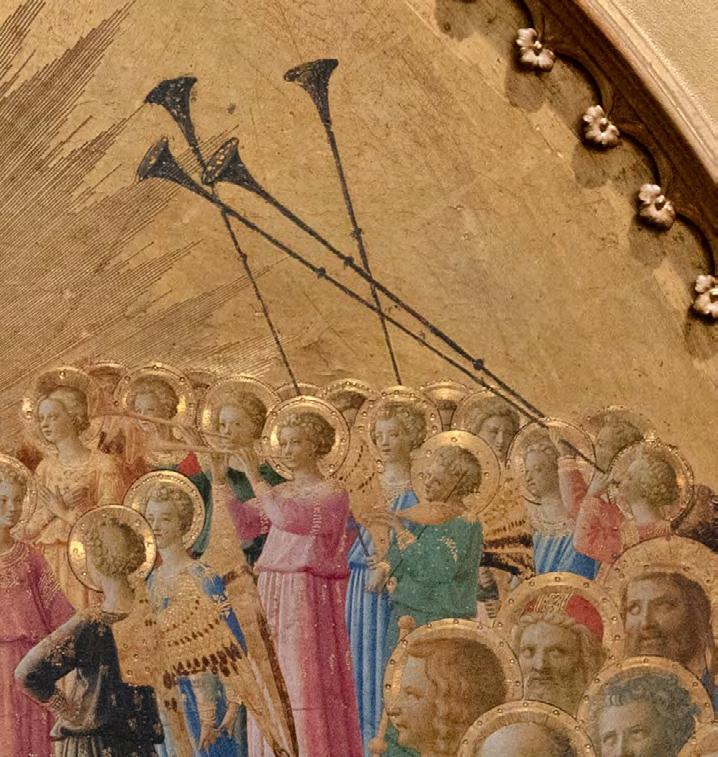
Following a roughly symphonic structure, Rutter organised the text in three movements – ‘exalted, devotional and jubilant by turns’. Trumpets and drums are key to the pageantry of the outer movements, while filigrees from the organ’s flute stop float above the introspective middle movement.
As Rutter recalls, musical eclecticism was less acceptable in 1970s Europe than it is now, and he considers it fortunate the work was premiered in the ‘friendlier climate’ of America, ‘where a firestorm of performances followed’. Rutter’s Gloria has become one of the best-loved sacred choral works worldwide, and, he says, ‘much of the credit must go to Mel Olsen because, in telling me what he was looking for in a new choral work, he was telling me what thousands of other choral directors were looking for too.’
Yvonne Frindle © 2023
Gran Partita
Sunday 17 May at 6:00pm
Elisabeth Murdoch Hall, Melbourne Recital Centre
Artists
MSO Wind Ensemble
David Thomas clarinet and director (Strauss)
Johannes Grosso oboe and director (Mozart)
Program
R. Strauss Sonatina No. 1 for winds [30’]
interval
Mozart Serenade in B flat major, K.361 (Gran Partita) [29’]
CONCERT EVENTS
Pre-concert talk: Learn more about the music with Keith Clancy 5:15pm in Elisabeth Murdoch Hall
Running time: 1 hour and 25 minutes, including a 20-minute interval. Timings listed are approximate.
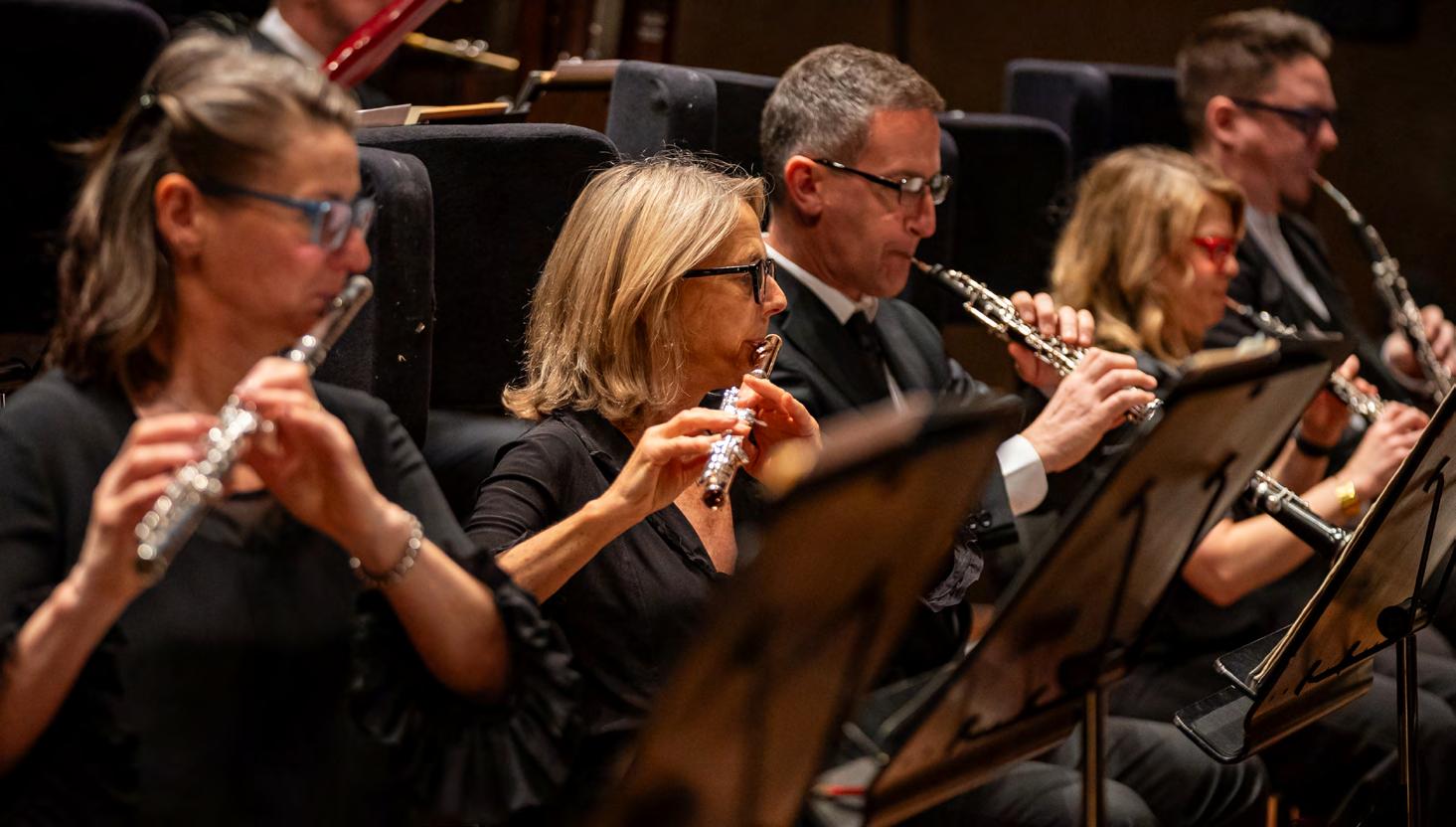
MSO Wind Ensemble
STRAUSS
Flutes
Wendy Clarke Associate Principal
Sarah Beggs
Oboes
Johannes Grosso Principal
Ann Blackburn
Margaret Billson and the late Ted Billson* Clarinets
David Thomas Principal
Philip Arkinstall
Associate Principal
Georgia White
MSO Academy
Basset Horn
Mitchell Berick
Bass Clarinet
Jonathan Craven Principal
Horns
Nicolas Fleury Principal
Margaret Jackson AC*
Saul Lewis
Principal Third
Cecilie Halland and the late Hon. Michael Watt KC*
Abbey Edlin
The Hanlon Foundation*
Rachel Shaw
Gary McPherson* Bassoons
Elise Millman
Associate Principal
Hayden Burge
MSO Academy
Contrabassoon
Brock Imison Principal
MOZART
Oboes
Johannes Grosso Principal
Ann Blackburn
Margaret Billson and the late Ted Billson* Clarinets
David Thomas Principal
Georgia White MSO Academy
Basset Horns
Jonathan Craven Principal Bass Clarinet
Mitchell Berick
Horns
Nicolas Fleury Principal
Margaret Jackson AC*
Saul Lewis
Principal Third
Cecilie Halland and the late Hon. Michael Watt KC*
Abbey Edlin
The Hanlon Foundation*
Rachel Shaw
Gary McPherson* Bassoons
Jack Schiller Principal
Dr Harry Imber *
Natasha Thomas
Patricia Nilsson*
Double Bass
Jonathon Coco Principal
* MSO position supported by MSO Academy is supported by the Robert Salzer Foundation
PHOTO: SAMANTHA MEULEMAN
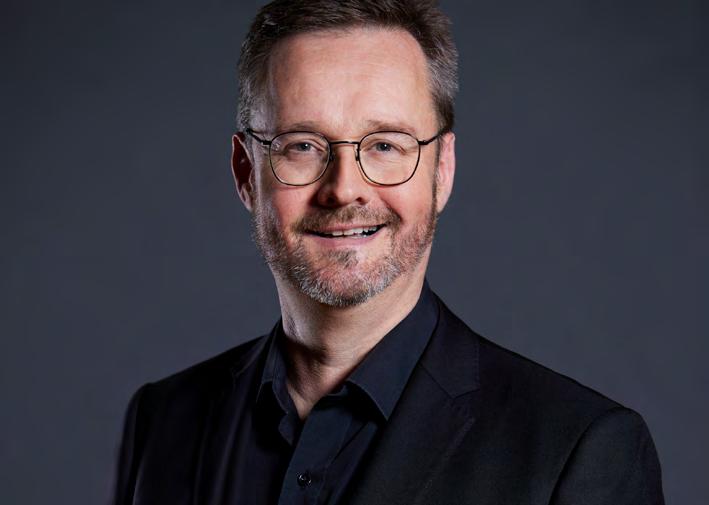
David Thomas clarinet and director (Strauss)
David Thomas has been the Principal Clarinet of the Melbourne Symphony Orchestra since 2000. Growing up in the Dandenong Ranges, he studied at the University of Melbourne with Phillip Miechel, and later at the Vienna Conservatorium with Roger Salander. David has played as a member of the West Australian Symphony Orchestra and is a member of the Australian World Orchestra.
He has appeared as concerto soloist with the Melbourne, West Australian, Sydney, Tasmanian and Darwin symphony orchestras, performing works by Mozart, Copland, Debussy, Françaix and Brett Dean amongst others. Concertos have been written for him by Australian composers Ross Edwards, Philip Czapłowski and Nicholas Routley, and his recording of the Edwards concerto with the MSO conducted by Arvo Volmer has been released by ABC Classic.
David is involved in training the next generation of classical musicians at the Australian National Academy of Music, where he is the principal teacher of clarinet and head of the woodwind department.
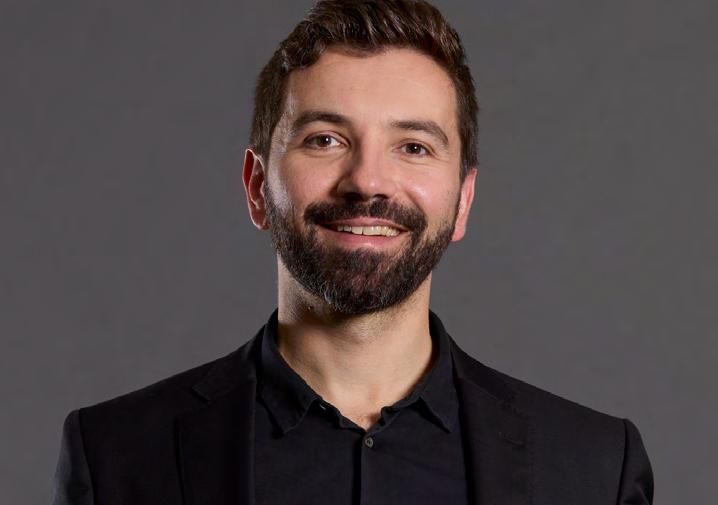
Johannes Grosso oboe and director (Mozart)
Johannes Grosso is Principal Oboe of the Melbourne Symphony Orchestra. He has enjoyed an illustrious career in Europe, as solo oboe in the Frankfurt Opera House and as a member of the Budapest Festival Orchestra, having previously spent four years with the Orchestre Philharmonique de Radio-France, as well as regularly appearing as a guest principal with orchestras such as the Mahler Chamber Orchestra, Bayreuth Festival Orchestra, Chamber Orchestra of Europe, Gewandhausorchester Leipzig and Bamberger Symphoniker.
As a concerto soloist, he won the 2014 Prague Spring International Music Competition. He also won the Giuseppe Tomassini International Competition (Italy) and Asian Double Reed Society Competition (Taiwan) and received second prize in the Fernand Gillet-Hugo Fox Competition (USA), as well as the Végh Sándor Competition Prize (Hungary). These successes led to solo appearances working with conductors such as Christoph von Dohnányi, Daniele Gatti, Gábor Takács-Nagy, Tommas Guggeis, and with orchestras including the Czech Radio Orchestra, Prague Chamber Orchestra, Budapest Festival Orchestra, Frankfurter Opern- und Museumsorchester, the Schleswig-Holstein Music Festival Orchestra and the New Bach Collegium Leipzig.
PHOTOS:
About the music
In 1784 a visitor to Vienna attended a concert given by the clarinettist Anton Stadler where he heard the music for wind instruments that we know as Mozart’s Gran Partita: ‘At each instrument sat a master – oh, what an effect it made – glorious and grand, excellent and sublime!’
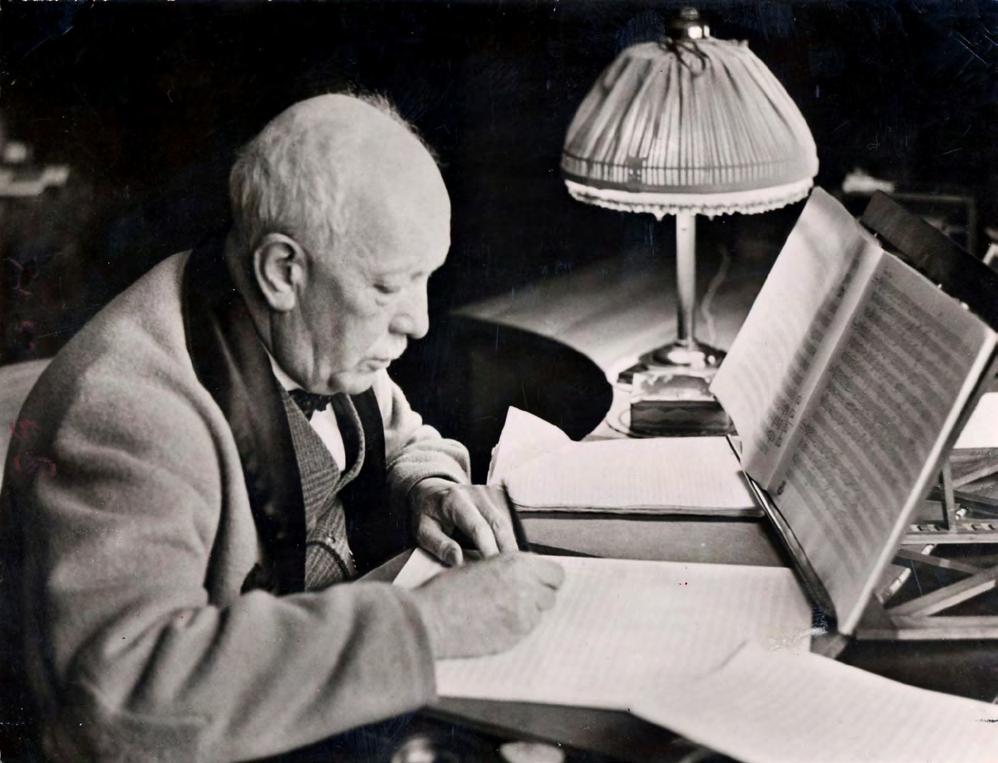
Nearly 160 years later, Richard Strauss was returning at the close of his career to Classical models, and the Gran Partita by ‘the divine Mozart’ was a particular inspiration. For his Sonatina No.1, Strauss had initially planned to use 13 instruments, like Mozart, and it’s telling that the Romance and Minuet, the most serenade-like movement, was completed first.
Composing his first Sonatina, Strauss wrote, helped him ‘get through many gloomy hours’. This evening it brings us a sunny 30 minutes. Then we hear the masterpiece behind it all, the Gran Partita. And with the virtuosos of the MSO to perform: at each instrument a master!
Richard Strauss (1864–1949)
Sonatina No. 1 for 16 winds
Aus der Werkstatt eines Invaliden (From the workshop of an invalid)
Allegro moderato
Romanze und Menuetto (Andante –Tempo di Menuetto)
Finale (Molto allegro)
After completing what he regarded as his ‘life’s work’ with his 15th opera, Capriccio (1941), Richard Strauss faced something of a creative crisis. Composition was still a necessity for the diligent septuagenarian, ‘a way of getting through the boring hours, since one cannot read Wieland and play [the card game] Skat all day’, as he drily noted. But what could he write next? Like his near contemporary, the poet William Butler Yeats, whose faltering imagination forced him to ‘enumerate old themes’, Strauss found a way forward by going back to genres he had set aside for nearly 60 years.
Before his breakthrough orchestral tone poems in the late 1880s, Strauss had cut his teeth in traditional genres, among them works for wind ensemble. His 1881
Serenade was followed in 1884 by a fourmovement Suite, both for 13 instruments. When he returned to the genre for his first Sonatina (1943), he amplified his forces somewhat, supplementing the double woodwind, contrabassoon and four horns he had used earlier with an extra clarinet, basset horn and bass clarinet, with the same 16 instruments used again in a second Sonatina (1945).
Since neither work is particularly short or simple, why call them Sonatinas – little sonatas? This decision probably reflects Strauss’s strategy of playing down the importance of his late works, which he dismissed as ‘wrist-exercises [of] no musico-historical significance whatsoever’. The composer refused to let either be published in his lifetime: like much of what he wrote in the 1940s, he classed them as ‘works for his estate’, and they only appeared in 1964 and 1952 respectively.
Both Sonatinas bear inscriptions: the first is ‘From the Workshop of an Invalid’, the second ‘From the Happy Workshop’. The invalid in question was the composer’s wife Pauline, who was hospitalised with severe pneumonia in early 1943 and took many months to recover. Despite this, the first Sonatina is in no way a programmatic
work: there is no representation of sickness and suffering, such as Strauss had captured brilliantly in Death and Transfiguration (1889).
The first movement (Allegro moderato) begins with Strauss’s signature startling harmonic juxtapositions, before settling into a good-spirited F major. A cheeky repeated-note idea leads into a second subject area introduced by the first oboe. The development section closely shadows the layout of the first part, until the first horn is given a new theme decorated by chattering woodwinds. This horn theme is thereafter integrated into the musical argument, showing Strauss’s interest in formal innovation had not sapped in his eighth decade. The movement ends wistfully, as if transitioning us to the mood of the central Romance and Minuet, which was the first movement completed.
The Romance has been well described by Norman Del Mar as ‘an extended Song Without Words’: smooth, intensely lyrical, and almost Mendelssohnian in its musical language to start with. Only two horns are used here, one of which presents the opening melody (later taken up by the first oboe). The serene atmosphere is shaken by the occasional dark chord, but order is
With Capriccio my life’s work is complete and the notes I now scribble down as wrist exercises for my estate have no musicohistorical significance whatsoever… It is merely a way of getting through the boring hours, since one cannot read Wieland and play Skat all day.
Strauss (8 April 1943)
quickly restored each time. The central Minuet offers a more extended contrast of key, meter and emotion, starting in the minor, and progressing to a more upbeat second strain before the pastoral feel of the Romance returns, with the first theme now given to the clarinet.
It takes some time before the Finale locks in on the principal key of F major, although the sunny character of the movement is already clear from the bouncy opening theme on oboe and clarinet. Cross-rhythms feature heavily in one of the later themes, and the repeated-note figure from the first movement makes another reappearance. Strauss’s ingenuity at spinning out his short motifs is on full display and there is much grateful (if challenging) writing for all the winds here. One could call this music ‘escapist’, given the dark times in which it was written, but this need not be a reproach. Strauss would tackle the destruction of World War II elsewhere; here he offers the listener a welcome respite from a world riven by conflict in this delightful, almost Arcadian idyll.
Dr David Larkin © 2026
Wolfgang Amadeus Mozart (1756–1791)
Serenade in B flat, K.361 (Gran Partita)
Largo – Allegro molto
Menuetto – Trio I, Trio II
Adagio
Menuetto – Trio I, Trio II
Romanze (Adagio – Allegretto)
Tema con variazioni (Andantino)
Finale (Molto allegro)
Mozart wrote more than 30 serenades, cassations and divertimentos: lighthearted music for instrumental combinations that could range from wind sextet to full orchestra. Only three of these were composed after Mozart moved to Vienna from Salzburg. This was largely practical: the balmy Salzburg summers encouraged outdoor diversions; Vienna offered far fewer opportunities for serenade music. It’s been suggested, too, that Mozart associated the serenade with Salzburg and the frustrations he’d endured there – once he’d left he wanted nothing more to do with the genre.
But there was one kind of serenade that Mozart couldn’t resist: Harmoniemusik –music for wind band – and all three of Mozart’s Vienna serenades were composed for combinations of winds.
The wind band didn’t come into its own in Vienna until 1782, when Emperor Joseph II formed the Imperial Royal Harmonie. This ensemble set the standard formation: a wind octet with pairs of oboes, clarinets, horns and bassoons. And the Emperor persuaded the best musicians of the day to play in it by offering complementary jobs in the Burgtheater.
Mozart saw an opportunity and promptly reworked a wind sextet from the year before. But this was not the type of music the aristocracy had in mind. A Harmonie would play at dinner, or in the gardens, and for social events. And what was wanted was popular music: hits of the
day – which meant opera. So Mozart set out to arrange music from his own Abduction from the Seraglio. But Johann Wendt, second oboist in the Emperor’s Harmonie, beat him to it.
In the end, none of Mozart’s music for Harmonie octet made it into the Emperor’s library. But he’d caught the wind ensemble bug, and the masterpiece of his output for winds is this serenade, dubbed ‘Gran Partita’ by some anonymous hand. It’s grand in scale, with sophisticated and symphonic gestures; and it requires larger forces than any of his other music for winds alone – pairs of oboes, clarinets, basset horns and bassoons, with four French horns and a double bass.
How did Mozart come to compose such a piece for this combination of instruments? The first known performance of the work –or at least four movements from it – took place at the 1784 benefit concert for the Emperor’s first clarinettist, and Mozart’s good friend, Anton Stadler. This was in March, during Lent, when the court musicians were given their holidays. As a result, Stadler was free to put on a private concert, and the best musicians in town were available to join him. If K.361 was in fact commissioned for Stadler’s benefit, it’s easy to imagine Mozart’s delight at the chance to compose a serious work for Vienna’s wind virtuosos.
This would explain the departure from the standard Harmonie octet formation, since Stadler’s concert would have given Mozart the opportunity to add an extra pair of French horns and the plaintive sound of basset horns.
It would also explain something of the music’s character, which far exceeds what would have been expected of a typical serenade: light and diverting music, neither drawing attention to itself nor taxing the ear. Unlike some of Mozart’s other serenades, the Gran Partita would make very poor background music.
This is clear from the outset. The music begins with a formal, slow introduction (Largo) – common for a grand symphony, but unexpected in a serenade, which would typically begin with a march. This leads into the Allegro molto, the mournful sighs of oboes and clarinets giving way to sprightly music that quotes an aria from Philidor’s opera Le Maréchal ferrant, which Mozart may have heard in Paris.
The minuets, however, are true to serenade practice. There are two of these and their lively contribution to the music is further extended by each having two trios.
The brooding Adagio is the emotional heart of the serenade. As Peter Shaffer’s fictional Salieri enviously describes its mastery in Amadeus:
It started simply enough: just a pulse in the lowest registers – bassoons and basset horns – like a rusty squeezebox. It would have been comic except for the slowness, which gave it instead a sort of serenity. And then suddenly, high above it, sounded a single note on the oboe. It hung there unwavering – piercing me through – till breath could hold it no longer, and a clarinet withdrew it out of me, and sweetened it into a phrase of such delight it had me trembling.
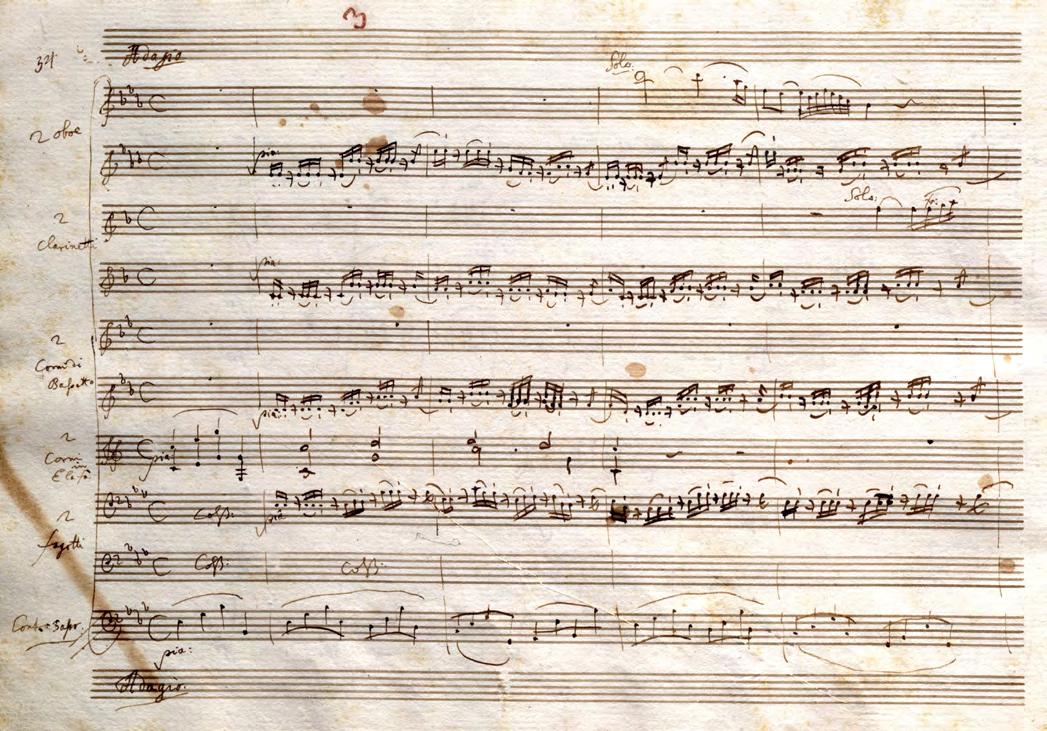
‘a single note on the oboe…hung there unwavering – piercing me through…’
Peter Shaffer’s Salieri describes the exquisite opening of the Adagio, shown here in Mozart’s hand. The oboe has the top line in the score.
The fifth movement is headed Romanze, a rare designation for Mozart. Just as the romanze in one of his horn concertos was a tribute to the lyrical style of his friend Joseph Leitgeb (or Leutgeb), this romanze may well have been a tribute to Stadler and his colleagues
The Theme and Variations movement is lifted almost note for note from one of Mozart’s flute quartets. It takes on a fresh character as Mozart plays with different instrumental colours in each variation. The different instruments also have their featured moments in the celebratory rondo Finale.
Stadler’s benefit concert on 23 March 1784 was announced as including ‘a large piece for wind band of a quite special character, being a composition by Herr Mozart’. Posterity agrees that nearly everything by Mozart from these golden years in Vienna is ‘quite special’, and yet the Gran Partita stands unequalled. In this work, he takes an ensemble formed to provide background music, expands it and gives it music worthy of weightier genres. But Mozart remains true to the serenade tradition by never failing to entertain.
Yvonne Frindle ©2006/2024
Are you our next MSO Guardian?
“I’ve benefitted so much from the MSO. Ilove knowing that my support will enable others to benefit from the MSO’s transformative music experiences.”
Jennifer Henry, MSO Guardian and Patron
Leaving a gift in your Will to the MSO ensures your story– and the orchestra you love– lives on in perpetuity. We are honoured to play an important role in your musical journey and invite you to become our next Guardian of the MSO.
Scan the QR code to learn more or call (03) 8646 1551 to speak with a member of the MSO Philanthropy team.
Supporters
MSO Patron
Her Excellency Professor, the Honourable
Margaret Gardner AC, Governor of Victoria
Honorary Appointments
Chair Emeritus
Dr David Li AM
Life Members
John Gandel AC and Pauline Gandel AC
Jean Hadges ♡
Sir Elton John CBE
Lady Primrose Potter AC
Jeanne Pratt AC
Lady Marigold Southey AC
Michael Ullmer AO and Jenny Ullmer
MSO Ambassador
Geoffrey Rush AC
Artist Chair Benefactors
Cybec Assistant Conductor Chair
Daniel Corvaia
Cybec Foundation
Program Benefactors
MSO Now & Forever Fund: International Engagement Gandel Foundation
Artist Development Programs –
Cybec Foundation
Cybec Young Composer in Residence
Cybec First Nations Composer in Residence
Cybec 21st Century Australian Composers Program
Community and Public Programs
Australian Government Department of Health, Disability and Ageing, AWM Electrical, City of Melbourne, Hansen Little Foundation, Prof. Mary-Jane Gething AO, Besen Family Foundation, Gandel Foundation
Student Subsidy Program Anonymous
Jams in Schools
Melbourne Airport, Department of Education, Victoria – through the Strategic Partnerships Program, AWM Electrical, Jean Hadges, Hume City Council, Marian and EH Flack Trust
Regional Touring
AWM Electrical, Freemasons Foundation
Victoria, Sir Andrew and Lady Fairley Foundation, Rural City of Wangaratta, Estate of the late Blanch Brooke Hutchings, Perpetual Foundation – Alan (AGL) Shaw Endowment
Sidney Myer Free Concerts
Sidney Myer MSO Trust Fund and the University of Melbourne, City of Melbourne Event Partnerships Program
MSO Academy
Robert Salzer Foundation
Instrument Fund
Tim and Lyn Edward, Catherine and Fred Gerardson, Pauline and David Lawton, Joe White Bequest
Platinum Patrons ($100,000+)
AWM Electrical Q
Prof Mary-Jane Gething AO ♡
The Gross Foundation ♡
Dr David Li AM and Angela Li Q
Lady Primrose Potter AC Anonymous (2)
Virtuoso Patrons ($50,000+)
The Aranday Foundation Q
Besen Family Foundation
Mrs Jennifer Brukner OAM Q
Tim and Lyn Edward ♡ ♫
Gandel Foundation
Dr Harry Imber ♡
Margaret Jackson AC ♡
Lady Marigold Southey AC Q
The Yulgilbar Foundation Q
Impresario Patrons ($20,000+)
Michael Aquilina
Christine and Mark Armour
Ren Barlow
Shane Buggle and Rosie Callanan ♡ Q
Krystyna Campbell-Pretty AM
Debbie Dadon AM Q
Edwards Family Trust Q
Catherine and Fred Gerardson
The Hogan Family Foundation
Pauline and David Lawton
Paul Noonan
Elizabeth Proust AO and Brian Lawrence ☼
Sage Foundation ☼
Kim Williams AM ♫ Anonymous (1)
Maestro Patrons ($10,000+)
John and Lorraine Bates ☼
Margaret Billson and the late Ted Billson ♡
The Cuming Bequest
Miss Ann Darby in memory of Leslie J. Darby
Anthony and Marina Darling Q
Andrew Dudgeon AM ♡
Andrew and Theresa Dyer Q ♡
Val Dyke ♡
Fancourt Capital Group Q
The Finkel Foundation Q
Bill Fleming Q
Kim and Robert Gearon ♡
The Glenholme Foundation Q
Charles & Cornelia Goode Foundation Q
Cecilie Hall and the late Hon Michael Watt KC ♡ ♫
Hanlon Foundation ♡
Michael Heine Q
Jo Horgan AM & Peter Wetenhall Q
David Horowicz ♡ Q
Peter T Kempen AM ♡ Q
Owen and Georgia Kerr Q
Suzanne Kirkham
Peter Lovell
Janet Matton AM & Robin Rowe Q
Allan and Evelyn McLaren
Rosemary and the late Douglas Meagher ♡
The Mercer Family Foundation
The Myer Foundation
Patricia Nilsson ♡
Dr Justin O’Day and Sally O’Day Q
Ian and Jeannie Paterson
Ralph and Ruth Renard
Quin and Lina Scalzo Q
Glenn Sedgwick ♡ Q
Cathy Simpson and John Simpson AM Q
David Smorgon OAM and Kathie Smorgon Q
Straight Bat Private Equity Q
Athalie Williams and Tim Danielson
Lyn Williams AC Q
Peter Yunghanns Q
Igor Zambelli
Anonymous (2)
Principal Patrons ($5,000+)
Mary Armour
Arnold Bloch Leibler Q
Philip Bacon AO Q
Barbara Bell in memory of Elsa Bell
Julia and Jim Breen
Nigel and Sheena Broughton
Jannie Brown
Chasam Foundation Q
Janet Chauvel and the late Dr Richard Chauvel
John Coppock OAM and Lyn Coppock
♡ Chair Sponsor | Q 2025 Europe Tour Circle | ☼ First Nations Circle ♫ Commissioning Circle | ∞ Future MSO
Mrs Jolene S Coultas ♡
David and Kathy Danziger
Mary Davidson and the late Frederick Davidson AM
Sandra Dent
Carol des Cognets
George and Laila Embelton Q
Equity Trustees ☼
Diane and Stephen Fisher
John and Diana Frew ♡
Carrillo Gantner AC and Ziyin Gantner
Geelong Friends of the MSO
The Glavas Family ♡
Colin Golvan AM KC and Dr Deborah Golvan
Louise Gourlay AM Q
Dr Rhyl Wade and Dr Clem Gruen ♡
Louis J Hamon OAM
Dr Keith Higgins and Dr Jane Joshi
Geoff and Denise Illing
Dr Alastair Jackson AM Q
Amy and Paul Jasper
John Jones
Merv Keehn and Sue Harlow
Mr Ian Kennedy AM & Dr Sandra Hacker AO
Lucas Family Foundation ♡
Morris and Helen Margolis ♡
Samantha Mark
Gary McPherson ♡
Suzie and Edgar Myer ♡
Rupert Myer AO and Annabel Myer
Anne Neil in memory of Murray A. Neil ♡
Sophie Oh
Phillip Prendergast Q
Jan and Keith Richards
Dr Rosemary Ayton and Professor Sam Ricketson AM
The Kate and Stephen Shelmerdine Family Foundation Q
Dr Michael Soon
Gai and David Taylor
The Upotipotpon Foundation Q
Kee Wong and Wai Tang Q
Dawna Wright and Peter Riedel ♡
Shirley and Jeffrey Zajac
Anonymous (5)
Associate Patrons ($2,500+)
Barry and Margaret Amond
Carolyn Baker
Janet H Bell
Allen and Kathryn Bloom
Boncal Family Foundation
Drs Alan and Jennifer Breschkin
Stuart Brown
Dr Lynda Campbell
Oliver Carton
Christine Clough
Caroline Davies
Leo de Lange
Martin Foley Q
Barry Fradkin OAM and Dr Pam Fradkin
Anthony Garvey and Estelle O’Callaghan
Janette Gill
R Goldberg and Family
Miss Catherine Gray
Christine Grenda
Susan and Gary Hearst
Sandy Jenkins
Ann Lahore
Halina Lewenberg Charitable Foundation
Dr Jenny Lewis
Liza Lim AM ♫
Andrew Lockwood
Lisa and Brad Matthews
Dr Paul Nisselle AM
George Pappas AO, in memory of Jillian Pappas
Roger Parker and Ruth Parker
Alan and Dorothy Pattison
Liz and Graham Pratt
James Ring
Tom and Elizabeth Romanowski
Dr Ronald and Elizabeth Rosanove
Christopher Menz and Peter Rose
Gillian Ruan Q
Viorica Samson
Meredith Schilling SC
Marshall Segan in memory of Berek Segan OBE AM and Marysia Segan
Steinicke Family
Jenny Tatchell
Christina Turner
Timothy Walker CBE AM
Janet Whiting AM and Phil Lukies Q
Bob Weis
Anonymous (5)
Player Patrons ($1,000+)
Dr Sally Adams
Don Adamson
Jessica Agoston Cleary ∞
Applebay Pty Ltd
Margaret Astbury
Geoffrey and Vivienne Baker
Marlyn Bancroft and Peter Bancroft OAM
Mr Robin Batterham
Kate Beattie
Peter Berry and Amanda Quirk
Rick Berry
William Birch
Michael Bowles and Alma Gill
Joyce Bown
Drs John D L Brookes and Lucy V Hanlon
Suzie Brown OAM and the late Harvey Brown
Roger and Coll Buckle
Jill and Christopher Buckley
Ronald Burnstein
John Chapman and Elisabeth Murphy
Kaye Cleary
Warren and Margaret Collins
Sue Dahn
Mrs Nola Daley
Panch Das and Laurel Young-Das
Michael Davies and Drina Staples
Rick and Sue Deering
John and Anne Duncan
Christopher R Fraser
Chris Freelance
Miles George
David I Gibbs AM and Susie O’Neill
Sonia Gilderdale
Joy and Dr Henry Glennie
Dr Celia Godfrey
Dr Marged Goode
Fred and Alexandra Grimwade Q
Hilary Hall, in memory of Wilma Collie
David Hardy
Cathy Henry
Gwenda Henry
Michael Hill
Anthony and Karen Ho
In Memory of Rosemary Hodgson
Anna Holdsworth
Rod Home
Lorraine Hook
Doug Hooley
Katherine Horwood
Penelope Hughes
Basil and Rita Jenkins
Wendy Johnson
Sue Johnston
Dr Gint Kalpokas and Dr Michael Upson
Drs Bruce and Natalie Kellett
Dr Anne Kennedy
In memory of Tannah Kirkman
Tim Knaggs
Melissa Tonkin & George Kokkinos
Dr Jerry Koliha and Marlene Krelle
Jane Kunstler
Wilson Lai and Anita Wong Q
Kerry Landman
Janet and Ross Lapworth
Rex Lau
Bryan Lawrence
Phil Lewis
David R Lloyd
Elizabeth H Loftus
Dr Helen MacLean
Sandra Masel in memory of Leigh Masel
Wayne McDonald and Kay Schroer
Andrea McCall
Lesley McMullin Foundation
Dr Eric Meadows
Sylvia Miller
Susan Morgan ∞
Ian Morrey and Geoffrey Minter
Dr Anthony and Dr Anna Morton
Dr Judith S Nimmo
Rosemary O’Connor
Brendan O’Donnell
Phil Parker
Bruce Parncutt AO
Ian Penboss
Ronald Pitcher AM
Peter Priest
Professor Charles Qin OAM and Kate Ritchie
Eli and Lorraine Raskin
Michael Riordan and Geoffrey Bush
Cathy Rogers OAM and Dr Peter Rogers AM
The Rowe Family
Marie Rowland
Liliane Rusek and Alexander Ushakoff
Martin and Susan Shirley
P Shore
Kieran Sladen
Janet and Alex Starr
Dr Peter Strickland
Bernard Sweeney
Russell Taylor and Tara Obeyesekere
Frank Tisher OAM and Dr Miriam Tisher
Margaret Toomey
Andrew and Penny Torok
Chris and Helen Trueman
Ann and Larry Turner
Dr Elsa Underhill and Professor Malcolm Rimmer
Nicholas and Faith Vann
Edward and Paddy White
Willcock Family
Robert and Diana Wilson
Anonymous (20)
Overture Patrons ($500+)
Margaret Abbey PSM
Vera Afanasyeva
Jane Allan and Mark Redmond
Jenny Anderson
Doris Au
Lyn Bailey
Robbie Barker
Anne M Bowden
Caroline Bowler
Stephen and Caroline Brain
Robert Bridgart
Miranda Brockman
Dr Robert Brook
Christine Brown
Elizabeth Brown
Phillip Brown
Patricia Buchanan
Marc Buchholz and Stephan Duchesne
Ian Carson AM
Dr Catherine Cherry
Dr Hyein Ellen Cho
Alan and Wendy Chuck
Robert and Katherine Coco
Gregory Crew
Sue Cummings
Dr John Daley and Dr Rebecca Coates
Dr Matthew Dunn
Jane Edmanson OAM
Ron Elisha
Vivien and Jack Fajgenbaum
Brian Florence
Nadine Fogale
Elizabeth Foster
M C Friday
Nikki Gaskell
Lili Gearon
Dr Julia Gellatly
David and Geraldine Glenny
Hugo and Diane Goetze
Eva Gory
The late George Hampel AM KC and Felicity Hampel AM SC
Dr Neville Hathaway
Geoff Hayes
Alison Heard
Noela Henderson
Dr Jennifer Henry
C M Herd Endowment
William Holder
Oliver Hutton and Weiyang Li
Rob Jackson
Shyama Jayaswal
Chris and Merryl Jessup
Karen Johnson
Linda Jones
John Keys
Lesley King
Dr Judith Kinnear
Dr Richard Knafelc and Mr Grevis Beard
Heather Law
Peter Letts
Sarah and Andrew Lindsay
Elena Lovu
Janice Mayfield
Dr James McComish
Joel McGuinness
Gail McKay
Jennifer McKean
Shirley A McKenzie
Richard McNeill
Alison Milne
Professor Heather Mitchell
Lisa Mitchell
Joan Mullumby
Yoko Murakoshi
Rebecca-Kate Nayton
Adrian and Louise Nelson
Marian Neumann
Ed Newbigin
Valerie Newman
Amanda O’Brien
Phil Parker
The Hon Chris Pearce and Andrea Pearce
Jason Peart
Sienna di Pietro and Lewis Pierce
Geoffrey Ravenscroft
Ian Reddoch
Dr Christopher Rees
Fred and Patricia Russell
Julia Schlapp
Faye Simpson
Irene Sutton
Tom Sykes
Allison Taylor
Hugh and Elizabeth Taylor
Lily Tell
Serey Thir
Geoffrey Thomlinson
Mely Tjandra
Rosemary Warnock
Amanda Wasilewski
Amanda Watson
Deborah and Dr Kevin Whithear OAM
David Willersdorf AM and Linda Willersdorf
Charles and Jill Wright
Richard Ye
Anonymous (12)
MSO Guardians
Jenny Anderson
David Angelovich
Lesley Bawden
Peter Berry and Amanda Quirk
Tarna Bibron
Joyce Bown
Patricia A Breslin
B J Brown
Jannie Brown
Jenny Brukner and the late John Brukner
Sarah Bullen
Georgie and Phil Burg
Peter A Caldwell
Peter Cameron and Craig Moffatt
Luci and Ron Chambers
Roger Chao
Sandra Dent
James Dipnall
Sophie E Dougall in memory of Libby Harold
Alan Egan JP
Gunta Eglite
Marguerite Garnon-Williams
Dr Clem Gruen and Dr Rhyl Wade
Louis J Hamon OAM
Charles Hardman and Julianne Bambacas
Carol Hay
Dr Jennifer Henry
Graham Hogarth
Rod Home
David Horowicz
Lyndon Horsburgh
Katherine Horwood
Tony Howe
Lindsay Wynne Jacombs
Michael Christopher Scott Jacombs
John Jones
Merv Keehn and Sue Harlow
Pauline and David Lawton
Robyn and Maurice Lichter
Christopher Menz and Peter Rose
Dr Helen MacLean
Andrea McCall
Cameron Mowat
Laurence O’Keefe and Christopher James
David Orr
Matthew O’Sullivan
Rosia Pasteur
Kerryn Pratchett
Penny Rawlins
Margaret Riches
Anne Roussac-Hoyne and Neil Roussac
Michael Ryan and Wendy Mead
Anne Kieni Serpell and Andrew Serpell
Jennifer Shepherd
Suzette Sherazee
Professors Gabriela and George Stephenson
Pamela Swansson
Frank Tisher OAM and Dr Miriam Tisher
Mr and Mrs R P Trebilcock
Christina Helen Turner
Michael Ullmer AO
The Hon Rosemary Varty
Francis Vergona
Mr Steve Vertigan and Ms Yolande van Oosten
Tam Vu and Dr Cherilyn Tillman
Robert Weiss and Jacqueline Orian
Terry Wills Cooke OAM and the late Marian Wills Cooke
Mark Young
Anonymous (18)
The MSO gratefully acknowledges the support of the following Estates
Norma Ruth Atwell
Angela Beagley
Barbara Bobbe
Michael Francois Boyt
Christine Mary Bridgart
Margaret Anne Brien
Ken Bullen
Deidre and Malcolm Carkeek
Elizabeth Ann Cousins
The Cuming Bequest
Margaret Davies
Blair Doig Dixon
Neilma Gantner
Angela Felicity Glover
The Hon Dr Alan Goldberg AO QC
Derek John Grantham
Delina Victoria Schembri-Hardy
Enid Florence Hookey
Gwen Hunt
Family and Friends of James Jacoby
Audrey Jenkins
Joan Jones
Pauline Marie Johnston
George and Grace Kass
Christine Mary Kellam
C P Kemp
Jennifer Selina Laurent
Sylvia Rose Lavelle
Dr Elizabeth Ann Lewis AM
Peter Forbes MacLaren
Joan Winsome Maslen
Lorraine Maxine Meldrum
Professor Andrew McCredie
Jean Moore
Joan P Robinson
Maxwell and Jill Schultz
Miss Sheila Scotter AM MBE
Marion A I H M Spence
Molly Stephens
Gwennyth St John
Halinka Tarczynska-Fiddian
Jennifer May Teague
Elisabeth Turner
Albert Henry Ullin
Cecilia Edith Umber
Jean Tweedie
Herta and Fred B Vogel
Diana Whitehead
Dorothy Wood
Joyce Winsome Woodroffe
The MSO honours the memory of Life Members
The late Marc Besen AC and the late Eva Besen AO
John Brockman OAM
The Hon Alan Goldberg AO QC
Bertha Jorgensen MBE
Harold Mitchell AC
Roger Riordan AM
Ila Vanrenen
Listing current as of 7 May 2026
The MSO relies on the generosity of our community to help us enrich lives through music, foster artistic excellence, and reach new audiences. Thank you for your support.
♡ Chair Sponsors – supporting the beating heart of the MSO.
Q 2025 Europe Tour Circle patrons –elevating the MSO on the world stage.
☼ First Nations Circle patrons –supporting First Nations artist development and performance initiatives.
♫ Commissioning Circle patrons –contributing to the evolution of our beloved art form.
∞ Future MSO patrons – the next generation of giving.
The MSO welcomes support at any level. Donations of $2 and over are tax deductible.
MSO Family
MSO Board
Chair
Edgar Myer
Co-Deputy Chairs
Martin Foley
Farrel Meltzer
Board Directors
Shane Buggle
Tony Grybowski
Lorraine Hook
Chris Howlett
Joel McGuinness
Gary McPherson
Lisa Mitchell
Meredith Schilling SC
Mary Waldron
Company Secretary
Randal Williams
MSO Artistic Family
Jaime Martín Chief Conductor and Artistic Advisor
Benjamin Northey Principal Guest Conductor
Daniel Corvaia Cybec Assistant Conductor
Sir Andrew Davis CBE † Conductor Laureate (2013–2024)
Hiroyuki Iwaki † Conductor Laureate (1974–2006)
Warren Trevelyan-Jones MSO Chorus Director
Karen Kyriakou Artist in Residence –Learning and Engagement
Christian Li Young Artist in Association
Joe Chindamo Composer in Residence
Andrew Aronowicz Cybec Young Composer in Residence
James Henry Cybec First Nations Composer in Residence
Xian Zhang, Lu Siqing, Tan Dun Artistic Ambassadors
MSO Staff
Richard Wigley Chief Executive Officer
ARTISTIC OPERATIONS
Simonette Turner Director of Orchestra & Operations
Meg Bowker Orchestra Manager
Ffion Edwards Orchestra Manager
Callum Moncrieff Head of Operations
Andrew Robinson Production Lead
Nicholas Cooper Operations Lead
Katharine Bartholomeusz-Plows Head of Artistic Planning
Keturah Haisman Artistic & Engagement Manager
Veronika Reeves Artistic Administrator
Julia Potter Artistic Coordinator
Jennifer Collins Principal Librarian
Glynn Davies Orchestra Librarian
Meg Baker Chorus Administrator
Nicholas Bochner
Head of Learning & Engagement
Fergus Inder Jams Program Coordinator
Erika Noguchi
Executive Producer, MSO Presents
Rebecca Moore
Associate Producer, MSO Presents
Monica Curro MSO+ Creative Director
Emma Wigley MSO+ Producer
DEVELOPMENT & REACH
Suzanne Dembo Chief Operating Officer
Caroline Buckley Head of Strategic Priorities
Sally Hern Head of Digital Experience
Allison Blahna Director of Development
Charlotte Crocker
Philanthropy Programs Lead
Isobel Lake Grants & Reporting Lead
Keith Clancy Donor Liaison
Nellie McLean Head of Partnerships
Nina Dubecki Events & Partnerships Lead
Jayde Walker Director of Brand & Communications
Phil Paschke
Senior Manager, Content & Digital
Samantha Meuleman
Digital Content Lead
Prue Bassett
Publicity Manager
Beckie Peel
Social Media Coordinator
Dylan Stewart Director of Marketing & Sales
Laura Mitton
Campaign Marketing Manager
Claudia Biaggini
Senior Marketing Coordinator
Leah Toyne
Marketing Administrator
Alison Kearney
Customer Experience Manager
Ben Wallace
Box Office Manager
Nicole Rees
CRM & insights Manager
Sam Harvey
CRM & Data Specialist
Marta Arquero
Ticketing & Customer
Experience Coordinator
Box Office Attendants
Angela, Ashley, Bec, Bradd, Christine, Emil, Jessica, Josh, Kara, Kez, Leah, Lucy, Maeve, Sasha, Stephanie
FINANCE & PEOPLE AND CULTURE
Anita Drake Chief Financial Officer
Sonia Yakub
Senior Management Accountant (on leave)
Susan Teele Management Accountant
Laura Estupiñan Accountant
Marilen Manalo
Assistant Accountant
Jess Kirkman Payroll Officer
Matthew Bagi Project Officer
Holly Wighton People & Culture Lead
Supporting
Paul Noonan, Keypoint Law
Training and Education Partners
Trusts and Foundations
Broadcast and Production Partners
Venue Partners

Sidney Myer MSO Trust Fund
Estate of the late Blanch Brooke Hutchings
Perpetual Foundation –Alan (AGL) Shaw Endowment