Beethoven’s Seventh
MSO x Zelman Memorial Symphony Orchestra
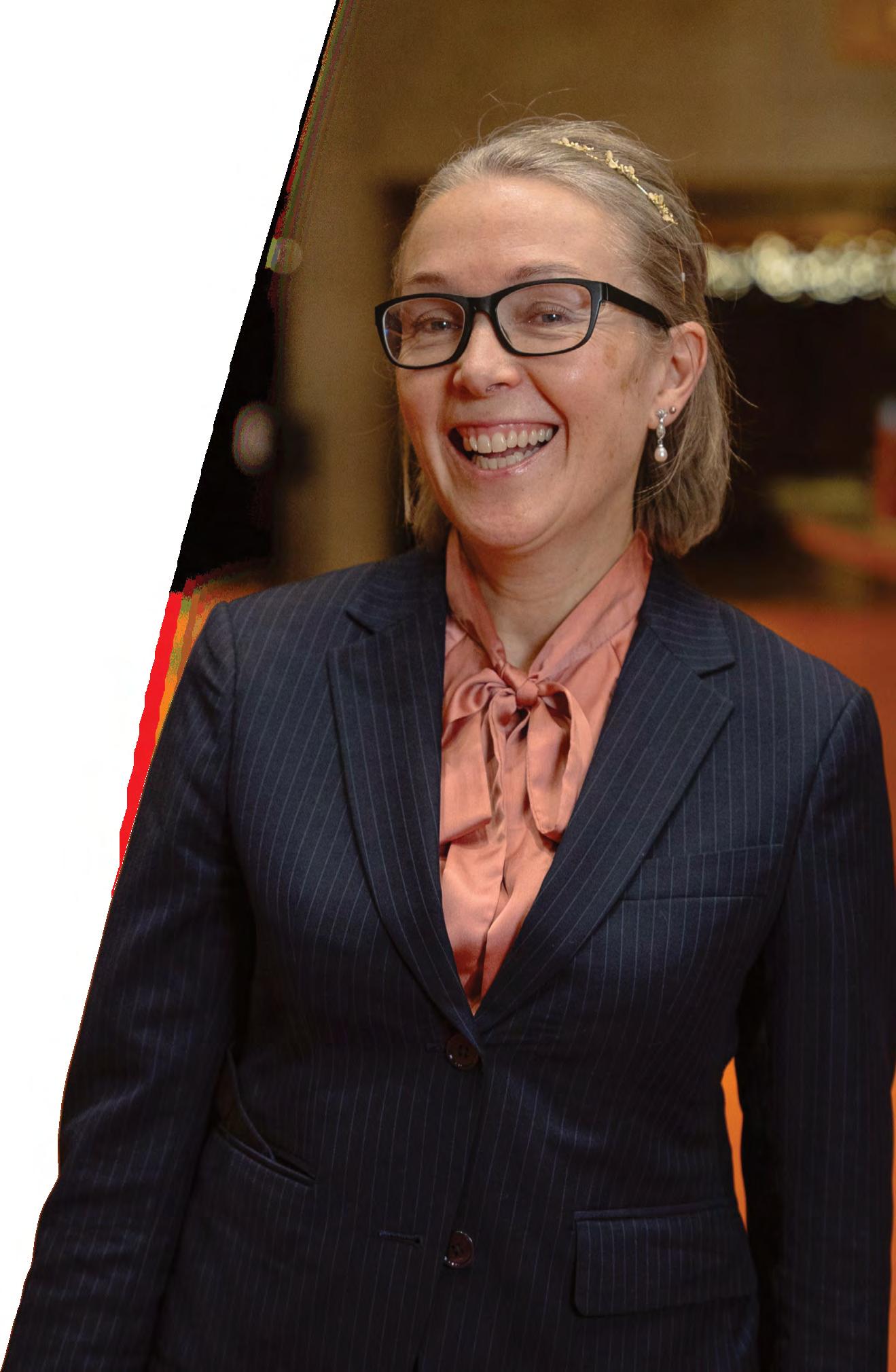
Are you our next MSO Guardian?
“I’ve benefitted so much from the MSO. Ilove knowing that my support will enable others to benefit from the MSO’s transformative music experiences.”
Jennifer Henry, MSO Guardian and Patron
Leaving a gift in your Will to the MSO ensures your story– and the orchestra you love– lives on in perpetuity. We are honoured to play an important role in your musical journey and invite you to become our next Guardian of the MSO.
Scan the QR code to learn more or call (03) 8646 1551 to speak with a member of the MSO Philanthropy team.
Beethoven’s Seventh
Thursday 2 April at 7:00pm
Robert Blackwood Hall, Monash University
Artists
Melbourne Symphony Orchestra
Zelman Memorial Symphony Orchestra
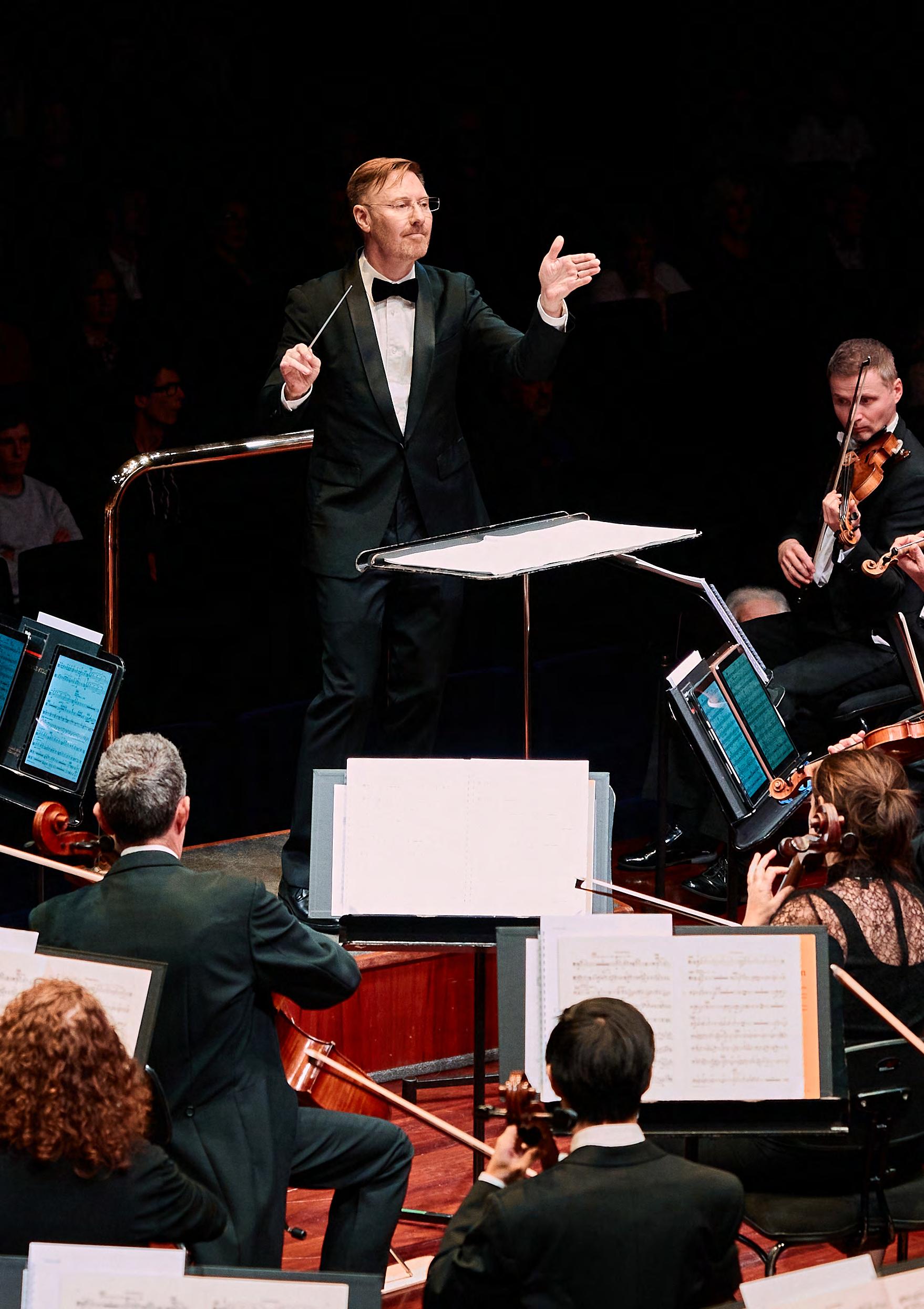
Benjamin Northey conductor
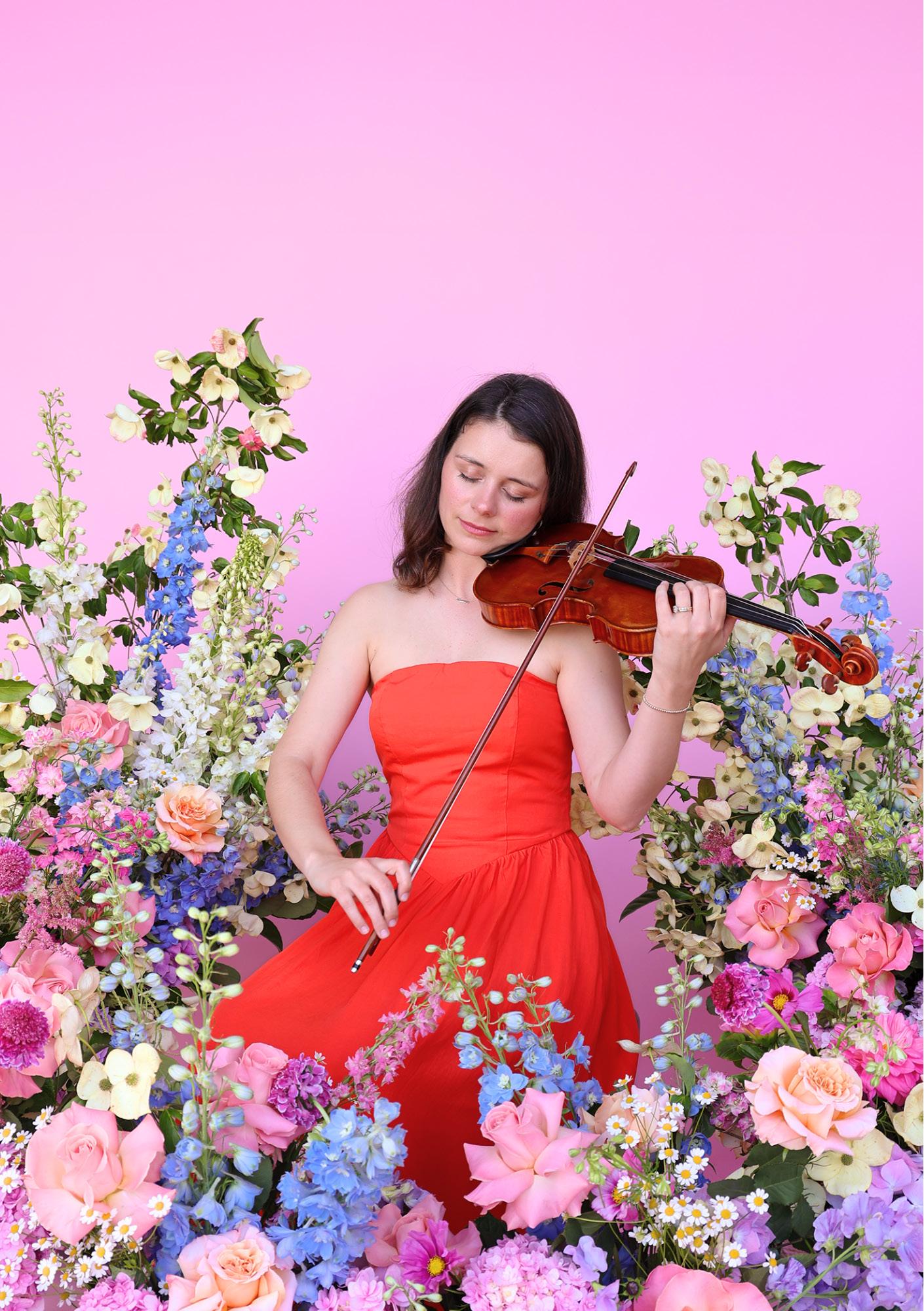
Natalie Chee violin
Program
Glinka Ruslan and Lyudmila: Overture [5']
Massenet Thaïs: Méditation for violin and orchestra [7’]
Bizet Carmen: Suite No. 1 [12’]
interval
Beethoven Symphony No. 7 [39’] with members of the Zelman Memorial Symphony Orchestra
A musical Acknowledgement of Country by MSO Cybec First Nations Composer in Residence James Henry will be performed at the start of this concert.
Running time: 1 hour and 30 minutes, including a 20-minute interval. Timings listed are approximate.

Melbourne Symphony Orchestra
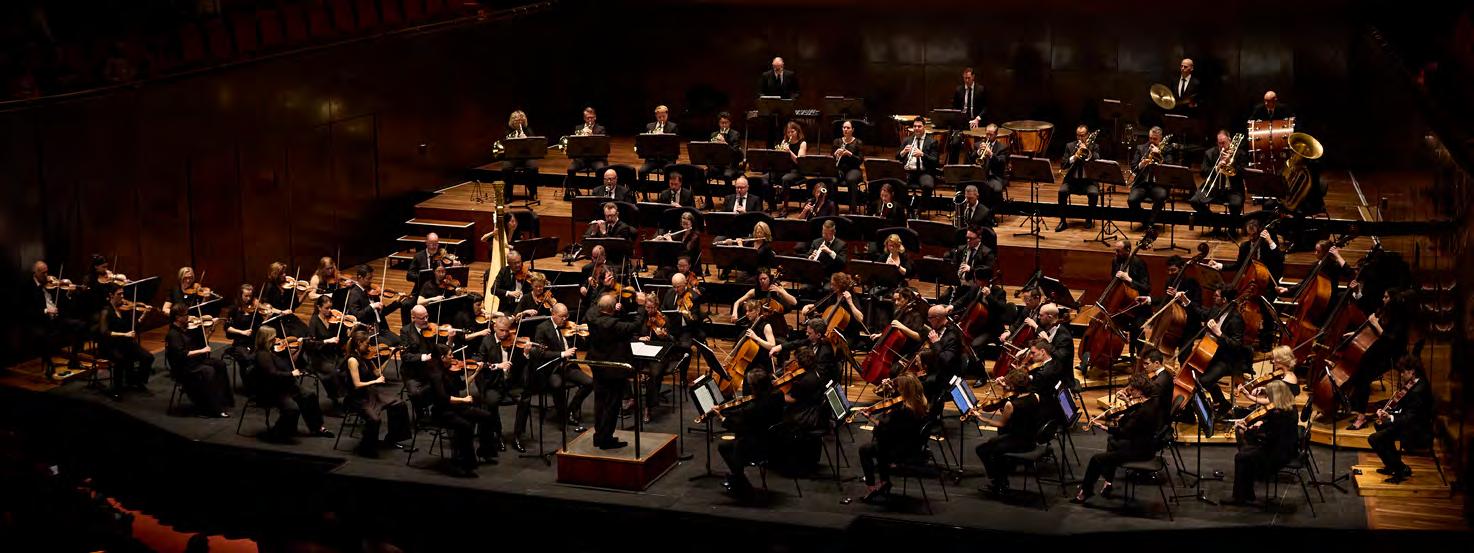
The Melbourne Symphony Orchestra is Australia’s preeminent orchestra, dedicated to creating meaningful experiences that transcend borders and connect communities. Through the shared language of music, the MSO performs to the highest standard, enriching lives and inspiring audiences across the globe.
In 2026, Jaime Martín continues to lead the Orchestra as the MSO Chief Conductor and Artistic Advisor. Maestro Martín leads an Artistic Family that includes Principal Guest Conductor Benjamin Northey, Cybec Assistant Conductor Daniel Corvaia, MSO Chorus Director Warren Trevelyan-Jones, Composer in Residence Joe Chindamo, Cybec Young Composer in Residence Andrew Aronowicz, Cybec First Nations Composer in Residence James Henry, Artist in Residence – Learning & Engagement Karen Kyriakou, Young Artist in Association Christian Li and Artistic Ambassadors Tan Dun, Lu Siqing and Xian Zhang.
Woven into the cultural fabric of Victoria for 120 years, the MSO reaches five million people annually through performances and TV, radio and online broadcasts, as well as critically acclaimed recordings on its newly established label.
The MSO regularly presents exceptional artists from across the globe in mainstage programming and special events, as well as reaching beyond the customary classical audience with contemporary collaborations. And through a partnership with the ABC, the MSO’s performances in the Classic 100 in Concert reach more than a million Australians each year.
The first Australian orchestra to perform overseas (1965) and at Carnegie Hall (1970), the MSO has a proud history of international touring that has taken it to China, Indonesia, Singapore, Europe and the UK. Driven by the belief that music is a universal right, the MSO also brings music to all corners of the community, ensuring that everyone can share in the transformative power of music. Whether performing on world stages or in the heart of Victoria, the MSO transforms its mission and vision into reality – enriching lives and creating cultural connections through the unparalleled beauty of music.
mso.com.au
Zelman Memorial Symphony Orchestra
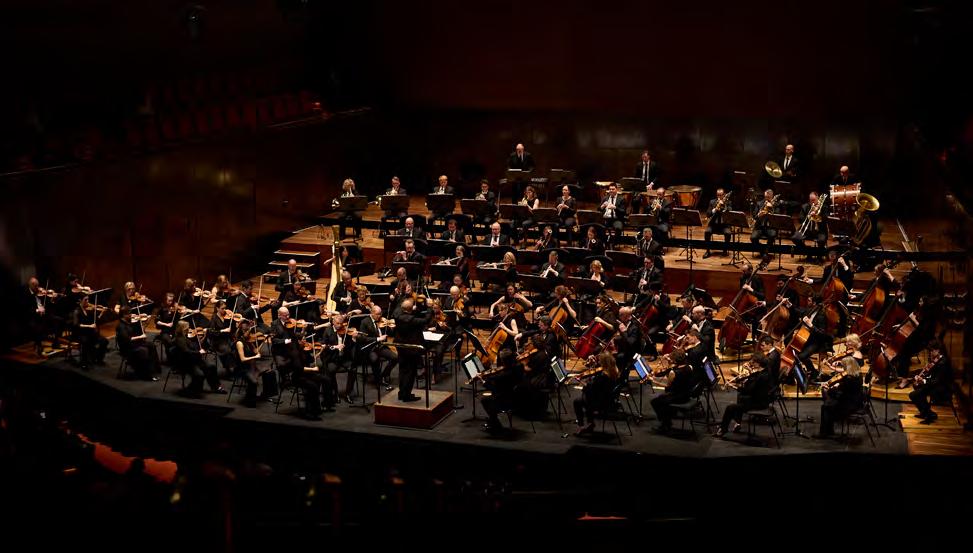
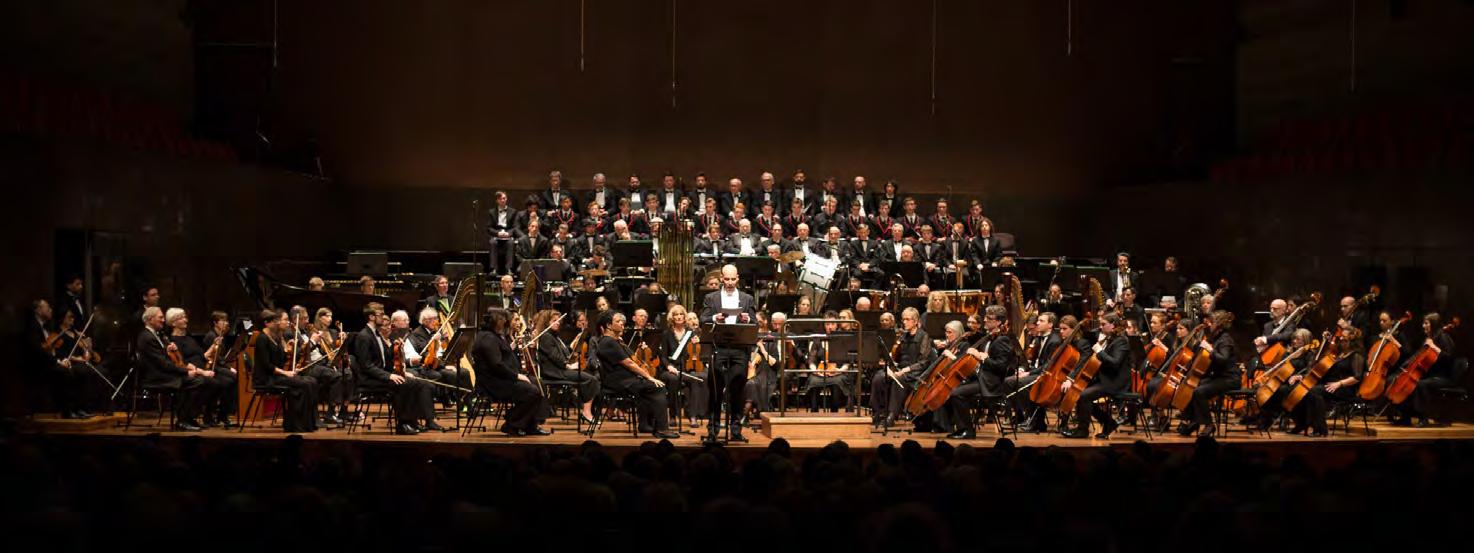
The Zelman Memorial Symphony Orchestra was formed and named in memory of Alberto Zelman (1874–1927). Born in Melbourne, Zelman was the son of Signor Alberto Zelman, an opera conductor, organist, pianist, composer and teacher from Trieste, and his English-born wife Emily, a gifted singer. Alberto junior proved to be an extraordinarily gifted, all-round musician: a highly talented orchestral and choral conductor and a fine teacher of violin. He was beloved by his players, singers and pupils, and popular with audiences. He died prematurely, aged 52.
Alberto founded the original Melbourne Symphony Orchestra in 1906 and would conduct many memorable performances, including Messiah in 1925 with celebrity soloists Dame Clara Butt and Kennerley Rumford. His final conducting appearance was Messiah on Christmas night in 1926.
The MSO continued to perform after Alberto’s death until 1932, when it was taken over by Professor Bernard Heinze, who converted it to an all-professional orchestra. The amateur players formed their own orchestra in 1933, naming it the Zelman Memorial Symphony Orchestra after their beloved Alberto, and his friend
and former pupil, Bertha Jorgensen, was the ZMSO’s first concertmaster.
The current Zelman Memorial Symphony Orchestra generally comprises some 60 to 80 players in a full symphonic ensemble, conducted by Artistic Director Rick Prakhoff. Each year the ZMSO presents four concerts, generally in Kew, featuring works from the classical period to the present day. The orchestra commissions new works by Australian composers, including Linda Kouvaras, Harry Sdraulig and Luke Styles, and through an Assistant Conductor role provides an opportunity for emerging conductors to further develop their skills.
zelman.au
Tonight’s Musicians
MELBOURNE SYMPHONY ORCHESTRA
First Violins
Natalie Chee° Concertmaster
Tair Khisambeev
Assistant Concertmaster
Sarah Curro°
Dr Harry Imber *
Peter Fellin
Karla Hanna°
Dawna Wright and Peter Riedel*
Lorraine Hook°
Jolene S Coultas*
Kirstin Kenny°
Oksana Thompson
Jo Beaumont†
Zoe Black†°
Clare Carrick†
Jacqueline Edwards†
Rachel Hunt†°
Ioana Tache†
Second Violins
Matthew Tomkins
Principal
The Gross Foundation*
Mary Allison
Isin Cakmakçioglu
Tiffany Cheng°
Val Dyke*
Freya Franzen°
Cong Gu°
Andrew Hall°
Robert Macindoe
Philippa West°
Andrew Dudgeon AM*
Roger Young
Shane Buggle and Rosie Callanan*
Andrea Keeble†
Marie-Louise Slaytor†
Violas
Christopher Moore Principal
Lauren Brigden°
Katharine Brockman
Anthony Chataway
Peter T Kempen AM*
William Clark°
Morris and Helen Margolis*
Aidan Filshie
Suzie and Edgar Myer*
Gabrielle Halloran
Patricia Nilsson
Jenny Khafagi°
Margaret Billson and the late Ted Billson*
Fiona Sargeant°
Isabel Morse† Cellos
David Berlin
Principal
Rachael Tobin°
Associate Principal
Elina Faskhi
Assistant Principal
Rohan de Korte°
Andrew Dudgeon AM*
Joshua Jones
Rebecca Proietto
Peter T Kempen AM*
Ariel Volovelsky°
Michelle Wood°
Andrew and Theresa Dyer*
Double Basses
Jonathon Coco
Principal
Rohan Dasika°
Acting Associate Principal
Benjamin Hanlon°
Acting Assistant Principal
Aurora Henrich
Suzanne Lee°
Stephen Newton°
Flutes
Prudence Davis° Principal
Jean Hadges*
Sarah Beggs Piccolo
Andrew Macleod Principal
Oboes
Johannes Grosso° Principal
Rachel Curkpatrick
Clarinets
Philip Arkinstall° Associate Principal
Jonathan Craven Principal Bass Clarinet Bassoons
Jack Schiller° Principal
Dr Harry Imber *
Natasha Thomas
Patricia Nilsson* Contrabassoon
Brock Imison Principal
* MSO position supported by † MSO guest musician
° MSO musicians joining the ZMSO for Beethoven’s Symphony No. 7
Horns
Nicolas Fleury° Principal
Margaret Jackson AC*
Saul Lewis
Principal Third
The late Hon. Michael Watt KC and Cecilie Hall*
Abbey Edlin° The Hanlon Foundation*
Rachel Shaw
Gary McPherson*
Trumpets
Brent Grapes†° Guest Principal
Rosie Turner
Dr John and Diana Frew* Trombones
José Milton Vieira Principal
Richard Shirley
Bass Trombone
Michael Szabo Principal
Tuba
Timothy Buzbee Principal
Timpani
John Arcaro
Tim and Lyn Edward* Percussion
Hugh Tidy
Brent Miller†
Alexander Meagher†
Harp
Yinuo Mu Principal
ZELMAN MEMORIAL SYMPHONY ORCHESTRA
First Violins
Xinyu Zhang
David Chen
Karen Love
Devon Buy
Li-Na Neoh
Sofia Palmero
Celia Callan
Second Violins
Michael Poulton
Sylvia Winfield
Amelia In
Geoffrey Menon
Peter Hiew
Yeung Ng
Violas
Phil Poulton
Nicholas Wong
Fiona Cock
Chaquen Beliakov Amaya
George Deutsch
Cellos
Jane Whitelock
Jenny Rowlands
Tara Skelton
Nic Deane
Double Basses
David Williams
Michael Addis
Flute
Carol Galea
Oboe
Fabian Miller
Clarinet
Toby Bell Bassoon
Joshua Elrom Horns
Clynton Royle
Andrew Newman
Trumpet
Bridie Golding
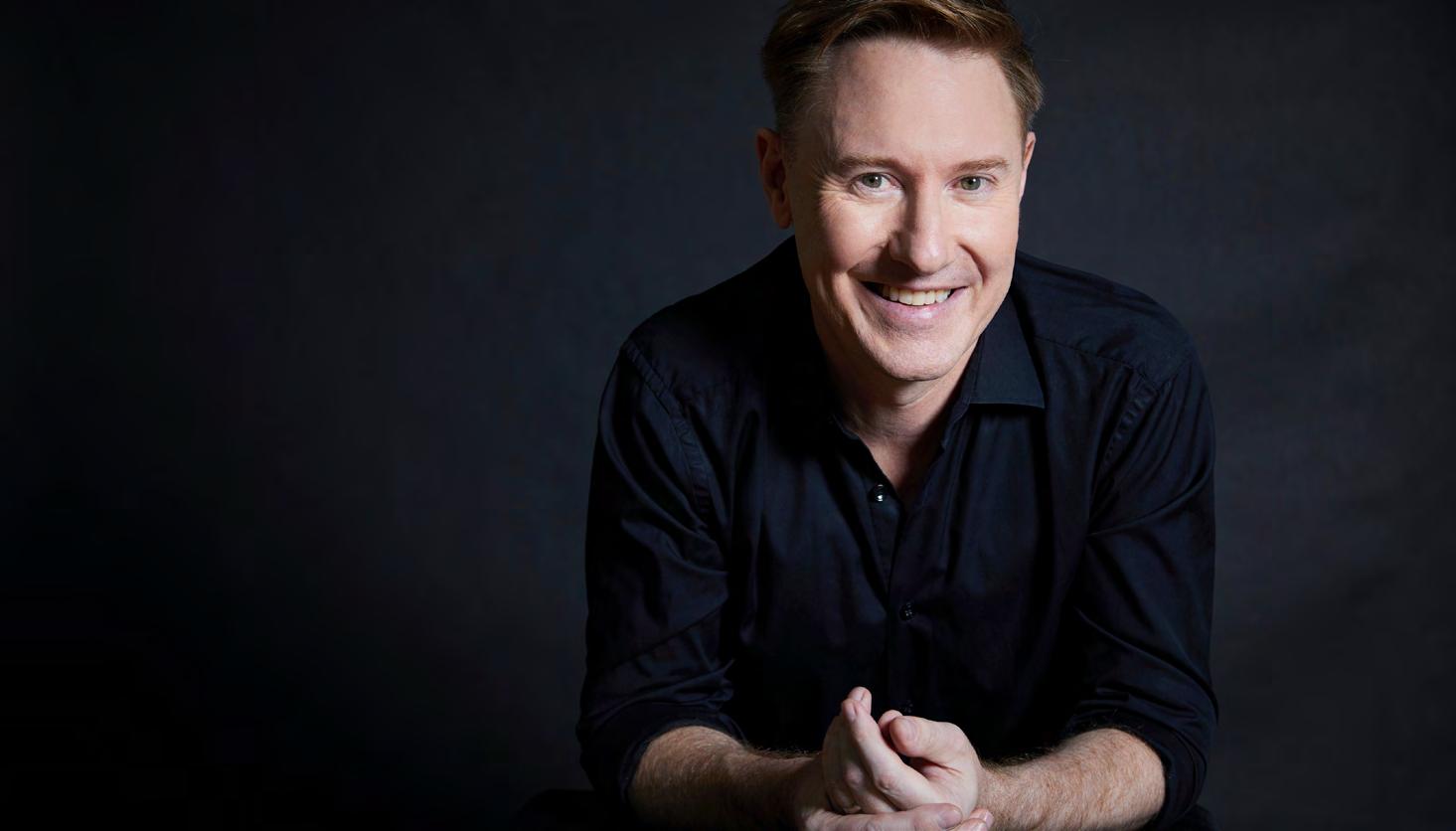
Benjamin Northey conductor
MSO PRINCIPAL GUEST CONDUCTOR
In addition to his role with the Melbourne Symphony Orchestra, Benjamin Northey is the Chief Conductor of the Christchurch Symphony Orchestra and Conductor in Residence of the Sydney Symphony Orchestra, as well as Professor of Conducting at the Sydney Conservatorium of Music and Director of the Australian Conducting Academy. He was previously MSO Associate Conductor (2010–19), Resident Guest Conductor of the Australia Pro Arte Chamber Orchestra (2002–06) and Principal Guest Conductor of the Melbourne Chamber Orchestra (2007–10).
He appears regularly as a guest conductor with all the major Australian symphony orchestras, as well as for Opera Australia, New Zealand Opera, Victorian Opera and State Opera South Australia, and he has conducted concerts with the London, Tokyo, Hong Kong and Malaysian philharmonic orchestras, Mozarteum Orchestra Salzburg, National Symphony Orchestra of Colombia and New Zealand Symphony Orchestra. In 2026, he
conducts the Melbourne, Sydney, Adelaide, West Australian, Tasmanian, Christchurch and Pittsburgh symphony orchestras.
Benjamin is a champion of Australian orchestral music and has premiered dozens of major new works by Australian composers, as well as sitting on board of the Australian Music Centre.
An Aria, Air Music and Art Music awards winner, in 2018 he was voted Limelight magazine’s Australian Artist of the Year. His many recordings can be found on the ABC Classic label.
Benjamin Northey studied conducting at Finland’s Sibelius Academy with Leif Segerstam and Atso Almila before completing his studies at the Stockholm Royal College of Music with Jorma Panula. He is also a graduate of the Melbourne Conservatorium of Music, where he studied conducting with John Hopkins.
PHOTO: LAURA MANARITI
MSO CONCERTMASTER
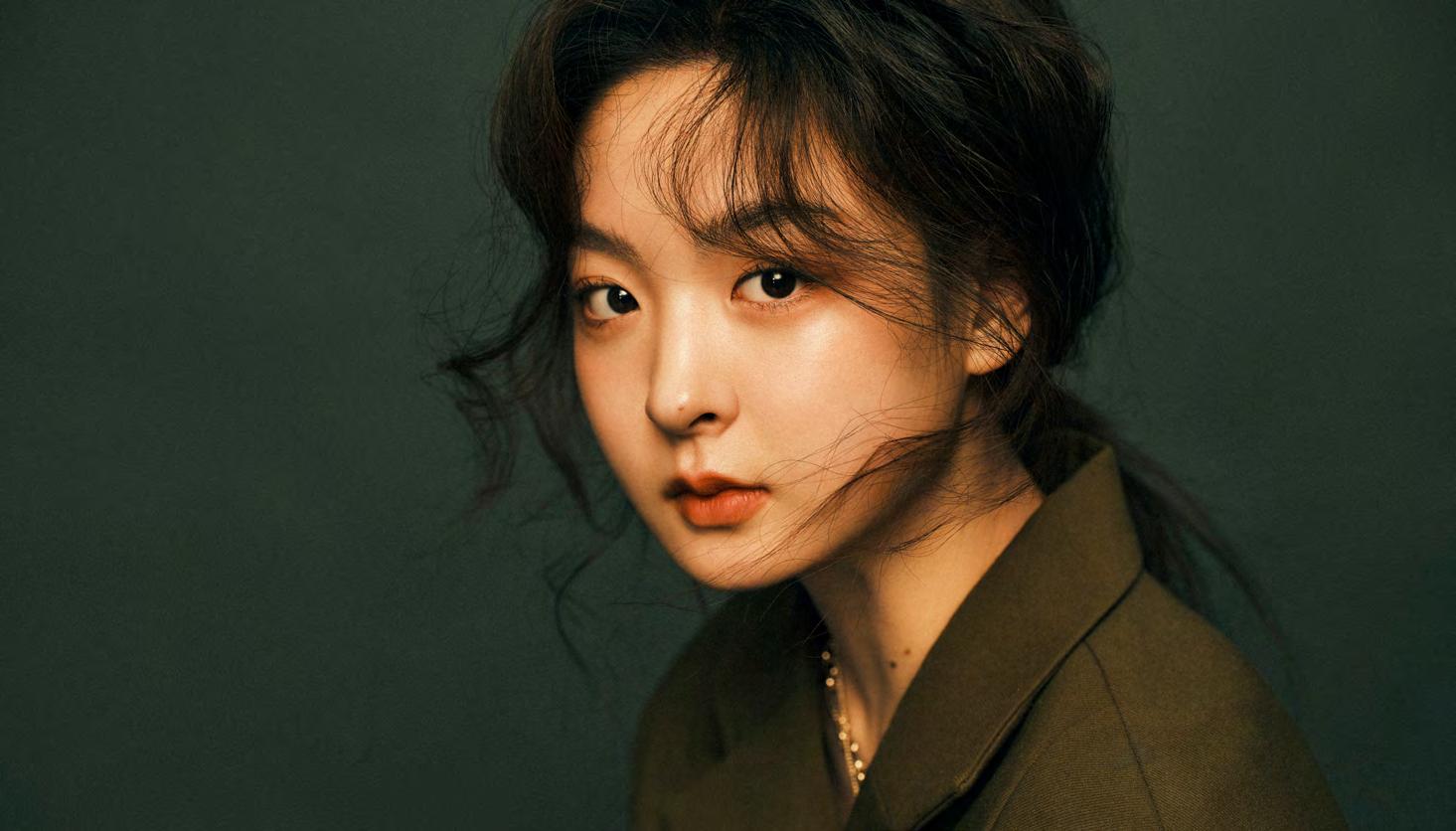
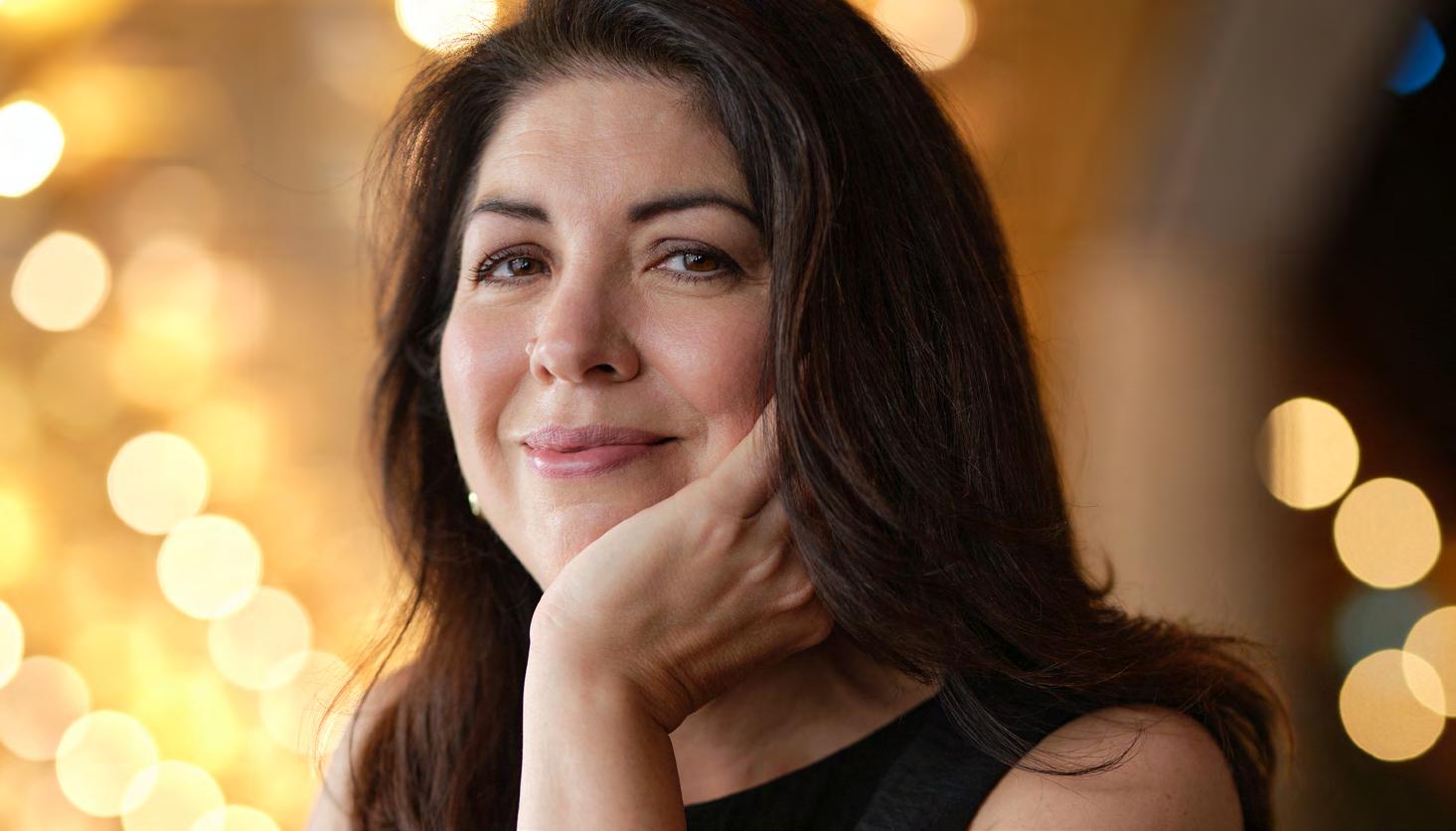
Natalie Chee learned piano then violin as a child and at the age of ten began studying with Alex Todicescu, a professor at the Sydney Conservatorium of Music and member of the Sydney String Quartet. As a student, she won numerous competitions and prizes, including the ABC Young Performer of the Year (1992), and she performed as a soloist with all the Australian symphony orchestras.
While still in high school, she was accepted into the Soloist Class of Igor Ozim in Bern, Switzerland, receiving her Soloist Diploma with High Distinction. During this time, she was invited to join Camerata Bern, which she also directed. She also co-founded the Tiramisu chamber music ensemble and Mozart Piano Quartet, touring North and South America, Europe and Australia with these groups and making several recordings with prominent Swiss and German labels.
Natalie has held the First Concertmaster roles with Camerata Salzburg (appointed
2000), the Stuttgart Radio (SWR) Symphony Orchestra (2009), and the Gürzenich Orchestra (2019). She was named MSO Concertmaster in 2025 and takes up the role this year.
In addition, she is a regular guest concertmaster and director of orchestras worldwide, including the BBC Symphony Orchestra, Munich Philharmonic, Munich State Opera, Hamburg Radio Orchestra, Swedish Radio Orchestra, Royal Scottish National Orchestra, Toronto Symphony Orchestra, Mahler Chamber Orchestra and the Academy of St Martin in the Fields.
Natalie is also a highly regarded chamber musician, appearing in festivals and concerts throughout Australia and Europe. From 2009 to 2025 she was first violin of the Hegel String Quartet in Stuttgart, and their album From Vienna to Hollywood was named by the German Record Critics Award as one of the four best chamber music recordings in 2022.
Natalie Chee violin
PHOTO: LUCAS ALLEN
About the music
Opera in the concert hall
The singers may be the stars, but in the opera house the orchestra is the engine. And orchestras care enough about opera to give it fresh life in the concert hall.
The first half of this concert offers three operatic top hits: a thrilling Russian overture, an exquisite moment in which the violin takes on the ‘diva’ role, and a suite of highlights from the most popular French opera of all.
Mikhail Glinka (1833–1897)
Ruslan and Lyudmila: Overture
Glinka’s music was, to borrow a phrase from Tchaikovsky, the ‘acorn from which the oak of Russian music grew’. Born into a minor noble family, Glinka was able to cultivate his musical interests from a young age, at school in St Petersburg and at home conducting a ‘serf orchestra’ on a neighbouring estate. By 1820 he was back in St Petersburg, ostensibly working in the civil service but in fact devoting himself to composition, and attending opera. The visit of an Italian opera company in 1828 confirmed his love of Rossini, and he travelled to Italy two years later where he got to know Donizetti and Bellini and their works. Before returning to Russia in 1834, he spent time studying in Berlin. Having absorbed Italian lyricism and German rigour, Glinka set about writing music based on Russian themes.
Ruslan and Lyudmila is his second completed opera, and is based on a fairy tale given literary currency by the great poet Alexander Pushkin. (Glinka and Pushkin had discussed a collaboration on the work, but the poet was fatally wounded in a duel before work began.)
Lyudmila is the daughter of Svetozar, the Grand Prince of Kyiv. She is betrothed to Ruslan, but abducted from her father’s palace by the evil sorcerer Chernomor. Ignoring the betrothal, Svetozar offers his daughter and half his kingdom to whomever brings Lyudmila back. Ruslan and his two rivals, Farlaf and Ratmir, set off on the quest, encountering wizards, giants and other magical beings. Ruslan, having won Chernomor’s own sword from the sorcerer’s giant brother, cuts off his beard (rendering him powerless) only to discover that Lyudmila, who has been cast into a magic sleep, has been abducted again, this time by Farlaf, who takes her to the hall of her father in Kyiv. The good sorcerer Finn gives Ruslan a ring which will awaken Lyudmila. He returns to Svetozar’s palace, removes the spell and marries Lyudmila, to the joy of the people of Kyiv.
Like many an opera composer, Glinka left writing the overture to Ruslan and Lyudmila until last and drew on themes from the body of the work. The overture begins with music derived from the general rejoicing at the end of the opera, which is contrasted with a melody associated with Ruslan’s love for Lyudmila. Chernomor makes an appearance in Glinka’s pathbreaking use of a descending whole-tone scale (heard in the trombones in the final minute), but is banished by a return to the rejoicing mood of the opening.
Gordon
Kerry Symphony Australia © 2004
Jules Massenet (1842–1912)
Thaïs: Méditation
Natalie Chee, violin
In Massenet’s opera Thaïs, based on a novel by Anatole France, the beautiful Egyptian courtesan Thaïs is persuaded to abandon her life of voluptuous pleasure for one of spiritual contemplation and virtue. To his surprise and eventual despair, the monk responsible for her conversion, Athanaël, discovers his love for her is erotic rather than platonic. Meanwhile, Thaïs, in turning from Venus to Christ, reveals humility and purity of heart.
The Méditation is an orchestral intermezzo heard between the two scenes of Act II, portraying in ‘real time’ the struggle in the soul of Thaïs. Its sweet soulfulness captures the moment of her life-changing decision. In the morning she will tell Athanaël: ‘Thy word has remained in my heart as a balm divine.’
The harp plays an important part, supporting the singing line of the solo violin and foreshadowing the dying words of Thais at the end of the opera: ‘The sound of golden harps delights me!’
Georges Bizet
(1838–1875)
Carmen: Suite No. 1
Prélude –
Aragonaise
Intermezzo
Séguedille
Les Dragons d’Alcala
Les Toréadors
For his last opera, Carmen, Bizet chose a disturbingly realistic story by Prosper Merimée. Audiences in 1875 were shocked to see women fighting and smoking, not to mention the onstage murder of the heroine. Carmen ran for 45 performances,
a succès de scandale, but was declared a failure. Bizet himself died on the night of the 33rd performance and so did not live to see the opera take its place as one of the most popular in the repertoire, its title character becoming a universal symbol of the femme fatale.
In Seville, Carmen – a bohémienne or Romany woman – is arrested for causing a disturbance among the women at the cigarette factory where she works. She persuades Don José to help her escape and he falls for her, abandoning career and duty to follow her and a band of smugglers, only to be thrown over in favour of the bullfighter Escamillo. When she refuses to return to him, Don José stabs her in a fit of passion.
Bizet never visited Spain but, like so many French composers, he captured the Spanish local colour in brilliant music full of drama and vitality. Following Bizet’s death, his friend Ernest Guiraud compiled two concert suites of highlights from Carmen.
The first suite features the preludes or entr’actes that Bizet wrote to precede each of the four acts. These set the scene, from the ominous tremolos that begin the Act I Prélude to the vibrant, dancing Aragonaise, which is heard before Act IV as the town square fills with people anticipating the spectacle of the bullfight. The remaining entr’actes are equally atmospheric: in the Intermezzo (Act III) a flute and harp create a wistful mood, while The Dragoons of Alcala (Act II) has a brisk, military character with side drum underpinning solos for woodwinds.
The Séguedille is adapted from the captivating aria in which Carmen sings her way out of prison by promising Don José she will dance the Spanish seguidilla just for him. The suite ends with Les Toréadors and the virile march tune associated with Don José’s rival, Escamillo.
Yvonne Frindle © 2019
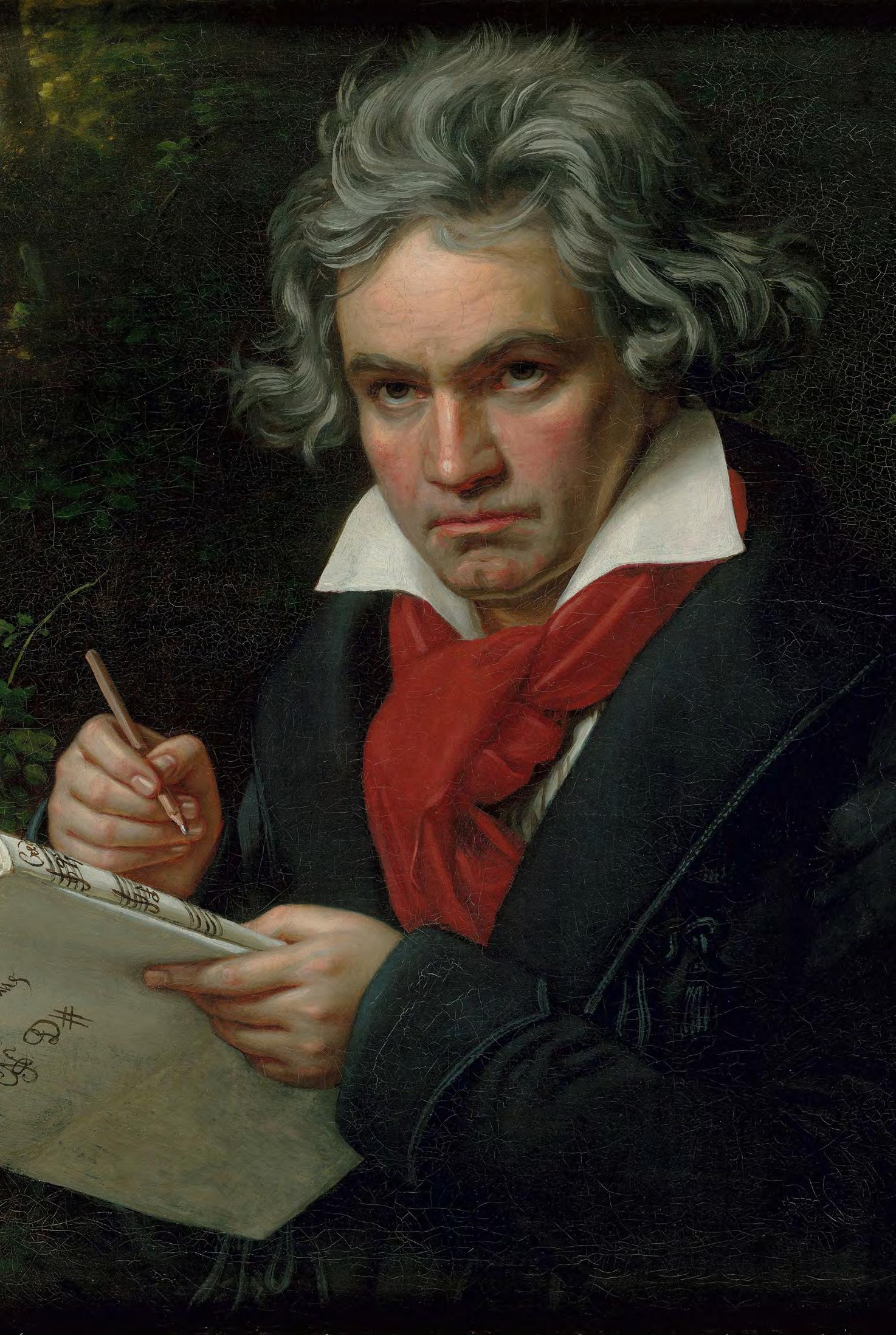
IMGAE: PORTRAIT OF BEETHOVEN (1820) BY JOSEPH KARL STIELER
Ludwig van Beethoven (1770–1827)
Symphony No. 7 in A major, Op. 92
Poco sostenuto – Vivace
Allegretto
Presto – Assai meno presto
Allegro con brio
Wagner’s famous description of Beethoven’s Seventh Symphony as the ‘apotheosis of the dance’ hits on one of the work’s vital characteristics – rhythm for rhythm’s sake.
Beethoven’s sketches for the symphony show he was preoccupied from the outset with expression through rhythm. An insistent skipping rhythm almost totally pervades the main body of the first movement (Vivace). [Imagine saying the word ‘Amsterdam’ over and over.] A solemn march tread underpins the second movement which, at a slow tempo, would sound funereal but which, as a faster allegretto, becomes post-funereal –elevated to a dream-like consciousness, freed of earthly shackles. The there are repeated rhythmic patterns in both the scherzo (Presto) and its trio section, and heavy off-beat syncopation in the main theme of the boisterous finale.
Completed in 1812, the Seventh Symphony helped to usher in a period in which Beethoven not only enjoyed great artistic success in the concert hall but also commensurate financial rewards. Compared to the Fifth and Sixth symphonies from four years earlier, the Seventh appears relatively conventional, with the normal four movements, no special pictorial effects and no additional instruments in the orchestra. Even so, Beethoven was obliged in 1819 to condemn the poetic fancies of a critic so carried away as to analyse it in terms of a political revolution.
Beethoven conducted the first performance of the Seventh in an extraordinary charity concert for wounded Austrian and Bavarian soldiers at the old University in Vienna, on 8 December 1813. Giving their services in the national cause, and playing in the orchestra under Beethoven (which would normally have been beneath their dignity) were numerous eminent musicians, including Salieri, Spohr and Schuppanzigh. Also on the program was the premiere of Beethoven’s Wellington’s Victory (a piece written for the occasion) and public enthusiasm was high.
The Allegretto of Beethoven’s new symphony was an immediate popular success: it was encored at the first performance and again when the concert was repeated four days later. The two concerts netted more than 4000 gulden for the war veterans.
The Seventh remains one of Beethoven’s compelling and exhilarating works – a lifeaffirming celebration of physical vigour and spiritual delight. While Beethoven was not one to reveal himself in his music, there could be a happy coincidence in the probability that his famous letter to the unidentified ‘Immortal Beloved’ was written within weeks, or even days, of the completion of this symphony.
Abridged from a note by Anthony Cane © 1998/2011
Major Government Partners
Major Partner
Supporting Government Partners
Supporting Partners
Paul Noonan, Keypoint Law
Training and Education Partners
Trusts and Foundations
Estate of the late Blanch Brooke Hutchings
Broadcast and Production Partners

Venue Partners

Perpetual Foundation –Alan (AGL) Shaw Endowment
Sidney Myer MSO Trust Fund