Music for harp and winds
Creating connections one note at a time
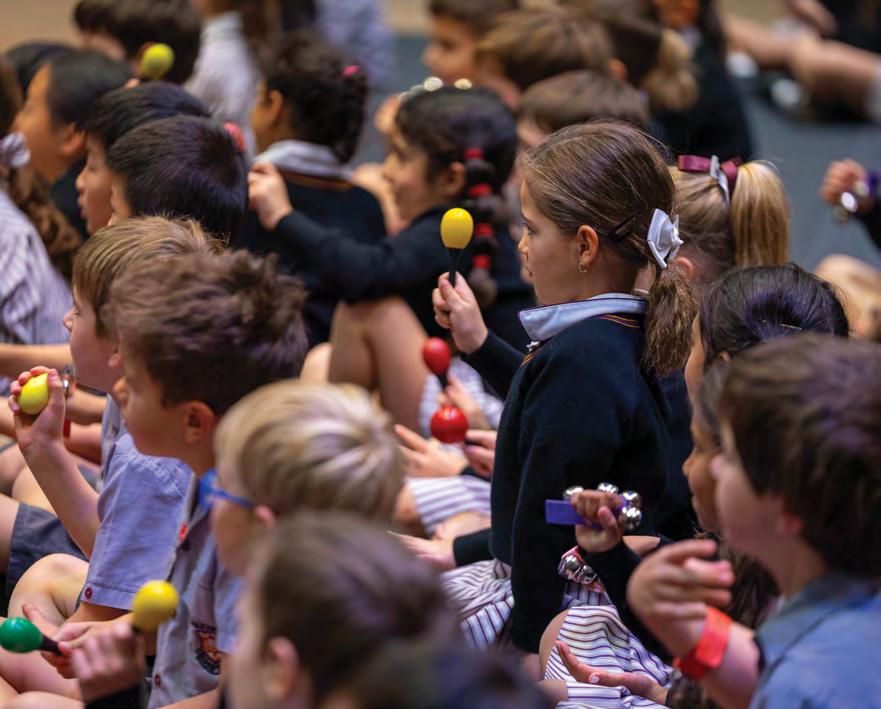
As the Program Partner of MSO Jams in Schools, we are building a more connected community and the next generation of music lovers.
Music for harp and winds
Sunday 26 April at 11:00am
Iwaki Auditorium, ABC Southbank Centre
Artists
Prudence Davis flute
Johannes Grosso oboe
Philip Arkinstall clarinet
Jonathan Craven clarinet
Jack Schiller bassoon
Nicolas Fleury horn
Owen Morris trumpet
Yinuo Mu harp and curator
Daniel Corvaia* conductor
Program
Miguel del Aguila Herbsttag (Autumn Day) [8']
Ravel arr. Jocelyn Morlock Menuet antique [7’]
Ravel arr. Skaila Kanga Le Tombeau de Couperin [13’]
Barber Summer Music for wind quintet [12’]
Salzedo Concerto for harp and seven wind instruments [21’]
* 2026 Cybec Assistant Conductor
Running time: 1 hour and 15 minutes. Timings listed are approximate.

Journey to the inner world of the MSO
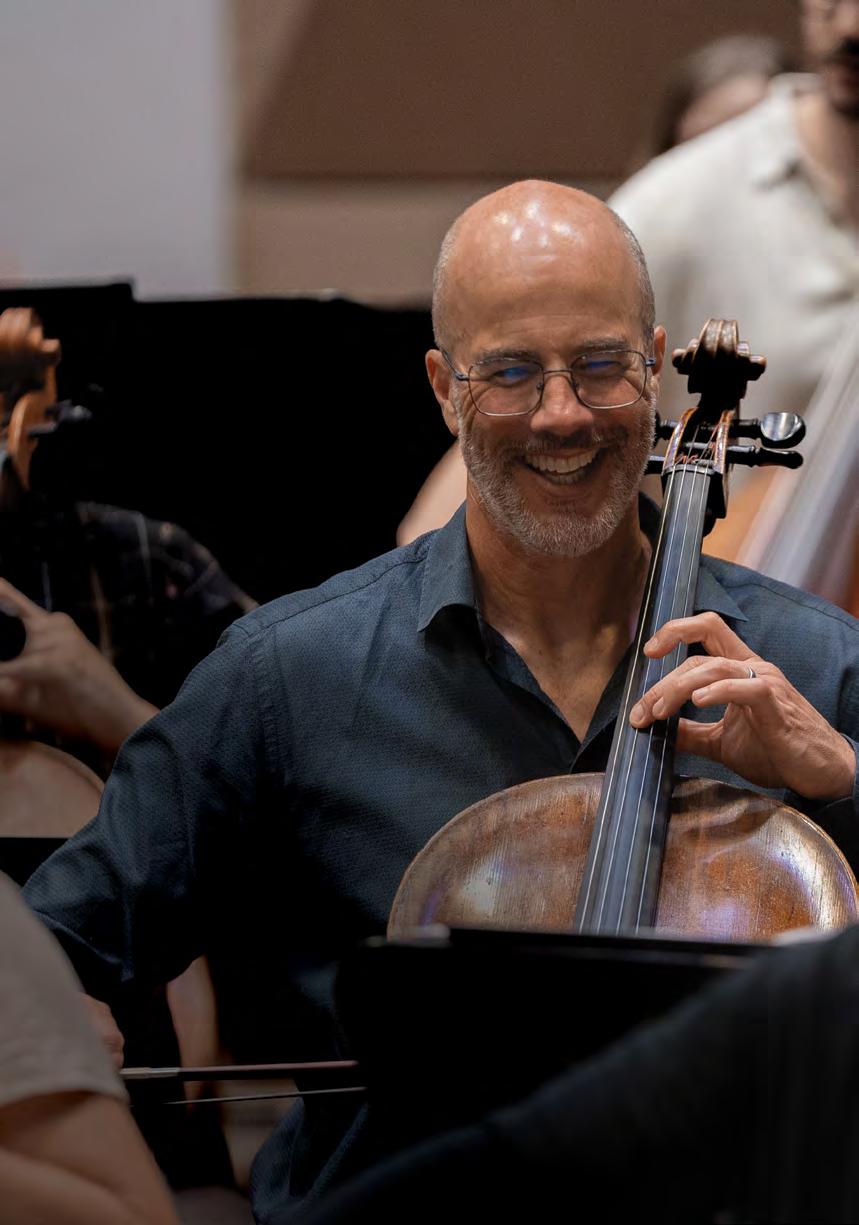
Extend your musical journey through the MSO’s Patron Program.
An annual donation of $500 or above brings you closer to the music and musicians you love. Enjoy behindthe-scenes experiences and exclusive gatherings with MSO musicians and guest artists, while building social connections with other music fans and directly supporting your Orchestra.
Scan the QR code to become an MSO Patron today.
Music for harp and winds
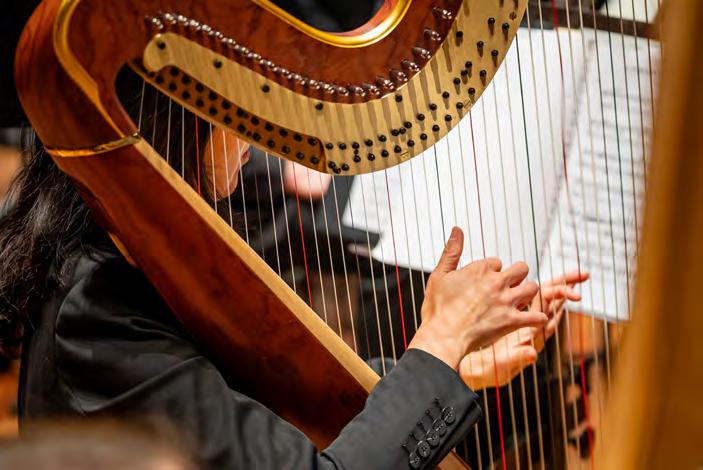
It is a pleasure to present today’s Chamber series concert, exploring the fresh and distinctive sound world of harp and winds.
For this program, I have chosen works by composers who are connected to America in different ways. Uruguayan-born American composer Miguel del Aguila brings the energy of his Latin American background to his musical language, with touches of jazz and blues, while Maurice Ravel, though French, was deeply fascinated and influenced by the sound and spirit of American jazz. Alongside these composers, we feature the distinctly American voice of Samuel Barber, as well as Carlos Salzedo, the French-born harpist and composer who made America his home and helped redefine the role of the harp in modern music.
Playing chamber music is especially rewarding because it allows us to share musical ideas more directly, creating space for spontaneity, connection, and a more immediate relationship with the audience.
It has been a privilege to collaborate on this program with my wonderfully talented colleagues from the MSO, and I hope you enjoy this exploration of colour, rhythm and musical dialogue.
Yinuo Mu Curator
Prudence Davis flute
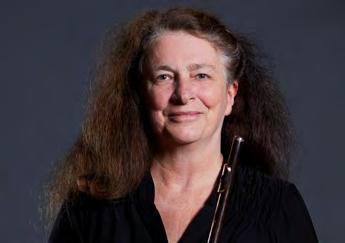
Prudence Davis has held the position of Principal Flute with the MSO since 1980. Growing up in Melbourne, she studied flute at the Victorian College of the Arts with Peter Edge and later in Switzerland with Aurèle Nicolet. She has performed with the Australia Ensemble and Australian Chamber Orchestra, and is also a founding member of the Australian Chamber Soloists and the Melbourne Chamber Orchestra (formerly Australia Pro Arte).
Prue tours regularly for Musica Viva and in 1989 toured Australia with the visiting Reger Trio from West Germany. She has appeared as a soloist in North and South America, Paris, Bonn, The Hague, Brussels, Berlin and Kuala Lumpur, as well as on many occasions with the MSO. In 1993 she undertook a solo tour of Japan, where she performed with the Orchestra Ensemble Kanazawa and gave chamber music concerts and masterclasses.
More recently, Prue has participated over several years in the Australian Festival of Chamber Music in Townsville.
Position supported by Jean Hadges
Johannes Grosso oboe
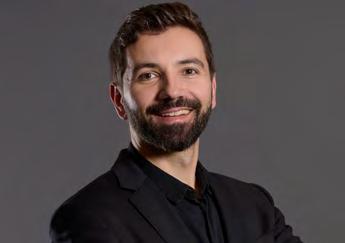
Johannes Grosso is Principal Oboe of the MSO. He has enjoyed an illustrious career in Europe, as solo oboe in the Frankfurt Opera House and as a member of the Budapest Festival Orchestra, having previously spent four years with the Orchestre Philharmonique de RadioFrance, as well as regularly appearing as a guest principal with orchestras such as the Mahler Chamber Orchestra, Bayreuth Festival Orchestra, Chamber Orchestra of Europe, Gewandhausorchester Leipzig and Bamberger Symphoniker.
As a concerto soloist, he won the 2014 Prague Spring International Music Competition. He also won the Giuseppe Tomassini International Competition (Italy) and Asian Double Reed Society Competition (Taiwan) and received second prize in the Fernand Gillet-Hugo Fox Competition (USA), as well as the Végh Sándor Competition Prize (Hungary). These successes led to solo appearances working with conductors such as Christoph von Dohnányi, Daniele Gatti, Gábor Takács-Nagy, Tommas Guggeis, and with orchestras including the Czech Radio Orchestra, Prague Chamber Orchestra, Budapest Festival Orchestra, Frankfurter Opern- und Museumsorchester, the Schleswig-Holstein Music Festival Orchestra and the New Bach Collegium Leipzig.
Philip Arkinstall clarinet
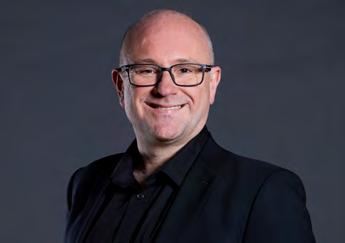
Philip Arkinstall has been the Associate Principal Clarinet of the MSO since 2008 and was principal with the Malaysian Philharmonic Orchestra for 11 years before that. He won the Australian Woodwind Competition in Brisbane at the age of just 18, as well as the 1996 2MBS Radio Performer of the Year and the 1997 ABC Young Performers Award, and Queen’s Trust and Big Brother awards enabled him to further his studies in Europe.
He has appeared both as a soloist and as a guest principal with the Sydney, West Australian, Queensland and Tasmanian symphony orchestras, and has been a regular soloist with the MPO in repertoire ranging from Mozart, Bruch and Strauss to Copland and Henze.
Philip is an active chamber musician, touring Australia for Musica Viva with the Auer Quartet, as well as working with groups such as the Goldner Quartet, Eggner Trio, Australia Ensemble, Australian Chamber Orchestra and Melbourne Chamber Orchestra. He has also played with many contemporary ensembles, including the Arcko Symphonic Ensemble and austraLYSIS, and is a founding member of Plexus.
Jonathan Craven clarinet
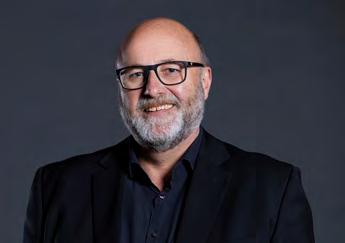
Originally from Liverpool in the UK, Jonathan Craven moved to Australia as a child. In 1984, aged 16, he began clarinet studies with Floyd Williams at the Queensland Conservatorium, and after finishing school he was accepted into the Diploma of Music (Performance) course, during which time he won several prizes for solo and chamber music performance. This was followed by further studies in London, where he received a Licentiate of the Royal Academy of Music diploma.
After returning to Australia, he moved to Perth to teach at the UWA Conservatorium of Music, and in 1993 he was appointed Principal Bass Clarinet in the West Australian Symphony Orchestra. Three years later he was appointed Associate Principal Clarinet. Jonathan subsequently worked freelance in Melbourne and Tasmania until he was appointed Principal Bass Clarinet with the MSO in 2001.
Jack Schiller bassoon
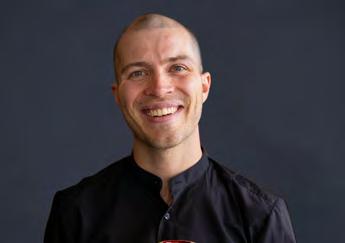
Jack Schiller was appointed Principal Bassoon of the MSO in 2013. He previously held a contract position with the Sydney Symphony Orchestra as Associate Principal Bassoon and was an SSO Fellow under the mentorship of Matthew Wilkie. He collaborates with colleagues and friends to play chamber music and is a founding member of the Melbourne Ensemble. As a chamber musician, he has performed at Musica Viva’s Huntington Estate Music Festival, the Australian Festival of Chamber Music in Townsville, Music By the Springs (Hepburn Springs), the Sydney Opera House Utzon Room and the Ukaria Cultural Centre in Adelaide. As a soloist, he has performed with the Melbourne and Tasmanian symphony orchestras, Orchestra Victoria and Melbourne Chamber Orchestra, and with the MSO he premiered Matt Laing’s Of Paradise Lost. He also gave the premiere of The Song of the Wombat by Rachel Bruerville.
Jack studied with Elise Millman at the Australian National Academy of Music where he won the concerto and chamber music competitions and the Director’s Prize. He has also studied with Mark Gaydon (Adelaide Symphony Orchestra), including two years at the Elder Conservatorium, and has been a member of the Australian Youth Orchestra.
Position supported by Dr Harry Imber
Nicolas Fleury horn
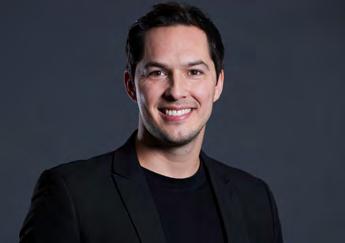
Nicolas Fleury began studying natural and French horns at the age of eight. On completing his studies in his native France – at the Nantes Conservatoire and later the Rueil Malmaison Conservatoire –he continued his education at the Royal College of Music under the guidance of Timothy Brown, Timothy Jones and Sue Dent. He graduated in 2009 with distinction and the Tagore Gold Medal.
Nico was appointed Principal Horn of the MSO in 2019. Previously he was Principal Horn in the Aurora Orchestra, Royal Philharmonic Orchestra and Bournemouth Symphony Orchestra, where he performed Mozart’s horn concertos and Britten’s Serenade for tenor, horn and strings, broadcast live on BBC Radio 3.
He appears frequently as a guest principal horn in orchestras such as the London Symphony Orchestra, Philharmonia Orchestra, Orchestra of the Royal Opera House, Deutsche Kammerphilharmonie Bremen, Academy of St Martin in the Fields, Orchestre de Chambre de Paris, Sydney Symphony Orchestra and Utah Symphony Orchestra. He has performed the most demanding works of the orchestral repertoire alongside conductors such as Andrew Davis, Charles Dutoit, Lorin Maazel, Esa-Pekka Salonen, Bernard Haitink, Andris Nelsons, Valery Gergiev, Neville Marriner and John Eliot Gardiner.
Position supported by Margaret Jackson AC
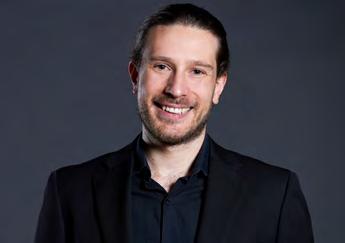
Owen Morris trumpet
Owen joined the MSO as Principal Trumpet in 2019. Previously he was Principal Trumpet with the Adelaide Symphony Orchestra from 2016. He also works as a guest musician with many of Australia’s leading symphony and chamber orchestras, including performing with the Australian World Orchestra.
As a soloist, he has performed concertos with the MSO, Melbourne Chamber Orchestra, Adelaide Symphony Orchestra, Sydney Youth Orchestra, Adelaide Youth Orchestra, Adelaide Wind Orchestra and National Band of New Zealand. He has also premiered new trumpet works and arrangements by Australian composers such as Nigel Westlake, Matthew Hindson and Holly Harrison.
Owen is a passionate educator and enjoys teaching privately and as a member of faculty at the Sydney Conservatorium of Music, where he gained his undergraduate degree studying with Leanne Sullivan. Other influential teachers and mentors include James Pensini and the late Paul Goodchild.
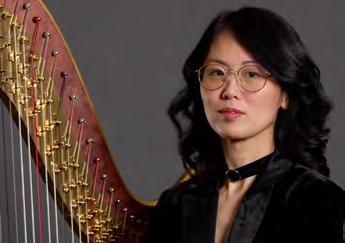
Yinuo Mu harp and curator
Yinuo Mu has been Principal Harp of the MSO since 2013. She has also appeared as a guest with the Sydney and West Australian symphony orchestras, Orchestra Victoria, Opera Australia Orchestra, Houston Symphony, San Diego Symphony and Boston Symphony Orchestra, and has performed in leading concert halls worldwide, including Carnegie Hall, Royal Albert Hall, Amsterdam Concertgebouw, Hamburg’s Elbphilharmonie, Suntory Hall, Boston Symphony Hall, National Centre for the Performing Arts in Beijing and the Sydney Opera House.
Yinuo is also a soloist, chamber musician and educator. She has appeared as a concerto soloist with the MSO and other Melbourne orchestras. and regularly tutors for the Australian Youth Orchestra as well as presenting masterclasses at the University of Melbourne and Monash University.
Born in Qingdao, China, Yinuo began studying piano at the age of five and took up the harp at ten after entering the Central Conservatory of Music. She holds degrees from the Oberlin Conservatory of Music, Cleveland Institute of Music and Boston University. Her awards include the Grand Prize from the American String Teachers Association and the American Harp Society’s Ann Adams Award.
PHOTOS: LAURA MANARITI
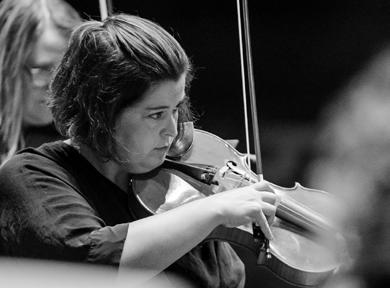
COMING UP IN THE MSO CHAMBER SERIES
Old ideas, new stories
Sunday 26 July at 11:00am
Iwaki Auditorium,
ABC Southbank Centre
Are there any new stories, or is everything a remix? Violinist Tiffany Cheng has devised a fascinating and colourful program that blends drama, whimsy, words and music. Aaron Copland’s Sextet is framed by Bryce Dessner’s Murder Ballades, Joe Chindamo’s Tempesta string quartet and Holly Harrison’s Mad-Hatter’s Tea Party.
Chamber music for strings
Sunday 20 September at 11:00am
Iwaki Auditorium,
ABC Southbank Centre
Curated by violist Jenny Khafagi, this program introduces MSO audiences to Wed, a bittersweet miniature by David Lang, and Caroline Shaw’s elegant and witty quartet Plan and Elevation. The centerpiece is Brahms’s masterful String Quintet No.2
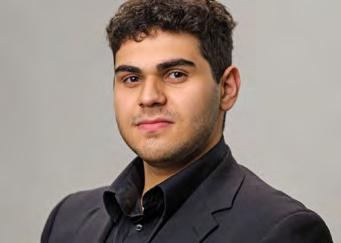
Daniel Corvaia conductor
Conductor, violinist and educator Daniel Corvaia is the MSO Cybec Assistant Conductor for 2026. Originally from Western Australia, he holds an honours degree from the UWA Conservatorium of Music.
In 2024 and 2025, he was awarded a Conducting Fellowship with the West Australian Symphony Orchestra, working closely with Associate Conductor Jen Winley, and assisting conductors such as Asher Fisch, Vasily Petrenko and Umberto Clerici.
In 2025, he was selected for the Australian Conducting Academy. Through this program, he worked with the Tasmanian, Melbourne, Queensland, Sydney, West Australian and Adelaide symphony orchestras, as well as the Auckland Philharmonia. This year, he has been invited to participate in masterclasses with conductors Benjamin Northey, Asher Fisch, Eivind Aadland, Martyn Brabbins, Giordano Bellincampi and Otto Tausk.
A committed music educator, Daniel also holds a Master of Teaching degree from the University of Western Australia. He has worked with the WA Youth Orchestras and in January he made his Melbourne Youth Orchestra debut.
Daniel Corvaia’s position is generously supported by the Cybec Foundation.
About the music
Miguel del Aguila (born 1957)
Herbsttag (Autumn Day) for flute, bassoon and harp
Herbsttag (1984) was inspired by Rainer Maria Rilke’s poem of the same name, which sets the tone for the entire piece.
The composer writes:
Just like Rilke’s poem, my work recreates an existential reflection about loneliness, the end of youth, the passing of time and the meaning of our own existence. At the time I composed this work, in my mid-20s, I was exiled in Vienna, most of my family were in the US and some were still left in Uruguay enduring the horrors of a military regime. Herbsttag stands alone among all my works, which are often driven by Latin rhythms, and are energetic with clear structure and melodies. In Herbsttag, the distant hints of jazz in the harmonies and
Herbsttag by Rainer Maria Rilke
Herr: es ist Zeit.
Der Sommer war sehr groß.
Leg deinen Schatten auf die Sonnenuhren, und auf den Fluren laß die Winde los. Befiel den letzten Früchten voll zu sein; gib ihnen noch zwei südlichere Tage, dränge sie zur Vollendung hin und jage die letzte Süße in den schweren Wein. Wer jetzt kein Haus hat, baut sich keines mehr. Wer jetzt allein ist, wird es lange bleiben, wird wachen, lesen, lange Briefe schreiben und wird in den Alleen hin und her unruhig wandern, wenn die Blätter treiben.
in melodic inflections (blue notes, glissandi, bending tones) convey my longing for a distant America and my family there.
Herbsttag does not develop or modulate. Just like my feelings while composing it, the work seems caught in a somewhat depressive and hopeless mood from where there is no escape or resolution. The middle section portrays Rilke’s cold Autumn day – the wind blowing the dry leaves along the wet streets of Vienna. The work ends with a glissando to nowhere from the same chord that began the piece, now missing the harmonic foundation of tonic and third. After numerous reiterations of the theme, the flute and bassoon end the piece with empty air notes.
Herbsttag was premiered in Vienna in 1986 by the American Music Ensemble Vienna.
Autumn Day
Lord, it is time.
Let the great summer go, lay your shadows on the sundials, and over harvest piles let the winds blow. Command the last fruits to be ripe; grant them one last southern hour, urge them to completion, and with power drive final sweetness to the heavy wine. Who’s homeless now, will for long stay alone. No home will build his weary hands. He’ll wake, read, write long letters to friends and will the alleys up and down walk restlessly wandering, as falling leaves dance.
Translation by Miguel del Aguila
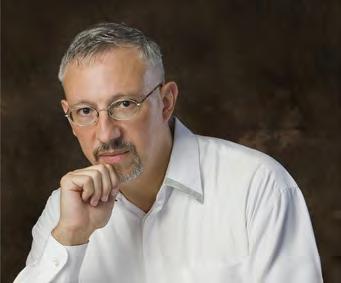
American MIGUEL DEL AGUILA is known for his distinctive style – blending tradition and modernity with echoes of his Latin American heritage in ‘brilliant and witty’ and ‘sonically dazzling’ works – and his many compositions bring vibrant diversity to the contemporary chamber and orchestral repertoire. His concert works have been conducted worldwide by Leonard Slatkin, Lukas Foss, JoAnn Falletta, Marin Alsop, Gerard Schwarz and Giancarlo Guerrero, among others. His recordings have topped the Billboard Classical Charts with some nearing half a million streams. In 2024 Windsync plays Miguel del Aguila reached #1, and his Salon Buenos Aires and Concierto en Tango albums have earned him three Latin Grammy nominations.
Aguila was 2025 Composer in Residence at Lynn University and the Du Vert à L’infini festival in France. His accolades include the Kennedy Center Friedheim Award, and New Music USA’s Music Alive and Magnum Opus awards.
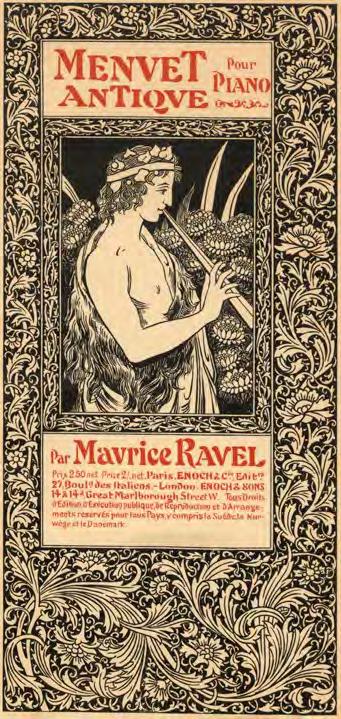
The minuet epitomises French court dance from the Baroque period. Its music was quick but graceful, while the dance itself traced intricate patterns on the ballroom floor. Ravel’s Menuet antique nods to the 18th century in its dance-like character and the simple three-part structure (sections of brisk music framing a more lyrical core). But the Menuet is even more ‘antique’ than that. Ravel described it as a ‘backward-looking piece’ and some of his musical gestures are more mediæval than baroque. Significantly, the cover of the original edition shows not Baroque courtiers but looks instead to ancient Greece with Pan playing his pipes.
Maurice Ravel (1875–1937)
Menuet antique
arranged
by
Jocelyn Morlock
Maurice Ravel was just 20 years old and still a student (though of piano, not yet of composition) when he wrote the Menuet antique, as a work for solo piano. It was his first published work. Already we encounter here distinctly Ravellian characteristics: a fascination with dance forms of the past, looking to the music of Rameau and Couperin, but also a determination to impose his own musical language. Though called a minuet, its three-to-a-bar rhythm is almost completely obscured by shifting the strong and weak beats around, and the ‘antique’ flavour that emerges here and there in folk-like modal melodies – for example, in the final cadence – is counterbalanced by gentle, playful 20th-century dissonances.
Some three decades later, in 1929, Ravel created a version for full orchestra. This performance with oboe, bassoon and harp (adapted from Jocelyn Morlock’s chamber arrangement for flute, viola and harp) retains the intimacy of the piano original, while opening out the range of colours and textures.
Natalie Shea © 2026
Maurice Ravel (1875–1937)
Le Tombeau de Couperin arranged by Skaila Kanga
Prélude
Menuet
Rigaudon
The title tells us that this music is a memorial (literally a ‘tombstone’) for the French Baroque composer François Couperin. It’s the kind of thing that Couperin and his contemporaries did in fact write. But Ravel is reviving the tradition from a distance of two centuries – just after World War I – adding a further layer of significance. Ravel’s Tombeau is both a memorial to friends killed in the war and a tribute to the elegance and artifice of French Baroque music. In the process, it reveals the composer’s affinity with composers such as Couperin and Rameau through his conception of music as diversion, his taste for artifice, and his love of antique dance forms.
The 17th-century French tombeau tradition originally took the form of poetry written to commemorate a mentor or colleague. The earliest musical tombeaux were by lutenists, but the genre was soon adopted by French harpsichordists: Louis Couperin and D’Anglebert both commemorated their teacher Jacques Chambonnières with tombeaux, while in the next generation François Couperin honoured the tradition with his Apothéoses of Corelli and Lully.
Ravel’s Tombeau was conceived in 1914, when the composer told Lucien Garban (of Durand publishers) that he’d embarked on a French suite for piano. The sketches, largely completed, were set aside on the outbreak of World War I, and it was not until 1917 that they emerged as Le Tombeau de Couperin – each of its six movements dedicated to the memory of a friend who had died in the war. The work’s musical
tribute is cast more broadly: ‘…not so much,’ said Ravel, ‘to Couperin himself as to 18th-century French music in general.’
It was the concept of the French Baroque suite – each dance with its specified character and set tempo – rather than its musical style that emerged in Le Tombeau. And the apparent contradiction of a suite of dances dedicated to the memory of fallen comrades is perfectly resolved, although the muted gracefulness of the music suggests serenity, even resignation, rather than melancholy.
Shortly after pianist Marguerite Long gave the first performance in 1919, Ravel orchestrated four of the movements –Prélude, Forlane, Menuet and Rigaudon –omitting the Fugue and the pianistic Toccata that had concluded the original suite. More recently, London-based harpist Skaila Kanga arranged three of these movements for flute, viola and harp – a combination popularised by Claude Debussy. Today’s performance adapts Kanga’s arrangement, giving the flute and viola parts to oboe and bassoon, and restoring some of Ravel’s original colours.
As in Ravel’s orchestration, the oboe takes the lead in the Prélude with a breathless succession of notes. Ravel also exploited the enhanced capabilities of Erard’s double-action harp – still new at the time –and the feeling of perpetual motion in the Prélude is brought to a close with ravishing trills swept up in a harp glissando.
Ravel had prepared for the composition of Le Tombeau by transcribing dance music from François Couperin’s Concerts royaux. But the flowing Menuet is more like Ravel’s own Menuet antique than any by Couperin, despite the antique mood established by its modal harmonies and classically balanced phrases. The Menuet sets out
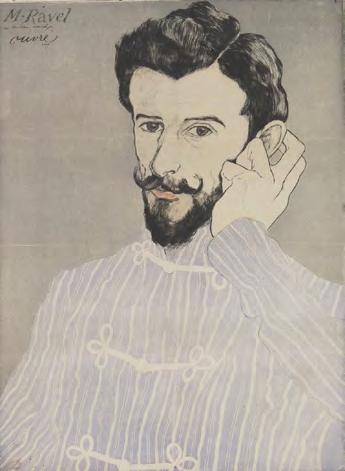
with just the harp, discreetly supported by the bassoon. The oboe comes to the fore, appropriately, for the quietly rustic ‘Musette’ section.
The Rigaudon, an exuberant dance with Provençal folk origins, concludes this suite wit henergy and brilliance.
Adapted from a note by Yvonne Frindle © 1999/2026
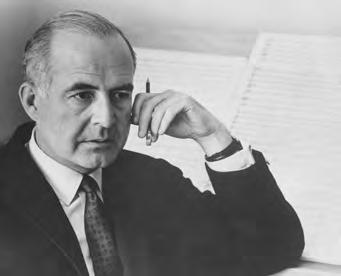
Samuel Barber (1910–1981)
Summer Music, Op.31 for wind quintet
If Samuel Barber’s music has a defining characteristic, it would be lyricism (think of his famous Adagio for strings), and a dreamy quality pervades this wind quintet. ‘It’s supposed to be evocative of summer,’ he said, by which he meant the music should be languid, ‘not killing mosquitos’. In Summer Music the lyricism is also the result of that perfect accommodation to a medium which comes from a deep absorption in the styles of one’s players, the mark of the consummate musical professional.
Summer Music arose from a commission by the Chamber Music Society of Detroit for a work for three woodwinds, strings trio and piano. But this septet, which eventually became a sextet, and finally a quintet, was mostly written with the New York Woodwind Quintet in mind.
Barber and the New Yorkers first met in January 1954 at the Greenwich Village apartment of the quintet’s horn player John Barrows. The ensemble had been working on some of Barrow’s own intonation exercises, and these became hugely important in the development of this work. Barrow had created a chart showing the complete ranges of each
instrument and where they overlapped. On this chart, each player had described the quality of each note on their instrument –‘dull’, ‘usually sharp’ etc. – and from these descriptions Barrow had devised studies using the ‘worst’ chords – hard to produce and tune, but especially sonorous and effective. Barber took this chart and Barrow’s exercises home with him.
Eight months later he had finished the work – a quintet by now – and the NYWQ played through Summer Music one night after a late-evening rehearsal. ‘We were completely gassed,’ said flautist Samuel Baron, ‘Barber has studied our charts and written some of our favourite effects. The piece is very hard, but so far it sounds just beautiful….’
The New Yorkers were disappointed to learn that they couldn’t perform the work until after the Detroit premiere. Summer Music was played twice in that concert, a practice instituted by Arnold Schoenberg’s Society for Contemporary Music for the premiere of works thought more difficult to understand, or even enjoy on a single hearing. After the premiere Barber made considerable cuts and it was the 12-minute version that the New Yorkers played in West 73rd Street on 5 April 1956.
The music draws on a couple of ideas from Horizon, a work on Arabian themes that Barber had composed for NBC Radio. And it shares with Horizon a rhapsodic form, a modal quality, and some French influences. (‘The wit and chatter of French woodwind writing, without its stridency’ as biographer Barbara Heyman described it.) If anything bothered Barber in later interpretations of the work it was sluggish tempos. ‘Summer shouldn’t drag on to winter’, you could imagine him saying. But the work has stayed on in the quintet repertoire.
Abridged from a note by Gordon Kalton Williams Symphony Australia © 1998


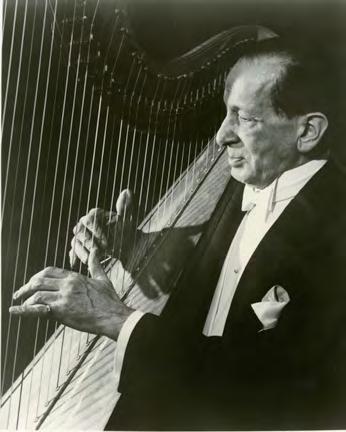
Carlos Salzedo (1885–1961)
Concerto for harp and seven wind instruments
Prélude
Nocturne
Menuet –
Farandole –Pavane – Gaillarde
strings right down at the bottom end, where they join the soundboard, rather than in the middle of the string.
The harp, wrote Carlos Salzedo in 1926, lacked a modern concerto; so he wrote one. The Classical repertoire – Mozart’s Concerto for flute and harp, K.299 would be the best-known example – essentially treated the harp as an unboxed piano, and paid no heed to the instrument’s most distinctive quality: its essential resonance, created in an instant by the plucking finger, but then continuing on its own as the string vibrates, unaided by pedal, bow or breath, gradually fading naturally into silence. For Salzedo, the sound of a harp note lingering in the air was so crucial that he renounced the use of rests in his notation for the instrument, because silence was not natural to harp’s sonority; to stop the sound by physically stifling the vibration of the strings should be considered a special effect. When a melody is played on the harp, the pitches will overlap; according to Salzedo, composers who did not take that into account were not truly writing for the instrument.
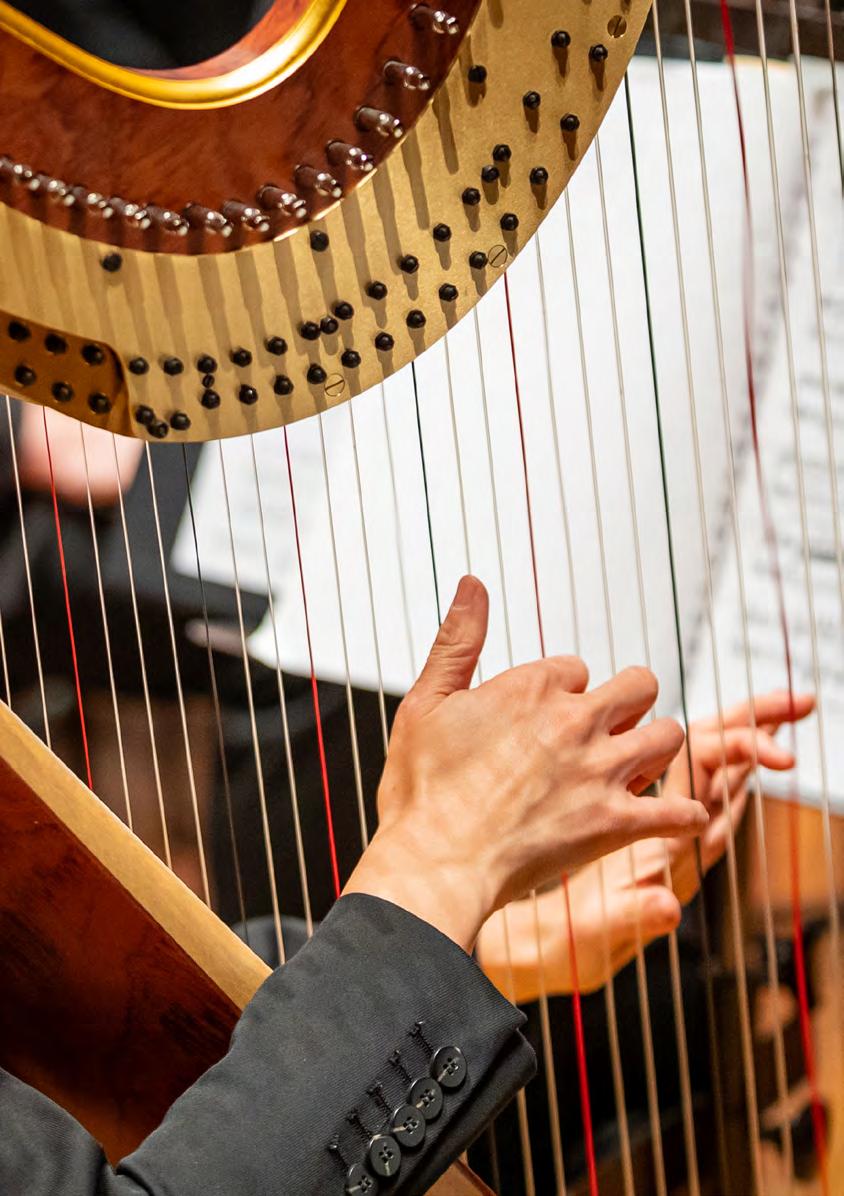
Salzedo was inspired by the American harps being built by Lyon & Healy, which were more powerful than the French instruments of the day – so different, he felt, that they should really be considered a new instrument. [Yinuo Mu plays the MSO’s recently purchased Lyon & Healy harp – the only one of its kind in Australia.] Salzedo identified 37 tone colours and effects that should be part of the harpist’s tone palette: a glissando, for example, will sound quite different if the player uses their fingernails rather than the pads of their fingers, or if they glide over the
The concerto that Salzedo wrote for the modern harp in 1926 uses a breathtaking range of techniques and timbres – this was the era when timbre was coming to the fore as a vital element in music, as important as pitch and rhythm. Unlike a ‘standard’ concerto, the soloist is accompanied not by an orchestra, but by a chamber ensemble of wind instruments. The three-movement structure more or less follows the regular concerto pattern, although the soloist’s cadenza in the first movement comes almost at the start rather than at the end. After a slow, hauntingly beautiful Nocturne, the final movement is a string of dances: Menuet, Farandole and Pavane, each clearly in character with its title but in a five-beat metre – Salzedo was very attached to the number 5, which has special significance in his Basque heritage. The final dance in the sequence, though, is a galliard which romps home in its regular triple time.
Natalie Shea © 2026
Supporting
Paul Noonan, Keypoint Law
Training and Education Partners
Trusts and Foundations

Estate of the late Blanch Brooke Hutchings
Broadcast and Production Partners

Venue Partners

Perpetual Foundation –Alan (AGL) Shaw Endowment
Sidney Myer MSO Trust Fund