Proudly presented by Godiva

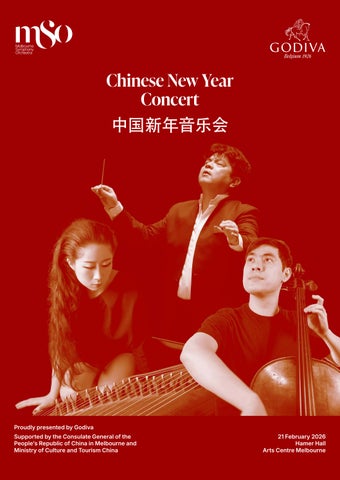
Saturday 21 February 2026 at 7:30pm Hamer Hall, Arts Centre Melbourne
Artists
Melbourne Symphony Orchestra
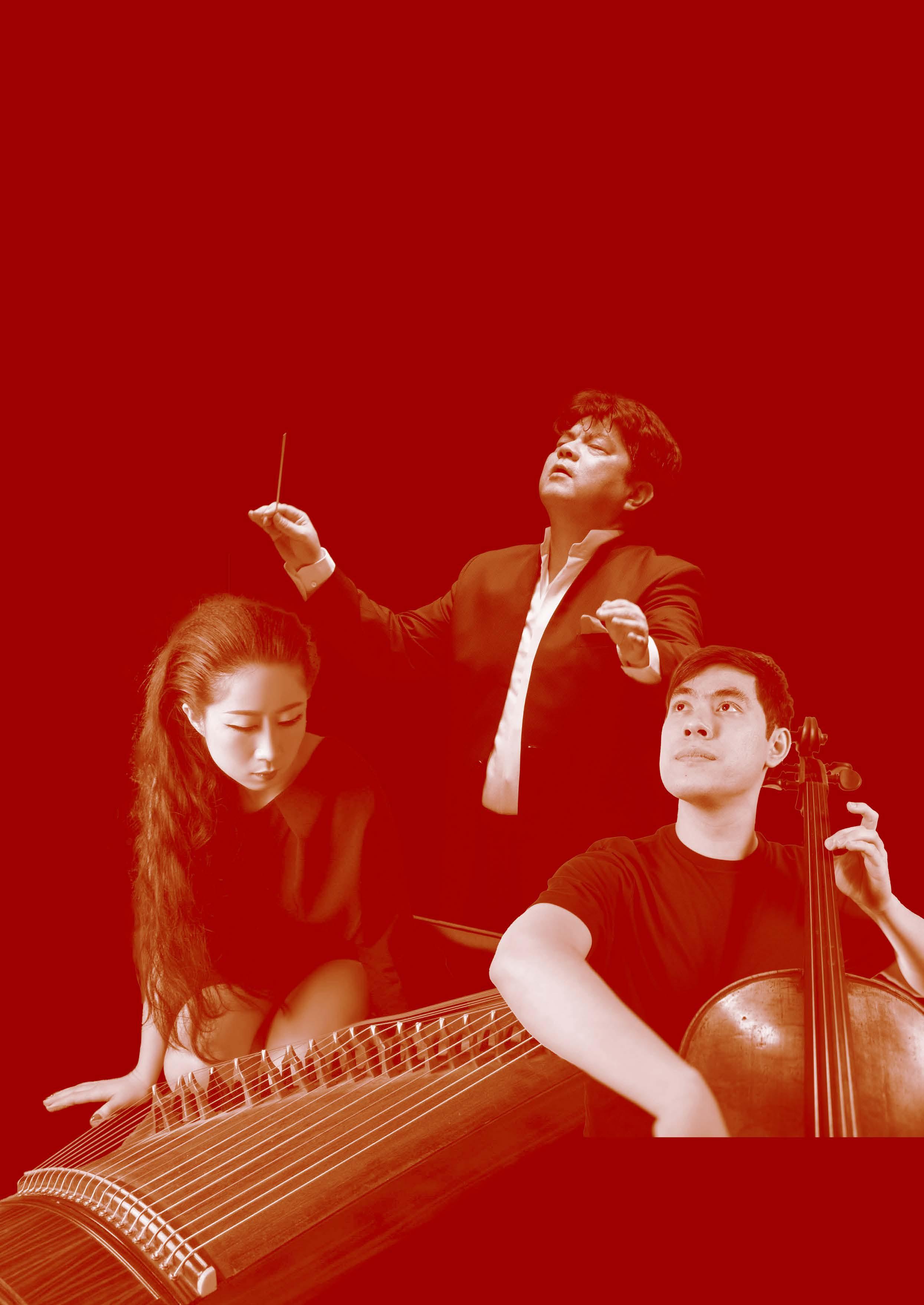
Li Biao conductor
Mindy Meng Wang guzheng
Zlatomir Fung cello
Program
Wang Xilin
Torch Festival from Yunnan Tone Poem [8’]
Chen Gang and He Zhanhao
The Butterfly Lovers for guzheng and orchestra [17’]
Saint-Saëns Cello Concerto No. 1 [19’]
interval
Beethoven Symphony No. 7 [40’]
演出艺术家及机构
墨尔本交响乐团
指挥:李飚
古筝:王萌
大提琴:冯勇智
演出曲目
王西麟 |《云南音诗:火把节》
陈钢、何占豪 |《梁祝》
圣桑 |《第一大提琴协奏曲》
中场休息
贝多芬 |《第七交响曲》
PROUDLY PRESENTED BY 荣誉呈献方

Supported by the Consulate General of the People’s Republic of China in Melbourne and the Ministry of Culture and Tourism China
Running time: 2 hours and 5 minutes including a 20-minute interval. Timings listed are approximate.
A musical Acknowledgement of Country by James Henry will be performed at the start of the concert.
In consideration of your fellow patrons, the MSO thanks you for silencing and dimming the light on your phone.
MSO中国新年音乐会由中华人民共和国驻墨尔本总 领事馆、中华人民共和国文化和旅游部支持举办。
演出时间:约2小时5分钟,含20分钟中场休息。
本场音乐会的开场节目为詹姆斯·亨利创作的曲目 《对原住民表示敬意》。
考虑其他观众,请将手机调至静音并调暗亮度。

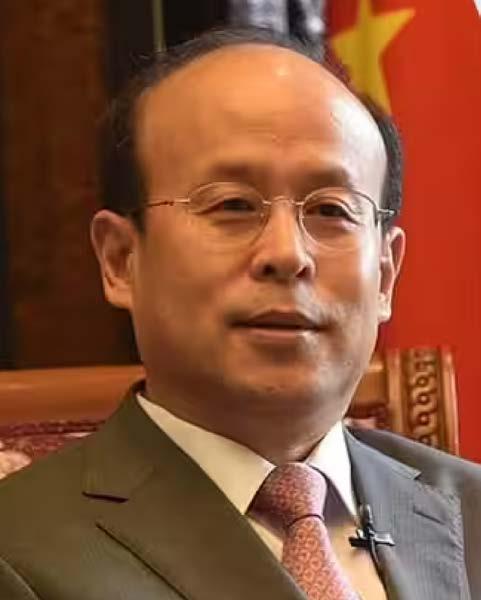
As we usher in the Chinese New Year, I would like to extend, on behalf of the Chinese Embassy in Australia, our warmest congratulations on the successful opening of the 2026 Melbourne Symphony Orchestra Chinese New Year Concert, and a heartfelt welcome to all the guests attending tonight’s performance.
Music transcends languages and borders, enabling people to enhance mutual understanding and deepen friendships through shared emotional experiences. For 13 years, the MSO Chinese New Year Concert has, with its spirit of openness and inclusiveness, as well as its high artistic standards, served as a bridge for cultural exchanges and mutual learning between China and Australia, becoming an integral part of Australia’s cultural landscape.
This concert brings together both Chinese and Western masterpieces. Through the heartfelt performances of outstanding artists, it will fully showcase the unique charm of cultural convergence and integration. Such artistic dialogue is also a vivid reflection of the deepening people-to-people exchanges between China and Australia.
This year is the Year of the Horse in the Chinese zodiac. In Chinese culture, the horse symbolises vigour, progress and perseverance, and heralds new hope and new journeys. I believe that tonight’s concert will, with its moving melodies, mark a beautiful beginning for the new year.
Here, I would like to express my sincere gratitude to all the performing artists, the organisers, and friends from all sectors who have long supported this event. I wish tonight’s concert every success.
May the Year of the Horse be filled with prosperity, happiness and good fortune for you all.
His Excellency Xiao Qian Ambassador of the People’s Republic of China to the Commonwealth of Australia
值此中国新年到来之际,我谨代表中国驻澳大利亚大使 馆,对墨尔本交响乐团中国新年音乐会的成功举办表示 衷心祝贺!对今晚出席音乐会的各位嘉宾表示热烈欢 迎!
音乐超越语言与国界,让人们在共同的情感体验中增进 理解、加深友谊。十三年来,墨尔本交响乐团中国新年 音乐会以开放包容的精神和高水准的艺术呈现,搭建起 中澳文化交流互鉴的桥梁,已成为澳大利亚文化大家庭 中的重要一员。
本场音乐会荟萃中西经典之作,在杰出艺术家的倾情演 绎下,将充分展现不同文化交汇融合的独特魅力。这样 的艺术对话,也是中澳两国人文交流不断深化的生动写 照。
今年是中国马年。在中国文化里,马象征着昂扬奋进与 坚韧不拔,寓意新的希望与新的征程。相信本场音乐会 必将以动人的旋律,为新的一年奏响美好的开篇。
在此,我谨向所有参加演出的艺术家、活动组织者以及 长期关心和支持这一盛会的各界朋友,致以诚挚谢意! 预祝今晚演出圆满成功! 祝大家马年大吉、万事如意! 中华人民共和国驻澳大利亚大使 肖千 阁下
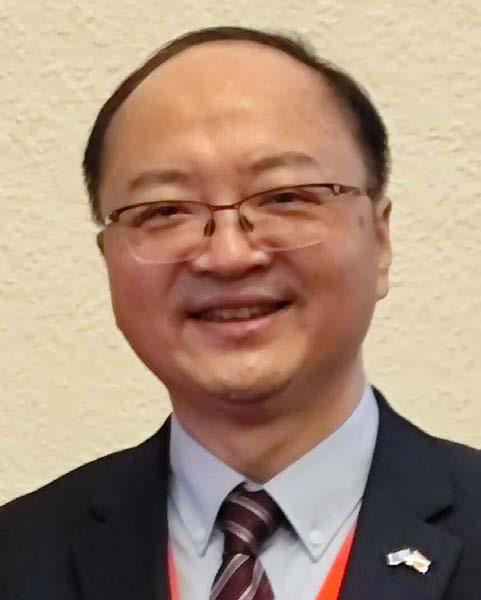
On the occasion of the Spring Festival of the Year of the Horse, on behalf of the ConsulateGeneral of the People’s Republic of China in Melbourne, I would like to extend my warmest congratulations on the Melbourne Symphony Orchestra’s Chinese New Year Concert, and my heartfelt thanks go to all our guests for joining us tonight.
The Spring Festival originates in China, and it now belongs to the world. Here in Victoria – and across Australia – it has become a vibrant part of our multicultural life. The MSO’s Chinese New Year Concert brings the joy of the festival together with the power of music, which beautifully blends Eastern and Western traditions. It is a wonderful way to deepen understanding and build connections between our two cultures.
Over the past 12 years, the Consulate-General and the MSO have enjoyed collaborating with each other to present this concert to our audience, completing a full Chinese zodiac cycle. This year, we begin a new cycle. The horse, in Chinese culture, stands for energy, courage, resilience and success. We look forward to continuing this partnership with renewed momentum – opening new pathways, and sharing more memorable moments with our audiences year after year.
Finally, I wish you all a very happy Chinese New Year, a joyful and successful Year of the Horse.
Fang Xinwen Consul-General of the People’s Republic of China in Melbourne
值此马年春节来临之际,我谨代表中国驻墨尔本总领 馆,对墨尔本交响乐团中国新年音乐会的举办表示热烈 祝贺,对出席音乐会的各位嘉宾表示衷心感谢!
春节源于中国,走向世界,已经成为维州和澳大利亚多 元文化的重要组成部分。多年来,墨尔本交响乐团中国 新年音乐会将音乐和春节完美结合,为观众呈现了一场 又一场东西合璧的视听盛宴,为促进中澳文明交流互鉴 架起了沟通桥梁。
中国驻墨尔本总领馆同墨尔本交响乐团合作,已成功举 办12届中国新年音乐会,刚好走过一轮中国生肖年。今 年是丙午年,马在中华文化中象征着活力、勇敢、坚韧 与成功,相信这也预示着双方新一轮中国生肖年合作将 马踏新途,岁岁生花。
最后,恭祝大家新春快乐,马年大吉! 中国驻墨尔本总领事 房新文
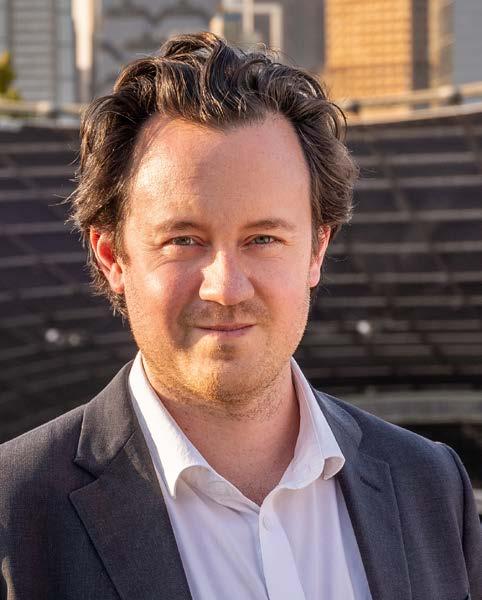
Welcome to the Melbourne Symphony Orchestra’s 2026 Chinese New Year concert. This year holds special significance as we celebrate two important milestones: the Year of the Fire Horse and the MSO’s 120th anniversary. On behalf of the Orchestra’s Board, musicians, and staff, it is with great pleasure that I welcome you to this evening’s performance.
Our 2026 program features a captivating work by Wang Xilin and a beloved classic concerto, The Butterfly Lovers by Chen Gang and He Zhanhao, performed in a fresh interpretation with guzheng and orchestra. These compositions will be performed alongside timeless Western masterpieces by Saint-Saëns and Beethoven, celebrating the rich dialogue between Eastern and Western musical traditions. Our talented musicians will be led by conductor Li Biao, and we are delighted to welcome internationally acclaimed cellist Zlatomir Fung, making his debut with the MSO, and Melbourne-based guzheng virtuoso Mindy Meng Wang, known for her theatrical and captivating performances.
The Chinese New Year concert has become a cherished part of the MSO’s calendar, reflecting our deep commitment to cultural exchange and the diverse communities that call Melbourne home. For 120 years, the MSO has been part of this city’s story, and initiatives like this concert demonstrate how orchestral music can build bridges, foster understanding, and bring people together across cultures.
As we enter the Year of the Fire Horse – a year associated with energy, momentum, and boldness – it feels fitting to celebrate alongside our 120th anniversary, a milestone that honours our past while looking ambitiously toward the future.
I extend my heartfelt thanks to our Chinese New Year supporters, including Program Supporters the ConsulateGeneral of the People’s Republic of China in Melbourne and the Ministry of Culture and Tourism of the People’s Republic of China, and concert Presenting Partner Godiva. Your support makes evenings like this possible.
We wish you a joyous Chinese New Year, filled with good health, prosperity and happiness in the year ahead. Thank you for joining us in this celebration.
Edgar Myer MSO Chair
欢迎各位参加墨尔本交响乐团2026年中国新年音乐会。
本次音乐会意义非凡,我们将共同庆祝两个重要里程 碑——农历火马年以及墨尔本交响乐团成立120周年。 我谨代表乐团董事会、音乐家及全体员工,诚挚欢迎各 位出席今晚的演出。
2026新年音乐会曲目汇集了王西麟的精彩作品,以及 陈钢与何占豪创作的经典之作《梁祝》。本场演出将以 古筝与管弦乐的全新演绎方式呈现这部深受喜爱的协奏 曲。同时,还将呈现圣桑与贝多芬的西方经典名作,展 现东西方音乐传统之间丰富而深刻的对话。本场音乐会 由指挥家李飚执棒,除本团才华横溢的音乐家以外,我 们也非常高兴地迎来首次与墨尔本交响乐团合作的国际 知名大提琴家冯勇智,以及以富有戏剧张力与感染力著 称的墨尔本古筝演奏家王萌。
中国新年音乐会已成为墨尔本交响乐团年度演出日程中 的重要传统部分,体现了我们对文化交流以及墨尔本多 元社区的坚定承诺。120
年来,墨尔本交响乐团始终与 这座城市同频共振、携手前行,通过中国新年音乐会等 活动,展现交响音乐如何搭建桥梁、促进理解,并凝聚 不同文化背景的观众。
在象征活力、奋进与勇气的火马年到来之际,我们亦迎 来乐团成立120周年。这一重要里程碑既是对乐团过往 成就的礼赞,更标志着我们对未来的雄心壮志。
我谨向所有支持本次中国新年音乐会的合作伙伴致以衷 心感谢,包括项目支持单位中华人民共和国驻墨尔本总 领事馆与中华人民共和国文化和旅游部,以及音乐会呈 献合作伙伴Godiva歌帝梵。正是有了各方的鼎力支持, 才成就了这样的美好时刻。
我们衷心祝愿各位新年快乐,在新的一年里身体健康、 万事兴旺、幸福美满。感谢您与我们共庆新春。
埃德加·迈尔(Edgar Myer) 墨尔本交响乐团董事会主席
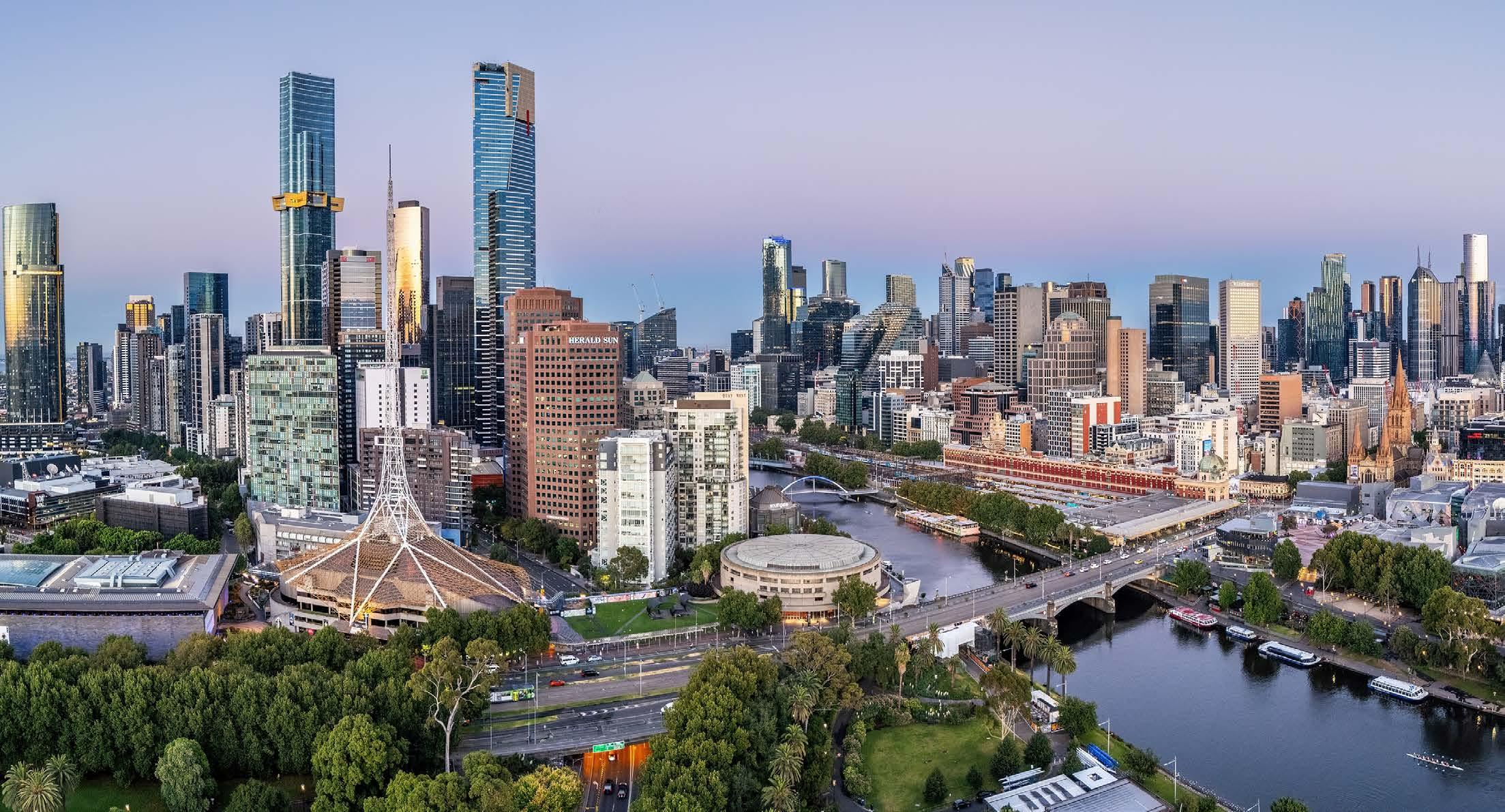
The MSO has developed a musical Acknowledgement of Country with composer James Henry to pay our respects to the traditional owners of the land through the language of orchestral music.
About Acknowledgement
‘I wrote this piece to reflect the complex journey toward the recognition of Aboriginal people as the traditional custodians of the land. It opens with rhythms inspired by the character of traditional songs found across many parts of Australia. From this texture, a melody emerges, representing the long period during which Aboriginal ownership of land was disregarded. The piece traces both progress and setbacks over time.
‘With the passing of the Victorian Statewide Treaty Bill, there is a renewed sense of optimism among many Aboriginal Victorians. Through Acknowledgement, I seek to convey a feeling of determination and resilience, reflecting the ongoing work to improve the quality of life for Aboriginal people, and to deepen respect for and awareness of our distinct culture, history and enduring connection to Country.’
James Henry
2025–2026 Cybec First Nations Composer in Residence
James Henry’s position is supported by Cybec Foundation
墨尔本交响乐团与作曲家詹姆斯•亨利(James Henry)共同创作了曲目《对原住民表示敬意》 (Acknowledgement of Country),通过交响乐的语 言,向这片土地的传统主人表达敬意。
关于《对原住民表示敬意》
我创作这部作品,是为了展现原住民土地传统守护者身 份得到承认的漫长之路。曲目以受全澳各地传统歌谣启 发的节奏开篇,在这一肌理中缓缓引入旋律,象征原住 民土地所有权长期被忽视的历史。整部作品描绘了这一 进程中的前行与曲折。
维多利亚州《全州条约法》的通过,令许多维州原住民 感受到新的希望。通过《对原住民表示敬意》,我希望 传达一种坚韧不拔的精神,体现为改善原住民生活质量 而做出的持续努力,同时加深社会对我们独特文化、历 史以及与这片土地之间恒久联系的尊重与认知。
詹姆斯•亨利 2025–2026 塞贝克驻团原住民作曲家 詹姆斯•亨利的驻团职位由塞贝克基金会(Cybec Foundation)支持。
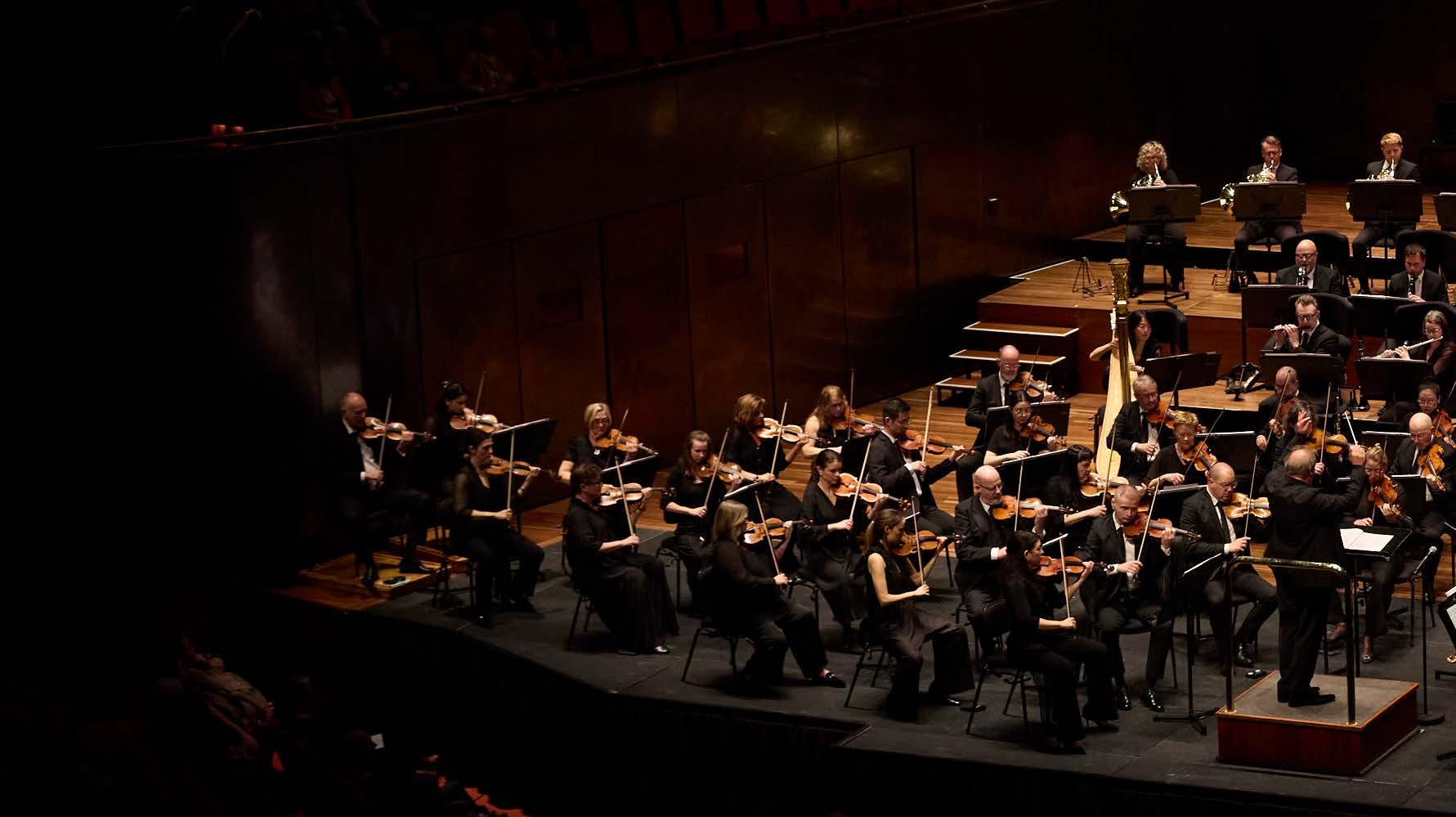
The Melbourne Symphony Orchestra is Australia’s preeminent orchestra, dedicated to creating meaningful experiences that transcend borders and connect communities. Through the shared language of music, the MSO delivers performances of the highest standard, enriching lives and in-spiring audiences across the globe.
Woven into the cultural fabric of Victoria for 120 years, the MSO reaches five million people annu-ally through performances, TV, radio, and online broadcasts, as well as critically acclaimed record-ings from its newly established recording label.
In 2026, Jaime Martín continues to lead the Orchestra as the MSO Chief Conductor and Artistic Advisor. Maestro Martín leads an Artistic Family that includes Principal Guest Conductor Benja-min Northey, Cybec Assistant Conductor Daniel Corvaia, MSO Chorus Director Warren Trevelyan-Jones, Composer in Residence Joe Chindamo, Cybec Young Composer in Residence Andrew Aro-nowicz, Cybec First Nations Composer in Residence James Henry, Artist in Residence, Learning & Engagement Karen Kyriakou, Young Artist in Association Christian Li, and Artistic Ambassadors Tan Dun, Lu Siqing and Xian Zhang.
墨尔本交响乐团是澳大利亚杰出的交响乐团,致力于创 造打破边界、充当文化桥梁的非凡体验。通过音乐这一 共同语言及其卓越的演出水平,墨尔本交响乐团不仅丰 富了世界各地观众的文化体验,也开拓了他们的视野。
120年来,墨尔本交响乐团已成为维多利亚州文化的重 要组成部分。每年,通过演出、电视节目、电台广播和 网络放送及其新成立的唱片公司,乐团可触及约五百万 位观众。
2026年,杰米·马丁继续以首席指挥和艺术总监的身 份领导墨尔本交响乐团。这位指挥大师带领的艺术大家 庭包含首席客座指挥本杰明·诺西、塞贝克助理指挥丹 尼尔·科尔瓦亚、乐团合唱总监沃伦·特里维利安-琼 斯、驻团作曲家乔·钦达莫、赛贝克驻团青年作曲家安 德鲁·阿罗诺维奇、赛贝克驻团原住民作曲家詹姆斯· 亨利、驻团艺术家(学习和参与)凯伦·克里亚克、青 年艺术家协会李映衡、艺术大使谭盾、吕思清、张弦 等。
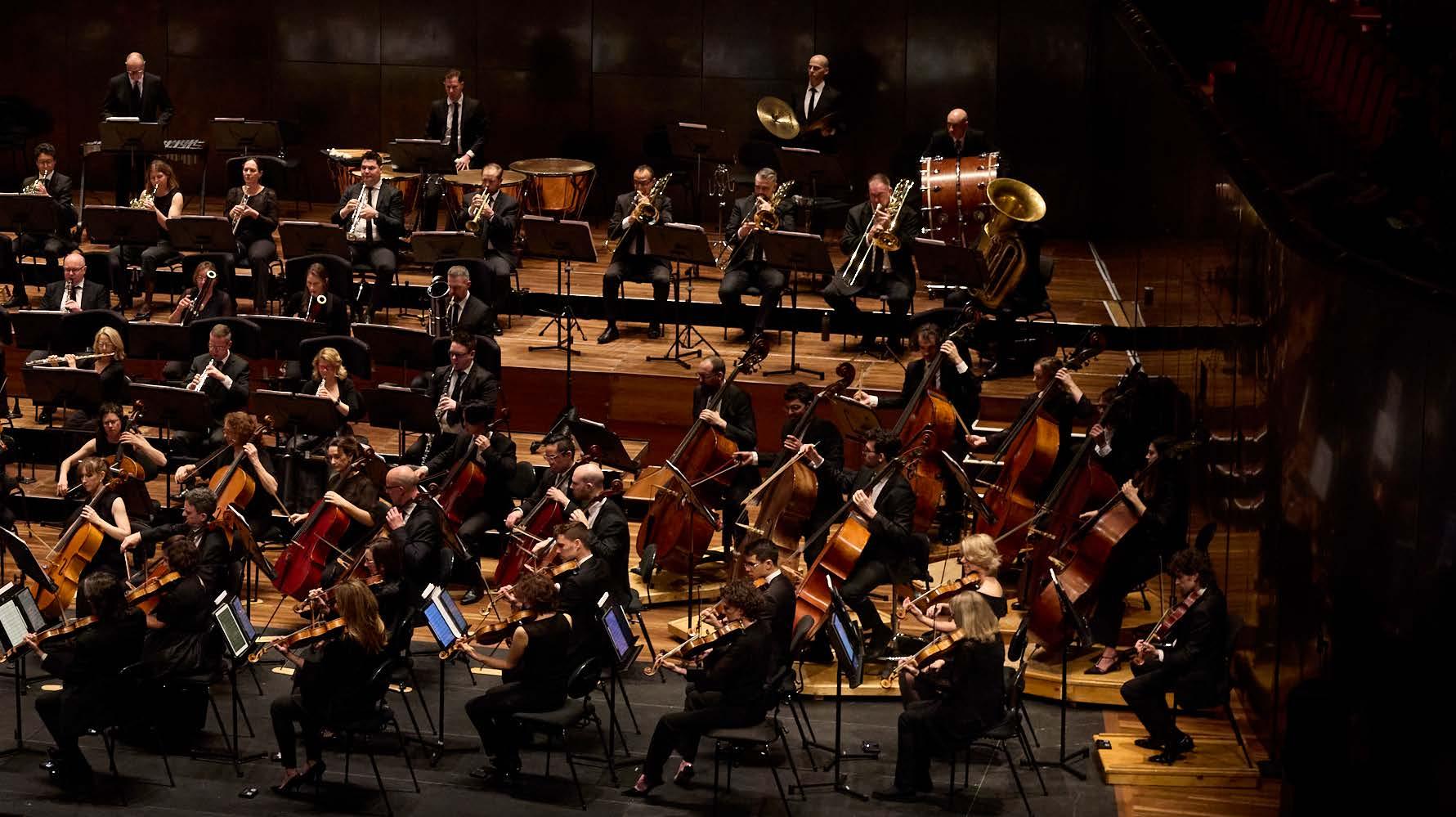
First Violins
Sulki Yu Guest Concertmaster
Peter Edwards
Assistant Principal
Sarah Curro
Dr Harry Imber *
Peter Fellin
Deborah Goodall
Karla Hanna
Dawna Wright and Peter Riedel*
Kirstin Kenny
Michelle Ruffolo
Anna Skálová
Kathryn Taylor
Oksana Thompson
Zoe Black†
Clare Carrick†
Jacqueline Edwards†
Josef Hanna†
Second Violins
Jos Jonker Associate Principal
Mary Allison
Emily Beauchamp
Tiffany Cheng
Val Dyke*
Freya Franzen
Cong Gu
Robert Macindoe
Philippa West
Andrew Dudgeon AM*
Patrick Wong
Cecilie Hall*
Roger Young
Shane Buggle and Rosie Callanan*
Phoebe Fan†
Michael Loftus-Hills†
Violas
Christopher Moore Principal
Lauren Brigden
Katharine Brockman
William Clark
Morris and Helen Margolis*
Aidan Filshie
Suzie and Edgar Myer *
Gabrielle Halloran
Patricia Nilsson*
Jenny Khafagi
Margaret Billson and the late
Ted Billson*
Fiona Sargeant
Ceridwen Davies†
Cellos
David Berlin Principal
Elina Faskhi Assistant Principal
Rohan de Korte
Andrew Dudgeon AM*
Joshua Jones
Rebecca Proietto
Peter T Kempen AM*
Angela Sargeant
Michelle Wood
Andrew and Theresa Dyer *
Jonathan Chim†
Double Basses
Jonathon Coco Principal
Rohan Dasika
Ben Hanlon
Aurora Henrich
Suzanne Lee
Stephen Newton
Flute
Wendy Clarke
Associate Principal
Sarah Beggs Piccolo
Andrew Macleod Principal
Oboes
Ann Blackburn
Margaret Billson and the late Ted Billson* Rachel Curkpatrick
Clarinets
Philip Arkinstall
Associate Principal
Robin Henry Bassoons
Elise Millman Associate Principal
Natasha Thomas
Patricia Nilsson* Horns
Peter Luff
Guest Associate Principal
Saul Lewis Principal Third
Cecilie Hall and the late Hon. Michael Watt KC*
Josiah Kop
Kim and Robert Gearon* Abbey Edlin
The Hanlon Foundation*
Owen Morris Principal
Rosie Turner
Dr John and Diana Frew* Callum G’Froerer
Trombones
José Milton Vieira Principal
Kieran Conrau†
Bass Trombone
Mike Szabo Principal Tuba
Timothy Buzbee Principal
Timpani
Matthew Thomas Principal Percussion
Shaun Trubiano Principal
John Arcaro
Tim and Lyn Edward*
Robert Cossom
Dr Clem Gruen and Dr Rhyl Wade* Hugh Tidy
Harp
Yinuo Mu Principal
Keyboard
Louisa Breen
Learn more about our musicians on the MSO website. * Position supported by † Guest musician
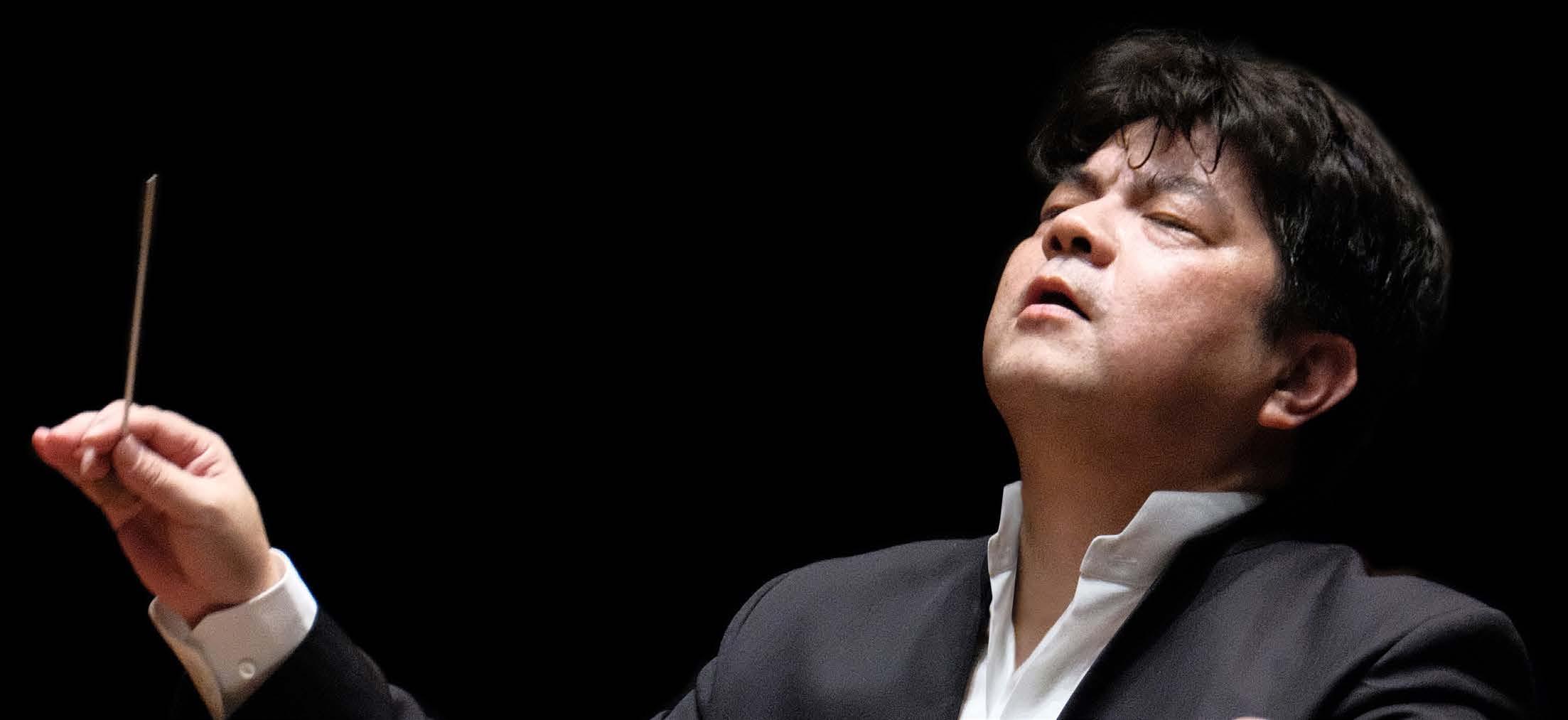
Conductor and percussion soloist Li Biao returns to Melbourne, having made his MSO debut conducting the 2024 Chinese New Year concert. A graduate of the Beijing Central Conservatory, he was the first percussion student to receive a full-scholarship from the Chinese Department of Culture for study abroad, continuing his studies in Moscow under Valentin Snegirev. In 1995, a scholarship from the German Cultural Foundation enabled him to study in Munich with Peter Sadlo, during which time he also worked with conducting mentors Christoph Eschenbach and Lawrence Foster. As a student, his awards included Silver Prize at the inaugural Debrecen International Percussion Competition, making him the first Chinese percussionist to win an award in an international competition.
Li Biao has appeared in many international music festivals as both conductor and soloist. He has collaborated with leading orchestras, including the London Philharmonic and Czech Philharmonic, as well as the China National Symphony, China Philharmonic, Beijing Symphony, Shanghai Symphony, NCPA Orchestra, Hong Kong Philharmonic, Macao Orchestra, and Hong Kong Chinese Orchestra. He has also worked with many notable artists including Mstislav Rostropovich, Lawrence Foster, Jonathan Nott, Fabio Luisi, Truls Mørk and Vadim Repin.
Li Biao has appeared on numerous occasions on Europe’s influential classical music program, Spotlight on the Classics, as well as recording nine albums for EMI, Sony and other labels, and in 2015 he signed as a Sony Artist.
In 2003, Li Biao was invited to become the Beijing Central Conservatory’s youngest professor and doctoral advisor. In 2006, he was appointed professor at the Berlin Hanns Eisler School for Music, becoming the first Chinese musician to hold a tenured position at a leading conservatorium. From 2010, he became Music Director of the Mercedes-Benz International Music Festival, and the China NCPA International Percussion Festival. In 2018, he received a lifetime achievement award from the Universal Marimba Competition Belgium, and was named Artist in Residence at the China NCPA.
Li Biao was Artistic Director and Principal Conductor of the Beijing Symphony Orchestra from 2019 to 2022, and since 2021 has held the post of Artistic Director and Principal Conductor of the Tianjin Symphony Orchestra and Tianjin Opera and Dance Theatre. In 2025, he was named a member of the arts committee of NCPA China.
指挥家兼打击乐独奏家李飚自2024年中国新年音乐会 首次亮相墨尔本交响乐团后,今年再度回归。李飚毕业 于北京中央音乐学院,是首位获中国文化部全额奖学金 出国深造的打击乐学生,赴莫斯科师从瓦连京·斯涅吉 列夫。1995年,李飚获得德国文化基金会奖学金,赴慕 尼黑师从彼得·萨德罗,同时也接受了指挥家克里斯托 夫·埃申巴赫和劳伦斯·福斯特的指导。学生时期,他 曾在首届德布勒森国际打击乐比赛中荣获银奖,成为首 位在国际赛事中获奖的中国打击乐演奏家。
李飚以指挥家及打击乐独奏家的身份活跃于各大国际音 乐节,曾合作的顶尖乐团包括伦敦爱乐乐团、捷克爱乐 乐团、中国交响乐团、中国爱乐乐团、北京交响乐团、 上海交响乐团、中国国家大剧院管弦乐团、香港管弦乐 团、澳门乐团及香港中乐团。他亦曾与众多知名艺术家 合作,包括姆斯蒂斯拉夫·罗斯托罗波维奇、劳伦斯· 福斯特、乔纳森·诺特、法比奥·路易斯、楚尔斯·莫 克、瓦汀·列宾等。
李飚曾多次亮相欧洲颇具影响力的古典音乐节目 《Spotlight on the Classics》,并为EMI、Sony及其 他唱片公司录制九张专辑,于2015年签约成为Sony旗 下艺术家。
2003年,李飚受邀成为北京中央音乐学院最年轻的教 授及博士生导师;2006年,他获任柏林汉斯·艾斯勒 音乐学院教授,成为首位在国际顶尖音乐学院获得终 身教职的中国音乐家。2010年起,他担任梅赛德斯-奔 驰国际音乐节及中国国家大剧院国际打击乐节音乐总 监。2018年,他获得比利时世界马林巴琴大赛终身成就 奖,并受任中国国家大剧院驻团艺术家。
李飚曾于2019–2022年担任北京交响乐团艺术总监和首 席指挥,并自2021年起担任天津交响乐团及天津歌舞剧 院艺术总监和首席指挥。2025年,他入选中国国家大 剧院艺术委员会。
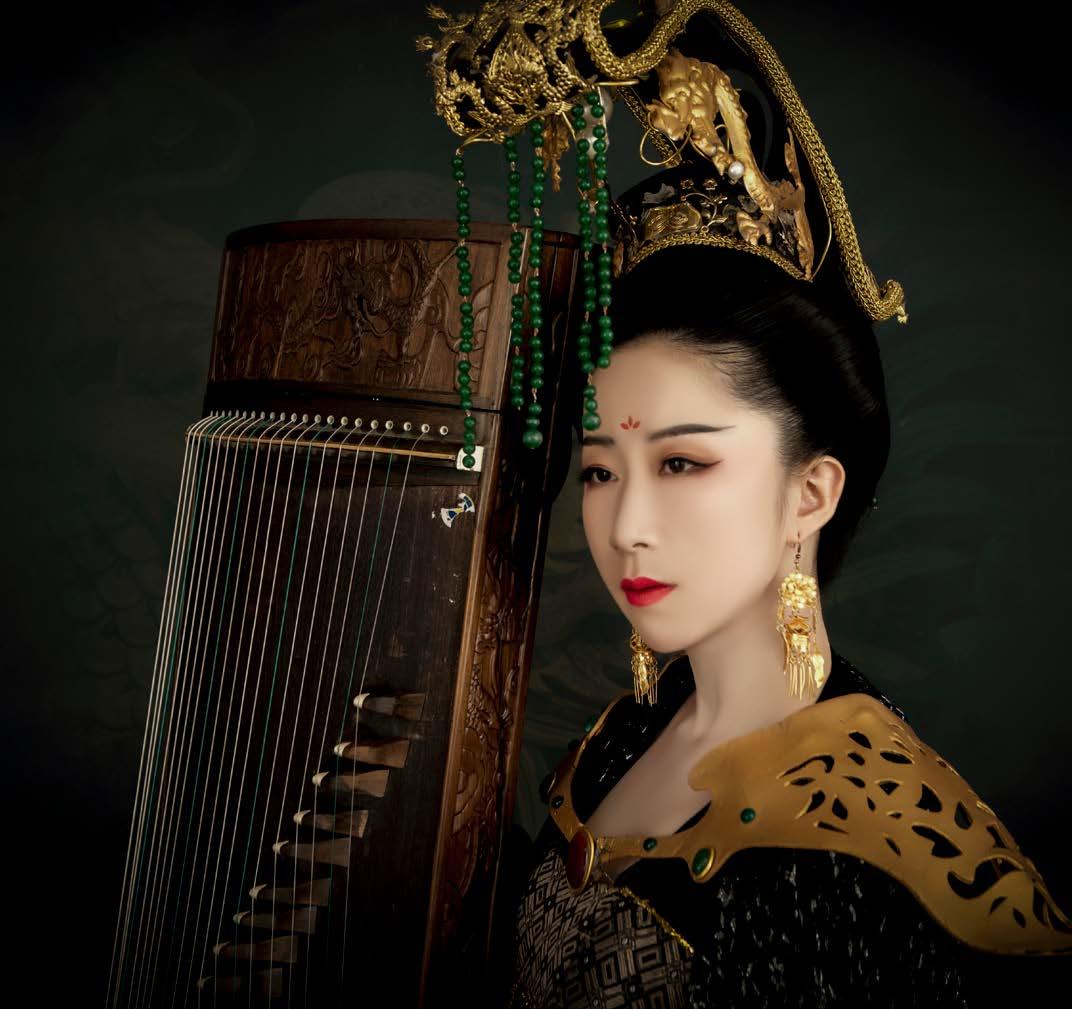
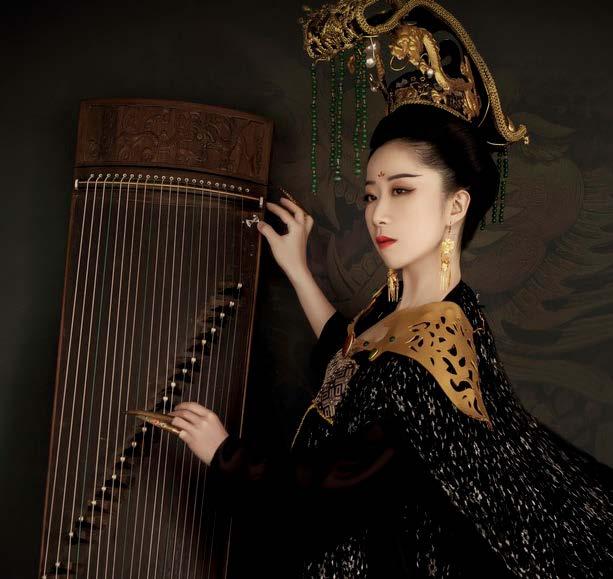
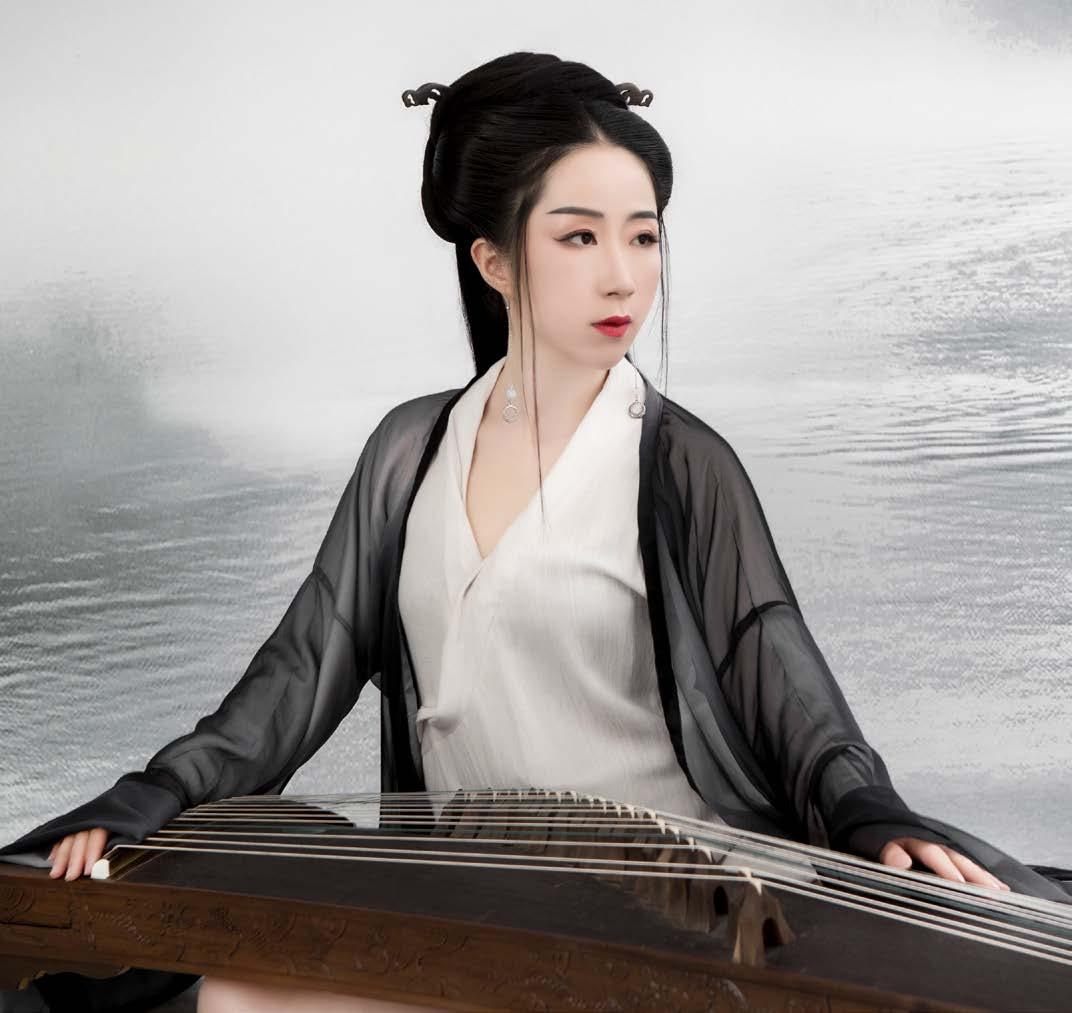
Mindy Meng Wang is a Chinese Australian composer and pioneering performer on the guzheng (ancient Chinese zither). Her work explores the fertile space between traditional and contemporary practices, and is part of a movement of Chinese musicians redefining and reinvigorating their musical tradition.
Last year, she appeared with the MSO in the premiere of a new guzheng concerto by Jessica Wells. She performs regularly in events such as the Melbourne, Sydney, Brisbane, Darwin, Adelaide, OzAsia, Mona Foma, Dark Mofo, TEDx Sydney and AsiaTOPA festivals. Her collaborators include Regurgitator, Paul Grabowsky, Tim Shiel, Deborah Cheetham Fraillon, Australian Art Orchestra, Orchestra Victoria and the Sydney Symphony Orchestra, and in the UK, artists such as Gorillaz. She has performed in the O2 Arena and London’s Barbican Centre, as well as a number of European festivals.
Her accolades include the 2022 Sidney Myer Fellowship, Music Victoria Awards: Best Musician, and the Asian-Australian Leadership Awards: Arts & Culture winner. In 2022 and 2023 she was Artist in Residence at the Melbourne Recital Centre.
古筝:王萌
王萌是一位华裔澳大利亚作曲家及古筝当代先锋演奏 家。她的创作探索着传统与当代实践之间的丰饶空间, 是当代中国音乐家重新定义并振兴中国音乐传统的重要 组成力量。
去年,她与墨尔本交响乐团合作,首演了杰西卡·韦尔 斯创作的全新古筝协奏曲。她经常在各大艺术活动中 演出,包括墨尔本、悉尼、布里斯班、达尔文、阿德莱 德各大活动、澳亚艺术节、Mona Foma艺术节、Dark Mofo暗黑艺术节、TEDx悉尼以及亚太表演艺术三年 展。她合作过的艺术家与团体包括Regurgitator乐队、 保罗·格拉博夫斯基、蒂姆·希尔、黛博拉·奇塔姆、 澳大利亚艺术交响乐团、维多利亚交响乐团以及悉尼交 响乐团;在英国,她亦与街头霸王乐队等艺术家合作。
她曾登上伦敦O2体育馆及巴比肯艺术中心的舞台,并 亮相多个欧洲音乐节。
她曾荣获2022年西德尼·迈尔创意奖学金、维多利亚 音乐大奖“最佳音乐家”奖,以及澳大利亚亚裔领袖 奖“艺术与文化”类别大奖。2022至2023年,她担任 墨尔本演奏中心驻场艺术家。
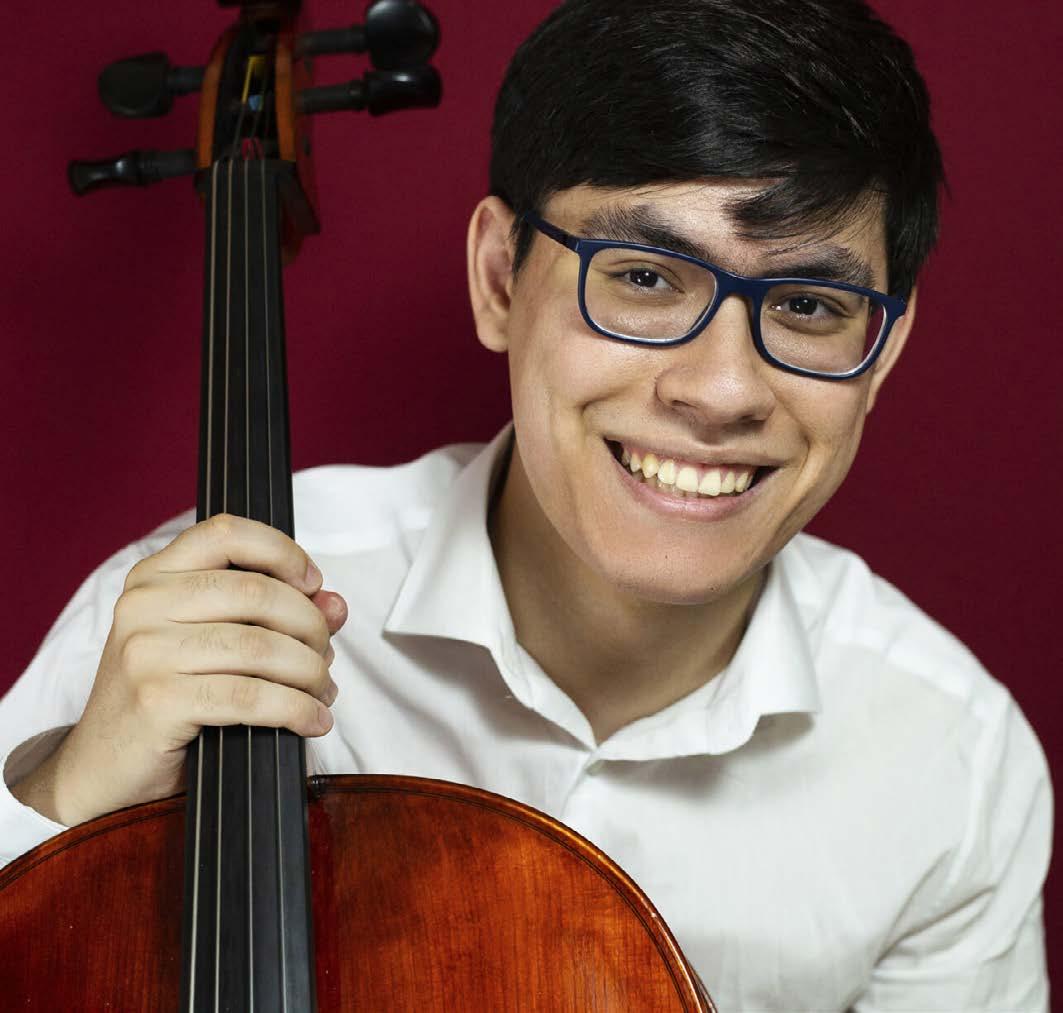
Of Bulgarian and Chinese heritage, American-born Zlatomir Fung began playing cello at the age of three, and at 20, he became the youngest cellist to win the International Tchaikovsky Competition. Last year he released his debut album and was featured on Classic FM’s list of Rising Stars.
In addition to his MSO debut, highlights of the 2025–26 season include his Chicago Symphony Orchestra debut at the Ravinia Festival, as well as returns to Carnegie Hall and Wigmore Hall, and to Taiwan for recitals at the National Concert Hall, Taipei, and National Kaohsiung Center for the Arts. Recent highlights include his Royal Festival Hall debut (London Philharmonic Orchestra), serving as Artist-in-Residence with the Royal Philharmonic Orchestra, and concerts with the Cleveland Orchestra, New York Philharmonic, BBC Philharmonic and Shanghai Symphony Orchestra, as well as a tour to China.
Zlatomir Fung plays a Domenico Montagnana cello (c.1735), on loan from a generous benefactor, and the ‘Lord Aylesford’ Stradivarius (1696), on loan from the Nippon Music Foundation.
大提琴家冯勇智拥有保加利亚与中国血统、出生于美 国。他三岁开始学习大提琴,20岁时赢得柴可夫斯基国 际音乐比赛大提琴组首奖,成为赛事史上最年轻的获奖 者。去年,他发行了个人首张专辑,并入选Classic FM 的“明日之星”榜单。
除在墨尔本交响乐团的首次亮相外,他在2025–26乐季 的重要演出还包括于拉维尼亚音乐节与芝加哥交响乐团 的首次合作,以及再次登上卡内基音乐厅与伦敦威格莫 尔音乐厅的舞台,并赴台湾在台北国家音乐厅及高雄卫 武营国家艺术文化中心演出。近期亮点包括在伦敦皇家 节日音乐厅与伦敦爱乐乐团的首次合作,担任皇家爱乐 乐团驻团艺术家,以及与克里夫兰管弦乐团、纽约爱乐 乐团、英国广播爱乐乐团及上海交响乐团合作演出,并 展开中国巡演。
冯勇智演奏的乐器包括:由一位慷慨赞助人出借的多梅 尼柯·蒙塔耶纳大提琴(约1735年制),以及由日本音 乐基金会出借的“艾勒斯佛公爵”斯特拉迪瓦里大提琴 (1696年制)。
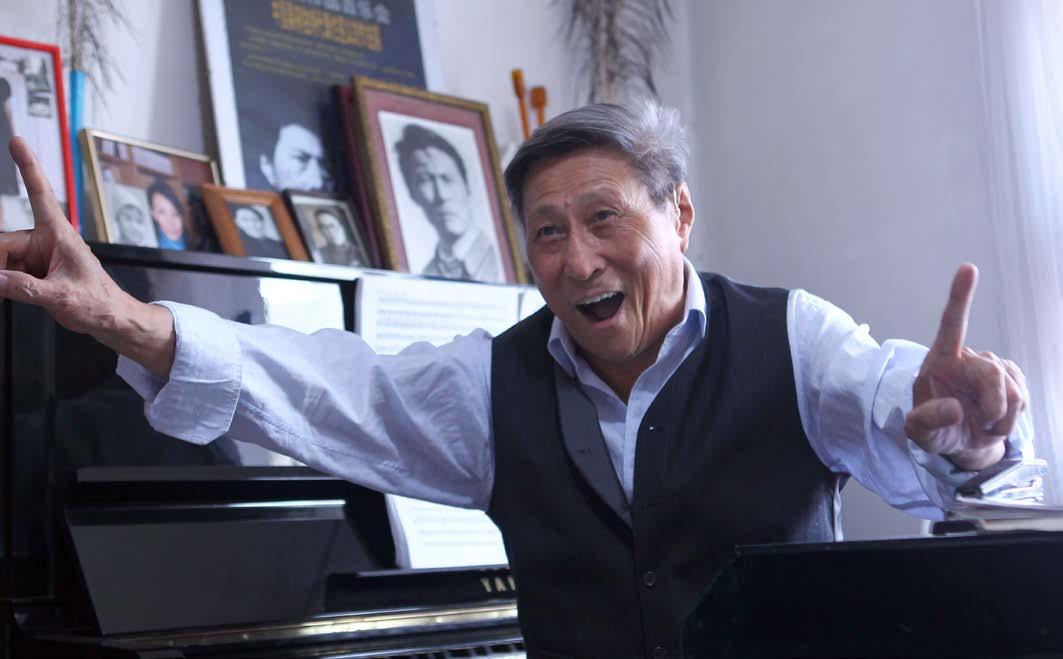
Wang Xilin (born 1937)
Torch Festival
from Yunnan Tone Poem, Op. 3
Yunnan Tone Poem, composed in 1963 and premiered in 1978, is Wang Xilin’s most recognised and popular work. He had written his first string quartet and first symphony as a student at the Shanghai Conservatory (1961–62). His opus 3, completed while he was a resident composer of the China Broadcasting Symphony Orchestra, was inspired by field recordings of folk music from Yunnan. Mesmerised, he transcribed and studied the tunes, then set out to compose his own symphonic suite. At the same time, he also admitted to inspiration from the Russian and Soviet schools – music by composers such as Mussorgsky, Borodin, Rimsky-Korsakov, Prokofiev, Shostakovich and Kalinnikov, and especially the 1950s ballet Path of Thunder by Kara Karayev.
The last of the suite’s four movements, Torch Festival, is especially popular and is often programmed independently. When compared to contemporaneous Chinese works, it stands out in its use of modal harmony and layers of rhythmically complex melodies, and in its exciting juxtapositions of contrasting musical ideas.
This movement is a celebration of the Yunnan minority and the traditional festival rooted in ancient fire worship. A boisterous and colourful opening sets the mood before introducing a beautiful oboe melody. The next main idea is a lyrical and refreshing violin theme suspended over complex rhythms, after which the brass section pushes the music to a climax. This is the part, Wang reveals, most influenced by Path of Thunder.
Towards the end of the movement there is a sudden pause and the tempo slows as flutes, oboes and rippling harp play a tranquil theme from the first movement of the suite (Spring Rain in the Tea Plantation). The vibrant, carnival atmosphere then returns for the conclusion.
‘My artistic idea,’ writes Wang, ‘originated in the musics of the various ethnic groups of Yunnan, Yi, Hani and Bai, rendering them with symphonic treatments in a musical language of late Romanticism and early Impressionism. This is unique in the history of Chinese symphonic music. If you know that the composer of this work only had the chance to visit Yunnan 43 years after the composition was written, what would you think?’
Adapted in part from a preface by Dr Hon-Lun Helan Yang
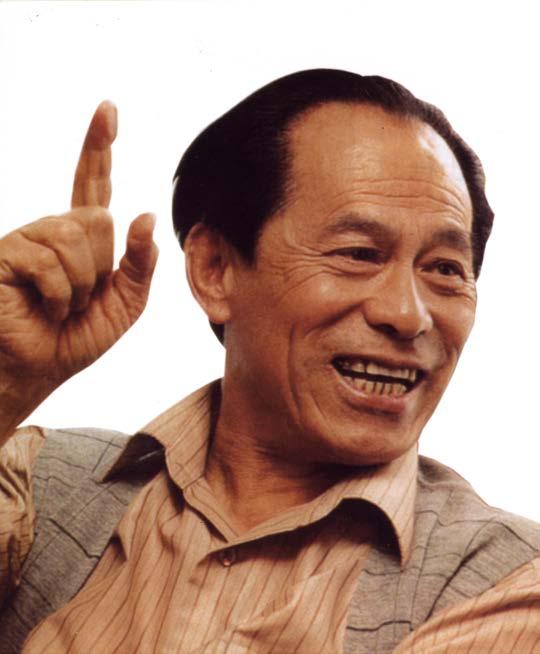
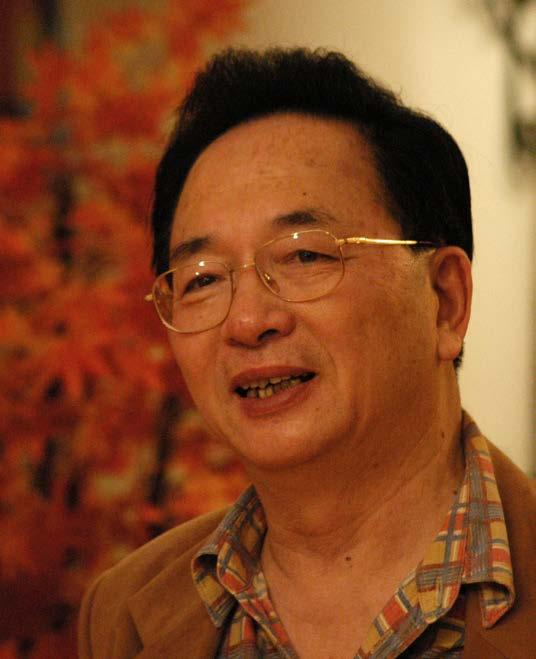
He Zhanhao and Chen Gang (born 1933; born 1935)
The Butterfly Lovers –Concerto for guzheng and orchestra
Mindy Meng Wang, guzheng
The Butterfly Lovers was composed as a concerto for the violin, with the soloist invited to emulate the erhu, a Chinese two-string fiddle. This performance returns to the Chinese tradition of the music’s inspiration but with the guzheng, a type of zither, rather than the erhu.
There is another nod to tradition in The Butterfly Lovers. The soloist is also asked to imitate the extravagant but graceful techniques of a Yueju (or Shaoxing) opera singer – sliding between notes, for example, and expressive pulsating effects. That operatic influence is key to this work, which is driven by narrative and a poignant story of star-crossed lovers commonly referred to as the ‘Chinese Romeo and Juliet’. One of the concerto’s two composers, He Zhanhao, grew up listening to Yueju opera with his grandmother, and when, as a violin major at the Shanghai Conservatory in the 1950s, he was sent to perform in rural communities, he reached a turning point. ‘We performed the Western classical repertoire we learnt in class to the farmers,’ he recalled in a recent interview, ‘and even though they found the musical beautiful, they couldn’t appreciate it as they grew up listening to Chinese opera and folk songs.’ His audiences didn’t understand Bach and Beethoven but they loved to hear Yueju. And so he set himself the challenge of using folk music with the violin, or in his words, trying to ‘nationalise the violin’.
The Butterfly Lovers violin concerto, composed in collaboration with fellow student Chen Gang, was the result – a combination of Chinese traditional themes and Western symphonic techniques. It was first performed in 1959, with Fan Chengwu conducting the Shanghai Conservatory Symphony Orchestra and Yu Lina as violin soloist, and has since become the most famous of all Chinese orchestral works.
The music follows the story of two lovers who grow up studying together – the girl disguised as a boy. When the boy, Liang Shanbo, later visits his friend, Zhu Yingtai, he discovers (to his delight) that she is a girl and (to his disappointment) about to enter an arranged marriage. Liang departs in sorrow and dies of despair. On Zhu’s wedding day, the procession passes Liang’s tomb. She pauses to mourn and at that moment a storm breaks and the tomb opens. Zhu leaps in before it can close again and, after the storm, two butterflies rise among the flowers: the lovers’ souls transformed and united forever.
Yvonne Frindle © 2024/2026
Camille Saint-Saëns (1835–1921)
Cello Concerto No. 1 in A minor, Op. 33
I Allegro non troppo –II Allegretto con moto –III Tempo primo
Zlatomir Fung, cello
This work, the most popular of Saint-Saëns’ two cello concertos, reveals his most endearing qualities as a composer. Modestly engaging and unpretentiously beguiling, its most important musical features are the tight construction (three continuous movements sounding as if rolled into one) and the subtle orchestration, which neatly solves the inherent problems of balancing a solo cello against a symphony orchestra.
Begun after the death of Saint-Saëns’ beloved great-aunt in January 1872, the concerto was first performed on 19 January 1873 by the Paris Conservatoire Orchestra with its principal cellist Auguste Tolbecque as soloist. Much later, the work became a favourite of the cellist Pablo Casals who played it at his London debut in 1905. And no wonder – as Saint-Saëns’ biographer James Harding says, it ‘gives the instrument an excellent opportunity to display its resources without straining after needless virtuosity’.
The first movement begins with one sharp chord from the orchestra, ushering in a swirling theme from the solo cello, which will form the main thematic material for the movement. This material is repeated, varied, played on the woodwinds behind long notes on the solo cello and extended. Eventually the cello plays an attractive romantic melody that is dovetailed into cadential material by the swirling theme in the accompaniment. A new sequence continues to work on the swirling figure, first making use of the half-tone rise and fall of its tailpiece.
A developmental extension of the romantic melody leads imperceptibly into the minuet-like second movement. SaintSaëns’ structural fluency is revealed by the clever way in which this movement is introduced, almost as if it were merely another phase of the first movement. A dance-like figure for woodwinds is transformed into an accompaniment for a ruminative cello melody. There is a slightly darker, more lilting middle section, followed by cadenza-like runs for the soloist, leading to a reprise of the dancing figure over a cello trill.
The cello line then forms the link to the final, and longest, movement. The oboe retrieves the first movement’s swirling figure, now more swiftly modulating and more intense with other woodwind interjections. After a dramatic development, the cello finally takes back the swirling figure. The cello now introduces a new aria-like theme, built on the rise-and-fall idea of the opening melody (it will be heard again). The music resumes speed after a reprise of the aria-like melody, and with an exciting pick-up, the movement comes to a close.
Abridged from a note by Gordon Kalton Williams Symphony Australia ©1997
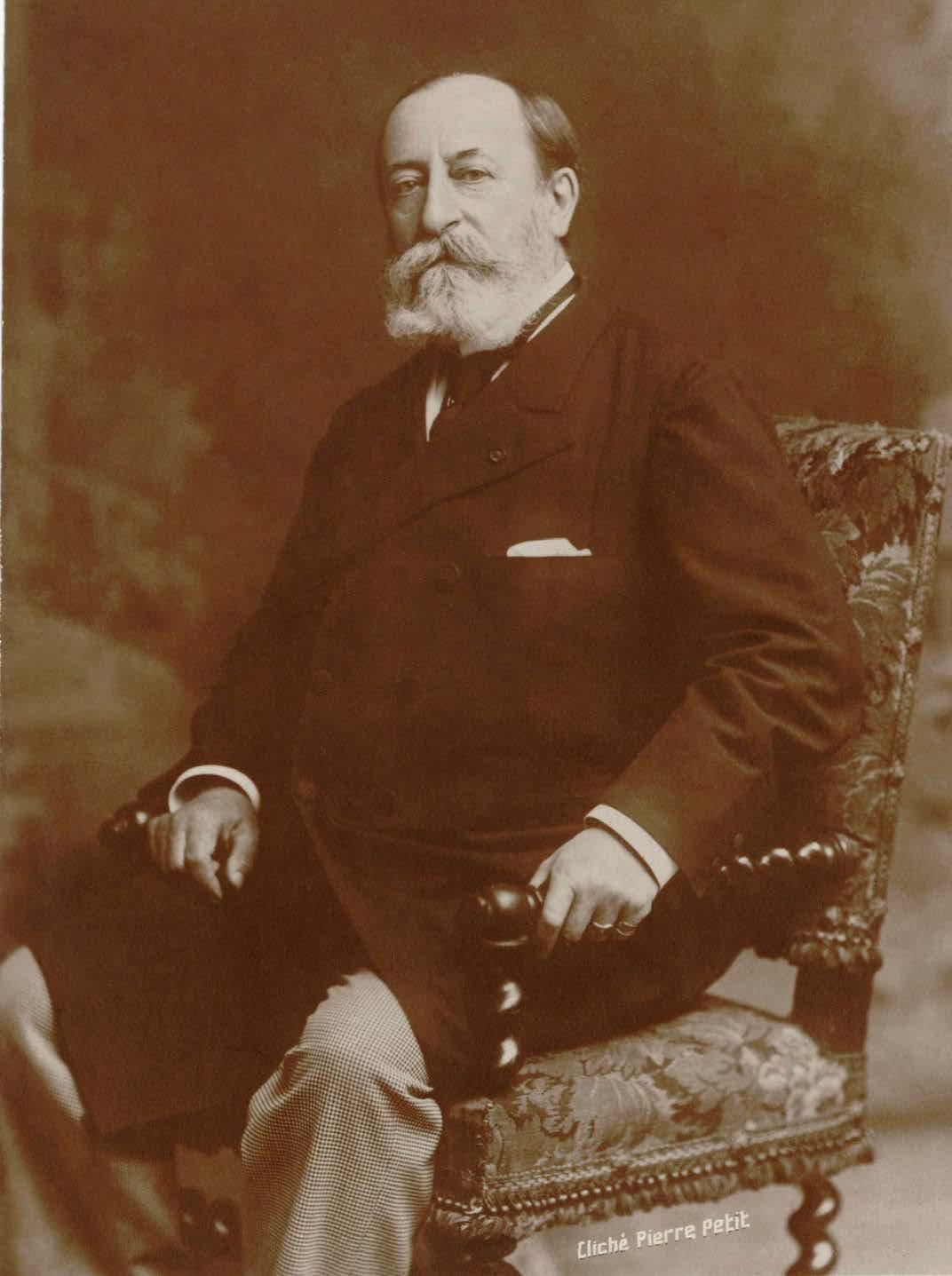
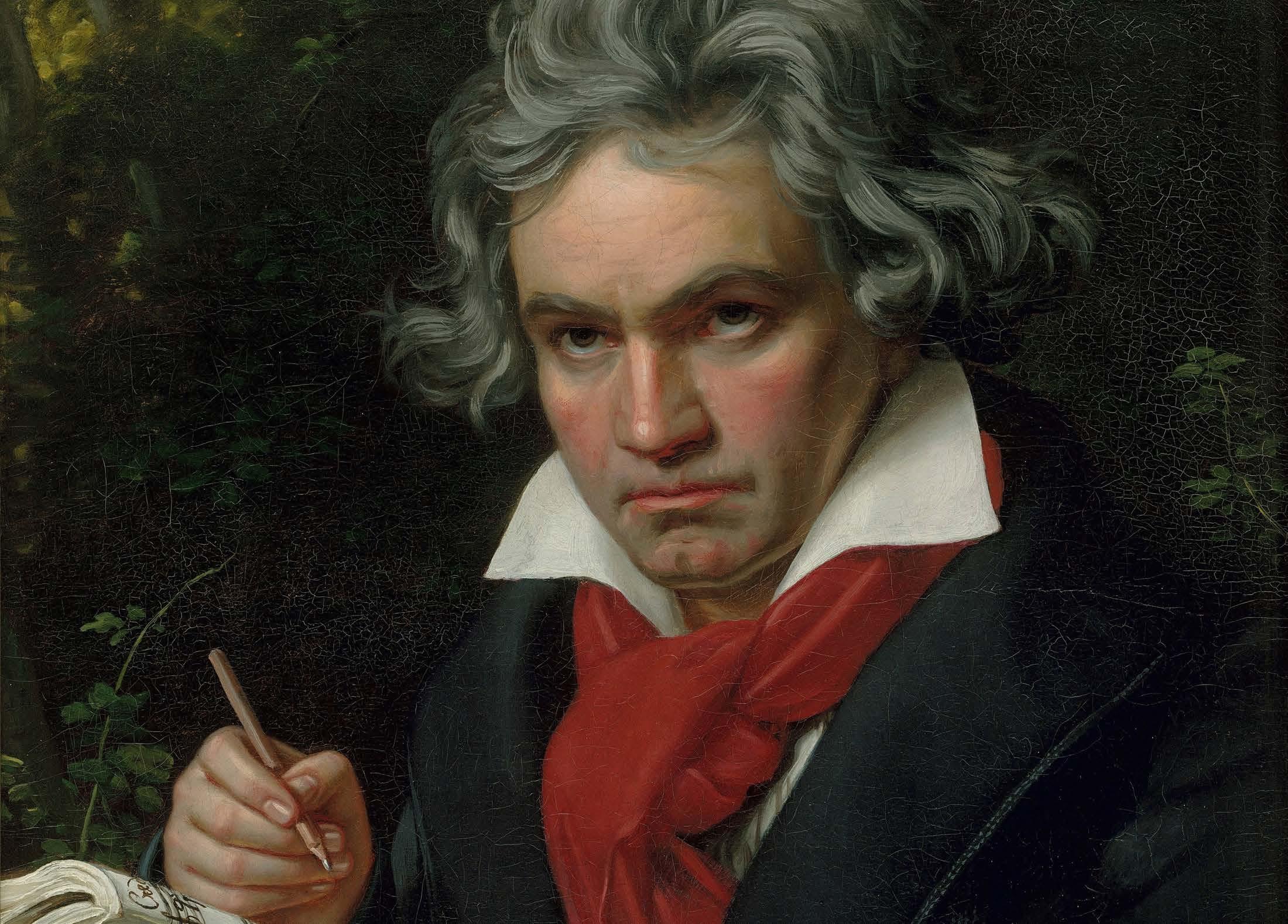
Ludwig van Beethoven (1770–1827)
Symphony No. 7 in A major, Op. 92
I Poco sostenuto – Vivace
II Allegretto
III Presto – Assai meno presto
IV Allegro con brio
Wagner’s famous description of Beethoven’s Seventh Symphony as the ‘apotheosis of the dance’ hits on one of the work’s vital characteristics – rhythm for rhythm’s sake.
Beethoven’s sketches for the symphony show he was preoccupied from the outset with expression through rhythm. An insistent skipping rhythm almost totally pervades the main body of the first movement (Vivace). [Imagine saying the word ‘Amsterdam’ over and over.] A solemn march tread underpins the second movement which, at a slow tempo, would sound funereal but which, as a faster allegretto, becomes postfunereal – elevated to a dream-like consciousness, freed of earthly shackles. The there are repeated rhythmic patterns in both the scherzo (Presto) and its trio section, and heavy off-beat syncopation in the main theme of the boisterous finale.
Completed in 1812, the Seventh Symphony helped to usher in a period in which Beethoven not only enjoyed great artistic success in the concert hall but also commensurate financial rewards. Compared to the Fifth and Sixth symphonies from four years earlier, the Seventh appears relatively conventional, with the normal four movements, no special pictorial effects and no additional instruments in the orchestra. Even so, Beethoven was obliged in 1819 to condemn the poetic fancies of a critic so carried away as to analyse it in terms of a political revolution.
Beethoven conducted the first performance of the Seventh in an extraordinary charity concert for wounded Austrian and Bavarian soldiers at the old University in Vienna, on 8 December 1813. Giving their services in the national cause, and playing in the orchestra under Beethoven (which would normally have been beneath their dignity) were numerous eminent musicians, including Salieri, Spohr and Schuppanzigh. Also on the program was the premiere of Beethoven’s Wellington’s Victory (a piece written for the occasion) and public enthusiasm was high.
The Allegretto of Beethoven’s new symphony was an immediate popular success: it was encored at the first performance and again when the concert was repeated four days later. The two concerts netted more than 4000 gulden for the war veterans.
The Seventh remains one of Beethoven’s compelling and exhilarating works – a life-affirming celebration of physical vigour and spiritual delight. While Beethoven was not one to reveal himself in his music, there could be a happy coincidence in the probability that his famous letter to the unidentified ‘Immortal Beloved’ was written within weeks, or even days, of the completion of this symphony.
Abridged from a note by Anthony Cane © 1998/2011
王西麟 (生年:1937)
《火把节》
选自《云南音诗》(3号作品)
《云南音诗》创作于1963年,并于1978年首演,是王 西麟最具代表性、也最为人熟知的作品之一。1961–1962年就读于上海音乐学院期间,他就已完成了自己 的《第一弦乐四重奏》(1号作品)和《第一交响曲》 (2号作品)。这部《云南音诗》(3号作品)则创作于 他担任中国广播交响乐团驻团作曲家期间,创作灵感源 自云南的民间音乐。在这些音乐的深深吸引之下,他整 理、研究相关素材,开始创作属于自己的交响组曲。同 时,他也坦言自己受到俄罗斯及苏联乐派的影响,包括 穆索尔斯基、鲍罗丁、里姆斯基-科萨科夫、普罗科菲 耶夫、肖斯塔科维奇、卡林尼科夫等作曲家的作品,尤 其是卡拉·卡拉耶夫20世纪50年代创作的芭蕾音乐《 雷霆之路》,对他启发尤深。
组曲的第四乐章尤为受欢迎,常被单独演出。与中国同 期其他作品相比,这一乐章以调式和声的运用、节奏复 杂的旋律设计,以及充满张力的音乐理念碰撞而独树一 帜。
这一乐章庆祝云南少数民族及源于古老火祭的传统节 日——火把节。热烈而丰富的开篇营造节日气氛,随后 引入优美的双簧管旋律。接下来以抒情、清新的小提琴 旋律为主题,浮于错综复杂的节奏之上,再以铜管乐的 部分将全曲推向高潮。王西麟表示,这正是他受到《雷 霆之路》启发最多的部分。
乐章接近尾声时,音乐骤然停顿、节奏放缓,长笛、双 簧管和灵动的竖琴共同奏出组曲第一乐章《茶林春雨》 的宁静主题。随后,热烈的节日气氛重现,为整个乐章 画上华丽的句号。
王西麟曾写道:“我的艺术理念源自云南少数民族—— 彝族、哈尼族和白族的音乐,并采用晚期浪漫主义与早 期印象主义的音乐语言,以交响手法将其呈现。这种理 念在中国交响音乐史上独树一帜。如果您知道这部作品 的作曲家在创作43年后才有机会亲访云南,您会作何感 想?”
部分内容改编自杨汉伦博士所作序言
何占豪、陈钢 (生年1933年;生年1935年)
《梁祝》 (古筝与管弦乐协奏曲) 古筝:王萌
这部作品原为小提琴协奏曲,并由独奏家模仿中国传统 两弦乐器——二胡。而本次演出将再现其中国传统创作 灵感,但独奏乐器改为了古筝。
作品中还有另一处传统致敬——独奏家需模仿越剧(或 称绍兴戏曲)歌唱家华丽而优雅的技法,例如滑音以及 富有表现力的颤音。
这种戏曲风格是本作品的关键所在,它由叙事驱动,讲 述了一段凄美的爱情故事,常被称为“中国版罗密欧与 朱丽叶”。作曲家之一的何占豪,自幼随祖母听越剧 长大。20世纪50年代,他在上海音乐学院学习小提琴 时,被派往农村演出,这成为他的创作转折点。他在近 期的访谈中回忆道:“我们为农民演奏了课堂上学到的 西方古典曲目。虽然他们觉得旋律美妙,却无法完全欣 赏,因为他们从小听的是中国戏曲和民间歌曲。”他的 观众不懂巴赫与贝多芬,却喜爱越剧。因此,他立下挑 战:用小提琴演奏民间音乐,或者用他自己的话说,试 图“使小提琴民族化”。
这部小提琴协奏曲是他与同窗陈钢合作的成果,他们成 功将中国传统主题与西方交响技法相结合。作品首演于 1959年,由上海音乐学院交响乐团演出,指挥家樊承武 执棒,俞丽拿担任小提琴独奏。现在,这部作品已成为 最著名的中国管弦乐作品之一。
作品描绘了一对青梅竹马的恋人——梁山伯与祝英台的 故事。祝英台女扮男装与梁山伯同窗相伴,当梁山伯后 来拜访祝英台的家时,他既惊喜地发现她的真实身份, 又痛心于她即将因包办婚姻被许配他人。梁山伯悲伤离 去,因绝望离世。在祝英台出嫁当天,迎亲队伍经过梁 山伯的墓地,她驻足哀悼。就在此时,一场暴风雨骤然 袭来,墓穴裂开,祝英台跃入其中。风雨过后,两只蝴 蝶出现在花丛中——这对恋人的灵魂化作蝴蝶,永远相 依相伴。
Yvonne Frindle © 2024/2026
卡米尔·圣桑 (1835–1921)
《A小调第一大提琴协奏曲》(33号作品)
I 中庸的快板 II 稍快的行板 III 恢复原速
大提琴:冯勇智
这部作品是圣桑两部大提琴协奏曲中最受欢迎的一部, 充分展现了作曲家的音乐风格。作品含蓄而迷人,最重 要的音乐特点在于结构紧凑,三个乐章连贯而统一,同 时通过精妙的编曲,解决了独奏大提琴与交响乐团之间 的平衡问题。
这部协奏曲的创作始于1872年1月,圣桑深爱的姑妈去 世之后。1873年1月19日,由巴黎音乐学院交响乐团首 演,首席大提琴家奥古斯特·托尔贝克担任独奏。后 来,这部作品成为大提琴家巴勃罗·卡萨尔斯的最爱之 一,他在1905年的伦敦首演中演奏了此曲。正如圣桑 传记的作者詹姆斯·哈丁所言,这部作品“提供了展示 大提琴魅力的绝佳机会,而不追求无谓的炫技”。
第一乐章以明快和弦拉开序幕,随后独奏大提琴引出旋 转流动的主旋律,这一主旋律也贯穿了整个乐章。该 主旋律反复出现、变奏,并通过木管伴奏和独奏大提琴 的长音线加以延展。最后,大提琴演奏出浪漫动人的旋 律,与伴奏中的主旋律巧妙交织,形成终止乐句。新的 乐段继续对主旋律进行衍变,利用尾部半音的升降处 理,丰富音乐表现。
浪漫旋律的延伸自然引入了第二乐章——一段小步舞曲 风格的音乐。作品的结构流畅性在这一乐章的引入中 体现得淋漓尽致,仿佛它只是第一乐章的延续。木管乐 呈现的舞曲型旋律,被转化为独奏大提琴沉思式的伴奏 旋律。乐章中段稍带幽暗、轻快的摇曳感,随后独奏大 提琴展开华彩段,回到舞曲型旋律,并以大提琴颤音收 尾。
大提琴旋律随后连接至最终乐章,也是全曲最长的乐 章。双簧管重新演奏第一乐章的旋转主旋律,此时节奏 加快,音色更加紧张,伴随其他木管乐的加入而更具张 力。经过一段戏剧性的展开,大提琴再次承接旋转主旋 律,并引出新的咏叹调式主旋律,这一主旋律基于第一 乐章旋律的起伏动机(之后还会再次出现)。咏叹调旋 律再现后,音乐逐渐加速,以激动人心的高潮推进,最 终圆满结束整个乐章。
节选自戈登·卡尔顿·威廉姆斯的乐评笔记
澳大利亚交响乐团 © 1997
路德维希·范·贝多芬 (1770–1827)
《A大调第七交响曲》(92号作品)
I 持续的-甚快板
II 稍快板
III 急板-甚慢的急板
IV 充满活力的快板
瓦格纳曾对贝多芬《第七交响曲》作出著名描述,称其 为“舞蹈的神化”。精准指出了该作品的重要特征之 一:节奏至上。
贝多芬为这部交响曲所作的草稿显示,他从一开始就专 注于通过节奏表达情感。第一乐章的主体几乎充满持续 跳跃的节奏(您可想象不断重复“阿姆斯特丹”这个词 的效果)。如果以慢速演奏,听起来可能像葬礼般肃 穆,但当以贝多芬所作的较快速度演奏时,则呈现出一 种“后葬礼式”的气质——仿佛从哀悼中升华,进入梦 境般的意识境界,像是摆脱了尘世的束缚。在第三乐章 的诙谐曲及三重奏段落中,也存在重复节奏;而充满活 力的最终乐章主旋律则具有强烈的反拍切分。
《第七交响曲》创作完成于1812年,这部作品不仅让贝 多芬获得了巨大的艺术成就,也开始获得了相应的经济 回报。与四年前的《第五交响曲》和《第六交响曲》相 比,《第七交响曲》相对保守:包括标准的四个乐章, 没有特殊的强化表达,也未加入额外乐器。即便如此, 在1819年,仍有一位评论家试图将其解读为政治革命, 迫使贝多芬不得不对这种“幻想”进行驳斥。
1813年12月8
日,在维也纳旧大学为奥地利和巴伐利亚 受伤士兵举行的慈善音乐会中,贝多芬亲自指挥了《第 七交响曲》首演。为了国家事业,此次音乐会有萨列 里、斯波尔和舒潘齐希等多位著名音乐家参与演奏(这 通常被视作“有损其尊严”)。此外,音乐会还首演了 贝多芬为此场合创作的新作品《威灵顿的胜利》,使观 众热情高涨。
新交响曲的第二乐章(小快板)首演即获热烈欢迎—— 首演当场即被要求加演,四天后的重演亦如此。这两场 音乐会共为退役士兵筹得超过4000荷兰盾。
《第七交响曲》至今仍是贝多芬最振奋人心、充满活力 的作品之一。它体现了对生命力与精神愉悦的颂扬。尽 管贝多芬不常在音乐中直接流露自我,但一个令人欣喜 的巧合是:他写给神秘的“永恒爱人”的著名信件,很 可能就是在这首交响曲完成后几周甚至几天内写成。 节选自安东尼·凯恩的乐评笔记 © 1998/2011
MSO Patron
Her Excellency Professor, the Honourable
Margaret Gardner AC, Governor of Victoria
Honorary Appointments
Chair Emeritus
Dr David Li AM
Life Members
John Gandel AC and Pauline Gandel AC
Jean Hadges
Sir Elton John CBE
Lady Primrose Potter AC
Jeanne Pratt AC
Lady Marigold Southey AC
Michael Ullmer AO and Jenny Ullmer
MSO Ambassador
Geoffrey Rush AC
Artist Chair Benefactors
Chief Conductor Chair Jaime Martín
Supported by the Besen Family Foundation
Cybec Assistant Conductor Chair
Daniel Corvaia
Cybec Foundation
MSO Now & Forever Fund: International Engagement
Gandel Foundation
Artist Development Programs –Cybec Foundation
Cybec Young Composer in Residence
Cybec First Nations Composer in Residence
Cybec 21st Century Australian Composers Program
Community and Public Programs
Australian Government Department of Health, Disability and Ageing, AWM Electrical, City of Melbourne, Hansen Little Foundation, Prof. Mary-Jane Gething AO
Student Subsidy Program
Anonymous
Jams in Schools
Melbourne Airport, Department of Education, Victoria – through the Strategic Partnerships Program, AWM Electrical, Jean Hadges, Hume City Council, Marian and EH Flack Trust
Regional Touring
AWM Electrical, Freemasons Foundation Victoria, Sir Andrew and Lady Fairley Foundation, Rural City of Wangaratta, Estate of the late Blanch Brooke Hutchings, Perpetual Foundation – Alan (AGL) Shaw Endowment
Sidney Myer Free Concerts
Sidney Myer MSO Trust Fund and the University of Melbourne, City of Melbourne Event Partnerships Program
MSO Academy
Robert Salzer Foundation
Instrument Fund
Tim and Lyn Edward, Catherine and Fred Gerardson, Pauline and David Lawton, Joe White Bequest
Platinum Patrons ($100,000+)
AWM Electrical Q
Besen Family Foundation
Prof Mary-Jane Gething AO ♡
The Gross Foundation ♡
Dr David Li AM and Angela Li Q
Lady Primrose Potter AC
Anonymous (2)
Virtuoso Patrons ($50,000+)
The Aranday Foundation Q
Mrs Jennifer Brukner OAM Q
Tim and Lyn Edward ♡ ♫
Dr Harry Imber ♡
Margaret Jackson AC ♡
Lady Marigold Southey AC Q
The Yulgilbar Foundation Q
Impresario Patrons ($20,000+)
Christine and Mark Armour
Ren Barlow
Shane Buggle and Rosie Callanan ♡ Q
Debbie Dadon AM Q
Edwards Family Trust Q
Catherine and Fred Gerardson
The Hogan Family Foundation
Pauline and David Lawton
Jaime Martín
Paul Noonan
Elizabeth Proust AO and Brian Lawrence ☼
Sage Foundation ☼
The Sun Foundation
Kim Williams AM ♫
Anonymous (1)
♡ Chair Sponsor Q 2025 Europe Tour Circle ☼ First Nations Circle ♫ Commissioning Circle ∞ Future MSO
Maestro Patrons ($10,000+)
John and Lorraine Bates ☼
Margaret Billson and the late Ted Billson ♡
John Calvert-Jones AM and Janet Calvert-Jones AO Q
Krystyna Campbell-Pretty AM
Jolene S Coultas Q ♡
The Cuming Bequest
Miss Ann Darby in memory of Leslie J Darby
Anthony and Marina Darling Q
Andrew Dudgeon AM ♡
Andrew and Theresa Dyer Q ♡
Val Dyke ♡
The Finkel Foundation Q
Kim and Robert Gearon ♡
The Glenholme Foundation Q
Charles & Cornelia Goode Foundation Q
Cecilie Hall and the late Hon Michael Watt KC ♡ ♫
Hanlon Foundation ♡
Michael Heine Q
David Horowicz ♡ Q
Peter T Kempen AM ♡ Q
Owen and Georgia Kerr Q
Suzanne Kirkham
Peter Lovell
Janet Matton AM & Robin Rowe Q
Rosemary and the late Douglas Meagher ♡
The Myer Foundation
Patricia Nilsson ♡
Dr Justin O’Day and Sally O’Day Q
Ian and Jeannie Paterson
Quin and Lina Scalzo Q
Glenn Sedgwick ♡ Q
Cathy Simpson and John Simpson AM Q
David Smorgon OAM and Kathie Smorgon Q
Straight Bat Private Equity Q
Athalie Williams and Tim Danielson
Lyn Williams AC Q
The Wingate Group Q Anonymous (2)
Principal Patrons ($5,000+)
Mary Armour
Arnold Bloch Leibler Q
Philip Bacon AO Q
Alexandra Baker
Barbara Bell in memory of Elsa Bell
Julia and Jim Breen
Nigel and Sheena Broughton
Jannie Brown
Chasam Foundation Q
Janet Chauvel and the late Dr Richard Chauvel
John Coppock OAM and Lyn Coppock
David and Kathy Danziger
Mary Davidson and the late Frederick
Davidson AM
Sandra Dent
Carol des Cognets
George and Laila Embelton Q
Equity Trustees ☼
Diane and Stephen Fisher
Bill Fleming Q
John and Diana Frew ♡
Carrillo Gantner AC and Ziyin Gantner
Geelong Friends of the MSO
The Glavas Family ♡
Louise Gourlay AM Q
Dr Rhyl Wade and Dr Clem Gruen ♡
Louis J Hamon OAM
Dr Keith Higgins and Dr Jane Joshi
Jo Horgan AM & Peter Wetenhall Q
Geoff and Denise Illing
Dr Alastair Jackson AM Q
Amy and Paul Jasper
John Jones
Konfir Kabo
Merv Keehn and Sue Harlow
Mr Ian Kennedy AM & Dr Sandra Hacker AO
Lucas Family Foundation ♡
Morris and Helen Margolis ♡
Samantha Mark
Allan and Evelyn McLaren
Gary McPherson ♡
The Mercer Family Foundation
Suzie and Edgar Myer ♡
Rupert Myer AO and Annabel Myer
Anne Neil in memory of Murray A. Neil ♡
Sophie Oh
Phillip Prendergast Q
Ralph and Ruth Renard
Jan and Keith Richards
Dr Rosemary Ayton and Professor Sam Ricketson AM
Gillian Ruan Q
The Kate and Stephen Shelmerdine Family Foundation Q
Dr Michael Soon
Gai and David Taylor
P & E Turner
The Upotipotpon Foundation Q
Mary Waldron
Kee Wong and Wai Tang Q
Dawna Wright and Peter Riedel ♡
Peter Yunghanns Q
Igor Zambelli
Shirley and Jeffrey Zajac
Anonymous (5)
Associate Patrons ($2,500+)
Barry and Margaret Amond
Carolyn Baker
Marlyn Bancroft and Peter Bancroft OAM
Janet H Bell
Allen and Kathryn Bloom
Drs Alan and Jennifer Breschkin
Stuart Brown
Dr Lynda Campbell
Oliver Carton
Caroline Davies
Leo de Lange
Martin Foley Q
Barry Fradkin OAM and Dr Pam Fradkin
Anthony Garvey and Estelle O’Callaghan
Janette Gill
R Goldberg and Family
Colin Golvan AM KC and Dr Deborah Golvan
Miss Catherine Gray
Christine Grenda
Susan and Gary Hearst
Sandy Jenkins
Ann Lahore
Halina Lewenberg Charitable Foundation
Dr Jenny Lewis
Liza Lim AM ♫
Andrew Lockwood
Lisa and Brad Matthews
Dr Paul Nisselle AM
Simon O’Brien
George Pappas AO, in memory of Jillian Pappas
Roger Parker and Ruth Parker
Alan and Dorothy Pattison
Liz and Graham Pratt
James Ring
Tom and Elizabeth Romanowski
Dr Ronald and Elizabeth Rosanove
Christopher Menz and Peter Rose
Viorica Samson
Meredith Schilling SC
Marshall Segan in memory of Berek Segan OBE AM and Marysia Segan
Steinicke Family
Jenny Tatchell
Christina Turner
Timothy Walker CBE AM
Janet Whiting AM and Phil Lukies Q
Bob Weis
Anonymous (5)
Player Patrons ($1,000+)
Dr Sally Adams
Don Adamson
Jessica Agoston Cleary ∞
Applebay Pty Ltd
Margaret Astbury
Geoffrey and Vivienne Baker
Mr Robin Batterham
Kate Beattie
Peter Berry and Amanda Quirk
Rick Berry
William Birch
Richard Bolitho
Boncal Family Foundation
Michael Bowles and Alma Gill
Joyce Bown
Drs John D L Brookes and Lucy V Hanlon
Suzie Brown OAM and the late Harvey Brown
Roger and Coll Buckle
Jill and Christopher Buckley
Ronald Burnstein
John Chapman and Elisabeth Murphy
Kaye Cleary
Warren and Margaret Collins
Sue Dahn
Mrs Nola Daley
Panch Das and Laurel Young-Das
Michael Davies and Drina Staples
Rick and Sue Deering
John and Anne Duncan
Jane Edmanson OAM
Christopher R Fraser
Chris Freelance
Miles George
David I Gibbs AM and Susie O’Neill
Sonia Gilderdale
Dr Celia Godfrey
Dr Marged Goode
Fred and Alexandra Grimwade Q
Hilary Hall, in memory of Wilma Collie
David Hardy
Cathy Henry
Gwenda Henry
Anthony and Karen Ho
In Memory of Rosemary Hodgson
Anna Holdsworth
Rod Home
Lorraine Hook
Doug Hooley
Katherine Horwood
Penelope Hughes
Shyama Jayaswal
Basil and Rita Jenkins
Wendy Johnson
Sue Johnston
Dr Gint Kalpokas and Dr Michael Upson
Drs Bruce and Natalie Kellett
Dr Anne Kennedy
Akira Kikkawa ∞
Tim Knaggs
Melissa Tonkin & George Kokkinos
Dr Jerry Koliha and Marlene Krelle
Jane Kunstler
Wilson Lai and Anita Wong Q
Kerry Landman
Janet and Ross Lapworth
Rex Lau
Bryan Lawrence
Phil Lewis
David R Lloyd
Elizabeth H Loftus
Chris and Anna Long
Elena Lovu
Sandra Masel in memory of Leigh Masel
Wayne McDonald and Kay Schroer
Andrea McCall
Lesley McMullin Foundation
Dr Eric Meadows
Sylvia Miller
Susan Morgan ∞
Ian Morrey and Geoffrey Minter
Dr Anthony and Dr Anna Morton
Dr Judith S Nimmo
Rosemary O’Connor
Brendan O’Donnell
Phil Parker
Bruce Parncutt AO
Ian Penboss
Peter Priest
Professor Charles Qin OAM and Kate Ritchie
Eli and Lorraine Raskin
Michael Riordan and Geoffrey Bush
Cathy Rogers OAM and Dr Peter Rogers AM
Guy Ross ☼
The Rowe Family
Marie Rowland
Liliane Rusek and Alexander Ushakoff
Martin and Susan Shirley
P Shore
Kieran Sladen
Janet and Alex Starr
Dr Peter Strickland
Bernard Sweeney
Russell Taylor and Tara Obeyesekere
Frank Tisher OAM and Dr Miriam Tisher
Margaret Toomey
Andrew and Penny Torok
Chris and Helen Trueman
Ann and Larry Turner
Dr Elsa Underhill and Professor Malcolm Rimmer
Nicholas and Faith Vann
Jayde Walker ∞
Edward and Paddy White
Willcock Family
Robert and Diana Wilson
George Yeung
Anonymous (19)
Overture Patrons ($500+)
Margaret Abbey PSM
Vera Afanasyeva
Jane Allan and Mark Redmond
Jenny Anderson
Doris Au
Lyn Bailey
Robbie Barker
Anne M Bowden
Caroline Bowler
Stephen and Caroline Brain
Robert Bridgart
Miranda Brockman
Dr Robert Brook
Christine Brown
Elizabeth Brown
Phillip Brown
Patricia Buchanan
Marc Buchholz and Stephan Duchesne
Ian Carson AM
Dr Catherine Cherry
Dr Hyein Ellen Cho
Alan and Wendy Chuck
Christine Clough
Robert and Katherine Coco
Dr John Collins
Gregory Crew
Sue Cummings
Dr Catherine Duncan
Dr Matthew Dunn
Ron Elisha
Vivien and Jack Fajgenbaum
Brian Florence
Nadine Fogale
Elizabeth Foster
M C Friday
Simon Gaites
Nikki Gaskell
Lili Gearon
Dr Julia Gellatly
David and Geraldine Glenny
Hugo and Diane Goetze
The late George Hampel AM KC and Felicity Hampel AM SC
Dr Neville Hathaway
Geoff Hayes
Alison Heard
Noela Henderson
Dr Jennifer Henry
C M Herd Endowment
Carole and Kenneth Hinchliff
William Holder
Peter and Jenny Hordern
Gillian Horwood
Oliver Hutton and Weiyang Li
Rob Jackson
Ian Jamieson
Chris and Merryl Jessup
Karen Johnson
Linda Jones
Jennifer Kearney
John Keys
Lesley King
Dr Judith Kinnear
Dr Richard Knafelc and Mr Grevis Beard
Heather Law
Peter Letts
Sarah and Andrew Lindsay
Dr Helen MacLean
Janice Mayfield
Dr James McComish
Joel McGuinness
Gail McKay
Jennifer McKean
Shirley A McKenzie
Richard McNeill
Alison Milne
Professor Heather Mitchell
Lisa Mitchell
Joan Mullumby
Yoko Murakoshi
Rebecca-Kate Nayton
Adrian and Louise Nelson
Marian Neumann
Ed Newbigin
Valerie Newman
Amanda O’Brien
Phil Parker
Sarah Patterson
The Hon Chris Pearce and Andrea Pearce
Jason Peart
Sienna di Pietro and Lewis Pierce
William Ramirez
Geoffrey Ravenscroft
Ian Reddoch
Dr Christopher Rees
Fred and Patricia Russell
Carolyn Sanders
Julia Schlapp
Irene Sutton
Tom Sykes
Allison Taylor
Hugh and Elizabeth Taylor
Lily Tell
Serey Thir
Geoffrey Thomlinson
Mely Tjandra
Rosemary Warnock
Amanda Wasilewski
Amanda Watson
Deborah and Dr Kevin Whithear OAM
David Willersdorf AM and Linda Willersdorf
Dr Kelly and Dr Heathcote Wright
Charles and Jill Wright
Richard Ye
Anonymous (13)
MSO Guardians
Jenny Anderson
David Angelovich
Lesley Bawden
Peter Berry and Amanda Quirk
Tarna Bibron
Joyce Bown
Patricia A Breslin
B J Brown
Jannie Brown
Jenny Brukner and the late John Brukner
Sarah Bullen
Georgie and Phil Burg
Peter A Caldwell
Peter Cameron and Craig Moffatt
Luci and Ron Chambers
Roger Chao
Sandra Dent
James Dipnall
Sophie E Dougall in memory of Libby Harold
Alan Egan JP
Gunta Eglite
Marguerite Garnon-Williams
Dr Clem Gruen and Dr Rhyl Wade
Louis J Hamon OAM
Charles Hardman and Julianne Bambacas
Carol Hay
Dr Jennifer Henry
Graham Hogarth
Rod Home
David Horowicz
Lyndon Horsburgh
Katherine Horwood
Tony Howe
Lindsay Wynne Jacombs
Michael Christopher Scott Jacombs
John Jones
Merv Keehn and Sue Harlow
Pauline and David Lawton
Robyn and Maurice Lichter
Christopher Menz and Peter Rose
Dr Helen MacLean
Andrea McCall
Cameron Mowat
Laurence O’Keefe and Christopher James
David Orr
Matthew O’Sullivan
Rosia Pasteur
Kerryn Pratchett
Penny Rawlins
Margaret Riches
Anne Roussac-Hoyne and Neil Roussac
Michael Ryan and Wendy Mead
Anne Kieni Serpell and Andrew Serpell
Jennifer Shepherd
Suzette Sherazee
Professors Gabriela and George Stephenson
Pamela Swansson
Frank Tisher OAM and Dr Miriam Tisher
Mr and Mrs R P Trebilcock
Christina Helen Turner
Michael Ullmer AO
The Hon Rosemary Varty
Francis Vergona
Mr Steve Vertigan and Ms Yolande van Oosten
Tam Vu and Dr Cherilyn Tillman
Robert Weiss and Jacqueline Orian
Terry Wills Cooke OAM and the late Marian Wills Cooke
Mark Young Anonymous (18)
The MSO gratefully acknowledges the support of the following Estates
Norma Ruth Atwell
Angela Beagley
Barbara Bobbe
Michael Francois Boyt
Christine Mary Bridgart
Margaret Anne Brien
Ken Bullen
Deidre and Malcolm Carkeek
Elizabeth Ann Cousins
The Cuming Bequest
Margaret Davies
Blair Doig Dixon
Neilma Gantner
Angela Felicity Glover
The Hon Dr Alan Goldberg AO QC
Derek John Grantham
Delina Victoria Schembri-Hardy
Enid Florence Hookey
Gwen Hunt
Family and Friends of James Jacoby
Audrey Jenkins
Joan Jones
Pauline Marie Johnston
George and Grace Kass
Christine Mary Kellam
C P Kemp
Jennifer Selina Laurent
Sylvia Rose Lavelle
Dr Elizabeth Ann Lewis AM
Peter Forbes MacLaren
Joan Winsome Maslen
Lorraine Maxine Meldrum
Professor Andrew McCredie
Jean Moore
Joan P Robinson
Maxwell and Jill Schultz
Miss Sheila Scotter AM MBE
Marion A I H M Spence
Molly Stephens
Gwennyth St John
Halinka Tarczynska-Fiddian
Jennifer May Teague
Elisabeth Turner
Albert Henry Ullin
Cecilia Edith Umber
Jean Tweedie
Herta and Fred B Vogel
Diana Whitehead
Dorothy Wood
Joyce Winsome Woodroffe
The MSO honours the memory of Life Members
The late Marc Besen AC and the late Eva Besen AO
John Brockman OAM
The Hon Alan Goldberg AO QC
Harold Mitchell AC
Roger Riordan AM
Ila Vanrenen
Listing current as of 2 February 2026
The MSO relies on the generosity of our community to help us enrich lives through music, foster artistic excellence, and reach new audiences. Thank you for your support.
♡ Chair Sponsors – supporting the beating heart of the MSO.
Q 2025 Europe Tour Circle patrons –elevating the MSO on the world stage.
☼ First Nations Circle patrons –supporting First Nations artist development and performance initiatives.
♫ Commissioning Circle patrons –contributing to the evolution of our beloved art form.
∞ Future MSO patrons – the next generation of giving.
The MSO welcomes support at any level. Donations of $2 and over are tax deductible.
MSO
Chair Edgar Myer
Co-Deputy Chairs
Martin Foley
Farrel Meltzer
Board Directors
Shane Buggle
Tony Grybowski
Lorraine Hook
Chris Howlett
Joel McGuinness
Gary McPherson
Lisa Mitchell
Meredith Schilling SC
Mary Waldron
Company Secretary
Randal Williams
MSO Artistic Family
Jaime Martín
Chief Conductor and Artistic Advisor
Benjamin Northey
Principal Guest Conductor
Daniel Corvaia
Cybec Assistant Conductor
Sir Andrew Davis CBE †
Conductor Laureate (2013–2024)
Hiroyuki Iwaki †
Conductor Laureate (1974–2006)
Warren Trevelyan-Jones
MSO Chorus Director
Karen Kyriakou
Artist in Residence – Learning and Engagement
Christian Li
Young Artist in Association
Joe Chindamo
Composer in Residence
Andrew Aronowicz
Cybec Young Composer in Residence
James Henry
Cybec First Nations Composer in Residence
Xian Zhang, Lu Siqing, Tan Dun
Artistic Ambassadors
Richard Wigley
Chief Executive Officer
Simonette Turner
Director of Orchestra & Operations
Meg Bowker
Orchestra Manager
Ffion Edwards
Orchestra Manager
Callum Moncrieff
Head of Operations
Renn Picard
Production Coordinator
Andrew Robinson
Production Coordinator
Nicholas Cooper
Operations Coordinator
Katharine Bartholomeusz-Plows
Head of Artistic Planning
Keturah Haisman
Artistic & Engagement Manager
Veronika Reeves
Artistic Administrator
Julia Potter
Artistic Coordinator
Jennifer Collins
Principal Librarian
Glynn Davies
Orchestra Librarian
Meg Baker
Chorus Administrator
Nicholas Bochner
Head of Learning & Engagement
Erica Dawkins
Learning & Engagement Lead
Fergus Inder
Jams Program Coordinator
Erika Noguchi
Executive Producer, MSO Presents
Monica Curro
MSO+ Creative Director
Suzanne Dembo
Chief Operating Officer
Amy Jackett
Assistant to the Chief Operating Officer
Caroline Buckley
Head of Strategic Priorities
Sally Hern
Head of Digital Experience
Christina Chiam
Head of Development
Charlotte Crocker
Philanthropy Programs Lead
Isobel Lake
Grants & Reporting Lead
Keith Clancy
Donor Liaison
Nellie McLean
Head of Partnerships
Nina Dubecki
Events & Partnerships Lead
Jayde Walker
Director of Brand & Communications
Phil Paschke
Senior Manager, Content & Digital
Samantha Meuleman
Digital Content Lead
Prue Bassett
Publicity Manager
Beckie Peel
Social Media Coordinator
Dylan Stewart
Director of Marketing & Sales
Shannon Toyne
Head of Marketing & Sales
Sally Hern
Senior Manager, Campaign Marketing
Claudia Biaggini
Senior Marketing Coordinator
Leah Toyne
Marketing Administrator
Alison Kearney
Customer Experience Manager
Ben Wallace
Box Office Manager
Nicole Rees
CRM & insights Manager
Sam Harvey
CRM & Data Specialist
Marta Arquero
Ticketing & Customer Experience Coordinator
Box Office Attendants
Angela, Ashley, Bec, Ben, Bradd, Christine, Emil, Grace, Jessica, Josh, Kara, Kez, Leah, Lucy, Maeve, Sasha, Stephanie
Anita Drake
Chief Financial Officer
Sonia Yakub
Senior Management Accountant
Laura Estupiñan
Accountant
Matthew Bagi
Project Officer
Holly Wighton
People & Culture Lead
Aileen Eyou
People & Culture Administration Officer