April–May 2026
Mahler & Tchaikovsky
Beethoven, Mozart & more!
Quick Fix at Half Six: Beethoven’s Second


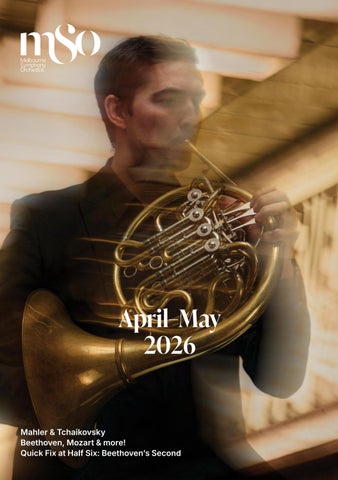
April–May 2026
Mahler & Tchaikovsky
Beethoven, Mozart & more!
Quick Fix at Half Six: Beethoven’s Second
The MSO has developed a musical Acknowledgement of Country with composer James Henry to pay our respects to the traditional owners of the land through the language of orchestral music.
James Henry’s position is supported by Cybec Foundation
‘I wrote this piece to reflect the complex journey toward the recognition of Aboriginal people as the traditional custodians of the land. It opens with rhythms inspired by the character of traditional songs found across many parts of Australia. From this texture, a melody emerges, representing the long period during which Aboriginal ownership of land was disregarded. The piece traces both progress and setbacks over time.
‘With the passing of the Victorian Statewide Treaty Bill, there is a renewed sense of optimism among many Aboriginal Victorians. Through Acknowledgement, I seek to convey a feeling of determination and resilience, reflecting the ongoing work to improve the quality of life for Aboriginal people, and to deepen respect for and awareness of our distinct culture, history and enduring connection to Country.’
James Henry 2025–2026 Cybec First Nations Composer in Residence
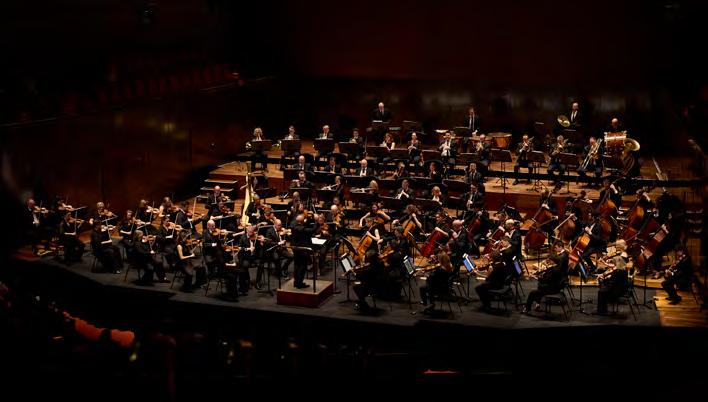
The Melbourne Symphony Orchestra is Australia’s preeminent orchestra, dedicated to creating meaningful experiences that transcend borders and connect communities. Through the shared language of music, the MSO performs to the highest standard, enriching lives and inspiring audiences across the globe.
Woven into the cultural fabric of Victoria for 120 years, the MSO reaches five million people annually through performances and TV, radio and online broadcasts, as well as critically acclaimed recordings on its newly established label.
Jaime Martín continues as the MSO Chief Conductor and Artistic Advisor in 2026, leading a diverse and richly talented Artistic Family.
The MSO regularly presents exceptional artists from across the globe in mainstage programming and special events, as well as reaching beyond the customary classical audience with contemporary collaborations. And through a partnership
with the ABC, the MSO’s performances in the Classic 100 in Concert reach more than a million Australians each year.
The first Australian orchestra to perform overseas (1965) and at Carnegie Hall (1970), the MSO has a proud history of international touring that has taken it to China, Indonesia, Singapore, Europe and the UK. Driven by the belief that music is a universal right, the MSO also brings music to all corners of the community, ensuring that everyone can share in the transformative power of music. Whether performing on world stages or in the heart of Victoria, the MSO transforms its mission and vision into reality – enriching lives and creating cultural connections through the unparalleled beauty of music.
Natalie Chee Concertmaster
Tair Khisambeev
Assistant Concertmaster
Peter Edwards
Assistant Principal
Sarah Curro
Dr Harry Imber *
Peter Fellin
Deborah Goodall
Karla Hanna
Dawna Wright and Peter Riedel*
Lorraine Hook
Jolene S Coultas*
Anne-Marie Johnson
David Horowicz*
Kirstin Kenny
Mark Mogilevski
Michelle Ruffolo
Anna Skálová
Kathryn Taylor
Matthew Tomkins
Principal
The Gross Foundation*
Jos Jonker
Associate Principal
Monica Curro
Assistant Principal
Dr Mary-Jane Gething AO*
Mary Allison
Emily Beauchamp
Isin Cakmakçioglu
Tiffany Cheng
Val Dyke*
Freya Franzen
Cong Gu
Andrew Hall
Robert Macindoe
Philippa West
Andrew Dudgeon AM*
Patrick Wong
Cecilie Hall*
Roger Young
Shane Buggle and Rosie Callanan*
Violas
Christopher Moore
Principal
Lauren Brigden
Katharine Brockman
Anthony Chataway
Peter T Kempen AM*
William Clark
Morris and Helen Margolis*
Aidan Filshie
Suzie and Edgar Myer*
Gabrielle Halloran
Patricia Nilsson
Jenny Khafagi
Margaret Billson and the late Ted Billson*
Fiona Sargeant
For a list of the musicians performing in each concert, please visit mso.com.au/musicians
David Berlin
Principal
Rachael Tobin
Associate Principal
Elina Faskhi
Assistant Principal
Rohan de Korte
Andrew Dudgeon AM*
Rebecca Proietto
Peter T Kempen AM*
Angela Sargeant
Caleb Wong
Rosemary Meagher and the late Douglas Meagher *
Michelle Wood
Andrew and Theresa Dyer*
Double Basses
Jonathon Coco
Principal
Rohan Dasika
Acting Associate Principal
Benjamin Hanlon
Acting Assistant Principal
Aurora Henrich
Suzanne Lee
Stephen Newton
Flutes
Prudence Davis
Principal
Jean Hadges*
Wendy Clarke
Associate Principal
Sarah Beggs Piccolo
Andrew Macleod Principal
Oboes
Johannes Grosso Principal
Ann Blackburn
Margaret Billson and the late Ted Billson*
Cor Anglais
Michael Pisani Principal Clarinets
David Thomas Principal
Philip Arkinstall Associate Principal
Bass Clarinet
Jonathan Craven Principal Bassoons
Jack Schiller
Principal Dr Harry Imber * Elise Millman
Associate Principal
Natasha Thomas Patricia Nilsson* Contrabassoon
Brock Imison Principal
* Position supported by
Horns
Nicolas Fleury
Principal
Margaret Jackson AC*
Saul Lewis
Principal Third
Cecilie Halland the late Hon. Michael Watt KC*
Abbey Edlin
The Hanlon Foundation*
Josiah Kop
Kim and Robert Gearon*
Rachel Shaw
Gary McPherson*
Trumpets
Owen Morris Principal
Shane Hooton
Associate Principal
Glenn Sedgwick*
Rosie Turner
Dr John and Diana Frew* Trombones
José Milton Vieira Principal
Richard Shirley
Bass Trombone
Michael Szabo Principal
Tuba
Timothy Buzbee Principal
Timpani
Matthew Thomas Principal Percussion
Shaun Trubiano Principal
John Arcaro
Tim and Lyn Edward*
Robert Cossom
Dr Clem Gruen and Dr Rhyl Wade* Harp
Yinuo Mu Principal
Jamie Miles viola
Georgia White clarinet
Hayden Burge bassoon
Jacob Fenchel horn
MSO Academy is supported by the Robert Salzer Foundation
When leading disability, accessibility and inclusion consultant Morwenna Collett first met with the MSO in 2024 to support the development of its inaugural Disability Inclusion Action Plan (DIAP), she immediately sensed the organisation’s willingness and buy-in.
‘I could tell that the MSO was genuinely interested in doing better in this space,’ she recalls. ‘They could see the potential and the opportunity in terms of how it would help make the MSO a stronger organisation. It’s coming from an authentic place.’
For Collett, who has worked with everyone from Glastonbury Festival to the Sydney Opera House, the MSO’s approach stood out.
‘I was excited by the timing with new leadership, and that Richard [Wigley, MSO CEO] was deeply involved – that’s not always the case,’ she says. ‘We did a lot of upskilling and capacity building of staff as part of the process so that they’ve now got those skills to bring the plan to life.’
The result is a comprehensive three-year plan looking at three pillars: internal culture, artistic programs and audience experiences. It’s this holistic approach that Collett believes is essential for lasting change.
‘Audiences can’t shift and change if there’s not a shift in attitudes behind the scenes, and if disability isn’t represented on stage,’ Morwenna explains. ‘It has to go together. This plan is a roadmap to ultimately just good business-as-usual practice.’
What excites Collett most is the MSO’s commitment to leading with art and artists, particularly through collaborations with disabled musicians and composers.
‘The MSO has been doing this in the mainstage arena and I love their spirit of collaboration,’ she says. ‘They’ve found really great artists to work with – people like Nat Bartsch for example – and the scale of what recently happened at the Sidney Myer Music Bowl with a choir of 150-plus people, and a range of different disabled composers with the Find Your Voice Collective, are great examples.’
She notes that the classical music sector has traditionally lagged in disability inclusion, but attitudes are shifting.
‘Certainly, ten years ago there was more hesitance to identify as a disabled artist, but that’s starting to open up as community attitudes and society in general shifts. More people are leaning into their disabled identity and that’s because organisations and artists are working together to increase visibility and access.’
Looking ahead three years, Collett sees enormous potential for the MSO to lead, not just in Australia but globally.
‘I hope the MSO demonstrates actively what’s possible and finds opportunities to take on that sector leadership piece,’ she says. Morwenna points to organisations like the Bournemouth Symphony Orchestra in the UK, which has set up a disabled-led chamber ensemble.
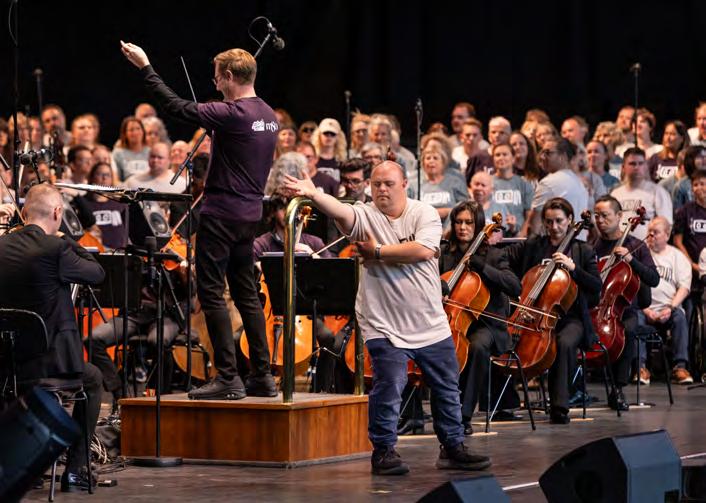
‘When I think about where the MSO will be three years from now, I think it’s going to be a more inclusive and aware organisation that can engage with a broader range of people. That will bring different perspectives and creativity to their work as well, which will be of benefit to everyone.’
For Collett, who brings her own lived experience as a disabled musician to her work, the MSO’s commitment represents more than a static plan on paper – it’s about opening doors and creating genuine opportunities.
‘Ultimately you don’t want to need a plan,’ she smiled. ‘You want it embedded; but this plan is an important step towards getting to that.’
With initiatives like the Auslan Choir, relaxed performances such as the one on
17 April, and the Find Your Voice Collective concert at the Bowl already demonstrating the MSO’s commitment to inclusivity, the concert hall doors and stages are only set to become more diverse and welcoming spaces for everybody.
Nicole Lovelock © 2026
The MSO’s Disability Inclusion Action Plan (DIAP) and DIAP programming initiatives have been made possible through funding from the Australian Government Department of Health, Disability and Ageing.
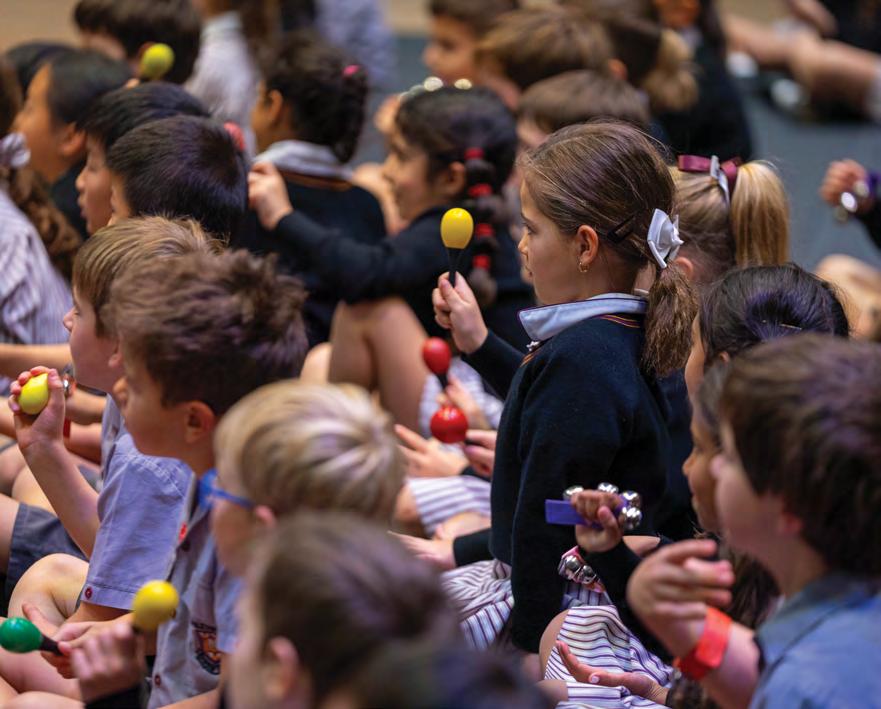
As the Program Partner of MSO Jams in Schools, we are building a more connected community and the next generation of music lovers.
Thursday 16 April at 7:30pm
Friday 17 April at 7:30pm (relaxed performance)
Saturday 18 April at 2:00pm
Hamer Hall, Arts Centre Melbourne
Artists
Melbourne Symphony Orchestra
Kahchun Wong conductor
Sergei Nakariakov flugelhorn
Program
Andrew Aronowicz* The Erl-King ** [16']
Tchaikovsky
Variations on a Rococo Theme, transcribed for flugelhorn [18’]
interval
Mahler Symphony No. 1 [53’]
* 2026 Cybec Young Composer in Residence
** World premiere of an MSO commission
Pre-concert talk: Learn more about the music with musicologist Dr John Gabriel in conversation with composer Andrew Aronowicz 6:45pm (16, 17 April) and 1:15pm (18 April) in the Stalls Foyer (Level 2) at Hamer Hall
Running time: 1 hour and 55 minutes, including a 20-minute interval. Timings listed are approximate.

The MSO is proud to be a member of the Hidden Disabilities Sunflower program
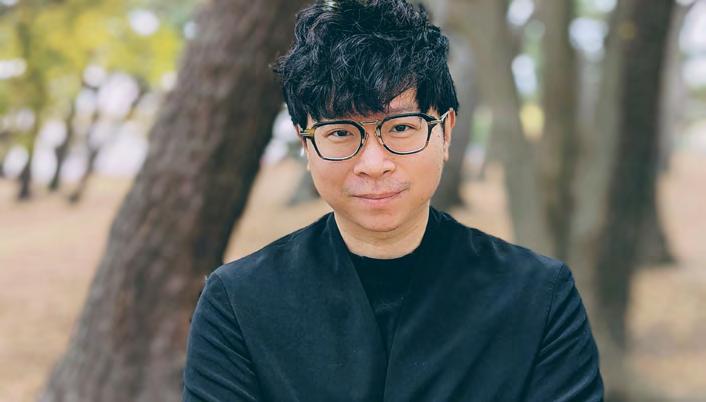
Internationally acclaimed for his electrifying stage presence and thoughtful exploration of Eastern and Western legacies, Singaporean-born Kahchun Wong is Principal Conductor and Artistic Advisor of the Hallé orchestra in Manchester and Chief Conductor of the Japan Philharmonic Orchestra. This is his MSO debut.
Since winning the Mahler Competition in 2016, he has appeared with leading orchestras including the Cleveland Orchestra, New York Philharmonic, Czech Philharmonic Orchestra, and the BBC, Tokyo Metropolitan and Yomiuri Nippon symphony orchestras.
His first season with the Hallé was acclaimed in the British press, and included recordings of Britten’s Prince of the Pagodas and Bruckner’s Ninth Symphony. He made his BBC Proms debut in 2025 conducting the Hallé in Mahler’s Resurrection Symphony, and the subsequent recording was memorably described by The Times as worthy of ‘six stars’.
In the 2025–26 season he has returned to the London Philharmonic Orchestra, Seattle Symphony, NCPA Orchestra in Beijing, and the Hong Kong Philharmonic, Osaka Philharmonic and Singapore Symphony orchestras, while making debut appearances with the Frankfurt Radio Symphony Orchestra, San Diego Symphony and Bergen Philharmonic Orchestra. Highlights included a tour of China with the Hallé, and Mahler’s Eighth Symphony for the Japan Philharmonic’s 70th anniversary at Suntory Hall.
A champion of contemporary voices, Kahchun Wong has premiered Tan Dun’s Fire Ritual (New York Philharmonic), Hosokawa’s Prayer (BBC Symphony Orchestra), Reena Esmail’s Concerto for Hindustani Violin (Seattle Symphony), and with the Hallé, Unsuk Chin’s revision of Le Chant des Enfants des Étoiles and the Manchester premiere of Max Richter’s Cosmology.
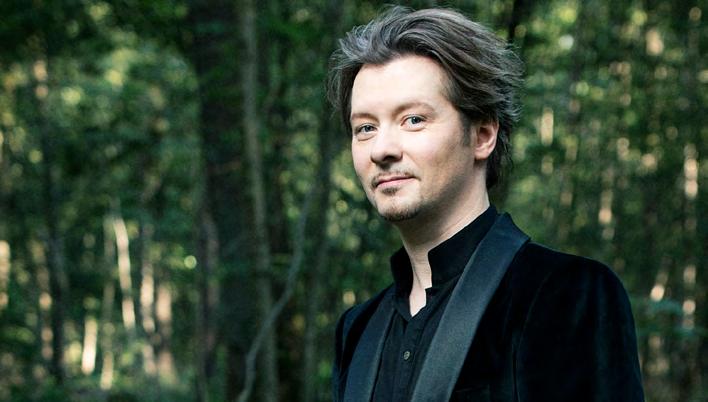
Sergei Nakariakov began playing piano when he was six years old. He then switched to trumpet, encouraged by his father, who transcribed many classical concertos for trumpet, creating a unique repertoire for him.
He has since established himself as one of the most sought-after trumpet and flugelhorn players on the international stage, and has developed long-standing relationships with many of the world’s leading orchestras, conductors and instrumentalists. Combining stunning virtuosity, a suave and velvet-toned sound and a deep sensitivity, he has been called the ‘Paganini’ and the ‘Caruso’ of the trumpet, and he has single-handedly brought the flugelhorn to prominence on the concert platform.
His repertoire covers not only the entire range of original literature, but takes his instruments into new territory, with transcriptions and commissions by Peter Ruzicka, Mikhail Pletnev, Uri Brener, Enjott Schneider, Fazil Say and Jörg Widmann.
In addition to the world premiere and recording of Mikhail Pletnev’s Trumpet Concerto, and concerts throughout Europe, South Korea, Hong Kong, Argentina, Brazil and Japan, recent highlights have included performances of Fazil Say’s Trumpet Concerto and Jörg Widmann’s concerto ad absurdum, as well as flugelhorn transcriptions of Haydn’s Cello Concerto in C major and Tchaikovsky’s Rococo Variations.
His extensive discography has drawn enthusiastic public and critical acclaim. More recently, on his own label Luiza Records, he has released Metamorphosis (Haydn and Mozart transcriptions with the Irish Chamber Orchestra) and Garland of Sonnets (with regular collaborator, pianist Maria Meerovitch). His current project is a recording of flugelhorn arrangements of Mozart and Beethoven.
Sergei Nakariakov is an exclusive AR Ressonance artist (trumpet) and plays a flugelhorn by Antoine Courtois, Paris.
Andrew Aronowicz (born 1989)
The composer writes:
If you know your German legends, then the title of my piece will probably make you think of Goethe’s poem, Erlkönig, or of its setting in Schubert’s famous art song. But the inspiration behind my ‘Erl-King’ is more recent: a short story by the 20th-century English author Angela Carter, from her collection The Bloody Chamber.
The bare bones of Carter’s story are faithful to the original: a young soul is preyed upon by a forest spirit. But while Goethe’s Erlkönig is a sinister, spectral goblin, Carter’s Erl-King is a man, seemingly born from the forest’s will: mysterious, captivating, adoring – but dangerously so. And while Goethe’s victim is a boy who pleads frantically with his father to save him from the spirit’s clutches, Carter’s protagonist is female. She walks, ‘willingly’, into the mysterious Erl-King’s wooded domain (no galloping on horseback in this story).
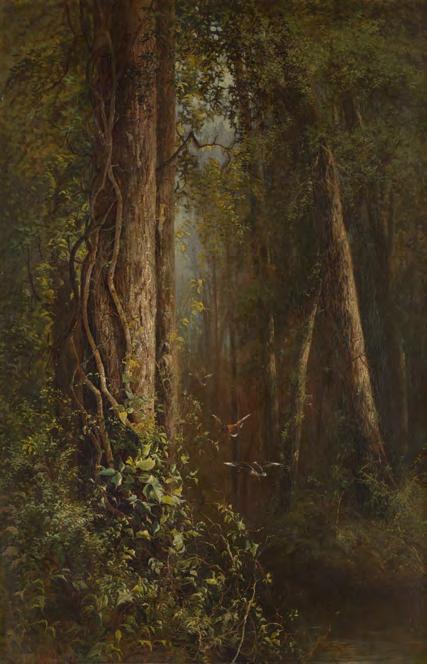
Here she is entranced by the Erl-King’s song, which he uses to call birds from the sky so they might be his caged companions. Together, they explore and enjoy the dark, tangled depths of the woods, and, mesmerised by the swirling green gaze of his eyes, she reciprocates the Erl-King’s love, submitting herself to his will. But the more she gives of herself, the more she realises the Erl-King’s true intentions: to transform and trap her, in a cage, like the birds.
Carter’s lush, hypnotic imagery –of rustling leaves, singing birds, sinister eyes, and a man at one with the forest – has been a wellspring of inspiration for this work: a kind of tone poem that’s also full of musical symbols, and is steeped in the musical traditions of Romanticism. Keen listeners will hear I’ve borrowed from Schubert’s song setting the famous opening notes in the left hand of the piano, but I’ve
Ducks in the Woods (1875) by Julie Hart Beers
twisted and reshaped them into a series of new motifs that at turns sound like treading footsteps, mysterious calls, plaintive cries and doom-laden warnings.
Like the forest setting of Carter’s tale, this music shimmers and glistens, winding and turning like a strange fairy tale which ends with a surprise: a wrenching discord as the protagonist strangles her demonic lover with his own hair, frees the trapped birds, and flees the forest to the discordant sounds of a fiddle playing itself in a twisted danse macabre.
But after this joyous, triumphant flight, the closing bars of the tone poem should leave you ill at ease, the final strident chord smacking you like a blunt question mark: did she really escape, or is this just a figment of her enchanted mind, and she’s still trapped in the Erl-King’s ‘bird haunted’ nightmare?
This music is ultimately a love letter to German Romanticism, and to the dark and delicious ambiguity that is the heart of Angela Carter’s genius.
Andrew Aronowicz © 2026
ANDREW ARONOWICZ is a composer and educator based in Naarm, Melbourne. His music has been performed widely in concerts and festivals around Australia and internationally, by various major ensembles and performers, including the Melbourne, Tasmanian and Sydney symphony orchestras, as well as Syzygy Ensemble and Plexus.
In addition to various commissions and awards, he has twice been selected for the MSO Cybec 21st Century Australian Composers’ Program. The first time, his piece Strange Alchemy was chosen for performance in the Metropolis New Music Festival, and was subsequently selected to represent Australia at the International Rostrum of Composers in Poland. For his second opportunity with the program, in 2025, he composed Komorebi, a piece
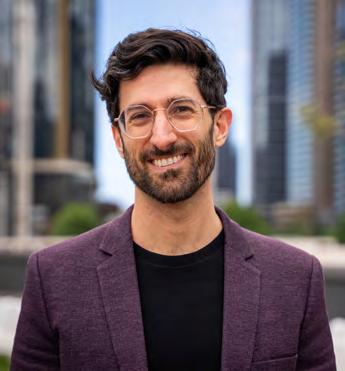
about sunlight filtering through the leaves of trees. This subtle and moving work led to a year-long position as MSO Cybec Young Composer in Residence, beginning with his jellyfish-inspired fanfare Bloom, which premiered to great acclaim earlier this year to a crowd of thousands at the Sidney Myer Music Bowl.
In addition to composing, Aronowicz is a passionate educator and communicator about music, and teaches classroom music and strings at Balwyn High School. He regularly presents pre-concert talks for the MSO and Australian Chamber Orchestra, and has featured as an educator in two ABC Education productions, including the recent revamp of the ABC’s iconic Let’s Sing program.
Andrew Aronowicz has been mentored by various Australian composers, including Stuart Greenbaum, Elliott Gyger, Katy Abbott, Brenton Broadstock and Mary Finsterer.
Andrew Aronowicz’s position is supported by Cybec Foundation
Pyotr Ilyich Tchaikovsky (1840–1893)
‘Fitzenhagen’ version (1876–77)
Transcribed for flugelhorn by Mikhail Nakariakov
Introduction (Moderato quasi Andante)
Theme (Moderato semplice)
Variation 1 (Tempo della thema)
Variation 2 (Tempo della thema)
Variation 3 (Andante sostenuto)
Variation 4 (Andante grazioso)
Variation 5 (Allegro moderato) –with cadenza
Variation 6 (Andante)
Variation 7 and Coda (Allegro vivo)
Sergei Nakariakov, flugelhorn
A nostalgia for the world of the 18th century, thought of as refined, elegant and gently civilised, is never far from the surface in the highly Romantic art of Tchaikovsky, and Mozart was the composer who symbolised the best of the former century for Tchaikovsky, who revered him above all other musicians. ‘No one,’ he said, ‘has so made me weep and tremble with rapture at nearness to what we call the ideal.’ Whatever the term ‘rococo’ may mean, to Tchaikovsky it meant Mozart, and this set of variations, composed for cello and orchestra, is his finest tribute to his idol’s art.
In no way does it detract from the success of Tchaikovsky’s Variations that the Mozart he emulates contains no turbulent emotions. In short, the Variations are far from the real Mozart. But they are charming, elegant, deftly written – equally gratifying to virtuoso cellists and to audiences. The light and airy accompaniment, which enables the solo line to stand out beautifully, is for 18th-century forces: pairs of woodwinds, two horns and strings.
Tchaikovsky composed the work in 1876 (shortly before beginning his Fourth Symphony) for Wilhelm Fitzenhagen, a cellist and fellow professor at the Moscow Conservatorium. Fitzenhagen had requested a concerto-like piece for his recital tours, so it was natural that Tchaikovsky first completed the Variations in a version for cello and piano. Before orchestrating it he gave the music to Fitzenhagen, who made changes in the solo part, in places pasting his own versions over Tchaikovsky’s. The first performance was of the orchestral version, in November 1877. Tchaikovsky couldn’t attend since he had left Russia to recover from his disastrous marriage. Fitzenhagen retained the score, and it was he who passed it on to the publisher, Jurgenson. The cello and piano version was the first to appear in print, in autumn 1878, with substantial alterations, which Fitzenhagen claimed were authorised but about which Tchaikovsky complained somewhat bitterly.
But by the time Jurgenson came to publish the Rococo Variations in orchestral form, ten years had elapsed, during which Fitzenhagen had performed the work successfully both inside and outside Russia, and it had entered the repertoire. When Fitzenhagen’s pupil, Anatoly Brandukov, asked Tchaikovsky what he was going to do about Jurgenson’s publication of the Fitzenhagen version, the composer replied, ‘The devil take it! Let it stand as it is!’
The theme, which determines the character of the Variations, is Tchaikovsky’s own: it’s the composer’s idea of Mozart’s style. The soloist plays it after a brief introduction in which the orchestra anticipates the later breaking of the theme into fragments by attempting little phrases from it. The theme itself has an orchestral postlude, with a final question from the soloist. This postlude, increasingly varied, rounds off most of the Variations. The first two of
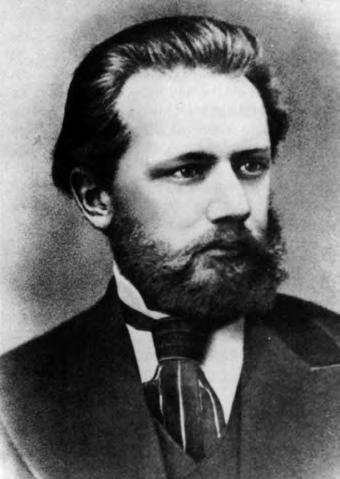
these are fairly closely based on the theme, which the soloist decorates with a dance in triplets, then discusses with the orchestra. The solo part emerges in full limelight in the virtuosic second variation and remains there for Variation 3, a leisurely waltz that is the expressive heart of the piece. (Tchaikovsky had originally placed this variation at No. 6.)
In Variation 4, Tchaikovsky gives the theme a different rhythm, and incorporates some bravura flourishes. In the fifth variation the flute has the theme, and the soloist accompanies with a long chain of trills. The substantial cadenza at the end of this variation leads into the soulful slow Variation 6. This minor key version of the theme is heard over plucked strings, and it was this variation that, without fail, drew stormy applause on Fitzenhagen’s recital tours.
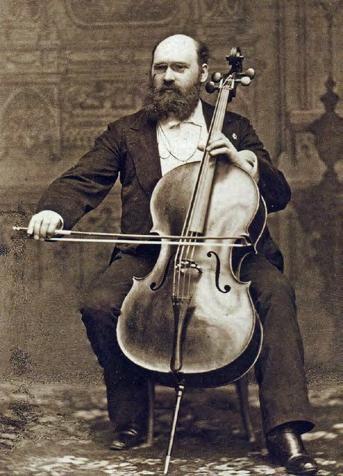
The final variation begins with the solo part establishing its own particular rhythmic interpretation of the theme, a delightful way of upping the activity, which continues into the coda.
Adapted from a note by David Garrett © 2002
Gustav Mahler (1860–1911)
Langsam. Schleppend. ‘Wie ein Naturlaut’ – Im Anfang sehr gemächlich [Slow. Dragging. ‘Like a sound of Nature’ – Very comfortably]
Kräftig bewegt, doch nicht zu schnell – Trio. Recht gemächlich [Forcefully, yet not too fast – Trio. Quite slowly]
Feierlich und gemessen, ohne zu schleppen [Solemn and measured, without dragging] –
Stürmisch bewegt [Stormily]
In the days when Mahler’s work was at its lowest ebb of fashionability, it was frequently derided for its eclecticism – his magpie references to musical gestures not only from the classical repertoire, but from such disreputable sources as military marches and folk music. Today, Mahler’s inclusion of a wide range of musical styles and stock elements from nature, folklore and the classical repertoire is regarded as an essential part of what makes him Mahler. His eclecticism resonates strongly with our own musical lives, which invariably include at least a smattering of classical, popular and commercial elements from a vast range of times, places and peoples.
Mahler does not restrict his musical models to humans, or even to animals: a typical Mahlerian direction to his performers is ‘Wie ein Naturlaut’ (like a sound from nature), which appears in the direction for the shimmering opening of
the first movement. Soon Mahler brings in the call of a cuckoo, seamlessly integrated with the descending two-note pattern of a fourth, which from beginning to end provides the first movement with much of its melodic material.
Mahler’s audience would readily have recognised the opening of Beethoven’s fourth symphony (which similarly features a bare opening in octaves, and a figure dominated by falling fourths) in the very beginning of Mahler’s first. Here the gesture is enlarged to typically Mahlerian dimensions: the B flat of Beethoven’s beginning appears in a mere five octaves, whereas Mahler’s A ranges over seven –an attempt to embrace the world (as Mahler famously told Finnish composer Jean Sibelius a symphony should) rather than merely the orchestra. In another departure from Beethoven’s example, those falling fourths here resonate throughout the work: the interval begins
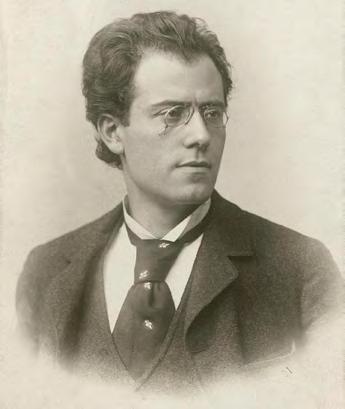
three of the four movements, and will finally conclude the symphony in unequivocal triumph.
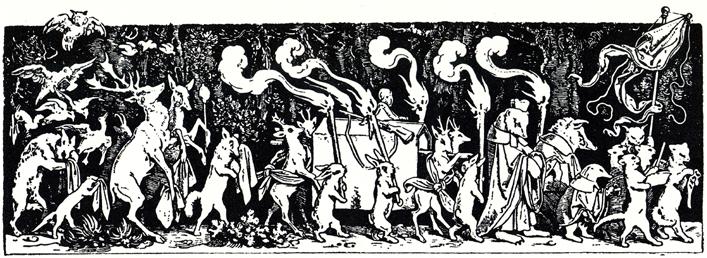
The jaunty second movement of the symphony draws on an early (and uncomplicatedly joyful) song of Mahler’s own entitled ‘Hans und Grethe’. Mahler’s slow movement makes a more startling borrowing: the nursery tune known in German-speaking countries as ‘Bruder Marti’n (‘Frère Jacques’ to English speakers). Mahler makes it unmistakably his own, defamiliarising it in three crucial ways: we hear it in the minor mode, in a slow tempo, and in the strained uppermost register of a solo double bass. The aim (according to a program Mahler prepared to assist his listeners in early performances of the work – although he later disdained such annotations as nothing more than ‘a crutch for a cripple’) was to depict a satirical funeral march: the animals of the forest carrying a hunter to his grave in solemn procession as shown in a children’s book woodcut, The Huntsman’s Funeral Procession. The first of the third movement’s contrasting sections continues the mocking theme, with much use of village-band trumpets
Mahler’s First Symphony began life as a two-part symphony in five movements, and acquired layers of literary narrative along the way, but in its final form it takes on a classical shape with four movements and no ‘story’ or nickname to get between us and Mahler’s ambitious musical vision.
The beginning of the first movement is crucial – pay close attention as the first notes of the symphony float into the hall. Woodwinds emerge from the shimmer, playing two notes that outline the single most important motif of the whole work, a descending ‘cuckoo’ call. Hold that motif in your ears: this simple idea will be echoed and shared through the orchestra until the music bursts into the joyful, pastoral theme that comes from the second of Mahler’s Wayfarer songs.
The journey of this symphony moves through rustic exuberance in the second movement and the macabre funeralmarch parody of ‘Frère Jacques’ in the third movement – a rare solo moment for the double bass. The funeral march is repeatedly broken up by street musicians (klezmer style) and eventually the whole thing is interrupted by a heartrending cry. This is the transition to the 20-minute finale, morphing from its stormy, apocalyptic opening into a radiant conclusion.
and clarinets, accompanied by bass drum and cymbals; indeed the village band dominates the final return of the funeral march, at one point even wrenching it into dance tempo.
Mahler’s most significant reference in this work, however, is to his own Songs of a Wayfarer, which dates from 1885 (the symphony was completed in 1888, and revised several times before its publication in 1899). It is a partly autobiographical work, inspired by his unhappy love affair
with the singer Johanna Richter. The texts deal with unhappy love in the way familiar from Schubert’s great song cycles; the protagonist sets off wandering to escape his grief, eventually finding peace in death and reunion with nature. The second song of the cycle, ‘Ging heut’ morgen über’s Feld’ (I went out this morning into the fields) lends its theme to the main body of the first movement. The third movement’s second contrasting section refers to the closing section of the final song, in which Mahler’s wayfarer comes to his final rest under a linden tree. Mahler has here given us a particularly and ambiguous juxtaposition: a partly autobiographical funeral of his own, or at least of his ardent youthful self, set within one of the most sarcastic funeral marches in music.
Besides thematic material, the song cycle also provides the symphony with the tonal centres that underpin its form: the joyful D major of the first movement is also the key of ‘I went out this morning into the
fields’, and the despairing F minor of the last movement’s frenzied opening is the key of the song cycle’s ending. Here, however, Mahler rewrites the story, wrenching the tonality into D major with an exultant fanfare in one of his most brilliant dramatic strokes.
As the relationship of the symphony to the songs demonstrates, Mahler’s practice of making reference to other works and genres is far more than a matter of appropriating the occasional tune; it is his means of bringing into play a vast range of human experience. His musical ‘found objects’ shed light on the nature of the symphony far more eloquently and more ambiguously than a written program could ever do; indeed often we are not sure whether it is the outside world illuminating Mahler’s symphony or the other way around.
Carl Rosman © 2001
Mahler began work on the First Symphony in 1884, around the same time as Songs of a Wayfarer, completing most of the work over six weeks in 1888. For the premiere in Budapest in 1889 it was called a ‘Symphonic Poem in Two Parts’. The second of the five movements was called Blumine; the fourth movement was a funeral march. But there was no official program, just an outline leaked to the newspaper the day before: spring, happy daydreams, and a wedding procession; a funeral march representing the burial of the poet’s illusions, and the achievement of spiritual victory. It could only have come from Mahler.
Mahler revised the symphony for Hamburg in 1893. He was persuaded to add a highly literary narrative and to include new, official movement titles. He gave the symphony a new name, ‘Titan – a tone poem in the form of a symphony’, taking inspiration from a novel by Jean Paul. Richard Strauss programmed it in Weimar in 1894 and the Berlin premiere followed in 1896.
After this, the Blumine movement was withdrawn and Mahler firmly rejected the narrative program as well as the ‘Titan’ nickname. For English-speaking audiences this has been a good thing: ‘Titan’ is more likely to prompt thoughts of Greek mythology than of the (unrelated) 19th-century German novel Mahler had in mind.
BEETHOVEN, MOZART & MORE!
Friday 1 May at 7:30pm Frankston Arts Centre
Saturday 2 May at 7:30pm
Hamer Hall, Arts Centre Melbourne
Artists
Melbourne Symphony Orchestra
Chad Kelly conductor
Nicolas Fleury horn
Program
C.P.E. Bach Sinfonia in D major, Wq. 183/1: I. Allegro di molto [6']
Haydn Symphony No. 49 (La Passione) [24’]
Mozart Horn Concerto in E flat major, K. 417 [14’]
interval
Locke The Tempest: Curtain Tune [5’]
Beethoven Symphony No. 2 [32’]
Pre-concert talk: Learn more about the music with Peter Luff 6:45pm (1 May) at Frankston Arts Centre 6:45pm (2 May) in the Stalls Foyer (Level 2) at Hamer Hall
Running time: 1 hour and 55 minutes, including a 20-minute interval. Timings listed are approximate.
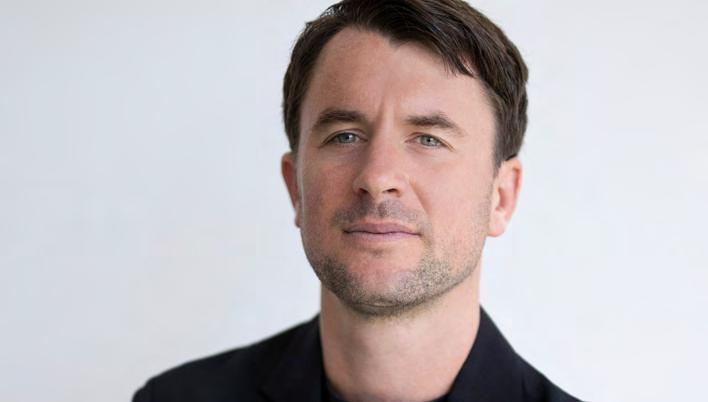
British keyboardist and conductor Chad Kelly is in demand across opera, orchestral repertoire, historically informed performance and contemporary music. Based in Sydney, he is currently on the music staff at Opera Australia, having spent several seasons at the Bavarian State Opera and English National Opera.
Dedicated to historically informed performance, he has conducted at prominent early music festivals and venues throughout Europe and the UK, and collaborated with distinguished early music ensembles, serving as principal keyboardist for Solomon’s Knot and guest directing the Academy of Ancient Music. He is also acclaimed for his inventive arrangements and reconstructions of music by Bach.
Building on this expertise, he made his OA conducting debut in Dido and Aeneas, and in 2023 conducted performances of Messiah in his MSO debut. In 2025 he
arranged and conducted Victorian Opera’s Abduction (an adaptation of Mozart’s Entführung aus dem Serail), praised for its freshness and contemporary perspective.
In addition to returning to the MSO, this year he conducts the West Australian and Christchurch symphony orchestras, tours with the Australian Chamber Orchestra, and in June–July will conduct Victorian Opera’s production of The Coronation of Poppea in a re-orchestration by Elena Kats-Chernin.
Educated at Cambridge University and the Royal Academy of Music, Chad Kelly became Lector in Music at Trinity College, Cambridge, and was elected Associate of the Royal Academy of Music. He continues to mentor young musicians as a guest lecturer at the Guildhall School of Music and Drama and the University of Melbourne.
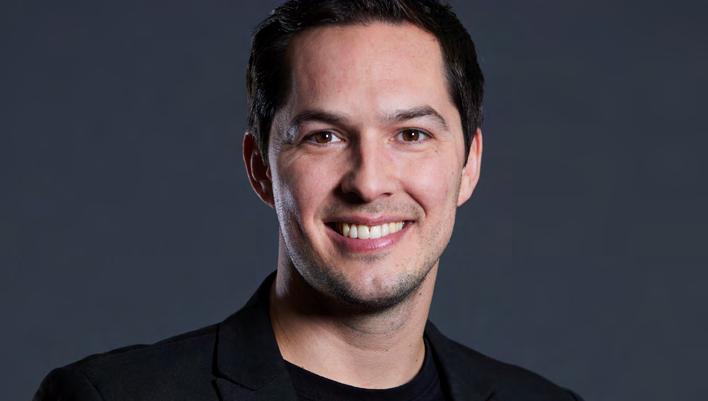
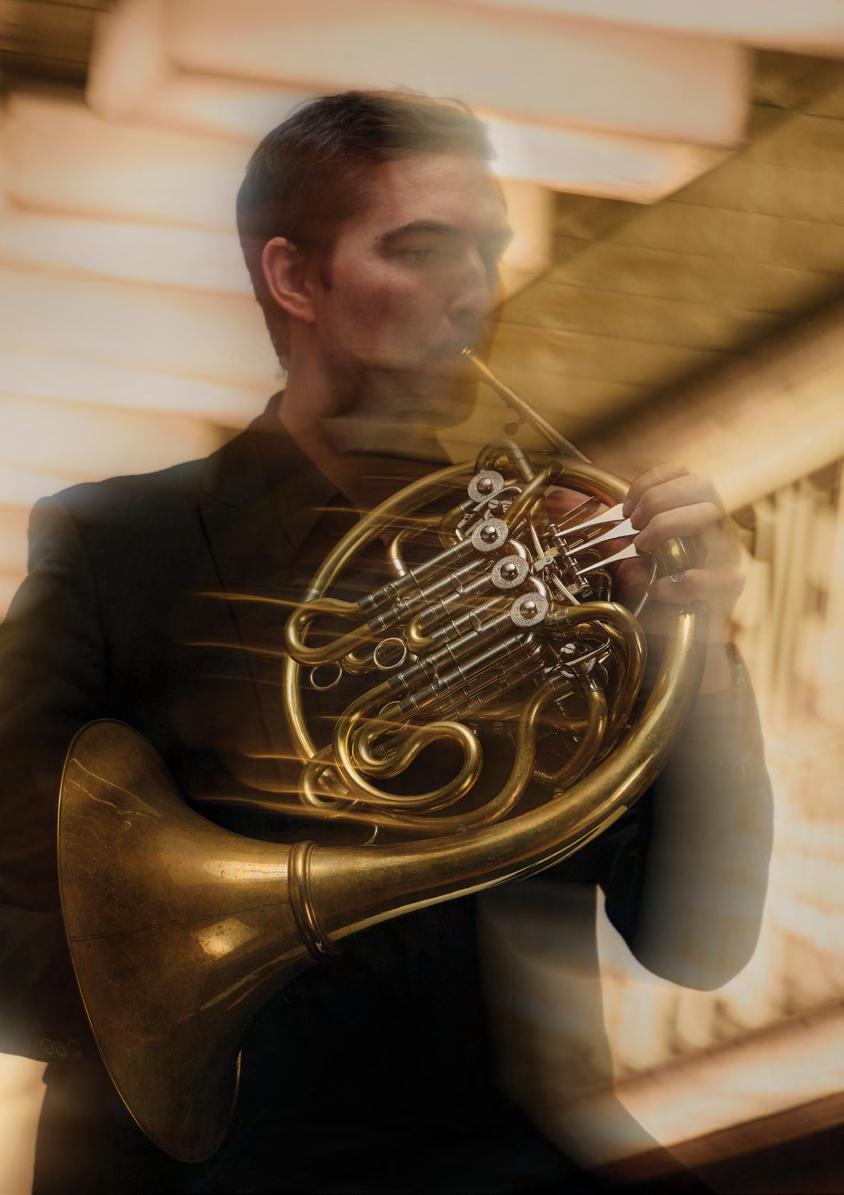
Nicolas Fleury began studying natural and French horns at the age of eight. On completing his studies in his native France – at the Nantes Conservatoire and later the Rueil Malmaison Conservatoire –he continued his education at the Royal College of Music under the guidance of Timothy Brown, Timothy Jones and Sue Dent. He graduated in 2009 with distinction and the Tagore Gold Medal.
Nico was appointed Principal Horn of the MSO in 2019. Previously he was Principal Horn in the Aurora Orchestra, Royal Philharmonic Orchestra and Bournemouth Symphony Orchestra, where he performed Mozart’s horn concertos and Britten’s Serenade for tenor, horn and strings, broadcast live on BBC Radio 3.
Previous solo appearances with the MSO include May Lyon’s double horn concerto Opal, composed for him and Rachel Shaw, and most recently Mozart’s Symphonie concertante for four winds (K.297b).
He appears frequently as a guest principal horn in orchestras such as the London Symphony Orchestra, Philharmonia Orchestra, Orchestra of the Royal Opera House, Deutsche Kammerphilharmonie Bremen, Academy of St Martin in the Fields, Orchestre de Chambre de Paris, Sydney Symphony Orchestra and Utah Symphony Orchestra. He has performed the most demanding works of the orchestral repertoire alongside conductors such as Andrew Davis, Charles Dutoit, Lorin Maazel, Esa-Pekka Salonen, Bernard Haitink, Andris Nelsons, Valery Gergiev, Neville Marriner and John Eliot Gardiner.
Position supported by Margaret Jackson AC
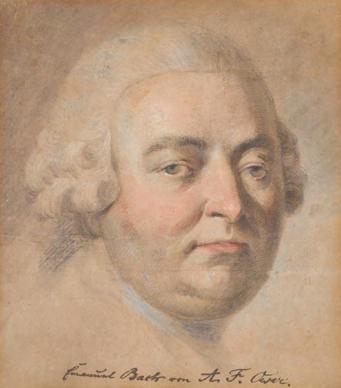
I. Allegro di molto
When this sinfonia was composed in Hamburg in 1775, Johann Sebastian Bach had been dead 25 years, the teenage Mozart was only beginning to produce mature work, and between these pillars of the Baroque and Classical styles, Carl Philipp Emanuel Bach was writing music of extraordinary sensibility and imagination. His music was distinctive and original, subversive even – the voice of a composer freely going his own way, ‘untrammelled by custom or fashion’.
At the same time, cut off from the world in a remote corner of Hungary, Joseph Haydn was also forging his own path. By 1775 this celebrated composer already had 60 or so symphonies under his belt, establishing the familiar four-movement structure. C.P.E. Bach was equally celebrated and the sinfonia from which we hear tonight retained currency well into
the 19th century and beyond, but unlike Haydn, Emanuel Bach doesn’t represent a continuing tradition.
Looking to the past, Bach’s sinfonias followed the Italian model, compact works in three movements, fast–slow–fast. Responding to the present, Bach’s musical language reflected the Sturm und Drang (‘Storm and Stress’) literary movement with an emotional intensity known as Empfindsamkeit (perhaps best translated as ‘ultra-sensitivity’). And while it doesn’t exactly look to the future, this language shares Beethoven’s willingness to shock as well as Haydn’s delight in surprise.
The Sinfonia in D major was the first of four that were published in 1780 under the title ‘Orchestral Symphonies with 12 obbligato parts’, anticipating a strategy that Haydn and Mozart wouldn’t fully adopt for another decade. Bach’s earlier sinfonias had been scored for strings, with the option of doubling by wind instruments understood; these new sinfonias specified independent parts for two flutes, two oboes, two horns and bassoon, with the five string parts making up the balance.
Another revolutionary strategy – one that wouldn’t become commonplace until the symphonies of Mendelssohn – was Bach’s decision to run the movements together in a continuous whole. The first movement of this sinfonia, for example, ‘ends’ by modulating from its home key of D major to the wildly inappropriate key of E flat major for the second movement.
But first, the beginning. The lower strings set out with the kind of energetic material you’d expect from a movement marked Allegro di molto (very fast), but suspended above them, the first violins play long repeated notes that speed up before plunging into their lower register – almost as if trying to stifle a sneeze. After a
rhetorical pause, the exercise is repeated two steps higher, then three steps higher again. And when the full orchestra enters it’s on a ‘wrong’ chord that disrupts all sense of tonal centre and confirms the composer’s eccentricity. But there’s method in the madness: the extraordinary and memorable presentation of this opening idea prepares us to recognise it as the basis for the entire movement.
It’s small wonder that Bach’s novelty and originality was admired by his enthusiastic audiences, and he himself confided to a colleague: ‘A year ago I composed four large symphonies for orchestra… It is the greatest thing of this type that I have done. My modesty does not allow me to say more.’
Yvonne Frindle © 2026
Joseph Haydn (1732–1809)
Symphony No. 49 in F minor (La Passione)
Adagio
Allegro di molto Menuet e Trio Finale (Presto)
The designation ‘La Passione’ and the wide circulation achieved by this symphony in the courts and monasteries of late 18th-century Europe suggest, as does the extraordinary music itself, some special purpose, presumably related to Holy Week. The title, however, is unauthentic, and there is no evidence of any such intent either within the music (for example, the use of recognisable church melodies, as in the Lamentatione Symphony, No. 26, composed within about 12 months after La Passione) or in any extramusical documentation. Even if the title was current during the composer’s lifetime, as is possible, there is no knowing whether he approved it.
What can be said with certainty is that this was the last, and undoubtedly the greatest, of seven symphonies Haydn composed in the archaic ‘church sonata’ form, characterised by a slow opening movement. While the ‘church sonata’ symphonies have no overtly religious intent, they are essentially solemn works or, as in the present case, bleak, tense and often anguished.
Written in 1768, the third summer of the fabulous Eszterháza castle raised by Haydn’s princely employer on former swamplands in Hungary, La Passione is an early but archetypal product of the composer’s so-called Sturm und Drang (Storm and Stress) period. Although the term Sturm und Drang, applied by French scholar Théodore de Wyzewa at the time of Haydn’s death centenary in 1909, misleadingly implies a link with the somewhat later Sturm und Drang movement in literature and art (which sprang up around the writings of Goethe and Schiller from about 1773), it nevertheless aptly characterises the passionate and emotional intensity of some of the music that flowed from Haydn’s pen between about 1766 and 1773.
Sturm und Drang in Haydn’s symphonies shares with the church sonata form a widespread use of minor or remote keys, frequent polyphonic and contrapuntal textures, dynamic contrasts, and spare, unadorned instrumentation. The Sturm und Drang symphonies are often tragic, sombre, even violent. And, as James Webster asserts, ‘Haydn’s ever-present tendency towards eccentricity occasionally verges on outright irrationality’.
Among a series of unlikely key signatures (including B major for Symphony No. 46 and F sharp minor for No. 45, the Farewell), the choice of F minor for La Passione reflects a rare and special occasion. This was a key Haydn reserved for just a few works: the String Quartet Op. 20 No. 5, the
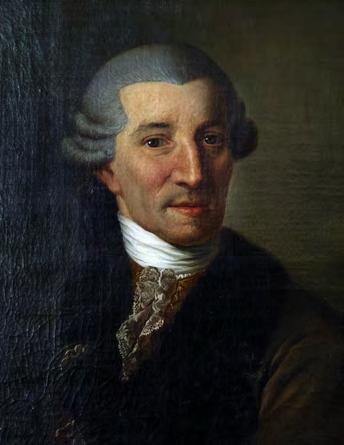
great Andante and Variations for keyboard (Hob.XVII: 6), and the suicidal aria of Nanni in the opera L’infedeltà delusa (Infidelity Outwitted). With unique singleness of purpose, he casts every movement of the present work in the home key of F minor, providing a smidgin of relief only in the central trio section of the minuet, where a contrasting tonality in the major is virtually unavoidable.
Spiritually and emotionally, therefore, the mood is dark throughout, shifting from deepest gloom to the almost hysterical energy of desperation. Haydn achieves variety within the basically mono-tonal framework through wide melodic leaps (as in the second movement) and contrasts of dynamics. The all too brief burst of sunshine in the trio of the minuet is illumined by gleaming horns in their upper register.
The composer’s subtle pursuit of thematic unity is to be seen in the very opening phrase of the first movement, where the leaden progression of notes moving ever so slightly up and down from C provides the core material from which, as
H.C. Robbins Landon observes, Haydn will develop the themes of all four movements: C – D flat – B flat – C.
The opening Adagio is much the biggest movement, and arguably the spiritual core of the symphony. Yet, unlike some of Haydn’s earlier ‘church sonata’ symphonies, La Passione maintains its emotional and spiritual force, without tailing off, through four equally inspired movements. The wildly leaping melody of the second movement is swept forward on an irresistible tide in the bass, impotent anguish continuing to lash out spasmodically after the first fierce passion is exhausted. The minuet – though one would scarcely think of dancing to it – is dogged, subdued, beginning not with Haydn’s customary springy upbeat but on a mechanical, hang-dog downbeat. The finale is a flight from relentless nightmare, not destined for glory in imposing cadences at the end but simply thankful to get there.
La Passione lacks none of the sureness of touch occasionally missing from Haydn’s other Sturm und Drang music. The composer is, as Landon puts it, ‘passing through the eye of the storm’ (a storm effectively created by himself). That experience was to prove crucial in the long-term development of his own music and the music of his successors.
Anthony Cane © 1989/2001
(1756–1791)
Allegro maestoso
Andante Rondo
Nicolas Fleury, horn
In 1783 Mozart completed the horn concerto his good friend Joseph Leitgeb had requested years before, writing across the top: ‘Wolfgang Amadè Mozart finally took pity on Leitgeb, Ass, Ox and Fool.’ The inscription confirms Mozart’s quirky, irreverent sense of humour; the music (K. 417) reveals his friend’s mastery of that temperamental instrument, the valveless natural horn. In particular, Leitgeb was a virtuoso of the relatively new technique of hand-stopping – moving the right hand in and out of the horn’s bell to adjust the pitch – which allowed an extended range of notes.
Leitgeb (often referred to as Leutgeb) had played in the Salzburg court orchestra (1763–77) – doubling as a violinist – and seems to have shared Mozart’s dislike of the Archbishop there. Not long after Mozart had quit Salzburg to seek his fortune in Vienna, Leitgeb made the same journey. (The story of him acquiring a cheesemonger’s shop in a kind of mid-life career change is unsubstantiated, in fact he continued playing until his retirement in 1792 at the age of 60.)
In his prime, Leitgeb was a ‘rare virtuoso’ who’d appeared throughout Europe as a soloist and had been offered a handsome salary to play under Haydn in the Esterházy orchestra. (This may have been connected with the composition of Haydn’s D major horn concerto.) In Paris he’d been praised in the Mercure de France for his ‘superior talent’ and his ability to ‘sing an adagio as perfectly as the most mellow, the most interesting and the most accurately pitched voice’.
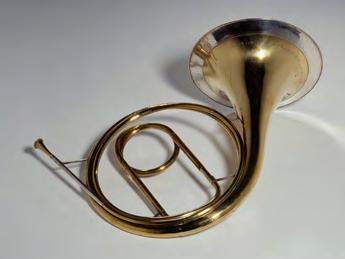
The music Mozart wrote for him exploits these lyrical gifts, especially in the songlike Andante of K. 417. But Leitgeb could also claim great facility and an impressive command of the full range of the horn from its lowest notes to its highest, as shown in the substantial first movement, the only one of Mozart’s horn concerto movements to be marked maestoso or ‘majestically’.
Following this first horn concerto, Mozart would write three more for Leitgeb, an uncle-figure some 24 years older. The relationship was an affectionate one – as a boy, Mozart admitted to missing his friend during an extended stay in Paris – but Mozart ‘couldn’t resist making fools of people’ and the remarkably tolerant Leitgeb was a frequent victim of his practical jokes. These ranged from throwing concertos and symphonies around the room and leaving Leitgeb to collect the pages, to inking the notes of one concerto (K. 495) in different colours. Mozart was equally fond of musical jokes. The finale of K. 417 sets out as a rousing hunting rondo, but soon the soloist is teased by twittering first violins. Later there are written-out ‘memory lapses’ before the soloist regains composure and gallops to the conclusion.
Yvonne Frindle © 2005/2026
Matthew Locke (c.1621–1677)
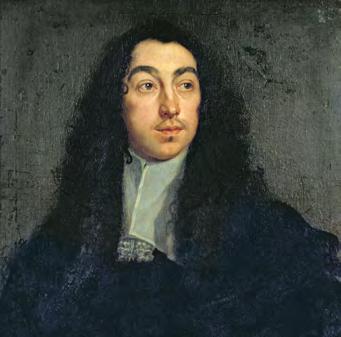
You probably know The Tempest – it ranks in the top ten of Shakespeare’s plays. But you wouldn’t necessarily recognise The Tempest, or The Enchanted Island, which opened at the Dorset Garden Theatre in a dodgy part of London in 1674.
This Restoration take on Shakespeare’s play was adapted by John Dryden and William Davenant, and further transformed by Thomas Shadwell. Providing songs, dances and instrumental pieces was a
team of prominent composers: Pietro Raggio, Giovanni Battista Draghi, John Banister the Elder, Pelham Humfrey and Matthew Locke, whose contributions include the most famous number, the Act I Curtain Tune.
It was billed as a ‘dramatick opera’ but its form was closer to that of a West End musical – an all-singing, all-dancing extravaganza that exploited the elaborate stage machinery and special effects of the relatively new theatre.
No expense was spared in the creation of this crowd-pleasing spectacular. An elaborate second proscenium made room for an orchestra that would be large even in today’s theatres: it included a ‘Band of 24 Violins’ (the Royal Band, established by Charles II in imitation of Louis XIV’s Violons du Roy) as well as ‘harpsicals and theorbos’. And as the curtain rose on the second ‘frontispiece’ the audience would have seen:
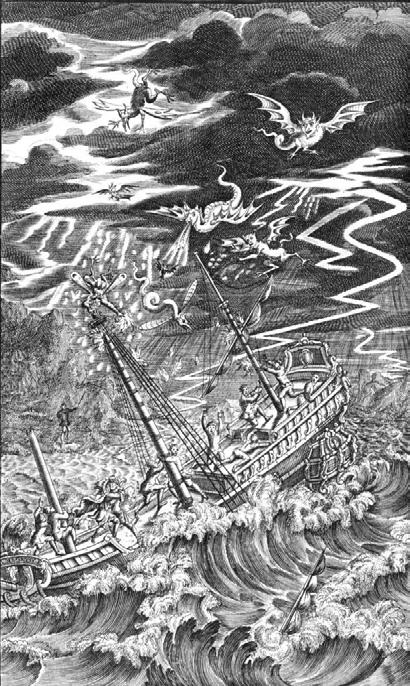
…a thick Cloudy Sky, a very Rocky Coast, and a Tempestuous Sea in perpetual Agitation. This Tempest (suppos’d to be rais’d by Magick) has many dreadful Objects in it, as several Spirits in horrid shapes flying down amongst the Sailers, then rising and crossing in the Air. And when the Ship is sinking, the whole House is darken’d, and a shower of Fire falls upon ’em. This is accompanied with Lightning, and several Claps of Thunder, to the end of the Storm.
The Tempest – illustration from the 1709 Nicholas Rowe edition of Shakespeare’s plays
Locke rose to the challenge with his Curtain Tune, marrying theatrical convention with striking expressive gestures. His choice of a major key (F) might surprise listeners familiar with the storms in Vivaldi’s Summer concerto (G minor) or Beethoven’s Pastoral Symphony (F minor), but this was 17th-century pragmatism: for a musical storm, sheer speed was more important than a gloomy key, and with an ensemble of strings, that meant nimble keys like F, C, G or D major. Locke darkens the effect with brief excursions to foreign keys and dissonant notes that don’t belong in the harmony.
More unusual for the time was Locke’s inclusion of performance instructions in the music. The atmospheric opening of this Curtain Tune isn’t just sustained, but ‘soft’. Soon it becomes ‘lowder by degrees’ and almost immediately ‘violent’ with a headlong rush of notes. The direction ‘soft and slow by degrees’ leads to a repeat of both the music and our delight.
Yvonne Frindle © 2026
Adagio molto – Allegro con brio Larghetto Scherzo (Allegro) – Trio Allegro molto
Composed in 1802 and premiered three years almost to the day after Beethoven’s first symphony, the Symphony No. 2 proved uncomfortable listening for those who heard its first performance on 5 April 1803. Critics fondly recalled the ‘unaffected ease’ of the First Symphony, compared with which the Second, ‘striving [to be] new and striking’, succeeded only in being ‘bizarre, harsh and undisciplined’. To one imaginative critic, the abrupt, quivering figures of the finale seemed no less than a monster, ‘a wounded, taillashing serpent, dealing wild and furious blows as it stiffens in its death agony…’ To a modern listener, the movement merely proclaims the composer’s youthful vigour.
Beethoven was by now expanding symphonic form significantly. On one hand there is a vast slow introduction – by turns imposing, solemn and lyrical – which reaches a powerful climax in D minor (presaging the Ninth Symphony) before a mood of hushed expectancy gives way to an irresistible ‘boil-over’ directly into the Allegro. On the other hand, the outer movements culminate in bigger and grander codas than ever before. And, perhaps most significantly, we see unprecedented weight and emphasis on the last movement – the finale no longer just a high-spirited wrap-up but now beginning to bear a greater burden of symphonic argument.
If the first movement (Allegro) pursues a course of unprecedented brilliance and energy, it nevertheless remains essentially ‘normal’ until the coda, where, as Donald Francis Tovey has suggested, Beethoven’s
orchestra rises to an intense climax assuming the grandeur of a great chorus.
To follow such exhilaration comes a Larghetto movement described by Tovey as ‘one of the most luxurious slow movements in the world’, and by Robert Simpson as ‘an outstanding marvel of beauty and grace’. Even with no indication of the normal sonata-form repeats, this leisurely movement is unusually substantial, causing Beethoven in a later arrangement for piano trio to indicate a marginally livelier tempo, Larghetto quasi andante.
The third movement is the first in a Beethoven symphony to bear the supposedly characteristic designation Scherzo, and is, in fact, the first of only two such movements in all Beethoven’s symphonies. It reveals the composer in boisterous good humour, as he contrives to make music out of a variety of staccato three-note figures with impulsive chordal interjections, yet managing to sound joyful, as if he were out in the countryside free of all worldly cares.
Similar sharp dynamic contrasts characterise the finale – the movement which, more than any other, marks the composer’s advance in the three years since the First Symphony. Like the Larghetto, this is a sonata movement without repeats, displaying great brilliance and good humour, and posing a problem of dissonant harmony which finds resolution in a massive coda more than half as long again as the main body of the movement. It is in the coda that Beethoven opens the magic casements briefly, poised on a knife-edge of hushed expectancy, to reveal a blissful glimpse of future glories in store. But it cannot last. Beethoven at age 32 can only round it off and bring us conventionally down to earth.
Beethoven completed the Second Symphony in the seclusion of rural Heiligenstadt, outside Vienna, where he
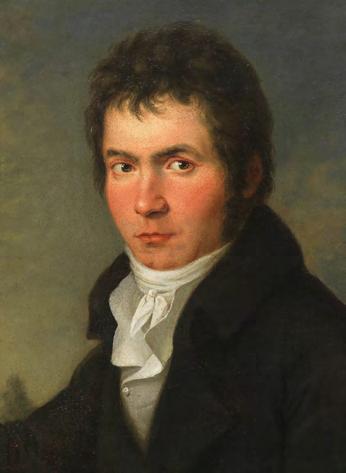
was under doctor’s orders to rest and try to restore his failing hearing. It was there that he realised his ailment was both progressive and incurable, there that he was driven to pen his despairing, valedictory Heiligenstadt Testament. Yet at the same time he was able to compose a symphony of mingled exhilaration and bliss – a salutary reminder that he, unlike the Romantics, is to be interpreted by heart-on-sleeve analysis at one’s peril.
Anthony Cane © 1998/2011
Monday 4 May at 6:30pm
Hamer Hall, Arts Centre Melbourne
Artists
Melbourne Symphony Orchestra
Chad Kelly conductor Program
C.P.E. Bach Sinfonia in D major, Wq.183/1: I. Allegro di molto [6’]
Locke The Tempest: Curtain Tune [5’]
Beethoven Symphony No.2 [32’]
Introduced by Cybec Assistant Conductor Daniel Corvaia
The artist biography and program notes for this performance can be found on pages 22 and 24.
Tonight’s onstage introduction will be Auslan interpreted
Running time: 1 hour. Timings listed are approximate.
Quick Fix at Half Six is supported by City of Melbourne.
The MSO’s Auslan interpreted performances receive funding from the Australian Government Department of Health, Disability and Ageing
Extend your musical journey through the MSO’s Patron Program.
An annual donation of $500 or above brings you closer to the music and musicians you love. Enjoy behindthe-scenes experiences and exclusive gatherings with MSO musicians and guest artists, while building social connections with other music fans and directly supporting your Orchestra.
Scan the QR code to become an MSO Patron today.
MSO Patron
Her Excellency Professor, the Honourable
Margaret Gardner AC, Governor of Victoria
Honorary Appointments
Chair Emeritus
Dr David Li AM
Life Members
John Gandel AC and Pauline Gandel AC
Jean Hadges ♡
Sir Elton John CBE
Lady Primrose Potter AC
Jeanne Pratt AC
Lady Marigold Southey AC
Michael Ullmer AO and Jenny Ullmer
MSO Ambassador
Geoffrey Rush AC
Artist Chair Benefactors
Cybec Assistant Conductor Chair
Daniel Corvaia
Cybec Foundation
MSO Now & Forever Fund: International Engagement Gandel Foundation
Artist Development Programs –
Cybec Foundation
Cybec Young Composer in Residence
Cybec First Nations Composer in Residence
Cybec 21st Century Australian Composers Program
Community and Public Programs
Australian Government Department of Health, Disability and Ageing, AWM Electrical, City of Melbourne, Hansen Little Foundation, Prof. Mary-Jane Gething AO, Besen Family Foundation, Gandel Foundation
Student Subsidy Program Anonymous
Jams in Schools
Melbourne Airport, Department of Education, Victoria – through the Strategic Partnerships Program, AWM Electrical, Jean Hadges, Hume City Council, Marian and EH Flack Trust
Regional Touring
AWM Electrical, Freemasons Foundation
Victoria, Sir Andrew and Lady Fairley Foundation, Rural City of Wangaratta, Estate of the late Blanch Brooke Hutchings, Perpetual Foundation – Alan (AGL) Shaw Endowment
Sidney Myer Free Concerts
Sidney Myer MSO Trust Fund and the University of Melbourne, City of Melbourne Event Partnerships Program
MSO Academy
Robert Salzer Foundation
Instrument Fund
Tim and Lyn Edward, Catherine and Fred Gerardson, Pauline and David Lawton, Joe White Bequest
Platinum Patrons ($100,000+)
AWM Electrical Q
Besen Family Foundation
Prof Mary-Jane Gething AO ♡
The Gross Foundation ♡
Dr David Li AM and Angela Li Q
Lady Primrose Potter AC Anonymous (2)
Virtuoso Patrons ($50,000+)
The Aranday Foundation Q
Mrs Jennifer Brukner OAM Q
Tim and Lyn Edward ♡ ♫
Dr Harry Imber ♡
Margaret Jackson AC ♡
Lady Marigold Southey AC Q
The Yulgilbar Foundation Q
Impresario Patrons ($20,000+)
Christine and Mark Armour
Ren Barlow
Shane Buggle and Rosie Callanan ♡ Q
Debbie Dadon AM Q
Edwards Family Trust Q
Catherine and Fred Gerardson
The Hogan Family Foundation
Pauline and David Lawton
Paul Noonan
Elizabeth Proust AO and Brian Lawrence ☼
Sage Foundation ☼
Kim Williams AM ♫ Anonymous (1)
Maestro Patrons ($10,000+)
John and Lorraine Bates ☼
Margaret Billson and the late Ted Billson ♡
Krystyna Campbell-Pretty AM
Mrs Jolene S Coultas ♡
The Cuming Bequest
Miss Ann Darby in memory of Leslie J. Darby
Anthony and Marina Darling Q
Andrew Dudgeon AM ♡
Andrew and Theresa Dyer Q ♡
Val Dyke ♡
The Finkel Foundation Q
Bill Fleming Q
Kim and Robert Gearon ♡
The Glenholme Foundation Q
Charles & Cornelia Goode Foundation Q
Cecilie Hall and the late Hon Michael Watt KC ♡ ♫
Hanlon Foundation ♡
Michael Heine Q
David Horowicz ♡ Q
Peter T Kempen AM ♡ Q
Owen and Georgia Kerr Q
Suzanne Kirkham
Peter Lovell
Janet Matton AM & Robin Rowe Q
Rosemary and the late Douglas Meagher ♡
The Mercer Family Foundation
The Myer Foundation
Patricia Nilsson ♡
Dr Justin O’Day and Sally O’Day Q
Ian and Jeannie Paterson
Quin and Lina Scalzo Q
Glenn Sedgwick ♡ Q
Cathy Simpson and John Simpson AM Q
David Smorgon OAM and Kathie Smorgon Q
Straight Bat Private Equity Q
Athalie Williams and Tim Danielson
Lyn Williams AC Q
The Wingate Group Q
Peter Yunghanns Q
Igor Zambelli
Anonymous (2)
Principal Patrons ($5,000+)
Mary Armour
Arnold Bloch Leibler Q
Philip Bacon AO Q
Barbara Bell in memory of Elsa Bell
Julia and Jim Breen
Nigel and Sheena Broughton
Jannie Brown
Chasam Foundation Q
Janet Chauvel and the late Dr Richard Chauvel
John Coppock OAM and Lyn Coppock
David and Kathy Danziger
Mary Davidson and the late Frederick Davidson AM
Sandra Dent
♡ Chair Sponsor | Q 2025 Europe Tour Circle | ☼ First Nations Circle ♫ Commissioning Circle | ∞ Future MSO
Carol des Cognets
George and Laila Embelton Q
Equity Trustees ☼
Diane and Stephen Fisher
John and Diana Frew ♡
Carrillo Gantner AC and Ziyin Gantner
Geelong Friends of the MSO
The Glavas Family ♡
Louise Gourlay AM Q
Dr Rhyl Wade and Dr Clem Gruen ♡
Louis J Hamon OAM
Dr Keith Higgins and Dr Jane Joshi
Jo Horgan AM & Peter Wetenhall Q
Geoff and Denise Illing
Dr Alastair Jackson AM Q
Amy and Paul Jasper
John Jones
Merv Keehn and Sue Harlow
Mr Ian Kennedy AM & Dr Sandra Hacker AO Lucas Family Foundation ♡
Morris and Helen Margolis ♡
Samantha Mark
Allan and Evelyn McLaren
Gary McPherson ♡
Suzie and Edgar Myer ♡
Rupert Myer AO and Annabel Myer
Anne Neil in memory of Murray A. Neil ♡
Sophie Oh
Phillip Prendergast Q
Jan and Keith Richards
Dr Rosemary Ayton and Professor Sam Ricketson AM
The Kate and Stephen Shelmerdine Family Foundation Q
Dr Michael Soon
Gai and David Taylor
The Upotipotpon Foundation Q
Kee Wong and Wai Tang Q
Dawna Wright and Peter Riedel ♡
Shirley and Jeffrey Zajac
Anonymous (5)
Associate Patrons ($2,500+)
Barry and Margaret Amond
Carolyn Baker
Janet H Bell
Allen and Kathryn Bloom
Boncal Family Foundation
Drs Alan and Jennifer Breschkin
Stuart Brown
Dr Lynda Campbell
Oliver Carton
Christine Clough
Caroline Davies
Leo de Lange
Martin Foley Q
Barry Fradkin OAM and Dr Pam Fradkin
Anthony Garvey and Estelle O’Callaghan
Janette Gill
R Goldberg and Family
Colin Golvan AM KC and Dr Deborah Golvan
Miss Catherine Gray
Christine Grenda
Susan and Gary Hearst
Sandy Jenkins
Ann Lahore
Halina Lewenberg Charitable Foundation
Dr Jenny Lewis
Liza Lim AM ♫
Andrew Lockwood
Lisa and Brad Matthews
Dr Paul Nisselle AM
George Pappas AO, in memory of Jillian Pappas
Roger Parker and Ruth Parker
Alan and Dorothy Pattison
Liz and Graham Pratt
Ralph and Ruth Renard
James Ring
Tom and Elizabeth Romanowski
Dr Ronald and Elizabeth Rosanove
Christopher Menz and Peter Rose
Gillian Ruan Q
Viorica Samson
Meredith Schilling SC
Marshall Segan in memory of Berek Segan OBE AM and Marysia Segan
Steinicke Family
Jenny Tatchell
Christina Turner
Timothy Walker CBE AM
Janet Whiting AM and Phil Lukies Q
Bob Weis
Anonymous (5)
Player Patrons ($1,000+)
Dr Sally Adams
Don Adamson
Jessica Agoston Cleary ∞
Applebay Pty Ltd
Margaret Astbury
Geoffrey and Vivienne Baker
Marlyn Bancroft and Peter Bancroft OAM
Mr Robin Batterham
Kate Beattie
Peter Berry and Amanda Quirk
Rick Berry
William Birch
Michael Bowles and Alma Gill
Joyce Bown
Drs John D L Brookes and Lucy V Hanlon
Suzie Brown OAM and the late
Harvey Brown
Roger and Coll Buckle
Jill and Christopher Buckley
Ronald Burnstein
John Chapman and Elisabeth Murphy
Kaye Cleary
Warren and Margaret Collins
Sue Dahn
Mrs Nola Daley
Panch Das and Laurel Young-Das
Michael Davies and Drina Staples
Rick and Sue Deering
John and Anne Duncan
Christopher R Fraser
Chris Freelance
Miles George
David I Gibbs AM and Susie O’Neill
Sonia Gilderdale
Joy and Dr Henry Glennie
Dr Celia Godfrey
Dr Marged Goode
Fred and Alexandra Grimwade Q
Hilary Hall, in memory of Wilma Collie
David Hardy
Cathy Henry
Gwenda Henry
Michael Hill
Anthony and Karen Ho
In Memory of Rosemary Hodgson
Anna Holdsworth
Rod Home
Lorraine Hook
Doug Hooley
Katherine Horwood
Penelope Hughes
Basil and Rita Jenkins
Wendy Johnson
Sue Johnston
Dr Gint Kalpokas and Dr Michael Upson
Drs Bruce and Natalie Kellett
Dr Anne Kennedy
Tim Knaggs
Melissa Tonkin & George Kokkinos
Dr Jerry Koliha and Marlene Krelle
Jane Kunstler
Wilson Lai and Anita Wong Q
Kerry Landman
Janet and Ross Lapworth
Rex Lau
Bryan Lawrence
Phil Lewis
David R Lloyd
Elizabeth H Loftus
Sandra Masel in memory of Leigh Masel
Wayne McDonald and Kay Schroer
Andrea McCall
Lesley McMullin Foundation
Dr Eric Meadows
Sylvia Miller
Susan Morgan ∞
Ian Morrey and Geoffrey Minter
Dr Anthony and Dr Anna Morton
Dr Judith S Nimmo
Rosemary O’Connor
Brendan O’Donnell
Phil Parker
Bruce Parncutt AO
Ian Penboss
Peter Priest
Professor Charles Qin OAM and Kate Ritchie
Eli and Lorraine Raskin
Michael Riordan and Geoffrey Bush
Cathy Rogers OAM and Dr Peter Rogers AM
The Rowe Family
Marie Rowland
Liliane Rusek and Alexander Ushakoff
Martin and Susan Shirley
P Shore
Kieran Sladen
Janet and Alex Starr
Dr Peter Strickland
Bernard Sweeney
Russell Taylor and Tara Obeyesekere
Frank Tisher OAM and Dr Miriam Tisher
Margaret Toomey
Andrew and Penny Torok
Chris and Helen Trueman
Ann and Larry Turner
Dr Elsa Underhill and Professor Malcolm Rimmer
Nicholas and Faith Vann
Edward and Paddy White
Willcock Family
Robert and Diana Wilson
Anonymous (19)
Margaret Abbey PSM
Vera Afanasyeva
Jane Allan and Mark Redmond
Jenny Anderson
Doris Au
Lyn Bailey
Robbie Barker
Anne M Bowden
Caroline Bowler
Stephen and Caroline Brain
Robert Bridgart
Miranda Brockman
Dr Robert Brook
Christine Brown
Elizabeth Brown
Phillip Brown
Patricia Buchanan
Marc Buchholz and Stephan Duchesne
Ian Carson AM
Dr Catherine Cherry
Dr Hyein Ellen Cho
Alan and Wendy Chuck
Robert and Katherine Coco
Gregory Crew
Sue Cummings
Dr John Daley and Dr Rebecca Coates
Dr Matthew Dunn
Jane Edmanson OAM
Ron Elisha
Vivien and Jack Fajgenbaum
Brian Florence
Nadine Fogale
Elizabeth Foster
M C Friday
Nikki Gaskell
Lili Gearon
Dr Julia Gellatly
David and Geraldine Glenny
Hugo and Diane Goetze
Eva Gory
The late George Hampel AM KC and Felicity Hampel AM SC
Dr Neville Hathaway
Geoff Hayes
Alison Heard
Noela Henderson
Dr Jennifer Henry
C M Herd Endowment
William Holder
Oliver Hutton and Weiyang Li
Rob Jackson
Shyama Jayaswal
Chris and Merryl Jessup
Karen Johnson
Linda Jones
John Keys
Lesley King
Dr Judith Kinnear
Dr Richard Knafelc and Mr Grevis Beard
Heather Law
Peter Letts
Sarah and Andrew Lindsay
Elena Lovu
Dr Helen MacLean
Janice Mayfield
Dr James McComish
Joel McGuinness
Gail McKay
Jennifer McKean
Shirley A McKenzie
Richard McNeill
Alison Milne
Professor Heather Mitchell
Lisa Mitchell
Joan Mullumby
Yoko Murakoshi
Rebecca-Kate Nayton
Adrian and Louise Nelson
Marian Neumann
Ed Newbigin
Valerie Newman
Amanda O’Brien
Phil Parker
The Hon Chris Pearce and Andrea Pearce
Jason Peart
Sienna di Pietro and Lewis Pierce
Geoffrey Ravenscroft
Ian Reddoch
Dr Christopher Rees
Fred and Patricia Russell
Julia Schlapp
Irene Sutton
Tom Sykes
Allison Taylor
Hugh and Elizabeth Taylor
Lily Tell
Serey Thir
Geoffrey Thomlinson
Mely Tjandra
Rosemary Warnock
Amanda Wasilewski
Amanda Watson
Deborah and Dr Kevin Whithear OAM
David Willersdorf AM and Linda Willersdorf
Charles and Jill Wright
Richard Ye
Anonymous (13)
MSO Guardians
Jenny Anderson
David Angelovich
Lesley Bawden
Peter Berry and Amanda Quirk
Tarna Bibron
Joyce Bown
Patricia A Breslin
B J Brown
Jannie Brown
Jenny Brukner and the late John Brukner
Sarah Bullen
Georgie and Phil Burg
Peter A Caldwell
Peter Cameron and Craig Moffatt
Luci and Ron Chambers
Roger Chao
Sandra Dent
James Dipnall
Sophie E Dougall in memory of Libby Harold
Alan Egan JP
Gunta Eglite
Marguerite Garnon-Williams
Dr Clem Gruen and Dr Rhyl Wade
Louis J Hamon OAM
Charles Hardman and Julianne Bambacas
Carol Hay
Dr Jennifer Henry
Graham Hogarth
Rod Home
David Horowicz
Lyndon Horsburgh
Katherine Horwood
Tony Howe
Lindsay Wynne Jacombs
Michael Christopher Scott Jacombs
John Jones
Merv Keehn and Sue Harlow
Pauline and David Lawton
Robyn and Maurice Lichter
Christopher Menz and Peter Rose
Dr Helen MacLean
Andrea McCall
Cameron Mowat
Laurence O’Keefe and Christopher James
David Orr
Matthew O’Sullivan
Rosia Pasteur
Kerryn Pratchett
Penny Rawlins
Margaret Riches
Anne Roussac-Hoyne and Neil Roussac
Michael Ryan and Wendy Mead
Anne Kieni Serpell and Andrew Serpell
Jennifer Shepherd
Suzette Sherazee
Professors Gabriela and George Stephenson
Pamela Swansson
Frank Tisher OAM and Dr Miriam Tisher
Mr and Mrs R P Trebilcock
Christina Helen Turner
Michael Ullmer AO
The Hon Rosemary Varty
Francis Vergona
Mr Steve Vertigan and Ms Yolande van Oosten
Tam Vu and Dr Cherilyn Tillman
Robert Weiss and Jacqueline Orian
Terry Wills Cooke OAM and the late Marian Wills Cooke
Mark Young
Anonymous (18)
The MSO gratefully acknowledges the support of the following Estates
Norma Ruth Atwell
Angela Beagley
Barbara Bobbe
Michael Francois Boyt
Christine Mary Bridgart
Margaret Anne Brien
Ken Bullen
Deidre and Malcolm Carkeek
Elizabeth Ann Cousins
The Cuming Bequest
Margaret Davies
Blair Doig Dixon
Neilma Gantner
Angela Felicity Glover
The Hon Dr Alan Goldberg AO QC
Derek John Grantham
Delina Victoria Schembri-Hardy
Enid Florence Hookey
Gwen Hunt
Family and Friends of James Jacoby
Audrey Jenkins
Joan Jones
Pauline Marie Johnston
George and Grace Kass
Christine Mary Kellam
C P Kemp
Jennifer Selina Laurent
Sylvia Rose Lavelle
Dr Elizabeth Ann Lewis AM
Peter Forbes MacLaren
Joan Winsome Maslen
Lorraine Maxine Meldrum
Professor Andrew McCredie
Jean Moore
Joan P Robinson
Maxwell and Jill Schultz
Miss Sheila Scotter AM MBE
Marion A I H M Spence
Molly Stephens
Gwennyth St John
Halinka Tarczynska-Fiddian
Jennifer May Teague
Elisabeth Turner
Albert Henry Ullin
Cecilia Edith Umber
Jean Tweedie
Herta and Fred B Vogel
Diana Whitehead
Dorothy Wood
Joyce Winsome Woodroffe
The MSO honours the memory of Life Members
The late Marc Besen AC and the late Eva Besen AO
John Brockman OAM
The Hon Alan Goldberg AO QC
Bertha Jorgensen MBE
Harold Mitchell AC
Roger Riordan AM
Ila Vanrenen
Listing current as of 1 April 2026
The MSO relies on the generosity of our community to help us enrich lives through music, foster artistic excellence, and reach new audiences. Thank you for your support.
♡ Chair Sponsors – supporting the beating heart of the MSO.
Q 2025 Europe Tour Circle patrons –elevating the MSO on the world stage.
☼ First Nations Circle patrons –supporting First Nations artist development and performance initiatives.
♫ Commissioning Circle patrons –contributing to the evolution of our beloved art form.
∞ Future MSO patrons – the next generation of giving.
The MSO welcomes support at any level. Donations of $2 and over are tax deductible.
MSO Board
Chair
Edgar Myer
Co-Deputy Chairs
Martin Foley
Farrel Meltzer
Board Directors
Shane Buggle
Tony Grybowski
Lorraine Hook
Chris Howlett
Joel McGuinness
Gary McPherson
Lisa Mitchell
Meredith Schilling SC
Mary Waldron
Company Secretary
Randal Williams
MSO Artistic Family
Jaime Martín Chief Conductor and Artistic Advisor
Benjamin Northey Principal Guest Conductor
Daniel Corvaia Cybec Assistant Conductor
Sir Andrew Davis CBE † Conductor Laureate (2013–2024)
Hiroyuki Iwaki † Conductor Laureate (1974–2006)
Warren Trevelyan-Jones MSO Chorus Director
Karen Kyriakou Artist in Residence –Learning and Engagement
Christian Li Young Artist in Association
Joe Chindamo Composer in Residence
Andrew Aronowicz Cybec Young Composer in Residence
James Henry Cybec First Nations Composer in Residence
Xian Zhang, Lu Siqing, Tan Dun Artistic Ambassadors
MSO Staff
Richard Wigley
Chief Executive Officer
ARTISTIC OPERATIONS
Simonette Turner Director of Orchestra & Operations
Meg Bowker Orchestra Manager
Ffion Edwards Orchestra Manager
Callum Moncrieff Head of Operations
Andrew Robinson Production Lead
Nicholas Cooper Operations Lead
Katharine Bartholomeusz-Plows Head of Artistic Planning
Keturah Haisman Artistic & Engagement Manager
Veronika Reeves Artistic Administrator
Julia Potter Artistic Coordinator
Jennifer Collins Principal Librarian
Glynn Davies Orchestra Librarian
Meg Baker Chorus Administrator
Nicholas Bochner Head of Learning & Engagement
Erica Dawkins Learning & Engagement Lead
Fergus Inder Jams Program Coordinator
Erika Noguchi
Executive Producer, MSO Presents
Rebecca Moore
Associate Producer, MSO Presents
Monica Curro MSO+ Creative Director
Suzanne Dembo Chief Operating Officer
Amy Jackett Assistant to the Chief Operating Officer
Caroline Buckley Head of Strategic Priorities
Sally Hern Head of Digital Experience
Charlotte Crocker Philanthropy Programs Lead
Isobel Lake Grants & Reporting Lead
Keith Clancy Donor Liaison
Nellie McLean Head of Partnerships
Nina Dubecki Events & Partnerships Lead
Jayde Walker Director of Brand & Communications
Phil Paschke
Senior Manager, Content & Digital
Samantha Meuleman Digital Content Lead
Prue Bassett Publicity Manager
Beckie Peel Social Media Coordinator
Dylan Stewart Director of Marketing & Sales
Shannon Toyne Head of Marketing & Sales
Laura Mitton Campaign Marketing Manager
Claudia Biaggini Senior Marketing Coordinator
Leah Toyne Marketing Administrator
Alison Kearney Customer Experience Manager
Ben Wallace
Box Office Manager
Nicole Rees CRM & insights Manager
Sam Harvey CRM & Data Specialist
Marta Arquero Ticketing & Customer Experience Coordinator
Box Office Attendants
Angela, Ashley, Bec, Bradd, Christine, Emil, Grace, Jessica, Josh, Kara, Kez, Leah, Lucy, Maeve, Sasha, Stephanie
Anita Drake Chief Financial Officer
Sonia Yakub Senior Management Accountant
Laura Estupiñan Accountant
Marilen Manalo Assistant Accountant
Jess Kirkman Payroll Officer
Matthew Bagi Project Officer
Holly Wighton People & Culture Lead
Aileen Eyou People & Culture Administration Officer
Major Government Partners
Major Partner
Supporting Government Partners
Supporting
Paul Noonan, Keypoint Law
Training and Education Partners
Trusts and Foundations

Broadcast and Production Partners

Venue Partners