Grammar News Contents
Do
you
have news to share?
Do you have any news you would like to share with the Melbourne Grammar School community or a story idea for an upcoming edition of Grammar News? If so, please contact us: mgs@mgs.vic.edu.au
To report an obituary, please contact School Reception: +61 3 9865 7555 | mgs@mgs.vic.edu.au
Update your contact details
To update your contact details and to change the format in which you receive your edition of Grammar News contact School Reception: +61 3 9865 7555 | mgs@mgs.vic.edu.au or visit mgs.vic.edu.au/update-details
Erratum
In the list of Melbourne Grammar School Rhodes Scholars, J D Anderson was incorrectly listed as OM 1963, rather than OM 1949.
In the VCE Results article, an alternative artwork by Alexander-John Black was incorrectly displayed as his shortlisted Top Arts entry. The correct shortlisted artworks have been updated and are available to view in the online version, at news.mgs.vic.edu.au
Every care has been taken to ensure the accuracy of the information contained within this publication. We apologise should any errors remain.
First Nations readers are advised that this magazine contains images and names of deceased persons.
Melbourne Grammar School respects the privacy of its community members and is bound by the National Privacy Principles under the Commonwealth Privacy Act. For a copy of the School’s Privacy Policy, please visit the School’s website or contact the School.
On the cover
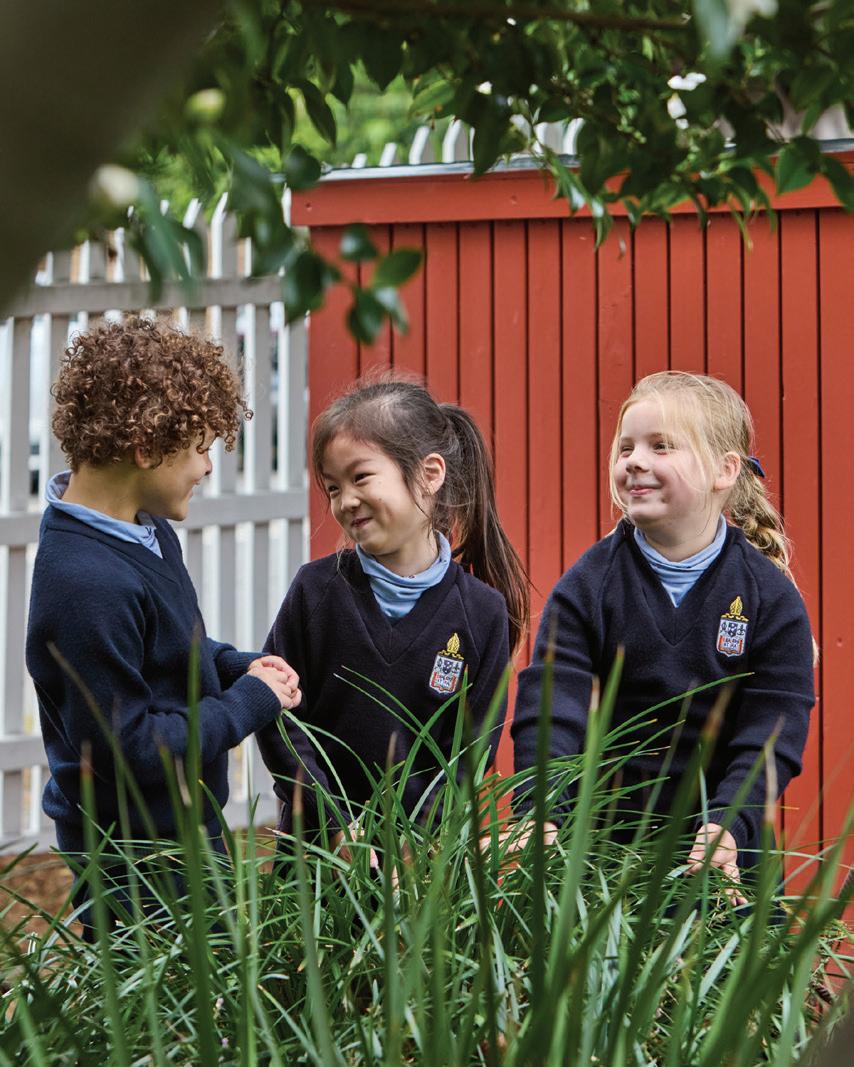
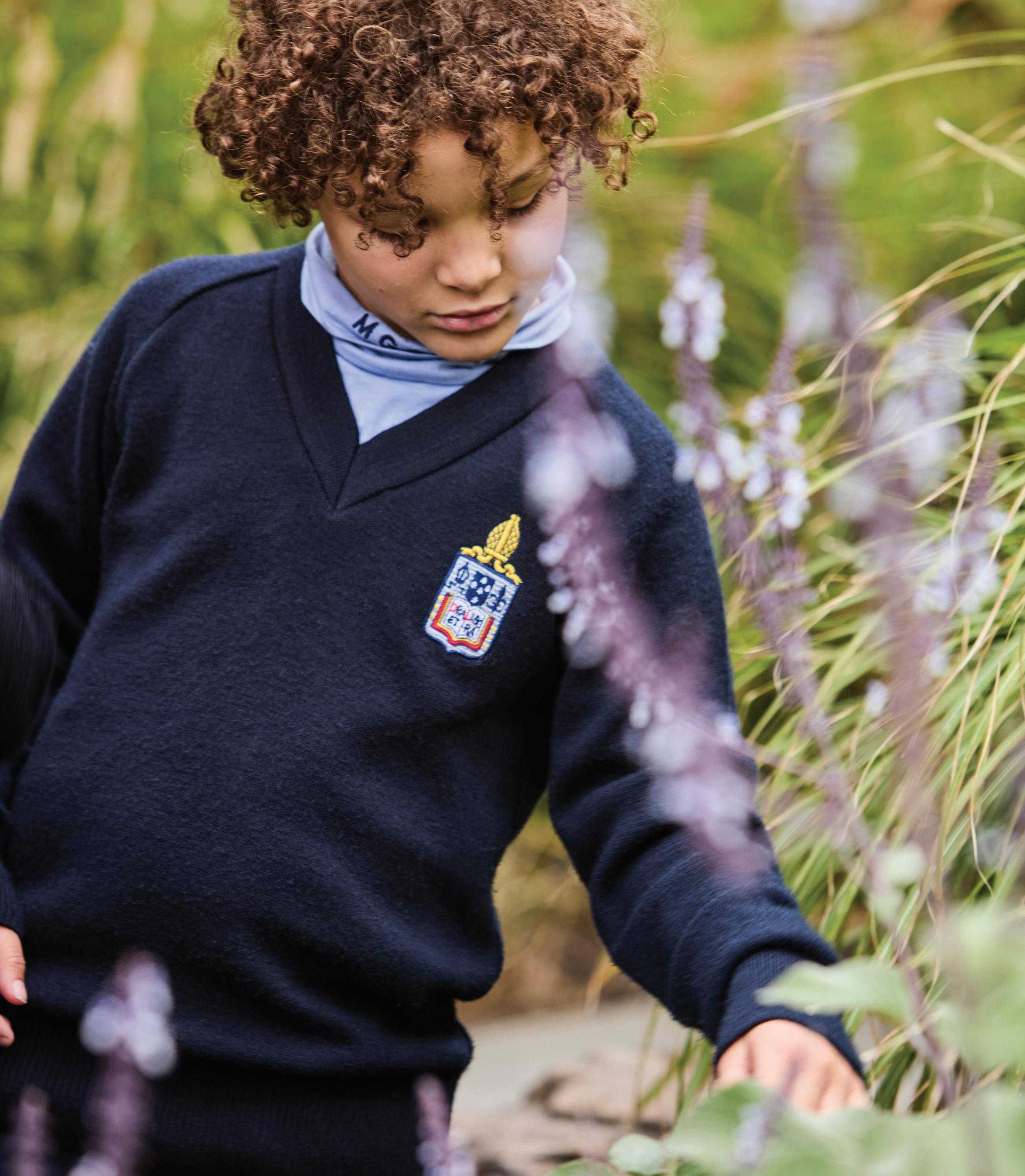
Charlie (Prep) explores the gardens of Grimwade House, pictured above with classmates Julie and Goldie.
Outdoor Education at Melbourne Grammar School starts with encouraging curiosity and care for the natural world.
In Term III, Prep and Year 1 students visit ‘Forest School’ in Woodend, where outdoor leaders help establish core outdoor skills in our youngest learners through intentional play and exploration.
Edition 154, July 2026
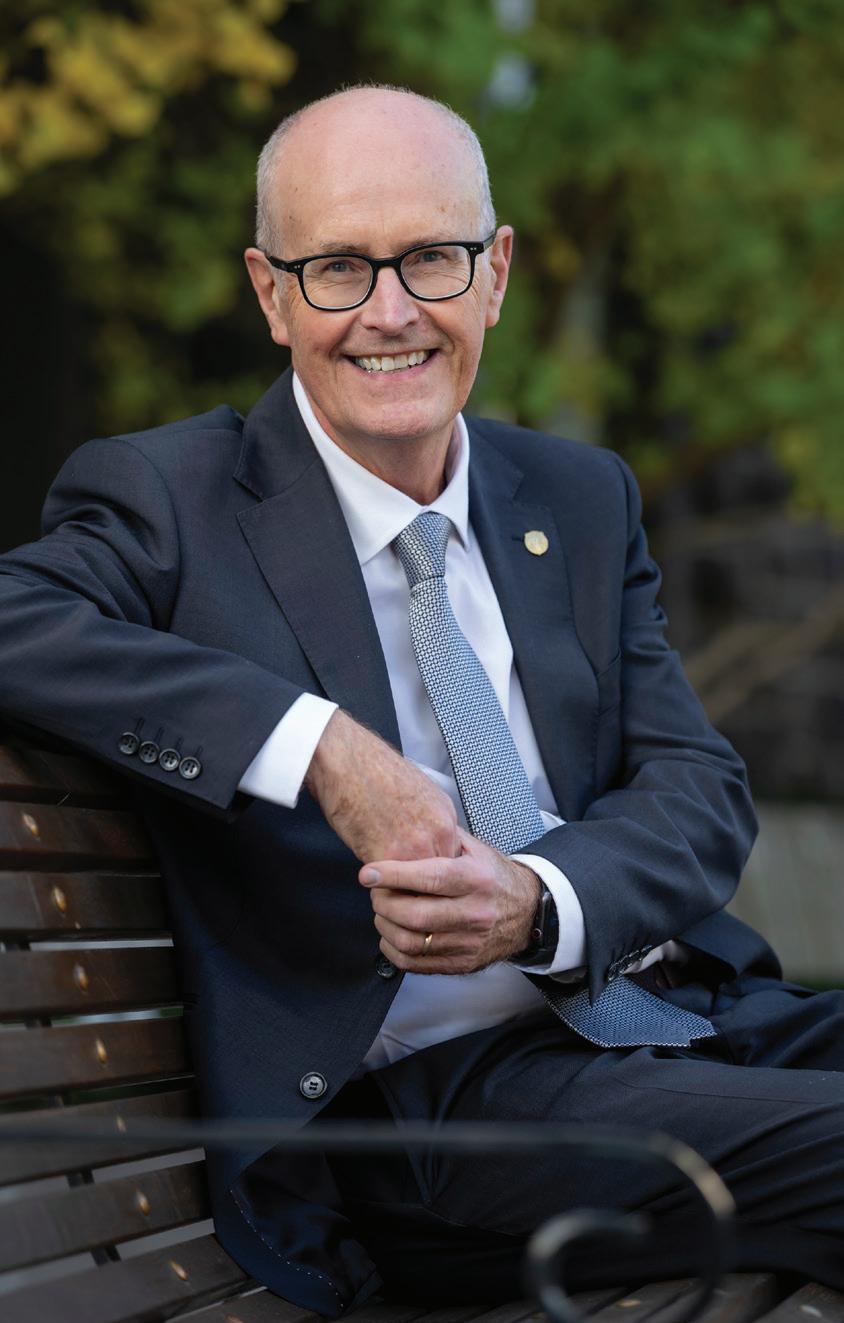
Something I remember vividly from my schooling days is sitting in the Wadhurst Hall with my classmates and friends, crowded around a small black and white TV, watching Neil Armstrong take his first steps on the moon. Witnessing this scientific milestone together, during the foundational years of our education, I like to think set us all on a path of extraordinary possibility.
I was enrolled as a Wadhurst student as a Year 1 in 1964, when Wadhurst was still a Junior School. I had a fantastic experience as a Melbourne Grammar School student, serving as Captain of Cuming House in Wadhurst, then Captain of Bromby when I reached Senior School. In Year 11, I was privileged to play in one of the first Melbourne Grammar Soccer teams.
Continuing along the path of extraordinary possibility
It was during my time at school that I learned the value of service and leadership, something that put me in good stead for my professional career across health and higher education. I became Head of the Department of Surgery at Monash University and Head of the Department of Cardiothoracic Surgery at Monash Health in 2001, and more recently pivoted into academic and clinical roles at the Victorian Heart Hospital located on the Monash University campus.
Attending the 150 years of Melbourne Grammar School v Sydney Grammar School Cricket event earlier this year, I was reminded of the continuing nature of connection many of us have to our schooling days, and the value of celebrating the milestones and traditions that matter to us most. Coming together and connecting over shared experiences, shared goals, and a shared belief in the value of an exceptional, holistic education is a remarkable thing to be able to experience.
What continues to inspire me in my work is a motivation to give back. Having served as President of the Melbourne Grammar School Foundation since 2022, and a member of School Council since 2019, I am proud and honoured to be now stepping into the role of School Council Chair and to be supported by outstanding Council members.
As a Council, we are focused on furthering the important work of Towards 2030, and will continue to work with Philip Grutzner and the School Executive in guiding our community towards achieving the strategic intentions set out in this plan over the next four years. Our School is already well on its way toward delivering the future priorities included in Towards 2030, and I see the role of Council as one of providing continued stability and expert guidance as this work continues.
Of course, I am taking up this new role with a keen sense of the legacy left by our former School Council Chair, Andrew Michelmore AO. Andrew’s own lifelong connection to the School, which spans his time as a student through to the establishment of the Michelmore Family Scholarship, has run parallel to my own. His commitment to Melbourne Grammar continues with his service as Campaign Chair overseeing our new capital campaign The Courage of Ideas. The goals of this campaign have direct links to many of the future priorities we are aiming for in Towards 2030, and I look forward to continuing to work alongside Andrew and Philip over the coming months and years.
Professor Julian Smith Chair of Council
Julian Smith
The enduring pursuit of excellence
In April, I had the pleasure of joining our community to watch the annual Cordner-Eggleston Cup; the historic football match between two archrivals, Melbourne Grammar School and Scotch College.
This is one of my favourite events of the school year, as it captures the pride of our community and demonstrates an excellent level of football skills. The significance of this fixture serves as a reminder of the enduring role we play in Australian sporting history. Knowing that our schools competed in the first recorded match of Australian Rules football in 1858 is a great honour, and its legacy will continue to resonate.
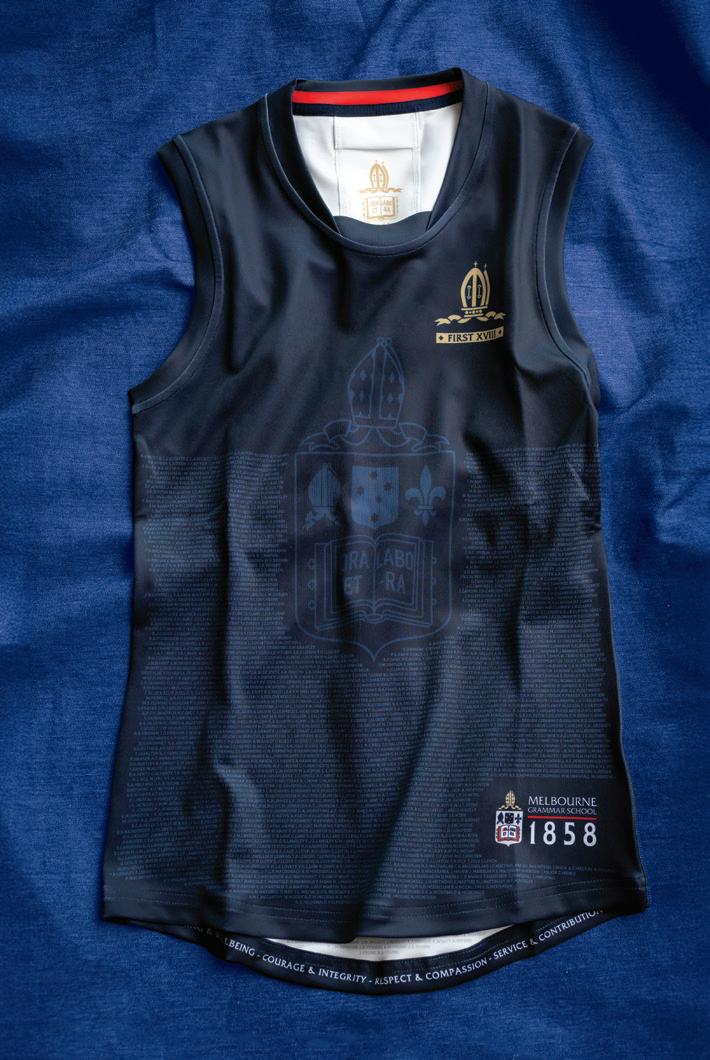
This year’s match fell in the first round of the Winter APS season, which meant our side competed for the first time in their new football uniforms. As with the game itself, the uniform has evolved to reflect the calibre of our young athletes of today. In a special tribute to those who came before, the new First XVIII guernsey includes the names of every player who has worn the red socks on the football field. Seeing my own name amongst some of the greats was a special moment for me.
Prior to the match, attendees at the pre-game luncheon heard from former Western Bulldogs player, Luke Darcy. As Bulldogs fans will know, Luke played 226 games for the team from 1994 to 2007, serving as Captain, winning Best and Fairest, and being selected to play on the All-Australian side. Two of his sons now play for the Western Bulldogs, and Luke has remained active in the AFL as a commentator and serving as a coach at his children’s local football club.
In sharing his experiences with us, Luke spoke enthusiastically about his passion for the AFL, and the enduring connection between Melbourne Grammar School and Scotch College. He also emphasised the importance of participation in the APS competition, which provides ongoing opportunities for young people to build connections, resilience and a sense of belonging, regardless of their chosen sport, age, or skill level.
Perhaps the most significant moment in Luke’s speech came when he shared a sobering statistic: In the United States, three-quarters of young men stop participating in any form of sport by 14 years of age. While the pull of social media and other forms of sedentary entertainment must surely contribute, pressure from parents and coaches is also a factor for these boys, who quickly lose their love of the game in the face of unrelenting expectations.
Our participation in APS competition means we must ensure students can compete at the Firsts level, and we celebrate the fact that many go on to succeed professionally, and in some cases, even internationally.
It is equally important, however, that Melbourne Grammar School students continue to find enjoyment on the sporting field whether they participate beyond APS level or not.
Providing students with opportunities to stay fit, have fun, learn to be part of a team and build strong connections with teammates is vital. Together with academia, the arts, service, and other pursuits, sport remains a vital part of the holistic education we value at Melbourne Grammar School.
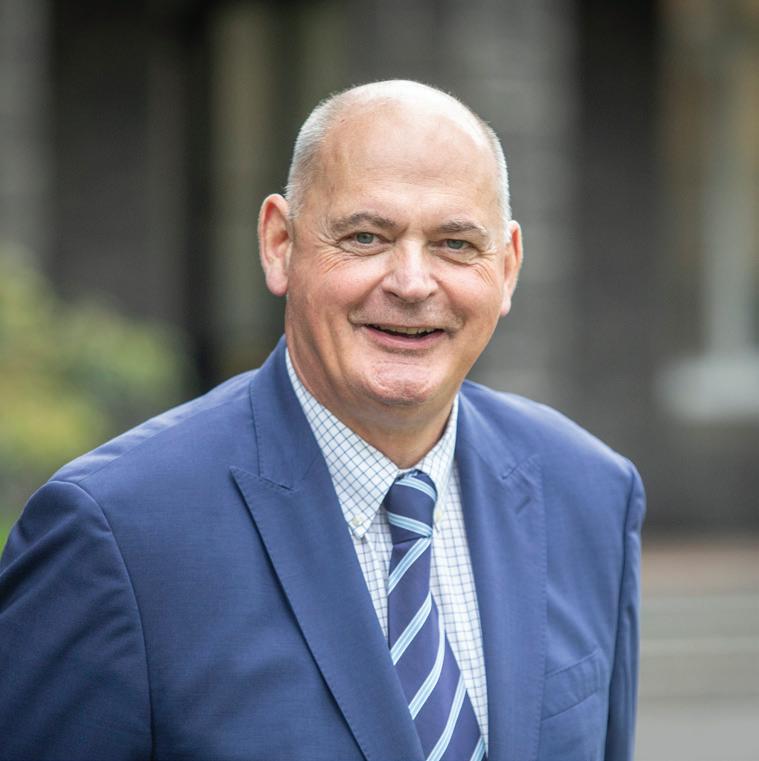
Philip Grutzner
As part of ensuring our continued excellence on the sporting field, accredited coaches oversee our programs, and a small number of General Excellence scholarships create access and opportunity for talented and dedicated young sports people with great character, who embrace our holistic education. From the start of 2027, our South Yarra campus will soon see a new High-Performance Centre, equipped with improved facilities that is a dedicated space for our students’ athletic development.
At Melbourne Grammar School, the pursuit of excellence is part of our tradition. We see it lived each day in the way our students embrace a holistic education; whether it be thriving in the classroom, or on the sporting field, and beyond.
Philip Grutzner Headmaster
Watch the highlights from this year’s Cordner-Eggleston Cup bit.ly/cordner-eggleston-cup

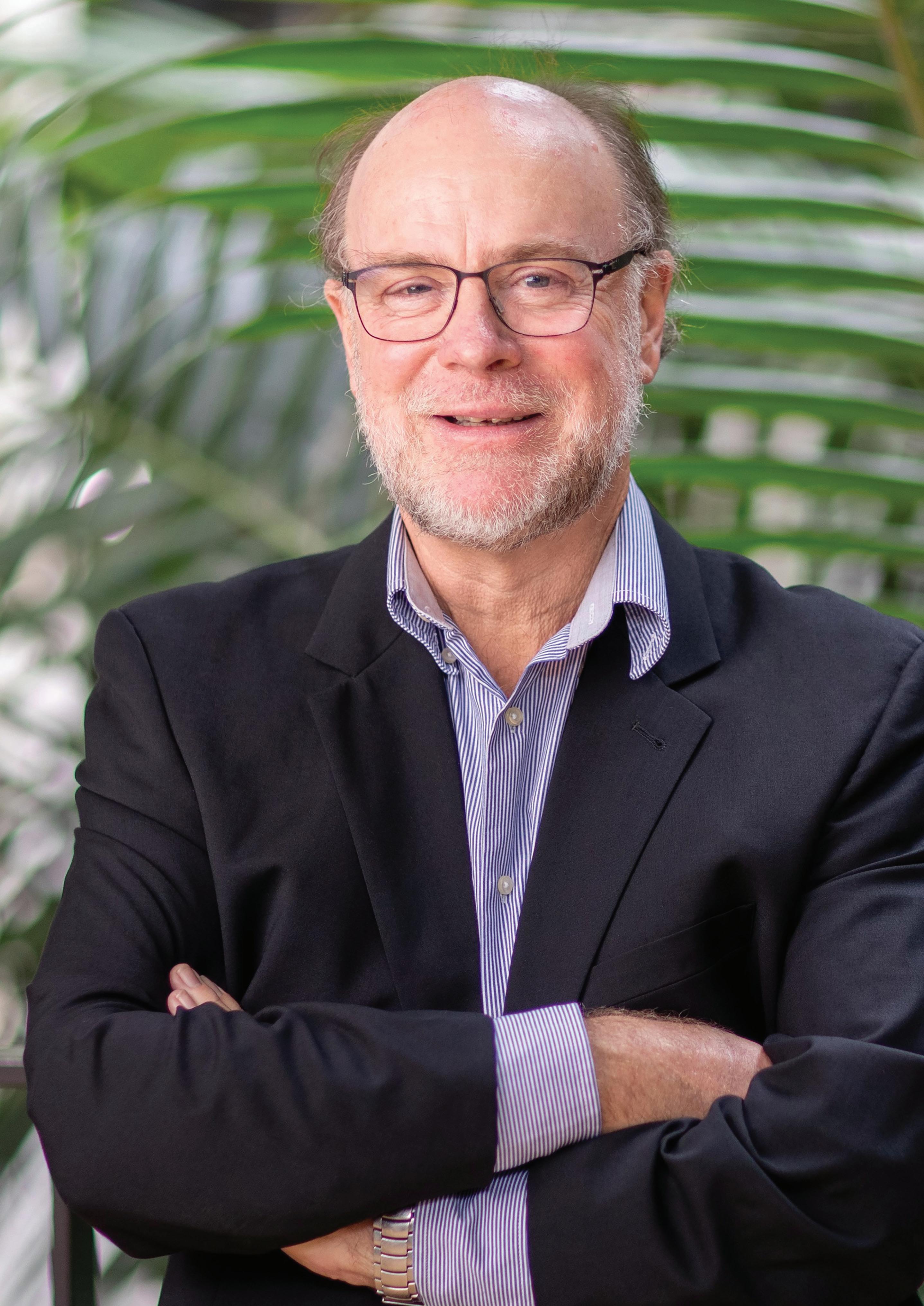
Mathematical ecologist Dr Hamish McCallum (OM 1974), who was Chief Scientist on the Save the Tasmanian Devils Program.

The devil is in the (mathematical) detail
In the early 2000s, Emeritus Professor Dr Hamish McCallum (OM 1974) was working as an Associate Professor in the School of Biological Sciences at the University of Queensland.
Then, “this weird infectious cancer turned up in the Tasmanian devils.”
So, in 2006, Hamish relocated to Tasmania as Chief Scientist on the Save the Tasmanian Devil Program. Working closely with geneticists and field scientists, his role was to mathematically model the spread of the cancer through the population to help understand its behaviour.
Hamish describes his field of mathematical ecology as “taking mathematical tools and concepts to try to make sense of the natural environment.”
He uses differential equations to model and link quantitative approaches and theory to situations and problems.
Across his extensive career, his work has focused on mammals, birds, amphibians, reptiles, fish, and echinoderms, and in habitats ranging from coral reefs to temperate forests and deserts.
After first appearing in 1996, the Tasmanian Devil Facial Tumour Disease spread through most of Australia’s southernmost state, reducing population numbers by around 80 percent and threatening the species with extinction.
“I think the best way to explain it is that almost all cancers are your own cells gone crazy,” Hamish says.
“When we started looking at the Tasmanian devils, the weird thing was that the cancers that they had were genetically different from the devil that they were infecting, so they weren’t their own cells gone crazy, they were somebody else’s cells,” he says.
“The devils bite each other, and some of the cancer cells get transferred in the biting process, and then they’ll sort of grow like a parasite, if you like, on the other devil.”
Because it was such an unusual cancer, Hamish says that it created interest from a range of scientific experts, including conservationists, geneticists, and cancer and evolutionary biologists.
“Because of this property that it can survive the host death, it gave insight into the processes that regulate cancers in general,” he says.
Hamish says that when the cancer first appeared, they would “never” see a devil recover if it had a tumour on its face. But, over time, the scientists started seeing some tumours getting smaller, and some devils surviving.
“The good news is we don’t think that the tumour will send the devils extinct, which we thought it might 15 years ago,” he says.
For conservationists, Hamish says, this is great news. Following the extinction of the Thylacine (Tasmanian tiger), the Tasmanian devil is the largest surviving marsupial carnivore.
“What we were doing is of fundamental interest to evolutionary biology as well, because it’s an example of how quickly evolution can occur.”
Despite the lack of genetic variation in Tasmanian devils, in as few as five generations, scientists have seen the devils evolve to have some resistance to the tumours.
“Everybody imagines that evolution is a very, very slow process,” Hamish says.
Continues over page
“But if you put enough evolutionary pressure on a population, it can be quite quick.”
After three years in Tasmania, Hamish returned to Queensland to take up the role of Head of the School of Environment at Griffith University, where he continued to work on infectious diseases, including a “very nasty fungus” that was killing off Australian frogs, called the chytrid fungus.
Another project that drew his focus was the Hendra virus, which “spilled across” from bats into horses, onto humans, where it causes more than 50% mortality.
“We discovered quite a number of interesting things about Hendra,” he says.
“In particular, we learnt that disturbing natural environments drives the bats from their natural habitat.
“What they ought to be eating is pollen and nectar in native bushland, but if you destroy the bushland, they then move into the suburbs, they start feeding on people’s fruit trees, and if they’re in the same places as horses, then you get the spillover.”
Similarly, Hamish says that we can expect climate change to cause major issues with emerging infectious diseases, some of which we’ve already seen.
“Climate change is enormously important for all biology and for the human race, but for infectious diseases it’s very important as well,” Hamish says.

“When a pathogen encounters a host it has never been exposed to before, it tends to have a severe impact. What is happening with climate change is that it’s causing different species and their diseases to shift their ranges, and that’s bringing species in to contact that have never seen each other before.”
Now “gone Emeritus, as they say,” Hamish reflects fondly on the opportunities his career brought him to spend time in nature.
Hamish was the 1974 Academic Head of School at Melbourne Grammar, performing exceptionally well across maths and sciences.
“But,” he says, “my passion was always in the environment and field work.”
He recalls fond memories observing mammals and birds with the Field Studies Group at McMichaels Hut in the High Plains, and credits this experience as one of the stronger influences that set him on this career trajectory.
“One of the nice things about my work in Tassie was it took me to virtually every corner of the state, and one of the things that was great about my time at Melbourne Grammar School was the outdoor education program, when I first got into hiking.
“When I went back to Tassie, I got back into it and did most of the major hikes. It was recreation, really, but of course we’d look out for devils when we were out there!”
Now living in St Kilda, Hamish still contributes to the field, and is currently working with colleagues from Oxford on a project that is looking at predators and their effect on evolution.
“There’s a population of silver eyes (small birds) on Heron Island where they’ve got no predation. There are populations on the mainland where there are lots of predators, and we’re looking at the way in which that’s affected their evolution.
“That’ll keep me going for another three years or so,” he says.
“And I still am involved in the devil research.”
Looking back across his career, Hamish says that the thing he is most proud of is the postdoctoral and PhD students he has supervised and mentored.
“They’re doing great things all around the world,” Hamish says.
“It’s that great feeling knowing that you’ve contributed to the next generation of scientists.”
About Dr Hamish McCallum
Hamish studied a Bachelor of Science (Honours) at Monash University, followed by a PhD at the University of London and a Diploma of Imperial College, supported by a prestigious scholarship from The Royal Commission for the Exhibition of 1851, awarded to only nine people across the British Commonwealth each year.
During his time in the United Kingdom, he studied under Sir Roy Anderson, who at the time was a junior lecturer researching parasites, and is now known as a leading international authority on the control of infectious diseases. Anderson and well-known Australian scientist Lord Robert “Bob” May, who is known for bringing physics to the field of ecology, together developed the field of mathematical epidemiology.
When Hamish was a PhD student at Imperial College, he has fond memories of spending time with Bob, who would travel from Princeton to the UK each year “to play croquet amongst other things.”
Years later, this field of research was at the forefront of the response to the COVID-19 pandemic.
Tasmanian devil
Natural history on the record
Josephine (Jo) Wright (OM 1997) always knew she wanted to be a filmmaker, but her love of science almost drew her career in an entirely different direction.
“I loved writing, I loved telling stories, but what I really loved – really absolutely loved –was science,” she says.
Continues over page
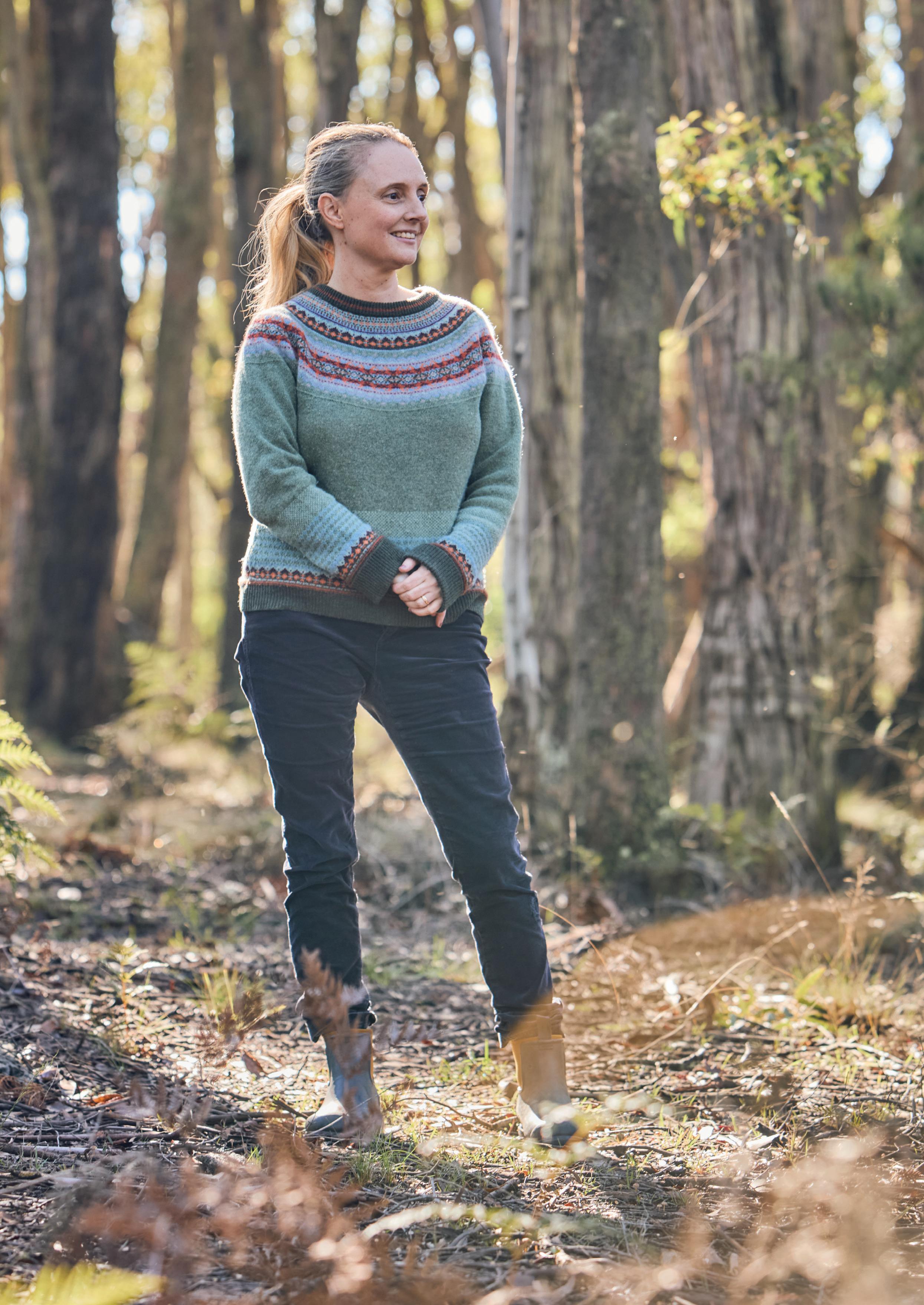
Josephine (Jo) Wright at her property in Woodend.
Jo started her education as a thirdgeneration Melbourne Grammar student at Grimwade House; a period of her life that she says taught her independence and confidence.
After graduating from Melbourne Girls Grammar, Jo pursued her dual interests with a Bachelor of Arts and Bachelor of Science at the University of Melbourne. After much deliberation, she decided to pursue a postgraduate Diploma of Film and Television at the Victorian College of the Arts.
On this path, she found her passion at the intersection of her two “loves” – in creating natural history documentaries.
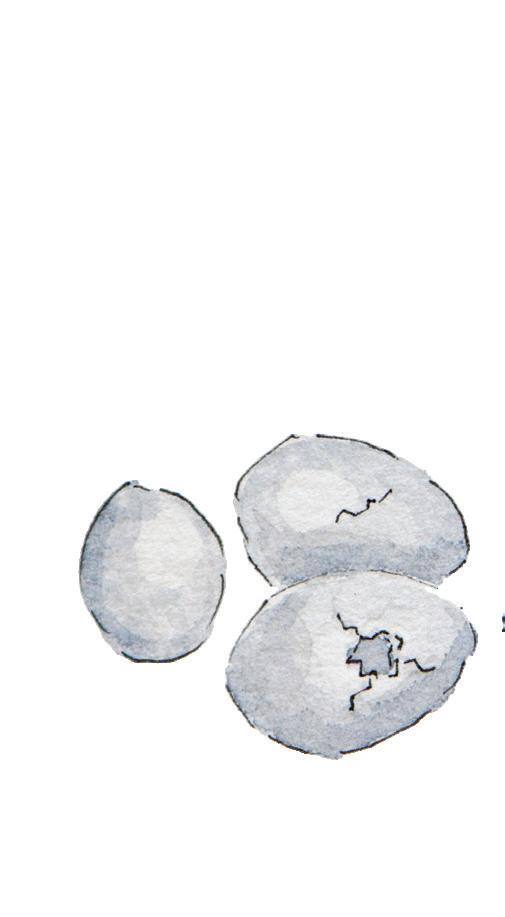
One of Jo’s first projects was as a production coordinator on a six-part documentary about the Little Penguins on Phillip Island, called Penguin Island. To create the series, Jo and the crew lived with the scientists and researchers “on and off” for over a year.
“I remember being beside the penguin burrows, waiting and waiting for eggs to hatch, because we just had to capture that moment that the chicks come out of their eggs,” she recalls.
Being able to reach such a large audience, and help to tell stories that make an impact or make you think; that’s really special.”
Jo Wright (OM 1997)
Despite having a day crew and a night crew to watch over the eggs, “every time the cinematographer went off and had a break, it would happen.”
While they eventually “got the shot”, when it comes to documentary making in the field, Jo says “you’ve got to be a bit of a problem solver.”
“It might be that your gear hasn’t arrived, or it might be that the animal that you’re filming just won’t appear at the time.
“You go in with a bit of a preconceived idea of what might happen, but then often what happens on the day is not what you thought, however, often can be even better.”
In her early 30s, Jo had the opportunity to produce a half-hour ABC documentary special called Queen of the Desert. The documentary followed Starlady, a social worker who worked in central Australia. The film was selected to screen at over 30 film festivals around the world, winning numerous awards including an Award of Excellence at the 2014 Canada International Film Festival.
From there, Jo worked on a mix of natural history projects, including Devil Island (about the declining Tasmanian devil population), Possum Wars (about “Australia’s most unwanted marsupial” living in urban cities), and Kangaroo Mob (about a mob of kangaroos “causing havoc” in Canberra), before making the move to Genepool Productions to work specifically on science documentaries.
It was here that her scientific background was really able to shine. Being able to talk to scientists and researchers in their language, then translate that information into something the general public would not only understand, but be interested in, was crucial to her role.
“There’s a huge amount of research involved, and you’ve got to make sure that you’re backing up each statement that you make with facts,” she says.
She recalls working on a program on floods that was commissioned by National Geographic Television. For every piece of information shared, they were required to back it up with three scientific citations.
“We always worked with researchers and scientists, and had consultants who were leaders in their field on the projects looking at the scripts.”
Typically, Jo says, around Year 10 Science is the level of assumed knowledge for general population scientific content. To communicate complex scientific information, Jo recalls the joy of using out-of-the box, creative thinking and problem solving.
“In Uranium: Twisting the Dragon’s Tail, we used a pool table to tell one of the scientific sequences about atoms and different protons and neutrons.
“We also used Dr Derek Muller, a YouTube science communicator as the presenter, to reach a younger audience.”
Part of documentary filmmaking that Jo appreciates the most is the privilege of going “behind the scenes” into places and people’s lives.
As a field and line producer for the SBS/PBS series, Jo travelled into the exclusion zones around Chernobyl and Fukushima, an experience Jo says was “incredible”.
“When we were in Fukushima, we met a family that had been displaced and visited their house left exactly the way it was.
“I think it’s just such an honour to be able to help tell stories in this way,” she says.
After working on over 30 hours of documentaries for various broadcasters including BBC, National Geographic, SBS, PBS, ABC and Arte, Jo is now based in Woodend, working in communications and advocacy for a local not-for-profit that specialises in youth mental health and suicide prevention for regional and rural communities.
“Being able to reach such a large audience, and help to tell stories that make an impact or make you think; that’s really special.”
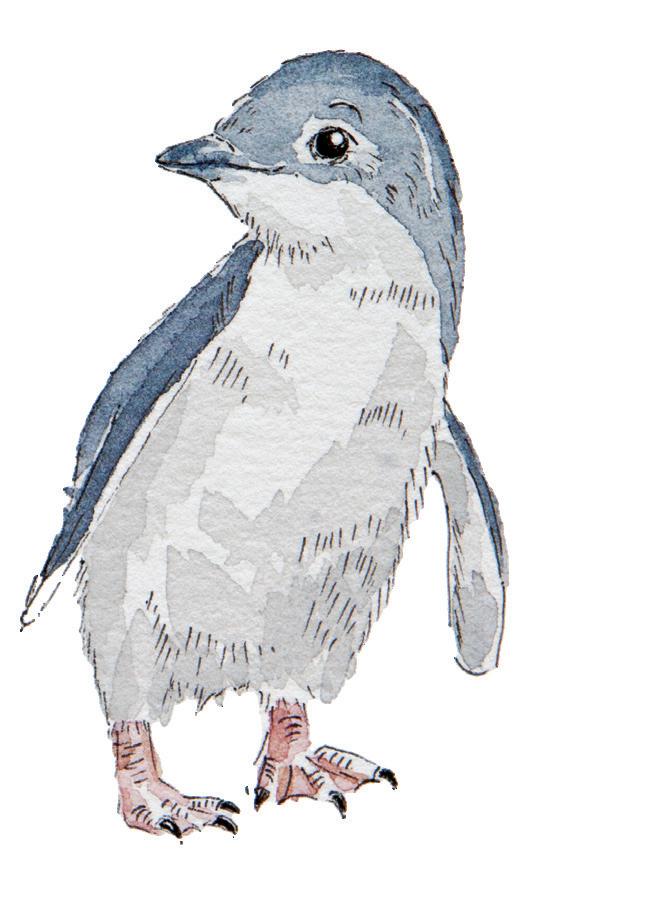
Little penguin
Just before sundown on a beautiful autumn evening in Mount Rothwell, Unit 3 Environmental Science students were rolling up their sleeves to mould together clumps of peanut butter and sardines.
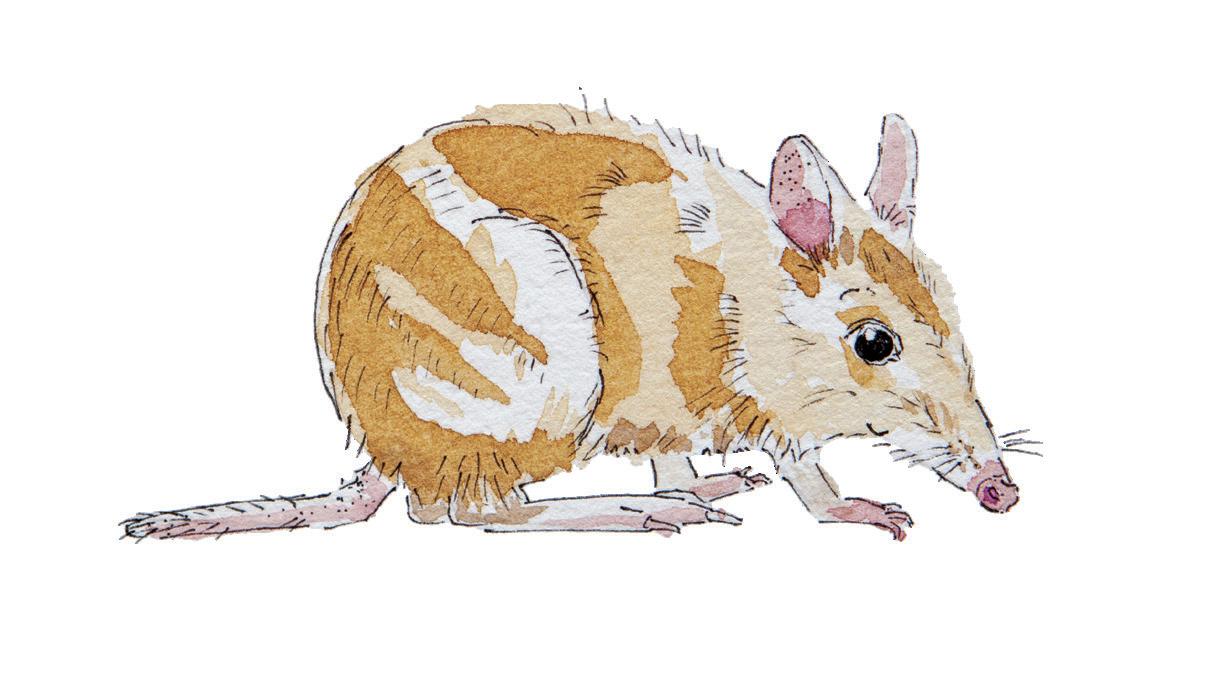
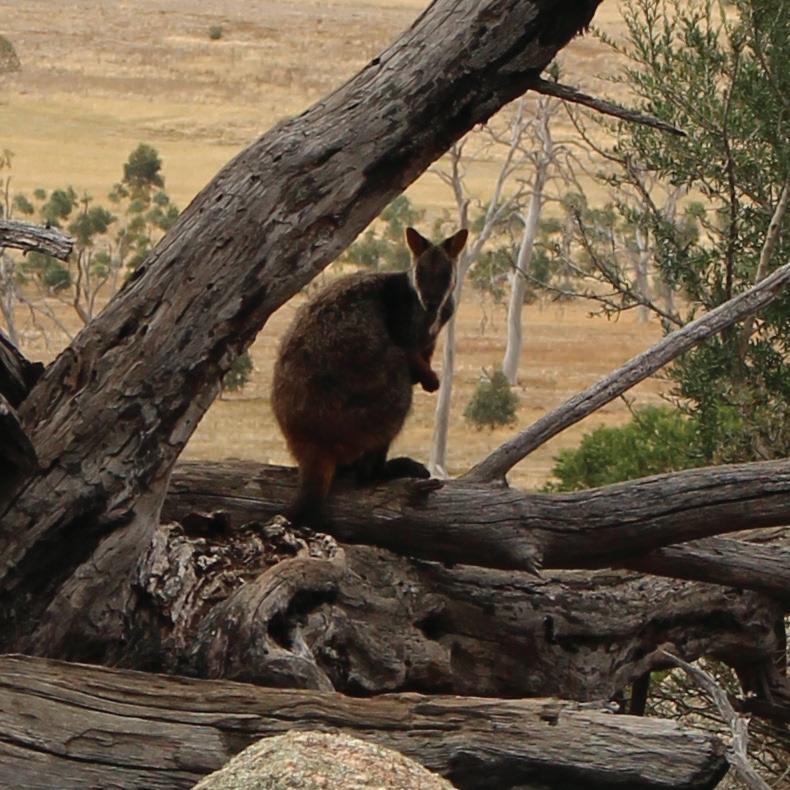
These would be used later in the night to entice local, endangered species, such as the southern brush-tailed rock wallaby, the eastern barred bandicoot, and the eastern quoll, to collect data to aid in local conservation efforts.
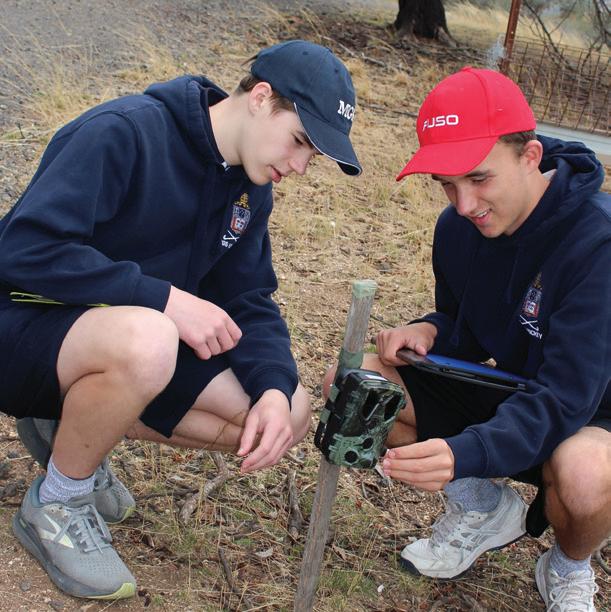
“First, our students learned how to set up camera traps, and we discovered how these are used to track animal health and population levels,” Science Teacher Mrs Kirsten Walker explains.
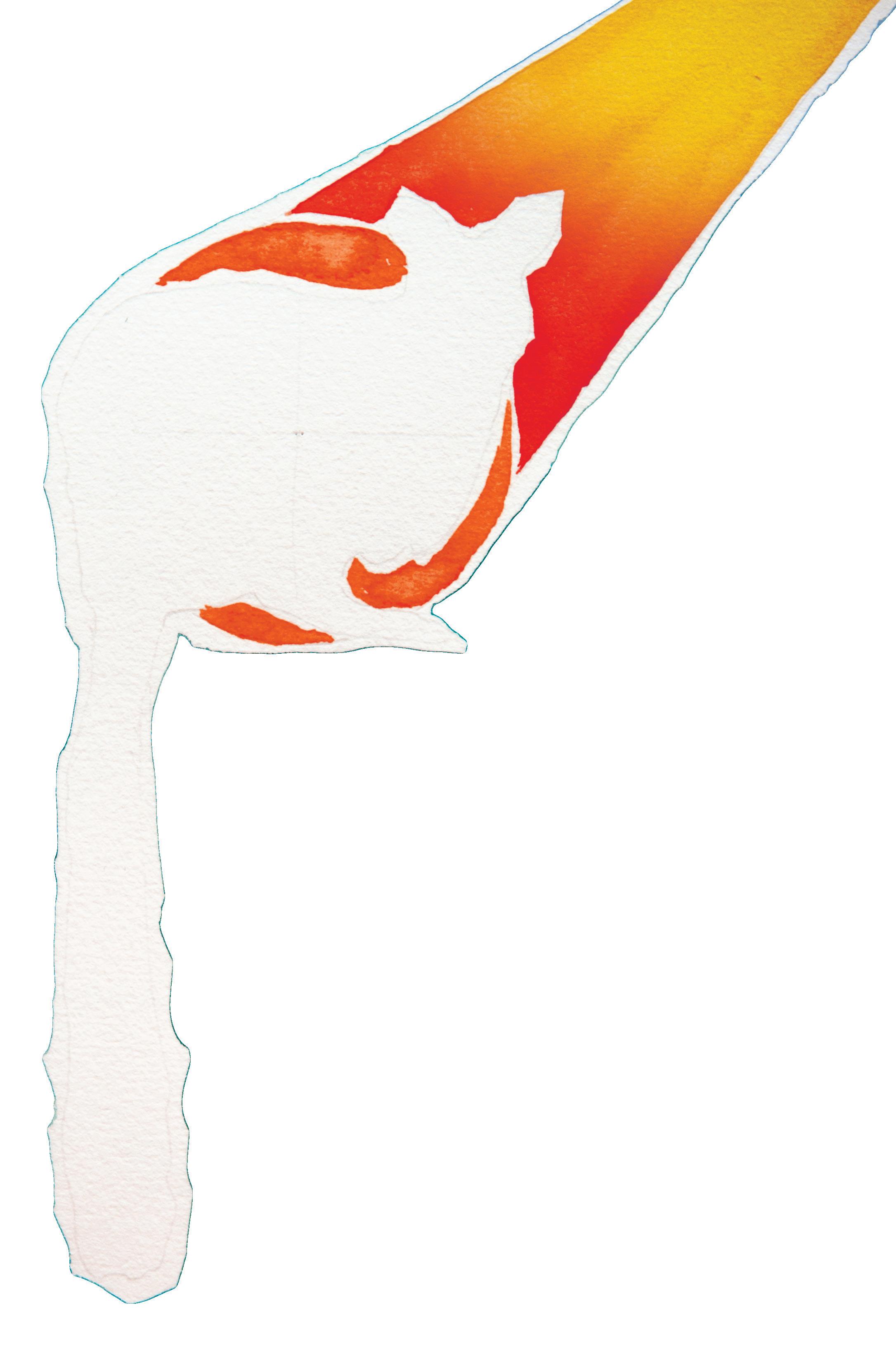
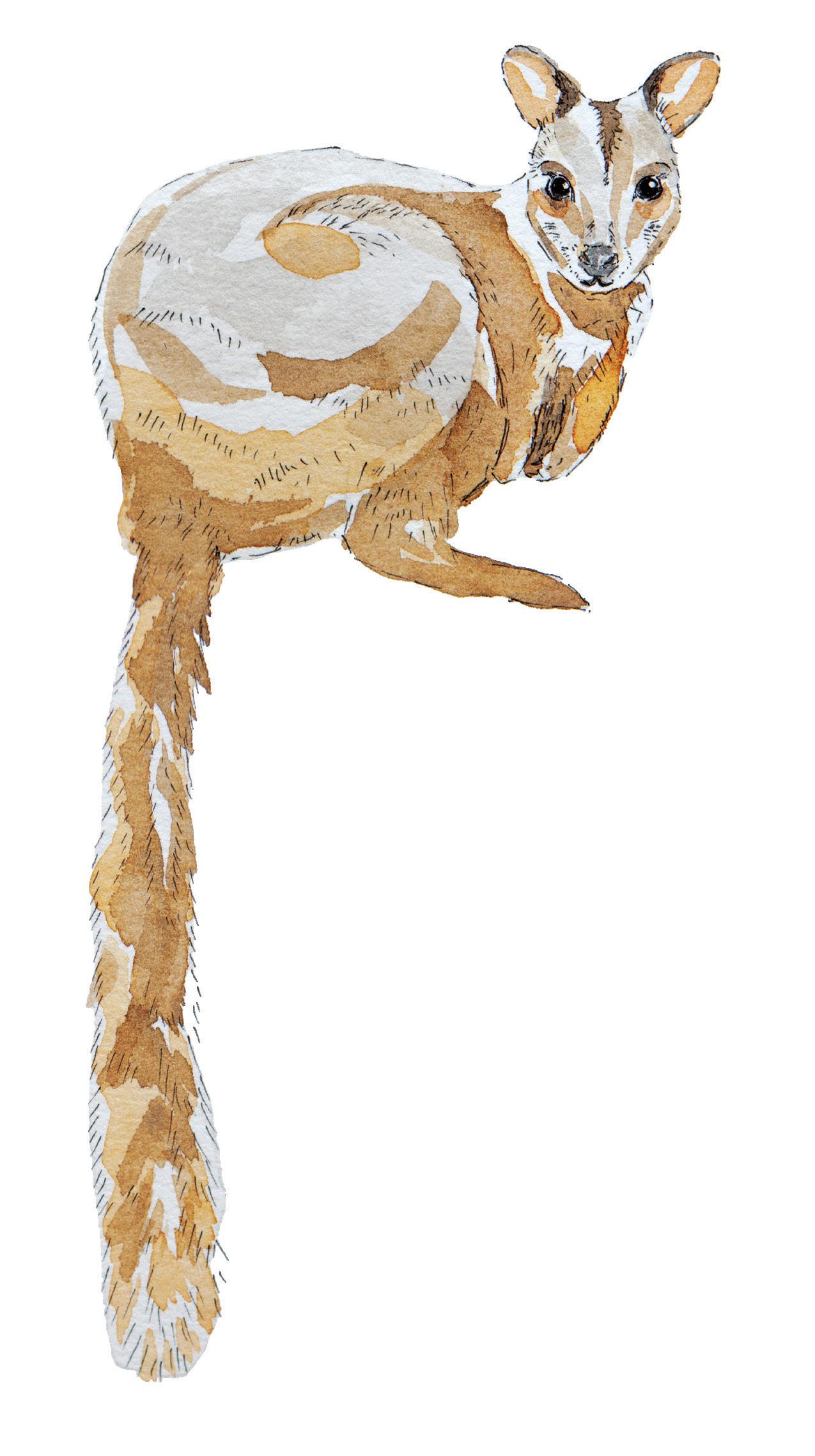
Southern brush-tailed rock wallaby
Up close and personal
“Once night fell, we went out spotlighting to count different species, and our totals were added to the park’s database.
“Any animals caught in our Elliott traps were checked and weighed, and observations about their health were recorded with the guidance of the park’s scientists.”
A cross-disciplinary subject, Environmental Science draws on chemistry, biology, physics, geography, and even elements of legal studies and maths, all while bringing students into contact with real-world conservation challenges. Fieldwork excursions like this are a way to bring students into contact with real scientific methods.
“We learned about how scientists follow certain protocols to make sure the animals aren’t harmed in any way,” Year 11 student Angus Syme says.
“It was amazing to get so close to the animals when gathering our findings, and it feels good knowing our findings and data will contribute to protecting the environment.”
Communicating scientific findings is an essential aspect of working as an environmental scientist, and this is another area where students have opportunities to emulate professional experiences.
As a faculty, Mrs Walker says, their aim is for students to “learn to be, rather than learn about.”

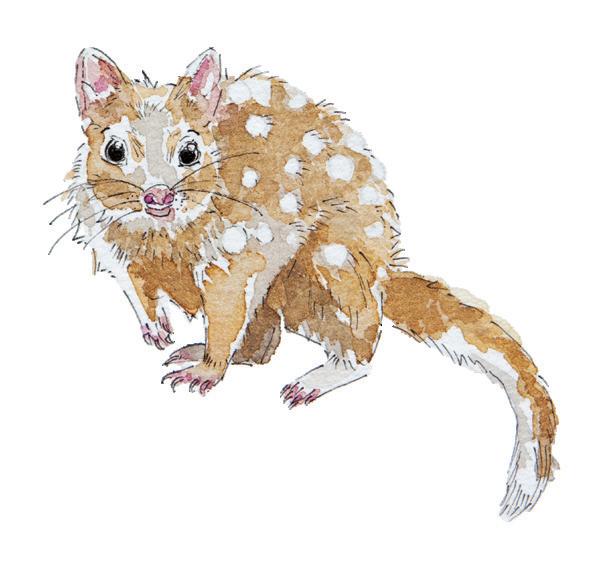
Eastern quoll
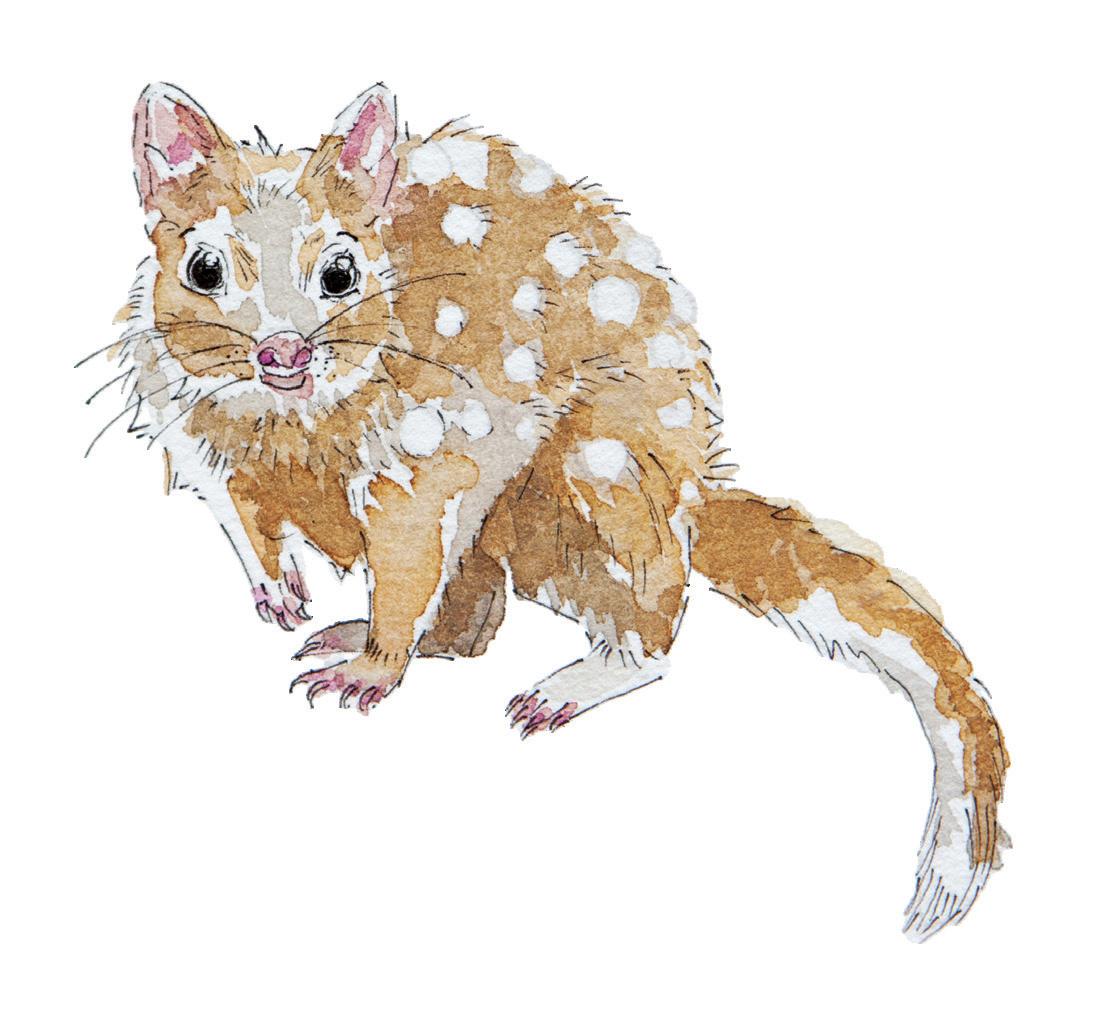

“Everything we learn mirrors what environmental scientists are actually doing, and everything we teach draws on current case studies,” she says.
“When students return from an experience like the Mount Rothwell excursion, they take responsibility for sharing their findings with their peers.
“It’s really powerful for students to see themselves as the expert in the knowledge they have collected, and this gives them a strong sense of leadership and agency in their learning.
“Getting outside and learning in hands-on ways can be incredibly empowering.”
Continues over page
Eastern barred bandicoot
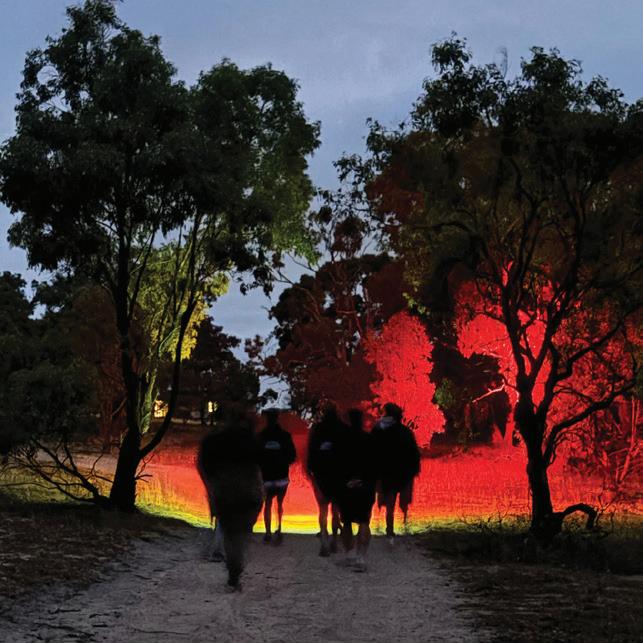
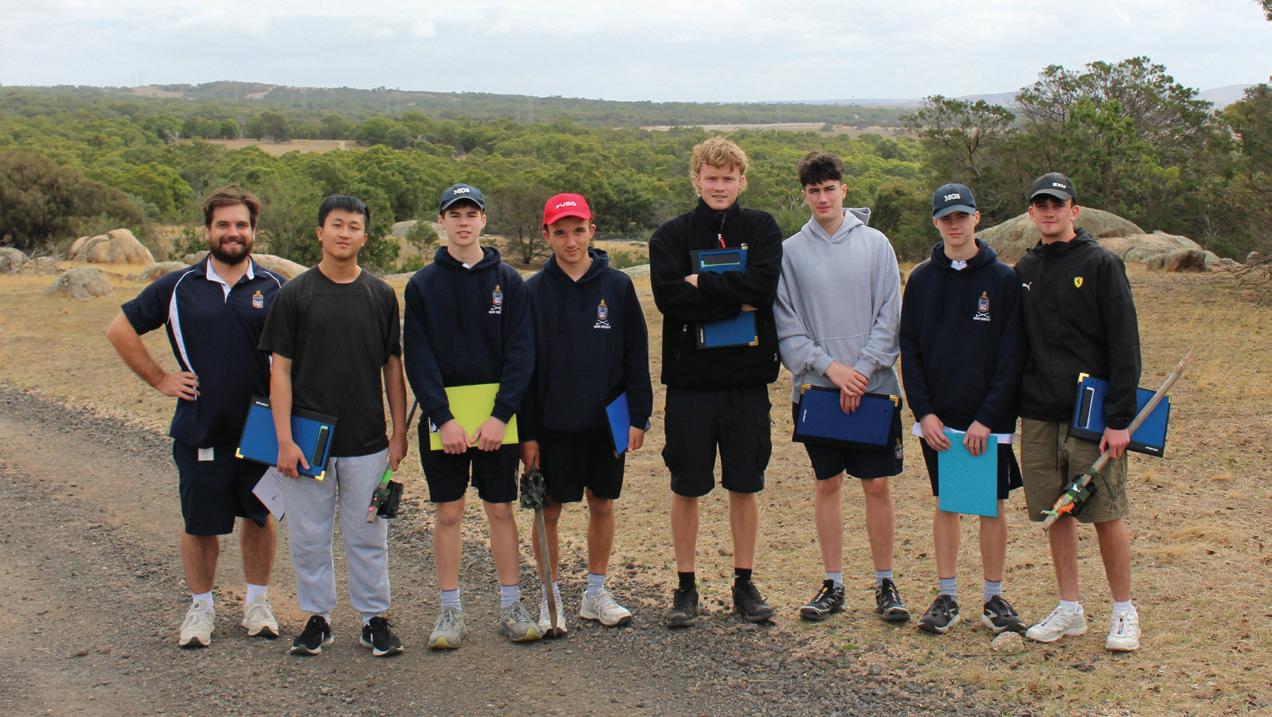
Unit 3 Environmental Science students
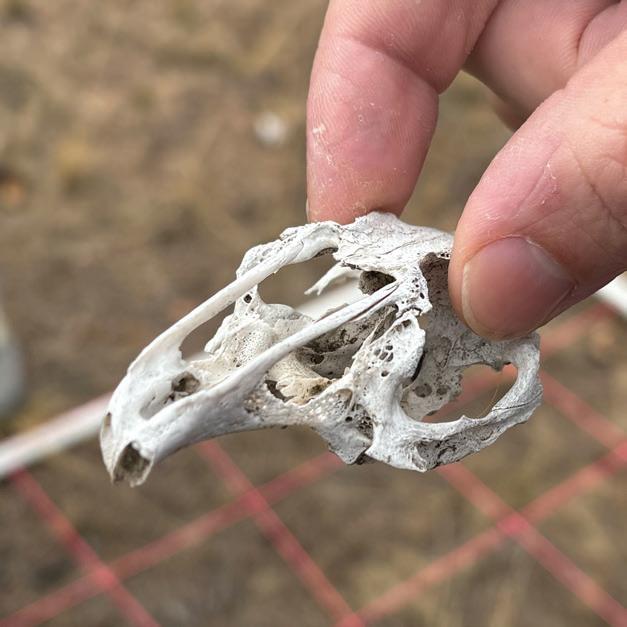
1. Students begin a nighttime spotlight tour at Mount Rothwell using red lights to preserve night vision for animals 2. Critically endangered Southern brush-tail rock-wallaby at Mount Rothwell 3. A bird skull found by students while completing quadrant surveys 4. Andrew Kucera (left) and Angus Syme (right) setting up a wildlife camera trap 5. Left to right: Tyler Manderson (Staff), James Chan, Andrew Kucera, Angus Syme, Lachie Walker, Dom Bongiorno, Charles Kucera, Rory Howse
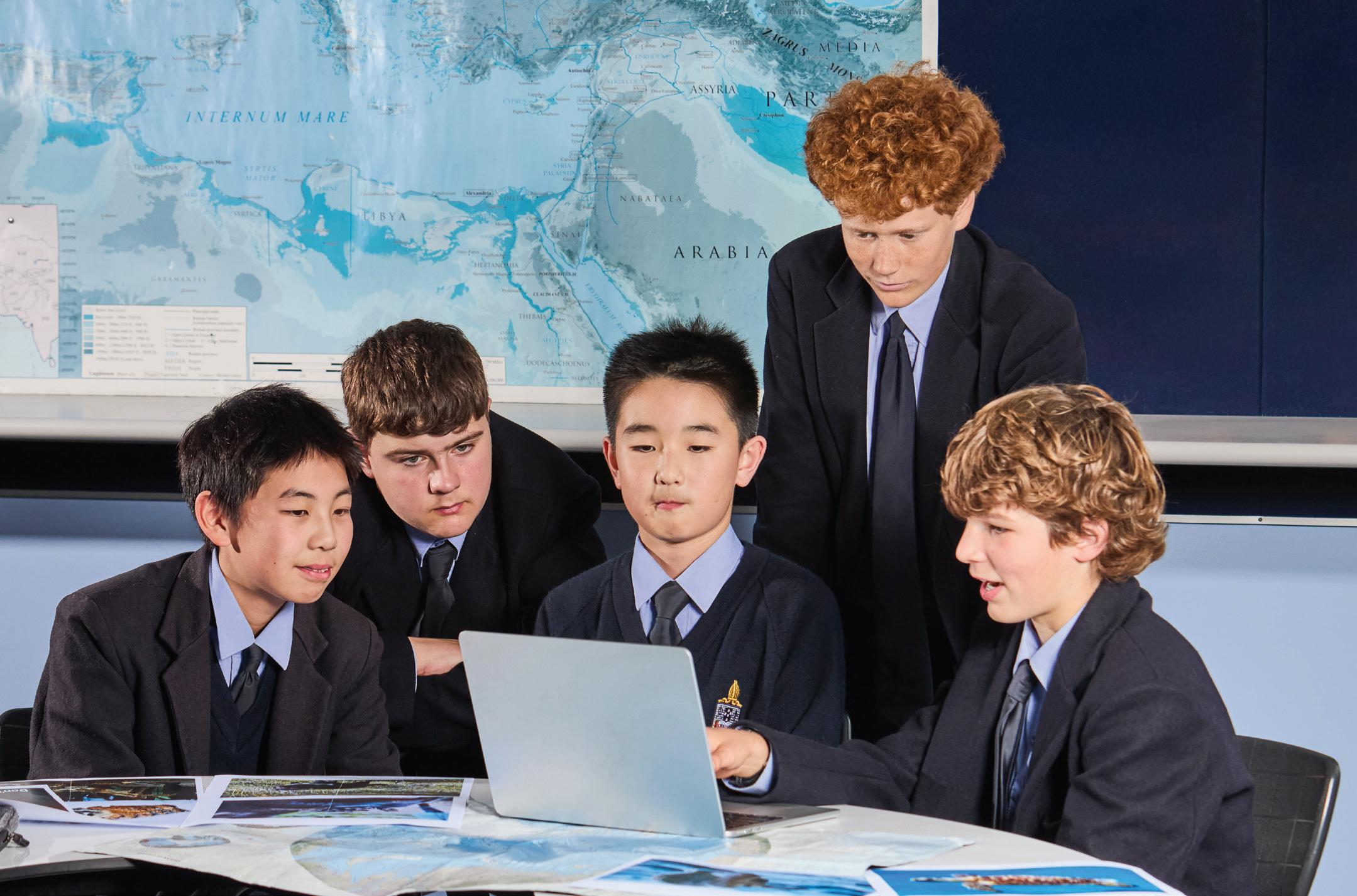
Similarly, in Year 8, Geography students have been deeply immersed in an elective wildlife conservation unit called ‘Endangered Species’. Students travelled to Werribee Open Range Zoo to learn first-hand about local and global conservation programs before creating their own conservation documentaries.
To conduct their research, students learned to use geospatial, mapping, and documentary production tools used by environmental scientists, researchers, and other industry experts. Using this technology, they were able to combine maps, data, and multimedia to communicate their findings.
“Developing these skills provides students with valuable experience in technologies that are increasingly shaping the jobs of the future,” Geography Teacher Georgina Birch says.
Jack Yuan (Year 8), who focused his documentary on Tasmanian devils, says that he particularly enjoyed using his new-found skills to communicate important messages, effectively.
Henry Partington (Year 8) also highlighted the value of this skillset, noting that by having learnt to make a documentary, he will be able to teach people how to help and improve outcomes for endangered species worldwide.
“I know that I may not be a politician or David Attenborough, but I know that I can still make a difference.”
Across these endeavours, students remain connected to the School’s broader priorities: to embrace the wider world, and to serve and engage with their communities.
Year 8 Endangered Species students
For both teachers, their goal is for students to come away from the subjects feeling more connected to the world around them, and more confident in their ability to think critically about environmental issues and the natural world.
“I also hope students continue to consider the environment and their impact on it in whatever future path they choose to follow,” Mrs Walker says.
Left to right: Jack Yuan, Henry Partington, Ethan Zhang, Wyatt Cameron, Jimmy Harley
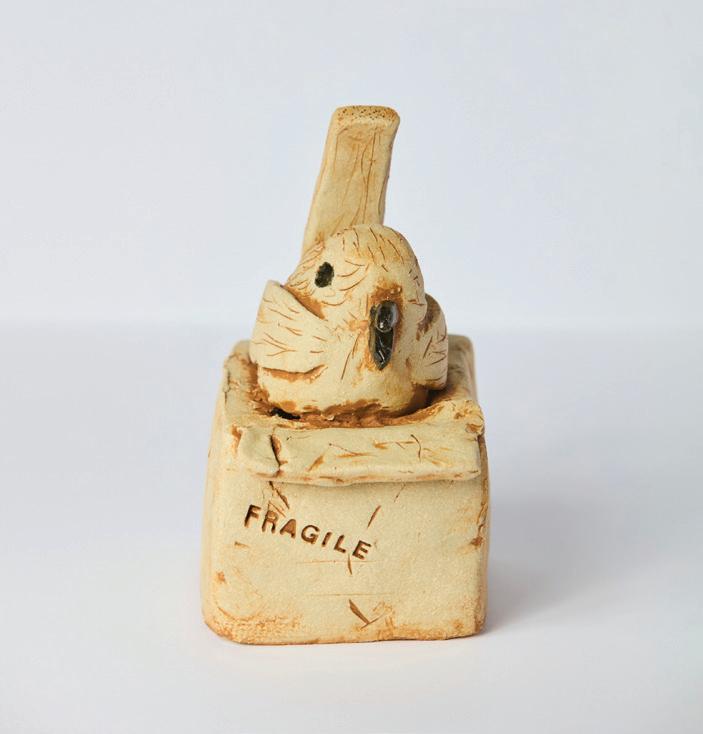
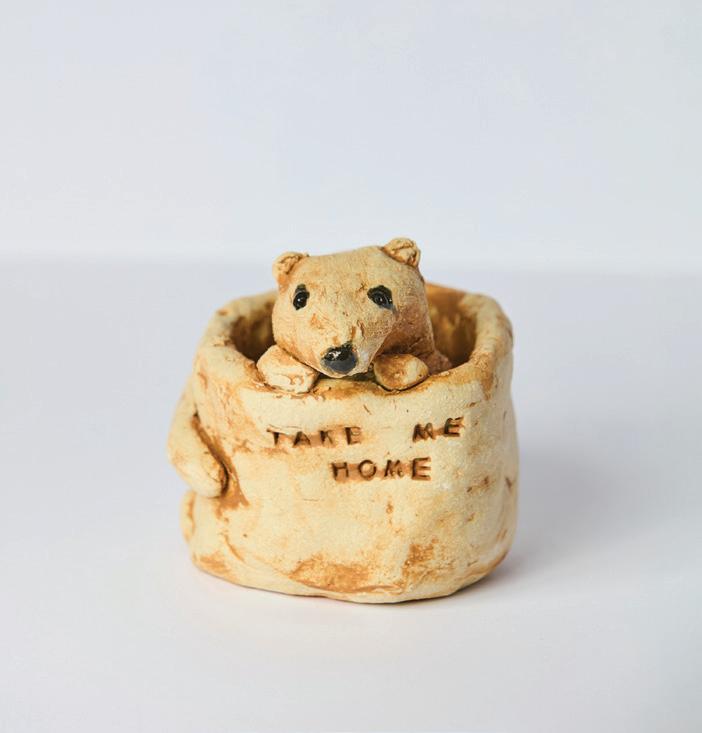
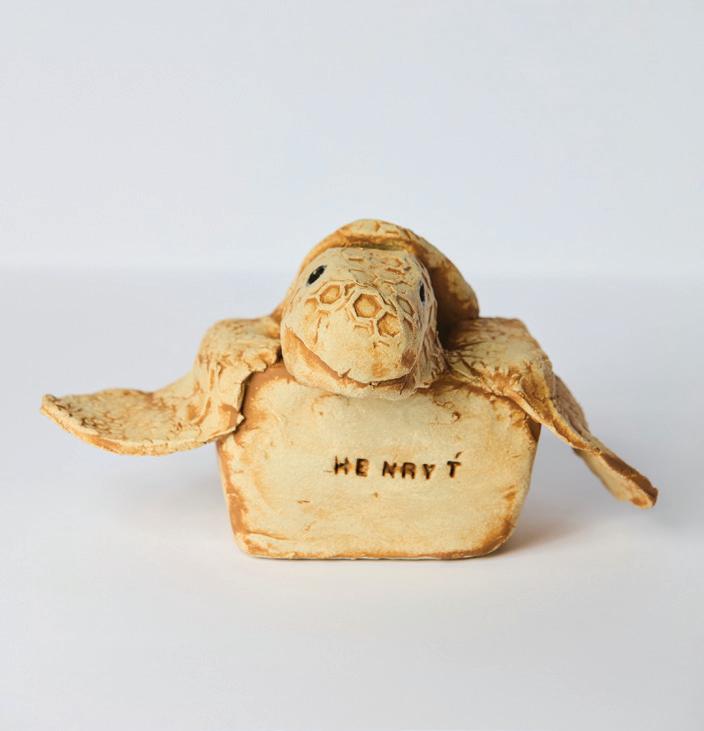

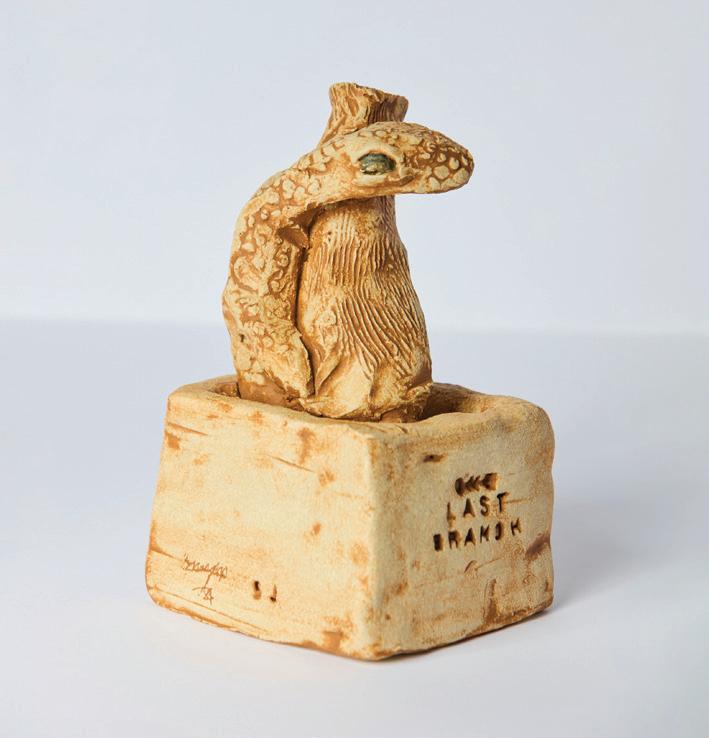
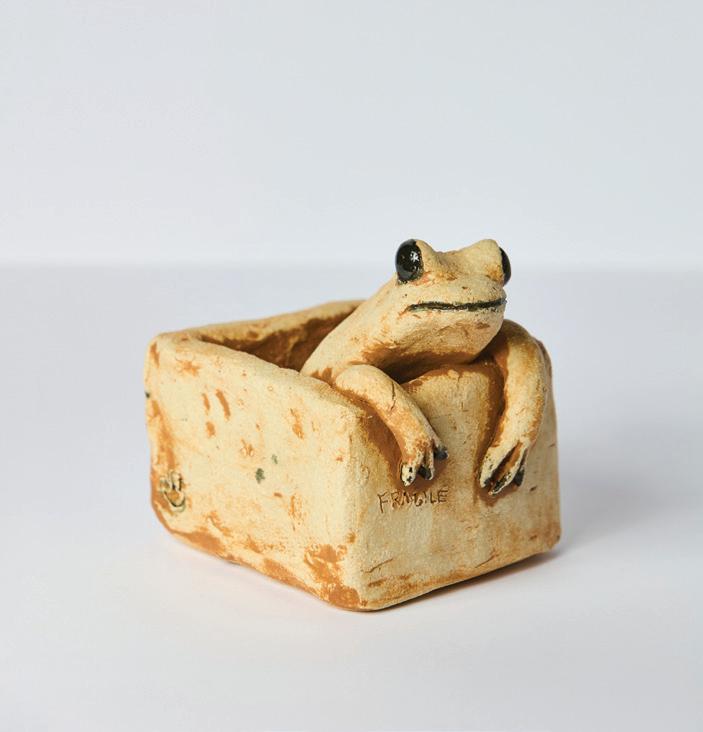
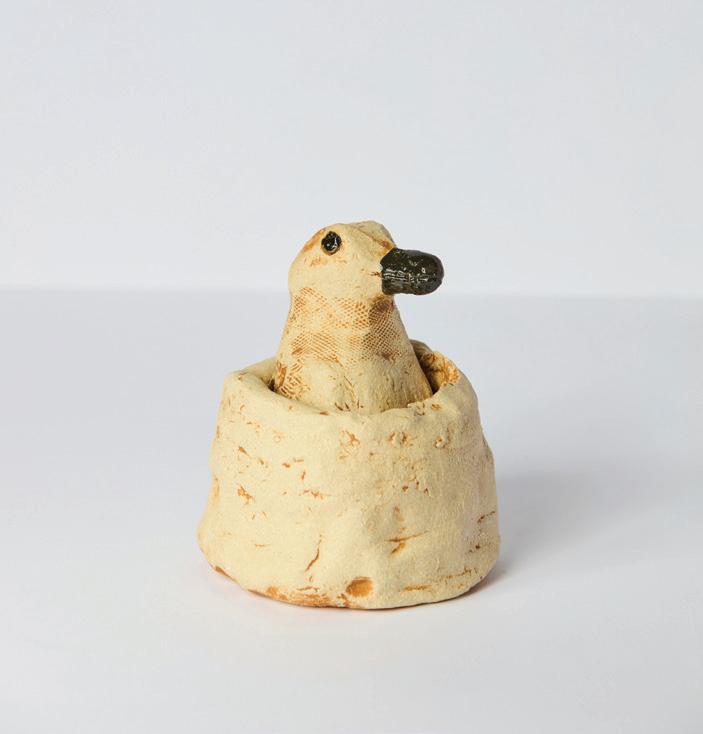
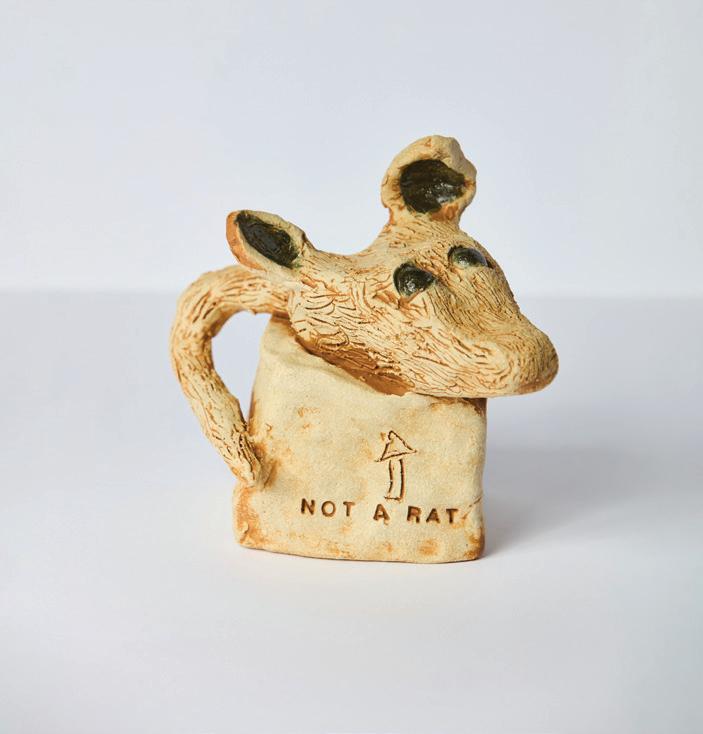
HANDLE WITH CARE FRAGILE
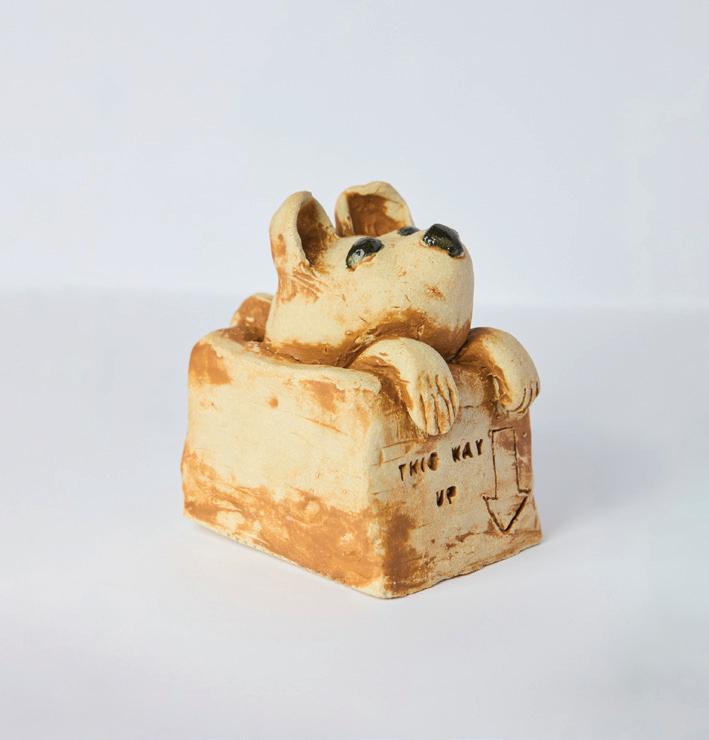
Sculptures by Year 7 Visual Art students.
PROJECT BRIEF
This term you will explore the medium of sculpture. Inspired by Western Australian Ceramicist, Fleur Schell, you will create a ceramic sculpture of an endangered Australian animal that raises awareness about animal conservation and the destruction of habitats. You will experiment with 3D art-making techniques to develop your understanding of form and texture. Through this project, you will reflect on your own experiences and surroundings to design and create a sculpture as a response to our theme of “Environments”.
1. Thick-billed grasswren by Henry Whiting
2. Christmas Island chained gecko by Sooryun Jung
3. Woylie by Sebastien Vuong
4. Spotted tree frog by Alexander Shayan
5. Sea turtle by Henry Tucker
6. Platypus by Lachlan Wilson
7. Helmeted honeyeater by Lyndon Duan
8. Potoroo by Leo Bambrook
9. Tasmanian devil by Josh Kari
Re-writing the extinction narrative
From the dodo to the woolly mammoth, questions about extinction and whether lost species could ever return to life captured the imagination of Grimwade House students as they explored one of Australia’s most iconic extinct animals, the Thylacine (Tasmanian tiger).
“Students became fascinated by the Thylacine, also known as the Tasmanian tiger, because its extinction is relatively recent,” says Grimwade House teacher Ms Maree Kardis.
“It is also directly linked to human interventions through government bounties, as well as pressures on their habitat.
“This led to rich classroom discussions about environmental responsibility, apex predators, and the long-term effects humans can have on the environment.”

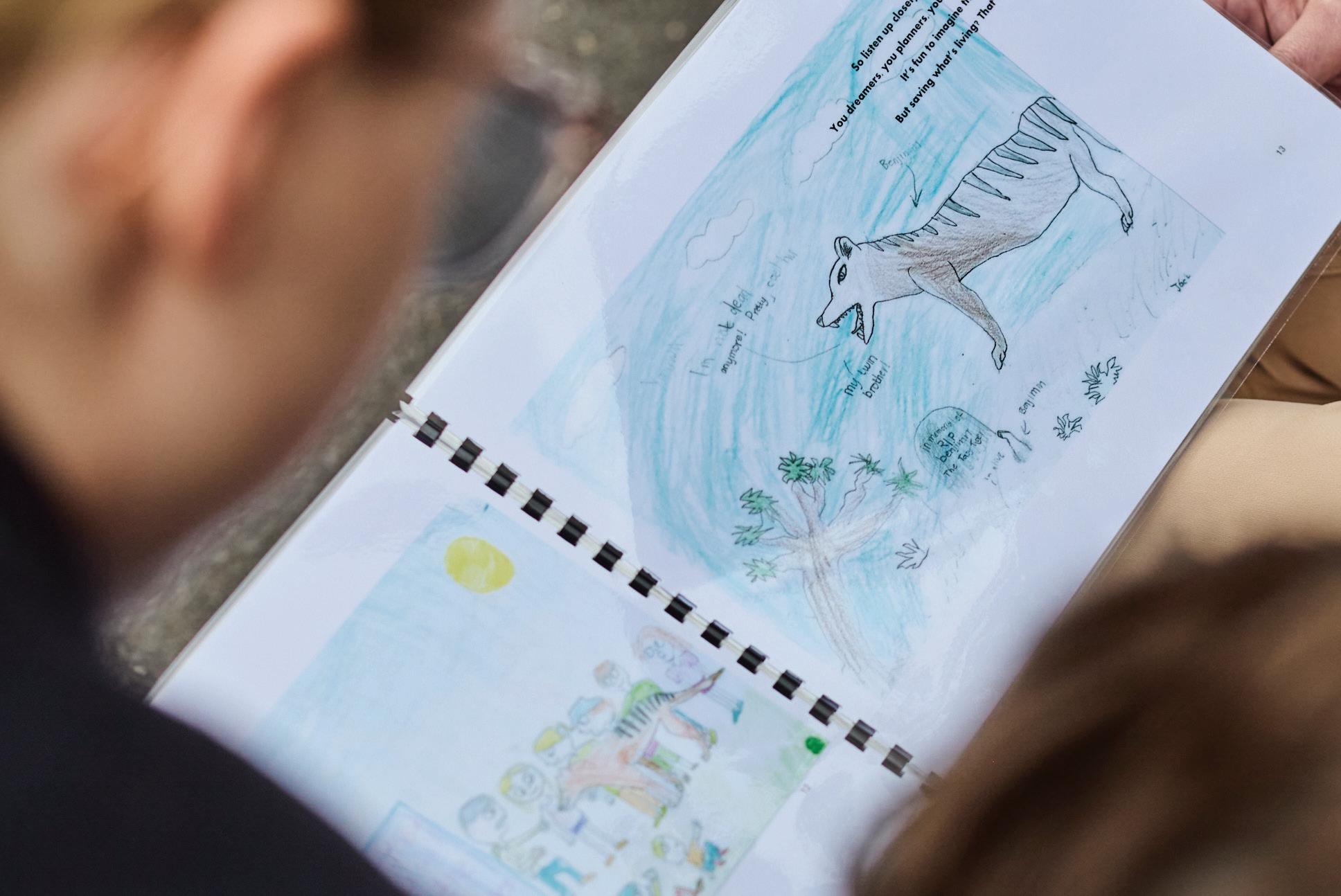
Building on this curiosity, Ms Kardis’ students worked collaboratively to deepen their understanding of the Thylacine by writing and illustrating a book about its extinction. Their project incorporated research into Professor Andrew Pask’s work at the Thylacine Integrated Genomic Restoration Research Lab at the University of Melbourne, as well as his role as Chief Biology Officer at a United States de-extinction company.
“Once the book was finished, we sent it to Professor Pask, which gave students the sense that their learning could extend beyond the classroom and actually contribute to real world conversations about science and conservation,” Ms Kardis says.
“The collaborative process of creating the book gave students a strong sense of ownership and pride.”
The Thylacine project not only introduced students to cutting edge de-extinction science, it also deepened their understanding of biodiversity and the importance of maintaining healthy ecosystems.
“Biodiversity is important because it acts like an ecosystem’s immune system and provides critical resources,” explains Year 4 student Eva.
“Biodiversity makes sure all living things in our ecosystem stay connected and balanced,” adds Xristos, also in Year 4.
“Seeing how nature interacts is fascinating and makes me want to understand more about it.”
With Professor Pask’s visit to the school, students heard first-hand about the work of scientists and discovered that everyone can contribute to scientific conversations in meaningful ways.
“The experience has created a sense of excitement, wonder, and possibility that has continued well beyond the completion of the project itself,” Ms Kardis says.
“It’s important that students see themselves not simply as learners, but as future contributors to important conversations and solutions for our society.”
Thylacine (Tasmanian tiger)
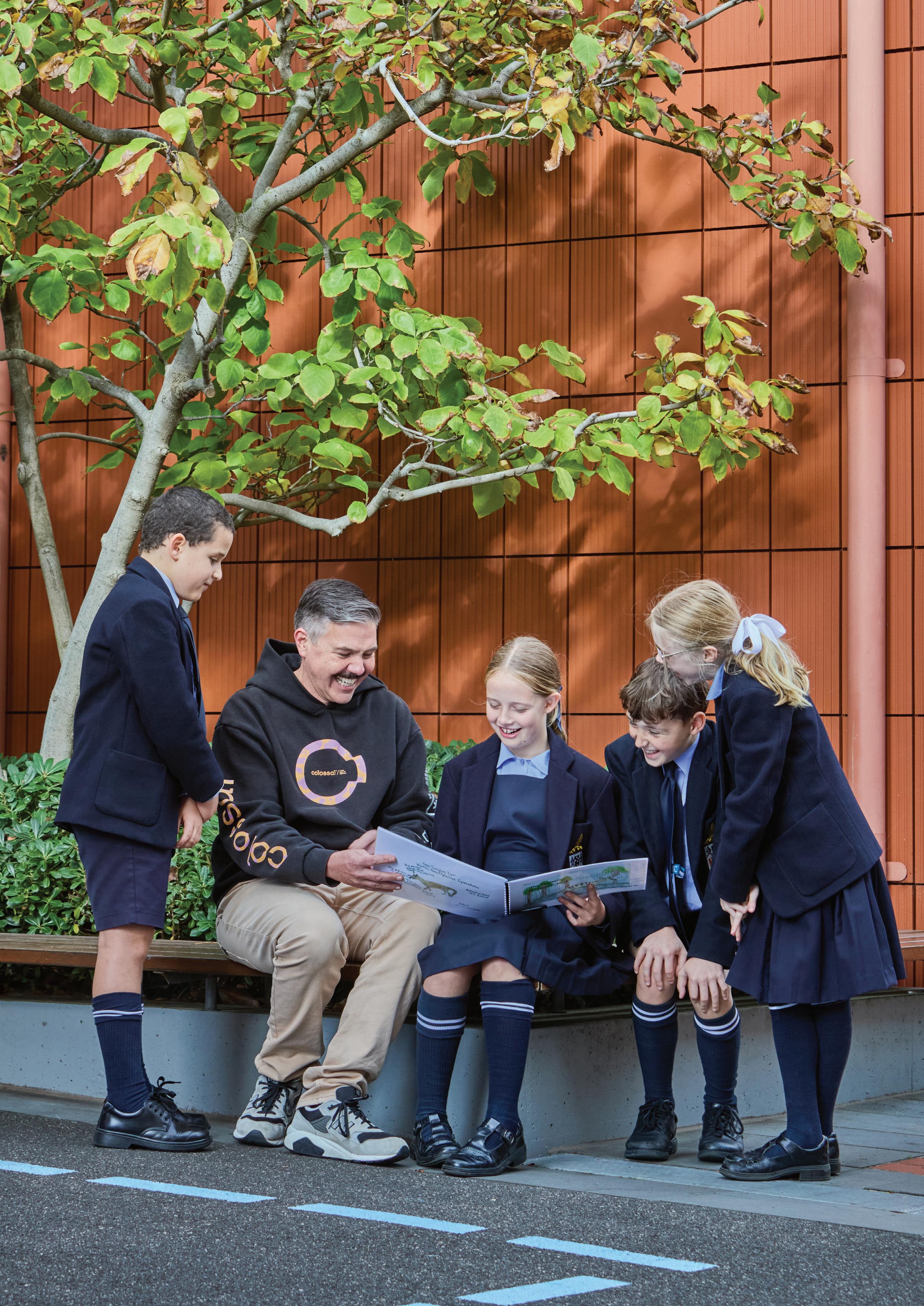
Professor Pask with Year 4 students, left to right: Xristos, Eva, Jack, Beatrice
Grimwade minds shine at da Vinci Decathlon

Through challenges involving code breaking, engineering and creative problem solving, eight Year 6 students from Grimwade House have claimed first place at the 2026 Victorian da Vinci Decathlon, outperforming teams from across the State in a demanding academic competition.
The da Vinci Decathlon is designed in the spirit of an Olympic decathlon, with small teams of students competing across 10 disciplines: engineering, mathematics, code breaking, art and poetry, science, English, ideation, creative producing, cartography, and legacy.
Across three intensive sessions, students work collaboratively to solve a series of complex tasks that test critical thinking, creativity, and teamwork under pressure.
For Grimwade House Enrichment Coordinator Adrienne English, the competition reflects the breadth of skills required for success.
“Students who succeed are curious and critical thinkers,” she says.
“At Grimwade we look at developing the whole child, so the environment gives exposure to a range of disciplines and learning styles.”
She says the experience aligns closely with learning at Grimwade, which encourages students to learn from each other, and participate actively.
“Opportunities to connect learning to real life and find authentic problem-solving experiences are always encouraged.”
The students involved said the competition pushed them to think differently, often requiring them to work through unfamiliar and highly challenging problems.
“Some problems asked for things we didn’t know at all, like the Lorenz system (a set of three ordinary differential equations that is a cornerstone of chaos theory) and the energy of smoke rising into the air,” Alex (Year 6) says.
“They were very challenging, but they made us think hard about possible solutions.”
Success, the students reflected, came down to communication and adaptability as much as academic knowledge.
“Our team worked well together by moving around the table, helping each other, checking answers and giving feedback,” Martin (Year 6) says.
Ms English said the group stood out for both their intellect and their teamwork.
“They were a strong cohesive team that valued and respected what each individual could bring,” she says.
“They were encouraging of each other and open to taking risks. This group had a unique mix of both high EQ and IQ.”
Their achievement highlights not only academic excellence, but also confidence and a collaborative mindset nurtured through the Grimwade House approach to childhood learning and development.
Melbourne Grammar’s Year 8 team also enjoyed an outstanding result, placing second in their da Vinci Decathlon, ranking in the top three across the disciplines of cartography, creative producing, English, science, mathematics, and code breaking.
The Year 5 team also experienced success, ranking first place in both the mathematics and code breaking disciplines.
The Year 6 team with their 1st place medals. Back row, from left: Chloe, Isabella, Ryan Front row, from left: Alex, Cameron, Martin, Katherine Absent: Surina Adler
Embracing the “endless puzzle” of chemistry
Year 12 student Ishan Umranikar will represent Australia at the International Chemistry Olympiad in Uzbekistan, following a remarkable journey that began with a simple curiosity about science.
While Ishan has enjoyed science since primary school, it was not until starting at Melbourne Grammar that chemistry truly captured his interest. Through exposure to more advanced concepts, he discovered a subject that combined many of the subjects he enjoyed most.
“My favourite thing about chemistry is the way it seamlessly merges many other disciplines, such as physics and mathematics,” he says.
“Chemistry is sort of an endless puzzle, one which manages to keep me fascinated with every new thing I learn.”
Ishan’s path to the international team began in 2024 where he sat the Australian Science Innovations Physics Olympiad examination and was invited to attend a summer school program at the Australian National University. Although he was not selected for the international physics team, the experience inspired him to continue pursuing Olympiad opportunities.
The following year, he sat both the physics and chemistry Olympiad examinations and was invited to attend summer schools in both subjects. Choosing chemistry, he found a passion for the discipline through this first experience of university-level study.
After months of preparation and strong performances in the final selection examinations, Ishan earned a place on the Australian team for the International Chemistry Olympiad.
The competition will see students from around the world complete two five-hour examinations. The first is a practical laboratory assessment involving synthesis, analysis, and


An undefeated season capped off with a premiership win
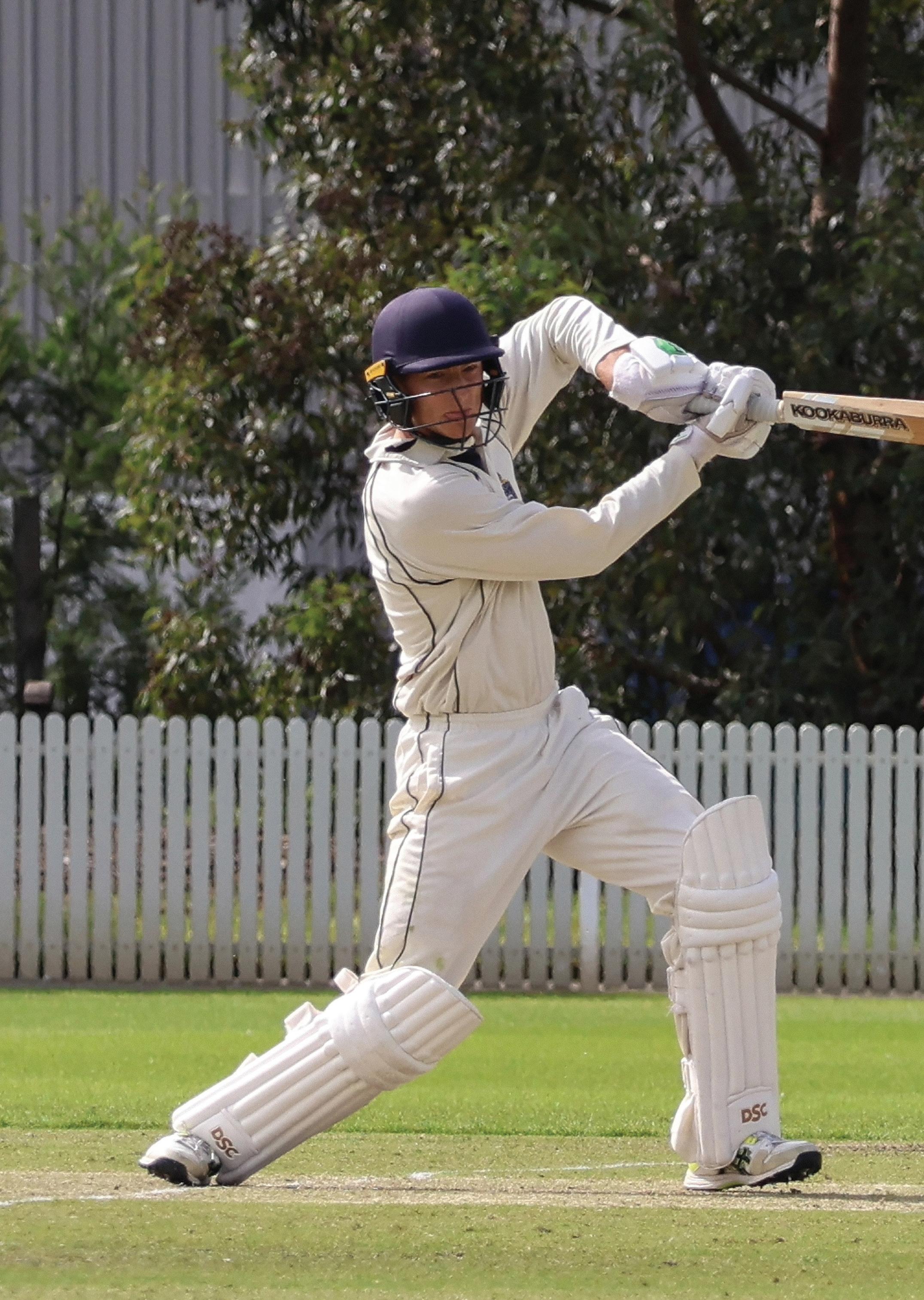

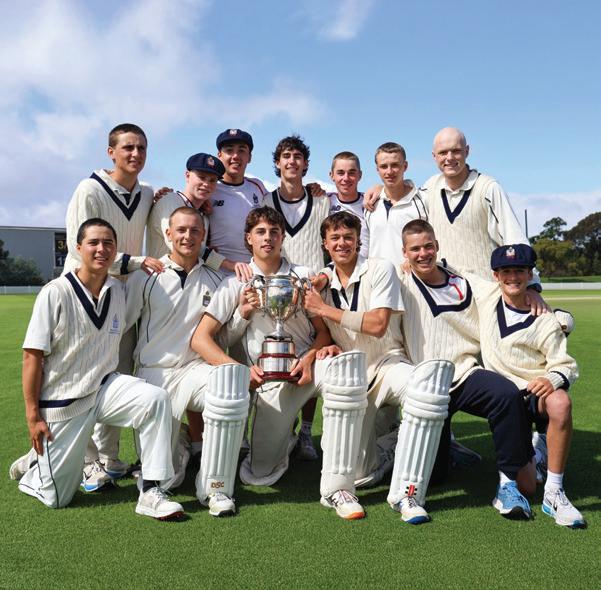
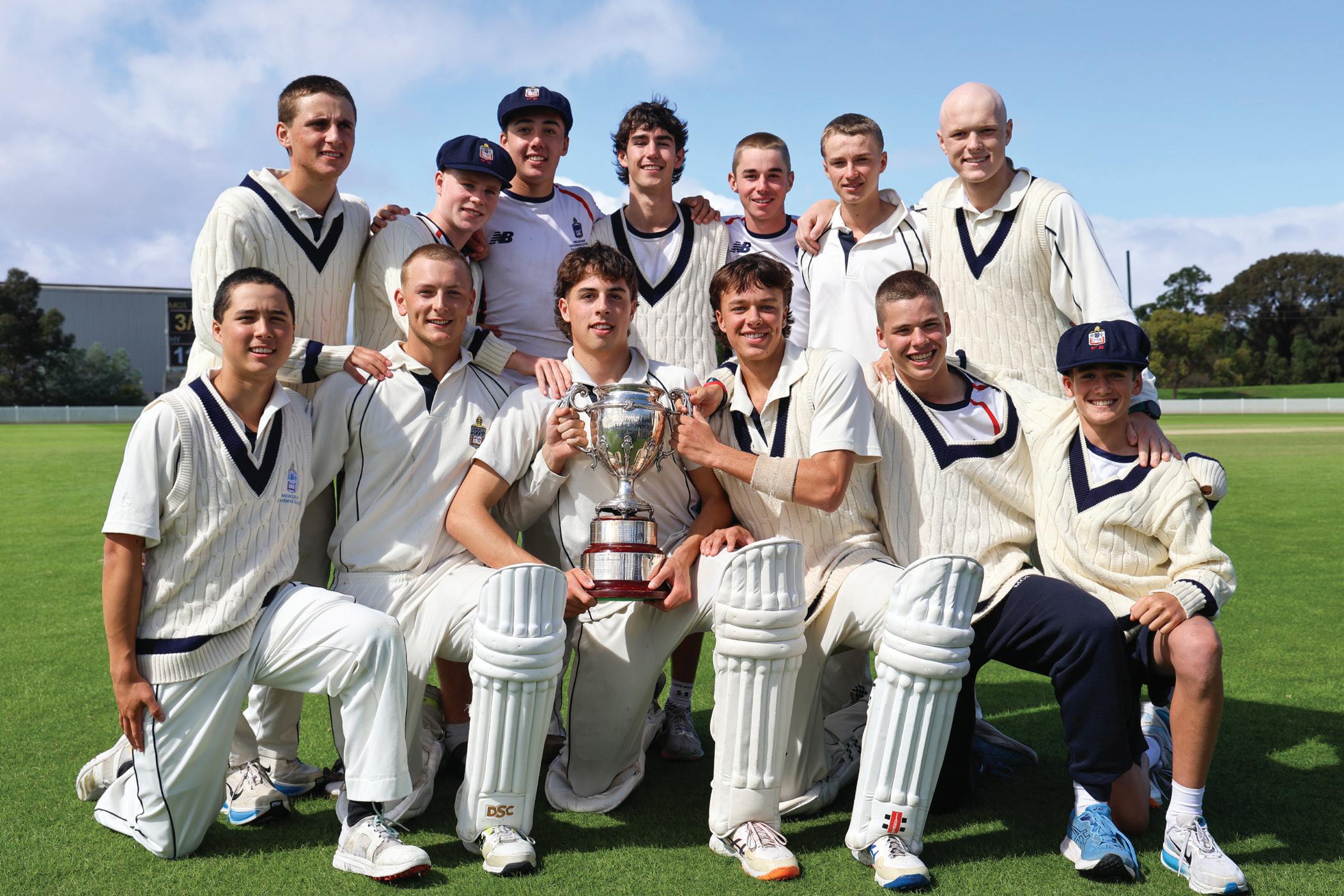
he 1st XI Cricket team have claimed the 2025/26 APS Cricket Premiership after a seven wicket win over Haileybury in the first APS Grand Final held in more than six decades.
The victory capped an outstanding season for the 1st XI, who completed the campaign undefeated and secured the School’s 39th APS cricket premiership, the most of any APS school. The 1st XI combined individual excellence with a collective commitment that proved decisive throughout the season.
In the lead up to the Grand Final there was a strong sense of anticipation, as Vice-Captain Will Sharpin attests.
“There was a big build up throughout the week of school. Everyone was very excited for the first APS Grand Final,” he says.
“There was a little bit of expectation on us after going undefeated through the season, but everyone handled it really well.
“We’re a really close group of mates and everyone blends in with all different personalities.”
After Haileybury threatened early in the match, Melbourne Grammar’s bowlers turned the game with a remarkable passage of play, taking six wickets for just six runs.
Will Sharpin, Vice Captain scores 52* in the Grand Final match against Haileybury.
Melbourne Grammar School
Will said the group trusted its preparation and remained composed under pressure.
“Coming into the game we knew that they had a very strong top order so the plan was to get some early wickets,” he said.
Captain James Rosham’s influence extended far beyond the Grand Final. He finished the season with 449 runs and 29 wickets, and was recognised as Captain of the APS Representative Team. James was also selected as a member of the Australian Under 19 team who will compete later this year.
“He’s a very good captain,” Will says.
“He’s got a very good cricket brain that most people don’t have. Those things can change games and we’re very lucky to have him leading us this year.
“We thought it was a very fitting way to end our cricketing journey at Melbourne Grammar and I was very happy to be out there [batting with him].”
The season was defined by consistency and depth across the entire squad. Melbourne Grammar averaged 303 across the two-day home and away season, recorded six scores above 300, and never required a second innings throughout the year.
The team also had a number of highranking players with Charlie Skinner finishing as the APS competition’s leading run scorer with 530 runs at an average of 58.89, while Louis Needham claimed a competition high 35 wickets at 9.63.
Will says the team’s success reflected the contribution of the entire group throughout the season.
“We knew we had a strong team this year.” he says.
“We had contributions from everyone throughout the season. The depth in our team helped us all season, and especially the Grand Final.”
Grand Final result – 28 March 2026 Melbourne 3/117 d Haileybury 116
In 2025, the APS announced the introduction of Grand Finals for Boys’ Firsts competitions. Previously, the team that finished on top of the ladder at the conclusion of the home and away season was awarded the APS Premiership.
2025/26 APS Cricket Premiers.
Back row, from left: Hugo Thompson, Tom Haydon, Luca Rhodes, Louis Needham, Finn Mann, Sam Gillard, Laughlan Gumley
Front row, from left: Louis Stevenson, Will Sharpin (VC), James Rosham (C), Charlie Skinner (DVC), Lewis Nelson-Holliday, Max Schofield
A love of language learning
Understanding is something we can only learn by interacting with other people.”
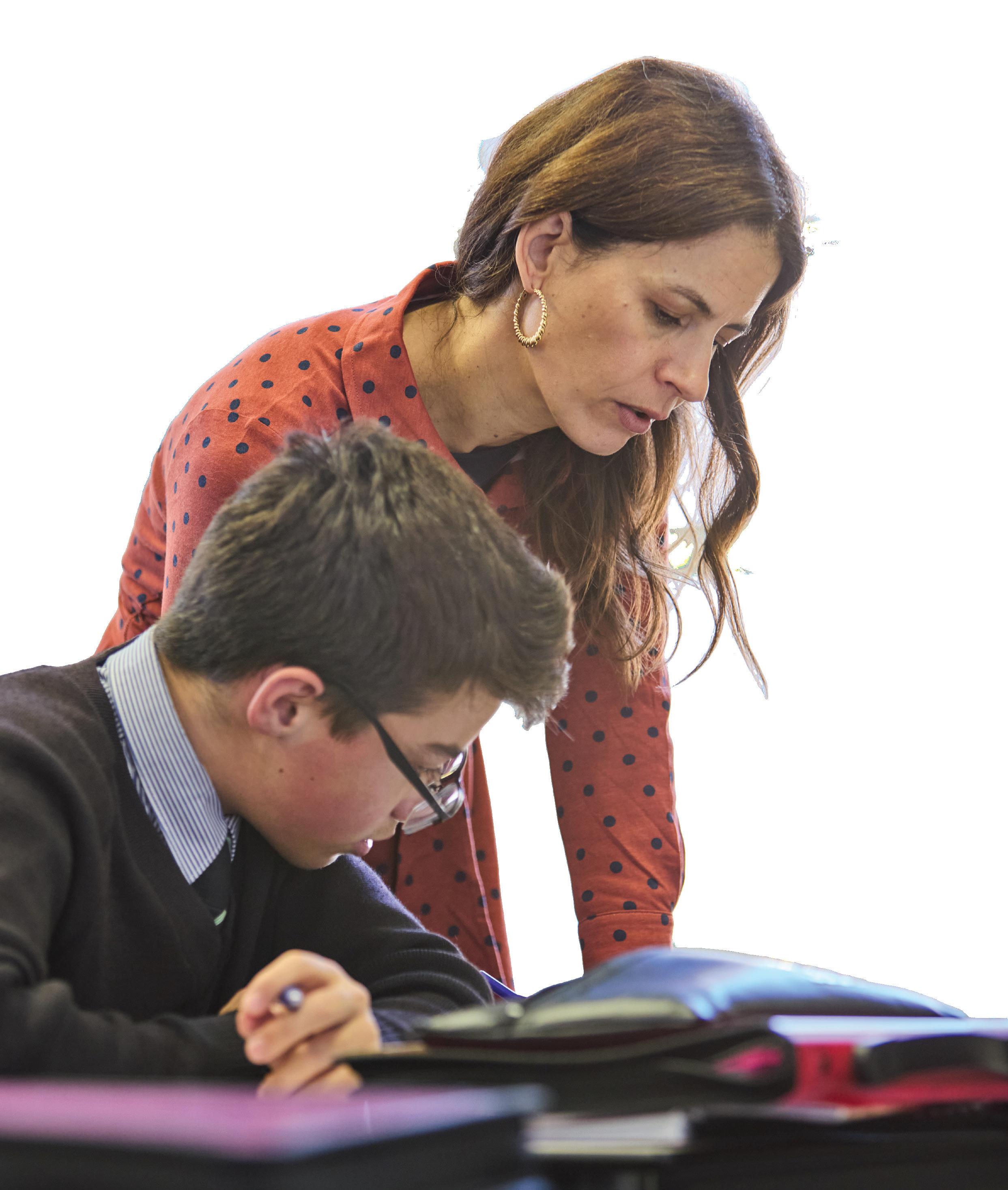
Lucie Dickens, Head of Languages
”Learning new languages opens so many doors in a world where our students will likely spend time overseas themselves, or work with people who are based overseas,” Mrs Lucie Dickens, Melbourne Grammar School’s new Head of Languages, says.
“Whether our students become fluent or not, learning another language means they will develop empathy and understanding for other cultures, and an ability to appreciate different perspectives and approaches.”
Language education at Melbourne Grammar begins with Chinese studies at Grimwade House. At Wadhurst, Year 7 students select one language to study from: Latin, French, Japanese, and Chinese, and from Year 8 have the option to take on an additional language.
Mrs Dickens brings a wealth of experience as both a French language teacher and faculty leader to her role.
“My aim is to ensure our Languages faculty continues to be dynamic and engaging, and that we continue to offer meaningful cultural experiences for our students within and beyond the classroom,” she says.
“In the strategic intentions set out in Towards 2030, preparing students to take their place in the world with confidence and embrace the wider world is one of the priorities, and I believe language education is essential to this goal.”
Mrs Dickens has held leadership positions at her previous schools, alongside working as a French language teacher. As Head of Languages, she now oversees the Languages faculty as a whole while continuing to teach French across Years 7, 9, and 11.
Mrs Dickens says she feels extremely fortunate to be leading a team of dedicated professional Languages teachers.
“It’s inspiring to work with my colleagues every day,” she says.
“Our staff are enthusiastic about their own learning, and always ready to try new approaches to improve outcomes in the classroom. For example, we recently participated in a professional development day, and the staff have already put some of the strategies learned into practice.”
With the introduction of new and accessible technologies, and the rapid advancement of AI, the language learning landscape continues to change. But Mrs Dickens believes that the core value of language learning remains unchanged: its unique ability to foster genuine human connection, spark curiosity, and deepen intercultural understanding.
“It’s true that AI tools can provide help with translation tasks, but what they are not able to do is convey emotion and nuance, or create true understanding between people and cultures,” Mrs Dickens says.
“This understanding is something we can only learn by interacting with other people.”
Mrs Dickens adds that the effort involved in learning and memorising a new language also leads to “cognitive resilience”.
“Language learning teaches students to persevere through challenges and uncertainty,” she explains.
“It builds the grit needed to keep trying, problem-solve, and remain engaged, even when answers are not immediate.
“Research has shown us just how much being able to speak more than one language changes the brain. Alongside these benefits, learning new languages also leads to a deeper understanding of a student’s first language, which contributes to their communication skills overall.”
In her first six months as Head of Languages, Mrs Dickens and her team have facilitated a variety of cultural and academic experiences designed to bring language learning to life, including incursions, excursions, competitions, and opportunities for cross-age mentoring.
Highlights have included Latin Reading and French Poetry Berthe Mouchette competitions, Cultural Diversity Week activities, and School-wide celebrations such as Lunar New Year.
At Grimwade House’s Lunar New Year event, Senior School students returned to perform in Chinese, demonstrating the enduring value of language learning throughout their educational journeys.
Strengthening connections between year levels is an exciting focus for Mrs Dickens and her team in the months ahead, with a continuing enthusiasm for “fostering both confidence and a shared passion for languages across the School.”
The magic of moving as one

If I hadn’t received a scholarship to Melbourne Grammar, I probably wouldn’t have rowed, I wouldn’t have had the coaches I had, let alone the teachers... I can link it all back to what started back here.”
Continues over page
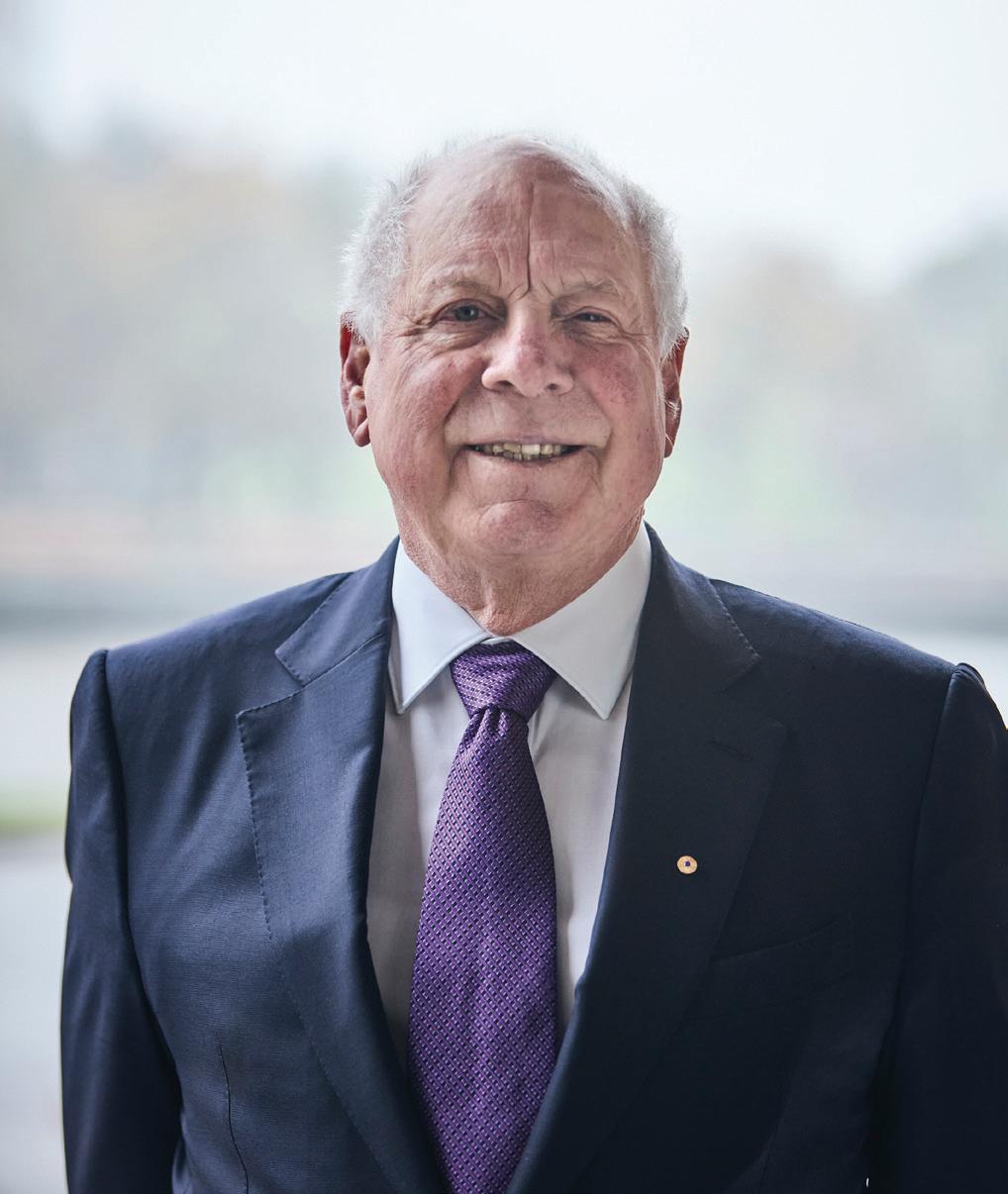
Andrew Michelmore AO (OM 1970)
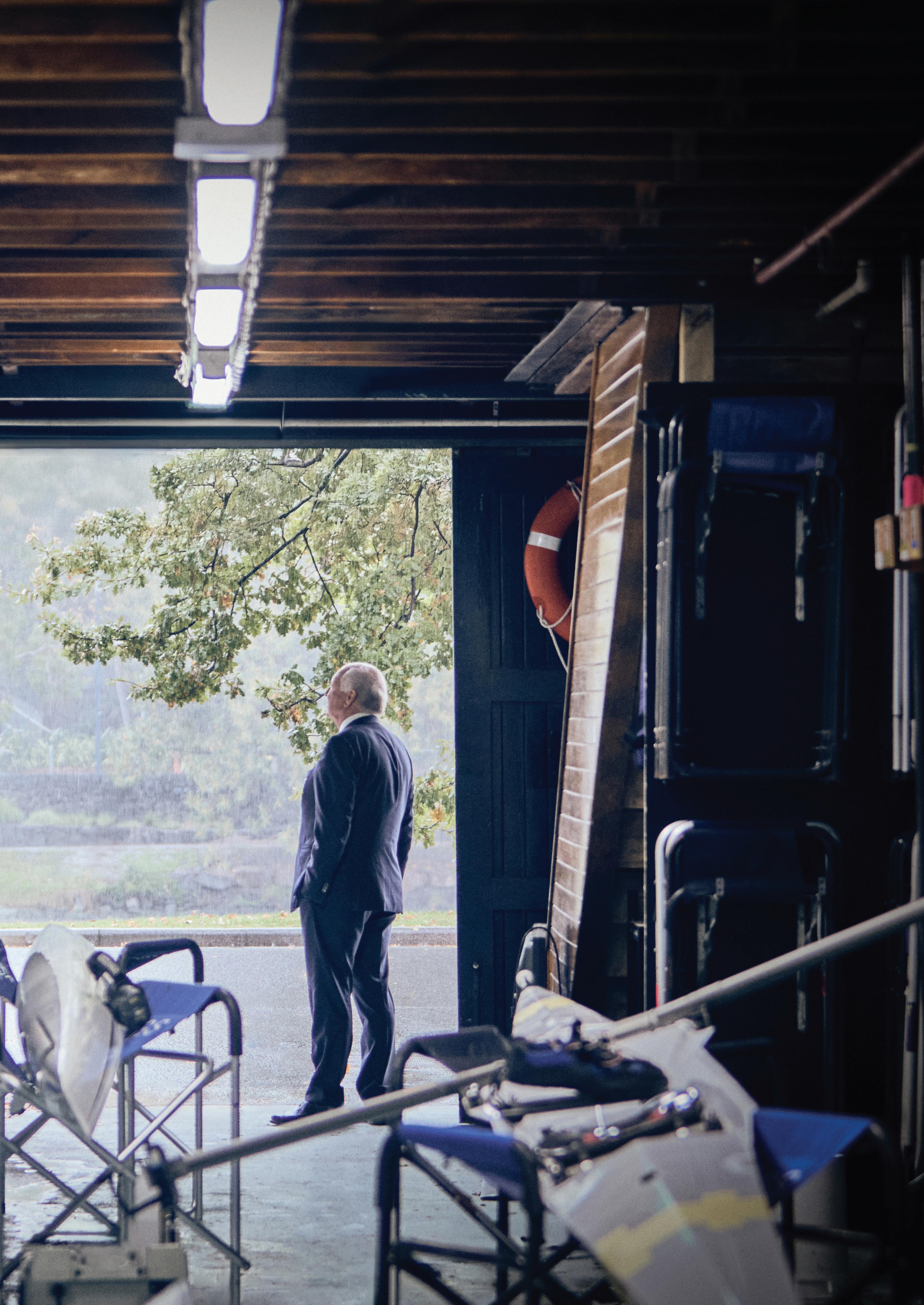
Andrew Michelmore (OM 1970) looks out over the Yarra River from the Simon Fraser Memorial Boat House; the place where it all began.
“In those early days of rowing, you would tend to bump your fingers on the sides of the boat a bit,” Andrew Michelmore AO (OM 1970) recalls.
“But, gradually, over time, when the boat sits up and it runs… it’s just magic.”
Andrew’s extraordinary professional and athletic career began, in many ways, in 1967, when he first set foot in the Simon Fraser Memorial Boat House. His older brother had rowed, and he didn’t count himself any good at ball sports, so he thought he’d give it a go.
He would go on to win Australia’s first rowing World Championship title – a gold medal at the 1974 World Rowing Championships in Lucerne with the lightweight men’s four.
Andrew’s first Head of the River (APS) regatta as a member of the First VIII was in 1969. Melbourne Grammar had won the year prior, and three from that crew were to row in the Firsts again.
“I was in the stroke seat, and so setting the rhythm,” he says.
“John Benson (OM 1969) was in the seven seat, and so between the two of us, setting the rhythm and the pace, and having this power coming in with you, it was like a silky, powerful machine.”
The crew didn’t win the race.
“But that was probably good for me for the longer term,” Andrew says.
“The thing I love about rowing is, if someone on another side beats you, they do it fairly. They’re either stronger, fitter, technically better, mentally better; more as a crew.”
In 1971, Andrew commenced an engineering degree at the University of Melbourne, and joined the Melbourne University Boat Club (MUBC). As a lightweight four, his crew won the Australian Championships before being selected to travel to Lucerne for their World Championship-winning row. They returned to compete the following year, coming home with a bronze.
With a Rhodes Scholarship under his belt in 1976, Andrew’s studies, and rowing career, relocated to Oxford where he read politics, philosophy, and economics. In 1977 and 1978, he rowed in the stroke seat for Oxford, winning the Oxford-Cambridge Boat Race both years. His final season in 1979 was back at MUBC, and was bookended with one final World Championship row in Yugoslavia.
A “hunger to be better” and a “love of competition” are characteristics that Andrew embraces; on and off the water.
When he was training with his lightweight crew, Andrew recalls racing heavyweight crews who were expected to beat them. They would do everything they could to hang on, and would, much to their counterparts’ surprise, compete to win.
His approach to competition always centred around the team; and the importance of embracing and committing wholly to a shared goal.
Andrew can draw many parallels between his career in leadership, and the dynamics he experienced in a rowing crew.
“The team delivers, not an individual,” Andrew says.
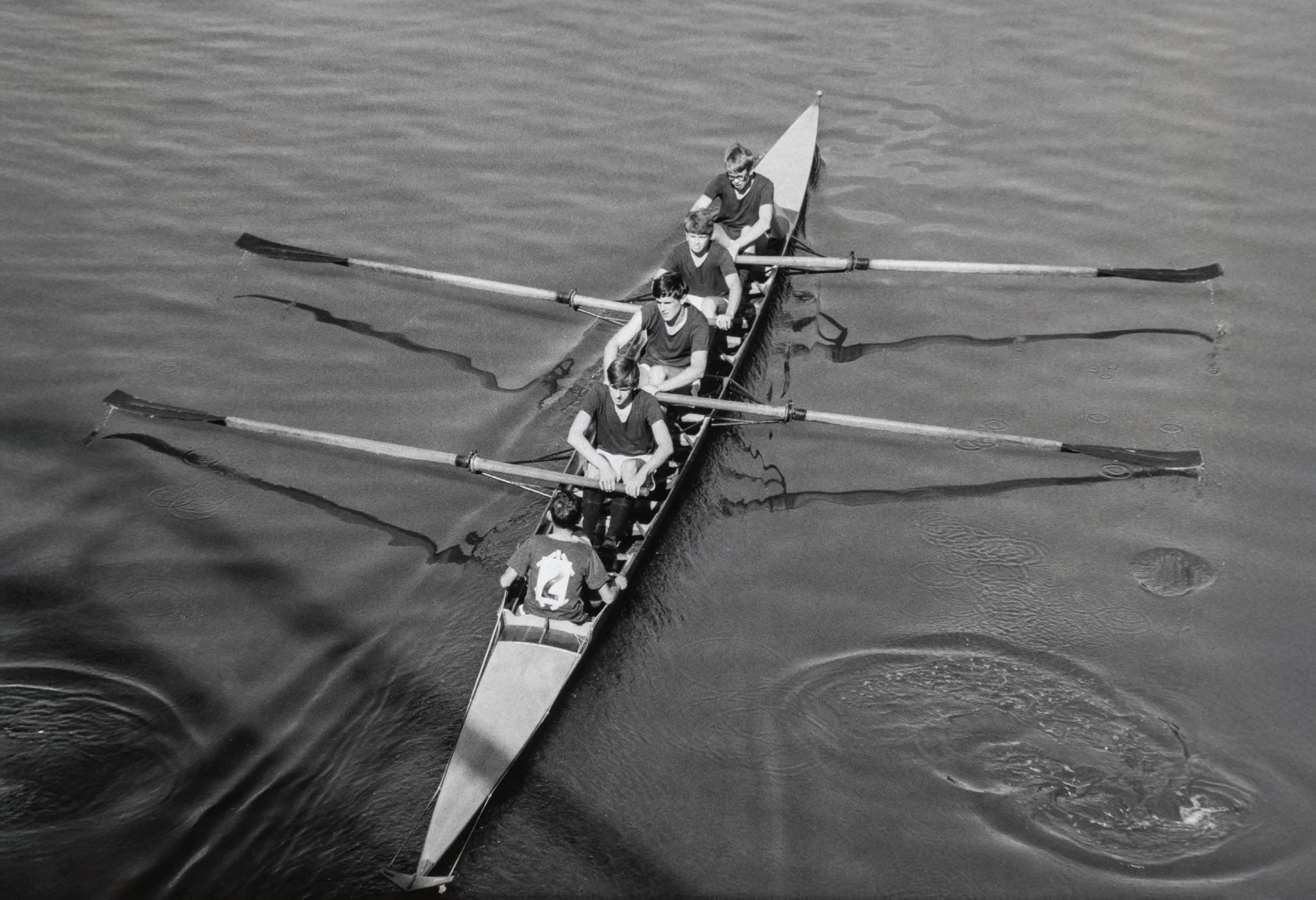
“These guys in the boat are all different characters. How do you get them to commit together? That’s business.”
Andrew’s professional career spanned 35 years in senior leadership roles in the metals and mining industry. He has also been the Director and Chair of the Clunies Ross Foundation, an organisation that advances the communication and application of science. A supporter of health and education, he also chaired the Jean Hailes Foundation for Women’s Health and Ormond College Council.
Having stepped down after six years as Melbourne Grammar’s Chair of Council, Andrew is now supporting the School in a different capacity, as Campaign Chair for The Courage of Ideas
“My view of this role is to get people enthused, passionate, informed, and proud of themselves to join in on that giving side,” he says.
“That could be serving on Council or on committees, it could be helping to do some of the background work for fundraising, or giving themselves.”
Part of Andrew’s inspiration to continue his work comes from a deep understanding of the impact of his Melbourne Grammar School education, and the incredible effect it had on his life and career.
“If I hadn’t received a scholarship to Melbourne Grammar, I probably wouldn’t have rowed, I wouldn’t have had the coaches I had, let alone the teachers,” Andrew says.
“A couple of those teachers fed my hunger for problem solving, maths, physics, and particularly chemistry, and so that helped me with the academic side of my time at the University of Melbourne.
“If it weren’t for them, I wouldn’t have got a Rhodes Scholarship to Oxford, I wouldn’t have rowed in the Blue Boat, and then come back to Australia and started my professional career.
“You could keep going through all these bits and it’s a chain, and some of the things might have happened anyway, but I can link it all back to what started back here.”
While his rowing days are now behind him, Andrew hasn’t forgotten the joy he found on the water.
“There’s space, and there’s trees; it’s got this magic feeling to it, and the water, especially when it’s silky smooth, it’s just idyllic.
“I can’t go anywhere without looking at a river and going, what would that be like to row on? What would you see? How’s the water? Is it running? How wide is it?
“Just imagining rowing along; it’s magic, magic, magic.”
Andrew Michelmore (bow seat) rows with Melbourne Grammar School classmates Rusty Rhind, Dave Barnett, Ian R Thwaites, and Sandy Hancock (cox), 1967.
Being a part of something bigger
When Harry Chan (OM 2017) was in Year 10, he signed up to volunteer as a Learning Club buddy, supporting younger students experiencing disadvantage in The Smith Family’s Learning for Life scholarship program.
“I worked with the same buddy for several years, and that continuity made a real difference,” he says.
“It wasn’t just about schoolwork, it was about showing up each week and building trust.”
This year, Harry has returned to Melbourne Grammar School as a Service Learning Mentor to support the Learning Club, working with a new cohort of students.
For more than 13 years, Melbourne Grammar students have helped deliver peer-to-peer support, through Learning Club and the student2student reading initiative via the School’s Values in Action program.
The Learning Club program provides small-group tutoring and homework support in community settings, extending learning beyond the classroom.
Alongside academic development, it emphasises consistent attendance, personalised support and relationshipbuilding.
Sessions combine structured academic work with informal interaction, supporting both skill development and confidence.
Rebekah Robertson, a Smith Family Learning for Life Team Leader in Victoria, says the model reflects what research indicates is most effective.
“We know students who are behind need sustained support, not one-off interventions,” she says.
“What makes the difference is consistency, small-group learning and relationships that help students stay engaged over time.”
Leo Shaw, a Year 12 volunteer, says the difference it makes for the younger students is noticeable.
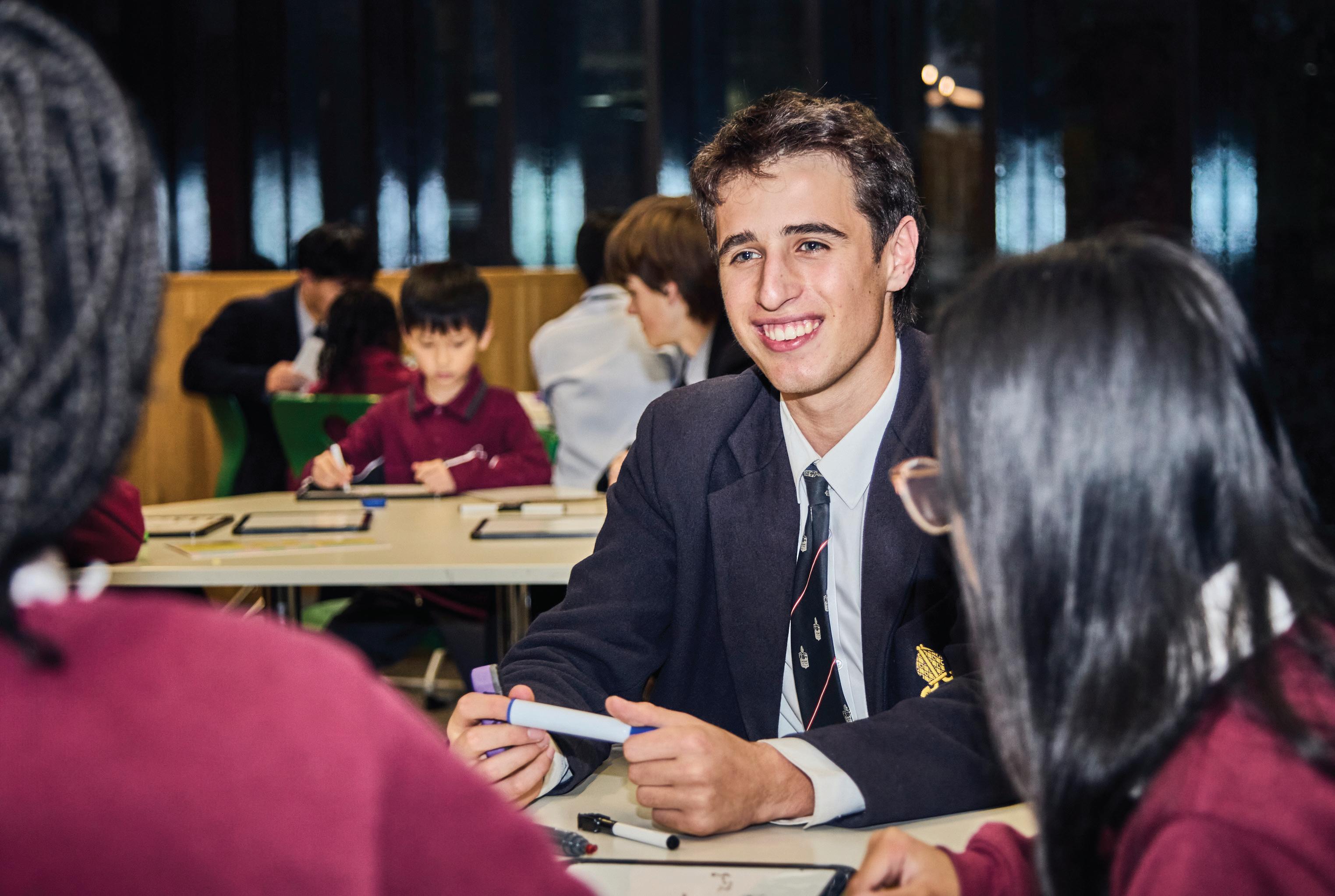
Leo Shaw (Year 12) with Learning Club participants.
“At the start, some students are really hesitant and unsure. But as the weeks go on, they start to open up. They ask questions, they have a go, and you can see their confidence grow.”
Acting Head of Science Mr Tas Anastasiou has led the program at Melbourne Grammar School for more than a decade.
“What makes this program so effective is that it’s grounded in relationships,” he says.
“Students aren’t just receiving academic support; they’re building trust with someone who shows up consistently.”
He says the benefits extend well beyond immediate academic outcomes.
“Over time, you see students become more confident in themselves as learners.
“What’s equally powerful is what it does for our students who are volunteering.
“They develop a real understanding of educational disadvantage, but also a strong sense of responsibility to give back. It shapes how they see their role in the community.”
While access to resources like devices, books and tutoring are vital for learning, research increasingly points to the importance of relationships and consistency in shaping student outcomes.
Learning Clubs are structured to deliver both, typically running over extended periods to reinforce learning and build routine.
“Targeted and sustained supports like those offered through the program, do more to help engage students who need targeted support than one-off interventions,” Mr Anastasiou says.
“Anecdotally, we know the evidence is there to show the peer-to-peer model works… you can actually see the learning that’s going on and the progression week-in-week-out.”
From Rebekah’s perspective, the broader significance is clear.
“Tackling educational inequality is key to breaking the cycle of disadvantage. When we support students to succeed at school, we are investing in stronger communities and a fairer future.”
For Harry, that impact remains personal.
He is revelling in being back among the students at Learning Club, this time as a mentor.
“I know it’s a long-standing relationship we have with The Smith Family, so fostering those sorts of relationships, so we can continue to have avenues to give back, I think they’re really important,” he says.
“I had a really great experience with it at school. All students should try and do a program like this at some point.
“It’s mentoring, it’s connection, and it feels like you’re part of something bigger.”
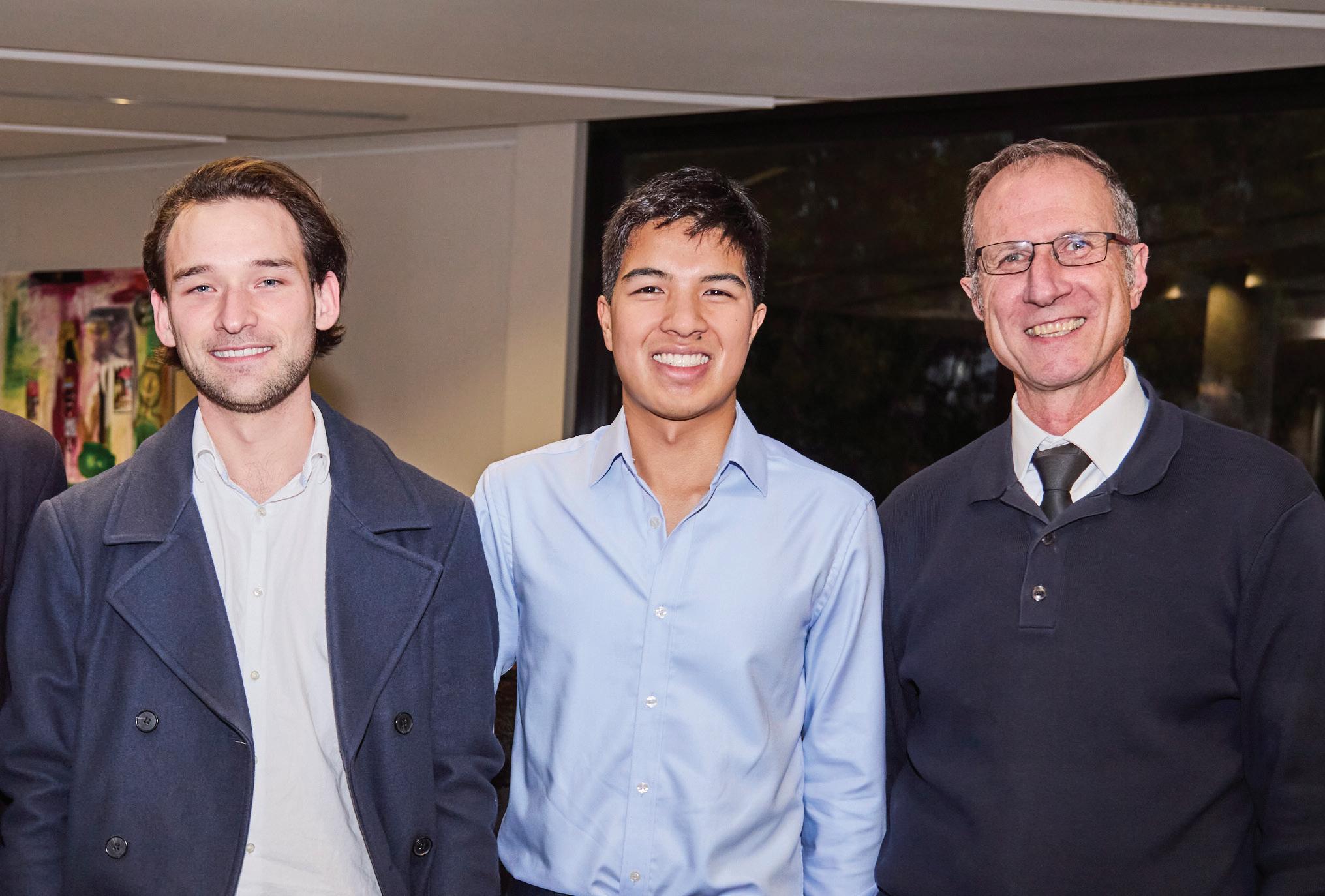
Service Learning Mentors Harry Chan (OM 2017) and Rahul Phal (OM 2024), with teacher Tas Anastasiou.
Mapping Antarctica
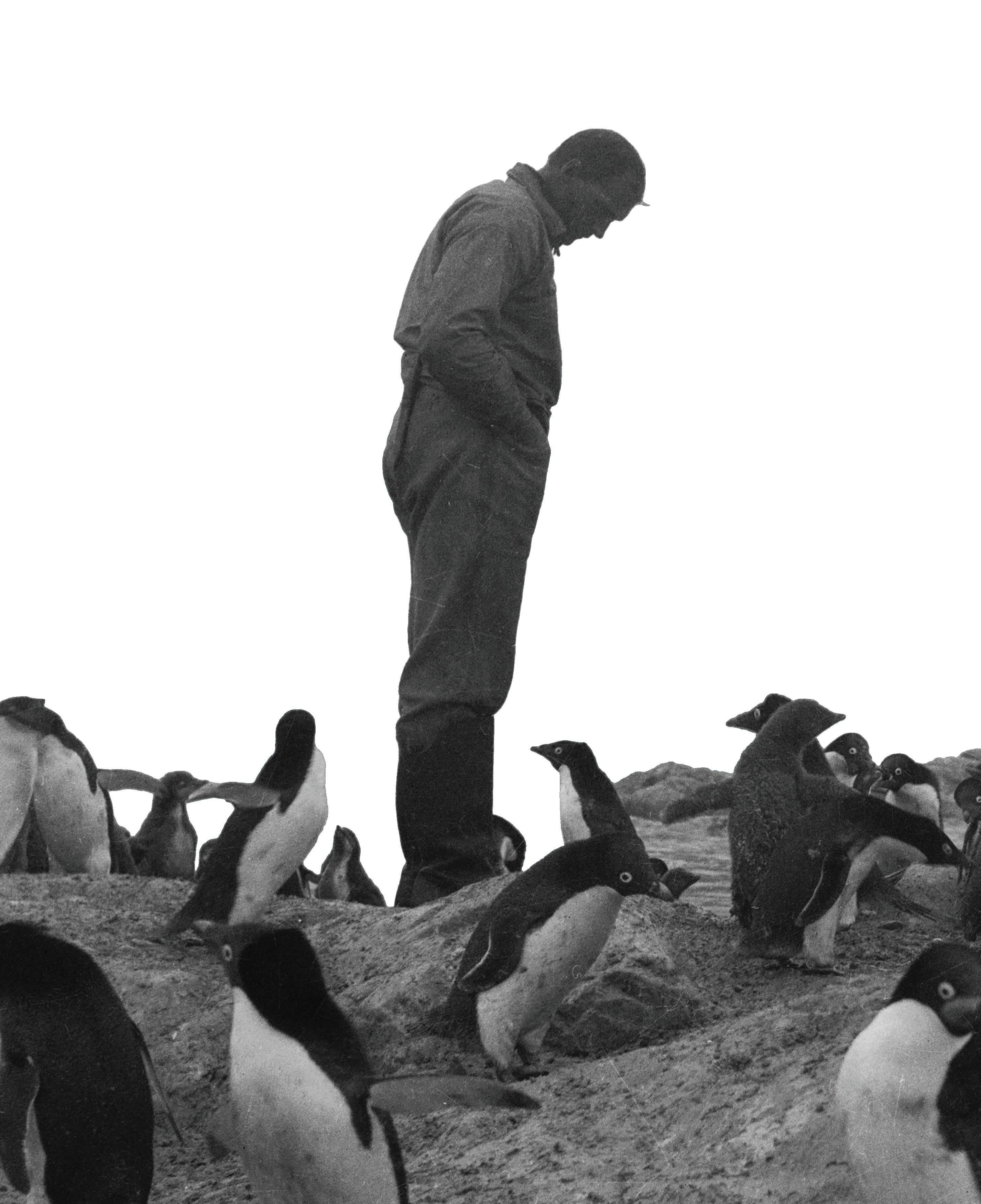
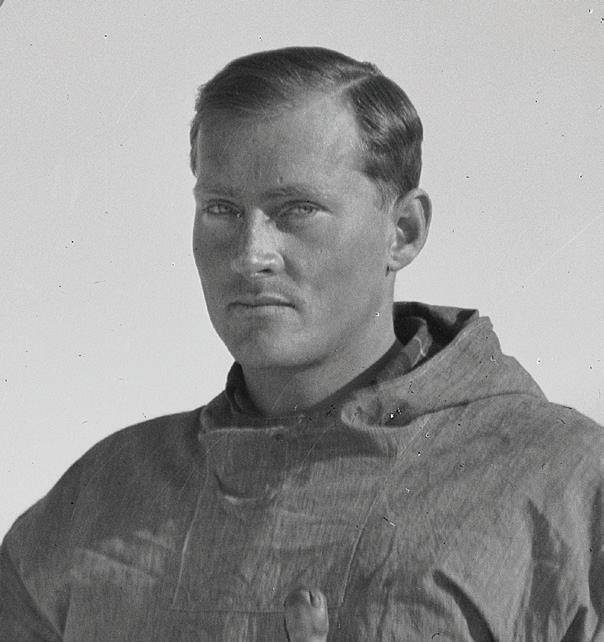
While surveying the thenunexplored Antarctic coast, polar explorer John Riddoch Rymill (OM 1922) wrote in his diary;
“As we sledged along I was impressed by the thought that here was all this strange grandeur round us, and we – people of the twentieth century… were the first to see it since the world began.”
John was born in 1905 in Penola, South Australia, and was later educated at Melbourne Grammar School as a boarder, along with his older brother Robert (OM 1922).
At School, the stories of visiting Old Melburnian adventurers such as B A Armytage (OM 1886), H D Murphy (OM 1890), and E F R Bage (OM 1904), veterans of the Shackleton and Mawson expeditions respectively, provided students like John with inspiring examples of scientific discovery in the polar regions.
John’s early fascination with the topic was complemented by a strong aptitude for practical mathematics – a skill that would later prove invaluable as he carved a deliberate path towards a career in polar exploration.
After graduating, John learnt to navigate and survey at the Royal Geographical Society in London. In Essex, he learnt to sail, and in Switzerland, he learnt to ski and mountaineer.
In 1927, he won the first-ever National Skiing Championship in Australia, held on Mount Kosciusko. Then in 1928, he obtained his international aviator’s certificate.
John’s first polar expedition was in 1930, when he joined the British Arctic Air Route Expedition in Greenland. The Headmaster’s report the following year revered John for his “adventurous spirit” and acknowledged his “selfsacrifice entailed, without hope of reward, for the advancement of scientific knowledge.”
Just four years later, he set out on what would become his most significant and notable adventure; the British Graham Land Expedition (1934 –37).
The area east of Graham Land, the northernmost stretch of the Antarctic Peninsula, was originally thought to be an archipelago (a group of scattered islands).
Surveying nearly 2,000km of previously-unexplored coast, John and his 15 fellow expeditioners were multi-skilled and multi-disciplinary; crucial for survival in the harsh polar climate.
The expedition culminated in the discovery that this area was in fact a continuation of the Antarctic Peninsula, changing the way the world saw and understood the region.
In 1939, John returned to the School like those adventurers before him, speaking to Wadhurst students about his time in Antarctica, “illustrating by means of a special diagram exactly where he had been, and what lands he had discovered and charted from his aeroplane.”
John received a Silver Polar Medal for his discoveries, and his contributions to polar exploration have been internationally renowned.
Today, John Rymill Collections relating to his career are held by the Scott Polar Research Institute at the University of Cambridge, and the South Australian Museum.
2026 KING’S BIRTHDAY HONOURS
Melbourne Grammar School congratulates all members of our community recognised through the 2026 King’s Birthday Honours. These include:
OFFICER OF THE ORDER OF AUSTRALIA (AO)
The late Professor Katrina Jane Allen AO (Past Parent)
For distinguished service to medical research as a paediatric allergist and gastroenterologist and to the people and Parliament of Australia.
Mr Sidney Hordern Myer AO (OM 1974)
For distinguished service to the community through philanthropic endeavours, to equality, to the arts, and to Australian-Asian relations.
MEMBER OF THE ORDER OF AUSTRALIA (AM)
Associate Professor Dr Peter David Nottle AM (Past Parent)
For significant service to laparoscopic and gastrointestinal surgery, to clinical leadership, and to education.
Mr Edward Richard (Rick) Tudor AM (OM 1966)
For significant service to secondary education governance, and to the notfor-profit sector.
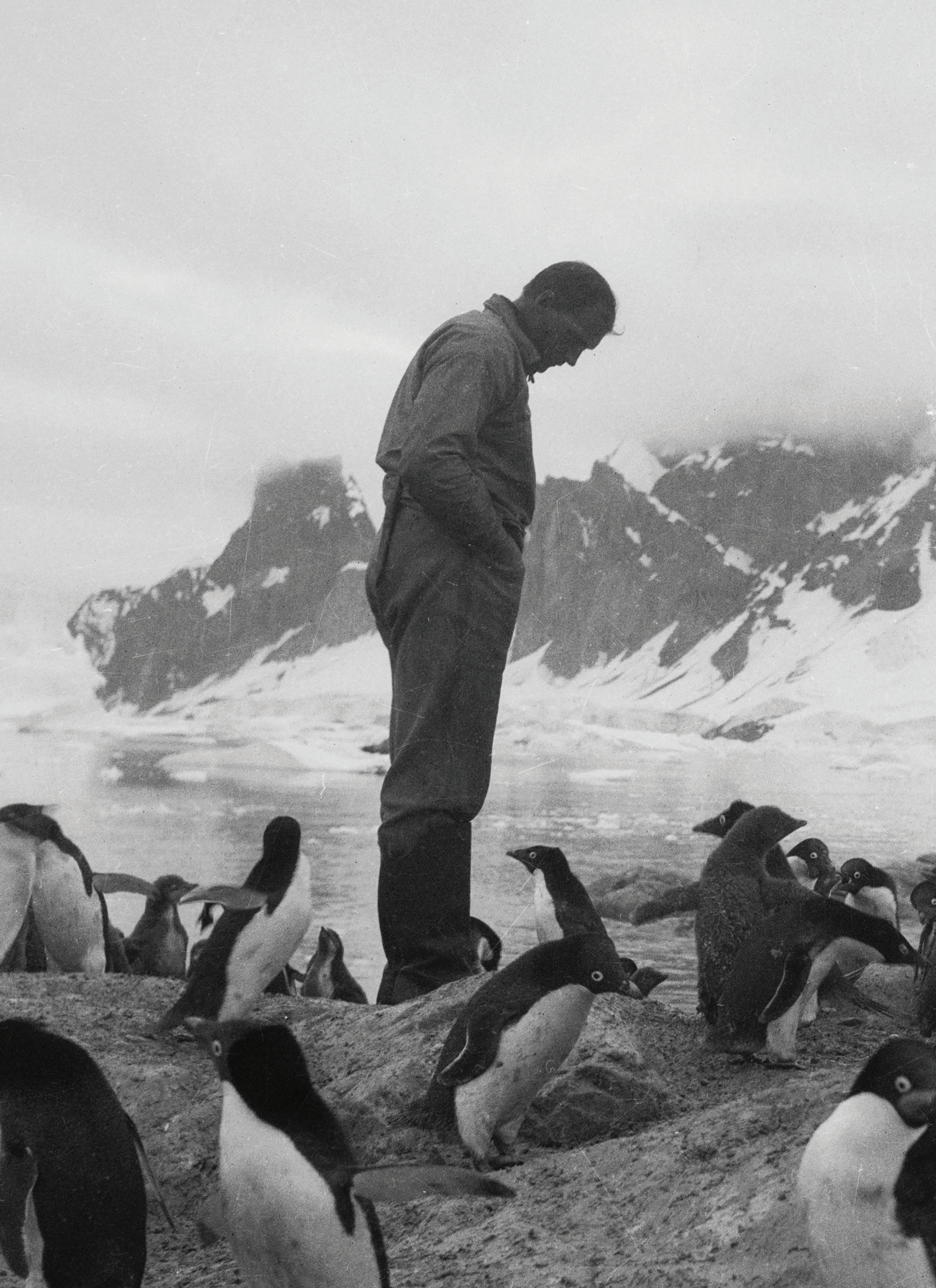
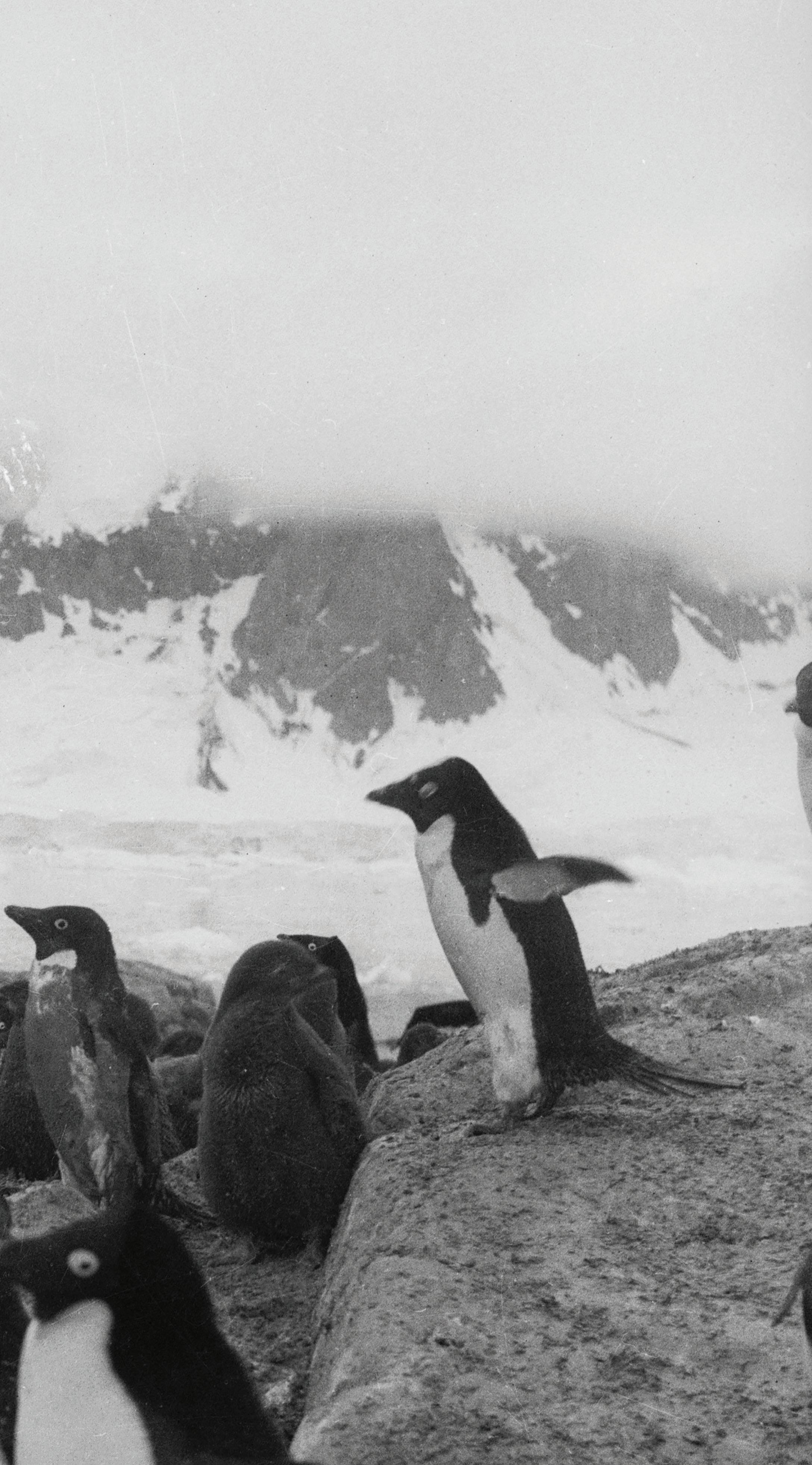
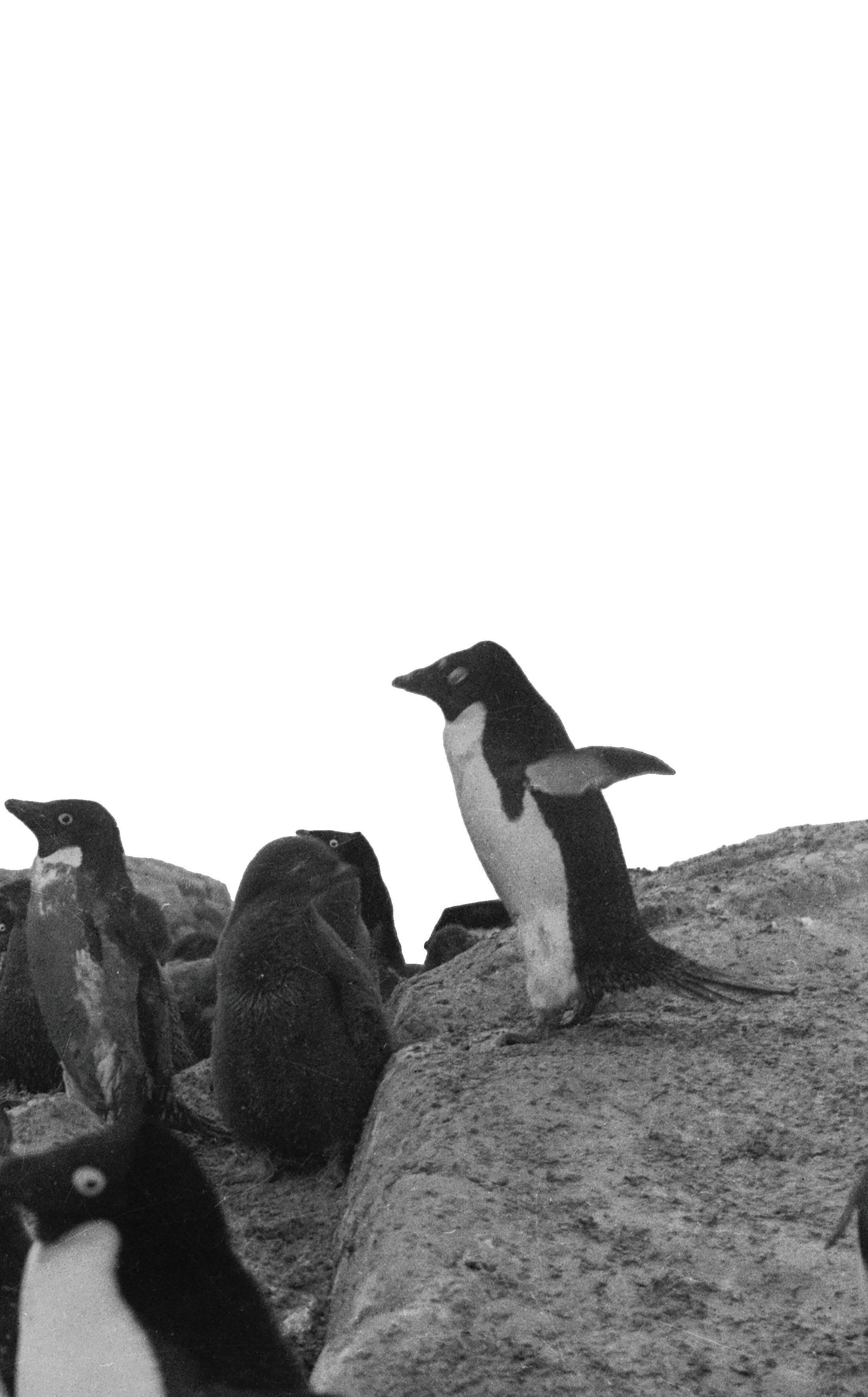
John Rymill (OM 1922) and penguins – Berthelot Islands, January 1936.
Photos: The Scott Polar Research Institute, University of Cambridge
John Riddoch Rymill (OM 1922)
A lifetime on the track
Few are fortunate enough to define their life, and legacy, by a passion that has left an enduring mark on both.
For Rob Liddle (OM 1959), that passion has always been athletics.
Not necessarily the pursuit of medals or records, but the friendships, opportunities and sense of belonging that grew around the sport. Through Melbourne Grammar School and, later, the Old Melburnians Athletics Club, athletics has become a thread running through his life for more than seven decades.
Now, Rob has made the extraordinary decision to leave a transformational bequest to Melbourne Grammar School, establishing the Old Melburnians Athletics Club Scholarship Fund.
Income from the fund will support up to four General Excellence Scholarships at any one time for students who demonstrate exceptional athletic ability or promise in track and field, and who compete for the Old Melburnians Athletics Club. It will also fund exceptional coaching and mentoring, creating opportunities for generations of students to come.
The nature of Rob’s gift ensures its impact will endure in perpetuity. It reflects not only Rob’s belief in the transformative power of education, but also his commitment to a community that has given him so much.
“Not only has the Club gifted me with a community of lifelong friends, but I feel that we owe it to the Club’s history to secure its future,” Rob says.
I feel that we owe it to the Club’s history to secure its future... To any of the boys who are awarded the [Old Melburnians Athletics Club] Scholarship, all I would say is, enjoy your journey.”
Rob Liddle (OM 1959)
The Old Melburnians Athletics Club is a successor to the historic Hare & Hounds Club first established in 1892, one of the four founding clubs of the Victorian Amateur Athletic Association (now Athletics Victoria) in 1894.


Legendary Old Melburnian Edwin Flack (OM 1890), Australia’s first Olympian and the first Olympic champion in the 800 metres and 1500 metres running events in 1896, was also an original member.
Re-formed as the Old Melburnians Athletics Club in 1927, the Club has continued to provide generations of Melbourne Grammar students with opportunities to compete, connect, and remain part of a community long after leaving the School.
Rob has been giving back to the community already for decades, as the inaugural and continuing trustee of the Ian Gawler Fund, which was established by the Club to help provide practical assistance to athletes pursuing opportunities at state, national and international level.
The new bequest builds on that commitment. By tying his legacy to Melbourne Grammar School, Rob hopes to support young athletes at an earlier stage of their journey: creating opportunities to attend Melbourne Grammar, benefit from exceptional coaching and mentoring, and ultimately help grow the Club community that has shaped his own life.
As the Club approaches its centenary in 2027, Rob also hopes his bequest will ensure future students can experience the same friendships and values that athletics provided him.
“Quite apart from the joy of competing, they will meet not just other athletes from the School, but a wider community of athletes,” he says.


“The more friends you can make, the better.”
Dan Martin, Head of Athletics at Melbourne Grammar School and President of the Old Melburnians Athletics Club, says Rob’s bequest is a powerful expression of what school sport can achieve.
“Not only have scholarship recipients blossomed on the sporting field, but it’s allowed them to have an academic path that they perhaps wouldn’t have had at their previous schools,” Dan says.
Importantly, the impact extends far beyond performance.
“Their sporting ability is important, but their leadership abilities and the demonstration of their values aligning with Melbourne Grammar values are equally as important.”
The bequest will also support coaching, an area which Dan says can be fundamental to a young person’s development.
“Coaches have the opportunity to really influence the course of a student’s life,” Dan says.
For Rob, the value of athletics has never been measured solely by performance. The friendships, lessons and values he gained through the sport have endured long after his final race.
“Melbourne Grammar gave me not just a good education, but fantastic values,” he says.
“I think that’s probably the greatest benefit that I got.”
The students who ultimately benefit from Rob’s generosity may never know him personally. But through the opportunities his gift creates, they will become part of a community that has shaped his life for more than seventy years.
“To any of the boys who are awarded the Scholarship,” Rob says, “all I would say is, enjoy your journey.”
In doing so, they will continue a legacy built not on achievement alone, but on community, character and a lifelong commitment to helping others succeed.
Rob Liddle (OM 1959)
A teacher remembered The Peter Mountford Humanities Faculty
More than two decades after retiring from Melbourne Grammar School, Dr Peter Mountford still remembers his students.
The boys to whom he taught Latin grammar and ancient Greek poetry. The students who travelled with him through Italy and Greece. The generations of Bruce House boys who came under his care as Head of House, and the countless young men he mentored on the hockey field during 19 years as coach of the 1st XI.
“I still remember with great fondness the wonderful students whom I taught Latin or Classical Studies and those whom I was so fortunate to have under my care during my ten years as Head of Bruce House,” he says.
Peter’s students, too, remember him just as well, and have now come together all these years later to acknowledge the tremendous impact he had on their lives.
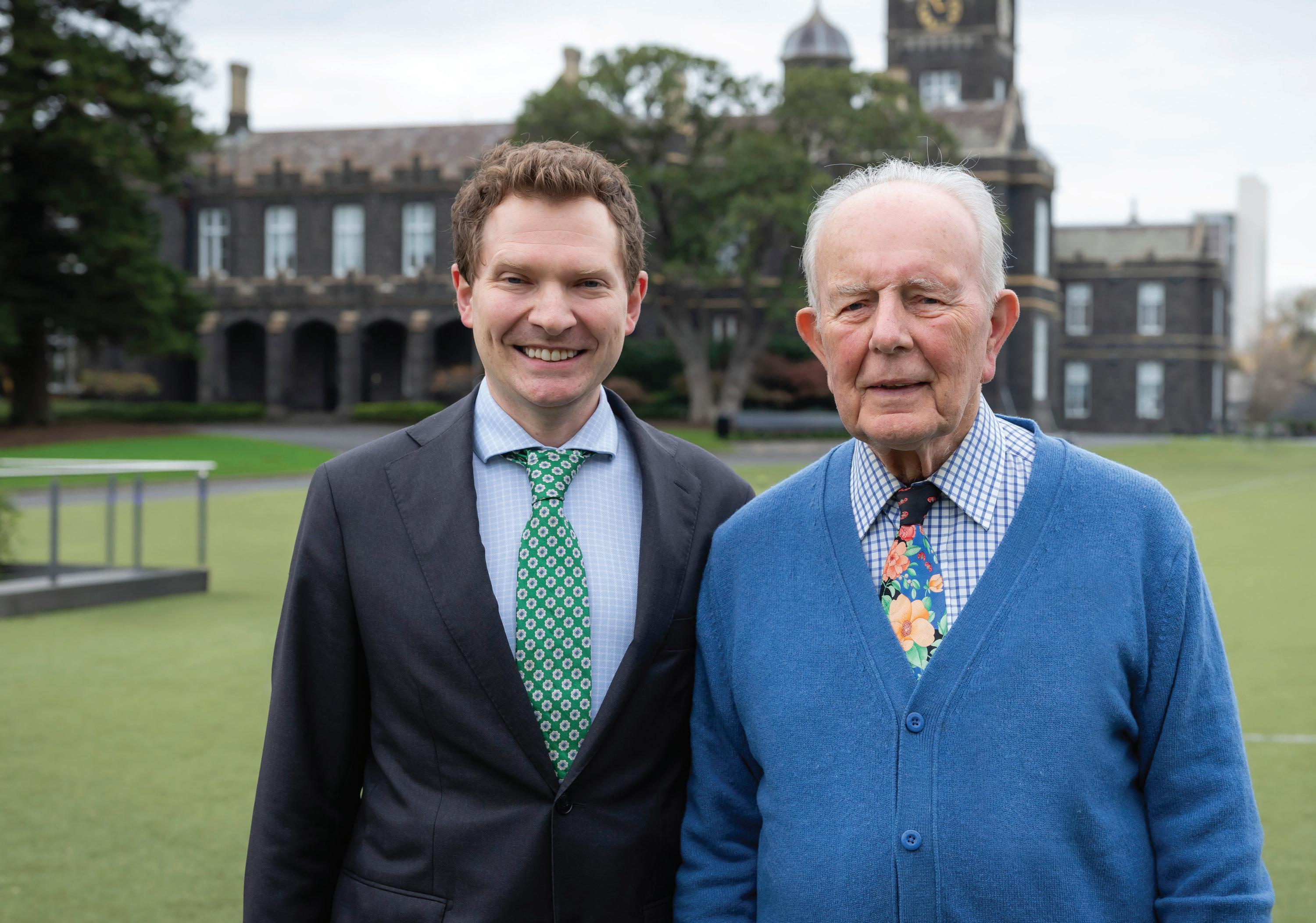
Led by Rowan Minson (OM 2003), six Old Melburnians and a supporting foundation have successfully spearheaded a fundraising initiative to support the humanities faculty within the new Jack Morrow Centre for Humanities in Peter’s honour.
Headmaster Philip Grutzner, who studied Latin under Peter in Year 8 in 1977, says the recognition reflects the profound influence exceptional teachers can have across generations.
“Peter combined deep knowledge with genuine care for his students,” Philip says.
“I recall our exam that year was to translate the centenary test match between England and Australia from Latin to English. He challenged young people to think carefully, engage deeply with ideas and approach the world with curiosity and intellectual rigour.”
“This is a fitting tribute to a teacher whose influence continues to be felt not only by those he taught directly, but through the culture of learning he helped shape at Melbourne Grammar School.”
For Rowan, Peter’s impact was deeply personal.
“Peter was my greatest mentor at school from amongst a number of great mentors,” Rowan says.
“He was a true gentleman scholar – well-travelled, learned in classical history, languages, literature, philosophy and the law, as well as a first-class cricketer and avid golfer.”
Peter started his career in Australia at Grimwade House in 1976 before moving to the Senior School in 1979, where he remained until his retirement in 2002.
Rowan Minson (OM 2003) with Dr Peter Mountford.
This is a fitting tribute to a teacher whose influence continues to be felt not only by those he taught directly, but through the culture of learning he helped shape at Melbourne Grammar School.”
Philip Grutzner, Headmaster
Head of Classics, Head of Bruce House and long-serving coach of the 1st XI Hockey team, Peter occupied many roles during his 26 years at Melbourne Grammar. Yet for the students who knew him, his impact was never confined to a single classroom, subject or co-curricular activity.
“He understood teenage boys, the struggles they faced and how to inspire them,” Rowan says.
“He treated his students as young adults and thereby encouraged them to behave as such.”
Whether discussing ancient history, coaching on the hockey field or guiding students through the challenges of adolescence, Peter brought the same combination of wisdom, humanity and care to every aspect of school life.
Peter was a lifelong scholar who studied at Keble College, Oxford, and later became one of Victoria’s most respected Classics educators, yet Rowan believes his greatest gift was helping students to become thoughtful and well-rounded young men.
“He cared deeply about his students’ physical and emotional wellbeing, at a time before such terms were commonplace,” Rowan says.
“He kept a steady eye on the bigger picture – launching well-rounded and values-driven young people on a path towards happy, fulfilling and meaningful lives beyond school.”
Many former students remember Peter through the School’s celebrated Classics tours to Italy and Greece. Armed with meticulously prepared handwritten guidebooks, he brought the ancient world vividly to life, fostering a lasting appreciation for the Humanities and the ideas that continue to shape society today.
The response when Rowan reached out to his old school mates and peers was immediate.
“Without exception, those I approached about the initiative were immediately enthusiastic,” he says.
“Each had a story about what Peter had done for, and meant to, them, but the unifying feature was Peter’s generosity and his love of learning for learning’s sake.”
For Rowan, honouring Peter through the Humanities Faculty feels especially fitting.
“As the consummate humanist, who embodied the classical values that he taught, it seemed only fitting to honour his life’s work through an association with the Jack Morrow Centre for Humanities” he says.
He also hopes the new Morrow Centre will reinforce the continued importance of the Humanities in modern education.
“Despite what some might say, independent, critical thinking of the kind the humanities can teach us is more important now than ever.”
Today, at 86, Peter remains actively engaged with education through his work as a VCAA Panel Member for VCE Latin. Yet when reflecting on this recognition, his thoughts return not to his own achievements, but to the students whose lives intersected with his.
“I am still trying to come to terms with the enormous generosity of so many of my former students.”
“I am very honoured by the naming of an area in my memory,” he says.
When walking under the hanging sign of the new Humanities Faculty, future generations of Melbourne Grammar students will come to know Peter Mountford only by name.
But in the questions they ask, the ideas they challenge and the curiosity they bring to the world, they will encounter the values that defined his teaching every day.
To learn more about how you can help shape the next generation of independent thinkers at Melbourne Grammar School visit bit.ly/mgs-giving


The value of staying connected
One of the greatest lessons I’ve learned as President of the Old Melburnians is the truth behind a simple piece of wisdom my parents often shared: the more you put into something, the more you get out of it.
Our community is more than 18,000 members strong, spread across the globe and balancing the demands of busy personal and professional lives. Time is precious, and every commitment competes for our attention. Yet what continually impresses me is how much value our members gain when they choose to engage with the broader Old Melburnians community. Through those connections come friendships, opportunities, shared experiences, and a renewed sense of belonging.
Guernseys
EXPRESSIONS OF INTEREST
Listing all players who played in the First XVIII, you can now express your interest in purchasing the new football guernsey. Personalisation options available. A great gift for past players.

The diversity of interests across our alumni network is remarkable, which is why we strive to offer a wide range of opportunities for involvement. Many members are familiar with flagship events such as our Annual Dinner, Business Breakfasts, Melbourne and Sydney gatherings, and the growing number of Branch events held in locations including the Mornington Peninsula, London, New York, Hong Kong, Singapore, and Shanghai. Our reunions and twilight campus tours also continue to attract strong interest. These events provide a wonderful opportunity to reconnect with Melbourne Grammar, rediscover familiar places, and strengthen ties with fellow alumni.
We have a growing number of OM Clubs, including the Football Club which now boasts five teams. Our Soccer Club also has five teams, including a new U20s side this year. There is cricket in the summer, table tennis, hockey, golf and bowls, as well as the rowing community who are connecting through the Melburnia Club. Every year, there is an OM Play, which is always entertaining, and we also have the OM Freemasons. There are always further opportunities to create other clubs which we can help facilitate. One emerging one is an OM Orchestra.
Jeremy Nichols (OM 1983)
Beyond these clubs and events lies another equally valuable side of our community. Programs such as the Old Melburnian Mentorship Program connects experienced Old Melburnians with those just beginning their careers, creating meaningful mentoring relationships that benefit both mentor and mentee. The Dick Cotton Fellowship supports alumni who are making a positive impact through community projects, helping them turn ideas into action and create genuine change.
We have nearly 1,500 OM women in our community, and they are increasingly becoming more engaged and adding significant value to our alumni networks. Year after year, we see members becoming more involved, contributing in new ways, and finding deeper purpose through their engagement with the OM community.
What makes all of this so powerful is the breadth of opportunities available. Whether through networking, mentoring, volunteering, attending events, or simply reconnecting with old friends, there are countless ways to strengthen relationships and discover new avenues for collaboration.
Personally, I have experienced the life-changing impact of these connections firsthand. Since taking on the role of President, I have had the privilege of meeting extraordinary members whose achievements, generosity, and commitment continue to inspire me.
I have witnessed friendships renewed, professional opportunities created, and meaningful relationships formed that may never have existed otherwise.
If you are an Old Melburnian who has been considering becoming more involved but uncertain where to begin, I encourage you to take that first step. Explore the opportunities available, attend an event, reconnect with fellow alumni, or participate in one of our programs.
The rewards may be greater than you expect.
After all, the more you put into something, the more you get out of it.
Jeremy Nichols (OM 1983) President, The Old Melburnians
About the Old Melburnian Mentorship Program
The Old Melburnian Mentorship Program engages over 100 OMs each year in the spirit of providing tangible forms of guidance, connection, and growth. You are encouraged to apply as a ‘mentor’ or ‘mentee’ today.

Register today
Upcoming 2026 Old Melburnian events
Old Melburnians Mentorship Program Launch
Monday 3 August
Community Speaker Series
South Yarra Campus
Tuesday 11 August
The Old Melburnians Annual Dinner
Friday 14 August
Mornington Peninsular Branch Lunch
Friday 30 October
Community Speaker Series Grimwade House
Tuesday 10 November
Sydney Branch Business Lunch
Thursday 12 November
1 Year Reunion (OM 2025)
Friday 13 November
Annual Bluestone Lunch
Friday 20 November
Visit bit.ly/mgs-events for more information.

Contact om@mgs.vic.edu.au to update your email address to ensure you receive your invitation.
Calling all 100-Year Old Melburnians
Contact us to express interest in attending a special event, bringing together our Old Melburnians who are 100 years of age and above. bit.ly/mgs-centenarians
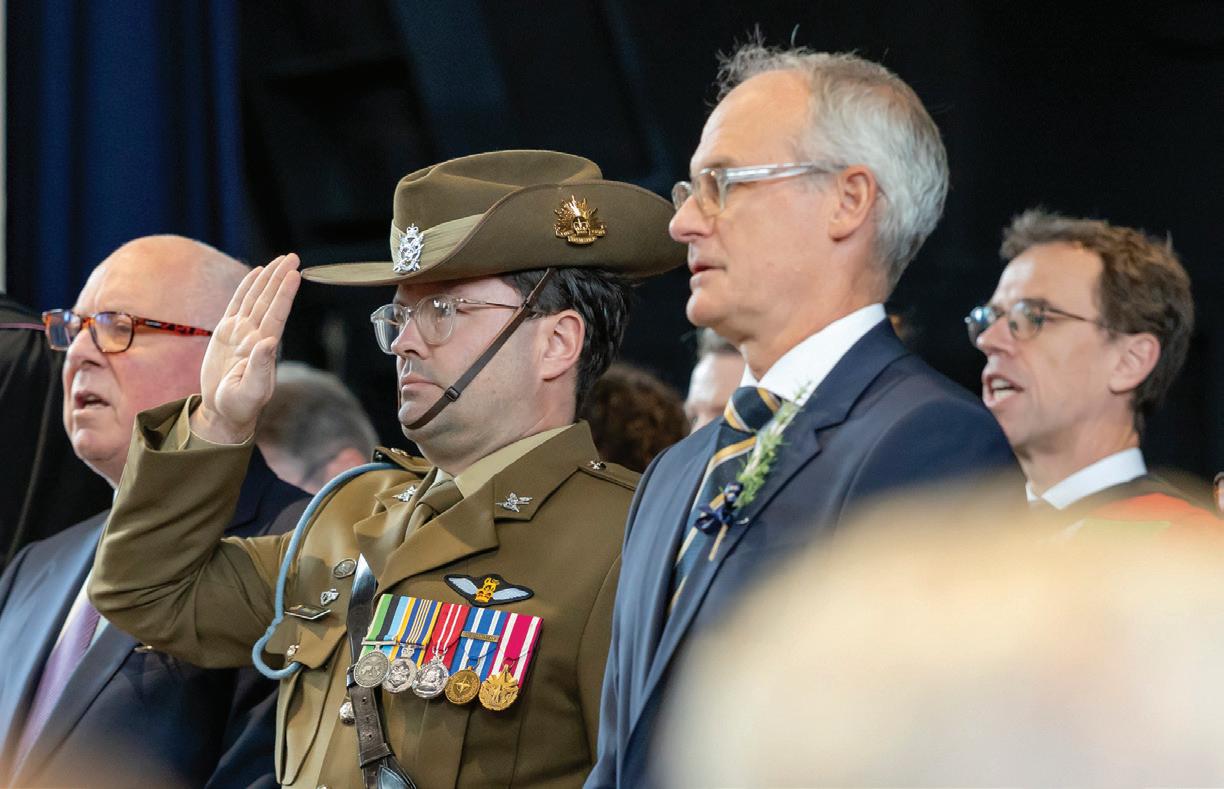
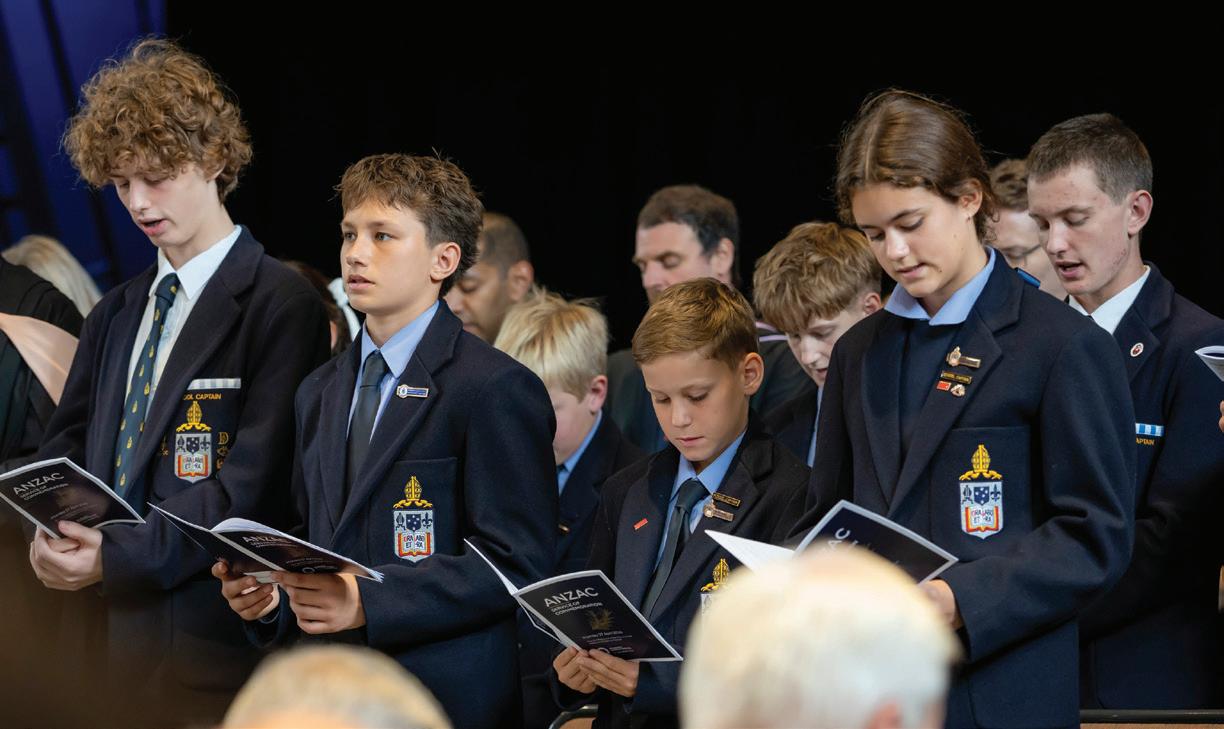
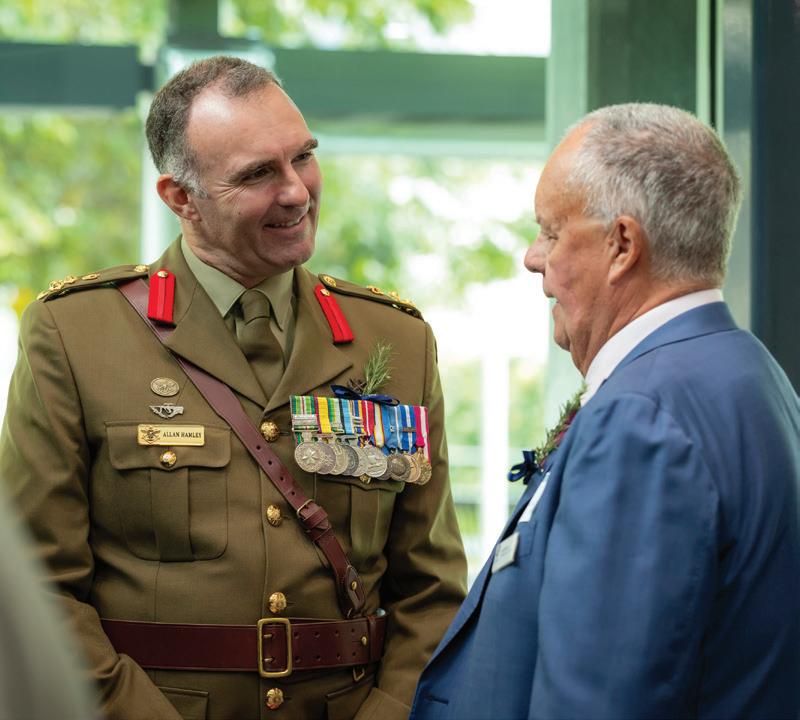
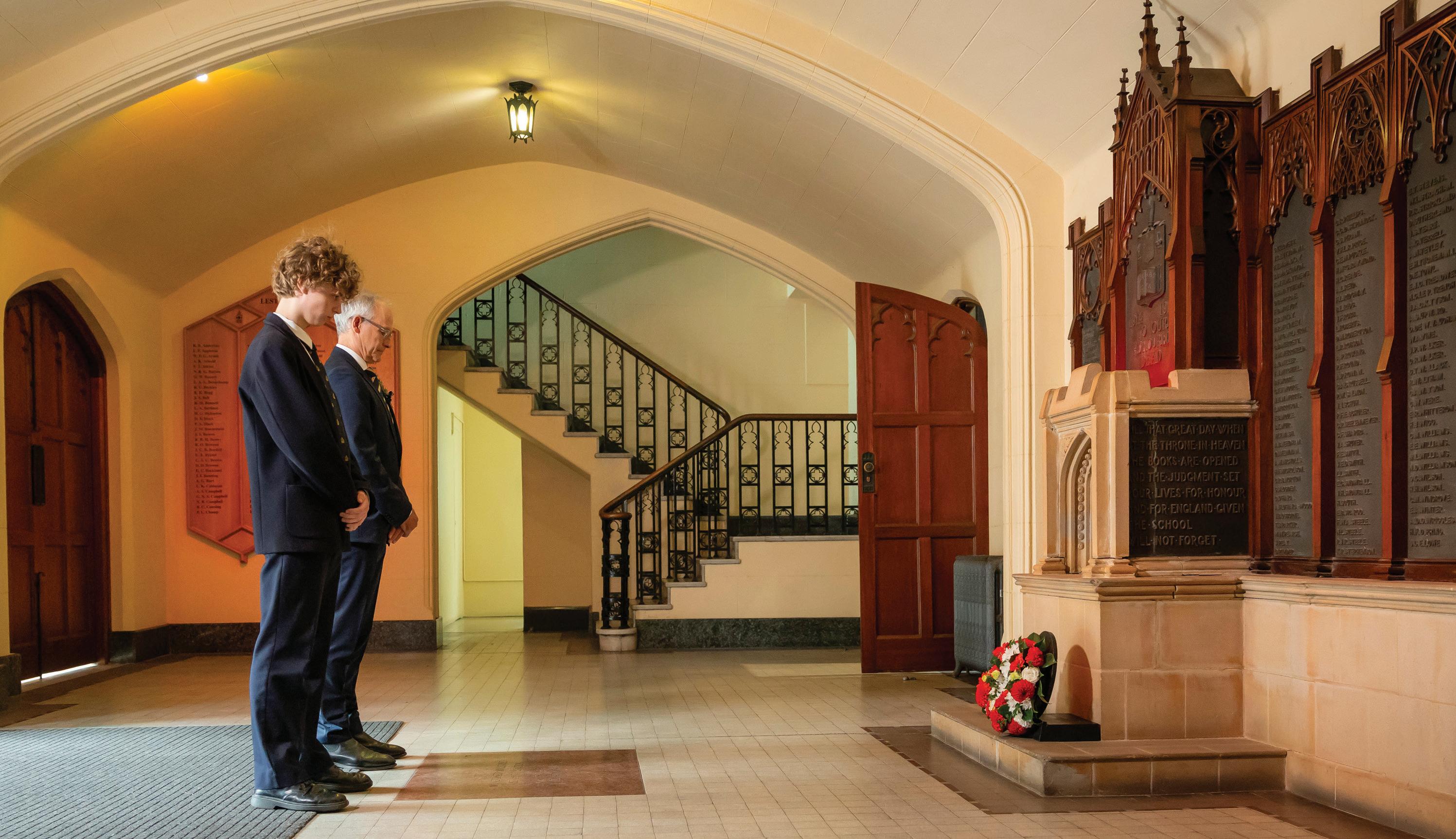
ANZAC Service of Commemoration, Monday 27 April 2026.
OBITUARIES
The School has learnt of the following recent deaths in our community. We extend our sympathy to their families and friends.
Anderson, J W (OM 1957)
Austin, T G (OM 1953)
Cleland, W R L (OM 1962)
Cohen OAM, M S (OM 1948)
Creswell, C C (OM 1961)
Davis, A S (OM 1954)
Friend, D R (OM 1961)
Goodman, R B (OM 1941)
Hart, J R S (OM 1961)
Leslie, P L (OM 1963)
Obituaries 2010 to present
Normand, A R (OM 1951)
Rishel, P C (OM 1984)
Roet, M J (OM 1954)
Rooke, R N (OM 1952)
Russell, W A C (OM 1941)
Sutherland, A E (OM 1985)
Tabart, C T G (OM 1949)
Taweel, N D (OM 1947)
Teague, G R (OM 1960)
Wainwright, M H (OM 1953)
A full list of obituaries from 2010 is available at news.mgs.vic.edu.au
Do you have an obituary to report?
Please contact us if you are aware of a death in the Melbourne Grammar School community. mgs@mgs.vic.edu.au
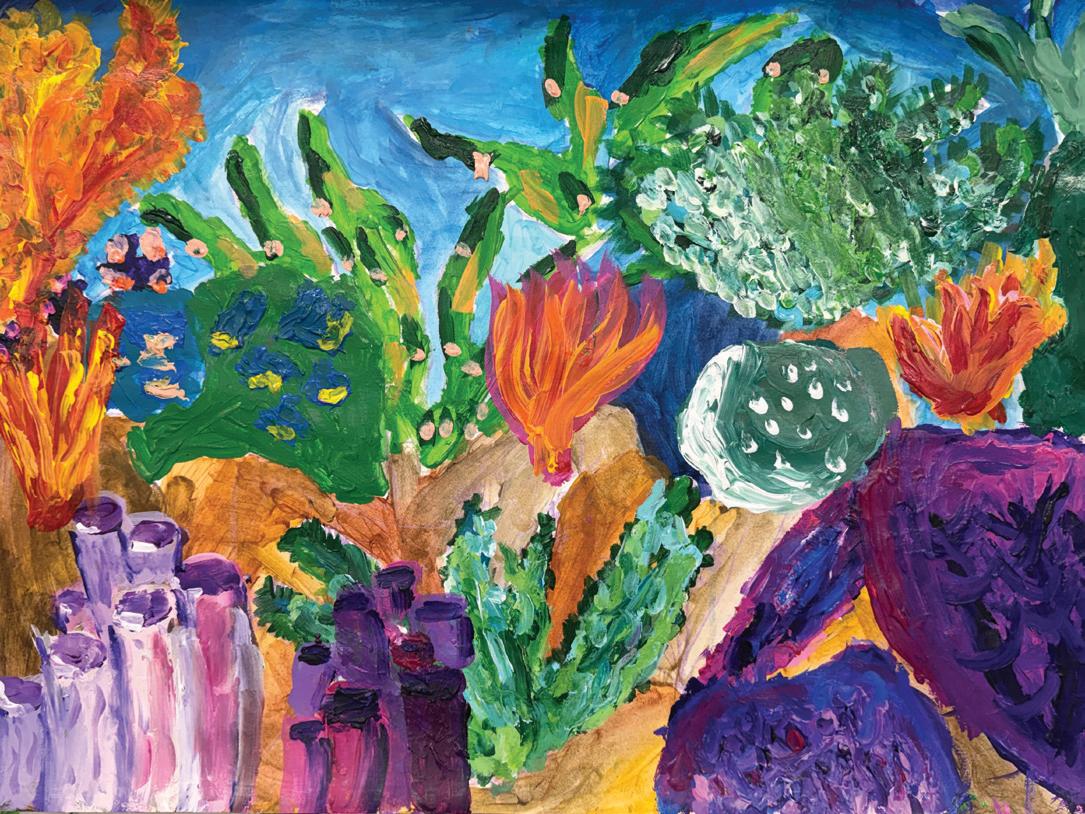
Acrylic