Do you have any news you would like to share with the Melbourne Grammar School community or a story idea for an upcoming edition of Grammar News? If so, please contact us: mgs@mgs.vic.edu.au
To report an obituary, please contact School Reception: +61 3 9865 7555 | mgs@mgs.vic.edu.au
Update your contact details
To update your contact details and to change the format in which you receive your edition of Grammar News contact School Reception: +61 3 9865 7555 | mgs@mgs.vic.edu.au or visit mgs.vic.edu.au/update-details
Every care has been taken to ensure the accuracy of the information contained within this publication. We apologise should any errors remain.
First Nations readers are advised that this magazine contains images and names of deceased persons.
Melbourne Grammar School respects the privacy of its community members and is bound by the National Privacy Principles under the Commonwealth Privacy Act. For a copy of the School’s Privacy Policy, please visit the School’s website or contact the School.
Grammar News Contents
On the cover
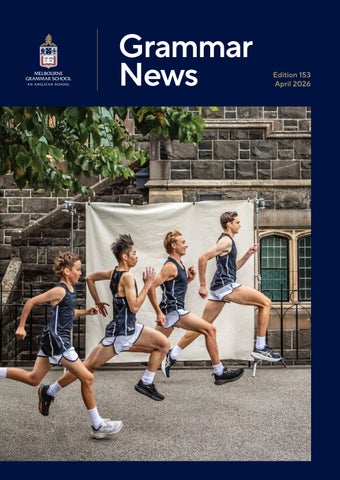
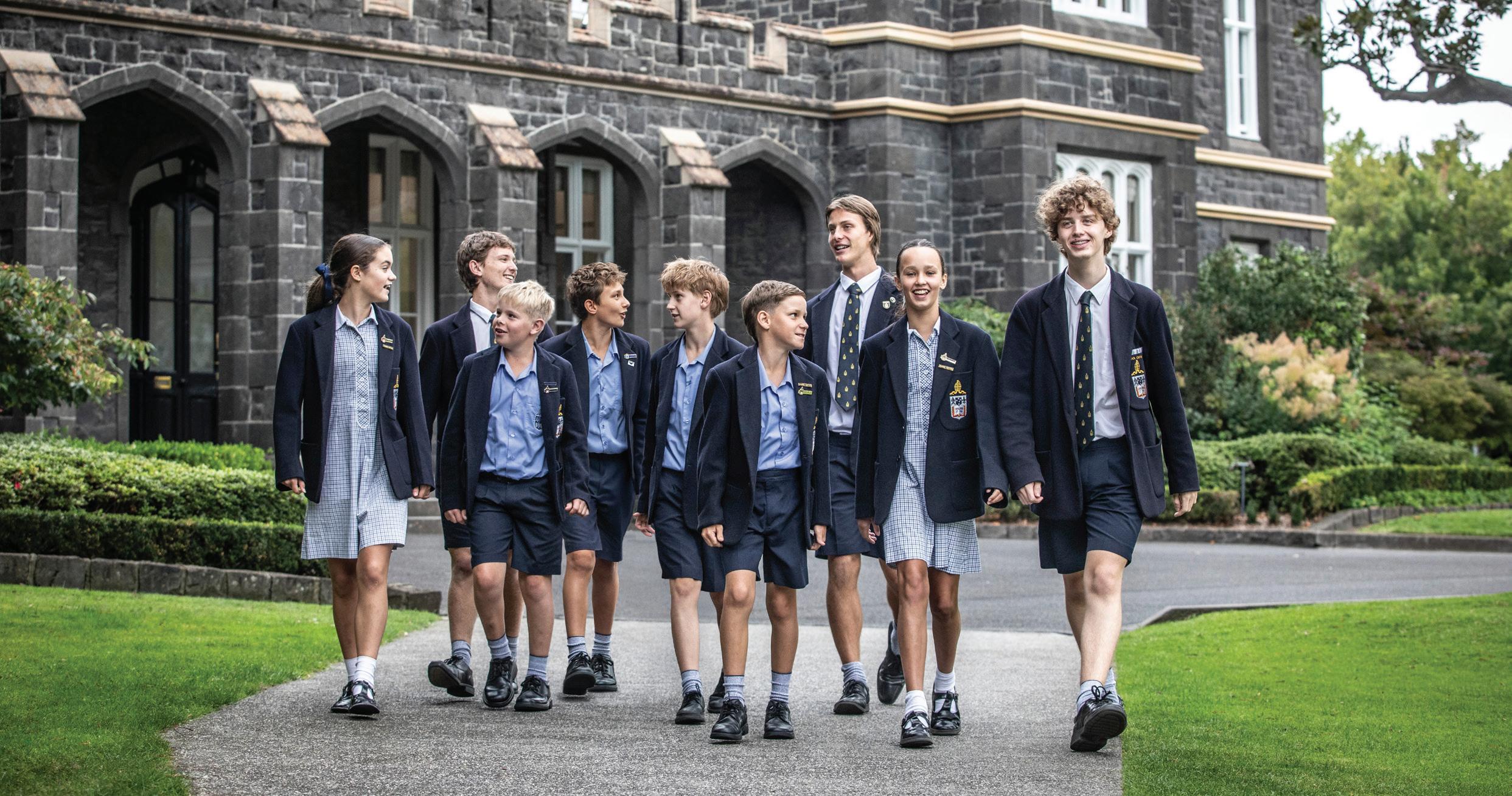
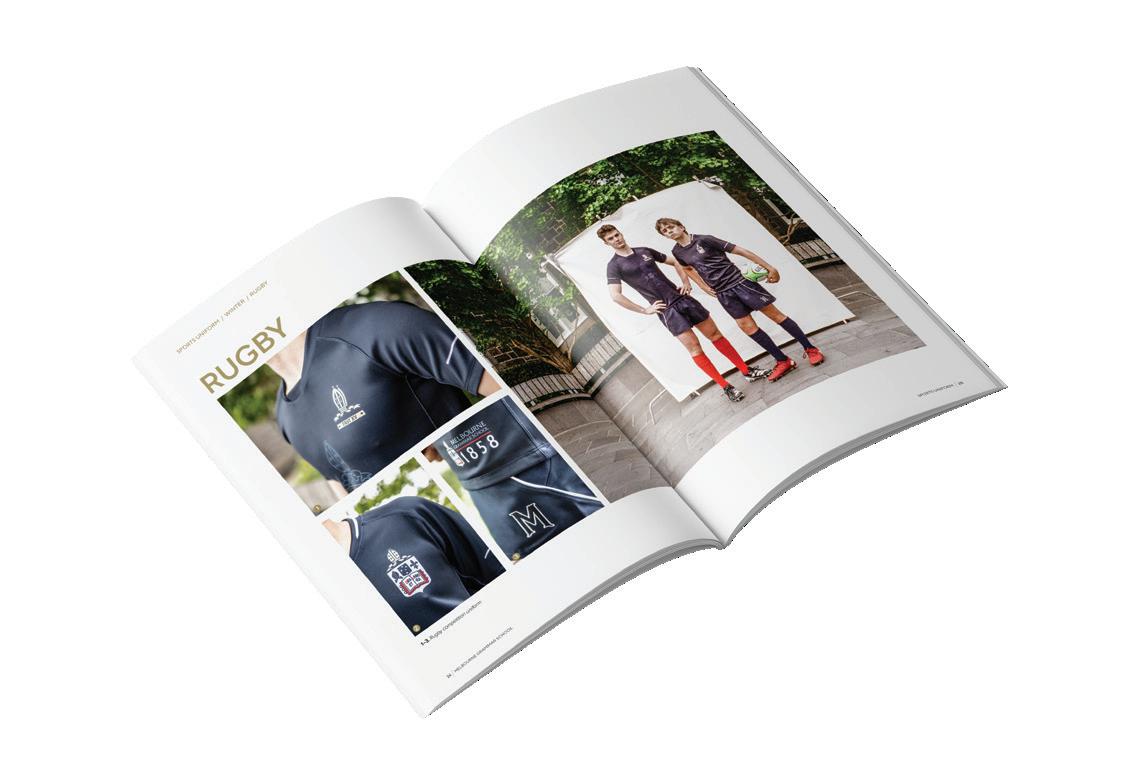
Melbourne Grammar School has introduced a new sports uniform range, which will be worn by students from the commencement of the 2026 Winter APS season.
On the cover, from left; Teddy Farquharson (Year 8), Josh Leong (Year 10), Louis D’Andrea (Year 9), and Antonio Hiscock (Year 12) model the new Athletics/Cross Country uniforms, running alongside The Old Melburnians War Memorial Hall.
Learn more about the new sports uniform on page 30.
Edition 153, April 2026
Confidence in continuity
As Chair of Melbourne Grammar School Council since May 2020, I have had the honour of overseeing much of the work that has contributed to Towards 2030, which sets out the School’s strategic intentions.
Beginning my role at the start of the COVID-19 pandemic, I was keenly aware of our need to create a strategy that could guide the Melbourne Grammar community through times of both change and stability. This need was underscored as our community adapted to new modes of online learning, and as we navigated the post-COVID educational landscape. With these experiences in mind, we consolidated our strategic intentions during 2022, and began reconsidering and rewriting our School’s values.
It was important at this particular moment in our School’s history that we complete this careful strategic work. The values laid out in Towards 2030 –Learning and Wellbeing, Courage and Integrity, Respect and Compassion, and Service and Contribution – reflect the existing strengths of Melbourne Grammar while also preparing us to respond to an unpredictable outside world. These values, and the priorities that support them, ensure Melbourne Grammar is ready for its next steps, even as the world continues to change around us.
Similarly, at this particular moment, it is well-timed for the School to be embarking on a philanthropic campaign. Achieving our purpose requires the guidance contained in Towards 2030, along with the support of our community as a whole. The economic realities facing independent schools mean they must partner with their communities to succeed, and Melbourne Grammar is no different in this respect.
The philanthropic campaign for Melbourne Grammar School has been shaped by many participants across the community, and I thank each of my fellow Council members for their role in bringing it to life, as well as for their early participation in giving to the campaign. The strategy behind this campaign, and the leadership that will see it through to fruition, give me great confidence in its success.
This confidence bolsters me as I take my own next step, concluding my role as Chair of Council at our upcoming Annual General Meeting in May. I am excited to immediately take up the role of Campaign Chair, and to announce that current Melbourne Grammar Foundation President Julian Smith will step into my position as Chair of Council. Current Council member, Alex Scanlon, will take on the role of Foundation President. I have great confidence in both appointments, and their respective capabilities to continue this important strategic work.
With Philip’s recent announcement of his planned retirement as Headmaster at the conclusion of the 2027 school year, Council is also commencing a comprehensive, international search to find the next leader of our School.
In these last months as Chair, I am struck by the ways in which our sense of community has only deepened over the past six years. I have no doubt that we have the right strategy and leadership in place as we move towards the next phase of Melbourne Grammar’s history.
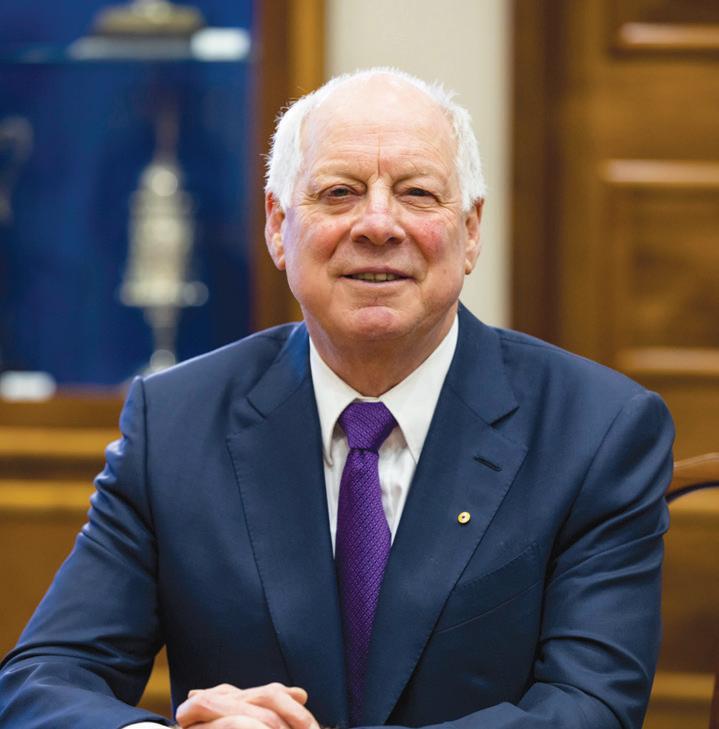
Michelmore AO Chair of Council
Andrew
Andrew Michelmore AO
The strength of our purpose
Our purpose as a school is to develop independent young people with the confidence to create their own futures, and the compassion to make a positive contribution to society and the wider world.
As Headmaster, I see this purpose reflected in the everyday moments that make up the life of our School.
In today’s complex world, our role is to develop our students’ capacity to think independently. We want our students to know that ideas require courage – to hold them, to examine them, and to advocate for them with integrity.
Underscored by our purpose, and the strategic intentions set out in Towards 2030, I am proud to announce that we are undertaking an ambitious philanthropic campaign.
This campaign, The Courage of Ideas, is underpinned by five distinct pillars:
• Learning environments
• Means-tested scholarships
• Exceptional staff
• Future Fund
• Sport performance
We have already worked towards and achieved our initial campaign target of $30 million, which reflects the immense generosity of our community and a strong shared belief in our priorities. We are now working diligently towards our new target of $40 million, which we are extremely close to achieving.
Within this goal, a target of $15 million has been set for the Centre for Humanities, which will be now proudly known as the Jack Morrow Centre for Humanities, or the Morrow Centre (see page 36 for more information). We are $1.5 million away from this target, and I would like to take this opportunity to invite our entire community to join us in helping to shape the next generation of independent thinkers.
I am excited to see the success of this future-focused campaign, which will make it possible for our School to continue to facilitate courageous, independent thinking through our environments, our students, and our staff.
Learn how you can help shape the next generation of independent thinkers at bit.ly/mgs-giving
Many of you would have seen the news of my planned retirement at the conclusion of the 2027 school year. I would like to take this opportunity to thank you for the many kind messages of support I have received in recent weeks.
My experience as Headmaster of Melbourne Grammar School, my alma mater, has been a true highlight of my career. I take great pride in all we have been able to achieve, and I look forward to seeing through these next steps in our Towards 2030 plan.
The strength of our purpose extends well beyond this chapter alone, but I am immensely proud of what we have been able to create, together.
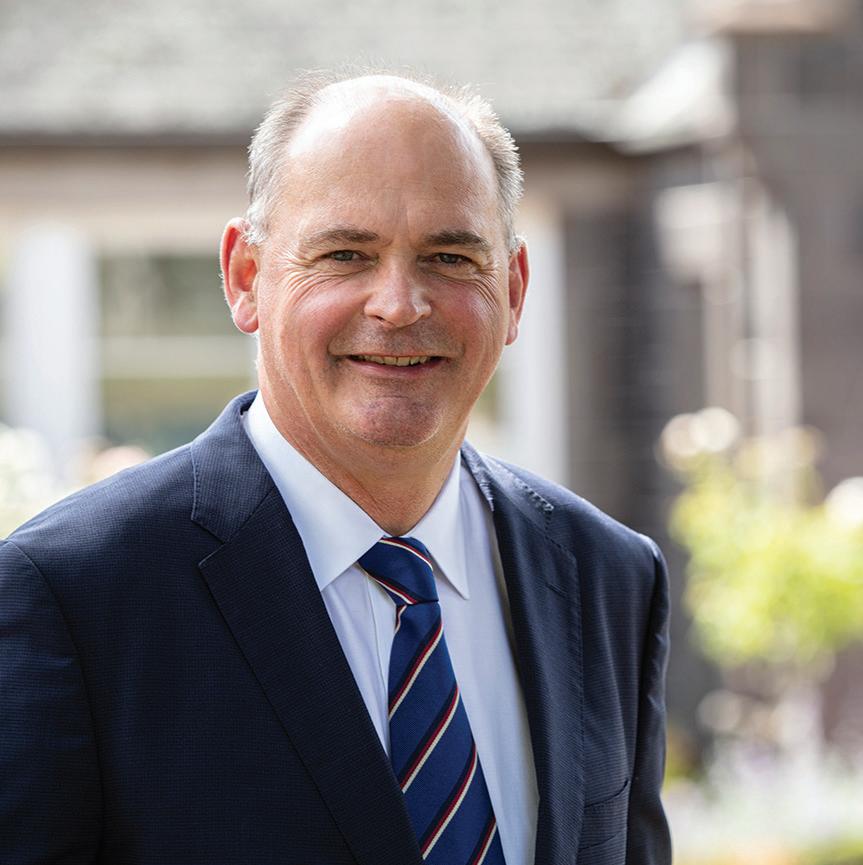
Philip Grutzner Headmaster
Philip Grutzner
Will Flintoft (OM 2021) Melbourne Grammar School's 20th Rhod es Scho lar
When considering his upcoming studies at Oxford University, Rhodes Scholar-elect Will Flintoft (OM 2021) hopes to delve deeper into two very topical subjects: the rise of generative artificial intelligence, and global inequality.
“Generative artificial intelligence is both a promising engine of change, but also a global development for which governments and regulators are probably underprepared,” he says.
“When it comes to inequality, Australian outcomes in terms of life expectancy, happiness, earnings, and health are tremendously stratified by wealth and background, and by some measures, poverty has become worse here over the last decade.
“Quite how to weave these motivating problems into a stimulating, meaningful career that matches my skills is something for me to discover,” he says.
Just over 100 students worldwide are chosen to become Rhodes Scholars annually. Will is the 20th Old Melburnian set to become a Rhodes Scholar, joining an impressive and accomplished list of academics.
But first, he will complete his studies at Harvard University, where his focus lies in the dual fields of philosophy and applied mathematics. He is currently writing a thesis on Gödel’s Incompleteness Theorem, a logical problem concerning how maths is proved.
Continues over page
When I think back to my most transformative experiences as a student ... the central element has been the teacher, mentor, or professor.”
Will Flintoft (OM 2021)
Will at Harvard University in Boston.
Photo: Lucy Vuong
My time at school was enriched by the teachers who challenged me, made time for me, and who spoke with me.”
Will Flintoft (OM 2021)
While studying at the Ivy League institution, Will has overseen the Harvard Review of Philosophy and Harvard Undergraduate Law Review publications as Managing Editor and Editorial Chair respectively. He has also competed with the Heavyweight Rowing team, sung with acapella group ‘Harvard Krokodiloes’, and led a community service program teaching maths and English to lowincome students in inner Boston.
Will received his acceptance on a brief trip home to Australia late last year, and was with his family when the exciting news came through. Come October, he will be studying a DPhil (PhD) in Mathematics at Oxford as a Rhodes Scholar.
“The Rhodes is both an unparalleled opportunity for young university grads to deepen their capacities at one of the world’s leading universities, and also a call to use that education for the betterment of the community,” Will says.
“In my own case, I have always seen that which I study in the classroom as continuous with the problems out in the world that motivate me.”
Will commenced at Melbourne Grammar as a Prep student, and became an accomplished debater, orator, actor, and musician during his time at the School. During his final years, which coincided with the COVID-19 pandemic, he was named Captain of the School and became the 2021 Proxime Accessit and the recipient of a Premier’s VCE Award, scoring the highest-possible ATAR of 99.95.
Still in the thick of his studies, Will is not yet willing to speculate about the career that awaits him. In fact, Will says the “pre-professionalisation” of learning, and the view that a good education can only be measured by how prepared students are for employment, is a predication that concerns him.
“A thought experiment is helpful here: what moments left the strongest impressions on you from your time at school? I have yet to find someone whose answer was anything even vaguely pre-professional, or related to utility or employment,” Will says.
“More likely, it was an interaction with a teacher with whom you were particularly close after struggling through an exam; struggling down Mount Hotham in the snow; walking off the Main after a thumping victory; witnessing a science experiment gone wrong at the Hub; walking onstage before an orchestra concert.
“Students and parents are not owed –and neither should they expect – any particular employment prospects or university placement from education,” Will says.
“On the flip side, they are owed, and can expect, a transformative personal and intellectual experience in spite of the call of graduation. What makes school special is precisely that for a few precious years it lets young people explore and test and discover – and frequently make mistakes – without any expectations from the world outside.”
Will adds that the two-way exchange of ideas he experienced while at Melbourne Grammar is one of the aspects of his education he has come to value most.
“When I think back to my most transformative experiences as a student – both at Melbourne Grammar, and now at the end of my time at college – the central element has been the teacher, mentor, or professor,” he says.
“Education – good education, that is – is about so much more than the transmission of facts. My time at school was enriched by the teachers who challenged me, made time for me, and who spoke with me.”
Melbourne Grammar School Rhodes Scholars
E F Herring (OM 1910)
W S K Hughes (OM 1914)
S C Leslie (OM 1915)
W K Hancock (OM 1916)
R R Sholl (OM 1919)
A Garran (OM 1924)
J C Richards (OM 1929)
M N Austin (OM 1931)
A H Cash (OM 1940)
J D Anderson (OM 1949)
G D Cumming (OM 1963)
C D Cordner (OM 1967)
C M Maxwell OM 1969)
A G Michelmore (OM 1970)
P M Crossley (OM 1981)
C D McCamish (OM 1987)
C R B Day (OM 1988)
P L Pham (OM 1991)
A A Wyatt (OM 1993)
W J R Flintoft (OM 2021)
Cont i n u in g our tradition of excellence 2025 VCE Results
The Class of 2025 attained an extraordinary set of VCE results last year, continuing the School’s long tradition of academic excellence.
15% of our students achieved an ATAR of 99+, placing them in the top 1% of the State.
38.5% of our students achieved an ATAR of 95+, placing them in the top 5% of the State.
61% of our students achieved an ATAR of 90+, placing them in the top 10% of the State.
Daniel Gao, Tahj Kumar, Georgios Pirpiris, Nicholas Wang, and Andison Zhang each achieved the highest-possible ATAR of 99.95. Only 42 students across Victoria attained this result in 2025.
Upon receiving his result, Nicholas, who has since been named the 2025 Dux of Melbourne Grammar School, reflected on the opportunities he embraced beyond academics, and the importance of maintaining a sense of balance.
“Programs like outdoor education and being part of the orchestra can be as impactful and as educative as what you learn in a classroom,” he says.
“It's important to always keep that balance and to remind yourself not to get too fixated on one thing.”
Each year, Year 12 students step outside the classroom and excel across a variety of fields of endeavour.
Nick Bogdan was selected for the Victorian State Debating team, and competed in the National Schools Debating Championships in May last year.
Led by Ethan Howells, the Values in Action Committee extended its servicefocused activities to support the ‘Trainer’s for Tiwi’ project, the UN Walk for Women, and The Laptop Initiative.
Monty Sallabank was selected to represent Australia at the U19 World Rowing Championships, and competed in the Junior Men’s Quad Sculls in Trakai, Lithuania in August 2025.
Several Year 12s – Ollie Lie, Harry Birrell, Alex Creswell Orbea, Kenny Tran, Jeremy Xiong, and Zachary Xu –contributed to the 2025 APS Volleyball Premiership.
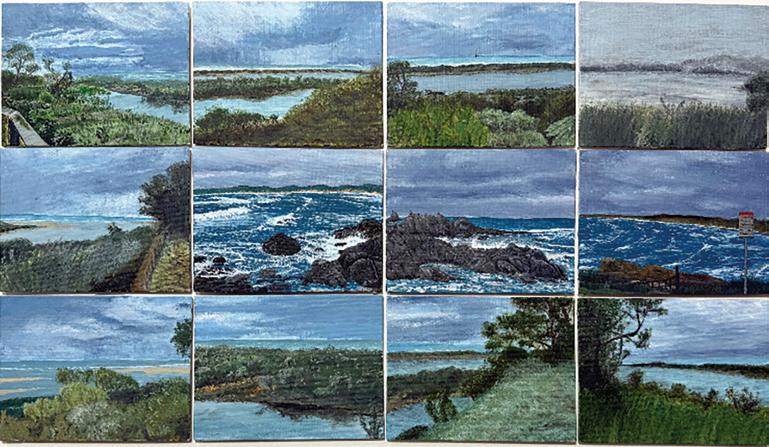
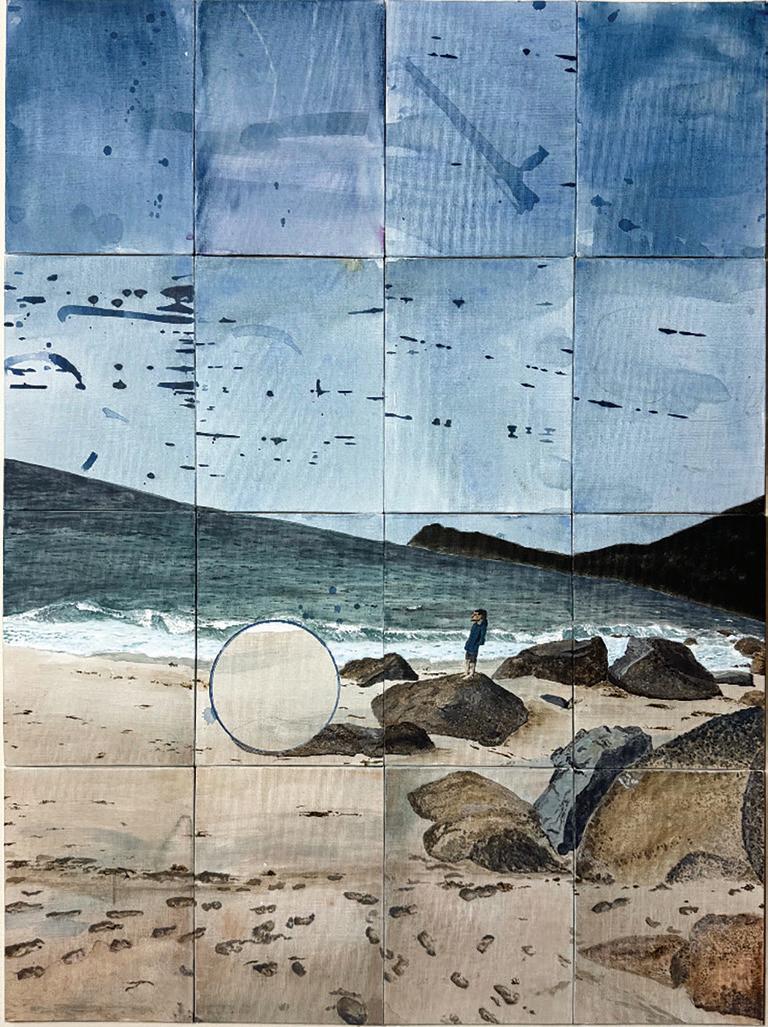
Leigh Nguyen’s and Alexander-John Black’s respective works (pictured above) were shortlisted for 2026 Top Arts, which showcases outstanding work created by VCE Art Making and Exhibiting and VCE Art Creative Practice students.
Many graduating students received offers from leading Victorian universities, with the largest number offered places at the University of Melbourne and Monash University respectively. Some will pursue global pathways, receiving offers from leading institutions across the United States, United Kingdom, and beyond.
For Georgios, the achievement marked the culmination of a journey that began at Grimwade House, where he commenced in Prep before continuing through the School to complete his VCE.
“The feeling of seeing a 99.95 was truly cathartic. To me, it was the perfect bookend to 13 years at school,” he reflected.
His journey highlights the strong foundations established at Grimwade House. In 2024, Albert Chen and Alex Kartel, who both achieved the highest possible ATAR of 99.95, also began their Melbourne Grammar education in Prep at Grimwade House.
These pathways reflect Grimwade House’s commitment to supporting children during the most formative years of learning and development.
Recent NAPLAN results have demonstrated continued improvement in literacy and numeracy outcomes at Grimwade, reinforcing the strength of these foundations.
“I see our history of exceptional VCE results as a natural consequence of the way we approach teaching and learning across our School,” Headmaster Philip Grutzner says.
“Ours is a learning culture where curiosity and exploration are encouraged, and knowledge is valued.”
Reflecting on his achievement, Daniel says that ultimately, it was the people who made his experience at Melbourne Grammar School so special.
“If you surround yourself with great people, ambitious people, intelligent people, empathetic people, they really define your experience,” he says.
“And more than anything, I think that’s what I’ve got from the School.”
2026 Top Arts shortlisted artworks by (1) Leigh Nguyen and (2) Alexander-John Black respectively.
An award-winning short story
by Joshua Loftes, Year 10
The Last Lemon
No one names their children anymore.
It used to matter – names – but now, in the crumbling silence of After, nobody bothers. The boy’s mother used to call him ‘Little Bit’, mostly because they had little of everything, including food, luck, and time. But even she had stopped calling him anything in the final weeks, her voice slipping into silence like the last sun behind the dust-clouded sky.
Now the boy walks alone. Twelve? Maybe ten? Or just a very old six. His ribs count his days better than calendars.
He walks through the skeleton of what used to be a supermarket. The roof has collapsed in a dignified bow, like performers after the final act. Birds –mean ones, with feathers like burnt paper – watch from rusted shelves.
He’s not looking for food. Not really. He knows better. But habits, like ghosts, don’t die properly. So, he opens every tin, sniffs every broken packet, flicks every light switch just in case the world apologises and turns back on.
Then he finds it.
A lemon.
Small, spotted, a little squishy. But unmistakably yellow, sitting in a wire basket like it had been waiting patiently just for him.
He stares.
Not because he’s hungry – he’s forgotten what hunger really is –but because the lemon is funny. It doesn’t belong. It’s bright in a world that only remembers grey.
He picks it up. Rolls it between his fingers. Sniffs it. And then –without meaning to – laughs. A real, ridiculous laugh that startles the mean birds into flight. The sound of it hurts. His throat isn’t used to joy.
‘What do I even do with you?’ he asks the lemon. It doesn’t answer. He likes that.
He decides to carry it. Not eat it. Not yet. It feels too important for that. He names it Kevin.
Now he has something to talk to.
He tells Kevin about the Before. Not that he remembers much. Just flashes: bubbles in lemonade, the sound of sprinklers on grass, his mother’s humming when she still had a name. Kevin listens politely. Lemons are good like that.
He walks and talks for three days. People stare when they see him.
A boy, alone, barefoot, filthy – and holding a lemon like it’s the crown jewels. He doesn’t stop for them. People are hungry, and hungry people get strange ideas about citrus.
On the fifth day, he arrives at a village built from trash and prayers. An old woman spots the lemon. Her eyes widen. She doesn’t ask to eat it. Instead, she asks, softly, ‘Can I smell it?’
He nods.
She closes her eyes. ‘God, I’d forgotten,’ she whispers. ‘That’s what sunlight used to smell like.’
He gives it to her. Not because he doesn’t want it – but because Kevin, being a lemon, doesn’t mind being shared.
The boy doesn’t stay. He walks on, lighter now, somehow.
He doesn’t look back. The lemon is gone, but the laugh lingers.
Joshua Loftes, Year 10 Joshua won the Year 9 and 10 Category of the Victorian Association for the Teaching of English (VATE) ‘A Story in Miniature’ writing competition in 2025.
On the intersection of science and art
“Architecture is the stage on which we live our lives.”
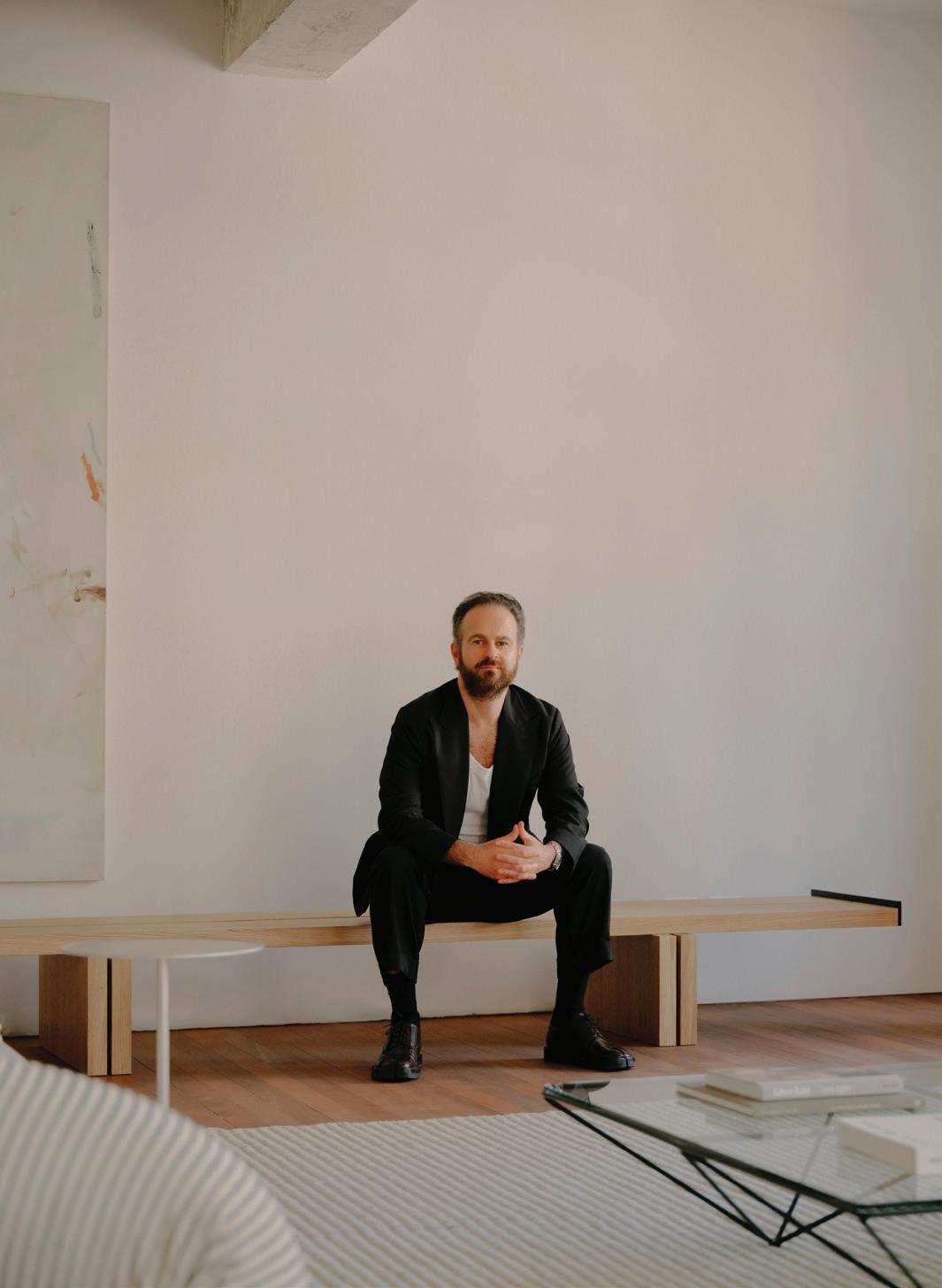
Architect Oliver Du Puy (OM 2002) says.
“Science defines what is mathematically possible – how a building stands, performs, and endures. Art responds by asking what is meaningful and beautiful.”
During his time at Melbourne Grammar School, Oliver had a dual interest in science and art. These interests, and an intersection between the two, led Oliver to a career in architecture, where he is now in his 10th year of running his own practice.
After completing respective bachelor’s and master’s degrees in architecture at the University of Melbourne, Oliver went on to postgraduate study at Cambridge, and from there deepened his knowledge at London’s esteemed Architectural Association School of Architecture.
Projects with several international firms followed in London, Paris, and Tokyo.
“Living in Tokyo, a city full of intensity, ritual, and creativity, influenced me deeply,” he says.
Now working across Sydney and Melbourne, where space is increasingly limited, Oliver continues to enjoy the challenge of working with passionate clients to push the boundaries of what’s architecturally possible from a structural, planning, and design perspective.
For Oliver, understanding the sensorial impact and interplay of light, proportion, materiality, context, and composition are foundational skills that in many ways have their roots in his time at School.
Thinking back to his time in the Art classroom, Oliver remembers the passion of his teachers, and enjoying “the curious dialogue around design, the art history component, and the actual art practice – experimenting with different mediums.”
On the flip side, Oliver also recalls enjoying the disciplines of maths and literature.
“I guess that that’s the skill of an architect, you have to be a bit of a generalist,” he says.
A keen interest in geography also helped carve Oliver’s path to architecture. He recalls memorising street names and maps before travelling overseas to new cities with family or School.
“It’s a cliché, but I do recommend seeking adventure, getting out of one’s comfort zone, and stepping outside familiar routines. Even something as simple as a morning commute or walk in a new city offers insight into how people inhabit space,” he says.
“It’s this kind of immersion that cultivates empathy and expands one’s perspective.”
Reflecting on the concept of ‘good design’, Oliver acutely understands the human, emotional element that sits at the heart of his practice.
“Good design matters because it shapes how we feel, and how we connect to each other and our environment,” he says.
“It can make us healthier, calmer, and more present in our daily lives.”
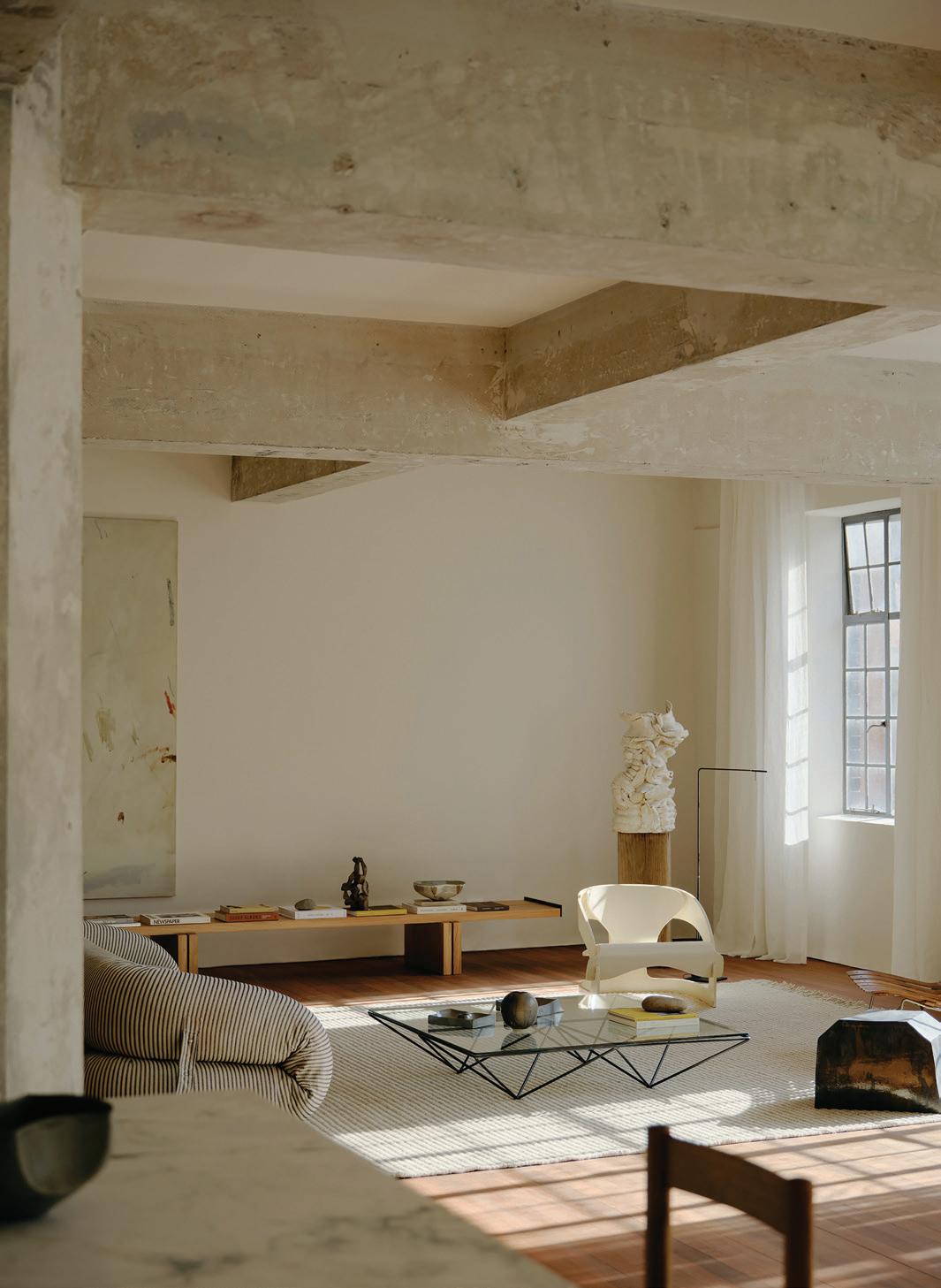
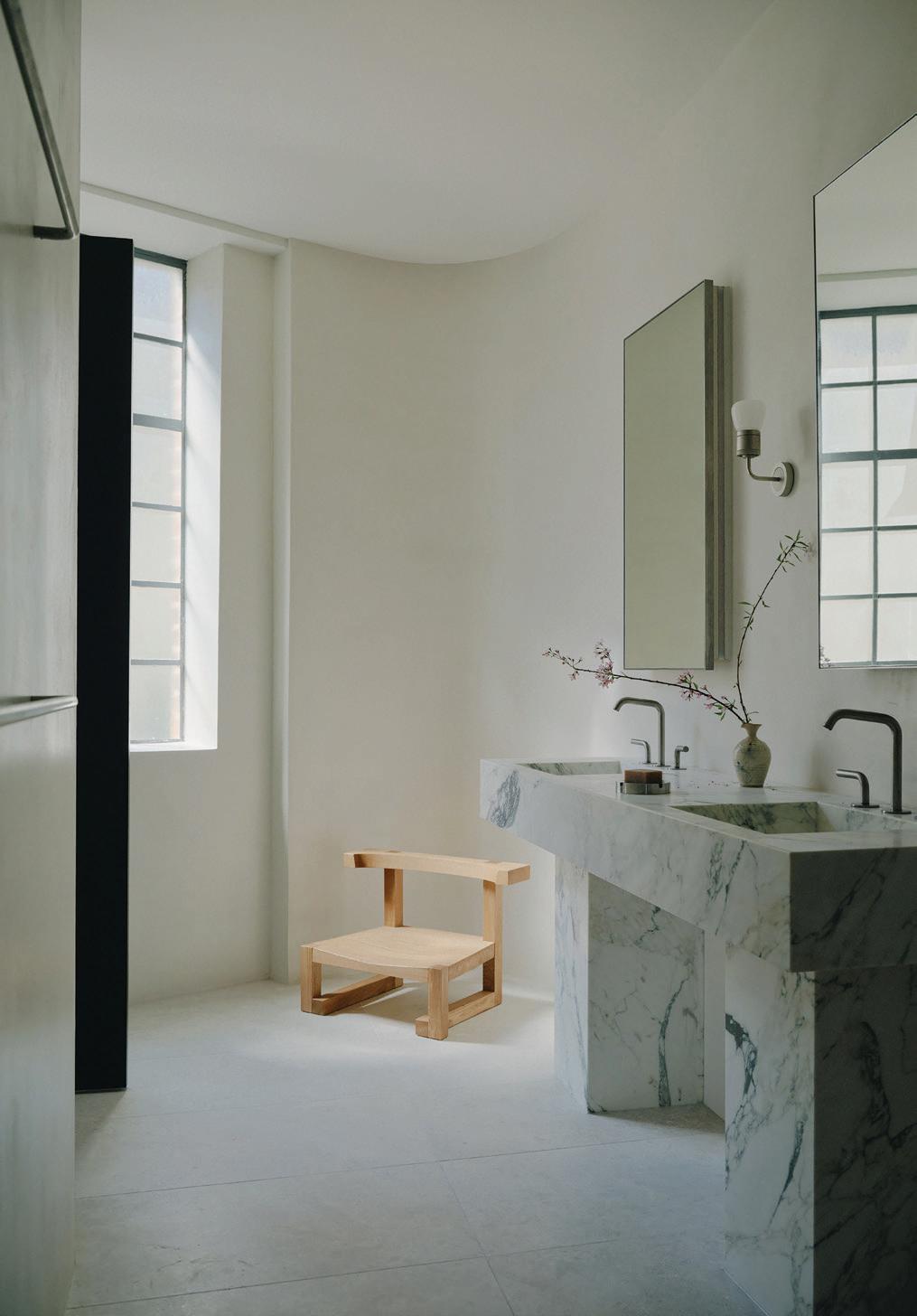
Various works by Oliver du Puy (bottom left).
Photos: Tom Ross
Giving back by design
To know that you’re working on a project that really is making a difference to those who normally wouldn’t be able to access our services – I think that’s pretty special.”
Alex Hopkins (OM 2002)
Interior architect Alex Hopkins (OM 2002) understands both the power of good design, and the power of design for good.
As the founder and director of Melbourne-based interior architecture firm Studio Tate, Alex takes pride in creating spaces with impact.
“A number of years ago, we had the opportunity to work on interiors for Jean Hailes for Women's Health,” she says.
“All of a sudden, our eyes were opened to organisations who are really acting as the backbone of our communities, but don’t have a lot of money to spend on design consultancy fees. We started to ask ourselves: How can we use our design skills to give back to organisations like these? ”
The Jean Hailes project became a catalyst for Studio Tate. Alex decided to dedicate part of the business to what she terms ‘Social Impact’ projects, providing interior architecture services to not-for-profit organisations on a pro bono and low bono basis.
Through this model, Studio Tate has transformed interior spaces for organisations across the not-for-profit sector including Indigenous-led organisations, the Centre Against Sexual Assault, and The Living Room, which provides free healthcare and support to those at risk of or experiencing homelessness.
“To know that you’re working on a project that really is making a difference to those who normally wouldn’t be able to access our services – I think that’s pretty special,” Alex says.
Interior architecture focuses on the functionality, structure, design, and space-planning of interior spaces. Alex’s ‘business as usual’ includes a portfolio of clients that she categorises into ‘live’ (residential), ‘work’ (workplace, retail, education) and ‘play’ (wellness, hotel, hospitality).
However, Alex says that the practice is ultimately people-centred, placing equal emphasis on the design team and the end users of each space.
“I have strong creative skills, but I think I also have strengths in terms of my ability to connect with people, to listen, and to get to the crux of what someone’s objective is on a project – perhaps even before they’ve really landed on it themselves.”
Alex’s career path, and the experiences she’s had along the way, have undeniably shaped the way she approaches not only her work, but her leadership.
“I was really fortunate to have been given opportunities as a young designer, and I want to provide those same opportunities to the people who work with me today,” she says.
“It was a really deliberate decision for me that we create a space where everyone can contribute to the design story.”
Alex reflects on her time at Grimwade House as an important part of her educational foundation that ultimately helped to shape the person she is today.
“Attending Grimwade, you are encouraged to ‘try it’, ‘build it’, and create opportunities,” she says.
“There is encouragement for success and there is a framework to support it if you want to grab it.
“When you’re at a school that provides opportunities for a farreaching education, you’re given the chance to discover where your true passions lie, and to excel in those areas.”
Embracing the non-linear process of design thinking
Anyone who has never made a mistake has never tried anything new.”
Albert Einstein
As Head of Digital Learning Technology at Grimwade House, Greg Milholland is as interested in his students’ mistakes as he is in their successes.
“One of the most challenging things to teach younger students is that they don’t have to get something right straightaway,” he says.
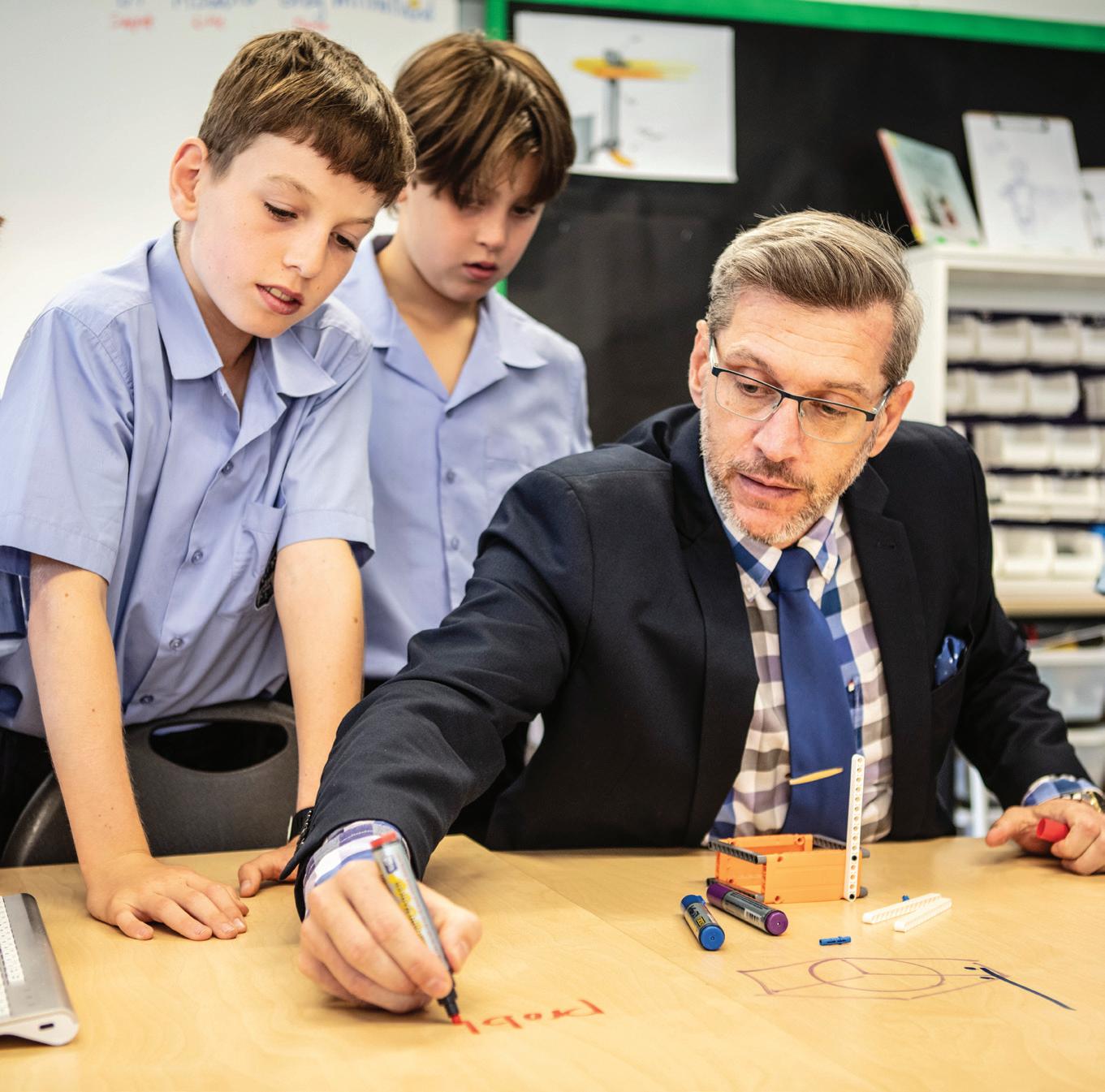
“It’s so important for us to teach students that getting to success is a process. That’s what design thinking teaches us.”
Design thinking – an iterative approach to problem-solving – is embedded across the Melbourne Grammar School curriculum, beginning in Junior Primary.
In Years 2 and 3, the goal is to create a sense of curiosity.
“Even through tools as simple as picture books, we’re finding ways to encourage students to use iterative thinking processes to solve problems. We’re teaching them that they will encounter sticking points, and that they won’t also be able to solve every puzzle immediately.”
But, Mr Milholland says, that doesn’t have to be a bad thing.
“Working out a design challenge means we have to face our own mistakes, and listen to others to learn how to improve,” he says.
“Students have to justify their reasoning, back up their arguments, and think outside their own perspectives.”
Mr Milholland’s experience includes leadership roles across Victorian schools along with time at an international school in Shenzhen, China. He holds qualifications from the Harvard Graduate School of Education and the University of Melbourne, as well as an award for Primary School Teacher of the Year in the 2025 Australian Education Awards.
In his role today, he aims to give students confidence using digital technology early, so they can continue using it to solve problems throughout their education and beyond.
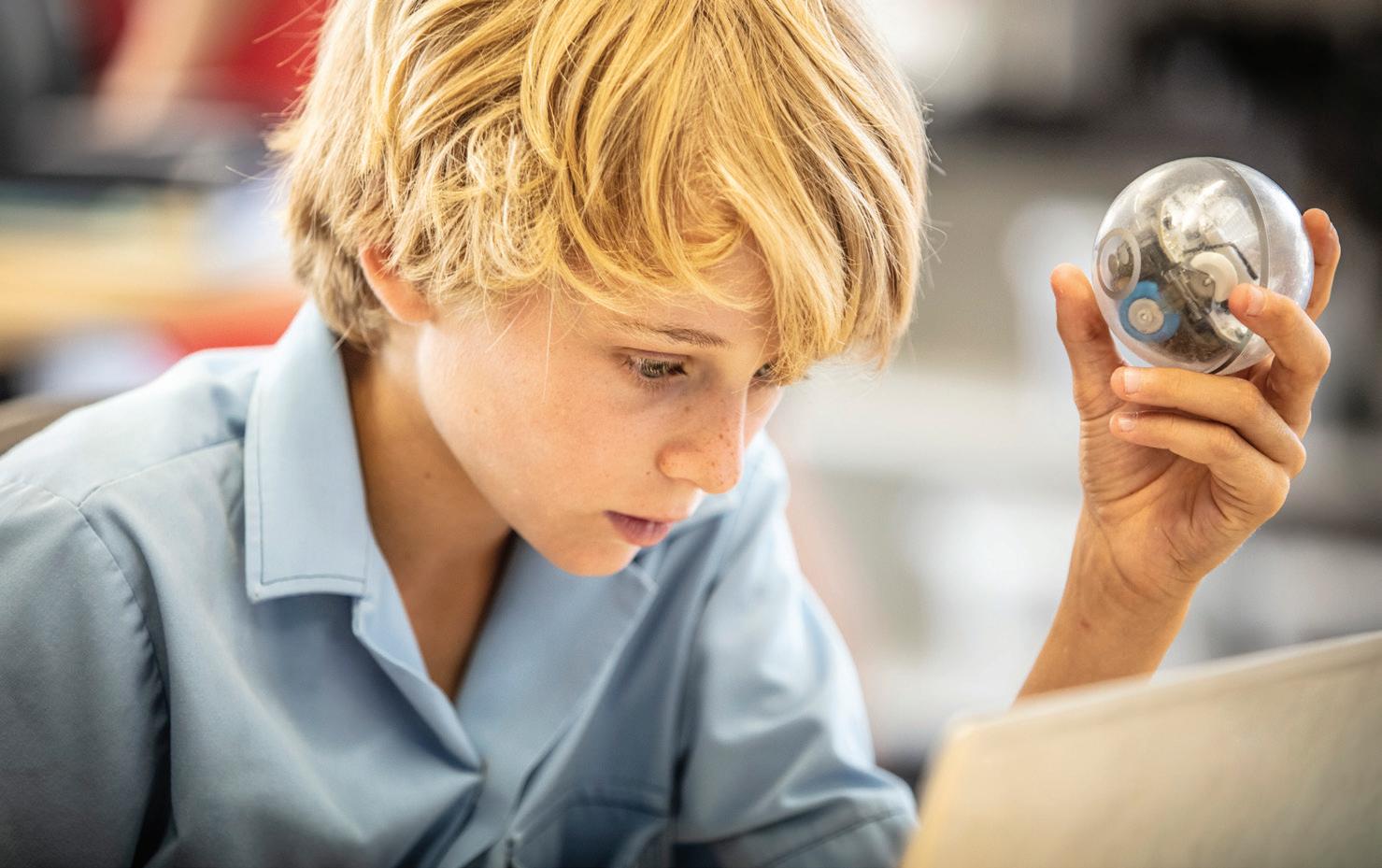
“By having early experiences in coding, robotics, and electrical engineering, Grimwade students are more excited to take advantage of what they already know when they reach Senior School,” Mr Milholland says.
“We’re introducing some of those higherlevel skills earlier, because students are more than capable of learning them at that younger age.”
By the time they reach Upper Primary, students are confidently using tools such CAD, coding languages, and 3D printers.
Part of this includes encouraging students to respond to the world around them – and empowering them to use design thinking to improve it. Last year, Year 6 students created a system where a light flashes to show that someone is coming around a corner, so they don’t collide with someone coming the other way.
“All of these tools present challenges, and none of them are challenges we can solve in a single step,” he says.
“When they don’t succeed, the question they have to ask themselves is always the same: How do we make it better? ”
Alongside real-world applications, students also engage in more playful projects that encourage iterative thinking in different ways – such as making ‘battle bots’ that search for and knock the flag off their opponents.
“Eventually, I see students walk out of the classroom with a new attitude: They know how to ask for feedback, and to take on board what they hear so they can make their work, and the world, better.”
Jonathan’s role as the third speaker was to rebut their opposition’s arguments, and to summarise their team’s points.
Max says that for speakers in this position, a common approach is to “spend time thinking about the claim that was made, the exact reasoning that was behind it (are there any fallacies?), and whether the implications of the claim actually benefit or inhibit the opposition and ourselves respectively.”
Each speaker is scored on ‘matter’, ‘method’, and ‘manner’. On their assessment, the panel of adjudicators found the Melbourne Grammar School
Fostering our purpose from the very start
One of the joys of working with younger children, Caroline Beilby, Head of Junior Primary at Grimwade House says, is their openness and curiosity.
“They have not yet formed fixed ideas about what they are “good” or “not so good” at,” she says.
“Instead, they approach learning with enthusiasm, a willingness to try new things, and even delight in mistakes that lead to new understanding.”
Between school commencement in Prep and the move to Upper Primary in Year 3 is a remarkable period of development, laying the foundation for skills and attitudes that students will carry throughout their lives.
Melbourne Grammar School’s purpose is to develop independent young people with the confidence to create their own future and the compassion to make a positive contribution to Australian society and the wider world.
Alongside explicit teaching, which lays the foundations for literacy and numeracy learning, the Junior Primary program at Grimwade House has been intentionally designed to encourage imagination, creativity, and curiosity. These experiences, Ms Beilby says, help foster a genuine love of learning.
“When children feel comfortable, confident, and connected to their school, teachers, and peers, they are far better positioned to embrace all that school life offers,” Ms Beilby says.
“They benefit from repeated opportunities to practise, and from access to a wide range of materials that invite exploration, experimentation, and discovery.”
Before preferred learning styles become firmly established, Ms Beilby says younger students tend to thrive when learning is presented in varied and engaging ways – hands- on, aural, visual, and everything in between.
When Year 3 student Simon was in Junior Primary last year, he featured in the School’s Purpose video, showing him creating greeting cards to accompany food and toy hampers for the Port Phillip Community Group. Participating in age and stageappropriate opportunities like this to engage with the world around our Junior Primary students builds empathy and confidence, and demonstrates the broader impact of their learning.
Ms Beilby says that physical environment in which young students learn also plays a vital role in development.
Teachers put significant thought into how they design their spaces; creating intentional areas that complement and enhance learning outcomes.
Consistent routines and expectations, whether students are in the classroom or outside in nature, also help build strong learning behaviours that support their growth.
Families, too, play an important part in developing foundational skills in young learners.
“We encourage parents to support their children in taking thoughtful risks, viewing mistakes as positive opportunities, and allowing space for children to work through challenges before stepping in,” Ms Beilby says.
“Our aim is to nurture students who are confident risk-takers and creative problem -solvers – young learners who can apply their initiative across a variety of settings both in school and beyond.”
Behind the scenes
At the start of the school year, we launched a video that captures the School’s Purpose, using real stories of real students. Meet the independent thinkers who starred in this special project.
1 SIMON
Simon and his classmates created greeting cards to accompany food and toy hampers for the Port Phillip Community Group, that provides a range of programs and services to the community.
2 EVIE
After completing a poetry unit, Year 5s select a piece to memorise, choreograph and recite. Last year, Evie selected The Tummy Beast by Roald Dahl, which she performed to her class and wider cohort, demonstrating her ability to comprehend poetry language, structure, and meaning.
3
CITY EXPLORERS
Across the week-long Melbourne Experience program, Wadhurst students and their Melbourne Girls Grammar peers deepen their understanding of urban environments by creating short documentaries that capture how the city has changed culturally, historically, and socially.
4
ACCESSIBLE DESIGN INNOVATORS
Senior School students Rudy and Angus created solar lamp attachments for water bottles using CAD and 3D printing technologies.
Their peers Fred and Gianni used similar practices to create cutlery with modifications for people living with disabilities.
Read more from Scott James, Head of Technology, on how our students learn to design for others, via our Grammar News website at news.mgs.vic.edu.au
5
PASSIONATE COMMUNICATORS
Our state and national-level debaters demonstrate creative thinking and communication, broaching the topics that affect our world today. In the video, Siddharth, Lachlan, Hugo, and their peers considered the topic ‘That the internet enhances democracy’.
6 COMMUNITY-MINDED INDIVIDUALS
The School’s boarding house is a place where students have the opportunity to exceed their own expectations within a community that offers a true sense of belonging. Pictured are boarding students Hugo, Sonny, Aden, Marcus, Ed and Hamish making their way to after school sport training and music lessons.
Watch video
An evolving city on our doorstep
Anzac Station opens on St Kilda Road
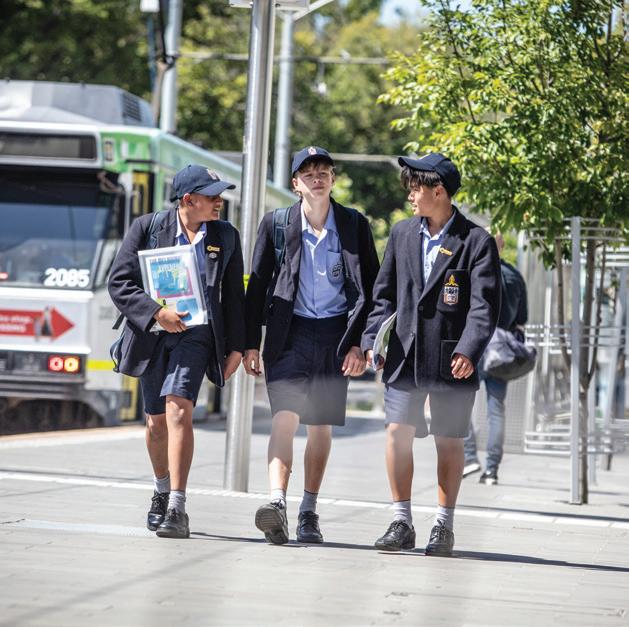
On 1 February, the full Metro Tunnel timetable swung into action, improving accessibility to Melbourne Grammar School’s South Yarra campus via Anzac Station.
The new underground station connects the Cranbourne and Pakenham train lines to the east, and the Sunbury line to the west. Directly above the station is a new tram interchange, connecting routes 3, 5, 6, 16, 58, 64, 67, and 72.
Wadhurst student Kaien Vu and his project group researched the new station as part of the week-long Melbourne Experience program.
They created a video exploration on the city’s technological changes over time, featuring the signalling technology used in the new Metro Tunnel.
“Cities must evolve over time because the world around them constantly changes and they have to adapt.” he says.
“When I stepped foot inside the Metro Tunnel, I was amazed. It has a more modern look and its advanced technologies create a safer environment.
“And, it has given me a faster way to get home and to school.”
Melissa Allen, Head of Teaching and Learning at Wadhurst and Humanities teacher, says that the School’s proximity to the city provides invaluable access to authentic learning environments for programs such as the Melbourne Experience, allowing students to move beyond the classroom and directly engage with the urban landscape they are studying.
Across the week-long program, Wadhurst students and their Melbourne Girls Grammar peers deepen their understanding of urban environments by creating short documentaries that capture how the city has changed culturally, historically, and socially.
“Combined with the opportunity to collaborate with Melbourne Girls Grammar School, students are able to connect their learning to real-world settings while also building social and collaborative skills with peers from another school,” she says.
“This connection to place and partnership enriches inquiry, strengthens engagement and deepens their understanding of Melbourne’s identity and liveability.”
Sudhiresh Deb, Henry Leyland, and Kaien Vu.
Meet the 2026 School Captains
A liberal arts education
When I begin to reflect on the liberal arts education I have been privileged to receive over the last 13 years at Melbourne Grammar, my mind goes straight to this school’s embodiment of the liberal arts: the Quad Philosophy classroom.
In a recent discussion about John Stuart Mill’s reflections on liberty, my class examined how the world today feels fractured. Public debate is sharp, impatient, and sometimes even cruel. People speak past one another rather than engaging with different ideas, and there can be little regard for reaching a nuanced conclusion or learning how to respectfully agree to disagree.
And yet, through all this communicative collapse and the turbulence it has unleashed across the globe, at Melbourne Grammar School the broad liberal arts education we receive acts as a grounding force.
When I first heard the phrase “liberal arts” in Grade 4, I assumed it had something to do with the Liberal Party, a rookie error. In reality, it describes an education that values breadth: learning across the humanities and sciences, classrooms and cocurricular life. It is the antithesis of a narrow, soulless ATAR machine.
It is why Year 9s study art, even if their linocuts or handprint paintings may never hang in a gallery. It is why STEM enthusiasts still study history in Year 10. It is why I am part of the second Fifth soccer team, giving it my best despite a lack of speed. It is why we field a second Fifth soccer team at all.
It is why we debate, row, perform Shakespeare under bats and stars in the Quad Play, and thrash out ideas in Politics Club at lunchtime. It is why the school supports a Year 6 musical, even though most of us will never (and sometimes probably should never) set foot on a stage again.
From left: Isabelle Duncan, Grimwade House Captain (Semester 1); William Furphy, Vice-Captain of the School; Angus Gourlay, Grimwade House Captain (Semester 2); Austin Moszczynski, Wadhurst Captain; Jack Iliff, Wadhurst Vice-Captain; Monty Farquharson, Grimwade House Captain (Semester 1); Oscar Froomes, Vice-Captain of the School; Sophia Pfab, Grimwade House Captain (Semester 2); Edgar Stirling, Captain of the School.
It is why we read broadly, swim up and down the pool each year, and why the Outdoor Education program has seen us rafting, abseiling, and spending 42 hours alone under a bivy on our Beyond the Gates camps through heatwaves, thunderstorms, and the occasional Melbourne-style blizzard. It is why we have students playing piano for the elderly on Friday afternoons and turning up on frigid mornings to cook toast and flip eggs at homeless shelters.
For Melbourne Grammar students, a liberal arts education also means a lot of exercise – and I am not just talking about compulsory cross country and participation in APS. With the science building, language rooms, and humanities classrooms scattered across opposite corners of the school, a liberal arts education occasionally feels less like a philosophy of learning and more like an endurance sport or, if you include APS morning commutes across Melbourne, even a motorsport.
But the deeper point is this: within these bluestone walls steeped in history, students are nurtured and given the opportunity to grow in a safe and encouraging environment.
Perhaps I am being slightly idealistic. With the prevalence of knave social media algorithms and cycles of catastrophic news, no education can completely shield us from the complexities of a world beyond the bluestone. But even if our education cannot protect us from those realities, it certainly prepares us for them.
A liberal arts education arms us with empathy. To quote a source I encountered through my fine liberal arts education, the Roman poet Ovid once wrote:
“A faithful study of the liberal arts humanises character and permits it not to be cruel.”
To study widely; literature, philosophy, science, languages and history is to encounter lives and perspectives very different from our own. It cultivates a capacity to transcend the limits of our own perspective and to engage, with greater efficacy, with the worldviews of those around us.
But it can also help us understand ourselves. The Greek maxim inscribed at Delphi reminds us: “Know thyself ”.
A broad education encourages us to engage with experiences beyond our initial inclinations, and through this process we can slowly come to understand not only our identity but our values.
Now, most Melbourne Grammar students have not yet had to deploy these skills or confront the world in its full complexity. But for the students who wear this blazer badge, when that day comes, our Melbourne Grammar education will have prepared us to step into the wider world with empathy and curiosity.
Stirling 2026 Captain of the School
This article has been adapted from a speech given at the Witherby Tower Society Luncheon.
Edgar
Play together, dark blue twenty
A brief history of the Melbourne Grammar School sports uniform.
Honour ye the old school’s story
Those who played and won before ye, Bear the Dark Blue flag to glory, ‘Grammar’ to the Fore.
The closing lines of the chorus of the Games Song written in 1888 by Headmaster Rev’d Dr Ambrose J Wilson (1885–1893) continue to unite Melbourne Grammar School students and the sports they play.
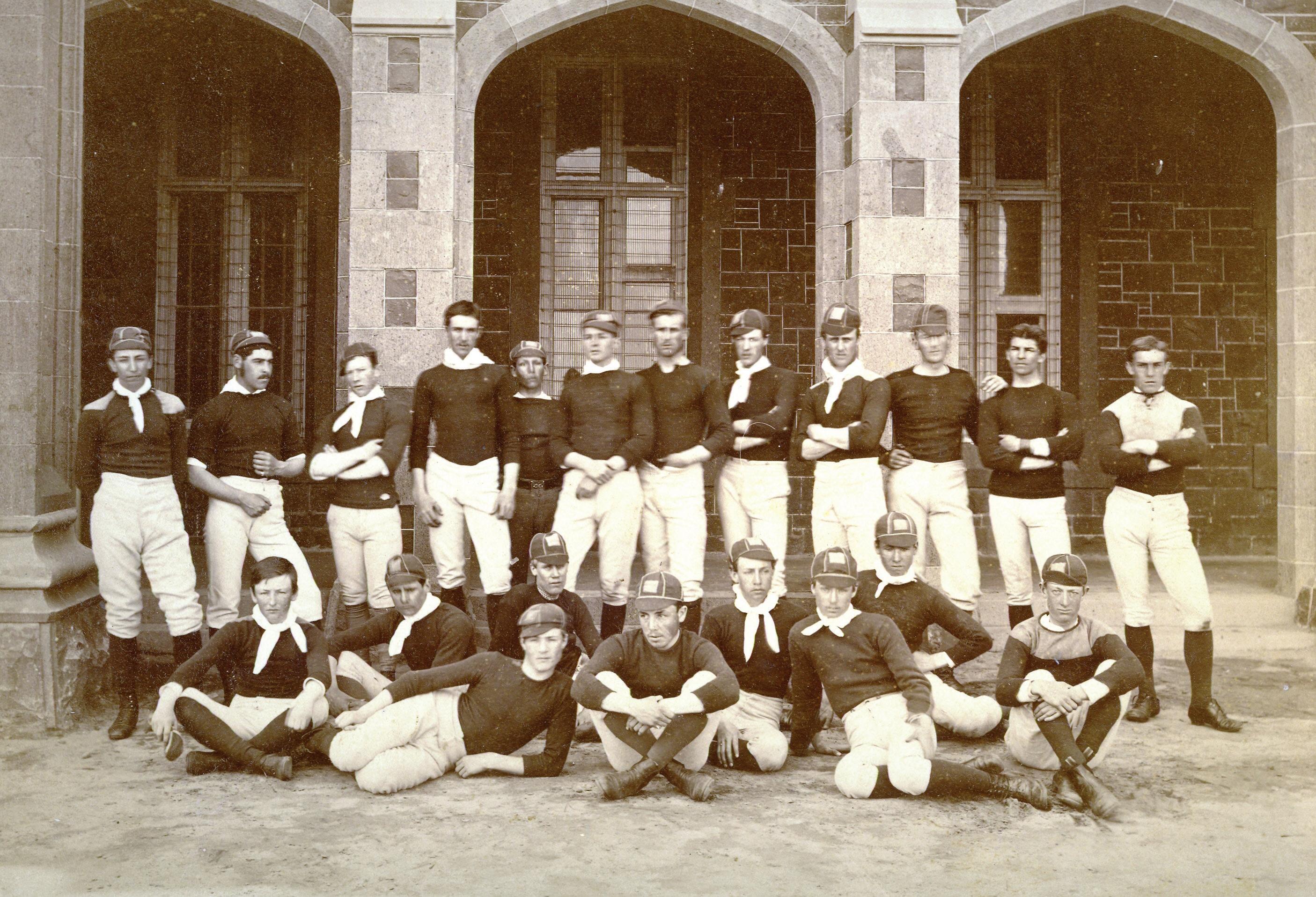
The ‘Oxford’ blue was chosen by Headmaster Mr Edward Ellis Morris (1875–1882) as the School’s official colour in 1875. The year after, the first school flag bearing the School crest on an Oxford blue background was unfurled atop of Witherby Tower, and the Melbourne Grammar football team adopted the School’s first football uniform.
In the years since, the uniforms Melbourne Grammar athletes wear on and off the field have evolved.
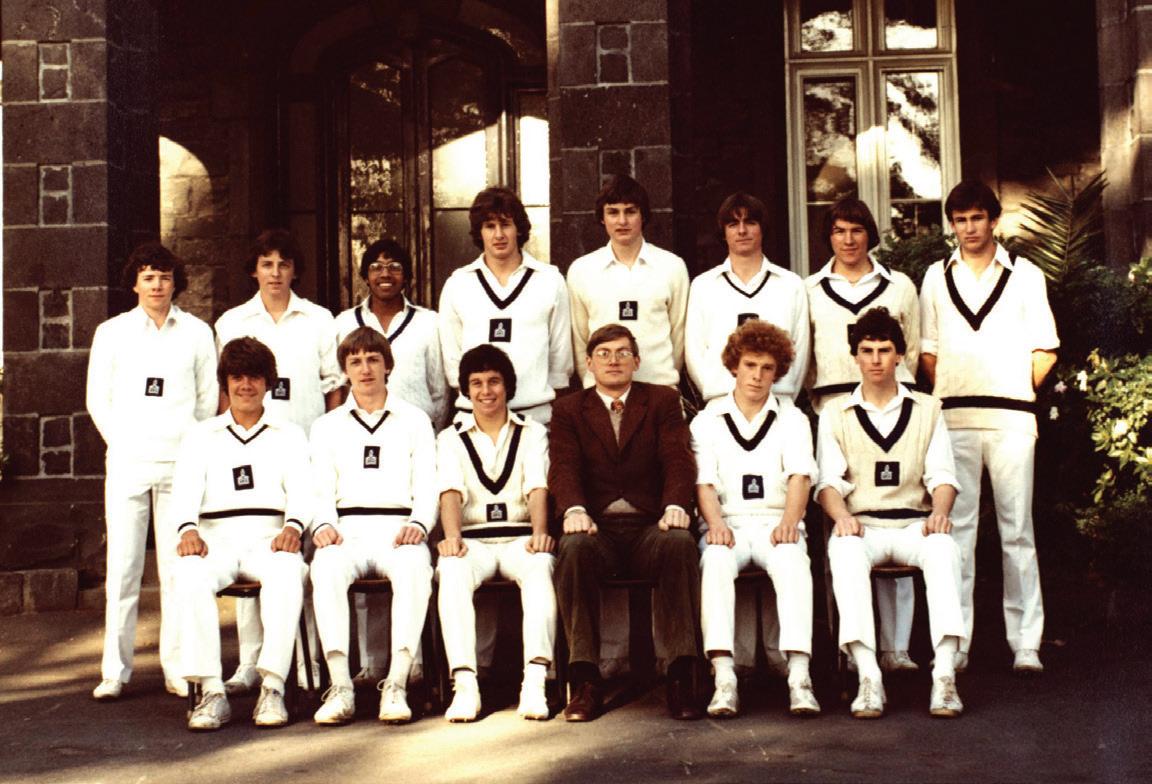
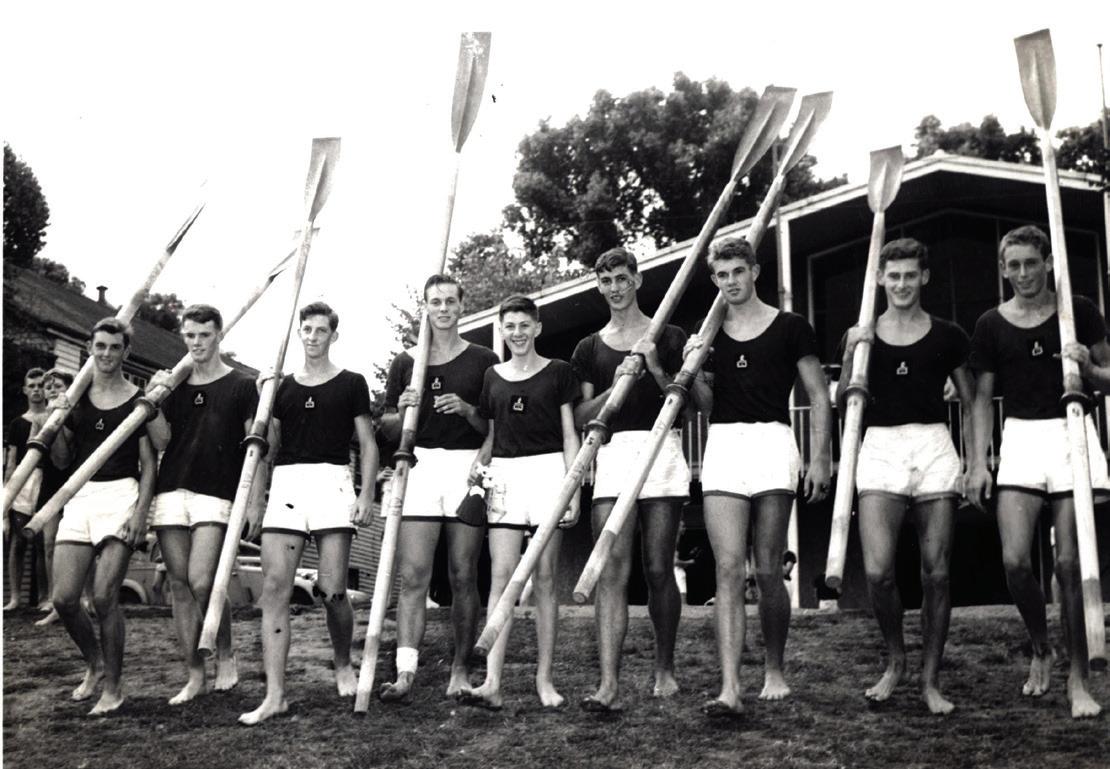
At times, the changes to the sports uniform reflected fashion, while others reflected more practical requirements. The sports blazer was eventually abandoned as an unnecessary expense; football attire changed from knickerbockers to shorts; and in rowing, t-shirts and shorts transitioned to the modern zoot to ensure clothing would not catch in equipment. Cricket uniforms changed comparatively less – with the tradition of heat-reflecting white or cream garments holding true to their Victorian heritage.
Sometimes changes were not about the garments themselves, but about permission to wear them. In 1921, the privilege of wearing the dark blue singlet, formerly reserved only for the Captain of the School, was extended to all members of the athletics team, rowing crews and football teams.
In formal team photographs from 1884 onwards, Firsts Teams appear wearing an Oxford blue blazer with the school crest on the pocket, and the Seconds Team in a white blazer with the mitre. In 1900, Stanley Melbourne Bruce (OM 1901; 2008 MGS Notable; 8th Prime Minister of Australia) rowed in the First VIII and Second VIII crews, and therefore had two blazers.
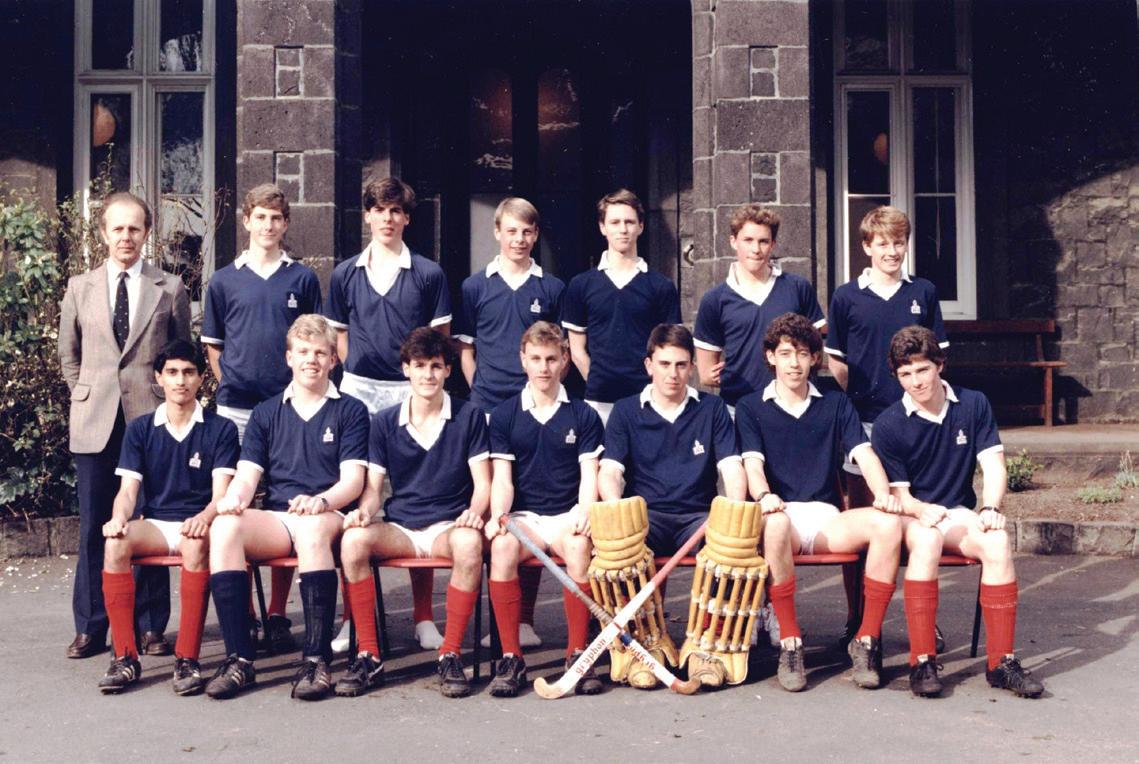
The red socks began as a clash sock, introduced in 1927 to distinguish between teams. Over time, what began as necessity has become a mark worn with pride and achievement.
In a similar fashion, Neville Govett (OM 1930; GH 1927) recalled for The Portrait of Grimwade (1993) that when Grimwade House played Wadhurst, members of the Grimwade team wore a knitted cap to distinguish them.
The use of the (Bishop’s) mitre, crest and badge across sporting uniforms has been relatively interchangeable over time, but the primary colour of garments has remained steadfastly ‘Oxford’, or navy, blue.
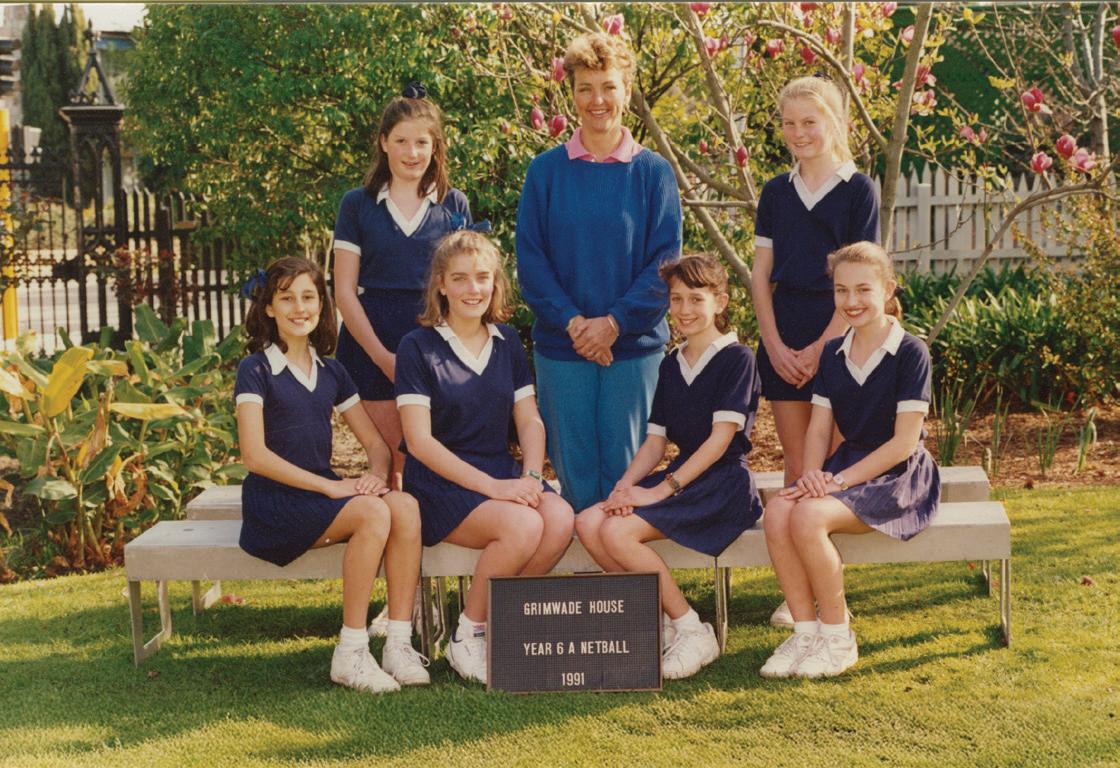
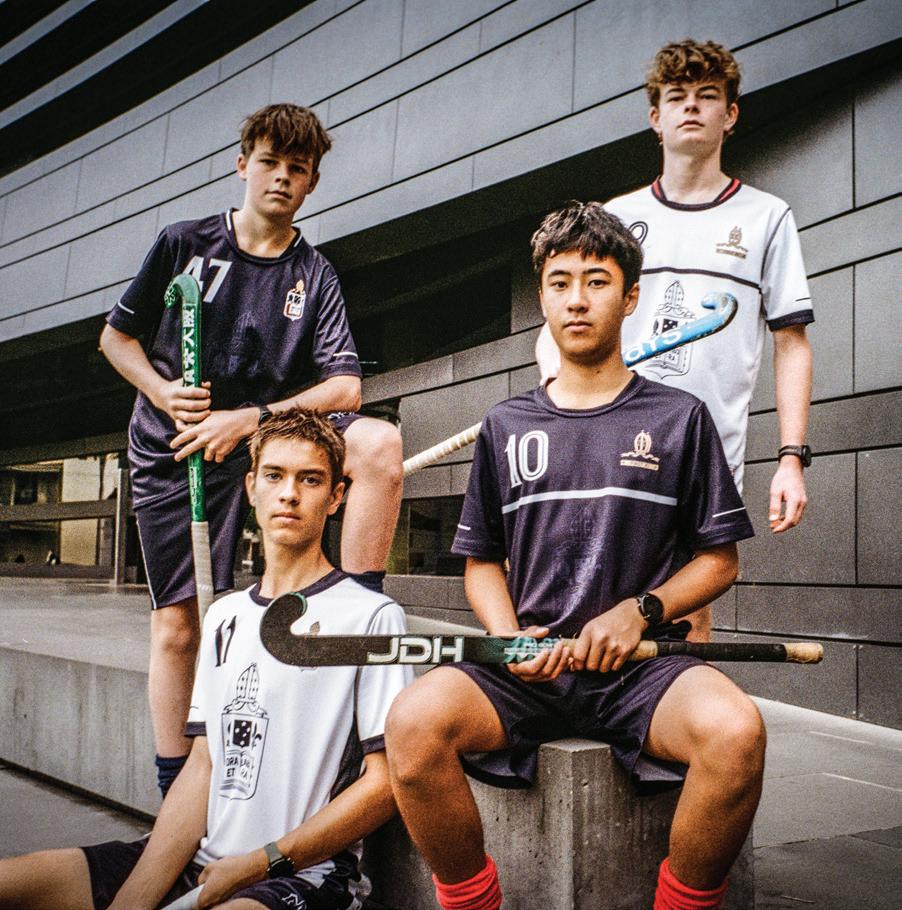
1. Football Team 1876
2. First XI Cricket Team 1980
3. Rowing 1956
4. First XI Hockey Team 1986
5. Year 6A Netball 1991, Grimwade House
(Source: Melbourne Grammar School Archives #002046, #006354, #006549, #003009, #006709)
A new era of the navy blue
Sports uniform update – Winter Game Day
At Melbourne Grammar School, sport is an unwavering part of who we are.
The first recorded game of Australian Rules Football was played between Melbourne Grammar and Scotch College, and the annual match-up, now known as the Cordner-Eggleston Cup, has become one of the longest-running school football fixtures in the world.
When our students compete with pride in their navy-blue uniforms, they carry 168 years of sporting excellence with them.
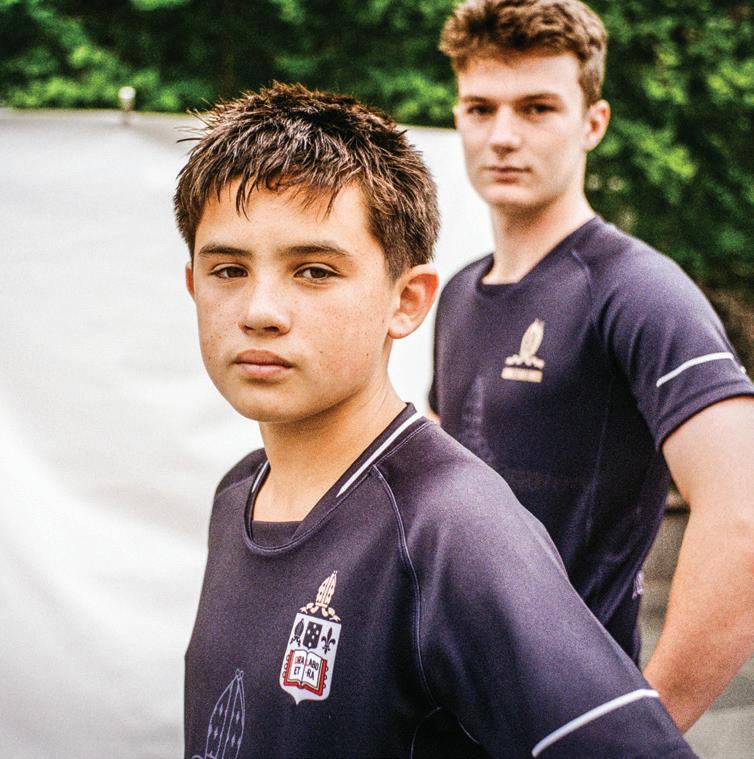
This year we are introducing a new range of competition sportswear for Melbourne Grammar School athletes. In an ambitious APS environment, we strive to remain competitive at the elite level while providing a sports program that is enjoyable for all, with a uniform that equips students to perform at their best.
The range has been designed with young athletes in mind, making it practical, functional, flexible, and durable. A contemporary expression of our heritage; it creates a consistent yet distinctly Melbourne Grammar look across the breadth of sports our students play today.
As the range is rolled out to students over the coming months, our legacy of sporting excellence continues.
View
Sports uniform lookbook
Independent thinking, deliberately cultivated
In a world marked by complexity, competing sources of information, and increasingly confident voices, the ability to think with judgement, clarity, and perspective has never been more important.
Preparing students not only for life after School, but to contribute thoughtfully to it, requires more than knowledge alone. It demands intellectual discipline, courage, and independent thinking.
For Ben Hanisch, Head of Senior School, that courage sits at the heart of the School’s educational purpose.
“We often say that a complex world requires independent thinkers,” he explains.
“But independent thinking does not happen by chance. It requires students to understand ideas deeply enough to question them and to have the confidence to hold and test their own.”
That testing is deliberate. It is built into classroom practice across year levels, where students are encouraged not simply to express opinions, but to examine how those opinions are formed.
We want students to leave here confident enough to express their opinions... to be open enough for self-reflection and revision when these opinions are challenged.
Ben Hanisch, Head of Senior School
“One of the first things I say to students,” says Nick Young, Head of Humanities, “is that having an opinion isn’t the same as thinking independently.”
For Nick, independent thinking begins with analysis rather than instinct.
“The study of Politics, for example, isn’t about moralising – it’s about analysing,” he explains.
“It’s about understanding nuance, using evidence and considering differing perspectives to reach opinions.”
In his classroom, that nuance is made visible through structured activities designed to stretch reasoning.
One such strategy is the ‘opinion continuum’. A proposition is placed on the board, accompanied by a spectrum stretching from one extreme to the other. Students position themselves along the line which shows the diversity of views in the room.
“The crucial part,” Nick says, “is that they then have to articulate the why.”
In that articulation, thinking sharpens. Assumptions surface. Students are challenged to examine the strength of their reasoning and to engage with perspectives different from their own.
“You can see quickly where reasoning is thin and where it’s strong,” he says.
“From there, debate gets going and students really start thinking for themselves but within a helpful structure.”
That phrase – a helpful structure – speaks to something essential. Independent thinking at Melbourne Grammar is not chaotic. It’s freedom paired with discipline. Students are supported to simultaneously explore their ideas, trace arguments to their foundations and weigh evidence carefully.
By the time students reach Senior School, they are expected not only to hold ideas, but to defend them publicly and refine them in light of challenge.
“There can be a fear in feeling like a dissenting voice,” Ben acknowledges.
“Part of our responsibility is to create environments where students feel safe to express ideas and strong enough to have them tested.”
The foundations for that confidence are laid much earlier.
Melissa Allen, Head of Teaching and Learning at Wadhurst, works with students much earlier on their intellectual journey. Her focus is on helping them understand how their thinking forms in the first place.
“Younger students often experience ideas quite instinctively,” she explains.
“They feel strongly about something before they have the language to explain why.”
Rather than rushing them to conclusions, teachers slow the process down.
“We use strategies like ‘think aloud’,” Melissa says.
“Students verbalise their thinking as it forms. It might start off as random – ‘I wish I had my blue pen today’ – but they’ll explain what they’re noticing, what connections they’re making, what questions are surfacing.”
Continues over page
Melissa Allen, Head of Teaching and Learning, Wadhurst.
By making thinking visible – and by modelling her own internal dialogue – Melissa helps students recognise that ideas are shaped over time.
“When they hear themselves say it, they start to realise where the gaps are,” she says.
“They begin to see that their thinking has steps.”
Often, the most powerful learning moment arrives in a pause.
“We’ll say, ‘Why do you think that?’” Melissa explains. “And at first they’ll say, ‘I don’t know… I just do.’ And that’s the moment where the learning is.”
The question is not designed to catch students out. It is an invitation – to go deeper, to clarify, to refine.
“They know what they believe,” Melissa says. “But getting them to unpack why they believe it, that’s the skill.”
Across the School, a consistent thread emerges: independent thinking is not about certainty or volume. It is about the courage to interrogate one’s own assumptions, the humility to listen to others, and the discipline to build arguments carefully.
“We want students to leave here confident enough to express their opinions,” Ben says, “but also to be open enough for self-reflection and revision when these opinions are challenged.”
The balance between confidence and curiosity, conviction and openness, is what enables young people to navigate complexity with judgement and perspective.
At Melbourne Grammar School, independent thinking is not left to chance. It is cultivated deliberately, strengthened over time, and carried well beyond the classroom.
Because in a complex world, the courage of ideas matters.
Learn more about The Courage of Ideas and how you can help shape the next generation of independent thinkers.
Visit via QR code bit.ly/mgs-giving
A voice sharpened through inquiry
Joaquin Carrasco-McDonald is the 2026 recipient of the Isidor Solomon Memorial Award for the Humanities, presented each year to the student who most exemplifies academic excellence, intellectual curiosity and a deep commitment to the values central to the Humanities.
For Joaquin, the recognition was a quiet affirmation of something he has been steadily developing over time: a love of careful, deliberate thinking.
“You don’t really set out chasing a prize,” he says, “you just get absorbed in the ideas.”
During his time at Melbourne Grammar School, Joaquin has embraced the intellectual challenges placed before him. In Humanities classrooms, he has found a space where complexity is explored rather than simplified.
“I like that we’re not told what to think,” he explains.
“We’re given the material, the context, the different interpretations, and then we have to work through it ourselves.”
That process, he admits, can be confronting.
“There are moments where you realise the argument you were quite confident about doesn’t actually stand up. But that’s the point. You learn to separate ego from reasoning.”
He credits his teachers with creating an environment where disagreement is thoughtful and purposeful.
“You get used to having your ideas questioned,” he reflects.
“At first that can feel personal. But over time you see it’s actually a sign of respect. People are taking your thinking seriously enough to test it.”
“It’s not about winning an argument,” he goes on. “It’s about sharpening it. You leave a discussion clearer than when you walked in.”
Beyond the classroom, those habits are shaping how he engages with the world.
“I think I have become more comfortable pausing and asking, ‘What am I missing here?’”
“I want to be a good citizen, and to be part of a community you have to be willing to listen,” Joaquin reflects. “You have to be willing to question your own assumptions.”
About the Isidor Solomon Memorial Award
The Isidor Solomon Memorial Award was established in 2014 by former Old Melburnians Council President, Foundation Board President and School Council member, Philip Solomon KC (OM 1986) and named for his father Isidor (OM 1946).
Built on generosity, shaped by purpose: Announcing the Jack Morrow Centre for Humanities
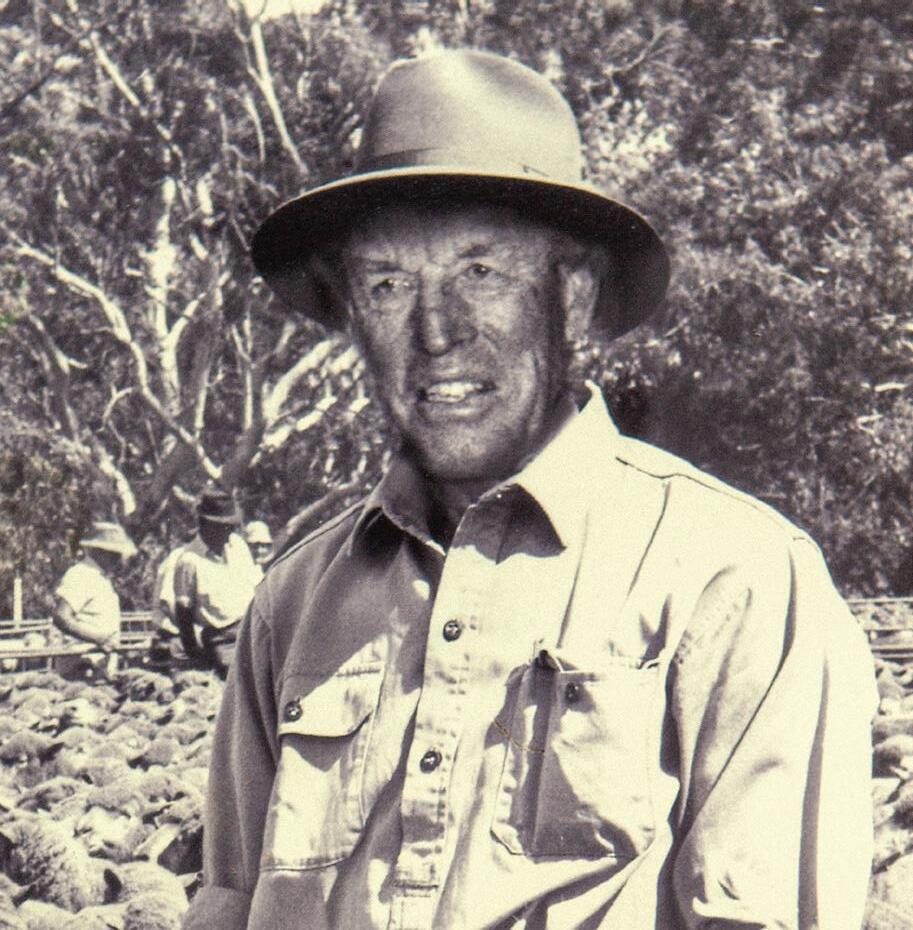
John ‘Jack’ Thomas Morrow (OM 1925) lived a life of quiet conviction. A grazier from New South Wales, he was known for his self-sufficiency, humility and love for the land he looked after.
At Melbourne Grammar School he is better known for his remarkable generosity and for his transformative bequest which has supported the School’s mission for close to 40 years.
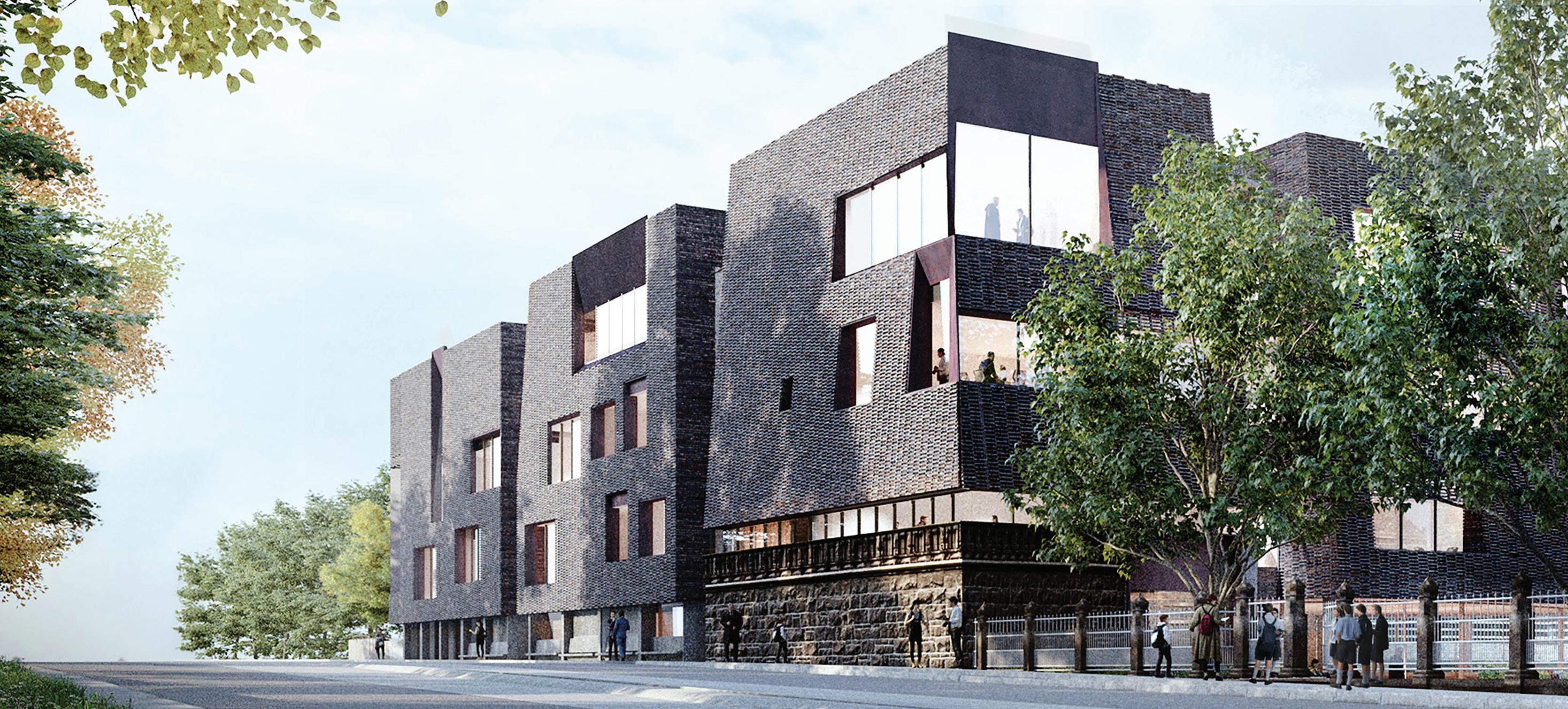
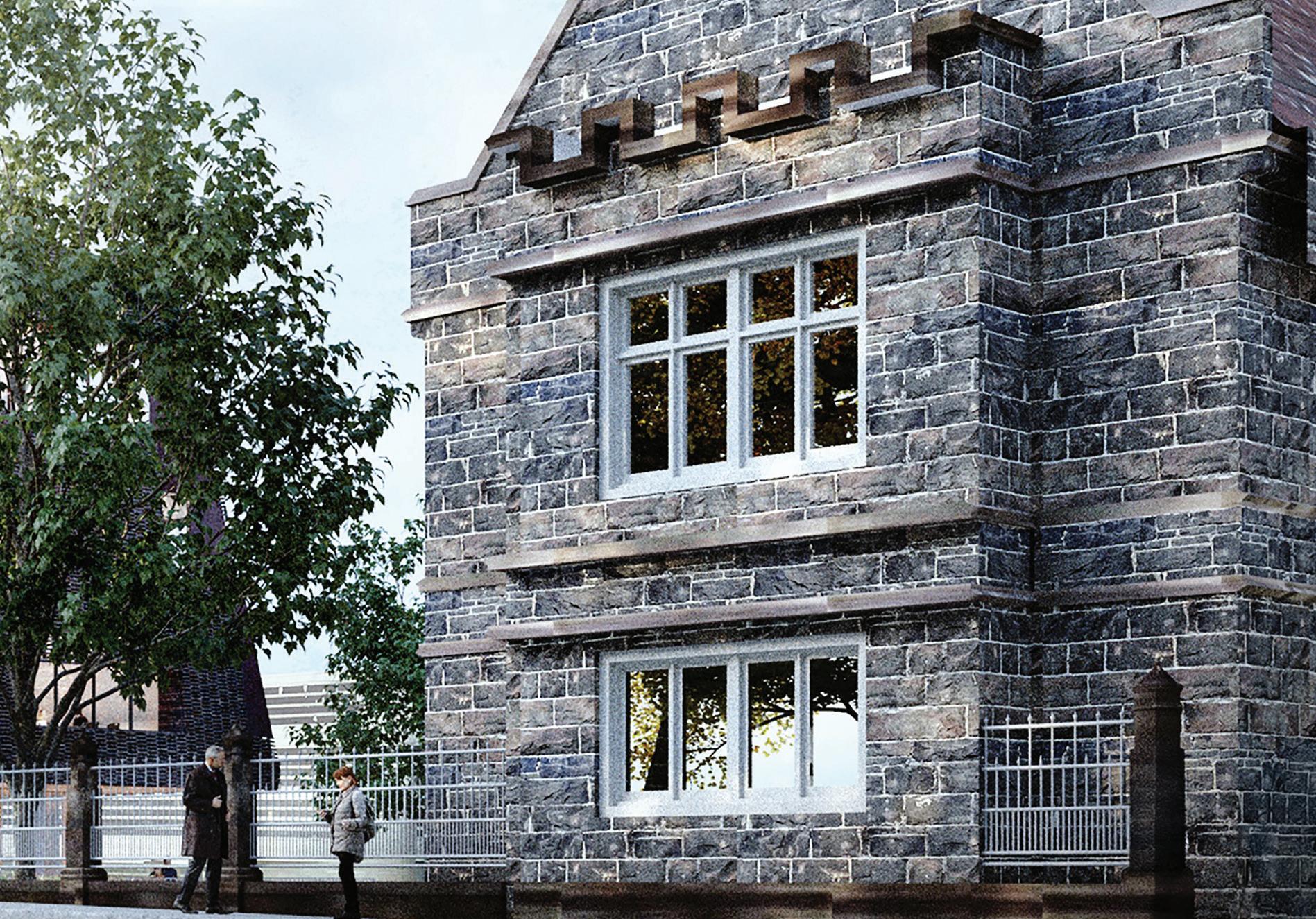
This year, Melbourne Grammar School is proud to announce that the new Centre for Humanities will be named the Jack Morrow Centre for Humanities.
The decision to recognise Jack, one of the most significant benefactors in the School’s history, acknowledges not only what was given, but of what continues to grow.
“The Jack Morrow Centre for Humanities will be a place dedicated to enquiry, discussion and the exchange of ideas – a space where students are encouraged to question, to challenge and to think independently,” says Headmaster Philip Grutzner.
“In both name and purpose, the Morrow Centre stands as a fitting tribute: not only to a man whose generosity transformed the School, but to the values that continue to define it.”
Jack attended Melbourne Grammar School for three years (1922–1925), yet the true depth of his connection to the School only became clear after his passing.
Jack had spent his life dedicated to the careful stewardship of his land and of his merino flock. He established Colombo Creek, which ran through his property, as a wildlife sanctuary years before other landowners would likewise introduce rules against shooting or fishing.
When Jack passed away in 1989, it was a surprise to learn that he had named Melbourne Grammar School in his Will. That gift established the JT Morrow Education Trust, which continues to support scholarships, programs and facilities across the School – creating opportunities for generations of students.
Former Grammar Foundation President Clive Smith OAM (OM 1953) recalled the time shortly leading up to the news of Jack’s bequest in his memoir, Life at full throttle (2018).
“I had asked my old friend Jack Morrow to return to Melbourne Grammar for lunch and a tour – his first visit since leaving school,” Clive wrote.
“The Headmaster, Nigel Creese and I, entertained him and showed him around. There was really no thought at that stage that he may eventually become a contributor to the Foundation.”
Soon after returning home, Jack made a quiet enquiry.
“After he returned to Narrandera, he rang me and asked how much it would cost to keep a boarder at Melbourne Grammar,” Clive wrote.
When told the estimated cost of a full scholarship, he said to Clive that he would discuss it further on his next visit.
He never had the chance.
A short time later, the School learned that Jack had passed away.
Yet, in a final and extraordinary act of generosity, Melbourne Grammar School was named as one of the major beneficiaries of his entire estate.
“He became one of the greatest benefactors in the history of the School,” Clive wrote.
In the 37 years since the JT Morrow Education Trust was founded, the annual income received has helped Melbourne Grammar School remain independent in the face of challenges and in its commitment to providing an exceptional holistic education.
In the naming of the new Morrow Centre, Melbourne Grammar School Archivist Luisa Moscato says the building is another proud reminder of how the School community has always come together to build for the future.
“The impact of those who have come before us has always guided and shaped the generations who follow,” she says.
“Jack’s legacy speaks to the enduring connection between past generosity and present purpose.”
Jack Morrow could likely never truly know the full potential that his gift to the School would realise.
But for every student to learn a new skill, challenge ideas and develop the confidence to think for themselves within the Morrow Centre, they will ensure that his legacy continues –not as something remembered, but as something that lives on.
Australia Day Honours
Melbourne Grammar School congratulates all members of our community recognised through the 2025 Australia Day Honours. These include:
MEMBER OF THE ORDER OF AUSTRALIA (AM)
Mark Cassidy (Current Parent) For service to geotechnical science, to engineering, and to academia.
Maryjane Crabtree (Past Parent) For significant service to the legal profession, to community health, and to sport.
Janette Kendall (Past Parent) For significant service to business, to the arts, to the marketing sector, and to the community.
Dipak Sanghvi (Past Parent) For significant service to community health through governance and board roles.
Richard Stringer (OM 1953) For significant service to architectural photography, to education, and to history.
MEDAL OF THE ORDER OF AUSTRALIA (OAM)
Vivian Beaumont (Past Parent) For service to the community through a range of roles.
Anna Mezger (Past Parent) For service to sports administration, and to people with disability.
John ‘Jack’ Thomas Morrow (OM 1925)
Connections matter
There are moments in life when you pause and ask yourself a simple question:
How do I contribute back to the communities that helped shape me?
My desire to be part of the Old Melburnian Council stems from a deep sense of gratitude, responsibility, and belief in the power of community. Having benefited immensely from my time at Melbourne Grammar School and from the broader Old Melburnian network, I feel a genuine commitment to give back to a community that has shaped so much of my personal and professional life.
I have been connected to education through my work in culture and leadership development for most of my career, and so I believe education is not just a phase of life. It is an essential foundation.
The lessons, the discipline, the friendships, the mindsets – they shape how we think, how we lead, and how we contribute to society. The school doesn’t just teach subjects; it helped build character. For many of us, it created an environment where ambition was nurtured, resilience was forged, and lifelong bonds were formed.
The truth is education is one of the great engines of society. It creates informed citizens. It develops capable leaders. It opens doors not just for individuals, but for entire communities. Strong schools build strong societies. And strong alumni networks amplify that impact across generations. In today’s world of complexity, uncertainty and volatility, this is never more important.
Being part of the Old Melburnian Community is a way of reinforcing that foundation.
It’s about ensuring that the next generation experiences the same –or greater – opportunities. It’s about helping shape an alumni culture that doesn’t fade after graduation but grows stronger with time.
Talking about generations, I would like to share our condolences to Alf Lazer’s (OM 1942) family after he passed away recently at the extraordinary age of 100. Alf was closely connected to the School right to the end, and we were delighted that he could share many of his life experiences in the last few years.
I would also like to welcome the next generation of Old Melburnians, the 2025 leavers, to our community. We wish you all the very best as you grow through the next stages of life, with the knowledge that there is a strong connection with us here, when needed.
Some of the most important growth in life happens through friendships. The people we meet during our formative years challenge us, support us, and expand our thinking. They become sounding boards, collaborators, mentors, and, often, lifelong friends. Those relationships don’t just enrich our personal lives – they shape our professional journeys as well.
A thriving alumni community creates space for that continued growth. It keeps conversations alive. It turns shared history into shared opportunity. It transforms nostalgia into meaningful relationships.
Jeremy Nichols (OM 1983)
Giving back is not an obligation. It’s a privilege.
Representing close to 18,000 living Old Melburnians, we on the Old Melburnian Council are committed to amplifying, connecting, educating and engaging people across our many generations. We want to ensure we find meaningful ways to encourage all Old Melburnians to get involved in the variety of activities and events that are on offer. However, it only works if you lean into the opportunities when they arise.
Because those connections matter.
Jeremy Nichols (OM 1983) President, The Old Melburnians
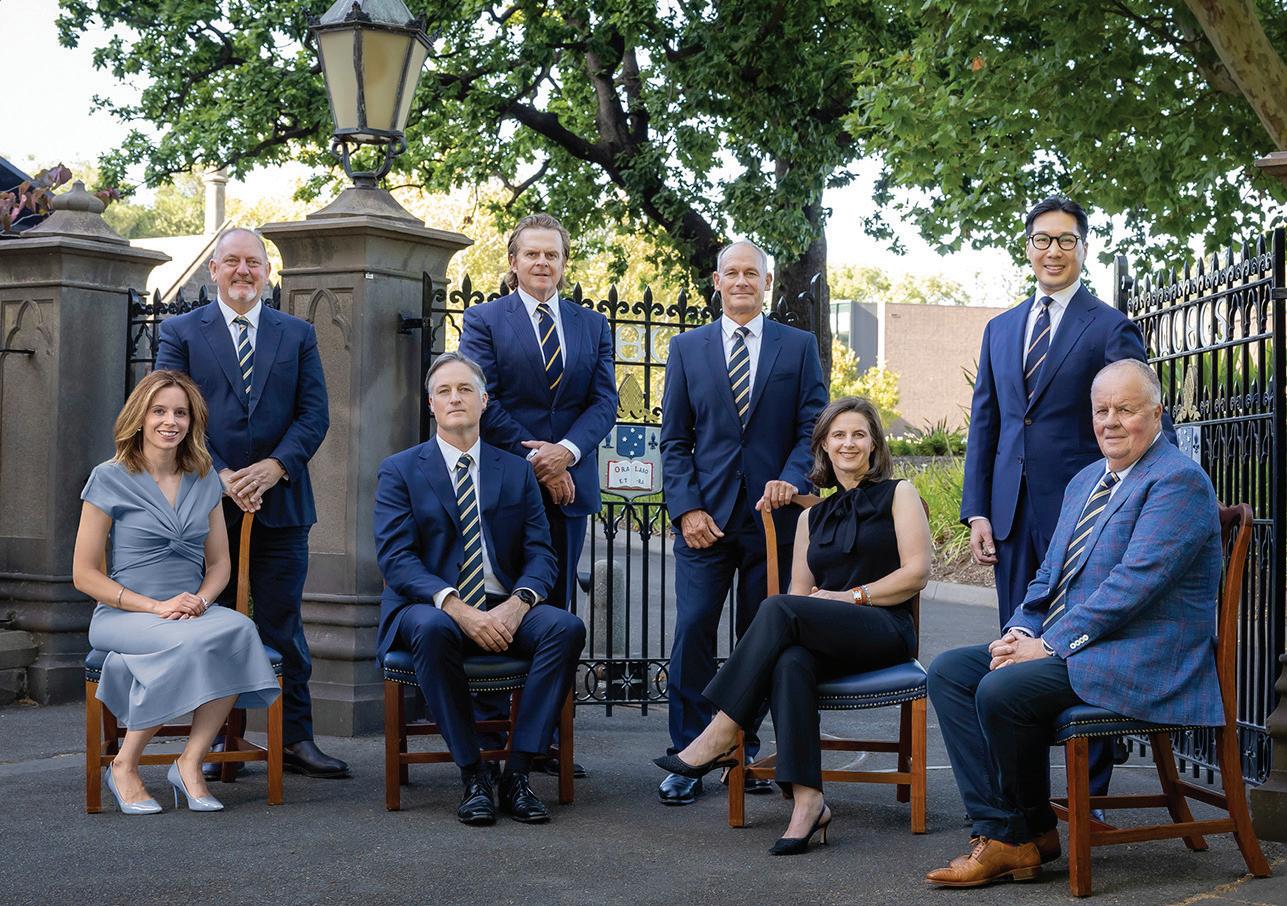
Meet the 2026 Old Melburnians Council
To learn more about the role of The Old Melburnians Council and how you can become involved, visit bit.ly/OldMelburniansCouncil
The Old Melburnians Council +61 3 9865 7682 om@mgs.vic.edu.au
2026 ANNUAL DINNER
Date: Friday 14 August 2026
Time: 6.30pm – 11.00pm
Location: Plaza Ballroom, Collins Street, Melbourne
Bookings: Opening early May
Sharing memories, embracing friendships and connecting with the enduring spirit of the Old Melburnians. A celebratory night for Old Melburnians across generations.
Upcoming 2026 Old Melburnian events
Cordner-Eggleston Cup
Friday 24 April
ANZAC Service of Commemoration
Monday 27 April
The Old Melburnians Business Breakfast
Friday 8 May
Community Speaker Series
Tuesday 26 May
London Branch Dinner
Thursday 11 June
Old Melburnians Exchange Launch Workshop
Monday 27 July
Community Speaker Series
Tuesday 11 August
The Old Melburnians Annual Dinner Friday 14 August
OM Twilight Tour (Grimwade House) Wednesday 7 October
Old Melburnians Annual General Meeting Monday 9 November
Community Speaker Series Tuesday 10 November
Sydney Branch Business Lunch Thursday 12 November
1 Year Reunion (OM 2025) Friday 13 November
Annual Bluestone Lunch Friday 20 November
Visit bit.ly/mgs-events for more information.
Contact om@mgs.vic.edu.au to update your email address to ensure you receive your invitation.
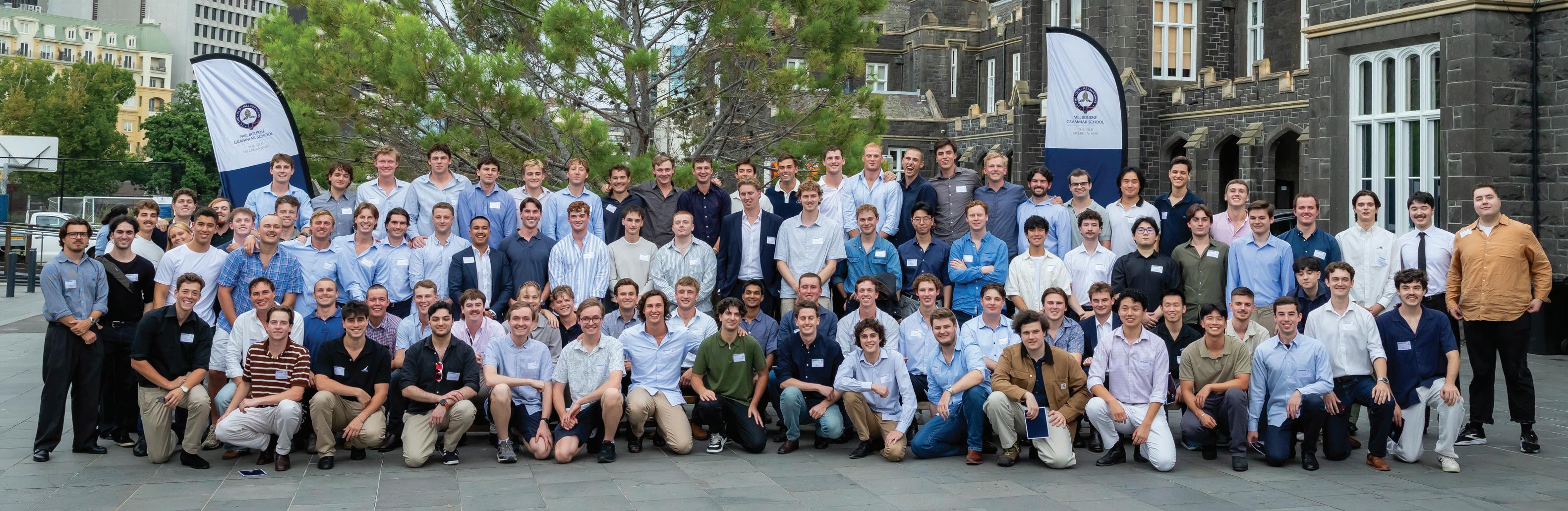
From left: Edwina Burn (OM 2004), Andrew Sutcliffe (OM 1986), Will Bird (OM 1996), Charles Thompson (OM 1987), Jeremy Nichols (OM 1983), Penny Apted (OM 1994), Douglas Tsoi (OM 2004), Nick Newton (OM 1972).
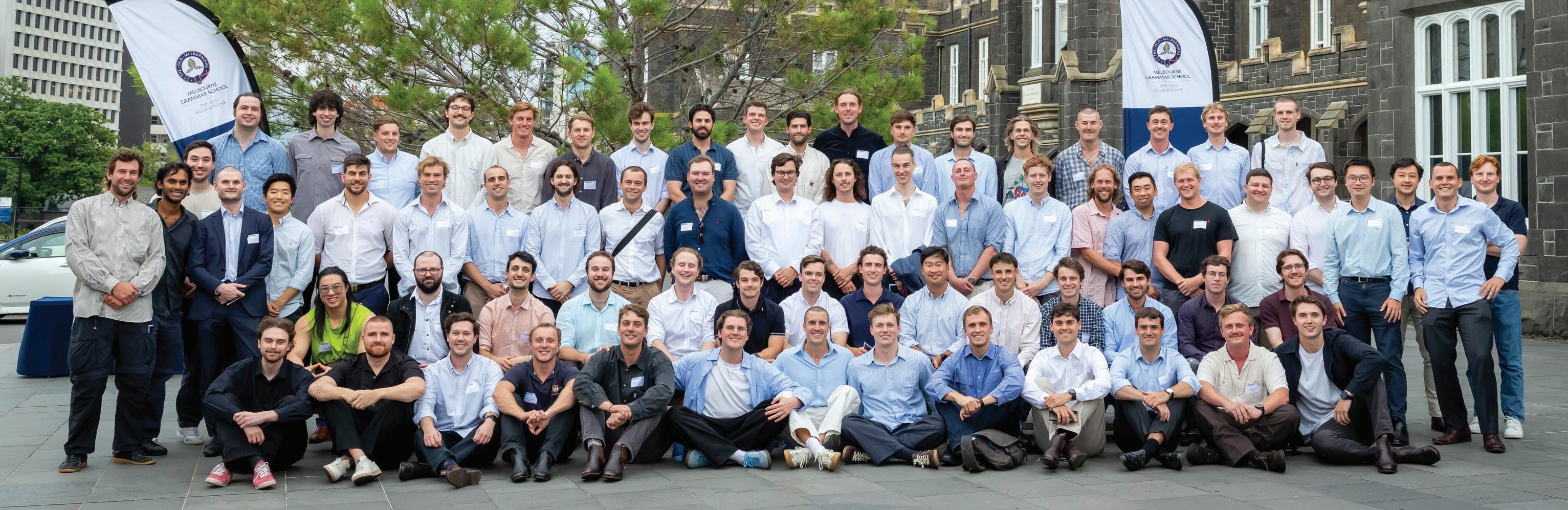
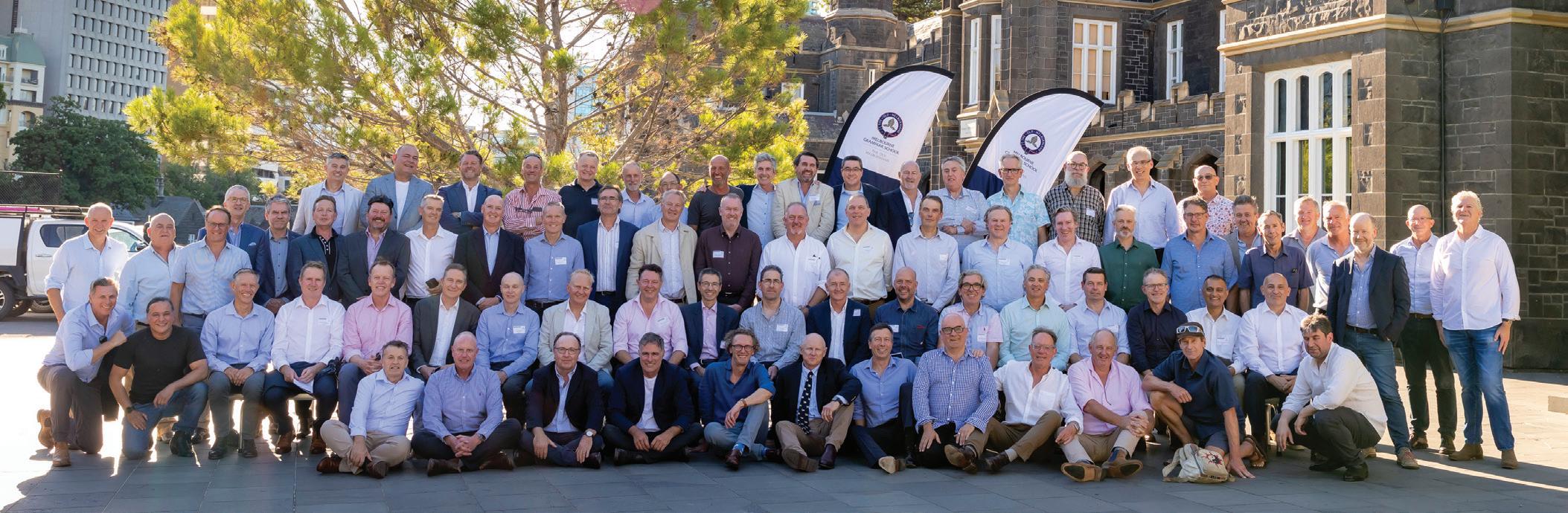
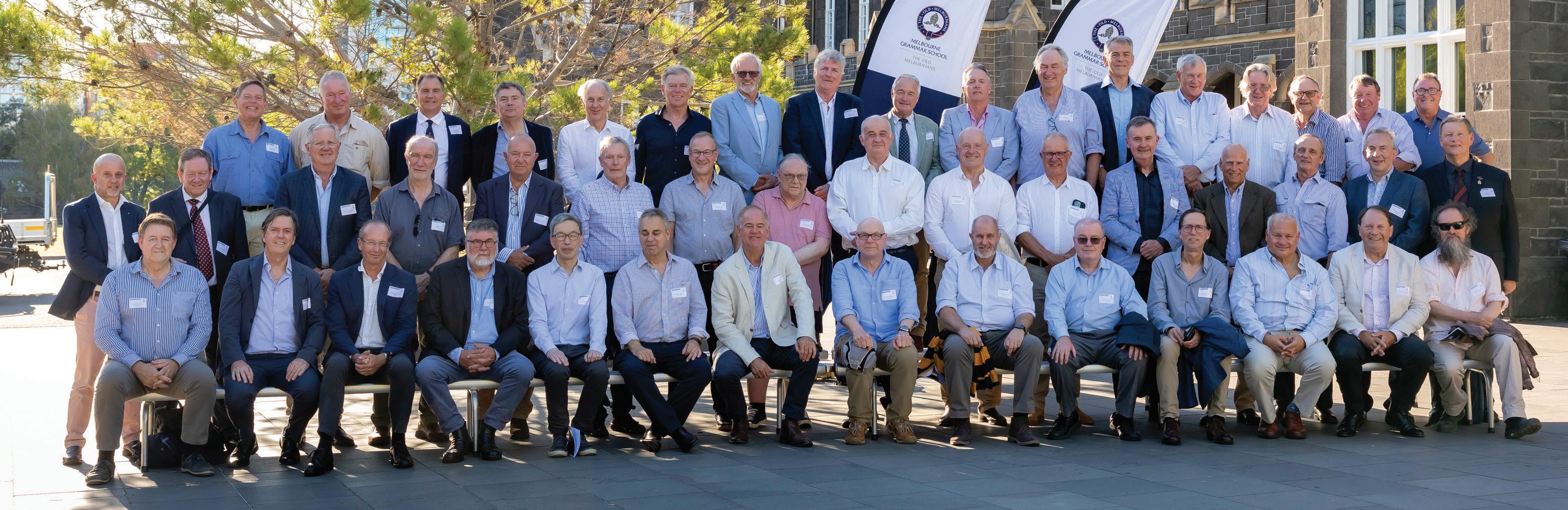
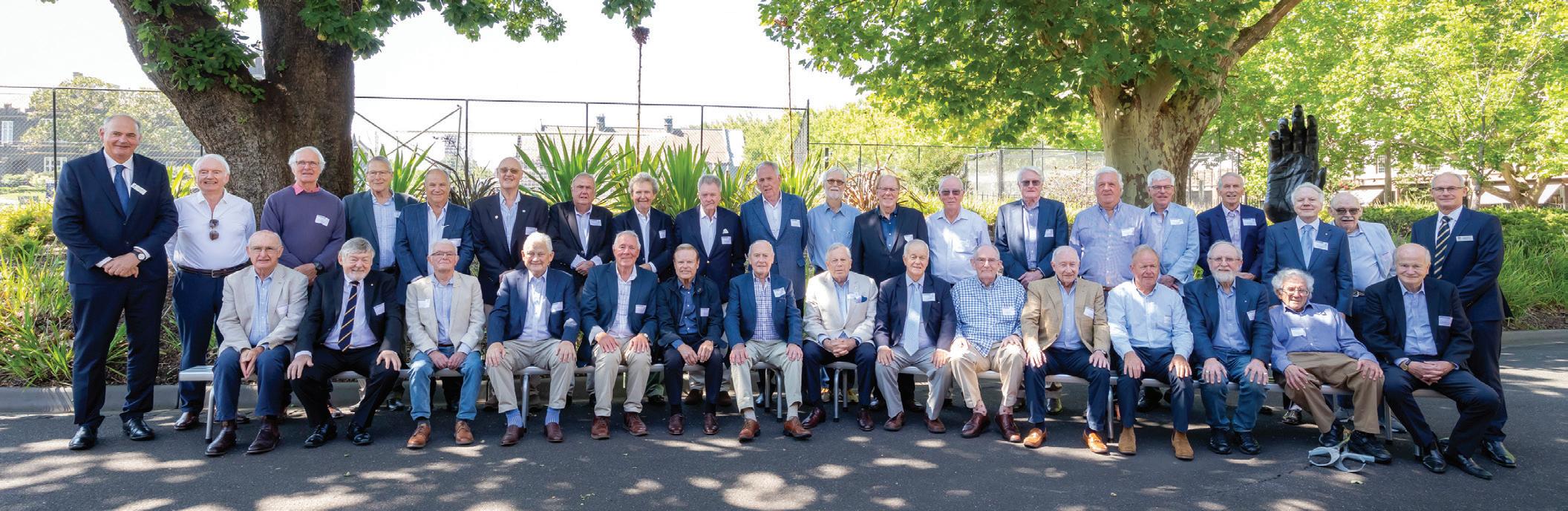
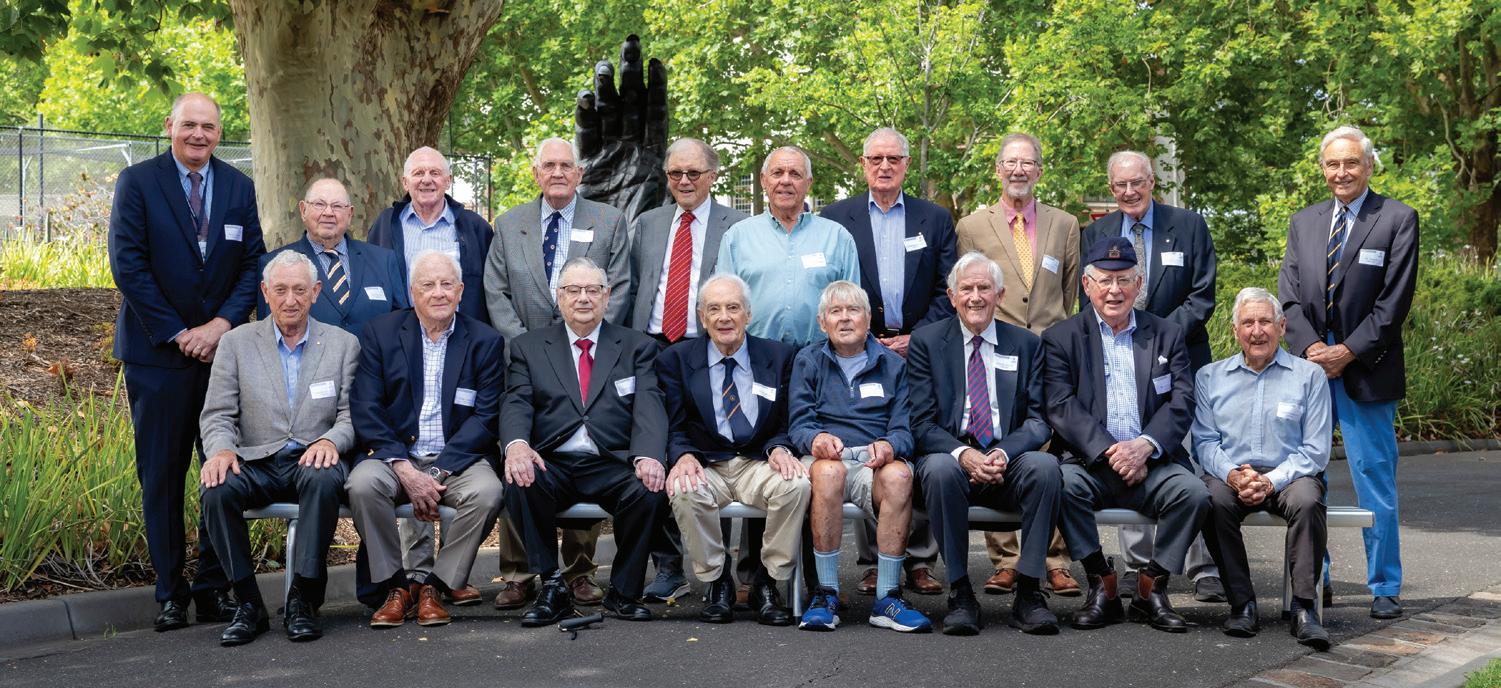
1. OM 2021 (5 year) Reunion
2. OM 2016 (10 Year) Reunion
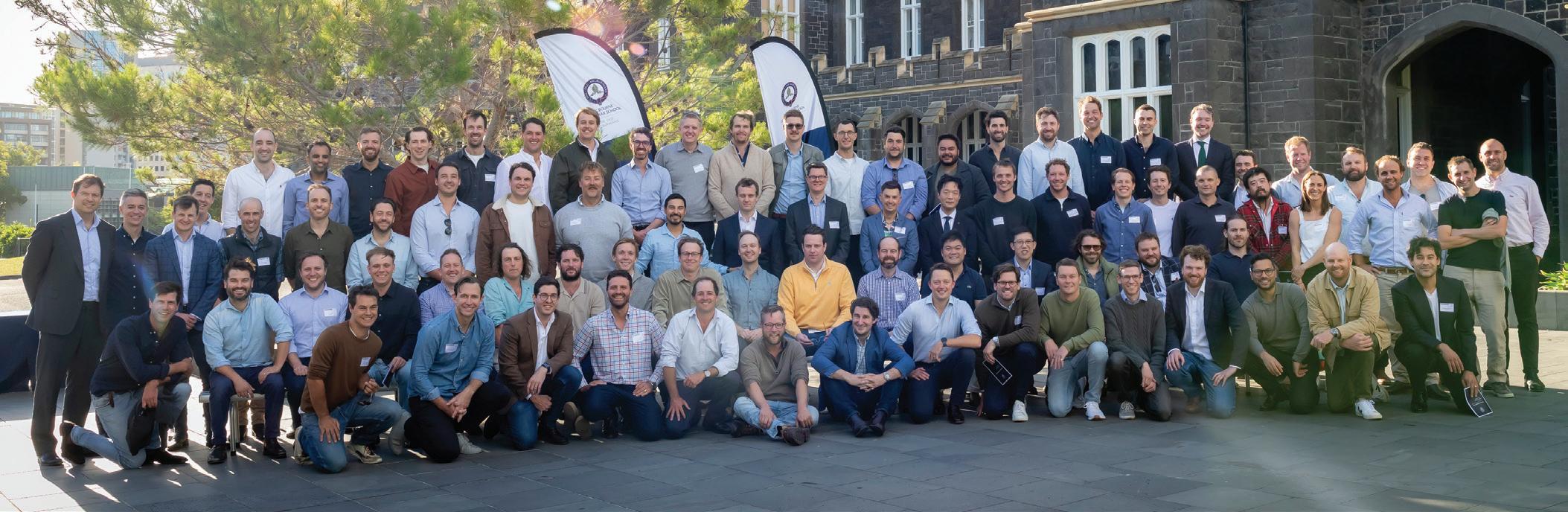
3. OM 2006 (20 Year) Reunion
4. OM 1996 (30 Year) Reunion
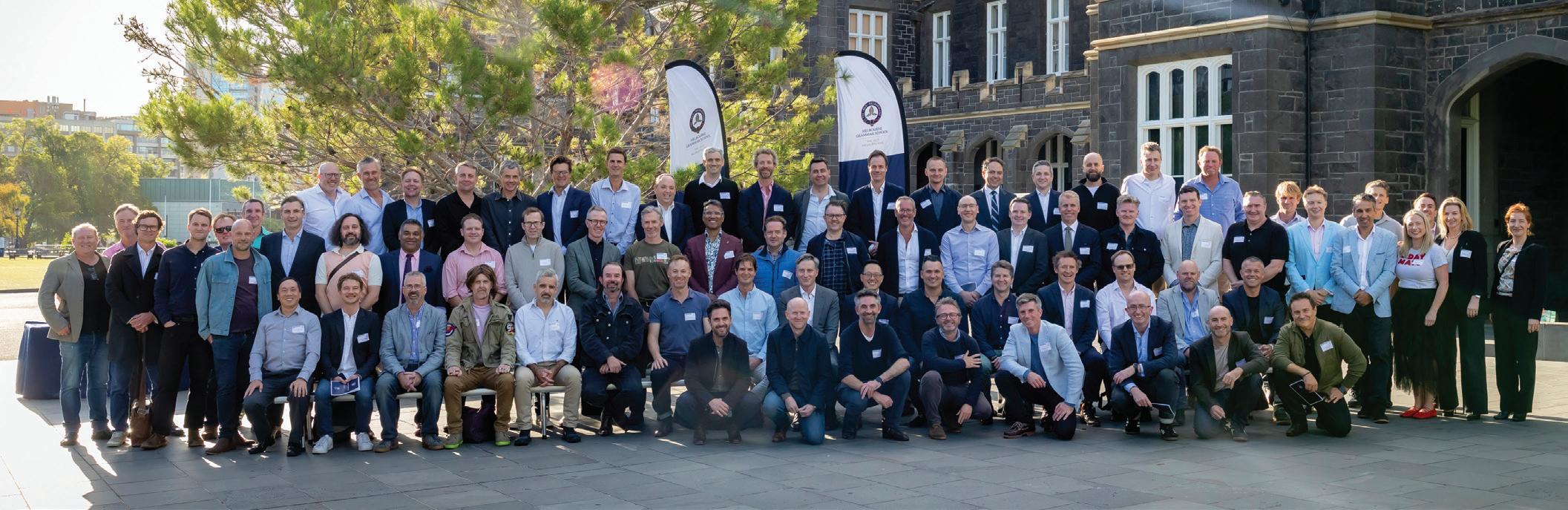
5. OM 1986 (40 Year) Reunion
6. OM 1976 (50 Year) Reunion
7. OM 1966 (60 Year) Reunion
8. OM 1956 (70 Year) Reunion
Celebrat ing
150 YEARS OF CRICKET
MELBOURNE GRAMMAR SCHOOL VS SYDNEY GRAMMAR SCHOOL
MATCH
Wednesday 21 - Thursday 22 January 2026
The Albert Cricket Ground DINNER
Thursday 22 January 2026
Olympic Room, Melbourne Cricket Ground
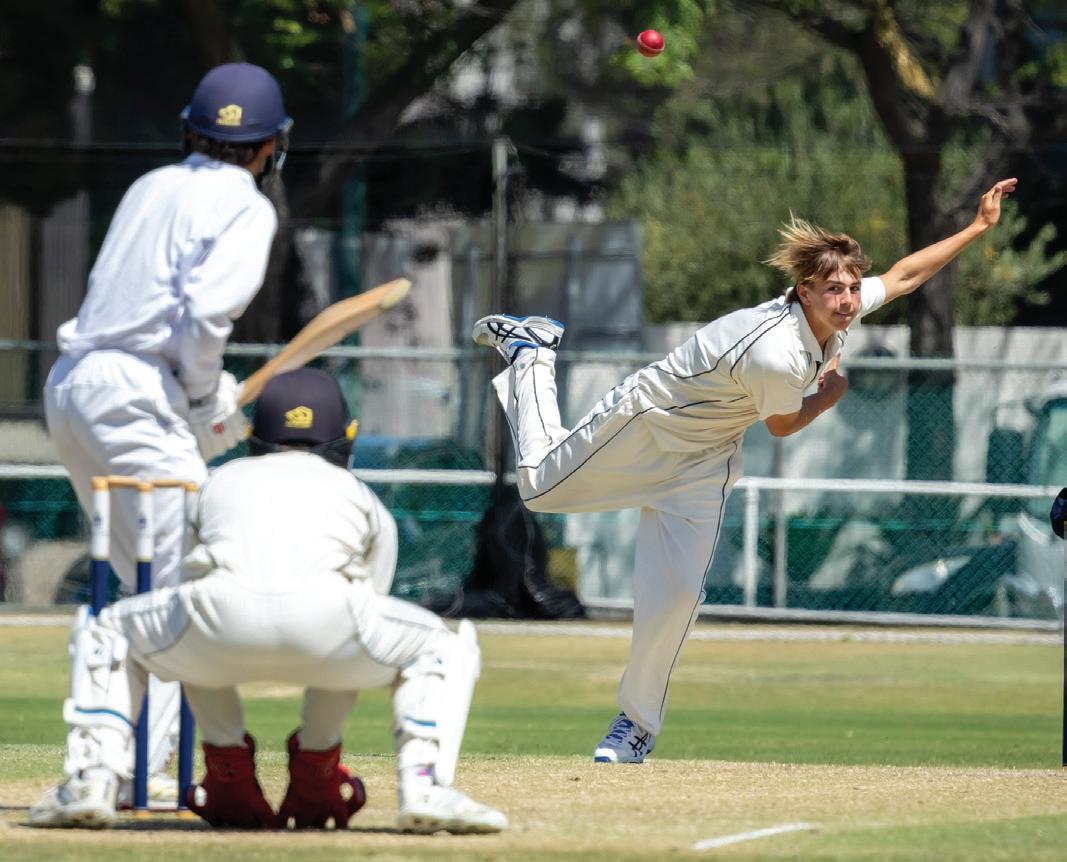
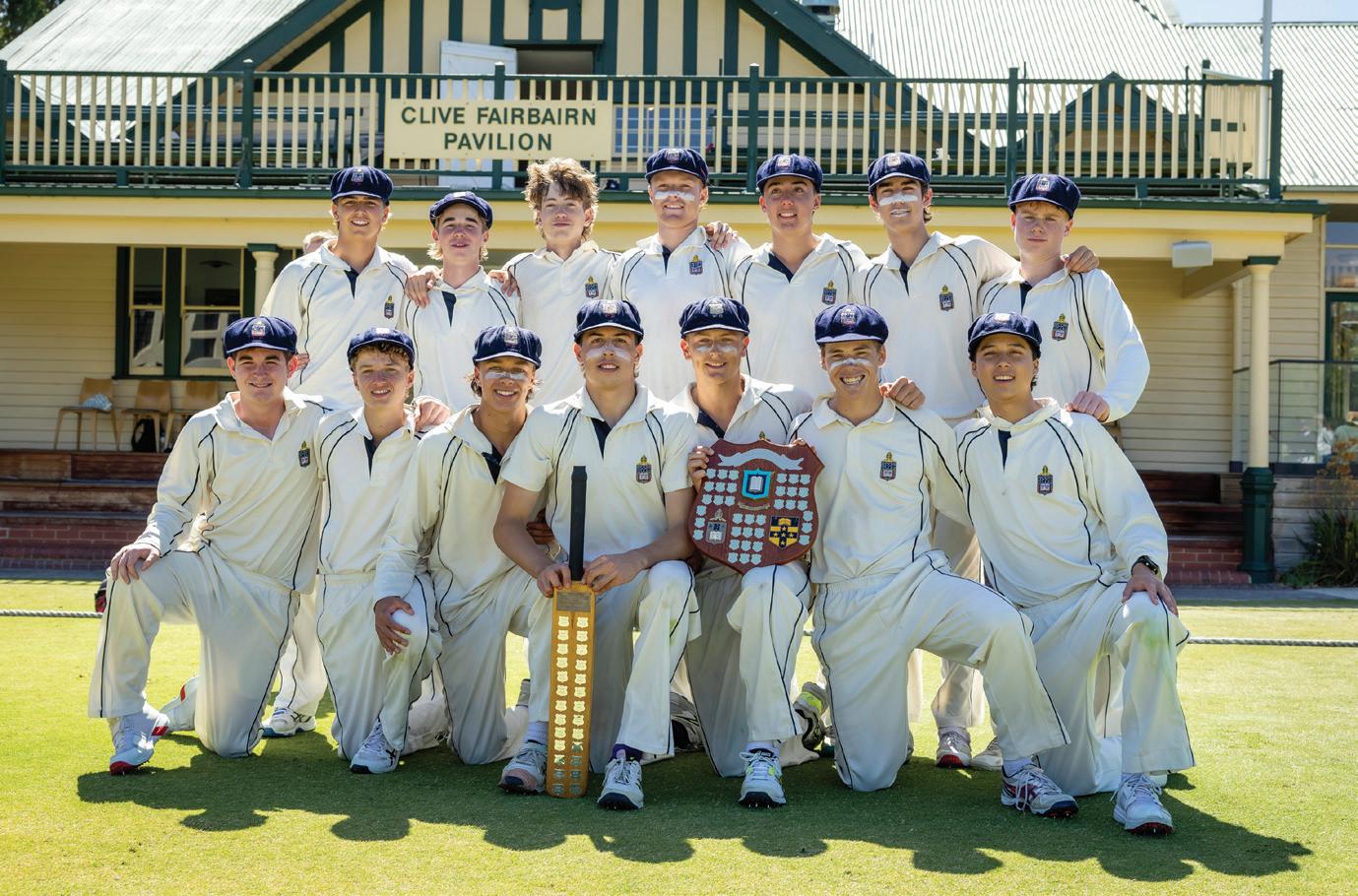
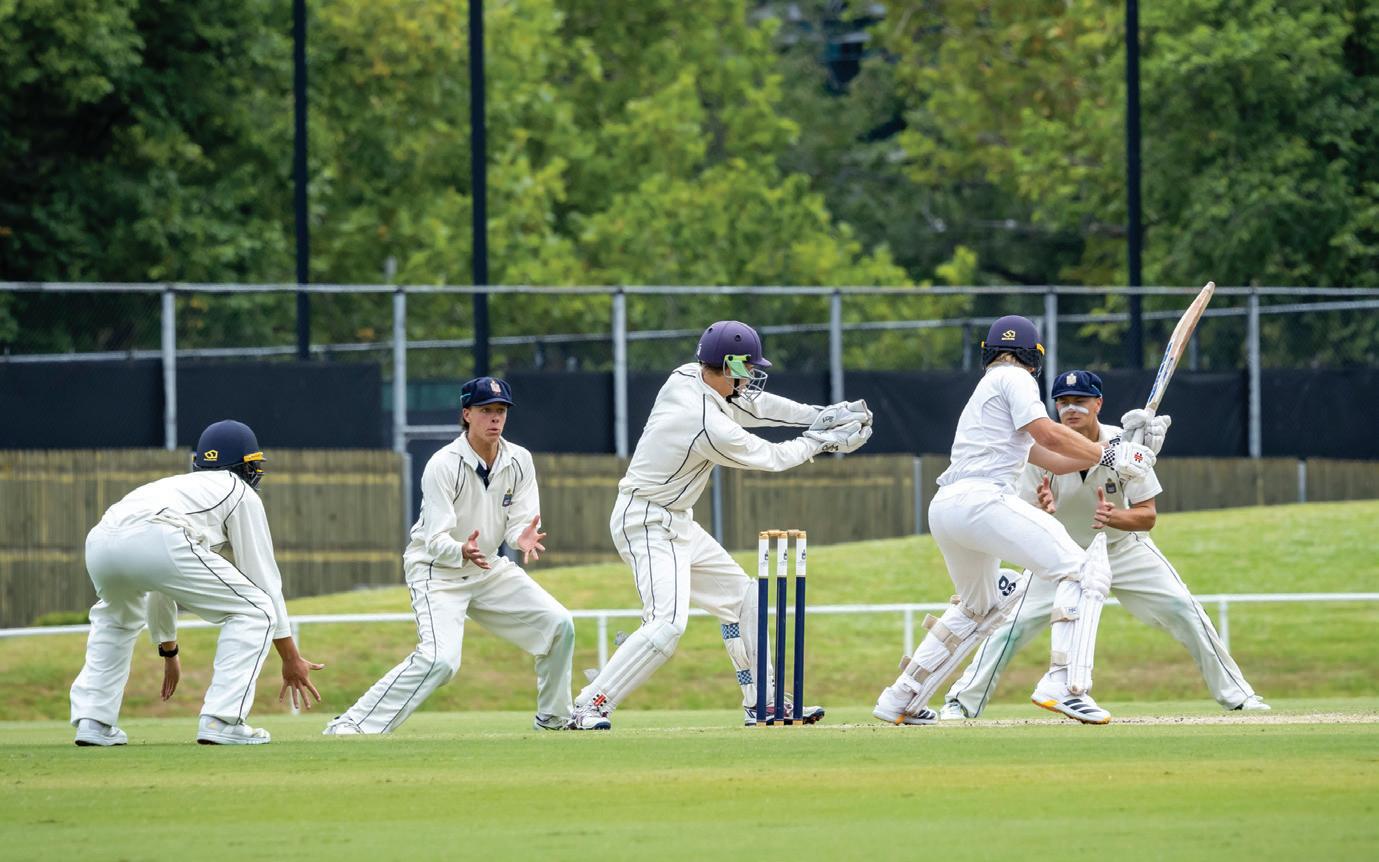
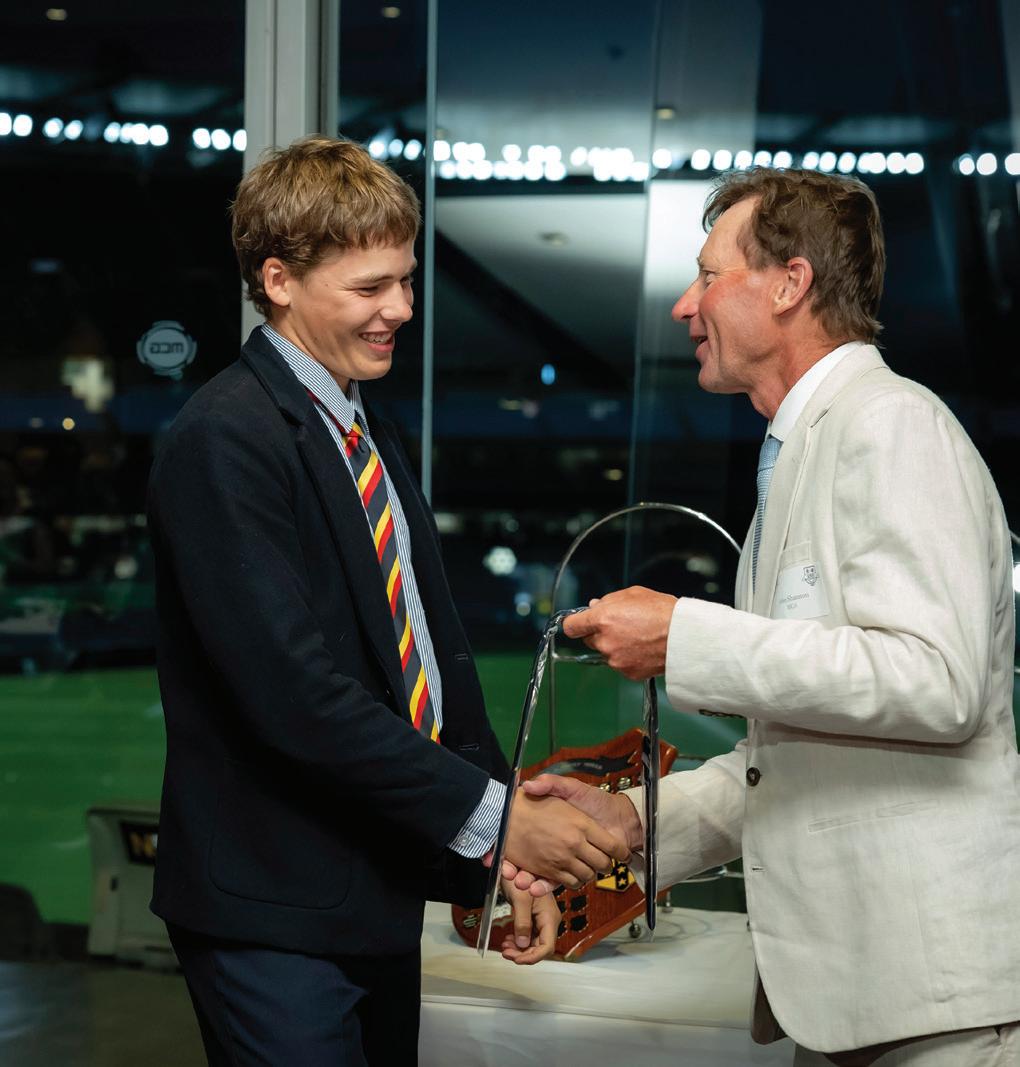
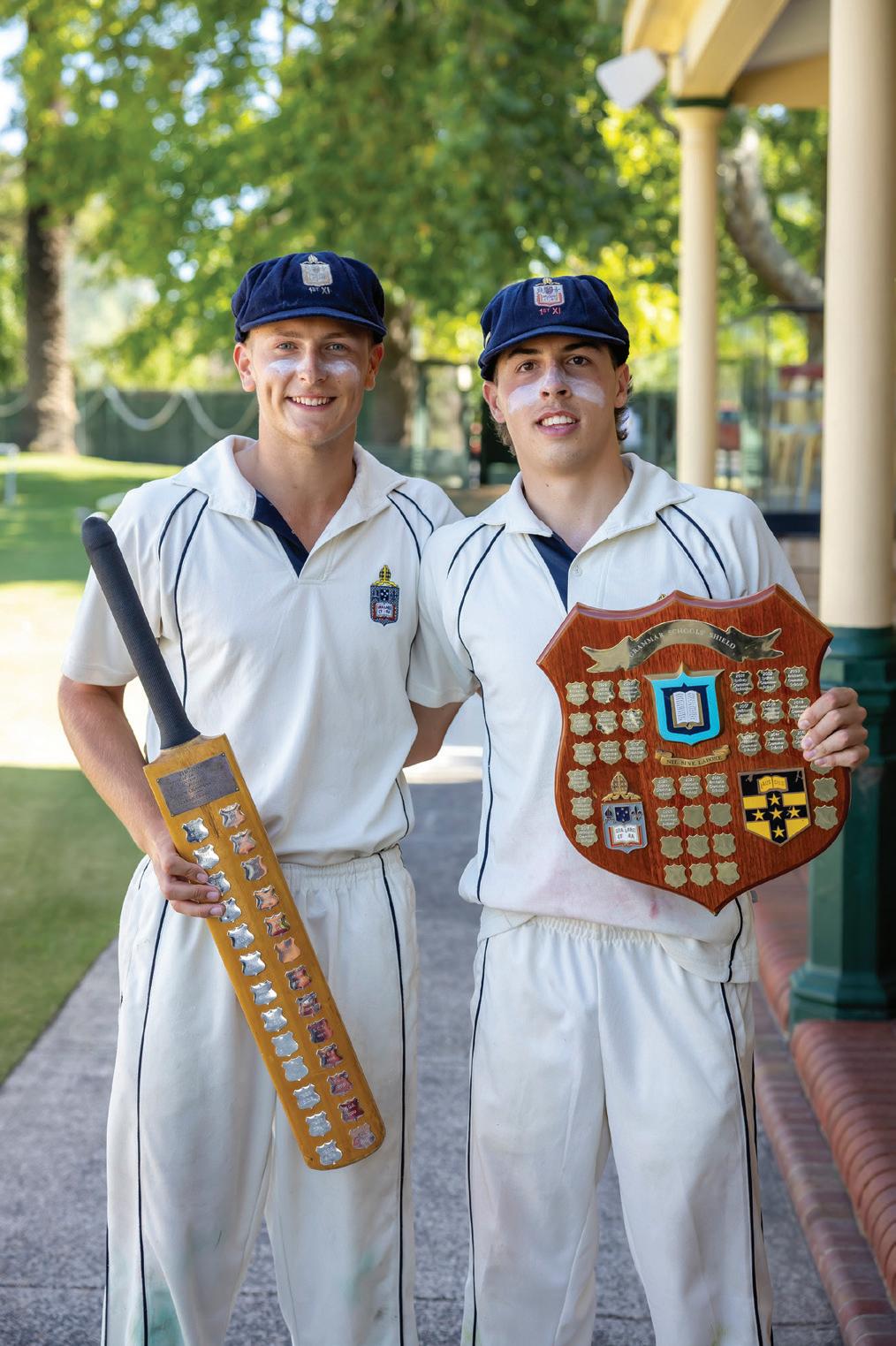
Throughout January, the respective 1st XI cricket squads from Melbourne Grammar, Sydney Grammar and Brisbane Grammar competed in the annual Tri-Grammar Series.
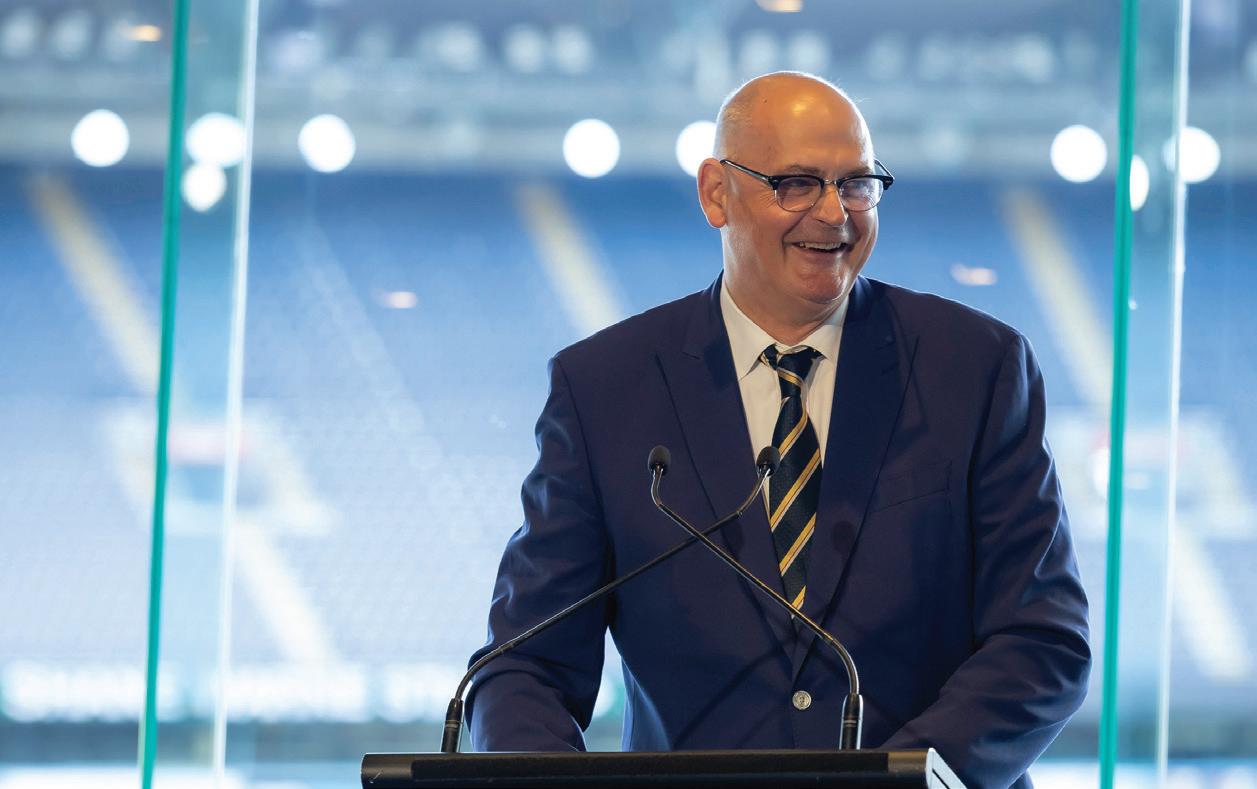
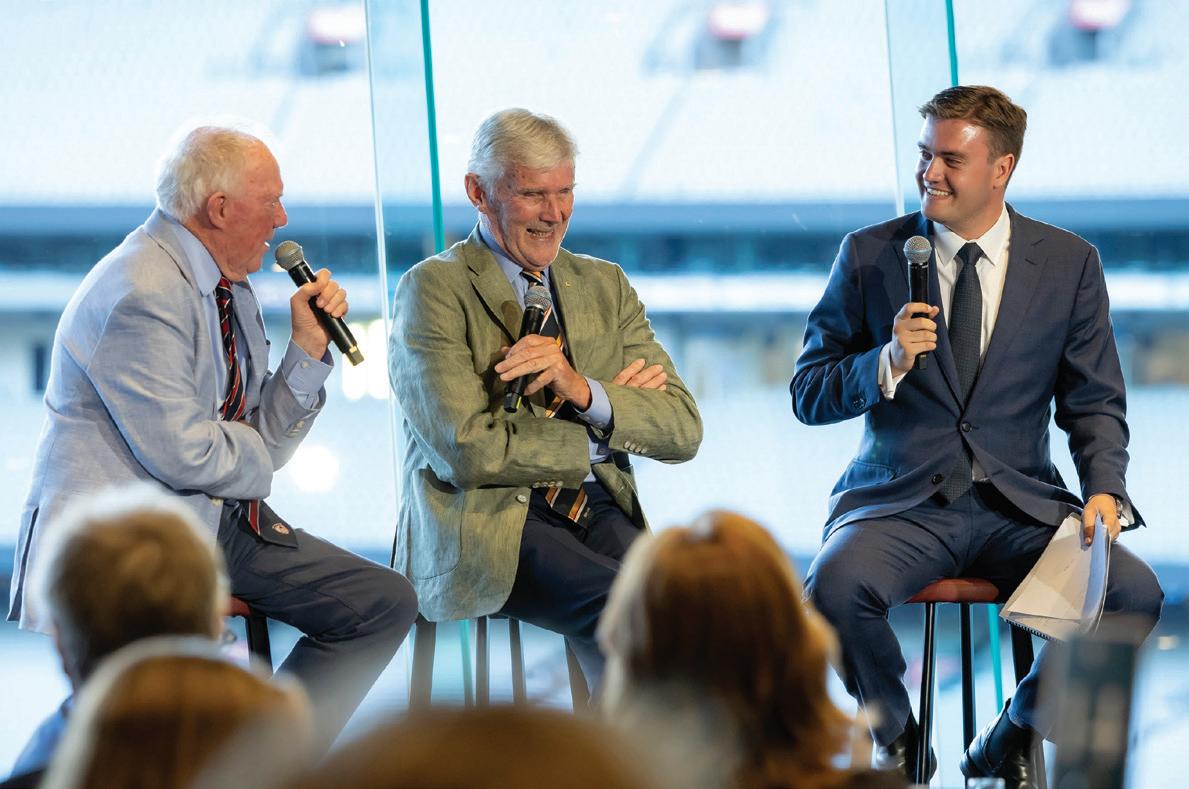
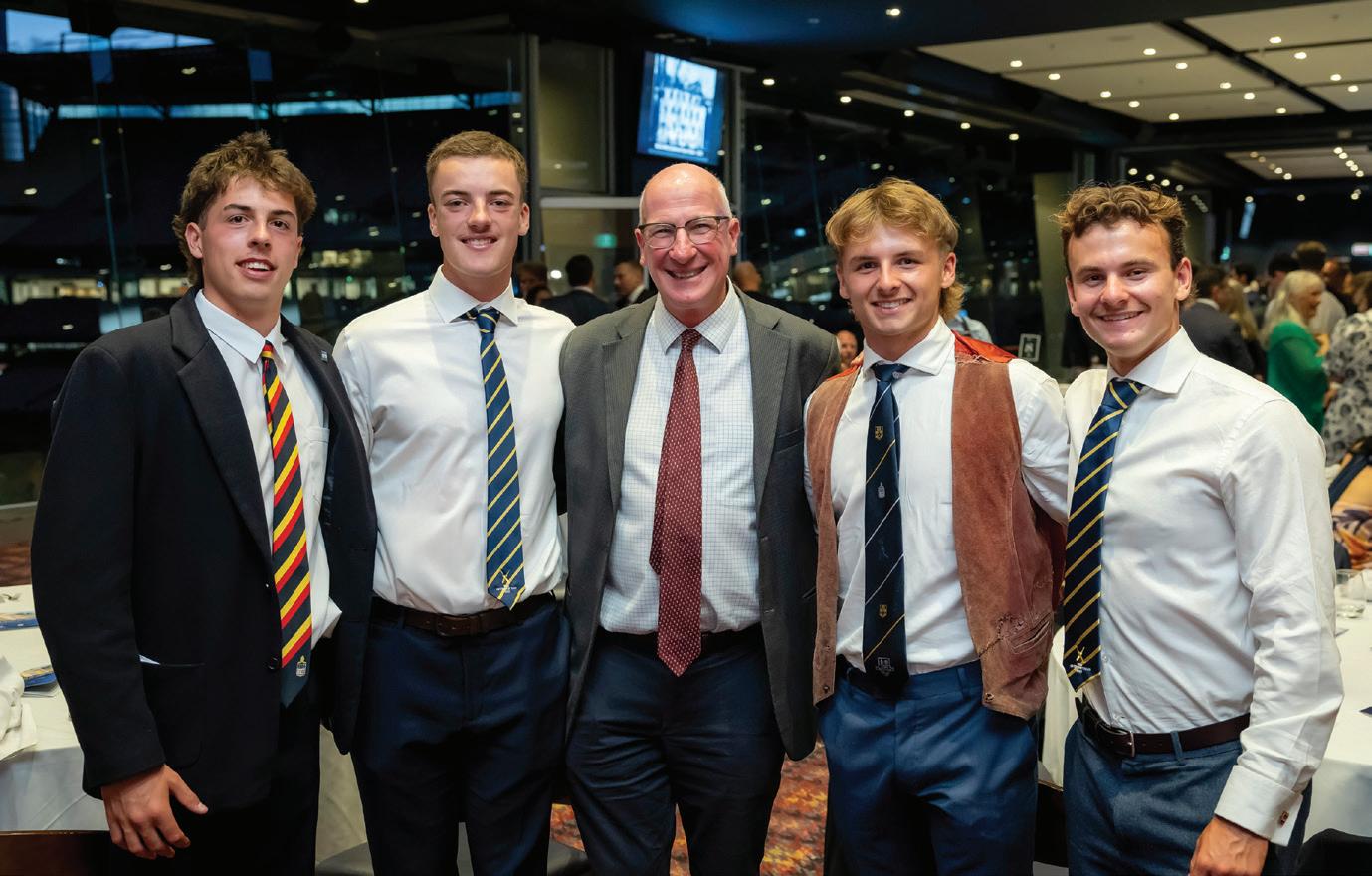
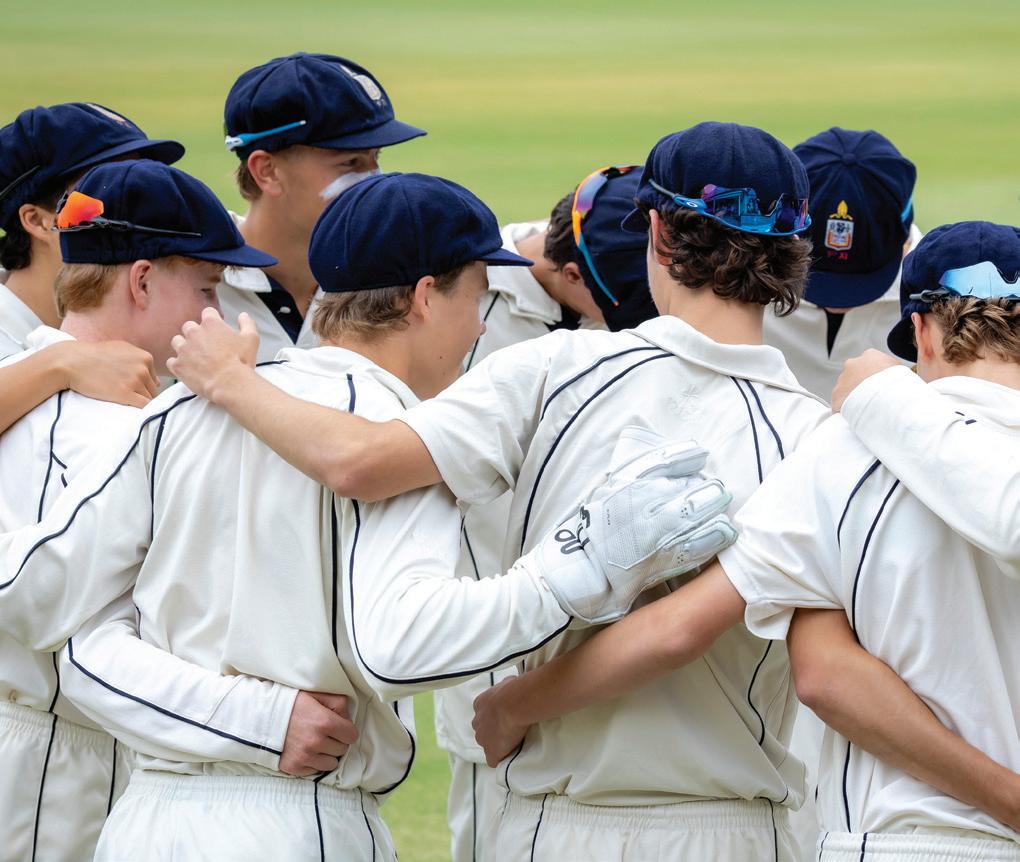
This year’s series was made particularly special by the 150th game of cricket played between Melbourne Grammar and Sydney Grammar, marking a significant milestone in a long and proud rivalry. Melbourne Grammar claimed The Bat, awarded to the winner of the MGS vs SGS match, and also finished as overall winners of the Tri-Grammar Series.
OBITUARIES
The School has learnt of the following recent deaths in our community. We extend our sympathy to their families and friends.
Allan, A G (OM 1979)
Atkins, J C (OM 1968)
Baker, C M (1973)
Ball, J F (OM 1951)
Beckingsale, D W (OM 1969)
Bodman OAM, W T H (OM 1951)
Brooksbank, B A (OM 1949)
Clark, R F (OM 1960)
Collett OAM, W J (OM 1951)
Cook, A N P (OM 1960)
Creswell, W E (OM 1959)
Davidson, L R (OM 2016)
Davies, N E (OM 1996)
Dawborn, J K (OM 1950)
Disney, J A (OM 1962)
Dyer, B B (OM 1990)
Finlay, B A (OM 1952)
Freeman, A W (OM 1976)
Goldsworthy, J L (OM 1953)
Hall OBE, A T (OM 1947)
Hallamore, L R (OM 1971)
Hammond, P F (OM 1965)
Heath, R P (OM 1965)
Henshall, H G (OM 1953)
Hood, B J (OM 1956)
Hood AM, J H (OM 1960)
Horne, M J (OM 1952)
Obituaries 2010 to present
Joscelyne, C A W (OM 1979)
Kofoed, S A M (OM 1998)
Lazer AM, A L (OM 1942)
Lyle, T R (OM 1951)
Mercer, A E C (OM 1971)
Millear E S, (OM 1951)
Minson, A D (OM 1965)
Mohr, G A (OM 1963)
Mulready, S L (Past Staff)
Murphy, J A (OM 1944)
Nurse, J S (OM 1968)
Oliver, I C (OM 1944)
Pepper, T W J (OM 1969)
Porritt, N S (OM 1984)
Reed, S P (OM 1963)
Richards, P C (OM 1970)
Sargood, G (OM 1947) Past Staff
Shaw, T W (OM 1949)
Talbot, A E (OM 1957)
Telfer, N J (OM 1954)
Tovey, P J (OM 1967)
Trumble, A H (OM 1948)
Wallace-Smith, H (OM 1963)
Webster, D G (OM 1969)
Wilson, T (OM 2002)
Withers, P W (OM 1957)
Wittner, A (OM 1942)
A full list of obituaries from 2010 is available at news.mgs.vic.edu.au
Do you have an obituary to report?
Please contact us if you are aware of a death in the Melbourne Grammar School community. mgs@mgs.vic.edu.au