All rights reserved. Reproduction in whole or in part without prior written permission is strictly prohibited.
ISSN: 825-3-8624294-6-3
EDITOR-IN-CHIEF & CREATIVE DIRECTION
Mekhi Kalil
WRITERS
*Text generated with AI
Mia Sterling
Sebastian Arden
Lucas Renn
Elliot Vance
Amara Leigh
Adrian Chen
Rowan Pierce
Owen Walker
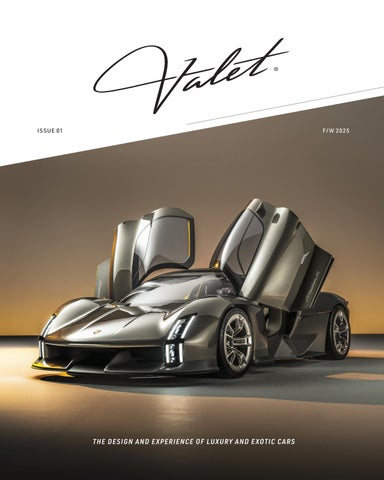
ISSUE 01 F/W 2025
THE DESIGN AND EXPERIENCE OF LUXURY AND EXOTIC CARS
PHOTOGRAPHY
Aston Martin, BMW, Bugatti, Callum Designs, Ferrari, Jaguar, Lamborghini, Lexus, McLaren, Mercedes-Benz Nio, Rolls-Royce, Singer Vehicle Design, Tesla, Denin Lawley, John Wycherley, NetCarShow.com, Rudolf Van Der Ven, Sotheby’s, Supercars.net
PRINT
Davis Direct 1241 Newell Pkwy, Montgomery, AL United States of America
SPECIAL THANKS
Devon Ward, Courtney Windham, Joey Tigert, Kelly Bryant, and the Auburn University School of Industrial and Graphic Design for their continued support and mentorship.
EDITOR’S NOTE
As a kid, one of my favorite things to do was collect Hot Wheels. They made the dreaded trips to the grocery store so worth it. As my mom worked her way through the grocery aisles grabbing the real necessities, I’d be across the store digging through rows and rows of those $1 gems in hopes of finding another Ferrari or Porsche I couldn’t live without. It didn’t matter that I already had dozens at home, owning even just a miniature version of one was enough to excite me.
Growing up in small-town Hartselle, Alabama, opportunities to see the real-life exotic cars were almost nonexistent. The most exciting thing you’d find was maybe a new Mustang on display at our local Ford dealership. The only access I had was through movies, video games, or the occasional car magazine. These pieces of media gave me access to a world I didn’t get to touch, but seriously admired.
That awe has never left me. If anything, it matured. Cars like those still have a way of stopping people in their tracks. Yes, they’re machines, but they’re also objects of desire, wonder, and meticulous design. Valet, a brand and publication dedicated to the design and experience of luxury and exotic cars, stems from this lifelong fascination. It exists to capture the craftsmanship, emotion, and imagination behind the world’s
MEKHI KALIL Editor-in-Chief
FEATURES
THE ART OF ENTRY
A closer look at how automakers elevate the simple act of getting in a vehicle into a design statement.
MIA STERLING
TIMELESS CURVES
How Singer Vehicle Design reimagines classic Porsches while preserving the curves that define the 911.
SEBASTIAN ARDEN
THE LANGUAGE OF LFA
Why the Lexus LFA remains one of the most remarkable expressions of design, more than a decade later.
LUCAS RENN
DESIGNING DESIRE
How Ian Callum’s aesthetic signatures have shaped the look and feel of today’s luxury and exotic cars.
ELLIOT VANCE
COLOR CODES
How color has evolved beyond aesthetics and marketing to define the identity of the makers behind it.
AMARA LEIGH
Examining the rise of ambient lighting and how makers are using it to craft more experiential interiors.
ADRIAN CHEN
BUGATTI BESPOKE
How Bugatti’s new bespoke Programme Solitaire transforms collector vision into works of automotive art.
ROWAN PIERCE
THE LIVING MACHINE
How automakers are leveraging technology to create cars that don’t just move with us—they understand us.
OWEN WALKER
ART THE ENTRY OF
Mia Sterling
a closer look at how automakers elevate the simple act of getting in a vehicle into a design statement.
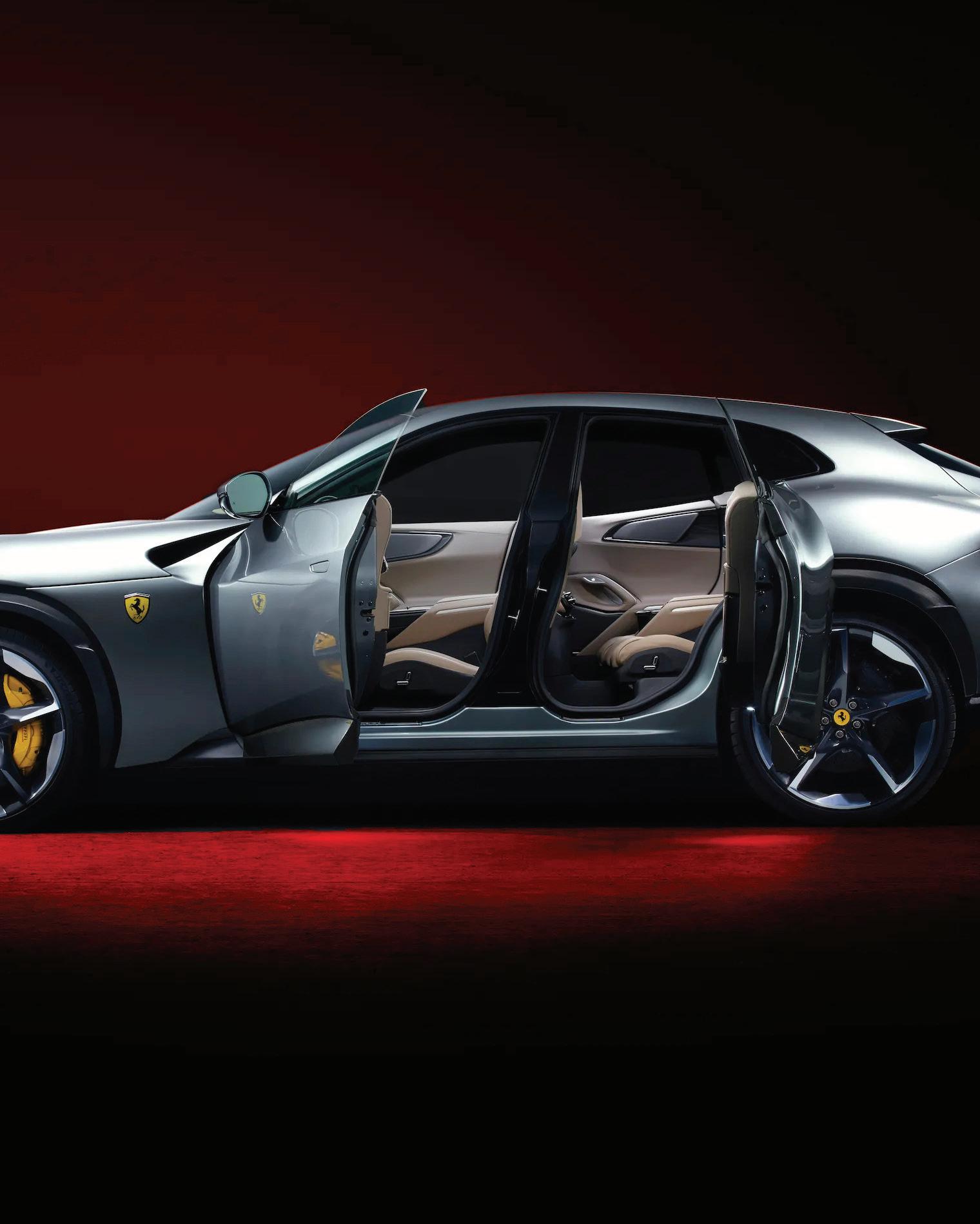
FERRARI
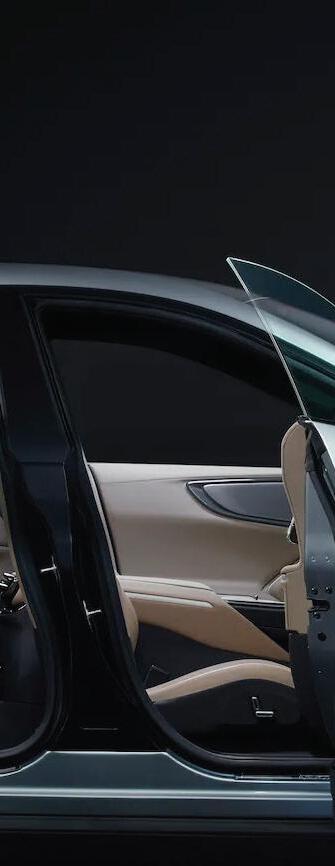
The all-new Ferrari Purosangue features integrated, rear-hinged “suicide” doors.
In most cars, the door is an afterthought. It opens, it closes, and it vanishes from memory as soon as the engine starts. But in the world of luxury and exotic automobiles, the door is rarely so simple. It becomes a design gesture, a piece of engineering theater, and in many cases, a brand signature.
From gullwings to scissor doors, rear-hinged coach doors to disappearing panels, the automotive industry has continually reimagined this most basic point of contact. Each solution reflects not only an engineering challenge but also a philosophy of what the car represents. This is the story of how something ordinary became extraordinary: the art of entry.
Dramatic doors were not created for show—they were born out of necessity.
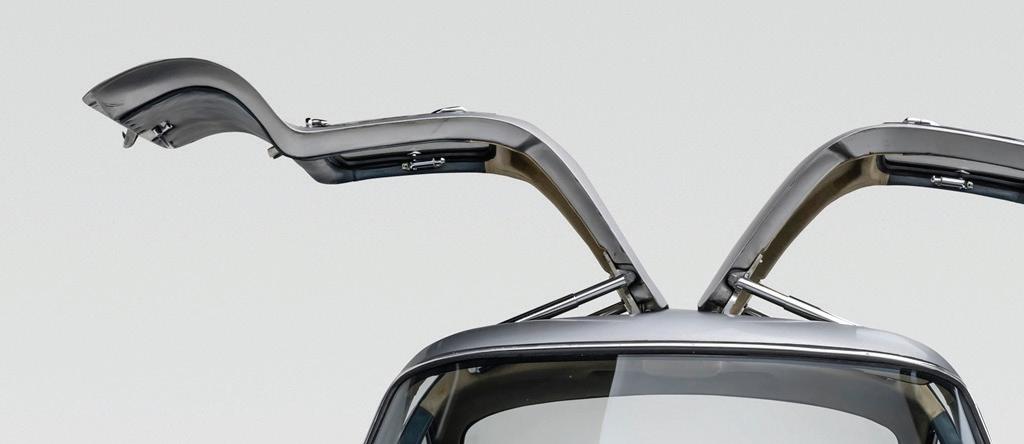
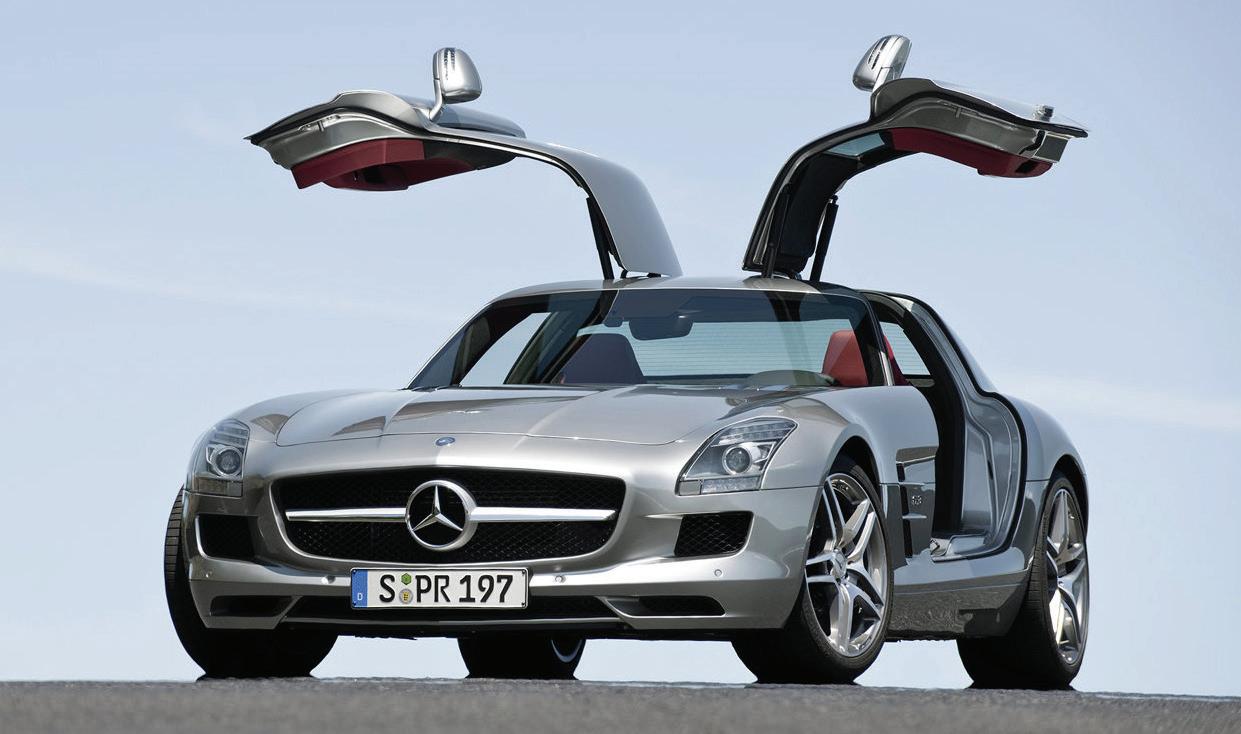
The most famous example is the Mercedes-Benz 300SL Gullwing of 1954. Its race-derived tubular frame was too wide for conventional doors, so Mercedes engineers hinged the doors at the roof. What could have been a compromise became an icon. The Gullwing’s dramatic upward arc made the act of entry memorable, and the car remains one of the most collectible classics in the world.
A nother early variation was the suicide door, common on luxury cars of the 1930s and 1940s. Hinged at the rear, these doors made entering and exiting more graceful, particularly when chauffeured. The term “suicide” was attached later, due to safety concerns if doors opened while driving. Over time, they disappeared from mainstream use but left a legacy of elegance that would resurface decades later.
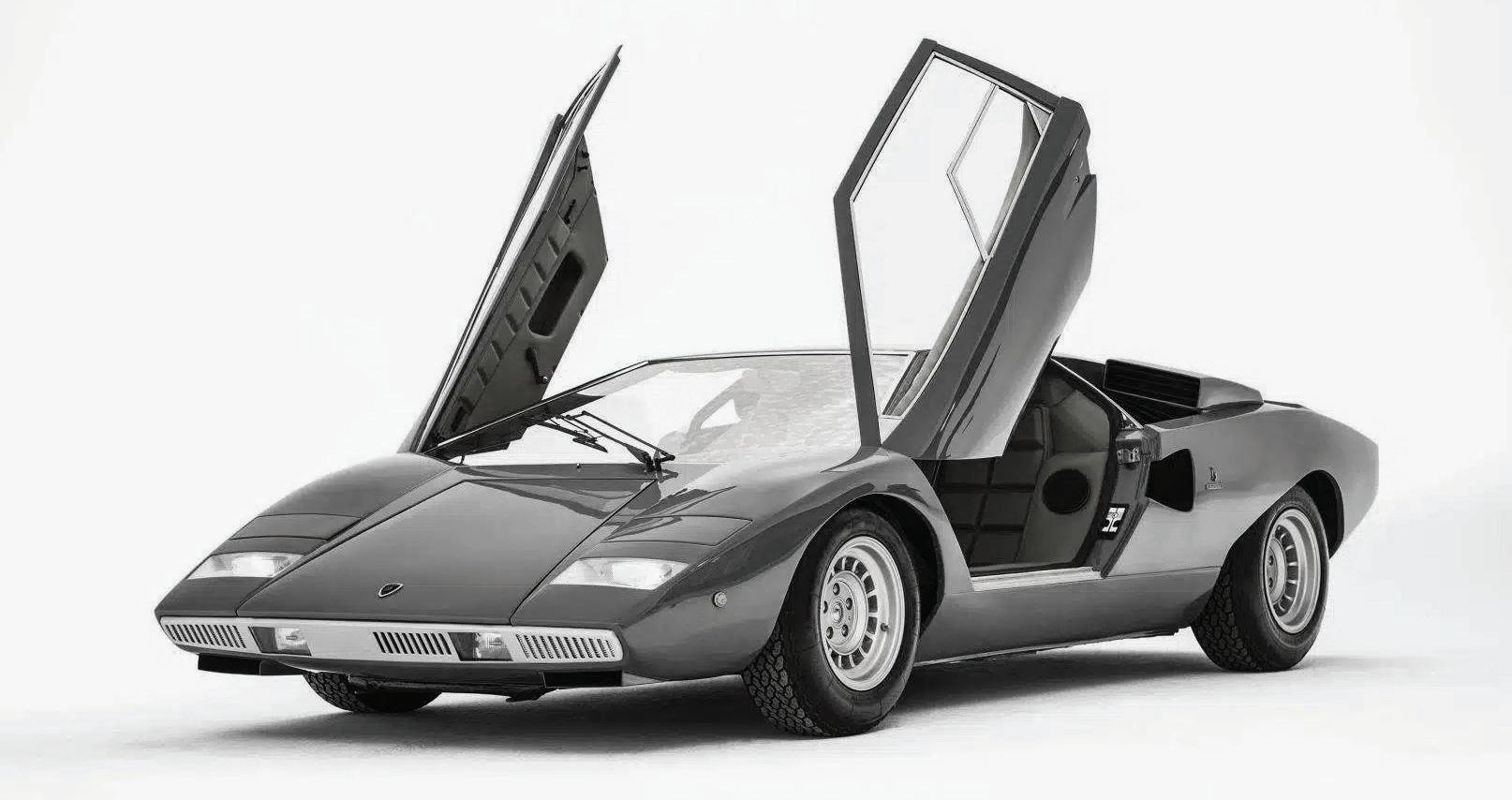
Then, in the 1970s, Lamborghini introduced a new chapter. The Countach, with its extreme wedge shape and wide sills, required a novel solution. Engineers devised a hinge that rotated upward and slightly forward, allowing the door to open in tight spaces. These became known as scissor doors, and while originally practical, they quickly evolved into a Lamborghini hallmark. To this day, they define the brand’s identity as much as its V12 engines or angular styling.
JOHN WYCHERLEY
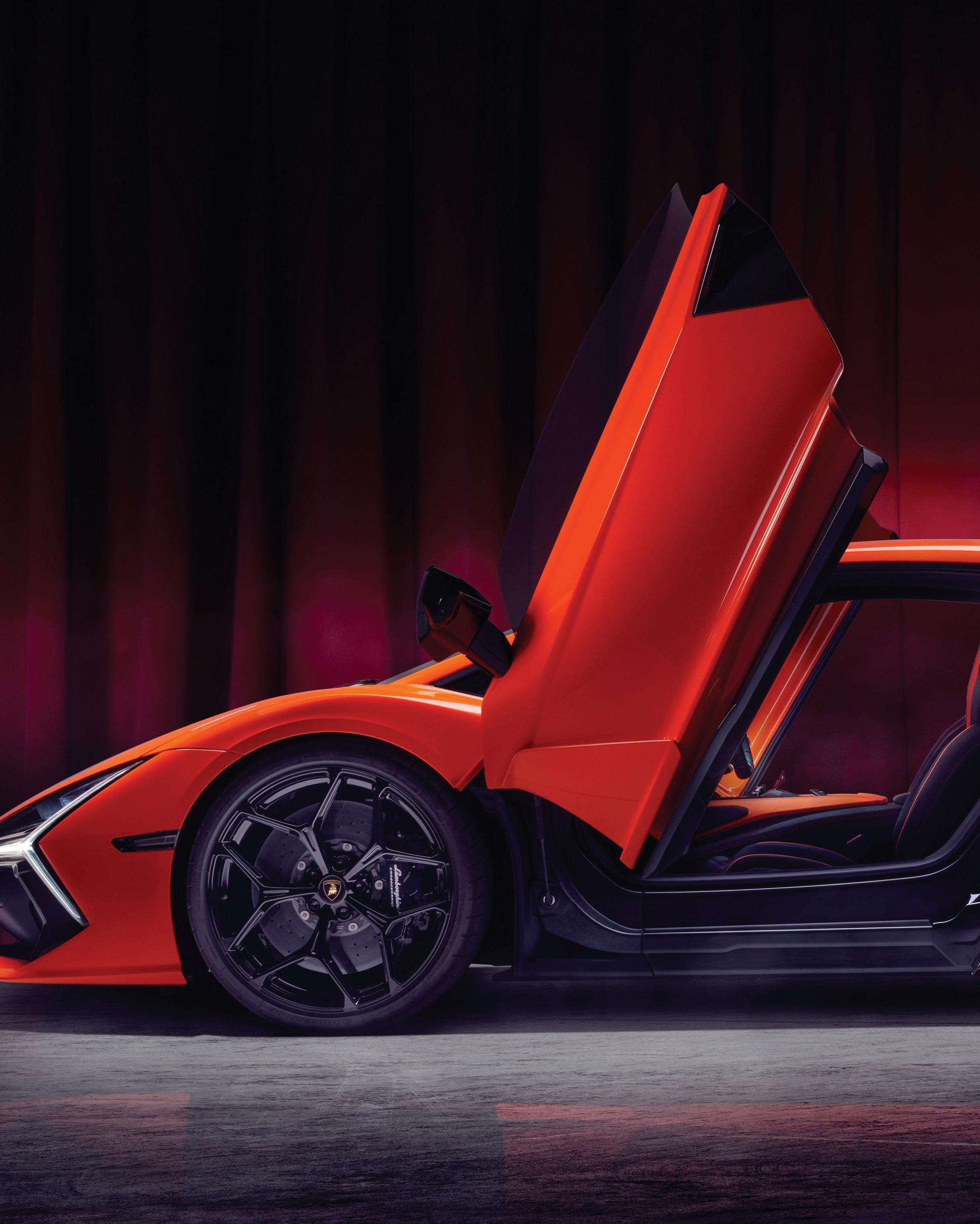
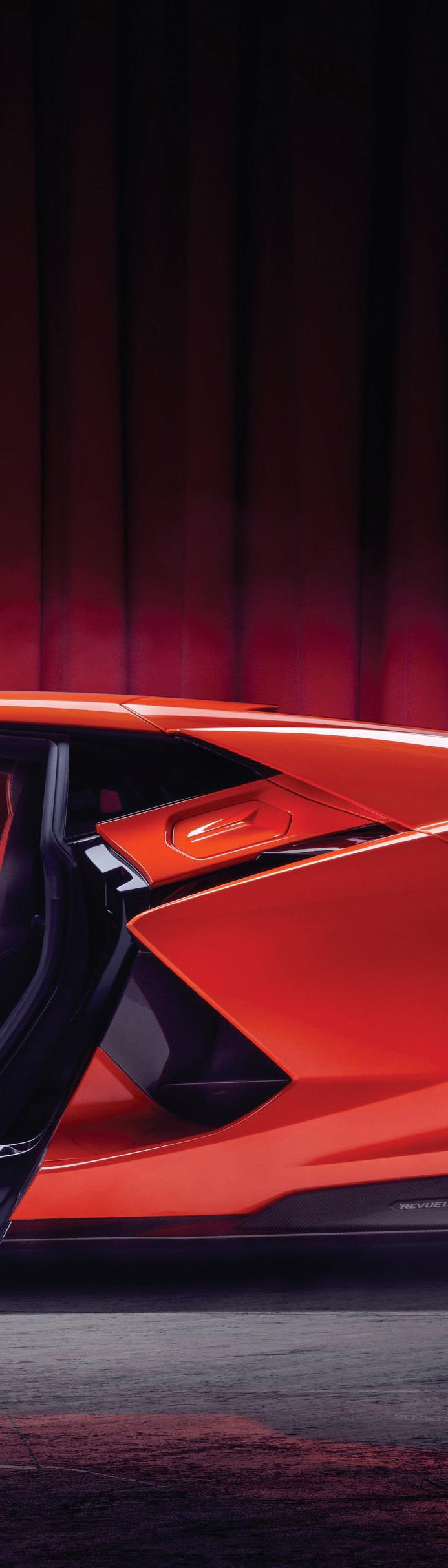
The latest Lamborghini Revuelto retains the marque’s signature scissor doors.
SCISSOR & DIHEDRAL DOORS
Introduced by Lamborghini and perfected across generations, scissor doors open vertically, pivoting at the front hinge. Today, they are inseparable from Lamborghini’s image. The Diablo, Murciélago, Aventador, and their latest Revuelto all carry the tradition forward.
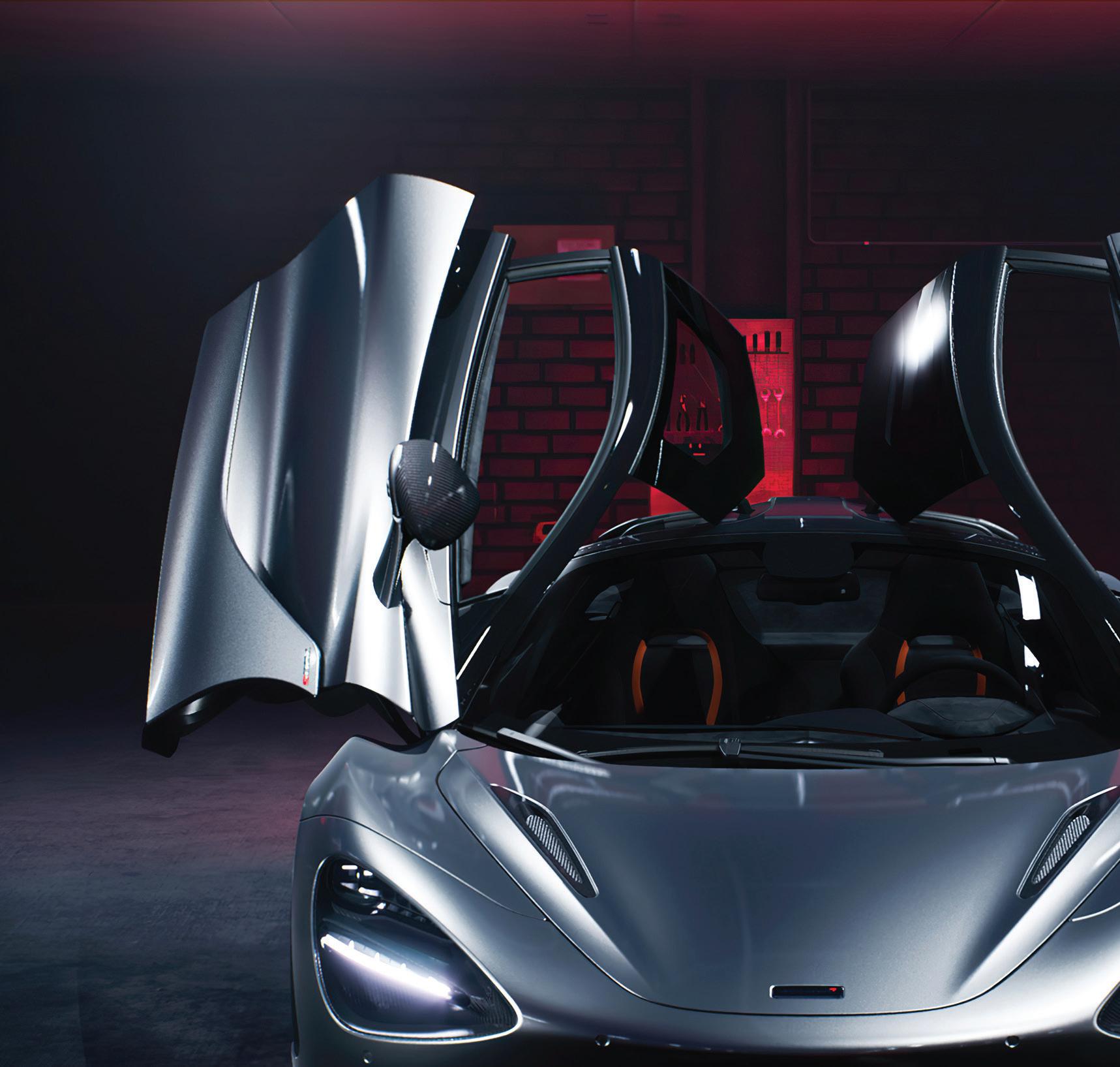
O ther manufacturers have explored similar approaches. The McLaren 720S employs dihedral doors, which swing upward and outward on a complex hinge. The movement is less abrupt than a scissor door, but no less dramatic. It allows easier access to the cabin while maintaining the sense of ceremony that defines a supercar.
GULLWING & BUTTERFLY DOORS
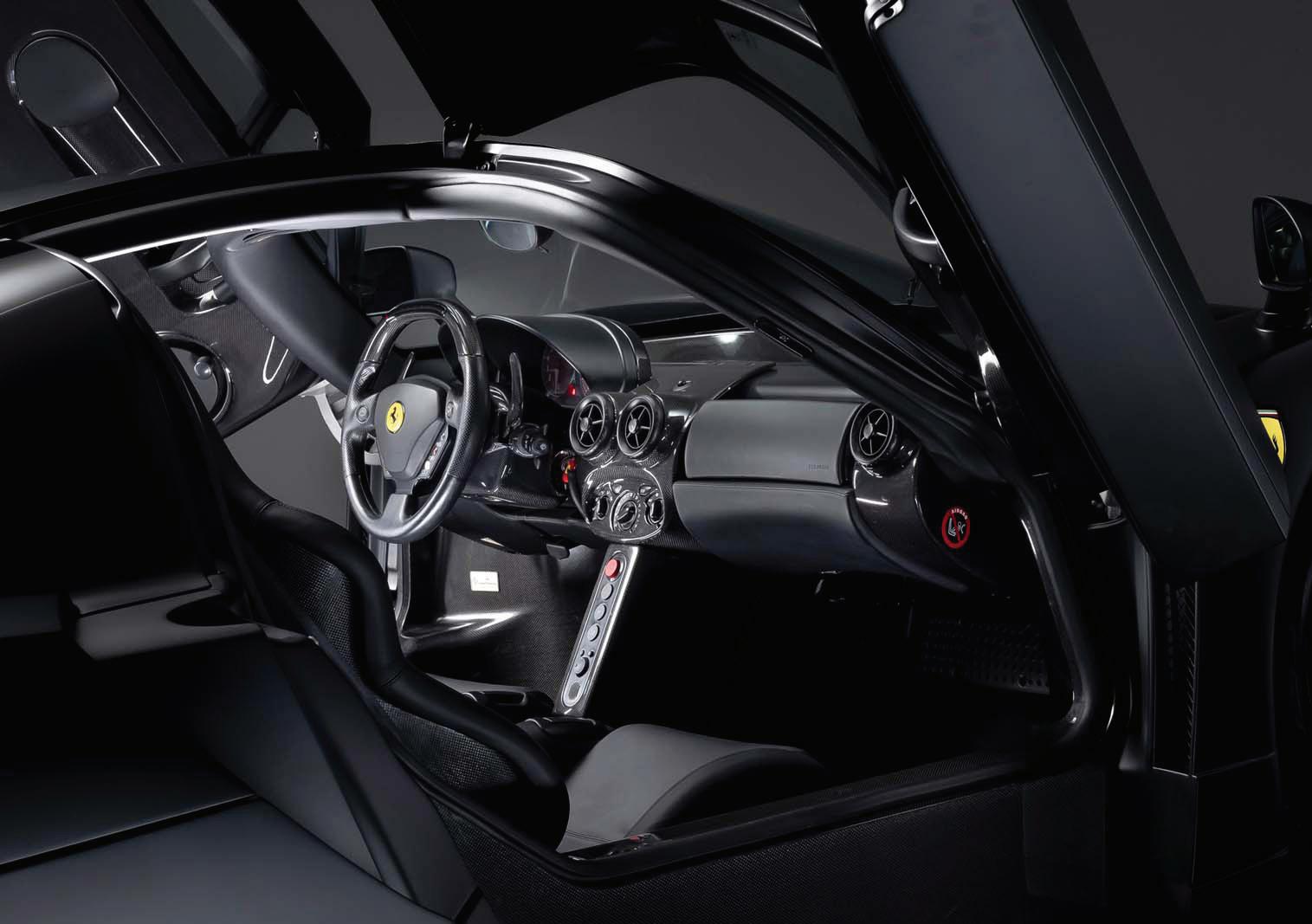
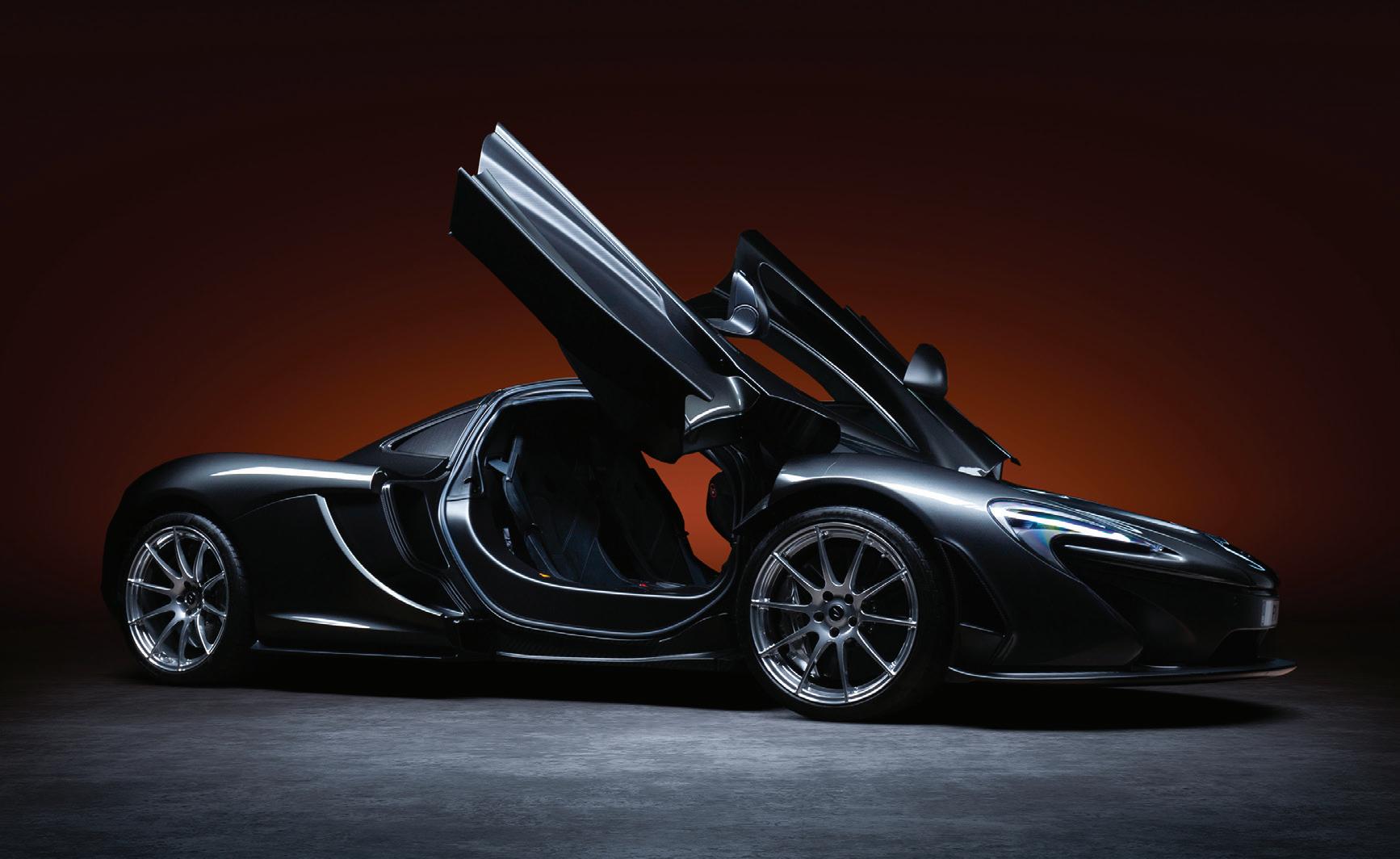
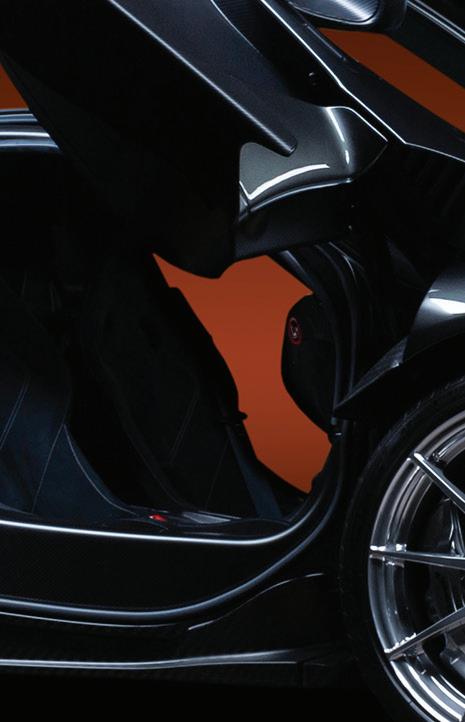
The Gullwing, pioneered by the Mercedes 300SL, returned in modern form on the SLS AMG, demonstrating its lasting appeal. Its cousin, the butterfly door, blends elements of gullwings and scissor doors, opening outward and upward in a wider sweep. Cars such as the Ferrari Enzo, LaFerrari, and McLaren P1 all employ butterfly doors, emphasizing fluidity and spectacle.
2015 MCLAREN P1
Rudolf Van Der Ven
REAR-HINGED & C OACH DOORS
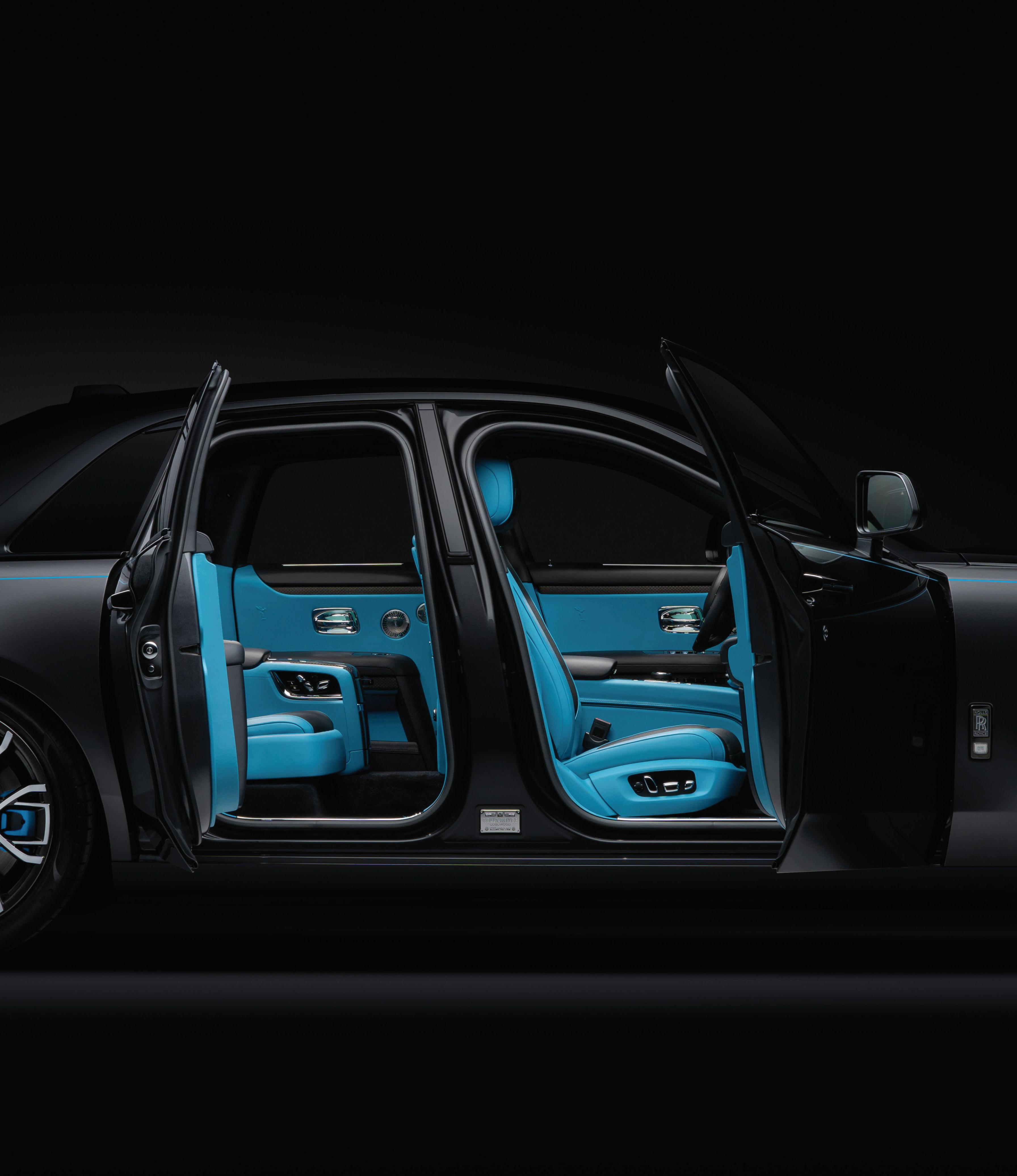
Rear-hinged doors, once out of fashion, have returned as symbols of luxury. Rolls-Royce has mastered the format with its Phantom, Ghost, and Cullinan models. Branded as “coach doors,” they open with an electronic assist and close at the touch of a button, eliminating the awkward reach. Their effect is one of quiet authority—entry feels deliberate, controlled, and refined.
Even performance brands have adopted the format. The Ferrari Purosangue, the marque’s first four-door model, features rearhinged back doors that provide better access to the second row. It’s a practical solution wrapped in exclusivity, giving the SUV a sense of occasion without disrupting Ferrari’s sporting image.
Ultimately, the art of entry is not about the hinge or the angle of motion. It is about what the moment communicates. For Lamborghini, it is defiance. For Rolls-Royce, it is composure. For Mercedes, it is heritage. When a driver opens the door of an exotic car, they are stepping into a philosophy, a culture, and a story that begins before the key is turned.
SINGER VEHICLE DESIGN
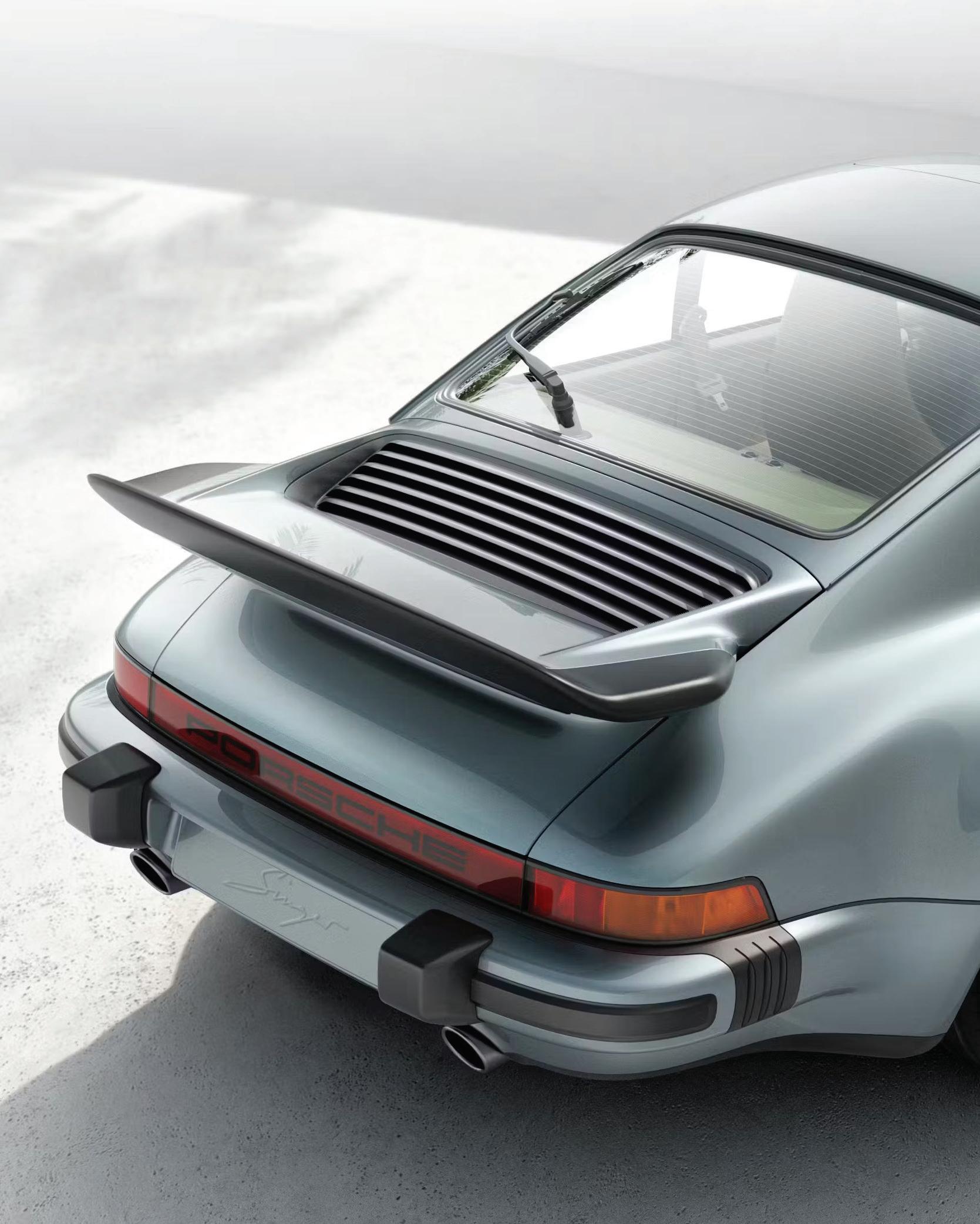
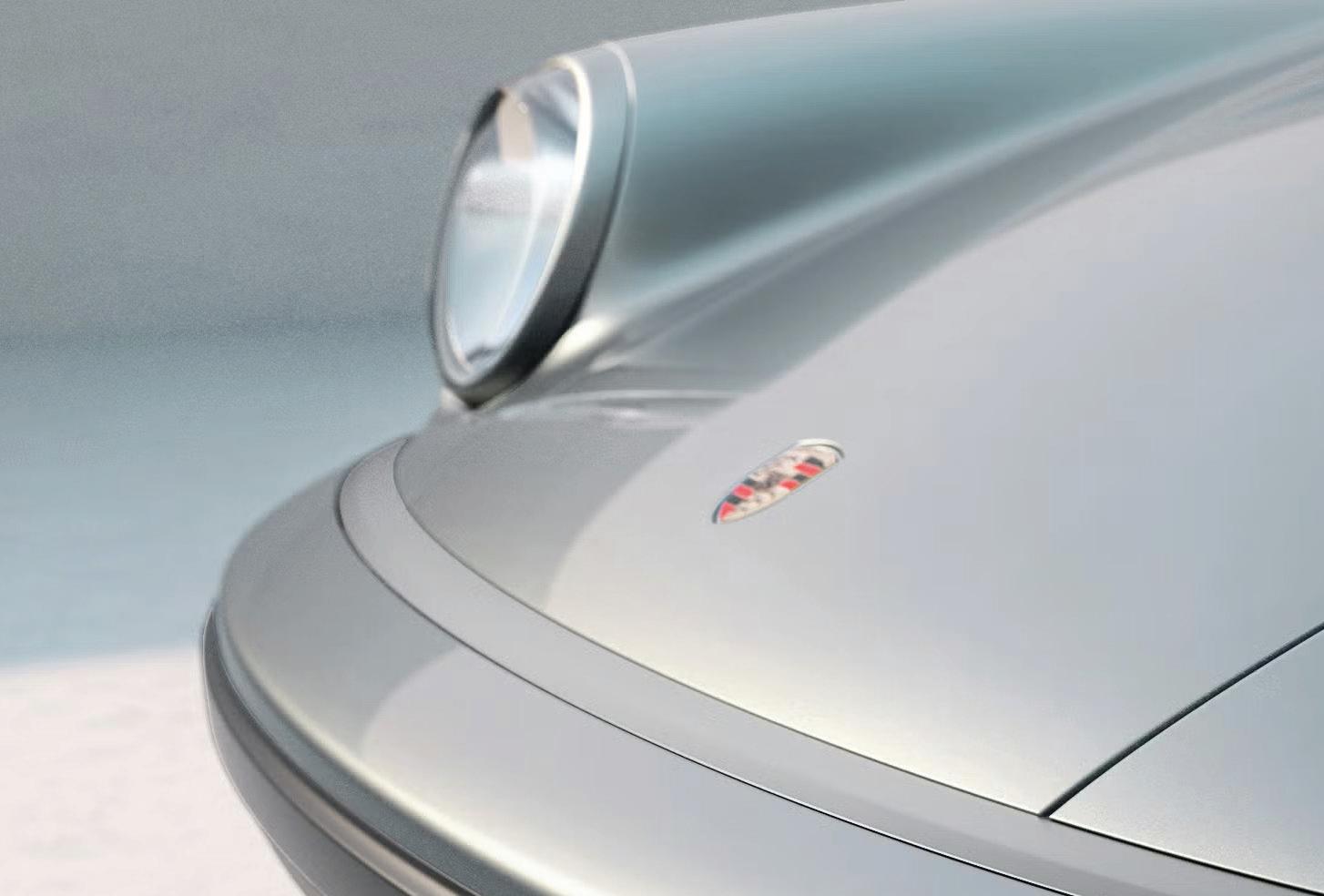
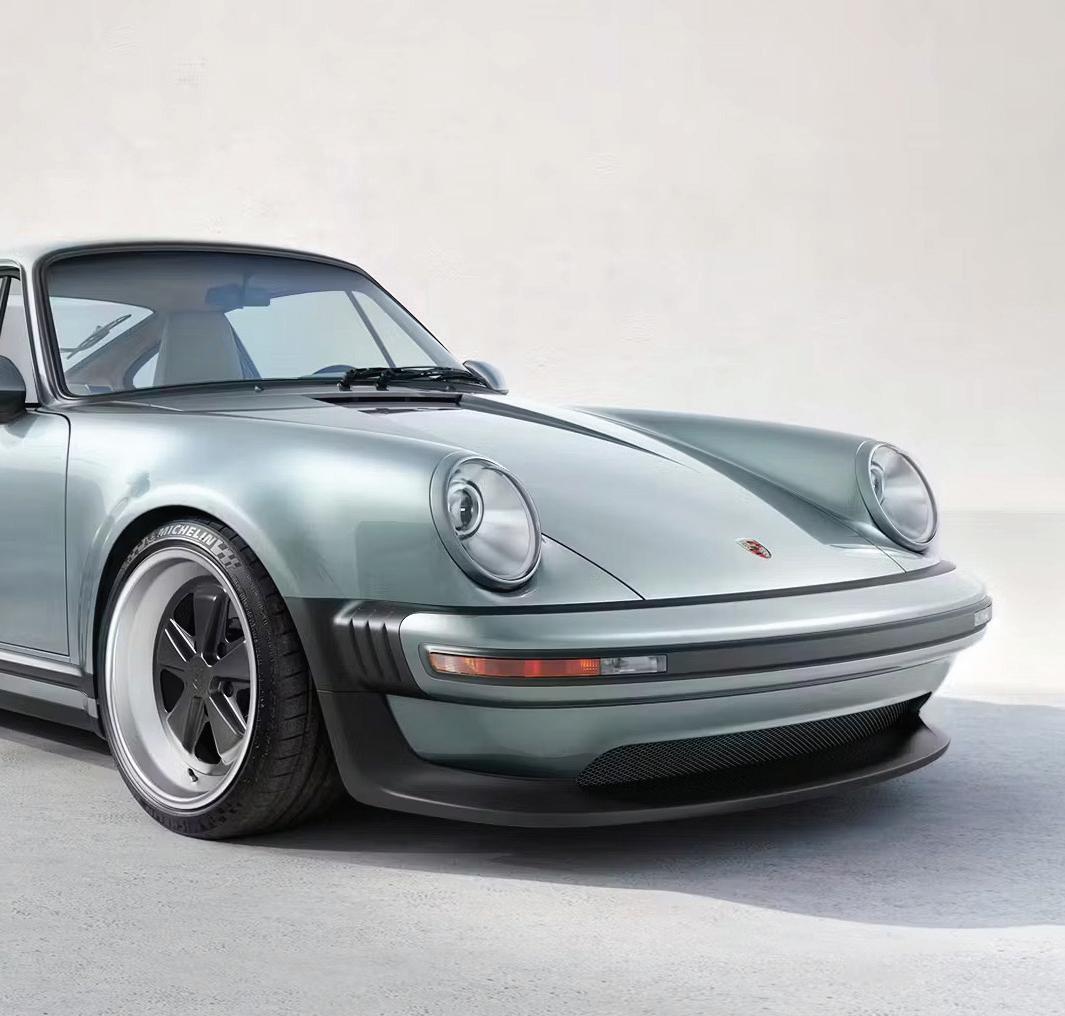
Singer’s prototype of their Porsche 930 Turbo tribute.
CURVES
Sebastian Arden
h ow s inger v ehicle d esign reimagines classic p orsches while preserving the curves that define the 911.
In the rarefied world of automotive restoration and reimagination, few names evoke reverence the way Singer does. Based in California, Singer Vehicle Design doesn’t simply restore Porsche 911s—it transforms them into objects of timeless design, marrying heritage curves with modern craftsmanship. To witness a Singer is to see both what was, and what might have been all along.
The Porsche 911 is defined first by its silhouette. Long hood. Smooth, flowing roofline that tapers into a sloping rear. The arches over the wheels, the teardrop side windows, the balance between taut tension and sensuous sweep—these are more than design elements. They are the spine of Porsche identity.
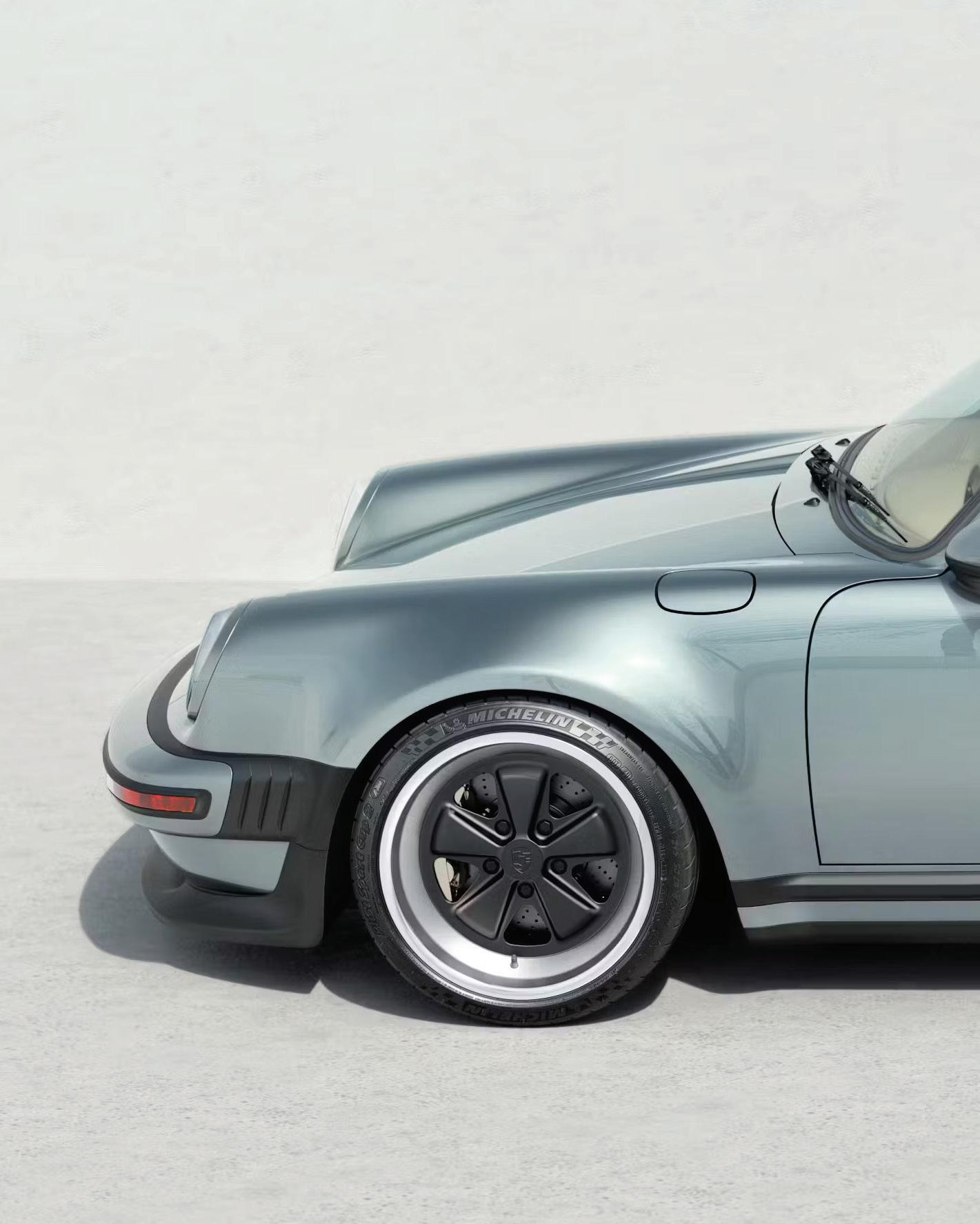
S inger’s approach is to respect that spine. Each restoration preserves the soul of the lines that made the original 911 icons while refining details—sharpening fenders, slimming panel gaps, re-proportioning certain elements—without ever veering into pastiche. One of the most striking qualities of Singer’s work is how curves that once showed their age get reinterpreted with precision: reprofiled flares, hand-shaped aluminum fenders, subtle tweaks to the shoulders and overhangs. The result isn’t pure nostalgia; it’s classic Porsche reborn with modern clarity and soul.
“It’s like creating a masterpiece with their own personality at the heart.”
curves
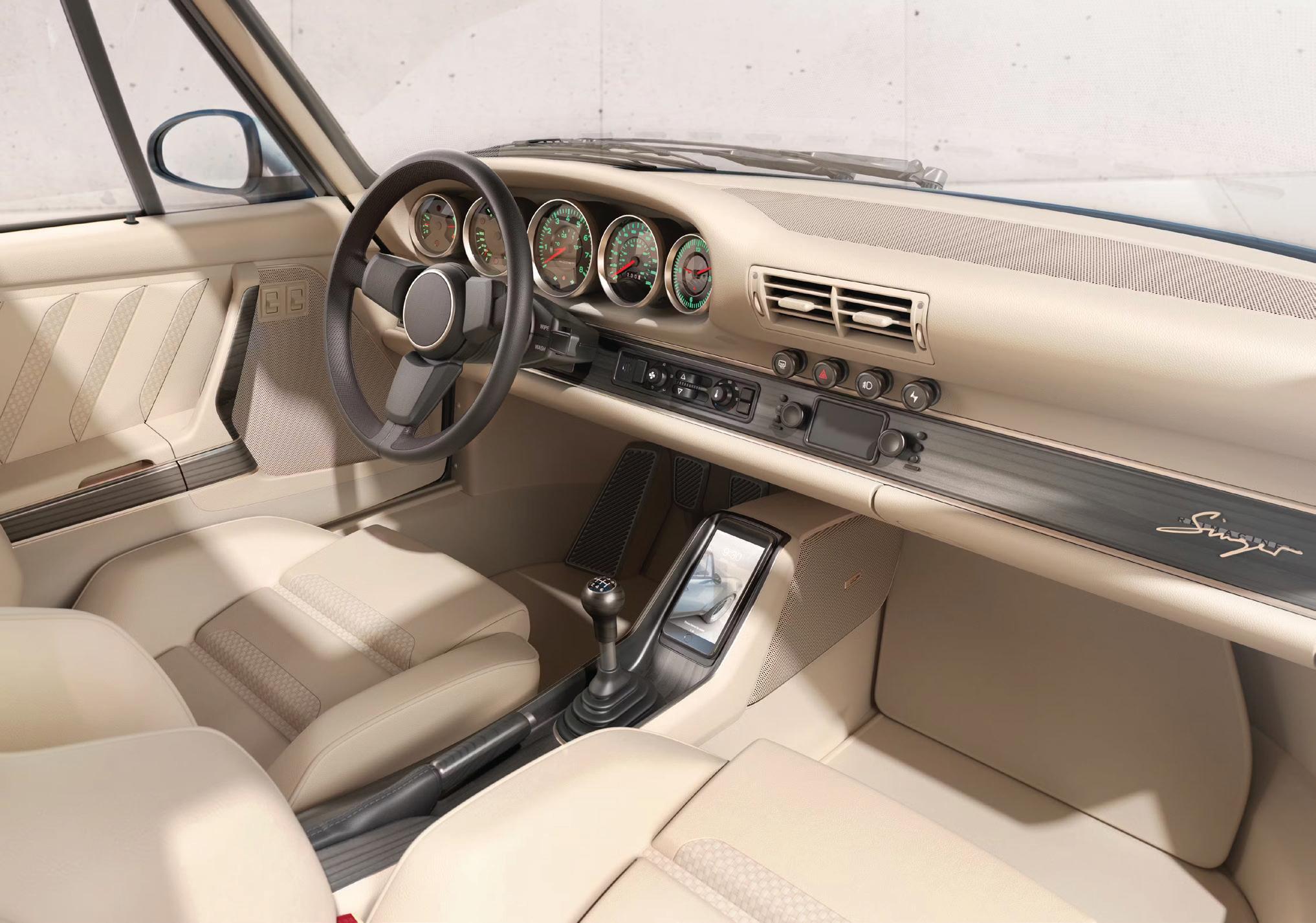
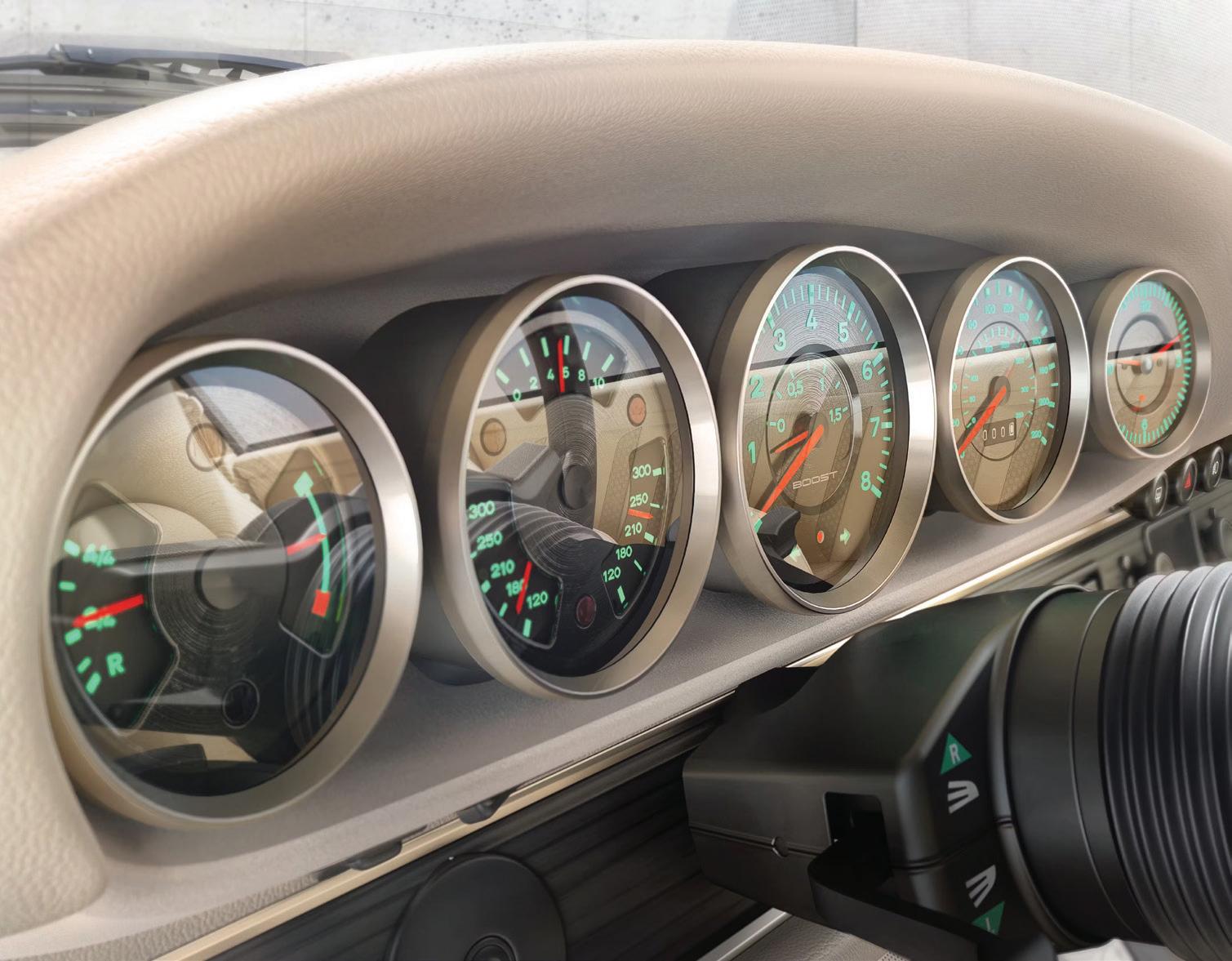
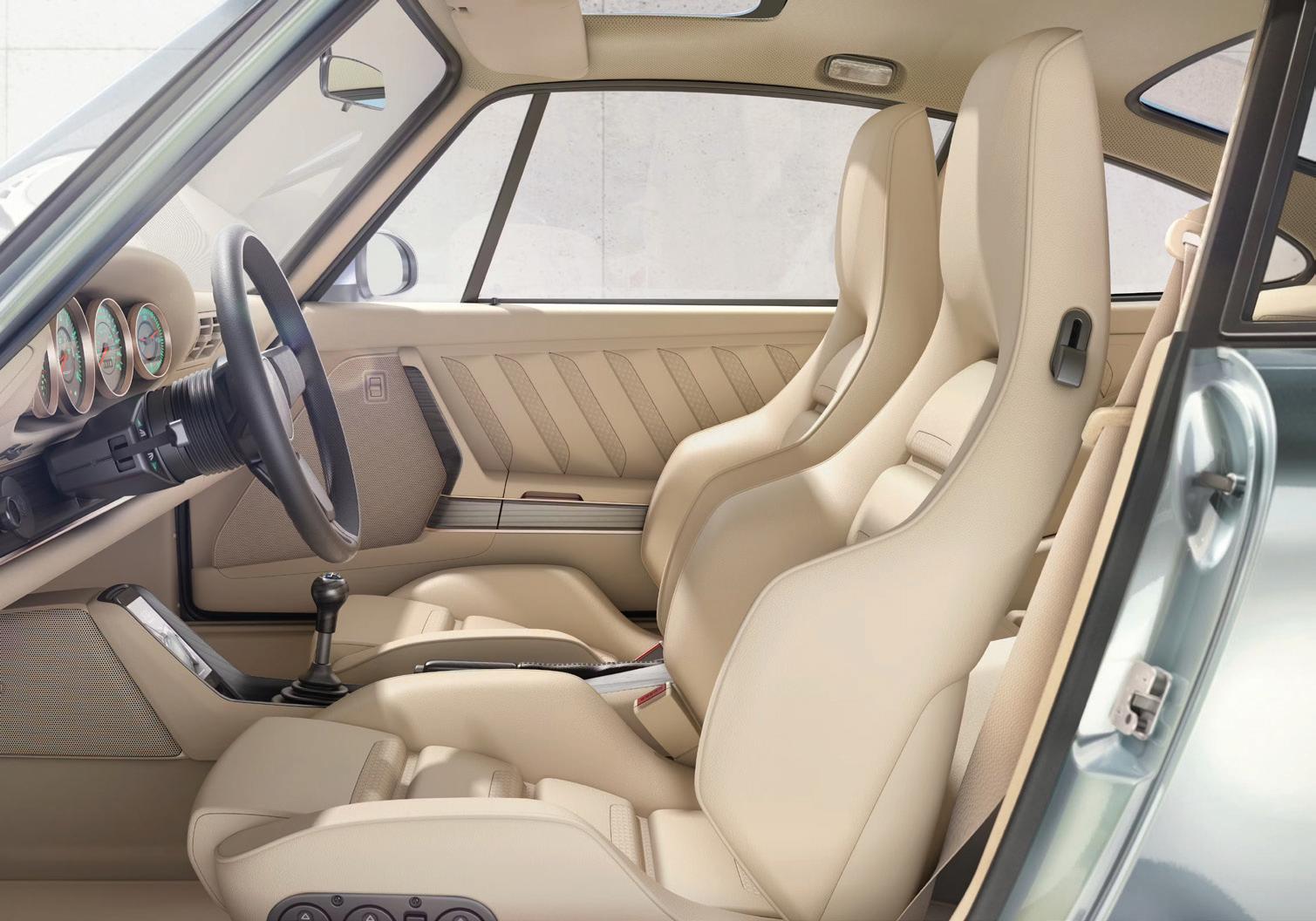
The beauty of a Singer isn’t only visible from outside. Step inside one and you see that what’s outside is only half the story. Singer’s interiors are a study in high craftsmanship, where every stitch, switch, and material is meticulously selected. High-grade leathers wrap not just the seats but door panels and dashboards; open-pore woods and brushed metals add warmth and tactility; bespoke gauges and switches look like they’ve always belonged.
This level of artistry isn’t about uniformity—it’s about personality. As founder Rob Dickinson explains, “The best part of the journey remains the relationship we build with our customers from day one and throughout the entire process and beyond–it’s like creating a masterpiece with their own personality at the heart.”
Every Singer commission reflects this ethos: part Porsche heritage, part modern engineering, and part the owner’s individual taste, fused together with an obsessive attention to detail.
SINGER VEHICLE DESIGN
The interior in Malibu Sand comes equipped with electrically adjustable, heated seats, six-speed manual transmission, inductive phone charging, air-conditioning, and Black Forest wood accents.
In an age when many automotive designs lean sharp, aggressive, or minimalist, Singer’s curves feel like a necessary counterpoint. They offer softness without losing tension; sensuality without losing purpose; elegance with a performance core.
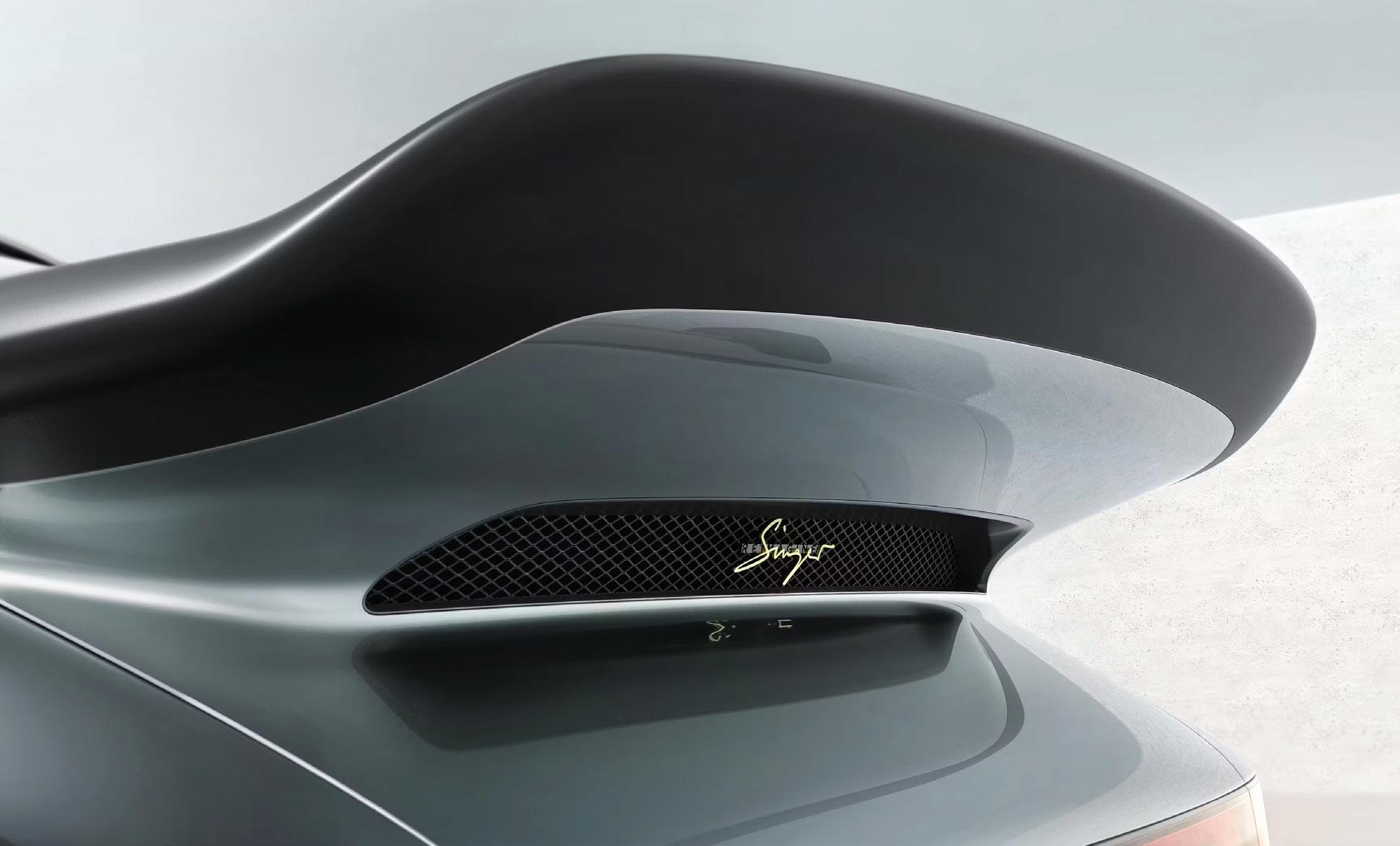
These curves aren’t just aesthetic. They stabilize airflow, frame light and shadow, impact how the car moves through the world visually. When Singer reimagines side mirrors, fender flares, or the rear ducktail spoiler, it’s with respect for the aerodynamic and visual balance that defined classic 911s. Their work reminds us that curvature in design literally shapes how a car feels.
curvescurves
One of Singer’s builds begins with a body-off restoration. Panels are removed, the chassis stripped, inspected, and reinforced. The body is subtly modified: generous fender flares to house wider tires, refined rooflines for cleaner drip rails, and fluid rear bumper integration. It’s then finished in bespoke paints that accentuate every curve.
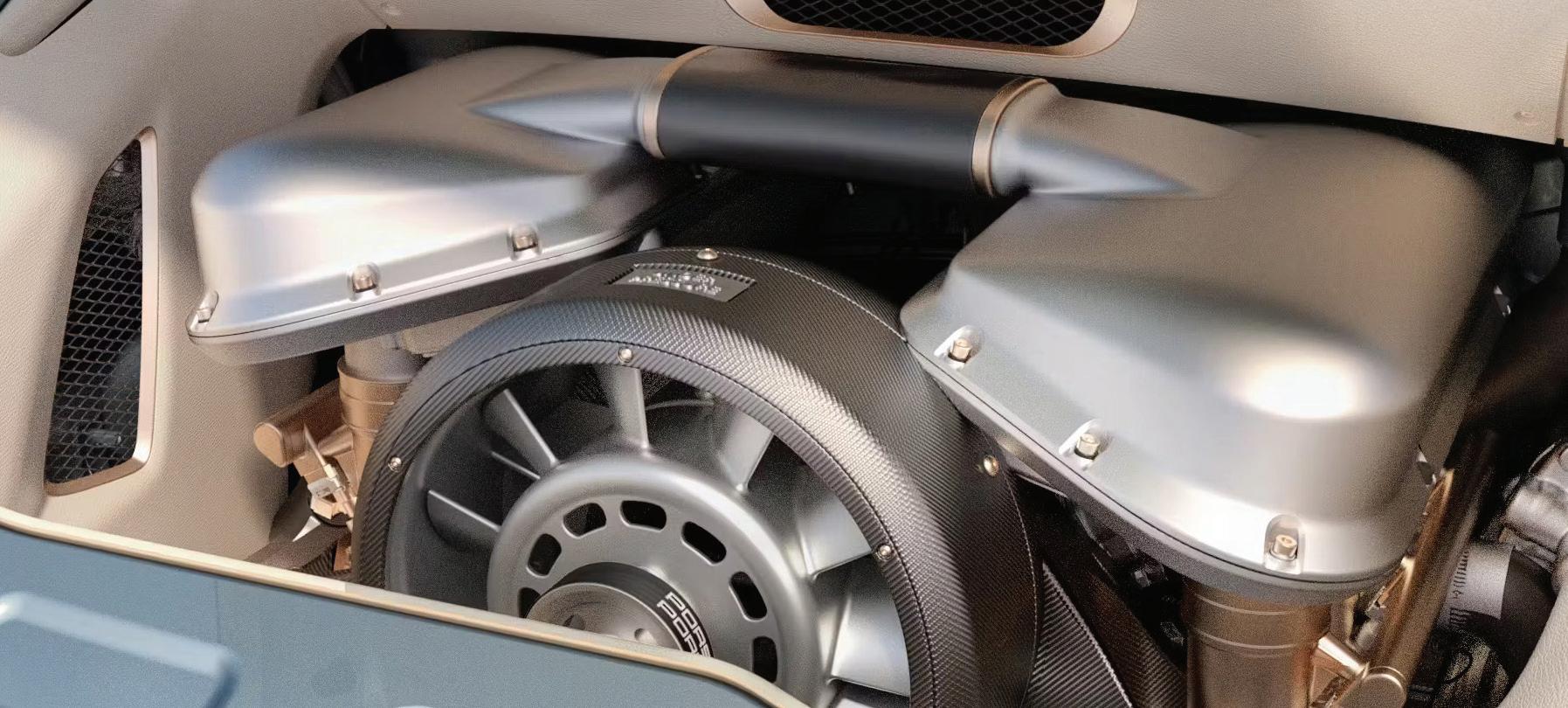
Beneath the exterior lies a reengineered air-cooled flat-six engine rebuilt and tuned to the owner’s preference, often delivering far greater performance while retaining their distinctive character and sound. Inside, new seat shells are shaped and wrapped in custom leather with contrast stitching tracing each contour. Dashboards are re-clad, wood inserts re-laid, and switchgear replaced with vintage-style pointers. Even smaller details like air vents, window cranks, and interior lighting are finished in brushed or polished metal. The result honors Porsche’s analog spirit while achieving modern precision, comfort, and reliability.
curves
What Singer does well is walk a tightrope. They could lean too deep into restoration (risking kitsch), or too far into modern modification (losing the spirit of Porsche). But they seem to understand that authenticity lies in balance.
The curve is not just a design flourish, it’s a record of Porsche’s evolution. Each contour reflects decades of change, from the narrow hips of the earliest 911s to the wider flares of racing models, from steel panels to lightweight composites, from strictly functional forms to details that balance utility with refinement.
curvesS inger’s work acknowledges this lineage while giving each car a voice in the present. The result is neither a replica nor a reinvention, but a careful continuation—an exploration of how the familiar Porsche shape can remain relevant, modern, and deeply personal to those who commission it.
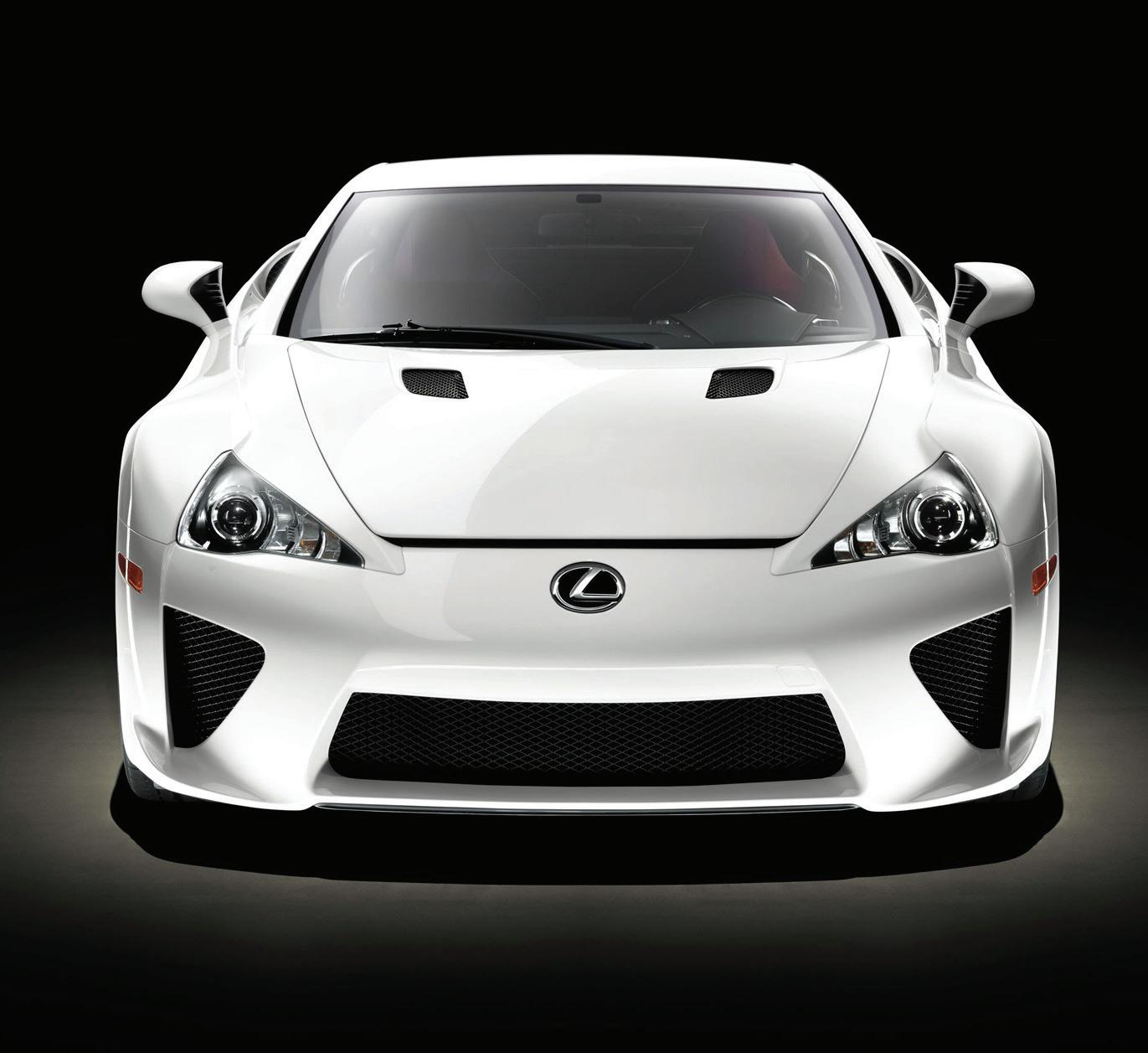
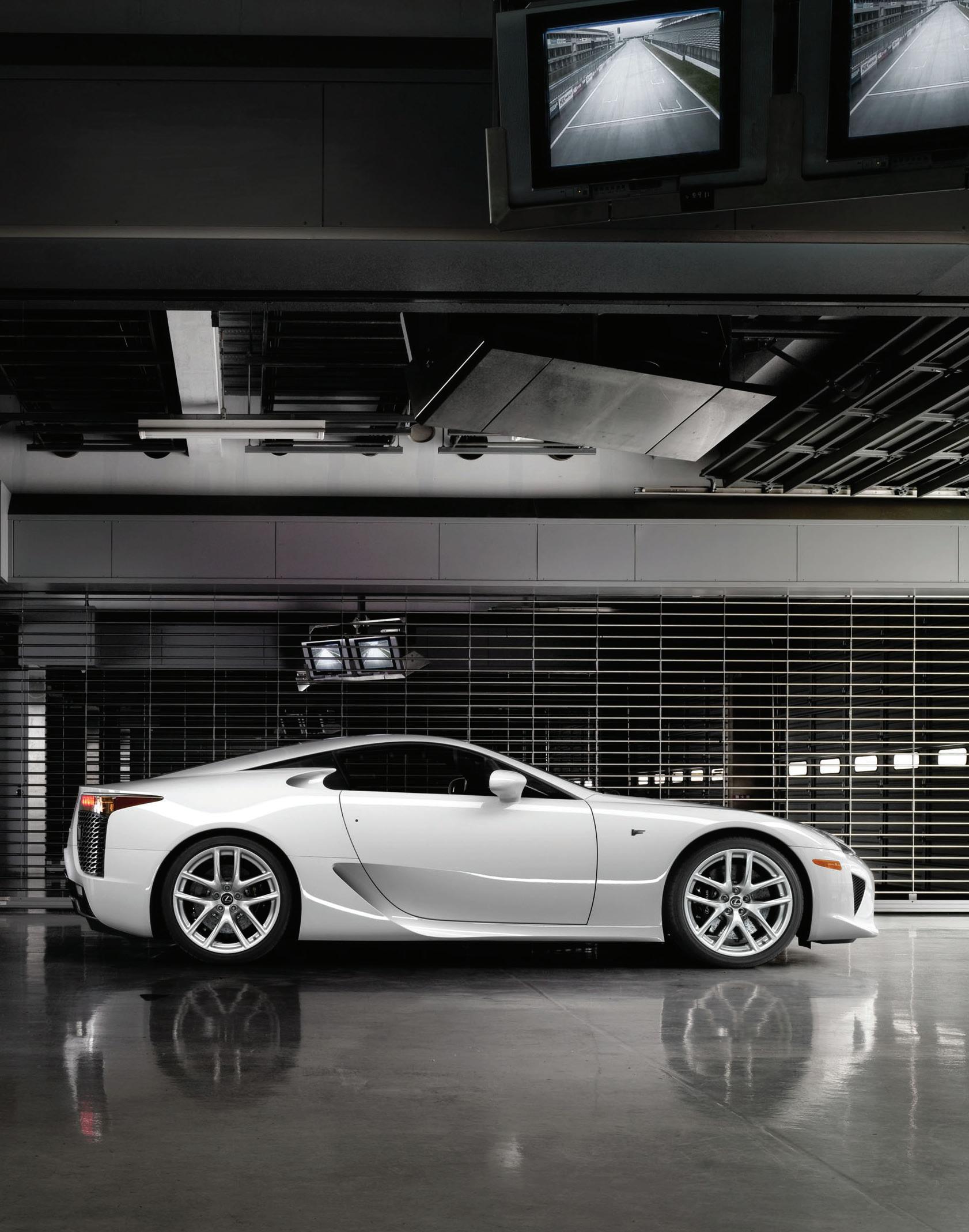
2011 LEXUS LFA
Lexus
THE LANGUAGE LFA OF
Lucas Renn
wh Y the l exus lfa remains one of the most remarkable expressions of design, m ore than a decade later.
When Lexus unveiled the LFA in 2010, it surprised almost everyone. Known for reliability and restraint, Lexus was not the brand people expected to deliver a hand-built supercar. Yet the LFA was never about expectation. It was about pursuing an ideal and discovering how craftsmanship could be both mechanical and emotional. Even today, it feels less like a product and more like a study in purity and purpose.
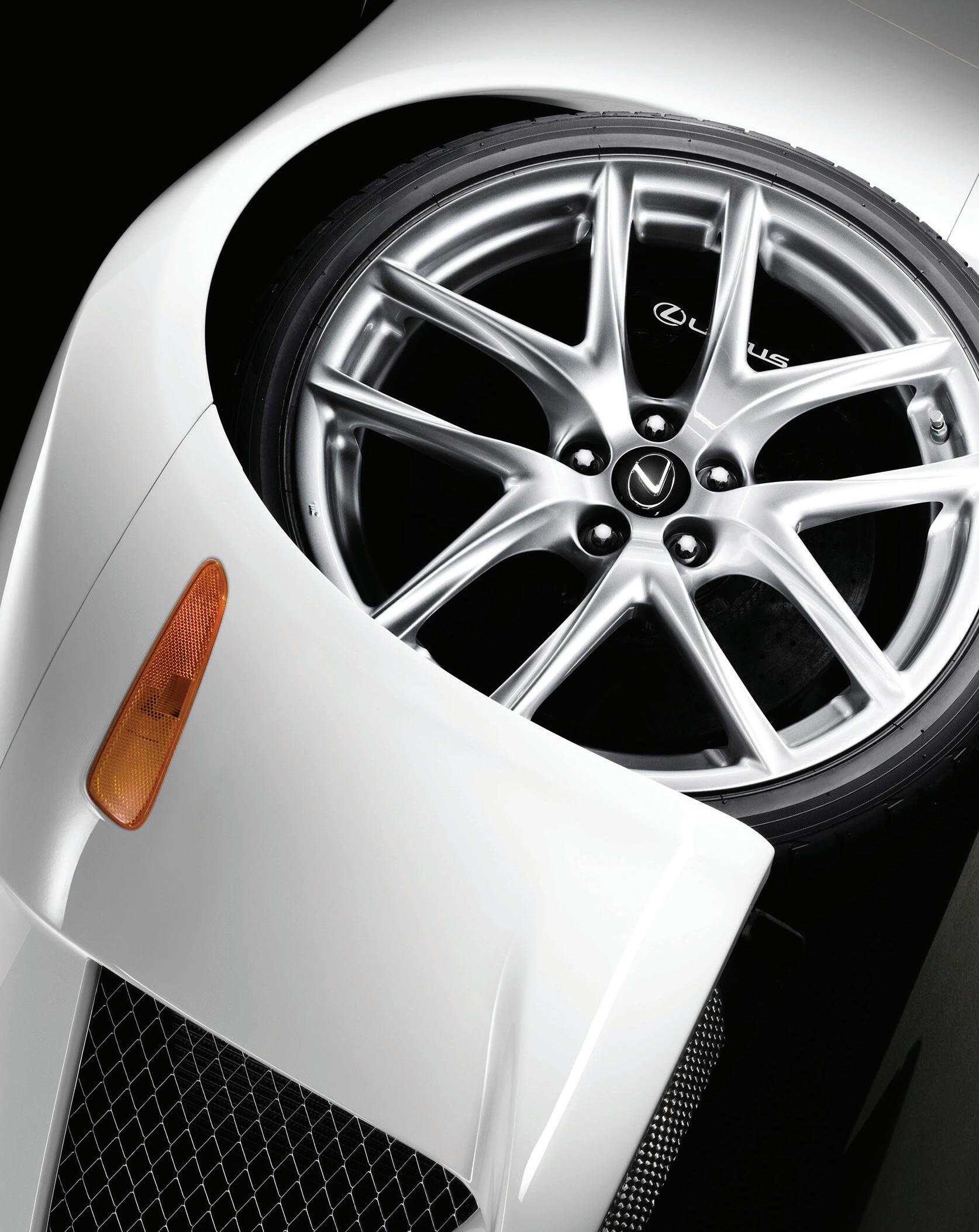
Fr om the first glance, the LFA carries a sense of quiet confidence. Its proportions are classic but not traditional, with a long hood, low stance, and compact rear section that balance elegance with intent. Every surface has been shaped with care. The body, formed from carbon fiber reinforced polymer produced internally by Lexus, gives the car both structure and personality. The material catches light differently depending on the weave, creating subtle reflections that emphasize its sculpted form. Each line flows into the next, and nothing feels added for the sake of decoration.
The design invites a kind of slow observation. The front intakes blend into the bodywork rather than breaking it apart. The headlamps sit low and narrow, tracing the curve of the fender. Even the taillights, arranged vertically, carry a sense of precision and balance. The LFA’s shape doesn’t shout for attention; it holds it.
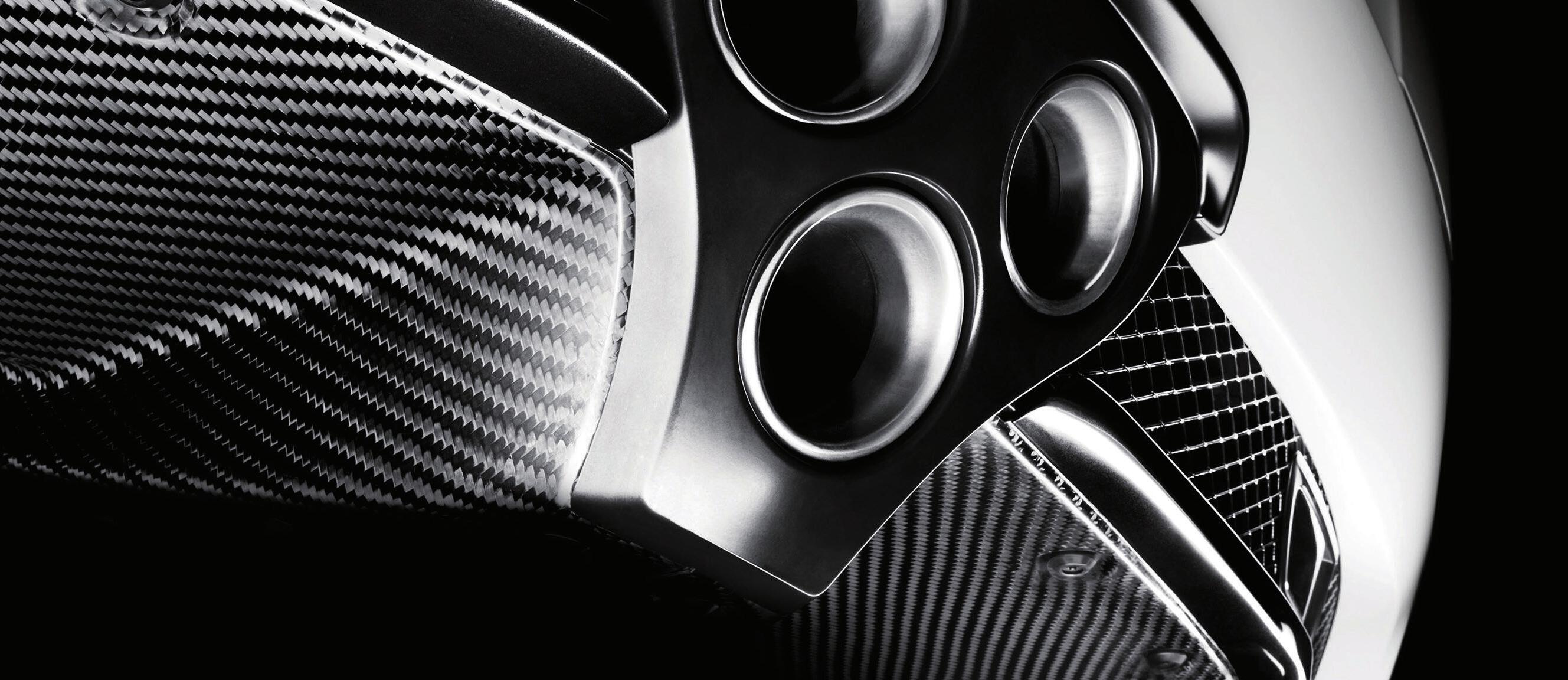
The sound was one of the LFA’s most intentional design elements. Lexus worked with Yamaha’s instrument division to shape the car’s voice, not simply for volume, but for tone and resonance. Every part of the titanium exhaust was tuned like a musical instrument, its triple-outlet design balancing pressure and harmonics to create layers of sound that rise and fall with clarity. At idle, it hums softly, composed and almost restrained.
As the revs climb, that calm turns into a clean, ascending note that feels alive and responsive. Inside the cabin, the frequencies have been refined rather than silenced, allowing the driver to feel the rhythm of the engine without fatigue. The result is a sound that connects car and driver on an emotional level, transforming the V10 from a source of motion into something closer to a heartbeat.
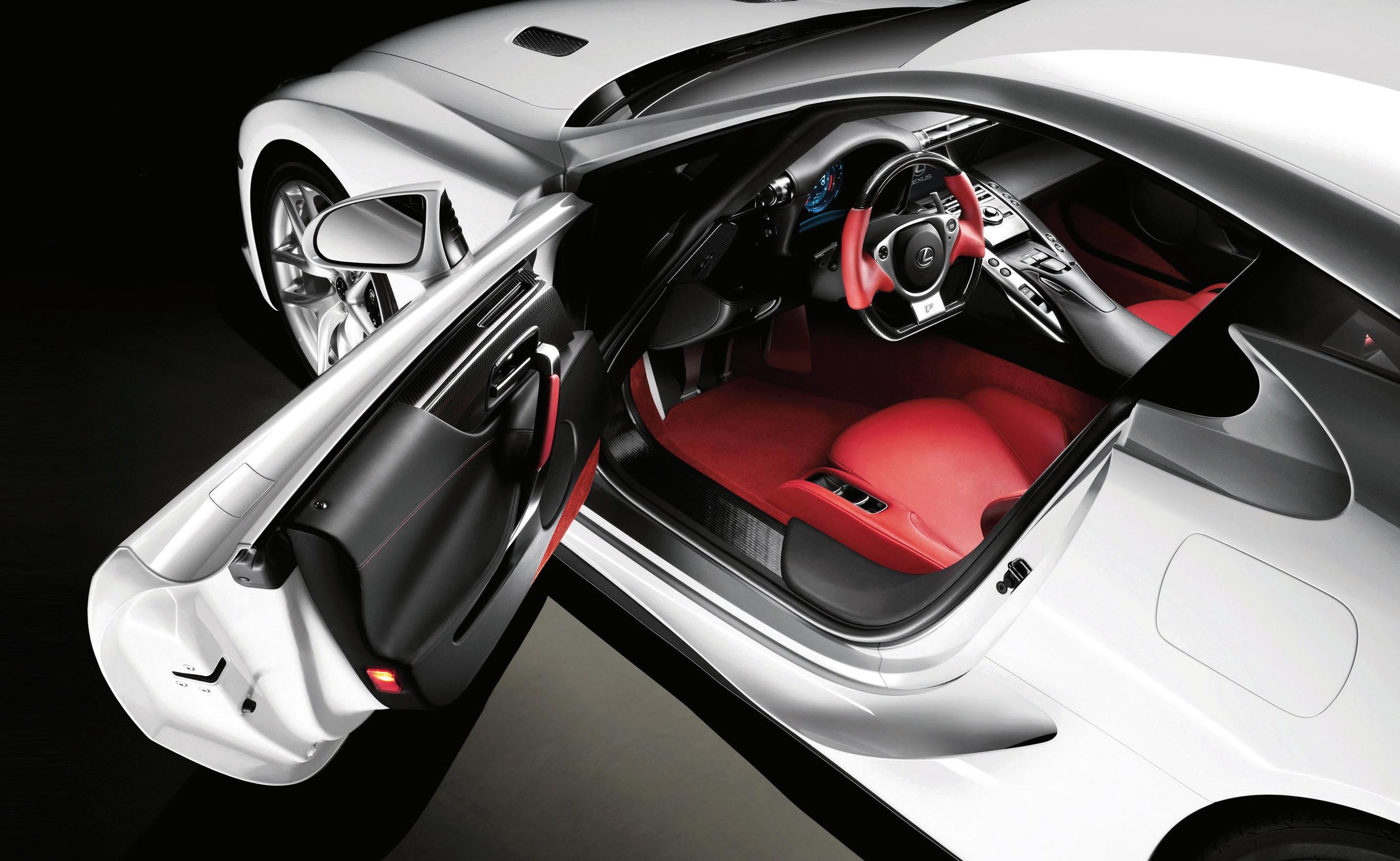
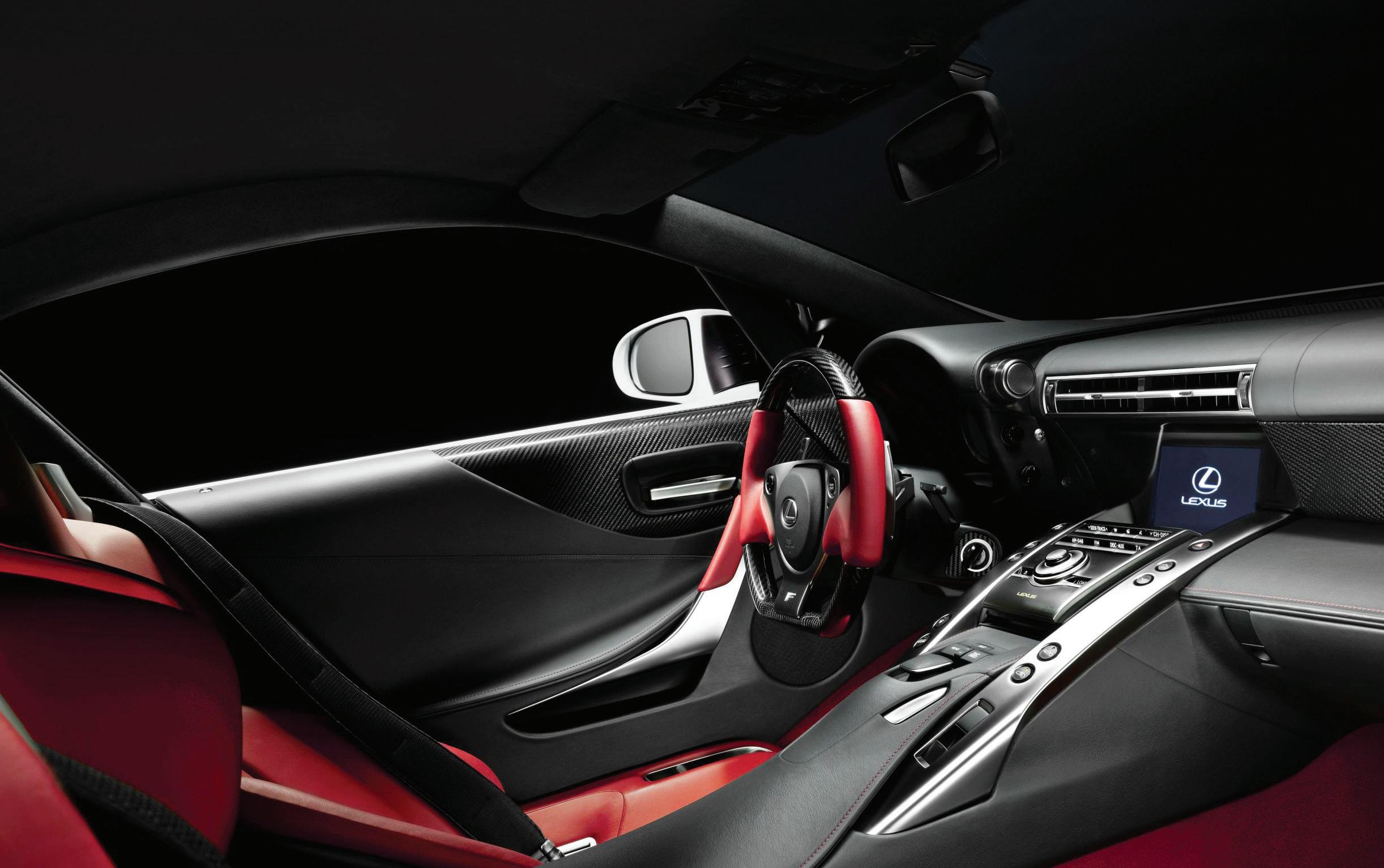
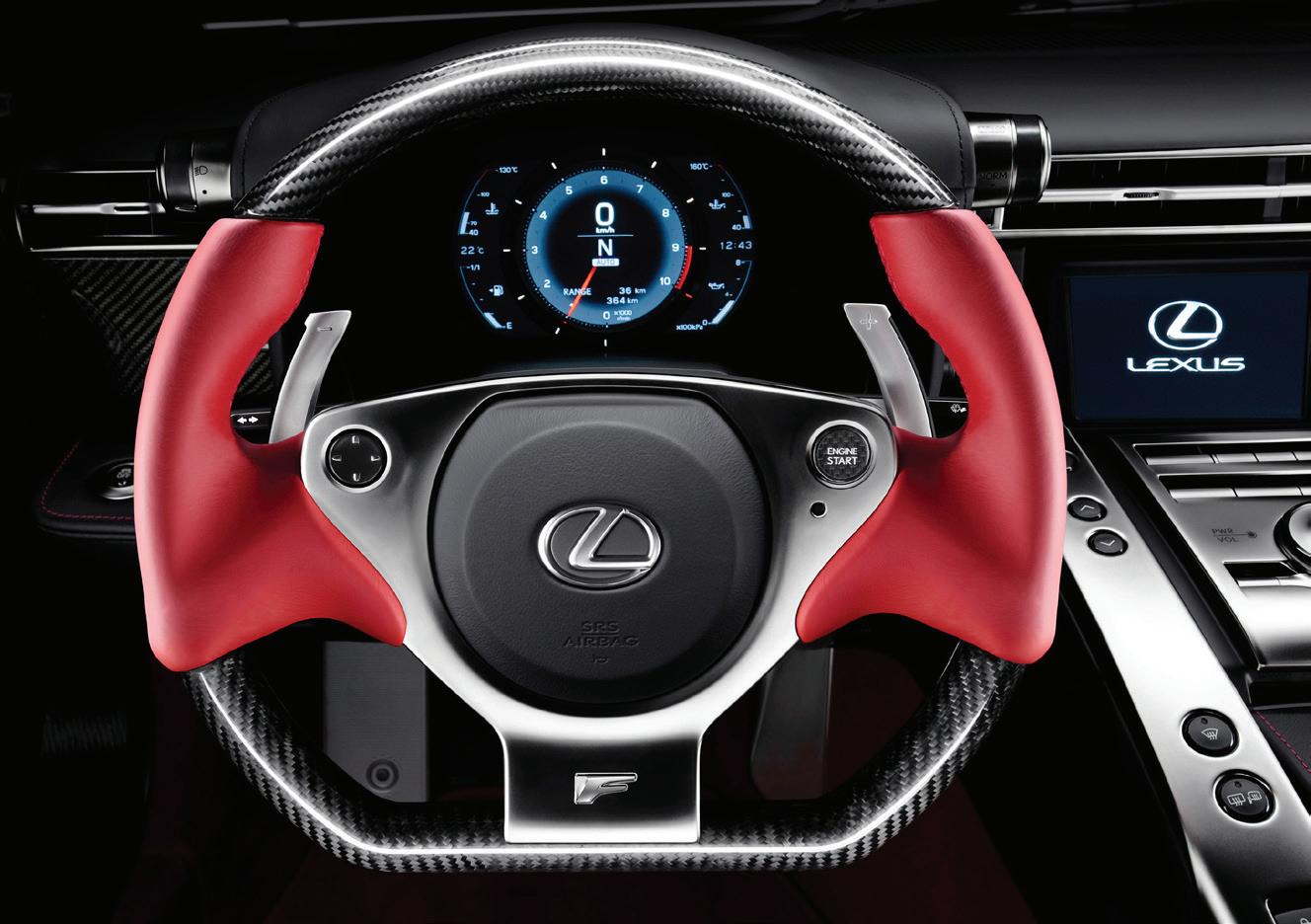
Inside, the same philosophy continues. The dashboard curves gently around the driver, placing every control within easy reach. The digital gauge cluster remains one of the car’s most distinctive details. The V10 revs so quickly that a mechanical needle couldn’t keep up, so Lexus designed a display that could.
D riving an LFA feels deliberate. The steering is direct but light, the seating position low and centered, and every pedal movement met with immediate feedback. Yet what stands out most is the sense of cohesion. Every element, from the shape of the seats to the curvature of the door panel, contributes to a unified rhythm between driver and machine.
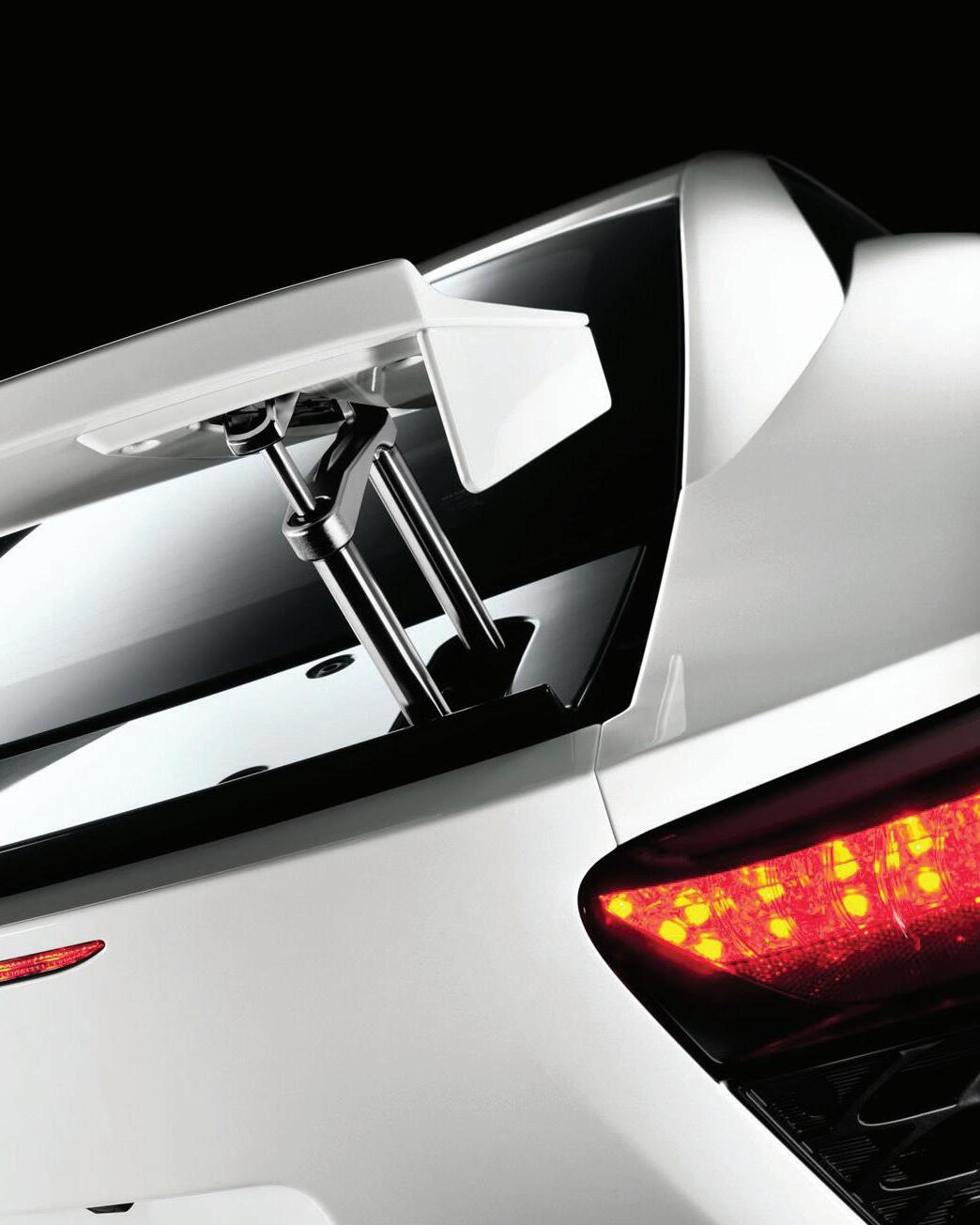
F ifteen years later, the LFA still feels relevant because it was never chasing relevance to begin with. . The car represents a moment when Lexus decided to create something that couldn’t be improved by time or replaced by technology.
LEXUS
The LFA’s interior combines leather, Alcantara, and carbon fiber throughout, featuring deeply bolstered sport seats, a driver-focused digital gauge cluster, and a minimalist center console.
JAGUAR
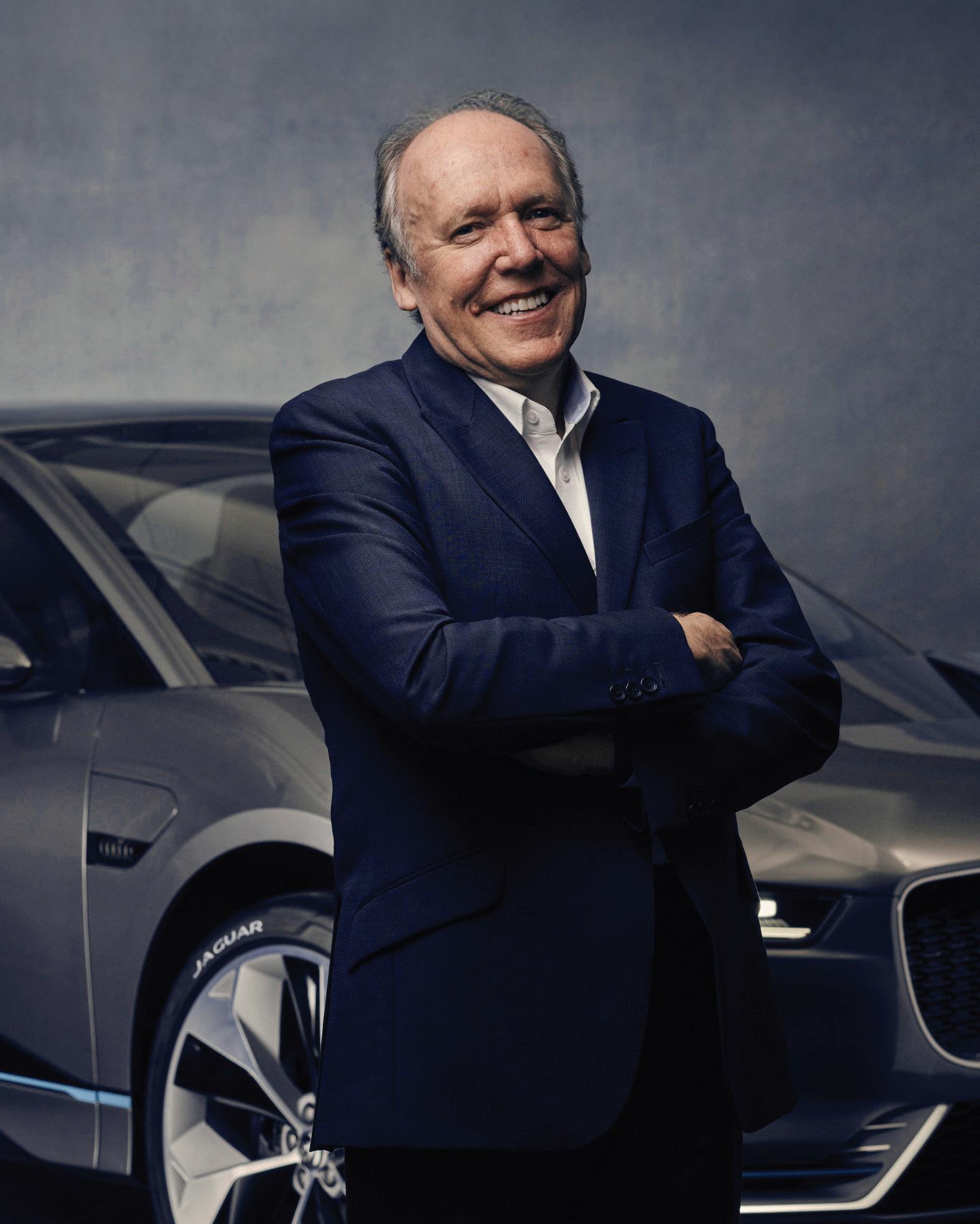
Ian Callum pictured with his 2018 Jaguar I-Pace.
DESIGNING DESIRE
Elliot Vance
h ow ian callum’s aesthetic signatures have shaped the look and feel of t oda Y ’s luxur Y and exotic cars.
Few designers have left an imprint on modern car design as distinct as Ian Callum. His work balances precision and emotion, discipline and beauty. Across his career, Callum has proven that restraint can be just as expressive as power, and that true luxury often begins with proportion.
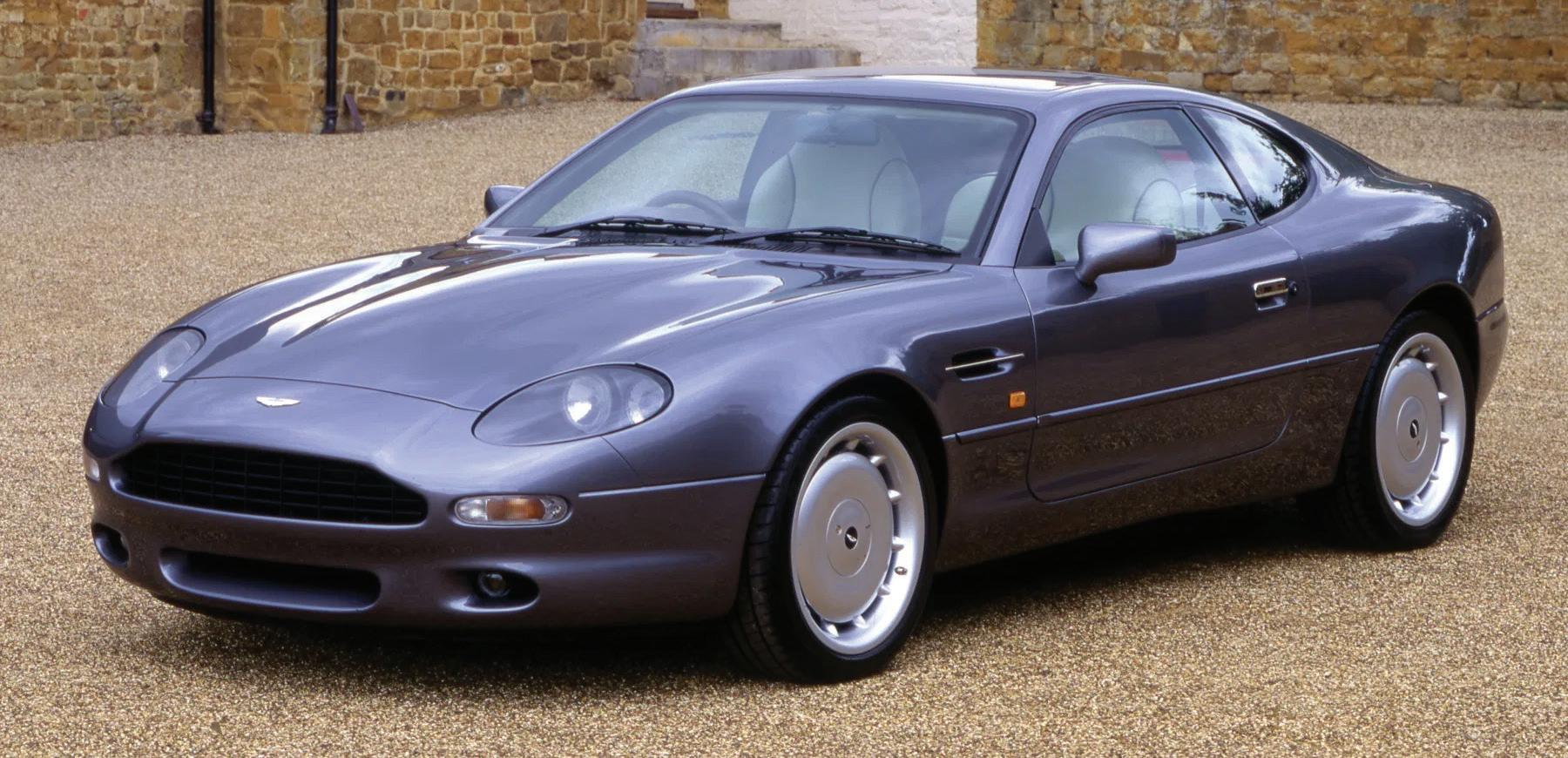
C allum’s rise began with the Aston Martin DB7, a car that quietly redefined the brand in the 1990s. Its form was fluid, lean, and timeless—a grand tourer sculpted to appear effortless. It was followed by the Vanquish, which gave that elegance a sharper edge, proving that sophistication and aggression could coexist without shouting. These early works established Callum’s belief that the best designs look inevitable, as if they could exist no other way.
1994 ASTON MARTIN DB7
Aston Martin (above)
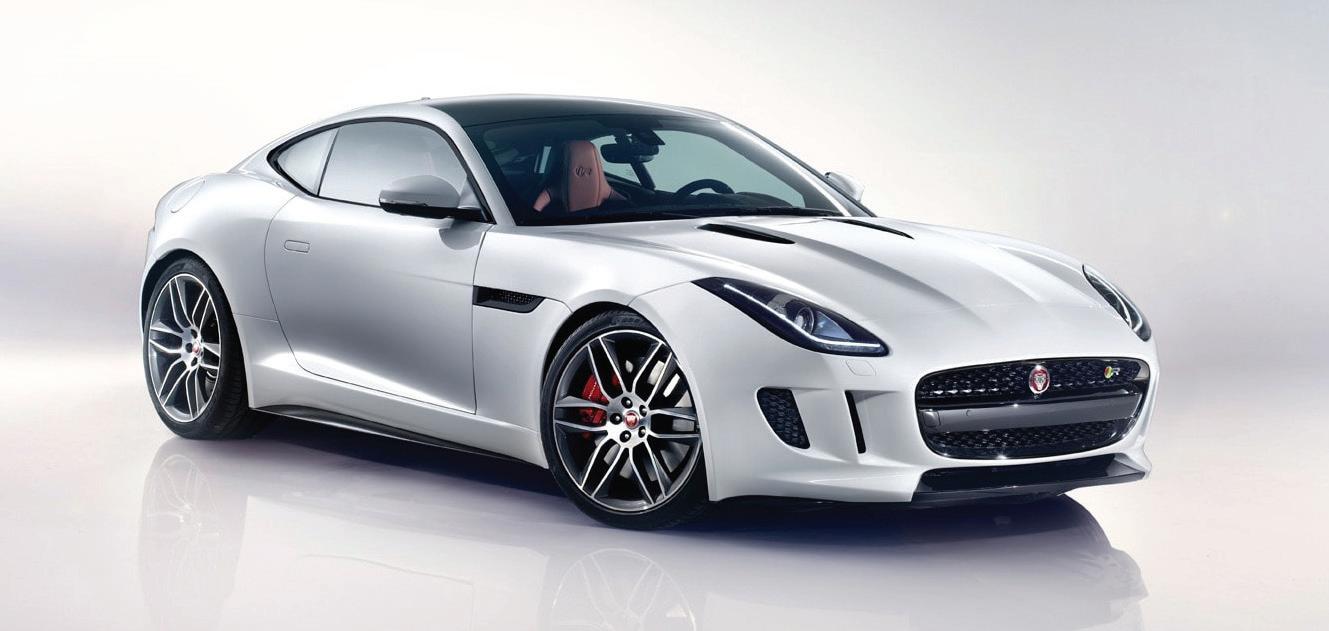
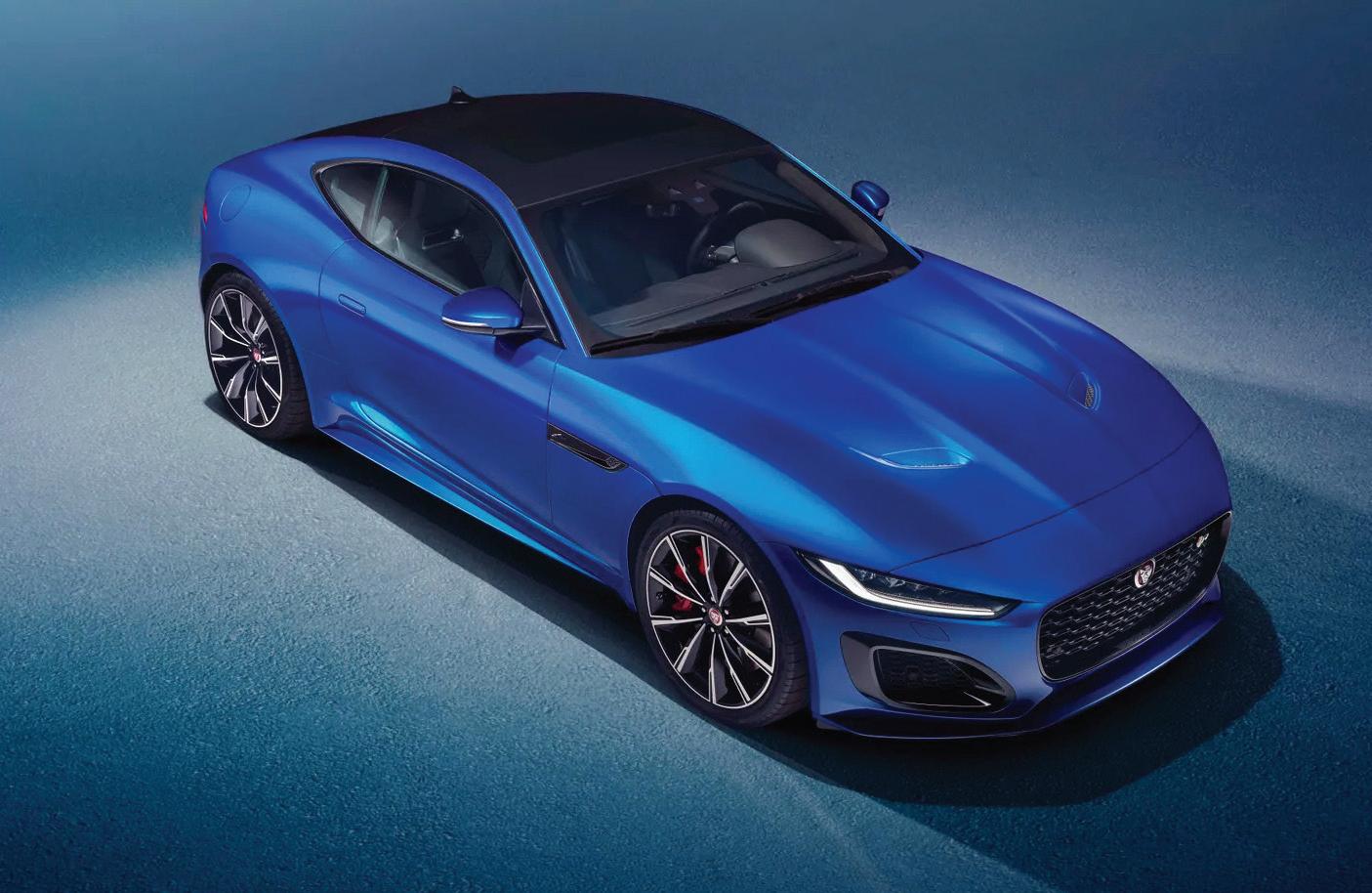
2013 JAGUAR F-TYPE
Jaguar (right)
When he joined Jaguar in 1999, Callum inherited a brand known for its nostalgia. His task was to modernize it without losing its soul. The result was a new design language that balanced tension and proportion: long hoods, low stances, and taut surfaces replacing chrome-heavy ornamentation. The Jaguar F-Type, unveiled in 2013, distilled this approach into pure emotion—a car that recalled the spirit of the 1960s E-Type while feeling entirely of its time.
2024 JAGUAR F-TYPE R75 Jaguar
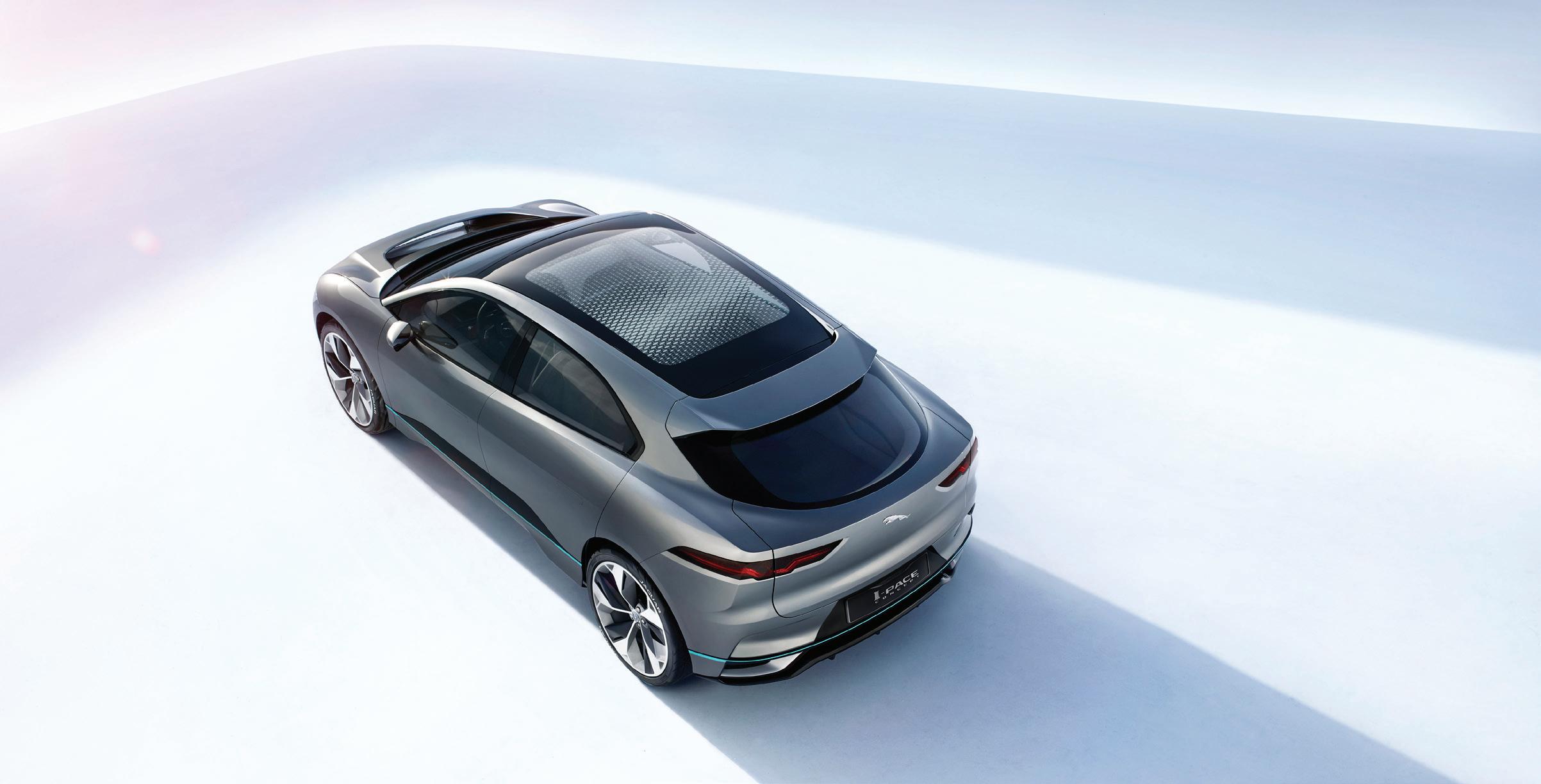
The I-Pace marked a defining moment as one of the first electric vehicles to emerge from a traditional performance brand—and Callum made sure it didn’t look like a compromise. Instead of echoing Tesla’s minimalism or other early EVs’ futuristic clichés, the I-Pace became a sculpted form that celebrated proportion, stance, and tension. Its cab-forward silhouette was a radical departure from the long-hood tradition of combustion-engine Jaguars, yet it carried the same elegance. The athletic haunches, bold wheel arches, and dramatic rear taper gave it a sense of motion even at rest. Callum’s touch was in balancing beauty with engineering: the short overhangs and low roofline were born from aerodynamic necessity, but he refined them until they became signature design cues rather than functional limitations.
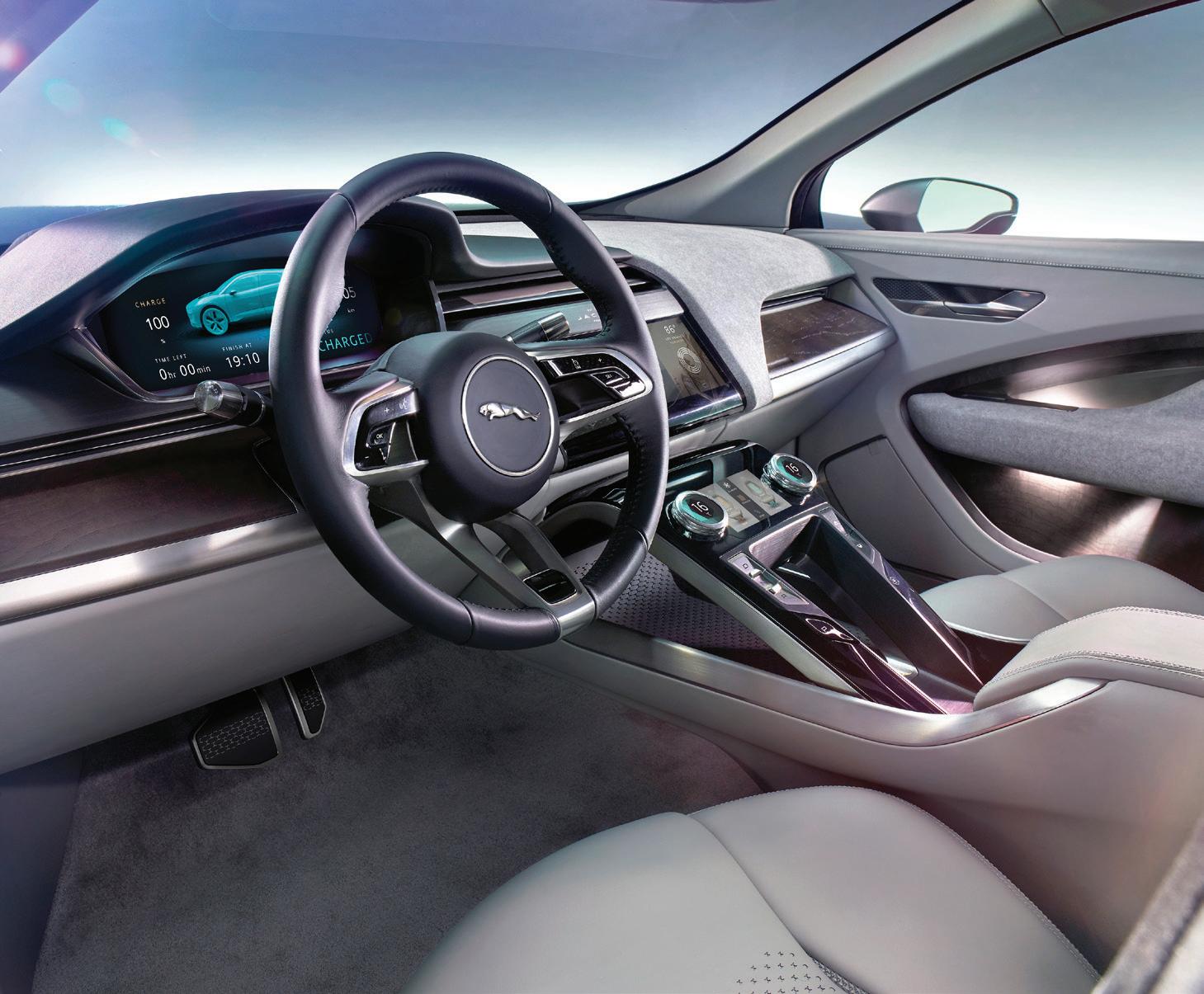
I nside, the I-Pace reflected a shift in how luxury was defined— away from opulence and toward precision. Callum envisioned the cabin as a “living space,” layering tactile materials and refined minimalism rather than excess. The result redefined what an electric Jaguar could be: not a quiet reinvention, but a confident evolution of the brand’s spirit—one that fused innovation with the emotional essence of driving.
2018 JAGUAR I-PACE Jaguar
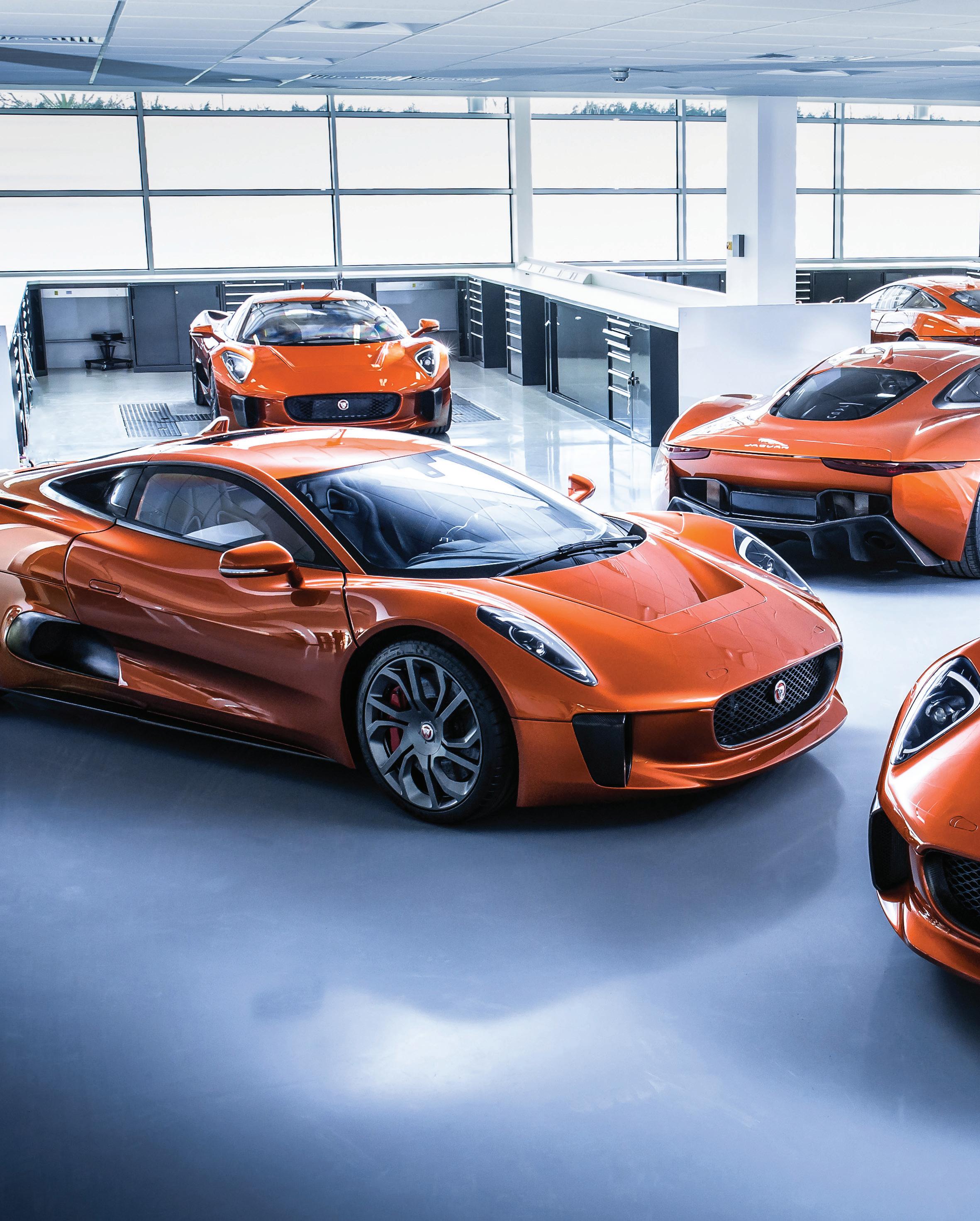
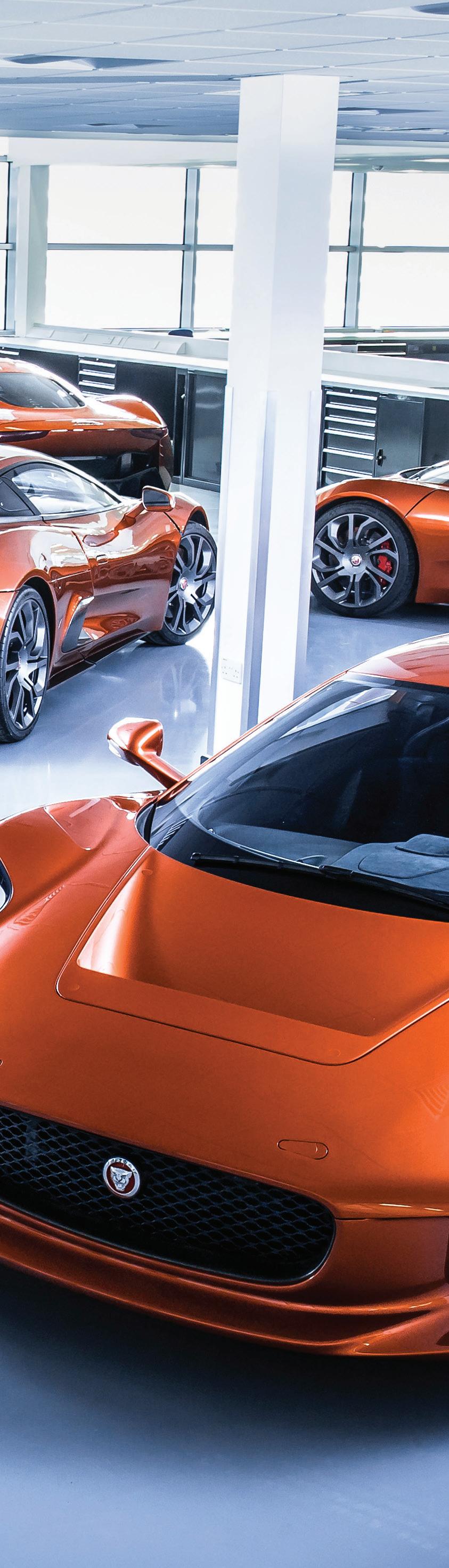
The 2015 C-X75, featured in Spectre , was re-engineered for on-screen performance with a supercharged V8.
JAGUAR
Callum’s C-X75 was the purest expression of what Jaguar could be in a new era. Originally designed as a hybrid supercar powered by four electric motors and gas micro-turbines, it embodied the extremes of beauty and innovation. The design was breathtakingly dramatic: the sculpted side intakes, tapering canopy, and crisp, muscular lines were almost architectural in their precision.
What made the C-X75 so striking was how it captured motion and restraint simultaneously—a hallmark of Callum’s aesthetic. It was unmistakably exotic, yet still graceful, rooted in Jaguar’s design DNA rather than chasing the aggressiveness of Ferrari or Lamborghini. The front fascia echoed the sensuality of the E-Type, while the body’s surfacing looked as though it was carved by airflow itself.
Though Jaguar’s C-X75 never reached production, its spirit lived on. Years later, Callum revisited the car under his independent studio, CALLUM Designs, building a fully functional example that honored the original vision while refining its details through his matured lens. The project served as both closure and continuation. It marked the beginning of a new chapter where Callum could design without constraint, creating objects that reflect the same balance of craft, innovation, and emotion that have defined his entire career.
CALLUM DESIGNS
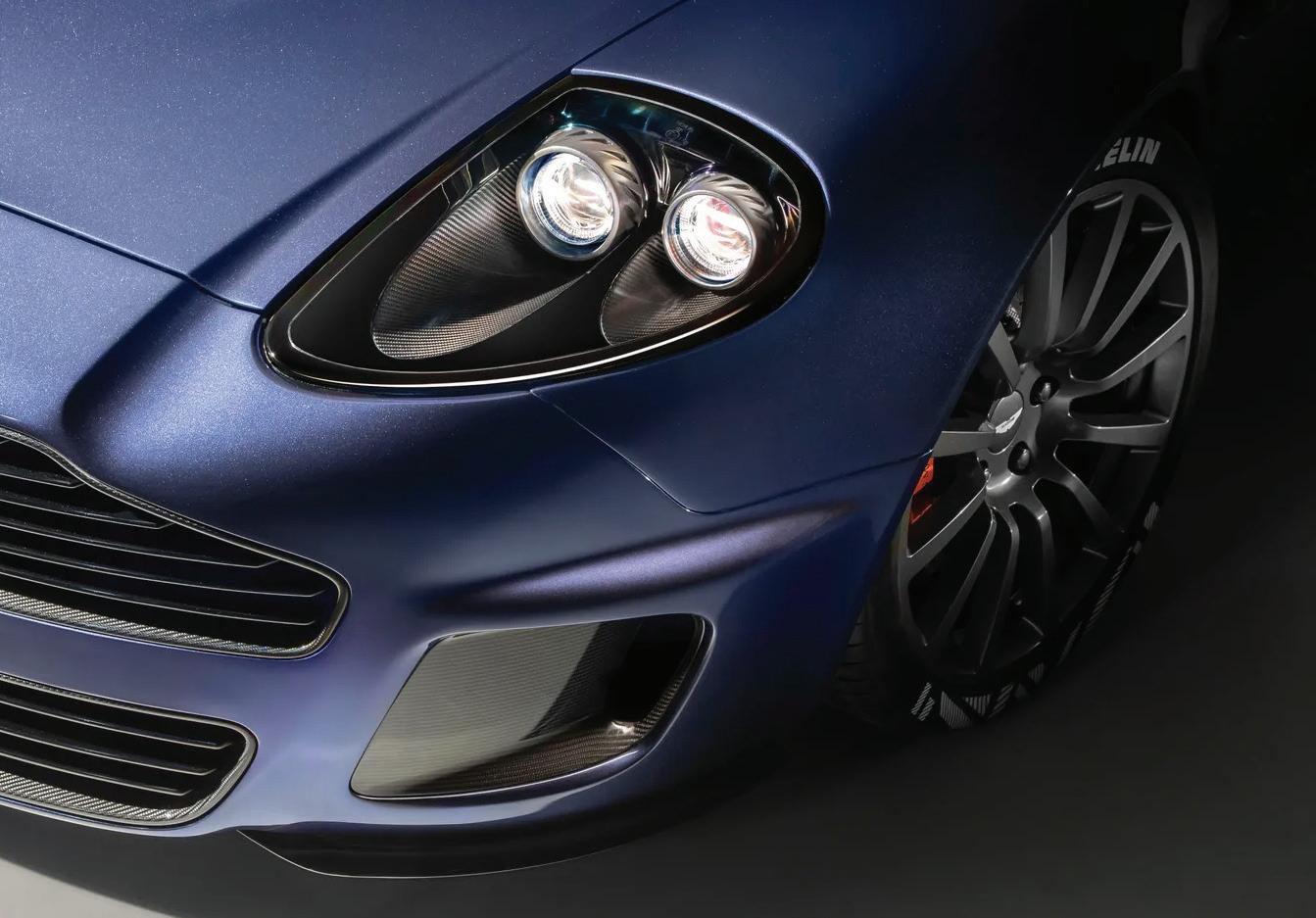
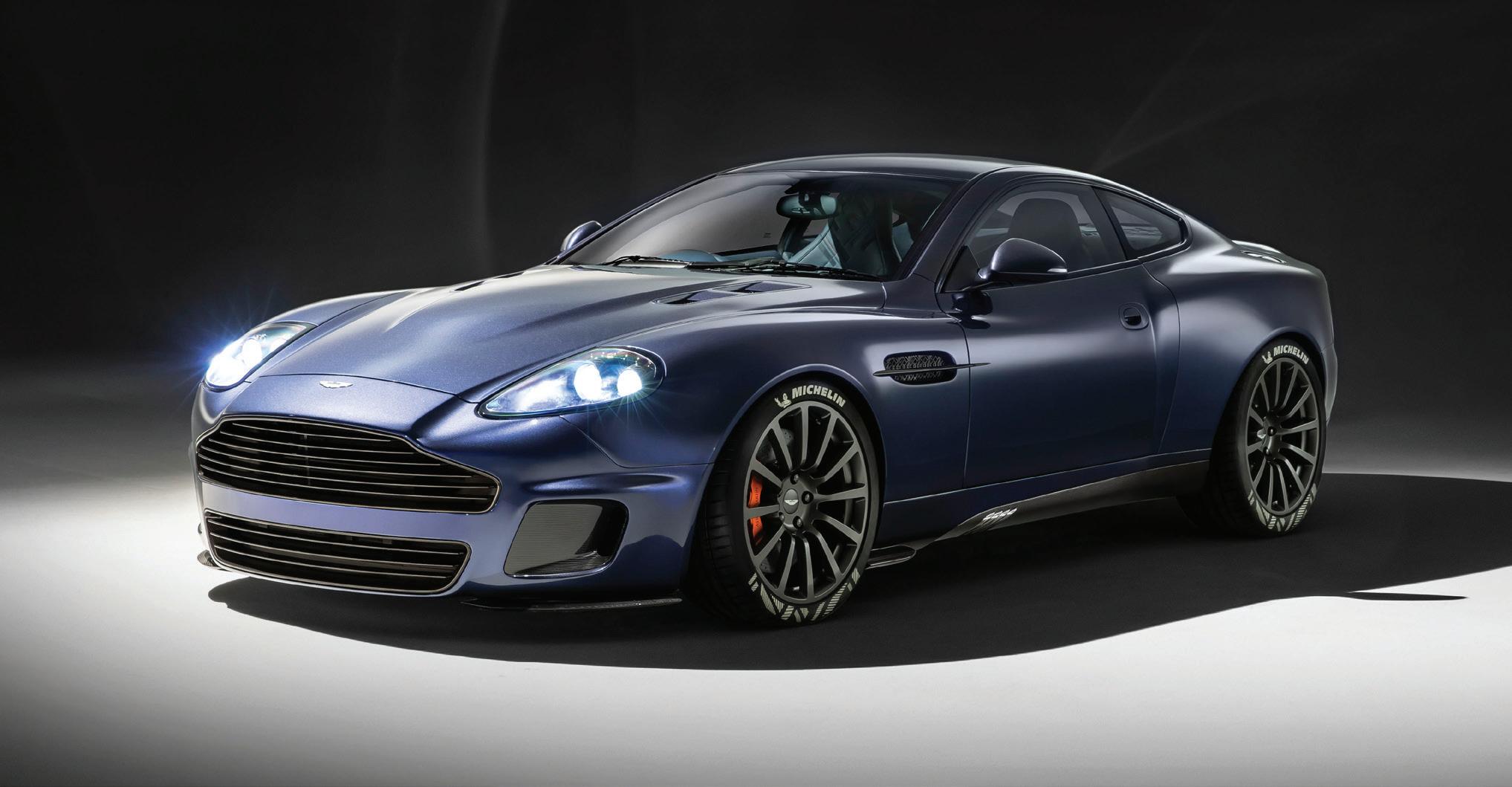
Callum’s Vanquish 25, a modern reimagining of the iconic Aston Martin Vanquish
“A great design should feel calm .”
Today, through CALLUM Designs, he continues refining that ethos. Projects like the Vanquish 25 by CALLUM revisit past work with modern precision. From performance upgrades to luxury finishes and exclusive partnerships with British brands like Bremont and Mulberry, the result is a unique, thoroughly modern GT car that honours its heritage while delivering a completely bespoke ownership experience. Beyond cars, the studio’s ventures into watches, furniture, and travel accessories suggest that Callum’s eye for proportion and detail transcends any single medium.
C allum once said that “a great design should feel calm.” That calmness has become his signature. His cars don’t rely on novelty or shock value; they speak through coherence, balance, and purpose. In an industry often driven by excess, Ian Callum reminds us that the most powerful statement a designer can make is knowing when to stop.
COLOR
CODES
Amara Leigh
h ow color has evolved be Y ond aesthetics and marketing to define the identit Y of the makers behind it.
FERRARI ROSSO CORSA
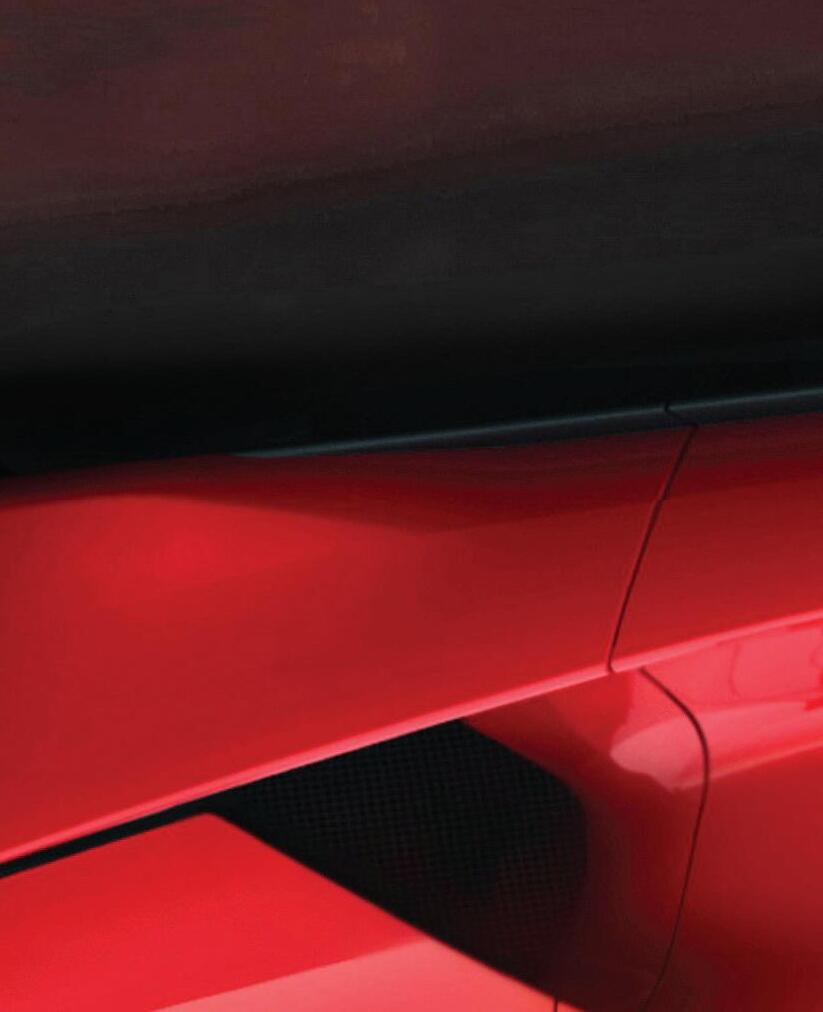
Few colors carry the same mythology as Rosso Corsa. What began as Italy’s official racing color in the early 20th century became Ferrari’s visual heartbeat. From the 166 MM Barchetta to the modern SF90 Stradale, red has symbolized more than national pride—it represents Ferrari’s enduring spirit of competition. Enzo Ferrari himself famously remarked, “Ask a child to draw a car, and certainly he will draw it red.” That sentiment captures the universality of Rosso Corsa. It’s not merely pigment; it’s memory.
Every evolution of the shade tells part of Ferrari’s story. The deep, almost wine-like red of the 250 GTO reflected an era of artisanal craftsmanship, while the brighter tones of the Testarossa and Enzo echoed the boldness of the 1980s and early 2000s. Today, even with an ever-growing range of special-order finishes, nearly half of Ferraris still leave Maranello in red— proof that Rosso Corsa isn’t a choice, but an instinct. It’s the color of speed, status, and sentiment, condensed into a single tone that has come to define not just a brand, but the idea of the sports car itself.
FERRARI
Successor of the SF90, the 2026 849 Testarossa blends the rich history of the Testarossa name with the latest hybrid technology to deliver outstanding performance and style.
2021 LAMBORGHINI
AVENTADOR SVJ
Denin Lawley
LAMBORGHINI VERDE MANTIS
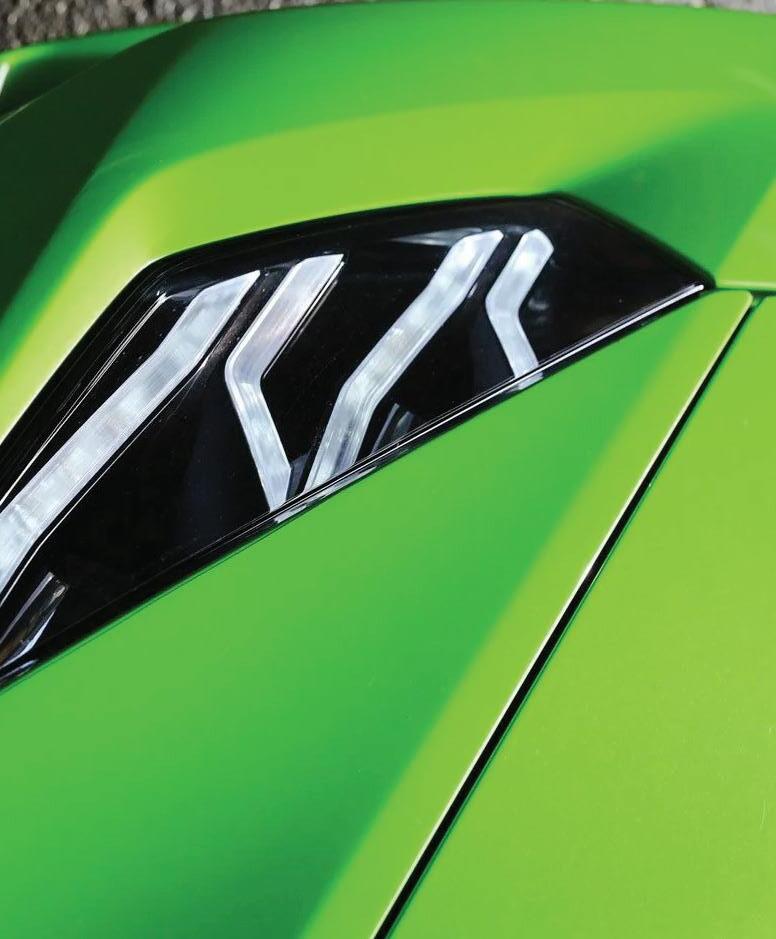
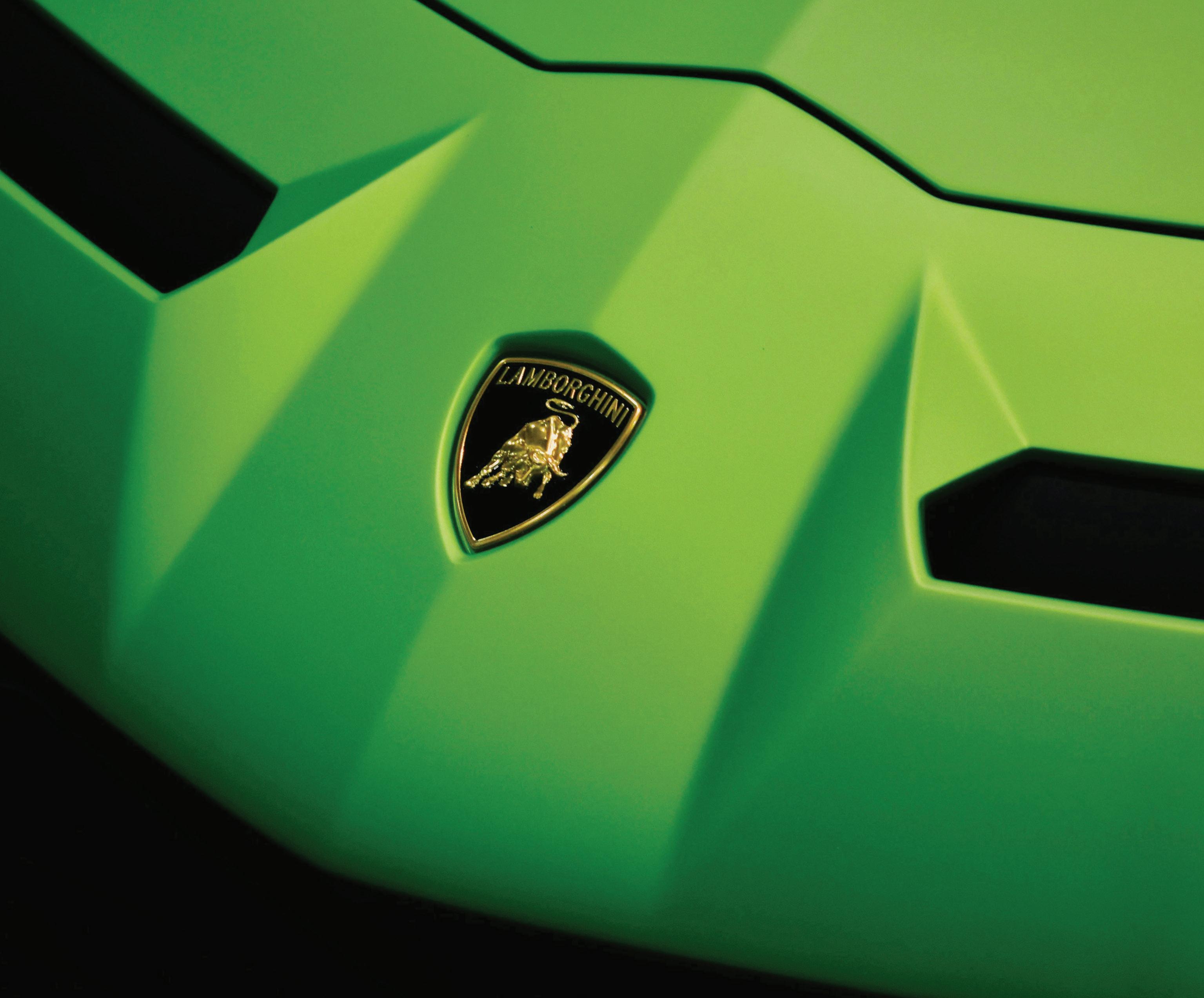
Where Ferrari’s red is about heritage, Lamborghini’s green is about attitude. Verde Mantis, the vivid pearl lime that’s become one of the brand’s defining shades, captures the company’s unapologetic confidence. It first appeared in the early 2010s and quickly became a visual signature for modern Lamborghinis, from the Aventador SVJ to the Huracán STO.
The color builds on a tradition that began with the Miura, which introduced bright, expressive finishes to the performance world. Today, Verde Mantis reflects how far that philosophy has evolved. It’s formulated to accentuate the sharp geometry and layered surfaces of Lamborghini’s design language, allowing each crease and contour to shift subtly in changing light.
Unlike the restrained tones of traditional luxury cars, Verde Mantis signals something different—a willingness to stand out. It’s not a color chosen to blend into heritage, but to define a new one. On a Lamborghini, it reminds you that design and emotion are inseparable, and that even a paint choice can express the character of a brand.
MCLAREN PAPAYA ORANGE
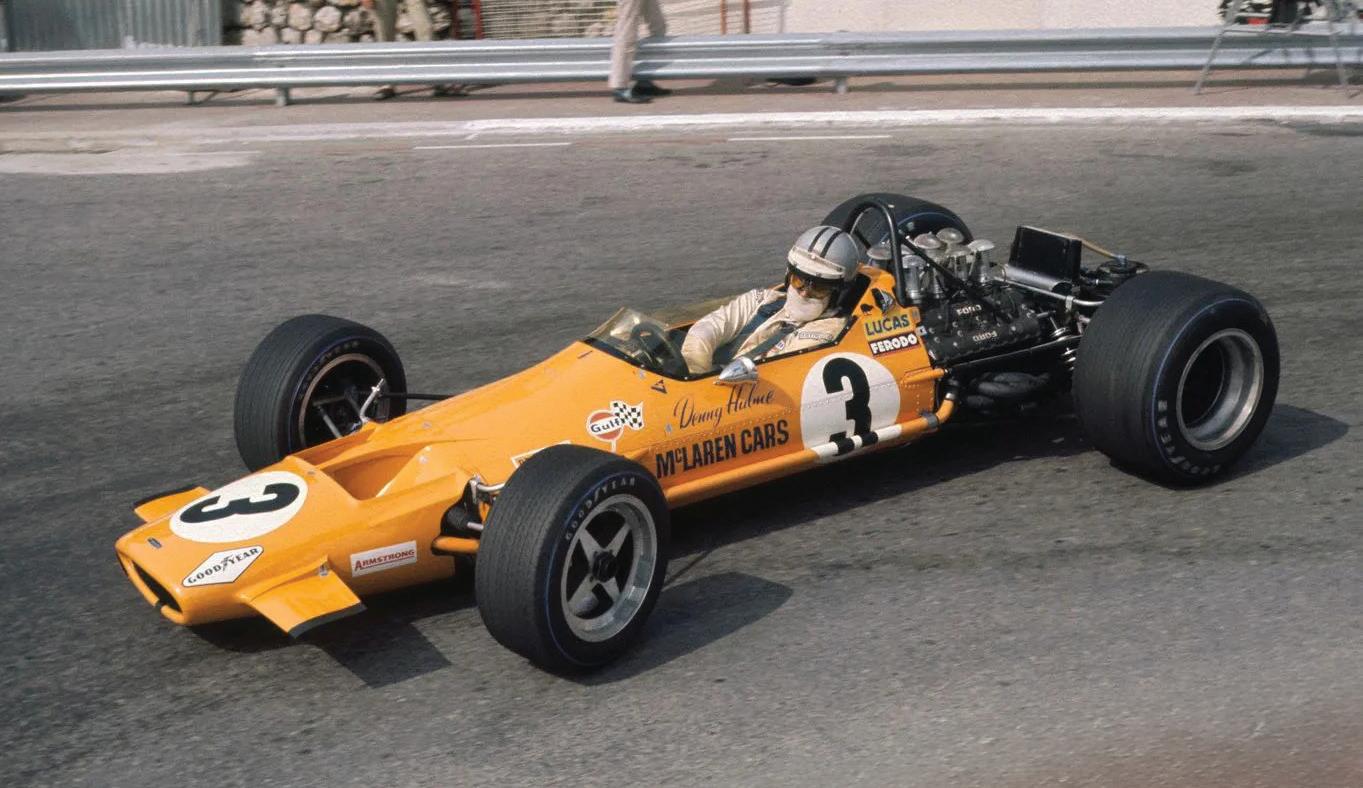
Few colors carry the weight of legacy like McLaren’s Papaya Orange. It first appeared in the late 1960s, when Bruce McLaren, the team’s founder, decided that his Formula 1 cars should be impossible to miss on the track. Amid a sea of greens, silvers, and reds, Papaya stood out — bright, confident, and unconventional. The color became an emblem of optimism, a reflection of McLaren’s daring attitude toward engineering and competition.
Though the shade faded from McLaren’s palette for a time, it never left the brand’s memory. When the company reintroduced it decades later, it wasn’t just a nostalgic nod; it was a reaffirmation of identity. Today, Papaya Orange is the visual shorthand for McLaren’s philosophy: performance with personality. It graces both their Formula 1 cars and their road-going supercars, bridging past and present with a single stroke of color.
McLaren’s orange burns with purpose, linking every car to the spirit of its founder, who believed that engineering could be both art and adventure.
1970 MCLAREN M14A McLaren
BUGATTI FRENCH RACING BLUE
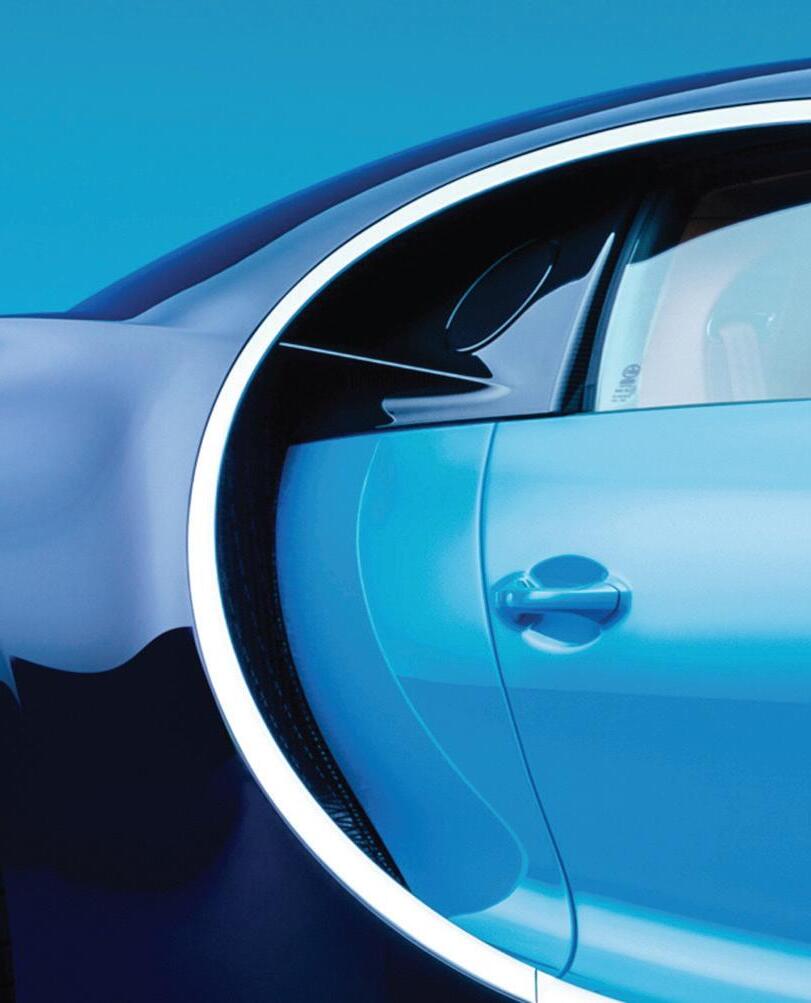
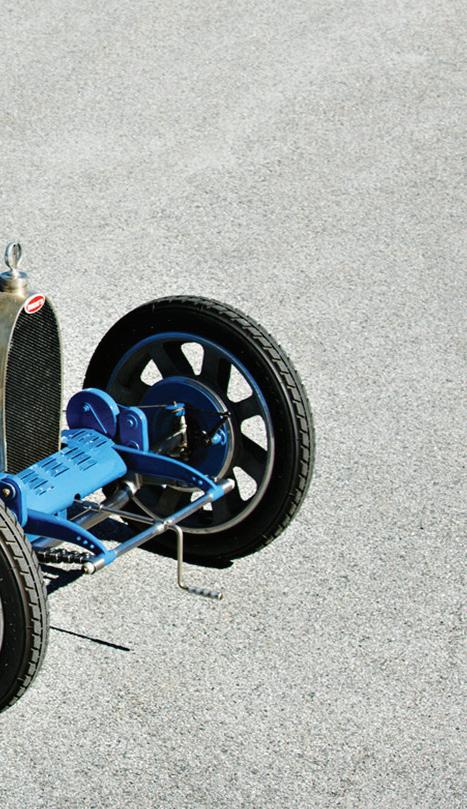
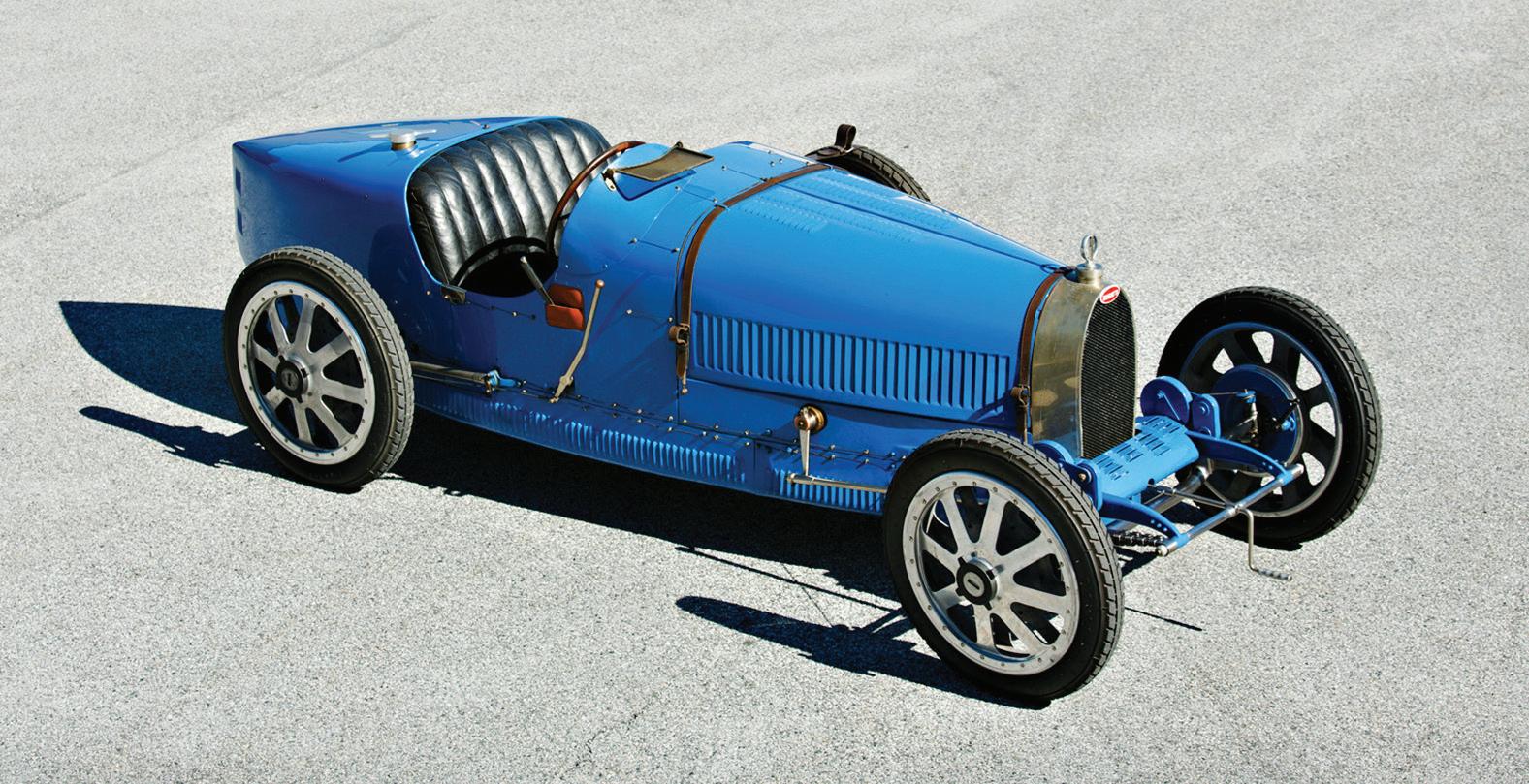
Few colors feel as inseparable from a brand’s soul as Bugatti’s French Racing Blue. Its story begins in the early days of Grand Prix racing, when each nation was assigned a color: British green, Italian red, German silver, and for France, blue. Ettore Bugatti adopted it proudly, coating his early machines in shades that came to represent both national pride and engineering artistry.
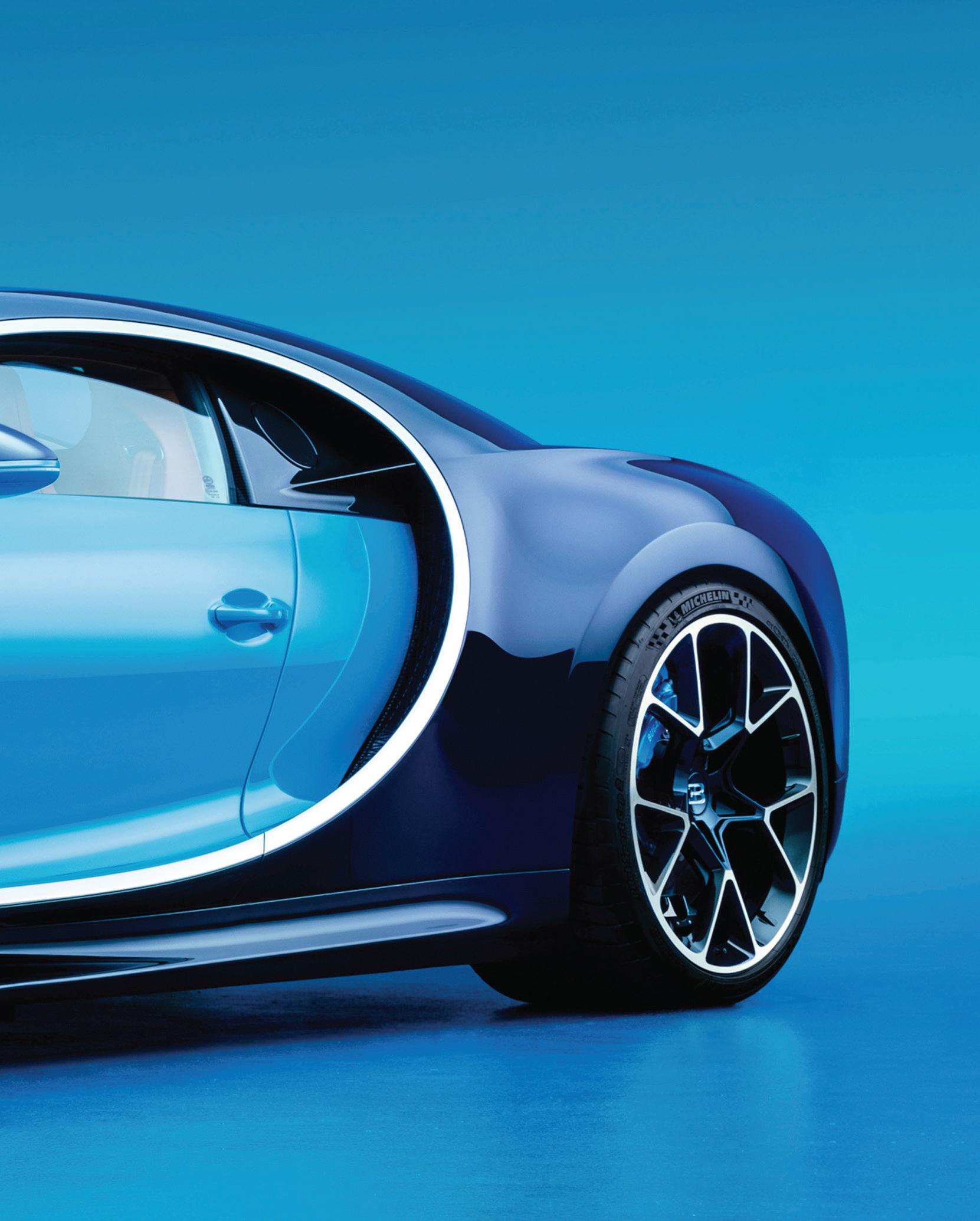
From the lithe Type 35s that dominated European circuits in the 1920s to the sculptural Chiron and Bolide of today, Bugatti’s blue has endured. It balances luxury with restraint—a reflection of the brand’s precise craftsmanship and quiet confidence. Now, French Racing Blue stands as more than a color. It’s a visual signature linking every Bugatti to its heritage.
1930 BUGATTI TYPE 35 Bugatti
2016 BUGATTI CHIRON Bugatti
LIGHT LET THE
Adrian Chen
e xamining the rise of ambient lighting and how makers are using it to craft more experiential interiors.
ROLLS-ROYCE
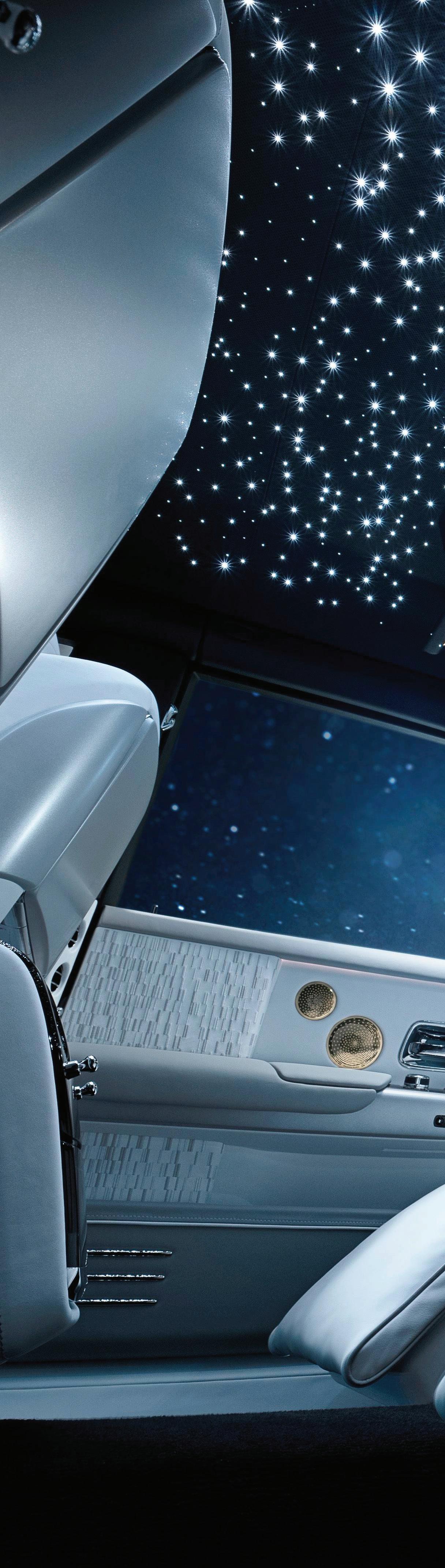
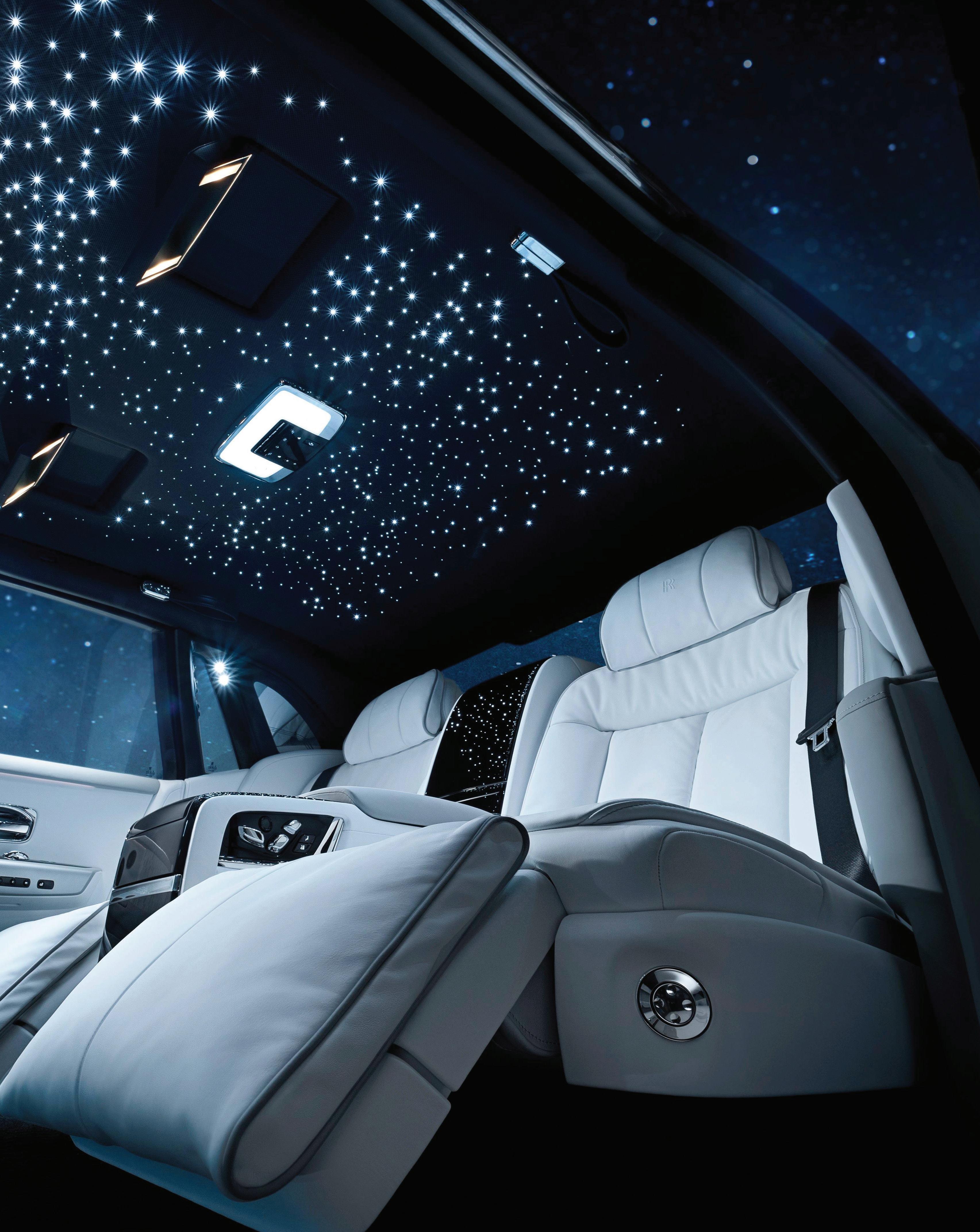
Rolls-Royce’s latest Wraith displays their signature Starlight Headliner.
Light inside a car used to be purely functional. A bulb clicked on when the door opened, illuminating the cabin with a brief glow. Today, that same concept has evolved into one of the most powerful tools in automotive design. Ambient lighting shapes how a car feels, how the space is perceived, and even how time inside it is remembered. What was once an afterthought is now an instrument of atmosphere, emotion, and identity.
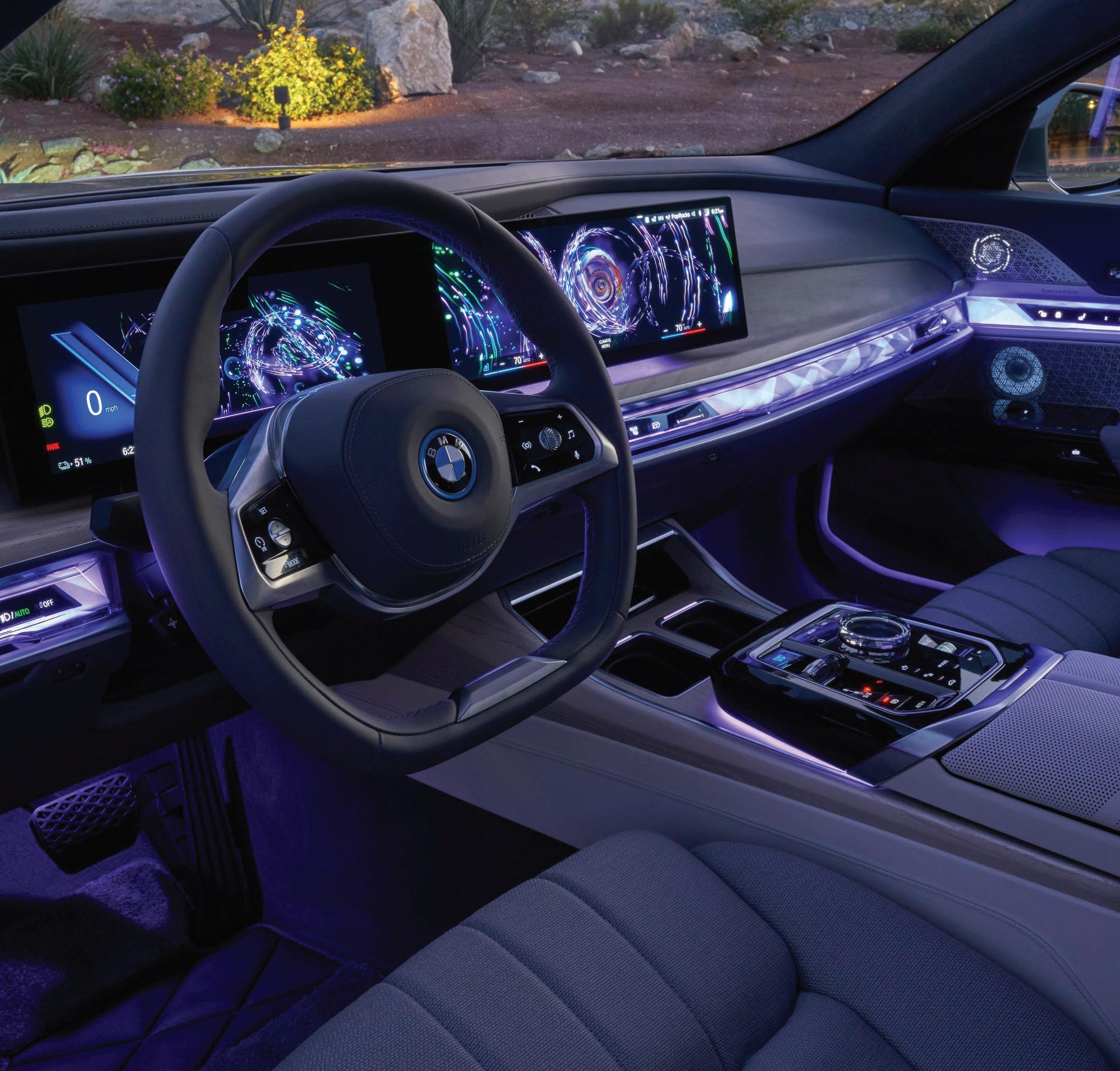
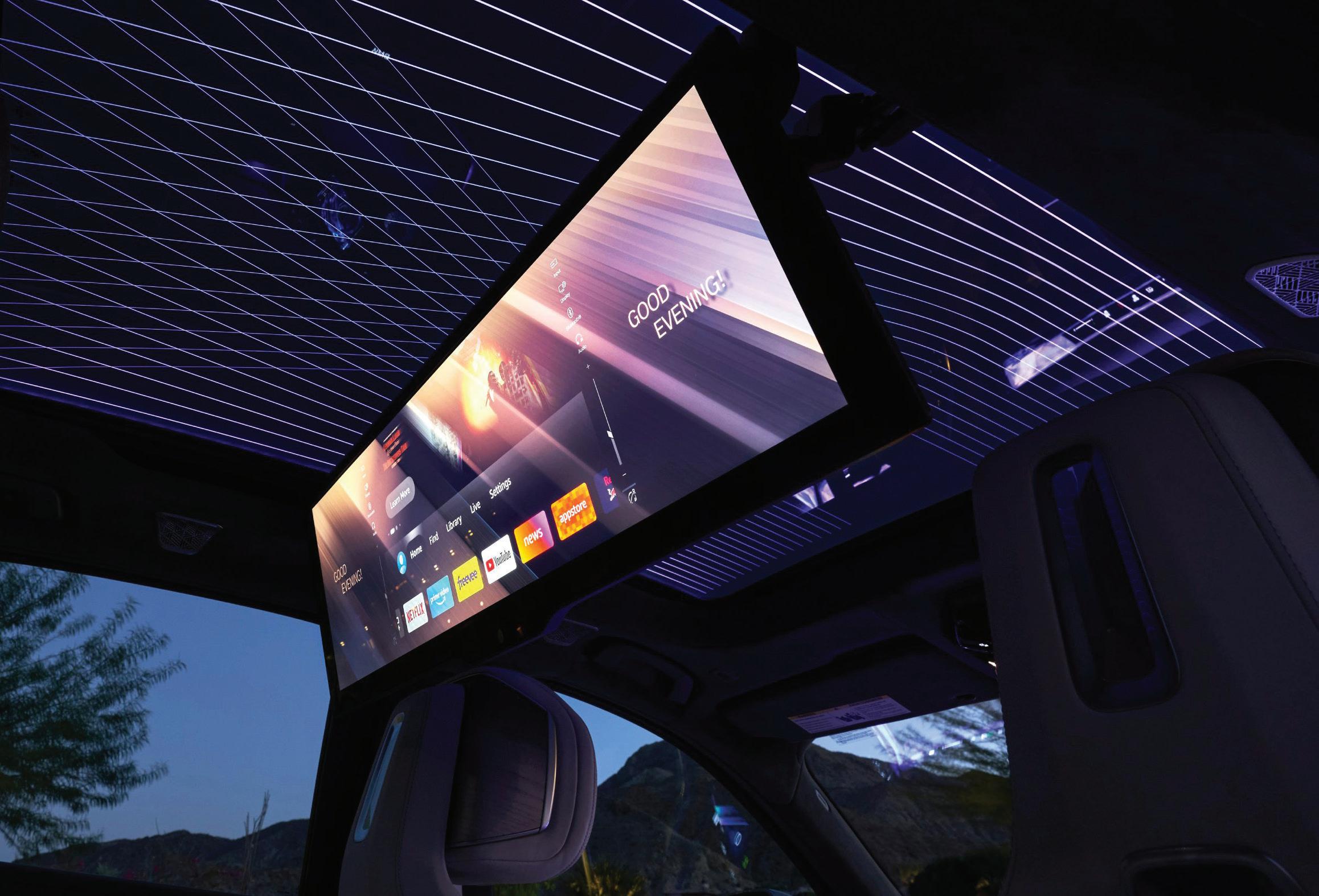
B MW uses ambient light to create rhythm and focus rather than spectacle. In models like the 7 Series, lighting pulses softly along the doors as you unlock the car, greeting you with a quiet sense of ceremony. Once inside, bands of light trace the contours of the dashboard, doors, and console. As you accelerate, the illumination subtly brightens, syncing with the car’s movement before easing back into a steady glow at cruising speeds. The changes are gentle but noticeable, creating a visual rhythm that responds naturally to the drive.
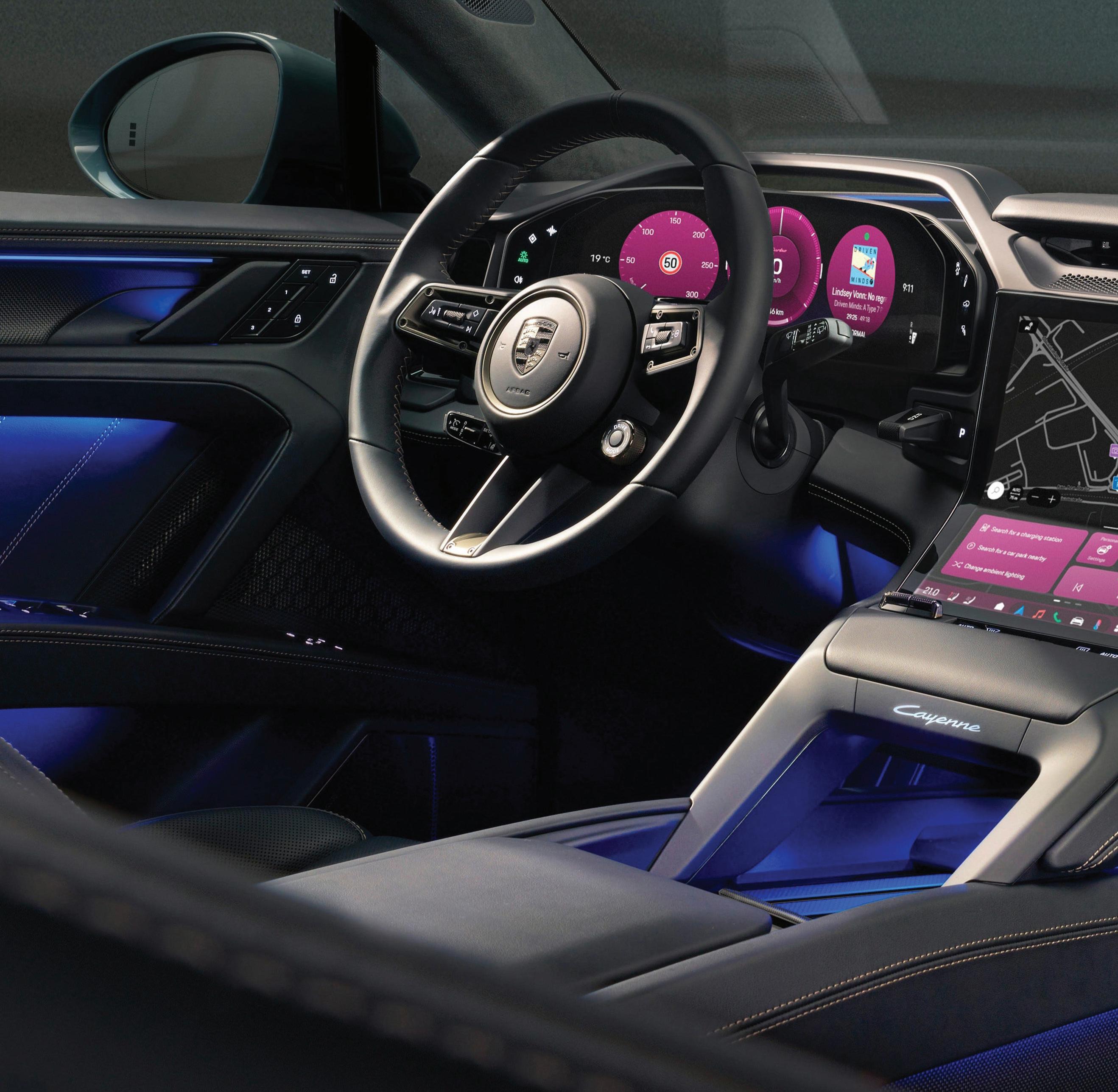
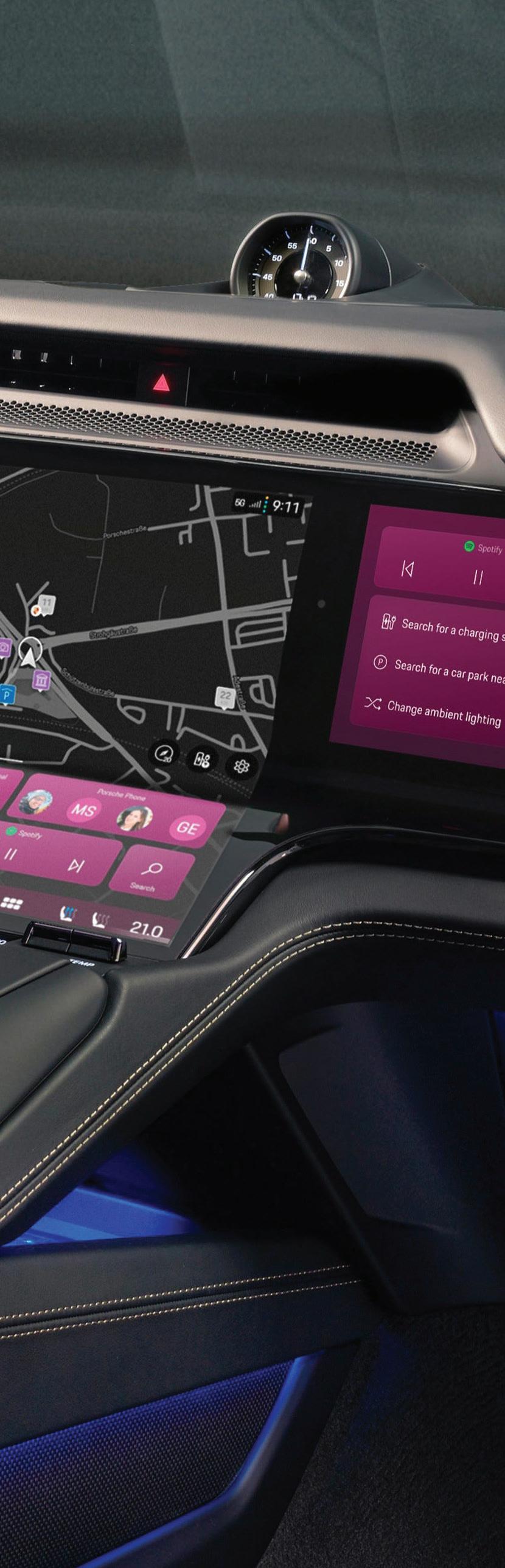
2025 PORSCHE CAYENNE ELECTRIC Porsche
In the Porsche Cayenne Electric, ambient lighting is treated as a design material. It’s built into the architecture of the cabin, tracing along the dashboard, doors, and center console in clean, deliberate lines that echo the car’s sculpted exterior. The light outlines surfaces and creates a sense of flow that subtly guides the eye from one element to the next.
Each color tone is intentionally calibrated to align with Porsche’s driving modes and character. In Sport mode, the lighting adopts cooler shades of blue and white, heightening awareness and emphasizing the drive. In Comfort or E-Power modes, it transitions to warmer ambers and golds that envelop the cabin in quiet warmth. These shifts are understated, reinforcing Porsche’s philosophy that performance and refinement can coexist seamlessly.
The result is an interior that feels architectural yet intimate. The lighting does more than illuminate—it sets a rhythm, guiding how the driver perceives space and time inside the car. It transforms the Cayenne Electric from a performance SUV into an experience that feels composed and intentional, where technology and emotion meet in quiet equilibrium. In Porsche’s hands, ambient lighting becomes a continuation of the brand’s core values: precision, control, and a deep understanding of how design shapes sensation.
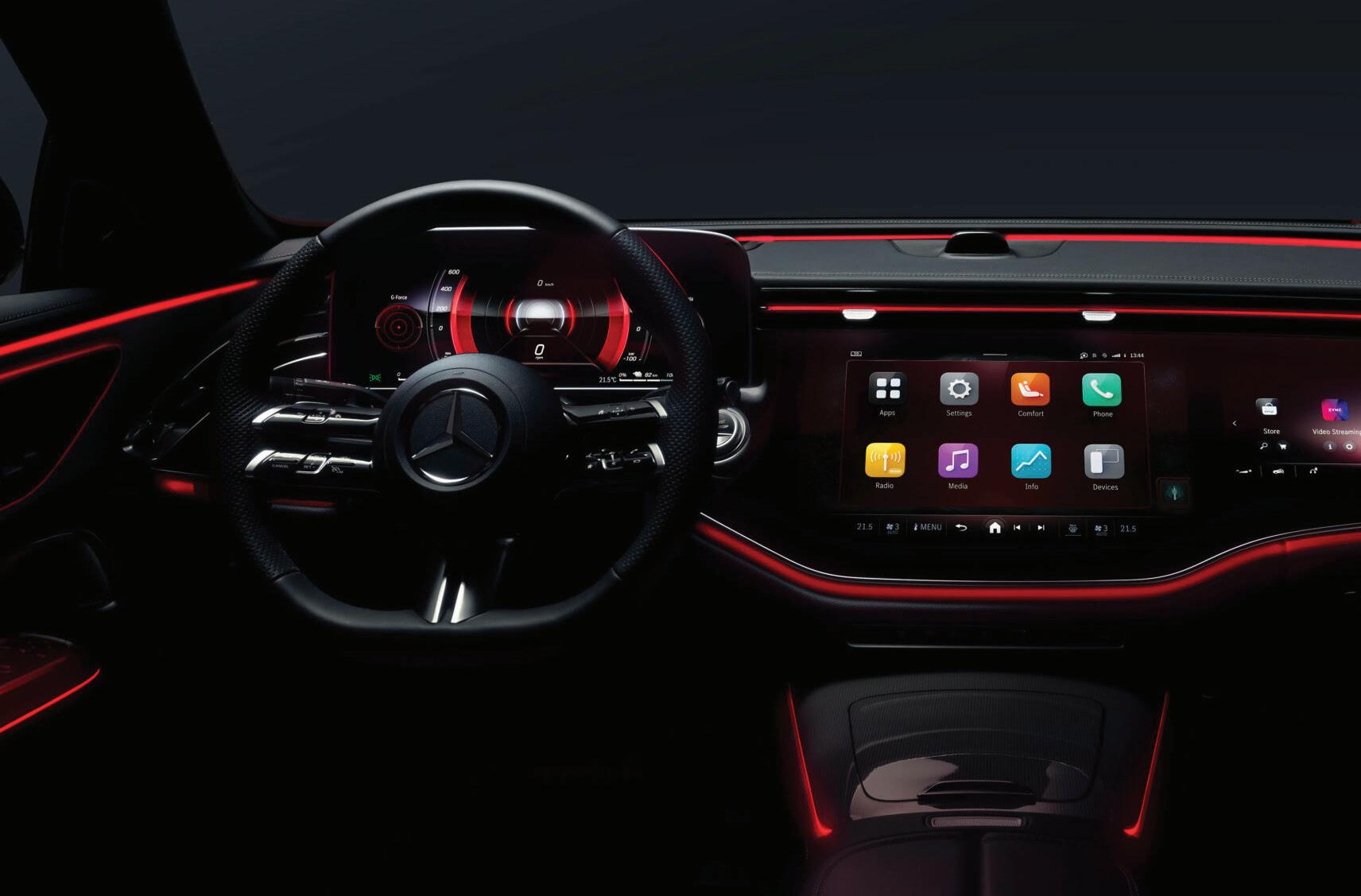
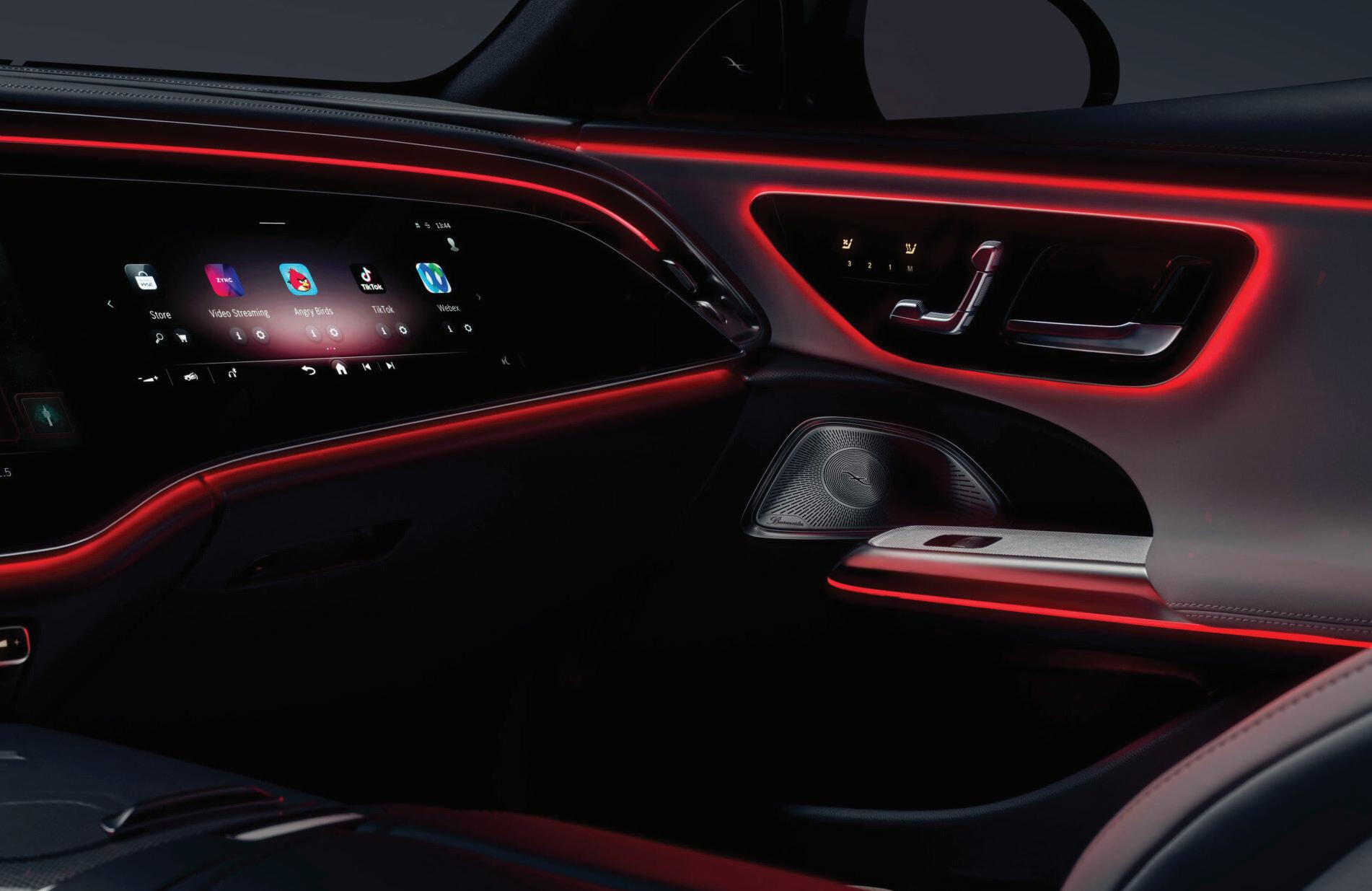
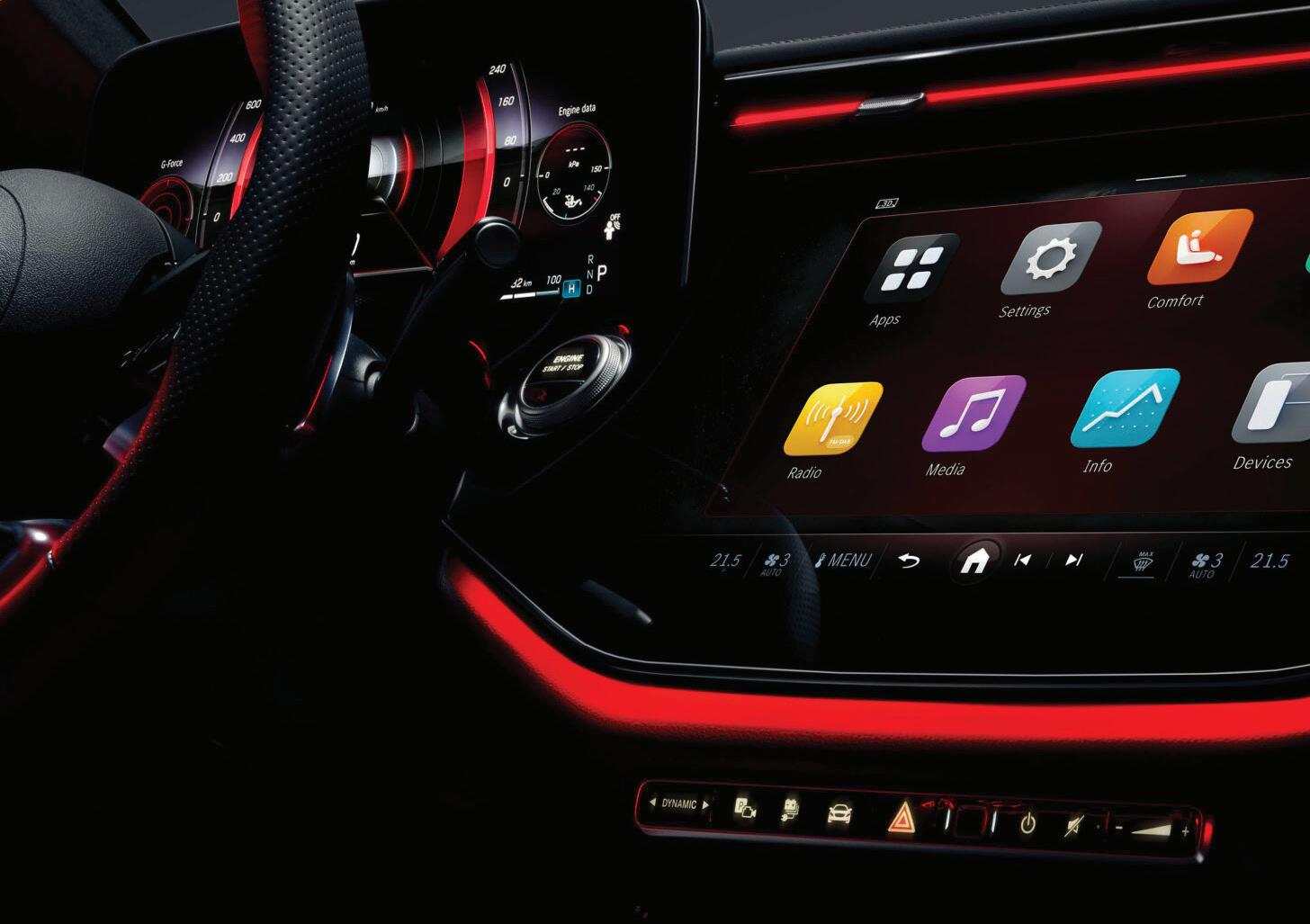
Mercedes-Benz treats ambient lighting as an integral part of its interior design philosophy. Across the brand’s range, illumination is used to shape perception and create atmosphere rather than simply provide visibility. In the 2024 E-Class SUV, this philosophy reaches one of its most refined expressions. Thin bands of light sweep along the dashboard, doors, and footwells, tracing the car’s sculpted lines and emphasizing its sense of motion even while standing still.
The system is deeply responsive, adapting to drive modes, temperature changes, and even the tone of the driver’s voice. When the cabin cools, the lighting glows in calm blues; as it warms, it transitions into shades of amber and red. The effect is subtle but perceptible, creating a living environment that shifts with the car and its occupants. At night, the interior transforms as soft gradients illuminate the cabin, giving the impression of being surrounded by quiet, flowing energy.
M ercedes-Benz has turned ambient lighting into something experiential. It is less about spectacle and more about sensation— how a space can make you feel, even before you touch the wheel.
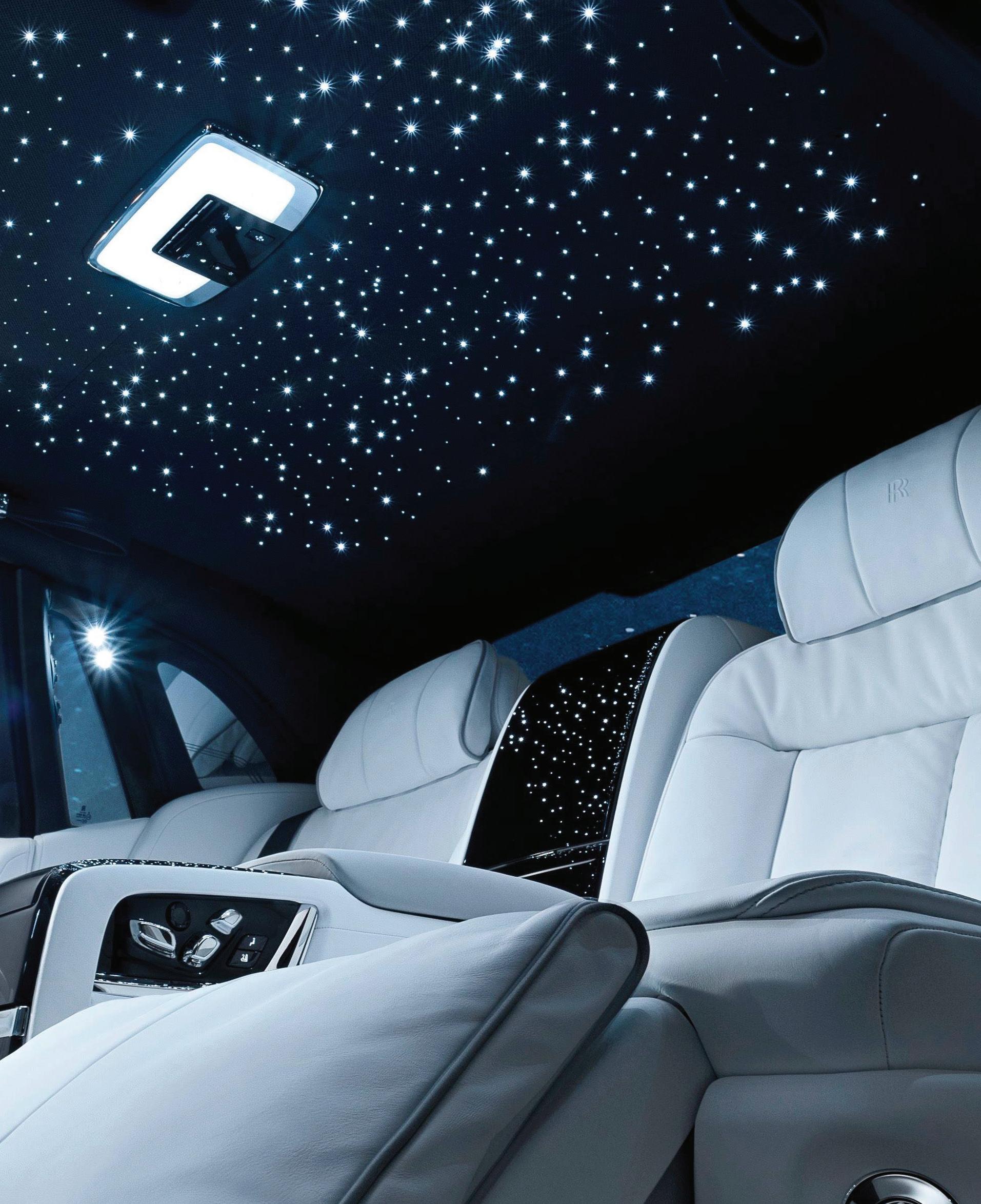
Rolls-Royce’s Starlight Headliner remains one of the most recognizable and romantic expressions of craftsmanship in modern automotive design. Each headliner is made by hand, using over a thousand individual fiber-optic strands that are perforated through fine leather and carefully secured by artisans at Goodwood. The process takes more than 15 hours to complete, with every pinprick of light positioned to create constellations that mirror the night sky. For some clients, the arrangement replicates the stars above a meaningful place and time—like the night they were born, or the coordinates of their favorite city.
What makes the Starlight Headliner so extraordinary is not just the precision but the intimacy it creates. When illuminated, the ceiling glows softly, a quiet shimmer that turns the cabin into something closer to a private observatory. There is a faint, natural irregularity to the pattern—some stars brighter, others distant—that evokes the same sense of depth and wonder you feel outdoors on a clear night. Rolls-Royce even engineered the lights to gently twinkle, mimicking the organic flicker of a real sky.
Sitting beneath it, the world outside seems to fade away. Conversations soften, music feels warmer, and motion itself seems slower. The car becomes its own atmosphere—calm, suspended, and deeply personal. It’s a rare example of how technology, craftsmanship, and emotion can coexist seamlessly, transforming a functional space into an experience of quiet beauty.
2025 ROLLS-ROYCE WRAITH
Rolls-Royce
BUGATTI
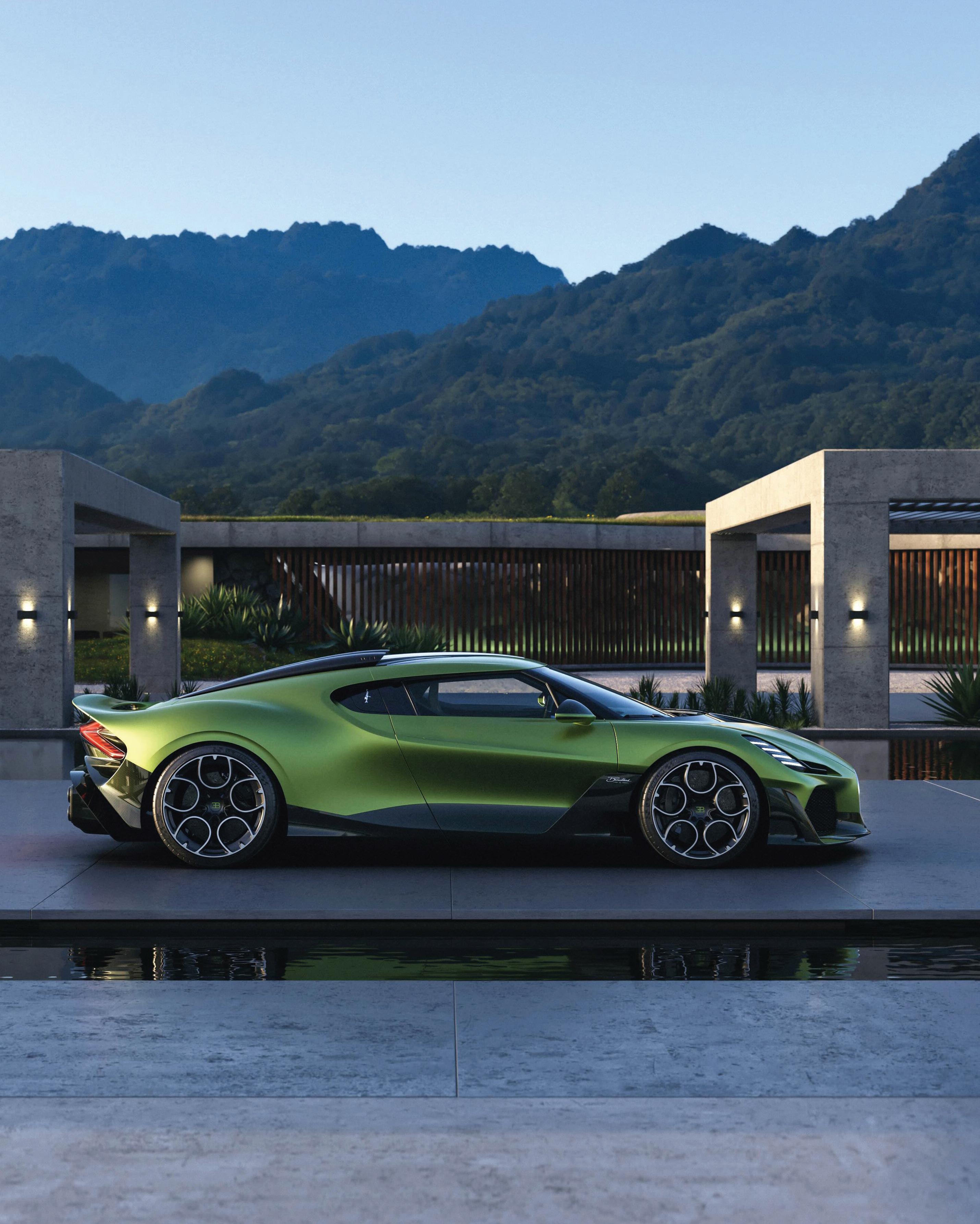
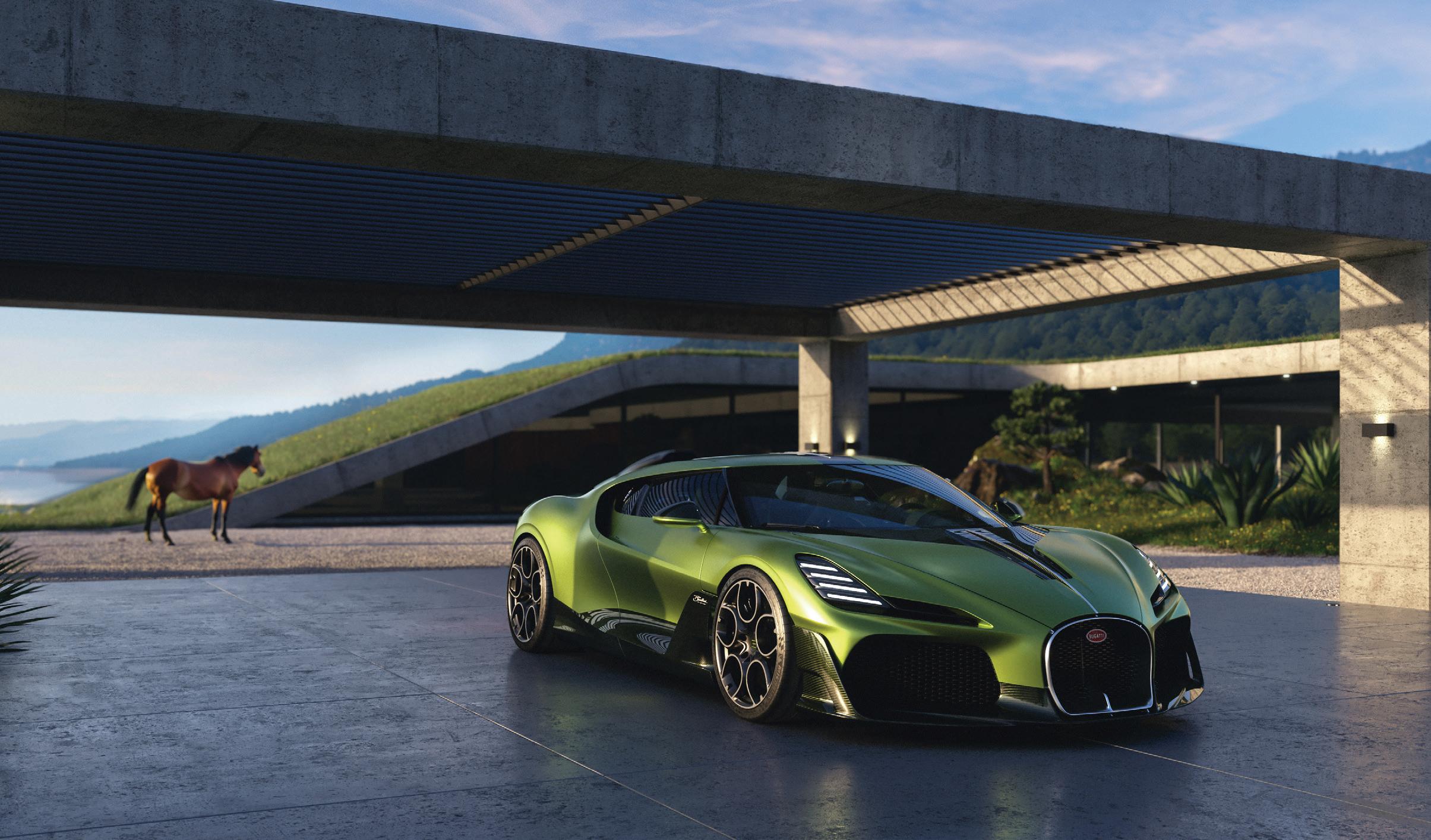
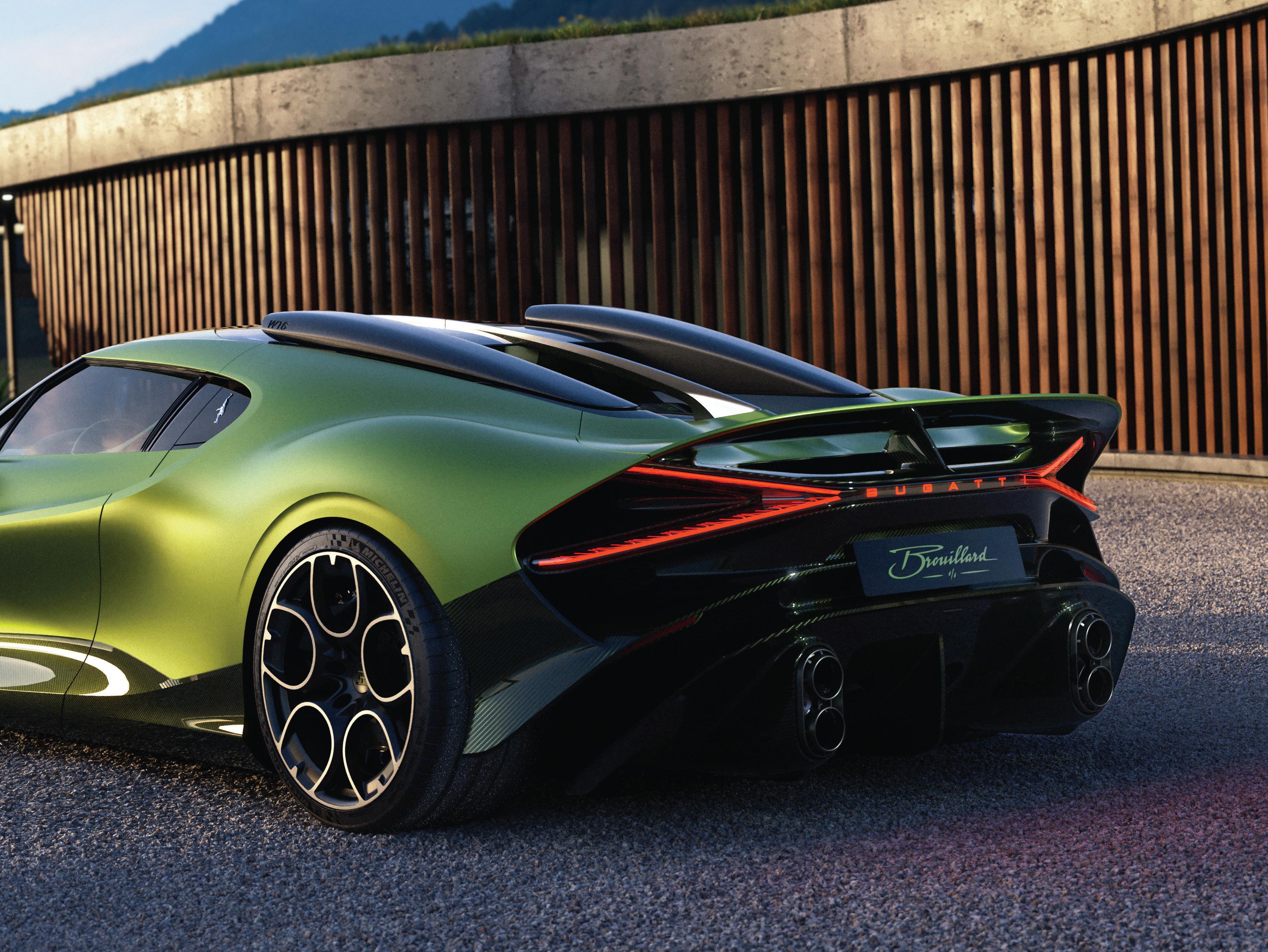
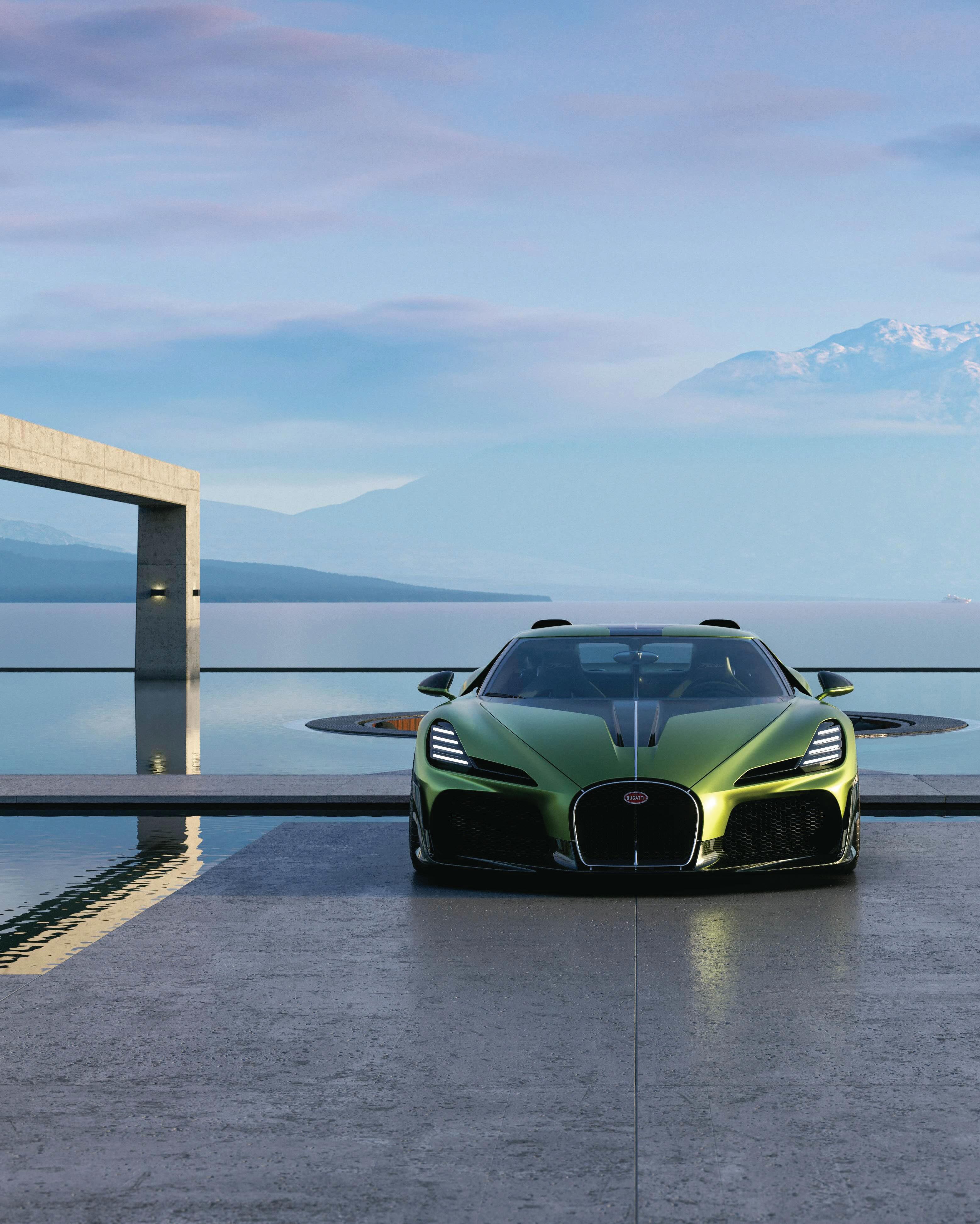
Bugatti’s first bespoke creation, the Brouillard, utilizing the W16 base of their Mistral.
BESPOKE
olitaire transforms
Rowan Pierce
In Molsheim, heritage has always been more than memory; it is material. The art of coachbuilding has lived in Bugatti’s DNA for over a century, shaping everything from the sculptural bodies of Jean Bugatti’s Type 57s to the precision of the modern Chiron. With the debut of the Programme Solitaire, Bugatti returns to that tradition, offering a new level of personalization for those seeking something beyond even the brand’s Sur Mesure commissions. Limited to only two builds per year, each Solitaire car represents a complete collaboration between owner and marque—a true act of automotive couture.
The first of these creations is the Brouillard, a breathtaking coupé that embodies the spirit of Ettore Bugatti’s beloved horse of the same name. The animal was known for its elegance, power, and intelligence, able to open its own stable door using a mechanism designed by Ettore himself. Those same qualities inspired the car that bears its name: sculptural, graceful, and full of quiet strength. Bugatti Design Director Frank Heyl described the connection best, saying that Ettore saw in Brouillard “a mirror of his own creations—the curves of the horse’s body, the muscular flanks, the perfect proportions.” He went on to describe the car’s essence as “enormous power and complexity, hidden by a veil of dignified simplicity.” That sense of organic form guided the car’s design.
“A mirror of his own creations— the curves of the horse’s body, the muscular flanks, the perfect proportions.”
Built upon the marque’s ultimate W16 platform, the Brouillard carries a 1,600 PS quad-turbocharged engine, the final evolution of Bugatti’s legendary powertrain. Yet its distinction lies not in performance alone, but in proportion and balance. Every surface appears carved by air, shaped less by aggression and more by intuition. The body’s lower third is finished in deep tones that visually ground the car, while the lighter upper sections give it a sense of motion even at rest—a gradient of weight and lightness that captures the meeting of strength and serenity.
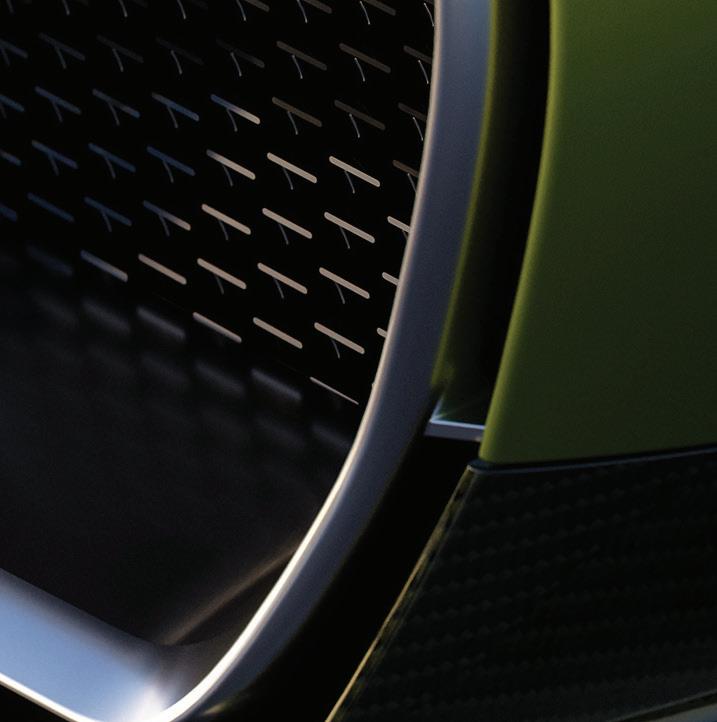
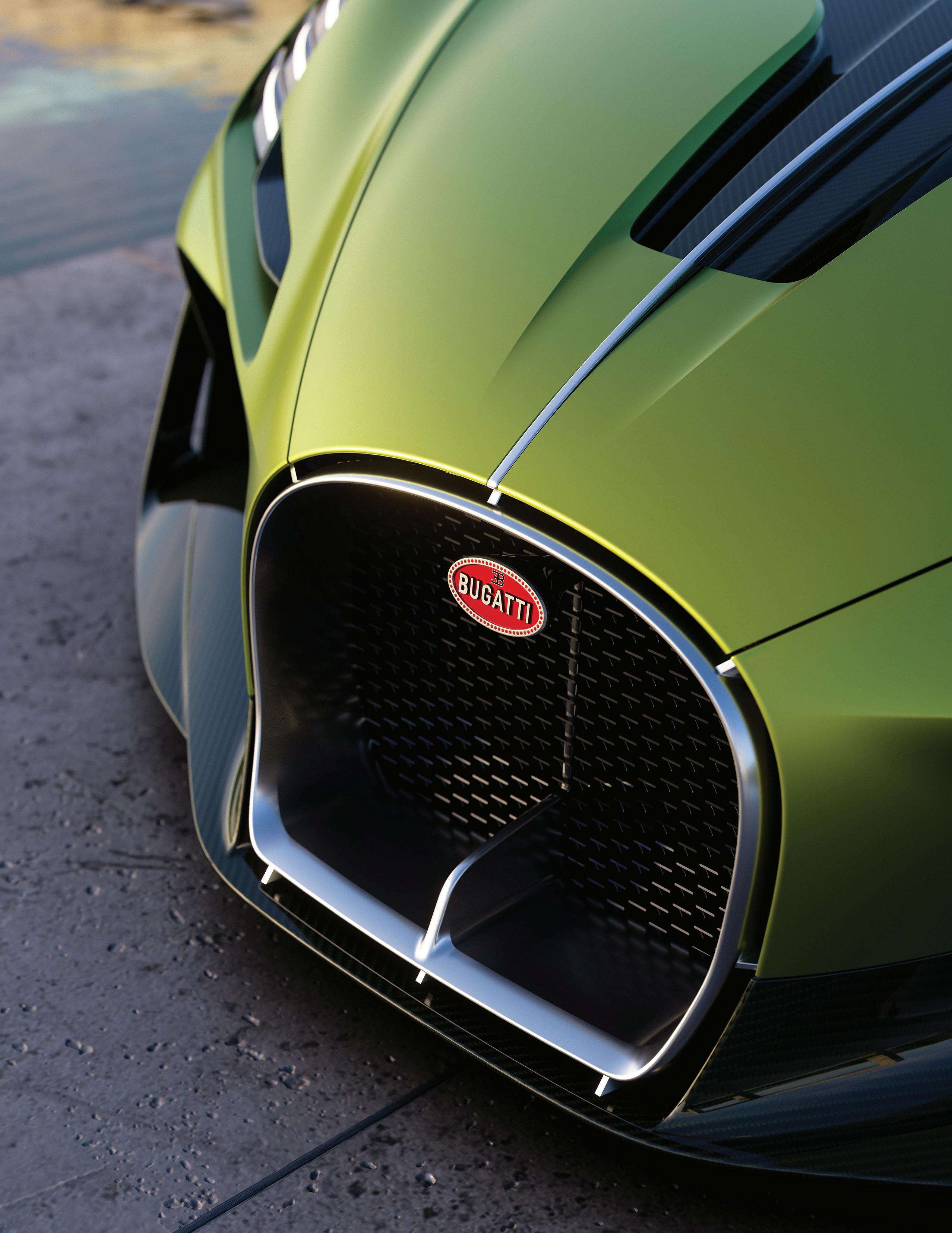
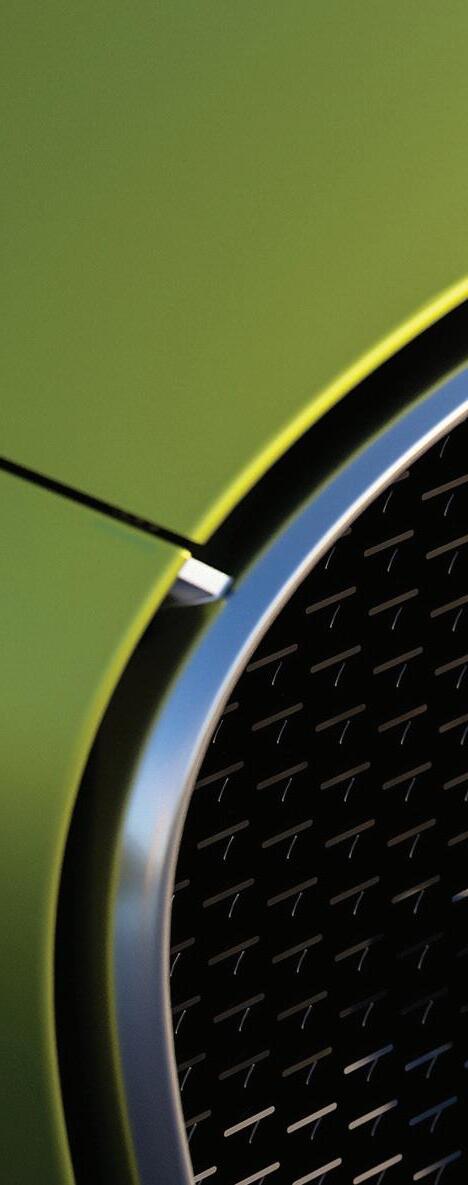
F unctional aerodynamic details, like the fixed ducktail wing and integrated rear diffuser, blend seamlessly into the sculpted form, refusing the visual clutter so often found in modern hypercars. Instead, the Brouillard relies on subtle tension: curves that swell and taper, light that glides across its flanks like water over glass. The front fascia maintains Bugatti’s unmistakable horseshoe grille, yet it’s slimmer, quieter, more refined—less a shout of power, more a whisper of mastery.
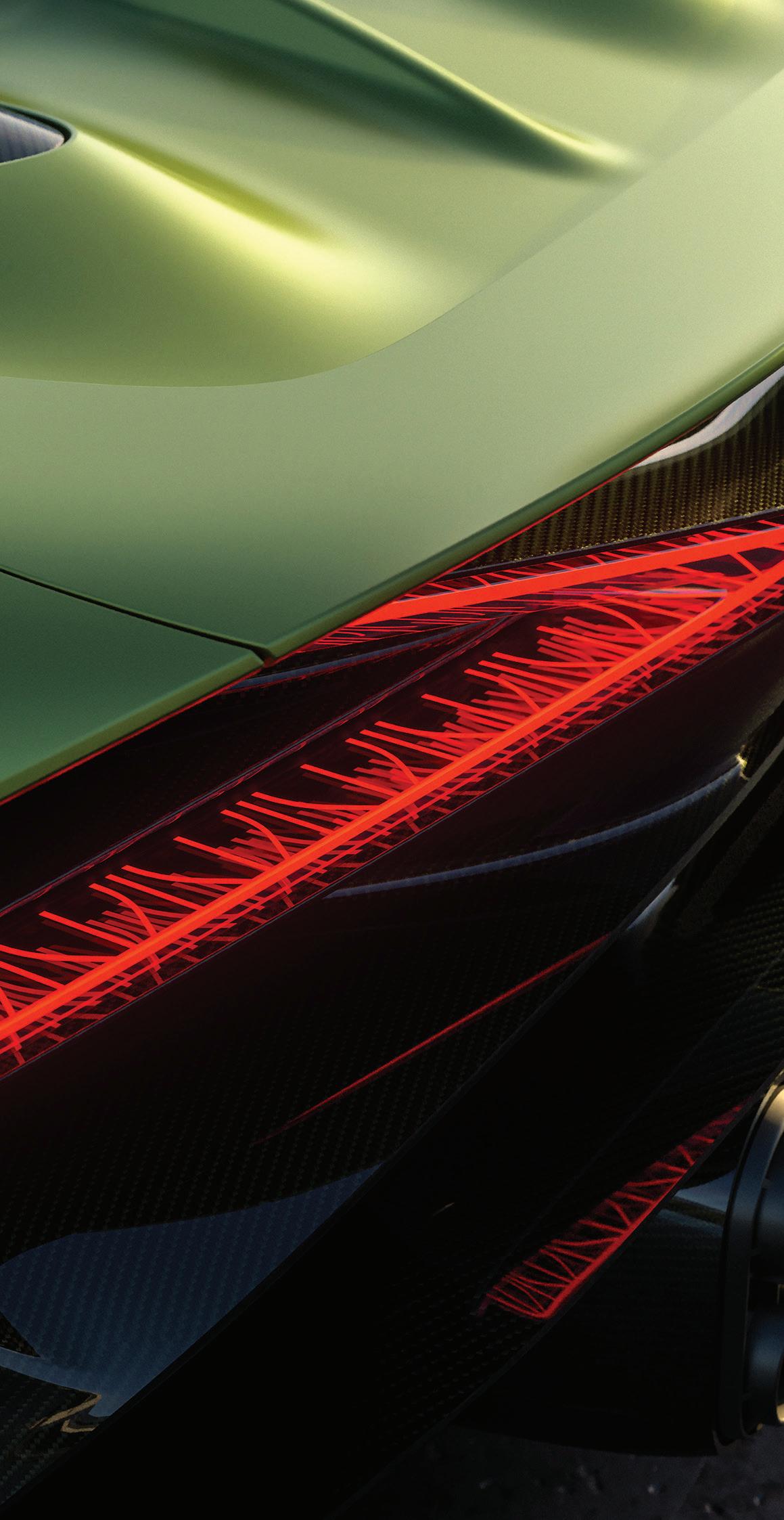
Even the lighting signature was reconsidered, evolving into a thin, continuous ribbon that sweeps across the front and rear, tracing the car’s form in a single elegant gesture. At night, the Brouillard seems to dissolve into its surroundings, its illumination hovering like a specter in motion. Every detail serves the car’s dual nature: an engineering marvel grounded in physics and a sculptural object designed to stir emotion.
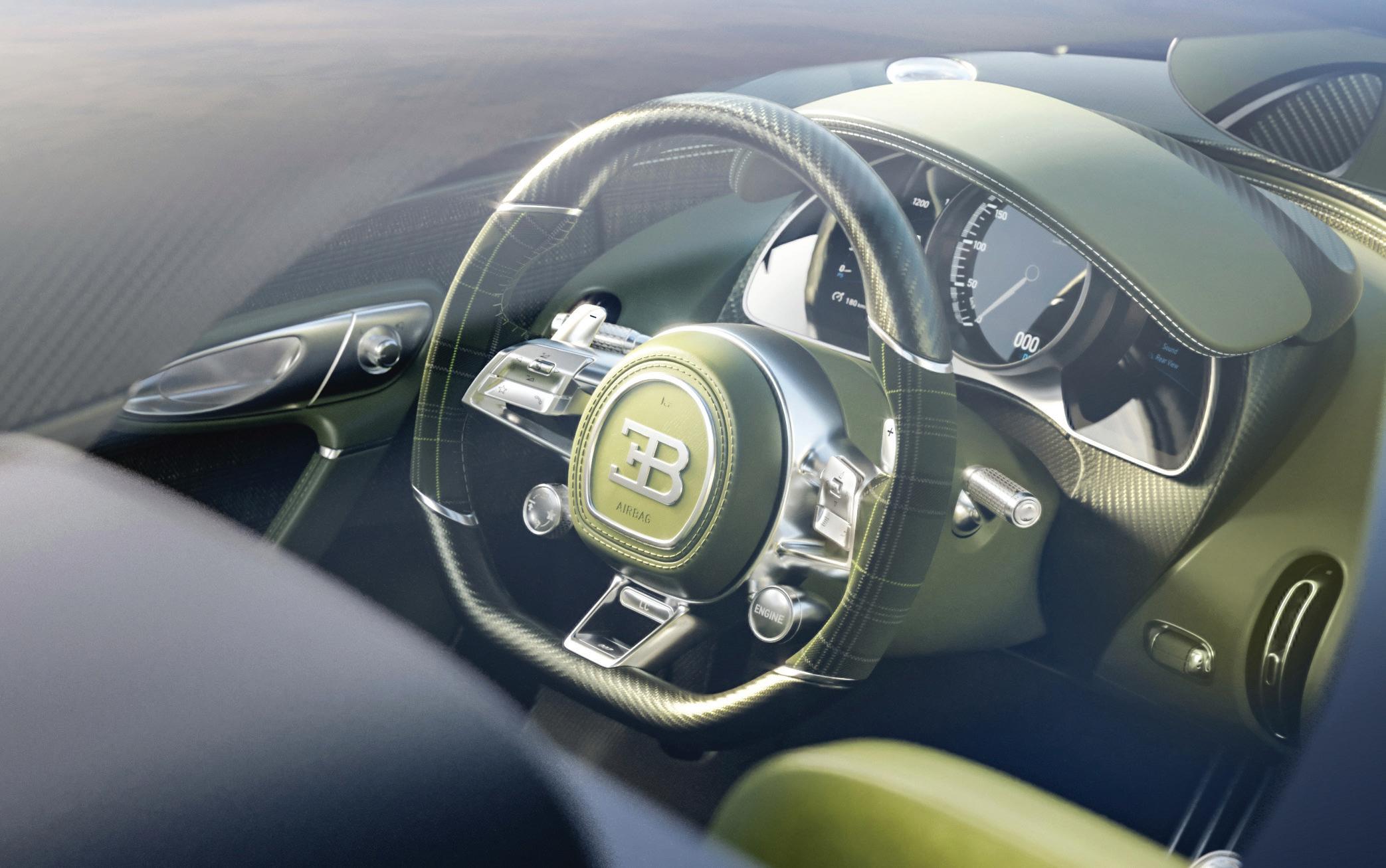
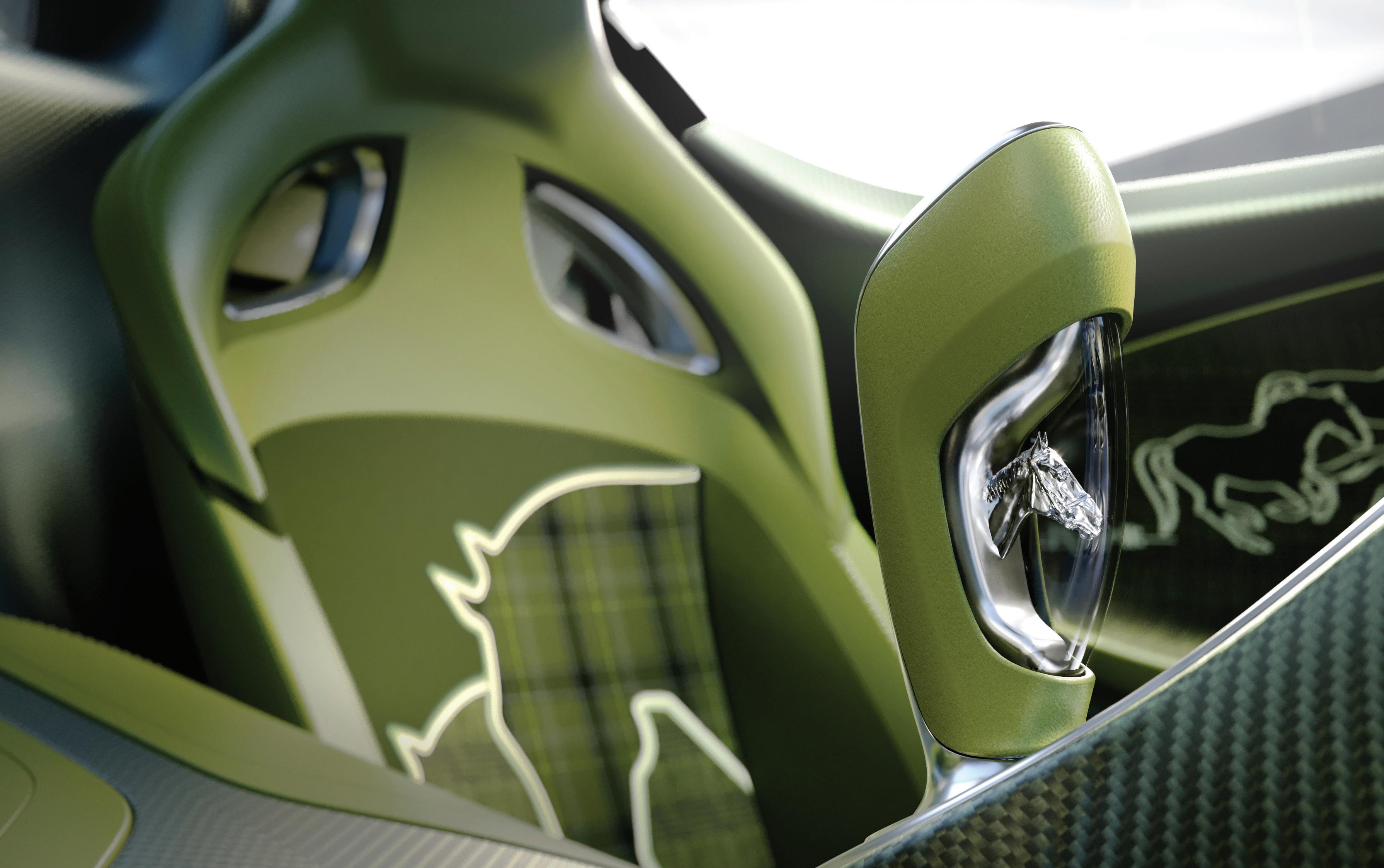
The interior is a dialogue between heritage and modernity, featuring custom-woven Parisian fabrics whose subtle tartan pattern nods to Bugatti’s early interiors. These textiles meet the precision of green-tinted carbon fiber and machined aluminum, creating a composition that feels both grounded in tradition and oriented toward the future.
A glass roof floods the cabin with light, unveiling a continuous spine that flows directly from the exterior bodywork through the centerline of the interior. Reflections glide softly across the surfaces as the car moves, creating a sensation of breathing space that mirrors the grace of the horse for which it is named.
E mbroidered horse motifs appear throughout, stitched into the door panels and seatbacks. The gear shifter, milled from a single block of aluminum, holds a miniature sculpture of Ettore’s horse encased in glass—a totem of motion and memory. Each seat is sculpted to the owner’s form and wrapped in a patchwork of leathers arranged in a pattern unique to this commission.
LIVING
THE MACHINE
Owen Walker
h ow automakers are leveraging technolog Y to create cars that don’t just move with us—the Y understand us.
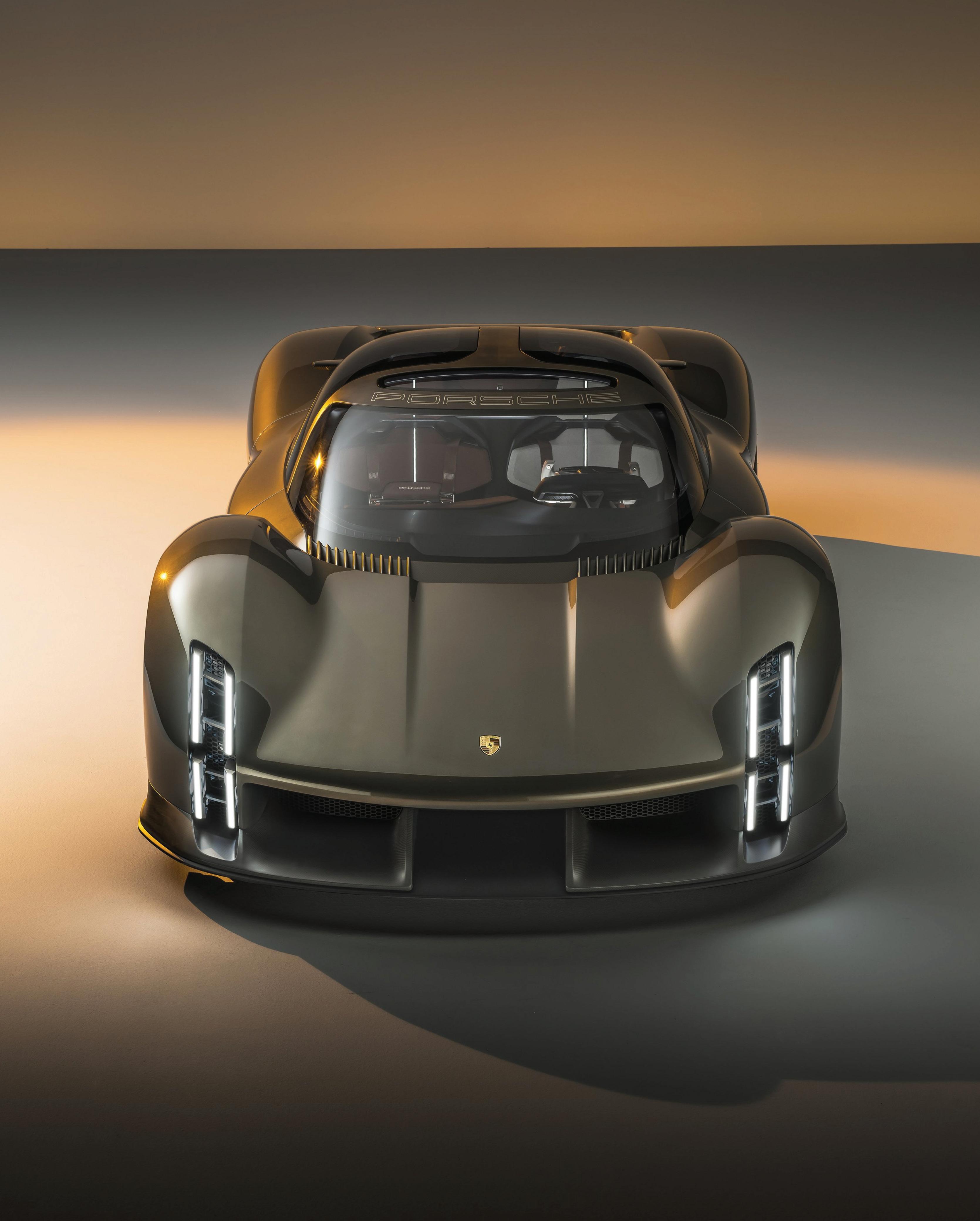
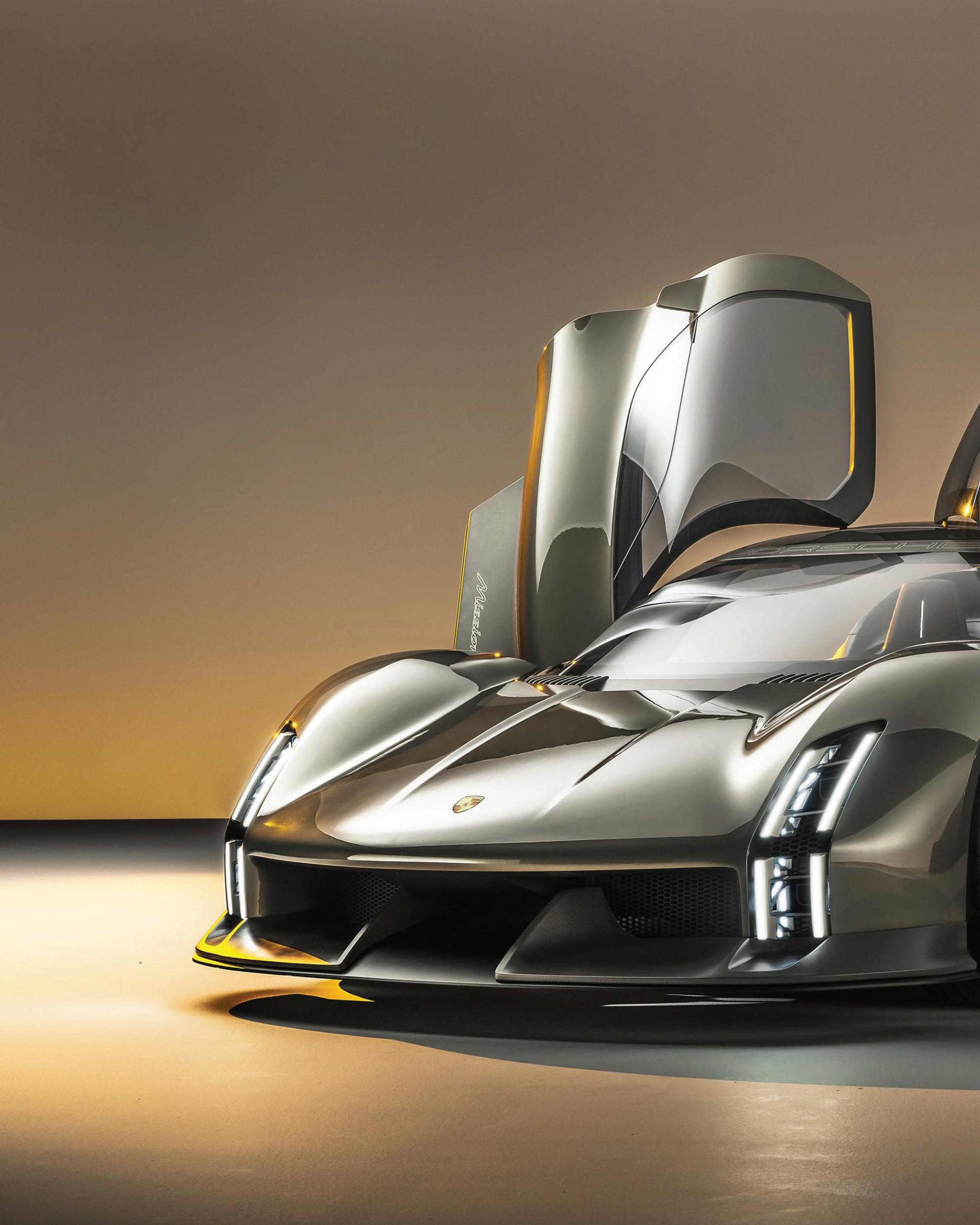
PORSCHE
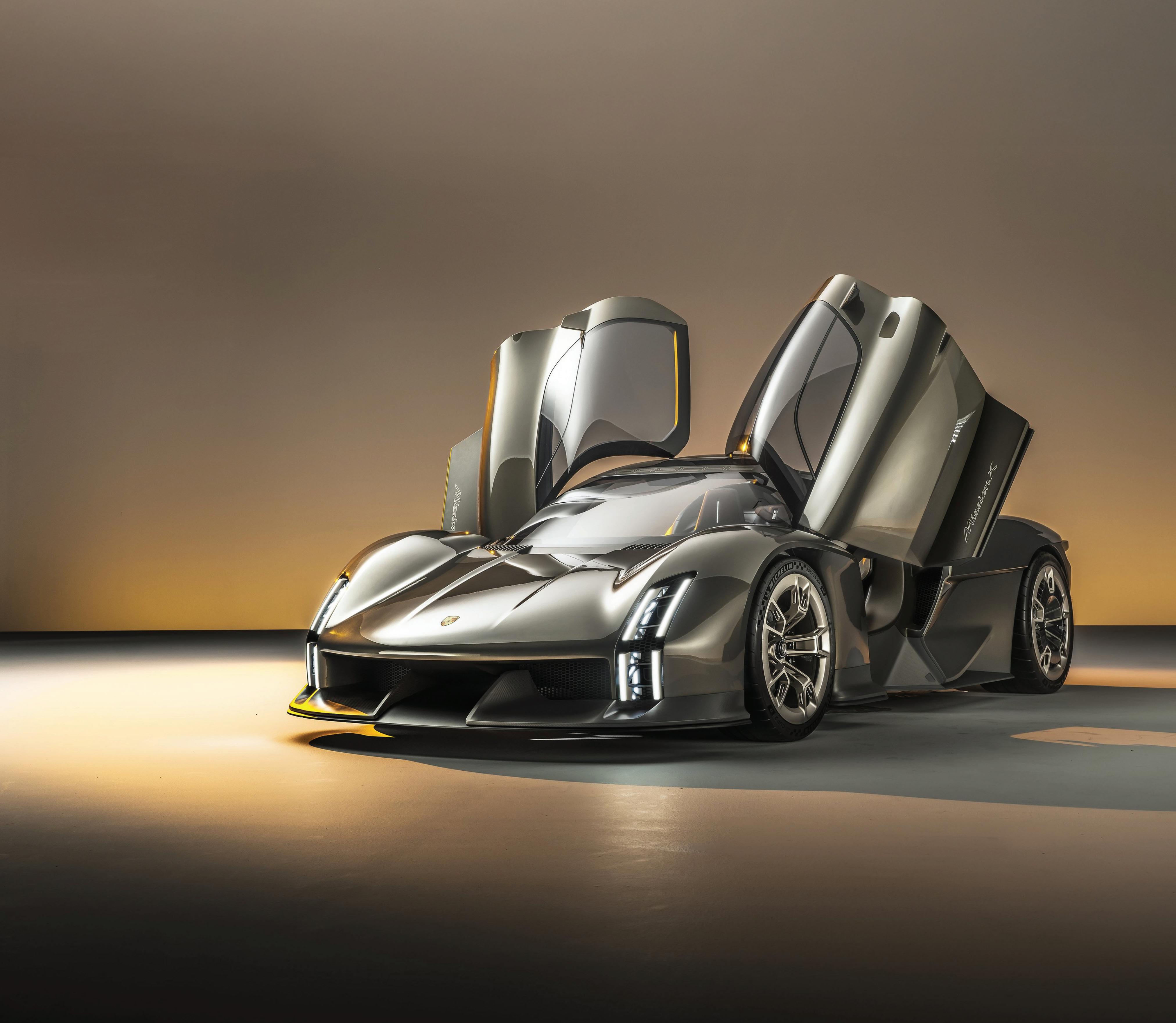
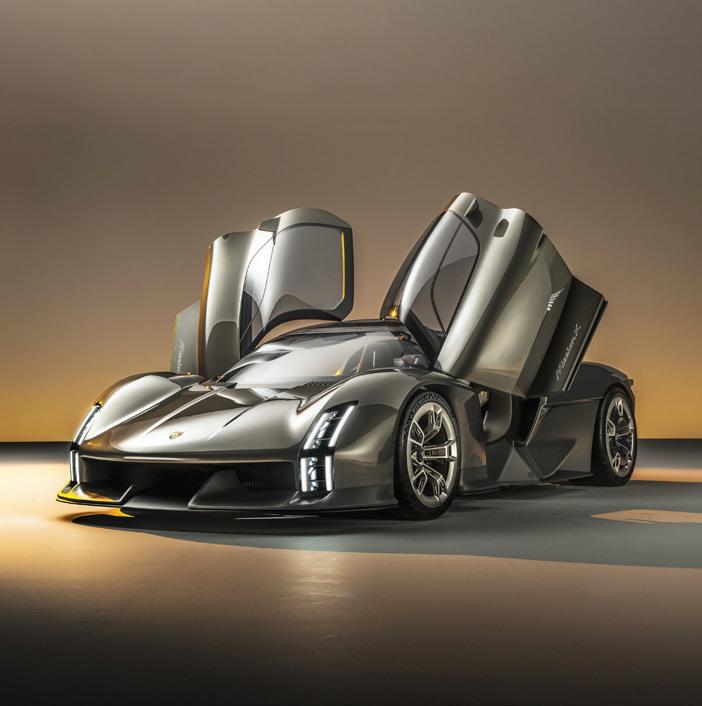
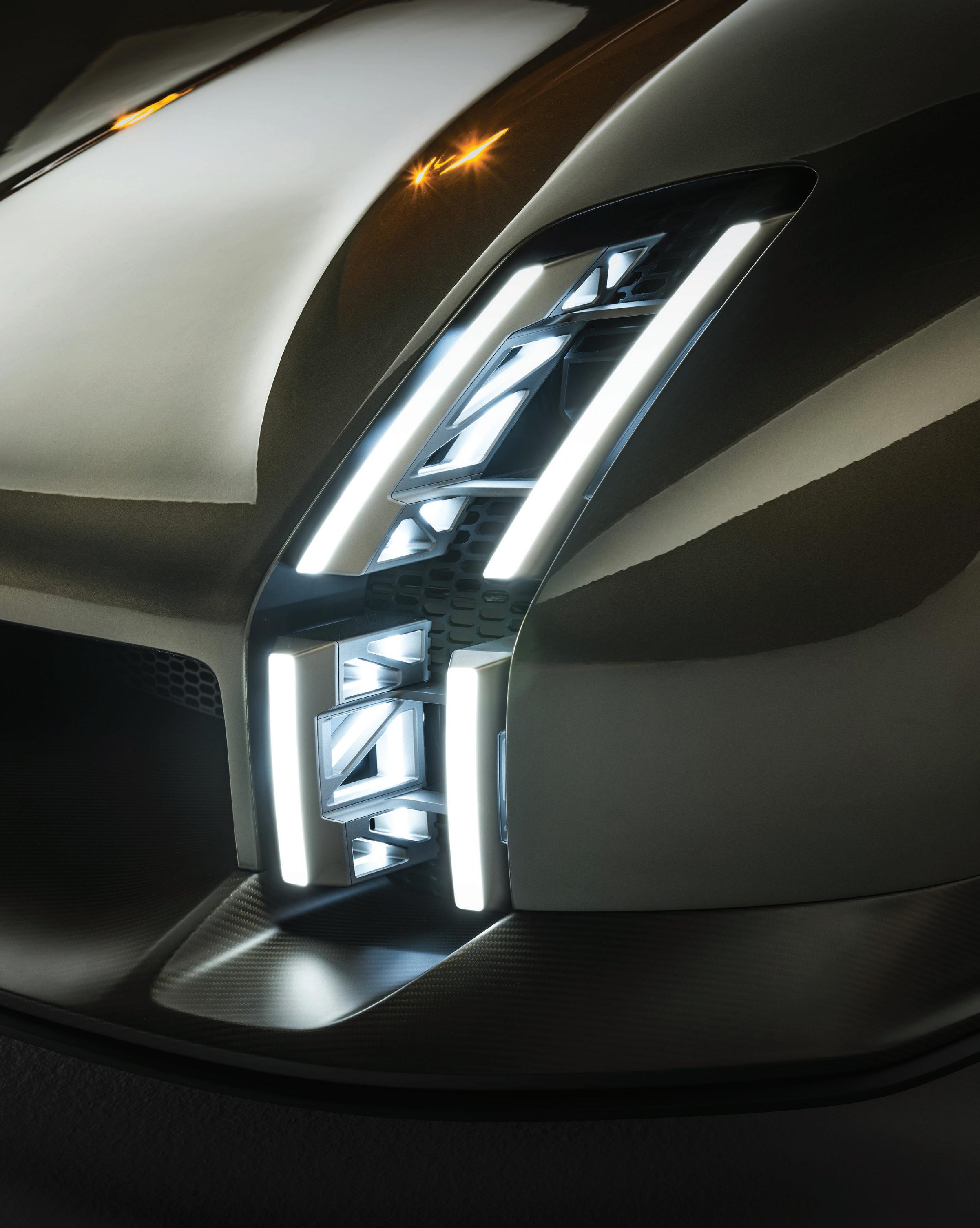
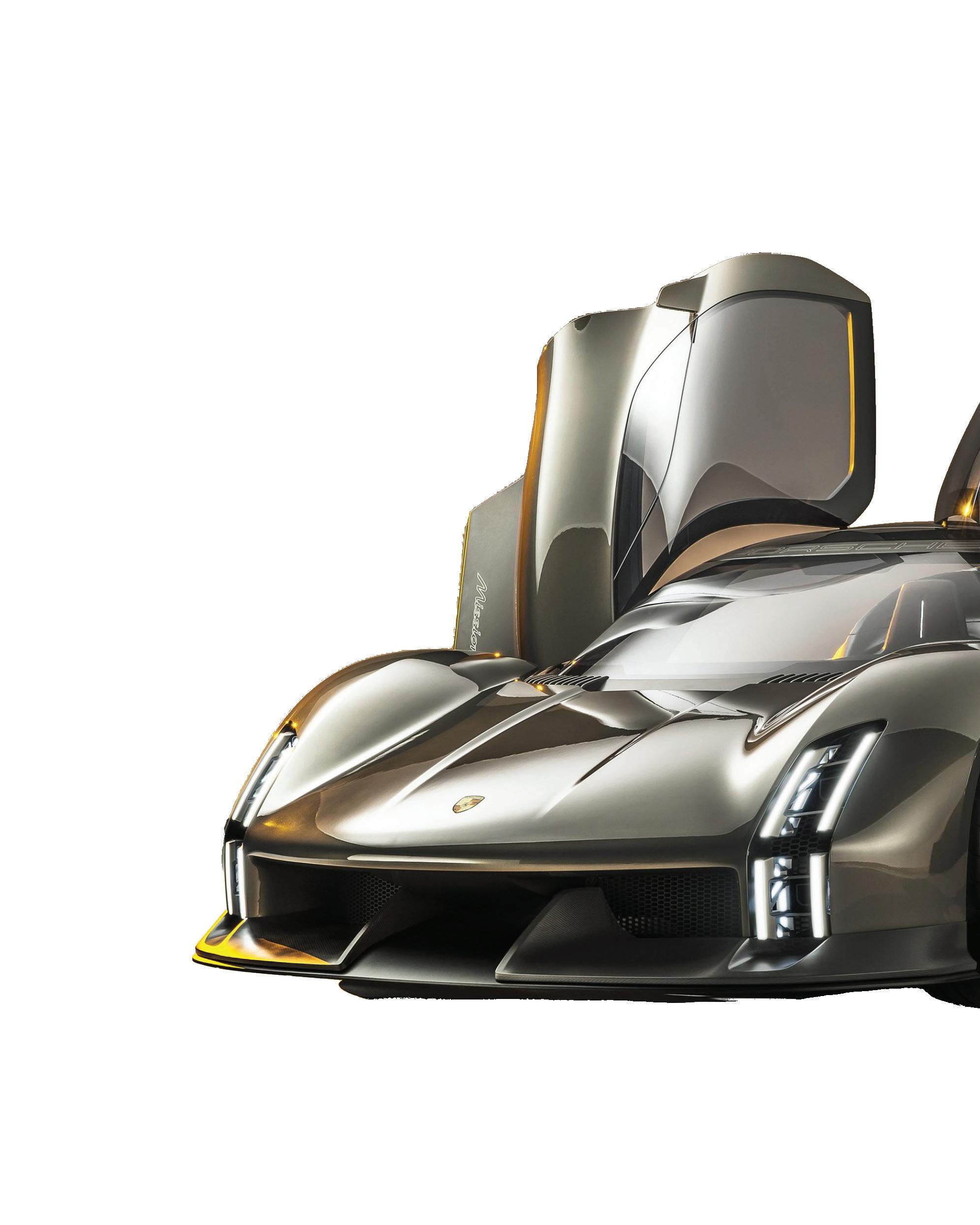
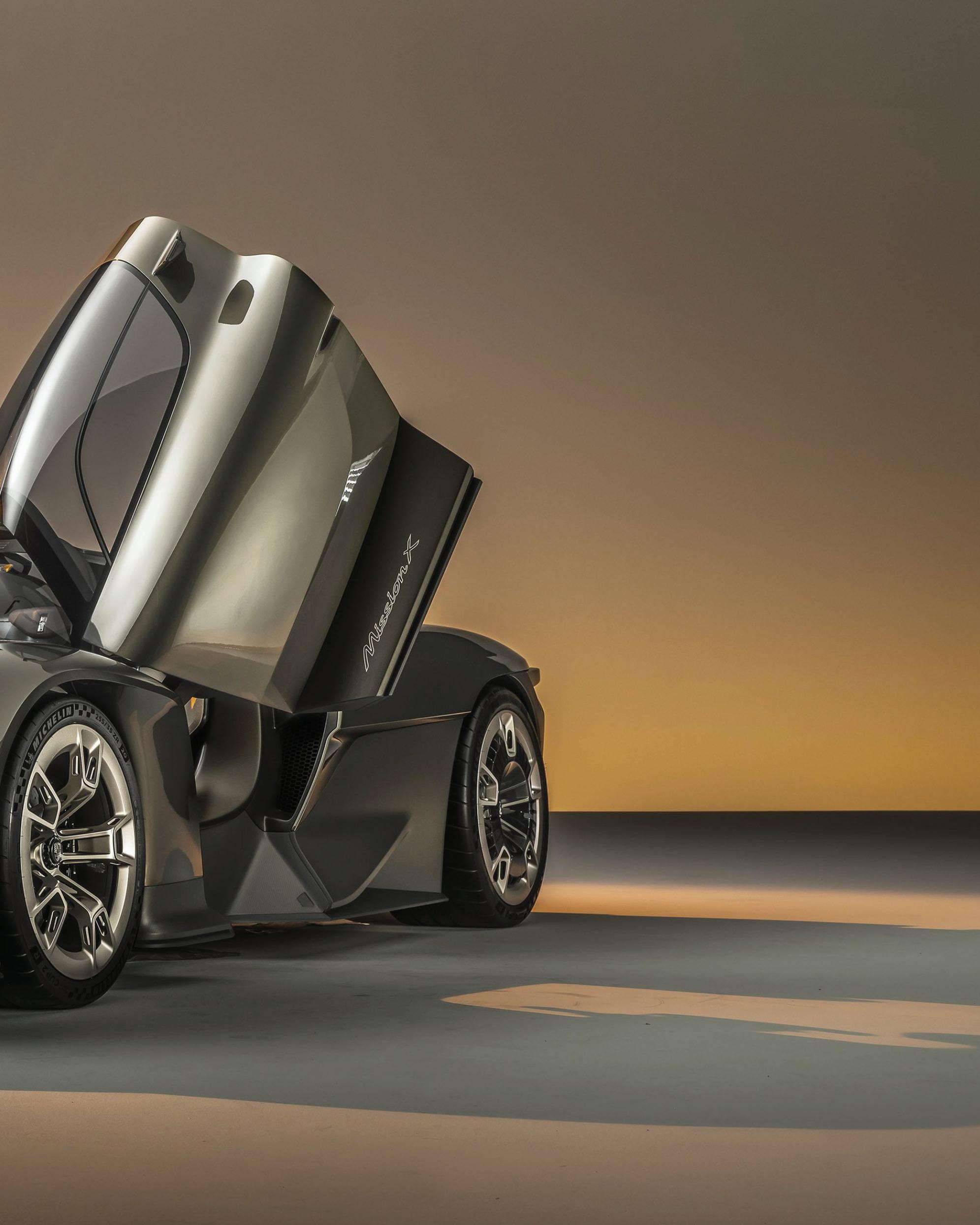
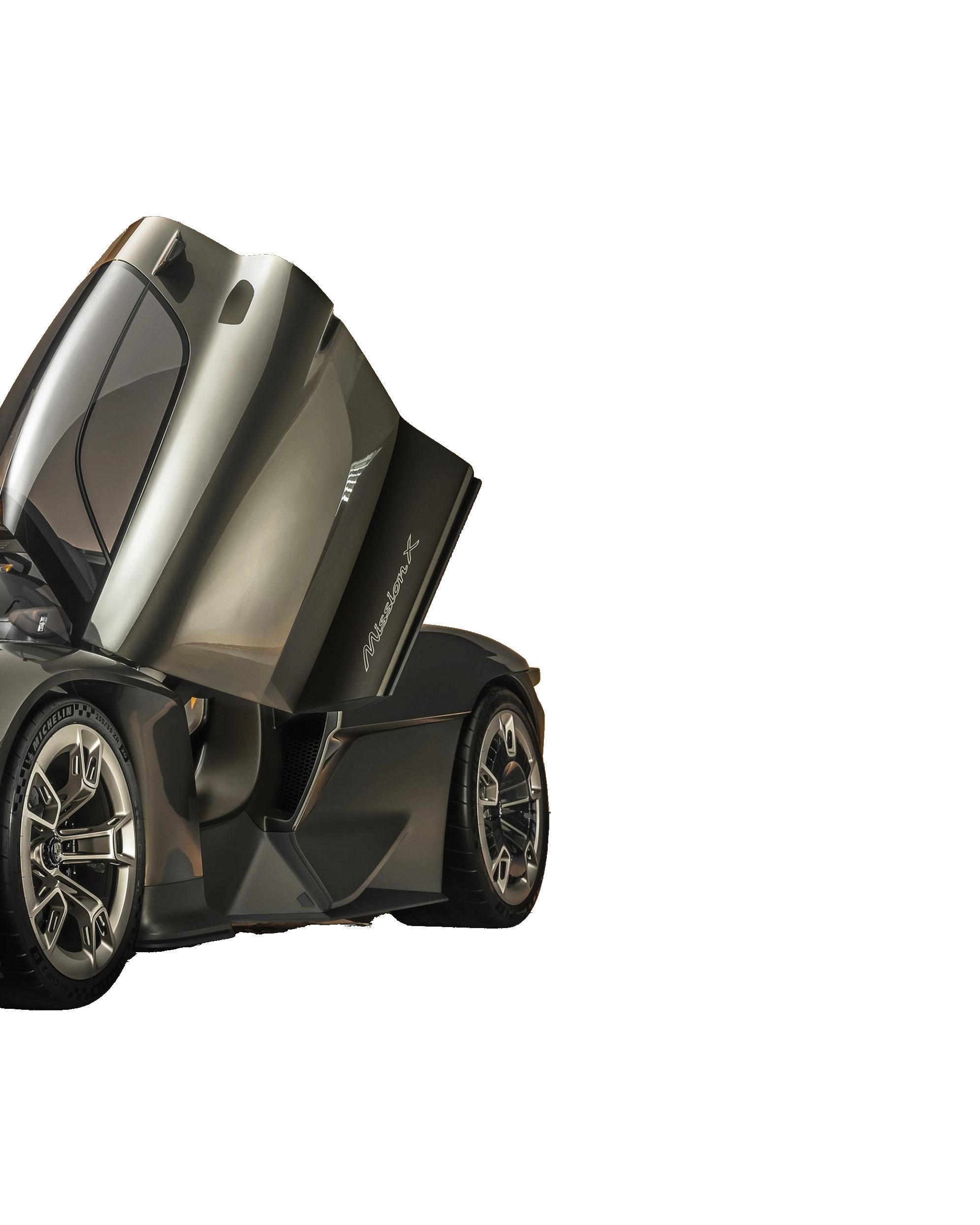
The eye of Mission X, Porsche’s all-electric hypercar concept.
The modern car no longer waits for a command. It learns, listens, and adapts. In this quiet evolution, the automobile begins to transcend mechanics—responding not to the push of a pedal, but to the pulse of its driver.
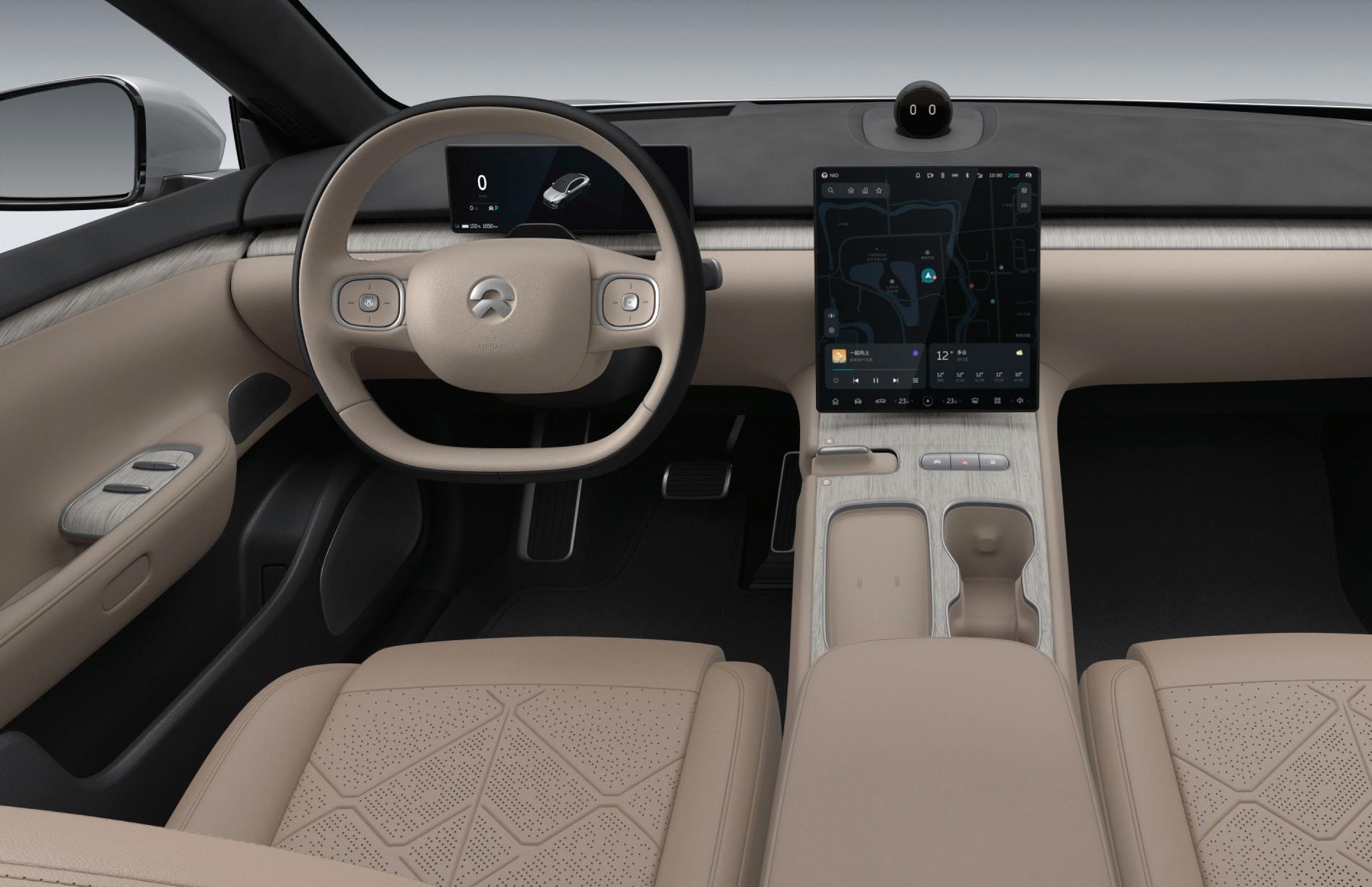
C hina’s NIO has positioned itself at the forefront of intelligent mobility, building cars that evolve long after they leave the factory. The brand’s approach blends software, sensory awareness, and adaptive engineering in a way that makes each vehicle feel progressively more attuned to the person behind the wheel.
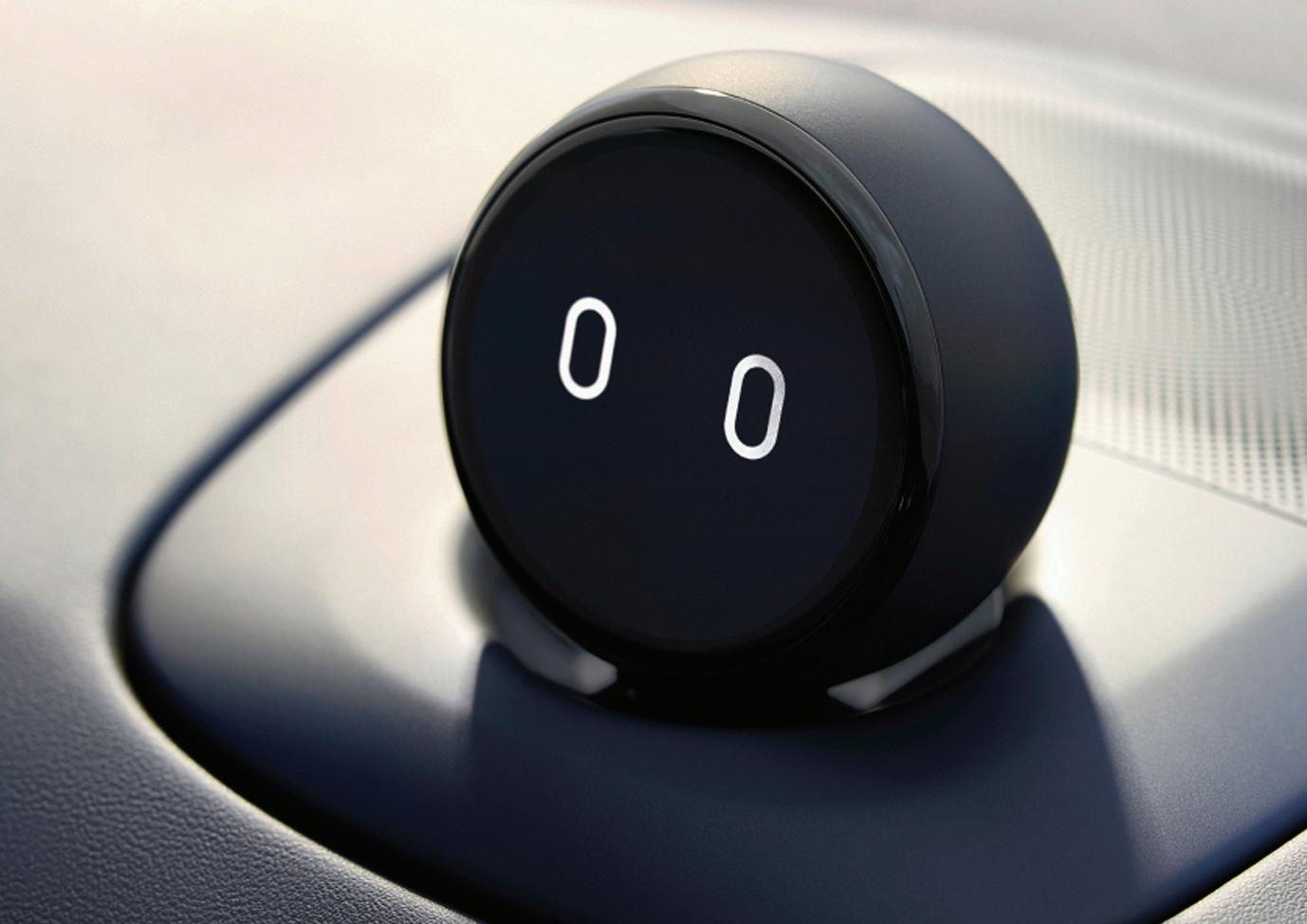
NOMI, the company’s signature AI companion, adds an unexpected human warmth to the technology around it. It remembers your routes, your moods, the way you prefer the cabin at dusk, and the playlist that fits a late-night drive through the city. It speaks with personality, learns your habits, and over time becomes something quietly familiar.
What makes NOMI remarkable is not just its charm, but how deeply it is connected to the car’s core systems. Its understanding translates directly into action: adjusting suspension to smooth a rough stretch of road, shifting steering feel to match your driving style, or balancing cabin temperature and lighting in response to subtle cues. Over time, the car begins to feel less like a programmed machine and more like a partner that understands how you like to travel.
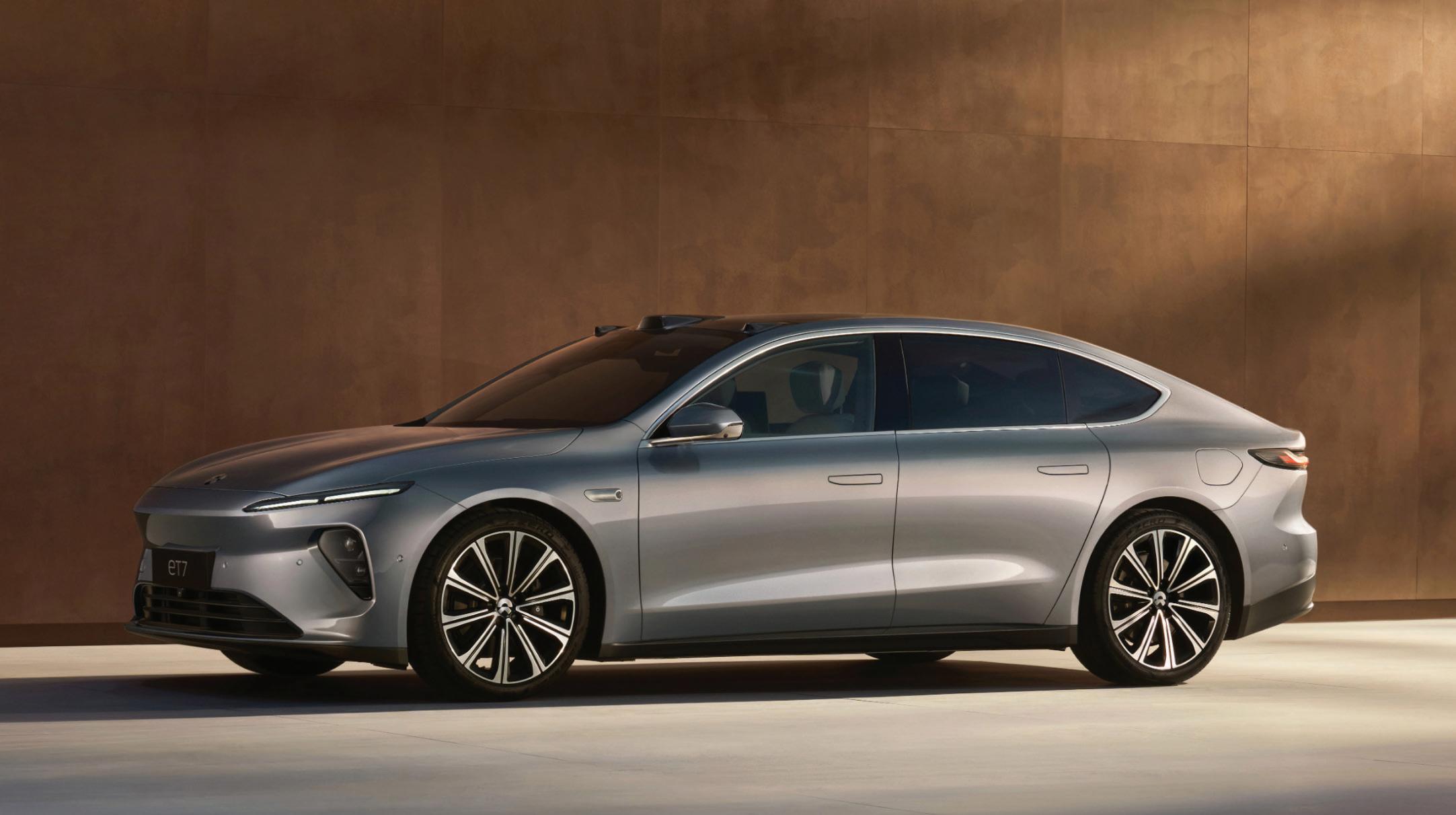
2024 NIO ET7
Nio
NOMI, a friendly face to advanced AI, connects the driver and machine with quiet personality.
NIO
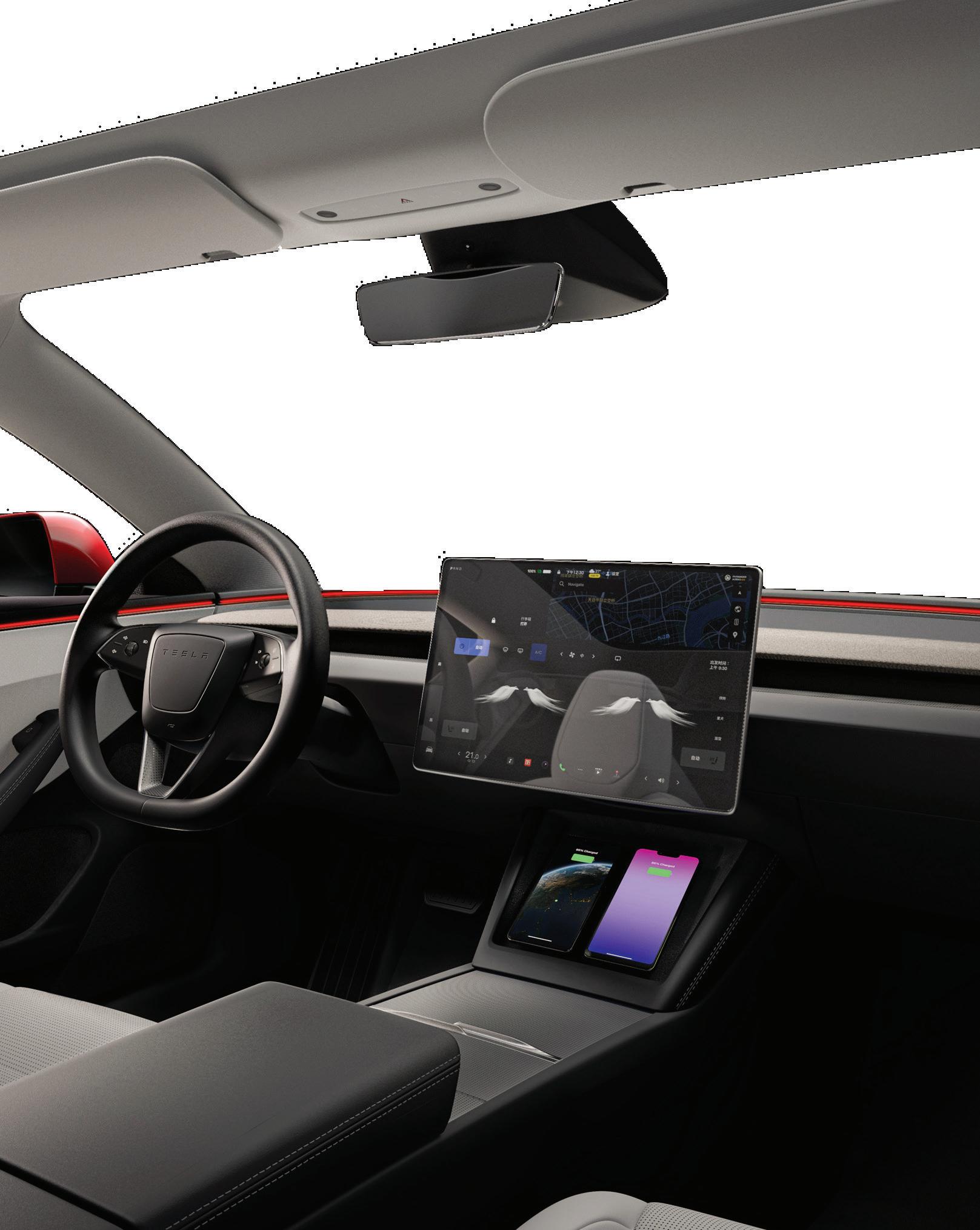
Where NIO gives its vehicles a voice and personality, Tesla’s intelligence is quieter—an invisible network that evolves in the background. Its over-the-air updates have transformed ownership into something fluid. Progress no longer arrives in yearly model cycles or dealership visits—it downloads overnight. A car purchased years ago can feel entirely new by morning, its systems rewritten with smarter algorithms and refined control. This digital evolution extends beyond convenience; it reshapes what it means to drive. Steering feedback sharpens with each update, regenerative braking adapts to your style, and the car’s understanding of its environment grows more sophisticated with every mile. The Tesla becomes less a fixed product and more a living platform—an organism that learns from millions of data points across the global fleet.
For drivers, that constant metamorphosis creates a sense of participation in something ongoing. Their car is never finished, never static. It improves, anticipates, and occasionally surprises, reacting to conditions it’s never seen before. With each software revision, it becomes a bit more aware—reading lanes, predicting traffic flow, and recognizing hazards with a kind of learned intuition. I n the broader history of the automobile, few shifts have been as quietly radical.
2025 TESLA MODEL 3 Tesla
PORSCHE
The cockpit of Mission X features a two-tone color scheme, Kalahari Grey for the driver and Andalusia Brown for the passenger, visually expressing its driver-focused design.
Meanwhile, the engineers at Porsche have been exploring a different kind of intelligence in their Mission X. Beyond its sculpted form and next-generation electric performance lies a mind tuned to its driver’s rhythm. The car doesn’t just respond to input; it interprets intention. Sensors throughout the cabin trace heart rate, breathing, and focus, translating them into a kind of mechanical empathy. Every surface and system works in quiet coordination: the suspension reads your tension, the lighting mirrors your mood, and even the cabin acoustics adjust to your state of mind.
When stress builds, the car seems to notice before you do. It exhales with you, lowering its stance, softening its ambient glow, and quieting the motors to a calm, near-silent hum. The seats subtly relax, the lighting warms, and the cabin turns into a sanctuary that feels almost sentient in its stillness.
B ut when focus returns, the transformation is immediate. The Mission X awakens. Lighting sharpens to a cooler tone, seat bolsters tighten for control, and the hum of the powertrain swells in harmony with your pulse. Even the steering feedback and throttle response adapt, syncing the car’s movements with your energy and confidence. The Mission X learns not only how you drive, but why you drive, shaping its character around yours.