SAWA Rotterdam
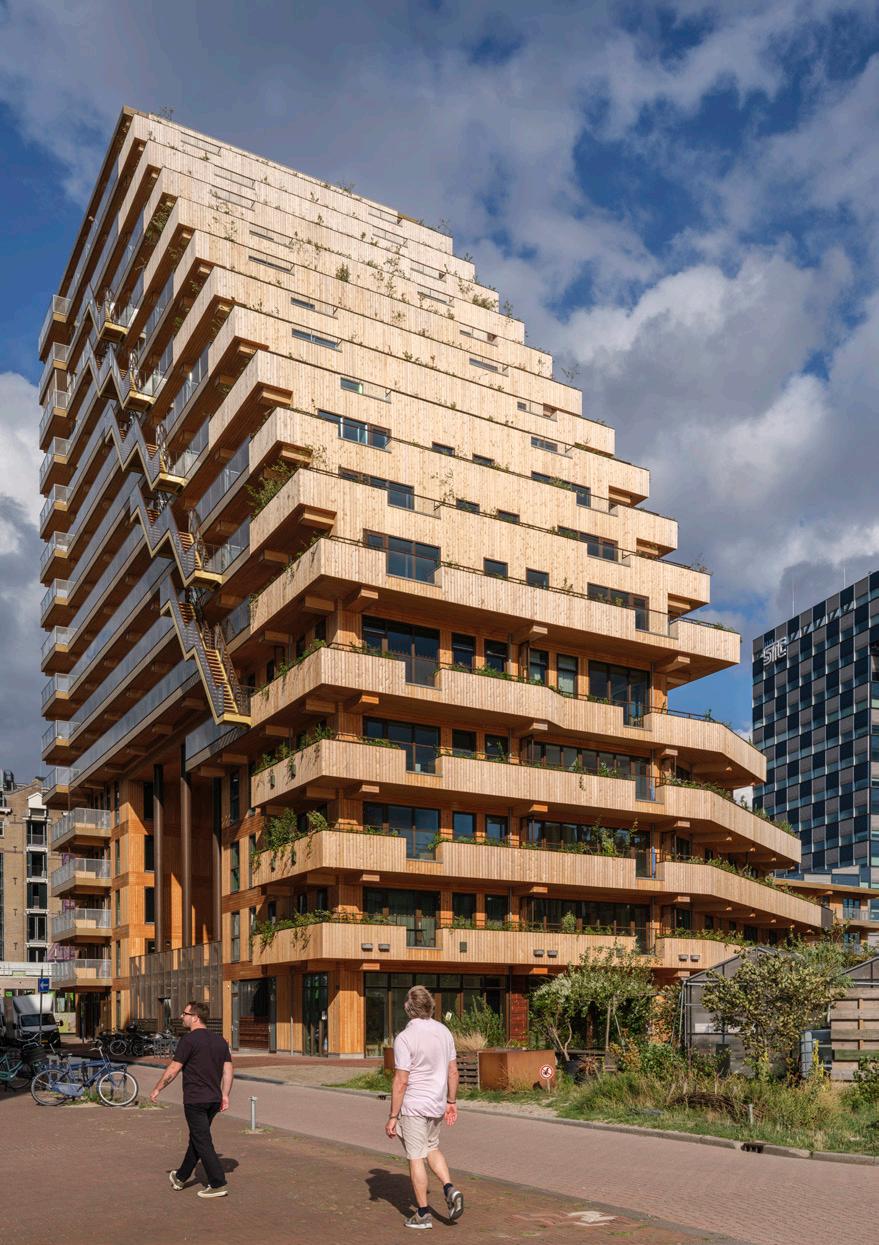
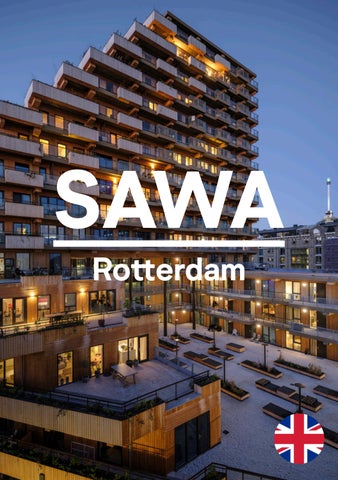
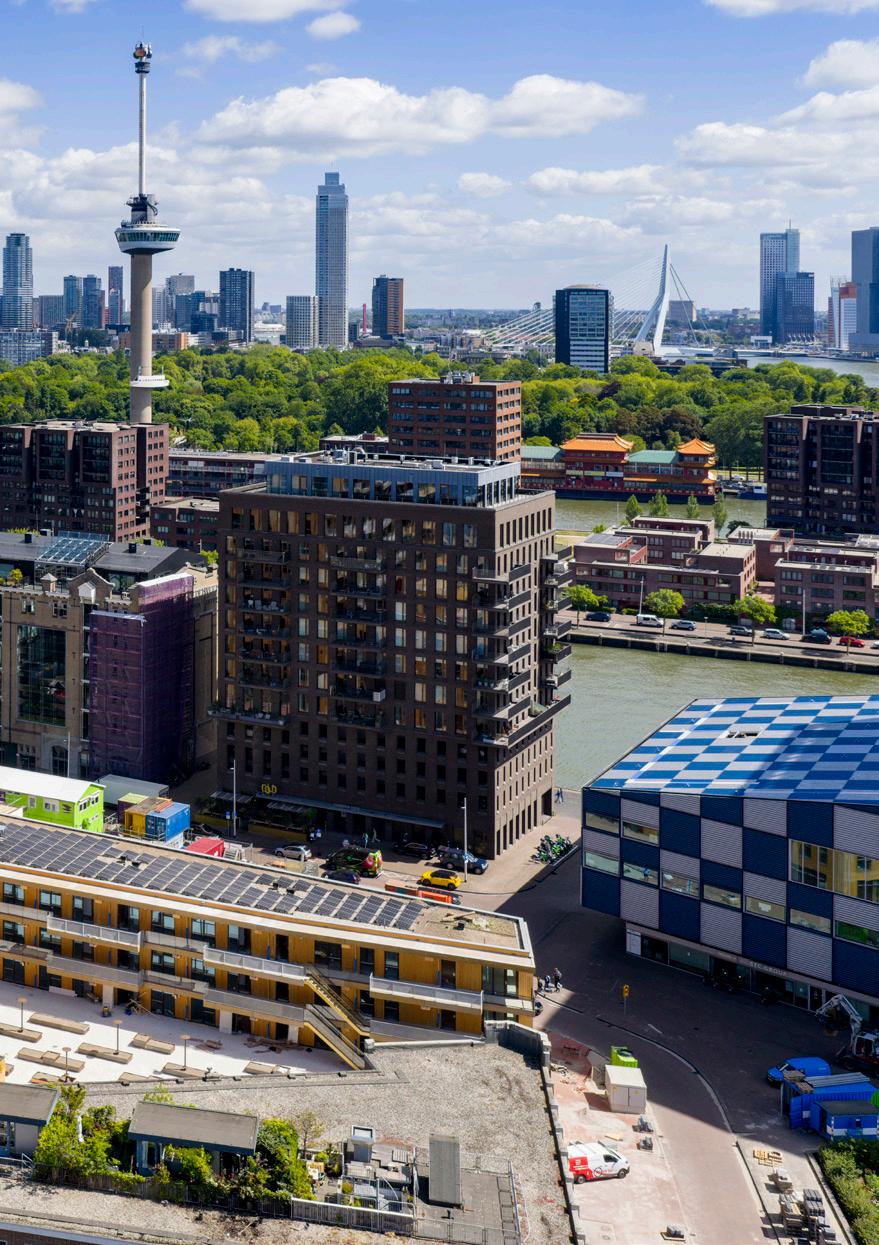
SAWA is an award-winning, circular timber residential building, 50 meters tall, located in the Lloydkwartier in Rotterdam. The project is regarded as a leading example of how large-scale urban housing can contribute to CO₂ reduction, biodiversity, social inclusivity, and housing quality.
SAWA was developed by NICE Developers, in collaboration with ERA Contour and the Municipality of Rotterdam, and designed by Mei architects and planners. Focus on Impact acted as investor for the rental apartments. From the very first sketch, a fundamentally different starting point was chosen compared to traditional high-density urban housing.
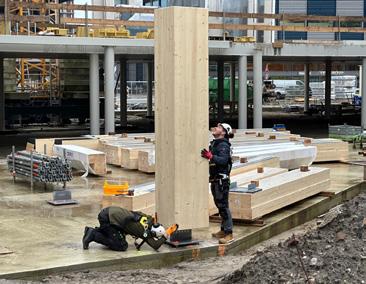
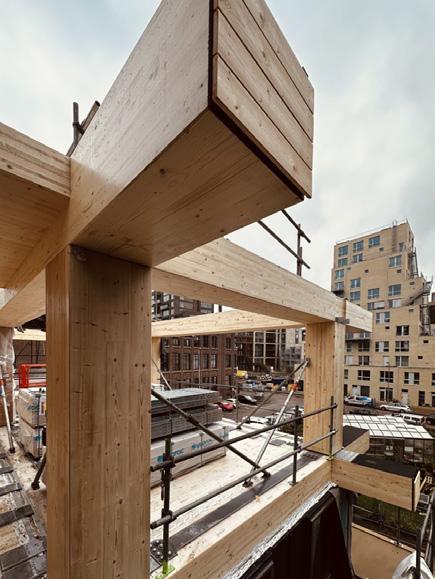
The project was not conceived as an optimization of traditional construction methods, but as a fundamental alternative to them. Timber forms the structural backbone of the building and thereby defines both its construction and its architecture. The main load-bearing structure is largely executed in Cross Laminated Timber (CLT) and laminated wood, while the use of concrete and steel has been minimized. At this height and scale, that is exceptional.
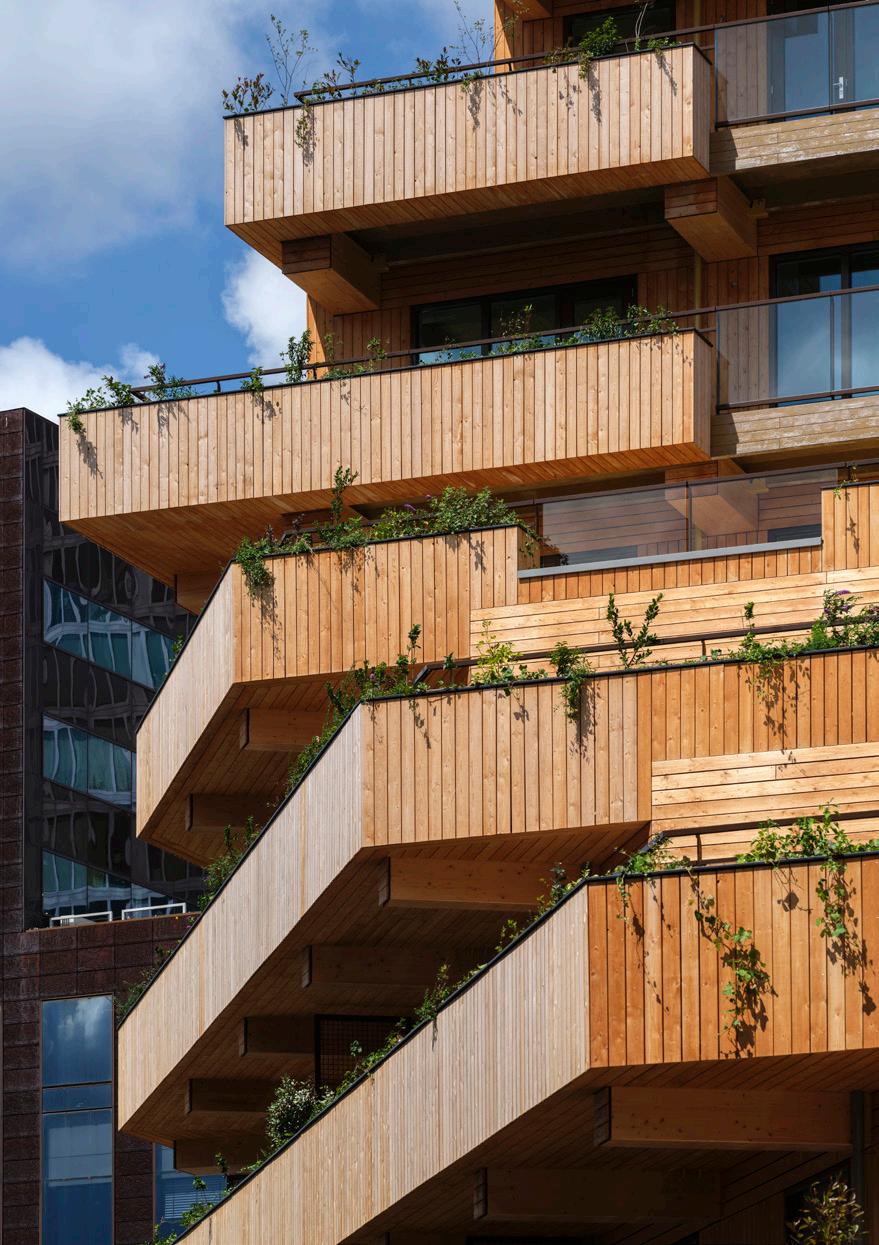
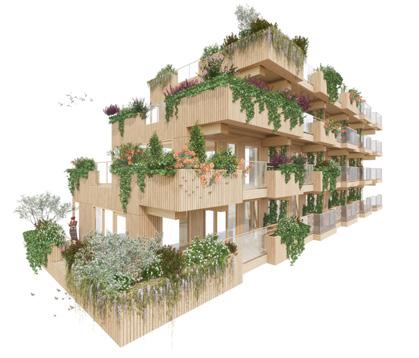
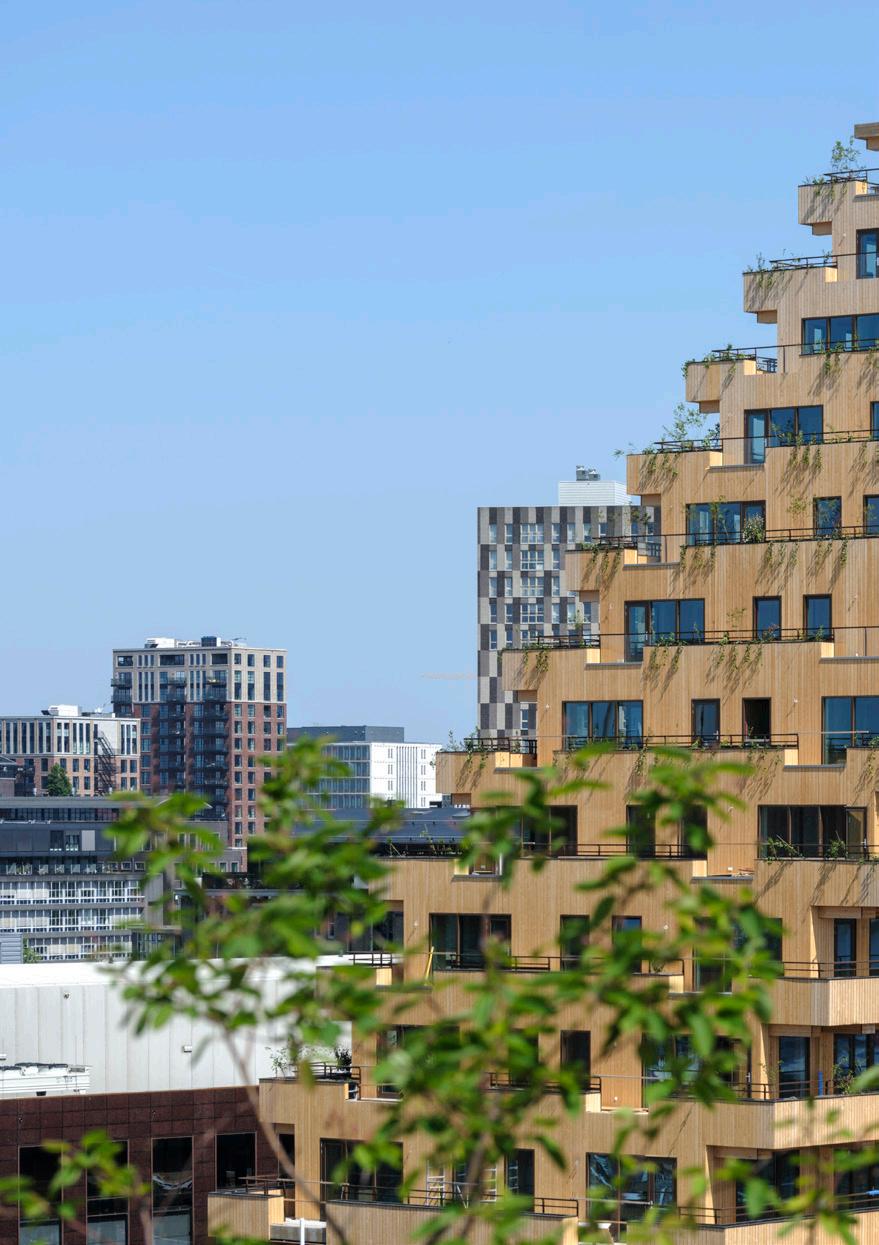
The stepped design with generous green terraces creates a strong relationship with the urban context while also referencing the history of the Lloydpier and eastern rice fields. The greenery is not added as a layer but forms an integral part of the building, contributing to biodiversity, quality of life, and the urban climate.
SAWA has been realized as tangible, built proof that circular timber construction, social mix, biodiversity, and high urban density can go hand in hand. The building demonstrates that stacking sustainable ambitions does not have to come at the expense of architectural quality or financial feasibility. In doing so, SAWA serves as an international model project for future-proof urban housing.
This brochure is a joint publication of Mei architects and planners and NICE Developers and provides insight into the context, the design, and the underlying principles of SAWA.

The Lloydkwartier has a rich maritime history dating back to the early twentieth century. The Lloydpier derives its name from the Rotterdamsche Lloyd, which built a terminal here for passenger ships traveling to Asia and Africa. For decades, the quay formed an important hub for international shipping and trade.
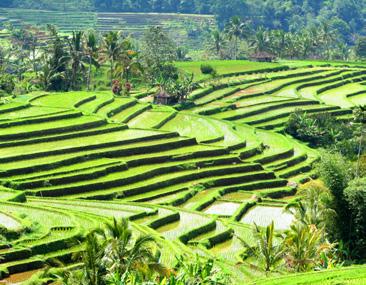
The name SAWA is derived from the building’s stepped form and refers to eastern rice fields, as a subtle nod to this history. In this way, the design connects past and future: the layered character of the site is translated into a contemporary architecture in which greenery, housing, and urban life come together.
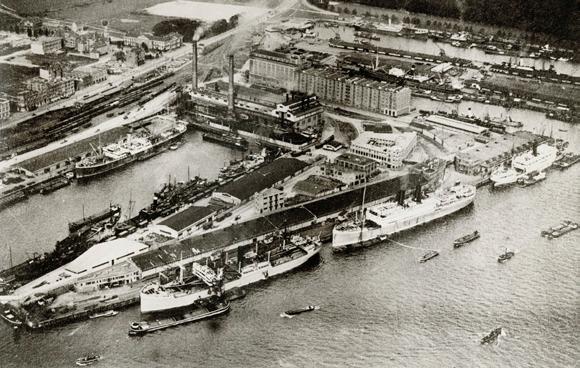
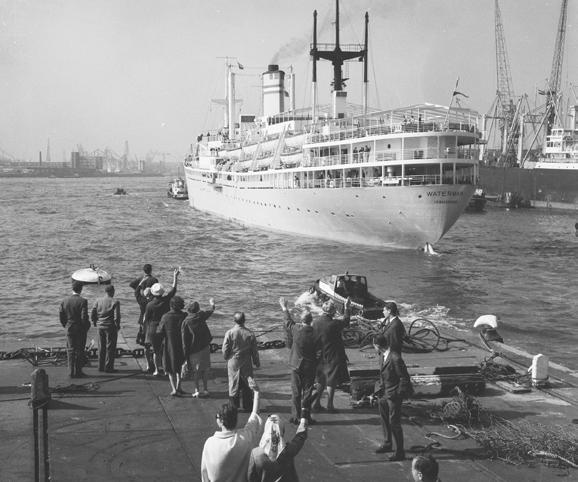
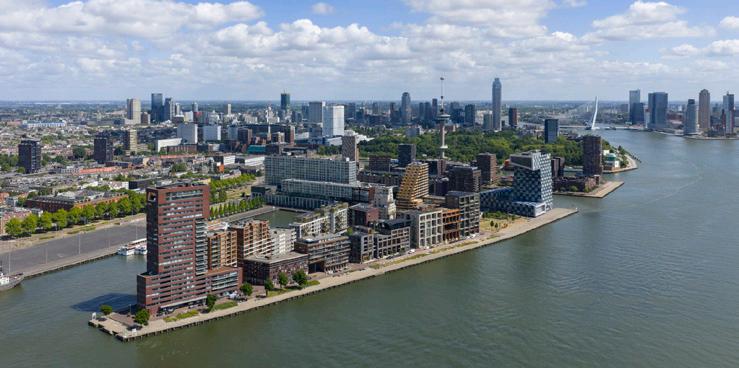
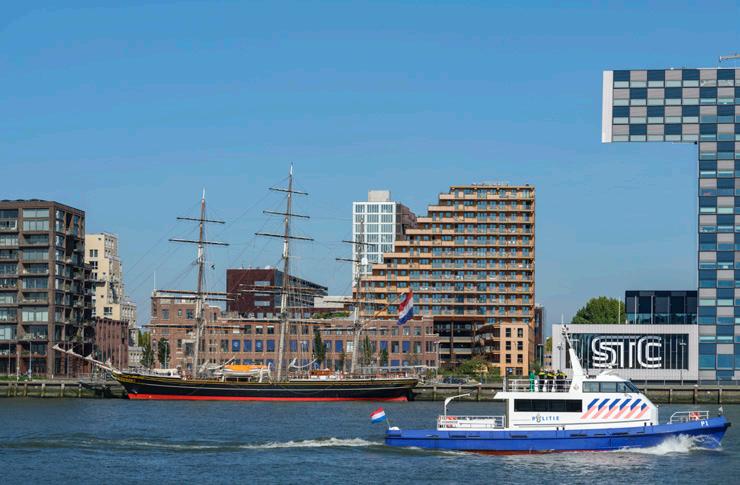
The Lloydpier has grown into one of the most water-rich and characterful areas of Rotterdam city center. The district is characterized by a diversity of architecture: transformed warehouses and harbor monuments are interspersed with distinctive new developments.
Thanks to its waterfront location, its proximity to the city center and Het Park, and a growing range of cultural and culinary amenities, the Lloydkwartier has developed in recent years from an industrial port area into a popular residential neighborhood. SAWA forms part of this transformation and contributes to the further densification and greening of the area.
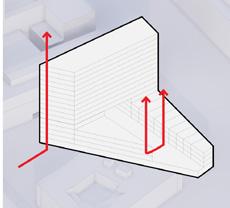
Zoning plan model + Maximum m²
- Solid high walls
- Does not take into account surroundings (places, sightlines and buildings)
- Difficult to subdivide wedge-shaped development
- Dark streets
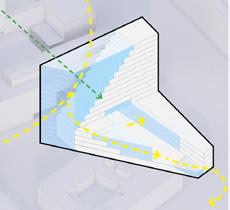
Regarding the relationship with the area
+ Takes into account sightlines from and toward surrounding buildings and public space
+ By cutting off the corner, a better square space is created
+ More openness in the streets
+ Accessible deck for collective use
+ More spacious underpass with wider sightlines
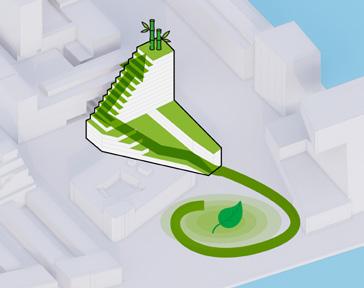
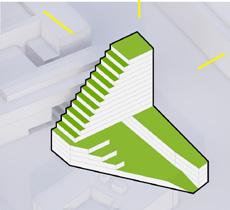
Proposed volume
+ A building volume that integrates with its surroundings, introduces a collective living deck at +1, and contributes to spatial quality, residential comfort, and urban cohesion.
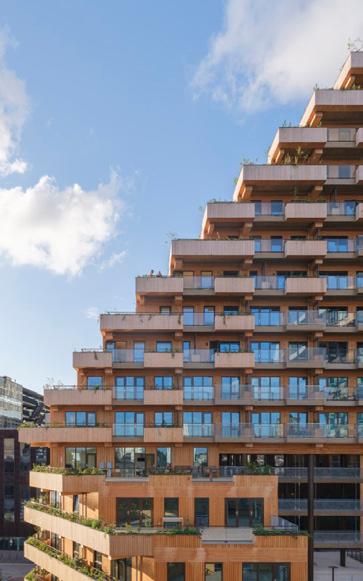
The stepped form of SAWA is not an autonomous architectural gesture, but the result of a coherent design strategy. In developing SAWA, a conscious decision was made not to use the maximum building volume permitted by the zoning plan, allowing the volume to respond to context, sunlight, sightlines, and use. These boundary conditions were translated into a building that is both urban and human-scaled.
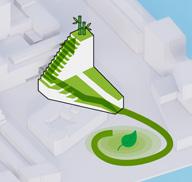
The name SAWA refers to eastern rice fields and to the layered composition of the building. The terraces act as carriers of greenery and places to stay, connecting ground level, the collective deck, and the residences into one continuous landscape system.
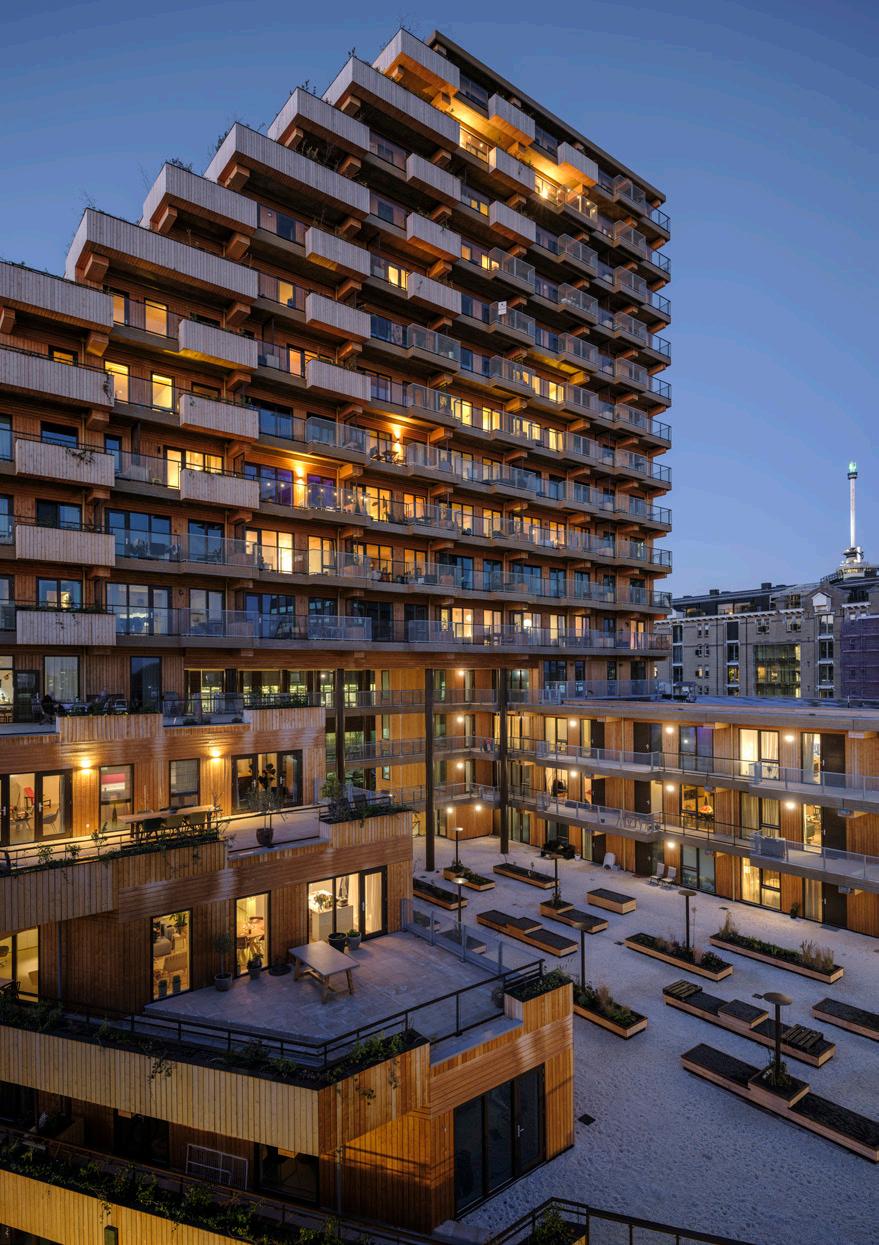
Greenery plays a connecting role: from the neighborhood garden at ground level, via the shared deck at +1, to the private terraces of the dwellings. This creates a continuous green structure that functions not only visually, but also ecologically and socially.
SAWA was designed and realized based on four interconnected core values, which have been integrally translated into architecture, structure, installations, and use.
• CO₂ Reduction
Largely realized in timber, with a substantial reduction in the environmental impact of construction.
• Circularity
Conceived as an open and demountable building, focused on adaptability and reuse.
• Biodiversity
Greenery structurally integrated as habitat for plants, birds, and insects.
• Inclusivity & Community
A socially mixed housing program with shared facilities that stimulate interaction.
“We do not only develop housing, but also take responsibility for the city as a whole. With SAWA, we have consciously focused on affordability, housing mobility, and social cohesion, so that the building is not only sustainable, but also valuable for the neighborhood.”
Mark Compeer, NICE Developers
→ Timber construction at high-density urban scale
→ Paris Proof design
→ Structural reduction of concrete and steel
SAWA was developed from the conviction that the construction sector must fundamentally contribute to reducing CO₂ emissions — not through marginal optimizations, but by changing the building system itself.
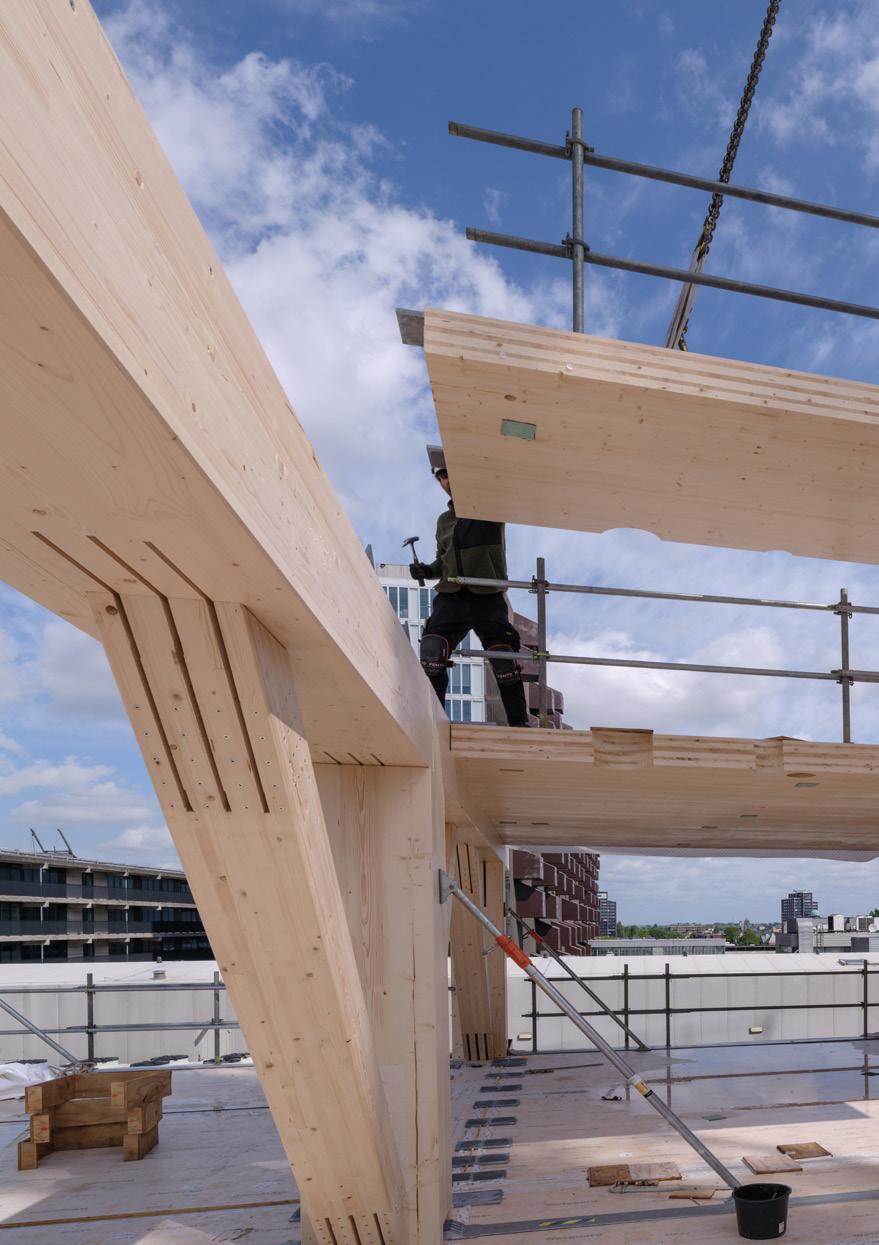
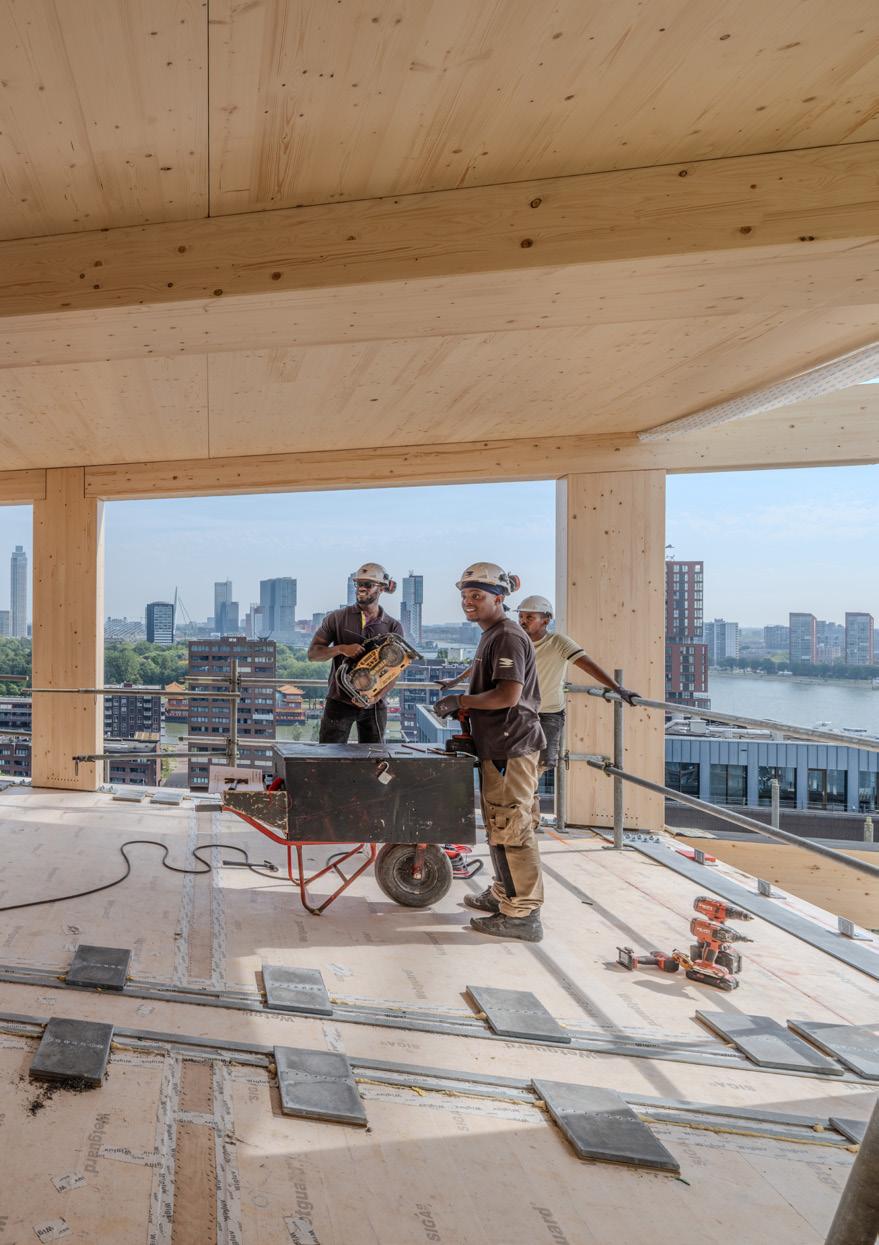
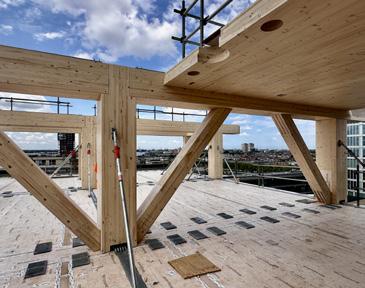
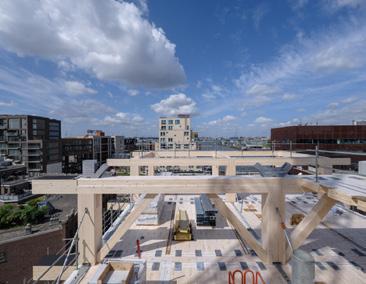
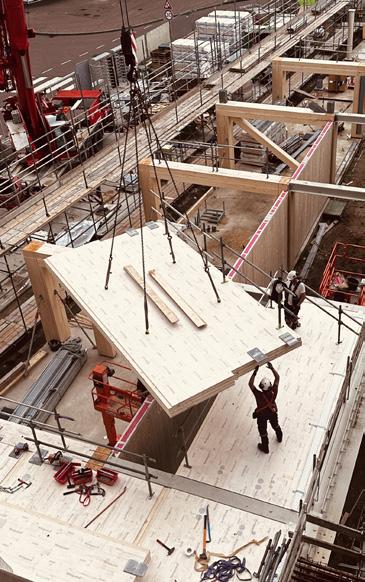
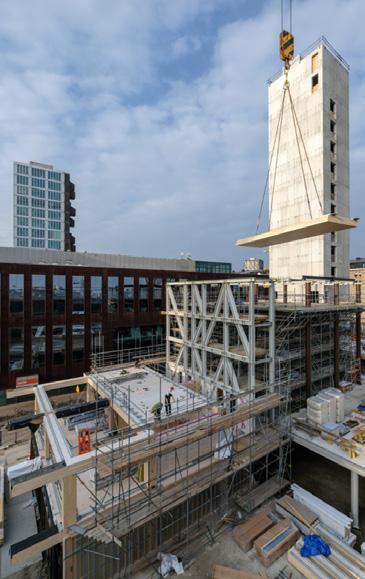
The main load-bearing structure of SAWA is largely executed in Cross Laminated Timber (CLT) and glued laminated timber (glulam). At a height of 50 meters and 15 floors, this application of timber is exceptional within Dutch residential construction. By applying timber as the primary structural material, a significant amount of CO₂ is stored long-term in the building. At the same time, the share of concrete and steel — traditionally the largest sources of emissions in high-rise construction — has been significantly reduced.
Applying timber at this scale required intensive collaboration with structural engineers, fire safety consultants, and international timber construction specialists. Innovations in fire safety, acoustics, vibration control, and detailing have been integrated into one coherent system. The strength of SAWA does not lie in a single technique, but in the combination of solutions that together enable a new standard.
Timber is also lighter than concrete, resulting in reduced foundation loads and more efficient material use. Prefabrication shortened construction time and reduced transport movements on site.
SAWA demonstrates that high-density urban housing with significantly lower environmental impact is achievable — without compromising safety, comfort, or architectural quality.
→ Open Building principle as structural foundation
→ Demountable timber structure with dry floor systems
→ Designed for adaptability and future reuse
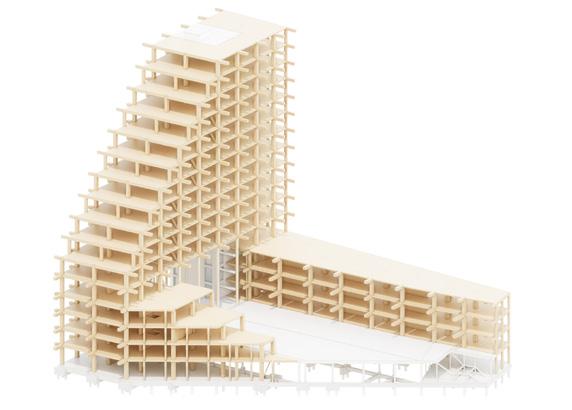
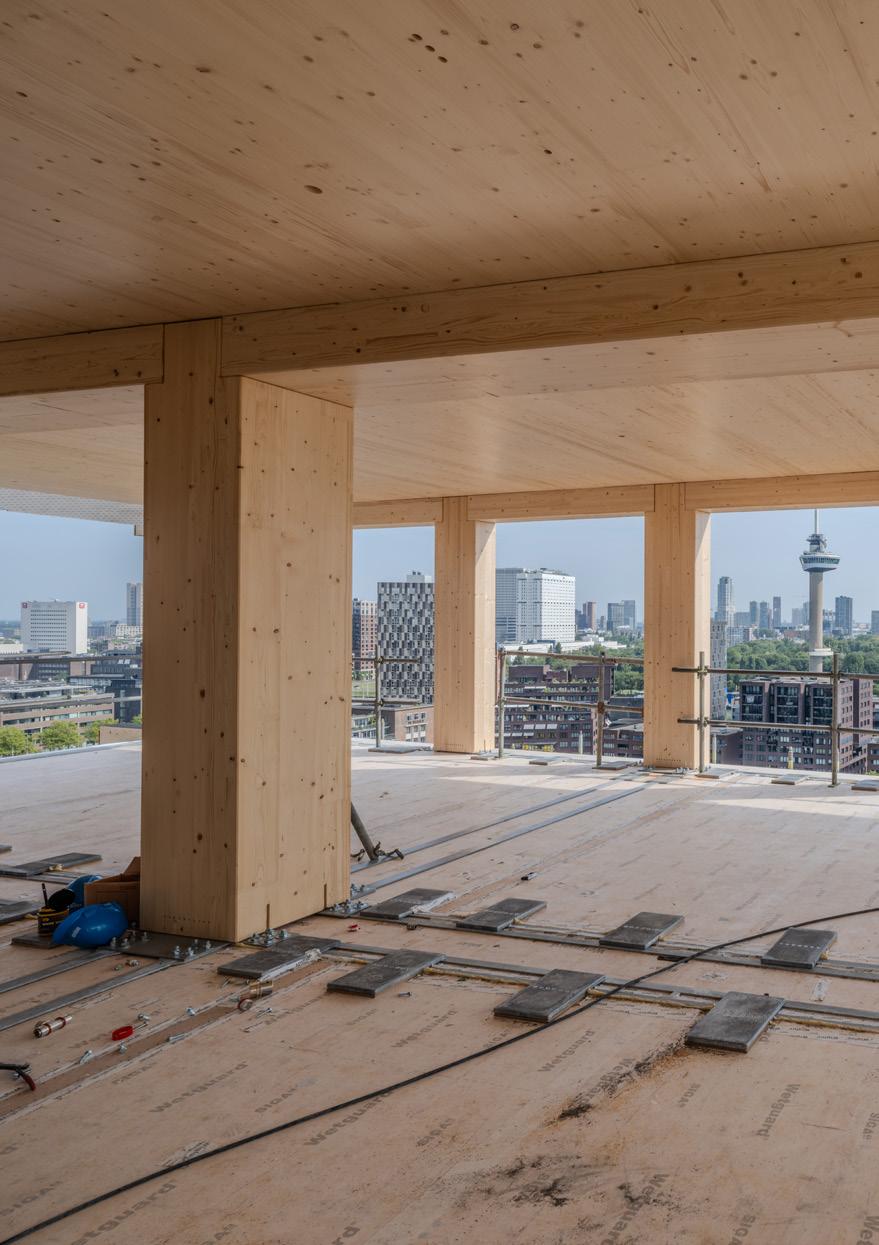
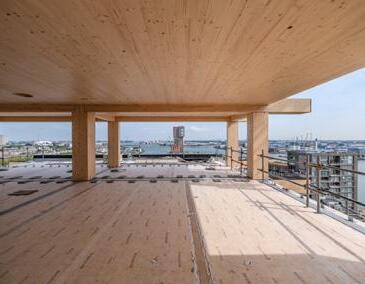
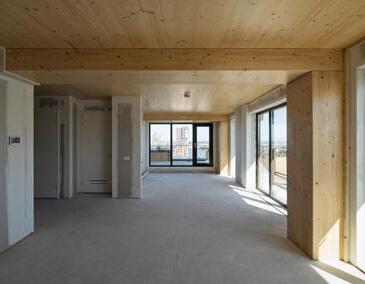
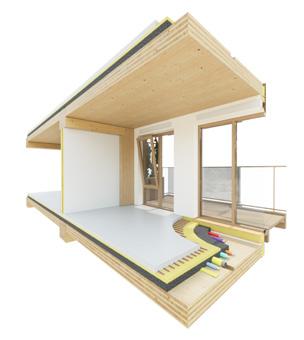
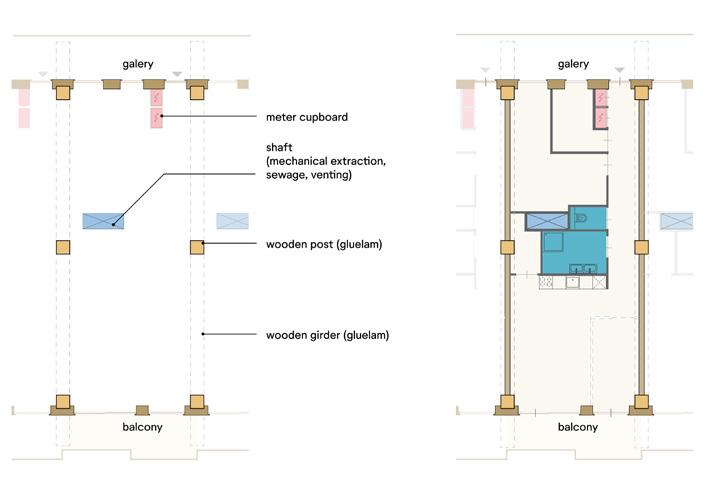
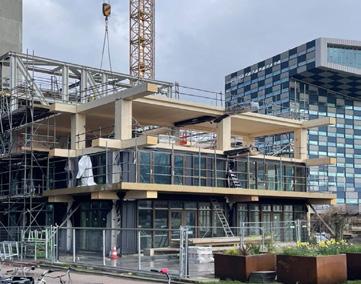
SAWA has been developed according to the Open Building principle. The main load-bearing structure consists of an open grid of columns and beams, without load-bearing internal walls. This allows the apartments to be flexibly arranged and enables future layout changes without major structural interventions.
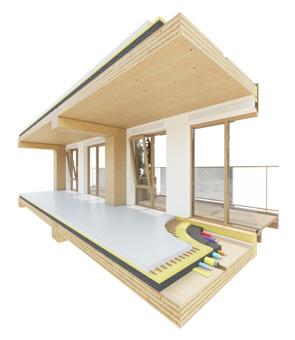
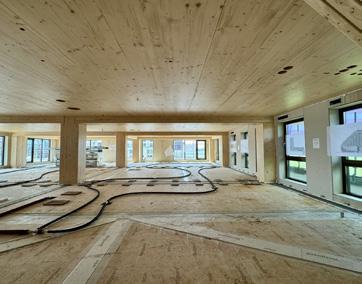
The floors are composed of CLT with a dry ballast layer on top instead of a traditional concrete compression layer. This makes the floor build-up demountable and increases the potential for material reuse. The structural elements are designed as separate components that can be disconnected and dismantled in the future.
By building with timber from sustainably managed production forests, not only have CO₂ emissions during construction been reduced, but a renewable raw material has also been chosen. For every tree felled, multiple trees have been replanted, embedding the material choice within a broader chain responsibility.
SAWA has also been designed with minimal building services installations. The ventilation system is CO₂-controlled and adjusted to actual use. The combination of district heating and PV panels on the roof and off-site contributes to energy-efficient operation.
Circularity in SAWA is not a sum of measures, but structurally integrated into design and construction. The open load-bearing structure, demountable floor system, and material choices are aimed at long technical lifespan, functional flexibility, and future redeployment of building components.
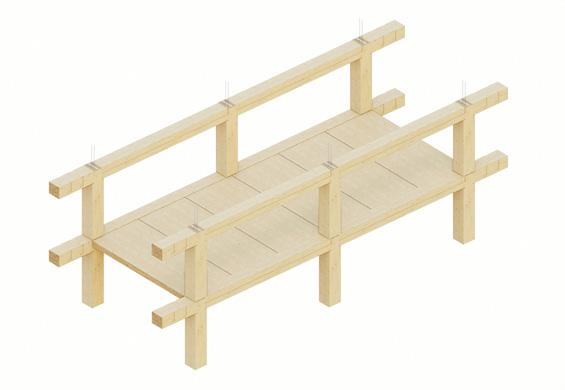
CLT floor: 6 x 2,5 meter
Stacked columns (steel connection)
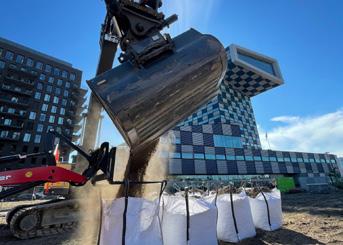
At the start of groundworks in August 2022, the topsoil layer was carefully removed and stored. Instead of transporting this soil away, multiple big bags were filled with the existing earth, rich in seeds and roots of local plant species.
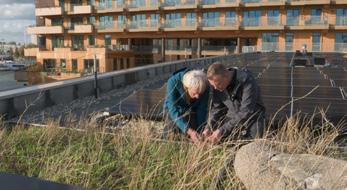
After completion, this soil was returned to the roof of SAWA. The so-called “brown roof” provides space for the spontaneous establishment of native vegetation and reinforces the ecological continuity of the site.
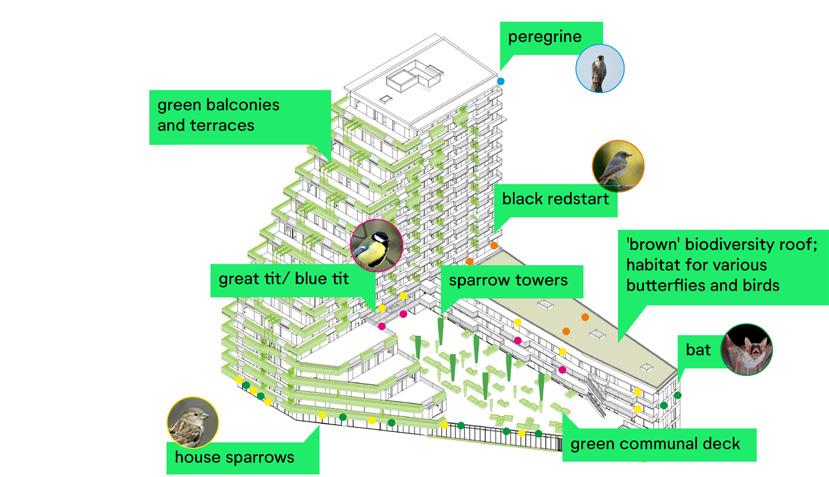
With this intervention, SAWA contributes to the preservation of species characteristic of the Lloydkwartier, including the Black Redstart — a regular presence in the area.
→ 600 meters of integrated planters
→ 140 nesting facilities for birds, bats, and insects
→ Native planting as an integral part of the building
The densification of Dutch cities is accompanied by a loss of habitat for plants and animals. Urban hardening, heat stress, and water overload put pressure on both the urban ecosystem and quality of life. SAWA has been designed as part of the Lloydkwartier’s urban ecosystem — a building that does not intensify this development, but rather counteracts it.
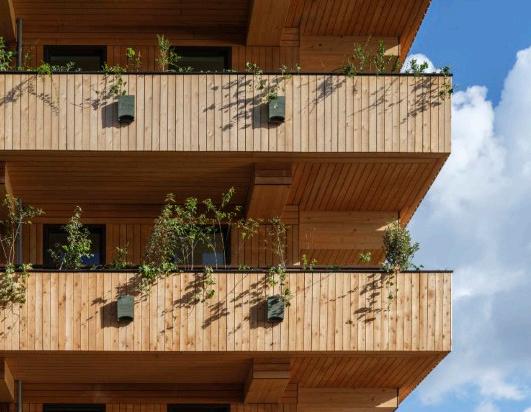
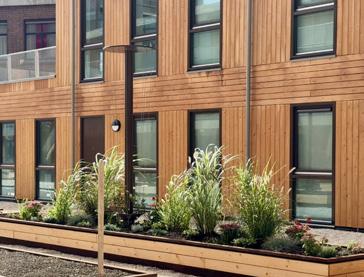
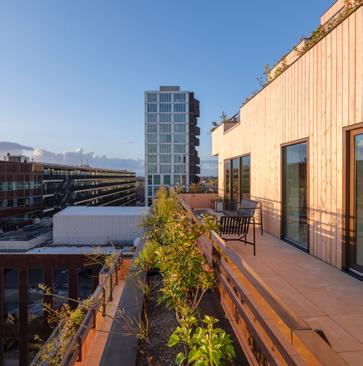
Instead of adding greenery as a finishing layer, biodiversity has been integrally incorporated into architecture and detailing. Spread across terraces, balconies, and the collective deck, approximately 600 linear meters of permanent planters are integrated into the building. The planting has been carefully selected based on sun orientation, height, and ecological value. Native species provide year-round food supply and support birds, bees, butterflies, and other insects. A total of 140 nesting facilities have been incorporated in and on the façades for species including swifts, bats, and various bird species. The so-called “brown roof” strengthens the ecological continuity of the site and increases the likelihood of spontaneous establishment of native vegetation.
Through these measures, SAWA connects to existing green structures in the district and contributes to cooling, water buffering, and a healthier living climate — for both humans and animals.
“With SAWA, we demonstrate that circular timber construction, urban density, and architectural quality do not exclude one another, but can in fact reinforce each other. The building is the result of an integrated design approach in which sustainability is not an addition, but the starting point.”
→ 109 dwellings across different segments
→ 50 mid-market rental homes as a substantial share
→ Mix of owner-occupied and rental housing within one building
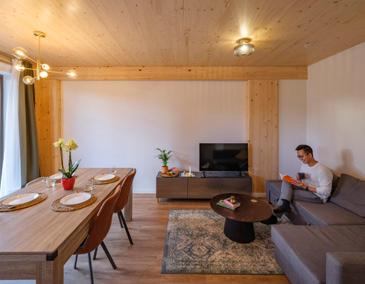
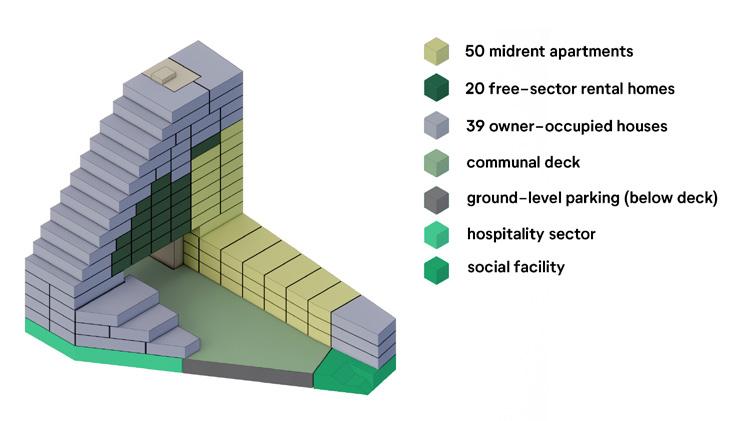
SAWA comprises 109 apartments, ranging from approximately 50 to 170 m². The residential program includes owner-occupied homes, private-sector rentals, and 50 mid-market rental apartments. Mid-market housing therefore represents a substantial part of the total program.
This mix was an explicit starting point from the outset. In an inner-city context where affordability is under pressure, a conscious choice was made for a balanced distribution of housing types and price categories. As a result, SAWA accommodates different income groups within a single building.
NICE Developers, together with investor Focus on Impact, organized the allocation of the rental apartments themselves. Priority was deliberately given to people with socially essential professions and to those moving on from social housing. Of the 50 mid-market rental homes, 43 were allocated to households working in sectors such as healthcare, education, and public safety and/or leaving behind a social rental dwelling.
In this way, SAWA contributes not only to social mix within the building, but also to mobility within Rotterdam’s housing market. Social inclusivity is therefore embedded not only spatially and programmatically, but also concretely reflected in the way the building has been occupied.
SAWA demonstrates that high urban density, architectural quality, and a substantial share of midmarket housing can be realized together within a viable business case.
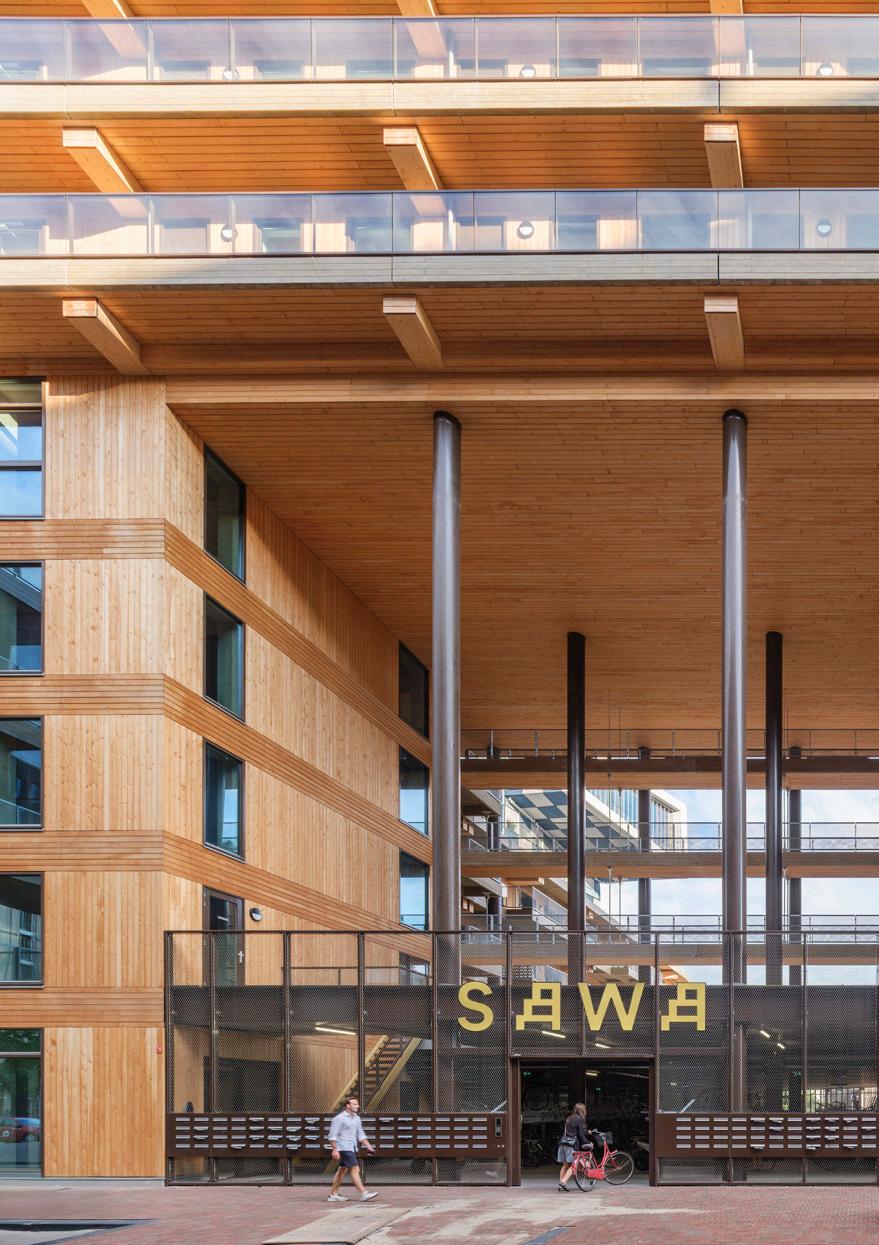
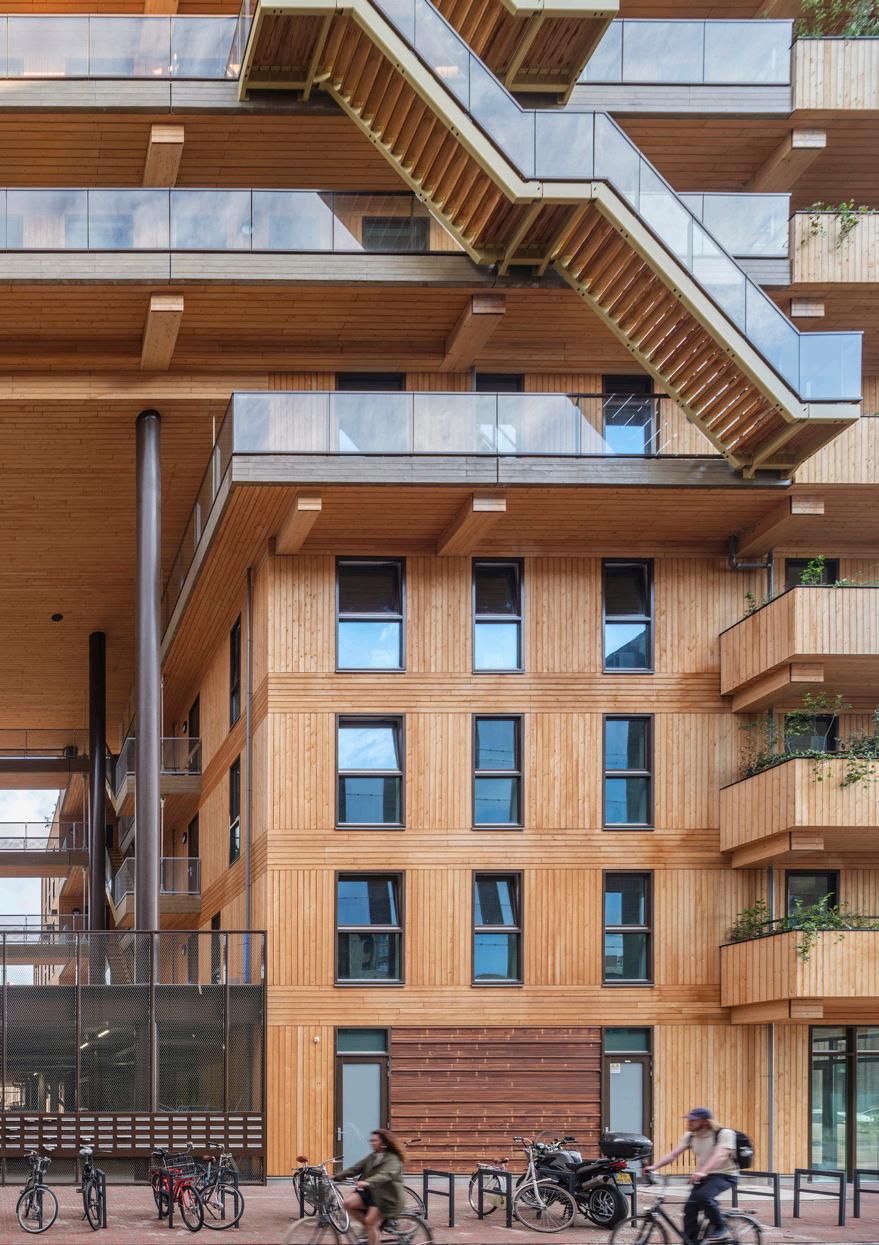
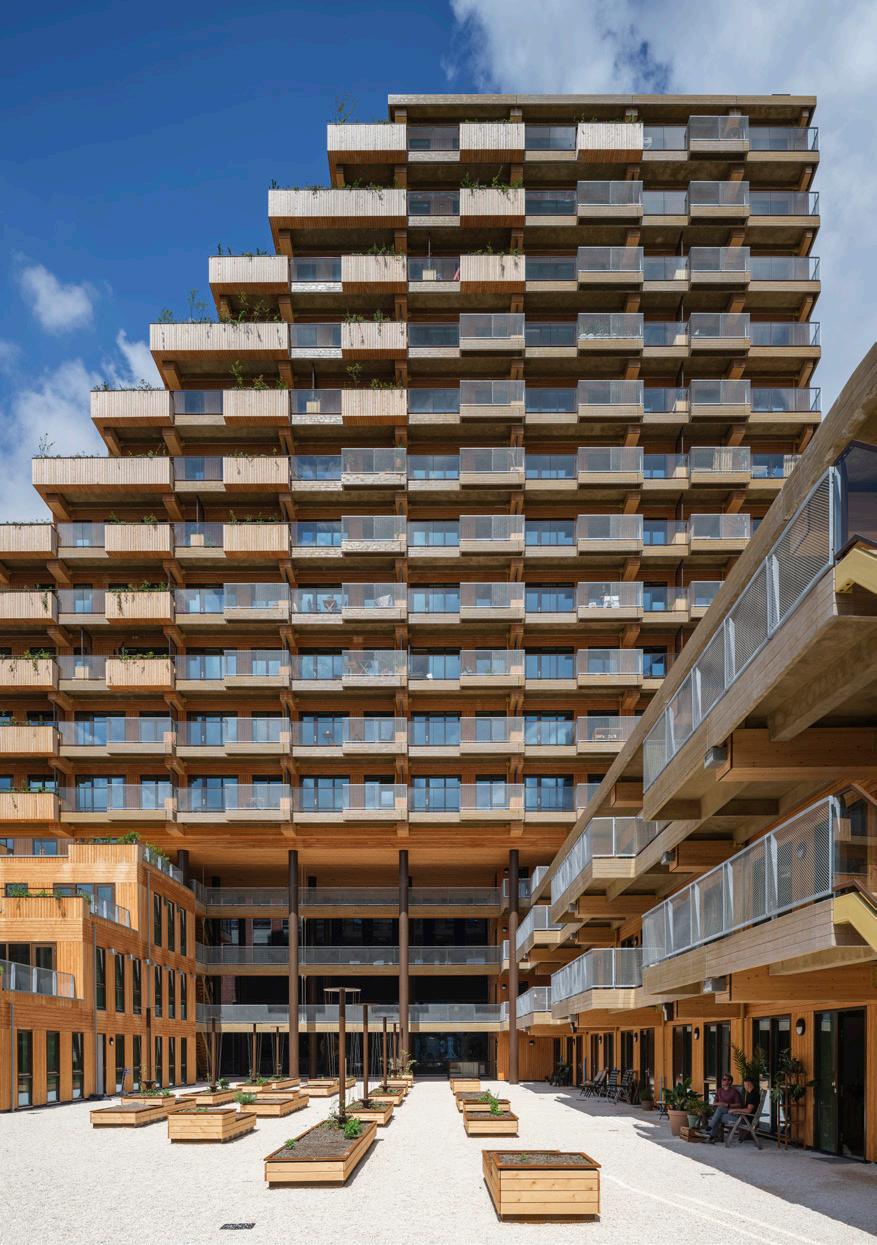
→ Shared facilities as part of the residential concept
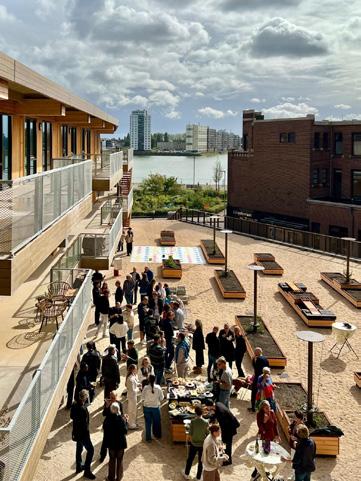
→ Collective deck as a green meeting space
→ Connection between building and neighborhood
SAWA has been developed in the heart of the Lloydkwartier as part of the district, rather than as an autonomous residential block. The plinth contains amenities that contribute to the vibrancy of the neighborhood, while the collective deck on the first floor forms a green communal space for residents.
The apartments are accessed via galleries. This typology was deliberately chosen to encourage informal encounters and strengthen social cohesion. The gallery thus functions not only as circulation space, but as a transitional zone between private and collective realms.
In addition to the individual homes, several shared functions have been included, such as a communal vegetable garden, shared mobility, and shared workspace and tool facilities. These amenities enhance the sense of connection among residents, help counteract loneliness, and at the same time reduce individual space and material consumption.
By linking spatial organization, programming, and use, the social dimension is given a clear physical expression within the building.
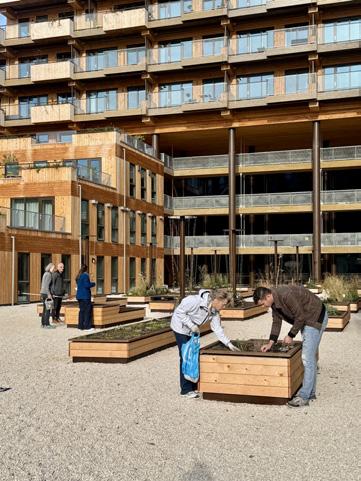
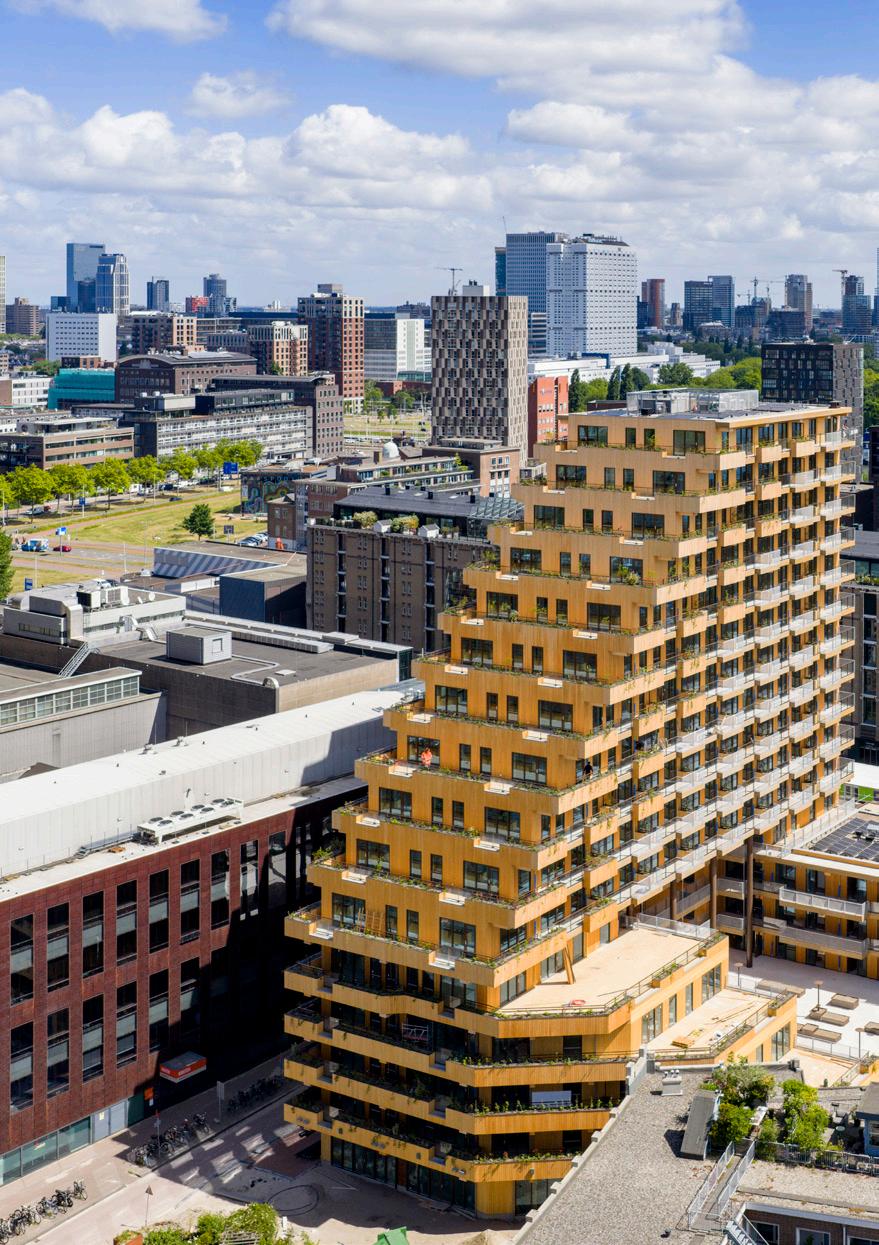
SAWA is more than the sum of its ambitions. The building presents itself as a distinctive and recognizable volume on the Lloydpier, adding a new layer to Rotterdam’s skyline.
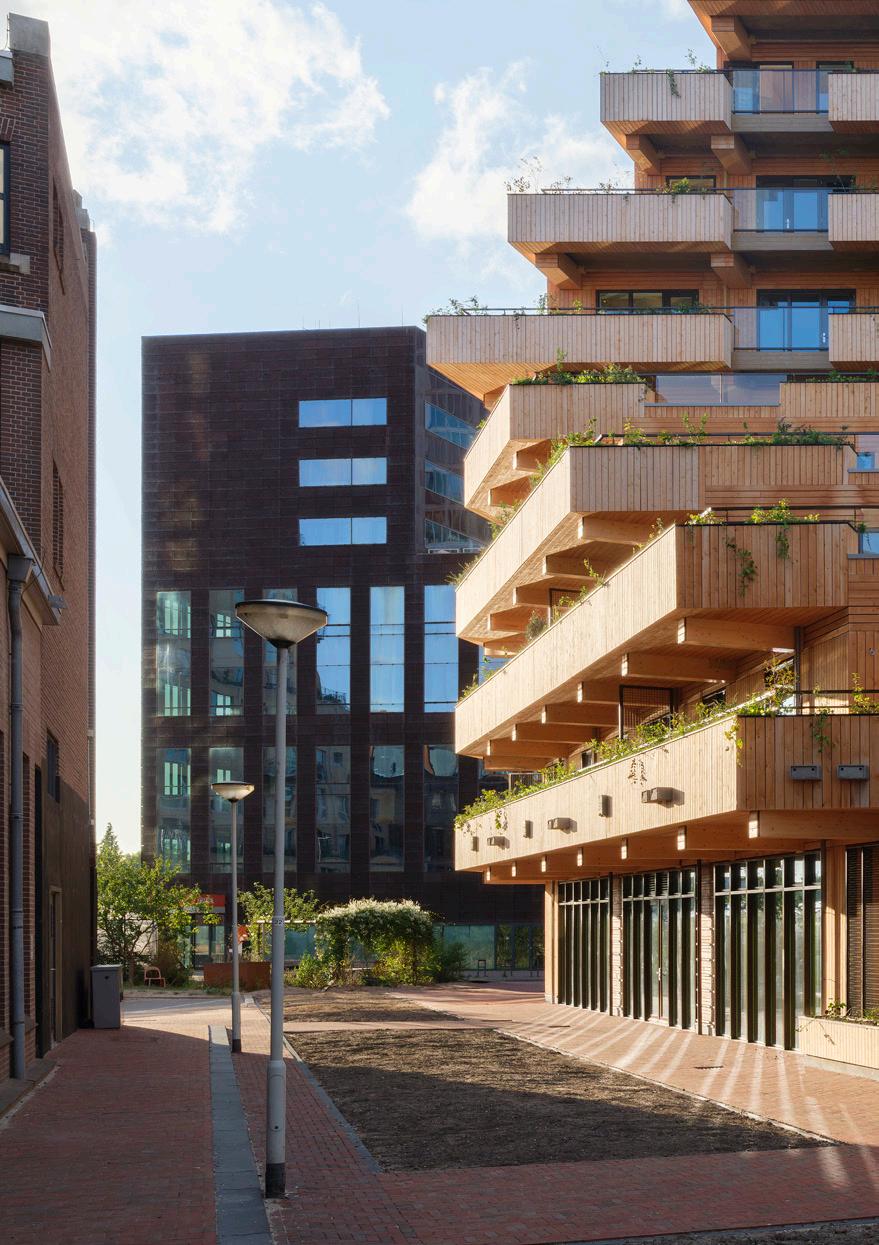
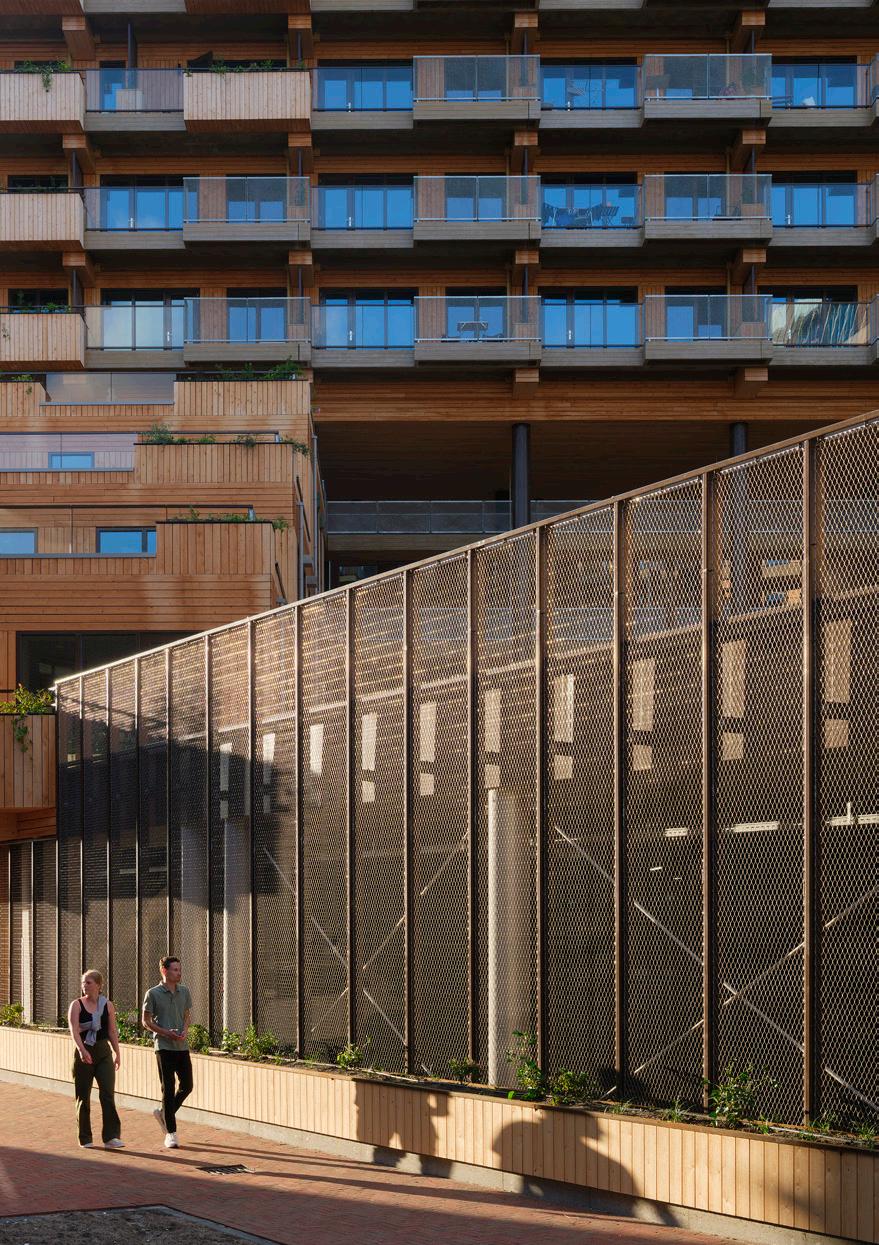
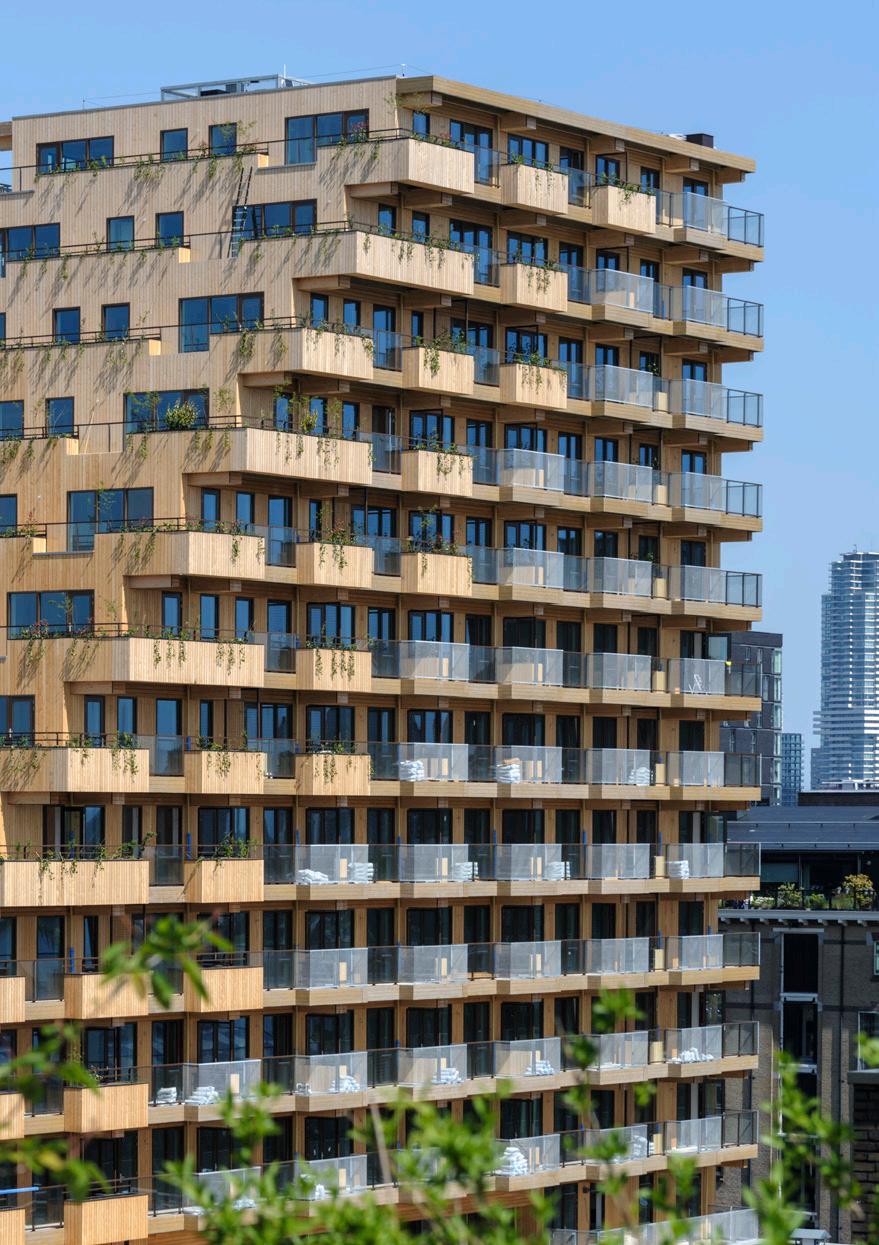
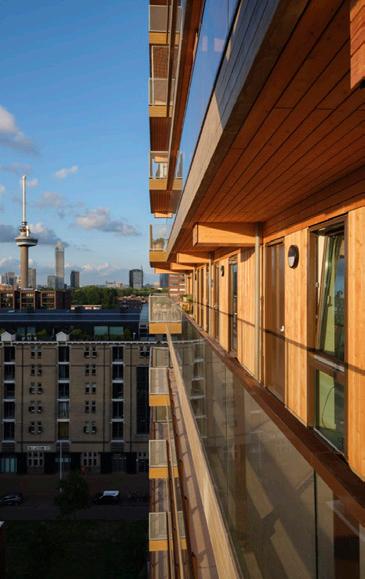
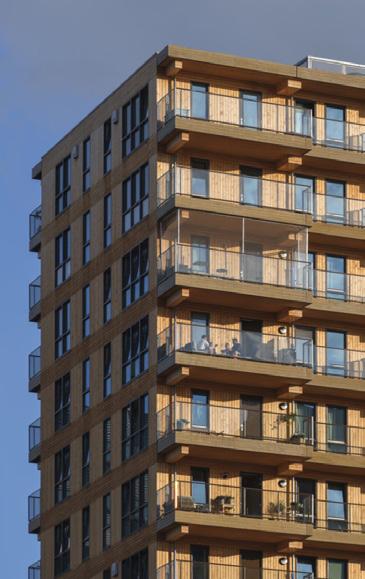
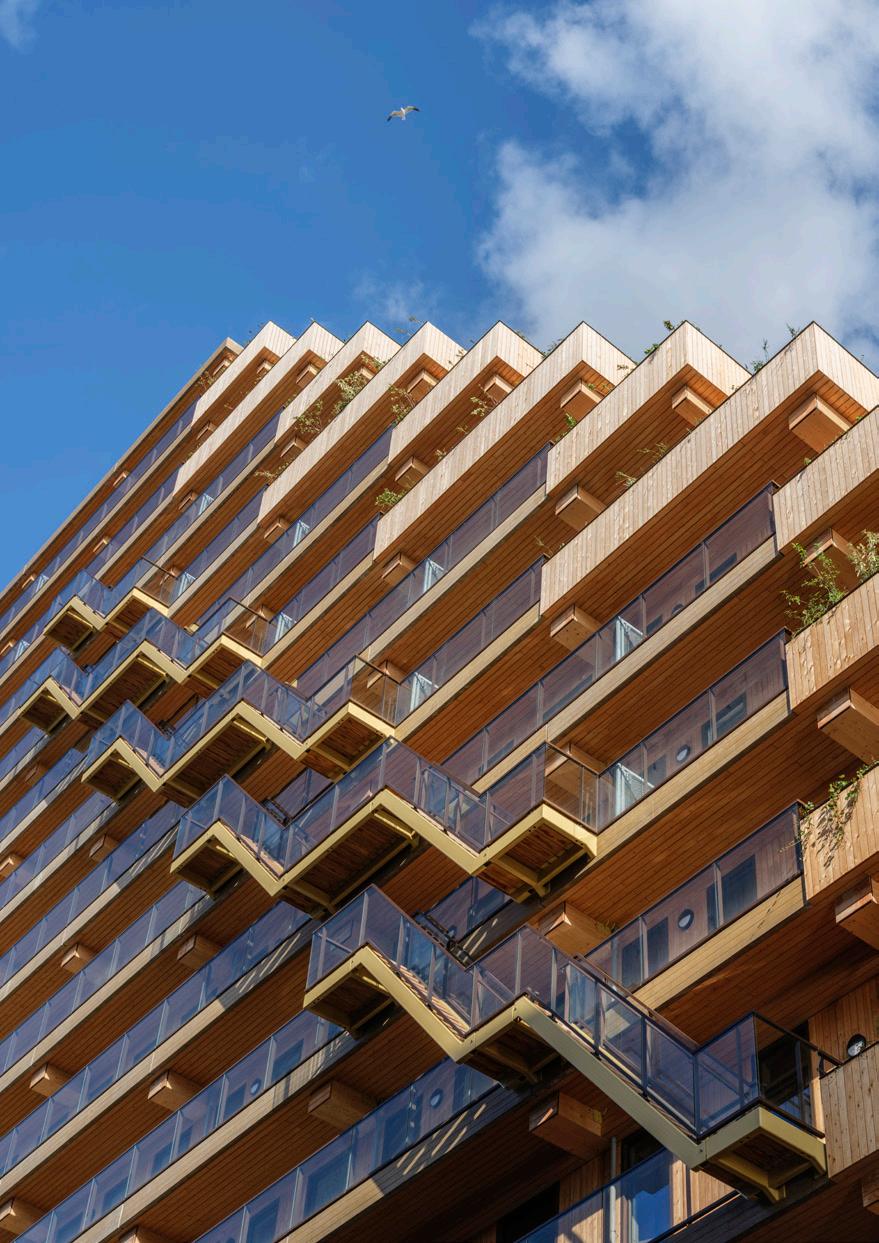
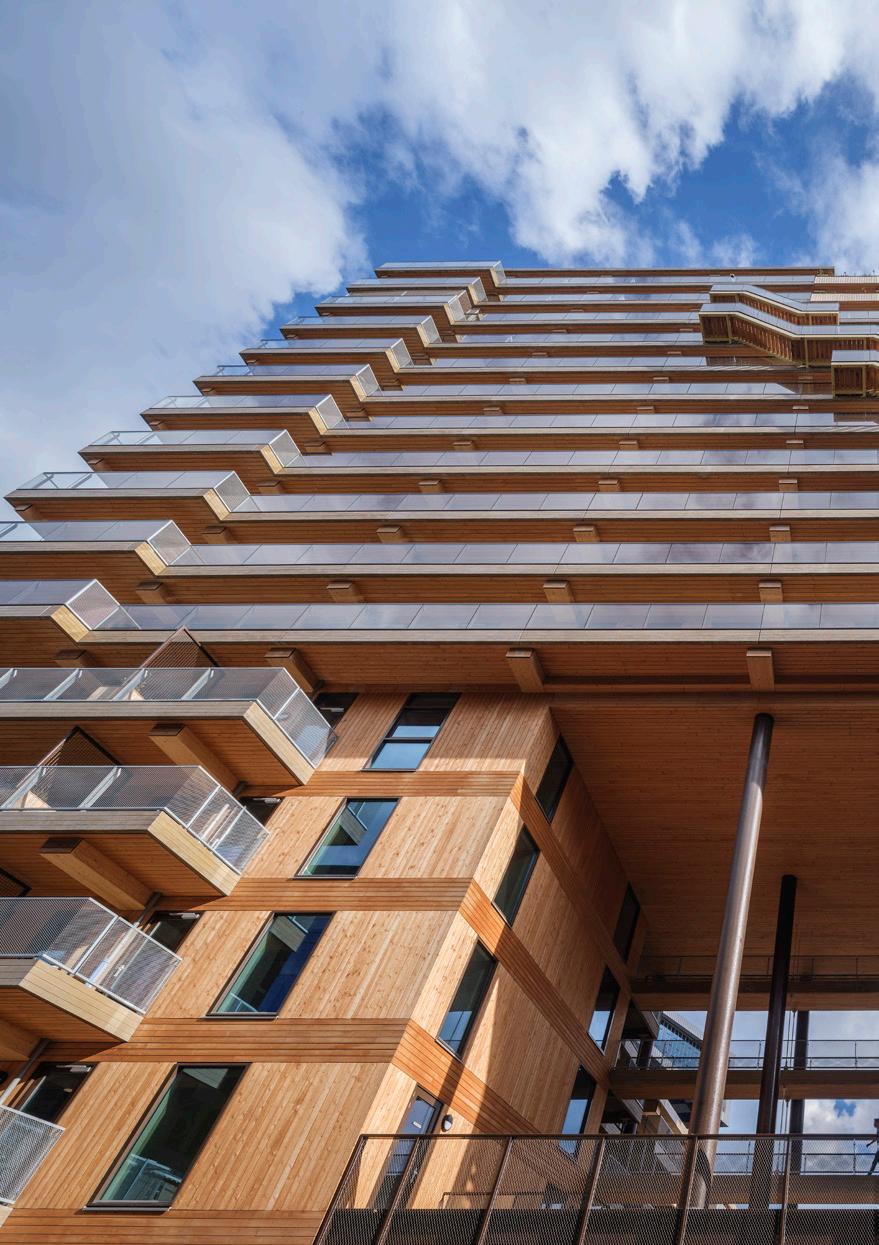
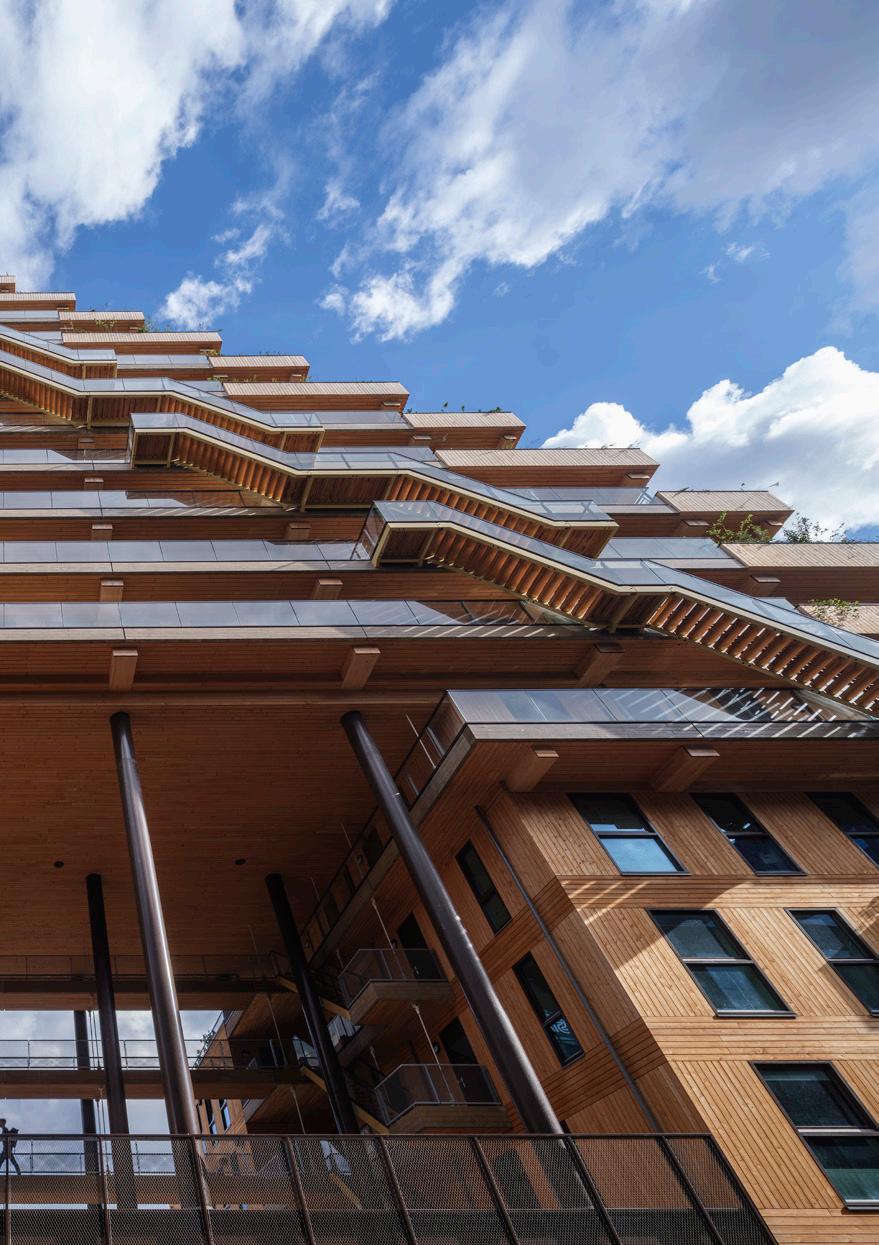
The stepped composition and the rhythm of the timber load-bearing structure give the building a strong architectural identity. The terraces, integrated planters, and visible timber construction create a layered and tactile appearance that differs from conventional high-density urban housing.
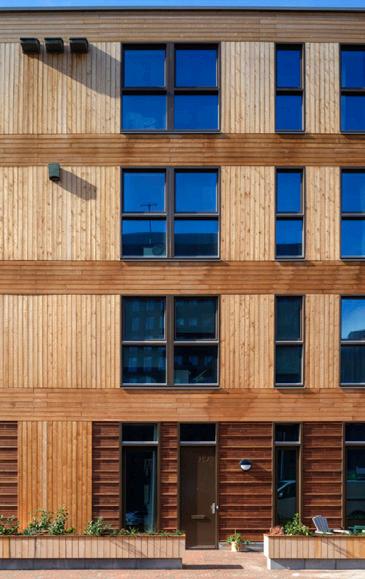
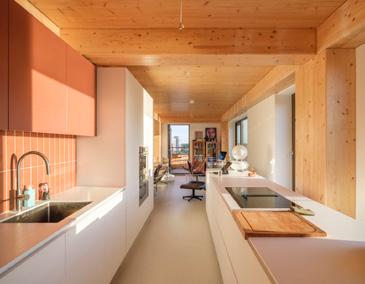
While many sustainable buildings conceal their technology, SAWA makes its structural logic legible. The wooden columns and beams define the character of the building and give it a warm, natural expression. During the day, the timber reflects the light; in the evening, a soft glow emerges from the façade.
SAWA has since gained international recognition as an example of circular timber high-rise construction. The project demonstrates that a high degree of sustainability can go hand in hand with architectural quality, urban presence, and economic feasibility.
With its distinctive appearance, scale, and materiality, SAWA has grown into a new icon for the Lloydkwartier — and a source of inspiration for timber construction projects in the Netherlands and beyond.
3,000 plants
total of 2.050 tons CO2 stored in wood (LBC)
600m1 planters
nature inclusive
20+ different species
6,000 replanted trees
energy zero circular
Standard
60% recycled material
140 nesting boxes for birds, bats, insects
healthy living
open building
800m2 common deck with vegetable garden
averge of 40m2 outdoor space per house
50%
mid market rent for an inclusive community
shared ownership
NICE initiates the development of Europe’s first circular wooden residential tower on the Lloydpier in Rotterdam.
11.2019 Launch SAWA concept
SAWA’s environmental permit is granted with 0 objections to the design! Unique for such a complex development in a dense urban area.
06.2022
Building permit granted
11.2021
Start of apartment sales
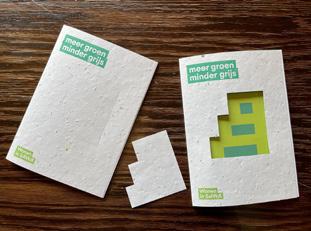
The 39 owner-occupied apartments in SAWA go on sale during a successful and festive information afternoon at NICE Place.
The test setup allows measurements to be carried out to optimise SAWA’s technical design.
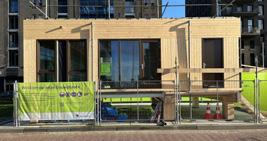
10.2022
Realisation of the SAWA mock-up
innovation trajectory
08.2022
Start of groundworks
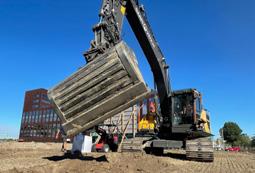
At the start of the groundworks, the top layer of soil is excavated and stored to be returned after completion to the brown biodiversity roof.
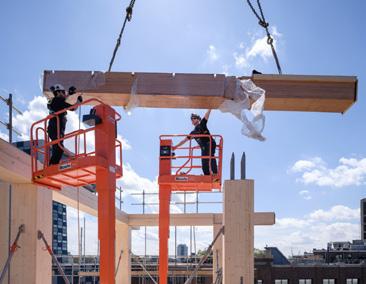
Alderman Chantal Zeegers for Climate, Construction and Housing gives the official signal for the start of the timber construction at SAWA by hoisting the first wooden beam onto the columns.
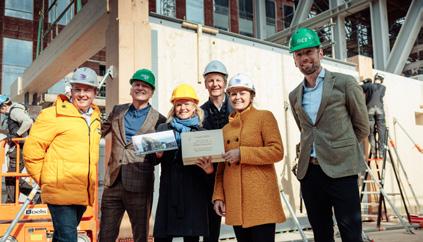
03.2024
Festive start of timber construction
tracing SAWA materials
11.2022
Official start of construction
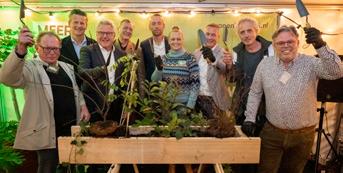
NICE and ERA, together with Mei architects and planners, Focus on Impact, the Municipality of Rotterdam, and a future resident, fill a SAWA planter box.
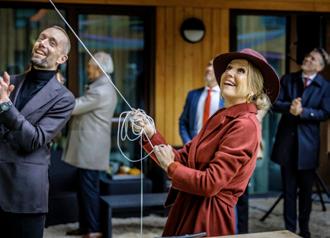
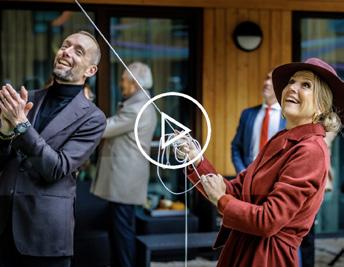
Her Majesty Queen Máxima officially opens SAWA together with the residents.
11.2025
Royal opening of SAWA
07.2025
Completion of SAWA
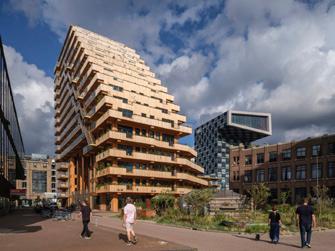
The construction of SAWA is completed! Residents move into SAWA.
On November 18th 2025, SAWA was officially opened by Her Majesty Queen Máxima. It was a special moment for the residents, the neighborhood, and all partners who, over the past years, worked with vision, courage, and collaboration on this circular timber residential building on the Lloydpier in Rotterdam.
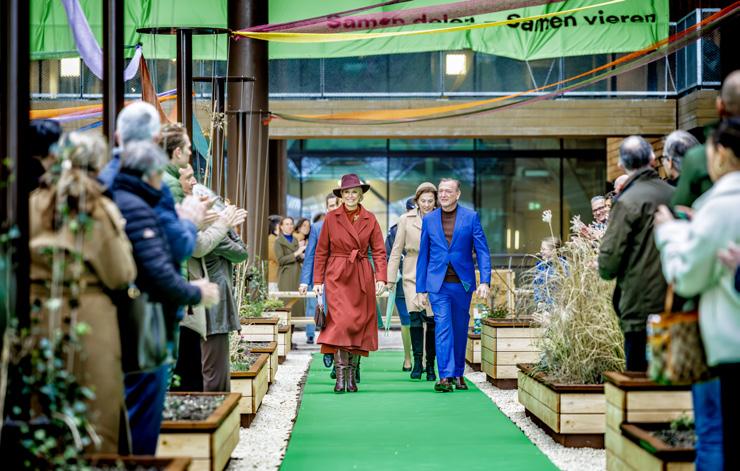
The opening marked more than the completion of a building. It celebrated a new way of building: in timber and biobased materials, socially inclusive and natureinclusive. SAWA is a building that not only provides homes, but also contributes to community, biodiversity, and a healthy city.
During the opening, the residents were central. Through personal stories, images, and encounters, it became visible what SAWA truly stands for: living together, sharing together, and collectively caring for the place where you live.
A special moment in the program was the spoken word performance by Amara van der Elst, who, with her ode to SAWA, powerfully and movingly expressed the central theme of TOGETHER — about living together, building together, and taking responsibility together for the city.
Watch the aftermovie:

Since the start of the project, SAWA has been published more than 300 times in local, national, and international media — including in the Netherlands, the United States, Italy, Spain, Poland, Austria, Germany, Switzerland, the United Kingdom, and France.
Financial Times
“SAWA is paving the way to a climate-conscious future. The challenge for SAWA is to set an example that is impossible for mainstream developers and investors to resist.”
Domus
“Focused on circular timber construction, biodiversity and health, SAWA, designed by Mei Architects and Planners in Rotterdam, aims to prove that humans can build and live in a sustainable way.”
Het Financieele Dagblad (FD)
“This residential tower in Rotterdam truly ticks all the boxes: it is sustainable, timber-built, circular, demountable, inclusive, affordable, social and healthy, designed according to the principles of biophilia, which advocate for bringing more nature into the built environment.”
Triodos
“Residential tower SAWA pushes the boundaries of timber construction.”
De Architect, ARC20 Award Jury
“SAWA is relevant and promising because of the scale of its timber construction. It will become the most innovative and tallest timber building in the Netherlands. This is a new concept — intelligent and aesthetic, energy-saving and potentially the tipping point in the timber construction revolution.”
Archivibe
“Mei commits to contributing to a healthy living environment, and working with timber increases the possibilities for nature-inclusive solutions.”
AD newspaper
“The Rotterdam-based firm is realizing SAWA, a first fully timber residential complex. By working with CLT, CO₂ emissions and construction time are reduced.”
Architectenweb
“With SAWA, Mei proposes an alternative solution to contribute to a healthy living environment.”
De Architect
“SAWA will be an example for new generations. It is an important step towards sustainability goals and tangible proof that things can be done differently.”
Houtwereld
“The architectural firm attaches great importance to meeting the latest sustainability objectives, in relation to the European Green Deal, the UN Sustainable Development Goals and the Municipality of Rotterdam.”
Cobouw
“The extraordinary CLT load-bearing structure makes SAWA fully demountable and circular.”
Discover Benelux
“Not only is SAWA the healthiest building in the Netherlands, but it is also a beacon of hope for other cities dealing with the same challenges. SAWA stands as a testament to what is possible when a positive solutions-based approach unfolds.”
SAWA is the tallest circular timber building in the Netherlands and a European first. It is the first time that this construction technique has been applied at this height (15 floors). SAWA is internationally praised for both its high level of innovation and its aesthetic excellence.
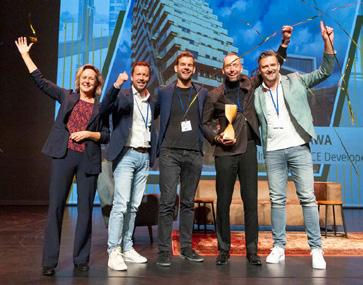
National Timber Construction Award 2025 – Overall winner, best timber building in the Netherlands “SAWA shows that timber construction can contribute not only to climate goals, but also to human coexistence and bringing nature back into the city. Not without reason was this project opened by the Queen.”
International Design Awards 2021 – Bronze winner, category Architecture – Sustainable Living “SAWA is striving to make a difference in the health of the planet, revealing the compassionate nature of the collective design community.”
MIPIM / AR Future Project Award 2021 – Highly Recommended, category Residential “SAWA is a stand-out building in Rotterdam that docks visually for its green appearance, and socially for its programme and approach to sustainability.”
ARC20 Innovation Awards – SAWA – 1st Prize “SAWA is relevant and promising because of the scale of its timber construction. It will become the most innovative and tallest timber building in the Netherlands. This is a new concept — intelligent and aesthetic, energy-saving and possibly the tipping point in the timber construction revolution.”

ARC20 Innovatie Award (NL) first place
International Design Awards (EU) winner
World Architecture Festival (UK)
category: Future Projects – Experimental winner
Green GOOD Design Award (UK) first place
MIPIM Architectural Review Future Project Award (UK/FR) category: Residential honorable mention
Architizer A+ Awards (USA) category: Unbuilt –Multi-Unit Housing honorable mention
Iconic Awards for Innovative architecture (DE) category: Concept honorable mention
Architecture Masterprize (USA) winner
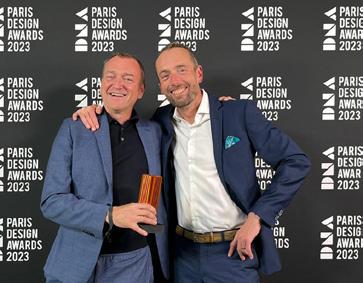
2023
Paris Design Awards (FR) category: Green Architecture
winner Middenhuur award (NL) honorable mention
Architizer A+ Sustainability Awards (USA)
Popular Choice Award winner

Inspiratie Awards 2024

2024
PROVADA Inspiratie Awards (NL) honorable mention
Rethinking The Future Awards (IND)
winner: sustainable project of the year (concept)
Middenhuur award (NL) second place
German Design Award (DE) category: Conceptual Architecture Gold winner
Cobouw Duurzaamheid Awards (NL) honorable mention
Nationale Houtbouwprijs (NL)
overall winner: best wooden building of the Netherlands
Grand Prix Design Paris Award (FR)
International most influential architecture firm MIPIM Awards (FR)
Finalist Best residential (winner pending)
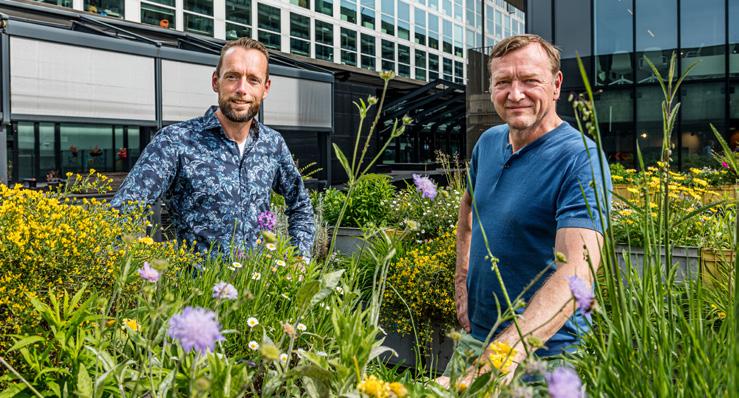
NICE Developers develops circular, timber residential buildings that contribute to climate goals, biodiversity, and social inclusivity. The company was founded by Mark Compeer and Robert Winkel and combines development and design expertise in one integrated approach.
With the NICE Concept, NICE is working on a fundamentally different way of building. Timber construction forms the structural foundation, combined with circular principles, nature-inclusive design, and a socially mixed housing program. Projects are set up with a clear focus on feasibility and long-term value — for residents, investors, and the city.
Since 2023, Focus on Impact has been a co-shareholder of NICE. This partnership increases the company’s capacity and makes it possible to develop new projects at risk and, where desired, jointly act as investor.
SAWA is the first realized example of this approach at high-density urban scale. The project demonstrates that Paris Proof construction, affordability, and architectural quality can be realized together within a robust business case.
NICE Developers collaborates with municipalities, housing associations, and investors on futureproof residential areas and buildings. By combining expertise in development, design, and realization, NICE accelerates the transition to circular and biobased housing in the Netherlands and beyond.
The NICE Concept is a proven circular timber construction concept based on a flexible open building system of columns, beams, and floors. This new standard enables Paris Proof residential buildings. The concept allows for industrialized, low-nitrogen construction and combines timber building with affordable housing, nature-inclusive design, and shared facilities.
Climate-friendly
Thanks to timber construction and the application of biobased and recycled materials, NICE Buildings have a lower footprint and store CO₂ instead of emitting it. In this way, they make a positive contribution to the climate.
Social inclusive
By bringing together diverse income groups in a mix of affordable housing in the social and mid-market rental segments and private-sector homes, NICE contributes to a social inclusive society. In addition to the housing offer, emphasis is placed on shared facilities to stimulate encounters between residents and neighbors, fostering mutual responsibility and preventing loneliness.
Biodiversity
By developing green buildings, we contribute to improving biodiversity. Through the integration of abundant and carefully selected planting and nesting boxes within the building, NICE Buildings provide safe shelter and food for insects and birds.
Future-proof and circular
The NICE Concept is based on the principle of “open building”: a flexible system of columns and beams that creates maximum layout freedom and ensures buildings can be adapted in the future. Moreover, the concept is circular: buildings are demountable, allowing materials to be reused in the long term.
Feasible and fast
Building in timber offers opportunities for a fundamental shift in the development and construction chain, enabling the NICE Concept to be faster and competitive compared to traditional (concrete) construction. This effectiveness is supported by four key aspects:
• acquired knowledge and experience and a proven timber construction concept.
• chain integration between architect, developer, builder, and timber supplier for efficiency and cost savings.
• focus on quality improvement rather than profit maximization.
• careful integration and active neighborhood involvement, ensuring NICE Buildings are valuable and sustainable assets for their surroundings.
The book The Timber Truth by Pablo van der Lugt was published in 2025 — an accessible and inspiring guide that clearly explains the facts, myths, and opportunities of timber construction. We are proud that SAWA appears on the cover and that a special NICE edition has been developed, including an additional section on our vision, projects, and principles for circular and nature-inclusive area development.
Would you like to receive a copy? Please contact NICE.
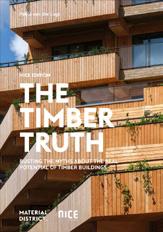
Timber construction is not a trend or experiment, but the future and the path toward Paris Proof development.
The NICE Concept includes five product groups: densification, vertical extensions, floating housing, Eco Village, and high-rise up to approximately 140 meters. By conducting a quick scan at an early stage, development potential can be assessed efficiently and rapidly. With these products, we realize Paris Proof areas and buildings: biobased, circular, inclusive, and with ecological impact.
By densifying based on circular construction principles, inner-city building is redefined. Using lightweight timber structures, more volume can be added after demolition, reusing existing foundations and harvesting existing materials for reuse as dry ballast for CLT floors. The result is a circular construction method that adds more housing, reduces CO₂ emissions, and saves construction costs.
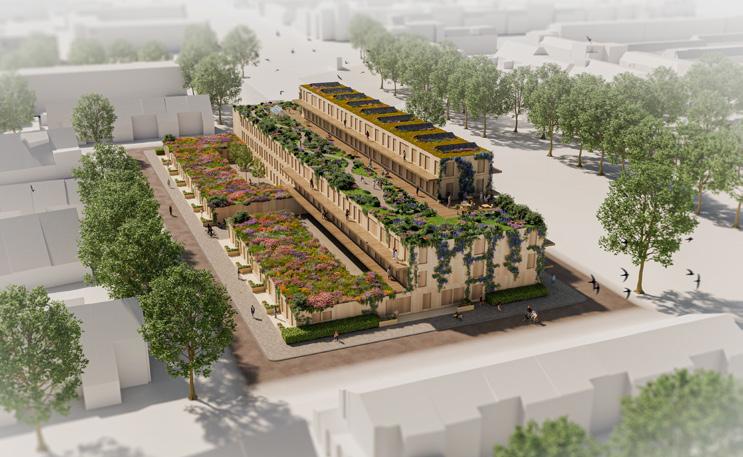
Vertical extensions offer an innovative way to upgrade existing real estate. With lightweight timber structures, additional residential floors are added on top of an existing building, possibly combined with the transformation or renovation of the underlying structure for optimal repurposing. This sustainable concept combines efficient use of space with minimal environmental impact, while significantly improving the lifespan and value of existing buildings.
Floating housing combines sustainability and residential quality as an alternative to building on solid ground. These prefab homes made of biobased materials, developed together with Bikbouw, are self-sufficient through wastewater treatment, biomass heating, and solar panels. With floating housing, we create flexible and future-proof living solutions to densify within the existing city. It is an innovative response to climate-adaptive construction, addressing rising water levels and changing environmental conditions.
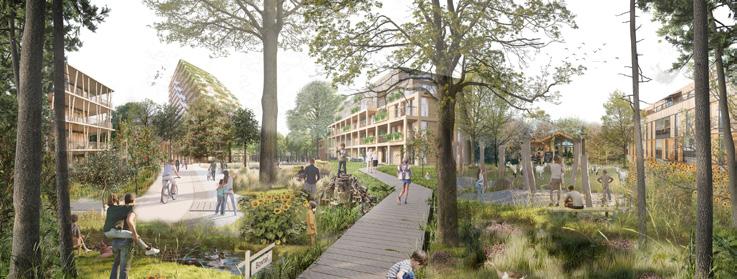
Eco Village offers a renewed approach to area development, strengthening existing ecological structures and cultural values. This sustainable residential district is fully designed according to Paris Proof principles, with climate-adaptive, nature-inclusive public spaces and circular, biobased construction methods. Lightweight foundations preserve soil structure, materials are sourced locally, and the mixed program provides a diverse and future-proof living environment.
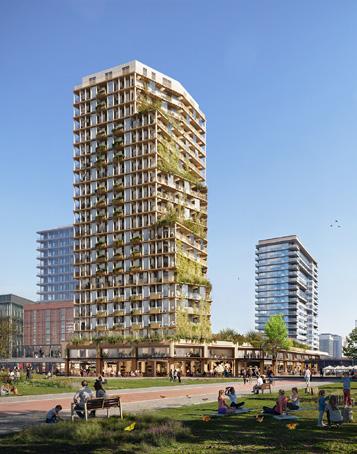
High-rise responds to the demand for urban housing with smart, space-efficient designs. The fully biobased structure — from ground floor to elevator core — is free of concrete and minimizes CO₂ emissions. This sustainable solution builds upon existing urban infrastructure and combines efficiency with high-quality living standards for a growing urban population and a livable city.

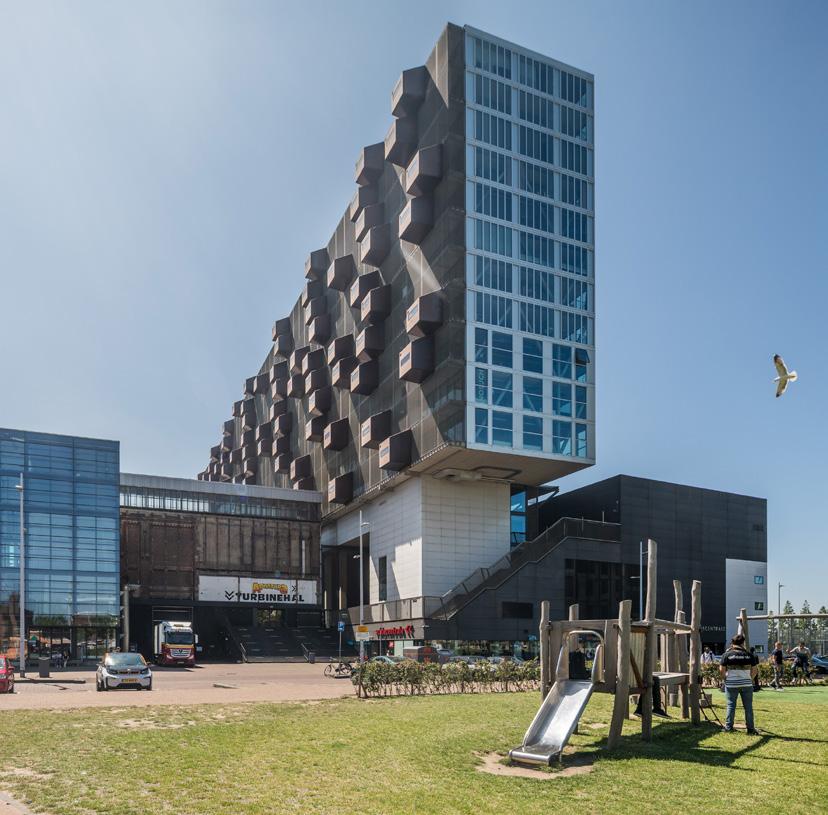
Mei architects and planners is an internationally operating, award-winning architecture firm and a frontrunner in biobased, circular, and nature-inclusive architecture. We design iconic buildings and urban plans that contribute to a livable, green built environment. With a multidisciplinary team, we work on leading projects both nationally and internationally, with minimal CO₂ emissions.
Our expertise lies in three areas: (biobased) new construction, adaptive reuse, and urban design. We harness the unique opportunities of biobased and hybrid construction methods to enable sustainable densification and transformation. Adding extra floors, reusing, and extending with lighter (timber) structures not only contributes to CO₂ reduction, but also enhances urban quality of life. In all our projects, our core values are embedded: New values, flexibility, community, context, and a new aesthetic. Through our architecture, we demonstrate that a radically sustainable approach is not only necessary, but also creates architectural, social, and economic added value.
Mei was founded by Robert Winkel and is led together with Michiel van Loon and Robert Platje. From Rotterdam, we work with an ambitious and diverse team on forward-thinking projects in the Netherlands, France, Germany, and Norway, among others. To further strengthen our intellectual and practical impact, Mei collaborates with a range of partners in the field, from urban nature experts to the building materials industry.
Our work has been widely published and awarded. Mei is known for iconic transformation projects such as Fenix I and Jobsveem in Rotterdam, and Kaaspakhuis in Gouda, as well as new-build projects such as Schiecentrale 4B and the McDonald’s pavilion on the Coolsingel in Rotterdam. With the design and development of SAWA, a fully timber residential building in Rotterdam, Mei positions itself as a frontrunner in sustainable, nature-inclusive housing. With SAWA, Mei won the National Timber Construction Award in 2025, considered the most important Dutch award for pioneering timber architecture. At the urban scale, Mei realizes complex inner-city and adaptive reuse developments, including the OPG site in Utrecht and the Kabeldistrict in Delft.
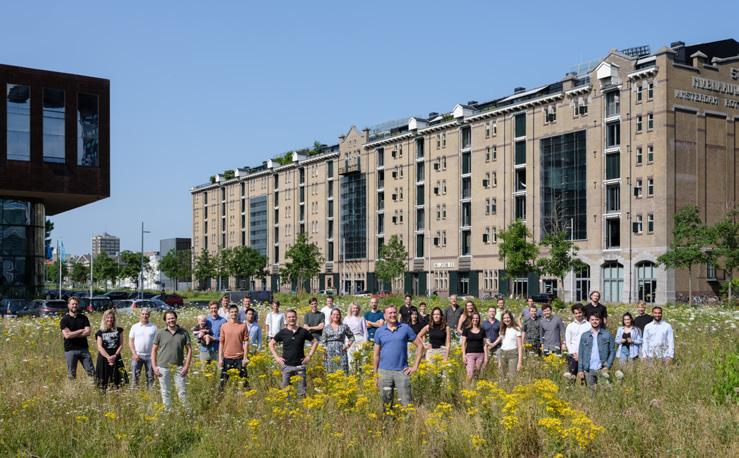
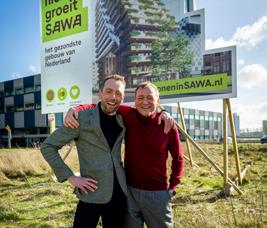
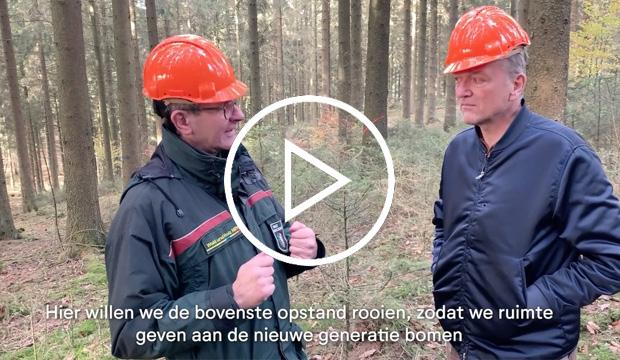
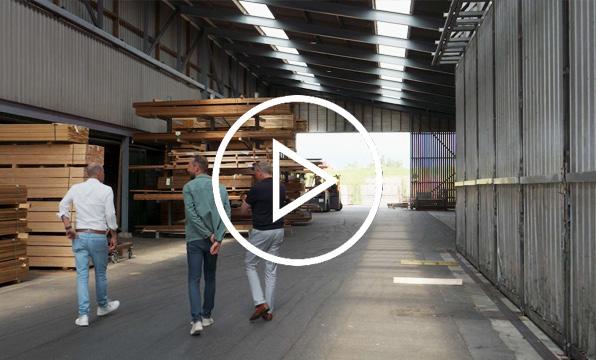
During the construction of SAWA, NICE Developers followed the trail of SAWA’s materials to see firsthand how sustainable the production process truly was. Mark and Robert sought answers to questions such as: Where does SAWA’s timber come from? Is forestry carried out sustainably? And how are the CLT elements and timber façade of SAWA produced in a sustainable way?
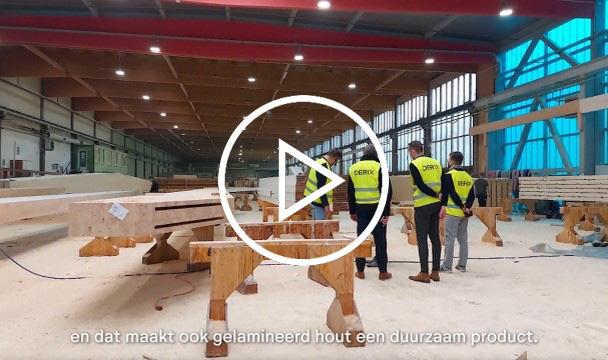
Episode #1: Derix wood factory Westerkappeln
Episode #2: Sustainable production forest Nordrhein Westfalen
Episode #3: Factory Leegwater woodworking Heerhugowaard
Watch the videos (in Dutch) on Vimeo through this QR code:

Contributors to SAWA included:
Client: NICE Developers & ERA Contour
Architect: Mei architects and planners
Investor: Focus on Impact
Municipality: Rotterdam
Contractor: ERA Contour
Constructor: Pieters Bouwtechniek
Building physics consultant: DGMR
Fire advisor: Adviesbureau Hamerlinck
Construction cost consultancy: Maatwerk in Bouwadvies
Wood, innovation and sustainability: Aldus Bouwinnovatie
Technical timber construction: Pirmin Jung & Derix Group
Wood supplier: Derix Group
Ecology: Copijn
Biodiversity: Bureau Stadsnatuur & Piet Vollaard
Wind nuisance research: Peutz
Structural consultant: Duoplan
Real estate agent: Kettner Makelaars
Notary: Westpoort Notarissen
SAWA suppliers:
CLT construction, beams-columns-floors Derix Group
Wooden cladding: Heuvelman Hout | Leegwater houtbereiding
HSB elements: Frank van Roij
Window frames: Frank van Roij
Polyester concrete planters: Kemeling kunststoffen
Floor finish: Duracryl
Heating and cooling: Mampaey Installatietechniek, Novenco Building & Industry
Mechanical ventilation: Bemar Ventilatietechniek B.V.
Lighting: PD lighting
Sanitary objects: Roel Breman Installatiebedrijf Interior walls: SBB
Sprinklersystem: Aqua+
Steel construction: Buiting Machinebouw en Staalconstructie Galleries and balconies: Hicon High Performance Concrete
Elevator: Orona Nederland
Fences: Trahecon
Electra: Van den Pol Elektrotechniek
Roofing: Spuitco
Photography from SAWA: Ossip van Duivenbode
Videography from SAWA: AMMO - Amber Heij