recently watched Ellas en la Ciudad (Women in the City), a Spanish documentary about working-class women in Seville, the capital of Andalusia, who fought for access to education, healthcare and public services in the 1970s because urban planners ignored their neighbourhood. They demanded schools and learnt together in community centres doubling as classrooms. Their collective efforts transformed their neighbourhood, showing howcommunityactioncandrivesocialchange.
The story spoke to me deeply, as it was similar to my own family’s experience in the same region and period. One of my grandmothers never learned to read and signed documents with her fingerprint. My grandfather’s sister joined an adult school to learn to write and manage household accounts. For families like mine, sending a child to university has traditionally been seen as a symbol of progress and dignity. However, today, despite higher levels of education, many young graduates face precarious work and low wages, highlighting that the social elevator of education no longer runs as it should. This is not only an economic issue, but also reflects society’s perception of the value of education and how quickly trust erodes. Universities, research centres and scientists are under increasing pressure as politics, ideology, and business interests compete to influence knowledge. In Spain, scandals involving falsified degrees by national and regional Members of Parliament led to resignations and hasty updates to public profiles and CVs. Elsewhere, underfunding, politicised curricula and interference in academic freedom threaten universities’ role as guardians of truth and critical thought. When education and sciencebecomebattlegroundsforcontrolratherthanunderstanding,theirsocialpurposeisweakened.
Accessible, high-quality public universities and a culture of lifelong learning remain reliable drivers of social mobility and democratic resilience, provided we protect their integrity and keep them open to all. Across our sector, we see that knowledge drives social change and events act as catalysts. This HQ edition highlights destinations linking universities, science and society, from Catalonia’s leadership in European science events to cities that use knowledge to transform local communities. In Montréal, four universities anchor a network where institutes and associations collaborate to host policy-shaping congresses. Business Events Montréal’s Knowledge Collective connectsorganiserswithresearcherssothatconferenceprogrammesreflectrealscience,notslogans.
In Medellín,education and inclusion are keyelements of a city-wide transformation. Projects such as Constelaciones demonstrate how tourism, events and community initiatives can turn resilience into opportunity. There, I met Luz Dary Álvarez, who runs community tours in memory of families previously affected by exclusion, and Leidy Resmon, who found the confidence to study again and learn English by guiding visitors, rediscovering her passion for music in the process. Their stories, like those of women in Ellas en la Ciudad, show that social change happens wheneducation,opportunityandempowermentcometogether.
This conviction runs through our recent association interviews. AGE Platform Europe emphasised the importance of intergenerational learning for inclusion, while the European Association for the Education of Adults described lifelong learning as a democratic act. In this issue, eucen defends the role of universities as pillars oftrustandcivicresponsibility.
A shared idea emerges across their work: when associations and events nurture the link between knowledge and society,theyhelptoshapefairer,moreinformedcommunitiesandchangelives.
European University Continuing Education Network - 20
HQ ESSENTIALS
Governology - 22
OIC Group - 24
Nordic MICE Summit - 26
HQ REPORTS
Paris Legacy Tour - 38
ICCA Middle East Summit - 40
ICCA LAC Summit - 42
Medellin - 44
TECH Expoplatform - 47
HQ ASSOCIATION INSIGHTS
Mark Levin - 48
CityDNA - 50
ESSA - 52
IAPCO - 54
AIPC - 56
DESTINATION INTERVIEWS
Kuala Lumpur - 30
Luxembourg - 32
Lyon - 34
Gothenburg - 36
PCO INSIGHTS
Kenes - 58
A Purpose Beyond Tourism: How Business Events Are Driving Global Travel
Author: Manuel Fernandes, HQ Magazine Manager
Aquiet shift is transforming the global travel scene, not in resorts or luxury hideaways, but in conference halls, convention centres, and auditoriums. These are the spaces where people come together not to take a break from the world, but to rethink and reshape it. This year’s World Economic Forum (WEF) report, Travel and Tourism at a Turning Point, offers a telling snapshot of this transformation. Several tourism segments – such as live events – are expanding well above industry averages. Sports tourism,includingbothspectatorsandparticipants,reached $609 billion (approx. €575 billion) in 2023 and is projected to exceed €1.56 trillion by 2032, driven by social media and digital engagement. Ecotourism is also booming, with 14% CAGR expected to push it to €699 billion by 2032, fuelled by outdoor and sustainable travel. Meanwhile, wellness tourism continues its rise (8% CAGR), as travellers seek holistic, healthfocusedexperiences.
But it is the business events sector that is stealing the spotlight. According to the report, the market is expected to grow by nearly 9% a year through the end of the decade, edging close to €920 billion in global value. This growth story is about more than just numbers. Business events have become the connective tissue of modern economies – the spaces where innovation circulates, where research meets investment, andwhereindustries find their next leap forward. From medical congresses in Vienna to climate summits in Singapore, these gatherings are determining agendas that havealonger-lastingimpactthantheeventsthemselves.
The case study on Rwanda presented in this report is an excellent example of this strategic transformation. Under the leadership of the Rwanda Development Board, the country has invested heavily in infrastructure, branding and public-private partnerships to attract international events. This commitment has positioned Kigali as one of Africa’s leading destinations, boosting revenue, employment and global visibility (check out our interview with the Rwanda Convention Bureau on HQ #104). The study also highlights how the Rwandan model integrates sustainability and local development, demonstrating how the meetings
sector can generate lasting economic and social impact when aligned with national policies.
However,thepathahead is not without friction. The first challenge is sustainability, or rather, the industry’s reckoning with it. As events multiply, so do their footprints – emissions, waste, resource use, etc. The WEF warns that reducing impact will not be enough. The future will belong to organisers and destinations that adopt regenerative practices, creating net-positive outcomes for the communities and ecosystems that host them. Then comes the human factor. Across continents, event organisers face a talent shortage. The pandemic hollowed out workforces, and now, as the sector regains momentum, the race is on to rebuild skills in logistics, tech integration, and event design. Without investment in people, the industry’s momentumrisksbecomingamirage.
Technology, too, sits at the heart of this shift. AI and data analytics promise unprecedented precision, from matchmaking participants to tracking carbon impacts, but they also bring complexity, cost, and ethical questions. As one industry expert recently told me: “we can automate the logistics, but not the purpose.” Long a powerhouse of global conferencing, Europe’s reputation still holds its ground thanks to its infrastructure, connectivity, and policy frameworks, as evidenced by the 2024 ICCA rankings Yet the continent now faces rising competition from Asia and the Middle East, regions investing heavily in smart venues and modern ecosystems. Europe’s next challenge will be to remain relevant by embracing digitalisation and embedding purposeatthecoreofitseventdesign.
Ultimately, what the WEF report reminds us is that business events are no longer peripheral to tourism, they are central to how we exchange ideas, accelerate change, and build trust in an uncertain world. If travel tells us where we have been, eventstelluswherewearegoing.
Global Associations Look to Mumbai
Expanding Associations’ Reach in India’s Knowledge Capital
Across the international meetings industry, associations are increasingly turning their attention to India. With a population exceeding 1.4 billion, a fast-growing economy, and a network of dynamic research hubs,thecountryrepresentsbothavastmembershipopportunityandaplatformforthoughtleadership.
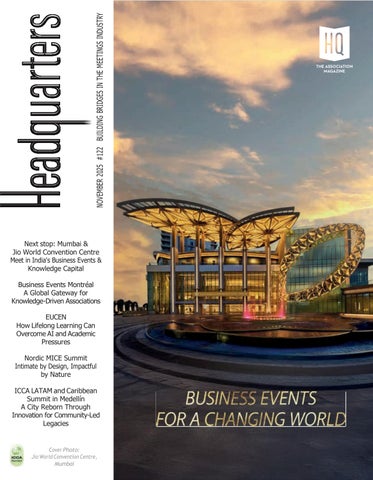
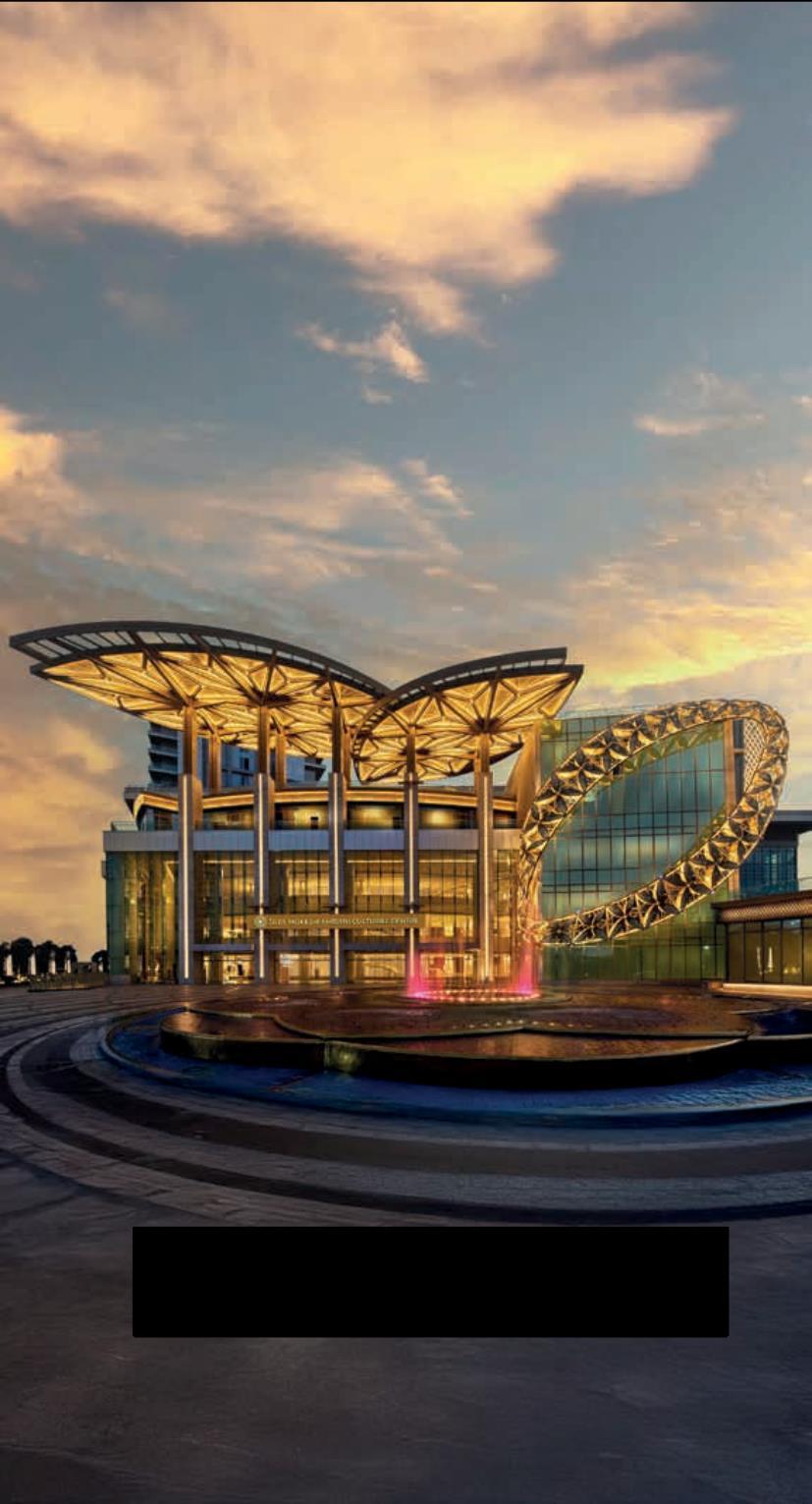
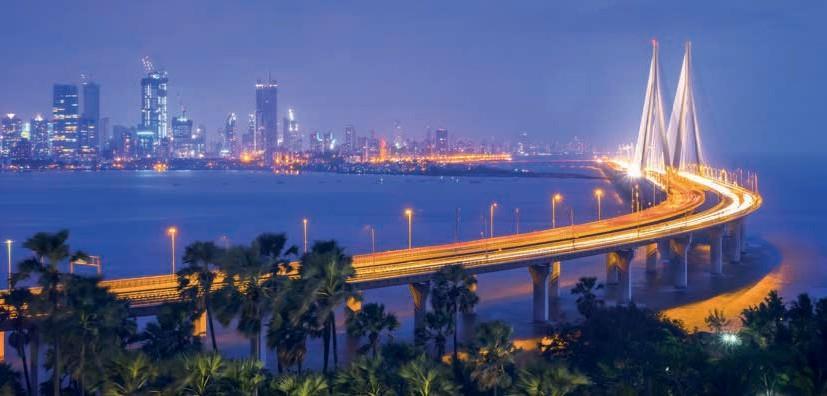
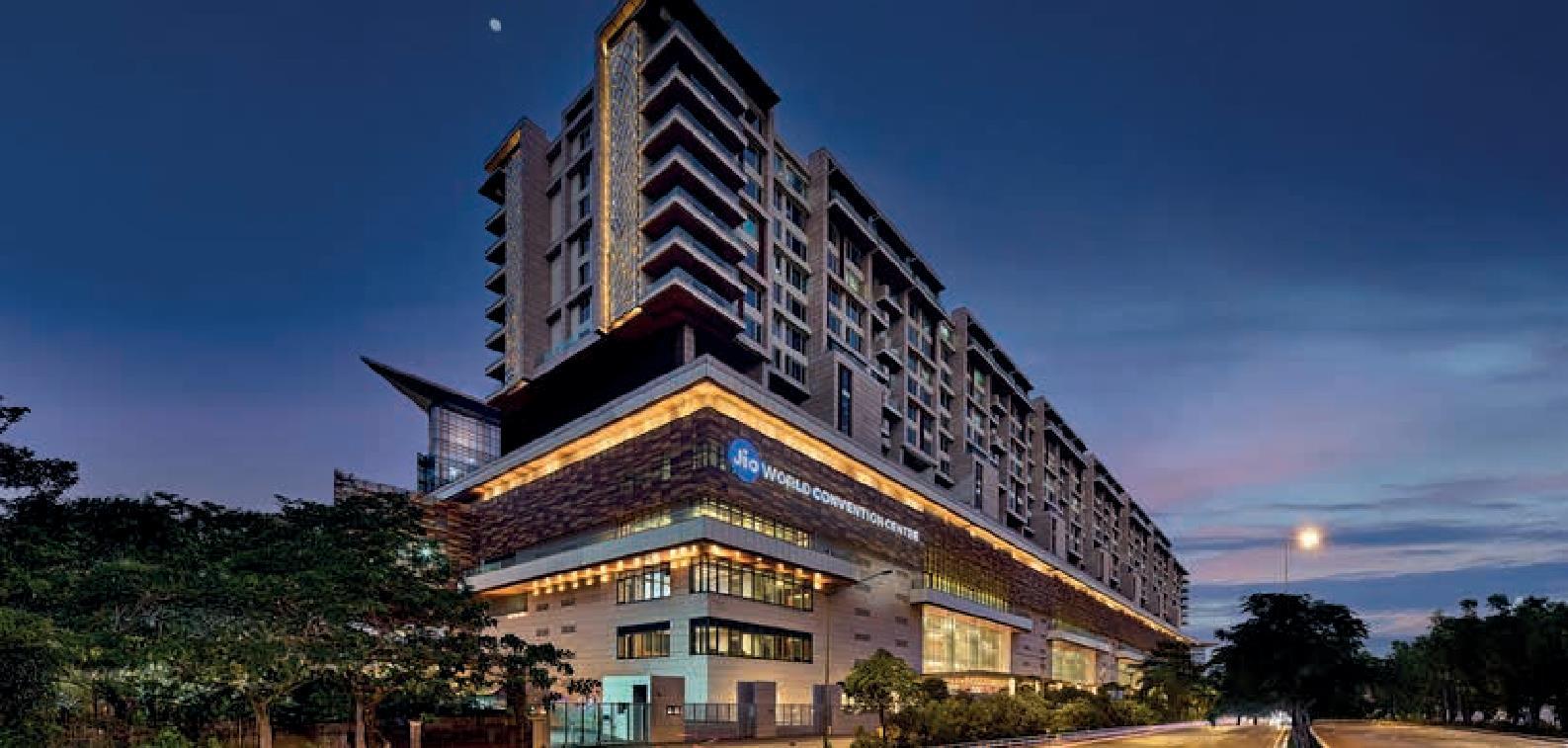
For global organisations seeking to expand their reach in Asia, Mumbai offers a distinctive combination of influence, infrastructure, and intellectual capital. The opening of the Jio World Convention Centre (JWCC) in March 2022 gave the city a state-of-the-art venue capable of hosting major congresses. The subsequent announcement of the Maharashtra Convention Bureau (MCB) in May 2025 has added a strategic framework to attract and support international organisers. Together, they position Mumbai as India’s business events capital, offering associations a base from which to engage local experts, build networks,anddeliverlegacieswithlastingimpact.
Attracting the Global Associations
Announced at IMEX Frankfurt 2025, the Maharashtra Convention Bureau offers a structural support system for associations considering India. By launching India’s first state-led bureau, the government of Maharashtra shows that it recognises the importance of association meetings and their potential for long-term value generation. The bureau’s mission is to promote the state of Maharashtra, particularly highlighting the potential of the capital city Mumbai and other key cities like Pune, Nashik and Nagpur as compelling global hubs for business events, and provides international organisers with a one-stop solution including administrative guidance, coordination with government agencies, venues, and local partners. This creates a clear andreliablepathwayforassociationsenteringnewmarkets.
Building Membership and Networks
Mumbai is uniquely placed to help associations grow their presence in India and South Asia. It is home to a
concentration of organisations that naturally align with the prioritiesofinternationalfederations.
Mumbai’s academic and research institutions amplify this advantage. IIT Bombay provides one of the strongest engineering and computersciencetalent pipelines in Asia. The Tata Institute of Fundamental Research (TIFR) is globally respected for breakthroughs in physics and mathematics. The University of Mumbai, with more than 700 affiliated colleges,ensuresabroadacademicreachacrossdisciplines.
This ecosystem enables associations to achieve more than just hosting a successful event; it allows them to establish a long-term engagement strategy. By recruiting local academicians as speakers, engaging professionals as delegates or establishing regional chapters, associations can draw on a vast pool of talent and increase their presence in SouthAsia.
In recent years, Mumbai has staged high-profile events across finance, science, culture, and sport, showcasing both itsinfrastructureanditsnetworks.
These case studies illustrate the diversity of events Mumbai can accommodate. Whether convening global policy discussions, scientific congresses, or creative industry showcases, the city demonstrates its ability to deliver results thatextendwellbeyondtheeventdays.
Jio World Convention Centre: A Catalyst for Associations
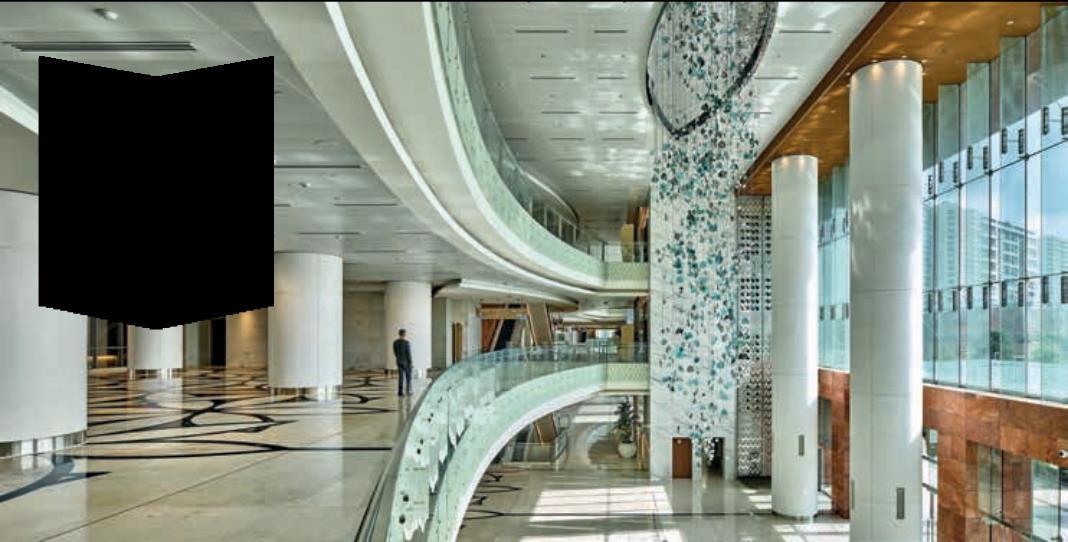
At the heart of Mumbai’s business events infrastructure is the Jio World Convention Centre (JWCC), a venue conceived with international associations in mind. Its scale and flexibility make it possible to host large congresses, while its hybridready technology ensures global reach. Associations planning rotational meetings can rely on infrastructure that supports plenary sessions, parallel tracks, exhibitions, and networking allwithinoneintegratedcomplex.
What distinguishes JWCC, however, is its location within the Bandra Kurla Complex (BKC), Mumbai’s central business district. Here, multinational headquarters, consulates, and financial institutions create a setting that is already familiar to international delegates. It is housed within a mixed-use precinct that also includes a multi-disciplinary cultural centre, a luxury retail complex and diverse dining experiences that reflect Maharashtra’s culinary traditions. High-end hotels within walking distance make it a self-contained district that offersaseamlessexperiencetoadiscerningaudience.
Over the past few years, the JWCC has hosted several globally significant events, including the World Congress of Accountants, the G20 Summit Meetings, the International Olympic Committee’s 2023 Session, the Miss World Grand Finale 2024, the 11th Indian Association Congress, the WAVESSummit2025,andtheannualGlobalFintechFest.
Its growing popularity as a preferred international venue is reflected in the forthcoming line-up, which includes the Asian Seed Congress 2025, the International Federation of Landscape Architects (IFLA) Asia-Pacific Regional Congress 2025, the Internet Corporation for Assigned Names and Numbers (ICANN) 2026, WordCamp Asia 2026, the International Baccalaureate Global Conference 2026, the 35th International Congress on Occupational Health 2027, the UIA International Architecture Forum 2027, and the SICOT Orthopaedic World Congress2030.
Beyond business, Mumbai adds value through its heritage and culture. The city’s Victorian Gothic and Art Deco ensembles and the Elephanta Caves are UNESCO World Heritage sites, while Maharashtra’s Ajanta and Ellora cave sites and the Western Ghats make every congress both professionallyrewardingandculturallymemorable.
The combination of a state-backed convention bureau, a premium convention centre, and a city with global economic and intellectual reach makes Mumbai a strong contender for international associations planning their next event in Asia. Maharashtra offers organisers seeking to grow membership, strengthen networks and establish a meaningful legacy –boththestrategyandtheresources–toachievetheirgoals.
To explore how Mumbai and JWCC can be the perfectdestinationforyournextassociationevent, scanthe
Montréal’s Knowledge Ecosystem as a Platform for Global Associations
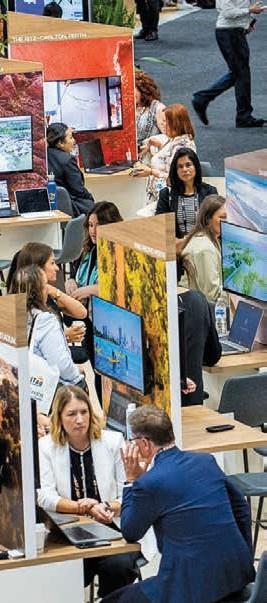
Montréal, one of Canada’s largest cities, has earned its position as a leading destination for international associations. A unique combination of scientific excellence, an engaged academic and scientific community, inclusive culture and genuine local support is the key to its appeal. In 2024, Montréal hosted 539businessevents,welcoming874,000delegatesandvisitorsandgeneratingCAD395million(approx. €270 million) in economic impact, establishing itself as one of the country’s strongest meeting hubs. Business Events Montréal’s proposition to associations is clear: established expertise in life sciences, aerospace, and clean energy, in addition to fast-growing sectors like AI, fintech, and engineering. Conferences benefit from a solid intellectual base and a culture of experimentation, supported by universities, industry and international organisations.